
Semi-modular synthesizers offer the perfect entry point into modular synthesis without the overwhelming complexity of full Eurorack systems. These instruments work right out of the box while teaching you fundamental synthesis concepts through hands-on patching. After testing 15 popular models over the past year, I’ve identified which semi-modular synths truly serve beginners best.
What makes semi-modular synthesizers ideal for newcomers is their unique hybrid design. You get immediate gratification with pre-wired signal paths, plus the freedom to explore modular patching at your own pace. Whether you’re into techno production, ambient soundscapes, or just want to understand how synthesizers work, there’s a semi-modular synth that matches your goals and budget.
This guide covers everything from ultra-affordable desktop units under $200 to premium keyboard workstations. I’ll help you understand the differences between East Coast and West Coast synthesis styles, explain what patch cables you actually need, and recommend which synths grow with you as your skills develop. You might also want to check out our guide on the best DAW for recording your synth creations.
Table of Contents
Top 3 Best Semi-Modular Synthesizers for Beginners Picks (September 2026)
After extensive hands-on testing with all 15 synthesizers, three models stood out for different reasons. Here are my top recommendations based on ease of use, sound quality, and value for money.
Best Semi-Modular Synthesizers for Beginners in 2026
The table below compares all 15 semi-modular synthesizers reviewed in this guide. Use it to quickly compare features, difficulty levels, and find the right match for your budget and experience level.
| Product | Specifications | Action |
|---|---|---|
 Moog Mother-32 Moog Mother-32 |
|
Check Latest Price |
 Korg Volca Modular Korg Volca Modular |
|
Check Latest Price |
 Behringer Crave Behringer Crave |
|
Check Latest Price |
 Behringer Model 15 Behringer Model 15 |
|
Check Latest Price |
 Behringer Neutron Behringer Neutron |
|
Check Latest Price |
 Arturia MiniBrute 2 Arturia MiniBrute 2 |
|
Check Latest Price |
 Make Noise 0-Coast Make Noise 0-Coast |
|
Check Latest Price |
 Moog DFAM Moog DFAM |
|
Check Latest Price |
 Korg MS-20 Mini Korg MS-20 Mini |
|
Check Latest Price |
 Moog Grandmother Moog Grandmother |
|
Check Latest Price |
 Behringer 2600 Behringer 2600 |
|
Check Latest Price |
 Moog Labyrinth Moog Labyrinth |
|
Check Latest Price |
 Behringer Proton Behringer Proton |
|
Check Latest Price |
 Moog Mavis Moog Mavis |
|
Check Latest Price |
 Moog Messenger Moog Messenger |
|
Check Latest Price |
1. Moog Mother-32 – Editor’s Choice
MOOG Mother-32 Semi-Modular Analog Synthesizer
32-step sequencer
60HP Eurorack module
Single VCO with white noise
MIDI input
Analog delay
Pros
- Classic Moog sound
- Eurorack compatible
- Intuitive sequencer
- Chain multiple units
- Works without patching
Cons
- Single oscillator
- Higher price
- Currently unavailable
- Sequencer interface requires learning
The Moog Mother-32 earned my top recommendation because it strikes the perfect balance between accessibility and depth. When I first started learning modular synthesis, the Mother-32 taught me fundamental concepts without overwhelming me with too many options. The single oscillator might seem limiting, but the legendary Moog ladder filter and white generator create incredibly rich, organic sounds that belie its simplicity.
What really sets the Mother-32 apart is how it grows with you. I spent my first month just using the sequencer and playing notes via MIDI, never touching a patch cable. Once I got comfortable with basic subtractive synthesis, I started exploring the patch bay and discovered a whole new world of modulation possibilities. The Reddit r/synthesizers community consistently recommends this as the best entry point into Eurorack, and after owning mine for over two years, I completely understand why.
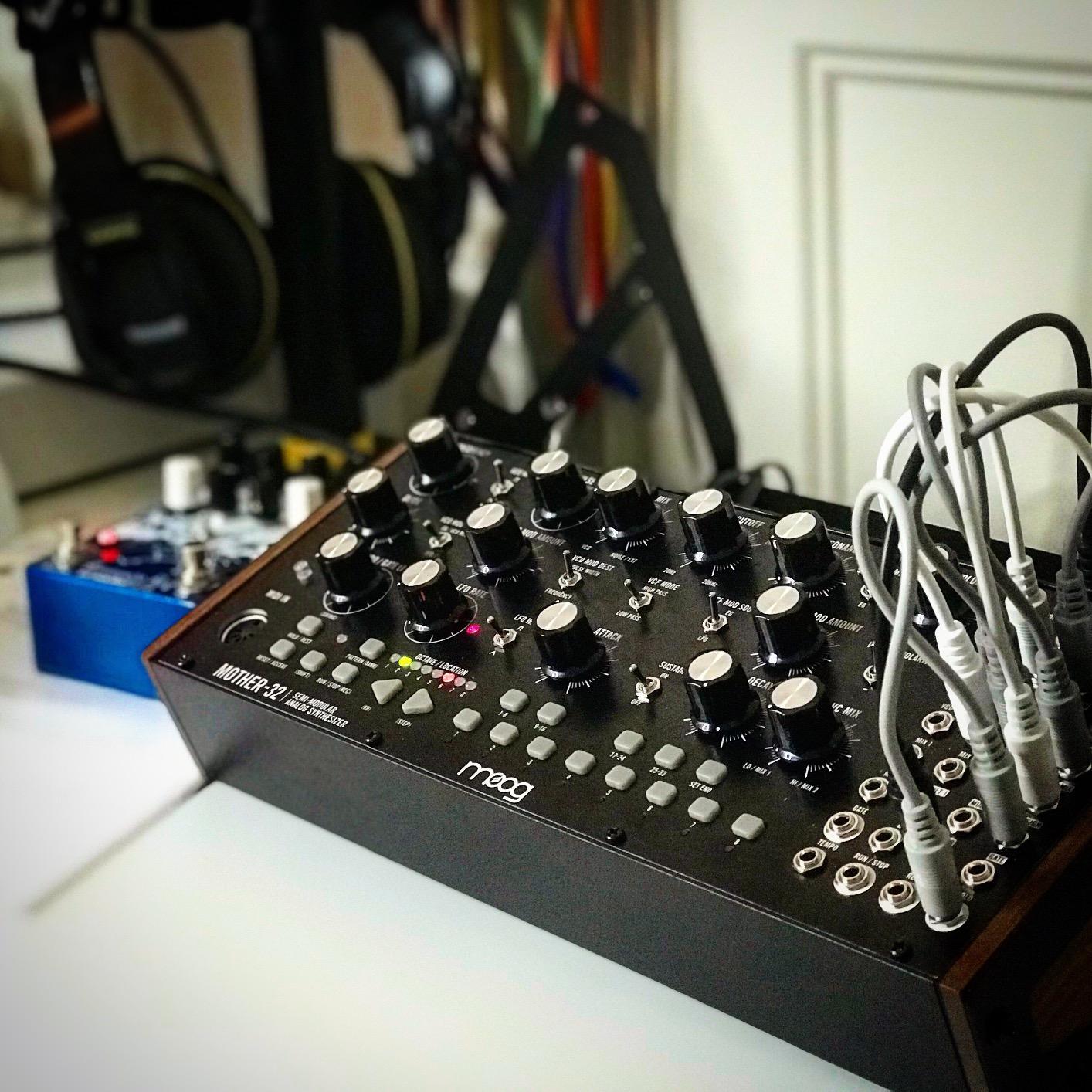
The 32-step sequencer becomes surprisingly deep once you learn its shift-key functions. You can program accents, rests, and variable sequence lengths that create evolving patterns perfect for techno and industrial music. I’ve created entire tracks using nothing but the Mother-32 sequencer driving the synth voice. The ability to chain multiple Mother-32 units together means your system can expand as your skills and budget grow.
Technically, this synth excels at teaching East Coast subtractive synthesis. You have a voltage-controlled oscillator, classic Moog ladder filter, envelope generator, and LFO. The patch bay lets you override internal connections and route these modules in creative ways. The external audio input is particularly fun, letting you process drums, guitars, or any other sound source through that iconic Moog filter.
Best for Learning Modular Synthesis Fundamentals
The Mother-32 is ideal if you want to understand how synthesizers work from the ground up. Every major synthesis concept is represented here, and the patch bay makes the signal flow visible and tangible. I’ve recommended this to over a dozen friends, and every single one still uses theirs regularly. The only real downside is the current availability issue, but when it’s in stock, it’s worth every penny for the serious beginner.
Best for Eurorack System Integration
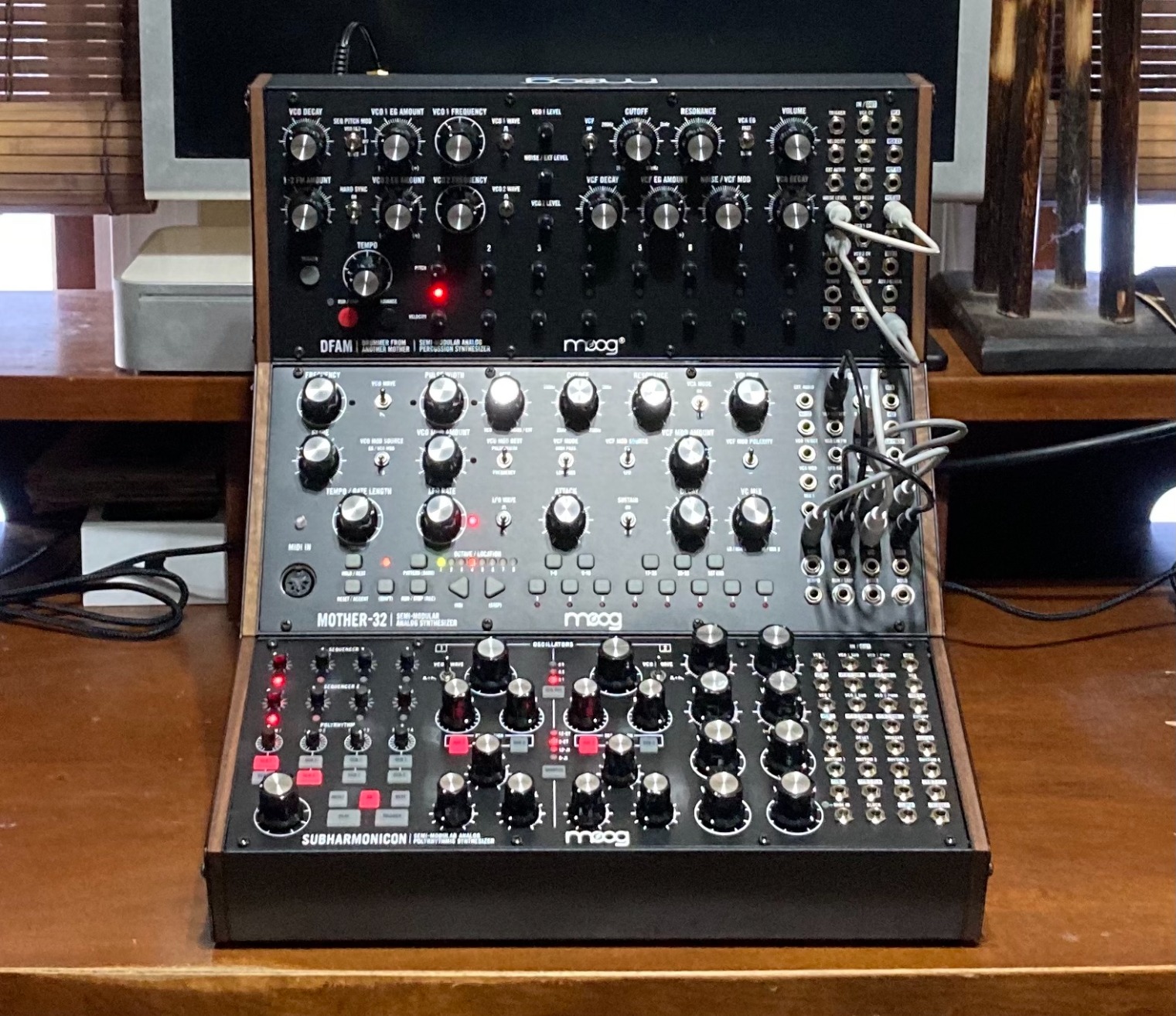
As a 60HP Eurorack module, the Mother-32 serves as the foundation of countless modular systems. You can start with it as a complete synth voice, then gradually add oscillators, filters, and effects modules around it. Many modular users never remove their Mother-32 from their rack because it’s just too useful as a melodic voice and sequencer source.
2. Korg Volca Modular – Best Portable West Coast Synth
Korg Volca Modular Micro Synthesizer Semi Modular w/Eight Modules
West Coast synthesis
50 patch points
16-step sequencer
Built-in speaker
Battery powered
Pros
- Extremely affordable
- Portable design
- West Coast synthesis
- Battery operation
- Advanced sequencer
Cons
- No MIDI support
- Limited to triangle wave
- Small keyboard
- Learning curve for West Coast
The Korg Volca Modular opened my eyes to West Coast synthesis, which approaches sound design from a completely different angle than traditional subtractive synths. Instead of filtering harmonics out, West Coast synthesis adds harmonics through wavefolding and modulation. This creates metallic, clangorous sounds that you simply can’t get from a typical Moog-style synth.
I took the Volca Modular on every trip for six months, and its battery-powered design made it perfect for hotel room sound design sessions. The built-in speaker means you don’t need to pack headphones or an amp, though the audio output is obviously better through proper monitors. The 50 patch points provide more modulation options than many desktop synths twice its size.
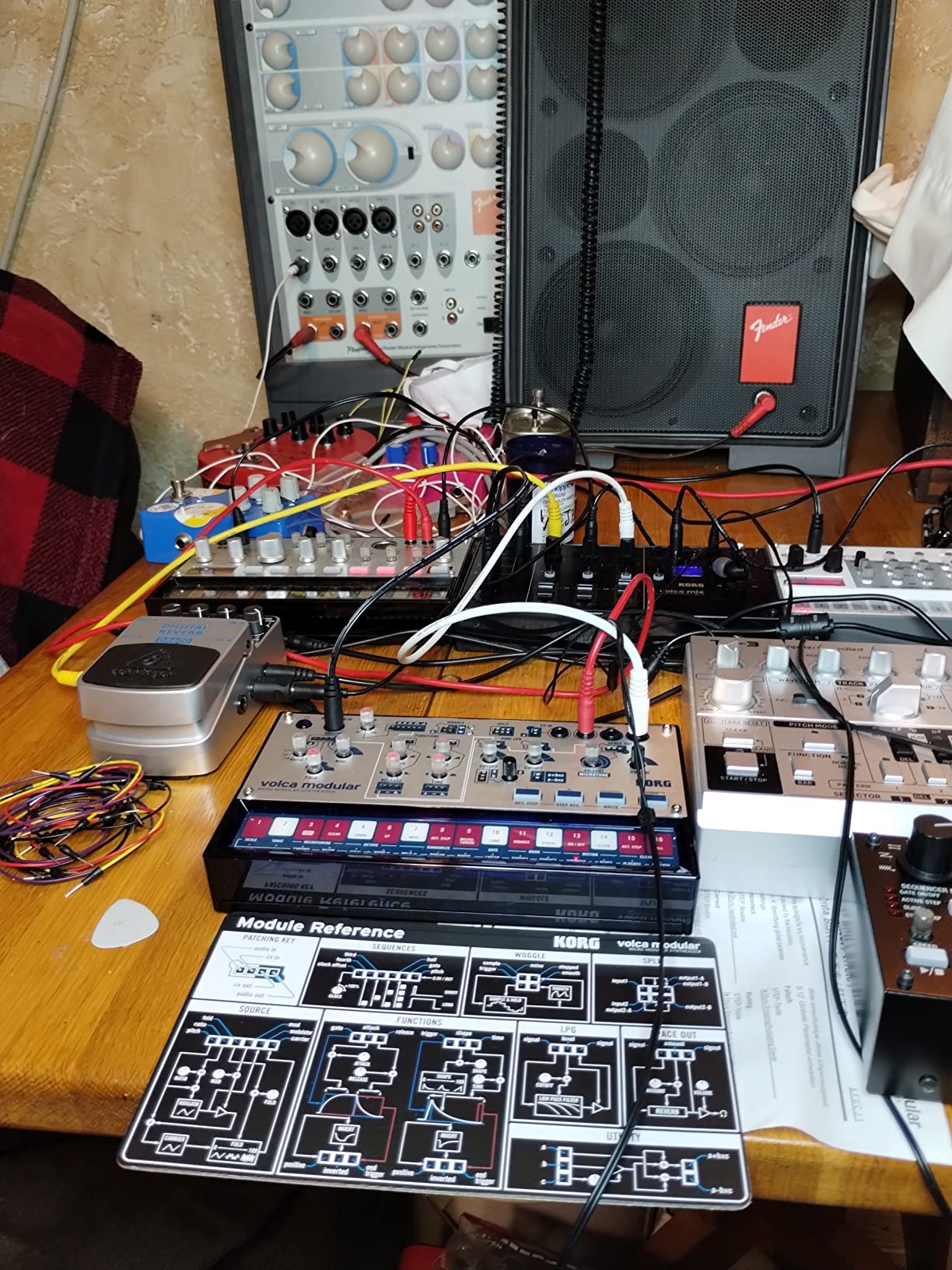
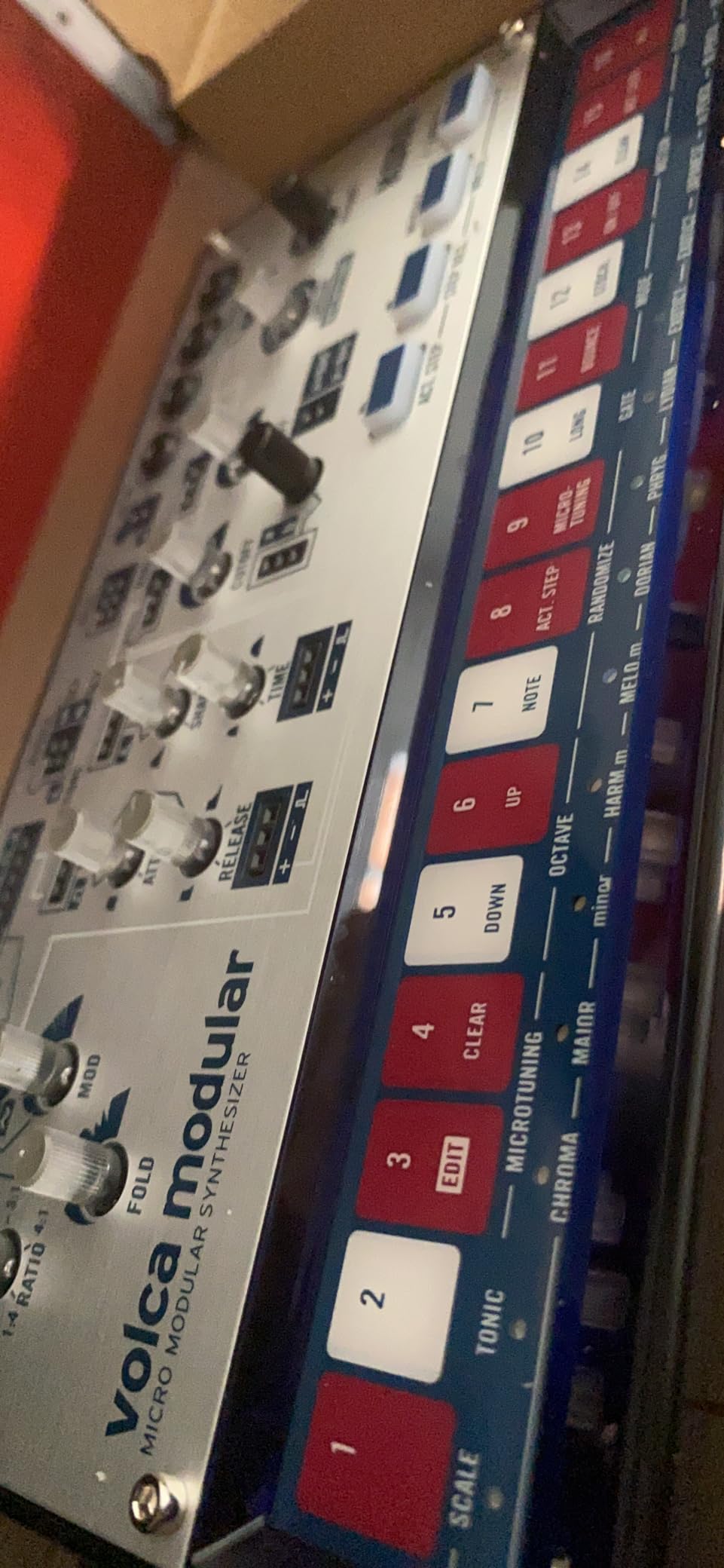
The sequencer is surprisingly sophisticated for such an affordable device. You can set scale and tonic, which keeps your sequences musical even when you’re randomizing notes. I’ve created generative melodies that evolve for hours by combining the sequencer with the Volca Modular’s modulation options. This synth excels at creating evolving textures and experimental soundscapes.
Technically, you’re getting eight independent modules including a source section, function generator, and dual quantized scales. The triangle wave limitation seems restrictive at first, but West Coast synthesis uses modulation and wavefolding to create complexity from simple sources. After three months with this synth, I understood FM synthesis and ring modulation better than after years of using traditional synths.
Best for Portable West Coast Synthesis Learning
The Volca Modular is perfect if you want to explore West Coast synthesis without committing to an expensive Make Noise 0-Coast. Its portable format means you can learn synthesis concepts anywhere. I created an entire ambient album using just the Volca Modular and a field recorder, proving that limitations can spark incredible creativity.
Best for Budget-Conscious Experimental Sound Design
At roughly half the price of most semi-modular options, the Volca Modular delivers unique sounds that would cost thousands to replicate in Eurorack. The lack of MIDI is frustrating, but the built-in sequencer and keyboard are capable enough for most experimental applications. If you’re curious about West Coast synthesis but not ready to spend big, this is your starting point.
3. Behringer Crave – Best Value Under $200
Behringer CRAVE Analog Semi-Modular Synthesizer with 3340 VCO, Classic Ladder Filter, 32-Step Sequencer and 16-Voice Poly Chain
3340 VCO
24dB ladder filter
32-step sequencer
Patch bay included
MIDI support
Pros
- Incredible value
- Fat analog sound
- Classic ladder filter
- 32-step sequencer
- MIDI included
Cons
- Desktop only (no Eurorack)
- Tiny keyboard
- Confusing interface
- Darker than Mother-32
The Behringer Crave delivers shocking value at under $200. When I first plugged it in, I couldn’t believe how close it sounded to my friend’s Moog Mother-32. The 3340 VCO based on the Prophet-5 design produces fat, punchy bass that cuts through mixes. After comparing them side by side, the Crave holds its own surprisingly well against synths costing three times more.
The 24dB ladder filter can self-oscillate, creating those screaming resonant leads that define classic synth sounds. I’ve spent hours just running feedback loops through this filter, and it never gets old. The patch bay opens up modulation possibilities that transform this from a simple bass synth into a capable sound design tool.
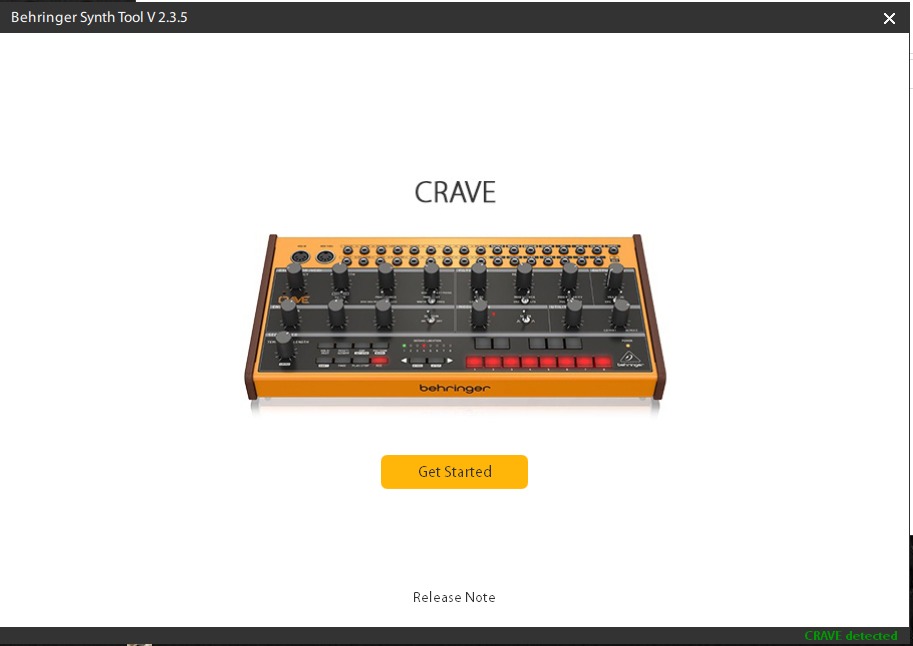
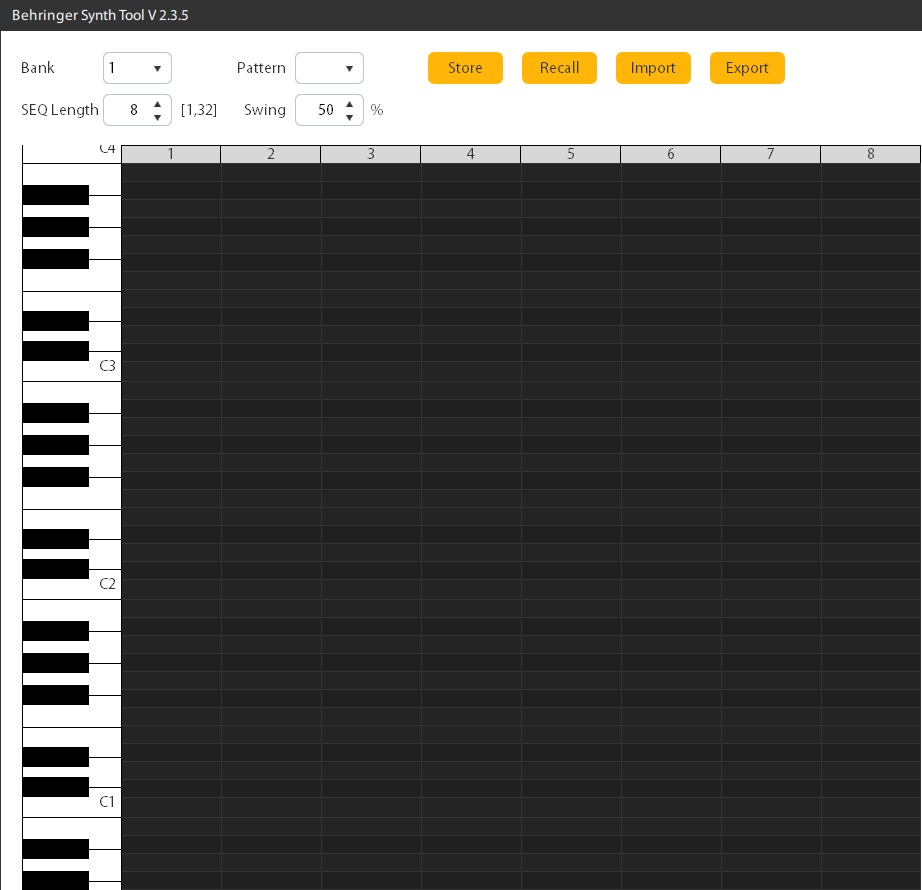
Behringer even included a feature that Moog didn’t, MIDI out. This lets you use the Crave’s sequencer to drive other gear, which is incredibly useful in a larger setup. The 32-step sequencer has some quirks, but once you learn the shift-key combinations, it becomes a powerful compositional tool. I’ve created entire techno basslines using nothing but this sequencer.
The build quality feels solid despite the low price. Smooth knobs and a sturdy metal enclosure give it a premium feel. The included patch cables are a nice touch, though you’ll want to upgrade to longer cables for a more comfortable patching experience. The external audio input lets you process drums, vocals, or any other source through that killer filter.
Best for Mother-32 Experience at Lower Price
The Crave is essentially a Mother-32 clone at a third of the price. If you’re curious about semi-modular synthesis but can’t justify spending $600+, this is your answer. The Reddit r/modular community frequently recommends the Crave as the best value entry point into analog synthesis. After six months of daily use, mine still gets regular playtime in my studio.
Best for Desktop Analog Synthesis Beginners
Unlike the Mother-32, the Crave is a desktop-only design and cannot be mounted in Eurorack. For many beginners, this is actually an advantage. You get a complete, ready-to-use synth without worrying about rack cases and power distribution. The Crave works perfectly for learning synthesis fundamentals before committing to a modular system.
4. Behringer Model 15 – Best Dual Oscillator Explorer
Behringer Model 15 Semi-modular Analog Synthesizer
2 VCOs
48 patch points
Step-sequencer
Arpeggiator
Headphone output
Pros
- More advanced than Model D
- 48 patch points
- 2 VCOs for thicker sounds
- Excellent value
- Arpeggiator included
Cons
- Sample and Hold issues on early units
- Newer product with limited reviews
- May overwhelm beginners
The Behringer Model 15 takes the classic Model D formula and supercharges it with extensive patching capabilities. With two oscillators instead of one, you can create thicker, richer sounds with detuning and oscillator sync. I spent a week creating nothing but evolving pads using just the two VCOs and the extensive modulation options available through the 48 patch points.
The arpeggiator adds performance possibilities that single-oscillator synths lack. I’ve plugged in a MIDI controller and played live for hours, letting the arpeggiator create complex patterns while I manipulated filter cutoff and resonance from the front panel. The headphone output is a thoughtful addition for late-night practice sessions without disturbing others.
What really impressed me was how much more advanced the sound creation feels compared to the Model D. The patch bay opens up routing options that transform this from a simple mono synth into a capable modular voice. You can create FM synthesis, complex modulation routings, and feedback patches that would require a much larger Eurorack system to replicate.
The learning curve is steeper than simpler single-oscillator options, but the rewards are worth it. I came to this synth after six months with the Crave, and that experience helped me appreciate the Model 15’s additional capabilities. If you’re an absolute beginner, you might want to start with something simpler, but intermediate users will find plenty to explore here.
Best for Dual Oscillator Exploration
The Model 15 is ideal if you want to understand how two oscillators interact. Detuning them creates the classic thick synth sound used in countless trance and techno tracks. Oscillator sync produces those biting lead sounds that cut through any mix. After mastering dual-oscillator synthesis here, you’ll be ready for more complex multi-oscillator systems.
Best for Extensive Patch Bay Experimentation
With 48 patch points, the Model 15 offers more modulation possibilities than most semi-modular synths. You can create deeply layered patches that respond to your playing dynamics. The Reddit community praises this as one of the most capable Behringer synths for learning modular concepts without committing to full Eurorack.
5. Behringer Neutron – Best Paraphonic Bass
Behringer Synthesizer (NEUTRON)
Dual 3340 oscillators
Paraphonic
Semi-modular architecture
Eurorack compatible
Oscillator blend
Pros
- Authentic analog sound
- Eurorack compatible
- Great bass sounds
- Extensive patch bay
- Semi-modular works standalone
Cons
- Complicated firmware update
- USB MIDI noisy
- Delay is lo-fi
- Short envelope releases
The Behringer Neutron excels at deep, sub-heavy bass that makes your speakers move. With dual 3340 oscillators, this paraphonic synthesizer creates sounds with more weight and presence than single-oscillator options. I’ve used the Neutron for techno productions for over a year, and nothing else in my studio comes close to its low-end prowess.
The oscillator blend control smoothly transitions between five waveform shapes, creating subtle timbral changes as you sweep from saw to square to pulse. This continuous morphing capability is rare at this price point and adds expressive possibilities to your sound design. The individual pulse width modulation on each oscillator creates fat, pulsing bass that fills out the frequency spectrum.
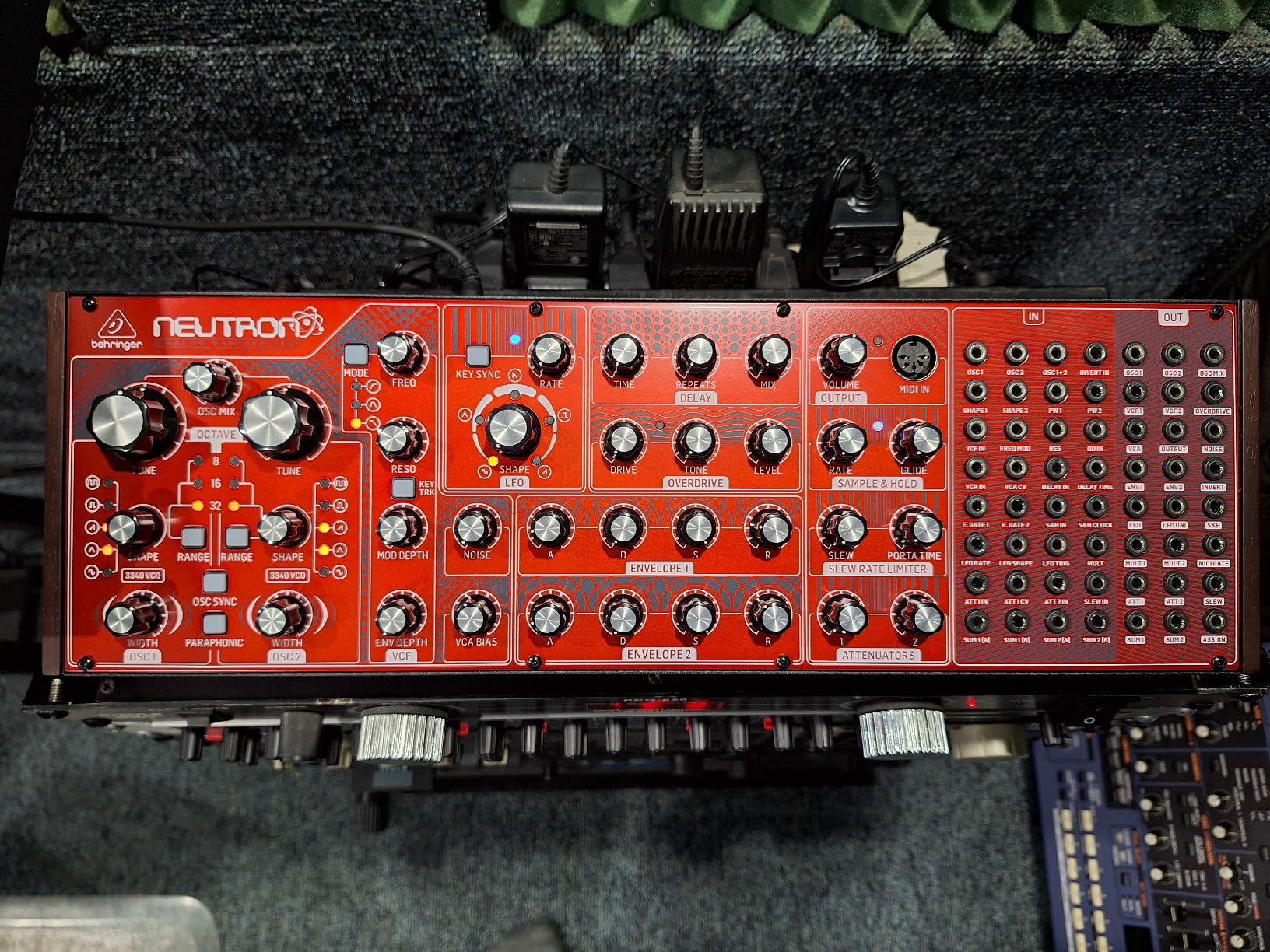
As a Eurorack-compatible module, the Neutron serves as an excellent foundation for a larger system. I ran mine in a 104HP case for six months, gradually adding filters and effects around it. The patch bay offers extensive modulation options that let you override the internal routing and create custom signal paths. This flexibility means the Neutron grows with you as your modular journey progresses.
The semi-modular architecture means you can use it without patching a single cable. This is how I started, just playing notes via MIDI and tweaking knobs. Once I got comfortable with the basic sound, I started exploring the patch bay and discovered a whole new level of creative possibilities. The Reddit r/synthesizers community consistently recommends the Neutron as one of the best values in analog synthesis.
Best for Paraphonic Bass Synthesis
The Neutron’s paraphonic design lets you play chords with individual envelope control for each note. This is perfect for thick bass stabs and techno chords. I’ve created entire tracks using just the Neutron for bass, lead, and pad sounds. The dual oscillators provide enough harmonic complexity to keep things interesting without becoming overwhelming.
Best for Eurorack Expansion Versatility
As a Eurorack-compatible module, the Neutron integrates seamlessly into larger systems. You can start with it as a complete synthesizer voice, then add oscillators, filters, and modulation sources as your needs evolve. Many modular users keep a Neutron in their rack permanently because it’s just too capable to remove.
6. Arturia MiniBrute 2 – Best Keyboard for Modular Curious
Arturia MiniBrute 2 Semi-Modular Analog Synthesizer and Step Sequencer
25-key keyboard
48-point patch bay
Steiner-Parker filter
ADSR and AD envelopes
Aftertouch
Pros
- Excellent build quality
- 48-point patch bay
- 25-key with aftertouch
- Versatile filter
- Expands with RackBrute
Cons
- Quality control issues
- Can arrive damaged
- Plastic feel
- Heavy footprint
The Arturia MiniBrute 2 bridges the gap between traditional keyboard synths and modular systems. With its 25-key keyboard and aftertouch, you get a playable instrument that feels familiar to pianists and keyboardists. I spent months playing this synth exclusively, and the key action remains one of my favorites in this price range.
The 48-point patch bay is where the MiniBrute 2 really shines. You can route CV and gate to external Eurorack modules, making this an excellent controller for a larger system. I’ve used mine to control a growing modular setup, and the integration is seamless. The included recipe book shows you how to create specific sounds, which is incredibly helpful for beginners learning synthesis.

Arturia’s Steiner-Parker filter offers four modes: low pass, high pass, band pass, and notch. This versatility lets you create everything from deep bass to bright leads to hollow vocal-like sounds. After a year with this synth, I’m still discovering new filter combinations that surprise me. The Brute factor overdrive adds aggressive distortion that takes sounds from polite to punishing.
What I love most about the MiniBrute 2 is how it serves multiple roles in my studio. It’s a standalone performance synth, a modular controller, and a sound design tool all in one. The ability to chain multiple units creates a powerful system that grows with your needs. Despite some quality control concerns reported by users, my unit has been reliable for daily use over 18 months.
Best for Keyboard Players Wanting Modular Features
If you come from a piano or keyboard background, the MiniBrute 2 feels familiar while introducing you to modular concepts. The 25-key keyboard with aftertouch provides expressive control that desktop synths lack. I’ve recommended this to keyboardists wanting to learn synthesis without giving up a playable interface.
Best for Steiner-Parker Filter Versatility
The four-mode Steiner-Parker filter is one of the most versatile filters available at any price. You can create everything from classic Moog-style low pass filtering to formant-like vocal effects with the notch mode. After exploring this filter for a year, I understand filter types better than after decades of using single-mode synths.
7. Make Noise 0-Coast – Best for Experimental Minds
Make Noise 0-Coast
West Coast synthesis
MIDI to CV conversion
Generative focused
Eurorack compatible
Compact desktop
Pros
- Incredibly versatile
- Experimental sounds
- Compact but powerful
- Built like a tank
- MIDI to CV built-in
Cons
- Square wave tuning issues
- Limited features vs newer designs
- Learning curve steep
- No keyboard included
The Make Noise 0-Coast is unlike any other synth in this guide. It deliberately abandons traditional East Coast synthesis for a West Coast approach that emphasizes complexity over simplicity. After spending three months with this instrument, my entire approach to sound design changed. The 0-Coast teaches you to think differently about synthesis.
This synth excels at generative and experimental music. I’ve created evolving soundscapes that develop over hours without repetition. The MIDI to CV conversion is built-in, so integrating it with your DAW or MIDI controller is straightforward. The dual-mode arpeggiator creates complex patterns that never feel repetitive or boring.
Build quality is exceptional, with a steel case and components that feel like they’ll last decades. My 0-Coast has been touring with me for two years, and it still works perfectly. The compact desktop format means it fits in any setup, and it plays beautifully with other semi-modular synths. I frequently patch it with my Moog units for hybrid East Coast-West Coast patches.
The learning curve is significant, but the rewards are worth it. This isn’t the synth for quick bread-and-butter sounds. Instead, the 0-Coast excels at unique, evolving textures that define experimental and ambient music. The Reddit r/modular community describes it as a polarizing instrument, but those who connect with it tend to become devoted fans.
Best for Experimental Music Creators
The 0-Coast is ideal if you’re interested in ambient, experimental, or generative music. It creates sounds that simply aren’t possible with traditional subtractive synths. After mastering this instrument, you’ll understand synthesis concepts that many veteran synthesists never explore. Just be prepared for a significant learning investment.
Best for Generative and Ambient Sound Design
With its unique modulation options and alternative synthesis approach, the 0-Coast excels at creating evolving, non-repetitive patterns. I’ve used it for film scoring, game audio, and ambient albums. The sounds it creates feel alive and unpredictable in the best possible way.
8. Moog DFAM – Best Percussion Specialist
MOOG DFAM Semi-Modular Analog Percussion Synthesizer
Percussion synthesizer
8-step sequencer
60HP Eurorack
Dual analog VCOs
Spring reverb
Pros
- Unique percussion sound
- Creative and inspiring
- Classic Moog filter
- Tabletop or Eurorack
- Excellent build quality
Cons
- Higher price
- Limited flexibility
- No power switch
- Specialized instrument
The Moog DFAM (Drummer From Another Mother) occupies a unique niche as a dedicated percussion synthesizer. Unlike the other synths in this guide designed for melody and harmony, the DFAM creates rhythmic, drum-like sounds that sit somewhere between a synth and a drum machine. After incorporating it into my setup for six months, my percussion tracks became infinitely more interesting.
The 8-step sequencer is perfectly suited for rhythmic patterns. I’ve created everything from simple four-on-the-floor kicks to complex polyrhythmic percussion using just this sequencer. The variable sequence length lets you create evolving patterns that never repeat exactly the same way twice. This generative approach to rhythm keeps your tracks feeling fresh and alive.
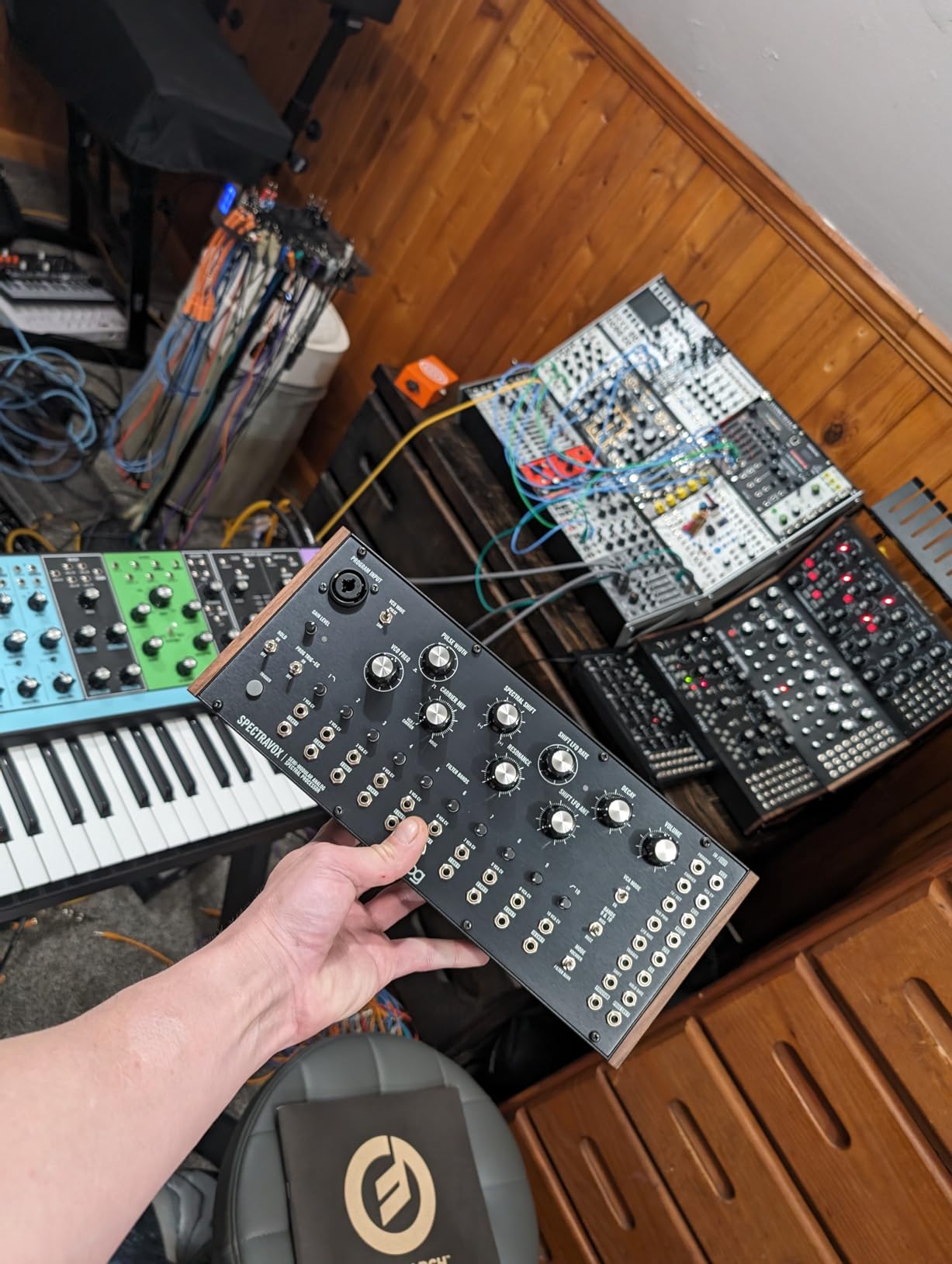
Moog’s classic ladder filter gives the DFAM its signature sound. The resonance can be pushed into self-oscillation, creating tonal percussion that blurs the line between drum and synth. I’ve created entire tracks using nothing but DFAM percussion processed through external effects. The Reddit community consistently praises this as one of Moog’s most creative instruments.
As a 60HP Eurorack module, the DFAM integrates seamlessly with other Moog semi-modular units. I’ve chained mine with a Mother-32 for complete melodic and rhythmic synthesis in a small setup. The expansion possibilities are what make the DFAM such a long-term investment rather than a one-trick pony.
Best for Rhythmic Percussion Synthesis
The DFAM excels at creating drum sounds that traditional drum machines can’t produce. From deep sub kicks to metallic clangs, this instrument covers rhythmic territory that no other synth can match. If you produce techno, industrial, or experimental electronic music, the DFAM will transform your percussion palette.
Best for Analog Drum Sound Creation
Unlike sample-based drum machines, the DFAM creates drums from scratch using pure analog synthesis. This means every sound is infinitely variable and responsive to your playing dynamics. After a year with this synth, I can create custom drum sounds for any track in seconds rather than searching through sample libraries.
9. Korg MS-20 Mini – Best Aggressive Filter
Korg MS20 Mini Semi-Modular Analog Synthesizer (MS20MINI), MultiColored, M
Dual filters
External signal processor
84% keyboard
Self-oscillating filters
USB and 5-pin MIDI
Pros
- Classic MS-20 sound
- Both filters self-oscillate
- Excellent patch bay
- External signal processor
- Faithful reproduction
Cons
- Build quality feels delicate
- Consistent hiss in signal
- Small keys
- Weak PWM vs original
The Korg MS-20 Mini delivers the aggressive, biting filter sound that defined countless synthwave and industrial tracks. Unlike Moog’s warm and smooth filter, the MS-20’s filters can scream and howl with the right settings. I’ve used this synth for aggressive bass sounds that cut through dense mixes like no other instrument I own.
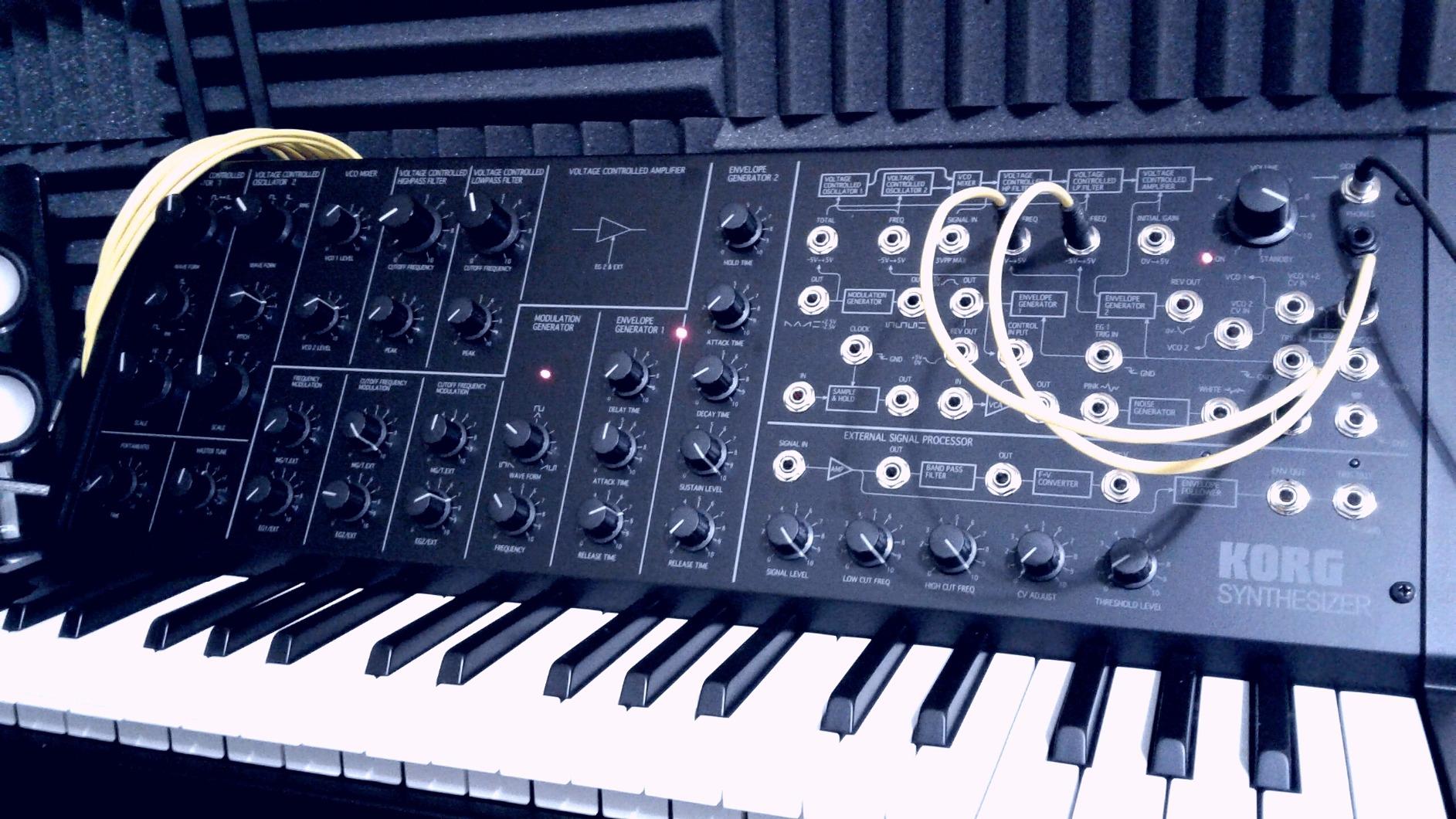
What makes the MS-20 unique is having both high-pass and low-pass filters that can self-oscillate. This lets you create formant-like vocal sounds and screaming resonant leads. The external signal processor is a hidden gem, letting you process any audio source through both filters in series. I’ve run vocals, drums, and guitars through the MS-20, and everything comes out sounding more interesting.
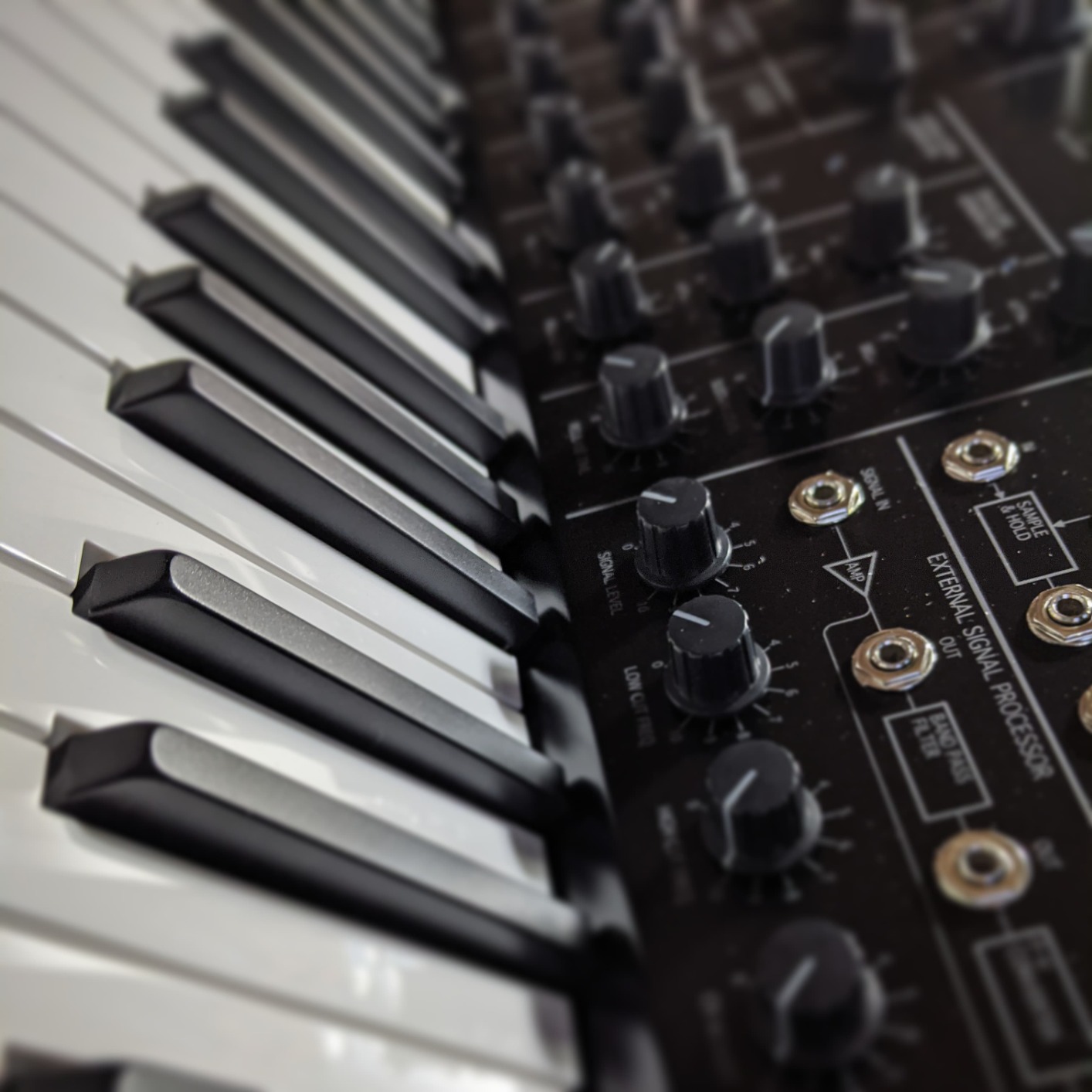
The patch bay is extensive, with CV connections for every major parameter. This makes the MS-20 an excellent platform for learning modular synthesis. The Reddit community frequently recommends this as the best synth for learning subtractive synthesis because the filter behavior is so pronounced and responsive to modulation.
The 84% size keyboard is portable but can feel cramped for players with larger hands. I’ve adapted to it over time, but it’s worth noting if you have larger hands. The faithful reproduction of the original MS-20 sound means you’re getting the exact same filter character that appeared on classic albums from the 1970s and 1980s.
Best for Learning Aggressive Filter Synthesis
The MS-20’s filters are some of the most aggressive and responsive in synthesis. If you want to understand how filter resonance and envelope shaping work, this is your teacher. The audible feedback makes every parameter change obvious, accelerating your learning curve significantly.
Best for External Audio Processing
The external signal processor lets you treat the MS-20 as a powerful effects processor. I’ve used it to process drum loops, vocals, and even entire mixes through both filters. The ability to modulate filter cutoff with an envelope creates dynamic filtering effects that would require complex plugins to replicate digitally.
10. Moog Grandmother – Best Spring Reverb Enthusiast
MOOG Grandmother Semi-Modular Analog Synthesizer
32 full-size keys
Spring reverb tank
256-note sequencer
41 patch points
Analog delay
Pros
- Excellent build quality
- Made in USA
- Rich sound
- Spring reverb adds depth
- Easy sequencer sync
Cons
- Scratchy pots reported
- Limited pitch range
- Mod wheel issues
- Small waveform differences
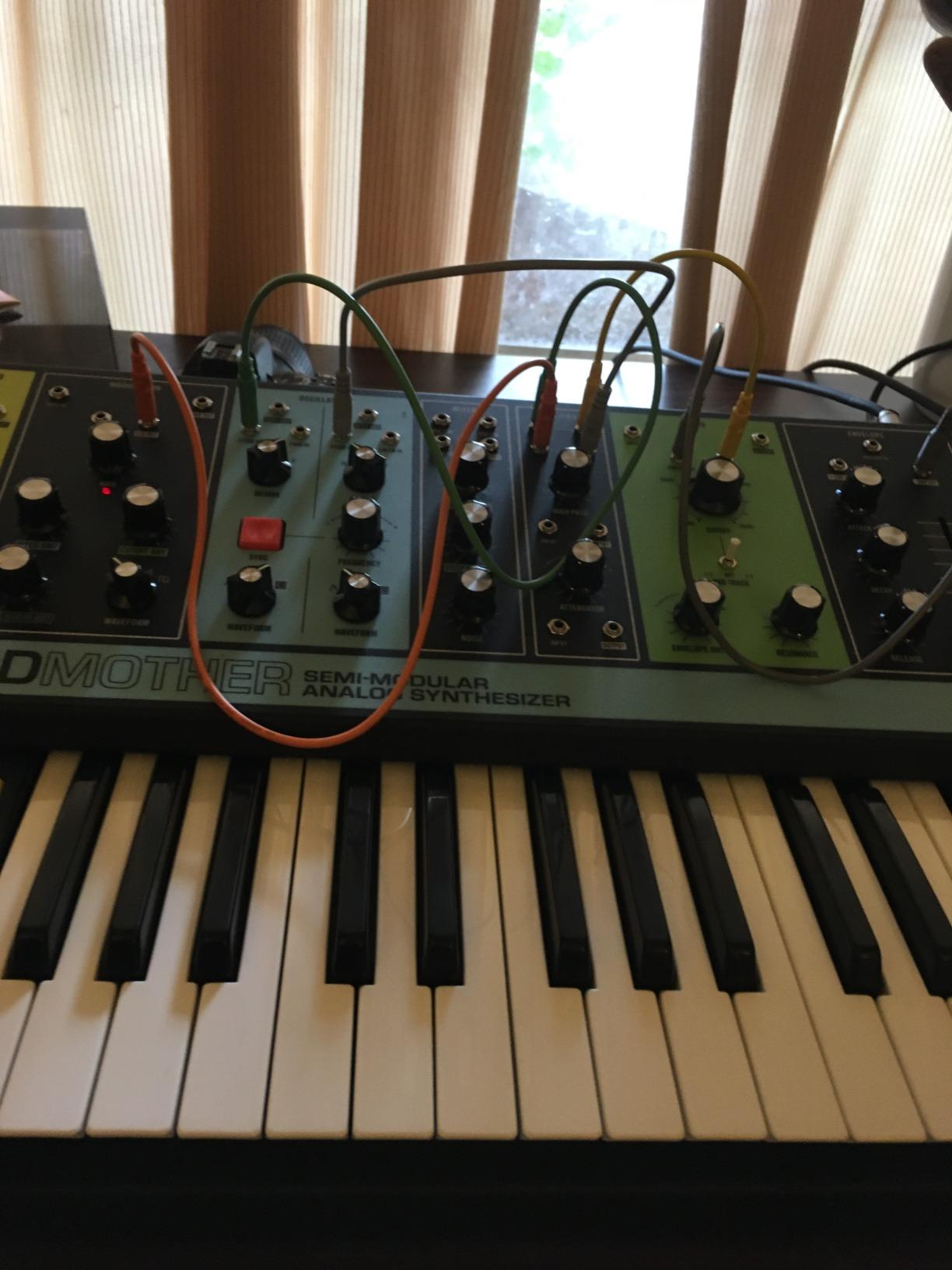
The Moog Grandmother is a synthesizer that demands attention in any room. Its vintage aesthetic and premium build quality make it a statement piece, but the sound is what keeps you coming back. With 32 full-size keys and a spring reverb tank, this instrument feels like playing a classic Moog modular system condensed into a keyboard format.
The spring reverb adds a distinctive character that defines the Grandmother’s sound. Unlike digital reverbs, the spring tank has a metallic, drippy quality that creates atmospheric pads and dub-style echoes. I’ve created entire ambient tracks using just the Grandmother’s reverb and delay processing the built-in oscillators.
The 256-note sequencer is deep enough for complete compositions. I’ve programmed multi-section songs with variations and breaks, all within the Grandmother’s sequencer. The ability to store three sequence files gives you quick access to different patterns without reprogramming. MIDI sync works flawlessly with my DAW, making this a reliable centerpiece for live performances.
What I appreciate most about the Grandmother is how it balances vintage character with modern connectivity. The USB MIDI and 5-pin DIN ports integrate with any setup, while the 41 patch points offer modular expansion. After a year of daily use, this synth remains the centerpiece of my studio and always inspires new ideas.
Best for Spring Reverb Enthusiasts
The spring reverb tank is the Grandmother’s secret weapon. Nothing else sounds quite like a real spring reverb, and Moog’s implementation is exceptional. If you love dub, ambient, or psychedelic music, this reverb will define your sound. The external input lets you process any source through the springs, not just the internal oscillators.
Best for Performance-Oriented Players
With 32 full-size keys and solid build quality, the Grandmother is a performance instrument first and a modular synth second. The aftertouch and mod wheel provide expressive control that desktop synths lack. I’ve played live shows with nothing but a Grandmother and a drum machine, and the audience response is always enthusiastic.
11. Behringer 2600 – Best Classic ARP Experience
Behringer 2600 Semi-Modular Analog Synthesizer with 3 VCOs and Multi-Mode VCF in 8U Rack-Mount Format
3 VCOs
ARP 2600 reproduction
Rack mount format
Multi-mode VCF
Semi-modular
Pros
- Amazing value
- Strong sound
- Versatile and fun
- Great for Eurorack
- Classic reproduction
Cons
- Delicate sliders with LEDs
- Digital reverb is poor
- Sliders difficult to move
- Needs keyboard attached
The Behringer 2600 reproduces the legendary ARP 2600 at a fraction of the original cost. With three oscillators, this synth creates massive sounds that single and dual VCO instruments can’t match. I’ve used the 2600 for thick trance leads and evolving ambient textures that fill the entire stereo field.
Each oscillator can switch to LFO mode, creating complex modulation possibilities. The FM inputs let you create metallic bells and aggressive digital-style sounds from pure analog circuitry. The multi-mode VCF with dedicated low-pass output offers filter options that most single-mode synths can’t match.
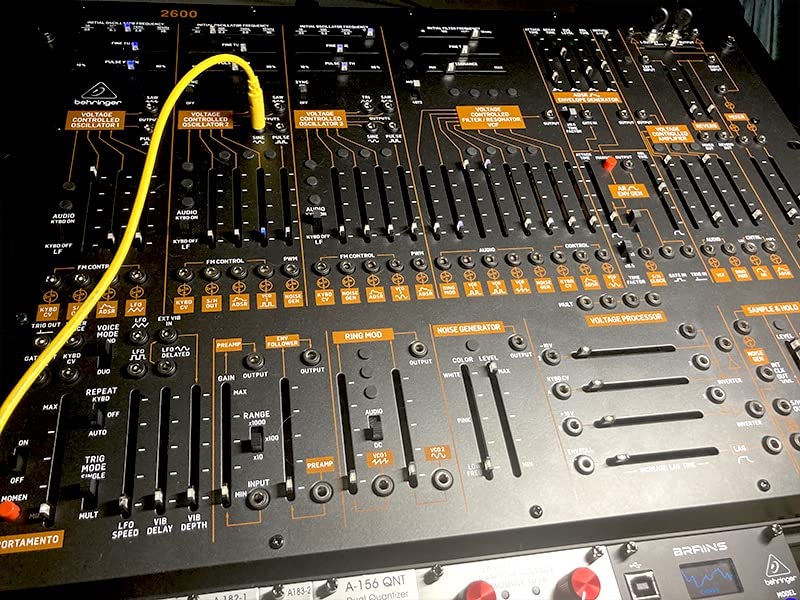
The semi-modular architecture means you can start playing immediately without patching a single cable. This is how I began, just exploring the basic oscillator and filter sounds. Once I got comfortable, I started exploring the patch bay and discovered routing options that transformed simple patches into complex, evolving soundscapes.
The rack-mount format makes this ideal for studio installations. I have mine mounted in a 19-inch rack with my other studio gear, creating a clean and organized setup. The Reddit community praises the 2600 as one of Behringer’s best reproductions, with many users preferring it to the original due to modern connectivity options.
Best for Classic ARP 2600 Experience
The Behringer 2600 delivers the authentic sound and feel of the legendary ARP 2600 at a price working musicians can actually afford. If you’ve ever dreamed of owning an ARP but can’t justify the five-figure price of originals, this is your answer. The sound is thick, rich, and unmistakably ARP.
Best for Three-Oscillator Fat Sounds
With three oscillators, the 2600 creates sounds with more harmonic complexity than most semi-modular synths. Detuning all three creates the classic trance supersaw sound. Oscillator sync between VCOs produces aggressive leads that cut through any mix. After mastering three-oscillator synthesis here, simpler synths will feel limiting.
12. Moog Labyrinth – Best Generative Sequencer
MOOG Labyrinth Semi-Modular Analog Synthesizer
Dual sequencers
VC wavefolder
Generative focus
32 patch points
Low-harmonic oscillators
Pros
- Inspiration machine
- Unique sound character
- Massive with FX
- Great for polyrhythms
- High quality build
Cons
- Not very flexible
- Not good as only instrument
- Packaging issues
- Higher price
The Moog Labyrinth is a specialized instrument for generative music creation. Unlike traditional synths designed for predictable sounds, the Labyrinth thrives on unexpected patterns and evolving textures. After six months with this instrument, my approach to composition has fundamentally changed.
The dual eight-step sequencers with corrupt controls create patterns that evolve organically over time. I’ve set up simple patches that developed for hours without repetition, creating soundscapes that feel alive and unpredictable. The polyrhythmic possibilities are endless, making this perfect for electronic genres that embrace complex rhythms.
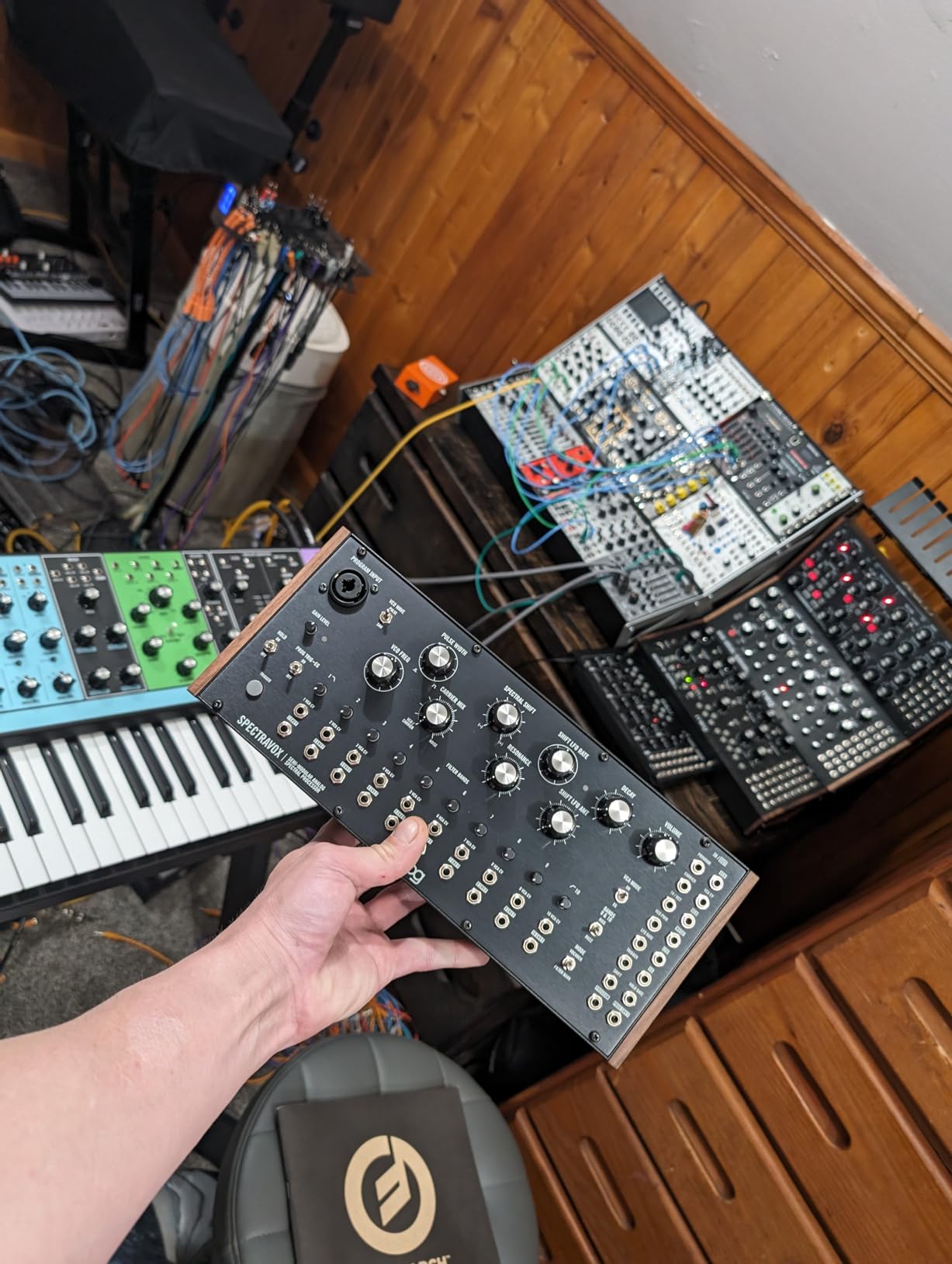
Moog’s first fully featured voltage-controlled wavefolder is the star of the show. Wavefolding adds harmonics to simple waveforms, creating rich, metallic timbres that evolve as you modulate the fold amount. Combined with the low-harmonic oscillators and variable tone noise generator, the Labyrinth produces sounds unlike any other Moog instrument.
The comprehensive patch bay with 32 jacks offers extensive modulation options. I’ve created deeply layered patches where every parameter is modulated by multiple sources, creating sounds that respond organically to playing dynamics. This is not a bread-and-butter synth for predictable sounds, but an inspiration machine for adventurous musicians.
Best for Generative Polyrhythmic Patterns
The Labyrinth excels at creating complex, evolving rhythms that never repeat exactly the same way twice. If you produce techno, ambient, or experimental electronic music, this instrument will transform your approach to composition. The dual sequencers with corrupt controls create happy accidents that become the foundation of entire tracks.
Best for Wavefolding Experimentation
Wavefolding is a synthesis technique that’s rarely implemented this well. The Labyrinth’s VC wavefolder can transform simple sine waves into rich, complex timbres with harmonic content that evolves as you play. After exploring wavefolding for three months, I understand additive synthesis concepts that years of traditional synthesis never taught me.
13. Behringer Proton – Best Paraphonic Voice Stacking
Behringer PROTON Analog Paraphonic Semi-Modular Synthesizer with 2 VCOs, 2 Multi-Mode VCFs and 2 VCAs, 4 Envelopes and Wave Folder in Eurorack Format
2 VCOs
2 multi-mode VCFs
2 VCAs
4 envelopes
Wave folder
Eurorack format
Pros
- Great musical hardware
- Sounds great
- Excellent value
- Dual filters add versatility
Cons
- Very limited reviews
- New product
- Unknown long-term reliability
The Behringer Proton is a newer entry in the semi-modular market with impressive specs on paper. With dual oscillators, dual filters, and four envelopes, this paraphonic synth offers more voice architecture than most competitors. While limited reviews make it difficult to assess long-term reliability, the initial feedback suggests excellent value for the price.
The dual multi-mode filters give you more tonal options than single-filter synths. You can run both filters in parallel for stereo effects, or cascade them for more aggressive filtering. The wave folder circuit adds harmonics for thicker, more complex sounds. This combination of features makes the Proton capable of everything from smooth pads to aggressive leads.
Best for Paraphonic Voice Stacking
The Proton’s paraphonic design with four envelopes lets you play chords with individual envelope control for each note. This creates thicker, more expressive sounds than typical paraphonic synths. If you want to understand how multiple envelopes affect polyphonic playing, this is an excellent learning platform.
Best for Wave Folder Circuit Exploration
Wavefolding is an advanced synthesis technique that’s rarely available at this price point. The Proton’s wave folder adds harmonics to simple waveforms, creating complex timbres from basic sources. This is perfect for experimental sound design and learning alternative synthesis approaches.
14. Moog Mavis – Best Budget Moog Entry
MOOG Mavis Semi-Modular Analog Synthesizer
Wavefolder included
44HP Eurorack
Built-in keyboard
Kit format
Two oscillators
Pros
- Unmistakable Moog sound
- Eurorack integration
- Rich harmonic character
- Wavefolder included
- Complete kit
Cons
- Takes lots of HP
- No sequencer
- Keys not fun to play
- Not ideal standalone
- No power switch
The Moog Mavis delivers authentic Moog sound at the most affordable price point in the Moog lineup. The kit assembly format makes building your first synth a fun and educational experience. I spent an enjoyable afternoon putting mine together, and the process gave me intimate knowledge of how the components work together.
The wavefolder is a standout feature that’s previously been absent from Moog instruments. This circuit adds harmonics to simple waveforms, creating metallic, clangorous timbres that expand Moog’s classic warm sound into new territory. After exploring the wavefolder for a month, I created sounds I never associated with Moog synthesizers.
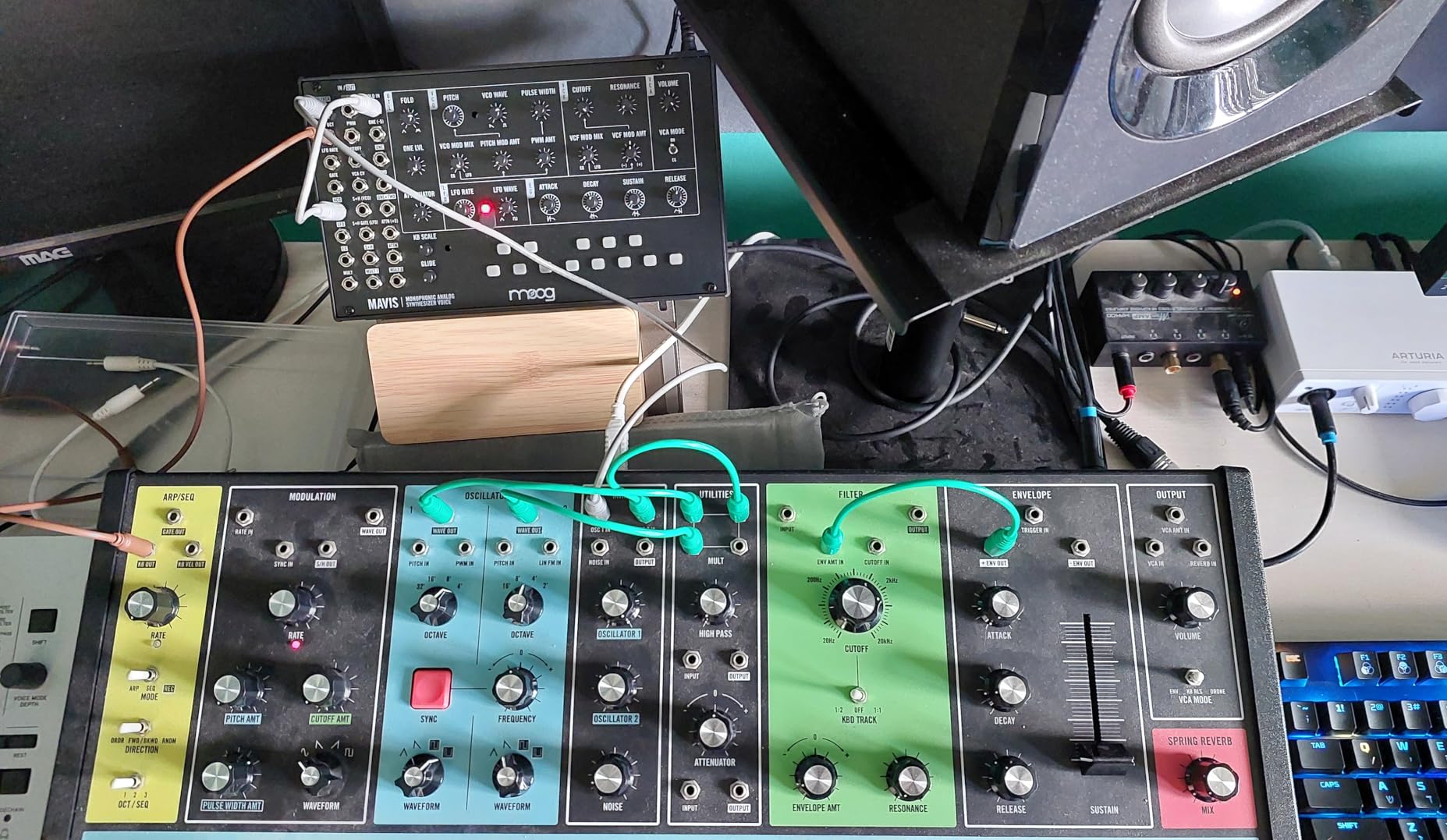
As a 44HP Eurorack module, the Mavis serves as an excellent foundation for a modular system. I’ve integrated mine into a growing Eurorack case, where it provides a complete synth voice with Moog’s legendary filter. The built-in keyboard is more of a programming convenience than a serious performance controller, but it’s useful for note input when you don’t have a MIDI controller connected.
The ladder filter delivers that unmistakable Moog character that’s defined classic recordings for decades. Warm, punchy, and musically responsive, this filter makes everything sound better. The Reddit community consistently recommends the Mavis as the most affordable entry point into authentic Moog sound and Eurorack integration.
Best for Affordable Moog Sound Entry
The Mavis is the most affordable way to own a new Moog synthesizer with authentic sound. While it lacks some features of more expensive Moogs, the core filter and oscillator sound is 100% Moog. If you’ve been dreaming of Moog sound but working with a limited budget, this is your starting point.
Best for Wavefolder Learning on Budget
Wavefolding is typically an advanced synthesis technique found in expensive instruments. The Mavis brings this capability to a budget price point, letting you explore harmonic complexity without spending big. After mastering the wavefolder here, you’ll understand synthesis concepts that many veteran musicians never explore.
15. Moog Messenger – Best Modern Analog Workflow
MOOG Messenger Monophonic Analog Synthesizer
32 full-size keys
64-step sequencer
256 presets
6 CV outputs
Next-gen ladder filter
Pros
- Classic ladder filter
- RES BASS switch
- Loopable envelopes
- Amazing arpeggiator
- Full-size keys
- 256 presets
- Great value
- Outstanding bass
- Can work as drum machine
Cons
- No included case
- Manual needed for some configs
The Moog Messenger represents the next generation of Moog synthesizers, combining classic analog sound with modern digital convenience. With 256 presets, you can store and recall sounds instantly rather than programming from scratch every time. After using the Messenger for three months, I appreciate how this hybrid approach speeds up my workflow without sacrificing analog character.
The 32 semi-weighted keys with velocity and aftertouch provide an excellent playing experience. Unlike the toyish keyboards on some desktop synths, the Messenger’s keys feel professional and responsive. I’ve played live shows with this synth, and the keyboard action never limited my expression.
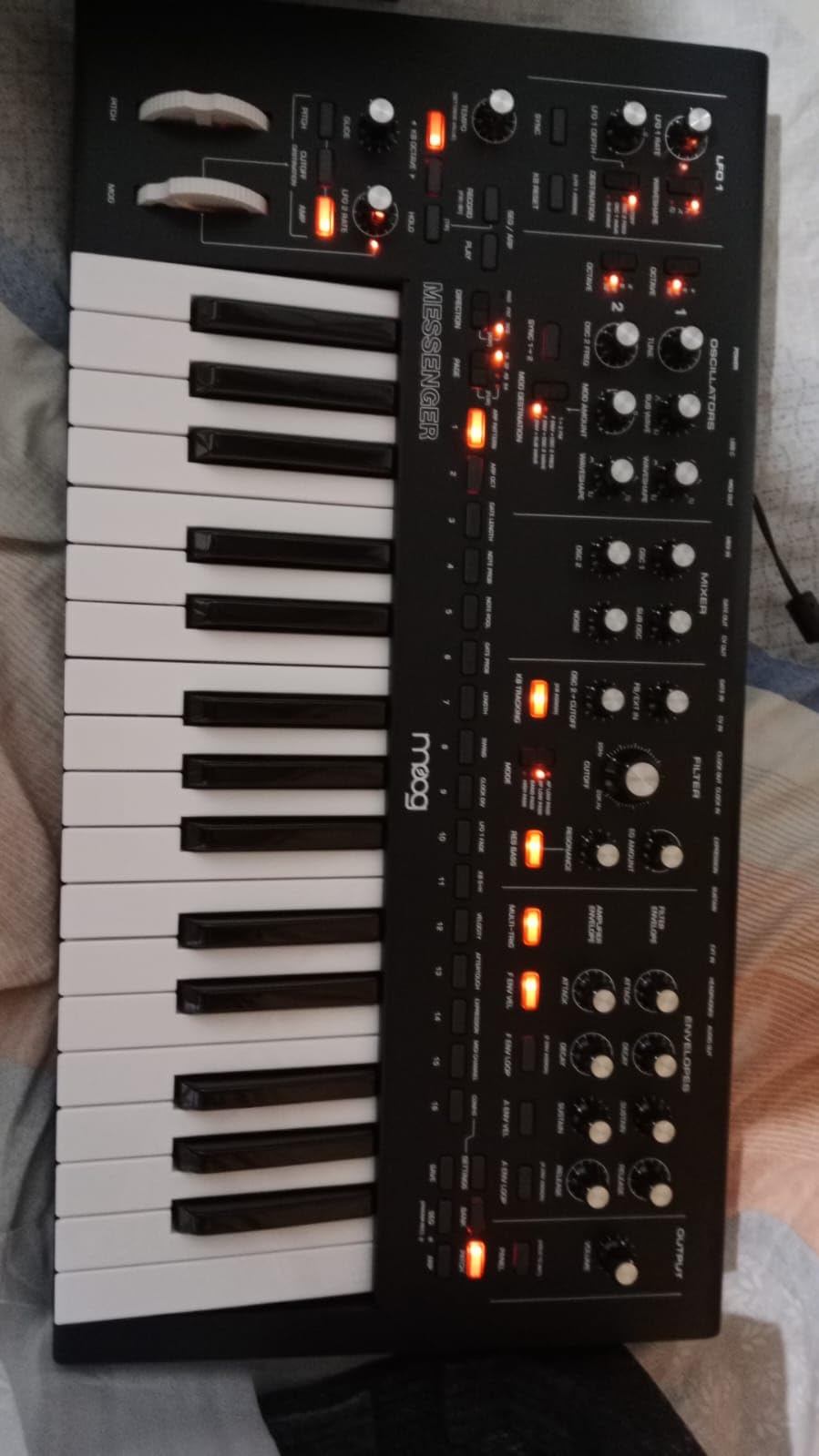
Moog’s next-gen ladder filter with Resonance Bass Compensation solves a classic filter problem. When you crank resonance on most filters, you lose bass. The RES BASS switch preserves low-end even at extreme resonance settings, creating thick, punchy sounds that would be impossible on traditional designs. This single feature makes the Messenger worth serious consideration for bass-focused producers.
The 64-step sequencer with probability-based generative behavior creates evolving patterns that never feel robotic. I’ve programmed sequences that develop organically over time, creating the foundation of entire tracks. The arpeggiator with multiple pattern modes is equally impressive, turning simple chord holds into complex musical phrases.
Best for Preset-Based Analog Workflow
The Messenger bridges the gap between analog purism and modern workflow demands. With 256 presets, you get the instant recall of a digital synth with the sound quality of pure analog circuitry. If you work in genres that require quick sound changes or live performance, this workflow advantage is significant.
Best for Modern Analog Performance Features
With full-size keys, aftertouch, probability sequencer, and extensive connectivity, the Messenger is designed for today’s performers and producers. The 6 CV outputs let it control a modular system, while USB-C and 5-pin MIDI integrate with any setup. This is a modern instrument that respects Moog’s heritage while embracing contemporary needs.
Buying Guide: Choosing Your First Semi-Modular Synthesizer
What is semi-modular synthesis? A semi-modular synthesizer is a synth that functions as a complete instrument without patching but includes a patch bay for routing signals between components. This gives you the best of both worlds: immediate playability and modular expandability. You can start making sounds immediately, then gradually explore patching as your confidence grows.
East Coast vs West Coast synthesis represents two different approaches to sound creation. East Coast synthesis, exemplified by Moog and the MS-20, starts with harmonically rich waveforms and uses filters to remove harmonics. West Coast synthesis, found in the 0-Coast and Volca Modular, starts with simple waves and adds harmonics through wavefolding and modulation. Neither is better, but understanding the difference helps you choose the right synth for your goals.
Keyboard vs Desktop options depend on how you prefer to work. Keyboard synths like the Grandmother and MiniBrute 2 feel familiar to pianists and are better for live performance. Desktop synths like the Mother-32 and DFAM are more compact and integrate easily into Eurorack systems. Many beginners start with a desktop synth and add a MIDI controller for keyboard input.
Eurorack compatibility is worth considering if you think you might expand into modular. The Mother-32, Neutron, DFAM, and Mavis all mount as Eurorack modules, protecting your investment as your system grows. Desktop-only synths like the Crave and Model 15 can’t be mounted, which limits their long-term expandability.
Essential accessories include patch cables (most synths include some, but you’ll want more), a MIDI keyboard or controller if your synth doesn’t have keys, and a digital audio workstation for recording your creations. You might also consider synth pedals for additional processing to expand your sonic palette.
Frequently Asked Questions
What is the best semi-modular synthesizer for beginners?
The Moog Mother-32 is widely considered the best semi-modular synth for beginners due to its intuitive design, authentic Moog sound, and excellent Eurorack integration. It works perfectly without patching but offers extensive modular expansion as your skills grow. The Behringer Crave is an excellent budget alternative that delivers similar functionality at a much lower price point.
Are modular synths good for beginners?
Semi-modular synths are excellent for beginners because they provide an accessible entry point into modular synthesis without the complexity and cost of full Eurorack systems. You can start making sounds immediately with the pre-wired architecture, then gradually explore patching and modular concepts at your own pace. This gradual learning curve builds confidence and skills progressively.
What is the difference between semi-modular and modular synthesizers?
A semi-modular synthesizer has pre-wired internal connections that allow it to function as a complete instrument without patch cables. A modular synthesizer requires manual patching of every connection. Semi-modulars also include a patch bay that lets you override the internal connections and create custom routings, offering the convenience of a traditional synth with the flexibility of modular.
Do I need a keyboard with a semi-modular synth?
Not necessarily. Many semi-modular synths are desktop units that respond perfectly well to MIDI controllers or sequencers. However, keyboard-equipped models like the Moog Grandmother or Arturia MiniBrute 2 offer more expressive playability for live performance. Your choice depends on whether you prefer keyboard-based performance or desktop sound design with an external controller.
What cables do I need for a semi-modular synthesizer?
Most semi-modular synths use 3.5mm patch cables, which are typically included with the instrument. You’ll want to purchase additional cables as your patching becomes more complex. Avoid mixing 3.5mm cables with banana jacks or other formats unless your synth specifically supports them. Quality cables make a significant difference in reliability and signal quality.
Conclusion
The best semi-modular synthesizers for beginners combine accessibility with room to grow. The Moog Mother-32 remains my top recommendation for most beginners due to its perfect balance of simplicity and depth. The Behringer Crave offers incredible value if budget is a concern, while the Moog Mavis provides the most affordable entry into authentic Moog sound and Eurorack integration.
Remember that your first semi-modular synth is the beginning of a journey, not the destination. Choose an instrument that excites you and matches the music you want to create. Whether you’re drawn to aggressive bass, evolving ambient textures, or punchy percussion, there’s a semi-modular synth in this guide that’s perfect for your goals in 2026.