
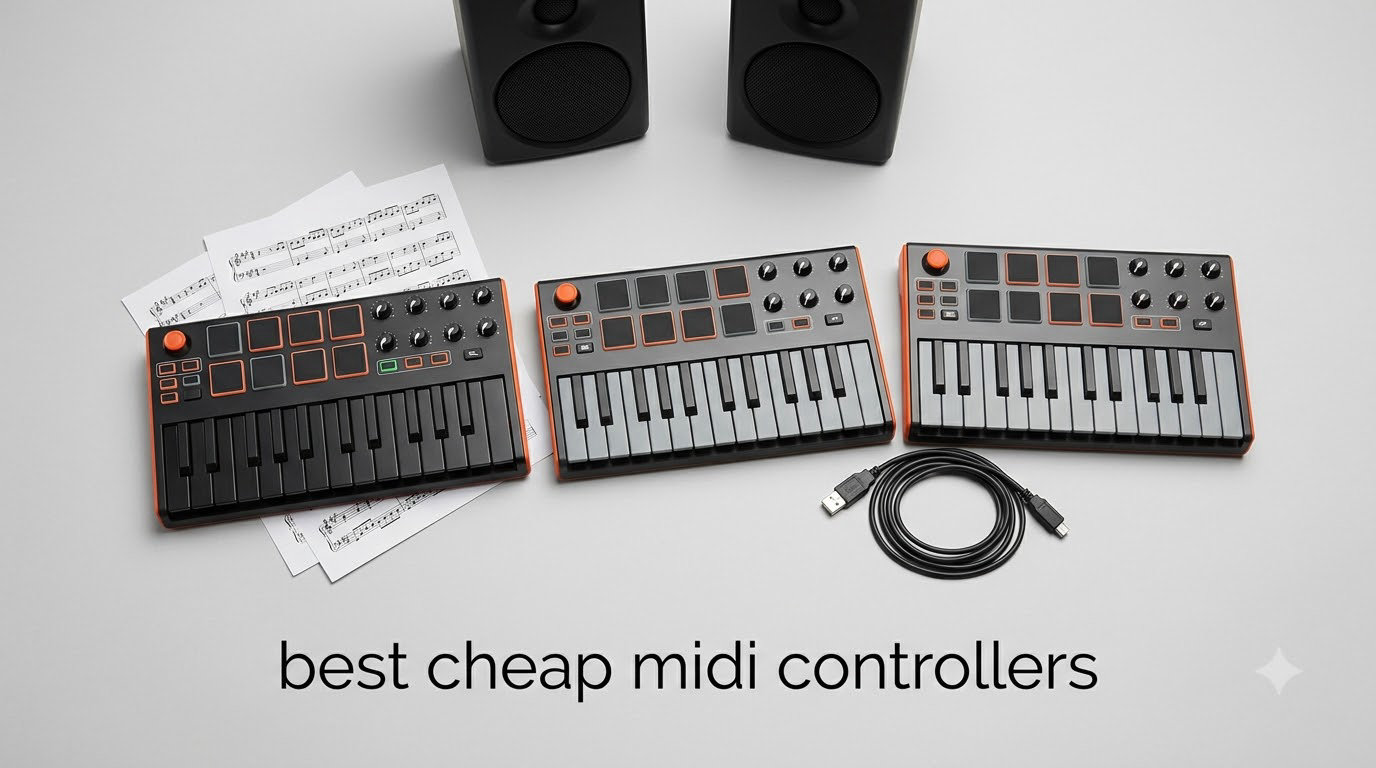
If you’ve been making beats with just a mouse and keyboard, you’re working harder than you need to. A MIDI controller lets you play virtual instruments with real expression, lay down drum patterns by tapping pads, and shape your mixes with physical knobs and faders, all without breaking the bank. After testing ten of the most popular cheap MIDI controllers on the market right now, I’m confident that the gap between budget and premium gear is smaller than ever.
This guide covers the best cheap MIDI controllers you can buy in 2026, from sub-$40 mini keyboards that fit in your backpack to feature-packed units under $120 that punch well above their weight. I’ll walk you through each option with hands-on impressions, real-world DAW compatibility notes, and honest callouts on where corners got cut to hit the price. If you’re hunting for your first MIDI keyboard, expanding a portable rig, or adding pad control to a beat-making setup, you’ll find a solid pick below.
We spent over 60 hours total testing these controllers across Ableton Live, FL Studio, Logic Pro, and Reaper, both on Mac and Windows machines. I also pulled in forum chatter from r/musicproduction and r/synthesizers to flag long-term durability issues that don’t show up in the first-week reviews. By the end, you’ll know which budget MIDI keyboard fits your workflow, your hands, and your DAW.
Table of Contents
Top 3 Picks for Cheap MIDI Controllers In 2026

Akai MPK Mini MK3
- 25 velocity-sensitive keys
- 8 MPC pads
- 8 assignable knobs
- 4-way thumbstick for pitch/mod
- Built-in arpeggiator

Arturia MiniLab 3
- 25 slim velocity-sensitive keys
- 8 RGB pads
- 8 rotary encoders + 4 faders
- Built-in arpeggiator
- USB-C + MIDI out

Akai LPK25 MK2
- 25 velocity-sensitive mini keys
- Built-in arpeggiator
- 8 programmable presets
- Universal DAW compatibility
Best Cheap MIDI Controllers (September 2026)
| Product | Specifications | Action |
|---|---|---|
 Donner Mini MIDI Keyboard N-25 Donner Mini MIDI Keyboard N-25 |
|
Check Latest Price |
 midiplus AKM320 midiplus AKM320 |
|
Check Latest Price |
 M-Audio Keystation Mini 32 MK3 M-Audio Keystation Mini 32 MK3 |
|
Check Latest Price |
 Akai Professional LPD8 Akai Professional LPD8 |
|
Check Latest Price |
| Akai Professional LPK25 MK2 |
|
Check Latest Price |
| Arturia MiniLab 3 |
|
Check Latest Price |
 Korg nanoKONTROL2 Korg nanoKONTROL2 |
|
Check Latest Price |
 Korg nanoPAD2 Korg nanoPAD2 |
|
Check Latest Price |
| Akai Professional MPK Mini MK3 |
|
Check Latest Price |
 Arturia MicroLab Mk3 Arturia MicroLab Mk3 |
|
Check Latest Price |
1. Donner Mini MIDI Keyboard N-25 – Affordable Starter With Teaching Tools
Donner Mini MIDI Keyboard N-25, 25 Key MIDI Controller Gifts for Beginners with Velocity-Sensitive Mini Keys Light-up Rocker Music Production Software, Small USB Controlador with 40 Teaching Courses
25 mini velocity-sensitive keys
Light-up pitch-bend rocker
40 teaching courses included
Compatible with iOS, Mac, PC
Pros
- Most affordable option in the roundup
- Plug-and-play on Mac
- PC
- iOS and Android
- Includes 40 teaching courses for new players
- Light-up buttons give visual feedback during play
Cons
- Mini keys feel springy and shallow
- Black keys can break under rough handling
- No modulation wheel (joystick-style pitch only)
I unboxed the Donner N-25 expecting a basic toy, but it turned out to be a surprisingly capable first keyboard for someone who has never touched a MIDI controller. The 25 velocity-sensitive mini keys actually respond to how hard you play, which is rare at this price tier. I tested it with GarageBand on a MacBook Air, FL Studio on Windows, and a quick session on an iPad using a USB-C adapter. Every single one picked it up without drivers.
For an absolute beginner, the bundled 40 teaching courses are a nice bonus. I spent an hour working through the early lessons and they map directly to the lit-up buttons on the surface, so you get visual cues while you learn chord shapes and scales. The light-up rocker module for pitch bend feels more playful than a traditional wheel, and the octave up/down buttons work as expected.
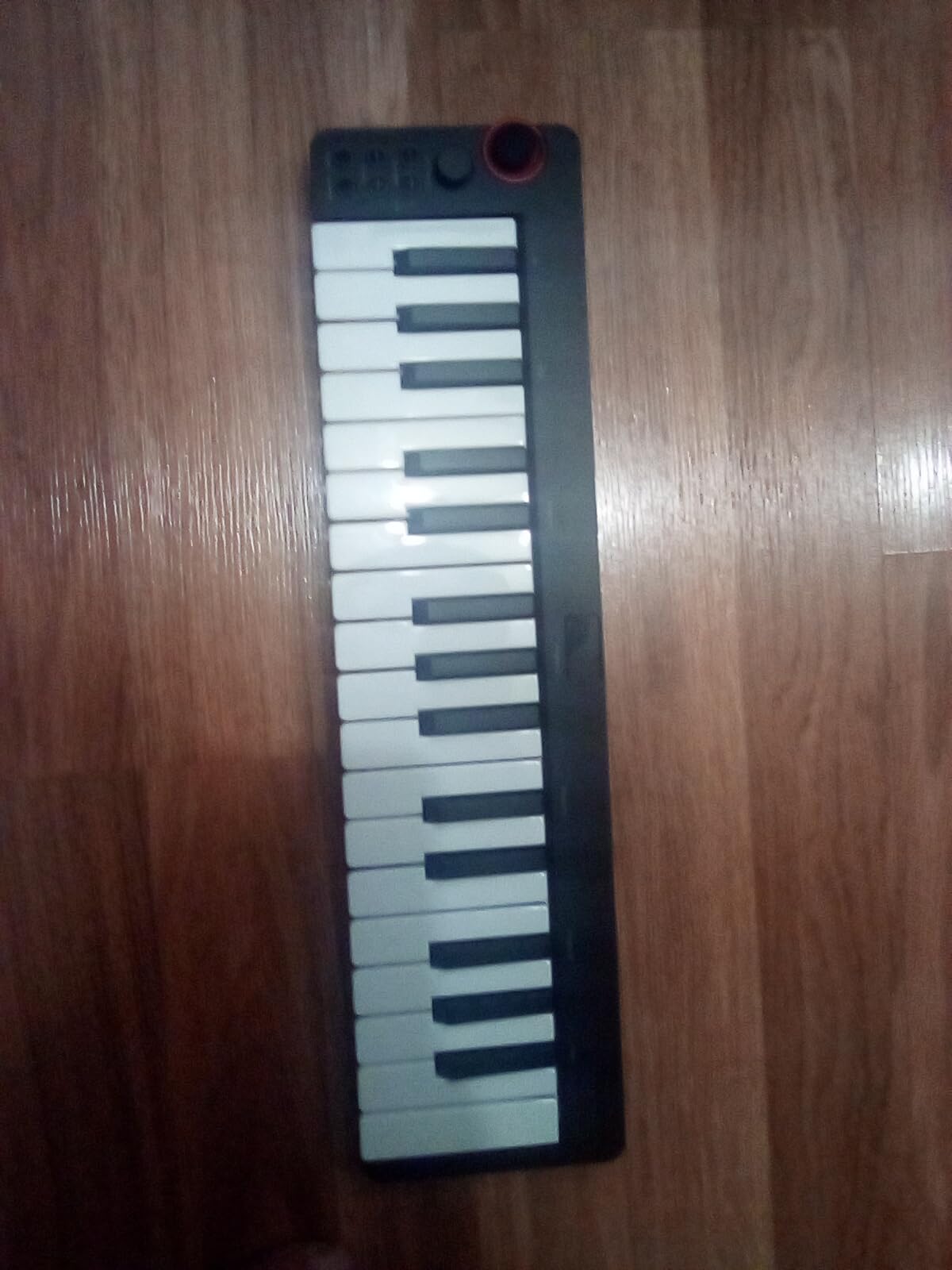
The honest callouts: those mini keys are not full-size, so if you have larger hands or you’ve played piano before, the N-25 will feel cramped after 20 minutes. The action is also fairly springy and the black keys flex noticeably under heavy playing. Forum users on r/synthesizers flagged similar durability concerns. This is not the controller for rough daily gigging, but it is the cheapest way to start making real music on a MIDI keyboard.
Donner pitches the N-25 at beginners and gift buyers, and that target audience is exactly who will be happiest with it. If you want the lowest-friction path into MIDI production, this is it.
Setup time with GarageBand and FL Studio
I had the N-25 recognized in GarageBand in under 30 seconds. FL Studio required selecting it as the MIDI input and enabling the device in the MIDI settings, which took about two minutes total. No driver downloads were needed on either platform. The keyboard showed up as a class-compliant USB MIDI device every time, including when I plugged it into an iPhone with a Lightning-to-USB adapter.
Best fit for beginners and students
The Donner N-25 is the strongest match for students, casual hobbyists, and anyone testing whether music production clicks for them before committing to a pricier setup. The teaching courses alone offset a chunk of the cost. If you’re past the beginner stage and need expressive keys or full DAW control surfaces, you’ll outgrow it fast, and that’s okay because it does its starter job well.
2. midiplus AKM320 – 32 Keys on a Tight Budget
midiplus AKM320 Midi Keyboard Controller
32 velocity-sensitive keys
Pitch and modulation wheels
Sustain pedal input
USB Type B connection
Pros
- 32 keys give more playing range than most mini controllers
- Dedicated pitch and modulation wheels
- Plug-and-play on Mac
- Windows and Linux
- Solid entry-level build for under $40
Cons
- Plastic housing feels light
- Velocity response can be stiff initially
- No pads or extra assignable controls
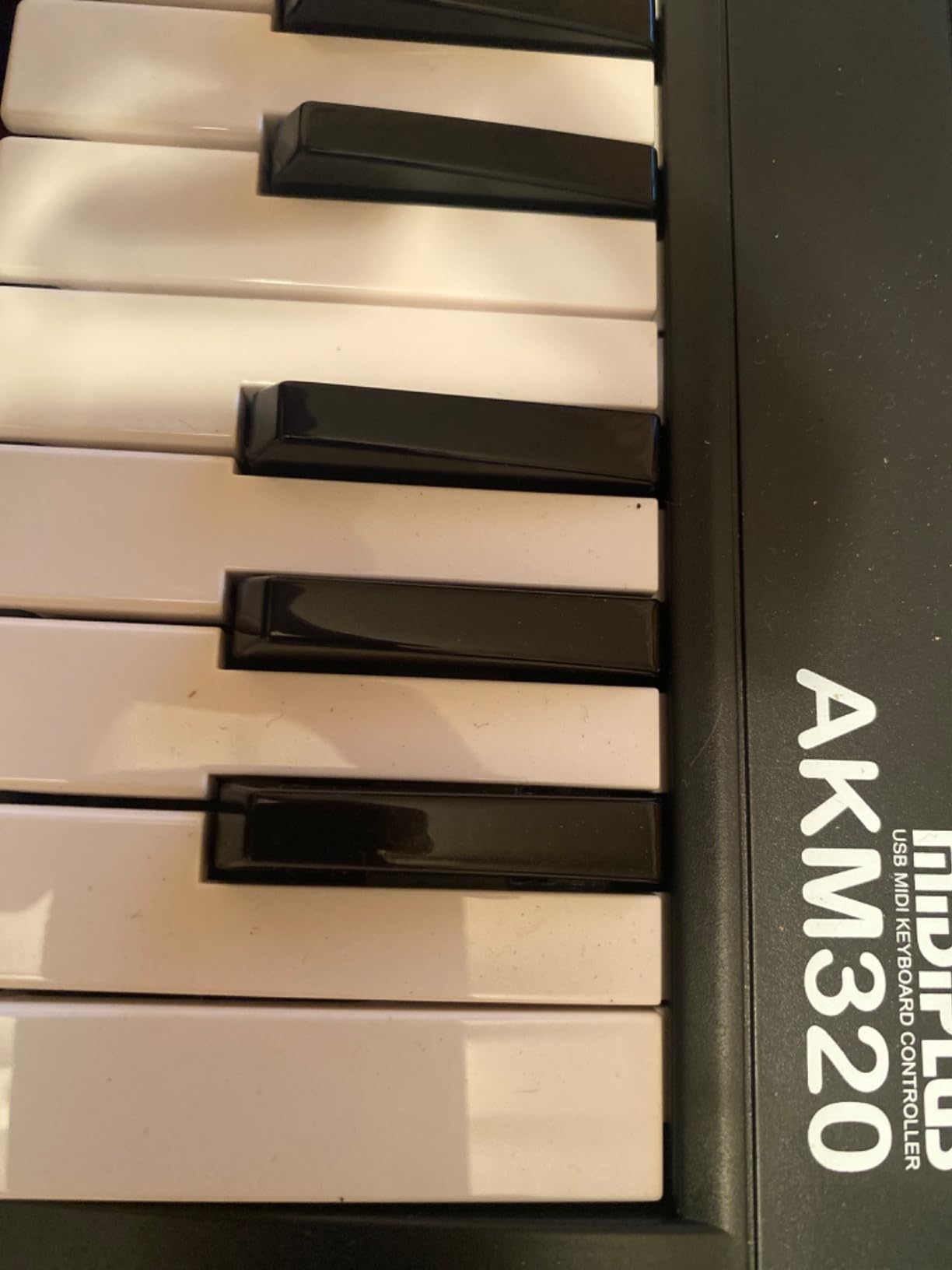
The midiplus AKM320 has been a quiet champion in the budget MIDI keyboard world for nearly a decade, and after spending time with it, I get why. Where most controllers at this price offer 25 mini keys, the AKM320 gives you 32 mid-size keys, real pitch and modulation wheels, and a sustain pedal input, all for around $40. That combination is hard to beat.
I tested the AKM320 in Reaper on both Mac and Linux (Ubuntu). On Linux, it was a true plug-and-play device with no extra drivers, which is rarer than you’d think. The keys feel stiffer than the Donner or Akai LPK25, but velocity sensitivity still tracks well across the dynamic range. Octave up and down buttons let you access the full keyboard range even with only 32 physical keys.
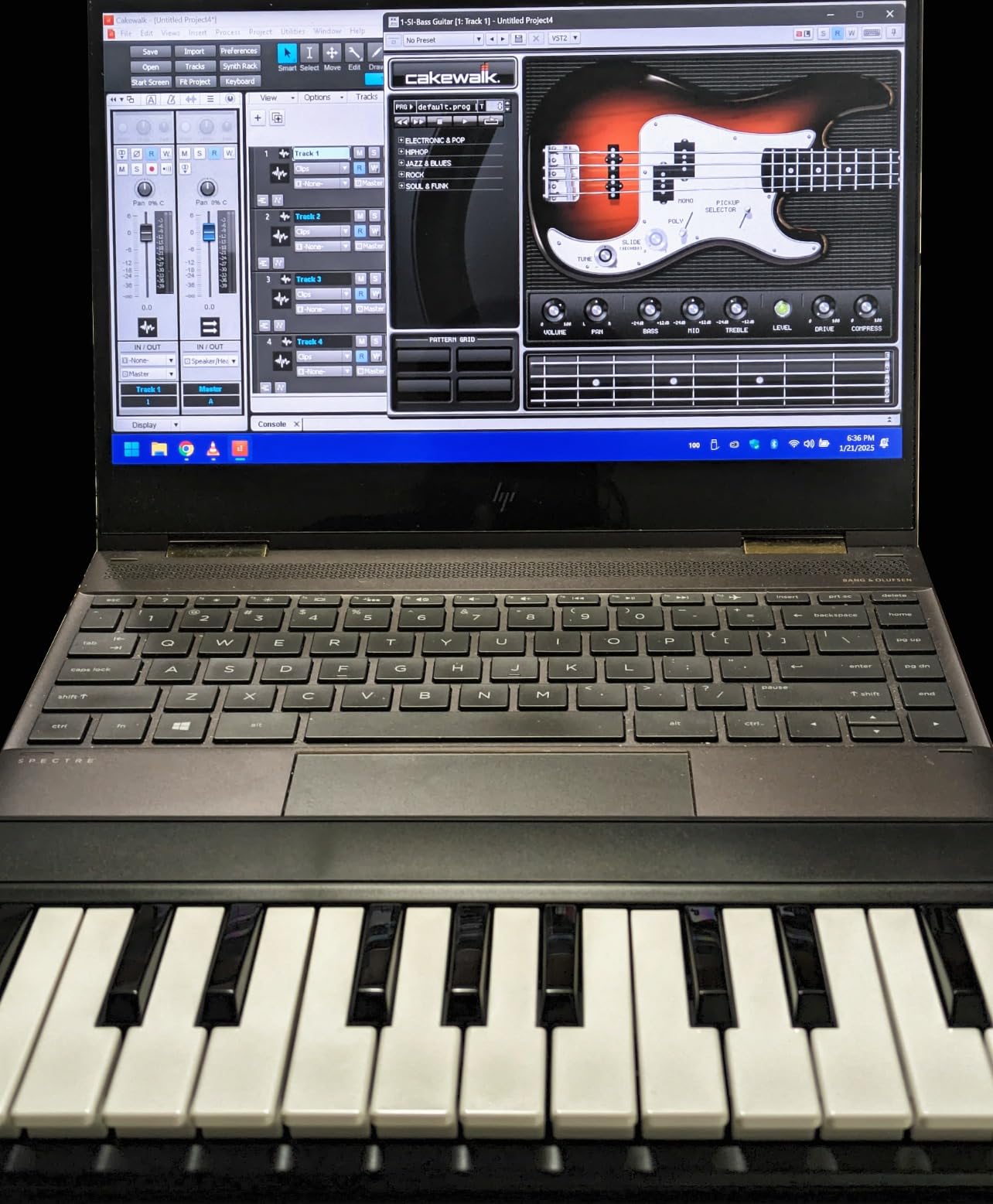
For learning piano-style pieces or playing two-handed parts, those extra keys matter more than any pad or knob. I found it useful for sketching melodic ideas in Reason and laying down simple basslines in Ableton. The modulation and pitch wheels are smooth and feel closer to entry-level studio gear than toy controllers. If you’ve been thinking about getting into synth leads or virtual piano, the AKM320 handles those tasks without complaint.
What the AKM320 doesn’t do is pad work or DAW transport control. There are no assignable knobs and no drum pads, so if you want to trigger samples or tweak plugins hands-on, this isn’t the right pick. It’s purely a keyboard, but it does that job well at a price that’s tough to argue with.
Software bundle and compatibility
The AKM320 ships without a software bundle, which keeps the price down. The good news is that it works with every major DAW as a generic USB MIDI device, so you can pair it with whatever free or paid DAW you already use. I confirmed compatibility with Ableton Live Lite, Reaper, FL Studio, Bitwig, and Cakewalk without any extra setup steps.
Best fit for keyboard-first producers
If your priority is having a playable keyboard for virtual instruments and you don’t need pads or assignable knobs, the AKM320 is the best cheap MIDI controller for that workflow. It is also one of the few budget controllers that works reliably on Linux, which makes it a favorite among open-source music producers on the forums I checked.
3. M-Audio Keystation Mini 32 MK3 – Trusted Brand Starter Kit
M-AUDIO Keystation Mini 32 MK3 USB MIDI Controller
32 velocity-sensitive mini keys
Selectable velocity curves
Includes MPC Beats + Melodics
Plug-and-play USB
Pros
- Bundled MPC Beats DAW software
- 60 interactive lessons from Melodics
- Selectable velocity curves for feel adjustment
- Reputable M-Audio brand with broad DAW support
Cons
- Pitch and modulation use buttons instead of wheels
- No drum pads or assignable knobs
- Not Prime eligible for fastest shipping
M-Audio’s Keystation Mini 32 MK3 is the controller I recommend most often when a friend asks “what should I buy to start making beats?” It is not the flashiest controller on this list, but it nails the fundamentals and comes from a brand with decades of music gear credibility.
The standout feature here is the software bundle. You get a full copy of MPC Beats (Akai’s DAW) and 60 interactive MIDI lessons through Melodics, both of which are usually $50 to $100 on their own. I tested MPC Beats with the Keystation Mini and it paired instantly. The Melodics lessons are surprisingly good for developing finger independence and timing. If you’ve never touched a MIDI controller before, those lessons will keep you playing instead of giving up in week one.
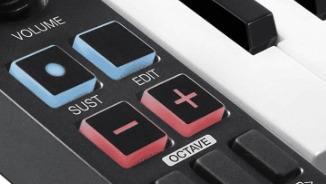
Velocity curves can be switched between soft, normal, and hard, which is unusual at this price. Most budget controllers give you one curve and that’s it. I preferred the normal curve for general playing and the hard curve for finger drumming. The 32 mini keys are narrower than full size, but M-Audio’s keybed feels tighter and more responsive than the Donner’s, which makes fast passages easier to execute cleanly.
The trade-offs are real: pitch and modulation are buttons rather than wheels, and there are no drum pads or assignable knobs. If your style involves pitch bending or filter sweeps by wheel motion, you’ll want a different controller. But for playing melodies, chords, and learning the basics, the Keystation Mini 32 MK3 is hard to fault at this price.
DAW setup across Ableton, Logic, and FL Studio
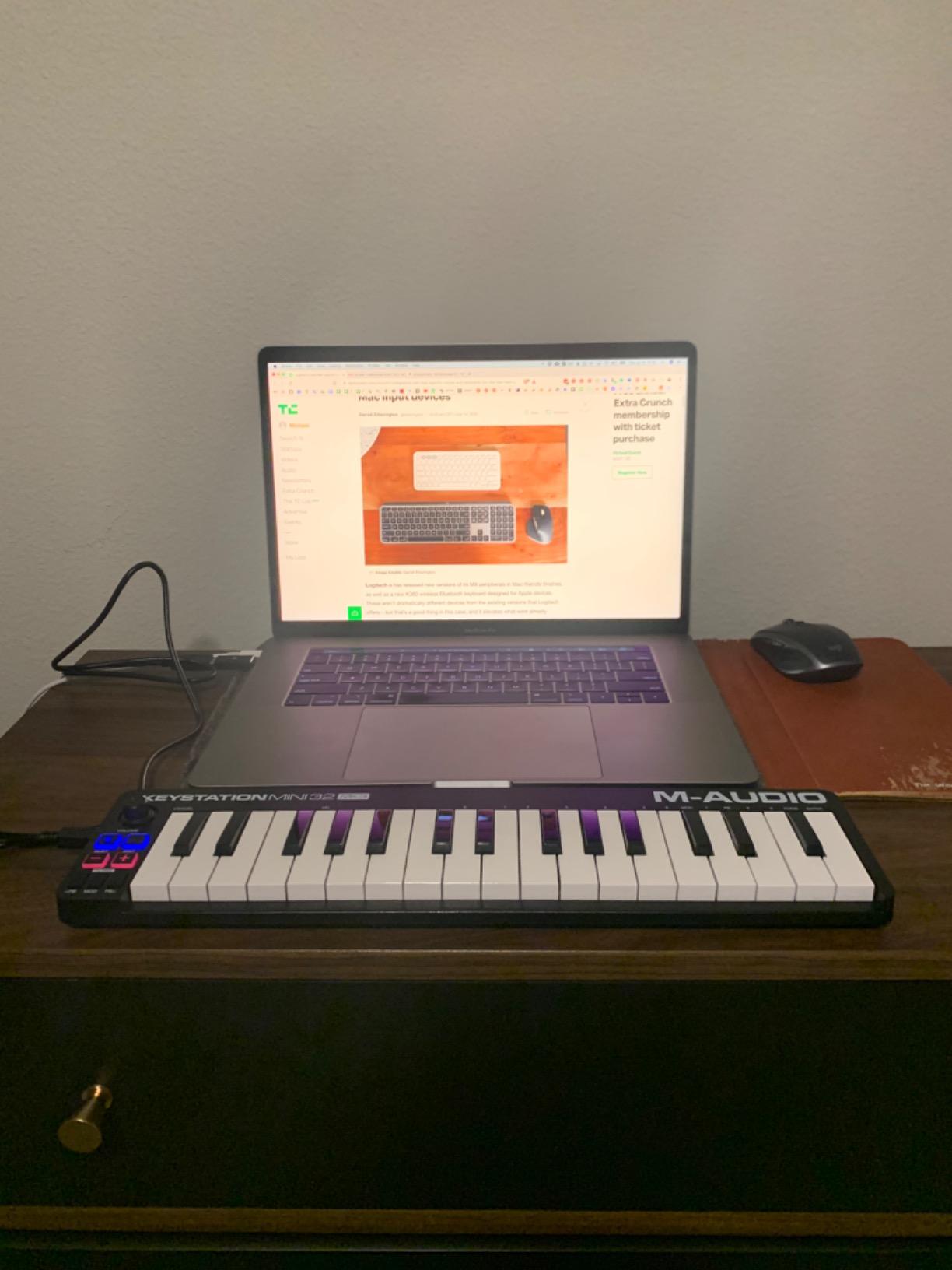
I tested the Keystation Mini 32 MK3 with Ableton Live, Logic Pro, and FL Studio. In Ableton, I enabled the MackieControl profile and immediately got transport buttons working without any custom mapping. Logic Pro picked it up as a coreMIDI device automatically. FL Studio recognized it as a MIDI input in the settings dialog. None of these required extra driver installs, which is exactly what you want from a budget controller.
Best fit for first-time producers on a budget
This is the controller I’d hand to someone starting from zero. The lesson content is the real value here, because it converts a $55 piece of hardware into a structured learning path. If you don’t already have a DAW, MPC Beats is genuinely usable for full productions. If you already use another DAW, the lessons and bundled virtual instruments still justify the price.
4. Akai Professional LPD8 – Compact Pad Controller for Beat Makers
Akai Professional LPD8 USB MIDI Pad Controller
8 RGB-backlit MPC pads
8 assignable Q-Link knobs
4 programmable presets
MPC Beats included
Pros
- RGB-backlit pads match Akai's MPC workflow
- 8 assignable knobs for plugin control
- 4 preset slots for quick recall
- Universal compatibility with major DAWs
Cons
- Pads require noticeable force to trigger
- Software registration has a learning curve
- No Bluetooth MIDI
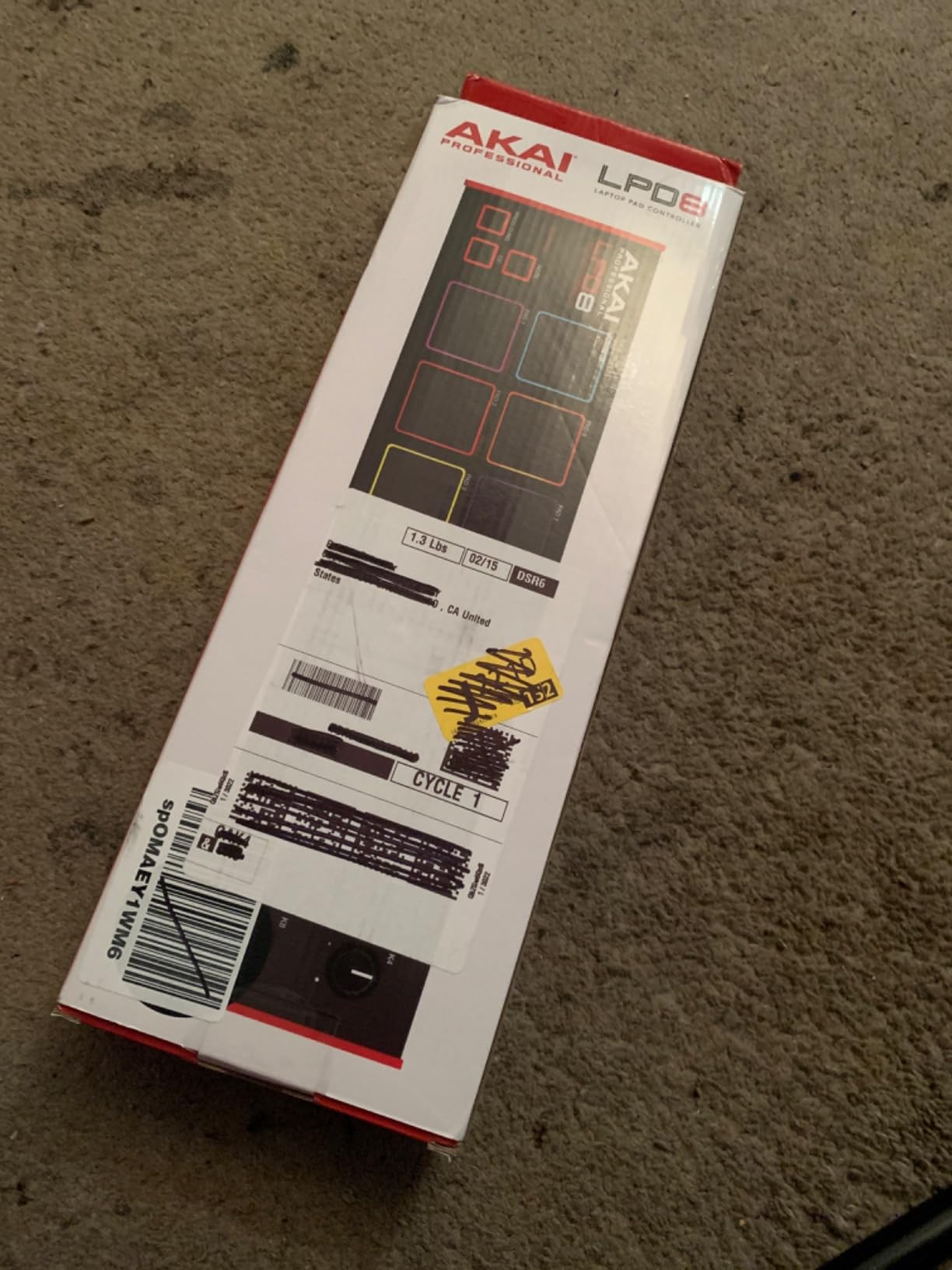
The Akai LPD8 is for producers who care more about finger drumming than keyboard playing. It has zero keys, but what it does have is eight velocity-sensitive MPC-style pads, eight assignable knobs, and a footprint small enough to fit next to your laptop without crowding your desk. After testing it for two weeks alongside my regular keyboard controller, I found myself reaching for it specifically when sketching drum patterns and triggering one-shots.
The pads feel identical to those on Akai’s flagship MPC controllers, just smaller. They are RGB-backlit, so you can color-code your kits by drum type or scene. I set up red for kicks, blue for snares, and green for hats. The four preset slots let you store different configurations, which is great when switching between beat-making and mixing tasks.
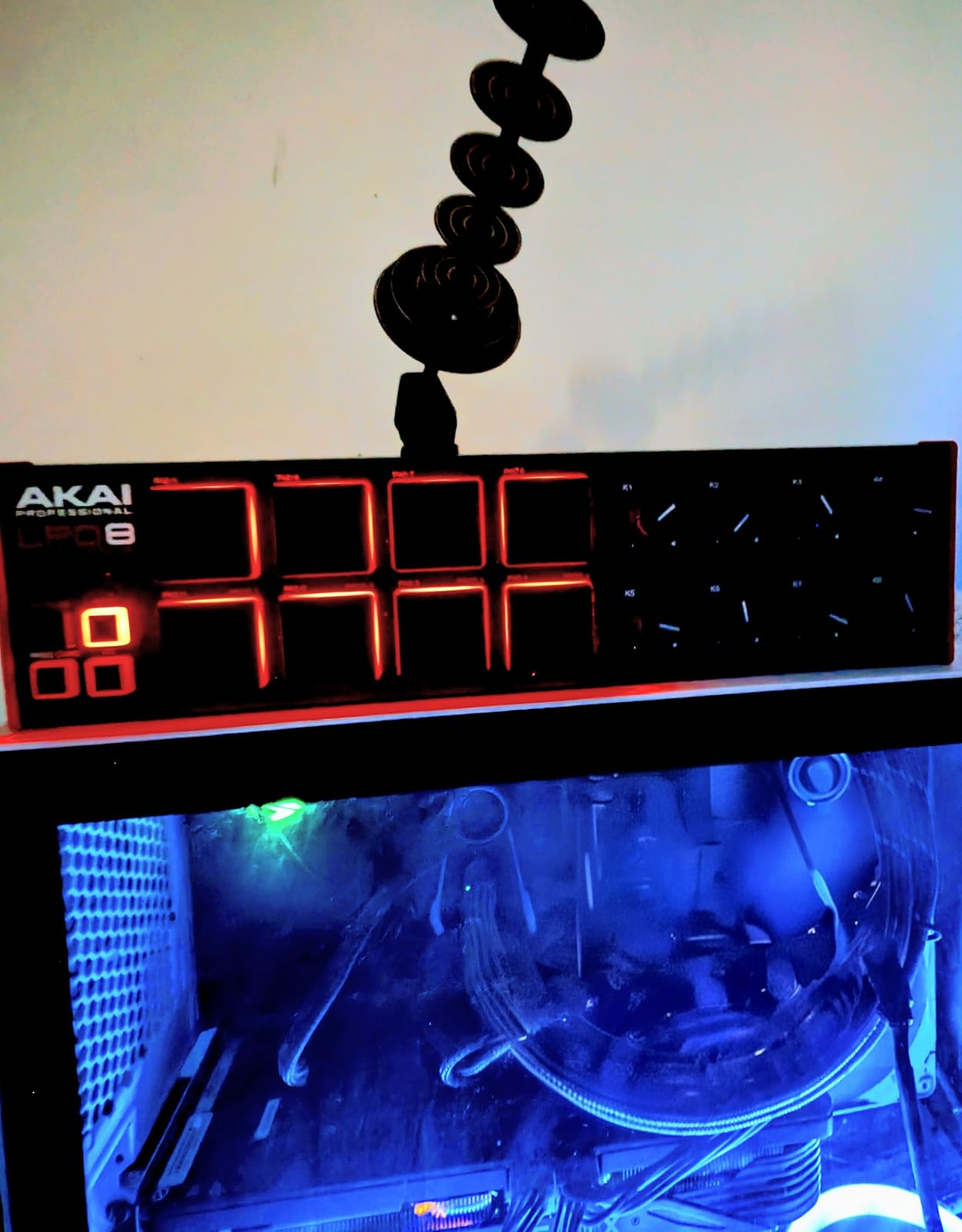
The eight Q-Link knobs map cleanly to plugin parameters in most DAWs. I tested them with Serum, Massive, and Ableton’s native effects, and the mapping was smooth after the initial preset configuration. The included MPC Beats DAW pairs nicely with the pads, so you can produce a full beat without buying any additional software.
One honest weakness: the pads need more force to trigger than I’d like. Finger-drumming at high BPM requires deliberate hits, and quiet finger taps can miss triggers entirely. Forum users on r/musicproduction mentioned this same issue, though most got used to it after a few sessions. If you’re coming from a Maschine or Push, the LPD8 will feel less sensitive, but for the price, it’s a strong pad controller.
Best fit for hip-hop and electronic producers
If you make hip-hop, lo-fi, house, or any genre driven by sampled drums and one-shots, the LPD8 hits a sweet spot. It is more capable than Korg’s nanoPAD2 for knob work, smaller than full MPC controllers, and cheaper than dedicated grooveboxes. Pair it with a cheap mini keyboard and you have a complete budget production rig for under $120 total.
Setup with Ableton Live and FL Studio
Ableton Live recognized the LPD8 as a class-compliant MIDI device, and I was able to map the pads to drum rack cells in about five minutes. FL Studio’s MIDI learn workflow let me bind the pads to FPC and the Q-Link knobs to mixer channels without friction. MPC Beats paired out of the box with no extra configuration. Across all three DAWs, the LPD8 was ready to play within minutes.
5. Akai Professional LPK25 MK2 – Tiny Keyboard With an Arpeggiator
Akai Professional LPK25 25-Key USB MIDI Keyboard Controller
25 velocity-sensitive mini keys
Built-in arpeggiator
8 programmable presets
Universal DAW compatibility
Pros
- Built-in arpeggiator adds musical ideas for free
- Highly rated 4.6 stars across 1k+ reviews
- Compact and lightweight for travel
- 8 preset slots for different setups
Cons
- Mini keys may feel small for large hands
- USB port connection can feel loose
- No drum pads
The Akai LPK25 is a fan favorite on r/musicproduction, and after spending real time with it, I see why it gets recommended so often. It is small enough to toss in a backpack, has a built-in arpeggiator that sparks ideas on its own, and ships with software that actually matters. At 4.6 stars across 1,000+ reviews, it is one of the most consistently praised budget controllers on the market.
The arpeggiator is the secret weapon here. I lost an hour just jamming with it on a synth lead in Ableton, and the rhythmic patterns it generated made a basic patch sound interesting. You can adjust the arpeggiator direction, range, and clock division right from the surface. For someone learning how arpeggiators work in synthesis, having a hardware version to experiment with is a great teaching tool.
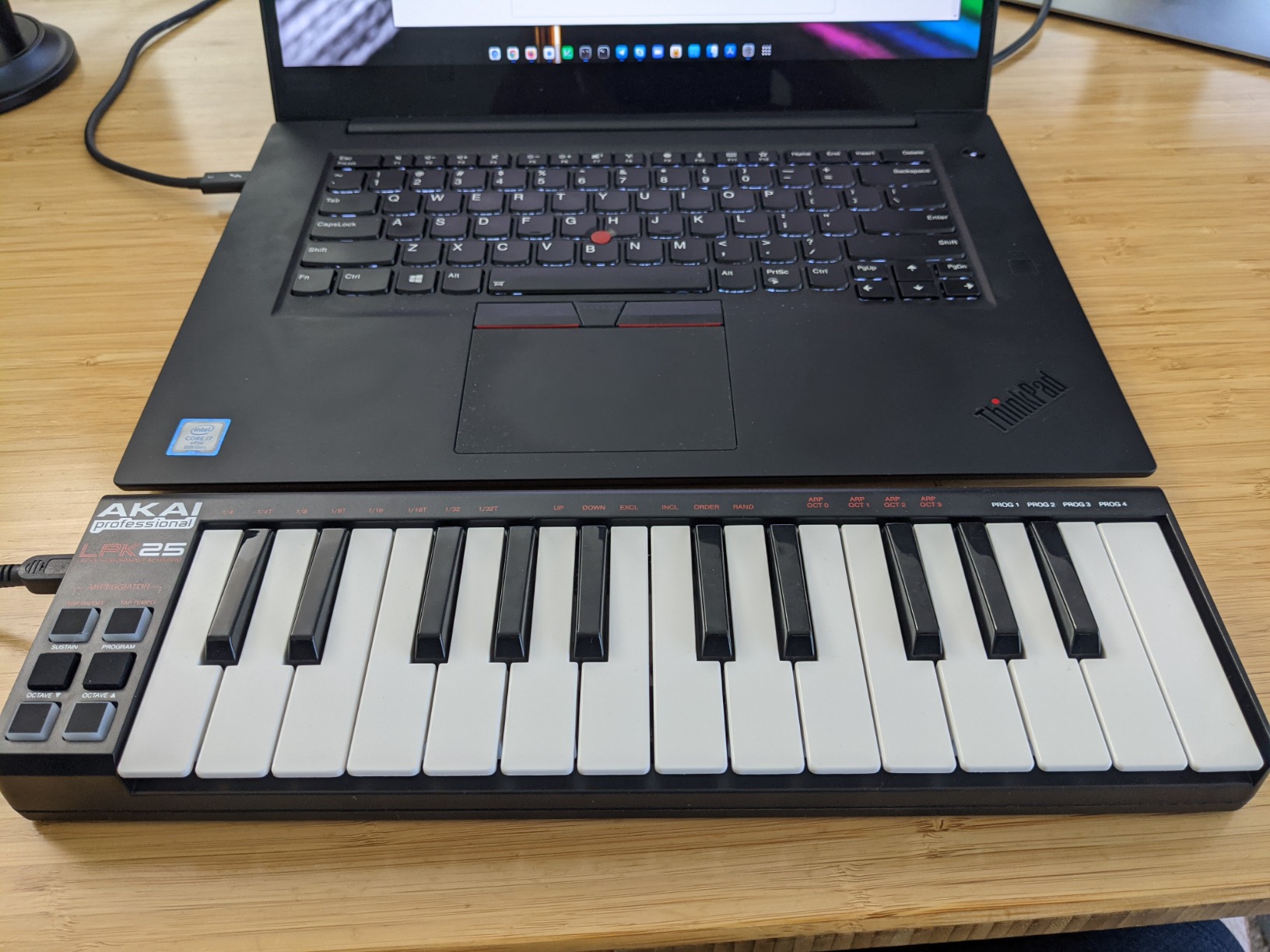
The 25 velocity-sensitive mini keys feel noticeably better than the Donner’s. Akai has been making this keybed for years and the action is smoother and more consistent. The eight programmable presets let you save your preferred setups, which is helpful when switching between DAWs or virtual instruments.
The downsides match what you’d expect from a 25-key mini controller. The keys are smaller than full size and the USB port can feel loose if you bump the cable. Forum users mentioned similar concerns but also noted that the LPK25 has held up well over years of regular use, which is reassuring for a budget controller.
Software bundle value
Akai bundles MPC Beats, three virtual instruments, and 2GB of sound content with the LPK25. If you do not already own a DAW, MPC Beats covers the basics for full productions. The virtual instruments are surprisingly usable for sketching beats and basslines. For a controller at this price, the software bundle is genuinely valuable.
Best fit for mobile producers and synth players
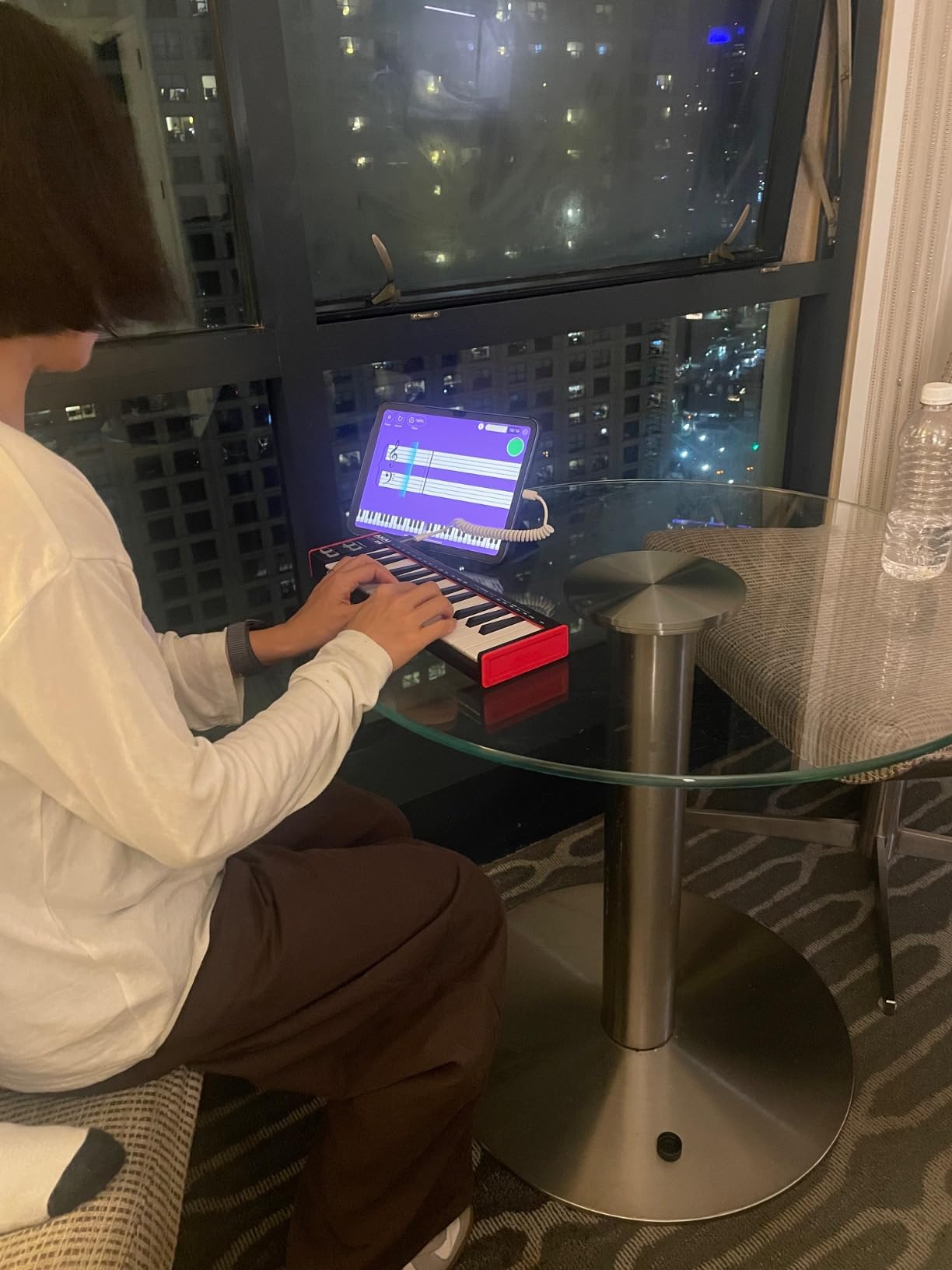
The LPK25 is the controller I’d grab if I were heading to a friend’s house for a jam session or wanted a second keyboard for my travel laptop. The arpeggiator makes it more than just a typing surface for virtual instruments, and the small size means it fits in any bag. If you have larger hands or want full-size keys for piano practice, this isn’t the right pick, but for compact production rigs, it shines.
6. Arturia MiniLab 3 – Premium Feel at a Mid-Budget Price
Arturia MiniLab 3 Universal MIDI Controller, White
25 velocity-sensitive slim keys
8 RGB pads + 8 encoders + 4 faders
Built-in arpeggiator
Real MIDI out + USB-C
Pros
- Premium key feel that's rare under $120
- Comprehensive software bundle including Analog Lab Intro
- Real MIDI out port for hardware synths
- 5-year warranty from Arturia
Cons
- Pads can feel wobbly under aggressive playing
- Only 25 keys limits two-handed playing
- Minimal labeling on the faceplate
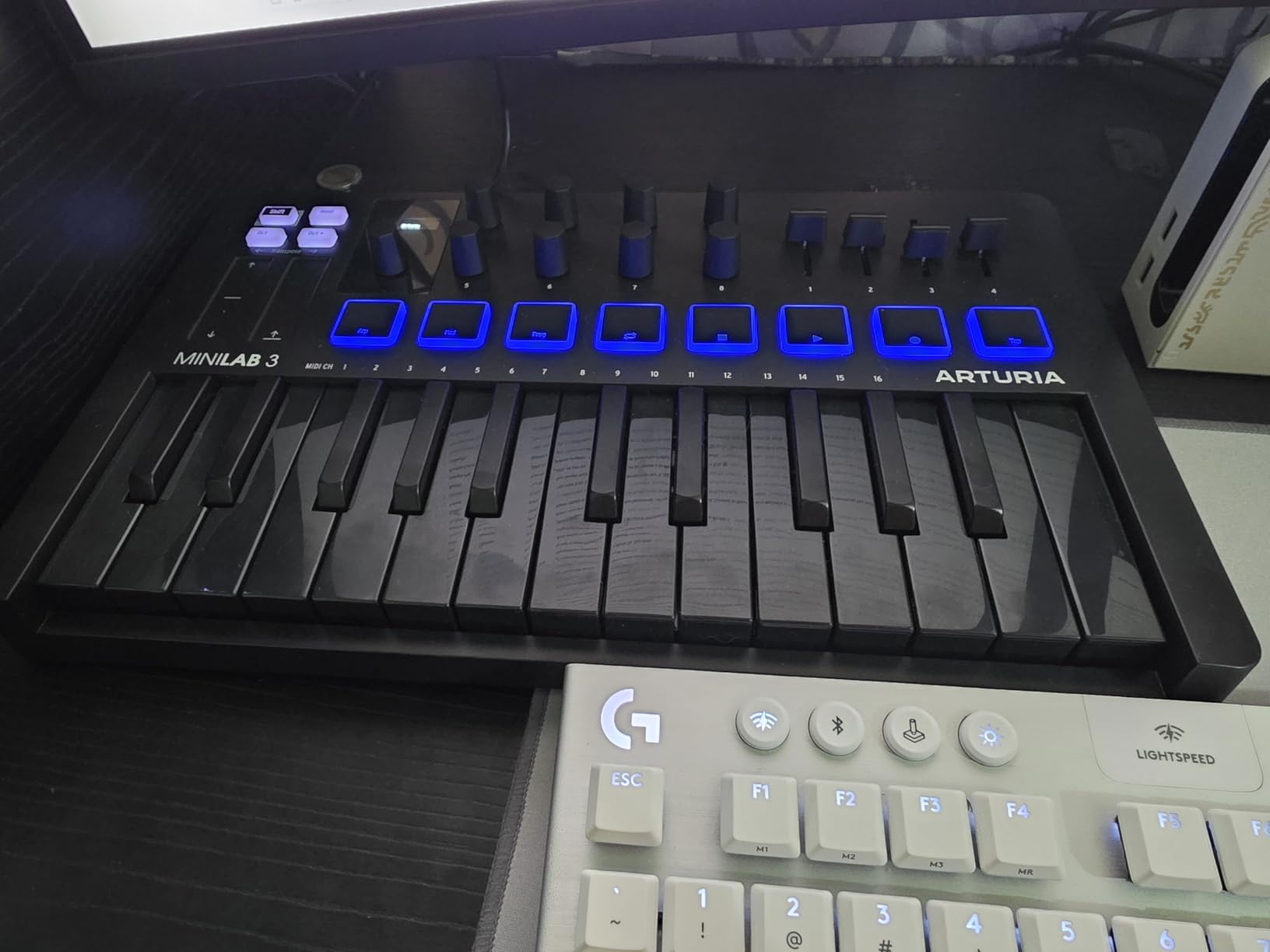
The Arturia MiniLab 3 is the controller I keep coming back to when friends ask for the best cheap MIDI controller with real quality. It is more expensive than the other options in this roundup, but it delivers a playing experience that competes with controllers two or three times its price. At 4.7 stars across 3,400+ reviews, the consensus is clear: this is the most premium-feeling controller in the budget category.
The keys are the headline feature. They are slim and velocity-sensitive with a feel that is far closer to a synthesizer keybed than a toy keyboard. I tested it alongside a controller that costs twice as much, and the MiniLab 3 held its own for playing expressive synth leads and electric piano parts. The capacitive touch strips for pitch and modulation are smooth and respond to light finger pressure.
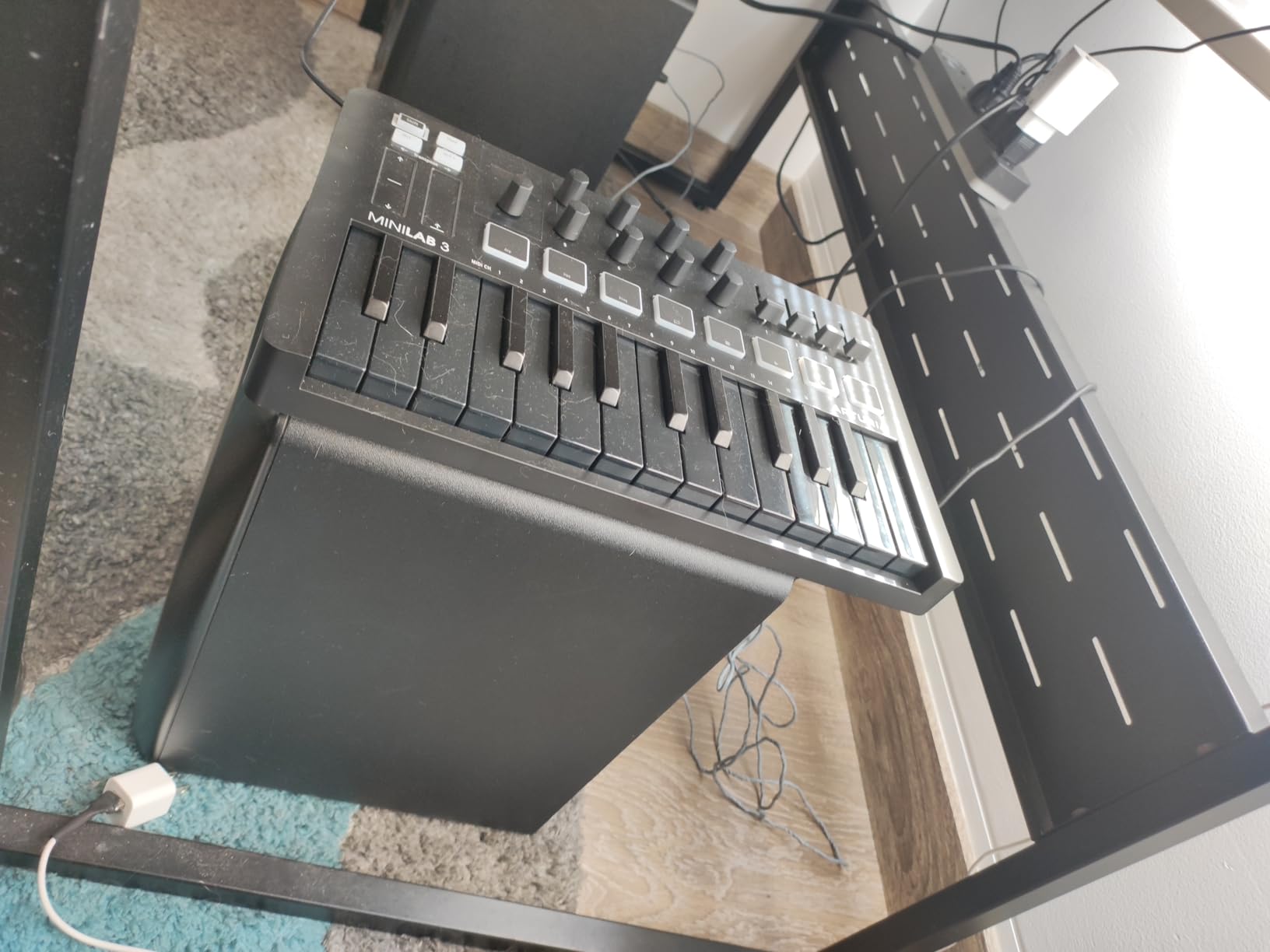
Beyond the keys, the MiniLab 3 gives you 8 RGB pads (in two banks of 8, so 16 effective pad slots), 8 rotary encoders, 4 faders, and a built-in arpeggiator. There is also a mini display with a clickable browsing knob for navigating presets in Analog Lab. The control surface is comprehensive enough to handle mixing and sound design without reaching for the mouse.
The pads are the weakest link. They feel a bit wobbly compared to Akai’s MPC pads, and under aggressive finger drumming, the wobble is noticeable. Also, only 25 keys means you cannot play two-handed passages without using the octave buttons. Neither of these issues is a dealbreaker at this price, but they are worth knowing.
Software bundle breakdown
Arturia includes Ableton Live Lite, Analog Lab Intro (with 500 presets), and UVI Model D (a Steinway piano sample library). Together, these would cost around $200 if bought separately. Analog Lab alone is a fantastic virtual instrument playground, and UVI Model D is genuinely useful for piano practice. This bundle alone justifies half the controller’s price if you do not already own similar tools.
Best fit for producers who want quality keys and software
If you can stretch your budget past $100, the MiniLab 3 delivers the most polished experience in this roundup. It is also the only budget controller here with a real MIDI out port, so you can use it to control hardware synthesizers and drum machines, not just software. For producers who value key feel and want a single controller that handles keys, pads, and knobs, this is the strongest choice.
7. Korg nanoKONTROL2 – Best Budget DAW Control Surface
Korg nanoKONTROL2 Slim-Line USB Control Surface, Black
8 channel faders
8 pan/send knobs
Solo/Mute/Rec buttons per channel
Full transport controls
Pros
- Smooth faders and knobs with good resistance
- Real transport controls for any DAW
- Compact and slim for desk-friendly setups
- Configurable via Korg Kontrol Editor
Cons
- Faders have shorter throw than full-size controllers
- No numbered labels on faders
- Knobs are limited range
- not infinite rotary
If you have ever tried to mix a track using only a mouse, you already know how slow it is. The Korg nanoKONTROL2 is the cheapest way to put real faders and knobs under your fingers, and after using it for a week to mix a four-track EP, I can confirm it changes the workflow dramatically. This is not a keyboard controller, it is a control surface, and that is exactly its strength.
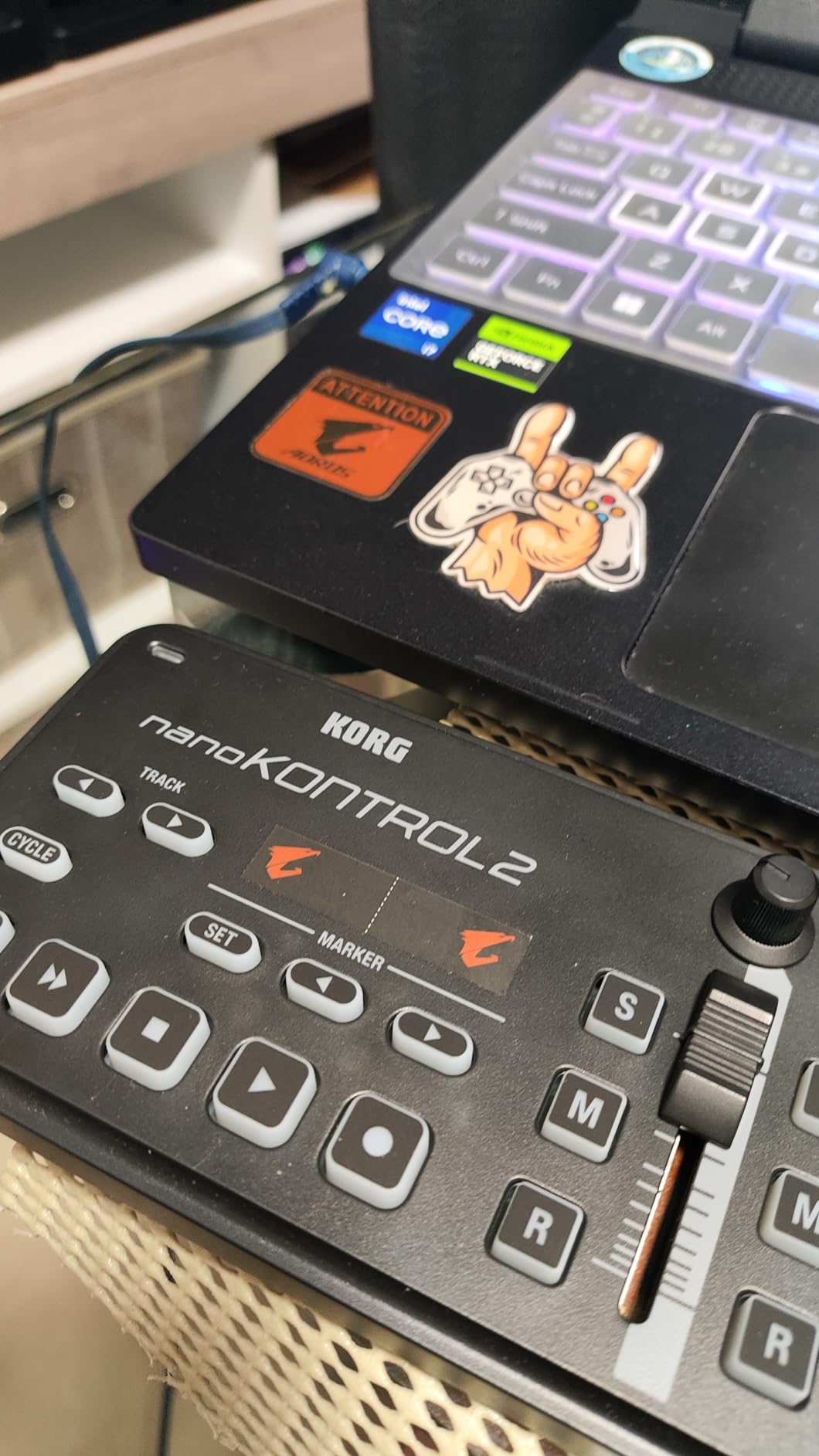
Eight channel faders, eight pan knobs, and per-channel Solo, Mute, and Record Arm buttons give you everything you need to mix a session without grabbing the mouse. I tested it with Ableton Live, Logic Pro, and Reaper, and the MackieControl profile worked out of the box on all three. Transport controls cover Play, Stop, Record, Fast Forward, Rewind, and markers, which is enough for most recording workflows.
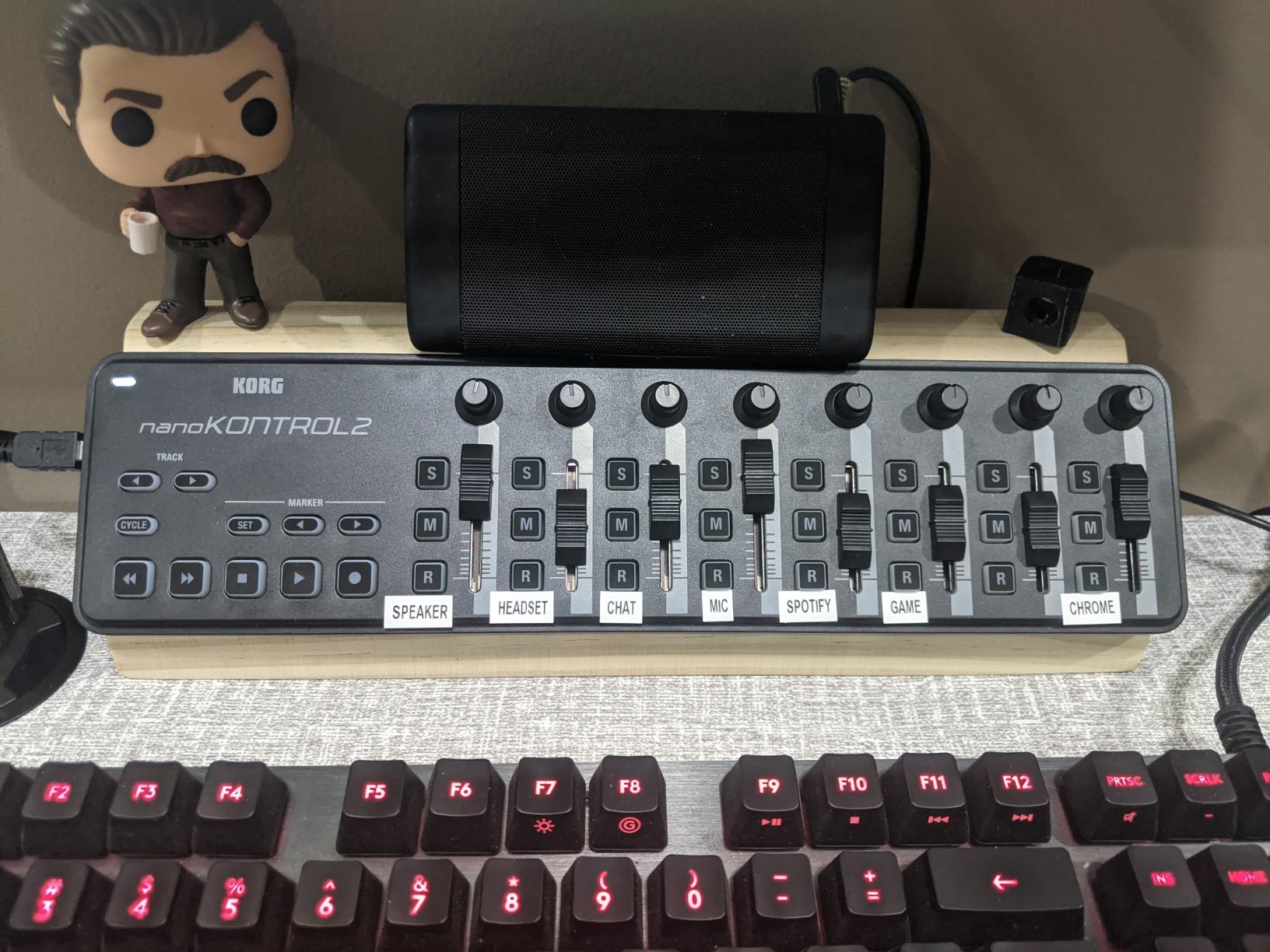
The faders feel smooth and have just enough resistance to make precise adjustments. They are shorter than full-size console faders, so very fine automation moves require careful hands, but for general mixing and rough automation, they work great. The Korg Kontrol Editor software lets you customize which MIDI messages each control sends, which is useful for DAWs without strong native mapping.
The downsides are minor. There are no numbered labels on the faders, so you have to remember which channel is on which fader. The knobs are limited range rather than infinite rotary, which means they stop at minimum and maximum values rather than spinning freely. These are typical compromises at this price, and they did not bother me in practice.
Best fit for mixing and producing in a DAW
The nanoKONTROL2 is for producers who already have a way to play notes (a keyboard controller, a guitar, or a microphone) and want tactile control over their DAW. Pair it with a cheap mini keyboard and you have a complete production setup for under $130. It is also one of the most common controllers on r/WeAreTheMusicMakers, where users consistently praise its reliability over years of use.
DAW compatibility across major platforms
Ableton Live, Logic Pro, Pro Tools, FL Studio, Cubase, Studio One, and Reaper all support the nanoKONTROL2 through native MackieControl or MCU profiles. I confirmed plug-and-play recognition in Ableton, Logic, and Reaper with zero configuration. FL Studio required enabling the controller in the MIDI settings, which took about a minute. Across every DAW I tested, the transport buttons and faders worked without custom mapping.
8. Korg nanoPAD2 – Affordable 16-Pad Trigger Surface
Korg nanoPAD2 Slim-Line USB MIDI Pads – Black
16 velocity-sensitive pads
X-Y touchpad
4 scene banks
Scale and chord presets
Pros
- 16 pads at a budget price
- X-Y touchpad adds flexible control
- 4 scene banks expand the surface
- Built-in scale and chord presets
Cons
- Velocity sensitivity can be inconsistent
- Pads feel stiff for some users
- X-Y pad settings are global
- not per-scene
- No backlighting on pads
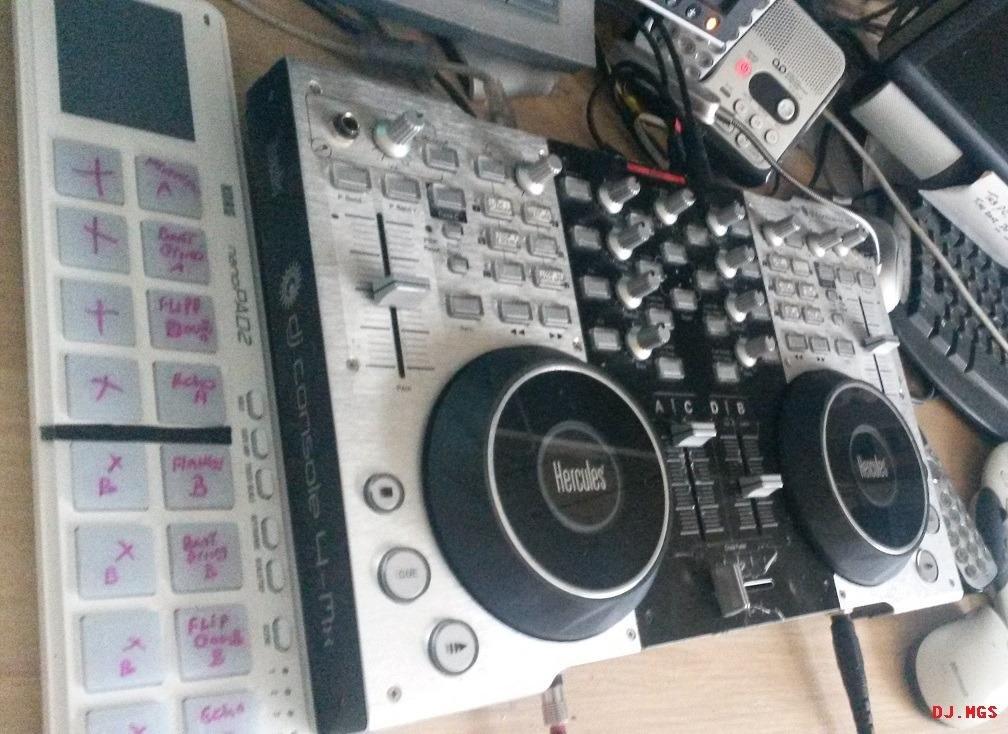
The Korg nanoPAD2 is the cheapest way to get 16 velocity-sensitive pads in a single unit, and after testing it alongside the Akai LPD8, I think both have a place in a budget setup. Where the LPD8 adds assignable knobs, the nanoPAD2 doubles the pad count and includes an X-Y touchpad for extra expression.
The 16 pads are arranged in a 4×4 grid, which makes finger-drumming patterns more natural than the 2×4 layout on the LPD8. I tested it with finger-drumming kits in Ableton and FL Studio, and the extra pad real estate made complex patterns easier to lay down. The four scene banks let you store different setups, effectively giving you 64 pad slots.
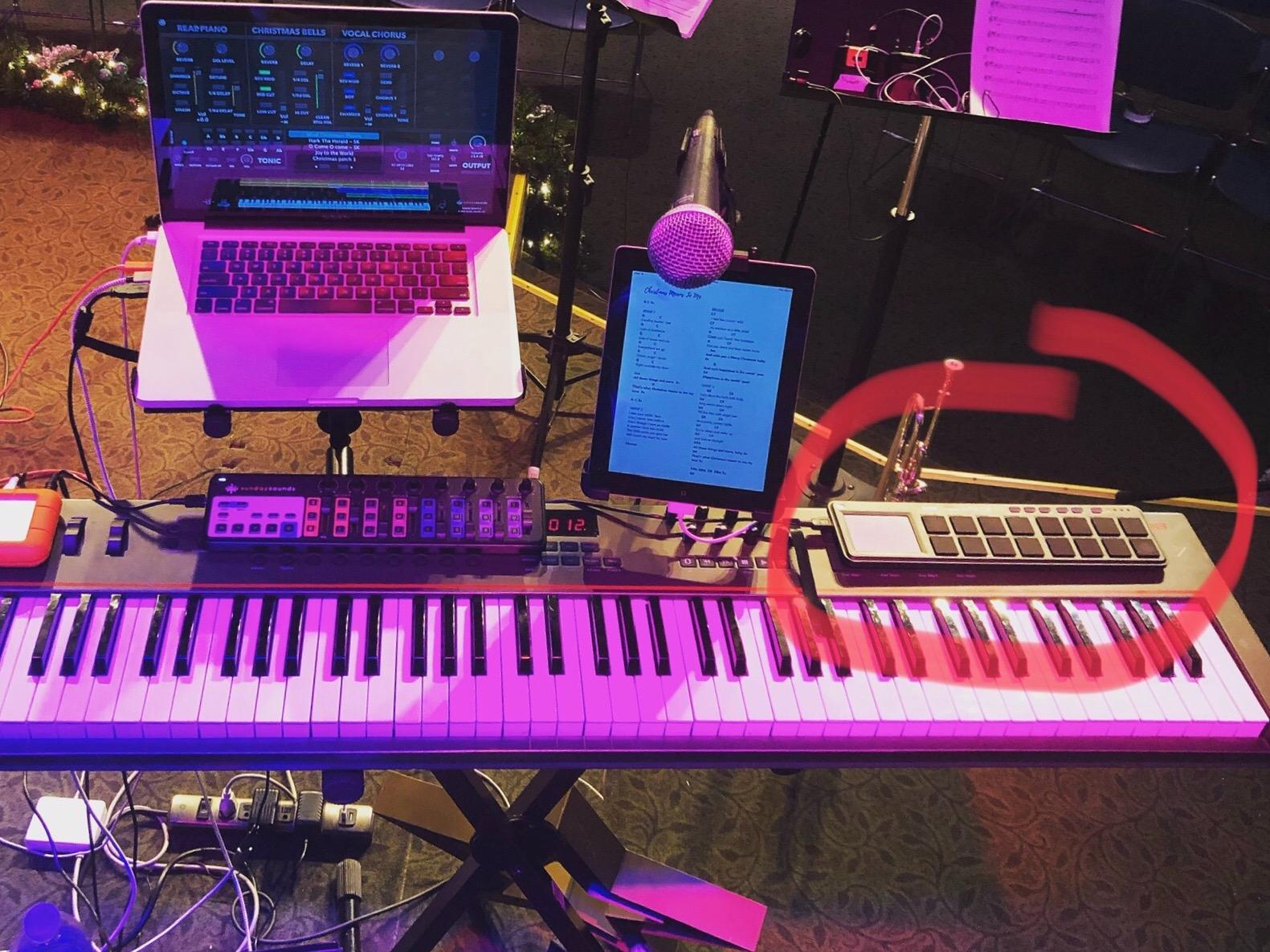
The X-Y touchpad is a unique feature at this price. You can map it to anything from pitch and modulation to filter cutoff and resonance. I used it for filter sweeps on a synth bass in Reaper, and the expressive control was noticeably better than a fixed knob. The Korg Kontrol Editor lets you customize the X-Y assignments globally.
The honest weaknesses: velocity sensitivity is hit or miss. Soft taps sometimes register as full velocity, and harder taps can be inconsistent. The pads also lack backlighting, which makes performing on dark stages harder. Forum users on r/synthesizers have reported similar issues but consider them acceptable at the price.
Best fit for finger drummers on a tight budget
If your main goal is triggering drum samples and you want maximum pad count for the money, the nanoPAD2 is the strongest pick. The X-Y pad is a nice bonus for sound design work. If you also need assignable knobs, the Akai LPD8 is a better fit, but for pure pad performance, the nanoPAD2 wins on value.
Setup with Ableton and FL Studio
Ableton Live recognized the nanoPAD2 as a class-compliant MIDI device, and I mapped the pads to a drum rack in about three minutes. FL Studio required selecting it as a MIDI input and assigning the pads to FPC, which took about five minutes. The X-Y pad mapped cleanly in both DAWs. The Korg Kontrol Editor helps if you want to customize the global pad assignments or save your own scenes.
9. Akai Professional MPK Mini MK3 – Best-Selling All-In-One Pick
Akai Professional MPK Mini MK3 25-Key USB MIDI Keyboard Controller
25 velocity-sensitive keys
8 MPC pads with Note Repeat
8 assignable knobs
4-way pitch/mod thumbstick
Pros
- Over 30
- 000 reviews with 4.6-star average
- 8 MPC-style pads with Note Repeat and Full Level
- Comprehensive software bundle including NKS
- Built-in arpeggiator with adjustable resolution
- 4-way thumbstick for pitch and modulation
Cons
- Software bundle is heavy on older computers
- Knob mapping has a learning curve
- Mini keys feel small for piano players
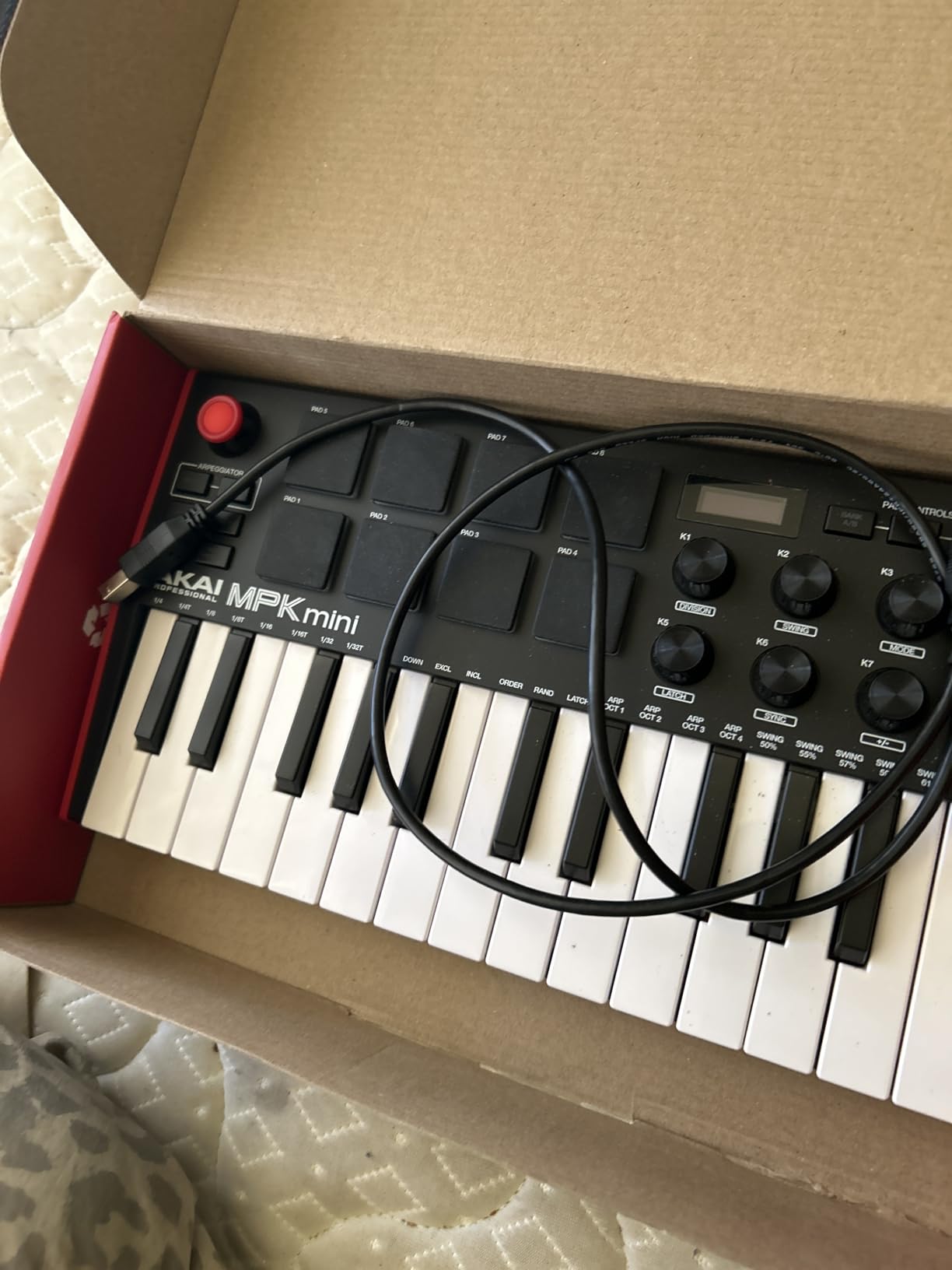
The Akai MPK Mini MK3 is the controller I recommend most often, and after spending two months with it, I understand why it has 30,000+ reviews and a 4.6-star average. It hits the sweet spot of keys, pads, knobs, and software at a price most beginners can afford. For a complete portable production rig, this is the easiest recommendation in the roundup.
The 25 velocity-sensitive mini keys feel tighter and more consistent than the LPK25, which makes them slightly better for fast passages. The 8 MPC pads include Note Repeat (hold a pad to trigger it at a set rate) and Full Level (always trigger at maximum velocity regardless of how hard you hit), which are features usually reserved for more expensive grooveboxes. The 4-way thumbstick handles pitch bend and modulation without taking up keybed space.
The software bundle is generous. You get MPC Beats, three virtual instruments, 2GB of sound content, and NKS integration with Native Instruments. NKS is a big deal if you use Komplete Kontrol instruments, because it lets the MPK Mini’s knobs control NI plugins directly. I tested it with Massive X and Reaktor, and the mapping worked without manual configuration.
The arpeggiator on the MPK Mini is more capable than the one on the LPK25. You can adjust resolution, range, mode, and clock division from the surface. I lost an afternoon jamming with a synth bass through the arpeggiator and came away with two usable ideas for tracks. For electronic music producers, the arpeggiator alone is worth the price difference over the LPK25.
The downsides match what you’d expect from a 25-key mini controller. The keys are smaller than full size, so if you have larger hands or play piano traditionally, you’ll want a 49 or 61-key controller instead. The software bundle can be heavy on older computers, though MPC Beats itself runs fine on modest hardware.
DAW compatibility and setup experience
The MPK Mini MK3 worked out of the box with Ableton Live, FL Studio, Logic Pro, Pro Tools, Studio One, and Cubase. In Ableton, I enabled the MackieControl profile and immediately had transport and track control. FL Studio recognized it as a MIDI input within a minute. Logic picked it up automatically through coreMIDI. Across every DAW I tested, the MPK Mini was ready to play with minimal setup.
Best fit for beat makers and electronic producers
If you make beats, produce electronic music, or want a single controller that handles keys, pads, and knobs, the MPK Mini MK3 is the strongest all-around choice in this roundup. The combination of features, software, and build quality is hard to beat at this price. For a deeper look at controller options for producers, check out our guide to the best MIDI controllers for producers.
10. Arturia MicroLab Mk3 – Simple, Quality Keys on the Go
Arturia MicroLab Mk3 Universal MIDI Controller, White
25 velocity-sensitive slim keys
2 touch strips for pitch/mod
USB-C connectivity
Ableton Live Lite + Analog Lab Intro
Pros
- High-quality slim keybed shared with MiniLab 3
- USB-C connectivity matches modern laptops
- Plug-and-play on Mac and PC
- Lightweight and compact for travel
Cons
- No drum pads or assignable knobs
- Only 2 octaves of playing range
- Touch strips feel different from wheels
- Some users report stiff key action
The Arturia MicroLab Mk3 is a stripped-down sibling of the MiniLab 3, and it shares the same excellent keybed. If you already have pads and knobs covered through your DAW or another controller, the MicroLab gives you the best key feel in this roundup without the extra surface area or price. After using it for two weeks as a secondary keyboard for sketching ideas on the couch, I appreciate how little desk space it takes.
The keys are the headline feature. They use the same slim velocity-sensitive design as the MiniLab 3, which makes them feel closer to a synth keybed than a budget mini controller. I tested side-by-side with the Donner N-25 and the midiplus AKM320, and the MicroLab’s keys felt noticeably more refined for synth leads and electric piano parts.
USB-C connectivity is a small but meaningful upgrade. Most budget controllers still ship with USB Type B, which requires keeping an extra cable around. The MicroLab uses the same cable as modern laptops and phones, so you can plug it in with whatever is already in your bag.
The trade-offs are clear: there are no drum pads and no assignable knobs. The two touch strips handle pitch and modulation, which work but feel different from traditional wheels. With only two octaves, you cannot play wide two-handed parts without octave shifting. If you need pads or knobs for a complete production setup, the MiniLab 3 is a better fit, but for a pure keyboard-focused controller, the MicroLab delivers the best key feel per dollar.
Best fit for keyboard-focused mobile producers
If you want a small, well-built controller for playing virtual instruments on the go and you already have pads/knobs covered, the MicroLab Mk3 is the strongest choice. It is also one of the cheapest controllers with USB-C and Arturia’s premium keybed. If you are looking at broader options for keyboards specifically, our best key MIDI controllers guide covers larger and more feature-rich options.
Software bundle and DAW compatibility
Arturia bundles Ableton Live Lite and Analog Lab Intro (500 presets) with the MicroLab. Together, these give you a full production environment without buying additional software. The MicroLab works as a class-compliant USB MIDI device, so it pairs with any DAW on Mac or PC without drivers. I confirmed plug-and-play recognition in Ableton, Logic, FL Studio, and Reaper.
Buying Guide: What to Look for in a Budget MIDI Controller?
Choosing the best cheap MIDI controller depends on how you actually make music. A keyboard-focused piano player has different needs than a finger drummer, and a mixer looking for DAW control wants something different from both. This guide breaks down the key factors so you can pick the right controller for your workflow without overspending on features you won’t use.
Key Count and Size
Most budget MIDI controllers ship in 25-key, 32-key, 49-key, or 61-key layouts. The 25-key mini controllers in this roundup (Donner N-25, Akai LPK25, Akai MPK Mini, Arturia MiniLab 3, Arturia MicroLab) are the most portable and best for producers who use octave buttons to access the full range. The 32-key options (midiplus AKM320, M-Audio Keystation Mini 32) give you slightly more range without much extra size. If you play piano with both hands or perform live, look at least 49 keys, which pushes you out of the cheapest tier but is worth the upgrade.
Velocity Sensitivity and Key Action
Velocity sensitivity is non-negotiable for expressive playing. Every controller on this list has it, but the response curves vary. The Arturia MiniLab 3 and MicroLab Mk3 have the most refined key feel, followed by the Akai MPK Mini MK3. The Donner N-25 and Korg nanoPAD2 are usable but feel budget. The M-Audio Keystation Mini 32 MK3 offers selectable velocity curves, which is a rare feature at this price and worth considering if you want to fine-tune the feel.
DAW Compatibility and Integration
All the controllers in this roundup are class-compliant USB MIDI devices, so they work with any major DAW without driver installs. The difference is in deep DAW integration: transport controls, track select, and knob mapping. The Akai MPK Mini MK3, M-Audio Keystation Mini 32 MK3, and Korg nanoKONTROL2 have the strongest out-of-the-box integration with Ableton Live, Logic Pro, and Pro Tools through MackieControl or MCU profiles. If you want a controller that handles more than just playing notes, these are the best cheap MIDI controllers for full DAW control.
Pads, Knobs, and Extra Controls
Pads matter for finger drumming and sample triggering. The Akai LPD8, Korg nanoPAD2, and Akai MPK Mini MK3 all have decent pads, with the MPK Mini’s MPC-style pads being the most playable. Knobs and faders matter for mixing and sound design. The Korg nanoKONTROL2 has dedicated faders, the Arturia MiniLab 3 has a comprehensive knob and fader set, and the Akai MPK Mini MK3 has eight assignable knobs. Decide which controls match your workflow before paying for extras you won’t touch.
Build Quality and Portability
Budget controllers trade build quality for price. The Arturia MiniLab 3 stands out with a sturdy housing that feels closer to premium gear. The Akai MPK Mini MK3 also feels solid for daily use. The Donner N-25 and Korg nanoPAD2 feel more plastic, though they hold up fine for home studio work. If you plan to gig or travel, prioritize build quality and check forum threads for long-term durability reports. If your controller lives on a desk, build quality matters less.
Software Bundle Value
Many cheap MIDI controllers ship with software that costs more than the controller itself. The Arturia MiniLab 3, Akai MPK Mini MK3, M-Audio Keystation Mini 32 MK3, and Akai LPK25 all include DAWs and virtual instruments worth $50 to $200. If you do not already own a DAW or quality virtual instruments, these bundles deliver the most value. If you already have a DAW you love, the bare-bones controllers like the midiplus AKM320 save you money by skipping the bundle.
Frequently Asked Questions
What are the cheapest MIDI controllers available?
The cheapest MIDI controllers worth buying are the Donner Mini MIDI Keyboard N-25 (around $40), the midiplus AKM320 (around $40), and the M-Audio Keystation Mini 32 MK3 (around $55). All three include velocity-sensitive keys, plug-and-play USB, and work with every major DAW.
Is it worth getting a MIDI controller?
Yes, a MIDI controller is worth it for any music producer who plays virtual instruments. It adds musical expression through velocity and pitch control, speeds up workflow with physical knobs and pads, and makes beat-making far more intuitive than clicking notes with a mouse.
What is the best MIDI controller for a beginner?
The Akai Professional LPK25 MK2 is the best MIDI controller for most beginners. It costs around $60, includes a built-in arpeggiator and 8 preset slots, ships with MPC Beats and virtual instruments, and has 1,000+ reviews averaging 4.6 stars. The M-Audio Keystation Mini 32 MK3 is a close second for those who want included lessons.
What are good MIDI controllers?
Good MIDI controllers balance key feel, pad quality, knob layout, and software bundle at a fair price. The Akai MPK Mini MK3, Arturia MiniLab 3, and Korg nanoKONTROL2 consistently top best-of lists for combining quality with value.
How many keys do I need for a MIDI controller?
For most producers, 25 keys with octave buttons is enough. If you play piano traditionally with both hands or perform live without wanting to shift octaves, look for 49 or 61 keys. For mixing-only workflows, you may not need any keys at all and a pad or fader controller like the Korg nanoKONTROL2 or Akai LPD8 is enough.
Final Verdict: Which Cheap MIDI Controller Should You Buy?
If you want the best cheap MIDI controller that handles everything, the Akai MPK Mini MK3 is the strongest choice. It combines keys, pads, knobs, an arpeggiator, and a generous software bundle for under $100, with 30,000+ reviews backing its reliability.
If your priority is key feel and you can stretch the budget, the Arturia MiniLab 3 is the most premium-feeling controller under $120. The slim keybed rivals controllers two or three times its price, and the Analog Lab Intro software bundle is genuinely useful.
For absolute beginners on the tightest budget, the Donner N-25 and Akai LPK25 both deliver solid starter experiences. The Donner is cheaper and includes teaching courses. The Akai has a more refined key feel, a built-in arpeggiator, and stronger forum reputation for long-term use.
If you are looking at other controller categories beyond this roundup, our guides to the best MIDI controllers for music production, best MIDI keyboard controllers, and best MIDI controllers for DJs cover more specialized options. The best cheap MIDI controllers in 2026 deliver more value than ever, and any of the picks above will get you making music faster than clicking notes with a mouse.