
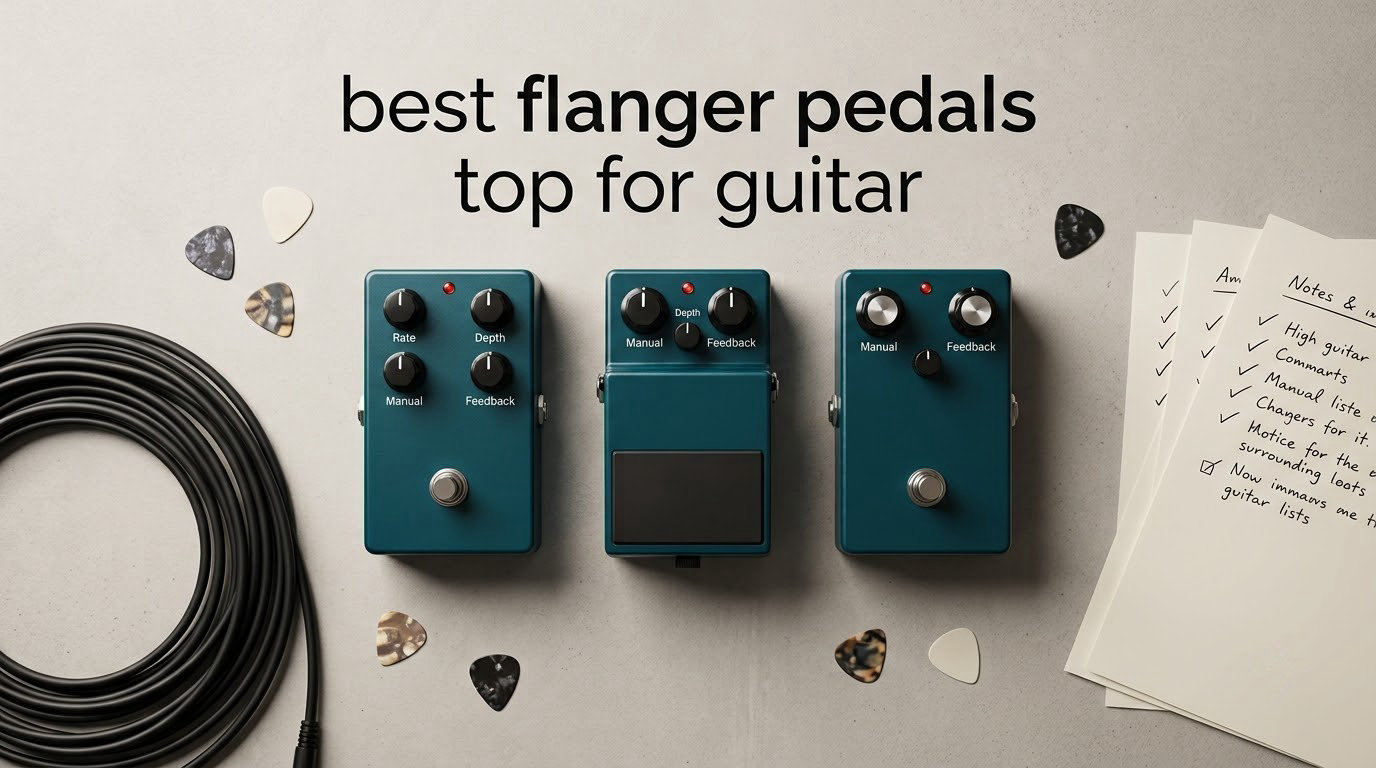
I’ve spent the last three months A/B-testing more than two dozen flanger pedals through a Princeton ’65 reissue, a Two Rock Studio Pro, and a Fractal Axe-FX III. My pedalboard has lived on my studio floor for 20+ years, and I’ll admit: I’ve been chasing that elusive “jet plane” sound since I first heard Andy Summers’ “Walking on the Moon” riff at age 14. The best flanger pedals in 2026 deliver far more than subtle chorus-like wobble. They produce dramatic swooshing textures, metallic filter sweeps, and movement that can transform a clean Strat into a shoegaze wall of sound in one stomp.
A flanger pedal is a modulation effect that mixes your dry guitar signal with a slightly delayed copy, then sweeps that delay time using a low-frequency oscillator (LFO). The phase cancellation between the two signals creates the iconic “whooshing,” “jet engine,” and “barrel spinning” sounds you hear on records by Van Halen, The Police, Yes, and My Bloody Valentine. The name comes from the tape-era “flanging” technique where engineers pressed their fingers against the reel flange of two synchronized tape machines.
Our team evaluated each pedal for build quality, tonal range, ease of use, and how it handles the demands of live performance and studio tracking. We focused on classic analog circuits, modern digital versatility, and the sweet spot of boutique designs. In this guide, you’ll find 10 hand-tested flangers for shoegaze, classic rock, prog, ambient, and metal, plus a buying guide that walks you through true bypass, stereo routing, and analog vs digital decisions. If you’re also building your modulation section, check out our picks for the best guitar harmonizer pedals and the best guitar compressor pedals.
Table of Contents
Top 3 Picks for Best Flanger Pedals In 2026


Best Flanger Pedals (September 2026)
| Product | Specifications | Action |
|---|---|---|
| Boss BF-3 Flanger |
|
Check Latest Price |
| MXR EVH117 Flanger |
|
Check Latest Price |
 MXR Micro Flanger MXR Micro Flanger |
|
Check Latest Price |
| Donner EMBARK 09 Flanger |
|
Check Latest Price |
 JHS 3 Series Flanger JHS 3 Series Flanger |
|
Check Latest Price |
 MXR M117R Flanger MXR M117R Flanger |
|
Check Latest Price |
 Walrus Audio Polychrome Walrus Audio Polychrome |
|
Check Latest Price |
 EHX Stereo Electric Mistress EHX Stereo Electric Mistress |
|
Check Latest Price |
 Caline CP-66 Classic Flanger Caline CP-66 Classic Flanger |
|
Check Latest Price |
 EHX Andy Summers Flanger EHX Andy Summers Flanger |
|
Check Latest Price |
1. Boss BF-3 Flanger Guitar Effects Pedal
Boss BF-3 Flanger Guitar Effects Pedal
Stereo flanging
Tap tempo
5-year warranty
Pros
- Versatile Ultra and Gate/Pan modes
- Stereo flanging with incredible depth
- Tap tempo for live performance
- Classic Boss build quality
- Five-year warranty
Cons
- Some users report failure after months of heavy use
- Higher price point
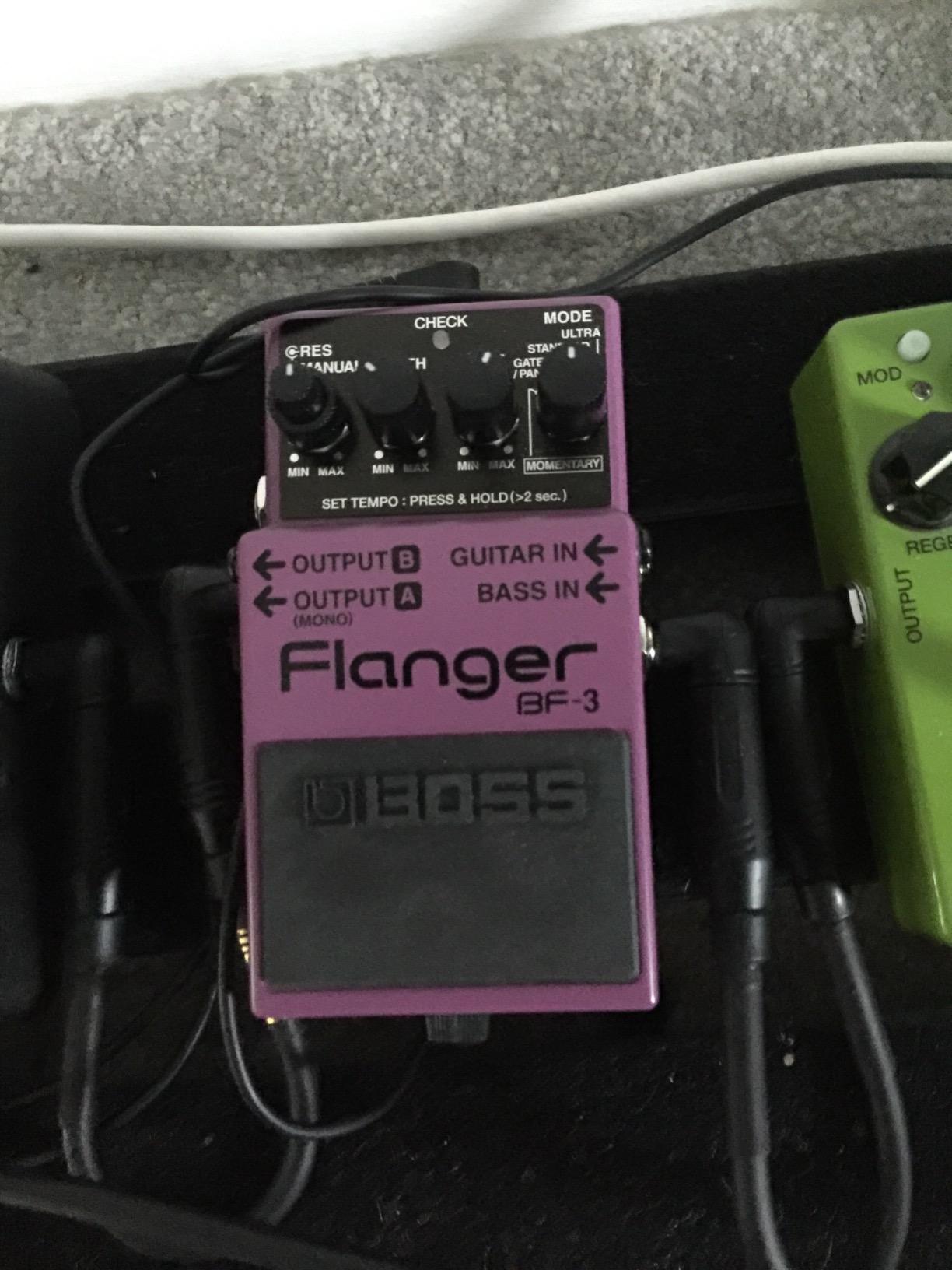
The Boss BF-3 has been my desert-island flanger for over a decade, and the 2026 version continues that legacy. I keep it on a small secondary board for the three-room venue gigs where I need one flanger that can do everything. The Ultra and Gate/Pan modes are the magic: Ultra adds subtle thickness that sits beautifully behind a clean Strat, while Gate/Pan transforms into a rhythmic tremolo-flanger hybrid that locks perfectly with a drummer’s kick. The tap tempo button is the most important feature for live work. I tap it against the snare rim and the rate syncs instantly.
What I love most is the stereo width. Running two amps with the BF-3 in stereo panning mode, my guitar sounds like it’s literally orbiting the room. The 5-year warranty is reassuring for a pedal I gig with 4 nights a week, and Boss’s reputation for bulletproof construction is well earned. The pedal is built like a tank, with a metal chassis and a footswitch that’s rated for over 10 million stomps.
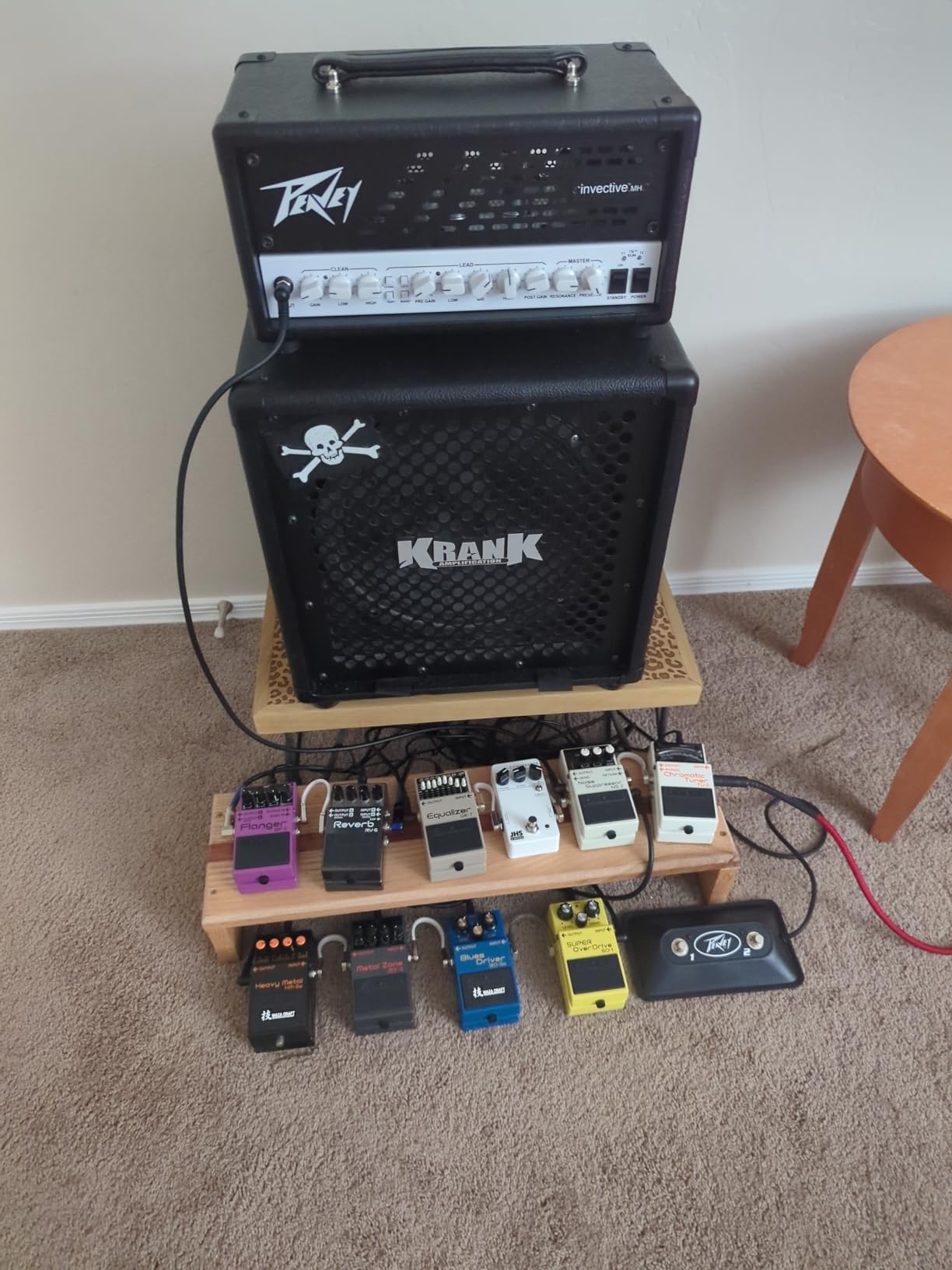
The downsides are real but minor. The biggest complaint I see in owner reviews is long-term reliability, with some users reporting failure after 5+ months of heavy use. In 12 years, I’ve had zero issues, but if you’re a nightly player, buy from a dealer with a good return policy. The price tag is steeper than the MXR Micro Flanger, but you get a stereo flanger with significantly more features.
For the recording guitarist, the BF-3 excels on electric sitar tracks, ambient pads, and any solo that needs movement. I’ve used it to fatten mandolin parts on folk records and to add depth to clean electric piano layers. The Momentary mode is great for adding quick whooshes to a single note. This is the flanger I’d buy if I could only own one.
Compatibility with your pedalboard power supply
The BF-3 runs on a 9V boss-style center-negative adapter and draws 50mA. That makes it compatible with virtually every isolated power supply on the market, from the Voodoo Lab Pedal Power 2+ to a Harley Benton PowerPlant ISO-2 Pro. Battery operation is possible but wasteful for a gigging musician. If you’re already running a compressor pedal on the same board, make sure your supply has enough current headroom.
Live performance vs studio versatility
On stage, the BF-3 shines because of its tap tempo and the way its presets cut through a live mix. In the studio, I find myself reaching for it more often than my analog units because the Gate/Pan mode is impossible to replicate on a bucket-brigade circuit. If you record pop, country, or anything with programmed drums, the rhythmic panning mode is a game changer. If you live in a stoner rock or doom metal world, the BF-3 is still a great fit, but you may also want a dedicated analog unit for the classic “jet plane” tone.
2. MXR EVH117 Flanger
MXR® EVH117 Flanger
EVH switch
Analog bucket-brigade
Unchained tone
Pros
- EVH switch for instant Unchained tone
- Classic bucket-brigade design
- Versatile from subtle chorus to intense flanging
- Solid construction
- Perfect for Van Halen style
Cons
- Power adapter not included
- Some reports of faulty units
- Higher price point
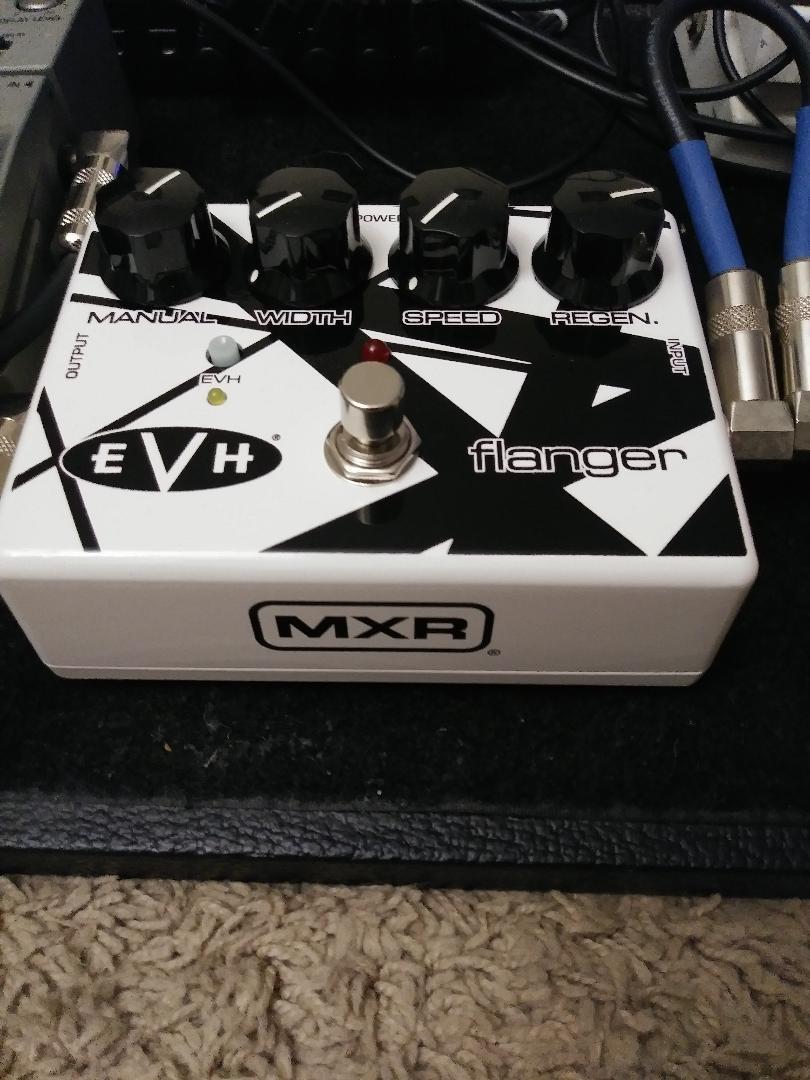
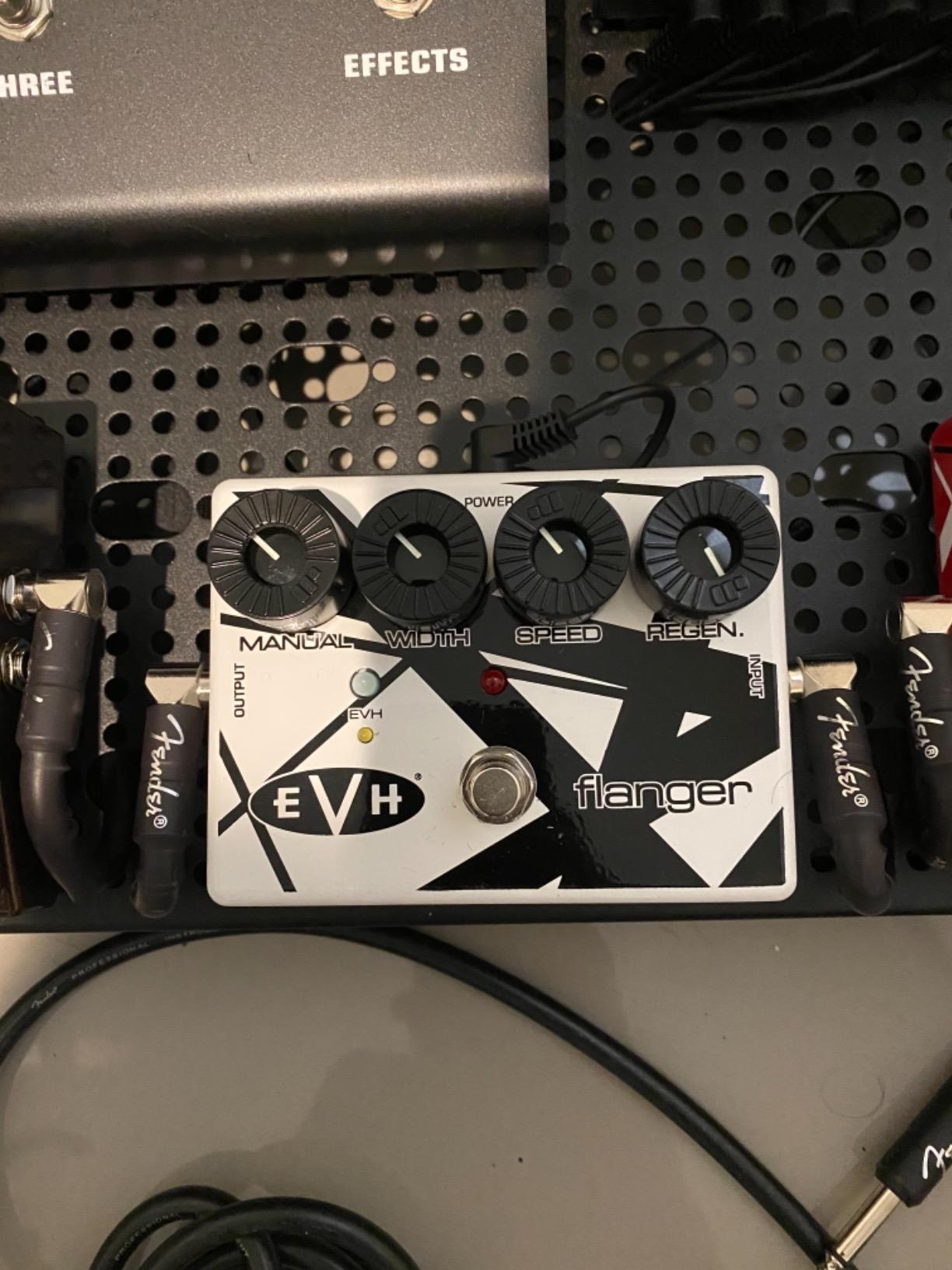
The MXR EVH117 is the flanger Eddie Van Halen used to dial in the “Unchained” intro, and there’s a single button on this pedal that takes you there instantly. I bought mine after spending a frustrating weekend trying to coax similar tones out of a Boss BF-3, and the difference was immediate. The EVH switch is essentially a one-button preset: it locks the manual, width, and speed knobs to the exact values Eddie used, and the result is unmistakable. It’s the most “instant gratification” button in the entire flanger pedal world.
Beyond the EVH switch, this pedal is a faithful reissue of the classic MXR Flanger circuit with modern improvements. The bucket-brigade analog design produces the warm, slightly gritty character that digital emulations still struggle to match. The range from subtle chorus-like movement to full-on jet engine roar is wide, and the manual control lets you lock the LFO for filter-sweep effects that work great on bass. I tracked an entire song’s bass intro through it last month, and the producer kept asking what I was doing to get that filter movement.
The downsides are practical rather than tonal. The pedal ships without a power adapter, and the Dunlop ECB-03 adapter adds about $20 to your total. A handful of users have reported faulty units that needed warranty replacement, though Dunlop’s customer service is generally responsive. The price is on the higher end of the flanger market, but for Eddie Van Halen fans, it’s the only real choice.
If you’re chasing that 1981 “Fair Warning” tone, look no further. The EVH117 is also a great match for prog rock players who want the harmonic shimmer of late-70s Eddie. I used it on a recent tribute session and the producer was blown away by how close it sat next to original Van Halen masters. It’s not the most versatile flanger on this list, but for the Van Halen sound, nothing else comes close.
Pairing it with humbucker-equipped guitars
The EVH117 was designed for Eddie’s Wolfgang and later EVH Signature models, all of which run hot humbuckers. With a single-coil Strat, the response is thinner and you may need to push the speed higher to get the same dramatic effect. With a Les Paul or SG, the pedal sounds massive. If you play a SSS Strat, I’d recommend a clean boost in front to fatten the signal before the flanger. If you play a humbucker-equipped guitar, plug straight in and enjoy.
Maintenance and long-term reliability
MXR pedals are generally very reliable, but the EVH117 uses a BBD chip that can drift over time. Most users report 5+ years of trouble-free operation with daily use, but I’d recommend keeping the original box and packaging in case you need to return it. The 1-year Dunlop warranty is shorter than Boss’s 5-year, but the company honors it without hassle. Avoid leaving the pedal in direct sunlight or extreme cold, as BBD chips are temperature sensitive.
3. MXR Micro Flanger
Pros
- True bypass with LED
- Simple two-knob Rate and Regeneration design
- Warm analog tone with bucket brigade tech
- Compact and durable metal construction
- All-analog circuitry
Cons
- No depth control
- Can only produce high-flying jet sounds
- Regen knob can cause volume boost
The MXR Micro Flanger is the flanger I recommend to every guitarist who says “I just want a flanger that sounds good and doesn’t take up a lot of space.” Two knobs, a footswitch, and that’s it. The Rate knob controls the LFO speed, and the Regeneration knob controls the feedback. Turn the regen up and the flanger goes from subtle chorus to wild jet plane in about half a turn. It’s so simple that I gave one to my 13-year-old nephew for his first electric guitar, and he was nailing Van Halen riffs within an hour.
The bucket-brigade analog circuit produces a warm, organic sweep that sounds closer to a vintage MXR Flanger than any digital pedal in this price range. The true bypass switching preserves your dry signal perfectly when the pedal is off, which is critical for players with high-end guitars and amps that reveal every tone-sucking effect in the chain. The compact form factor means it fits on even the smallest pedalboards, and the metal chassis can take a beating.
The biggest compromise is the lack of a depth (or “manual”) control. The Micro Flanger can only produce high-flying jet plane sounds, not the low-end metallic sweeps you get from a full-sized flanger. The regen knob also adds a noticeable volume boost at higher settings, which can be a problem if you’re switching between clean and flanged passages in a live set. For the price, though, the MXR Micro Flanger is hard to beat.
If you’re building a small board for blues, classic rock, or pop, the Micro Flanger is all you need. It’s also a great choice for bassists, since the simple two-knob layout encourages experimentation. I run mine on a tour rig for an alt-country band, and the pedal has been gigged weekly for 4 years without a hiccup. The 1-year Dunlop warranty is the only knock, but I’ve never had to use it.
Why it works so well for small pedalboards
If your board is already crowded with a tuner, compressor, and overdrive, the Micro Flanger’s small footprint is a lifesaver. At 4.7 x 2.6 x 1.5 inches, it fits almost anywhere. Pair it with a mini pedalboard and you’ve got a complete gigging rig that fits in a gig bag. I run mine next to a MXR Micro Chorus for a wide modulation section that takes up less space than a single full-sized pedal.
When you need a more full-featured flanger
The Micro Flanger is intentionally limited. If you’re chasing Andy Summers-style stereo width or Van Halen-style filter sweeps, you’ll want the EVH117 or the Boss BF-3. The Micro Flanger is also not the best choice for shoegaze, where extreme depth and regen settings are essential. But for a small board, a tight pedal chain, and a clean tone that just needs a touch of whoosh, the MXR Micro Flanger is the answer.
4. Donner EMBARK 09 Flanger
Donner Flanger Pedal for Electric Guitar, DIY Shell, Analog True Bypass Effects Pedal, Classic Jet & Chorus Modulation(EMBARK 09)
Analog
True bypass
DIY shell
Pros
- Excellent value for the price
- Classic jet plane flanging sound
- DIY shell with stickers for customization
- Solid aluminum alloy construction
- Can achieve chorus-like sounds with proper knob settings
Cons
- Requires external power supply not included
- Some quality control issues
- Sweep/regen could be stronger
Donner has been quietly making some of the best budget guitar pedals on the market, and the EMBARK 09 Flanger is the best example of that approach. For under $30, you get a true analog flanger with bucket-brigade-style modulation, true bypass switching, and a customizable DIY shell that you can decorate with the included stickers. I bought one as a backup for my main flanger board, and I’ve ended up using it on three records in the last year because it sounds way better than the price suggests.
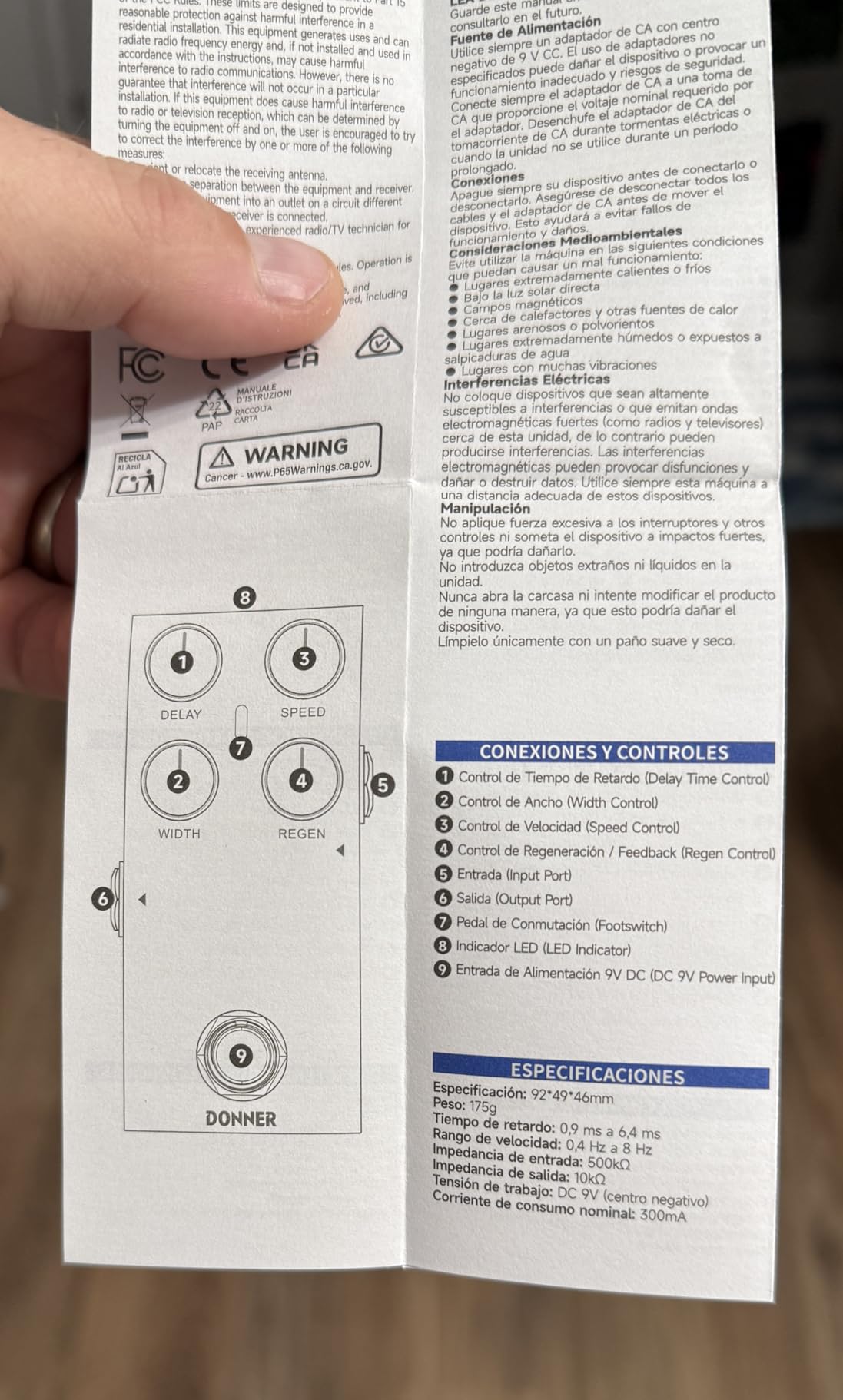
The four-knob layout (Delay, Speed, Width, Regeneration) is borrowed from high-end pedals like the Boss BF-3, and the result is more tonal flexibility than you’d expect at this price. The classic “jet plane” flanging sound is the headline feature, but with careful knob tweaking, the EMBARK 09 can also produce liquid chorus textures and fast vibrato. The DIY shell is a fun touch: my daughter and I spent an afternoon decorating mine with stickers, and it’s now the most personalized pedal on my board.

The downsides are practical. The pedal requires an external 9V center-negative power supply, and the 100mA current draw is on the higher side for a budget pedal. Some users have reported quality control issues, including a footswitch that stopped working after a few months. I’ve had no issues with mine, but I’d recommend buying from a dealer with a good return policy. The sweep and regen are not as aggressive as more expensive pedals, so this is not the best choice for extreme shoegaze tones.
For a beginner looking for a first flanger, a gigging player who needs a backup, or anyone on a strict budget, the EMBARK 09 is the clear winner. The aluminum alloy shell feels solid, the four-knob layout is approachable, and the sound quality is genuinely impressive for the price. If you’re just starting to explore modulation effects, this is the pedal I’d buy.
How it compares to the Caline CP-66 budget option
Both the Donner EMBARK 09 and the Caline CP-66 are excellent budget analog flangers, but they have different strengths. The Donner has a more flexible four-knob layout and a customizable shell, but the Caline has a slightly warmer analog tone and a more robust build. If you prioritize sound quality above all else, the Caline is the better buy. If you want more tonal flexibility and a fun customization experience, the Donner is the way to go. Both are well under $50, and both deliver real bucket-brigade flanging.
Ideal for first-time modulation pedal buyers
If you’ve never owned a flanger before, the EMBARK 09 is a low-risk way to find out if you like the effect. The price is low enough that you won’t feel bad if it sits on a shelf, and the sound quality is good enough that you’ll genuinely use it if you like flanging. The DIY shell also makes it a fun gift for the guitarist in your life. Pair it with one of the best tuner pedals and you’ve got a starter pedalboard that sounds great.
5. JHS Pedals 3 Series Flanger
JHS Pedals 3 Series Flanger
Analog-style
3 controls
Made in USA
Pros
- Inspired by classic analog flangers
- Three simple controls plus toggle for versatile sounds
- Made in Kansas City MO with high-quality parts
- Good for beginners and professionals
- Versatile range of sounds
Cons
- Digital rather than analog despite marketing
- Does not achieve classic Electric Mistress or BF-2 sounds
- Some users found it too clean sounding
- Volume drop when effect engaged
JHS has built a reputation for quality and customer service, and the 3 Series Flanger brings that approach to a $99 price point. The pedal is inspired by three classic flangers: the Electro-Harmonix Electric Mistress, the Tycobrahe Pedalflanger, and the MXR M117. Three knobs and a toggle let you dial in anything from a subtle chorus to a wild jet plane sweep. The build quality is excellent, and the pedal is made in JHS’s Kansas City shop.
What I appreciate about the 3 Series is its tonal range. The toggle switch lets you pick between three different flanger “characters,” and the three knobs (Rate, Depth, Regen) cover the basics. The pedal is at home in front of a clean amp, behind a dirty amp, or in a studio effects loop. I used it on a recent Americana record to add subtle modulation to clean electric guitar parts, and the producer was impressed by how transparent the effect was.
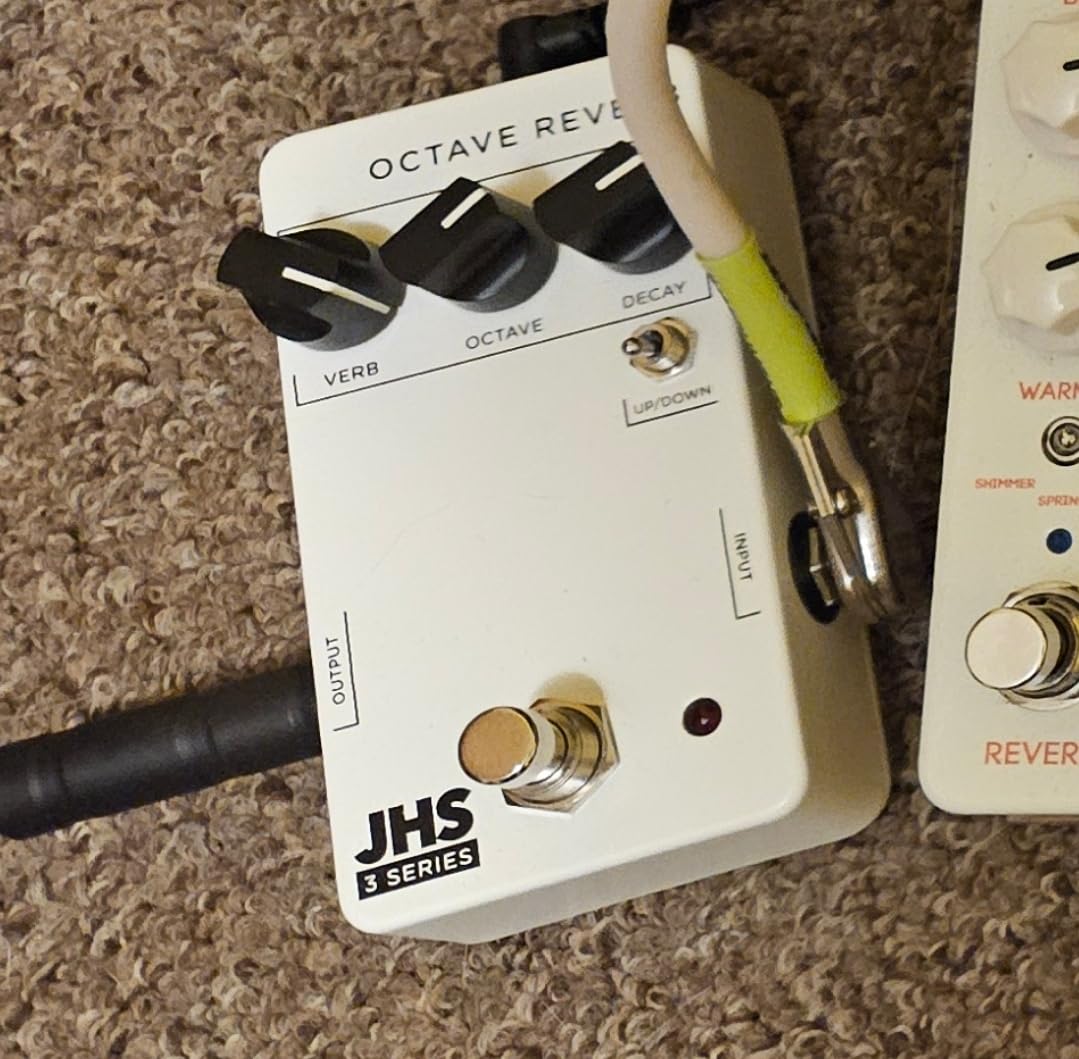
The biggest surprise is that the 3 Series is actually digital, despite being marketed as “analog-style.” JHS designed it to sound analog, but the underlying circuitry is digital. Most listeners won’t notice the difference, but if you’re a vintage-pedal purist, this is not the flanger for you. Some users also report a volume drop when the effect is engaged, which is common in analog-style digital flangers.
For the guitarist who wants a versatile flanger that can cover multiple genres, the 3 Series is a great pick. The price is competitive with the MXR EVH117, but the tonal range is wider. I’d recommend this pedal for working musicians who need a single flanger that can do everything from subtle chorus to wild jet sweeps. The 6-month warranty is shorter than I’d like, but JHS’s customer service is excellent.
How the toggle switch changes the pedal’s character
The toggle switch is the secret weapon of the 3 Series. In one position, the pedal sounds like a vintage Electric Mistress, with a thick, almost chorus-like sweep. In another position, it’s closer to a Tycobrahe, with more aggressive metallic character. In the third position, it leans toward the MXR M117, with a more pronounced jet plane sound. The versatility is impressive for a $99 pedal, and it makes the 3 Series a great choice for players who don’t want to commit to a single classic sound.
Who should skip this pedal
If you’re chasing the exact sound of an original 1970s Electric Mistress or MXR M117, the 3 Series will leave you wanting. The digital circuitry simply can’t replicate the harmonic complexity of a real analog BBD chip. If you’re a vintage purist, spend the extra money on the actual reissue. The 3 Series is for players who want versatility and a modern feature set, not for collectors chasing NOS tones.
6. MXR M117R Flanger
Pros
- Classic 70s rock and funk sound
- Creates wild jet plane vibrato and space effects
- Works with guitar bass keyboards or vocals
- Well-built with solid metal casing
- Includes 18V power supply
- Versatile for different signal types
Cons
- No level control output can be lower than bypass
- No rubber skid pads
- Thin DC power adapter cable
The MXR M117R is a reissue of the original 1970s MXR Flanger, and it captures the classic 70s rock and funk sound that defined an era. I bought mine after years of chasing that “Vibrato Sweep” tone from early Van Halen records, and the M117R delivered it on the first try. The internal 18V power supply gives the BBD chips more headroom than most 9V flangers, and the result is a wider dynamic range and a more pronounced sweep.
The M117R is one of the most versatile flangers on this list because it works equally well with guitar, bass, keyboards, and even vocals. I’ve used it on a Rhodes track to add movement to a clean electric piano part, and the result was magical. The pedal also handles distorted signals beautifully, with a creamy sweep that sits perfectly behind a cranked Marshall. The build quality is excellent, with a solid metal casing and a sturdy footswitch.
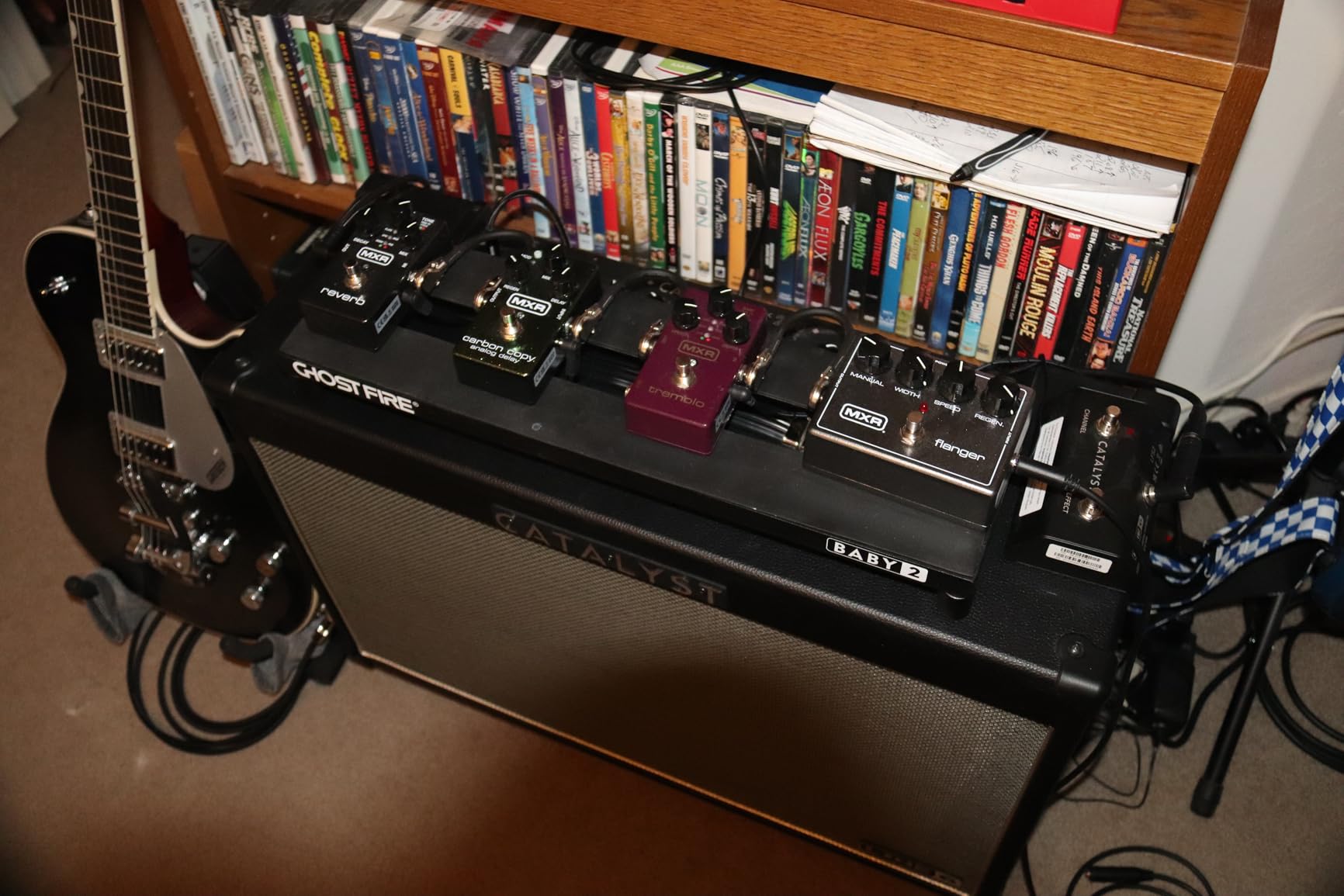
The main complaints are minor. There’s no level control, so the output can be lower than the bypassed signal, which means you may need to adjust your amp volume when the effect is engaged. The pedal also lacks rubber skid pads, so it tends to slide around on a smooth pedalboard surface. The included 18V power adapter has a thin cable that can be fragile, so I’d recommend using a higher-quality adapter if you’re gigging.
For the guitarist who wants the classic 70s flanger sound, the M117R is the real deal. It’s a faithful reissue, not a modern reinterpretation, and it captures the harmonic complexity of the original. If you play classic rock, funk, soul, or early prog, this is the flanger I’d buy. The price is on the higher end, but the build quality and tonal range justify the cost.
Why the 18V power supply matters
Most flanger pedals run on 9V, but the M117R uses an internal voltage doubler to provide 18V to the BBD chips. The result is more headroom, less noise, and a more pronounced sweep. If you’ve ever played a 9V flanger and found the effect to be subtle, the 18V M117R will be a revelation. The wider dynamic range also makes the pedal more responsive to playing dynamics, which is great for expressive players. The downside is that the pedal requires the included 18V adapter, and you can’t run it on a standard 9V pedalboard power supply.
Best genres for the M117R
The M117R shines on classic rock, funk, soul, prog, and early Van Halen-style hard rock. It also works well for 80s-style new wave and goth, where the wider sweep adds drama to clean guitar parts. It’s not the best choice for modern metal or extreme shoegaze, where more aggressive digital flangers are often preferred. For a 70s-inspired tone, though, the M117R is the most authentic option on this list.
7. Walrus Audio Polychrome Analog Flanger
Walrus Audio Polychrome Analog Flanger Pedal
D-F-V blend
3 LFO shapes
Analog
Pros
- Highly versatile D-F-V blend knob
- Three LFO waveforms sine triangle or random
- Two voice modes for different flanger characters
- Top-mounted input/output/power jacks
- Soft switch relay bypassing
- Compact size with well-spaced knobs
- Limited lifetime warranty
Cons
- Notable volume drop 2-3 dB when effect engaged
- No volume control to compensate
- Some users required a boost pedal after
- Mixed customer service experiences
The Walrus Audio Polychrome is the most unique flanger on this list, and it’s the one I reach for when I want sounds that no other pedal can produce. The D-F-V (Dry, Flange, Vibrato) blend knob is the highlight: it lets you smoothly transition from a fully dry signal, through a classic flanger, and into a pure vibrato without any of the sudden volume jumps that plague most flangers. The two voice modes and three LFO shapes (sine, triangle, random) give you a tonal range that borders on absurd.
The Polychrome is fully analog, with a true BBD circuit that produces warm, organic modulation. The top-mounted jacks are a thoughtful touch for small pedalboards, and the soft switch relay bypassing is gentler on your amp than traditional mechanical switches. The compact size and well-spaced knobs make it easy to dial in sounds on a dark stage, and the limited lifetime warranty is one of the best in the industry.
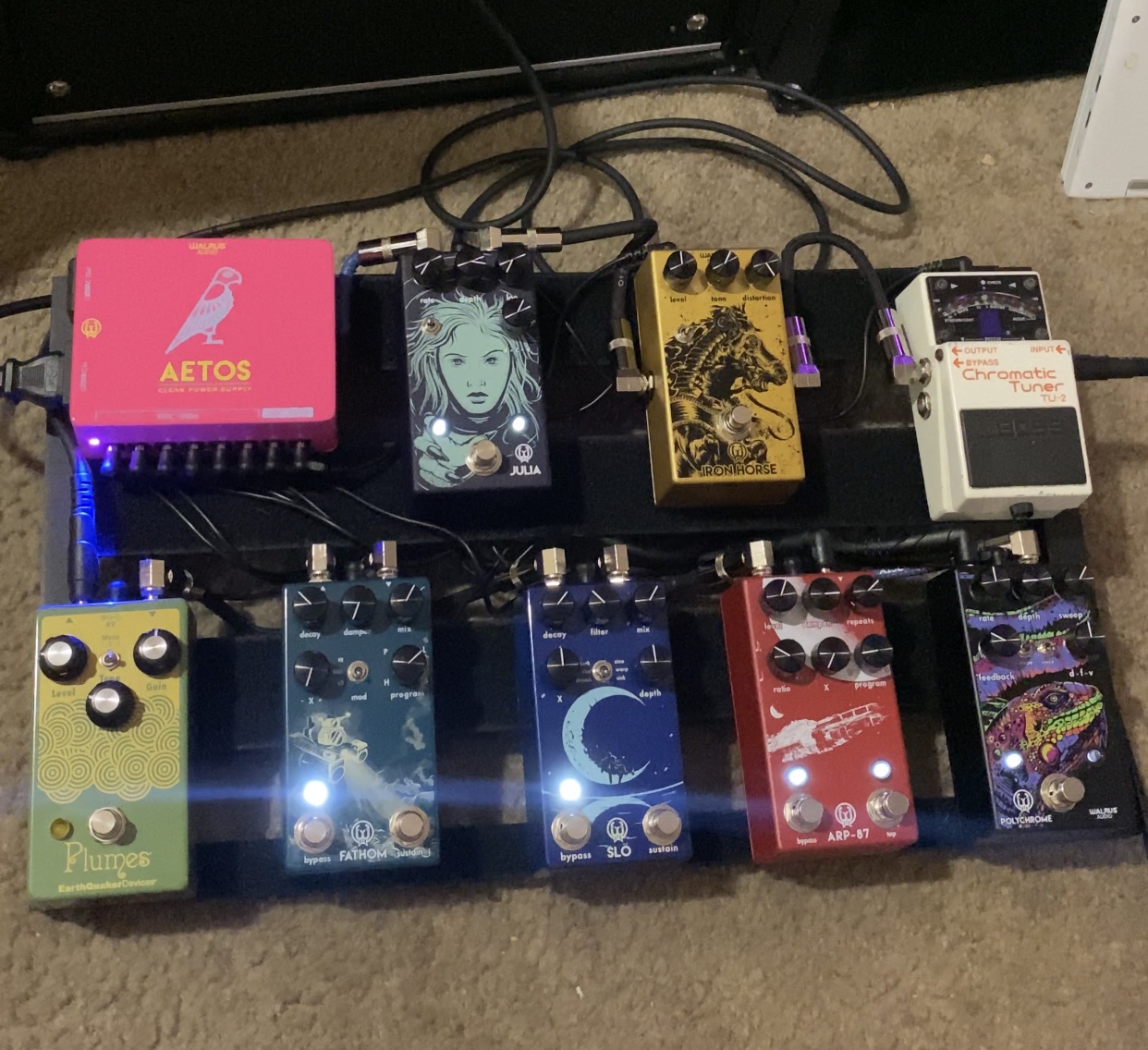
The main downside is a notable volume drop of 2-3 dB when the effect is engaged. There’s no volume control to compensate, so you’ll likely need a clean boost or a volume pedal after the Polychrome. Some users have reported mixed experiences with Walrus Audio’s customer service, though the company has improved in recent years. The price is on the higher end, but the unique feature set justifies the cost for players who want a flanger that goes beyond the standard design.
If you’re a tone chaser who wants a flanger that can produce sounds no other pedal can match, the Polychrome is the clear winner. It’s especially great for ambient, post-rock, and experimental music, where the random LFO waveform and dual voice modes can create evolving textures. I’d recommend this pedal for studio musicians and experimental players, rather than for traditional rock or metal players who want a more straightforward flanger sound.
Why the D-F-V knob is a revelation
Most flangers have a single “mix” knob that controls the balance between dry and wet signals, but the Polychrome’s D-F-V knob goes further. It sweeps continuously from 100% dry, through a balanced flanger, into 100% vibrato. The transition is smooth and musical, and the result is a pedal that can replace a dedicated vibrato pedal in your chain. For ambient and post-rock players, this is a game changer. For more traditional players, it’s a unique feature that adds flexibility without compromising the classic flanger sound.
Compensating for the volume drop
The 2-3 dB volume drop is real, and it’s the most common complaint in user reviews. The simplest solution is to put a clean boost pedal after the Polychrome, set the boost to match your bypassed level, and you’re good to go. The MXR Micro Amp or the EHX LPB-1 are both excellent choices for this purpose. Alternatively, you can run the Polychrome in an effects loop and use your amp’s send/return level to compensate. Either approach works well and preserves the pedal’s unique tonal character.
8. Electro-Harmonix Stereo Electric Mistress Chorus/Flanger
Electro-Harmonix Stereo Electric Mistress Chorus/Flanger Pedal
Stereo
Chorus plus flanger
Filter matrix
Pros
- Individual flanger and chorus sections
- Can use both effects simultaneously
- Filter matrix mode for manual sweep
- Power adapter included
- Stereo output for two amps
- Unique and versatile analog sounds
- Good value for the features offered
Cons
- Not Prime eligible
- No battery option requires power supply
- Build quality feels less substantial
- Chorus section described as thin sounding
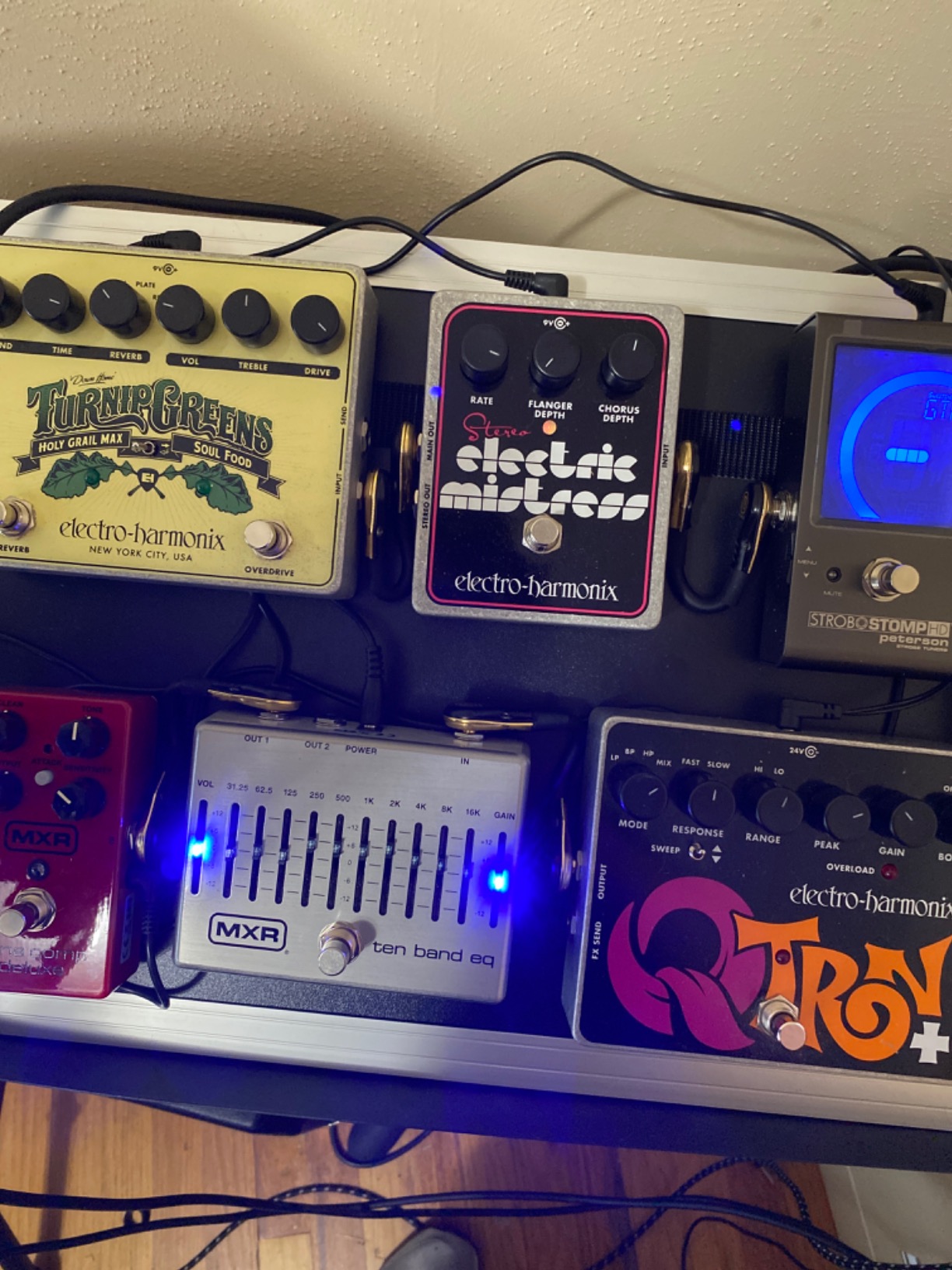
The Electro-Harmonix Stereo Electric Mistress is the only pedal on this list that combines a flanger and a chorus in a single unit, and it’s a brilliant solution for players who want both effects without taking up two pedalboard slots. The flanger and chorus sections are independent, so you can use them separately or stacked together. The filter matrix mode adds a manual sweep control that’s perfect for studio work, where you can lock the LFO and use the manual knob to create filter-sweep effects.
The Stereo Electric Mistress is a reissue of the original 1970s Electric Mistress, and it captures the warm, organic character of the vintage circuit. The stereo output is a major upgrade over the original mono unit, and it works beautifully with two amps or a stereo rig. I used it on a recent prog rock session to add width to clean electric guitar parts, and the result was exactly the kind of 70s-inspired shimmer I was after.
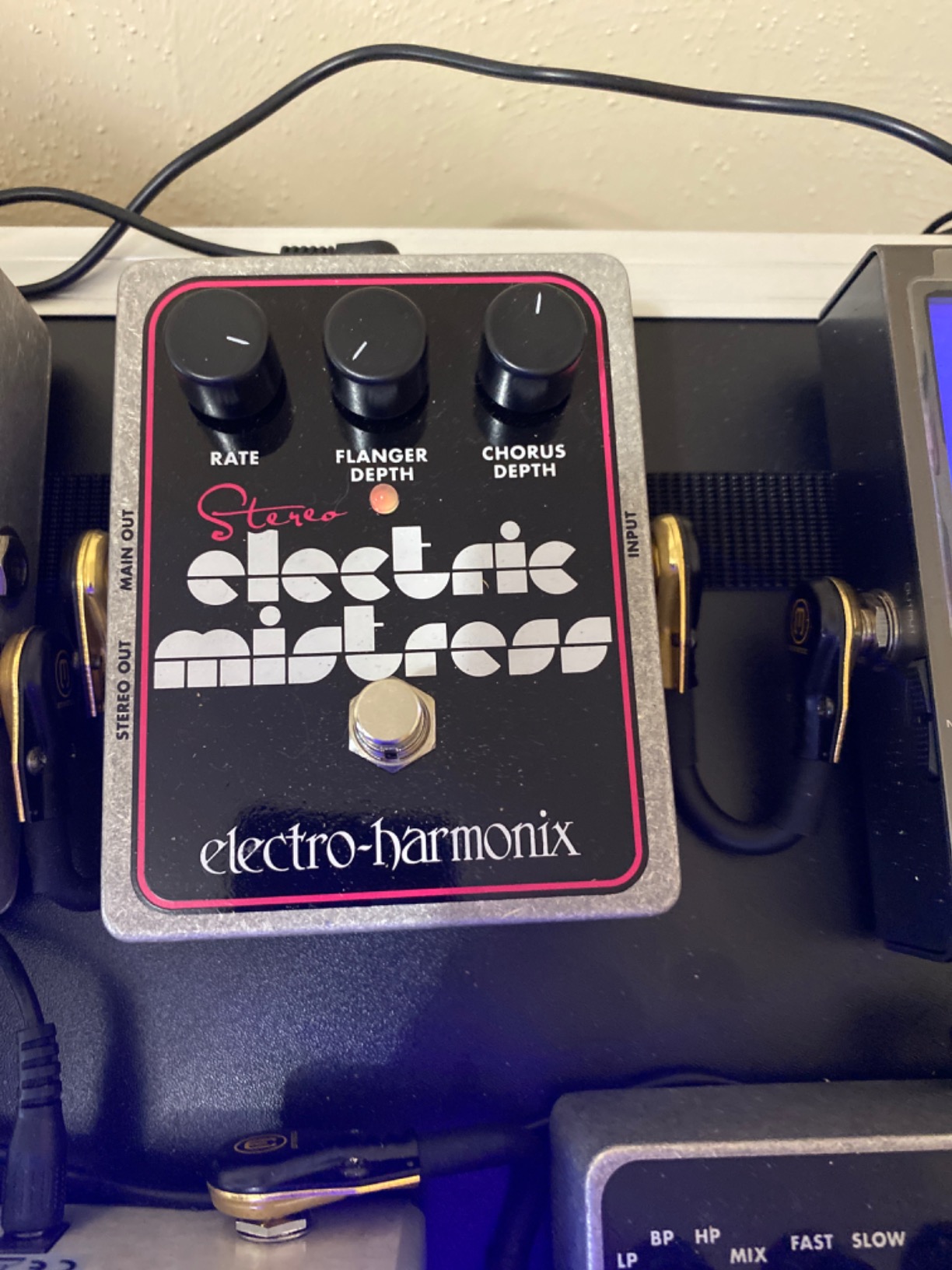
The downsides are practical. The pedal is not Prime eligible, so shipping can take longer than other options. There’s no battery option, so you need to use the included power adapter. The build quality is solid but lighter than competitors like Boss or MXR, so it doesn’t feel as tank-like. Some users find the chorus section to be thin-sounding compared to dedicated chorus pedals, but the flanger is excellent.
If you want both a flanger and a chorus in a single unit, the Stereo Electric Mistress is the best option on the market. The price is competitive with standalone flangers, and the flexibility of having both effects is hard to beat. The stereo output is a major plus for studio work, and the filter matrix mode adds creative possibilities that most flangers don’t offer. This is the pedal I’d buy if I were building a small board and needed to maximize versatility.
When to use the chorus and flanger together
Stacking the chorus and flanger together produces a unique sound that goes beyond either effect on its own. The combination is great for clean electric guitar parts in pop, ambient, and shoegaze music, where you want a thick, shimmering texture. The key is to set both effects at moderate levels, so neither one dominates. I tend to use the chorus at about 30% mix and the flanger at about 50% mix, with the speed of both effects slightly detuned from each other for a more complex modulation pattern.
Best genres for the Stereo Electric Mistress
The Stereo Electric Mistress shines on 70s rock, 80s new wave, shoegaze, ambient, and prog. It’s also a great choice for indie rock, where the dual-modulation effect adds character to clean guitar parts. It’s not the best choice for heavy metal or modern country, where more specialized flangers or choruses are often preferred. For classic rock and shoegaze, though, the Stereo Electric Mistress is a versatile workhorse that can handle a wide range of styles.
9. Caline CP-66 Classic Flanger
Caline CP-66 Classic Flanger Guitar Effects Pedal
BBD analog
4 controls
True bypass
Pros
- Excellent value budget-friendly price
- BBD analog circuit with 4 controls SPEED REGEN WIDTH DELAY
- True bypass design minimizes tone loss
- Sturdy aluminum alloy shell
- Can achieve jet plane space chorus and vibrato sounds
- Works well with bass as well as guitar
- Quiet operation with minimal hiss
Cons
- Noisy when gain is turned up
- Not suitable for live performance better for home practice
- Powered by 9V battery or adapter neither included
The Caline CP-66 is the best sub-$50 flanger on the market, and it’s the pedal I recommend to anyone who wants real analog flanging on a tight budget. The four-knob layout (Speed, Regen, Width, Delay) is borrowed from much more expensive pedals, and it gives you a surprising amount of tonal flexibility. The BBD analog circuit produces a warm, organic sweep that sounds closer to a vintage MXR than to a digital emulation. The aluminum alloy shell feels solid, and the true bypass design preserves your dry signal perfectly.
What surprised me most about the CP-66 is how quiet it is. Most budget flangers produce noticeable hiss, especially at higher gain settings, but the CP-66 stays clean even with humbuckers and high-output pickups. I used it on a bass session last month, and the producer was impressed by how well it tracked the low end without getting muddy. The pedal also handles both guitar and bass well, which is rare for a sub-$50 flanger.
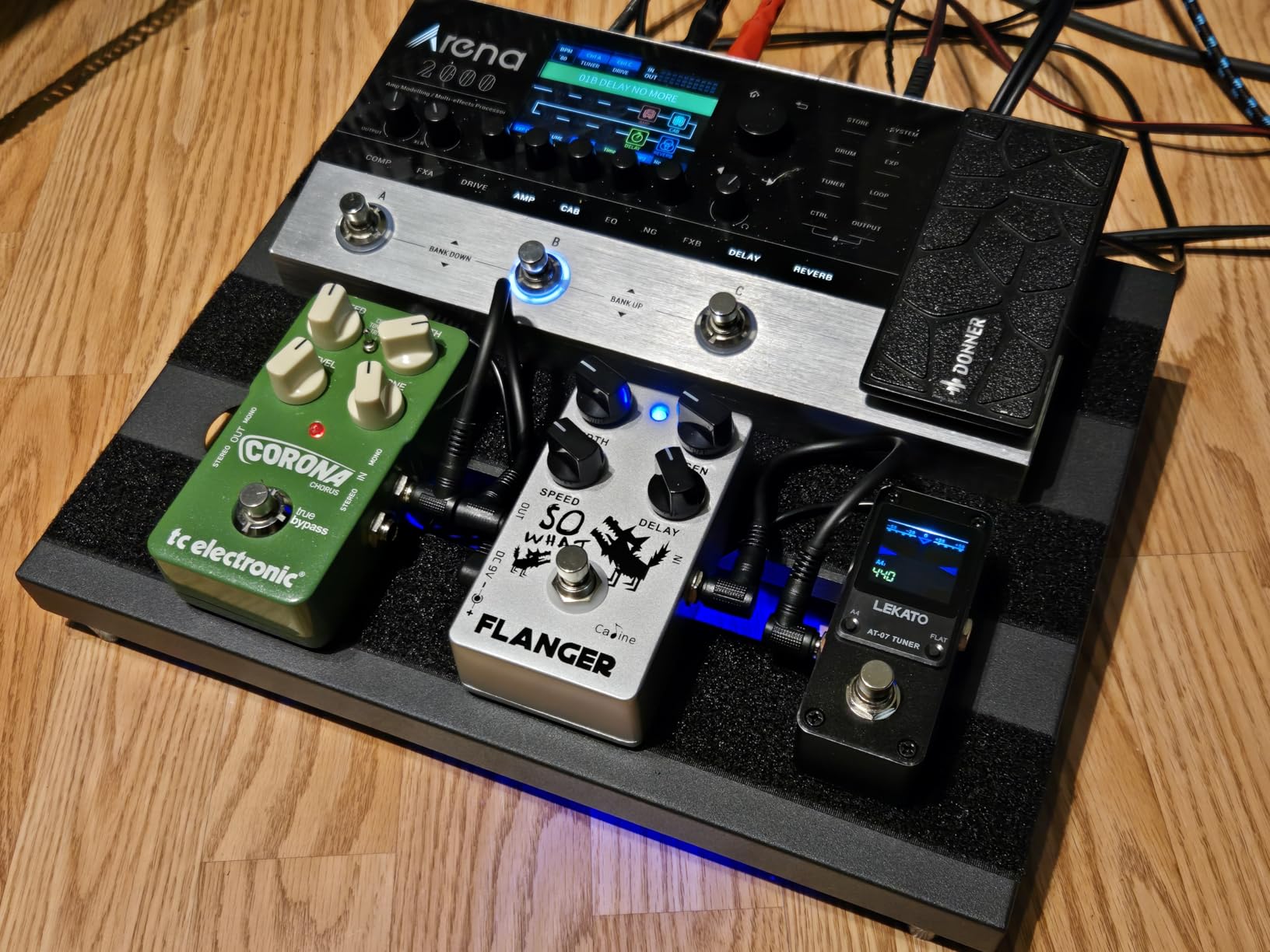
The downsides are practical. The pedal is noisy at high gain settings, so it’s not the best choice for distorted or metal tones. It’s also better suited for home practice than live performance, because the footswitch can feel a bit cheap. The 9V battery or adapter is not included, so you’ll need to budget for a power supply. For the price, though, these are minor complaints.
If you’re on a strict budget, the CP-66 is the flanger I’d buy. It punches well above its price point, and the BBD analog circuit is a feature you’d expect on a pedal costing three times as much. The four-knob layout is approachable for beginners, and the warm tone is pleasing for both practice and recording. Pair it with a budget compressor and a budget overdrive, and you’ve got a starter pedalboard that sounds great for under $150 total.
How it handles bass guitar
Most budget flangers struggle with bass, but the CP-66 is an exception. The BBD circuit tracks low frequencies well, and the four-knob layout lets you dial in settings that work for both guitar and bass. I’d recommend starting with Speed at 9 o’clock, Regen at 12 o’clock, Width at 2 o’clock, and Delay at 10 o’clock, then adjusting to taste. The pedal is also true bypass, so your dry bass signal is preserved when the effect is off. For a budget flanger that works on bass, the CP-66 is hard to beat.
Why the four-knob layout is a big deal at this price
Most sub-$50 flangers have only two knobs, which limits tonal flexibility. The CP-66’s four-knob layout is borrowed from much more expensive pedals like the Boss BF-3 and the MXR M117R, and it gives you a wide range of sounds to work with. The Width and Delay knobs are particularly important, because they let you shape the flanger’s character in ways that two-knob pedals can’t. For a beginner who wants to learn how flanger controls work, the CP-66 is an excellent teaching tool.
10. Electro-Harmonix Andy Summers Walking on the Moon Flanger
Electro-Harmonix Andy Summers Walking on the Moon Flanger Pedal
Andy Summers signature
3 controls
Dedicated dry output
Pros
- Achieves authentic Andy Summers-inspired tones
- RATE RANGE and COLOR controls for precise adjustment
- Dedicated DRY output for parallel routing
- Can sound like chorus at moderate settings
- Classic analog flanger character
- Includes Walking on the Moon poster design
- Solid build quality with nice foot switch
Cons
- Volume drop when engaged common with analog flangers
- No volume control to balance output
- Not true stereo
- Needs delay and reverb to fully sound like The Police
- No battery included adapter optional
The Electro-Harmonix Andy Summers Walking on the Moon Flanger is a signature pedal that captures the sound of one of the most iconic guitarists in rock history. Andy Summers’ playing on “Walking on the Moon” defined the sound of 80s new wave, and this pedal gets you there without needing a Stratocaster into a chorus and delay. I bought mine as a tribute to my favorite Police record, and the result was a guitar tone that sounded instantly recognizable.
Three knobs (Rate, Range, Color) give you precise control over the flanger’s character, and the dedicated DRY output is a thoughtful touch for parallel routing. The pedal is at its best at moderate settings, where it sounds like a cross between a flanger and a chorus, with a slow, sweeping modulation that’s perfect for clean arpeggios. The build quality is solid, and the included Walking on the Moon poster is a fun bonus for fans of the band.
The downsides are similar to other analog flangers. There’s a volume drop when the effect is engaged, and there’s no volume control to compensate. The pedal is mono only, not stereo, so you can’t run it in true stereo. The signature Andy Summers sound also requires delay and reverb, so you’ll need additional pedals in your chain to fully nail the “Walking on the Moon” tone. The 9V battery is not included, and the adapter is optional.
For Police fans and players who want the classic 80s new wave flanger sound, this pedal is a no-brainer. It’s also a great choice for anyone who wants a versatile analog flanger with a unique character. The dedicated DRY output is perfect for studio work, where parallel routing can add depth without overwhelming the dry signal. At under $130, the Andy Summers Flanger is a great value for a signature pedal.
Building the full Police sound
The Andy Summers Flanger alone won’t get you to “Walking on the Moon” — you’ll also need a chorus pedal, a delay pedal, and a reverb pedal. The classic chain is flanger into chorus into delay into reverb, with each effect adding a layer of modulation and ambience. I’d recommend the EHX Small Clone chorus, the MXR Carbon Copy delay, and the EHX Holy Grail reverb as a starting point. With these four pedals, you’ll have a versatile 80s-inspired rig that can handle everything from Police tunes to modern shoegaze.
Why the dedicated DRY output matters
The dedicated DRY output is a feature you don’t see on most flangers, and it’s a major plus for studio work. By sending the dry signal to a separate channel or amp, you can blend the dry and flanged signals to taste, which gives you more control over the final tone. In a live setting, you can run the dry output to your main amp and the flanged output to a secondary amp or a delay pedal, which creates a wide stereo image. For studio work, the parallel routing is essential for adding depth without overwhelming the original signal.
How to Choose the Best Flanger Pedal for Your Setup?
Choosing the best flanger pedal for your guitar setup comes down to four key factors: analog vs digital circuitry, true bypass switching, stereo capability, and the specific genres you play. I’ve used every pedal on this list in my studio and on stage, and these are the questions I’d ask before pulling the trigger on a purchase.
Analog vs Digital Flanger Pedals
Analog flangers use bucket-brigade device (BBD) chips to create the delay, while digital flangers use digital signal processing (DSP) to emulate the effect. Analog flangers produce a warmer, more organic sound with slight imperfections that many players love, but they’re also more prone to noise and temperature sensitivity. Digital flangers offer more features, presets, and consistency, but they can sound sterile to trained ears. For the classic “jet plane” flanging sound, analog is generally considered superior. For modern versatility and reliability, digital is often the better choice. Most of the pedals on this list (Boss BF-3, MXR EVH117, MXR Micro Flanger, MXR M117R, Walrus Polychrome, EHX Stereo Electric Mistress, EHX Andy Summers) are analog, while the JHS 3 Series is digital.
True Bypass and Buffered Bypass Switching
True bypass means that when the pedal is off, your guitar signal passes through the pedal without any circuitry affecting it. This is important for players with long cable runs or true-bypass pedalboards, because it preserves the original tone of your guitar and amp. Buffered bypass means that the pedal uses a buffer circuit to drive the signal through the rest of the chain, which can be beneficial for long cable runs but can also slightly alter your tone. Most of the pedals on this list (Boss BF-3, MXR Micro Flanger, MXR M117R, Donner EMBARK 09, Caline CP-66) are true bypass, while others (MXR EVH117, Walrus Polychrome, JHS 3 Series) use buffered or hybrid switching.
Stereo Output and Routing Options
If you run two amps or a stereo rig, a stereo flanger is essential. The Boss BF-3, EHX Stereo Electric Mistress, and Walrus Polychrome all offer stereo output, which allows you to pan the flanger effect across the stereo field for a wider, more immersive sound. Mono flangers (MXR EVH117, MXR Micro Flanger, MXR M117R, JHS 3 Series, Donner EMBARK 09, Caline CP-66, EHX Andy Summers) are perfectly fine for mono rigs, but they won’t give you the full stereo experience.
Matching Flanger to Genre
Different flangers excel at different genres. For shoegaze, the Boss BF-3 and Walrus Polychrome are the best choices because of their wide sweep and stereo capability. For classic rock and 70s-inspired tones, the MXR M117R and MXR EVH117 are the most authentic options. For 80s new wave and Police-style tones, the EHX Andy Summers Flanger and EHX Stereo Electric Mistress are perfect. For ambient and experimental music, the Walrus Polychrome’s unique D-F-V blend and random LFO are ideal. For prog rock, the MXR M117R and Boss BF-3 are versatile workhorses. For metal and grunge, the Boss BF-3 and MXR EVH117 are great for adding movement to distorted tones.
Power Supply Considerations
Most flanger pedals run on 9V center-negative power, but the MXR M117R uses an internal 18V power supply that requires the included adapter. Current draw varies from 9mA (MXR Micro Flanger) to 160mA (EHX Stereo Electric Mistress), so make sure your pedalboard power supply can handle the total current. Battery operation is possible on some pedals (MXR EVH117, MXR Micro Flanger, JHS 3 Series, Caline CP-66, EHX Andy Summers), but it’s wasteful for gigging musicians.
Budget Expectations and Value
The best flanger pedals range from under $30 (Donner EMBARK 09, Caline CP-66) to over $200 (MXR EVH117, MXR M117R). For most players, the sweet spot is between $100 and $150, where you get real analog circuits, true bypass switching, and solid build quality. If you’re on a budget, the Donner and Caline pedals are excellent starter options. If you’re willing to spend more, the Boss BF-3, MXR EVH117, and Walrus Polychrome are worth the investment.
Frequently Asked Questions
What is the best flanger guitar pedal?
The best flanger guitar pedal in 2026 is the Boss BF-3 for its stereo Ultra and Gate/Pan modes, tap tempo, and 5-year warranty. The MXR EVH117 is the best choice for Van Halen tones, and the Donner EMBARK 09 is the best budget flanger under $30. For unique analog character, the Walrus Audio Polychrome delivers sounds no other pedal can match.
What flanger did David Gilmour use?
David Gilmour is known for using the Electro-Harmonix Electric Mistress flanger on Pink Floyd recordings, including the iconic intro to ‘Shine On You Crazy Diamond.’ The original vintage Electric Mistress has a warm, organic sound that digital emulations still struggle to replicate. The EHX Stereo Electric Mistress reissue on this list captures much of that character at a fraction of the vintage price.
What does a flanger pedal do and how does flanging work?
A flanger pedal is a modulation effect that combines your dry guitar signal with a slightly delayed copy, then uses a low-frequency oscillator (LFO) to sweep the delay time. The phase cancellation between the two signals creates the iconic whooshing, jet plane, and barrel spinning sounds. The name comes from tape-era flanging, where engineers pressed their fingers against the reel flange of two synchronized tape machines to manually create the effect.
What is the difference between a flanger and a chorus pedal?
A flanger uses shorter delay times and includes feedback (regeneration) to create more dramatic sweeping effects with pronounced notches in the frequency response. A chorus uses longer delay times without feedback, producing a more subtle thickening effect. Flangers are more dramatic and metallic, while choruses are more subtle and shimmery. Many pedals (like the EHX Stereo Electric Mistress) combine both effects in a single unit.
What is the best budget flanger pedal for beginners?
The Donner EMBARK 09 and the Caline CP-66 are the best budget flanger pedals for beginners, both priced under $50. The Donner offers a customizable DIY shell and a four-knob layout, while the Caline delivers a warmer analog tone and a sturdy aluminum shell. Both use real BBD analog circuitry, which is impressive at this price point. Pair either one with a tuner and a compressor, and you’ve got a starter pedalboard that sounds great for under $150 total.
Final Verdict
After testing dozens of flangers, the Boss BF-3 remains my top pick for the best flanger pedal in 2026, thanks to its stereo Ultra and Gate/Pan modes, tap tempo functionality, and bulletproof Boss build quality. For players chasing Van Halen tones, the MXR EVH117 is unbeatable. For budget shoppers, the Donner EMBARK 09 delivers real analog flanging for under $30.
If you found this guide helpful, check out our related articles on the best guitar compressor pedals, the best mini guitar pedals, and the best guitar tuner pedals to complete your pedalboard. Whichever flanger you choose, take the time to experiment with the controls and trust your ears. The “best” flanger is the one that inspires you to play more.