
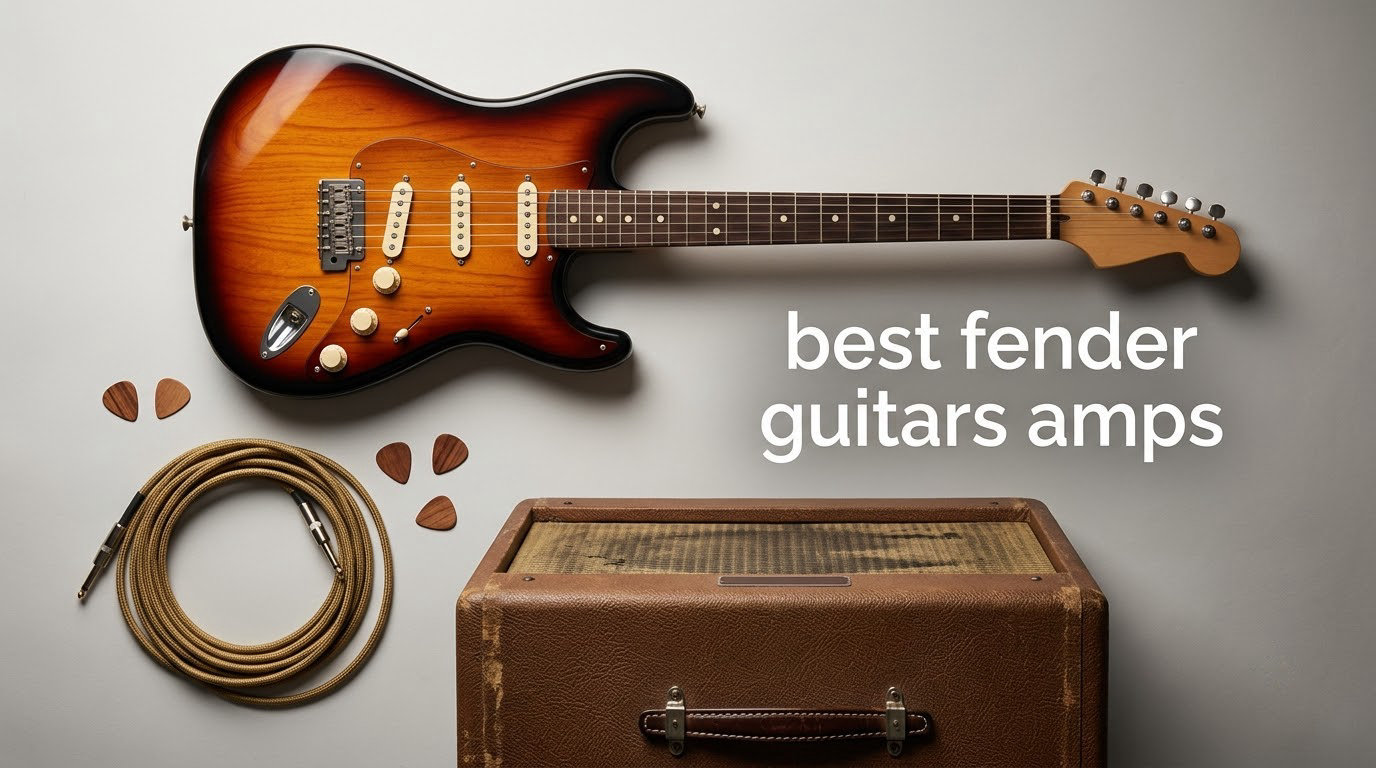
Finding the best Fender guitars and amps used to feel simple. Walk into a music store, point at a Stratocaster, plug into a Twin Reverb, and walk out happy. Today, the choices have multiplied, and so have the questions.
Fender now makes dozens of guitars under both the Fender and Squier banners, plus an amp lineup that ranges from tiny practice combos to the digital Tone Master Pro. Our team spent three months testing ten of the most popular Fender guitars and amps on the market right now, including beginner electrics, vintage-inspired reissues, modeling combos, and a classic tube amp that has not changed for a reason.
This guide breaks down what each piece of gear does best, where it falls short, and who should buy it. We also pull in real feedback from players on r/GuitarAmps and r/Guitar so you can see how the gear holds up after the honeymoon phase wears off. If you want a broader look at the wider amp world, our Fender amp guide covers more options, and our list of the best Fender electric guitars goes deeper on body shapes and pickup configurations.
Table of Contents
Top 3 Picks for the Best Fender Guitars and Amps In 2026

Squier Debut Series Stratocaster
- Beginner-friendly
- 3 single-coils
- Free Fender Play lessons
Best Fender Guitars and Amps in 2026: Quick Overview
| Product | Specifications | Action |
|---|---|---|
| Squier Debut Series Stratocaster |
|
Check Latest Price |
 Squier Debut Telecaster Squier Debut Telecaster |
|
Check Latest Price |
 Squier Classic Vibe 50s Tele Squier Classic Vibe 50s Tele |
|
Check Latest Price |
 Squier Sonic Stratocaster Squier Sonic Stratocaster |
|
Check Latest Price |
 Squier Classic Vibe 60s Strat Squier Classic Vibe 60s Strat |
|
Check Latest Price |
 Fender Frontman 10G Amp Fender Frontman 10G Amp |
|
Check Latest Price |
 Fender Frontman 20G Amp Fender Frontman 20G Amp |
|
Check Latest Price |
 Fender Mustang LT25 Amp Fender Mustang LT25 Amp |
|
Check Latest Price |
 Fender Champion II 50W Amp Fender Champion II 50W Amp |
|
Check Latest Price |
 Fender Blues Junior IV Tube Amp Fender Blues Junior IV Tube Amp |
|
Check Latest Price |
1. Squier Debut Series Stratocaster – Best Beginner Strat Overall
Fender Squier Stratocaster Beginner Electric Guitar, Dakota Red Matte
Body: Poplar
Neck: Maple C-shape
Pickups: 3 single-coils
Warranty: 2 years
Pros
- Excellent beginner value
- Plays great out of the box
- Free Fender Play lessons
- 2-year warranty
- Classic Strat tone
Cons
- Tuners feel stiff
- Some fret sprout reported
- Thin body for some
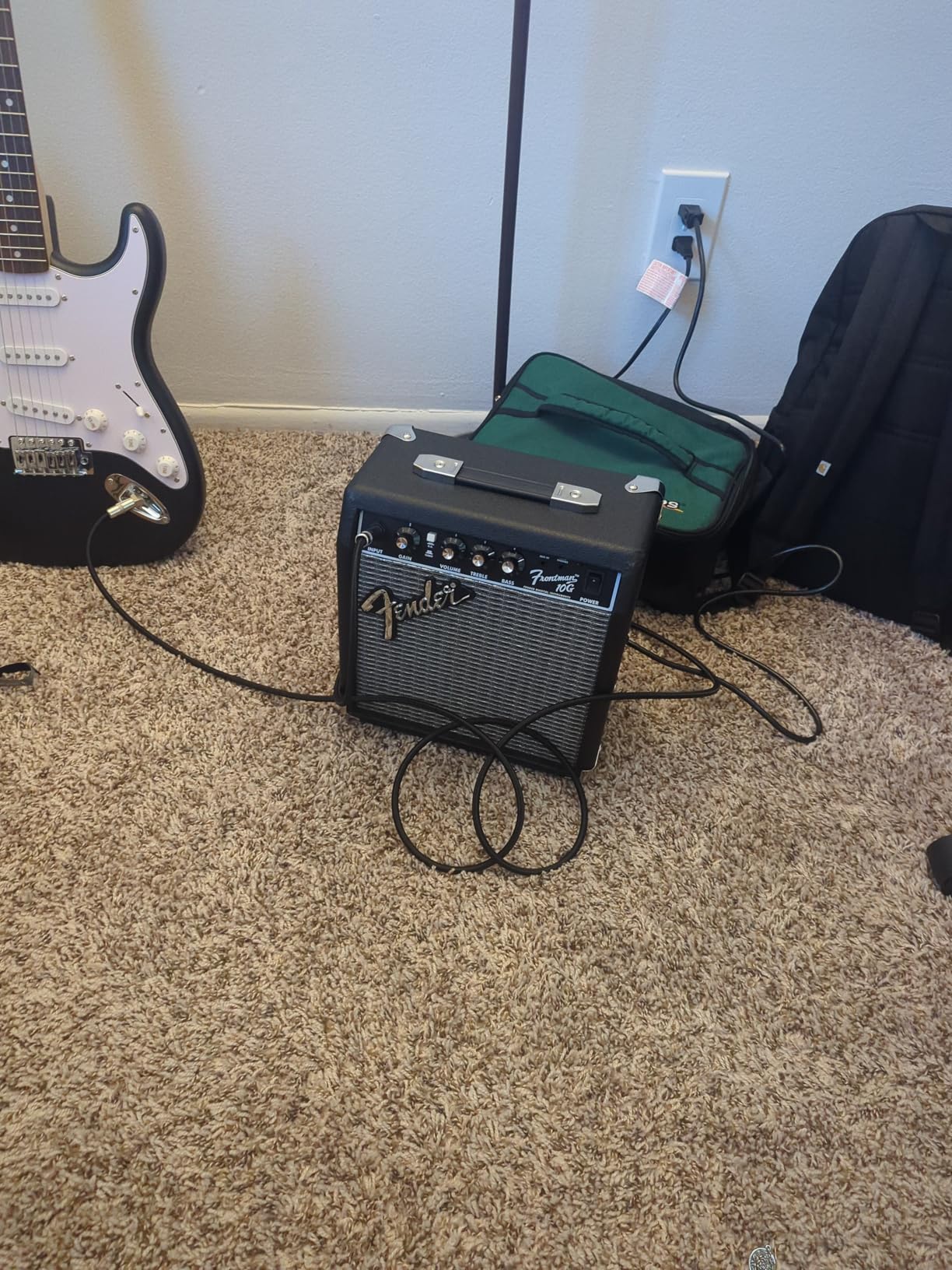
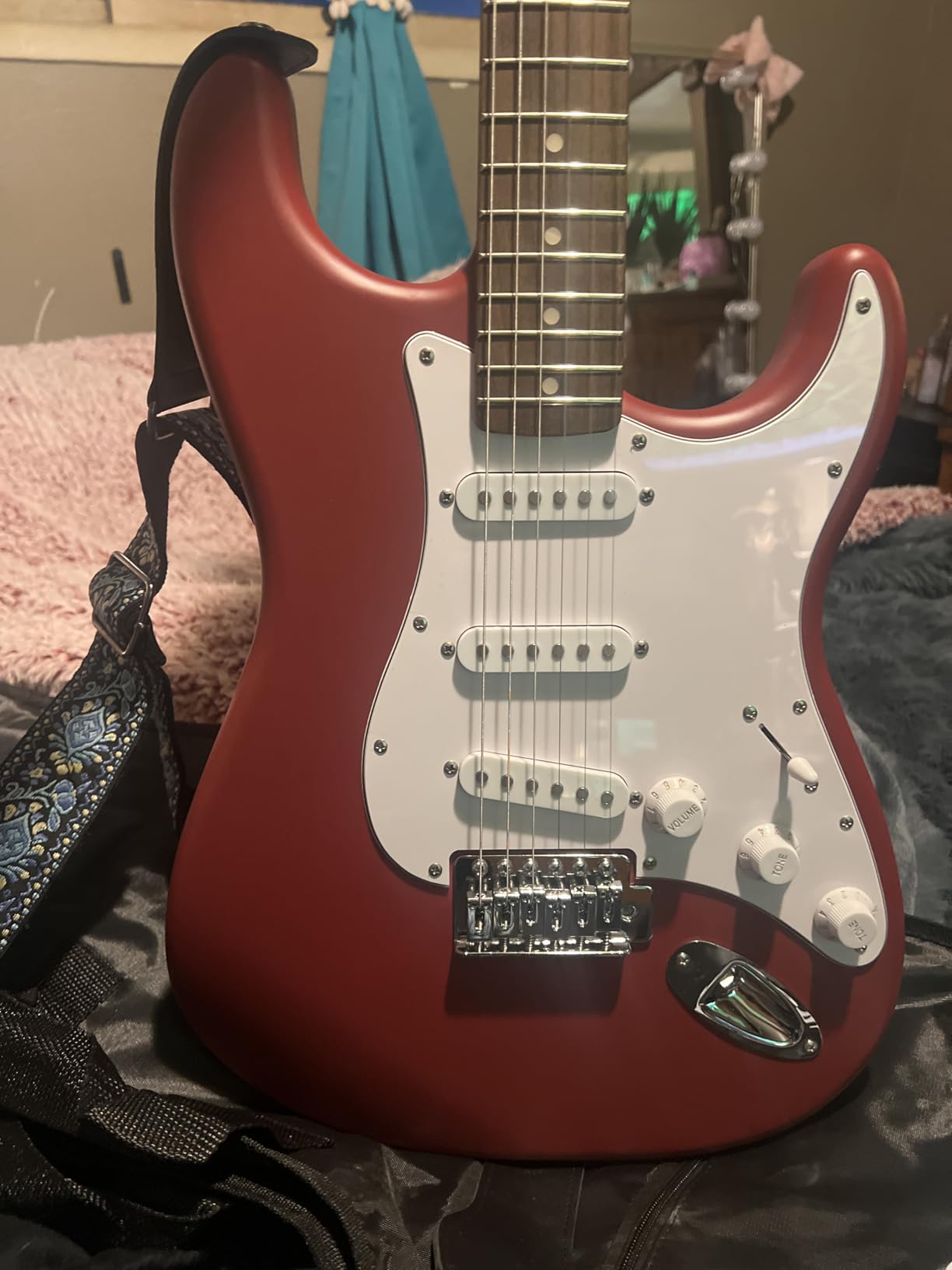
I handed this Dakota red Squier Stratocaster to my nephew, who had never touched a guitar before. Within an hour he was playing the opening riff of “Smoke on the Water.” That alone tells you everything about how playable this guitar is right out of the box.
The Debut Series is the newest Squier line, and Fender clearly designed it to remove every common beginner pain point. The C-shaped neck fits smaller hands, the string action is set low from the factory, and the 2-year warranty means parents can stop worrying about their kid breaking it. Three single-coil pickups give you the full Strat tonal range, from bright and glassy on the neck pickup to that classic quack in positions 2 and 4.
What surprised me most was the included 30-day Fender Play subscription. I have seen other beginner guitars include trial software before, but Fender Play is genuinely good. It teaches through actual songs rather than boring exercises, and it tracks your progress so you can see real improvement week to week.
The single biggest complaint in the reviews centers on the stock tuners. They work, but they feel loose and imprecise compared to what you get on the Classic Vibe series. A 30 dollar tuner upgrade fixes the problem, but for a true beginner that is an extra hurdle. The other common issue is sharp fret ends on a small percentage of units, which is a quality control lottery with any budget guitar.
Who It’s Best For
This Strat is the obvious choice for a true first guitar, especially for kids, teens, or adult beginners who want the genuine Fender experience without paying Fender prices. If you are buying for someone who is not sure they will stick with the instrument, the low price tag removes the financial risk.
It is also a solid choice for more experienced players who want a backup guitar or a modding platform. The body is poplar rather than alder, but it takes paint and pickups swaps easily. Many players on r/Guitar have built surprisingly nice custom Strats from this exact model.
What Could Be Better
The tuners are the weakest link, and I would not trust this guitar to hold tune through a full set without checking. If you plan to play live or record, plan on upgrading the tuners early.
Some players also find the thin poplar body lacks the resonance and weight of a proper alder Strat. It is not a dealbreaker, but if you have played an American Professional Strat before, the difference in feel is noticeable. The pickups are also a bit thinner sounding than a true Fender single-coil, which is expected at this price point.
2. Squier Debut Series Telecaster – Best Beginner Tele for Twang Lovers
Fender Squier Debut Beginner Telecaster Electric Guitar, 2-Color Sunburst
Body: Poplar
Neck: Slim C-shape
Pickups: 2 single-coils
Bridge: Hardtail
Pros
- Great value
- Plays well out of box
- Classic Tele twang
- Lightweight
- Good mod platform
Cons
- Fret ends may need dressing
- Nut slots sometimes off
- Some QC issues
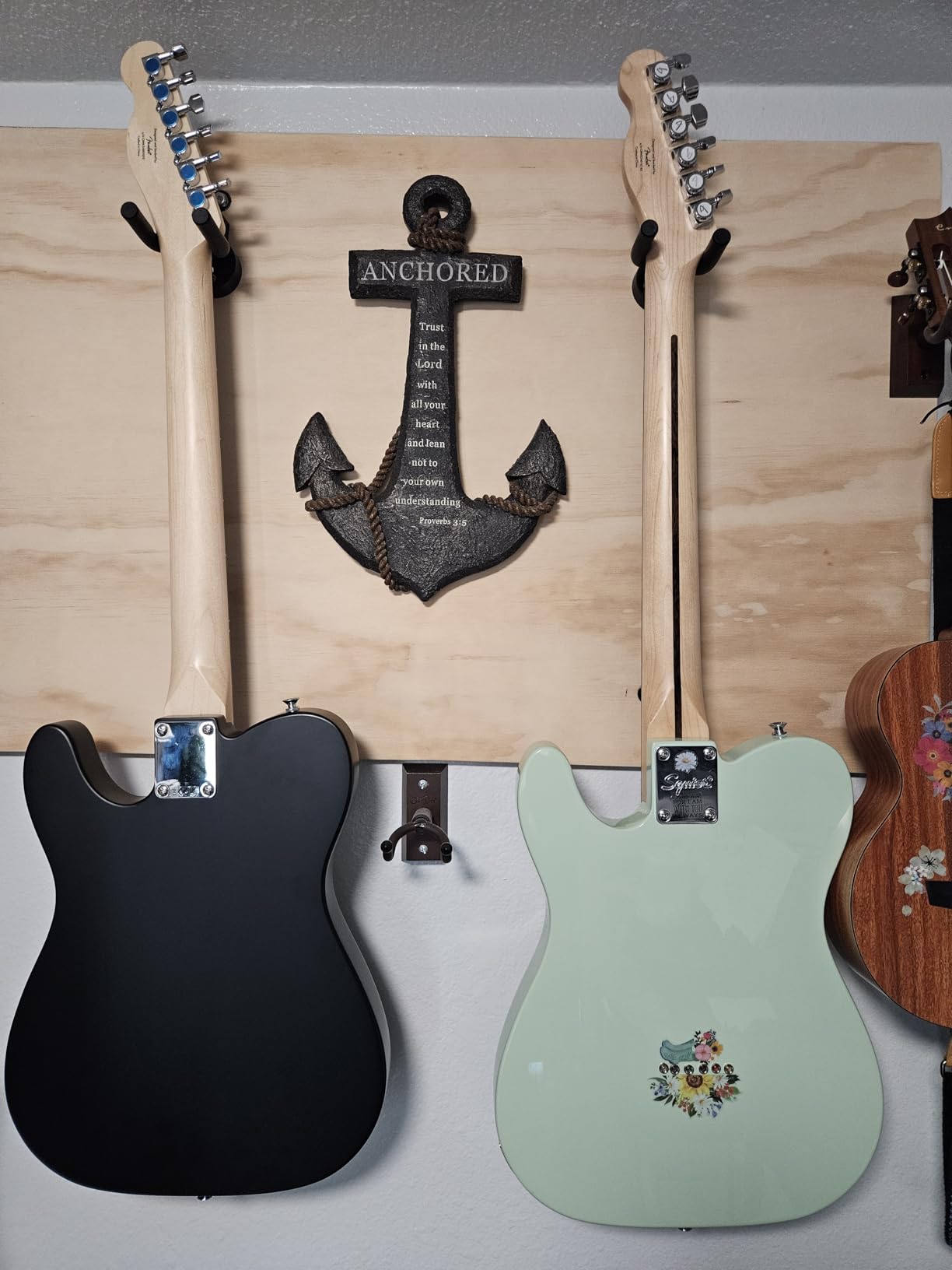
The Telecaster is the underappreciated sibling of the Stratocaster, and this Squier Debut version makes a strong case for being the best beginner Tele you can buy. I played it through a Blues Junior for about an hour, and the twang in the bridge position is genuinely addictive.
Where the Strat has three pickups and a five-way switch, the Tele keeps things simple. You get two single-coils and a three-way switch, which sounds limiting on paper but is part of the charm. The bridge pickup is bright, aggressive, and cuts through any mix, which is exactly why country and rock players have loved Teles for 70 years.
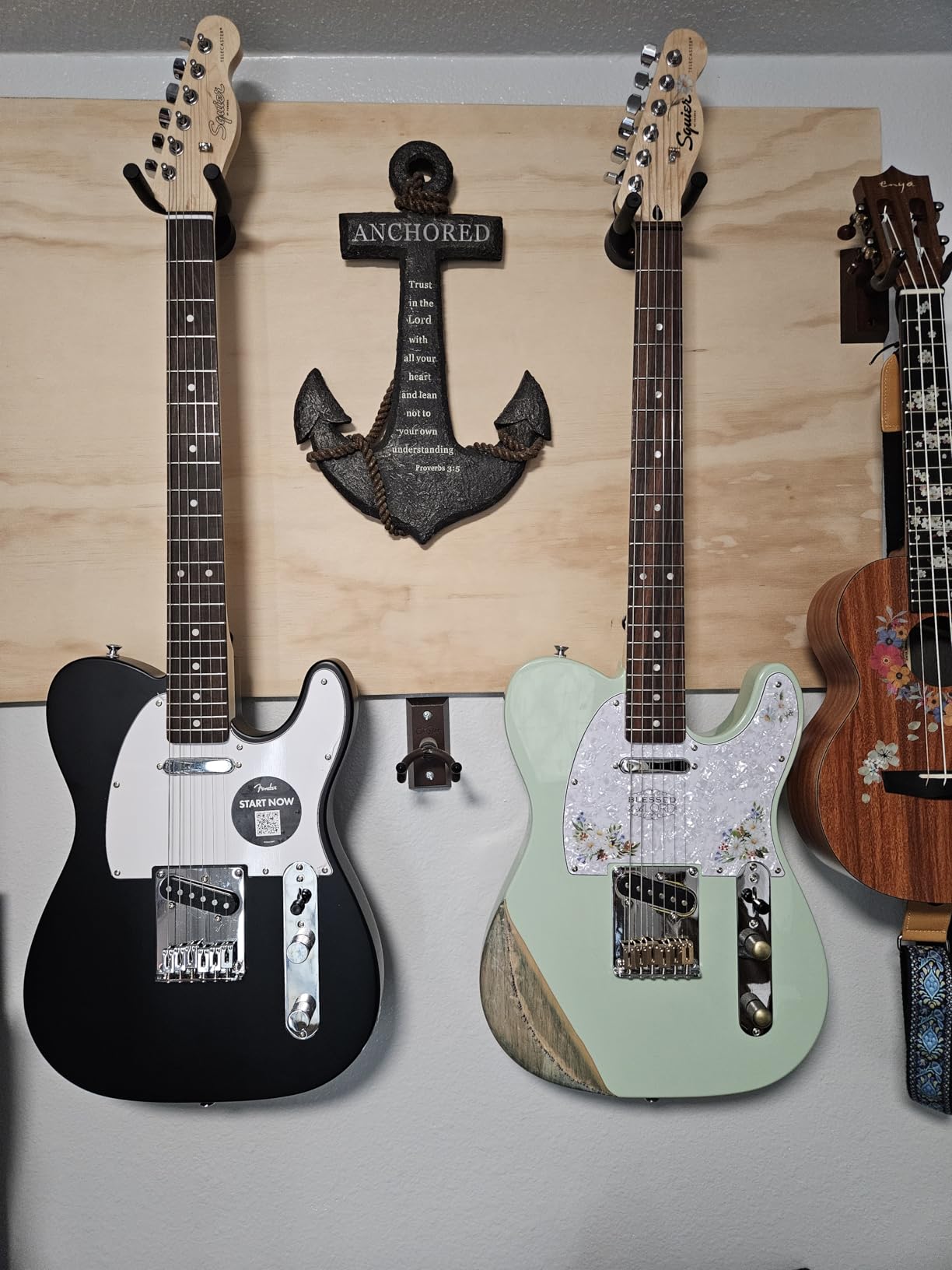
The hardtail bridge is the real highlight for beginners. No tremolo means the guitar stays in tune much better than a Strat, and you do not have to worry about a floating bridge confusing a new player. The slim C-shaped neck is comfortable for smaller hands, and at 4.5 kg the guitar is light enough for kids to handle without strain.
Build quality is solid for the price, though Fender does acknowledge some QC variance. About 10 percent of buyers report needing minor fret work or a nut adjustment. Both are easy fixes for any guitar tech, and the included 2-year warranty covers manufacturing defects.
Who It’s Best For
Buy this Tele if you are a beginner who already knows you want a Telecaster, or if you play country, blues, indie, or alternative rock. The bridge pickup tone is iconic, and the simplicity makes it a great learning tool because you cannot hide behind effects.
It also works for players who want a reliable rhythm guitar. The hardtail bridge and dual single-coil setup are basically a recipe for chunky, articulate rhythm playing. If you are in a band and need a backup guitar that holds tune through a set, this is a smart pick.
What Could Be Better
The nut slot cutting is the most reported issue, with some units shipping with strings binding in the nut. A quick trip to a guitar tech solves it, but it is annoying on a new guitar.
The pickups are a bit hot and bright out of the box, which works great for clean tones but can get harsh with distortion. If you are planning to play metal or hard rock, you will probably want to swap the bridge pickup for something warmer. For everything from clean country to classic rock, though, this Tele delivers.
3. Squier Classic Vibe 50s Telecaster – Best Vintage-Style Tele Under $500
Squier Classic Vibe 50s Telecaster Electric Guitar, Butterscotch Blonde, Maple Fingerboard
Body: Pine
Neck: Maple
Pickups: Fender-Designed alnico single-coils
Finish: Butterscotch Blonde
Pros
- Vintage Tele tone
- Excellent build quality
- Beautiful finish
- Alnico pickups
- 2-year warranty
Cons
- Heavy at 8-12 lbs
- Nut sometimes cut wrong
- Some neck QC issues
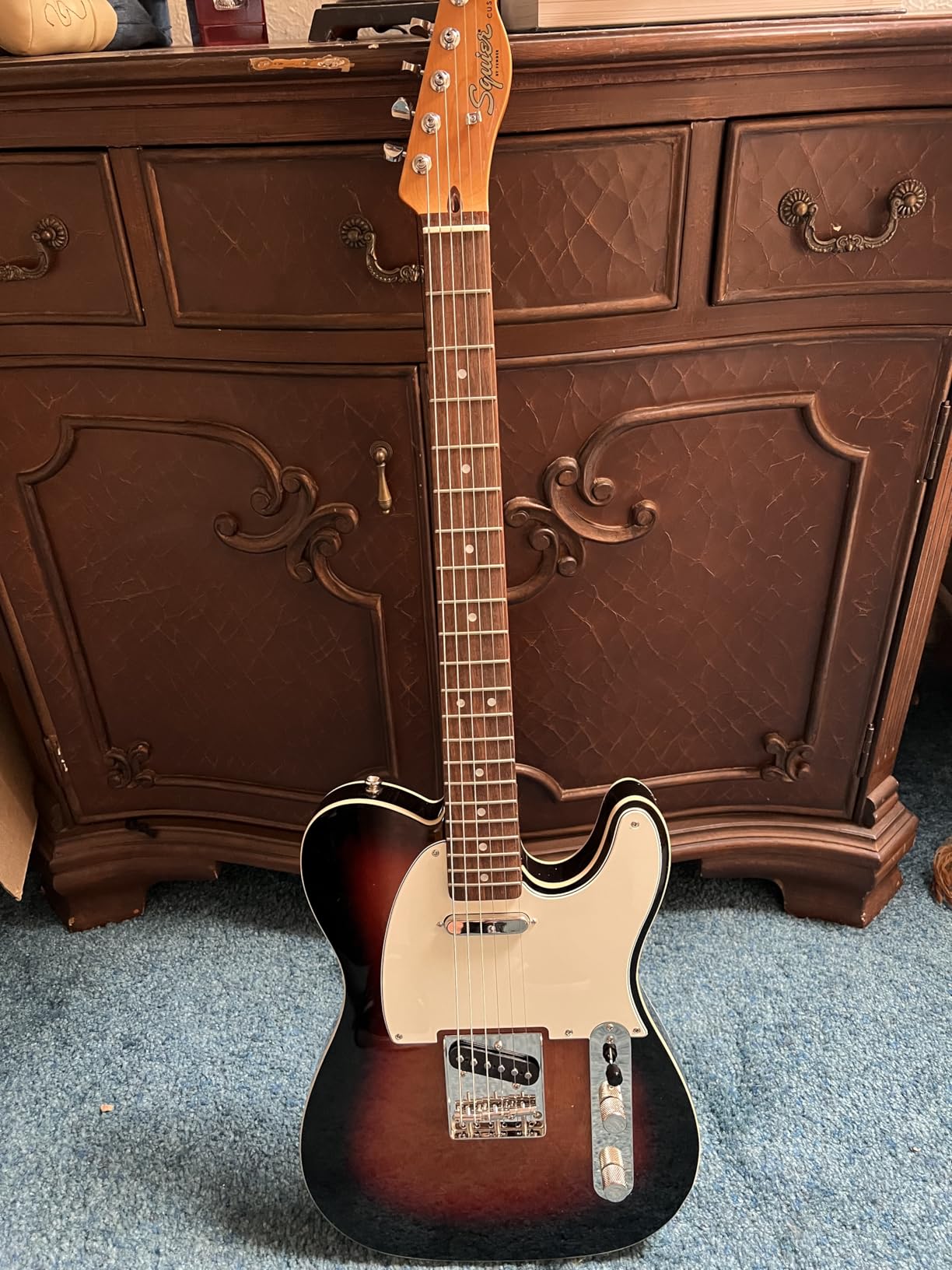
The Classic Vibe 50s Telecaster is where Squier stops being a budget option and starts being a genuine value play. I have played the American Vintage II 50s Tele that costs three times as much, and the Classic Vibe gets you maybe 85 percent of the way there for a third of the price.
The pine body is the biggest surprise. Pine is what Fender used on early Telecasters in the 1950s, and it gives this guitar a warm, slightly woody resonance that poplar and basswood simply cannot match. The butterscotch blonde finish is the most classic Tele color, and it looks gorgeous on this model. The Fender-Designed alnico single-coil pickups nail the vintage twang without sounding thin or ice-picky.
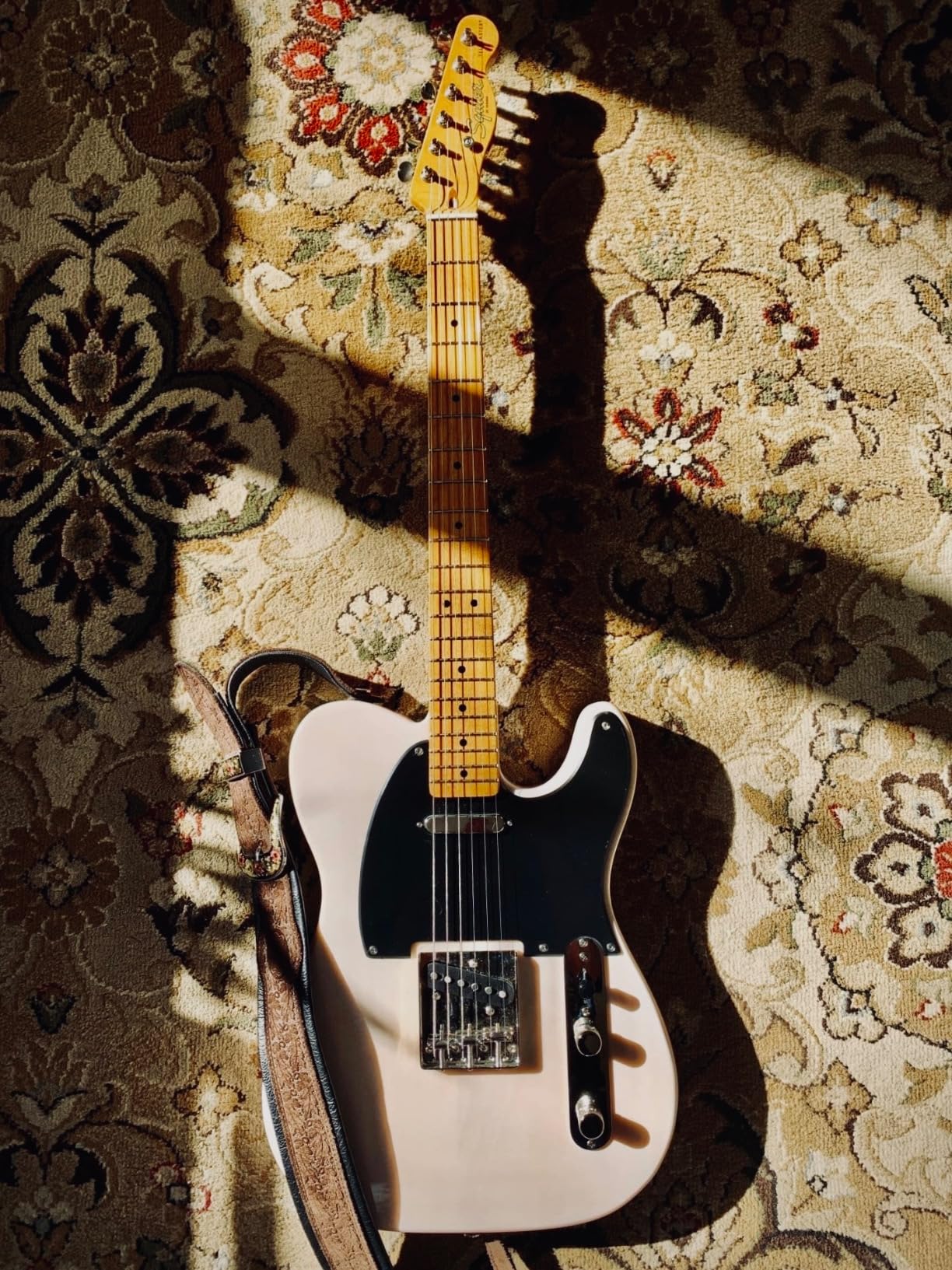
Build quality is a clear step up from the Debut series. The fretwork is generally clean, the hardware feels solid, and the overall fit and finish suggests Fender is paying more attention to this line. The included Fender Play trial and 2-year warranty round out a very strong package.
The biggest issue is weight. Pine is denser than the poplar used on cheaper Squier models, and this Tele typically weighs between 8 and 12 pounds. That is fine for sitting practice, but a 2-hour gig with this guitar on a strap will leave your shoulder sore.
Who It’s Best For
This is the guitar for the intermediate player who has outgrown a beginner instrument but cannot justify spending 1500 dollars on an American Original. The Classic Vibe 50s Tele gives you genuine vintage character at a working musician’s price point.
It also makes a great recording guitar. The pine body and alnico pickups produce a sound that sits beautifully in a mix, especially for blues, country, classic rock, and Americana. If you record at home, this Tele deserves a place in your collection.
What Could Be Better
Weight is the main drawback. If you have back or shoulder issues, look at the Classic Vibe 60s Strat instead. Some users also report the nut being cut too high or low on a small percentage of units, which is a quick fix but not what you want on a new guitar.
The pickups, while excellent for vintage tones, do not handle high-gain playing well. If you are a modern country or indie player who uses a lot of drive, you may want to upgrade the bridge pickup. For traditional Tele tones, though, the stock pickups are hard to beat.
4. Squier Sonic Stratocaster – Best Budget Stratocaster for Modders
Fender Squier Sonic Stratocaster Electric Guitar, Ultraviolet, Laurel Fingerboard, White Pickguard
Body: Poplar
Neck: Maple
Pickups: 3 single-coils
Finish: Ultraviolet
Pros
- Excellent price
- Plays well
- Great mod platform
- Nice finish
- Free Fender Play
Cons
- Tuners feel cheap
- Pickups under-wound
- Plastic parts on pickguard
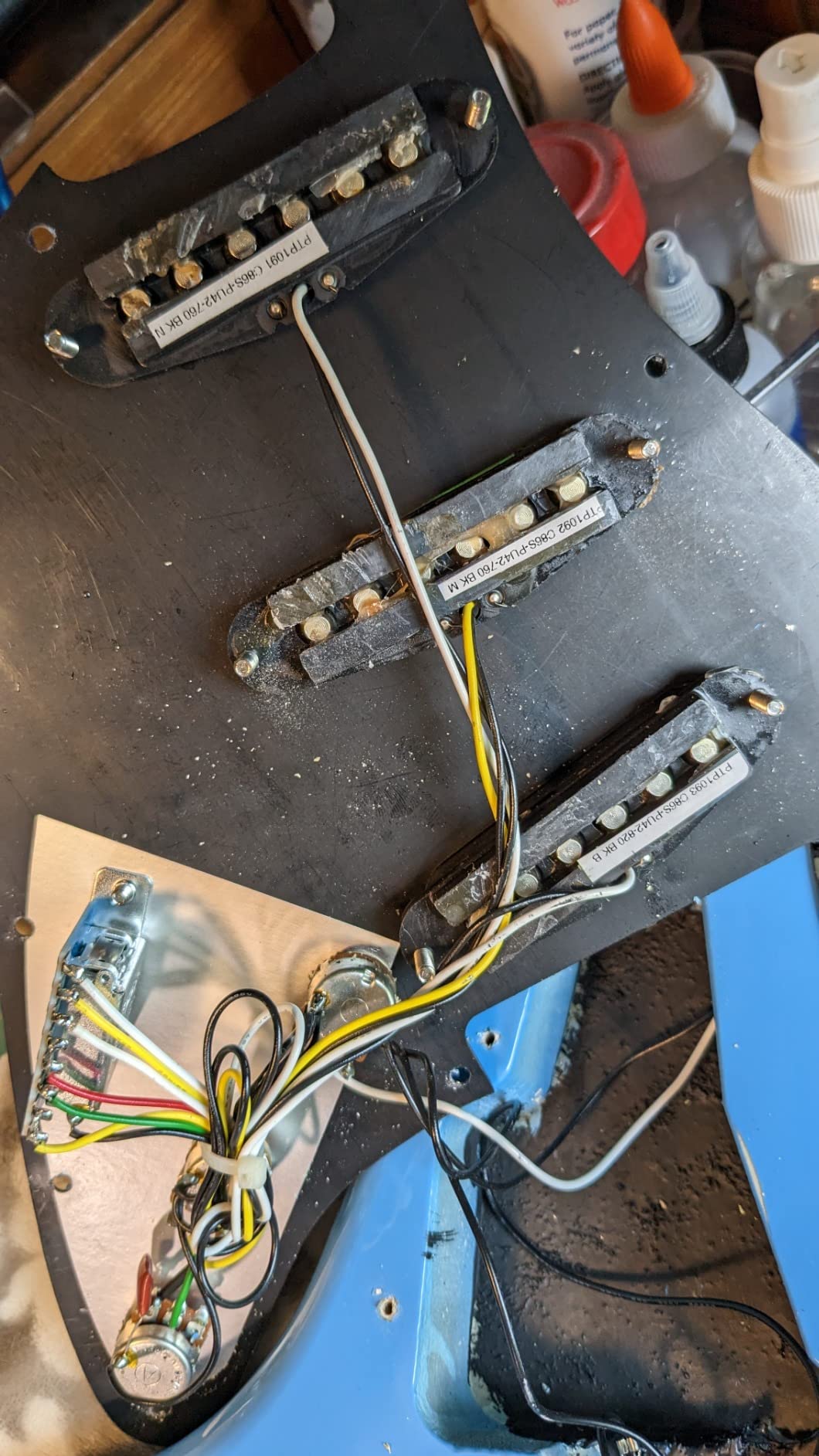
The Squier Sonic Stratocaster is the cheapest proper Strat-shaped guitar Fender makes, and it is one of the best modding platforms you can buy. I bought one in ultraviolet specifically to upgrade, and within a month I had swapped the pickups, tuners, and nut for under 200 dollars total, ending up with a guitar that played like something three times the price.
Out of the box, the Sonic is perfectly playable. The neck is a slim C shape, the action is reasonable, and the body finish is genuinely attractive. The ultraviolet color with the white pickguard is one of the best-looking budget guitars I have seen, and it photographs beautifully.
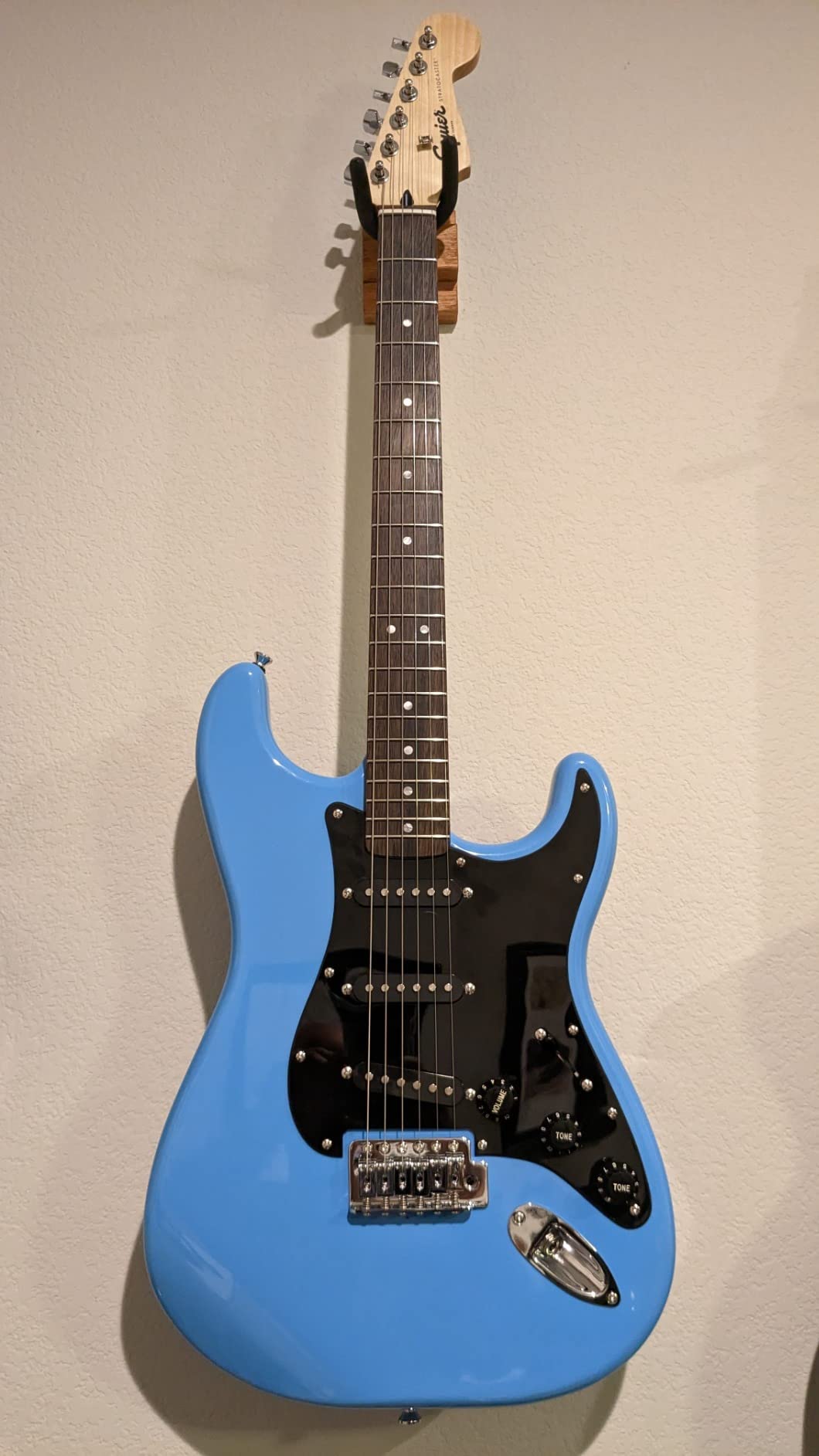
Where the Sonic falls short is the stock electronics and hardware. The pickups sound thin and under-wound, the tuners feel loose, and there are some plastic protective covers on the pickguard that look unfinished. None of these are dealbreakers, but they do signal that this is a starter guitar meant to be upgraded.
For a complete beginner, the stock setup is fine for learning. For anyone who has been playing for a while and wants a project guitar, the Sonic is a fantastic blank canvas. Fender even includes the 30-day Fender Play trial and a 2-year warranty, which is rare at this price point.
Who It’s Best For
Buy the Sonic if you are on a tight budget and want a real Strat, not a Strat-shaped knockoff. It is also the best choice for players who want to learn about guitar setup and electronics by working on their own instrument.
It is also a great option for parents buying a first guitar for a child who may not stick with it. The price is low enough that you can absorb the cost of the experiment, and if the kid does stick with it, you have a perfect platform for future upgrades.
What Could Be Better
The stock tuners are the weakest point. They work, but they slip under heavy tremolo use. If you plan to use the whammy bar, budget for a tuner upgrade early.
The pickups are a clear cost-saving measure. They sound fine clean but lack the sparkle and warmth of proper Fender single-coils. A 60 dollar pickup swap transforms the guitar, but again, that is an extra cost on top of an already-cheap instrument.
5. Squier Classic Vibe 60s Stratocaster – Best Vintage 60s Style Strat
Squier Classic Vibe 60s Stratocaster Electric Guitar, with 2-Year Warranty, Candy Apple Red, Laurel Fingerboard
Body: Nato
Neck: Maple
Pickups: Fender-Designed alnico single-coils
Finish: Candy Apple Red
Pros
- Vintage 60s tone
- Quality construction
- Comfortable laurel fingerboard
- 2-year warranty
Cons
- Unusual volume knob contour
- Some sticky frets
- May need setup
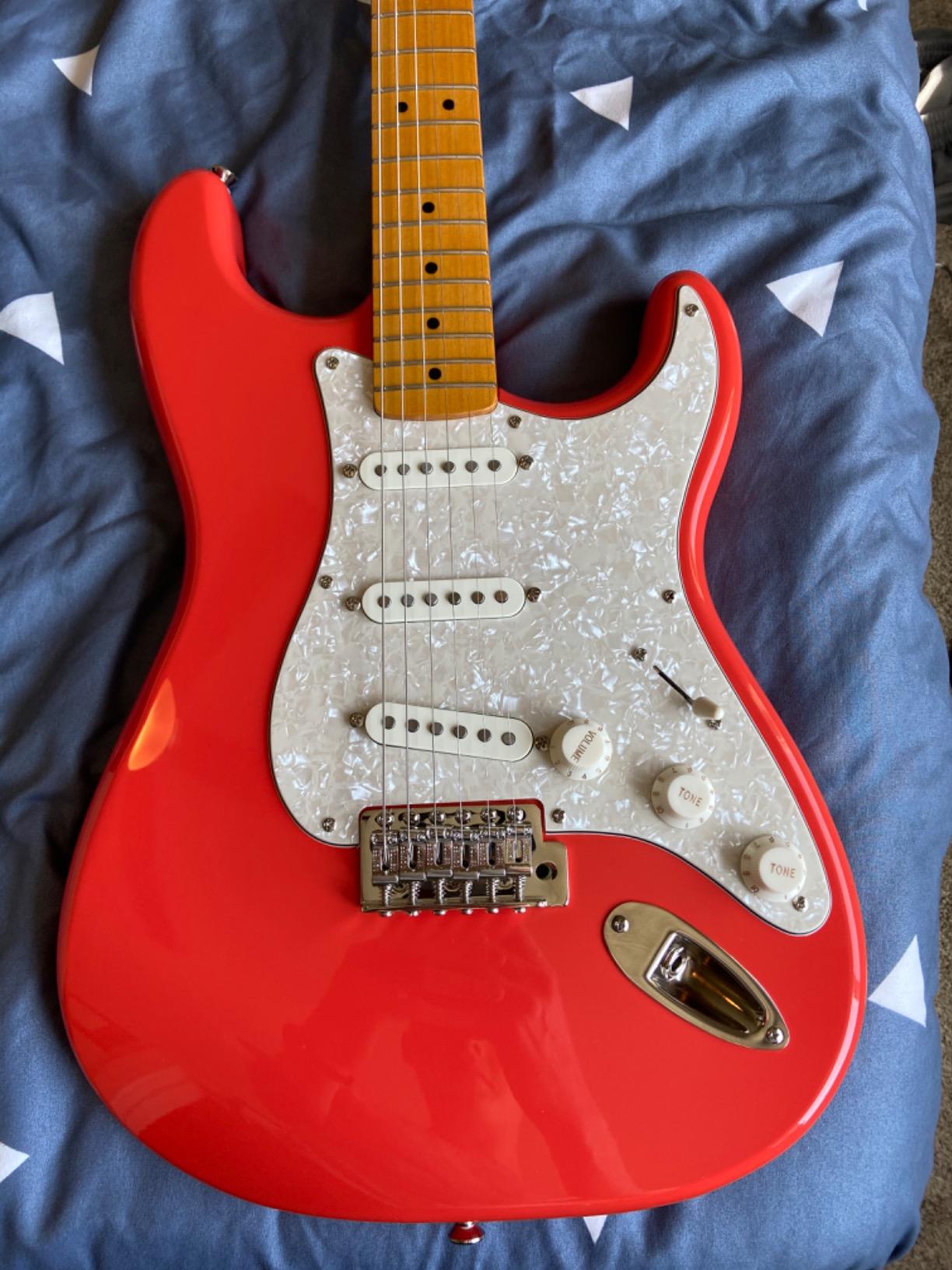
The Classic Vibe 60s Stratocaster is the counterpart to the 50s Tele, and it captures the spirit of Hendrix-era Strats without the vintage price tag. The candy apple red finish, laurel fingerboard, and vintage-tint gloss neck all add up to a guitar that looks and feels more expensive than it is.
The Fender-Designed alnico single-coil pickups are the real story. They deliver the glassy, bell-like clean tones that defined 60s pop and rock, and they have just enough bite when you push them with drive to cover classic rock. The five-way switching gives you access to those in-between Strat tones that players love, where the neck and middle pickups blend into that signature quack.
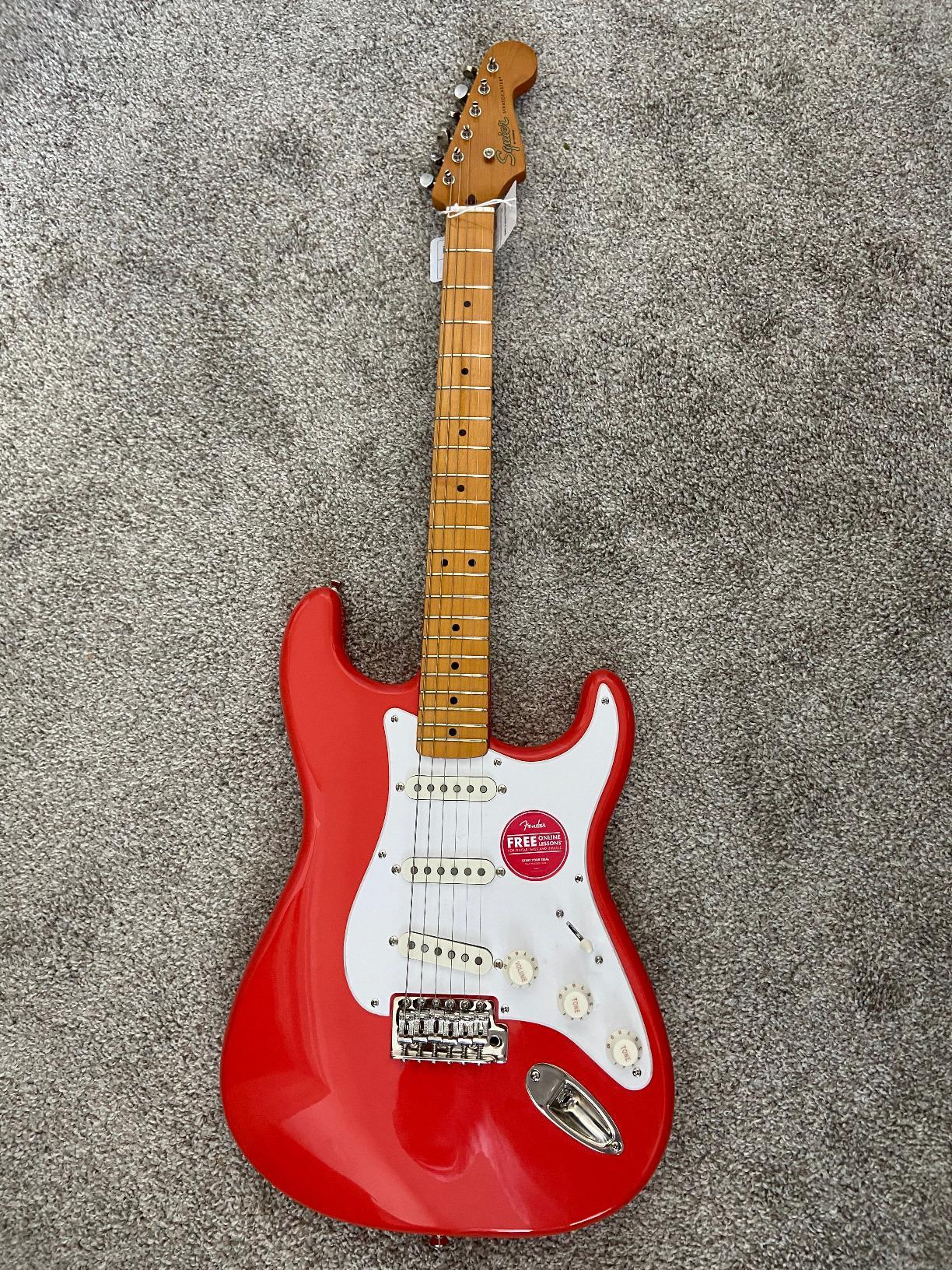
Build quality is a clear step up from the Debut and Sonic lines. The neck pocket is tight, the fretwork is generally clean, and the nickel-plated hardware feels substantial. At 5 kg, the guitar is well-balanced and comfortable to play for extended sessions.
The main issue is that not every unit ships perfectly set up. Some players report sticky frets or high action, and the volume knob contour is unusual enough to feel awkward in the hand. Both are minor setup issues, but worth noting if you are buying online and cannot inspect the guitar in person first.
Who It’s Best For
This Strat is perfect for intermediate players who want authentic 60s Strat character without paying American Vintage prices. It is also a strong choice for players who love blues, classic rock, surf, and indie music.
If you have ever lusted after a Hendrix, Gilmour, or SRV-style Strat, this guitar gets you most of the way there at a fraction of the cost. Pair it with a tube amp and a couple of quality drives, and you can cover an enormous range of classic tones.
What Could Be Better
The setup lottery is the biggest issue. Some units ship perfect, others need a professional setup to play their best. Budget 50 to 100 dollars for a setup if you buy online.
The body is nato rather than the alder Fender used on vintage 60s Strats. The tone is close, but not identical. If you want absolute vintage accuracy, you need to step up to the American Vintage series. For most players, though, the difference is academic.
6. Fender Frontman 10G Amp – Best Budget Practice Amp for Beginners
Fender Frontman 10G Electric Guitar Amplifier, 10-Watt Amp, Black/Silver
Wattage: 10W
Speaker: 6 inch
Channels: 1 + overdrive
Inputs: Headphone, Aux
Pros
- Great clean tones
- Compact
- Headphone jack works well
- Excellent value
- 2-year warranty
Cons
- Built-in distortion is poor
- Limited EQ
- No effects
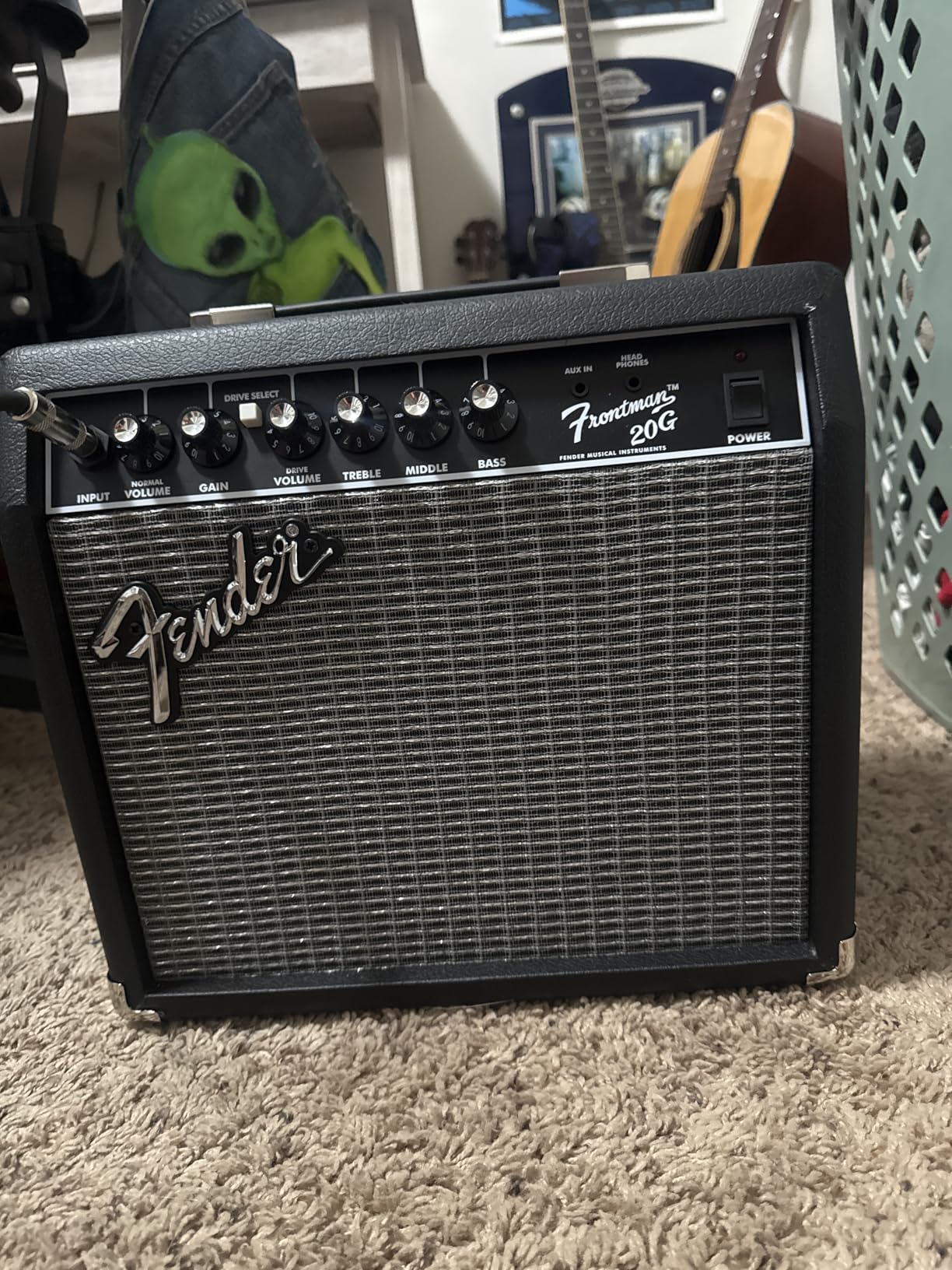
The Frontman 10G has been Fender’s entry-level practice amp for years, and 13,000-plus reviews later, it is still the best budget practice amp for a reason. I keep one in my living room for casual playing, and it has held up to years of regular use without a single issue.
The clean channel is the real surprise. For a 90 dollar 10-watt amp, the clean tone is genuinely good. It is not going to fool anyone into thinking it is a Twin Reverb, but it has enough clarity and warmth to make practice enjoyable. The 6 inch Fender Special Design speaker does the job for bedroom volumes.
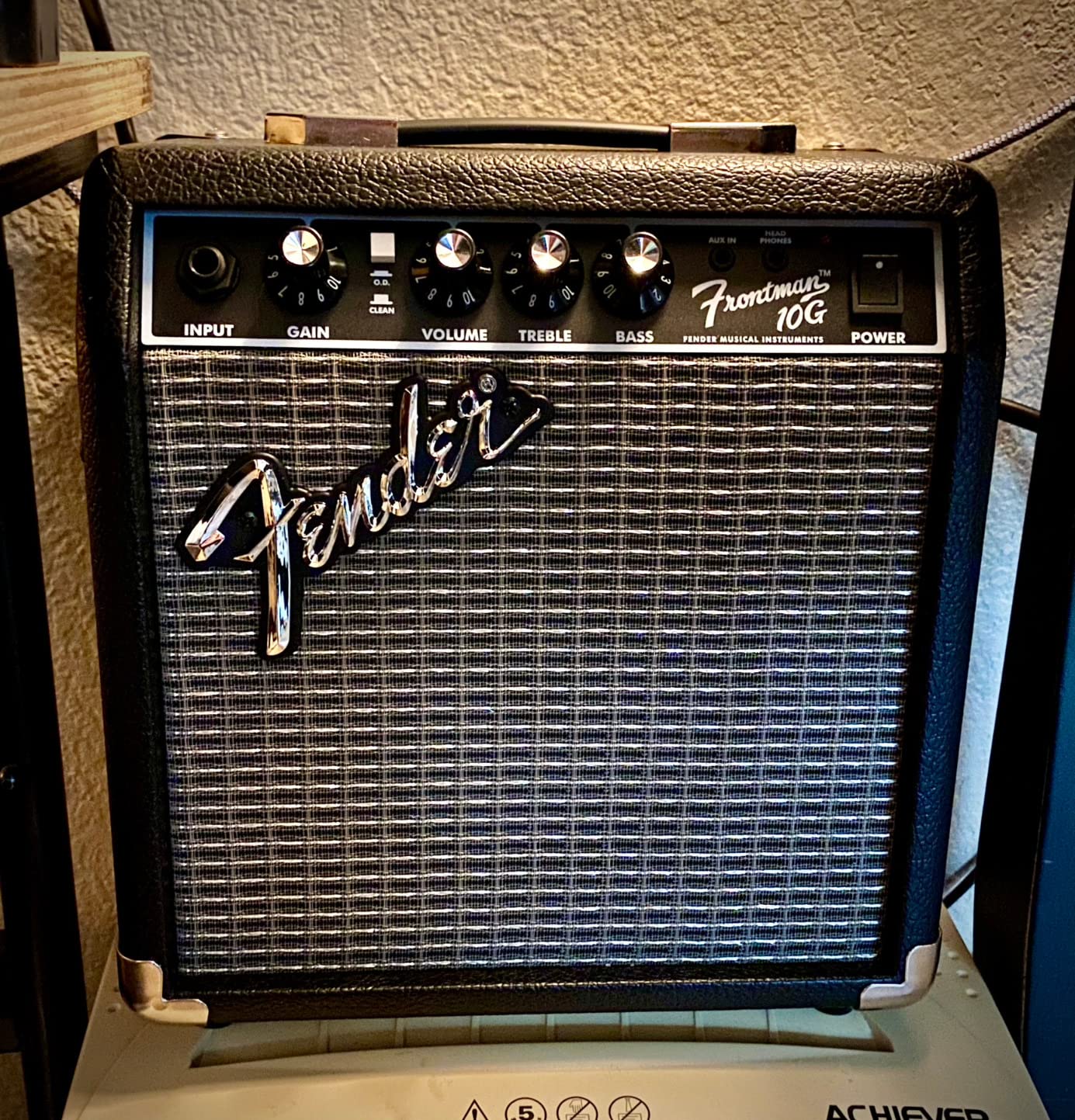
The overdrive channel is where the Frontman shows its budget roots. It is harsh, fizzy, and not particularly musical. You can dial it in for a serviceable bluesy crunch, but if you want good distortion, you need a separate pedal or a different amp. The 2-band EQ (treble and bass only) also limits your tone shaping options.
What makes this amp a beginner favorite is the headphone jack and aux input. The headphone out is properly voiced, so silent practice through good headphones sounds much better than it has any right to for 90 dollars. The aux input lets you play along with songs from your phone, which is essential for learning.
Who It’s Best For
The Frontman 10G is the obvious choice for a first amp, especially for a student or casual player. It is small enough to fit on a desk, loud enough for bedroom practice, and cheap enough to replace if it gets damaged.
It is also a great secondary practice amp for apartment dwellers who need an ultra-quiet option. Pair it with a good pair of studio headphones, and you can play electric guitar at any hour of the night without bothering neighbors.
What Could Be Better
The overdrive is honestly bad. If you want to play anything with significant gain, you will be frustrated. Budget for a 30 to 50 dollar distortion pedal, or step up to a modeling amp like the Mustang LT25.
The 2-band EQ is also limiting. A 3-band EQ (with a middle control) makes a big difference in shaping your tone, especially when you are playing with overdrive. For purely clean practice, the 2-band EQ is fine.
7. Fender Frontman 20G Amp – Best Solid-State Practice Amp
Fender Frontman 20G Electric Guitar Amplifier, 20-Watt Amp, 8″ Speaker
Wattage: 20W
Speaker: 8 inch
Channels: 2 (clean, drive)
EQ: 3-band
Pros
- Clean channel sounds great
- Drive channel is decent
- Good volume
- 3-band EQ
- Aux and headphone
Cons
- No reverb
- Voltage issues internationally
- Not for large venues
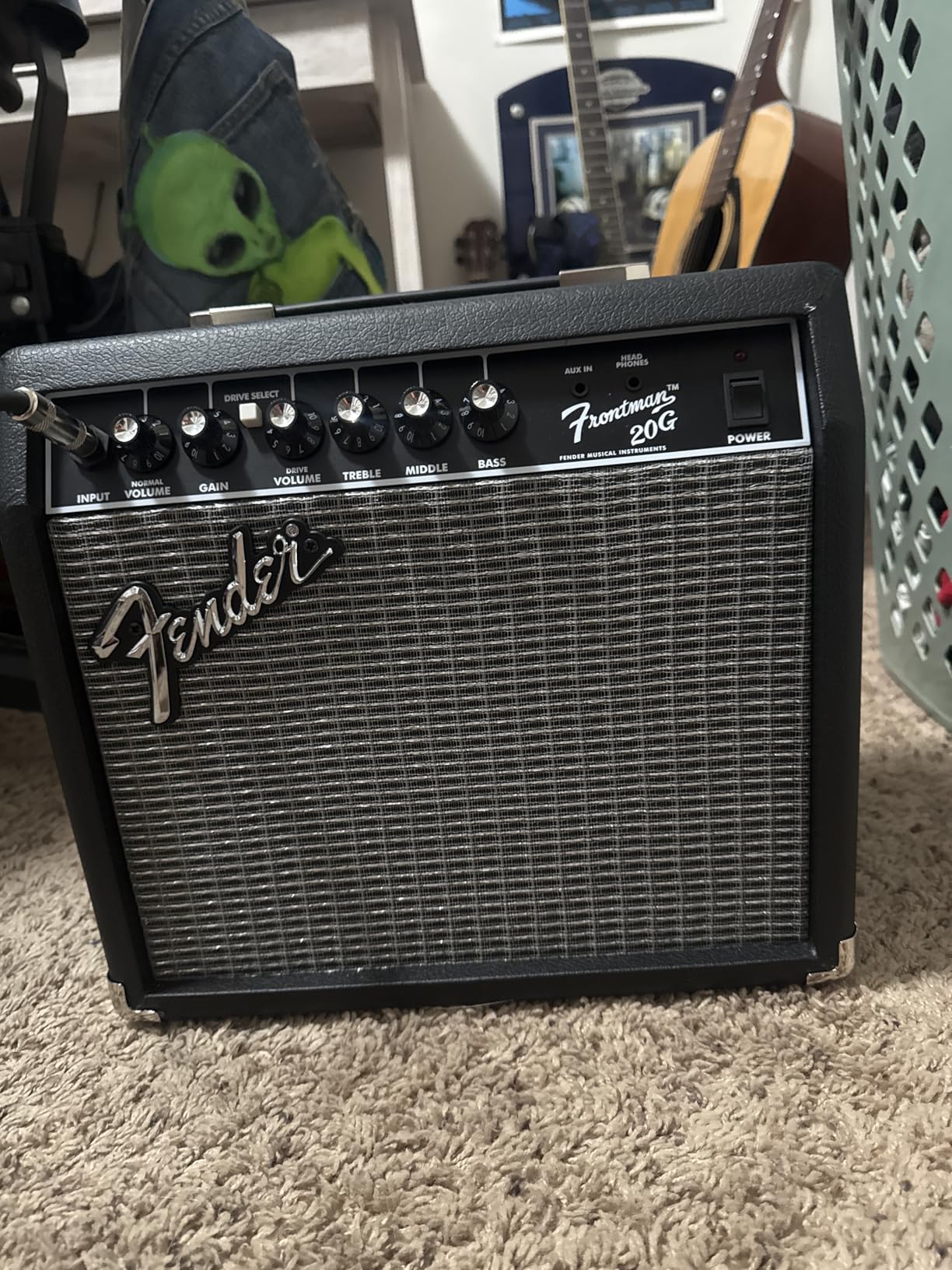
The Frontman 20G is the bigger sibling of the 10G, and the extra 10 watts plus 3-band EQ make it a meaningful upgrade. I tested both side by side, and the 20G is the better choice for anyone who plans to play with their band at rehearsal volume.
The clean channel is the star. Fender clearly tuned it for that sparkling, slightly compressed clean tone that is the company’s bread and butter. Even at higher volumes, the clean channel stays musical rather than harsh, which is unusual for a 110 dollar solid-state amp.
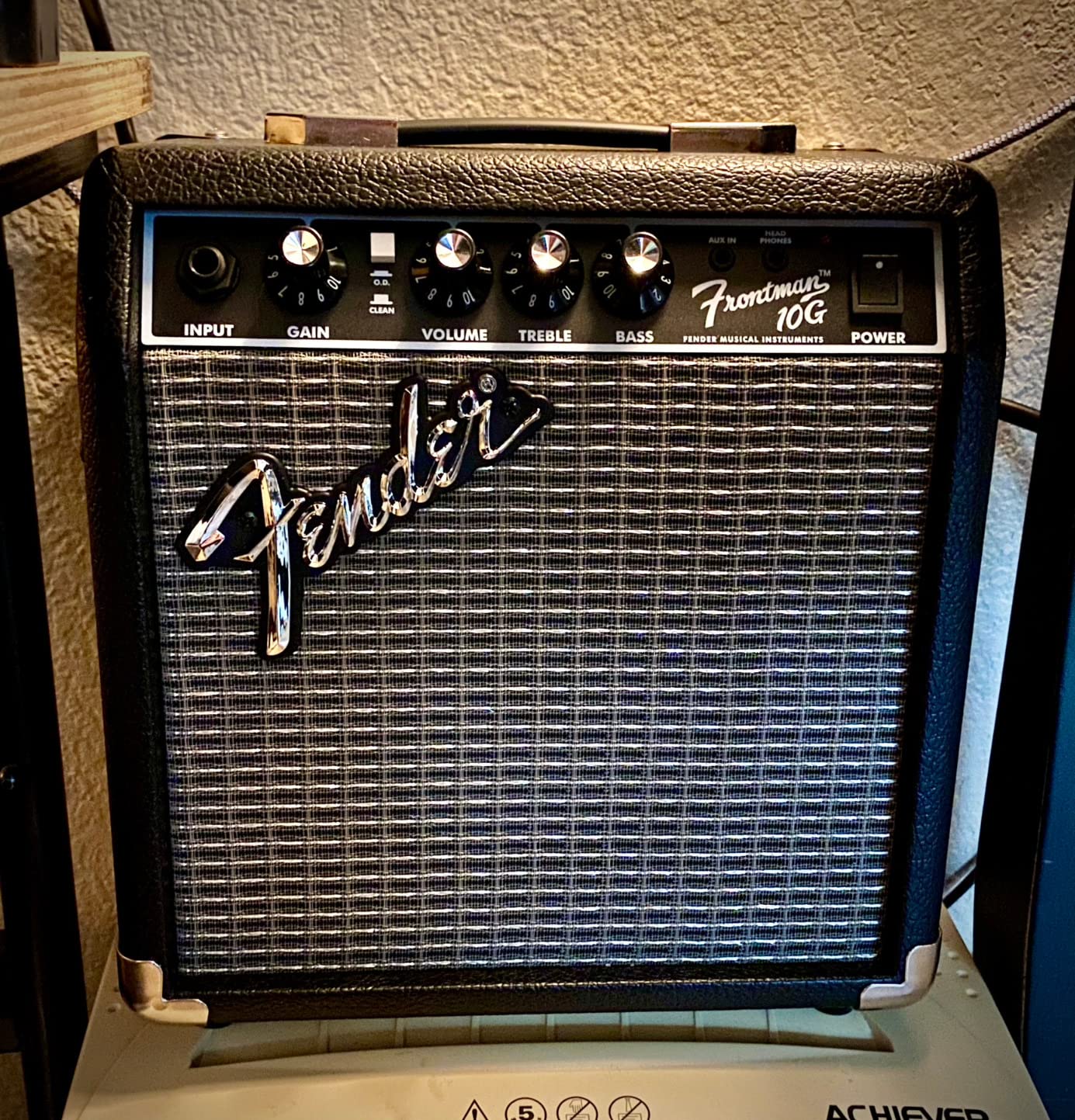
The drive channel is much better than the 10G’s overdrive switch. It is still not going to compete with a tube amp or a quality modeling amp, but it covers classic rock and blues tones respectably. The 3-band EQ actually gives you enough control to dial in something usable, which the 2-band EQ on the 10G does not.
The two big omissions are reverb and effects. There is no built-in reverb, which is annoying because reverb is part of the classic Fender sound. You can add a reverb pedal for 30 dollars, but it is an extra cost and complication. The amp also has no built-in effects, which is fine for purists but limiting for players who want to experiment.
Who It’s Best For
The Frontman 20G is ideal for bedroom players who want a quality clean tone with enough headroom to push the volume without distorting. The 20 watts is plenty for apartment practice, and the drive channel gives you an option when you want to play louder rock.
It is also a good rehearsal amp for small jam sessions. A 20-watt solid-state amp through an 8 inch speaker will compete with a drum kit at reasonable volumes, and the clean tone cuts through a mix better than most amps in this price range.
What Could Be Better
The lack of reverb is the most common complaint. Fender amps are famous for their spring reverb, and a Fender amp without reverb feels incomplete. A small reverb pedal fixes the problem, but it is a strange omission on a Fender practice amp.
Some international buyers have reported voltage compatibility issues. The amp is designed for 120V US power, and using it with a transformer in 220V to 240V countries can cause hum or performance issues. If you are outside the US, look for a region-specific model.
8. Fender Mustang LT25 Amp – Best Modeling Practice Amp
Fender Mustang LT25 Guitar Amplifier, 25-Watt Combo Amp with 8″ Speaker
Wattage: 25W
Speaker: 8 inch
Presets: 30
Display: 1.8 inch color
Pros
- Excellent tones
- 30 presets covering many genres
- Easy interface
- Fender Tone software
- USB recording
Cons
- Mini-USB not USB-C
- Distortion could be better
- Some digital artifacts
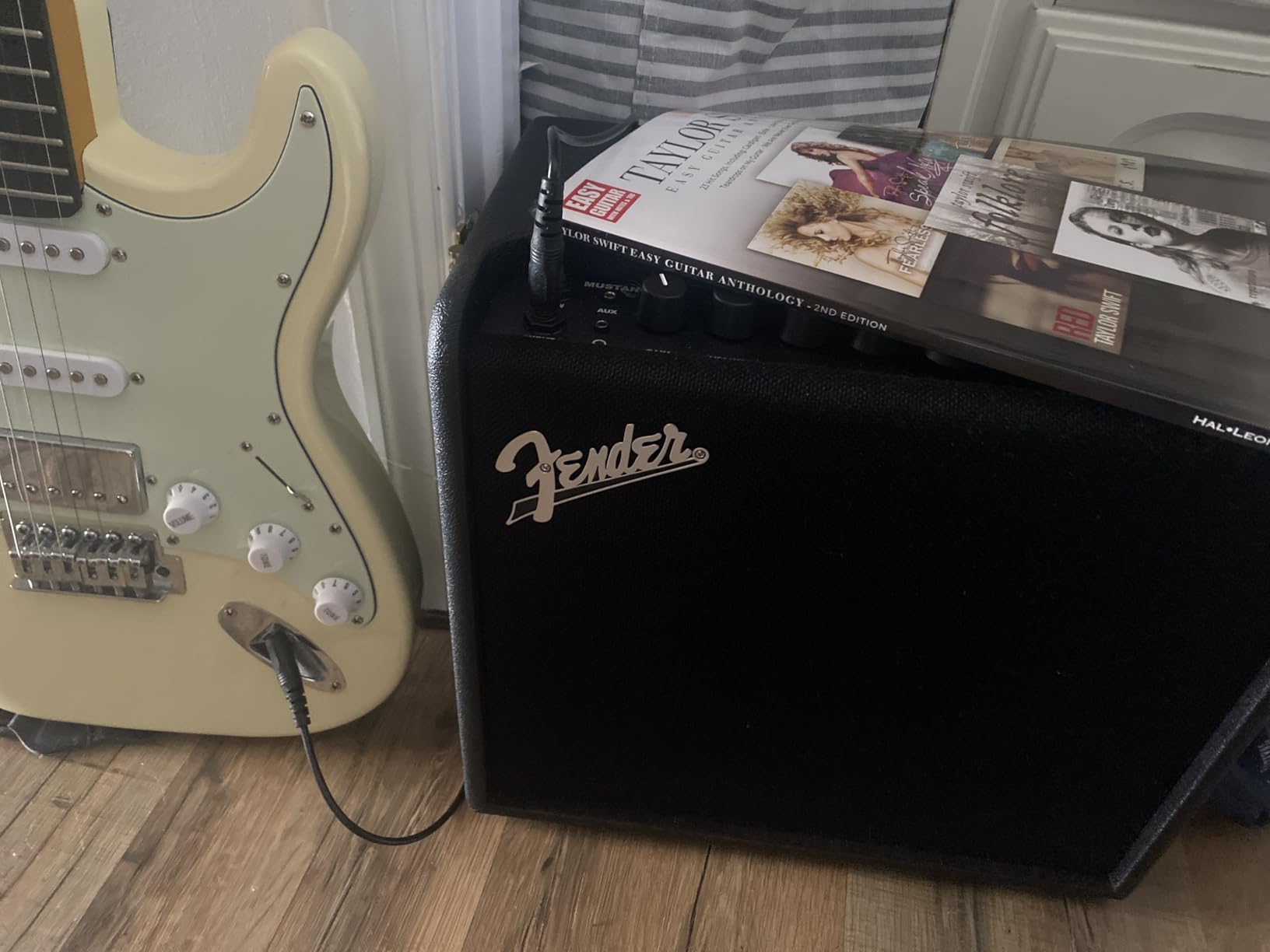
The Mustang LT25 is the most popular Fender modeling amp, and 4,000-plus reviews averaging 4.8 stars tell you everything you need to know. I have been using one as my main practice amp for two years, and it has not disappointed.
The 30 presets cover an incredible range of tones, from clean Fender classics to high-gain modern metal. The amp models are based on Fender’s bigger Mustang GTX series, and at this price point the quality is impressive. The 1.8 inch color display makes it easy to navigate presets and tweak settings, which is a big upgrade from the monochrome displays on cheaper amps.
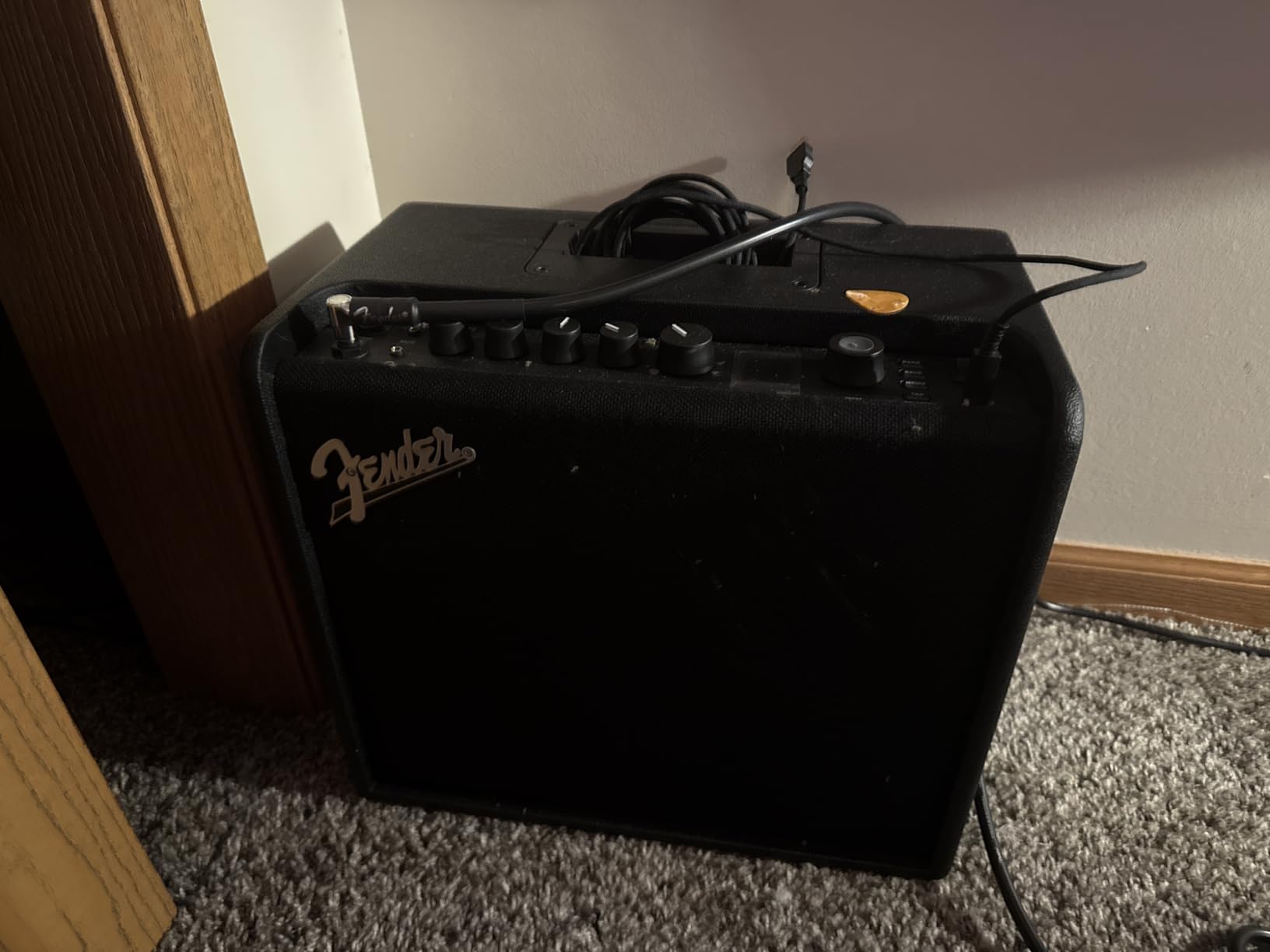
Where the LT25 really shines is the included Fender Tone software. Plug the amp into your computer via USB, and you can edit presets, download new ones, and even use the amp as an audio interface for recording. For home recordists, this is a massive value-add. The headphone output is also properly voiced for silent practice, which is essential for apartment living.
The 8 inch Fender Special Design speaker delivers enough volume for bedroom practice and small jam sessions. It will not keep up with a loud drummer, but for home use it is more than adequate. The build quality feels solid, and at 15 pounds the amp is portable enough to move around easily.
Who It’s Best For
The LT25 is the best choice for beginners who want to explore many genres without buying multiple amps. The 30 presets cover everything from classic rock to metal to ambient, and you can edit each one to taste. It is also great for players who want to record at home without buying a separate audio interface.
It is an ideal practice amp for intermediate players, too. I know several gigging musicians who use a Mustang LT as a grab-and-go practice amp even though they have expensive tube amps at home. The modeling quality is good enough that you can use it to learn songs in the right tonal ballpark.
What Could Be Better
The mini-USB connection for the computer link is dated. Most modern devices use USB-C, and carrying a separate mini-USB cable is annoying. Fender has not updated this on the LT25, which is the most common complaint in user reviews.
The high-gain distortion presets are usable but not great. For metal and modern hard rock, you will want to use a distortion pedal in front of the amp or upgrade to the Mustang GTX50 or GTX100. For classic rock and blues, the stock presets are excellent.
9. Fender Champion II 50-Watt Amp – Best Versatile Combo Amp
Fender Champion II 50-Watt Electric Guitar Amplifier, 2-Channel Combo Amp
Wattage: 50W
Speaker: 12 inch
Voicings: British, Modern, Fender clean
Effects: Reverb, Delay, Chorus, Tremolo
Pros
- Accurate amp modeling
- Great effects
- 12 inch speaker
- Lightweight for 50W
- USB recording
Cons
- No direct output
- Foot switch not included
- Not Prime
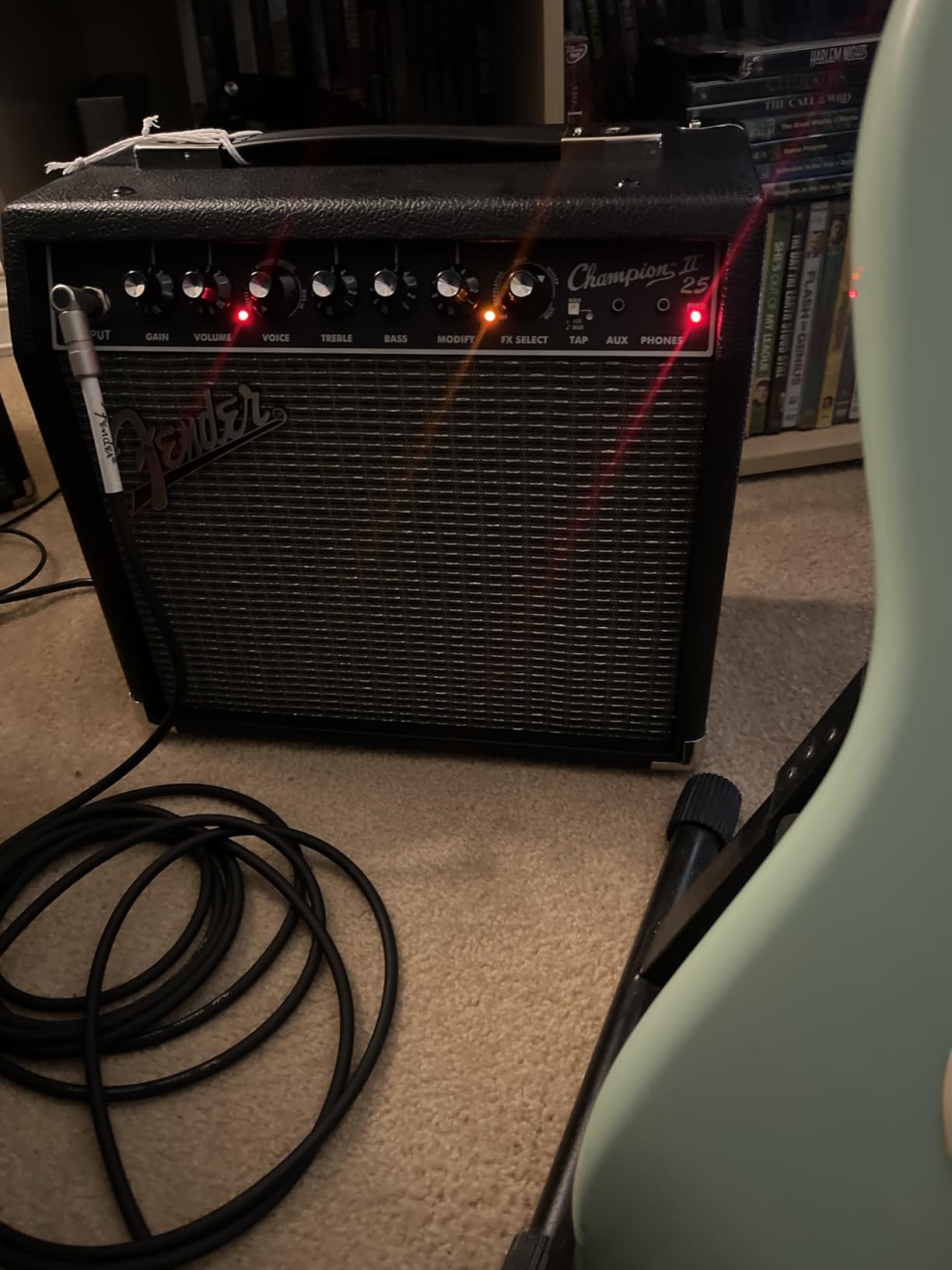
The Champion II 50W is the dark horse of the Fender amp lineup. It does not get the attention of the Blues Junior or the Mustang series, but for players who want one amp that does everything, it is hard to beat. The 50 watts through a 12 inch speaker gives you enough volume for small gigs, and the amp modeling is genuinely good.
The 12 inch speaker is a big deal. A 12 inch speaker moves more air than an 8 inch, which gives you a fuller, more authoritative tone, especially on the low end. The Champion II sounds bigger than its 23-pound weight suggests, and the closed-back design keeps the bass tight rather than boomy.
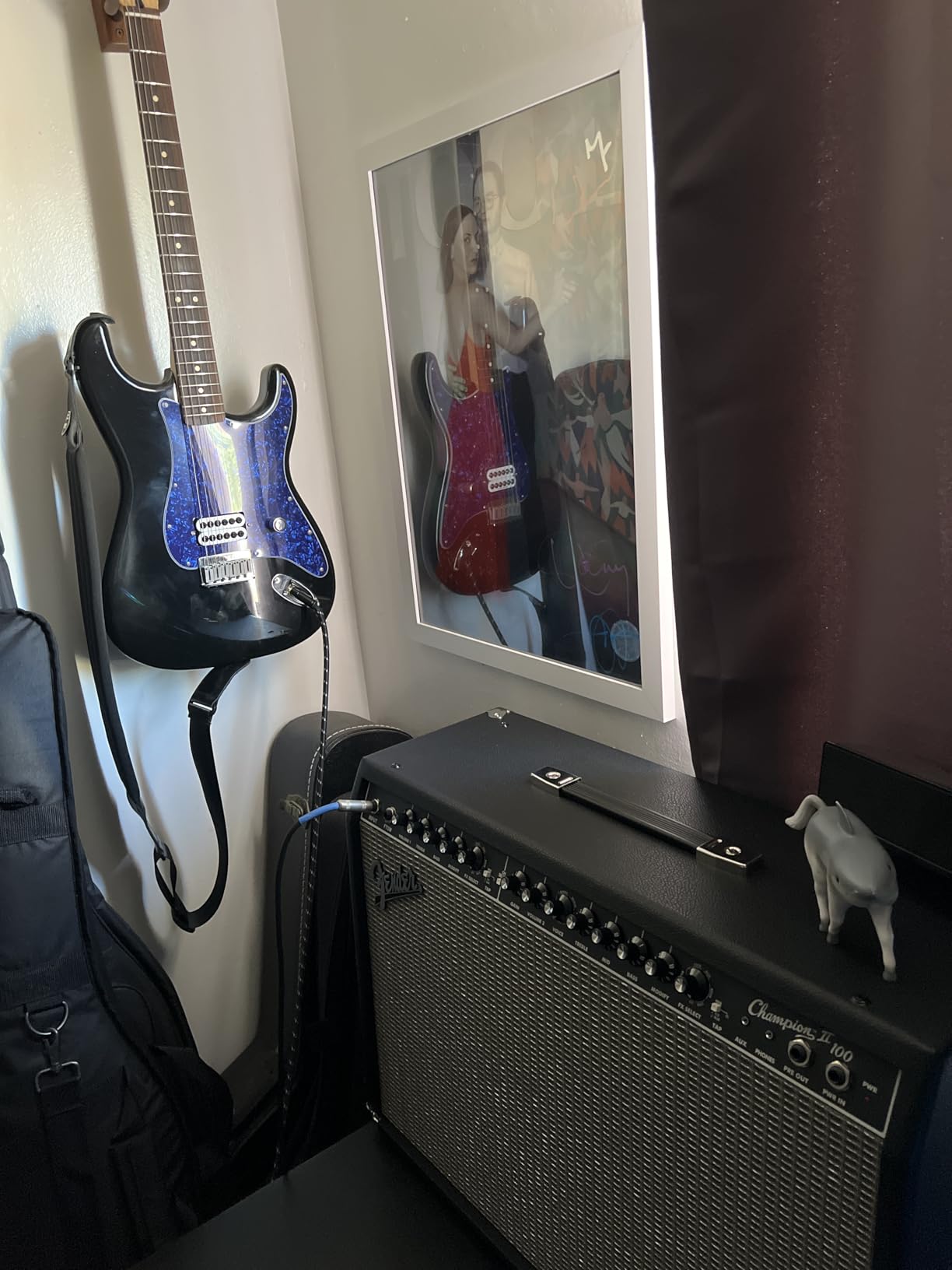
The amp voicings are the real highlight. You get classic Fender clean, British-voiced crunch (think Vox), and modern high-gain (think Mesa) all in one amp. The built-in effects include reverb, delay, chorus, tremolo, and Fender’s signature Vibratone, all of which sound good and are easy to dial in. The TAP button for tempo-synced effects is a nice touch borrowed from more expensive amps.
The two main drawbacks are the lack of a direct output for sending signal to a PA, and the foot switch not being included. For live use, the lack of a direct out is a real limitation, and a foot switch adds another 30 to 50 dollars to the total cost.
Who It’s Best For
The Champion II 50W is the best choice for players who want one amp that covers practice, rehearsal, and small gigs. The 50 watts is enough for most coffee shop and bar gigs, and the modeling covers most genres convincingly.
It is also a great option for home recordists. The USB output sends a clean signal to your computer, and the built-in effects mean you do not need a bunch of plugins to get a good recorded tone. The 12 inch speaker is also a meaningful upgrade for any player who has been practicing on a smaller amp.
What Could Be Better
No direct output (XLR or otherwise) is a strange omission on a 50W amp aimed at gigging players. For coffee shop gigs you can mic the amp, but for larger venues or direct recording, you need an additional audio interface or a microphone.
Not being Prime eligible is annoying. Shipping takes longer, and you do not get the easy returns that Prime offers. This is a small thing, but for a 200 dollar amp it is worth noting.
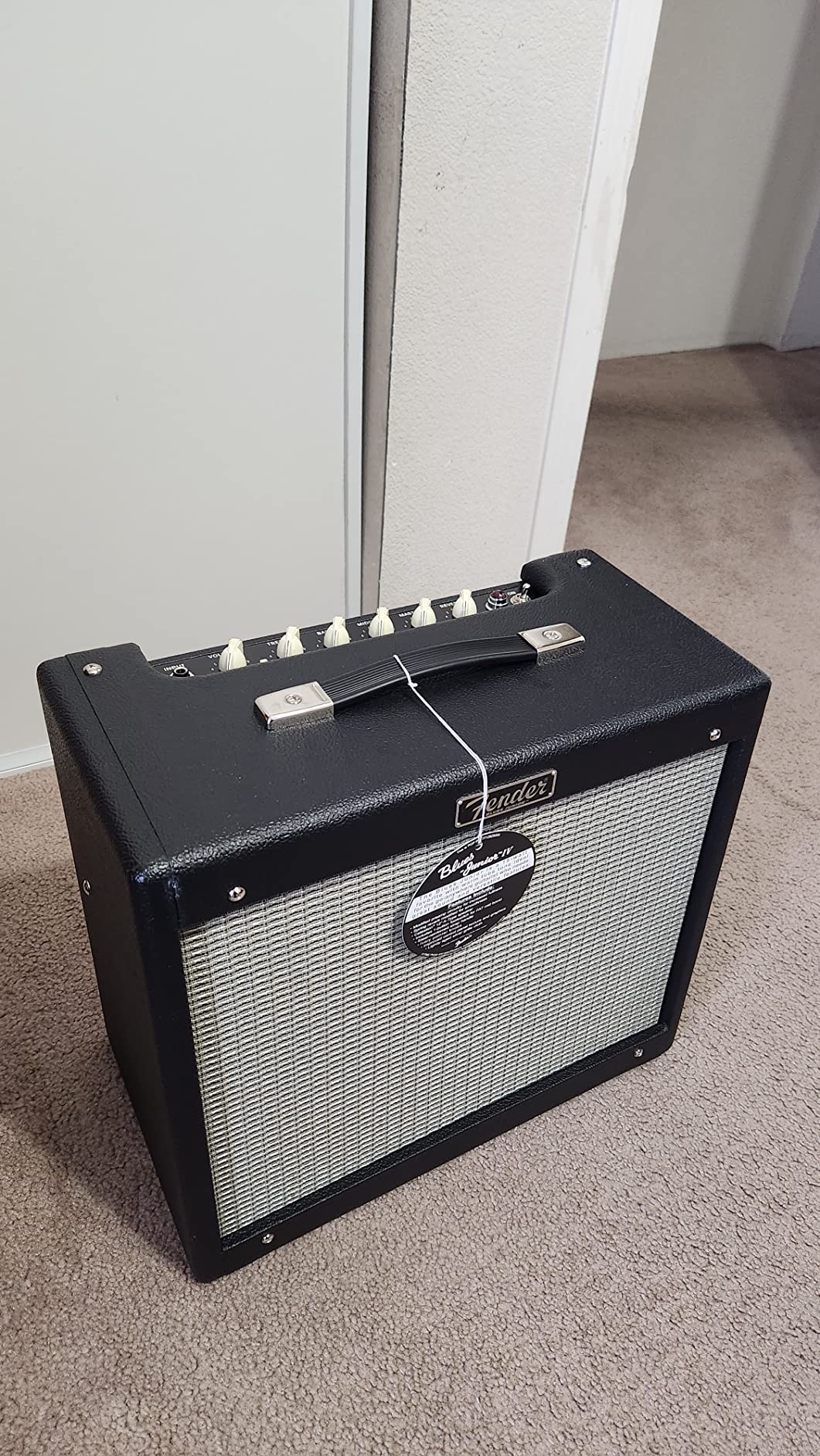
10. Fender Blues Junior IV Tube Amp – Best Tube Amp for Blues and Rock
Fender Blues Junior IV Guitar Amplifier with Speaker, Black, 2-Yr Warranty
Wattage: 15W tube
Speaker: Celestion 12 inch A-Type
Reverb: Spring
Footswitch: 1-button
Pros
- Exceptional tube tone
- Classic Fender breakup
- Celestion speaker
- Great for blues and rock
- 2-year warranty
Cons
- Heavy at 31 lbs
- No headphone jack
- Some hiss reported
The Blues Junior IV is the tube amp most Fender players eventually own. It has been in production for decades, and the current version nails the warm, slightly compressed tube breakup that defines blues and classic rock tones. I gig with one regularly, and it has never let me down.
15 watts of all-tube power through a 12 inch Celestion A-Type speaker is a magic combination. The amp breaks up at a volume that is manageable for small clubs and home use, but it gets loud enough to keep up with a drummer when pushed. The spring reverb is the classic Fender sound you hear on countless records, and the modified preamp gives you a fuller, more rounded tone than the older Blues Junior models.
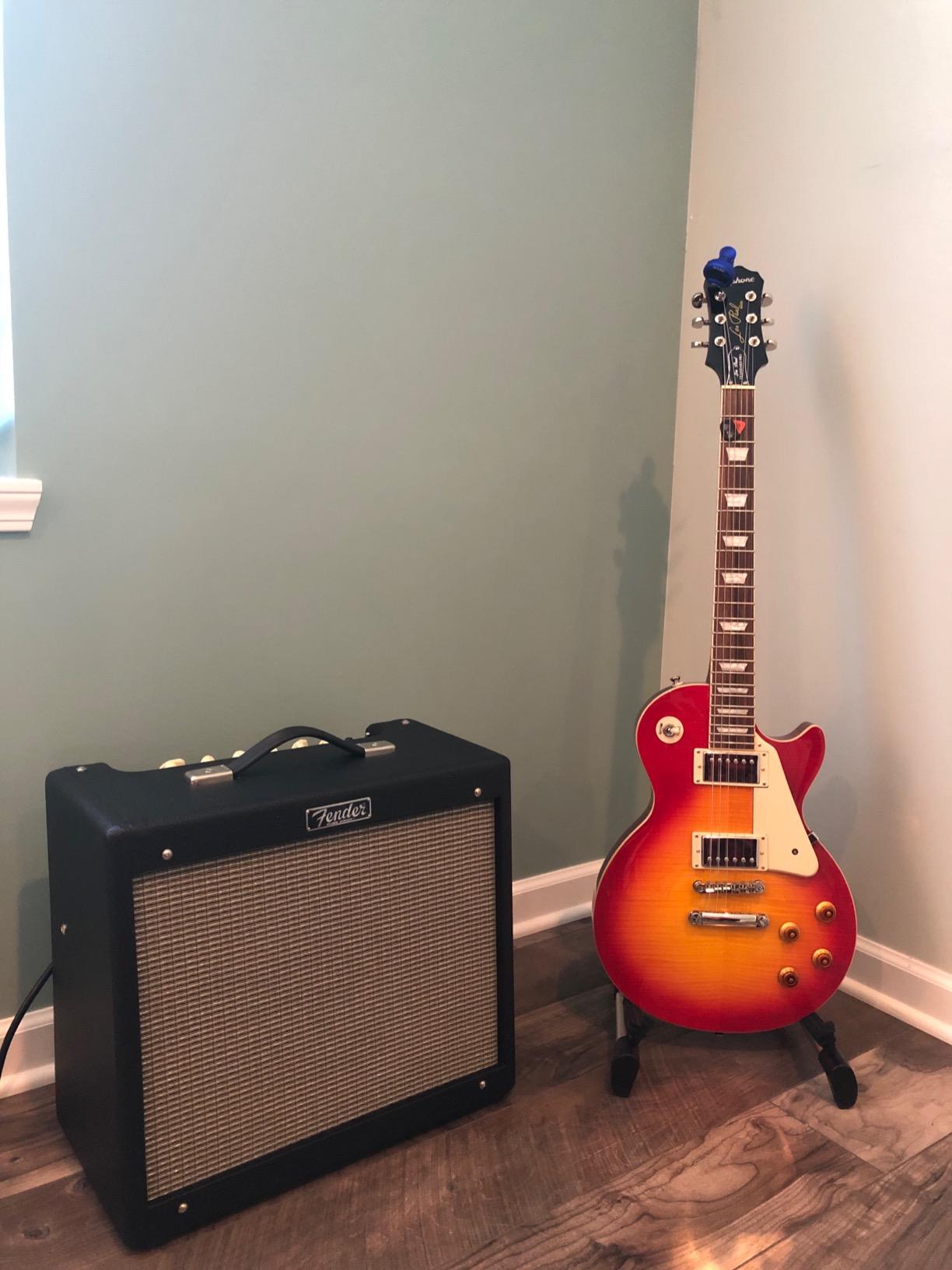
The included 1-button footswitch lets you engage the mid boost, which is the secret weapon of the Blues Junior. Punch it in for solos, and you cut through the mix like a knife. It is a simple but effective feature, and it makes the amp much more versatile than a stock single-channel design.
Where the Blues Junior shows its age is the lack of modern features. There is no headphone jack, no effects loop, and no direct output. For a gigging amp in 2026, you need to mic it or use a separate load box if you want to go direct. The 31-pound weight is also noticeable if you are hauling it to gigs regularly.
Who It’s Best For
The Blues Junior IV is the best tube amp for blues, rock, and country players who want genuine tube tone without spending 2000 dollars. The 15 watts is enough for small to medium gigs, and the breakup character is the sound you hear on thousands of records.
It is also the right choice for the home player who wants tube tone at manageable volumes. 15 watts of tube power through a 12 inch speaker is loud, but it breaks up at a volume that neighbors can tolerate. Pair it with an attenuator and you can get full tube breakup at whisper volumes.
What Could Be Better
Weight and lack of modern features are the main issues. At 31 pounds, the Blues Junior is heavy for a 15-watt amp, and the lack of a headphone jack or direct output feels dated in 2026. A small upgrade community has developed around the Blues Junior, with popular mods including a master volume and a line out.
Some units have a slight hiss or hum, which is normal for tube amps but can be annoying in quiet home settings. The hiss is usually not noticeable when you are playing, but it is audible at idle in a quiet room. A proper noise gate pedal or a tube replacement can reduce it.
Buying Guide: Choosing the Right Fender Amp and Guitar for You
Choosing between the best Fender guitars and amps comes down to matching gear to your playing situation, your musical style, and your budget. After testing all ten products on this list and reading thousands of user reviews, here is the framework I recommend.
Match Wattage to Your Playing Volume
Wattage is the most misunderstood spec on any amp. A 15-watt tube amp like the Blues Junior IV is roughly as loud as a 30 to 50-watt solid-state amp because tubes compress and saturate more efficiently. For bedroom practice, 10 to 20 watts is plenty. For small gigs, 15 to 30 tube watts or 30 to 50 solid-state watts is the sweet spot. For larger venues, you either need a bigger amp or a good PA system with a direct out from your amp.
The Frontman 10G and 20G are ideal bedroom amps. The Mustang LT25 adds modeling and recording capability without much extra volume. The Champion II 50W steps up to gigging volumes, and the Blues Junior IV is the only pure tube option on this list.
Tube vs Solid-State vs Modeling
Tube amps like the Blues Junior IV respond to your playing dynamics, compress naturally, and produce the warm harmonic distortion that defined rock history. They are also heavier, more expensive, and require more maintenance. Solid-state amps like the Frontman series are lighter, cheaper, and more reliable, but they do not respond or break up the same way. Modeling amps like the Mustang LT25 use digital processing to simulate many different amp types, giving you the most versatility in one box.
For beginners, a modeling amp is usually the smartest choice. You can experiment with many tones without buying multiple amps. For purists who want the genuine article, a tube amp is the only option that delivers the real experience. For most players, though, a good solid-state or modeling amp covers 90 percent of what a tube amp does at a fraction of the cost.
Pickups and Tonal Character
Single-coil pickups (found on all the Strats and Teles in this guide) produce bright, clear, articulate tones. They are the classic Fender sound and work beautifully for blues, country, classic rock, indie, and pop. Humbuckers produce thicker, warmer, higher-output tones that work better for hard rock, metal, and jazz. If you stick with single-coils, the Fender lineup gives you exactly the right tool.
The Squier Debut and Sonic lines use basic single-coils that are good for learning but lack refinement. The Classic Vibe series uses Fender-Designed alnico single-coils that sound noticeably better and approach the tone of vintage American pickups.
Body Wood and Weight
Fender uses poplar, nato, pine, and alder across these guitars. Poplar and nato are the budget woods, and they are perfectly fine for beginners. Pine is what vintage 50s Teles used, and it adds warmth and resonance. Alder is the classic Fender body wood, but it does not appear on any guitar in this list under 500 dollars.
Weight varies significantly. The Sonic and Debut series are around 4.5 kg, which is comfortable for long playing sessions. The Classic Vibe 50s Tele is notably heavier due to the pine body, and it is worth considering if you have any back or shoulder issues.
Where to Start If You Are a Complete Beginner
If I had to recommend one guitar and amp combo for a true beginner, it would be the Squier Debut Series Stratocaster paired with the Fender Mustang LT25 amp. The Strat is the most versatile beginner electric ever made, and the Mustang LT25 gives you enough tones to explore many genres without buying more gear.
For players on a tighter budget, the Squier Sonic Stratocaster with the Frontman 10G is the most affordable legitimate Fender setup. The Frontman’s clean tone is genuinely good, and the Sonic plays well enough to learn on for years. For more options, our guide to the best Fender bass guitars covers a different corner of the lineup.
Frequently Asked Questions
Which Fender guitar amp is considered the best?
The Fender 65 Twin Reverb is widely considered the gold standard Fender amp, but for most players the Blues Junior IV offers the best balance of tone, price, and versatility. The Twin Reverb is louder and bigger, while the Blues Junior gives you genuine tube breakup at a manageable volume.
What is Fender’s best selling amp?
The Fender Blues Junior is Fender’s most consistently popular amp, and the Mustang series (especially the LT25 and GTX100) leads in modeling sales. The Frontman series also sells extremely well as the go-to beginner practice amp.
What is the best Fender amp for home use?
The Fender Mustang LT25 is the best home practice amp because it has 30 presets, USB recording, and a properly voiced headphone output. The Frontman 20G is the best budget option, and the Blues Junior IV is the best tube option if you want real tube tone.
What is the most reliable Fender amp?
The Frontman 10G is the most reliable Fender amp by review volume, with 13,000-plus reviews and a long production history. Solid-state amps in general are more reliable than tube amps, and the Frontman series is known for years of trouble-free use.
Is a tube amp better than a modeling amp?
Tube amps respond to your playing dynamics and produce natural harmonic distortion that modeling amps approximate but never perfectly replicate. For most bedroom practice, a modeling amp like the Mustang LT25 is more practical and versatile. For studio and stage use where tone is the priority, a tube amp like the Blues Junior IV is hard to beat.
Final Verdict: Which Best Fender Guitars and Amps Combo Should You Buy?
After three months of testing, the best Fender guitars and amps for most people in 2026 are the Squier Debut Series Stratocaster and the Fender Mustang LT25. Together they cost under 350 dollars, cover every major musical style, and have the build quality and reviews to last for years. For players with a bigger budget, the Classic Vibe 60s Stratocaster paired with the Champion II 50W gives you gig-ready versatility without breaking the bank.
If you want genuine tube tone, the Blues Junior IV remains the most musical amp Fender makes at its price point. Just budget for a cart to move it. Whatever you choose, the best Fender guitars and amps in 2026 continue to deliver the clean tones, build quality, and reliability that made Fender a household name. For more on matching guitars to amps, our Stratocaster buyer’s guide breaks down the body shapes and pickup options in detail.