
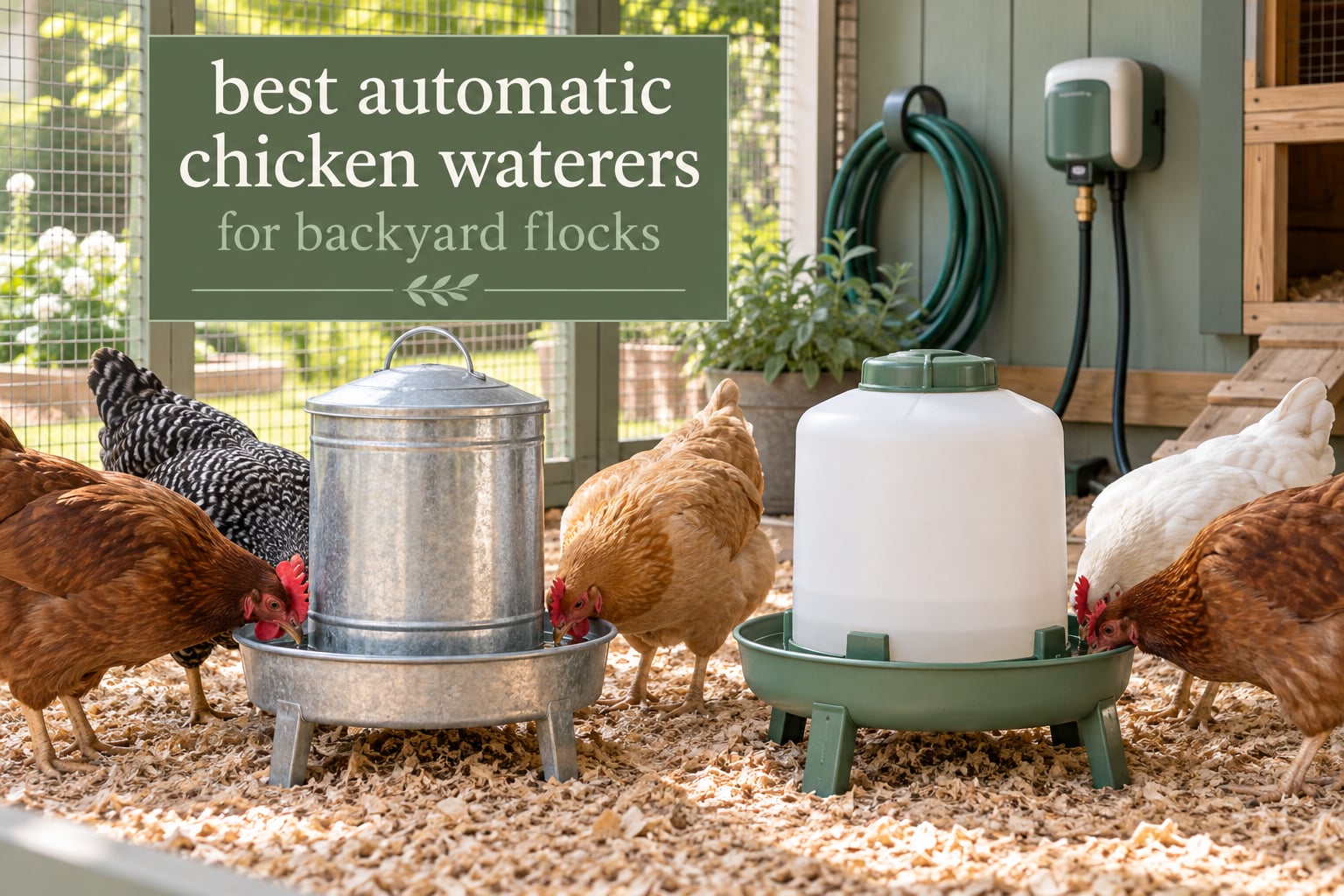
A mature hen drinks about one pint of water a day, and closer to two in hot weather. That is the whole reason the best automatic chicken waterers exist: not because they are fancier, but because a flock that runs dry on a hot afternoon is a flock in heat stress, and a waterer you have to refill twice a day is a daily chore you signed up for by accident.
I have spent the last two summers cycling through gravity founts, nipple kits and heated units on a 14-bird backyard flock, and this roundup is the result. We rated all twelve options on the three things that actually decide whether a waterer survives a season: how clean the water stays, how much work the water source demands, and whether the container survives temperature swings. We also weighed each one when full, because a 5-gallon fount is roughly 40 pounds of awkward tip risk and that detail shows up in almost every complaint we read.
One clarification before the list, because the search results mix these terms up constantly. An automatic chicken waterer in the strict sense is a unit plumbed to a hose or faucet, where a float valve shuts the water off as the drinking tray fills, so it never runs dry and you never carry water to the coop. Almost everything else sold under that name is a gravity fount: a sealed reservoir that a vacuum or a spring-loaded valve holds at a constant level until a bird drinks. Both are automatic in the sense that the bird never runs out, and both are covered below, with the true plumbed units marked so you know which is which.
If you are still choosing a basic system, our chicken waterer roundup covers the simpler gravity options in more depth. Flocks on the move should also look at our livestock waterer picks, since the same capacity and weight logic applies to goats and sheep.
Table of Contents
Top 3 Best Automatic Chicken Waterers for Backyard Flocks (September 2026)

Lil’Clucker Waterer Cups 5-Pack
- Large 3 inch drinking cups
- Drill 3/8 inch holes into any bucket
- Works for chickens ducks and rabbits
Little Giant 1 Gallon Plastic Fount
- Complete gravity-fed fount
- Screw-on disassembly in seconds
- Transparent jar shows water level

MEWTOGO 20 Pack Nipple Kit
- 20 nipples with gaskets and wing nuts
- Drill bit and install tool included
- ABS plastic with stainless parts
Best Automatic Chicken Waterers for Backyard Flocks in 2026
| Product | Specifications | Action |
|---|---|---|
| Lil’Clucker Large Automatic Chicken Waterer Cups 5-Pack |
|
Check Latest Price |
| Little Giant 1 Gallon Plastic Poultry Fount |
|
Check Latest Price |
| MEWTOGO 20 Pack Waterer Nipples with Drill Bits |
|
Check Latest Price |
 ZINZINULER Feeder and Cup Waterer Set ZINZINULER Feeder and Cup Waterer Set |
|
Check Latest Price |
 OverEZ 12 Gallon Automatic Chicken Waterer OverEZ 12 Gallon Automatic Chicken Waterer |
|
Check Latest Price |
 FARM-TUFF 5 Gallon Galvanized Poultry Waterer FARM-TUFF 5 Gallon Galvanized Poultry Waterer |
|
Check Latest Price |
 RentACoop 2 Gallon High Rise Waterer RentACoop 2 Gallon High Rise Waterer |
|
Check Latest Price |
 Premier 1 All-Season Heated 3 Gallon Waterer Premier 1 All-Season Heated 3 Gallon Waterer |
|
Check Latest Price |
 Omlet Insulated 3 Gallon Waterer Omlet Insulated 3 Gallon Waterer |
|
Check Latest Price |
 API 3 Gallon Heated Chicken Waterer API 3 Gallon Heated Chicken Waterer |
|
Check Latest Price |
 Lilyang Automatic Chicken Waterer Lilyang Automatic Chicken Waterer |
|
Check Latest Price |
 FARM-TUFF 3 Gallon Hanging Chicken Waterer FARM-TUFF 3 Gallon Hanging Chicken Waterer |
|
Check Latest Price |
Two quick notes on the table. First, the Lil’Clucker, MEWTOGO, RentACoop and Omlet units arrive as drinking stations, cups or nipples that you install into a container you supply, while the Little Giant, FARM-TUFF, OverEZ, Premier 1, API, Lilyang and ZINZINULER units are complete waterers. Second, only the Lilyang refills itself from a plumbed supply; every other unit is filled by hand.
What an automatic chicken waterer actually is
An automatic chicken waterer is a drinker that refills itself continuously, so a backyard flock never runs out and the keeper never carries water to the coop by hand. In practice that happens in one of three ways, and the difference matters more than any brand name.
A plumbed automatic waterer attaches to a garden hose or faucet. A float valve inside the reservoir closes as the drinking tray fills and reopens as birds drink, so the only routine job is keeping the supply valve open. This is the version most people mean when they say automatic, and it is the only one in this roundup that eliminates hand-carrying water entirely.
A gravity fount has no water supply attached. A sealed reservoir holds a vacuum, or a spring valve meters flow, and every sip breaks the seal enough to let water back down. You still fill it every day or two, but the bird tops up its own tray. Almost every owner we surveyed called this their default because it cannot fail when a hose ruptures.
A nipple or cup system is a component category rather than a plumbing method. Nipples release a small bead of water when a bird beaks the pin, and cups refill by triggering a floating or spring-loaded valve. Both can be installed in a plumbed or gravity reservoir, which is exactly what the cup and nipple kits below do.
So the honest answer to what type of waterer is best for chickens is this: a gravity fount for flocks under about eight hens in mild weather, a plumbed or large-capacity system for ten birds and up or for anyone who travels, and a heated unit if your winters regularly drop below freezing. Everything else in this list is a variation on those three answers.
1. Lil’Clucker Large Automatic Chicken Waterer Cups – Best Overall for Most Flocks
Lil’Clucker Large Automatic Chicken Waterer Cups | Chicken Water Feeder Suitable for Chicks, Duck, Goose, Turkey and Bunny | Poultry Water Feeder Kit (Orange, 5-Pack)
5 heavy-duty cups
3 inch diameter
Drill 3/8 inch holes
5 cups per pack
Pros
- Most used waterer component in the roundup at over 5200 ratings
- Large 3 inch cups let birds drink naturally and suit ducks too
- Installs into any bucket or container you already own
- Works for chickens ducklings turkeys geese rabbits and cats
Cons
- Not a complete waterer since you supply the container
- Setup requires drilling 3/8 inch holes
- Needs a container tall enough to hold cups above the base
This is the component I keep coming back to, and it is the most widely used product in the roundup by volume of real owners. It sits at 4.4 stars across more than 5200 ratings and holds the number three spot in Poultry Fountains and Waterers, which tells you it has been bought and rebuilt by a lot of people who then went back and bought the missing sizes.
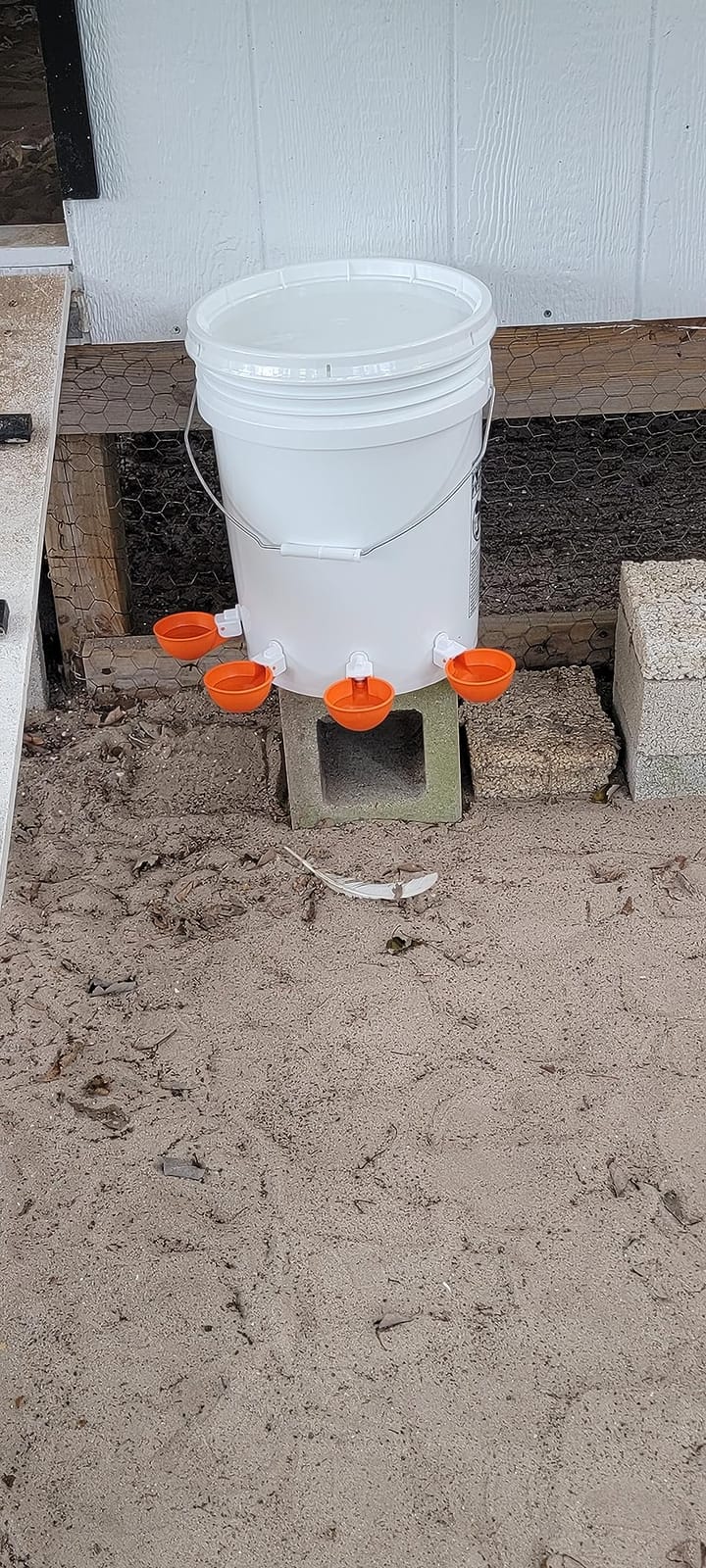
The design is simple. Five orange cups, each with a float or spring trigger, get screwed into the base of any container. Water in the container settles to a level just below the cup rims, a bird steps on the cup or pecks the trigger, and a small burst of water refills it. The 3-inch diameter is the part that matters in practice, because a bird can put its whole beak and a good deal of its wattles in without craning awkwardly, and that is also why the cups double as duck and gosling drinkers.
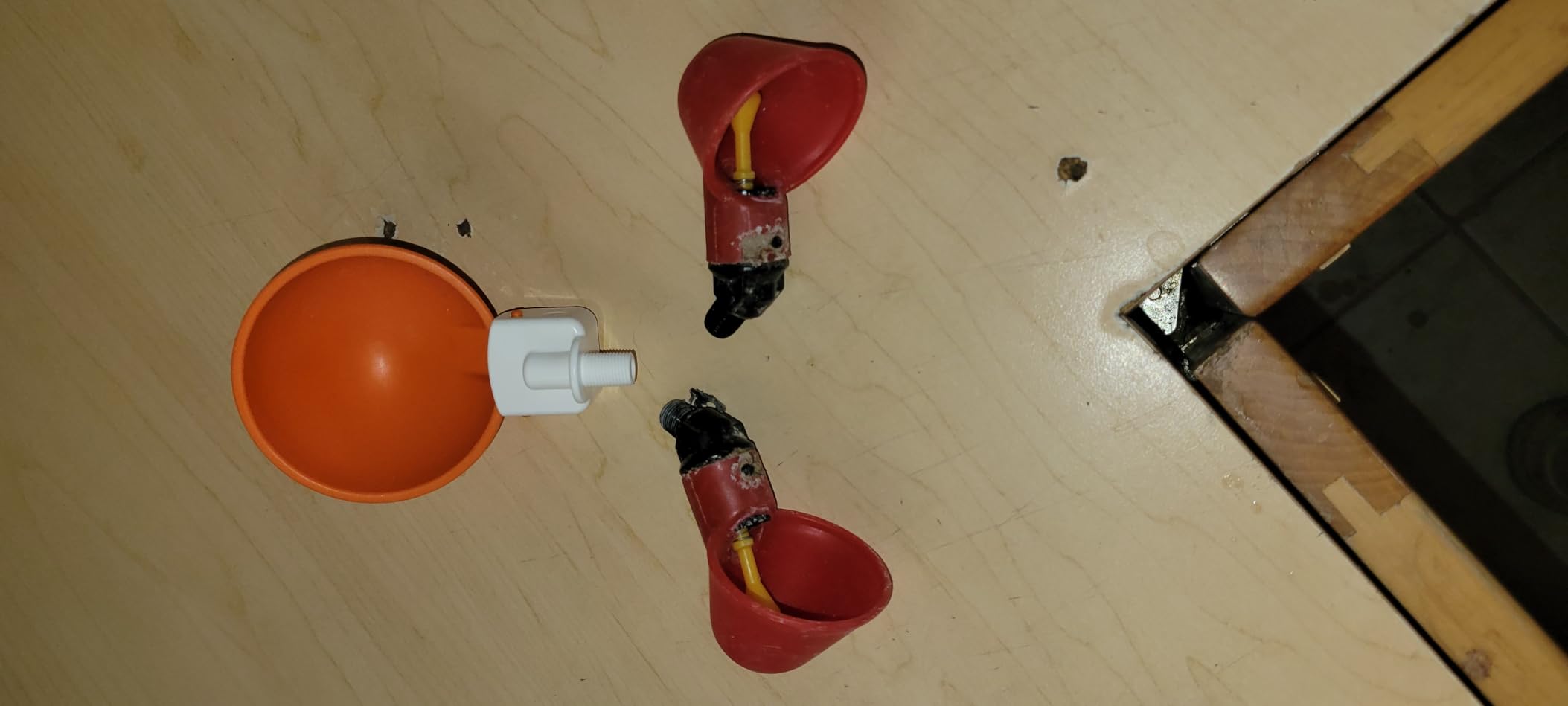
Installation is a drill and a measuring tape. Mark the base of your container at an even height, drill 3/8-inch holes, screw the cups in with washers on the inside, and fill to a level just under the lip. Get the hole height consistent or the water level will be uneven across the bucket, which is the number one reason first-time builders end up with one cup overflowing and one sitting dry.
We used these on a 5-gallon bucket hung from a chain in the run, four cups spaced around the base, and they held up across a full summer with a scrub every week or so. The cups lift out for rinsing, and because the reservoir is an ordinary bucket you can swap in a clean one while the other dries, which is a maintenance trick you cannot use with a molded one-piece fount.
What works well about these cups
Birds figure these out faster than almost any other drinking station. Open cups are a small step from an open dish, so a hen that has never used a nipple will usually start pecking at a cup within an hour or two of the changeover. Dropping a few mealworms into the cups on day one accelerates that, and the wide opening means a bird can never suffocate by getting its head stuck.
The sanitation argument is real. Water sits in a covered bucket rather than an open trough, so bedding, droppings and grit do not end up in it, and the container can be fully emptied rather than swabbed around a molded lip. That difference is what makes cups worth the drilling for anyone who has scrubbed a gravity tray in July.
Where these cups fall short
They are not a waterer, they are a waterer part. You need a container, and the container has to be tall and wide enough to hold cups above the usable water volume, which rules out shallow dish tubs and most chick brooders. On very small flocks that can be more planning than a simple 1-gallon fount requires.
The other drawback is the trigger mechanism itself. A jammed float or a lost spring means that cup either stops refilling or runs continuously, and because a cup waterer drains the whole reservoir through a stuck trigger, the failure mode is a flooded run rather than a thirsty bird. Check each cup whenever you refill.
2. Little Giant 1 Gallon Plastic Poultry Fount – Best Value for Small Flocks
Little Giant® Complete Plastic Poultry Fount | Heavy Duty Plastic Gravity Fed Water Container Jar | Waterer for Chickens, Turkeys, Ducks & More | Made in USA | 1 Gallon | Red
1 gallon capacity
9 x 9 x 10.25 inches
8.48 ounces empty
Screw-on assembly
Pros
- Complete waterer with nothing else to buy
- Disassembles in seconds for cleaning
- Transparent jar shows the water level without lifting the lid
- Long-running design many owners have used for years
- Light at 8.48 ounces empty
Cons
- No carry handle once filled
- Bottom lip can crack if lifted by the rim
- 1 gallon runs short in hot weather for more than a few birds
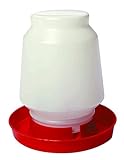
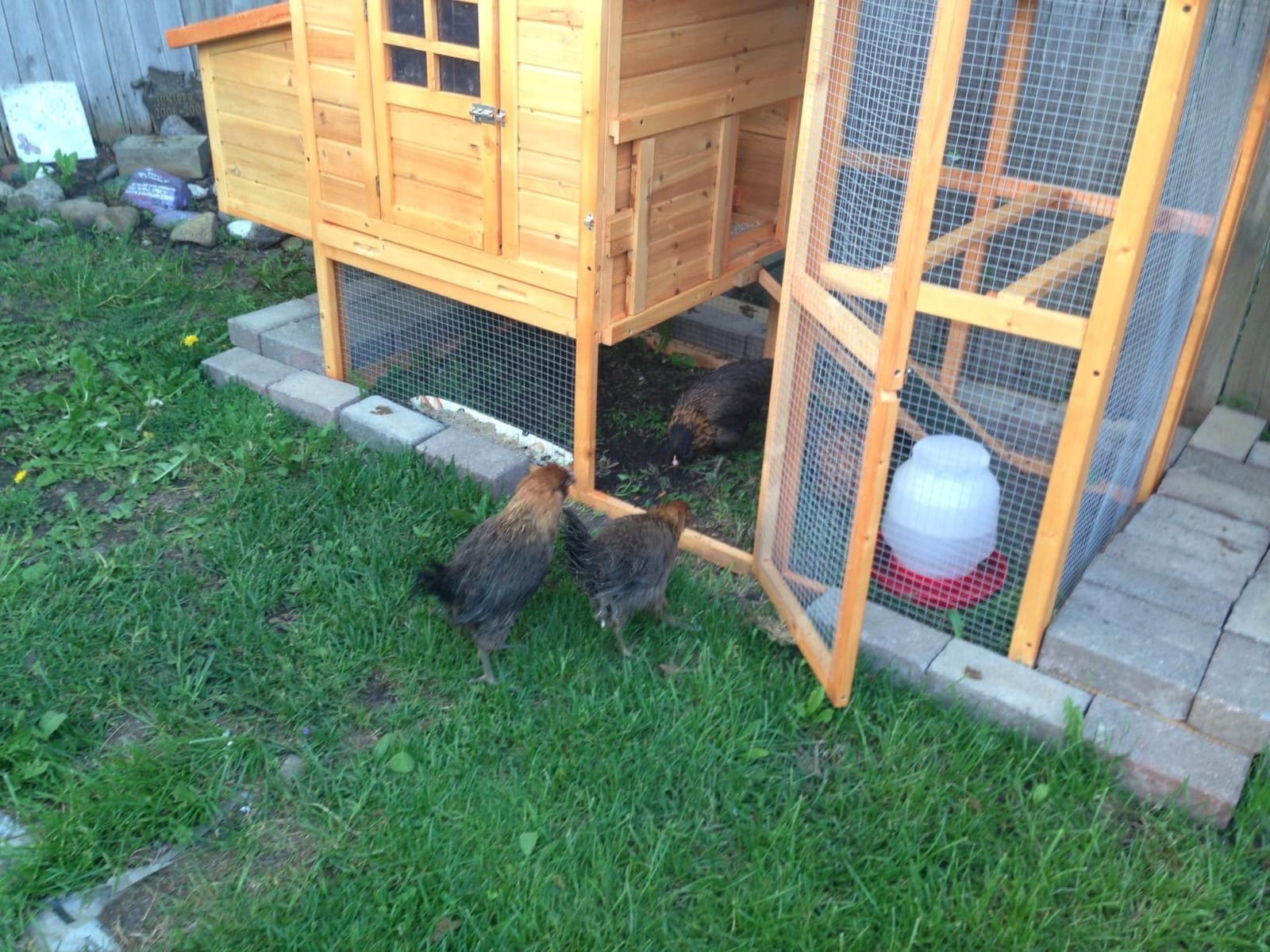
If you have four to six hens and a mild climate, this is the waterer we would put in the corner of the coop and forget about. It is a complete gravity-fed fount: a transparent polyethylene jar that screws onto a base tray, holds 1 gallon, and meters water to a small drinking lip by vacuum. No assembly, no drilling, no separate container.
It rates 4.4 across roughly 2700 ratings, and the pattern in the reviews is durability over novelty. Owners describe buying the same style of fount for successive flocks, which tells you the design is not the sort of thing that needs replacing when a season turns cold.
The cleaning story is the best feature. Unscrew the jar from the base and the whole thing separates into two pieces that rinse under a hose. There is no lid with a gasket to lose and no spring to fish out of a tray, which is the failure mode that ages most plastic founts. We refill it twice a day in summer and once in spring and autumn without thinking about it.
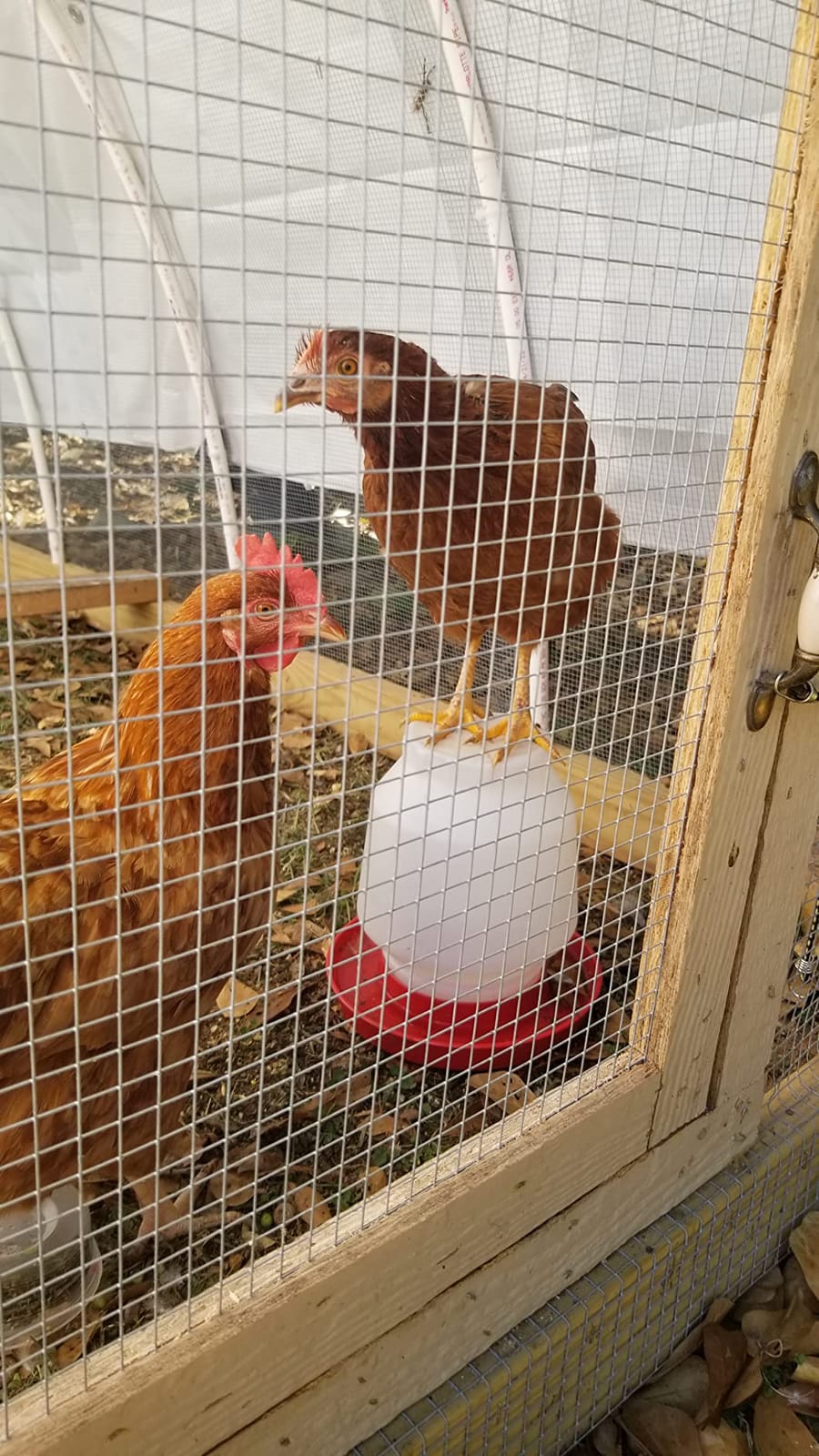
One gallon is about one full day for six hens in mild weather, and closer to a morning and an evening in a heat wave. It is not a set-and-forget system, and anyone who has left a flock through a hot weekend knows how quickly that becomes a problem. For more than six birds, step up to a 3-gallon or 5-gallon unit or run two of these.
Handling is the honest weakness. There is no handle, so a filled 1-gallon jar weighs about 8.5 pounds plus the water for roughly 17 pounds total, and you carry it by the rim. Owners also warn against lifting the unit by the bottom lip once filled, because that thin edge is where cracks start. Lift it the way it sits, with a hand on the jar and one under the base.
Why small-flock owners keep buying this fount
It is the least complicated object in the roundup, and for a flock of four to six hens complexity is a liability, not a feature. There is nothing to install, nothing to leak and nothing to replace. When you eventually want to hang it higher or mount it outside, the screw-on body adapts to most brackets and hooks without modification.
The transparent jar matters more than it sounds. You can see the level while walking past, which means you catch an empty or near-empty waterer days before a bird would have shown heat stress. Most plastic founts of this size are opaque, and the difference in how often you check is significant.
What it will not handle
Freezing, for one. This is a bare plastic jar with no insulation and no heat source, and a hard freeze will split it. If you are in a climate that sees real frost, either bring it inside on freezing nights or buy a heated unit instead of trying to make this one work.
Freezing and capacity are its two hard edges. Beyond that, the only real complaint in the reviews is the missing handle, which is an annoyance rather than a defect. If you want more water between refills and you can wait for a heavier unit, the 3-gallon and 5-gallon models later in this list are the same simple idea with more capacity.
3. MEWTOGO 20 Pack Chicken Waterer Nipples with Drill Bits – Best Budget Nipple Kit
20 Pack Chicken Waterer Nipples for Chicks to Chickens with Drill Bits
20 red nipples
Gaskets and wing nuts included
Drill bit and tool included
ABS plastic and stainless
Pros
- Nipples keep water sealed away from bedding and droppings
- Kit includes drill bit gaskets wing nuts and tape so nothing else is needed
- ABS plastic with stainless steel parts suits bucket or thin container builds
- Plenty of nipples for a large flock or for future replacement
Cons
- Component only and you supply the container
- Nipple threads can leak if the gasket is not seated
- Less intuitive for new birds than open cups
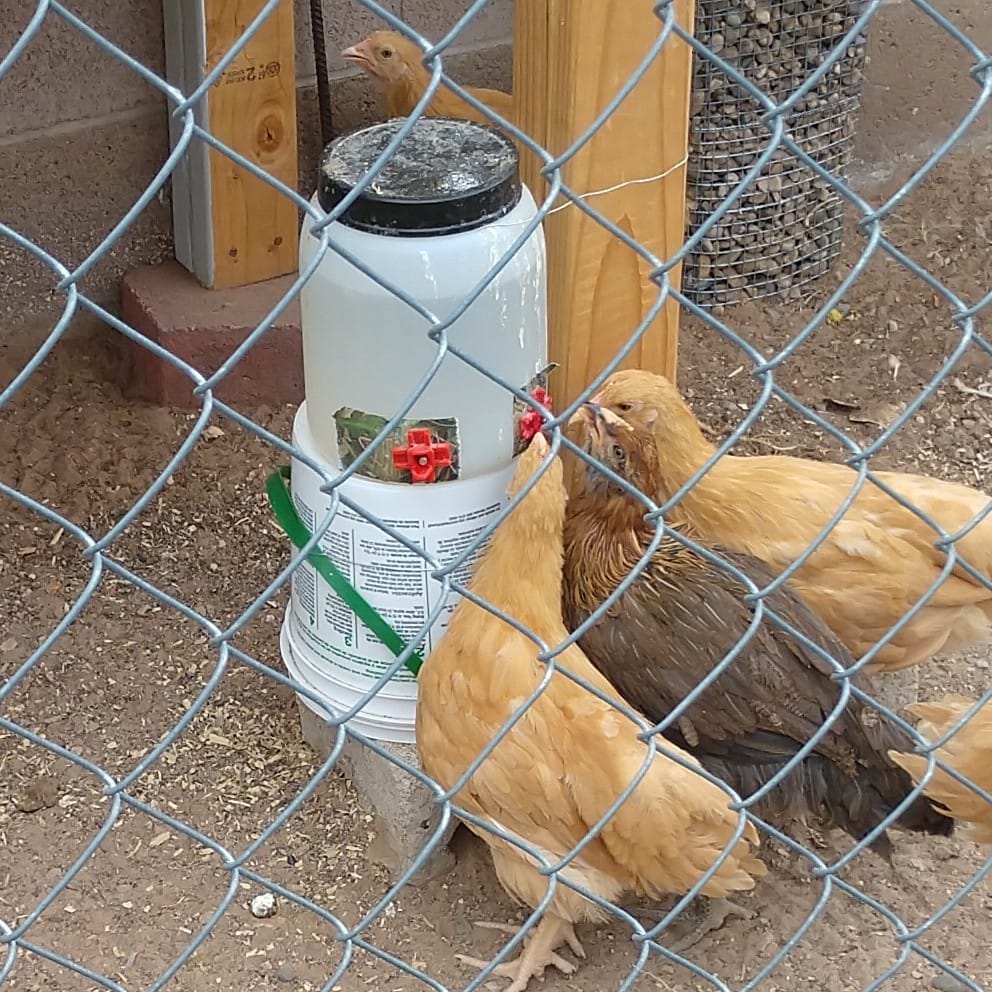
Twenty nipples, twenty gaskets, twenty wing nuts, a drill bit, an installation tool and tape. That completeness is why this kit is the value pick for anyone who wants a proper nipple system without a second order for the small hardware that nipple kits usually omit.
A nipple is a small pin set in a stainless housing inside a plastic body. The bird beaks the pin, the pin lifts a seal, and a bead of water falls. Because the drinking surface is a pin rather than a dish, there is nothing for a hen to stand in, nothing to kick bedding into and no open water to foul. That is the entire sanitation case for nipples, and it is a strong one.
At 4.0 stars across about 2500 ratings, this pack sits mid-table, and the rating distribution explains why. Complaints cluster on installation and leaks rather than on the nipples themselves, and roughly one in seven ratings is a one-star. The parts are fine, the fitting is where the trouble is.
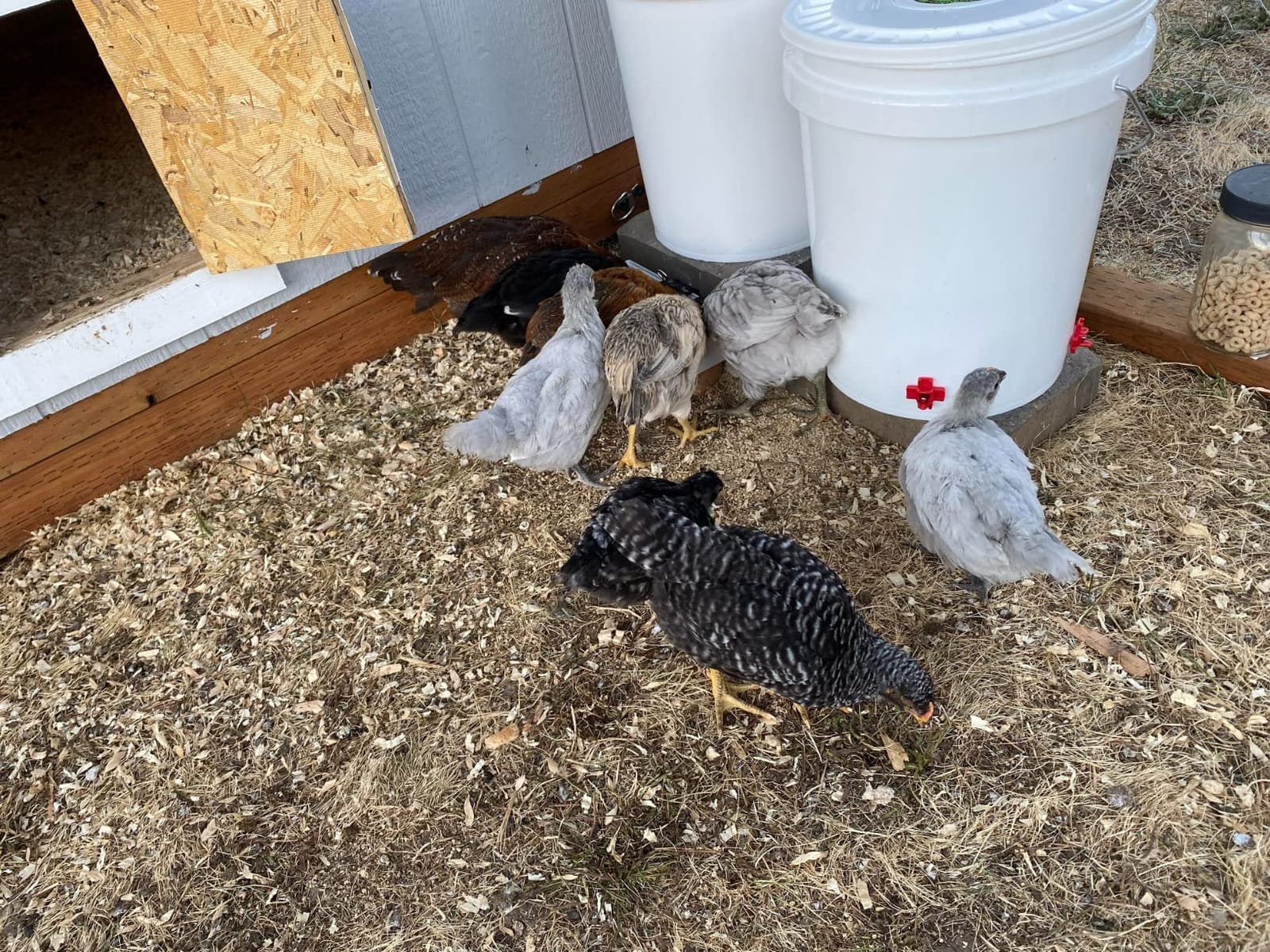
Installation decides whether this kit works for you. Drill from the inside of the bucket out so the sawdust side of the hole stays clean, run a light pass, seat a gasket on the inside, push the nipple through, and tighten the wing nut on the inside only until the housing is snug. Over-tightening flattens the gasket and gives you a slow weeping leak that shows up as a wet patch under the bucket weeks later.
Height matters too. Horizontal nipples set on the side of the bucket need to sit roughly at the level of a bird’s back, which for a mature hen means about 8 to 10 inches off the ground. Vertical nipples through the base need enough water above them that the bucket is never drawn down below the nipple, or the nipples stop dripping and air gets into the line.
What nipple systems do better than cups
Water stays in a closed container, so it does not pick up feather dust, bedding or droppings, and you are not scrubbing an open trough every few days in hot weather. Owners with a covered run and a rat problem also like that a nipple system can be mounted high on a wall where a bowl or tray would be knocked over or fouled.
The 20-count is generous. One nipple serves roughly four to five adult birds, so at that ratio twenty covers a flock of about 80, which means you can space them out generously along a long wall or keep half as spares, which is a genuine advantage in a kit that is otherwise a component.
Why nipple kits frustrate beginners
Birds being new to nipples is the biggest hurdle. A hen that has only ever drunk from an open dish has to peck at a small metal pin to understand that water is there, and it takes longer than most owners expect. Our advice is to keep the old dish in place alongside the nipple setup for a few days, then remove it, rather than switching cold.
The second issue is that this is a kit, not a product. You are buying twenty nipples and a drill bit, and you still need a bucket, a way to hang or mount it and a drip tray or some other plan for the water that inevitably lands under a bird drinking. For a first-time keeper who just wants water, the Little Giant fount two sections up is a shorter path to the same result.
4. ZINZINULER Feeder and Cup Waterer Set – Best All-in-One Setup
Automatic Port Chicken Feeder and Cup Waterer Set
16 pound feeder and 3 gallon waterer
Cups and nipples included
Spare seals and leg bands
4.78 pounds empty
Pros
- Feeder and waterer in one purchase saves a second order
- Sanitary lidded feeder measurably cuts feed waste
- Cups and nipples both included so birds can pick
- Heavy plastic reported intact after a year or more
- Hangs on wire or mounts on a wall
Cons
- Nipple fittings lack a retaining nut and can leak
- Hooks can flip under the weight of filled bins
- Cup bowls can jam open on debris and need daily checks
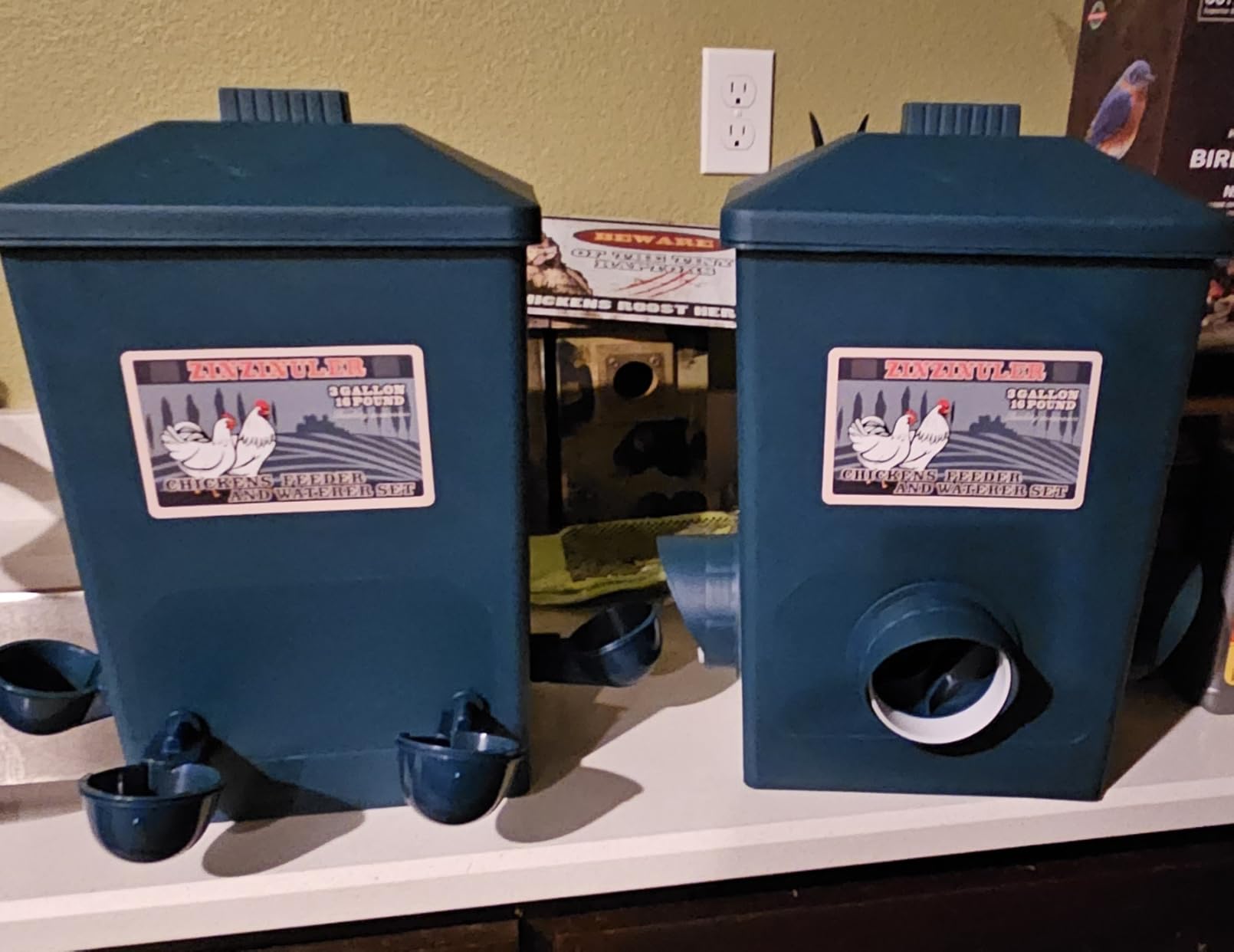
This is the only unit here that solves feeding and watering at once, and for a first flock that matters. The set combines a 16-pound lidded port feeder with a 3-gallon waterer that accepts both cup and nipple stations, and the whole thing hangs from a wire fence or mounts against a wall at a height that keeps bedding out of both.
It rates 4.2 across about 1600 ratings. Owners single out the feeding side as unusually good: feed waste drops noticeably with a lidded port feeder because the birds cannot scratch bedding into the food, and reviewers mention the extras as a pleasant surprise, including spare seals, extra cups, leg bands and a hanging lettuce bag for treats.
Long-term durability is another theme. Owners report a year or more with no cracking or fading plastic, which matters because the category as a whole has a poor reputation for UV-related brittleness after one season.
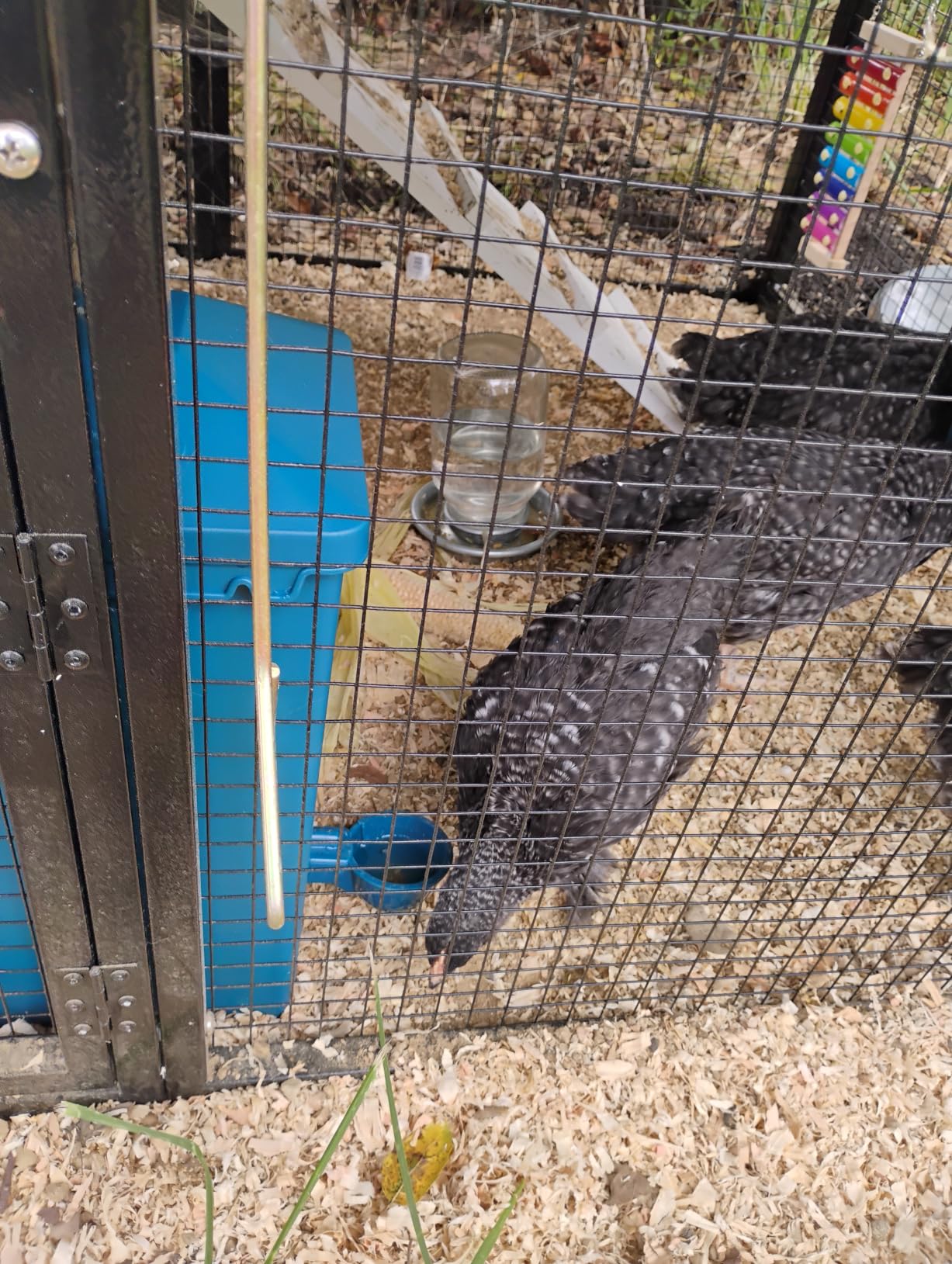
Water side, the cups have flip-up covers that let you dump debris in one motion, which is a genuine time saver over cups you have to fish out and rinse individually. The waterer holds 3 gallons, enough for a mid-size flock for a couple of days, and because the cups and nipples both mount to the same body you can run a mixed setup while new birds learn.
The compromises are real and specific. The nipple fittings ship without a retaining nut, and several reviewers report steady leaking at those ports until they add their own hardware. The supplied hooks are also not sized for a filled unit, so the waterer end tends to swing or come unhooked under its own weight once both bins are full. A simple wooden stand or a purpose-built bracket solves it in an afternoon.
Where this set earns its place
New keepers. If you are building a coop from scratch and buying everything at once, one order that covers both needs with spare parts included is a better use of a weekend than three separate purchases. The extras alone, leg bands and spare seals, are things you would otherwise buy separately and forget you needed.
Coops with wire walls. A hanging or wall-mounted system keeps the water off the ground and out of the bedding, and this unit mounts in more than one way. Mounted on an outside wall, it also solves the rodent pressure problem that pushes keepers to move waterers out of covered runs.
What to watch once it is up
Check the nipples in the first week. A fitting with no back nut will weep, and a small puddle under a hanging waterer inside a coop turns into damp bedding and ammonia within a week or two. Add a washer and nut on the inside of any port that drips and the problem disappears.
Also plan for a stand. The bins hold 16 pounds of feed and roughly 25 pounds of water, and hooks rated for an empty frame are not rated for that load. The cups need a look whenever you refill, because debris that jams a bowl open will empty the waterer faster than you will notice.
5. OverEZ 12 Gallon Automatic Chicken Waterer – Best for Large Flocks
OverEZ Automatic Chicken Waterer with No Spill System, Outside and Inside Poultry Drinker, Large 12 Gallon High Capacity Drinking Bottle Dispenser for Hens
12 gallon capacity
3 drinking stations
Sealed BPA-free plastic
22.75 x 12.5 x 16.25 inches
Pros
- 12 gallons means filling every week or two for a typical flock
- Three stations let three birds drink at the same time
- Sealed design keeps hens from fouling the water
- Cord access port allows a de-icer or a pump
- Stands up when filled and resists tipping
Cons
- Not insulated so water warms in direct sun
- Nipples drip while birds drink
- No sight glass or level indicator
- Large empty weight makes it awkward to move
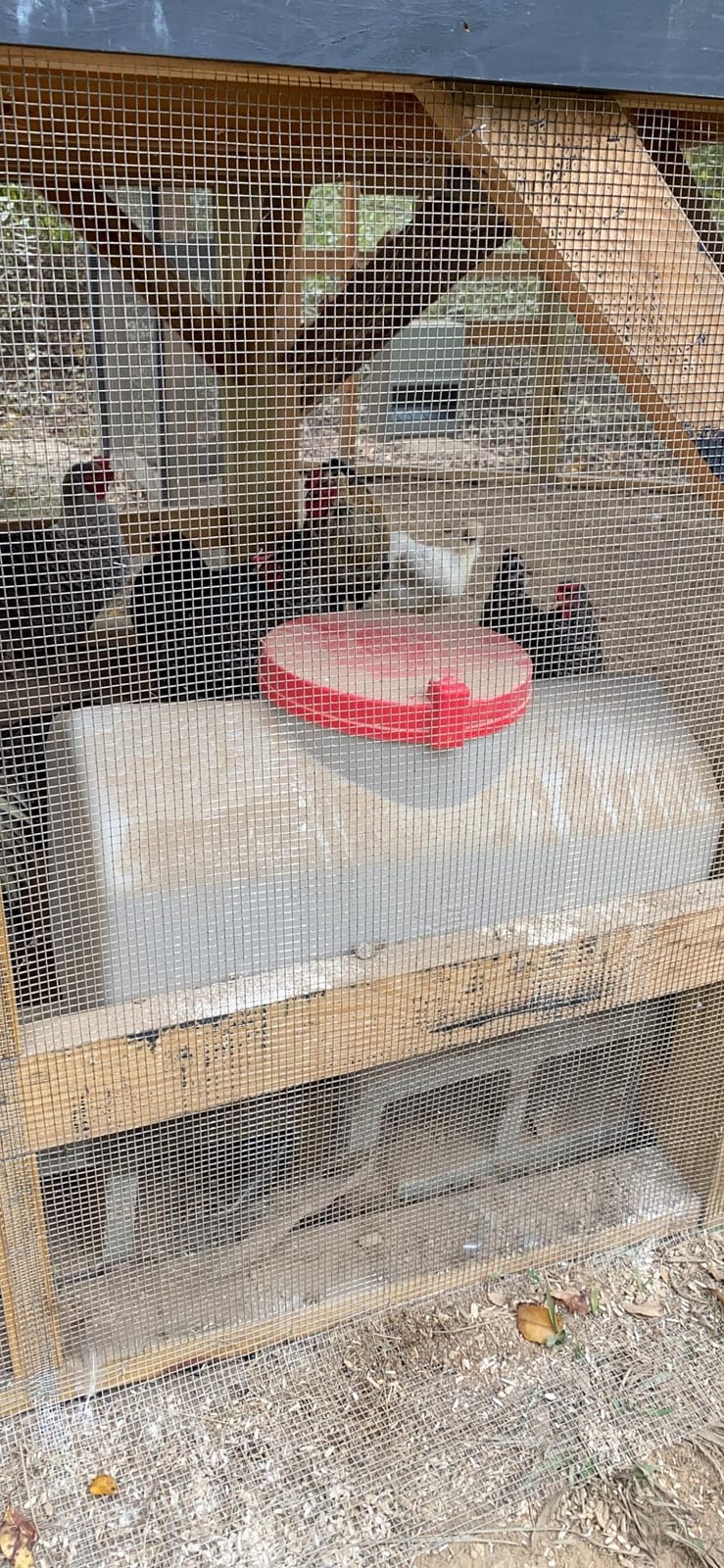
Capacity is the whole pitch here. Twelve gallons is roughly three times what most backyard waterers hold, and for a flock in the twenties it turns a twice-daily job into a weekly one. Owners running around 22 birds report refill intervals stretching to eight days in moderate weather.
It rates 4.1 across about 1340 ratings. The consistent praise is for the sealed design: birds cannot reach the water surface, so there is no fouling, no bedding in the reservoir and dramatically less algae than an open gravity trough in the same run.
There is a 1-year manufacturer warranty and the plastic is described as UV-protected, food-safe and BPA-free, which puts it ahead of the bargain founts on paper. It weighs 4.8 pounds empty, and filled it is close to 105 pounds, so treat moving it as a two-person job or plan to siphon it.
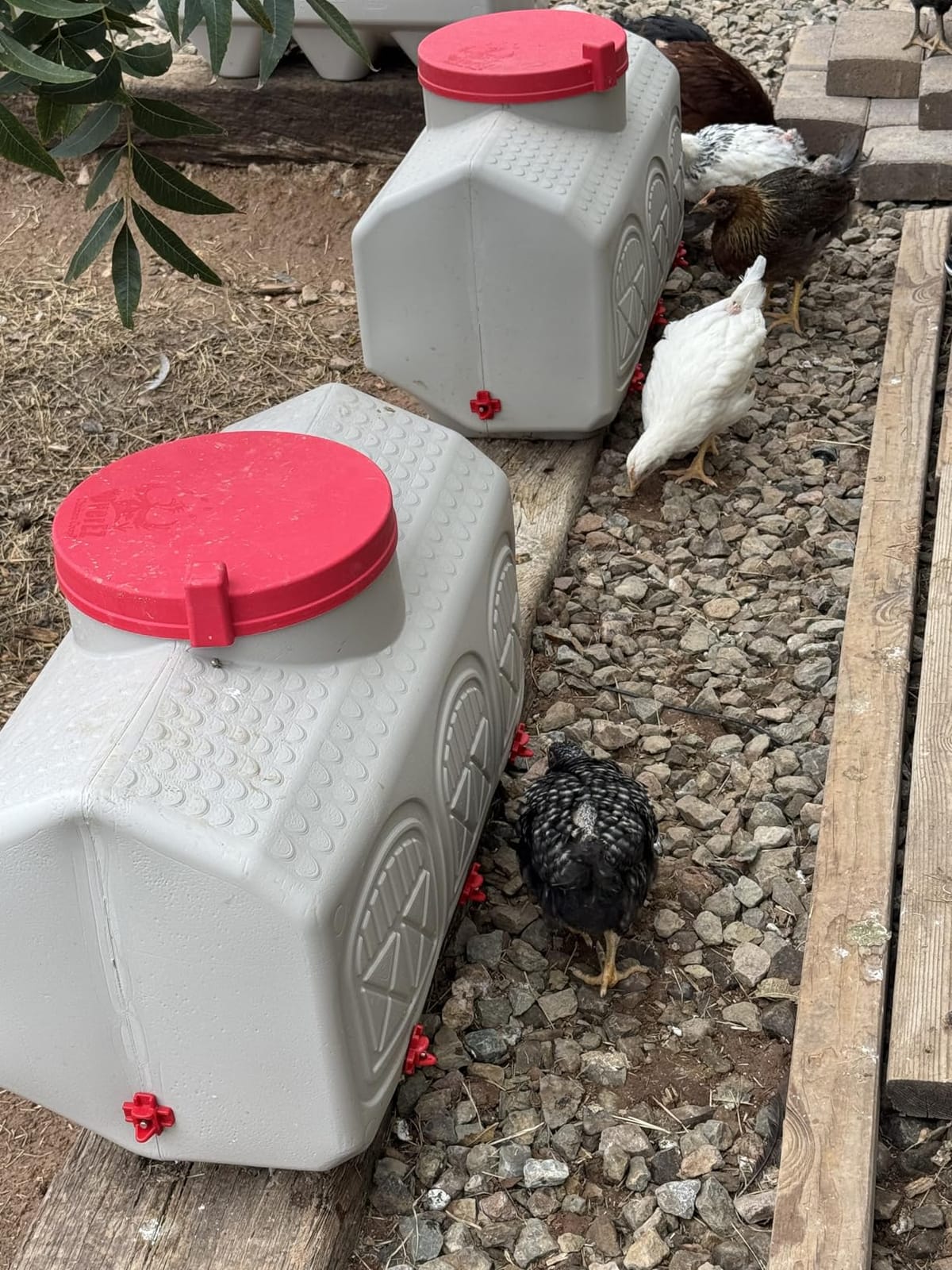
Three drinking stations means three birds can drink at once, which matters more than it sounds. With one station or two, a dominant hen can block access and effectively ration the rest of the flock, and running a second waterer is the standard fix. Three ports plus a wide, low catch bowl makes that crowding less likely.
The power cord access port is a thoughtful touch and the reason this unit can be adapted to winter. You can run a de-icer line or a small circulation pump through the port instead of relying on an external heat source, which solves the freezing problem without replacing the waterer.
Best features for a busy flock
The fill interval is what changes daily life. If you have a job, a second flock or a run that is hard to reach, the difference between carrying water twice a day and once a week is the difference between a system you use and one you resent. Add a sight tube or check the level weekly, because there is no window and no float indicator on the body.
It also stands up well when full. A 12-gallon unit full is heavy enough that hens cannot tip it, which solves the single most common complaint in the roundup about small plastic founts getting flipped by a bully bird.
Known problems you should plan around
The nipple ports sit above the level of the water in the lower portion of the reservoir, and that geometry has produced flooding complaints from some owners when the unit is tipped or jostled. Keep it on level ground and do not try to slide it across bedding when full.
Nipples drip while a bird drinks, so put it somewhere a wet patch will not rot the coop floor, and expect to wipe the catch area. And it is not insulated, so in direct summer sun the water warms fast, which is a fair trade for the capacity in most climates but not in the deep South.
6. FARM-TUFF 5 Gallon Galvanized Poultry Waterer – Most Versatile for Durability
FARM-TUFF Galvanized Poultry Waterer, 5 Gallon Capacity – Double-Wall Poultry Fountain with Cone Top – Automatic Gravity-Fed Water Dispenser for Chickens, Ducks & Game Birds
5 gallon double-wall galvanized steel
16.5 inches tall
1.5 inch drinking lip
7.4 pounds empty
Pros
- Double-wall galvanized steel resists rust and dents
- No moving parts to fail
- Cone top stops birds roosting on the lid
- Works with a heater pad in cold climates
- Easy to brush clean and refill
Cons
- Must sit level or it pours water out when filled
- Lid leaks if fitted before carrying
- Thin internal handle with 5 gallons
- Ground use only and cannot be hung
This is the waterer we end up recommending to anyone who has been disappointed by plastic. Galvanized double-wall steel has no seams to split, no gaskets to perish and no UV embrittlement, and owners consistently report units still going after multiple winters. It rates 4.2 across about 1100 ratings.
The cone-shaped top is not decoration. A flat lid is a perch, and a perched hen is a bird that defecates into the water. The cone makes roosting impossible, so the reservoir stays clean without any daily intervention, and the vacuum-sealed design holds a constant water level in the drinking lip with no float to adjust.
It is also the one waterer in this roundup you can safely pair with an external heat source, because the vessel is metal. That matters enormously in cold climates, where plastic waterers are simply out of the running once you need a heater pad.
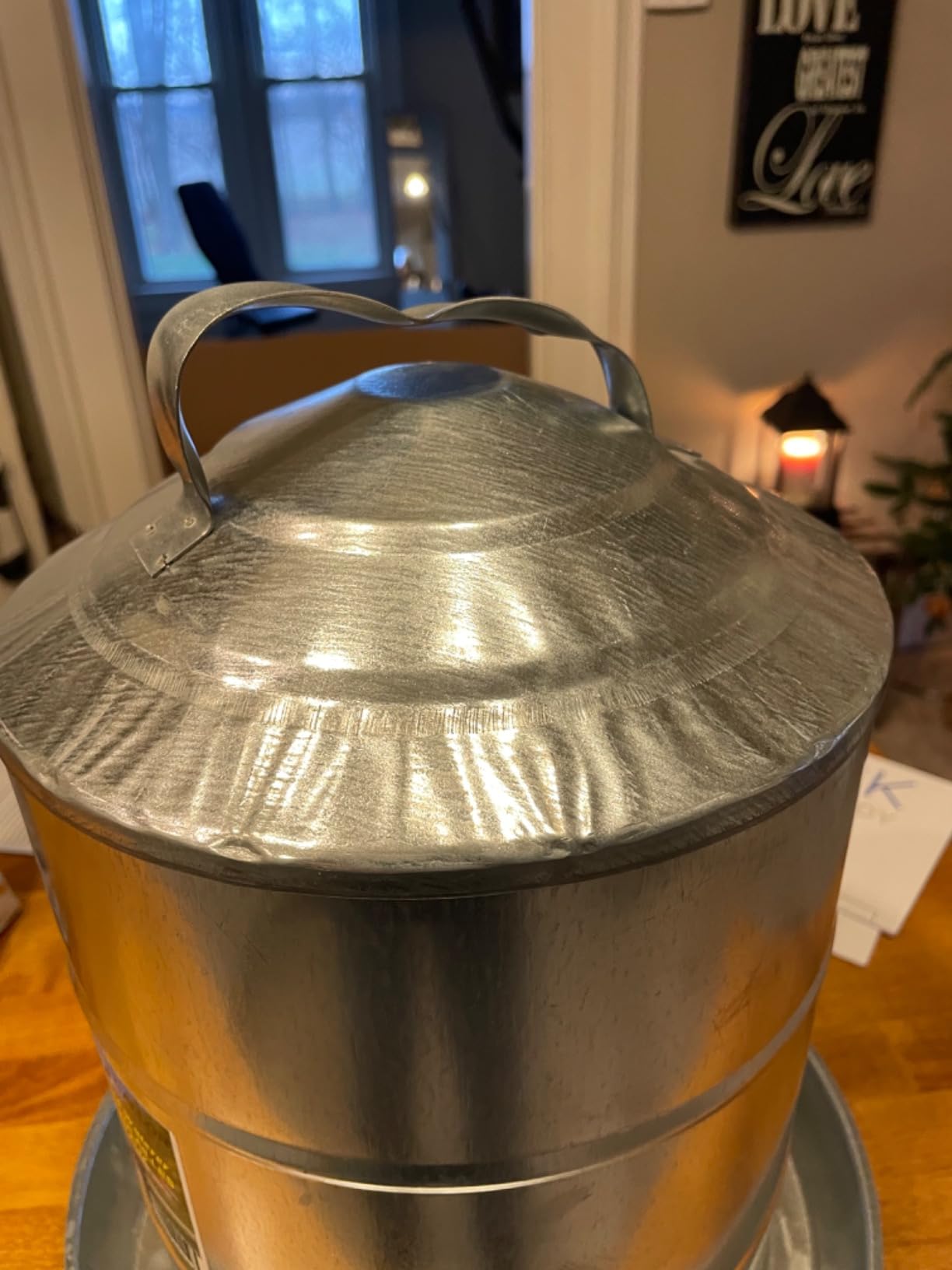
The catch is levelness. Fill it in place, not on the bench, because a 5-gallon fount that is even slightly off-level will find the low corner and pour water out of the drinking lip. Sit it on flat ground or a level board, and check it with a spirit level if your run surface is uneven, which most are.
Moving it is the second skill. Take the lid off before you lift, because a lid fitted under load will weep the whole way to its destination, and the internal carry handle is thin enough to be uncomfortable with 5 gallons in it. Empty it into buckets, move it, refill it.
Why metal still wins on durability
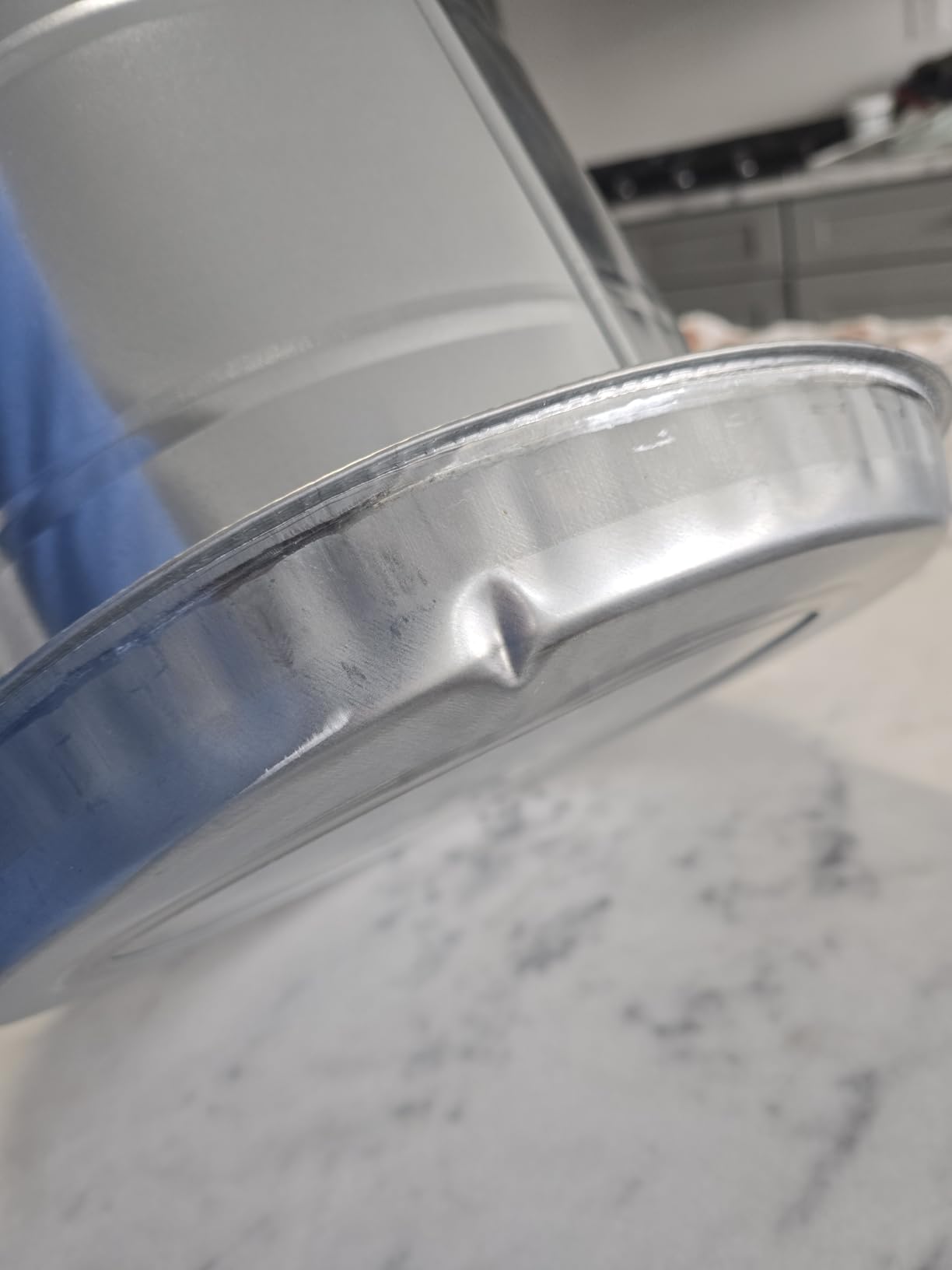
Consider what fails in plastic. Rigid plastic expands and contracts with temperature swings and starts weeping at the seams within about six months in a hot climate, and cheap tubs go brittle after a single summer of UV exposure. Galvanized steel has none of those failure modes, and a dented metal fount still works, whereas a cracked one leaks onto your bedding.
The drinking lip is only 1.5 inches, narrower than some plastic founts, so a few birds will queue rather than all drink at once. With three to four inches of clearance on a 5-gallon unit, that is usually fine for a flock of eight to twelve hens. Above that, run a second waterer rather than stretching one.
Where it will frustrate you
It is heavy, it is ground-standing and it cannot be hung. Filled, a 5-gallon unit is about 40 pounds, so moving it across a run is a real chore, and there is no way to raise it off the ground to keep bedding out. The drinking tray is also shallow, which means more frequent cleaning than a deeper plastic trough.
One reviewer returned this as bent and flimsy next to a heavier farm-store model, so if you want the metal route, check the gauge on arrival. But within this roundup it is the only unit that combines a five-gallon reservoir, a roost-proof design and a body that accepts a heater pad in winter.
7. RentACoop 2 Gallon High Rise Waterer – Best for Tight Coops
RentACoop 2 Gallon High Rise Chicken Waterer with Cups & Nipples
2 gallon vertical design
6 x 6 x 17 inches
2 cups and 2 nipples
Thick BPA-free UV-resistant plastic
Pros
- Tall vertical shape uses very little floor or wall space
- Offers cups and horizontal nipples so birds choose
- Opaque body blocks light and slows algae
- Anti-roost lid keeps droppings out
- Includes S-hooks mounting kit and spare cups and nipples
Cons
- Cup inserts are hard to remove for deep cleaning
- Spring can dislodge from the cup and be lost
- Occasional reports of defective nipple threads
- Small clips can flip under a filled unit
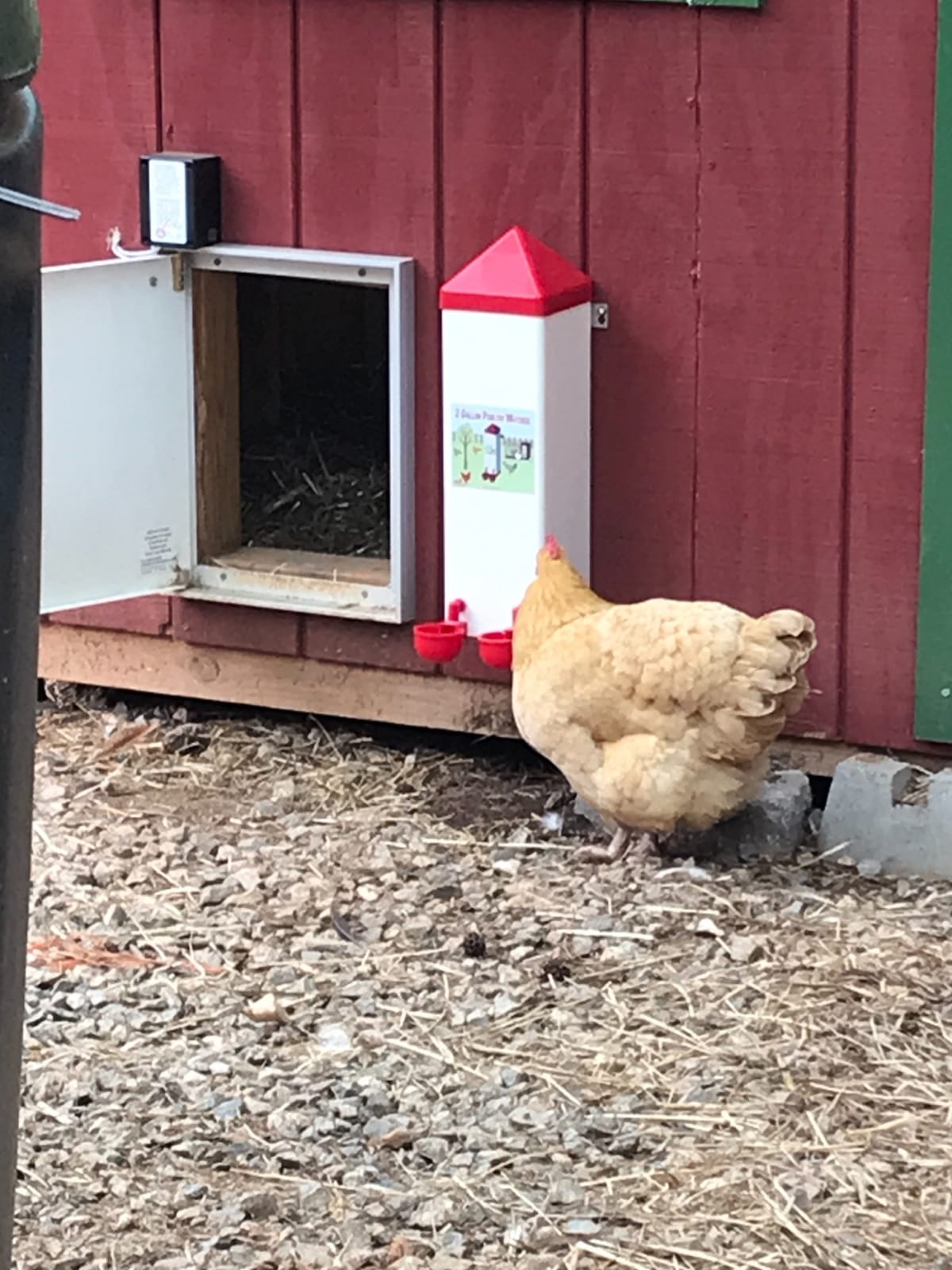
When coop space is the constraint, shape beats capacity. At 6 by 6 by 17 inches, this unit stands upright in a corner or hangs flat against a wall, so a 2-gallon reservoir occupies almost no footprint at all. That makes it the pick for a small run, a mobile shelter or a crowded corner where a 5-gallon fount simply will not fit.
It rates 4.4 across about 930 ratings. The single most-praised feature is the opaque reservoir, because blocking light is the single most effective thing you can do against algae. Owners report water still clear months after installation, which is close to unheard of for an open gravity fount.
It also solves the training problem neatly. Two auto-fill cups with removable inserts and two horizontal nipples with drip dishes means birds can drink however they are comfortable, and a new arrival learns on cups while the rest of the flock uses nipples.
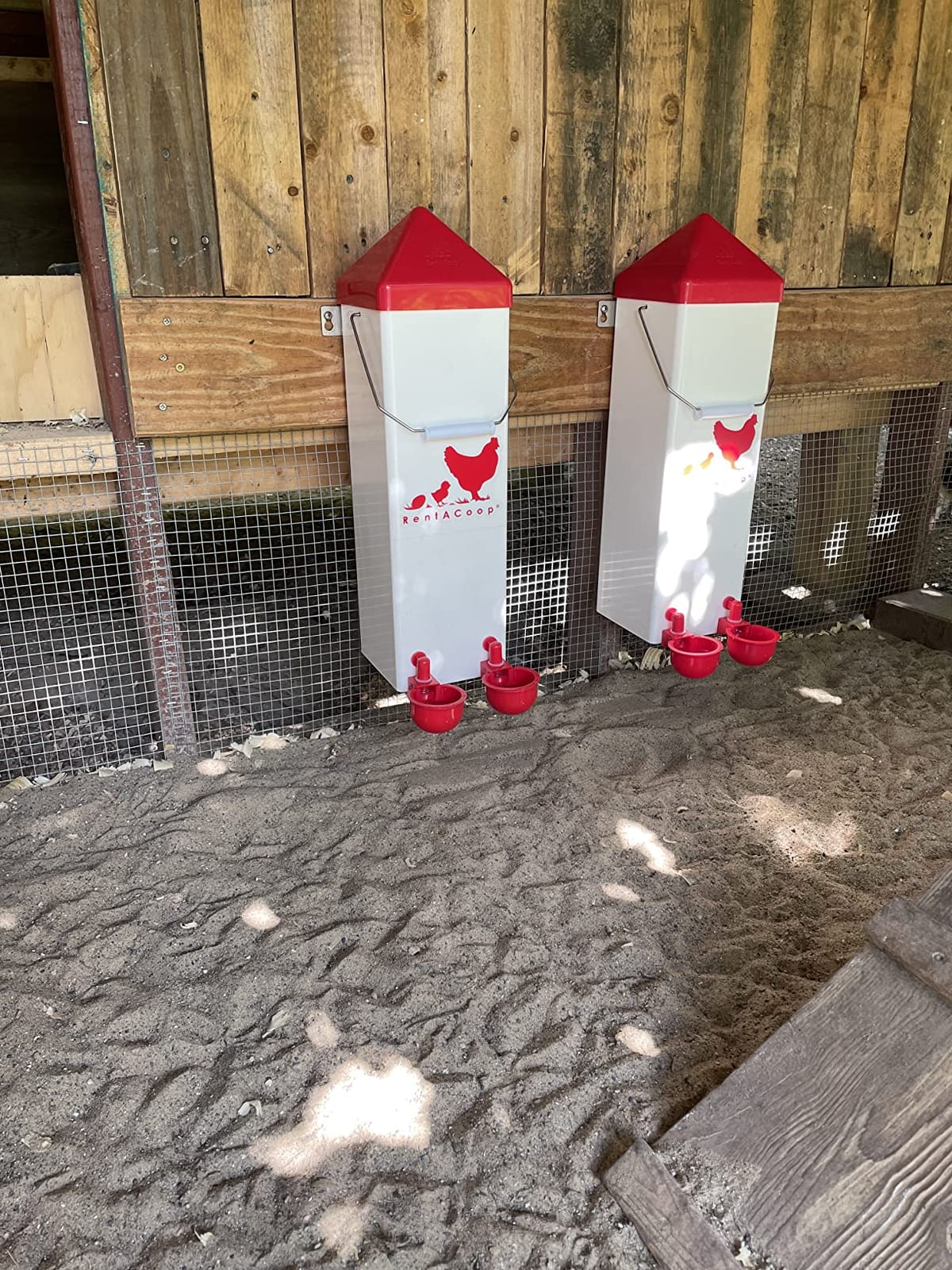
The anti-roost lid keeps the top of the reservoir unperchable, so droppings do not end up in the water, and the top-fill design with a carry handle means you can top it up without pulling a full unit off its mount. That matters more than it sounds, because a waterer you have to unhang to fill is a waterer that gets filled less often.
Mounting is well thought out. It takes S-hooks for hanging, and the included hardware works on wood, wire and half-inch hardware cloth. Spare cups, spare nipples and S-hooks all come in the box, which matters more than it should, because a lost cup spring is otherwise an awkward problem to solve.
Best for small runs and mixed flocks
The vertical footprint is the reason to buy this one. If your run is 4 by 8 feet, a 5-gallon fount on the ground takes a meaningful share of the usable floor, and a hanging unit keeps the litter intact underneath. The height is adjustable via the S-hooks, so you can raise it as the flock grows.
Mixing cups and nipples is genuinely useful during a transition. Hens coming from an open dish will use the cups, established nipple drinkers use the pins, and nobody is left standing at a station that is not for them.
What the spring-loaded cups get wrong
The cup mechanism is the weak point and the reason this sits below the top of the roundup. The inserts lift straight out for a quick rinse, which is good, but they are also difficult to pull for a proper deep clean, and the spring-loaded design means a dislodged spring can be lost entirely, at which point that cup is dead until you find a replacement.
A minority of reviewers also report nipple threads that will not screw in cleanly, and the small spring clips can flip under the weight of a filled unit if it is hung on wire. Sit it on a wall bracket if you can rather than hanging it on clips alone.
8. Premier 1 All-Season Heated 3 Gallon Waterer – Best for Freezing Winters
Premier 1 All-Season Heated Poultry Waterer for Chickens & Ducks – 3 Gallon
3 gallons for up to 35 adult chickens
100W thermostat element
3 recessed nipples with spares
Detachable 16 ft cord
Pros
- Thermostat-controlled 100W element keeps water drinkable through hard winters
- Hinged quick-fill cap sized for a hose or a can
- Detachable 16 foot cord for three-season use
- Recessed nipples keep water clean
- No base to sit on so the interior wipes out easily
Cons
- Wind chill can still freeze the nipples despite the rating
- Insulated lid can freeze to the basin in extreme cold
- Nipples clog with debris and then leak slowly
- New birds need nipple training
- Replacement cords come from the manufacturer
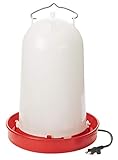
If your winters freeze a waterer solid, this is the unit to buy and the number of nights it saves you is the entire argument. The thermostat-controlled 100-watt element switches on below 40F and off at 60F, so the water stays drinkable through the cold rather than merely slowing down the freeze.
It rates 4.3 across about 840 ratings, and owners in genuinely cold climates describe it as the purchase that ended twice-daily frozen-water changes. Several long-term owners report multi-year service with no freezing at all.
Manufacturer capacity claims of up to 35 adult chickens from 3 gallons depend on a cold-weather drinking rate, and in practice we would size for fewer birds than that. A heated nipple system pushes you to drink small amounts often rather than tank up, which changes the arithmetic in your favour, but 3 gallons still refills faster with more birds.
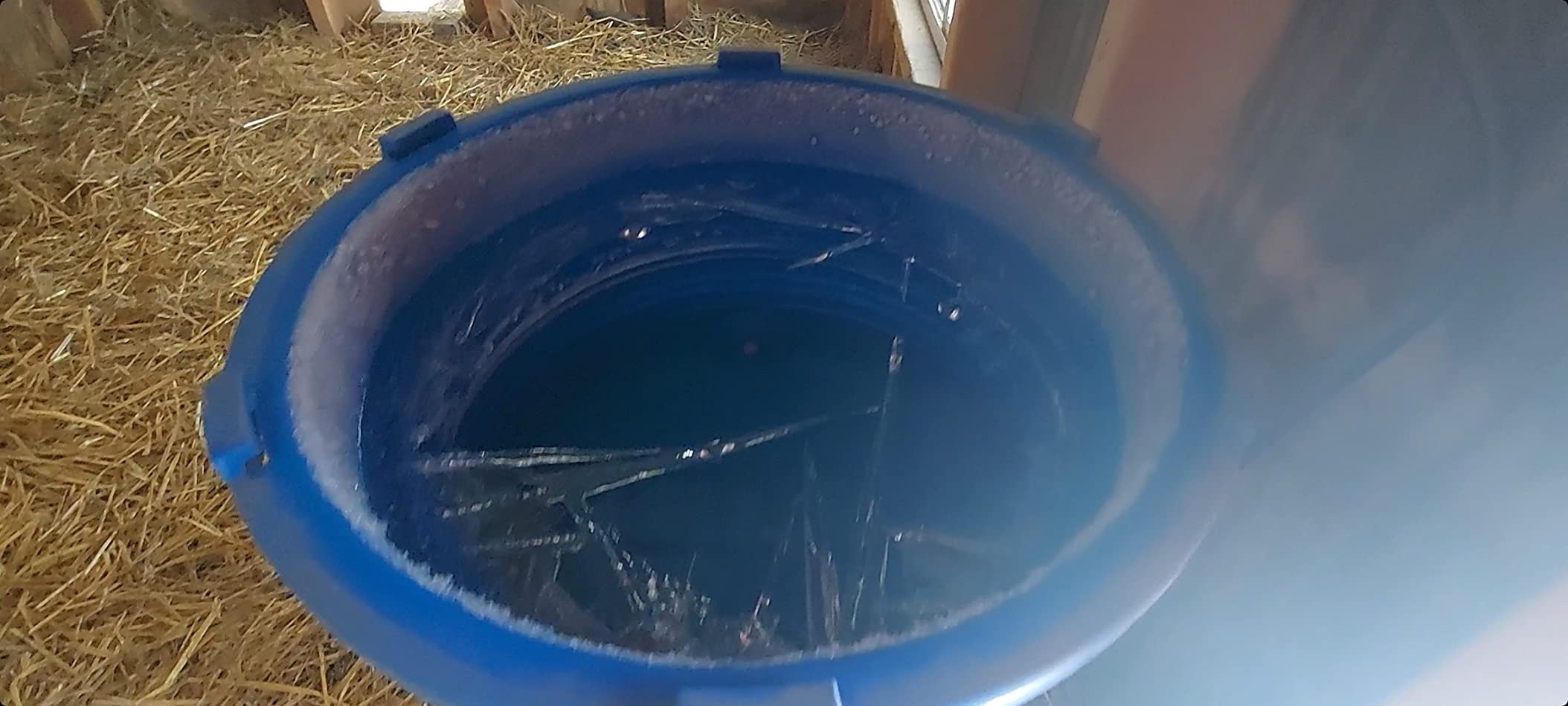
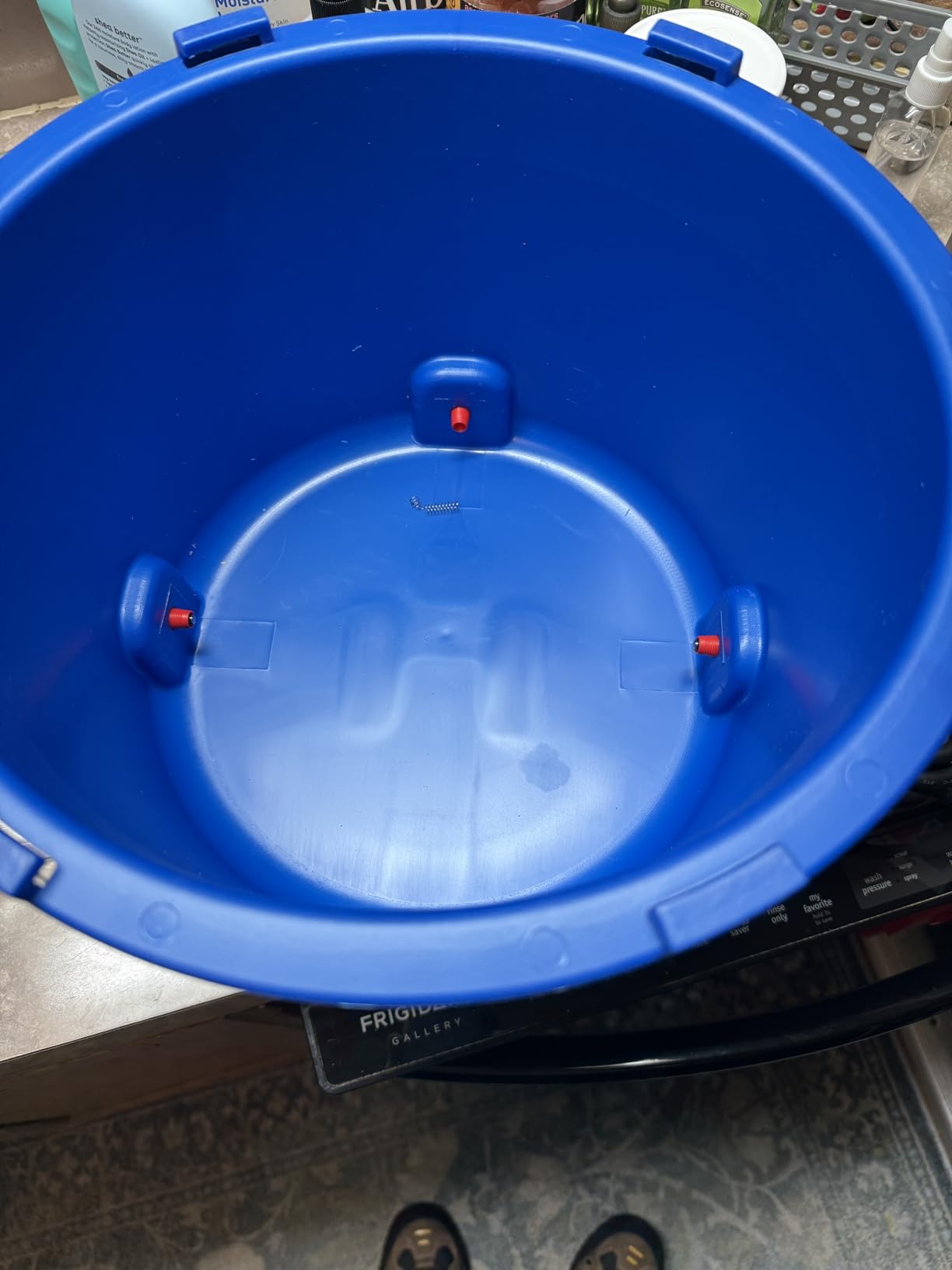
The design details are what separate it from a bucket with a heating pad balanced on top. There is no base to sit on, so the interior wipes out in one motion. The lid is insulated and hinged, so you can refill through the quick-fill cap without removing anything. And the heavy-duty handle doubles as a hanging point, so you can raise it off a cold floor where a shallow chill sits.
Three recessed nipples come with three spares, and recessed matters, because a nipple set flush with the body is harder for a bird to activate and easier to foul. The detachable 16-foot cord is the longest in this roundup, and detachable is the important word, since a waterer you can unplug and carry inside is a waterer that survives a power cut.
Why a heated waterer changes a winter routine
Freezing water is not just an inconvenience, it is a welfare problem and a daily time commitment. Every frozen-over morning means breaking ice, carrying water, checking again in the afternoon, and worrying about the cold snap overnight. Owners who switched to this unit describe the entire routine disappearing rather than becoming easier.
Thermostatic control is the part that matters for running costs and safety. The element cycles between 40F and 60F rather than running continuously, and the recessed nipples mean the heated volume is doing useful work rather than just keeping a thin skin liquid.
Where the cold still wins
Wind chill is the failure mode to understand. The nipples are the first thing to freeze, because they are the coldest part of the assembly and the first place a draught hits, and a hard wind in deep cold can ice them even when the body of the water is fine. In extreme cold the insulated lid can also freeze to the basin, which turns a refilling job into a prying job.
Two practical notes. New birds need nipple training before winter arrives, because a hen that has never used a nipple will not drink from one when the water is cold and she is stressed. And replacement power cords are not available through retail marketplaces, so contact the manufacturer directly. That is a real inconvenience in 2026 and beyond when the cord is the part that fails.
9. Omlet Insulated 3 Gallon Waterer – Best for Hot Climates
Omlet Insulated Chicken Waterer, 3 Gallon | Automatic Poultry Water Dispenser with 5 Cups & Nipples Included | BPA-Free | Anti-Roost Lid | Sage Green
3 gallon insulated reservoir
5 cups and 5 nipples included
BPA-free UV-stable plastic
Blocks 99 percent of light
Pros
- Highest average rating in the roundup at 4.6 stars
- Insulated walls keep water cool in summer and reduce freezing in winter
- Blocks 99 percent of light so water stays clear and algae free
- Includes cups and nipples plus spares
- Locking dome lid cannot be perched on
Cons
- 3 gallons means large flocks need more than one waterer
- Over-tightened wing nuts cause leaks
- A nipple occasionally arrives leaking
- Manufacturer advises against relying on nipples in freezing conditions
This is the highest-rated product in the roundup at 4.6 stars, with roughly 80 percent of ratings at five stars. It is also the design that answers the summer problem more directly than anything else here, because insulation and light exclusion are the two things that keep water drinkable in August.
Double walls hold the temperature, so the water stays cool rather than baking, and the body blocks around 99 percent of light, which removes the thing algae needs to grow. Owners in the southern US describe water staying clear through multi-day stretches above 95 degrees, where an open gravity fount in the same run would be green inside a week.
The drinking hardware is generous: 5 cups and 5 nipples with spares, so a flock of about 25 birds can drink in shifts on a 3-gallon reservoir. New birds reportedly learn the cups within minutes, particularly if you seed the first fill with mealworms.
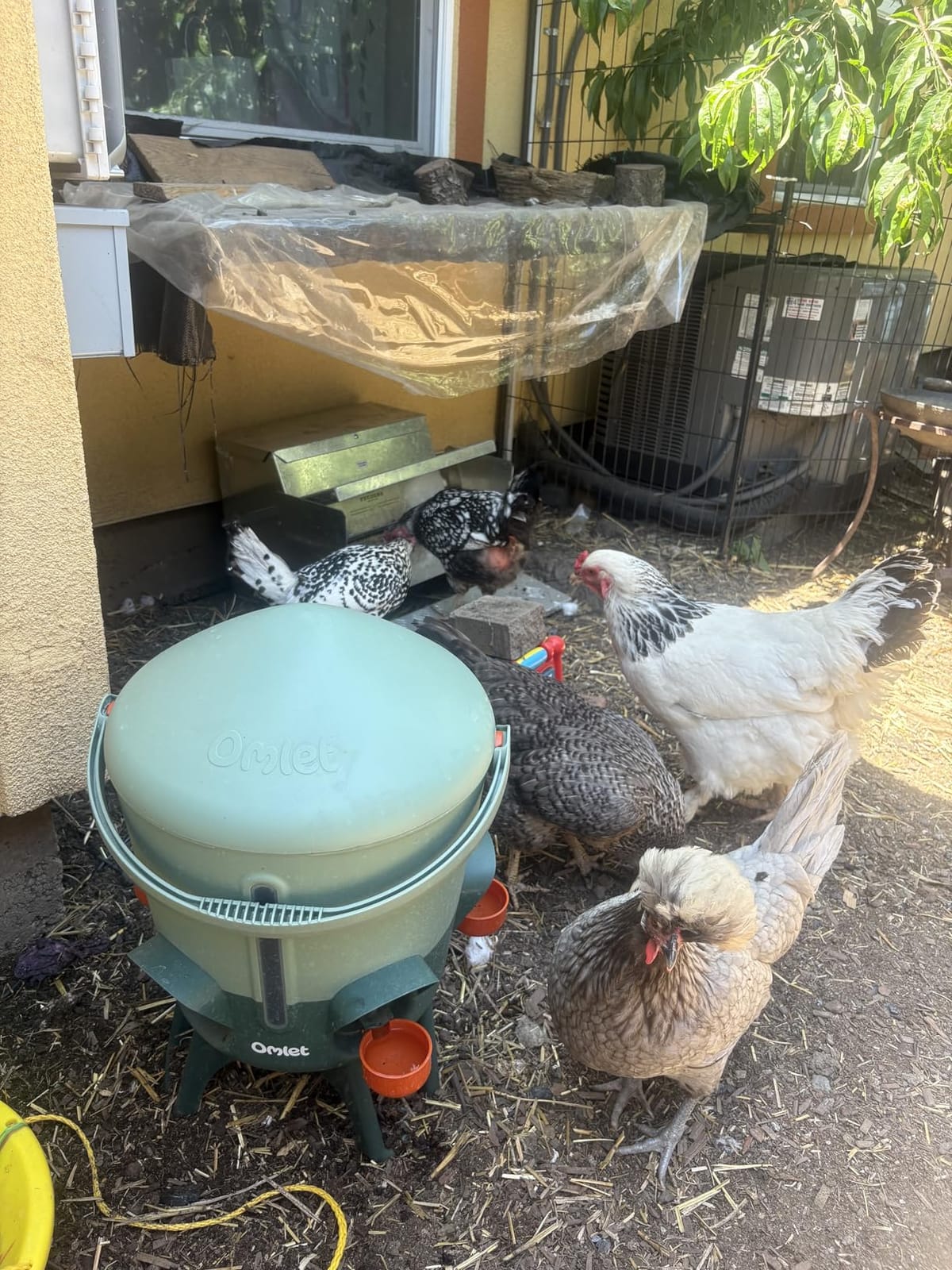
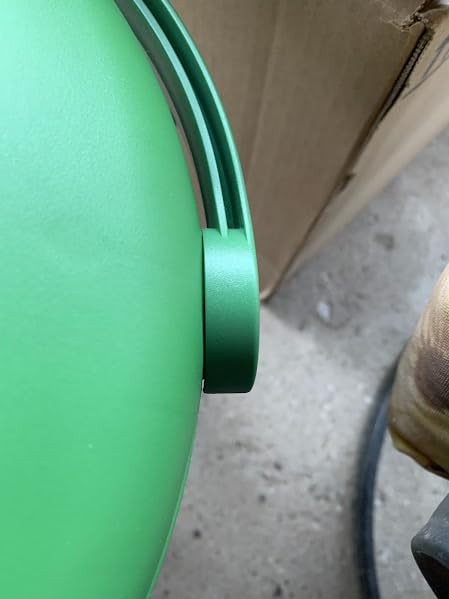
The physical design is thoughtful throughout. The dome lid locks closed and cannot be perched on, so nothing lands in the reservoir and the water stays clean without scrubbing. A wide fill opening means a watering can fits without a funnel, and a level window on the side shows the water line without lifting the lid. Legs raise the body off the ground for airflow, and it can be hung instead if you prefer.
It is also insulated enough to slow winter freezing, though the manufacturer’s own guidance is not to rely on the nipples in freezing conditions. Treat it as a hot-climate waterer with some winter tolerance, not as a heated unit.
Best features for heat and water quality
Light exclusion is the underrated feature. Almost every water quality problem in this category traces back to sunlight hitting open or translucent water, and this is the only unit in the roundup built around blocking it rather than cleaning around it. Combined with the anti-roost lid, it is the closest thing here to a waterer that stays clean on its own.
Insulation also cuts refill frequency indirectly, because cooler water is drunk in smaller amounts more often. In a hot climate that reduces evaporation, and a 3-gallon reservoir covers more birds per day than an uninsulated fount of the same size.
Limits worth planning for
Three gallons is not much for a large flock, and unlike a big plastic fount this one is not cheap to run as multiples, so a flock of 20-plus birds should budget for two waterers or accept a daily refill. The first-person reports make it clear the capacity, not the quality, is what limits it.
Installation has one trap: overtighten the wing nuts on the cups or nipples and you will force a seal that then leaks. Snug is enough. A small number of nipples also arrive leaking from the factory and need replacing, which is a minor annoyance rather than a design fault.
10. API 3 Gallon Heated Chicken Waterer – Best for Mild Freezes
API 3 Gallon Heated Chicken or Bird Waterer with Overheating Protection, Galvanized Steel Handle, and Easy to Fill Funnel Design, White
3 gallon heated jug
100W thermostat pad
Ice-free to minus 5F
Rounded roost-prevention top
Pros
- Thermostat pad keeps water ice free down to about minus 5F
- Rounded top prevents roosting and contamination
- Easy-fill funnel design simplifies refilling
- Galvanized steel handle for carrying
- Overheating protection built in
- Works as a plain gravity dispenser when unplugged
Cons
- Lowest average rating among the heated units at 4.0
- 4 foot cord is shorter than most competing models
- Not insulated so it protects against freezing only
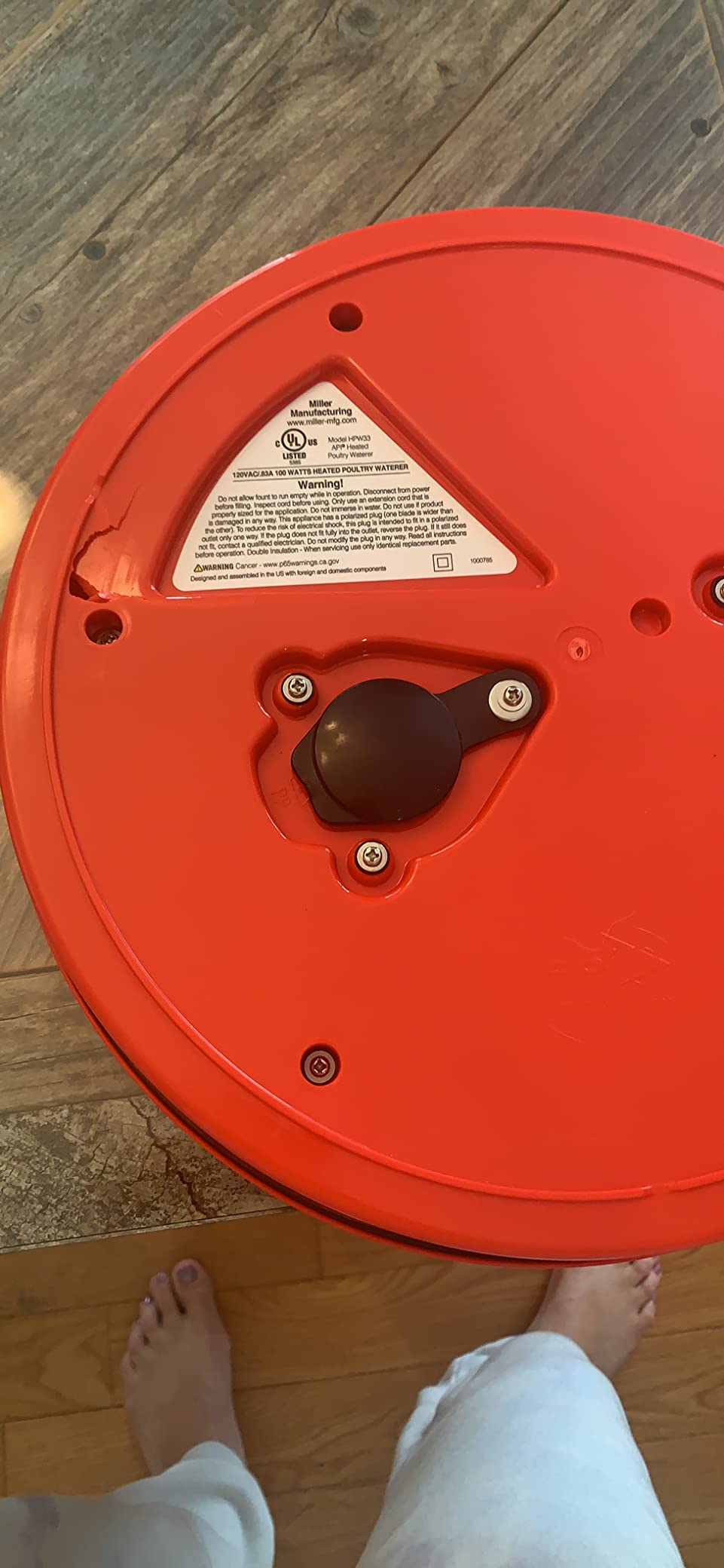
This is the heated option for a climate that gets cold rather than seriously cold. A 100-watt thermostat-controlled pad under the vessel is rated to keep water ice-free to roughly minus 5F, which covers most of the US midlands, the Pacific Northwest and coastal areas, rather than the northern plains and the Northeast.
It rates 4.0 across about 565 ratings, the lowest average in this roundup, and the rating split explains it: a healthy share of five-star ratings and a one-star share of roughly 13 percent, which is the signature of a product that works well in moderate cold and disappoints in severe cold.
The rounded top is genuinely useful, because it is a roost deterrent and a soiling deterrent in one. The easy-fill funnel design is the feature owners mention most, since the wide opening on a 3-gallon jug is otherwise awkward to pour into. The galvanized steel handle is also better than plastic on a full vessel.
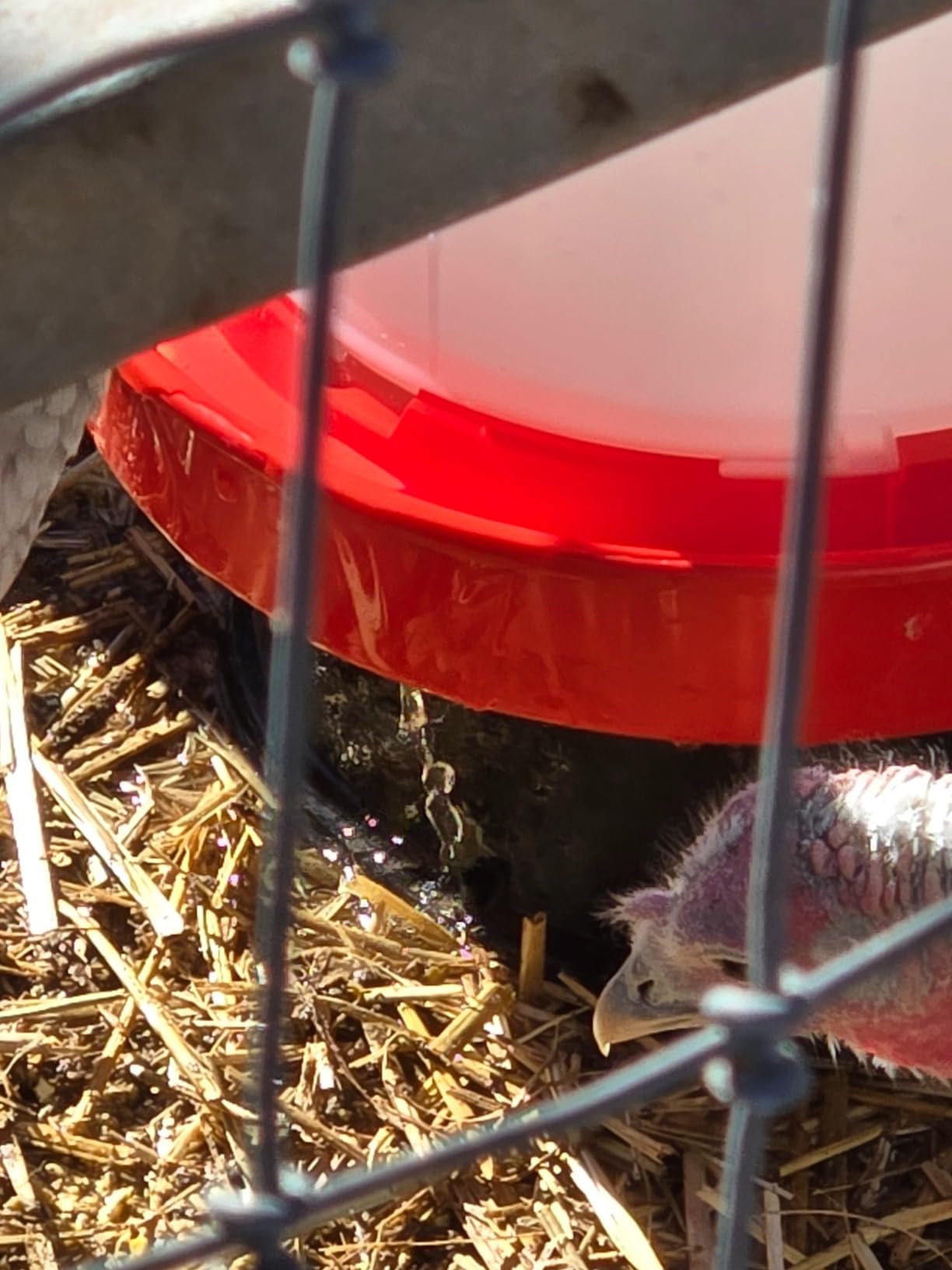
Overheating protection is built in, which matters more than it sounds on a unit that runs unattended for months. The pad cycles rather than running continuously, so the risk of a runaway element in a warm spell is handled at the element level rather than by your own vigilance.
Because the vessel is steel, this is another waterer you can pair with an external heat source if needed. And because it works as a plain gravity dispenser when unplugged, it is genuinely a three-season product, which extends the season you get out of it.
Who this heated waterer suits
Anyone in a climate where hard frosts happen a handful of nights a year rather than every night for months. In that setting a heated base is inexpensive insurance that removes the twice-daily broken-ice routine, and the mild-to-moderate range is exactly where a 100-watt pad performs.
It is also a good pick as a backup unit. If you already run nipple drinkers in the summer, a heated steel waterer in the shed gives you a freeze-proof second waterer without needing a second style of drinking station for new birds to learn.
Why it is not the pick for hard winters
The -5F figure is a water temperature rating, not a promise about wind chill, and owners in exposed locations report ice inside the jug during severe cold. Combined with the fact that the vessel is not insulated, cold air sitting around a metal jug pulls heat out faster than the pad replaces it.
The 4-foot cord is also the shortest in the roundup, so the unit has to sit close to an outlet, and a jug full of water plus a power cord across a run is a trip hazard. If you are north of the frost line and expect sustained freeze, spend up on the Premier 1 instead.
11. Lilyang Automatic Chicken Waterer – Best for True Auto-Refill
Lilyang Automatic Chicken Waterer, Auto Water Refills
Float valve auto-refill from a hose
60 inch stainless hose
2.6 inch cups
8.6 x 7 x 11.8 inches
Pros
- Only truly plumbed auto-refill option in the roundup
- Float valve refills the reservoir from a hose or faucet
- Includes a 60 inch stainless steel hose with 3/4 inch threaded end
- Works with a timer-driven hose or a water tote and splitter
- Legs allow ground placement where hanging is not possible
Cons
- Leaks at cups and hose fittings for a number of owners
- Legs and lid are friction fit and can detach
- Mounting hardware is weak
- Reservoir is smaller and more opaque than photos suggest
This is the literal answer to automatic chicken waterers. It has a float valve and a threaded hose connection, so hook it to a spigot or a timer-driven irrigation line and the reservoir refills itself indefinitely. Owners running a timer valve or a tote with a splitter report going weeks without carrying water at all.
It rates 4.0 across about 550 ratings. The auto-refill capability is the reason people buy it and the reason the enthusiasm in the reviews is real. In a roundup where almost everything else is a reservoir you fill by hand, the ability to leave a flock for a long weekend without thinking about water changes the proposition entirely.
The build mixes good and soft materials. The hose is stainless steel with a 3/4-inch threaded end, the body is PP plastic and the float knob is 18-8 stainless, and the folding legs let it sit on the ground when you have nowhere to hang from.
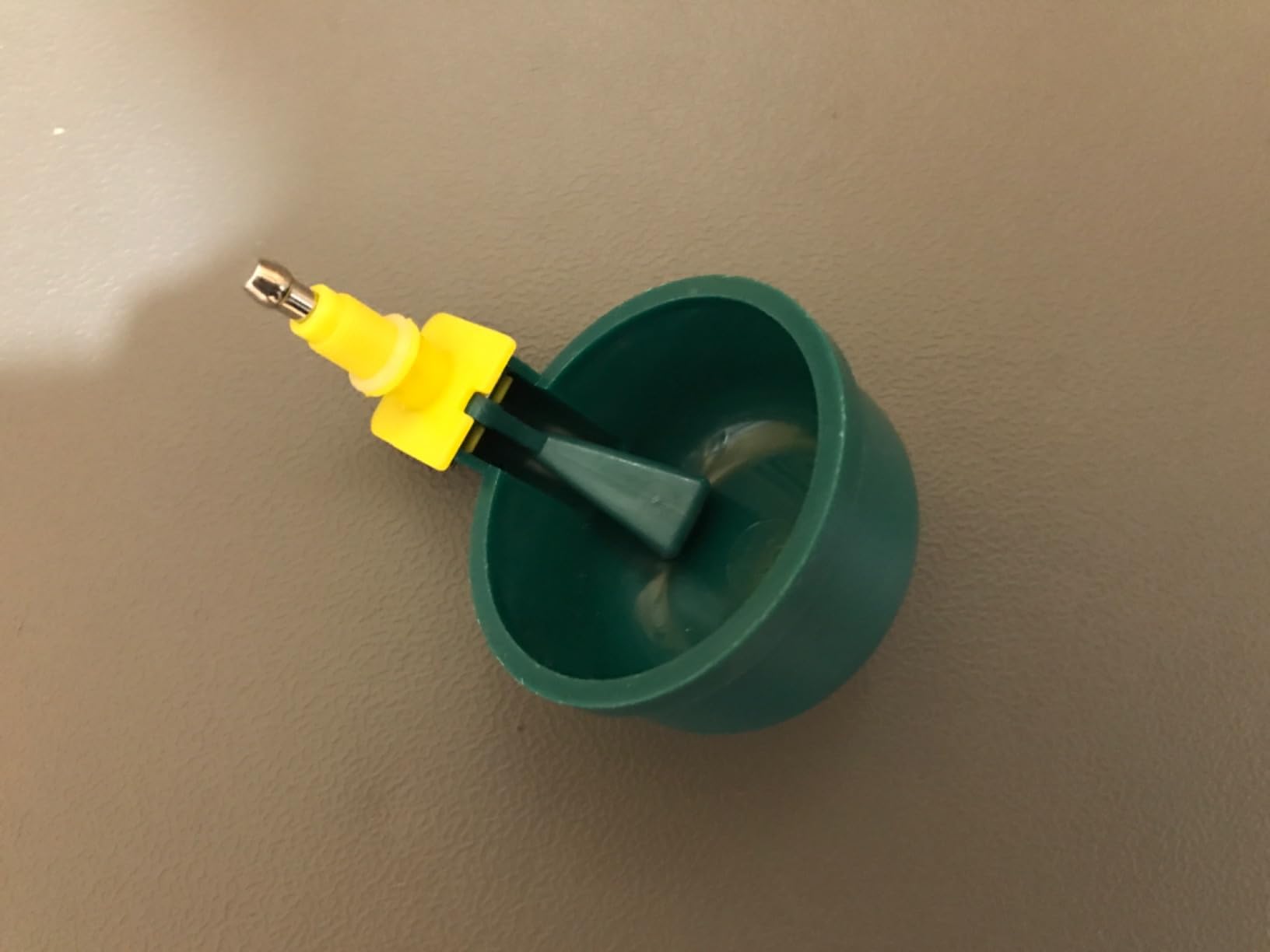
The 2.6-inch cups suit a mixed flock, and owners running ducks, geese, quails, turkeys and pigeons alongside chickens report the same unit working across all of them. Dimensions are 8.6 by 7 by 11.8 inches, so it fits a corner or a wall bracket without taking floor space.
Set it up with a backflow preventer and, ideally, a pressure regulator on anything mains-fed, because a float valve fed by full pressure will eventually find a seal to leak through. Owners who pair it with a water tote and a splitter valve report the quietest operation.
When a plumbed waterer genuinely wins
Owners who travel and anyone with an inaccessible run. If your water source is more than a short walk from the coop, or you work long hours away, the labour saving is not a convenience, it is the whole point. Owners describe running a splitter off a rain barrel so the system stays self-sufficient with no mains supply at all.
It also means you can stop guessing. A float valve maintains the level, so you check the water once a week instead of twice a day, and there is no scenario where a bird goes thirsty because you forgot.
Leak risks to expect on a plumbed unit
The complaint pattern is specific and consistent: leaks at the cup, hose and float junctions, sometimes badly, plus friction-fit legs and a lid that can detach or blow away, and mounting hardware that is considered weak. The reservoir is also smaller and more opaque than the product photos suggest, which matters if you were expecting a translucent level check.
The float valve itself can stick or work loose, so expect a periodic tightening, and run a weekly eye on the base. We would pair it with a drip tray or place it where a slow leak runs away from bedding, and if your water is hard, expect mineral scale at the float and check it every couple of months.
12. FARM-TUFF 3 Gallon Hanging Chicken Waterer – Best Hanging Gravity Fount
FARM-TUFF Hanging Chicken Waterer, 3 Gallon Capacity – Durable BPA-Free Plastic Poultry Fountain with Top Fill Design – Automatic Water Dispenser for Chickens, Ducks, Turkeys & Game Birds
3 gallon top fill jug
Heavy-duty BPA-free polyethylene
2.25 inch drinking lip
14 inches tall by 14.5 inches wide
Pros
- Heavy-duty polyethylene is rust proof and dent resistant
- Translucent jug shows the level without opening the lid
- Wide top fill opening makes refilling and cleaning simple
- Snap-on base keeps the flow leak free
- Hanging handle keeps the unit off bedding and reduces spills
Cons
- Open gravity trough needs frequent scrubbing
- Hanging handle can pivot if a bird lands on the lid
- Not insulated so freezing is a concern without a heat source
This is the conventional answer for a mid-size flock that does not need plumbing, heating or electronics. A 3-gallon top-fill polyethylene jug with a snap-on base and a 2.25-inch drinking lip, and it has been available in this form since the late 2000s, which is a good sign for a product category full of short-lived designs.
It rates 4.2 across just over 500 ratings, and owners consistently name the same three things: the translucent jug that shows the level without lifting the lid, the wide refill opening, and the ability to hang it clear of bedding.
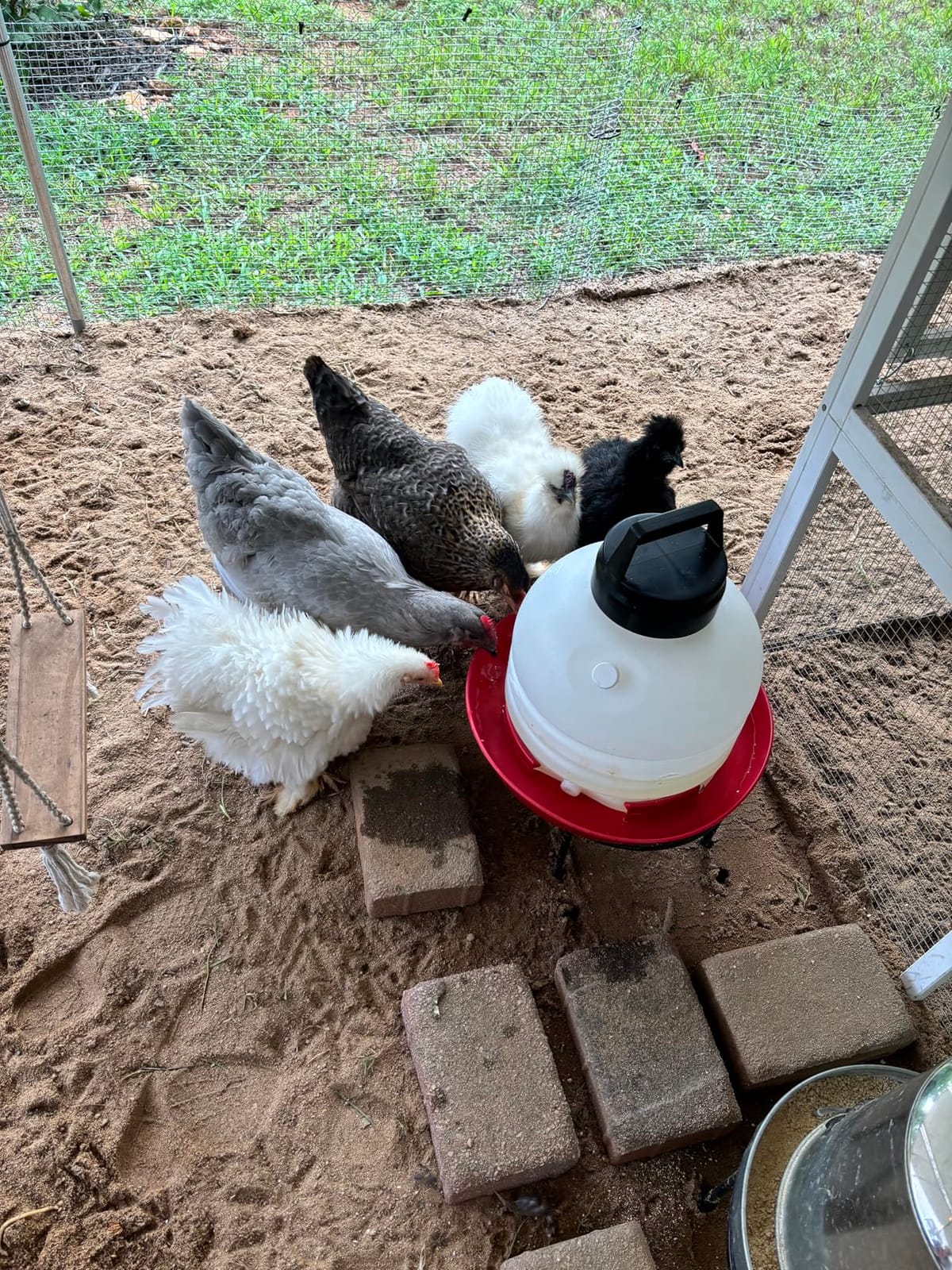
That last point is the real one. Hanging the waterer above the litter line keeps droppings and bedding out of the trough, protects it from being tipped by a hen, and means a bully bird cannot sit on it. It is also the easiest install of anything in this roundup, since a single hook or a bracket does the job.
Polyethylene is rust-proof and dent-resistant, and it is malleable enough to survive a knock from a startled hen in a way that rigid plastic does not. That matters more than the material name suggests, because rigid plastic is exactly what cracks after a season of UV exposure in a hot climate.
The snap-on base is the leak-prevention mechanism. There is no gasket and no float to adjust, so there is nothing to perish, and if the flow ever slows, the base unscrews for a rinse in about ten seconds.
Best for a straightforward mid-size flock
Seven to twelve hens is the sweet spot. Three gallons covers a day in mild weather and about half a day in real heat, and the 2.25-inch drinking lip lets two or three birds drink at once, which reduces the queueing problem that sends a dominant hen back for seconds.
Hang it inside the run rather than in a covered corner, and high enough that a chicken tractor frame or a weed trimmer will not hit it. A full unit is roughly 27 pounds, so a solid hook matters more than it looks.
What an open trough costs you
This style has an open drinking tray, and an open tray is dirty within days. It needs scrubbing every few days in summer, and a skim of solids on the water is normal rather than a fault. If water quality matters to you, the closed designs like the Omlet or the cups and nipple kits are the better answer.
It is also uninsulated, so winter needs either a heat source or a plan to bring it inside. And the hanging handle is a pivot point, so a bird landing on the lid can swing it and spill. A short bungee or a second hook through the handle solves it in a minute.
Metal vs plastic chicken waterers: which is better?
Metal is better for durability, plastic is better for weight and price. That is the honest answer, and the reasoning matters more than the verdict. Galvanized steel has no seams that split, no gaskets that perish and no UV embrittlement, so a metal waterer that is still dented in year four is still working, while a rigid plastic unit that cracked in its first summer is scrap.
There is a metal caveat worth stating. A galvanized fount stored damp can bloom with rust at the seams, and keepers on permies report galvanized units that rusted through after about four years of use. Dry it after cleaning and it will outlast plastic indefinitely. Insulation is the other point: metal conducts cold straight into the water, so an unheated metal fount in a hard freeze is worse than plastic, while a heated metal fount is the only safe way to add external heat.
Plastic wins on handling. A 3-gallon plastic unit weighs about 27 pounds filled where a steel equivalent is nearer 30 and a 5-gallon galvanized model is closer to 48, and malleable polyethylene shrugs off the knocks that crack rigid plastic. It is also far easier to modify, which is why almost every DIY nipple and cup build in the forum conversations uses a plastic bucket.
For an ordinary backyard flock in a temperate climate, we would choose plastic and accept that you may replace it in a few years. For a flock you want to leave alone, or for any setup that needs a heater pad in winter, choose galvanized steel and accept the weight.
Cups vs nipples: which is better for a chicken waterer?
Cups are easier, nipples are cleaner. That is the whole trade-off, and for a backyard flock we usually recommend cups for small groups and nipples once the flock is large or the run is covered and dirty.
Cups win on the learning curve. A hen moves from an open dish to a cup in a day or two, and there is no equivalent step for nipples, which is why keepers report a two-week bird-training period on nipple systems. Cups also cannot trap a bird’s head. On the downside, a cup collects grit, bedding and feathers, and a jammed trigger drains the entire reservoir, which is the failure mode owners complain about most.
Nipples win on sanitation and durability of the water. The drinking surface is a pin, there is no standing water to foul, and there is no spring or float to jam. They suit covered runs where bedding blowback is a problem, and they suit mixed flocks because horizontal pins are easy for ducks to use. Against that, birds can struggle to learn them, and a leaking or partly blocked nipple either trickles onto the ground or stops flowing, and nipples do clog with debris in dirty water.
Best of both is a real option, and the RentACoop and Omlet units in this roundup come with both so you can mix stations as birds adjust. Whichever you pick, the deciding factor for most keepers is how much time they want to spend cleaning.
How to size an automatic chicken waterer for your flock
Start with the water math, because every other decision follows from it. A mature hen drinks about 1 pint of water a day in ordinary weather and up to 2 pints in hot weather, and a pint is an eighth of a gallon. Six hens at 1 pint each drink 6 pints, which is under a single gallon. Twelve hens in a heat wave drink 24 pints, about 3 gallons. A 3-gallon unit therefore covers a small flock for a full day in mild weather and needs refilling two or three times across a hot August day for a larger one.
To be practical, size a gravity unit to cover at least one full day at the high estimate for your climate, and double it if you are not disciplined about evening checks. Anything above 5 gallons is where weight starts to matter, and above 8 gallons, at roughly 64 pounds filled, most people stop moving it and start siphoning it.
Nipples need their own ratio, separate from capacity. One nipple comfortably serves four to five adult birds, so a 12-hen flock wants three nipples, not one, and a 20-bird flock wants four or five. Cups run closer to one per eight to ten birds. If a station serves too many birds you get queueing, and queueing is where bully hens take over a water source.
Then check the other physical constraints. A waterer needs to hang or sit clear of bedding, needs a power source if it is heated or plumbed, and needs to be reachable for cleaning without dismantling the coop. Bully hens guard a single waterer, so the standard advice from experienced keepers is to run two units. Keeping larger animals alongside your flock raises the same questions at a bigger scale, and our automatic horse waterer picks cover that scale. You can learn more about the general hardware side in our automatic chicken feeder guide, which shares the same refill-interval logic.
Chicks are a separate sizing problem. Chicks need a shallow, warm water source they cannot drown in, and an adult fount with a 1.5-inch lip is a drowning risk in a brooder. Use a chick fount or a cup system for the first weeks, then move up when they are fully feathered.
Winter, freezing and the metal-only heater warning
Below freezing, the question is not which waterer is best but whether the water stays liquid. There are three ways to answer it, in order of preference. Buy a heated waterer with a thermostat-controlled element, run a de-icer or a circulation pump into a non-insulated waterer through a cord port, or bring a waterer inside every night and hang it back up each morning.
Here is the safety point that matters more than any product recommendation: heater plates and heating pads are for metal waterers only. A metal heating plate in direct contact with a plastic fount will melt the container, and if it is energized the result is a fire. If you want to add external heat to a plastic or rubber waterer, use a purpose-designed external de-icer or a circulation pump designed for plastic bodies, never a bare heating plate.
The third approach sounds tedious and is the right answer for a lot of small flocks. Removing a waterer at dusk and returning it at dawn takes two minutes and costs nothing, and it beats every heated product on the market for anyone with four hens and a warm garage to spare.
Placement also decides how fast water freezes. A waterer in a drafty corner of an uninsulated run will freeze faster than the same waterer in the coop, even on the same cold night, and a waterer sitting on a cold floor loses heat to the slab. Raising it off the ground and out of the wind is worth as much as a modest heater.
Our picks reflect the range. The Premier 1 is the one to buy for sustained hard freeze, the API is for places with occasional hard frost, the galvanized FARM-TUFF is the only plastic-free option that accepts an external heat source, and the Omlet’s insulation buys you tolerance but not protection.
How to train hens to drink from cups and nipples
Most transition problems are solved by not switching cold. Keep the old dish in place next to the new station for three to five days, so birds always have a familiar option, and let them discover the new one alongside it. That single change eliminates most of the frustration new keepers report when hens appear to be refusing water.
For cups, put the transition on your side. Drill the holes in an old container first, fill it, and set it beside the current dish for a day. Chickens peck at moving water and at wet surfaces, so a cup that has a drip or a small puddle under it gets investigated within minutes.
For nipples, speed things up deliberately. Hang the nipple unit at the height of a hen’s back so the drinking point is level with her natural head position, then tap the nipple pin with your finger so a drop of water falls. Owners report new birds finding the nipple the same day once they understand water comes from it.
Use food as a bridge. A few mealworms or a splash of soaked feed in the cup draws birds to the exact spot, and it costs nothing. Finally, check heights again a week later, because a growing bird drinks more comfortably from a station set a little higher than the one it learned on.
Leaks, cleaning schedules and water quality
Leaks have a short list of causes and each has a different fix. A waterer that pours out only when filled is out of level, so set it on a flat board and re-check. A base that seeps around the seam when full is usually an over-tightened gasket, so back the fitting off a quarter turn. A dripping nipple is usually a loose wing nut or a flat gasket, and reseating it fixes it in seconds.
A cup that runs continuously means the trigger is jammed or a spring is dislodged, and the fix is to disassemble the cup and rinse the valve. A lid that weeps while carrying means the lid was fitted under load, so take the top off before you move a filled unit. And a plumbed system that drips at the float is a float that has worked loose or a valve that needs tightening, which is a five-second check if you make it a weekly habit.
Algae needs light, warmth and nutrients, and it is why the opaque and light-blocking bodies in this roundup outlast translucent plastic. If you already have algae, empty the unit, scrub it with a stiff brush and a vinegar solution, rinse thoroughly and let it dry fully before refilling. Avoid bleach in any concentration near birds and never mix cleaners.
Mineral scale is the plumbed-system problem that guides rarely mention. Hard or well water lays down scale on the float and inside the lines, which reduces flow and eventually causes a valve to stick or a joint to weep. Monthly, disassemble the float and rinse it in vinegar, and expect to do this on a schedule rather than when something breaks.
For a workable routine: check the level daily, scrub the drinking surface every two or three days in summer, and do a full disassembly and clean every two to four weeks. That is less work than it sounds, because a cup or nipple system with a removable insert or a screw-on base cleans in minutes.
When not to buy an automatic chicken waterer
For four hens in a mild climate, do not buy an automatic waterer. A 1-gallon gravity fount costs a fraction of a plumbed system, cannot fail when a hose splits, and takes ten seconds to clean. The reliability premium only pays off when you are carrying water more than once a day.
Skip plumbed systems if your water is hard and you are not willing to descale the float monthly. The failure mode of a plumbed unit is a small leak inside a coop, which becomes damp bedding and ammonia within a couple of weeks, and that is a bigger problem than the waterer solves.
Skip heated waterers unless you genuinely have a freeze problem. A heated unit adds an electrical component, a cord and a thermostat to a device whose failure means thirsty birds in cold weather, and for many keepers bringing the waterer inside overnight is the more reliable answer with no failure mode at all.
And be honest about the maintenance ceiling. Cups collect grit, nipple systems need careful hole placement, and open gravity troughs need scrubbing every few days. If you do not want any cleaning, the honest answer is that no waterer removes the job, it only changes which job you are doing. Keep our heated livestock waterer picks in mind if your winter is the deciding factor.
Frequently Asked Questions
Which chicken waterer is best?
For most backyard flocks, a gravity-fed fount is the best chicken waterer because it cannot fail and is cheap to replace. A 3-gallon unit suits 7 to 12 hens, a 1-gallon unit suits 4 to 6, and anything above 15 birds or anyone travelling should use a plumbed auto-refill system or run two gravity units.
Are metal or plastic chicken waterers better?
Galvanized metal is more durable because it has no seams that split, no gaskets that perish and no UV embrittlement, and it is the only safe body for an external heater pad. Plastic is lighter, cheaper and easier to modify, which is why it is the better choice for a temperate climate and a flock you are happy to replace every few years.
Which is better for a chicken waterer, cups or nipples?
Cups are easier because hens learn them in a day or two and cannot get their heads stuck, but they collect grit and a jammed trigger can drain the reservoir. Nipples keep water sealed away from bedding and droppings and have no moving parts, but new birds need several days of training and nipples can clog in dirty water.
Why is my chicken waterer leaking?
Common causes are an out-of-level waterer that pours from the drinking lip, an overtightened gasket that has flattened and weeps, a loose wing nut on a nipple, a lid fitted before carrying that spills in transit, and a plumbed float valve that has worked loose. Plumbed units also leak where hard-water scale has built up around the float.
What can you put in a chicken waterer to keep it from freezing?
Do not put anything in the water. Instead choose a waterer with a thermostat-controlled heating element rated for your coldest nights, or use a purpose-designed external de-icer or circulation pump. Never place a bare heater plate against a plastic or rubber waterer, because it will melt the container and can start a fire.
Conclusion: pick the automatic chicken waterer that fits your flock
There is no single best automatic chicken waterer, because the decision splits cleanly by flock size and climate. Our Editor’s Choice overall is the Lil’Clucker five-pack of cups, because installing cups into a container you already own is the most reliable, cleanest and easiest-to-repair starting point for the widest range of keepers. Four to six hens in a mild area want the Little Giant 1-gallon fount, because simplicity beats everything at that scale. Seven to twelve hens want a 3-gallon unit, and the FARM-TUFF hanging fount or the FARM-TUFF galvanized 5-gallon depending on whether you value hanging or durability.
Large flocks and long weekends change the answer. Past about 15 birds, capacity and refill interval matter more than price, which is where the OverEZ 12-gallon earns its place, and true hands-off watering means a plumbed float-valve unit despite the leak risk. For freeze, the Premier 1 heated waterer is the pick, and the galvanized 5-gallon is the only body that safely accepts an external heat source. For the southern summer, the Omlet’s insulated, light-blocking body is the one that keeps water drinkable in August.
Whichever you choose, buy the drinking station that matches your birds rather than the one that is most convenient to buy. Cups first for new keepers and small flocks, nipples once the flock is established and the run is dirty, and the Lil’Clucker five-pack or the MEWTOGO twenty-pack will build either one into a bucket you already own.
Our advice in one line: buy the smallest waterer that carries your flock through a hot day without a manual refill, clean it weekly, and run a second one if you have a bully hen. That is 2026 worth more than any feature on the box.