

The Yardbird 21833 is the best chicken plucker machine for most homesteads: a 1.5 HP gear motor, a 20-inch stainless drum, 110 natural rubber fingers and a built-in irrigation ring, and it holds a 4.3 rating across more than 1,200 reviews, by far the deepest owner record of any machine in this roundup. I say that after a season of reading owner reports and comparing every drum plucker, tub plucker and drill attachment I could find specs for, not just the three the search results push at the top.
That distinction matters, because the thing that decides whether a chicken plucker is worth owning is rarely the machine. It is the scald. When feathers are properly loosened at 145-155F, almost any drum in this list strips a bird in seconds. When the scald is too cool, the fingers grab skin instead of feathers, and people sell a perfectly good machine and go back to plucking by hand.
So this guide covers all three formats, not just the stainless drum crowd. You will find the Yardbird and its newer sibling, the Kitchener and SuperHandy drums that share nearly identical 20-inch geometry, the Roots and Harvest planetary-gear unit, a VEVOR budget drum, two Garvee-branded drums, and two drill attachments for anyone processing fewer than 25 birds a year. If you are still setting up the flock, our chicken feeder guide and waterer roundup cover the parts of the system that come before processing day.
Here is how we picked, so you can weigh the list yourself. We ranked on the four things that decide a pluck: motor power, drum size and finger count, water integration, and how the machine cleans up. We weighted owner review volume heavily, because a 4.5 across 30 ratings tells you far less than a 4.3 across 1,200. And we cross-checked every spec against the manufacturer listing rather than the marketing paraphrase, which is how we caught one model that describes its drum two different ways on the same page.
Table of Contents
Top 3 Picks for Best Chicken Plucker Machines in 2026
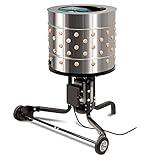
Yardbird 21833 Chicken Plucker
- 1.5 HP gear motor
- 300 RPM
- 20 inch drum
- 110 rubber fingers
- Built-in irrigation ring

Kitchener FP-100 Heavy Duty
- 1 HP 800W
- 280 RPM
- 20 inch drum
- 92 soft fingers
- GFCI and IP54 housing

SuperHandy FP100-SH Plucker
- 1 HP 800W at 280 RPM
- 20 inch drum
- 92 soft fingers
- Handles 2-4 birds per load
Those three all share the same core geometry, and that is the point: a 20-inch drum is the format that works for a homestead. The other seven are either a different format (drill attachments), a different motor class, or the same drum with less evidence behind it.
All 10 Chicken Plucker Machines Side by Side (September 2026)
| Product | Specifications | Action |
|---|---|---|
| Yardbird 21833 |
|
Check Latest Price |
| Kitchener FP-100 |
|
Check Latest Price |
| SuperHandy FP100-SH |
|
Check Latest Price |
 PluckerUkraine 133-21 Drill PluckerUkraine 133-21 Drill |
|
Check Latest Price |
 Yardbird 44204 Yardbird 44204 |
|
Check Latest Price |
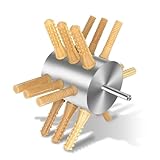 HAWK BROTHER 18-Finger Drill HAWK BROTHER 18-Finger Drill |
|
Check Latest Price |
 Garvee 20 Inch Drum Garvee 20 Inch Drum |
|
Check Latest Price |
 VEVOR TM500BS/1 VEVOR TM500BS/1 |
|
Check Latest Price |
 GarveeLife 20 Inch Drum GarveeLife 20 Inch Drum |
|
Check Latest Price |
 Roots and Harvest Plucker Roots and Harvest Plucker |
|
Check Latest Price |
One line of reading before you dig in: the Yardbird 21833 and 44204 are the same brand at two generations, and the Kitchener and SuperHandy are built by the same parent manufacturer from the same 1 HP platform. Four of these ten are not four independent designs.
Key Features to Consider in a Chicken Plucker Machine
Four criteria decide whether a plucker fits your homestead, and they are the same four the search engines answer with. Here they are with the thresholds that actually matter.
Motor power between 0.5 and 1.5 HP. Below 0.5 HP and you will be stopping mid-cycle to let the overload protector cool. Between 1 and 1.5 HP is where heavy birds and badly scaled batches get handled without a stall.
Drum capacity around 20 inches, spinning 275-300 RPM. A 20-inch drum comfortably takes 1-2 average meat chickens, roughly 16 lbs combined. Smaller 15-inch drums are fine for birds under 8 lbs and frustrating above that.
Water integration. A built-in irrigation ring fed by a standard garden hose connector is what keeps feathers moving out of the drum instead of matting around the fingers. A Y-valve lets one hose serve the drum and the scalding pot.
Cleanup that you will actually do. A removable food-grade stainless drum, a gasket-sealed motor housing and washdown-safe electricals decide whether the machine survives to a second season. Unsealed seams and rivets that trap water are how a stainless machine still ends up rusting.
Finger count is a weaker signal than those four. The machines here land between 92 and 111 fingers, and the difference between 98 and 108 does less for your birds than the drum speed does.
1. Yardbird 21833 – 1.5 HP, 20-Inch Drum, 110 Fingers
Yardbird 21833 Chicken Plucker, Stainless Steel, 1.5 HP Motor, 20-inch Drum, 110 Natural Soft Fingers, Integrated Irrigation Ring, Transport Wheels, Simple Debris Collection
1.5 HP motor at 300 RPM
20 inch stainless drum
110 natural rubber fingers
Irrigation ring
Pros
- De-feathers a bird in 15-30 seconds after a proper scald
- Deepest review base in the class at more than 1200 ratings
- Removable food-grade stainless drum lifts out for washing
- Waterproof gear-drive motor housing
- US-based service team and 1 year warranty
Cons
- No lifting handle so it is awkward to carry by hand
- On-off controls require kneeling beside the tub
- No built-in hook for parking the wash hose
The Yardbird 21833 is the one I would put on a homestead that processes real volume, and the reason is not the marketing sheet. It is that 1,200-plus ratings describe the same machine doing the same work for a decade, which means the failure modes are known rather than hypothetical. Owners consistently report fast, clean plucking and sturdy stainless construction, with the recurring complaints all being ergonomic rather than mechanical.
Bird for bird, the spec sheet is the strongest motor in the group: 1.5 HP at 300 RPM against a 20-inch drum lined with 110 individual natural rubber fingers. The manufacturer claim is 15-30 seconds per bird after a correct scald, and independent owners report the same figure. Two independent reviewers have separately confirmed roughly 15 seconds for a single bird on first use, which is the kind of claim that usually turns out to be marketing until someone else measures it.
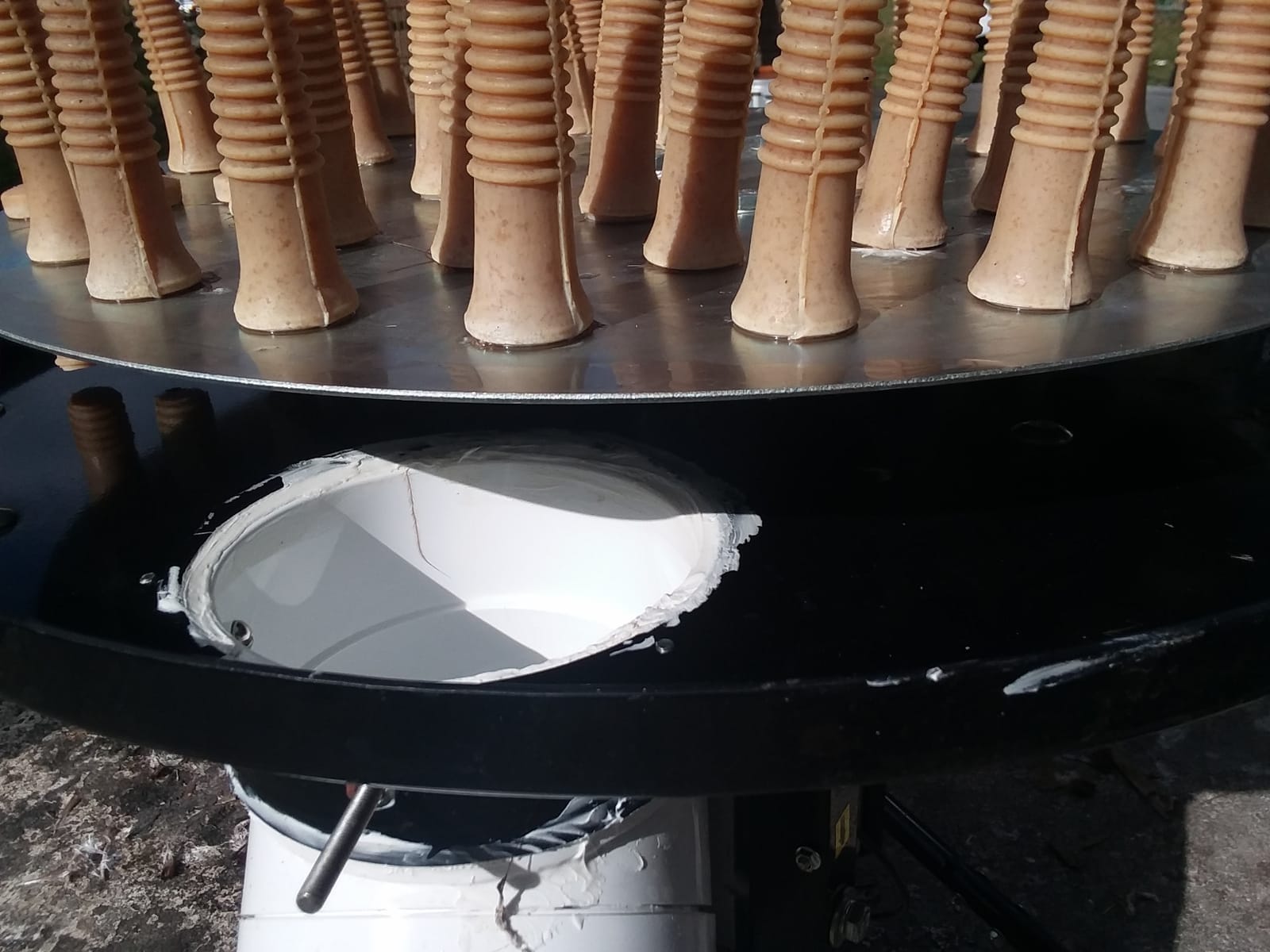
The drum lifts out as a food-grade stainless piece, and the gear-drive motor sits in a waterproof housing, so the parts that collect feathers and water are the parts you can actually hose off. The integrated irrigation ring takes a standard garden hose connector, and feathers go into the chute, where a 5-gallon pail under the outlet catches the lot. The drum-sensing safety switch and GFCI protection are real features rather than marketing nouns.
It weighs 82 lbs and measures 27 x 31 x 36 inches, which is fine in a barn corner and a nuisance in a small shed. Solid rubber ball-bearing wheels make it genuinely movable across a yard. Assembly is reported at 15-20 minutes with hand tools, and the whole thing is backed by a US-based service team and a 1 year warranty.
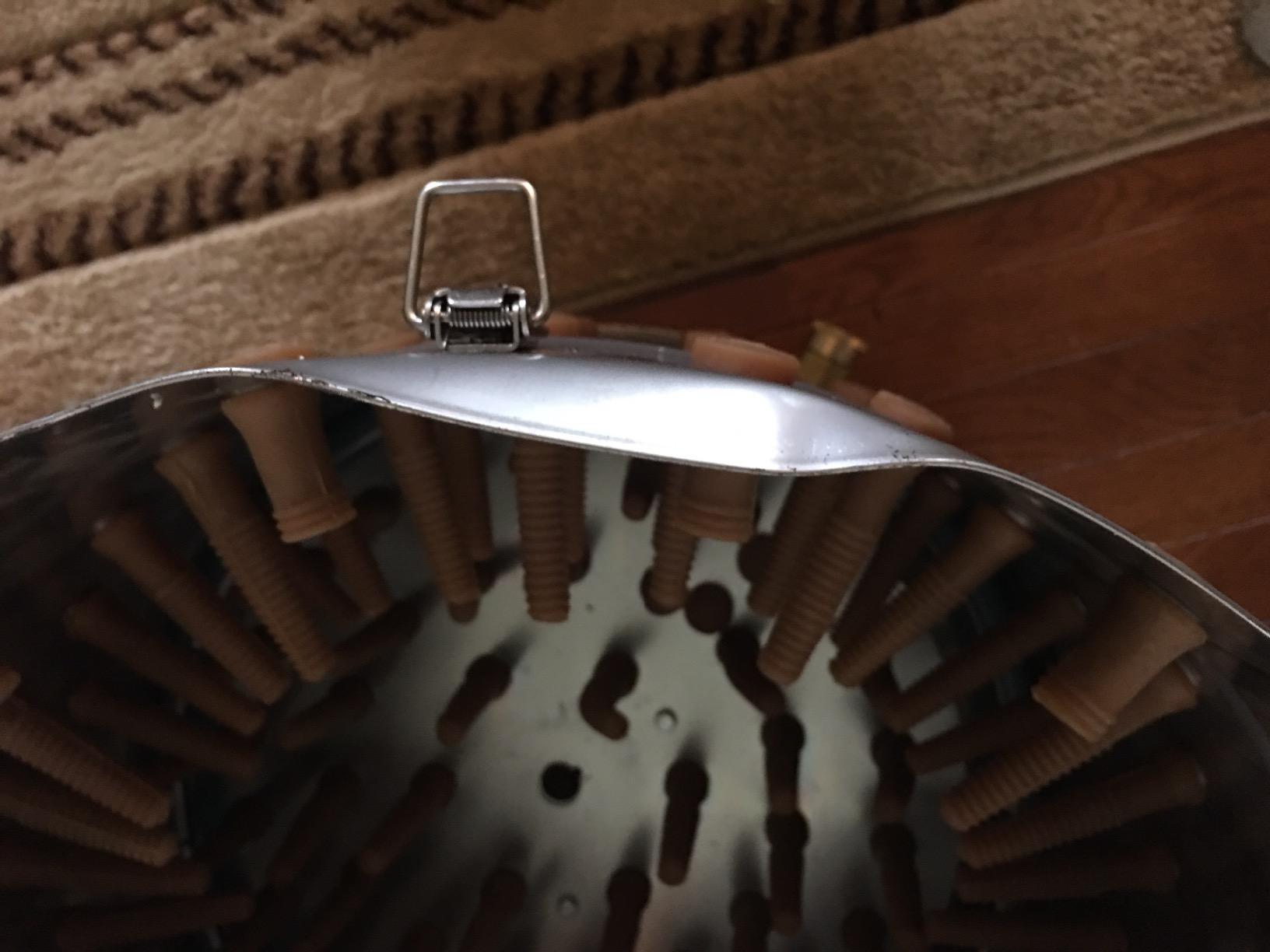
What a 1.5 HP motor actually changes on processing day
The extra torque shows up in two places. It is the reason two birds can go in together without the motor bogging down, and it is the reason a 20 lb turkey works at all, because the drum keeps turning when a heavy bird wedges against the wall. Owners report holding a steady cycle on turkeys where lighter machines stall and trip their overload protector.
It is also the reason the machine shrugs off a slightly under-scalded bird. That does not mean scalding is optional, but it does mean a marginal scald is recoverable on this machine and not on a 500W one.
Where the 21833 falls short for a small homestead
All three of the recurring complaints are about handling, not performance. There is no lifting handle, so getting it up a step or into a vehicle means rolling it or dragging it. The on-off controls are not reachable without kneeling beside the tub, which on a wet day with muddy boots is a genuine annoyance.
There is also no built-in hose hook, so the wash hose ends up draped over something. If your shed is tight or your processing site is more than a short roll away, the newer Yardbird 44204 below fixes all three of those and is worth the step up. If you process 15 birds a year, none of this matters and a drill attachment is the honest buy.
2. Kitchener FP-100 – 1 HP Planetary Gear Motor, 1,008 Reviews
Kitchener Chicken Plucker De-Feather Remover Poultry and Fowl Food Processor Electric Stainless Steel Heavy Duty 1HP 120VAC 280RPM GFCI Connector 92 Soft Fingers 20″ Drum Diameter
1 HP 800W at 280 RPM
Planetary gear reduction
20 inch drum
92 soft fingers
Pros
- Highest average rating in the lineup at 4.5 across 1008 reviews
- Planetary gear reduction gives strong steady torque
- Plucks 2-4 birds in 15-30 seconds each
- 403 brushed stainless body resists rust
- GFCI connector and IP54 weather-resistant housing
Cons
- Thin-gauge steel panels can flex during aggressive cleaning
- Instruction manual is out of date with swapped wheel leg labels
- Feathers collect at the finger bases and need manual removal
The Kitchener FP-100 shares the highest average rating in this roundup at 4.5, and it gets there on 1,008 reviews rather than the 58 behind the other 4.5. It also does it on a 1 HP motor rather than the 1.5 HP the Yardbird 21833 uses, which says the planetary gear transmission is doing torque work the Yardbird gets from raw motor size.
The build is 403 brushed stainless for both body and base, with a 0.6mm barrel and 0.3mm panels. The manufacturer states 2-4 birds per load in 15-30 seconds each, which would clear a heavy day in minutes. Owners confirm the throughput, and 75% of its ratings are five-star, with very few landing in the middle.
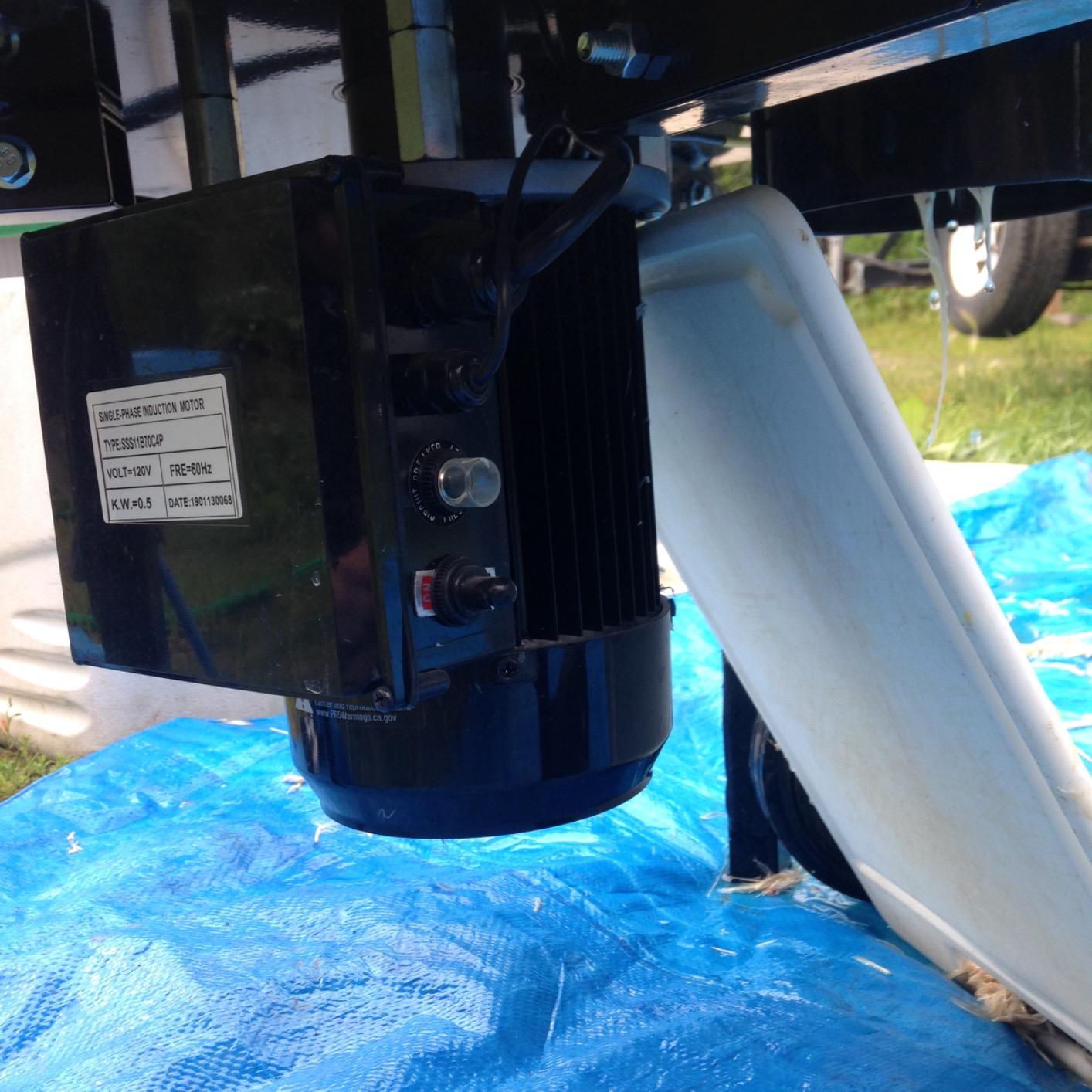
Electrical protection is a step above most of the class: an overcurrent-protector GFCI connector switch and an IP54 weather-resistant housing. Two transport wheels and a 22 x 23 x 22 inch footprint keep it manageable in a shed. It runs on 120 volts at 800 watts, so a normal outlet handles it without any special circuit.
Two notes from owners who have had theirs a while. The first is to clean it and let it dry fully after every use, because unsealed seams and rivets trap water even under a stainless skin. The second is that the included manual is out of date and labels the wheel legs backwards, which costs an hour the first time you assemble it.
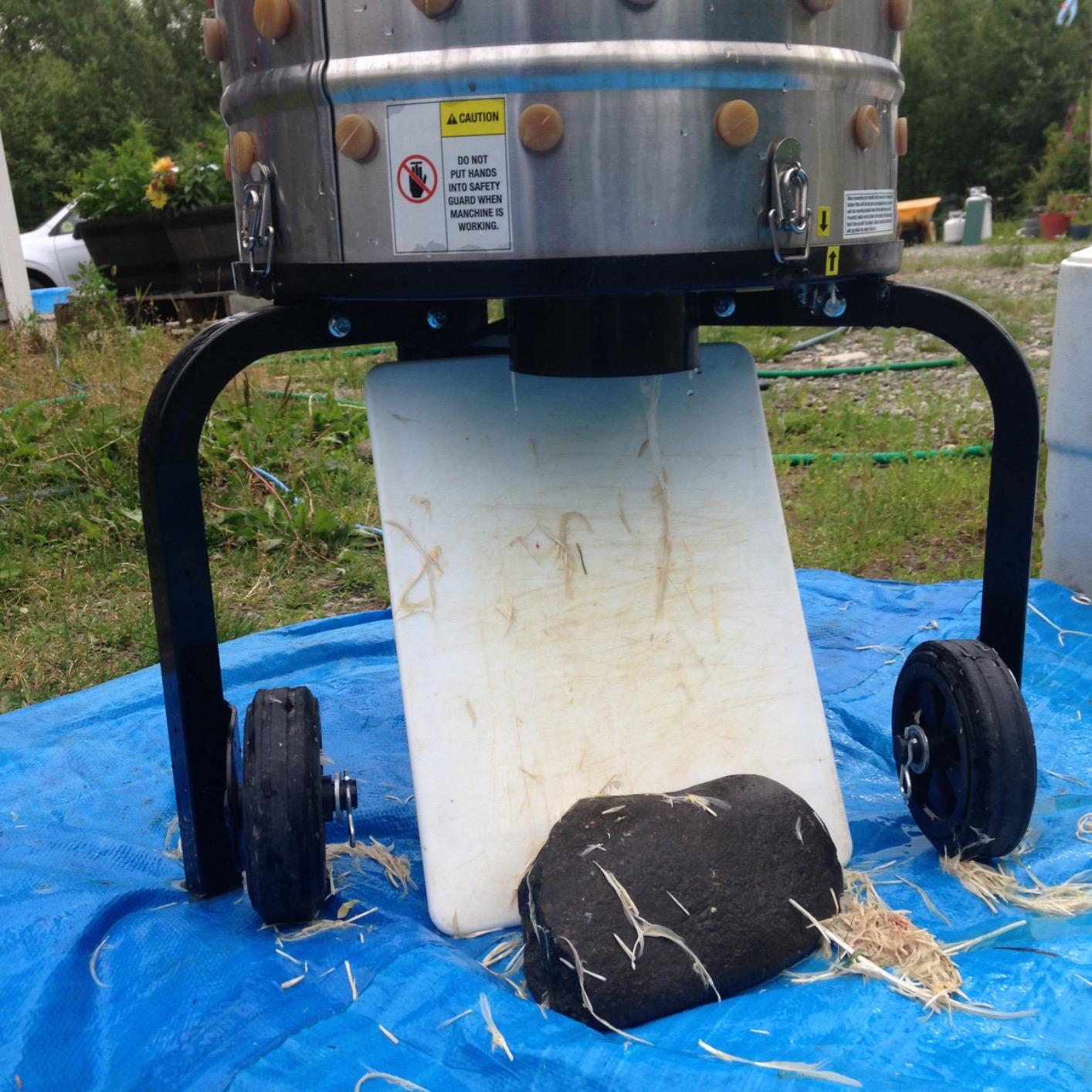
Planetary gear versus a direct-drive motor
A planetary gearbox trades a little top-end speed for a lot of low-end torque, and torque is the number that matters when a wet 12 lb bird is being flung against a rubber finger at 280 RPM. It is also why this machine can claim 2-4 birds in a load and defend the claim, where the lighter 500W and 750W machines are honest to describe their best case as two.
If your birds are heavy and your scalding is inconsistent, the Kitchener is the machine that forgives you. If your birds are broilers at 4 lbs and you are fast with a thermometer, you are paying for headroom you will not use.
Where the FP-100 gets annoying
Those 0.3mm panels are genuinely thin. Owners report flex and even bending during aggressive scrubbing, so the cleaning method matters: hose and brush, not a stiff wire brush and leverage. Feathers also lodge around the finger bases, and a deep clean means pulling them out by hand rather than rinsing them loose.
With 92 fingers it shares the lowest count among the 20-inch drums here, alongside the Roots and Harvest. That is a minor point against a 280 RPM spin, but on very small birds the Kitchener can leave a few more fine feathers than the 108-finger Garvee below.
3. SuperHandy FP100-SH – 1 HP, 20-Inch Drum, 2-4 Birds per Load
SuperHandy Chicken Plucker 1HP 120VAC – Electric Stainless Steel Poultry Processing Machine with 92 Soft Fingers, 20″ Drum, GFCI Safety & Waterproof Design, Transport Wheels
1 HP 800W at 280 RPM
20 inch drum
92 soft fingers
2-4 birds per load
Pros
- Handles 2-4 birds in 15-30 seconds once birds are scalded
- 92 soft fingers treat skin gently
- GFCI connector and IP54 housing around water
- Lightest listed weight in the drum group at 55 pounds
- Transport wheels and 1 year warranty with US support
Cons
- Body sheet metal is thin and flexes when scrubbed
- On-off switch mounted low so you kneel to reach it
- Short power cord keeps electrics close to sprayed water
The SuperHandy shares the FP-100 platform with the Kitchener, down to the 1 HP 800W motor at 280 RPM and the 92 soft fingers on a 20-inch drum. What it does not share is the review record. 785 ratings at 4.3 is plenty of evidence to trust the design, but it is a step below the Kitchener’s 4.5, and the difference shows up in the complaints.
The batch claim is the headline here: 2-4 birds simultaneously in 15-30 seconds. Owners running small flocks call it a dramatic time saver on 30-50 bird days, which matches the homestead pattern of processing everything in one session rather than a few birds at a time. At 55 pounds it is also the lightest drum here with a listed weight, which matters if you are moving it alone.
Construction is 403 brushed stainless with a commercial-grade motor in a specialized waterproof housing, plus a GFCI connector with overcurrent protection and an IP54 weather-resistant electrical housing. Footprint is 25 x 25 x 33.46 inches with transport wheels, and it is backed by a US-based service team and a 1 year warranty.
Here is the honest read. 71% of its ratings are five-star, and the recurring complaints are all handling or build thinness: a body that flexes when scrubbed hard, a low-mounted switch, and a short power cord. The cord is the one to think about, because this machine is designed to be hosed while running.
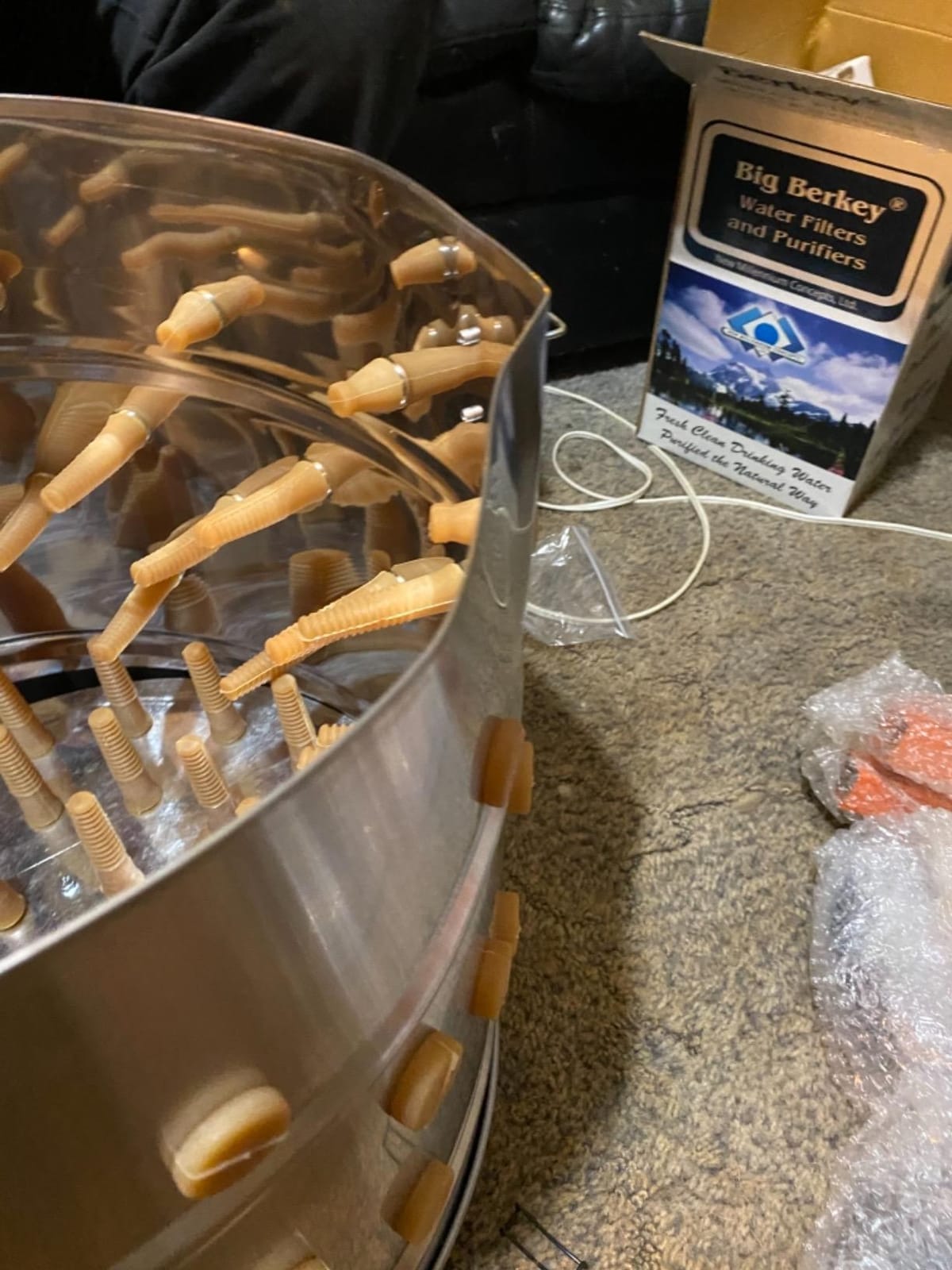
Is 2-4 birds per load realistic on a homestead?
It is realistic when your birds are uniform and your scald is even, which is exactly the situation on a homestead processing one age of broilers together. It is not realistic when you mix a 3 lb bird and a 20 lb turkey, because the small one ends up pinned against the wall while the drum runs. Load by weight, not by head count: two birds under about 8 lbs each is a solid conservative load.
Owners also report that birds can catch in the fingers when large roosters are processed one at a time. The fix is the same one that works on every machine here: two birds per load so they tumble against each other rather than sitting against the drum wall.
Where the SuperHandy is the wrong buy
Buy the Kitchener instead if you can, because the higher rating and the same platform make it a stronger bet for a similar outlay. Choose the SuperHandy when the 55-pound weight is the deciding factor, or when you want the multi-bird load capacity and do not mind kneeling to hit the switch.
The unsealed-seam rust warning applies here more than anywhere else in the drum class. Dry it completely after each use or the stainless will spot and pit. Store it under cover in a dry barn, not on a damp concrete floor.
4. PluckerUkraine 133-21 – 21-Finger Drill Attachment
PluckerUkraine Chicken Plucker Drill Attachment 133-21 Large – Stainless Steel Poultry Feather Remover 21 Fingers (Broiler Duck Goose Turkey) with Best Chicken Plucker Fingers
21 fingers in two profiles
One-piece food-grade stainless
Arrives assembled
Needs 750W drill
Pros
- White rubber fingers leave skin unbruised and untearred
- Handles small batches of roughly 15-30 birds well
- Mounts firmly to a bench drill for controlled passes
- Arrives assembled with fingers already installed
- One-piece stainless body and sharpened welded shaft
Cons
- Requires a separate variable speed drill that is not included
- Two people needed without a fixed mount or foot control
- Spinning fingers pass close to the operator's hands
- Produces loose feather debris to sweep up
The PluckerUkraine 133-21 is the honest entry point. It weighs one pound, needs no outlet, no water line and no assembly, and for a homestead processing 15-30 birds a year it replaces the single most hated hour of processing day with something better. For anything above that volume it stops making sense, and I will explain exactly where the line is.
The design is more considered than most drill attachments. It uses 21 fingers in two profiles: ball-shaped for down and ring-shaped for the large coarse feathers, so you are not dragging one aggressive shape through a whole bird. The body is one piece of thick food-grade stainless with a welded shaft sharpened to grip the drill chuck without slipping, and it arrives with the fingers already installed.
It needs a variable speed drill of 750W or more with a 0.4 inch chuck or larger, running on 110-220V, and it is not included. If you do not already own one, that cost belongs in your real total. The fingers are removable and interchangeable, so worn fingers are a five-minute fix rather than a replacement.
Owners consistently say the same two things: results depend heavily on scalding temperature and holding time, and a corded drill outperforms a battery one. At 4.1 across 242 ratings with 59% five-star, it is a well-liked product for a product category that usually draws one-star reviews for being dangerous.
How many birds a year makes a drill attachment correct
The working rule from the homestead forums is about 25 birds at a time, and it is the right number. Under that, the setup and cleanup of a drum machine costs more than the plucking saves. Over roughly 50 birds a year, you are spending drum-machine hours hand-finishing pin feathers and sweeping debris, and the math flips.
One more variable: mounting. Owners who clamp the drill to a bench or a fixed structure describe the job transforming from a two-person struggle into a controlled one. Freehand, a spinning stainless barrel with 21 fingers is a genuinely unpleasant thing to hold against a wet bird for a full pass.
Where a drill attachment falls short
Three limits are structural. You will sweep up far more loose feather and debris than a drum machine collects in a chute. You will need a second person, or a very firm mount, for any bird over a few pounds. And it will not replace a drum for waterfowl: long down feathers on a duck or goose take repeated passes and often end up hand-plucked anyway.
There is also an operator-safety consideration that no amount of technique fixes. The fingers pass close to your hands by design, and unlike a drum machine there is no safety cutout that stops the motor when something goes wrong. Gloves and eye protection are not optional here.
5. Yardbird 44204 – 1.2 HP, 111 Fingers, Switch at Standing Height
Yardbird 44204 Chicken Plucker, Easy On/Off Button, Integrated Hose and Cord Hooks, 20″ Stainless Steel Tub, 1.2 HP Motor, 111 Natural Soft Fingers, Integrated Irrigation Ring and Included Y-Valve
1.2 HP at 275 RPM
111 natural rubber fingers
Waist-height on-off switch
Included Y-valve
Pros
- On-off switch mounted at standing height so you never bend over the tub
- Tub-sensing switch kills the motor if the tub is loosened
- Built-in hooks for cord and hose storage
- Included Y-valve meters irrigation water
- Longest warranty in the lineup at 2 years
Cons
- Tub diameter is described inconsistently between the title and the feature copy
- At 43 inches tall it needs more vertical clearance than the other drums here
- Review history is short so long-term durability is not yet documented
The Yardbird 44204 is the 21833 with the three ergonomic complaints engineered out. It carries a 1.2 HP motor spinning the feather plate at 275 RPM, 111 natural rubber fingers, and the same 15-30 second two-chicken claim. If you have ever knelt in the mud beside a tub to hit a switch, this is the machine that fixes it.
The waist-height ON/OFF switch is the headline. A tub-sensing switch kills the motor instantly if the tub is removed or loosened mid-cycle, which is a real safety improvement on a machine where the tub is a removable part. 76% of its ratings are five-star, and reviewers single out exactly these upgrades rather than the motor.
Cleanup is the best in the roundup: a gasket-sealed motor housing that allows full washdown, plus a removable 304 food-grade stainless tub. The included Y-valve meters the irrigation water, which is the part most people skip and most benefit from. A wide handle, large airless wheels, and built-in cord and hose hooks round out a machine designed around an actual processing day rather than a spec sheet.
Warranty is 2 years, the longest here, backed by a US-based service team. At 79 pounds and 24.1 x 26.9 x 43.1 inches it is the tallest unit in the roundup by a wide margin, so measure your storage height before you commit.
What a tub-sensing safety switch actually protects against
It stops the motor if the tub is removed or loosened. That matters more than it sounds, because a rotating drum with 111 rubber fingers and a bird in it is not something you want to reach into, and the most common way that happens is a bird shifting the tub on an uneven surface. The cutout converts a serious injury risk into a stopped motor.
It is also a diagnostic. If the motor dies mid-cycle on a machine with this switch, the tub has moved, not the motor. On machines without it, the same event looks like an electrical fault and sends people chasing the wrong thing.
Where the 44204 is the wrong choice
Two honest caveats. First, the listing describes the tub as 20 inches in the title and as roomy 30 inches in the feature copy, so confirm the tub diameter with the manufacturer before you buy, because it changes which birds fit. Second, 58 ratings is early for a machine in a ten-year category. The design is clearly right; the long-term record is not written yet.
If you are buying the 21833 and planning to keep it for a decade, the 44204 is worth the step up for the switch position, the safety cutout and the storage hooks. If you already own a first-generation Yardbird, the ergonomic case is weaker than the ergonomic case for a first purchase.
6. HAWK BROTHER 18-Finger – Budget Drill Attachment
HAWK BROTHER 18-Finger Chicken Plucker 3/8″ Shank Stainless Steel Drill
18 fingers ball and ring patterns
304 stainless barrel
3/8 inch shank
Replaceable rubber fingers
Pros
- Soft natural rubber fingers pluck cleanly without tearing skin
- Ball and ring patterns handle both down and coarse feathers
- Stainless barrel rinses clean and fingers stay tight after washing
- Works well on 12-14 lb birds for small homestead flocks
- Mounts to a bench or clamped drill for steadier passes
Cons
- Throws feathers and water everywhere so cleanup is a real chore
- Heavy stainless barrel tires out your arm held freehand
- Two people needed once birds are past a few pounds
- Weak on Peking ducks where hand plucking was faster
The HAWK BROTHER 18-finger is the most compact route into mechanical plucking, and it is the one that keeps replaceable parts. Eighteen fingers in ball and ring patterns sit on a 304 stainless barrel with a welded shaft, and the 3/8 inch shank fits any standard variable speed drill at 110-220V. The fingers come off and go back on as they wear.
Owners report it roughly halves plucking time, which tracks: a drum machine turns 15-30 seconds of work per bird, a drill attachment turns maybe a minute of controlled passes. For 12-14 lb birds on a small homestead flock, that is still a real saving. 67% of ratings are five-star.
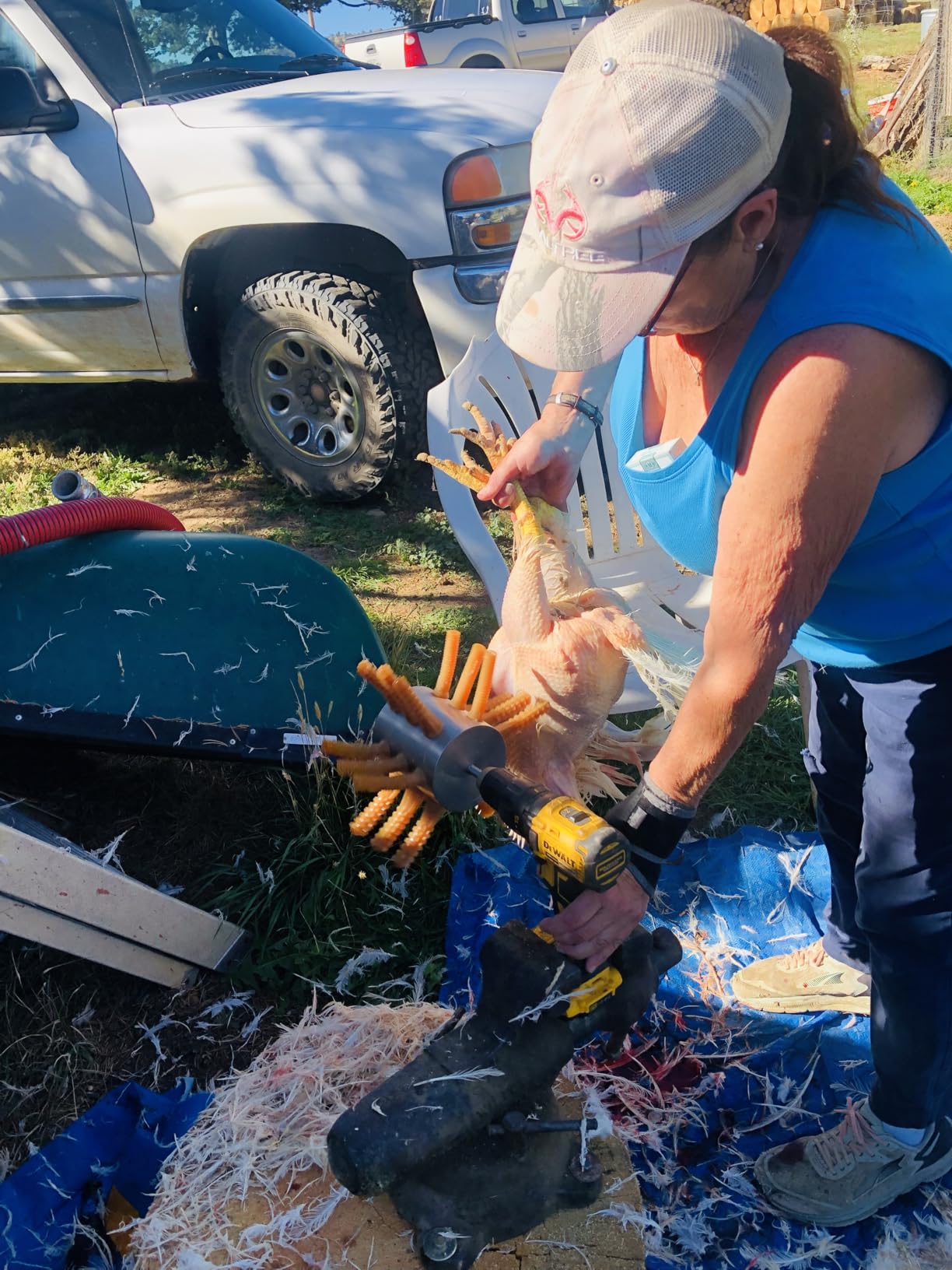
The single most useful tip in the reviews is to mount the drill in a vise on a workbench. That turns a two-person struggle into a controlled job and is the difference between this being pleasant and this being a chore. A corded drill is also consistently reported as outperforming a battery model, because sustained high speed is what the fingers need.
Its listed bird range covers chickens, geese, turkeys, guinea fowl and quail, and the ring and ball finger patterns handle both down and coarse feathers. In practice the bird weight matters far more than the species.
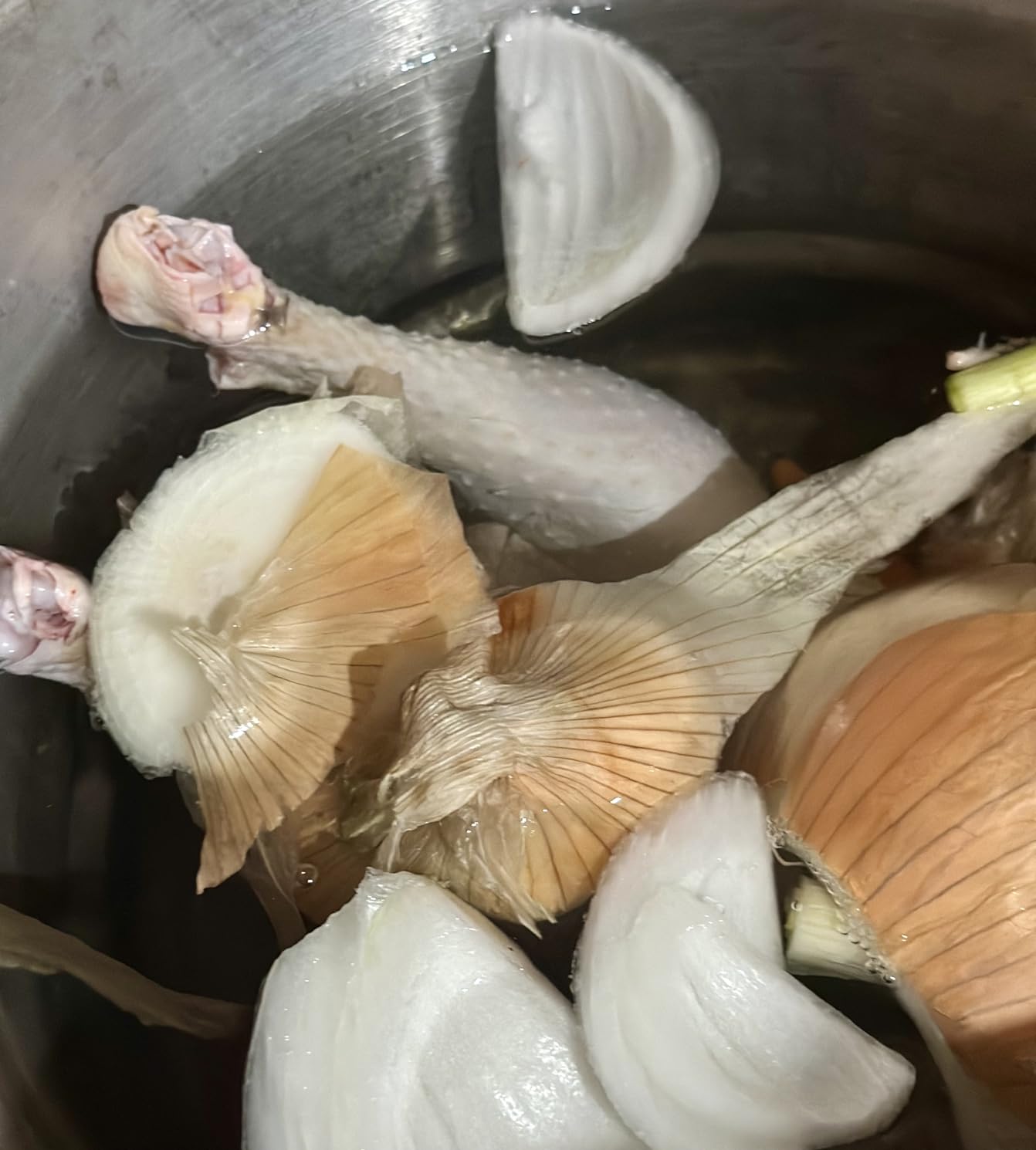
18 fingers versus 21 fingers, and does it matter
Not much, and the two attachments are close in practice. The PluckerUkraine 133-21 has three more fingers and a thicker one-piece body, and it uses a 0.4 inch chuck minimum rather than a 3/8 inch shank, which is a slightly easier fit on more drills. The HAWK BROTHER wins on barrel material grade and on the fact that its fingers are explicitly sold as replaceable.
Both are honest tools. Neither is a drum machine, and choosing between them is less important than choosing one and mounting it properly.
Where the budget attachment is the wrong buy
Three limits show up repeatedly in the reviews. Cleanup is genuinely worse: feathers and water go everywhere, and there is no chute to collect them. Freehand use on anything over a few pounds tires your arm before the bird is clean. And some stubborn feathers always need finishing by hand.
Owners also report it is not effective on Peking ducks, where hand plucking was faster. That is the waterfowl limitation again, and it is the line that separates a drill attachment from a drum machine: down-heavy birds need the tumbling action and the irrigation, not repeated passes.
7. Garvee 20 Inch Drum – 108 Fingers, Pure Copper Motor
Chicken Plucker Machine, 20 inch Drum Stainless Steel Poultry Plucker
Pure copper motor
108 ox-banded fingers
20 inch drum
Removable stainless drum
Pros
- 108 fingers give 360 degree coverage and strip fine down
- Removable food-grade stainless drum rinses clean easily
- GFCI-certified system and IP54 enclosure guard against moisture
- Reinforced handle and rubber wheels let one person roll it to the site
- Compact footprint stores between processing days
Cons
- Listing carries no brand-specific model designation so build consistency is hard to judge
- Review base is thin with a double-digit share of one-star ratings
- Rating trails the well-reviewed machines in this class
The Garvee pairs one of the highest finger counts in this roundup, 108 ox-banded rubber fingers on a 20-inch drum, with a pure copper motor. Both are real, and both are the kind of spec that gets written into a listing and then has to be tested. The claim is two 3 lb chickens in 10-30 seconds.
Finger coverage is genuinely the reason to look at this machine. 360 degrees of ox-banded rubber fingers, positioned to catch down as well as the coarse feathers, is the theory behind getting a cleaner bird on one pass than a 92-finger machine manages.
Water protection is well specified: a GFCI-certified electrical system with overcurrent protection and an IP54 waterproof enclosure with an inductive switch. The drum is removable and food-grade stainless, and the motor housing is waterproof, so the whole machine is designed to be rinsed.
At 65.3 pounds with a reinforced handle and two rubber wheels, one person can move it, and the 20 x 20 x 36 inch footprint stores in a barn or garage between seasons.
Here is where I would hesitate. The rating distribution is wide, 54% five-star against 14% one-star, and that pattern usually means unit-to-unit inconsistency rather than a bad design. The listing also carries no brand-specific model designation, which is exactly the detail you want when a motor is copper rather than an aluminium copy.
Does finger count decide how clean a bird comes out
Partly, and less than the drum speed and the scald do. Going from 92 to 108 fingers on the same 20-inch drum narrows the gaps between contact points, so less feather is left in the spaces the fingers do not reach. On a bird with heavy down that is visible. On a scalded broiler it is the difference between a good result and a slightly better one.
Owners who receive a good machine praise the finger coverage and the cleanability. The problem is you cannot tell in advance which you will receive, and that is the real cost of a thin review base.
Where the Garvee is the wrong choice
With 41 ratings and 14% of them at one star, you are buying a machine with a documented inconsistency rate. If your processing day is planned around a fixed weekend with a scalding pot going and help on hand, that risk is manageable. If you are processing on a schedule you cannot move, the Kitchener or the Yardbird is the safer spend.
The lack of a model designation also means parts are harder to source. Replaceable fingers are easy to replace generically, but a failed motor or a cracked switch is a bigger problem when there is no searchable part number.
8. VEVOR TM500BS/1 – 750W Budget 20-Inch Drum
VEVOR Chicken Plucker Machine, 20 in Drum, 750W & 275RPM Electric Chicken Plucking Machine with 98 Soft Fingers & Transport Wheels, Stainless Steel Feather Remover for Processing 2 Chicks Once
750W motor at 275 RPM
98 soft rubber fingers
Detachable drum
Overload protection
Pros
- Motor has enough power to handle turkeys as well as chickens
- Plucks 25+ birds at roughly 15-20 seconds each for most users
- Detachable drum with smooth walls and bottom scraper fingers speeds cleanup
- Assembles easily out of the box on well-packed machines
- Overload protection guards the motor on heavy loads
Cons
- Arrives dented with loose hardware and misaligned caster holes
- Thin sheet metal with sharp edges that can nick hands during assembly
- Finish peels like a metallic vinyl rather than true stainless
- Two wheels do not seat fully and it is heavy to move
The VEVOR is the most direct route into a full 20-inch drum without stepping up to a gear-driven 1 HP or 1.5 HP platform, and the motor surprises people. 750W at 275 RPM handling two 5-6 lb chickens in about 30 seconds, with owners reporting 25+ birds at 15-20 seconds each and, more importantly, enough power to take turkeys as well as broilers. For a first-time buyer working out whether a plucker is worth owning, that throughput is the whole argument.
The drum is detachable with smooth inner walls, which is the cleanup feature that matters most, and three bottom soft fingers scrape feathers off the drum floor and prevent clogs. Electrical safety is reasonable for the class: an IP54 weatherproof enclosure, food-grade 430 stainless, motor overload protection. The reinforced legs, larger rubber wheels and a handle cover the basics of transport.
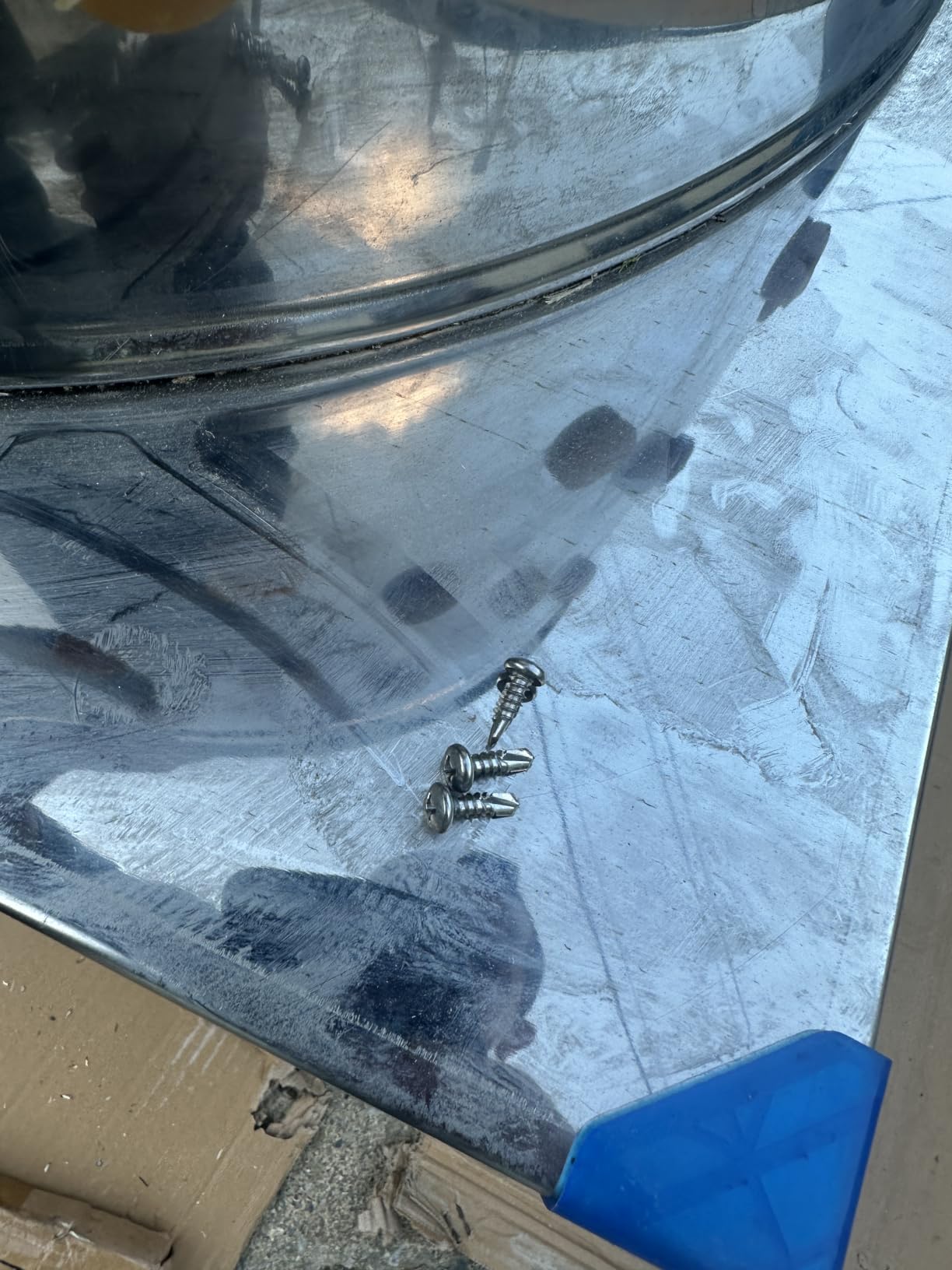
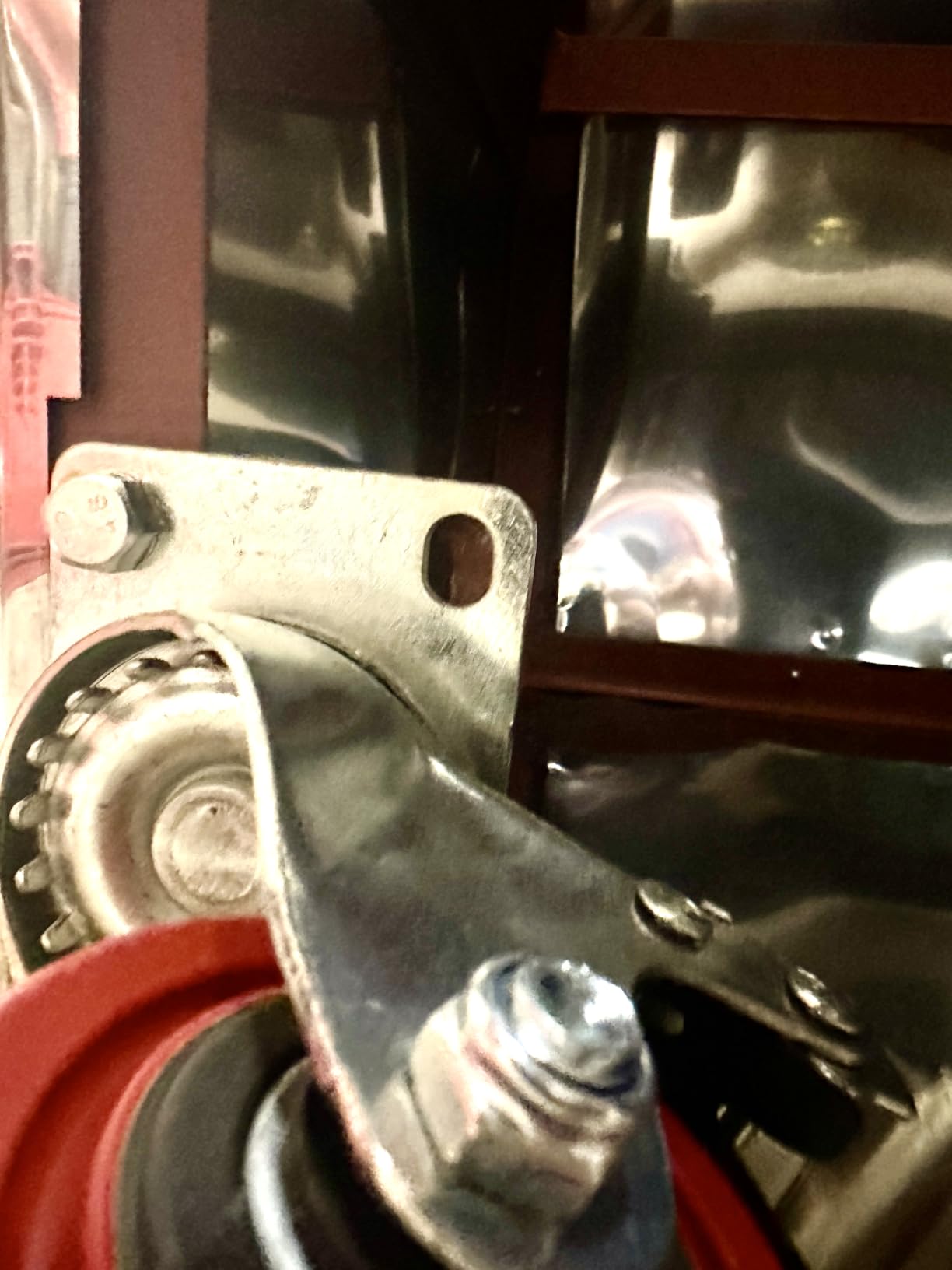
Now the honest part, and it is the same part every VEVOR owner repeats. The rating spread is wide, 60% five-star against 17% one-star, and nearly every negative review is about how the machine arrived rather than how it plucks: dented panels, loose hardware, caster holes that do not line up, thin sheet metal with sharp edges during assembly, and a finish that peels like metallic vinyl instead of being true stainless.
There is one specification discrepancy worth knowing. The title says 20 inch drum, and the feature copy describes a 17 inch drum plate. Ask before you buy, because the difference matters for bird size.
Is a 750W motor enough for turkeys
For most homestead turkeys, yes, and owners confirm it. A 750W motor spinning a 98-finger drum at 275 RPM will handle birds well beyond broiler weight, and the overload protection catches the rare jam. That is the surprise of this machine: the motor is not where the budget was cut.
What the lower power does cost you is recovery. If you over-scald a bird and it goes into the drum slick and heavy, a 1.5 HP machine keeps spinning while you finish the cycle. A 750W machine bogs, trips its protector, and you restart. Scald properly and this never comes up.
Where the VEVOR is the wrong buy
Assembly is the weak point. Inspect the machine the moment it arrives, because thin sheet metal with sharp edges and misaligned caster holes are the common complaints, and both are worth sorting before you bolt anything together. Gloves during assembly are not optional.
It also leaves some feathers behind even after an extended run, and no feather-catching tray is included, so feathers end up on the ground around the machine instead of in a pail. Budget for that in your cleanup routine rather than discovering it on the first processing day.
9. GarveeLife 20 Inch Drum – 500W, 106 Fingers
GarveeLife Chicken Plucker Machine, 20 in Stainless Steel Poultry Plucker with 106 Soft Fingers, GFCI Safe Waterproof Design Plucker Machine for Farms, Restaurants, Home
500W motor at 280 RPM
106 ox-banded fingers
20 inch drum
Removable stainless rollers
Pros
- 106 soft fingers sweep 360 degrees and pull down as well as feather
- 500W copper motor is appropriately sized for two 3 lb birds
- Removable stainless rollers and waterproof motor housing rinse down easily
- GFCI connector and IP54 enclosure give real protection around water
- Compact frame with handle and two rubber wheels
Cons
- Model number is a machine-generated string with no searchable designation
- Thinnest review base of the group so long-term reliability is undocumented
- Lowest average rating among the drum machines here
- Rating distribution is flatter than comparable machines
The GarveeLife is the smallest motor in the 20-inch drum class at 500W, and it is honestly specced for the job it claims: two 3 lb chickens in 10-30 seconds. That is a real homestead batch size. The 106 ox-banded soft fingers sweep 360 degrees on a 20-inch drum, with a pure copper motor winding behind them.
Cleanup is well thought out for the money: removable food-grade stainless rollers rather than a fixed drum, plus a commercial-grade motor in a specialized waterproof housing. Electrical protection is an overcurrent protector with a GFCI connector and an IP54 weatherproof enclosure with a fully inductive waterproof switch, which is a thorough water-safety spec for a budget drum.
Transport and storage are handled with a portable handle and two solid rubber wheels on a compact 19.68 x 19.29 x 34.25 inch frame at 69.1 pounds. That is a machine that lives in a corner of a barn and comes out twice a year, which is the pattern most of us follow.
The problem is evidence. With 25 ratings this is the thinnest review base in the roundup, and 3.9 is the lowest average among the drum machines here. The distribution is flat at 46% five-star against 13% one-star, which reads as uneven unit quality rather than a clear good-bad split.
When 500W is the right amount of power
When your birds are small and your batches are honest. Two 3 lb birds is a light load for a 20-inch drum, and at 280 RPM the 106 fingers will strip that bird quickly. If your flock is broilers at 4-6 lbs and you are processing in ones and twos, this machine is not being asked to do anything it was not built for.
Where 500W shows is load recovery and heavy birds. A turkey at 15 lb or a full two-bird load of 6 lb broilers pushes closer to the motor’s limit, and a bogged motor is exactly how the overload protection earns its keep. The 108-finger Garvee and the VEVOR both have more headroom at a similar outlay.
Where the GarveeLife is the wrong choice
With 25 reviews and a machine-generated model number, you have no way to research long-term reliability or source parts if something fails. The model number is a string rather than a designation, which means when you call for a replacement switch you have nothing to quote.
If your processing day involves birds you cannot easily reschedule around, the thin evidence is the deciding factor rather than the specs. Both of the other 500W-adjacent options here have a documented record. If you buy this one, buy it for the lowest-risk flock you have.
10. Roots and Harvest – 1.2 HP Planetary Gear Motor
ROOTS and HARVEST Chicken Plucker De-Feather Remover Poultry & Fowl Food Processor Stainless Steel Heavy Duty Electric 1.2HP 120VAC 280RPM Planetary Gear Motor 92 Soft Fingers 20″ Drum Diameter
1.2 HP 120VAC at 280 RPM
Planetary gear motor
92 soft fingers
20 inch drum
Pros
- 1.2 HP planetary gear motor pairs high power with high torque
- Planetary gear drivetrain designed for high torque and long service life
- 92 soft fingers treat the skin gently
- Stainless steel body suits food processing and cleans easily
- 20 inch drum handles a range of bird sizes
Cons
- Listing copy is thin with no spec table dimensions or finger detail to compare
- Smallest review base of the drum machines at 16 ratings
- One-star reviews run above 10 percent
- Thinnest published specification of any drum here
The Roots and Harvest has the best motor specification in this roundup that is not a Yardbird: a 1.2 HP 120VAC planetary gear motor running at 280 RPM, driving 92 soft fingers on a 20-inch stainless drum. Planetary gear drivetrains are built for high torque and long service life, and at 69 pounds this is a solidly built machine on paper.
That drivetrain is the entire reason to consider it. Torque is what lets a drum keep turning when a wet bird wedges against the wall, and a planetary gearbox delivers that at lower RPM than a direct-drive motor of the same size. For heavy birds processed badly scalded, it is the most forgiving platform here.
The stainless steel body is food-appropriate and easy to clean, and the 20-inch drum handles a range of bird sizes. The listing describes it as easy to clean, large capacity and fast, which is not much information but is consistent with the machine’s class.
And here is the problem. Sixteen reviews is the smallest base of any drum machine here, the rating is 4.0, and one-star reviews run above 10 percent. You are committing to the machine with the least owner evidence and the thinnest published specification, on a listing that gives you no dimensions, no spec table and no finger detail to compare against rivals.
Is the planetary gear motor worth paying for
The technology is worth something real. The Kitchener uses the same 1 HP planetary gear transmission and holds the highest rating in this roundup, which is evidence that the design works when it is executed and supported properly. The Roots and Harvest is a different manufacturer using the same approach at 1.2 HP.
Whether the premium is worth it depends on what your birds weigh. If you are processing turkeys and geese and you are not fast with a scald, high torque is the feature that saves your processing day. If you are processing broilers, the Kitchener gives you the same gear-driven character with a thousand reviews behind it.
Where the Roots and Harvest is the wrong buy
You are buying a motor, not a machine. The tub, the fingers, the housing and the switch are all undocumented on this listing, and those are the parts that determine how long it lasts. The 92 fingers sit at the low end among the 20-inch drums here, and the 280 RPM spin is the slowest of the big-motor group.
If the torque is worth it to you, buy it knowing you are taking the durability bet on a company with a thin US support record. If you want the same drivetrain with evidence behind it, the Kitchener is the rational choice, and it is the less expensive of the two.
How to Scald Chickens Before You Pluck Them
Yes, you have to scald. Water at 145-155F loosens the feather follicles so the rubber fingers pull feathers instead of skin, and the skin should feel waxy and soft when you pinch it on the breast. If a feather does not come out with a firm pull on a scalded bird, it will not come out in the machine either.
This is the single most important thing in this article. A surprising number of people conclude a plucker is broken, list it, and go back to hand-plucking, when the machine was fine and the scald was cool. If your birds come out with pin feathers and torn skin, fix the scald before you blame the drum.
Heat the water to 145-155F and hold it there. A stock pot on an outdoor stove works for most homesteads. A dedicated scalder that holds a constant temperature is faster and more consistent, and it is the reason waterfowl scald results are so much better on a proper unit.
Dunk each bird by the legs for 3-5 seconds. Submerge it fully, hold it under, and count. Longer is not better past the point where the skin starts to tear.
Test before you commit the whole batch. Pinch the breast skin. Waxy and soft means it is ready. Slippery and glassy means it needs a few more seconds. Tight and papery means you are done and should not go longer.
Pluck immediately, one bird at a time out of the water. Feathers start to set as the bird cools and dries, so a scalding pot with a full batch sitting in it is a scalding pot full of birds you will hand-finish.
Waterfowl need longer. Ducks and geese carry heavy down that resists release far longer than a broiler’s feathers, and owners report noticeably better results with an extended hold. A 10-12 lb turkey goes through well; past 20 lb you are guiding it through by hand.
Set up the water before you set up the machine. A Y-valve on your garden hose lets one line feed the drum’s irrigation ring while a second fills the scalding pot, which removes the single most annoying part of the day: walking back and forth with a bucket.
What Goes Wrong With a Chicken Plucker and How to Avoid It
Nearly every complaint in this category is one of six predictable things. All six are avoidable, and none of them are the machine’s fault most of the time.
Remaining pin feathers and incomplete plucking. Almost always an under-scald, or stopping the cycle before it finishes. Owners who switched the motor off early had to re-drop the birds. Let the full cycle run.
Torn skin and rub marks. Overloading the drum so birds cannot tumble properly, or running a large bird on its own against the drum wall. Two birds per load lets them roll against each other instead of grinding.
Broken wings and legs. Faster drums with more aggressive finger grabs break more, and the trade is direct. A homestead should optimise for intact birds, not seconds per bird.
Birds stuck in the drum. Large birds left alone in a spinning drum will wedge and rub one spot. Guide heavy birds by the legs or neck, and never reach into a running drum.
Rust and pitting on stainless. Unsealed seams and rivets trap water, and a machine left damp will spot even with a stainless skin. Rinse, dry fully, store under cover.
Switches and electrical faults. Cheap push-button switches fail intermittently on budget machines. Check that the ground wire is not routed through the switch contacts, and keep the GFCI and the motor housing away from the irrigation spray.
Two more that catch people out on processing day. Transport wheels are sized for a concrete floor rather than for dirt, and few people process birds on a slab. If your processing site is a garden bed, mount the machine on a garden cart with large tires rather than dragging it across the ground.
Level the machine, too. Set it slightly downhill and irrigation water runs onto the motor, tripping the safety cutoff mid-cycle, which is the most confusing failure on a new machine because nothing is actually broken.
Feather disposal is a biosecurity question, not a tidiness question. Bag the feathers from the chute at the end of the session rather than leaving them to blow around the yard, and hose the processing area down before the birds go in the cooler.
Chicken Plucker Buying Guide: Match the Machine to Your Flock
The decision framework that matters is birds per year, then bird weight, then everything else. Here is how the format breaks down.
Under 25 birds a year: buy a drill attachment. A drum machine’s setup, water and cleanup will cost you more than the plucking saves, so get the 21-finger PluckerUkraine if you already own a suitable drill or the 18-finger HAWK BROTHER for its replaceable fingers. Mount it on a bench, and budget for a variable speed corded drill if you do not have one.
25 to 100 birds a year: this is where the 20-inch drum starts paying for itself, and where most homesteads land. Any of the Kitchener, SuperHandy, Yardbird or VEVOR formats will work. Buy on motor class and evidence: 1 HP and above, a removable drum you can hose, and the deepest review record you can get for the money.
100 to 300 birds a year, including turkeys: motor torque is the priority. A 1.5 HP machine at 300 RPM or a 1.2 HP planetary gear motor will keep turning when a 20 lb bird wedges, and that is the difference between a good day and a restart. The Yardbird 21833 and the Roots and Harvest are the picks here.
Over 300 birds a year: this roundup is the wrong guide. A homestead drum plucker is a part-time machine, and a 300-plus bird operation needs a commercial tub plucker with a much larger capacity and continuous duty ratings.
Now the four criteria from earlier, with the numbers attached. Motor power: 0.5 HP is the floor, 1.5 HP is the practical ceiling for a homestead. Drum capacity: 20 inches for anything over 8 lb birds, spinning 275-300 RPM. Water integration: a built-in irrigation ring with a standard hose connector, and a Y-valve if you are filling a scalding pot from the same line. Cleanup: a removable food-grade stainless drum and a gasket-sealed or waterproof motor housing, because the machine has to survive a decade of being wet.
Two questions I would ask before buying. First, where is the machine going to live between processing days, and does it fit through the door? Second, where will you process birds, and can the machine get there on its own wheels? If the answer to the second one is dirt or gravel, plan on a cart.
Finally, the renting question. If you process birds once a year and this is your first season, renting is a defensible choice. Ownership usually wins from the second season onward, and a bought machine can be lent out to neighbours to recover part of the cost.
If you are still building out the flock, the coop heater guide covers winter conditions and the incubator roundup covers the other end of the cycle.
Frequently Asked Questions
What is the best machine for plucking chickens?
The Yardbird 21833 is the best all-around chicken plucker machine for a homestead: a 1.5 HP motor at 300 RPM, a 20-inch stainless drum, 110 natural rubber fingers and a built-in irrigation ring, rated 4.3 across more than 1,200 reviews. If your birds are small and you process fewer than 25 a year, a drill attachment is the correct answer instead.
Do you have to scald chickens before using a plucker?
Yes. Water at 145-155F loosens the feather follicles so rubber fingers pull feathers instead of skin, and the skin should feel waxy and soft. If a feather will not come out with a firm pull on a scalded bird, it will not come out in the machine. Poor scalding is the most common reason people think a plucker is broken when it is not.
What is the best chicken plucker on the market?
For homesteads the answer is the Yardbird 21833, a 1.5 HP 20-inch drum plucker with 110 rubber fingers and an irrigation ring. The Kitchener FP-100 holds the highest average rating in the class at 4.5 across 1,008 reviews on a 1 HP planetary gear motor, and it is the pick if you want a deeply reviewed gear-driven machine.
What is the best chicken scalder?
A stock pot on an outdoor stove heated to 145-155F is enough for most homesteads, dunking each bird for 3-5 seconds. A dedicated scalder that holds a constant water temperature is faster and more consistent, and the improvement is most visible on ducks and geese, where the down needs a longer hold than a broiler’s feathers.
What are people saying about the Yardbird chicken plucker?
Owners report fast, clean plucking and sturdy stainless construction, with a 15-30 second cycle per bird confirmed by more than one independent reviewer and assembly at 15-20 minutes with hand tools. The recurring complaints are ergonomic rather than mechanical: no lifting handle, on-off controls that require kneeling beside the tub, and no built-in hook for the wash hose.
What are the differences between the Yardbird and the Vevor chicken pluckers?
The Yardbird 21833 uses a 1.5 HP motor at 300 RPM with 110 fingers, a removable food-grade stainless drum and a built-in irrigation ring, and it holds 4.3 across more than 1,200 reviews. The VEVOR uses a 750W motor at 275 RPM with 98 fingers, a detachable drum with bottom scraper fingers and overload protection, rated 4.0 across 34 reviews. VEVOR costs less up front and its motor still handles turkeys; the Yardbird has the review depth, the removable food-grade drum and the irrigation ring.
Final Verdict for 2026
The best chicken plucker machine for a homestead in 2026 is the Yardbird 21833. A 1.5 HP motor, a 20-inch stainless drum, 110 rubber fingers, a built-in irrigation ring and more than 1,200 ratings make it the pick with the deepest evidence behind it, and the machine that best survives a decade of being hosed down.
Buy the Kitchener FP-100 if you want the highest-rated machine and prefer gear-driven torque. Buy the Yardbird 44204 if kneeling to hit a switch has ever annoyed you. Buy the VEVOR if the drum format is the point and you can inspect it carefully on arrival. And if you process fewer than 25 birds a year, skip all of them and mount a drill attachment to a bench.
Whatever you choose, get the scald right first. A 145-155F pot and a waxy-skin test will do more for your processing day than any motor on this list.