
A monopod, also called a unipod, is a single telescoping leg that carries the weight of your camera and telephoto lens while you pan, track and reframe a moving subject. On a sideline it beats a tripod on three counts: it deploys in seconds, it will not trip anyone in a crowded technical area, and it is usually the one support your venue actually lets you bring through the gate. That combination is why the search for the best monopods for sports photography keeps coming back to payload, lock speed and how tall the thing extends.
Are monopods worth it for sports? The honest answer is that the value is mostly ergonomic rather than magical. A 400mm lens on a 1.4x teleconverter can weigh well over 20 pounds, and holding that against your chest for a 90-minute second half is what wrecks your shooting. A monopod takes that load so your arms and back stay fresh, and a head with adjustable friction adds a little damping on top. What it will not do is turn a single leg into a three-legged platform. Scepticism on that point is fair, and we lean into it rather than around it.
We went through twelve current monopods for this guide, weighing each one against the same questions: does the payload rating cover a real supertele rig, can you change height between plays without fumbling, and does the collapsed length fit a venue bag on a bus. Twelve models, seven carbon and five aluminum, ranging from 360 g to 1580 g. Every specification and rating below comes from the manufacturer listing and the review record for that specific model.
Two things to sort out before the list. Mount the camera under the lens tripod collar rather than under the body, which is the most repeated mistake in the photography forums and the fastest way to make a monopod feel useless. And match the payload rating to your actual rig with headroom, because a printed rating is a static test figure and your setup will include a body, a lens, a converter and sometimes a two-stage head. If you have not settled on bodies yet, our cameras for sports photography guide covers the AF and burst-rate side of the equation.
Table of Contents
Top 3 Picks for Sports Photography in 2026

Manbily A-555L Aluminum Monopod
- 28mm aluminum leg
- 15.4 lb rating
- 61 inch reach
- 15.7 inch fold

The SIRUI P-326 takes the top slot because it is one of only two models here that pair a 22-pound rating with a sub-500 g carbon body and a 15-inch collapsed length. Six carbon sections and silicone twist locks make it a sideline tool rather than a shelf ornament, and the 4.6 rating across 1275 reviews is the deepest evidence base in this group.
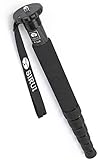
The Manbily A-555L is the value pick. A CNC-machined 28mm aluminum leg rated to 15.4 lb, quarter-turn locks that do not need a tool, and a 15.7-inch fold at 1.1 lb. If your glass is a 100-400mm rather than a supertele, this is where the sensible money goes.
The NEEWER TP41 is the budget pick and the surprise of the list. Long-lens owners report pairing it with glass like a 150-600mm and a 400mm f/2.8 without wobble, and the four fixed height stops with flip locks make height changes between plays genuinely quick.
All 12 Best Monopods for Sports Photography at a Glance (October 2026)
| Product | Specifications | Action |
|---|---|---|
| SIRUI P-326 Carbon Fiber Monopod |
|
Check Latest Price |
 Altura Photo 62-Inch Monopod Altura Photo 62-Inch Monopod |
|
Check Latest Price |
 SmallRig 65.6 inch Carbon Fiber Monopod SmallRig 65.6 inch Carbon Fiber Monopod |
|
Check Latest Price |
 iFootage Cobra 3 C180F-P Monopod iFootage Cobra 3 C180F-P Monopod |
|
Check Latest Price |
 Sirui P-424SR Carbon Fiber Monopod Sirui P-424SR Carbon Fiber Monopod |
|
Check Latest Price |
 Avella C324D Carbon Fiber Monopod Avella C324D Carbon Fiber Monopod |
|
Check Latest Price |
 Manfrotto 290 Carbon Fiber Monopod Manfrotto 290 Carbon Fiber Monopod |
|
Check Latest Price |
| Manbily A-555L Aluminum Monopod |
|
Check Latest Price |
 Koolehaoda MP-286C Carbon Fiber Monopod Koolehaoda MP-286C Carbon Fiber Monopod |
|
Check Latest Price |
 ULANZI TB12 Aluminum Monopod ULANZI TB12 Aluminum Monopod |
|
Check Latest Price |
| NEEWER TP41 Aluminum Monopod |
|
Check Latest Price |
 Manfrotto Element MII Aluminum Monopod Manfrotto Element MII Aluminum Monopod |
|
Check Latest Price |
The table above covers every model in this guide, ordered as reviewed. We list the reach, the rating, the section count and the lock or base system because those four numbers decide almost everything else once you know your rig weight and your eye height.
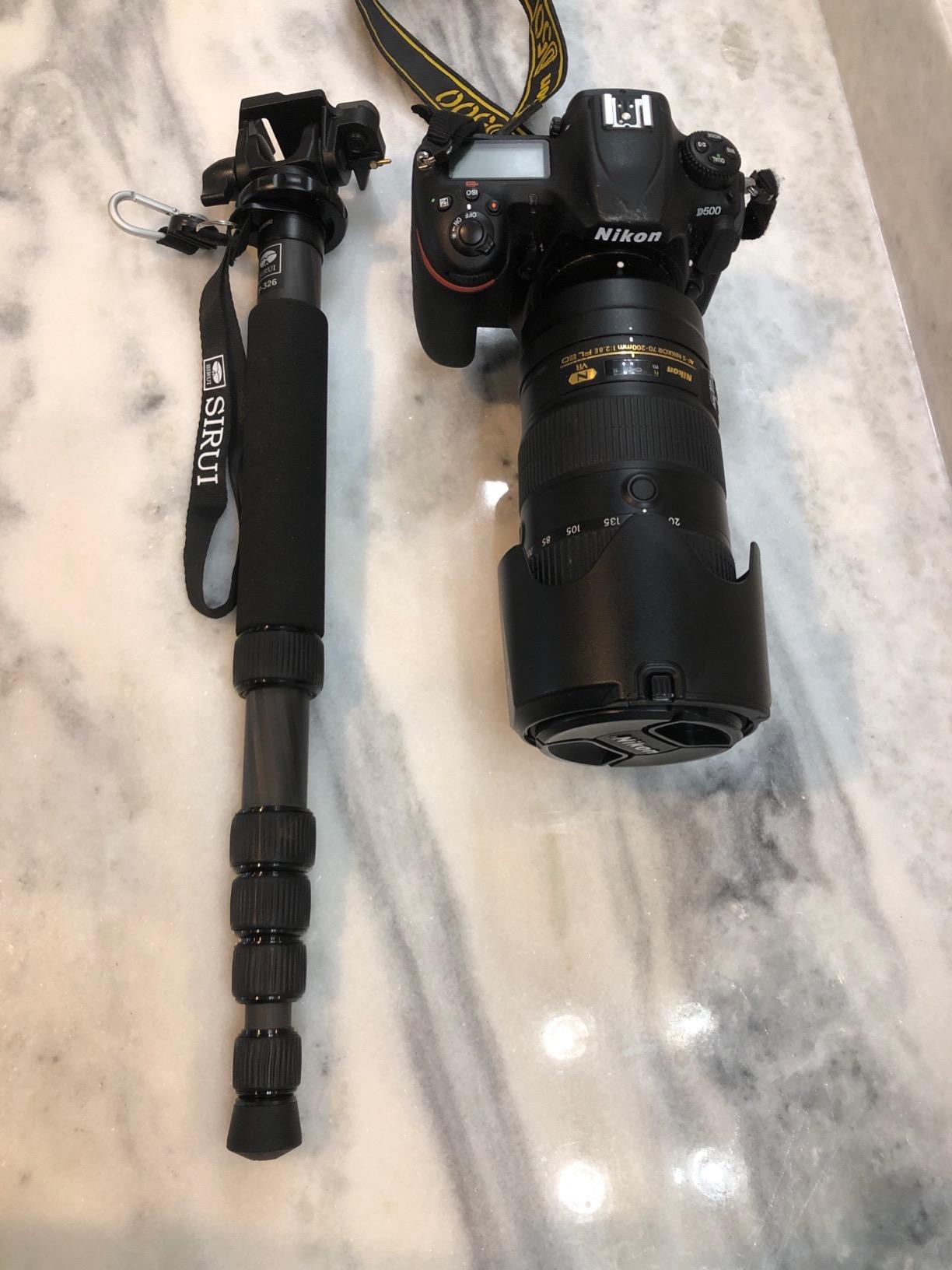
1. SIRUI P-326 Carbon Fiber Monopod – Best All-Round Sports Monopod
SIRUI Camera Monopod P-326 6 Section Carbon Fiber Compact Lightweight Travel Monopod
8X carbon fiber, 6 sections
60.6 inch reach, 15 inch fold
22 lb maximum load
400 g
Pros
- Lightweight 8-layer carbon fiber in 6 sections
- Reversible 1/4-20 and 3/8-16 mounting plate
- Wrist strap and hand grip for insulated handling
- Silicone twist locks rated for durability
- Folds to 15 inches for travel
Cons
- Four separate screw adjusters are slower than a single lever
- Single leg only with no tripod feet
This is the monopod we keep coming back to for sideline work. At 400 g it is one of the lightest carbon options in the test group, and at 60.6 inches extended it puts a mounted body at eye level for a shooter of average to above-average height. The 15-inch collapsed length means it lives in a normal camera bag rather than needing its own case.
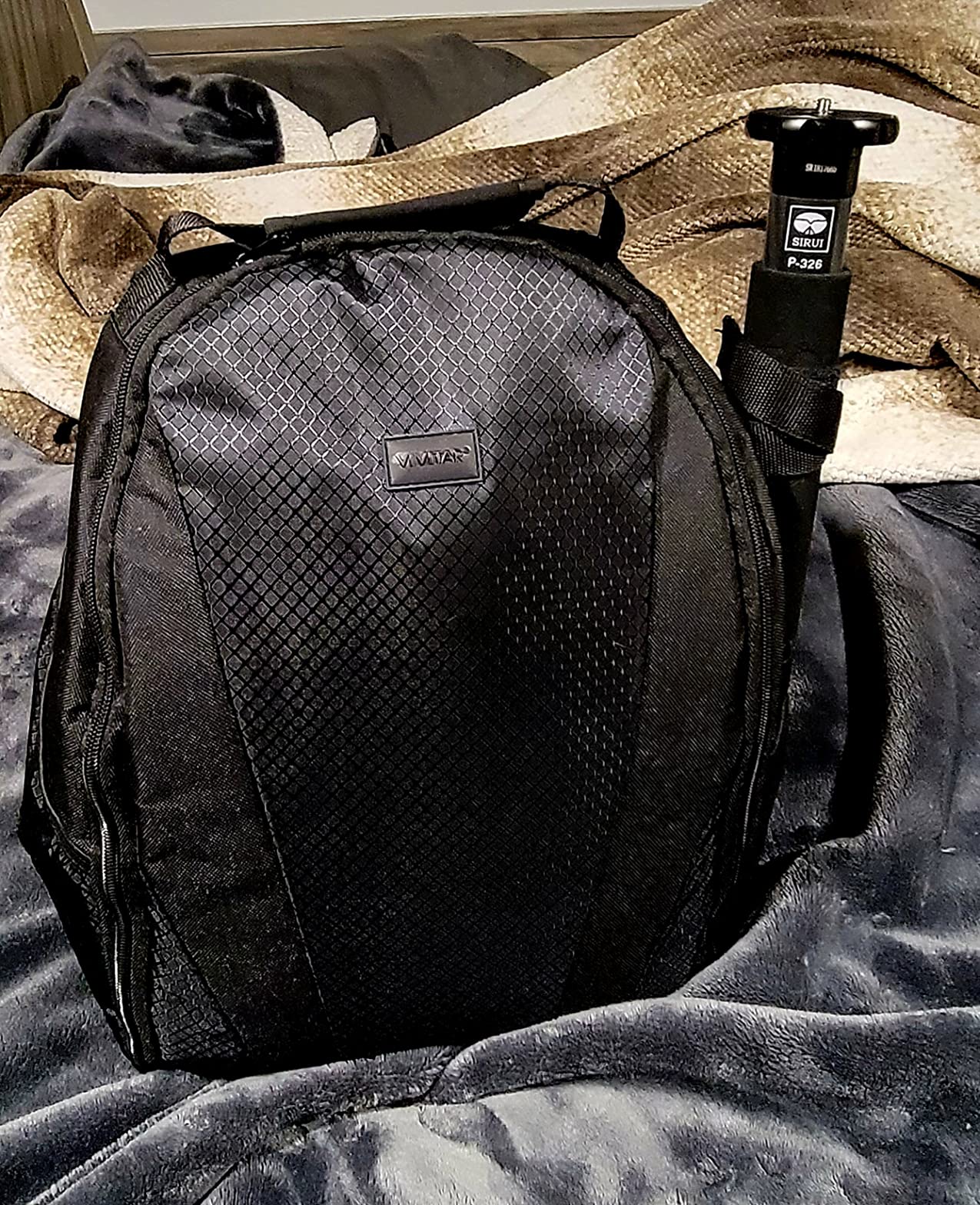
Six sections is more than most rivals, and that is the quiet advantage. More sections means a thinner top section and less wobble at full extension, which is exactly where a 300mm-plus lens starts to feel the difference between solid and springy. Owners on the DPReview forums single out this model for build quality, and a 4.6 average from 1275 reviews gives us more confidence in the long-run numbers than any other product here.
The mounting plate is reversible between the 1/4-20 and 3/8-16 screws, so it accepts a ball head, a tilt head or a direct camera stud with an adapter. The included wrist strap and foam hand grip are not decorative on a cold sideline; they are the difference between a controlled pan and a dropped camera at the end of a quarter.
Who the SIRUI P-326 suits
It suits anyone running a 100-400mm, a 200-600mm or a 400mm f/2.8 on a full-frame body who cares about carry weight. The 22-pound maximum load recommendation covers a 400mm f/2.8 with a 1.4x converter in most configurations, which is the rig most football and rugby photographers are actually holding.
It also suits photographers who move between venues on public transport. A 15-inch fold and 400 g means you can carry it on the same bag as two lenses without thinking about it.
Where the SIRUI P-326 falls short
The four separate screw adjusters are the honest drawback. Working five turns of a twist lock with one hand while the other hand is on the camera is slower than throwing a single lever, and on a monopod with this many sections there are four of them to reach. If your sport involves constant height changes between plays, weigh that against the SmallRig below.
There is also no detachable foot or base. It is a single-leg support, so you keep a hand on it whenever the foot is not planted in something solid.
2. Altura Photo 62-Inch Camera Monopod – Lightest Thing You Can Carry
Altura Photo 62-Inch Camera Monopod, Heavy Duty Pole & Camera Stand
Aluminum, 4 sections
62 inch reach, 16.75 inch fold
5 lb maximum load
9.44 oz
Pros
- Extremely light at 9.44 oz with a 16.75 inch pack size
- Includes a carry pouch and a 3/8 inch screw adapter
- Soft foam grip plus safety wrist strap
- Non-skid rubber foot with a retractable leg spike
- Converts to a walking stick
Cons
- Only rated for 5 lb
- which rules out big telephoto glass
- Pole flexes and flip-lock sections can loosen over time
- Top screw stud can twist out of its seat under torque
With 2361 reviews at 4.3 stars, this is the most examined monopod in the group, and almost nobody is buying it for a 600mm lens. They are buying it because it weighs 9.44 ounces, folds to 16.75 inches and comes with a pouch. That is a travel-first proposition and a perfectly good one.
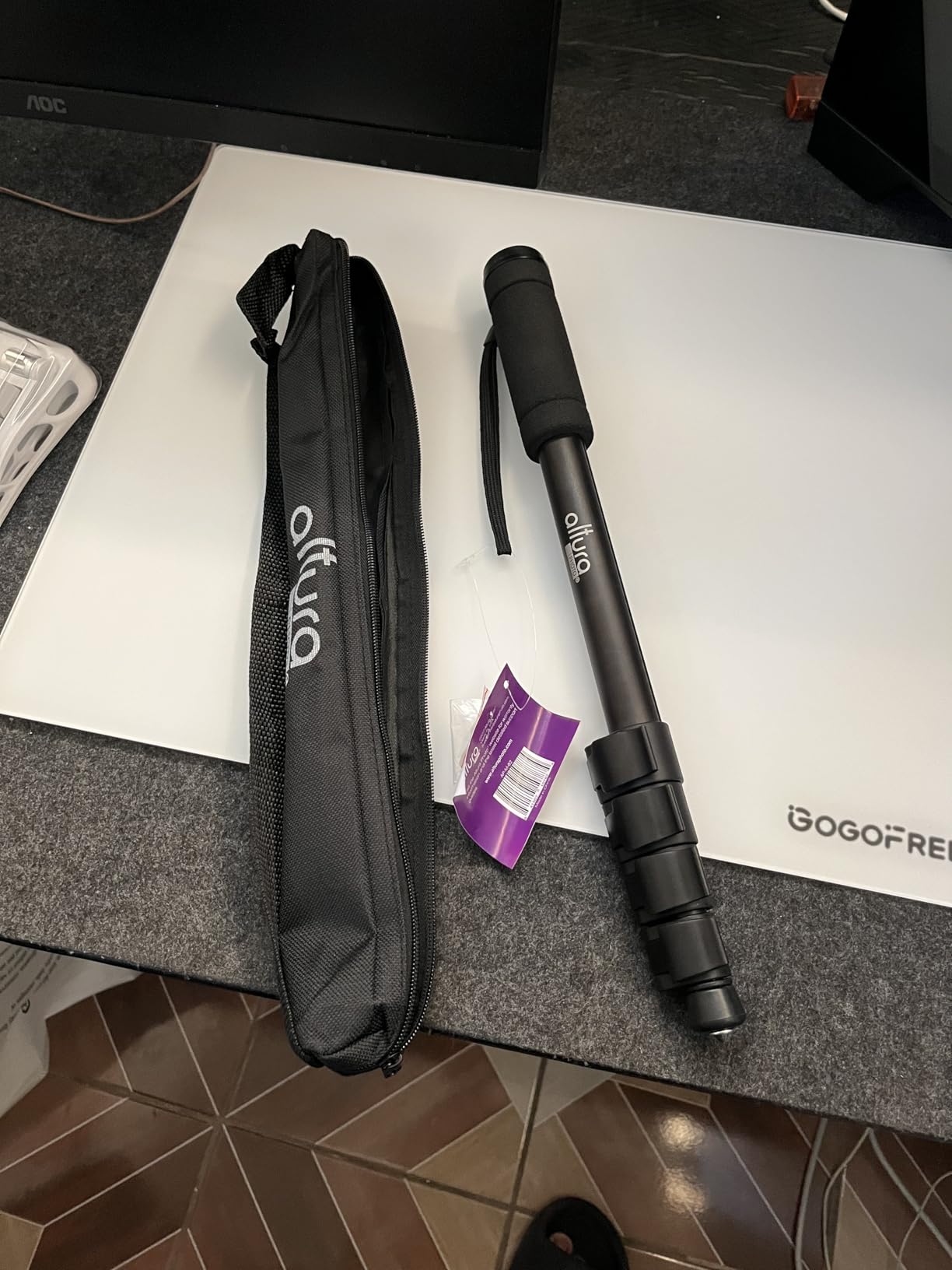
The retractable leg spike is the feature that sneaks up on sports shooters. A rubber foot for hard courts and stadium concourses unscrews to expose a spike for wet grass, mud and soft track surfaces, and that is a genuinely season-long advantage over fixed feet.
The foam grip and safety wrist strap are well judged by owners, and the included 3/8 inch screw adapter means you can mount a small ball head rather than relying on the bare stud. The 62-inch reach is taller than most of the aluminum options here.
Who the Altura Photo suits
It suits a photographer shooting with a mirrorless body and a 70-200mm at a rec league, a school match or a club fixture. It also works as a second piece of kit: a 9.44-ounce pole that lives in the side pocket of a bag you already own.
Its 2361-review pool skews heavily toward trekking and travel shooters, and that tells you where this product sits relative to the rest of the list. It is a carry-light companion for a light body, not a professional sideline column.
Where the Altura Photo falls short
The 5-pound ceiling is decisive for this topic. A pro body plus a 400mm lens is many times that figure, and owners report pole flex under anything approaching a serious telephoto load. The mounting stud can also twist out of its seat, which is unsettling when a 20-pound rig is hanging off it.
Recurring reviews mention loosened lock clasps and occasional cracked parts on arrival. If your sport is professional, this is a travel accessory rather than a working tool.
3. SmallRig 65.6 Inch Carbon Fiber Monopod – Fastest One-Handed Height Changes
SmallRig 65.6″/ 166.5cm Carbon Fiber Ball Head Monopod for Camera
4-section carbon fiber leg
65.6 inch reach, 26.8 inch fold
Legs 33 lb, head 11 lb
3.8 lb
Pros
- One-touch button lock for true one-handed height adjustment
- 4-section carbon leg reaches 65.6 inches
- Generous 33 lb leg rating with a 5 kg ball head
- Built-in bubble level for uneven ground
- 10 year EU spare part availability
Cons
- Heaviest option here at 3.8 lb
- Ball head is limited to 11 lb despite stronger legs
- 26.8 inch fold is long for airline carry-on
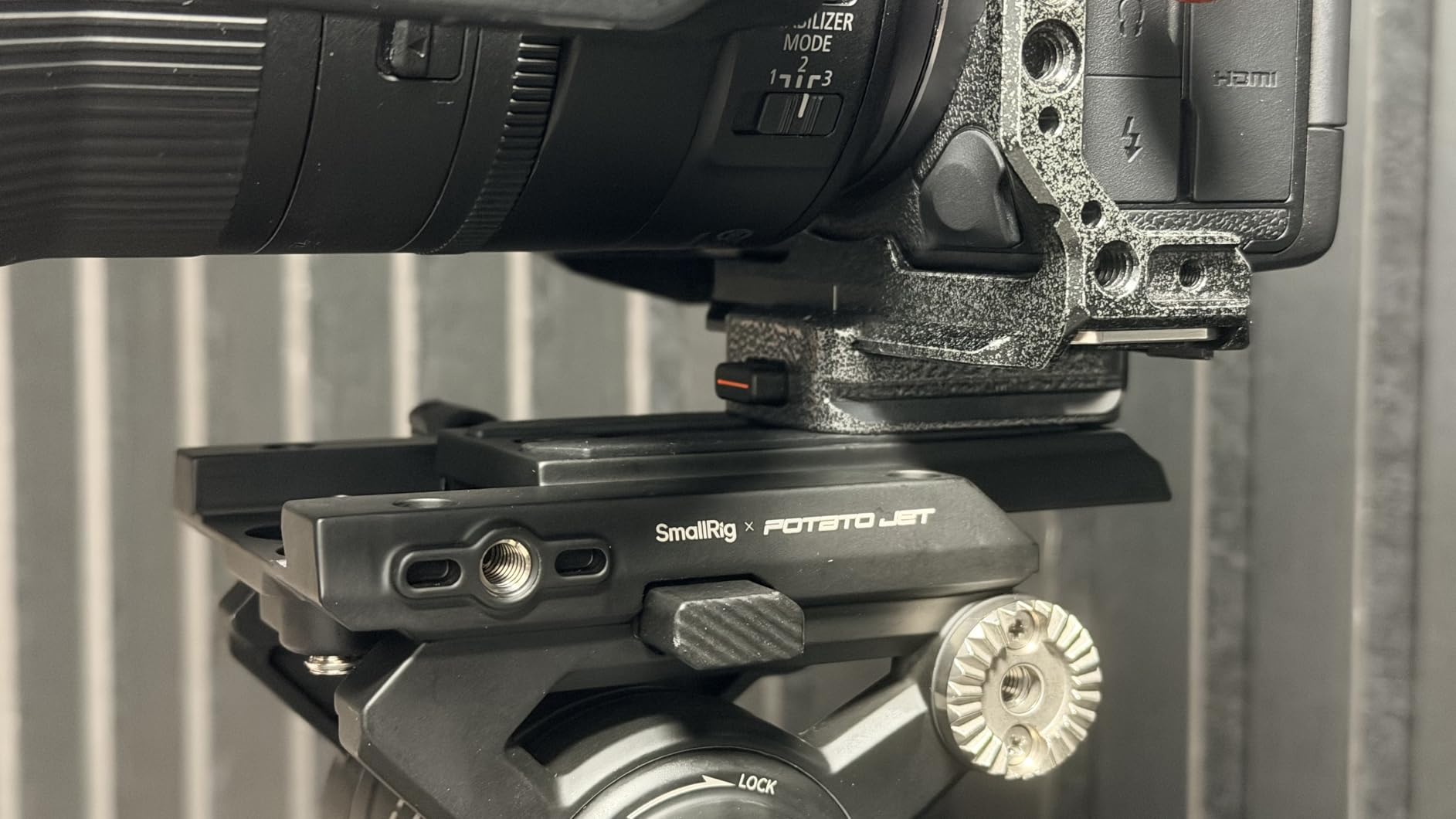
This is the monopod to buy if you change height constantly. The one-touch button locking system locks the leg at any position with a single press, which is a different category of operation from four separate screw adjusters. One hand on the camera, one thumb on the release, done.
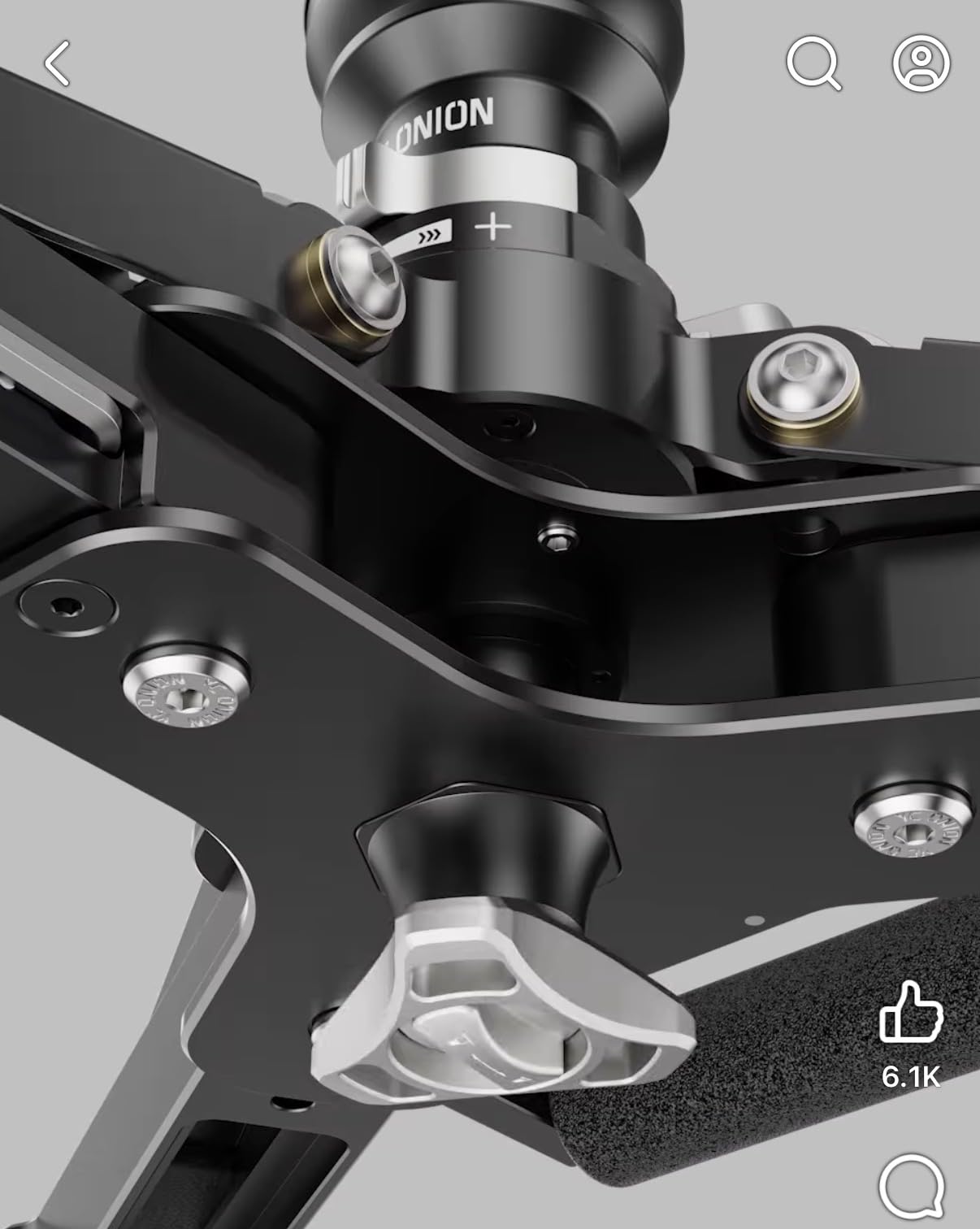
The number that matters for sports is the split rating: the carbon legs carry 15kg / 33lb while the included ball head carries 5kg / 11lb. That is a real constraint. If you are running a 400mm f/2.8 with a teleconverter, the head is your limiting part, not the leg, and you would swap the ball head for a heavier one.
Two smaller details earn their keep. The built-in bubble level is genuinely useful when you are shooting across uneven grass from the sideline, and the 1/4-20 locating hole plus the double-ended spigot with 1/4-20 and 3/8-16 male threads give you broad head compatibility. Spare parts availability in Europe for ten years is unusual in this category and matters for anyone shooting a full season.
Who the SmallRig suits
It suits the photographer who shoots a sport with frequent posture changes: courtside tennis, athletics from a low bench position, motorsport from kerb to kerb, or sideline rugby where you alternate between standing tall for rucks and dropping low for a try line.
It also suits anyone who wants a proper head out of the box. You get a ball head and a level, which is more than most competitors in this price bracket include.
Where the SmallRig falls short
At 3.8 lb it is the heaviest model we tested, and that weight sits on your forearm for a whole match. Over a 90-minute football game that fatigue is exactly what you bought a monopod to avoid.
The 11 lb ball head rating is the other limitation. Treat the legs as the headline number and the head as the one to check against your rig, and the picture makes sense.
4. iFootage Cobra 3 C180F-P Carbon Fiber Monopod – Built for Big Glass
IFOOTAGE Cobra 3 C180F-P Carbon Fiber Camera Monopod 71″
Carbon fiber, 2.8 lb
71 inch reach, 27 inch fold
17.6 lb vertical payload
Foot-pedal 360 degree swivel
Pros
- Foot-pedal lock swivels 360 degrees without bending down
- Quick-release plate swaps bodies in two steps
- 17.6 lb payload in a 2.8 lb carbon body
- 3-in-1 base works as mini tripod
- extension or hiking stick
- Convertible 1/4 and 3/8 mounting screws
Cons
- 13.4 inch foot spread is less stable in wind than a full tripod
- 27 inch collapsed length is long for airline travel
- Pedal and damping add moving parts that can need adjustment
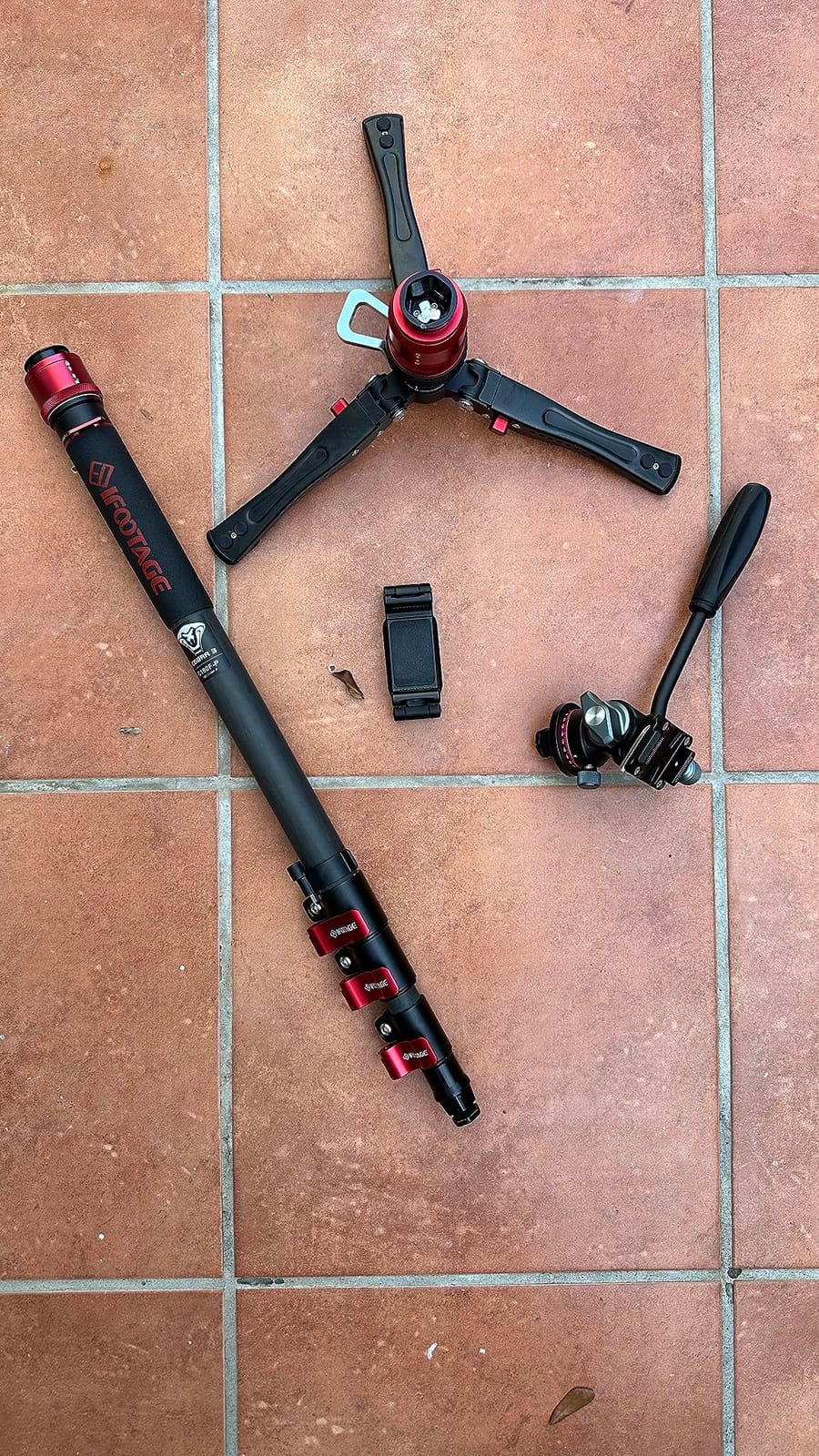
The Cobra 3 solves a specific sports problem: getting the camera from pointing at the near touchline to pointing at the far corner without crouching down. The patented foot-pedal locking system lets you swivel the whole upper section 360 degrees with your foot, which is the single most useful feature on this list for tracking fast lateral movement.
The quick-release top plate ejects and auto-locks in two steps, so swapping between a body with a short lens and a body with a supertele is a genuinely fast operation. A 17.6-pound vertical payload in a 2.8-pound carbon frame is an excellent strength-to-weight ratio, and DPReview forum users have described this system as impressively versatile, using it as a straight monopod or breaking it down modularly.
Working height runs from 5.9 to 71 inches, and the 3-in-1 design means the same unit becomes a tabletop mini tripod, a stabilizer extension or a hiking stick between assignments. The convertible 1/4 and 3/8 screws cover cameras, gimbals, action cameras, scopes and microphones, which makes it a dual-role tool for photo and video shooters.
Who the iFootage Cobra 3 suits
It suits anyone pairing a 200-600mm or 100-500mm with a 1.4x converter, because 17.6 lb covers the rig with a little margin. It also suits the dual-role shooter who wants a fluid option for tracking video in the same bag.
Motorsport and trackside photographers get a lot from the pedal swivel, because the subject is almost always moving laterally and often in the opposite direction to where you were last framed.
Where the iFootage Cobra 3 falls short
At 27 inches collapsed it is one of the longest options in the group, which is awkward on a plane and in an overfilled roller bag. The 13.4-inch foot diameter is fine for stability when you are holding it but does not turn it into a wind-stable tripod.
The pedal lock and adjustable damping are moving mechanical parts in a piece of gear you will drop in grass and mud. A forum thread about grit finding its way into foot mechanisms is a fair warning to rinse it after a wet fixture rather than ignore it.
5. Sirui P-424SR Carbon Fiber Monopod – Tallest Reach and Heaviest Rating
Sirui 6952060001753 P-424SR Carbon Fiber Photo/Video Monopod, Extends to 75″, Supports 26.5 lb, Gray
10-layer carbon fiber
74.8 inch reach
26.5 lb load rating
1580 g
Pros
- Tallest reach in this group at 74.8 inches
- Highest load rating here at 26.5 lb
- Patented panning grip rotates 360 degrees
- Removable feet convert between monopod and semi-tripod modes
- Padded case and shoulder strap included
Cons
- Heavy at 1580 g for a monopod
- Bulky 74.8 inch body is a large pack item
- Free-standing feet are not stable in breezy conditions
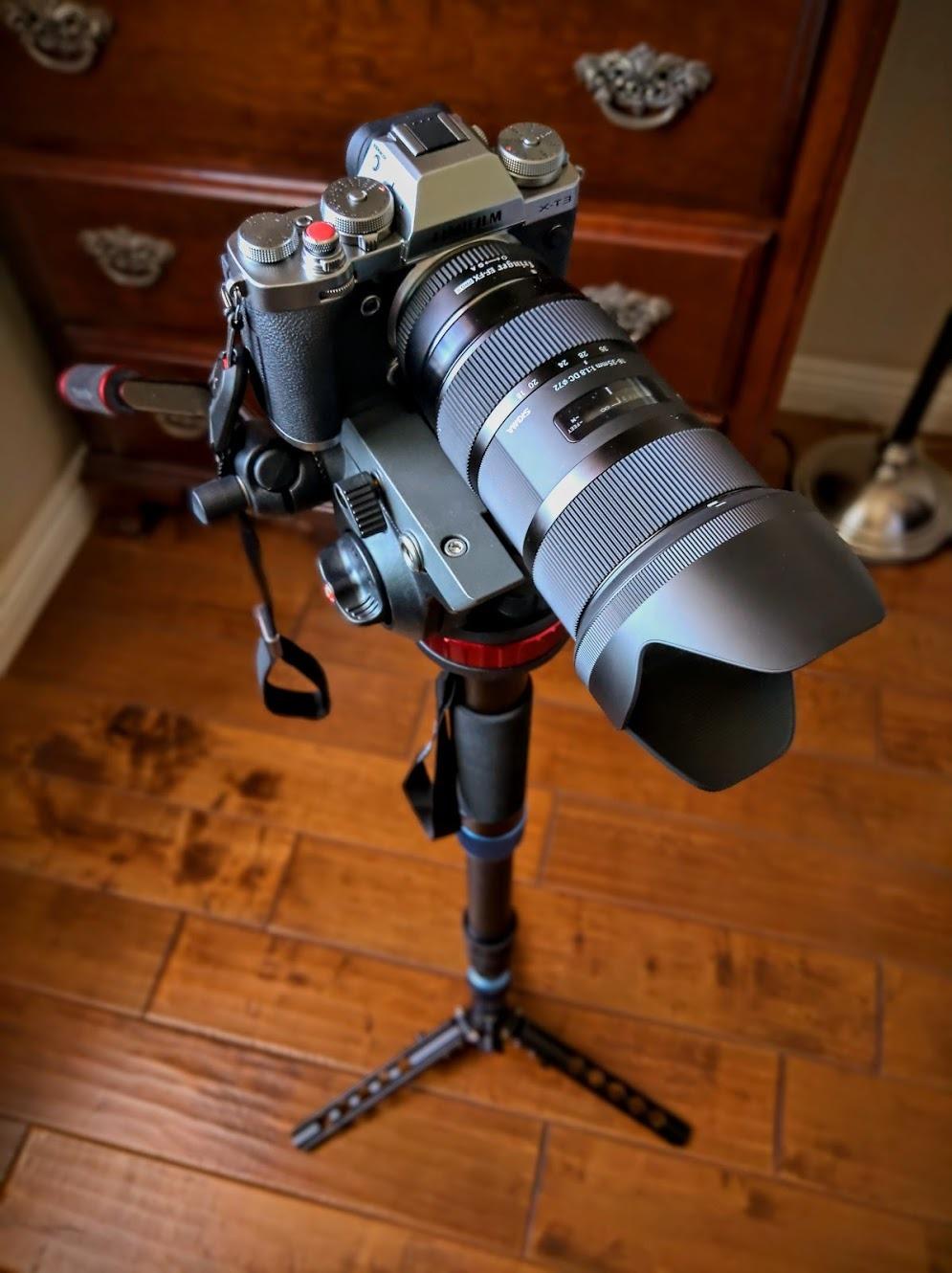
Two numbers define this monopod: 74.8 inches of reach and a 26.5-pound load rating. That combination is why it is the one to look at if you shoot over crowds, from a raised position behind seated spectators, or if you simply need a 400mm-plus rig fully supported at full extension.
The patented panning grip rotates a full 360 degrees with adjustable friction control on the base ball head, and for sideline sports that matters more than it first appears. A little drag on the rotation smooths out a hand-pan and gives you a repeatable feel frame after frame, which is what you want when you are following a runner for two seconds at a time.
Three fold-down support feet detach for standard monopod use, so the same unit works as a stick when you are moving and as a semi-tripod when you need to set the camera down between halves. Owners also note it can stand unattended indoors, which is genuinely useful at an indoor arena where the weather is not the problem. A 6-year limited warranty backs it, and the removable rubber foot and aluminum spike cover hard and soft ground.
Who the Sirui P-424SR suits
It suits tall photographers. At 74.8 inches it is the only model here that reaches comfortably above six feet without you leaning into the barrier, and that removes the most common complaint about shooting over a front row.
It also suits anyone whose rig genuinely exceeds 22 pounds, because 26.5 lb is the highest rating in this group and covers a 400mm f/2.8 with a converter and a two-stage head.
Where the Sirui P-424SR falls short
At 1580 g it is the heaviest carbon column in the test group, and that weight rides on your arm for the entire session. If you are walking a circuit or covering a tournament across several venues in a day, that adds up fast.
Owners are candid that the free-standing feet are not stable in wind, so treat the feet as a set-down convenience rather than a support you can leave and walk away from outdoors.
6. Avella C324D Carbon Fiber Monopod – Best Pivoting Base for Panning
Avella C324D Carbon Fiber 67 Inch Camera Monopod Professional Telescopic Video Monopods Base Tripod for Canon Nikon Sony Olympus Panasonic DSLR Camera
4-section carbon fiber
66.9 inch reach, 24 inch fold
13.2 lb load rating
2 lb
Pros
- Highest average rating in this group at 4.7 stars
- Removable tripod base gives three shooting configurations
- Pivoting base swivels 360 degrees and tilts 90 degrees
- Flip locks allow fast setup
- 13.2 lb capacity at only 2 lb of weight
Cons
- 24 inch collapsed length is long for travel packing
- Flip locks need periodic tightening with the supplied Y-key
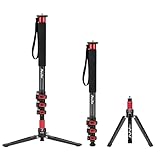
The Avella C324D carries the highest average rating of anything we looked at, at 4.7 across 178 reviews, and the reason is the removable pivoting tripod base. Detach the legs and you get a fixed monopod; keep them on and you have a portable monopod or a low-angle pod. The base swivels 360 degrees and tilts 90 degrees, with straightforward landscape-to-portrait switching.
For panning, that base is the point. A fixed-column monopod resists a horizontal sweep, so your wrist absorbs the momentum of the pan. A pivoting base lets the column rotate under the load and leaves the pan to the head and your upper body, which is a smoother result with less effort.
The 4-section carbon leg extends to 66.92 inches with flip locks, tightened with the supplied Y-style key, and a 6-year warranty is included. At 2 lb carrying 13.2 lb, it is one of the better weight-to-capacity ratios here, and it stays compact enough for a standard roller bag even though the 24-inch collapsed length is longer than the travel-focused models.
Who the Avella C324D suits
It suits panning shooters and anyone who changes orientation constantly. At 66.9 inches it clears eye height for most photographers, and 13.2 lb is enough for a 70-200mm, a 100-400mm or a 200-600mm on a lighter body.
It also suits shooters who want a semi-tripod option without carrying a second piece of kit, since the feet come off in seconds.
Where the Avella C324D falls short
At 24 inches collapsed it is a long pack item, and the spring-loaded flip locks need a periodic pass with the supplied Y-style key. Owners mention that requirement directly, so treat it as maintenance rather than a defect.
There is no customer photo record for this model in our research, so the assessment rests on the specification sheet and the written review consensus rather than owner-uploaded images.
7. Manfrotto 290 Carbon Fiber Monopod – Fast Levers for Long-Lens Work
Manfrotto 290 Carbon Fiber 4-Section Monopod (MM290C4US)
Carbon fiber, 4 sections
59.4 inch reach, 19.29 inch fold
22 lb rated capacity
1.1 lb
Pros
- Three thumb-lever leg locks for rapid height adjustment
- Light at 1.1 lb with a 19.29 inch folded length
- 22 lb capacity suits telephoto sports rigs
- Rubber leg warmers and angled wrist strap
- Includes 6.35mm and 9.5mm attachments
Cons
- Stationary top connection does not rotate between orientations
- No detachable feet so it cannot stand alone
- Some owners report a leg lock nut loosening over time
The Manfrotto 290 exists for one reason: speed. Three thumb-lever locks on four leg sections let you collapse or extend the whole column in one motion, with no twisting and no fine thread. It is 1.1 lb, extends to 59.4 inches and folds to 19.29 inches, and the 22-pound capacity covers most supertele combinations.
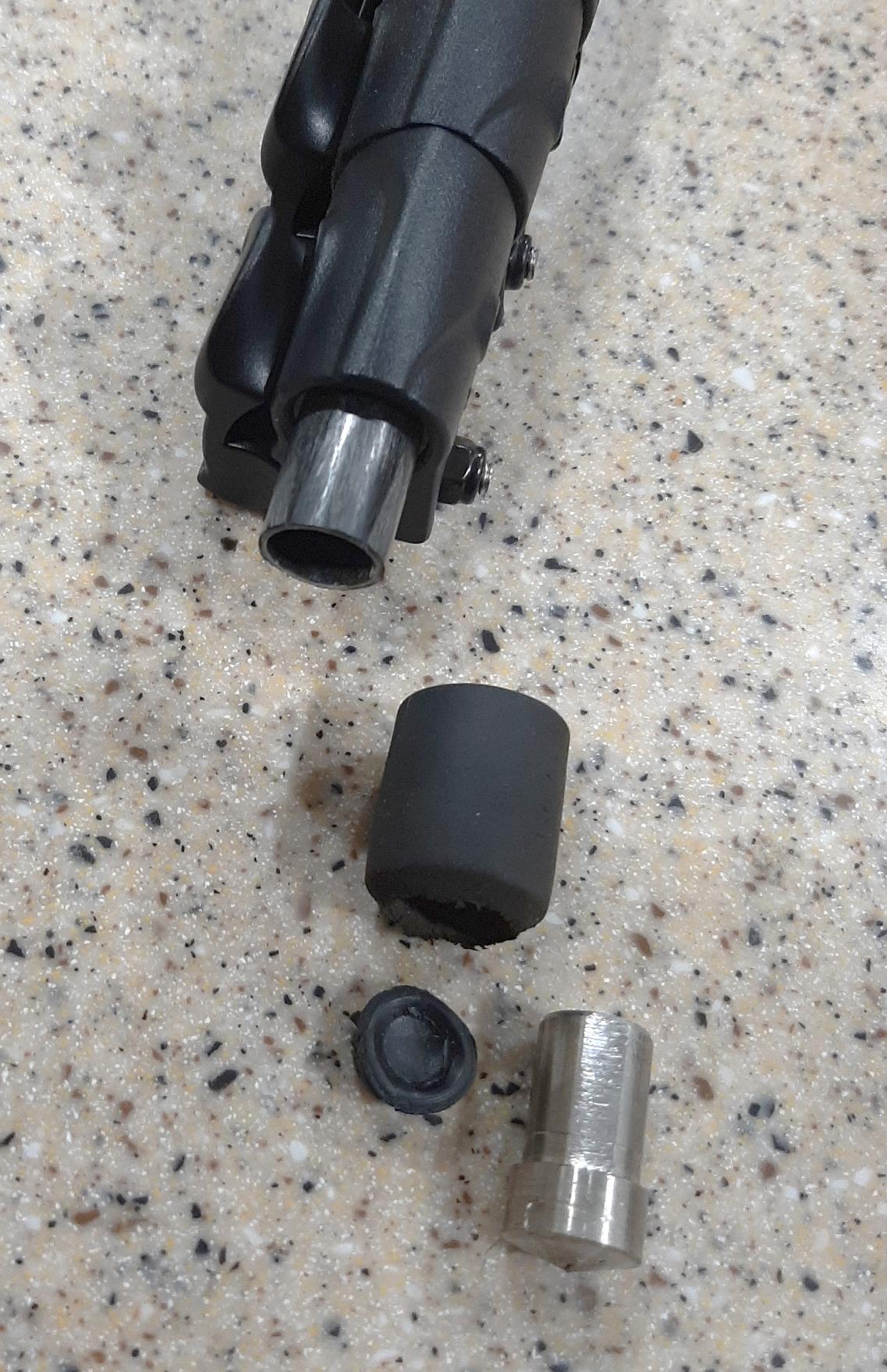
The leg diameters step from 25.3mm down to 14.7mm across the four sections, a sensible taper that limits whip in the upper section where a long lens magnifies it most. The rubber leg warmers and angled wrist strap are small comforts that matter on a cold evening fixture, and sports and birding owners consistently rate this model highly for that combination of fast adjustment and low weight.
It pairs well with Manfrotto RC2 and 234RC heads if you want independent pan control, and the included 6.35mm and 9.5mm attachments cover the common mounting standards. Note that this is not a water-resistant product, so keep it out of sustained rain.
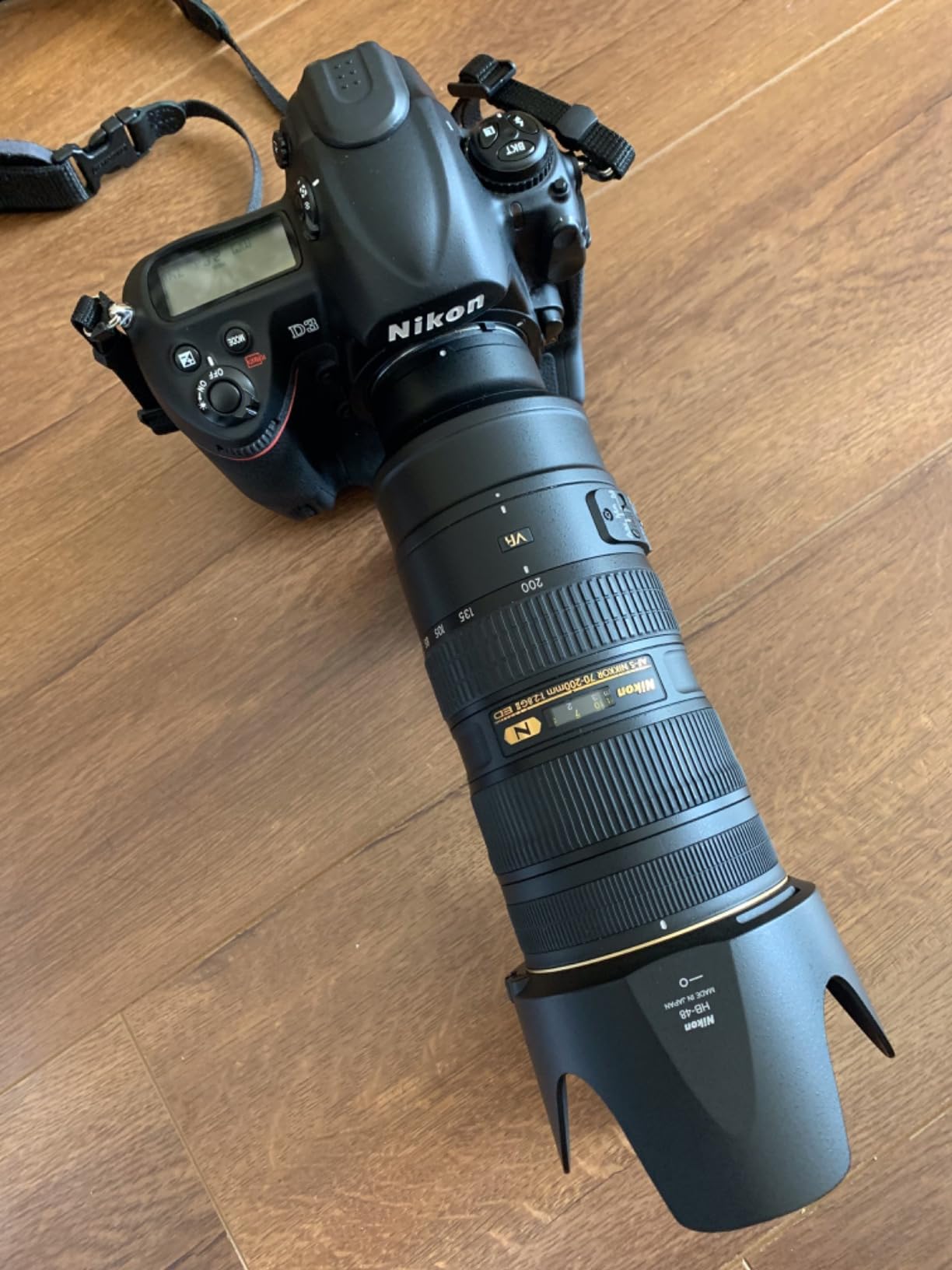
Who the Manfrotto 290 suits
It suits sideline photographers who extend and collapse constantly and want one-hand operation without a learning curve. At 59.4 inches it suits shooters of average height, particularly anyone who already uses a Manfrotto head and wants the ecosystem to match.
It also suits long-lens work where weight is the deciding factor. A 1.1 lb carbon leg with a 22-pound rating is one of the better weight-to-capacity ratios we found.
Where the Manfrotto 290 falls short
The top connection is stationary, so it does not rotate between landscape and portrait without loosening the head. On a sideline that is a real constraint when the action goes vertical, such as in rugby or a pole vault.
There are no detachable feet, so it cannot stand alone on uneven ground, and a small number of owners report the leg lock nut loosening enough to let sections separate. Check the locks at the interval during a season.
8. Manbily A-555L Aluminum Monopod – Best Value for Serious Glass
Manbily Camera Monopod Aluminum Portable Compact Lightweight Travel Monopod with Carrying Bag Walking Stick Handle,for DSLR Canon Nikon Sony Video Camcorder (Aluminum, Green&Black)
CNC aluminum, 28mm leg
61 inch reach, 15.7 inch fold
15.4 lb load rating
1.1 lb
Pros
- Quarter-turn twist locks set up in seconds
- 15.7 inch folded length at 1.1 lb
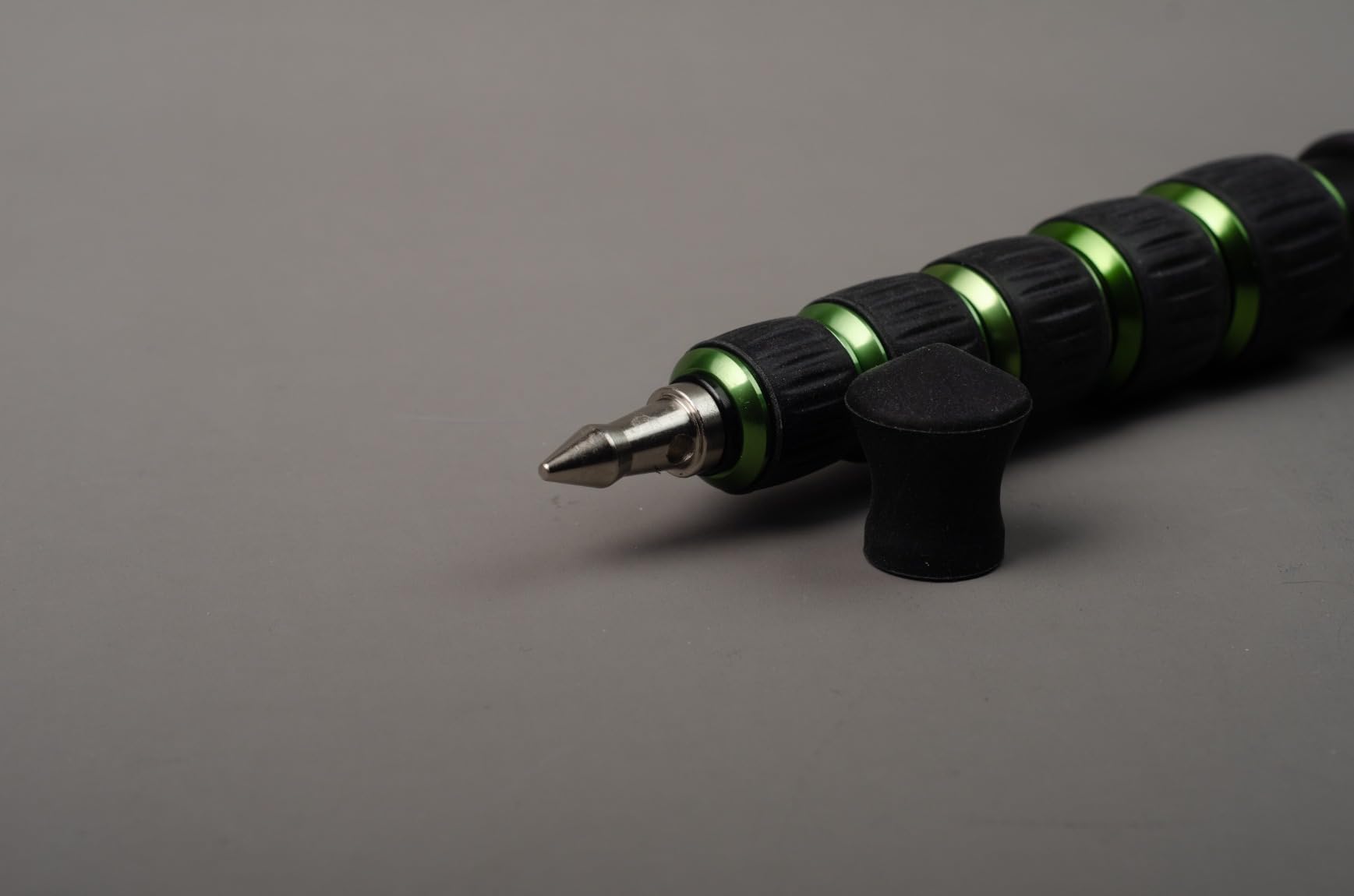
- 2-in-1 walking stick with rubber-to-spike foot
- 15.4 lb rating from a CNC-machined leg
- Reversible 1/4 and 3/8 screw on a rivet-reinforced plate
Cons
- Small base diameter is less stable with heavy optics
- Walking stick handle threads can strip
- Included phone holder can be unreliable
The Manbily A-555L punches above its weight class in a way that matters for sports. A 28mm CNC-machined aluminum leg rated to 15.4 pounds, quarter-turn twist locks that set the column from 15.7 to 61 inches, and a total weight of 1.1 lb. That is real telephoto capability in an entry-level package, and 603 reviews at 4.6 back the machining quality up.
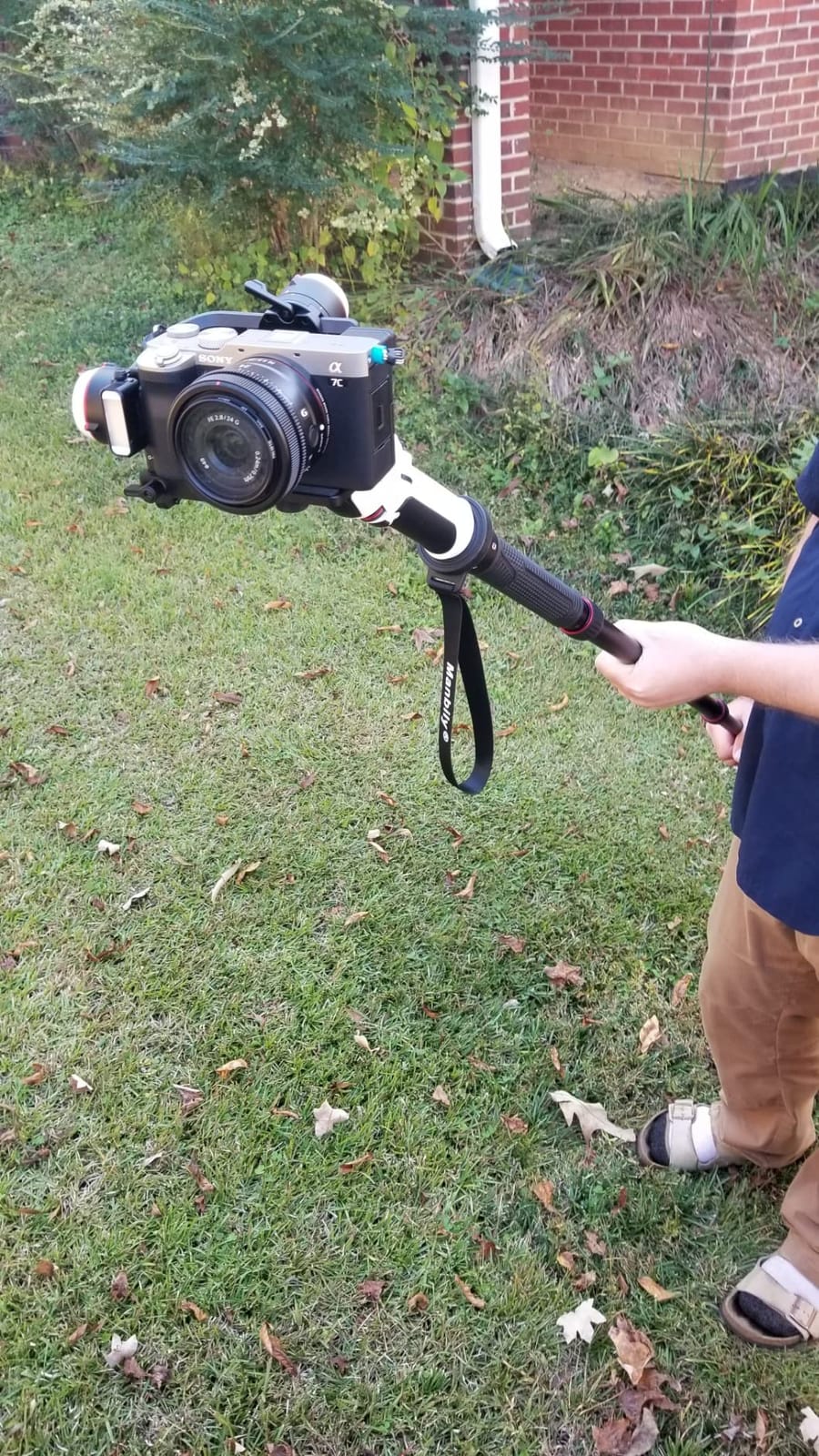
The rivet-reinforced top plate with a reversible 1/4 and 3/8 screw is a detail you notice when a rig is heavy. The textured anti-slip grip with a detachable wrist strap gives you a secure one-handed hold, and the 2-in-1 rubber and metal feet convert the same leg from a stable foot to a spike for grass and mud. A walking stick handle, phone holder, screw cap, Allen key and carry case all come in the box.
Owners frequently work the quarter-turn locks one-handed while the camera stays mounted, which is exactly the behavior you want between a first and second half when you need to drop from standing height to a low angle in seconds.
Who the Manbily A-555L suits
It suits club and semi-pro shooters with a 100-400mm or a 200-600mm who want one tool that doubles as a walking stick between venues. The 61-inch reach covers eye level for most photographers, and 15.4 lb handles a serious lens on a mid-size body.
It also suits anyone who wants a monopod and a trekking pole in one item, a combination that is genuinely useful at an event where you walk long distances on grass.
Where the Manbily A-555L falls short
The base diameter is small relative to the load, so a big-lens rig feels twitchier than a 15.4-pound rating suggests. Owners recommend adding a 3-leg connector base for heavy optics, and the monopod accepts one at the bottom of the column.
The walking stick handle threads are fine-grained and can strip if you overtighten them, and the included phone holder is the weakest accessory in an otherwise generous kit.
9. Koolehaoda MP-286C Carbon Fiber Monopod – 360 Grams and a 22 Pound Rating
Koolehaoda 62″ Camera Monopod 6 Section Compact Carbon Fiber Unipod
10-layer carbon fiber, 6 sections
62 inch reach, 15 inch fold
10 kg / 22 lb rating
360 g
Pros
- Very light at 360 g while supporting 22 lb
- 10-layer carbon fiber with good vibration damping
- Six sections fold to 15 inches
- Quarter-turn twist locks adjust without fumbling
- Bottom 3/8 thread accepts a mini tripod base
Cons
- Twist locks can feel stiff before they are worked in
- Included carrying bag is thin nylon
- No allen key included to tighten the top head
- Short foam grip section
At 360 g this is the lightest carbon monopod in the group, and it still carries a 10 kg / 22 lb rating. Six sections with anti-slip dustproof quarter-turn locks take it from 15 inches to 62 inches, so it extends higher than the SIRUI P-326 while folding to exactly the same compact length.
Owners rate the 10-layer high-density carbon fiber well for rigidity and vibration damping, which is precisely the quality you want under a telephoto lens at full extension. The reversible mounting plate carries 1/4-20 and 3/8-16 screws so it accepts most ball heads or a camera directly, and the included metal spike, wrist strap and carrying bag cover the usual outdoor kit list.
Who the Koolehaoda MP-286C suits
It suits photographers who move between venues on a tight budget of carried weight. At 360 g it is the kind of number where you stop noticing the monopod is in your bag, which is the entire point of a travel-oriented column.
The 62-inch reach and 22-pound rating make it a credible sports option for a 100-400mm or a 200-600mm on a lighter body, and the bottom 3/8-inch thread accepts a mini tripod base if you want to set the camera down between fixtures.
Where the Koolehaoda MP-286C falls short
The twist locks can feel stiff until they are worked in, which is a real annoyance during the first half of a season. The included carry pouch is thin nylon and does not match the build quality of the column itself, and no Allen key is included to tighten the top head against unwanted spinning.
There is no customer photo record for this model in our research, so our read comes from the specification data and the written review consensus of 146 owners rather than owner-uploaded images.
10. ULANZI TB12 Aluminum Monopod – Most Versatile, Lightest Footprint
ULANZI TB12 61-Inch Camera Monopod – Portable Tripod & Monopod Photography Stick with 5-Section Height, Aluminum Compact Travel Camera Stick for Canon, Nikon, Sony Mirrorless, DSLR, Easy to Carry
Aluminum alloy, 5 sections
61 inch reach, 16.9 inch fold
11 lb / 5 kg rating
0.83 lb
Pros
- Very low 0.83 lb weight with a 16.9 inch fold that fits a carry-on
- Tight snap clasps hold sections without slipping
- Doubles as a hiking or walking stick
- Height can be adjusted while the camera stays attached
- Rubber tip unscrews to reveal a 1/4 inch mount
Cons
- Screw-in base spike loosens and can rattle
- Rubber foot can detach from the spike
- Grip position sits high for balancing a long lens
- 5 kg load limit is modest for telephoto glass
The ULANZI TB12 sits at 4.7 stars across 360 reviews, matching the highest average in this group, and it earns it with sheer versatility. Five sections lock at four defined height stops of 16.9, 29.9, 41.3, 51.6 and 61 inches, and the tight snap clasps hold without creeping under load.
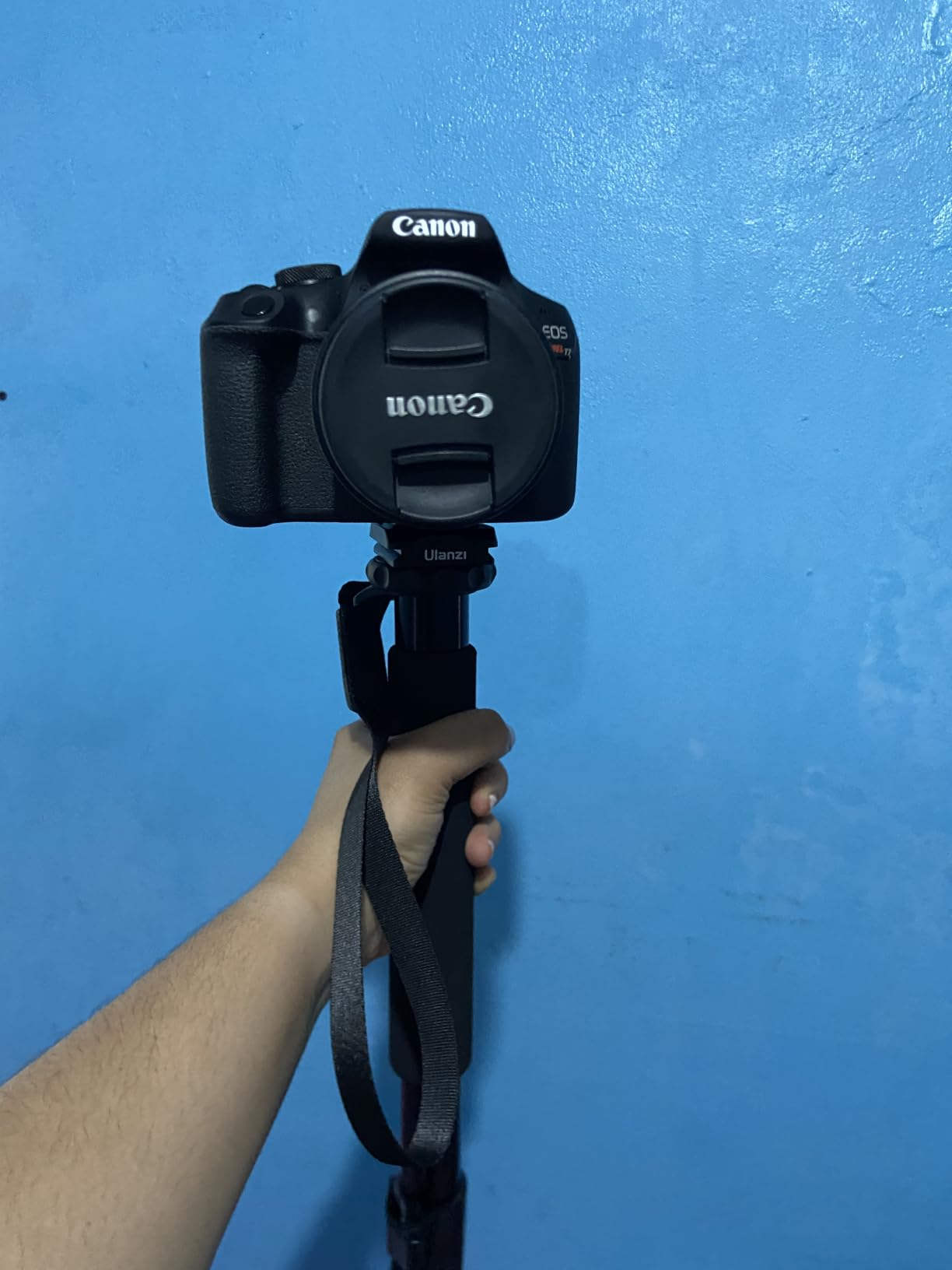
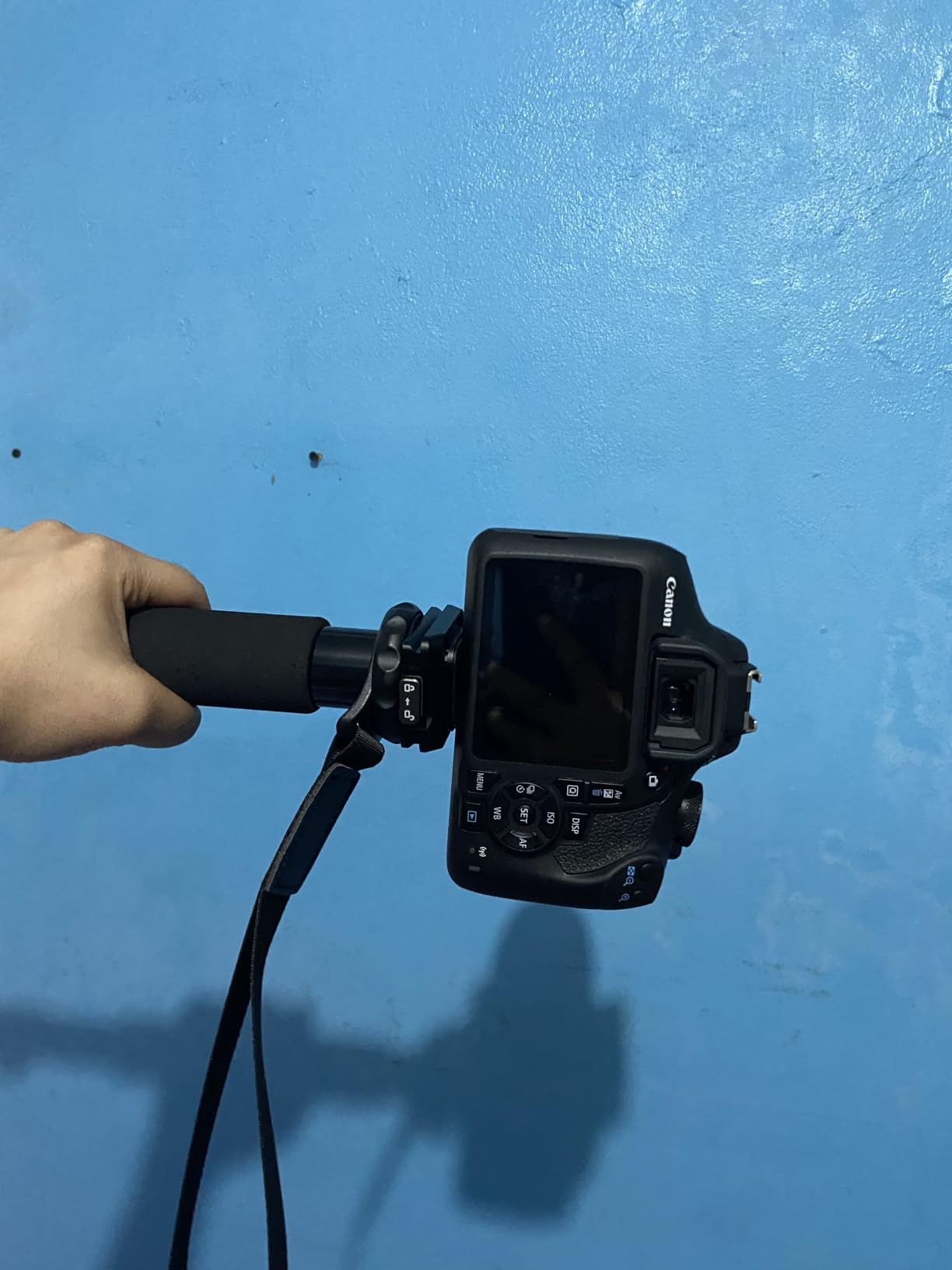
Height can be changed while the camera remains attached, which is the practical version of the fast-redeployment need most sports shooters describe. The same unit works as a monopod, selfie stick, walking stick, hiking stick or trekking pole, and the rubber tip unscrews to reveal a standard 1/4-inch stud for inverted use.
At 16.9 inches folded and 0.83 lb it fits a 20-inch carry-on, which matters if you are following a team across a fixture list rather than working one venue.
Who the ULANZI TB12 suits
It suits dual-role shooters who split time between stills and video, and travel photographers who want one stick rather than four accessories. The 5 kg rating is ample for a mirrorless body with a 70-200mm or a 300mm on a smaller frame.
It also suits anyone who wants to change height mid-action without putting the camera down first.
Where the ULANZI TB12 falls short
The screw-in metal spike at the base loosens and can rattle during use, and the rubber foot can detach from the spike entirely. Owners mention this repeatedly, so treat the base as a maintenance point rather than something to ignore on a wet pitch.
The grip sits high for balancing a long lens one-handed, and 5 kg is genuinely modest for a 200mm-plus telephoto. This is a support for lighter glass, not a supertele platform.
11. NEEWER TP41 Aluminum Monopod – The Budget Long-Lens Workhorse
NEEWER 61″/155cm Camera Monopod Stand, Aluminum Alloy, Portable, TP41
Aluminum alloy
155cm reach, 17.3 inch fold
17.6 lb / 8 kg support
0.88 lb
Pros
- Strong and stable base that works with long lenses
- Four clear height stops with quick flip locks
- Reversible 1/4 to 3/8 stud for broad compatibility
- Interchangeable rubber and steel spike feet
- Light at 0.88 lb and folds to 17.3 inches
Cons
- Telescoping sections can slip under heavy lateral pressure
- No tripod feet so it needs a constant grip
- One review reports a unit arriving not properly tightened
The NEEWER TP41 is the one that keeps surprising people. It weighs 0.88 lb, folds to 17.3 inches, and long-lens owners report using it with glass such as a Sigma 150-600mm and a 400mm f/2.8 without wobble, against a stated support figure of 17.6 lb / 8kg.
Four fixed height stops at 67.5, 94, 123 and 155cm with quick flip locks make the setup predictable, and the dual-headed stud lets you choose 1/4 or 3/8 depending on which head is in the bag. The interchangeable feet are the quiet winner here: nonslip rubber for hard courts and stadium floors, convertible steel spikes for soft or wet ground.
Who the NEEWER TP41 suits
It suits long-lens photographers working on a limited budget. The same body covers indoor and outdoor fixtures, which removes the usual compromise of carrying one foot type and hoping the venue cooperates.
It also suits anyone who shoots both photo and video, since the reversible stud and the 155cm reach cover a camera, a camcorder or a gimbal on the same column.
Where the NEEWER TP41 falls short
The sections can slip if you push sideways hard, so it works as a camera support and not as a walking stick. That is a real limitation and owners are clear about it.
There are no tripod feet, so it needs a constant grip, and at least one review reports a unit arriving not properly tightened. Check the locks before you rely on it. There is also no customer photo record for this model in our research, so we are working from specification data and the written review consensus of 199 owners.
12. Manfrotto Element MII Aluminum Monopod – Big Payload, Unsteady Locks
Manfrotto Element MII MMELMIIA5BK, Lightweight 5-Section Aluminium Travel Camera Monopod, with Wrist Strap, Rubber Grip, Twist Locks, Load up 15kg, for Compact Cameras, Mirrorless, DSLR, Black
Aluminum, 5 sections
159cm reach, 43cm fold
15 kg / 33.1 lb payload
0.5 kg
Pros
- 33.1 lb payload for a compact entry-level column
- Folds to 16.93 inches at 0.5 kg
- Five-section twist locks for tool-free height changes
- Convertible 1/4 and 3/8 screw
- Wrist strap for secure transport
Cons
- 4.3 average with a 10 percent one-star share
- Twist locks can loosen and some units collapse under load
- No tripod feet so it must be held at all times
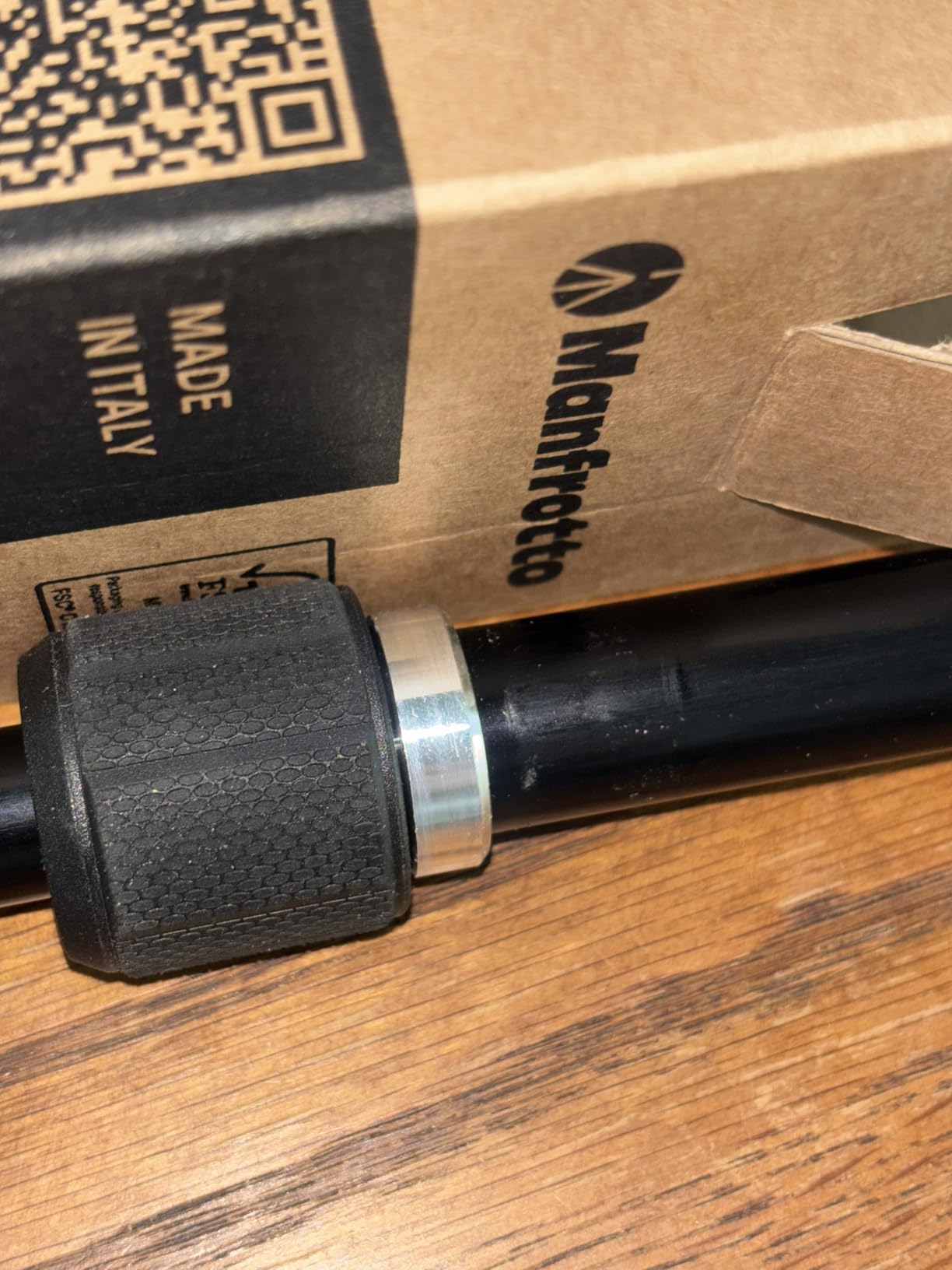
The Manfrotto Element MII is the odd one out in this group, and that is why it is worth reading. Its 4.3 average is tied for the lowest here, and roughly 10 percent of its 576 reviews are one star. The complaints are specific: twist locks loosening, and occasional collapse under a heavy rig.
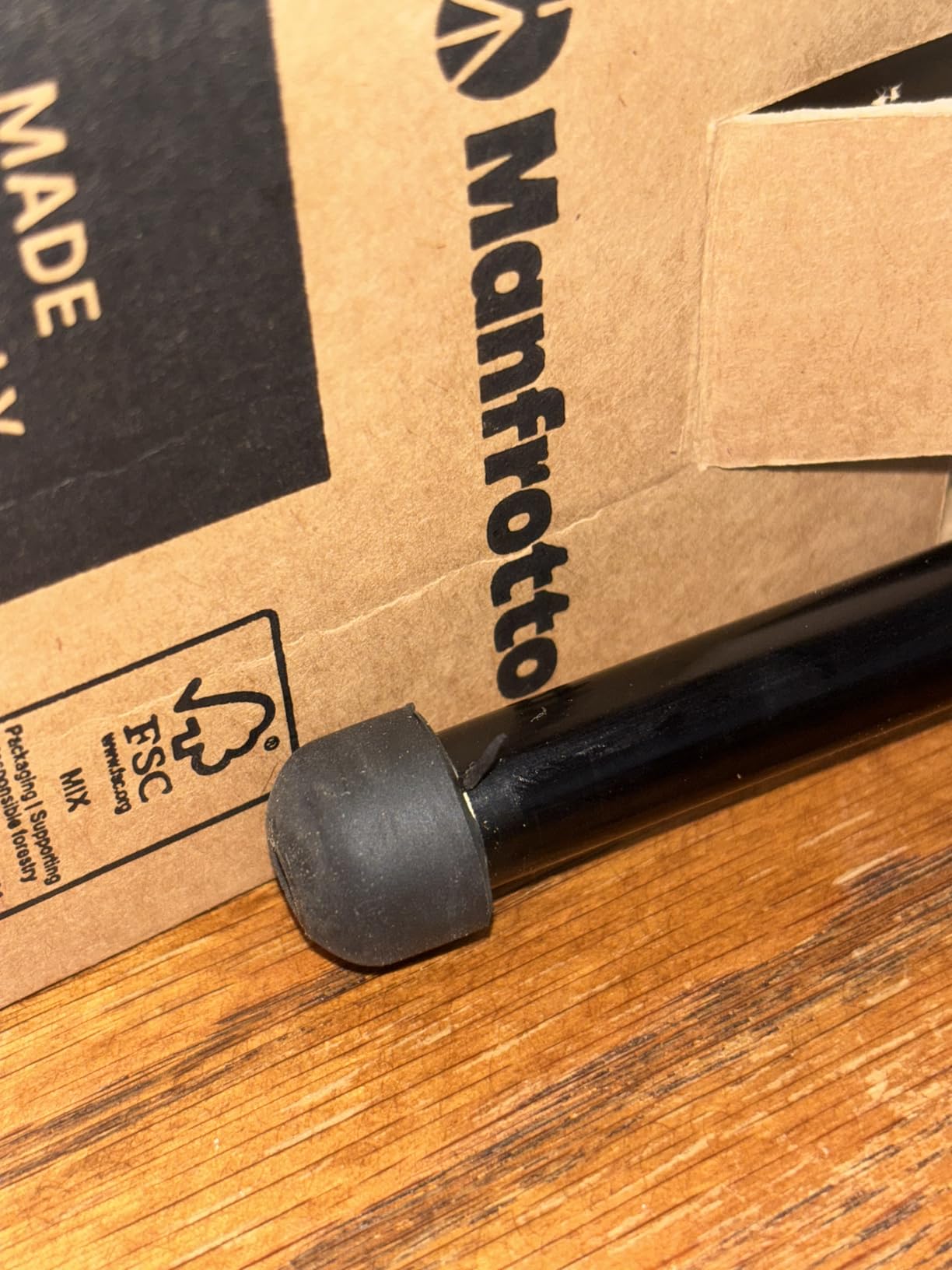
What it does well is capacity for the category. A 15 kg / 33.1 lb payload on a 0.5 kg aluminum column that folds to 16.93 inches and extends to 159cm is a headline number most rivals at this weight cannot claim. Five sections with ergonomic twist locks allow tool-free height changes, and the convertible 1/4 and 3/8 screw accepts a head or a direct camera mount. A 2-year manufacturer warranty is included.
The wrist strap makes one-handed carry and backpack storage straightforward, which is the travel angle the design is clearly built for. Our concern is narrower: the review record shows a meaningful minority of lock failures, and a collapsed section mid-match is a worse outcome than a slightly heavier column that holds.
Who the Manfrotto Element MII suits
It suits a photographer who wants maximum stated payload in a compact, light aluminum column and who can live with a simple screw lock. At 159cm it reaches higher than most aluminum options here, and at 0.5 kg it is one of the lighter ones.
It also suits anyone starting out in sports who will move to carbon once their glass outgrows a mid-range setup.
Where the Manfrotto Element MII falls short
The lock security is the issue. Owners report twist locks loosening during use and some units collapsing under a heavy load, which is why we placed it last despite the strong capacity figure. There are no tripod feet, so it must be held at all times.
Aluminum is also noticeably heavier than carbon at the same height, which undercuts the portability the rest of the design is aiming for.
How to Choose a Monopod for Sports Photography
Choose a monopod by working through your rig weight, your eye height, the surface you shoot on and the head you will use, in that order. Get the payload right first, because everything else is refinement. A beautiful carbon column that is under-rated for your glass is a worse tool than a plain aluminum one that is not.
Match the payload to your actual rig
Add up the body, the lens, any teleconverter, a top plate and the head, then pick a rating comfortably above the total. The published capacity is a static vertical test; your real load includes the arm effect of a lens hanging off the side of the collar and a dynamic push and pull as you pan.
As a guide, a 70-200mm on a pro body lands in the 8-11 lb range, a 100-400mm or 100-500mm on a full-frame body pushes toward 13-18 lb, a 200-600mm or 400mm f/2.8 with a 1.4x converter can exceed 20 lb, and anything beyond that needs the 26.5 lb class model. This is the question buyers on photography forums ask constantly, and the honest answer is that the number printed on a monopod is a floor rather than a target.
Also check which part is rated. The SmallRig is the clearest example in this list: the legs carry 33 lb while the head carries 11 lb. On a long lens the head is the component that actually holds your rig, so that is the number to verify first.
Carbon fiber or aluminum for the sideline
Carbon fiber saves a substantial share of the weight at a given height, which over a full match adds up more than most people expect. It also damps vibration slightly better and stays at a comfortable temperature in your hand in cold weather.
Aluminum has two real advantages. It is cheaper, and it is more tolerant of a knock. If you drop a column on concrete at an away fixture, an aluminum section is more forgiving than a carbon one. In winter sports, aluminum conducts cold straight into the grip, which is the specific complaint that comes up from outdoor shooters.
Twist locks or flip locks for speed
Flip locks and thumb levers are faster. You can set a height in one motion with one hand, which is what you want when dropping from eye level to a low angle between plays. The Manfrotto 290 and the NEEWER TP41 are the clearest examples.
Quarter-turn twist locks are slower to operate but hold more consistently once tightened, and they cannot accidentally open if you brush the leg while moving through a crowd. Several screw adjusters on a six-section column is the slowest option, and that is the one real drawback of the SIRUI P-326. Whichever system you choose, a season of periodic tightening is worth the five minutes.
Max height, folded length and where it lives
Measure your eye height and add a few inches for the camera body. Most shooters want to work at eye level, and a column that maxes out below that leaves you half-extended and frustrated. Over 70 inches only makes sense if you shoot over crowds.
Collapsed length decides whether the monopod travels. Anything under 16 inches disappears into an existing bag, 16 to 20 inches is fine in a roller, and anything past 24 inches is a separate bag in its own right. That is why the iFootage Cobra 3 and the Avella C324D are harder to move between venues despite both being excellent tools.
Feet, bases and the surface you stand on
Four foot options cover almost every situation. A rubber foot grips hard surfaces and stadium floors. A retractable or interchangeable spike bites into grass, mud and soft track. Fold-down support feet turn the monopod into a semi-tripod you can set down and step back from. A detachable three-leg base does the same job and often attaches to a bottom 3/8-inch thread.
Check the foot diameter against your load. A 15.4 lb rating on a narrow base feels less stable than the number suggests, and a wide base is the cheapest stability upgrade available. Our general rule is that a spike in winter and rubber in an arena beats trying to make one foot do both jobs.
Ball head, tilt head or fluid head
A ball head is the fastest to reposition and is what most included heads are. It suits a photographer who frames vertically as often as horizontally, and it locks in any position with a single control.
A tilt head gives you independent up-and-down control, which matters when the action is above or below eye line and you do not want the whole column to move. Many sports photographers use a monopod with a tilting head specifically because it makes long lenses comfortable to aim. A fluid video head adds drag for smooth tracking and is the right choice if you are shooting dual photo and video.
Whatever you choose, check the thread. The 1/4-20 and 3/8-16 standard covers almost every head, and most models in this list offer a reversible or double-ended spigot so you are not stuck with one head for the rest of your career.
Monopod vs Tripod for Sports Photography
A tripod is more stable and a monopod is faster to deploy. For sports, the speed and the venue rules almost always win. Most stadiums and arenas permit monopods where tripods are banned outright, because a single column does not obstruct a viewer’s sightline or create a trip hazard in a packed row, and that is often the only support you are allowed to bring through the gate.
There are moments when a tripod still wins. Static field-level positions for a golf swing, a cricket wicket, a penalty shootout or a posed pre-match ceremony do not move, and a tripod with a heavy head will hold a tighter shutter speed than a monopod. If a large part of your assignment is stationary, keep the monopod for the moving parts.
And be honest about the limits. A monopod does not stand on its own without feet, so you cannot set a camera down and walk away mid-game. It does not give you the rigidity for long exposures or heavy filters, and the shake reduction is modest rather than dramatic. On a fast pan-only sport with a short lens, the honest verdict from the forums is that a monopod may add little beyond taking weight off your shoulders. It still helps, just less than the marketing implies. For a wider look at the category, our best monopods guide covers travel and wildlife use in more depth.
How to Shoot Sports With a Monopod
Most disappointing monopod results are technique, not hardware. Five habits fix almost all of them.
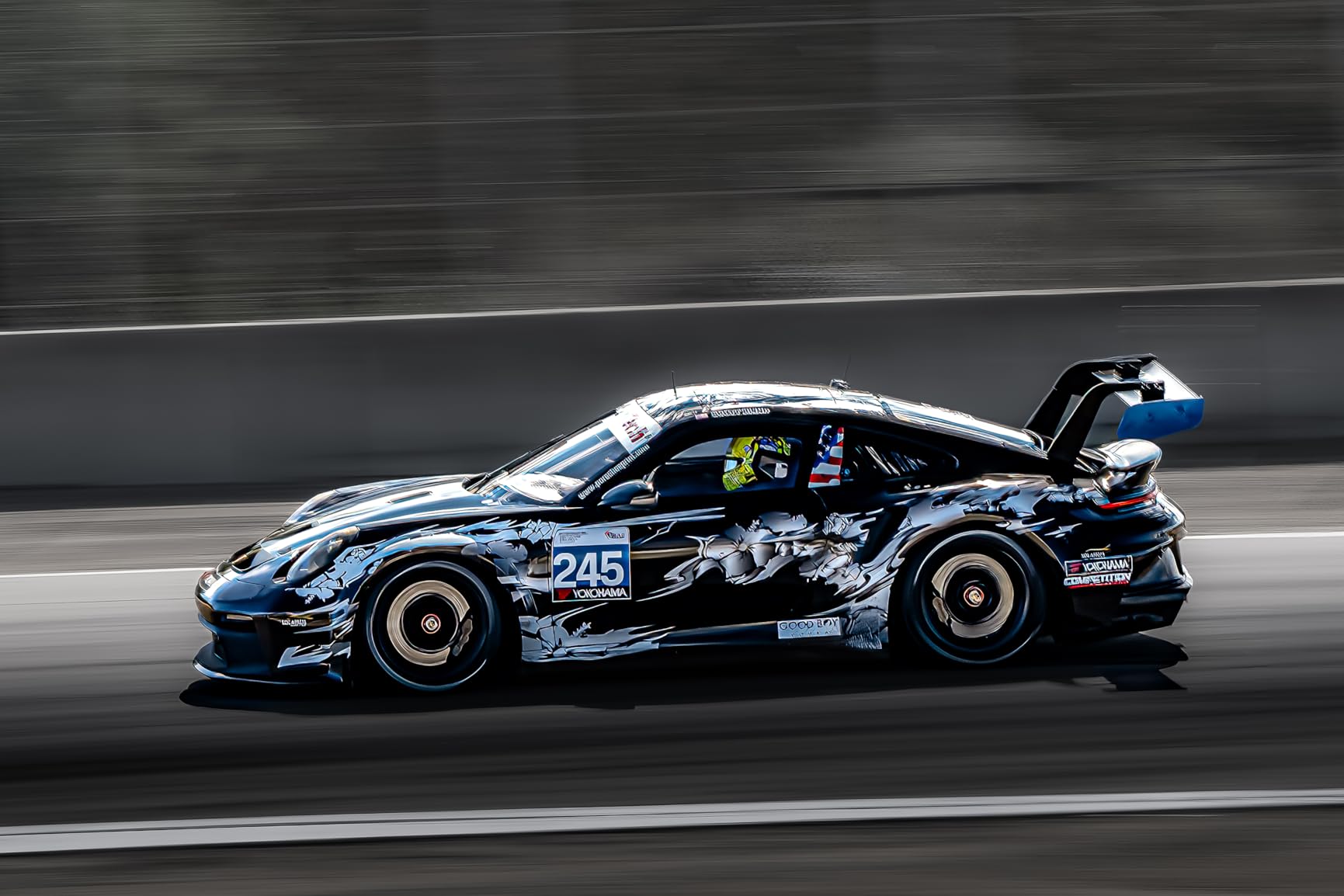
Mount under the lens tripod collar, not under the camera body. This is the most repeated mistake in the forums and it is the reason some photographers conclude a monopod does nothing for them. Under the collar, the heavy glass hangs directly over the single leg and the rig is balanced. Under the body, the weight sits forward of the support and every pan becomes a swing.
Extend fully, then apply gentle downward pressure with one hand while the other works the camera. The downward push closes the last fraction of section play and stops the column from ringing. You are not trying to lock the monopod down; you are removing slack from the joints.
Plant the foot and rotate the upper section when panning. With a foot that bites or a base that swivels, the pan comes from your hips and upper body rather than your wrist alone. That is where the 360-degree panning grips and pivoting bases on the Sirui P-424SR and the Avella C324D pay off.
Match the foot to the surface. Spike into wet grass, rubber on hard ground, and use the fold-down feet or a detachable base when you need to set the camera down between halves. Rinse the mechanism after a wet fixture, because grit in a foot mechanism is a recurring complaint across forum threads.
Plan the redeployment. Decide your high and low working heights before the match starts and check the locks at the interval. A quick check takes thirty seconds and prevents the most common mid-match failure, which is a section loosening under load.
Frequently Asked Questions
Are monopods worth it for sports photography?
Yes, mainly for ergonomics. A monopod takes the weight of a long telephoto lens off your body so your arms and back stay fresh through a full match, and it deploys in seconds without the delay of spreading tripod legs. It also stays inside the rules at venues that ban tripods. It does not make a single leg as stable as three, so do not expect tripod-level rigidity.
What is the best monopod for sports photography?
The best all-round choice is the SIRUI P-326, a 400 g six-section carbon fiber column rated to 22 lb that folds to 15 inches and reaches 60.6 inches. For the fastest one-handed height changes, the SmallRig 65.6 inch carbon monopod wins on its one-touch button lock. For big glass, the iFootage Cobra 3 carries 17.6 lb with a foot-pedal 360 degree swivel.
Which carbon fiber monopod is the best?
Among carbon fiber options, the SIRUI P-326 offers the best weight-to-payload ratio at 400 g with a 22 lb rating. The Sirui P-424SR is the choice for maximum capacity and reach, with a 26.5 lb rating and 74.8 inches of extension. The Avella C324D leads on panning thanks to its pivoting base that swivels 360 degrees and tilts 90 degrees.
Do monopods work with telephoto lenses?
Yes, and that is exactly what they are built for. A monopod works best with long telephoto glass such as a 100-400mm, a 200-600mm, a 100-500mm or a 400mm f/2.8. Mount the camera under the lens tripod collar so the heavy glass hangs directly over the single leg, then apply gentle downward pressure with one hand. Check that the payload rating covers your full rig with headroom.
What is the best sports tripod?
For most sports, the best tripod is not a tripod at all. Stadiums and arenas routinely ban tripods because the legs obstruct sightlines and create trip hazards, while a monopod is usually permitted. Use a tripod only for static positions such as golf, cricket or a penalty shootout, where the subject holds still and you need a heavy head for a tighter shutter speed.
Should I mount a monopod under the camera or the lens?
Always mount under the lens tripod collar, never under the camera body. Under the collar the heavy lens sits directly over the single leg and the rig is balanced. Mounted under the body, the weight hangs forward of the support and every pan turns into a swing, which is the most common reason photographers feel a monopod does nothing for them.
What payload do I need for a 200-600mm lens?
A 200-600mm on a full-frame body plus a 1.4x teleconverter can exceed 20 lb once the body and head are added, so look for a rating of at least 26.5 lb. Without a converter, a 15.4 lb model such as the Manbily A-555L is workable but tight. Treat the published rating as a floor, since the leverage of a lens hanging off the collar adds real load.
How tall should my monopod be for sports photography?
Measure your eye height and add a few inches for the camera body. Most photographers want to work at eye level, and anything under about 60 inches leaves a taller shooter half-extended. Over 70 inches only makes sense if you shoot over crowds from a raised position, where the Sirui P-424SR at 74.8 inches is the strongest option here.
Final Verdict
The best monopods for sports photography are the ones that match your rig weight, your eye height and the speed at which you need to move. The SIRUI P-326 is the pick for most shooters, with a 22-pound rating, a 400 g carbon body and a 15-inch fold that travels in an existing bag. Choose the SmallRig for the fastest one-handed height changes, the iFootage Cobra 3 or the Sirui P-424SR for genuinely heavy glass, and the Avella C324D when panning smoothness matters more than pack length.
Whichever you pick in 2026, mount under the tripod collar, plant the foot in the surface you are standing on, and check the locks at the interval. That habit is worth more than any specification on the box. If you are still choosing the body behind the lens, our sports photography camera guide is the next sensible read.