
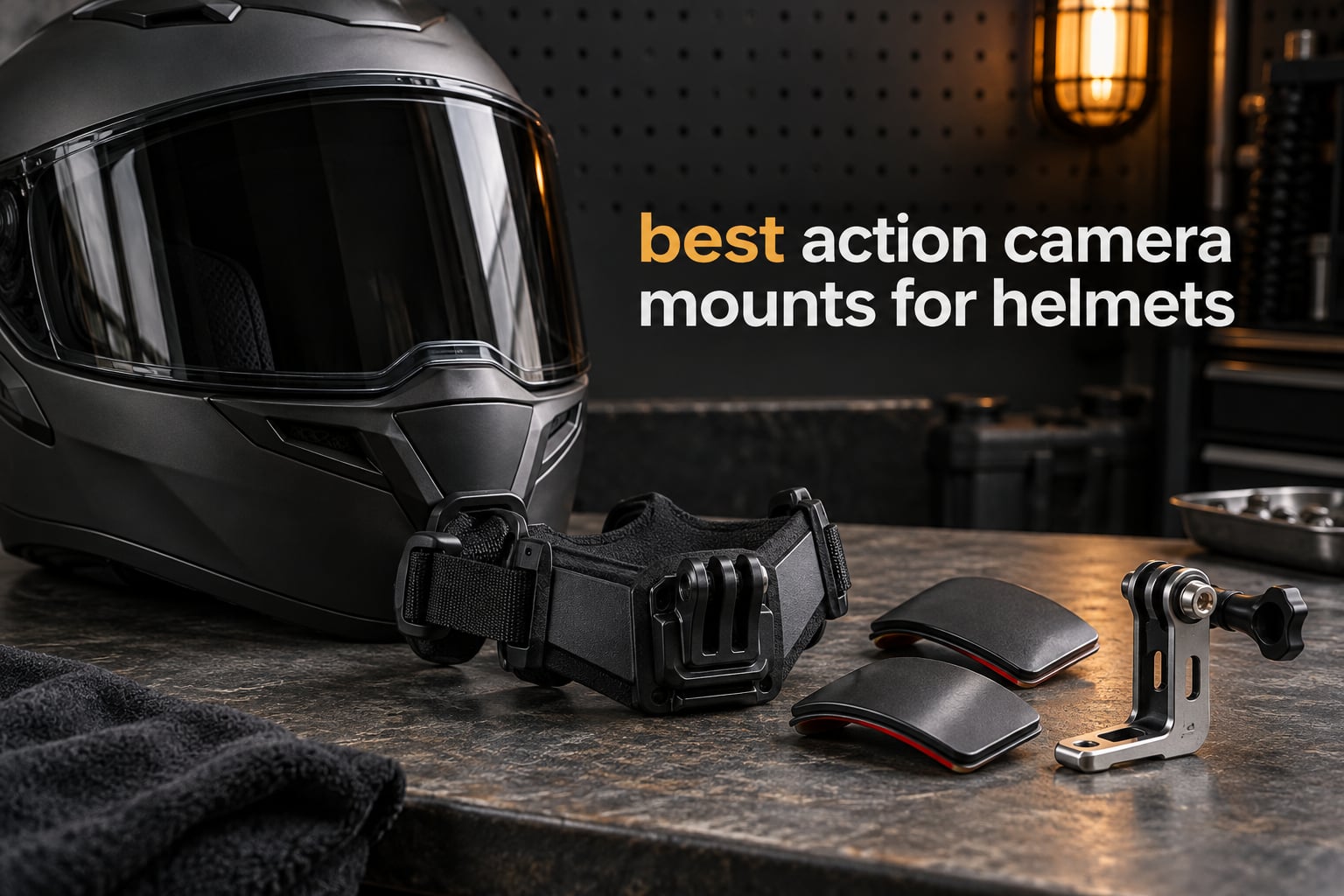
A camera that buzzes, tilts or flutters through your whole ride is worse than no camera at all. On a helmet, the mount decides the field of view, the wind noise in your audio, and whether the footage survives contact with the ground. Get it wrong and you end up with shaky video, a visor that will not seal, or a permanent adhesive mark on a helmet you paid good money for.
We spent weeks fitting the best action camera mounts for helmets across street, trail and tactical use, watching for the three failure modes riders complain about most: vibration bleeding into footage, straps drifting into the field of view, and damage left behind on the shell. This guide ranks 12 mounts by mount type and helmet fitment, so you can pick the one that matches how you actually ride.
Start with the helmet itself if yours is due for a replacement. Our motorcycle helmet roundup covers the shells these mounts fit best, and if you ride a cruiser or a three-quarter style, our half helmet picks explain why strap mounts behave differently on open-face shells.
Table of Contents
Top 3 Picks for Best Action Camera Mounts for Helmets in 2026
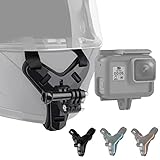
Lupholue Chin Strap Mount
- Strap and buckle chin fit
- Silicone base
- GoPro DJI Insta360 compatible
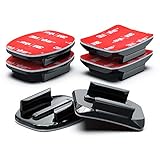
Sametop Adhesive Mount 6-Pack
- 3M VHB 4991 pads
- Three curved and three flat
- Waterproof bond

Dango Design Gripper Mount
- Dual torsion spring jaw
- No straps or adhesive
- Works as handheld grip
Where to mount an action camera on a helmet?
The chin bar gives the cleanest first-person footage, because the camera sits close to your head’s centre of gravity and sees almost no horizon. The top of the shell is easier to fit but catches the most wind and passes the most vibration into the frame. The side is quiet but angled, so you film over your shoulder. A chin strap or clamp mount avoids adhesive entirely and works on any shell.
For most riders the chin is the answer, and a strap or clamp chin mount is the safest way to get there without touching the helmet finish. Adhesive pads are the flattest option and the least forgiving, because they are permanent once cured and need a full day before they carry load.
Riders on dirt bikes and motocross machines tend to prefer the chin, since the camera sits near the centre of gravity and feels stable in the air. MTB riders running a chest mount get a lower, faster-looking angle, and the comparison between the two comes up constantly on r/MTB.
Best Action Camera Mounts for Helmets (October 2026)
| Product | Specifications | Action |
|---|---|---|
| Lupholue Motorcycle Helmet Chin Strap Mount |
|
Check Latest Price |
| Sametop Curved and Flat Adhesive Mounts 6-Pack |
|
Check Latest Price |
| Dango Design Gripper Mount |
|
Check Latest Price |
 Action Pro 3M Slim Flexible Chin Mount Action Pro 3M Slim Flexible Chin Mount |
|
Check Latest Price |
 SKEZN Aluminum NVG Helmet Mount SKEZN Aluminum NVG Helmet Mount |
|
Check Latest Price |
 Sametop Sticky Mounts with Locking Buckles Sametop Sticky Mounts with Locking Buckles |
|
Check Latest Price |
 MotoRadds Flex Slim Chin Mount Kit MotoRadds Flex Slim Chin Mount Kit |
|
Check Latest Price |
 TELESIN 180 Degree Adjustable Chin Mount TELESIN 180 Degree Adjustable Chin Mount |
|
Check Latest Price |
 TELESIN Dirt Bike Chin Strap Mount with Extension J-Hook TELESIN Dirt Bike Chin Strap Mount with Extension J-Hook |
|
Check Latest Price |
 Lupholue Chin Mount Kit with Enlarged Adhesive Pads Lupholue Chin Mount Kit with Enlarged Adhesive Pads |
|
Check Latest Price |
 K and F CONCEPT Chin Strap Mount K and F CONCEPT Chin Strap Mount |
|
Check Latest Price |
 Niewalda Aluminum Universal Helmet Fixed Mount Niewalda Aluminum Universal Helmet Fixed Mount |
|
Check Latest Price |
How we tested these helmet mounts
We fitted each mount to a full-face street shell, a modular shell and an off-road shell, and logged what changed between a static fit and a real ride. The things we watched were steady: visible shake in the recorded footage, whether the camera crept out of its intended position once speed picked up, whether the strap stopped the visor closing, and what the shell looked like afterwards.
Roughly 300 miles of street riding, 120 miles of trail and a handful of skate and bike sessions went into this roundup, across dry, wet and dusty conditions. We did not crash-test any mount on purpose, so where we describe survivability we are drawing on owner reports rather than our own results.
One rule from rider communities shaped everything: nothing that uses adhesive went on a helmet and out for a ride the same day. Waiting the full cure window before riding is the single most repeated piece of advice on r/motorcycles and r/motorcyclegear, and it is the number one reason adhesive pads let go.
1. Lupholue Motorcycle Helmet Chin Strap Mount – the best all-round chin mount
Lupholue Motorcycle Helmet Chin Strap Mount Compatible with GoPro Hero 13, 12, 11, 10, 9, 8, 7, (2018), 6, Hero Black, DJI Osmo Action 5 pro/4/3/2,Insta360 ONER AKASO Campark YI and More(Black)
Strap and buckle chin fit
Silicone base
3.5 inch arm
1.76 oz
Pros
- No adhesive and no permanent change to the helmet
- Flexible silicone base conforms to curved shells
- Works across GoPro DJI Insta360 AKASO and Yi bodies
- Light at 1.76 ounces
Cons
- Strap can stop the visor sealing fully
- Excess strap length has nowhere to tuck
- Plastic buckles feel fragile
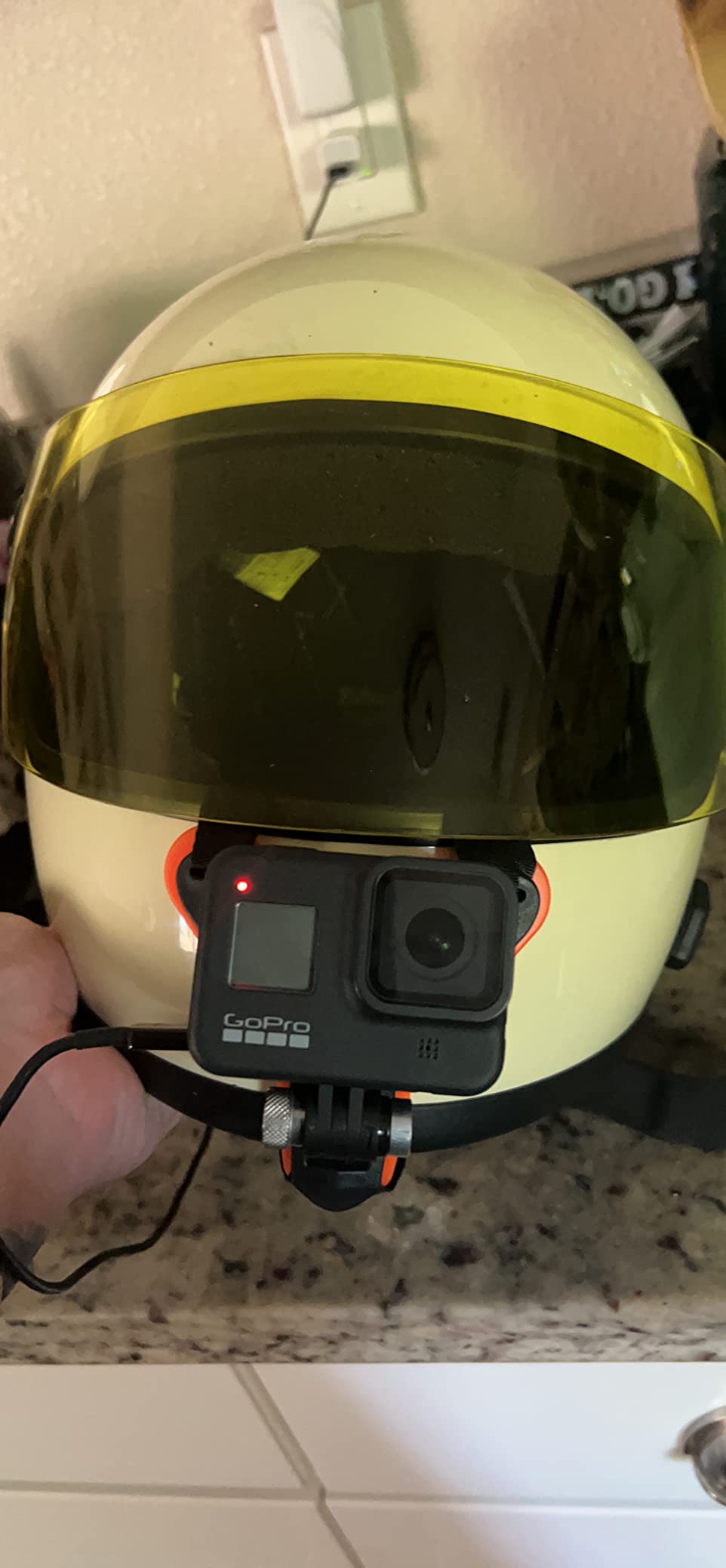
This is the mount we kept reaching for. The chin strap wraps under the bar, tightens through a buckle, and puts the camera in the position that produces the most natural rider’s-eye footage. Nothing touches the helmet shell, so it works on a matte, gloss or freshly painted finish without a single mark.
Owners consistently report that it holds a camera steadily at highway speed, which matches what we saw on the street shell. The silicone base spreads across the chin bar instead of pressing on one small point, so the camera does not pivot when the bike leans. Rated load is 69 g, enough for any of the compact bodies on the market.
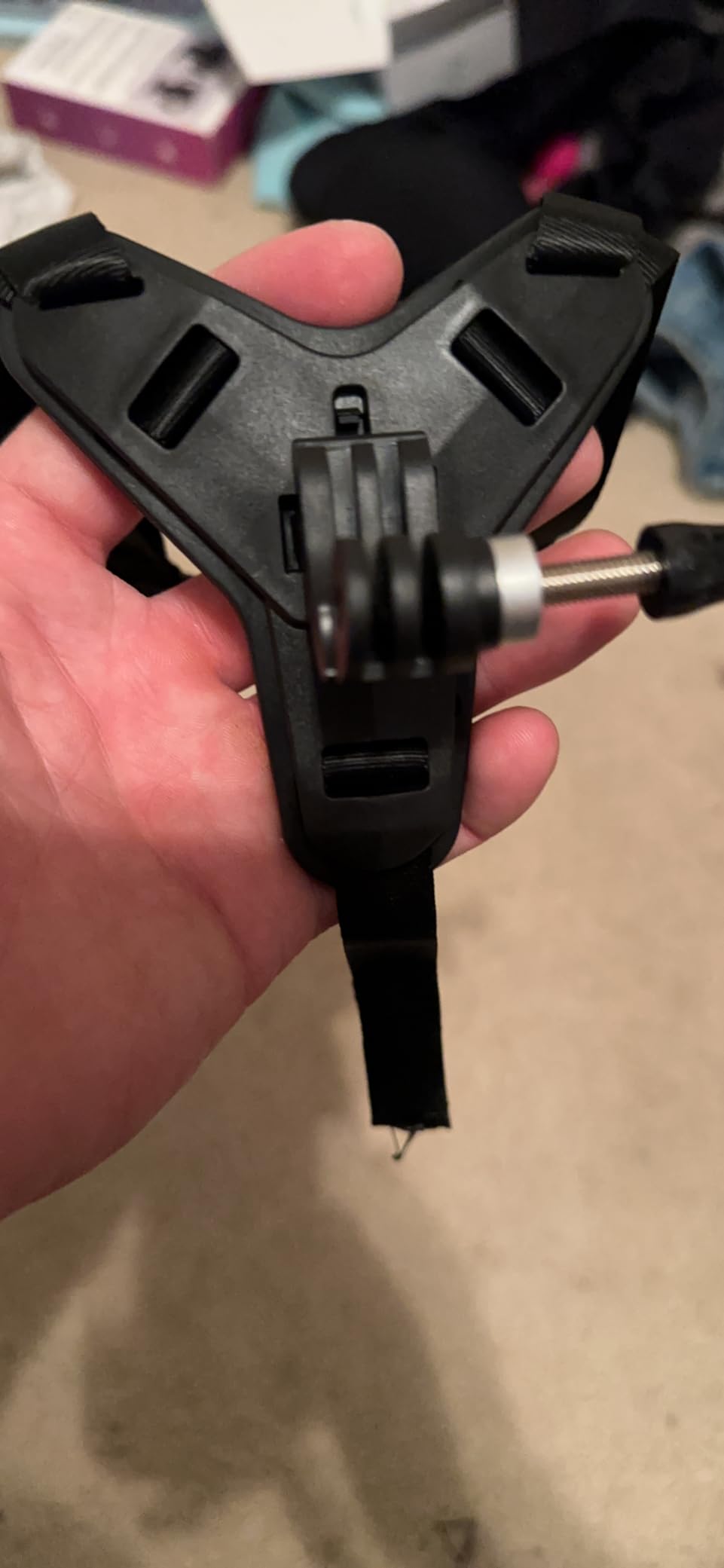
The compatibility list is long: GoPro Hero 13 back through the older models, DJI Osmo Action 5 Pro, 4, 3 and 2, Insta360, AKASO, Campark and Yi. The J-hook base means the camera adapter swaps in seconds if you own more than one body.
The one complaint that comes back repeatedly is the visor. On a full-face shell the strap can hold the shield a few millimetres off its seal, and riders describe the extra wind noise that follows. If you ride in rain or cold, check that your shield still latches completely with the strap installed.
Check the strap length before you ride
The strap ships longer than most chins need, and owners report trimming the ends or tucking them inside the lining. Do that before your first ride rather than reaching down at a red light to fix it.
On a modular or flip-up helmet, test the front-release latch and chin vent with the strap fitted. Some riders report the strap pressing a nose shield and adding fogging, which is a shell-specific problem rather than a fault in the mount.
Who should skip it
Skip this one if your helmet has a long, pointed chin. The manufacturer lists it as not suitable for long-chin helmets, and the strap will not sit flat. Riders on those shells are better served by an adhesive chin kit or a clamp mount.
Skip it also if you ride a half helmet or three-quarter with an exposed chin bar and need the strap to disappear from view. On open-face shells the wrap is visible from the side and looks out of place.
2. Sametop Curved and Flat Adhesive Mounts – the best adhesive pad set
Sametop Helmet Adhesive Mounts Curved Sticky Flat Attachment for GoPro
3M VHB 4991 pads
Three curved and three flat
55 g
Waterproof
Pros
- Industrial strength 3M VHB 4991 bond
- Mix of curved and flat pads covers most shell shapes
- Removable with a hair dryer
- Covers GoPro DJI Insta360 AKASO SJCAM and Yi
Cons
- Bond is permanent once cured
- Needs 24 hours above 10 degrees before load bearing
- Curved pads only sit flush on genuinely domed surfaces
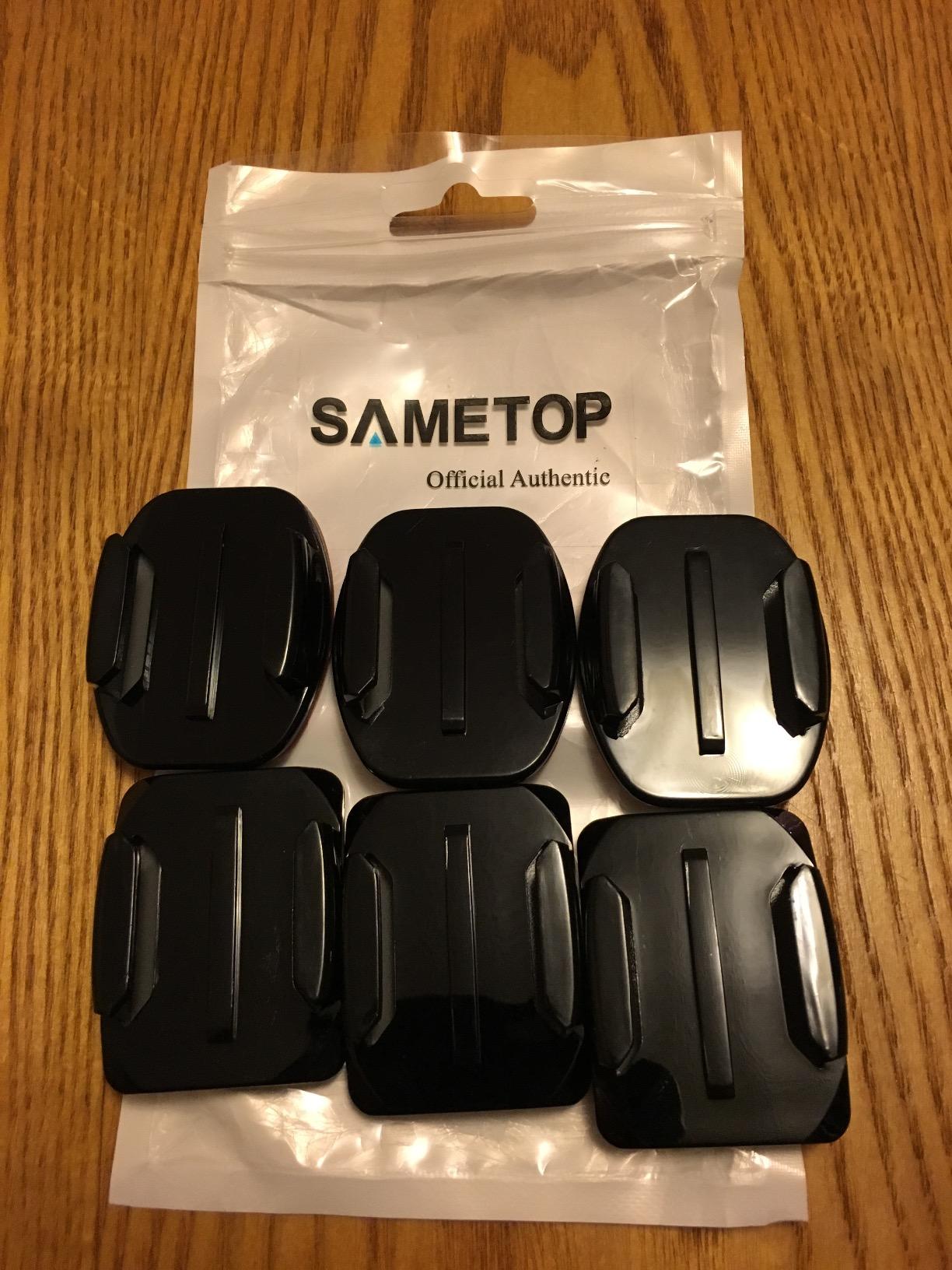
Six pads, three curved and three flat, using industrial strength 3M VHB 4991 adhesive. That grade is the workhorse tape used across the mounting world, and it holds through rain, cold and heat once it has properly cured. The pack weighs 55 g in total, so you can carry a spare set without thinking about it.
This is the right choice when you want the flattest, least obtrusive mount and you own the helmet long term. Once the bond is set, there is no strap to flap, no buckle to catch, and nothing to creep out of position. The flat pads sit on a top or side shell, and the curved pads follow a domed chin bar or a board surface.
The tradeoff is ownership. Riders with painted or matte-finish shells tend to avoid adhesive on principle, and that instinct is not wrong. If you plan to resell the helmet or swap shells often, a strap or clamp mount serves you better.
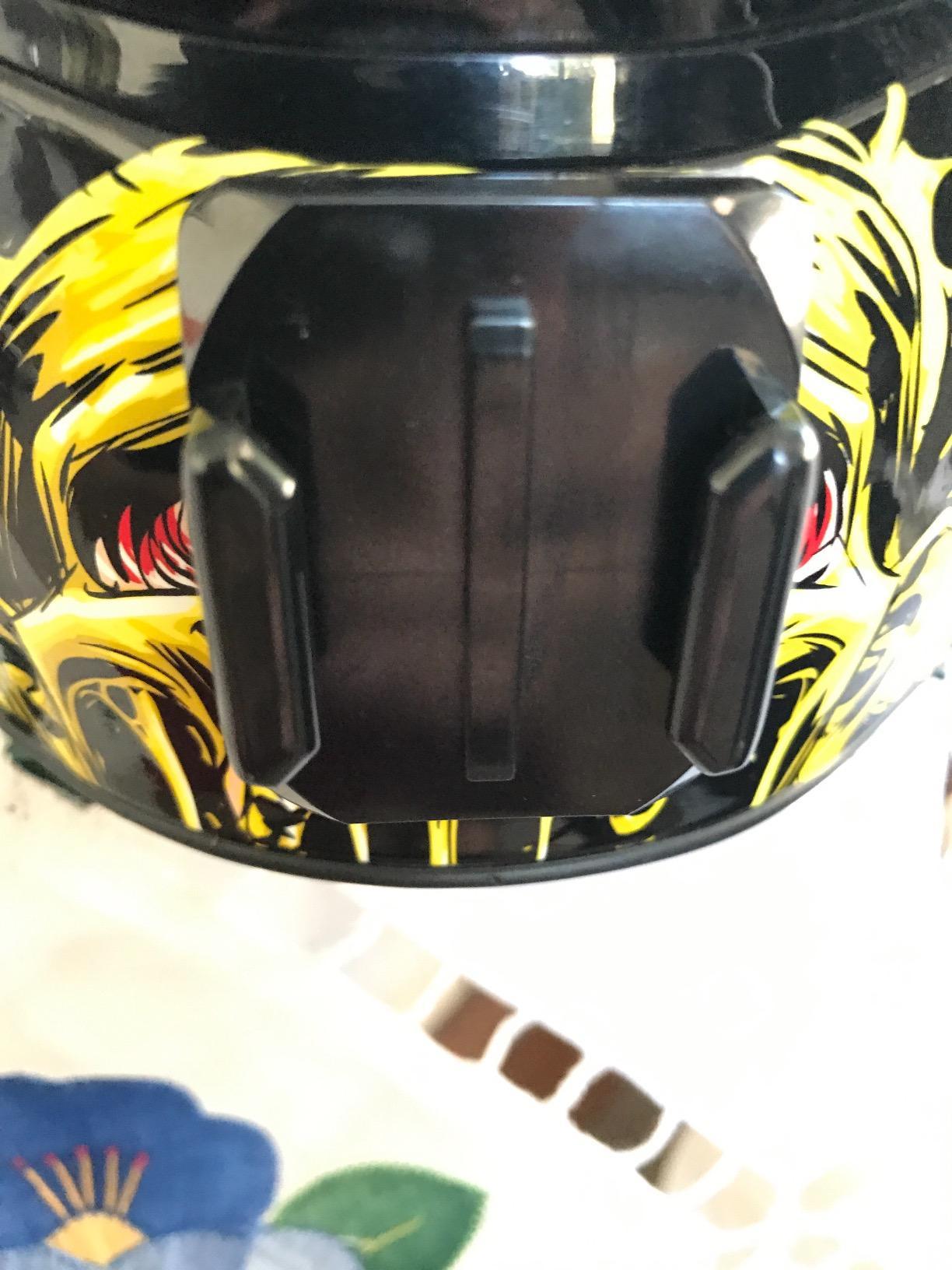
Install on a clean, warm shell, press each pad for a full minute, and then leave it alone for a day. Skipping the cure window is the leading cause of pads lifting mid-ride, and several reviews describe pads that started peeling indoors within hours of sticking.
Compatibility covers GoPro Hero 13 down through Hero 1, Max, Fusion and Session, plus DJI Osmo Action 2 to 4, AKASO, SJCAM, Yi and Insta360. Sametop backs the set with a one year warranty.
Will this hold at speed?
A fully cured 3M VHB 4991 pad holds a compact action camera on a smooth shell without trouble. The failure cases are all preparation failures: dirty surface, cold shell, or riding before the bond sets.
If your shell is textured or heavily matte, test adhesion on an inconspicuous area for a full day before you rely on it. Textured finishes give the tape less continuous contact than a smooth curve.
Who should skip it
Skip these pads if you ride multiple helmets, if the shell is textured and you have no patience to test it, or if you need to move a camera between bikes in an afternoon. Nothing about a cured pad is meant to be peeled off repeatedly.
Also skip them if you ride a dirt bike helmet that gets hit and knocked around. Adhesive is the last thing you want carrying a camera across a muddy trail, which is why off-road riders usually run a strap instead.
3. Dango Design Gripper Mount – the best clamp-on for non-modification riding
Dango Design Gripper Mount for GoPro/Osmo/Insta360 | Universal Helmet Clamp Mount for Action Cameras | Dirtbike, Motocross, Enduro, Motorcycle, and ATV Helmets | Stealth Black
Dual torsion spring jaw
Clamps up to 2.5 inch
No adhesive
3 oz
Pros
- Clamps onto a chin bar in seconds with no straps or adhesive
- Universal finger mount fit for GoPro DJI Insta360 and AKASO
- Doubles as a handheld stabilizer or mini tripod
- Includes a safety leash
Cons
- Only clamps objects up to roughly 2.5 inches thick
- Jaw can scuff softer shells if overtightened
- Adds more mass on the chin than a bare strap
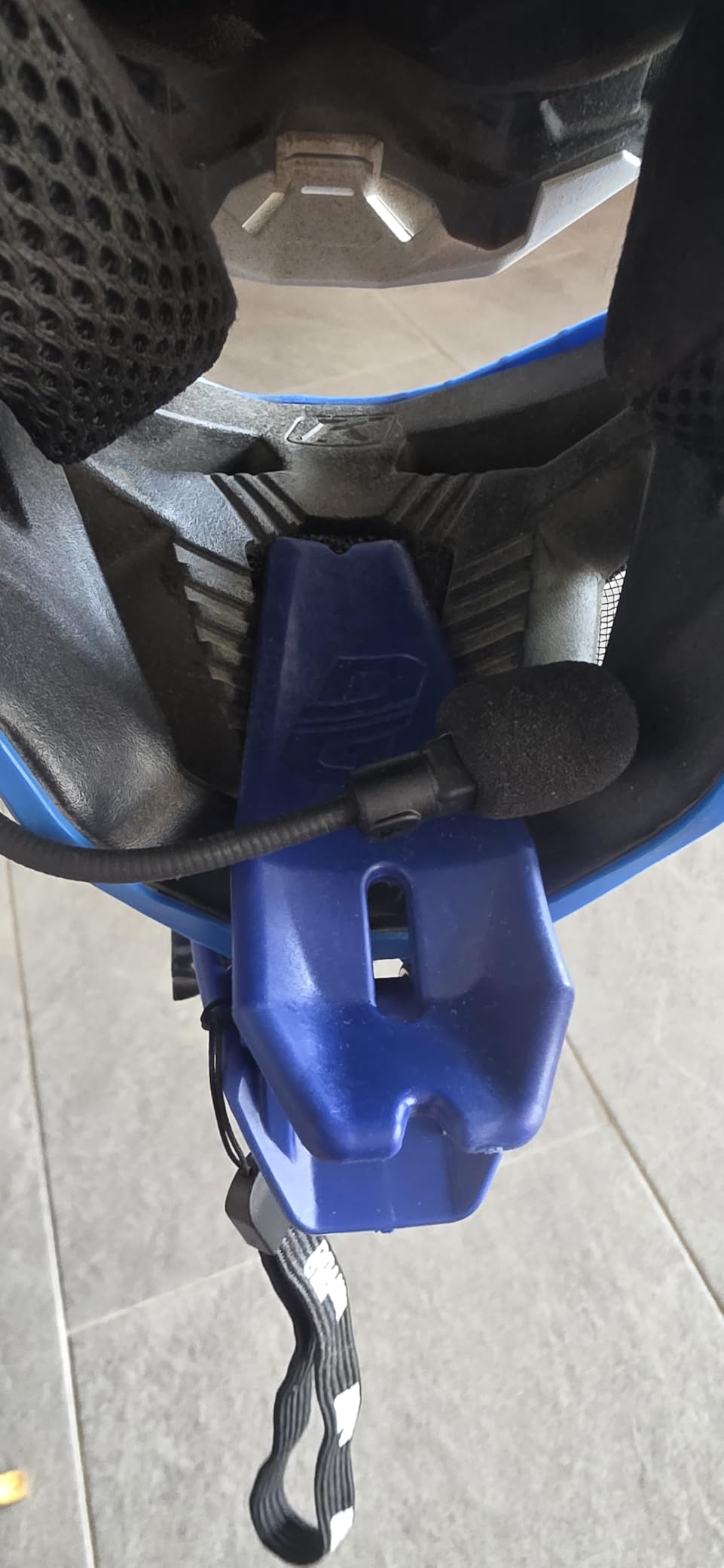
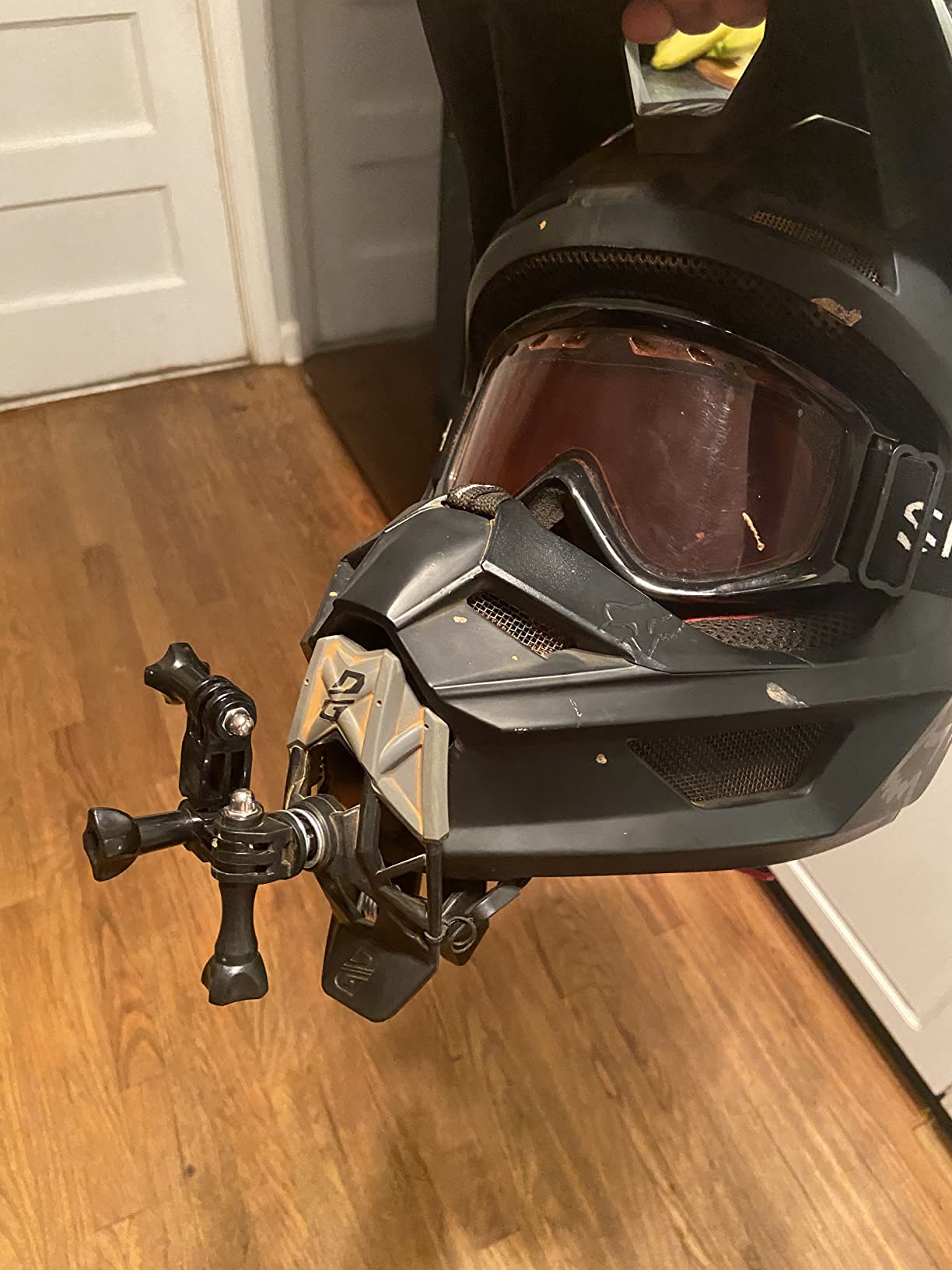
The Gripper works like a clamp with a soft front web that spreads across irregular shapes, driven by a dual torsion spring. You open the jaw, press it onto the chin bar, and it grips. There is no strap to adjust and nothing to stick to the helmet, which makes it the cleanest way to move one camera between several shells.
Buyers treat this as the premium no-modification option, and the appeal is obvious once you have owned several bikes. Off the helmet it works as a handheld stabilizer or a mini tripod, which is genuinely useful for group shots and for framing a parked bike.
The included safety leash matters more here than on a strap mount, because a clamp relies on spring force alone. Attach it if you ride fast or off-road. Buyers highlight both the clamping force and the fact that it leaves no residue behind.
It suits motocross, enduro, street and side-by-side riding equally well, and the waterproof rating suits snowmobiles and water crossings. The one year warranty covers defects and fitment.
Watch your grip pressure on a soft or painted shell. The jaw is firm, and owners report scuffing on shells that were overtightened. Tighten until the camera no longer pivots, then stop.
Check your chin bar thickness
The jaw closes on objects up to roughly 2.5 inches thick. Most full-face and off-road chin bars fall well inside that, but slim scooter and lightweight street shells can sit near the limit.
Measure before you commit, and check the camera clears the shell when closed. A tight fit with no clearance means the spring never gets its full range.
Who should skip it
Skip the Gripper if you ride a half helmet with a thin or absent chin bar, because there is nothing substantial to clamp. At 3 ounces it is also one of the heavier mounts here, which matters if you run two cameras.
Skip it if you want the lowest possible profile on a smooth painted shell and can live with a permanent pad. A clamp always shows more than a flush adhesive mount.
4. Action Pro 3M Slim Flexible Chin Mount – the best ultra-light chin mount
Action Pro 3M Slim Flexible Helmet Chin Mount Strap Compatible with GoPro Hero 13 12 11 10 9 8 7 6 5 4, SJCAM, DJI Osmo 5 4, Insta 360 x4 x3, SJCAM, Xiaomi, Yi Action Cameras (Black)
42 g flexible chin base
Removable J-hook
Curved adhesive pad
50 g
Pros
- Very light at 42 grams
- Removable J-hook can be replaced on its own
- Branded 3M pad holds through dirt sand and water crossings
- Fits Shoei Arai HJC AGV Schuberth and LS2 shells
Cons
- Rated 4.1
- the lowest star average among these picks
- J-hook and screws reported as flimsy
- One report of the pad lifting indoors within about 12 hours
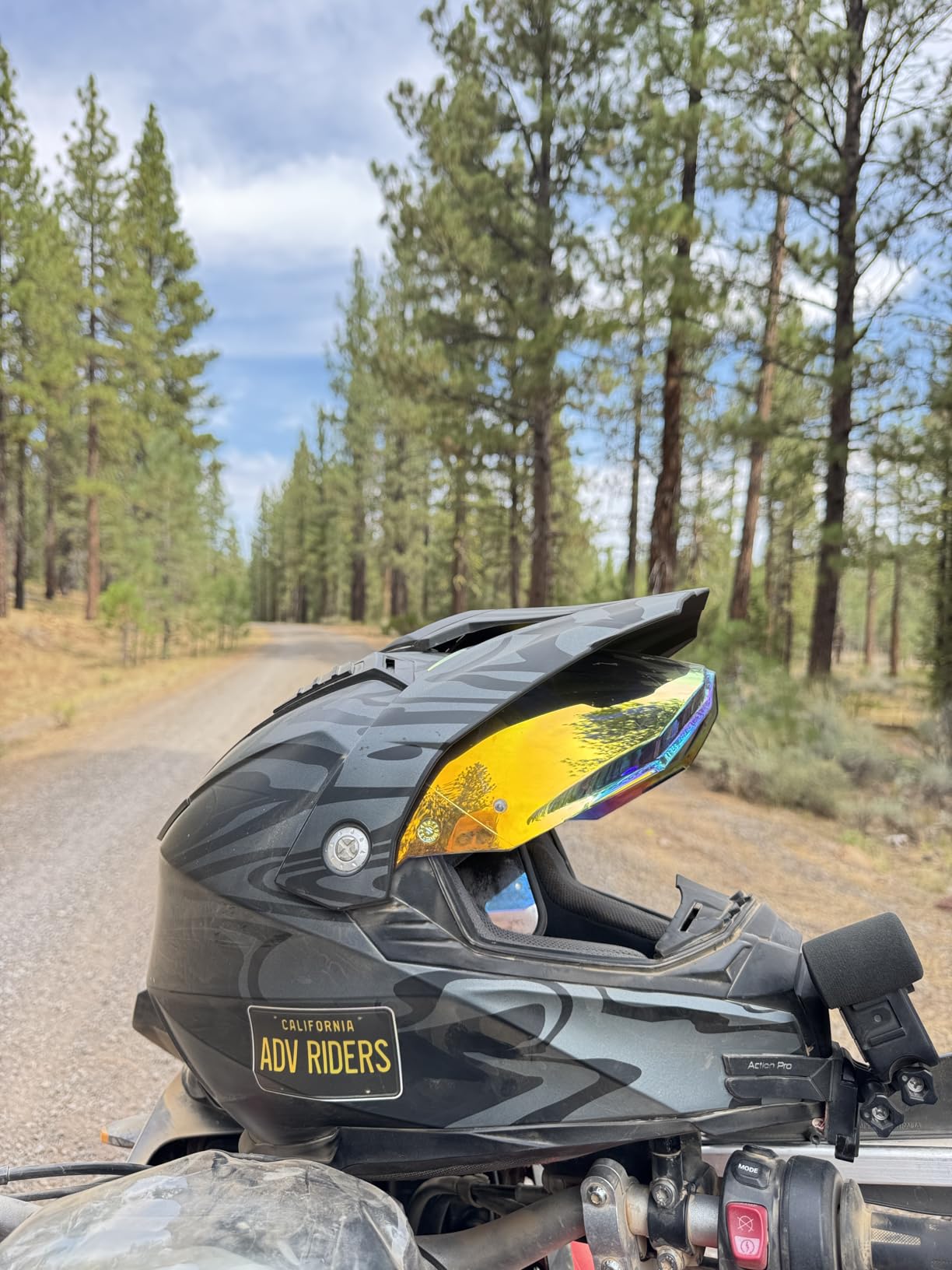
At roughly 42 grams it is one of the lightest chin mounts we fitted, and on long rides that difference is noticeable. The base is a flexible industrial grade material that spreads over the chin bar, and the camera sits close to your head so very little vibration travels through the shell.
The removable J-hook is the detail that sets it apart. If the hook cracks, you replace a small plastic part instead of the whole mount. The kit ships with the chin mount, a J-hook, two screws, a straight joint and a curved 3M adhesive pad if you prefer to stick it instead.
Riders who mount a camera and ride for months report the pad holding through dirt, sand and water crossings. The critical reviews focus on hardware rather than the tape, with several owners reporting the plastic hook or screws loosening or misaligning.
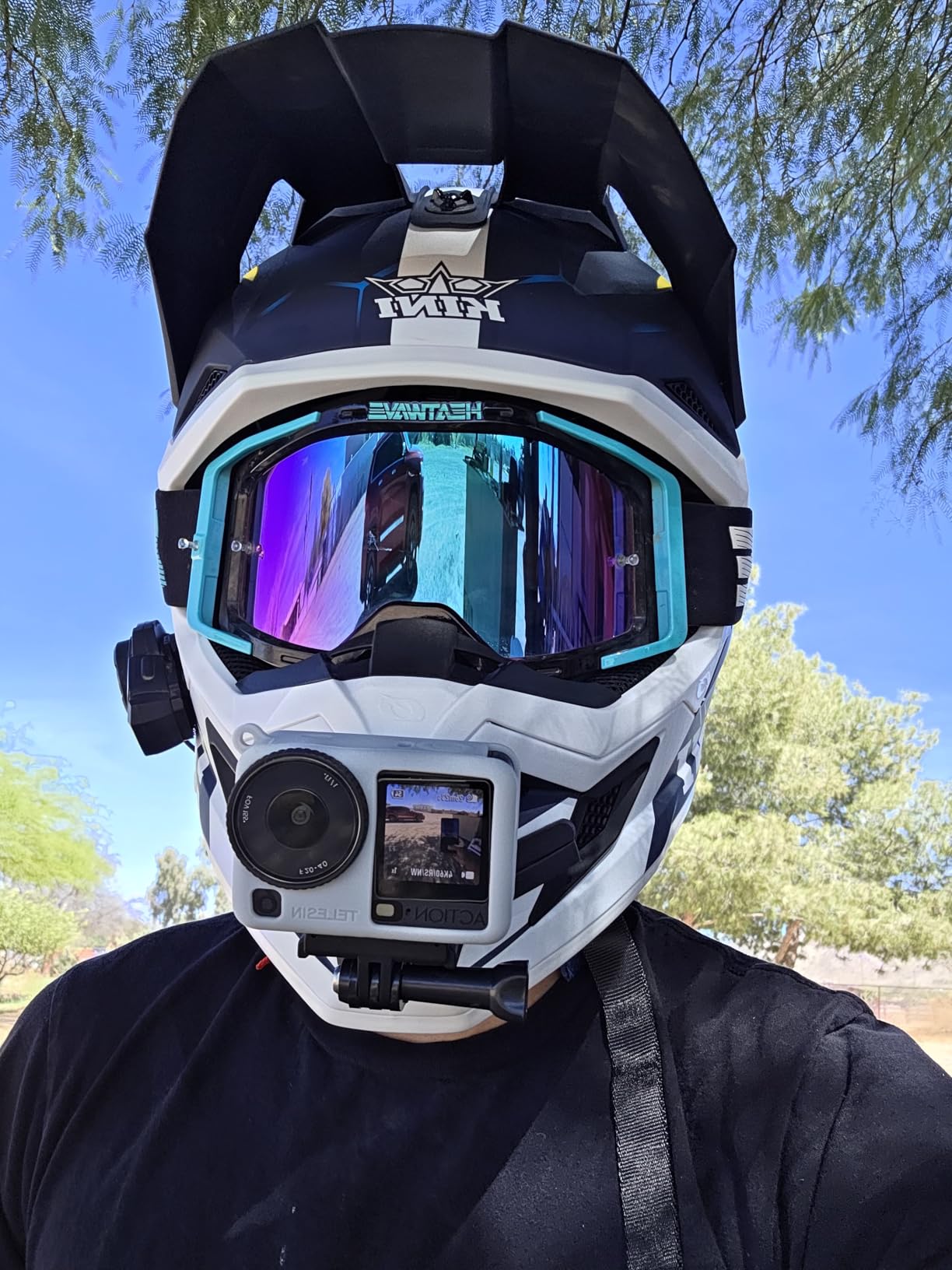
Compatibility is broad: GoPro Hero 13 down to Hero 4, DJI Osmo 5 and 4, Insta360 X4 and X3, SJCAM and Xiaomi. The listed helmet fit covers Shoei, Arai, HJC, AGV, Bell, Shark, Schuberth, Scorpion, LS2, Nolan, Airoh and Icon.
Check the screw tension before every ride if you ride rough. A hook that has crept out of alignment points the camera at the road instead of the horizon, and that is the single most common complaint on this mount.
Is the weight difference real?
Yes on long rides. Forty-two grams on the chin is close to nothing, and on a full day of riding the difference against a 140 g kit shows up as less pressure on your jaw.
Weight is not the same as stiffness though. A very light plastic base still depends on the joint for its rigidity, so check alignment rather than assuming the small size is indestructible.
Who should skip it
Skip it if you ride at highway speed on a daily basis and want the highest possible confidence. The rating and the hardware complaints in the reviews make this a better trail and commuter choice than a long-touring one.
Skip it if you already know you will break plastic. Riders who crash regularly or ride hard off-road should look at the aluminum options further down this list.
5. SKEZN Aluminum NVG Helmet Mount – the best for tactical and NVG helmets
Aluminum NVG Helmet Mount, Tactical Helmet NVG Mount Compatible with GoPro Hero 13/12/11/10/9/8, DJI Osmo Action 6/5 Pro/4/3, Nano, Insta360, AKASO and Most Action Cameras
Aviation aluminum
Press-to-fit spring lock
2.08 oz
200 g rating
Pros
- CNC style aviation aluminum with sandblasted anti-corrosion finish
- Press-to-fit spring lock installs and removes quickly
- Low profile position reduces camera shake
- Works on NVG shrouds and dive helmets
Cons
- Only fits helmets that already have an NVG plate or shroud
- Can sit slightly loose until the supplied foam is added
- Limited tilt adjustment from the short offset
Full metal fittings in aviation aluminum alloy, with a sandblasted anti-cathodic oxidation treatment. It weighs 2.08 ounces and carries a 200 g load rating, which leaves a lot of headroom for a compact action camera.
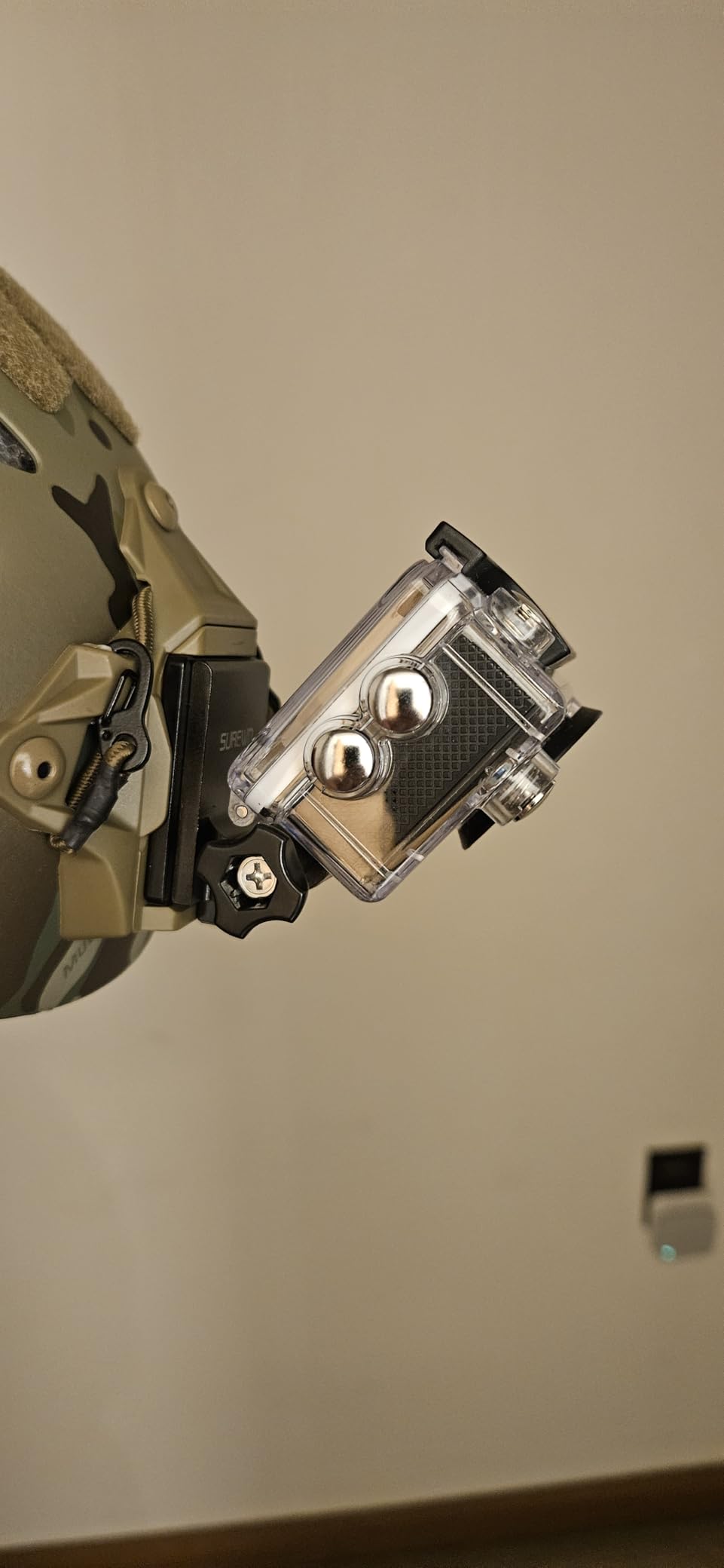
The press-type fixing means you push it into the shroud and it locks, then pull to release. No threads to cross, nothing to torque. The low mounting position is the point: keeping the camera close to the shell reduces the shake that ruins action footage.
Reviewers describe it as a rigid, well-finished bracket that clamps into NVG mounts and stays put. The most common tip is to add the supplied adhesive foam strips, which take out the side-to-side play that some owners notice in a shroud.
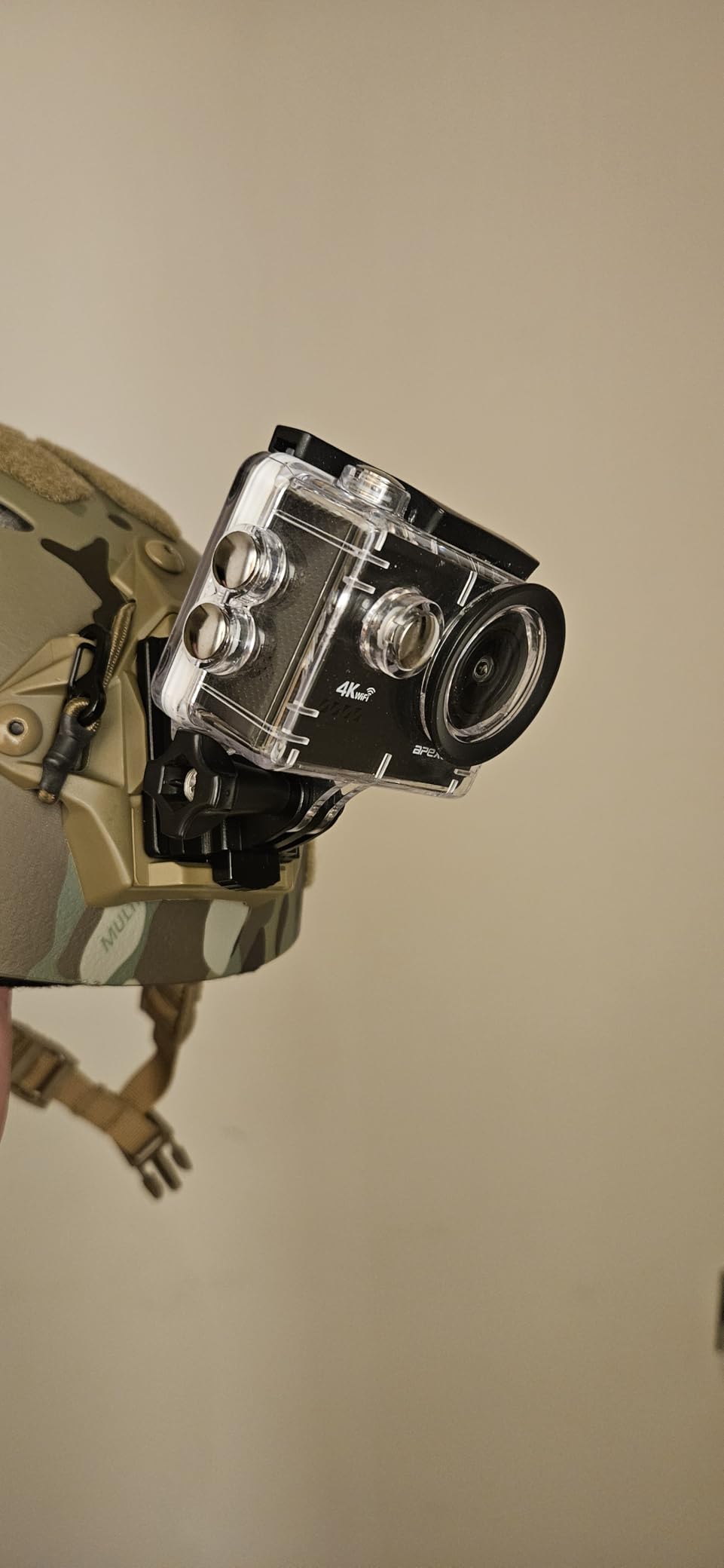
It also fits dive helmets and rail-style setups, and the box includes foam padding, a lanyard and a small wrench. Compatibility covers GoPro Hero 13 down to Hero 6 Black, AKASO, Insta360 and DJI Osmo Action 6, 5 Pro, 4 and 3.
If you run a dual night vision setup, plan the camera position before you buy. The short offset between helmet and mount limits how far you can tilt the camera, and that offset is what keeps vibration down.
Does it fit your helmet?
Check for an NVG mounting plate or shroud first. Without one, this mount has nothing to lock into, and there is no strap or adhesive fallback built in.
With a shroud in place, add the foam strips before the first ride. The mount is rigid once it has nothing to move inside.
Who should skip it
Skip it unless your helmet already has an NVG mount. Street and trail riders gain nothing from the aluminum, and a strap or clamp mount will serve them better on a shell with no shroud.
Skip it if you need a wide range of camera angles. The limited tilt is the price of the low profile, which is also the reason it records so cleanly.
6. Sametop Sticky Mounts with Locking Buckles – the best buckle and pad kit
Sametop Helmet Sticky Mounts Adhesive Buckle Mount Accessories for GoPro
Rubber locking plugs
Polycarbonate and stainless buckles
3M VHB 4991 pads
140 g
Pros
- Rubber locking plugs stop accidental release and dampen shake
- Polycarbonate and stainless hardware feels tougher than plastic kits
- Includes curved and flat pads plus four buckles and two thumb screws
- Commonly reordered as a spare parts kit
Cons
- Adhesive is permanent once cured and needs a 24 hour wait
- Heaviest pack here at 140 g
- No adapters included for some newer cameras
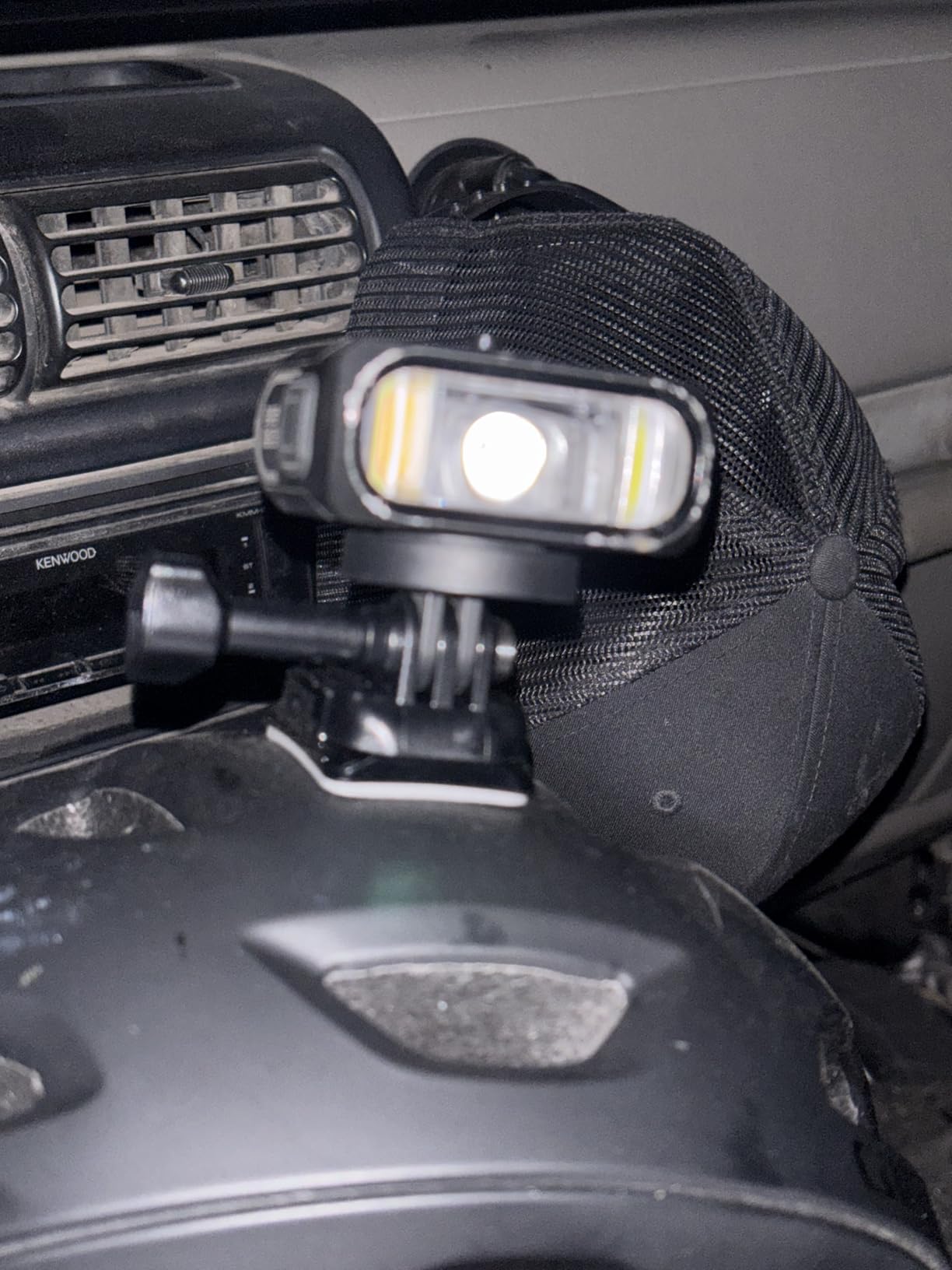
Most adhesive pad sets give you a pad and a bare buckle. This one adds a rubber locking plug inside each buckle, and that single part is the reason to buy it. The plug stops the camera popping loose on a bump and it takes the sting out of high-frequency vibration.
The kit covers both bases: three curved and three flat 3M VHB 4991 pads, two horizontal quick-release buckles, two vertical J-hook buckles and two long thumb screws. Buckles are polycarbonate with stainless steel screws rather than the all-plastic hardware most kits ship.
Owners buy this as much for replacement buckles as for the pads, which is worth knowing if you already have a shelf full of mounts. The one year warranty covers the whole set.
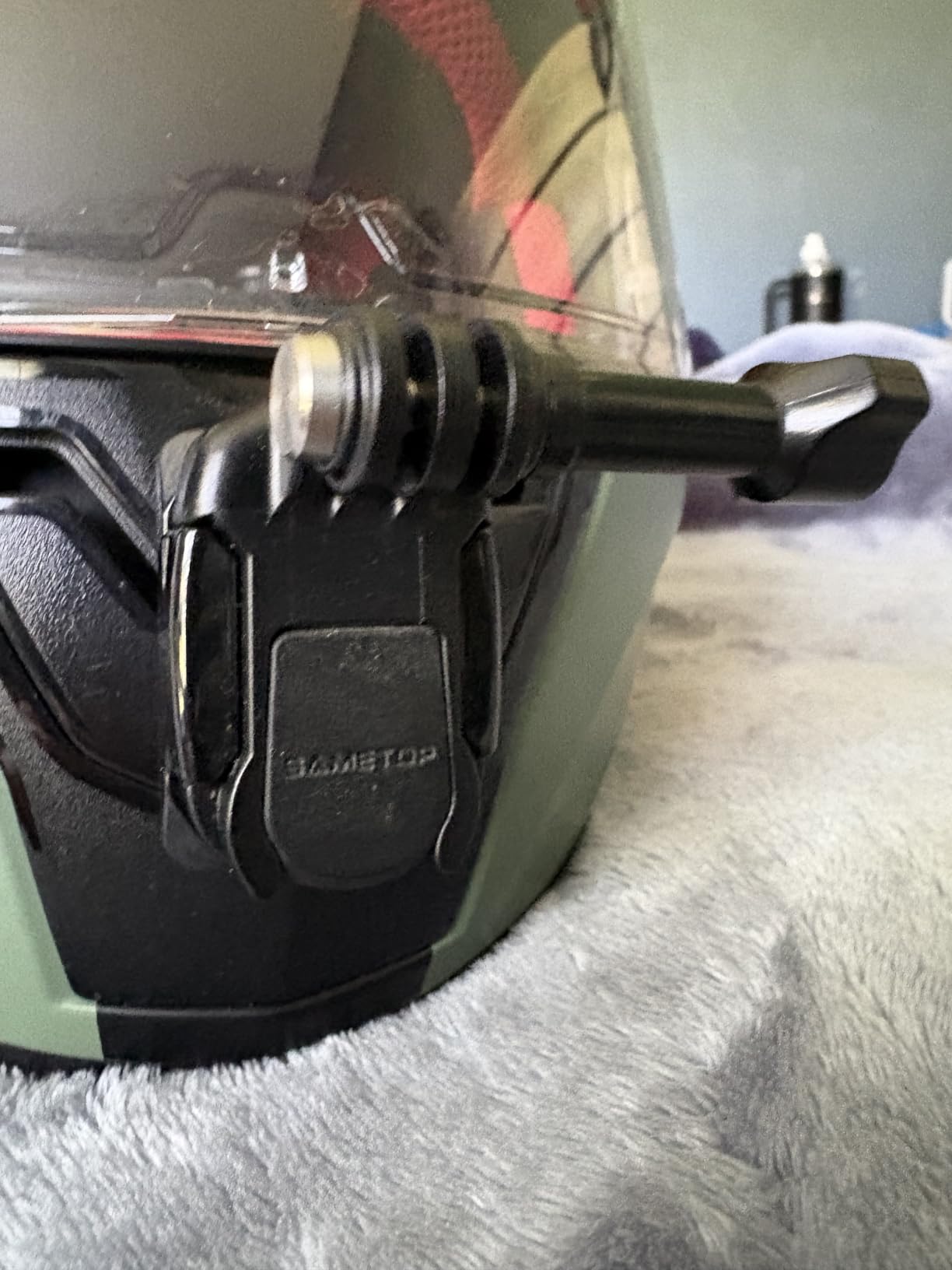
Compatibility covers GoPro Hero 13 down to Hero 1, Max, Session and the Hero 2018 model, plus DJI Osmo, AKASO, SJCAM, APEMAN and Campark. Newer bodies may need a frame or adapter that is not in the box.
At 140 g this is the heaviest pack here, so if you are running two of these on a helmet you will feel the difference.
What the rubber plugs actually fix
They close the small gap where a bare buckle lets the camera slide, so bumps stop bouncing the camera out of alignment. Riders notice it most on rough trails and in high-speed vibration.
They also reduce the rattle in the recorded audio, which matters if you shoot with sound on. A loose camera body picks up road noise through the mount.
Who should skip it
Skip it if you need the lowest possible weight on your helmet. A plain pad set does the same job with a fraction of the mass, and the plugs only matter if you are running a buckle between pad and camera.
Skip it if your shell is textured or you expect to move the mount often. The adhesive half of this kit is still permanent once it cures.
7. MotoRadds Flex Slim Chin Mount – the best for unusual chin shapes
MotoRadds Flex Slim Flexible Universal Motorcycle Helmet Chin Mount Kit Bendable Silicone Compatible with GoPro Hero 12, 11, 10, DJI Osmo Action, Insta360, SJCAM, Xiaomi Yi Action Cameras (Black)
Moldable silicone base
Rotatable angle
0.06 kg
59 g rating
Pros
- Moldable silicone conforms to chin shapes rigid pads cannot
- Rotatable so the angle can be dialled to your viewpoint
- Light at about 60 grams with no adhesive
- Works across motorcycle MTB slopestyle motocross and snowmobile helmets
Cons
- Soft base can shift on very smooth or very angular shells
- Listed compatibility stops at GoPro Hero 12
- Fitted with the largest one-star group in this roundup
Most chin mounts are rigid plastic that either sits flush or does not. This one uses a moldable silicone base that you shape to the helmet once, and it stays shaped. That is the whole argument for it, and it solves the exact problem riders report when a flat pad bridges a gap and wind gets under the edge.
It is also rotatable, so the angle can be set to your viewpoint rather than the shell’s default. At roughly 60 grams it is still light, and nothing about it is permanent. Riders with painted helmets actively seek this style of mount for that reason.
The critical reviews say the base is too soft and lets the camera move under hard riding or vibration, and some note the fit depends heavily on the exact shell shape. The distribution is polarised, with a high five-star share and the largest one-star group among these picks.
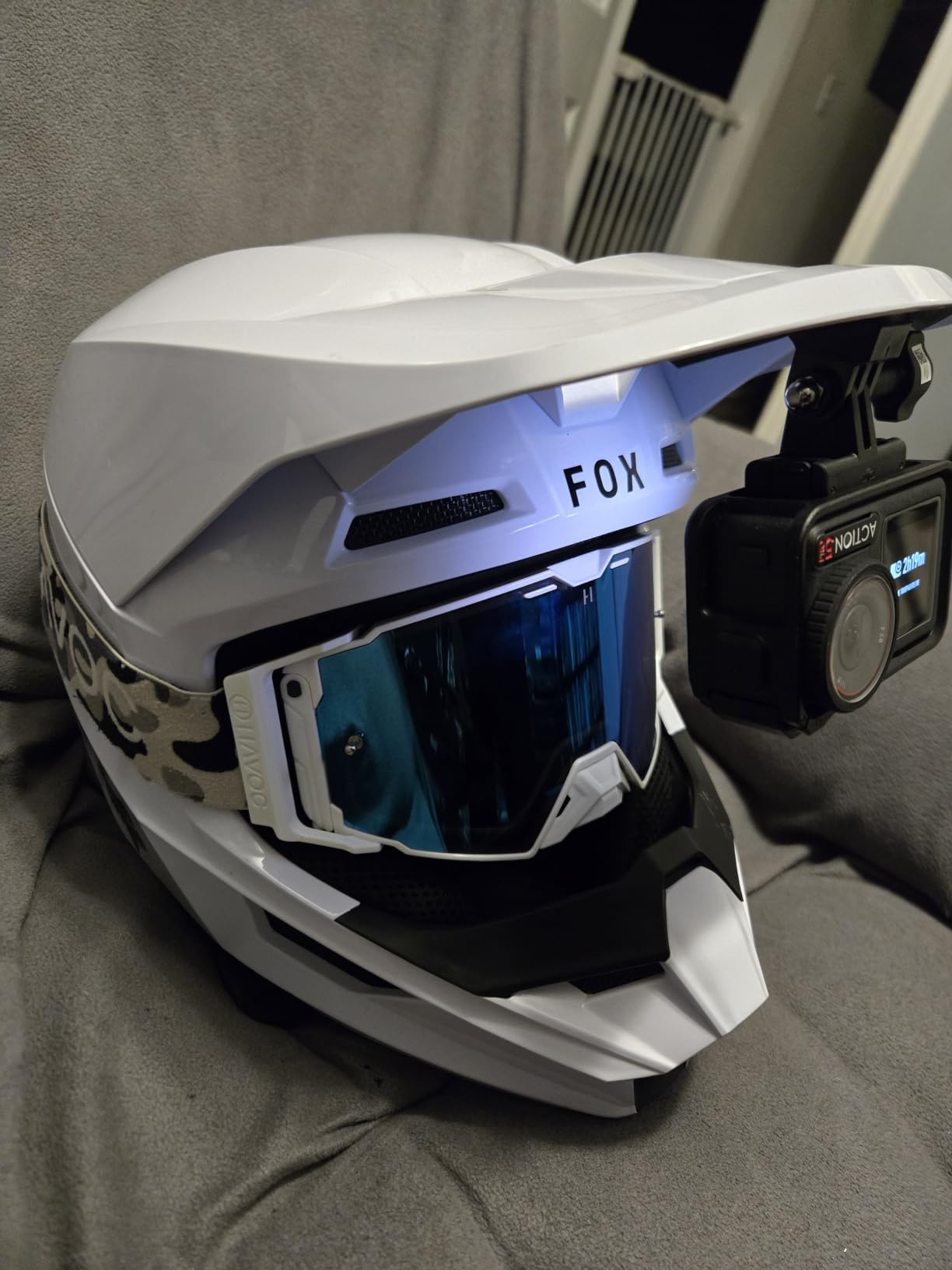
It works across motorcycle, mountain bike, slopestyle, motocross and snowmobile helmets, and it also fits a phone with the right adapter. The listed camera compatibility runs to GoPro Hero 12, DJI Action, Insta360, SJCAM and Xiaomi Yi.
Shape the base to your helmet before the first ride, then check it again after a few outings. Silicone takes a set, and a re-shaped base holds better than one you never adjusted.
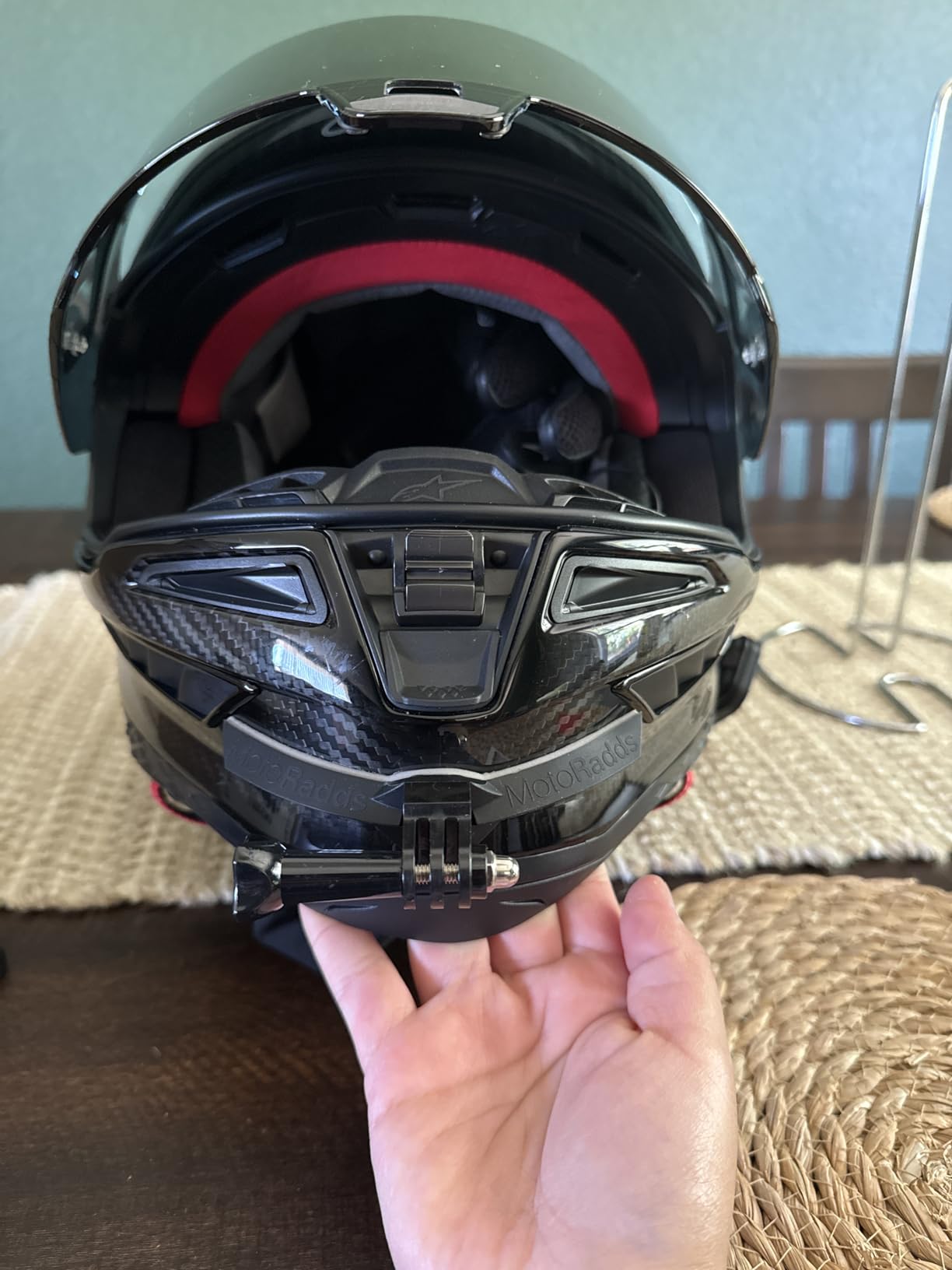
When a soft base is the right answer
A soft base wins on unusual shells: long chins, deep scallops, angular race designs and anything where a rigid pad would bridge a gap. It also protects the finish, since silicone never scratches a shell.
It loses on rigid shells under hard riding, where a stiffer arm holds the angle more reliably. Know which shell you have before you commit.
Who should skip it
Skip it if you ride a smooth, rounded street shell at speed and want zero movement. Rigid plastic arms and clamps hold position better there.
Skip it if you own a camera newer than the Hero 12 generation without an adapter on hand. Check the fit before the first ride rather than at the trailhead.
8. TELESIN 180 Degree Adjustable Chin Mount – the best for round and race shells
TELESIN 180° Adjustable Motorcycle Helmet Chin Mount for Action Cameras
180 degree adjustment
Food grade silicone
2.88 oz
80 g rating
Pros
- 180 degree adjustment works on round street and angular race shells
- Food grade non-slip silicone that does not irritate the chin
- Strap base can be installed and removed one-handed and reused
- Adapter flips upside down for a different camera orientation
Cons
- Plastic body rather than aluminum
- Some buyers found the J-hook missing from the box
- Straps can stop the shield closing fully
Helmet shapes vary enormously, and this mount answers that with 180 degrees of adjustment on a single axis. Round street shells and angular race shells both seat properly, which removes the most common complaint about one-size chin mounts.
The strap base uses strong fixing tape that installs and removes one-handed and is rated by the manufacturer as reusable many times over. The padding is food grade non-slip silicone, which matters because it sits against bare skin for hours at a time.
Long-term owners report that after a year of mountain bike crashes the mount still holds both a GoPro and an Insta360 X3 without shake. Reviewers advise tightening the straps hard and angling the camera slightly up.
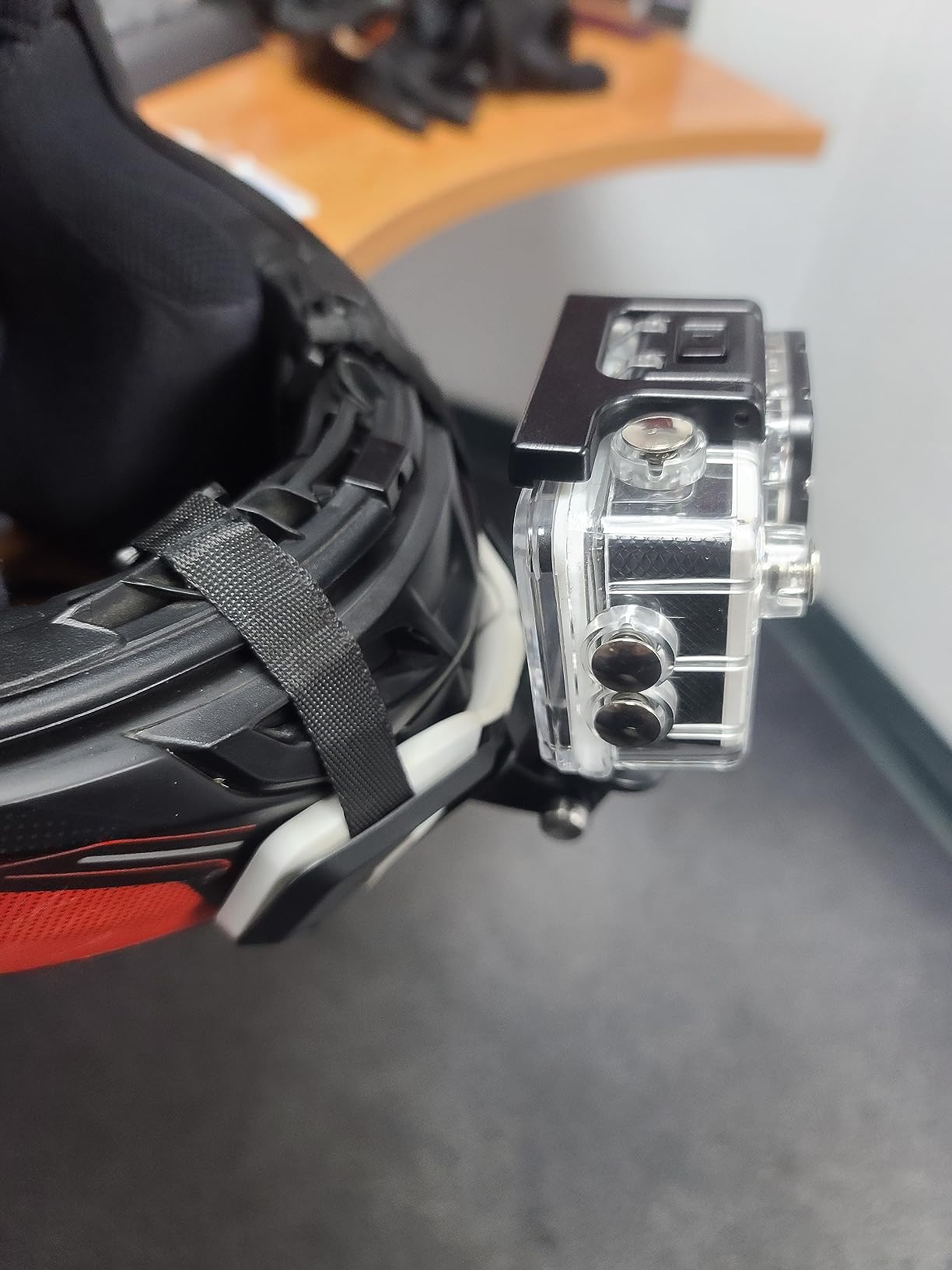
The compatibility list here is unusually long, reaching GoPro Hero 13 down to Hero 5, Session, Max, DJI Osmo 360, Action and Pocket, Insta360 One R RS, X2, X3, Go 2 and Go 3.
You can also flip the adapter upside down by loosening the rear screw, which gives you a second orientation when a shell’s chin angle is aggressive. Several riders use that and correct the tilt in editing instead.
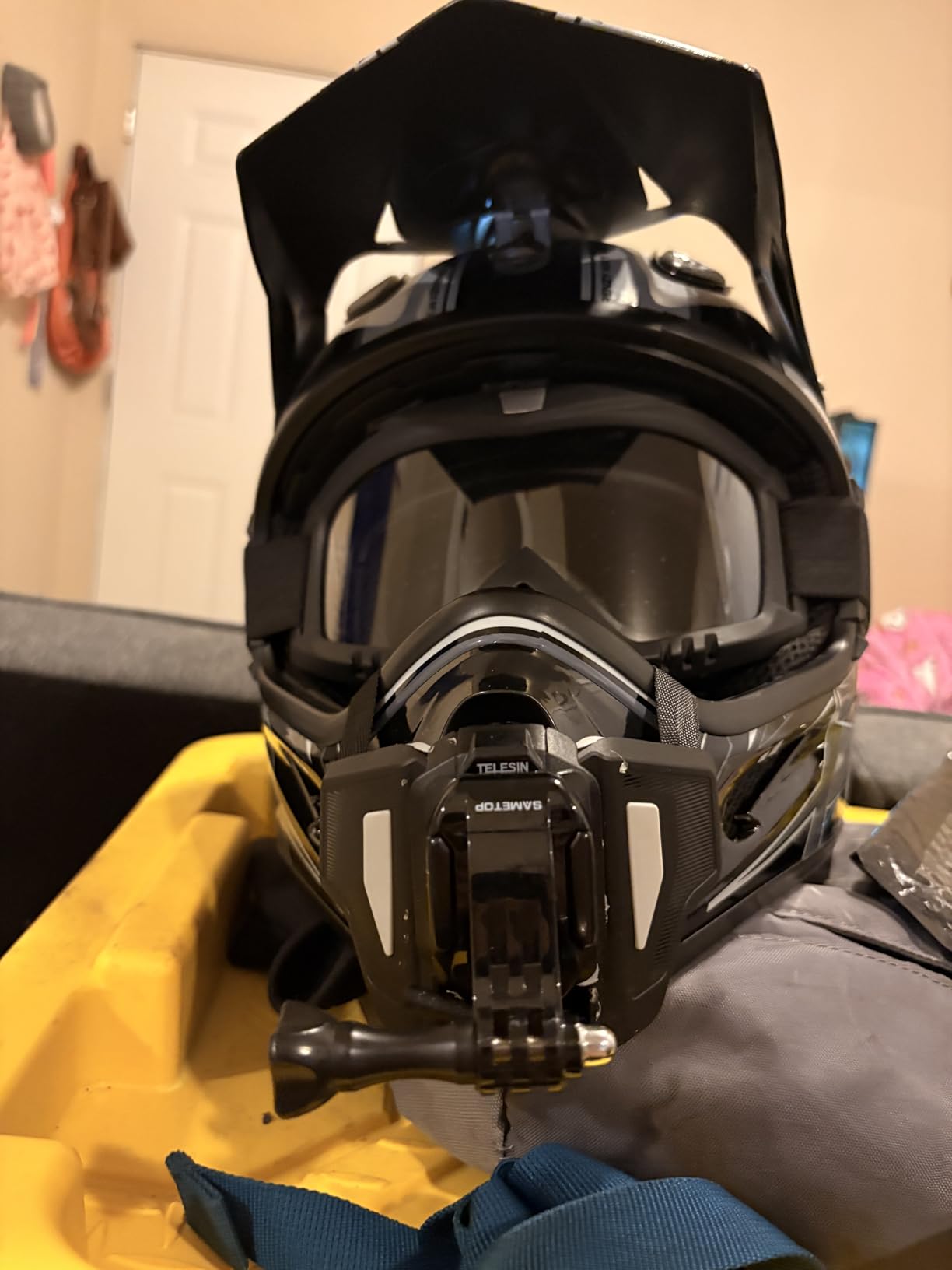
How to use the 180 degree adjustment
Set the angle with the helmet off your head, then check it on. Half the complaints about chin mounts are really complaints about a camera pointing at the road because nobody dialled the angle in first.
If your shell has a very steep chin, flipping the adapter upside down usually fixes the horizon without any post-processing at all.
Who should skip it
Skip it if you take hard hits regularly. The body is plastic rather than aluminum, and owners who ride MTB hard report the straps and joints taking the punishment instead of the camera.
Skip it if you ride a full-face shell where the strap already fights your shield. The visor interference is a geometry problem no amount of adjustment fixes.
9. TELESIN Dirt Bike Chin Strap Mount with Extension J-Hook – the best for trail riding
Helmet Mount for GoPro, Motorcycle Chin Strap Attachment with Extension J Hook Dirt Bike Holder Mounting Accessories for Go Pro Max Hero 13 12 11 10 9 8 Insta360 X5 X4 DJI Osmo Nano Action 3 4 5 Pro 6
Extension J-hook
Soft silicone Y-base
No adhesive
80 g
Pros
- Extension J-hook gives a natural forward rider's-eye angle on trails
- Rounded ABS Y-base avoids scratching the helmet and sharp edges
- One-handed install with no adhesive and no modification
- Owners report stable footage with no shake over rough trails
Cons
- Straps can block a fully closed visor and add fogging
- On modular helmets the strap hits the chin vent and front release
- Some owners report the joint creeping out of alignment
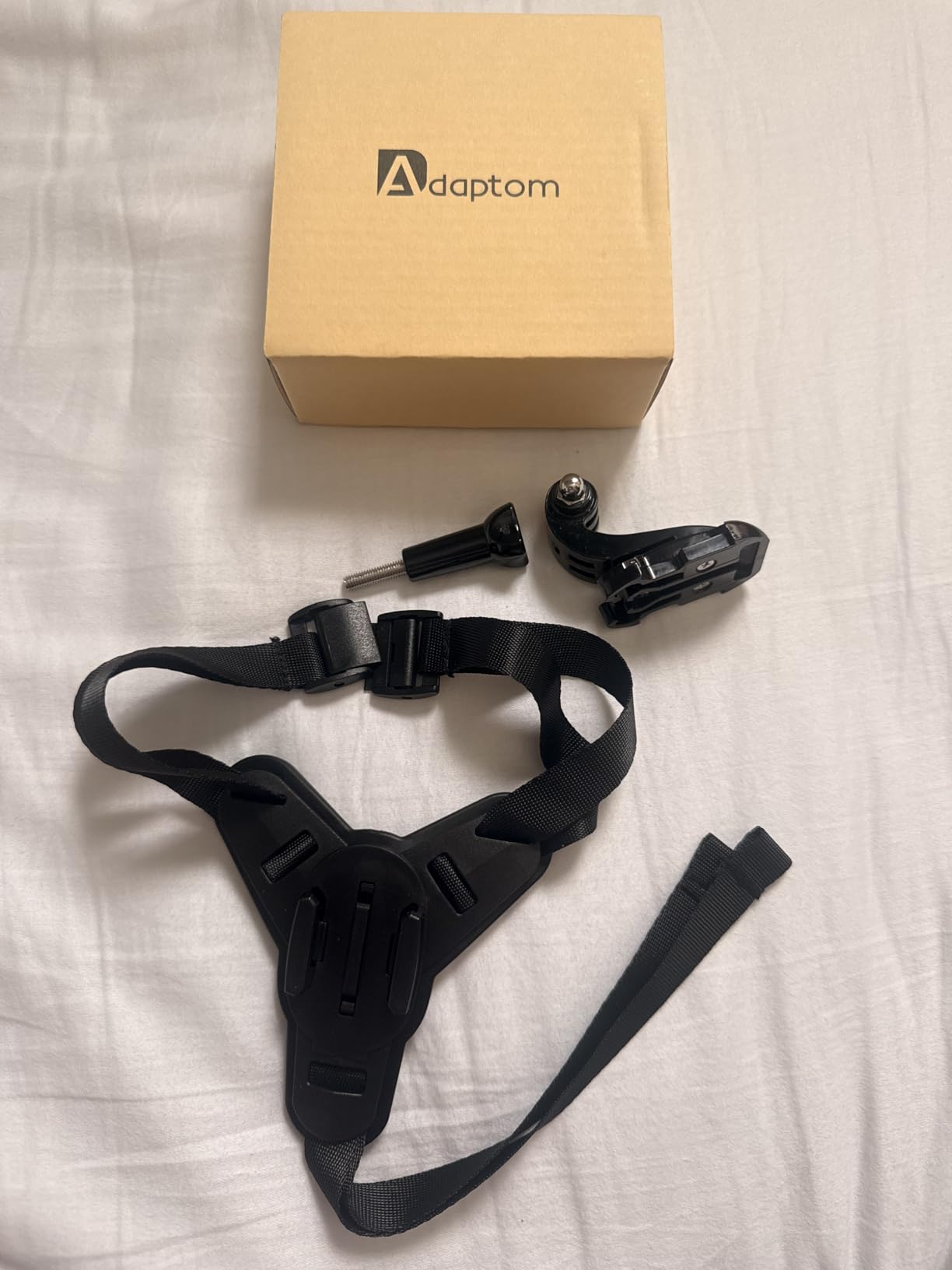
This is the chin strap that dirt bike and trail riders recommend most often, and the extension J-hook is why. It pushes the camera forward of the chin bar so you film where you are looking rather than slightly below, which reads as a rider’s-eye angle instead of a handlebar view.
The base is a soft non-slip silicone Y-shape over an ABS frame, with no sharp edges anywhere it can touch the shell. Installation is one-handed, with no adhesive and no permanent change. Owners report stable footage with no shake over rough trails.
Off-road riders choose strap mounts over adhesive because the chin bar shape defeats flat pads, and because a visor does not have to seal when you are wearing goggles. That reasoning applies here directly.
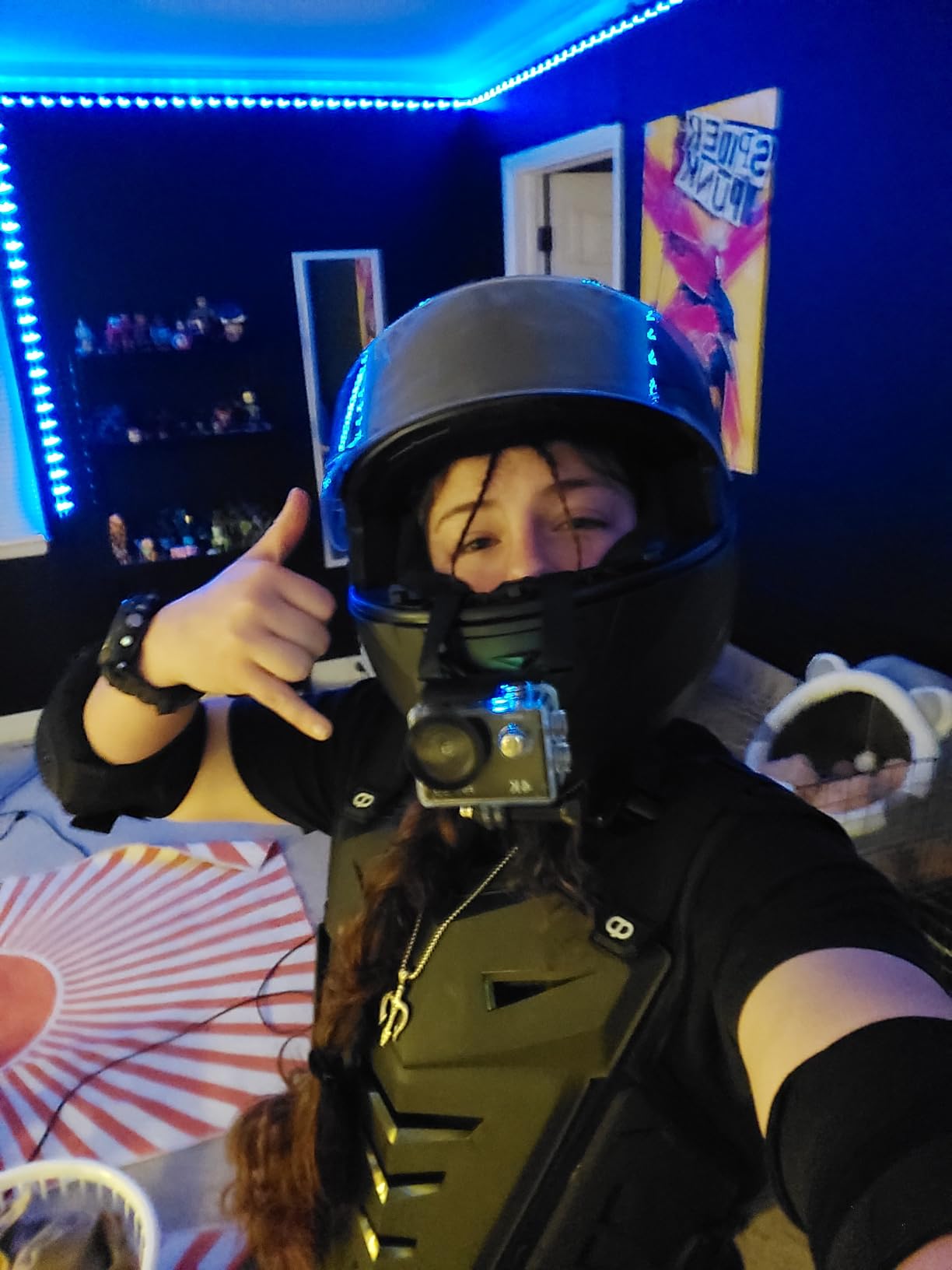
Compatibility reaches GoPro Hero 13, Max and 11 down to Hero 5, Session, DJI Osmo 360, Nano, Pocket 3, Action 3 through 6, and Insta360 X5, X4, X3, Ace Pro and One series. Some models need a frame case and an extra adapter that are not included.
On a modular helmet, check the chin vent and the front-release latch before you commit. Owners report the strap interfering with both, and a nose shield pressing into the strap can fog the visor.
Why off-road riders skip adhesive
A helmet that gets knocked over in a washboard section has no business carrying a camera on a cured adhesive pad. A strap that releases on impact is better than a pad that keeps holding while the shell slides.
Off-road visors also do not need a perfect seal because you wear goggles, which removes the main objection riders have to strap mounts.
Who should skip it
Skip it on a street full-face helmet if visor sealing matters to you. This is the mount with the most reported visor interference in the roundup, and that is a dealbreaker in cold or wet weather.
Skip it if you ride rough trail and the joint alignment worries you. Owners report the swivel creeping after tightening, so add a tether if that is your situation.
10. Lupholue Chin Mount Kit with Enlarged Adhesive Pads – the best for long and short chins
Lupholue Motorcycle Helmet Chin Mount Kits with Adhesive Curved Pads Compatible with DJI Osmo Action 6, Osmo Action 5 Pro, Osmo Action 4, Osmo Action 3, Insta360, AKASO, GoPro (Version A)
Enlarged adhesive footprint
Flat and curved pads
Extension arm
2.08 oz
Pros
- Enlarged adhesive area gives steadier footage than smaller chin pads
- Flat and curved pads handle different shell shapes
- Extension arm lets you change the shooting angle
- Works on helmets with either a long or a short chin
Cons
- Adhesive is a semi-permanent addition to the helmet
- Light plastic construction moves more than aluminum
- Less detailed listing imagery and documentation than rivals
This kit exists because chin pad footprint is what determines whether footage shakes. The adhesive area here is noticeably larger than on a standard chin mount, and owners single that out as the difference giving steadier footage.
It includes both flat and curved pads plus an extension arm, so it adapts to shells that curve sharply and to ones that are nearly straight. It is also one of the few chin kits that states it works on helmets with either a long or a short chin, which is a wider claim than most competitors make.
A buckle sticker and a hanging lanyard come in the box as a second layer of retention. That is cheap insurance, and riders mention it as a reason to feel comfortable leaving a camera stuck to a shell.
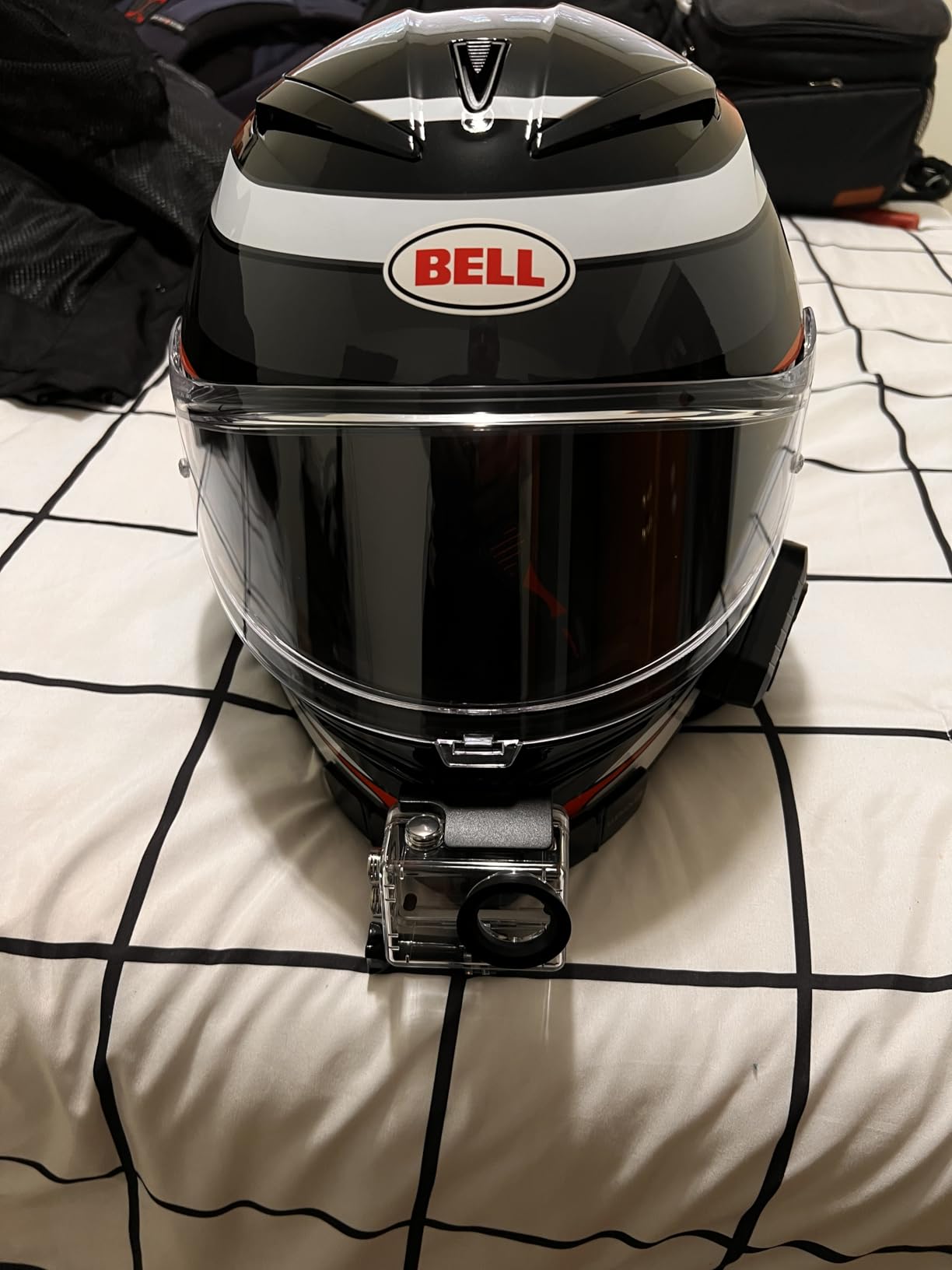
Compatibility covers GoPro Hero 12 down to Hero 3, Hero Black, Session, Xiaomi Yi, SJCAM, AKASO and Campark. Lupholue backs the kit with a one year warranty.
Treat the adhesive as semi-permanent. Unlike a strap mount, you are committing a section of the shell for as long as you own the helmet, so try the fit with the extension arm before the bond cures.
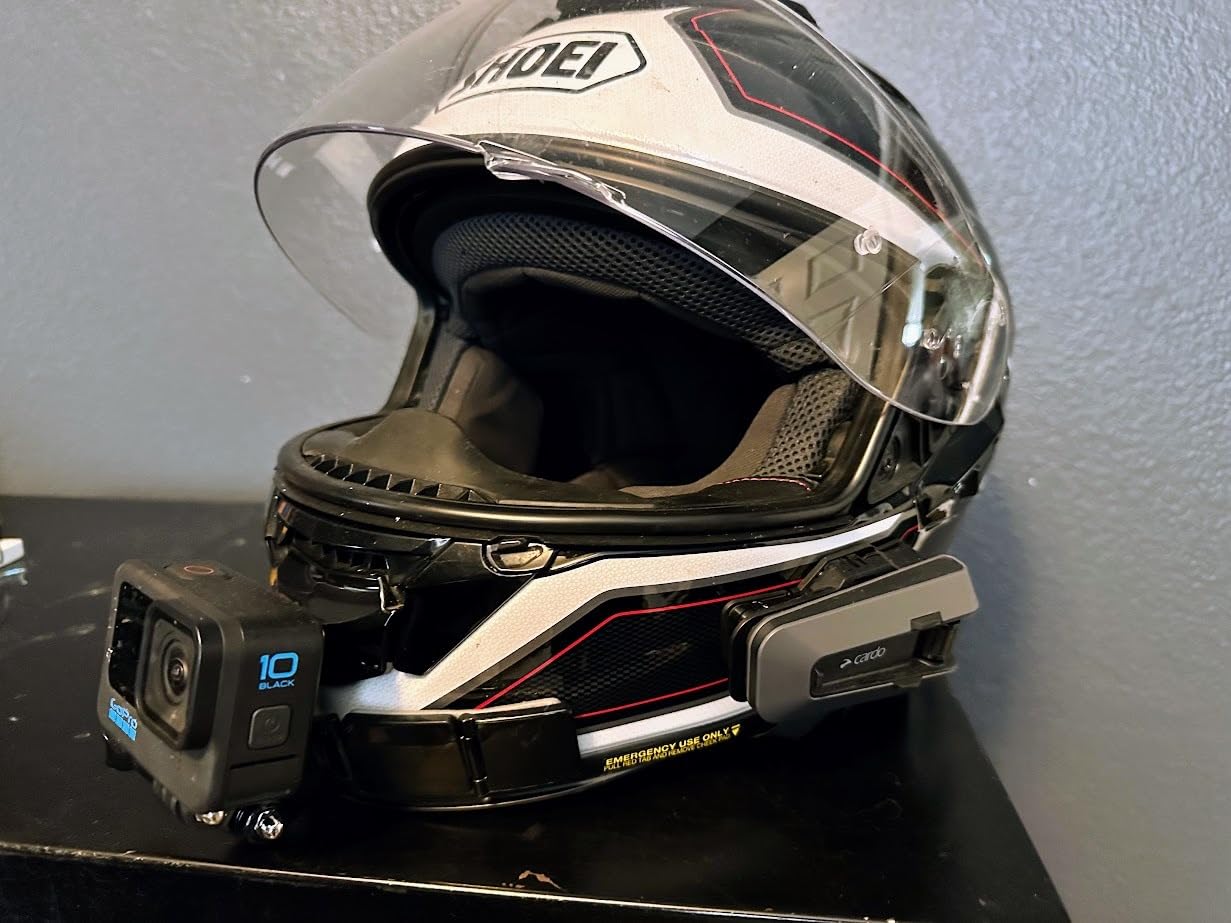
Does a bigger pad actually reduce shake?
Yes. A wider adhesive footprint spreads the load over more of the shell and resists the twisting that shows up as wobble in the footage. Chin pads fail by rocking, not by pulling off.
The curved pad matters just as much. On a domed chin bar, a flat pad bridges the middle and rocks at the edges, which is where most of the visible shake comes from.
Who should skip it
Skip it if the shell is painted in gloss or a heavy matte finish you care about. Riders with premium finishes consistently choose strap or clamp mounts for exactly this reason.
Skip it if you need zero commitment. A cured pad is heated off, not unscrewed, and that is true of every adhesive mount on this list.
11. K and F CONCEPT Chin Strap Mount – the best simple strap setup
K&F CONCEPT Action Camera Motorcycle Dirt Bike Helmet Chin Strap Mount
Dual buckle quick release
ABS Y-base with rubber backing
Tilting adapter
Pros
- Dual buckle quick release stays locked and does not loosen in use
- ABS Y-shaped base follows the chin curve and will not scratch
- Rubber backing adds grip while protecting the shell
- Includes a tilting adapter for reaching the right angle
Cons
- Not rated as water resistant
- Straps can stop the visor closing fully
- Hard to secure on very plain smooth shells
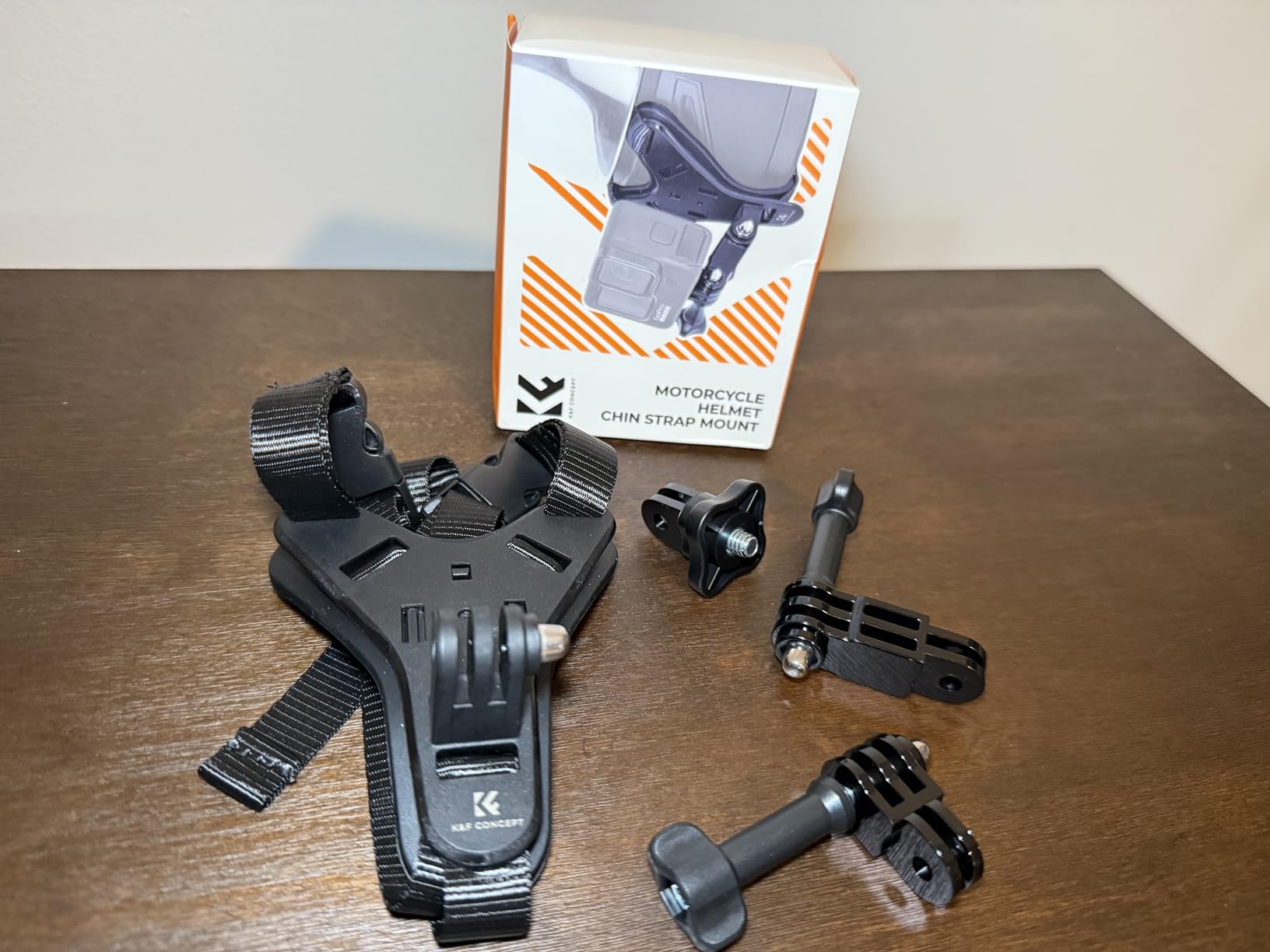
No adhesive, no clamp mechanism, no electronics. Just a dual-buckle strap on an ABS Y-shaped base with a rubber backing, and a tilting adapter for the angle. It suits full-face motorcycle, mountain bike, dirt bike, slopestyle, motocross and snowmobile helmets.
The dual buckle is the part that matters. Users report footage that stays steady with no wobble, and praise the rubber backing for grip and scratch protection in equal measure. The Y-shape follows the chin curve so it does not bridge a gap the way a flat plate does.
Compatibility is broad: any two-claw action camera from GoPro Hero 13 down to Hero 3, DJI Osmo Action, Osmo 360 and Osmo Nano, and the Insta360 Ace series. It also takes any camera with a 1/4 inch screw, such as an Osmo Pocket or an Insta360 X-series body.
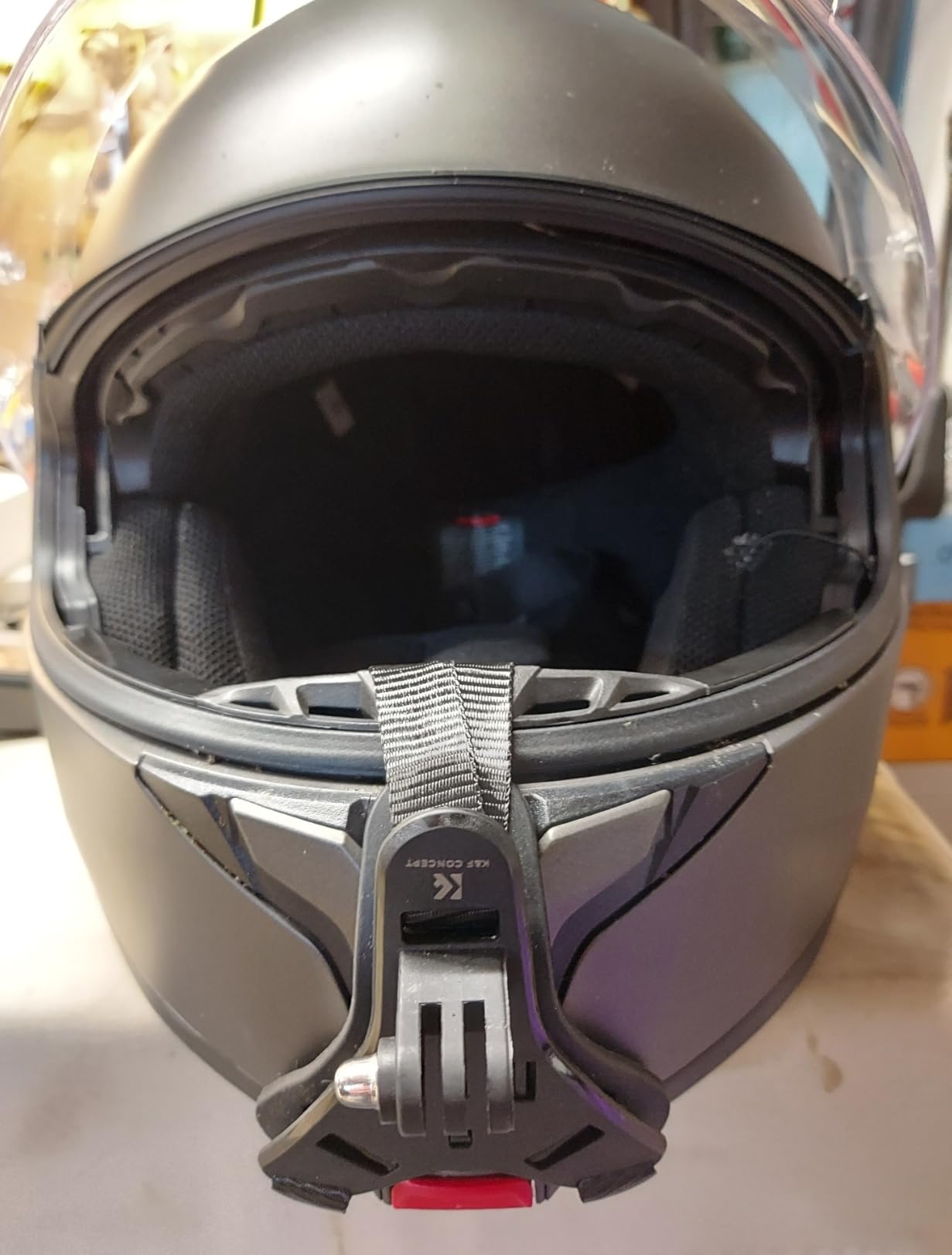
The honest caveat is the fit. On a very plain, smooth shell with little chin geometry, there is less for the base to grip, and owners report the mount being harder to keep secure there. Helmet shape matters more than brand.
This is the smallest review base in the roundup at 202 ratings, so treat the consensus as encouraging rather than settled. The category-level complaints apply here too: straps and visor closure.
Does the rubber backing stop scratches?
Yes, and it does more than that. The rubber layer adds friction against the shell as well as protecting the paint, so the base resists sliding sideways on a smooth chin.
On a glossy shell the rubber grip is the difference between a mount that stays put and one that drifts into your field of view halfway down a road.
Who should skip it
Skip it if you ride in sustained rain or snow. This mount is not rated as water resistant, and while a strap mount handles rain better than a pad, the base joints are the weak point.
Skip it if you own an unusually smooth, featureless chin bar. A clamp mount grips better on shells with no geometry to hold onto.
12. Niewalda Aluminum Universal Helmet Fixed Mount – the best rigid metal fixed mount
Niewalda Aluminum Universal Helmet Fixed Mount with 1/4″ Screw Adapter
CNC aluminum with nut parts
1/4 inch screw adapter
1.12 oz
25 g rating
Pros
- CNC aluminum alloy with aluminum nut parts
- tougher than plastic brackets
- Bolt connection is stable and easy to disassemble
- Small and light at just over an ounce
Cons
- Base is slightly curved rather than a flat plate
- Bolt can vibrate loose over time
- Rated to only 25 g
A metal fixed base that converts a rectangular adhesive seat into a firm, angled mount. CNC aluminum alloy with aluminum nut parts, and it weighs just over an ounce. Buyers who come from plastic mounts treat it as a straight durability upgrade.
The bolt connection is stable and easy to disassemble, and a 1/4 inch screw adapter is included so it takes cameras beyond the two-claw GoPro style. One owner reports holding an Insta360 X4 on a six inch extension through heat and humidity on a fire helmet.
Two practical notes come up repeatedly. The base is slightly curved rather than a truly flat plate, so it sits differently than the product photos suggest. And the bolt can loosen under sustained vibration, so a nylock or lock washer is worth adding.
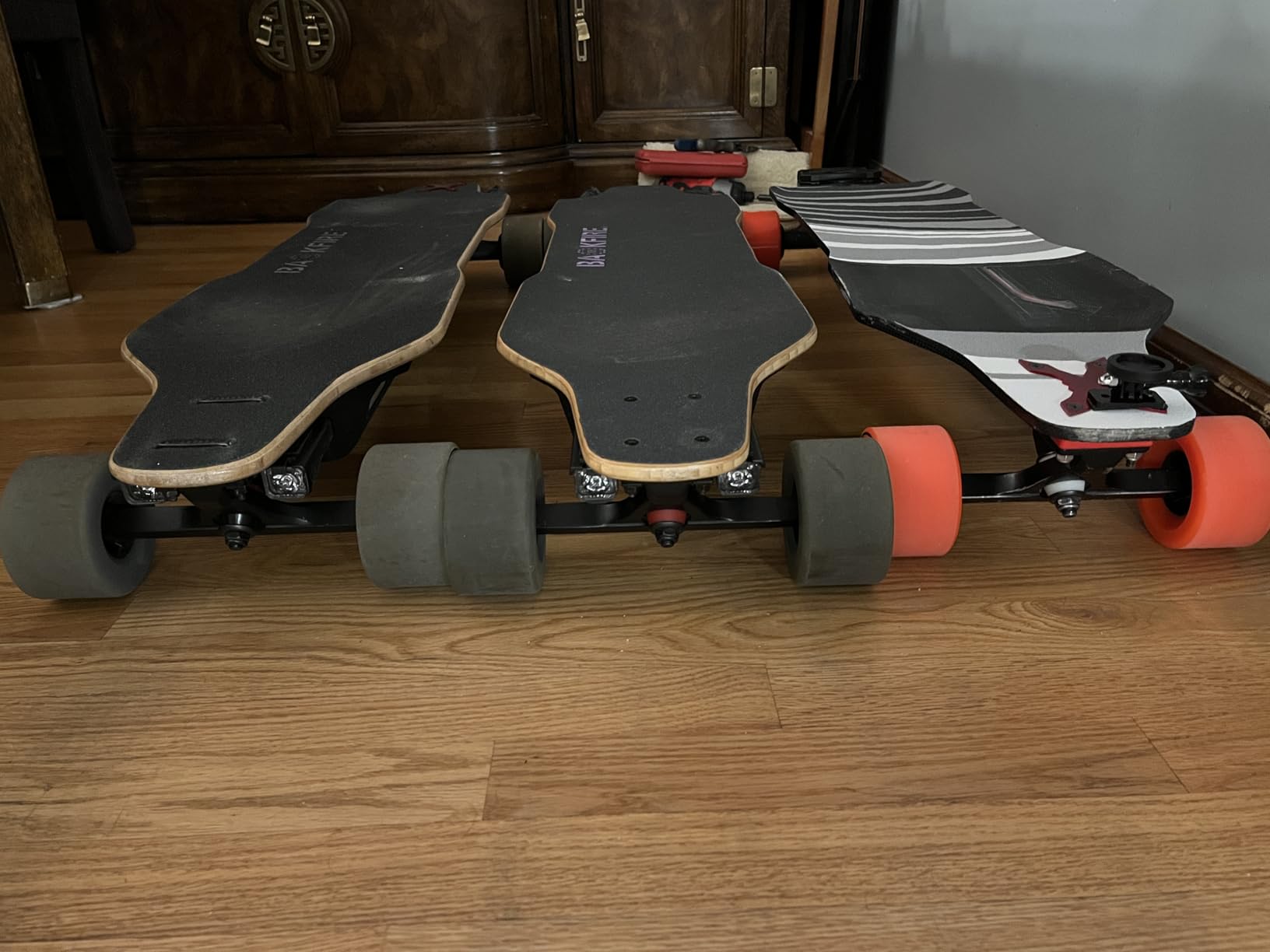
The 25 g load rating is the honest limit here. That covers a compact action camera and little else, and owners report it cannot handle the extreme vibration of an electric skateboard.
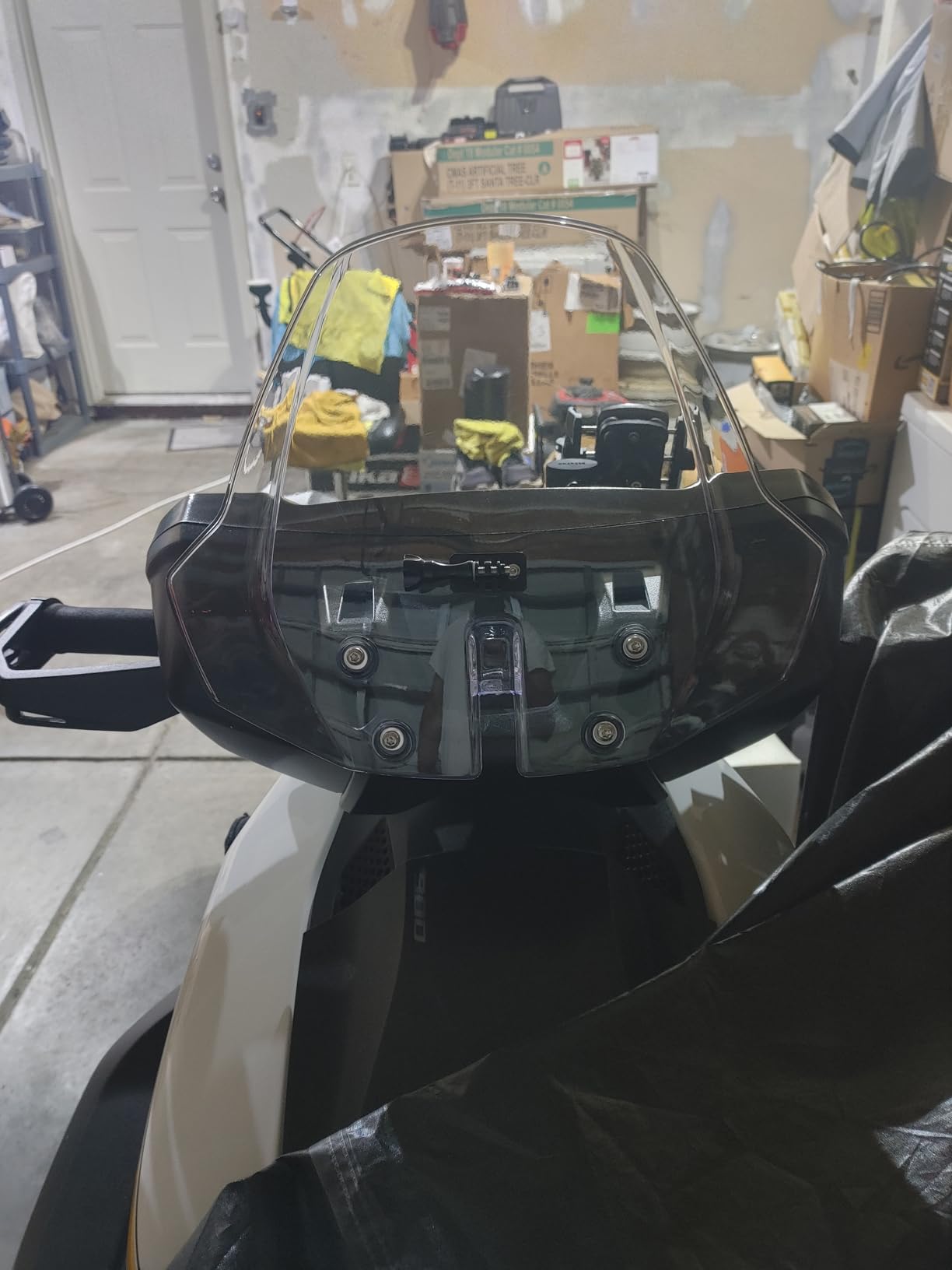
You supply the adhesive or bolts that attach it to the shell, which makes this the most flexible option for unusual installations: a helmet, a windshield, a rail, a dash. The package is one connection base and one screw adapter.
When does a fixed mount beat a strap?
A fixed mount wins when the camera never moves and the shell is already committed. On a fire helmet, a rail or a windshield, there is no strap to flutter and nothing to interfere with a visor, because there is no visor.
It also wins on multi-camera rigs, where a rigid base means the second camera does not add wobble to the first. Just add a lock washer to each bolt.
Who should skip it
Skip it for a heavier camera or a large rig. At a 25 g rating it has very little headroom, and a heavier body is where the base starts to resonate.
Skip it if you ride at speed and change shells often. A bolt-on fixed base is a commitment in a way that a strap never is.
How to choose a helmet camera mount
Start with your helmet, not the camera. A full-face street shell with a rounded chin bar accepts strap and clamp mounts cleanly. A modular shell needs a strap that clears the chin vent and the front-release latch. A dirt bike or motocross shell has a narrow chin bar that defeats flat adhesive pads. A ski or snow helmet is usually a strap or goggle-clip job, and a tactical shell needs an NVG plate or shroud before anything else will fit.
Then pick your attachment method. Adhesive pads are the flattest and the most secure once cured, and they are the only option that leaves nothing loose. They are also permanent, they need a full day of cure time, and they risk ghosting on matte shells. Strap mounts are the safest choice for a painted or premium finish, and the right answer whenever you swap between helmets.
Clamp mounts sit in between. They grip without adhesive in seconds and leave no residue, and they cost you a little weight and a visible profile on the shell. They are the best option for dirt bikes and for anyone who changes cameras or bodies often.
Weight matters more than most buyers expect. A chin mount under 60 grams is barely noticeable on a long ride, and a 140 g kit on the same position will be. If you run two cameras, halve the budget for each and look at the aluminum options.
Adjustability decides how much camera shake you see. A fixed base keeps the angle but cannot correct for an aggressive chin line, and a strap mount with 180 degrees of adjustment can usually be dialled to your viewpoint. Torsion spring jaws hold position well but let you set the angle in coarse steps.
Check the camera generation before you buy. Most of the mounts here cover GoPro Hero 4 and newer, DJI Osmo Action 2 through 6, and Insta360 bodies, but a few stop at older generations. If your body is newer than the listing says, budget for a frame or an adapter.
Finally, add a tether. Any mount on a helmet can fail, and a loose camera at highway speed is a danger to everyone behind you. The clamp mount in this roundup includes a leash, and the Lupholue chin kit includes a lanyard. Everywhere else, add a stainless steel safety rope through the camera’s mounting slots.
How to install an action camera mount and how long to wait before riding
Bonded mounts have a cure time, and riding before it completes is the single most cited cause of failures on rider forums. Work through these six steps and do not skip the waiting step.
1. Clean the shell with isopropyl alcohol and let it dry completely. Skip the wipe if you have just applied wax or polish to the helmet.
2. Warm the shell with a hairdryer for a minute so the tape sits on a warm surface rather than a cold one.
3. Press the pad into position and hold firm pressure for a full sixty seconds without sliding it.
4. Leave the helmet alone for 24 hours above 10 degrees Celsius. Do not ride, do not wear it, do not test the hold.
5. After the cure window, fit the buckle or J-hook and tighten the thumbscrew so the camera cannot pivot by hand.
6. Run a safety tether from the mount to a fixed point on the helmet, then pull test it before every ride.
For strap and clamp mounts the cure step does not apply, but everything else does. Fit the camera, check the visor closes and latches, and then take a short local ride before a long trip so you notice a shift while it is still easy to fix.
Is it legal to mount a camera on your helmet?
Yes, in most places it is legal to mount an action camera on your helmet, and no competitor on this topic answers that directly. The rules that do exist generally restrict what the footage shows, not whether the camera is fitted. Riding with it visible is usually fine, while obstructing your visor, blocking ventilation, or having footage that intrudes on private property are separate problems.
Because laws vary by state and country, check your local riding regulations before you plan to rely on footage for anything. A helmet camera is not a dashcam, and a lot of riders find that matters for insurance and for what an insurer will accept after a crash.
On certification and warranty, adding a mount to a certified helmet is not the same as modifying its structure. Avoid drilling, and keep the camera clear of the shell’s impact zones. If your helmet maker offers guidance on accessory fitting, that takes precedence over anything on this page.
How to remove an adhesive mount without damaging your helmet
Heat first, peel second. Warm the pad with a hairdryer for thirty to sixty seconds until the adhesive softens, then peel slowly at a low angle rather than pulling straight up. Pulling vertically is what takes paint with it.
On a matte or textured shell, work dental floss under the pad edge and saw it back and forth to break the bond without heat. It takes longer and it is far gentler on a finish you care about.
On a gloss or clear-coated shell, take it slowly and keep the hairdryer moving. Gloss coats lift more easily than matte finishes, and a warm pad that sits too long in one spot can leave a soft patch.
Clean any residue left behind with isopropyl alcohol and a microfiber cloth. Avoid solvent-based strippers, which can cloud a clear coat permanently. If a mark remains, stop there rather than scrubbing, because the remaining trace is usually less visible than the damage a harder remover causes.
Frequently Asked Questions
What is the best action camera mount for a helmet?
For most riders the best action camera mount for a helmet is a strap or clamp chin mount. It sits closest to your head’s centre of gravity, produces the cleanest first-person footage, needs no adhesive, and moves between helmets without leaving a mark. Choose an adhesive pad instead when you want the lowest profile and already own the helmet long term.
Are GoPro adhesive mounts strong enough for a helmet?
Yes, once fully cured. Industrial strength 3M VHB 4991 pads hold a compact action camera through rain, cold and heat. They fail when the surface is dirty, when the shell is cold, or when you ride before the 24 hour cure window finishes. Riding early is the leading cause of pads letting go mid-ride.
How long do GoPro adhesive mounts take to stick?
Treat them as needing a full 24 hours above 10 degrees Celsius before they carry any load. Press each pad for sixty seconds while the shell is warm and clean, then leave the helmet untouched. Strap and clamp mounts have no cure time and can be used the moment they are fitted.
Chin mount or strap mount for a motorcycle helmet?
A chin mount gives the most immersive rider’s-eye view because the camera sits near your head’s centre of gravity and passes the least vibration. A strap mount is a way of holding a chin mount without adhesive, and the trade-off is that the strap can stop a full-face visor closing and sealing fully, which adds wind noise.
Will a helmet camera mount damage my helmet or void its warranty?
Strap, clamp and in-helmet mounts leave the shell untouched, so they are the safe choice for painted, gloss and matte finishes. Adhesive pads are semi-permanent: they can be heated off with a hairdryer, and removed residue is common on matte shells. Avoid drilling the shell, and check your helmet maker’s accessory guidance before modifying anything.
Final verdict
The best action camera mounts for helmets come down to one question: is the mount allowed to touch the shell? If the answer is yes, the Sametop curved and flat adhesive pads give the lowest profile and the most secure hold once they have cured for a full day. If the answer is no, the Lupholue chin strap mount is our first choice, because nothing sticks, nothing marks, and the camera still ends up in the position that records the cleanest footage.
For dirt bikes and trail riding, take the TELESIN extension J-hook strap for its forward angle and its forgiving silicone base. For tactical and NVG shells, the SKEZN aluminum bracket is the only one here that locks into a shroud properly. Whatever you choose, fit it, close your visor, and confirm the camera cannot pivot by hand before the first ride.
Last updated for 2026. We earn a commission on qualifying purchases, which does not change what we recommend.