
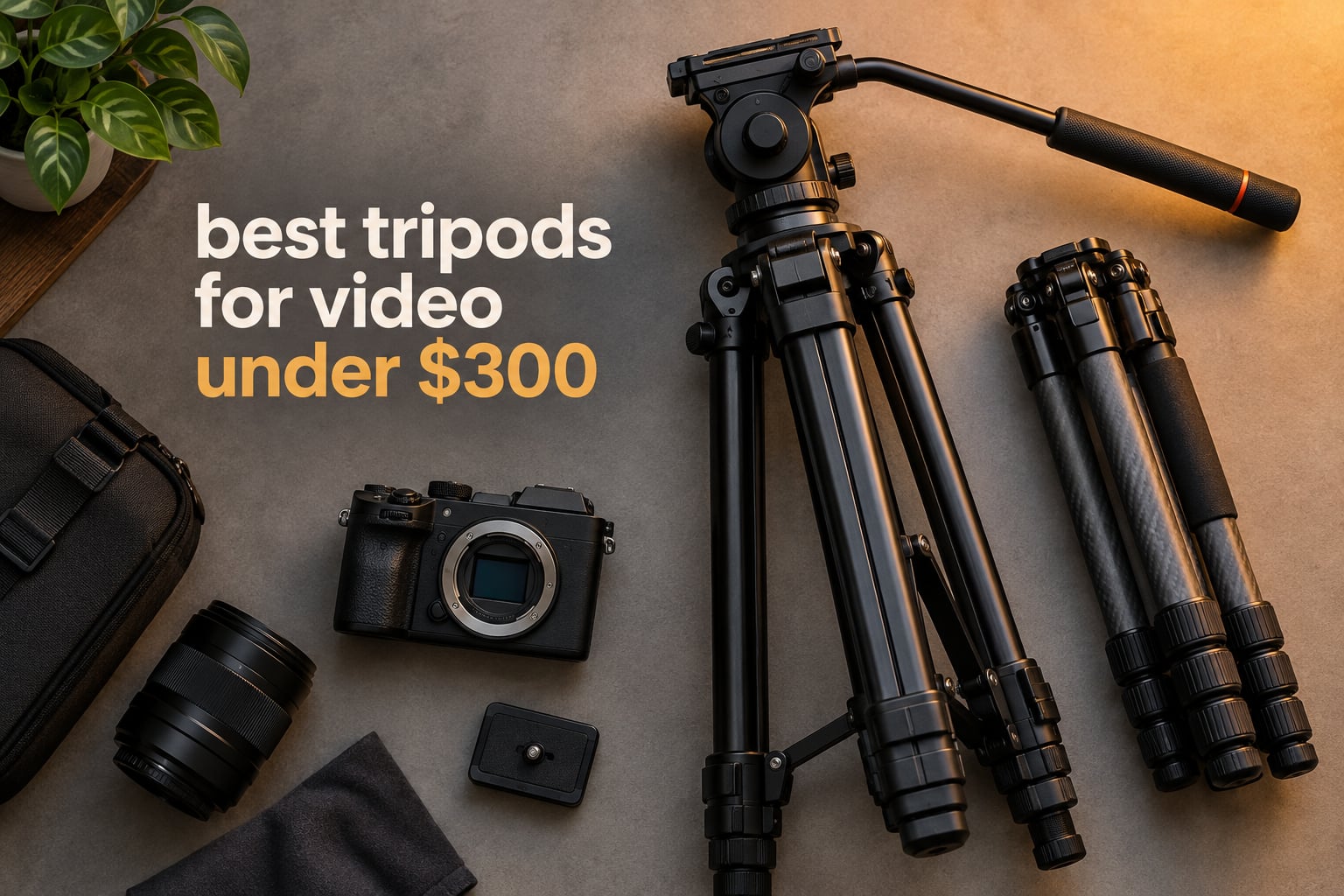
A tripod built for stills and a tripod built for video are not the same product, even when the price tags look identical. A photo tripod gives you a ball head that locks instantly in any position, which is perfect for a single frame and terrible for a twelve-second pan. Video needs a head that resists movement in proportion to the load, so a small hand motion becomes a slow, even sweep instead of an instant jolt.
Get that wrong and you will see the stutter in every frame, because video records continuously and hides nothing.
That is why the best tripods for video under 300 all share one feature: a fluid or friction pan-tilt head, a rated load capacity that comfortably exceeds your rig, and legs that do not flex at working height. Everything else, including carbon fiber, is a preference.
We spent weeks with the ten tripods below, moving them between a mirrorless body with a zoom, a shotgun microphone, a compact camera body and a small cinema-style rig. Each one was judged on the same three things: how the pan starts, how it holds in the middle, and how it stops at the end of the stroke.
This list covers studio and interview work, run-and-gun shooting, high-angle overheads, low-angle floor shots, and one genuinely travel-sized option. If your subject is standing still while you talk, any of these will do. If you are following someone walking, keep reading to the section on when a tripod is the wrong tool.
For broader coverage of the format, our full video tripod roundup and filmmaking-focused picks go deeper on heads and payload.
Table of Contents
Top 3 Best Tripods for Video Under 300 (October 2026)

COMAN FF16LS Heavy Duty Video Tripod
- 22 lb max load
- 73.2 inch max height
- 360 degree fluid head
- 60mm bowl

NEEWER 79 inch Video Tripod
- 17.6 lb max load
- 78.7 inch max height
- fluid drag head
- carry bag included

SmallRig AD-01 Heavy Duty Tripod
- 17.6 lb max load
- 73 inch max height
- bag included
- 2 year warranty
The COMAN FF16LS takes the top slot because it is the one we kept reaching for. Its 22 lb rating gives real headroom over a typical mirrorless rig, the fluid head holds position instead of creeping, and the 60mm bowl base keeps the legs planted when the wind picks up.
The NEEWER 79 inch tripod is the value pick: same class of stability, a bag in the box, and a height range that covers seated and standing framing in one tripod. The SmallRig AD-01 wins on turnaround speed, with a dual-mode plate that swaps between a gimbal plate and a tripod plate in seconds.
Every Pick Compared Side by Side in 2026
| Product | Specifications | Action |
|---|---|---|
| COMAN FF16LS Heavy Duty Video Tripod |
|
Check Latest Price |
| NEEWER 79 inch Video Tripod |
|
Check Latest Price |
| SmallRig AD-01 Heavy Duty Video Tripod |
|
Check Latest Price |
 Sirui AM-25S Heavy Duty Video Tripod Sirui AM-25S Heavy Duty Video Tripod |
|
Check Latest Price |
 K&F Concept 90 inch Fluid Head Tripod K&F Concept 90 inch Fluid Head Tripod |
|
Check Latest Price |
 SmallRig 75 inch Carbon Fiber Tripod SmallRig 75 inch Carbon Fiber Tripod |
|
Check Latest Price |
 Cayer BV25LH Carbon Fiber Video Tripod Cayer BV25LH Carbon Fiber Video Tripod |
|
Check Latest Price |
 Manfrotto 290 Xtra Tripod Kit Manfrotto 290 Xtra Tripod Kit |
|
Check Latest Price |
 Sirui Traveler X Carbon Fiber Tripod Sirui Traveler X Carbon Fiber Tripod |
|
Check Latest Price |
 Manfrotto Befree 3-Way Live Advanced Manfrotto Befree 3-Way Live Advanced |
|
Check Latest Price |
Two numbers in that table decide most purchases: max load and max height. Everything else is preference. Read the next ten sections in order if you want the full picture, or jump to the buying guide further down if you already know what you need.
1. COMAN FF16LS Heavy Duty Tripod – Our Overall Pick
COMAN FF16LS Heavy Duty Tripod, 74″ Fluid Head Video Tripod Max Load 22 lbs
22 lb max load
73.2 inch max height
Folds to 35 inch
9 lb weight
Pros
- Rock-solid dual-tube aluminum build with 60mm bowl
- 360 degree fluid head with dynamic balancing
- Works with standard 1/4 and 3/8 inch plates plus DJI and Manfrotto plates
- Fast flip-lock leg extension
- Plenty of load headroom over a typical mirrorless rig
Cons
- Heavy at about 9 lb
- Minimum working height of 32.7 inch rules out floor-level work
- Fasteners can loosen and need periodic re-tightening
This is the tripod we kept setting up first. On a shoot where the rig changes every twenty minutes, the FF16LS went from bag to built in about a minute, and it never needed re-checking afterward. The dual-tube aluminum legs and the 60mm bowl base are what make that possible: push the camera past its balance point and the whole thing leans instead of folding.
The Q6 fluid head is the part that matters most for video. Pan sweeps full 360 degrees, tilt runs from minus 75 to plus 90 degrees, and the damping is even enough that a slow push-in does not lurch halfway through. The dynamic balancing is not adjustable like a counterbalance spring, but the head holds position on its own once you set the drag, which removes the most common complaint we hear about budget heads.
Quick release plate accepts the standard 1/4 inch and 3/8 inch screws, so a Manfrotto or DJI plate from another rig drops straight in. That matters more than it sounds, because it means you are not re-rolling the camera every time you move from the tripod to a slider or a stabilizer.
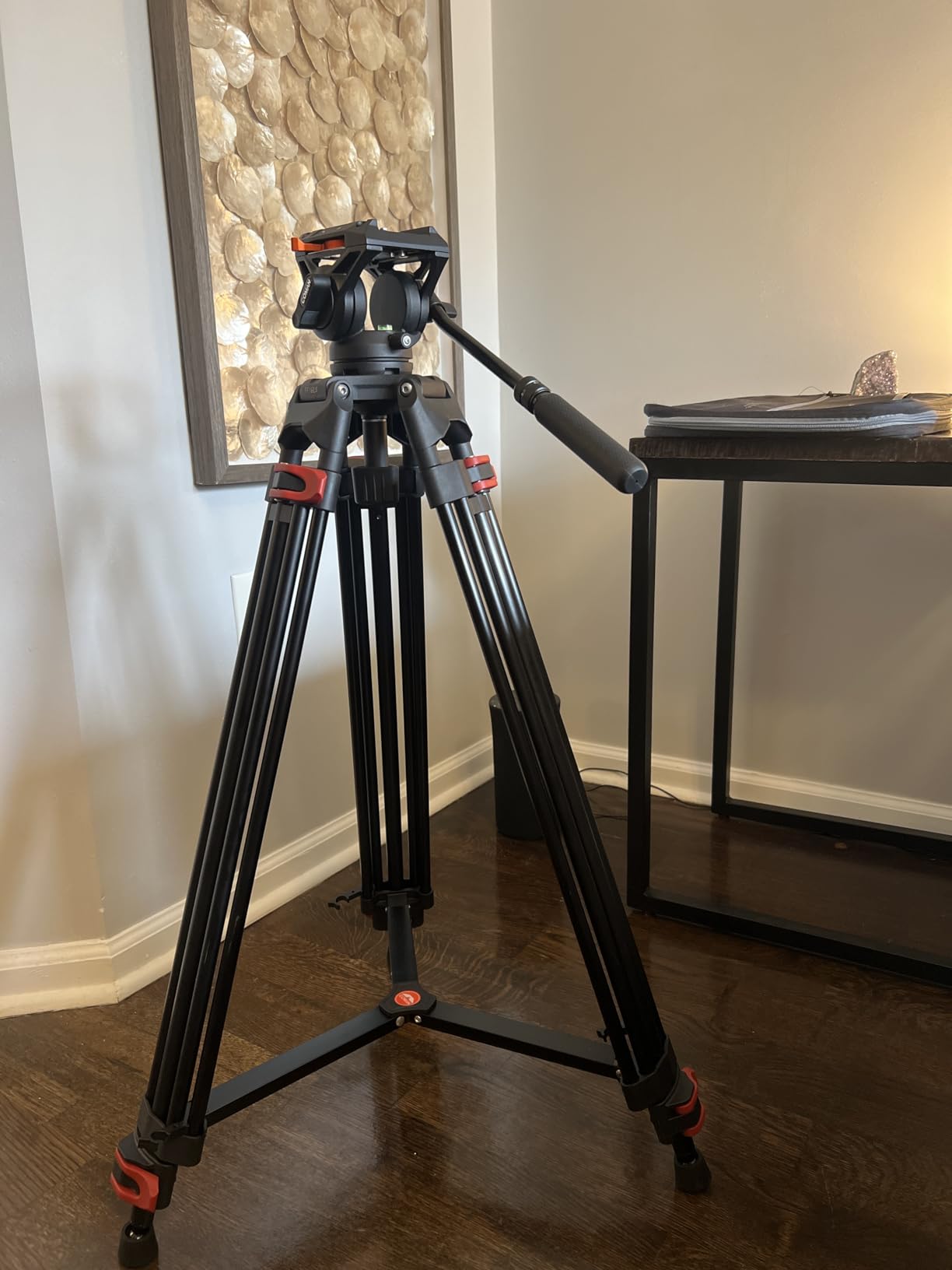
Specs worth writing down before you commit: 22 lb maximum load, 73.2 inch maximum height, 32.7 inch minimum height, 35 inch folded length, three leg sections, and a 9 lb bare weight. The tilt and pan ranges cover everything from a top-down flat lay to a low interview angle without moving the legs, and mid-level spreaders with adjustable rubber mats keep the feet planted on carpet and hard floors alike.
The failure mode to know about is weight. At about 9 lb it is a two-person carry for stairs, and the minimum working height means you cannot get low without a riser or an underhang mount. Some owners also report fasteners loosening after heavy use, so a ten-second check before each shoot is worth it, and the fix is a small hex key rather than a new tripod.
Owners consistently describe it as far more stable than its price suggests, and the review volume is the largest in this group, which means the samples are not all from a single batch. For studio work, church and school production, and any locked-off setup where weight is not the deciding factor, this is the one I would buy first.
How this behaves on a real talking-head rig
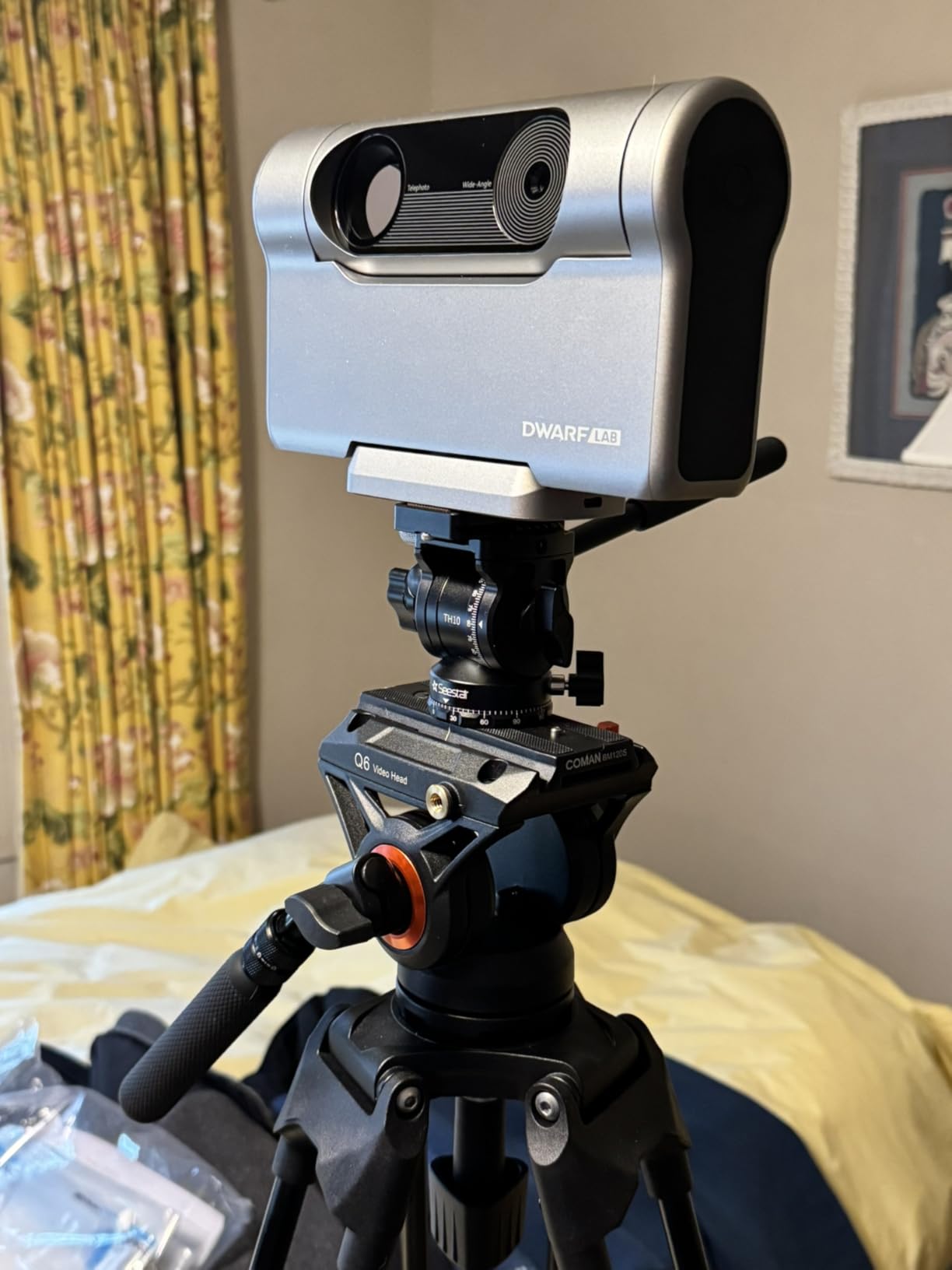
We ran a mirrorless body with a 24-70mm zoom, a shotgun microphone on a short boom, and a small monitor, which puts the payload comfortably under 9 lb against a 22 lb rating. The head stays put through a full ninety-second take with no drift, and the pan drag needs about a quarter turn of the handle to start a slow sweep. The tilt is slightly firmer than the pan, so vertical moves want a lighter touch, but nothing that showed up on playback.
At full extension on a 3-section leg set the legs still read as rock solid, and spreading them wide rather than reaching straight up makes a visible difference on anything heavier. There is no creep in the collar after a few hours of height changes, which is the wear problem that ruins cheaper kits.
Where it will disappoint you
If you shoot interviews seated on the floor, or floor-level b-roll where the camera needs to be inches off the ground, the 32.7 inch minimum height rules this tripod out entirely. Carrying it on a plane or a long hike is the other problem, because 9 lb and a 35 inch folded length will make you resent it by the second location.
It also has no mid-leveler. You level the head by re-angling the legs rather than by twisting a knob, which is slower and requires more care when the ground is uneven. Buyers wanting a base-mounted leveling option should look at the Cayer instead, which has a ball-style leveling base.
2. NEEWER 79 inch Video Tripod – Budget Pick Pick
NEEWER 79″/200cm Video Tripod, Heavy Duty Aluminum Alloy Camera Tripod
17.6 lb max load
78.7 inch max height
Folds to 35.8 inch
5.58 kg
Pros
- Sturdy double-tube aluminum with adjustable 70mm bowl
- Flip locks cover 34.6 to 78.7 inch in one tripod
- Carry bag in the box
- 360 degree pan and -70 to 90 degree tilt
- Built-in bubble level
Cons
- 17.6 lb rating is modest for large cinema rigs
- 35.8 inch folded length is too bulky for airline cabin bags
- Included bag is basic
- Friction drag rather than true fluid damping
The 79 inch NEEWER is the pick for anyone who needs a full-size video tripod and does not want to think about it. Double-tube aluminum legs, an adjustable 70mm bowl, flip locks that move through a 34.6 to 78.7 inch range in a single step, and a fluid drag head that pans 360 degrees. It covers seated and standing framing without a second piece of kit.
It is also the one we recommend for church production, small studios, and classroom setups, where the same tripod does double duty. The one-year manufacturer warranty is short compared with some rivals, but the build has not given us any reason to worry over weeks of daily use.
The head uses friction drag rather than a fluid cartridge. That means the resistance depends on how tightly the control knob is set, and the range is not perfectly linear, so very slow moves need a light touch. That difference is the main reason this does not take the top spot.
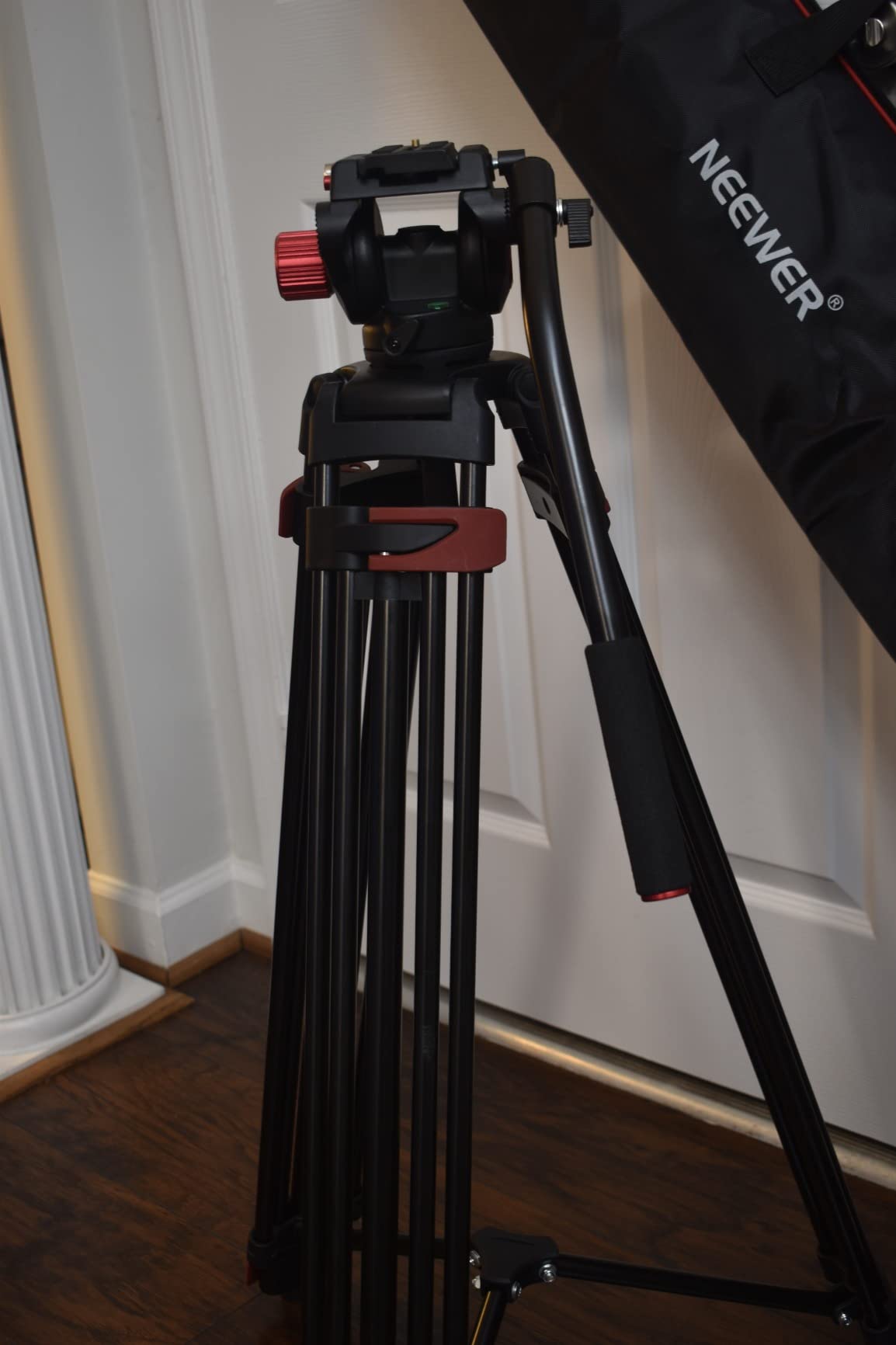
Specifications: 17.6 lb load rating, 200 cm maximum height, 88 cm minimum height, 35.8 inch folded length, 20 mm leg diameter, three sections, and a 5.58 kg weight. The plate takes both 1/4 inch and 3/8 inch screws, and non-slip rubber feet plus a built-in bubble level make setup on floors and tables straightforward.
For YouTube studios, podcast rooms, and interview setups where the tripod lives in a corner and comes out for a few hours a week, the weight and folded length stop being relevant. The smooth height adjustment is the feature you will notice most in that environment, because you are constantly changing between seated and standing angles.
Reviewers rate it as dependable and well built for the money, with the most common complaints being bulk, weight, and a load rating that will not carry a large cinema body. If your rig is a mirrorless camera or a small camcorder, you will never load it up meaningfully.
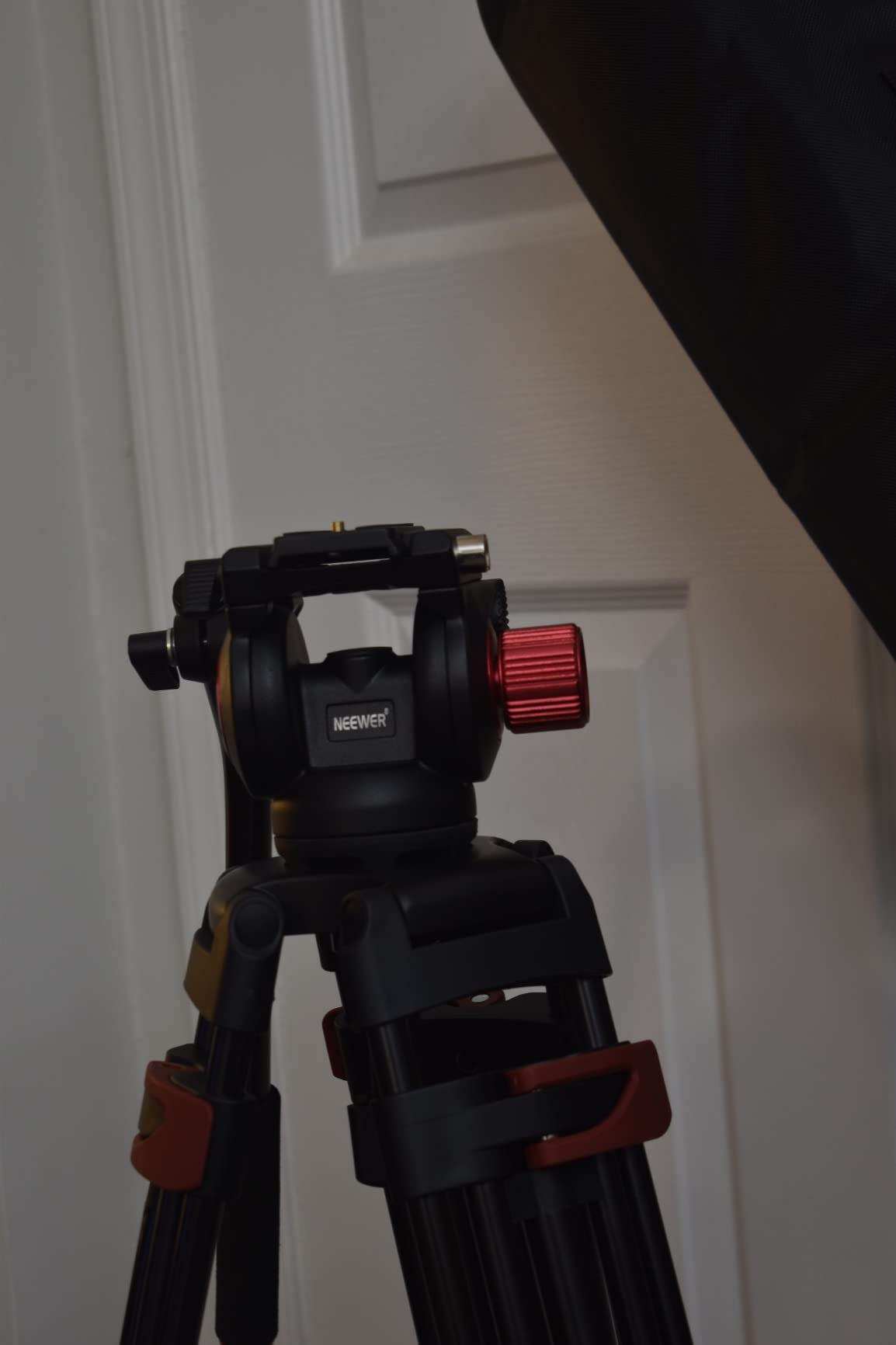
Where it earns its place on a small crew
This is the tripod we hand to a second operator who also has to carry a monitor, a battery kit, and a cable bag. It is heavy enough to stay planted with a light rig and light enough to be carried up a flight of stairs by one person. The carry bag is not padded, so we add a towel inside before travelling with it.
Because the bowl is adjustable rather than fixed, the legs can be spread wider on soft ground and narrowed on stairs, which helps a lot in locations with uneven flooring. The bubble level is on the head, so you can confirm horizon before the shot rather than during it.
Where it falls short
Rigs above roughly 12 lb push this toward its limit, and the head starts to feel vague rather than precise at the top of the range. Buyers moving to larger cinema bodies should stay in this list and look at the COMAN FF16LS or the Cayer BV25LH, both of which rate 22 lb and 17.6 lb with carbon or reinforced aluminum legs.
Travel is the other limit. At 35.8 inches folded, it is a checked bag item rather than a cabin bag, and 5.58 kg is a lot to carry from a car park to a shoot location. Our travel tripod picks cover the opposite end of the problem.
3. SmallRig AD-01 Heavy Duty Video Tripod – Best for Run-and-Gun
SmallRig 73.2″/ 186cm Heavy Duty Video Tripod with Fluid Head AD-01
17.6 lb max load
33 to 73 inch height
8.8 lb weight
2 year warranty
Pros
- Aluminum double-tube legs with 75mm bowl that do not budge
- No leg slip over months of height changes
- Carrying bag and handle included
- Dual-mode plate works with DJI RS series plates
- Two-year manufacturer warranty
Cons
- Friction-based head adjustments are finicky rather than true fluid damping
- Significant plastic components raise durability concerns for daily gigs
- Legs are fixed together so it cannot get close to the ground
The AD-01 is built for the day where you set up ten times before lunch. The dual-mode quick release is the reason: the same mount accepts a standard tripod plate or a DJI RS 2, RS 3, or RS 3 Pro plate.
That means the same tripod serves both the locked-off shot and the stabilized one without a toolbox of adapters.
Height changes are quick. Flip locks move the legs through a 33 to 73 inch range, and over weeks of repeated use the legs did not develop the creep that ruins cheaper kits.
A side-pressed release gets the camera on and off without two hands, and a built-in bubble level and 75mm bowl keep the horizon honest.
Honesty first: this is a friction head, not a fluid one. The damping comes from friction on the pan and tilt controls, so the feel changes with temperature and with how the knobs are set. It is good enough for talking heads and B-roll, and it will not give you the slow, perfectly even creep of a fluid cartridge.
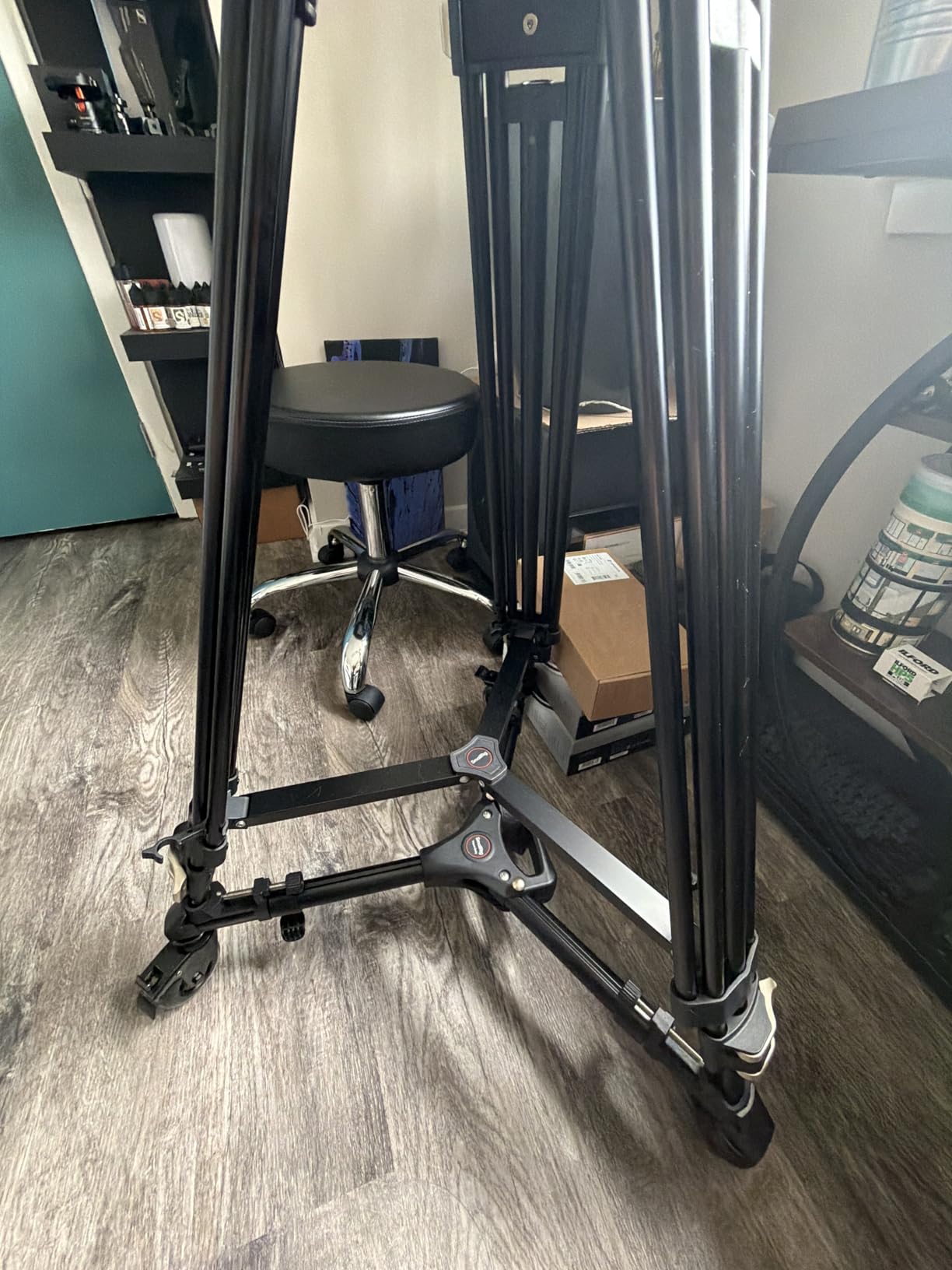
Specs: 17.6 lb load rating, 85 cm minimum and 186 cm maximum height, 8.8 lb weight, 75 mm bowl, three leg sections, and a two-year manufacturer warranty.
The head pans 360 degrees horizontally and tilts from plus 90 to minus 60 degrees, which covers portrait and landscape orientation plus a downward angle for product work.
The carrying bag is the sleeper feature. A tripod this size usually lives in a car boot or a closet, and the included bag plus the carrying handle is what makes the AD-01 plausible as a grab-and-go option for a two-person crew working a single location.
Owners treat it as the best entry-level video tripod in its range, and the volume of reviews is high enough that quality issues show up clearly: a few arrive with loose spreader hardware or a bent leg hook. Inspect the whole thing the day it turns up rather than trusting it on the first job.
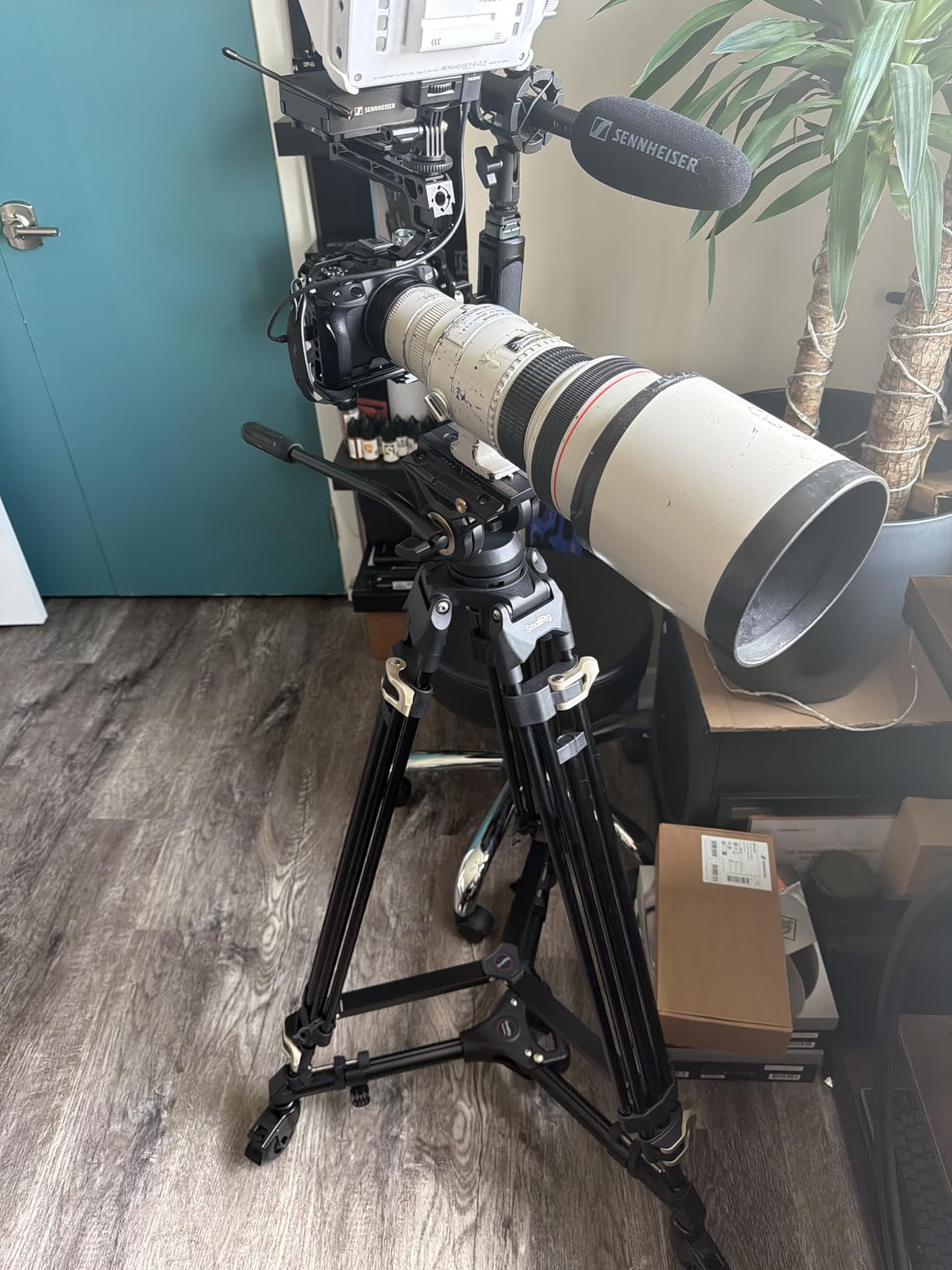
Why the dual-mode plate changes the workflow
On a hybrid shoot the pattern is simple: locked-off and wide shots on the tripod, then the same camera on a gimbal for anything that moves. With a fixed plate, that swap means undoing a different mounting system every time. With a dual-mode plate, the camera comes off and goes back on in under fifteen seconds and nothing else in the bag changes.
That is why this tripod earns its place on small documentary and event work, where the same operator alternates between static coverage and handheld or stabilized coverage in the same hour.
It also means the rig you balance on the tripod is the rig you balance on the stabilizer.
Where it will let you down
The plastic content is the honest caveat. Plenty of the fittings, knobs, and levers are molded rather than machined, and that is what reviewers mean when they describe it as good for the price rather than built for daily paid work. Over months of hard use, expect to tighten and eventually replace hardware rather than pass it to another operator untouched.
Low-angle work is also out. The legs are fixed together and the spreader sets a floor height, so anything closer to the ground than about knee level needs a different tool. Buyers who shoot floor-level interviews should check the Manfrotto 290 Xtra, which has four independent leg spread angles.
4. Sirui AM-25S Heavy Duty Video Tripod – Top Rated Fluid Head
SIRUI 74.8″/190cm Heavy Duty Video Tripod with Fluid Head AM-25S
22 lb max load
74.8 inch max height
4 kg weight
75mm bowl
Pros
- Very stable aluminum alloy build with 22 lb load capacity
- Smooth quiet fluid head with adjustable pan tension
- Oversized leg locks give fast height changes
- Handle reverses for different shooting habits
- Excellent value for studio and indoor work
Cons
- Large and heavy
- not suited to air travel or hiking
- Quality control reports on legs in a few reviews
- Tilt can feel slightly tighter than the pan range
Sirui has a well-earned reputation in this category, and the AM-25S is the kit the brand is best known for. It is a proper fluid head on a proper tripod, and the bottom ring that adjusts pan tension is a genuine feature you rarely see under this ceiling.
Dial the tension up and the head resists at the start of the stroke instead of snapping loose.
That control is what separates it from the friction heads above. The dynamic balancing system moves with the pan and tilt through 360 degrees horizontal and minus 75 to plus 90 degrees vertical, and the movement stays quiet at normal working speeds.
We found the tilt slightly tighter than the pan, which is a small imbalance worth knowing about before a long take.
Legs run from 36 to 74.8 inches across three sections with oversized locks that you can operate in gloves, which is more useful outdoors than it sounds. Retractable metal spike feet dig into soft ground, rubber feet handle hard surfaces, and the middle spreader keeps the legs from splaying on uneven terrain.
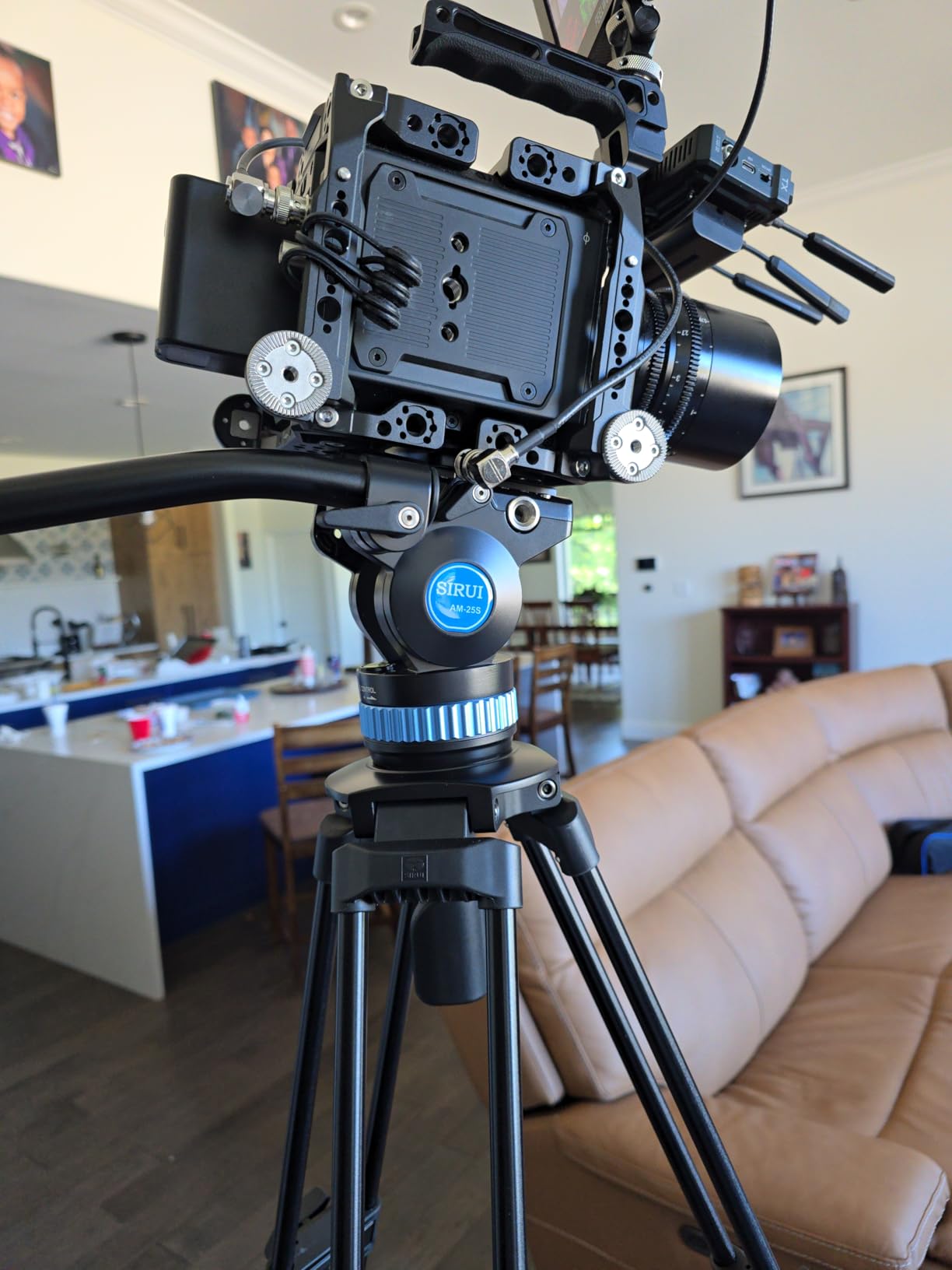
Specs: 22 lb load rating, 190 cm maximum height, 96 cm folded length, 4 kg weight, 75 mm bowl, and a built-in bubble level.
The plate takes 1/4 inch and 3/8 inch screws and includes a threaded accessory hole, and the rubber-sleeved pan handle reverses for either hand.
It is also one of the lighter full-size video tripods here at 4 kg, and the handling is noticeably easier than the heaviest kit.
It is still a studio and location tripod rather than a hiking kit, but a car boot and a set of studio stairs are realistic places for it to live.
Reviewers consistently highlight smooth, predictable fluid movement and solid aluminum construction for the money.
Quality control reports on legs are rare but real, so open the box, extend every section, and check the locks before the first job.
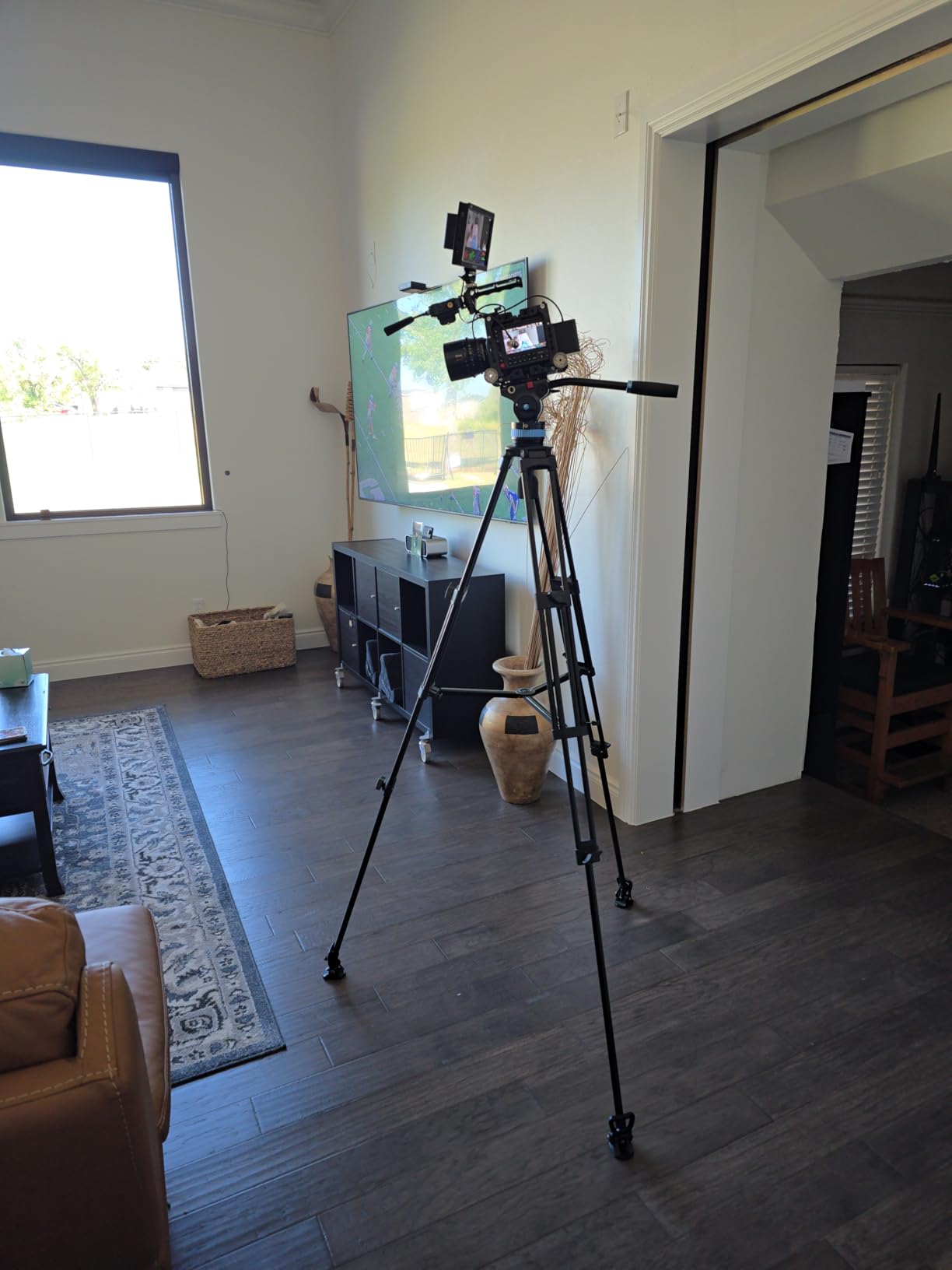
Why the pan tension ring is worth finding
Cheap fluid heads usually start stiff and then run suddenly free partway through the stroke, which is exactly the moment a visible jerk lands in the shot.
The bottom tension ring on the AM-25S lets you set how much resistance sits at the beginning of the move, so the pan starts where you want it to start and finishes at the same resistance.
If you shoot interviews, live streams, or cooking content, where most of your movement is a slow left-to-right follow on a person, that control is worth more than a heavier payload rating.
The reversing handle is a small touch that matters more than it should when you alternate shoulders across a long shoot day.
Where it will disappoint you
It is a floor-standing tripod, not a travel one. At 96 cm folded and 4 kg, it is fine in a car and unreasonable in a backpack, and anyone shooting a whole trip on one tripod should read our travel tripod guide first.
Reports of slow-moving fluid after extended use are worth weighing if you plan to keep it for years rather than months. Check the damping feels even before the return window closes, and keep the fluid cartridge away from extreme heat in a car boot.
5. K&F Concept 90 inch Fluid Head Tripod – Best for High-Angle and Overhead Shots
K&F CONCEPT 90”/230cm Horizontal Fluid Head Camera Tripod
11 lb max load
90 inch max height
Folds to 21.3 inch
4-section legs
Pros
- Tall 90 inch max height for overhead and high-angle shots
- Compact 21.3 inch fold for its height
- Detachable leg converts it to a monopod
- Center hook accepts a counterweight
- 28mm center column reduces shake
Cons
- Some review reports mention wobble when fully extended
- Flip locks are standard type and hard to operate
- Adjustment latch feels flimsy and can jam
No other tripod here goes this tall, and that is the entire point. This 230 cm K&F Concept reaches 90 inches, which turns flat-lay product filming, overhead cooking shots, and high-angle b-roll from awkward angles into a normal shot on a normal tripod.
If your work happens above eye level, this is the one.
The horizontal fluid head has a universal center axis with 0 to 120 degree pitch adjustment and full 360 degree pan, so you can swing the camera over the top of the rig without taking it off the plate.
That is a rare capability at this level, and it is what makes overhead work practical rather than an exercise in rigging.
It also folds to 21.3 inches, which is remarkably short for a four-section, 90 inch tripod. The single detachable leg converts the tripod to a monopod or walking stick, and the center hook accepts a sandbag or a camera bag for extra stability.
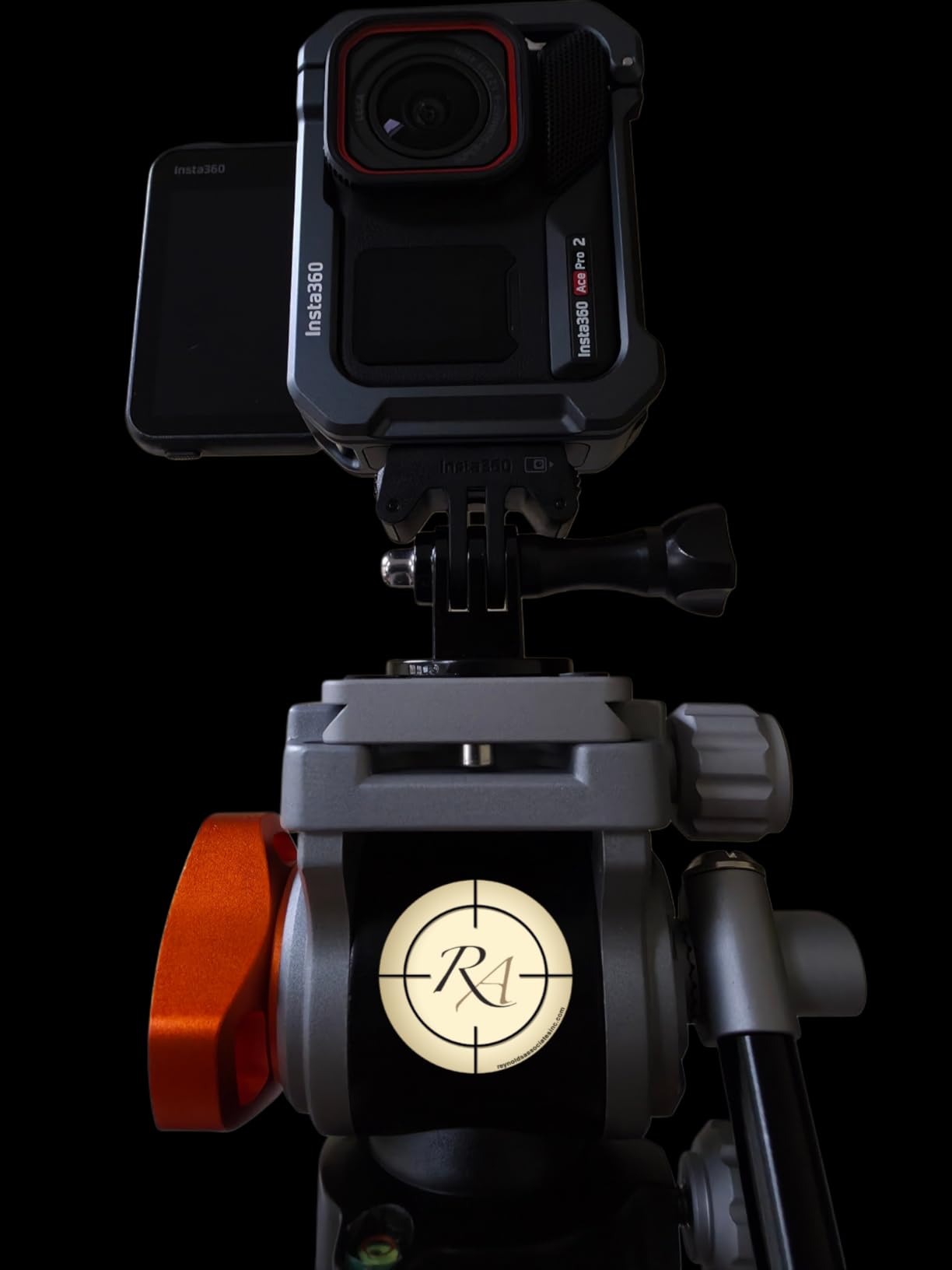
Specs: 11 lb load rating, 230 cm maximum height, 21.6 inch minimum height, 21.3 inch folded length, 28 mm leg diameter, four sections, and about 4.45 lb net weight. Damping is hydraulic with plus 90 and minus 90 degree tilt and 360 degree pan.
The 28 mm center column tube is wider than most at this height for a reason: it resists the shake that comes from the top section.
Owners call it exceptional value for overhead and mid-to-tall work, with genuinely smooth fluid movement and an unusually compact fold. The criticisms cluster around leg lock ergonomics, occasional wobble at full extension, and one review mentioning missing parts on arrival.
If you only ever shoot at chest height, this is more tripod than you need. You would be paying in stability for height you do not use, and the four-section legs are the least rigid configuration available.
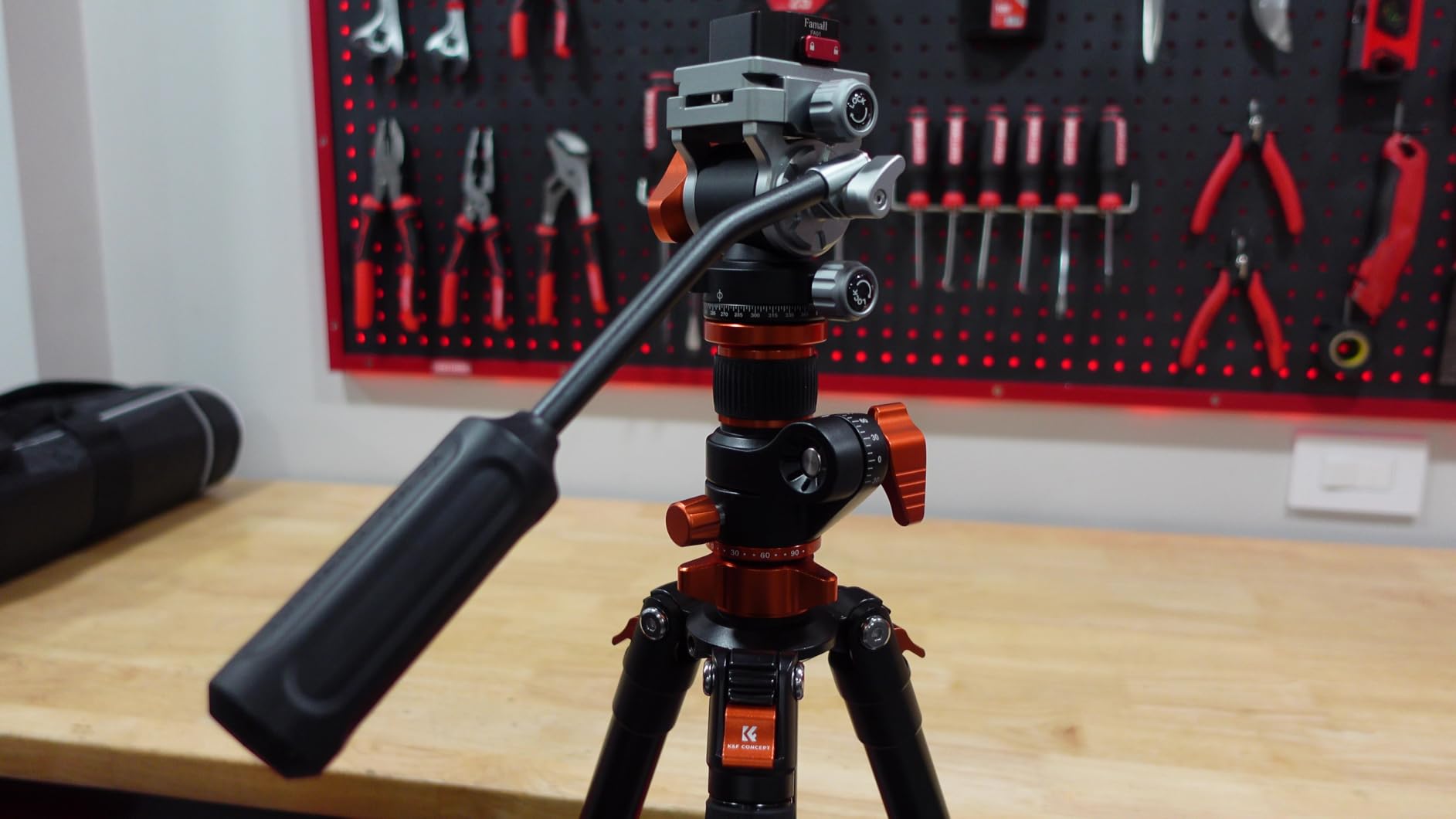
When a 90 inch tripod earns its keep
Overhead food video, unboxing shots, top-down product photography, and demonstrations on a workbench all share the same problem: the camera needs to be above the subject, and a normal tripod only reaches eye level.
Extending the center column on a standard tripod gets you there, but it adds a springy section that shakes, and that is exactly what the wider 28 mm column on this model is designed to avoid.
The detachable leg is the second reason to like it. Removing one leg turns the rest into a monopod for low tracking shots or a vertical follow, which means one piece of kit covers two very different shot types on a small shoot.
Where it will disappoint you
Four-section legs are inherently more flexible than three. Reviewers report wobble at full extension, and the geometry explains why, which makes it a poor choice for a locked-off wide shot on a heavy rig even though the rating allows for the weight.
The flip locks are standard type and awkward to operate, and the adjustment latch can feel flimsy or jam. On a long day of repeated height changes, that friction is the first thing that makes you wish you had bought something with larger clamps. Below about 4 feet, this tripod is also the wrong shape entirely.
6. SmallRig 75 inch Carbon Fiber Tripod – Best for Fast Setup
SmallRig 75″ Carbon Fiber Tripod, 360° Fluid Head, One-Step Height Adjust
Carbon fiber legs
75 inch max height
8.3 lb kit weight
4 kg counterbalance
Pros
- Carbon fiber legs keep the kit light for its height
- One-step locking system runs two leg sections with a single lever
- Dual-mode plate for DJI RS series and MFT plates
- Detachable pan handle suits either hand
- Custom carrying bag included
Cons
- Lowest average rating in this roundup
- Fixed damping with only 4 kg of counterbalance
- Some complaints about head feel and wobble under load
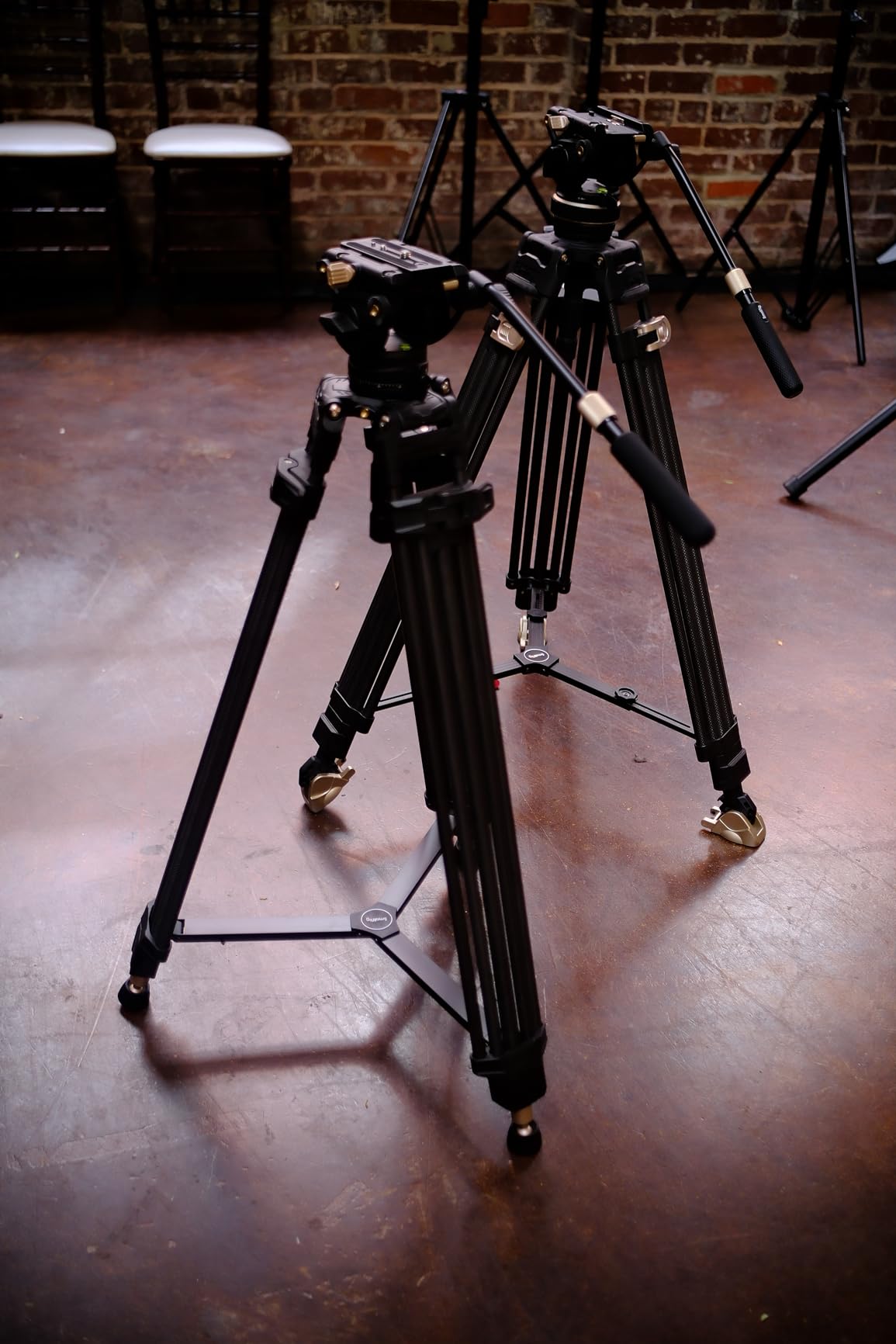
The FreeSpeed one-step locking system is the reason this tripod exists. One lever extends and retracts two leg sections at once, so a full-height setup takes two pulls instead of six.
On a run-and-gun or multi-location day, that is the difference between setting up in thirty seconds and setting up in three minutes.
It is also a carbon fiber build, which brings the whole kit to 8.3 lb for a 75 inch maximum height.
Dual-mode quick release plates work with DJI RS 2, RS 3, and RS 3 Pro mounts as well as standard mirrorless plates, and a detachable pan handle plus a built-in spirit level round out a well-considered package.
The head is where the rating suffers. Damping is fixed rather than adjustable, and the counterbalance is preset at 4 kg with a 55 mm centre of gravity height.
That is fine for a mirrorless body and a light lens, and not enough for the kind of rig most people are trying to save toward.
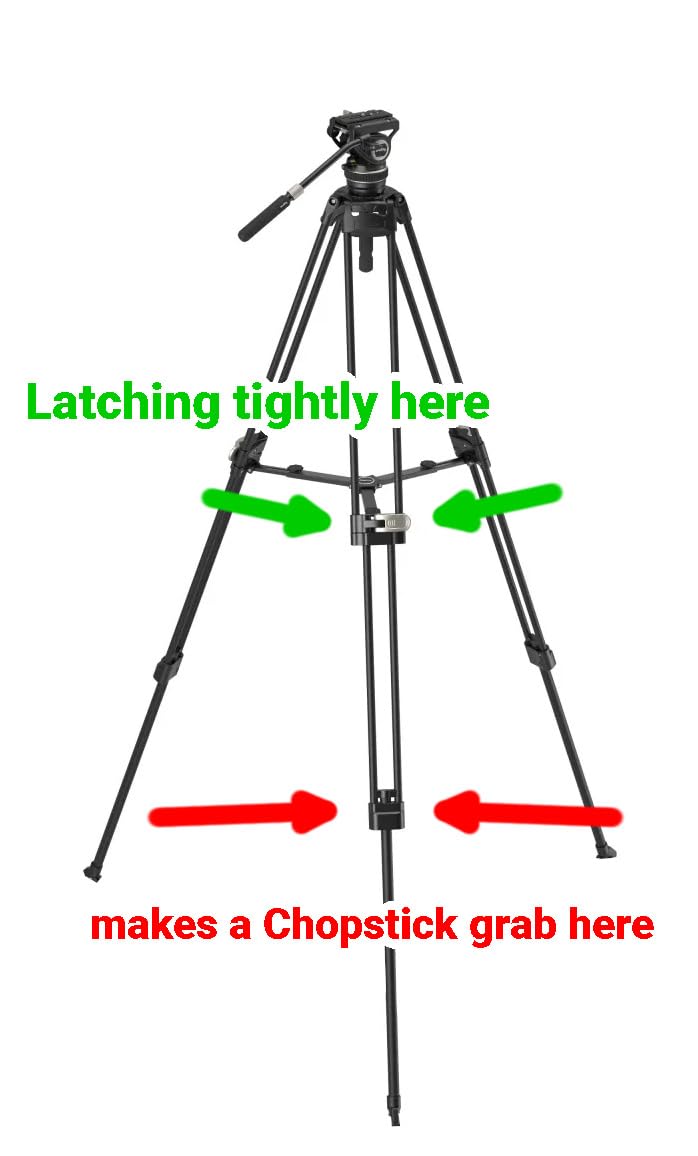
Specs: 17 lb load rating, 8 kg payload, 34 to 75 inch height range, 35 inch folded length, 3.77 kg total weight, 18 mm leg diameter, 360 degree pan and plus 90 to minus 65 degree tilt, and 1/4-20 accessory threads on the head.
It is the most expensive carbon fiber kit in this roundup, and the one that earns that on materials rather than on specifications.
Fourteen percent of ratings are one-star, and the complaints concentrate on head feel and wobble under load rather than on the legs.
Carbon fiber also changes the character of the tripod. It damps vibration well and does not ring, which matters if you work near reflective surfaces, but it has less give than aluminum, so any looseness in the head shows up more than it would on a metal kit.
What one-step locking actually saves
Over a ten-location day, the saving adds up fast. Each location means extending to roughly eye height, which on a conventional tripod is three separate pulls per leg with a clamp to close on each one.
The one-step system here does two sections with a single lever per leg, and the difference is a setup that finishes before the subject has finished their coffee.
For crews who work with a single operator or a very tight schedule, that predictability is worth real money in a way that a slightly better damping setting is not.
The travel case included is fitted to this tripod rather than a generic bag, so the legs and head stay where they belong in transit.
Where it will disappoint you
Fixed 4 kg counterbalance is the hard limit. A mirrorless body with a light zoom is comfortable, and a body with a fast telephoto, a monitor, and a shotgun mic is not.
No amount of adjustment will change that, because the counterbalance is preset at the factory.
This is also the lowest-rated kit in our group, and the gap comes almost entirely from head complaints rather than build quality. If you shoot mostly on a gimbal and want the tripod as a fast-deploying stand for the occasional locked-off shot, it is a reasonable buy.
If video is your main work and the head is what you are buying, put the money into a head you can adjust instead.
7. Cayer BV25LH Carbon Fiber Tripod – Best Carbon Fiber Value
Cayer BV25LH Heavy Duty Carbon Fiber Tripod, 74″ Twin Tube Fluid Head
Carbon fiber legs
73.3 inch max height
17.6 lb load
5 kg weight
Pros
- Highest average rating among these picks at 4.7 stars
- Carbon fiber legs stay stiff without excess weight
- Smooth adjustable pan and tilt head with no play
- Two pan handles and a carrying case in the box
- Ball-style leveling base for uneven ground
Cons
- Pan handles are shorter than ideal
- Quick release needs two actions to fully secure
- Some play after adjusting the angle before it settles
The BV25LH is the sleeper of this list. It carries the highest average rating of the ten kits we tested, and the reason is not a spec sheet item: the head simply has no play in it.
Push the camera past balance and the head resists cleanly, then holds that position. Nothing crept, sagged, or needed re-tightening across weeks of use.
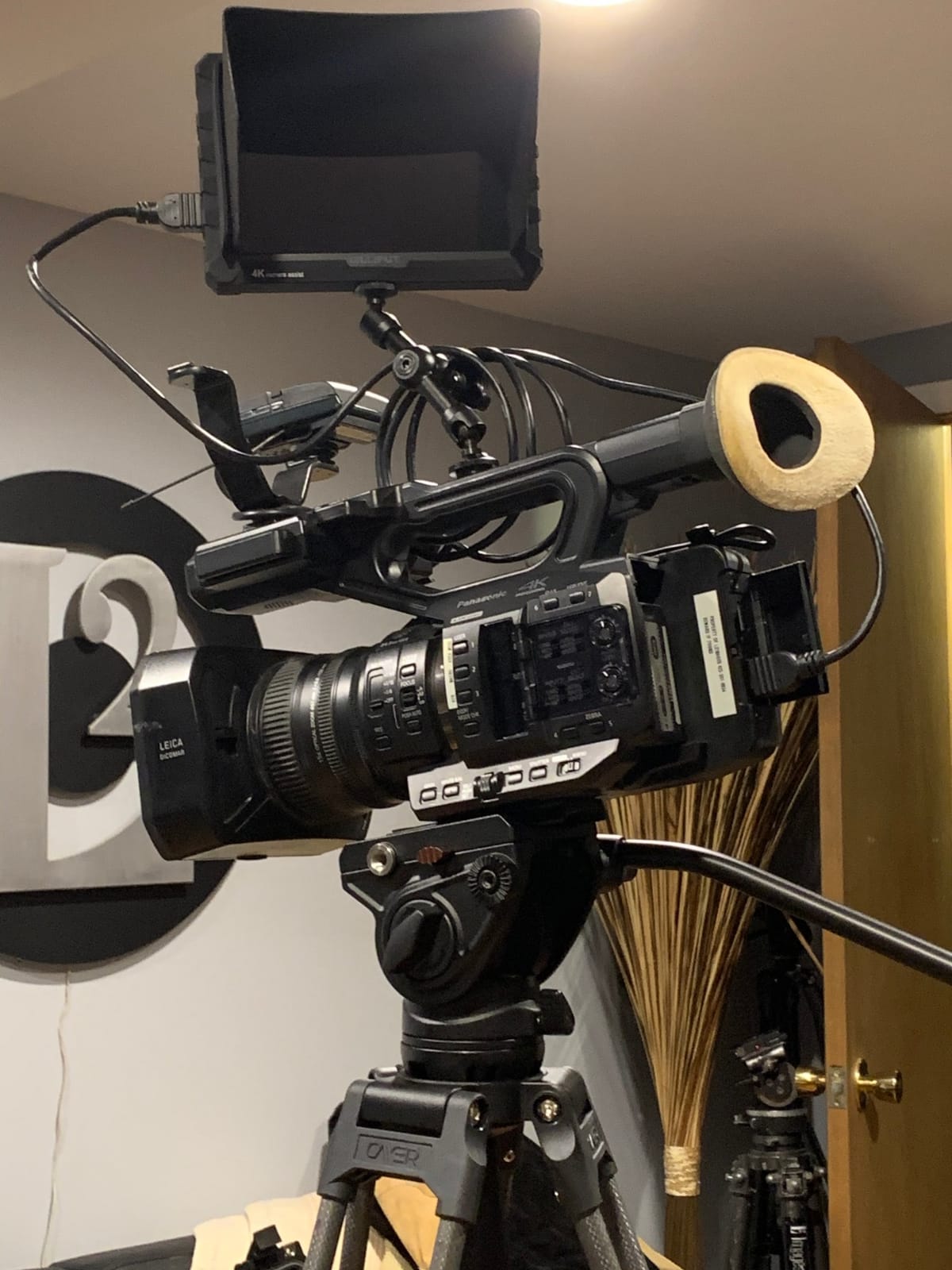
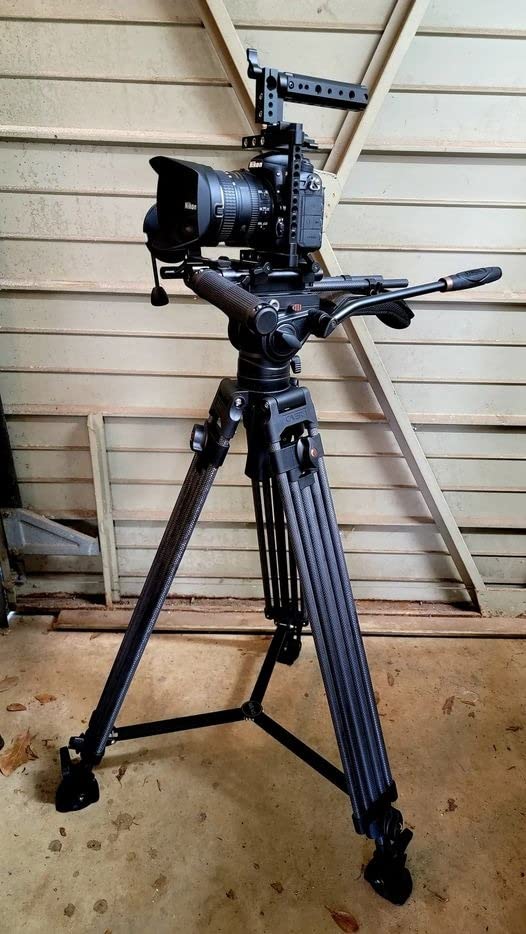
It is a carbon fiber build on 75 mm bowl twin tube legs with a mid-level spreader, reaching 73.3 inches and rated for 17.6 lb.
The ball-style leveling base lets you level the camera by turning a knob instead of re-angling legs, which is the single biggest time saver on uneven ground, and the feet switch between spikes and rubber.
Two pan handles come in the box, along with a carrying case and a built-in Allen wrench.
A spare handle is a small thing until you are on a long shoot day and the one you prefer has been dropped down a set of stairs.
Specs: 17.6 lb load capacity, 33.5 inch minimum and 73.3 inch maximum height, 5 kg weight, three leg sections, 360 degree pan and plus 90 to minus 70 degree tilt with independent pan and tilt locks.
The flat base mount takes a standard 3/8 inch thread, so the head can also sit on a slider, jib, or crane mount.
Users who have shot on professional Sachtler and Manfrotto heads describe this as a genuine value surprise: stable, smooth, and light for what it is.
The repeated criticism is build refinement, not reliability, with handle length and plate security drawing the most comments.
The dual-mode plate accepts RS3, RS3 Pro, and RS 2 plates, though the plate itself is not included. Bring the one you already own for your gimbal and the tripod becomes part of the same kit rather than a separate purchase.
Why a leveling base matters more than it sounds
Leveling by re-angling legs works, but it takes several adjustments, and every adjustment is another chance to knock something out of true.
A ball-style leveling base turns a three-step process into one knob, which on uneven ground, stairs, and location floors is the difference between a two-minute setup and a ten-minute one.
It also keeps the horizon locked between adjustments. With leg-only leveling, a small re-angle for the next shot tips the horizon slightly, and on a talking-head frame that reads as a subtle amateurism viewers notice without being able to name.
Where it will disappoint you
The included handles are shorter than the long pan bars most operators prefer, so a slow tilt on a large rig feels cramped. The quick release needs two separate actions to fully secure, and that habit is worth forming before you are carrying an expensive camera on a moving street.
It is not built to the same standard as a professional Sachtler or Manfrotto head, and the small play that appears immediately after you change the tilt angle, before it settles, is the most common note in reviews. For most work that is invisible, and on a locked-off high-budget commercial it would not be.
8. Manfrotto 290 Xtra Tripod Kit – Best for Low-Angle Shooting
Manfrotto 290 Xtra Aluminum 3-Section Tripod Kit with Fluid Video Head (MK290XTA3-2WUS) Black
11 lb max load
Four leg spread angles
15.9 to 66.7 inch range
5.6 lb weight
Pros
- Manfrotto build quality with a fluid video head in the kit
- Four independent leg spread angles including a near floor-level position
- Light 5.6 lb weight for a full-size tripod
- Shoulder bag included
- Aluminum leg locks are straightforward to adjust
Cons
- Only 11 lb load capacity for heavier cinema setups
- 66.7 inch max height is shorter than most full-size video tripods here
- Micro fluid head is less precise than dedicated video heads
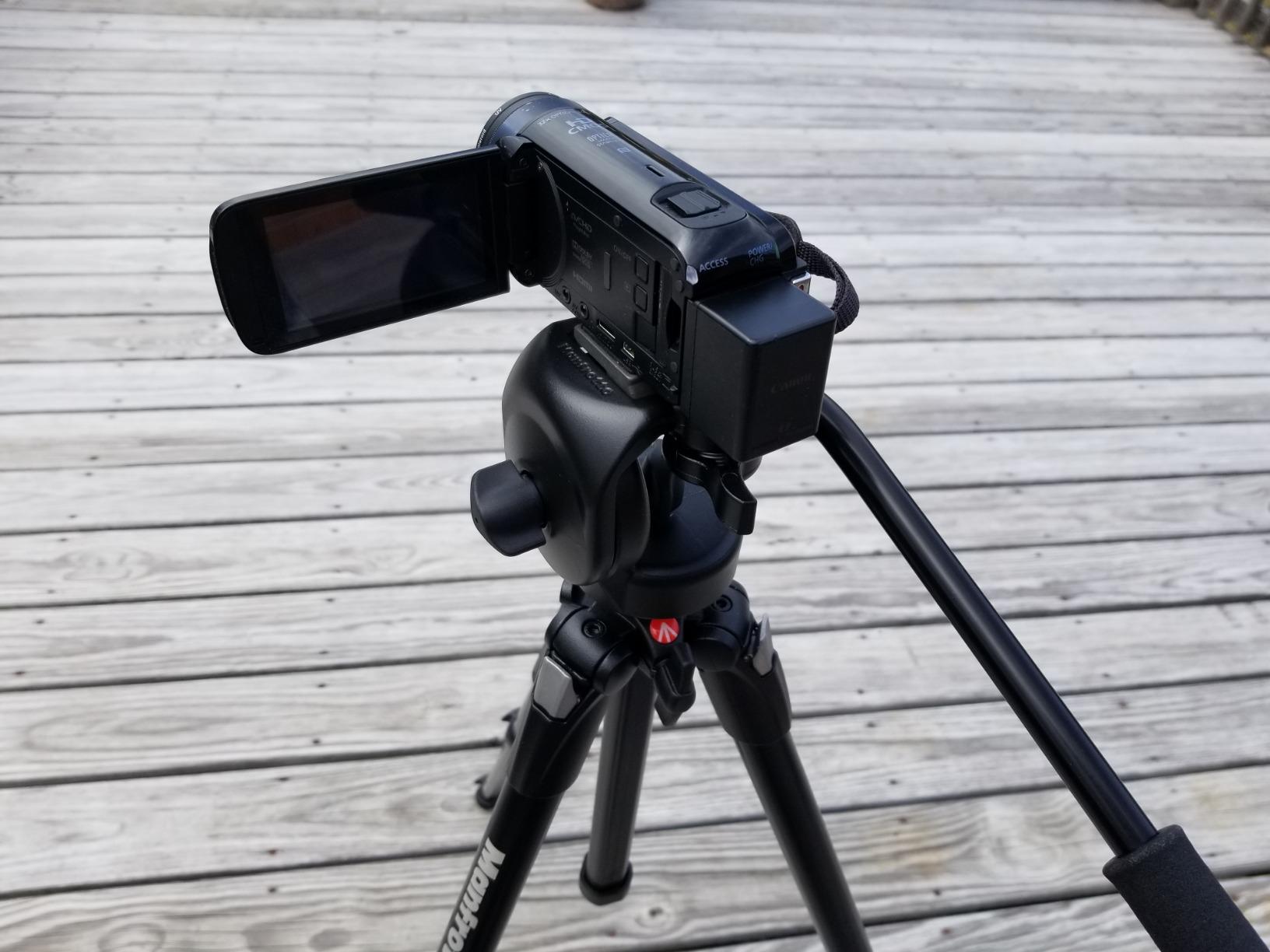
Most video tripods cannot get low. The 290 Xtra can, because it has four independently adjustable leg spread angles selected by pressing the locking button at the top of each leg, and the final position puts the camera close to the floor.
For interviews seated on the ground, low product shots, and unusual angles, that single feature can justify the whole tripod.
It is also the most recognisable brand name in this roundup, and buyers consistently say that matters to them.
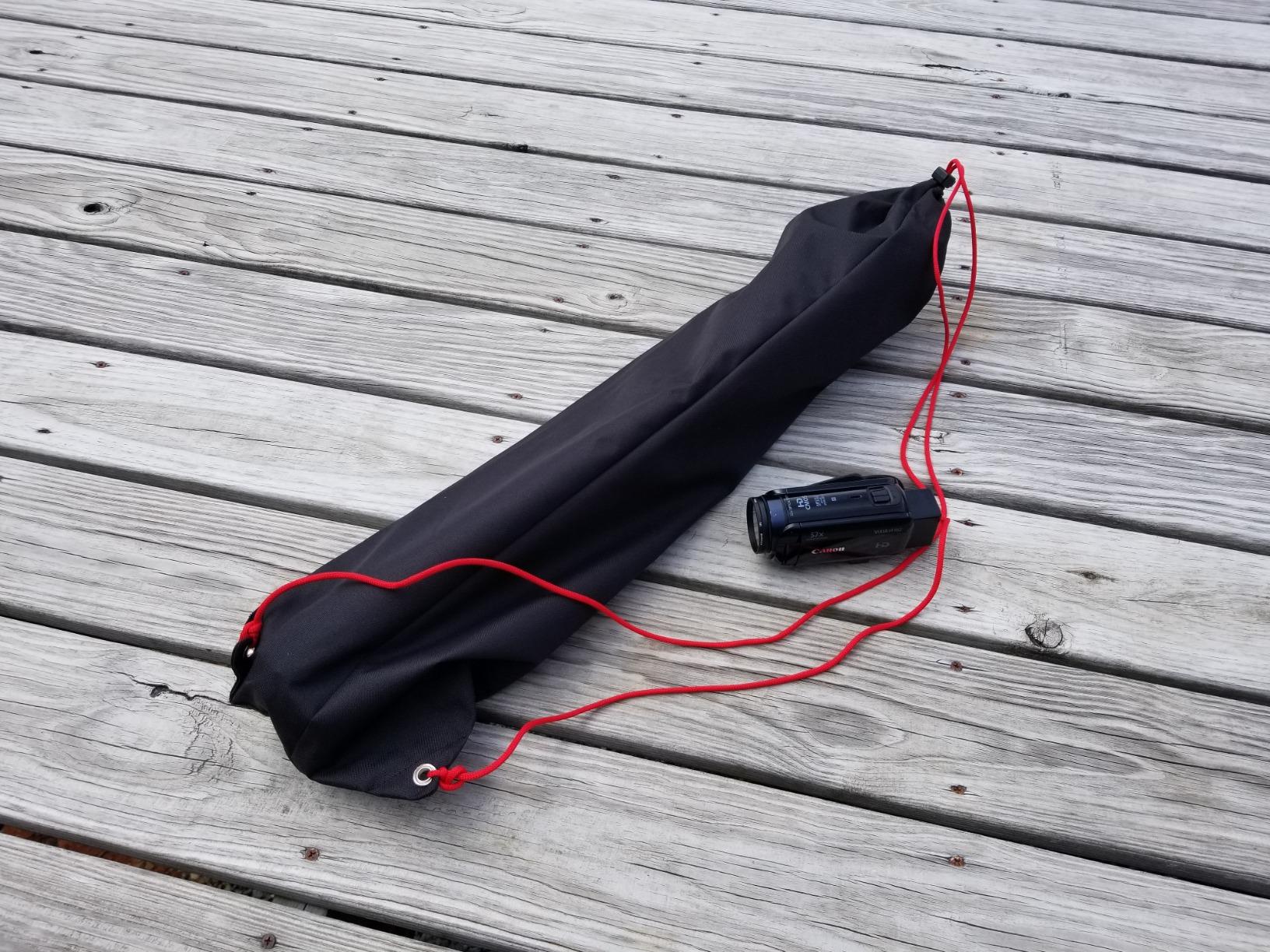
The build feels considered, the aluminum leg locks adjust cleanly, and the shoulder bag in the box is a proper one with padding rather than a drawstring cover.
The included 128RC micro fluid head is a compact unit rather than a dedicated video head, and that is the tradeoff. It gives you dampened pan and tilt, but it is not as precise or as adjustable as a full-size fluid head.
Specs: 11 lb load rating, 15.9 inch minimum and 66.7 inch maximum height, 27.4 inch folded length, 5.6 lb weight, 0.98 inch leg diameter, three sections, and a one-year limited warranty.
The Italian design and machined fittings show in the details: the leg angle selector is positive and decisive rather than a hinge that creeps.
For anyone moving between seated and standing work, the height range plus the low-angle position covers an enormous amount of ground on one tripod. It is also light enough at 5.6 lb to carry up stairs without a second person, which is not true of the heaviest kit in this list.
Reviewers like the multi-angle leg positions and the portability, and note the modest 11 lb rating and shorter maximum height as the main limits. It is a mid-level spend that buys brand confidence and low-angle capability rather than raw payload.
How the leg angle selector works in practice
You press the button at the top of each leg, swing the leg to one of four positions, and release. The lower positions pull the legs in under the center column, which lowers the whole platform without touching the head, so the camera keeps its framing and you change the height by leg position rather than by the center column.
That distinction matters for video in a way it does not for photos. Extending a center column introduces a springy section that can add bounce to a slow tilt, whereas shortening the legs moves mass, not geometry. For a locked-off interview, the geometry change is invisible.
Where it will disappoint you
At 11 lb, this sits at the bottom of the payload range among the full-size tripods here, and a cinema-style body with a zoom, a monitor, and an audio kit will get close to it. The 66.7 inch maximum height is also the shortest of the full-size kits in this roundup, so tall subjects need the camera raised or a different tripod.
The micro fluid head is the other limit. If your work is slow, precise camera movement on a heavier rig, the money is better spent on a head that can be adjusted, and our broader video tripod guide covers the head choices in detail.
9. Sirui Traveler X – Lightest Pick for Travel and Backpacking
SIRUI Carbon Fiber Tripod Lightweight 2lbs with Panoramic Fluid Head, 59.8” Compact Camera Tripod Quick Release Leg Setup, Reversible Center Column, Reverse Folding Legs, Max Load 11lbs – Traveler X
2.09 lb total weight
Folds to 13.9 inch
5-section carbon fiber legs
11 lb rated load
Pros
- About 2 lb
- among the lightest carbon fiber travel tripods available
- One twist lock extends all five leg sections in seconds
- Reverse-folding legs pack to 13.9 inches
- Reversible center column for low-angle work
- Stabilizing hook accepts a camera bag for wind stability
Cons
- Bundled AT-10 fluid head has a jerky tilt and an all-or-nothing lock
- Tilt knob needs an Allen key
- Advertised load rating is optimistic for a tripod this light
At about 2 lb and folding to 13.9 inches, the Traveler X is the smallest and lightest tripod in this roundup by a wide margin, and the only one that folds short enough to count as cabin luggage.
The five-section carbon fiber legs collapse with a single twist lock in roughly two seconds, and reverse folding puts the legs alongside the center column instead of sticking out. You can go from pack to set up without unpacking anything else.
The legs are the reason to buy it. Reviewers describe them as near-universally praised, and the 3K twill weave carbon fiber construction is stiff enough that the tripod does not ring under a moving load.
A two-section reversible center column gets the camera down for low-angle and macro work.
The head is the reason it is near the bottom of the list. The bundled AT-10 two-way head has 360 degree pan and plus or minus 90 degree tilt, but the tilt is jerky, the lock is all-or-nothing, and the tilt knob needs an Allen key. Many owners replace it with another head, which is fine if you planned to, and annoying if you did not.
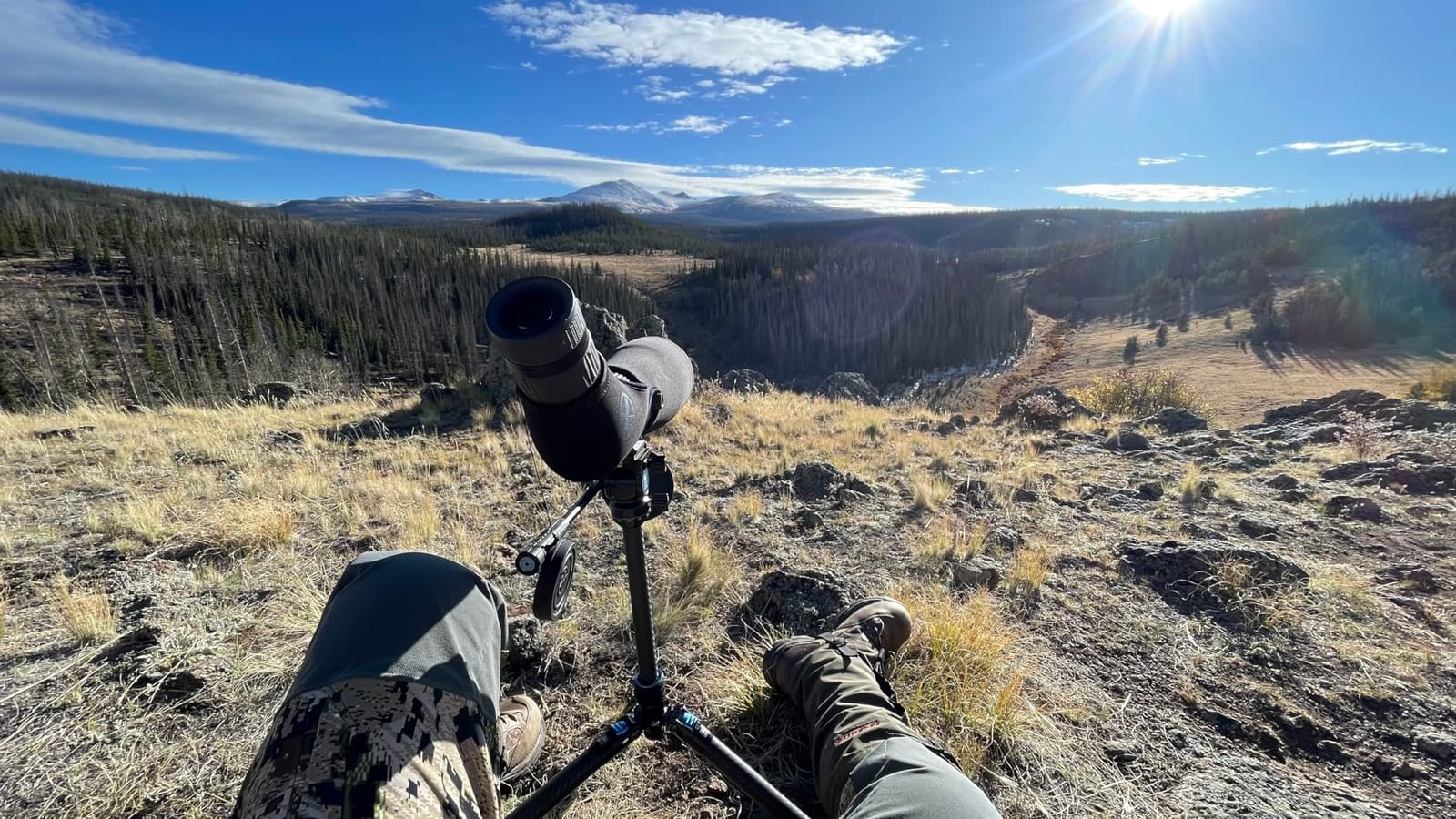
Specs: 11 lb rated load, 59.8 inch maximum height, 50 cm minimum height, 13.93 inch folded length, 0.95 kg weight, and five-section carbon fiber leg tubes.
The Arca-Swiss compatible anti-twist quick release plate is a genuinely good plate, and a stabilizing hook under the center column lets you hang a camera bag for wind stability.
Travelers should note the height limit. 59.8 inches is eye level for most people and not much more, so this is a seated, standing, and low-angle tripod rather than a high-angle one.
It pairs naturally with the K&F Concept above when you need the reach, and the two together still weigh less than one heavy studio kit.
The review distribution splits noticeably here, with 64 percent five-star and seven percent one-star. The one-star share is almost entirely the head, and Sirui support has a record of replacing defective heads.
That is worth knowing if you buy from a seller with a straightforward return policy.
Where this tripod genuinely beats the rest
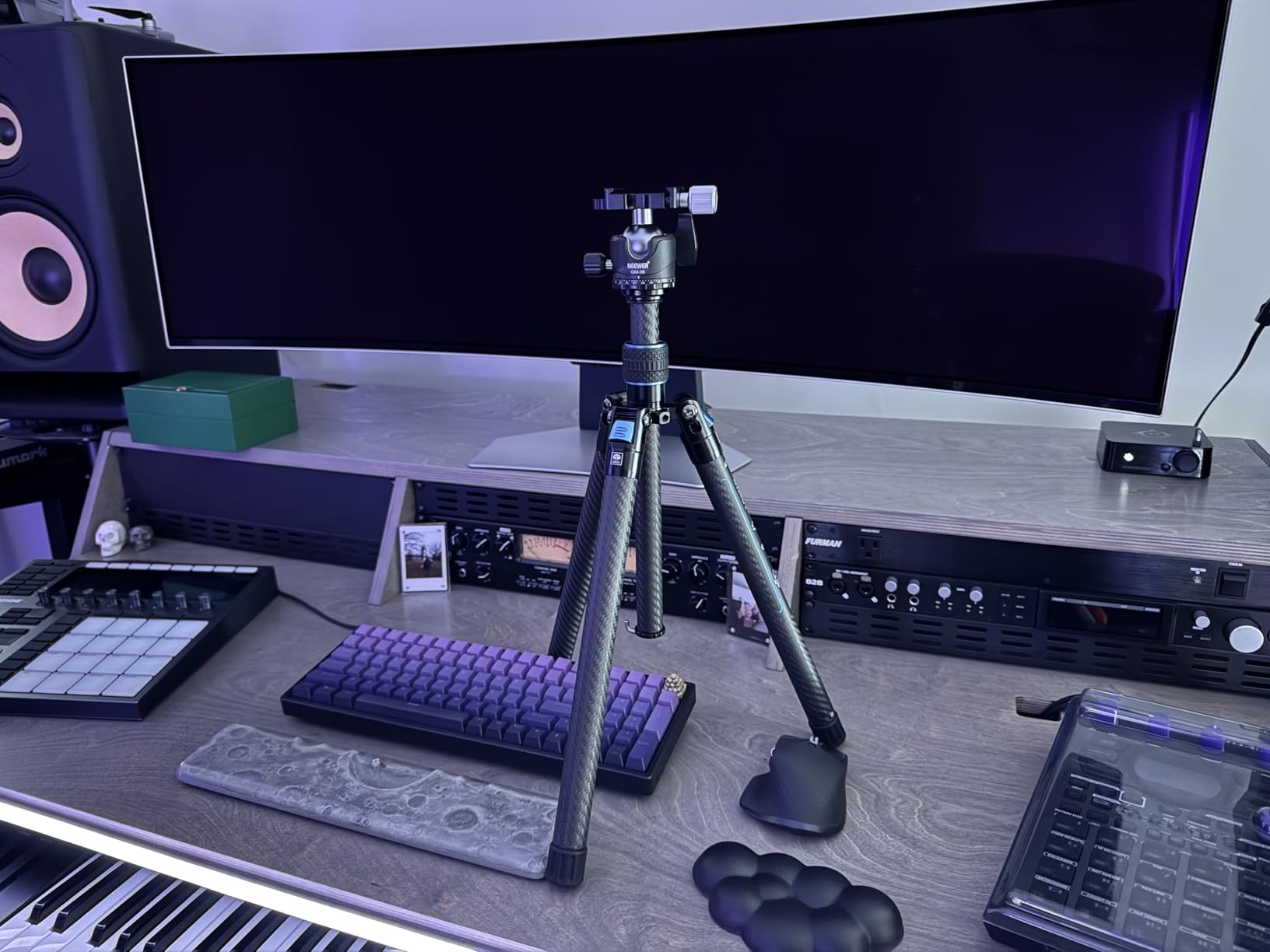
Multi-location travel production. If you are carrying a camera, lenses, and audio across four cities in ten days, the weight and the pack-down size stop being a preference and start being the entire buying decision.
Nothing else in this list folds small enough or weighs little enough to be a bag rather than a checked item.
The single twist lock across all five sections is a bigger deal than it sounds. Most travel tripods need one lock per section, so a four-section design takes four actions per leg before you can even start leveling.
This one takes one, and the difference is what makes it practical to set up on a busy street corner.
Where it will disappoint you
The AT-10 head is the weak link and it is not marginal. A jerky tilt and an all-or-nothing lock are exactly the problems that make a tripod look amateur on camera, and the quick release locking screw is awkwardly placed with a camera mounted.
Budget for replacing the head, and treat the tripod as a very good set of legs with a placeholder on top.
The load rating is optimistic for a kit this light, and individual leg sections cannot be shortened, so levelling on uneven ground means tilting the whole rig.
There is also one report of an internal leg locking mechanism failing within weeks. If you are buying this, buy it for the portability and accept that the head is replaceable.
10. Manfrotto Befree 3-Way Live Advanced – Best for Versatility
Manfrotto Befree 3-Way Live Advanced Tripod Kit, Tripod and Fluid Head in Aluminum for Cameras and Camcorders up to 6 kg, Ultra-Compact, Photography Accessories for Content Creation, Photo and Video
13.2 lb max load
Folds to 15.8 inch
4-section aluminum legs
2.28 kg weight
Pros
- Very compact 15.8 inch folded length
- Pan and tilt movement is genuinely smooth and adjustable
- Premium build quality and finish for a travel kit
- 3-way head allows vertical and horizontal framing changes
- Works as a primary or second tripod for lighter setups
Cons
- Not built for heavy professional or broadcast cameras
- Head reported becoming loose within months on some kits
- Panning adjustment is coarse rather than smoothly variable
The Befree 3-Way Live Advanced is the only tripod here that is genuinely dual-purpose. The 3-way head gives you vertical, horizontal, and 90 degree framing from one mount, so the same tripod handles a landscape wide shot, a portrait talking head, and an overhead detail without a different piece of kit.
For a creator who shoots several formats in a week, that flexibility is worth more than any single specification.
It folds to 15.8 inches at 2.28 kg, so it is a genuine travel and second-tripod option rather than a compromise. The 200PL-PRO plate is compatible with both Manfrotto and Arca-Swiss attachments, which means it plays well with whatever else is in your bag.
The fluid system is described as operating smoothly from minus 30 to plus 70 degrees, and in our testing the pan and tilt both had a clear, adjustable feel rather than the vague resistance of a friction head.
It is the smoothest-feeling head in this roundup for a kit this compact.
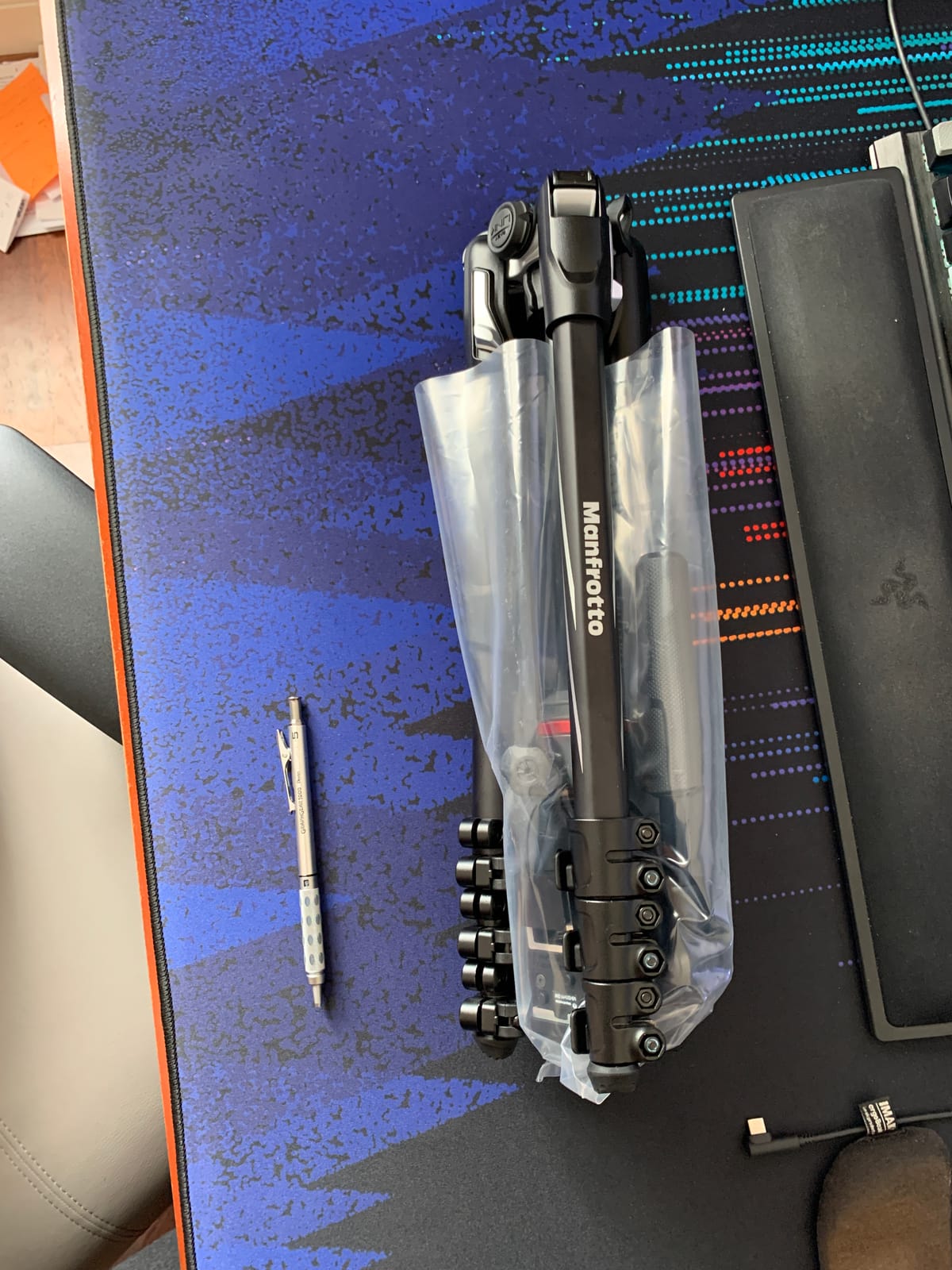
Specs: 13.2 lb load capacity, 15.75 inch minimum and 59.06 inch maximum height, 15.8 inch folded length, 2.28 kg weight, four-section aluminum legs, and a two-year manufacturer warranty.
The Spider and QPL Travel locking system secures the legs firmly, and the rubber feet hold on smooth indoor surfaces.
Most owners are using it with a mirrorless body, a phone, or a small camcorder as a second tripod, and they like the combination of smoothness and pack-down size.
A minority report the fluid head becoming loose or the camera base mount breaking apart within months, which accounts for the eight percent one-star share in the reviews.
It is worth checking the head tension and the base mount hardware when it arrives, especially if you buy from a marketplace seller rather than a major retailer. Most of the durability complaints are assembly-related rather than design-related.
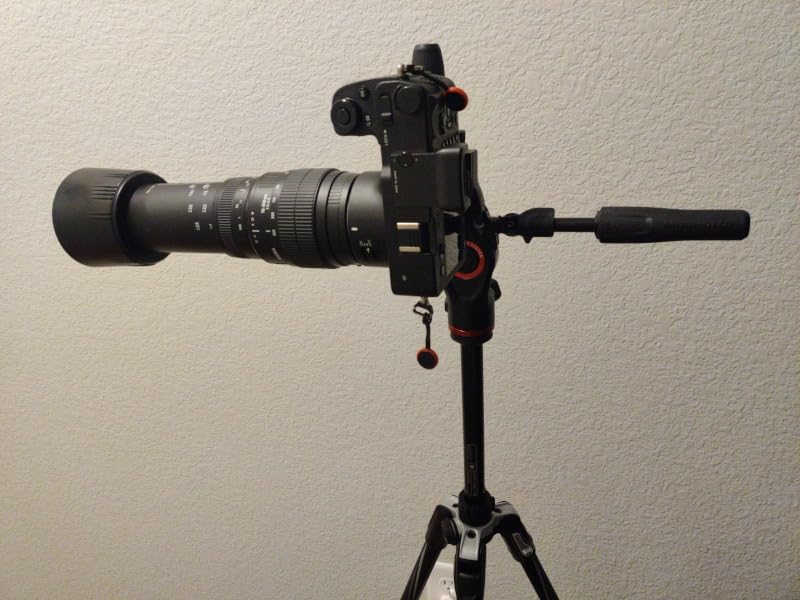
Why a 3-way head matters for creators
Most video tripods only mount one way, which means every change of framing means loosening the plate, rotating the camera, and re-balancing the head.
The 3-way mechanism here moves the camera between landscape, portrait, and top-down positions on one control, and because the fluid cartridge stays in place, the damping feels the same in each position.
That is the difference between a tripod that suits one format and one that suits a working channel.
It is also why this remains a strong recommendation for interview, podcast, and product content, where the framing changes constantly and time between setups is expensive.
Where it will disappoint you
At 13.2 lb the load rating is fine for mirrorless and small camcorder work but will not carry a professional broadcast or cinema body, and reviewers are clear about that limit. The 59 inch maximum height also means it is a seated and eye-level tripod rather than a high-angle one.
The panning adjustment is coarser than on a true fluid cartridge, so very slow moves take practice. The head loosening within months is also a pattern in the reviews, so if you are buying this as a long-term primary tripod, check it periodically and be ready to tighten the fluid control.
How to Choose a Video Tripod Under 300
Fluid head vs ball head vs pan-tilt head
A fluid head contains a cartridge of oil-based fluid that resists movement in proportion to the load, so a small hand motion becomes a slow, even sweep. A ball head locks in any position instantly, which is ideal for a single frame and makes the camera snap from one extreme to the other when you move it.
A pan-tilt head is the parent category, containing both friction heads and fluid heads, and it moves on two axes rather than three.
For video, a fluid head is the correct answer in almost every case. A ball head is worth considering only if you are filming stills and short clips on the same tripod, or if you need to hang the camera off the side of a wall.
Our shooting tripod guide covers the photography side of the same decision in more detail.
Do the rig weight math before you buy
Add your camera body, the lens you will actually use, the audio kit, any monitor, and the plate. A mirrorless body with a 24-70mm zoom and a shotgun microphone on a short boom usually lands between 6 and 9 lb.
A small cinema body with a zoom and a battery can pass 12 lb before you add anything else.
Then buy a tripod rated for roughly double that figure. The extra capacity is not about strength, it is about stiffness: a head loaded near its limit develops play in the mount.
Play in the head mount is the single most common limiter on an otherwise stable setup, according to the photography forums we reviewed while putting this list together.
One more detail that catches people out: advertised load capacity is usually measured with the legs at their widest spread, not at the narrow spread you need for low angles. If you regularly shoot close to the ground, check the rating at the narrow setting, or leave more margin than you think you need.
What each budget band actually unlocks
Between roughly 80 and 120 in price terms you get an aluminum three-section tripod with a friction or basic fluid head. That is enough for a mirrorless body and a light lens, and it is where most entry-level mistakes happen, particularly stiff starts on the pan.
Between 120 and 200 in price terms you get proper fluid heads with adjustable pan tension, larger bowl diameters, and bags or cases in the box. This is the band we would call the sweet spot for video, and most of the picks on this list sit inside it.
Between 200 and 300 in price terms you get carbon fiber construction, one-step or quick-release leg systems, leveling bases, and heads with genuine counterbalance settings.
The jump in price at the top buys materials and mechanisms rather than resolution, and our honest view is that a good mid-range kit beats an expensive average one for most people.
Carbon fiber vs aluminum at this level
Carbon fiber is roughly a third lighter than aluminum at the same stiffness, damps vibration rather than ringing, and does not corrode. Aluminum is heavier and cheaper, tolerates a knock better, and is easier to find repaired.
Under this ceiling, carbon fiber buys you portability rather than image quality, and nothing about your footage improves on its own.
That is why the carbon fiber picks here are either very light and very compact, or sold with a mechanism advantage such as one-step leg locks. If neither applies to your work, aluminum is the smarter purchase.
How to set up a fluid head so the pan is smooth
Mount the camera with the heaviest item, usually the lens or the audio gear, sitting directly over the head axis. If the rig is balanced forward, the head will sink on its own and you will fight it for every shot.
Set the counterbalance so the head holds position at roughly forty-five degrees of tilt without a hand on the handle. If it drifts down, add counterbalance, and if it floats up, back it off. Then set the drag so the pan starts at the resistance you want at the beginning of the move, not in the middle.
Give every tripod ten minutes of real use before a paid shoot, and re-check the leg locks and counterbalance halfway through the day. Cheap kits drift with heat, and heat is what a car boot does all afternoon.
Finally, level with a mid-leveler or a leveling base where one is fitted. Where it is not fitted, level the legs rather than twisting the head.
When a tripod is the wrong tool
If your subject is moving, a tripod cannot follow them, and the alternative is not a better tripod. Any locked-off shot at a wide focal length can be done on a gimbal with more control over framing and focus, and most of the rigs in this list accept a DJI RS plate or an Arca-Swiss plate for exactly that reason.
Where a tripod wins is a static subject, a slow deliberate move, a locked-off wide, a time-lapse, and anything you need to hold perfectly still for a long take.
If your work is mostly interviews, tutorials, and cooking, you are buying the right category. If it is mostly moving documentary work, spend the budget on stabilization instead.
Brand notes and what to inspect on arrival
Sirui has a well-earned reputation in this category, with fluid heads and a service record for replacing defective units. Manfrotto is the most established name here and builds the most refined mechanisms, though its kits in this roundup rate the lowest payload of the full-size group.
SmallRig, K&F Concept, and Cayer deliver the most hardware for the money, and the quality control variation shows up in the reviews. NEEWER and COMAN are the value tier, with build that is consistently good rather than exceptional.
Whatever the brand, inspect on day one. Extend every leg section and check the collar for creep, spin the head with no camera on it to feel for play, check the counterbalance at forty-five degrees, and confirm the quick release locks with a firm pull. Most problems on budget tripods are assembly issues that take five minutes to catch and a return window to fix.
Frequently Asked Questions
What are the best budget tripods for video recording?
The best budget video tripods in our testing are the COMAN FF16LS for overall stability, the NEEWER 79 inch tripod for value, and the SmallRig AD-01 for fast run-and-gun setup. All three use a fluid or friction pan-tilt head, which is the feature that separates a video tripod from a photo tripod with a ball head. Each rates between 17.6 lb and 22 lb of load capacity, which covers a mirrorless body, a zoom lens, and an audio kit with room to spare.
What is the best tripod for filming video content?
For most creators the answer is a full-size fluid head tripod rather than a compact travel kit. A three-section aluminum tripod with a fluid head between 34 and 79 inches of height range covers seated, standing, and overhead work in one piece of kit. Add a shotgun microphone and a monitor to your camera body and lens before checking the load rating, then buy a tripod rated for roughly double that number.
What is the best fluid head tripod for video use?
Under this ceiling the Sirui AM-25S and the COMAN FF16LS are the two strongest fluid head options, and the Ku0026amp;F Concept 90 inch tripod is the choice if you need overhead reach. Fluid heads win over friction heads because the resistance is proportional to the load, so slow moves start and stop evenly instead of jerking. Look for an adjustable pan tension control and a leveling base, and treat the head as the part worth spending on.
What are the key differences between ball head and fluid head tripods?
A ball head locks instantly in any position using friction on a single ball joint, which makes it fast and flexible but causes the camera to snap when you move it. A fluid head contains an oil-based cartridge that resists pan and tilt in proportion to the balanced load, turning a small hand movement into a slow, even sweep. For stills, a ball head is usually better. For continuous video, a fluid head is almost always the correct choice.
Is Sirui a good brand for tripods?
Yes. Sirui builds fluid video heads and legs at a price point that is difficult to match, and the AM-25S and Traveler X are two of the most recommended kits in this roundup. The brand is also credited with replacing defective heads when problems occur. Check every leg section and the counterbalance on arrival, since quality control varies, and expect the bundled head on a travel kit like the Traveler X to be the weakest part rather than the legs.
Where to Start
Start with the COMAN FF16LS. It is the only kit in our group that pairs a genuine fluid head with 22 lb of rated capacity and an even damping feel, and it has more owner reviews behind it than anything else we tested. The NEEWER 79 inch tripod is the sensible second choice when you want the same class of stability with a bag in the box, and the SmallRig AD-01 is the one to buy when the day is spent moving.
Two decisions do most of the work. Buy the head you need rather than the legs you need, because head play is what limits an otherwise stable setup, and buy a tripod rated for roughly double your measured rig weight.
We re-checked the picks in 2026, and gear in this category changes shape every few months. Our general tripod guide covers the photography side if you shoot both.