
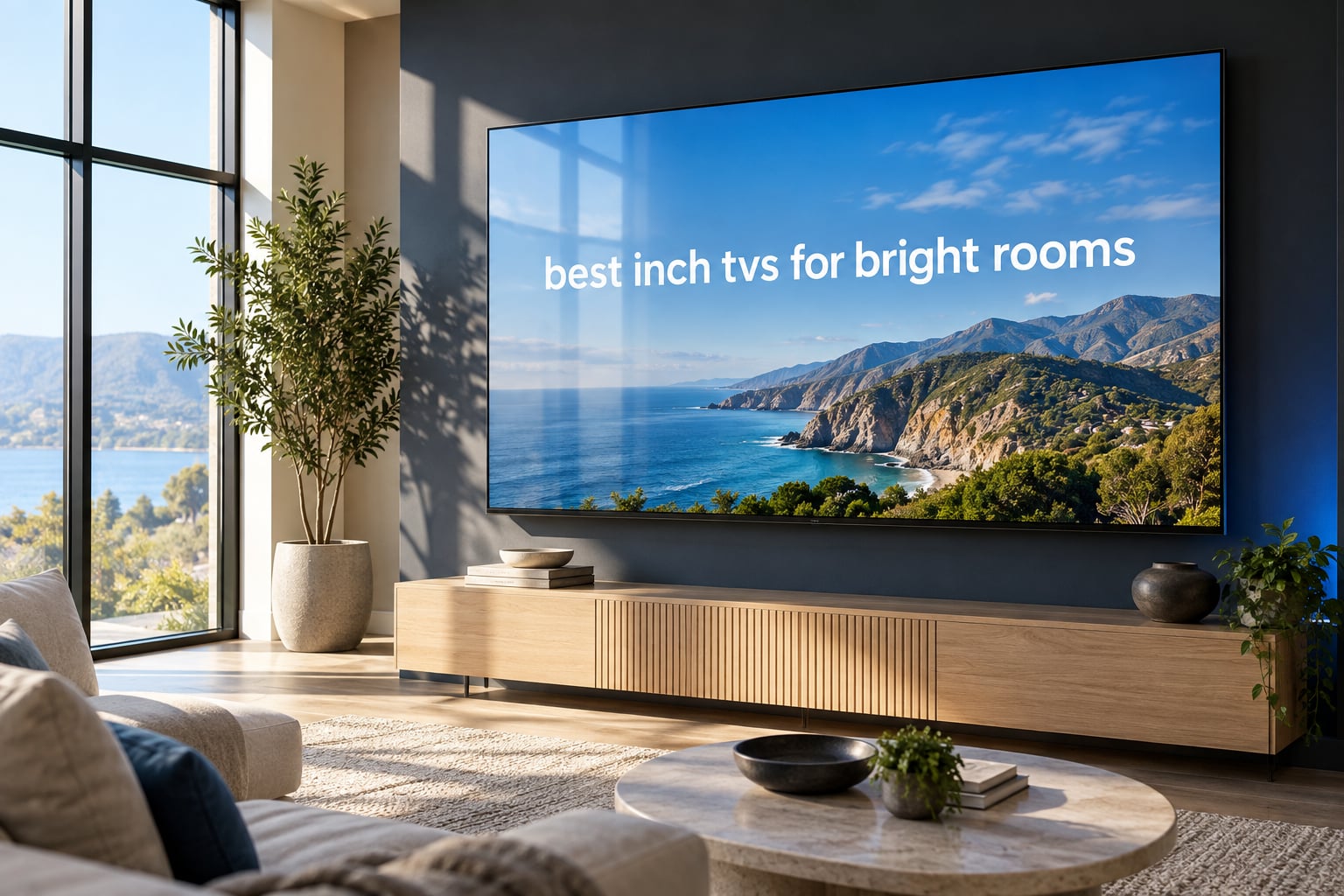
The TCL 75-Inch Designer Series 75A400U is the best 75 inch TV for bright rooms we could find, and it wins on the two things daylight actually punishes: 836 Mini LED dimming zones with up to HDR 2500 nits of peak brightness, and an ultra-low reflection panel that keeps windows from turning into mirror shapes on screen. If your living room gets direct sun at any point in the day, those two specs matter more than any picture processor on the list.
Most roundups in this space organize around price or panel type. This one is organized around a single question: what happens when ambient light hits the screen. Every pick below was judged on listed peak brightness, the presence of a real anti-reflective treatment, local dimming depth, and how owners describe glare in their own rooms.
Table of Contents
What to Look For in a Bright-Room TV
Mini-LED backlighting. More backlight control zones means brighter highlights and blacks that hold up when the room does not.
Reflection handling. A matte or anti-reflective surface diffuses incoming light instead of reflecting it. Glossy panels show your window no matter how bright the picture gets.
Peak brightness in nits. Around 250 nits of sustained brightness handles indirect daylight, 300+ nits covers strong ambient light, and 1,000+ nits is what you want when sunlight lands on the screen directly.
Two details decide the outcome more than people expect. First, brightness and reflection handling are separate mechanisms: a very bright set with a glossy panel still shows reflections, and a matte panel with modest brightness still looks dim in direct sun. Strong sets do both. Second, the TV is only half the fix. Owners report that blackout curtains or blinds bought before the television solved most of their reflection problem for a fraction of the cost of a flagship anti-glare panel, which is why we cover room conditioning later in this guide.
If you want the wider picture first, our general guide to the best TVs for bright rooms at every size covers 65-inch and smaller sets in more depth, and the 75-inch TV roundup covers this size class without the daylight focus.
Top 3 Picks for Best 75 Inch TVs in Bright Rooms (October 2026)

TCL 75A400U QD-Mini LED
- 836 Mini LED dimming zones
- Up to HDR 2500 nits
- Ultra-low reflection panel
- Native 4K 144Hz
Hisense 75U8QG Mini-LED
- Anti-Reflection Pro in-cell coating
- 5600 local dimming zones
- Native 165Hz

TCL 75QM6K Mini-LED
- QD-Mini LED with Quantum Dot
- Halo Control local dimming
- Native 4K 144Hz
Quick Overview: All 10 Picks Side by Side
| Product | Specifications | Action |
|---|---|---|
| TCL 75-Inch Designer Series 75A400U |
|
Check Latest Price |
| TCL 75-Inch QM6K Series |
|
Check Latest Price |
| Hisense 75-Inch U8 Series 75U8QG |
|
Check Latest Price |
 Samsung 75-Inch M70H Series Samsung 75-Inch M70H Series |
|
Check Latest Price |
 Samsung 75-Inch Neo QLED QN70F Samsung 75-Inch Neo QLED QN70F |
|
Check Latest Price |
 TCL 75-Inch T7 4K QLED TCL 75-Inch T7 4K QLED |
|
Check Latest Price |
 Sony 75-Inch BRAVIA 5 K-75XR50 Sony 75-Inch BRAVIA 5 K-75XR50 |
|
Check Latest Price |
 Hisense 75-Inch E7 Cinema Series 75E7SF Hisense 75-Inch E7 Cinema Series 75E7SF |
|
Check Latest Price |
 Samsung 75-Inch M80H Series Samsung 75-Inch M80H Series |
|
Check Latest Price |
 TOSHIBA 75-Inch M450 Series QLED TOSHIBA 75-Inch M450 Series QLED |
|
Check Latest Price |
1. TCL 75-Inch Designer Series 75A400U – Best Overall for Bright Rooms
TCL 75-Inch Designer Series QD-Mini LED TV, 4K Google Smart TV, 75A400U
836 Mini LED dimming zones
Up to HDR 2500 nits peak
Ultra-low reflection panel
Native 4K 144Hz
Pros
- 836 dimming zones for tight highlight control
- Ultra-low reflection coating for daylight rooms
- Up to HDR 2500 nits peak brightness
- 93% DCI-P3 coverage with HVA Pro Panel
- Native 4K 144Hz with 288Hz Game Accelerator
Cons
- Listed max display brightness of 650 nit is well below the HDR 2500 marketing claim
- Some owners report grain on light skin tones
- Only 20W of built-in audio
Out of the ten sets we lined up, this is the one whose specification sheet actually reads like a bright-room television. The panel carries an ultra-low reflection treatment explicitly aimed at daylight viewing, and the backlight runs 836 Mini LED dimming zones with up to 2500 nits of peak brightness in HDR. That combination is the closest we found to the flagship anti-reflective sets, without the flagship anti-reflective price.
Weighing 57.8 pounds and measuring just 1.57 inches deep with roughly a 0.12 inch gap when mounted near-flush, it is also far easier on a wall than most sets this size. It carries four HDMI ports, and picture processing runs through a TSR AiPQ processor that handles AI picture optimization scene by scene.
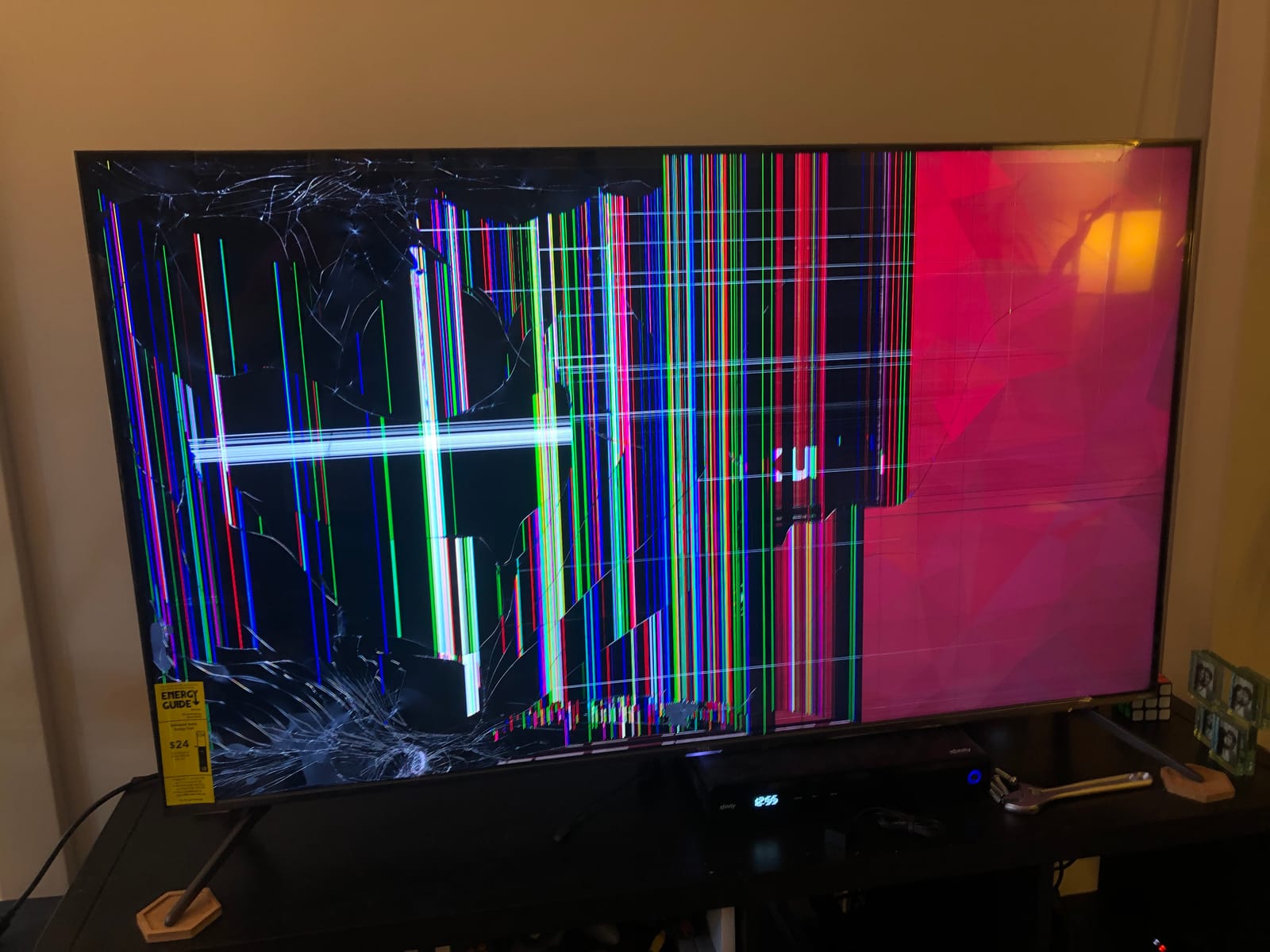
The reason it leads is consistency between the claims. Brightness claims often refer to a small specular highlight measured in a controlled lab, which is not what you see during a Saturday afternoon with the blinds open. Owners of this set describe it as clear and bright enough for daytime viewing, and the reflection coating is the feature that gets singled out most often in bright living spaces.
Color coverage is listed at 93% of DCI-P3 through an HVA Pro panel, and the review summary for this model notes consistent praise for picture clarity, brightness for daytime viewing and easy setup, with 77% of ratings at five stars.

Check the brightness figure before you buy
The manufacturer’s own specification lists maximum display brightness at 650 nit, while the marketing leans on up to 2500 nits peak in HDR. Both numbers can be true, because peak brightness is measured on a small bright area rather than across the whole screen, but if your room takes direct sun you should judge this set on the sustained figure rather than the headline.
Confirm the audio plan and the setup step
Built-in audio is a 2.0 ONKYO system rated at 20W total with DTS:X and DTS Virtual:X support. For a 75-inch panel in an open room, most owners end up adding a soundbar, so factor that into your planning. Setup also requires a Google TV sign-in, which trips up some households expecting a cable-box style flow.
2. TCL 75-Inch QM6K Series – Best Value Mini LED at 75 Inches
TCL 75 Inch Class QM6K Series | Mini LED QLED 4K HDR | 75QM6K, Latest Model | 120HZ-144HZ High Brightness Smart Google TV Dolby Atmos Onkyo Audio | Voice Remote Alexa Gaming Streaming Television
QD-Mini LED backlight
Halo Control local dimming
1000 nit listed brightness
Native 4K 144Hz
Pros
- Mini LED local dimming at an entry price point
- Dolby Vision plus HDR10+ and HDR10 covered
- 144Hz native with Motion Rate 480
- Halo Control system reduces blooming
Cons
- 1000 nit listed brightness is modest for direct sun
- 11% of reviews are one-star
- No dedicated anti-reflective coating listed
For a room that gets bright indirect light rather than direct sun, this set holds up well. The QD-Mini LED backlight adds a quantum dot color layer over a Mini LED light source, and the TCL Halo Control System handles local dimming to hold shadow detail and reduce the blooming that tends to show around subtitles.
Refresh rate is a genuine step up for this tier: 144Hz native, Motion Rate 480, and a 288Hz Game Accelerator for VRR. Audio is a 2.1 ONKYO system with a built-in subwoofer, which is unusual this low in the range and is why we keep suggesting a soundbar rather than assuming onboard speakers.
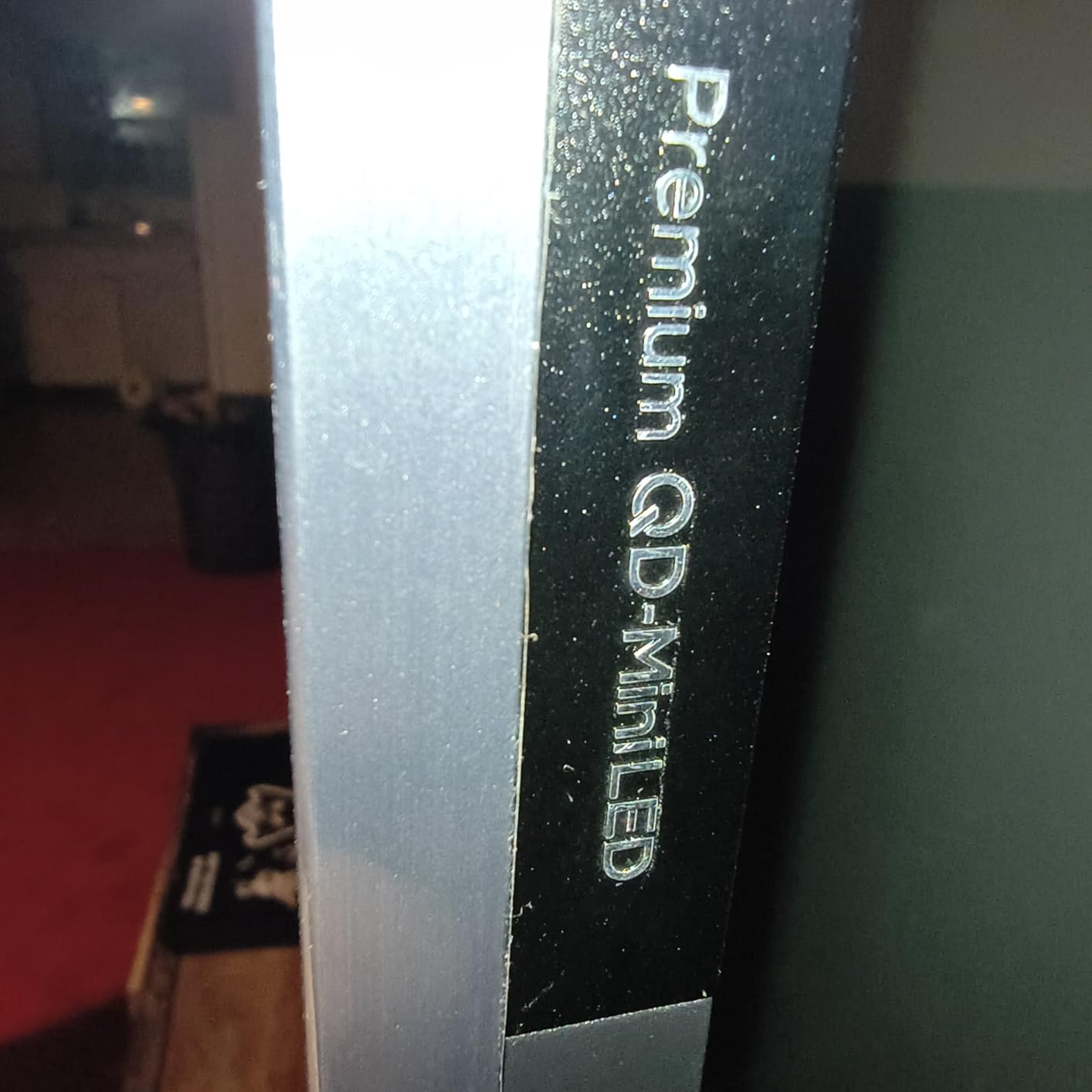
Reviewers rate it as a high-value Mini LED QLED with punchy contrast, good HDR support and smooth motion for sports and gaming, and 74% of ratings sit at five stars. Against that, an 11% group of one-star reviews points to a real quality-control spread, and reviewers regularly describe the brightness as adequate rather than class-leading.
Worth noting for anyone buying at this tier: the specification lists Edge LED as the backlight configuration, which is unusual for a set sold as Mini LED, and no dedicated anti-reflective coating appears in the specs. If your window sits opposite the screen, look at the Sony or Hisense picks instead.
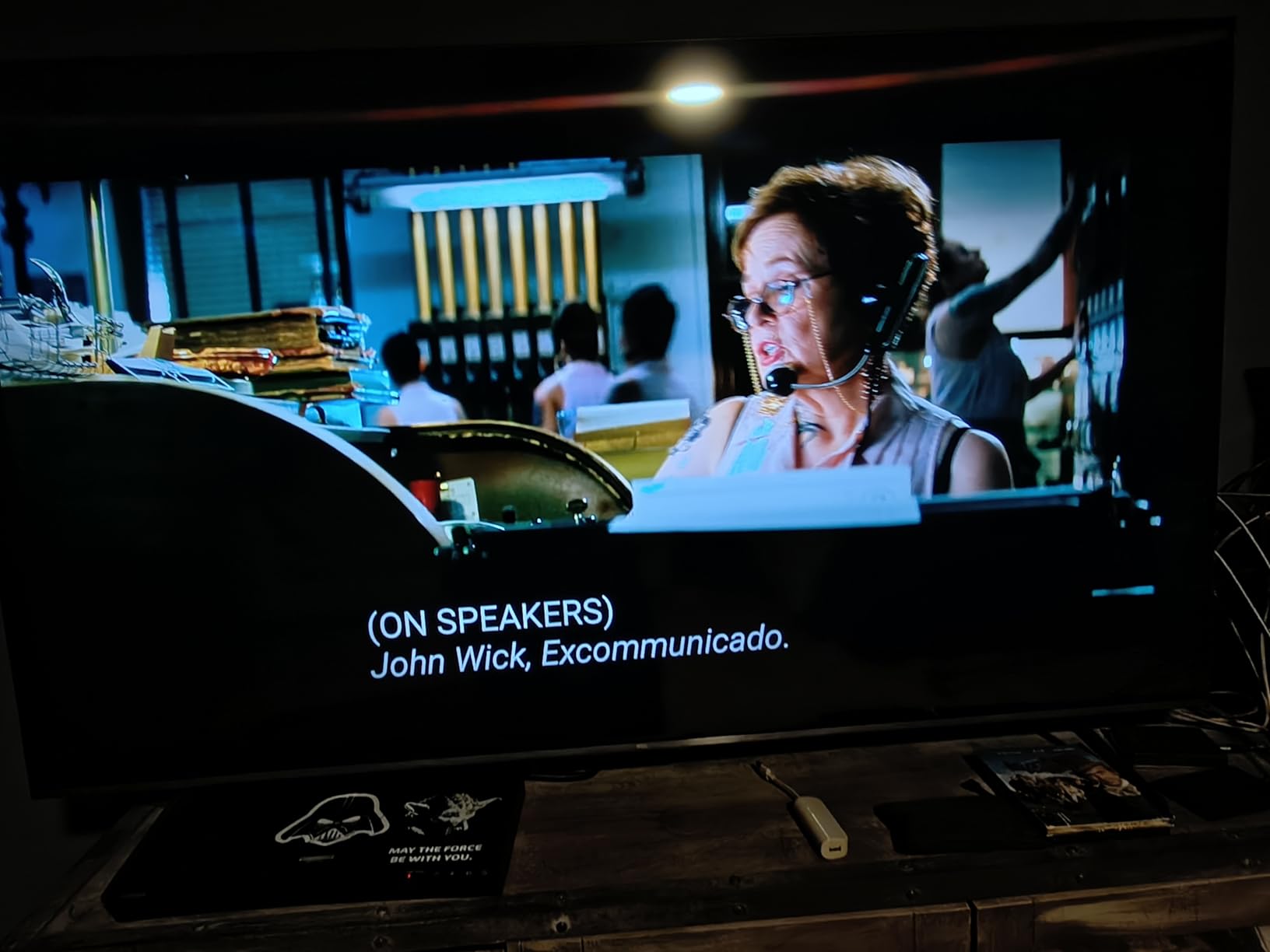
Know what adequate brightness looks like at midday
At 1000 nits listed brightness with no coating named, this set handles a bright room but will not win a fight with a window that crosses the screen in the afternoon. If that is your situation, a curtain is the cheap fix. If the light is diffuse and off-axis, this panel is genuinely fine.
Decide whether you want full-array dimming
The Halo Control System is the reason this set looks better in daylight than a conventional LED of the same tier, because it controls backlight zones rather than dimming the whole panel. Watch for how dark the room gets at night, because those same zones determine how deep the blacks go in a dim space.
3. Hisense 75-Inch U8 Series 75U8QG – Best Anti-Glare Performance
Hisense 75″ U8 Series ULED Mini-LED 4K UHD Smart Google TV (75U8QG) – QLED, Native 165Hz, VRR 288, Up to LD5600, 5000 Nits, HDR10+, Dolby Vision IQ · Atmos, IMAX Enhanced, 4.1.2 Ch Audio
Anti-Reflection Pro coating
Up to 5600 dimming zones
5000 nit peak brightness
Native 165Hz
Pros
- In-cell anti-reflective coating cuts glare in sunlit rooms
- Up to 5600 local dimming zones
- Native 165Hz with FreeSync Premium Pro
- Two-year manufacturer warranty
Cons
- Built-in speakers reported cutting out intermittently on some sources
- Text smearing out of the box affects PC use
- Very heavy at 76.1 pounds
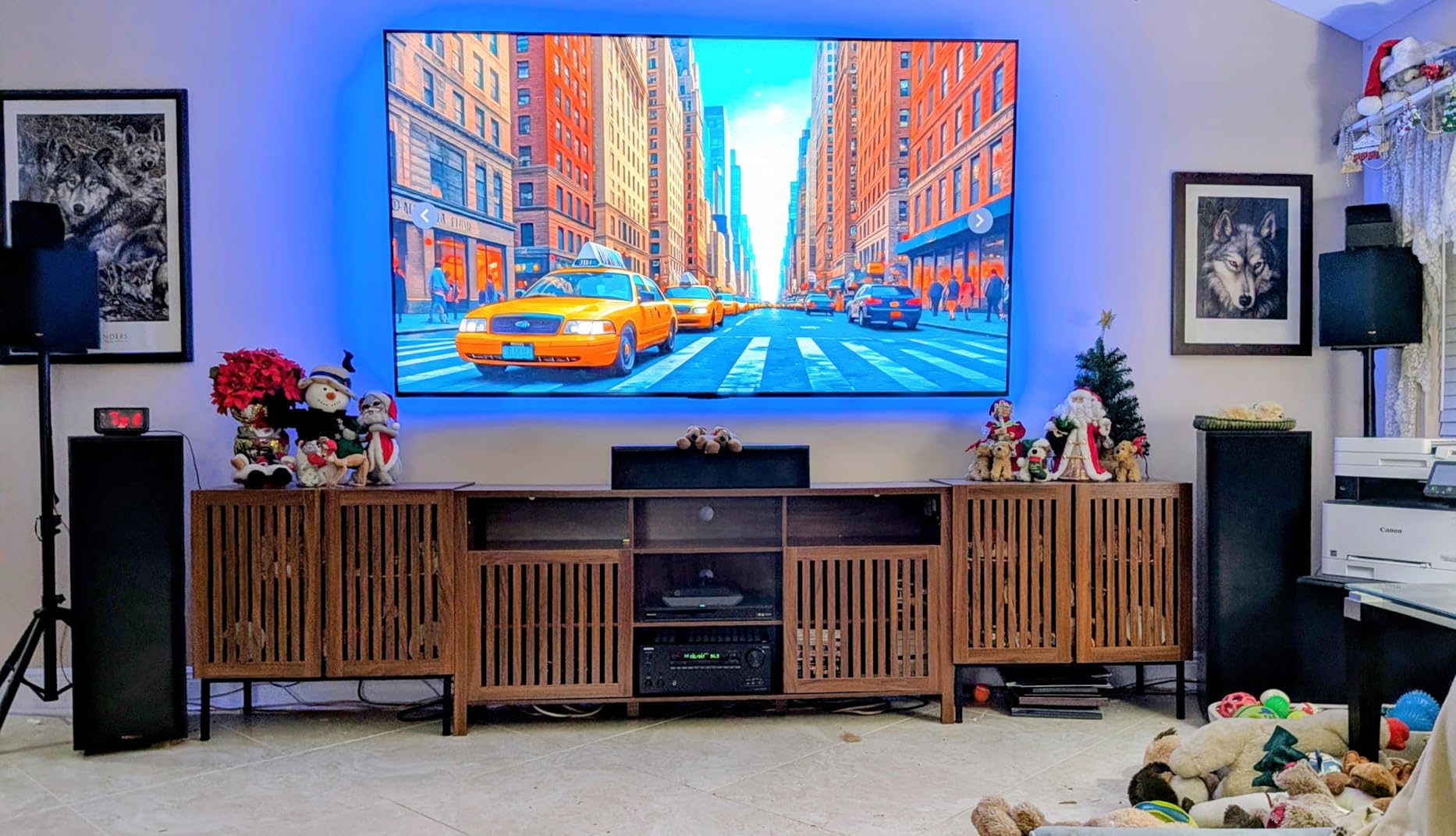
The reason this set ranks near the top is a single feature: an Anti-Reflection Pro coating applied inside the liquid crystal layer rather than as a surface film. Because it is applied at the cell, the glare reduction does not wash out the picture the way some haze coatings do, and owners in bright rooms describe it as a major upgrade over their previous sets.
Backing that up, the MiniLED Pro backlight lists up to 5000 nits of peak brightness across up to 5600 local dimming zones, with a 178 degree viewing angle. Gaming is the other strength: a native 165Hz panel, VRR from 48Hz to 165Hz, AMD FreeSync Premium Pro, ALLM, and a Game Booster 288 setting.
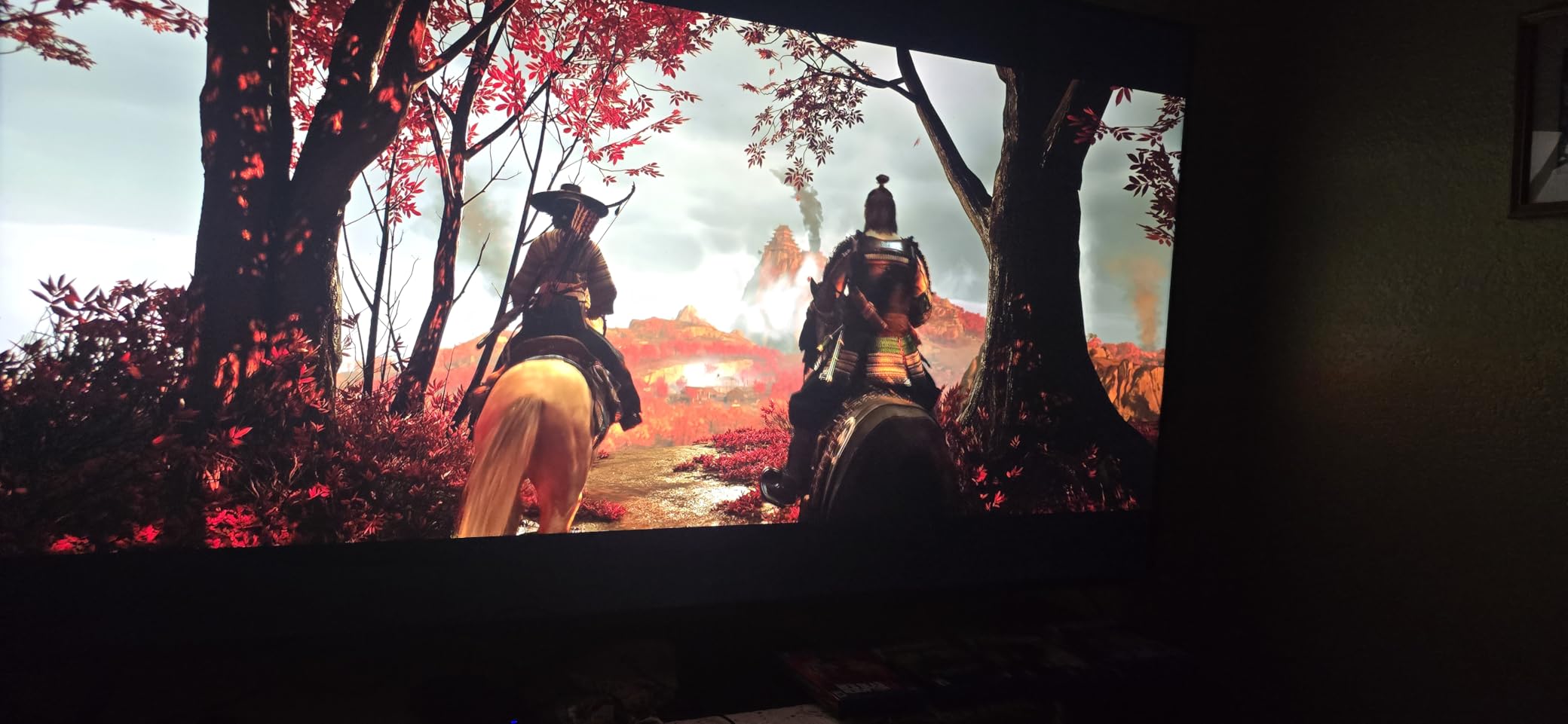
HDR support is unusually broad, covering Dolby Vision IQ, HDR10+ Adaptive, HDR10, HLG and Advanced HDR by Technicolor, with IMAX Enhanced and Filmmaker Mode alongside. The 4.1.2 channel audio system with a built-in subwoofer and two up-firing speakers runs to 82W, the highest listed onboard output among these ten sets.
The review summary for this model reports strong praise for brightness, contrast and glare handling, with several owners in bright, sunlit rooms calling out the coating specifically. Recurring criticisms are intermittent built-in speaker dropouts, text smearing that hurts PC use, and less clarity than an OLED for text rendering.
Plan the mounting before the set arrives
At 76.1 pounds this is one of the heavier sets here, and mounting it is a two-person job on a 600 x 400 mm VESA pattern. If you plan to wall mount, confirm the bracket weight rating and get a second person or installer involved rather than assuming a 75-inch Mini LED behaves like a 65-inch LED.
Check for text smearing if you use it as a monitor
Owners report visible text smearing out of the box that needs mitigation at the driver level, and some panels ship with a BGR subpixel layout. For pure watching this is a non-issue. If the television doubles as a desktop display during work hours, test it before committing.
4. Samsung 75-Inch M70H Series – Best for Straightforward Wall Mounting
Samsung 75-Inch Class M70H Series, Mini LED, 4K, Smart TV, 2026 Model
Mini LED Processor 4K
Supreme Mini LED Dimming
1000 nit listed brightness
48.5 pounds
Pros
- Among the lightest chassis here at 48.5 pounds
- Mini LED backlight with Supreme dimming
- Pure Color Spectrum one-billion color technology
- Fast and responsive Tizen interface
Cons
- Bundled remote widely criticized as the worst in the lineup
- No Dolby Vision listed in HDR specifications
- Picture needs factory adjustments before it looks right
Brightness is only half the story when the set has to go up on a wall, and this Samsung is among the lightest 75-inch panels in our group at 48.5 pounds. That is well over a third less than the Hisense U8 Series and the Sony BRAVIA 5, the two heaviest panels here, and it makes a one-person install far more realistic for anyone renter with a stud wall already in place.
On the picture side it uses a Mini LED Processor 4K with Supreme Mini LED Dimming, Pure Color Spectrum quantum-enhanced color, and a listed maximum display brightness of 1000 nits. Motion Xcelerator pairs with a 120Hz refresh rate, and Color Booster plus Soccer Mode target daytime sports viewing specifically.
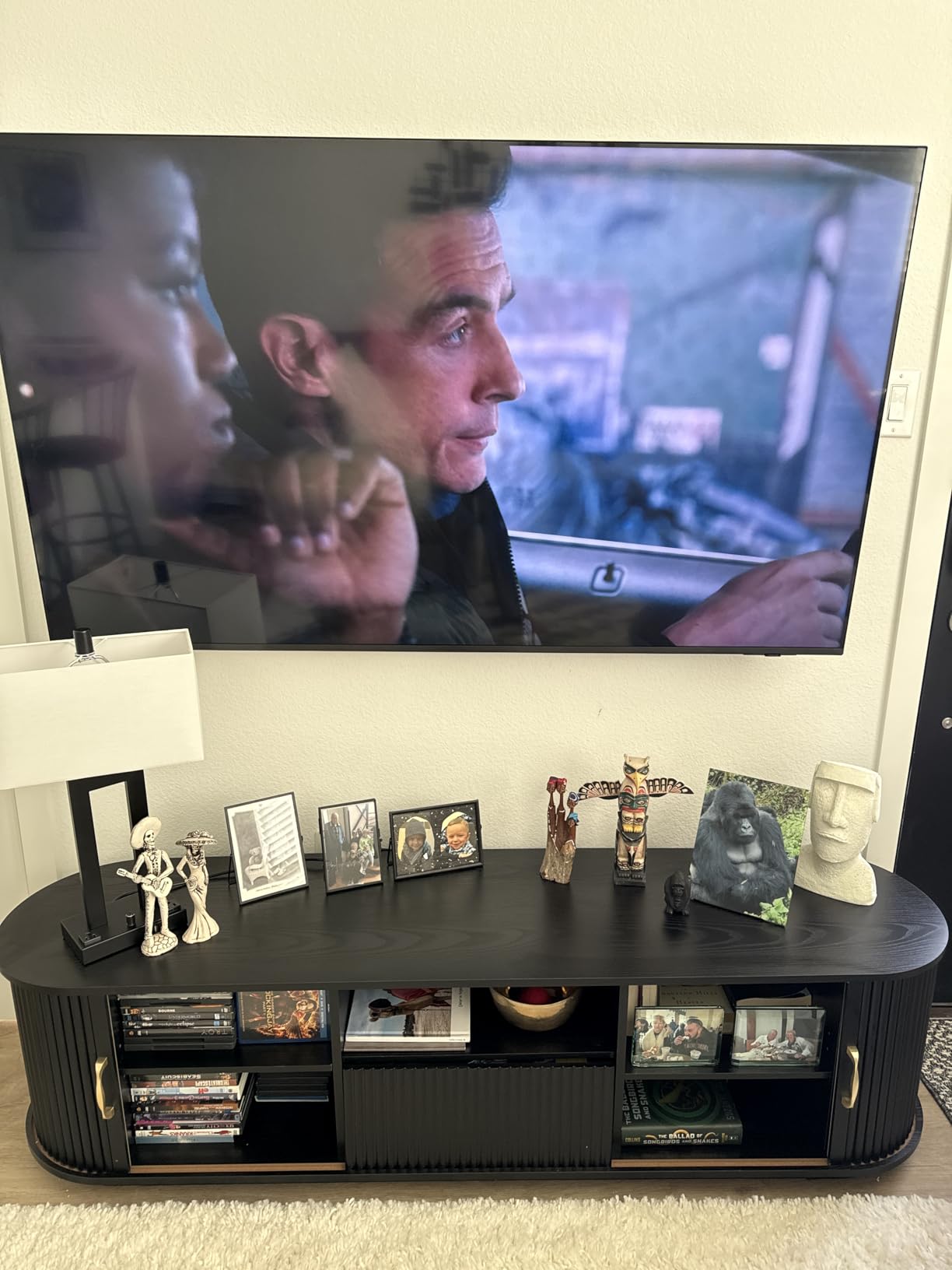
The review summary describes owners rating it as a good-value Mini LED with a solid 4K picture, quick performance and easy setup, frequently recommending it as an alternative to sets costing several times more. Sound is clear enough at low volume that owners rarely need to push it, and the frame construction is sturdier than thinner sets in the same bracket.
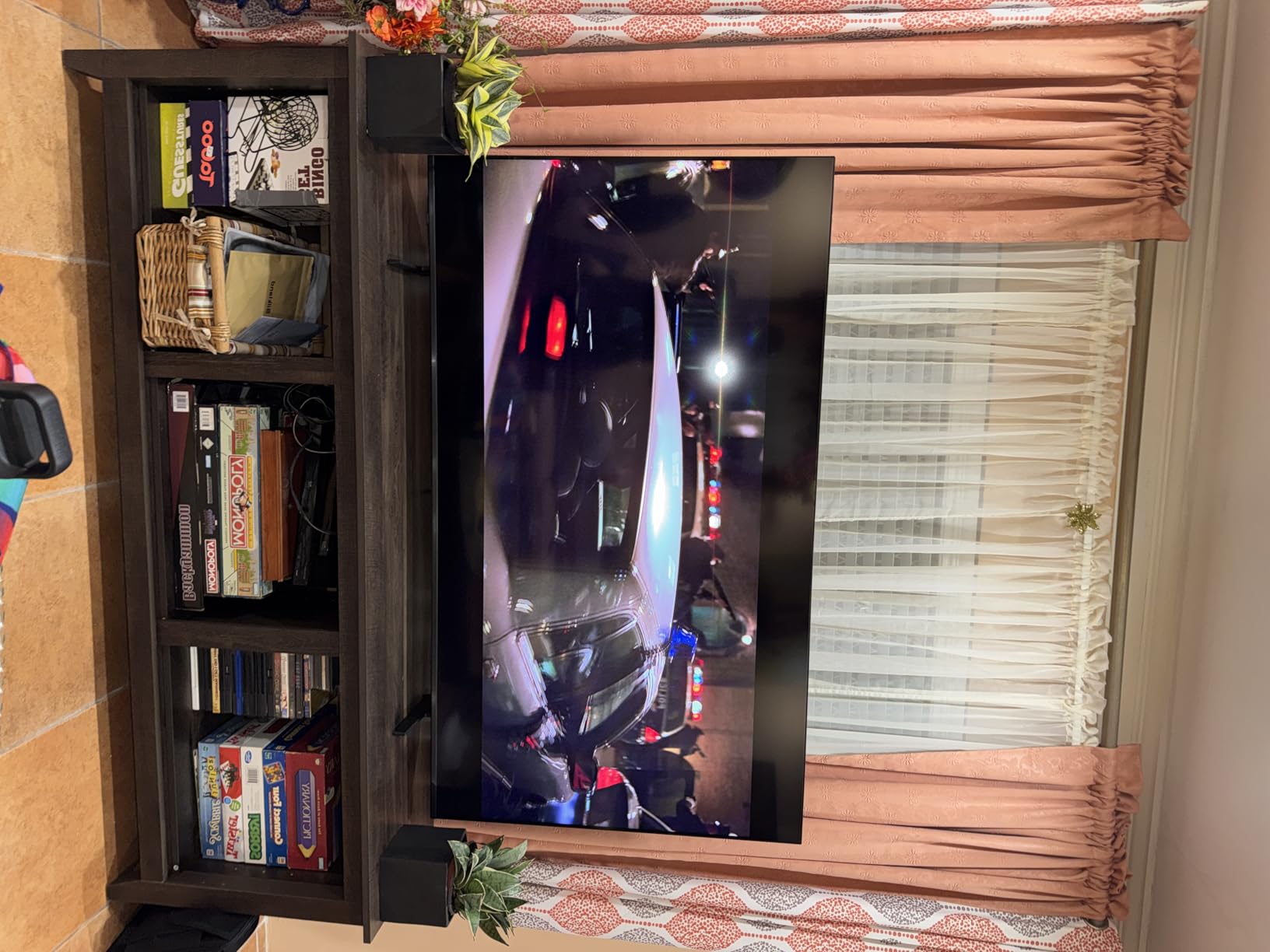
The overwhelmingly common complaint is not picture related. Owners describe the bundled remote as the worst in the lineup, note the television does not remember the last input and defaults to a promo channel on power-up, and flag the Samsung account requirement plus Smart Things dependency as added friction during setup.
Budget your setup time, not just your money
Account creation, app permissions and the remote navigation all add steps. Several owners report returning sets over the remote and interface alone. If you are buying for an older relative or anyone who wants a television that simply turns on, that experience matters more than the brightness number.
Expect to adjust picture settings on day one
Owners consistently report that the picture needs factory setting changes before it looks right. Budget twenty minutes with the picture menus on the first evening rather than assuming out-of-box settings suit a bright room, where default contrast and brightness choices rarely do.
5. Samsung 75-Inch Neo QLED QN70F – Best for AI Upscaling and SDR Sources
Samsung 75-Inch Class Neo QLED QN70F 4K Mini LED Smart TV (2025 Model) NQ4 AI Gen2 Processor, Quantum Matrix Technology Slim, Motion Xcelerator 144Hz, Samsung Vision AI, Alexa Built-in
NQ4 AI Gen2 with 20 neural networks
Motion Xcelerator 144Hz
Quantum Matrix Mini LED
Vision AI with Alexa
Pros
- Twenty neural networks handle upscaling and scene analysis
- AI 4K upscale and SDR to HDR transformation
- Mini LED backlight delivers inky blacks
- 4K 144Hz VRR gaming support
Cons
- Contrast ratio listed at 3000:1 which is modest for Mini LED
- No Dolby Vision on the listed HDR specification
- Only 2.1 channels at 20W
Most of what people stream during the day is not native 4K, and this is the set in our group that leans hardest into fixing that. The NQ4 AI Gen2 processor runs 20 neural networks for 4K upscaling and scene-by-scene analysis, and it converts SDR content toward HDR-like output with brighter highlights.
That processing matters more in a bright room than in a dark one, because a light room flattens subtle detail and a good scaler is what keeps skin tones and fabric texture from looking soft. The panel itself is Neo QLED with precision-controlled Mini LED backlighting and Quantum Matrix Technology, running at 144Hz through Motion Xcelerator with VRR support up to 4K 144Hz.
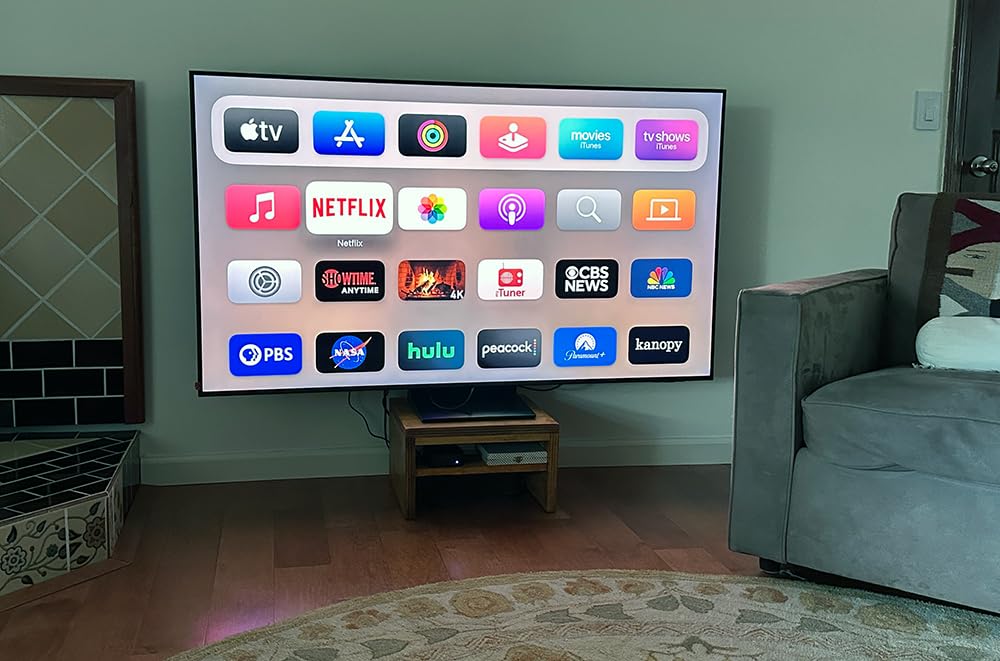
Reviewers hold it at a 4.4 average with 77% five-star ratings, highlighting AI upscaling, clean Mini LED contrast and the 144Hz gaming capability as the standouts. Samsung Vision AI with built-in Alexa handles voice control, and Samsung TV Plus provides more than 2,700 free channels including over 400 premium ones.
The spec sheet is where caution is warranted. Contrast is listed at 3000:1, which is modest for a Mini LED panel, no Dolby Vision appears in the HDR formats, and audio is 2.1 channels at 20W. No published peak brightness figure appears in the listed specifications at all, which makes this harder to judge for direct sunlight.

Verify HDR format support before you commit
The listed HDR support is HDR10+ only, with no Dolby Vision on the spec sheet. If most of your viewing is on one streaming platform, check which format that service prefers. The AI SDR-to-HDR conversion is genuinely useful, but it is not the same thing as a native Dolby Vision signal.
Plan for a Samsung account at setup
Account requirement adds friction, and the same Samsung app ecosystem friction owners describe on the M70H applies here. If you want a television that boots straight to a live channel or input without sign-in, note that this is not it.
6. TCL 75-Inch T7 4K QLED – Best for Gaming and Wide Color
TCL 75″ T7 4K QLED Google TV with 144Hz Gaming (75T7)
QLED color near full DCI-P3
Native 144Hz with 288Hz VRR
Dolby Vision and HDR Pro+
30W Dolby Atmos audio
Pros
- QLED color covers nearly the entire DCI-P3 space
- Native 144Hz with 288Hz variable refresh rate
- Lightweight at 52.9 pounds for a 75-inch
- Google TV interface feels snappy
Cons
- No full-array local dimming on this Direct LED configuration
- Some owners report glare in rooms with many windows
- Dolby Atmos output limited to 30W
Color is the argument for this set. The QLED quantum dot layer covers nearly the entire DCI-P3 color space, and paired with the AIPQ Pro processor it delivers vivid color without the processing overhead that can dull skin tones. In a bright room, wide color holds its saturation better than a narrow panel, which is exactly the failure daylight exposes.
Gaming is the other draw: a native 144Hz panel with 288Hz variable refresh rate, four HDMI ports including one with eARC, and support for Dolby Vision, HDR10+, HDR10 and HLG through HDR Pro+. At 52.9 pounds it is one of the lighter 75-inch panels we looked at, and the FullView 360 metal bezel-less design has width-adjustable feet that help on narrower furniture.
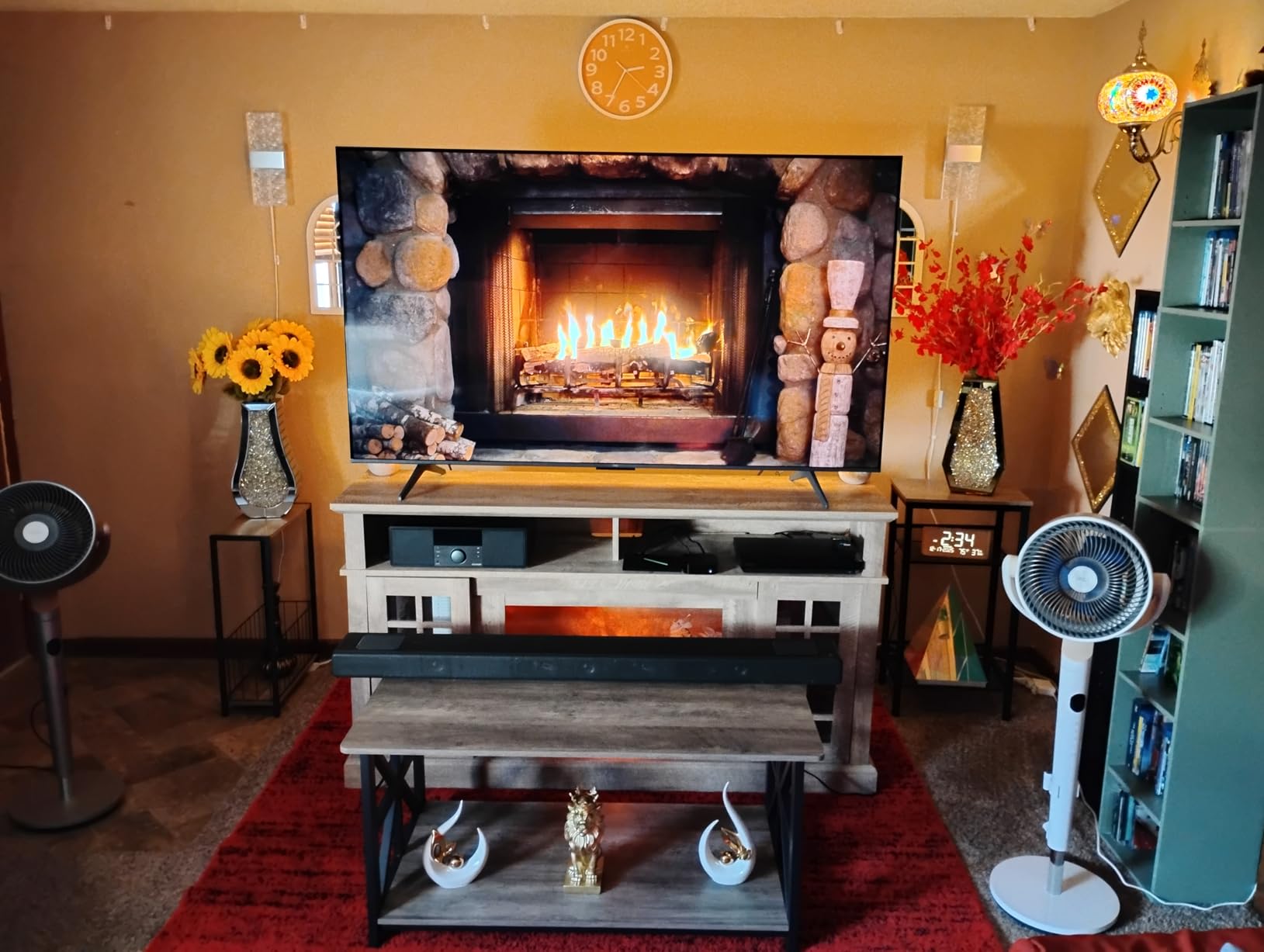
Reviewers call it an exceptional value, pointing to vivid QLED color, strong 144Hz gaming performance and a responsive Google TV interface, with one reviewer specifically noting no glare in a very bright room. Built-in sound is louder than expected for a slim panel of this size, running Dolby Atmos with DTS:X at 30W.
Other owners report noticeable glare in brighter rooms with many windows, and the operating system navigation is not the fastest, leading some to recommend a separate streaming device. The backlight is Direct LED, which means no full-array local dimming on this model and less control over highlights than the Mini LED sets here.
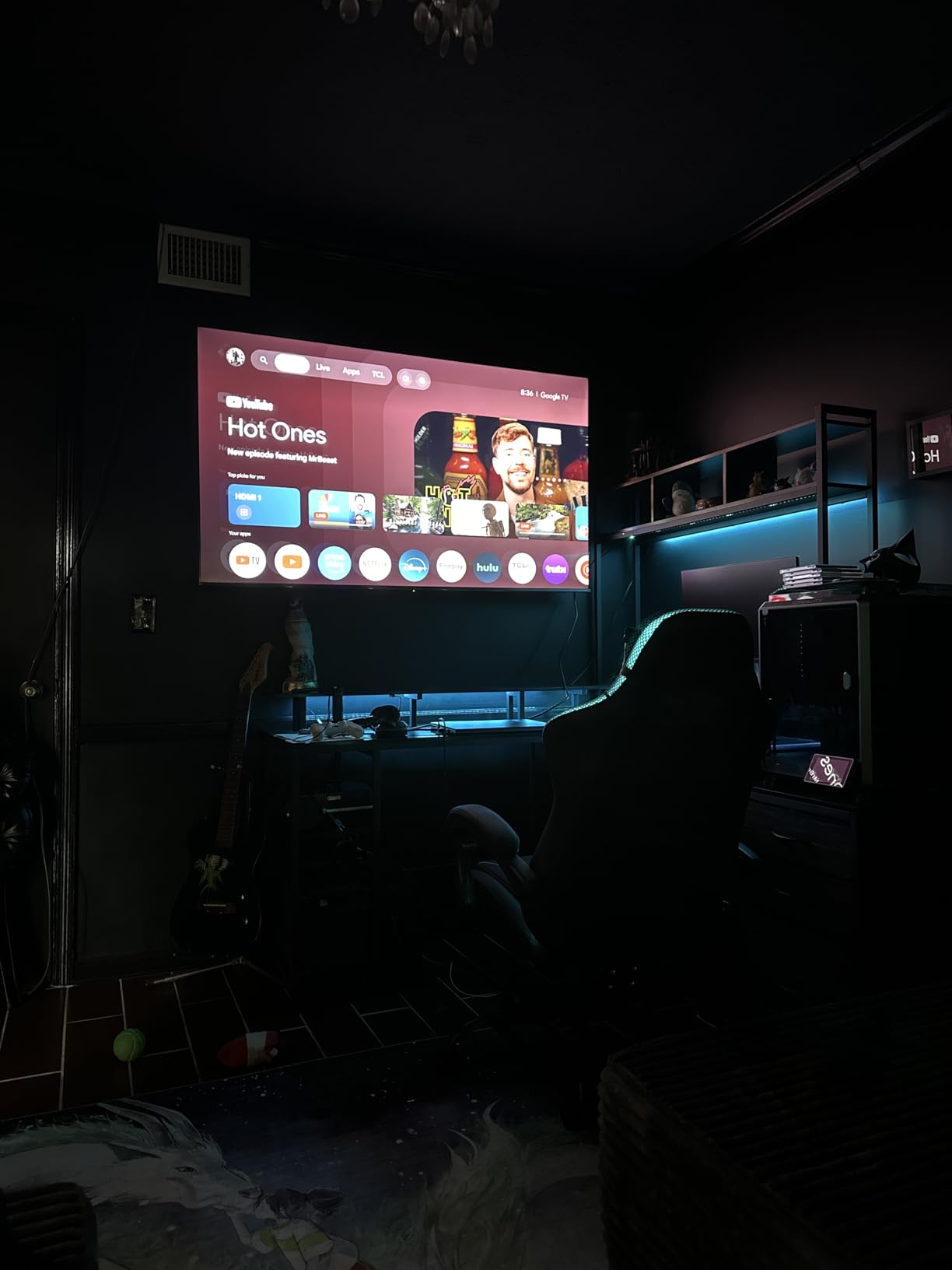
Test for glare in your own room, not the store
Owner reports on glare from this set run both directions, from no glare in a very bright room to noticeable glare in a windowed space. Showroom floors are deliberately dimmed, so a two-minute check at home during daylight is worth more than any specification. Stand in front of the screen at your normal viewing position and look for your own shape in it.
Check whether you need local dimming
Without full-array local dimming, the panel cannot push highlights as hard or hold blacks as deep during bright content. In a bright room that is a manageable trade. In a dim room at night with a lot of dark scenes, you will notice the difference against a Mini LED set, and it is worth weighing that before buying.
7. Sony 75-Inch BRAVIA 5 Mini LED K-75XR50 – Best Matte Screen for Daylight
Sony 75 Inch BRAVIA 5 Mini LED 4K HDR Smart Google TV (K-75XR50)
Matte screen finish
Mini LED with XR Backlight Master Drive
Studio calibrated modes
40W Acoustic Multi-Audio
Pros
- Matte finish genuinely reduces reflections in sunlit rooms
- XR Triluminos Pro wide accurate color
- Studio calibrated modes for Netflix and Prime Video
- PlayStation 5 features including Auto HDR Tone Mapping
Cons
- 120Hz native refresh is lower than the 144Hz and 165Hz models here
- Heaviest set at 79.8 pounds
- Review base is still small at 305 ratings
If your single biggest problem is that you can see your window in the screen, the matte finish listed on this Sony is the most direct answer in this roundup. Matte surfaces scatter incoming light rather than reflecting it back at you, which is why owners with south or west facing windows keep pointing to it as the feature that solved their problem.
The backlight is Mini LED driven by XR Backlight Master Drive, with XR Triluminos Pro for color and an XR Processor doing AI real-time scene enhancement. Picture tools include XR Clear Image upscaling, XR Contrast Booster 10 and XR Motion Clarity, and Sony ships studio calibrated modes for Netflix, Prime Video and Sony Pictures Core.
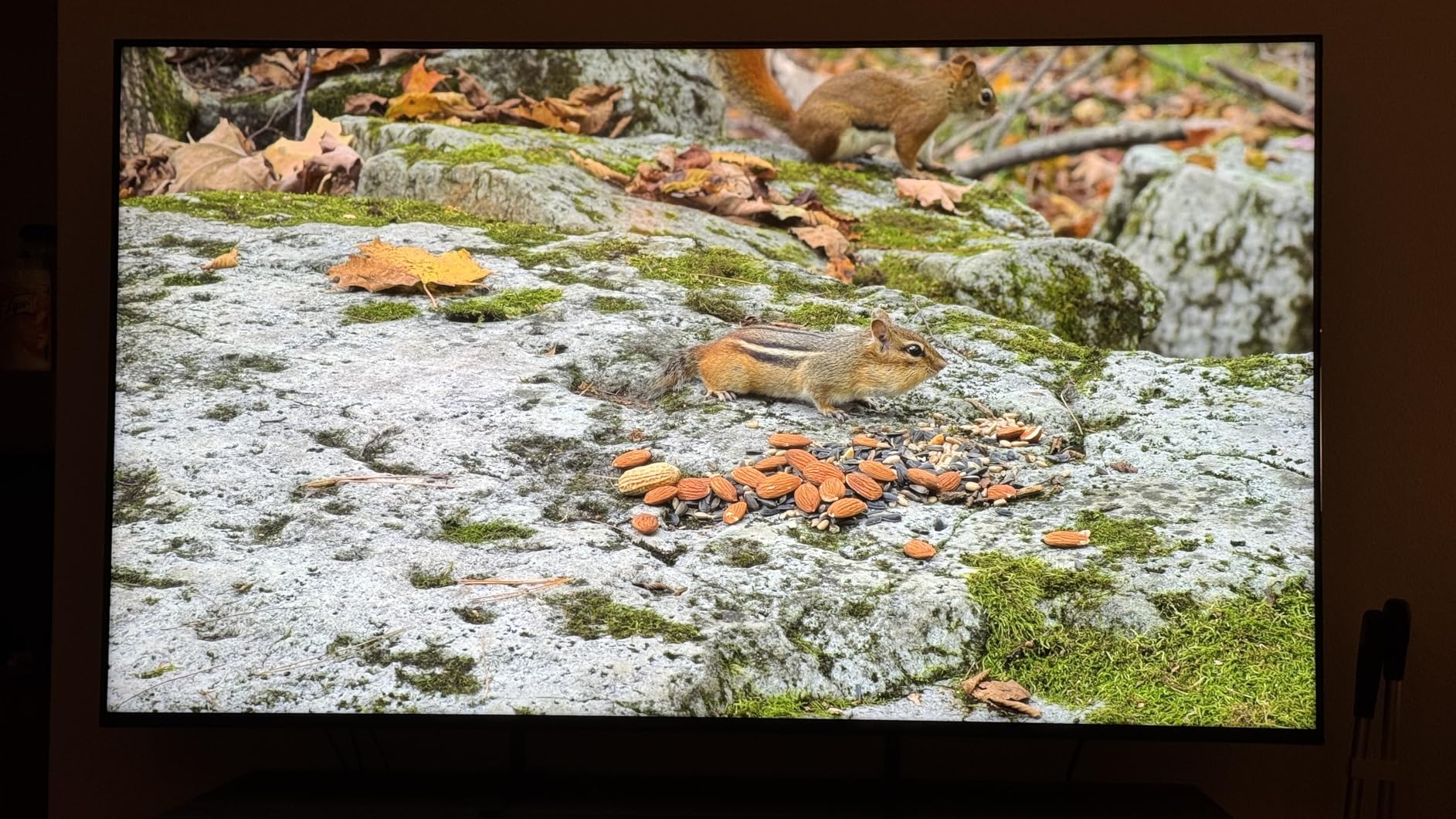
It also carries a 4.5 average with 79% five-star ratings and only 7% one-star, which is the strongest five-star share of the ten.
Gaming gets dedicated PlayStation 5 features including Auto HDR Tone Mapping, Auto Genre Picture Mode and a Game Menu, plus Dolby Vision, IMAX Enhanced and DTS:X.
The trade-offs are physical and factual. Native refresh is 120Hz, below the 144Hz and 165Hz panels elsewhere on this list, and at 79.8 pounds it is the heaviest set here, so mounting deserves real planning. No published peak brightness figure appears in the listed specifications, and a 305-rating review base is the third smallest in the roundup, so long-term data is still building.
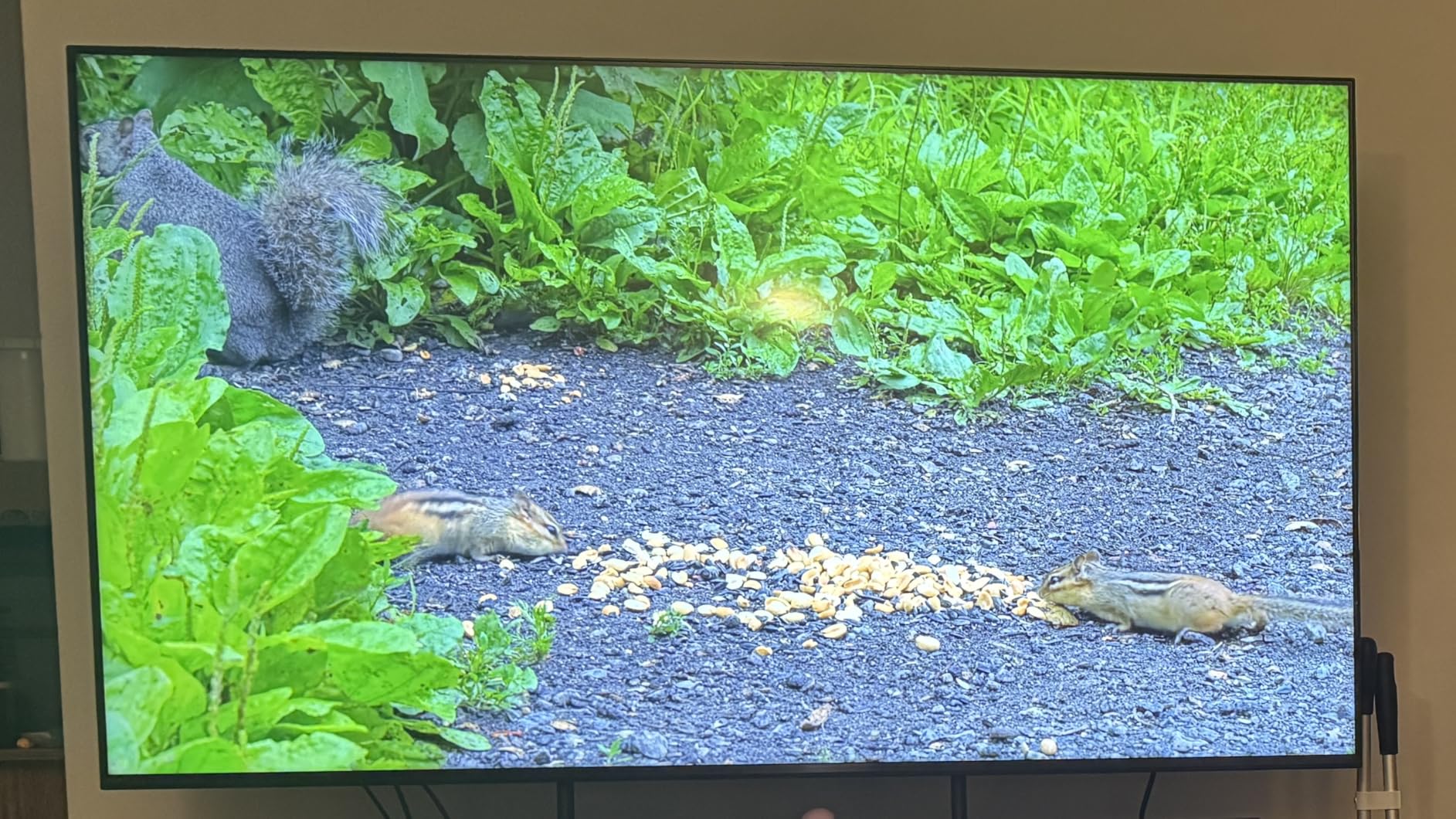
Decide whether matte is worth the lost sparkle
A matte finish diffuses highlights as well as reflections, so specular pop on small bright objects is reduced compared with a glossy panel. In direct sun that trade is worth making without hesitation. In a dim media room you are giving up some of the very quality high-end buyers chase, and the picture is also slightly less reflective of your own lamp.
Accept 120Hz or shop elsewhere
If you game at 144Hz or above, this is the wrong set. Everyone watching sports or streaming will not notice the difference. If your family plays competitive shooters on a 120Hz-capable console, the faster Mini LED sets here handle motion smoothing and refresh headroom better.
8. Hisense 75-Inch E7 Cinema Series 75E7SF – Best for Changing Daylight
Hisense 75″ E7 Cinema Series Hi-QLED Mini-LED 4K UHD Smart Fire TV (75E7SF, 2026 NEW) – Native 144Hz, AI Picture, Dolby Vision IQ · Atmos, FALD, HDR10+ Adaptive, MEMC, Alexa+
Hi-QLED Mini LED with FALD
AI Light Sensor ambient adaptation
Native 144Hz
Dolby Vision IQ
Pros
- AI Light Sensor adapts backlight to room conditions in real time
- Full array local dimming at a budget tier
- Dolby Vision IQ and Dolby Atmos support
- Light at 54.7 pounds with responsive Fire TV
Cons
- Motion can look blurry with VRR enabled on some sets
- Some owners report Wi-Fi dropouts needing factory resets
- Plastic stand legs feel cheaper than competing sets
Most rooms are not consistently bright. Clouds move, blinds open halfway, someone walks past with a lamp on. This Hisense has an AI Light Sensor that adapts the backlight to ambient room light in real time, and for a family room where conditions shift hour to hour that automation is more useful than a higher static number.
Underneath it is a Hi-QLED Mini LED backlight with full array local dimming, a native 144Hz Game Mode, and a feature set that is unusually generous at this tier: Dolby Vision IQ, Dolby Atmos, HDR10+ Adaptive, Filmmaker Mode, an AI Picture engine with scene-by-scene analysis and AI 4K upscaling.
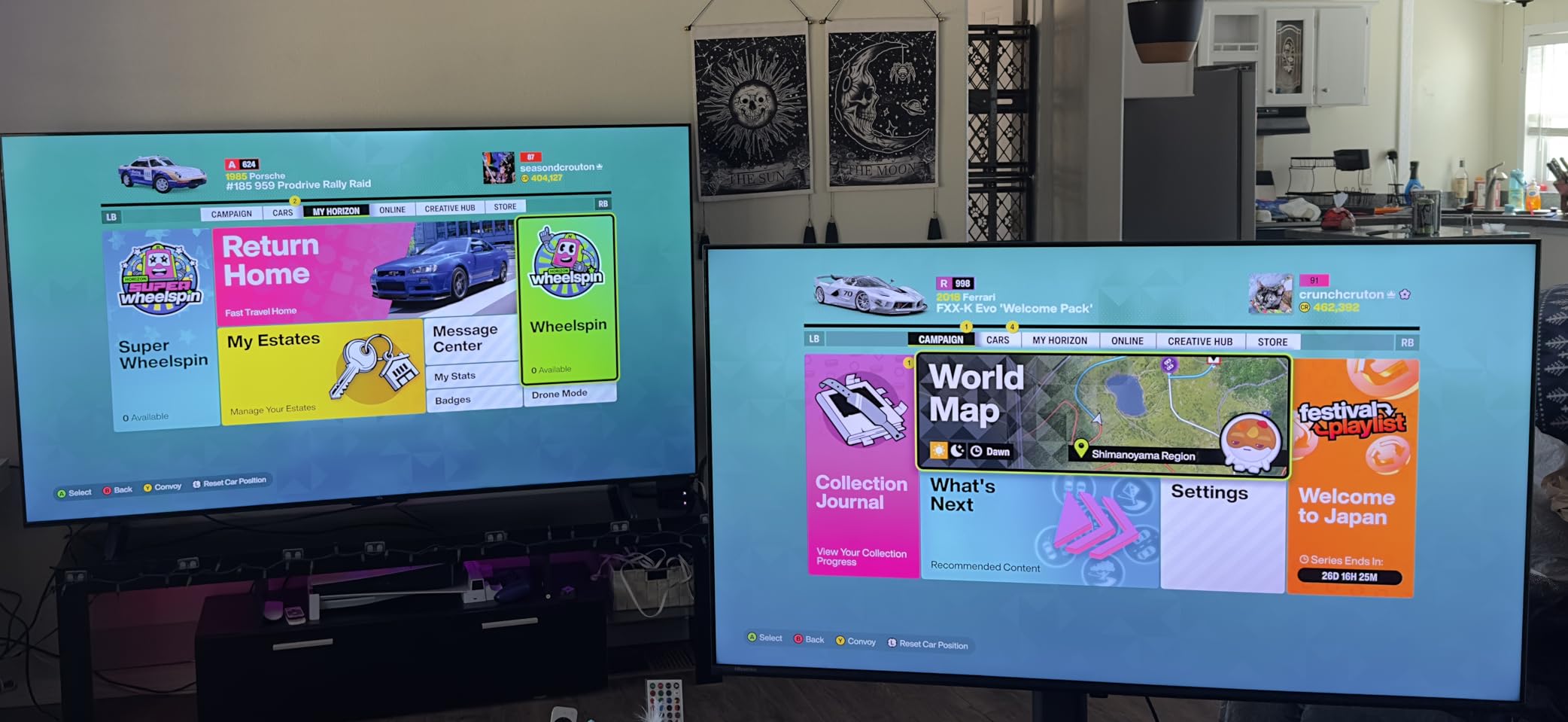
Owners repeatedly call it strong value, and the review summary describes a high-quality budget Mini LED with sharp, bright pictures, strong color and smooth 144Hz motion, with 75% of ratings at five stars. It weighs 54.7 pounds, which keeps the wall mount straightforward, and the Fire TV interface is responsive with Alexa+ voice control.
The complaints cluster in two groups. Some owners report motion that looks blurry and prefer VRR and FreeSync turned off entirely. Others describe Wi-Fi connectivity dropouts that required repeated factory resets, plus black-screen crashes needing a physical power cycle, which is the single reason this set sits below our top three despite the strong feature list.
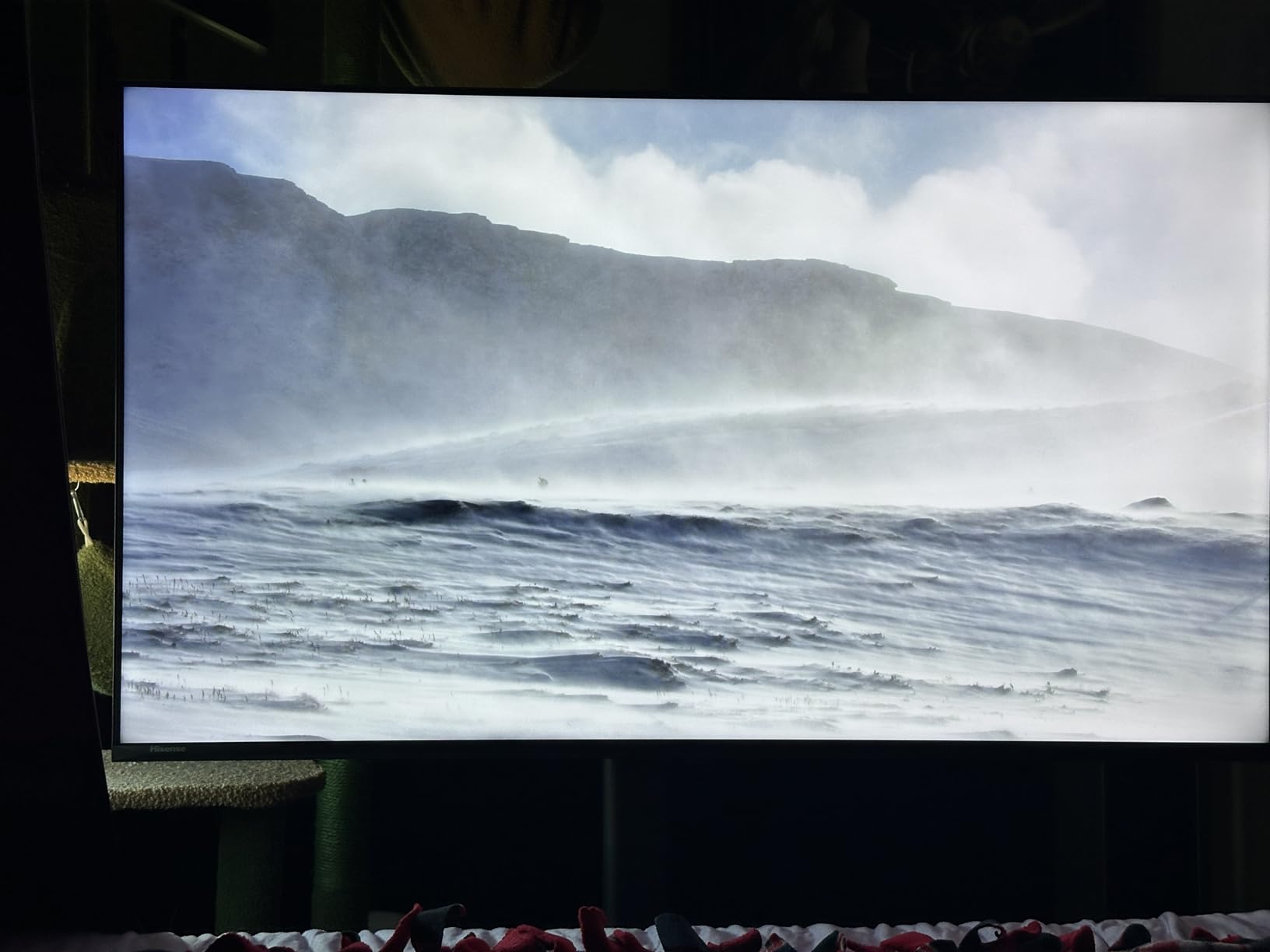
Test motion handling with your own content
If you watch a lot of fast sport during the day, check the motion settings in person first. Owners who dislike the handling recommend disabling VRR and FreeSync, which is worth knowing because those are exactly the features that make the set attractive for daytime gaming.
Weigh the reliability reports against the feature list
Connectivity dropouts and black-screen crashes appear often enough in reviews to be meaningful. If your network is weak or the set will sit on a hard-wired connection you control, risk drops sharply. If it streams over Wi-Fi in a far corner of the house, pick a set with a stronger ownership record.
9. Samsung 75-Inch M80H Series – Best for Daytime Streaming Subscriptions
Samsung 75-Inch Class M80H Series, Mini LED, 4K, Smart TV, 2026 Model
Mini LED with AI Mode
NQ4 AI Gen2 processing
Auto HDR Remastering
48.5 pound chassis
Pros
- Auto HDR Remastering brightens SDR streaming content
- Mini LED with AI Mode scene by scene processing
- Lightweight at 48.5 pounds for easy mounting
- Alexa built in for hands-free control
Cons
- 1000 nit listed brightness limits bright-room headroom
- No Dolby Vision listed in the HDR formats
- Lowest 4.2 average rating in this roundup
Most daytime viewing is daytime streaming, and this set is built around that specific job. Auto HDR Remastering converts SDR content toward HDR-like output with brighter highlights, which is the difference between a washed-out daytime image and one that holds attention against a bright window. The Mini LED with AI Mode and NQ4 AI Gen2 processor layer scene-by-scene analysis on top of that.
Color comes through Pure Spectrum Color with one billion shades, and Motion Xcelerator 144Hz with variable refresh rate handles fast motion. Like the M70H, it weighs 48.5 pounds, keeping it among the easiest 75-inch panels here to mount, and Samsung Vision AI with Alexa built in covers hands-free control.
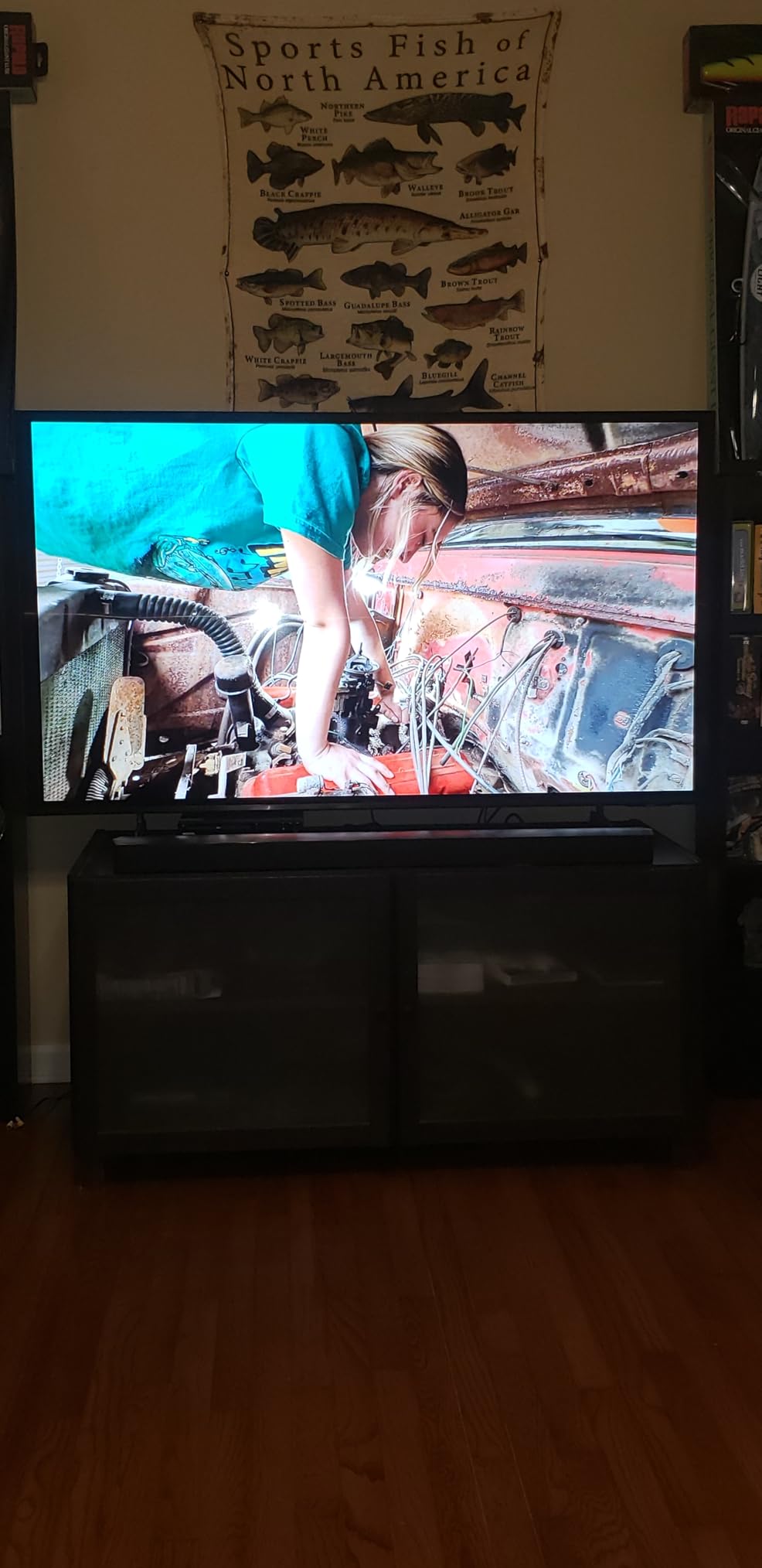
This is also the set with the weakest reception in our group. It carries a 4.2 average, the lowest of the ten, with 12% one-star reviews. Review volume is 219 ratings, the third smallest in the roundup, so the sample is small, but the direction is consistent: positive remarks concentrate on the AI processing and color range.
Two specification issues are worth raising directly. Maximum display brightness is listed at only 1000 nits, which limits bright-room headroom. And the specs conflict on refresh rate, listing display refresh at 120Hz while the product name and features advertise 144Hz. Buying on the assumption of a faster panel than you receive is an avoidable outcome.
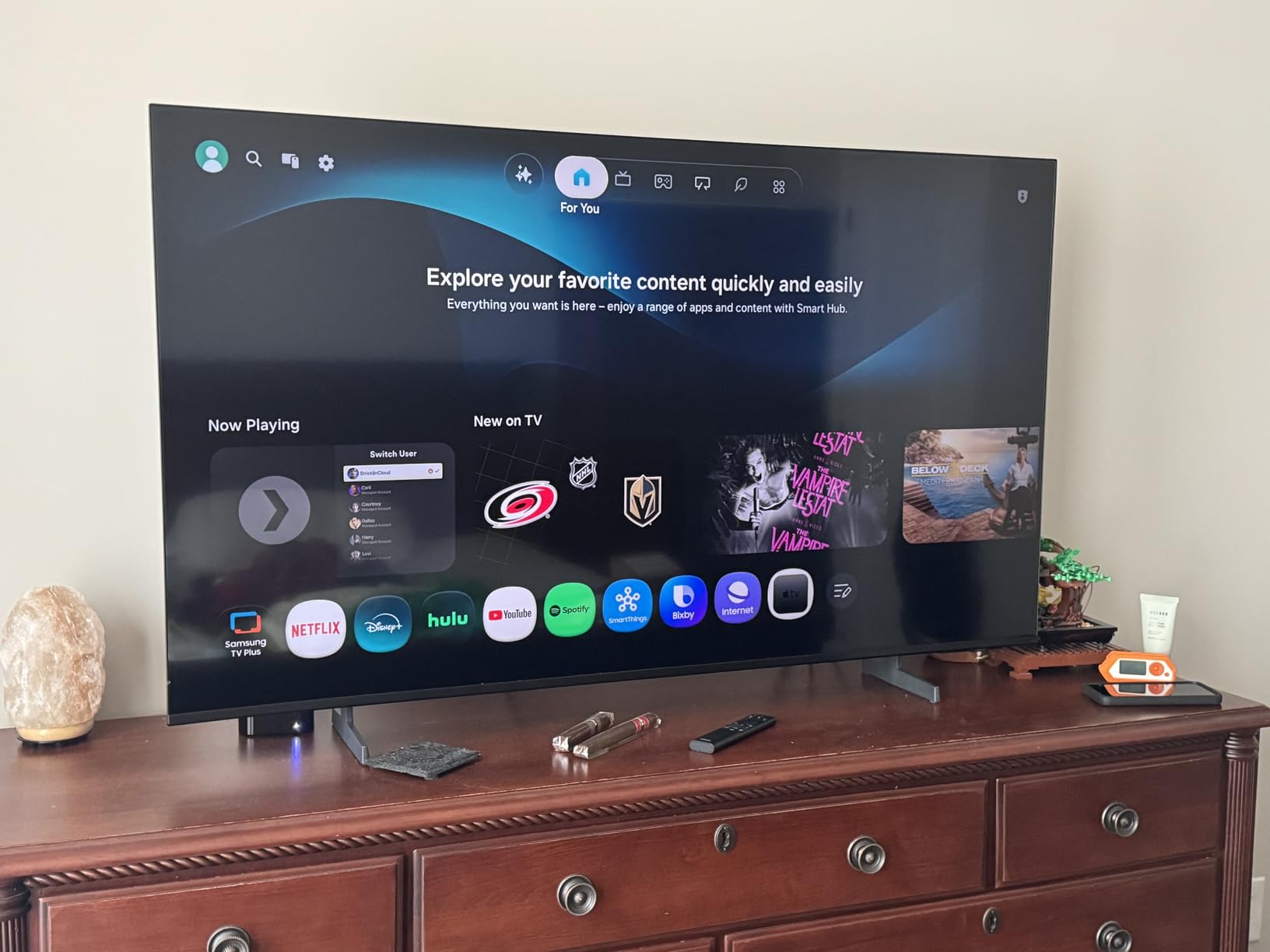
Confirm the refresh rate you are actually getting
Ask the retailer which figure applies to the box on the shelf, and check the on-screen specification menu once it is set up. If the set is 120Hz, gaming headroom shrinks considerably against the 144Hz and 165Hz models in this roundup, and that changes what it is worth for a bright-room gamer.
Decide whether HDR format gaps matter to you
Only HDR10+ appears in the listed HDR formats, with no Dolby Vision. Where Auto HDR Remastering is doing the work on SDR material this is a modest compromise. Where you have a large library of Dolby Vision titles, it is a real one, and the TCL and Sony sets here cover both formats.
10. TOSHIBA 75-Inch M450 Series QLED – Budget Pick at 75 Inches
TOSHIBA 75″ Class M450 Series QLED 4K UHD Smart Fire TV, Voice Remote with Alexa, Stream Live TV Without Cable
REGZA QLED color
Dolby Vision and Dolby Atmos
HDR10+ Adaptive
60Hz native refresh
Pros
- REGZA AI Engine ZRi Gen3 tuned by picture experts
- Dolby Vision and Dolby Atmos supported at this tier
- HDR10+ Adaptive adjusts to changing room light
- REGZA Power Audio with dual clear direct speakers
Cons
- 60Hz native refresh is the only one at that rate here
- QLED without Mini LED backlighting is dimmer here
- Smallest review base at 191 ratings
This is the floor of the list and the honest entry point for a very large screen in a room with only indirect daylight. The REGZA AI Engine ZRi Gen3 is tuned by picture experts, REGZA QLED handles color, and Dolby Vision plus Dolby Atmos appear at a tier where they are often missing entirely. HDR10+ Adaptive adjusts brightness and contrast scene by scene as room light changes.
Game Mode supports ALLM, VRR and eARC, and there are four HDMI ports plus Apple AirPlay and an AI 4K Clarity upscaler with noise reduction. The Fire TV interface comes with an Alexa remote that supports press-and-ask, and Toshiba backs EU spare part availability for three years.
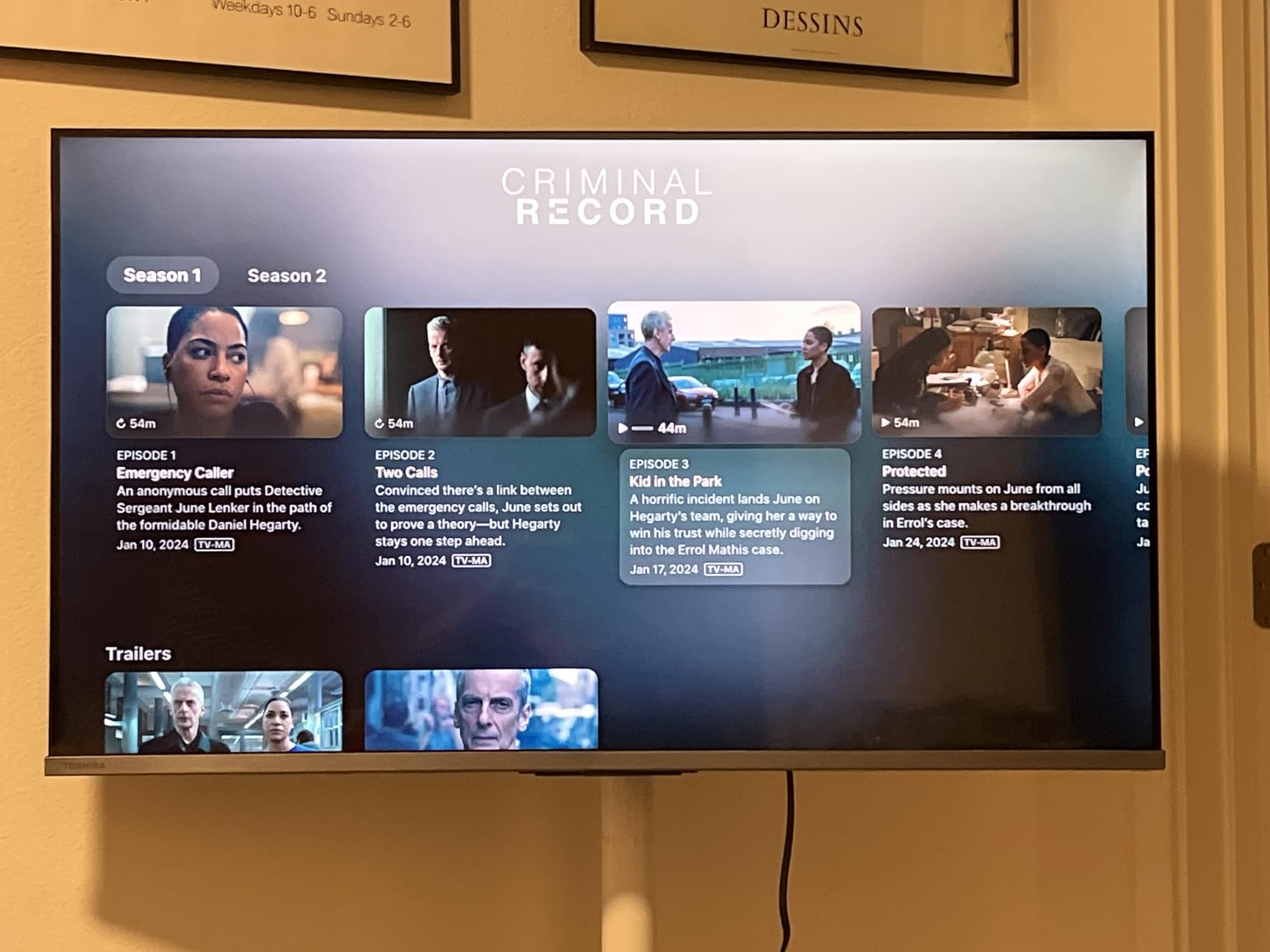
Reviewers describe it as an entry point, with a 4.3 average reflecting adequate picture and sound rather than class-leading performance. Its 69% five-star share is lower than the other nine, and at 191 ratings the review base is the smallest here, so long-term reliability data is limited.
The 60Hz native panel is the decisive limitation. It is the only 60Hz set here, which rules out high-refresh gaming and makes Motion Rate style frame insertion the only route to smoother motion. There is also no published peak brightness figure, and QLED without Mini LED backlighting is simply dimmer than the alternatives in a sunlit room.
Understand what QLED without Mini LED means in daylight
QLED describes the color layer, not the backlight. Without Mini LED local dimming, the panel cannot push small areas of the screen much brighter than the rest, so highlights flatten when ambient light is high. In a dim room the difference is small. With a window open, it is the whole argument.
Decide if 60Hz rules the set out
If anyone in the household games competitively or cares about motion handling on sport, 60Hz is a genuine compromise and the extra spend on a 144Hz panel is better placed. If the set is for daytime news, streaming and films with the lights on, it does the job, and it does it on a full 75-inch panel without needing a second device.
How to Shop for a 75 Inch TV for a Bright Room
How bright does a TV need to be? Match nits to your room
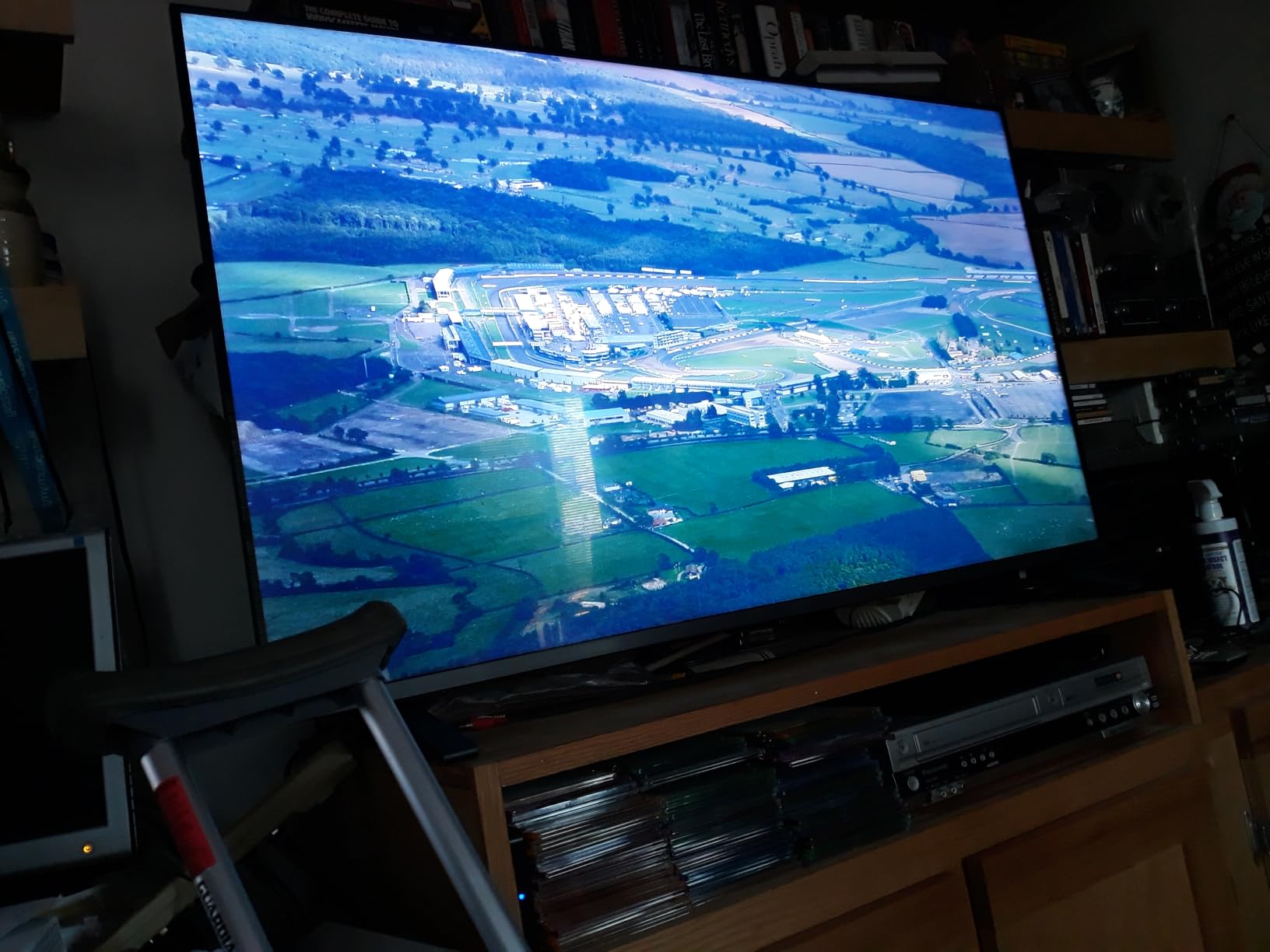
Around 250 nits of full-screen brightness handles indirect daylight, 300+ nits covers strong ambient light, and 1,000+ nits of peak brightness is what you want if sunlight hits the screen directly at any point in the day. One caution: peak brightness and full-screen brightness are different measurements. Peak is a small bright area, often a subtitle or a specular highlight, while full-screen is what the entire picture manages when the room is bright.
A glossy 75-inch panel rated at 1,500 peak nits will still look washed out against a window, because the panel cannot hold that output across the whole image and the reflection sits on top of it. Judge sustained brightness first, peak second.
Anti-glare, matte and reflection handling explained
Two phrases matter when you search: Anti-Glare and Glare Free. A haze filter scatters reflections into a soft milky wash. An anti-reflective or matte layer spreads incoming light so the screen never becomes a mirror, which is a bigger visual gain in a sunny room. The two mechanisms are not interchangeable, and the marketing term on the box is not always the treatment you receive.
Does anti-glare cost you picture quality? Some haze coatings do dim black level and reduce specular sparkle, because the same diffusion that kills reflections softens highlights. A good matte surface costs you less. In our list, the Sony BRAVIA 5 lists a matte screen finish and the Hisense U8 Series applies its Anti-Reflection Pro coating inside the cell, which is why both handle sunlit rooms better than sets that name no coating at all.
Our guide to QLED TVs for bright rooms goes deeper on color layer differences if you want the specifics.
Mini-LED, QLED, Micro RGB or OLED for daylight?
QLED describes the quantum dot color filter layer and says nothing about brightness control. Mini LED describes the backlight, where thousands of tiny LEDs are grouped into dimming zones; more zones means brighter highlights alongside darker blacks. QD-Mini LED combines both. OLED panels are self-emissive, so every pixel switches off individually, which gives the deepest blacks of any technology but no backlight headroom to fight a bright room with.
For daylight specifically, Mini LED leads on brightness, OLED leads on contrast in a dim room, and QLED without Mini LED backlighting is the cheapest but dimmest option here. Micro RGB, where each pixel is a dedicated red, green and blue LED, produces very high brightness and very wide color, but it sits well beyond this price range and is a different category of purchase.
How far should you sit from a 75-inch TV?
For a 75-inch panel, a seated distance of roughly 10 to 11 feet gives a comfortable view without making peripheral motion hard to track. High-nit Mini LED sets give you more flexibility than the rule suggests, because the picture stays legible when you sit closer than you would on a dimmer panel. Owners report sitting nearer than 10 feet without eye strain once the room is bright and the set is running high.
Size also helps. A larger screen at the same brightness out-competes a smaller one because there is more lit area to compete with the room. That is why buyers going into bright rooms often step up a size rather than a tier.
Condition the room before you spend more on the panel
The cheapest reflection fix is not a television. Numbered in order of impact: fit blackout curtains or blinds on any window within the screen’s reflection axis, especially west or southwest facing ones. Mount the set on a wall perpendicular to the window rather than opposite it. Keep lamps and bright ceiling fixtures out of the direct reflection angle. Use wall washing behind the panel if the room glows at night. Only then tune picture settings.
Owners report buying blinds before the television and solving most of their reflection problem for a fraction of the cost of a flagship anti-glare panel. Those owners can then step down a tier and still end up with a better daylight experience, which is why every pick here also lists brightness honestly rather than only the peak number.
One more shopping trap worth naming: retailer listings in this category mix 65-inch and 75-inch panels freely, and forum threads in r/4kTV document buyers who discovered the size mismatch after delivery. Check the model number on the specification list, not just the listing title, before you commit.
Frequently Asked Questions
What is the best 75 inch TV for a bright room?
The TCL 75-Inch Designer Series 75A400U leads our list because it pairs an ultra-low reflection panel with 836 Mini LED dimming zones and up to HDR 2500 nits of peak brightness. If your room takes direct sun and reflections are the main complaint, the Sony BRAVIA 5 with its matte screen finish and the Hisense U8 Series with its Anti-Reflection Pro coating are the two alternatives worth testing.
Is QLED or OLED better for bright rooms?
For daylight, Mini LED backlighting is the better choice. QLED describes the color filter layer and does not by itself improve brightness control, while OLED panels are self-emissive and have no backlight headroom to fight ambient light. An OLED still wins on contrast in a dark room, but for a sunlit space a high-nit Mini LED with an anti-reflective coating holds the picture better.
How bright should a TV be for a sunny room?
Around 250 nits of full-screen brightness handles indirect daylight, 300 or more covers strong ambient light, and 1,000 or more nits of peak brightness is the target if sunlight lands on the screen directly. Peak and full-screen brightness are different measurements, so check the sustained figure rather than the headline number, and treat any glossy panel as a compromise regardless of its rating.
Does anti-glare actually help in a bright room?
Yes, and it is usually the difference people notice first. An anti-reflective or matte surface scatters incoming light so the panel never behaves like a mirror, which removes the visible window reflection that no amount of brightness can fix. The trade-off is that some haze coatings also soften highlights and lift black level slightly, so a matte finish costs you a little specular sparkle in a dark room.
How far should I sit from a 75-inch TV?
Roughly 10 to 11 feet gives a comfortable view of a 75-inch panel without making peripheral motion hard to follow. High-nit Mini LED sets give you more flexibility than that rule suggests, because the picture stays legible from closer than it would on a dimmer panel, and owners report sitting nearer without eye strain once the room is bright.
Final Verdict: The Best 75 Inch TVs for Bright Rooms
The TCL 75-Inch Designer Series 75A400U is the best 75 inch TV for bright rooms in this roundup, because it is one of only three sets here that pair an explicitly anti-reflective treatment with over 500 Mini LED dimming zones and multi-thousand-nit peak brightness at a mid-range tier. Reflection handling and brightness are separate problems, and this is one of very few sets that attacks both.
If reflections are your main complaint rather than raw brightness, test the Sony BRAVIA 5 with its matte finish or the Hisense U8 Series with its in-cell Anti-Reflection Pro coating. If your daylight is diffuse rather than direct, the TCL QM6K gives you Mini LED local dimming and Dolby Vision at the entry level, and the TCL T7 covers nearly the full DCI-P3 color space with a native 144Hz panel.
Before you spend, spend ten minutes on the room instead. Curtains on the window that reflects into the screen will do more for your daylight picture than any tier of television, and it is the single change owners most often report solving the problem. If you want our picks across other sizes, our 75-inch gaming TV guide covers refresh rate and input details, and the 75-inch outdoor TV roundup handles partial-sun setups where no indoor panel is enough.
This guide was last reviewed in 2026 and covers the current generation of 75-inch panels. We will update it as new models land.