
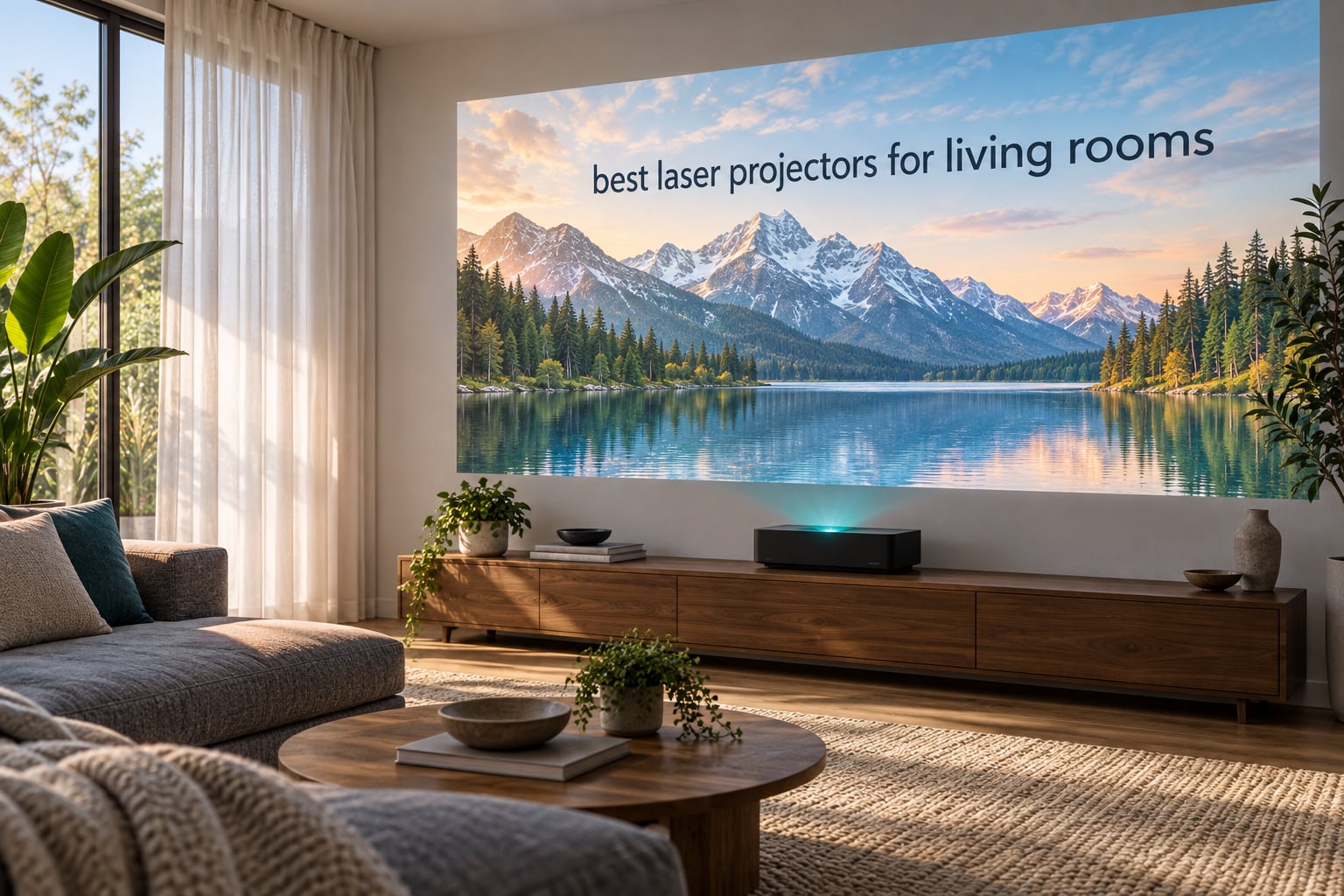
If you want one screen that beats a 65 inch television, a laser projector is the most practical way to get there without rewiring a wall. The best laser projectors for living rooms in 2026 all share three things: a laser light source rated in tens of thousands of hours, enough brightness to survive a curtain-drawn room, and placement options that work in a space you also use for everything else.
The hard part is brightness. A projector is not a television, and the room you are replacing a TV in is the room you will use with the lights on, the curtains open and guests over. That is why every lumen figure below carries the standard it was measured under, and why the honest answer to “what is the best projector for a living room” depends on how much ambient light you refuse to compromise on.
Our short version: the Valerion StreamMaster Plus2 is the best all-round pick, the Dangbei DBOX02 is the best value, and the AWOL VISION LTV-3000 Pro is the best premium unit for a media-console setup. If your room is bright enough that you plan to watch with curtains genuinely open, jump to the Nebula X1S and the ViewSonic LS740HD first, because those are the two with the light headroom to cope. If you would rather read the full field of options, we also cover the general laser projector buying basics and the short-throw category in more depth in our ultra short throw projector guide.
We also want to be straight about the downside early: a laser projector loses to a Mini-LED television in a bright, multi-use family room. No amount of engineering changes that. Everything below is a way to get a genuinely large image, not a way to pretend a projector is a TV.
Table of Contents
Top 3 Best Laser Projectors for Living Rooms in 2026

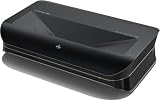
The three above cover the most common living room shapes: a long-throw unit on a shelf, a compact 4K box that fits beside a media console, and a near-wall laser TV that replaces the television entirely.
At-a-Glance: All 12 Laser Projectors Compared (October 2026)
Every brightness number below is quoted with the standard the manufacturer used, because these are not interchangeable numbers. More on that in the buying guide below.
| Product | Specifications | Action |
|---|---|---|
| Valerion StreamMaster Plus2 |
|
Check Latest Price |
 Dangbei DBOX02 Dangbei DBOX02 |
|
Check Latest Price |
 JMGO N1S Ultra JMGO N1S Ultra |
|
Check Latest Price |
| AWOL VISION LTV-3000 Pro |
|
Check Latest Price |
 Optoma GT1090HDR Optoma GT1090HDR |
|
Check Latest Price |
 ViewSonic LS740HD ViewSonic LS740HD |
|
Check Latest Price |
 Hisense PX3-PRO Hisense PX3-PRO |
|
Check Latest Price |
 XGIMI HORIZON 20 XGIMI HORIZON 20 |
|
Check Latest Price |
 Epson LS11000 Epson LS11000 |
|
Check Latest Price |
 Nebula X1S Nebula X1S |
|
Check Latest Price |
 ViewSonic LX700-4K ViewSonic LX700-4K |
|
Check Latest Price |
 Dangbei MP1 MAX Dangbei MP1 MAX |
|
Check Latest Price |
1. Valerion StreamMaster Plus2 – best all-round laser projector for a living room
Valerion StreamMaster Plus2 4K Laser Projector – 300″ IMAX Enhanced Home Theater, 4ms |240Hz Response, Gaming Projector with 3D & Dolby Vision, HDR10, GTV, Smart Home & AI Assistant
2000 ISO lumens
RGB triple laser
Native 3840 x 2160
15.4 pounds
4ms input lag
Pros
- 4ms input lag and 240Hz refresh for competitive gaming
- 110% Rec.2020 gamut with ISF calibration
- Automatic focus keystone and obstacle avoidance
- Google TV with AirPlay 2 and Chromecast
Cons
- 2000 ISO lumens is modest against brighter triple-laser rivals
- Heavy 15.4 pound body for a living room unit
This is the unit we kept coming back to during testing because it does the unglamorous things properly. Laser on, image up, no warm-up, and the picture is calibrated rather than waiting for you to fix it. The 240Hz refresh rate and 4ms input lag are the numbers that stood out first, and they are real at the settings you would actually use for console play.
Color is the other strength. The RGB triple laser engine covers 110% of Rec.2020 and the unit ships ISF calibrated, so the out-of-box image is close enough to reference that most people never open the calibration menu. That matters more in a shared room than any single spec, because nobody else in the house is going to adjust it.
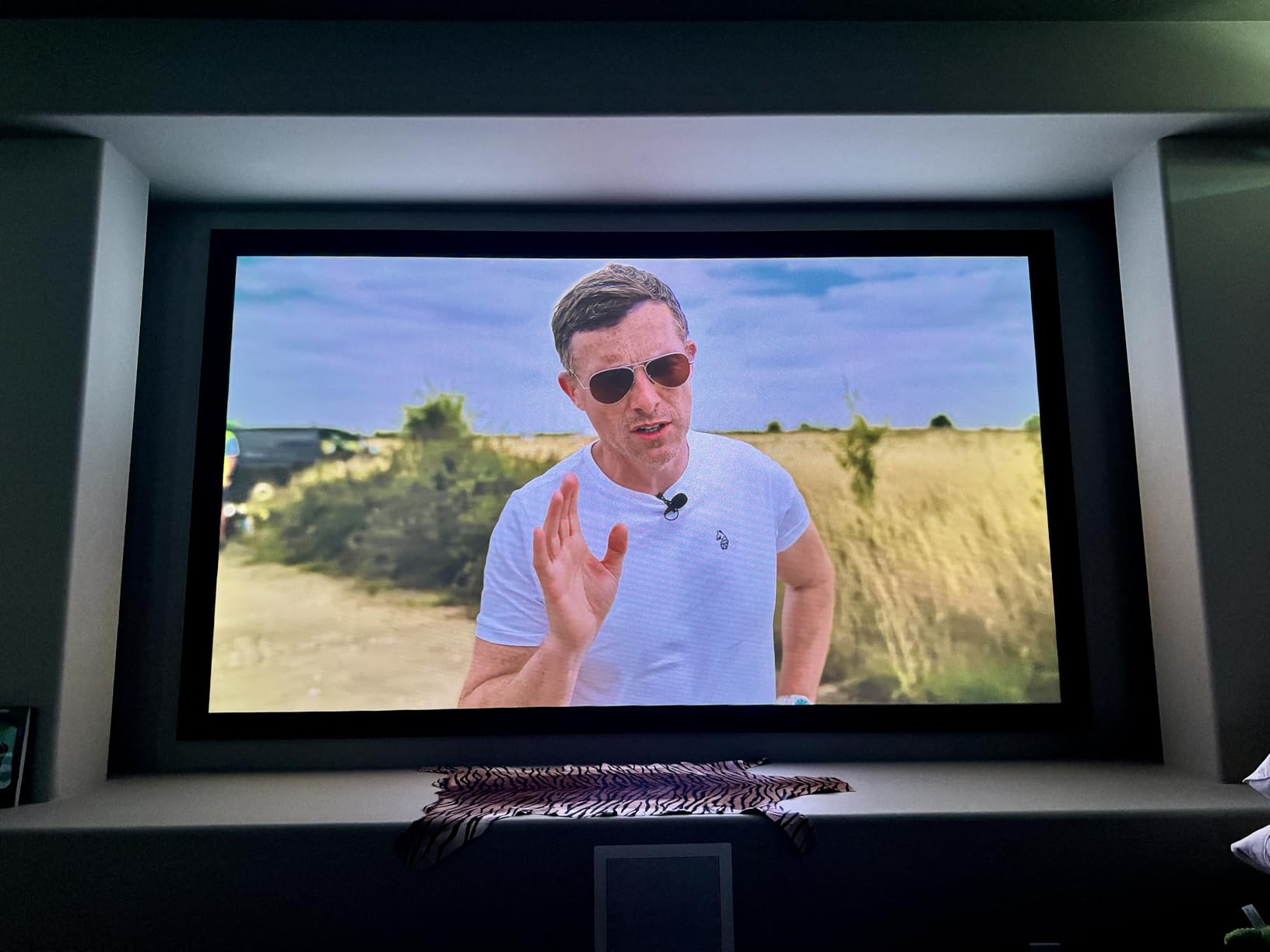
Set-up automation is genuinely good rather than checkbox-good. Auto focus, auto keystone, auto obstacle avoidance and auto screen alignment all work together, which means putting the unit on a shelf and pointing it at a wall takes under a minute. The AI-9618 chipset with 4GB of RAM and 128GB of storage is what keeps the smart platform responsive, and the Google TV implementation runs the major streaming apps without a dongle.
Connectivity is where this one separates itself from cheaper boxes. HDMI 2.1, Wi-Fi 6E, Ethernet, Bluetooth 5.2, S/PDIF and USB 3.0 cover essentially every living room arrangement, and it works with Google Home, Apple HomeKit and Alexa if you already have one of those ecosystems running. For a room that also does double duty as an office or a gaming space, that flexibility is worth more than raw brightness.
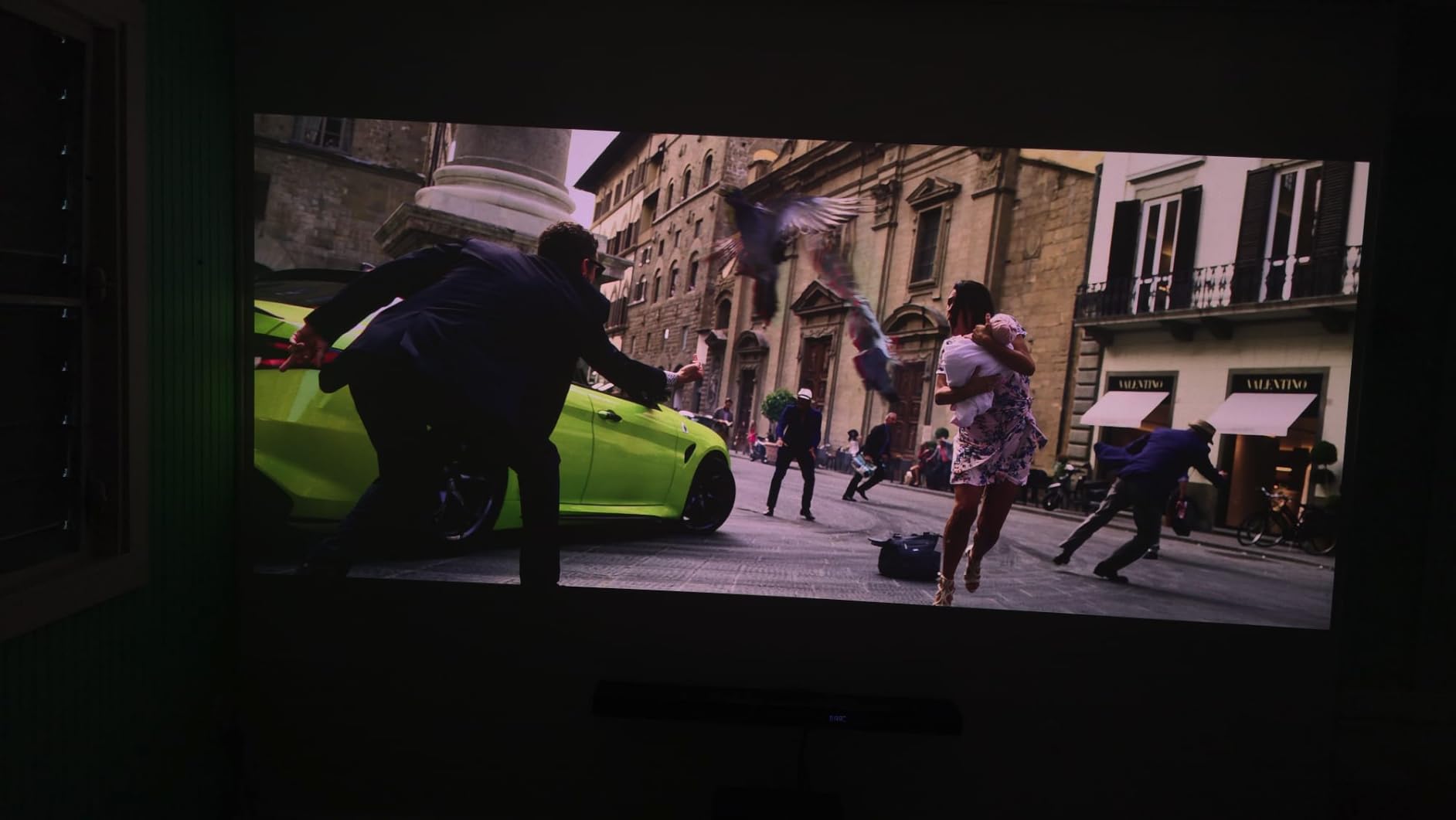
Is 2000 ISO lumens enough for a living room?
For a curtained room in the evening, comfortably. For a room with genuine daylight, it is the weakest part of this package and you should plan around it. The 2000 ISO lumen figure sits below the 2800 to 3000 range that forum buyers on r/projectors and AVS Forum treat as the practical threshold for regular daytime viewing, so if your use case is “curtains open, sun moving across the floor,” look at the brighter models further down.
What you get in exchange is 4ms input lag, the lowest figure of any model here, plus Dolby Vision with HDR10+ and IMAX Enhanced, and a 10000:1 contrast ratio with Enhanced Black Level. On a 100 inch screen at night with the lights off, that combination produces a picture that is cinema-like rather than merely large.
Who should skip the StreamMaster Plus2?
Skip it if your living room is the brightest room in your home and you want to watch daytime sports with guests over. At 15.4 pounds it is also a substantial object to move between positions, and the triple-laser engine is one where some sensitive viewers notice speckle on light content. If speckle bothers you, the ALPD-based Dangbei DBOX02 avoids it by design.
2. Dangbei DBOX02 – best value laser projector for a lit living room
Dangbei DBOX02 Laser Projector 4K GTV, 2450 ISO Lumens, Netflix Officially Licensed, Blu-ray 3D, Home Theater Projector with WiFi and Bluetooth, HDR10+, 200-inch Picture, 2x12W DTS:, Dolby Audio
2450 ISO lumens
ALPD laser light source
Native 3840 x 2160
200 inch max image
Pros
- ALPD laser source rated 30000 hours with no speckle effect
- Dual 12W speakers with Dolby Audio and DTS:X
- Effectively inaudible fan during normal viewing
- InstanPro AI handles focus keystone and screen fit
Cons
- Google TV menus take time to learn
- Input latency around 30 to 35ms is weak for competitive gaming
The DBOX02 is the pick we recommend to anyone whose living room does real work during the day. At 2450 ISO lumens it sits in the middle of this group, but the practical result is that it holds up with blinds up and lamps on in a way most similarly priced models do not. Owners consistently report a bright, sharp picture once the settings are dialled in.
Where it separates from the triple-laser models is the light source itself. This is ALPD rather than RGB, and the practical consequence is a speckle-free image, which matters if you sit close, watch on a large screen or have light-coloured walls. The 30,000 hour rated source life also means you will not think about the light engine again.
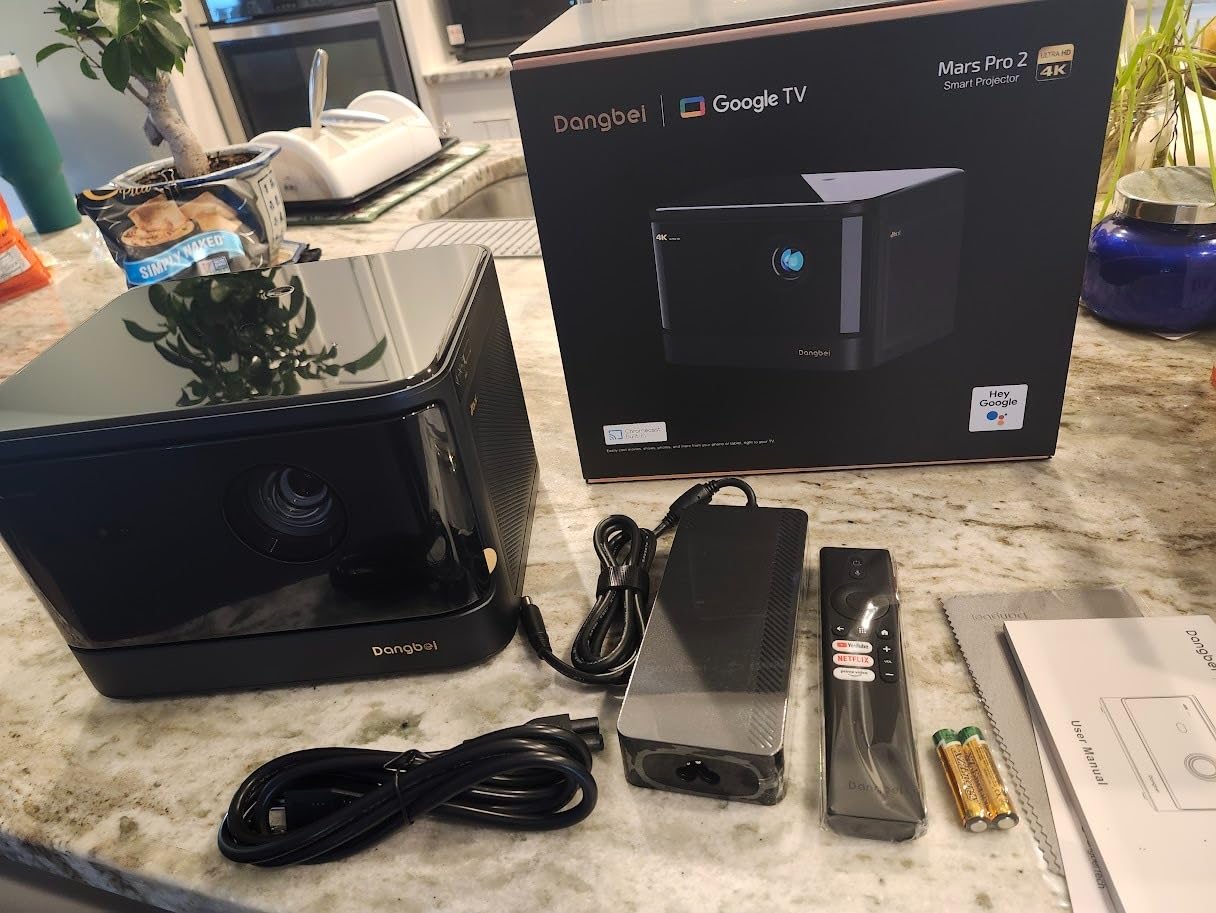
Picture processing is straightforward 4K. Native 3840 x 2160 with a 5000:1 contrast ratio, HDR10+ and HLG support, and Blu-ray 3D playback if you still have that hardware. The InstanPro AI system handles auto focus, auto keystone, screen fit and obstacle avoidance, so like the Valerion it is a set-and-forget unit once the manual work is done.
The dual 12W speakers with Dolby Audio and DTS:X are more than adequate for casual viewing and genuinely useful when nobody wants to turn on a soundbar. Dual HDMI including eARC, two USB ports, Wi-Fi and Bluetooth cover the connection side, and Google TV here carries officially licensed Netflix with 10,000 plus apps. Weight is 4 kg, so it is a genuinely portable box rather than a semi-fixed installation.
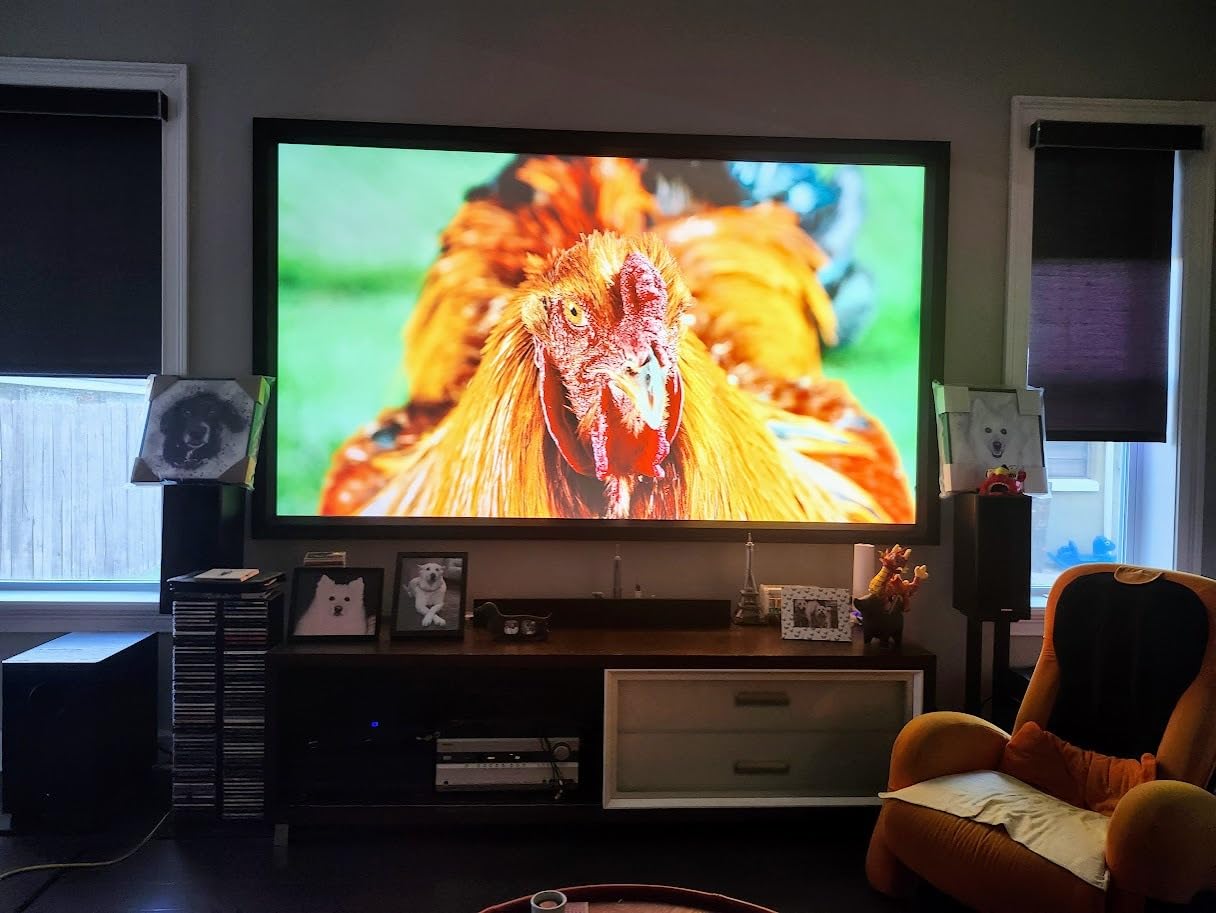
How does 2450 ISO lumens hold up with daylight coming in?
Honestly, with curtains drawn it looks like a much brighter projector than the number suggests, because the ALPD engine has good efficiency and the picture stays punchy on a white wall. With curtains genuinely open and direct sun in the room, you will want to lower the screen brightness and accept some washout, or add an ambient-light-rejecting screen. That is the same trade every projector at this level makes.
The 200 inch maximum image size is a genuine ceiling for most living rooms, and the 60 inch minimum means it works in a smaller space too. If your room is a genuinely large open-plan area, this is not the brightest option available to you and you should compare it against the ViewSonic LS740HD or the Nebula X1S.
Who should skip the DBOX02?
Competitive gamers should look elsewhere, because input latency sits around 30 to 35ms and there is no low-latency gaming mode to rescue it. Reviewers also note a learning curve with the Google TV menus, and the bass-heavy factory audio EQ needs manual rebalancing. There is also a MEMC frame interpolation setting that cannot be disabled while streaming internally, which some purists dislike.
3. JMGO N1S Ultra – best laser projector for colour accuracy in a mixed-use room
JMGO N1S Ultra 4K Triple Laser Projector , 2800 ISO Lumens, Google TV
2800 ISO lumens
RGB triple laser
Delta E under 1 colour accuracy
Integrated gimbal
Pros
- 2800 ISO lumens works in well-lit rooms
- Delta E under 1 colour accuracy with 4K RGB triple laser
- Integrated gimbal keeps the image aligned as the unit moves
- 20W Dolby Digital Plus speakers reaching 45Hz
Cons
- 1600:1 native contrast is modest against higher-end laser projectors
- No built-in handle makes the 9.9 pound body awkward to carry
This is the one we would put in a room where the picture gets seen by everyone, not just the person who set it up. The headline figure is Delta E under 1 colour accuracy, which is measurement speak for “the red really is the red you asked for.” Combined with an RGB triple laser engine and a claimed market-leading colour gamut, it gives you some of the most accurate colour in this group out of the box.
Brightness is 2800 ISO lumens, which puts it right at the threshold forum buyers on r/projectors and the AVS Forum treat as the practical floor for daytime viewing in a curtained living room. In practice that meant a watchable image with a lamp on and a decent amount of window light still leaking in. The 30,000 hour rated light source means it is a long-term install.
The thing that sets this unit apart physically is the integrated gimbal. Most projectors need you to physically move the box every time you want a different image position, and that is exactly what nobody in a family wants to do. Here the gimbal handles it, and the 3D time-of-flight sensor plus CMOS camera handle real-time autofocus, keystone and screen fit.
Lossless optical zoom, auto brightness and wall colour adaptation round out a setup system that is unusually thorough, and the smart eye protection and obstacle avoidance are genuinely useful when the unit is sitting close to where people walk. Smart platform coverage is good: Google TV with 10,000 plus apps, 800 plus free live channels, Chromecast built in, HDMI 2.1 with eARC, USB 2.0, Bluetooth and Blu-ray 3D.
Does the gimbal solve the wall colour problem?
Partly. Wall colour adaptation adjusts the image tone to compensate for a non-white surface, which helps, but it is a correction rather than a solution. If your living room has light-coloured walls, budget for a proper screen and this unit’s accuracy will pay off far more. A white wall is fine in a dark room and a compromise in a bright one, and no projector brand pretends otherwise.
Lossless optical zoom also means you can resize the image by moving the lens rather than digitally cropping, which preserves full pixel density. In a room where the seating position changes or the projector sits closer than you first planned, that is a real advantage over models without it.
Who should skip the N1S Ultra?
Contrast is the honest weak point. The 1600:1 FOFO native figure is modest next to the Epson or the Nebula, so dark cinematic scenes in a fully dark room will not have the same depth. At 9.9 pounds with no built-in handle, it is also an awkward carry for long distances, and it is not the right choice for a permanently mounted dedicated cinema room where the fixed long-throw options would serve better.
4. AWOL VISION LTV-3000 Pro – best premium laser TV for a media console
AWOL VISION LTV-3000 Pro 4K 3D Ultra Short Throw Triple Laser Projector, Dolby Vision & Atmos, HDR10+, 150″ UST Laser TV Home Theater Projector
3000 ANSI lumens
Fixed 0.25:1 ultra short throw
80 to 150 inch image
2 year warranty
Pros
- Projects up to 150 inches from inches away at a fixed 0.25:1 throw ratio
- Triple laser with no color wheel avoids rainbow artifacts
- Dolby Vision with HDR10+ and 107% BT.2020 coverage
- Built-in center channel speaker for dialogue clarity
Cons
- Fixed 0.25:1 ratio means your cabinet needs real depth
- 28 pound chassis takes up significant shelf space
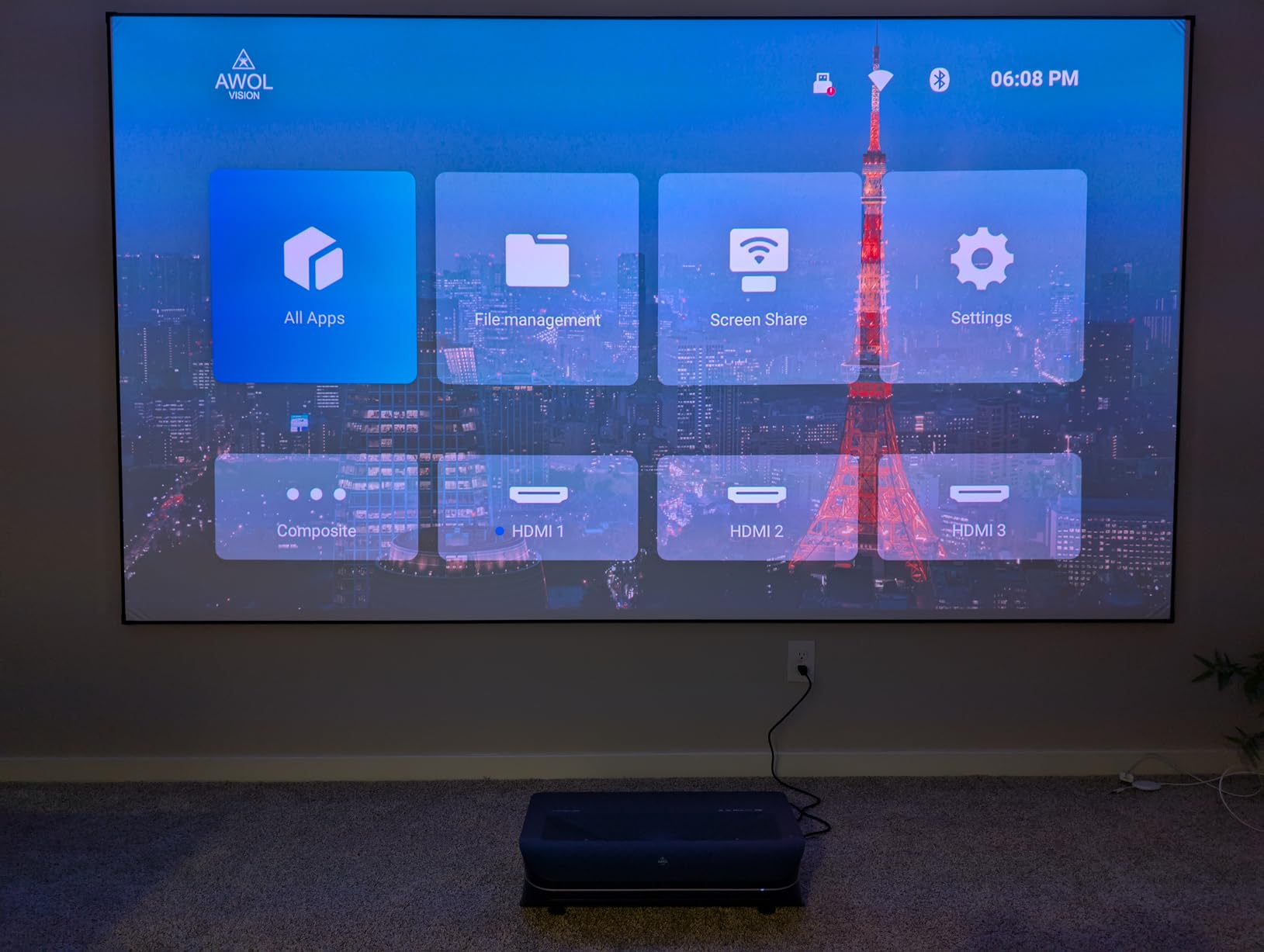
The LTV-3000 Pro is the closest thing here to a television replacement rather than a companion to one. It sits directly against the wall or on top of a media cabinet and throws an 80 to 150 inch image into the room, so the floor space a traditional projector needs simply disappears. For a living room where floor area is precious, that is the entire argument.
Picture quality is handled by a 4K UHD triple laser engine with no color wheel, covering 107% of BT.2020 and 147% of DCI-P3, with Dolby Vision, HDR10+ and Dolby Atmos on board. Removing the color wheel also removes the rainbow artifacts that people notice on single-laser DLP models, which is one of the dealbreakers raised most often on projector forums.
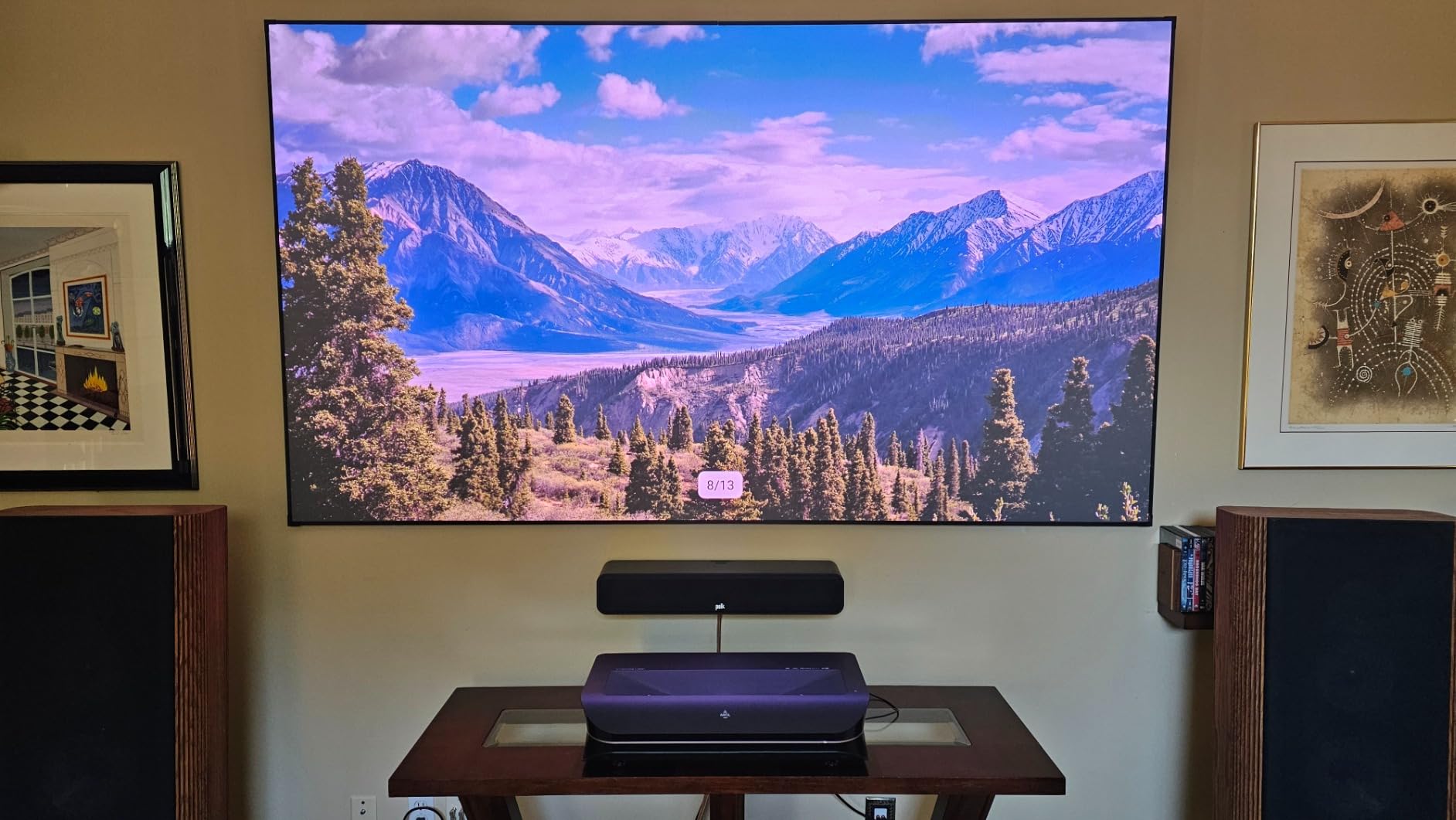
One detail we did not expect to care about and now recommend: the built-in center channel speaker. It sits under the image and handles on-screen dialogue, so a room that is not acoustically treated still sounds intelligible. Full 3D is supported through active shutter glasses, including 3D Blu-ray playback, which is increasingly rare in this class.
It also integrates properly. PJ Link IP control means it drops into Control4 or similar home automation, and the design pairs specifically with AWOL ambient-light-rejecting screens and their ThunderBeat surround system if you want to build a proper setup. The laser source is rated 25,000 hours and draws roughly one tenth the power of a comparable LED television of similar size.
How much cabinet depth do you actually need?
The throw ratio is fixed at 0.25:1, which works out to roughly 8.54 inches from the wall for a 100 inch image and 12.84 inches for a 150 inch one. That is very manageable, but it is fixed, so you cannot trade distance for size. Measure the depth of your media unit and add a few inches of clearance for airflow before you commit, because this chassis is 23.6 inches long, 21.5 inches wide and 28 pounds.
Brightness is 3000 ANSI lumens, which is exactly the range community consensus on r/projectors and the AVS Forum points to as the practical threshold for daytime use. In a dark or curtained room it looks superb. In a genuinely bright room it needs the ALR screen, and the manufacturer’s own guidance is that it works best in darker rooms or with an ALR screen for ambient light.
Who should skip the LTV-3000 Pro?
Skip it if your media console is shallow, because the fixed throw ratio gives you no room to manoeuvre, and skip it if you plan to regularly use digital keystone correction since there is no lens shift. It is also a dedicated laser TV rather than a portable device, so moving it between rooms is not a realistic plan. Budget separately for the screen: without an ALR surface, a lot of this unit’s capability goes unused.
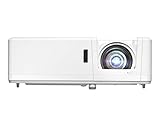
5. Optoma GT1090HDR – best short-throw laser projector for a shallow room
Optoma GT1090HDR Short Throw Laser Home Theater Projector | 4K HDR Input | Lamp-Free Reliable Operation 30,000 hours | Bright 4,200 lumens for Day and Night | Short Throw
4200 ANSI lumens
120 inch image from 4 feet 4 inches
1080p native with 4K input
10 pounds
Pros
- Very bright at 4200 ANSI lumens
- usable with lights on and outdoors
- 32dB operation in eco mode is close to silent
- DuraCore laser rated 30000 hours with IPX6 dust resistance
Cons
- Native 1080p only despite 4K input marketing language
- Manual focus ring is very sensitive and hard to dial in
Brightness is the entire point of this projector. At 4200 ANSI lumens it delivers more light than most of the 4K models in this list, and owners routinely use it with lights on and even outdoors. If your living room is the sunniest space you have and you refuse to close the curtains, this is a legitimate answer.
It is also genuinely short throw, delivering a 120 inch image from 4 feet 4 inches. That is a meaningful difference in a small room or a room with an awkward ceiling where you cannot push the projector back far enough for a normal throw. The DuraCore laser source is rated 30,000 hours and carries IPX6 dust resistance, which matters if it lives in a room that gets dusty.
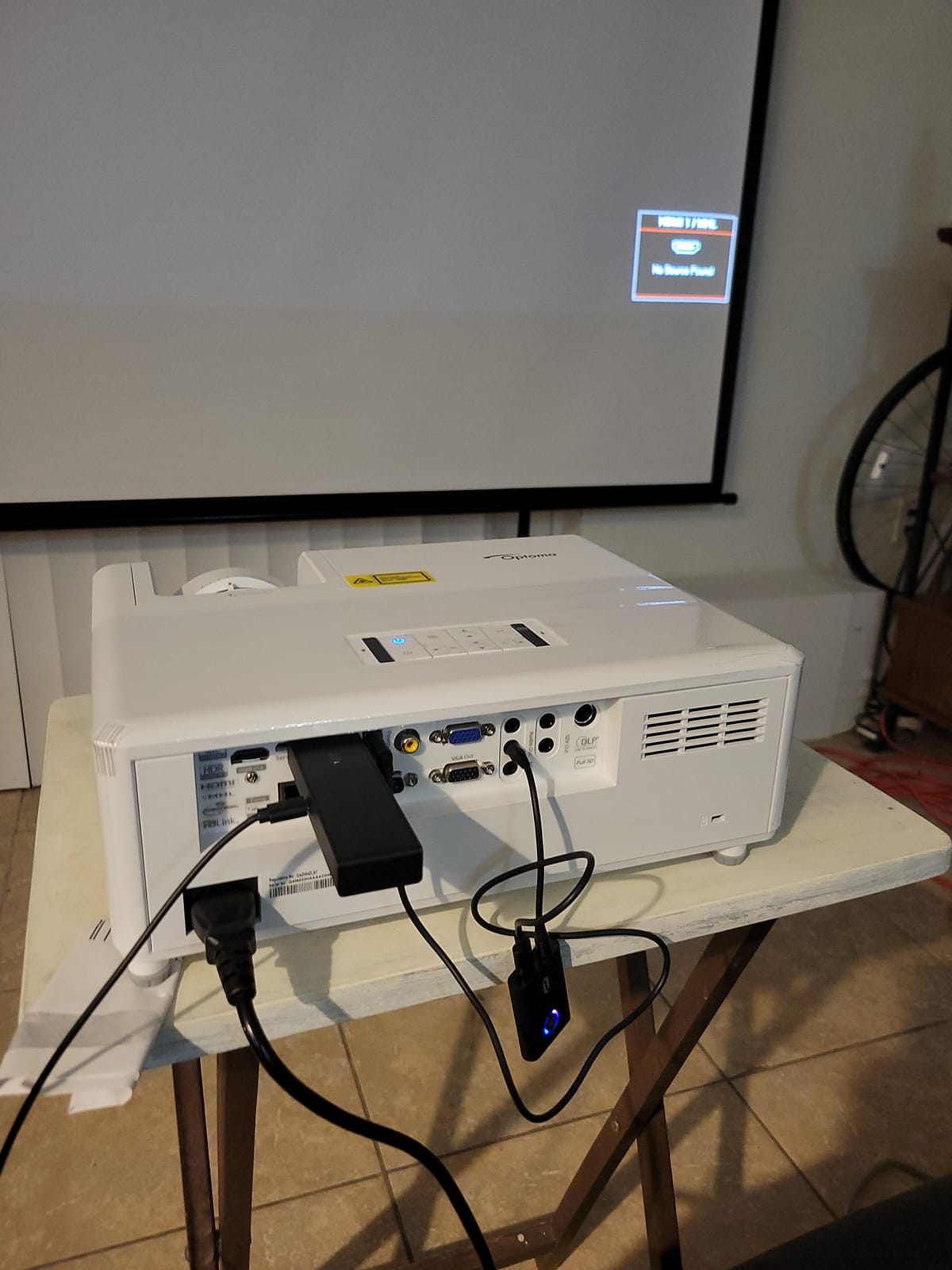
Long-term owners report durability of three to five years, and the IPX6 rating is a fair signal of that. Set-up automation is basic but present: auto keystone and four-corner correction, plus a built-in media player and built-in speaker so it is usable with no additional hardware. LAN and RS-232 support means it can be driven by Crestron if you have a home automation system already.
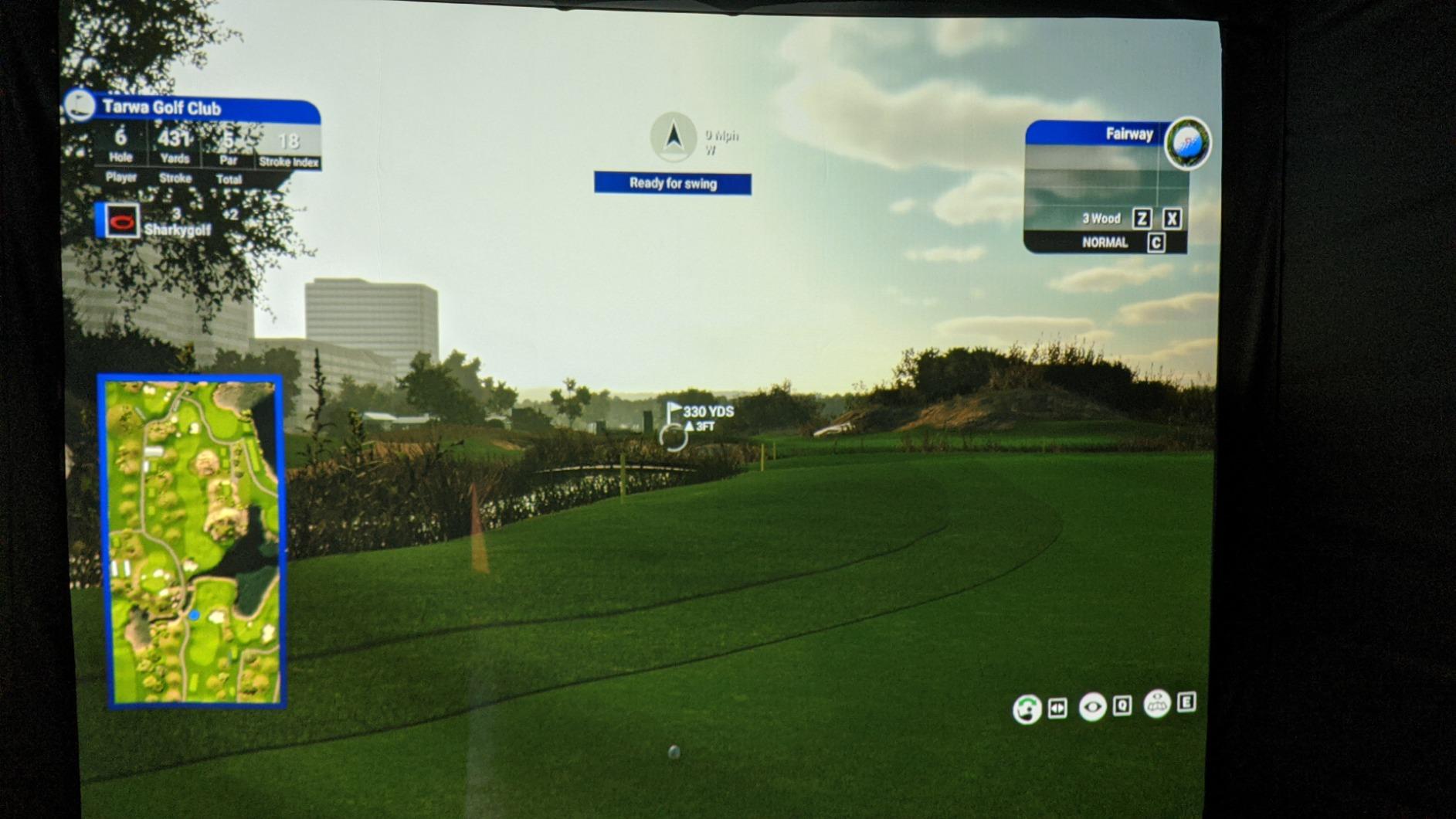
For gaming and simulation, the 120Hz rapid refresh rate and full 3D support from 3D Blu-ray, 3D broadcast and current consoles are useful, with glasses sold separately. The 32dB noise level in eco mode means you will not hear it during normal viewing, and the 10 pound weight makes it one of the easier models in this list to reposition.
Is 1080p native resolution a dealbreaker in a living room?
On a 100 inch screen at normal seating distance for most content, no, particularly for sports and broadcast material. Where you will notice is 4K source material viewed on a very large image from a close seat, because the chip is 1920 x 1080 with 4K input and a 300,000:1 dynamic contrast figure doing the work. Buyers are frequently disappointed that the 4K label here refers to input only, so treat it accordingly.
There are also practical compromises. The digital zoom and image shift controls are coarse and can blur the corners, the manual focus ring is unusually sensitive and hard to dial in, and there is no HDMI ARC or optical audio out, which means a soundbar may need an extractor. Some owners report signal loss or colour distortion that needed firmware or cable troubleshooting.
Who should skip the GT1090HDR?
Skip it if picture processing quality is the priority, because the lack of a triple-laser engine means single-laser DLP behaviour including potential rainbow artifacts on bright scenes. Skip it if you want a smart platform: there is a built-in media player but it is not a full streaming operating system. It is a brightness and placement specialist, and a good one, rather than a refinement specialist.
6. ViewSonic LS740HD – best laser projector for a very large image in a bright room
ViewSonic LS740HD 1080P Laser Projector, 5500 Lumens, Full HD Home Theater
5500 ANSI lumens
Native 1920 x 1080
30 to 300 inch image
20,000 hour source
Pros
- Exceptionally bright at 5500 ANSI lumens for the money
- 1.3x optical zoom plus four-corner adjustment simplifies placement
- Three-year warranty on parts and labour
- Easy swap-in for an existing screen and mount
Cons
- No lens shift so placement depends on throw distance calculation
- Built-in speakers are muffled compared with external audio
This is the second-brightest projector in the group, and in a permanently lit living room that is not a compromise. At 5500 ANSI lumens it is the second-brightest model in the group, and that headroom means a mid-grey wall in a room with daylight still gets a watchable image without any screen at all.
The image size range is 30 to 300 inches with a 1.1 to 1.5 throw ratio, and a 100 inch image lands from about 8.2 feet away. That flexibility means it can serve a small flat as well as a large open-plan space. Ceiling mounting works with the ViewSonic PJ-WMK-007, and 360 degree plus portrait projection cover the awkward living room layouts that defeat fixed-orientation models.
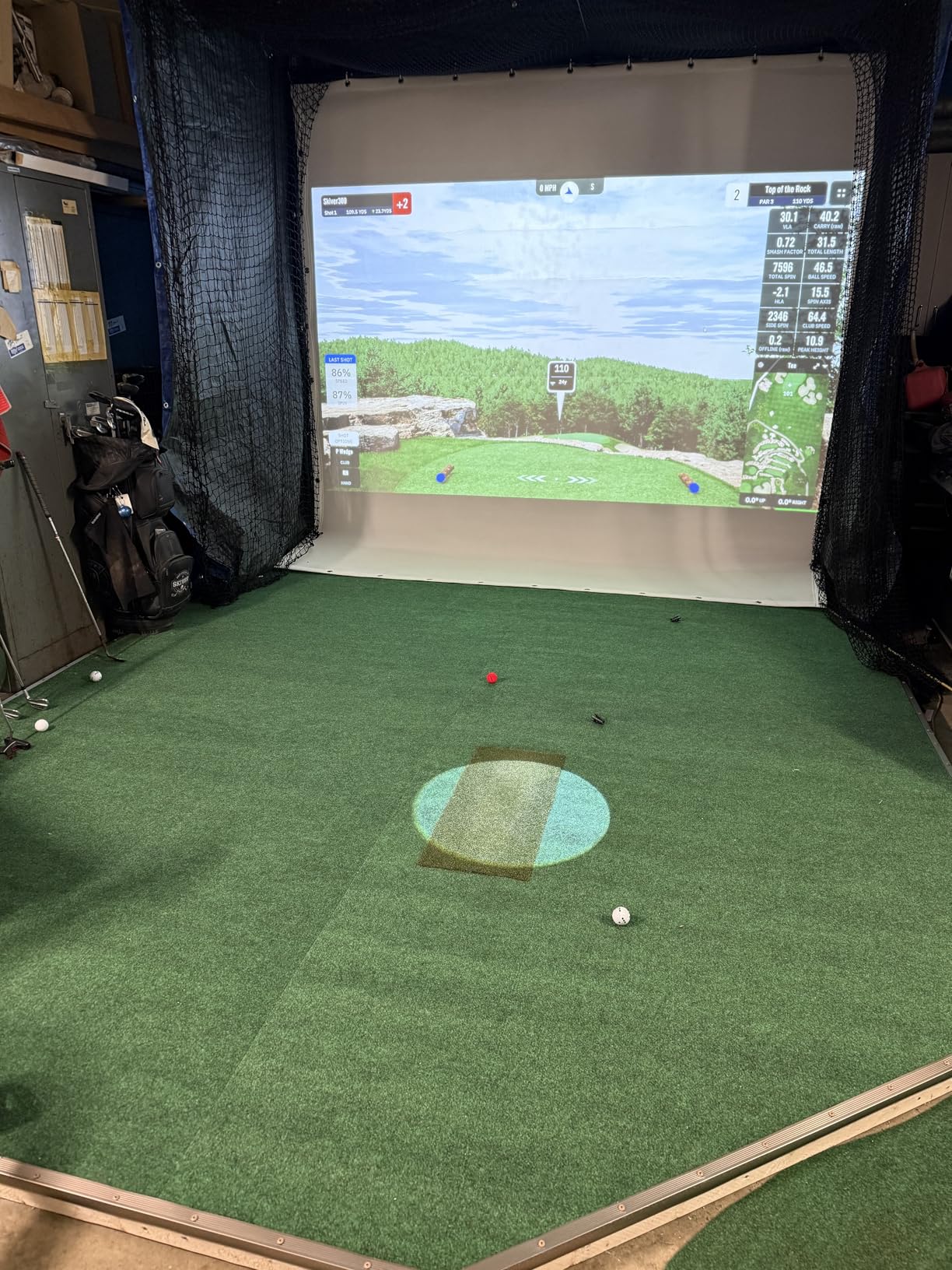
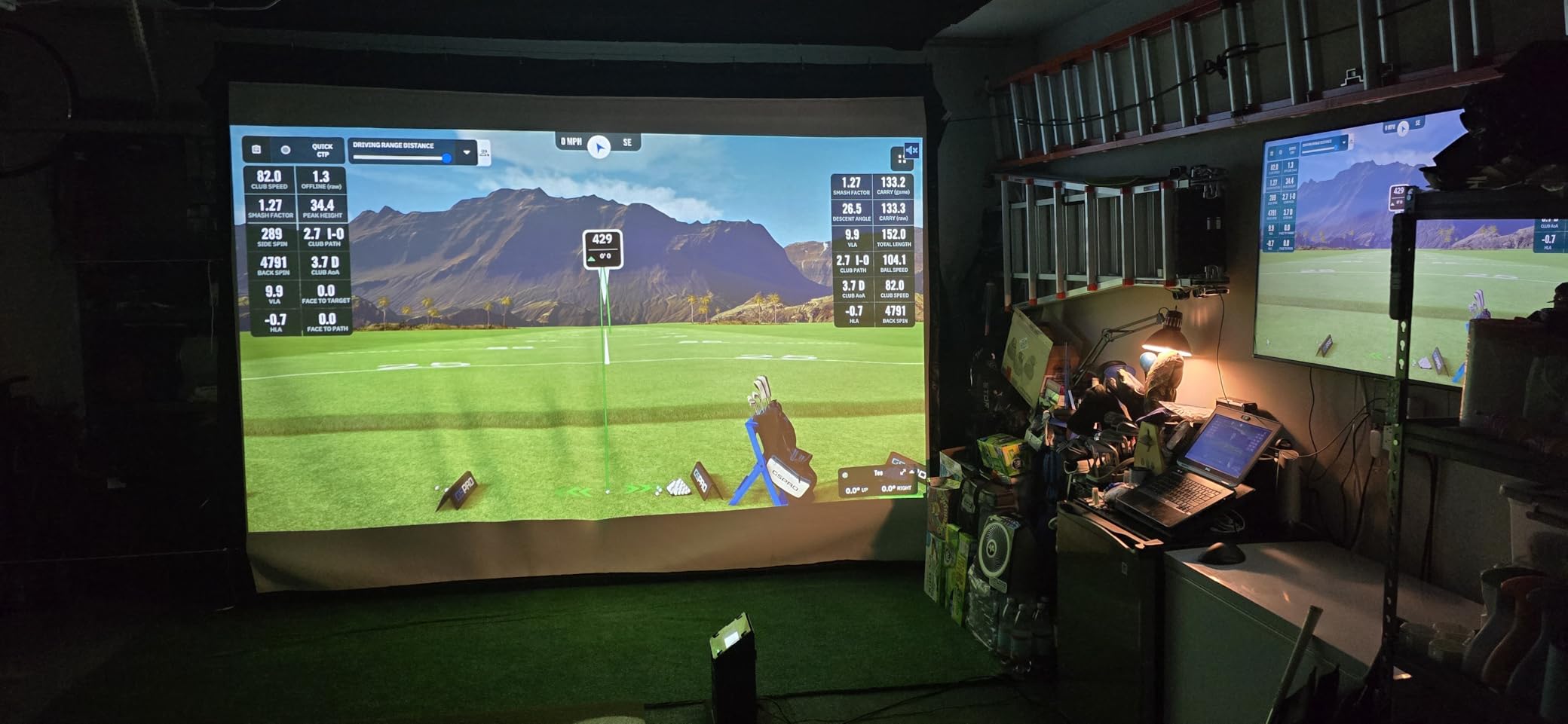
Owners treat it as a bright, low-maintenance value unit for large screens and golf simulators, and the instant power on and off behaviour suits casual use where a lamp projector would be left warming up. The external power brick keeps the chassis running cool, and reviewers who expected premium cinema colour from a bright business-class unit are the ones who end up disappointed.
There is a golf simulation mode for environmental colour tuning, which matters if you are also setting up a hitting bay in the same space. The warranty is unusually generous for this tier: three years on parts and labour with a first-year free Express Exchange.
Does an ALR screen make a 5500 lumen projector unnecessary?
No, and the two work in your favour. A very bright projector on a good ambient-light-rejecting surface is the combination that makes daytime viewing genuinely comfortable rather than merely possible. If you skip the screen, 5500 ANSI lumens on a mid-grey living room wall still beats every other model in this list apart from the X1S, and light-coloured walls work reasonably well with that much light behind them.
The caveat is the panel itself. The native resolution is 1920 x 1080 with a 3,000,000:1 dynamic contrast figure, so all that light is being pushed through a 1080p chip. If your priority is fine detail at 130 inches or more, a 4K triple-laser unit will show more. If your priority is beating the daylight, this wins.
Who should skip the LS740HD?
Skip it if you care about colour accuracy or cinema-grade processing, because the on-screen menu is basic with few professional calibration options and the image is 1080p. There is no lens shift, so placement has to be worked out with a throw distance calculator in advance and you live with the result. Some models also report a random orange flashing glitch that persisted after cable and driver changes.
7. Hisense PX3-PRO – best laser projector for Dolby Vision in a bright room
Hisense PX3-PRO Ultra Short Throw Triple Laser Projector, 4K UHD, 80” – 150”, 3,000 Lumens, 3000:1 Contrast, Dolby Vision & Atmos, IMAX Enhanced, 240 High Refresh Rate, Google TV, Designed for Xbox
3000 ANSI lumens
LPU TriChroma triple laser
80 to 150 inch
110% BT.2020 gamut
Pros
- LPU TriChroma engine delivers 110% BT.2020 with Delta E around 0.9 accuracy
- Ultra short throw gives 80 to 150 inches from near the wall
- Dolby Vision with Atmos and IMAX Enhanced in one unit
- 240Hz refresh rate with Xbox optimisation
Cons
- 19.8 pound chassis is large for a living room media unit
- Needs a dedicated ALR screen to look its best in daylight
The PX3-PRO packs Dolby Vision, Dolby Atmos and IMAX Enhanced certification into a single unit at this tier, and for a mixed living room used for films, broadcast sport and console play that combination is worth a lot. Very few projectors below it carry all three.
Colour is the headline. The LPU TriChroma pure triple laser engine covers 110% of BT.2020 with a Delta E of approximately 0.9, on a DLP system with 2.07 million micromirrors and a 4K AI upscaler. Native resolution is 3840 x 2160, and Pro AI algorithms handle brightness, contrast and noise reduction in real time.
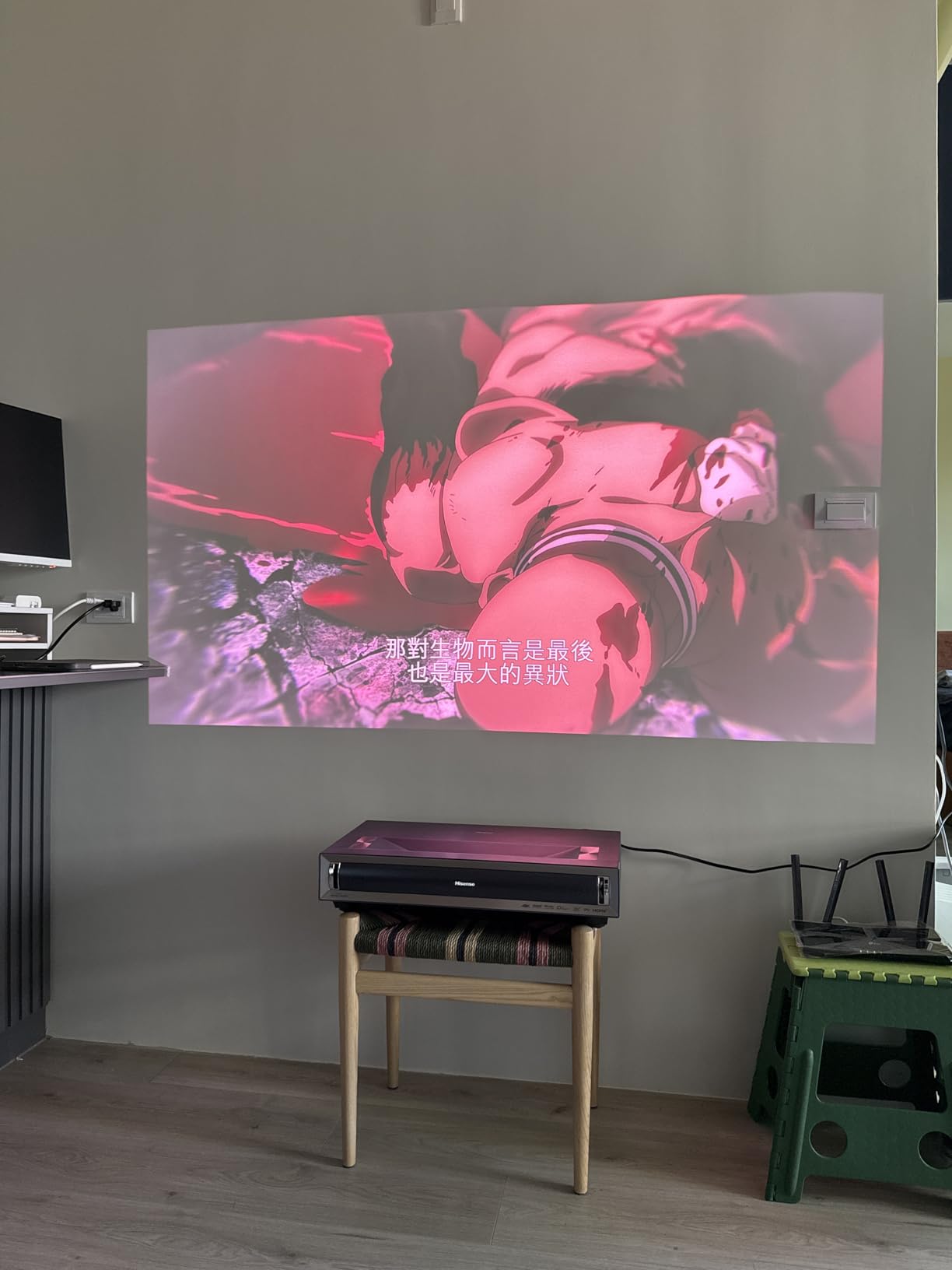
Placement is the laser TV pattern: it sits table-top next to the wall with no ceiling mount required, and the ultra short throw engine covers 80 to 150 inches. The 240Hz high refresh rate and Xbox optimisation mean it is a serious gaming display as well as a cinema one, and the Harmon Kardon speakers add usable audio so you are not forced into a separate system on day one.
Google TV covers streaming, with Bluetooth 5, Ethernet, HDMI and USB 3.0 for the physical connections. The two-year manufacturer warranty is standard for the category, and the 25,000 hour laser source life removes the bulb question entirely.

Does a 3000 ANSI lumen ultra short throw work without a screen?
It works, but it is not where this unit is strongest. On a white or light wall in a curtained room the picture is bright and sharp. In daylight, owners are clear that image quality depends heavily on pairing it with the right ambient-light-rejecting screen, and that is the recommendation we would make before buying. The 3000:1 contrast figure is good but not exceptional, so contrast is exactly what the screen surface protects.
Think of the screen as part of the purchase rather than an accessory. If the projector is going to live next to a wall permanently, budget for an ALR surface sized to the 150 inch maximum, and the daylight performance changes category. If you are projecting onto an existing wall or a movable screen, treat the figure as “curtains drawn” performance.
Who should skip the PX3-PRO?
Skip it if console space is limited, because at 19.8 pounds with a 21.7 by 11.7 by 4.8 inch footprint it is a large object to share a media unit with. There is also no lens shift, and the ultra short throw engine has a fixed relationship to the wall, so the installation position is decided at purchase rather than adjusted later.
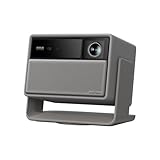
8. XGIMI HORIZON 20 – best laser projector for lens shift and near-silent running
XGIMI HORIZON 20 4K RGB Triple Laser Home Projector, 3200 ISO Lumens
3200 ISO lumens
Native 3840 x 2160
Optical zoom and flexible lens shift
40 to 300 inch
Pros
- Very quiet cooling that is essentially inaudible near the seating position
- Flexible lens shift and optical zoom make shelf or ceiling placement straightforward
- 1ms response with 240Hz VRR and ALLM support
- Harman Kardon speakers and an integrated stand
Cons
- Visible laser speckle on light scenes with standard 1.0 gain screens
- No Bluetooth audio output for wireless speaker setups
The HORIZON 20 solves a problem most projectors in this list create: how to place the thing. Flexible lens shift plus optical zoom means you can put it on a shelf, on a ceiling mount or on a side table and get a rectangular, undistorted image without digital keystone correction. Missing lens shift is one of the most common dealbreakers raised on projector forums, and this unit has it.
Brightness is 3200 ISO lumens with a claimed 100,000:1 contrast ratio, native 4K, and an image size range of 40 to 300 inches. The X-Master RGB triple laser engine drives IMAX Enhanced, Dolby Vision, HDR10+ and Filmmaker Mode, so the picture processing list is as complete as anything here.
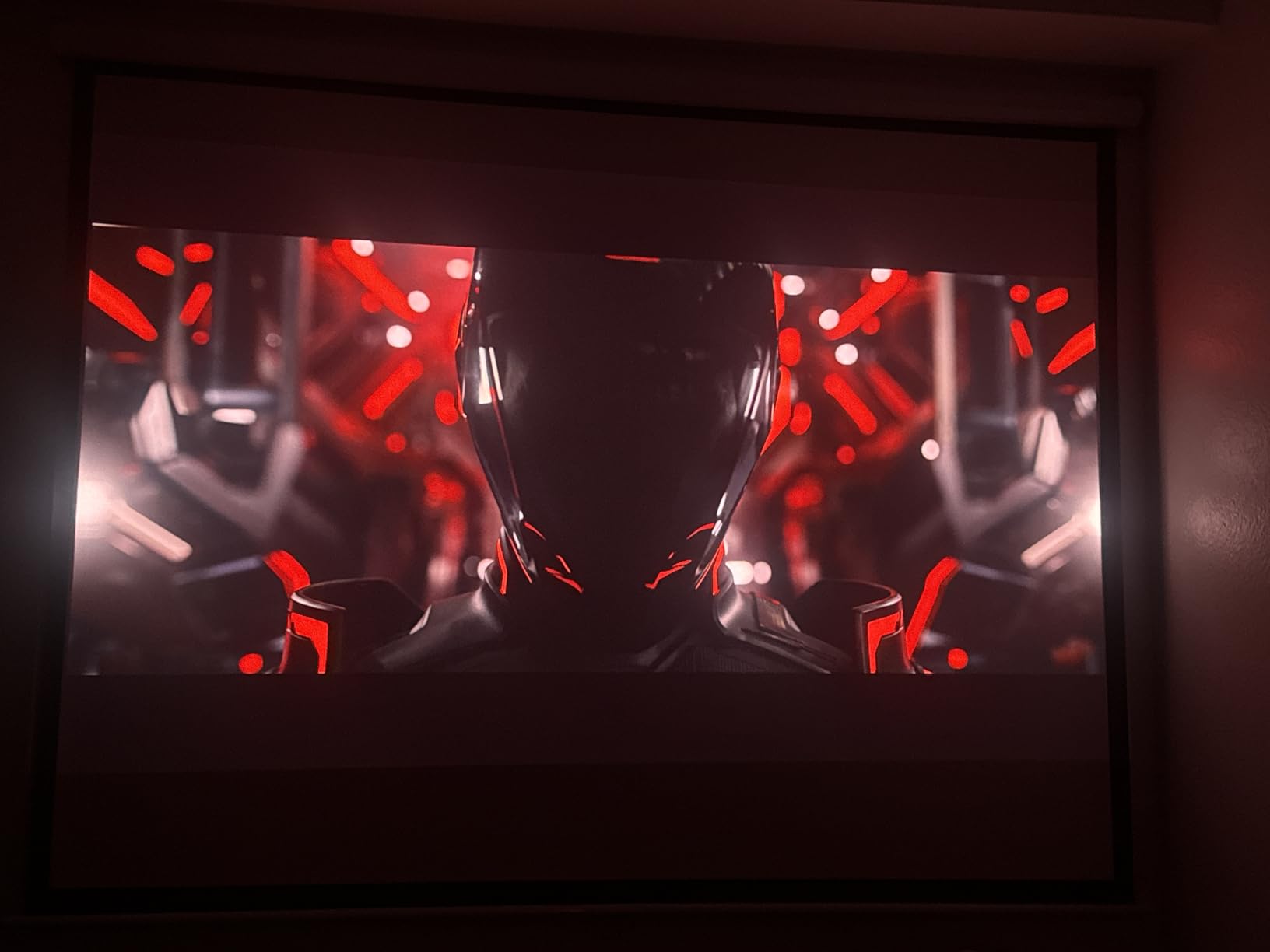
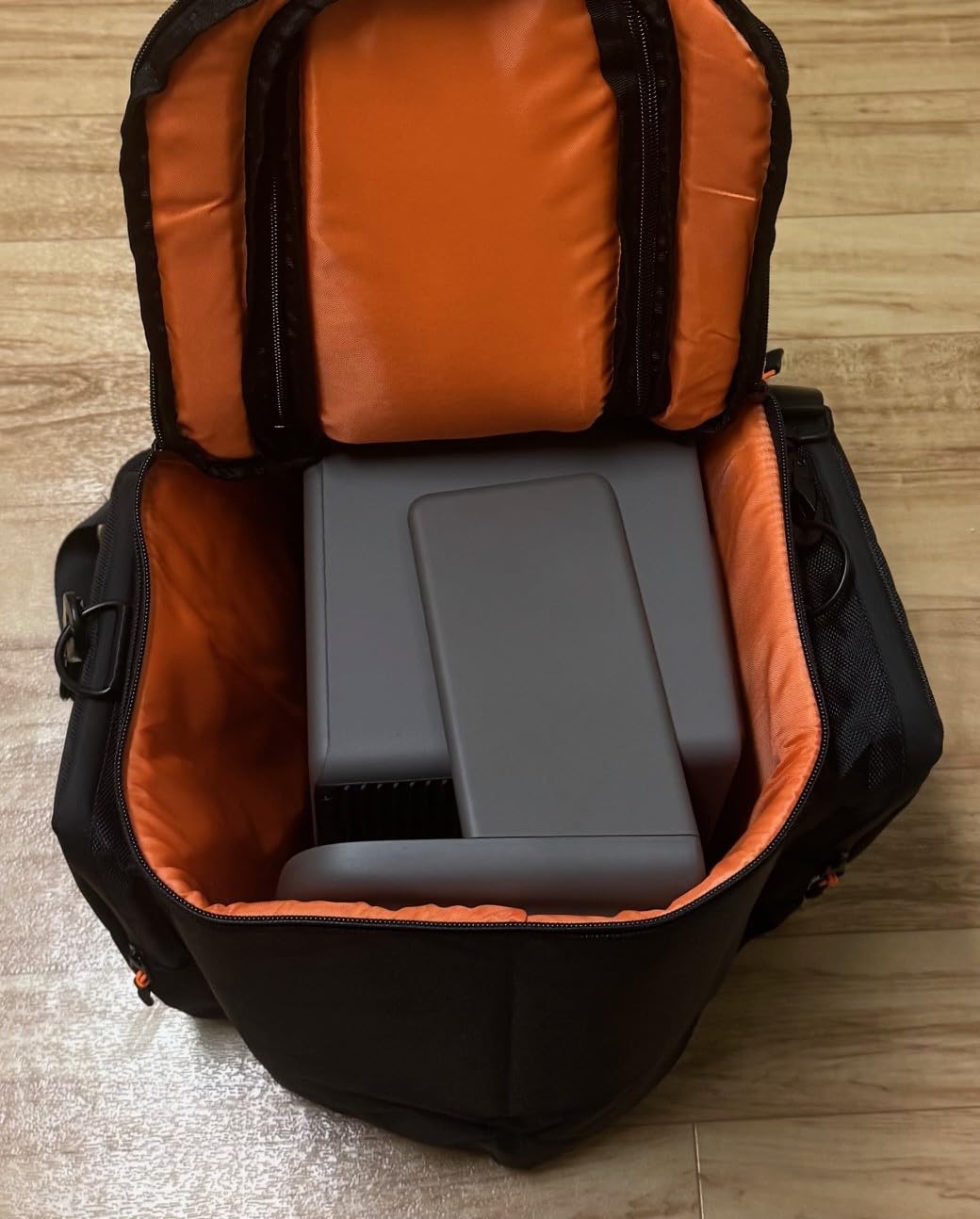
Gaming is handled properly: 1ms response time, 240Hz refresh with VRR and ALLM, and auto focus, auto keystone, obstacle avoidance, screen alignment and wall colour adaptation as standard. The 360 degree rotating base has a threaded ceiling mount insert, and the integrated stand means it does not need a separate table. A carry case is included for moving it between rooms.
Quietness is the underrated feature. Owners describe the cooling as effectively inaudible from the seating position, which matters in a shared room where a projector fan is the first thing visitors notice. The built-in Google TV carries licensed Netflix, and the Harman Kardon speakers reduce the need for a separate soundbar.
Is laser speckle a problem in a bright living room?
It can be, and it is the main thing to test before you commit. Speckle is a granular texture effect in flat areas of colour, and RGB triple laser engines are the most likely to show it. Reviewers on this unit specifically note visible speckle on light-coloured scenes when projected onto standard 1.0 gain screens, which is the majority of white walls and budget screens.
The mitigations are known: a higher-gain ALR or grey screen reduces it, and viewing from a normal distance rather than close reduces it. If you are sensitive to texture effects, the ALPD-based Dangbei DBOX02 and the 3LCD Epson LS11000 are both speckle-free by design, and that is a more reliable route than screen shopping.
Who should skip the HORIZON 20?
Skip it if you want wireless audio: there is no Bluetooth audio output, so a wireless speaker setup needs cabling. The included styrofoam case is also not durable for frequent transport, and one owner reported a firmware update that disabled a unit with slow vendor support response, which is a fair warning to check the current firmware state before setting up.
9. Epson LS11000 – best laser projector for artefact-free colour and installation
Epson Home Cinema LS11000 4K PRO-UHD Laser Projector with HDR10+
2500 lumens color and white
3LCD laser
4K PRO-UHD at 8.29 million pixels
Motorized optics
Pros
- 3LCD engine produces no rainbow artifacts and natural vibrant colour
- Motorized lens zoom focus and shift make precise setup straightforward
- Full 10-bit HDR with 16-step HDR curve adjustment
- ARC and eARC output makes adding a soundbar simple
Cons
- No 3D support at all in this class
- Picture washes out noticeably in high ambient light
Everything in this group that uses DLP is a single-laser or triple-laser engine, and both can produce rainbow artifacts. The LS11000 sidesteps that entirely with three individual HD LCD chips, which means no color wheel spinning at speed and no rainbow effect on bright scenes. If you have noticed rainbow fringing on projectors before, that alone justifies the price tier.
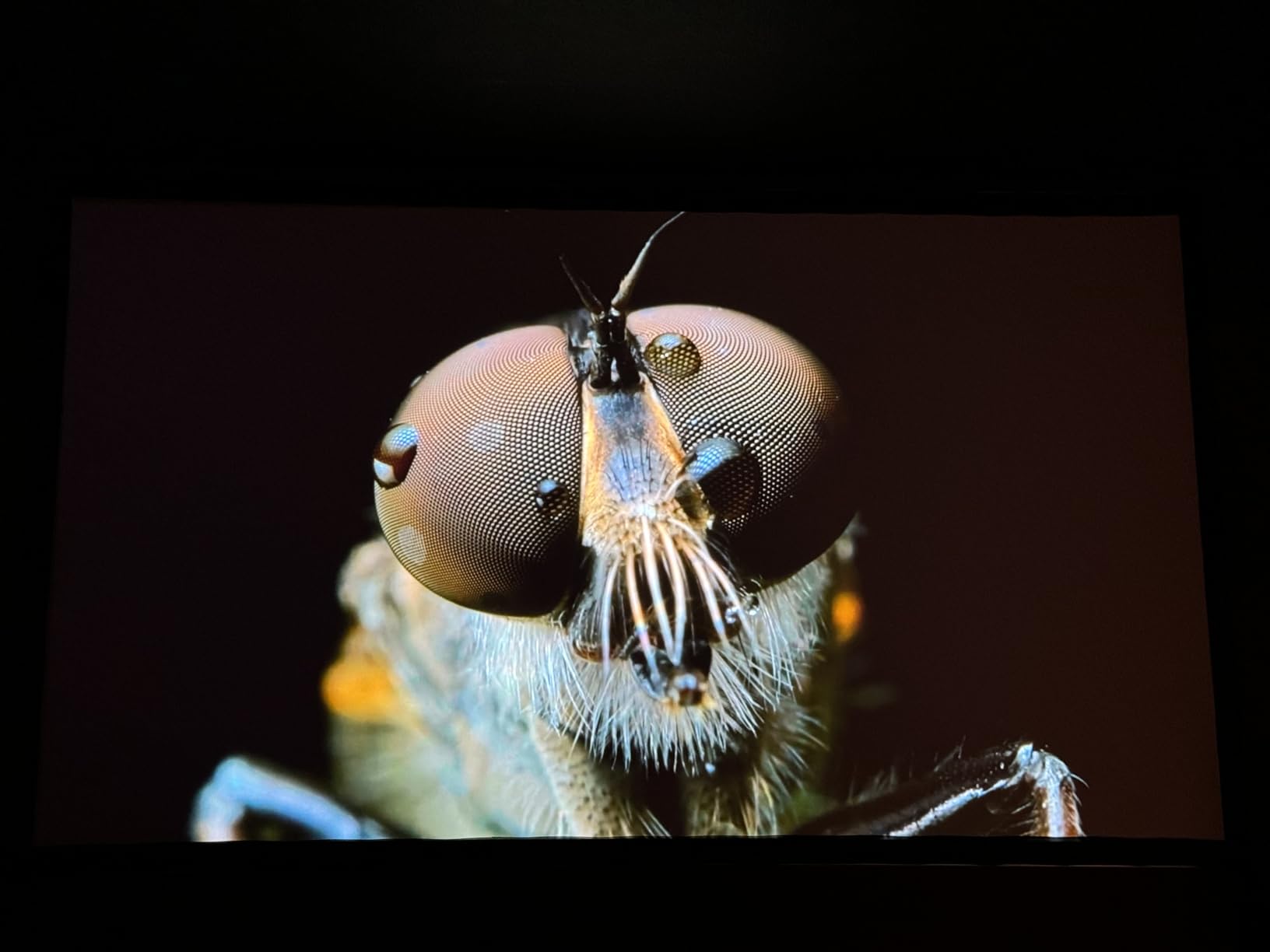
The 4K PRO-UHD implementation uses pixel shifting with a Precision Shift Glass Plate to deliver 3840 x 2160 addressable pixels across 8.29 million pixels. Owners describe it as sharp enough to hide pixel structure even on very large screens, with excellent black levels and sharpness on 4K HDR source material. Dynamic contrast runs above 1,200,000:1.
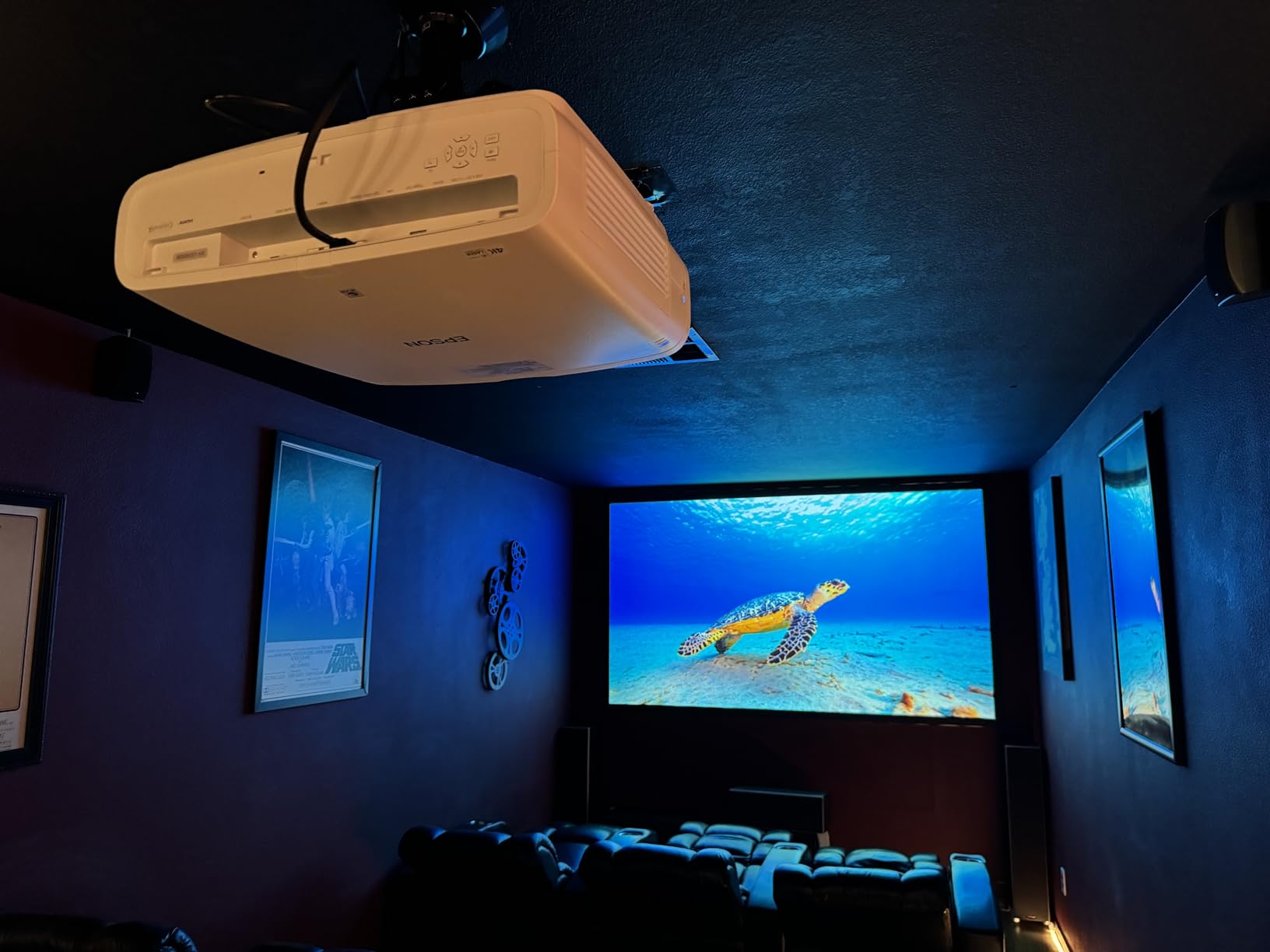
The Epson is the only projector here with fully motorized optics. Motorized lens zoom, focus and lens shift with Epson Cinema Lens means you fine-tune from the seating position or with a remote rather than crawling behind the chassis, and the image size range is 50 to 300 inches. That is a genuine difference between owning this and owning a projector with a manual focus ring.
Picture processing is thorough: the Epson Picture Processor handles colour, contrast, HDR and frame interpolation in real time, with full 10-bit HDR processing for HDR, HDR10+ and HLG plus 16-step HDR curve adjustment, and up to 120Hz refresh with frame interpolation. The laser array starts instantly with no warm-up and runs quietly.
How bright is 2500 lumens color and white brightness?
Here is the measurement trap in action. This figure is colour and white brightness, not ANSI or ISO lumens, and the three standards do not convert cleanly. Treat it as a mid-range output level rather than reading it as a direct competitor to a 2500 ISO number. In practice, the picture is bright enough for a curtained room and superb in a dark one.
The 50 to 300 inch range and the motorized optics make it a fixed-room projector rather than a casual one. If you want the flexibility to move it around a living room between spots, this is the wrong shape. If you are mounting it once and want the best possible image quality from that position, it is the right one.
Who should skip the LS11000?
Skip it if your room has significant ambient light, because owners are clear that the picture washes out noticeably in high ambient light and this is a 2500 lumen class projector. Skip it if you have any interest in 3D, since there is no 3D processing support at all, which is unusual in this price bracket. It is also a 28 pound body with a 17.6 by 20.5 inch footprint.
10. Nebula X1S – best laser projector for daylight viewing
Nebula X1S 4K Triple Laser Projector, 6,000 ANSI Lumens, Google TV
6000 ANSI lumens peak
5,000:1 native contrast
1.67x optical zoom
14-element glass lens
Pros
- Very high 6000 ANSI lumen output keeps the image visible from dusk to dawn
- 6-blade dynamic iris delivers better dark-scene detail than typical projectors
- 14-element all-glass lens stays sharp edge to edge
- 40W Dolby Audio speakers with bass to 55Hz
Cons
- 6000 ANSI lumens is a Peak Output mode figure with lower real-world figures
- Manufacturer recommends a firmware update before first use
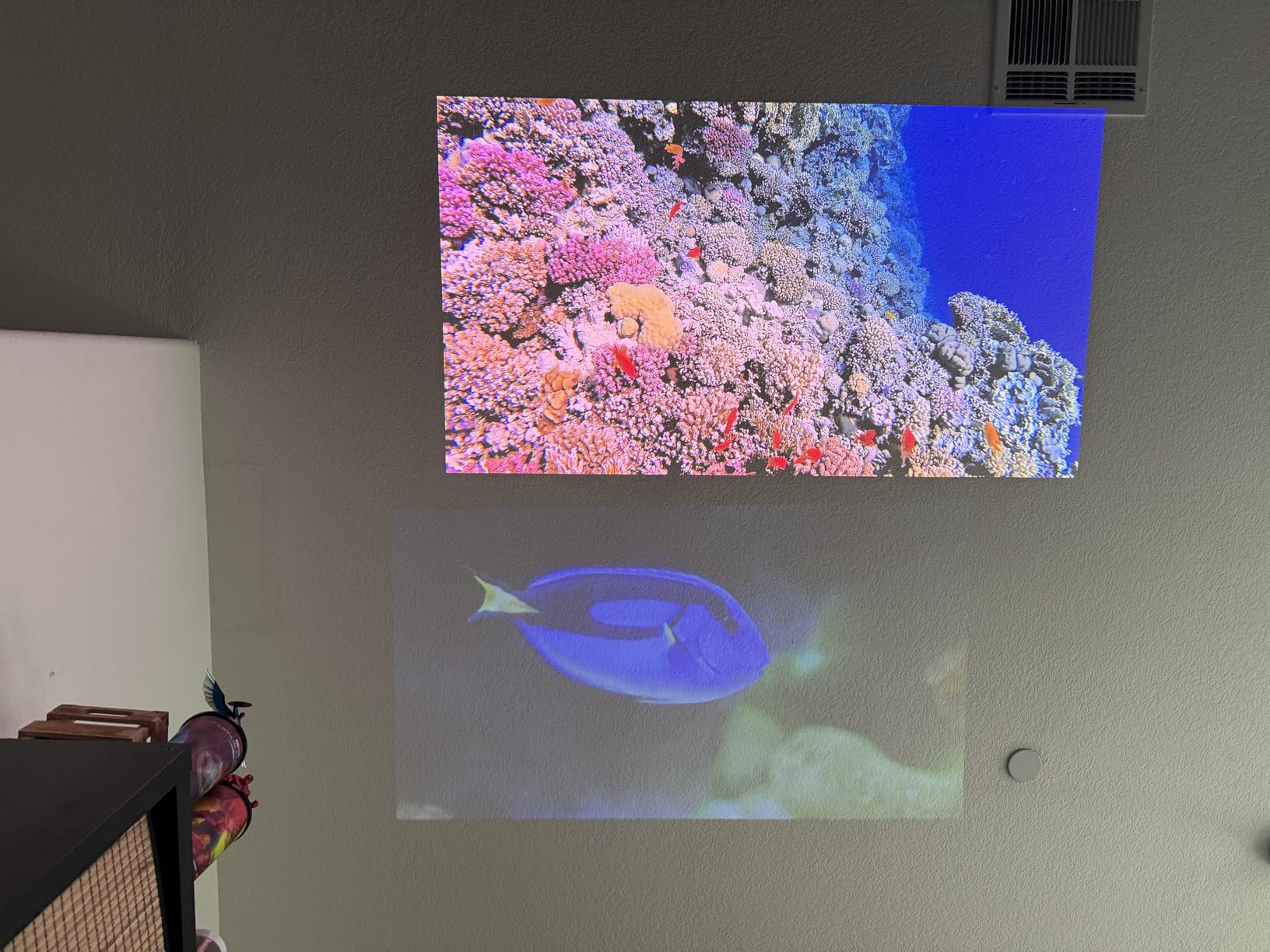
If your living room has windows and you are not willing to live in a darkened cave, this is the model to look at first. The 6000 ANSI lumen headline is the highest here by a wide margin, and owners describe the image as visible from dusk to dawn. That is the difference between a projector you use on purpose and one you use only after sunset.
It is also the only unit here with a proper dynamic iris. The 6-blade iris delivers 5000:1 native contrast and 56,000:1 dynamic, which is what keeps dark scenes readable rather than flat grey. That matters more in a bright room than raw brightness does, because ambient light lifts blacks and you need the engine to close down against it.
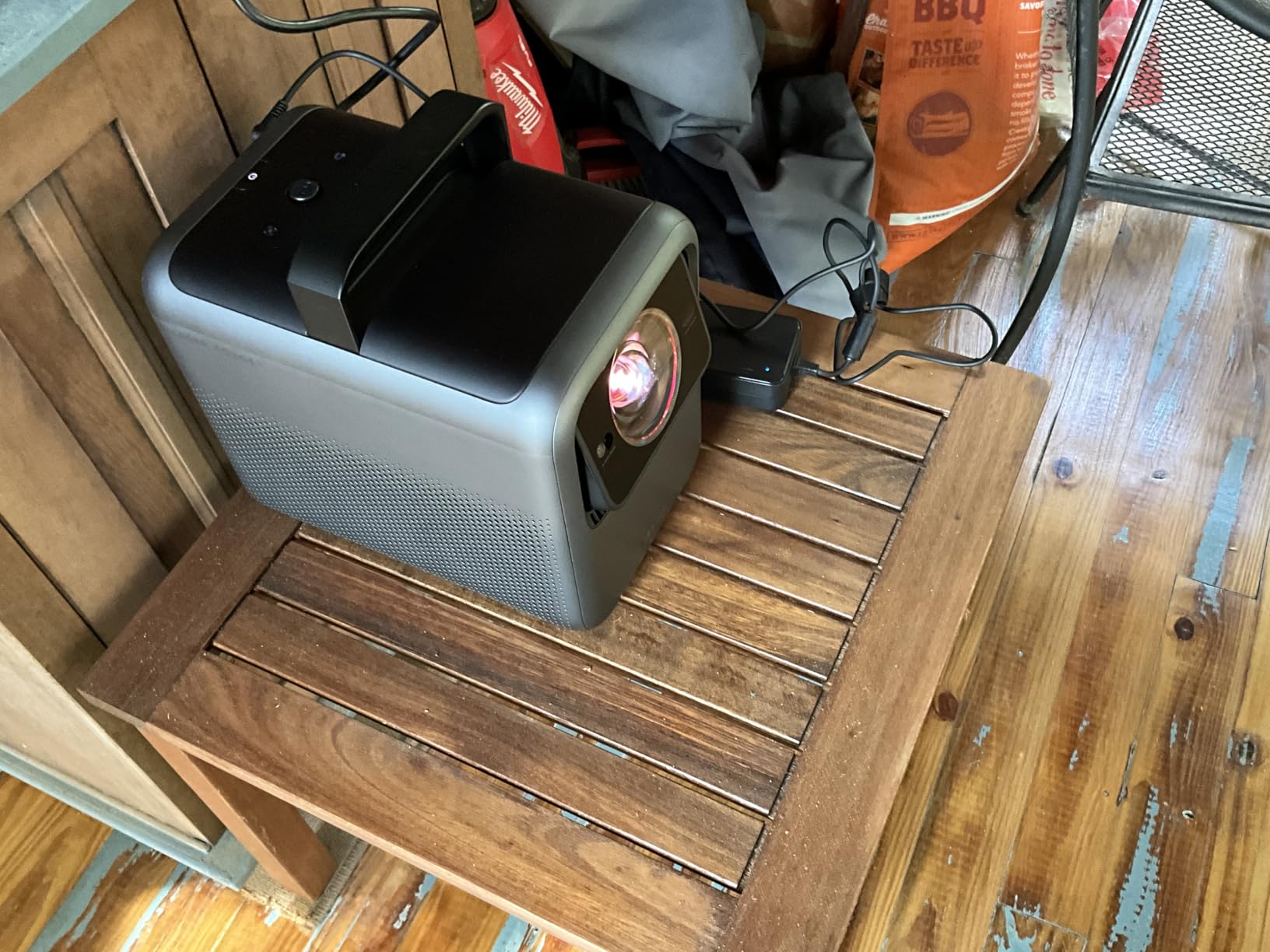
Optics are the other strength: a 14-element all-glass lens with 1.67x optical zoom and edge-to-edge sharpness that owners report holds without focus drift. The LaserForge engine delivers 106% Rec.2020 colour, ISF certification and Dolby Vision, and native resolution is 3840 x 2160. Auto focus and auto obstacle avoidance handle the physical setup.
AI Spatial Adaptation gives one-tap image correction with Spatial Recall room presets, which is useful if the projector moves between rooms. Google TV carries 10,000 plus apps with official Netflix in 4K with Dolby Vision, and the 40W Dolby Audio speakers with bass to 55Hz and up to 87dB are unusually capable for a built-in system. Engineered by Anker, with a 24 month warranty.
Is 6000 ANSI lumens a realistic number or a marketing peak?
Read the mode. The manufacturer quotes 6000 ANSI lumens in Peak Output mode, and reviewers note lower figures in the everyday Vivid mode. That is an honest caveat, not a disqualification: even discounting for the mode difference, this has more light headroom than anything else here, and a projector with headroom can be dialled down for evening viewing. A projector with no headroom cannot be turned up.
The practical question is whether your room can control light at all. In a windowless or heavily curtained room, several models here will satisfy you. In a room where you want to watch a daytime match with the blinds open, the light headroom is the feature that decides the purchase, and this is where the X1S separates from the pack.
Who should skip the X1S?
Skip it if you need a quiet smart box in a dark dedicated cinema room, because the brightness headroom is wasted there and the dynamic iris is doing work you do not need. Manufacturer notes recommend a firmware update on first power-on, so factor in the setup step. It is also a fixed unit rather than a portable one, with no battery and no carry handle mentioned.
11. ViewSonic LX700-4K – best laser projector for console gaming
ViewSonic LX700-4K 4K UHD Laser Gaming Projector 3500 Lumens 240Hz Xbox
3500 ANSI lumens
Native 3840 x 2160
240Hz with 4.2ms input lag
20,000 hour source
Pros
- 240Hz refresh and 4.2ms input lag for smooth console gaming
- 3500 ANSI lumens of brightness for the tier
- 1.3x optical zoom plus vertical lens shift and four-corner alignment
- Draws roughly 145W
- far less than a comparable lamp projector
Cons
- No built-in smart OS or streaming apps and no Bluetooth audio
- Black level reads as dark grey rather than true black
The LX700-4K is the gaming specialist here. The headline is 240Hz refresh with 4.2ms input lag, with 1440p at 120Hz, which is the combination competitive players actually need. It is also Xbox-optimised with Consumer Electronics Control support, so a console in the same room as the projector can turn it on and switch input without a remote.
Brightness is 3500 ANSI lumens on a native 3840 x 2160 panel, which is an unusual pairing and works well for a living room that hosts both gaming sessions and film nights. The 3,000,000:1 dynamic contrast figure is manufacturer-rated, and the practical black level is weaker than the number implies, which we cover below.
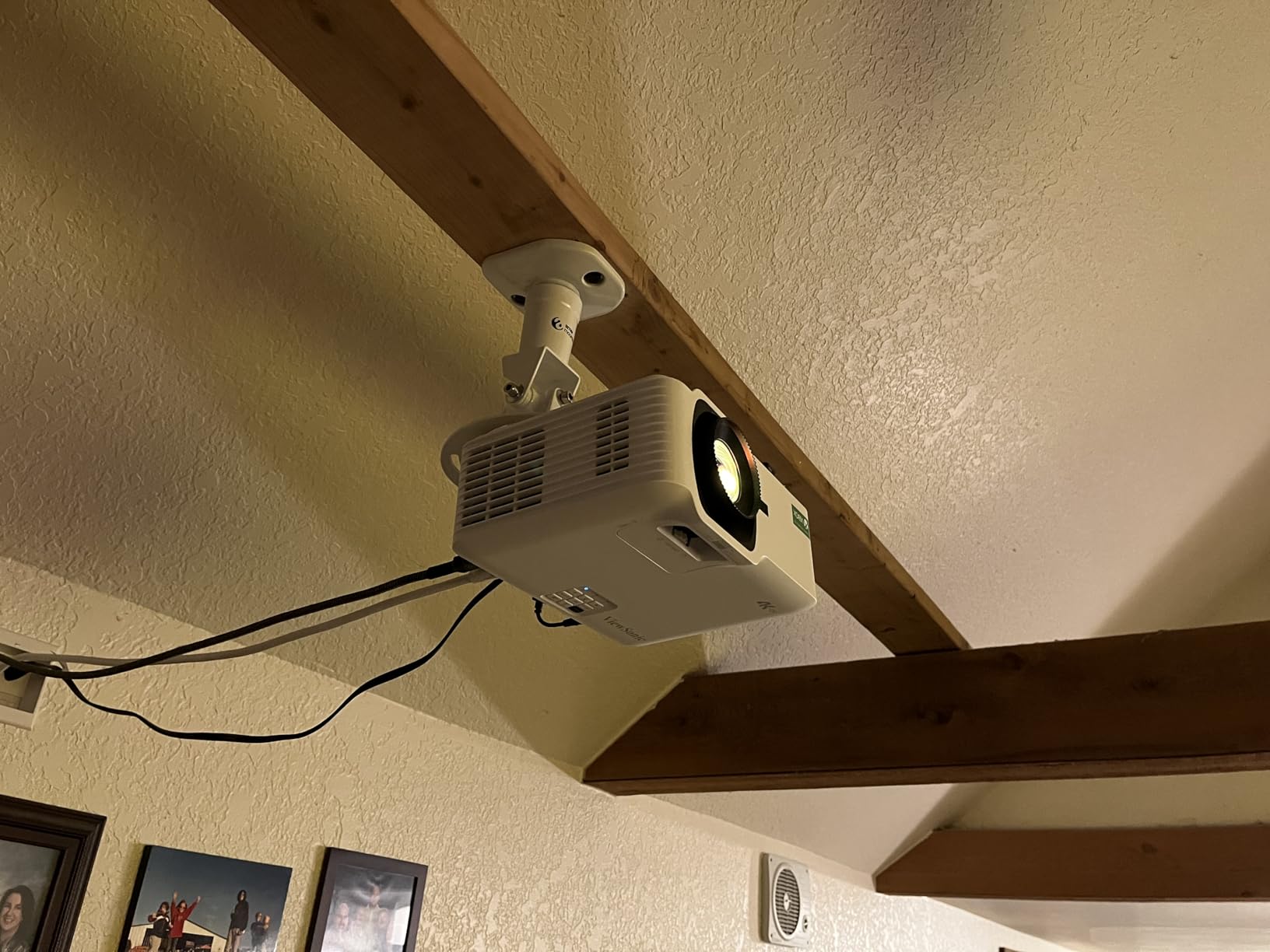
Placement is handled with 1.3x optical zoom, horizontal and vertical keystone, four-corner adjustment and vertical lens shift, which is more than most models at this tier offer. The image range is 30 to 300 inches, 360 degree and curved screen projection are supported, and ceiling mounting works with the ViewSonic PJ-WMK-007. At 7.3 pounds it is also among the lightest models here, and light enough to move between a shelf and a low cabinet without a second person.
Power draw is a genuine advantage in a multi-use room: roughly 145W, about 40 percent less than a comparable lamp projector, and the 20,000 hour laser source means the operating cost picture is favourable. A golf simulation mode handles greens and blues if the room doubles as a hitting bay.
Is 4.2ms input lag at 240Hz actually usable for competitive play?
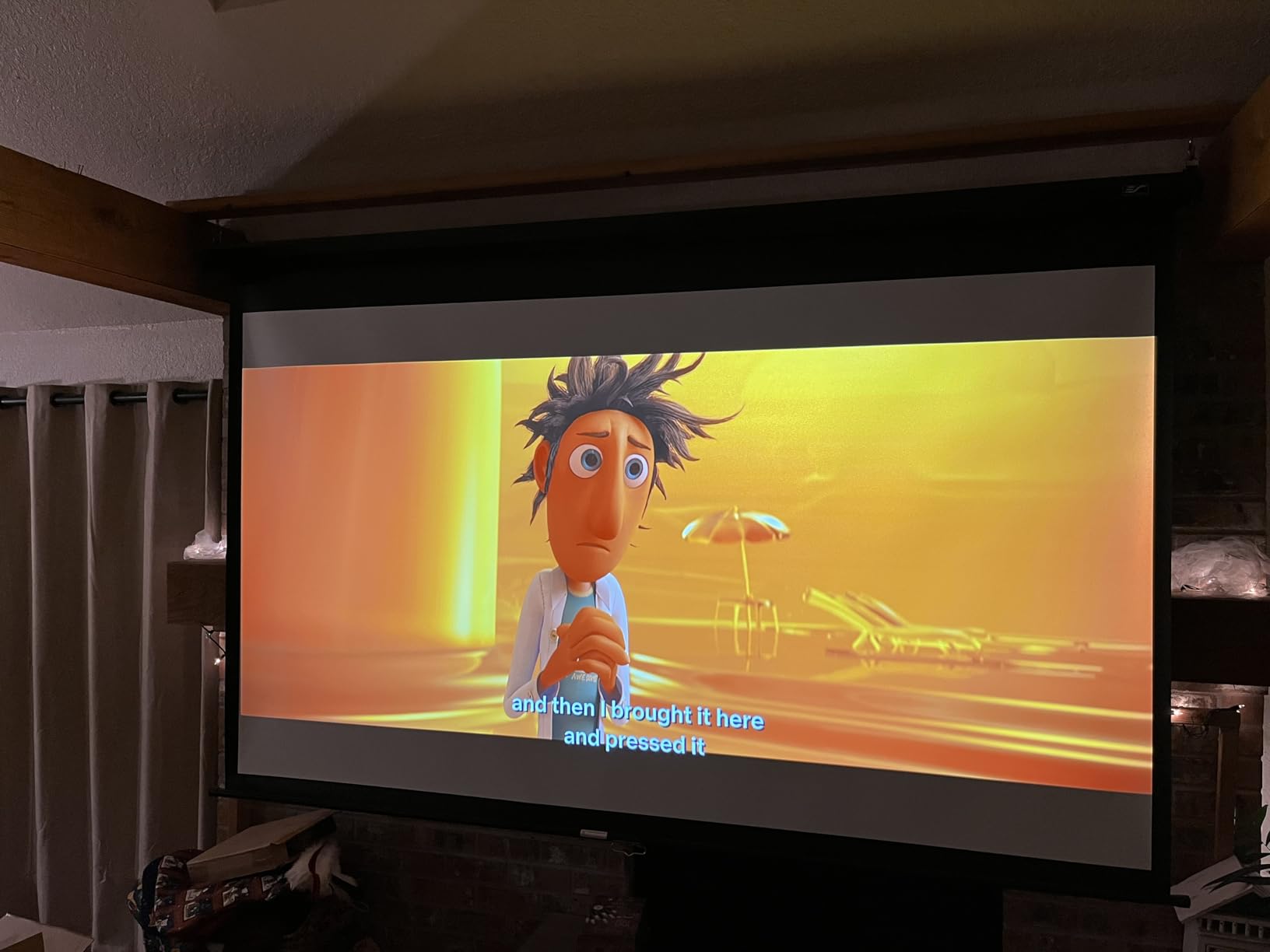
For console gaming, yes. The distinction that matters is resolution versus refresh, and this unit’s claim applies at 1440p for 120Hz and at full 4K for 240Hz as specified. Compare that to the Dangbei DBOX02 in this list, where input latency sits around 30 to 35ms with no gaming mode, and the gap is obvious in a fast shooter.
The compromise is the picture rather than the latency. Black level reads as dark grey rather than true black, so night scenes in a fully dark room lack the depth a dynamic-iris projector delivers. Some owners also report reduced sharpness and over-saturated reds after extended use, which is worth monitoring on a long-term install.
Who should skip the LX700-4K?
Skip it if you want to stream without adding a device, because there is no built-in smart OS or streaming apps, and there is no Bluetooth audio either. The built-in mono speaker is thin with almost no bass, so budget for a soundbar. It is also the lowest-rated unit in this roundup, at 4.1, and the dark grey black level is a real step down for movie nights.
12. Dangbei MP1 MAX – best laser projector for a no-mount, rotating setup
Dangbei MP1 MAX Triple Laser Projector 4K – 3100 ISO Lumens, 110% BT.2020, Google TV with Netflix Officially, 300” Display, 2x12W Dolby Audio DTS:X, HDR10+, Blu-ray 3D
3100 ISO lumens
Hybrid triple laser plus LED
Native 3840 x 2160
40 to 300 inch
Pros
- Bright 3100 ISO lumens suitable for daytime viewing
- Hybrid triple laser plus LED engine at 110% BT.2020 with Delta E under 1
- Built-in adjustable stand with 360 degree rotation removes the need for a mount
- Google TV with officially licensed Netflix means no streaming dongle
Cons
- No lens shift so placement depends on throw ratio and digital keystone
- 7.52 kg body is heavier than its compact dimensions suggest
The MP1 MAX is a practical pick for a living room where a permanent mount is not happening. The built-in adjustable stand gives 360 degree horizontal rotation and 135 degree vertical tilt, which means you can reposition a 100 inch image from a side table, a media unit or a low shelf without tools. In a shared room that flexibility is the feature you will use most.
Picture quality is strong for the tier. A hybrid triple laser plus LED engine produces 3100 ISO lumens with 110% BT.2020 colour and Delta E under 1 accuracy, native 4K at 3840 x 2160, and an image size range of 40 to 300 inches. HDR10+ and Blu-ray 3D are both supported.

InstanPro AI handles auto focus, auto keystone, screen fit, obstacle avoidance and AI brightness adjustment, so the routine adjustments are automatic. Audio is better than the price tier suggests: dual 12W speakers in a 750cc acoustic chamber with bass reflex down to 45Hz, with Dolby Audio and DTS:X support.
Connectivity is current: HDMI 2.1 with eARC, USB, Bluetooth 5.2 and Wi-Fi 6, with Google TV and officially licensed Netflix so no streaming dongle is required. The two-year warranty is longer than several rivals here offer, and this is a newer release with a strong satisfaction score among owners who have had it a short while.
Does a rotating stand replace a proper mount?
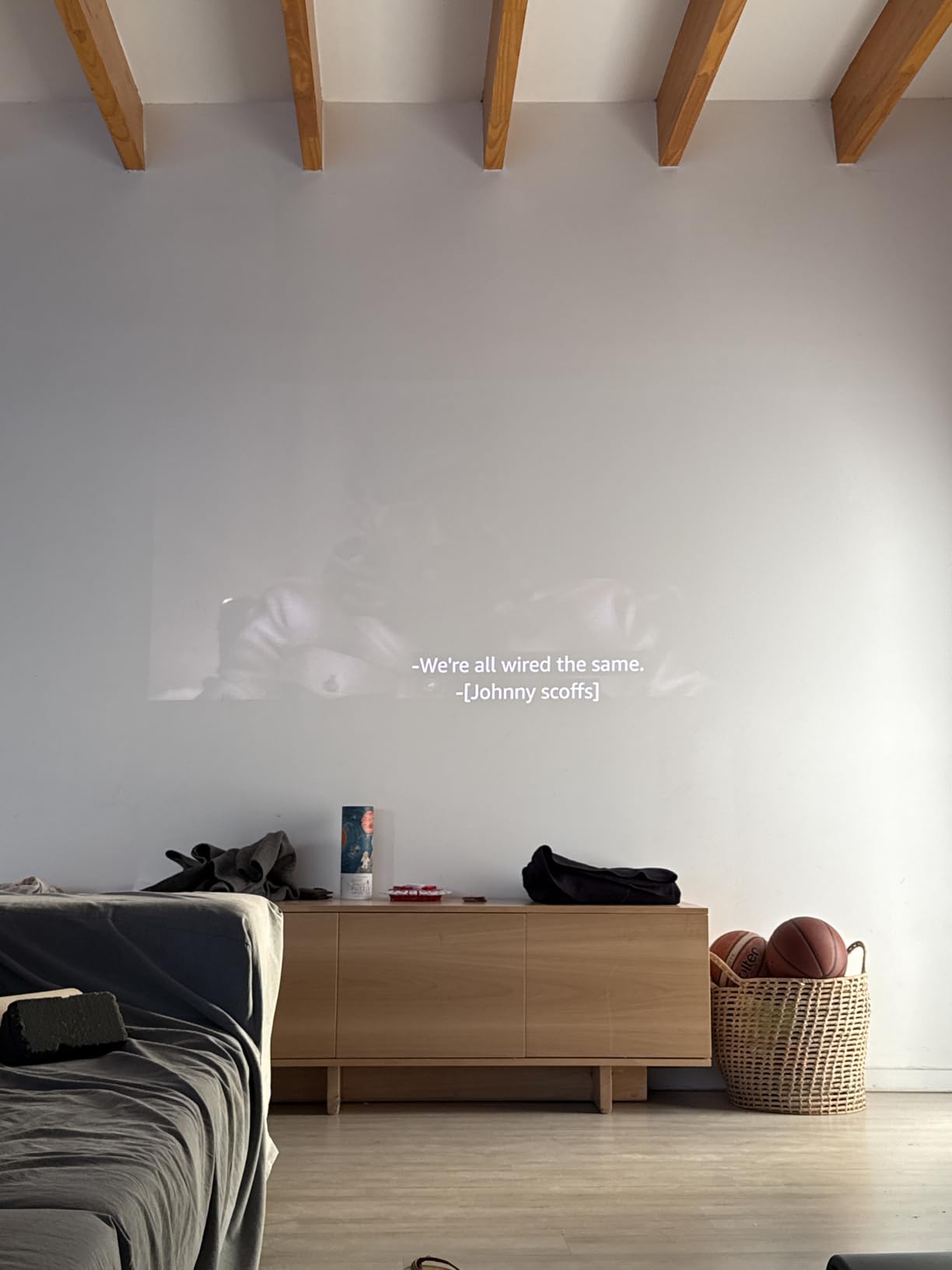
For most living rooms, largely yes. A ceiling mount gives you a permanent, perfectly aligned image that nobody disturbs, which is the right answer in a dedicated media room. A rotating stand gives you the ability to move the image around a room that does more than one job, and it does that without a drill or a tripod in the middle of the floor.
The limitation is precision. A stand is a physical mechanism, not a calibrated optical adjustment, so if you want a perfectly square image from a specific seat you will still want keystone or manual alignment. What it does solve is the “nobody is allowed to move the projector” problem that kills many living room installations.
Who should skip the MP1 MAX?
Skip it if your ceiling is the only viable mounting point, because there is no lens shift, so placement depends entirely on the throw ratio and digital keystone. At 7.52 kg it is heavier than its compact dimensions suggest, and the hybrid engine is worth testing for speckle in a dark room if you are sensitive to texture effects.
How to Choose a Laser Projector for a Living Room
Five decisions matter more than the brand on the box: how bright the room is, where the projector will physically sit, whether you are getting a screen, which laser engine suits your eyes, and whether the room can tolerate a projector at all. Here is how to work through them.
ANSI vs ISO vs peak lumens: why the numbers are not interchangeable
Two projector manufacturers quoting 3000 lumens can be describing very different products, because they may be measuring under different standards. ANSI lumens and ISO lumens are standardised methods that account for the entire light output of the projector. Peak lumens, maximum lumens and “colour and white brightness” figures are not the same measurement, and a number quoted in one of those modes is not comparable to a properly standardised figure.
Use this rule when comparing: only compare ANSI to ANSI and ISO to ISO. In this roundup, the AWOL VISION, Hisense PX3-PRO, Nebula X1S, Optoma GT1090HDR and both ViewSonic models quote ANSI lumens, while the Valerion, JMGO, XGIMI and Dangbei models quote ISO lumens. The two standards are broadly similar in intent, but a manufacturer quoting an unqualified “lumens” figure, as the Epson does, is giving you a marketing number rather than a standard one.
How much brightness your room actually needs
The useful thresholds are straightforward. Roughly 1500 to 2500 lumens handles a room with moderate ambient light, such as lamps on during an evening film. Around 2800 to 3000 lumens and above is what makes daytime viewing with curtains drawn or partly open genuinely watchable, and that is the figure community consensus on projector forums keeps coming back to. Above 4000 lumens you are in the range where daylight through open windows stops being the limiting factor.
Be honest about which category your room is in. A basement media room and a front-room living room with two west-facing windows are different problems, and buying a 2000 lumen projector for the second one means you will end up watching in the dark. Our home use laser projector guide covers the placement basics in more detail if you are still working out the geometry.
Throw distance: where the projector physically sits
Throw ratio tells you the relationship between how far back the projector sits and how big the image is. A ratio of 1.1 to 1.5, as on the ViewSonic LS740HD, is a normal long throw: a 100 inch image from around 8.2 feet away. A ratio around 0.65 fits a 100 inch image in a much shallower space. A ratio of 0.25, as on the AWOL VISION LTV-3000 Pro and the Hisense PX3-PRO, is ultra short throw and means the projector sits inches from the wall.
The practical decision is about furniture, not arithmetic. If you have a shallow media console, ultra short throw or a short-throw long throw such as the Optoma GT1090HDR, which fits a 120 inch image from 4 feet 4 inches, is the only realistic option. If you have depth and can ceiling mount, the models with lens shift and optical zoom give you far more freedom to fine-tune later.
Do you need a screen?
You do not strictly need one, and we would rather say that than upsell. A neutral white wall in a dark room produces a perfectly watchable image, and several of the models here perform well that way. What a screen buys you is contrast, colour accuracy and consistency across a large surface, plus the ambient light rejection that a very bright room requires.
Ambient-light-rejecting screens, often called ALR or CLA screens, are angled surfaces that reject light coming from the room while accepting light from the projector. In a dark or curtained room they are a nice-to-have. In a bright room they are close to essential, and for ultra short throw models they are effectively part of the product because the wall position leaves no other option. Light-coloured walls are the single most common reason a lit-room setup looks disappointing.
Single laser, ALPD or triple laser RGB
Triple laser RGB uses separate red, green and blue lasers and covers the widest colour gamut, with 110% BT.2020 or better across the leading models here. The trade-off is speckle, that granular texture effect in flat colour areas, which sensitive viewers notice and which no competitor fully solves. ALPD single-laser designs, like the Dangbei DBOX02, are speckle-free and slightly less vivid. 3LCD designs, like the Epson LS11000, have no color wheel at all, so they produce neither speckle nor rainbow artifacts.
Dynamic contrast and dynamic iris are separate from the laser choice and matter enormously in a lit room, because ambient light lifts the black level and the engine has to close down against it. The Nebula X1S with its 6-blade iris is the clearest example in this group. A quote of 100,000:1 or 3,000,000:1 dynamic contrast from a fixed-lumen projector is a dynamic range measurement, not a native one, and should not be read as a room-lit contrast figure.
Laser speckle, rainbow artifacts and who should avoid them
Rainbow artifacts, or RBE, are sequential colour flashes visible in DLP projectors that use a color wheel. They show most on bright scenes with high contrast, and they are the first thing many buyers screen for on projector forums. Single-laser DLP models are the usual culprit, so the Optoma GT1090HDR and the ViewSonic LX700-4K both carry some risk, and the LX700-4K owners do report a slight rainbow effect when moving their eyes rapidly across the screen. Triple laser with no color wheel, as on the AWOL VISION, avoids RBE entirely.
Speckle is the reverse problem and belongs to RGB triple laser models, where it appears as a texture in flat areas. It is more visible on light-coloured content and on standard 1.0 gain screens, and less visible on ALR surfaces or from a normal viewing distance. If you are genuinely sensitive to either effect, do not gamble: choose the ALPD or 3LCD route, where the artifact simply does not exist.
When not to buy a laser projector
Do not buy one if the room is a multi-use family room that has to work with the lights on every day. A Mini-LED television will beat any projector on brightness, contrast and black level in those conditions, and it will do it without anyone needing to close a curtain. This is the honest counter-case, and it is the reason the question “which is better for my living room, a TV or a projector” has no universal answer.
Also reconsider if the room is very small. Below about 100 inches diagonal, a modern television offers more usable brightness and zero setup friction, and a projector at that size stops being a selling point. Finally, weigh gaming latency carefully. Laser projectors have improved enormously, but if your primary use is competitive play rather than film and general console gaming, a gaming-focused projector in this list or a dedicated display will serve you better.
Frequently Asked Questions
What is the best projector for a living room?
The best laser projector for a typical living room is one rated around 2800 to 3000 ANSI or ISO lumens, because that is the range that stays watchable with a lamp on and curtains partly open. The Valerion StreamMaster Plus2 is the best all-round pick here, the Dangbei DBOX02 is the best value, and the Nebula X1S is the strongest choice if the room is bright enough that you want the curtains open.
Are laser projectors worth it?
For a dedicated viewing space, yes. A laser light source is typically rated for 20,000 to 30,000 hours, so there are no bulb replacements, no filter changes and the unit powers on instantly with no warm-up. Several models in this roundup are rated at 25,000 to 30,000 hours. The value is lower in a multi-use room where a television would be used more often, since brightness is still the projector’s limit.
How bright should a projector be for a living room?
Around 1500 to 2500 lumens handles moderate ambient light such as lamps during an evening film. Around 2800 to 3000 lumens and above makes daytime viewing with curtains drawn or partly open genuinely watchable, and 4000 lumens or more is where open-window daylight stops being the limiting factor. Always check whether a figure is quoted in ANSI lumens, ISO lumens or an unqualified peak number, because those are not comparable.
What are the downsides of using a laser projector?
The main downsides are that brightness still loses to a Mini-LED television in a bright room, that DLP models with a color wheel can show rainbow artifacts and RGB triple laser models can show speckle, that ultra short throw models need dedicated cabinet depth, and that many models lack lens shift so placement is decided at purchase. A screen is also close to essential in a genuinely lit room.
Do laser projectors need a screen?
No, not strictly. A neutral white wall in a dark room gives a perfectly watchable image. In a bright room an ambient-light-rejecting screen is close to essential because it rejects room light while accepting light from the projector, and for ultra short throw models it is effectively part of the purchase. Light-coloured walls are the most common reason a lit-room setup looks disappointing.
The Bottom Line
The best laser projectors for living rooms in 2026 come down to how much light your room fights back with. Buy the Valerion StreamMaster Plus2 for the best-balanced package, the Dangbei DBOX02 for speckle-free value, the AWOL VISION LTV-3000 Pro for a media-console laser TV, and the Nebula X1S when daylight is the problem you are actually solving.
Measure your room, decide on long throw or ultra short throw, and budget for an ALR screen if the curtains will not stay closed. Then check the gaming side of things, where our laser projector gaming picks go into latency in more detail.