
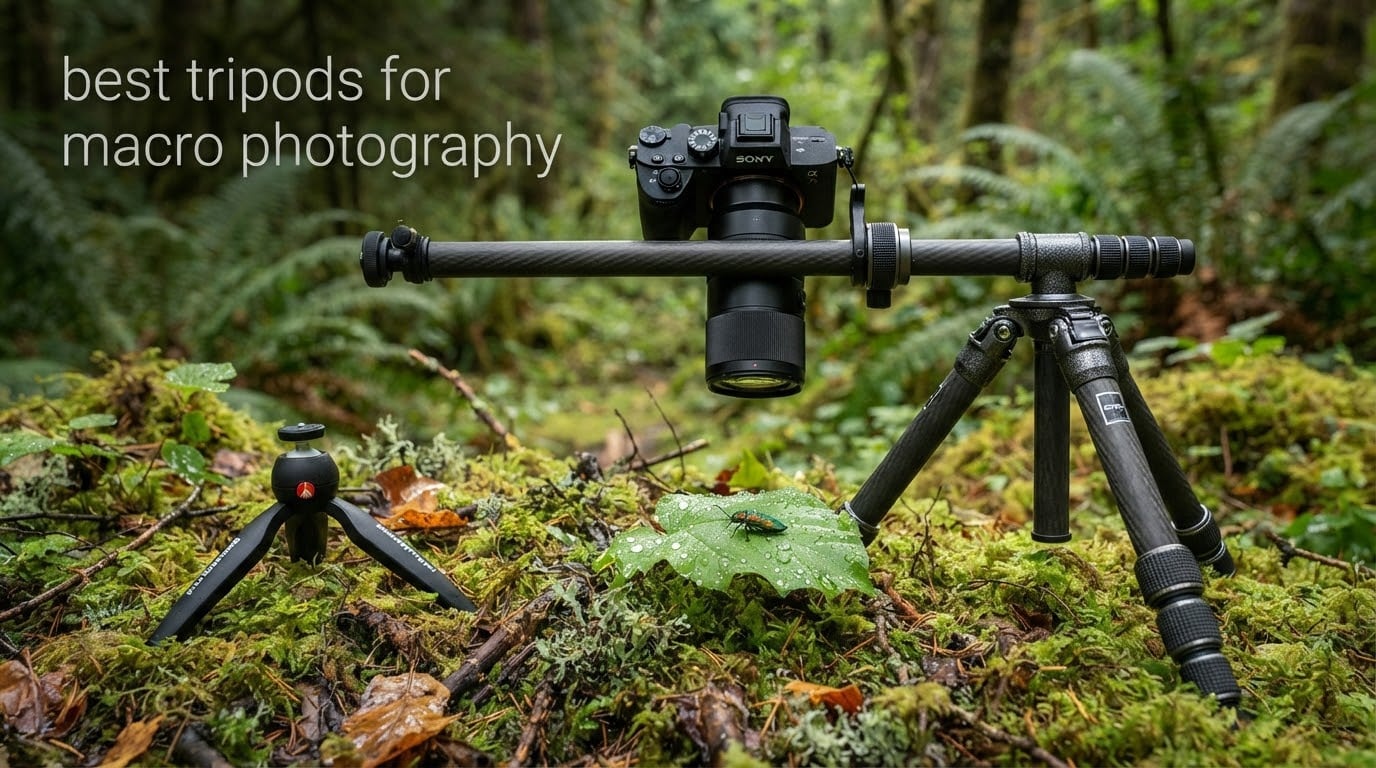
The best tripods for macro photography are the ones that can put the camera level with, or directly above, a subject a few inches tall while holding dead still. A reverse or rotating center column gets the lens down where insects live, a splayed-leg or low-profile design drops the whole rig to ground level, and a rigid head keeps a focus stack from drifting between frames.
That last point is what separates a macro tripod from a general-purpose one. At 1:1 magnification the depth of field is a few millimetres deep and shutter speeds run slow, so a tripod that creeps, sags, or rings under a long lens plus extension tubes will produce soft frames and unusable focus stacks. Reach gets you the shot; rigidity decides whether you can stack it.
Do you need a tripod for macro photography? If you are shooting handheld at all, yes for anything at or near 1:1. Handheld works up to roughly half life size on a full-frame body with good technique, but a tripod removes shake, lets you work at slower shutter speeds in dim light, and turns a focus stack from a manual nightmare into a repeatable process. Handheld stacking exists, but it demands a static subject and a lot of patience.
We spent weeks setting these tripods up and taking them down, checking minimum working height, column travel, head stiffness under a macro rig, and how each one behaves when the legs go flat. What follows is a 12-pick breakdown covering full-size aluminum and carbon rigs, overhead and transverse-column tripods, and the mini and tabletop models that handle indoor studio and insect work.
Still working out the lens side? Our guides to the best macro lenses overall and the best macro lenses for insect photography cover the glass that pairs with every support here.
Table of Contents
Top 3 Picks for Macro Photography (October 2026)

Manfrotto Befree GT XPRO
- 90 degree center column
- 496 ball head
- Arca-Swiss plate
- 4 section aluminum legs
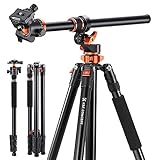
K&F CONCEPT 90 inch Overhead
- 0-180 degree flexible legs
- 28mm center column
- 10kg ball head
- detachable monopod
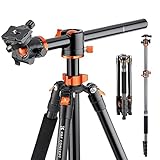
K&F CONCEPT T255A3
- Transverse center column
- 0-180 degree tilt
- detachable monopod
- 10kg load capacity
The Best Tripods for Macro Photography in 2026 at a Glance
Here is the short version before the detail. Each pick below is listed with the one mechanical feature that actually decides how low it can go.
Best versatile full-size: Manfrotto Befree GT XPRO, because its 90 degree center column rotates the camera down to a low subject without moving the legs.
Best traditional full-size: K&F CONCEPT 90 inch Overhead, whose legs tilt to 0-180 degrees and can be laid out sideways for ground-level framings.
Best transverse-column value: K&F CONCEPT T255A3, a lateral column that swings the camera overhead or flat to the ground and collapses for one-legged carrying.
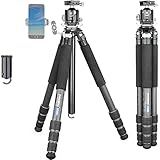
Best carbon fiber macro rig: INNOREL GT324C, with an invertible center column, a short column that reaches 19.5 cm, and a 44 mm low-gravity ball.
Best low-angle carbon: Manfrotto MT055CXPRO3, whose horizontal Q90 column positions a camera roughly six inches off the ground.
Best overhead support: SmallRig CT200, with a 180 degree horizontal column arm and a counterweight bag for balancing heavier setups.
Best mini and tabletop: SIRUI AM-TT50, a reversible-column desktop tripod rated to 17.6 lb at under 1.8 lb of carry weight.
Best ground-level insects: SIRUI AM-203, whose three-section legs lie flat to near the ground and drop to 5.5 cm working height.
Best budget overhead: NEEWER TP63, a metal alloy rig that converts to a monopod and spans 64 cm to 230 cm.
| Product | Specifications | Action |
|---|---|---|
| Manfrotto Befree GT XPRO |
|
Check Latest Price |
| K&F CONCEPT 90 inch Overhead Tripod |
|
Check Latest Price |
 SIRUI AM-TT50 Desktop Tripod SIRUI AM-TT50 Desktop Tripod |
|
Check Latest Price |
 INNOREL GT324C Carbon Tripod INNOREL GT324C Carbon Tripod |
|
Check Latest Price |
| K&F CONCEPT T255A3 Tripod |
|
Check Latest Price |
 SmallRig VT-20 Desktop Tripod SmallRig VT-20 Desktop Tripod |
|
Check Latest Price |
 SIRUI AM-203 Mini Tripod SIRUI AM-203 Mini Tripod |
|
Check Latest Price |
 Manfrotto MT055CXPRO3 Manfrotto MT055CXPRO3 |
|
Check Latest Price |
 SmallRig CT200 Overhead Tripod SmallRig CT200 Overhead Tripod |
|
Check Latest Price |
 NEEWER TP63 Tripod Monopod NEEWER TP63 Tripod Monopod |
|
Check Latest Price |
 SmallRig 5025 Carbon Tabletop SmallRig 5025 Carbon Tabletop |
|
Check Latest Price |
 AOKA CMP163C Carbon Mini AOKA CMP163C Carbon Mini |
|
Check Latest Price |
1. Manfrotto Befree GT XPRO Aluminum Tripod – Best Versatile Full-Sized Pick
Manfrotto Befree GT XPRO Aluminium Camera Tripod, 496 Centre Ball Head, Twist Lock System, 90 Degree Column, 200PL-PRO Plate, for DSLRs, CSC, Mirrorless, Macro Photography, MKBFRA4GTXP-BH
Aluminum
4 leg sections
142 cm max height
9 cm min height
22 lb rated
Pros
- 90 degree center column reaches low subjects without moving the legs
- 200PL-PRO plate fits both Manfrotto and Arca-Swiss heads
- M-Lock twist locks leave no protruding parts when collapsed
- 10 year spare part availability from the manufacturer
Cons
- Aluminum build is heavier than a carbon fiber travel tripod
- Leg lock tension needs practice to set consistently
The Befree GT XPRO is the one travel tripod in this group that I keep reaching for with a macro lens mounted. The 90 degree center column is the whole story: you swing the column out to the side and the camera travels down and around without the legs shifting, so the camera axis stays parallel to the sensor plane as you reframe. For a flower growing off a stem, that is the difference between a clean composition and a lot of awkward bending.
Setup is quick. The four-section aluminum legs use the M-Lock twist system, which leaves nothing sticking out when the tripod is collapsed, so it slides into a bag without snagging. The included 496 ball head has three independent controls, meaning you can lock the sphere, set the friction, and lock the pan separately. That friction control matters more in macro than most people expect, because it is what lets you nudge a subject into frame without the camera drifting after your hand leaves.
Measured against the spec sheet, the column gives you a 9 cm minimum height and 142 cm of reach, which covers everything from ground-level moss to a standing subject. My one reservation is the material. Aluminum is noticeably heavier than an equivalent carbon fiber travel tripod, and on a long walk to a subject at altitude you feel that in your shoulders.
How it handles a heavy macro rig
The tripod is rated to 22 lb, and with a 100 mm macro lens plus extension tubes you are well inside that. The ball head stays firm, the plate is the standard 200PL-PRO profile, and the whole assembly stays put once you set the friction. If you use the column rotated, lock the column firmly before you start fine adjustments, because column play is what shows up as a soft stacked frame.
Buyers also point out the practical longevity angle. Manfrotto lists 10 years of spare part availability, so a worn knob or a cracked foot is a replacement rather than a write-off. That matters if you plan to keep this tripod for a decade of insect work.
Where it falls short
The second is weight. There are lighter travel options for hiking to a subject, and if your macro work happens at the end of a long walk rather than in a garden, that trade is worth thinking about. The other weakness is the twist-lock tension: out of the box the legs need a few sessions before the legs stop feeling slightly inconsistent under load.
It is also the least packable option here, folding to 16.9 inches. That is fine for a car boot, less fine for a cabin bag.
2. K&F CONCEPT 90 Inch Ultra High Horizontal Overhead Tripod – Best Traditional Full-Sized Pick
K&F CONCEPT 90”/230cm Ultra High Horizontal Overhead Camera Tripod
Aluminum
4 leg sections
230 cm max height
10 kg load
2 kg carry weight
Pros
- Flexible legs tilt through 0-180 degrees for overhead and ground-level framings
- Enlarged 28mm center column improves lateral rigidity in horizontal position
- 10 kg ball head with oil-free damping
- Detachable monopod gives a second shooting configuration
Cons
- Locking knobs need meaningful force to tighten
- 4.5 lb of aluminum is heavy for a carry-everywhere kit
This is the largest review base of anything we tested, and for macro the reason is the leg geometry. Each leg swings through 0 to 180 degrees, so you can spread the tripod almost flat and lower the whole center section to the ground without any accessory. Shooting a mushroom or a ground beetle becomes a matter of splaying the legs rather than crouching with an awkward camera angle.
The horizontal position is where the 28mm center column earns its keep. Wider column sections resist bending when the load is offset sideways, and that is exactly the case when a long macro lens hangs out over a subject. The 360 degree panoramic rotation on the ball head makes it easy to walk around a subject for a better line without moving the tripod itself.
It also reaches 90 inches with the column raised, which is genuinely useful for flat-lay and overhead product work. Pull a leg free and attach it to the head and it becomes a monopod, which is the practical way to get into tight corners or up close to a wall.
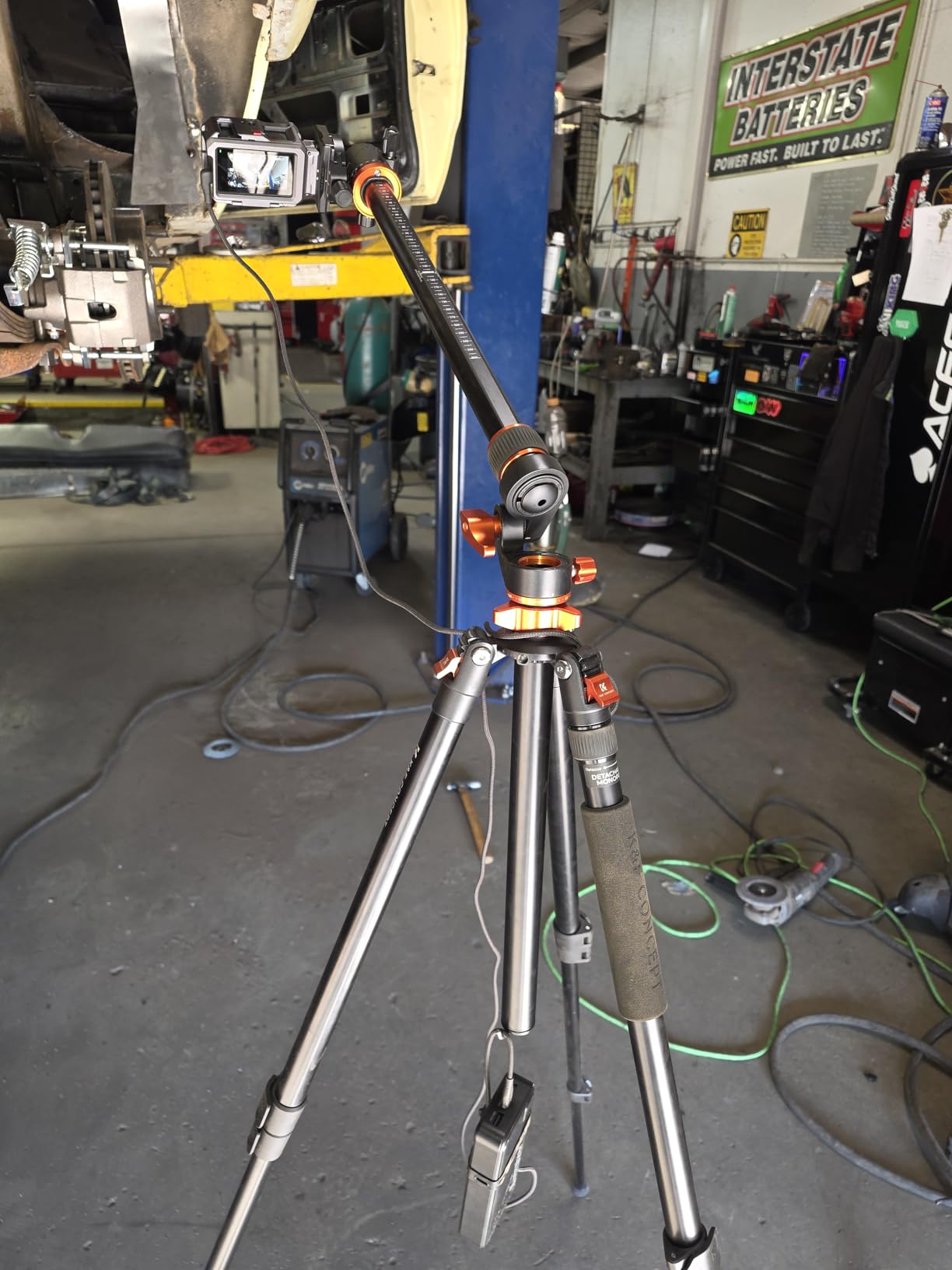
The one thing to plan around is the 4.5 lb of aluminum. This is a studio and garden tripod, not a hiking support. If your macro subjects are on a trail rather than a patio, look at one of the mini models further down instead.
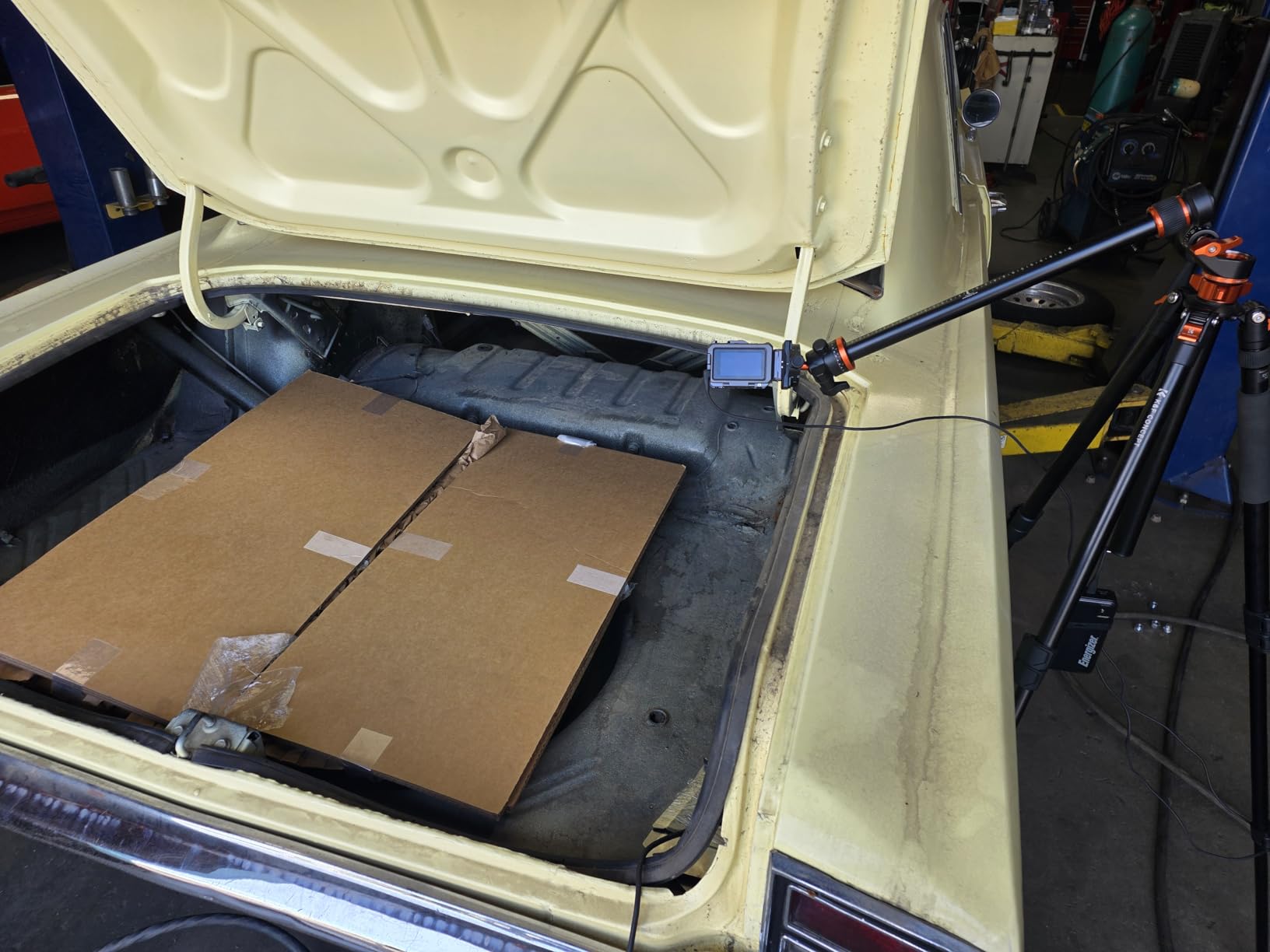
What the flexible legs really allow
Splayed flat, the tripod gives you a working height low enough for ground-level insects and fungi, and the legs act as a wide, stable base at that height because they are spread rather than shortened. Overhead, the same leg angle reverses the geometry so the camera looks straight down, which is how you shoot wet flat-lay product work and stacked shots of coins or stamps.
Owners frequently pair this with a long telephoto zoom and a fluid video head and report no wobble, which tells you the column and head hold up under real overhang. The 10 kg rating is the relevant number for a macro rig with a rail attached.
Where it falls short
The locking knobs are stiff. They need real force to tighten, and buyers consistently mention this, so do not judge the feel after one adjustment. The other complaint is weight: 4.5 lb plus a camera and lens is a two-handed load on a long walk.
3. SIRUI AM-TT50 Aluminum Mini Desktop Tripod – Best Tabletop Pick
SIRUI Aluminum Mini Desktop Tripod with 360° Ball Head
Aluminum
5 leg sections
52 cm max height
17.6 lb load
0.8 kg
Pros
- Reversible center column gives a true low-angle shot without flipping the camera
- Arca quick release plate with U-shaped notch holds vertical framings
- Three leg angle options widen the framing range
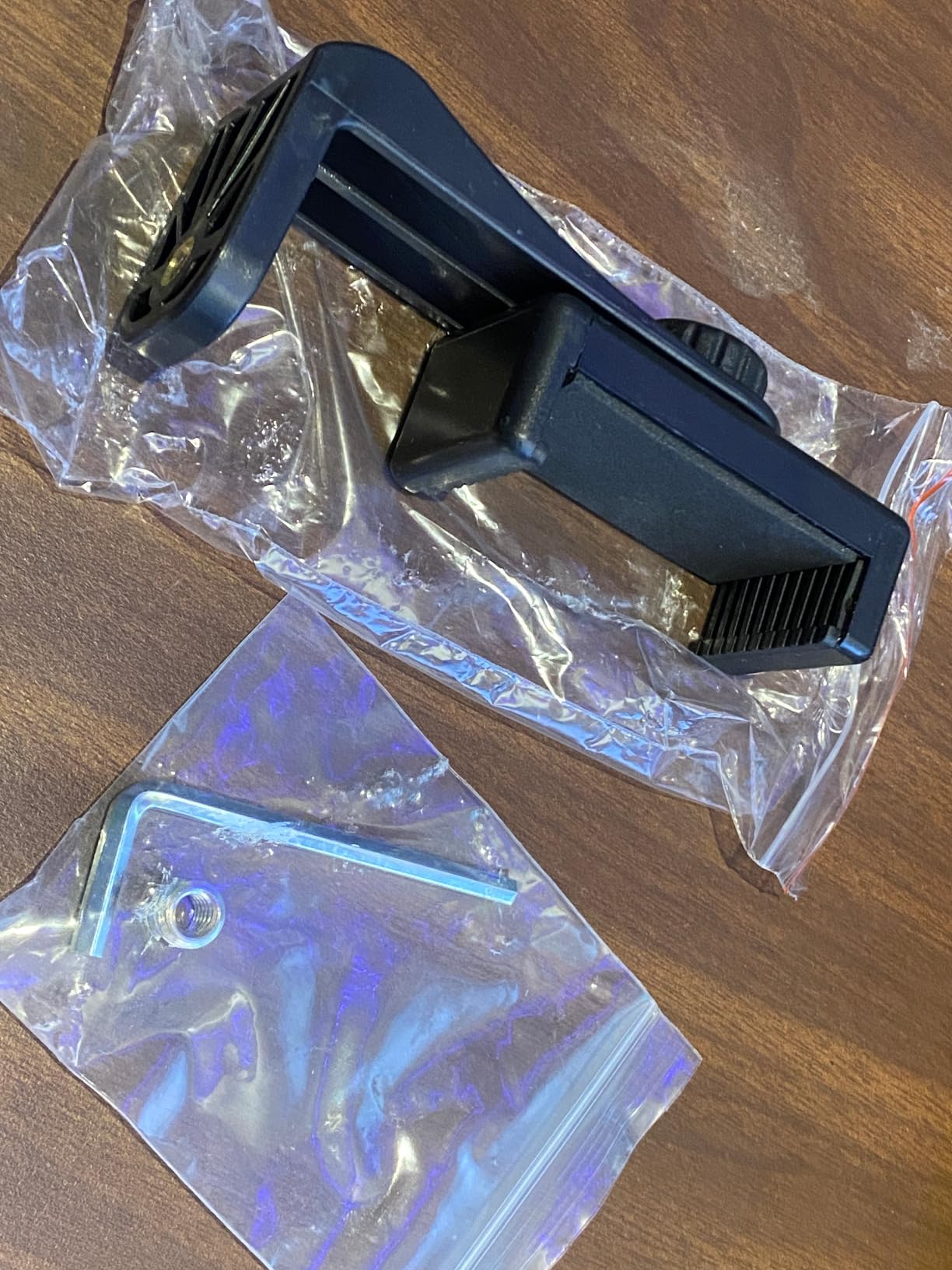
- Includes phone clamp and drawstring carry bag
Cons
- Arca clamp screw needs a coin or screwdriver rather than a flip handle
- Only three leg angle positions
- 0.8 kg is heavy for a mini tripod
The AM-TT50 is the desktop workhorse of this list. It folds to 18 cm and the reversible center column is the feature that turns it into a macro support rather than just a small stand. Reverse the column and you get a low, level camera position with the center of mass staying low, which reviewers specifically praise for low-angle shooting.
What surprised me is the payload. At 0.8 kg it handles telephoto and long telephoto zoom setups without visible shake, and the 17.6 lb rating gives plenty of headroom over a 100 mm macro lens with a focusing rail. The five-section legs give finer height increments than a three-section travel tripod, which helps when you are matching a stacked frame to a specific subject plane.
The 1/4 inch top thread and 3/8 inch bottom thread make it modular. It will take magic arms, microphones, or a monitor, and the counterweight hook underneath is a nice touch if you balance a rail and camera on an extension bar.
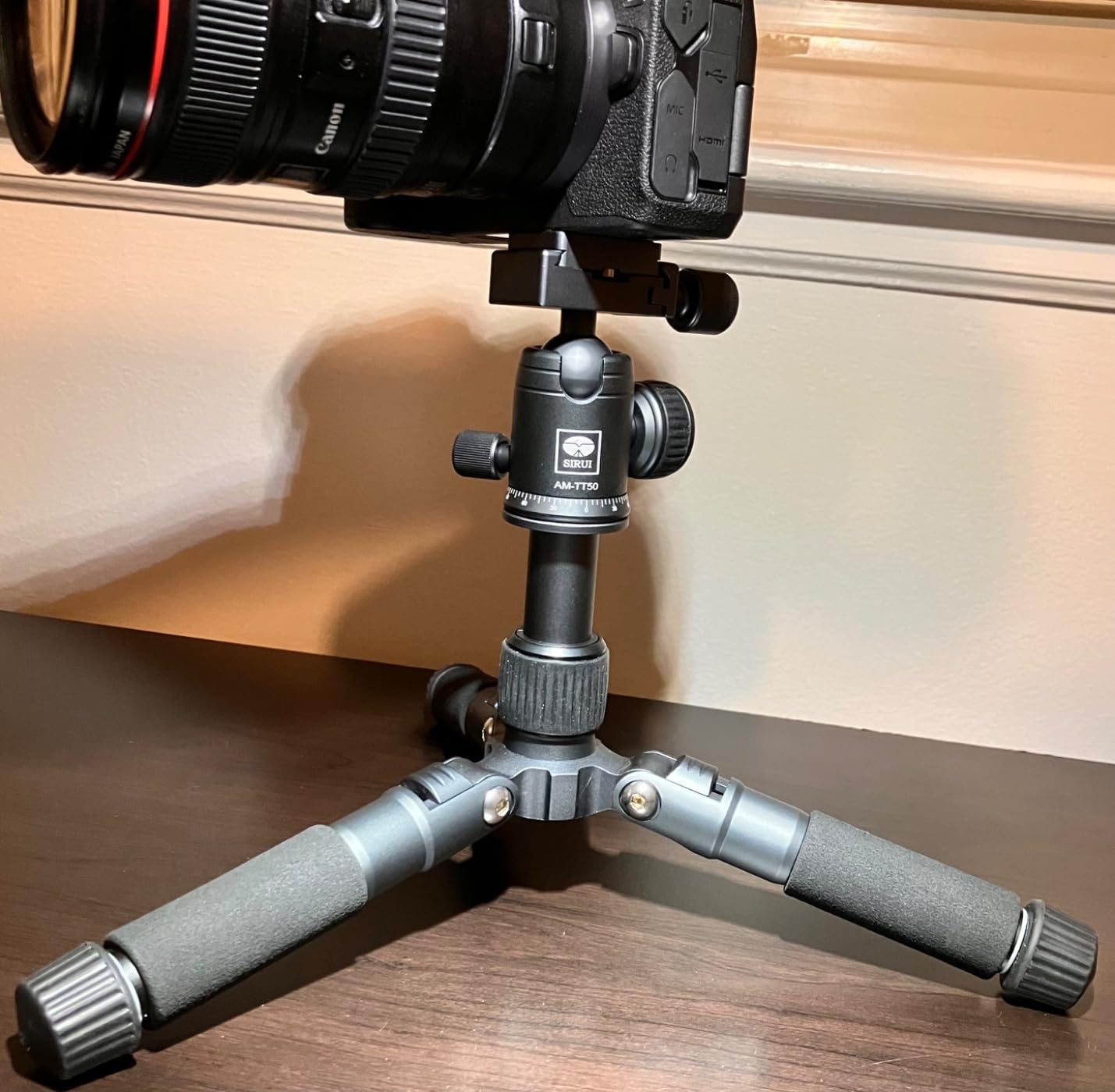
Why the three leg angles matter
Three positions at 10, 36, and 68 degrees is not a lot, but each one changes the relationship between the camera and the subject. Wide and low gets you ground-level compositions that a straight-legged tabletop cannot. Medium suits product and small-object work on a bench. Tall and narrow gets you a top-down angle over a larger arrangement.
Reviewers also mention the foam leg grips, which are comfortable in cold conditions and resist slipping on damp bark or stone. The U-shaped notch on the quick release plate is the sort of small detail that stops the camera rotating in an exact vertical framing.
Where it falls short
The Arca clamp screw is the main friction point. It takes a coin or a screwdriver rather than a flip-up lever, so swapping plates mid-session is slower than it should be. Some buyers also want more leg positions, and at 0.8 kg it is the heavier end of the mini tripods, which matters on a backpacking trip.
4. INNOREL GT324C Carbon Fiber Tripod – Best for Carbon Macro Rigs
Carbon Fiber Camera Tripod-INNOREL GT324C Professional Compact Shooting Tripod for Heavy Duty Stand with Low Gravity Center Ball Head Special-Shaped Center Column
Carbon fiber
4 leg sections
19.5 cm macro min height
55 lb load
2.28 kg
Pros
- Invertible center column plus an alternate short column reaching 19.5 cm
- Low center of gravity 44mm CNC ball head stays calm at low working heights
- Ten layer carbon fiber tubes with a 55 lb limit
- Triangle shaped column adds accessory mounting screws
Cons
- 62 cm folded length is bulkier than dedicated travel tripods
- 2.28 kg is heavy for a carry-everywhere kit
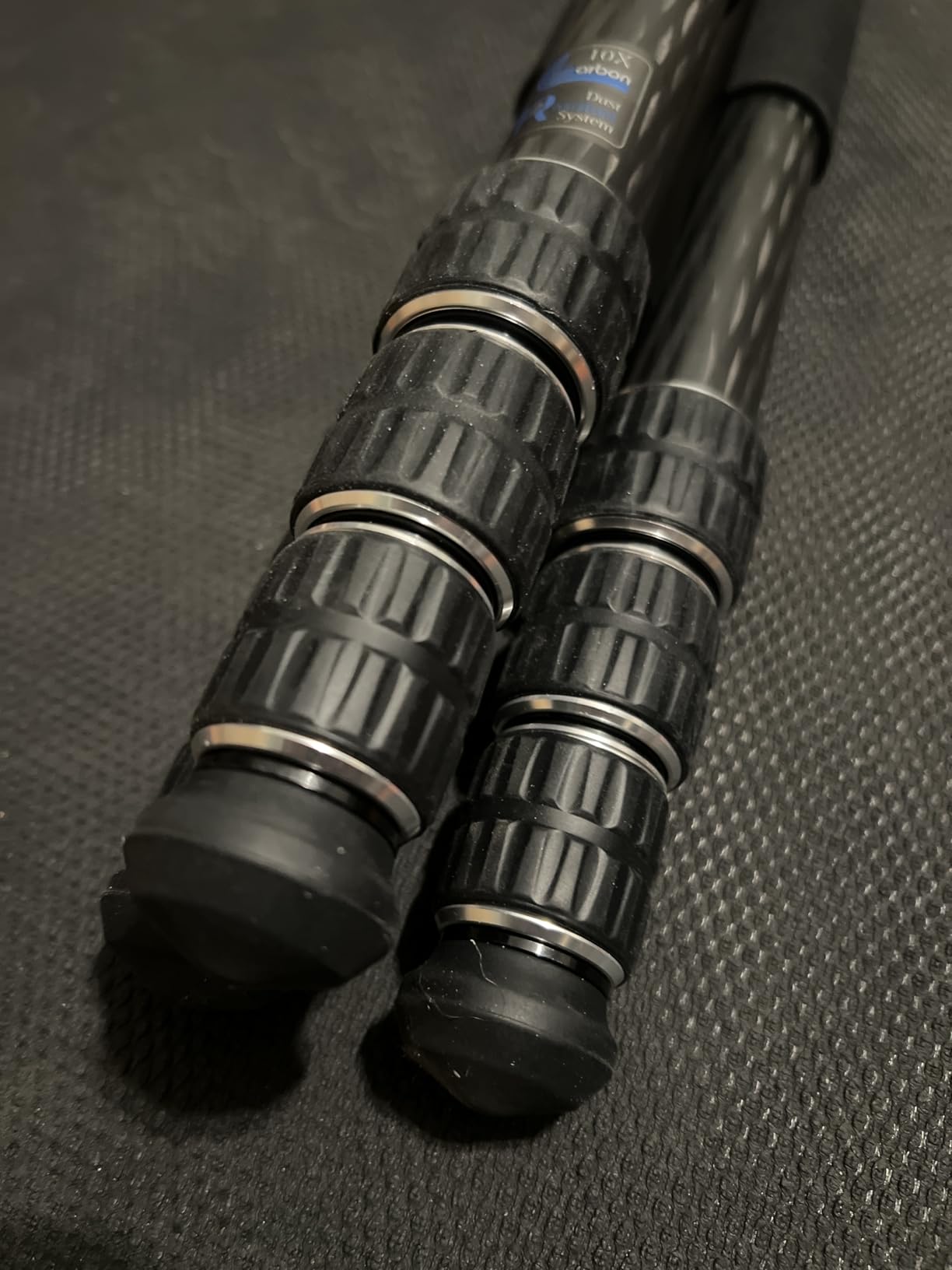
This is the most purpose-built macro tripod in the group. The special-shaped center column inverts for low-angle shooting, and a separate short center column drops the working height to 19.5 cm, which is low enough to put a camera just above a ground subject. Having two column options means you can also use the full-length column to flip the camera overhead for flat-lay and stacked work.
The ball head is a 44 mm CNC-machined unit with a low center of gravity design and a security slot. A large ball is usually less sensitive at low working heights, and that is exactly where you need it, because the closer the camera sits to the ground the more the mass of the lens tries to tip the head.
It folds to 62 cm, which is the honest drawback. This is not a travel tripod. The package is thorough though, with a tripod bag, three stainless steel spikes, three allen keys, the short column, an extra quick release plate, and a head bag.
Two columns, two working heights
The short column is the one you will use most for macro. At 19.5 cm you can look slightly down at a subject on the ground with the lens axis horizontal, which is the cleanest angle for stacking. The long column inverts instead, which is useful when you want the camera below a raised subject, such as a flower on a stem or an insect on a leaf edge.
The 55 lb limit is generous enough that a macro lens, extension tubes, and a focusing rail all fit without approaching the ceiling. The triangle-shaped column also carries two 3/8 inch and one 1/4 inch screw holes for accessories, which is where a counterweight or an arm can attach.
Where it falls short
Size and weight. A 62 cm folded package and 2.28 kg means this is a car or studio tripod, not something you carry to a remote subject. There is also no dedicated low-angle leg geometry here, so ground-level work depends entirely on the column options rather than on splaying the legs.
5. K&F CONCEPT T255A3 Transverse Column Tripod – Best Transverse-Column Value
K&F CONCEPT 73 inch /186cm Camera Tripod,Transverse Center Column Aluminium DSLR Tripod with 360 Degree Ball Head 10kg Load Capacity,Quick Release Plate,Detachable Monopod T255A3+BH-28L
Aluminum
5 leg sections
186 cm max height
10 kg load
1.87 kg
Pros
- Transverse center column moves 0-180 degrees and rotates 360 degrees
- Transverse collapse lets you carry the tripod by a single leg
- Long-term owners report years of heavy use without degradation
- Arca-Swiss clamp works with existing camera grip plates
Cons
- Leg extension flip-lock levers feel less solid than the rest
- Legs are stiff out of the box
- Weight hook must be removed before inverting the column
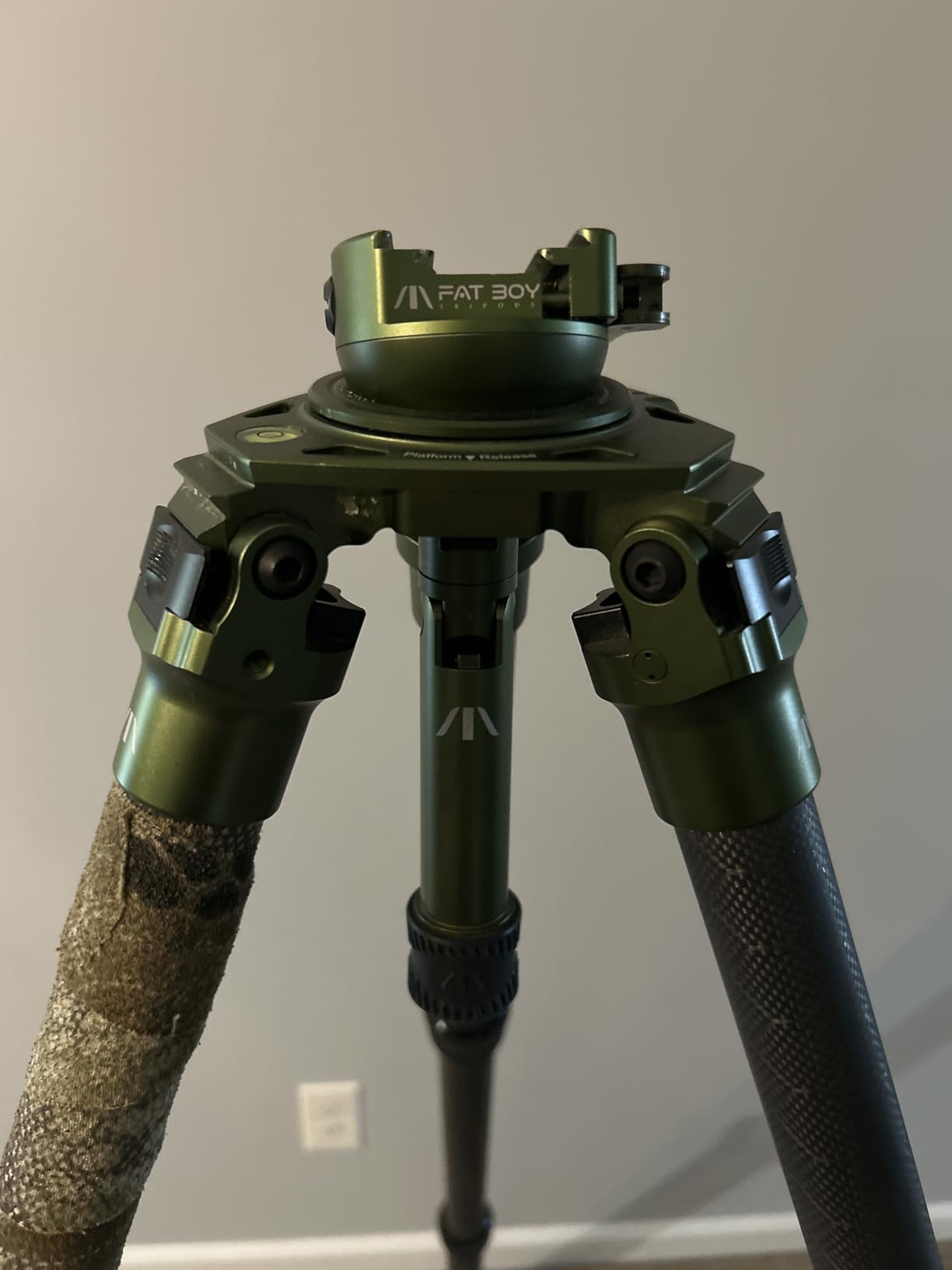
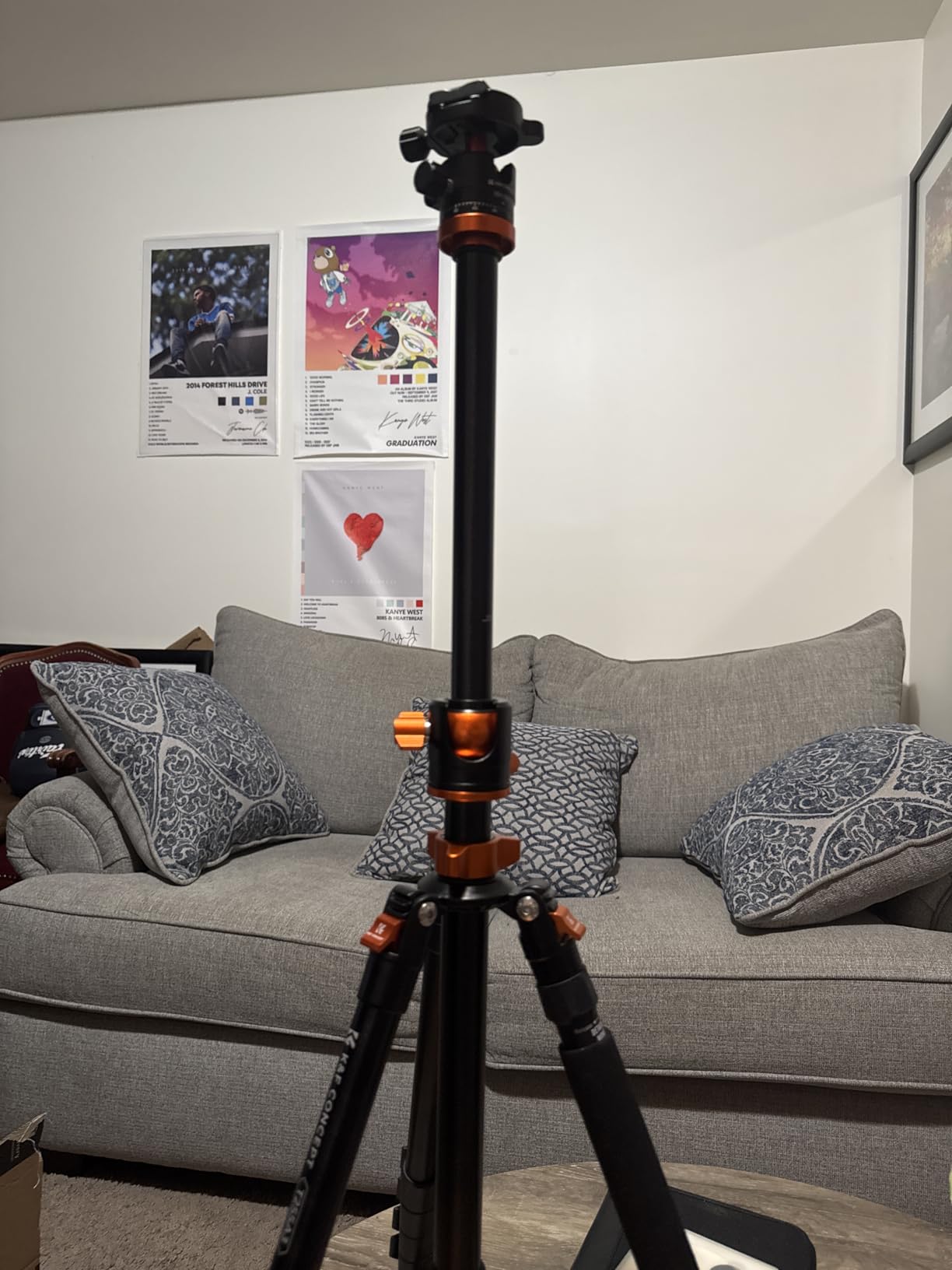
The transverse center column is a different mechanism from a conventional vertical column, and it is the reason this tripod is a strong macro pick. The central column moves 0 to 180 degrees and rotates 360 degrees horizontally, so you can slide the camera to the side, tilt it flat toward a ground subject, or swing it overhead for flat-lay work. Product shooters in particular pick this model for exactly that flexibility.
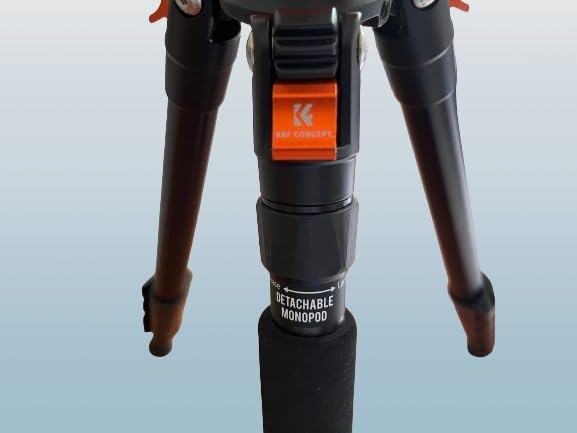
It also collapses transversely, which means the whole tripod can be carried by one leg rather than dangling from all three. At 1.87 kg with a 10 kg rating, that is one of the better weight-to-capacity ratios among the aluminum models here.
Durability is the quiet strength. Long-term owners report three years of heavy use in rain and travel without degradation, and the 360 degree ball head rotates freely for free-angle framing.
How the transverse column helps a stack
For stacking, the useful part is the lateral range. Moving the camera to one side of the tripod apex keeps the load closer to the leg triangle than a long horizontal arm would, so the rig is less prone to flexing as you step through focus positions. A rail mounted on a transverse column also travels in a plane that is easier to keep parallel to the subject.
Many owners pair it with flat-lay product setups, where the camera axis needs to be exactly vertical and a vertical column makes that awkward. The 0-180 degree travel solves it in one movement.
Where it falls short
Three small things that add up. The leg extension flip-lock levers feel lighter duty than the rest of the hardware and deserve gentle handling. The legs are stiff when new and awkward to spread. And the weight hook on the inner column section has to be removed before you can invert the column, with a plastic disc that is hard to grip.
Some buyers also report the ball head drooping slightly when the camera is left at an angle, which needs a realignment before the next frame. None of these are dealbreakers, but they are worth knowing about.
6. SmallRig VT-20 Desktop Aluminum Tripod – Best for Studio Desk Setups
SmallRig 20″/ 52cm Desktop Aluminum Tripod Mini Ball Head Tripods VT-20
Aluminum
5 leg sections
52 cm max height
6 kg load
700 g
Pros
- Reviewers call it exceptionally solid for its class
- Reversible center column allows low shots with a low center of mass
- Hollow center column stores the included hex key
- Arca-Swiss plate from other systems reportedly works with it
Cons
- Leg extension uses a twist-pull-twist action that takes practice
- Butterfly style head knob instead of round knobs
- Center column screw hold is less positive than it could be
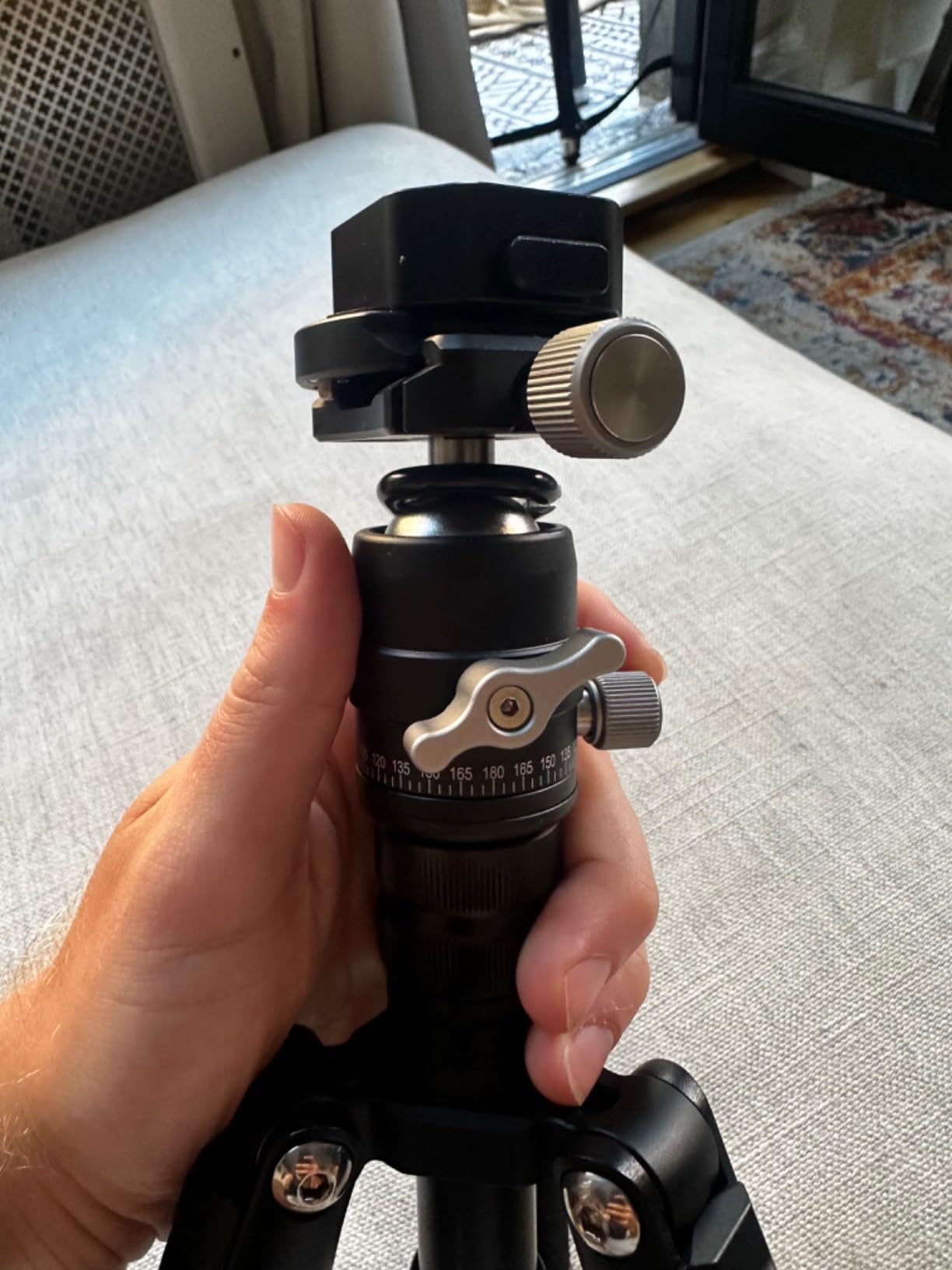
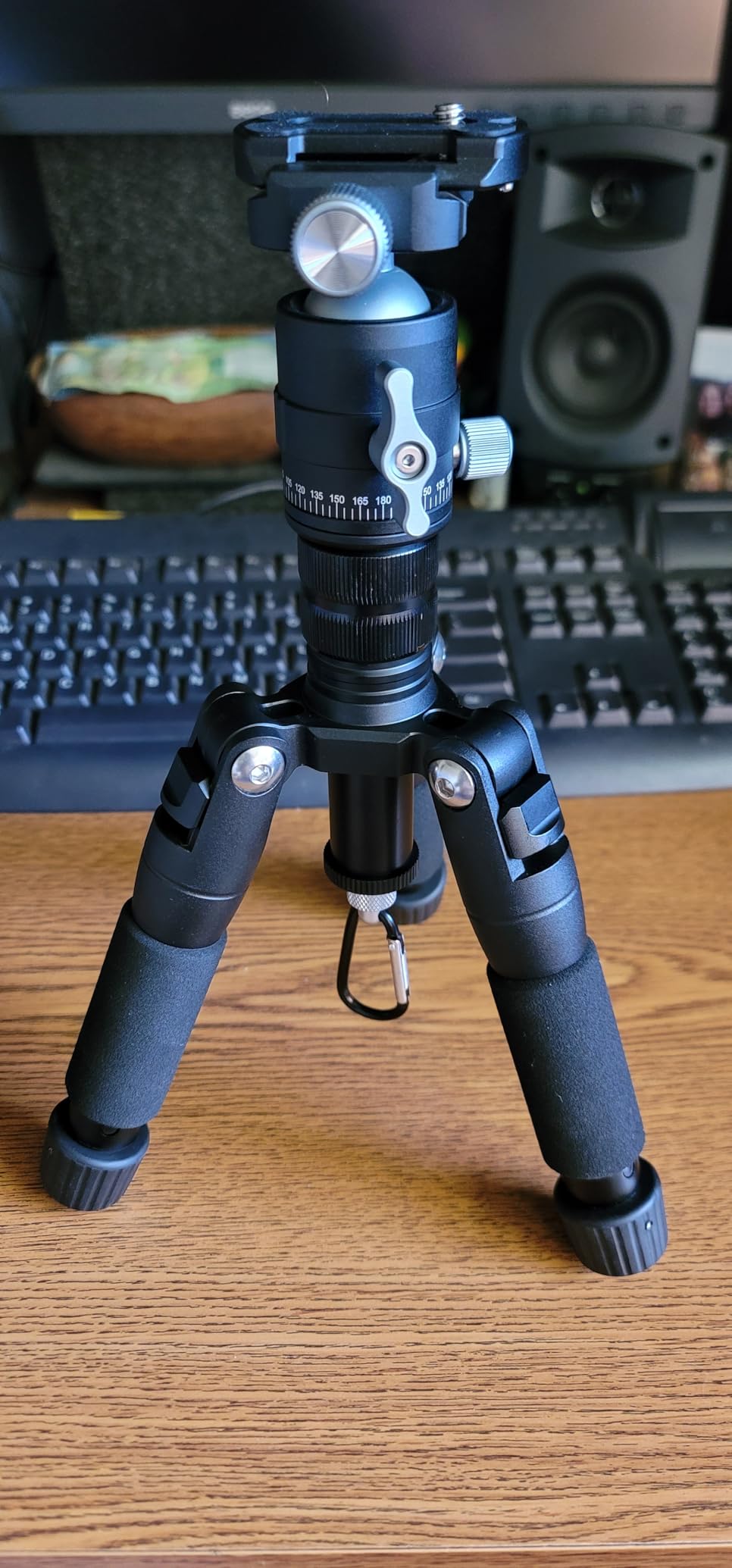
The VT-20 is built for a desk or a light table rather than a garden. It folds to 18 cm, weighs 700 g, and works between 17 and 52 cm, which covers jewelry, coins, stamps, and small product work. Owners describe it as over-engineered for its price point and stable with DSLRs and mirrorless bodies.
The reversible center column is the macro feature. Reversing it gives a low shooting angle without flipping the camera, and because the column stays short the center of mass remains low, which is what you want on a stacked session where a single wobble ruins several frames.
There is a bubble level in the release knob and foam grips on the legs, and the 1/4-20 threaded accessory hole takes magic arms, microphones, or a small monitor. A smartphone holder is included in the box.
Desk macro versus field macro
On a desk, the VT-20 has almost no competition. Working height is fixed by the bench, the subject is static, and light is controlled, so the tripod is really just a rigid stand. A 6 kg rating covers a mirrorless body with a 90 mm or 100 mm macro lens, and a rail will fit within that if the head is well damped.
Outdoors it is a different story. Five-section legs with 23, 50, and 80 degree angle options give you decent framing range, but the small tube diameter and 700 g weight make it twitchy on uneven ground compared with the full-size models.
Where it falls short
The leg extension is the learning curve. It uses a twist-pull-twist action rather than a simple pull and twist, so it takes a few sessions to become quick. The ball head uses a butterfly-style knob where other models use round ones, and the center column screw hold is not as positive as it could be, so some users add a carabiner as a safeguard.
The bubble level is also easy to cover with the camera plate, which defeats the purpose of having it.
7. SIRUI AM-203 Aluminum Mini Travel Tripod – Best for Ground-Level Insects
SIRUI AM-203 Aluminum Mini Travel Tripod, B00K Ball Head, 360° Panoramic
Aluminum
3 leg sections
42 cm max height
5.5 cm min height
0.76 kg
Pros
- Legs lay flat to near ground level
- directly useful for macro
- Highest average rating in this selection
- Convertible 3/8 to 1/4 inch screw allows head swaps
- Rubber feet and metal spikes both included
Cons
- Only three leg sections means coarse height steps
- Ball head rating of 10 kg is below the tripod's own 15 kg
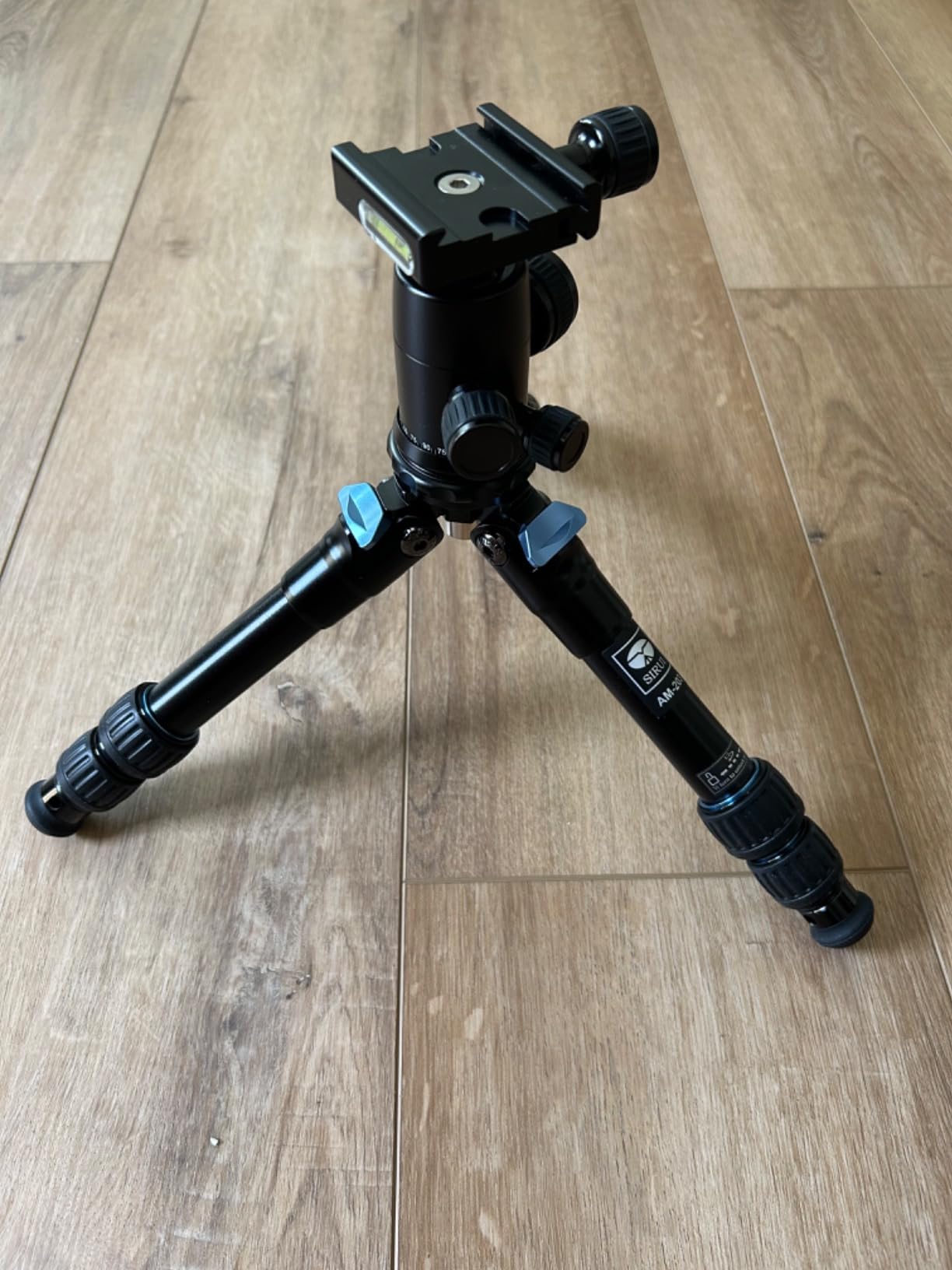
The AM-203 is the lowest-reaching tripod here, and for insect work that is the whole point. The three-section legs lay flat to near the ground for macro photography, taking the working height down to 5.5 cm. Most mini tripods stop at tabletop level; this one gets the camera axis almost into the leaf litter where beetles and larvae actually sit.
It carries the highest average rating in this selection, and owners describe the B-00K ball head as silky smooth with easy angle changes. The standard Arca-Swiss plate means you can drop in a plate from another system, and the mounting screw converts from 3/8 to 1/4 inch if you want to fit a different head.
At 0.76 kg and 11.4 inches folded, it is easy to carry in a daypack, which is what you want when the subject is somewhere awkward rather than in the garden.
Working height and subject distance
At 5.5 cm minimum you can shoot a subject almost from the level of the ground, which removes the shadow your own body would otherwise cast across a backlit insect. The legs also extend to 43 cm for slightly higher framings, so you are not locked into a single shooting angle.
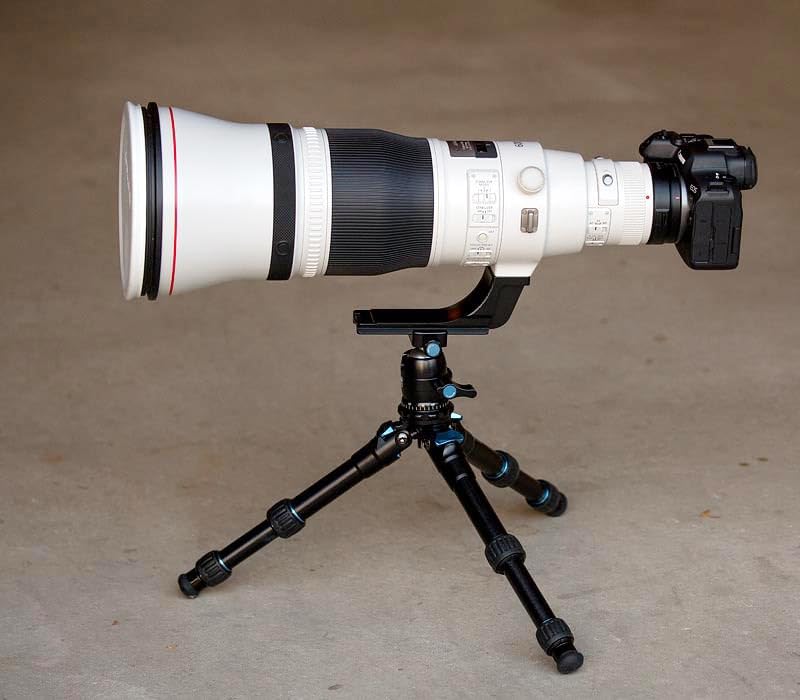
The tripod itself is rated to 15 kg while the included head is rated to 10 kg. For a macro rig the head is the relevant number, and 10 kg leaves plenty of room for a 100 mm lens with a rail attached.
Where it falls short
Three leg sections means fewer extension steps than a larger travel tripod, so fine height matching during a focus stack takes more adjustment than you would like. The head rating being lower than the tripod rating is also slightly odd, and it means you are limited by the head rather than the legs.
8. Manfrotto MT055CXPRO3 Carbon Fiber Tripod – Best for Low-Angle Carbon Work
Manfrotto MT055CXPRO3 Carbon Fiber 3-Section Tripod with Horizontal Column,Black
Carbon fiber
3 section legs
170 cm max height
9 cm min height
4.4 lb
Pros
- Horizontal Q90 column positions a camera roughly six inches off the ground
- Carbon fiber legs are light and stiff
- Legs extend almost horizontal for extreme low angles
- Pair with a 200mm micro lens and a pro body with no movement when locked
Cons
- One reviewer reports a leg failure after two months with a difficult warranty experience
- Carbon fiber column can shed abrasive black dust over time
- Locking levers can pinch fingers if handled carelessly
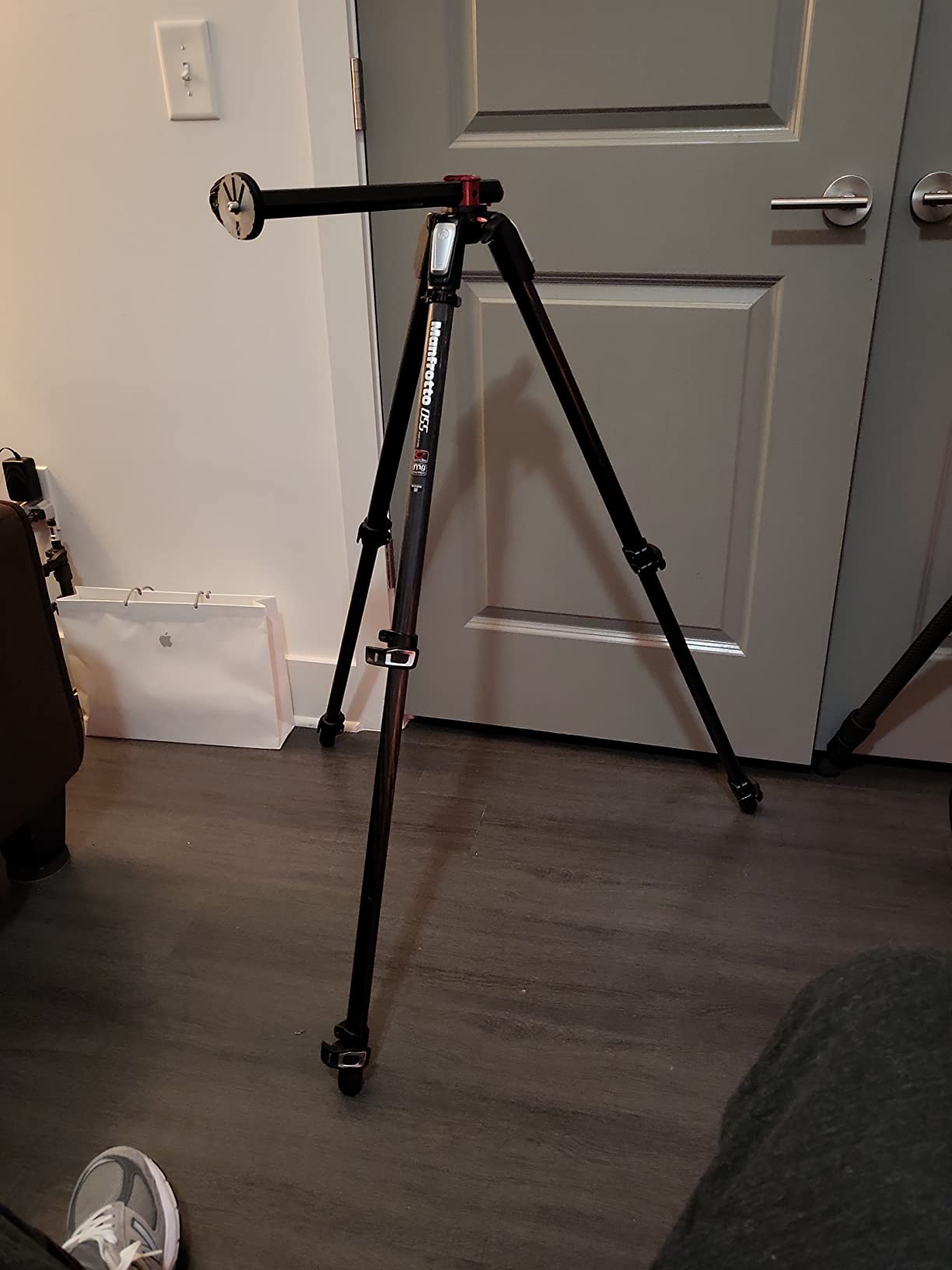
The MT055CXPRO3 is the traditional full-size answer, and macro shooters use it for one specific reason: the horizontal Q90 column. Owners report positioning a camera roughly six inches off the ground with it, which is enough to shoot a subject lying flat without digging the tripod into the soil. The column operates with one finger, so repositioning between shots is quick.
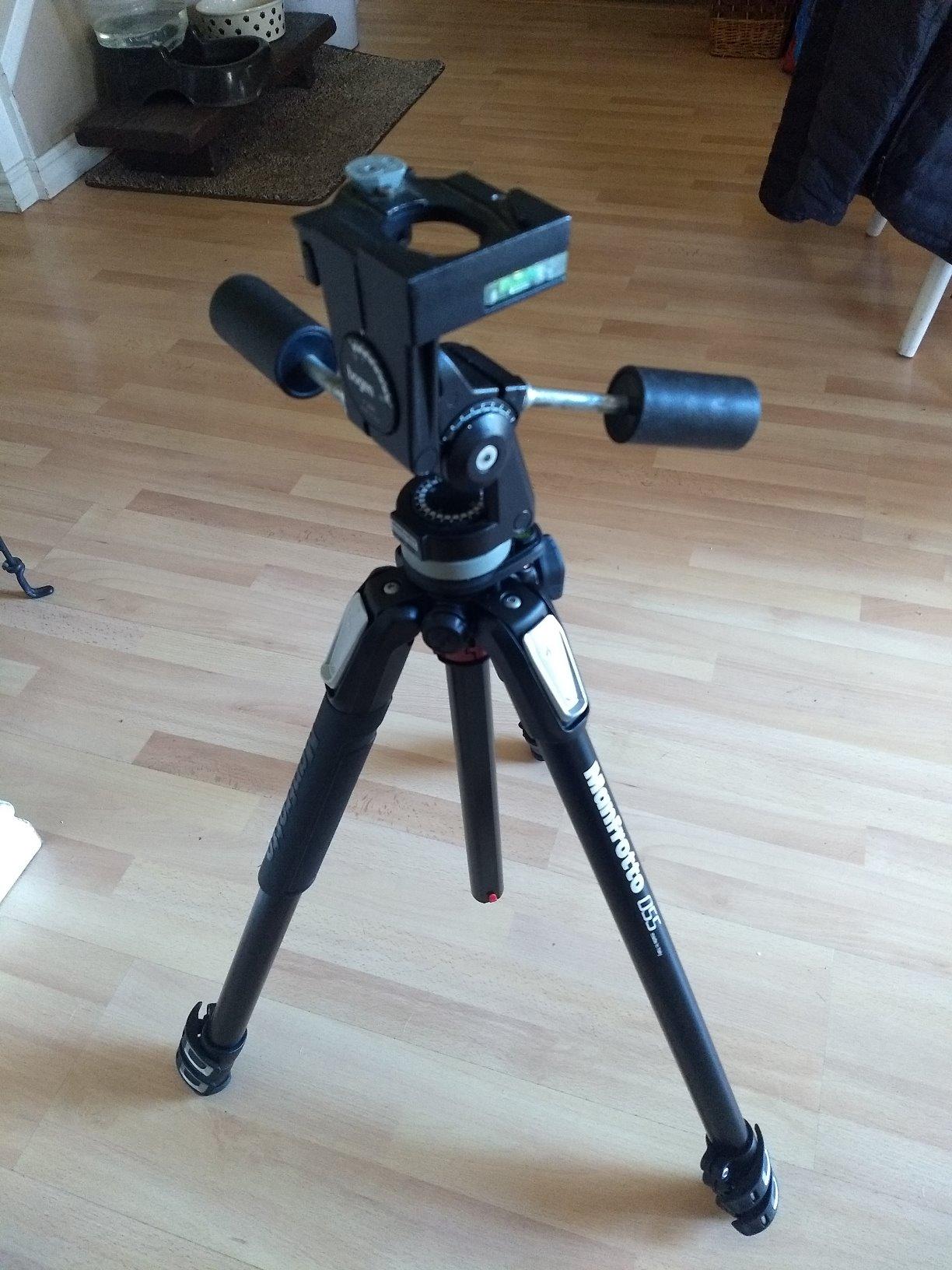
The carbon fiber legs are the other reason. They are stiff and light, and owners note saving roughly 4 lb against a heavy aluminum tripod of the same class. There is an Easy Link connection for accessories and a rotating bubble level on the upper disk for leveling on all planes, which is a genuine help when the camera axis has to be exactly level for a stack.
This is a tripod that also does landscape and night work well. One owner reports it staying rock solid at full extension in 50 km/h wind for long Milky Way exposures, and a 200 mm micro lens on a pro body showed no movement when locked down.
What the horizontal column changes
A vertical center column puts the camera directly above the leg apex. A horizontal column lets you swing it out to one side, so the camera sits low and offset while the legs stay planted. That means the lens can be brought to a subject at ground level without splaying the legs into a position that is not stable, which is the complaint we hear most often about cheap low-angle set-ups.
The three-section legs extend almost horizontal, so you can also drop the apex to near the ground and use the column for fine positioning. For 9 cm minimum height, the Q90 column is the reason this tripod reaches where it does.
Where it falls short
Two things worth knowing. The carbon fiber center column can grind down over time and shed fine black abrasive dust that transfers to hands and clothing. And one reviewer reported a leg breaking after two months of wildlife shooting with an unsatisfactory warranty experience, which is a single report rather than a pattern, but it is the reason this tripod sits below the others on rating.
At 4.4 lb plus a separately purchased head, it is not a lightweight travel kit. The warranty extends to ten years with online registration.
9. SmallRig CT200 Horizontal Overhead Tripod – Best for Overhead Shooting
SmallRig 72.8″/ 200cm Horizontal Overhead Camera Tripod CT200
Aluminum
4 leg sections
200 cm max height
15 kg load
2.1 kg
Pros
- Adjustable overhead arm is praised for macro and for clearing railings in wide frames
- Quick lever locks are fast compared with screw-style leg locks
- Verified stable with a heavy telephoto zoom and a fluid video head
- Counterweight bag helps dial in balance for heavier setups
Cons
- Quick release plate attachment screw loosens and needs periodic retightening
- Counterweight bag is bulky
- 63 cm folded length limits travel use
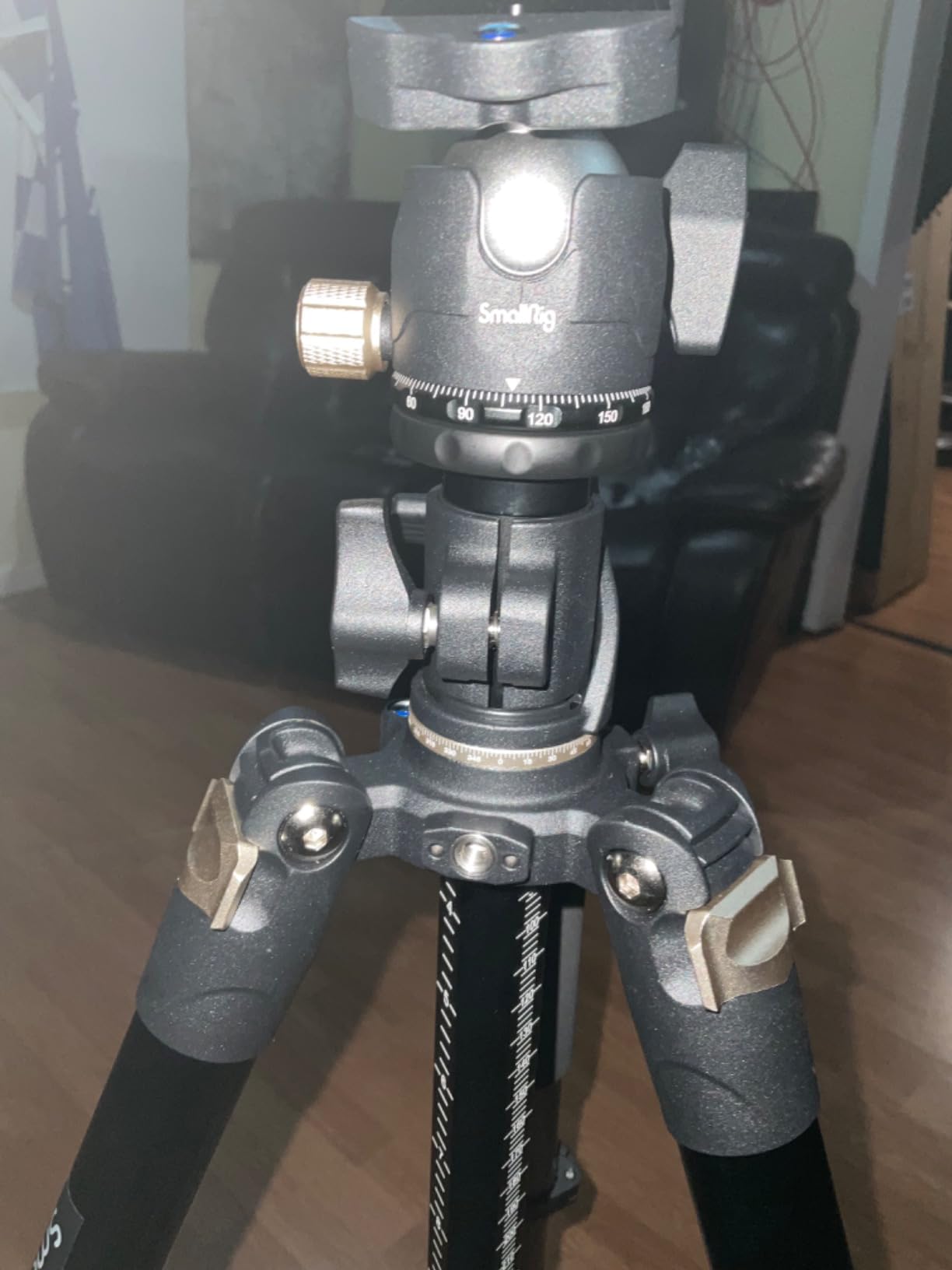
The CT200 is built around a horizontally shaped center column with 180 degree tilt and 360 degree rotation. That single feature covers almost every macro angle a photographer runs into: swing it forward to shoot straight down over a flat-lay, swing it sideways to look at a subject from ground level, and rotate it to build a panorama around a single object without moving the feet.
Owners single out the overhead arm for macro specifically, and also for clearing railings in wide-angle frames. The 29 mm aluminum tubes and 2 kg weight are backed by a 15 kg tripod rating, though the included head is rated to 10 kg, and the head is the number that matters for a macro rig with a rail.
It converts to a monopod that reaches 140 cm, silicone foot pads conceal the metal spikes for mixed terrain, and 1/4-20 threaded holes take microphones, monitors, or a focusing rig.
Overhead geometry and balance
When the column is horizontal and the camera is out over a subject, the load is offset from the leg triangle. That is where the counterweight bag included in the box helps, and owners who use a long lens or a rail report that it is worth fitting. Leg angle options at 23, 55, and 80 degrees let you drop the apex to lower the camera without relying on the column alone.
One owner verified stability with a Sigma 150-600 zoom and a fluid video head swapped in, which is a much heavier test than a macro setup requires. For stacking, the 360 degree rotation on the column means you can reframe around a subject without touching the feet.
Where it falls short
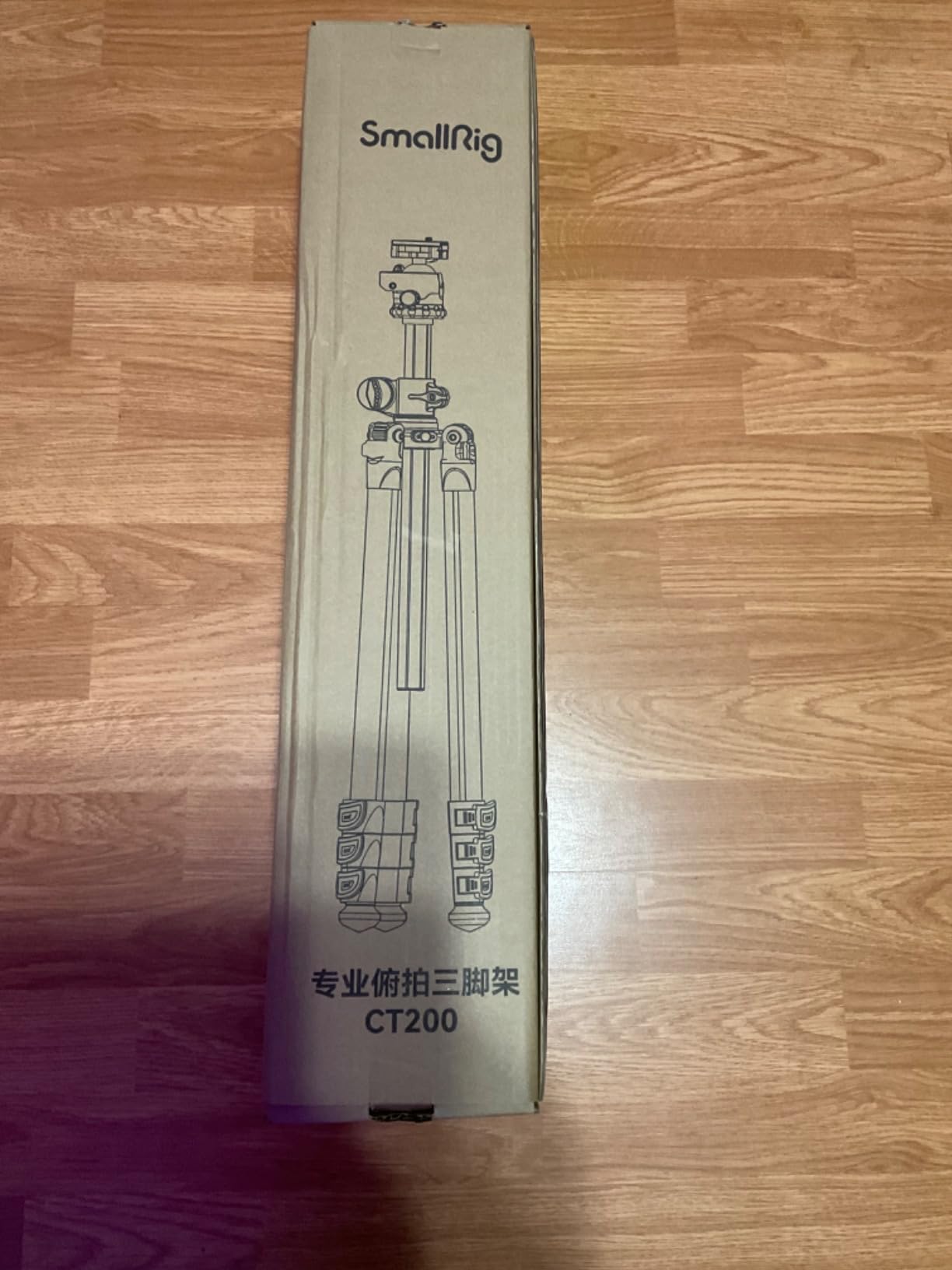
The quick release plate attachment screw can loosen and needs periodic retightening, which is annoying when you are running a stack. The included counterweight bag is bulky and awkward enough that some users prefer a lead-weighted alternative. The carrying bag also lacks a proper closure, and at 63 cm folded this is not a true travel tripod.
10. NEEWER TP63 Overhead Tripod Monopod – Best Value Overhead Rig
NEEWER 90 Inch Tall Overhead Horizontal Camera Tripod Monopod, TP63
Metal alloy
4 leg sections
230 cm max height
10 kg load
1.86 kg
Pros
- Horizontal arm does not sag under a full camera setup
- Converts to a monopod for tight spaces
- Ball socket tightening screws hold a camera and large lens securely
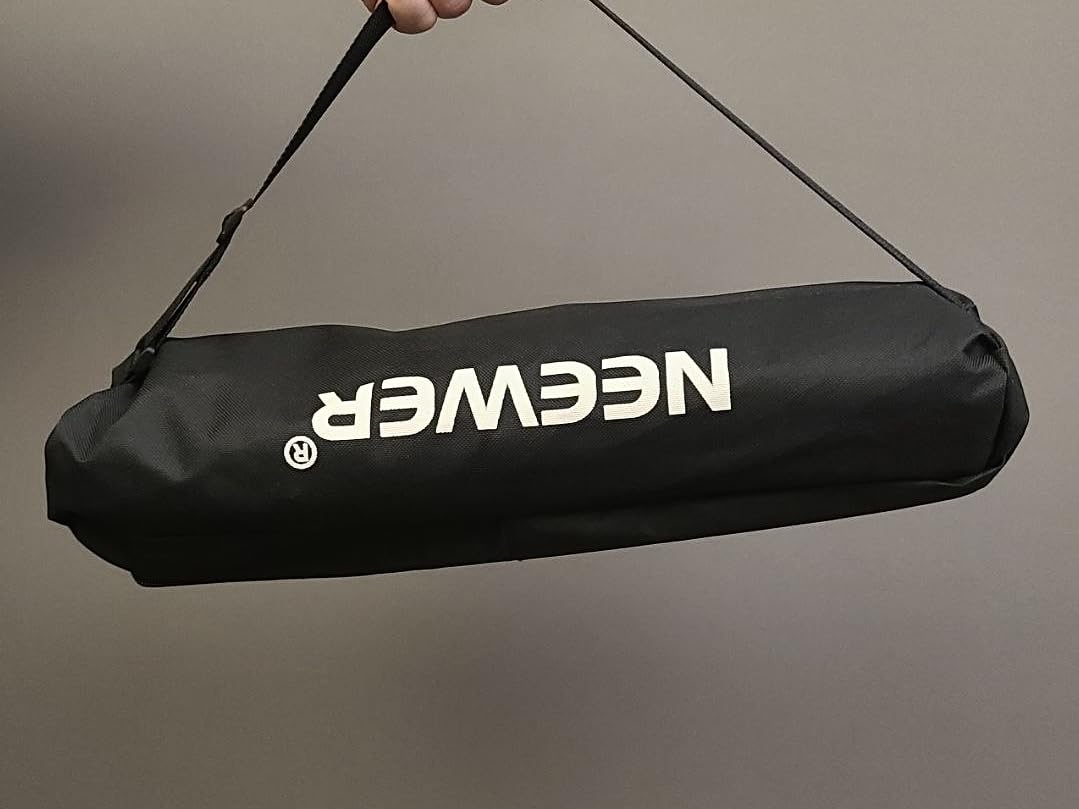
- Includes a carrying bag that fits the folded tripod
Cons
- Quick release plate threading reported as loose on one review
- Some components feel less solid than higher end tripods
- Leg angle clips contain a plastic part that may wear
The TP63 covers the widest height range in this group, from 64 cm up to 165 cm on the legs and 230 cm with the column raised. For macro that range is less about overhead work and more about versatility: the same tripod handles a ground subject and a tall vertical composition without a second support.
The center column is horizontal with 120 degree vertical tilt and 360 degree rotation, and the ball head adds a scaled pan base with tilt from plus 90 to minus 90 degrees. One leg tube detaches and connects to the head to make a monopod, which is how you get into the tight spaces where insects hide.
It holds a Sony A7-series body with a large lens solidly, and the horizontal arm is reported not to sag under a full setup during overhead work, which is the failure mode that matters most here.
Monopod conversion for close quarters
Detaching a leg and attaching it to the head turns the TP63 into a single support that can be raised between 56.5 cm and 240 cm. For macro this is genuinely useful, because a single column can be positioned in places three legs cannot go, such as between rocks or behind a low wall, and the foam grip makes a long session bearable.
There is a hook for hanging sandbags if you are working in wind with a long lens, and the folded 21 inch package fits the included carrying bag.
Where it falls short
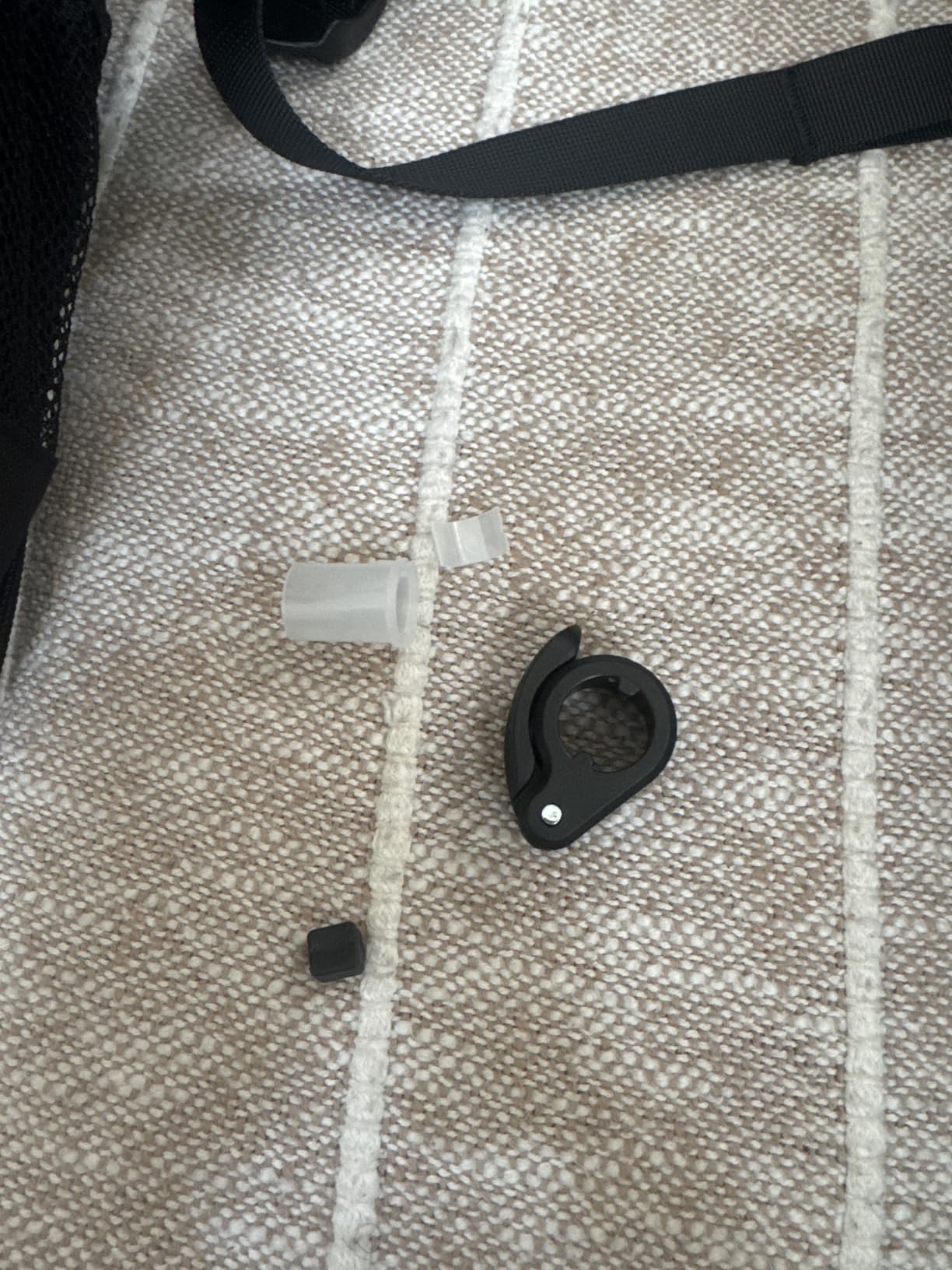
One reviewer reported loose tolerances in the quick release plate threading that made a mounted phone wobble, so check the fit before a long session. Several buyers also describe some components as feeling less solid than higher-end tripods, and the leg angle clips contain a plastic part that is a likely wear point over time.
At 1.86 kg it is too heavy and too tall-folding to count as a dedicated travel tripod.
11. SmallRig 5025 Carbon Fiber Tabletop Tripod – Best for Light Carbon Travel
SmallRig Carbon Fiber Tabletop Tripod Kit – 5025
Carbon fiber
3 leg sections
17 inch max height
10 kg tripod capacity
845 g
Pros
- Thickened 1 inch carbon tubes give a solid feel at only 845 g
- Fluid pan and tilt head with fixed damping for smooth movement
- Replaceable metal foot spikes adapt it for outdoor surfaces
- Arca-compatible quick release plate mounts to a camera or cage
Cons
- Included video head is limited to 3 kg
- Head type must be chosen as a separate variant at purchase
The 5025 is a tabletop tripod that has been upgraded at the leg rather than the head. The 25.5 mm carbon fiber tubes are thicker than you expect at this weight class, and the result is a solid-feeling support at 845 g. It stores at 290 mm and reaches 432 mm, so it works on a bench or a low wall.
It has a 1/4-20 quick release plate that mounts straight onto a camera body or a cage, and a 3/8 threaded hole underneath that lets it sit on a larger tripod or monopod. The replaceable metal foot spikes screw into 3/8-16UNC holes, which makes it practical on soil and bark as well as a table.
Buyers like the rigidity-to-weight ratio and the smoothness of the fluid pan and tilt head for compact tabletop, building, and travel setups.
Head choice matters more here than usual
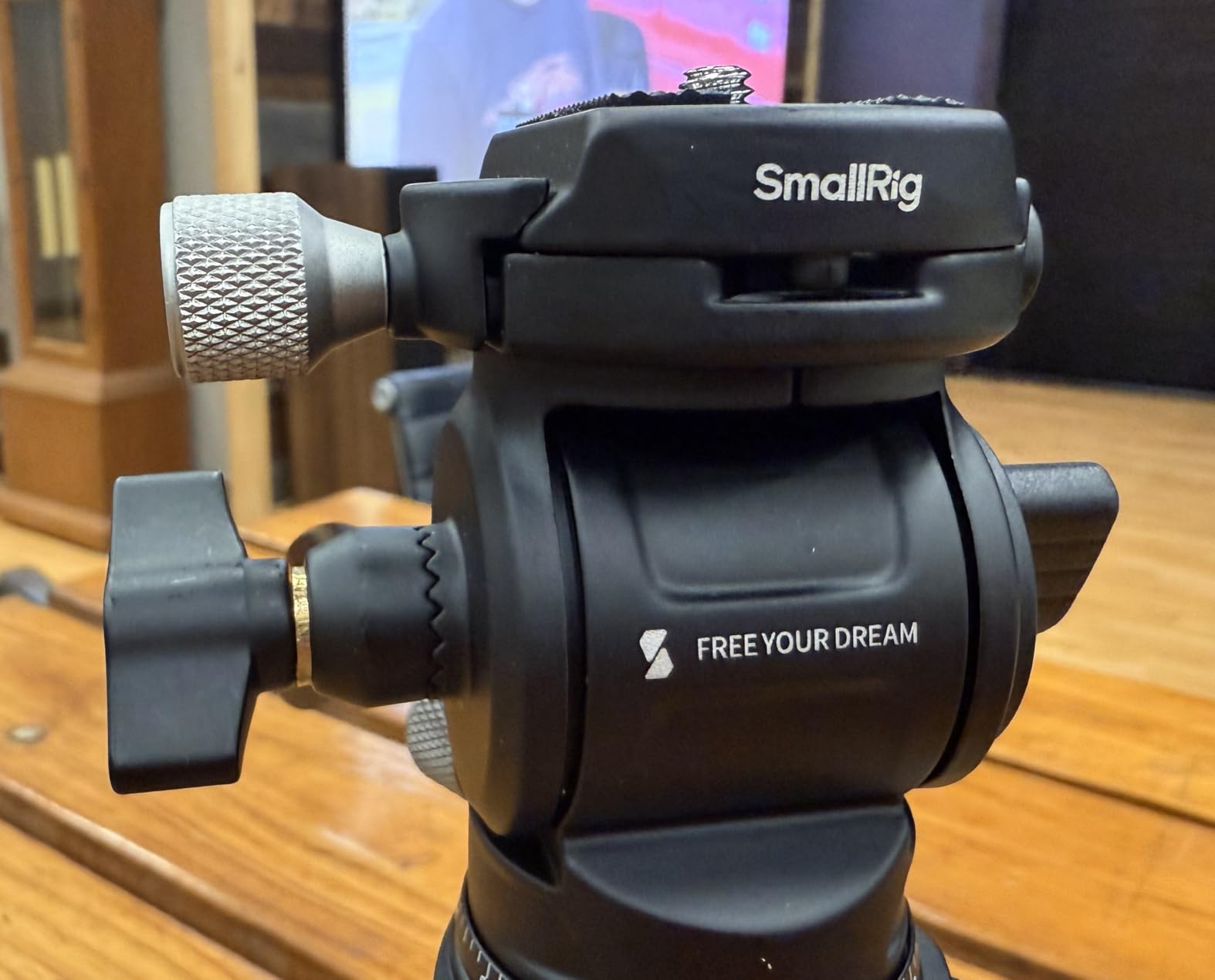
There is a real constraint: the tripod itself is rated to 10 kg while the video head is rated to 3 kg. A macro body with a 100 mm lens can approach that head rating, and a focusing rail on top of it will pass it. If you are stacking a heavier rig, budget for a different head or a different tripod.
The head is also a purchase decision rather than an accessory. The ball head and video head are sold as separate variants, so you need to know before you buy which one suits your setup. A ball head is the right call for macro framing; the fluid pan and tilt is better for moving video.
Where it falls short
The 3 kg head rating is the honest limitation, and it sits oddly against a 10 kg tripod figure that will draw you in. A maximum height of 17 inches also rules out overhead compositions, so this is a bench and low-wall tripod only. Everything else about the package is well made for the class.
12. AOKA CMP163C Carbon Fiber Mini Tripod – Best for Backpacking
AOKA 15.75″/0.99lb Carbon Fiber Mini Desktop Tripod with 360° Ball Head
Carbon fiber
3 leg sections
15.75 inch max height
3 kg load
0.99 lb
Pros
- Lightest tripod in this selection at 0.99 lb
- Carbon fiber construction with CNC forged aluminum components
- 360 degree ball head supports panoramic slice shooting
- Quarter turn knob leg locks are fast in the field
Cons
- 3 kg load capacity is the lowest in this group
- 15.75 inch max height is short for overhead work
- Three section legs give coarse height increments
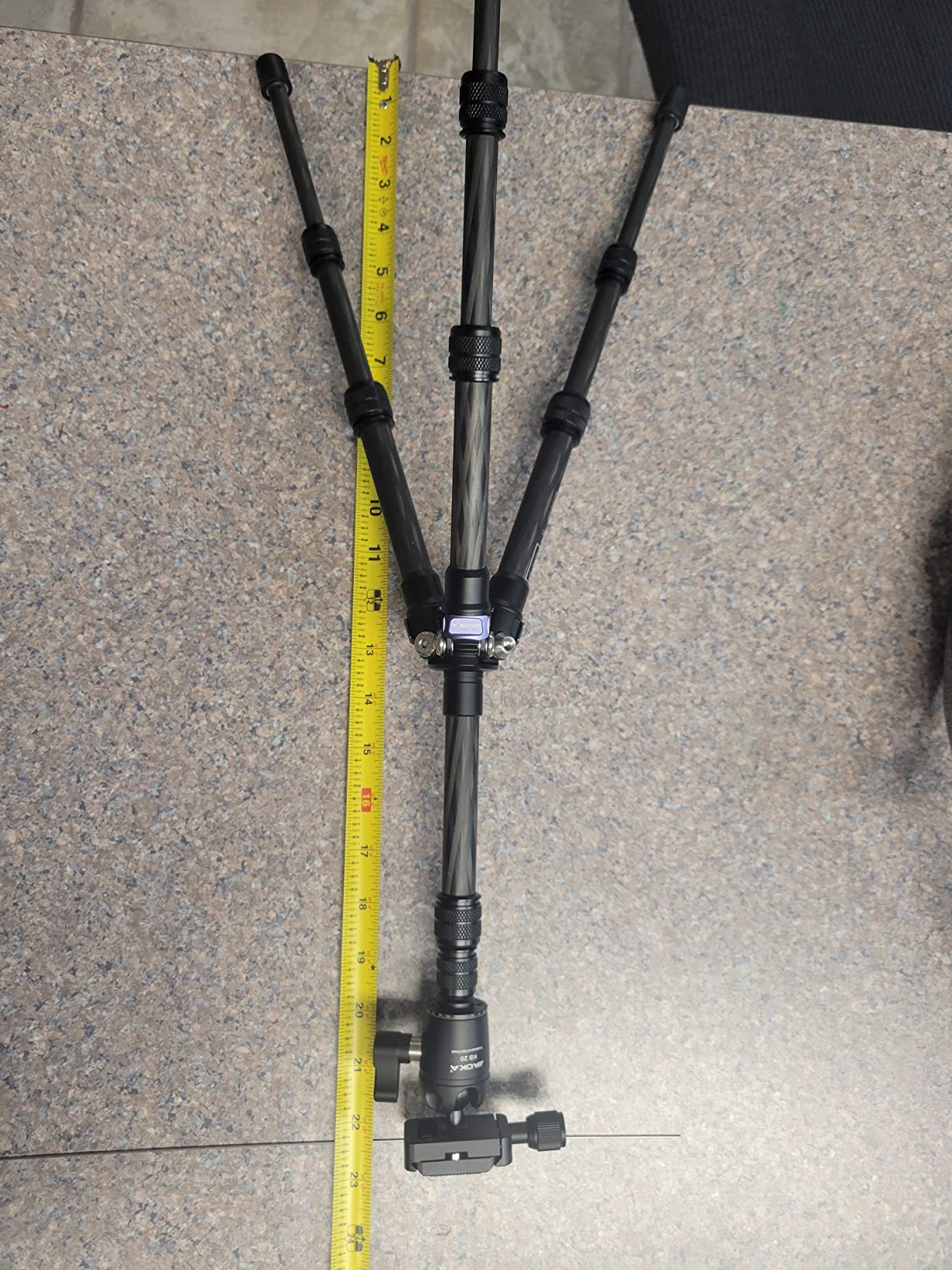
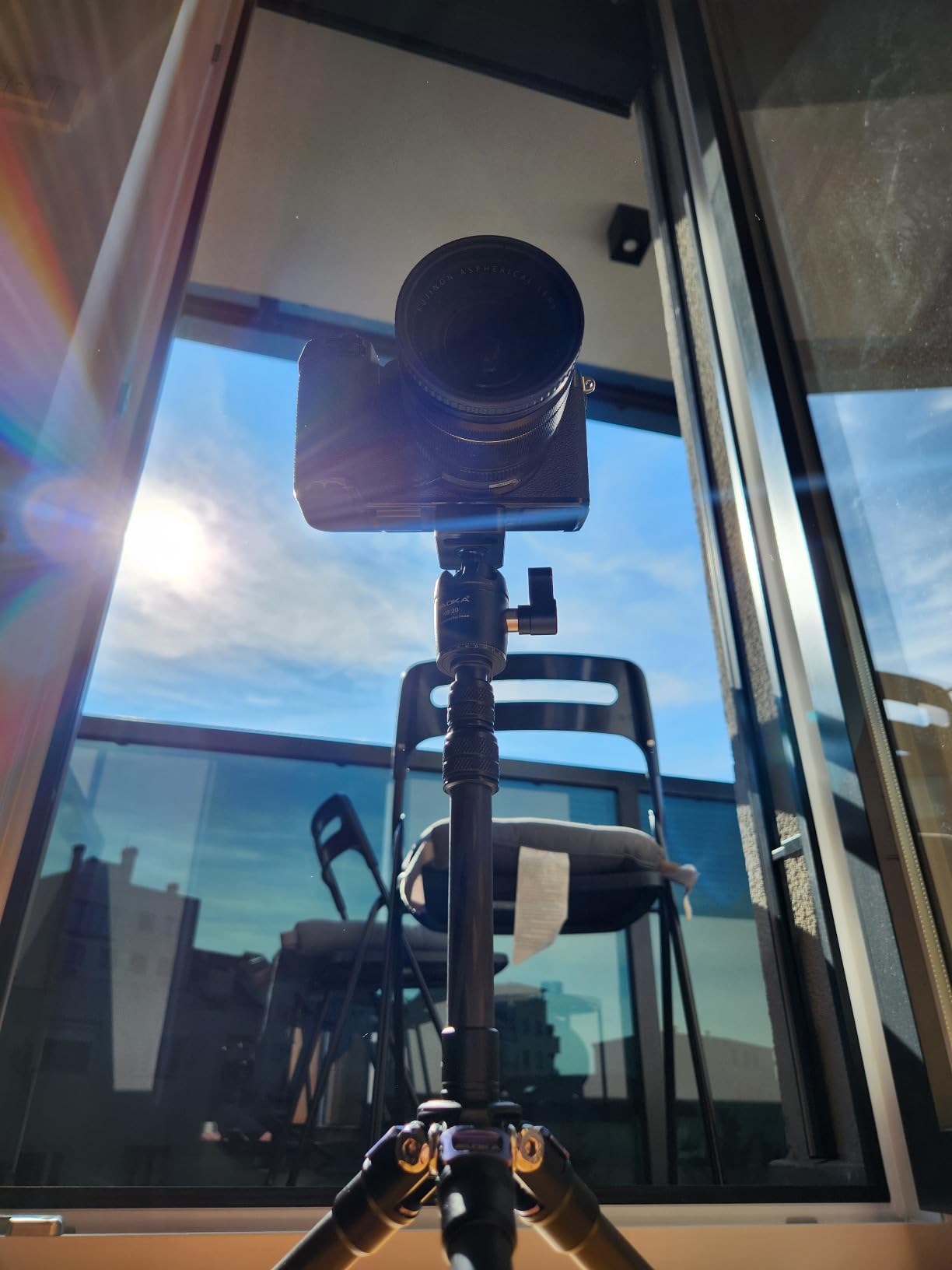
The AOKA CMP163C weighs 0.99 lb, which makes it the support you will actually carry to the subject. Owners emphasize that combination of weight, carbon fiber construction, and a 360 degree ball head, and the manufacturer rates it as stable and blur-free for macro shooting and long exposures, which is a claim worth testing rather than trusting.
It extends to 15.75 inches and retracts to 10.04 inches with a 2.44 inch diameter, so it packs into a jacket pocket. The knob-type leg locks need only a quarter turn, which is much faster in the field than a twist lock when your hands are cold or wet.
On balance it is the best carry-everywhere option here, provided your rig is light. If you are stacking a full-frame body with a 100 mm lens, a rail, and a bracket, the rating gets tight quickly.
When 3 kg is enough
Three kilograms covers a compact body with a small macro lens, a phone, a point-and-shoot, or a lightweight mirrorless setup. The quarter turn locks let you change height fast, which is the right trade when you are kneeling on wet ground rather than working at a bench.
The 360 degree ball head supports panoramic slice shooting, which is a genuine advantage if you want a wide environmental frame of a single plant or insect and need to stitch several shots together without moving the tripod.
Where it falls short
The 3 kg rating is the lowest in this group and rules out the long lens plus rail combinations that serious macro work tends to grow into. A 15.75 inch maximum height is also short for overhead compositions, and three-section legs give coarse height increments that make matching a focus stack to a specific plane less precise.
How We Picked These Macro Tripods
Every tripod here was judged on five things, in this order: reachable minimum working height with a macro lens mounted, rigidity at that height, load capacity against a realistic rig weight, packability, and the quality of the included head. We read the full review set for each model, checked the stated minimum height against the column and leg options actually available, and paid close attention to reports of creep, head droop, and vibration after extended use.
Products where the manufacturer minimum height could only be reached by splaying the legs into an unstable position were penalized, because that number does not help in the field. Where a stock head rating was much lower than the tripod rating, we treated the head as the limit, since that is the part carrying the load at low working heights. If you want the wider mainstream context rather than macro specifics, our roundup of the best tripods overall covers the general-purpose picks.
How to Choose a Tripod for Macro Photography
Reverse or rotating center column vs splayed legs
These are the two routes to getting low, and they suit different subjects. A reverse or rotating center column moves the camera down or overhead while the legs stay in a normal footprint, so the base remains wide and stable. It is the right choice for a flower on a stem, a coin, or any subject raised above the ground.
Splaying the legs flat lowers the whole center section to ground level without any accessory. It is the right choice for insects, fungi, moss, and anything on soil. The tradeoff is that the effective base is the leg spread, so a wide splay on soft ground can sink or slip, and the closer the apex is to the ground the more the head is working at a disadvantage.
Several picks here do both, which is the flexible option. The K&F CONCEPT 90 inch model and the SIRUI AM-203 are built around leg geometry. The Manfrotto MT055CXPRO3 and the INNOREL GT324C are built around column geometry.
Carbon fiber or aluminum
Carbon fiber is lighter and stiffer for a given tube diameter, which matters when you are hiking to a subject or holding a rig out over a gap. Aluminum is heavier but cheaper, often thicker at the same price, and more forgiving of knocks. In cold field conditions carbon fiber keeps its stiffness better when handled with cold fingers, while aluminum feels colder to the touch and its twist locks are more likely to stick after a wet session.
Neither material solves vibration. That comes from head quality, column rigidity, and how well the load is centered. Our general camera tripod guide covers material tradeoffs in more depth across wider use cases.
Ball head, geared three-way head, or gimbal head
A ball head is fast and light, and a good one with adjustable friction is enough for most macro work. Set the friction so the lens holds position when your hands leave the camera, and resist the temptation to leave it fully loose for framing speed.
A geared three-way head gives you separate pan, tilt, and lateral control, one axis at a time. Macro shooters in photography forums often prefer this for precise framing, because you can slide the camera horizontally without disturbing the vertical angle, which is exactly the movement you need when composing a subject in a tight frame.
A gimbal head isolates the camera from the rest of the rig on two axes, which reduces the effect of small knocks. It is heavier and less precise for deliberate repositioning, so it suits a working setup with a rail rather than hand framing.
Load capacity against your real rig weight
Add up the body, the macro lens, extension tubes, a focusing rail or bracket, and any flash or diffuser, then look at the head rating rather than the tripod rating. The head is the weakest link at low working heights. Two models here are rated to 10 kg as tripods with heads rated to 3 kg, and that gap decides whether you can add a rail.
For stacking, subtract a margin. If the rating is close to your rig weight, small changes in center of gravity as the column moves will show up as movement between frames.
Arca-Swiss compatibility and focusing rails
Arca-Swiss is the plate standard almost every focusing rail, macro slider, and cross-slide uses. Most tripods here ship with an Arca-compatible plate or clamp, which means you can move your camera onto a rail without changing anything. Check that the clamp accepts a standard-width plate, not only the thinner plates some travel tripods ship with.
A quick release plate with a U-shaped or 90 degree notch is worth preferring, because it stops the camera rotating in a precisely vertical framing, which is a real problem for flat-lay work.
Minimum shooting height is the number that matters
Ignore the maximum height for a moment and read the minimum. This is the figure that decides whether you can photograph a snail at 1:1 or a coin on a table, and it is the number most often quoted without the conditions attached. Check whether it requires the short column, a reversed column, or splayed legs, and whether the splay leaves the tripod stable.
For insects and fungi you want under 15 cm of true working height. For studio work on a bench, 17 to 25 cm is plenty. For a raised subject, what matters is column reach rather than minimum height at all.
Once you have picked the support, the lens side matters just as much. Our picks for close-up and near-focus lenses cover the range that pairs well with a rigid support and a focus stack.
Frequently Asked Questions
What is the best camera tripod for macro photography?
The best tripod for macro photography is one that can place the camera level with or above a small subject and hold still between frames. A reverse or rotating center column reaches low subjects without moving the legs, splayed legs drop the center section to ground level, and a rigid head stops a focus stack from drifting. Weight matters less than geometry at macro distances.
Do I need a tripod for macro photography?
For anything at or near 1:1 magnification, yes. Handheld is realistic up to roughly half life size on a full-frame body with good technique, but a tripod removes shake, allows slower shutter speeds in dim light, and makes focus stacking repeatable. At macro distances the depth of field is millimetres deep, so any movement ruins individual frames and multi-frame stacks.
What mini tripods are best for macro photography?
Look for a reversible or flat-laying leg design and a low stated minimum working height. The SIRUI AM-203 drops to 5.5 cm with legs that lie flat to the ground, which suits insects and fungi. The SIRUI AM-TT50 and SmallRig VT-20 reverse the center column for low-angle desk work. For packability, the AOKA CMP163C weighs 0.99 lb but is limited to a 3 kg load.
What tripod head is best for macro photography?
A ball head with adjustable friction is enough for most macro work, provided the friction is set so the lens holds its position. A geared three-way head gives finer framing control by moving one axis at a time, which many macro shooters prefer for tight compositions. A gimbal head isolates the rig on two axes and suits a setup built around a focusing rail rather than hand framing.
What tripods do professional photographers use for macro photography?
Full-size aluminum models with a horizontal or transverse center column remain the most common choice, because the column reaches low subjects while the legs stay in a wide stable footprint. Carbon fiber is preferred when the rig has to be carried to the subject. Many working macro photographers use a full-size tripod for the shoot itself and a mini tripod for scouting and casual frames.
Which Macro Tripod Should You Buy?
The Manfrotto Befree GT XPRO is our pick as the best tripod for macro photography overall, because the 90 degree center column reaches low subjects without moving the legs and the Arca-Swiss plate keeps your rail options open. If your macro work happens on a bench, the SIRUI AM-TT50 does the same job in a much smaller package. For ground-level insects the SIRUI AM-203 goes lower than anything else here, and for overhead and flat-lay work the SmallRig CT200 or K&F CONCEPT T255A3 put the camera exactly where you need it.
Whichever you pick in 2026, set the head friction before you frame, check the minimum working height in the configuration you will actually use, and keep the load centered. Those three habits do more for your stacked frames than any other single piece of gear.