
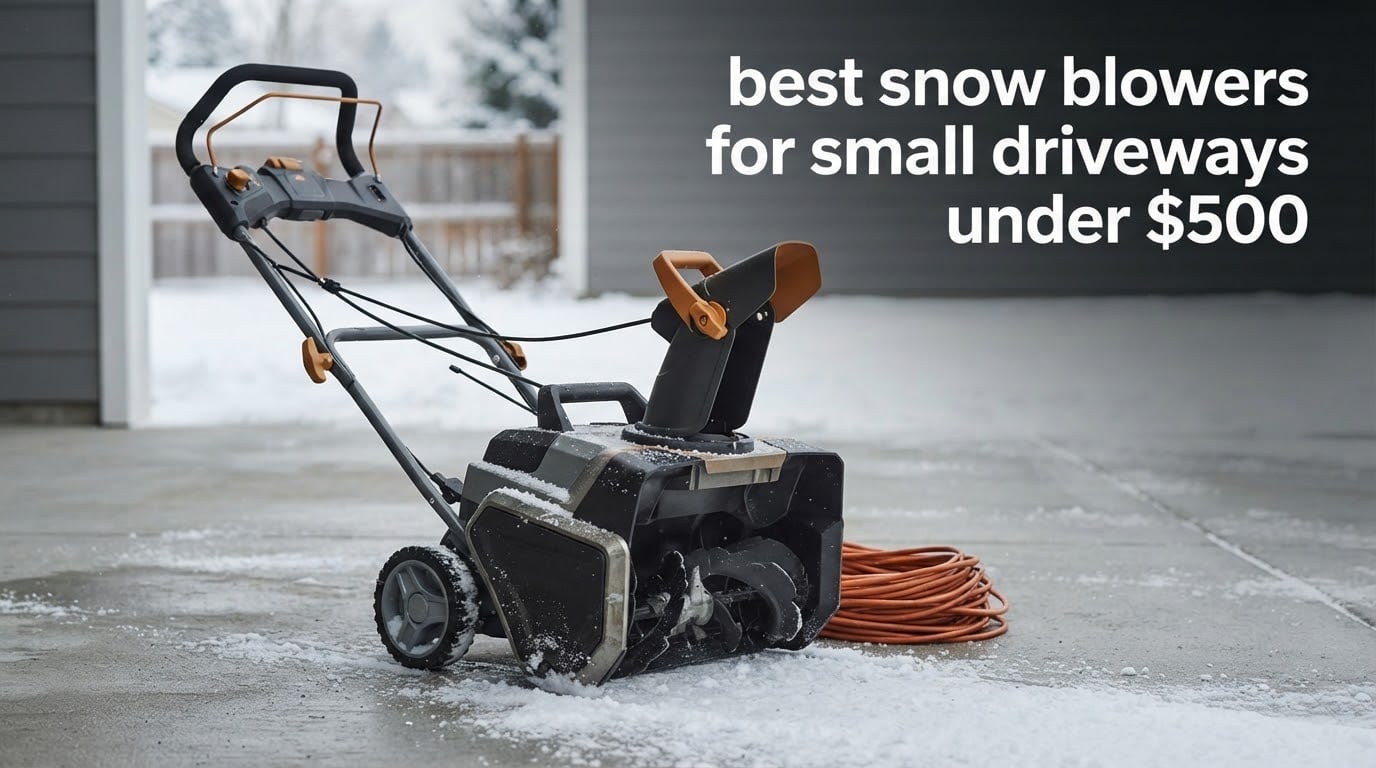
Most people buying a snow blower for a two-car driveway are overspending. They read a forum post about a machine that costs several times their entire budget, buy something too heavy to steer around a parked car, and then spend a season wondering why it feels harder than shoveling. The honest answer is that a compact single-stage machine clears a short paved driveway faster and with less fuss than anything bigger.
That is the standard for this roundup: these are the best snow blowers for small driveways on a tight budget, and every pick here clears that ceiling all-in, battery and charger included. We compared ten machines across clearing width, intake height, weight, throw distance, all-in cost and verified review depth. Five are corded electric and five are cordless, and all ten are single-stage.
One number frames the whole category. A typical two-car driveway of about 500 square feet takes four passes and roughly twelve minutes with a 20-inch deck, or three passes and under ten minutes with a 22-inch one. Anything wider than that does not help you, because the limiting factor is how easily you can turn around at the ends, not how much snow the machine can move per minute.
We also cover what this budget cannot buy, how to manage an extension cord, and why cordless runtime is the real cost trap in this tier. If you want the wider picture first, our guides to the best snow blowers for driveways and the best cordless snow blowers for small driveways cover larger budgets and battery-only lineups.
Table of Contents
How we chose these snow blowers
Two hard filters did most of the work. The first is the ceiling: every machine here costs at or under the limit including any battery and charger required to run it, which is why a bare-tool cordless listing never makes the list unless the batteries are already in the box. The second is the driveway: each machine has to be genuinely viable for a one- or two-car paved driveway of roughly 400 to 600 square feet, not just a walkway or a set of steps.
Beyond that we weighted clearing width against intake height, then weight against drive type, then verified review count, because ratings resting on a handful of reviews tell you very little. Specs come from manufacturer listings, and owner commentary comes from verified purchase reviews. We do not use paywalled rankings from other publications, and where owner feedback contradicts a spec sheet we say so rather than repeating the claim.
Quick answer: what type of snow blower does a small driveway actually need?
A single-stage machine with a 20 to 22 inch clearing path and a 10 to 13 inch intake height is the correct class for a small driveway, driven by a 15-amp corded motor, a cordless battery, or a small gas engine. Two-stage gas machines are built for long drives and deep wet snow, and they cost several times this budget. Most of the benefit people expect from a bigger machine comes from throw distance, which matters far less on a 60-foot driveway than it does on a quarter-acre lot.
Three steps size it properly. First, measure your driveway in feet of width and multiply by its length, which gives you square footage. Second, pick a clearing width that divides into roughly three or four passes across that width. Third, check the intake height against your typical storm depth, not your worst storm ever, because a machine rated for 8 inches will bog down in wet snow long before it reaches its limit in dry powder.
Top 3 picks for small driveways in 2026

Snow Joe SJ627E 22-Inch Corded
- 22-inch clearing path
- 13-inch intake depth
- 34.8 pounds
- 25-foot throw
- dual LED headlights

Voltask 48V Cordless Kit
- Two 24V batteries and dual charger included
- 20-inch path
- 22.9 pounds
- 30-minute runtime

Westinghouse WSnow20 20-Inch
- 20-inch path
- 10-inch intake depth
- 29.3 lbs
- 680 lbs per minute
- steel auger
All 10 Best Snow Blowers for Small Driveways (October 2026)
| Product | Specifications | Action |
|---|---|---|
| Snow Joe SJ627E 22-Inch Corded |
|
Check Latest Price |
 PowerSmart 21-Inch Corded PowerSmart 21-Inch Corded |
|
Check Latest Price |
| Westinghouse WSnow20 20-Inch Corded |
|
Check Latest Price |
 DEKOPRO 21-Inch Corded DEKOPRO 21-Inch Corded |
|
Check Latest Price |
 WEN 5670 20-Inch Electric Blaster WEN 5670 20-Inch Electric Blaster |
|
Check Latest Price |
| Voltask 48V Cordless Kit |
|
Check Latest Price |
 SENIX 40V 21-Inch Cordless SENIX 40V 21-Inch Cordless |
|
Check Latest Price |
 Snow Joe 48V IONMAX 18-Inch Kit Snow Joe 48V IONMAX 18-Inch Kit |
|
Check Latest Price |
 Westinghouse WSnow18 48V Kit Westinghouse WSnow18 48V Kit |
|
Check Latest Price |
 Skil PWR CORE 40 20-Inch Kit Skil PWR CORE 40 20-Inch Kit |
|
Check Latest Price |
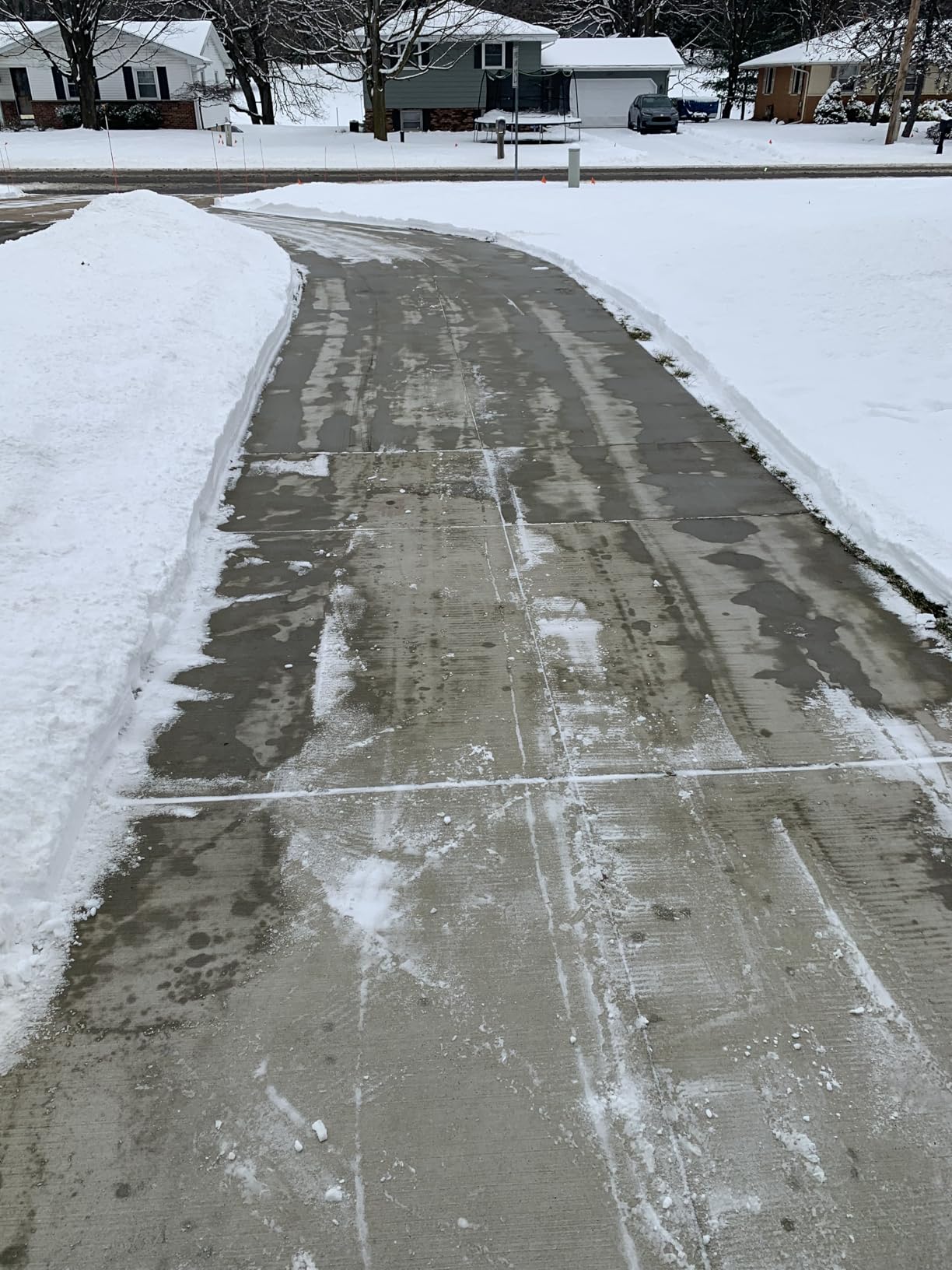
Now the sizing arithmetic, because this is the part most buying guides skip. A two-car driveway is typically about 20 feet wide and 25 feet long, or roughly 500 square feet. At a 20-inch clearing width you need three passes down and three back, and at a comfortable walking pace each pass takes about two minutes, so you are looking at 10 to 15 minutes per storm. At 22 inches the same driveway needs two passes each way and finishes closer to 8 to 10 minutes.
For contrast, owners of a large gas machine report 30 to 45 minutes on a 3000 square foot driveway. That is roughly six times the surface area, so per square foot the two jobs cost about the same effort. The bigger machine wins when the snow is deep and wet, or when the pile at the end of the drive is the main problem. On a short paved drive with light to moderate snow, the small single-stage is the faster tool and far easier to store.
One rule worth internalizing: never leave more than about eight inches of depth in front of the intake. The auger feeds from the front edge, so a shallow pass leaves the machine its best working conditions and you do a second pass instead of stalling the first. The same logic applies to the plow-end berm, which is the single hardest thing for any single-stage machine to chew through.
1. Snow Joe SJ627E 22-Inch Corded Electric Snow Blower
Snow Joe Corded Electric Snow Blower, 22 Clearing Path, Dual LEDs, SJ627E
22-inch path
13-inch intake
34.8 lbs
840 lbs per minute
25 ft throw
Pros
- Widest path and deepest intake in this roundup
- 5700+ verified reviews giving it the deepest ownership history
- 34.8 pounds is easy to lift and turn
- steel auger with rubber tips scrapes to bare pavement
- starts instantly with no cord pull
Cons
- Not self-propelled so heavy snow is all pushing effort
- handle bolts loosen and the joint flexes over time
- drive belt and drive system parts wear within a few winters
This is the machine I keep coming back to for a small driveway, and the reason is arithmetic rather than excitement. The 22-inch path means a two-car drive takes two passes each way instead of three, and the 13-inch intake rating is the deepest here, which matters if your storms run past six inches. At 34.8 pounds it is light enough to lift into a car trunk and turn around without the wrestling you get from anything heavier.
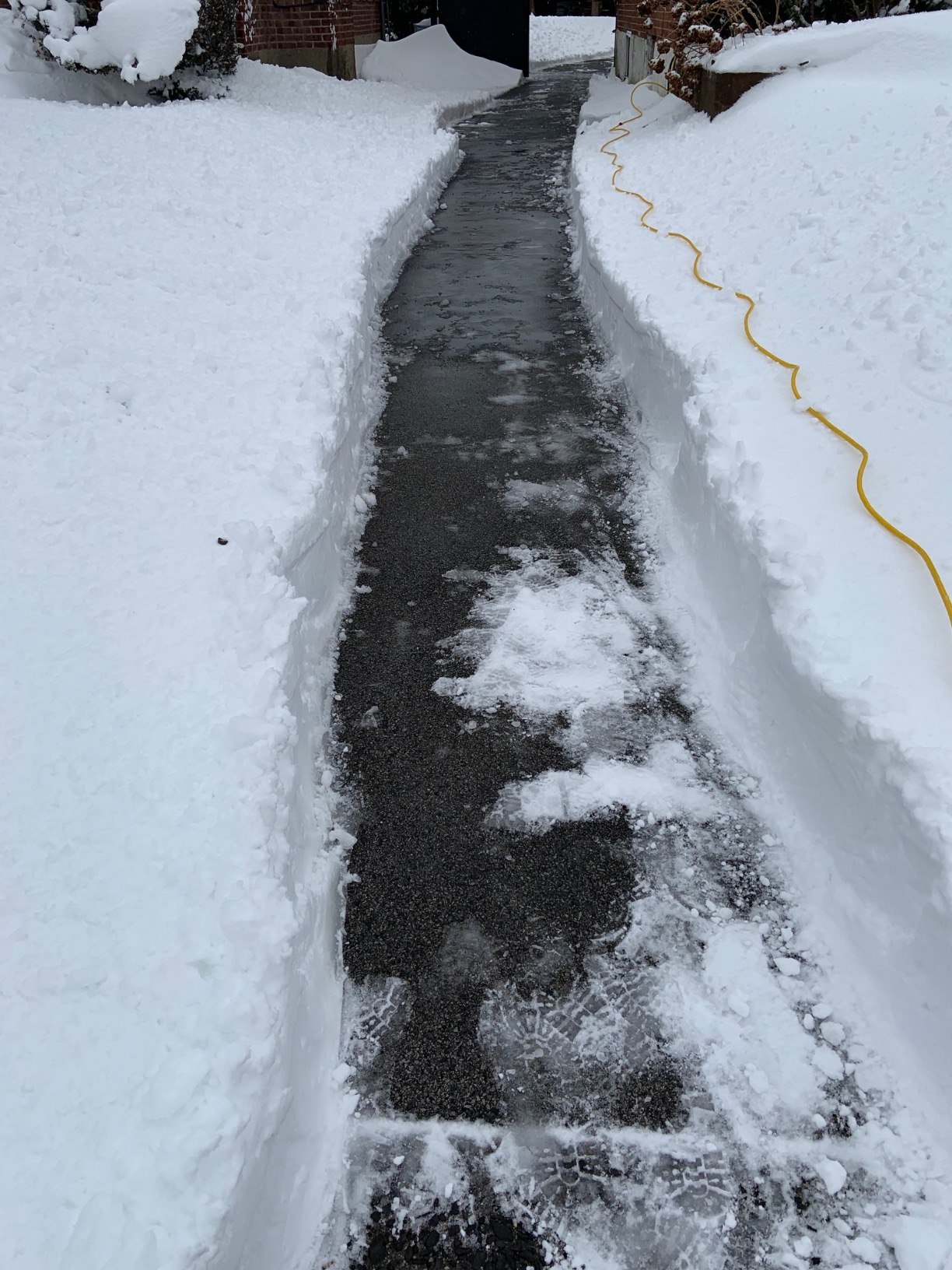
What stands out in owner feedback is how fast it moves snow. The 15-amp motor is rated at up to 840 pounds per minute, and reviewers describe clearing moderate falls quickly and quietly enough to run at six in the morning without complaints. The all-steel auger with four rubber-tipped blades is the part that separates this from plastic-auger budget units, since it scapes down to pavement without gouging it.
The complaints are durability complaints, not performance complaints. Owners repeatedly mention handle bolts loosening and the handle joint flexing, and several describe drive belt slip or drive system corrosion within a few winters. The straightforward fix is a set of washers and lock washers on the handle hardware, which costs almost nothing and addresses the most common issue.
What it handles well on a small driveway
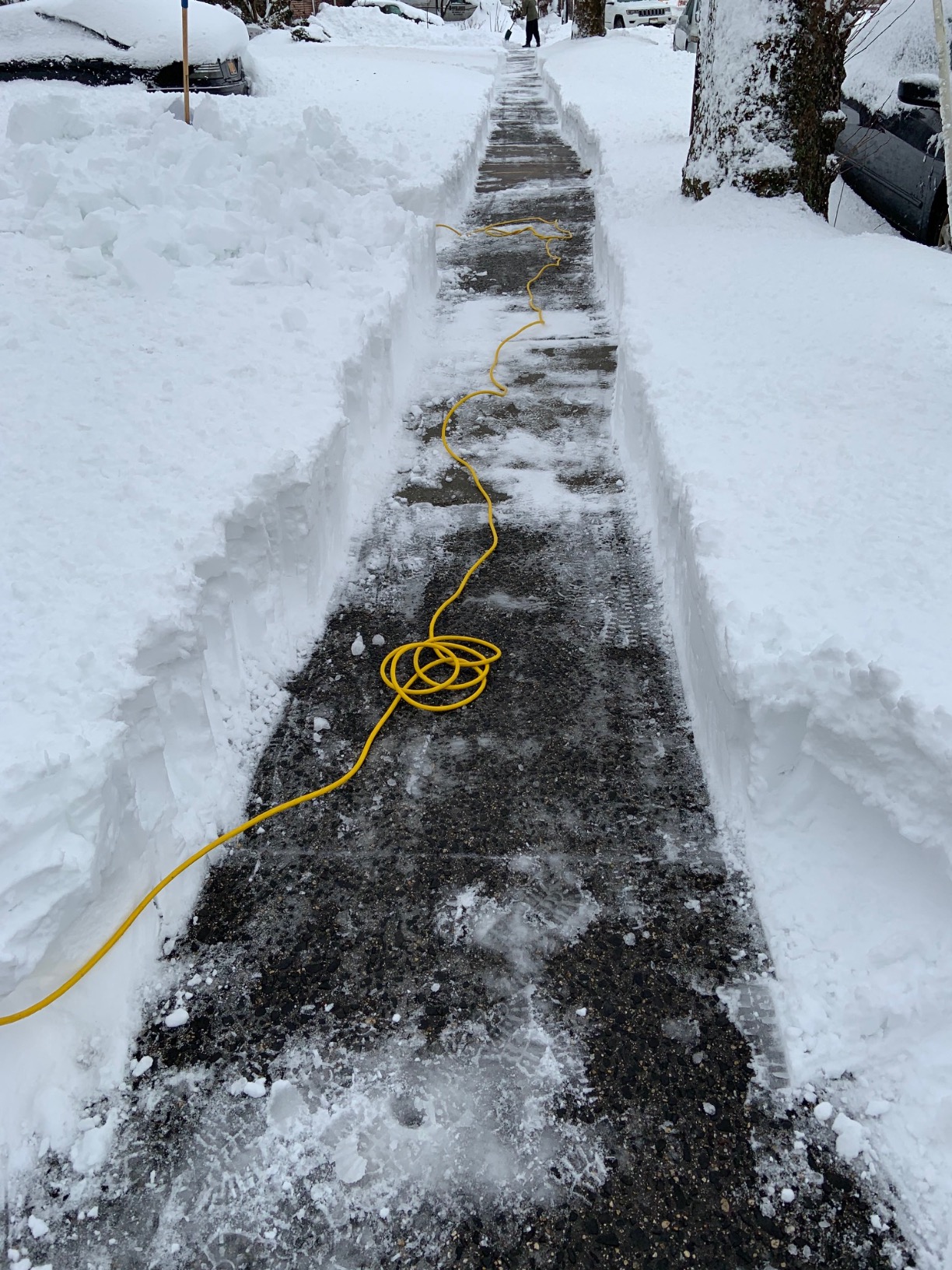
The math is the argument. Two passes each way on a 20-foot-wide drive means roughly 8 to 10 minutes for a moderate storm, and the 25-foot throw puts snow past the curb without walking it forward. Reviewers also point out that the dual LED headlights, while not especially bright, are enough to finish a driveway before full daylight in a residential setting.
Because it has no battery and no fuel, storage is trivial and there is nothing to charge or stabilize over an eight-month gap. For anyone with back or joint problems, the combination of instant start and low weight makes this one of the least tiring options here.
Where it falls short
Skip this one if you get heavy wet snow on a regular basis or if your road crew leaves a plow berm at the end of the drive. Push drive means you supply all the forward force, and throw distance drops noticeably when the snow is dense and wet, which is exactly when you need it most. The rotating chute is hand-adjusted, so changing direction mid-pile takes a moment.
2. PowerSmart 21-Inch Corded Electric Snow Blower
PowerSmart 21 Inch Corded Electric Snow Blower, 15 Amp, with LED Light
21-inch path
15-amp motor
41.7 lbs
1020 lbs per minute
LED light
Pros
- Highest snow-moving rate in the roundup at 1020 lbs per minute
- arrives about 90 percent assembled so setup is two bolts
- cuts down to pavement even on compacted snow
- folding design stores compactly
- quiet enough for early morning use
Cons
- Real throw distance is often 15 to 20 feet rather than the advertised 30
- heaviest corded unit here at 41.7 pounds
- supplied cord clips hold the cord loosely
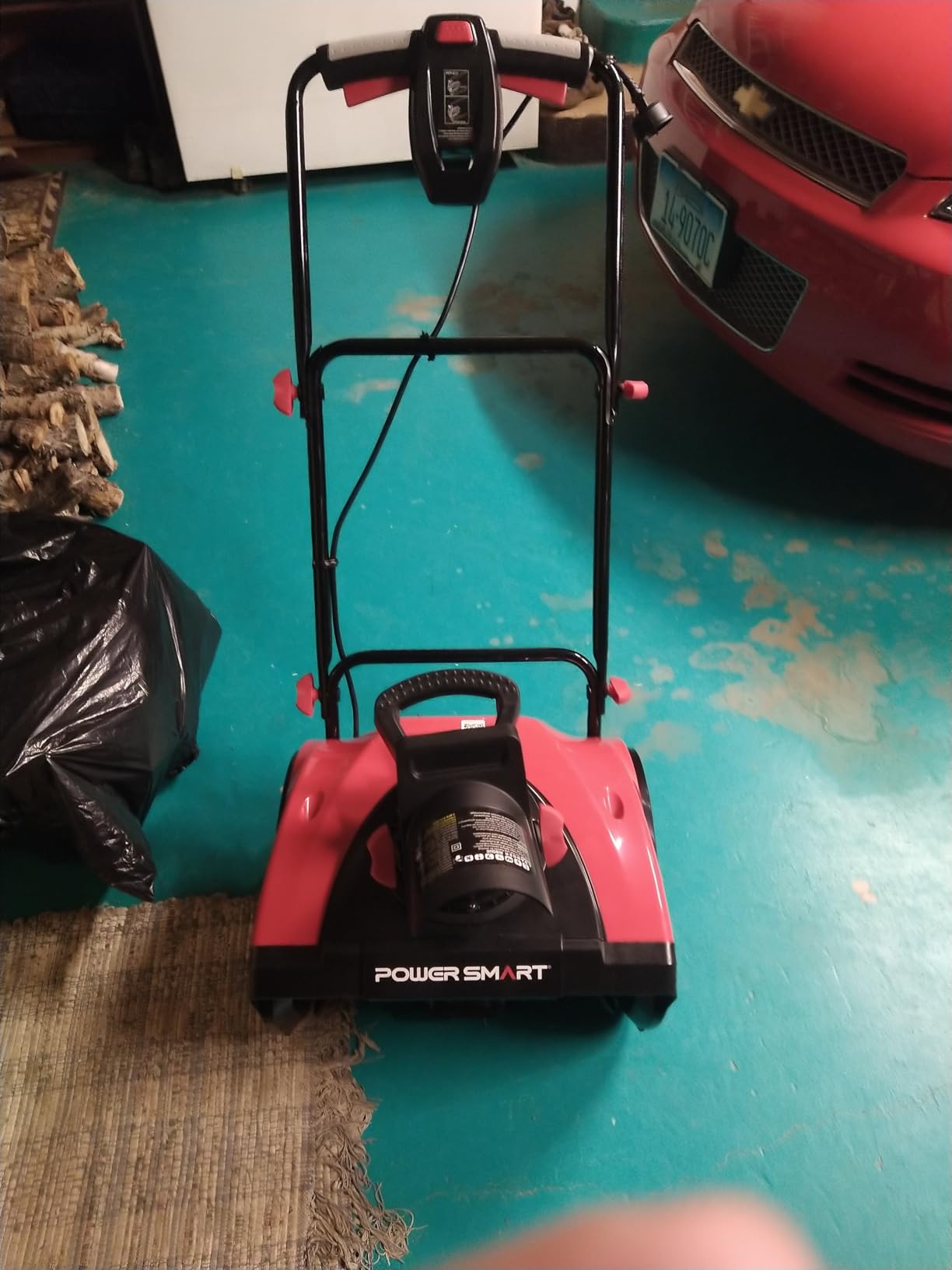
This is the one I would pick for a driveway that doubles as a patio or deck area, because the reinforced auger and high motor output handle packed surfaces without stalling. The 21-inch path is a sensible middle ground, and at 410 verified reviews there is enough ownership history to judge it rather than guess.
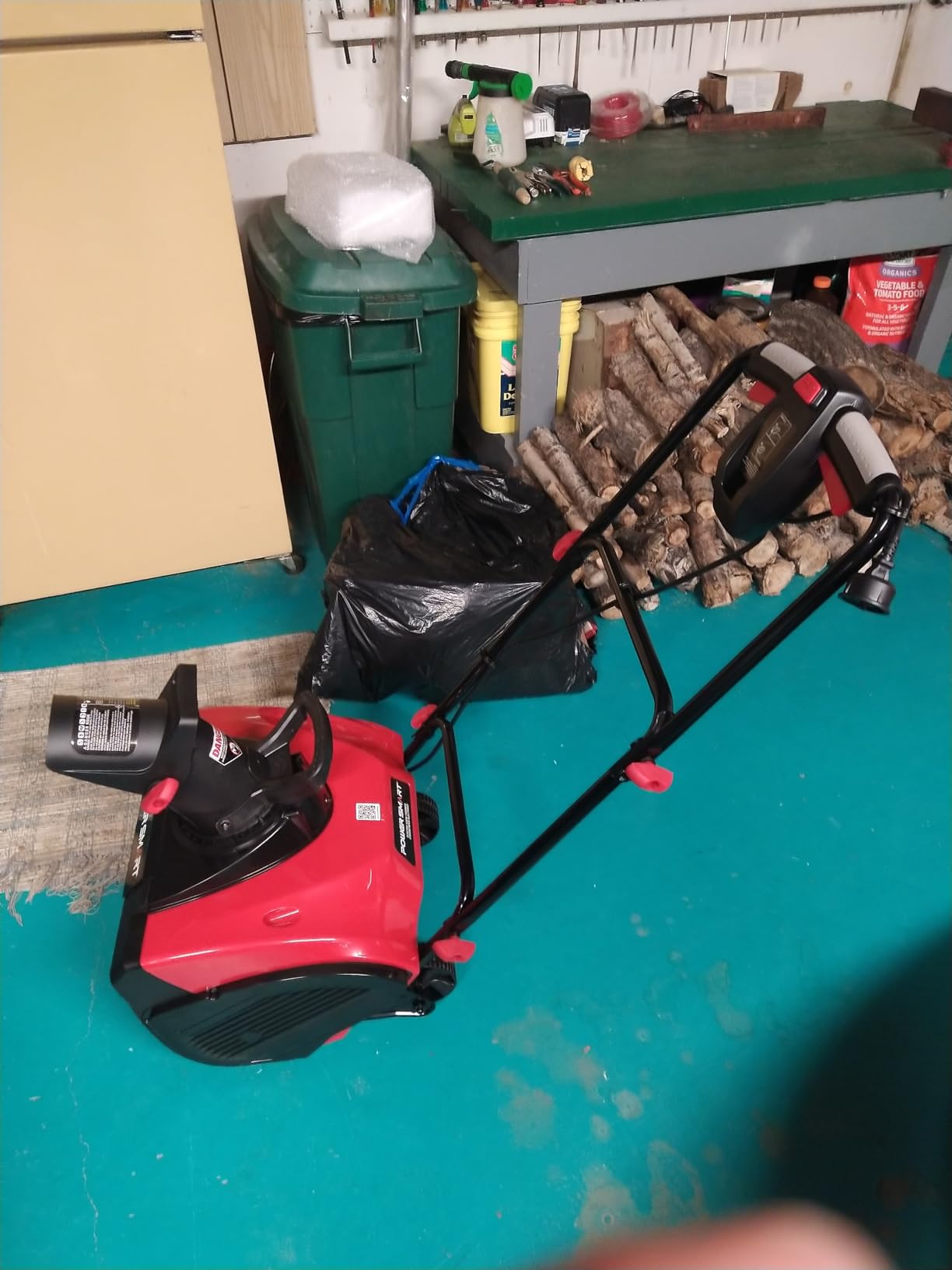
Owners consistently describe it as strong value, and several report outperforming pricier gas units on light to moderate snow. One reviewer cleared a 120-foot driveway quickly with this machine. It also arrives roughly 90 percent assembled, so setup is attaching the chute and tightening the handle bolts rather than building a machine from a box of parts.
The catch is weight. At 41.7 pounds it is the heaviest corded machine here, which matters if you have steps to negotiate or want to lift it into and out of a vehicle. The advertised 30-foot throw is also optimistic; owners more commonly report 15 to 20 feet, especially in light snow where there is simply not much mass to push.
Where it earns its place
If your priority is raw snow-moving rate per minute rather than portability, this leads the group at a rated 1020 pounds per minute. It also has overload protection on the motor, which is a sensible safeguard on a machine that will occasionally meet a chunk of ice. The push-button start means there is no cord to prime or pull-start to wrestle.
Reviewers also credit it with reaching bare pavement on snow that has been compacted by car tires, which is a real advantage on a narrow drive where cars park over the cleared strip.
Where it does not
Do not buy this one if lifting and maneuvering is your main concern, or if you plan to carry it up steps regularly. It also demands more deliberate cord handling than the lighter units, because the included clips hold the cord loosely and it tends to drift under the wheels. Budget a few minutes of practice before your first real storm.
3. Westinghouse WSnow20 20-Inch Corded Electric Snow Blower
Westinghouse WSnow20 Corded Snow Blower 20 Inch, Steel Auger, Dual LED Lights, 1800 Watt Motor, Electric Snow Blower with 25ft Throwing Distance, Plows 680lbs/min, Adjustable Chute
20-inch path
10-inch intake
29.3 lbs
680 lbs per minute
25 ft throw
Pros
- Rubber-tipped steel auger handles heavy wet snow without bogging
- lightest machine here at 29.3 pounds
- assembles in about five minutes with no tools
- dual LED headlights
- 2-year limited warranty
Cons
- Assembly instructions are confusing and owners re-read them repeatedly
- no unclogging rod or tool included in the box
- throw distance falls short of spec on very wet snow
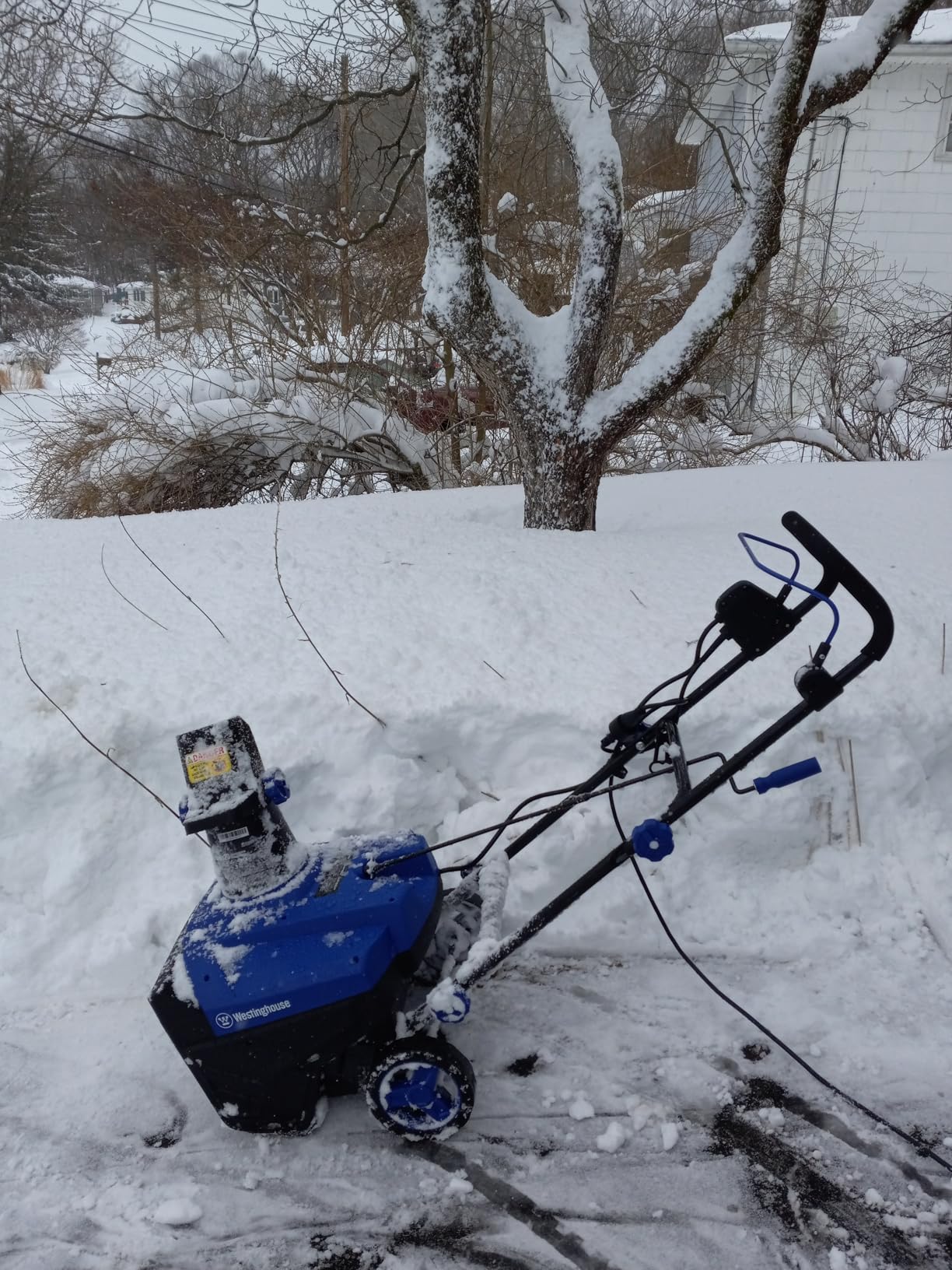
At 29.3 pounds this is the lightest machine in the roundup, and combined with a 4.3 rating across 595 reviews it is the value pick I recommend most often. The 20-inch path and 10-inch intake are modest numbers, but for a short paved drive those figures are already more capacity than most storms require.
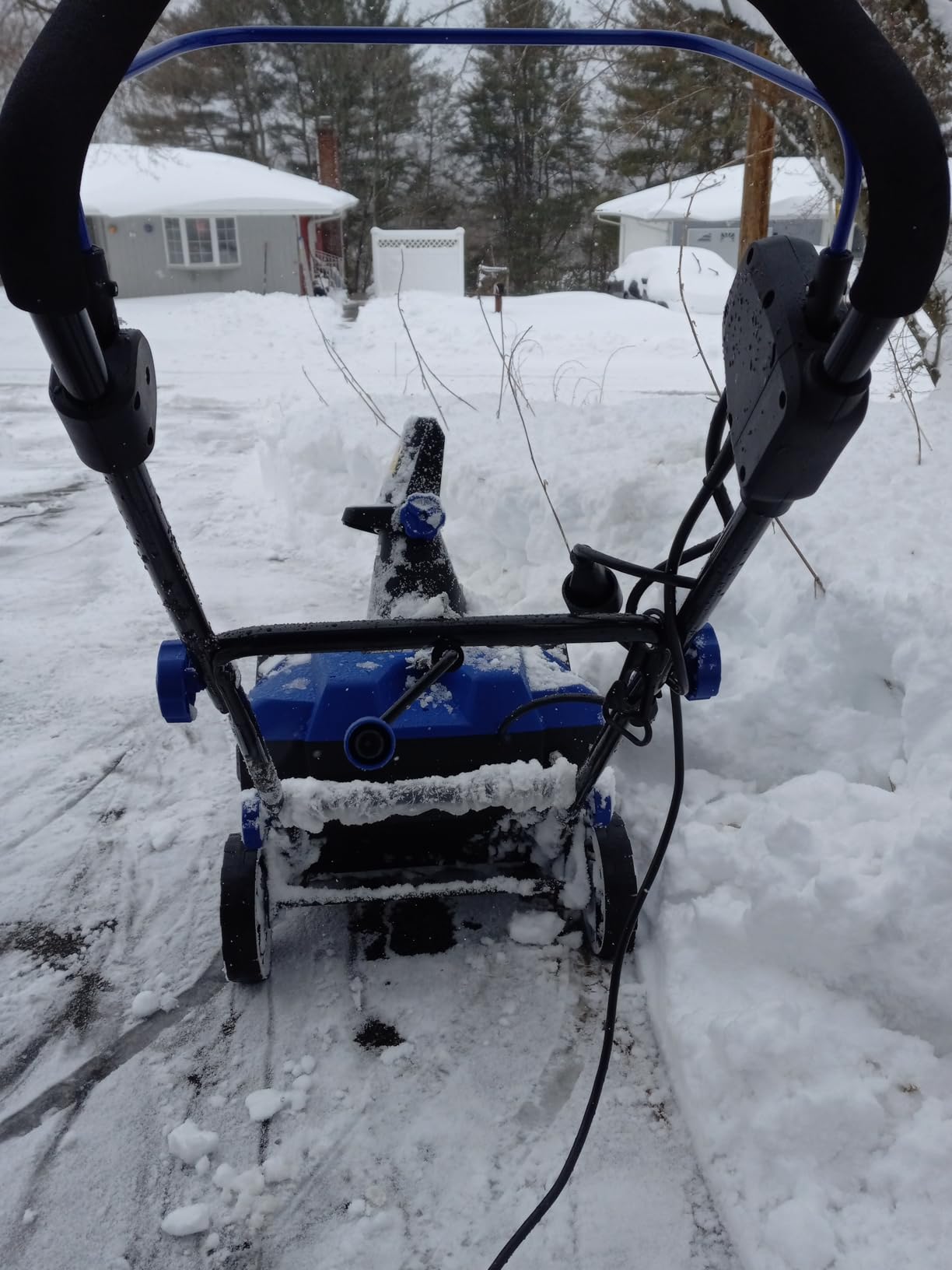
What separates it from cheaper plastic-auger machines is the rubber-tipped steel auger. Owners in Maine, Indiana, New York and Alaska report clearing four to six inches of dense wet snow, including the berm left at the end of the drive, often down to bare concrete. That is a real workload, not a light dusting, and the steel auger is the reason it holds up.
At 680 pounds per minute the output rating is mid-pack, but the machine weighs only 29.3 pounds and has 7-inch wheels that grip packed snow well. Tool-free assembly takes about five minutes, which matters more than it sounds when you are setting it up on the first cold morning.
Why owners keep it
Two things come up repeatedly in reviews. The first is that the steel auger is what lets it take heavy wet snow, which is the situation that stalls cheaper machines. The second is simply how easy it is to move, and owners with back problems specifically mention handling it comfortably and storing it in a small space.
There is no fuel, no oil and no engine maintenance, and the dual LED headlights cover a pre-dawn start. For a two-car drive this is the most complete low-friction package in the roundup.
What to know before buying
The two near-universal negatives are assembly instructions and the absence of any included unclogging tool. Owners repeatedly describe re-reading the manual multiple times, and several note they had to source their own rod to clear a jam. Neither is a dealbreaker, but both are mildly annoying on a machine you will assemble once and then rely on in the dark.
It is also not self-propelled, so very deep snow means real pushing effort. For a normal winter on a paved drive that is fine.
4. DEKOPRO 21-Inch Corded Electric Snow Blower
Corded Snow Blower:15A Motor, 20-Inch Electric Snow Blower, Electric Snow Shovel with 25ft Throwing Distance, Dual LED Lights, 3300rpm Snow Thrower DEKOPRO
21-inch path
12-inch intake
800 lbs per minute
25 ft throw
dual safety switch
Pros
- Two-blade steel auger gives a deep 12-inch intake cut
- dual-action safety switch is glove-friendly and prevents accidental starts
- dual LED headlights for low-light clearing
- compact footprint stores easily
- 25-foot throw with 180-degree chute adjustment
Cons
- Least documented machine here
- no individual owner review text was captured
- spec listing says 20 inch while specs say 21 inches
- deep wet snow sits outside its single-stage envelope
This is the budget entry, and the specification sheet is genuinely competitive on paper. A two-blade steel auger cutting a 21-inch wide, 12-inch deep path at up to 800 pounds per minute puts it ahead of several more expensive units on intake depth, which is the number that matters when snow piles up.
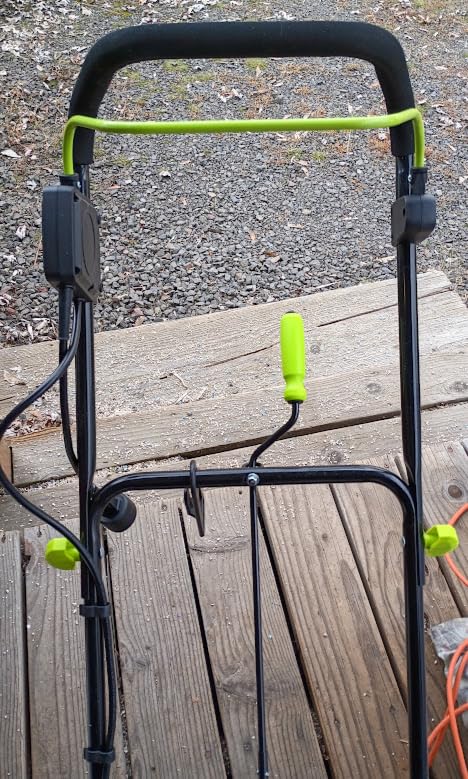
I want to be straight about what I can and cannot verify here. The 4.0 rating sits across 241 reviews, with 58 percent five-star and 16 percent four-star, but no individual review text came back in our research pass. That means my read rests on the rating distribution and manufacturer specs rather than on owner commentary, and I would weight it accordingly when you compare it against the machines above.
The dual-action safety switch is a genuinely thoughtful detail. You press a lock before pulling the trigger, which prevents the machine from firing up when you are reaching for the chute with a gloved hand, and it works with gloves on. The dual LED headlights are standard on this tier but worth noting since most clearing happens before sunrise or after dark.
Where it fits
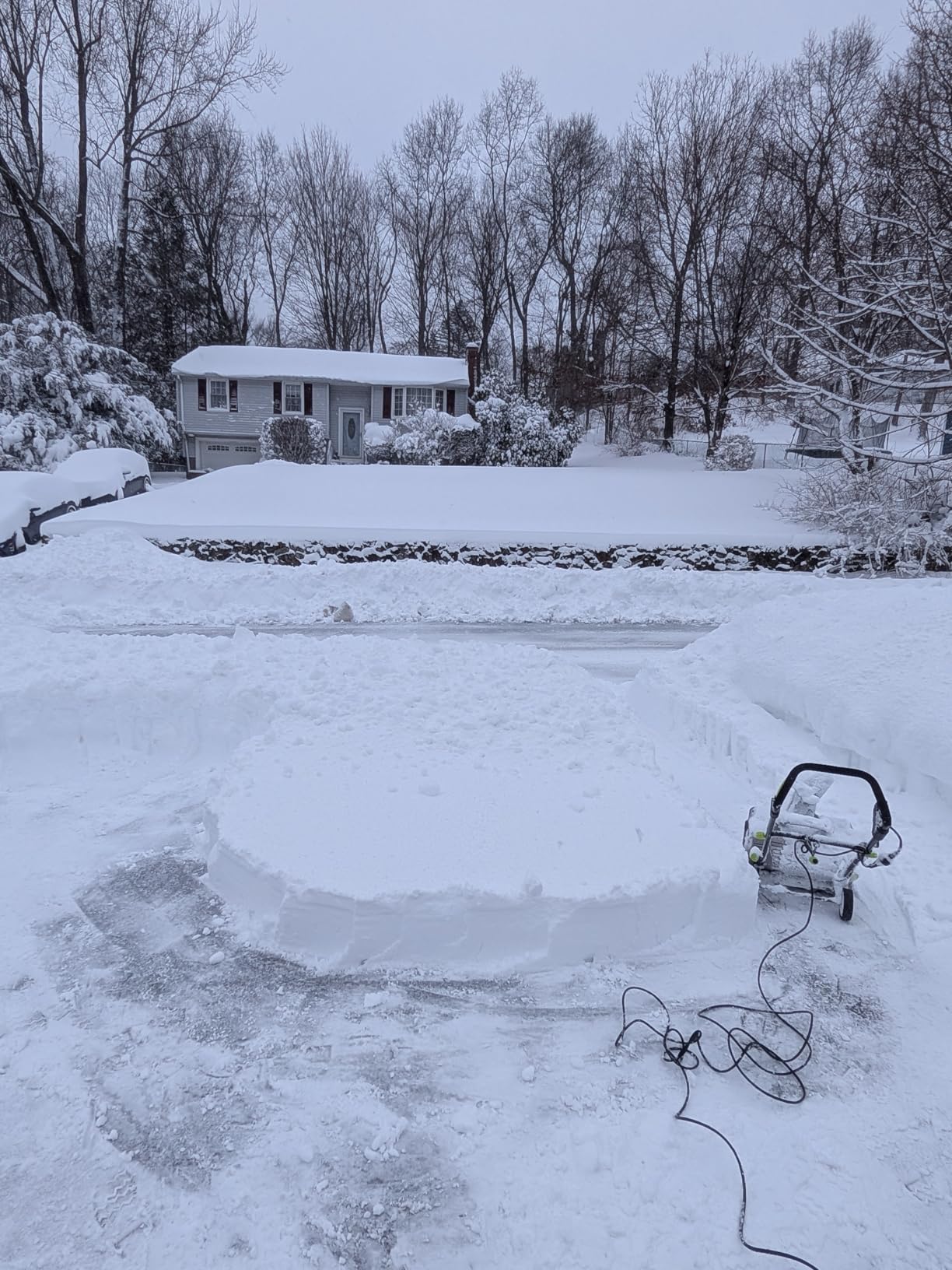
The 12-inch intake depth is the deepest in the corded group alongside the Snow Joe, and depth is what lets a single-stage machine take more than one snowfall before it needs a second pass. If you want maximum intake per dollar, this is the machine to shortlist.
It is also a compact unit, which matters if storage is a one-car garage or a side shed. The 180-degree chute gives you full directional control for throwing toward a wall, a fence line or the street.
Where it falls short
The mismatch between the 20-inch title and the 21-inch listed width is a small warning sign about listing consistency, and the absence of documented owner reviews means you are buying on spec alone. If your region gets heavy wet snow, note that this is a single-stage design and the intake depth rating is a dry-snow figure. Also confirm the weight with the seller before ordering if portability matters, since our research pass did not return a listed weight.
5. WEN 5670 20-Inch Electric Snow Blaster
WEN Snow Thrower, 15-Amp 20-Inch Electric Snow Blaster with Dual LED Lights (5670)
20-inch path
10-inch depth
900 lbs per minute
29 ft throw
dual LED lights
Pros
- Highest average rating in the roundup at 4.4 with 75 percent five-star
- moves up to 900 lbs per minute
- 29-foot throw clears a driveway edge quickly
- quick-adjust 180-degree chute for fast direction changes
- low one-star rate suggests few early returns
Cons
- Fewest owner reviews documented here at 177
- single-stage so deep wet snow is beyond it
- extension cord management required
The WEN 5670 has the highest average rating in this roundup at 4.4, with 75 percent of buyers giving five stars and only 7 percent one star. For a first-time snow blower owner that distribution is the most reassuring signal available, because it says very few people bought it and regretted it within the first season.
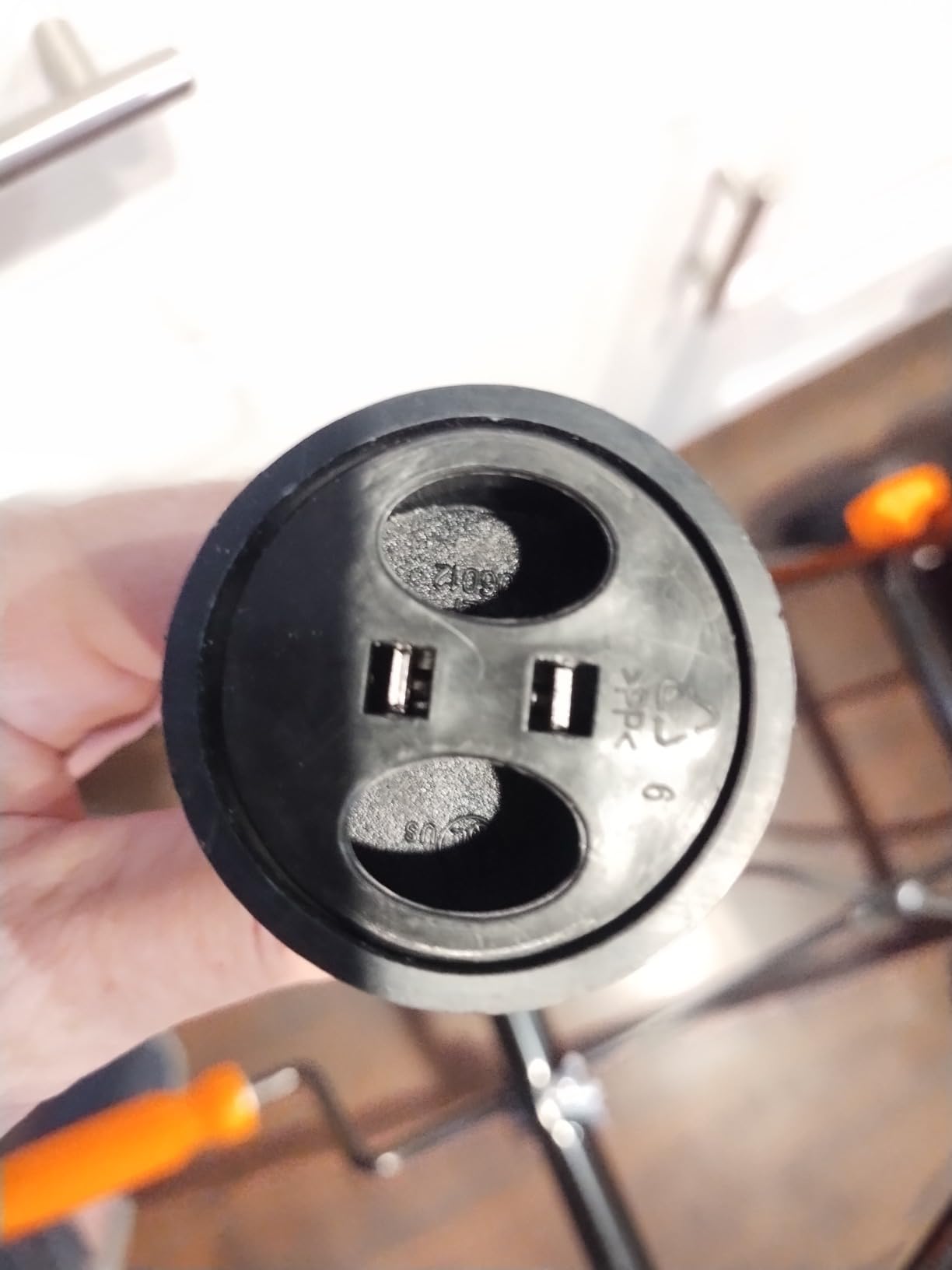
Performance is respectable across the board. The 15-amp motor moves up to 900 pounds of snow per minute and shoots it as far as 29 feet, which is the second-longest throw among the corded machines here. The 20-inch path at 10 inches deep is a proven small-driveway combination, and the quick-adjust chute rotates 180 degrees so you can redirect discharge without walking around the machine.
As with the DEKOPRO, individual review text was not captured in our research pass, so this assessment leans on the rating distribution and published specifications rather than owner anecdotes. What that distribution does tell us clearly is that this machine shows none of the quality-control clustering of complaints that shows up around some competing listings.
Best case for a new owner
If you have never owned a snow blower, the priorities are simple: it starts without a fight, it clears to pavement, and it does not surprise you. This machine does all three, and the 29-foot throw means you can stand at one end of the drive and put snow past the curb rather than piling it where you still have to shovel.
The dual LED lights handle the pre-dawn start that most people actually face. There is no battery to charge and no fuel to store, so pulling it out of the garage is the entire startup process.
Limits to accept
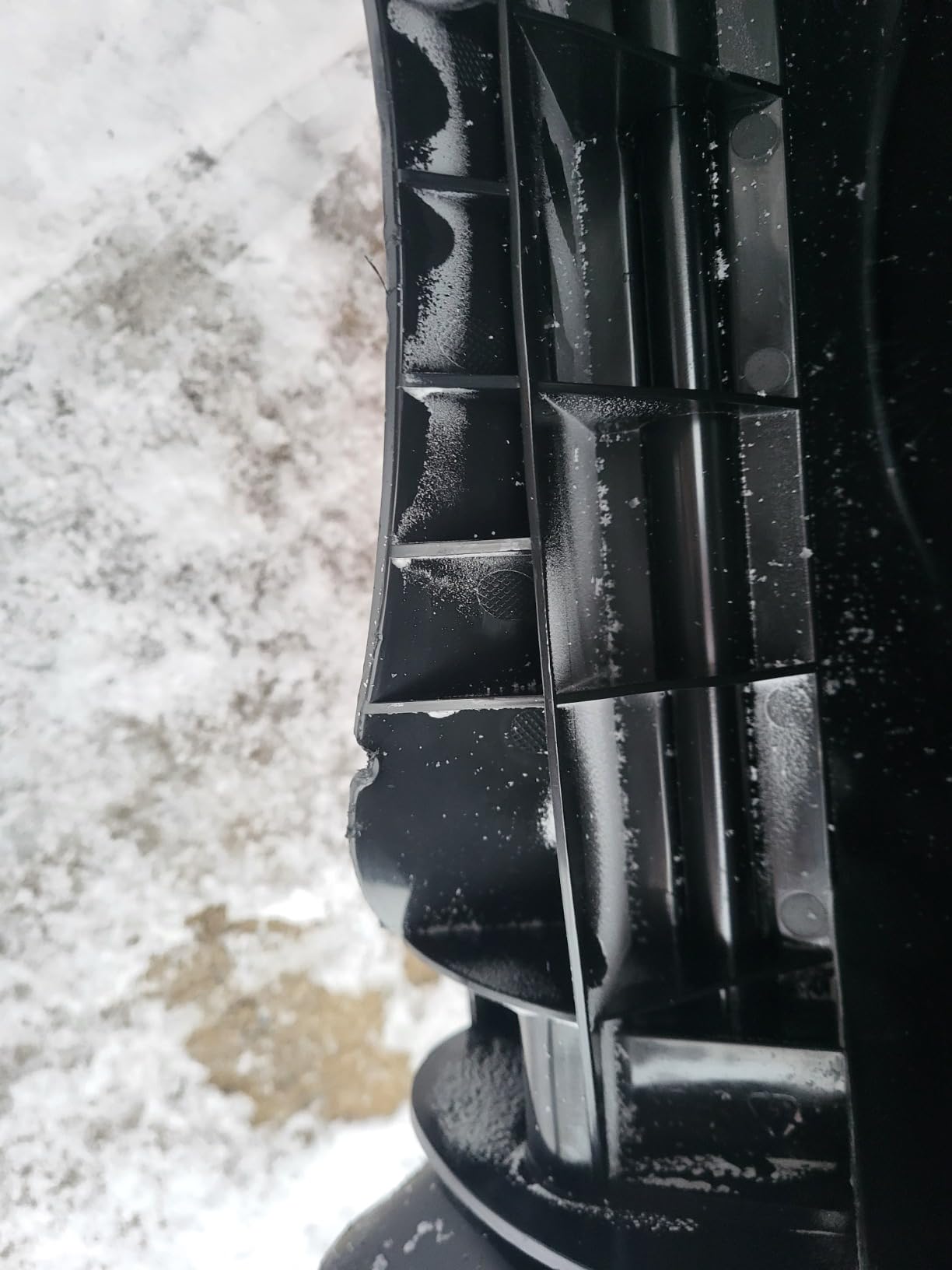
At 177 reviews it has the shallowest ownership history here, so long-term durability is less well documented than for the machines above. It is a single-stage machine, so heavy wet snow and plow berms will bog it, and as with any corded unit you need to plan your clearing pattern around the cord. Listed weight came through at 16.51 kg, so check the packaged figure if lifting matters to you.
6. Voltask 48V Cordless Snow Blower Kit
VOLTASK 48V Cordless Snow Blower, 48-Volt | 20-Inch Brushless Electric Snow Blower Cordless, Battery Snow Blower with Directional Plate & LED Lights (2 * 24V Battery & Dual Quick Charger Included)
20-inch path
10-inch intake
22.9 lbs
two batteries plus dual charger
30-min runtime
Pros
- Two 24V batteries and a dual quick charger are in the box
- lightest cordless machine here at 22.9 pounds
- brushless motor with 25-foot throw and 180-degree chute
- no cord to snag or manage
- waterproof components plus dual safety buttons
Cons
- About 30 minutes of runtime before a mid-job recharge
- not self-propelled so pushing resistance is on you
- deep wet snow and plow berms are beyond its class
If you want cordless without a second purchase, this is the kit to buy. The box contains two 24V lithium packs and a dual quick charger, so the all-in cost is settled the day it arrives and there is nothing else to buy before the first storm. That single fact puts it ahead of most battery snow blowers at this price.
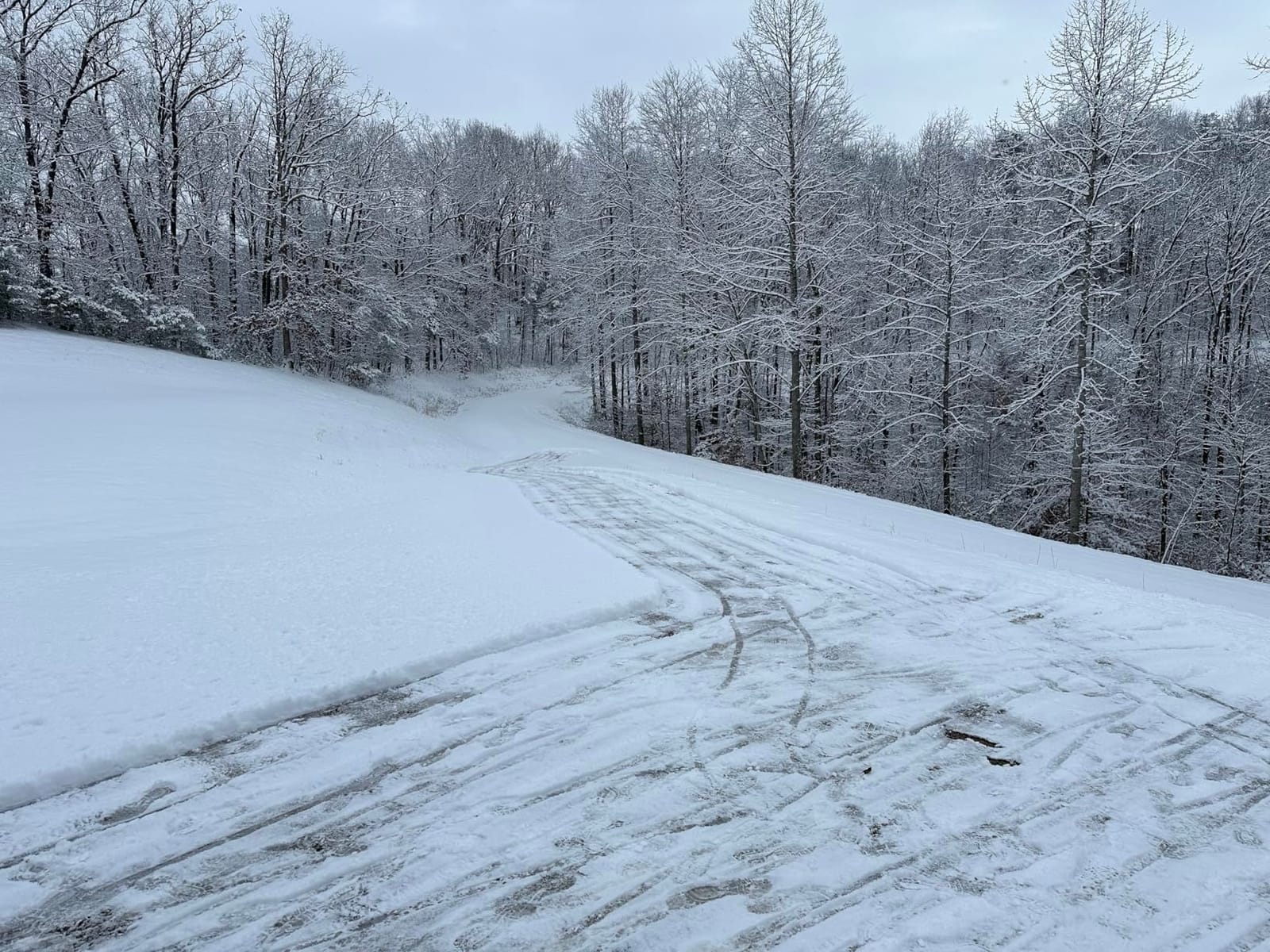
At 22.9 pounds it is the lightest cordless machine here and one of the lightest in the whole roundup, and owners frequently point out the ergonomic handle reduces back strain. The brushless motor drives a 20-inch, 10-inch-deep path and throws up to 25 feet, which covers a two-car driveway in three passes each way with snow landing past the curb.
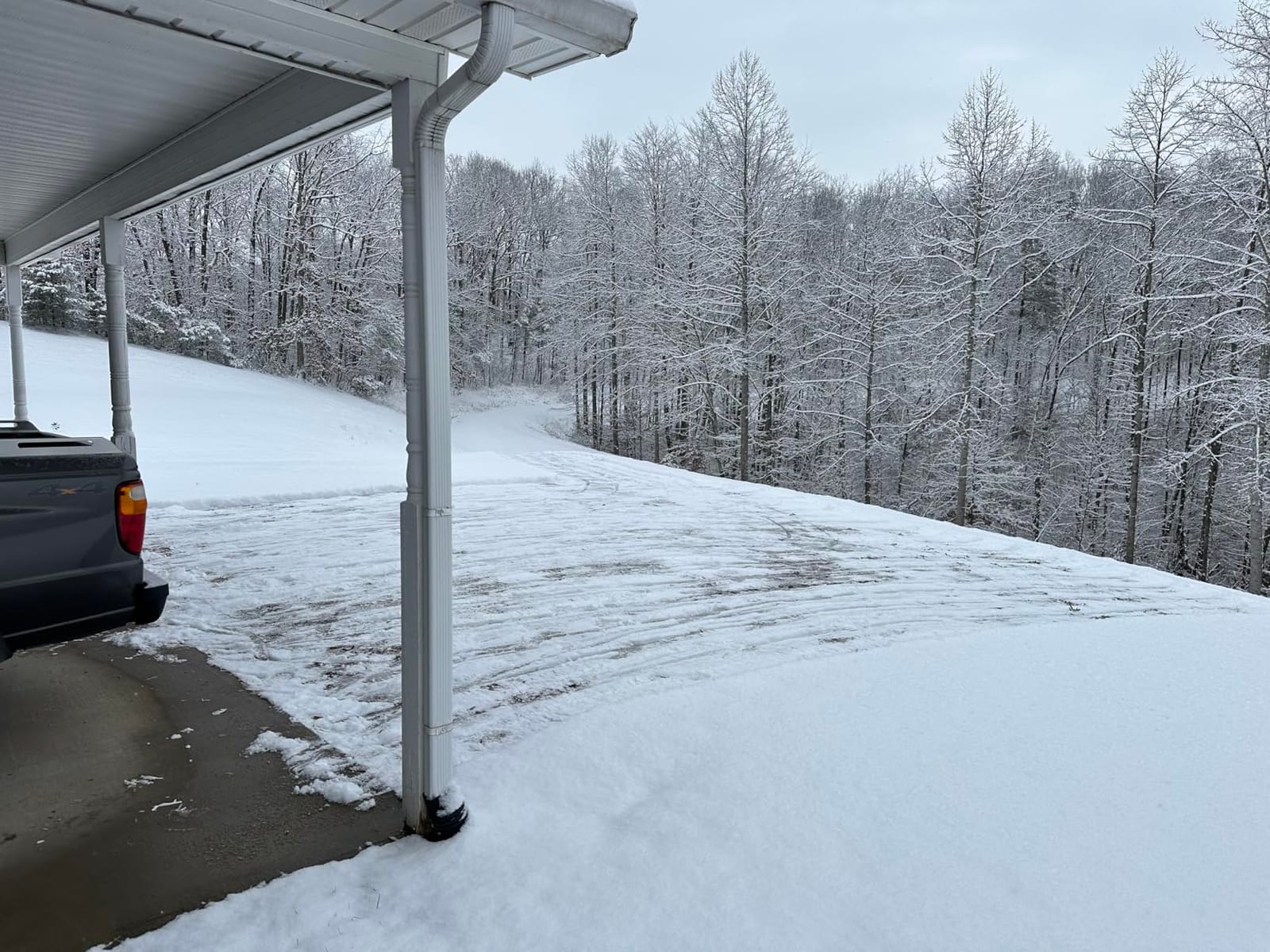
Runtime is the honest limit. The manufacturer rates approximately 30 minutes, and owners describe that as adequate for a small driveway but not enough for a long property in one charge. For a 500 square foot drive at about 12 minutes of actual clearing time, that is comfortable. For a three-car drive or a long path plus sidewalk, plan a swap or a recharge.
Why the bundled batteries matter
The dominant cost surprise in this category is the bare-tool listing. A cordless snow blower shown without batteries looks affordable until you price two packs and a charger, which routinely pushes the real total past a five-hundred-dollar ceiling. This kit sidesteps that entirely, and the dual safety buttons plus waterproof key components are sensible additions for a machine that lives outdoors in freezing rain.
There is also the daily-use advantage. No extension cord means no dragging a cable across a driveway in the dark and no risk of snagging it under the wheels. You carry it out, press a button, and start clearing.
Where it will disappoint
Do not expect it to chew a plow berm or a foot of wet packed snow, and expect to supply the pushing force yourself since it is not self-propelled. At 20 inches the path is narrower than the two corded leaders, so you will need one more pass than the Snow Joe requires. If your storms regularly exceed eight inches of wet snow, a corded machine with a steel auger is the safer bet.
7. SENIX 40V 21-Inch Cordless Snow Blower
SENIX 40V 21-Inch Cordless Snow Blower with Variable-Speed Steel Auger
21-inch path
21.7 inches listed
30 lbs
33 ft throw
1800W brushless motor
Pros
- Longest throw in the roundup at up to 33 feet
- variable-speed steel auger cuts wet snow and crunchy ice without stalling
- 5-year tool and 3-year battery warranty is the strongest coverage here
- foldable adjustable handle and LED light bar
- 30 pounds with 7-inch rear wheels for traction
Cons
- Runtime of roughly 15 to 30 minutes often forces a mid-job recharge
- batteries must cool to room temperature before they accept a charge
- extra battery sets cost additional money
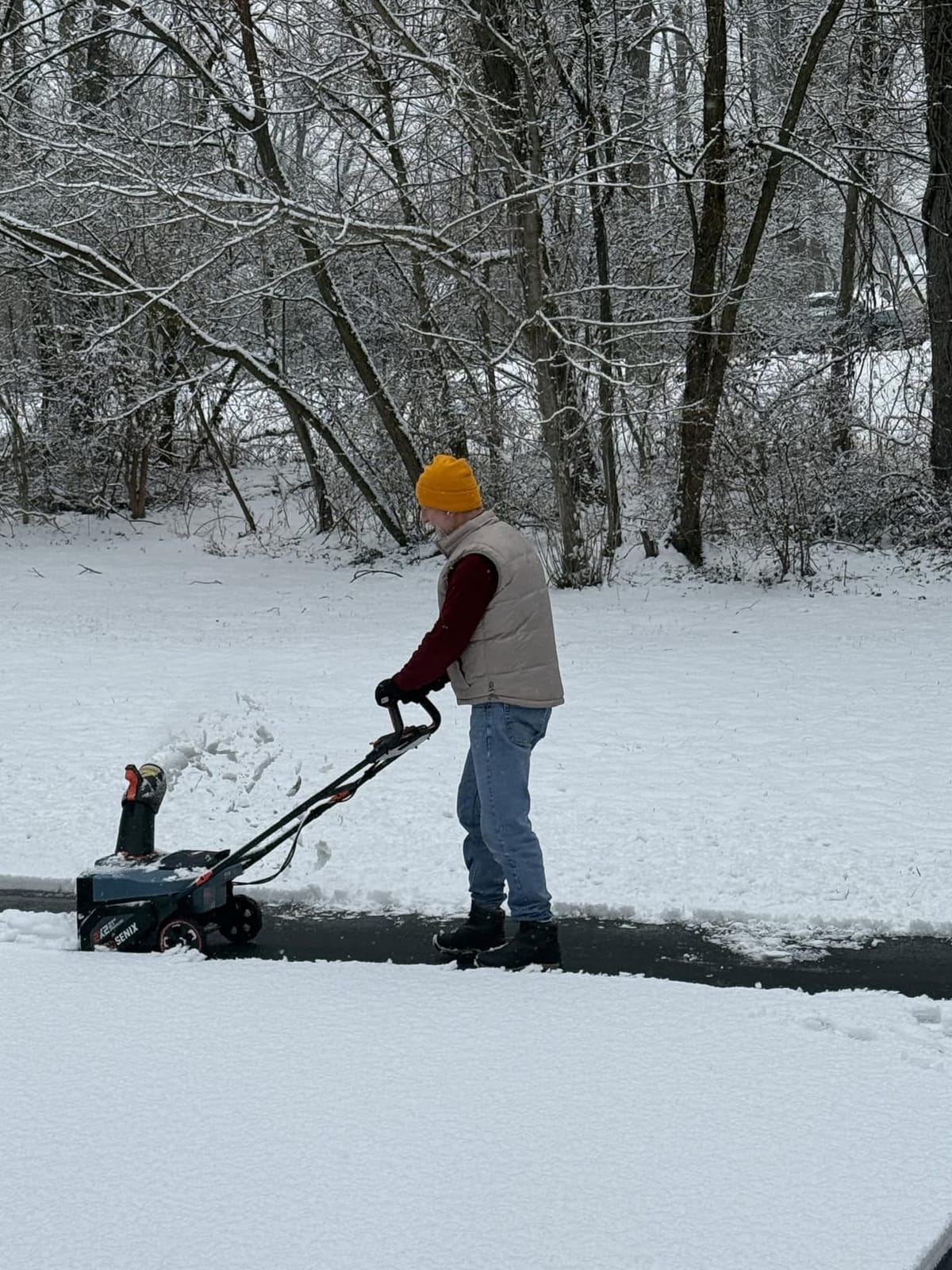
This is the most capable cordless machine under the ceiling, and the variable-speed steel auger is the reason. Owners in New Jersey, Wisconsin, Michigan and Canada credit it with cutting through three to four inches of wet snow and crunchy ice without stalling, which is exactly the condition that stops plastic-auger competitors.
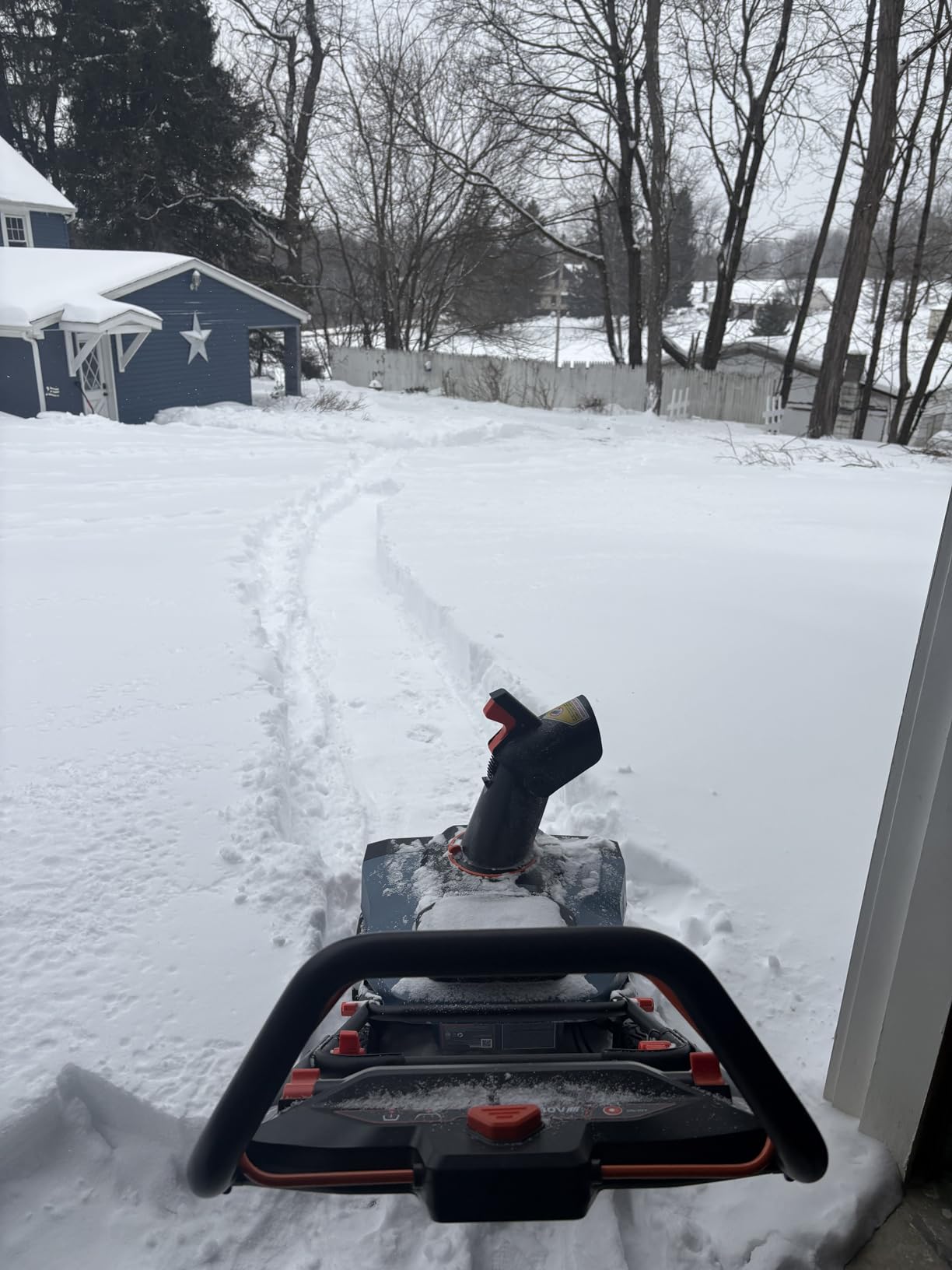
The 1800W brushless motor throws snow up to 33 feet, the longest reach in this roundup, and removes up to 680 pounds per minute. One owner cleared a 120-foot driveway in under 40 minutes on a single charge. The adjustable clearing depth of 8 to 12 inches and the LED light bar round out a well-equipped package at 30 pounds.
The warranty is worth attention separately. A 5-year tool warranty and 3-year battery warranty is the strongest coverage of any machine here, and on a product category where drive systems and batteries are the usual failure points, that is meaningful long-term protection you do not get elsewhere in this price range.
Where it beats the other cordless options
It is the only cordless machine here with a steel auger and a variable-speed drive, which means it modulates rather than stalls when it meets resistance. That difference shows up most in wet snow, and it is why this machine holds up better in coastal or lake-effect regions than the plastic-auger kits at similar prices.
The 33-foot throw also means you can clear a drive from one position without walking snow forward, and the foldable, height-adjustable handle stores it in a corner of a garage rather than across it.
What to plan around
Runtime is the overwhelming complaint in owner feedback. Multiple reviews report 10 to 20 minutes of continuous use before the packs die, and several buyers immediately bought a second set. Recharge takes about two hours, and the batteries must cool to room temperature before they will accept a charge, which is frustrating when you are standing in a cold garage waiting to finish the job.
Chute angle is set manually rather than by a crank. Budget for extra battery sets in your all-in cost if you want a full storm on one charge.
8. Snow Joe IONMAX 48V 18-Inch Cordless Kit
Snow Joe 48V Cordless Snow Blower Kit with Cover, Scraper & LED Headlight, 1200W Brushless Motor, 2x 4Ah Batteries & Charger, 18″ Clearing Path – Ice Removal for Driveways & Sidewalks, 24V-X2-SB18-TV1
18-inch path
10-inch depth
38.1 lbs
1200W brushless
up to 14 tons per charge
Pros
- Kit includes two 4Ah batteries
- dual charger
- cover and ice scraper
- steel auger with rubber edges handles icy packed snow
- one owner cleared about 600 square feet with charge remaining
- assembles in about five minutes and fits in a car
Cons
- 18-inch path is the narrowest here so more passes are needed
- throws snow about 6 to 10 feet in typical use
- runs 20 to 30 minutes per charge
- can stall on more than about an inch of snow
Consider this the complement machine rather than the primary driveway blower, and that framing matters. At 18 inches it is the narrowest path here, so a 20-foot-wide drive takes four passes each way rather than two or three. What it does well is everything around the driveway: sidewalks, the path to a garage, steps up to a porch, a parking pad.
The bundled kit is generous. You get two 4Ah batteries, a dual charger, a cover and an ice scraper, and the 1200W brushless motor is rated to clear up to 14 tons of snow per charge. The steel auger with rubber edges is the differentiator against 40V plastic-auger rivals, and one detailed comparison credited it with outperforming a Greenworks 40V 20-inch unit on wetter snow.
At 38.1 pounds it is heavier than most here, but it folds down and can be carried in a car, which is genuinely useful for a condo resident or anyone without garage space. One 57-year-old owner reported handling it comfortably, which is meaningful for buyers who find push drive punishing.
Best used as a second machine
Pair this with a corded blower and you cover everything: the corded machine owns the driveway, and this one handles walkways, steps and the car after a storm. Owners on larger properties report roughly 20 to 30 minutes per charge and a throw of 6 to 10 feet, which fits a sidewalk or a short path far better than a full drive.
The two batteries clearing about 600 square feet with charge remaining is a realistic figure for one storm on a small property, and the included ice scraper is useful on a car hood that the blower will not touch.
Where it falls short
Do not buy this as your only driveway machine if your storm totals exceed an inch or two at a time. Reviewers report it shutting off under heavy load and stalling on more than about an inch of snow, and the 6-to-10-foot throw means you will be moving snow further than you expect. A few buyers received defective packs, and there are reports of limited parts responsiveness outside the US.
9. Westinghouse WSnow18 48V Cordless Snow Blower Kit
Westinghouse WSnow18 48V Cordless Snow Blower 18 Inch Kit, Steel Auger, LED Light, 1200W Brushless Motor, 25ft Throwing Distance, Plows 650lbs/min, Compatible with Snow Joe Batteries
18-inch path
10-inch intake
1200W brushless
650 lbs per minute
25 ft throw
Pros
- Two 24V 4Ah batteries and a dual-port 2.2A fast charger included
- clears about 8 to 9 inches including icy and powdery snow
- compatible with all 24V Snow Joe batteries so one pack set covers two machines
- light and quiet enough for early-morning use
- full charge in 1.8 hours
Cons
- Batteries commonly deplete in 15 to 35 minutes
- dual-port charger cannot fully charge two dead packs in one session
- weak on wet packed snow or plow berms
- hitch pins are difficult to install
The battery compatibility is the story here. These 24V packs work with all 24V Snow Joe batteries, so if you own any Snow Joe cordless tool or plan to add a second machine later, one set of packs covers everything. That is a real long-term saving that no other kit in this roundup offers.
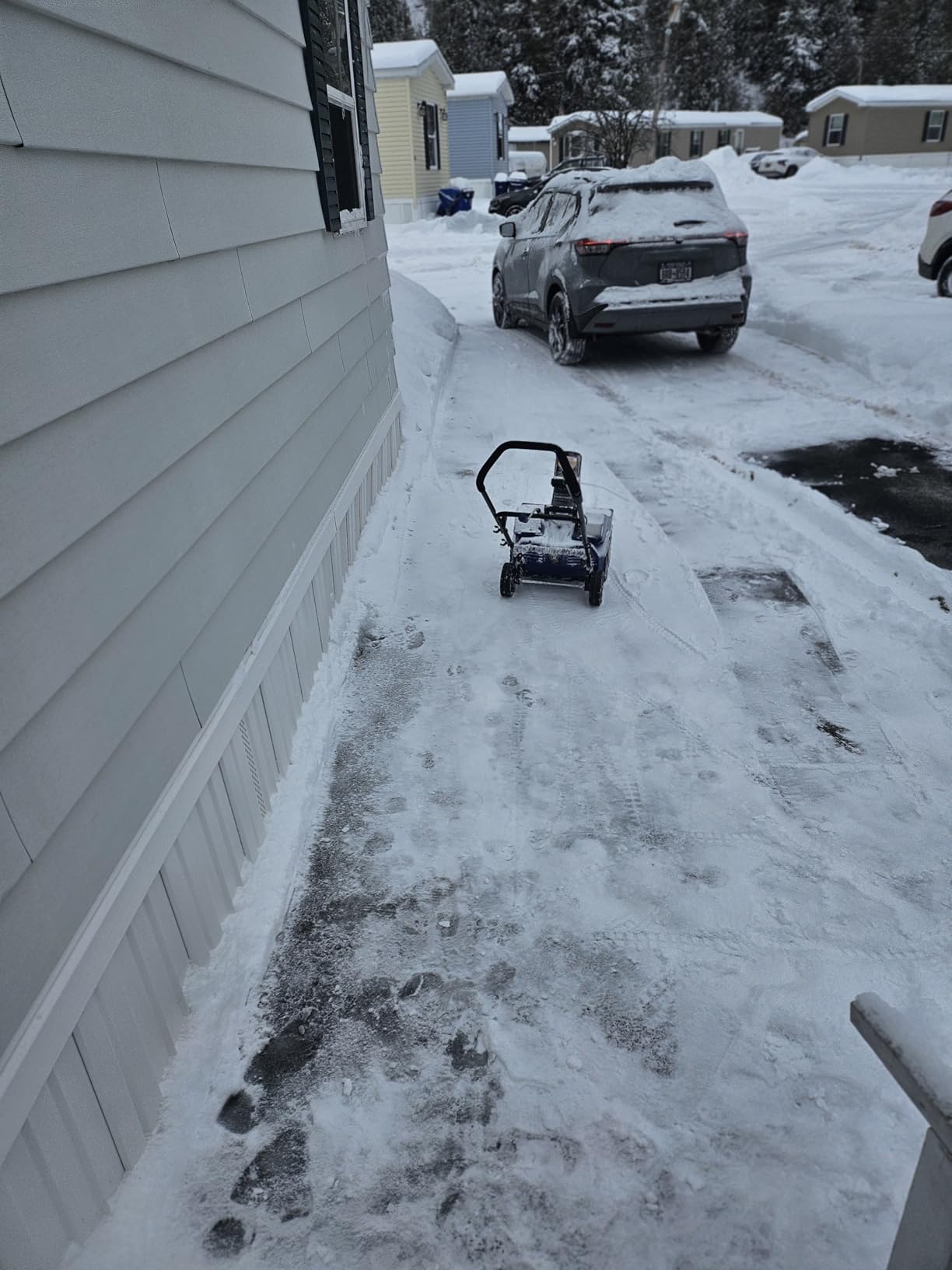
Owners across Wisconsin, Northeast Ohio, Western New York and Ontario frame it as a good value for sidewalks, walkways and modest driveways, and specifically praise older users who want a machine that starts with a button instead of a recoil pull. The 1200W brushless motor throws 650 pounds per minute and cuts an 18-inch, 10-inch-deep path through eight to nine inches of snow, including icy and powdery conditions.
The charger is a dual-port 2.2A unit that reaches a full charge in 1.8 hours, which is faster turnaround than most kits here. The rubber-tipped steel auger is the same design that makes the Westinghouse corded machine so capable in wet snow.
Who should buy this kit
If you already own 24V Snow Joe batteries, or you want a cordless machine you can share packs with another tool, this is the pick. It is quiet, light enough to maneuver without effort, and starts instantly at six in the morning without waking the household with a recoil cord.
Owners also note the directional chute and long throw help keep the cleared strip clean rather than pushing snow into a ridge at the edge.
What to plan around
Runtime is the decisive drawback. Several reviewers cleared only part of their driveway before needing a recharge, with 15 to 35 minutes being the common range, and multiple buyers plan to buy a second set. The dual-port charger also cannot fully charge two dead packs in a single session, which complicates back-to-back storm work.
It is weak on wet, packed snow and plow berms, the two hitch pins are genuinely fiddly to install, and one owner reported a battery cover cracking in extreme cold, which raises warranty and support questions worth considering.
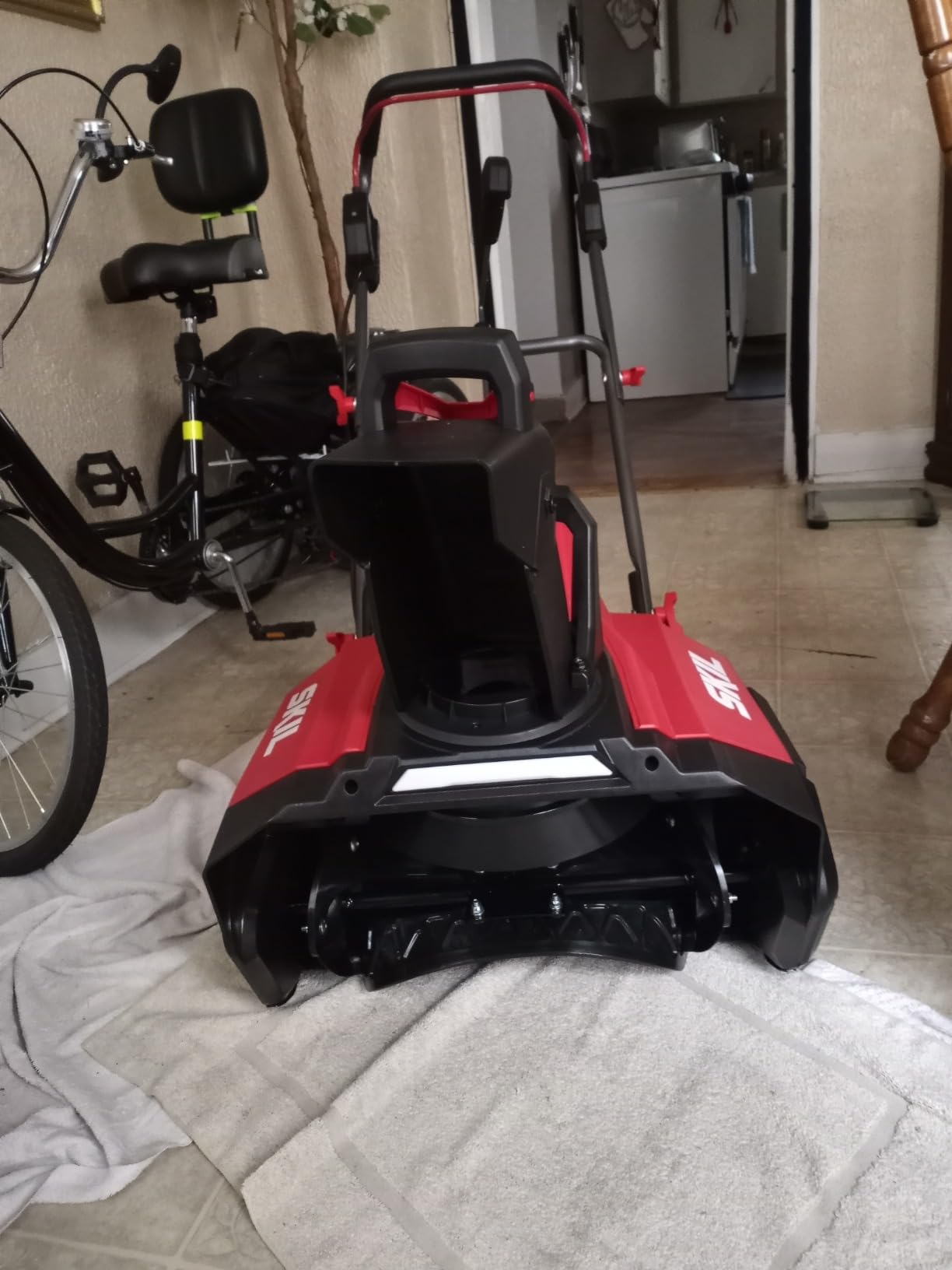
10. Skil PWR CORE 40 Brushless 20-Inch Snow Blower Kit
SKIL PWR CORE 40 Brushless 40V 20 in. Single Stage Snow Blower Kit, 30’ft Throwing Distance, Includes 6.0Ah Battery and Charger- SB2001C-10 red
20-inch path
6.0Ah battery and charger included
35.3 lbs
30 ft throw
180-degree control
Pros
- Only brand here publishing a full parts list and selling replacement paddles directly
- 6.0Ah battery lasts about an hour and charges in around two hours
- rubber-tipped steel auger scrapes pavement effectively
- quick-fold handle
- rear crank chute control and LED headlight
Cons
- Only one battery included so a second pack is needed for a large driveway
- clearance depth and throw distance are considerably overstated
- shuts off under heavy load and clogs in dense snow
- thin plastic skid bar wears quickly
This one is last on the list because it has the fewest verified reviews at 69 and the most mixed feedback, not because it is weak. The 6.0Ah pack is the largest single battery in this roundup and reportedly runs about an hour at a charge, which comfortably covers a two-car driveway plus walkways in one session.
Its real advantage is serviceability. SKIL publishes manuals and parts lists and sells replacement paddles and wear parts directly, whereas several competitors here have no accessible parts channel at all. If your snow blower will live eight months in a shed and you expect to maintain it yourself, that is worth more than a longer warranty.
Long-term owners in Southern Michigan report two winters of reliable use, clearing a 190-foot and an 80-foot driveway in about 40 minutes on one charge, and scraping the surface well. The rubber-tipped steel auger and rear crank chute control both work as intended, and the quick-fold steel handle makes storage simple.
Where the large battery pays off
Roughly an hour of runtime per charge changes the arithmetic compared with the 4Ah kits, and for anyone who clears a driveway plus a walkway plus steps in one session it removes the mid-job recharge entirely. The 20-inch path and 35.3-pound weight sit in the middle of the roundup, which is a reasonable compromise for a machine you will actually push rather than lift around constantly.
The steel auger scraping to pavement is what owners praise most, and the machine handles a slight hill without much effort according to several reviews.
The honest drawbacks
Skil overstates its output. One reviewer measured roughly half the stated clearing depth and throw in light snow and a quarter to a third in dense snow, so treat the 30-foot figure as a ceiling rather than a promise. It also shuts itself off under heavy load and clogs quickly in dense snow, and the lightweight plastic skid bar wears fast enough that several owners plan to bolt on a metal replacement.
Two buyers reported units that stopped working after a minute or two, including a replacement unit. With only 69 reviews, that is a small sample, but it is also the reason I would buy a two-year warranty plan if one is offered rather than treating this as a set-and-forget machine.
What a five-hundred-dollar budget will not buy you
Setting expectations here saves more return shipments than any spec comparison. At this ceiling you are not buying a self-propelled machine, a two-stage gas thrower, track drive, or a drive system with reverse. Those features start appearing well above this range, and a listing that implies otherwise is usually reading from the wrong column.
More specifically: no two-stage gas machine in this roundup, because two-stage design with an engine and a belt-driven impeller does not exist at this budget level. No self-propelled drive either, because self-propulsion adds a transmission, and every machine here is push drive, which means you supply all forward force. And no wet-heavy-snow workhorse, since single-stage augers in this class bog down in dense wet snow even when their intake ratings look generous.
What you do get is a machine sized correctly for a paved drive under about 600 square feet in light to moderate snow, which is the actual job. If your region reliably delivers heavy wet snow, budget above this ceiling and read our best gas snow blowers and best cordless snow blowers guides instead.
Corded vs cordless vs gas for a small driveway
Corded electric wins on a small driveway more often than its reputation suggests. There is no battery to charge and no fuel to store, the all-in cost is the sticker price with nothing added, and the machines run quietly enough for a six in the morning start. The tradeoff is the extension cord, which constrains reach and creates a tripping hazard, and the fact that every corded unit here is a 15-amp machine sharing a household circuit.
Cordless wins on convenience and on storage. Five of the ten machines here are cordless kits with batteries and chargers in the box, they fit in a car trunk, and they start with a button. The tradeoff is runtime, which is real: expect 15 to 35 minutes per charge from most 4Ah packs and roughly an hour from the 6.0Ah pack in the Skil kit.
Gas is essentially absent from this budget for a reason. Under this ceiling you get a small single-stage engine that is heavier than the electrics, requires fuel stabilizer and oil storage across an eight-month gap, and starts with a recoil cord in gloves. For a two-car drive, none of that earns its cost. The best electric snow blowers comparison covers the corded option in more depth if you want to weigh it carefully.
Single-stage vs two-stage: why two-stage is the wrong buy here
A single-stage machine uses one rotating auger with rubber-tipped paddles to scoop snow and feed it into a chute that throws it to the side. A two-stage machine adds an impeller fan behind the auger, which accelerates snow for longer throws and greater volume. That fan is the reason two-stage machines handle deep wet snow and plow berms.
The smallest two-stage machines are wide, heavy and powered by an engine, and they sit well above this budget. Forum consensus in the snowblower community is consistent on the sizing point: single-stage machines outperform any two-stage unit below about 8 horsepower, and a light 20 to 22 inch single-stage is described as easy to move around and effective at throwing for a small driveway.
So unless you routinely get deep wet storms, a two-stage purchase on a short paved drive is money spent on capacity you will not use.
Clearing width and intake height: the two numbers that matter
Clearing width decides how many passes your driveway needs. Divide your driveway width in inches by the clearing width to get passes each way, then double it for the return trip. A 20-foot-wide drive at 20 inches needs three passes each way; at 22 inches it needs two. Intake height decides how much snow you can take in one pass, and the manufacturer rating assumes dry powder, not the wet heavy stuff that stalls augers well below the stated limit.
Match intake height to your storm band rather than your worst memory. A region that reliably gets four to six inches per storm is well served by a 10-inch intake. A lake-effect or northeastern region that gets eight to twelve inches of wet snow needs more capacity than this budget offers, which is the honest point at which you stop shopping here.
Third, weigh the machine. Self-propelled drive generally becomes necessary above roughly 100 pounds, and nothing here approaches that, so all ten are easy to steer and none will exhaust you on a short drive.
Cordless runtime reality and the bare-tool trap
The single most common buyer mistake in this category is buying a bare-tool cordless listing because the headline number fits the budget. The batteries are the expensive part, and a kit that looks affordable can pass your ceiling once you add two packs and a charger. Every cordless pick in this roundup includes its batteries and a charger in the box, which is exactly why they qualified.
On runtime, use the owner numbers rather than the maximum claim. The Voltask kit is rated at about 30 minutes, which covers a 500 square foot drive with margin. The SENIX is reported by some owners at 10 to 20 minutes of continuous use, which is not enough for a full storm on one charge, and several of those buyers bought a second set right away. The Westinghouse cordless kit commonly drains in 15 to 35 minutes. The Skil 6.0Ah pack runs about an hour.
Cold weather reduces all of these figures. Battery packs deliver less capacity in freezing temperatures, and packs may need to return to room temperature before they will accept a charge, so an overnight recharge in a cold garage can take far longer than the stated figure. If you clear a large property, budget for a second set of packs as part of the real cost rather than treating it as an upgrade.
Extension cord technique for corded electric blowers
A corded blower is limited by reach, and the fix is planning rather than a longer cable. Keep the machine pointed so it throws snow away from the cord, and never walk backward over the cable while clearing, because that is how it ends up under the wheels. Work outward from the house in a fan pattern and return along a different line.
For a small driveway, a 50 to 80 foot 12-gauge outdoor-rated extension cord covers the job comfortably, and 14-gauge is the minimum we would trust for a 15-amp motor running at full load. Owners of the Westinghouse and PowerSmart units report that a dedicated cord with a clamp at the handle stops the plug from pulling free, and the DEKOPRO and Snow Joe machines both benefit from a simple strap for the same reason.
Do not use an indoor cord, a daisy-chained extension, or a lighter gauge wire, and keep the connection out of standing snow where water can pool. A tripped breaker halfway through clearing is a worse outcome than shoveling the last twenty feet.
Brand, parts availability and warranty
Reliability at this price is mostly a parts question. When a drive belt, auger paddle or control cable fails, the machine is only as good as your ability to source the replacement, and several brands in this roundup have no direct parts channel at all. SKIL is the standout: it publishes manuals and parts lists and sells replacement paddles and wear parts directly, which is why it earns the best parts availability pick despite its thinner review count.
Warranty length is the second filter. SENIX leads with a 5-year tool and 3-year battery warranty. Westinghouse corded and cordless units carry 2-year limited warranties, and the Snow Joe corded machine has a 2-year manufacturer limited warranty. WEN, PowerSmart and DEKOPRO do not publish comparable coverage figures in our research pass, so treat their warranty terms as something to confirm with the seller before you order.
On brand reputation generally, owners repeatedly name Simplicity, Ariens, Toro and Honda as the value tier in the premium gas market, while simultaneously ruling Honda out on price. That is consistent with what we see here: at this ceiling the deciding factors are auger material, warranty length and parts access, not the badge on the housing.
Frequently Asked Questions
What is the best type of snowblower for a small driveway?
A single-stage machine with a 20 to 22 inch clearing path and a 10 to 13 inch intake height is the right class, driven by a 15-amp corded motor, a cordless battery, or a small gas engine. Two-stage gas machines are built for long drives and deep wet snow and cost several times this budget. On a two-car drive, a 20-inch deck needs three passes each way and finishes in 10 to 15 minutes.
What is the best inexpensive snowblower?
At the cheap end, the Westinghouse WSnow20 and the WEN 5670 both pair a rubber-tipped or steel auger with a 20-inch path at prices well under most cordless kits. The WEN carries the highest average rating in our roundup at 4.4, while the Westinghouse is the lightest at 29.3 pounds and handles heavy wet snow best for its tier. Both avoid the hidden battery cost that trips up cordless buyers.
Do I need a two-stage snow blower for a small driveway?
Almost certainly not. A two-stage machine adds an impeller fan behind the auger for greater throw and better handling of deep wet snow, which matters on long drives and plow berms, not on a short paved surface. Every machine in our roundup is single-stage, and forum consensus holds that single-stage units outperform any two-stage below about 8 horsepower for this class of work.
How wide should my snow blower be for a two car driveway?
Measure the driveway width in inches and divide by the clearing width to get passes each way, then double for the return. A typical two-car drive is about 20 feet wide, so a 20-inch deck needs three passes each way and about 10 to 15 minutes, while a 22-inch deck needs two passes each way and finishes in 8 to 10 minutes. Wider than 22 inches adds passes you do not need.
Are battery snowblowers worth it?
For a small driveway, yes, when the batteries and charger are included. Every cordless pick here includes its packs, and a 20-inch cordless machine clears a 500 square foot drive in about 12 minutes against a 30-minute rated runtime. The catch is per-charge runtime: most 4Ah packs deliver 15 to 35 minutes and lose capacity in cold weather, so check runtime and warranty before choosing cordless over corded.
How long does a cordless snow blower run on one charge?
Plan on 15 to 35 minutes of continuous use from a typical 4Ah pack, and roughly an hour from the 6.0Ah pack in the Skil kit. The Voltask kit is rated at about 30 minutes and owners report similar figures, while SENIX owners report as little as 10 to 20 minutes before needing a recharge. Cold weather shortens all of these, and packs may need to reach room temperature before they accept a charge.
What size snow blower do I need?
For a one- or two-car driveway of roughly 400 to 600 square feet, a 20 to 22 inch clearing path with a 10 to 13 inch intake height is the correct size. Anything wider does not reduce your time because the limiting factor is turning around at the ends of the drive. Match intake height to your typical storm depth rather than your worst storm, and keep in mind that single-stage machines stall in wet snow well below their rated intake.
Can a 20 inch snow blower clear a driveway?
Yes. Four of the machines in our roundup have a 20-inch clearing path, and on a typical 500 square foot two-car drive that means three passes each way and about 10 to 15 minutes per storm at a comfortable pace. A 22-inch machine reduces the same job to two passes each way. The 20-inch path becomes inadequate only when intake height is exceeded or the snow is wet and heavy.
Final verdict: which snow blower for your driveway
For most people reading this, the Snow Joe SJ627E 22-inch corded machine is the right answer: the widest clearing path here, a 4.0 rating resting on more than 5700 verified reviews, and nothing extra to buy. If you want the lightest machine you can push and expect wet snow, take the Westinghouse WSnow20. If you want cordless with batteries in the box, the Voltask 48V kit is the one, and if battery compatibility across tools matters, the Westinghouse WSnow18 shares packs with 24V Snow Joe batteries.
Match the machine to the storm rather than to the marketing. For light to moderate snow on a paved drive under 600 square feet, any of these ten finishes the job in under 15 minutes. That is the whole test, and it is the reason none of them needs a bigger budget behind it.