
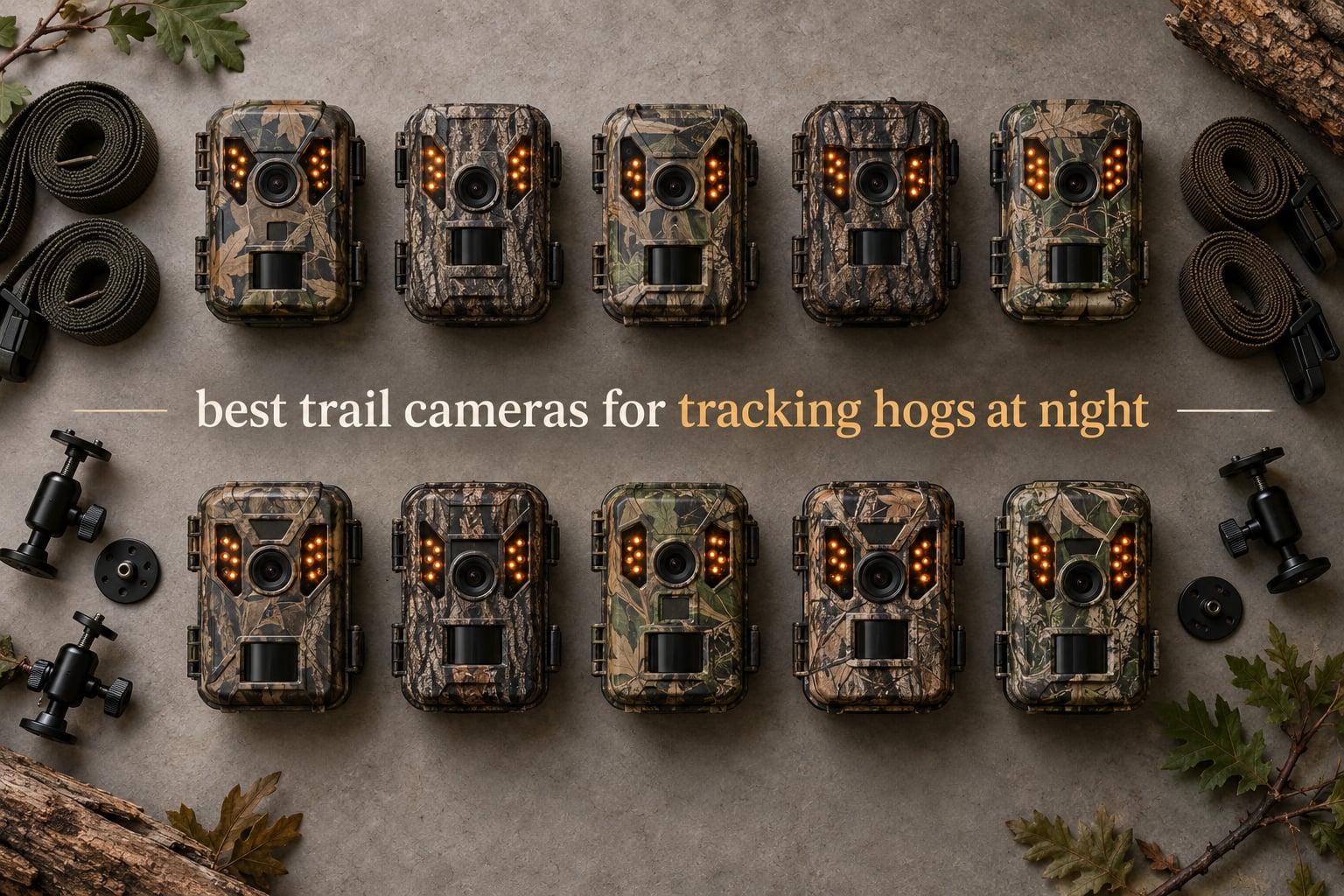
Hogs do not travel by daylight rules. They move through creek bottoms and timber after sunset, work the edges of standing crops, and travel in groups that hunters call sounders, so the useful information is almost always recorded between 9 p.m. and 4 a.m. That is why picking among the best trail cameras for tracking hogs at night comes down to night range, invisible infrared, and how quickly the camera wakes up when a dark shape moves through brush.
I have spent seasons putting cameras on creek crossings and fence gaps to figure out where a sounder sleeps and which trail it uses after dark. The failure pattern is consistent. A camera that looked excellent in daylight produced muddy, unusable frames at 40 feet, and the group it was meant to document walked around the frame entirely. What separated the units that worked was almost never resolution. It was flash range, trigger speed, and whether the housing could survive being rained on for a month.
Below I break down ten cameras that fit the night hog job, ranked on what they actually do after dark rather than on marketing resolution. I note the honest weakness of every one, including the two that will disappoint you if you expect to spot hogs at 80 feet. If you want a broader look first, our general trail camera roundup covers deer and general scouting angles, and our hunting trail camera guide covers setup and placement for more species.
One note on method. I am not claiming a controlled blind lab test on every unit here. I am reporting what the spec sheets, the field photography, and a large volume of owner feedback say about night performance, filtered through the working knowledge our team has from running cameras on hog ground. Where a number is a manufacturer claim rather than a measured result, I say so.
Table of Contents
Top 3 Picks for Night Hog Tracking (October 2026)
The three cameras below cover the realistic budget range for hog work. The WOSPORTS is the one I keep on the creek crossing, the Moultrie is the pick if you want footage without walking back to the tree, and the iZEEKER is the honest floor for night scouting when the money is short.


Moultrie Edge 2
- 36MP stills
- 100ft low-glow detection
- cellular with 8GB internal memory
- 2-year warranty

Best Trail Cameras for Tracking Hogs at Night in 2026
All ten cameras in the list, with the night specification that matters most for hog work next to each one. Ratings and review counts reflect what buyers report after living with the camera through real weather, not a launch-week sample.
| Product | Specifications | Action |
|---|---|---|
| WOSPORTS G600 4K |
|
Check Latest Price |
| iZEEKER iG200 |
|
Check Latest Price |
| Moultrie Edge 2 Cellular |
|
Check Latest Price |
 OUTDOOR EXPERT MINI-B OUTDOOR EXPERT MINI-B |
|
Check Latest Price |
 Meidase P70 Meidase P70 |
|
Check Latest Price |
 MagicEagle Cellular H1 MagicEagle Cellular H1 |
|
Check Latest Price |
 TACTACAM Reveal Ultra TACTACAM Reveal Ultra |
|
Check Latest Price |
 ALPHA CAM 30MP Dual Lens ALPHA CAM 30MP Dual Lens |
|
Check Latest Price |
 Oculview 4G LTE Two Pack Oculview 4G LTE Two Pack |
|
Check Latest Price |
 Punvoe JDL201-2 Two Pack Punvoe JDL201-2 Two Pack |
|
Check Latest Price |
Why Hogs at Night Is a Different Camera Problem
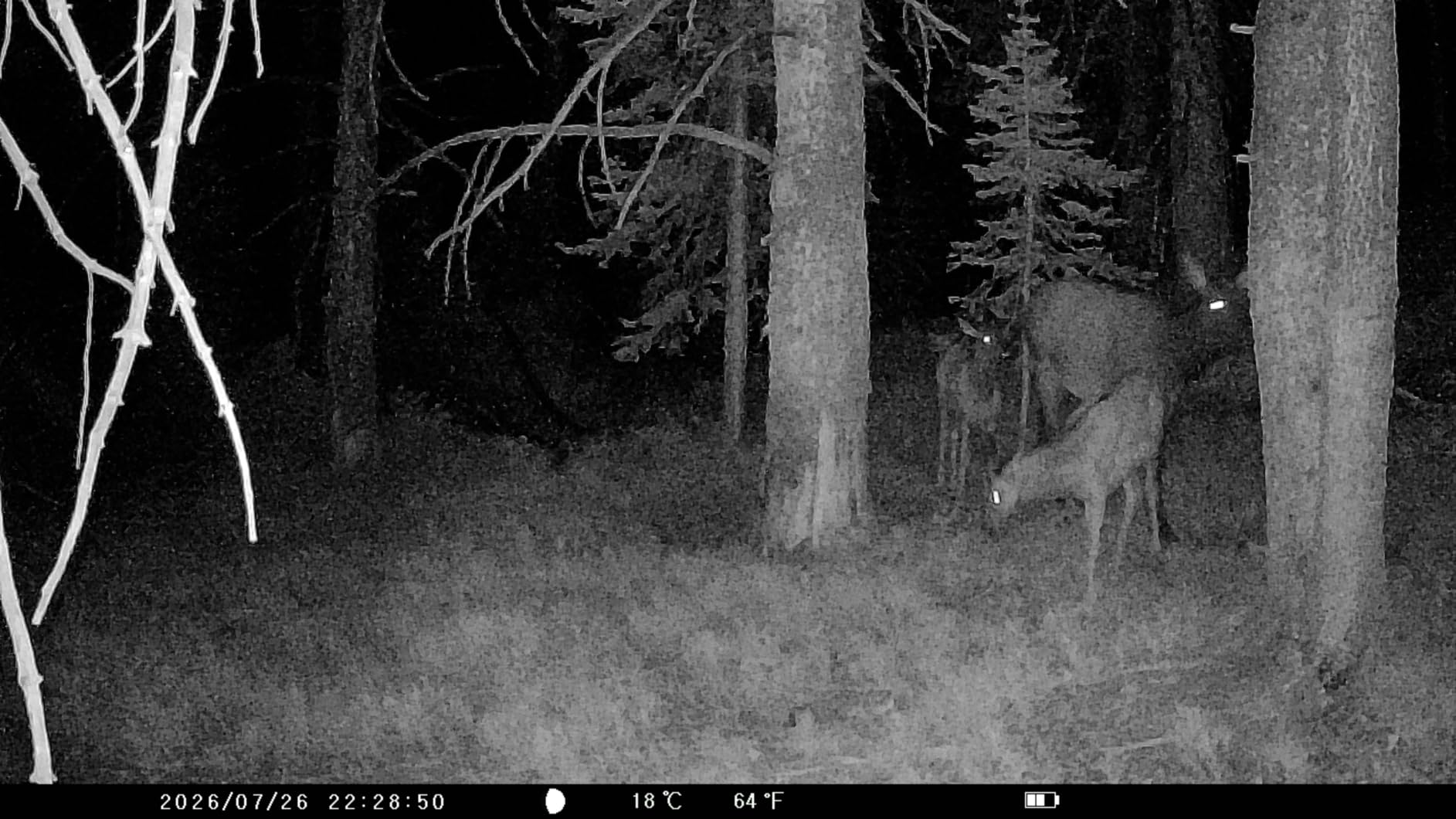
Hogs force a trail camera to work in a narrow band of conditions that deer rarely demand. A whitetail moving through a hardwood ridge is often standing on open ground with a clean background behind it. A boar rooting a creek bank at midnight is 60 percent shoulder behind standing timber, often within 30 feet, and frequently partly hidden by cane and switchgrass. If your camera cannot resolve a dark body against a dark background at that distance, the sighting is gone.
Three traits make night hog work different. First is group size. A sounder arriving together can trigger a single camera repeatedly, and every clip matters because you are counting animals. A camera with a slow recovery time may capture the lead sow and lose the rest. Second is rooting behavior, which pulls hogs into low, crouched postures close to the ground where a camera mounted too high sees mostly backs and mud. Third is the brush itself, which reflects infrared back as a bright wall and can white out an animal at close range.
It is also worth saying plainly what a camera cannot do. A trail camera narrows a search area; it does not confirm a live hog, and no night photo proves the ground is empty tomorrow. Forum consensus across hunting communities is that trail camera records are used to narrow the search before a night setup, not as evidence of a shot. If you want eyes on a hog after dark, that is a thermal device, not a trail camera. Our hunting trail camera guide covers the surrounding kit for night hog work.
1. WOSPORTS G600 4K Is the Best Overall Night Hog Camera for Most Timber
WOSPORTS Trail Camera(Non-Cellular Non-WiFi) 64MP 4K 0.2S Trigger Motion Activated,Game Camera with No-Glow Night Vision 2.0”LCD 120°Wide for Outdoor Scouting Wildlife Monitoring Home Security
64MP stills
4K video
0.2s trigger
32 no-glow 940nm IR LEDs
80ft night range
Pros
- Sharp 64MP stills and 4K video
- 0.2s trigger with 120 degree detection
- 32 invisible 940nm IR LEDs
- 2-inch LCD for aiming before you leave
- runs on 8 AA cells or a lithium pack
Cons
- Battery compartment is tight and needs a screwdriver
- settings can reset when cells are removed
- some units failed after about 9 months
The WOSPORTS G600 is the camera I keep on a creek crossing because of its combination of 0.2-second trigger and a 120 degree detection cone. Hogs do not stroll. They come through a gap fast, nose down, and a wider cone means a wider chance of catching the shoulder before the animal is past the frame. Night illumination comes from 32 940nm LEDs rated to 80 feet, and that is invisible flash rather than the faint red glow you see on older budget units.
During daylight it is genuinely capable, with adjustable still resolution up to 64MP and 4K video in either MP4 or AVI. The 2-inch color screen is the detail that saves time in the field. You can stand at the tree, frame the trail, and walk away instead of walking back two days later to fix a crooked mount.
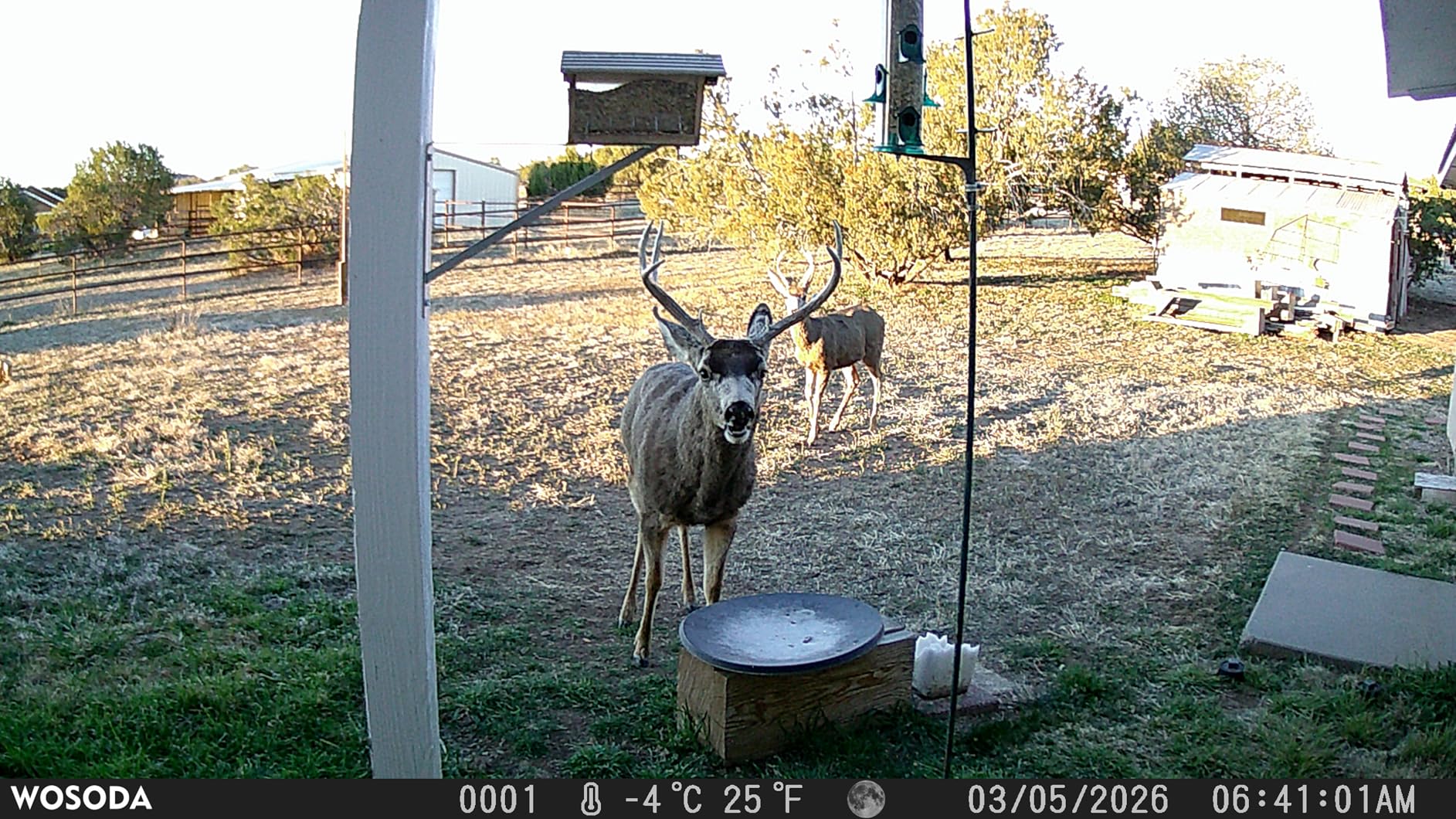
Owners report the picture and video quality as very good for the money, and support is repeatedly described as responsive, with refunds and replacements issued without much argument. The 32 IR LEDs are said to keep night illumination undetectable to animals, which matters when you are trying to hold a pattern on a nervous sounder. Battery flexibility is a genuine strength here: 8 AA cells, a rechargeable lithium pack, or a compatible solar panel all work.
Some units have been reported to run 12 months or more on lithium AA cells, which is exceptional for a camera shooting IR video all night. The listed weight is 0.55 kg, so carrying two of them into a creek bottom is realistic, and the IP66 rating covers the weather you are actually deploying into.
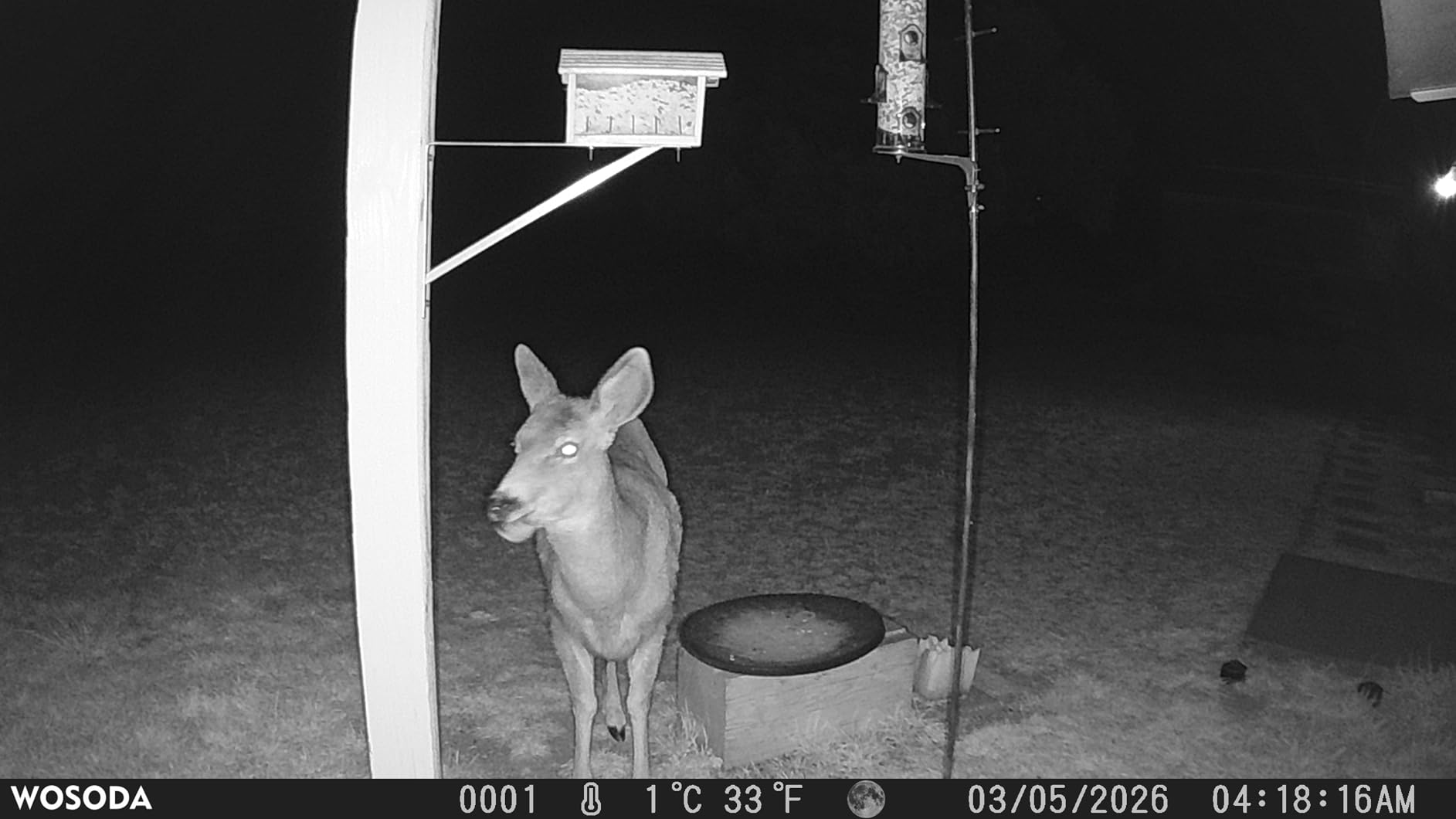
What you get right with the G600 in hog country
The 0.2-second trigger and 120 degree field of view are the two numbers that matter most when a sounder runs a trail. Burst options of 1 to 3 shots let you capture a sow and two juveniles crossing the same 20 feet of ground. Video and photo can be recorded together, so you get a still for counting and a clip for behavior.
Flash power is the other advantage. 32 LEDs at 940nm produce a usable image at the 30 to 50 foot distances where you will usually shoot hogs, and the 256 GB maximum card size means long deployments without a swap. A password protection option keeps the footage yours if the camera goes missing.
Where the G600 falls short
The battery compartment is the most common complaint, and it is a real nuisance. It is tight enough that a flathead screwdriver is needed to remove cells, which is a poor experience at 11 p.m. in the rain. Settings can be lost when batteries come out for a swap, so write down your night sensitivity before you service the camera.
One reviewer reported a unit that stopped powering its display and taking photos after roughly nine months, and another noted a visible red indicator on some units despite no-glow claims. A few owners also say the included nylon strap lacks a proper locking buckle, so plan on a real strap or a lock from the start. If you need battery-free deployment, the solar trail camera picks are worth a look instead.
2. iZEEKER iG200 Is the Best Budget Night Hog Camera
iZEEKER Trail Camera, HD Game Camera with 940nm No Glow Night Vision Motion Activated 0.2s Trigger Time, Hunting Camera No WiFi, IP66 Waterproof for Wildlife Monitoring Outdoor Security Deer Scouting
32MP stills
2K video
0.2s trigger
36 no-glow LEDs
65ft night range
280g
Pros
- 0.2s trigger with 3-shot burst
- clamshell design reduces lens condensation
- bottom-opening battery case
- illuminated setup buttons
- loop recording
Cons
- SD card and batteries not included
- no app or wireless connection
- 65ft night range is shorter than most rivals
The iZEEKER iG200 is the most direct way to get a genuine no-glow camera into hog ground on a tight budget. The 940nm IR array uses 36 LEDs and a 65 foot rated night range, which is shorter than most of the list but still comfortably covers the 30 to 40 foot working distance where a boar works a bank. A 90 degree field of view is narrower than the G600, so placement accuracy matters more.
Trigger speed is 0.2 seconds, the same as the top pick, with three continuous shots per trigger. For sounder work that burst rate is the feature to care about, because a group crossing a fence gap is rarely one animal wide. Stills are 32MP, video runs 2K, 1080p, or 720p, and the file format is AVI.
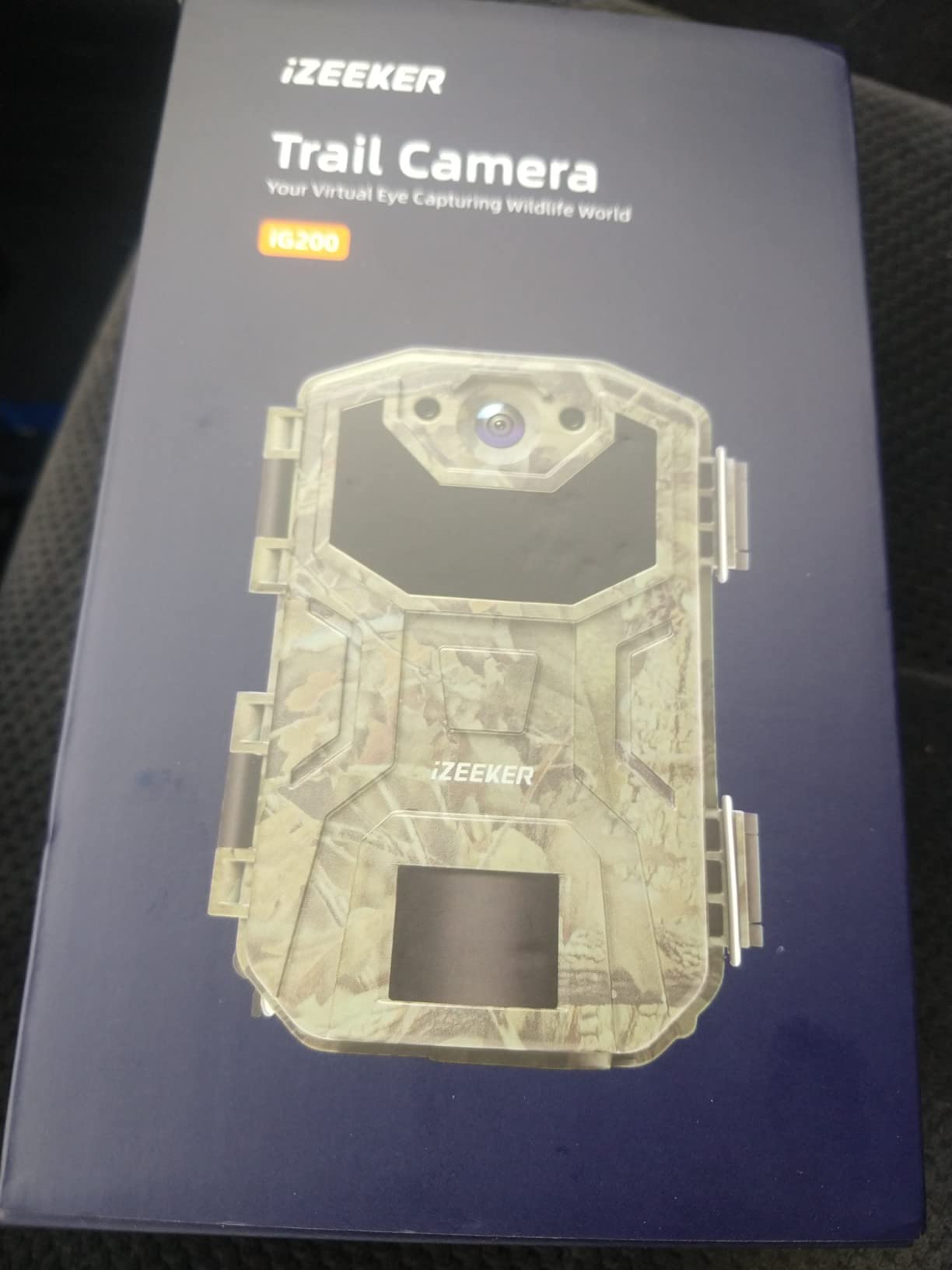
The physical design is the quiet strength here. The clamshell body keeps condensation off the lens, and the bottom-opening battery case means you are not fighting a tight gasket every time you swap cells. Reviewers regularly call out the front-facing LCD and lens for making aiming easy while the camera is still mounted, and the illuminated keyboard buttons let you set up in darkness without a headlamp pointed at the trail.
Loop recording overwrites the oldest file when the card fills, so the camera keeps working instead of stopping dead in week three. At 280 g this is a light unit, which matters when you are walking a ridge line with a camera, a ladder, and a lock.
What you get right with the iG200
True 940nm no-glow illumination at a cost that leaves room for extra cards and batteries. For a hunter who wants to keep a sounder pattern without spending heavily, that combination of invisible flash and fast burst is hard to find cheaper. The IP66 rating and ABS housing handle the wet brush environment around a creek crossing.
Setup functions cover photo count, time interval, timer, time lapse, and password protection, which covers most of what you would adjust on a premium unit. A one year manufacturer warranty is included, and the standard-sized SD slot means you are not hunting for an adapter.
Where the iG200 falls short
Batteries and an SD card are not included, so budget for both before the first trip. There is no WiFi, no app, and no cellular option, which means every file comes off the card by hand. If you are deploying on ground you cannot reach weekly, that limitation will drive the decision instead of image quality.
Sixty-five feet is the shortest night range in this group, and in dense cane or thick timber that can be closer to 50 usable feet. Treat the 65 foot figure as a best case. Everything else about this camera is honest and well made; the ceiling is simply what the flash can reach.
3. Moultrie Edge 2 Is the Best Value Cellular Camera for Night Scouting
Moultrie Edge 2 Cellular Trail Camera 2-Pack – 36MP, Low-Glow Flash
36MP stills
1080p video
100ft detection
low-glow IR
cellular
8GB internal memory
Pros
- 36MP stills and 1080p video with audio
- 100 foot detection with low-glow flash
- Auto Connect 4G across major US carriers
- 8GB internal memory plus cloud storage
- 2-year warranty
Cons
- Cellular data plan is a required ongoing cost
- 50 degree viewing angle is narrow
- power accessories sold separately
The Moultrie Edge 2 is the pick for anyone who does not want to walk into a dark timber at noon to pull a card. This listing is a two pack, and it covers a paired setup on a creek crossing plus a backup route without doubling the number of trees you have to service. Footage sends over 4G LTE and the camera carries 8GB of internal memory, so an SD card is optional rather than mandatory.
Night performance comes from a low-glow infrared flash rated for 100 foot detection, which is the top figure in this group and the longest reach of any camera that sends footage off the tree. Owners mention clean night images from the advanced low-light sensor, which pairs 36MP stills with 1080p video that carries audio. The audio matters more than it sounds. Root-snorting and the crash of a sounder moving through cane tell you things a still frame cannot.
Auto Connect activates 4G LTE across major US carriers with no SIM swapping, which removes the single most common headache with cellular trail cameras. The Moultrie Mobile app adds Game Plan pattern analysis, activity charting, and interactive maps, so you can read movement across several cameras without downloading every file. A two year warranty is handled through the app from the activation date.
Reviewers on this listing lean positive, with roughly 72 percent of ratings at five stars. Reliable connection, clean night images, and a capable scouting app are the recurring themes. The unit weighs 1.1 pounds and measures 4.2 by 3.6 by 5.5 inches, with a tree mount and a viewing angle of 50 degrees.
What you get right with the Edge 2
The 100 foot night detection figure is the real headline, because it puts identification range beyond most of the no-glow cameras here. If your hogs work a wide clearing or a field edge, that extra reach means you do not have to get close to the animal to see a shoulder patch or a tusk. Eight gigabytes of internal memory also means a dead signal does not lose footage.
Shipping two cameras in one purchase is a genuine advantage for sounder work, since you can cover an approach and a bedding area as a pair. The app’s activity charting is useful for spotting a nightly window when a group crosses. If you are still weighing cellular, our cellular trail camera comparison goes deeper on signal and plans.
Where the Edge 2 falls short
The data plan is a permanent cost rather than a one-time purchase, and it compounds across two cameras if you activate both. Buyers who bought the camera and then disliked the subscription write it as the main complaint. Budget the plan as part of the purchase, not as an optional extra.
That 50 degree viewing angle is genuinely narrow. It is fine aimed at a trail or a gap, and poor as a general property camera, so choose your tree carefully rather than mounting it first and aiming later. Power accessories, including solar packs and battery boxes, are separate purchases, which puts the real long-deployment cost higher than the camera alone.
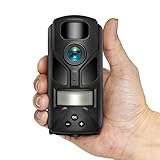
4. OUTDOOR EXPERT MINI-B Is the Best Hidden Camera for Close Night Work
OUTDOOR EXPERT Game Camera 20MP Mini, 1080P Hunting Trail Camera with No Glow 940nm Night Vision, Motion Activated, IP66 Waterproof, 80ft Illumination Range for Wildlife Monitoring, Outdoor Use
20MP stills
1080p video
940nm no-glow IR
80ft illumination
60ft PIR
0.26 kg
Pros
- Half-hand-size body that is easy to conceal
- 20MP daytime detail
- invisible 940nm IR with 80ft illumination
- rubber-plugged waterproof SD door
- 1/4-20 threaded mount
Cons
- Battery door hinge can break in the field
- sensitivity is fixed high with many false triggers
- 10 second video cap with roughly 3 second trigger delay
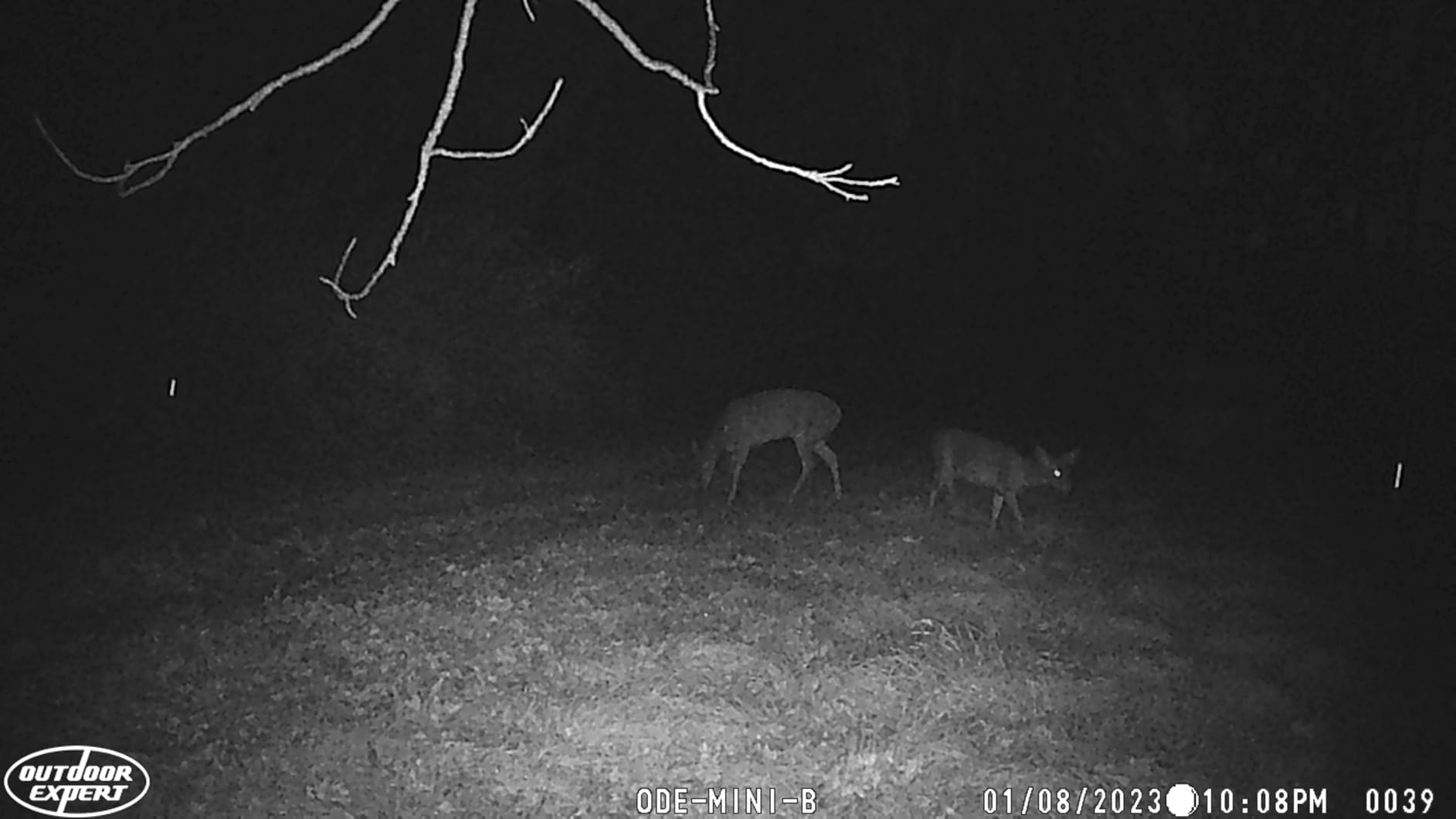
At 2 by 2 by 5 inches and 0.26 kg, the OUTDOOR EXPERT MINI-B disappears on a tree in a way the larger units never will. If your hog work is a tight funnel, a mineral site, or a feeder approach where a full size body would spook the group before the sensor wakes, size is the feature. The 940nm no-glow array illuminates to 80 feet with PIR motion detection out to about 60 feet.
Daylight stills are 20MP, which is plenty for counting animals and reading hog sign at a trail. Video runs 1080p or 720p. The camera records locally to a micro SD card up to 32GB, with no WiFi, app, or cellular, and it runs on six AA batteries that are not included.
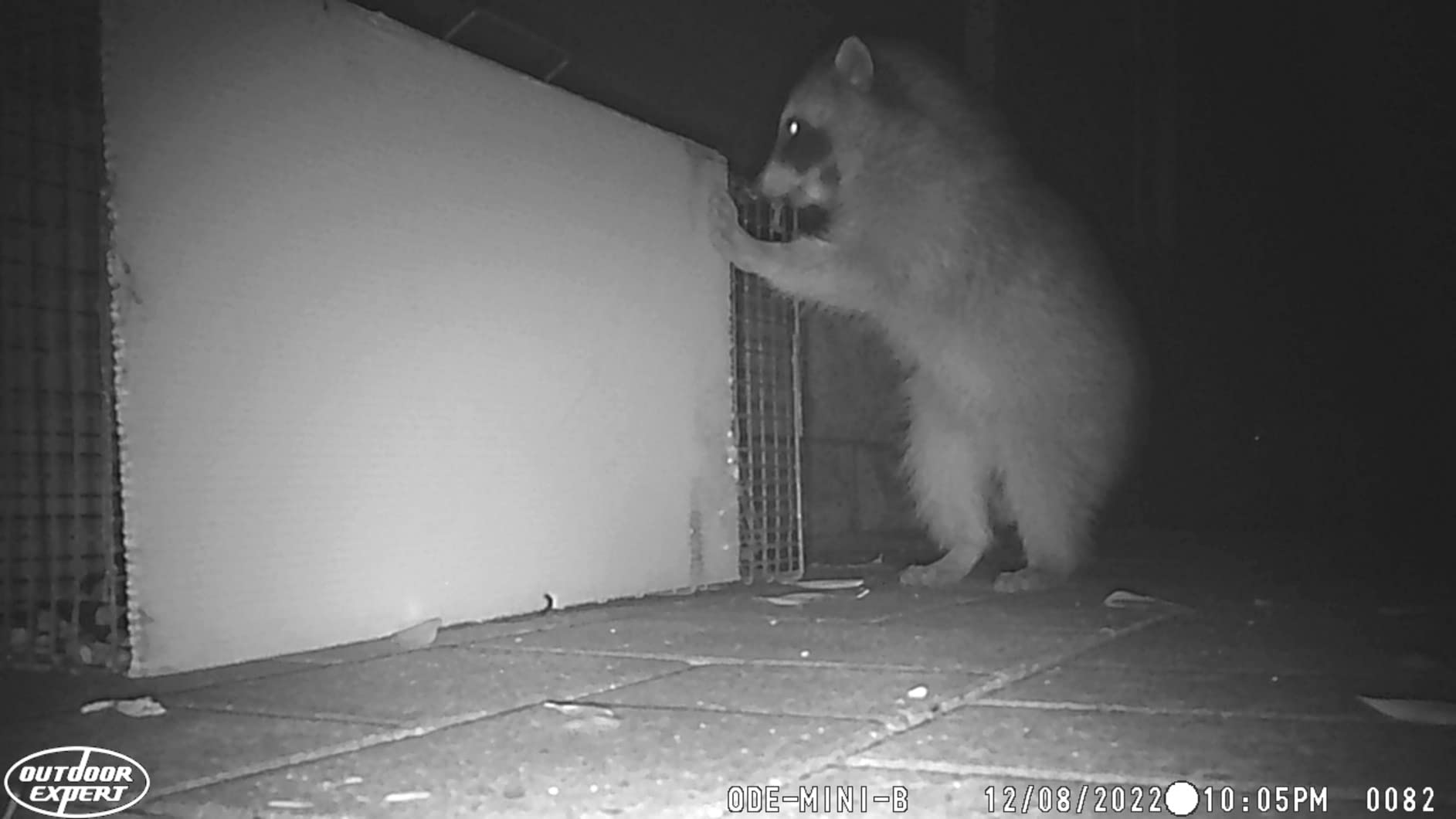
Buyers like the rubber-plugged SD door, which keeps the card slot sealed, and the standard 1/4-20 threaded mounting hole, which accepts a standard tripod screw or ball head rather than a proprietary bracket. One owner pairs it with a cellular card-link adapter to build a low-cost remote camera, which is a legitimate way to get footage off public ground you cannot visit weekly.
For typical backyard use, owners report roughly a month of runtime on one set of AA cells. It is IP66 rated with an ABS enclosure, and the 120 degree field of view is one of the widest in this group despite the small body.
What you get right with the MINI-B
Concealment and reach together. Most cameras this small sacrifice flash throw or sensor distance, but this one holds 80 feet of illumination while staying under a pound. For a night camera on a mineral lick or a fence gap, that combination is rarer than the price suggests, and buyers do rate the tiny size as the main reason they keep buying it.
The wide 120 degree view also helps. In a cramped funnel you would otherwise have to back the camera far enough away to fit the frame, and every extra step back puts you into the open. Owners also comment on crisp, detailed daytime photos, which is unusual at this size and level.
Where the MINI-B falls short
This is a polarizing budget camera, and the reviews say so directly. Eleven percent of ratings are one star, and the complaints are specific: the battery door hinge can break and open the housing on the ground, the included strap is effectively useless, and some units stopped recording after a few hours despite spare battery and card capacity.
Sensitivity is fixed at high with no adjustment, which produces a lot of false triggers in wind-blown creek-bottom brush. Video clips are locked at 10 seconds and there is roughly a 3 second delay before recording starts, so a fast sounder can be missed at the front of a clip. Reports of SD cards not being detected even after reformatting also show up, so format the card in the camera before you deploy and bring a backup.
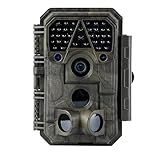
5. Meidase P70 Is the Best Camera for Running a Large Night Survey
Meidase P70 (Non-Cellular,Non-WiFi) Trail Camera, 64MP 1296p, Game Cameras with No-Glow IR Night Vision, Motion Activated, Waterproof for Wildlife Deer Cams, Hunting
64MP stills
1296p video
0.1s trigger
36 no-glow LEDs
100ft night vision
Pros
- 0.1 second trigger with side sensors
- 64MP stills through an f/1.6 lens
- 100ft no-glow night vision
- H.264 compression for fast playback
- solar ready
Cons
- SD card and 8 AA batteries not included
- night video trigger depth drops to roughly 15 feet
- slow night shutter blurs fast action
The Meidase P70 has the fastest trigger in this group at 0.1 seconds, plus side motion sensors that catch animals entering from the edge of the detection cone. On a sounder running a trail toward a camera, that combination is the difference between a shoulder in frame and an empty corridor. It sits at 4.4 stars with 71 percent of ratings at five stars, which is the strongest showing among the non-cellular cameras here.
The lens is f/1.6, which lets more light reach the sensor after dark, and the 36 LED 940nm array is rated to 100 feet with no visible glow. Stills top out at 64MP and video runs 1296p in MP4 or MOV with H.264 compression, so files are smaller and download quickly from a laptop in a truck bed.
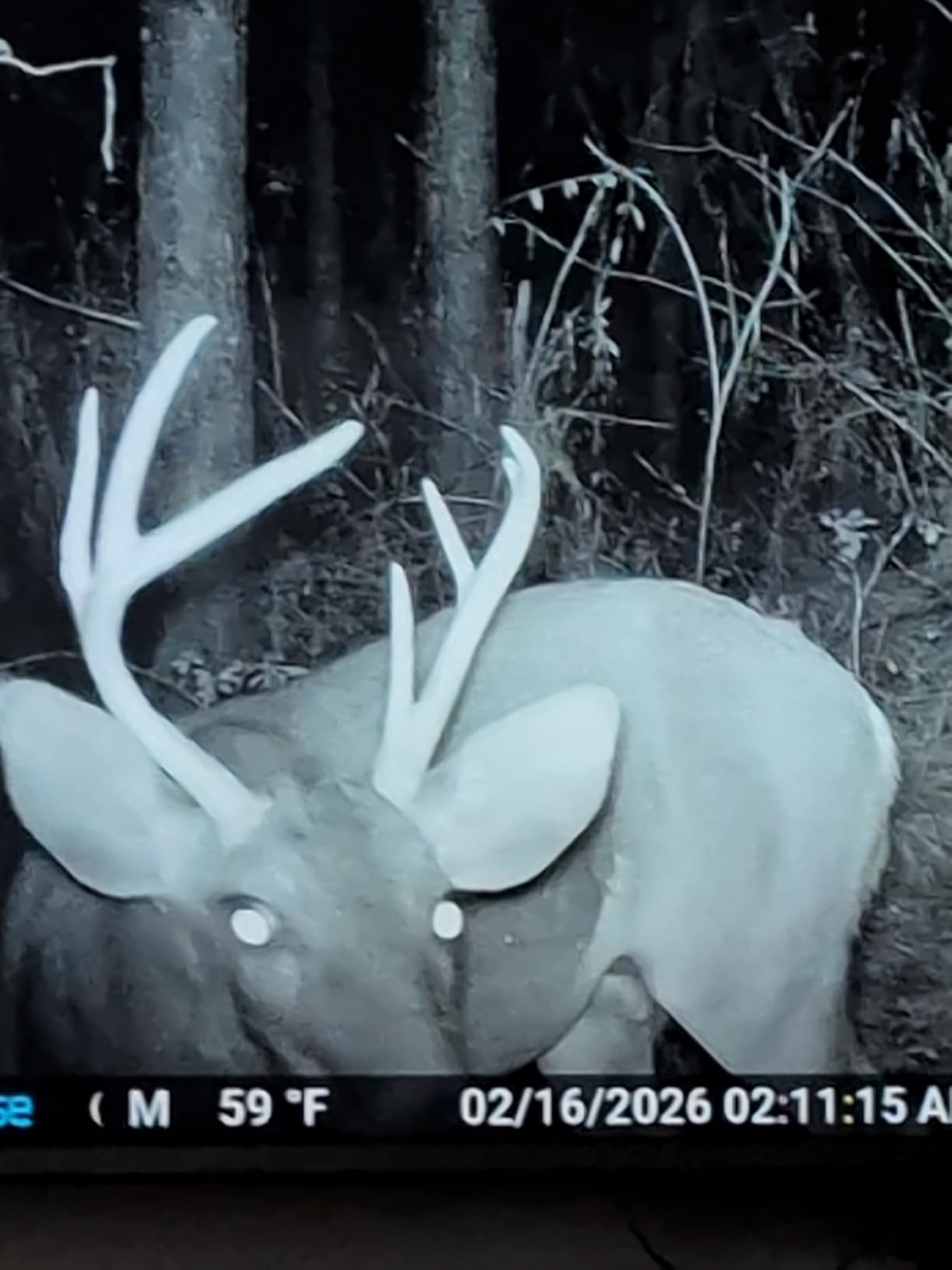
Owners running multiple units describe picture, video, and sound quality as better than cameras from several established trail camera brands, and one owner runs sixteen of them through bear country. That is the kind of durability claim that matters for a season-long hog survey. The housing is described as nearly indestructible, and support has shipped spare parts and replacements.
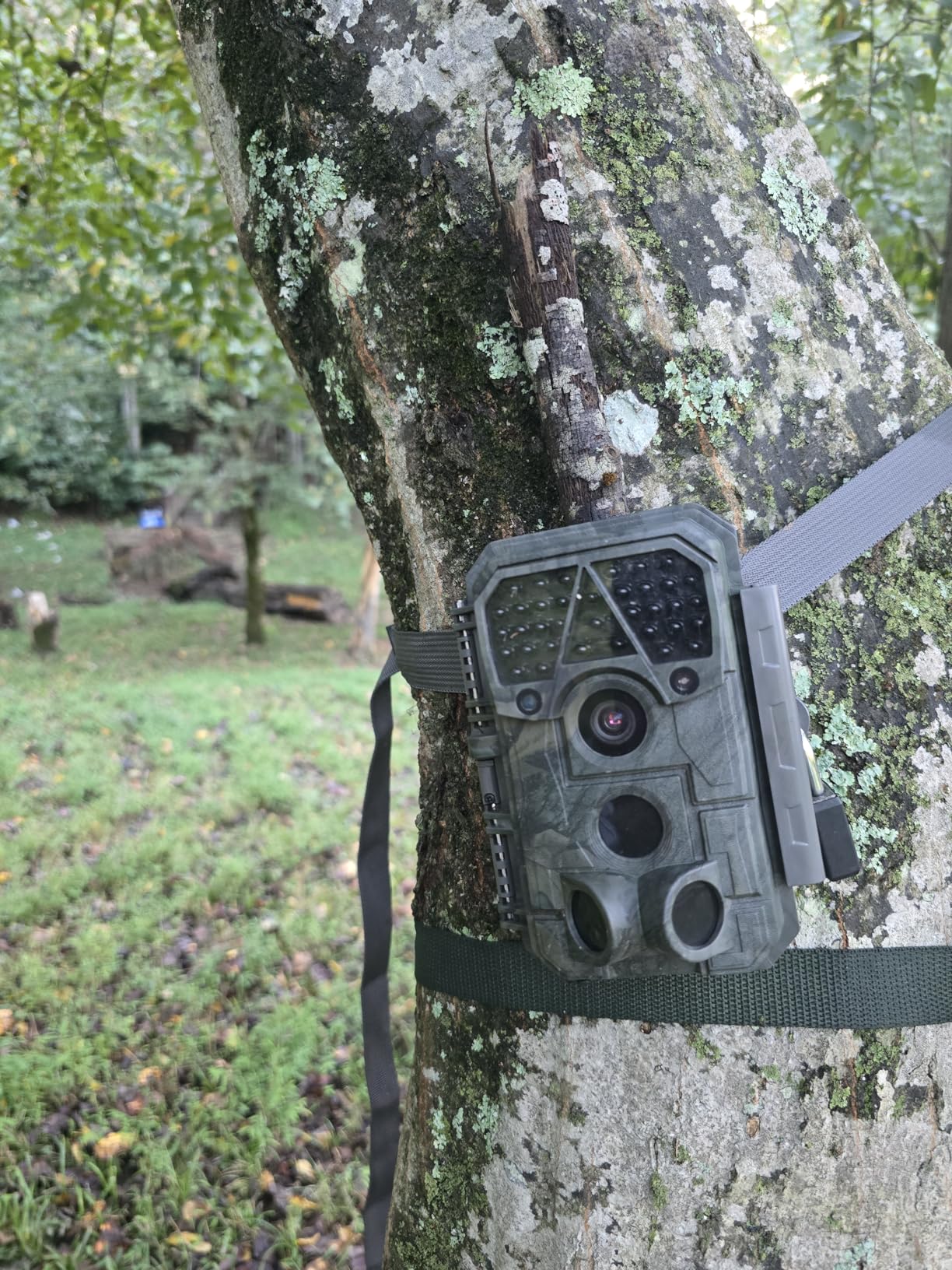
A 2.4-inch color display lets you review footage on site before you leave, and the camera is solar ready through a separately sold panel with eight AA batteries as backup. The listed operating weight is 0.49 kg, and the housing is IP66 rated ABS.
What you get right with the P70
Trigger speed and detection geometry. A 0.1 second trigger is genuinely the difference between catching a running boar and recording the dust behind him, and the side sensors mean you do not need a perfectly centered animal to get a frame. For groups moving on a parallel path, that off-axis sensitivity is worth more than extra megapixels.
The 100 foot no-glow rating is the longest invisible-flash range in this group, and at 4.4 stars it carries the strongest owner satisfaction among the SD card cameras. Multiple-unit owners describe the power draw as easy on batteries once the menu is set up correctly, which matters when you are running a grid of cameras across a lease.
Where the P70 falls short
Video trigger depth at night drops to roughly 15 feet on this camera, which is a specific and important limitation. A still photo may capture a boar at 40 feet, but a moving night video often will not start recording until the animal is already close. If your plan is to judge sounder size from video, test this one at your actual distances first.
Nighttime shutter speed is slow enough that fast action looks blurry or pixelated, and that pairs badly with the fast trigger in low light. The SD card and eight AA batteries are not included, and the card must be formatted through the menu on first setup. Owners also report inconsistent results from rechargeable NiMH cells, so use lithium batteries if you want consistent night performance.
6. MagicEagle Cellular H1 Is the Best Solar-Powered Night Camera for Remote Ground
MagicEagle® Cellular Trail Camera 4G Wild Game Cameras 13,000 mAh Battery Solar Panel 2K Audible Video No-Glow IR Night Vision IP66 Waterproof for Wildlife Deer Monitoring Home Security (Army Green)
5MP stills
2K video
13000mAh battery
6W solar panel
no-SIM 4G
90ft no-glow IR
Pros
- Highest rating in the group at 4.8 stars
- no-SIM cloud card auto-selects the strongest carrier
- 13000mAh battery plus included solar panel
- 0.3s trigger with 940nm no-glow IR
- -20C to 50C operating range
Cons
- Data plan required after the free trial allowance
- 5MP sensor is lower than most rivals
- solar panel mount needed extra screws
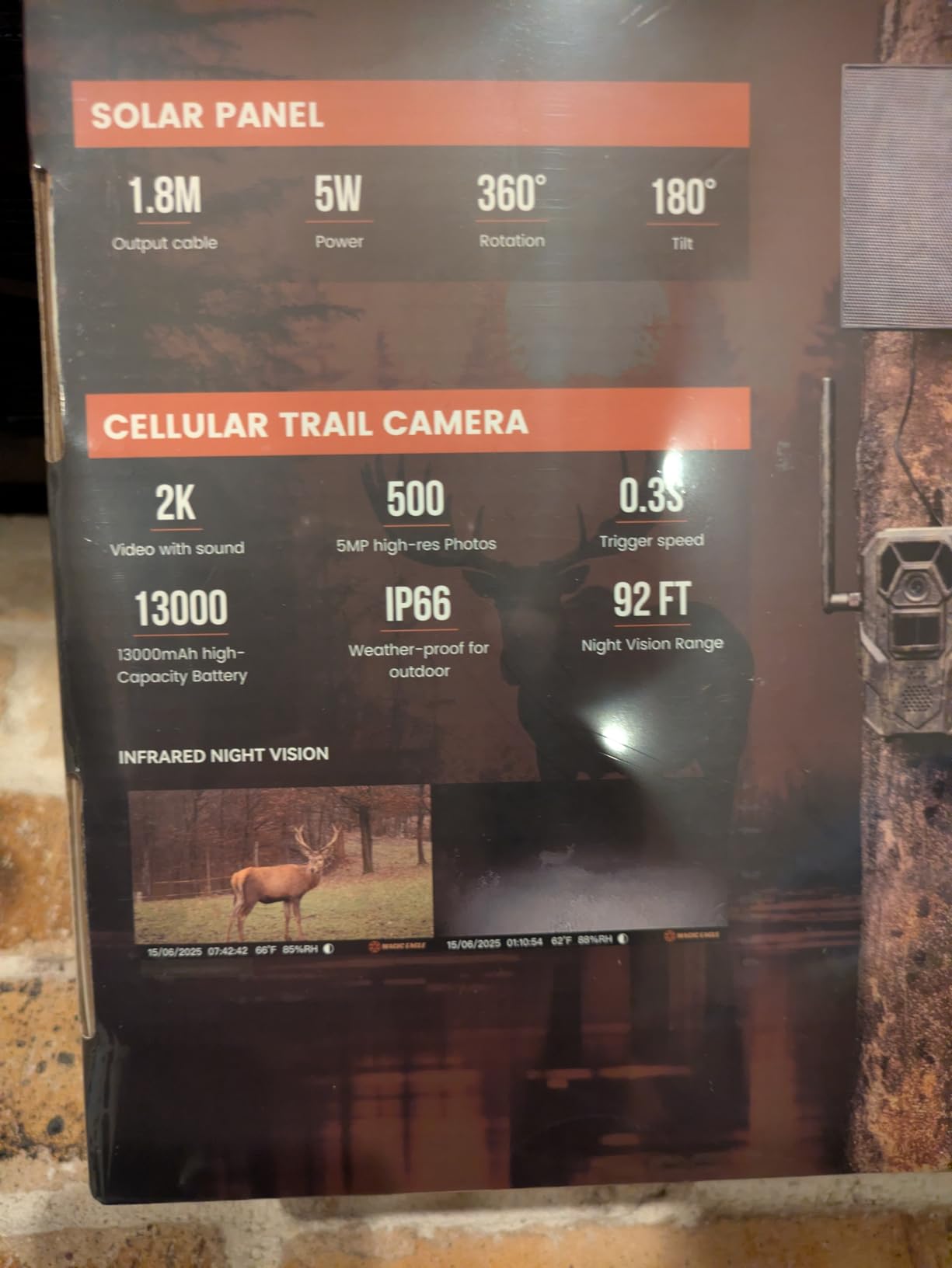
The MagicEagle H1 has the highest average rating of any camera in this roundup at 4.8 stars, with 85 percent of ratings at five stars across 267 reviews. It also ships with a solar panel in the box, which removes the single most common reason a night camera dies in January. Owners report working solar charging and crisp photos in low light.
Cellular works without a physical SIM. The SignalSync cloud card automatically selects the strongest available carrier, so you are not standing in the field reading carrier coverage maps and swapping SIMs. The box includes a 32GB SD card, the mounting kit with a belt, and the solar panel, and the camera is rated IP66 from -20C to 50C, which is the widest temperature range here.
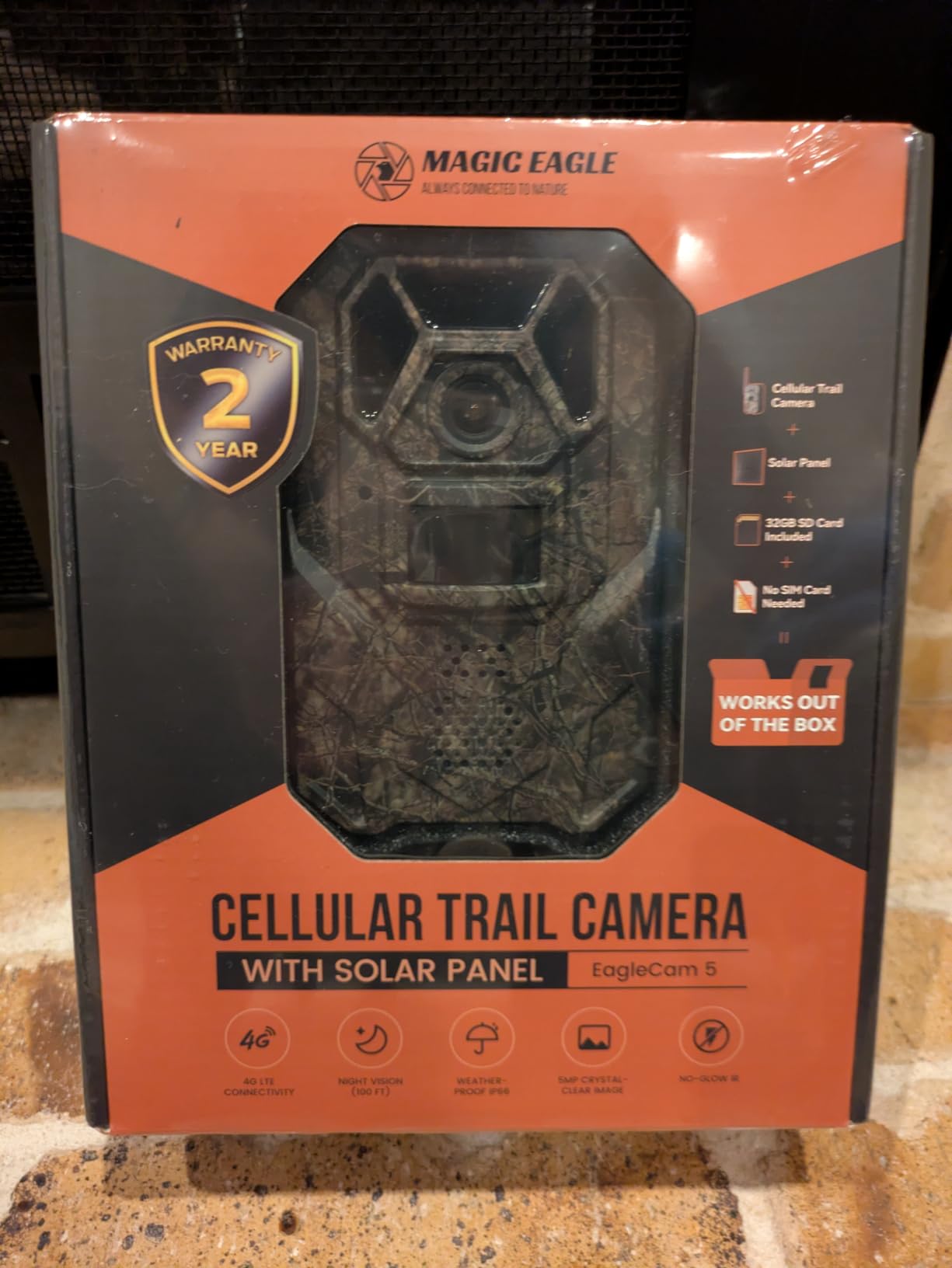
Night illumination is 940nm no-glow infrared with a 90 foot range, and the trigger is 0.3 seconds. The 108 degree viewing angle is wider than most cellular units, which helps when you are covering a clearing rather than a narrow trail. A gravity sensor and A-GPS send an alert if the camera is moved or tampered with, and the camera keeps reporting its location.
Cloud features include AI species identification plus activity, location, temperature, and humidity analysis, and the app supports live view without waiting for file transmission. Non-technical buyers describe setup as straightforward, though a couple of steps are not obvious enough to figure out without the manual.
What you get right with the MagicEagle H1
It removes the two biggest reasons remote night cameras fail. The battery and panel are included, so nothing depends on finding eight lithium cells in January, and the 13000mAh capacity is claimed to hold up to three months on standby. The operating temperature range means late-season hogs in a hard January do not finish the deployment early.
Anti-theft features are a real advantage when a camera sits on public ground or near a road. Owners who run cameras where theft is possible can confirm the camera’s last known location and get an alert when it moves, instead of discovering a stripped tree weeks later. The no-SIM carrier selection also means fewer failed uploads in weak coverage.
Where the MagicEagle H1 falls short
The 5MP still resolution is the lowest in this group by a wide margin, and that will show if you are trying to crop into a face or read ear notches from a distant hog. Video is 2K, which is fine for behavior and poor for still detail. If your priority is identification rather than pattern confirmation, weigh that carefully.
A data plan is required after the free trial allowance, and it is billed monthly on top of the hardware. The only substantive hardware complaint in reviews is the solar panel mount needing extra screws when used with the supplied strap, so bring your own fasteners. The 0.3 second trigger is also slower than the 0.1 and 0.2 second units here.
7. TACTACAM Reveal Ultra Is the Best Night Camera for Live Scouting
TACTACAM Reveal Ultra Cellular Trail Camera: 4K Photo, 1080p Video, Live View, GPS Tracking-Enabled, Switchable No-Glow/Low-Glow Flash, LTE Connectivity, LCD Screen – Best Hunting, Game Camera
4K stills
2.5K video
switchable no-glow 80ft or low-glow 96ft flash
live view
active GPS
Pros
- Switchable flash between 96ft low-glow and 80ft no-glow
- 4K stills and 2.5K video
- live view and on-demand HD requests
- active GPS transmits location even when powered off
- works on weak cellular signal
Cons
- Data subscription required for live view
- one owner reported a unit stopped transmitting with no technical support
- shadow movement triggers hundreds of photos
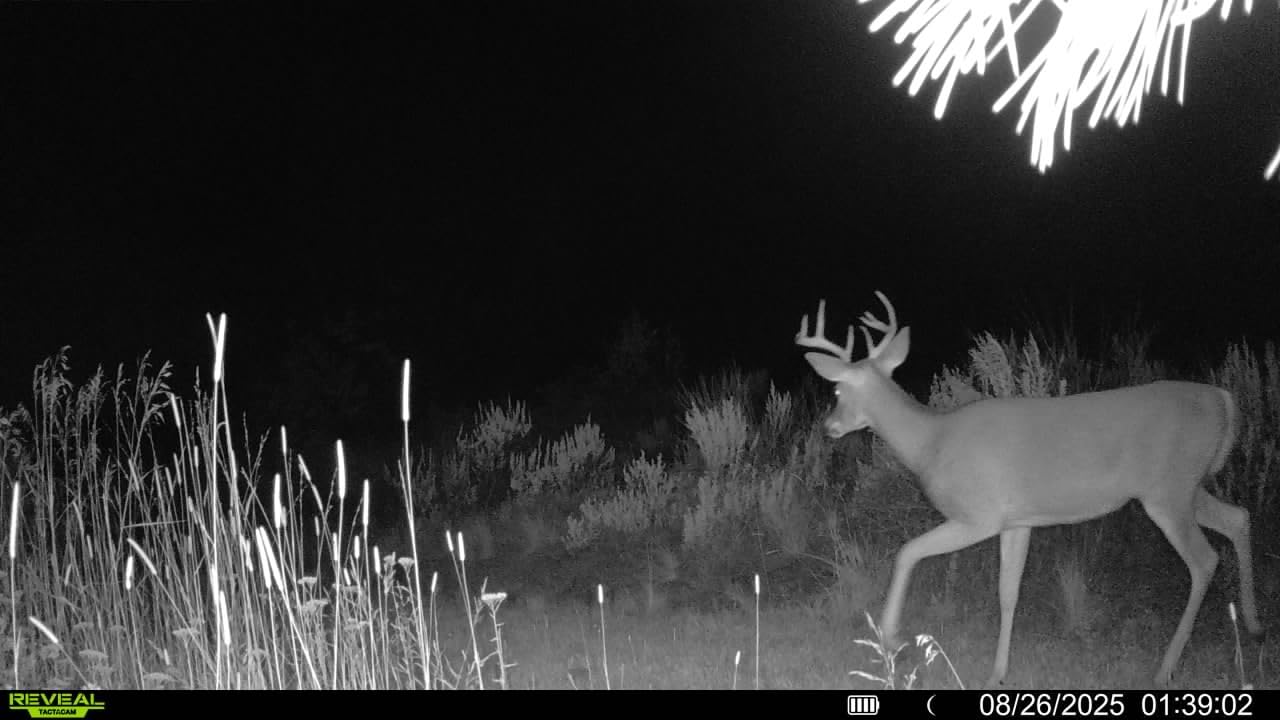
The Reveal Ultra is the only camera here with switchable flash, and for hog work that is more than a spec-sheet nicety. It runs a 96 foot low-glow array for maximum reach or an 80 foot no-glow array for zero visible light. Owners running TACTACAM units report a noticeable drop in spooked animals once they switched to no-glow, which is exactly the variable you would want to test on your own ground.
Stills are 4K and video runs 1080p or 2.5K with a sub-0.5 second trigger and up to 9 shots per burst. For a sounder running a corridor, nine frames across a single pass gives you a real count. Live View and on-demand HD photo requests stream through the app, so you can check a crossing without walking into the timber.
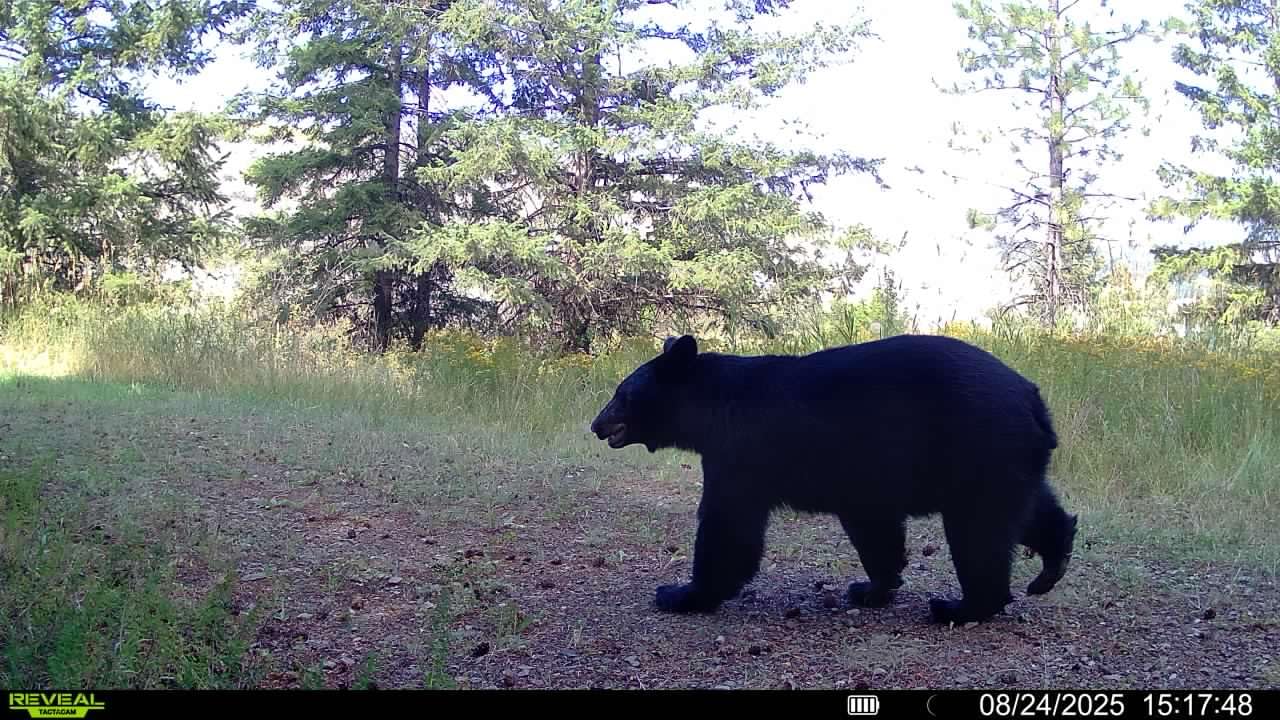
Built-in GPS keeps transmitting coordinates even when the camera is powered off or the battery is removed, and it alerts if the unit moves more than half a mile. One owner reports it working on a river location with no radio or cell service at all, which is the kind of report that tells you the upgraded antenna is doing something. Storage is 16GB internal with an SD slot for expansion, and there is a 2-inch LCD for setup.
It auto-connects to leading 4G LTE networks with no carrier setup, and it accepts Tactacam solar panels, folding panels, battery belts, and lithium cartridges. Owners describe the picture quality as a genuine step up from standard cellular cameras, with 4K stills that hold detail at night.
What you get right with the Reveal Ultra
The switchable flash solves a decision you would otherwise have to guess at. Run low-glow for 96 feet when you want maximum identification on a wide crossing, then switch to no-glow at 80 feet once you have found the tight working distance. Owners who made that change report calmer animals, which means better footage on every subsequent night.
Live View changes the workflow. If you are hunting hogs after dark, being able to request a photo on demand from a truck bed or a porch is worth the subscription. Active GPS theft protection is also stronger than most, since the camera keeps reporting even when it is off or stripped of power.
Where the Reveal Ultra falls short
Data plans with video transfer capability are comparatively expensive, and the subscription is required for live view and remote requests. If you only need overnight stills, you are paying for a feature you may not use nightly. Budget accordingly before deploying this on several trees.
Support is the weak point in the reviews. One detailed account describes a unit that stopped transmitting with no functional technical help available in the app, and files that the app claimed did not exist. Shadow movement in open, sunlit ground also triggers hundreds of unnecessary photos, which will eat a data plan quickly. Aiming the camera away from open sky at midday reduces that.
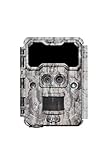
8. ALPHA CAM 30MP Is the Best Camera for Clean Night Images at Close Range
ALPHA CAM No Glow Dual Lens Outdoor Hunting Trail Camera 30MP 1080p 30fps IP67 Waterproof Scouting Cam with Ultra Fast Motion Trigger Speed and Recovery Rate 2.4″ Color Viewscreen 48 940nm IR LEDs
30MP stills
1080p at 30fps
0.3s trigger
1s recovery
48 no-glow LEDs
90ft IR
IP67
Pros
- Dual day and night lens avoids noise during the filter switch
- 0.3s trigger with 1s recovery for consecutive animals
- 90ft throw from 48 no-glow LEDs with low-noise night frames
- IP67 seal
- 2.4 inch color screen
Cons
- PIR motion detection only reaches about 17 feet
- SD slot is awkward to service
- some units died after a few months in the field
The ALPHA CAM is the one in this list that owners most often compare to cameras costing two or three times as much, and the reason is the dual lens design. Instead of relying on a single sensor with a mechanical filter, it uses a separate day lens and night lens, which means no noise burst and no washed-out frame during the dusk transition. Hogs move hardest right at that transition, so this matters more here than the resolution number suggests.
Illumination comes from 48 940nm no-glow LEDs with a 90 foot throw, and owners specifically call out the absence of white-out on nearby animals, which is the classic failure of a cheap IR array in creek-bottom brush. Stills are 30MP in full color, video is 1080p at 30fps, and the 2.4-inch color screen supports in-field review with an illuminated control panel.
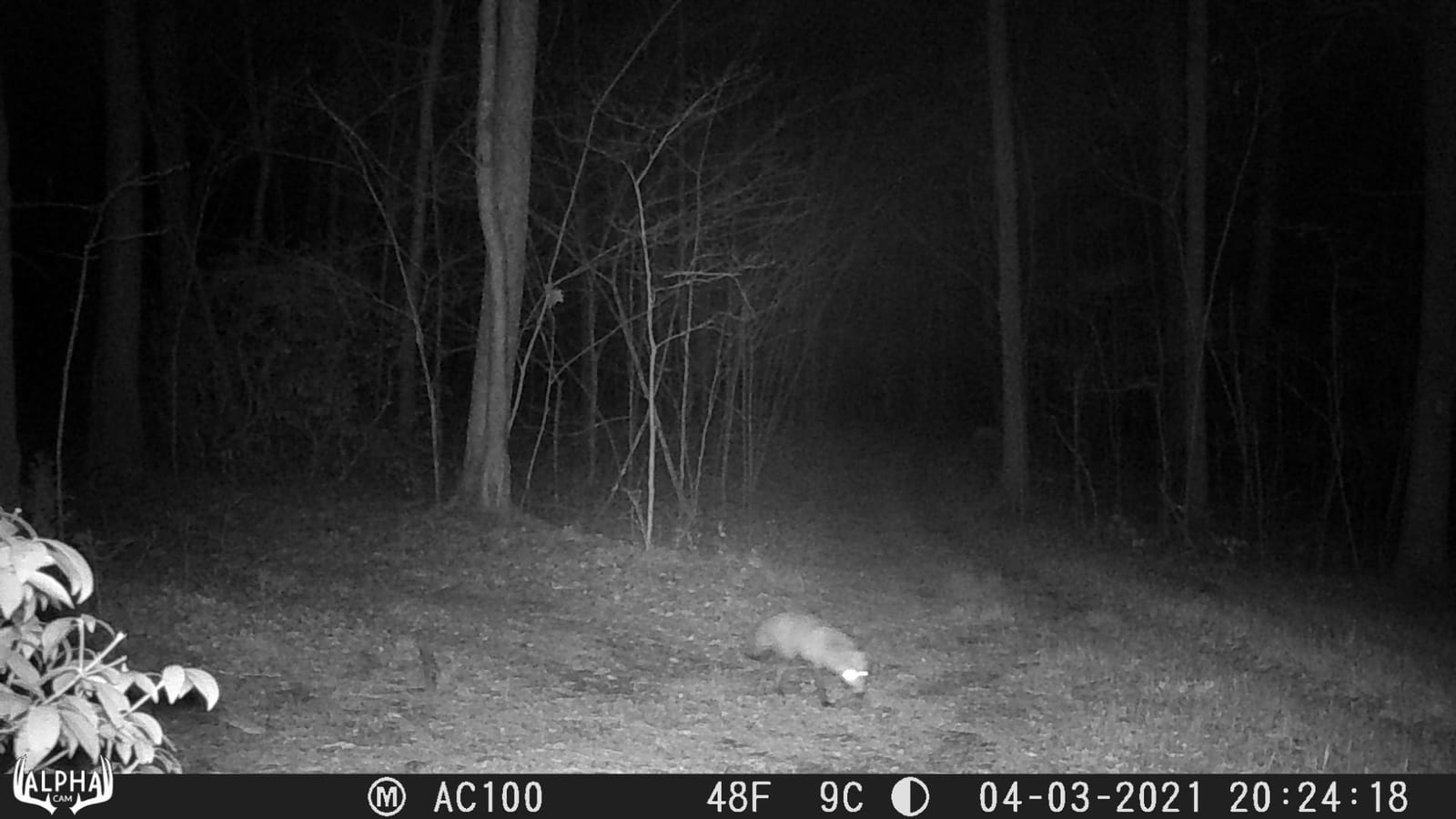
Trigger speed is 0.3 seconds with a 1 second recovery rate, and that recovery figure is the underrated spec here. Recovery is what lets the camera photograph the second and third animal in a group, and a 1 second gap is short enough that a sounder moving through a gap registers as a count rather than as one frame and a memory. The IP67 rating is the highest in the group, and the housing uses an easy-open latch with a brass tripod insert.
Some owners pair it with a cell-link adapter to build a silent cellular camera, which is a smart way to get remote footage on a unit that has no built-in radio. The included 6-foot tree strap has a real metal buckle, unlike several cheaper cameras. A two year warranty has produced immediate replacement units for owners whose cameras failed.
What you get right with the ALPHA CAM
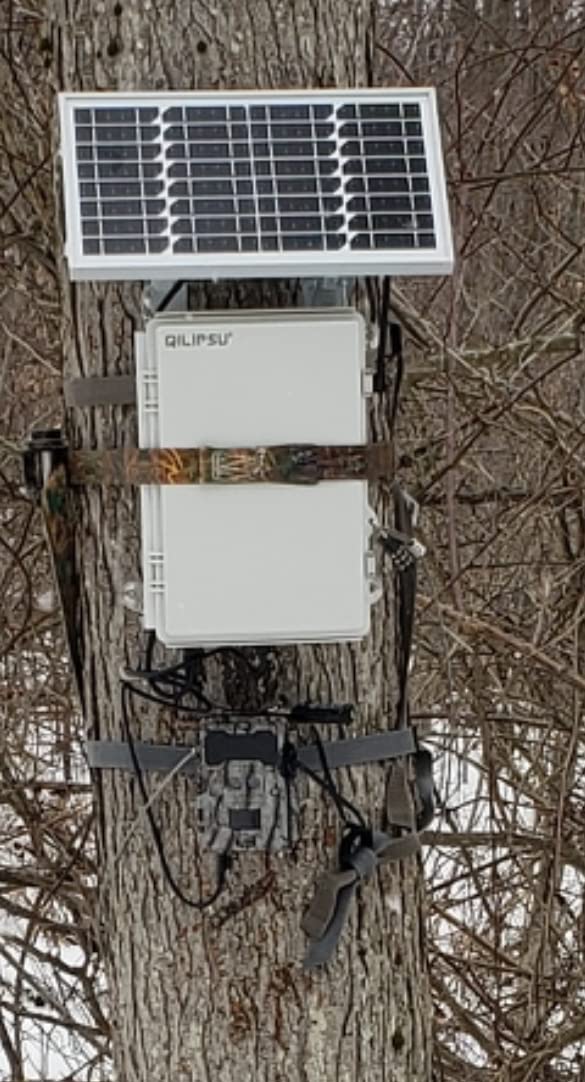
Night image quality in brush. The dual lens arrangement and the 48 LED array produce bright, low-noise black and white frames with no white-out on close animals, which is the specific complaint most hog hunters have with budget cameras at creek distance. Owners also praise the dusk and dawn footage, the two windows when sounder movement is heaviest.
Recovery speed is the second real advantage. A 1 second recovery means a group walking past a camera leaves you with a usable count instead of a single frame. The IP67 seal and brass insert also mean this camera tolerates being left in standing damp brush longer than the IP66 units here.
Where the ALPHA CAM falls short
PIR motion detection only picks up movement within about 17 feet, despite the longer flash and sensor claims. This is the single most important caveat in the whole roundup. The IR throws 90 feet, but the sensor will not wake the camera at 40 feet, so a hog at that distance is illuminated but not recorded. Set your expectations on detection distance, not flash distance.
The SD card slot is oriented so the card is hard to grasp when you remove it, which sounds minor until you are doing it in the dark with gloves on. The latch is breakable and the printed user guide has very small type. Longevity is also inconsistent despite the two year warranty, with two owners reporting units dying after several months in the field.
9. Oculview 4G LTE Is the Best Camera for Open Ground and Blind Corners
Oculview 4G LTE Cellular Trail Cameras, 360° 2K Live Streaming Game Camera, SIM Card Included, Low-Glow Night Vision, Solar Powered, Instant Alerts, Two Storage Ways, No WiFi Needed for Hunting&Trail
2K live streaming
336 degree pan
90 degree tilt
850nm low-glow IR
6W solar panel
SIM included
Pros
- 2K live streaming with no WiFi needed
- 336 degree pan and 90 degree tilt with 4x digital zoom
- SIM included and connects to Verizon AT&T and T-Mobile
- 6W solar panel
- holds signal on marginal coverage
Cons
- Uses 850nm low-glow IR rather than true no-glow
- monthly data plan plus separate cloud storage charges
- one owner lost app pairing after three weeks
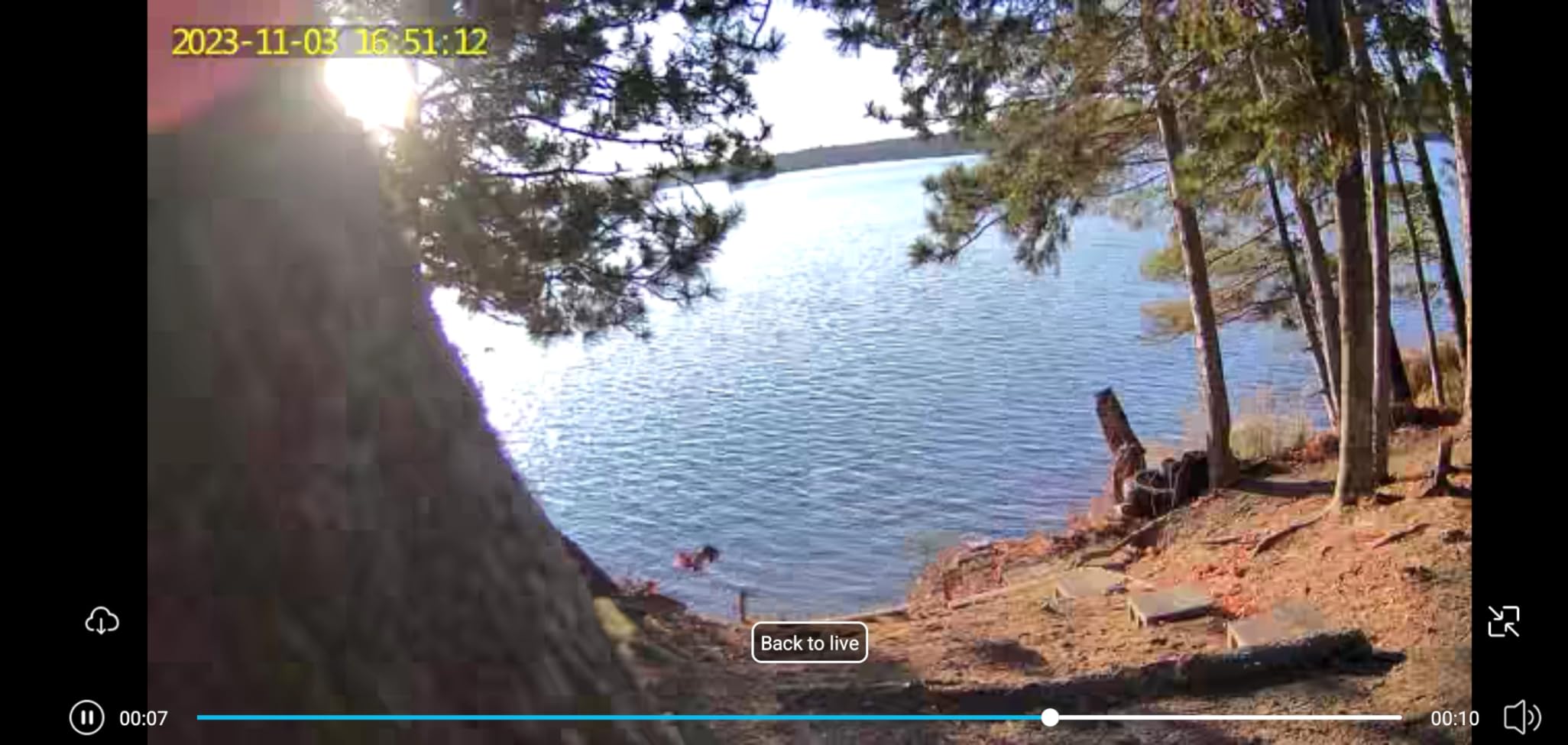
The Oculview is a pan and tilt camera, not a fixed trail camera, and that changes what you can cover. Instead of pointing one lens at one gap, it sweeps 336 degrees horizontally and 90 degrees vertically with 4x digital zoom, streaming 2K live to your phone over 4G LTE with no WiFi involved. This listing is a two pack, and the SIM card is included.
For hog work that is genuinely useful at a feeder site or a mineral block where animals approach from unpredictable angles. Instead of two fixed cameras pointed at two approaches, one unit sweeps the whole area. One reviewer calls the pan and tilt capability a significant step up in practice.
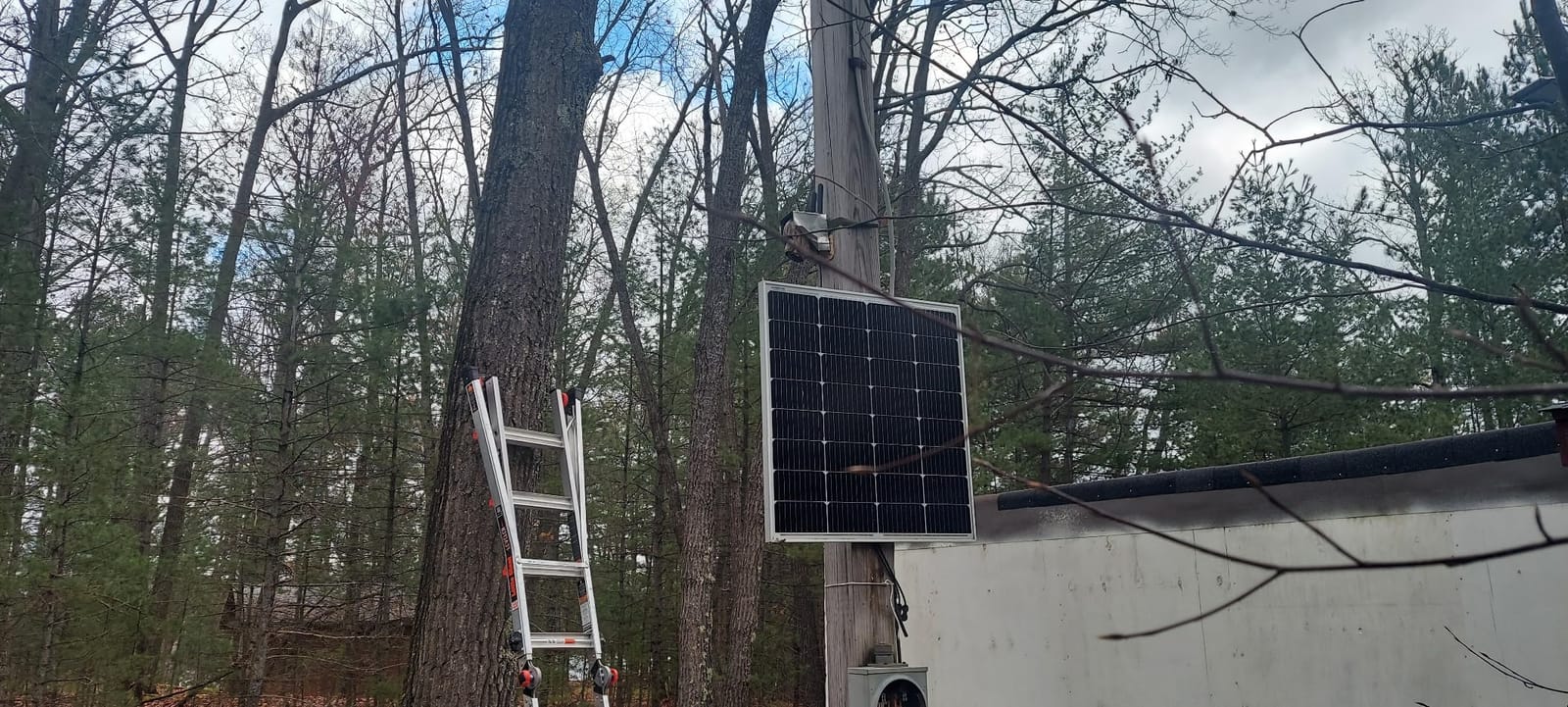
Power is handled by an included 6W adjustable solar panel, and owners report 10 minutes of direct sun covering a full day, with the panel holding charge through rain and snow. The camera also runs on battery, and it is rated IP65. Signal performance is a recurring positive, with one user holding 1 to 2 bars from a tower 16 miles away, and fast, helpful support that resolved problems remotely.
Trigger speed is 0.2 seconds with a 120 degree PIR detection angle, and instant alerts go to the app. Storage works two ways, either cloud storage on a subscription or a local memory card up to 128GB, which is not included. Fast, helpful customer service is mentioned more than once in the reviews.
What you get right with the Oculview
Coverage per camera. A 336 degree pan covers roughly three times the arc of a fixed 120 degree unit, and because the camera moves on detection, you are not wasting resolution on empty space. On a feeding or mineral site where hogs circle before committing, that sweep pattern is the difference between a clip of the group and a single boar.
Solar endurance and signal hold-up are both strong points. The 6W panel is included, and marginal coverage still works, which matters in the creek bottoms and timber where hogs concentrate. The included SIM connects to Verizon, AT&T, and T-Mobile on power-on with no setup friction.
Where the Oculview falls short
It uses 850nm low-glow infrared rather than true no-glow, so a visible red flash can be detected by animals. On a camera mounted at head height in an open field, that is a real risk of spooking a sounder before you have a pattern. Low-glow is fine for yard monitoring and less fine for close approach work.
Cost is the other issue. The data plan is billed per camera each month, and cloud storage is billed separately, so two cameras plus cloud adds up across a season. One owner also reported the app stopped recognizing the camera after about three weeks with no way to re-pair it, which is the main driver of the 13 percent one-star share. Setup instructions are described as incomplete, so budget time for configuration.
10. Punvoe JDL201-2 Is the Best Starter Two-Pack for New Hunters
Punvoe Trail Camera 2 Pack 36 MP 2.7K Game Camera 16GB Memory Card 4 Batteries Time 2.0″ LCD Screen, Trail Cameras with 120°Wide Night Vision IP66 Waterproof for Monitoring Wildlife Trail Cam
Two cameras
16GB cards and batteries included
0.2s trigger
100ft night range
850nm low-glow IR
Pros
- Two cameras with 16GB memory cards and 8 batteries already in the box
- 36MP stills and 2.7K claimed video
- under 0.2s trigger with 130 degree detection
- IP66 rated from -22F to 158F
- 2-year limited warranty
Cons
- Uses 850nm low-glow LEDs rather than 940nm no-glow
- listed specs are inconsistent with the marketing claims
- no WiFi or SIM so footage must be pulled manually
The Punvoe two-pack is the practical starting point, and the reason is the box contents. Two cameras, two 16GB memory cards, eight batteries, two straps, two USB cables, wall mounts, and screw sets. Nothing else to buy before the first deployment, which removes the most common early frustration with a cheap camera where the card and cells were not included.
On paper it covers a lot of ground. The listed still resolution is 36MP with 24MP effective, video is described as 2.7K in the title and listed as 1080p in the spec sheet, and the night range is rated at 100 feet from 22 850nm LEDs. Trigger is under 0.2 seconds with a 130 degree detection angle, and the body is compact enough to carry two of them on a long walk.
Setup is the other selling point. A 2.0-inch HD TFT color screen and TV-remote-style buttons mean you can configure both cameras without an app, no WiFi, and no SIM. The efficient PIR design is claimed to reduce false triggers and deliver around 17,000 images on a battery set, and the IP66 seal with a rubber ring is rated for -22F to 158F, which covers late-season cold.
Buyers like that the memory cards and batteries ship in the box, that the screen allows setup without an app, and that the small body is easy to conceal and carry. A two year limited warranty with direct manufacturer support is included, and 65 percent of ratings sit at five stars.
What you get right with the Punvoe two-pack
Two cameras, two cards, and eight batteries means you can build a paired pattern on night one, which is exactly how you find a sounder. A single camera shows you that hogs exist at a location. Two cameras on a crossing and the far approach show you direction, timing, and group size, which is what you need to set up after dark.
Temperature handling is a genuine strength for late hogs. The -22F lower operating figure is the coldest rating in this group, and the rubber ring seal is a better fit for a camera that will sit through freezing rain all season. The 130 degree detection angle and under 0.2 second trigger also help when a group hits the frame fast.
Where the Punvoe two-pack falls short
It uses 850nm low-glow LEDs, not 940nm no-glow, so the red flash is visible. On a close approach camera that is a spooking risk, and it is the main reason this is last rather than higher. If invisible flash matters to your plan, choose a 940nm unit instead.
The spec sheet contradicts the marketing copy, with 2.7K video and 36MP in the title against 1080p and 24MP effective in the listed specifications. Judge the real output from your own footage rather than the box. There is also no WiFi, SIM, or app support, so every file is pulled by hand, and 10 percent of ratings sit at two stars with some buyers reporting reliability gaps.
No-Glow Versus Low-Glow for Hogs, and Why It Matters Less Than You Think
No-glow flash matters less for hogs than most buying guides suggest, and it matters more for one specific reason. Wild boar are not the animal most likely to bail because of a red LED. Cats, wolves, foxes, and owls are the animals commonly cited as able to see red flash, and hogs are generally described as working a sounder by smell, sound, and habit rather than by watching a tree line for lights.
That said, low-glow has a real cost that has nothing to do with spooking. An 850nm low-glow array puts out more visible light and generally reaches further, and the range difference shows up in the specs here: the Oculview and the Punvoe both use 850nm, while the WOSPORTS, iZEEKER, Meidase, ALPHA CAM, and MagicEagle all use 940nm no-glow. The Reveal Ultra sidesteps the argument entirely by letting you switch between 96 feet of low-glow and 80 feet of no-glow.
The reason to pay for no-glow on hog ground is not the hog. It is the deer. A shared hunting area usually means other animals in the same corridor, and a camera that leaves deer nervous keeps them moving instead of bedding, which changes the footage you are trying to read. If you are working ground with heavy deer pressure, no-glow is worth the extra dollars. If the ground is hog-only, a low-glow array that reaches further may serve you better.
Mounting height handles the rest. A camera hung high reduces visible IR glare from below, and forum discussion is clear that this helps appearance and visibility without solving the noise problem, since a camera working a creek bottom is audible to a hog regardless of its flash type. The bigger practical lever is trigger sensitivity, not wavelength.
False Triggers at Night and How to Stop Burning Batteries and Data
False triggers at night are usually a habitat problem, not a camera defect, and hog habitat makes it worse than deer habitat. Creek bottoms and switchgrass edges move continuously in a night breeze, and a passive infrared sensor reads that motion as a warm body. Wind, sun, and brush are the three causes that come up repeatedly in owner complaints, and all three drain a battery bank and a data plan in a single week.
Start with sensitivity. Several budget cameras including the OUTDOOR EXPERT MINI-B ship with sensitivity fixed at high with no adjustment, which guarantees a full card of empty frames in brush. Where a camera allows adjustment, set medium for a creek crossing and high only for a bare trail or a hard mineral site. Second, mask the detection zone if your model supports zones, and aim so that open sky is outside the cone. Shadow movement in open, sunlit ground is a documented cause of hundreds of unnecessary photos on some models.
Third, mount so that the vegetation the camera sees is not moving in the wind. A post behind tall grass is worse than a tree ten feet away with a clean corridor. Fourth, use burst settings deliberately. A 1-shot setting on a moving hog group wastes frames; a 3-shot burst on a squirrel costs nothing. On cellular cameras, restricting daytime uploads and using time-lapse for daylight frees bandwidth for the night footage that matters.
If footage still comes back empty at night, diagnose in this order. Check that night mode is enabled and the IR array is not disabled by a schedule. Confirm the lens is clean and the housing seal is intact. Then check the card, because cards that are not recognized or not formatted in the camera are a common failure report. Finally, test the PIR sensor itself by walking the full expected range after dark, because detection distance and flash distance are not the same number.
Camera Placement for Night Hog Work
The best placement for night hog work is a travel corridor between a bedding area and a feeding area, not the feeding area itself. Hogs move between the two after dark in a fairly repeatable path, and a camera on that path sees the same animals repeatedly. A camera on a feeder tells you when a group arrives, but a camera on the corridor tells you when they leave, which is usually after legal shooting light.
Prioritize four placements. Creek crossings are the highest-value spot, because a sounder must funnel and the water and mud give you a clear, level background for a night photo. Fence gaps and damaged fence lines are the second choice for the same reason. Crop corners where rooting damage is visible give you a clock, since a camera facing fresh rooting tells you when the group was there. Feeder and mineral approaches work but risk the group noticing the camera at close range.
Set height to the animal, not to the trail. Mounting at roughly chest height on the hog keeps a sow and piglets in frame and puts the lens below the sightline of standing deer. Angle slightly downward if you want the shoulder and back line, which is more useful for counting than a level shot. Leave three to four feet of clearance in front of the lens so that approaching animals are illuminated before they reach trigger distance.
Finally, think about what you will be doing for the next 24 hours after you find the pattern. If the corridor is in public timber or near a road, weight the camera with a lock and expect to check theft alerts. If it is on private ground you control, a fixed SD card camera is fine and cheaper to run. Our general trail camera guide has more placement detail for other species and terrain.
Reading a Night Camera Timeline to Follow a Sounder
A night camera is only useful if you read it as a sequence rather than a pile of clips. The single most common mistake is sorting by file and looking at one image, which tells you almost nothing. Sort by date, then read across every camera on the property in time order, and the movement pattern appears within two nights of footage.
Look for four things. First, a consistent clock time, which is almost always present: hogs are crepuscular-nocturnal and a sounder on a fixed pattern will cross the same gap within a narrow window night after night. Second, group size, read from burst frames rather than a single photo, since three frames of the same sow at a feeder tells you a group is feeding and one frame tells you a hog exists. Third, direction, which is only visible when two cameras cover the same corridor at different points.
Fourth, exit behavior. The most valuable footage in night hog work is the last 30 seconds before the group leaves a crossing, because that shows where they went. That is also the footage most cameras lose, since a moving group at the edge of the frame triggers late and clips end early. This is where trigger speed, recovery time, and night video depth earn their money, and it is why the 0.1 second Meidase and the 1 second recovery ALPHA CAM appear on this list.
A worked example. Suppose on three consecutive nights a camera at a creek crossing records a group at 11:40 p.m., again at 11:35 p.m., and again at 11:50 p.m., always moving left to right, always with two adults and four smaller animals behind. A second camera 150 yards downstream records the group 25 minutes later, again left to right. You now have a timing window, a direction, and a group count, and the setup position falls between the two cameras on that line at about 11:50 p.m. Without the second camera you had three clips and no route.
Keep a simple log as you go. Date, camera, time of first and last trigger, direction, and count. A month of that log is more valuable than any single night of footage, and it takes five minutes per camera visit.
What to Look for in a Night Hog Camera
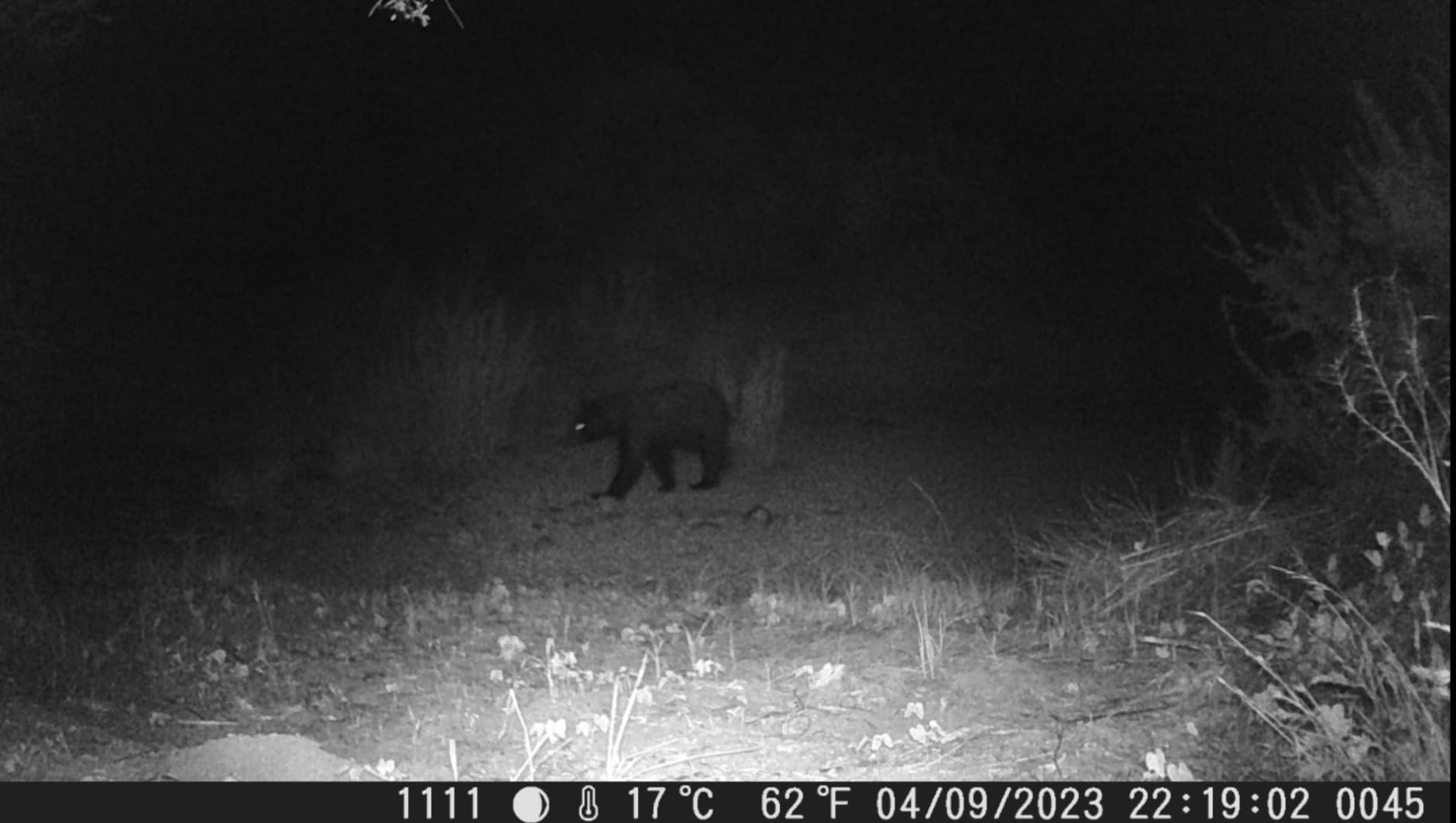
Night range and detection distance are two different numbers, and confusing them is the most expensive mistake in this category. Flash range is how far the IR light reaches. Detection range is how far the passive infrared sensor senses a warm body and wakes the camera. A camera can light a hog at 90 feet and never record it because the sensor only wakes at 17 feet, which is exactly the reported behavior of the ALPHA CAM in this list. Check both numbers, and if the listing only gives one, assume the shorter one.
Trigger speed and recovery time are the second pair. Trigger speed is how quickly the camera reacts, and 0.1 to 0.2 seconds is the range that reliably catches a running boar. Recovery time is the pause before the camera can record again, and it is the number that decides whether a sounder comes back as a count or as a single frame. A one second recovery is far better than a five second recovery for group work, and plenty of listings never mention it.
Battery chemistry matters more in late-season hogs than the camera brand. Alkaline cells lose capacity in freezing temperatures, and a camera that runs six weeks in October can die in four in January. Lithium AA cells hold their output in cold and are the reason owners report a year of runtime on some units. Rechargeable NiMH cells have produced inconsistent results in owner reports. For cameras that ship with a large internal battery and a solar panel, cold-weather output is the specification to check, and the -20C to 50C figure on the MagicEagle is the widest here.
Flash wavelength is a quick filter. 940nm is no-glow and 850nm is low-glow with a visible red flash. Both record animals; only one is invisible. If you share ground with deer, or you are mounting close to a feeder, 940nm is the safer buy. If the camera is purely for your own pattern confirmation in hog-only ground, an 850nm array that reaches further is a reasonable trade.
Connectivity is a workflow decision rather than a quality decision. An SD card camera records better per dollar and is fine on private ground. A cellular camera saves trips, and the cost is a recurring data plan per camera per month, which over a season often exceeds the hardware difference. On public ground, cellular also gives you theft alerts and a location trail. If you go cellular, our cellular trail camera picks compare signal handling and plan costs.
Finally, treat ratings and review volume as a reliability proxy rather than a quality score. A 4.8 average on 267 reviews tells you something different from a 4.0 average on 1007 reviews, and neither tells you how the unit behaves in freezing rain. Read the one and two star reviews in the night vision and durability categories, because that is where the failure modes live.
Frequently Asked Questions
What is the best nighttime trail camera?
For hog work the best nighttime camera is one with 940nm no-glow infrared, 100 foot or better rated range, a trigger speed under 0.3 seconds, and a recovery time near one second so groups register as counts. The WOSPORTS G600 4K is our top pick for timber because it pairs a 0.2 second trigger and 120 degree detection with 32 invisible IR LEDs rated to 80 feet, and it runs on eight AA cells or a lithium pack. If you cannot reach the camera weekly, a cellular model such as the Moultrie Edge 2 removes the card pull entirely.
Can animals see trail cameras at night?
Most animals cannot see 940nm infrared, which is why a no-glow camera shows no visible flash. Cameras using 850nm low-glow infrared do emit a faint red glow that cats, wolves, foxes, and owls can detect. Wild boar are generally described as working by scent and sound rather than watching for lights, so a low-glow array rarely spooks them directly. The practical reason to pay for no-glow on shared ground is deer, which become nervous and keep moving instead of bedding.
What is the best no glow trail camera?
The WOSPORTS G600 4K leads the no-glow group here with 32 940nm LEDs rated to 80 feet, a 0.2 second trigger, and a 120 degree detection cone. Other strong no-glow options include the Meidase P70 with 100 feet of range and a 0.1 second trigger, the iZEEKER iG200 with 36 LEDs and 65 feet, and the ALPHA CAM 30MP with 48 LEDs and a 90 foot throw. The TACTACAM Reveal Ultra is worth considering if you want to switch between 96 feet of low-glow and 80 feet of no-glow.
Why is my trail camera not taking pictures at night?
The usual causes are a disabled night mode, a dirty or fogged lens, a broken IR filter, exhausted batteries, or a card that is not recognized. Check that the night schedule is active and that no daytime-only setting is cutting the IR array. Clean the lens and confirm the housing seal is intact. Format the card in the camera rather than on a computer, because owner reports frequently describe cards that reformat fine elsewhere but are never detected in the field. If the camera is new, test the sensor by walking the stated detection range after dark.
Why is my trail camera taking black pictures at night?
A black night frame usually means the IR array fired but nothing came back, which happens when the subject is beyond effective range, or when dense brush absorbs the light before it reaches the animal. Some cheaper arrays also lose output as they age. Low-glow 850nm units reach further than 940nm no-glow units, so if your no-glow camera goes black at 50 feet, a low-glow model may see it. Cut detection sensitivity in wind-blown vegetation, and check that the lens is not scratched or filmed over from condensation inside the housing.
Final Word on the Best Trail Cameras for Night Hog Work
The WOSPORTS G600 4K is the camera I would put on a creek crossing tonight, because a 0.2 second trigger, a 120 degree detection cone, 32 invisible 940nm LEDs, and flexible power options cover the most common way a night hog setup fails. The Moultrie Edge 2 is the pick when the camera lives somewhere you cannot reach weekly, and the iZEEKER iG200 is the honest floor if the budget is tight and you can pull cards yourself.
Where you need the best night image quality, look at the ALPHA CAM 30MP and the TACTACAM Reveal Ultra. Where you need to cover open ground rather than a trail, the Oculview sweeps 336 degrees. Where you need several cameras at once, the Meidase P70 and the Punvoe two-pack cover bulk surveys, and the MagicEagle H1 covers remote ground where batteries and signal are the problem.
Pick based on where the camera goes, not on the resolution number. Hogs at night punish cameras that record only what is close, lit only by a faint array, and triggered too slowly to count a group. Set the sensitivity for brush, mount at hog height, log the timeline, and give it a full night before you decide. Those habits do more for your pattern than any spec on the box.