
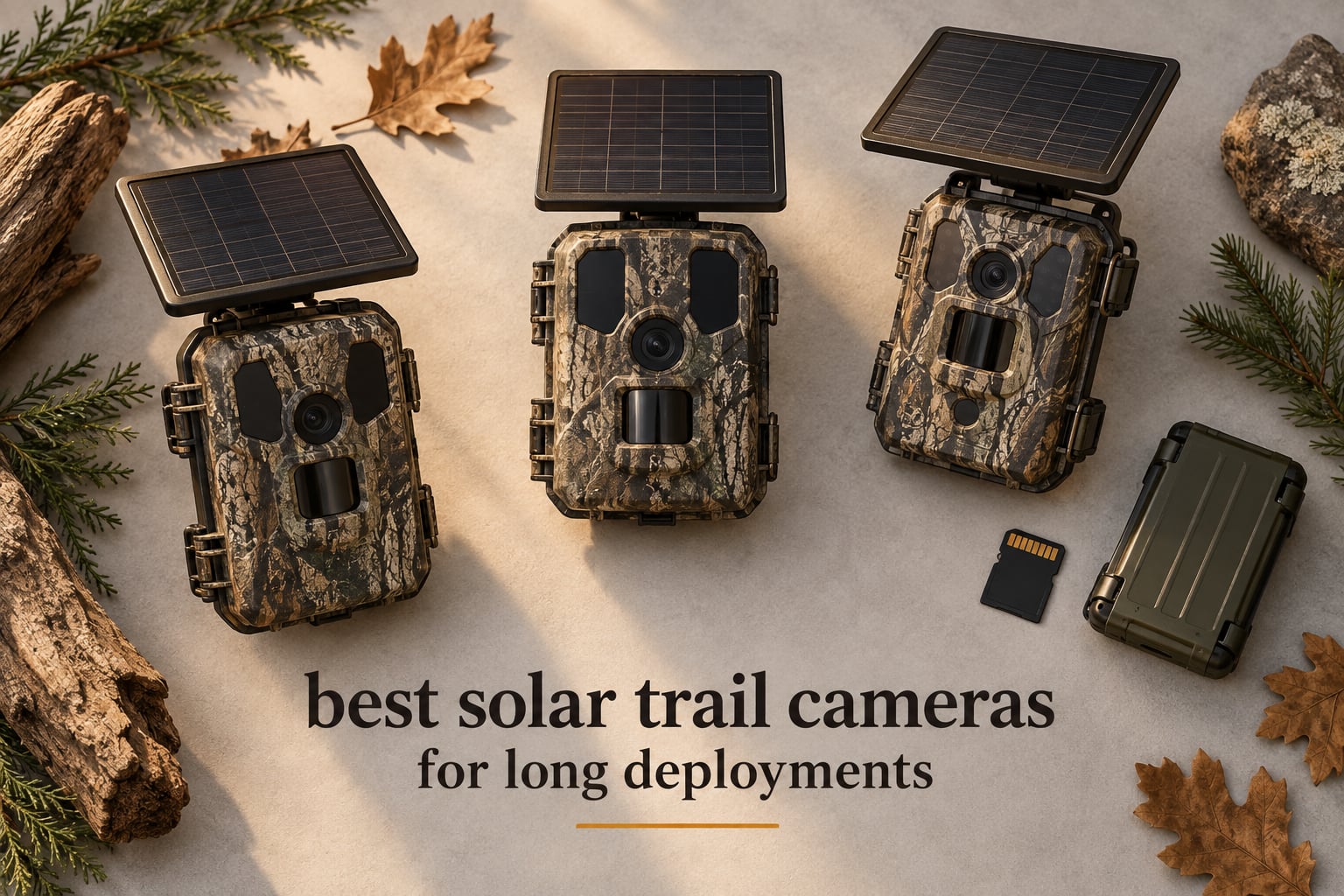
A long deployment means 90 days or more with nobody walking back to the camera. That single condition changes every decision you make about a solar trail camera, because the failure mode that ends a season is not a bad picture or a weak sensor. It is a flat battery discovered three miles into a snowdrift, with a whole month of triggers already gone.
Most trail cameras ship with a small panel and a modest rechargeable pack. That combination is fine for a backyard that gets direct sun all afternoon. Put the same camera under a hardwood canopy in November and the panel produces a fraction of what it did in July, while the cold has flattened the pack’s voltage and slowed charge acceptance. This guide covers the ten solar trail cameras that hold up under that kind of reality, with the runtime, coverage and concealment details that decide whether a long deployment works.
We spent October 2026 reading the review data on all ten models and comparing them on the only metrics that matter when you are leaving a camera alone: stored battery capacity, how the panel is mounted, night vision type, how the camera reports its own health, and whether it can send images off-site at all. Each pick below is written around a specific deployment, so you can match the camera to the site instead of the other way around. If you want the broader field first, our trail camera roundup and cellular trail camera guide cover the non-solar options in more depth.
Last updated: October 2026
Table of Contents
Top 3 Best Solar Trail Cameras for Long Deployments in 2026

MAXDONE PH970S Solar Trail Camera
- 6000mAh rechargeable battery
- Solar powered
- 64MP stills and 4K video
- Free app with no subscription

MagicEagle Cellular Trail Camera
- 13000mAh battery
- 940nm no-glow IR to 90ft
- No-SIM auto carrier selection
- IP66 rated
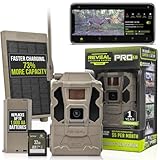
TACTACAM Reveal Pro 3.0 Bundle
- No-glow IR
- Built-in storage with SD optional
- Bundled solar panel and lipo pack
- Multi-cellular network
Quick Picks and the Full Comparison Table (October 2026)
These are the short answers before the detail. Pick the category that matches your site, then read the full section for the caveats that come with it.
Best Overall: MAXDONE PH970S for the largest owner base and a permanently attached panel that survives long stretches.
Best Value: MagicEagle H1 for the biggest battery in the group at 13000mAh with no-glow infrared.
Best for Stealth: TACTACAM Reveal Pro 3.0 for no-glow IR and built-in memory that needs no card swap.
Best for Remote Control Over Wide Ground: Oculview for 2K live streaming with 336 degree pan and 90 degree tilt.
Best for Multi-Camera Fleets: Moultrie Edge Solar, which auto-connects across four networks and offers a bulk discount.
Best for Snow-Covered Sites: Assark, whose integrated panel held full charge through a snowstorm in owner reports.
Best for Shared Data Plans: GardePro X50S, where one plan covers multiple cameras.
Best for On-Camera Review: kejector PH810T, with a 2.4 inch LCD for playback at the tree.
Every camera below is solar powered and every one of them has been reported on by real owners. The table lines up the power and optics specs side by side so you can see which camera actually costs more in effort and battery over a season.
| Product | Specifications | Action |
|---|---|---|
| MAXDONE PH970S |
|
Check Latest Price |
 VIDVIS TCQSW VIDVIS TCQSW |
|
Check Latest Price |
 Misstech SV-TCKW Misstech SV-TCKW |
|
Check Latest Price |
 Oculview 4G LTE Oculview 4G LTE |
|
Check Latest Price |
| MagicEagle H1 |
|
Check Latest Price |
 Assark PH960S Assark PH960S |
|
Check Latest Price |
 Moultrie Edge Solar Moultrie Edge Solar |
|
Check Latest Price |
| TACTACAM Reveal Pro 3.0 |
|
Check Latest Price |
 GardePro X50S GardePro X50S |
|
Check Latest Price |
 kejector PH810T kejector PH810T |
|
Check Latest Price |
1. MAXDONE PH970S Solar Trail Camera: The Most Proven Long-Deployment Pick
MAXDONE Solar Trail Camera WiFi Bluetooth, 4K 64MP Night Vision Game Camera
6000mAh rechargeable battery
Fixed solar panel
64MP stills and 2160P video
65ft night vision
IP66
Pros
- Largest owner base in the group at over 2100 reviews
- Solar panel and 6000mAh pack removed battery swaps for owners
- 64MP stills and 4K video at this tier
- 0.1s trigger with 100 degree detection angle
- Free app with no subscription and footage stays local
Cons
- Power switch and card slot sit on the underside
- Hotspot pairing can take a long time and fails if a phone VPN is running
- One report of IR illumination failing after a few weeks
The MAXDONE PH970S has the largest body of owner reports of anything on this list, and that matters more for a long deployment than any spec sheet. Buyers consistently describe the same outcome: a permanently attached solar panel feeding a 6000mAh pack, and months without a battery visit.
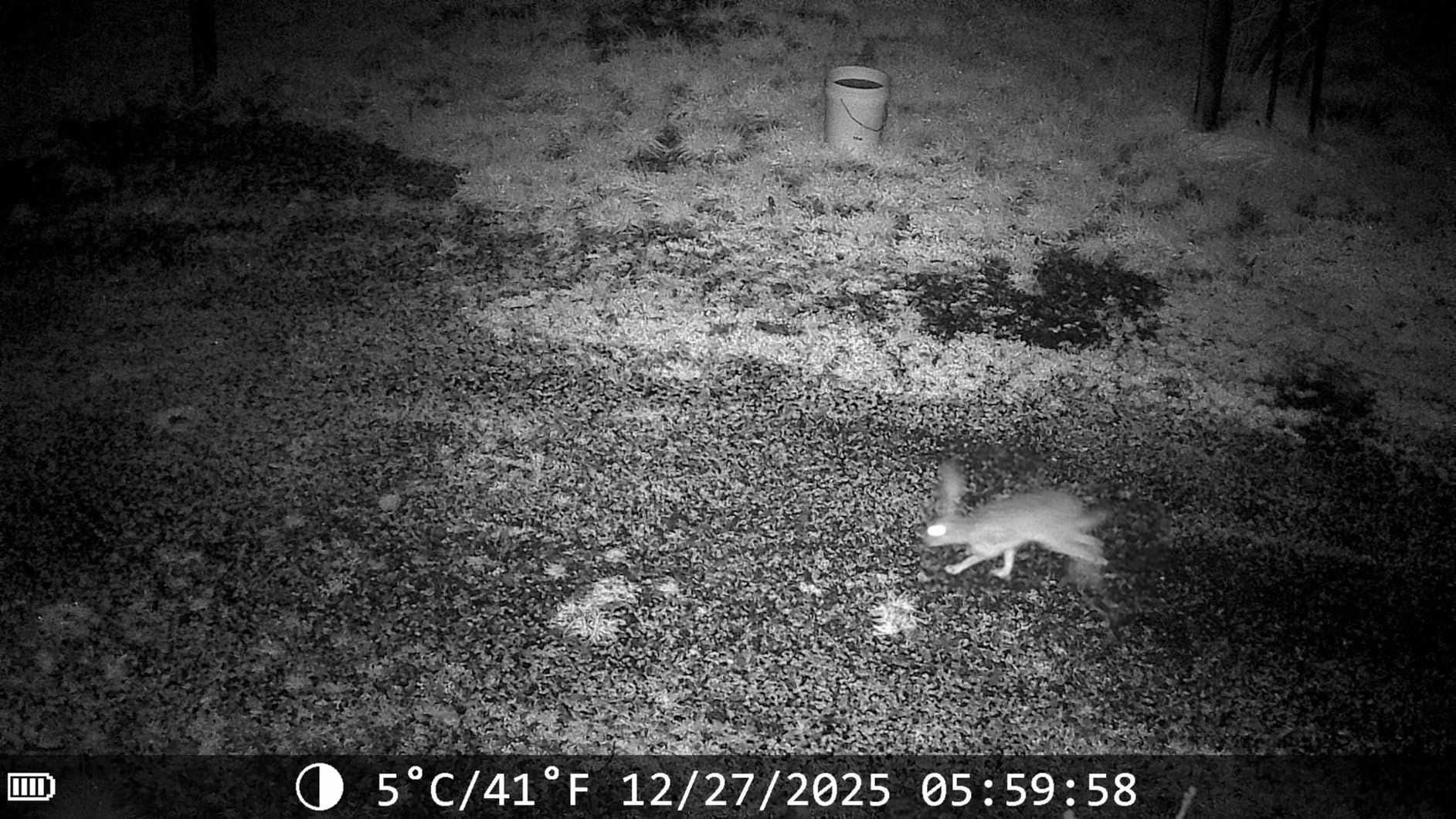
Daylight files are 64MP stills with 2160P video at 30fps, and the 100 degree detection angle with a 0.1s trigger catches movement that slower cameras miss. Night range is 65ft on 18 IR LEDs, which is honest for the class.
The app is free with no subscription, and the camera raises its own hotspot so you can pull footage from roughly 55ft. Note the design choice here: it does not join home WiFi, and it has no cellular radio at all, so retrieval means walking to the camera or standing close to it.
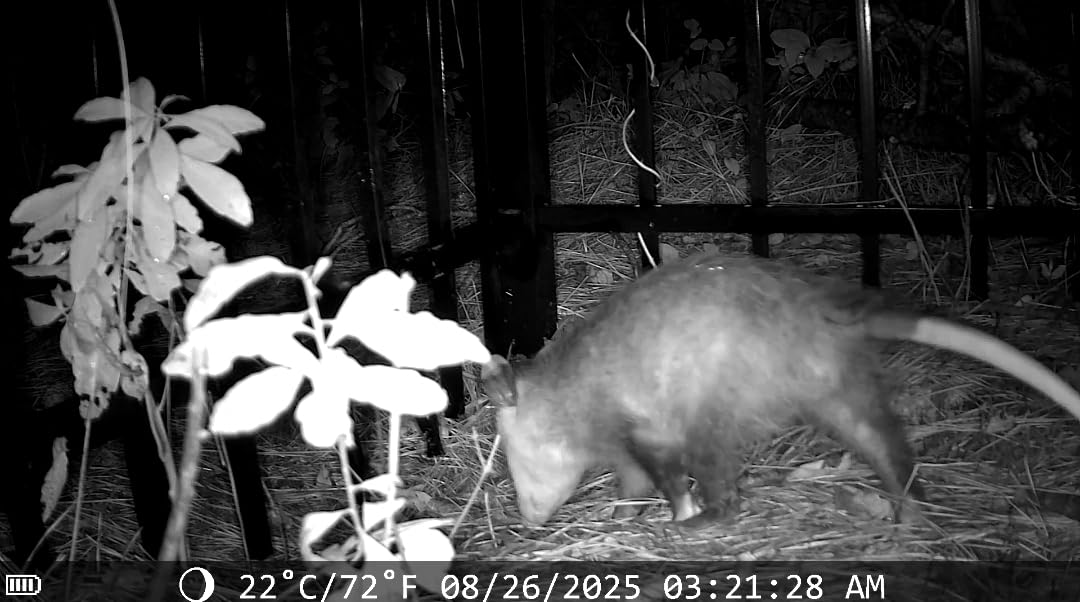
What you give up for the free app and the big owner base
Physical layout annoys tripod and pole users. The power switch and card slot are on the underside, so every battery or memory change means unstrapping the camera and turning it over.
Hotspot pairing is also slower than it should be, and reviewers report the camera will not pair at all while a phone VPN is active. One owner also reported IR illumination failing and producing black night recordings after a few weeks.
Where it fits a long deployment
This is the pick for a yard, a gate, a pasture or a treeline that gets real sun, where you want zero recurring cost and no subscription. A 32GB card is pre-installed and expands to 256GB, so a season of stills fits without a visit.
If you need the images to reach you from a mile away, this is the wrong tool. Pair it with our hunting trail camera picks to see how cellular models handle that job.
2. VIDVIS TCQSW: Widest Detection View With a Built-In Panel
4K 64MP Solar Trail Camera WiFi, 32GB SD Card,Night Vision Motion Activated
Built-in solar panel and rechargeable battery
85ft 850nm night vision
110 degree viewing angle
0.2s trigger with 70ft PIR
IP66 shell
Pros
- Free 32GB card included so it works out of the box
- No-fee local app control over the camera hotspot
- 110 degree field of view covers more ground per mount
- IP66 shell built for year-round outdoor mounting
Cons
- Hotspot only
- it will not connect to home WiFi
- Short clips with a pause between them can miss the decisive moment
- Slow wireless downloads as is typical for the class
The VIDVIS TCQSW pairs a 110 degree viewing angle with 85ft of 850nm low-glow night vision, and it ships with a 32GB card already in it. That combination makes it a sensible pick for property scouting where you want one camera to see more than a corridor.
Trigger speed is 0.2s with PIR detection out to 70ft, and the body records time-lapse, five-shot burst and loop video. Stills are 64MP, video is 1440p, and the enclosure is IP66.
The app connects over the camera’s own WiFi and Bluetooth hotspot within roughly 50ft, with no fees attached. For a long deployment that matters in a specific way: there is no subscription to lapse while the camera sits in a field, and nothing to cancel when the season ends.
Where the recording style gets in the way
The clip-and-pause cycle is the most reported drawback. Short clips followed by a gap can lose the moment that mattered, which is exactly the moment you deployed the camera for.
Video files are MPEG-4 and may need conversion in some editing software, and wireless transfers run slow. If you plan to review footage on a laptop at the cabin rather than on a phone at the tree, budget for that extra step.
Who should deploy it
Choose this one for a wide yard, a driveway approach or a pasture where a single wide-angle mount beats the reach of a long lens. It suits users who check footage occasionally rather than daily.
Pair it with our ATV trail camera roundup if you also need to watch routes from a moving vehicle, where the wide view does more work.
3. Misstech SV-TCKW: Best When You Work Close to the Camera
Misstech Solar Trail Camera, 4K/64MP Clear Night Vision for Game & Outdoor
Solar powered with built-in rechargeable battery
64MP stills and 4K video with f/1.6 lens
0.1s activation with 5-frame burst
On-camera screen plus app
IP66
Pros
- Solar panel and rechargeable pack held charge through multi-week deployments
- Owns its own hotspot so it works with no cell signal
- On-camera screen plus app playback saves card pulls
- Live view and audio playback both work
- Customer service reported as fast and responsive
Cons
- AVI files need conversion before editing
- Trigger speed lags the advertised rate at distance
- 30 second recording cap with a 5-10 second gap
- Hotspot range practically about 15-40 feet
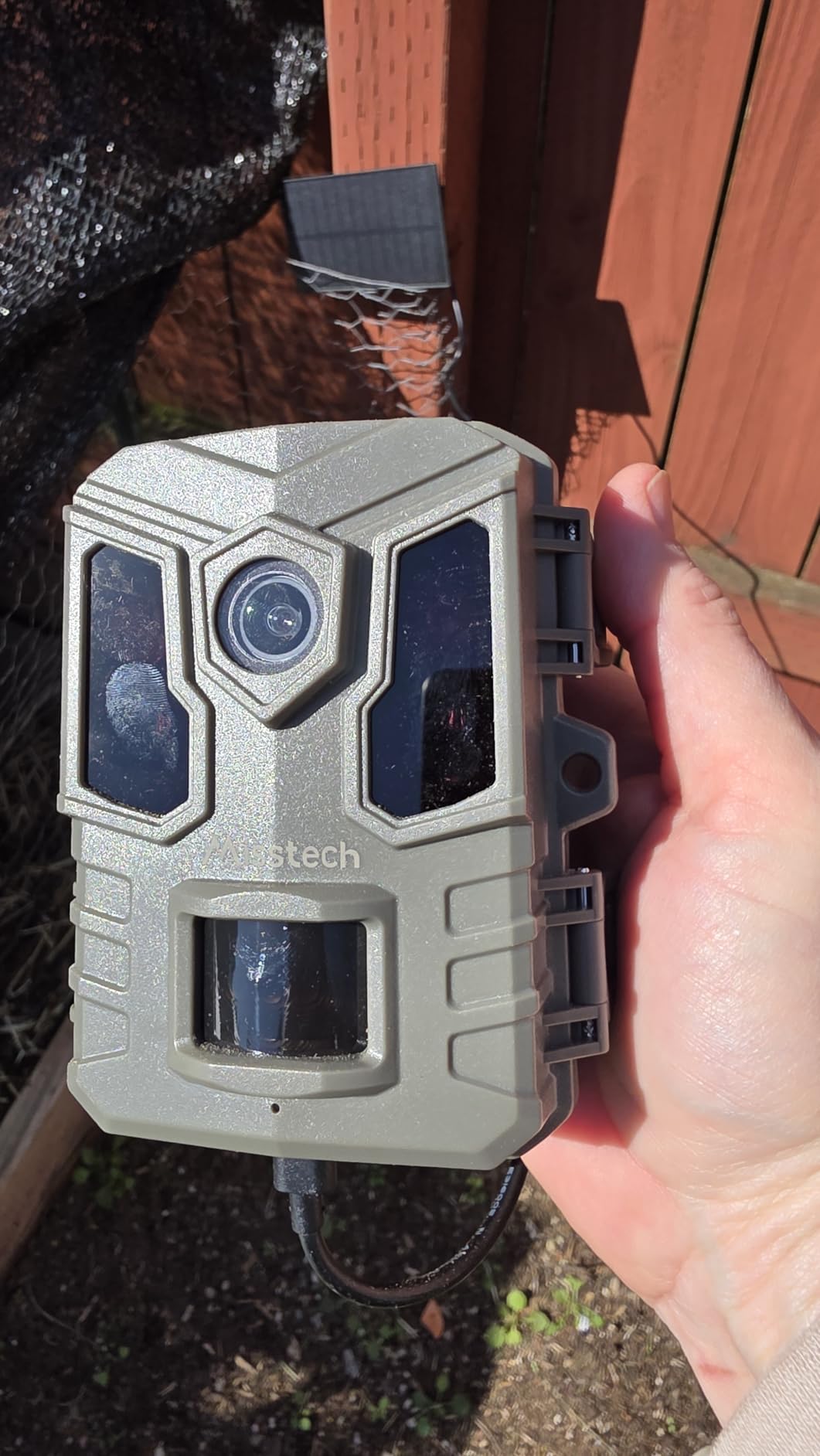
The Misstech SV-TCKW stands out for the on-camera screen. For anyone collecting data in the field rather than scrolling an app, seeing a frame at the tree without pulling the card is a real advantage on a long deployment.
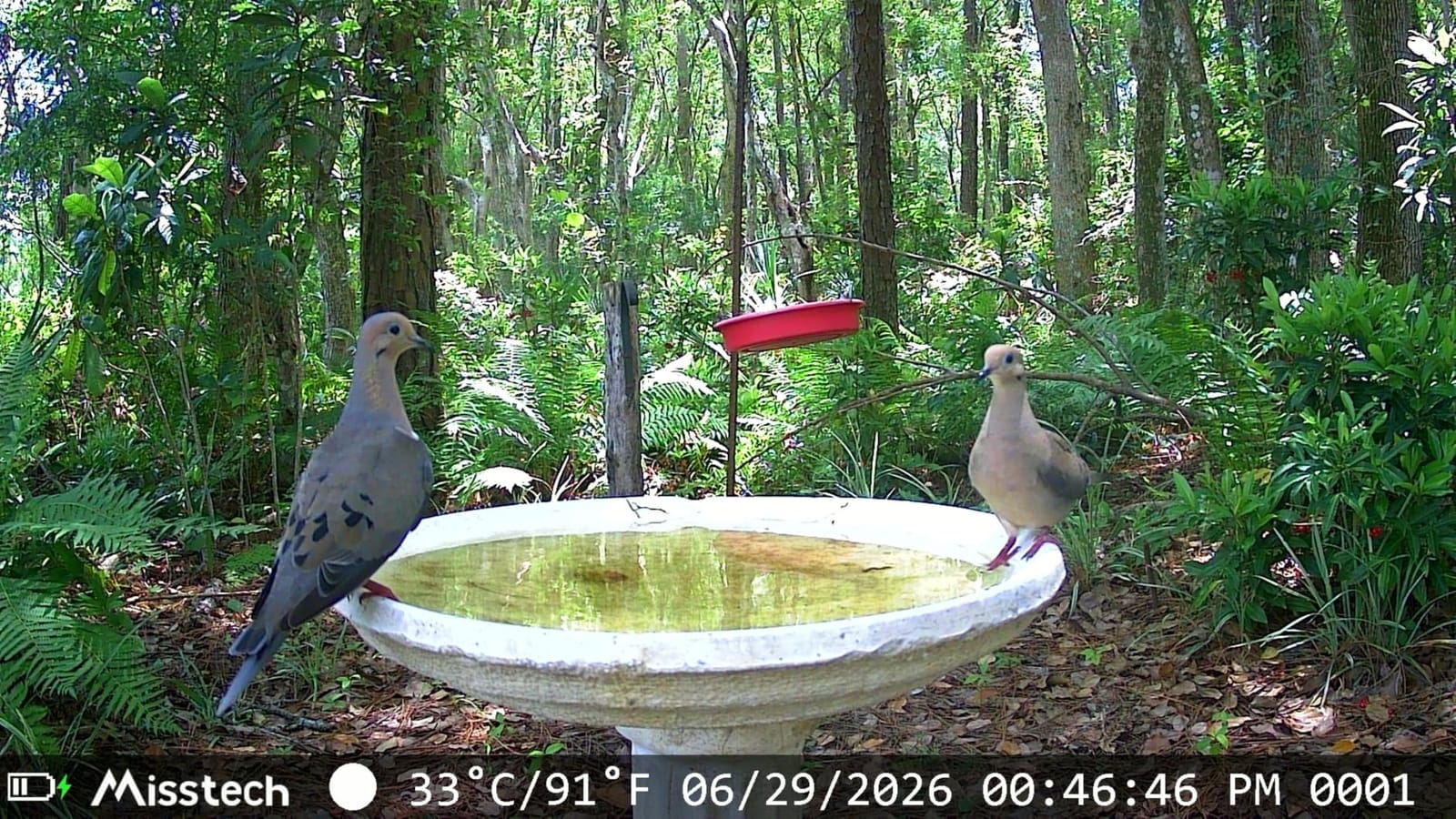
The f/1.6 lens keeps low-light detail reasonable, and the 0.1s activation with a five-frame sequence mode catches fast movers. Every capture carries moon phase, temperature and time stamps, which matters if you are logging activity against weather.
Storage is local with an included 8GB card, expandable to 128GB, and there is no monthly fee. Owners report the battery never dropping across multi-week deployments, and the hotspot works where there is no internet or cell signal at all.
The format and timing compromises
Video is recorded as AVI, which needs conversion before editing in DaVinci Resolve or similar tools. Plan on a conversion step as part of your workflow rather than a surprise.
Trigger speed trails the advertised figure for subjects far from the camera, and recording stops at 30 seconds with a 5 to 10 second gap before the next clip. The hotspot signal is weak, so practical phone range is closer to 15 or 40 feet than the advertised 30-50m in open ground.
Who should deploy it
This is the wildlife research and observation pick: no subscription, no cell dependency, and enough on-camera detail to log conditions at the moment of capture. MapPin location saving in the app helps you keep a multi-site study straight.
If your interest is nocturnal species rather than daylight hunting, our no-glow trail camera guide covers the infrared side in more detail.
4. Oculview 4G LTE: Best Remote Control Over Wide Ground
Oculview 4G LTE Cellular Trail Cameras, 360° 2K Live Streaming Game Camera, SIM Card Included, Low-Glow Night Vision, Solar Powered, Instant Alerts, Two Storage Ways, No WiFi Needed for Hunting&Trail
6W adjustable solar panel
2K live streaming with remote pan and tilt
336 degree pan and 90 degree tilt
4G LTE with SIM included
IP65
Pros
- Cellular link works on remote properties where WiFi cannot reach
- Remote pan tilt and zoom control covers wide open ground
- Live view and alerts reliable on major US carriers
- Panel keeps the battery charged through rain and snow days
- Holds signal when the nearest tower is many miles away
Cons
- Setup instructions are poorly written and need careful reading
- Storage and data services are billed separately for each camera
- App lost connection to the camera after several weeks in one report
- Occasional false alerts and hard-to-diagnose offline states
The Oculview is the only camera here with a remote pan and tilt motor, and for a long deployment across open ground that changes what the camera can cover. It pans 336 degrees, tilts 90 degrees and offers 4x digital zoom from 2K live streaming.
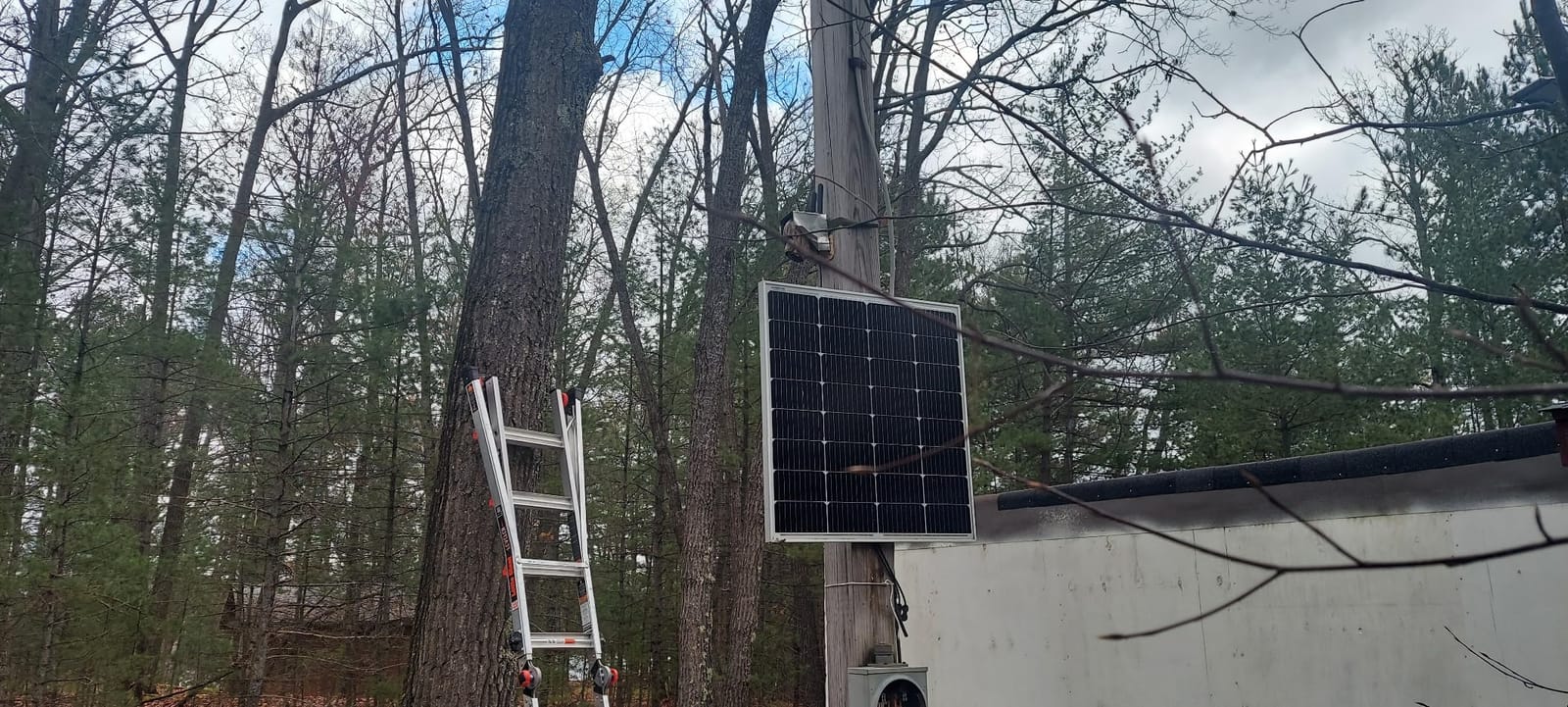
The 6W solar panel is adjustable rather than permanently fixed, so you can aim it at whatever sun the site actually gets. Night range reaches 100ft with the built-in spotlight on, using 850nm low-glow infrared, with a 0.2s trigger across a 120 degree PIR angle.
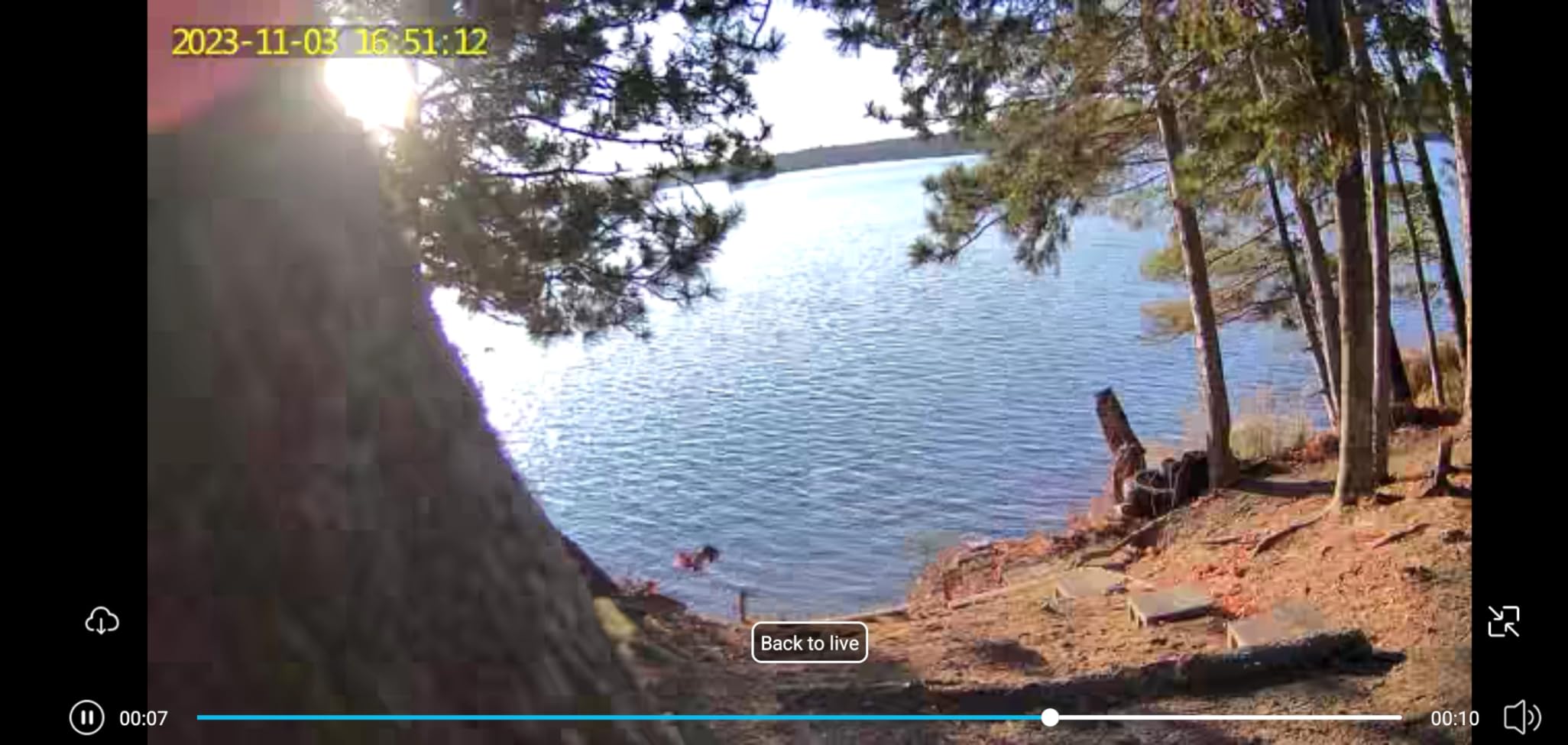
Connectivity is 4G LTE with a pre-installed SIM and a seven-day data trial. Video goes to cloud storage or a local card up to 128GB, and the housing is IP65 rather than IP66.
Cost stacking and the app risk
Data plan, cloud storage and card storage are billed separately for each camera, and this is the most layered ongoing arrangement in the group. A seven-day data trial is included before the plan starts.
One owner reported the app stopped recognising the camera after several weeks, with resets not restoring it. Because the camera is remote, diagnosing that state is a drive, not a settings change.
Who should deploy it
Pick this for a ranch gate, a wide property line or a job site where you want to aim the camera remotely instead of walking to it. The adjustable panel and the pan motor are both aimed at sites where sun and subject position are hard to predict.
Read the setup notes twice before deployment. The controls are capable once configured, but the instructions are the weakest part of the package.
5. MagicEagle H1 Cellular Camera: Best Value on Battery Capacity
MagicEagle® Cellular Trail Camera 4G Wild Game Cameras 13,000 mAh Battery Solar Panel 2K Audible Video No-Glow IR Night Vision IP66 Waterproof for Wildlife Deer Monitoring Home Security (Army Green)
13000mAh battery with solar panel
940nm no-glow IR to 90 feet
SignalSync no-SIM network selection
IP66 rated from -20C to 50C
Gravity sensor and A-GPS
Pros
- Largest battery capacity in the group at 13000mAh
- Highest average rating across the picks
- No-glow 940nm IR keeps night illumination invisible to wildlife
- Solar charging works well in low light and partial sun
- Two year warranty plus six extra months on registration
Cons
- Panel mounting hardware may need extra screws when using the strap
- Setup steps need careful reading or features get missed
- Free data tier is only about 200 photos before a paid plan
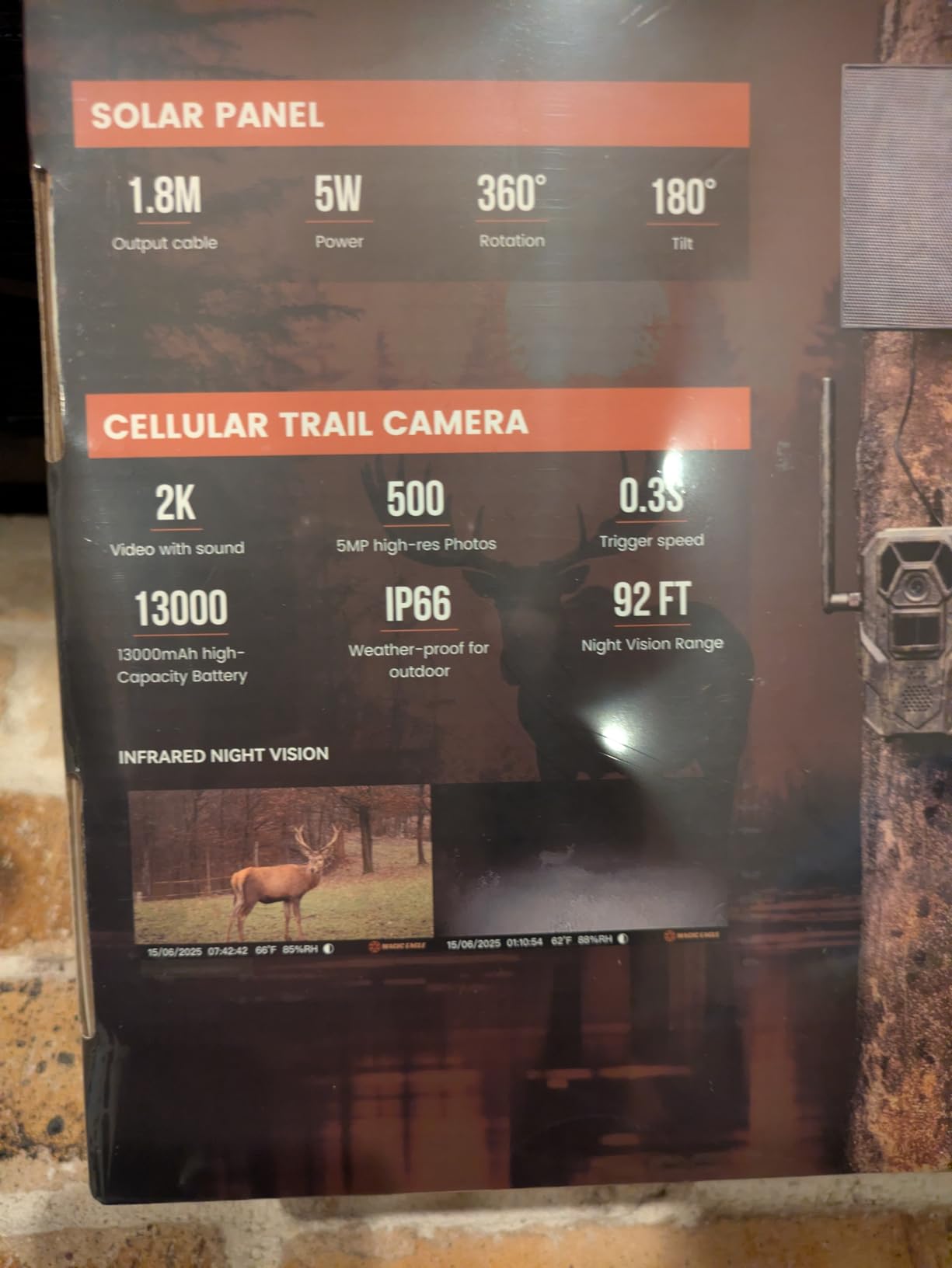
The MagicEagle H1 carries a 13000mAh battery, the largest pack in this group by a wide margin. On a long deployment, capacity is the buffer that absorbs a week of overcast days, and this camera has more of it than anything else we reviewed.
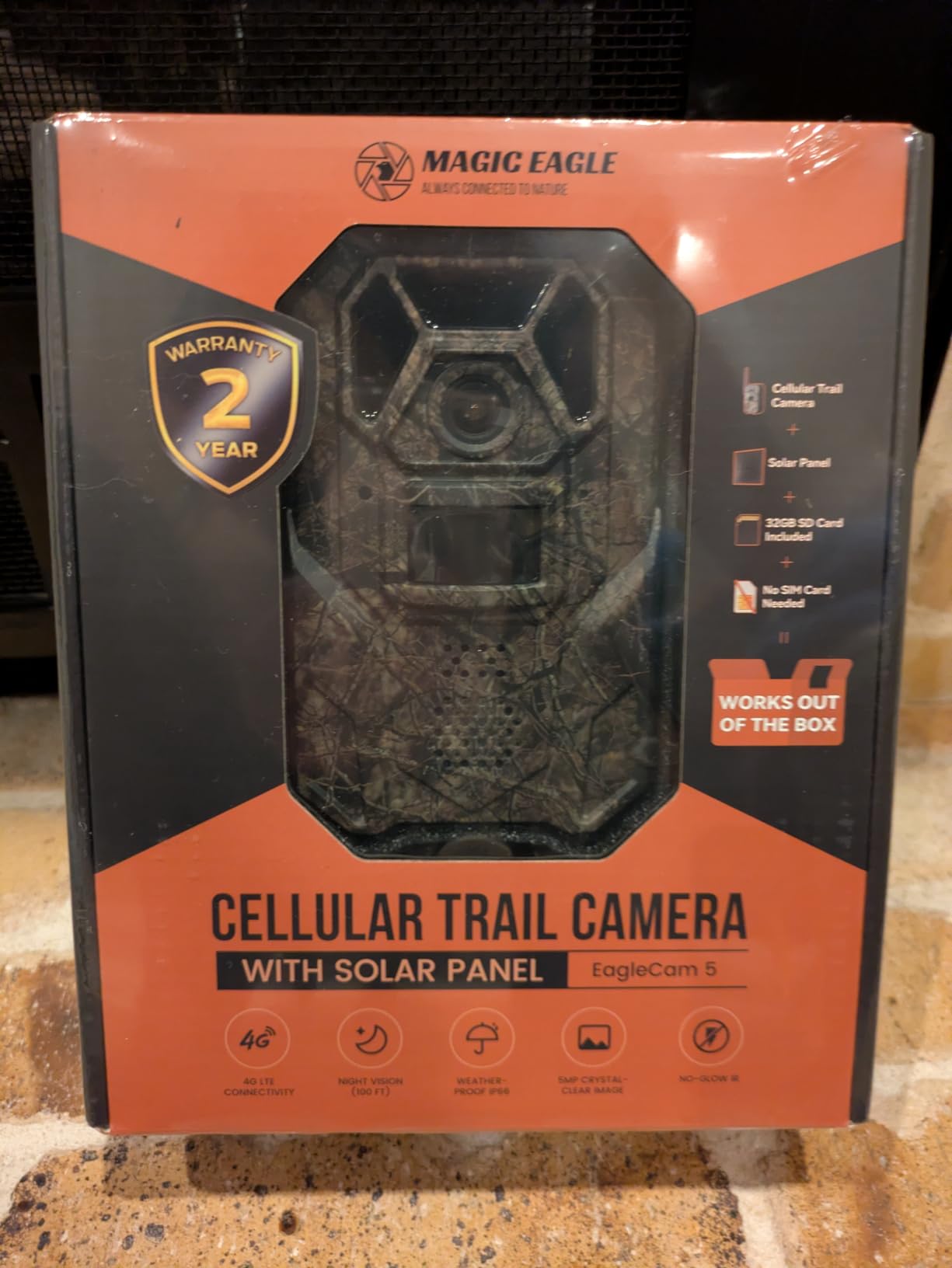
Night vision uses 940nm no-glow infrared out to 90 feet, so there is no visible red emitter to give away the camera. Owners report that species identification correctly tagged animals in multiple cases, and the housing is IP66 rated for -20C to 50C operation.
Connectivity runs through SignalSync cloud-card technology that auto-selects the strongest carrier with no physical SIM. A gravity sensor and A-GPS provide tamper alerts, offline location tracking and an electronic fence, which is unusually thorough for a camera at this tier.
What to verify before you walk away
The panel mounting hardware can need extra screws when the camera is strapped to a tree, so bring your own fasteners. The setup steps also need reading carefully, because several features stay off until you find them.
Plan data realistically. The free tier covers about 100MB, roughly 200 photos or 16 short videos, and it is valid 30 days before a paid plan takes over. That suits a camera set to specific schedules rather than one running 24/7 with motion detection.
Why it earns the value slot
It pairs the biggest battery, the best average rating in the group and a two-year warranty with a six-month registration extension. For a site that goes cold and dark for months, that combination of capacity, tolerance and concealment is the strongest long-term case here.
The 5MP sensor is modest next to the 64MP cameras in this list. Choose it for endurance and stealth over raw still resolution.
6. Assark PH960S: Best for Snow-Covered Winter Deployments
Assark Solar Trail Camera 48MP 30FPS, WiFi Bluetooth Game Camera with Motion Activated 0.2s Trigger, Night Vision Motion Activated IP66 Waterproof for Wildlife Scouting with 32GB Micro SD Card
Fixed integrated solar panel with 6000mAh battery
64MP stills and 4K at 30fps with sound
850nm IR to 65ft
45ft app range
IP66 full seal
Pros
- Integrated panel held full charge for weeks under a tree and through a snowstorm
- Kept recording day and night after heavy snow
- Compact body roughly half the size of many competitors
- App connects immediately with live view and flexible detection zones
- IP66 sealed and works in rain and cold
Cons
- Night illumination is spot-like with dark frame edges
- PIR is weak at distance so subjects arrive already centred
- Continuous 25 second clips drained the battery in about two and a half days
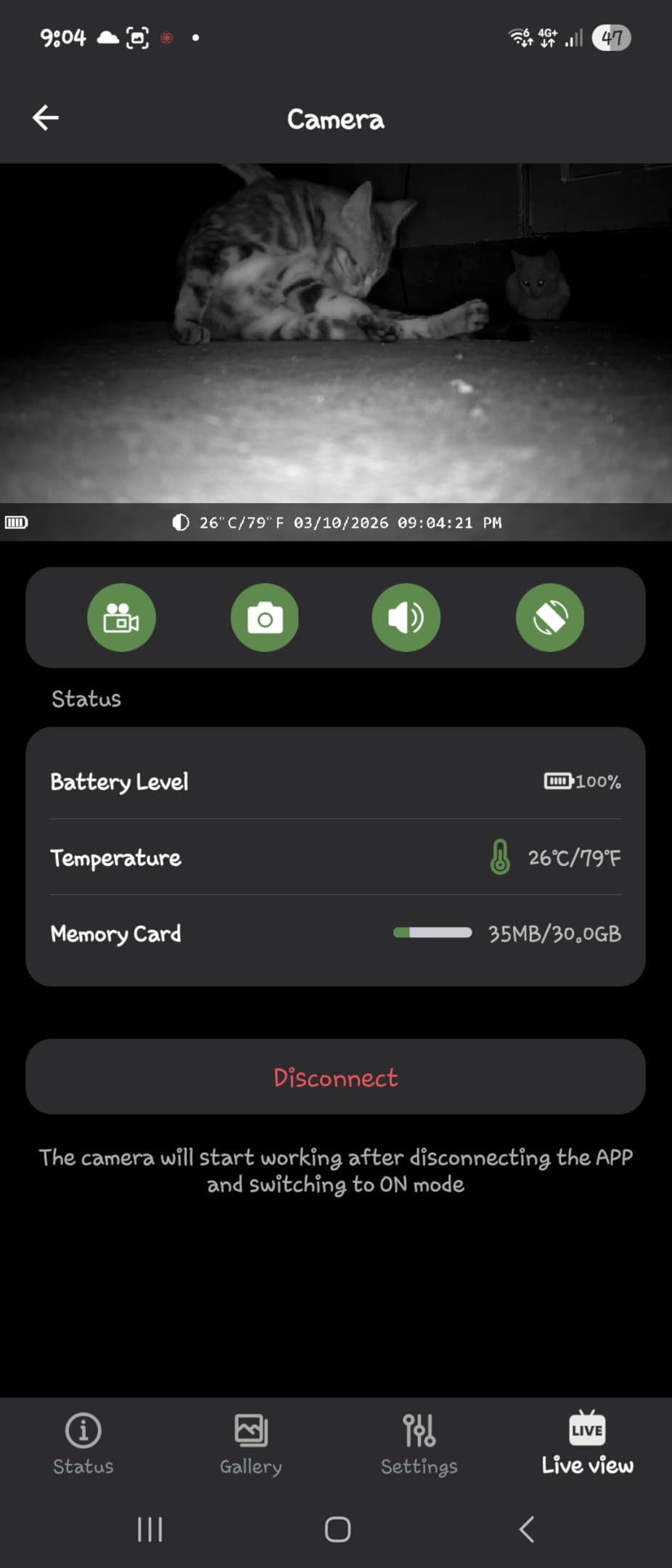
- Battery and charging state cannot be checked from the phone
The Assark PH960S is the most direct answer to winter deployment. Owners report the fixed integrated panel holding full charge for weeks while sitting under a tree and through a snowstorm, with the camera still recording day and night after being covered.
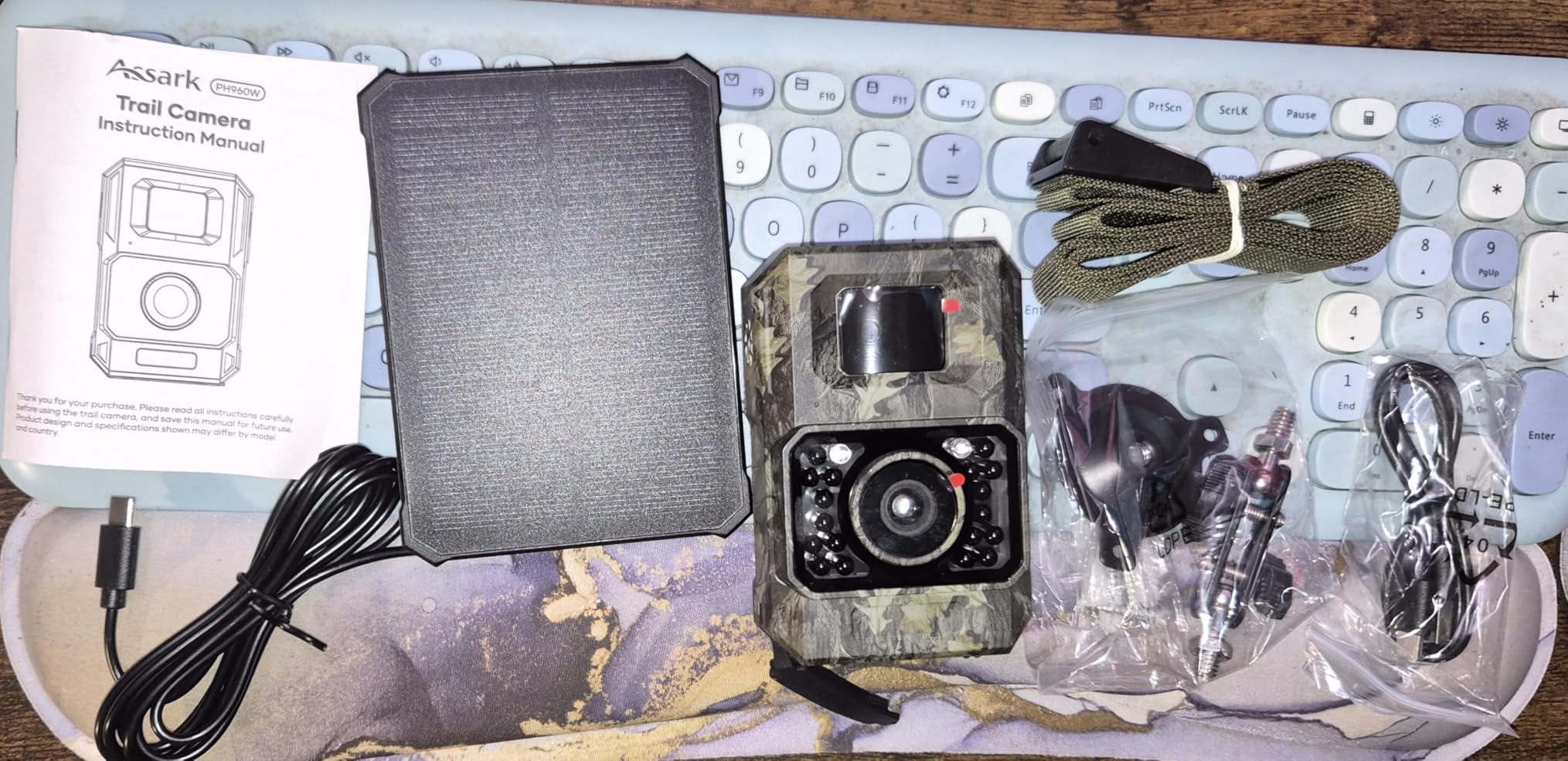
Specs are 64MP stills with 4K H.264 video at 30fps with sound, 18 IR LEDs at 850nm reaching 65ft, and a 100 degree viewing angle. The body is roughly half the size of many competitors, which makes it easier to conceal behind a trunk or fence post.
App control runs over built-in low-power WiFi and Bluetooth at roughly 45ft with live view, and PIR sensitivity, detection interval and detection area are all adjustable. A 32GB card is pre-installed and expands to 128GB.
The two real weak points
Night illumination is uneven. The centre of frame is bright while the edges fall away, so anything at the edge of a 65ft scene may be recorded in near darkness.
The PIR sensor also loses sensitivity beyond roughly ten yards, meaning subjects are often already centred in frame before the trigger fires. And continuous 25 second clips drained the battery in about two and a half days on a full charge, so for a multi-month deployment, switch to shorter clips and scheduled recording windows.
Who should deploy it
Choose it for a north-facing or shaded site in the northern hemisphere where a small fixed panel still has to carry the load through winter, or for a compact mount where size matters. It needs no subscription and no cell coverage.
Since you cannot check charge state from the phone, treat it as a set-and-forget camera and confirm the panel is clear of snow and foliage at each visit.
7. Moultrie Edge Solar: Best for Multi-Camera Fleets
Moultrie Edge Solar Cellular Trail Camera – Integrated Solar, 40MP
Integrated solar panel with adjustable angle
40MP stills and 1080p video
Low-glow IR to 100ft
0.4s trigger with 100ft PIR
Four network auto connect
Pros
- Thousands of pictures across all weather with only two manual charges
- Owners running four cameras report never exhausting the battery
- Auto-connects to the strongest of four major US networks
- On-demand video requests and remote health status are genuinely useful
- Bulk discount once you own several cameras
Cons
- No Bluetooth or on-site battery readout
- Status refreshes only about once per day
- No real-time streaming at time of purchase
- Photo quality drops off at range and it triggers on wind-blown vegetation
The Moultrie Edge Solar is the fleet pick. Owners running four cameras through a season report thousands of pictures with only two manual charges, and the adjustable-angle integrated panel lets you tune each unit to its own sun exposure.
Connectivity auto-selects the strongest of four major US networks with no SIM card required, which is the practical advantage when your cameras sit in different valleys. Cloud photo storage, on-demand video requests and remote settings changes all come through the app, along with AI buck detection with instant alerts.
Imaging is 40MP stills with 1080p video and audio, and the low-glow infrared flash covers 100 feet. Trigger speed is 0.4s with 100ft PIR detection, and the Easy Aim mount gives a real-time preview for placement.
Verification is the weak point
There is no Bluetooth and no on-site battery readout, so you cannot confirm solar charging where the camera hangs. Status refreshes about once per day, which means a unit that failed remotely goes unnoticed until the next check-in.
Picture quality is fair rather than excellent at range, and wind-blown vegetation triggers it regularly, so set a tight detection zone. Coverage is USA and Canada only.
How to use it across several cameras
Pair the four-network auto-connect with the bulk discount once you own several units, and stagger each camera’s recording schedule so the whole fleet is not waking and transmitting at the same moment. On-demand video requests let you pull only the clip you need instead of streaming continuously.
Flexible plans with no annual contract mean a season of scouting can be switched off the moment the season ends.
8. TACTACAM Reveal Pro 3.0 Bundle: Best for Stealth and Concealment
TACTACAM Reveal Pro 3.0 Cellular Trail Camera – Multi-Cellular Network, No-Glow IR, Wi-Fi Enabled, HD Photos & 1080p Videos, Long Battery Life + Solar Panel, Lipo Lithium Battery Pack, & 32GB SD Card
No-glow IR technology
2 inch LCD screen
Built-in storage so an SD card is optional
Bundled solar panel and lipo lithium pack
5-shot burst and built-in GPS
Pros
- Photo quality described as exceptional in daylight and at night
- Cellular service connects reliably in low coverage country
- Selects the strongest signal by hopping between towers
- Solar panel and lithium pack held charge at full with no swaps
- Bundle includes panel
- battery pack and card in one package
Cons
- Initial programming described as slightly tricky
- Photo sensor resolution is not stated in the specifications
- USA and Canada network focus with a one year warranty
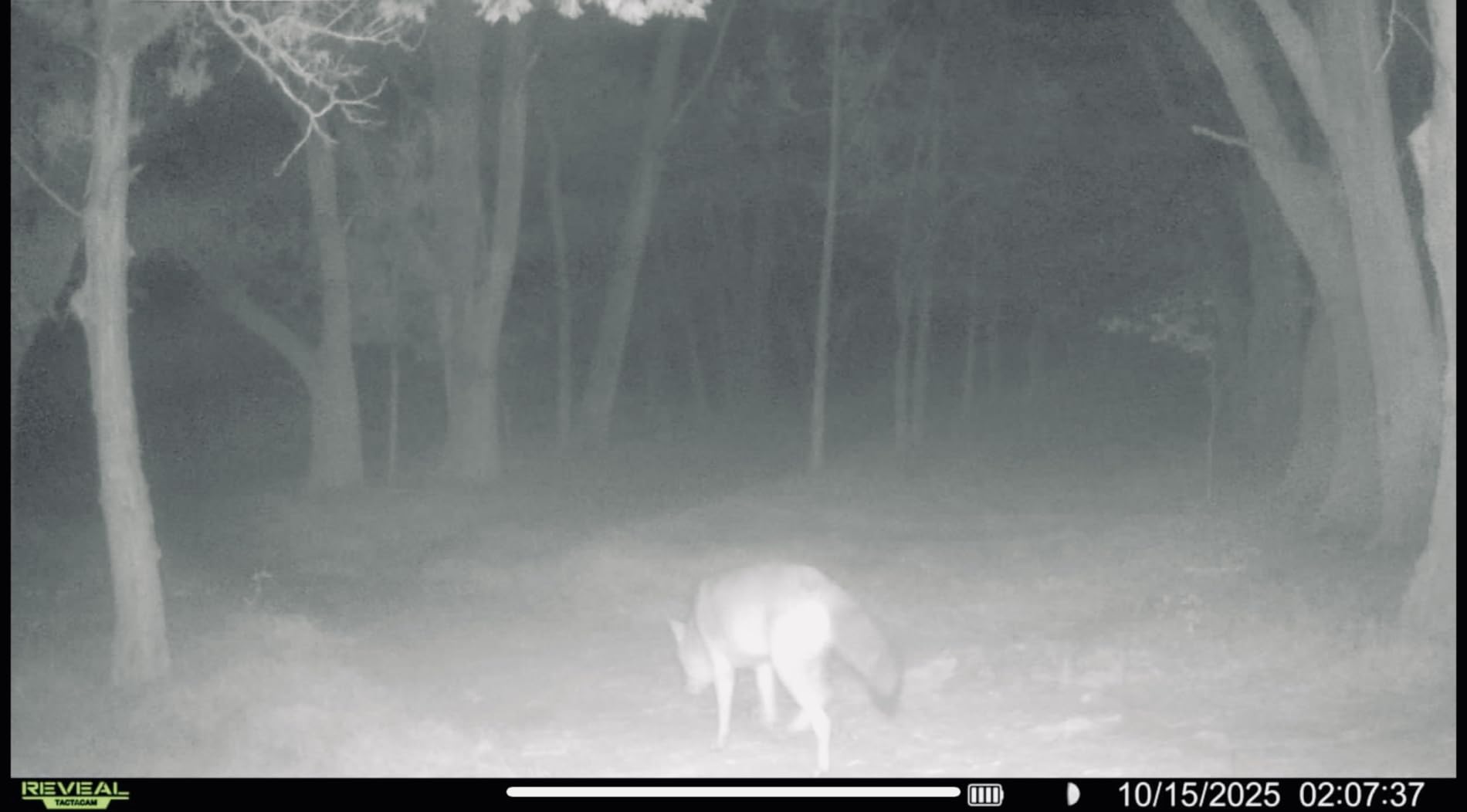
The TACTACAM Reveal Pro 3.0 bundle answers the concealment question better than anything else here. No-glow infrared plus a 2 inch LCD screen for on-camera setup means the camera never lights up or announces itself while you position it.
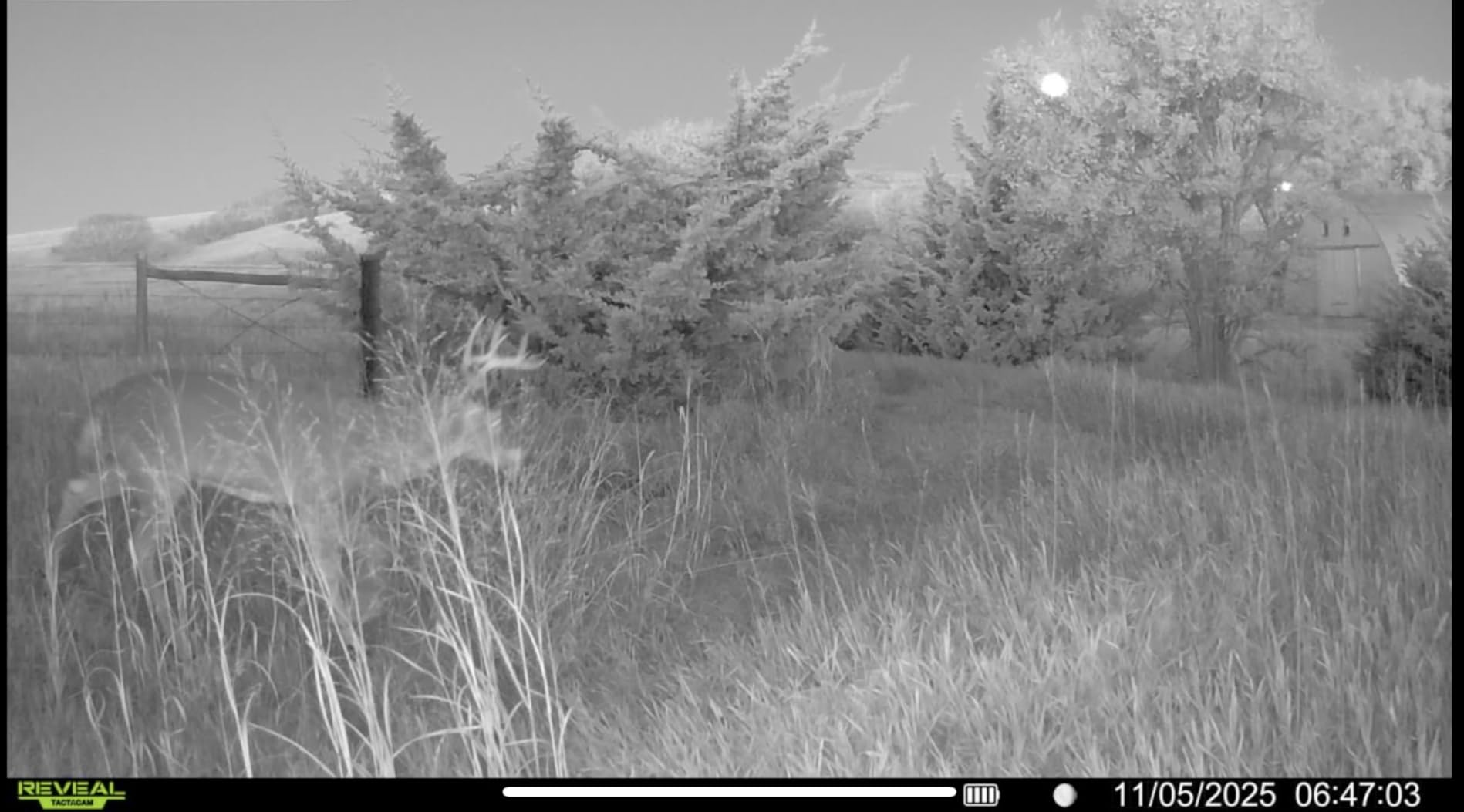
The bundle ships with the solar panel, a lipo lithium battery pack and a 32GB card, and it also has built-in storage, so the card is optional rather than mandatory. That removes the one thing a thief or a curious visitor can carry off that would destroy your footage.
Multi-cellular support lets it hop between towers and pick the strongest signal, which is why owners report reliable service in country locations with limited coverage. The pre-activated SIM works with the Tactacam REVEAL app, and 5-shot burst plus built-in GPS round out the capture tools.
Third-party panels and the warranty question
Hunters on ArcheryTalk keep asking whether a third-party solar panel will work with a Tactacam Reveal, and the honest answer from the discussion is that compatibility is not confirmed. The bundle ships with its own panel and lipo pack, and those are the combination owners report keeping charge at full with no swaps at all.
Initial programming is described as slightly tricky, and photo sensor resolution is not stated in the specifications. The warranty is one year comprehensive, among the shortest coverage offered in this group.
Who should deploy it
This is the choice for anyone who cannot tolerate a visible red emitter or a camera that needs a card swap to deliver its images. Built-in storage plus a bundled panel and battery pack is the most self-contained package here.
Because it is the premium-tier unit in the set, treat it as a one-camera purchase rather than a fleet purchase, and check coverage on your carrier before deploying.
9. GardePro X50S: Best for Scheduled Remote Capture
GardePro X50S Solar Cellular Trail Camera, Shared Data Plan
Bundled 5200mAh rechargeable solar panel
Verizon AT&T and T-Mobile support
Shared data plan across cameras
0.1s trigger with 100ft no-glow IR
Lite Video low data previews
Pros
- Bundled 5200mAh solar panel keeps the camera powered without battery replacement
- Scheduled and real-time capture works from a property 10 miles away
- Video and sound quality praised by repeat buyers
- Tech support described as responsive and stand-behind
- Weatherproof for rain snow and heat
Cons
- Daytime image quality described as below what is advertised
- One owner saw faster drain when running without the solar panel
- A low hanging branch triggered repeated night captures while wildlife went uncaptured
- Shared data plan requires a subscription
The GardePro X50S is the shared-plan pick. One data plan covers multiple cameras, which is the single most effective way to control ongoing cost when you run a spread of sites rather than a single tree.
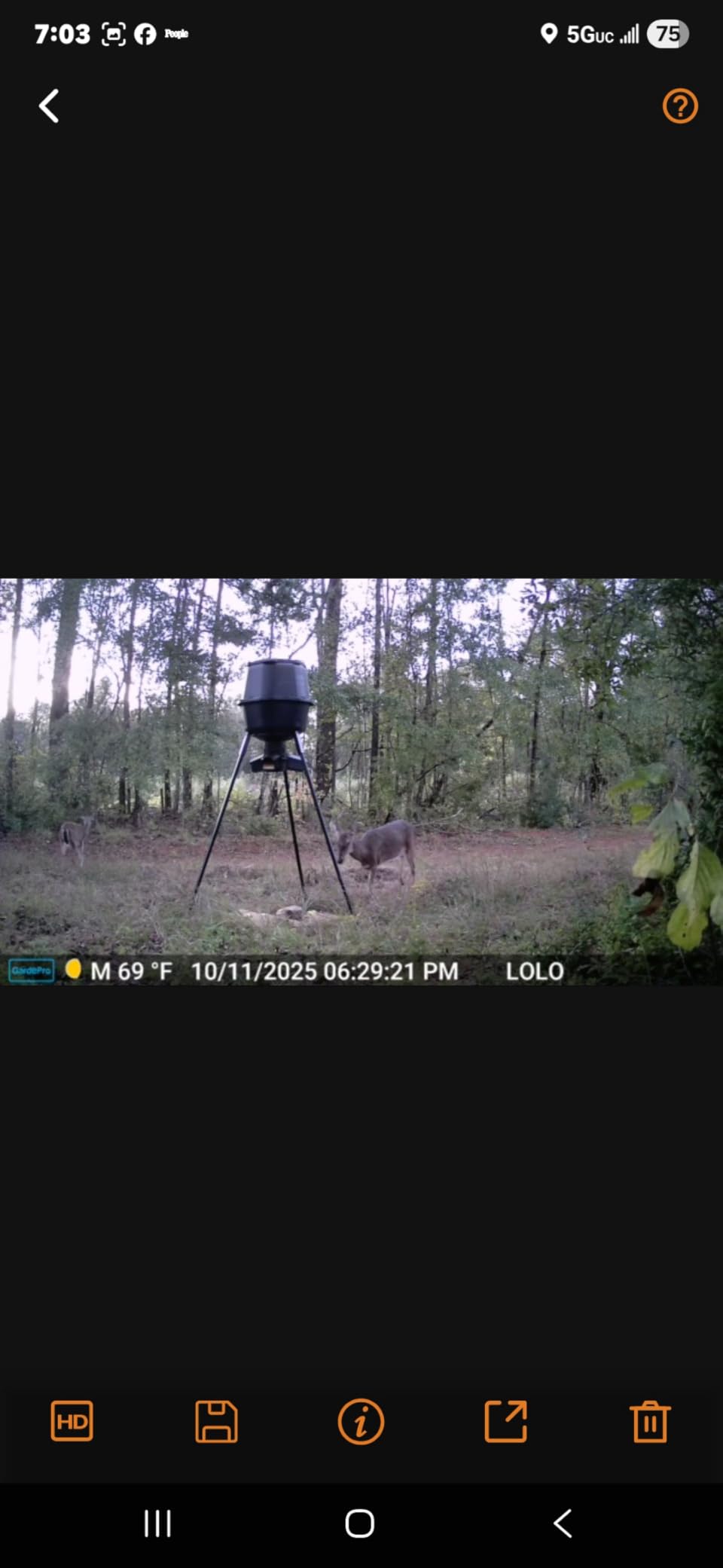
The X50S bundle includes the SP350 5200mAh rechargeable solar panel, and it runs on Verizon, AT&T and T-Mobile 3G and 4G LTE networks in the US. A single unified app manages both WiFi and cellular GardePro cameras, so a mixed fleet stays in one place.
Capture is 0.1s trigger with 100ft no-glow night vision and a time-lapse mode at 1296p video. Lite Video previews use minimal data and arrive almost instantly, which keeps transmission costs down on a camera you check occasionally.
Picture quality versus the marketing
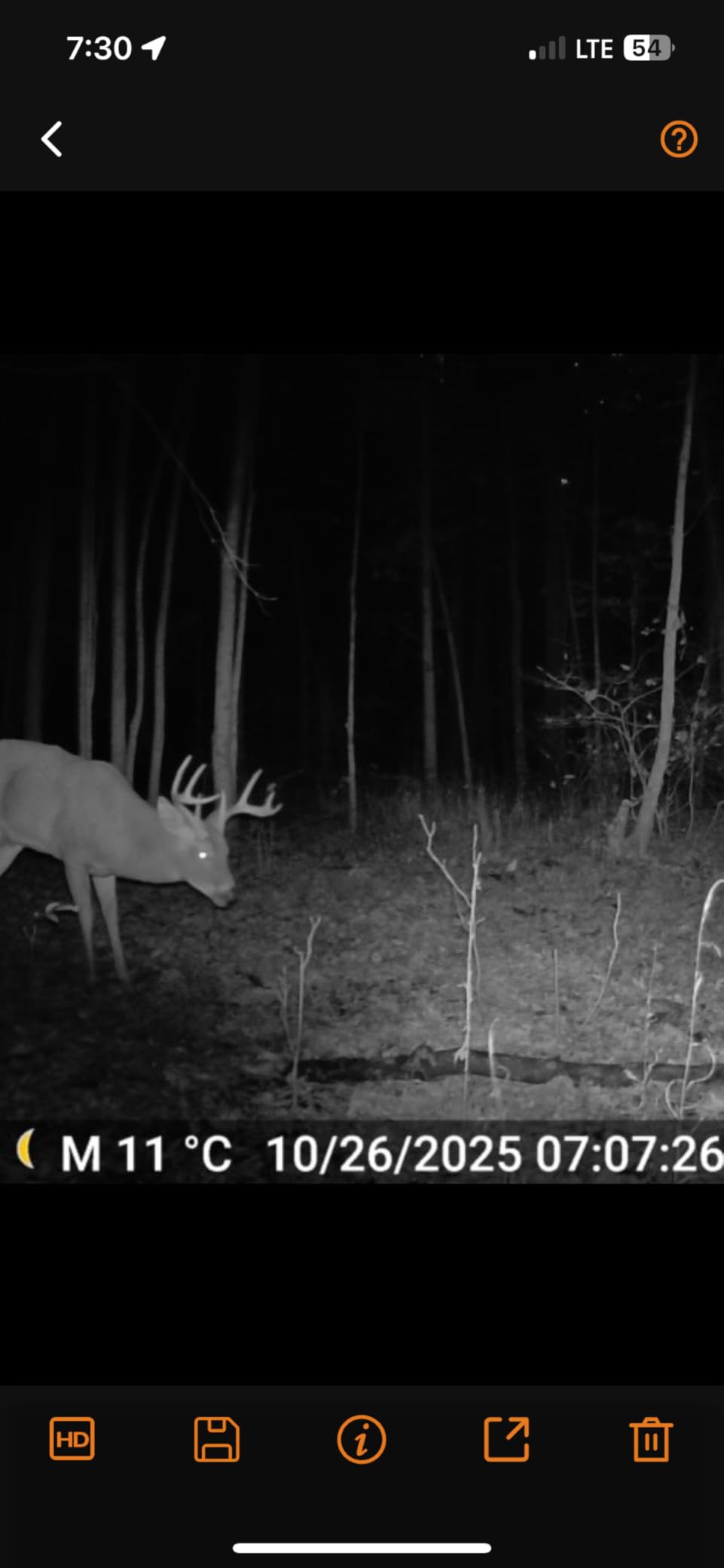
Several owners describe daytime image quality as below what is advertised for this tier. If your deployment is daylight-heavy, sample a frame before committing the whole season to it.
One owner also saw faster battery drain when running the camera without the solar panel, which is a reminder that the bundle is the intended configuration. And a low hanging branch triggered repeated night captures while actual wildlife went uncaptured, so tighten the detection zone before you leave.
Who should deploy it
Use it across two or more sites where the shared plan materially lowers per-camera cost, and lean on scheduled capture windows rather than continuous motion detection. Several owners in this review group bought a second unit, which is the pattern the shared plan is built for.
The warranty is one year, which is shorter than several rivals here, so confirm the panel and battery are covered before a long season.
10. kejector PH810T: Best for On-Camera Review and Wide Detection Zones
4K 64MP Solar Trail Camera, WiFi Bluetooth Trail Camera with 10000mAh Rechargeable Battery, APP Control Game Camera with 2.4”LCD Display, IP66 Waterproof, 65ft No Glow Night Vision, Hunting Cam
10000mAh rechargeable battery with solar power
2.4 inch LCD for playback
45 x 940nm no-glow IR LEDs to 65ft
Three PIR sensors
0.2s trigger
Pros
- Very sensitive sensors with a wide adjustable detection area
- No-glow IR LEDs do not read as a visible light to animals
- Sturdy body stays put in wind and rain and the lens does not fog
- Printed manual and quick start guide make setup easy offline
- Time-lapse mode plus date time temperature and moon phase stamping
Cons
- On-camera preview undersells the files and they look better read on a computer
- Performs poorly when shooting through a window
- Some configurations still expect AA batteries or an external 6V supply
The kejector PH810T pairs a 10000mAh rechargeable battery with a 2.4 inch LCD, so you can review a capture at the tree without walking home and reading it on a computer. That screen is the reason this camera sits where it does in a long-deployment list.
Night performance uses 45 of the 940nm no-glow IR LEDs with smart auto-exposure out to 65 feet, which is the largest IR array in this group. Three PIR sensors with low, medium and high sensitivity plus motion filtering give you real control over false triggers, and trigger speed is 0.2s across a 120 degree viewing angle.
The body weighs 1.5 pounds and measures 5.3 x 3.9 x 2.3 inches, rated IP66 with a temperature range from 4F to 140F. A 32GB card is included and expands to 256GB, and the printed manual means setup does not depend on having internet at the site.
Where the screen and sensor fall short
On-camera preview quality is noticeably worse than the actual files, so judge the sensor on a computer rather than on the LCD. Three PIR sensors still do not make it good through a window, which is a common security shortcut and a poor one.
One configuration detail to check before deployment: some setups expect AA batteries or an external 6V supply despite the rechargeable pack being listed. Confirm which power path your unit uses on the bench before you mount it.
Who should deploy it
This fits a user who walks the property regularly and wants to confirm what happened on arrival, and it holds up well in wind and rain without lens fogging. The no-glow array keeps it invisible to the animals you are watching.
If your priority is a wider detection area than a single zone, the adjustable detection range is the feature that justifies the pick.
Solar Runtime Expectations Across the Seasons
Solar performance tracks sunlight, not marketing. A camera with a 6000mAh pack and a permanently fixed panel will do well on an open south-facing site in summer and badly under canopy in December, and no product listing changes that relationship.
The practical rule from the field: budget three to four hours of direct sun per day for a camera running a moderate trigger rate, and treat anything under that as a site that needs a larger panel or scheduled recording windows. Bigger packs do not fix shade, they only extend how long you can survive without sun, which is why the 13000mAh MagicEagle and the 10000mAh kejector are useful in partially shaded ground.
Winter is the honest test. Cold slows charge acceptance in lithium cells, and a panel covered in snow or leaf litter collects nothing at all. Hunters on Kentucky hunting forums report leaving a solar panel on a camera through December and still seeing a full charge indicator on the next visit, and that outcome depends entirely on the site being open to winter sun.
Why a Solar Panel Fails to Charge, and How to Fix It
If the battery indicator sits flat despite a clear sky, work through these in order before assuming the panel is defective.
Check for shade first. Canopy shading is the most common cause and the hardest to see at midday. Walk the site at noon and again in the late afternoon, since the sun path moves and a spot clear in April can be covered by leaves in July.
Clean the glass. Pollen, dust, bird mess and sap film cut output sharply. Wipe the panel with a damp cloth at every visit.
Clear snow and vegetation. A panel under a fresh layer of snow collects nothing. Angle or shake the mounting to shed accumulation, and trim back branches that have grown across the panel since the last season.
Confirm the panel is sized for the trigger rate. A fixed small panel cannot keep up with a high-traffic trail, and the shortfall shows up as a battery that drains over weeks rather than days.
Verify the connection. Check the panel-to-camera plug is fully seated and that the camera is actually in solar or charge mode rather than battery-only.
Rule out the cold. Below freezing, lithium packs charge far more slowly, or not at all, even with sun on the panel. If the site goes below freezing for long stretches, size the panel up rather than expecting a software fix.
Watch for the underside controls. Several cameras here put the power switch on the base, so a switch left in the wrong position during mounting looks exactly like a charging failure.
Battery Chemistry and Cold-Weather Setup
Lithium AA is the right chemistry for cold deployments, and alkaline is not. Hunters consistently report that alkaline cells do not provide enough voltage for the IR flash, which means night captures come out black on a battery-only setup.
For cameras in this list, the rechargeable route wins on a long deployment: 6000mAh on the MAXDONE and Assark, 5200mAh on the GardePro bundle, 10000mAh on the kejector and 13000mAh on the MagicEagle. If you carry AA spares, carry lithium.
Keep AAs as a fallback rather than a plan. A pack that has been sitting in a cold car all winter will underperform on first deploy, so top it off indoors before it goes in the tree.
Cell Coverage, Placement and Legal Checks Before You Walk Away
Test coverage at the exact spot, not at the road. Stand where the camera will hang and make a call or run a speed test on the intended carrier; a tower that reads well at the trailhead can be absent twenty yards into the woods. Cross-check the carrier’s coverage map, then confirm which network the camera will actually select.
Angle detachable panels toward the site’s real sun rather than the calendar’s. If your panel adjusts, set it for the low winter arc rather than a flat position that maximises July output, and confirm nothing will grow across it before the season turns.
Mount at roughly chest height, angled slightly downward, and keep the lens clear of foliage. Branches in the trigger zone are the most common cause of a night full of empty frames, which is a direct waste of the battery you came out to protect.
On legality, check your state before a long unattended deployment. Arizona has enforced a statewide ban on trail cameras used for hunting, and Colorado applies in-season restrictions on some public lands, so a camera left unattended for a season needs a legal check before it is hung, not after.
Finally, plan for theft. A visible panel and a bright housing advertise the camera’s location on public land, so match the casing to the surroundings, use a security cable to the tree, and prefer models with built-in memory so a stolen card does not take your footage with it.
Frequently Asked Questions
Why won’t my solar panel charge my camera?
Shade is the usual cause, not a faulty panel. Check for canopy cover at noon, clean off dust pollen and sap film, clear snow and leaves, and confirm the panel is fully seated on the camera. Below freezing a lithium pack also charges very slowly even in full sun, so a site that goes below freezing for days needs a larger panel rather than a software fix. Several cameras also put the power switch on the underside, so a switch left in the wrong position during mounting looks identical to a charging failure.
What type of battery is best for trail cameras in cold weather?
Lithium AA is the best choice for cold weather, and alkaline is not. Hunters report that alkaline cells do not supply enough voltage to drive the IR flash, so night captures come out black. On a long deployment a rechargeable pack beats any AA, and larger capacity buys more margin when the sun does not come out. Treat AAs as a backup rather than the plan.
How long will 8 AA batteries last in a trail camera?
Far less than a season, and much less than most buyers expect. Eight cells can be drained within weeks on a high-traffic site once trigger sensitivity, video mode and IR flash are all working hard, and cold shortens that further. That gap between expectation and reality is the entire reason solar exists for long deployments: a panel feeding a rechargeable pack removes the trip.
What trail camera has the longest range?
Range depends on what you are measuring. Among the cameras here, the 100 foot figures belong to the Oculview with its spotlight enabled, the Moultrie Edge Solar low-glow flash, and the GardePro X50S no-glow night vision. The MagicEagle reaches 90 feet on no-glow IR and the MAXDONE 65 feet. Longer flash reach does not mean a more sensitive PIR sensor, and several owners report losing detection beyond roughly ten yards.
Why are states banning trail cameras?
The restrictions are about privacy and wildlife management rather than the cameras themselves. Arizona has enforced a statewide ban on trail cameras used for hunting, and some states limit their use on public land during defined seasons. Anyone leaving a camera unattended for 90 days or more should check state rules before deploying, because the camera may be running legally for months before anyone reports it.
Which Solar Trail Camera Fits Your Deployment
For the widest range of long-deployment situations, the MAXDONE PH970S is the pick, with the largest owner base and no subscription to lapse. The MagicEagle H1 is the choice when the site goes cold and dark and endurance matters more than resolution, and the TACTACAM Reveal Pro 3.0 bundle is the one to choose when concealment and self-contained storage matter most.
Match the camera to the site before you buy. Shade, cold and trigger rate decide runtime far more than panel wattage does, and testing coverage at the exact tree saves a season. Our broader trail camera picks cover the non-solar options if solar is not workable on your ground.