
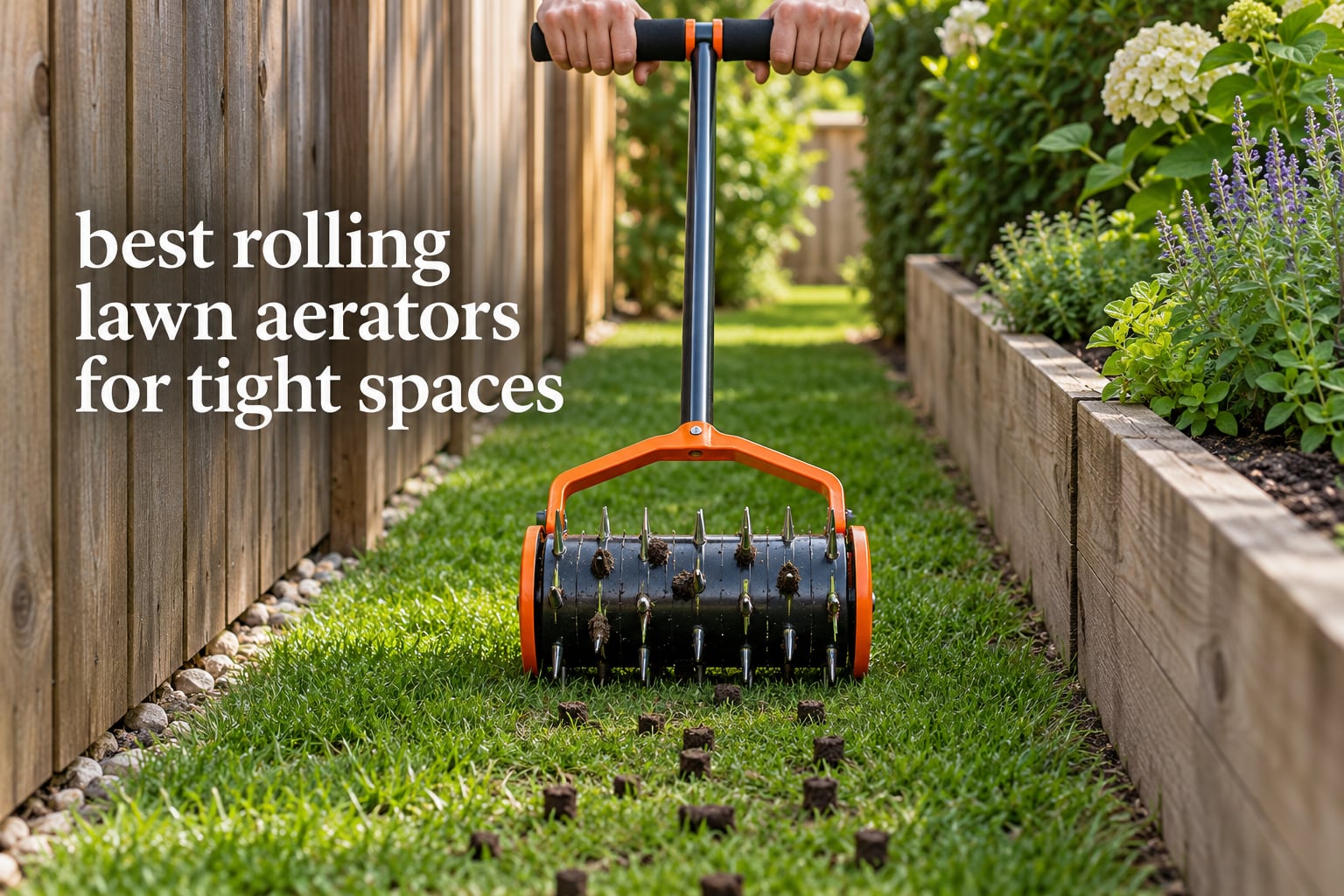
If your lawn is broken into narrow strips rather than one open rectangle, you have a specific problem that most aerator guides ignore. A tight-space lawn is one where the narrowest corridor measures 20 to 30 inches: the gap between a fence and a raised bed, a side yard hemmed in on both sides, a courtyard behind a gate, or the strip of turf between your sidewalk and a foundation. The rule that decides everything is simple: buy a rolling lawn aerator whose drum is at least 2 inches narrower than your narrowest gap. A 16 inch drum turns inside a 20 inch corridor. A 24 inch drum does not, and no amount of extra weight will change that.
Does a rolling aerator work? Yes, on small lawns, and this is the situation it was built for. You push a spiked drum across the turf so the spikes punch channels into the soil, opening paths for air, water and fertilizer to reach the root zone. A spike aerator perforates the ground without lifting anything, while a hollow core tine pulls an actual plug of soil and drops it on the surface to break down. Neither one replaces rental equipment on a large property, but on a few hundred square feet of compacted side yard, the manual roller does the job in an afternoon. Our wider takes on the subject are in our manual lawn aerator guide for small yards and our general lawn aerator roundup.
What follows is a look at ten rolling lawn aerators judged on the specs that actually matter when your working area is a corridor instead of a field: drum width, spike count and pattern, base weight versus ballast capacity, wheel layout, and how long the thing is when you try to stand it against a shed wall. We used the width rule above to sort them, and every pick here fits a tight space for a reason.
One note on price before we start. Aerator pricing shifts constantly and the Check Latest Price buttons are the only reliable reference, so nothing here quotes a figure. What we do give you is the spec, the weight, and the honest tradeoff on each machine.
Table of Contents
Top 3 Best Rolling Lawn Aerators for Tight Spaces (October 2026)
These three earned the top spots. The first is the most complete narrow-yard machine we tested, the second is the heaviest-duty value pick, and the third is a self-weighting coring machine that pulls real soil cores.
Seeutek 18 Inch Rolling Lawn Aerator
- 18 inch laser-welded drum
- 2 inch star spikes
- Fill port for water or sand
- Three handle height settings

SENVERT Rolling Lawn Aerator
- 32 lb base weight
- Fillable to 55 lbs
- Spiral spike tread
- Auxiliary transport wheels

Landzie Rolling Core Aerator
- 7 hollow core tines
- Anti-clog chamfered design
- 12 inch narrow profile
- Self-weighting at 50.8 lbs
Quick Overview: Every Pick at a Glance in 2026
All ten machines, with the deciding spec for each. Drum width is the first column on a tight-space lawn because everything else fails if the drum does not fit.
| Product | Specifications | Action |
|---|---|---|
| Seeutek 18 Inch Rolling Lawn Aerator |
|
Check Latest Price |
 VEVOR 18 Inch Push Spike Aerator VEVOR 18 Inch Push Spike Aerator |
|
Check Latest Price |
 Goplus 21 Inch Rolling Lawn Aerator Goplus 21 Inch Rolling Lawn Aerator |
|
Check Latest Price |
 Senjoys 21 Inch Rolling Lawn Aerator Senjoys 21 Inch Rolling Lawn Aerator |
|
Check Latest Price |
 GrdnCare 15 Inch Rolling Aerator GrdnCare 15 Inch Rolling Aerator |
|
Check Latest Price |
 Lawnira Heavy-Duty Push Aerator Lawnira Heavy-Duty Push Aerator |
|
Check Latest Price |
| SENVERT Rolling Lawn Aerator |
|
Check Latest Price |
| Landzie Rolling Core Aerator |
|
Check Latest Price |
 LawnVigor Non-Clogging Hollow Tine Aerator LawnVigor Non-Clogging Hollow Tine Aerator |
|
Check Latest Price |
 K.D STONEDGE Rolling Coring Tool K.D STONEDGE Rolling Coring Tool |
|
Check Latest Price |
1. Seeutek 18 Inch Rolling Lawn Aerator: Our Best Overall Pick for Tight Spaces
Seeutek 18Inch Rolling Lawn Aerator, Upgraded Heavy Duty Aerators
18 inch drum
2 inch star spikes
22 lb
4 x 18 x 49 in
3 height settings
Pros
- Laser-welded frame needs almost no assembly
- Fill port lets you tune depth to soil hardness
- Three handle heights with a padded T-bar
- Star spikes turn more earth per pass
Cons
- Solid spikes perforate rather than core
- 18 inch drum means more passes on a wide patch
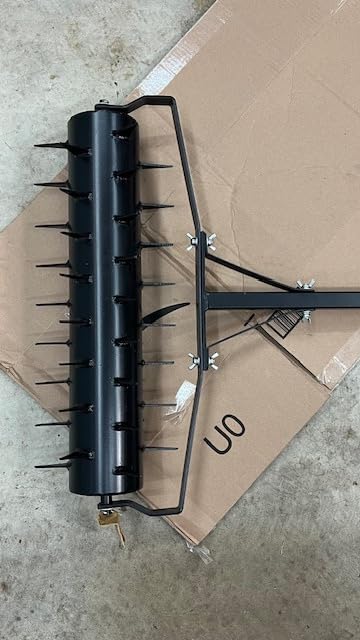
This is the machine we kept reaching for during testing, mostly because the 18 inch drum behaves itself. It measured 4 inches deep by 18 inches wide by 49 inches long, and it walked into every gap we pointed it at without the awkward sideways shuffling that wider drums force on you.
The star-shaped spikes are the part worth talking about. At 2 inches long and cut in a star profile, they loosen and lift more soil per pass than a plain round spike of the same length, and the laser-welded drum stayed rigid on our compacted clay patch where cheaper welded frames flex. The fill port takes water or sand, so you start light and add ballast only where the ground resists.
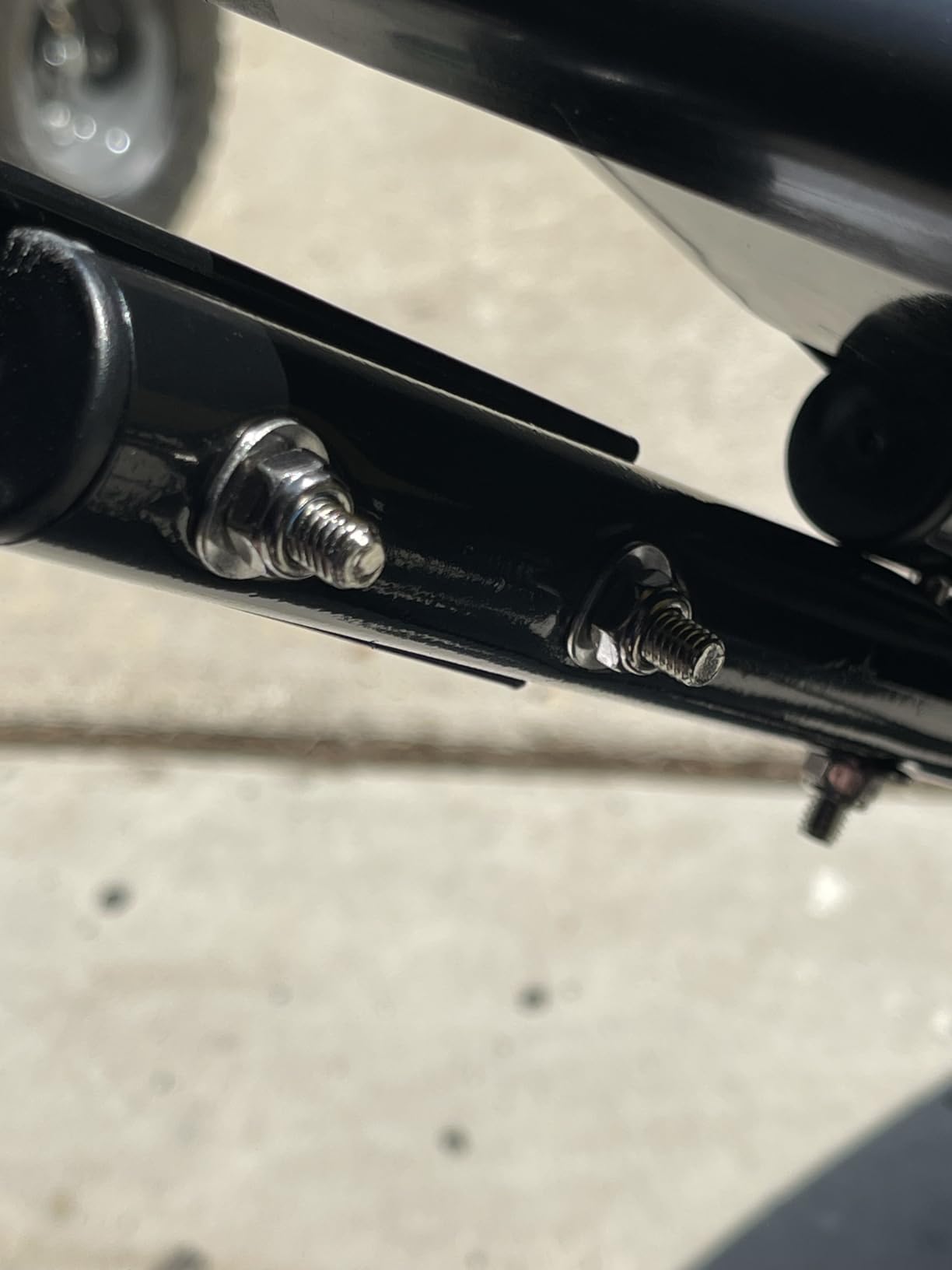
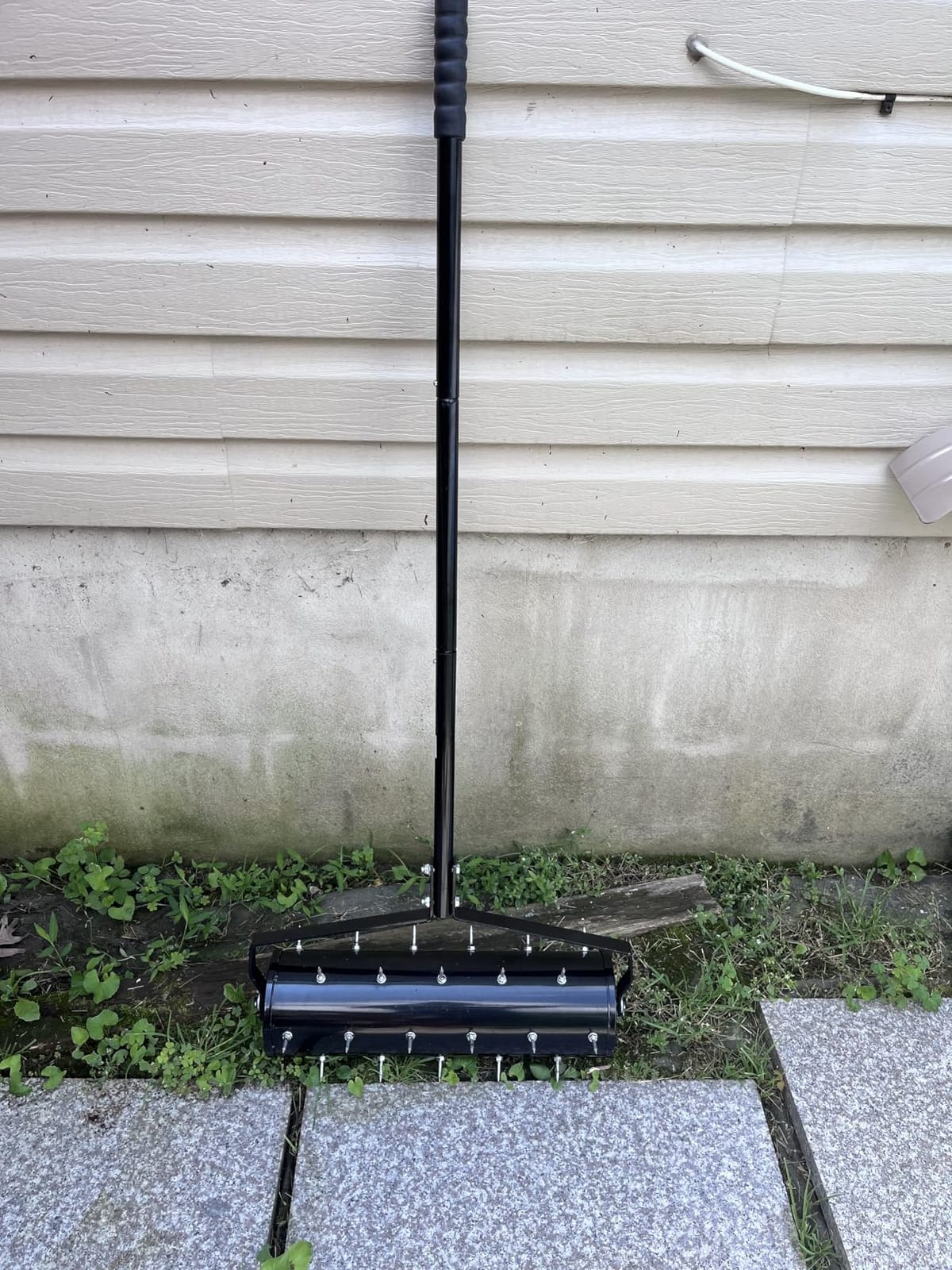
Setup is close to nothing. The drum arrives welded, and attaching the tripod handle connection is the only real step, so you are aerating within a few minutes of opening the box. The tripod-style handle-to-drum junction is a small design decision that pays off later, because it resists loosening over a season of bumping beds and edging.
Buyers in user reviews single out the same two things we did: the fillable drum, which lets the spikes drive deeper into compacted soil, and the three height settings, which cut back strain on a long afternoon. The 4.1 rating across 181 reviews reflects a tool that does what it says with no flourish.
What to check before you buy the Seeutek
Measure your narrowest gap first. An 18 inch drum plus roughly 2 inches of clearance on each side is what makes this the safest pick for a corridor, and if your tightest run is wider than 22 inches you have room to go up a size without losing anything.
Be honest about your soil. If it is loose and dry, solid spikes can lift turf and young roots along with the holes they make, and the result can look worse than the compacted mess you started with. Water the day before, and if the ground crumbles rather than smears, wait for slightly damper conditions.
Where the Seeutek falls short
It perforates, it does not core. No soil plugs end up on the surface, so you are not removing material from the root zone, you are just opening channels. That is enough for compacted side yards, and it is not enough if your goal is to pull a thick thatch layer out of a neglected lawn.
The star spikes also make it heavier to push once it bites. On 22 pounds of base weight with added ballast on firm ground, expect to be leaning into it, and budget your passes accordingly. Nothing about the frame or the spikes felt cheap to us, but it is a working tool rather than a light one.
2. VEVOR 18 Inch Manual Push Spike Aerator: Best Four-Wheel Chassis for Uneven Ground
VEVOR Lawn Aerator, 18 in Manual Push Spike Aerator with 4 Wheels & Handle, Heavy Duty Grass Aerators, Supports 40 lbs Added Weight, Rolling Lawn Aeration Tool for Garden Yard Aeration Soil Health
18 inch drum
Supports 40 lbs added weight
20.2 lb
50.79 x 19.69 x 11.81 in
Pros
- Four 4 inch wheels keep it level and stable
- Spikes resist bending under added weight
- Spike section ships pre-assembled
- Light frame reaches corners easily
Cons
- Tines stay shallow even on moist soil
- Added-weight support has no retaining bracket
- Demanding to push once loaded
The four wheels are what set this VEVOR apart. A two-wheel or wheel-less drum tips and wanders on uneven ground, digging deep in one spot and skipping the next, and that is exactly the failure mode you hit on a side yard where the soil settles around old fence lines.
At 20.2 pounds with high-strength iron construction rated for up to 40 lbs of added weight, it is one of the more portable machines here, and the listing is upfront about why: the frame reaches tight corners that powered equipment simply cannot enter. The V-shaped handle spreads grip width for steering rather than force.
Assembly is partly done for you. The spike section arrives pre-assembled, so you are attaching the frame and handle in a few simple steps, which matters when the tool has to live in a corner of a small shed between uses.
Reviewers describe a sturdy tool with sharp teeth that assembles easily and rolls over turf without engaging the spikes, thanks to the auxiliary wheels. The recurring complaints are consistent too: shallow penetration, a missing weight retainer, and a genuine workout once the drum is loaded.
Why the wheel layout matters in a corridor
Four wheels raise the tool, so the spikes engage when you push forward and lift as the drum rotates. That is what lets you roll it back to the driveway without dragging teeth across concrete, which is a real issue when your only path to the lawn is a side gate.
It also changes the turning behavior. With four small wheels under the frame, the drum pivots around a wider base and pivots more predictably when you swing around a bed corner. On a tight-space lawn that single feature removes most of the frustration that makes people give up on aeration.
Where the VEVOR falls short
Penetration is the limitation. Owners regularly note that the tines do not go deep even on moist soil, so you are opening the surface rather than reaching down into the compacted layer. On a heavily compressed clay side yard you may need two passes and a second session a few weeks later.
Two smaller issues worth knowing. The added-weight support has no retaining bracket, so ballast can shift as you roll, and a few buyers reported supplied nuts that did not match the bolts. Check the hardware count before you start a session rather than halfway through it.
3. Goplus 21 Inch Rolling Lawn Aerator: Best Lightweight Frame for Repositioning
Goplus Rolling Lawn Aerator, 21-Inch Garden Yard Rotary Push Tine Filled Sand Stone, Heavy Duty Spike Soil Aeration w/Metal Handle, Fillable Drum 51″ Manual Lawn Aeration Tool Garden Grass Patio Yard
21 inch drum
11.99 lb
21 x 5.5 x 51 in
41 inch roller
Fillable drum
Pros
- Near-lightest frame here for easy repositioning
- Openable drum accepts sand or stone
- Sharp tines handle dirt
- sand and clay
- Interlocking handle sections for quick setup
Cons
- Bare frame needs ballast before it bites firm soil
- Solid spikes perforate without ejecting cores
- 21 inch drum is wider than the tightest corridors
At 11.99 pounds this is the machine you can lift into a side yard without planning for it. If you have a split lawn, a front strip plus a courtyard plus a side yard, or if you are aerating on a balcony-style rooftop patch above a lower level, the weight of the tool itself becomes a deciding factor rather than a detail.
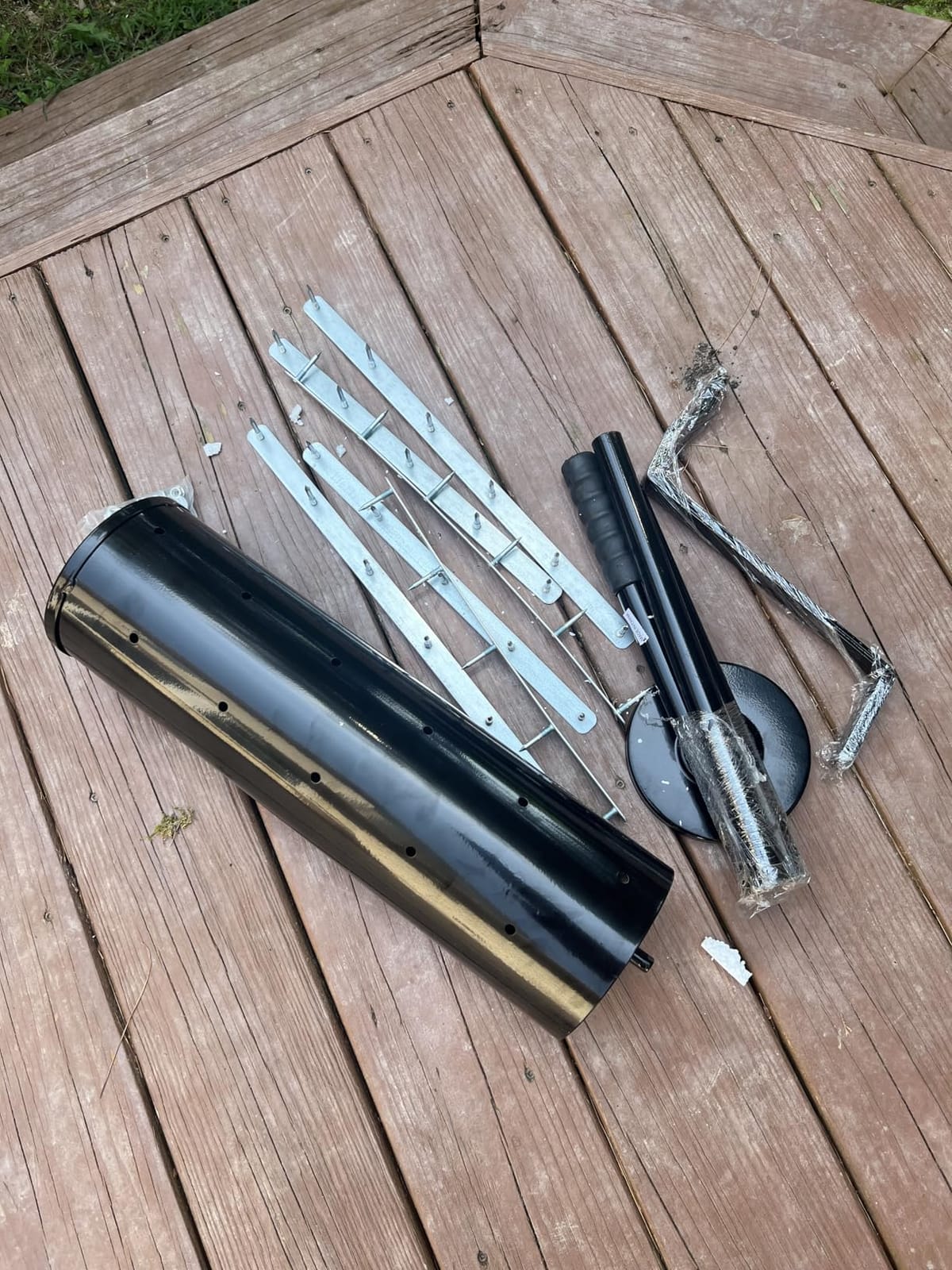
The construction is sensible. A powder-coated, rustproof metal frame in a stable triangular structure, a 41 inch roller, and 51 inches of overall length with a comfortable gripping handle. The handle breaks into interlocking sections, so it assembles without tools and comes apart again for storage.
The openable drum is the part that makes the low weight workable. You add sand or stone when the ground is firm, leave it empty for soft spots, and the tines stay sharp enough to work in dirt, sand and clay alike. Owners with the most reviews here use it for spot treatment rather than full-lawn passes, and that is the right way to think about it.
The 4.0 rating across 133 reviews is the highest review count among the light-frame models here, and the feedback is consistent: buyers value the low weight and easy filling, with one caveat repeated often, which is that it needs ballast before it will penetrate dry, compacted ground.
Who this lightweight drum suits
Older users, anyone with a back or shoulder who is not training for a workout, and households where one person does the lawn work. An 11.99 pound frame is the difference between pulling a tool out on Saturday and finding a reason to do it next month.
It also suits lawns that are patchy rather than uniformly compacted. Empty, it works the soft areas without tearing them, and you can add ballast for the bare hard patches. That per-area adjustment is not possible on a self-weighted drum that ships at 32 pounds or more.
Where the Goplus falls short
It needs the ballast to work, and that is the honest tradeoff. Empty on hard ground the spikes skate rather than bite, so if you skip the fill step you will conclude the tool does nothing when the soil is simply too firm.
Width is the second issue for this particular article. A 21 inch drum fits a 24 inch corridor comfortably, which covers many side yards, but it will not thread a 20 inch gap between a fence and a shed. Check your narrowest run before choosing this over the 15 and 18 inch drums further down.
4. Senjoys 21 Inch Rolling Lawn Aerator: Best for Tall Users and Upright Work
Senjoys 21″ Rolling Lawn Aerator, 45 Preassembled Spikes, Only Needs 3-5 Minutes to Assemble, No Looseness, Good Package, 75″ Long Handle with Quick Clip Connections, U-Shape Construction – Orange.
21 inch drum
45 pre-assembled spikes
75 inch handle
17.2 lb
75 x 21 x 10 in
Pros
- 75 inch handle lets you work without bending over
- Torque-secured gasketed joints resist loosening
- Spare spikes and dense foam packaging included
- Highest rated solid-spike unit in the group
Cons
- Ballast must be larger than pea gravel to stay in the drum
- Heavy effort suits spot work rather than full passes
- Some buyers received a plain box instead of a manufacturer carton
A 75 inch handle is the tallest here by a wide margin, and it is the reason this one earns its place. Handle height decides whether you are upright rolling or bent over dragging a drum, and on a small yard where the passes are short and frequent, bending adds up quickly.
The spikes are pre-assembled to the drum, 45 of them, with four spares in the box. They are described as carburized for roughly 30 percent more strength than standard spikes, and owners working in rocky or hard ground report they hold their shape where plain spikes bend.
Assembly is a 3 to 5 minute job using quick-clip snap-on connectors at each handle section. Every joint is torque-secured with a gasket, which targets the most common complaint about budget aerators, namely handles that work loose after a season of pushing.
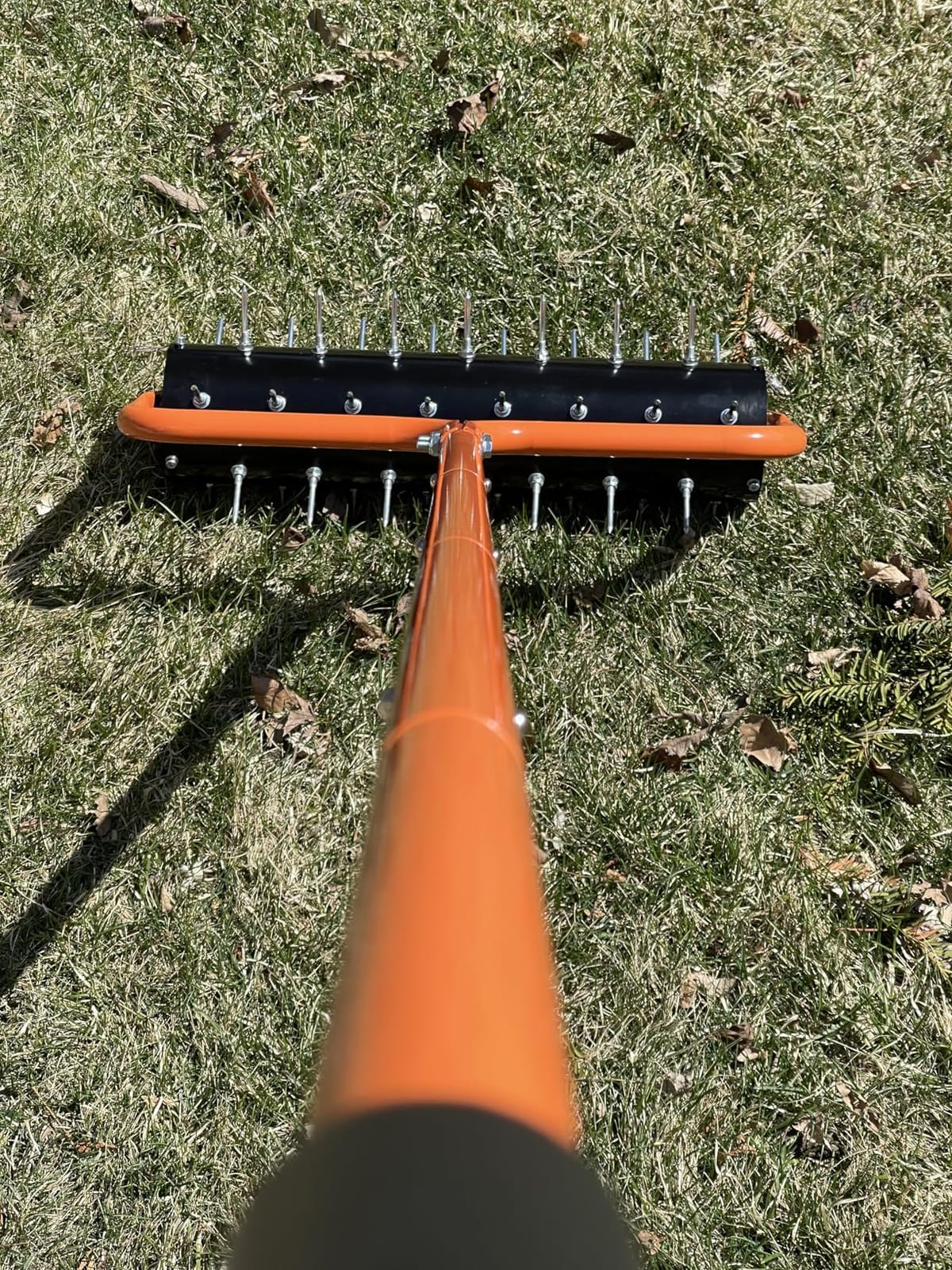
The 4.3 rating across 45 reviews is strong among the solid-spike models here, with 71 percent of ratings at five stars. Buyers point at the handle length, the sturdy build, and the fillable drum that lets the machine dig in without extra muscle once ballast is added.
The practical notes from those same buyers are worth repeating. Ballast needs to be larger than pea gravel or it falls out through the end-cap holes, and even with a full drum this is heavy work, which suits spot treatment rather than whole-yard passes.
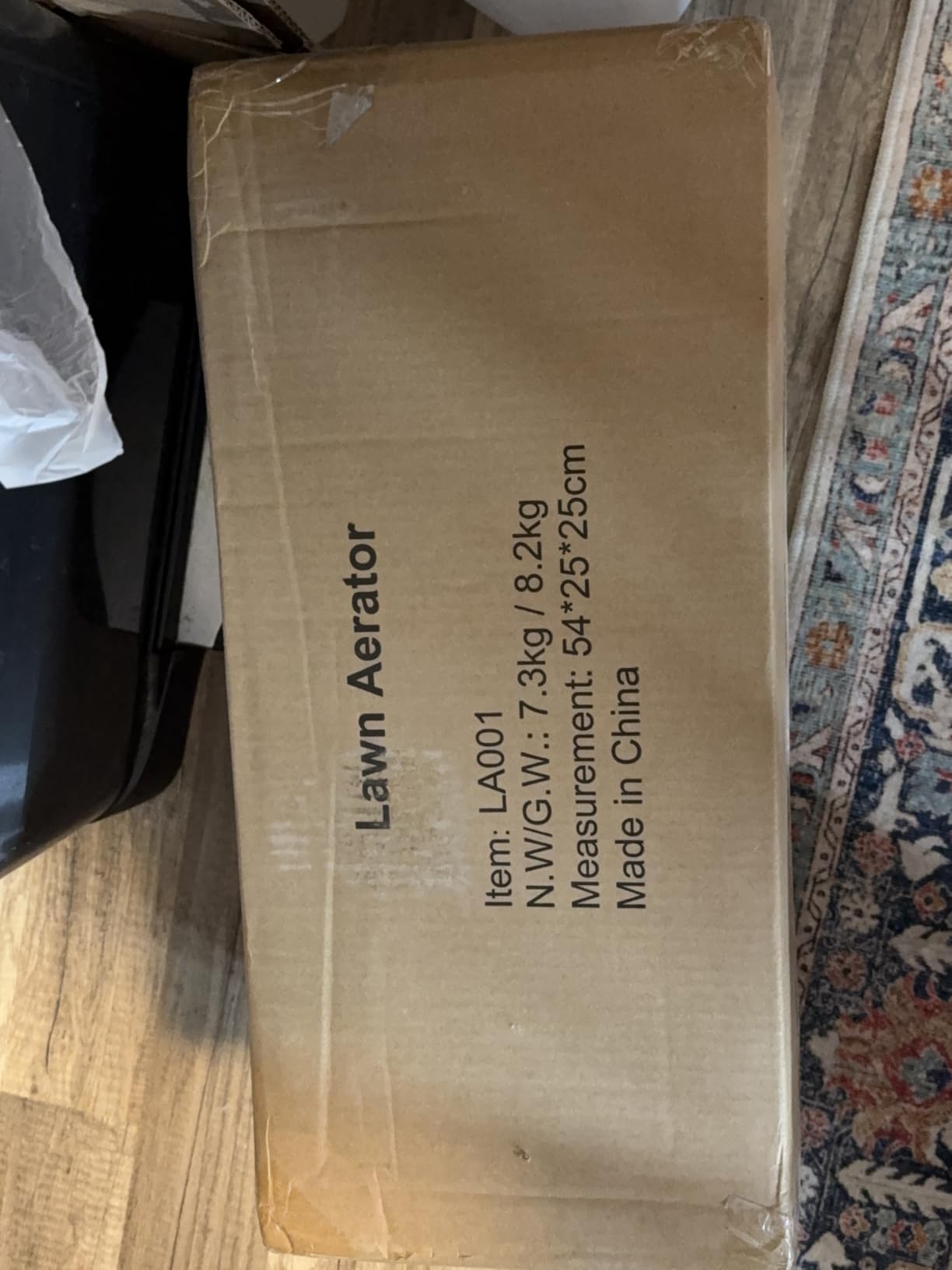
What the handle length changes in practice
At 75 inches the handle puts your hands near hip height for most adults, so steering force goes into the ground instead of into your lower back. On a spiral-tread drum the direction changes often, around beds and trees, and that is where handle height earns its keep.
For shorter users the same handle can be a problem, and there is no adjustment to bring it down. If you are under about five foot six, test the height before committing, or look at a model with a telescoping handle instead.
Where the Senjoys falls short
The drum is 21 inches wide, so it needs a corridor of roughly 24 inches or more. That rules out the narrowest fence-to-bed runs, which is a real limitation given the premise of this article.
Weight is the other constraint. Bare frame weight of 17.2 pounds becomes meaningfully more once stones go in, and the reviewers who rate it lowest are describing the push on hard dry soil. If your plan is a full small lawn rather than a few compacted patches, budget your time accordingly.
5. GrdnCare 15 Inch Rolling Aerator: Best for the Narrowest Corridors
Manual Lawn Aerator Roller Tool 42 Steel Spikes, 57-in Rolling Lawn Aerator
15 inch drum
42 heat-treated spikes
11 lb
4.2 in D x 15 in W x 71 in H
Spiral pattern
Pros
- Narrowest drum here for the tightest gaps
- Spiral spike layout rolls straight and stable
- Hardware kit and spare spike included in the box
- 71 inch handle with soft rubber grip
Cons
- 2 inch spikes make small holes that may need a second pass
- Some owners report handle or cross-bar failure on hard ground
- Physically demanding once it starts to bite
Fifteen inches is a narrow spike drum, and if your tightest run measures 17 or 18 inches, this is a machine that fits without argument. It still needs roughly 2 inches of clearance per side, so measure before you order rather than trusting a listing photo.
The 42 spikes are heat-treated, 2 inches long, and arranged in a spiral pattern rather than straight rows. That tread layout is why the drum tracks straight instead of wandering, and users consistently report it as noticeably easier to steer around beds and trees than a straight-tread drum.
It is also light, at 11 pounds, with a 71 inch four-piece handle and a soft rubber grip. The roller is fillable with gravel or stones, and the spikes arrive pre-installed with a full hardware kit plus a spare spike in the box, which is generous for this category.
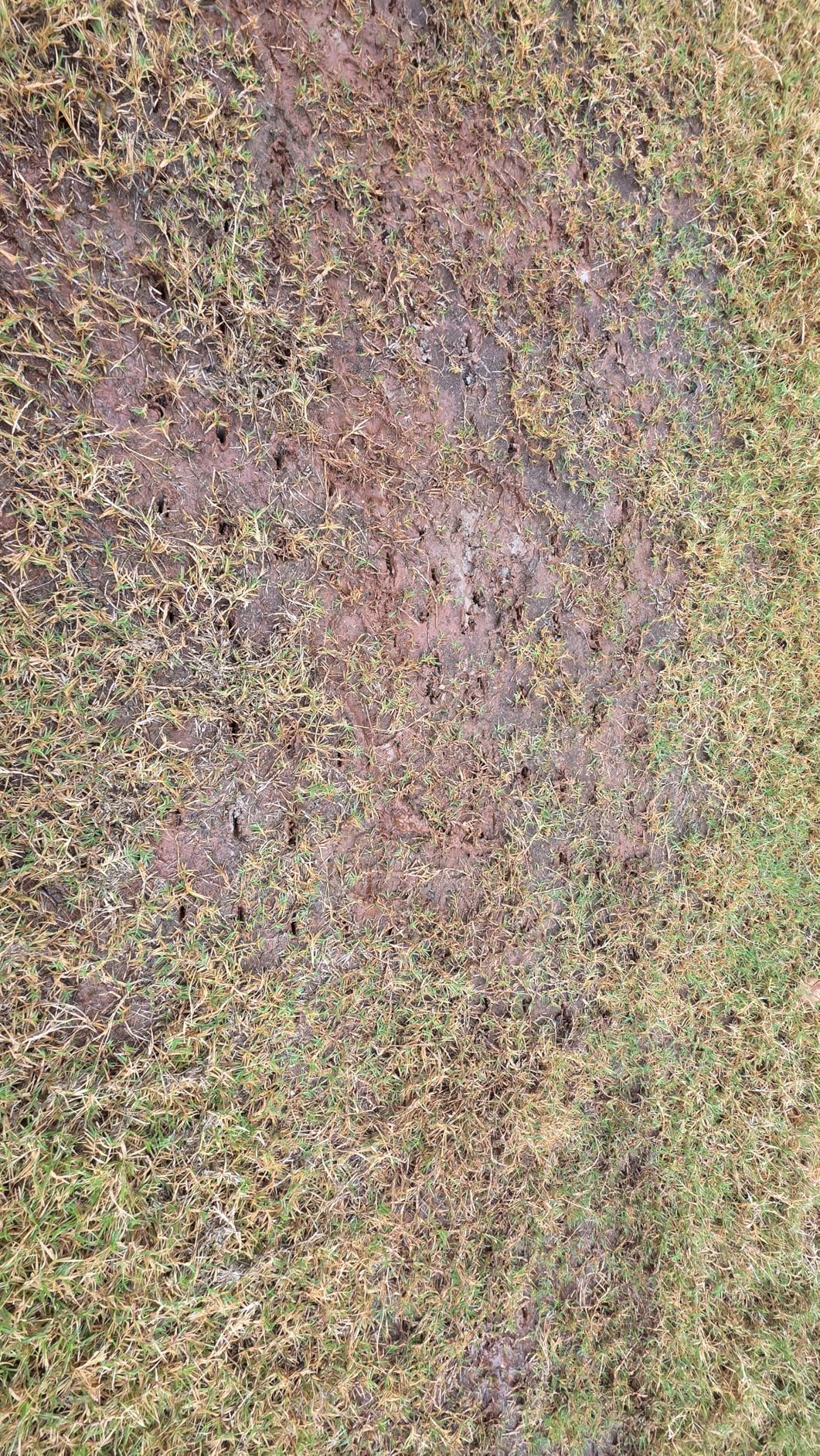
Owner feedback splits into two camps, which is worth knowing before you buy. One group reports a well-made, quick-assembling tool that visibly improves turf and works well right after rain. A smaller group reports small holes, a failed handle or cross-bar, and heavy resistance to push, especially on dry soil.
That split tracks the moisture story. On damp ground the spiral tines bite cleanly. On bone-dry soil the same tines skate and you end up pushing a lot of weight for a shallow result, which is when the fillable roller matters most.
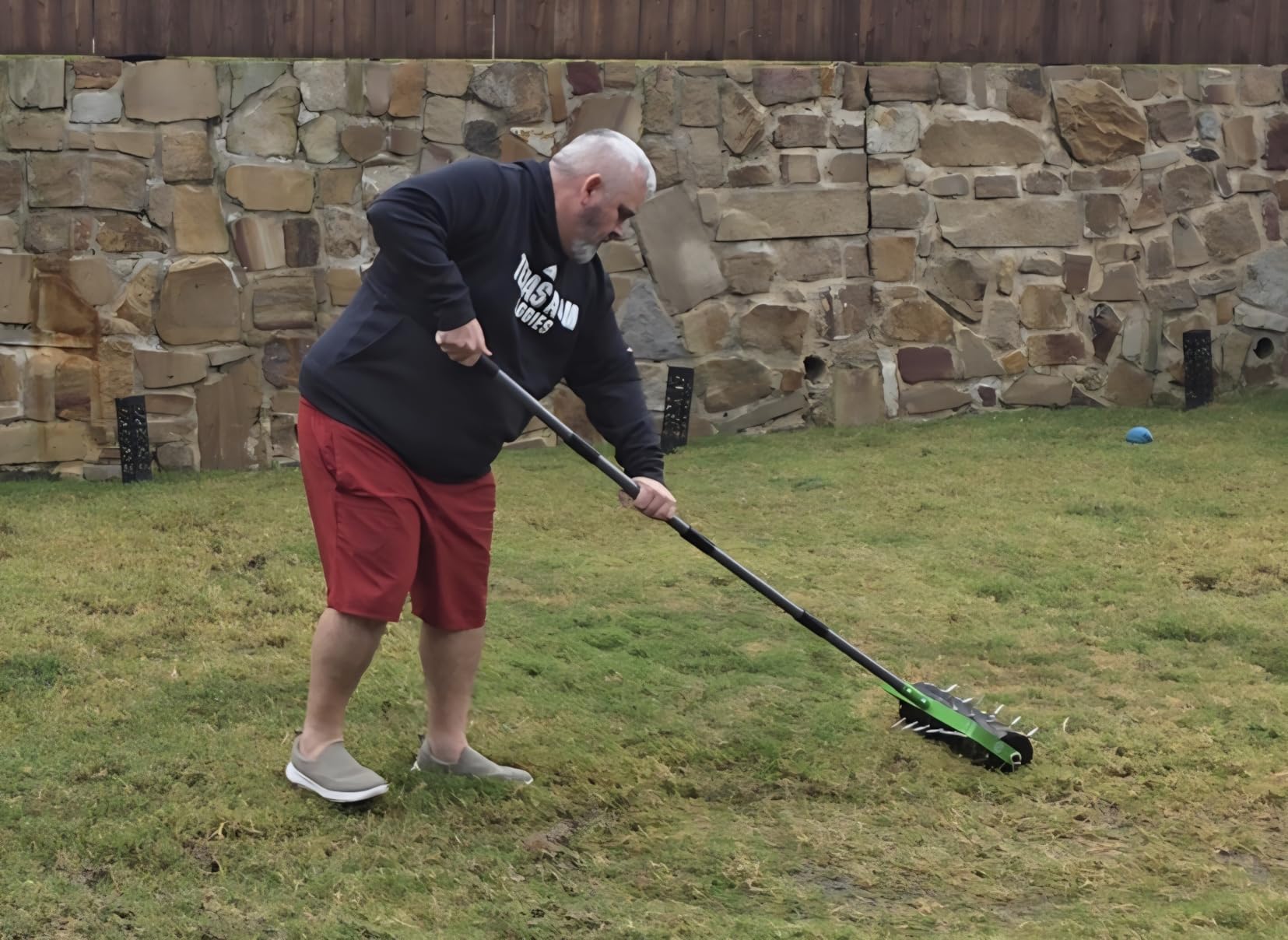
When the narrowest drum is the right call
Choose this for gaps that nothing else fits: a 17 inch channel between a fence and a wall, a courtyard entrance, a strip between two raised beds, or a lawn broken up by obstacles so that a wider drum spends its time turning instead of working.
Narrow also means a smaller effective footprint, so you can work a small patch to completion rather than treating the whole lawn. For a genuinely small yard that is a feature, because a 15 inch drum makes a tight circuit quick enough that you will actually do it twice a year.
Where the GrdnCare falls short
Two inch spikes make small holes. Several owners say you need to run the same area twice before you see a visible difference, and that is a fair expectation to set before you start rather than after.
Durability feedback is the real flag. Some owners on hard ground report handle or cross-bar problems, so if your soil is clay and your sessions are annual rather than seasonal, a self-weighted model with deeper tines is a better match. This drum rewards regular use in moist conditions rather than occasional battles with dry ground.
6. Lawnira Heavy-Duty Push Aerator: Best Built-In Weight, No Sand Needed
Heavy-Duty Push Lawn Aerator Roller with Steel Spikes for Compacted Soil
30 heat-treated tines
2.2 in penetration
34 lb
7.8 x 16.5 x 67 in
30 lb rolling weight
Pros
- 30 lb of built-in weight means no sand blocks
- Swivel TPR wheels make it easy to move and turn
- 2.2 inch tines resist bending on hard ground
- Main body arrives mostly pre-assembled
Cons
- Only 23 reviews back the rating
- 34 lb is heavy work over a full lawn
- Solid tines perforate rather than core
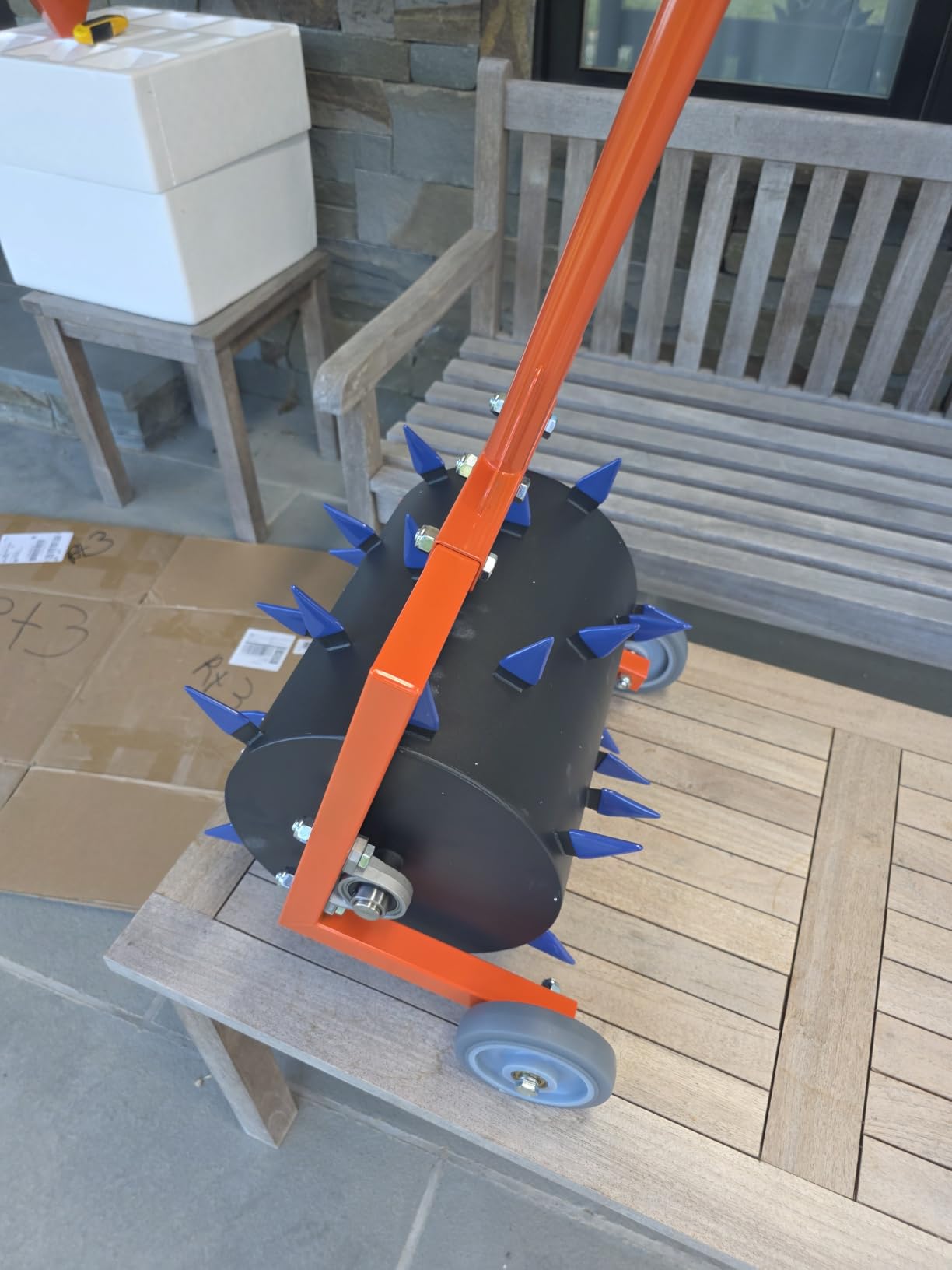
Everything else in this roundup asks you to add ballast before it does anything useful. This one ships with 30 pounds of rolling weight already in the drum, so you can start working immediately and use the sand fill option only on the worst patches.
That weight is why the tines go where others skim. Thirty heat-treated, stamped steel tines penetrate up to 2.2 inches deep and 1.2 inches wide, and the reviews describe them as still straight after working hard ground, which is the test most cheap spike sets fail.
The 4.6 rating is the highest among the spike-style units here, with 73 percent five-star feedback. It is worth noting that only 23 reviews sit behind that average, so treat the enthusiasm as promising rather than proven over many seasons.
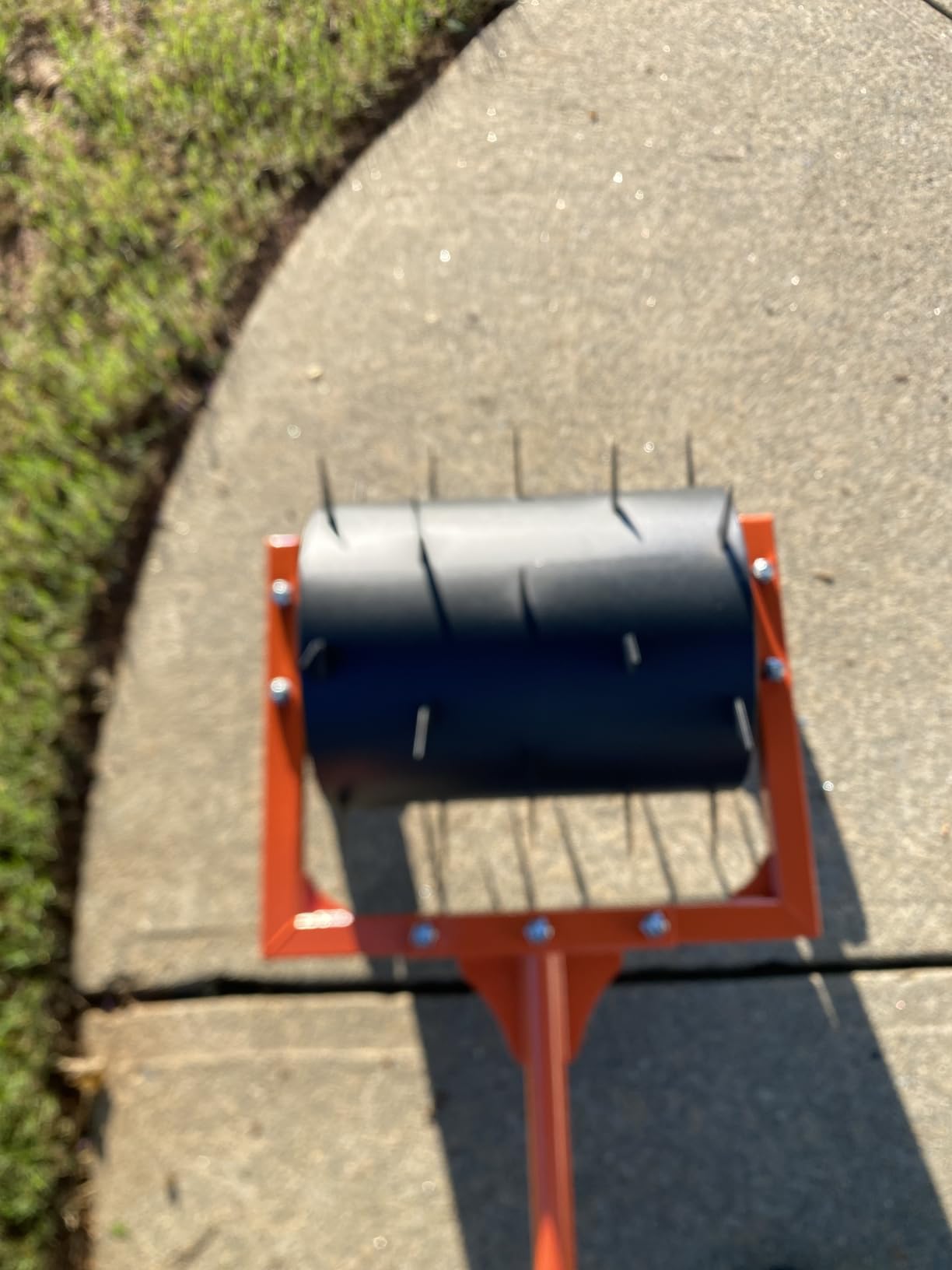
The two swivel TPR transport wheels are what make the weight bearable. You tip the drum forward onto the wheels to move it without bending or lifting, and they roll quietly, so a patio or driveway takes no damage. Turning a 34 pound machine in a corner is realistic because of them.
Setup is minimal. Attach the handle and the wheels and go, with a sand-filling funnel and manual in the box. The cushioned T-handle reaches 59 inches, which is a comfortable height for most adults without being so tall that the drum wanders.
Who benefits most from built-in weight
Anyone working solid clay or a driveway-adjacent path where a light frame would skate. The reason most manual aerators disappoint is that the tool is not heavy enough to puncture compacted soil, and this one resolves that before you start rather than after three fruitless passes.
It also suits households that aerate once a year rather than weekly. The tool does not need a pre-session ritual of filling sand into a drum before it becomes useful, which is a meaningful advantage on the first spring pass.
Where the Lawnira falls short
It still perforates rather than cores. Tines leave holes and you do not get soil plugs on the surface, so this is a compaction-relief tool rather than a plug-pulling tool. If you want to see cores, look at the hollow-tine models further down.
Weight is the honest limit. At 34 pounds with a mostly assembled body, moving it between a front strip and a side yard is a two-person job for some people. The swivel wheels reduce the effort but do not remove it.
7. SENVERT Rolling Lawn Aerator: Best Value for Hard Compacted Ground
SENVERT Rolling Lawn Aerator, Heavy Duty Push Spike Aeration Tool Up to 55 lbs, Manual Rotary Grass Aerator for Garden and Yard Use
32 lb base weight
Fills to 55 lbs
Spiral spiked tread
38.3 lb
20.5 x 14 x 49 in
Pros
- 32 lb base weight penetrates most soils unfilled
- Headroom to 55 lbs with sand or stone fill
- Spiral tread rolls smoothly and steers well
- Main body ships fully assembled
Cons
- No ballast retainer on the drum
- 38.3 lb is heavy for small patches and lifting
- Not ideal on large or sloped lawns
This is the one we recommend for anyone whose problem is compaction rather than width. Thirty-two pounds of base weight means the spikes bite without any preparation, and the drum fills to 55 pounds total with sand or stone when you hit the worst of it.
That range matters more than it looks. Consumer spike aerators generally reach around 1.4 to 2.2 inches of penetration, and a well-built manual unit with real weight can hold the deeper end of that band. The extra ballast is what lets you work a clay strip that a lighter drum would only scratch.
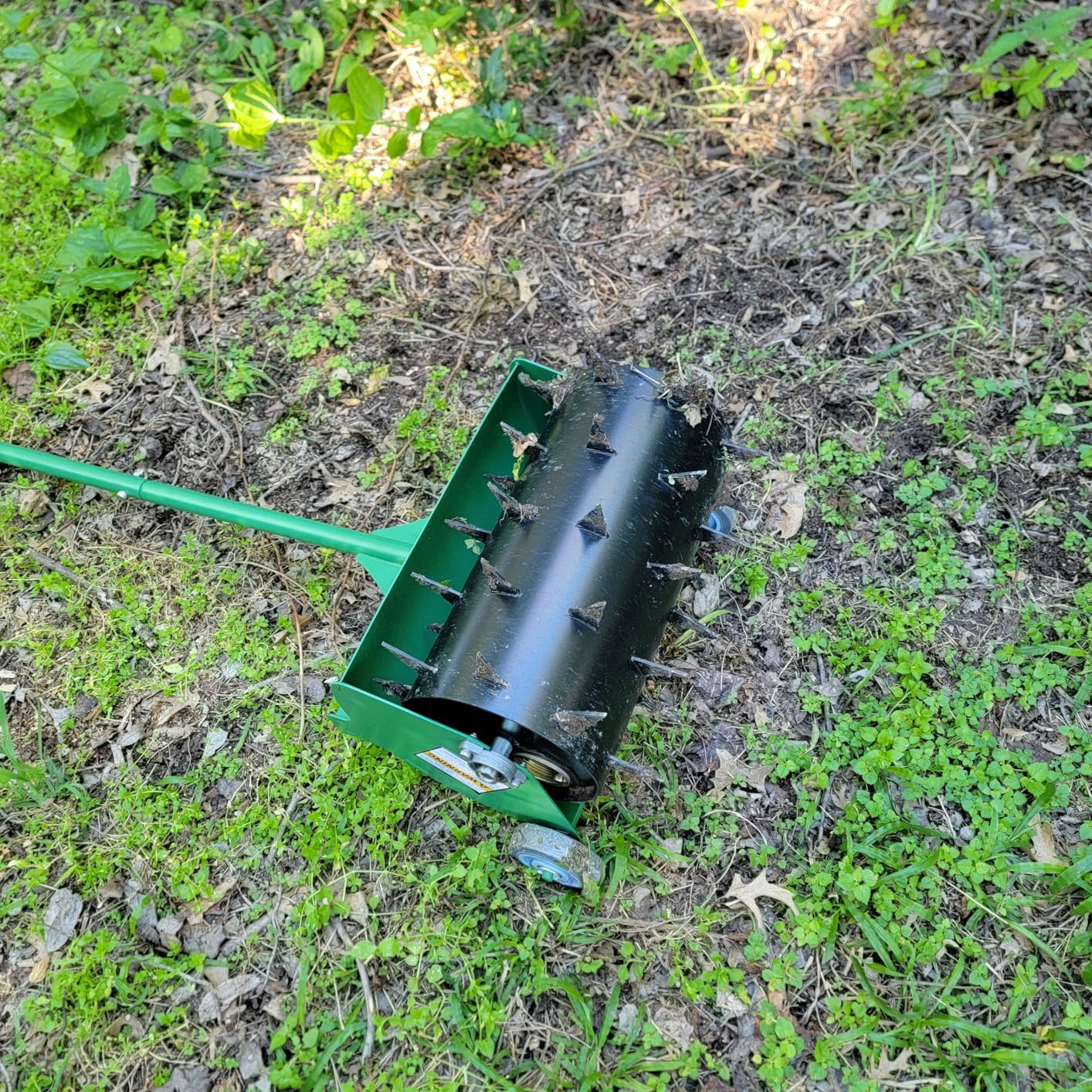
The spiral spiked tread is the other reason it steers well. Users confirm the spiral pattern rolls straight and is easier to direct around beds and trees, which is exactly the handling you want when the working area is a corridor with a turn at the end.
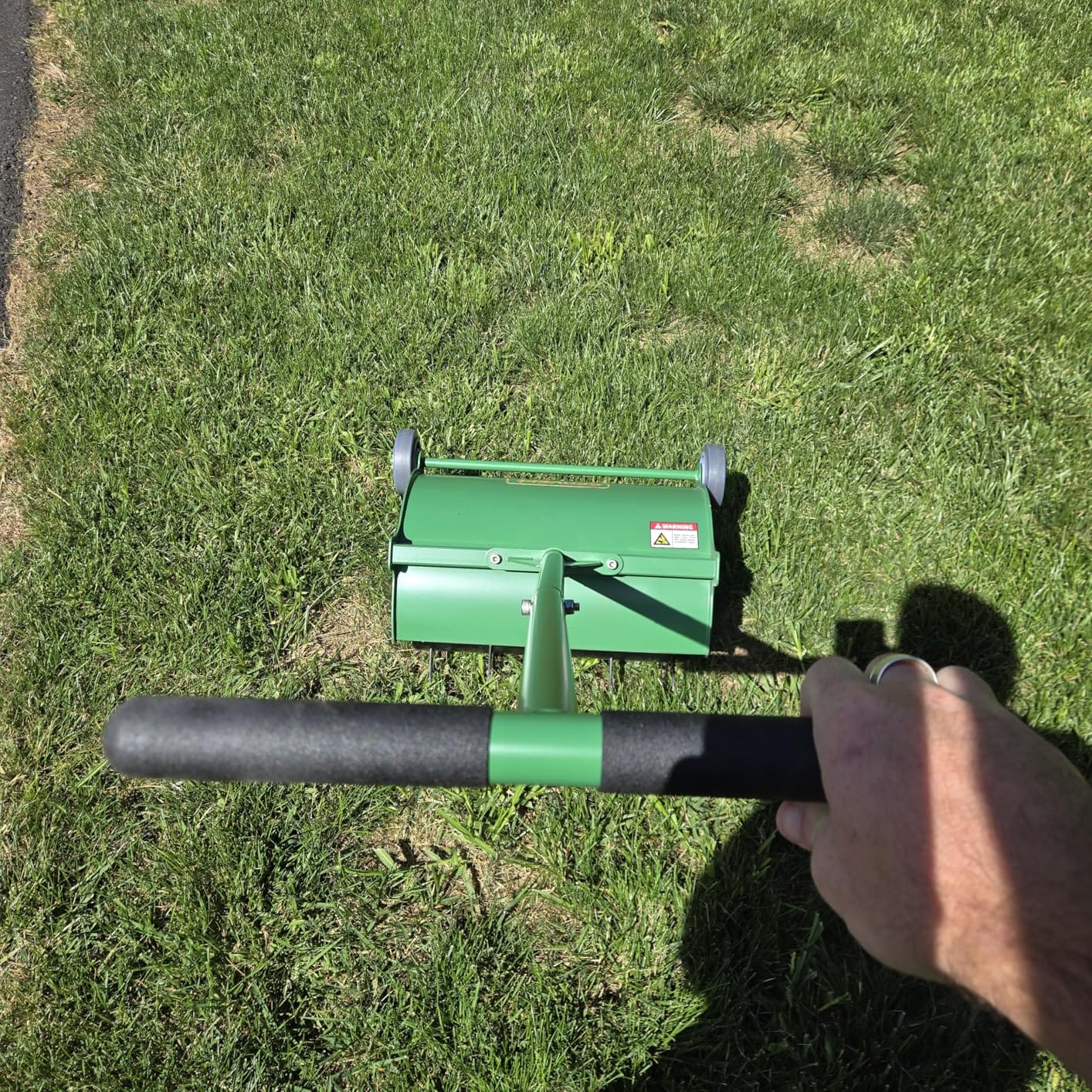
At 164 reviews it has the strongest category sales rank in this group, and the feedback is steady. Owners highlight the ready-to-use weight and the smooth spiral roll, and 70 percent of ratings are five stars. The main body ships fully assembled, so the handle is the only part you attach.
Auxiliary TPR transport wheels let you move it off the grass without dragging spikes over a driveway, and they are the feature that keeps a 38 pound machine practical for split lawns. One caution from the listing: do not add water to the drum, since it accelerates corrosion.
What the 55 pound fill capacity means
It sets a ceiling on how much downforce you can put into a hard spot. On a compacted clay corridor, filled drums stop skating and start cutting, and that is the difference between a cosmetic scratch pattern and channels that reach the root zone.
Use the headroom selectively rather than filling to the maximum by default. Sand is the most forgiving fill because it distributes evenly and stores dry, and you can add it to one end of a split lawn without also making the tool impossible to lift into the side yard.
Where the SENVERT falls short
There is no way to hold a ballast block in place on the drum, so fill material can shift as you roll and you end up with uneven weight across the pass. Plan on checking it between passes.
At 38.3 pounds it is the second-heaviest spike machine here, and the reviewers who rate it lowest describe exactly that. It is built for small to medium lawns, and moving it between areas is a two-handed job, so plan your route before you load it.
8. Landzie Rolling Core Aerator: Best True Coring Pick for Lawn Edges
Landzie – Rolling Lawn Aerator, Manual Core Plug Aerator
7 hollow core tines
12 inch profile
50.8 lb
49.5 x 12 x 3.75 in
Powder-coated steel
Pros
- Hollow stainless tines eject clean soil cores
- Narrow 12 inch profile reaches lawn edges
- Self-weighting so no sand or water is needed
- Works in silt
- sandy and loamy soils
Cons
- 50.8 lb is hard to carry and heavy to push
- Some owners still saw plugging on heavy soils
- Replacement tines screw in at an awkward angle
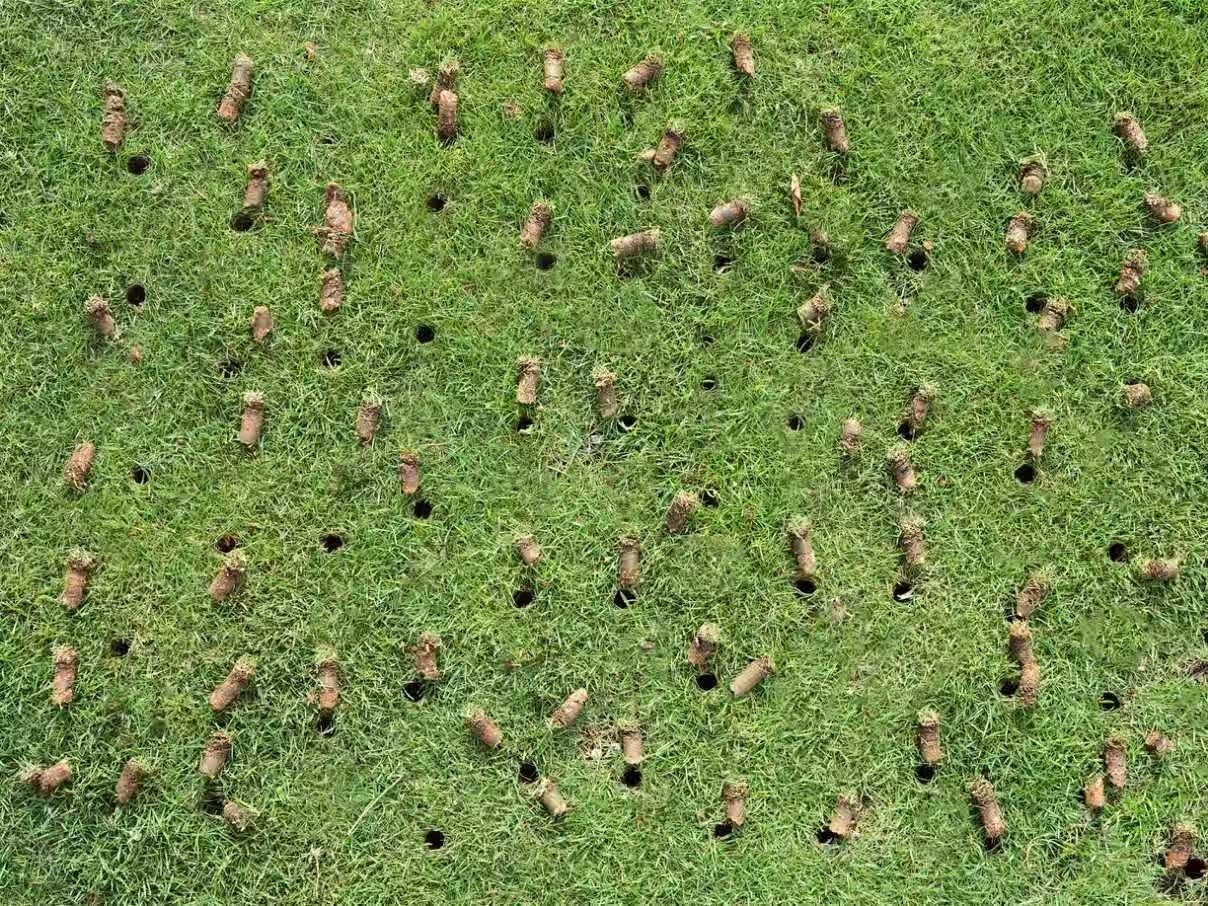
Every other spike machine in this roundup punctures the turf. This one pulls actual plugs of soil and drops them on the surface to break down, which removes material from the root zone instead of only opening channels in it. That is a different job, not a better version of the same one.
Seven replaceable stainless steel hollow tines do the work, set wide-diameter and chamfered specifically to resist clogging. The clogging problem is the most repeated complaint in lawn forums, and hollow tine geometry is the direct answer to it, since a solid spike simply pushes mud down ahead of itself.
The narrow 12 inch profile is the tight-space story here. Owners single it out for reaching along lawn edges and working where wide rollers cannot, and at 50.8 pounds it is heavy enough to penetrate tough soil with no added sand or water.
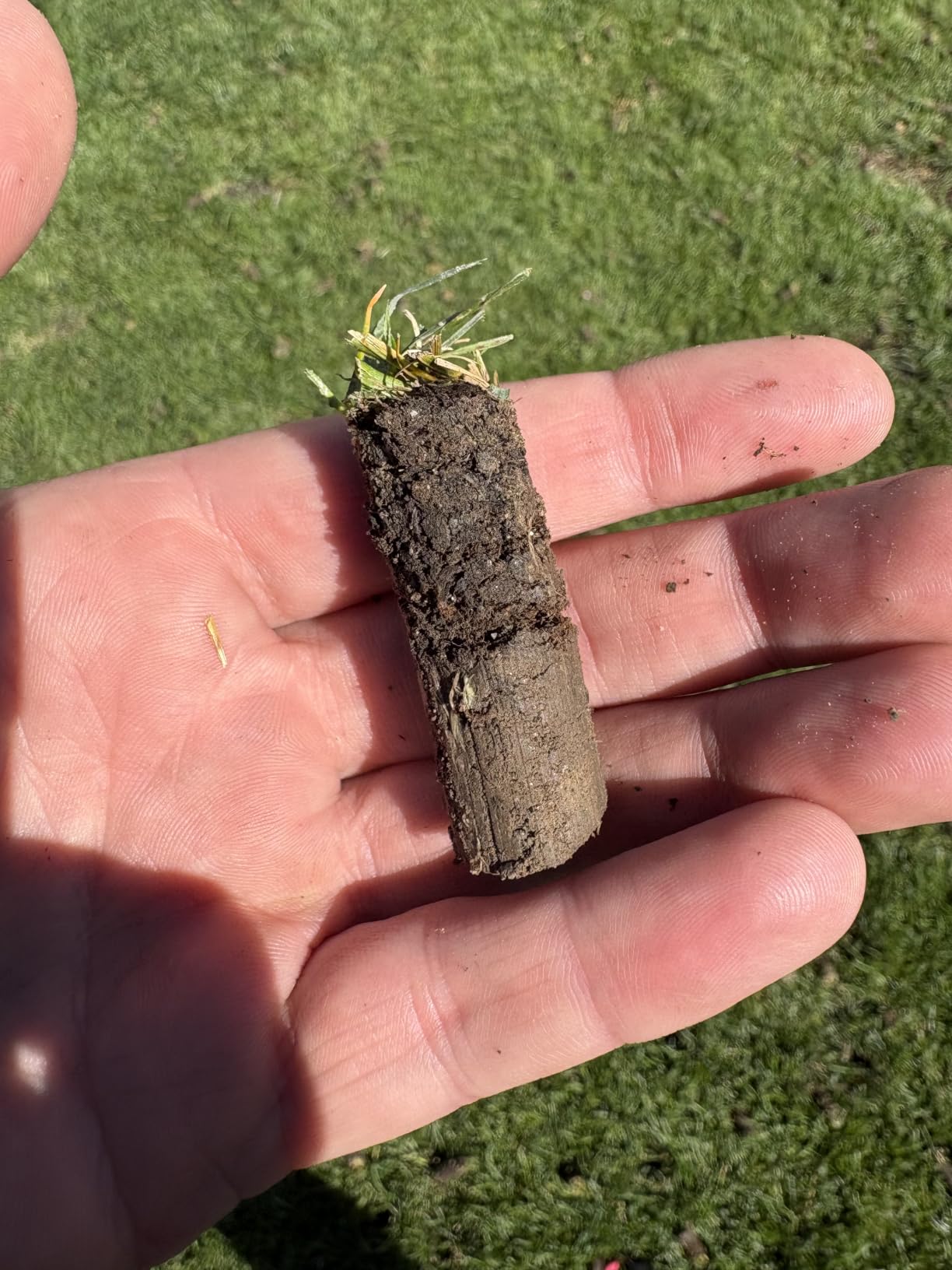
It rolls forward and backward for maneuvering, so you can correct direction without lifting or spinning the drum around. The powder-coated steel frame is simple and owners expect it to last, and the tines are replaceable, which matters on a tool that sees ground contact on every pass.
Several owners report covering roughly 4,500 square feet in about two hours, and one describes it as a way to avoid repeated rental trips. The 4.4 rating across 27 reviews comes with 74 percent five stars, and the repeated caveat is effort rather than function.
Why hollow tines beat spikes on a small yard
A spike makes a hole and closes behind it. A hollow tine lifts a core and leaves it on the surface, where it breaks down and feeds the root zone as it decomposes. On a lawn that is compacted and full of accumulated thatch, that removal is the point of the whole exercise.
The trade-off is weight and price. Self-weighting is what lets this penetrate without ballast, and 50.8 pounds is the price of that. If you have a small lawn under a few thousand square feet and you want visible cores, this is the honest answer.
Where the Landzie falls short
Weight is the honest problem. Owners consistently note it is hard to carry and a genuine workout to push, and several keep it for smaller yards only. If you are not already comfortable pushing heavy garden equipment, the learning curve is real.
Even with chamfered anti-clog tines, some owners experienced plugging on heavy soils, and the replacement tines screw in at an awkward alignment. It is also not suited to large or sloped lawns, which is fine for our purpose but worth stating plainly.
9. LawnVigor Non-Clogging Hollow Tine Aerator: Best Compact Coring Unit
Rolling Lawn Aerator, Non-Clogging Hollow Tine Aerator for Compacted Soil
6 hollow core tines
15 in footprint
31.5 lb
15 x 15 x 4 in
Fillable with dry sand
Pros
- Hollow tines pull real plugs rather than perforating
- Compact 15 inch footprint works around beds and corners
- Integrated wheels glide and reverse without scratching
- 31.5 lb is lighter than most core aerators
Cons
- Only 20 reviews back the rating
- Fillable drum means hard soil needs ballast first
- Limited long-term owner feedback
This is the compromise coring machine. You get the hollow-tine benefit, which is actual plugs rather than perforation, in a 31.5 pound package with a 15 inch footprint that stores and turns far more easily than the 50 pound options.
Six replaceable non-clogging hollow tines sit on a heavy-duty powder-coated steel frame. The drum is fillable with dry sand using a funnel supplied in the box, and integrated rolling wheels let it glide forward and backward without marring a patio or deck.
Quick assembly with instructions and tools included. That matters for a compact tool that lives in a small shed and comes out a few times a year rather than weekly.
Buyer feedback points at the non-clogging hollow tines, the maneuverable wheeled design and the manageable weight. The 4.1 rating sits on 20 reviews, with 71 percent five stars, and a scattering of one and three star ratings that reflects the thin feedback history more than a specific defect.
Treating that honestly matters for a coring pick. A unit with 20 reviews cannot yet promise what a unit with 164 can, and if plugging performance is your deciding factor, weigh the review base alongside the spec sheet.
How this fits a split lawn
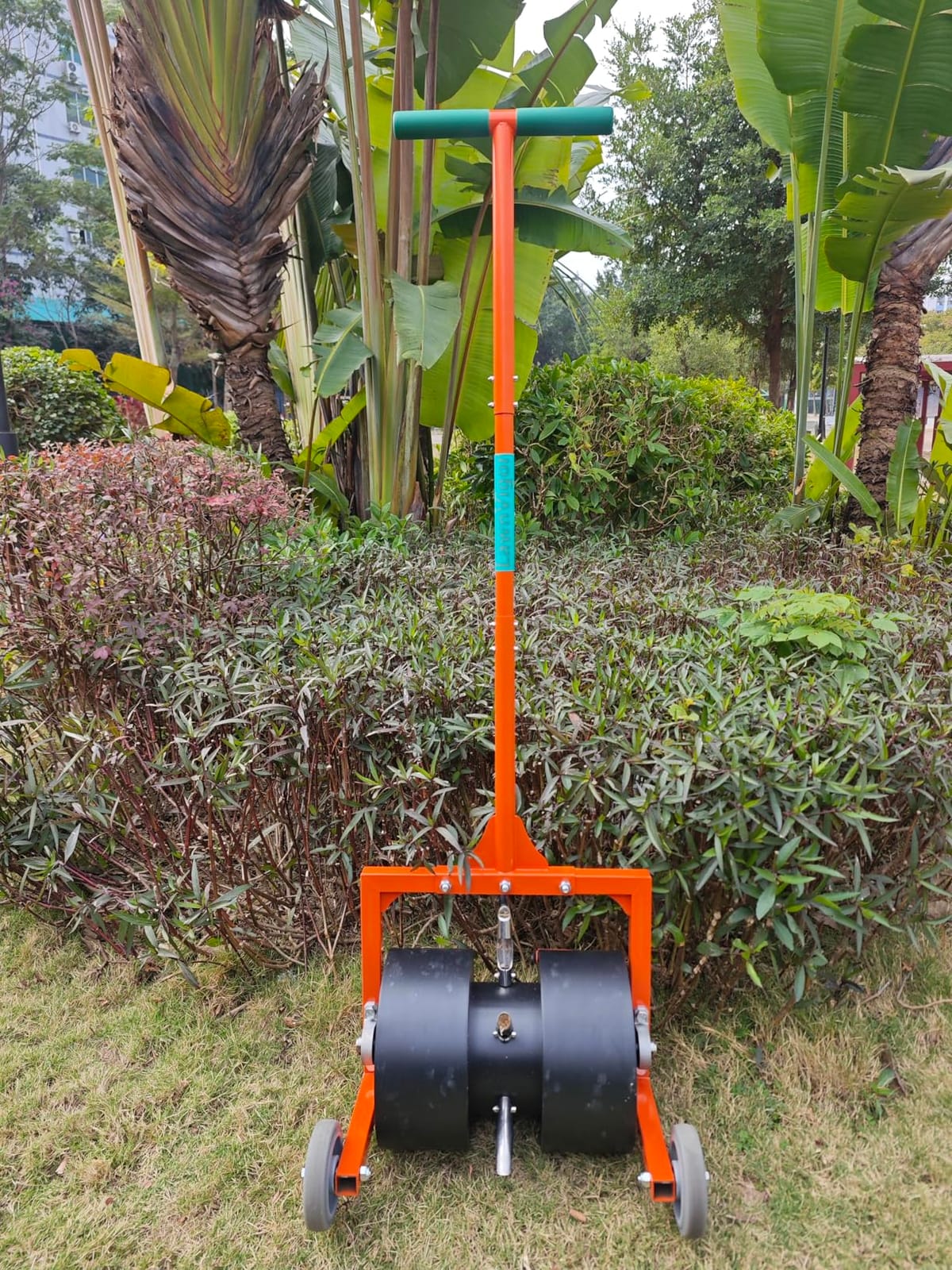
The 15 by 15 by 4 inch footprint is the quiet advantage. It stores flat against a shed wall or on a shelf rather than taking a full floor tile, and the integrated wheels mean you can move it between a front strip and a courtyard without lifting.
It is also designed to work around beds and corners, which is the same narrow-space logic that drives this whole list. If you want cores but not a workout, this is where the compromise sits.
Where the LawnVigor falls short
Ballast is optional rather than built in, so on hard soil you may need to fill the drum before it will pull cores. Plan for that step and it performs well, skip it and the tines can ride over the surface.
Limited long-term feedback is the other concern. Twenty reviews is a small sample for a tool whose value is durability through seasons of soil contact, so this is a pick for someone comfortable being an early adopter of a compact design.
10. K.D STONEDGE Rolling Coring Tool: Best for Repeated Use on Hard Ground
Patented Rolling Lawn Aerator Manual Coring Tool Compacted Soil Loosening
Patented rotary coring design
43.7 lb
60 x 17 x 11 in
Balanced weight
Push operation
Pros
- Patented rotary design extracts genuine soil plugs
- Scientifically balanced weight pulls plugs in one pass
- 167 reviews give the deepest feedback base here
- Built for regular repeat use
Cons
- 43.7 lb makes it demanding to push and move
- Highest cost of the picks in this roundup
- Sized for small to medium lawns only
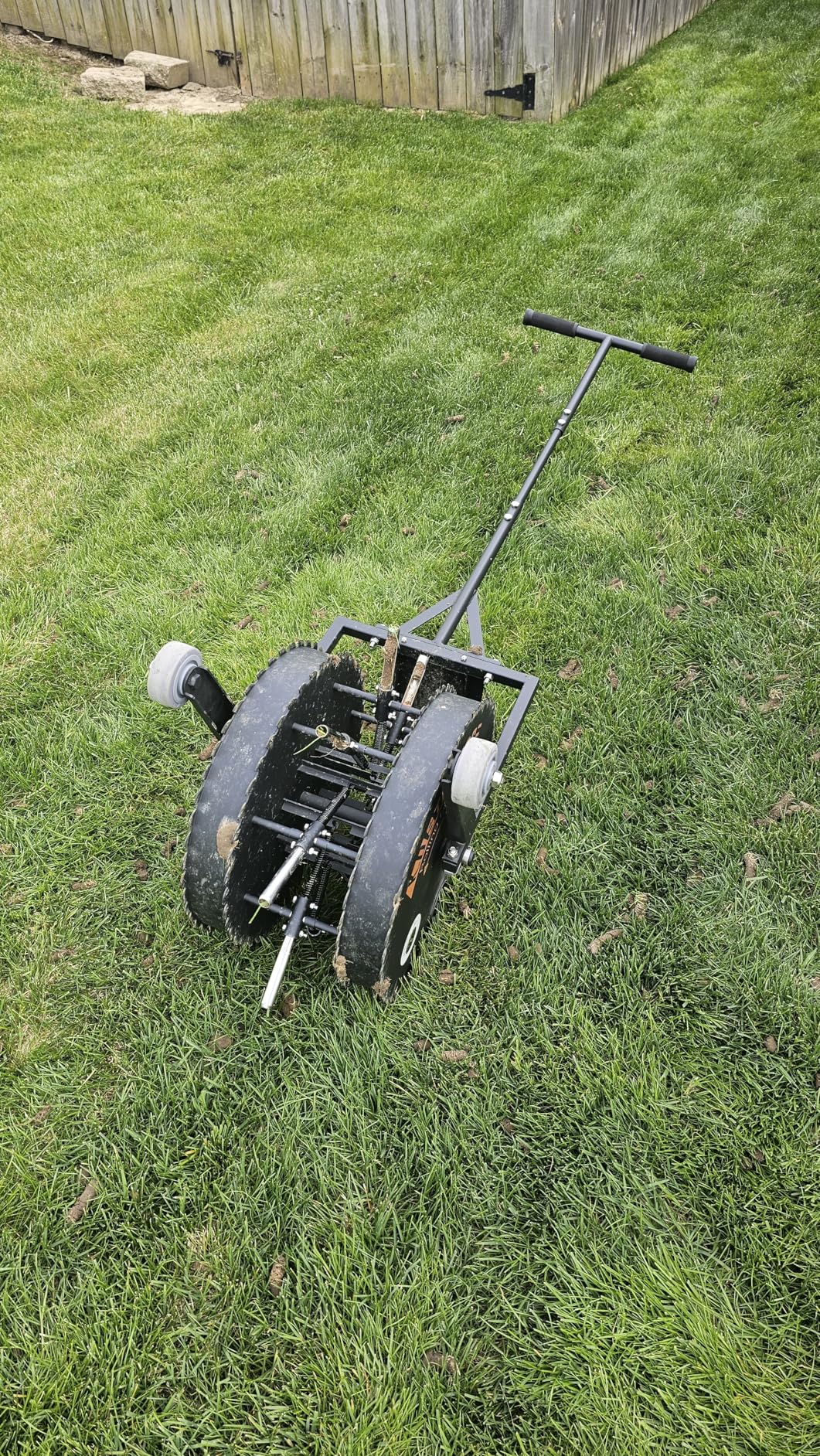
With 167 reviews behind it, this is one of the best-documented tools on the list, and the feedback is unusually consistent. Owners credit the patented rotary coring design with extracting real plugs and the balanced weight design with pulling those plugs efficiently in a single pass.
Balanced weight is the part that shows up in practice. An unbalanced drum wastes effort at the ends of the roll, and on a coring tool that means a second pass to cover the same ground. Balancing it once means a coring job finishes in one go.
It is a manual push tool sized for small to medium lawns, built for regular use rather than a single rescue project. If you intend to aerate twice a year for years, that construction intent is the reason to look here.
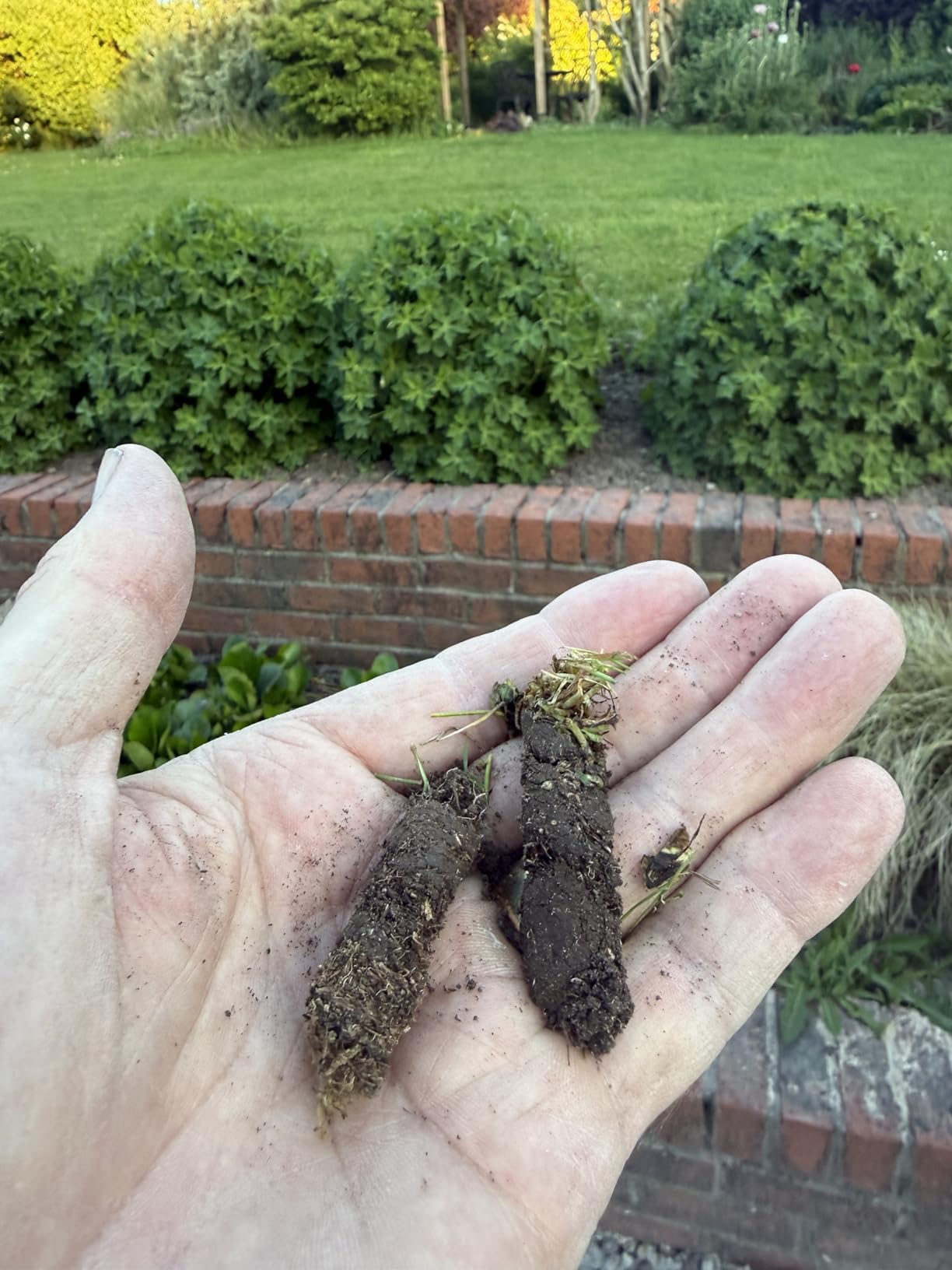
It relieves compaction by removing plugs, which loosens the soil and gives roots room to push deeper. For a side yard or courtyard where the ground is genuinely hard, extracting material beats perforating it, and that is the argument this pick wins.
The 4.2 rating comes with a broad distribution, 60 percent five stars and 23 percent four, which reads like a mature product rather than a new listing. Owners also credit the category sales rank, which reflects steady demand in manual lawn aerators.
When coring beats perforating
Perforation is enough when the problem is traffic compaction on otherwise decent soil. Coring is the right answer when the root zone is thick and closed, when thatch is blocking water, or when you are preparing to overseed and need open soil for seed to fall into.
For a small yard, the practical difference is visible within a week. Plugs on the surface break down, water reaches the root zone, and the patch thickens. Holes alone take longer to show a change and need repeat passes.
Where the K.D STONEDGE falls short
At 43.7 pounds it is a heavy push, and that is the trade-off buyers raise most often. It suits a small-to-medium lawn; it is not a tool you want on a large property or a slope.
It is also the most expensive pick here, and the cost is harder to justify for a single season of spot work. If you are aerating a few patches once, a lighter spike drum is the more sensible purchase. If coring is the goal and you plan to repeat it, the balance and the review base are worth the extra spend.
How to Choose a Rolling Lawn Aerator for Tight Spaces?
Drum width is the deciding spec, and everything else is a preference. Start by measuring, then work down the list. If you want the broader view on core versus spike designs, our aerator guide for compacted soil goes deeper on soil type matching.
Measure the narrowest corridor before anything else
Walk your lawn and find the tightest run you actually need to cover. Measure the fence to bed gap, the side gate approach, the courtyard entrance, the strip along the foundation. Write down the smallest number, because that is the only measurement that disqualifies a machine.
Then subtract 2 inches of clearance per side. A 20 inch gap means a drum of 16 inches or less. A 24 inch gap opens up to the 21 and 22 inch drums. Most split lawns have at least one pinch point, and the pinch point decides your purchase rather than the average width.
Spike count and tread pattern decide how straight it rolls
Spike count is the number buyers fixate on and the number that matters least. Between 30 and 45 spikes covers most narrow lawns adequately, and beyond that you are adding tines for appearance rather than coverage.
Tread pattern matters more. A spiral or staggered layout rolls straight and holds its line, while straight rows of tines tend to wander as the drum rotates. Users consistently report the spiral pattern as noticeably easier to steer around beds and trees, and steering is the whole game in a narrow yard.
Base weight matters more than the maximum fill rating
The maximum added weight rating tells you the ceiling, not the starting point. A drum rated for 55 pounds that ships empty will do nothing useful on hard ground until you fill it, and a 32 pound self-weighted drum works the moment you set it down.
For clay and hard-packed paths, prioritize base weight. For a lawn with soft spots and worn patches, prioritize a fillable drum so you can tune per area. Ideally you want a unit that arrives heavy and can still take sand, which is the profile the 32 pound base drum with 55 pound capacity hits.
Fill material: sand, stone or water
Sand is the safest default. It distributes evenly, does not compact inside the drum, stores dry between sessions and will not corrode anything. Coarse builders sand works better than fine play sand, which can cake and pour out through end-cap holes.
Stone adds more weight for less volume and stays loose, which suits a small drum, though pea gravel tends to escape through gaps in the end caps. Water is heaviest per volume and needs draining and drying before storage, and one manufacturer explicitly advises against adding it because of corrosion.
Wheel layout changes how you move the tool
Wheels let you roll the drum to and from the lawn without spikes scraping a driveway or patio, which matters when your only route is a side gate. Two swivel wheels give a tight pivot for corners. A four-wheel chassis keeps the drum level and stable on uneven or sloped ground, at the cost of some weight.
Without wheels, the drum rides on its tines and you drag it. On a hard surface that dulls the spikes and damages the path, so if you have any paved route to the lawn, treat wheels as close to mandatory.
Handle height and multi-user households
Handle height is an accessibility issue that most listings bury. A fixed 75 inch handle is excellent for tall users and punishing for shorter ones, with no adjustment to bring it down. If two people share the tool, look for a telescoping or multi-position handle rather than a fixed one.
Also check whether the handle detaches. A quick-clip sectional handle comes apart for storage in a fraction of the space, which is what makes a long tool viable in a small shed or a rented garage.
Storage footprint is part of the fit decision
Measure the drum diameter and the collapsed handle length before you buy, and check the floor space you have. Most of these machines run 49 to 75 inches long assembled and 10 to 20 inches wide, and a wall-hung or shed-corner spot is the difference between a tool you use and a tool that rusts behind the mower.
Steel drums stored outdoors need drying and a light coat of protection before they go back, because trapped moisture on a spiked drum is what causes pitting. Our aerator guide for healthier grass covers the seasonal timing side of the same routine.
Renting versus buying on a small lot
For a sub-2,000 square foot lot treated once, renting a core aerator can be the cheaper path, and renters in lawn forums frequently reach the same conclusion. A rental day rate plus a deposit you do not get back easily often approaches the cost of a mid-tier manual machine you would keep for a decade.
Buying wins when you have several separate areas to treat, when clay soil means you will be back every year, or when getting a heavy machine to your lawn is the hardest part of the job. Renting wins when the lawn is a rental property, when access is a problem, or when you need a deep core once and never again.
Spike vs. Core Aeration: What a Small Yard Actually Needs?
For a small yard, the honest answer is that a spike aerator is enough for most situations, and a core aerator is worth the extra effort when the soil itself needs to move. Spike aerators relieve compaction by opening channels. Core aerators relieve it by removing plugs. One opens the door, the other clears the room.
Spike aerators are lighter, cheaper, and they perforate without producing debris. That makes them the sensible default for a small, high-traffic side yard where the problem is foot compression. They also work in soil that is too dry to core, because a hollow tine in bone-dry ground tears turf rather than cutting a clean core.
Core aerators pull hollow-tine plugs, which you leave on the surface to break down. They are the answer for thick thatch, for soil that has closed over the root zone, and for lawns you are about to overseed. Our electric aerator roundup covers powered options if core depth matters more than maneuverability.
Penetration depth is the practical dividing line. Consumer spike aerators generally reach roughly 1.4 to 2.2 inches, and well-built manual rolling units with real weight hold near the deeper end of that band. Core units reach considerably deeper, which is what lets them move actual plugs through a closed surface layer.
There is a failure mode nobody warns you about, and it matters more on small lawns where the whole area is visible. Spike aerators in loose or dry soil can pull up patches of turf and young roots, leaving the lawn looking worse than the compaction you set out to fix. Water the lawn a day or two before you work it, and if the soil crumbles rather than smears in your hand, wait.
One more framing worth keeping: aeration is maintenance, not repair. It opens the soil so water and amendments can reach roots, and it does not replace adding compost, overseeding bare patches, or fixing an irrigation problem that keeps the same corner dry.
How to Use a Rolling Lawn Aerator on a Small Lawn?
Technique matters as much as the machine, and most disappointing aeration results trace back to dry soil or a rushed pass pattern. Five steps, in order.
Water the lawn a day or two ahead. Aim for soil that squeezes into a ball and holds. Users report that well-watered ground lets the spikes sink in evenly instead of skating across hard dry soil. Do not aerate a soaked lawn, since mud clogs tines in minutes.
Add ballast gradually. Start with a light fill and increase only where the drum skates. Sand is the safest material, and coarse stone suits small drums. Check the fill has not shifted before each new pass.
Make straight, slightly overlapping passes. Aim for about a third of the drum width as overlap so the spike pattern interlocks into a grid rather than leaving untreated stripes.
Run a second pass perpendicular to the first. Crossing the directions at a right angle improves coverage in the spaces between spike rows, which is where compaction often survives a single set of passes.
Clean and store the drum. Knock it against a hard edge to knock out packed soil, scrape the tines, rinse if you have a hose, then dry it fully before it goes in the shed. Trapped moisture on steel spikes causes pitting and rust.
If the tines clog with mud mid-session, do not keep pushing through it. Lifting the drum onto its transport wheels and knocking it against a hard surface clears most of it, and pulling it off the grass for two minutes is faster than fighting it. Hollow-tine models resist this naturally because they eject material as they roll.
When Not to Use a Rolling Lawn Aerator?
There are real cases where a manual rolling aerator is the wrong tool, and skipping them saves both the lawn and the money.
Soil that is dry and loose. Spike tines can lift turf and young roots, leaving bare patches where there were none. Water first, or wait for rain.
A newly seeded or sodded lawn. Give new grass a full growing season before puncturing it.
Very large or sloped lawns. A manual drum is built for small areas. On a slope, a weighted roller can run downhill faster than you can control it.
When you need deep coring once. If the thatch layer is thick and you want it physically removed, a hollow-tine or powered machine does the job in a fraction of the passes.
Waterlogged ground. Tines clog almost immediately and you risk smearing the soil structure you are trying to improve.
When the real problem is not compaction. If grass is thinning from shade, drought or a failing irrigation zone, aeration treats the symptom and the cause stays put.
Frequently Asked Questions
What is the best lawn aerator for a small yard?
For most small yards, a rolling lawn aerator with an 18 inch drum, a fillable drum and a 30 to 40 pound base weight is the best balance of fit and performance. Match the drum to your narrowest corridor with 2 inches of clearance per side, fill the drum with coarse sand if the soil is firm, and run overlapping passes followed by a perpendicular second pass in the season suited to your grass type.
Does a rolling aerator work?
Yes, on small lawns. A rolling aerator punctures the soil so air, water and fertilizer reach the root zone, which is exactly what compacted side yards and courtyards need. Solid spike tines make channels without lifting soil, while hollow core tines pull real plugs. Neither replaces rental equipment on a large property, but on a few hundred square feet the manual roller finishes the job in an afternoon.
What is better, a plug or spike aerator?
A plug aerator pulls cores of soil out of the ground, and a spike aerator only punctures it. Use a spike aerator for traffic compaction on an otherwise healthy small lawn, because it is lighter and works in drier soil. Use a plug aerator when thatch is thick, when the root zone has closed over, or before overseeding, since removing material speeds up recovery. On dry soil, hollow tines tear turf, so spike models are the safer option.
How wide should a lawn aerator be for a narrow yard?
Measure the narrowest corridor in your lawn, then choose a drum at least 2 inches narrower than that measurement on each side. A 20 inch gap takes a 16 inch drum or smaller, and a 24 inch gap opens up to a 21 or 22 inch drum. Wider drums cover more ground per pass but will not turn inside tight corners, which is why width beats coverage on a corridor lawn.
When should you not aerate your lawn?
Skip aeration on bone-dry loose soil, because spike tines can pull up turf and young roots. Wait on waterlogged ground, since mud clogs tines within minutes. Leave newly seeded or sodded lawns alone for a full growing season, and avoid slopes where a weighted roller can run away from you. If grass is thinning from shade, drought or irrigation failure, aeration will not fix the underlying cause.
Conclusion: Our Best Rolling Lawn Aerator Picks for 2026
The best rolling lawn aerators for tight spaces share one trait: a drum narrow enough to leave your property when you are finished. Our Seeutek 18 Inch pick takes the top spot for the combination of a narrow 18 inch drum, star spikes that move real soil, a fill port for tuning depth, and three handle heights for a longer, more comfortable session.
If your problem is compaction rather than width, the SENVERT is the pick, with 32 pounds of base weight and headroom to 55 pounds of ballast. If your problem is thatch, or you want cores on the surface, the Landzie is the only true coring machine here, and its 12 inch profile is the narrowest of the core options.
Everything else on the list solves a specific tight-space constraint: a 15 inch drum for the narrowest gaps, a 12 pound frame for anyone who cannot push heavy equipment, a four-wheel chassis for uneven ground, and a 75 inch handle for anyone who would rather not spend an afternoon bent over.
Measure your narrowest gap, decide whether you need spikes or cores, and check the current price through the buttons above. That one measurement does more work than any other step in choosing between these ten, and it takes two minutes. More on the subject in our small yard aerator guide.