
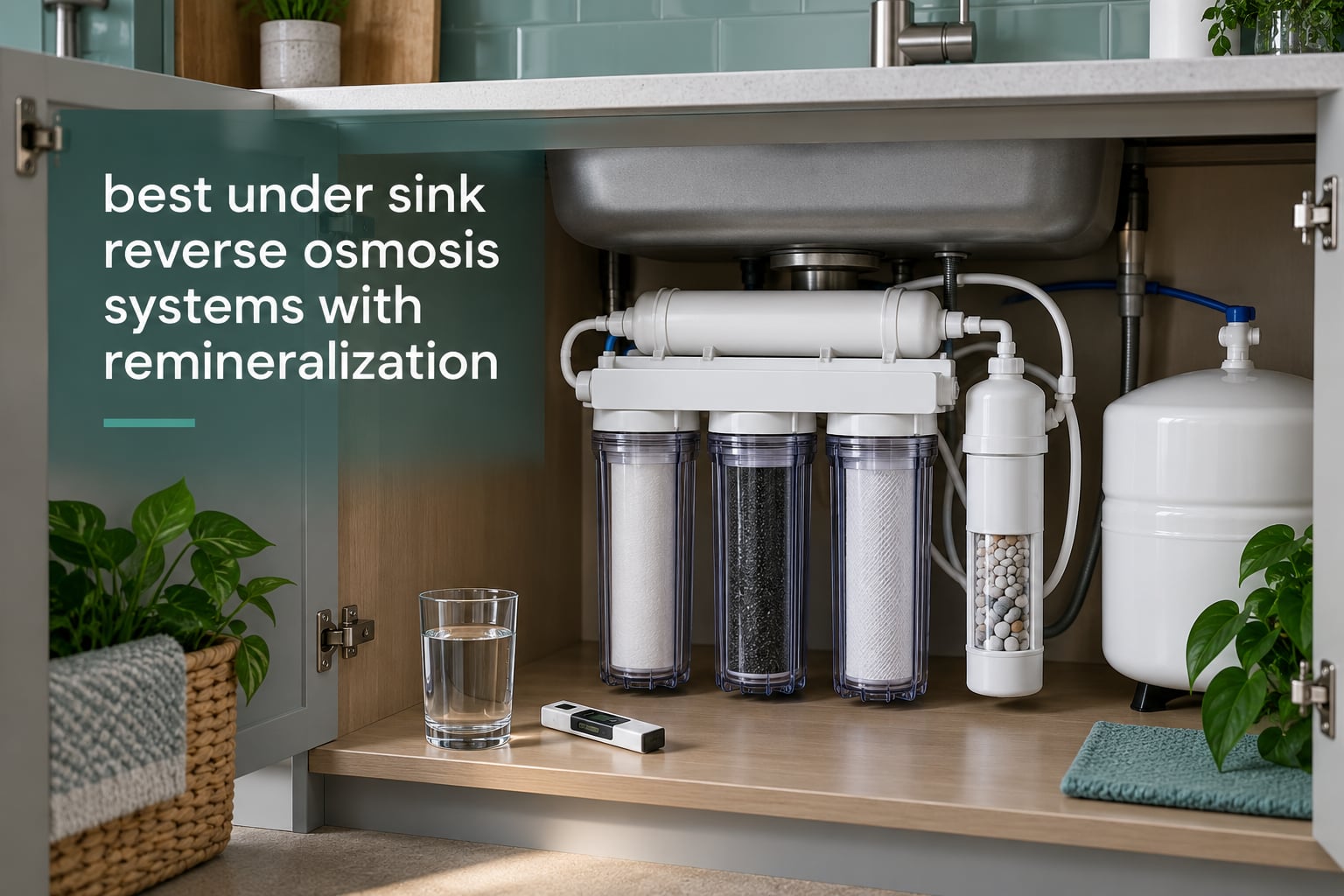
Reverse osmosis strips the calcium and magnesium out of your water, and that is exactly why so many people find plain RO output flat and slightly sour. If you are shopping for the best under sink reverse osmosis systems with remineralization, you want a unit whose last stage puts minerals back before the water reaches the glass. We spent weeks reading specifications, owner reviews and failure reports on ten of the strongest options on the market, and these ten made the cut.
Every system below is installed under a kitchen sink and every one includes a built-in mineral or alkaline stage. We left out countertop units and pitchers because they solve a different problem, and we left out under sink filters that only polish water without a membrane. If you want the broad view first, our reverse osmosis system guide covers formats we skip here, and our budget under sink RO guide is worth a look if your spending limit is tighter than these picks imply.
One thing to set expectations on before you read further. A remineralization cartridge does not make RO water dangerous without it, and it is not a medical treatment. The World Health Organization treats low-TDS reverse osmosis water as safe to drink, so the case for these systems rests on taste, on coffee and tea, and on how the water feels at the end of a long day. That is a perfectly good reason to buy one. It is just not the reason some marketing copy implies.
Table of Contents
How We Picked These Under Sink RO Systems?
Five gates decided what made this list. First, measured output after the mineral stage rather than a marketing claim, because a system that adds taste but no measurable TDS is not doing anything useful. Second, the scope of certification, since a certified complete system and a certified component tell you very different things. Third, real flow at the faucet instead of a headline GPD number printed on a box. Fourth, cabinet footprint and whether the unit needs an outlet. Fifth, what the cartridges cost and whether you can buy them two years from now.
We weighted owner review volume heavily. A 4.6 average from a few hundred buyers tells you less than a 4.6 from twenty thousand, and it is the second number that predicts whether the tenth cartridge is still available. Where a product had a well-documented complaint, such as a pump hum or a TDS display that stops reading, we said so instead of burying it.
What we did not do is pretend to lab-test membranes. Everything below comes from published specifications, certification listings and the review record, and we tell you which is which in each entry.
What Remineralization Actually Does to RO Water?
Reverse osmosis forces water through a 0.0001 micron membrane and rejects 95 to 99 percent of dissolved solids. The output arrives at roughly 3 to 5 ppm TDS and a pH near 5.5 to 6.5, which is why it tastes flat. Remineralization adds a final stage of calcite, maifan stone or a calcium blend that dissolves slowly into that water, pushing TDS to somewhere around 40 to 80 ppm and lifting pH into the 7.0 to 7.5 range. Three routes get you there.
An inline calcite or maifan cartridge clamps onto the existing outlet line and adds the minerals as the last thing before the faucet. It costs almost nothing, works with any system, and needs a plumber’s tee or a push-fit connection. A built-in alkaline stage does the same job inside a dedicated sixth or seventh housing, which is tidier and means one less connection to leak. Liquid mineral drops work too, but dosing is inconsistent and they are easy to overdo, which is exactly the chalky taste owners complain about.
One warning. Tourmaline and far-infrared “alkaline” cartridges have a real marketing presence and a poor measurement record. They add flavour and a small pH shift while barely moving the TDS number, so if a listing tells you it is alkaline without publishing an output TDS or pH range, take that as a gap rather than a feature. A cartridge that publishes neither is usually a tourmaline media cartridge wearing a mineral label.
The forum consensus on r/WaterTreatment splits cleanly. Some posters argue the whole idea is a scam because food supplies minerals, not water, and they are not entirely wrong. Others run inline calcite followed by a corosex and calcite blend and report the best-tasting water they have had from an RO. Both camps agree that TDS creep is the thing to watch, because the mineral stage keeps dissolving and your reading drifts upward through the day unless an automatic shutoff valve stops it.
Top 3 Best Under Sink RO Systems With Remineralization (October 2026)
These three cover the range. The editor’s choice is the one most households should buy, the premium pick is for low water pressure, and the best value is the strongest tankless option we tested against far more expensive units.

iSpring RCC7AK-BN
- Complete-system NSF/ANSI 58
- Mineral AK stage
- Transparent first housing
- Top-mounted faucet fastener

iSpring RCC7P-AK
- Booster pump for low pressure
- Alkaline sixth stage
- 100-240V power adapter
- Transparent housing
All 10 Under Sink RO Systems Compared in 2026
Every unit here publishes a mineral stage and every one installs under a counter. The table lists all ten with the key specification for each, and the full write-up follows below in ranking order.
| Product | Specifications | Action |
|---|---|---|
| iSpring RCC7AK-BN 75 GPD Alkaline 6-Stage |
|
Check Latest Price |
| iSpring RCC7P-AK 75 GPD with Booster Pump |
|
Check Latest Price |
 Frizzlife PD600-TAM3 600 GPD Tankless Frizzlife PD600-TAM3 600 GPD Tankless |
|
Check Latest Price |
 iSpring RO500AK 500 GPD Tankless iSpring RO500AK 500 GPD Tankless |
|
Check Latest Price |
 Home Master TMAFC Two-Pass Remineralization Home Master TMAFC Two-Pass Remineralization |
|
Check Latest Price |
 APEC Water ROES-PH75 75 GPD Alkaline APEC Water ROES-PH75 75 GPD Alkaline |
|
Check Latest Price |
 SimPure T1-400ALK 400 GPD Tankless with UV SimPure T1-400ALK 400 GPD Tankless with UV |
|
Check Latest Price |
 Waterdrop G5P500A 8-Stage 500 GPD Tankless Waterdrop G5P500A 8-Stage 500 GPD Tankless |
|
Check Latest Price |
 Waterdrop T3-M 450 GPD Remineralization Waterdrop T3-M 450 GPD Remineralization |
|
Check Latest Price |
 Waterdrop X8-WAN 800 GPD Ten-Stage Waterdrop X8-WAN 800 GPD Ten-Stage |
|
Check Latest Price |
1. iSpring RCC7AK-BN 75 GPD Alkaline System With Mineral AK Stage
iSpring RCC7AK-BN NSF Certified, 75 GPD, Alkaline 6-Stage Reverse Osmosis System, pH+ Remineralization RO Water Filter System Under Sink Patented Top-Mounted Faucet Design for Easy Installation
75 GPD tank-based six-stage
284 L/day maximum flow
70 psi feed
1-year warranty
Pros
- NSF/ANSI 58 certified for the entire system not just parts
- Patented mineral AK stage adds minerals and rebalances pH
- Top-mounted faucet fastener means most of the install happens above the counter
- Transparent first housing shows contaminant buildup
- Reduces TDS 93-98% and PFAS 96-99%
Cons
- Storage tank takes more cabinet space than a tankless unit
- Needs 70 psi feed pressure to hit rated rejection
- Replacement filter sets are a recurring cost
This is the system we keep coming back to. With 21569 reviews averaging 4.6 stars, it has the deepest owner record in the category, and the record is unusually consistent about the mineral stage. Owners report that the taste difference against plain five-stage RO is obvious on the first glass of water, which is a much stronger endorsement than a specification sheet.
The certification is the quiet advantage here. iSpring holds NSF/ANSI 58 for the complete system rather than testing a handful of components and hoping the sum works out, and the published contaminant list covers TDS, PFAS, chlorine, asbestos, barium, cadmium, chromium, copper, fluoride, lead and selenium. The transparent first-stage housing is a small touch that turns filter changes from a guess into a visual check.
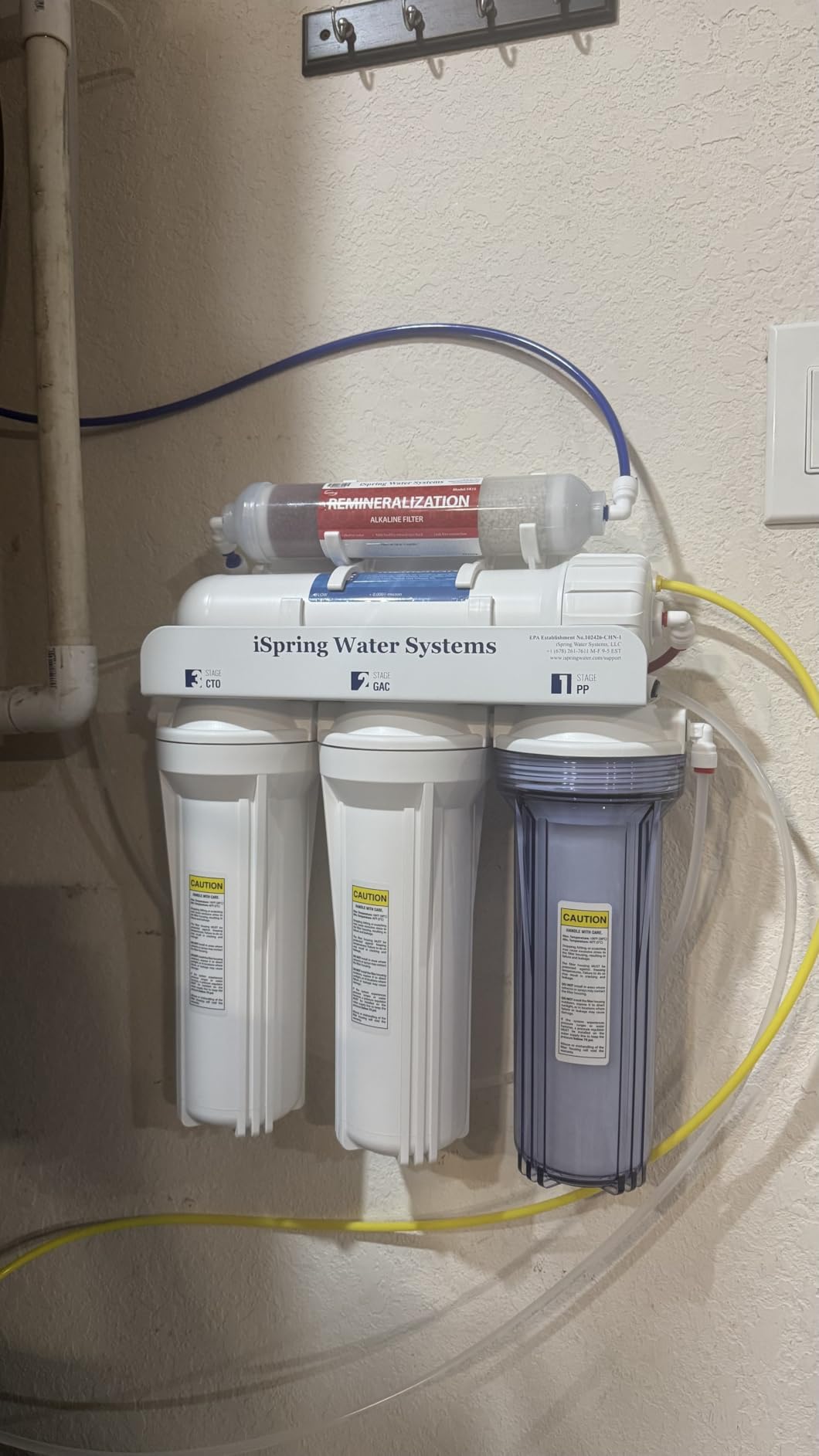
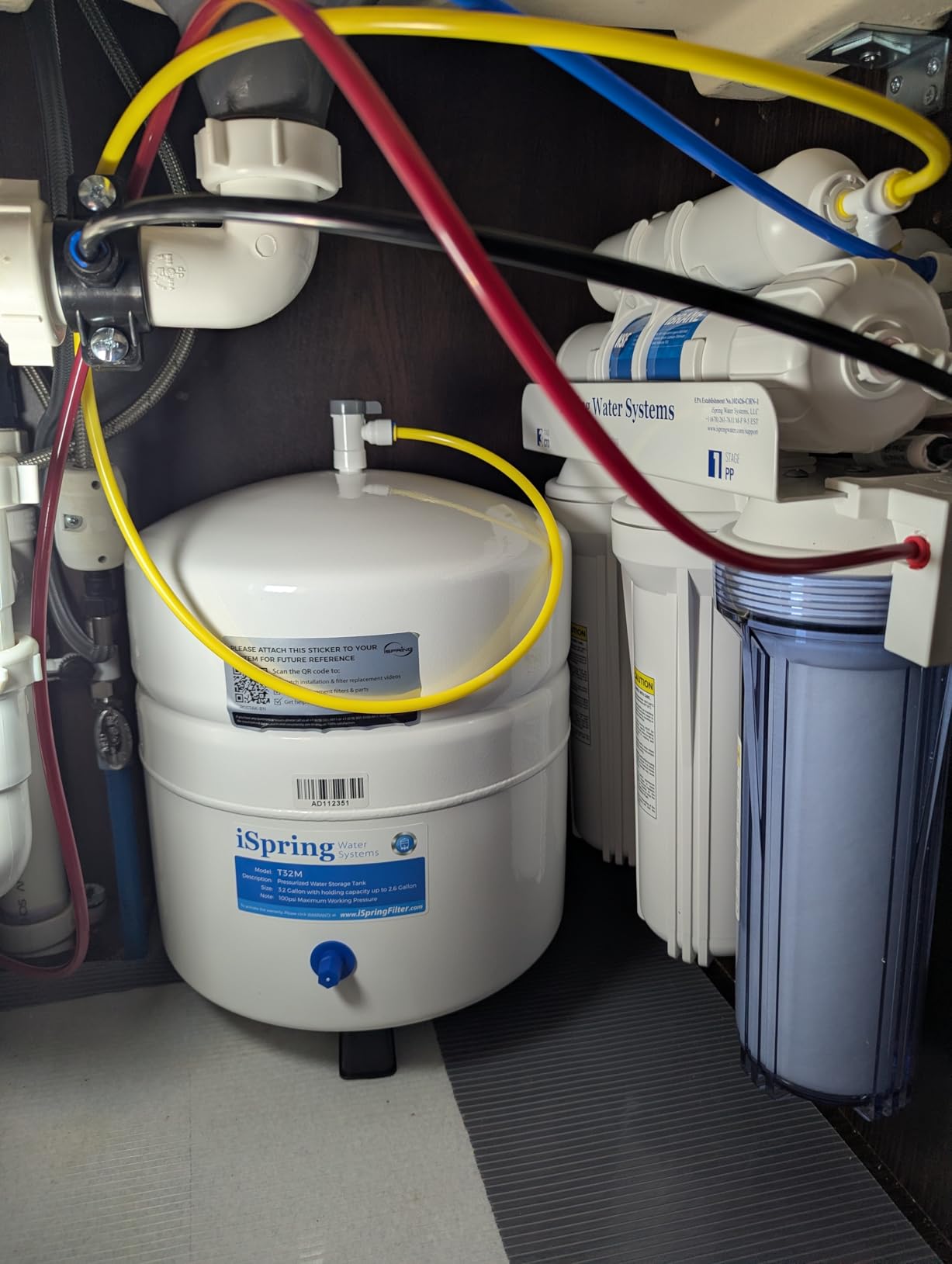
What you give up is cabinet space and a little install effort. A storage tank sits in the cabinet alongside the housings, and at 70 psi minimum feed pressure a low-pressure home will not see the rated rejection rate. The housing is 15.5 by 16 by 18 inches before you add the tank, so measure the cabinet before you commit.
The top-mounted faucet fastener is worth calling out. Because the nut tightens from above the countertop rather than from underneath the sink, you are not lying on your back in a dark cabinet with a wrench. iSpring also publishes a staged replacement schedule with multi-year options, which keeps the long-run cartridge cost predictable.
Who this system suits
Households on chloramine-treated municipal water who want fluoride and lead reduction with water that still tastes like water. It is the safest recommendation we make because the review volume means the failure modes are well documented, and the documented ones are mostly about cabinet space rather than filtration.
Coffee drinkers benefit here too. A steady 40 to 80 ppm output after the mineral stage is a reasonable starting point for brewing, and the tank refills overnight without you thinking about it.
Who should skip it
If your cabinet is already crowded or you plan to run an ice maker and refrigerator off the same system, the storage tank becomes a problem. A tankless model with a booster pump handles both, and our premium pick is built for exactly that.
Skip it if your feed pressure sits below 70 psi. The membrane will still work, but you will not see the published rejection figures, and that gap is not worth it when a pump-equipped version costs a similar amount.
2. APEC Water ROES-PH75 75 GPD Six-Stage With Calcium pH Cartridge
APEC Water ROES-PH75, 6-Stage Under Sink RO System, Alkaline, 75 GPD
75 GPD six-stage tank-based
0.05 gpm rated flow
40-85 psi feed
Water pressure powered
Pros
- WQA certified with NSF 372 and NSF 58 component certifications
- Calcium-based pH enhancement cartridge re-adds minerals
- Handles feed water up to 2000 ppm TDS
- Works down to 40 psi feed pressure
- Six stages remove up to 99% of chlorine VOCs fluoride arsenic and lead
Cons
- Rated flow of 0.05 gpm is slow at the tap
- Storage tank adds to the cabinet footprint
- Needs 40-85 psi so low-pressure homes lose performance
APEC built this model to be the no-nonsense entry point, and 4120 reviews at 4.5 stars suggest it succeeds. The calcium pH enhancement cartridge is a genuine mineral stage rather than a flavour cartridge, and buyers consistently credit it with a fuller taste than the same system without the alkaline stage.
Two things separate it from the budget end of the market. It is WQA certified as a system, which is the certification most people assume they are getting when they are not, and it accepts feed water up to 2000 ppm TDS, which matters on untreated well water where the incoming number is high.
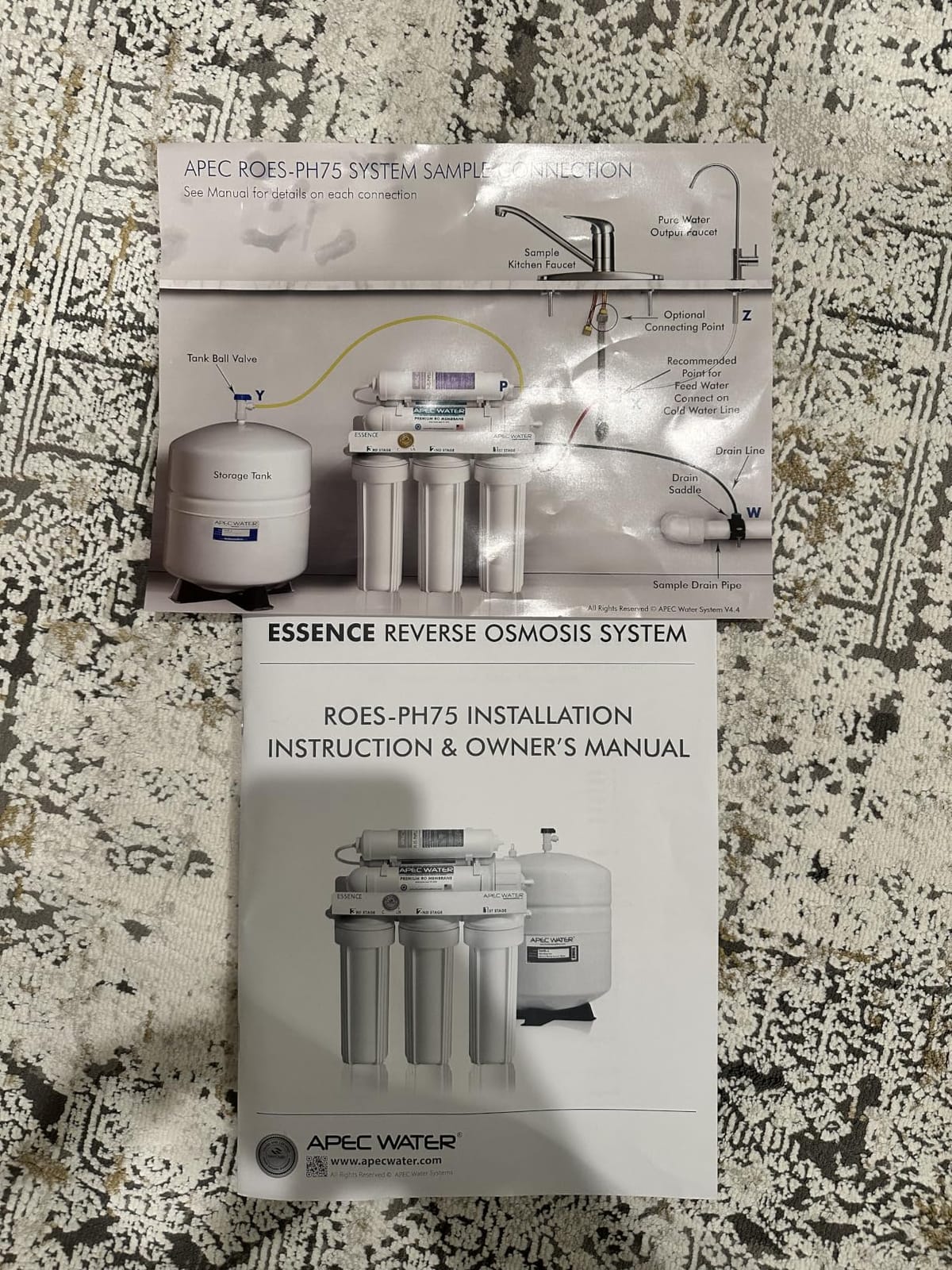
The honest weakness is speed. A rated 0.05 gpm means a glass takes noticeably longer than any tankless unit on this list, and the storage tank is what makes the dispensing feel slow rather than the membrane. If you are filling a single glass at a time and you can wait, that is a fair trade for a lower purchase cost and no power requirement.
Because it runs on water pressure alone, there is no pump, no adapter and no outlet to find. In a cabinet with no usable power, that simplicity is worth more than it looks on paper.
Who this system suits
First-time buyers, renters with an outlet-free cabinet, and anyone on well water who needs a system that tolerates high incoming TDS. It also works as a second system in a house where a drinking faucet is already taken.
If your water is already soft and low in minerals, the calcium cartridge gives you a real improvement in taste. If your incoming water is very hard, you may find the added minerals push the output higher than you want and a tankless model gives you more control.
Who should skip it
Large households filling cups in sequence will find the wait tedious. The flow rate is the reason tankless designs exist, and this one is at the conservative end of that trade.
Anyone who wants to connect an ice maker or refrigerator should choose a tankless unit with an appliance-compatible outlet. A pressure tank does not pair with those appliances the way a pump-driven system does.
3. Frizzlife PD600-TAM3 600 GPD Tankless With TAM3 Alkaline Stage
Frizzlife Reverse Osmosis Water Filter – Alkaline Mineral pH+, NSF/ANSI 58&53&42&372 Standard, 600GPD Tankless RO Reverse Osmosis System, Under Sink, 2:1 Pure to Drain, Reduce FPAS/PFOA, PD600-TAM3
600 GPD tankless
0.41 gpm flow
TAM3 alkaline stage above pH 7.5
Smart LED TDS panel
Pros
- 600 GPD fills a 330 ml cup in about 10 seconds
- 2:1 drain ratio saves up to 450% water versus conventional RO
- No storage tank means no secondary contamination and a small footprint
- Smart panel shows live output TDS and remaining filter life
- Certified to NSF/ANSI 42 53 58 and 372
Cons
- Needs an electrical outlet in the cabinet for the pump and display
- Filter change indicator depends on the electronics working correctly
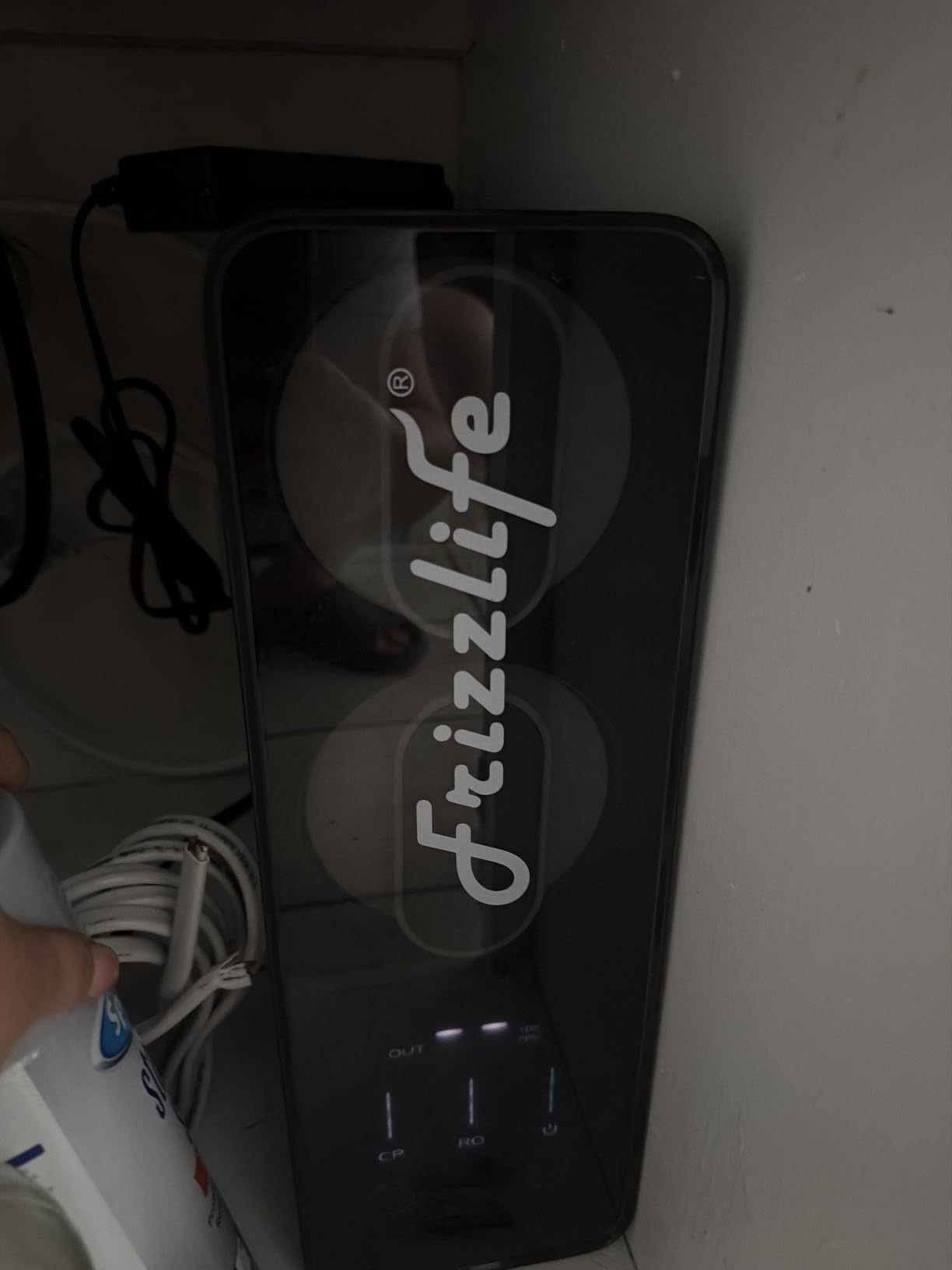
This is the tankless unit that made us reconsider the assumption that high flow costs extra. At 0.41 gpm and 600 GPD, it delivers water at close to a gallon a minute while occupying 14.7 by 5.3 by 15.5 inches, and at 2476 reviews it has enough owner history to judge honestly.
The TAM3 alkaline filter sits as the third stage and adjusts output pH to more than 7.5, which is higher than the 7.0 to 7.5 range most owners are aiming for. If you want water closer to neutral for brewing rather than a distinctly alkaline taste, check that number before you buy.
The 2:1 pure to drain ratio is the quiet financial argument. A conventional system sends three gallons to the drain for every gallon you drink, and over a year that difference shows up on a water bill without ever being visible at the faucet. The claimed saving is up to 450 percent against typical units.
The display is more useful than it sounds. Because the mineral stage is doing something measurable, watching output TDS move tells you when the alkaline cartridge needs replacing instead of guessing from taste. Owners who use the panel report changing filters on schedule rather than after the water starts tasting thin.
Who this system suits
Households of four or five who drink several glasses a day and care about both flow and cabinet space. It is also the one we would pick for a family that wants to see what their remineralization stage is doing without buying a separate TDS meter.
If water waste bothers you, the 2:1 ratio is the single best number on this list. Apartment dwellers on a metered supply feel it sooner than most people expect.
Who should skip it
Skip it if there is no outlet under your sink. Every tankless pump system has this requirement, and this one adds the display on top of the pump, so there are two things that stop working when the power does.
Buyers chasing a very low TDS reading should look elsewhere. An alkaline stage above pH 7.5 deliberately puts minerals back, which is the whole point, and no amount of waiting will take them out again.
4. iSpring RCC7P-AK 75 GPD With Electric Booster Pump
iSpring RCC7P-AK, 6-Stage Reverse Osmosis System Under Sink Alkaline Water Filter and Pump, RO Drinking Water Filtration System, Patented Top-Mounted Faucet Design for Easy Installation
75 GPD with booster pump
Alkaline sixth stage
100-240V 50/60Hz adapter
1-year warranty on registration
Pros
- Highest average rating in this group at 4.7
- Booster pump holds efficiency in low-pressure homes and cuts wastewater
- Alkaline sixth stage rebalances pH against acidic five-stage output
- 100-240V 50/60Hz adapter works across household setups
- Transparent first housing makes filter condition easy to monitor
Cons
- Booster pump adds 20 pounds of weight and needs an outlet under the sink
- Recurring cost for the full replacement filter set
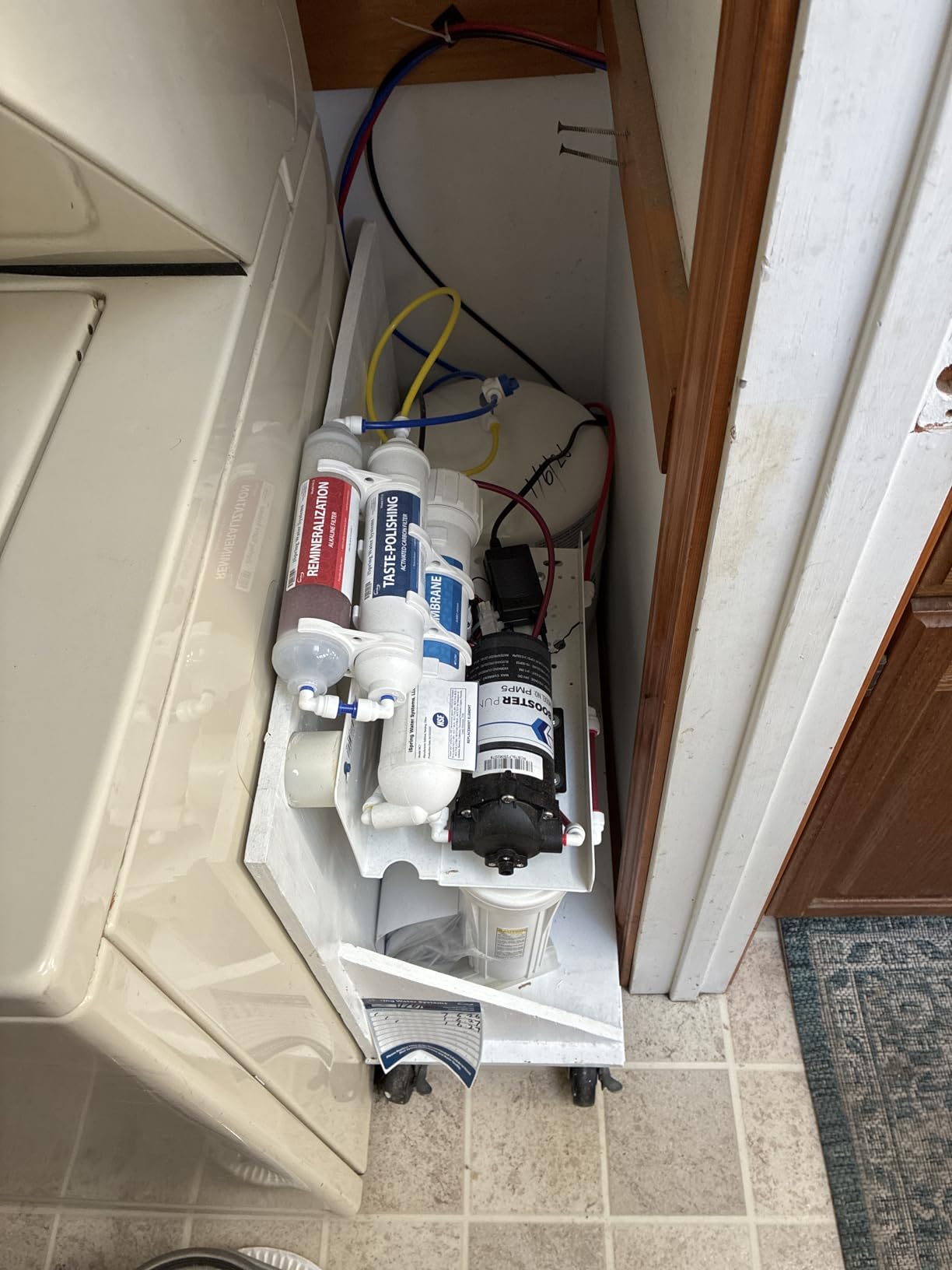
This is the pick for anyone whose tap pressure is marginal. The electric booster pump pushes harder water through the membrane, which does two useful things at once: it holds the rejection rate that a low-pressure feed would otherwise miss, and it reduces the wastewater the membrane sends to the drain.
At 4.7 stars across 1663 reviews with 88 percent five-star ratings, it is the highest-rated product in this roundup. Owners of older homes and low-pressure buildings cite the pump as the deciding factor, and the alkaline sixth stage is credited with better taste than a plain five-stage output.
The universality of the power adapter is a small thing that removes a real failure mode. A 100-240V 50/60Hz unit works whether your supply is 120 or 230 volts, so you are not choosing between a filter and a travel adapter.
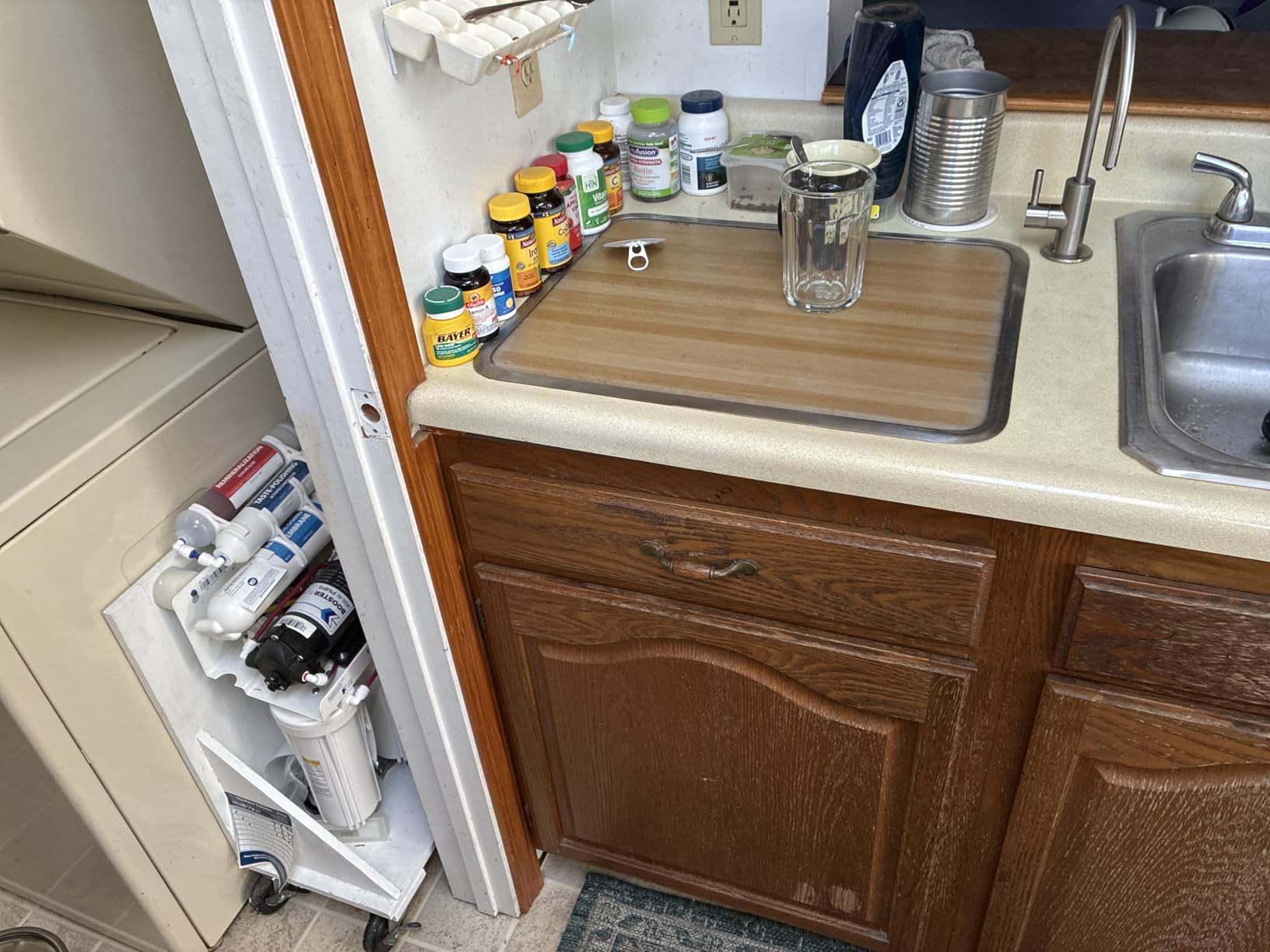
You are paying for the pump in weight and in cabinet space. At 20 pounds and 15 by 8 by 18 inches, this is one of the bulkiest systems here, and you still need room for the storage tank beside it. The warranty is one year and requires registration, so register it when it arrives rather than assuming it is automatic.
Who this system suits
Older homes, buildings with weak mains pressure, and anyone who already knows their kitchen tap runs slow. If you have ever tested your pressure and seen a disappointing number, this solves the problem rather than working around it.
It also suits people who want both a tank and a pump. A pressure tank gives you a buffer for when several people want water at once, which most tankless designs give up on.
Who should skip it
Do not buy a pump-equipped system for a cabinet with no outlet. The pump is not optional on this model, and a non-functional filter is an expensive shelf ornament.
If you want a small footprint, the 500 GPD tankless option on our list does the same job with less hardware and a lighter unit.
5. iSpring RO500AK 500 GPD Tankless With Alkaline Remineralization
iSpring RO500AK Alkaline Reverse Osmosis System, NSF 58 Certified, 500 GPD
500 GPD tankless
0.4 GPM real flow
15-70 psi operating range
1-year warranty
Pros
- Complete-system NSF/ANSI 58 certification
- 0.4 GPM fills an 8 oz cup in about 10 seconds
- 2:1 drain ratio saves up to 400% water versus traditional RO
- Tankless design saves up to 70% of under-sink space
- Auto flush after 24 hours of non-use protects the membrane
Cons
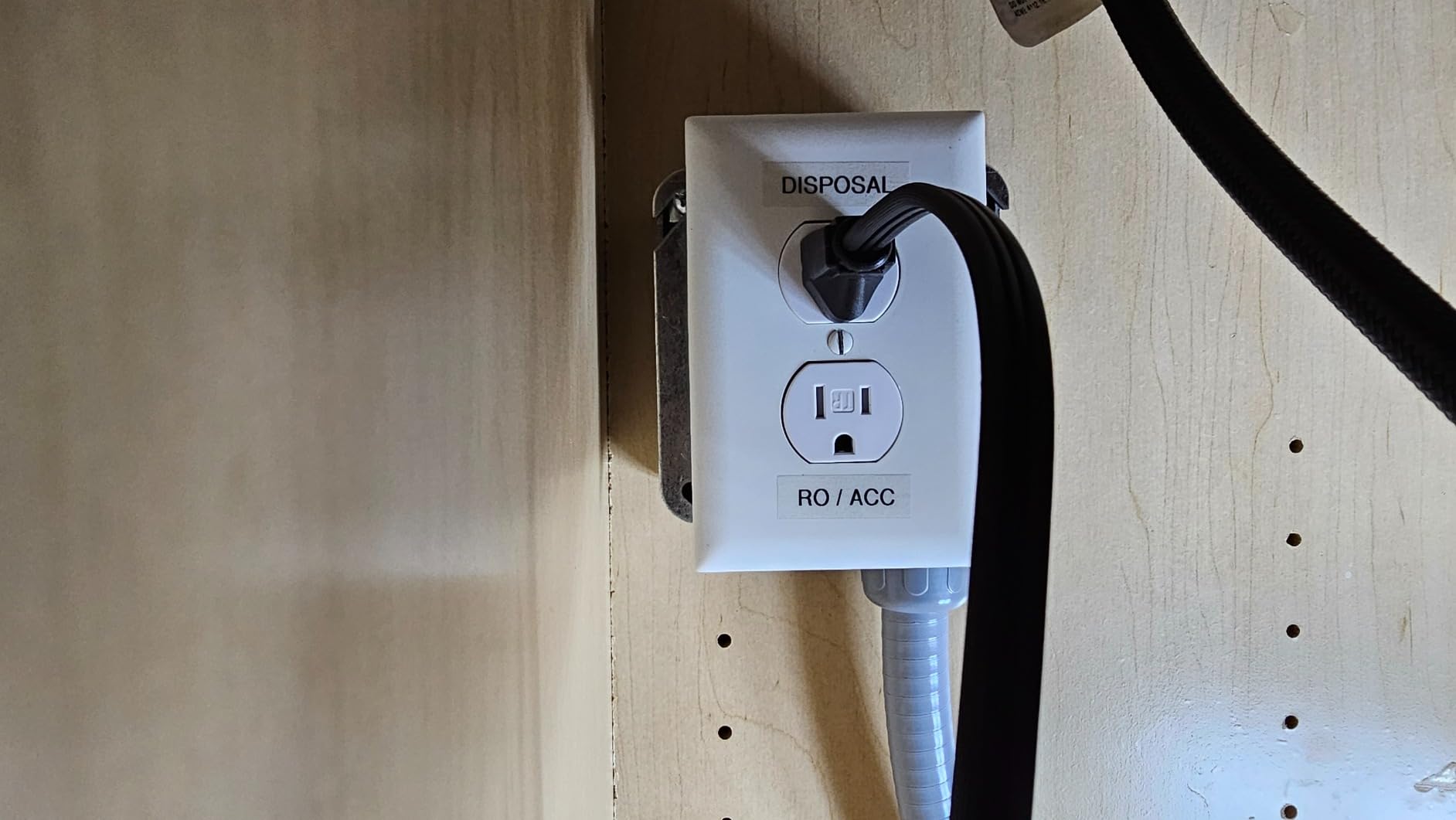
- Requires access to electricity under the sink
- Costs more than the 75 GPD iSpring tank models
- Front panel and buzzer alerts depend on the electronics
This is the middle ground between a small tank system and a high-flow tankless monster, and at 1594 reviews with a 4.6 average it is the second most proven tankless unit here. The 15 to 70 psi operating range is the widest on the list, which makes it forgiving in buildings where pressure swings.
Two details separate it from most tank systems in this bracket. The auto flush runs after 24 hours of non-use, so a membrane sitting dry through a weekend does not come back fouled, and the front-panel lights with a buzzer tell you precisely when each filter needs changing rather than estimating from water quality.
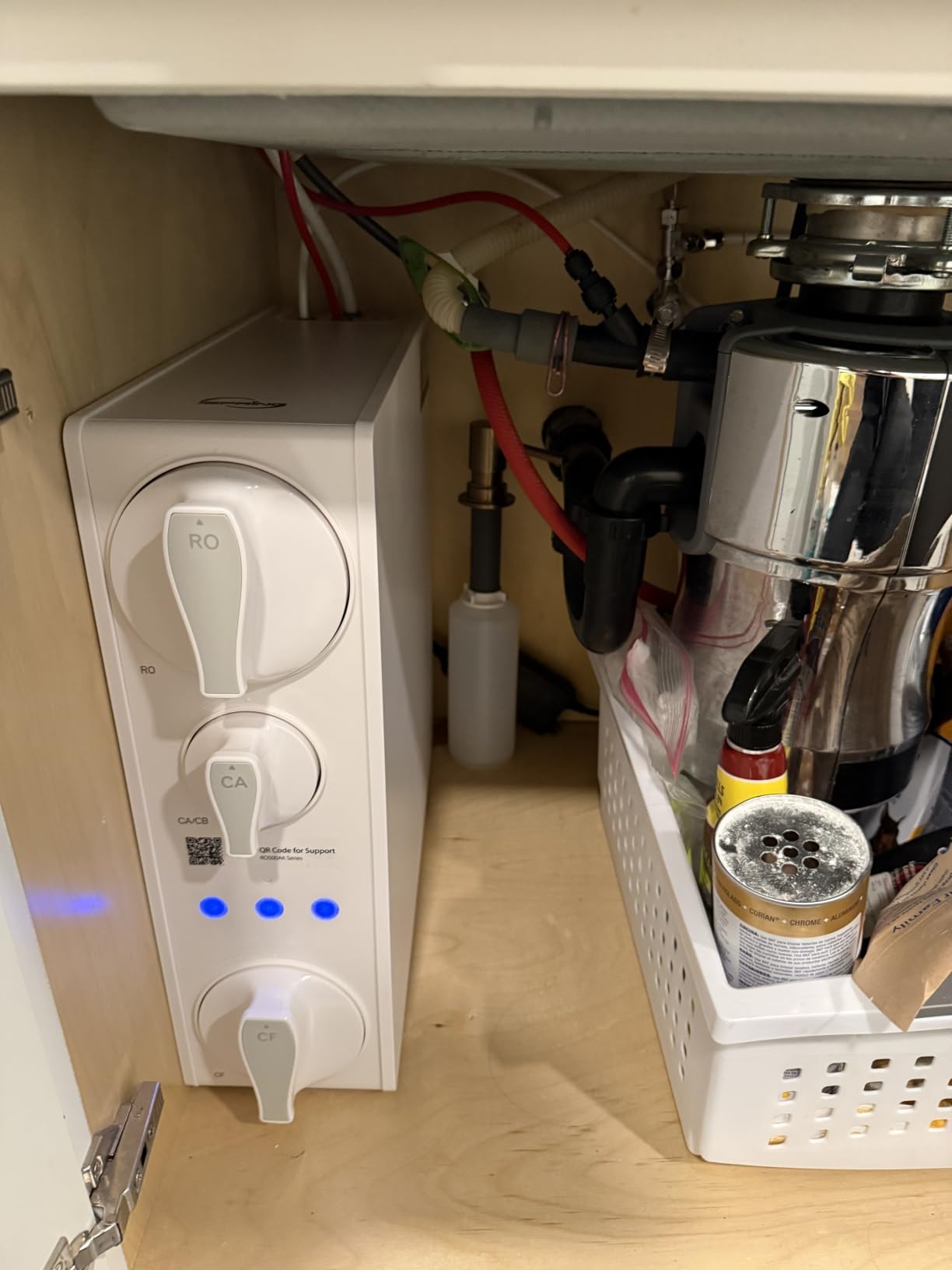
Filter scheduling is unusually well published here. The carbon pre-filter runs up to six months, the alkaline carbon stage up to twelve, the membrane up to twenty-four, and the fourth cartridge up to two years. Long intervals spread the annual cost rather than front-loading it, and every replacement is a standard cartridge rather than a proprietary pod.
The 2:1 pure to drain claim and the 0.4 GPM real flow are measured rather than theoretical in the owner reports. At 21 pounds and 17.5 by 5.2 by 16.25 inches it is not the lightest unit here, but the tankless layout saves up to 70 percent of the space a conventional tank would use.
Who this system suits
Couples and small families in apartments and condos, where cabinet space is tight and the outlet is already there. It is a good first tankless system because the cost sits below the larger capacity units and the filter set is easy to find.
If you travel regularly or the kitchen sits unused for days, the auto flush is a genuine convenience rather than a spec-sheet line.
Who should skip it
Skip it if you plan to fill five-gallon jugs in one session. At 500 GPD it is fast for drinking and cooking, not for bulk water hauling, and the larger tankless options handle that better.
Outlet-free cabinets should rule it out entirely, because the pump and the display both need power and the unit does not fall back to pressure alone.
6. SimPure T1-400ALK 400 GPD Tankless With UV Stage
SimPure T1-400ALK Tankless Alkaline Reverse Osmosis Water Filter 400 GPD
400 GPD tankless
0.4 gpm flow
SGS tested to NSF/ANSI 58
1.5:1 pure to drain ratio
Pros
- UV purification stage adds microbial protection beyond the membrane
- Alkaline media adds calcium magnesium and potassium
- 1.5:1 pure to drain ratio reduces wastewater
- Quick-change twist cartridges deliver about 1057 gallons per set
- Independently tested by SGS against NSF/ANSI 58
Cons
- Lowest average rating here at 4.2 with 12% one-star ratings
- Some published spec fields are inconsistent between listings
- Alkaline model will not reach near-zero TDS by design
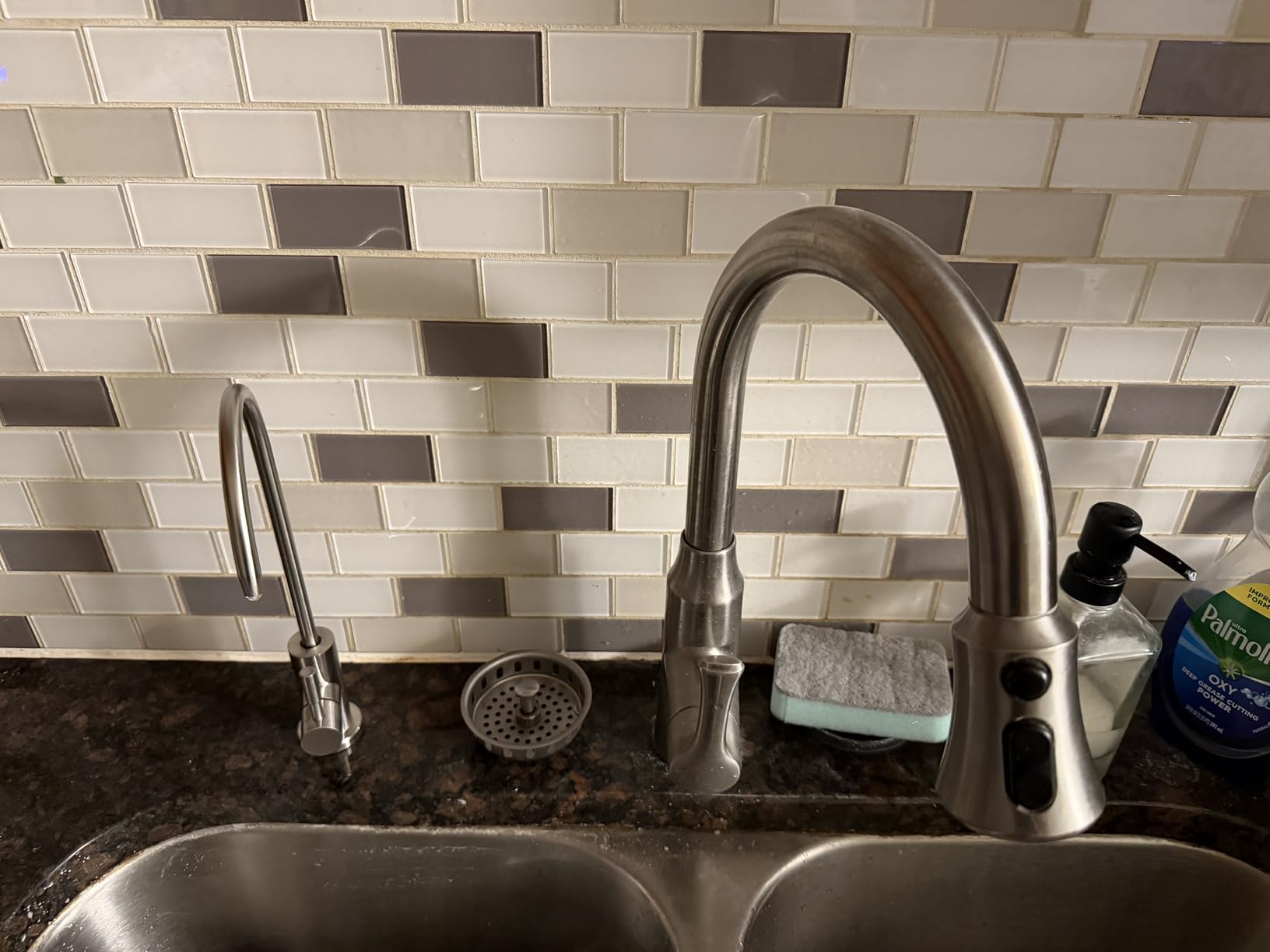
The reason to consider this one is the UV stage. It sits on the purified side of the membrane and activates based on flow pressure, adding a layer of microbial inactivation that carbon and RO alone do not provide. For a household concerned about surface contamination in older plumbing, that is a real differentiator.
The alkaline media is a genuine mineral cartridge rather than a taste cartridge, adding calcium, magnesium and potassium from natural material described as free of heavy metal contamination. The 1.5:1 drain ratio sits between conventional RO and the 2:1 units, and the twist cartridges make changes a matter of twisting rather than swapping canisters.
We placed this one in the middle of the list on purpose, and the reason is in the reviews. At 4.2 stars it carries 12 percent one-star ratings, the highest share in this roundup, and the recurring complaint is that the alkaline cartridge leaves the TDS reading higher than buyers expected. That is a design choice rather than a defect, but it is a surprise if the listing did not tell you.
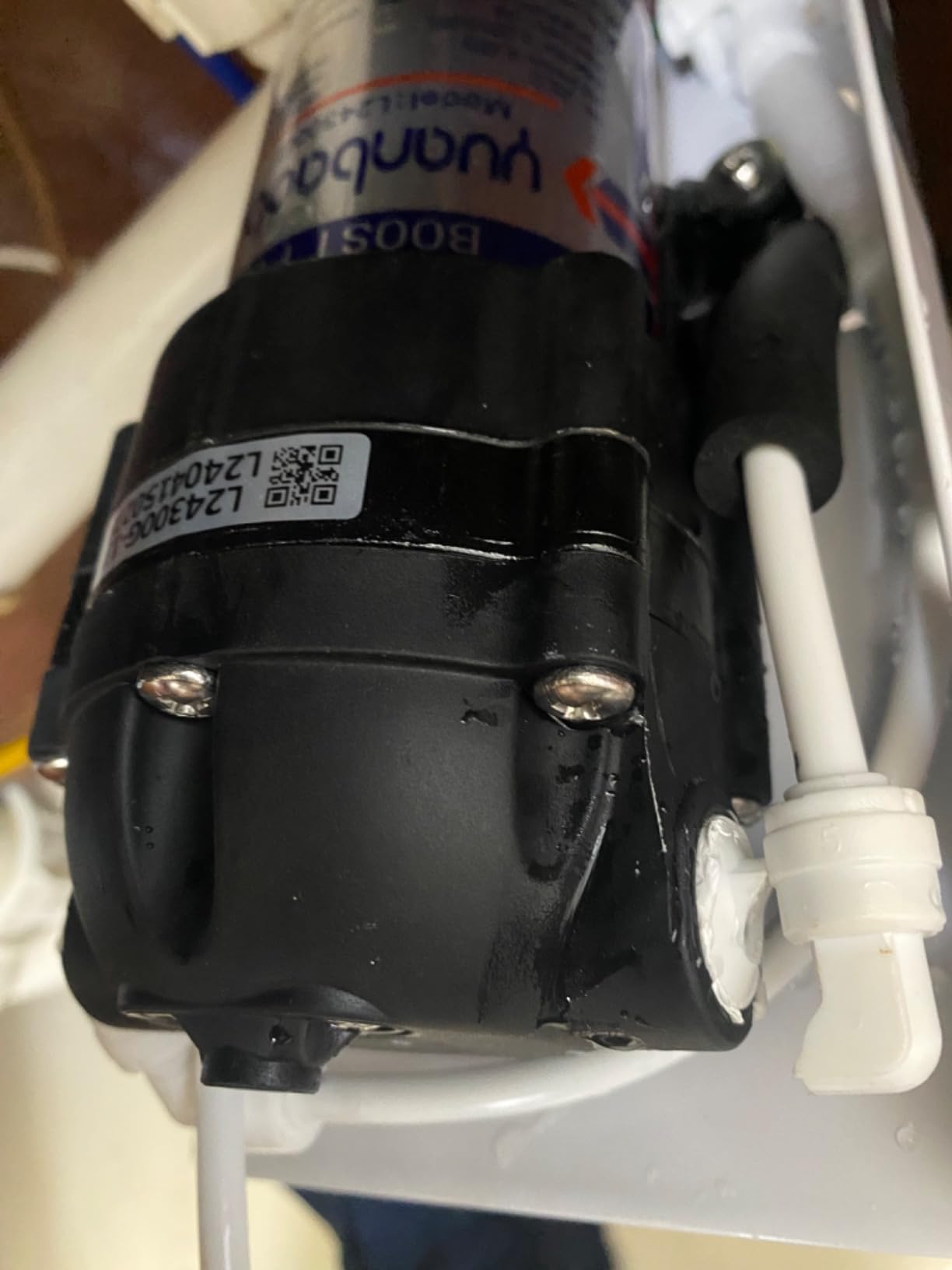
One more caution. The published operating pressure and upper temperature fields differ between listings for this model, so treat the specification sheet as provisional. Check the values against the manual before you size anything to them.
Who this system suits
Homes with older supply lines, RV hookups and anyone who wants UV as a second line of defence at the point of use. The tankless footprint and the 1.5:1 ratio also suit renters who care about water waste.
If you enjoy testing your own water, this is a satisfying unit. The measurable change across the stages makes it a good candidate for pairing with a TDS meter.
Who should skip it
Skip it if you want the lowest possible TDS reading, since the alkaline stage is designed to prevent that. Buyers who want near-zero output should look at the non-alkaline variant in the same range instead.
People who want a proven record should note the review spread. Its 4.2 rating is the lowest here and its 12 percent one-star share is the highest in the group, and that gap is worth weighing against the UV benefit before you commit.
7. Home Master TMAFC Two-Pass Remineralization System
Home Master TMAFC Artesian Full Contact Reverse Osmosis System, 7-stages, Patented 2-Pass Alkaline Remineralization, Fast 4.5s Fill Rate, 8.5” catalytic carbon, 5-year limited parts
7 stages
1 gpm maximum flow
40-95 psi feed
5-year limited parts warranty
Pros
- Patented two-pass remineralization adds calcium and magnesium twice during purification
- 4.5 second fill rate for an 8 oz container
- 8.5 inches of catalytic carbon per pass for longer contact
- All components NSF certified and made in the USA
- 5-year parts warranty with 5 years of spare part availability
Cons
- Largest under-sink footprint in this roundup at 20 by 13 by 16 inches
- 50 GPD membrane is modest next to the flow rate
- Storage tank means total capacity depends on the tank refill
If your complaint about RO water is that it tastes empty, this is the system built for you. The patented two-pass remineralization adds calcium and magnesium twice during purification rather than once at the end, which is why owners describe a fuller, more mineral-forward taste than any other unit here produces.
It is also the fastest at the tap. A 4.5 second fill for an 8 oz container comes from larger fittings and tubing rather than from more membrane, and at 1 gpm maximum flow it is the highest-rated flow figure in this roundup by a wide margin.
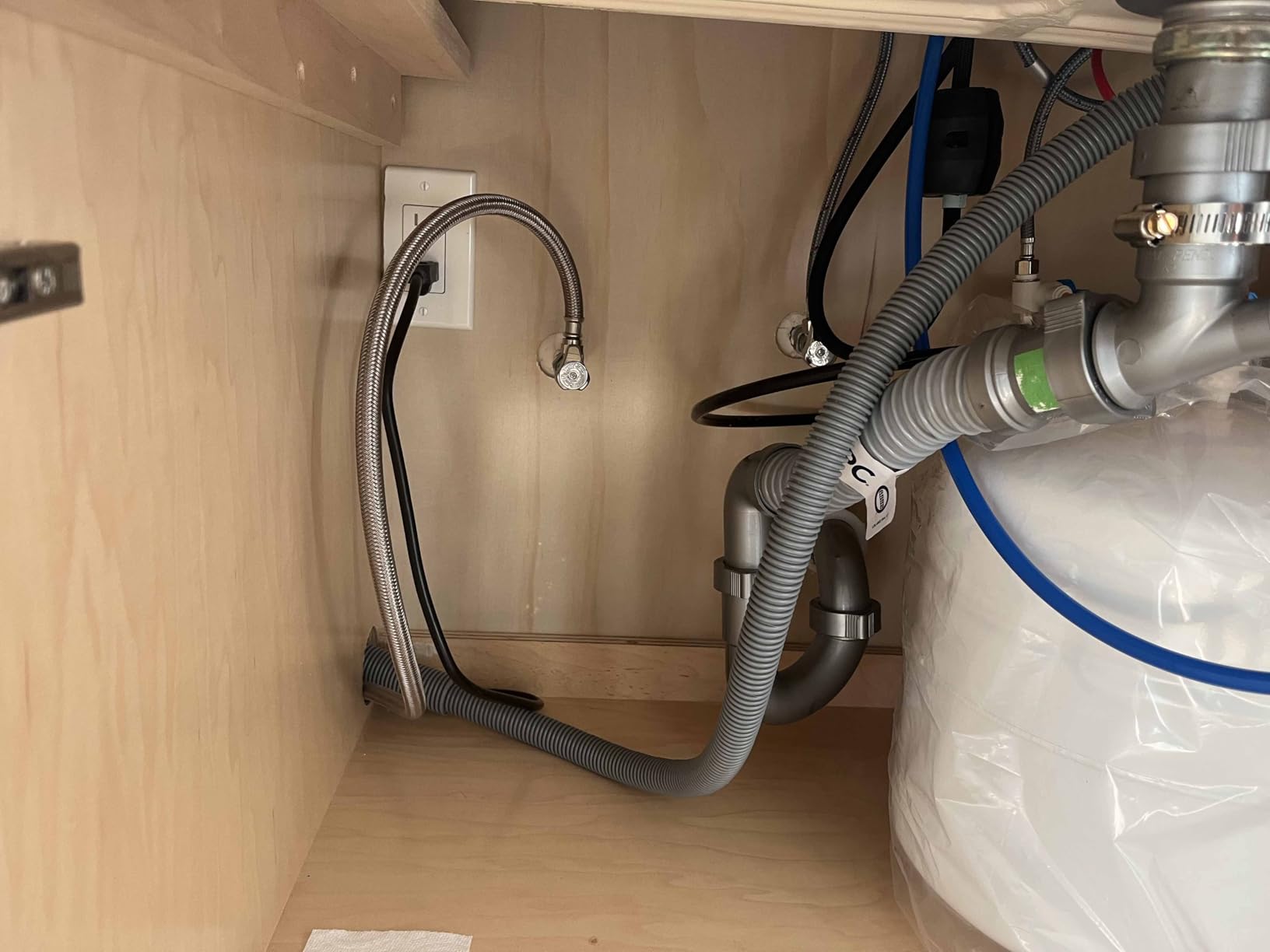
The warranty is the other stand-out. A five-year limited parts warranty with five years of spare part availability removes the single most common long-term complaint about under sink filters, which is that the manufacturer stops making the cartridge you need three years after you bought the system. The modular canister design also allows tool-free annual replacement and field upgrades.
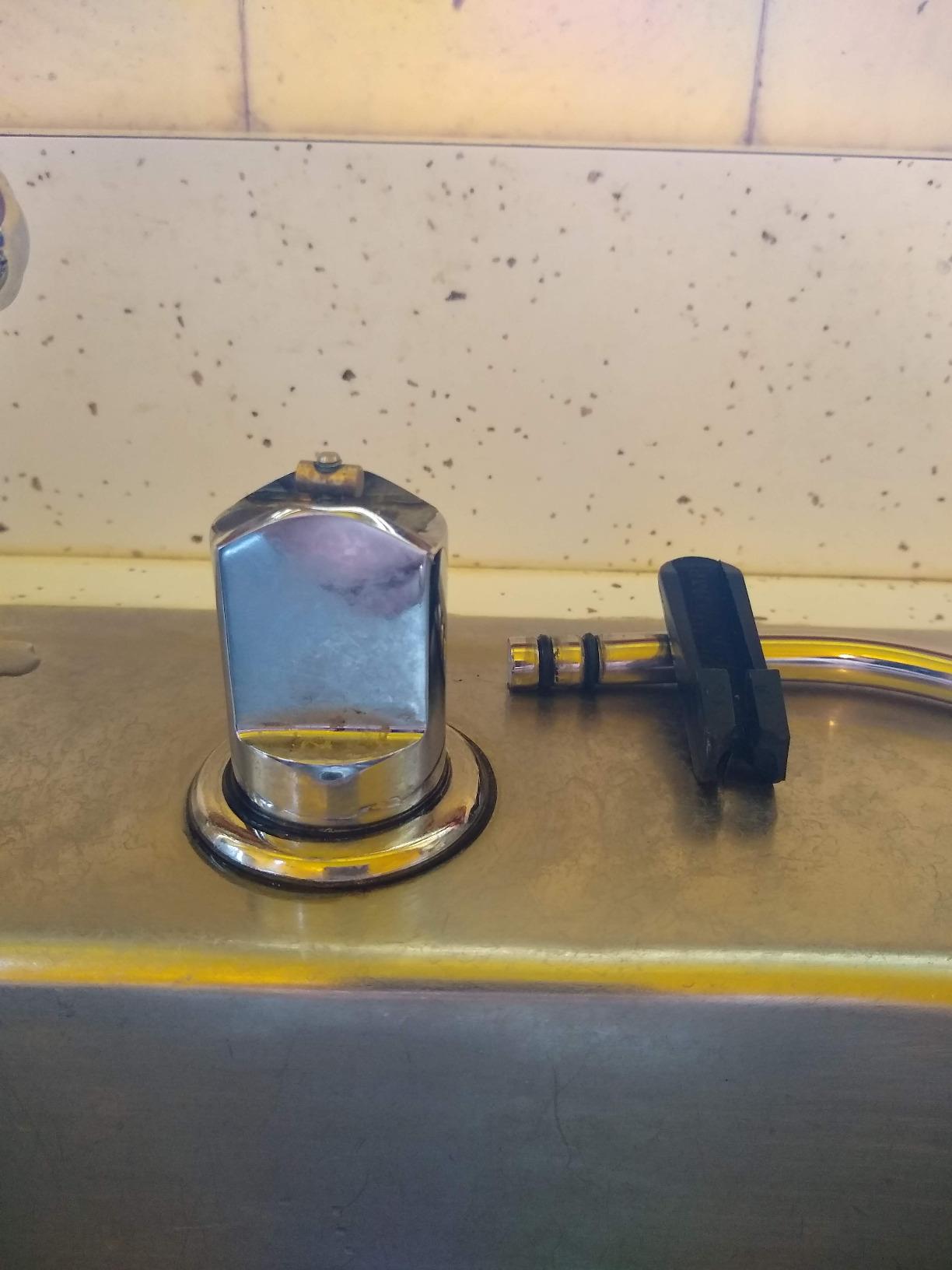
Made in the USA by an NSF-listed company with all components NSF certified for material safety, this is the pick if domestic assembly and long-term parts support matter to you more than cabinet footprint.
Who this system suits
Drinkers who find single-pass mineral stages too subtle. If you have already tried an inline calcite cartridge and decided it did nothing, two passes is the version built to make a difference.
It also suits long-term buyers. With a five-year parts warranty and five years of spare part availability, this is the least likely system on the list to strand you when a cartridge wears out.
Who should skip it
Small cabinets are the problem. At 20 by 13 by 16 inches plus a tank, this is the largest footprint here, and the storage tank adds to it. Measure before ordering.
Bulk water users should also look elsewhere. A 50 GPD membrane is modest against the fast flow rate, so the tank is doing more of the work than the capacity number suggests.
8. Waterdrop G5P500A 8-Stage 500 GPD Tankless System
Waterdrop G5P500A Reverse Osmosis System, 8-Stage RO Filtration, Alkaline
500 GPD tankless
1.31 liters per minute
14.5-87 psi operating range
1-year manufacturer warranty
Pros
- Eight stages with a 0.0001 micron membrane
- Alkaline mineralization adds Ca2+ Mg2+ Na+ and K+
- 500 GPD fills a 6 oz cup in about 8 seconds
- 2:1 pure to drain generates roughly 400% more clean water
- Tankless design frees up to 70% of under-sink space
Cons
- Faucet installation requires drilling a countertop hole
- Corded electric design needs an outlet under the sink
- Replacement filters for this line are relatively costly
This is the coffee and tea pick. The alkaline mineralization stage adds calcium, magnesium, sodium and potassium, and the eight-stage layout with a 0.0001 micron membrane handles the PFOA, PFOS, chlorine, lead, fluoride and heavy metals that show up in municipal supply. Water at this mineral content and flow rate suits brewing without further adjustment.
At 500 GPD it fills a 6 oz cup in roughly 8 seconds, which is fast enough that a pour-over session does not stall. The 14.5 to 87 psi operating range is also wide, so it holds up in buildings with variable supply.
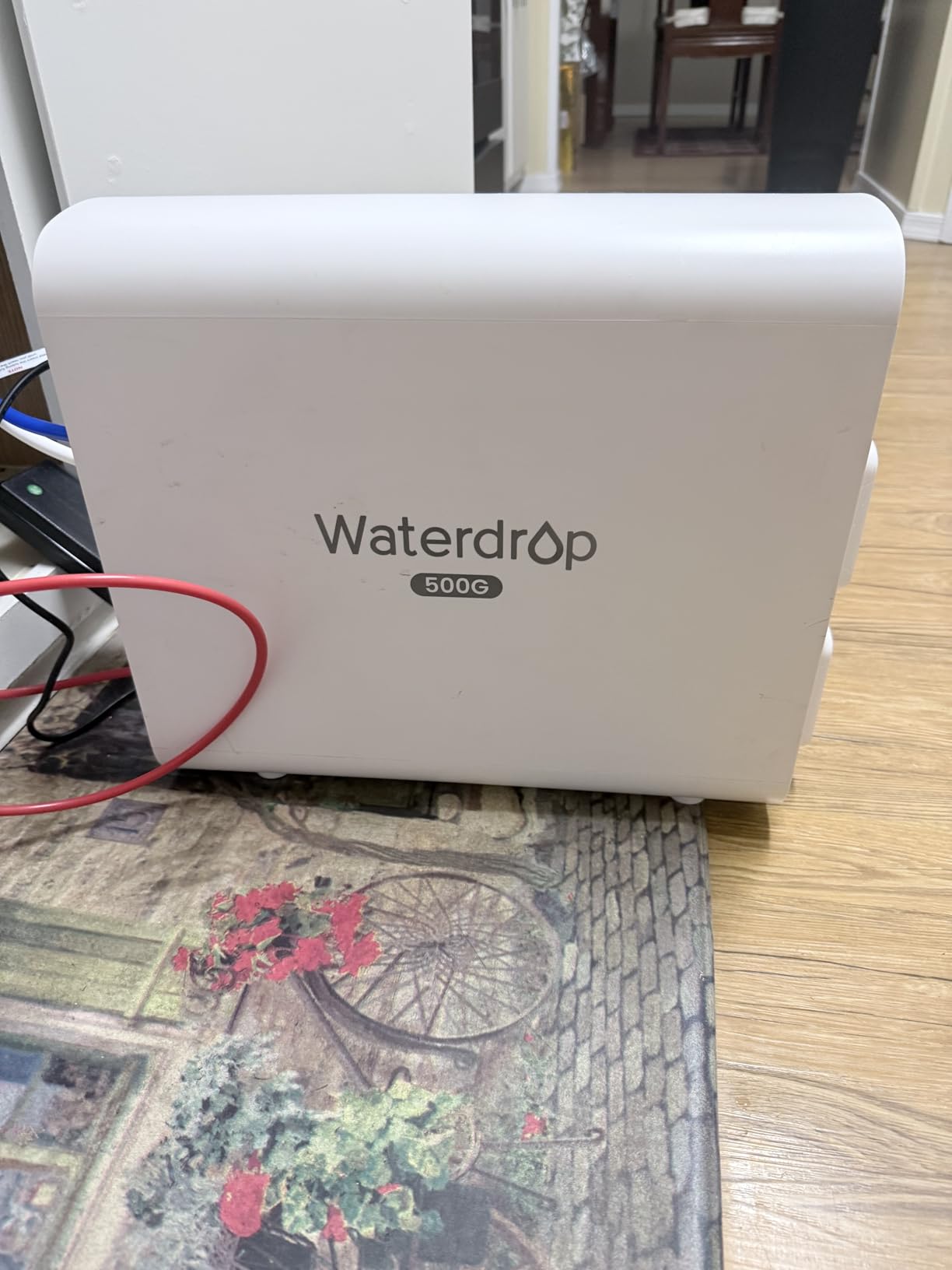
The sales rank tells you something about demand. It sits at number 16 in under-sink filtration, which is unusually strong for a mid-price tankless unit, and 748 reviews at 4.5 stars with 81 percent five-star is a solid record for a newer product.
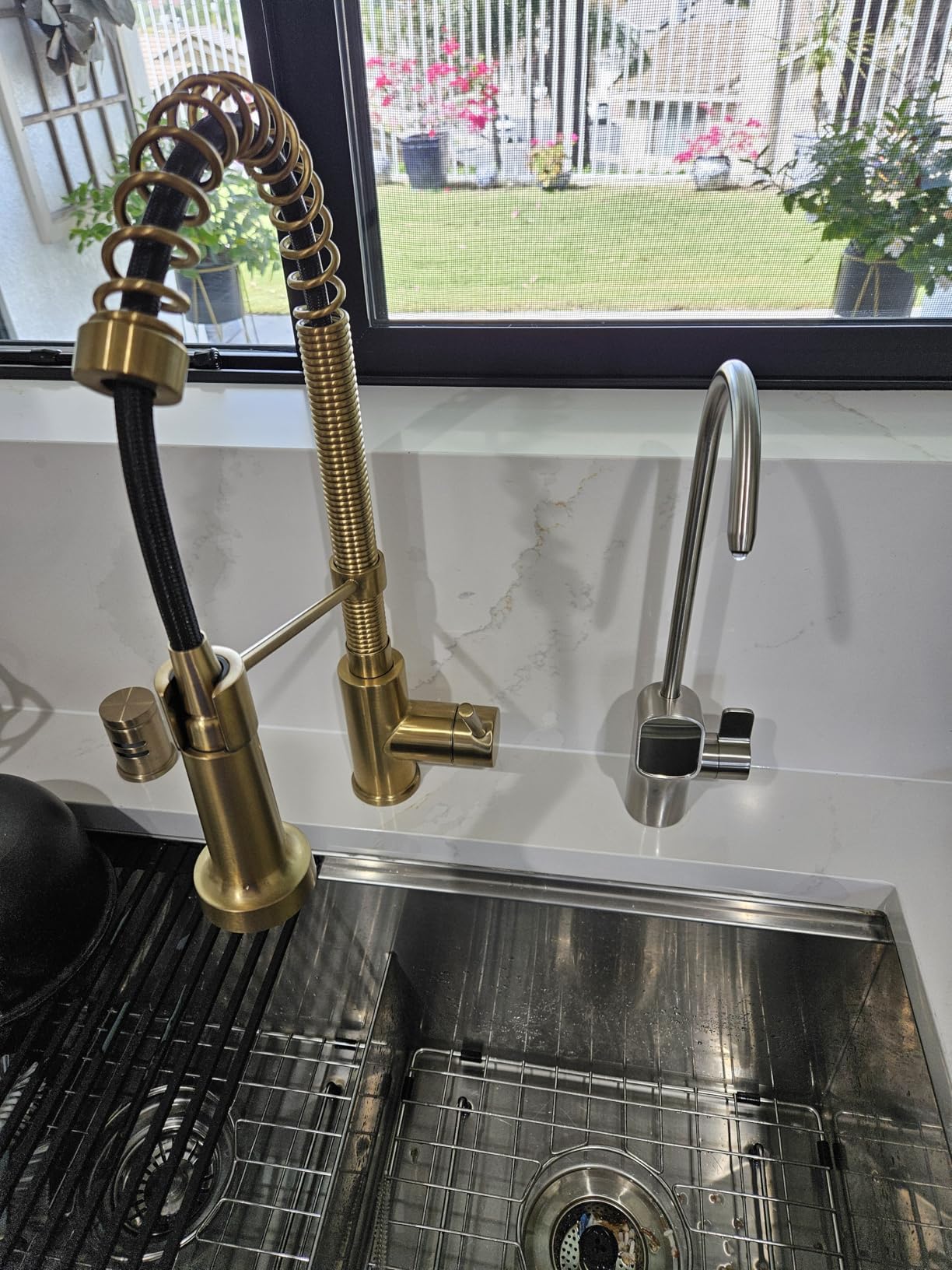
Two practical notes. The faucet measures 6.6 by 3.2 by 11.3 inches and installing it means drilling a countertop hole, which is the deal-breaker in a rental. And the company sells an accessory that lets the system feed ice makers and refrigerators, which is the single most useful upgrade available for a brewing household.
Who this system suits
Coffee and tea households that brew daily and want consistent mineral content without adjusting recipes. Anyone running a refrigerator or ice maker off the same system should pair it with the appliance connection kit.
It is a good mid-point for families who want tankless flow but do not need 600 or 800 GPD. At 21.4 pounds it is not light, so plan the shelf accordingly.
Who should skip it
Renters should stop here. The countertop drilling requirement is the single most repeated installation complaint in the reviews and it is not something you can work around after the box arrives.
Long-term buyers on a tight budget should weigh the replacement filter cost. Owners flag this line as pricier to maintain than the alternatives, and that difference compounds over the life of the system.
9. Waterdrop T3-M 450 GPD Remineralization System
Waterdrop T3-M Remineralization Reverse Osmosis Water Filter, 450 GPD
450 GPD tankless nine-stage
2:1 pure to drain
24-month RO cartridge
NSF/ANSI 372 certified
Pros
- All-in-one cartridge replacement in seconds rather than swapping multiple canisters
- 9-stage filtration with a 0.0001 micron membrane tested by a third-party laboratory
- Mineral infusion with calcium and magnesium for improved taste
- 2:1 drain ratio with a 24-month RO cartridge
- Smart filter-change alerts plus LED indicator and continuous auto flush
Cons
- Requires an outlet under the sink and countertop drilling for the faucet
- 450 GPD is below the 500 to 800 GPD tankless options
- Second-smallest review base in the roundup at 482 reviews
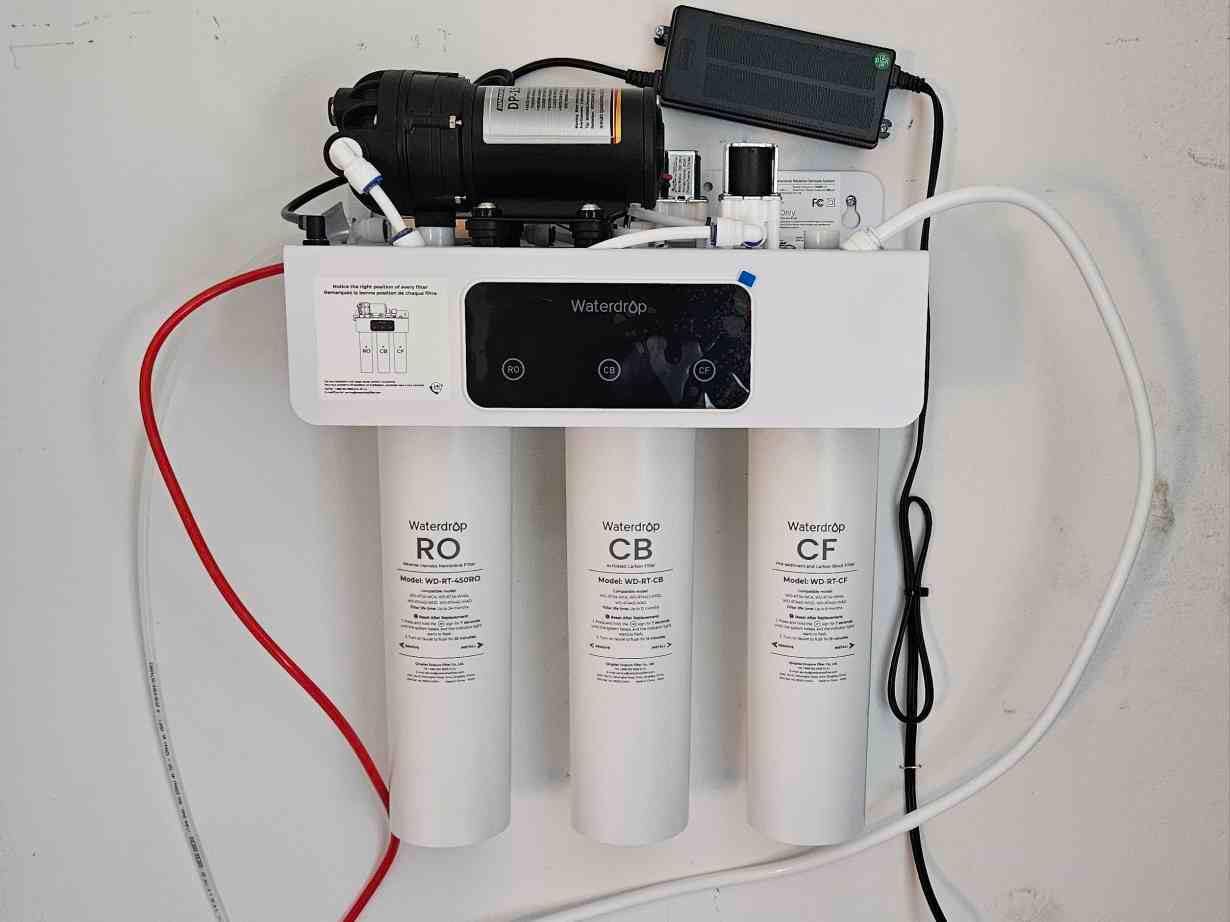
The design decision that sets this one apart is the all-in-one cartridge. Most RO systems ask you to swap three or four separate canisters on different schedules. This one twists out a single unit, which removes the most common reason people put filter changes off.
The filtration underneath is conventional and solid. Nine stages built around a 0.0001 micron membrane, tested by a third-party laboratory, with mineral infusion adding calcium and magnesium. The scheduled intervals are 6 months for the sediment and carbon pre-filter, 12 months for the carbon block and 24 months for the RO cartridge.
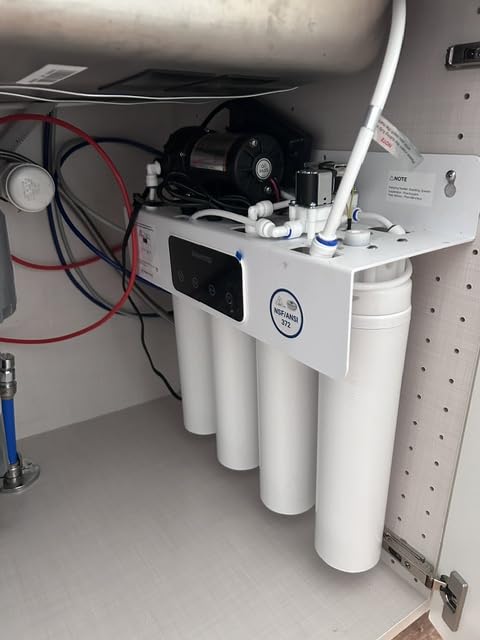
At 450 GPD this is the entry point into tankless remineralizing systems, and it sits at the bottom of the price range among the electric models we tested. The single-cartridge layout is what makes it approachable: one twist to remove, one twist to fit, and the schedule is printed on the housing rather than buried in a manual.
The 2:1 drain ratio is worth noticing against the conventional units further up the list. It halves the wastewater a traditional three-gallon-per-gallon system produces, which is the number that quietly dominates a water bill over a decade of daily use.
Who this system suits
Households that want tankless flow and mineral taste without committing to a large system, and anyone who has avoided an RO install because the filter changes look like a chore. One cartridge in, one cartridge out, done.
It suits first-time buyers testing whether they like drinking reverse osmosis water at all, since the maintenance commitment is lower than most systems here.
Who should skip it
Skip it if your cabinet has no outlet or you cannot drill the counter. Both requirements are firm on this model and the manufacturer states them plainly.
Large households should note the capacity. 450 GPD is comfortable for drinking and cooking but tight for a family of five running an ice maker alongside it.
10. Waterdrop X8-WAN 800 GPD Ten-Stage Tankless System
Waterdrop X8-WAN Alkaline Mineral Tankless Reverse Osmosis System Undersink
800 GPD tankless
16-layer 0.0001 micron membrane
Smart digital faucet
24-month filter life
Pros
- Highest capacity in the roundup at 800 GPD
- 10-stage filtration on a 16-layer 0.0001 micron membrane tested by SGS
- Smart digital faucet displays TDS and filter life
- NSF/ANSI 42 58 and 372 certified
- 2:1 drain ratio with a 24-month RO filter lifespan
Cons
- Lowest rated of the four Waterdrop systems here at 4.4
- Active system needs an electrical outlet under the sink
- Some owners report pump hum and automatic purge cycles
- Replacement filters are not inexpensive
This is the capacity leader here at 800 GPD, and one verified owner reports filling a 5-gallon jug with 14 ppm water in roughly six and a half minutes. For a large family or a household that treats drinking water as a bulk utility, that number matters more than any other specification on this list.
The smart digital faucet is the reason we picked it for a specific audience. It displays live TDS and remaining filter life at the point of use, and owner reports confirm a reduction from roughly 550 ppm feed to about 40 ppm output once the alkaline mineralization filter is in place. That is the mineral stage doing measurable work.
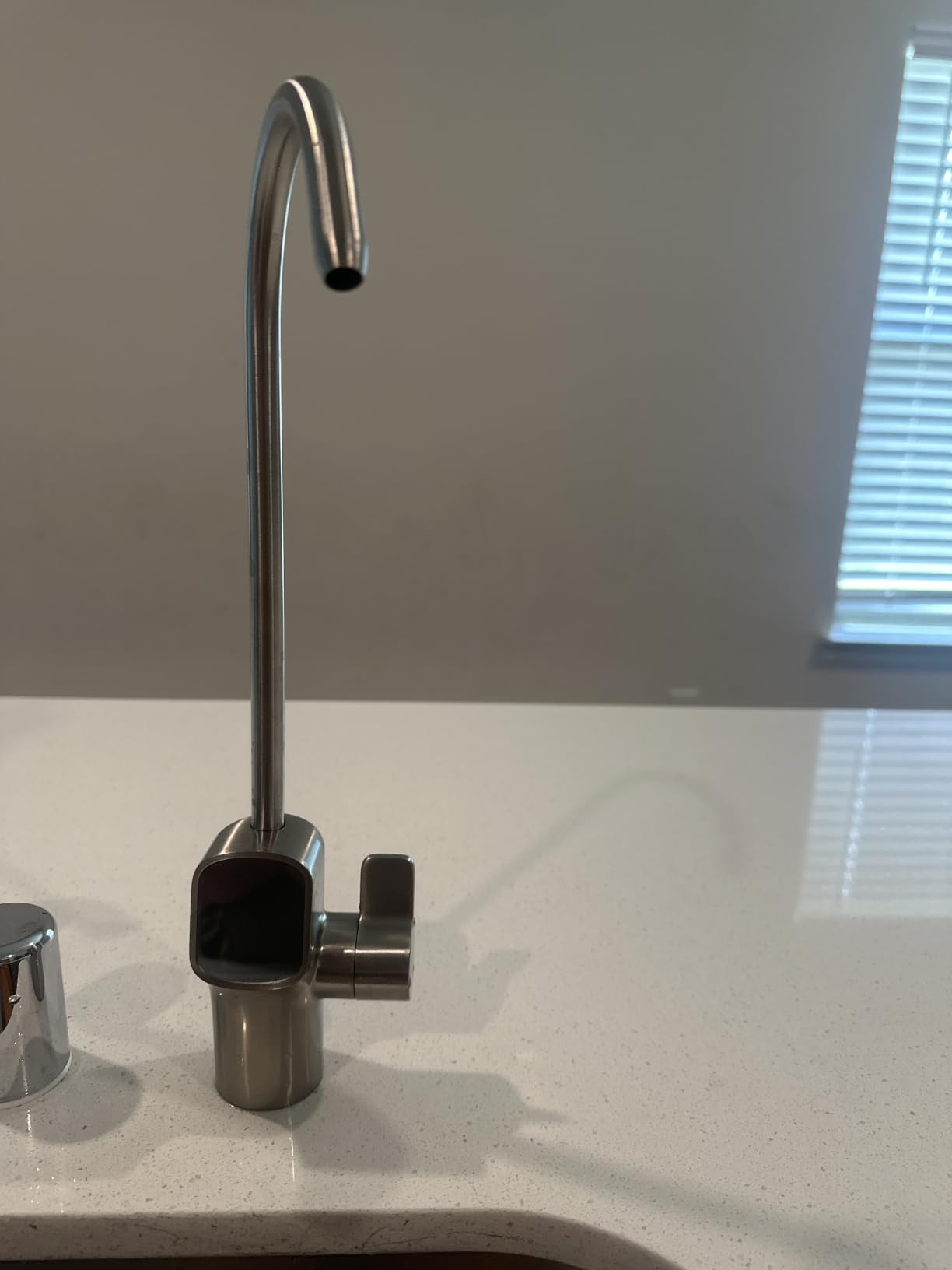
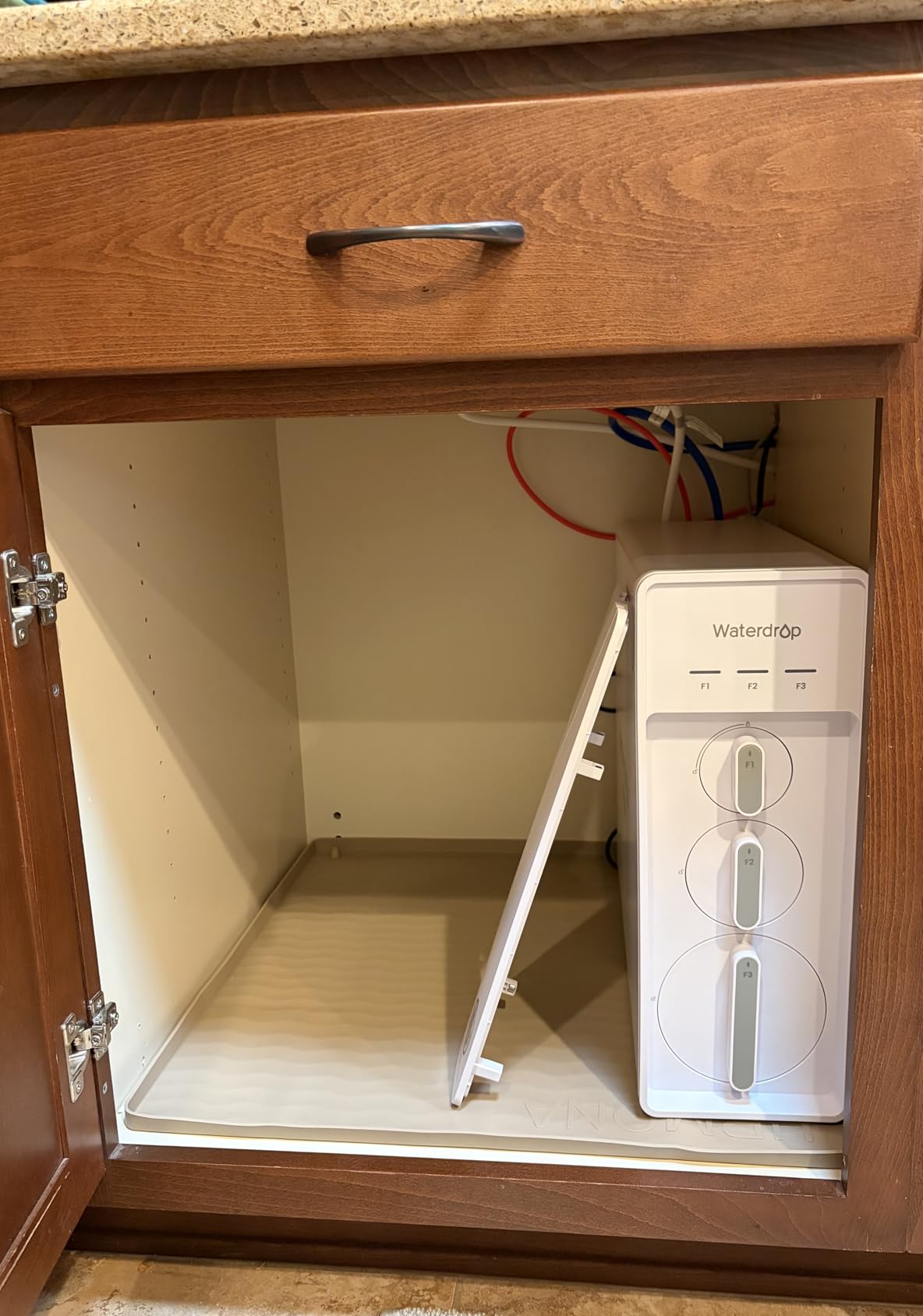
It is also the newest product here, with 281 reviews and the lowest rating among the four Waterdrop systems we looked at. The negative reviews cluster in three places: a TDS display that would not read correctly, a low humming noise from the pump with automatic purge cycles, and filter cost. The last of those is predictable. The first two are electronics, and electronics are what you buy an extended warranty thinking about.
Counterbalancing that, several owners single out Waterdrop customer service as a strength, including for diagnosing and fixing technical problems, which is more than most brands in this category manage.
Who this system suits
Large households, and anyone who fills jugs rather than glasses. The 24-month RO filter life and the 2:1 drain ratio keep both the cartridge bill and the water bill in check at that volume.
People who enjoy data will like the faucet readout. Seeing TDS change across cartridge cycles is the clearest way to learn what a mineral stage actually does.
Who should skip it
Skip it if you want a proven service record or you are buying on a tight budget. It carries the smallest review base in the roundup at 281 reviews, and it sits at the top of the price range for the systems we reviewed, so the evidence behind it is thinnest.
Noise-sensitive kitchens should look at the lower-capacity options. Pump hum and purge cycles are reported often enough that they belong in your decision, not after it.
Tank-Based or Tankless: Which One Should You Buy?
Choose tank-based if your cabinet has room and your household drinks a few glasses a day. A pressure tank stores finished water so the first glass of the day comes out instantly, there is no pump to power, and the whole system works from water pressure alone. The trade is cabinet space and the butyl bladder inside the tank, which is a plastic surface your drinking water sits against when it is not being dispensed.
Choose tankless if cabinet space is tight, your household runs more than a few glasses a day, or you plan to connect an ice maker or refrigerator. You get continuous flow, no bladder, and a much smaller footprint. The cost is an electrical outlet, a pump that makes some noise, and electronics that can fail.
Our three-question rule: do you have an outlet under the sink, will more than two people drink filtered water daily, and can you measure roughly 20 inches of clear cabinet height. Two yes answers point to tankless. One or fewer points to tank-based.
How to Read the Certification Labels on an RO System?
Look for NSF/ANSI 58 first. That is the standard covering reverse osmosis systems themselves, and a system certified to it as a complete unit is doing more than a set of individually certified parts added together. Then look for NSF/ANSI 372, which covers lead-free compliance for drinking water components.
NSF/ANSI 42 covers aesthetic claims like taste, odour and chlorine, and 53 covers health-related contaminant reduction in a broader class of filters. Seeing 42 and 53 on an RO listing is not automatically suspicious, but the standard that matters most is 58. WQA certification is a separate performance and safety mark that APEC holds, and it is worth as much as any of the NSF numbers.
The phrase to distrust is “tested to NSF standards.” Certified means a third party audited the product against the standard and listed it. Tested to means a laboratory ran a single batch of samples. Several systems in this roundup, including the SimPure, were independently tested against NSF/ANSI 58 by SGS, which is honest and useful, but it is a different claim from certification.
What to Look For Before You Buy an Under Sink RO System?
Flow rate matters more than the GPD number on the box. GPD is a daily capacity figure measured under ideal conditions, and a 75 GPD system can still deliver water faster than a poorly plumbed 500 GPD one. Look at the gpm rating, and for drinking water anything at or above 0.2 gpm feels fine while 0.05 gpm is noticeably slow.
The drain ratio is the second number most listings bury. A 2:1 or 1.5:1 pure-to-drain ratio means every gallon you drink costs one to two gallons at the drain, against three gallons for older conventional systems. Over years this is the largest hidden cost in the category.
Mineral media type tells you whether the stage is doing real work. Calcite and maifan stone raise both TDS and pH. Tourmaline and far-infrared media mostly change flavour. If a listing never states an output TDS or pH range, you are buying a taste claim rather than a measurement.
Then check the cartridge schedule and the warranty. A manufacturer that publishes model numbers and multi-year replacement intervals is one you will still be able to buy filters for. Spare part availability matters as much as the warranty length, because a five-year warranty is worthless if the part is discontinued in year two. Our favourite data point on this list is five years of stated spare part availability on the Home Master.
One caution for anyone using filtered water on an aquarium. A drinking-water mineral cartridge is tuned for a target TDS and pH in the 40 to 80 ppm range, not for the general hardness and carbonate alkalinity values a fish tank needs. Measure the actual GH and KH and adjust from there, or use a dedicated aquarium remineralizer.
Installation: What You Need Before the Box Arrives?
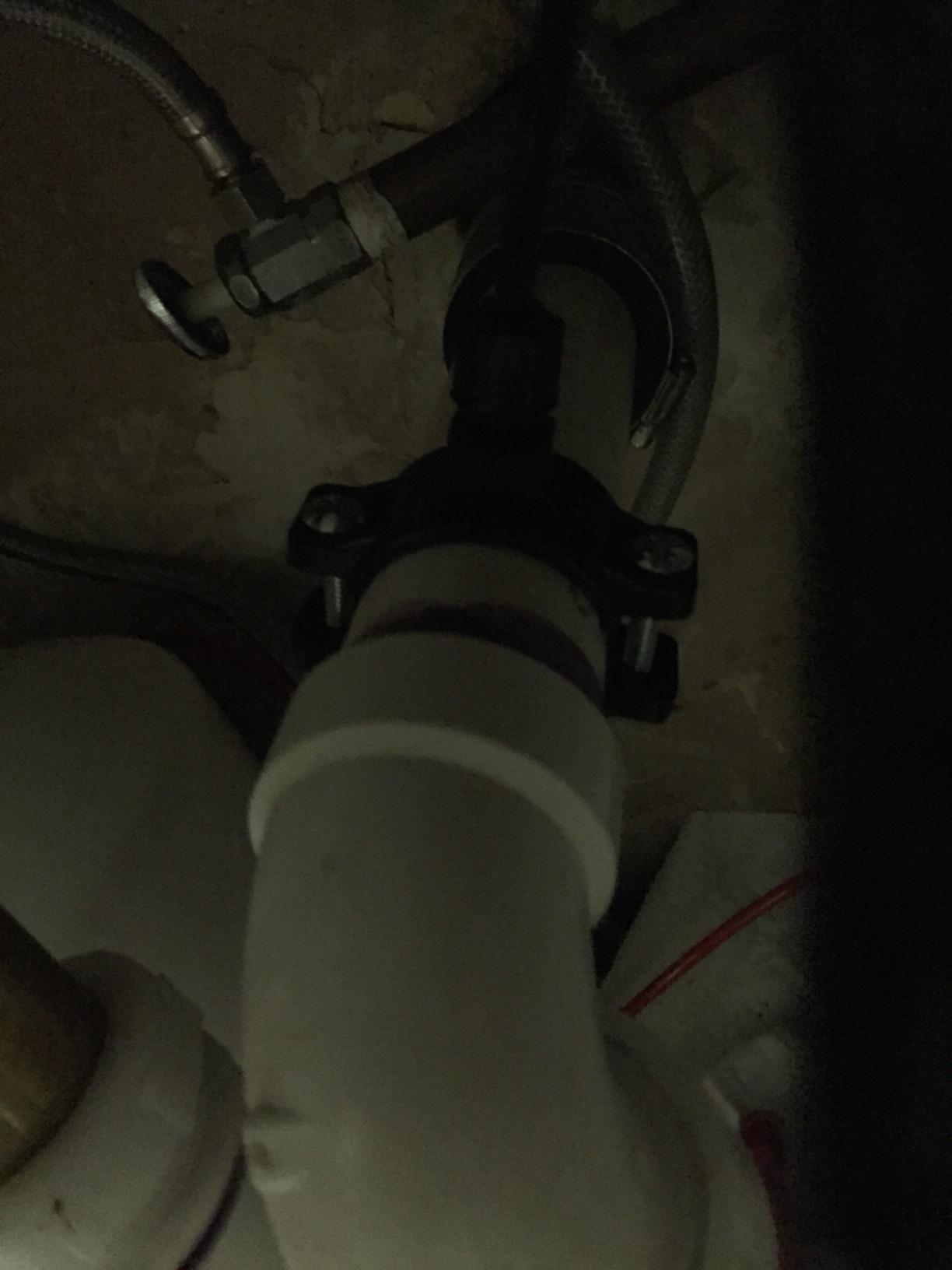
You need a hole in the countertop or sink deck for the dedicated faucet, and a way to connect to the drain line. Most systems use a saddle clamp on the drain pipe, though local code in some areas requires an air gap, which is a separate fitting that physically breaks the connection between filtered water and the waste pipe. Check your local code before assuming a saddle clamp is allowed.
Tankless and pump-equipped systems need a grounded outlet inside the cabinet. Look at where your appliances plug in and measure the cabinet interior, because the common failure is buying a unit that does not fit with the outlet in reach.
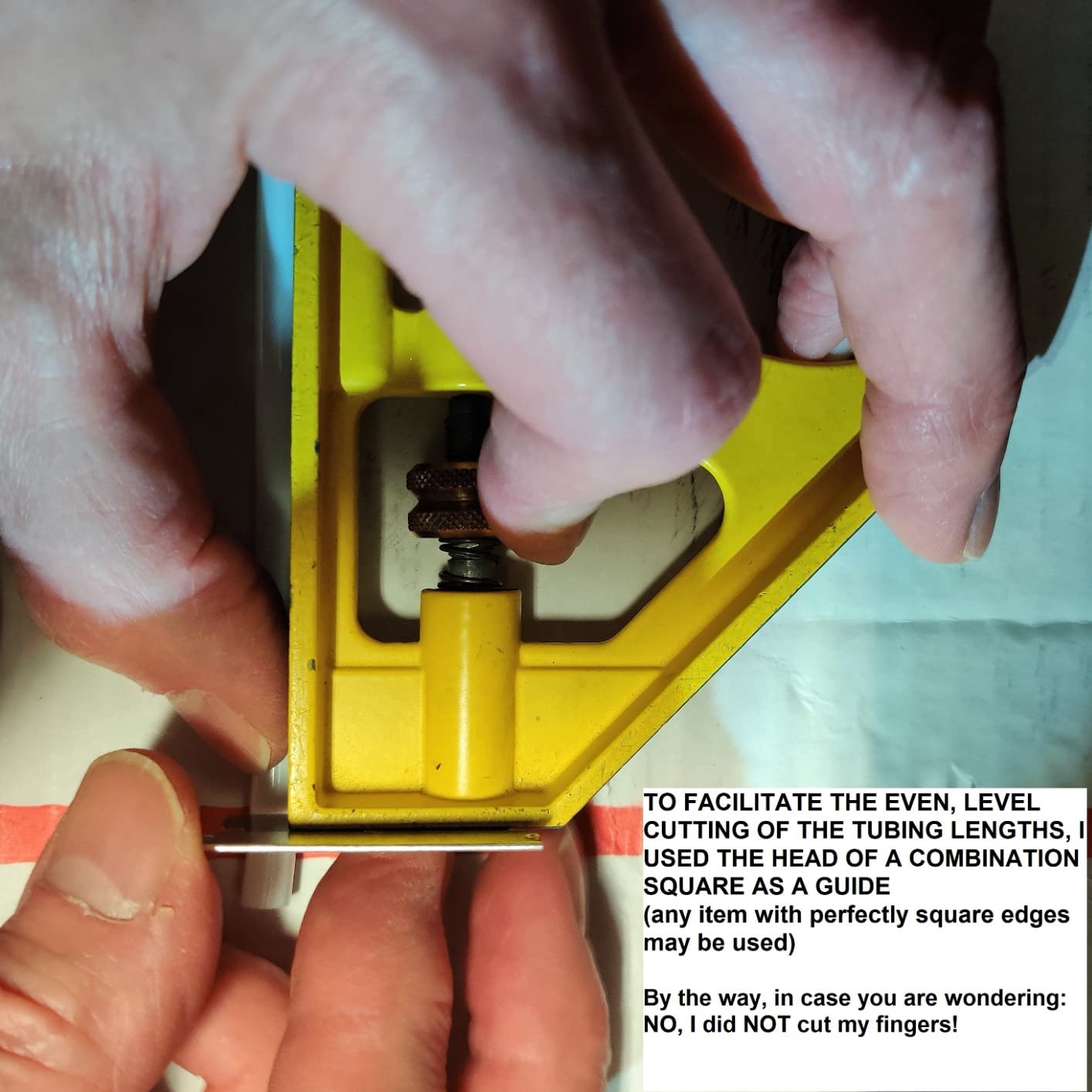
The job itself is mostly push-fit tubing on 1/4 inch connectors, and most owners report an afternoon for a first install. The parts that go wrong are the same every time: overtightened push fittings, a drain line kinked behind the housing, and a faucet hole measured against the wrong template. A top-mounted faucet design like the one on our editor’s choice removes the single worst of those problems.
How to Check That Your Remineralization Stage Is Working?
A basic TDS meter costs very little and settles most arguments. Test your tap water first, then test the filtered output, and write both numbers down. Feed water in the 200 to 600 ppm range should arrive at 3 to 5 ppm straight after the membrane and somewhere between 40 and 80 ppm after the mineral stage. If both readings are the same, the mineral cartridge is missing or exhausted.
A pH strip tells you the other half of the story. Membrane output sits near 5.5 to 6.5, and a working mineral stage lifts that into the 7.0 to 7.5 range. Water that stays acidic tastes sour no matter what else you do to it.
Check monthly at first, then quarterly once the pattern is established. Watch for TDS creep, which is the mineral stage continuing to dissolve and push your reading upward through the day. An automatic shutoff valve stops that by cutting off the membrane feed once the tank is full, and the practitioner tip that circulates on r/WaterTreatment is to run calcite first and a corosex and calcite blend second, which raises pH and polishes taste at the same time.
If newly installed water tastes sharply sweet or strongly mineral-heavy, flush it. Several posters on r/WaterTreatment describe a sore throat and an odd sweetness on first use that clears after a full flush cycle. That is media dust coming off a new cartridge, not a fault.
Frequently Asked Questions
How do you remineralize water after reverse osmosis?
The three practical routes are an inline calcite or maifan stone cartridge clamped onto the faucet line, a built-in alkaline stage inside a sixth or seventh housing, or liquid mineral drops. The inline cartridge costs the least and works with any system. A built-in stage is tidier and has fewer connections to leak. Drops are the least consistent because dosing is manual. All three lift TDS from roughly 3-5 ppm to 40-80 ppm and pH from about 5.5-6.5 to 7.0-7.5.
Which RO system has the best remineralization feature?
The Home Master TMAFC stands out because its patented two-pass process adds calcium and magnesium twice during purification rather than once at the end, which owners describe as a fuller, more mineral-forward taste. Among tankless units the Frizzlife PD600-TAM3 raises pH above 7.5 and reports the highest output pH of any system we reviewed. For proven reliability rather than feature depth, the iSpring RCC7AK-BN carries the largest owner review record in the category.
Is an under-sink reverse osmosis system worth it?
It is worth it if you currently buy bottled water, brew coffee and tea daily, or want fluoride and lead reduction at the tap. The running cost is dominated by cartridges, and a tankless system with a 2:1 drain ratio also cuts the water wasted at the drain. It is less compelling for a single person who drinks one glass a day, where a pitcher would serve the same purpose for far less money and no countertop drilling.
Why am I thirsty after drinking reverse osmosis water?
Reverse osmosis removes 95 to 99 percent of dissolved solids including calcium and magnesium, so the water arrives with a TDS of 3 to 5 ppm and a pH near 5.5-6.5. That is why it tastes flat and leaves you wanting more. A mineral stage raises the TDS to 40-80 ppm and the pH to 7.0-7.5, which most people find noticeably more satisfying to drink.
Is RO water hard on the kidneys?
There is no established evidence that drinking low-TDS reverse osmosis water is harmful to healthy kidneys. The World Health Organization does not set a minimum TDS for drinking water and treats desalination output as safe. People with diagnosed kidney disease are a different case and should follow their clinician’s guidance on mineral intake. For healthy adults, the widely reported issue with unmineralized RO water is taste and perceived purity rather than a medical risk.
Can I install an under sink RO system myself?
Most owners complete a first install in an afternoon. The work is a countertop hole for the faucet, a push-fit or threaded connection to the cold water line, a saddle clamp or air gap fitting on the drain, and plugging in the pump if the system has one. Before you start, confirm the faucet hole is permitted in your lease, check whether your local code requires an air gap, and make sure an outlet sits inside the cabinet for a tankless or pump-equipped model.
What are the disadvantages of using an RO water purifier?
The main drawbacks are a slow dispensing rate on small tank systems, water waste at the drain, the need to replace cartridges on a schedule, and the flat taste of unremineralized output. Tank-based units also add a butyl bladder surface that stored water contacts. Tankless units trade those problems for an electrical requirement, pump noise and electronics that can fail. None of these are deal breakers, but all of them are worth deciding before you buy.
The Bottom Line on Under Sink RO With Remineralization
The best under sink reverse osmosis systems with remineralization all do the same thing at the end of the chain, so the choice comes down to how the water reaches you. For most households, the iSpring RCC7AK-BN is the pick: complete-system certification, a real mineral stage, and 21569 owner reviews behind it. If your water pressure is low, take the booster pump version. If you want tankless flow without the top-end cost, the Frizzlife PD600-TAM3 is hard to argue with.
Measure your cabinet, find your outlet, and buy the matching format. The best under sink RO system you install is the one that keeps working, and format mismatch is the reason filters end up unused. Grab a TDS meter when you install so you can confirm in 2026 that the mineral stage is doing its job, then raise a glass of the finished water to whoever is hardest to please at your house. If they drink a second glass, the system was worth it.