
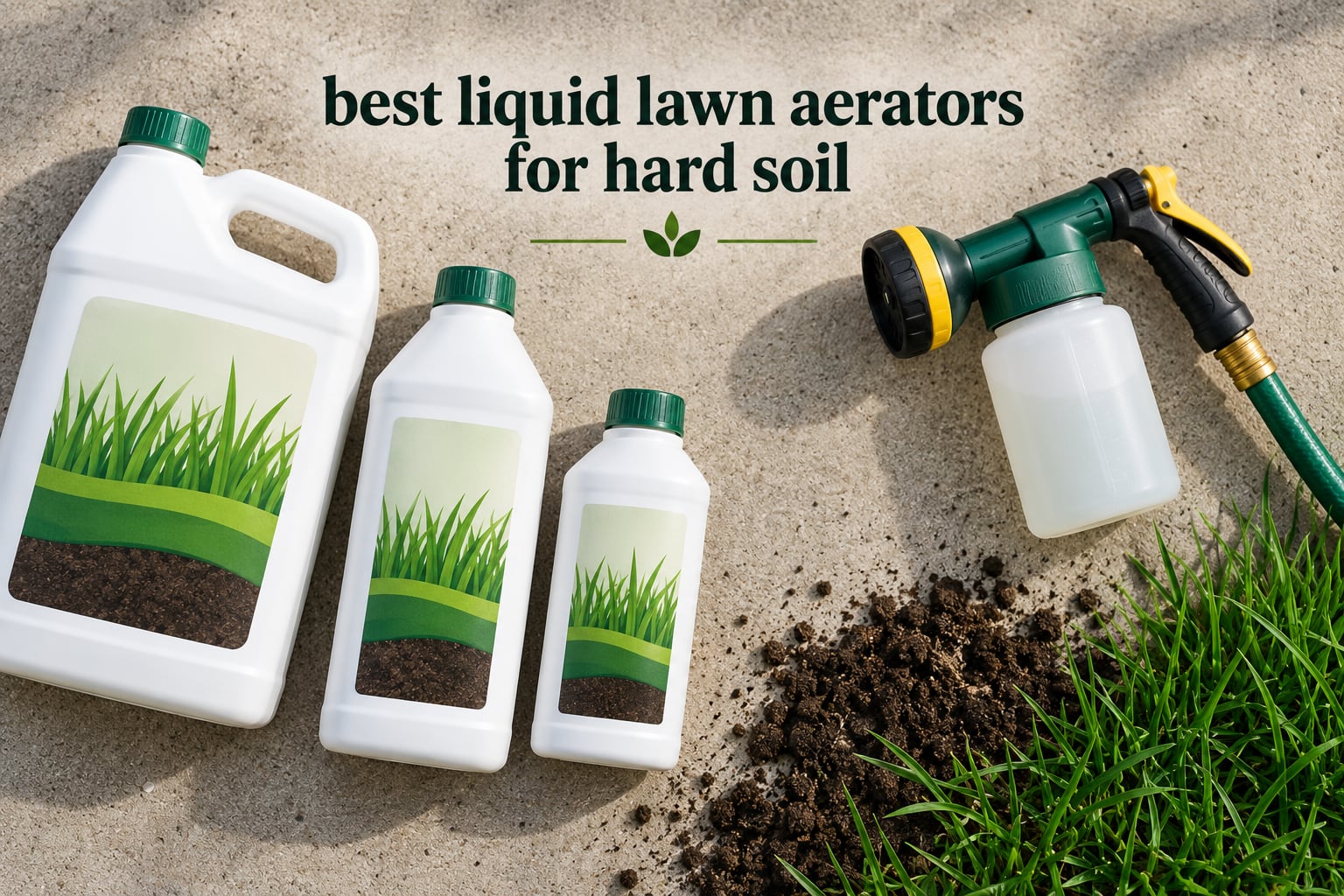
Liquid soil aerators are effective, but not in the way most lawn forums advertise them. A spray-applied surfactant or bio-stimulant can move water and nutrients into soil that has become hard, reduce puddling and runoff, and let roots reach deeper. It cannot pull a soil core out of the ground, and it will not relieve true hardpan. If you want the best liquid lawn aerators for hard soil, the honest answer is that you are buying a maintenance layer that works best on top of mechanical aeration, not a replacement for it.
That distinction matters because hard soil is the exact problem where people are most willing to spend money and most disappointed by the result. Compacted yards sit in the top spot of every lawn care forum I have read, and the same sentence keeps coming up: I sprayed it, I waited, nothing happened. In most of those threads the product was fine and the application was the problem. Liquid chemistry needs moisture to move, needs a working dilution ratio, and needs a second application.
We compared the twelve liquid soil looseners and surfactants on the market against the criteria that actually predict performance on compacted ground: coverage per container, whether the active chemistry is named, how the product behaves on clay versus hydrophobic dry patches, and how much of the user base reports measurable change. Each pick below also carries a hard-soil verdict, because a product that is excellent on sandy beds can do very little for a yard that has been walked on since it was builder fill.
Table of Contents
- Top 3 Best Liquid Lawn Aerators for Hard Soil in 2026
- All 12 Liquid Lawn Aerators Compared in 2026
- 1. Simple Lawn Solutions Liquid Soil Loosener – Best Overall for Hard Soil
- 2. LawnStar Liquid Lawn Aerator – Best Coverage for Large Yards
- 3. Covington Liquid Lawn Aerator – Fastest Results on Warm-Season Grass
- 4. Grow More EZ Wet Soil Penetrant – Best Budget Wetting Agent
- 5. GS Plant Foods Soft Soil – Best for New Seed, Sod and Sprigs
- 6. Turf Titan Root Booster – Best for Overseeding Hard Soil
- 7. Yard Mastery N-Ext Air-8 – Best for Builder-Fill Soil
- 8. Turf Titan Hydro Holder – Best for Runoff and Dry Spots
- 9. Stateside 20 Percent Humic Acid – Best for Rebuilding Clay Structure
- 10. Medina Plus Soil Activator – Best for Beds and Houseplants
- 11. Yard Mastery Compaction Cure – Best Monthly Maintenance Program
- 12. Superior Fulvic Humic X935 – Best Whole-Yard Coverage
- Liquid vs Core vs Spike Aeration on Hard Soil
- How to Apply Liquid Aerator on Hard Soil Step by Step
- How to Verify Your Liquid Aerator Actually Worked
- What Liquid Aeration Cannot Fix
- What to Expect at 2, 6 and 12 Weeks
- How to Choose a Liquid Aerator for Hard Soil
- Frequently Asked Questions
- Final Verdict
Top 3 Best Liquid Lawn Aerators for Hard Soil in 2026
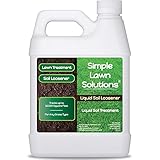
Simple Lawn Solutions Soil Loosener
- Covers 32000 sq ft per bottle
- Built for compact soil and standing water
- Pet safe and works alone or with core aeration


Covington Liquid Lawn Aerator
- Humic acid amino acid and kelp blend
- Screwdriver reaches 6 inches after treatment
- Pet and child safe
The Simple Lawn Solutions bottle is the safest first purchase because its coverage claim and its review volume both dwarf everything else in the category. LawnStar wins on value per treated square foot. Covington is the pick if your grass is a warm-season variety and you want visible change in under a month.
All 12 Liquid Lawn Aerators Compared in 2026
| Product | Specifications | Action |
|---|---|---|
| Simple Lawn Solutions Liquid Soil Loosener |
|
Check Latest Price |
| LawnStar Liquid Lawn Aerator |
|
Check Latest Price |
| Covington Liquid Lawn Aerator |
|
Check Latest Price |
 Grow More EZ Wet Soil Penetrant Grow More EZ Wet Soil Penetrant |
|
Check Latest Price |
 GS Plant Foods Soft Soil GS Plant Foods Soft Soil |
|
Check Latest Price |
 Turf Titan Root Booster Turf Titan Root Booster |
|
Check Latest Price |
 Yard Mastery N-Ext Air-8 Yard Mastery N-Ext Air-8 |
|
Check Latest Price |
 Turf Titan Hydro Holder Turf Titan Hydro Holder |
|
Check Latest Price |
 Stateside 20 Percent Humic Acid Stateside 20 Percent Humic Acid |
|
Check Latest Price |
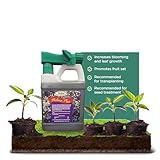 Medina Plus Soil Activator Medina Plus Soil Activator |
|
Check Latest Price |
 Yard Mastery Compaction Cure Yard Mastery Compaction Cure |
|
Check Latest Price |
 Superior Fulvic Humic X935 Superior Fulvic Humic X935 |
|
Check Latest Price |
Coverage per bottle is the single most useful number on this page, because it is what decides whether one bottle treats your whole lawn or a strip of it. Anything under 6000 sq ft per quart means you are buying several bottles for an average suburban yard.
1. Simple Lawn Solutions Liquid Soil Loosener – Best Overall for Hard Soil
Liquid Soil Loosener- Soil Conditioner-Use alone or when Aerating with Mechanical Aerator or Core Aeration- Simple Lawn Solutions- Any Grass Type-Great for Compact Soils, Standing water, Poor Drainage
32 oz concentrate
32000 sq ft coverage
2 lb weight
Pet and child safe
Pros
- Covers 32000 sq ft per bottle
- Softens clay so spikes push in easily
- Reduces runoff and standing water
- Works alone or with core aeration
- Safe for pets and children
Cons
- Takes several weeks and repeat applications
- A minority see no change after two seasons
- Foams heavily and needs rinsing
- Sprayer dial settings are easy to misread
This is the bottle I hand to friends who ask me what to buy first. The label language is aimed squarely at the problem in this article: compact soil, standing water, poor drainage. At 32,000 sq ft per 32 oz bottle, it covers an average quarter-acre lawn in a single pass, and that coverage claim is the reason a single bottle disappears from the garage in one weekend.
Across 9217 reviews the pattern repeats with unusual consistency. People push a screwdriver or spike aerator into their lawn after a few weeks and it goes in without the fight it used to give, and puddling in low spots stops. Turf greens up from the middle outward. The brand also publishes a compatible grass list that includes Bermuda, St. Augustine, Zoysia, Centipede and Bahia, so there is no guessing about turf safety.
The one complaint that comes up often enough to mention is foaming. This product suds heavily when it hits dry soil, which means you should rinse the sprayer and the treated area afterward. Several reviewers also misread the bottle size from the listing photos, so check the fluid volume before you plan how many bottles to order.
A second theme worth knowing: results take weeks, not days. The reviewer who treats once in spring and declares failure is the most common source of disappointment with this category, not the product itself. Plan for two applications in a season on genuinely hard ground, spaced four to six weeks apart.
When this is the right choice for your yard
Pick this if you have a lawn of typical suburban size and you want one product to cover the whole thing in a single pass. It also makes sense if you plan to core aerate later this season, since the label explicitly allows it to be used alongside a mechanical or core aerator.
Our hard-soil verdict is that this is the most reliable liquid option available for compacted clay. It will not break a genuine hardpan layer, and it will not stop traffic from re-compacting the yard next spring.
When to choose something else
Skip it if you have a very small yard, because a quart will be more than you need and the opened concentrate keeps for a limited time. Choose a humic-acid product instead if your problem is structure rather than drainage, since this one focuses on moving water rather than rebuilding crumb.
Also consider a mechanical route if you rent a core aerator easily. On truly hard ground, liquid plus core is a different result than liquid alone, and our guides to lawn aerators for compact soil and the best lawn aerators overall cover the machine side in detail.
2. LawnStar Liquid Lawn Aerator – Best Coverage for Large Yards
Liquid Lawn Aerator, Loosens and Conditions Compacted Soil, 32oz
32 oz bottle
30000 sq ft coverage
1:1024 mixing ratio
30-day guarantee
Pros
- Works on red clay and builder fill
- Softens ground in two to five weeks
- 30000 sq ft per quart
- 30-day no-questions guarantee
- Simple hose-end application
Cons
- Bare areas need several applications
- Over-concentrated mixing can burn grass
- Bare patches sometimes stay compacted
- Needs watering in and repeat passes
LawnStar is the value pick, and the reason is arithmetic rather than marketing. Thirty thousand square feet per quart with a 1:1024 dilution ratio means one bottle handles a large lawn, and the concentrate is thin enough that a cheap pump sprayer works fine.
Reviewers with Texas red clay and Colorado hardpan report the ground softening enough for spike aerators and scarifiers to penetrate in roughly three to five weeks. The 30-day satisfaction guarantee is also longer than most labels in this category, which matters when you are committing to a product before you have seen any result.
The caution here is dilution. Several reviewers burned a strip of lawn by dialling the hose-end sprayer to a stronger setting than the label calls for. Because the ratio is 1:1024, the difference between the correct setting and the next one over is easy to overshoot, so mix in a pump sprayer if you are not confident.
A second pattern: grassless ground responds more slowly than turf-covered ground. Reviewers with bare compacted patches report needing biweekly reapplication there, while areas with existing sod improved much faster. If most of your yard is bare, budget for a second bottle.
When this is the right choice for your yard
This suits anyone with a half-acre or larger of compacted soil who wants the lowest cost per treated square foot. It is also a good match for the DIY method of applying liquid aeration and then spike aerating a week later, because reviewers report the spikes going in much easier after treatment.
Our hard-soil verdict is strong for clay-heavy yards that still have grass cover, and moderate for bare hardpan.
When to choose something else
Do not choose it if you want a single application to fix bare compacted ground, because the users who expect that are the ones leaving the most negative reviews. If you have a small lawn, the 32 oz bottle is more concentrate than you need.
If you also own potted plants or raised beds, a dedicated wetting agent covers more use cases per bottle. Our picks for liquid aerators for clay soil break down the surfactant options.
3. Covington Liquid Lawn Aerator – Fastest Results on Warm-Season Grass
Covington Liquid Lawn Aerator (32oz) – Soil Conditioner & Softener for Lawns & Gardens – Loosens Clay & Compacted Soil for Better Water & Nutrient Absorption – Liquid Aeration Concentrate, Made in USA
32 oz bottle
3500 to 8000 sq ft coverage
Humic acid and kelp blend
Pet and child safe
Pros
- Humic acid amino acid and kelp blend
- Screwdrivers push in 6 inches deeper
- Greening within days on Bermuda and St Augustine
- Safe for children and pets
- Made in the USA
Cons
- Several users see no change after two passes
- Easy to over-dial a hose-end sprayer
- Coverage per bottle is lower than rivals
- Slow customer service on coupon issues
Covington uses a bio-stimulant approach instead of a straight surfactant. The formula combines humic acids, amino acids and kelp to feed the soil microbes that break down old roots and thatch and create crumb structure over time. That is a slower theory than surfactants, which is why this is not the top pick but earns a place on the podium.
The payoff on warm-season lawns is speed, according to reviewers. Bermuda and St. Augustine users report soil softening within days, bare patches filling in, and the most concrete data point in the category: screwdrivers going in about six inches into ground that previously stopped at two or three. The brand is also used by landscapers and golf course crews.
Coverage is the weak point. At 3500 to 8000 sq ft per quart depending on application rate, a 10,000 sq ft lawn needs two bottles at most rates. The label allows 2, 4 or 8 oz per 1000 sq ft, which is a wide range and the reason so many reviewers accidentally waste concentrate by over-dialling.
A persistent minority reports no measurable change even after two applications, and a few have documented frustration with coupon redemption and slow support responses. Judge this product on a treated strip next to an untreated one rather than on the whole yard.
When this is the right choice for your yard
Choose Covington when your lawn is Bermuda, St. Augustine or Zoysia, when your problem is root penetration rather than standing water, and when you can commit to two applications. It is also a sensible pick for anyone who wants a bio-stimulant approach because they plan to pair it with a fertilizer program.
Our hard-soil verdict is good on warm-season turf with existing grass, and weak on large bare hardpan areas because of the coverage math.
When to choose something else
Skip it if you have a large lawn and want one product to cover it in a single pass. If your yard has broad hydrophobic dry spots where water rolls off instead of soaking in, a non-ionic wetting agent attacks that problem directly.
Also think twice if you are on a tight timeline and need visible change in under two weeks. Nothing in this category delivers that reliably.
4. Grow More EZ Wet Soil Penetrant – Best Budget Wetting Agent
Grow More EZ Wet Soil Penetrant 26% – 1 Quart of Biodegradable Non-Ionic Surfactant – Soil Wetting Agent for Better Drainage & Liquid Aeration for Lawns, Nurseries, & Landscaping
26 percent non-ionic surfactant
1 quart bottle
Neutral pH
Biodegradable and alcohol free
Pros
- Non-ionic and neutral pH for all soils
- Biodegradable and alcohol free
- Leaches salts and reduces runoff
- Works in soil mulch and potting mix
- Very concentrated per ounce
Cons
- Works as a wetting agent
- not a soil loosener
- Will not break up severely hardened ground
- Premium cost per ounce versus generic surfactant
This is a surfactant, not a soil conditioner, and understanding that difference prevents most disappointment. Grow More is a 26 percent non-ionic, neutral-pH penetrant that reduces the surface tension holding water on top of packed soil. It does not feed microbes, loosen structure or change bulk density.
That said, it carries the highest rating of any product on this page at 4.4 stars with 72 percent of reviews at five stars. Reviewers use it in pots, hanging baskets, mulch beds and peat mixes where water previously ran straight through, and lawn users report that irrigation water finally soaks in instead of sheeting across the surface.
For hard soil specifically, treat it as a force multiplier rather than a treatment on its own. Applying a surfactant first, then following with a bio-stimulant or a core aeration, gets you more out of every other product you own. It also leaches excess salts, which is a separate problem that no other product here addresses.
The catch is real. Reviewers are direct that this does not physically break up severely hardened ground. If your lawn is spongy and compacted rather than dusty and crusted, this bottle will make your watering more efficient without loosening anything.
When this is the right choice for your yard
Buy it if your main symptom is water that runs off, ponds in low spots or evaporates before it soaks in, and if you want the cheapest reliable way to improve water movement across a large area. It also makes sense for anyone with garden beds and containers who wants one product that handles both.
Our hard-soil verdict is that it improves infiltration on any soil and does almost nothing to restructure it. It belongs in a program, not in place of one.
When to choose something else
Do not expect a screwdriver to go deeper after this alone. If structural loosening is the goal, choose a humic acid or microbial product instead, or better yet, plan to combine this with core aeration since our electric lawn aerator guide covers the machines built for compacted ground.
5. GS Plant Foods Soft Soil – Best for New Seed, Sod and Sprigs
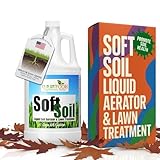
Soft Soil Liquid Soil Aerator & Lawn Treatment to Fix Compacted Soils, Improve Drainage with Non-Mechanical Liquid Application. 1 Gallon
1 gallon bottle
16000 sq ft coverage
Mix 4 oz per gallon
Organic formula
Pros
- Organic and safe for family and pets
- Effective on red clay and dry patches
- Spades and forks penetrate after treatment
- Safe on new seed sod and sprigs
- Improves nutrient uptake
Cons
- Coverage per bottle is poor for its price
- Repeat applications raise total cost
- Strong unpleasant odor
- Hardpan may need three applications
This is the pick for anyone working on bare ground rather than established turf. The label explicitly covers new lawns, reseeding, sod, sprigs and grass plugs, which is unusual in a category where most products only claim to work on existing sod.
The chemistry is straightforward. At 4 oz per gallon of water, each gallon covers roughly 500 sq ft, which is the weakest coverage per ounce on this page and the reason it takes the largest container to treat a big yard. Reviewers confirm it works: pitchforks, aerator boots and scarifiers penetrate easily after treatment, and hydrophobic dry patches and red clay both respond.
Economics are the most repeated criticism. Several reviewers bought the 32 oz size, worked out what it actually covers, and switched to a cheaper, higher-coverage concentrate. If you buy this, buy the gallon or the 5 gallon container rather than the quart.
A distinctive odor is also worth warning your household about, and stubborn hardpan areas typically need three or more applications rather than one. Plan accordingly.
When this is the right choice for your yard
Choose this if you are seeding, laying sod or plugging a bare lawn and want a product that is explicitly safe on all of it. It is also a reasonable pick for small patch repairs where you can mix only what you need.
Our hard-soil verdict is good for breaking new ground and reviving bare compacted spots, weak as a whole-yard treatment because of the coverage math.
When to choose something else
Skip it for a large established lawn unless you commit to a larger container. If odor is a problem with pets or small children nearby, pick a product without a strong scent.
For large areas, a high-coverage concentrate such as the first or second pick on this page will stretch further per bottle, and our manual lawn aerator guide is worth reading if you want to follow up with spike aeration.
6. Turf Titan Root Booster – Best for Overseeding Hard Soil
Turf Titan Root Booster Liquid Probiotic for Lawn and Garden (32 oz) with Hose End Sprayer – Improves Nutrient Uptake in Compacted & Clay Soil – Supports Stronger Roots – Covers 6,000 Sq Ft
32 oz bottle
5000 to 6000 sq ft coverage
Hose-end sprayer included
Microbial formula
Pros
- Microbial approach without harsh chemicals
- Lawns hold color through heat stress
- Sprayer bottle included in the package
- Improves overseeding success
- Non-GMO ingredients
Cons
- Included sprayer bottle fails to meter evenly
- Concentrate stops mixing partway through
- Effects build slowly
- One-star share runs higher than peers
Turf Titan takes a biological route. Instead of a surfactant or a humic acid, it releases locked-up nutrients and supports microbial activity in the root zone, which is why reviewers most often mention overseeding results rather than drainage results. Visible change typically lands somewhere between two and four weeks with consistent use.
The reviews split cleanly. People who follow the mixing instructions report real drought resilience and better seed germination. The loudest recurring complaint is not the liquid at all, it is the hose-end sprayer bottle included in the package, which several buyers say stops dispensing before it is empty.
That hardware problem matters more than it sounds. If the sprayer stops metering, you are walking your lawn with nothing coming out and no signal that it happened. Use your own pump or hose-end sprayer instead and treat the included one as a backup.
At 5000 to 6000 sq ft per 32 oz bottle, coverage is modest, so plan on multiple bottles for an average lawn. This is a soil conditioner, not a soil loosener, and it will not relieve compaction on its own.
When this is the right choice for your yard
Pick it when the primary goal is overseeding success or bringing thin, worn turf back through a dry summer. It suits homeowners who prefer biological inputs over surfactant chemistry and who are already watering consistently.
Our hard-soil verdict is that it helps roots exploit soil that has been improved by something else. It is a supporting product, not a primary treatment.
When to choose something else
Do not choose it as your only treatment for a hard-packed lawn. If your main problem is water that will not soak in, a non-ionic wetting agent is a more direct answer, and if the problem is structure, go with humic acid.
7. Yard Mastery N-Ext Air-8 – Best for Builder-Fill Soil
N-Ext Air-8 Liquid Aeration Bio-Stimulant with Humic Acid, 1 Quart
1 quart bottle
Humic acid formula
Clay and compacted soil focus
Spray application
Pros
- Fractures soil structure for deeper rooting
- Greening within days on builder fill
- Usable any time in the growing season
- No need to mark sprinklers or lines
- Quick customer service on a lost order
Cons
- Thicker than competing liquids
- Can stain concrete and patios
- Several users see no improvement
- Small review base
Air-8 is the product most often recommended by name in lawn forums, and it is frequently resold under many different seller names. Buyers should know that the ratio and coverage on the bottle you actually receive matter more than the logo, so check the label before you dilute.
Users with clay report screwdriver penetration after about four weeks and greener turf in areas that were previously thin. It is also the easiest product on this list to apply safely around irrigation lines and buried utilities, since you do not need to mark sprinkler heads, invisible fences or cable lines the way you would for a spike aerator.
When this is the right choice for your yard
Choose it for builder-fill lots, new construction yards and anywhere the soil was trucked in rather than developed. It is also a good fit for tight side yards and slopes where a machine cannot go but you want the soil fractured along the root zone.
Our hard-soil verdict is good for compacted fill that has not yet formed a hardpan layer, which is most yards under ten years old.
When to choose something else
Skip it if you have concrete driveways and patios within reach of the spray pattern. Reviewers report staining, and that mark does not come out. Be aware the concentrate is noticeably thicker than competing liquids, so agitation in the tank matters.
If you want a product with a large published review base behind it, the first two picks on this page carry far more customer history.
8. Turf Titan Hydro Holder – Best for Runoff and Dry Spots
Turf Titan Hydro Holder Soil Wetting Agent for Lawn (32 oz) w/Hose End Sprayer – Improves Water Absorption in Dry & Compacted Soil – Helps Lawns Stay Green Longer in Heat – Covers up to 6,000 Sq Ft
32 oz bottle
Covers 6000 sq ft
Hose-end sprayer included
Non-ionic formula
Pros
- Non-ionic and neutral pH
- Reduces runoff and channeling
- Lawns stay green longer in heat
- Single application often shows greening
- Includes hose-end sprayer
Cons
- Some buyers see results like plain water
- Bottle has no level window
- Reading the rate means adjusting walking speed
- Small review base
Where Air-8 targets structure, this targets water movement. It is a non-ionic, neutral-PH wetting agent, and reviewers consistently report it on hillsides and in lawns that shed water into low spots instead of absorbing it. Lawns stay greener through heat and dry spells, and sprinkler installers recommend it.
Coverage is 6000 sq ft per 32 oz bottle, and the bottle includes a hose-end sprayer. Visible greening after a single application is the most common report, though a minority of buyers say the result was indistinguishable from plain water.
The usability complaint worth knowing is the container itself. There is no window, so you cannot see how much concentrate remains while you walk. Combine that with a spray rate that depends on your walking speed and it is easy to over-apply and then run dry halfway across the yard.
Measure out your dose into a pump sprayer instead, and apply in even overlapping passes.
When this is the right choice for your yard
Pick it if your symptom is water that channels or runs off, if you irrigate on a slope, or if you have recurring dry patches between healthy areas. It is also useful as a spring addition to a wetting-agent program before summer restrictions begin.
Our hard-soil verdict is that it fixes infiltration and moisture distribution but leaves compaction itself untouched. Layer it under a humic acid product for a fuller effect.
When to choose something else
Do not choose it expecting a screwdriver to penetrate deeper. If the problem is bare compacted ground rather than water behavior, a microbial or humic-acid formula is a better use of the same money.
9. Stateside 20 Percent Humic Acid – Best for Rebuilding Clay Structure
64oz 20% Humic Acid for Lawn – Covers 10,000 sq ft, Humic20 Soil Amendments, Ideal Soil Conditioner for Lawns, Promotes Aeration & Better Structure for Stronger Roots & Healthy Grass Growth
64 oz bottle
20 percent humic acid
10000 sq ft coverage
4 lb weight
Pros
- Highest rating in the group at 4.6
- Binds particles into crumbly structure
- Half gallon covers 10000 plus sq ft
- Works on sandy clay and general soils
- Compatible with any fertilizer program
Cons
- Dilution rate and frequency must be followed
- Works as a soil conditioner rather than an aerator
This is the highest-rated product we analyzed, at 4.6 stars with 79 percent of reviews at five stars and only 2 percent at one star. It is also the least like a traditional aerator on this page. There is no surfactant and no microbes, just a 20 percent humic acid concentrate.
Humic acid binds soil particles into crumbly structure, which is exactly the failure mode in heavy clay. Reviewers credit it with improved drainage, aeration, root development and a workable crumb where they previously had a brick. Half a gallon covers more than 10,000 sq ft and a gallon covers more than 20,000 sq ft.
When this is the right choice for your yard
Choose it when your soil is heavy clay that stays compacted season after season and you want to rebuild structure rather than just move water. It works with Bermuda and Zoysia programs and pairs with any high-nitrogen fertilizer without conflict.
Our hard-soil verdict is that this is the strongest chemistry on the page for genuine clay structure, and the rating profile supports that. The smaller review base means less long-term history than the category leaders.
When to choose something else
Do not expect it to act as a substitute for mechanical aeration. Reviewers are clear it is a soil conditioner, not a plug puller. If you want visible drainage change in a few weeks, add a surfactant application to the program.
Also note it must be applied at the stated dilution and frequency to work, so treat it as a scheduled program input rather than a one-time rescue.
10. Medina Plus Soil Activator – Best for Beds and Houseplants
Medina Plus Soil Activator – Liquid Soil Loosener for Lawns & Gardens – Micronutrient-Rich Soil Conditioner & Softener – Used with House Plant Fertilizer, Liquid Plant Food for Houseplants – 1 End Qt
32 oz bottle
Covers 1000 sq ft
Over 40 trace elements
Seaweed extract included
Pros
- Over 40 trace elements plus seaweed
- Covers 1000 sq ft per quart
- Reduces transplant shock
- Doubles as a compost activator
- Works well on Southeast clay
Cons
- Optional Medina sprayer is criticized as non-functional
- Marketed as a foliar feed
- not an aerator
- Modest coverage for large lawns
Medina Plus is not a lawn product and we are including it for a specific reason: it is the cheapest credible way to treat garden beds, vegetable plots and new transplants in the same yard you are aerating with a liquid concentrate. It carries over 40 trace elements plus seaweed extract at the lowest cost per quart of anything on this page.
At 6 tablespoons per gallon, a quart covers about 1000 sq ft. Reviewers report better soil workability before laying sod, stronger rooting after transplanting, and good results on clay beds in the Southeast. It works as a compost activator too, which extends its usefulness across the property.
The most common complaint has nothing to do with the liquid. Reviewers who bought the optional Medina Plus sprayer say air would not pass through the tube in any orientation. Use any sprayer you already own and skip the accessory entirely.
Because coverage is about 1000 sq ft per quart, this is a spot treatment for beds rather than a lawn treatment. Treat it that way.
When this is the right choice for your yard
Pick it if your hard soil problem extends into vegetable plots, flower beds or new transplants, and if you want an inexpensive product that improves workability before you plant. It is also useful as a compost activator when you are trying to add organic matter to clay.
Our hard-soil verdict is that it helps bed and plot conditions cheaply, and does too little coverage math to justify lawn-scale use.
When to choose something else
Skip it for the lawn itself. If you want one product that handles turf and beds, a humic acid concentrate sold in a gallon size covers both at a better rate.
11. Yard Mastery Compaction Cure – Best Monthly Maintenance Program
Compaction Cure Liquid Soil Aerator – Loosens Hard Soil & Improves Drainage – 1 Quart (32 oz) = Covers up to 5,333 sq ft – Liquid Aeration for Lawns, No Mechanical Aerator Needed – Yard Mastery
32 oz bottle
Covers 5333 sq ft
6 to 9 oz per gallon
Year-round use
Pros
- Effective on clay and compacted soil
- Simple spray application
- Visible greening and growth
- No equipment needed
- Sizes from quart to 5 gallons
Cons
- Results take time to appear
- Needs monthly reapplication
- Mixed results across users
- Higher cost per application than some
Compaction Cure is sold on the same platform as Air-8 and works on the same principle, so treat it as the sibling option. Where Air-8 carries a longer review history, this one is positioned explicitly as a repeat-use product with a stated mixing range of 6 to 9 oz per gallon and coverage of up to 5333 sq ft per quart.
Reviewers on compacted clay report improved drainage and grass growth, and several note that they see the biggest gains with consistent biweekly or monthly application rather than a single pass. That is the honest way to think about it. It is a maintenance product.
When this is the right choice for your yard
Choose it if you have already core aerated your lawn and want to hold the gains open between machine visits. It also suits anyone who prefers a year-round schedule over a single seasonal treatment, since the label allows application in any season.
Our hard-soil verdict is that it works best as the follow-up layer after mechanical aeration, which is exactly the sequence lawn care professionals describe.
When to choose something else
Do not choose it as a one-time fix for first-year compaction. The cost per application works out higher than several concentrates on this page, and users who sprayed once and moved on are the least satisfied group in the reviews.
If you want more coverage per bottle, choose a 30000 sq ft concentrate instead of a 5333 sq ft one.
12. Superior Fulvic Humic X935 – Best Whole-Yard Coverage
Liquid Aeration for Lawn – Humic & Fulvic Acid, Covers 10,000 Sq Ft
32 oz concentrate
Covers 10000 sq ft
Humic and fulvic acids
2 oz per gallon dilution
Pros
- Covers 10000 sq ft per bottle
- Combines humic and fulvic acids
- Works on all grass types and gardens
- Strong 4.6 rating from buyers
- Fits an existing lawn routine
Cons
- Higher upfront cost per bottle
- Needs proper spray equipment
- Single size variant only
- Suggests reapplication every 3 to 4 weeks
This one covers more ground per bottle than any 32 oz product here, at 10,000 sq ft, and it pairs humic acid with fulvic acid rather than humic alone. Fulvic is the smaller, more mobile fraction that moves into the root zone, so the combination is a reasonable choice for compacted soil that needs both structure and delivery.
Reviewers appreciate the versatility. The same dilution works on lawns, vegetables, flowers and hydroponics, and it is listed as safe for Bermuda, St. Augustine, Zoysia, Kentucky Bluegrass, Fescue, Bahia, Centipede and Buffalo grass. Buyers rate it 4.6 with 73 percent at five stars.
The tradeoff is that it is the most expensive per bottle on this page, and it only comes in one size. If you have a large lawn, that cost per treated square foot narrows considerably, but if you have a small yard you will be storing concentrate you will not use this season.
It also needs proper equipment. A hose-end, backpack or pump sprayer is required, and the suggested reapplication interval is every three to four weeks, which turns a single treatment into a recurring program.
When this is the right choice for your yard
Choose it if you want one product that handles the lawn and the garden, if you grow in clay and want both humic and fulvic fractions, or if you prefer to commit to a scheduled maintenance routine rather than a seasonal rescue.
Our hard-soil verdict is that it conditions structure and supports nutrient availability across the whole property, with the caveat that a surfactant is still a useful addition if infiltration is your primary symptom.
When to choose something else
Skip it if you want a single cheap treatment for a small yard. For a one-time fix on a large lawn, a high-coverage surfactant concentrate will cost less per bottle.
Liquid vs Core vs Spike Aeration on Hard Soil
Liquid aeration and core aeration do different jobs, and the forum consensus on hard soil is not that liquid is a scam. It is that liquid cannot relieve true compaction the way a core aerator can. Core aeration physically removes a column of soil, immediately reducing bulk density and opening channels for air and water. Liquid products lower surface tension and feed biology, which improves infiltration and structure slowly.
For genuinely hard soil, experienced lawn care professionals recommend sequencing rather than choosing. Core aerate first if you can, then apply liquid to keep the opened soil soft between machine visits. That is exactly how the two top products on this page are positioned, and both labels permit use alongside a mechanical aerator.
Spike aerators sit in the middle. They perforate the surface without removing soil, which helps water enter but does not reduce bulk density and can actually compact the soil further if you use a heavy machine on soft ground. Our manual lawn aerator guide covers spike and foot-based options for small yards.
One more consideration for slopes and tight side yards. Liquid application has no equipment footprint, so it is the only realistic option where a tow-behind cannot turn. On an open quarter-acre lawn, however, renting a core aerator for a weekend usually produces a faster and larger change than any bottle on this page.
How to Apply Liquid Aerator on Hard Soil Step by Step
Application is where most of the money gets wasted in this category. Follow these steps in order and you will get more out of a single bottle than people who spray and walk away.
1. Mow short and remove clippings. Leave roughly a third of the blade height. Excess thatch blocks the spray from reaching soil contact.
2. Water the day before. Liquid chemistry needs moisture to carry the surfactant or humic fraction down into the root zone. Applying to bone-dry soil is the single most common failure mode reported in reviews.
3. Check the forecast. Pick a window with no rain for several hours afterward, no foot traffic for a day or two, and temperatures below the low 80s if you can manage it.
4. Measure your dose exactly. Use a pump or backpack sprayer rather than dialling a hose-end setting by eye. Over-concentrated mixing has burned grass for several reviewers on this page.
5. Apply in even overlapping passes. Walk at a steady pace. Most coverage complaints on this list trace back to a sprayer that stopped metering or a walking speed that was too fast.
6. Water it in lightly. A short irrigation cycle afterward pushes the concentrate into contact with soil particles instead of letting it dry on the surface.
7. Stay off it. Avoid foot traffic and mower passes for 24 to 48 hours so the product works without being disturbed.
8. Schedule a second pass. Four to six weeks later, in the same season, is what separates people who report results from people who report none.
How to Verify Your Liquid Aerator Actually Worked
Do not trust color alone. Turf greening after a wet spring tells you nothing about whether the soil opened up, and it is the reason so many people credit a product for weather.
The most repeated DIY test on lawn forums is the screwdriver test. Before you apply, drive a standard flat-head screwdriver into a marked spot and note the depth it reaches by hand. Repeat at the same spot four to six weeks later. On ground that previously stopped at two or three inches and now goes to six, the soil structure genuinely changed.
For a quantitative version, use an infiltration can. Sink a cylinder a few inches into the turf, fill it with an inch of water, and time how long it takes to soak in. Repeat the test after treatment. A shorter drain time means better infiltration.
The method that works best is a control strip. Leave a three-foot section untreated next to treated ground, mark both, and compare them after rain. Untreated control patches are the forum-recommended way to separate what the product did from what the season did.
If after two full applications the screwdriver still stops at the same depth and infiltration time has not changed, the honest conclusion is that liquid chemistry is not your problem, and mechanical core aeration is the next step.
What Liquid Aeration Cannot Fix
Some problems are not surface tension problems, and no liquid product will touch them. Recognizing these early saves a season and a bottle.
True hardpan. A dense, impermeable layer of clay several inches down, often formed by construction equipment or repeated tillage at the same depth, will not be broken by a surfactant. That layer needs physical disruption.
Sodium salinity. High sodium binds clay particles into sealed aggregates that chemistry cannot separate. A soil test showing elevated sodium calls for a leaching program with water and gypsum, not an aerator.
A perched water table. If your water table sits close to the surface, roots cannot reach it no matter how well the topsoil drains. This is a drainage design issue.
Traffic. If the yard is walked on, parked on or played on daily, you will re-compact whatever you loosen within weeks. Fixing behavior matters as much as chemistry.
Thatch above two inches. A thick thatch mat blocks water and air at the soil line. Dethatch before you aerate, not after.
A soil test is worth the small expense before you spend a season of guesswork. It tells you whether you have a compaction problem, a salinity problem, or a pH problem, and only one of those three is a job for a bottle.
What to Expect at 2, 6 and 12 Weeks
Nobody can promise a date, and any product that does is selling you something. These are the checkpoints most consistent with what reviewers actually describe.
At two weeks. Surfactant products may show reduced runoff and better water absorption. Bio-stimulant and microbial products may show almost nothing yet. Do not judge the product at this point; judge your technique.
At six weeks. This is the first meaningful checkpoint. Screwdriver penetration should increase, low spots should drain faster, and turf color should even out. Run the screwdriver test and the infiltration test now.
At twelve weeks. Structure changes, if they are coming, show up as a spongier feel underfoot, better earthworm activity, and fewer dry patches in the same spots that failed in June.
At any checkpoint, if nothing has measurably changed, apply once more if the label calls for it. If the second application produces no change in the screwdriver test, escalate to core aeration instead of buying a third bottle. That decision point is where most people waste money.
How to Choose a Liquid Aerator for Hard Soil
There are three chemistry classes in this category and they are not interchangeable. Knowing which one you need removes most of the guesswork.
Non-ionic surfactants reduce soil surface tension so water penetrates. Grow More and Turf Titan Hydro Holder sit here. They are the fastest-acting class and the right answer for hydrophobic dry spots and runoff, but they do not rebuild structure.
Bio-stimulants such as humic acid, fulvic acid, kelp and amino acids feed soil biology that creates crumb structure over time. Stateside, Superior Fulvic Humic, Covington and Air-8 sit here. This is the class that genuinely addresses clay structure.
Microbial conditioners release locked-up nutrients and support organisms in the root zone. Turf Titan Root Booster is the clearest example. Useful for overseeding and drought resilience, weakest as a standalone loosening treatment.
For hard soil specifically, the honest ranking is bio-stimulant first, surfactant second as a booster, microbial third. Pure surfactant is the least effective on compaction alone.
Next, do the coverage math before you buy. Multiply the label coverage by the number of bottles and compare cost per treated square foot. A 32000 sq ft bottle and a 5000 sq ft bottle look very different once you divide by your lawn size.
Then check ingredient transparency. Products that name their active chemistry and its percentage are more trustworthy than labels that read ingredients not disclosed. That distinction alone eliminates a third of the shelf.
Consider pairing. On clay, gypsum addresses calcium and particle flocculation, compost adds organic matter, and a surfactant improves infiltration. Apply liquid aeration first, then top-dress compost, then water in deeply. If you are overseeding, liquid aeration two weeks before seeding gives the seed a better chance to establish.
Think about timing. Fall is the best window in most regions because the soil is warm, moisture is reliable, and the lawn has a full season to recover. Spring works as a second application. Avoid peak summer heat and frozen ground.
On safety, every product on this page is labelled safe for pets and children once dry, but check your own yard before spraying. Keep the concentrate away from ponds, wells and storm drains, and avoid applying before heavy rain so runoff does not carry it to water you drink.
Finally, leave a control strip. Every application you do this year becomes ten times more informative if you can compare treated and untreated ground side by side. That single habit separates people who know whether their product worked from people who assume.
Frequently Asked Questions
Are liquid soil aerators effective?
They are effective at improving water infiltration, drainage and moisture movement in compacted soil, and they can help turf recover over several weeks. They are not effective at relieving true compaction or breaking a hardpan layer, because no liquid product removes or displaces soil. The honest framing is that liquid aeration is a maintenance layer that works best after core aeration, not a replacement for it.
How to aerate very hard soil?
Start with a soil test to confirm you have compaction rather than a salinity or pH problem. Mow short, water the day before, and apply a bio-stimulant or surfactant with a pump sprayer at the exact dilution on the label. Keep foot traffic off for 24 to 48 hours, water it in lightly, and repeat in four to six weeks. If a screwdriver test after two applications shows no change, move to core aeration.
Does liquid aeration work on clay soil?
It works differently on clay than on other soils, and it takes patience. Clay is where bio-stimulants earn their place, because humic acid binds particles into crumb structure over time. Reviewers on red clay and builder fill report softening in two to five weeks and deeper screwdriver penetration after a month. Expect slower change on bare hardpan than on turf-covered ground, and plan two applications rather than one.
How long does it take for liquid aeration to work?
Surfactant products can change water movement within two weeks, but bio-stimulant and microbial products usually show little at that stage. Six weeks is the first meaningful checkpoint for structure, when screwdriver penetration and infiltration should improve. Twelve weeks is when spongier soil and earthworm activity show up. If two applications produce no measurable change in the screwdriver test, liquid is not your problem and core aeration is the next step.
Is liquid lawn aeration worth it?
It is worth it as a maintenance layer between core aerations, as a way to treat slopes and side yards where no machine fits, and as an inexpensive improvement to infiltration and fertilizer uptake. It is not worth it as a one-time rescue for genuinely compacted soil, and it is not worth it on a large lawn if you buy a low-coverage bottle. Compute cost per treated square foot before you commit.
Final Verdict
For most people facing hard soil, the best liquid lawn aerators for hard soil are the Simple Lawn Solutions soil loosener for whole-yard coverage and the LawnStar concentrate for value, with a humic acid product layered underneath if your soil is genuinely clay. Apply to moist ground, use a pump sprayer, run the screwdriver test before and after, and give it two applications before you decide.
If the screwdriver still stops at the same depth after that, stop buying bottles and rent a core aerator. That is the point where liquid chemistry has done everything it can for you.