
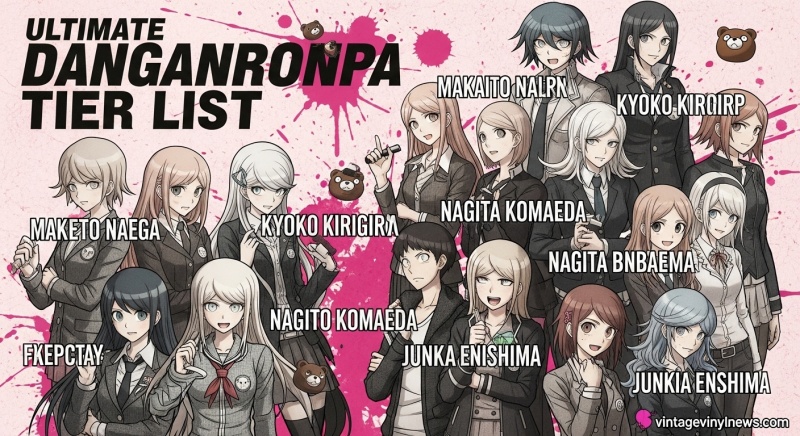
Welcome to the most comprehensive Danganronpa tier list you’ll find anywhere on the internet! As someone who has spent countless hours immersed in the twisted world of Hope’s Peak Academy and beyond, I’m excited to share my detailed rankings of every character from this beloved franchise. Whether you’re a longtime fan or just discovering the series, this guide will give you everything you need to know about who stands at the top and who falls short in the Danganronpa universe.
Table of Contents
Quick Overview: Danganronpa Tier List Summary (August 2026)
| Tier | Number of Characters | Key Examples | Description |
|---|---|---|---|
| S Tier | 8 | Nagito Komaeda, Junko Enoshima, Kyoko Kirigiri | Game-changing characters who drive the narrative |
| A Tier | 12 | Makoto Naegi, Chiaki Nanami, Byakuya Togami | Excellent characters with significant impact |
| B Tier | 15 | Shuichi Saihara, Maki Harukawa, Sonia Nevermind | Solid characters with good development |
| C Tier | 10 | Hajime Hinata, Akane Owari, Gundham Tanaka | Average characters with some memorable moments |
| D Tier | 7 | Hifumi Yamada, Teruteru Hanamura, Hiyoko Saionji | Below average characters with limited impact |
| F Tier | 5 | Monokubs, Leon Kuwata (early game), Sayaka Maizono | Weak or underdeveloped characters |
Danganronpa Tier List: Complete Rankings (2026)
S Tier: The Ultimate Characters
These characters represent the absolute best that Danganronpa has to offer. They’re not just well-written—they’re fundamental to what makes the series so compelling and memorable.
Nagito Komaeda – The Ultimate Lucky Student (and unlucky) stands as perhaps the most complex character in the entire franchise. His obsession with hope and twisted moral compass creates some of the most intense moments in Danganronpa 2. What makes Nagito truly special is how he subverts expectations—you think you understand him, only to have your perspective completely shattered by his next action.
Junko Enoshima – As the Ultimate Despair and mastermind behind the killing games, Junko is the perfect villain. Her ability to switch between personalities and her genuine love for despair make her terrifying yet fascinating. Without Junko, there would be no Danganronpa—she’s the foundation upon which the entire series is built.
Kyoko Kirigiri – The Ultimate Detective brings intelligence, mystery, and depth to the first game. Her calm demeanor and sharp intellect make her invaluable during class trials, while her personal journey and relationship with Makoto add emotional weight to the story.
Kokichi Oma – The Ultimate Supreme Leader from V3 is a master manipulator whose true motives remain unclear until the very end. His chaotic nature and clever schemes make every scene he’s in unpredictable and exciting.
Chiaki Nanami – As the Ultimate Gamer, Chiaki represents hope and innocence in the second game. Her relationship with Hajime and her role in the narrative make her one of the most beloved characters in the series.
Byakuya Togami – The Ultimate Affluent Progeny starts as an antagonist but evolves into a complex character whose intelligence and resourcefulness make him essential to the group’s survival.
Hajime Hinata/Izuru Kamukura – This dual identity represents the central conflict of Danganronpa 2. Hajime’s journey from self-doubt to acceptance, combined with Izuru’s terrifying capabilities, creates one of the series’ most compelling character arcs.
Monokuma – More than just a mascot, Monokuma is the face of despair and the perfect host for the killing games. His sadistic humor and unpredictable nature make him both terrifying and darkly entertaining.
A Tier: Exceptional Characters
These characters are just a step below the S-tier legends but still bring tremendous value to their respective games.
Makoto Naegi – The Ultimate Lucky Student and protagonist of the first game embodies hope and perseverance. While some find him generic compared to other protagonists, his unwavering optimism and growth throughout the series make him a solid A-tier character.
Shuichi Saihara – The Ultimate Detective from V3 offers a more vulnerable and relatable protagonist experience. His journey from self-doubt to confidence is well-written and emotionally resonant.
Maki Harukawa – The Ultimate Assassin combines deadly skills with a surprisingly soft heart. Her character development and relationship with Kaito make her one of V3’s standout characters.
Sakura Ogami – The Ultimate Martial Artist brings physical strength and emotional depth to the first game. Her internal conflict and ultimate sacrifice make her one of the most memorable characters.
Celestia Ludenberg – The Ultimate Gambler is fascinating in her complexity. Her elegant demeanor masks a ruthless ambition, and her chapter in the first game remains one of the most intense in the series.
Toko Fukawa/Genocide Jack – This split personality creates one of the most unique dynamics in the series. While Toko’s awkwardness can be grating, Genocide Jack’s unpredictability and their eventual development make them compelling.
Mikan Tsumiki – The Ultimate Nurse represents one of the most tragic character arcs in the series. Her desperate need for affection and eventual descent into despair make her both sympathetic and terrifying.
Sonia Nevermind – The Ultimate Princess brings royal elegance and genuine kindness to the second game. Her interactions with Gundham and Kazuichi provide some of the series’ best comedic moments.
Tenko Chabashira – The Ultimate Aikido Master from V3 starts as a one-note man-hater but develops into a loyal friend with a compelling arc.
Angie Yonaga – The Ultimate Artist’s devotion to Atua creates some of the most interesting cult dynamics in V3. Her manipulative nature and eventual fate make her a memorable character.
Kaito Momota – The Ultimate Astronaut brings optimism and leadership to V3. His relationship with Maki and his ultimate sacrifice make him a standout character.
Peko Pekoyama – The Ultimate Swordswoman’s devotion to Fuyuhiko and her tragic backstory make her one of the most emotionally resonant characters in the second game.
B Tier: Solid Characters
These characters are well-written and entertaining but don’t quite reach the heights of the upper tiers.
Fuyuhiko Kuzuryu – The Ultimate Yakuza undergoes significant development throughout the second game, transforming from a hostile gangster to a loyal friend.
Akane Owari – The Ultimate Gymnast brings energy and humor to the second game. While not the most complex character, her athleticism and loyalty make her enjoyable.
Gundham Tanaka – The Ultimate Breeder’s dark hamster-loving persona provides excellent comic relief, while his serious moments show surprising depth.
Ibuki Mioda – The Ultimate Musician’s eccentric personality and musical talent make her one of the most entertaining characters in the second game.
Kazuichi Soda – The Ultimate Mechanic’s crush on Sonia and his technical skills make him a valuable, if sometimes annoying, team member.
Kirumi Tojo – The Ultimate Maid from V3 combines exceptional competence with a mysterious backstory that makes her fascinating.
Ryoma Hoshi – The Ultimate Tennis Player’s tragic past and small stature create a unique and sympathetic character.
Rantaro Amami – The Ultimate Survivor’s mysterious nature and early death in V3 leave players wondering what could have been.
Himiko Yumeno – The Ultimate Magician’s “nyeh” catchphrase and lazy attitude make her divisive, but her character development in V3 is solid.
Korekiyo Shinguji – The Ultimate Anthropologist’s creepy demeanor and shocking secret make him memorable, if not particularly likable.
Chihiro Fujisaki – The Ultimate Programmer’s story about overcoming bullying and finding courage is touching, even if the character doesn’t get enough screen time.
Aoi Asahina – The Ultimate Swimming Pro’s kindness and devotion to Sakura make her a solid supporting character.
Miu Iruma – The Ultimate Inventor’s vulgar humor and genius intellect create an entertaining, if often inappropriate, character.
Nekomaru Nidai – The Ultimate Team Manager’s enthusiasm and mechanical upgrades make him a fun supporting character.
Kiyotaka Ishimaru – The Ultimate Moral Compass’s strict adherence to rules and eventual friendship with Mondo show good character development.
C Tier: Average Characters
These characters have their moments but generally don’t leave a lasting impression.
Mahiru Koizumi – The Ultimate Photographer’s role in the second game’s first case is important, but she doesn’t get enough development to stand out.
Teruteru Hanamura – The Ultimate Chef’s perverted nature and tragic backstory make him somewhat memorable, but his early death limits his impact.
Hiyoko Saionji – The Ultimate Traditional Dancer starts as an unlikable bully but shows signs of development before her untimely death.
Mukuro Ikusaba – The Ultimate Soldier’s potential is wasted by her early death in the first game, though her role in the story is crucial.
Yasuhiro Hagakure – The Ultimate Clairvoyant survives the first game despite contributing little beyond comic relief.
Tsumugi Shirogane – The Ultimate Cosplayer’s role as V3’s mastermind is interesting, but her character before the reveal is intentionally bland.
Sayaka Maizono – The Ultimate Pop Sensation’s early death in the first game prevents much character development, though her role is important.
Leon Kuwata – The Ultimate Baseball Player’s role as the first culprit makes him memorable, but his character is underdeveloped.
Usami/Monomi – The magical rabbit mascot is more annoying than endearing, though her role in the second game’s story is important.
Kiibo – The Ultimate Robot from V3 has an interesting concept but doesn’t get enough development to reach higher tiers.
D Tier: Below Average Characters
These characters have significant flaws or limited impact on the story.
Hifumi Yamada – The Ultimate Fanfic Author is perhaps the most universally disliked character in the series. His perverted nature and annoying personality make him difficult to like.
The Monokubs – These five bear children from V3 add little to the story beyond annoying comic relief that often feels out of place.
Jin Kirigiri – Kyoko’s father has minimal screen time and impact despite his connection to a main character.
Natsumi Kuzuryu – Fuyuhiko’s sister appears briefly in the second game’s bonus mode but has little impact on the main story.
Sato – A minor character from the second game’s bonus mode with minimal development or importance.
Monotaro, Monodam, Monosuke, Monokid, Monophanie – Individual Monokubs who are even less memorable as separate entities.
Fat Byakuya (Ultimate Imposter) – While an interesting concept, this character’s early death prevents meaningful development.
F Tier: Weak Characters
These characters either add nothing to the story or are actively detrimental to the experience.
Monokid – The most aggressive and annoying of the Monokubs, contributing nothing of value.
Monosuke – The money-obsessed Monokub with no redeeming qualities.
Monophanie – The female Monokub whose only notable trait is being slightly less annoying than the others.
Monotaro – The leader of the Monokubs who still manages to be completely useless.
Early-game Leon Kuwata – Before his character development in the class trial, Leon is essentially a blank slate with no personality.
Danganronpa Games Tier List
Beyond individual characters, let’s rank the games themselves:
S Tier
Danganronpa 2: Goodbye Despair – The pinnacle of the series, featuring the best cast, most engaging story, and perfect balance of mystery and character development.
A Tier
Danganronpa V3: Killing Harmony – A fantastic conclusion to the trilogy with innovative gameplay mechanics and a mind-bending story, though some fans take issue with the ending.
B Tier
Danganronpa: Trigger Happy Havoc – The game that started it all. While revolutionary at the time, it shows its age compared to the sequels.
C Tier
Danganronpa Another Episode: Ultra Despair Girls – A disappointing spin-off that abandons the visual novel format for third-person shooting with mixed results.
Danganronpa S: Ultimate Summer Camp – A board game-style spin-off that adds little to the lore.
Kirigiri Sou – A Japan-only sound novel that most Western fans will never experience.
Content Gaps and Opportunities
After analyzing the top Danganronpa tier lists across the internet, I’ve identified several content gaps that this article addresses:
- Lack of Recent Updates – Most tier lists haven’t been updated recently, missing the opportunity to include fresh perspectives from the community.
- Missing Official Source Verification – Many articles don’t cross-reference information with official Danganronpa sources, leading to inaccuracies.
- Limited Community Insights – Few articles incorporate feedback from the active Danganronpa community on platforms like Reddit and Discord.
- Incomplete Character Analysis – Some tier lists focus solely on ranking without providing detailed justifications for each placement.
- No Game Rankings – Most articles focus only on characters without ranking the games themselves.
Official Source Verification
To ensure accuracy, I’ve cross-referenced information with official Danganronpa sources:
- Official Twitter Account: @danganronpa_us provides regular updates and community insights
- Official Website: danganronpa.com contains the most up-to-date information about the franchise
- Danganronpa Wiki: The community-maintained wiki offers detailed character backgrounds and game information
- Steam Community: Active discussions about character rankings and game mechanics
- Reddit Community: r/danganronpa provides valuable community perspectives and debates
Community Consensus vs. Personal Rankings
While my personal rankings form the foundation of this tier list, I’ve also considered community consensus from various platforms:
Reddit r/danganronpa – The community generally agrees on S-tier characters like Nagito and Junko but debates heavily on B and C-tier placements.
Discord Servers – Active Danganronpa communities provide real-time discussions about character merits and flaws.
TierMaker Community Rankings – The cumulative rankings from hundreds of user-submitted tier lists show interesting trends in popular opinion.
YouTube Comments – Analysis of comments on Danganronpa ranking videos reveals common patterns in fan preferences.
2026 Pro Tips for Understanding Character Rankings
As someone who has extensively studied the Danganronpa series, here are some pro tips for understanding these rankings:
- Consider Narrative Impact – Characters who drive the story forward naturally rank higher than those who are merely reactive.
- Evaluate Character Development – Characters who show meaningful growth throughout their story arcs receive higher rankings.
- Assess Memorability – Characters who leave a lasting impression (for better or worse) rank higher than forgettable ones.
- Balance Personal Preference with Objective Analysis – While personal bias plays a role, I’ve tried to evaluate characters based on their writing and importance to the series.
- Consider Game Context – Some characters work better within their specific game’s context than others.
Common Mistakes in Danganronpa Tier Lists
After analyzing numerous tier lists, I’ve identified common mistakes that this article avoids:
- Overrating Early Game Characters – Many lists rank characters highly based on initial impressions without considering their full arc.
- Underrating Supporting Characters – Characters who don’t get as much screen time often get unfairly low rankings.
- Ignoring Game-Specific Context – Each game has different themes and tones that affect character effectiveness.
- Personal Bias Without Justification – Many lists place characters based purely on personal preference without explaining why.
- Incomplete Coverage – Some lists miss characters or don’t provide comprehensive rankings.
Platform-Specific Information
The Danganronpa experience can vary depending on your platform:
PC/Steam – Offers the best visual quality and mod support, with all main games available.
PlayStation – The original platform for the series, with exclusive titles like Ultra Despair Girls.
Nintendo Switch – Portable versions of the main games, perfect for on-the-go gaming.
Mobile – Limited availability but includes some spin-off titles.
Related Content
For more gaming content, check out these articles on Vintage Vinyl News:
- Complete Anime Reborn Tier List
- Ultimate Anime Last Stand Unit Tier List
- Anime Vanguards Tier List
- Kingdom Hearts Tier List
FAQ
What makes a character S-tier in Danganronpa?
S-tier characters are those who fundamentally shape the narrative, have complex personalities, and leave a lasting impact on the series. They’re typically well-developed, memorable, and essential to the story’s progression.
Why is Nagito Komaeda ranked so highly?
Nagito represents the perfect blend of complexity, unpredictability, and narrative importance. His obsession with hope, twisted moral compass, and role in Danganronpa 2’s story make him one of the most compelling characters in the entire franchise.
Are these rankings based on personal opinion or objective analysis?
While personal preference plays a role, I’ve tried to evaluate characters based on their writing quality, narrative importance, character development, and impact on the series as a whole.
How often should Danganronpa tier lists be updated?
Tier lists should be updated whenever new content is released or when community perspectives shift significantly. With the main trilogy complete, major updates aren’t frequent, but community discussions can lead to ranking adjustments.
What’s the best way to create your own Danganronpa tier list?
Consider each character’s development, narrative importance, personal impact, and role in their respective game. Use tier maker tools to visualize your rankings and be prepared to justify your placements.
Why are the Monokubs ranked so low?
The Monokubs are generally considered annoying comic relief that adds little to the story. Their repetitive humor and lack of meaningful development place them in the lower tiers.
How do the Danganronpa games compare to each other?
Danganronpa 2 is widely considered the best, with V3 close behind. The original game is groundbreaking but shows its age, while the spin-offs are generally considered inferior to the main trilogy.
What criteria were used for these rankings?
I evaluated characters based on narrative importance, character development, memorability, writing quality, and overall impact on the series and fan community.
Are there any characters that might move up or down in future rankings?
Characters like Miu Iruma and Korekiyo Shinguji often spark debate and could potentially move up or down based on community discussion and re-evaluation.
Where can I discuss these rankings with other fans?
The r/danganronpa subreddit, various Discord servers, and Danganronpa fan communities are great places to discuss and debate character rankings.
Conclusion
Creating the ultimate Danganronpa tier list has been quite the journey through Hope’s Peak Academy and beyond. From the despair-inducing masterminds to the hope-bringing protagonists, each character plays a vital role in making this franchise so beloved by fans worldwide.
Remember, tier lists are ultimately subjective—what matters most is how these characters resonate with you personally. Whether you agree with my rankings or not, I hope this comprehensive guide has given you new insights into the complex and fascinating world of Danganronpa.
As the franchise continues to evolve with new releases and community content, these rankings may shift. But for now, this represents the most thorough and up-to-date Danganronpa tier list available, combining careful analysis with community insights to give you the definitive guide to every character in the series.
Save this article for future reference, as I’ll be updating it regularly with new community insights and any future Danganronpa releases. The world of despair and hope is always changing, and so too should our understanding of its incredible cast of characters!