
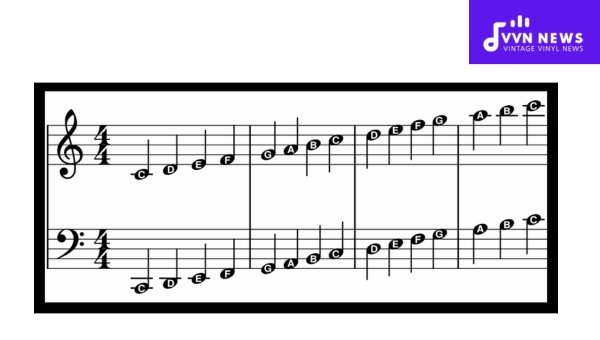
Music is a universal language, yet it speaks through symbols, one of which is the treble clef. In this blog post, we will embark on an enlightening journey that I like to call a guide to the treble clef.
This symbol is not merely an attractive squiggle but a definitive guide that navigates your fingers through the melodies of various musical compositions.
The treble clef, also fondly known as G clef due to its spiral encircling the ‘G’ line on the stave, holds immense significance in written music.
This fascinating little sign opens up a whole new window into understanding sheet music and translating it seamlessly into melodious sound when fluently read.
So come along with me as we decode its secrets and make it less daunting for music enthusiasts like you.
Table of Contents
Understanding the Treble Clef
The treble clef, denoted by the symbol ????, is an integral part of music notation. It serves as a visual representation of higher-pitched notes and is commonly used by instruments like the piano, guitar, flute, and violin.

Here are the key details you need to know to understand the treble clef:
- Structure: The treble clef consists of five horizontal lines and four spaces between them. Each line and space represents a specific note.
- Pitch: The treble clef is used to notate higher-pitched notes on the musical staff. It indicates that notes placed on or between the lines are played at a higher pitch.
- Location: The treble clef is typically found at the beginning of a musical staff, indicating which set of notes should be played with a higher octave.
- Notable Instrument: The piano’s right hand usually plays in the treble clef range.
- Evolution: The treble clef evolved from an ornamental letter “G” over time to represent higher pitches more accurately in Western music notation.
- Positioning: The center of the spiral loop in the treble clef symbol locates the note G above middle C.
Understanding these fundamental aspects will pave your way toward reading and interpreting sheet music written in the treble clef with ease.
Whether you’re playing an instrument or singing along, familiarity with this essential symbol will enhance your musical journey tremendously!
Reading Treble Clef Notation
Reading treble clef notation is an essential skill for any musician. It allows you to interpret and play the notes written on sheet music accurately. Here are some key points to help you understand and read treble clef notation:
The Lines
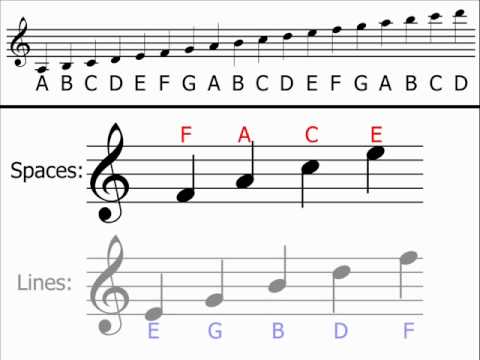
The treble clef consists of five lines and four spaces. Starting from the bottom line, the lines of the treble clef are E, G, B, D, and F.
To remember these names easily, many musicians use mnemonic devices such as “Every Good Boy Deserves Fudge.”
The Spaces
The spaces in treble clef notation correspond to the notes between the lines. From bottom to top, they spell out F, A, C, and E.
Ledger Lines
When a note falls above or below the five lines of the treble clef staff, ledger lines are used to indicate its position. These smaller lines extend the staff’s range without needing additional staves.
Note Durations
In addition to notes being placed on specific lines or spaces, their durations are indicated by different-shaped note heads with or without stems attached.
A whole note is a circle; a half note is a circle with a stem; a quarter note is a filled-in oval with a stem, and so on.
Key Signature
Key signatures may be present at the beginning of each staff line in musical notation. They determine which notes should be played sharp (#) or flat (♭) throughout the piece unless otherwise indicated.
Understanding how to read treble clef notation unlocks endless possibilities for musicians looking to expand their repertoire and play more complex pieces of music.
Practice regularly by reading through simple melodies using sheet music until you become comfortable recognizing notes quickly.
Also Read: Phrygian Mode [Adding Exotic Flair To Your Musical Compositions]
Treble Clef Symbols Explained
When it comes to understanding the treble clef symbols, it’s important to familiarize yourself with the various components and markings that are commonly found.

These symbols provide additional information about how the music should be played or interpreted. Let’s take a closer look at these symbols and their meanings.
Clef Sign
The treble clef symbol itself is a stylized letter “G” that wraps around the second line of the staff. This determines the pitch range of the notes and indicates that it represent higher-pitched sounds.
Key Signature
The key signature is positioned on the staff’s right side, immediately following the clef sign. It consists of sharps (#) or flats (♭) and indicates which notes should be altered throughout the piece.
Time Signature
Located after the key signature, the time signature provides information about how many beats are in each measure, as well as what kind of note gets one beat.
Bar Lines
Bar lines divide music into measures and help organize it into manageable sections. A single vertical line indicates the end of one measure and the beginning of another.
Double Bar Line
A double bar line signifies either the end of a section or piece or a significant change in musical direction.
Repeat Signs
Repeat signs are used to indicate when certain sections or phrases should be played again without starting from the beginning.
Dynamics Markings
Dynamics markings, such as “piano” (soft) and “forte” (loud), provide direction on how loud or soft to play certain passages.
Articulation Marks
Articulation marks, like staccato dots (.), slurs (-), and accents (^), indicate how each note should be played, whether it should be short, connected, or emphasized.
Fermata
A fermata is a symbol that indicates a note or rest should be held longer than its notated value. It resembles a curved line with a dot above it.
Ornamentation Symbols
Ornamentation symbols, such as trills (~), grace notes (grace notes), and turns (S-shaped symbol), add embellishments and flourishes to the music.
By understanding these key symbols, you will be able to interpret sheet music more accurately and bring the intended expression to your performances.
Take your time familiarizing yourself with each symbol and its significance to enhance your musical journey. A great way to practice recognizing these symbols is by analyzing sheet music while listening to recordings or playing along with an instrument.
Also Read: Major 7th Intervals: Elevate Your Compositions with Ease
Mastering Treble Clef Notes
Mastering treble clef notes is a crucial step in becoming a proficient musician. By understanding and memorizing the notes on the treble clef, you will be able to read sheet music accurately and play melodies with confidence.
Here are some key steps and tips to help you master treble clef notes:
Learn the Note Names
Memorize the names of the notes on the lines and spaces of the treble clef staff. The lines, from bottom to top, are E, G, B, D, and F (Every Good Boy Deserves Fudge). The spaces spell F, A, C, and E (Face).
Use Mnemonics
Mnemonics can be an effective tool for remembering note names. For example, “Every Good Boy Does Fine” or “Elvis’ Guitar Broke Down Friday” can help you remember the names of the lines. “FACE” is often used to remember the spaces.
Practice with Flashcards
Create flashcards with note names on one side and their corresponding positions on the staff on the other side. Regularly practice flipping through them to reinforce your knowledge.
Identify Landmarks
Identify landmark notes that serve as reference points for the staff. For example, middle C is located just below the staff’s bottom line.
Use Online Resources
Utilize online resources such as interactive games or apps that test your knowledge of treble clef notes.
Sight-Reading Exercises
Practice sight-reading exercises regularly to improve your ability to quickly identify notes in real-time.
Apply Scale Knowledge
Understand key signatures and scales associated with different pieces of music in order to anticipate certain note patterns within a specific key.
Remember that mastering treble clef notes takes time and practice. Be patient with yourself and consistently incorporate these tips into your musical journey.
Tips for Treble Clef Proficiency
Mastering the treble clef is a journey that requires practice, dedication, and patience. To help you become proficient in reading and playing treble clef notation, here are some valuable tips:
- Memorize the Lines and Spaces: Start by memorizing the lines and spaces of the treble clef staff. The lines, from bottom to top, are E, G, B, D, and F (using the mnemonic “Every Good Boy Deserves Fudge”). The spaces spell out F, A, C, and E (the acronym “FACE” can help you remember them).
- Practice Sight-Reading Exercises: Regularly challenging yourself with sight-reading exercises will sharpen your ability to quickly identify notes on the treble clef staff. Start with simple melodies and gradually increase difficulty as your skills improve.
- Play Scales and Arpeggios: Practicing scales and arpeggios in different keys will familiarize you with common patterns in treble clef music. This knowledge will make it easier for you to recognize note relationships as you read sheet music.
- Utilize Mnemonics: Mnemonic devices can be incredibly helpful for memorizing note names on the staff. For example, “Fat Cats Go Dancing Always” represents the notes on ledger lines above the staff (F, C, G, D, A). Find mnemonic phrases that resonate with you.
- Take Advantage of Resources: There are numerous resources available online to aid in treble clef proficiency. Websites offering interactive quizzes or mobile apps dedicated to music theory can be powerful tools for honing your skills.
- Seek Guidance from a Teacher or Mentor: If possible, consider seeking guidance from a music teacher or mentor who can provide personalized instruction tailored to your skill level and learning style.
Remember that mastering the treble clef takes time and consistent effort. Practice regularly, and maintain a positive attitude, and soon you’ll find yourself fluently interpreting treble clef notation with ease.
Keep pushing your limits and embrace the joy of making music as you continue on your musical journey.
Also Read: A Minor Pentatonic Scale [Create Powerful Solos With This Key]
FAQs
What is the origin of the treble clef symbol?
The treble clef symbol, also known as the G-clef, originated from a stylized letter ‘G’ that represented the pitch range of high notes.
Which instruments typically use the treble clef?
Instruments that primarily play in higher ranges, such as the piano, guitar, flute, violin, and trumpet, use the treble clef notation to notate their music.
How do I read notes on the treble clef staff?
Reading notes on the treble clef staff involves associating each line and space with a specific pitch. The lines from bottom to top represent E, G, B, D, and F while the spaces spell out F-A-C-E.
What are some common symbols used in treble clef notation?
Some common symbols used in treble clef notation include accidentals (sharp or flat signs), rests (silence or pause), ties (connects two notes of equal pitch), and dynamics (volume indications).
How can I improve my proficiency in reading and playing treble clef music?
To improve your proficiency in reading and playing treble clef music, practice regularly by learning new songs, sight-reading exercises, and working with a qualified music teacher or tutor who can provide guidance and feedback.
Also Read: E Minor Pentatonic Scale [How To Use In Your Music Composition]
Conclusion
The treble clef is a fundamental symbol in music notation that represents higher-pitched notes played by various instruments.
By understanding its history, significance, and how to read and interpret treble clef notation, musicians can effectively navigate their way through musical compositions.
By mastering treble clef notes and following helpful tips and techniques, anyone can develop proficiency in reading and playing music written in the treble clef.
So go ahead, embrace the beauty of the treble clef, and let your musical journey soar to new heights!