
Music can truly be a language of the world; its notes and chords transcend cultural barriers, connecting us all through a universal soundscape.
However, elevating an appreciation for music to crafting your melodies requires navigating the complex labyrinth of music theory. This is where a perfect 5th: music theory & ear training guide becomes an essential part of any musician’s learning toolset.
This quintessential guide will shine a light on the nuanced intricacies enveloping the concept of Perfect 5th.
You’ll discover how mastering this fundamental aspect can enhance your ability to seamlessly weave together melodic strands into a symphony that lyrically encapsulates your thoughts, emotions, or even simply, the rhythm playing in your head.
This interactive and engaging guide traverses through a thoughtfully charted territory of Music Theory while ensuring that you find it approachable and straightforward.
Table of Contents
What Is a Perfect 5th Interval?
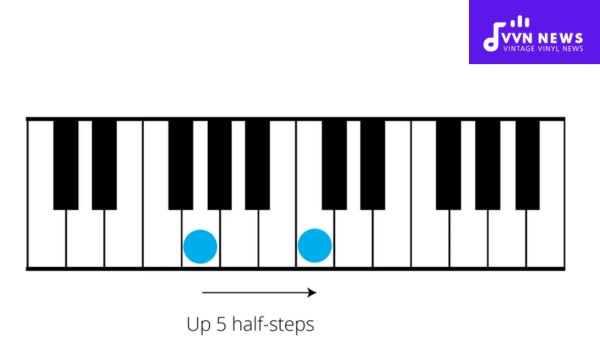
In music theory, an interval refers to the distance between two notes. The Perfect 5th interval is significant as it represents a distance of five whole steps or seven half steps between two notes.

It is called “perfect” because this interval has a distinctive and harmonically pleasing sound.
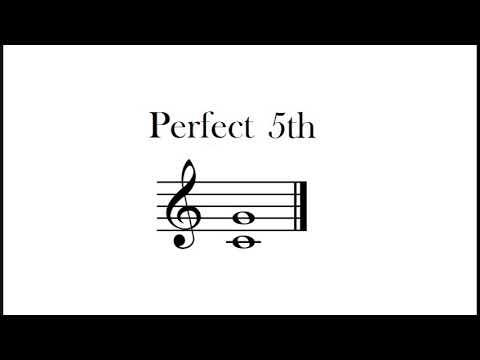
The Perfect 5th interval, let’s take a look at an example using the C major scale. Starting from C and counting up to five notes, we reach the G note. The distance between C and G is a Perfect 5th.
The Perfect 5th interval has a stable and consonant quality that is often associated with a sense of resolution in music. It creates harmony when played simultaneously or consecutively, adding depth and richness to compositions.
The Perfect 5th interval is essential for chord progressions, melodic lines, and harmonies in various musical styles. Now that we have established what a Perfect 5th interval is, let’s explore how we can identify it by ear.
Also Read: Major 7th Intervals: Elevate Your Compositions with Ease
How Can You Identify a Perfect 5th by Ear?
Identifying a Perfect 5th interval by ear might seem challenging at first, but with some practice and guidance, you’ll be able to recognize it confidently.
Here are some steps to help you develop your ear for identifying a Perfect 5th:
- Familiarize yourself with the sound: Listen to examples of Perfect 5ths in various musical compositions. Pay attention to the distinct harmony and stability it brings to the music.
- Start with easy melodies: Begin by listening to simple melodies that contain a Perfect 5th interval. One classic example is the start of the main theme in the Star Wars movie, which features a descending Perfect 5th (C-G).
- Sing or hum along: Once you’ve identified a Possible Perfect 5th in a melody, try singing or humming along with it. By actively engaging with the interval, you internalize its sound and begin to instinctively recognize it.
- Compare intervals: Develop your ability to distinguish between different intervals by comparing them side by side. Play intervals consecutively and pay attention to their unique qualities.
- Utilize reference songs: Memorize popular songs that prominently feature Perfect 5ths, such as the opening notes of “Twinkle Twinkle Little Star” (C-G). Use these songs as mental anchors for recognizing the interval.
- Practice with an instrument: Grab your guitar, piano, or any other musical instrument you may have at hand and play various melodies utilizing Perfect 5ths. This hands-on experience reinforces your knowledge and recognition of this essential interval.
Remember that consistent practice is key when training your ear for intervals like the Perfect 5th.
With time, patience, and dedication, you’ll gradually develop a keen sense of recognizing this harmonic gem in music compositions across genres.
What Role Does the Perfect 5th Play in Chord Progressions?
The Perfect 5th interval plays a crucial role in chord progressions, lending stability and strength to the overall harmony.

Its role can greatly enhance your skills and appreciation of music composition.
- Building Major and Minor Chords: The Perfect 5th interval is intrinsic in constructing both major and minor chords. In a major chord, the Perfect 5th is formed between the root note and the note located seven half steps above it. For example, in a C major chord (C-E-G), the G note serves as the Perfect 5th interval. In a minor chord, it is formed between the root note and the note located six half steps above it.
- Creating Tension: The Perfect 5th interval can also be used to create tension before resolving to another chord. This technique is commonly seen in various genres of music, where chords are intentionally constructed with unresolved Perfect 5ths to add a sense of anticipation or suspense.
- Foundational Role: The Perfect 5th serves as a backbone for many chord progressions, reinforcing tonality and establishing a clear sense of key within a musical piece.
- Power Chords: Power chords heavily rely on the Perfect 5th interval for their distinctive sound. These chords consist only of the root note and its perfect fifth – omitting the major or minor third that defines traditional chords – resulting in a powerful and versatile sound commonly heard in rock, punk, and metal genres.
The role of the Perfect 5th interval in chord progressions allows musicians to construct harmonies that evoke emotion and convey specific musical moods.
It forms essential components within major/minor chords, creates tension/resolution dynamics, establishes tonality, and contributes to powerful power chords prevalent across various genres.
How Can You Practice Perfect 5th Intervals on Different Instruments?
Practicing perfect 5th intervals on different instruments is an excellent way to train your ear and solidify your understanding of this important musical interval.
Whether you play the piano, guitar, violin, or any other instrument, here are some effective techniques to incorporate into your practice routine.
Piano:
- Begin by playing a C note on the piano.
- From there, find the G note five steps above C.
- Play these two notes together and listen to the harmonious sound of the perfect 5th interval.
- Repeat this exercise with different starting notes to explore various perfect 5th intervals on the keyboard.
Guitar:
- Start by finding the low E string (the thickest string) on your guitar.
- Play the open E string and then locate the fifth fret on that same string.
- Press down on that fret to play an A note.
- Strum both the open E and A notes together to hear the perfect 5th interval produced by these strings.
- To explore other perfect 5th intervals, repeat this process starting with different open strings and their respective fret positions.
Violin:
- Begin by playing an open D string on your violin.
- From there, place your finger down on the fourth finger position (on that same D string) to produce a G note.
- Bow both strings simultaneously to hear the resonant sound of a perfect 5th interval.
- Experiment with other open strings and their respective finger positions to discover more variations of perfect 5ths.
Other Instruments:
- Use sheet music or online resources containing musical exercises or songs featuring perfect 5th intervals.
- Practice playing these exercises or songs on your instrument, paying close attention to how the perfect 5th intervals are used.
- Consistent practice is key to developing a strong sense of perfect 5th intervals on your chosen instrument.
Explore different musical genres and styles that highlight this interval and gradually incorporate it into your playing repertoire.
Also Read: Phrygian Mode [Adding Exotic Flair To Your Musical Compositions]
What Are Some Famous Songs That Utilize Perfect 5th Intervals?

The Perfect 5th interval is a foundational element in music and has been utilized in countless famous songs across different genres.
Here are some notable examples that showcase the prominence of this interval:
1. “Twinkle, Twinkle, Little Star”
One of the most recognizable nursery rhymes, “Twinkle, Twinkle, Little Star” prominently features the Perfect 5th interval in its melody. The opening line, “twinkle, twinkle,” follows a descending Perfect 5th from the note G to C.
2. “With or Without You” by U2
The opening guitar riff in U2’s iconic song “With or Without You” is constructed around a repeating pattern of two notes separated by a Perfect 5th interval.
The interplay between the notes D and A creates an instantly recognizable and atmospheric sound.
3. “Summertime” from Porgy and Bess
Composed by George Gershwin for the opera Porgy and Bess, “Summertime” is a jazz standard that features a recurring Perfect 5th interval throughout its melodic structure.
This interval contributes to the song’s beautifully mellow and evocative atmosphere.
4. “Star Wars Theme” by John Williams
John Williams’ iconic theme for the Star Wars franchise employs the power of the Perfect 5th to create an epic and instantly recognizable melody. The opening phrase of this composition begins with two notes played in perfect harmony—an ascending Perfect 5th from G to D.
5. “Ode to Joy” from Beethoven’s Symphony No.9
Beethoven’s Symphony No.9 features a joyous and climactic finale known as “Ode to Joy.” Within this musical masterpiece, Beethoven employs multiple instances of Perfect 5th intervals to emphasize the triumphant and uplifting nature of the composition.
These famous songs are just a few examples of how the Perfect 5th interval is used in music composition.
By exploring these and other musical pieces, you can train your ear to recognize and appreciate the distinctive qualities of this interval.
Also Read: 13 Best Power Conditioners For Superior Protection [Buying Guide]
FAQs
How can I differentiate a Perfect 5th interval from other intervals?
When listening to a series of notes, pay attention to the distance between the first and fifth notes. A Perfect 5th will have a distinct and harmonically pleasing sound that is different from other intervals.
Is the Perfect 5th interval important in music composition?
Absolutely! The Perfect 5th is considered one of the most important intervals in music theory. It forms the foundation for harmonies and chord progressions, adding depth and stability to musical compositions.
Can I train my ear to identify Perfect 5th intervals?
Certainly! Ear training is essential for any musician. Practice by listening to different melodies and chords that contain Perfect 5ths. Over time, your ear will become more attuned to recognizing this interval.
How can I practice playing Perfect 5ths on different instruments?
On a piano or guitar, you can play a Perfect 5th by striking two keys or strings that are five notes apart respectively. For wind instruments or vocals, practice playing scales that include this interval or try improvising melodic lines incorporating it.
Are there any famous songs that prominently feature Perfect 5ths?
Yes, many popular songs utilize the aesthetic appeal of the Perfect 5th interval. Some examples include The Beatles’ “A Hard Day’s Night,” Johann Pachelbel’s “Canon in D,” and Leonard Cohen’s “Hallelujah.”
Also Read: Understanding Music Transposition: A Complete Guide
Conclusion
The Perfect 5th interval serves as a vital building block in music theory and composition. Its role in chord progressions, melodic lines, and harmonies can significantly enhance your musical skills and appreciation.
By training your ear to identify the distinct sound of a Perfect 5th, you can develop a deeper understanding of music and apply this knowledge to various instruments and genres.
So embrace the beauty of the Perfect 5th interval and let it guide your musical journey towards harmony and musical expression.