
In the realm of musical theory, we stumble upon a myriad of scales that have heart-tugging potential.
The E flat harmonic minor scale is no different. This unlikely hero within our octaves possesses a distinct acoustic depth and color to it doling out emotions that tug at your heartstrings.
Incorporating an eccentric palette of sounds, the E flat harmonic minor scale has been a go-to solution for composers seeking to lure their audiences into an auditory dreamscape with neoclassical melodies.
Its charm lies in its philosophical undertones; it’s like a compact narrative of somber longing interwoven with episodes of elusive joy – everything that music aims to convey!
So, if you’re aiming to sophisticate your melodies or lend them additional panache, this elusive scale plays a crucial role.
Table of Contents
Interval Construction of the E Flat Harmonic Minor Scale
To grasp how the E Flat Harmonic Minor scale takes shape, you need a bit of insight into intervals.

Begin with the E flat note (written as Eb), the scale’s ‘root’. From there, tease out the sequence based on this specific formula:
- Step 1: Start at the Root (which is Eb in our case).
- Step 2: Move up by a Whole step (to F).
- Step 3: Next, climb a Half step (to Gb).
- Step 4: Another Whole step takes you to Ab.
- Step 5: Make another whole jump and you’ll be at Bb.
- Step 6: Here’s where it gets exciting. Instead of another Half or Whole step, this time leap an Augmented second upwards to C.
- Step 7: Finally, conclude with a Half step upwards to land back miraculously at Eb, completing your magical musical journey.
This fascinating arrangement of alternating full and half-steps crafts what we cherish as our E Flat Harmonic Minor Scale. It truly adds an interesting layer to your melodic repertoire!
Also Read: How To Transpose Into The Tenor Clef? [Mastering In Notation]
The formula for a Harmonic Minor scale
The harmonic minor scale thrives on a unique formula of semitones and tones, composed of the following intervals: Tone – Semitone – Tone – Tone – Semitone – 1.5 Tones (A augmented Second) – Semitone. To explain it further:
- Start from your root note
- Move one whole step (Tone)
- Then, half step (Semitone)
- Follow with two whole steps (Tones)
- Half step (Semitone)
- An augmented second – somewhat equivalent to one and a half tones or three semitones.
- Lastly, conclude with a half-step
The harmonic minor scale can be expressed as Whole, Half, Whole, Whole, Half, Augmented Second, Half.
It is this unique combination that gives the harmonic minor scale its distinctive sound and emotional chord progressions.
What are the scale degrees of E Flat Harmonic Minor?
The E flat harmonic minor scale is constructed using seven distinct notes, each with its respective degree.

Here, ‘degree’ refers to the position of a particular note on a scale relative to the first note or root of the scale. Below, I have elucidated each degree of the E Flat Harmonic Minor Scale:
- 1st degree – Eb: The starting point or ‘root’ of our melodic journey.
- 2nd degree – F: This note builds tension that asks for resolution.
- 3rd degree – Gb: The feel gets a bit somber with this flattened third.
- 4th degree – Ab: You find stability returning with this perfect fourth.
- 5th degree – Bb: Another stable point reinforcing the key, termed as ‘perfect fifth’.
- 6th degree – Cb: This flatted sixth further takes us into an emotional abyss.
- 7th degree – D: Surprise! This major seventh brings an exciting twist ending on a high before we loop back to Eb.
Each one plays a unique role in shaping the pallet of emotion and tension that makes this scale so enchantingly beautiful.
Also Read: D Minor Triad [A Crucial Element In Music Composition]
The modes associated with E Flat Harmonic Minor?
Delving into the modes associated with the E Flat Harmonic Minor scale injects an extraordinary depth into your music comprehension. These modes open up new musical landscapes loaded with exotic flavors and unique potential for improvisation and composition.
- Aeolian #7: The first mode is based on the E flat harmonic minor itself. It follows the same note structure as the original scale but with a slightly different formula (1, 2, b3, 4, 5, b6, 7). The raised seventh note or ‘#7’ is what gives this mode its unique sullen yet beautiful nuance.
- Locarian #6: This mode pivots from the second degree of our key harmonic minor scale (F). The ‘#6’ corresponds to a raised sixth interval producing an unusual tonality twisted between major and minor moods.
- Ionian #5: Originating from the third degree of E flat harmonic minor (G), this mode is akin to our major scales but with a sharp or augmented fifth (‘#5’). This twist to our familiar major tone adds a certain zesty tension to it.
- Altered Dorian: We begin on ‘Ab,’ fourth in line in our scale progression. It holds an eerie similarity to the Dorian mode besides one distinguishing feature – a flat fifth or ‘#4’ makes it altered Dorian.
- Phrygian Dominant: This notorious fifth mode sways from ‘Bb,’ crafting an intoxicating Eastern flavor through its unique formula (1, b2, 3, 4, 5, b6, b7).
- Lydian #2: Initiating our course from ‘Cb’ or ‘B,’ its intriguing sound world is contributed by an elevated second note (‘#2’) along with the characteristic raised fourth of the Lydian mode.
- Super Locrian: Finally, the last mode in our hierarchy is based on ‘D.’ Its signature is the flat 9, signaling a fascinating tension and release scenario that’s brilliant for jazz improvisations.
It’s essential that each of these modes carries its distinct personality derived from the individual tweaks to the intervals within them.
Also Read: E Major Triad [Master This Staple Of Music Composition]
Instructions to play E Flat Harmonic Minor on guitar and piano
Playing the E Flat Harmonic Minor scale, whether on a piano or a guitar, can seem like an intricate task.

Clarity reigns once you acquire the knowledge of the distinct pattern incorporating half steps, whole steps, and augmented seconds.
On Piano:
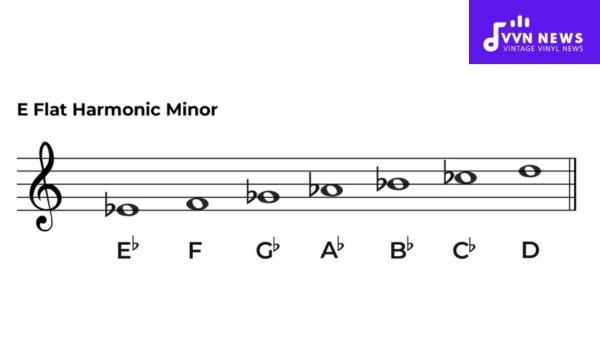
The E flat harmonic minor scale structure is: E flat – F – G flat – A flat – B flat – C flat – D- E flat.
Step-by-step guide to playing it on your piano:
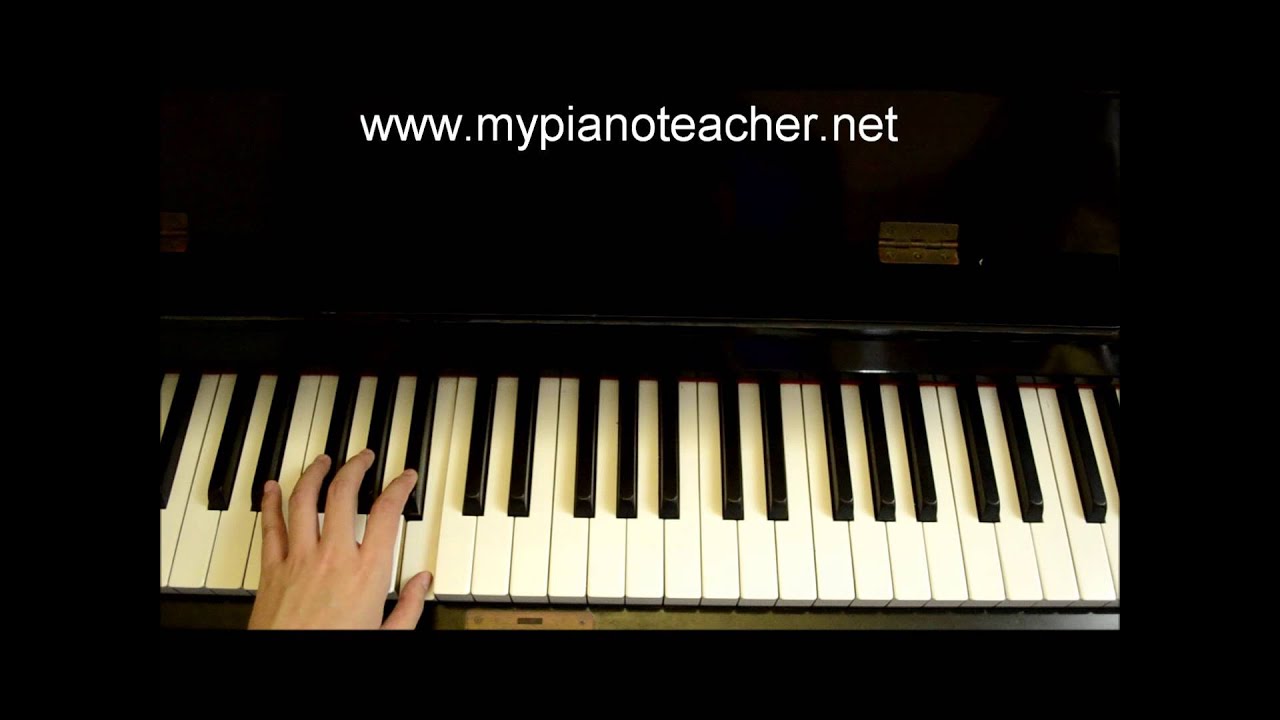
- Resonate the E-flat note with your thumb (1), which is found immediately to the left of two grouped black keys on your piano.
- Follow this by engaging your index finger (2) to play an F.
- Engage your middle finger (3) to tickle a G-flat.
- The thumb swings back in action to follow up with an A-flat.
- Your index finger then works its magic on B-flat, succeeded by middle and ring fingers playing C-flat and D respectively.
- Cap this melodic journey off by reverberating the octave root note E-flat using your little finger (5).
Remember that practice is key when it comes to perfecting any musical scale.
On Guitar:
The guitar tabs for this scale are: Eb – F – Gb – Ab – Bb – Cb – D – Eb
Follow these steps for smooth playing:
- Start off by plucking an open 6th string, this reverberates an Eb note.
- Follow that by fretting 1st fret on the 6th string for ‘F’.
- Proceed by moving onto 4th fret same string for ‘Gb’.
- Moving on to the fifth-string present ‘Ab’, strike open.
- ‘Bb’ placed at 1st fret fifth-string follows suit next.
- Let your fingers glide a bit to reach the 4th fret, the same string for ‘Cb’.
- Subsequently, the open 4th string chimes with ‘D’.
- Finally, you return home by resonating 1st fret on the 4th string for ‘Eb’.
Take time for your fingers to familiarize themselves with this scale. This seemingly complex scheme becomes a piece of cake with persistent practice and patience.
The E flat harmonic minor scale infuses an edgy twist to your harmonic narrative. The distinct color and depth it adds make exploring this unconventional scale worth trying out!
Key Signature of E Flat Harmonic Minor Scale
The E flat harmonic minor scale, which is similar to the E flat Major, has a total of six flats in its key signature. Here’s the breakdown:
- E flat (Eb)
- F
- G flat (Gb)
- A flat (Ab)
- B flat (Bb)
- C flat (Cb)
- D
It’s worth noting that the seventh note, D, is a natural, not a flat. It’s this slightly jarring shift from the expected D flat to the natural D that gives this scale its uniquely haunting yet beautiful sound.
Also Read: Mastering Chords In A Minor [Improve Your Composition Skills]
E Flat Harmonic Minor in Various Musical Clefs
As we dive deeper into the realm of music, let’s explore how the E Flat Harmonic Minor scale can be expressed in various musical clefs.

This adventure will allow us to visualize its notes and intervals across a range of notation forms.
The Treble Clef
The treble clef, also known as the G clef due to its spiral circling the G line, is most commonly encountered when playing light, upper-range instruments like flute, violin, and trumpet or while singing soprano and alto.
In this clef, moving from left to right on your sheet music, the notes of our stellar E flat harmonic minor scale are depicted as: E♭(Eb), F, G♭(Gb), A♭(Ab), B♭(Bb), C♭(Cb), D, E♭(Eb).
The Bass Clef
Equally essential is the bass clef (F clef). It’s popularly utilized for lower-toned instruments such as tuba or cello and for contralto or bass voices.
Conveyed beautifully in this notation framework are our valiant E flat harmonic minor scale notes: E♭ (Eb), F, G♭ (Gb), A♭ (Ab), B♭ (Bb), C♭ (Cb), D, and once again back to E♭ (Eb).
The Alto Clef
Middle-register instruments like the viola and trombone commonly use the alto clef – a unique impact player in our repertoire of musical scripts.
Herein lies its rendition of our harmonious little gem: again beginning with E flat making our way through each note until we return full circle back to E flat.
The Tenor Clef
In a similar vein as the alto clef how it illustrates our key character, the E flat harmonic minor scale, will equip you to seamlessly transition between different scores and broaden your musical versatility.
Its rendering of our scale will parallel that seen in the other clefs yet encapsulated within its unique stave lines and spaces.
Each clef offers its distinct perspective on the E flat harmonic minor scale, highlighting different aspects of its rhythmic anatomy. To translate this cryptic language of symbols and notation into music, we can promise you an enriched harmonic experience beyond your scores.
Also Read: A Guide Transposing Into The Alto C [Navigate Music Transposition]
Enharmonically Equivalent Scales to E Flat Harmonic Minor
Scales that are enharmonically equivalent to the E Flat Harmonic Minor Scale are those that contain the same pitches or notes yet are named differently.
This concept applies when we take into account other musical systems and notations.
D Sharp Harmonic Minor scale can be considered because of the chromatic equivalence between D Sharp and E Flat. Therefore, all the notes of D Sharp harmonic minor scale will be enharmonically equivalent to those in E Flat harmonic minor scale.
But do bear this in mind – even though they share exactly the same piano keys, their written format or musical context might change based on key signatures.
The sound remains homogenous, but their contextual function and notation vary. It’s more about a different perspective on identical sonic sculptures!
Also Read: How To Transpose Into The Tenor Clef? [Mastering In Notation]
What are the Chords in the E Flat Harmonic Minor Scale?
Generally, harmonic minor scales, including our E flat harmonic minor scale, consist of distinctive chords.

Let’s dive into the chords embedded within this appealing scale:
- Eb minor (Eb – Gb – Bb): The tonic chord introducing our spectral narrative.
- F diminished (F – Ab – Cb): A complex tone adding an air of intrigue.
- Gb Augmented (Gb – Bb – D): An unusual combination that intrigues your senses.
- Ab Minor (Ab – Cb – Eb): The subdominant chord forming our journey’s backbone.
- Bb Major (Bb – D – F): Perks up your ear as the dominant chord.
- Cb Major (Cb – Eb – Gb): Complements the dominant chord, yet maintains its unique flavor.
- D diminished (D – F – Ab): Delivers an uncanny feeling to wrap up this musical suite.
I hope you’re just as eager as I am to experiment with these combinations on your beloved piano, or perhaps a sleek guitar.
While many consider it a high-end tool for advanced composition, infusing your work with the E flat harmonic minor scale’s lingering essences can truly unveil a fascinating world of newfound musical inspiration.
FAQs
What is the E Flat Harmonic Minor scale?
The E Flat Harmonic Minor scale is a musical scale comprising seven pitches that follows a unique pattern of intervals. It infuses distinctive depth and color into compositions.
How can I use the E Flat Harmonic Minor scale in composition?
This scale can be used to create melodies with complex emotions. It can add sophistication and uniqueness to your music pieces.
Is the E Flat Harmonic Minor Scale common in music?
Although it’s not as prevalent as major scales, it does find a place in several neoclassical, jazz, and rock compositions owing to its characteristic sound.
Why does the E Flat Harmonic Minor sound different?
This is due to its unique interval structure. Unlike major scales, it has a minor second interval which creates its recognizable tonal character.
Can I play the E Flat Harmonic Minor on any instrument?
Yes, this scale can be played on any musical instrument capable of producing discrete pitches like piano, guitar, violin etc.
Also Read: C Minor Triad [Simplify Music Composition With This Guide]
Conclusion
The E Flat Harmonic Minor scale has an enchanting equilibrium of melancholy and exultation that can elevate your music to new levels. Whether you apply it to your piano compositions or guitar ballads, the mystical aura of this scale will add depth to your melodies.
Mastering this scale can transform a talented musician into a passionate composer who can weave notes into powerful stories. Experience firsthand the magic of this extraordinary minor scale and see how it revolutionizes your musical journey.