
In the vast cosmos of music, scales are the constellations guiding us on our celestial journey. One such constellation that lightens my way is the F harmonic minor scale.
This scale, composed of seven unique notes, is its own undiscovered world, waiting for aspiring musicians to immerse themselves.
Its melodic expression exudes a profound sense of longing and mystery. It paints intricate landscapes of sound that I’m eager to share with you. So, ready your instruments and steady your resolve as we navigate this exciting realm together!
Remember though, this isn’t an advanced rocket science program; it’s music! So let’s keep it simple yet engrossing for all the musically inclined folks out there like you and me! Let’s uncover the secrets of the F harmonic minor scale together.
Table of Contents
Describe the interval sequence in F Harmonic Minor.
Musical navigation is made smoother through knowledge of the interval sequence.

When it comes to the F harmonic minor scale, this sequence beautifully arranges itself into unique steps.
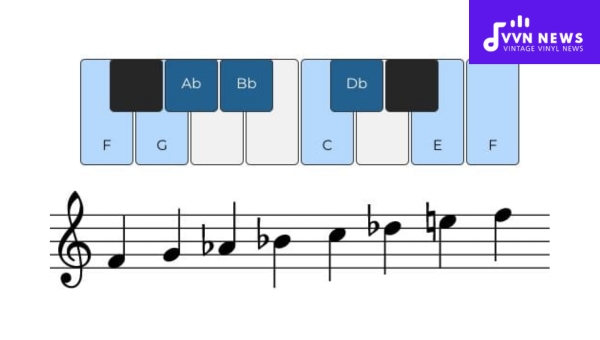
Beginning from the F note as our starting point, we proceed on a journey composed of one tone, followed by a semitone, three tones in succession, an augmented 2nd – considerable step indeed – and concludes with yet another tone.
To put it in simpler terms:
- F to G is 1 tone
- G to Ab is a semitone
- Ab to Bb and Bb to C consists of 1 tone each, giving us two tones back-to-back
- C to Db is another semitone
- Db to E, encompasses the more adventurous Augmented 2nd (equivalent to 3 half steps)
- And finally, from E back around to F, we finish with another full tone.
Every single stage on this musical voyage offers its own charm and significance. It’s an eclectic fusion of tonal shifts that gives the F harmonic minor scale its enticingly exotic flavor.
Also Read: E Major: Scale And Chords [Exciting Sounds For Your Compositions]
What is the Formulae of a Harmonic Minor scale?
In music, the term ‘formulae’ refers to a sequence of intervals – distant relationships between notes. The harmonic minor scale has its unique formulae, which makes it stand out from others like the major or natural minor.
For a Harmonic Minor scale, let’s break it down:
- The first and second notes have a whole-step distance (like going from F to G).
- Between the 2nd and 3rd, there is a half-step.
- A whole step separates 3rd and 4th.
- Similarly, a step interval exists between 4th and 5th.
- There is again a half-step distance from the 5th note to the 6th note.
- Here’s where it gets particularly intriguing; there’s an uncommon one-and-a-half step (a minor third) leap from the sixth note to the seventh note.
- Finally, ending back at our root note, we finish with another half-step interval.
This series (or formula) helps to create that melancholic yet intriguing sound heard in harmonic minors using whole step, half step, whole step, whole step, half step, one-and-a-half steps, half-step sequence.
This freedom of movement allowed by the strategic use of space in this progression invites musicians to explore exotic tonal avenues using Harmonic Minor scales where others might fall short.
What degrees are in the F Harmonic Minor scale?
Every note in the F harmonic minor scale corresponds to a specific degree. Let me lay these out for you:

- 1st degree– F: This is our leading note and the foundation of our scale, referred to as the base or root.
- 2nd degree– G: A whole step from F, serving as the supertonic in our scale.
- 3rd degree– Ab: A flat belonging to this scale, acting here as the mediant.
- 4th degree– Bb: This is another flat which acts as the subdominant.
- 5th degree– C: The dominant of our scale; it’s key in harmonic progression.
- 6th degree– Db: Yet another flat gracing our sequence, this one’s known as the submediant
- 7th degree– E: The leading tone in typical cases; in harmonic minor scales like ours, it becomes the subtonic.
These degrees don’t exist randomly; each has a unique role to play in harmony and melody. By recognizing these degrees’ names and functions, you can wield them skillfully when constructing melodies in F Harmonic Minor.
Modes Derived from F Harmonic Minor
The world of a musical scale extends beyond its own notes. Each scale possesses a variety of modes — unique scales derived from shifting the starting note or the tonic.
These modes, each with their own specific character and emotion, add diversity to your musical vocabulary.
Derived from F harmonic minor, here are seven breathtaking modes waiting to be explored:
- Aeolian #7: Also known as the harmonic minor itself, this is what our journey is based on: The F harmonic minor. Infer a sense of drama and romance with this mode.
- Locrian #6: Starting at G, it’s quite unusual due to its augmented sixth interval, creating an eerie sound that is intriguing yet alluring.
- Ionian #5: Start on A and you’ll notice a sweet yet deceptive character that brings unexpected flavor into music.
- Dorian #4: This distinctive mode originates from B flat and denotes an exotic sound with its raised fourth referring to Eastern music styles sometimes.
- Phrygian Dominant: This mode starts on C and serves up a set of dramatic narratives that can fuel powerful emotion-themed compositions.
- Lydian #2: Starting on D flat, it delivers an intriguing mixture of moods — dreamy yet anxious all at once — perfect for painting complicated emotional landscapes.
- Super Locrian 7: The last in line but certainly not least! Originating from E flat, it presents a series of tense and unstable sounds, perfect for conveying suspense or excitement in your compositions.
You possess innate creativity within yourself that can translate these modes into beautiful compositions.
It’s all about practice and exploration! So grab your instrument and let these enrichment modes inspire you to new musical heights.
Also Read: E Major Triad [Master This Staple Of Music Composition]
Methods to Play the F Harmonic Minor Scale
Both guitarists and pianists will benefit from mastering the F Harmonic Minor scale. It can add a striking and unique flavor to your music that other scales simply can’t compete with.
Let’s explain how to play this scale on these two distinct instruments.
On a Piano
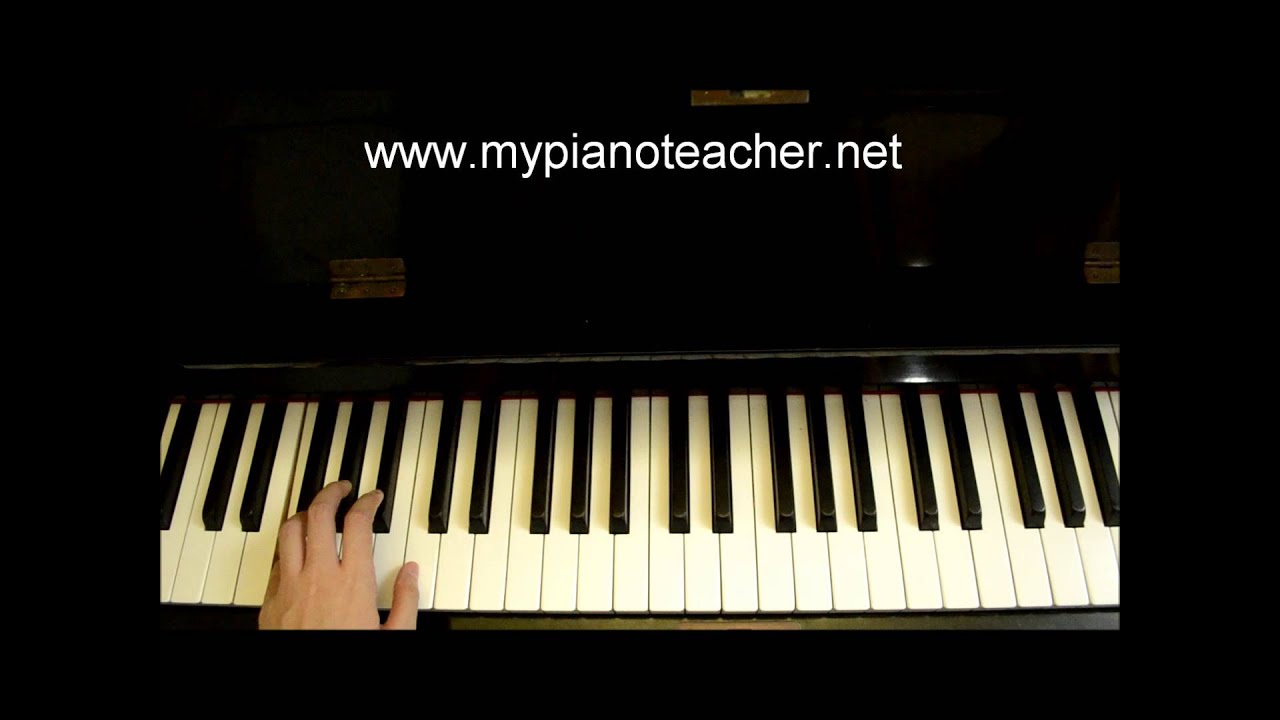
The beauty of a piano lies in its endless capacity to navigate you through different sound worlds, and the F Harmonic Minor scale is no exception. Begin your journey with the following steps:
- Start on F: The first step to playing the F Harmonic Minor scale on a piano is as intuitive as it sounds. Set off from that low, robust F note on your keyboard, feeling its deep tone resonate within you.
- Move up White Keys: Continuing onto G and A flat, your fingers should linger on white keys exclusively.
- Shift to Black Key: Strike that B flat key. Things get interesting because this key provides the texture our harmonic minor scale needs.
- Return to White Keys: Go back to playing white keys only by moving onto C and D after B flat.
- End on E: Finally, end your scale by going from D straight up to E. Marvel at how these seven simple notes combine into something both beautiful and hauntingly complex.
On a Guitar
When it comes to reproducing these notes on a guitar, fretboard knowledge comes into play:
- 1st String (High E): On this string, hit the 1st fret (F), 3rd fret (G), and 4th fret (A♭).
- 2nd String (B): Proceed by hitting 1st fret (C), and 3rd fret (D), ascending soon after onto the next string.
- 3rd String (G): Round out your melodic exploration with a bit of staccato spirit by striking hard onto the 2nd fret (A♭) followed swiftly by the 4th fret (B♭).
- Repeating the Process: Begin again on the next F note which is located on the 1st fret of your low E string (6th string).
This intriguing seven-note odyssey is a glimpse into the labyrinthine network of sound this world offers.
Don’t stop at just recreating these sounds; experience them, savor them, and weave them into your musical tapestry.
What key signature is used for F Harmonic Minor?
The F Harmonic Minor scale employs a different key signature than its major counterpart, F Major. This unique signature comprises 4 flats – Bb, Ab, Db, and Eb.

To envisage the key signature more vividly, envision a standard piano keyboard.
Starting from “F,” you follow the sequence of notes: F, G, Ab, Bb, C, Db, and E. The missing flat symbol is the crucial detail differentiating harmonic minor scales from their relative major scales.
This exact tonal recipe gives the harmonic minors their unique sound – melodic yet melancholic. Thus music written in this specific key tends to carry a somber tone, often utilized in classical compositions for its profound emotional resonance.
Also Read: How To Transpose Bass Clef To Treble Clef [A How-To Guide]
How to Write F Harmonic Minor in Different Clefs?
Just as a painter needs to understand how to translate a vibrant landscape onto a canvas, musicians must grasp how to depict scales on various clefs.
The F Harmonic Minor can be written across four clefs – the treble, bass, alto, and tenor. We’ll dive into each one individually.
Treble Clef
In the Treble Clef, also known as the G clef due to its spiral encircling the G line, you’d start with an F note. From this point:
- Place your first note (F) in the first space from the bottom.
- G is placed at the second line from the bottom.
- Now comes A flat on the second space from the bottom.
- B flat is located on the third line starting from the lower part.
- The middle C follows at the third space from the bottom.
- D will sit comfortably on the fourth line starting below.
- For E take up the fourth space from below.
- Finally, cascade up another step to return to F, marking your octave, which is situated on the topmost line.
Bass Clef
If you’re diving deeper with the Bass Clef, often referred to as the F clef since it has two dots around the F line:
- You commence with an F inked between the top and second top lines
- For G to progress to the topmost space
- A flat lands in between the second and last lines
- Gonzalez next should be put on the second last space
- Middle C’s rightful place is on the third last line
- Proceeding further D goes into the third last space
- E gets housed in between the third and middle lines
- And then ascend one more degree to get back to your next F posited in middle space
Alto Clef
Venturing into the Alto Clef, distinguished by its arrow pointing to the ‘middle C’ line, you’d write:
- F on second last space
- G is positioned on the third line
- Imbibe A flat in the middle of the space
- B flat is inked in between the middle and third lines from above
- Middle C sits comfortably on the second top-line
- D gets its spot in the topmost space
- Fix E between top and second top lines
- And F again rays out from the very top line
Tenor Clef
Lastly, for the Tenor Clef, mirroring the alto clef but settled a 5th higher:
- An F note comes first, setting your foundation in between last two lines
- Follow with G at the topmost space
- A flat demands to be moored on the topmost line
- Descend a step to B flat present above the last two spaces
- Stick C above the third line
- Embed D in the third space starting from above
- E takes shape after ascending one more degree to reach the third line from the top.
- Finally one more step upward and we reach our octave represented by an F placing it firmly between the bottom two spaces
In every musician’s journey appreciating this scaffold of notation is paramount indeed!
Also Read: How To Transpose Music? [Simplifying Key Changes In Songs]
Enharmonic Scales to F Harmonic Minor
F Harmonic Minor may indeed bear close relation to other scales. Two significant ones are the Ab Major and the Db Major scales.

- Ab Major: With a flat pattern of B, E, A, and D, you’ll note surprising similarities with F Harmonic Minor. The shared notes pave a bridge between these two unique musical landscapes.
- Db Major: With five flats – namely B, E, A, D, and G – it beautifully bridges the sonic gap with our beloved F Harmonic Minor.
So while the F Harmonic Minor is your guiding light in our melodic journey, don’t forget to plunge into its enharmonic counterparts for an enriched musical experience!
List the chords that fit in F Harmonic Minor.
To explore the F harmonic minor scale in-depth, let’s dive into the chords that correspond with it. You’ll find an intriguing blend of major and minor chords, displaying a vibrant richness within this scale.
Here is a quick rundown:
- F minor (Fm) – Formed from the 1st(F), 3rd(Ab), and 5th(C) degree of the scale.
- G diminished (Gdim) – Comprises the 2nd(G), 4th(Bb), and 6th(Db) degree.
- Ab augmented (Abaug) – Includes the 3rd(Ab), 5th(C), and 7th(E) degree.
- Bb Major (Bbmaj) – Built from the fourth(Bb), sixth(Dd), and first(F) degree.
This diverse tonality allows you to experiment with various melodies, making this scale a gateway to unique musical compositions.
Also Read: Transposition Chart [A Lifesaver For All Musicians]
FAQs
What does the F Harmonic Minor scale consist of?
The F Harmonic Minor scale is made up of the pitches F, G, Ab, Bb, C, Db, and E.
Why is the F Harmonic Minor scale unique?
The uniqueness lies in its interval structure. It possesses an augmented second interval between its sixth and seventh degrees which differentiates it from other minor scales.
How do I recognize a melody in the F Harmonic Minor scale?
Familiarize yourself with its unique sound characterized by a sense of longing and mystery. Listening to music composed on this scale can help you better identify it.
How do I make chords out of the F Harmonic Minor scale?
One simple way is by choosing a root note and then adding the third and fifth notes above that root within the scale. The process is called triad construction.
I’m learning guitar; how can I play an F Harmonic Minor scale on it?
There are specific patterns associated with playing this particular scale on guitar. Your local guitar teacher or online resources would be able to guide you effectively.
Also Read: D Minor Triad [A Crucial Element In Music Composition]
Conclusion
In our melodic expedition, we’ve uncovered the profound essence of the F harmonic minor scale. Musically rich and intricately complex, it possesses a unique hue in the vast color palette of scales.
If you’ve been with me in this journey, you’ll appreciate how it adds a sense of mystery and longing which helps to create uniquely dramatic pieces.
So, the next time you sit down at your piano or strap on your guitar, don’t hesitate to venture into this lesser-traveled territory of F harmonic minor scales. Music is a vast ocean; indulge yourself with its diversity!