
The C harmonic minor scale can truly unlock new potentials in your musical journey. This scale, unique with its exotic Eastern sound, is known for its ability to evoke deep emotions and is commonly used in a variety of music genres.
Becoming proficient in using this amazing scale will not only improve your overall musicianship but also augment your creations with an enriched harmonic landscape.
Often, we see musicians searching for ways to add complexity and richness to their compositions. The C harmonic minor scale could be that golden key! While it may seem intricate at first glance, with a step-by-step breakdown, it’s not as complex as you might think.
So whether you’re a beginner looking to expand your musical horizons or an experienced player eager to delve into something new, exploring the C harmonic minor scale indeed deserves a closer look.
Table of Contents
The Specific Intervals in C Harmonic Minor
C Harmonic Minor, a much-loved scale in the world of music, is constructed with some very particular intervals that give it its distinctive sound.

The formula for this scale might seem intimidating at first glance, but fear not! It’s simply:
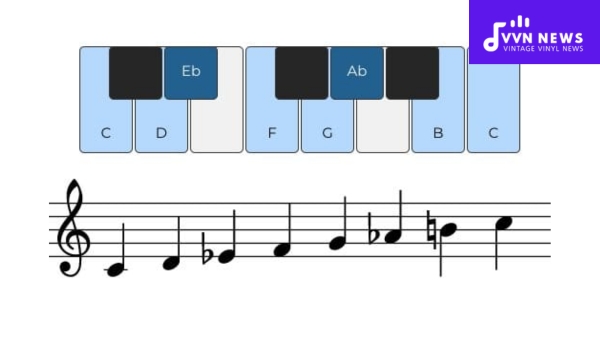
Tone – Semitone – Tone – Tone – Semitone – Aug 2nd (Augmented 2nd)– Tone
Breaking down this sequence will make it much more approachable:
- From C to D (C→D) is a whole tone.
- From D to E-flat (D→Eb) is a semitone.
- From E-flat to F (Eb→F) is another whole tone.
- Moving from F to G (F→G), we have yet another whole tone interval.
- Then, G up to A-flat (G→Ab) forms a semitone gap.
- The jump from A-flat up to B natural (Ab→B), forms an augmented 2nd, an interval you’ll hardly see elsewhere!
- Finally, we return home from B back up to C- another simple whole tone.
Take your time practicing these intervals on your instrument of choice – you’re already well on your way to mastering the stunningly beautiful and dramatic soundscapes of the C Harmonic minor scale!
Also Read: D Minor Triad [A Crucial Element In Music Composition]
Harmonic Minor Scale’s Formula
One could define the harmonic minor scale formula as ‘Root – Whole Step – Half Step – Whole Step – Whole Step – Half Step – Minor Third,’ or in other words, 1-2-♭3-4-5-♭6-7.
The crux of the harmonic minor scale lies within the augmented second, which is created by raising the seventh note of a natural minor scale by a half step (hence ‘augmented’).
This sequence forms a ‘gap’ between the 6th and 7th notes, making for an exotic, middle-eastern feel.
This pattern; it’s your roadmap to create and identify a harmonic minor scale on any root note.
Which degrees form the C Harmonic Minor scale?
In essence, each musical scale is comprised of degrees or steps. When we look at the C Harmonic Minor scale, comprises seven unique notes, each representing a specific degree of the scale:

- 1st Degree: The first degree is C, serving as the root note of the entire scale.
- 2nd Degree: The second degree in this scale is D.
- 3rd Degree: The third degree shows us an Eb note.
- 4th Degree: Next, we find an F in the fourth degree.
- 5th Degree: G represents the fifth step in this engaging musical journey.
- 6th Degree: We recognize an Ab here as our sixth degree.
- 7th Degree: B crowns our list as our seventh and final degree.
By paying attention to these degrees and their arrangement within this scale, you’re in a prime position to grasp its overall harmonic structure and subsequently enrich your music with diversified tonal coloring.
What modes are related to C Harmonic Minor?
The C harmonic minor scale has several intriguing modes with enriching characteristics. Here’s a comprehensive list of them:
- Aeolian #7: Recognized as the natural minor scale, it adds an element of tension with its raised seventh degree, creating a captivating sound often used in classical compositions.
- Locrian #6: The Locrian mode typically builds tension with its diminished fifth interval, but the raised sixth in this variant balances it out, resulting in a mixture of tranquility and restlessness which can be used for establishing tension and release in your music.
- Ionian #5: An Ionian mode with a raised fifth, testing the bounds of traditional tonality. This augmented scale contributes towards a unique tonal landscape brimming with originality.
- Altered Dorian: This mystical variation of the Dorian mode is characterized by both changes – lowering the 3rd and raising the 7th degree which imparts an intriguingly complex characteristic to any composition.
- Phrygian Dominant: Renowned for its oriental flavor, it’s essentially a Phrygian mode with a major third-degree – perfect to add a touch of exotic mystique to your music.
- Lydian #2: With an augmented second note from the Lydian major scale, this mode unleashes creative possibilities that are not just unusual but also aesthetically striking.
- Super Locrian 7: Also known as Altered Locrian bb7, it’s characterized by all 5 accidentals within one octave – providing you versatility and wide harmonic opportunities for improvisation.
Each of these scales has its unique characteristics that lend themselves to different compositions and musical styles; exploring them is like discovering multiple enchanting worlds within one universe.
Their usage depends on the emotional and sonic context of your composition.
Also Read: F Sharp Major Triad [Enhance Your Musical Compositions]
A Step-By-Step Guide to Playing C Harmonic Minor on Piano and Guitar
You will discover that the harmonic minor scale is like any other scale, tackled by practicing patterns.

Furthermore, knowing how the correct stroke feels for each instrument helps you become more familiar with this captivating scale.
Mastering the C Harmonic Minor on Piano
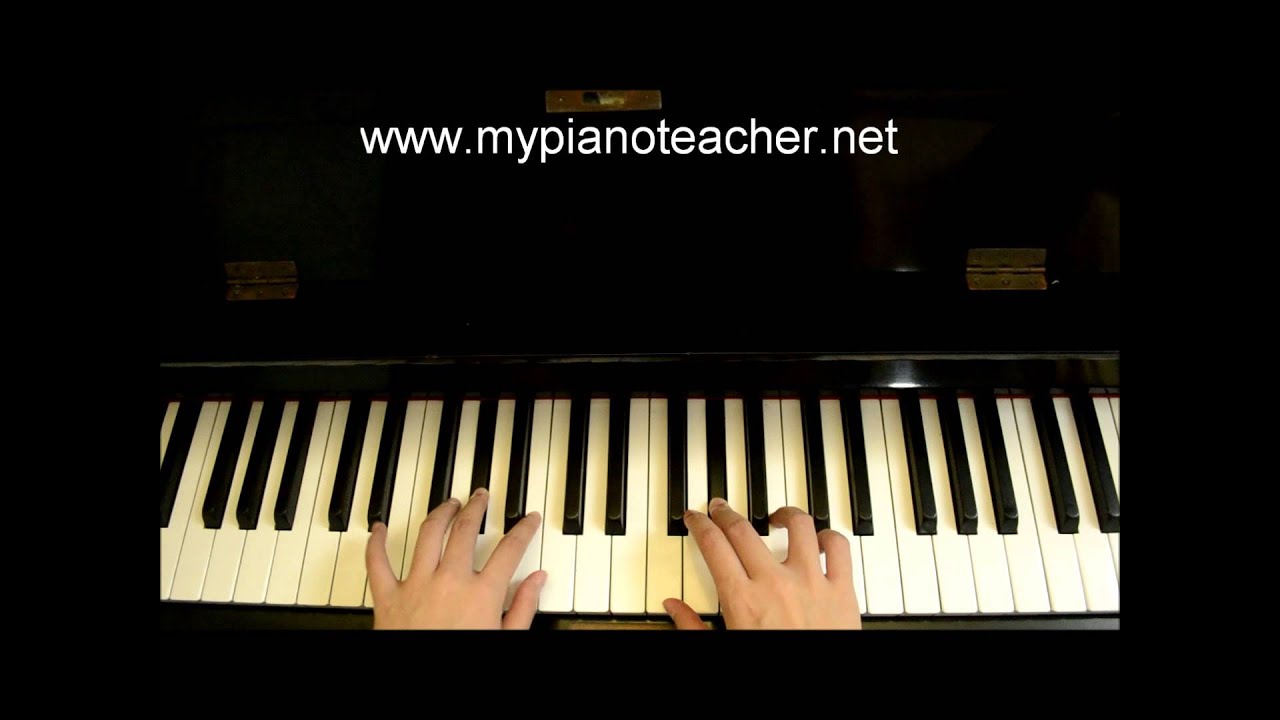
Start with the C harmonic minor scale on the piano. Here’s your step-by-step guide to navigating this exotic terrain:
- Position your hand on Middle C, identified as the white key immediately to the left of a group of two black keys.
- Play Middle C with your thumb, known as finger 1.
- Next, play D using your second finger, then E flat with your third finger.
- Bring your thumb under and across to the F and proceed with G using finger 2.
- The last part requires some dexterity, transition from A flat played by finger 3 to B played by finger 4 and back to C played by your little finger (finger 5).
Remember to practice slowly and gradually increase speed as you feel comfortable improvising over this vibrant scale.
Exploring the C Harmonic Minor on Guitar
Venturing into the world of guitar next? Here is a comprehensive guide for executing the C harmonic minor scale on guitar:
- Start in an open position (i.e., no frets held down), and pluck open string 5: This is your root note, C.
- Press down fret 1 of string 5 with your first finger and pluck: this gives you D.
- Likewise, have fret 3 of string 5 played using the ring finger for E flat.
- For F, proceed to pluck open string 4.
- Keeping it running smoothly, press down fret 2 of string 4 (G) with the index finger followed by frets 3 (A flat) and frets 5 (B) with ring and pinky fingers respectively.
- Lastly, churn out another C by plucking open string 3.
The curation of chords is an essential aspect when delving into the harmonic minor scale.
By practicing these steps carefully, you can eventually create a beautiful palette of sound that is strikingly sheer and sonically sumptuous.
What is the Key Signature of the C Harmonic Minor Scale?
The C Harmonic Minor scale, intriguingly, does not have any sharps or flats in its key signature.
That being said, certain notes within this scale are altered as you ascend and descend―one note specifically so.
The seventh note (B in the case of C Harmonic minor) is raised a half-step when ascending, producing a B natural instead of a flat (Bb).
Consequently, it’s crucial to keep this variation in mind when reading music or playing pieces written in this key to capture its unique flavor correctly.
Also Read: A Sharp Minor Pentatonic Scale [Unique Harmonic Possibilities]
Depicting C Harmonic Minor in Different Musical Clefs
Whenever we delve into different musical scales, one aspect that might seem complicated but rather enriches our knowledge is appreciating how these scales come to life on paper.

Marking them down in different musical clefs adds a new dimension to our theoretical understanding. In that sense, let’s disentangle the fascinating C harmonic minor scale across various musical staves.
C Harmonic Minor in Treble Clef
The treble clef, or G-clef, is often used for high-pitched instruments like the flute, violin, or oboe.
But it’s probably best known for its use in piano music. In the treble clef, you would commonly depict C harmonic minor starting at the second space up from the bottom of the staff (middle C), proceeding upwards to capture notes: C-D-Eb-F-G-Ab-B-C.
Interestingly enough, this scale employs both natural (G) and flat (Ab) forms of A.
C Harmonic Minor in Bass Clef
The bass clef is typically used for lower-pitched instruments, like the tuba or double bass. It is also incorporated on the left-hand staff of piano sheet music.
Starting at the second space from the top (middle C), downward movement captures notes of C harmonic minor: C-B-Ab-G-F-Eb-D-C. As you can see, it employs a mirror image pattern to that of treble clef!
C Harmonic Minor in Alto Clef
Performers using alto instruments such as viola usually read music written in alto clef.
For these instruments, middle C falls right on the third line from the bottom of the staff; so navigating upward yields notes C-D-Eb-F-G-Ab-B-C, akin to what we observed with treble clef.
The visualization of the C harmonic minor scale in these clefs brings the depth inherent in this captivating scale to light – a unique combination of notes that carries with it a mix of mystery and intrigue.
Armed with this knowledge, the journey deeper into this exotic soundscape will be all the more enriching.
Also Read: Harmony In Music [Enhance Your Compositions With These Tips]
Enharmonic Equivalents to C Harmonic Minor
Yes, there are enharmonic equivalents to the C harmonic minor scale. An enharmonic equivalent is a note, interval, or key signature that is equivalent in pitch, but written in a different notation.
For instance, using the practically common temperaments (like equal temperament), your C harmonic minor scale would be enharmonically equivalent to A# Harmonic Minor and Db Harmonic Minor.
It’s crucial to stay aware that these equivalences might not hold hourly in other tuning systems.
Knowing about the enharmonic equivalents can be beneficial when you’re transposing or modulating your music into different keys, or aiming for unique chordal colors.
Chords Constituting C Harmonic Minor
The harmonic minor scale is a distinct entity, fortified by its unique combination of chords.

The sequence of chords for the C Harmonic Minor scale, derived from its steps are:
- Cm (C – Eb – G) – the tonic
- Ddim (D – F – Ab) – the super tonic
- Ebaug (Eb – G – B) – the mediant
- Fm (F- Ab-C) – the subdominant
- G (G-B-D) – the dominant
- Abmaj7 (Ab-C-Eb-G) – the submedian
- Bdim7 (B-D-F-Ab) – the leading-toned
Mastering these chord patterns can lead to more riveting performances and composition-making.
Also Read: D Sharp Major Pentatonic Scale [A Bright And Positive Tone]
FAQs
Is the C harmonic minor scale used frequently in popular music?
Certainly! A wide variety of artists incorporate this scale into their music, from jazz and classical musicians to blues and rock artists.
How does the C harmonic minor scale differ from the natural minor scale?
The crucial difference lies in the seventh degree. While in natural minor it’s a whole step below the octave, in harmonic minor it becomes a half step, giving a unique tonality.
Can playing in different scales enhance my musical performance?
Absolutely. Learning to navigate different scales, like the C harmonic minor, allows for greater musical expression and complexity.
Why is it called ‘harmonic’ minor?
The term ‘harmonic’ denotes its application during harmony—when chords are formed from this scale, they’re naturally more harmonically interesting than their natural minor counterpart.
Are there any exercises I can do to get comfortable with the C harmonic minor scale?
Yes. You can start by running up and down through the scale sequences or improvising melodies out of the given notes on your instrument of choice.
Also Read: Understanding Music Transposition: A Complete Guide
Conclusion
The journey into the world of the C Harmonic Minor Scale is both exciting and enriching. Like stepping into a bounteous musical feast, this scale opens up an array of harmonic possibilities.
Building familiarity and proficiency with the C harmonic minor scale creates endless opportunities for musical growth and exploration. Grab your musical instrument of choice and get started with the C Harmonic Minor Scale today!