
Music, in its infinite complexity, offers a myriad of intriguing elements for us to comprehend. One such dimension that adds a unique flair to musical composition is the tritone interval.
This rarely understood, yet profoundly powerful component serves as an incredible spicing agent within the broader spectrum of musical theory.
Though it may appear arcane for some, getting a grip on the tritone interval’s character and functionalities can revolutionize your music.
If you’re passionate about music or merely curious about what makes certain melodies stand out, this concept deserves your undivided attention. This article will open your eyes to the magic and mystery of the tritone interval.
Table of Contents
What Exactly is a Tritone Interval?
The tritone interval, often termed as an ‘augmented fourth’ or a ‘diminished fifth’, has enigmatic characteristics that render it both intriguing and unconventional.
In simple terms, it comprises six half steps or three whole tones (hence the term tritone), which splits an octave right down the middle.
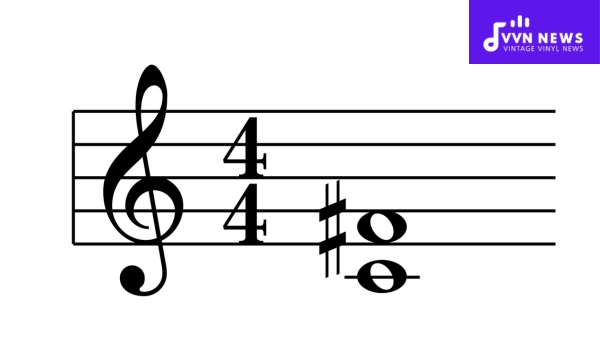
If we consider ‘C’ as our root note, then the tritone of ‘C’ would be an augmented fourth (‘F#’) or a diminished fifth (‘Gb’).
This peculiar separation helps create a somewhat dissonant sound, thus igniting inimitable curiosity about its use within varied compositions.
Also Read: Harmony In Music [Enhance Your Compositions With These Tips]
What is the origin of the Tritone Interval?
Derived from the Latin word ‘tri’- meaning three, and the Greek word ‘tonus’- meaning tension, the term ‘Tritone’ collectively refers to an interval that spans three whole tones (or six semitones).

Tritones found their beginnings during the Middle Ages, around the 9th century AD.
The tritone was originally named “Diabolus in music” or “the devil in music,” which signifies its discordant sound. This interval was considered so dissonant, that it warranted avoidance in medieval ecclesiastical singing.
Quite interestingly, despite its controversial past, tritones played significant roles in the development of Western music.
Later into the 19th and 20th centuries, tritones found favor with composers and musicians embracing modernist and jazz idioms. Now tritone intervals are frequently used for their unique capability to add dissonance and resolution within music compositions.
This colorful past of tritone has indeed laden it with distinctive qualities that are worth exploring by any passionate musician or music enthusiast.
How Have Songs Utilized the Tritone Across Genres?
The incorporation of the tritone into songs presents a dramatic example of how this interval has dominated different genres.
It gives compositions an edge and depth that defy conventional musical practices, creating engaging and memorable melodies.
Here are five songs that beautifully demonstrate this concept.
- “Maria” – West Side Story: This stunning composition by Leonard Bernstein incorporates a tritone right at its inception, applying it to the very first two notes of the melody to denote Maria’s unconventional character.
- “Black Sabbath” – Black Sabbath: As one of the pioneering bands in heavy metal, Black Sabbath was known for its innovative sound. They boldly implemented the tritone in their namesake song: it forms the main riff, capturing a dark and mystical energy that defines the genre.
- “Purple Haze” – Jimi Hendrix: Hendrix’s psychedelic classic employs a prominent tritone-based guitar riff, contributing extensively to its distinctive vibe and contributing to his legacy as a guitar virtuoso.
- “YYZ” – Rush: The progressive rock era witnessed an extensive use of intricate musical structures including tritones; angling for a fresher sound by challenging conventional harmonics.
- “West End Blues” – Louis Armstrong: Even in landmark jazz pieces such as Armstrong’s iconic trumpet solo in “West End Blues,” tritones play vital roles, distinctly marking this style’s improvisational nature.
These songs showcase how the masterful utilization of tritones can truly elevate various works beyond conventionality while carving unique sonic identities within their respective genres.
Also Read: How To Transpose Into The Tenor Clef? [Mastering In Notation]
What Are Effective Ways for Tritone Ear Training?
When it comes to mastering the interpretation of tritones by ear, consistency, and methodical practice are your best allies.

Let’s explore a variety of strategies that will help you recognize this dissonant, yet captivating interval when you hear it.
Immerse in Tritone-Filled Music
Begin by immersing yourself in compositions rich with tritones. Classical pieces such as “The Rite of Spring” by Stravinsky or Liszt’s “Dante Sonata” showcase the tritone’s uncanny ability to create tension.
Jazz recordings with dominant seventh sharp fifth chords (G7(#5)) are also a treasure trove for tritonic sounds.
Singing Out the Intervals
Sing the interval yourself. Start on any note and sing up a diminished fifth (the tritone interval).
Using solfège syllables, like “do” to “fa” sharp or flat (depending on if you’re singing ascending or descending), reinforces the tonal relationships in your mind.
Instrumental Identification
Identify tritones on your instrument. Play notes that are three whole steps apart and label them mentally or out loud; for example, C to F# is a classic tritone pairing.
Make sure to mix up starting points to avoid locking into just one familiar sound pattern.
Utilize Technology
Consider using ear training apps or websites that offer interval recognition exercises.
Some platforms allow custom settings where you can focus exclusively on differentiating between various intervals including tritones.
Compositional Experimentation
Lastly, compose short melodies or chord progressions using tritones. The creative process of embedding this interval into music can significantly bolster your aural identification skills.
By combining these techniques, you’ll develop an acute sensitivity to the distinctive dissonance of tritones—transforming what once seemed foreign into a fundamental facet of your musical awareness.
Also Read: Mastering Chords In A Minor [Improve Your Composition Skills]
How Can Tritones Be Used on Piano and Guitar?
Incorporating tritones into your piano or guitar play involves certain techniques that can instantly imbue your melodies with a sense of tension and drama. Here’s how you can explore tritones on these instruments:
On the Piano:
Locate the tritone by choosing any key and counting three whole steps, or six half steps, from your starting note.
For instance, if you begin on C, your tritone would be F# or Gb (enharmonically equivalent notes).
This spans four keys between them – a distinctive dissonant sound immediately recognizable.
On the piano:
- Find the root note: It’s C, G, or Bb.
- Count up six half steps: To locate its tritone pairing.
- Play both notes simultaneously for a bold effect.
On the Guitar:
The layout of frets makes spotting a tritone spatially intuitive. If you start with an open string, count up to the sixth fret – this is your interval. For non-open strings:
- Identify your root note on any string.
- Move diagonally across one string up and five frets higher to pinpoint the tritone.
Within chords, incorporate the interval for adding dissonance; in a typical C Major chord, replacing the E with an F# creates an unsettled sound that demands resolution.
By mastering their placement on piano and guitar strings/frets, you prime yourself for advanced musicality that captivates listeners.
What Makes the Half-Diminished Seventh Chord Special in Utilizing Tritones?
The half-diminished seventh chord is a captivating enigma in music theory.

It wields the tritone interval with finesse, adding a layer of harmonic tension and complexity unique to its character.
Within its structure, you find the tritone nestled between the root note and the flatted fifth, then again from the minor third to the diminished seventh.
This dual presence amplifies the chord’s dissonant charm, making it pivotal in genres craving emotional depth.
For example, jazz musicians skillfully employ this chord to craft intricate progressions that captivate and intrigue listeners.
When exploring harmony on your instrument of choice, recognize that a half-diminished seventh chord can elevate musicality through its alluring application of tritones.
Also Read: A Guide Transposing Into The Alto C [Navigate Music Transposition]
FAQs
What is a tritone interval in music theory?
A tritone interval is a musical interval that spans three whole tones, such as from C to F#.
Why was the tritone historically known as the “devil’s interval”?
Historically, the tritone was called the “devil’s interval” due to its dissonant sound, which was often associated with tension and evil in medieval music theory.
Can tritones be found in popular music?
Yes, tritones are present in various genres of popular music, often creating tension before resolving to a consonant interval.
Is the tritone relevant in modern music production?
Modern producers frequently use the tritone to add complexity and edginess to their compositions.
Do all musical scales contain a tritone?
Not all scales contain a tritone; it is commonly found in major and minor scales but absent in some modal scales.
Conclusion
In a musical context, the tritone interval stands as a testament to how tension and dissonance can yield unexpected beauty.
In your journey through music theory or composition, remember that tritones are more than a curious anomaly; they’re sonic tools that can elevate emotion and add depth.
If you’re strumming a guitar, tickling the ivories, or analyzing your favorite songs, the tritone is a gateway to understanding profound musical relationships.