
In my musical journey, there’s always been something a bit mystifying about the beautiful complexity of jazz and the secret spice behind its enchanting harmonies.
One of the key elements driving jazz’s compelling and dynamic sound is something known as altered chords. These sonic wonders lure listeners in with their vibrant deviation from their more classic counterparts.
If you’ve dabbled in music theory, you might have encountered all sorts of chords; major, minor, diminished, augmented– the list goes on.
But altered chords add an entirely new dimension to your sonic palette. They can imbue a song with an exotic flair or unleash a cascade of raw emotion.
This unique richness that altered chords bring to music is so captivating that I’m compelled to share everything I know about them with you.
Table of Contents
What are Altered Chords?
At their core, altered chords represent a colorful deviation in harmony. They’re formed when one or more notes within a standard chord are sharpened or flattened, creating tension and dissonance that beckon for resolution.
These alterations typically occur on the fifth or the seventh degree of the scale, though other degrees can be modified for different effects.
For example, in a G7 chord (G-B-D-F), altering the D to D♯ profoundly changes its character.
The altered chord not only embellishes a progression but also enhances voice leading, whisking listeners along to the next chord with heightened anticipation.
Also Read: D Sharp Major Pentatonic Scale [A Bright And Positive Tone]
Why Do We Use Altered Chords?
Altered chords offer invaluable tools for composers and musicians looking to breathe new life into their harmonies.

When employed smartly, they possess the power to transform mundane progressions into mesmerizing soundscapes.
Here are five pivotal reasons for integrating altered chords into musical compositions:
Enhance Tension and Resolution
Altered chords, laden with dissonance, heighten anticipation in listeners. This tension climaxes until released by a subsequent resolution chord. This dance between suspense and relief is a hallmark of captivating music.
Add Complex Coloration
Regular chord progressions sometimes lack the depth desired in a composition.
By altering certain notes within a chord—such as sharpening or flattening them—musicians can inject intricate hues, creating richer harmonic textures.
Smooth Voice Leading
In altered chords, one or more notes deviate from their expected pitch, crafting smoother transition lines—often known as “voice leading”—between chords.
These transitional nuances contribute to more sophisticated and seamless melodies.
Create Jazz & Blues Signature Sounds
The quintessence of genres like jazz and blues often relies on the use of altered dominants (V7alt).
These chords contain alterations such as b9s, #9s, #11s, or b13s. Such modifications are what give these genres their characteristic emotional depth and groove.
Introduce Chromaticism
Altering tones within a chord introduce chromatic elements into a piece’s harmonic structure without straying from the key signature.
This process opens doors to novel melodic possibilities while maintaining cohesion within the tonal center of the song.
By embracing altered chords, you furnish your musical canvas with an array of vibrant shades and audible dimensions that can captivate your audience with every note played.
Also Read: A Diminished Triad [Unlock Hidden Chords On Your Guitar]
What Are the Most Common Notes to Alter?
When exploring the depths of altered chords, certain notes beg for modification more often than others to achieve that signature sound.
Among them, the fifth (5th) and ninth (9th) stand out as prime candidates for alteration.
Let’s dive into these musical transformers and uncover their roles.
Altered Fifths
The fifth note in any chord is pivotal, balancing the root and completing the power duo that establishes a chord’s baseline character.
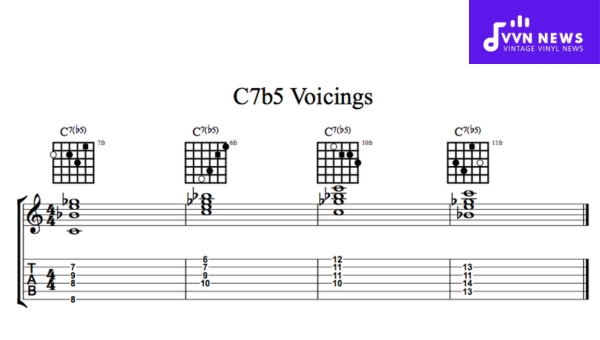
In altered harmony, you’ll frequently encounter a sharp (#5) or flat (♭5) version.
This seemingly modest tweak adds a surprising amount of tension and release, propelling the music forward.
Altered Ninths
Similarly, the ninth—essentially an octave plus one step from the root—is ripe for alteration.
Musicians often opt to sharpen (#9) or flatten (♭9) this interval. The altered ninth is a secret weapon in a composer’s arsenal, providing an almost “spicy” lift to chord progressions.
When harnessing these alterations within your compositions or improvisations, keep in mind that context is king—each embellishment should serve your greater musical vision.
These subtle yet powerful changes to standard chords open up new harmonic doorways through which your creativity can freely wander.
How Does Ear Training Relate to Altered Chords?
Good musicianship isn’t just about mastering your instrument; it’s about honing your ears to pick up on the nuances of music.

When it comes to recognizing and employing altered chords, ear training is an invaluable skill.
- Identifying Dissonance: Through ear training, you learn to discern dissonance—a staple of altered chords—allowing you to distinguish which notes have been altered when hearing a chord.
- Resolution Recognition: You become attuned to how altered chords resolve, usually leading to a sense of tension and release—an essential aspect of their functionality within musical progressions.
- Improvisation: Ear training equips you with the ability to improvise over complex chord changes by internalizing the distinctive sound of each alteration.
- Transcription Skills: Developing your ears helps you transcribe music accurately, especially when it features subtle chord alterations that might otherwise be overlooked.
- Memorization: By recognizing the particular sound of altered chords, you’ll be better able to recall and decipher them during performances or songwriting sessions.
By investing time in ear training, your capacity for utilizing altered chords will improve markedly.
This skill set allows for a richer experience both in playing music and in listening deeply.
In turn, you’re equipped not only with technical knowledge but also with an instinctive musical awareness that informs your artistic expression.
Also Read: How To Transpose Bass Clef To Treble Clef [A How-To Guide]
How Do Borrowed and Secondary Dominant Chords Relate to Altered Chords?
In the tapestry of harmony, borrowed and secondary dominant chords emerge as tools composers use to add color and tension, similar to altered chords, yet with their distinct traits.
Borrowed Chords
Borrowed chords, or modal mixture chords, originate from a key different from the one you’re in.
Typically plucked from the parallel minor if you’re in a major key (and vice versa), these interlopers effectively furnish unexpected shades to a piece.
For instance, borrowing the iv chord from C minor while you are in C major introduces an emotional shift thanks to its flatted scale degree.
Secondary Dominants
Secondary dominants serve as a temporary pivot away from the home key center by introducing a dominant seventh chord that resolves not to the tonic but to another diatonic chord within the key.
This re-harmonization trick establishes transient tension before settling back into familiar territory.
Both borrowed and secondary dominant chords might feature notes that could be termed “altered” relative to the home key; what distinguishes an altered chord is generally its purpose.
It exists primarily not to modulate or borrow but instead becomes an end in itself; it adds color or leads our ears melodically within a single chord’s context over jazz and blues progressions in punchy and expressive ways.
Also Read: How To Transpose Music? [Simplifying Key Changes In Songs]
FAQs
What exactly is an altered chord in music?
An altered chord is a chord with notes that have been modified from their original pitch, usually through sharpening or flattening, to create a dissonant or tension-filled sound.
Can you use altered chords in any musical genre?
Yes, while they are common in jazz, altered chords can add interesting harmonic colors to various genres, including rock, classical, and pop music.
Are altered chords and extended chords the same thing?
No, they’re not. Altered chords specifically refer to changes in the 5th, 9th, 11th, or 13th scale degrees while extended chords add notes beyond the octave without altering the original scale degrees.
How do I know when to use an altered chord in my progression?
Use an altered chord when you want to create tension before resolving to the next chord – it’s especially effective leading up to a resolution in a cadence.
Do I need advanced music theory knowledge to play altered chords?
Not necessarily. A basic learning of chord construction can help you begin experimenting with alterations. Advanced knowledge will deepen your comprehension and skills.
Conclusion
In essence, altered chords are invaluable tools in any musician’s arsenal. They are the seasoning that adds a unique flavor to your harmonic recipes.
By exploring the creative possibilities altered chords offer, your compositions can achieve nuanced textures that resonate with listeners. It’s subtle dissonance or emphatic tension you’re after, don’t hesitate to experiment with alterations.
They might just open up a realm of expressive potential in your music that you never knew existed.