
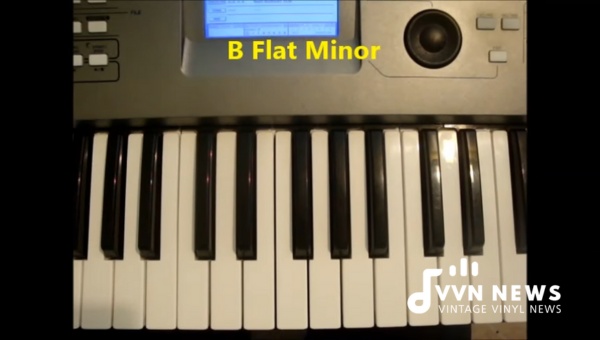
In your journey as a music enthusiast or aspiring musician, you’re bound to come across the elegant harmonic structure known as a triad.
Today, we want to give special attention to one such triad that elegantly bridges both simplicity and complexity – the B flat minor triad.
As you make your first steps into understanding musical structures, chances are you’ve heard of major and minor chords before.
The music world is crammed full of them, and they are fundamental building blocks in almost every song you hear.
Now, imagine taking these concepts a step further and delving into the exquisite world of the B flat minor triad.
Table of Contents
What constitutes a B Flat Minor Triad in music theory?
In music theory, a triad is a chord consisting of three notes played simultaneously. The B flat minor triad is no different.
It comprises three specific notes – B flat, D flat, and F. Here’s what each note represents:
- B flat (A#): This is the root note of the triad and serves as its foundation. It provides stability and sets the tonal center for the chord.
- D flat (C#): Also known as the minor third interval, this note adds depth and richness to the triad. It gives it a darker, melancholic feel.
- F: The F note acts as the fifth interval in this triad. It adds tension to the chord and complements the other two notes by enhancing their harmonic relationship.
Together, these three notes create a captivating harmony that forms the essence of the B flat minor triad.
Also Read: A Flat Major Blues Scale [Open New Doors In Your Music]
What distinguishes B Flat Minor Triads in music?

The B flat minor triad stands out in the world of music for its distinct qualities and emotional impact. Here are a few key characteristics that set it apart:
- The Dark and Melancholic Nature: The B flat minor triad is known for its somber and introspective sound. The combination of the root note (B flat), the minor third (D flat), and the fifth (F) creates a haunting and melancholy tone. It is often used to convey sadness, introspection, or longing in musical compositions.
- Versatility Across Different Genres: One of the remarkable aspects of the B flat minor triad is its versatility across various genres of music. Whether it’s classical, jazz, rock, or pop, this chord progression finds its place effortlessly in different musical contexts.
- Common Use in Minor Keys: The B flat minor chord is frequently employed within songs written in minor keys. It serves as a standard chord choice when exploring the harmonic possibilities within these keys.
- Chord Progression Building Block: As a triad, the B flat minor chord can form an essential building block for larger chord progressions. It can be combined with other chords to create complex harmonies that add depth and emotion to a piece of music.
The B flat minor triad is its ability to evoke powerful emotions and weave intricate melodies into any musical composition.
How To Play B flat Minor on Guitar and Piano
Music has the incredible ability to transcend language barriers and ignite our souls.
If you’re looking to learn one of the most captivating chord progressions on the guitar or piano, then look no further than the B flat minor triad.
In this section, I’ll guide you step-by-step through playing this beautiful chord on both instruments.
Playing B flat Minor on Guitar
To play the B flat minor chord on guitar, follow these steps:
- Begin by placing your index finger on the 1st fret of the A string.
- Next, position your middle finger on the 3rd fret of the D string.
- Finally, place your ring finger or pinky finger (whichever feels more comfortable) on the 3rd fret of the G string.
With these finger placements, strum from the A string down to create a rich and melancholy sound that characterizes the B flat minor triad.
Playing B flat Minor on the Piano
Mastering B flat minor triads on piano is a memorable experience. Here’s how to achieve it:
- Find a keyboard or piano and locate the middle C.
- Place your right thumb (or index finger) one whole step below middle C – this note is B flat.
- For your middle finger, find D, which falls three half-steps above B flat.
- Lastly, use your pinky finger to press down F, which sits four half-steps above B flat.
By pressing all three notes simultaneously – B flat, D, and F – you create a compelling and emotive sound that represents the essence of this chord.
Also Read: B Music Note [In-Depth Guide To Reading Musical Notation]
Playing The B Flat Minor Triad in Other Positions
Now that you know how to form a basic B flat minor triad, it’s time to explore different positions across various strings and octaves for more versatility in your musical compositions.
On the guitar, experiment with playing the B flat minor triad in different positions along the fretboard.
By sliding your hand up or down the neck and using barre chords, you can discover new tonal qualities and add complexity to your playing.
On the piano, explore inversions by rearranging the order of the notes within the triad. For example, try playing D as your lowest note, followed by F, and then B flat.
This inversion adds a different flavor while maintaining B flat minor’s melancholic essence.
By experimenting with different positions and inversions on both guitar and piano, you can unlock a whole new range of musical possibilities with the B flat minor triad.
Triads that originate from the B Flat Minor Scale

The B flat minor scale is a versatile scale that can evoke a range of emotions, from melancholy to introspection. When constructing triads from this scale, we get a variety of chord qualities based on the positions within the scale. Let’s explore the triads that originate from the B flat minor scale:
- Bb Minor (Bb – Db – F): As the tonic triad of the B flat minor scale, this chord sets the foundation for compositions in this key. Its melancholic yet mysterious sound creates an expressive backdrop for emotive melodies.
- C Diminished (C – Eb – Gb): The diminished triad built on C is formed by stacking two minor thirds on top of each other. This chord has a dissonant and tense quality that can add suspense and drama to a musical piece.
- Db Major (Db – F – Ab): The major triad built on Db adds a sense of brightness and upliftment to compositions in the B flat minor key. This chord brings a refreshing change amidst the otherwise somber tones of the scale.
- Eb Minor (Eb – Gb – Bb): This minor triad built on Eb mirrors its relative position within the major key system and adds depth and complexity to compositions using the B flat minor scale.
- F Minor (F – Ab – C): As another relative minor triad, F minor brings an emotional richness to music in this key. Its warm yet mournful character allows for poignant melodies that captivate listener’s hearts.
- Gb Major (Gb – Bb – Db): The major triad built on Gb provides a contrasting tone to the overall moodiness of compositions in B flat minor, introducing elements of brightness and hopefulness.
- Ab Major (Ab – C – Eb): The major triad built on Ab exudes a sense of stability and resolution, offering a satisfying conclusion to musical phrases that incorporate the B flat minor scale.
Understanding these triads provides musicians with a toolbox of harmonic possibilities when composing or improvising in the B flat minor key. By knowing the qualities and characteristics of each triad, one can create evocative melodies and progressions that resonate deeply with listeners.
Also Read: B Minor Triad [Master Chord Progression In Just Minutes]
B Flat Minor Triad Inversions
In music theory, an inversion refers to rearranging the order of the notes within a chord. This technique adds variation and complexity to chord progressions. The B flat minor triad, like any other triad, has three possible inversions: the root position, first inversion, and second inversion. Let’s dive into each inversion:
1. Root Position
The root position is when the root note (B flat) is at the bottom of the chord, followed by the third (D flat) and fifth (F) stacked on top. In sheet music notation, this is represented as Bbmin.
2. First Inversion
To create the first inversion of a B flat minor triad, we take the third (D flat) and move it up an octave. This means that D flat becomes the highest note in the chord, while B flat occupies the middle position and F stays as the lowest note. It is written as Dbmin/Bb.
3. Second Inversion
In this inversion, we take the fifth (F) and move it up an octave. This results in F becoming the highest note in the chord, while D flat moves down to occupy the middle position and B flat remains at its original position. The second inversion of a B flat minor triad is notated as F/Bbmin.
These inversions allow for smoother transitions between chords and can bring out different tonal qualities within a piece of music.
How to Execute the Inversions of the B Flat Minor Triad on Guitar and Piano?

Inversions of a chord refer to rearranging the order of its notes while maintaining the same three pitches.
This technique adds variety and color to your compositions. Let’s explore how to execute the inversions of the B Flat Minor triad on both guitar and piano.
B Flat Minor Triad Inversions on Guitar:
- Start with the root position of the B Flat Minor triad. This consists of playing the notes B flat, D flat, and F simultaneously.
- To find the first inversion, take the note B flat from the root position and move it an octave higher. Play D flat, F, and B flat together.
- For the second inversion, move the note D flat from the first inversion up an octave. Play F, B flat, and D flat together.
- Lastly, for the third inversion, take the note F from the second inversion and move it up an octave. Play B flat, D flat, and F together.
B Flat Minor Triad Inversions on Piano:
- Begin with the root position on the piano by placing your thumb (finger 1) on B flat. Place your middle finger (finger 3) on D flat and your pinky finger (finger 5) on F.
- To create a first inversion, move your thumb (finger 1) onto D flat while keeping your middle finger (finger 3) on D flat as well as maintaining your pinky finger (finger 5) on F.
- For a second inversion, keep your thumb (finger 1) on B flat while shifting your other fingers down so that your pointer finger (finger 2) plays D flat and your ring finger (finger 4) plays F simultaneously.
- Finally, for a third inversion comfortably move all fingers one note higher, so your pointer finger (finger 2) rests on F, middle finger (finger 3) on B flat, and pinky finger (finger 5) on D flat.
Remember that practice makes perfect when it comes to executing chord inversions. By mastering these variations, you can add complexity and depth to your music compositions.
Also Read: B Minor Blues Scale [Discover The Power Of Emotional Music]
Tracks that feature a B Flat Minor Triad
The B flat minor triad has found its way into countless musical compositions across various genres.
Its unique blend of melancholy and intensity adds depth and emotion to any piece.
Whether you’re a music enthusiast or a budding musician, exploring songs that utilize the B flat minor triad can be an excellent way to appreciate its impact and perhaps find inspiration for your compositions.
Here are some tracks that prominently feature a B flat minor triad:
- “Billie Jean” by Michael Jackson – One of Jackson’s most iconic songs, “Billie Jean,” showcases the versatility of the B flat minor triad. The track begins with an infectious bass line built around this chord, setting the tone for the rest of the song.
- “When I Was Your Man” by Bruno Mars – This heartfelt ballad by Bruno Mars features a beautiful piano accompaniment centered around the B flat minor triad. The chord progression evokes a feeling of regret and longing that resonates with listeners.
- “Creep” by Radiohead – Radiohead’s “Creep” is known for its haunting atmosphere, partly achieved through its use of the B flat minor triad. The recurring progression in the chorus creates a sense of tension and unease throughout the song.
- “I Will Survive” by Gloria Gaynor – This empowering disco anthem incorporates the B flat minor triad in multiple sections, adding depth to its uplifting message of resilience and self-confidence.
- “Black Hole Sun” by Soundgarden – Soundgarden’s alternative rock hit is enriched by the incorporation of the B flat minor triad in both its verse and chorus sections. This chord choice contributes to the song’s dark and brooding atmosphere.
- “Hotel California” by Eagles – The timeless classic “Hotel California” features the B flat minor triad in its iconic guitar solo. The chord progression adds an element of mystery and intrigue to this beloved song.
Exploring these tracks and paying attention to the specific instances where the B flat minor triad is used can deepen your understanding of its versatility and emotional impact.
Listen closely to how each artist incorporates this chord into their compositions, observing how it influences the overall mood and atmosphere of the song.
Also Read: B Major Blues Scale [Master The Sounds Of The Blues In No Time]
FAQs – B Flat Minor Triad
What notes make up a B flat minor triad?
The notes that comprise a B flat minor triad are B flat, D flat, and F.
What emotions does a B flat minor triad evoke?
The B flat minor triad tends to evoke emotions of melancholy, sadness, and introspection.
How can I play a B flat minor triad on the guitar?
To play a B flat minor triad on the guitar, place your index finger on the first fret of the A string (Bb), your middle finger on the third fret of the D string (Db), and your ring finger on the third fret of the G string (F).
How can I play a B flat minor triad on the piano?
On the piano, you can play a B flat minor triad by placing your thumb on B flat, your middle finger on D flat, and your pinky finger on F.
Are there any famous songs that feature the B flat minor triad?
Yes! Some notable songs that feature the haunting beauty of the B flat minor triad include “Nothing Else Matters” by Metallica and “My Immortal” by Evanescence.
Conclusion
The B flat minor triad is a captivating chord progression that adds depth and emotion to musical compositions.
Its unique combination of B flat, D flat, and F creates a haunting and melancholic sound that resonates with listeners.
Whether you’re a musician looking to incorporate this triad into your compositions or simply an enthusiast eager to explore the intricate world of music theory, the B flat minor triad is sure to leave a lasting impression.
So go ahead, experiment with this beautiful chord progression, and let your creativity soar.