
As a music enthusiast, navigating the world of scales can often be overwhelming. Acquainting yourself with different scales opens up new avenues to explore and enhance your musical prowess.
Consider this for example – the B harmonic minor scale. This unique scale, praised for its distinct tonality, serves as a critical pivot in the Western classical music world.
The contours and tones of the B harmonic minor scale have a certain allure that makes it unlike any other scale out there. Engaging with this scale takes your musical learning to a whole new level.
So let’s walk on this musical journey together, unlocking its symphony one note at a time.
Also Read: E Major: Scale And Chords [Exciting Sounds For Your Compositions]
Table of Contents
Intervals in B Harmonic Minor scale
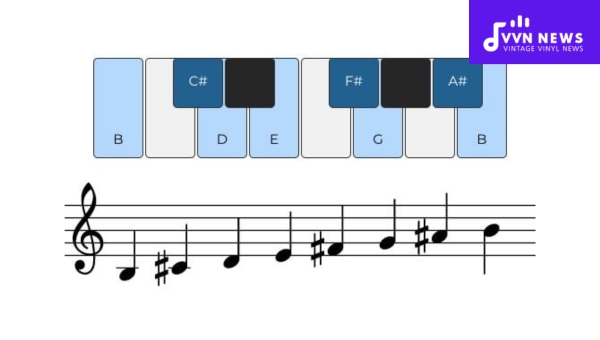
The distinct sound of a B Harmonic Minor scale is directly influenced by the sequence of intervals within it.

While sneaking a peek at the interval structure, we see Tone, Semitone, Tone, Tone, Semitone, Augmented 2nd, and finally another Tone, it’s this alternate pattern of tones and semitones that shapes the scale’s overall feel.
To visually illustrate this:
- B to C#: Tone
- C# to D: Semitone
- D to E: Tone
- E to F#: Tone
- F# to G: Semitone
- G to A#: Augmented 2nd
- A# to B: Tone
This scale has a harmonic charm because of a unique interval – an augmented 2nd between the 6th and 7th notes (G and A#).
The prominence of an augmented second results in an irregular yet enticing rhythm that is not found in your run-of-the-mill scales.
Degrees in a Harmonic Minor scale
In the realm of harmonic minor scales, each note is called a ‘degree’. These degrees are defined by sequential numbers from the first note to the seventh.
In our case of concern, i.e., the B harmonic minor scale, we’ve seven notes (degrees) starting from B and ending at A#. Let me illustrate for you:
- 1st degree – ‘B’
- 2nd degree – ‘C#’
- 3rd degree – ‘D’
- 4th degree – ‘E’
- 5th degree – ‘F#’
- 6th degree – ‘G’
- 7th degree – ‘A#’
These degrees are not random placements. They signify a step-by-step progression that builds upon previous notes, resulting in an intricate symphony bursting with emotion and feeling.
By comprehending these degrees, you’ll discern nuances within compositions, thereby enriching your grasp of musical concepts.
Modes of B Harmonic Minor
The harmonic minor scale, specifically the B harmonic minor, possesses a fascinating structure.

This structure isn’t consistent or uniform across all seven notes, which are commonly referred to as ‘modes.’
Each mode in this intriguing scale carries distinct intervals, imparting an individual character to your compositions and performances. Let’s delve deeper into each mode one by one:
Aeolian #7
Commonly known as the harmonic minor mode, Aeolian #7 begins on the seventh degree of the B harmonic minor scale. Characterized by a raised seventh, or leading tone, this mode injects dramatic tension into any composition.
Comprising of B – C# – D – E – F# – G – A#, its boldness exposes unique harmonies that are certain to command attention.
Locrian #6
The Locrian #6, an uncommon yet intriguing mode of the B harmonic minor scale, starts on the second degree. With its notes being C# – D – E – F# – G – A# – B, the raised 6th gives this mode a distinct flavor.
One might say it’s a bit more softened than its sibling, the Locrian mode, due to this raised 6th making it seem less harsh and more approachable.
Ionian #5
Arguably, the Ionian #5 with its augmented fifth is one of the most noticeably unique modes of the B harmonic minor scale. Starting on the third degree, this mode encompasses the notes D – E – F# – G – A# – B – C#.
The augmented fifth provides an element of surprise and instability that you can utilize to add unpredictability and complexity to your musical compositions.
Altered Dorian
The Altered Dorian mode starts on the fourth degree, making it a variation of Dorian. This tweaked version of a familiar mode features notes names E – F# – G – A# – B – C# – D.
Its altered tone contributes an eeriness or tension to your music that’ll make any listener sit up and take notice.
Phrygian Dominant
Taking off on the fifth degree of our main scale, Phrygian Dominant often serves as a touchstone for composers seeking a Middle Eastern or Spanish sound.
With notes tracing F# – G – A# – B – C# – D – E, Middle Eastern infatuations in this mode revolve around its major third which establishes its distinctive foreign flavor.
Lydian #2
Lydian #2, beginning on the sixth degree of the B harmonic minor scale, holds an augmented second interval at its helm. Its formation ensues through notes G – A# – B – C# – D – E – F#, rendering music that seems somewhat surreal and dreamlike.
The slight irregularity of this scale produces harmonies that are not only unusual but also uniquely beautiful.
Super Locrian ♭♭7
As the name suggests, the Super Locrian ♭♭7 is no ordinary mode. Launching on the root (or first degree) of our scale, it clamors A# – B – C# – D – E – F# – G.
Its lowered seventh is a beacon that signals a deviation from conventionality into slightly unfamiliar territories, offering melodies and harmonies teeming with drama and ambiguity.
I hope that this dive into the modes of the B harmonic minor scale has given you an enlightening glimpse into their essences.
Each mode, with its distinctive intervals and degrees, offers a unique musical flavor that can be harnessed masterfully to make your compositions compelling and templates for innovation.
Also Read: How To Transpose Bass Clef To Treble Clef [A How-To Guide]
Playing B Harmonic Minor on piano and guitar
Let’s get our hands on the instruments and plunge right into the heart of the B Harmonic Minor Scale.
Whether you’re an ardent pianist or a passionate guitarist, this section will guide you effortlessly through the process of playing this enchanting scale.
Playing the B Harmonic Minor Scale on Piano
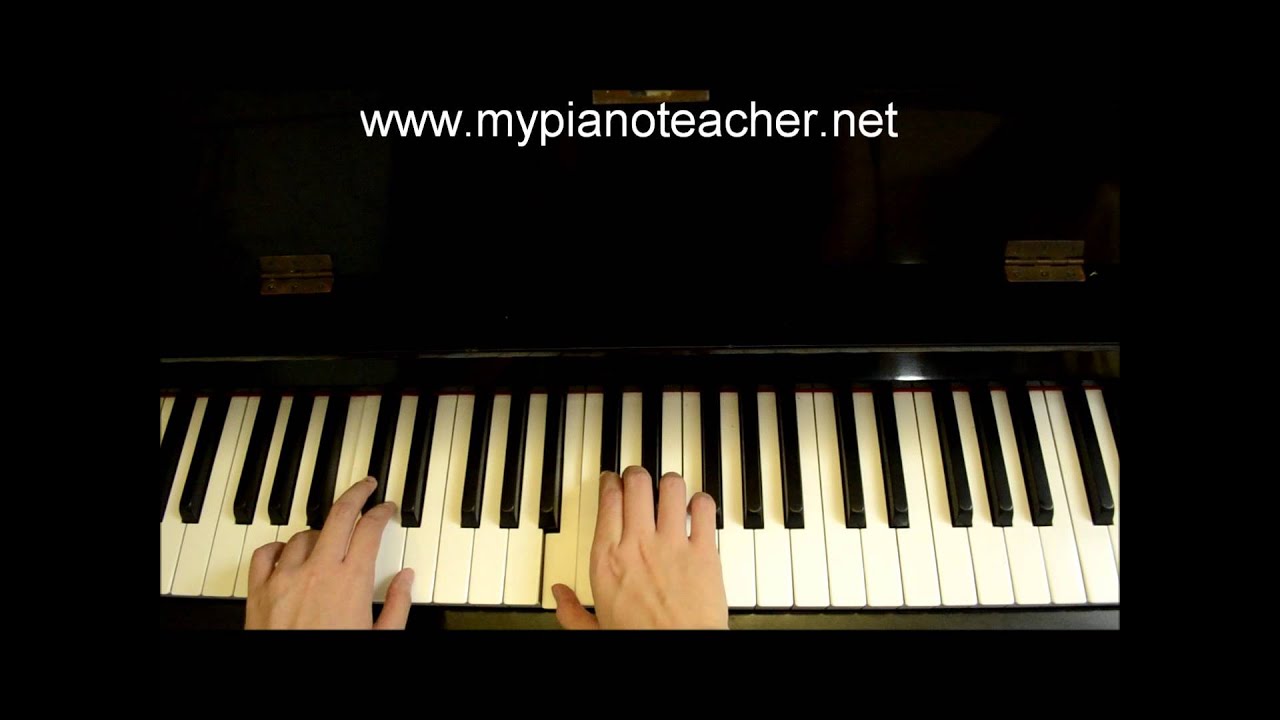
To start, here’s a step-by-step guide to playing the B harmonic minor scale on piano:
- Start with your right thumb resting lightly on B.
- Continue with your index finger (2nd) on C#, and middle finger (3rd) on D.
- Cross your thumb under the middle finger to play E.
- Allow your index finger (2nd) to rest on F#, middle finger (3rd) for G, and 4th finger for A#.
- Finally, return to B with your pinky finger.
For the left hand:
- Position your pinky finger to kick off from B.
- The left ring finger (4th) engages the A#, the middle finger (3rd) presses G, while the index occupies F#.
- Thumb propels E, before crossing over onto D by engaging 4th finger concurrently letting 5th finger proceed to C#.
- Eventually, make it back to B for completion using thumb.
The thumb cross (‘crossing over’) mentioned here is crucial in enabling smooth flow between sequences.
Playing the B Harmonic Minor Scale on Guitar
To master the B harmonic minor scale with a guitar is more of a physical than a mental challenge comparing it with piano.
Here’s a sequence-focused guide:
The whole phrase commences from fret seven of string six utilizing the index finger as follows:
- 7-9 frets playing with index-ring fingers respectively on the 6th string.
- Repeat the above pattern on the next string using the 5th string instead which leads you toward the ‘C’ note.
- Next up are 6-7-9 frets handled by index-middle-ring fingers in consecutive order on the 4th string.
- Proceed afterwards towards 4-6-7 frets on 3rd string advocating the drive through index-ring-pinky fingers.
- Execute a 4-6 frets sequence on the 2nd string for launching on B note.
By keeping your fingers close to the fretboard and moving economically, you elevate your skill level besides attaining a pleasant scale experience. Play slow initially only then onto a faster pace once you’re attuned to flow.
Using a metronome is beneficial in maintaining tempo efficiency throughout the performance.
The Key Signature of B Harmonic Minor
The B Harmonic Minor Scale is signified by two sharps in its key signature.

These are F# (F sharp) and C# (C sharp). The scale consists of seven notes, which are B, C#, D, E, F#, G, and A#.
Thus, on a simplified level, it’s very similar to the B minor scale but with a raised seventh note. This enhanced seventh note defines the unique tone of this scale, offering a sound that’s both exotic and intriguing.
It’s significant to get familiar with this key signature as it marks the gateway to unlocking the beauty of tune that the B Harmonic minor scale provides.
Also Read: How To Transpose Treble To Bass Clef [Music Guide]
Clef notations for B Harmonic Minor
The fascinating world of music notation comes into play when we consider the different clefs used in the representation.
Here, we’ll delve into the clef notations for the B Harmonic Minor scale including Bass Clef, Treble Clef, Alto Clef, and Tenor Clef.
Bass Clef
When using the bass clef, the B harmonic minor starts on the third line from the top.
The notes fall mostly below middle C which is ideally suited for low-pitched instruments such as bass guitar or cello. This clef is also referred to as F-clef due to its two dots surrounding F.
Get a grasp on where each note must land if you’re writing in this specific clef how to assign your notes correctly within this system.
Treble Clef
Onwards to the treble clef, representing higher pitch ranges typically played by instruments such as flute or violin and conveniently familiar with guitar and piano players.
In treble notation, middle C lies one ledger line below the staff so our scale will start from that point upwards.
This scale begins five lines up on your staff, proceeding further up into your next octave’s B note.
In total a sequence of 8 notes creates our needed scale within treble clef notation.
Alto Clef
The obscure twins in music notation you might say are Alto and Tenor! With its spot right in between both extremes, it’s no wonder people often overlook these two representatives.
The alto clef’s bump rests directly on middle C. It offers us a unique opportunity as it lets these notes appear right around middle C without dropping beyond or bridging above standard ledger lines – perfect for viola players comfortable around middle-range tones.
Tenor Clef
We have a tenor clef, traditionally used by bassoon or trombone players.
In the tenor clef, the B harmonic minor starts on the third line from the bottom as our middle C shifts up to be placed on the fourth line from the bottom!
Mastering your way around these diverse notations could bring out a new dimension in your playing.
It might be intimidating at first, but no good thing was ever achieved without a little hard work.
While writing music for different instruments can be confusing at times, and being able to utilize all four of these clefs is essential to accurately convey your musical messages!
Also Read: How To Transpose Music? [Simplifying Key Changes In Songs]
Chords Available in B Harmonic Minor
Incorporating the B harmonic minor scale into your repertoire adds greater depth to your music, particularly through its chords.

This harmonic minor scale yields diverse guide tones and harmonies that you might not experience in other scales. It notably consists of the below enlisted seven chords:
- B minor/major
- C# diminished
- D Major
- E minor
- F# minor
- G augmented
By experimenting with these chords, you can discover interesting musical combinations and fresh dimensions in your compositions.
Also Read: C Minor Triad [Simplify Music Composition With This Guide]
FAQs
What is the sequence of notes in the B Harmonic Minor Scale?
The B Harmonic Minor Scale consists of the following notes – B, C#, D, E, F#, G, and A#.
What makes the harmonic minor scale unique?
Harmonic minor scales have a unique characteristic – a raised 7th note, which creates a distinctive sound compared to other minor scales.
How does understanding the harmonic minor scales help me as a musician?
These scales enhance your songwriting abilities by providing unique melodic possibilities. Familiarity with different types of scales improves your overall music comprehension.
Can I use the B Harmonic Minor Scale in my compositions?
Absolutely! The B Harmonic Minor Scale can add an intriguing twist to your compositions with its distinct tone.
Are there any popular pieces composed in the B Harmonic Minor Scale?
Yes, one notable piece using the B Harmonic Minor is Bach’s “Prelude and Fugue No. 22.”
Also Read: D Minor Triad [A Crucial Element In Music Composition]
Conclusion
In the musical world, the B Harmonic Minor Scale stands out with its enchanting tonality. Its charm lies in its unique intervals and degrees that lend it a place of pride amongst music enthusiasts.
Mastering it empowers you with an enriching breadth of musical expression. Donning the hat of both melody and harmony, allows you to produce more vibrant and exciting compositions.
The more you immerse in its rhythm, the more it takes you toward musical proficiency.