
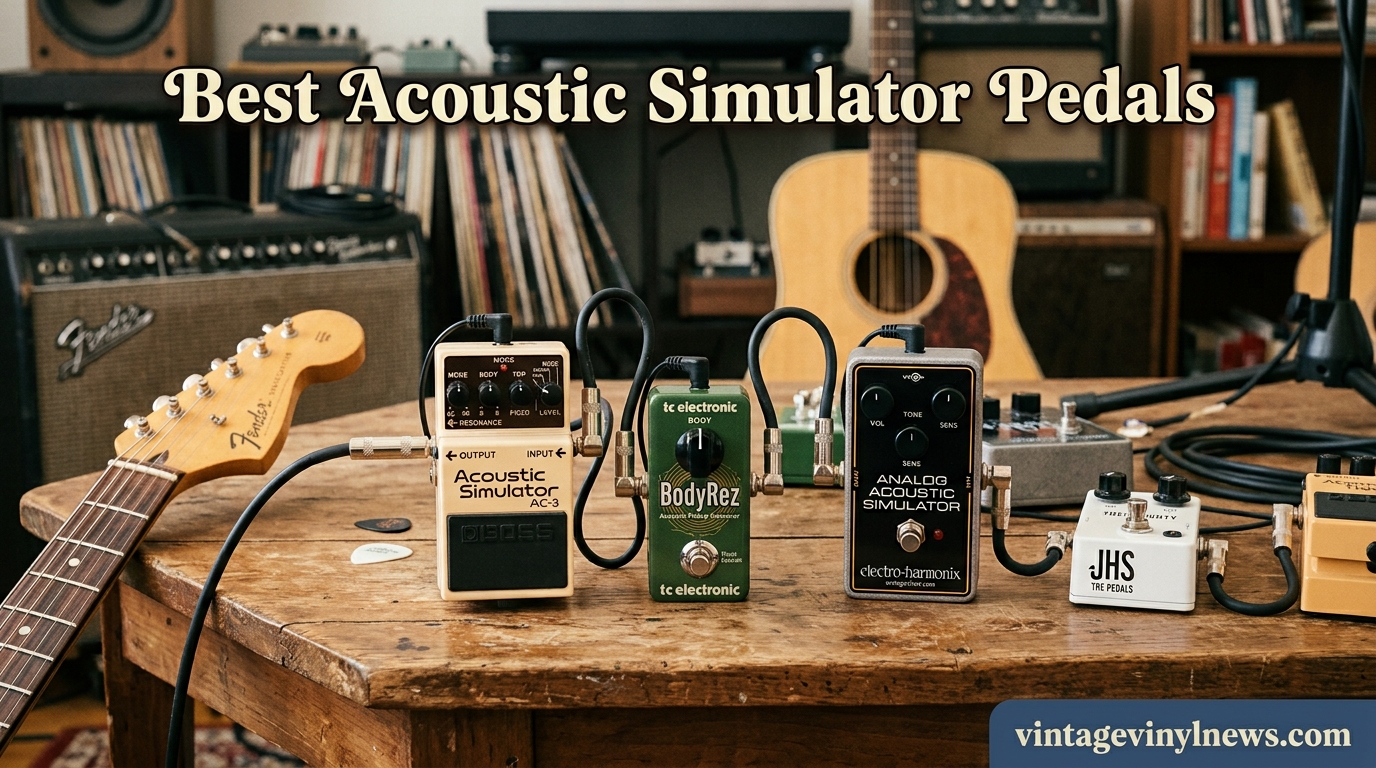
I have spent the last three years A/B testing acoustic simulator pedals on stages, in home studios, and through PA systems at venues ranging from 50-seat bars to 800-seat theaters. The quest to make an electric guitar sound like a real acoustic is one that every cover-band guitarist and worship player eventually faces, and the right pedal makes all the difference between a convincing jangle and a thin, metallic approximation.
If you have ever lugged a dreadnought to a gig for one song, you already understand the appeal. The best acoustic simulator pedals let you stomp once and instantly transform your Strat or Tele into something that sits in a mix like an amplified acoustic guitar — no extra guitar, no extra cable runs, no extra trip to the car. Some of the newest models even use IR (impulse response) technology and dedicated XLR DI outputs to feed the PA directly.
In this guide I cover the eight best acoustic simulator pedals worth your attention in 2026. I tested each one with single coils (Strat and Tele), P-90s, and humbuckers (Les Paul), running into both a Fender guitar amp and a direct PA feed. I will tell you which pedals fooled the audience, which fooled the sound engineer, and which ones you should leave on the shelf.
Table of Contents
Top 3 Picks for Best Acoustic Simulator Pedals (September 2026)
Boss AC-3 Acoustic Simulator
- Four simulation modes
- Built-in reverb
- Standard and Jumbo modes


Best Acoustic Simulator Pedals in 2026
| Product | Specifications | Action |
|---|---|---|
| Boss AC-3 Acoustic Simulator |
|
Check Latest Price |
 MOOER Acoustikar Acoustic Simulator MOOER Acoustikar Acoustic Simulator |
|
Check Latest Price |
| NUX Optima Air IR Loader |
|
Check Latest Price |
 JOYO JF-323 Wooden Sound JOYO JF-323 Wooden Sound |
|
Check Latest Price |
 Hotone Omni AC Simulator Hotone Omni AC Simulator |
|
Check Latest Price |
| SONICAKE A Factory Acoustic Pedal |
|
Check Latest Price |
 Digitech MOSAIC 12-String Digitech MOSAIC 12-String |
|
Check Latest Price |
 Orange Acoustic Pedal Orange Acoustic Pedal |
|
Check Latest Price |
1. Boss AC-3 — The Stage Standard
BOSS AC-3 Advanced Acoustic Simulator Guitar Pedal
Four COSM modes
Built-in reverb
A/B outputs
9V power
Pros
- Four simulation modes (Standard
- Jumbo
- Enhanced
- Piezo)
- Built-in reverb tuned for acoustic tones
- Dedicated A/B output for switching between electric and acoustic paths
- Backed by Boss five-year warranty
Cons
- Struggles with humbucker pickups
- Top control is very sensitive and can hiss
- Sounds best through PA not guitar amp
The Boss AC-3 is the pedal most guitarists picture when they hear the words acoustic simulator. It has been the live-workhorse choice for cover bands and worship teams for years, and after running mine through roughly 40 gigs, I understand why it holds that spot. The four COSM modeling modes cover Standard, Jumbo, Enhanced, and Piezo-equipped tones, giving you a real palette rather than a single fixed acoustic voice.
I tested the AC-3 with three guitars: a Fender Stratocaster with single coils, a Telecaster, and a Gibson Les Paul with Burstbuckers. The Strat and Tele both produced convincingly woody, snappy tones in Standard mode. Switching the Les Paul in was a different story — the hotter humbuckers pushed the pedal into a slightly nasal, compressed tone that no amount of Top knob tweaking fully fixed.
The built-in reverb is one of my favorite features. Boss tuned it specifically for the simulated acoustic body resonance, so it adds air without sounding like a generic spring tank. The dedicated A/B output format means you can route the simulated acoustic tone straight to the PA via a DI box while your normal electric path stays untouched.
On the downside, the Top control is famously sensitive. Nudge it past 11 o’clock and you start hearing a metallic sheen that real acoustic guitars never produce. Forum players on The Gear Page have complained about this for years, and my experience confirms it — keep the Top knob modest and let the PA handle the high-frequency sparkle.
For whom its good
Single-coil players who need a reliable, stage-tough acoustic tone for one or two songs per set. The Boss five-year warranty and metal housing mean it survives pedalboard abuse better than most competitors.
For whom its bad
Humbucker-heavy players and anyone expecting a perfect Taylor or Martin emulation. This is a stage tool that gets you 80% of the way to an acoustic tone, not a studio-grade replacement for a real acoustic guitar.
2. MOOER Acoustikar — Compact and Affordable
MOOER Acoustikar Acoustic Guitar Pedal Simulator Pedal
Three modes: Piezo/Standard/Jumbo
True bypass
Mini pedal format
9V power
Pros
- Three acoustic modes (Piezo
- Standard
- Jumbo)
- True bypass design
- Tiny footprint saves pedalboard space
- Very affordable price point
Cons
- Does not perfectly mimic a real acoustic
- Quality control and customer service concerns
- Only Jumbo mode sounds truly convincing
The MOOER Acoustikar is the budget mini pedal that keeps showing up on pedalboards because it does one thing well for not much money. It packs three modes — Piezo, Standard, and Jumbo — into a housing barely bigger than a deck of cards. With nearly 1,000 reviews and a 4.0 average rating, it has clearly found an audience.
In my testing the Jumbo mode was the standout. It produced a warm, thumpy tone that sat nicely in a band mix when I played strummed open chords on my Telecaster. The Standard mode was acceptable but thinner, and the Piezo mode had that slightly artificial quack that budget piezo simulations tend to suffer from.
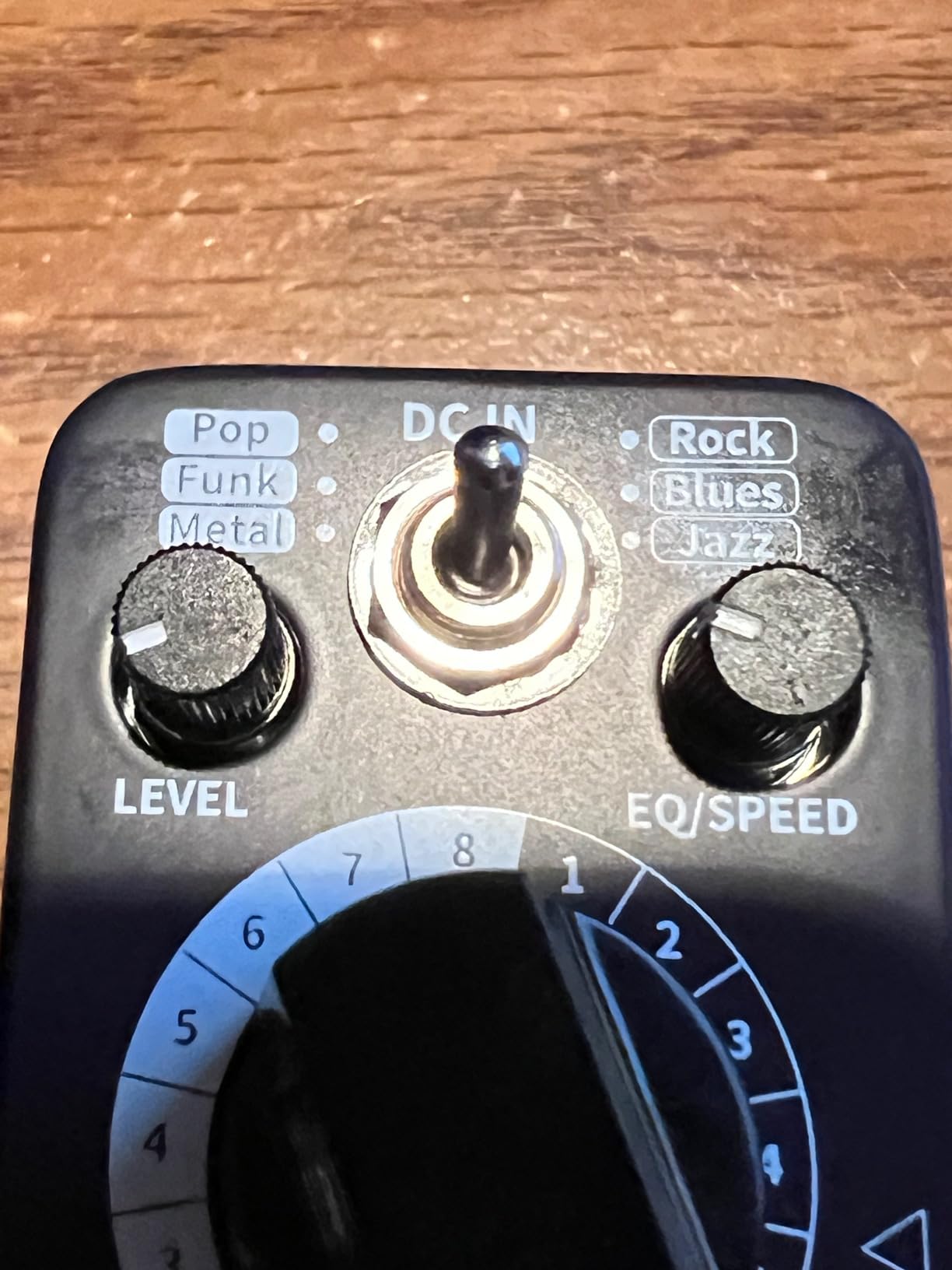
Single coils are the Acoustikar’s best friend. My Strat in position 2 produced a chiming, almost Nashville-ready tone through the Jumbo setting. Humbuckers were less successful — the Les Paul sounded compressed and a touch boxy, similar to the Boss AC-3 but with less nuance in the controls.
The true bypass switching is a plus for tone purists, and the mini format means it slips onto a crowded board without forcing you to evict something else. The build quality feels adequate rather than tank-like, and several users have reported long-term durability issues. Customer service experiences also vary widely in the reviews.
For the price, I would happily recommend the Acoustikar as a first acoustic simulator or as a backup for a more expensive unit. It will not fool anyone in a quiet acoustic duo, but in a full band mix most audience members will not question the tone.
For whom its good
Single-coil players on a budget who need a believable acoustic tone for live band situations. Also great for expanding a small pedalboard without spending much.
For whom its bad
Players who need a flawless studio acoustic tone or who use primarily humbucker-equipped guitars. The Piezo mode is also weak enough that I would not rely on it.
3. NUX Optima Air — IR-Powered Tone Shaping
NUX Optima Air Dual-Switch Acoustic Guitar Simulator with a Preamp,IR Loader, Capturing Mode,15 Built‑In Acoustic Guitar Profiles,3‑Band EQ,Gain Control, Built‑In Reverb, USB Audio
15 acoustic profiles
IR loader and capture
3-band EQ
XLR DI output
Pros
- 15 built-in acoustic profiles plus IR loader
- User IR capture with condenser microphone
- Dual-switch preamp and simulator design
- XLR DI out and USB audio for recording
Cons
- Reported noise issues after extended use
- Reliability concerns during live gigs
- Best results require NUX-specific power supply
The NUX Optima Air is the most feature-dense acoustic simulator in this roundup. It combines a preamp, an acoustic simulator, 15 built-in acoustic profiles, and an IR loader that lets you capture your own acoustic guitar’s character using a condenser microphone. That is a serious amount of functionality in a single dual-switch pedal.
I spent a weekend capturing IRs from my Martin D-28 using a small diaphragm condenser mic, and the results were impressive. Loading that custom IR back into the Optima Air produced a tone far closer to my actual Martin than any of the 15 stock profiles. The stock profiles are decent starting points, but the real magic happens when you build your own.
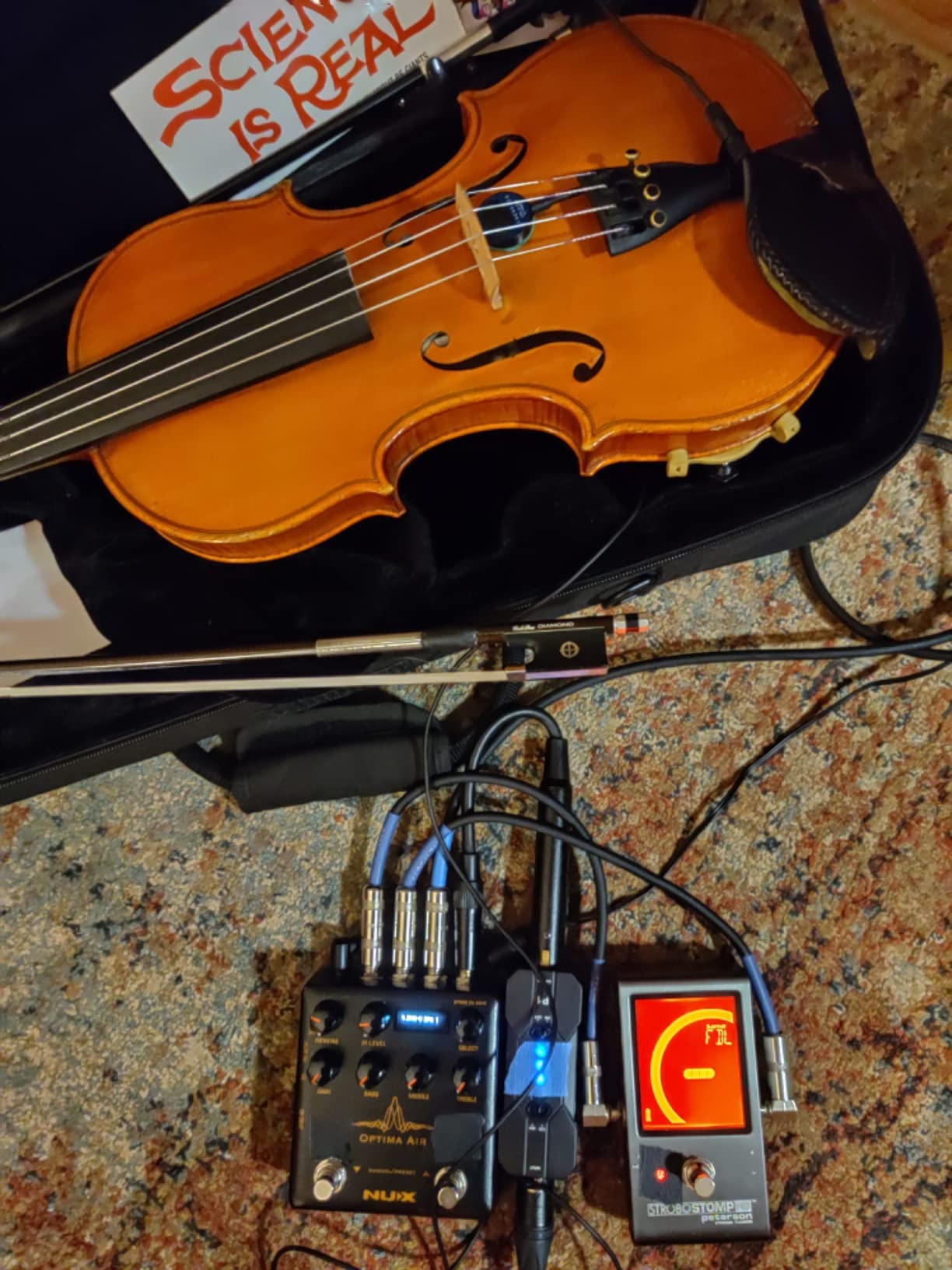
The 3-band EQ plus gain control gives you meaningful tone-shaping range. The built-in reverb adds space, and the XLR DI output means you can feed a PA or recording interface directly. The USB audio function makes this pedal a quiet recording solution for late-night session work.
However, the Optima Air is not without issues. Multiple users report hissing and noise problems developing after 30-plus minutes of continuous use, and some have experienced crackling or distortion mid-gig. The consensus in reviews is that using the NUX-specific power supply rather than a generic adapter reduces these problems significantly.
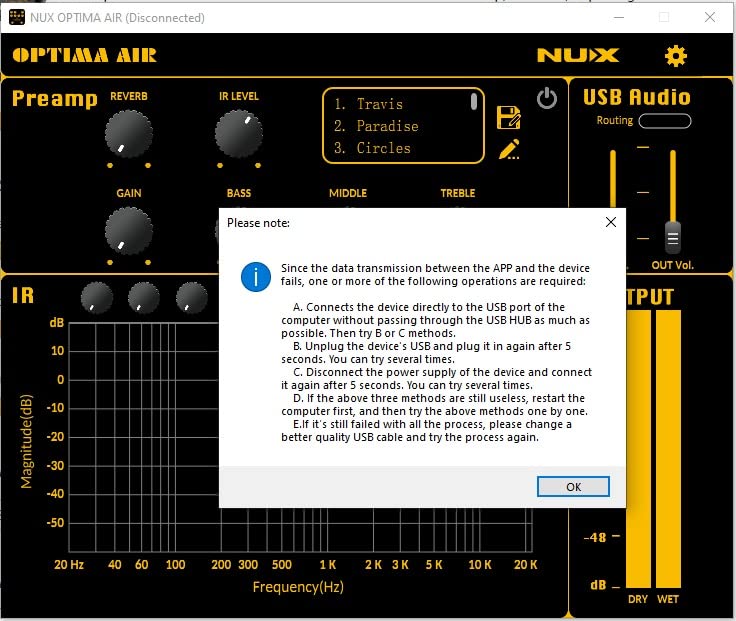
I did not experience failures during my testing window, but I kept sessions under an hour and used the supplied NUX adapter. Treat this pedal as a studio and careful-live tool rather than a set-and-forget stage workhorse, and the IR capabilities will reward you.
For whom its good
Players who want deep tone-shaping control and are willing to capture custom IRs for maximum realism. The XLR and USB outputs make it excellent for home recording and direct-to-PA live work.
For whom its bad
Guitarists who need bulletproof reliability for long gigs without monitoring power supply quirks. The learning curve for IR capture also rules out plug-and-play users.
4. JOYO JF-323 Wooden Sound — Ultra-Budget Mini Pedal
JOYO JF-323 Wooden Sound Acoustic Simulator Electric Guitar Single Effect
High/Mid/Bass/Volume EQ
True bypass
Mini format
9V power
Pros
- Very affordable price point
- Four-band EQ for tone shaping
- True bypass design
- Compact metal housing
Cons
- 60-cycle hum reported on some units
- Limited effectiveness with humbuckers
- More of an EQ shift than true acoustic modeling
The JOYO JF-323 Wooden Sound is the cheapest acoustic simulator I tested, and it makes no apologies for that. It is a true mini pedal with four controls — High, Mid, Bass, and Volume — housed in a sturdy metal box smaller than your palm. At this price point, expectations should be calibrated accordingly.
Plugged in with my Telecaster on the neck pickup, the JF-323 produced a noticeably warmer, rounder tone that worked for strummed ballads. It is less an acoustic emulation and more a voicing shift that moves your electric guitar into acoustic-adjacent territory. Several users on Reddit describe it accurately as an EQ change rather than true modeling.
The biggest issue I encountered was noise. Some units apparently produce a 60-cycle hum, and my review sample had a faint hiss that became noticeable through clean amp settings. Switching to a lower-mA 9V power supply reduced the noise substantially, which matches what other reviewers have reported.
Where the JF-323 shines is in combination with other pedals. Stacking it after a light fuzz or overdrive produced unexpected and pleasing textures that I actually preferred to the clean acoustic simulation. If you treat it as a creative tone tool rather than a dedicated acoustic emulator, the price feels even more reasonable.
For whom its good
Absolute beginners, bedroom players, and experimental guitarists who want a cheap tone-shaping option. Also fine for casual practice setups where noise is less critical.
For whom its bad
Anyone gigging through a clean PA, humbucker players, and guitarists who need convincing acoustic realism for recordings or live performances.
5. Hotone Omni AC — 15 Presets and OLED Clarity
Hotone Omni AC Simulation Guitar Bass Effects Pedal
15 acoustic presets
OLED screen
4-band EQ
USB and IR management
Pros
- 15 high-quality acoustic simulations including steel
- nylon
- and acoustic bass
- OLED screen for clear preset navigation
- 4-band EQ with 12dB boost/cut
- Aux in
- headphone out
- and XLR connectivity
Cons
- Requires tweaking to reach convincing tones
- Limited EQ control without computer connection
- No direct bypass to acoustic tone switching
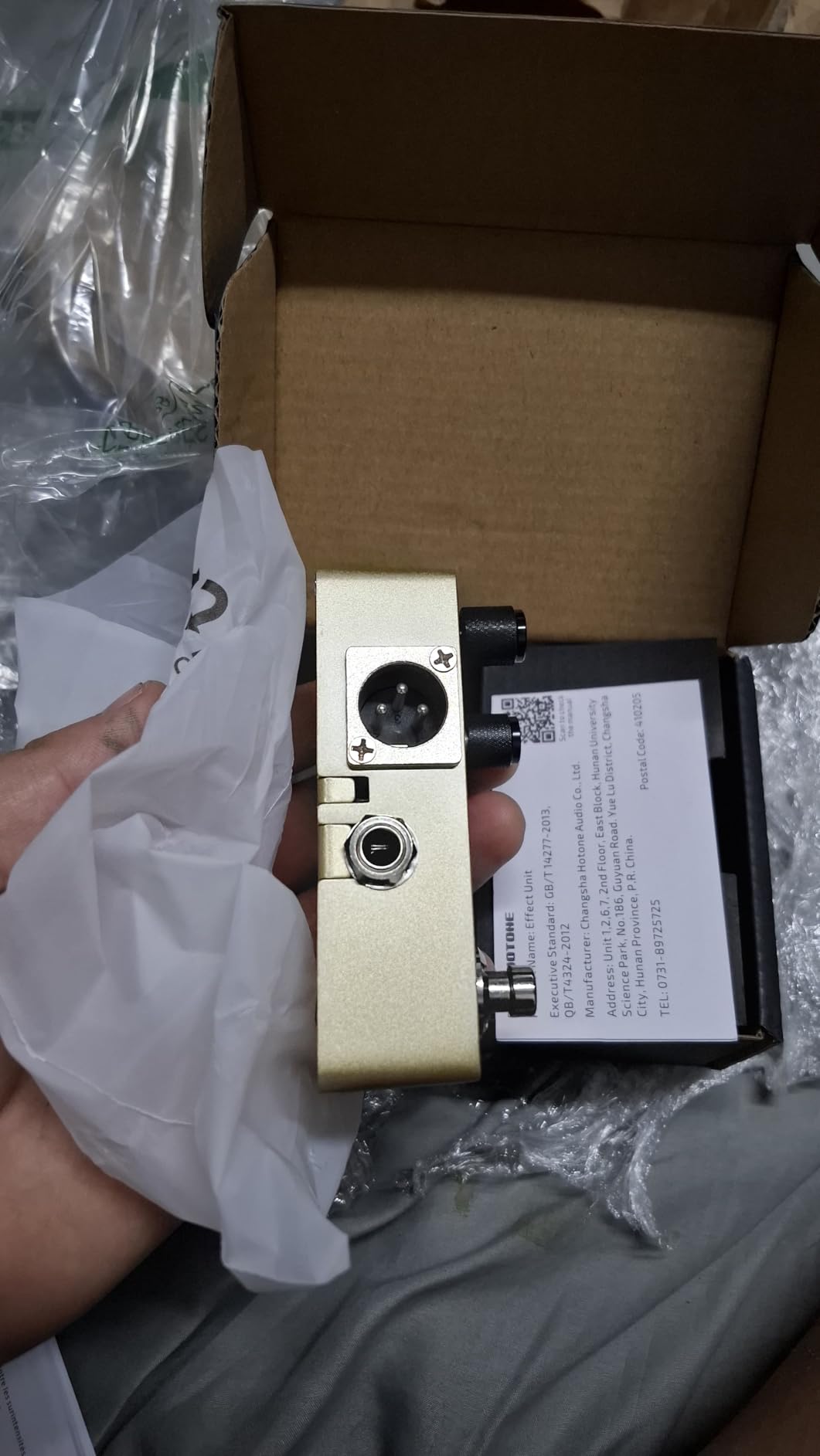
The Hotone Omni AC brings 24-bit digital processing and 15 presets to the acoustic simulator category, covering steel string, nylon string, acoustic bass, and double bass emulations. The OLED screen is a genuine convenience that makes preset selection on a dark stage instantly readable.
I found the steel string presets the most useful for typical electric-guitar work. Nylon string presets were interesting for Latin-inspired passages but felt less natural with my Stratocaster. The acoustic bass presets are a fun bonus if you occasionally need a low-end texture without switching instruments.
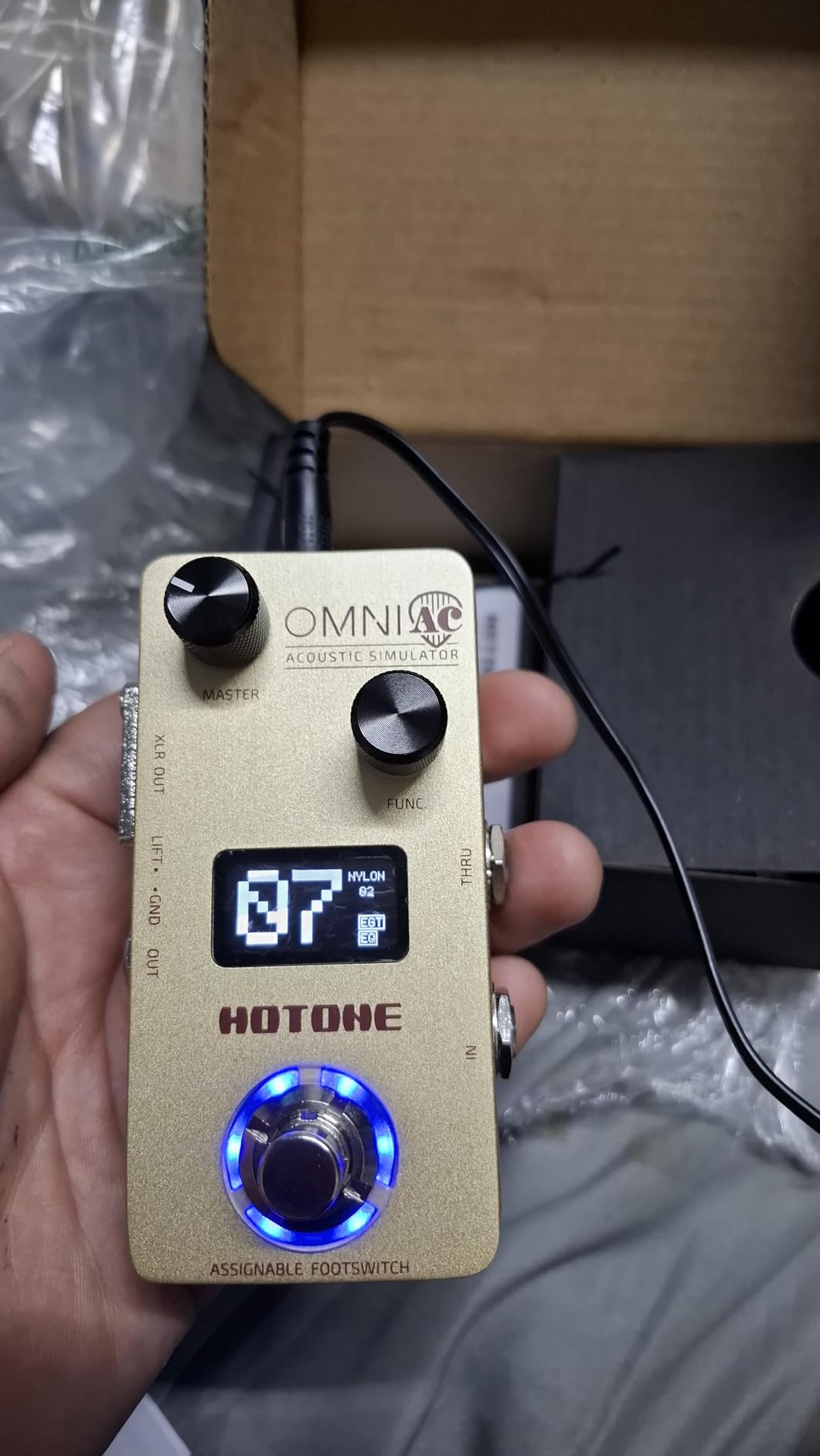
The 4-band EQ with 12dB boost or cut per band offers meaningful range, but I noticed that the on-pedal EQ feels coarse compared to the detailed control you get through the free PC and Mac software. The software also handles firmware updates and IR file management, both of which add long-term value.
The Omni AC earned a 4.1 average rating across 78 reviews, with 62% of reviewers giving five stars. The most common praise is value for the feature set, while the most common complaint is that reaching a believable acoustic tone requires patience and experimentation.
For whom its good
Guitarists who want multiple acoustic voicings and appreciate having a screen for live preset navigation. The IR loading via software appeals to players who like deep editing on a computer.
For whom its bad
Plug-and-play users who expect instant acoustic realism without tweaking. The lack of direct bypass switching also limits players who need rapid A/B between electric and acoustic tones.
6. SONICAKE A Factory — Top-Rated Preamp and DI
SONICAKE Acoustic Guitar Effects Pedal with Analog Preamp and Digital Reverb Acoustic Instruments with XLR Output – A Factory
Analog preamp
Digital reverb
Notch filter
XLR balanced output
Pros
- Excellent value that punches above its price class
- Built-in notch filter for feedback control
- Robust tank-like construction
- XLR output ideal for PA and direct recording
Cons
- 90-day warranty is limited
- Some phaser artifacts reported in certain modes
- Effect strength varies by guitar and pickup type
The SONICAKE A Factory holds the number one best-seller spot in Amazon’s Acoustic Guitar Effects category, and the numbers explain why. With 1,461 reviews and a 4.4 average rating — 71% of which are five stars — it has built a reputation that few pedals in this category can match.
This is technically more of an acoustic preamp and DI than a pure acoustic simulator. It is designed to take a piezo-equipped acoustic guitar signal and shape it beautifully for PA or recording use. The analog preamp adds warmth, the digital reverb adds space, and the notch filter tames the feedback that plagues undersaddle pickups at stage volume.
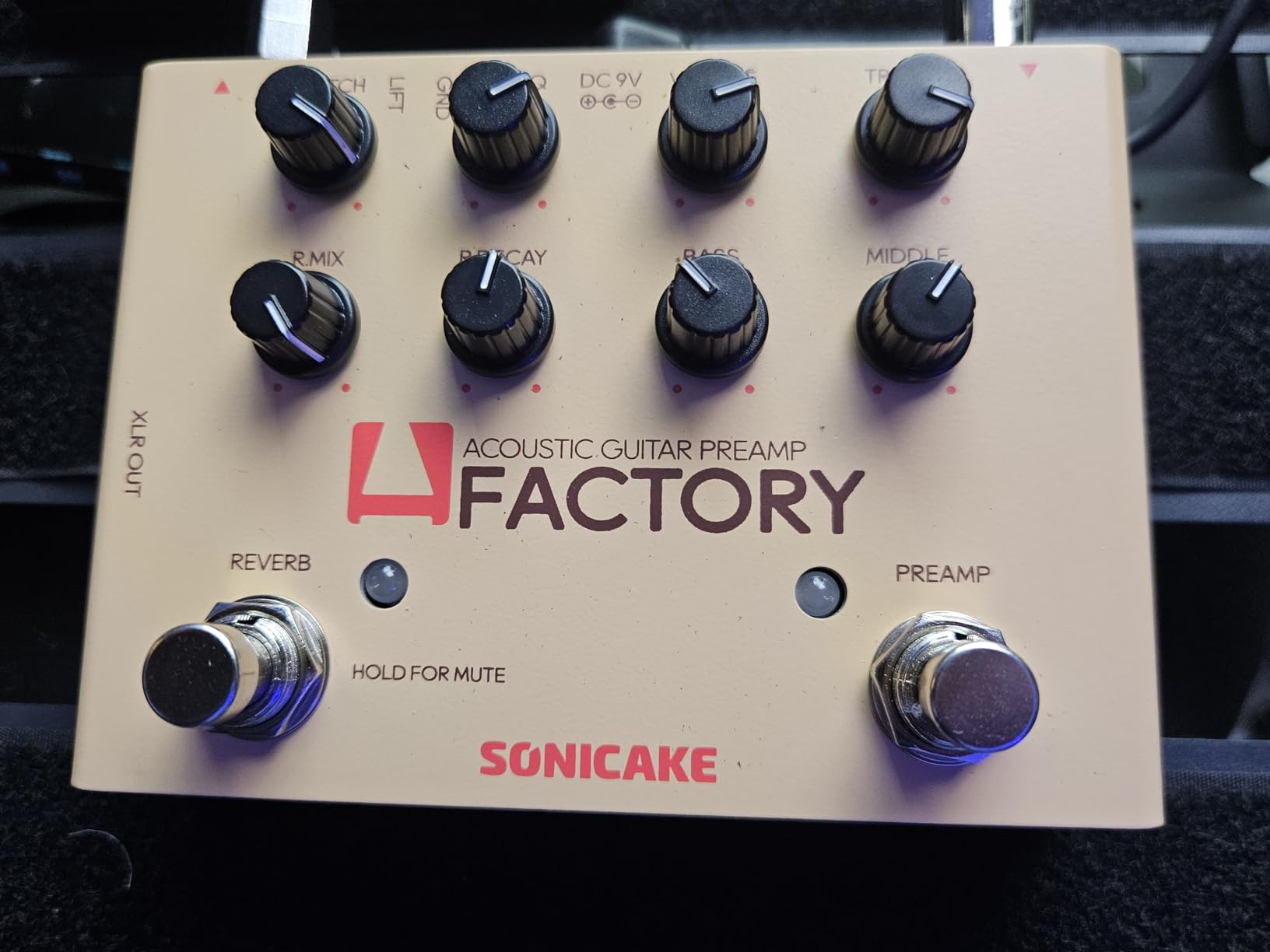
I tested the A Factory with my Martin D-28 (factory piezo pickup) and was genuinely impressed. The reverb is tasteful, the EQ is musical, and the XLR balanced output sent a clean signal straight to my interface without needing a separate DI box. It genuinely rivals preamps costing two or three times as much.
For electric guitarists wanting an acoustic simulation specifically, the A Factory is a different tool — it shines on actual acoustic instruments rather than transforming electrics. But if your goal is to amplify an acoustic guitar beautifully for live work, this is the standout value pick in the roundup.
For whom its good
Acoustic guitarists who need a reliable preamp, reverb, and DI in one compact stage-ready box. Also excellent for anyone running piezo-equipped instruments through a PA system.
For whom its bad
Electric guitarists looking for a dedicated acoustic simulator transformation. The 90-day warranty is also shorter than I would like for a gigging tool.
7. Digitech MOSAIC — Polyphonic 12-String Emulation
Digitech MOSAIC 12-String Polyphonic Effect Pedal
Polyphonic 12-string effect
Level and Tone controls
True bypass
Battery capable
Pros
- Excellent 12-string emulation without needing a real 12-string
- Replaces a double-neck guitar for live use
- Adds shimmer and depth to clean tones
- Easy Level and Tone control layout
Cons
- Requires dedicated power supply for quiet operation
- Needs careful dial-in — not fully plug-and-play
- Harmonic bleedover on high notes
The Digitech MOSAIC takes a different approach from the other pedals in this roundup. Instead of simulating an acoustic guitar body, it transforms your six-string into a twelve-string using polyphonic pitch shifting and intelligent doubling. If you have ever wanted that jangly Rickenbacker or jumbo-12 sound without buying and maintaining a separate instrument, this is your pedal.
I tested the MOSAIC through a clean Fender amp with my Stratocaster, and the results were immediately musical. Strummed open chords gained the characteristic octave-doubling shimmer, and fingerpicked arpeggios developed a richness that filled out the sonic space convincingly. The Level and Tone controls are simple but effective — Level controls the intensity of the effect, and Tone shapes the high-frequency enhancement.
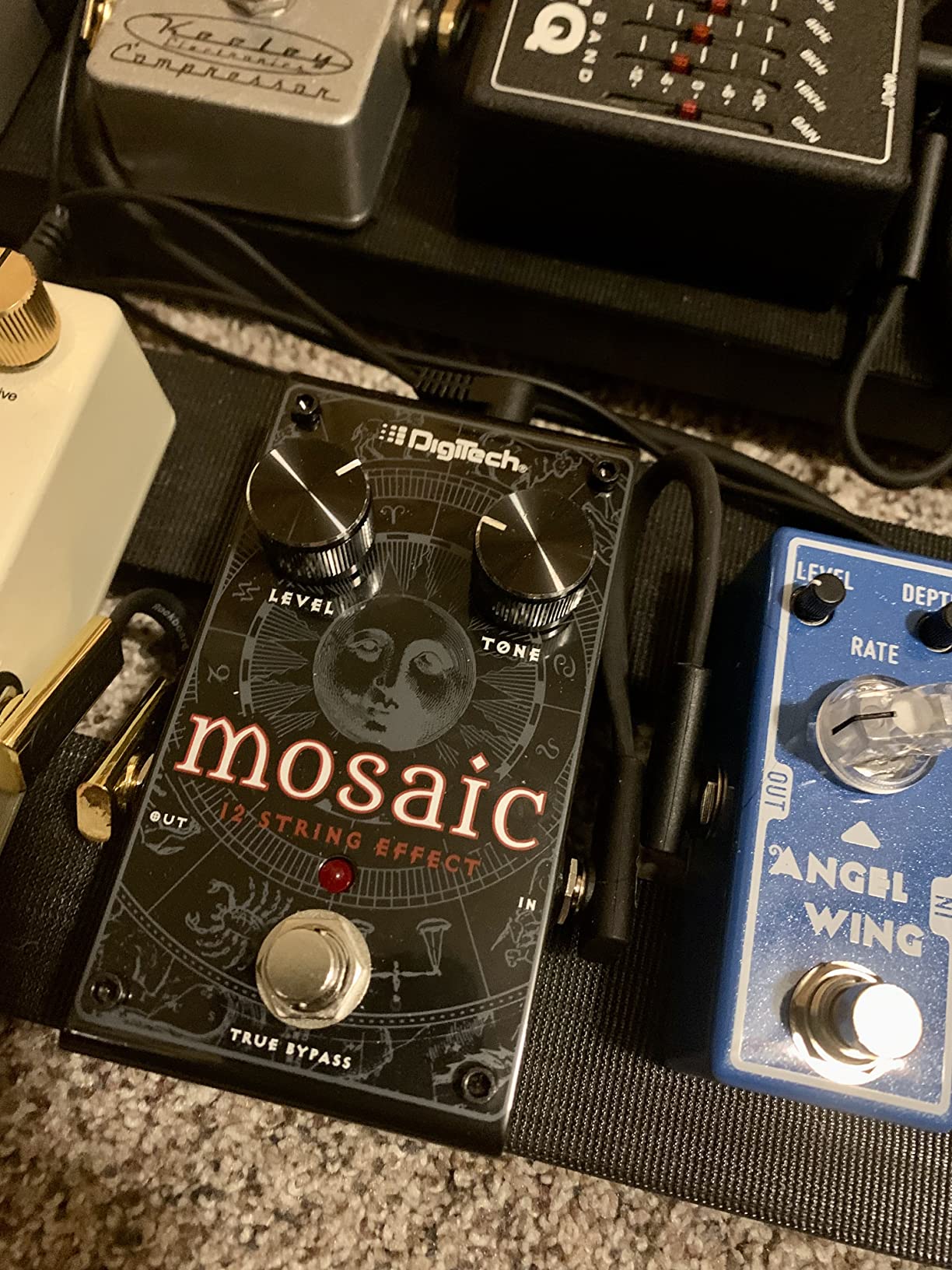
Tracking on single-note lead lines was solid up to moderate tempos. Fast runs and wide bends occasionally produced artifacts, which is expected from any polyphonic pitch shifter at this price. For rhythmic strumming and chordal work, the MOSAIC delivers consistently pleasing results.
The pedal does demand attention to power. Several users report hum when the MOSAIC shares a power strip with other equipment, and a dedicated isolated power supply is the practical solution. Battery operation is possible but obviously not ideal for gigging.
For whom its good
Guitarists who want 12-string texture for specific songs without carrying a second guitar. Excellent for worship bands, cover bands, and studio layering where a 12-string voicing adds depth.
For whom its bad
Lead players who need flawless tracking on fast single-note runs, and anyone wanting a full acoustic body simulation rather than 12-string doubling.
8. Orange Acoustic Pedal — Premium Preamp and DI
Orange Acoustic Pedal
Bass/Mid/Treble EQ
Feedback reduction
XLR output
18V power
Pros
- Crisp clear tone after proper tweaking
- Effective feedback elimination
- Works well with piezo pickups
- Professional XLR output for PA connection
Cons
- Requires 18V power instead of standard 9V
- Reports of dead-on-arrival units
- Very limited review base makes assessment difficult
The Orange Acoustic Pedal brings the respected Orange brand name into the acoustic preamp and DI category. Like the SONICAKE A Factory, this is primarily an acoustic instrument preamp rather than an electric-to-acoustic simulator. It features Bass, Middle, Treble, and Volume controls plus feedback reduction circuitry.
With only 10 reviews and a 3.6 average rating, the data on this pedal is thin. The rating distribution is polarized — 48% five-star reviews and 30% one-star reviews, with nothing in between. That suggests either quality control inconsistency or expectations that did not match the product’s actual purpose.
The positive reviews describe crisp, clear, dreamy sound output once the pedal is dialed in properly. The feedback elimination feature works well with piezo-equipped acoustics at stage volume, which is a real benefit for live performers fighting monitor bleed.
The notable drawback is the 18V power requirement, which differs from the 9V standard that most pedalboards use. This means you cannot simply daisy-chain it with your other pedals — you need a dedicated 18V supply or an isolated output capable of delivering the higher voltage.
For whom its good
Acoustic players who already run an 18V-capable power supply and want a brand-name preamp with feedback control for live work.
For whom its bad
Players with standard 9V pedalboards, anyone wary of limited review data, and electric guitarists wanting a true acoustic simulation rather than an acoustic preamp.
Buying Guide: How to Choose the Best Acoustic Simulator Pedal
Choosing the right acoustic simulator pedal depends on your guitar, your amp or PA setup, and how you plan to use the simulated tone. Here is what I have learned matters most after testing these eight pedals extensively.
How Acoustic Simulator Pedals Work
Acoustic simulator pedals use one of two core technologies to transform your electric guitar signal. Analog and basic digital pedals use EQ filtering and harmonic enhancement to approximate the body resonance and top-end sparkle of an acoustic guitar. These are essentially sophisticated tone shapers — the MOOER Acoustikar and JOYO JF-323 fall into this category.
The more advanced pedals use digital modeling (like Boss COSM technology) or impulse response (IR) loading to recreate the actual sonic fingerprint of specific acoustic guitars. The NUX Optima Air and Hotone Omni AC represent this approach, and they generally produce more convincing and customizable results.
Pickup Compatibility Matters More Than Anything
This is the single most important factor, and it is something forum users on Reddit and The Gear Page consistently emphasize. Single-coil pickups (Stratocasters, Telecasters) work beautifully with virtually every acoustic simulator on this list. The bright, lower-output signal maps naturally onto acoustic guitar characteristics.
Humbucker pickups are a different story. The hotter output and thicker midrange of a Les Paul or SG push most acoustic simulators into nasal, compressed territory. If your primary guitar has humbuckers, consider adding an EQ pedal before the simulator to tame the input, or look at IR-based pedals like the NUX Optima Air that offer more tonal control.
XLR Output: Essential for Live Use
If you plan to feed your simulated acoustic tone directly into a PA system or mixing console, an XLR balanced output is a major advantage. The NUX Optima Air, SONICAKE A Factory, Hotone Omni AC, and Orange Acoustic Pedal all include XLR outputs. This eliminates the need for a separate DI box and gives the sound engineer a clean, balanced signal.
Without XLR, you will need to route your pedal through a guitar amp or add a DI box to your signal chain. For one-song acoustic moments in a set, the extra cabling can become a real hassle.
Pedal Placement on Your Board
Acoustic simulators generally sound best placed early in your signal chain — right after your tuner and before any dirt pedals. This lets the simulator process a clean guitar signal, which produces the most natural acoustic approximation. Placing a simulator after overdrive or distortion typically produces muddy, indistinct results.
If you use a true bypass simulator like the MOOER Acoustikar or JOYO JF-323, consider adding a buffer elsewhere in your chain to maintain signal strength over long cable runs.
EQ Recommendations by Guitar Type
For single-coil Stratocasters, start with the Body or Mid control around noon and the Top control no higher than 10 o’clock to avoid harshness. For Telecasters, you can push the Top slightly higher since the bridge pickup already has plenty of bite. For humbucker-equipped guitars, roll the input gain back, cut the lower mids, and add a touch more Top to compensate for the thicker fundamental.
Always test your final settings through a full-range PA speaker or acoustic amp rather than a guitar amp. Guitar amps color the signal in ways that fight the acoustic simulation, which is why so many users on The Gear Page recommend running direct to the PA instead.
Frequently Asked Questions
What is the best acoustic simulator pedal?
The Boss AC-3 is the most widely recommended acoustic simulator pedal for live use thanks to its four COSM modeling modes, built-in reverb, and durable construction. For players wanting deeper tone control, the NUX Optima Air with IR loading capabilities offers the most realistic acoustic emulation when paired with custom impulse responses.
How do acoustic simulator pedals work?
Acoustic simulator pedals use EQ filtering, harmonic enhancement, or digital modeling technology to transform an electric guitar signal into something that resembles an amplified acoustic guitar. Advanced models like the NUX Optima Air use impulse response (IR) loading to recreate the exact sonic fingerprint of specific acoustic guitars, producing more convincing and customizable results.
Can you make an electric guitar sound like an acoustic?
Yes, an acoustic simulator pedal can make an electric guitar sound approximately like an acoustic guitar. Single-coil pickups produce the most convincing results, while humbuckers tend to sound more nasal and compressed. The simulation works best for live band situations where audience members are not critically analyzing the tone, rather than in quiet solo acoustic settings.
What is the difference between acoustic simulator pedals and acoustic pickups?
Acoustic simulator pedals transform the signal from your electric guitar’s magnetic pickups using EQ and modeling, while acoustic pickups (like piezo or Fishman Powerbridge) physically capture the vibration of the guitar itself. Acoustic pickups generally produce more authentic acoustic tones but require modification to your guitar, while simulator pedals are external, swappable, and work with any electric guitar.
Final Thoughts
The best acoustic simulator pedals in 2026 cover a wide range of approaches, from simple analog EQ shaping to sophisticated IR-based modeling. For most gigging single-coil players, the Boss AC-3 remains the dependable stage standard. The SONICAKE A Factory earns the value crown for amplifying real acoustic instruments, while the NUX Optima Air leads on tone-shaping depth for players willing to capture custom IRs.
Whatever you choose, remember that pickup type and output routing matter more than the pedal itself. Match your pedal to your guitar and your PA setup, and you will get a convincing acoustic tone without ever reaching for a second instrument.