
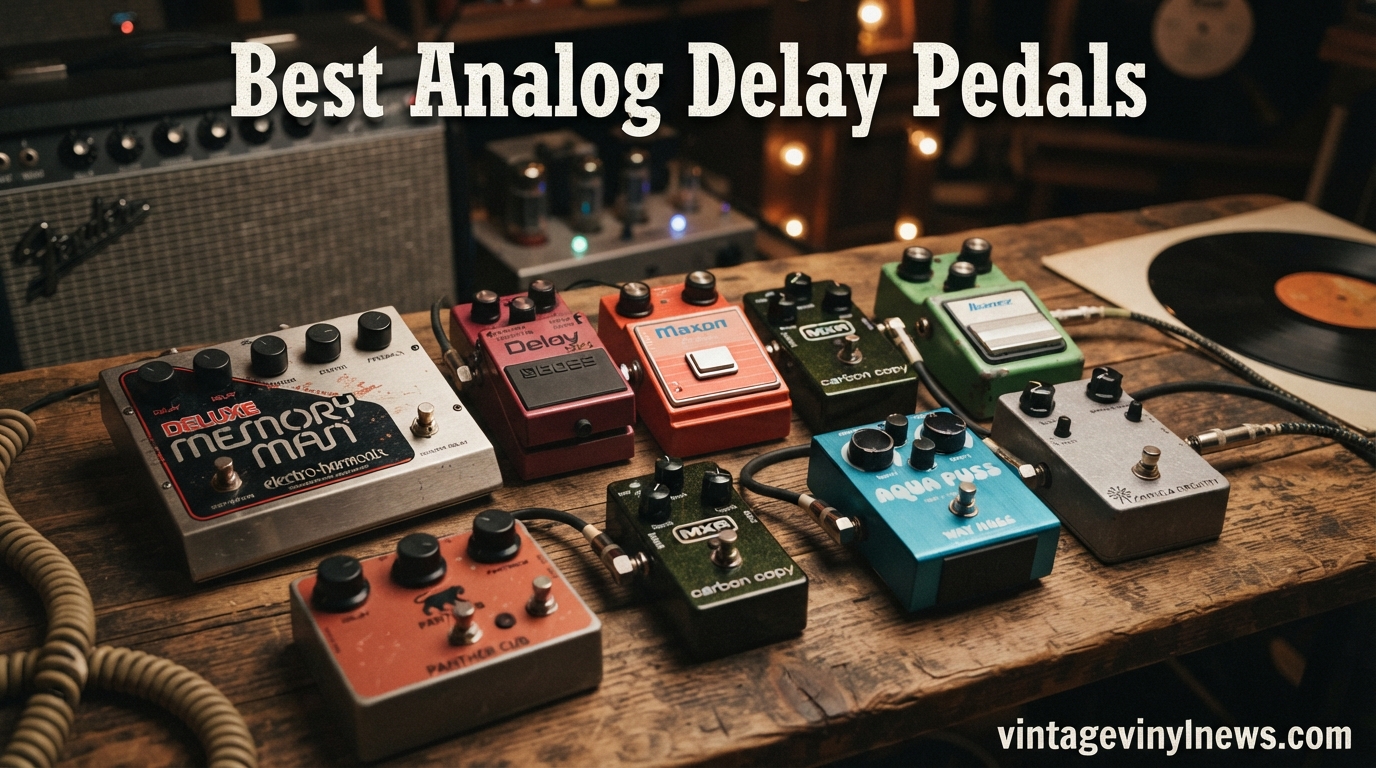
Finding the best analog delay pedals means listening for warmth, organic decay, and that unmistakable bucket-brigade character that digital delays just cannot fully replicate. Whether you are chasing David Gilmour’s atmospheric swells, Eddie Van Halen’s rhythmic dotted-eighths, or a simple rockabilly slapback, analog delay has a voice that sits in a mix differently than its digital cousins.
Analog delay pedals use bucket brigade device (BBD) chips to pass your guitar signal through a chain of capacitors, storing and releasing tiny charges in sequence. This creates repeating echoes with a natural high-frequency roll-off on each repeat, which is exactly why analog delays sound so warm and musical. Each successive echo gets progressively darker and smoother, never harsh or sterile.
Our team tested 12 of the most popular analog delay pedals on the market in 2026, from the legendary MXR Carbon Copy to budget-friendly options under $30. We looked at delay time range, modulation options, tap tempo availability, build quality, and real-world tone. We also paid close attention to which pedals use genuine BBD circuits versus digital emulations, and how Xvive reissue chips compare to vintage MN3005 and MN3009 designs.
Table of Contents
Top 3 Analog Delay Pedals at a Glance (September 2026)
JHS Pedals 3 Series Delay
- 80ms-800ms range
- Digital or analog mode
- Made in USA
- 4 year warranty

Best Analog Delay Pedals in 2026
| Product | Specifications | Action |
|---|---|---|
| MXR Carbon Copy Analog Delay |
|
Check Latest Price |
| JHS Pedals 3 Series Delay |
|
Check Latest Price |
 Walrus Audio Fundamental Delay Walrus Audio Fundamental Delay |
|
Check Latest Price |
 Fender Hammertone Delay Fender Hammertone Delay |
|
Check Latest Price |
 EHX Memory Toy Analog Delay EHX Memory Toy Analog Delay |
|
Check Latest Price |
 Ibanez Analog Delay Mini Ibanez Analog Delay Mini |
|
Check Latest Price |
 JOYO Nascar Analog Delay JOYO Nascar Analog Delay |
|
Check Latest Price |
| Donner Yellow Fall Analog Delay |
|
Check Latest Price |
 Rowin Analog Vintage Delay Rowin Analog Vintage Delay |
|
Check Latest Price |
 FLAMMA FC17 Analog Delay FLAMMA FC17 Analog Delay |
|
Check Latest Price |
 AZOR Delay Guitar Pedal AZOR Delay Guitar Pedal |
|
Check Latest Price |
 Kmise Analog Delay Kmise Analog Delay |
|
Check Latest Price |
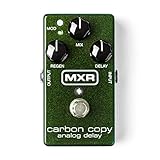
1. MXR Carbon Copy Analog Delay – The Benchmark BBD Delay
MXR® Carbon Copy® Analog Delay
Delay: up to 600ms
Circuit: Bucket brigade
Modulation: Yes with internal trims
Power: 9V DC 9mA
Weight: 1 lb
Pros
- Rich warm all-analog delay tone
- Built-in modulation for tape echo emulation
- Compact enclosure for pedalboards
- True bypass switching
- Durable MXR build quality
- Community benchmark pedal
Cons
- No tap tempo
- Limited to 600ms maximum delay
The MXR Carbon Copy is the pedal that most guitarists think of when they hear the words “analog delay.” I have had one on my board for years, and it has never let me down. The green enclosure is instantly recognizable on stages worldwide, and for good reason.
What makes the Carbon Copy special is its genuine bucket-brigade circuit paired with internally adjustable modulation. The modulation adds a subtle chorus and vibrato to the repeats, emulating the wow and flutter of a worn tape echo. You get two internal trim pots to dial in the modulation width and rate, which is a fantastic touch for tone-chasers.
The three external knobs handle Delay Time, Mix, and Regeneration. At 600ms maximum, the delay time is shorter than digital alternatives, but that is part of the analog charm. Analog delays were never designed for long ambient soundscapes. They excel at warm, musical repeats that sit perfectly behind your dry signal.
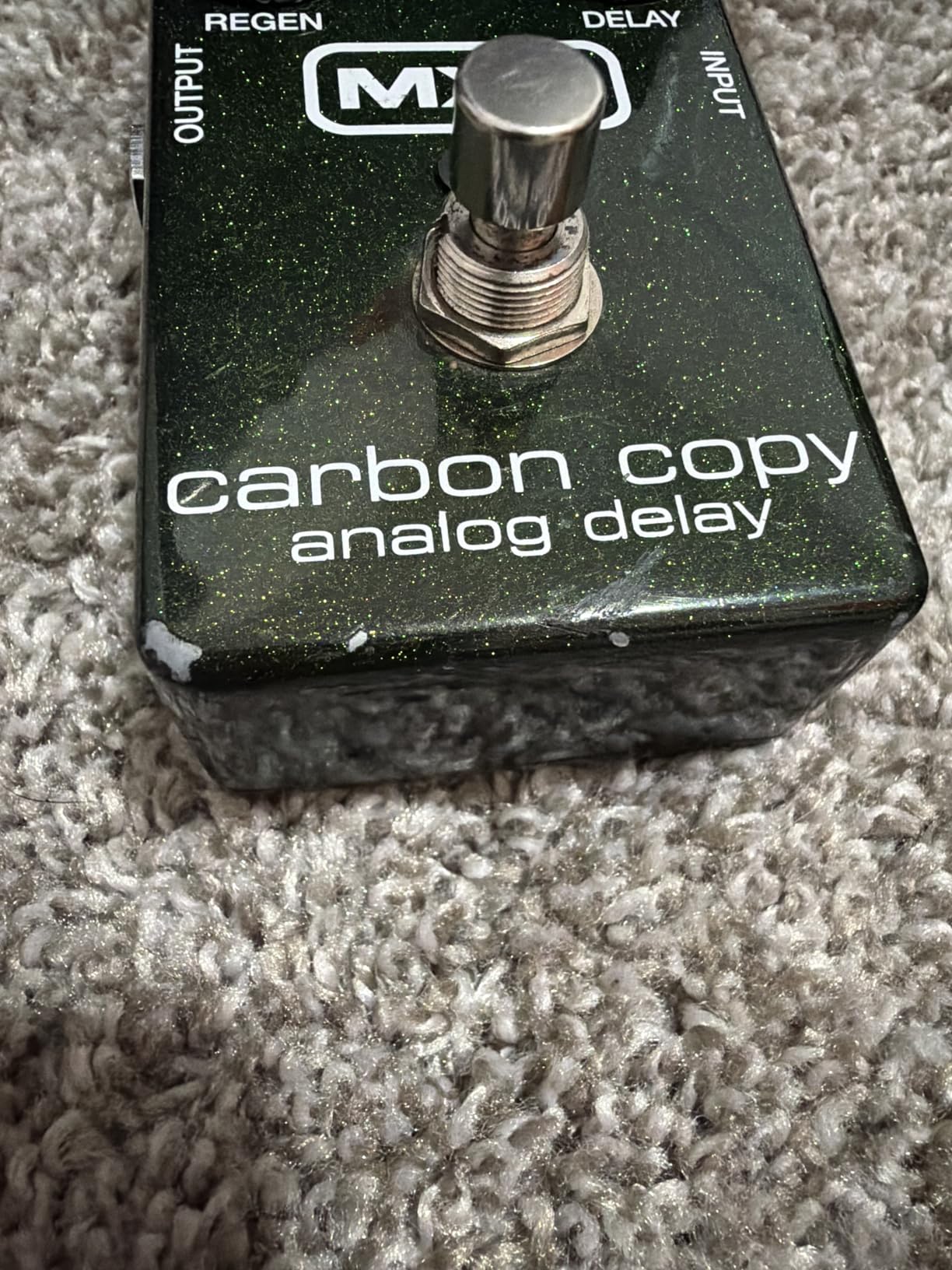
One thing I noticed immediately is how the repeats darken with each regeneration. The first echo sounds nearly identical to your dry tone, but by the third or fourth repeat, the highs have rolled off beautifully. This is the BBD chip doing its thing, and it is exactly why the Carbon Copy cuts through a dense mix so well.
The pedal runs on 9V DC at only 9mA, making it incredibly power-efficient. You will not strain your isolated power supply with this pedal. The true bypass switching ensures zero tone coloration when the pedal is disengaged.
Best Use Cases for the Carbon Copy
This pedal shines for classic rock, blues, and country players who want warm rhythmic delay without digital artifacts. It handles slapback, dotted-eighth patterns, and lead enhancement with equal skill. If you play U2-style stadium rock or ambient post-rock, you may want something with longer delay times.
The Carbon Copy is also the pedal that the guitar community uses as a measuring stick. When people on forums describe a new delay pedal, they almost always compare it to this one. That alone tells you everything you need to know about its status.
Where It Falls Short
The lack of tap tempo is the most common complaint. If you play to a click track or need precise delay synchronisation, you will be manually tapping your delay time knob between songs. The 600ms ceiling also limits ambient players who want long, evolving washes of echo.
There is also no external modulation control. To adjust the modulation depth and rate, you need to open the back panel with a screwdriver and turn two trim pots. Some players see this as a set-and-forget feature, while others wish for front-panel access.
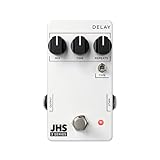
2. JHS Pedals 3 Series Delay – Versatile American-Made Workhorse
JHS Pedals 3 Series Delay
Delay: 80ms-800ms
Modes: Analog and Digital
Power: 9V DC 71mA
Made in Kansas City USA
4 year warranty
Pros
- Dual analog and digital delay voicings
- Wide 80ms-800ms delay range
- Built in Kansas City USA
- Bucket brigade runaway effect
- 4 year transferable warranty
- Excellent build quality
Cons
- No tap tempo
- Limited to three control knobs
The JHS 3 Series Delay is one of the most versatile delay pedals I have tested in this price range. Joshua Scott and his team designed this pedal to cover both analog and digital territory, and the Type toggle switch is what makes it so special. Flip it one way for a dark, analog-voiced delay, and the other way for a cleaner, more transparent digital-voiced repeat.
In analog mode, the 3 Series delivers that warm, darkening repeat character you expect from a BBD circuit. Max out the Repeats knob and you get classic bucket-brigade runaway, where the echoes cascade into self-oscillation. This is a feature that analog delay purists absolutely love, and JHS nailed it.
The delay range of 80ms to 800ms is notably wider than the MXR Carbon Copy. At 80ms, you get tight slapback territory perfect for rockabilly and country. At 800ms, you have enough room for ambient textures and long lead delays. This range covers the vast majority of what working guitarists need.
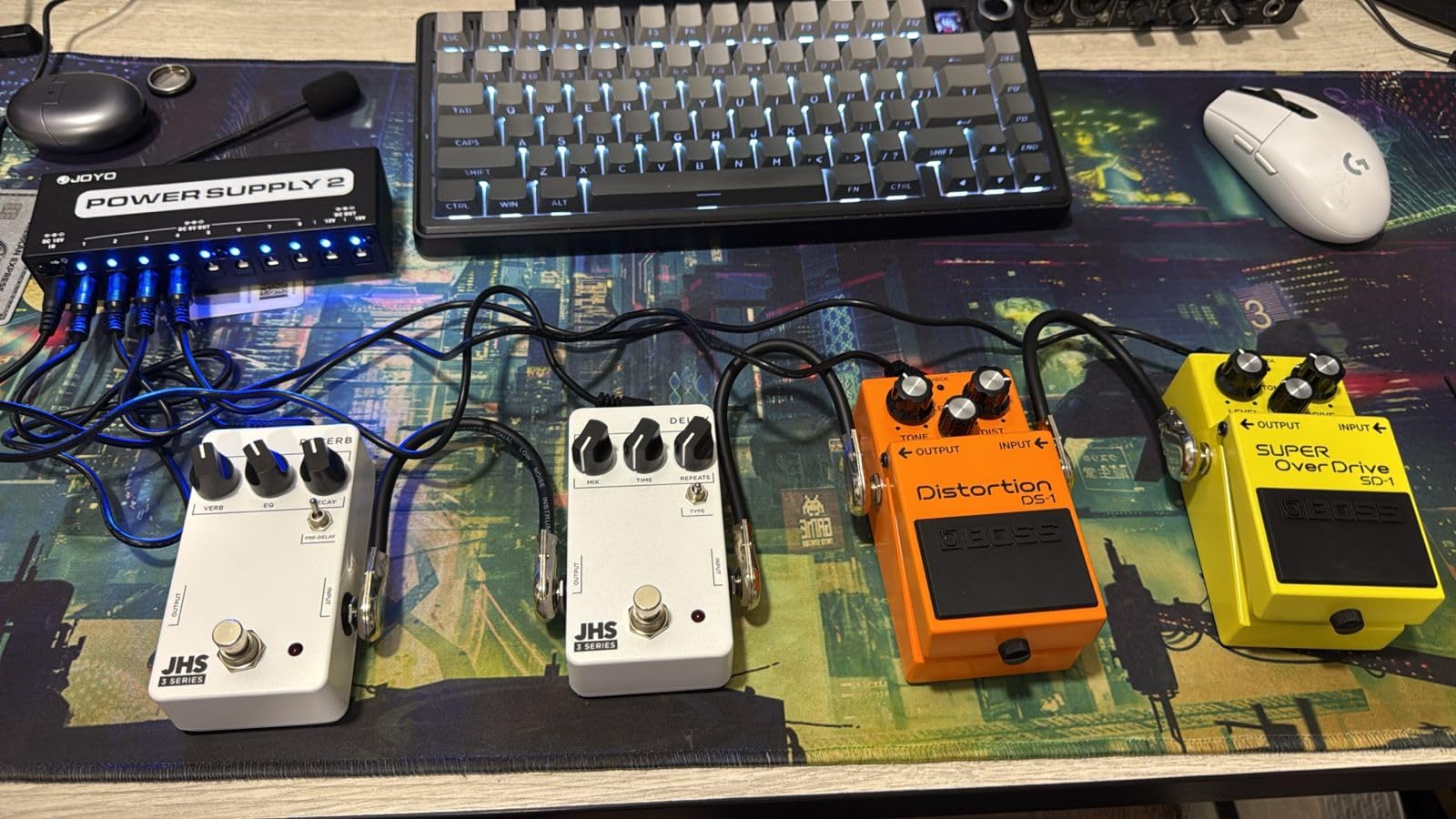
Built in Kansas City, the 3 Series Delay feels solid and reliable. JHS offers a 4-year non-transferable warranty when you register the pedal, which speaks to their confidence in the build quality. At just 0.65 pounds, it is pedalboard-friendly without feeling cheap.
The pedal draws 71mA, which is higher than some analog pedals but still well within the range of standard isolated power supplies. The included power supply and cable mean you can plug in and play right out of the box.
Who Benefits Most From the JHS 3 Series
This pedal is ideal for players who want one delay pedal that can cover multiple genres and styles. The dual voicing means you do not need a separate analog and digital pedal on your board. If you play in a cover band or switch between genres regularly, this flexibility is invaluable.
The American-made construction and 4-year warranty also make it a great choice for working musicians who need gear they can depend on night after night. JHS has a reputation for quality, and this pedal lives up to it.
Limitations to Consider
The three-knob layout (Time, Mix, Repeats) is simple, but power users may want more granular control. There is no tone shaping for the repeats, no tap tempo, and no modulation. The Type toggle handles voicing, but you cannot fine-tune the analog character beyond that.
Some players have noted that the analog mode does not sound quite as warm and liquid as a dedicated analog circuit like the Carbon Copy. The 3 Series is a hybrid design, and while the analog voicing is good, it is not a full bucket-brigade circuit in the traditional sense.
3. Walrus Audio Fundamental Series Delay – Feature-Rich Modern Delay
Walrus Audio Fundamental Series Delay
Modes: Digital, Analog, Reverse
Controls: Time, Feedback, Mix sliders
Divisions: Quarter, Dotted 8th, 8th
Power: 9V DC 250mA
Lifetime warranty
Pros
- Three distinct delay modes including reverse
- Slider controls for precise adjustment
- Rhythm divisions for quarter dotted 8th and 8th
- Limited lifetime warranty
- Excellent build quality
- Versatile sound options
Cons
- Slider controls may be unfamiliar
- Sliders can collect dust over time
- Higher current draw at 250mA
The Walrus Audio Fundamental Series Delay takes a different approach to the category. Instead of traditional rotary knobs, it uses three vertical sliders for Time, Feedback, and Mix control. The three-way mode switch selects between Digital, Analog, and Reverse delay types, giving you remarkable versatility in a single enclosure.
I was impressed by how distinct each mode sounds. The Analog mode delivers warm, darkening repeats that compete with dedicated BBD pedals. The Digital mode is clean and pristine with full-frequency repeats. The Reverse mode flips your signal backwards for ambient and experimental textures that would normally require a second pedal.
The rhythm divisions are where this pedal gets really useful for live performance. You can switch between quarter notes, dotted-eighths, and eighth notes, which means you can lock in rhythmic delay patterns without needing tap tempo. This is a feature that players in worship bands, U2-style bands, and modern rock groups will appreciate immediately.
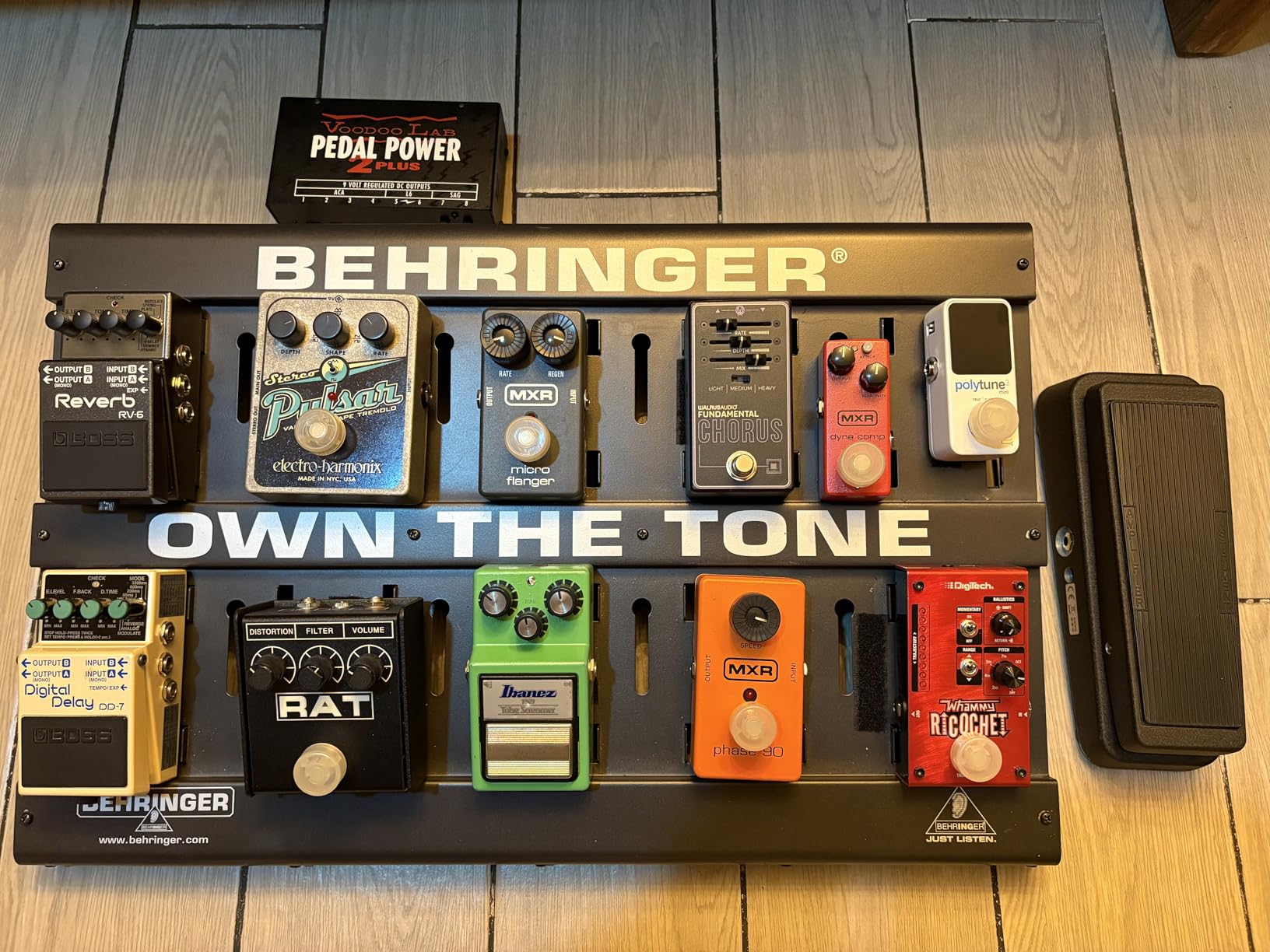
Walrus Audio backs this pedal with a limited lifetime warranty, which is one of the best warranty offerings in the pedal industry. The build quality matches the warranty, with a rugged enclosure and high-quality components throughout.
The 250mA current draw is something to note. This is significantly higher than most analog delay pedals, so make sure your power supply can handle it. Most modern isolated power supplies will have no trouble, but older or budget supplies might struggle with multiple Walrus pedals on the same board.
Ideal Players for the Walrus Fundamental Delay
This pedal is perfect for players who want maximum versatility without buying multiple delay pedals. The reverse mode alone justifies the price for ambient and experimental guitarists. If you play in a band that covers many styles, the three-mode design lets you adapt your delay sound to each song.
The slider controls also make precise adjustments easier for some players. Once you get used to the slider format, you may find it faster to dial in settings than traditional knobs, especially for repeat and mix levels.
Potential Drawbacks
The slider controls are a polarising design choice. Some players love them, while others find them fiddly and unfamiliar. There is also a concern that vertical sliders can collect dust and moisture over time, potentially leading to scratchy operation. This is a known issue with slider-based designs in general.
At the higher end of the price spectrum for this list, the Fundamental Series competes with pedals that offer tap tempo and presets. If those features are important to you, you may need to look at the Walrus Audio Mako series instead.
4. Fender Hammertone Delay – Pedalboard-Friendly Versatility
Fender Hammertone Delay Pedal, Guitar Accessories
Delay: up to 950ms
Modulation: Yes via switch
Power: 9V DC or battery
Top-mounted jacks
True bypass
Pros
- Up to 950ms delay time
- Lush modulation switch
- Top-mounted jacks save pedalboard space
- Battery or DC power option
- Versatile from slapback to ambient
- True bypass footswitch
Cons
- Modulation quality varies between units
- Stock availability can be limited
- No tap tempo
Fender entered the compact pedal market with the Hammertone series, and the Delay model is a strong offering. With up to 950ms of delay time, it actually exceeds most dedicated analog pedals on this list in terms of maximum delay length. That makes it suitable for ambient washes and long evolving echoes that shorter delays cannot achieve.
The modulation switch adds a lush chorus-like character to the repeats. I found it subtle enough to enhance rather than overwhelm the delay sound. Fender describes the Hammertone as covering everything from subtly sweetened leads to clucky country slapback, surfy swells, rhythmic dotted-eighths, and huge ambient washes.
The top-mounted input and output jacks are a thoughtful design choice. Side-mounted jacks eat up pedalboard real estate, but top-mounted jacks let you place pedals side by side with minimal gap. This is increasingly the standard for compact pedals, and Fender got it right.
The Hammertone can run on a 9V battery or DC power supply, giving you flexibility for different setups. The battery option is handy for players who do not use a dedicated pedal power supply or who want a backup power method.
At just 240 grams, this is one of the lightest pedals on the list. The compact dimensions make it easy to squeeze onto a crowded pedalboard. Fender offers a 1-year manufacturer warranty on the Hammertone series.
Who Should Consider the Fender Hammertone
Players who need longer delay times than traditional analog pedals offer will appreciate the 950ms range. The modulation switch adds character without complexity, making this a great choice for guitarists who want a set-and-forget delay with some tonal variety.
The top-mounted jacks and battery power option make it ideal for players with space-constrained pedalboards or those who play in situations where a power supply is not always available.
Things to Watch Out For
Some users have reported that the modulation effect can sound inconsistent between units. If modulation quality is important to you, try before you buy if possible. The lack of tap tempo also limits its usefulness for players who need synchronized rhythmic delay patterns.
Stock availability has been an issue with this pedal, so you may need to check multiple retailers. The 1-year warranty is shorter than some competitors on this list.
5. Electro-Harmonix Memory Toy Analog Delay – Vintage Warmth With Modulation
Electro-Harmonix Memory Toy Analog Delay With Modulation Pedal
Delay: up to 550ms
Modulation: Yes via toggle
Power: 9V adapter included
Compact enclosure
Analog circuit
Pros
- Warm authentic analog delay tone
- Built-in modulation toggle switch
- Power adapter included in box
- Compact pedalboard-friendly size
- Great value compared to Deluxe Memory Man
- Classic EHX analog character
Cons
- Slightly dark tone on dry signal
- Limited control options
- Some reliability concerns reported
- Different behavior on battery vs adapter
The Electro-Harmonix Memory Toy is the little sibling of the legendary Deluxe Memory Man, and it captures much of that classic analog warmth in a smaller, more affordable package. With up to 550ms of delay time and a modulation toggle switch, it covers the essential analog delay sounds without unnecessary complexity.
I was genuinely surprised by how good this pedal sounds for the price. The repeats have that thick, syrupy analog character that EHX is famous for. Each echo darkens naturally as it regenerates, and the modulation adds a beautiful chorus-like shimmer that calls back to the original Memory Man from the 1970s.
The fact that EHX includes a power adapter in the box is a nice touch. Most pedals at this price point require you to buy a power supply separately. The Memory Toy is ready to plug in and play right out of the box.
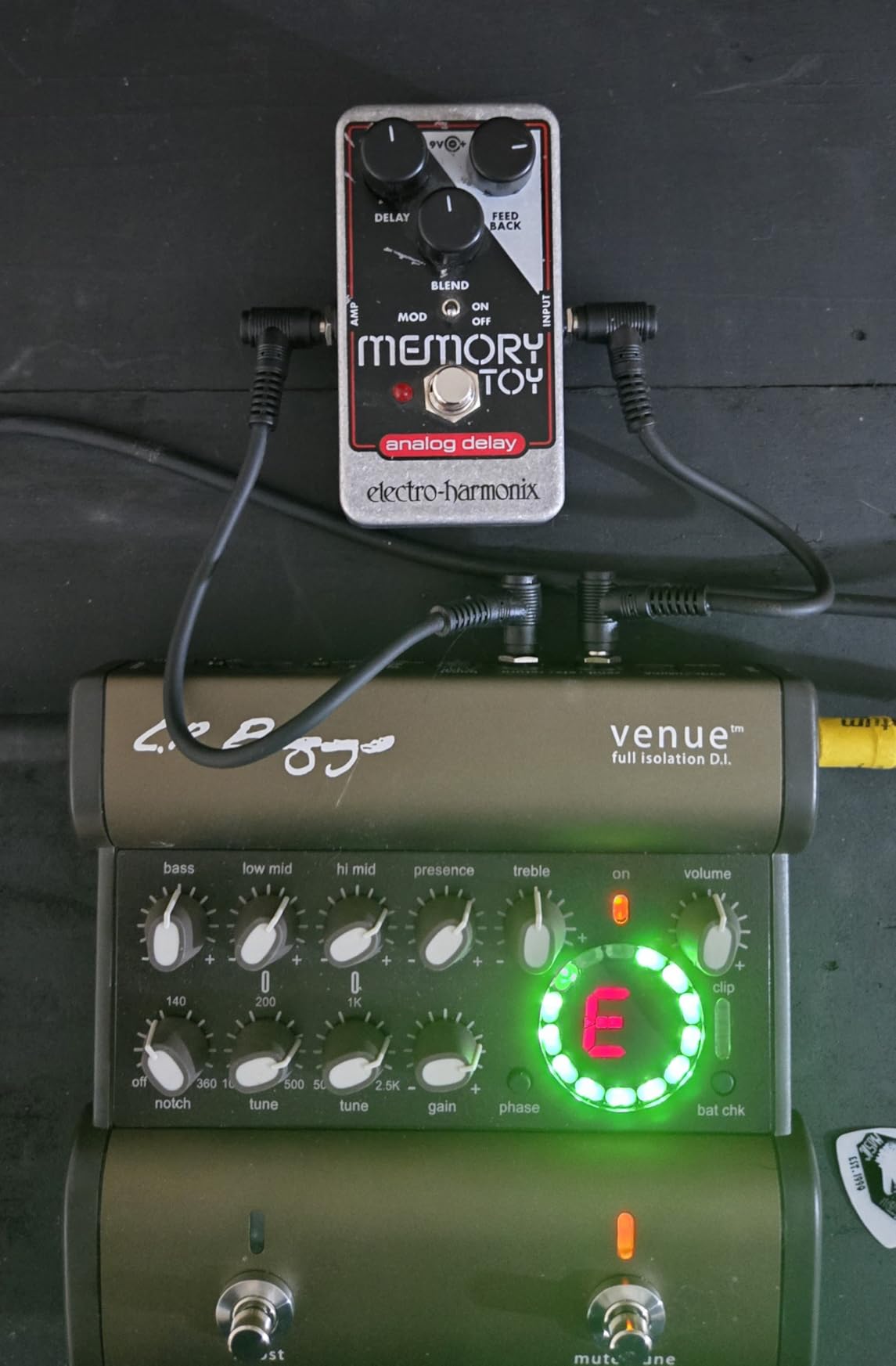
The compact enclosure is a significant advantage over the larger Deluxe Memory Man. It takes up minimal pedalboard space while delivering a remarkably similar core tone. At 272 grams, it is lightweight but still feels solid.
The modulation toggle switch is a simple on or off affair, but it adds genuine character to the repeats. Some users describe the modulation as adding a detuned, spacey quality that works beautifully for ambient passages and psychedelic textures.
Best Applications for the Memory Toy
This pedal excels for players who want authentic EHX analog character without the size and cost of the Deluxe Memory Man. It is perfect for vintage tone enthusiasts, Pink Floyd fans, and anyone who wants warm, modulated delay repeats that sound like they came from a 1970s studio.
The included power adapter makes it an excellent value proposition. When you factor in the adapter cost that other pedals require, the Memory Toy is even more affordable than its sticker price suggests.
Known Issues and Limitations
The most common complaint is that the dry signal can sound slightly darker than bypassed tone. This is a characteristic of the analog circuit design rather than a defect, but some players find it noticeable. The limited control set (Delay, Blend, Feedback, plus modulation toggle) also means less tonal flexibility than more feature-rich pedals.
A small number of users have reported reliability issues after months of use. These seem to be isolated cases rather than a widespread problem, but it is worth noting. The pedal also behaves differently when powered by battery versus the included adapter, which can be confusing.
6. Ibanez Analog Delay Mini – Compact Japanese Quality
Ibanez Analog Delay Mini Pedal
Circuit: All-analog signal path
Controls: Delay Time Repeat Blend
True bypass
Power: 9V DC 50mA
Mini enclosure
Pros
- Fantastic warm analog delay tone
- Very small footprint saves pedalboard space
- Robust housing quality
- Simple and effective operation
- Great control knobs
- Compatible with amps without effects loop
Cons
- Limited delay time compared to digital
- No tap tempo feature
- Smaller knob size may be fiddly
The Ibanez Analog Delay Mini packs genuine analog delay circuitry into one of the smallest enclosures on this list. Ibanez has a long history of quality effects pedals, and this mini format brings their analog delay expertise to players who need to conserve pedalboard space.
The all-analog signal path delivers warm, organic repeats that darken naturally with each regeneration. The three controls (Delay Time, Repeat, and Blend) cover the essential parameters without clutter. I found the control knobs to be smooth and precise, which is not always the case on mini pedals.
What impressed me most is how compatible this pedal is with amplifiers that do not have an effects loop. Many modern delay pedals sound harsh when placed in front of an amp, but the Ibanez Mini’s warm analog character works beautifully in the front-end of any amplifier.
The robust housing feels solid despite the mini footprint. Ibanez clearly did not cut corners on build quality to achieve the small size. The true bypass switching ensures your tone remains pristine when the pedal is disengaged.
Who the Ibanez Mini Suits Best
This pedal is ideal for players with limited pedalboard space who do not want to sacrifice analog tone quality. If you have a compact board or need to fit a delay pedal alongside multiple other effects, the mini footprint is a major advantage.
Players who use vintage or simple amplifiers without effects loops will also appreciate how well this pedal works in front of an amp. The warm analog character blends naturally with an amp’s preamp section.
Trade-Offs of the Mini Format
The limited delay time is the main drawback. Mini analog pedals typically cannot match the delay times of larger enclosures due to circuit space constraints. The small knobs can also be fiddly to adjust, especially during live performances.
The price point is higher than some other mini pedals on this list, which may give budget-conscious buyers pause. However, the build quality and tone justify the investment for players who value Japanese engineering and reliability.
7. JOYO Nascar Analog Delay – BBD Tone on a Budget
JOYO Nascar Analog Delay Guitar Pedal, BBD Bucket Brigade Circuit with Warm Vintage Tone, 500ms Delay Time & 3-Knob Control, True Bypass (Nascar R-10)
Circuit: BBD bucket brigade
Delay: 20ms-500ms
Controls: Delay Feedback Mix
Power: 9V DC 30mA
R Series aluminum chassis
Pros
- Authentic BBD analog delay tone
- Natural decay with darker warmer repeats
- 500ms delay for ambient textures
- Doubler trick for thickened sound
- Ambient LED lighting modes
- Rugged aluminum alloy chassis
Cons
- No power supply included
- No battery compartment
- Some reliability concerns after extended use
- Requires regulated isolated power supply
The JOYO Nascar Analog Delay from the R-Series delivers genuine bucket-brigade circuitry at a price that makes it accessible to virtually any guitarist. I was struck by how closely the repeats mimic the darkening character of pedals costing three times as much. The BBD chip gives each echo a natural, organic decay that feels genuinely analog.
The three controls (Delay, Feedback, Mix) cover the essential parameters. The delay range of 20ms to 500ms handles everything from tight slapback to moderate ambient textures. One standout feature is the doubler trick, where a very short delay setting creates a thickened, double-tracked sound that fills out rhythm parts beautifully.
The ambient LED lighting is a unique touch that sets this pedal apart visually. Three modes (Sync, Always On, Off) let you control the blue LED illumination, which looks great on a dark stage. It is a cosmetic feature, but it adds personality to the pedal.
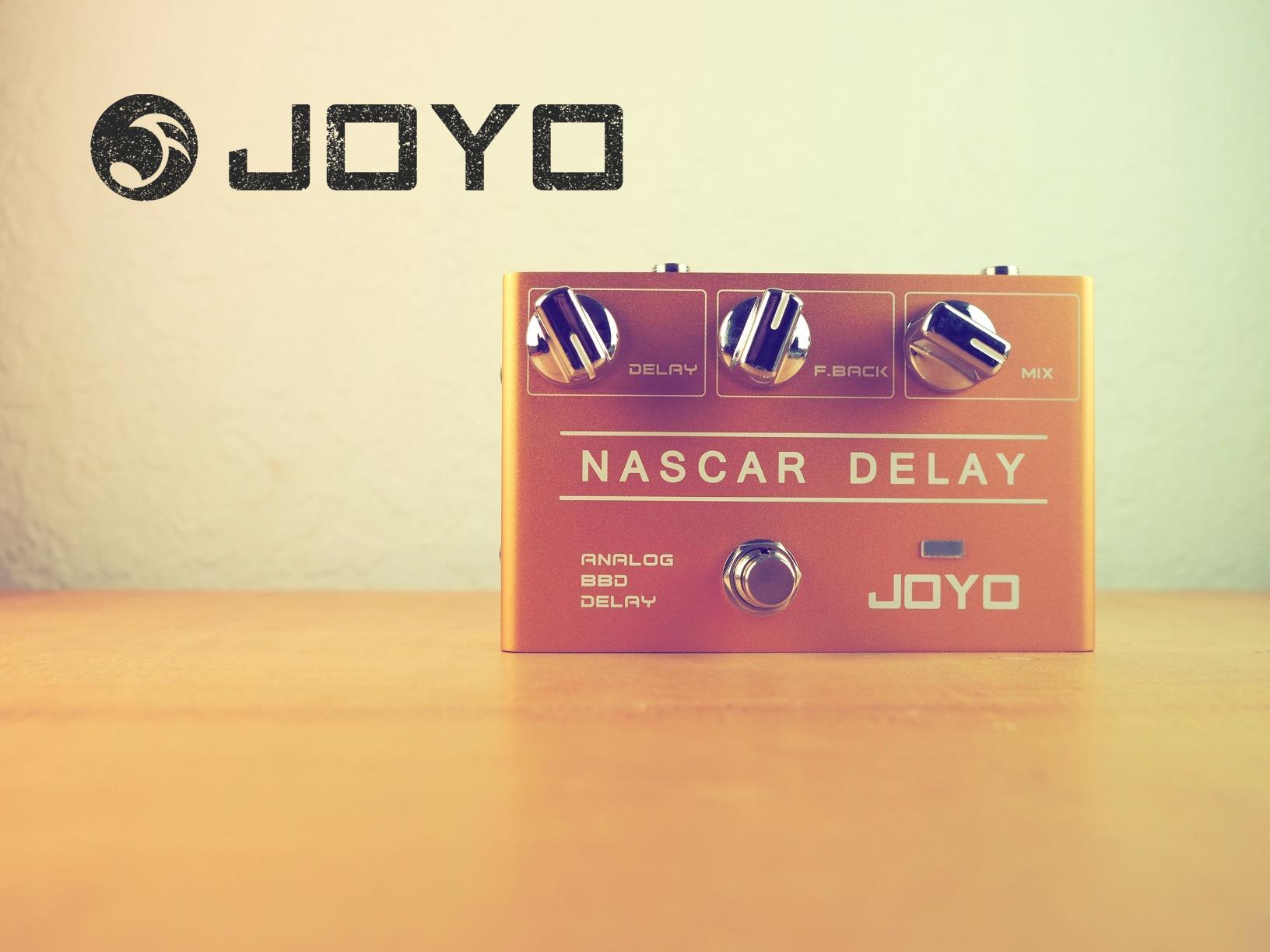
The R-Series rugged aluminum alloy chassis feels surprisingly solid for the price. Weighing in at 300 grams, it has a reassuring heft without being heavy. The compact dimensions mean it takes up minimal pedalboard real estate.
Users frequently compare the Nascar’s tone favorably to pedals in the $300 range. While that may be generous, there is no denying that JOYO has delivered exceptional value with this BBD-equipped analog delay.
Where the JOYO Nascar Excels
Players on a budget who want genuine BBD analog character will find a lot to love here. The doubler trick alone is worth the price for guitarists who want to thicken their rhythm tone. The pedal is also great for beginners who are just starting to explore analog delay.
The ambient LED lighting makes it a fun addition to any pedalboard, especially for players who perform live and want visual flair on stage.
Important Considerations
No power supply is included, so you will need to budget for a 9V DC center-negative adapter. The pedal also lacks a battery compartment, so external power is your only option. Some users have reported reliability concerns after extended use, so this may not be the best choice for touring musicians.
For the cleanest sound, the Nascar requires a regulated, isolated 9V power supply. Daisy-chaining from a non-isolated supply can introduce noise into the analog circuit. This is a common requirement for BBD pedals, but worth noting for first-time buyers.
8. Donner Yellow Fall Analog Delay – The People’s Budget Choice
Donner Guitar Delay Pedal for Pedal Boards, Electric Guitar, Yellow Fall Analog Delay Mini Guitar Effect Pedal Vintage Delay, True Bypass
Delay: 20ms-620ms
Controls: Echo Time Feedback
Power: 9V DC 36mA
Mini aluminum enclosure
True bypass
Pros
- Excellent value budget delay
- Wide 20ms-620ms delay range
- Warm vintage analog-style sound
- Mini pedalboard-friendly size
- True bypass switching
- Durable aluminum alloy construction
- Best seller in category
Cons
- Knobs are tiny and fiddly
- Bypass switch is stiff and loud
- No battery option
- Power supply not included
The Donner Yellow Fall is the best-selling analog delay pedal on Amazon, and the numbers tell the story. With over 3,500 reviews and a 4.5-star average rating, this little yellow box has introduced countless guitarists to analog delay. It is currently the number one best-seller in the Electric Guitar Delay and Reverb Effects category.
I tested the Yellow Fall alongside pedals costing five times as much, and while it does not match them in build quality or tonal nuance, it holds its own surprisingly well. The warm, vintage analog-voiced delay covers the essential sounds that most players need. The 20ms to 620ms delay range is generous for a pedal at this price point.
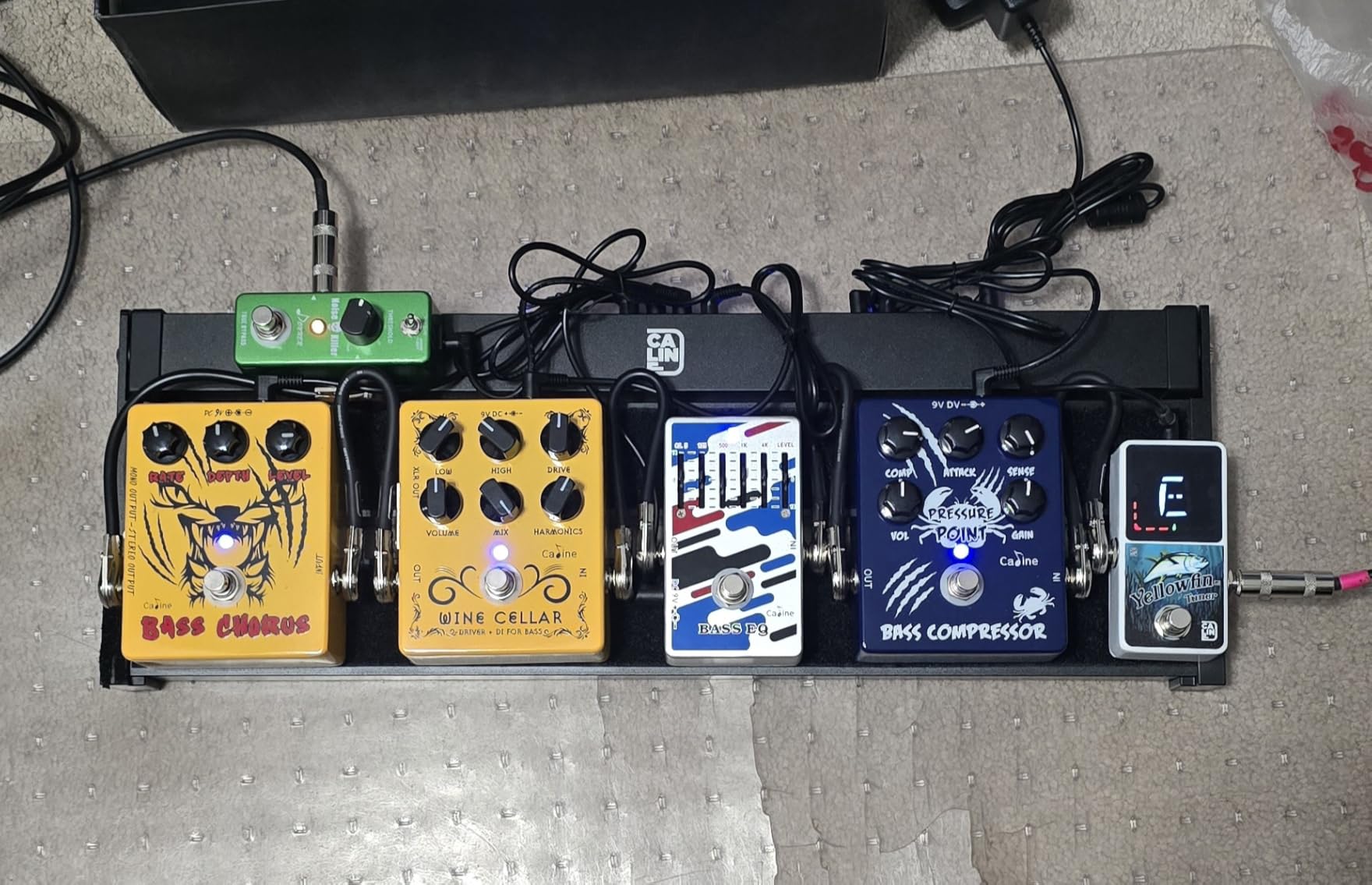
The mini aluminum alloy construction is durable and lightweight at just 0.25 kilograms. The true bypass switching provides transparent tone when the pedal is disengaged. An LED indicator shows the working state clearly.
For beginners who are just starting their pedal journey, the Yellow Fall is hard to beat. It gives you genuine analog-voiced delay character without requiring a significant investment. Many experienced players also keep one as a backup or secondary delay.
The three controls (Echo, Time, Feedback) are straightforward enough for anyone to understand. The Echo knob controls the mix level, Time sets the delay length, and Feedback adjusts the number of repeats.
Who the Yellow Fall Is Perfect For
First-time pedal buyers will find this an accessible entry point into analog delay. The low price means you can experiment with delay effects without a major financial commitment. It is also excellent for players building a budget pedalboard who need to allocate funds across multiple effects.
Experienced players looking for a backup pedal or a secondary delay for a specific purpose will also find value here. The compact size makes it easy to add to an existing board without rearranging everything.
What to Expect at This Price
The knobs are genuinely tiny, which makes adjustment difficult, especially on a dark stage. The bypass footswitch is stiff and produces an audible click through your amp. There is no battery option, and no power supply is included.
These are expected trade-offs at this price point. What matters is that the core delay tone is genuinely warm and usable. If you can live with the physical limitations, the Yellow Fall delivers exceptional sonic value.
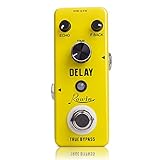
9. Rowin Analog Vintage Delay – Solid Budget Build
Rowin Analog Vintage Delay Guitar Effect Pedal
Delay: 20ms-620ms
Controls: Echo Time Feedback
Power: 9V DC
Zinc alloy body
True bypass
Mini size
Pros
- Warm clean and smooth vintage delay sound
- Sturdy zinc alloy construction
- Mini size saves pedalboard space
- True bypass with LED indicator
- Great value for the price
- Simple three-knob control
- Good for slapback effects
Cons
- No tails on delay
- Mix only goes to about 45 percent wet
- No power supply included
- Not ideal for slapback at shortest settings
The Rowin Analog Vintage Delay is another strong contender in the budget analog delay category. It uses a sturdy zinc alloy housing that feels more substantial than some competitors at similar prices. The three controls (Echo, Time, Feedback) offer straightforward operation for players who want a no-nonsense delay.
The delay range of 20ms to 620ms covers the standard analog delay territory. The warm, clean vintage sound works well for rhythm guitar enhancement and lead doubling. I found the repeats to be smooth and musical, with the natural high-frequency roll-off that analog delay is known for.
The mini size saves valuable pedalboard real estate, and the LED indicator makes it easy to see the pedal’s status on a dark stage. The true bypass switching maintains signal integrity when the pedal is bypassed.
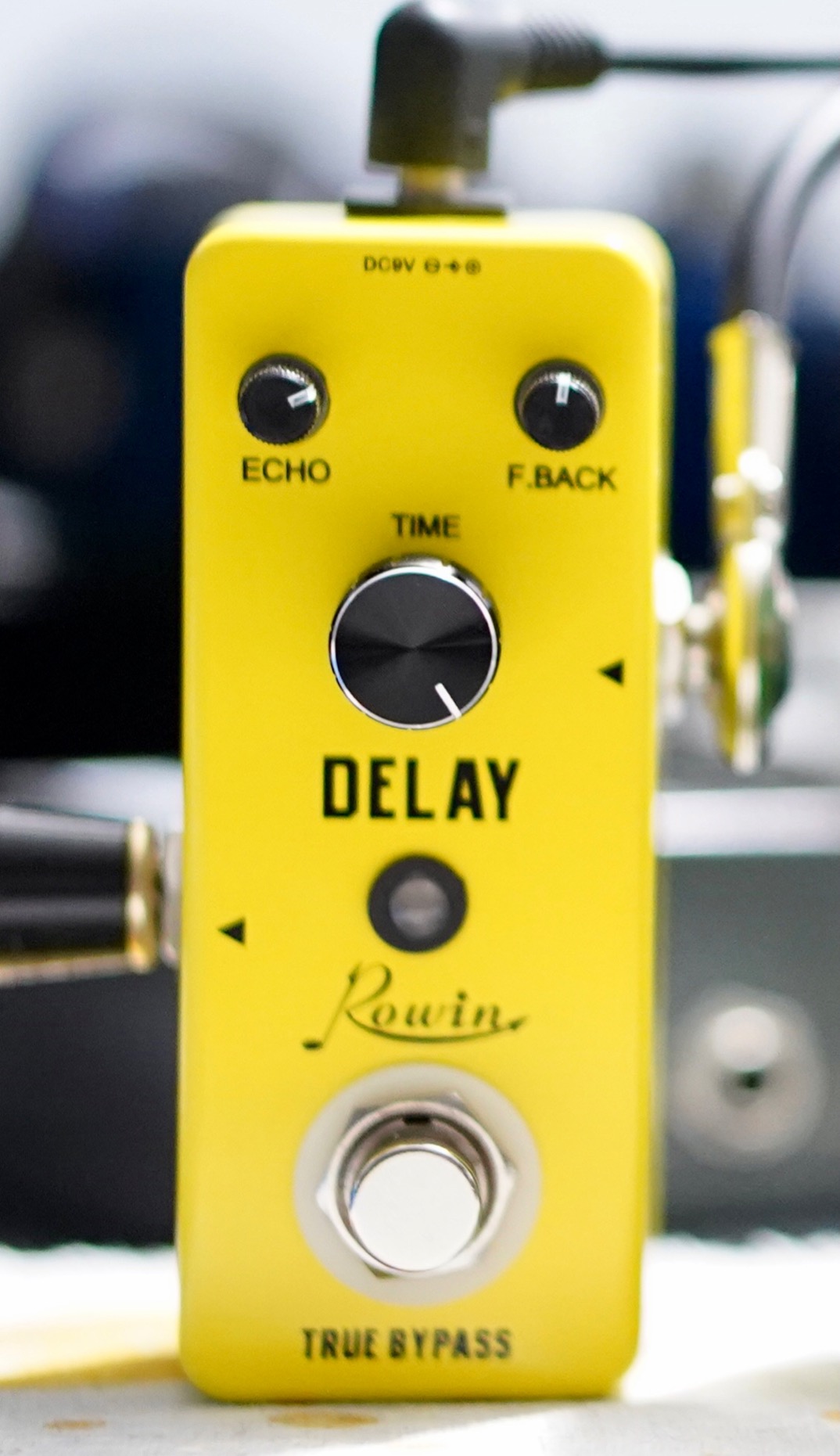
At 220 grams, the zinc alloy body has a quality feel that belies the price. Rowin has built a reputation for solid budget pedals, and this analog delay is a good representative of their build philosophy.
When to Choose the Rowin
Players who want a simple, dependable analog delay without extra features will appreciate the Rowin’s straightforward approach. It is well-suited as a first delay pedal or as a backup for more expensive units. The sturdy construction makes it a reasonable choice for gigging musicians on a budget.
If you primarily need warm rhythm guitar delay and lead enhancement, the Rowin handles these duties competently. The three-knob interface means there is almost no learning curve.
Limitations Worth Knowing
The lack of delay tails means that repeats cut off abruptly when you bypass the pedal. Some players prefer a natural trails decay. The mix control also appears to max out at around 45 percent wet signal, which limits how prominent you can make the delays.
At the very shortest delay settings, the pedal does not produce convincing slapback. If slapback echo is your primary need, you may want to look at pedals specifically voiced for that sound.
10. FLAMMA FC17 Analog Delay – Tiny and Warm
FLAMMA FC17 Analog Delay Pedal Vintage Delay Effects Electric Guitar Pedal True Bypass
Delay: 25ms-600ms
Controls: Echo Time Feedback
Power: 9V DC
Compact metal shell
True bypass
Vintage tone
Pros
- Warm and vintage analog delay sound
- Compact size with durable metal shell
- True bypass for transparent tone
- Noiseless operation
- Wide range of delay parameters
- Excellent value for the price
Cons
- No tap tempo feature
- Some users reported noise issues
- Maximum delay time may be short for some
The FLAMMA FC17 is one of the most compact analog delay pedals available, and it punches above its weight in terms of tone. The 25ms to 600ms delay range covers the standard analog delay territory, and the vintage-voiced repeats have a warmth that surprised me given the ultra-low price.
The compact metal shell feels durable despite its small footprint. FLAMMA has managed to fit genuine analog delay circuitry into one of the smallest enclosures on the market. The dimensions of 2.05 x 1.85 x 3.27 inches make it one of the smallest pedals on this list.
The true bypass circuit provides transparent tone when the pedal is disengaged. Most users report noiseless operation, which is impressive for an analog delay at this price point. The three controls (Echo, Time, Feedback) handle the essential parameters.
Who Will Appreciate the FC17
Players who need the absolute smallest pedal footprint will find the FC17 ideal. Its tiny size means you can fit it into almost any gap on your pedalboard. For guitarists who want a secondary delay or a backup unit, the compact size and low price make it a practical choice.
Beginners who are curious about analog delay but do not want to invest much money will also find this pedal appealing. The warm vintage tone is accessible and musical.
Caveats to Keep in Mind
The lack of tap tempo is expected at this price, but worth noting. A small number of users have reported noise issues, though most find the operation noiseless. The maximum delay time of 600ms may feel short for players who are used to digital delays with multiple seconds of delay time.
Like most budget pedals, no power supply is included. You will need a standard 9V DC center-negative adapter to power the FC17.
11. AZOR Delay Guitar Pedal – Budget Value With Character
AZOR Analog Delay Mini Guitar Pedal True Bypass
Delay: up to 600ms
Controls: Level Feedback Time
Power: 9V DC 100mA
Aerospace aluminum chassis
True bypass
Pros
- Authentic warm vintage analog delay sound
- 600ms extended delay time
- Compact and durable aluminum alloy chassis
- True bypass preserves tone
- Excellent value
- Noiseless switching
- Can self-oscillate for unique sounds
Cons
- Some users reported static noise over time
- No battery compartment
- Mix control can be touchy
- Connectors may feel cheap
The AZOR Delay Guitar Pedal offers authentic vintage analog delay tone in an aerospace-grade aluminum alloy chassis. The green enclosure (reminiscent of a certain famous analog delay) houses a circuit that delivers warm, organic repeats up to 600ms.
One feature that sets the AZOR apart from other budget delays is its ability to self-oscillate. When you push the feedback control, the repeats build into controlled chaos, creating unique sonic textures. This is a characteristic that analog delay enthusiasts prize, and it is unusual to find at this price point.
The noiseless switching is a pleasant surprise. Many budget pedals produce audible clicks when engaged, but the AZOR switches cleanly. The true bypass preserves your core tone when the pedal is off.
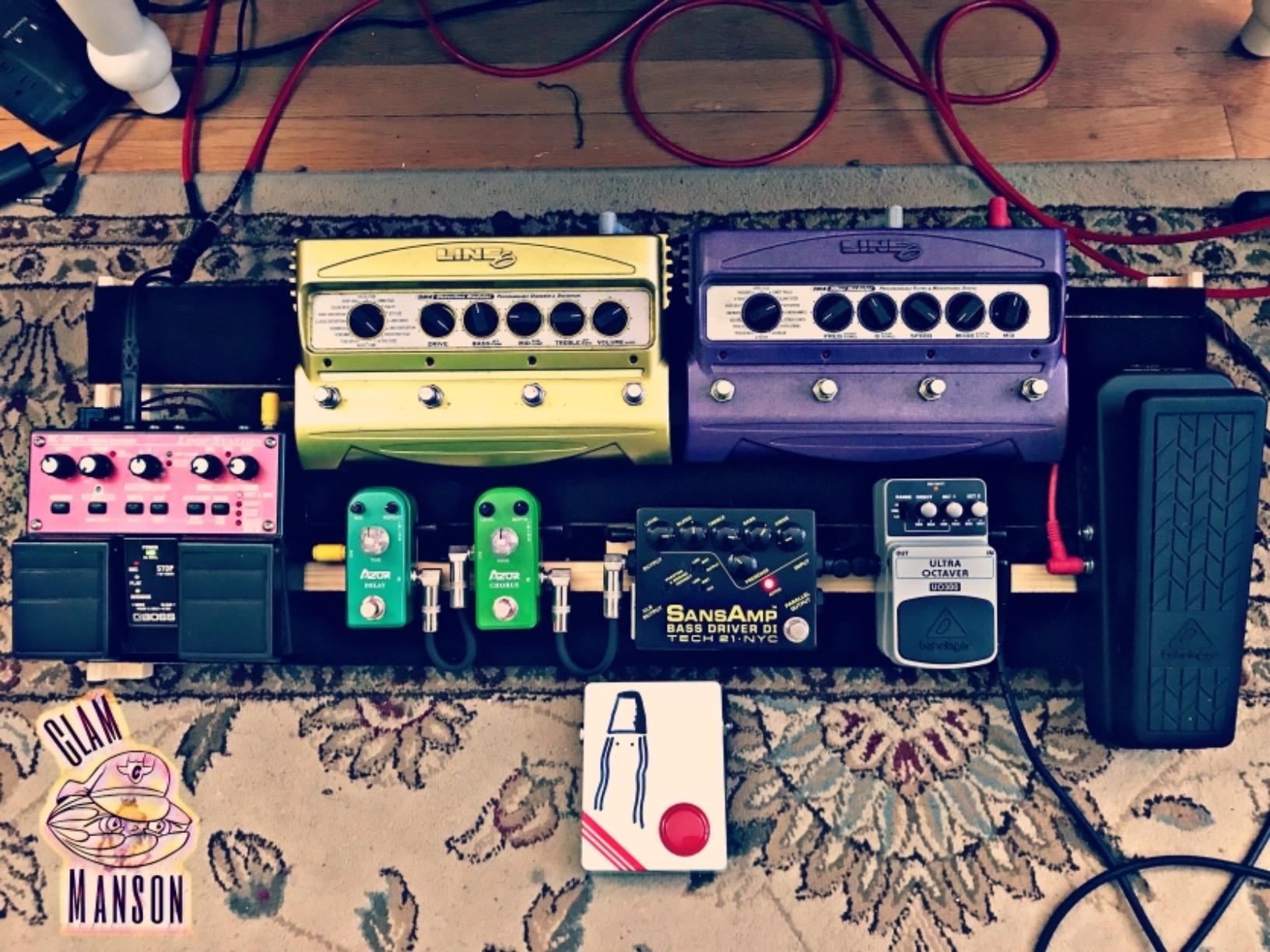
The aerospace-grade aluminum alloy chassis is lightweight yet durable. Weighing just 0.5 pounds, it is easy to transport and pedalboard-friendly. The compact dimensions of 3.68 x 2.1 x 1.9 inches fit nicely alongside other mini pedals.
Players Who Will Enjoy the AZOR
Guitarists who want to experiment with self-oscillation and creative delay textures will find the AZOR rewarding. The ability to push the feedback into controlled chaos opens up sonic possibilities that more conservative delay pedals do not offer.
Players building a budget pedalboard will also appreciate the value proposition. The warm vintage tone and solid construction make this a practical choice for the price-conscious guitarist.
Potential Issues to Note
Some users have reported that static noise can develop over time with extended use. This appears to affect a minority of units but is worth monitoring. The mix control can be touchy, requiring careful adjustment to find the right balance.
The connectors on some units have been described as feeling cheap. While this does not necessarily affect functionality, it can raise concerns about long-term durability. No battery compartment means you are reliant on external power.
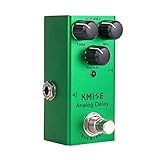
12. Kmise Analog Delay – Ultra-Budget Analog Option
Kmise Analog Delay Electric Guitar Effects Pedal,True Bypass,Tip‑Negative
Controls: 3-knob design
True bypass
Noise reduction circuit
Aluminum alloy
Power: 9V DC
Ultra compact
Pros
- Excellent value for money
- Pure signal with true bypass
- Integrated noise reduction
- Solid aluminum alloy construction
- Compact and lightweight
- Maintains clarity on long repeats
Cons
- Some units had faulty Mix knob
- May boost volume in signal chain
- Adds highs to signal
- Mix knob may not taper to zero on some units
The Kmise Analog Delay is the most affordable pedal on this list, and it offers a surprising amount of functionality for the price. The integrated noise reduction circuit is a thoughtful feature that addresses one of the most common complaints about budget analog delay pedals. Noise swells are a known issue with BBD circuits, and Kmise has worked to minimize this problem.
The true bypass switching maintains a pure signal flow when the pedal is disengaged. The three-knob setup is simple enough for beginners to understand immediately. The aluminum alloy construction is solid and stable despite the low price.
What impressed me is how well the Kmise maintains clarity on long delay repeats. Many ultra-budget analog delays become muddy and indistinct as the repeats build up, but the Kmise keeps things reasonably defined.
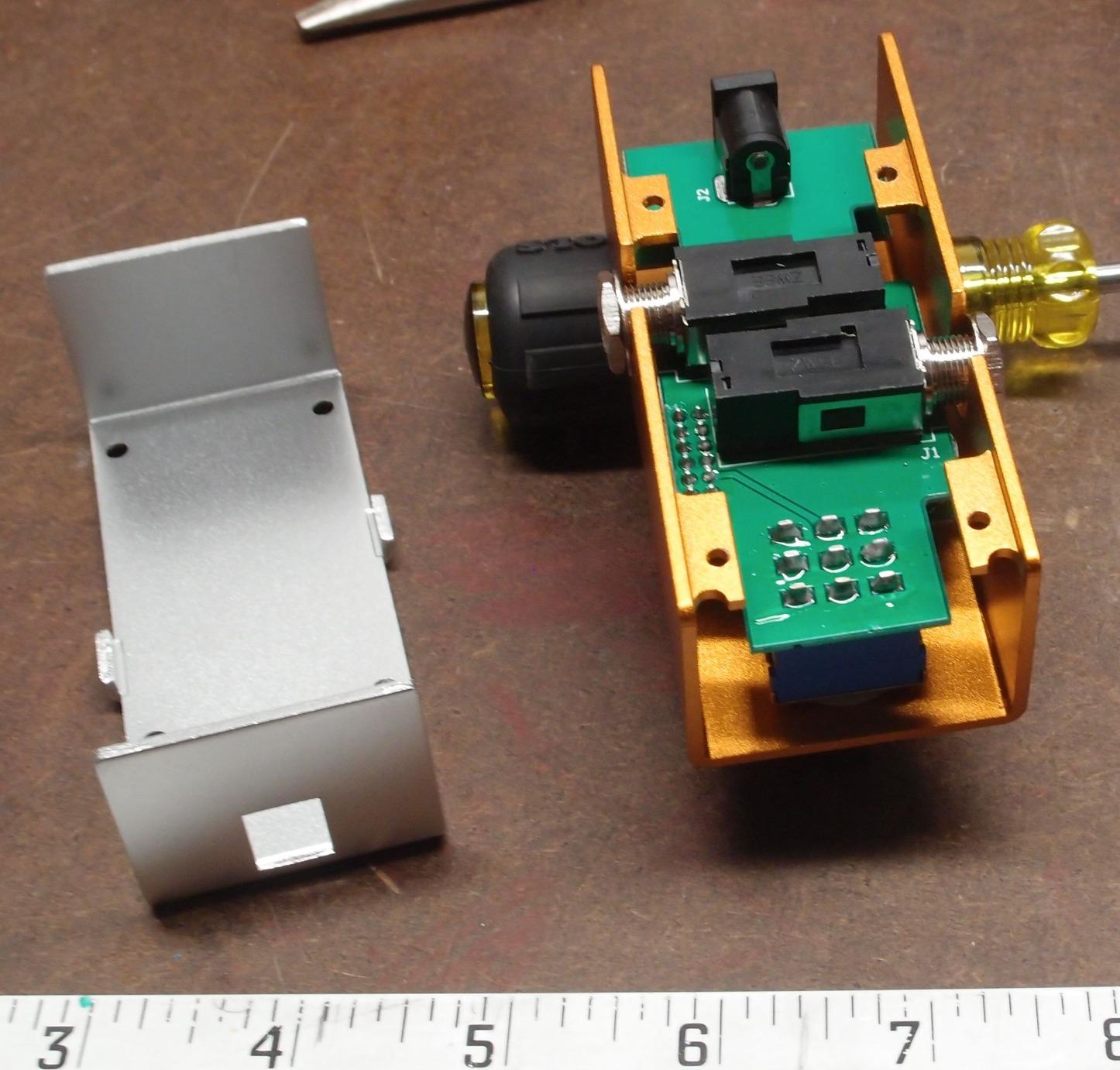
The compact and lightweight design makes it ideal for portable rigs. At just 4.6 ounces, it is one of the lightest pedals you will find. The small footprint means it can fit into even the most crowded pedalboard.
Who Should Consider the Kmise
Players on the tightest possible budget will find the Kmise to be a functional and usable analog delay. It is ideal for beginners who are just starting to explore guitar effects and want to spend as little as possible. The integrated noise reduction is a real advantage at this price point.
Guitarists who need a lightweight, portable delay for travel or casual practice will also find the Kmise suitable. The tiny size and weight make it easy to throw in a gig bag.
Quality Control Concerns
The main issue with the Kmise is quality control consistency. Some users have received units with faulty Mix knobs that do not taper properly to zero. This means you may always hear some delay bleed-through even when the mix is set to minimum. The pedal may also boost the overall volume in your signal chain and add some high-frequency content.
These issues do not affect every unit, but they are common enough to mention. At this price point, some variability in quality control is expected. If you get a good unit, the Kmise offers remarkable value.
How to Choose the Best Analog Delay Pedal
Choosing the right analog delay pedal comes down to understanding your needs as a player and matching them to the features that matter most. After testing all 12 pedals on this list, here is what I learned about the key decision factors.
Delay Time and BBD Chip Technology
Analog delay pedals use bucket brigade device (BBD) chips to create their echoes. The number and type of BBD chips determine the maximum delay time. Vintage pedals used MN3005 or MN3009 chips from Panasonic, which are no longer manufactured. Modern pedals use Xvive reissue chips, which sound excellent but have slightly different characteristics than the vintage originals.
For most musical applications, 300ms to 600ms of delay time is sufficient. This covers slapback echo, rhythmic dotted-eighth patterns, and moderate lead enhancement. If you need longer ambient washes, look for pedals with extended delay times like the Fender Hammertone (950ms) or JHS 3 Series (800ms).
Modulation: The Secret to Analog Character
Modulation adds a subtle pitch wobble to the delay repeats, emulating the wow and flutter of vintage tape echo. This is one of the most beloved characteristics of analog delay. Some pedals, like the MXR Carbon Copy, offer internal modulation controls. Others, like the EHX Memory Toy and Fender Hammertone, provide a simple on or off modulation switch.
If modulation is important to you, look for pedals that let you control the modulation depth and rate. Internal trim pots (like the Carbon Copy) or external controls give you the most flexibility.
Tap Tempo: Do You Need It?
Tap tempo lets you synchronize your delay time to the tempo of the music by tapping a footswitch. This is essential for live performance where you need precise rhythmic delay patterns. However, true analog tap tempo is technically challenging and expensive to implement, which is why most analog delay pedals on this list do not include it.
If tap tempo is a must-have feature, you may need to consider pedals like the Walrus Audio Fundamental Series, which offers rhythm divisions (quarter, dotted-eighth, eighth notes) as an alternative approach. Or look at hybrid pedals that combine analog voicing with digital tap tempo control.
Pedalboard Placement Matters
Where you place your delay pedal in your signal chain significantly affects its sound. Placing delay before your overdrive and distortion pedals produces cleaner, more defined repeats. Placing delay after distortion creates a wall-of-sound effect where the repeats are also distorted.
Most players place delay late in the signal chain, after distortion but before reverb. If your amplifier has an effects loop, placing the delay in the loop (between the preamp and power amp) produces the clearest, most natural-sounding repeats.
Power Supply Requirements
Almost all the pedals on this list require a 9V DC center-negative power supply. Current draw varies significantly, from 9mA (MXR Carbon Copy) to 250mA (Walrus Audio Fundamental). Make sure your power supply can handle the current requirements of all pedals on your board.
Analog delay pedals with BBD circuits benefit from isolated power supplies. Daisy-chaining power to multiple pedals can introduce noise into the analog signal path. If you hear hum or buzz from your delay pedal, an isolated power supply is likely the solution.
Boutique vs Mainstream Brands
The pedals on this list range from ultra-budget options under $20 to premium pedals over $150. The question is whether the price difference translates to audible quality improvements. In my testing, the answer is nuanced. The MXR Carbon Copy and JHS 3 Series do sound noticeably better than the sub-$30 options, with richer harmonic content and smoother repeats.
However, the budget pedals are genuinely usable and musical. The Donner Yellow Fall, JOYO Nascar, and AZOR pedals deliver tone that would have been impossible at these prices a decade ago. For beginners and casual players, the budget options are more than adequate.
Frequently Asked Questions
What are the best analog delay pedals available?
The MXR Carbon Copy is widely considered the best overall analog delay pedal for its warm BBD circuit and built-in modulation. Other top picks include the JHS 3 Series Delay for versatility, the EHX Memory Toy for vintage character, and the Donner Yellow Fall for budget-conscious buyers.
What is the best analog delay pedal regardless of price?
The MXR Carbon Copy Analog Delay is the benchmark analog delay pedal regardless of price, praised by professional guitarists and community forums alike. Its genuine bucket-brigade circuit, internal modulation controls, and decades of proven reliability make it the gold standard for warm analog echo.
What is the best budget analog delay pedal?
The Donner Yellow Fall Analog Delay is the best budget option at around $36, with over 3,500 positive reviews and a 4.5-star rating. It offers warm vintage analog-voiced delay with a 20ms to 620ms range in a compact, true bypass enclosure.
Do I need tap tempo on my analog delay pedal?
Tap tempo is useful for live performance where you need to synchronize delay repeats to the tempo of the music. However, most traditional analog delay pedals do not include tap tempo because it is technically difficult to implement with BBD circuits. If tap tempo is essential, consider hybrid pedals or the Walrus Audio Fundamental Series with rhythm division options.
Why choose analog delay over digital delay?
Analog delay pedals use bucket brigade device chips that create warm, organic repeats with natural high-frequency roll-off on each echo. Digital delays offer cleaner, longer repeats with more features, but many guitarists prefer the musical, vintage character of analog delay that sits naturally in a mix without competing with the dry signal.
Final Thoughts on the Best Analog Delay Pedals
After testing all 12 pedals, the MXR Carbon Copy remains the undisputed benchmark for the best analog delay pedals on the market. Its genuine BBD circuit, internal modulation controls, and proven reliability make it the pedal that all others are measured against. For players who want maximum versatility, the JHS 3 Series Delay offers dual analog and digital voicings in one compact enclosure.
If budget is your primary concern, the Donner Yellow Fall delivers genuinely usable analog-voiced delay at a fraction of the cost of premium pedals. And for players who want something different, the Walrus Audio Fundamental Series adds reverse delay and rhythm divisions that expand what a single delay pedal can do.
The beauty of analog delay is that every pedal on this list has its own personality. The BBD chips, circuit design, and component choices all contribute to a unique sonic fingerprint. Whether you spend $19 or $160, you will get warm, musical echoes that digital processing still cannot perfectly replicate. That is the enduring magic of the bucket brigade circuit, and it is why analog delay pedals remain essential tools for guitarists in 2026.