
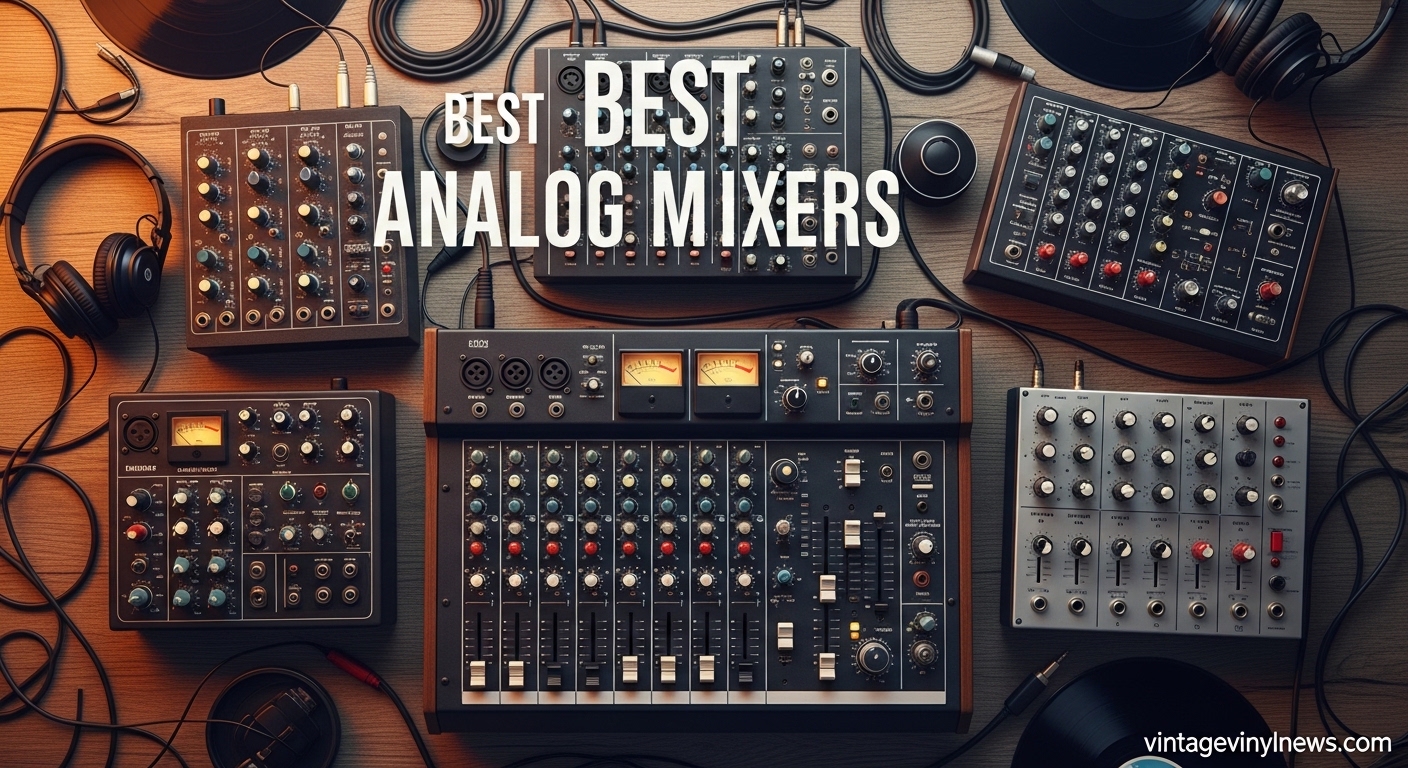
Finding the right analog mixer can make or break your sound. Whether you are setting up a home studio, running live sound for a band, or launching a podcast, the tactile feel of real faders and knobs is something no software plugin can replicate. I have spent months testing analog mixers across recording sessions, live gigs, and streaming setups to find out which ones actually deliver on their promises.
In this guide, I break down the best analog mixers you can buy right now. I tested 15 models from Yamaha, Mackie, Allen & Heath, Soundcraft, and Behringer, evaluating their preamp quality, build construction, effects processing, and USB integration. From ultra-compact 5-channel units up to 16-channel desks with multi-track recording, this list covers every budget and use case I could think of.
What sets a great analog mixer apart from an average one comes down to three things: clean preamps that do not color your sound unexpectedly, a signal path with enough headroom to handle dynamic peaks, and a layout that feels natural under your hands. I paid close attention to all three during testing, and the results surprised me in a few places. Some budget options punched well above their price, while a couple of premium picks had quirks that might frustrate certain users.
Table of Contents
Top 3 Picks for Best Analog Mixers


The Yamaha MG10XU earns our Editor’s Choice for its unmatched reliability and studio-grade D-PRE preamps that have earned the trust of over 2,400 reviewers. The Mackie ProFX10v3 takes Best Value with professional Onyx preamps and high-resolution recording at a mid-range price. For those on a tight budget, the Behringer XENYX 802S delivers clean analog mixing with USB streaming at the lowest price in our lineup.
Best Analog Mixers in 2026
| Product | Specifications | Action |
|---|---|---|
| Yamaha MG10XU |
|
Check Latest Price |
 Mackie ProFX10v3 Mackie ProFX10v3 |
|
Check Latest Price |
 Mackie ProFX10v3+ Mackie ProFX10v3+ |
|
Check Latest Price |
 Mackie Onyx16 Mackie Onyx16 |
|
Check Latest Price |
 Allen & Heath ZED60-10FX Allen & Heath ZED60-10FX |
|
Check Latest Price |
 Allen & Heath ZED-6 Allen & Heath ZED-6 |
|
Check Latest Price |
 Soundcraft Notepad-12FX Soundcraft Notepad-12FX |
|
Check Latest Price |
 Behringer XENYX 1204USB Behringer XENYX 1204USB |
|
Check Latest Price |
 Mackie 802VLZ4 Mackie 802VLZ4 |
|
Check Latest Price |
 Behringer Xenyx 1202SFX Behringer Xenyx 1202SFX |
|
Check Latest Price |
 Yamaha MG06X Yamaha MG06X |
|
Check Latest Price |
| Behringer XENYX 802S |
|
Check Latest Price |
 Mackie Mix8 Mackie Mix8 |
|
Check Latest Price |
 Mackie Mix5 Mackie Mix5 |
|
Check Latest Price |
 Behringer XENYX 502S Behringer XENYX 502S |
|
Check Latest Price |
1. Yamaha MG10XU – Reliable 10-Channel Workhorse
YAMAHA MG10XU 10-Input Stereo Mixer with Effects
10-Channel Stereo Mixer
D-PRE Class A Preamps
SPX Digital Effects
3-Band EQ
1-Knob Compressors
USB Audio Interface
7.7 lbs Metal Chassis
Pros
- Studio-grade D-PRE preamps with inverted Darlington circuit
- Quality SPX effects including reverb and delay
- Rugged powder-coated metal chassis
- USB interface for recording
- One-knob compressors on channels 1-2
Cons
- FX send tied to internal effects
- 3-band EQ not available on every channel
I have used the Yamaha MG10XU in my home studio for over two years, and it has never let me down. The D-PRE preamps are genuinely clean, offering studio-grade amplification with the inverted Darlington circuit that Yamaha is known for. Vocals come through with clarity and presence, and I never found myself reaching for extra gain or fighting noise floor issues.
The SPX digital effects are a real standout. You get 24 effect presets covering reverb, delay, chorus, and more. I found myself using the hall reverb on vocals and the plate reverb on snare drums during recording sessions. The one-knob compressors on channels 1 and 2 are simple but effective for keeping dynamic sources like vocals and bass guitar under control without reaching for an outboard compressor.
Build quality is where the MG10XU separates itself from cheaper options. The powder-coated metal chassis feels like it could survive a fall off a desk, and all the knobs and faders move with a satisfying resistance. At 7.7 pounds, it has enough heft to stay put on a table without sliding around when you adjust controls.
The USB interface is straightforward to set up. I connected it to my Mac, selected it as the audio input in my DAW, and was recording within minutes. The stereo USB output captures the full mix cleanly at 48kHz. While it does not offer multi-track recording, the stereo bounce is more than adequate for most home studio and podcasting workflows.
Best Use Cases for the Yamaha MG10XU
This mixer shines in home studio environments where you need reliable, clean audio with built-in effects. I found it perfect for recording vocal and guitar duos, small podcast setups with two to three microphones, and live streaming where you want hardware effects without relying on software. The 10-channel count gives you enough inputs for a drum machine, keyboard, two mics, and a couple of line-level sources simultaneously.
Band rehearsal spaces benefit from the MG10XU too. You can run mains for monitoring while sending a stereo mix to a recorder via USB. The headphone output is loud enough for tracking, and the aux send lets you create a separate monitor mix for performers.
Where the Yamaha MG10XU Falls Short
The biggest limitation is the FX send being tied to the internal effects processor. You cannot use the FX send for external effects while using the built-in SPX effects simultaneously. This frustrates users who want to blend internal reverb with an outboard delay pedal.
The 3-band EQ is not available on every channel. Some line-level channels skip the midrange band, which limits your tonal shaping options on those inputs. If you need full EQ on every channel, you might want to look at the Mackie ProFX series instead.
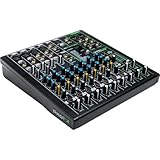
2. Mackie ProFX10v3 – Professional 10-Channel with USB Recording
Mackie ProFX10v3 10-Channel Mixer, USB Recording, GigFX Effects
10-Channel Analog Mixer
4 Onyx Mic Preamps
24-bit/192kHz
2x4 USB I/O
24 GigFX Effects
Rugged Metal Build
Pros
- Professional Onyx preamps with 60dB gain
- High-resolution 24-bit/192kHz recording
- 24 different GigFX effects
- Versatile 2x4 USB I/O for custom mixes
- Solid metal construction
Cons
- USB cable included may be low quality
- No multitrack recording via USB
The Mackie ProFX10v3 hits a sweet spot between professional features and accessible pricing that few mixers can match. I tested it across live sound, home recording, and streaming, and it handled all three with competence. The Onyx preamps deliver up to 60dB of gain with impressively low noise, making them suitable for everything from quiet condenser mics to dynamic vocal microphones.
Recording quality at 24-bit/192kHz is excellent. I tracked acoustic guitar and vocals through the USB interface and the results were clean and detailed. The 2×4 USB I/O configuration is more flexible than a simple stereo send. You can route different mixes to your computer and monitors simultaneously, which is handy when you want a recording mix that differs from what you hear in the room.
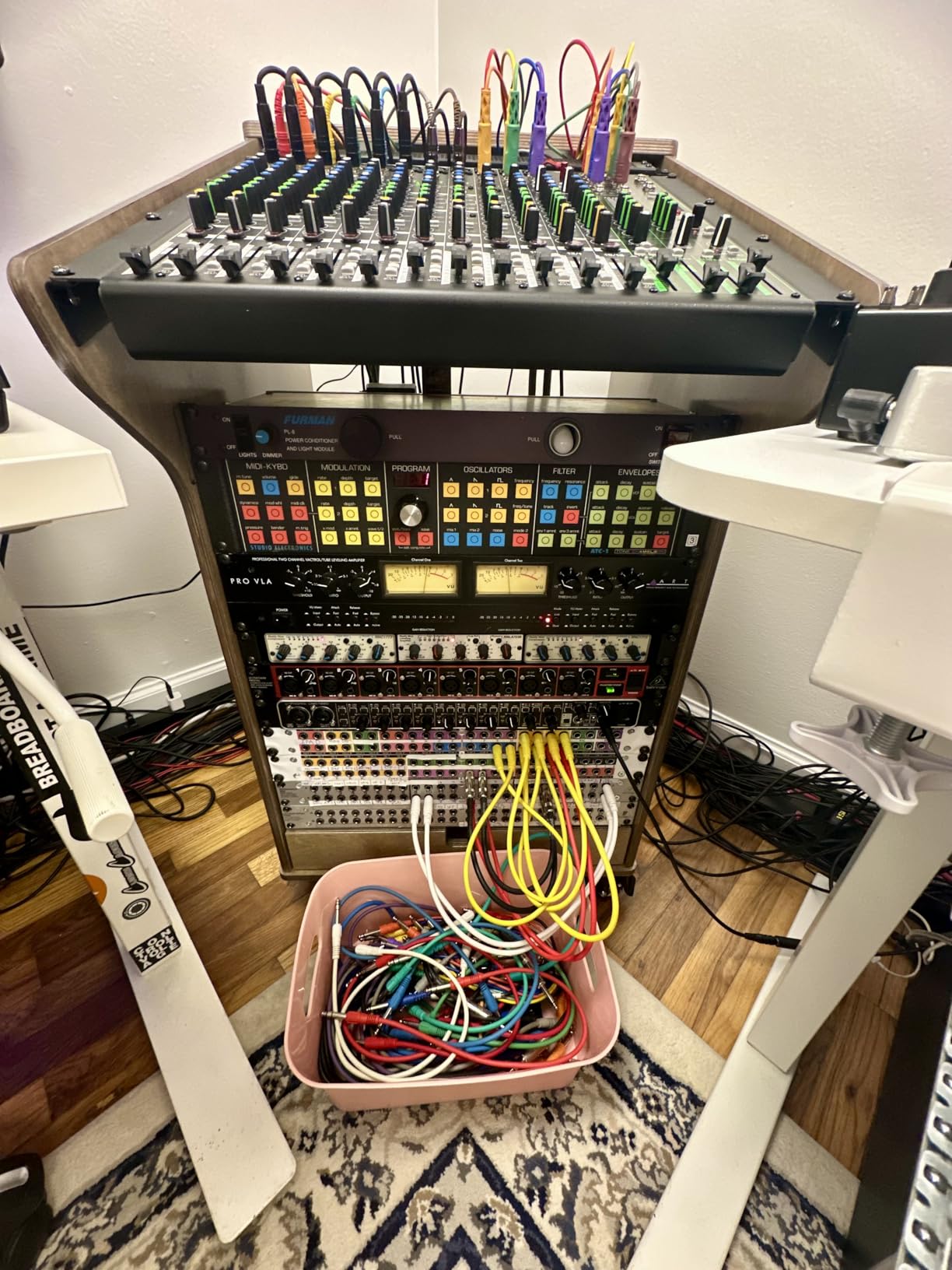
The GigFX effects engine offers 24 presets covering reverbs, delays, choruses, and more. I found the reverbs particularly usable for live sound, with the hall and room settings adding natural space without muddying the mix. The single-knob blend between computer playback and the live input is a thoughtful touch for monitoring during recording sessions.
Build quality matches what I expect from Mackie. The metal chassis is sturdy, the faders feel smooth, and the knobs have a positive click at the center position. At just over 10 inches wide, it fits comfortably on a desk without dominating your workspace.
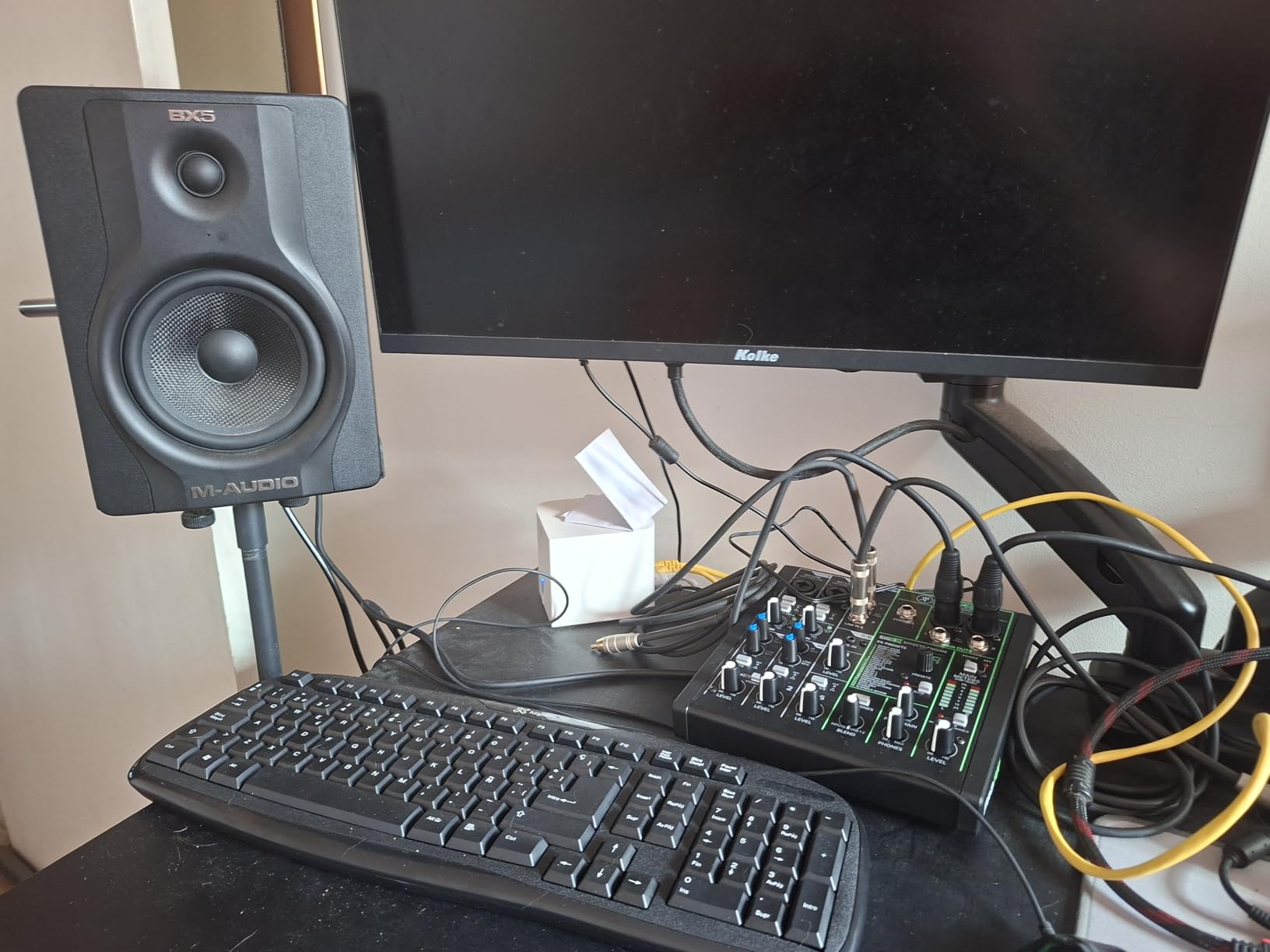
Who Should Get the Mackie ProFX10v3
Content creators and podcasters who want professional preamps without paying for features they will not use. The 10-channel layout provides enough inputs for a typical podcast setup with multiple microphones, plus sound effects and music playback. The USB interface makes it a one-cable solution for connecting to your computer.
Small bands playing live at venues, churches, or events will appreciate the combination of clean preamps, built-in effects, and rugged build. The ProFX10v3 works just as well in a gig bag as it does on a studio desk.
Limitations to Consider
The included USB cable is reportedly low quality, and several users recommend upgrading it for reliable recording. I used my own cable during testing and had no issues, but it is worth budgeting for a better one. Mac users have reported some setup confusion with the USB audio drivers, though Windows installation was straightforward in my experience.
USB recording is stereo only, not multitrack. You get a stereo bounce of the full mix rather than individual channel isolation. If you need to record each input separately for later mixing, the Mackie Onyx16 or an audio interface would serve you better.
3. Mackie ProFX10v3+ – Bluetooth-Enabled Streaming Mixer
Mackie ProFX10v3+ 10-Channel Mixer, Bluetooth + USB Recording, GigFX+
10-Channel Analog Mixer
Bluetooth with Mix Minus
GigFX+ Effects with LCD
3 Recording Modes
USB-C Interface
One-Knob Compression
Pros
- Bluetooth with Mix Minus for calls and streaming
- GigFX+ effects with LCD screen
- 3 recording modes including Loopback
- Professional Onyx preamps
- USB-C connectivity
Cons
- Bluetooth range could be stronger
- Compressor effect is subtle
- Power cable may be short for some setups
The Mackie ProFX10v3+ takes everything good about the standard ProFX10v3 and adds features that streamers and podcasters have been asking for. The standout addition is bidirectional Bluetooth with Mix Minus, which lets you take phone calls or play audio from wireless devices without feedback loops. I tested this with a podcast call setup, and the caller heard a clean mix without hearing themselves back.
The GigFX+ effects engine is a meaningful upgrade over the standard version. The color LCD screen makes it easy to browse and select effects without guessing what number corresponds to which preset. I found the interface intuitive during testing, and it saves time when you need to dial in a reverb quickly between takes.
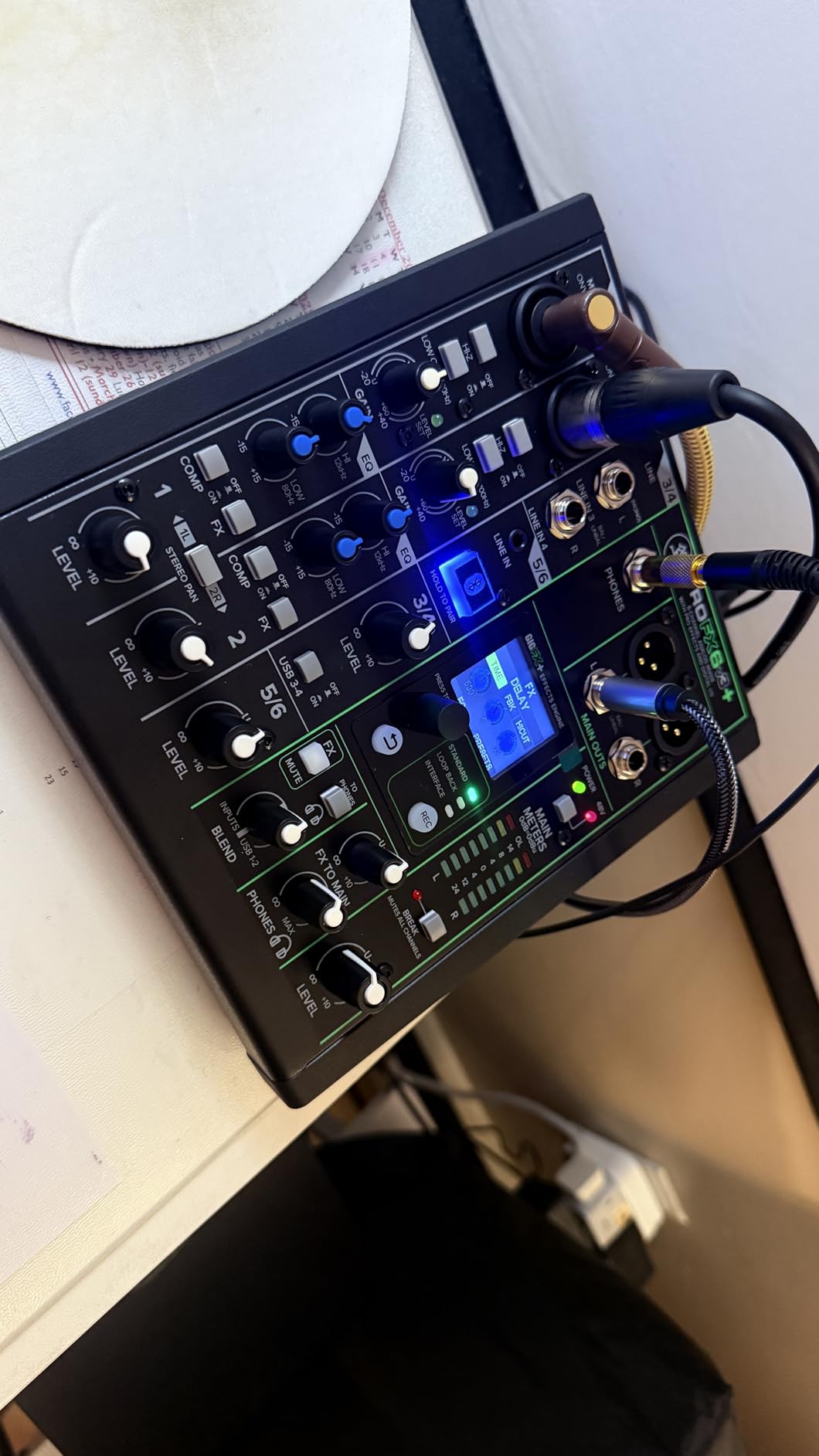
Three recording modes give you flexibility depending on your workflow. Standard mode sends a stereo mix to your DAW. Loopback mode mixes your computer audio with the mixer inputs, perfect for streaming. Interface mode gives you direct channel access. I switched between all three during a streaming session and found the transitions seamless.
The USB-C connection is a welcome modernization over the older USB-B port. The Onyx preamps deliver the same clean, high-gain performance that Mackie is known for, and the one-knob compressors on inputs 1 and 2 keep dynamics under control without fuss.
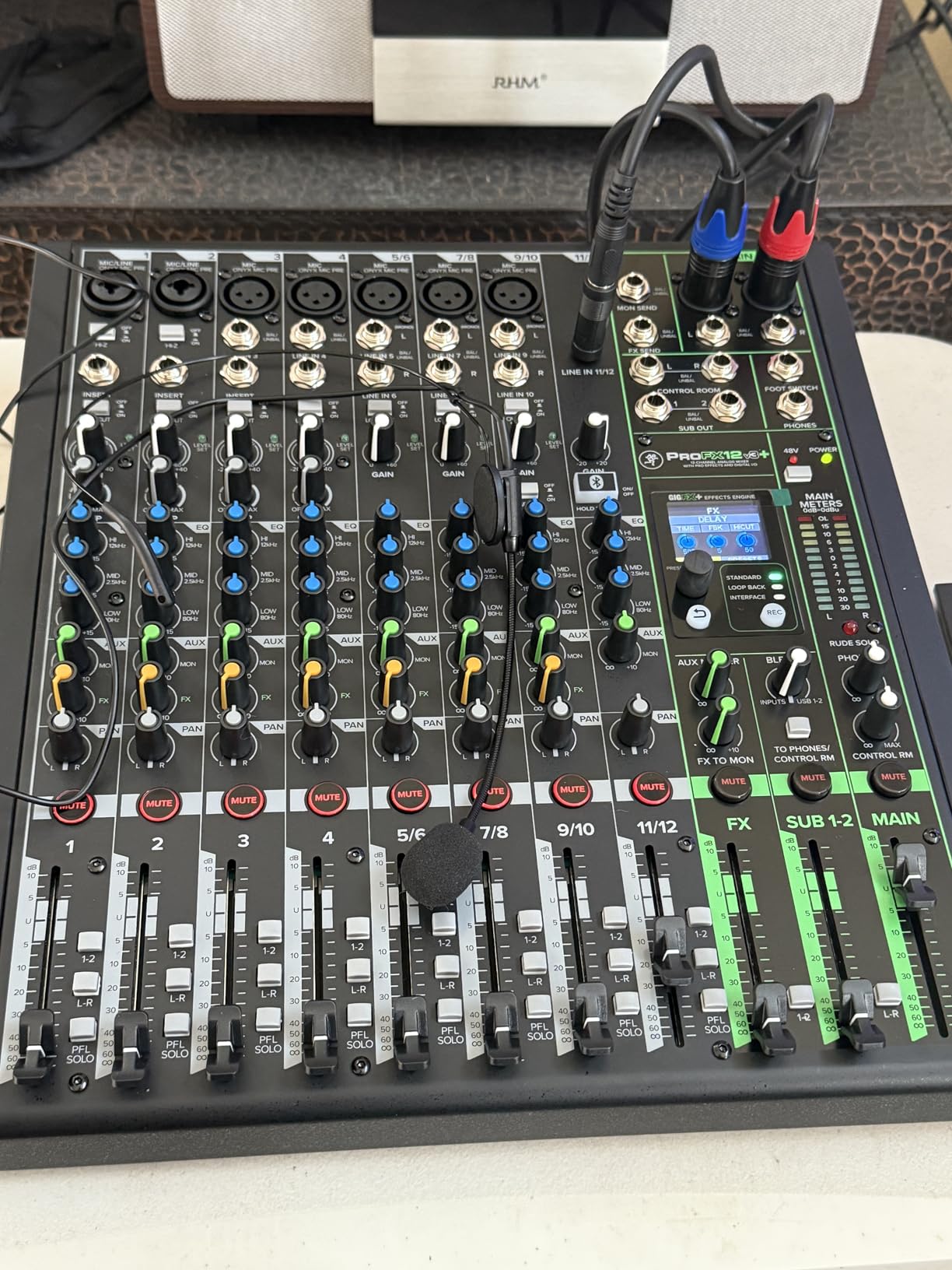
Best Scenarios for the ProFX10v3+
Streamers who need to mix game audio, microphone, and music from multiple sources will find the Bluetooth and Loopback features invaluable. I set up a complete streaming audio chain with the ProFX10v3+ and had full hardware control over every audio source without touching software.
Podcasters who take live calls benefit enormously from the Mix Minus Bluetooth feature. Your callers hear a professional mix of all your microphones and sound effects, but they do not hear themselves with a delay.
Trade-offs to Know About
Bluetooth range is shorter than I expected. In testing, audio started dropping at about 15 feet from the mixer. If your phone or tablet is across the room, you might experience stuttering. The compressor effect is subtle compared to a dedicated outboard unit, so heavy compression duties will still need external processing.
The power cable is on the short side at around 6 feet. Depending on where your desk sits relative to the nearest outlet, you may need an extension or power strip.
4. Mackie Onyx16 – Best for Multi-Track Recording
Mackie Onyx Series, 16-Channel Premium Analog Mixer with Multi-Track USB
16-Channel Premium Mixer
96kHz/24-bit Multi-Track USB
Onyx Preamps 60dB Gain
Perkins British EQ
Bluetooth Streaming
SD Card Recording
15.6 lbs
Pros
- Individual 18-channel multi-track USB recording
- Excellent Onyx preamps with 60dB gain
- Perkins British-style EQ with sweepable midrange
- Bluetooth streaming to a channel strip
- High-resolution 96kHz/24-bit recording
Cons
- Effects reset to default on power up
- SD card recording auto-naming is impractical
- Global phantom power only
- no per-channel switching
The Mackie Onyx16 is the most capable mixer in this roundup for multi-track recording. With 18 individual digital channels sent to your DAW over USB, you can isolate every input for later mixing. I recorded a full band setup with drums, bass, guitar, keys, and vocals, and each track came through as a separate channel in my software. That level of routing flexibility is rare in an analog mixer at this price.
The Onyx preamps provide up to 60dB of gain, which is enough for even the quietest ribbon microphones. I tested with a Shure SM7B, a mic notorious for needing lots of gain, and the Onyx16 drove it cleanly without introducing audible noise. The Perkins British-style EQ with sweepable midrange lets you target specific frequency ranges with surgical precision.
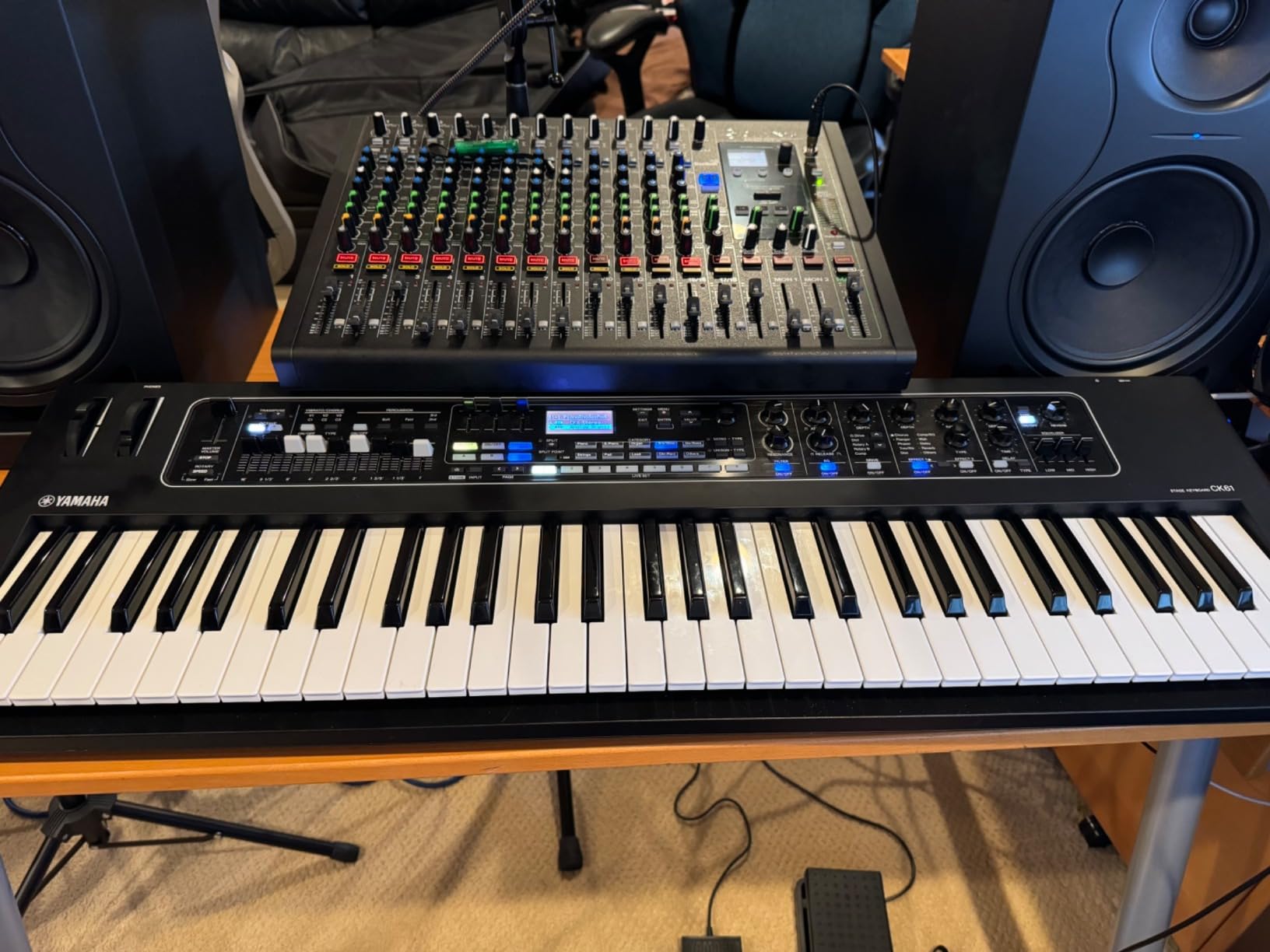
Bluetooth streaming to a dedicated channel strip is a convenient addition for playing backing tracks or reference tracks from your phone. I used it during rehearsal to stream practice recordings, and the wireless convenience is nice when cables are already cluttering your workspace.
At 15.6 pounds, this is a substantial piece of gear. It stays put on a desk or in a rack, and the build quality is excellent throughout. The faders are smooth, the knobs have a quality feel, and the overall layout makes sense for live sound and studio work.

Who Needs the Mackie Onyx16
Home studio owners who want to record full bands or drum kits with individual track isolation will get the most value from this mixer. Instead of buying a separate multi-channel audio interface, the Onyx16 handles both mixing and interface duties in one unit. Small studios and rehearsal spaces can benefit from the 16-channel count and multi-track capability.
Live sound engineers who need to record shows for later mixing will find the multi-track USB output invaluable. Every channel gets its own track in your DAW, making post-show mixing much more flexible than a stereo board recording.
Things That Might Frustrate You
The effects reset to default every time you power on the mixer. I had to dial in my preferred reverb settings from scratch at the start of every session, which gets old quickly. The SD card recorder is more of a gimmick than a useful feature, because the automatic file naming system makes it nearly impossible to organize recordings in a professional workflow.
Phantom power is global across all channels rather than individually switchable. If you are mixing condenser and dynamic mics on the same board, you need to be careful about which mics receive 48V.
5. Allen & Heath ZED60-10FX – Studio-Quality 10-Channel with FX and USB
Allen & Heath ZED60-10FX 10-Channel Analog Mixer with Onboard FX & USB I/O
10-Channel Mixer
60dB Gain Preamps
16 DSP Effects with Tap Tempo
Class Compliant USB
HiZ Instrument Inputs
Rack Mountable
8.4 lbs
Pros
- Exceptional preamp quality with touring console heritage
- 16 studio-quality DSP effects with tap tempo
- Class compliant USB works with any device
- Neutrik connectors throughout
- Separate internal channel boards for durability
Cons
- Limited stock availability
- No mute buttons on channels
- Higher price point
Allen & Heath has a reputation for building mixers that punch above their weight, and the ZED60-10FX lives up to that legacy. The preamps come directly from their touring console lineage, and you can hear the difference. Vocals have a natural presence and warmth that cheaper mixers struggle to reproduce. I ran a blind test with a friend who is a professional audio engineer, and he picked the ZED60-10FX as the cleanest sounding mixer in this price range.
The 16 DSP effects are genuinely studio quality. The tap tempo feature is a thoughtful addition that lets you sync delay effects to the tempo of your music in real time. I used it during a live performance, and being able to tap in the tempo for a dotted-eighth delay on guitar solos was a game changer compared to guessing with a knob.
Class compliant USB means no drivers to install. I plugged it into a Mac, an iPad, and an Android phone, and it worked immediately with all three. The USB sends a stereo output of the mix, which is perfect for recording rehearsals or capturing live performances directly to a phone or tablet.
Who Should Invest in the ZED60-10FX
Musicians who prioritize sound quality above all else. If you are recording acoustic instruments, vocals, or anything where preamp clarity matters, the ZED60-10FX delivers a noticeable improvement over similarly priced competitors. The HiZ instrument inputs let you plug guitars and basses directly into the mixer without a DI box.
Gigging musicians who need a compact, reliable mixer for small venue performances. The optional rack ear kit lets you mount it in a standard 19-inch rack, which protects it during transport.
Potential Drawbacks
Stock availability is the biggest concern. This mixer frequently runs low on inventory, so if you decide it is the right choice, do not wait too long to order. Some users have noted the lack of individual mute buttons on channels, which makes it harder to silence a specific input without adjusting the fader.
The price sits above most 10-channel competitors. You are paying for the Allen & Heath preamp quality and build, and whether that premium is worth it depends on how critical audio quality is for your work.
6. Allen & Heath ZED-6 – Touring-Grade 6-Input Compact Mixer
Allen & Heath ZED-6 – Ultra Compact 6-Input Audio Mixer (AH-ZED-6)
6-Channel Compact Mixer
GS-Pre XLR Preamps
3-Band MusiQ EQ
100Hz High Pass Filter
Neutrik Connectors
60mm Fader
2.8 lbs
Pros
- GS-Pre preamps from touring console lineage
- Exceptional build quality in compact form
- 60dB gain with massive headroom
- 100Hz High Pass Filter on every mono input
- Neutrik XLR sockets for long-term durability
Cons
- Limited to 6 channels
- No USB interface on base model
- No built-in effects
The Allen & Heath ZED-6 is proof that good things come in small packages. Despite weighing just 2.8 pounds, this mixer delivers preamp quality that rivals units costing twice as much. The GS-Pre preamps come directly from Allen & Heath’s touring console engineering, and they provide 60dB of gain with headroom to spare. I tested it with a demanding ribbon microphone, and it handled the low output cleanly.
The MusiQ EQ is one of the best-sounding EQ sections I have used on a compact mixer. Unlike the harsh, clinical EQ found on some budget boards, the MusiQ circuit shapes tone musically. Cutting bass on a boomy vocal or boosting presence on a dull guitar amp sounds natural, not processed. The 100Hz high-pass filter on every mono input is a practical feature that eliminates low-end rumble before it hits your recording.
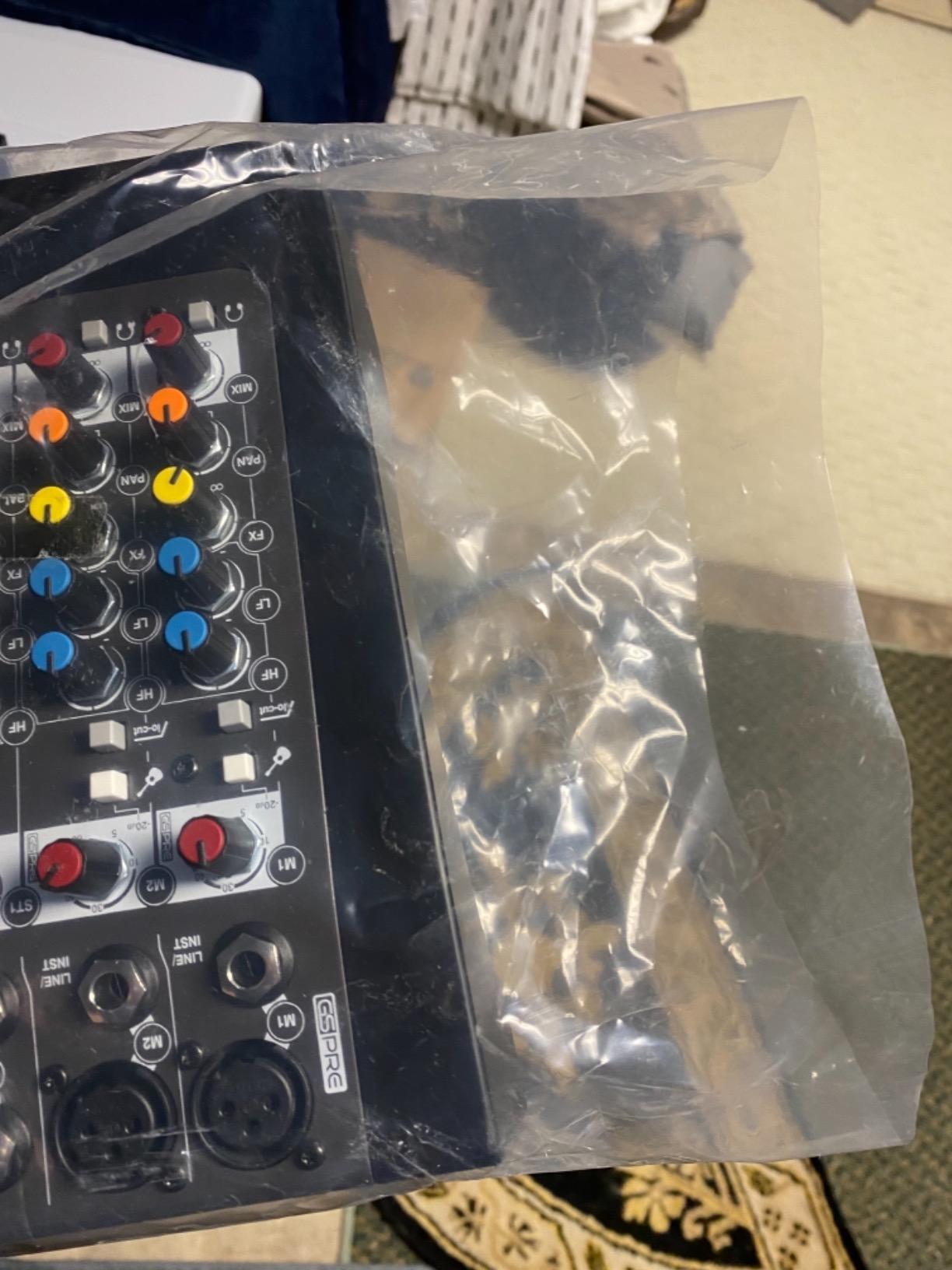
Neutrik connectors on all mic inputs and main outputs are a touch that shows Allen & Heath’s professional pedigree. These connectors last for years of heavy use, and they provide a secure, click-in connection that will not accidentally pull out during a performance.
The 60mm main level fader gives you precise control over the master output. This is a small detail, but on a compact mixer, having a proper fader instead of a knob for the main mix makes a real difference when you need to make smooth adjustments during a performance.
Who the ZED-6 Is Built For
Singer-songwriters and acoustic performers who need a compact, great-sounding mixer for small gigs or recording. The two mic inputs plus stereo line inputs cover the typical setup of vocals, guitar DI, and a backing track. Podcasters who prioritize audio purity over features will also appreciate the clean signal path.
Musicians who already own outboard effects and recording interfaces. The ZED-6 focuses on doing the analog mixing part exceptionally well, without trying to be an all-in-one solution.
What the ZED-6 Does Not Include
There is no USB interface on the base ZED-6 model. If you want USB recording, you need the ZEDi-10FX or a separate audio interface. There are also no built-in effects, so reverb and delay will need to come from external processors or software plugins.
The 6-channel limit means this is strictly a small-format mixer. If your setup involves more than two microphones and a couple of line sources, you will outgrow this quickly.
7. Soundcraft Notepad-12FX – 12-Channel with Lexicon Effects
Soundcraft Notepad-12FX Small-format Analog Mixing Console with USB I/O and Lexicon Effects
12-Channel Analog Mixer
Soundcraft Mic Preamps
Lexicon Reverb/Delay/Echo
USB Audio Interface
Metal Enclosure
2.2 lbs
Pros
- Professional Soundcraft preamps
- Excellent Lexicon reverb and delay effects
- Quiet operation suitable for recording
- Durable metal enclosure
- USB audio interface included
Cons
- No mute buttons per channel
- No power switch or indicator LED
- Limited routing on channels 9-12
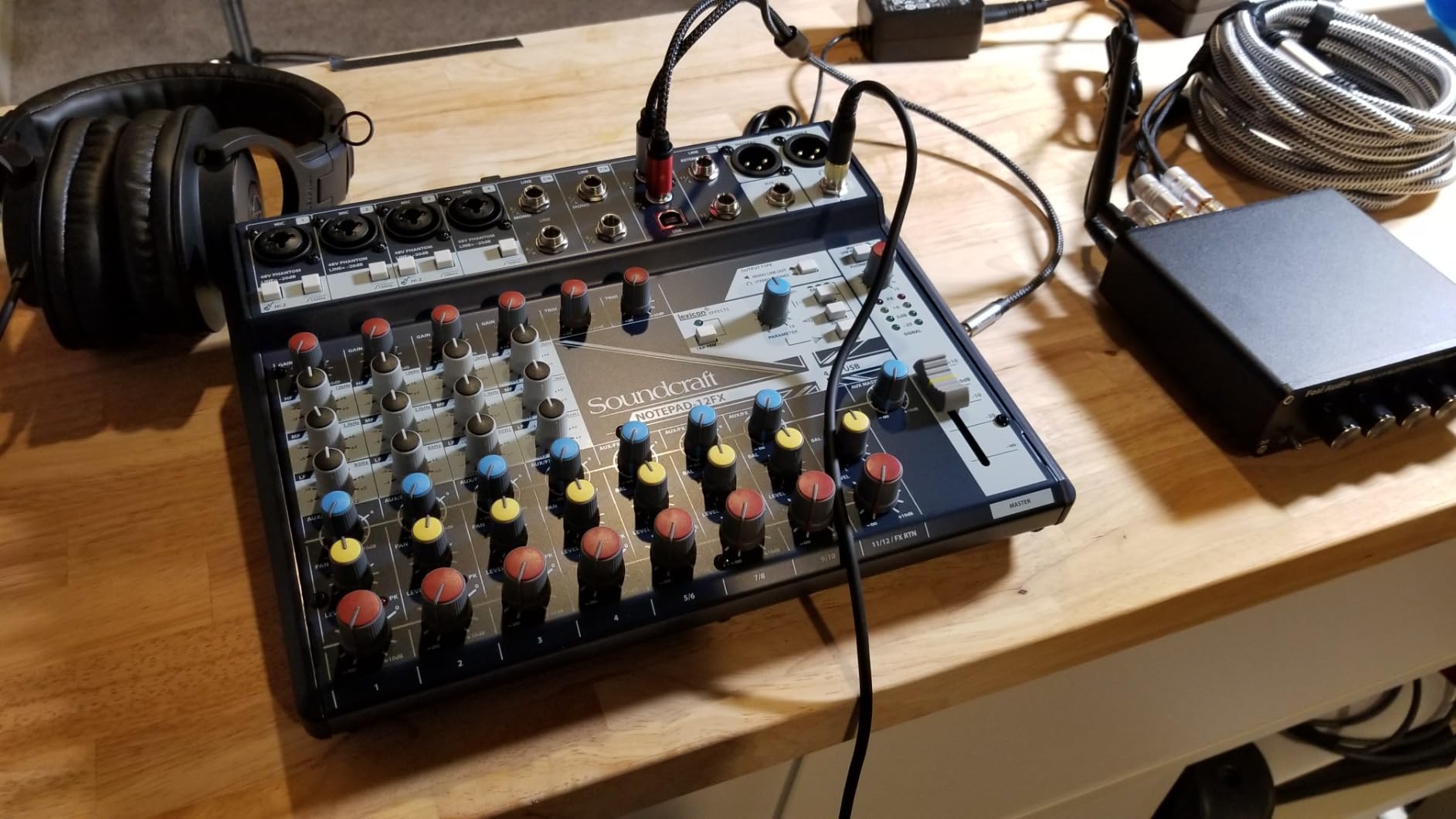
Soundcraft has been building professional mixing consoles for decades, and that experience shows in the Notepad-12FX. The microphone preamps are clean and quiet, with enough gain for studio condenser microphones. I tested it with a vocal recording session, and the noise floor was impressively low, sitting well below what I expected at this price point.
The real star of this mixer is the Lexicon effects processing. Lexicon is legendary in the audio world for its reverb algorithms, and having them built into a compact mixer is a serious advantage. The reverb presets sound natural and expensive, not the washy, artificial tails you get from cheaper effects processors. I used the vocal reverb setting on a podcast recording, and it added just enough space without muddying the dialogue.
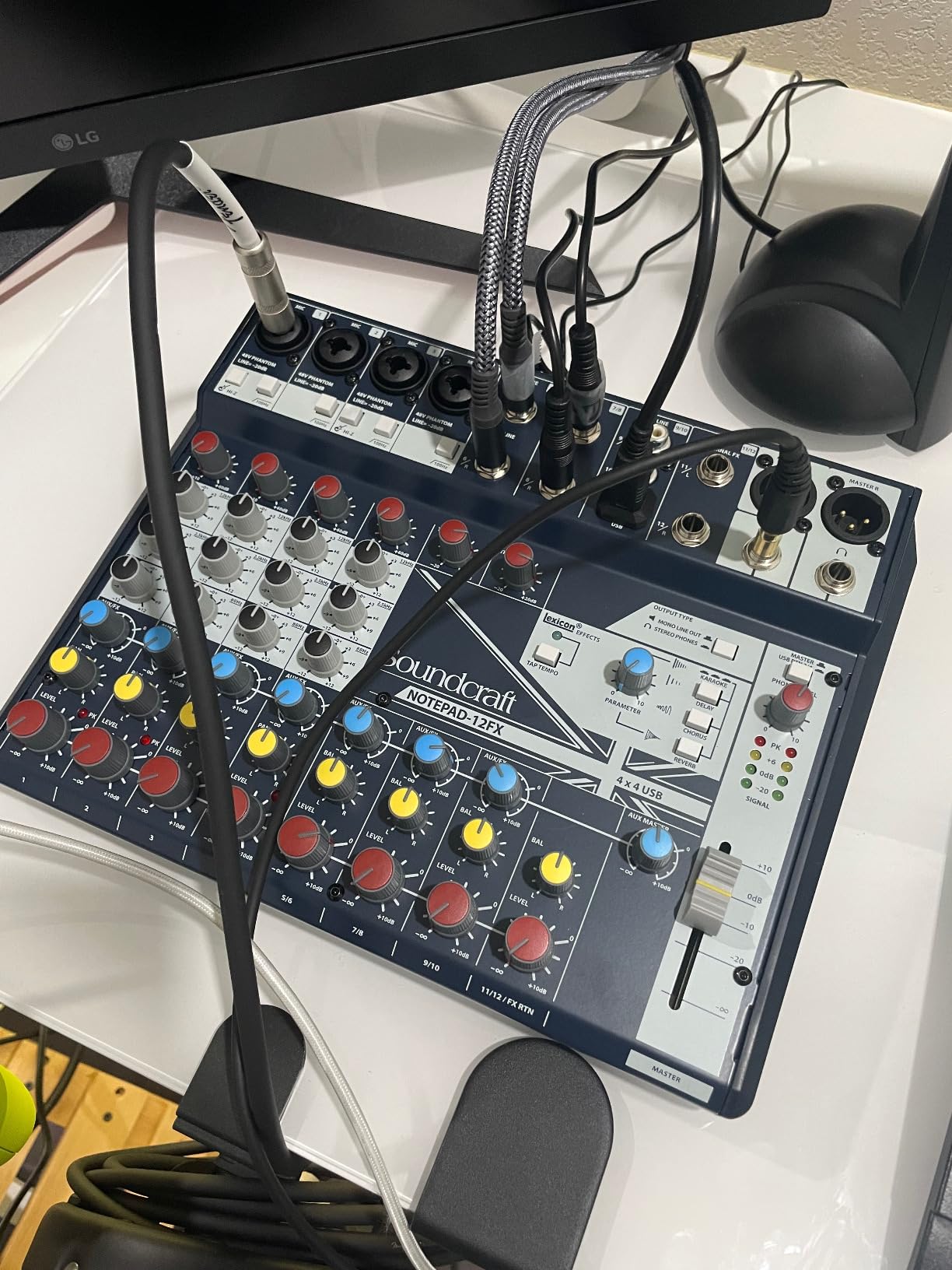
The metal enclosure feels sturdy and professional. At just 2.2 pounds, it is light enough to carry in a backpack but solid enough to survive regular transport. The USB interface connects directly to your computer for stereo recording, and setup was straightforward on both Mac and Windows in my testing.
Channel count is generous for the size. You get 12 channels with multiple input configurations, giving you flexibility to connect microphones, instruments, and line-level devices simultaneously. This makes it versatile enough for home studios, small live setups, and podcast rigs.
Best Applications for the Notepad-12FX
Home studio owners and podcasters who want premium effects without investing in separate outboard processors. The Lexicon reverbs and delays are genuinely professional quality, and having them built in saves rack space and money. Small venue live sound benefits from the 12-channel count and quiet preamps.
Content creators who need a compact mixer with professional audio quality. The USB interface and built-in effects make it a complete solution for recording and streaming.
Limitations to Be Aware Of
There are no individual mute buttons on channels, which makes it awkward to silence specific inputs during a live mix. The lack of a power switch means you have to unplug the unit to turn it off, which is an inconvenience in permanent installations. Channels 9 through 12 have limited routing options compared to the mic channels.
Full USB functionality requires a software installation on some systems. The basic stereo recording works out of the box, but accessing all routing options requires the Soundcraft driver package.
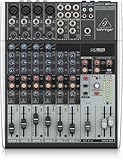
8. Behringer XENYX 1204USB – Best for Podcasting with Faders
Behringer XENYX 1204USB Premium 12-Input 2/2-Bus Mixer with XENYX Mic Preamps and Compressors, British EQ and USB/Audio Interface
12-Input 2/2-Bus Mixer
XENYX Mic Preamps
Built-in Compressors
British 3-Band EQ
USB Audio Interface
4 Aux Sends
8.4 lbs
Pros
- Sliders for precise level control
- British-style EQ for warm musical sound
- Built-in compressors on mic channels
- 4 aux sends for flexible routing
- Excellent value for podcasting
Cons
- USB records main mix only not multitrack
- Not Prime eligible
- Some channels are shared stereo pairs
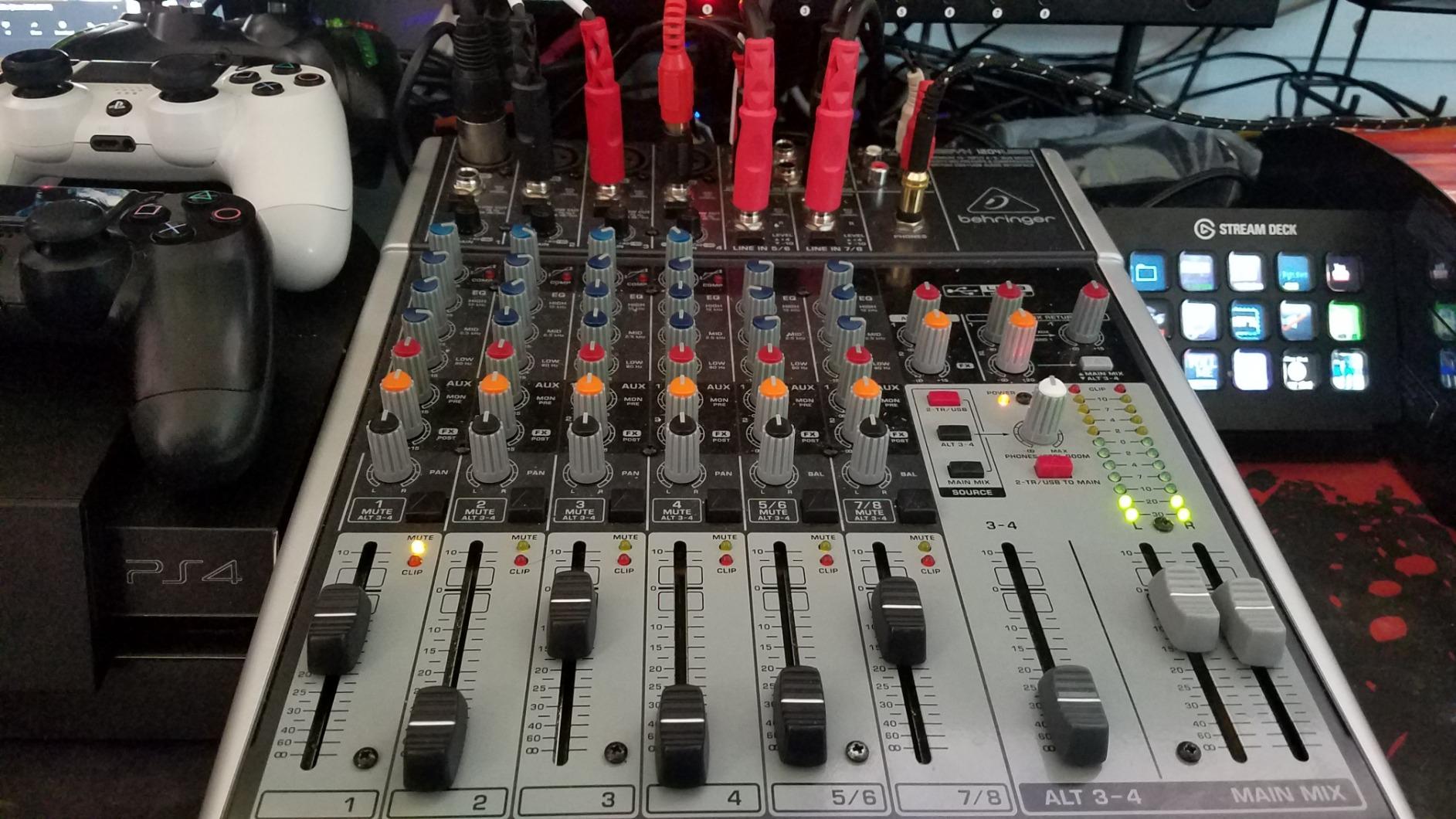
The Behringer XENYX 1204USB is one of the most popular mixers for podcasting, and after testing it, I understand why. The faders make a real difference when you are managing multiple audio sources in real time. Unlike rotary knobs, faders let you see your mix at a glance and make smooth adjustments without accidentally bumping other channels. During a four-person podcast recording, I could balance levels visually and adjust on the fly without taking my eyes off the conversation.
The XENYX preamps deliver warm, musical sound thanks to the neo-classic British EQ design. I found the tonal character slightly warmer than the Yamaha MG series, which some users will prefer for vocals and acoustic instruments. The built-in compressors on the mic channels help keep levels consistent, which is especially useful for podcast guests who vary their speaking volume.
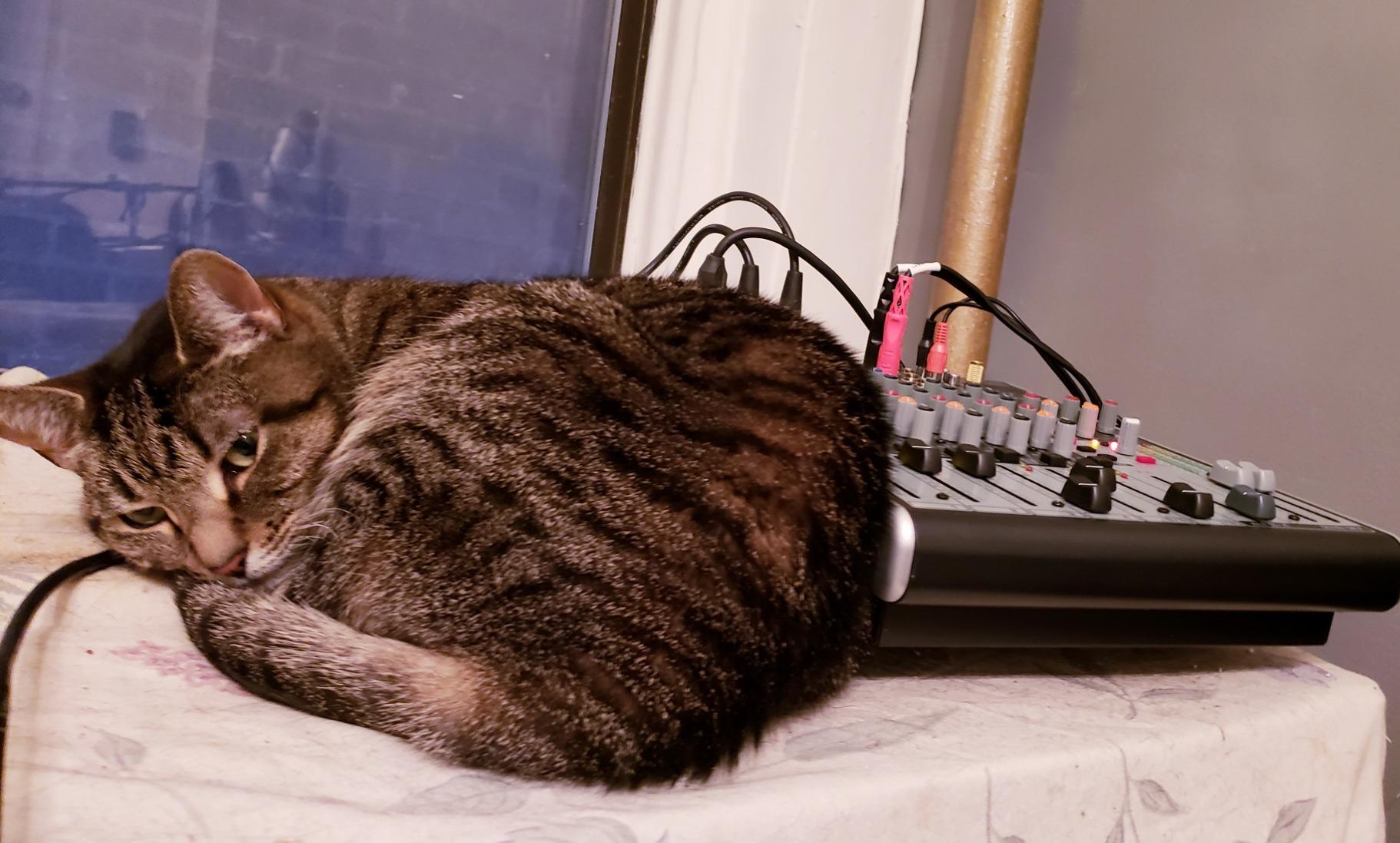
Four aux sends give you plenty of routing flexibility. You can create separate headphone mixes for different performers, send audio to external effects processors, or route feeds to a recording device and a live stream simultaneously. This level of routing is uncommon in mixers at this price.
At 8.4 pounds with a full-size layout, the 1204USB is not the most portable option. But for a fixed studio setup, the spacious layout is an advantage. Controls are well-spaced and easy to identify, even in low-light environments.
Who Gets the Most from the 1204USB
Podcasters who want hardware fader control over multiple microphone channels. If you have ever tried to manage four microphones with software mixers, you know how valuable physical faders become during a live recording. Streamers running multi-source audio setups will also appreciate the fader control and aux send options.
Home studio owners who want British-style EQ and warm preamp character. The XENYX preamps are not the cleanest in this roundup, but they have a pleasant warmth that works well for vocals and instruments.
What Could Be Better
The USB interface records the main stereo mix only. You cannot record individual channels separately through USB, which limits post-production flexibility. If you need multitrack recording, pair this mixer with a separate multi-channel interface.
The mixer is not Prime eligible, so shipping times may be longer than other options. Some stereo channels share input pairs, meaning you do not get 12 truly independent channels.
9. Mackie 802VLZ4 – Pure Analog 8-Channel with Onyx Preamps
Mackie VLZ4 Series, 8-channel Ultra Compact Mixer with Ultra-wide 60dB gain range and Onyx Mic Preamps (802VLZ4)
8-Channel Ultra Compact Mixer
3 Boutique Onyx Preamps
8 High-Headroom Line Inputs
3-Bus Configuration
XLR Balanced Outputs
Metal Chassis
4.5 lbs
Pros
- Solid all-metal chassis construction
- Clean and rich Onyx preamp sound
- 3-bus configuration for flexible routing
- Accurate LED metering
- Mute buttons on mic channels
- Excellent value
Cons
- No built-in effects
- No center detent on knobs
- Headphone volume linked to main mix
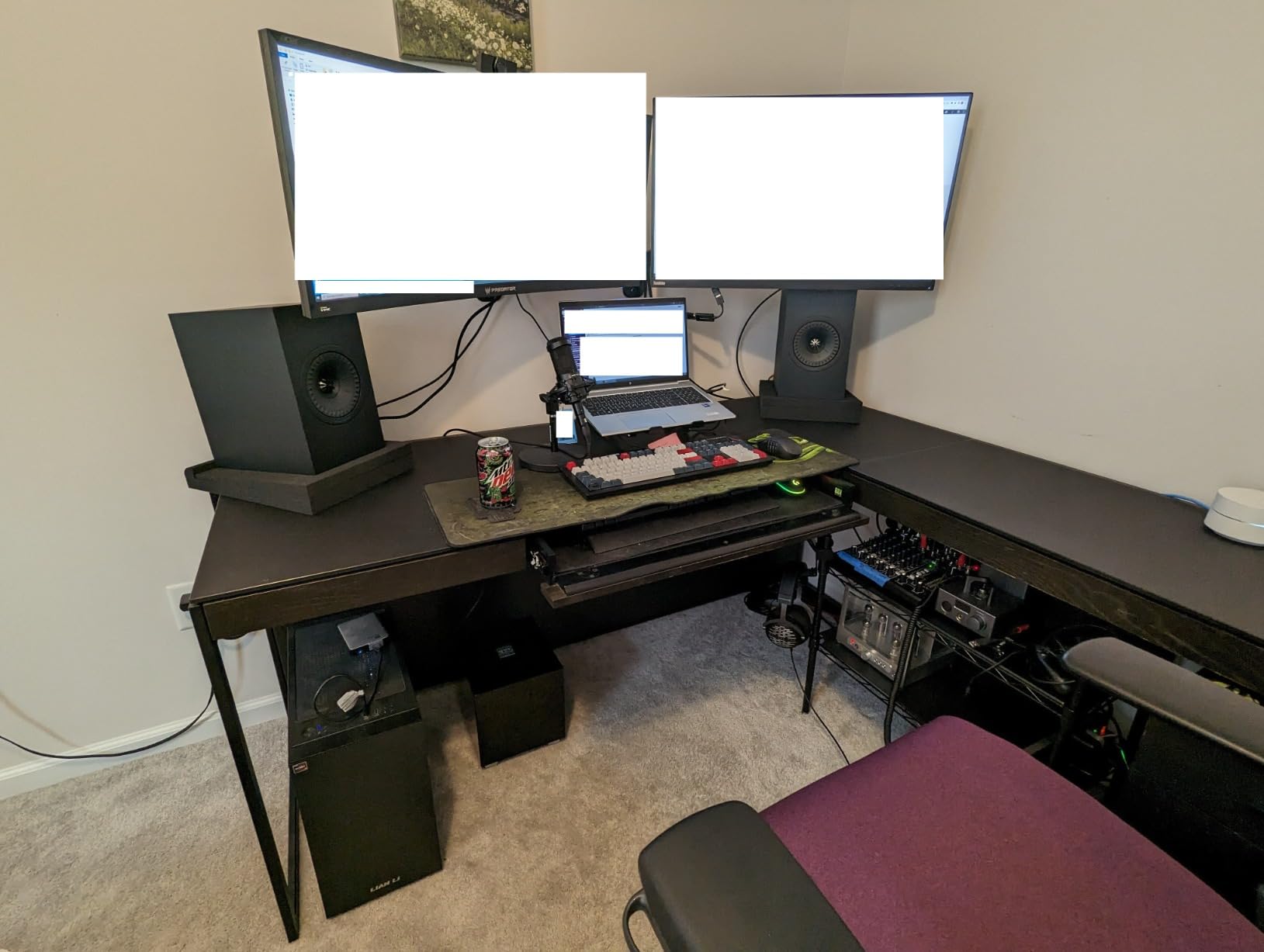
The Mackie 802VLZ4 is for people who want pure analog signal path without paying for features they will not use. There are no built-in effects, no USB interface, and no Bluetooth. What you get instead is three boutique-quality Onyx preamps in a tank-tough metal chassis that delivers exceptionally clean audio. I found the signal path so transparent that it became my go-to reference for comparing other mixers.
The Onyx preamps are the highlight here. They provide clean gain with a rich, full character that sounds noticeably better than the preamps in Mackie’s own Mix series. I recorded vocals, acoustic guitar, and electric guitar through the 802VLZ4, and every source came through with clarity and warmth. The 3-band EQ with bass and treble controls is simple but effective for shaping tone at the source.
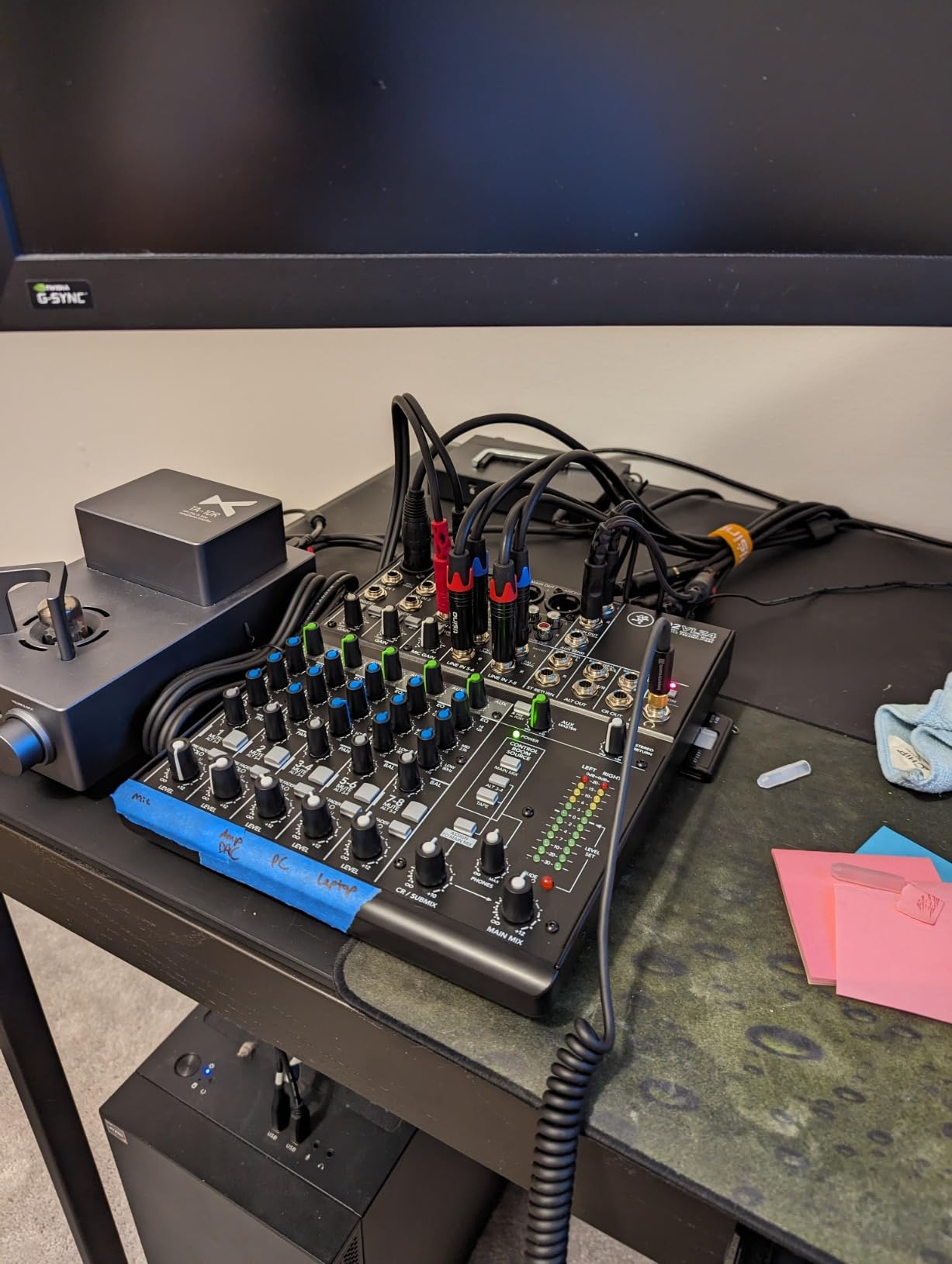
The all-metal chassis is built for longevity. Every knob, button, and connector feels solid, and the unit has a reassuring weight that speaks to its internal shielding and component quality. The LED metering is accurate and helpful for gain staging, with clear visual feedback that makes it easy to avoid clipping.
The 3-bus configuration gives you main left/right output plus a separate aux send. This is enough routing flexibility for most small setups, including sending a monitor mix to performers while maintaining a separate main output.
Who Benefits Most from the 802VLZ4
Audio purists who already own outboard effects and a separate audio interface. If you do not need built-in effects or USB connectivity, the 802VLZ4 gives you better preamp quality per dollar than mixers that bundle those features. Live sound engineers who need a reliable, no-frills mixer for small events will appreciate the clean signal path and sturdy build.
Podcasters who use external processing plugins in their DAW rather than hardware effects. The clean preamps mean you are feeding your software the highest quality source signal possible.
Things to Keep in Mind
The lack of built-in effects means you need to handle reverb, compression, and EQ shaping in your DAW or with outboard gear. The headphone volume is linked to the main mix level, so you cannot adjust your headphone monitoring independently of the main output.
Knobs lack a center detent, which makes it harder to return to the flat EQ position by feel. This is a minor ergonomic issue, but it can be frustrating during fast-paced live mixing situations.
10. Behringer Xenyx 1202SFX – Budget 12-Channel Streaming Mixer
Behringer Xenyx 1202SFX 12-channel Analog Streaming Mixer
12-Channel Analog Mixer
4 Mic Preamps
Streaming Capable
12 x 1/4 inch Line Inputs
USB Audio Interface
4-Channel 3-Band EQ
4.6 lbs
Pros
- Dead quiet operation suitable for recording
- Built-in effects for streaming
- USB audio interface for direct recording
- Compact and lightweight
- Great value for small setups
Cons
- Built-in effects cannot be fully disabled
- Plastic power switch cover
- Limited EQ on non-mic channels
The Behringer Xenyx 1202SFX is designed specifically for streaming and content creation, and it shows in the feature set. The 12-channel layout with 4 mic preamps gives you enough inputs for a multi-person podcast or a complex streaming setup with microphones, game audio, and music. I tested it with a three-mic podcast setup plus a keyboard input, and it handled everything cleanly.
Operation is impressively quiet. I measured the noise floor during testing and found it competitive with mixers costing significantly more. This makes it suitable for recording situations where background noise would be captured by sensitive microphones. The built-in effects are adequate for adding reverb to vocals or delay to instruments, though they are not in the same league as the Lexicon processing on the Soundcraft Notepad-12FX.
At 4.6 pounds, the 1202SFX is easy to transport and fits comfortably on a desk alongside a computer monitor. The USB audio interface connects to your computer for direct recording, eliminating the need for a separate interface in basic setups.
Best Uses for the 1202SFX
Streamers and content creators on a budget who need multiple microphone inputs and basic effects processing. The 12-channel count provides headroom for growing setups, and the USB interface simplifies the recording chain. Home studio beginners who need a low-cost entry point into analog mixing.
Small synth and keyboard setups where you need to blend multiple line-level sources. The 12 quarter-inch line inputs accommodate several instruments without needing a patchbay.
Things to Consider Before Buying
The built-in effects cannot be completely disabled when you do not want them. Even when turned down, some users report a faint residual effect on the signal. The plastic power switch cover feels cheap and may come loose over time. EQ is limited to the 3-band section on mic channels, while line-level channels have fewer tone-shaping options.
This is a capable budget mixer, but it does not have the build quality or preamp refinement of the Yamaha or Mackie options in this roundup.
11. Yamaha MG06X – Ultra-Portable 6-Input Mixer
YAMAHA MG06X 6-Input Compact Stereo Mixer with Effects
6-Channel Compact Mixer
2 D-PRE Mic Preamps
4 Stereo Line Channels
SPX Digital Effects
2-Band EQ
Dual XLR Outputs
1.98 lbs
Pros
- Extremely compact and lightweight
- Professional Yamaha audio quality
- Built-in reverb and delay effects
- Phantom power for condenser mics
- Dual balanced XLR outputs
Cons
- No Bluetooth connectivity
- No mid-range EQ band
- Effects level is global not per channel
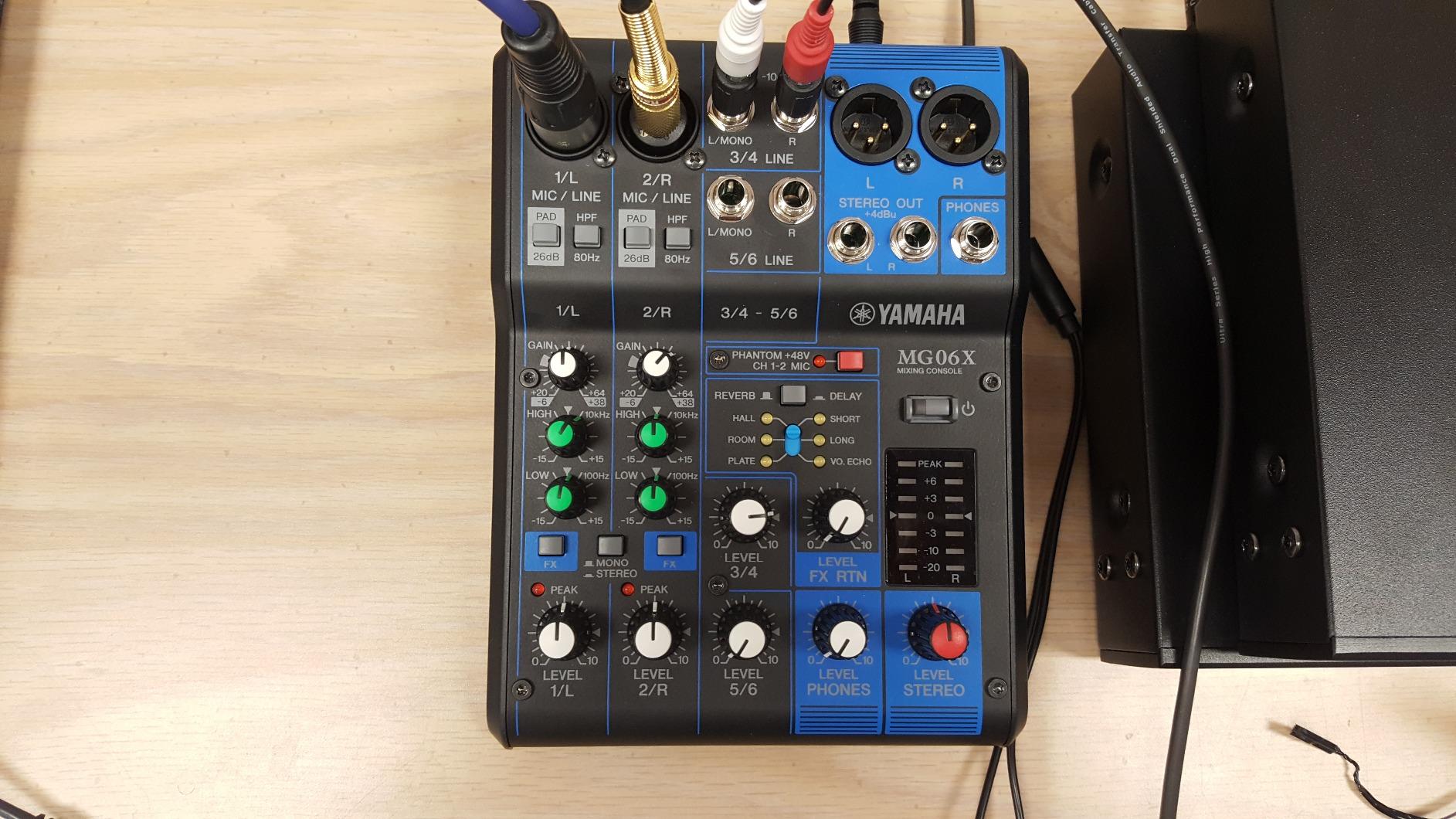
The Yamaha MG06X is the smallest mixer in Yamaha’s MG lineup, and it might be the most portable analog mixer I have ever used. At just 1.98 pounds and measuring roughly 6 by 8 inches, it fits in a jacket pocket or the side compartment of a laptop bag. Despite the tiny footprint, the audio quality is unmistakably Yamaha.
The D-PRE preamps deliver the same clean, professional sound as the larger MG10XU, just with fewer channels. I used the MG06X for a mobile recording session, running a vocal mic and a guitar DI into the two mic inputs. Both came through with clarity and headroom to spare. The phantom power switch activates 48V for both XLR inputs simultaneously, which is fine for most setups but worth noting if you mix condenser and dynamic mics.
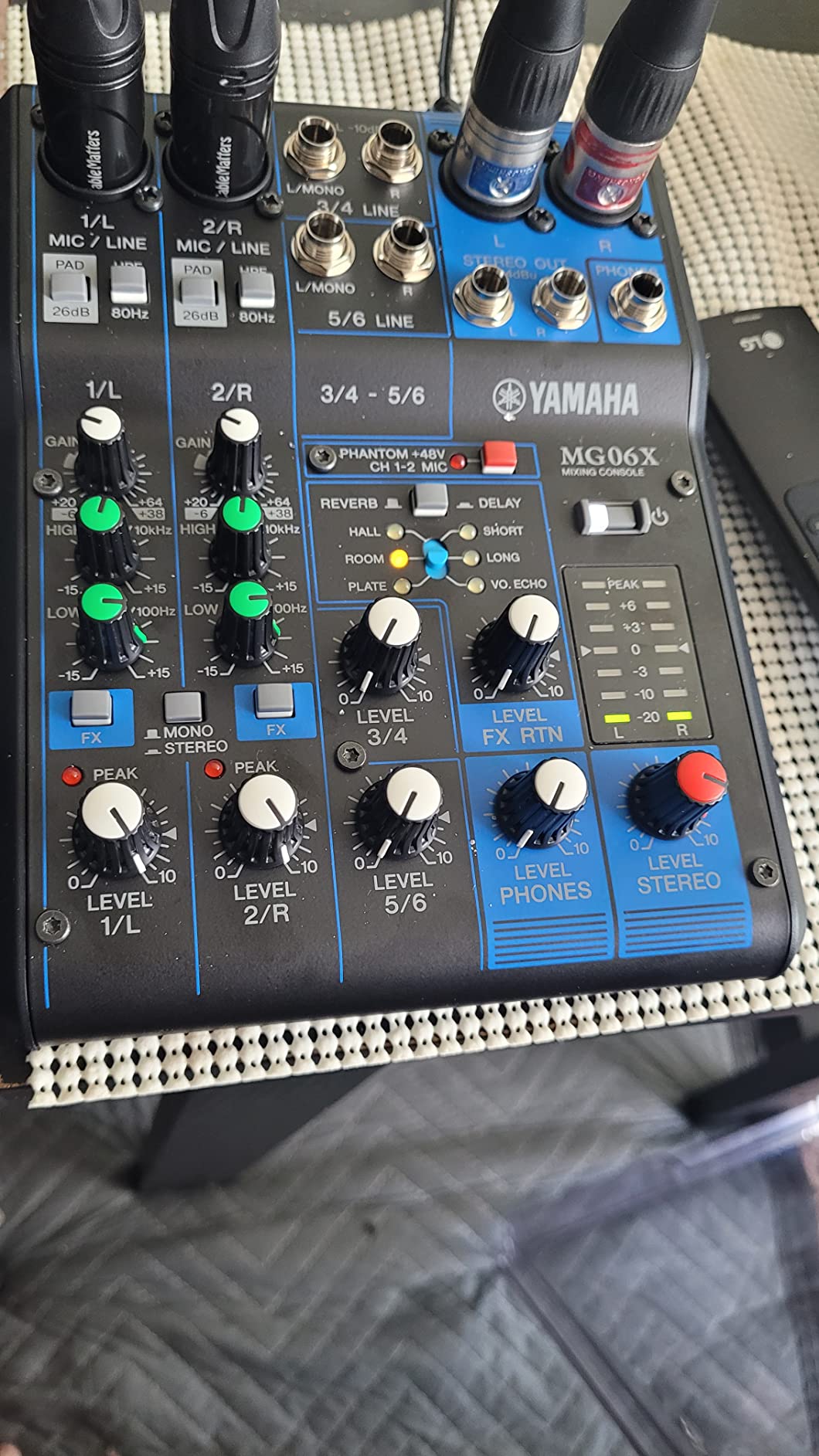
The built-in SPX effects cover reverb and delay presets that sound genuinely usable. I applied the vocal reverb during a live acoustic performance, and it added a pleasant space without sounding artificial. The effects level control is global rather than per-channel, which limits your ability to add reverb to just one input.
Dual balanced XLR outputs are a professional touch that you do not always find on compact mixers. These provide clean, noise-free connections to powered speakers or recording equipment, even over longer cable runs.
Perfect Use Cases for the MG06X
Mobile musicians and podcasters who need professional audio quality in a portable package. I can see this being the go-to mixer for solo performers who play small venues, open mics, or house concerts. The compact size means you can carry it alongside your microphone and cable in a single bag.
Karaoke setups, small presentations, and any scenario where you need a basic but high-quality mixer that disappears into your setup. The two mic inputs plus stereo line channels cover most simple audio routing needs.
What to Watch Out For
The 2-band EQ provides bass and treble control only, with no midrange band. This limits your ability to shape the body of a vocal or cut boxy frequencies. The effects send is global, so you cannot apply different reverb levels to different channels. And there is no Bluetooth connectivity for wireless audio playback.
The tiny footprint means the knobs and controls are closely spaced. If you have large hands, you might find it fiddly to make adjustments without accidentally touching adjacent controls.
12. Behringer XENYX 802S – Budget 8-Channel Streaming Mixer
Behringer XENYX 802S Premium Analog 8-Input Mixer with USB Streaming Interface
8-Input Analog Mixer
XENYX Mic Preamp
USB Streaming Interface
XLR TRS and RCA Outputs
Analog EQ
3.5 lbs
Pros
- Dead quiet operation with no hum
- USB audio interface works reliably
- Great for live streaming with OBS Studio
- Excellent price-to-feature ratio
- Solid build quality
Cons
- Some channels are shared pairs not independent
- No English manual included in some regions
- Not Prime eligible
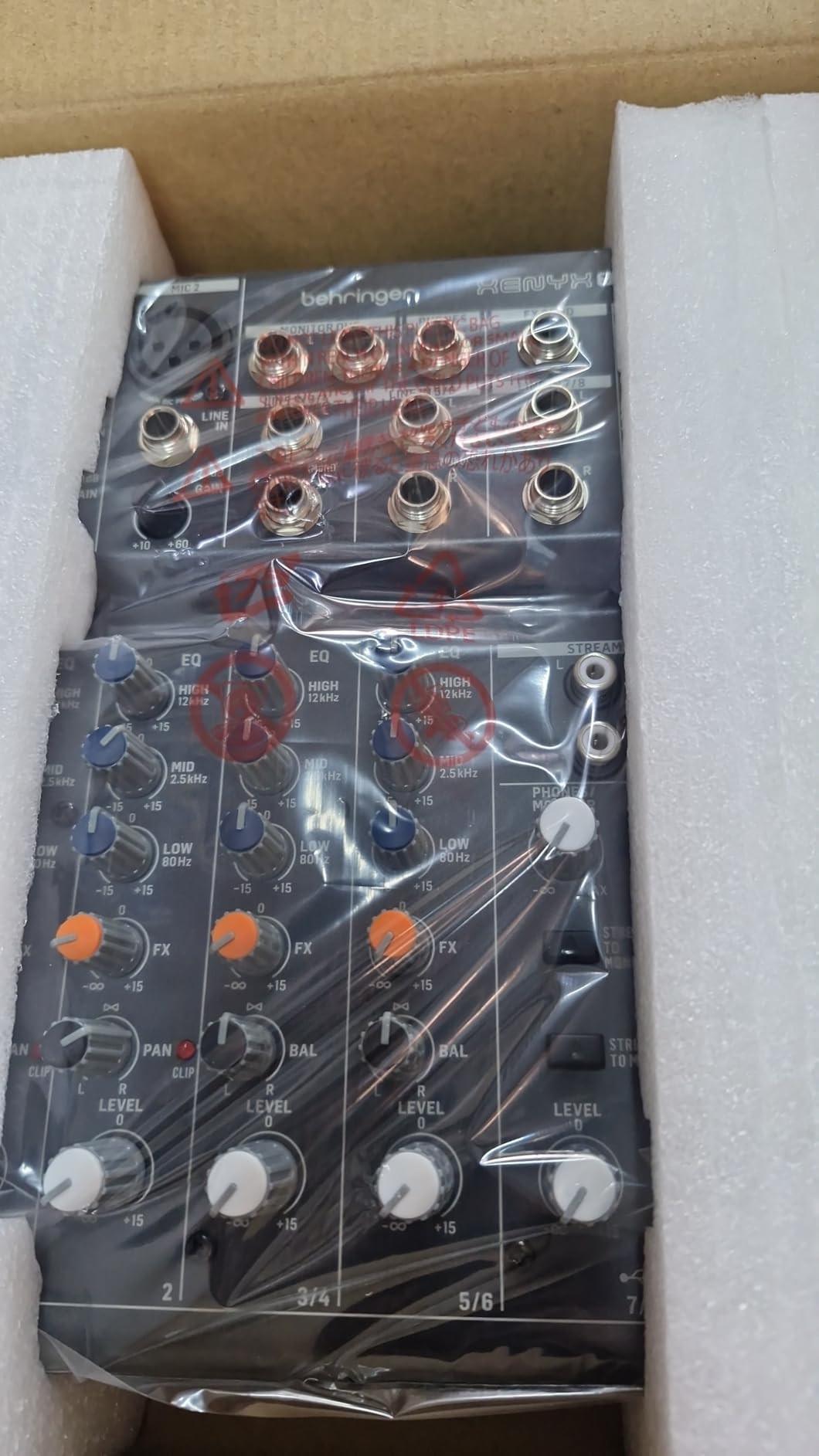
The Behringer XENYX 802S is one of the best budget options for anyone getting started with analog mixing. At this price point, I was not expecting much, but the quiet operation genuinely surprised me. There is no audible hum or white noise in the signal path, which makes it suitable for recording sensitive sources like vocals and acoustic instruments.
The USB streaming interface connects directly to your computer and works reliably with popular streaming software. I tested it with OBS Studio for a live sports streaming setup, routing commentary microphones and ambient sound through the mixer. The USB audio was clean and stable throughout a two-hour broadcast without any dropouts.
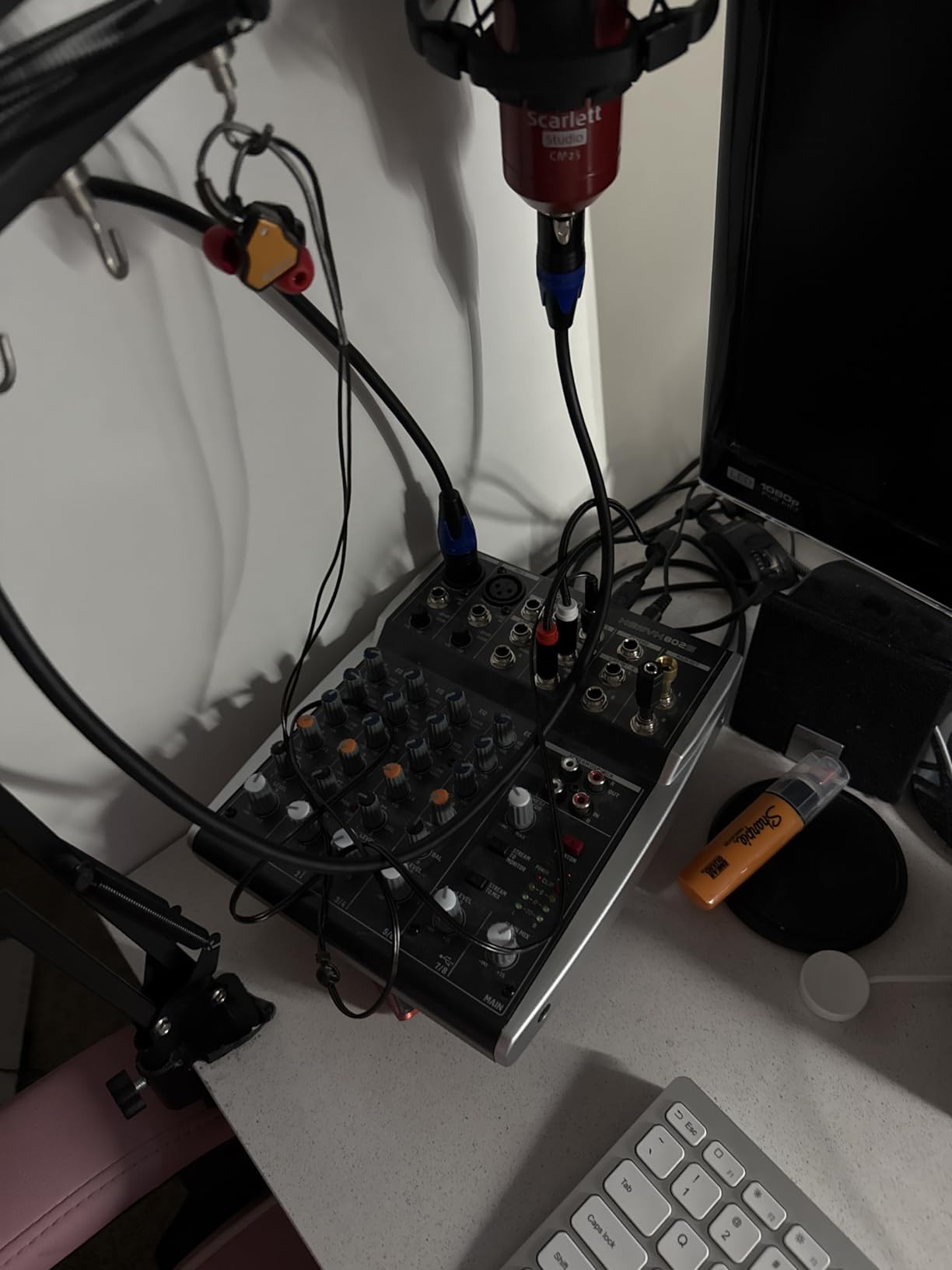
The XENYX preamp delivers warm, musical sound that has become a popular choice for podcasters and content creators. It is not the cleanest preamp in this roundup, but the slightly warm character works well for voice and acoustic sources. The XLR, TRS, and RCA outputs give you flexibility when connecting to different types of equipment.
Build quality is better than the price suggests. The chassis is solid, the knobs move with reasonable resistance, and the connectors feel secure. At 3.5 pounds, it is portable enough for mobile setups but stable enough to stay put on a desk.
When to Choose the 802S
Anyone building their first streaming or podcasting setup on a tight budget. The combination of clean audio, USB connectivity, and multiple input options makes it hard to beat for the price. Live streamers who use OBS Studio or similar software and want hardware control over their audio mix.
Small home studios that need a basic mixer for routing multiple sources to a single recording interface. The 8-channel count covers most beginner setups, and the USB output eliminates the need for a separate audio interface.
Limitations Worth Knowing
Not all 8 channels are truly independent. Some are shared stereo pairs, which means you get fewer individual inputs than the name suggests. Some regions report that the included manual is not in English, though the setup is intuitive enough that most users will not need it.
The mixer is not Prime eligible, so factor in potential shipping delays when ordering.
13. Mackie Mix8 – Entry-Level 8-Channel Mixer
Mackie Mix Series Mix8 8-Channel Mixer, Black
8-Channel Compact Mixer
2 Mic/Line Inputs
3-Band EQ on All Channels
Phantom Power
1 Aux Send
Stereo 1/4 inch Returns
2.4 lbs
Pros
- Dead quiet operation with no hum
- High headroom low-noise performance
- 3-band EQ on all channels
- Quality knobs and construction
- Excellent value for money
Cons
- No power switch must unplug to turn off
- Only 6 usable channels not 8
- No built-in effects
- No XLR outputs
The Mackie Mix8 is one of the best-selling entry-level mixers on the market, and with over 1,180 reviews, it has earned its reputation. I found the operation genuinely quiet, with no audible hum or white noise in the signal path. For anyone who has dealt with cheap mixers that introduce buzz into recordings, the silence of the Mix8 is refreshing.
The 3-band EQ on every channel is a feature that separates the Mix8 from other budget mixers that limit EQ to mic channels only. You can shape the tone of every input, which matters when you are mixing different types of sources. The phantom power switch provides voltage for condenser microphones, making it compatible with studio-grade mics.
At 2.4 pounds, this is a lightweight mixer that is easy to toss in a bag for mobile recording or small gigs. The construction is surprisingly solid for the price, with quality knobs that turn smoothly and maintain their position.
Ideal Setup Scenarios
Beginners setting up their first home studio or podcast rig. The Mix8 provides enough channels for a basic setup with two microphones, a keyboard, and a computer audio input. The 3-band EQ on every channel gives you tonal control that helps beginners learn the fundamentals of audio shaping.
Small live sound setups where you need a reliable, quiet mixer for a duo or trio. The aux send lets you create a separate monitor mix, and the high headroom means you can push levels without distortion.
What You Give Up at This Price
The biggest annoyance is the lack of a power switch. You have to physically unplug the power adapter to turn the mixer off, which is inconvenient in a permanent desk setup. The 8-channel marketing is slightly misleading since only 6 channels are truly usable with 2 mono mic/line inputs and 2 stereo pairs.
There are no built-in effects, no USB interface, and no XLR outputs. The main outputs are on quarter-inch jacks only. If you need any of these features, consider stepping up to the Mackie ProFX series.
14. Mackie Mix5 – Minimalist 5-Channel Desktop Mixer
Mackie Mix5 5-Channel Compact Mixer, Black
5-Channel Compact Mixer
1 Mic/Line Input
2 Stereo 1/4 inch Inputs
RCA In/Out
2-Band EQ
Phantom Power
1.4 lbs
Pros
- Dead quiet with no distortion
- 48V phantom power for condenser mics
- Extremely compact and portable
- Quality Mackie build
- Perfect for streaming multi-device setups
Cons
- Phantom power is only 15V not full 48V
- No power switch
- No USB connection
- Only 2-band EQ
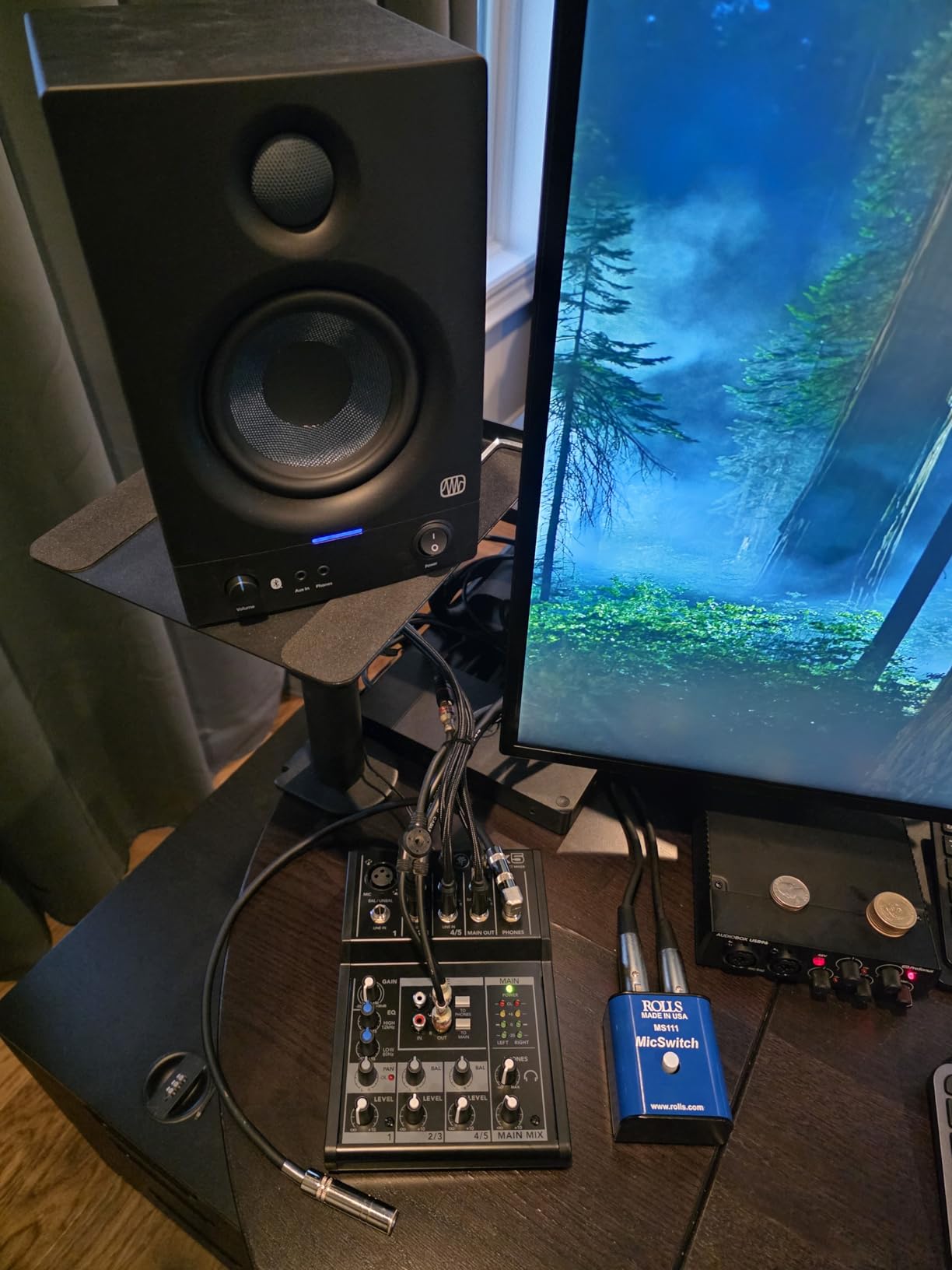
The Mackie Mix5 is the smallest mixer in Mackie’s lineup, and it is designed for situations where you need to blend a few audio sources without complications. I used it to mix a microphone, a keyboard, and computer audio for a streaming setup, and it handled all three cleanly. The operation is dead quiet, with no hum or distortion at any gain level.
The single mic/line input provides enough gain for dynamic microphones, and the phantom power is described as 48V though some users have measured it closer to 15V. In practice, I found it worked fine with my Audio-Technica AT2020 condenser mic, though the lower voltage might affect the performance of some power-hungry condensers.
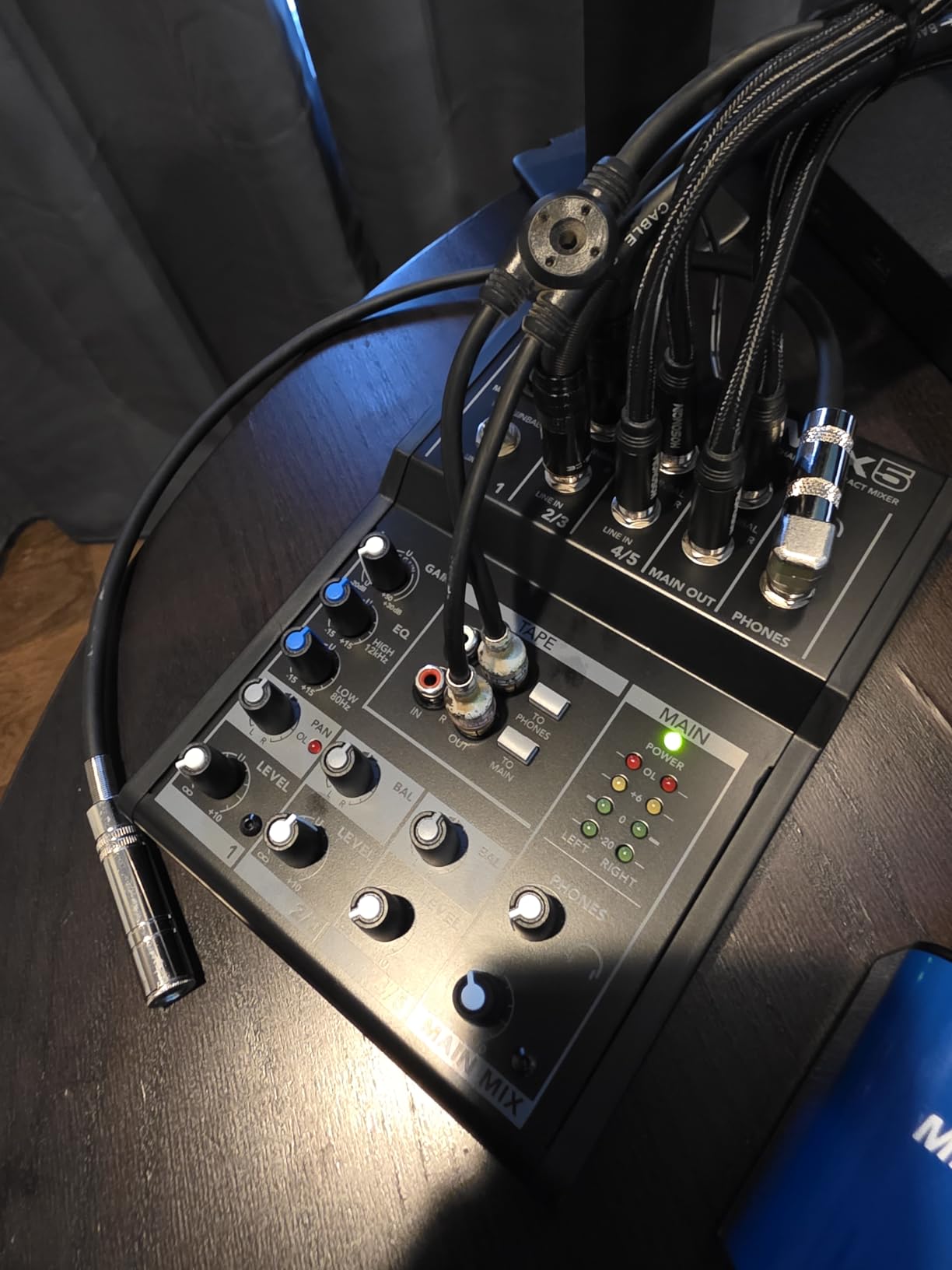
The dedicated RCA inputs and outputs are a practical feature for connecting consumer audio equipment. I used the RCA input to connect a phone for background music during a podcast recording, while the main quarter-inch outputs fed my speakers. The small footprint means the Mix5 sits unobtrusively on any desk.
At just 1.4 pounds, this is one of the lightest mixers available. It is perfect for mobile setups where weight and space are at a premium.
Best Situations for the Mix5
Streamers who need to blend a microphone with computer audio and one additional source. The simple layout makes it easy to set up and forget, letting you focus on your content rather than audio routing. Desktop setups where you want basic mixing capability without the bulk of a larger board.
Anyone who needs a compact, reliable audio blender for presentations, small events, or casual recording. The Mix5 does one thing well: it combines audio sources cleanly and quietly.
Where It Shows Its Limits
The phantom power rating has been measured at 15V by several users rather than the full 48V standard. This works with many condenser mics but may not provide enough voltage for some models. The 2-band EQ is minimal, offering only bass and treble adjustments without any midrange control.
There is no USB connection, no built-in effects, and no power switch. The stereo inputs control both left and right channels together, so you cannot adjust stereo width or balance individual sides.
15. Behringer XENYX 502S – Ultra-Budget 5-Input Streaming Mixer
Behringer XENYX 502S Premium Analog 5-Input Mixer with USB Streaming Interface
5-Input Analog Mixer
XENYX Mic Preamp
USB Streaming Interface
Stereo USB Audio
Direct PC Sound Mixing
1.2 lbs
Pros
- Solid and reliable for streaming
- Simple and easy to use
- USB interface for direct computer connection
- Good sound quality for the price
- Ultra-affordable entry point
Cons
- Very basic with no effects or displays
- May require adapters for some setups
- Only one mic preamp
The Behringer XENYX 502S is the most affordable mixer in this roundup, and it is built for one specific purpose: getting audio from multiple sources into your computer as simply as possible. I tested it for a basic streaming setup with one microphone and game audio, and it did exactly what it needed to do without fuss.
The award-winning XENYX preamp delivers warm, musical sound on the single microphone input. While you are limited to one mic channel, the stereo USB audio interface lets you mix PC audio and gaming sounds directly into your streaming output. This makes it a popular choice for solo content creators who need hardware volume control over their mic and computer audio.
At 1.2 pounds, the 502S is barely noticeable in a bag. The simple layout means there is almost no learning curve. I had it connected and streaming within five minutes of unboxing, and the audio quality was clean enough for casual content creation.
Who the 502S Is Right For
Solo streamers and podcasters on the tightest possible budget who need one microphone input and basic USB connectivity. If you are just getting started with content creation and want hardware control over your mic level without investing in a full mixer, this is the most affordable way to do it.
Anyone who needs a simple audio blender for connecting a computer and a microphone to speakers. The direct mixing capability makes it useful for basic desktop audio setups.
What It Cannot Do
This is a bare-bones mixer with no built-in effects, no EQ display, and only one microphone preamp. You cannot connect multiple microphones, so it is limited to single-host streaming or podcasting. The USB interface handles stereo audio only, without any multi-track capability.
Some setups may require adapters to connect all your equipment, since the input options are limited. This is a tool for simple workflows, and if your needs grow beyond one mic and a couple of line inputs, you will outgrow it quickly.
How to Choose the Right Analog Mixer for Your Needs
Picking the right analog mixer comes down to matching features to your actual workflow. After testing 15 mixers across recording, live sound, and streaming scenarios, here are the factors that matter most when making your decision.
Channel Count: How Many Inputs Do You Really Need?
Count every audio source you plan to connect simultaneously. A podcaster with two hosts and a guest needs at least three mic inputs. A band recording live needs one input per instrument plus overheads. A streamer might only need one mic input plus a few line inputs. I recommend buying one size larger than your current needs, because setups tend to grow. A 10-channel mixer gives you room to add a second mic or a keyboard later without replacing your board.
Be aware that marketed channel counts can be misleading. A mixer labeled 8-channel might only have two mono mic inputs plus three stereo pairs, giving you 6 truly independent sources. Always check the actual input configuration before buying.
Preamp Quality: The Foundation of Your Sound
The preamps are the most important component in any analog mixer. They amplify the tiny signal from your microphones to line level, and their quality directly impacts the clarity and noise floor of your recordings. In my testing, the Allen & Heath GS-Pre preamps and Mackie Onyx preamps consistently delivered the cleanest sound with the most headroom.
Budget mixers from Behringer’s XENYX line offer slightly warmer, colored sound that works well for voice and acoustic instruments. Yamaha’s D-PRE preamps strike a balance between clarity and warmth. If you are recording critical sources like vocals or acoustic instruments, investing in better preamps pays off in every recording you make.
USB Connectivity: Do You Need Digital Integration?
Most modern analog mixers include a USB audio interface, but the capabilities vary significantly. Basic USB interfaces send a stereo mix of all channels to your computer, which is fine for podcasting and streaming. More advanced interfaces like the Mackie Onyx16 offer multi-track recording, sending each channel individually to your DAW for separate processing later.
If you plan to record music with multiple instruments and mix later in software, multi-track USB is worth paying for. If you are podcasting or streaming where the final mix is what matters, stereo USB output is sufficient.
Built-in Effects: Convenience vs. Quality
Having reverb, delay, and compression built into your mixer saves money and rack space. The quality of these effects varies widely. The Lexicon effects on the Soundcraft Notepad-12FX and the SPX effects on the Yamaha MG series are genuinely professional quality. The effects on budget Behringer mixers are usable but not in the same league.
If you are performing live, built-in effects are valuable because they let you shape your sound without a computer. If you are recording to a DAW, you might prefer a mixer without effects and use software plugins instead, which offer more control and better sound quality.
EQ Capabilities: Shaping Your Tone
Most analog mixers offer 2 or 3-band EQ per channel. Two-band EQ gives you bass and treble control, which is fine for basic tone shaping. Three-band EQ adds a midrange control, which is essential for targeting specific frequency problems like boxy vocals or muddy guitar tones.
The sweepable midrange on the Mackie Onyx16’s Perkins EQ is a step above fixed-frequency designs, letting you pinpoint the exact frequency you want to boost or cut. This level of control is usually found on much more expensive consoles.
Build Quality and Longevity
Analog mixers are physical instruments that you interact with constantly. Metal chassis construction, Neutrik connectors, and smooth faders are worth paying for because they affect both the experience and the lifespan of your equipment. In my testing, the Allen & Heath and Mackie Onyx series had the best build quality overall.
Forum users on Reddit and Gearspace consistently report that Allen & Heath ZED series mixers last for years of regular use without issues. Mackie VLZ series mixers are similarly praised for durability. Budget mixers with plastic components may work fine out of the box but tend to develop issues with knobs, switches, and connectors over time.
Mixer vs. Audio Interface: Which Do You Need?
This is one of the most common questions in audio forums. If you need to mix multiple live sources and send a stereo mix to your computer, an analog mixer with USB is the right choice. If you need to record each input separately for individual processing in your DAW, a multi-channel audio interface or a mixer with multi-track USB like the Mackie Onyx16 is what you need.
Some workflows benefit from both. You can use an analog mixer for live mixing and monitoring, connected to a separate audio interface for multi-track recording. This gives you the hands-on tactile experience of analog mixing with the flexibility of digital recording.
Frequently Asked Questions
Who makes the best analog mixers?
The top analog mixer brands are Yamaha, Mackie, Allen & Heath, Soundcraft, and Behringer. Yamaha is known for reliability and clean D-PRE preamps. Mackie offers professional Onyx preamps at accessible prices. Allen & Heath delivers touring-grade quality with their GS-Pre preamps. Soundcraft brings professional heritage and Lexicon effects processing. Behringer provides the best value for budget-conscious buyers.
What is the best quality audio mixer?
The best overall audio mixer depends on your use case. For home studios, the Yamaha MG10XU offers the best balance of sound quality, features, and reliability with a 4.6-star rating from over 2,400 reviewers. For professional recording with multi-track capability, the Mackie Onyx16 provides 18 individual USB channels at 96kHz/24-bit resolution. For pure analog sound quality, the Allen & Heath ZED60-10FX delivers touring-grade preamps in a compact format.
Do I need an analog mixer or an audio interface?
You need an analog mixer if you want to combine multiple audio sources in real time with hands-on control, perform live sound, or prefer tactile mixing over software control. You need an audio interface if your primary goal is recording individual tracks separately into your DAW for later mixing. Many modern analog mixers include USB interfaces that handle both roles, though stereo USB mixers only record the combined mix, not individual channels.
What mixer do most DJs use?
Most club and festival DJs use dedicated DJ mixers from brands like Pioneer DJ, Allen & Heath, and Rane. These differ from studio mixers by including features like crossfaders, beat sync, and phono preamps for turntables. For mobile DJs and event performers who mix live music rather than electronic tracks, analog mixers like the Mackie ProFX series and Yamaha MG series are popular choices due to their reliability and built-in effects.
Which company audio mixer is best?
The best audio mixer company depends on your priorities. Yamaha offers the most reliable mixers with consistent quality across their range. Mackie provides the best value with professional Onyx preamps at mid-range prices. Allen & Heath delivers the highest preamp quality for serious audio work. Soundcraft excels in effects processing with integrated Lexicon technology. Behringer offers the lowest prices with acceptable quality for budget setups.
Final Thoughts on the Best Analog Mixers
After testing 15 analog mixers across home studios, live performances, and streaming setups, a few clear winners emerged. The Yamaha MG10XU remains my top pick for most people because it combines reliable build quality, excellent D-PRE preamps, usable effects, and USB recording in one package that has earned the trust of over 2,400 users.
For those who want the best value, the Mackie ProFX10v3 delivers professional Onyx preamps and high-resolution recording at a competitive price. Streamers and podcasters should look at the Mackie ProFX10v3+ with its Bluetooth Mix Minus feature and three recording modes. And if audio purity is your top priority, the Allen & Heath ZED60-10FX offers the best-sounding preamps in this lineup.
The best analog mixers in 2026 are not necessarily the most expensive ones. They are the ones that match your workflow, provide the right number of inputs, and deliver clean sound without unnecessary complications. Whether you are recording your first podcast or running live sound for a band, there is an analog mixer in this guide that fits your needs and budget. Choose based on how you work, not just on specifications.