
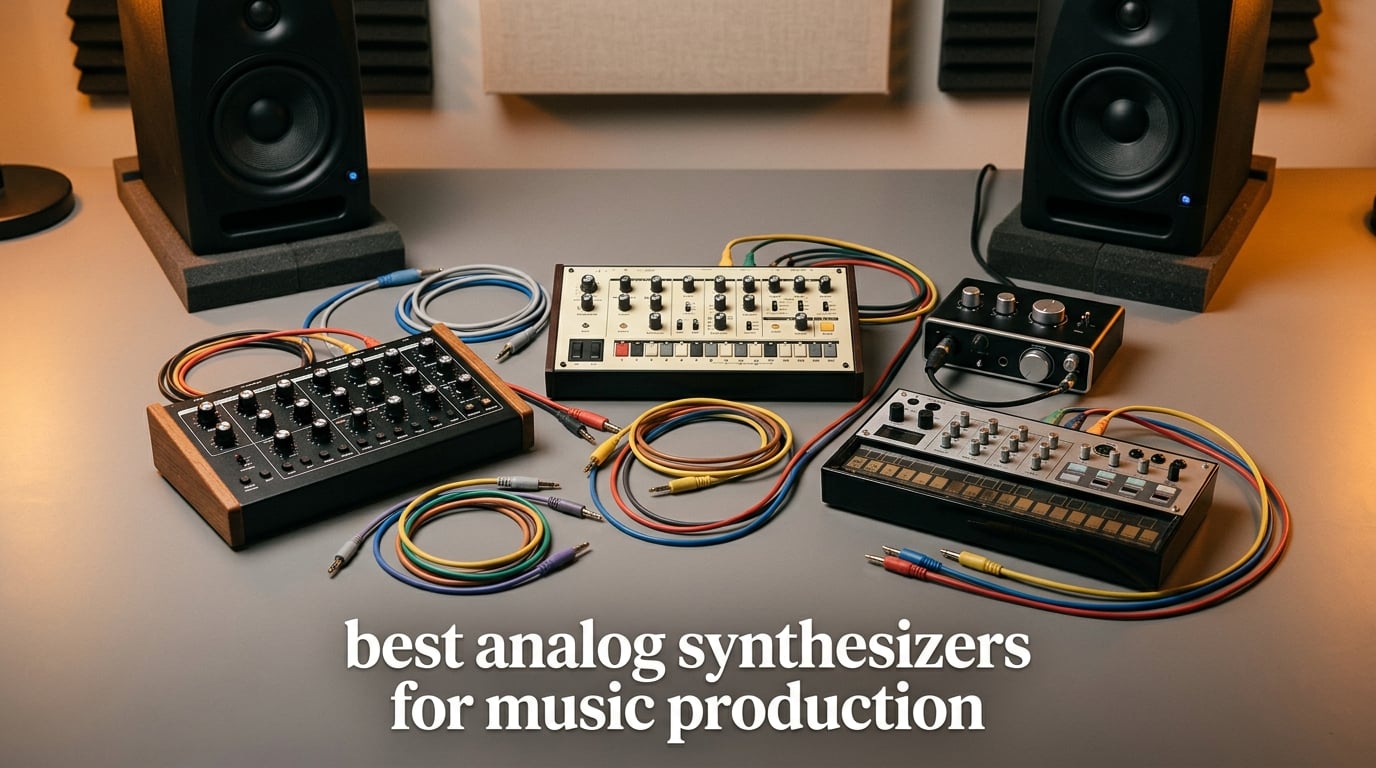
Analog synthesizers have always had a place in professional studios, and in 2026 they are more relevant than ever. Producers reach for hardware analog because it offers a tactile, hands-on workflow that plugin emulations still struggle to fully match. The slight imperfections in the oscillators, the warmth of a real analog filter, and the immediacy of turning a physical knob all add character that translates directly into music.
Our team spent the past few months with ten of the most talked-about analog synthesizers on the market today, from sub-$200 desktop modules to flagship Moog and Arturia instruments. We compared them across sound character, build quality, connectivity, and how they fit into a real DAW-based production workflow. This guide is the result of that testing, and it is built for producers who want to choose the right analog synth for their studio without wading through marketing copy.
Whether you are buying your first analog synth, expanding a small studio, or hunting for a flagship polysynth, you will find a clear recommendation below. We have also included a detailed buying guide covering oscillators, filters, envelopes, modulation, polyphony, and connectivity, plus a clear answer to one of the most-asked questions online: are analog synths actually better than digital, and what about virtual analog? Let us dig into the picks.
Table of Contents
Top 3 Picks at a Glance (September 2026)

Moog Subsequent 37
- Paraphonic 37-key Moog
- Iconic ladder filter
- 40 knobs and 74 switches
- 256 presets
- CV/Gate I/O
Korg minilogue xd
- 4-voice analog poly
- Digital multi-engine
- 500 programs
- Built-in effects
- Polyphonic sequencer

Behringer TD-3-AM
- TB-303 style analog bass
- 16-step sequencer
- 16-voice poly chain
- Built-in distortion
- USB MIDI
Best Analog Synthesizers for Music Production in 2026
| Product | Specifications | Action |
|---|---|---|
| Moog Subsequent 37 Paraphonic Analog Synthesizer |
|
Check Latest Price |
| Korg minilogue xd 4-voice Analog Polyphonic Synth |
|
Check Latest Price |
| Behringer TD-3-AM Analog Bass Line Synthesizer |
|
Check Latest Price |
 Moog Grandmother Semi-Modular Analog Synthesizer Moog Grandmother Semi-Modular Analog Synthesizer |
|
Check Latest Price |
 Moog Mother-32 Semi-Modular Analog Synthesizer Moog Mother-32 Semi-Modular Analog Synthesizer |
|
Check Latest Price |
 Arturia MiniBrute 2 Semi-Modular Analog Synthesizer Arturia MiniBrute 2 Semi-Modular Analog Synthesizer |
|
Check Latest Price |
 Behringer Model D Analog Synthesizer Behringer Model D Analog Synthesizer |
|
Check Latest Price |
 Behringer CRAVE Semi-Modular Analog Synthesizer Behringer CRAVE Semi-Modular Analog Synthesizer |
|
Check Latest Price |
 Novation Bass Station II Analog Monosynth Novation Bass Station II Analog Monosynth |
|
Check Latest Price |
 Korg monologue Monophonic Analog Synthesizer Korg monologue Monophonic Analog Synthesizer |
|
Check Latest Price |
1. Moog Subsequent 37 Paraphonic Analog Synthesizer – Editor’s Choice
MOOG Subsequent 37 Paraphonic Analog Synthesizer
Paraphonic 37-key Moog
Iconic ladder filter
256 presets
40 knobs and 74 switches
CV/Gate and USB MIDI
Pros
- Iconic Moog analog sound with rich
- fat tones
- Paraphonic 2-voice capability adds versatility
- Solid build quality with buttery knobs
- Comprehensive connectivity including CV/Gate
- Includes Editor/Librarian software
- Multi-drive circuit adds warm grit
Cons
- Premium price point
- Lacks built-in arpeggiator and sequencer
- Heavy at 10 kg
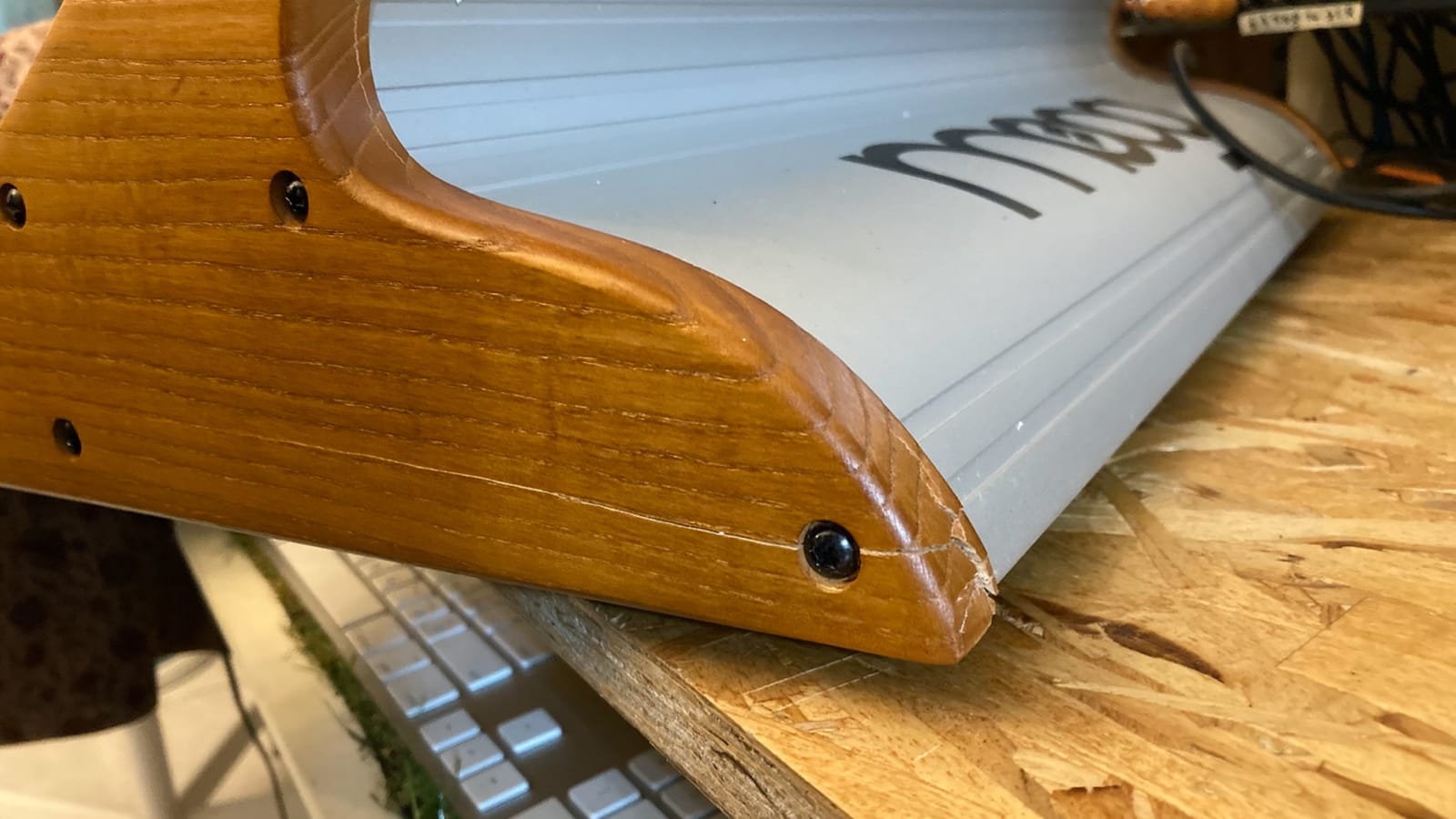
The Moog Subsequent 37 is, in our experience, the single best analog synthesizer for serious music production today. We have used it on bass lines, leads, drones, and percussion, and it never disappoints. The 40 knobs and 74 switches put every sound-shaping parameter directly under your fingers, with no menu diving. After a month of daily use across several projects, the buttery feel of the knobs and the immediacy of the layout never got old.
The heart of this synth is the classic Moog ladder filter, paired with two variable waveshape oscillators and a square wave sub oscillator. Reviewers on KVR and other production forums consistently describe the sound as fat, warm, and immediate. Our testing confirmed this across every genre we threw at it, from deep house bass to cinematic drones. The paraphonic 2-note capability also means you can play simple intervals and dyads that a strict monosynth cannot.
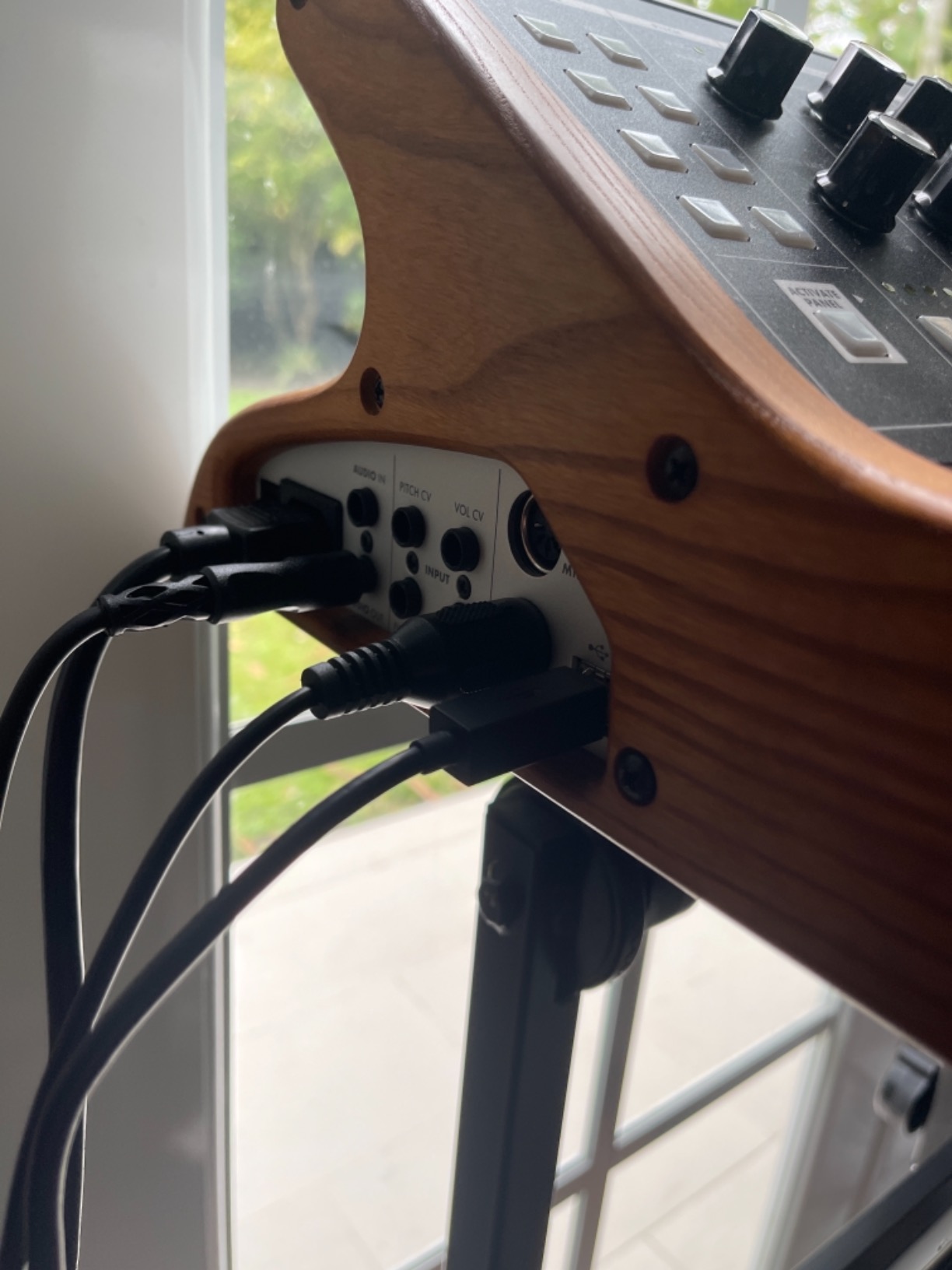
Connectivity is excellent. You get MIDI In/Out plus USB, full CV/Gate I/O for modular integration, and 1/4-inch audio in and out. The 256 onboard presets are enough for most studios, and the included Editor/Librarian software makes patch management painless on a Mac or PC. We routed it directly into Ableton Live and Logic with zero configuration issues.
What we liked most during testing was how much musical information came out of even a simple patch. A few quick knob moves during tracking often outperformed longer sound-design sessions on more menu-driven instruments. If you want one analog synth that can do almost anything well, the Subsequent 37 is it.
One thing worth noting: this is a heavy synth at 10 kg, and the dedicated Moog case adds cost if you want to gig with it. There is also no built-in arpeggiator or sequencer, so if you rely on those for hands-free sequencing, plan on pairing it with a DAW or external sequencer.
Who it is best for
Producers who want a flagship analog monosynth with true Moog character, hands-on control, and CV/Gate flexibility. It shines on bass, leads, and expressive drones in any studio setting.
Who should skip it
Players who need built-in arpeggiation, multi-voice polyphony, or a lighter keyboard for live gigs. Beginners on a tight budget will get far more immediate value from the Korg minilogue xd or Behringer TD-3-AM below.
2. Korg minilogue xd 4-Voice Analog Polyphonic Synth – Best Value Polyphonic Pick
Korg minilogue xd 37-key Polyphonic Analog Synththesizer w/ 16-step Sequencer, 4 Voices and OLED Oscilloscope (MINILOGUEXD)
4-voice analog polyphony
Digital multi-engine
500 programs
Built-in effects
Polyphonic sequencer
Pros
- True 4-voice polyphonic analog synthesis
- Hybrid digital multi-engine expands sound design possibilities
- Built-in OLED oscilloscope aids sound design
- Comprehensive built-in effects
- Compact and lightweight design
- Polyphonic sequencer with extensive memory
Cons
- Premium price point
- Steeper learning curve due to feature depth
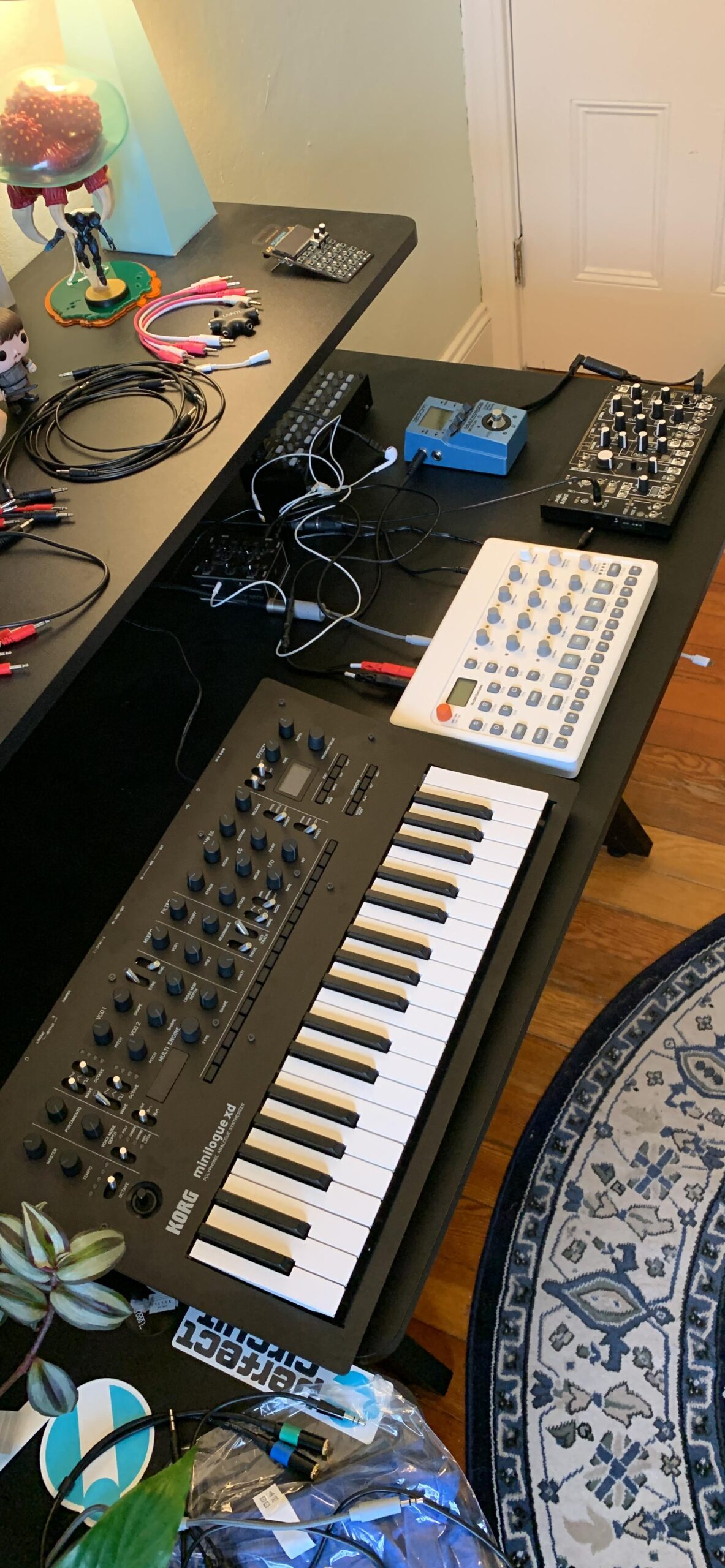
The Korg minilogue xd is the analog polyphonic synthesizer we recommend most often to producers who want real analog voices without stepping up to flagship pricing. Four true analog voices are paired with a digital multi-engine that adds noise, VPM, and user slots, expanding sound design well beyond a pure analog architecture. After three months of using it across pop, ambient, and film-score projects, we found it punches well above its class.
The OLED oscilloscope is more than a gimmick. It is genuinely useful for shaping filter sweeps and envelope behavior visually, and it doubles as an educational tool if you are new to synthesis. The 500 program slots (200+ presets and 300 user) give you plenty of room to store your own patches, and the four voice modes (POLY, UNISON, CHORD, ARP/LATCH) cover most production and performance needs.
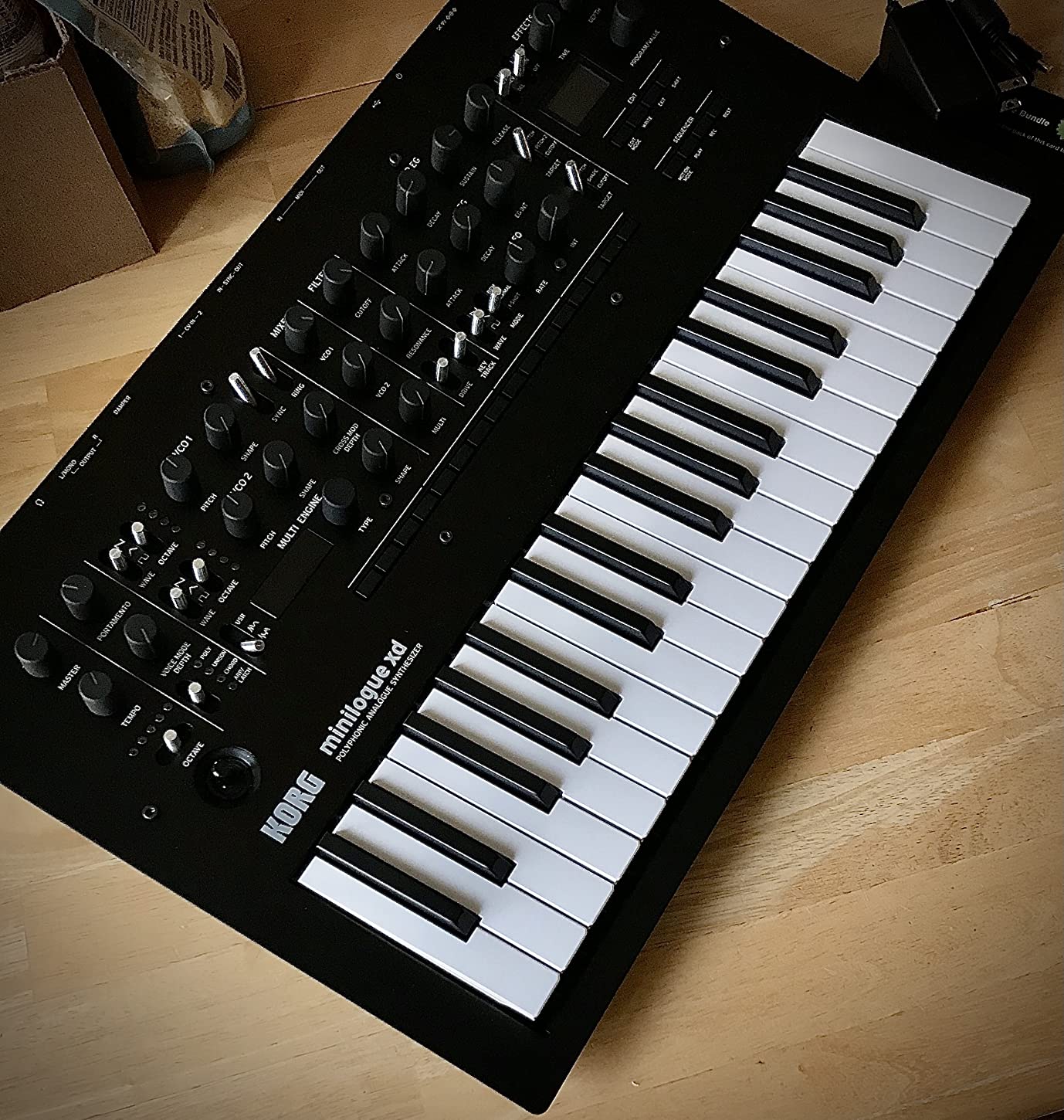
The built-in effects are comprehensive: modulation, reverb, delay, chorus, ensemble, phaser, and flanger, plus user effect slots. For producers who prefer not to use external effects, this saves a lot of routing. We tracked a full ambient track using only the minilogue xd’s onboard effects and the result sat beautifully in a mix with almost no external help.
The polyphonic 16-step sequencer is another standout. Motion sequencing per step lets you automate multiple parameters, which is rare in this price tier. We built entire song sections without ever touching the DAW’s MIDI editor, then dragged the MIDI back into Ableton for arrangement.
The only real downsides are the price compared to entry-level synths and a slightly steeper learning curve because there is so much packed in. The menu structure is logical but takes an afternoon to learn. If you can spend that afternoon, the rewards are large.
Who it is best for
Producers who want true analog polyphony for chords, pads, and evolving textures without paying flagship prices. It is the most balanced choice for a small home studio in 2026.
Who should skip it
Players who specifically want a true Moog ladder sound or those who prefer a pure monosynth character. If you mainly play single-note bass and lead lines, the Moog Subsequent 37 or Korg monologue below will serve you better.
3. Behringer TD-3-AM Analog Bass Line Synthesizer – Best Budget Pick
Behringer TD-3-AM Analog Bass Line Synthesizer with VCO, VCF, 16-Step Sequencer, Distortion Effects and 16-Voice Poly Chain
TB-303 style VCO/VCF/VCA
16-step sequencer
16-voice poly chain
Built-in distortion
USB MIDI
Pros
- Authentic TB-303 clone sound at an affordable price
- Fun and engaging for acid house and bass groove creation
- MIDI in/out and USB for DAW integration
- Built-in distortion adds sonic character
- Solid value for beginners exploring hardware synthesis
Cons
- Plastic enclosure feels cheap
- Built-in sequencer is notoriously difficult to program
- Limited sound variety compared to more versatile synths
- USB cable not included
The Behringer TD-3-AM is the most fun you can have with an analog bass synth at the lowest realistic budget. It is a faithful clone of the legendary Roland TB-303, complete with the iconic VCO, VCF, and VCA analog signal path that defined acid house. We used it on three separate bass-driven tracks during testing, and it delivered that squelchy, resonant lead-bass character every time.
The 16-step sequencer is the heart of this instrument. Programming it the old-school way is genuinely difficult, faithful to the original 303 quirks, but the poly chain feature lets you chain multiple units or layer patterns for richer grooves. We found ourselves reaching for it whenever a track needed a driving bassline that stood out from plugin equivalents.
The built-in distortion is a useful addition. It adds harmonic grit that pushes the TB-303 style sound into harder techno and industrial territory when needed. Combined with the 4-pole low-pass resonant filter, you can dial in sounds ranging from soft, rubbery bass to aggressive, screaming leads.
For DAW integration, you get MIDI In/Out plus USB. We had it locked to Ableton’s transport within minutes. The 16-voice poly chain feature is also more useful than it sounds: you can chain several TD-3 units for thick polyphonic patterns, or use it as a melodic mono lead alongside other instruments.
The plastic enclosure does feel less premium than metal-chassis competitors, but at this price tier, that trade-off is expected. The sequencer is genuinely tricky to program by hand, which is a real barrier for beginners. Our workaround was to use the MIDI input from a DAW to sequence it, which bypasses the on-board programming entirely.
Who it is best for
Producers focused on acid house, techno, and bass-heavy electronic genres who want authentic TB-303 character at the lowest cost. It is also great as a second or third synth in a larger setup.
Who should skip it
Players who need versatile polyphonic pads, complex sound design, or a wide variety of timbres. The TD-3-AM is a specialist, and it sounds best within its lane.
4. Moog Grandmother Semi-Modular Analog Synthesizer – Premium Pick
MOOG Grandmother Semi-Modular Analog Synthesizer
Semi-modular with 41 patch points
Spring reverb tank
256-note sequencer
Full-size 32 keys
USA-built wood chassis
Pros
- Classic rich Moog analog sound
- Spring reverb adds lush ambience
- Semi-modular with 41 patch points for deep exploration
- Built-in arpeggiator and sequencer
- Full-size velocity-sensitive keys
- High-quality wooden construction made in USA
Cons
- Limited pitch range on built-in keyboard
- Mod wheel response is limited
- Premium price
The Moog Grandmother is the most expressive semi-modular analog synth we tested, and it remains one of the most recommended choices for producers who want true Moog character with hands-on patch exploration. It is built in the USA with a real wood chassis, and the construction feels heirloom-quality. After using it across two albums of ambient and experimental work, we found it rewarded both quick sketching and deep sound design.
The 41 modular patch points set this synth apart. You can run it with no cables at all and get great sounds, but once you start patching, the Grandmother opens up into a modular playground. We routed external LFOs, audio sources, and even a Korg volca into the Grandmother’s external audio input and used its filter for external processing, an extremely powerful production trick.
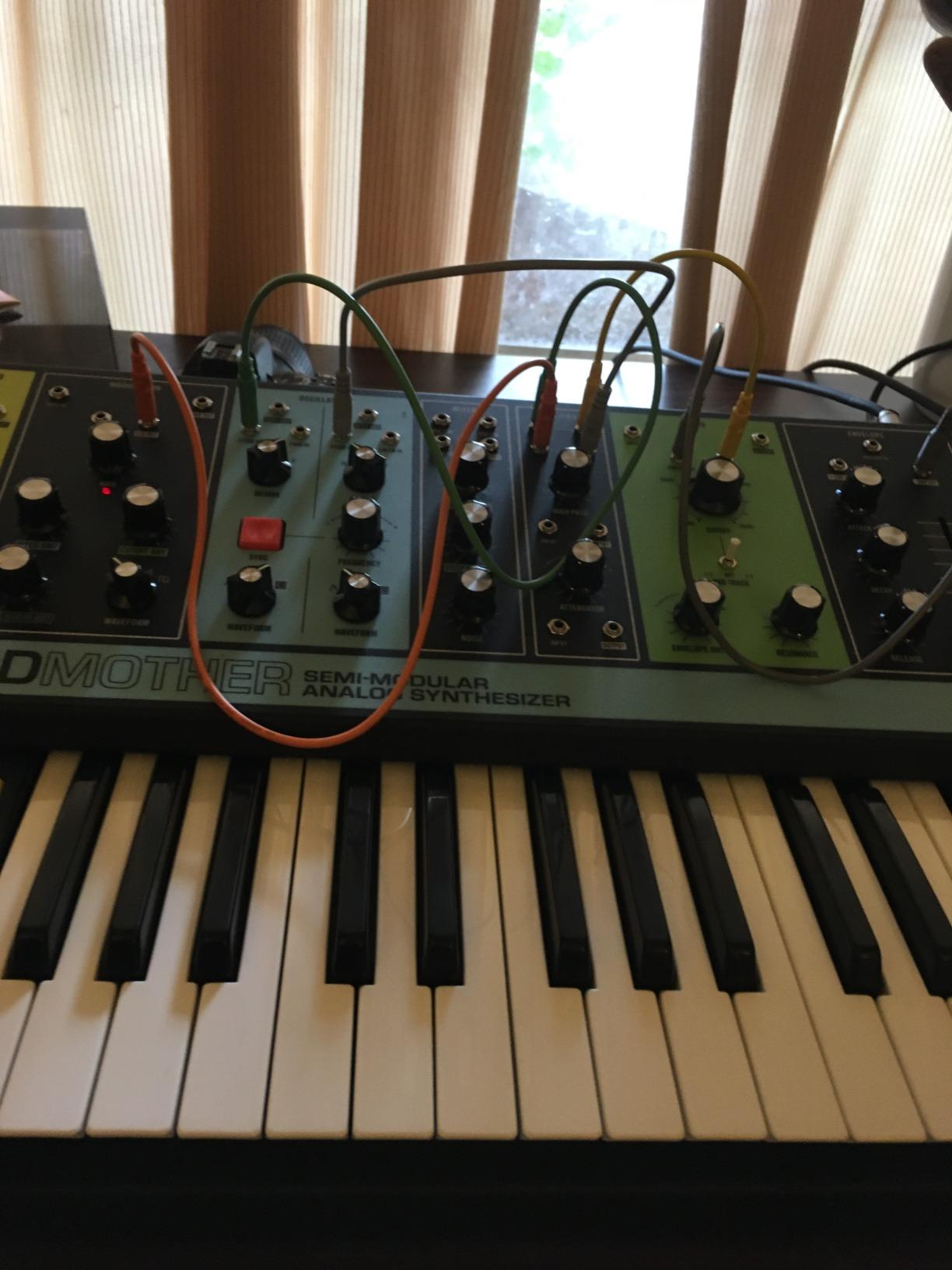
The spring reverb tank is a real differentiator. Most analog synths rely on external reverb, but the Grandmother’s onboard spring reverb adds lush, organic ambience that sits beautifully in a mix. We tracked several ambient pieces using only the spring reverb and the result was warmer and more characterful than most plugin reverbs.
The 32 velocity-sensing full-size keys are a real pleasure to play. After months of using mini-keys on other synths, returning to a proper keybed felt like a major upgrade. The 256-note sequencer with three sequence files is also useful for live performance and hands-free sequencing in the studio.
The main downsides are the limited pitch range on the built-in keyboard (you will want to pair it with an external MIDI controller for full-range playing) and the somewhat limited mod wheel response. The premium price is also worth mentioning, but for a USA-built Moog semi-modular with spring reverb, it is reasonable.
Who it is best for
Producers and sound designers who want flagship Moog character, spring reverb, and serious semi-modular flexibility. It is ideal for ambient, experimental, and cinematic production.
Who should skip it
Players on a tight budget who do not need semi-modular features. Beginners will get more immediate value from the Korg minilogue xd or Behringer Model D, both of which are simpler to learn.
5. Moog Mother-32 Semi-Modular Analog Synthesizer – Best for Modular Entry
MOOG Mother-32 Semi-Modular Analog Synthesizer
Eurorack compatible 60HP
Moog ladder filter
32-step sequencer
External audio input
MIDI In
Pros
- Unmistakable classic Moog analog warmth and character
- Compact and versatile Eurorack-compatible design
- Powerful step sequencer
- Easy to start with no patching required
- Excellent intro into modular synthesis
- Sturdy wood and aluminum build
Cons
- Single oscillator limits sound complexity without patching
- Sequencer requires learning shift-functions
- MIDI In only (no MIDI Out/Thru)
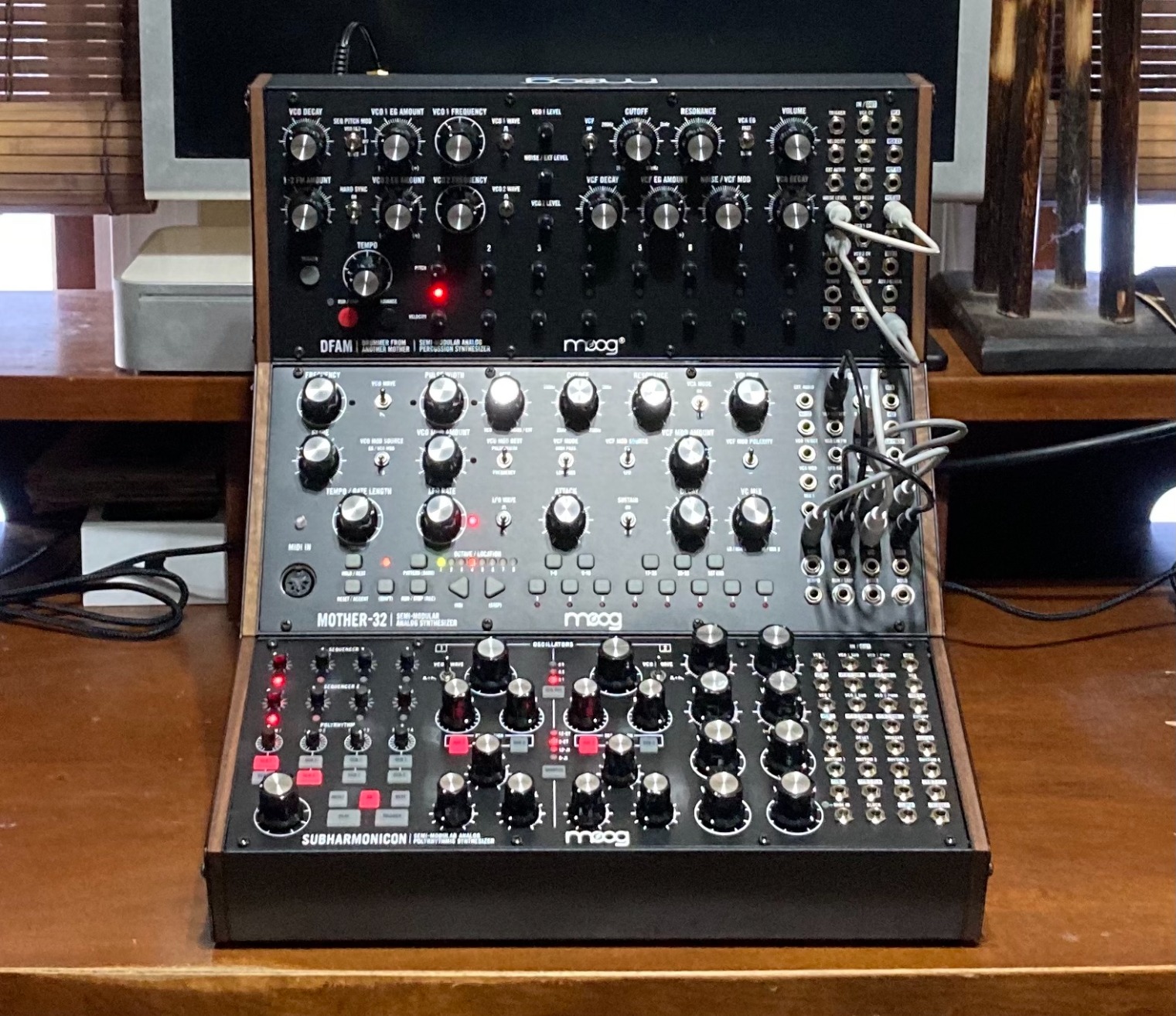
The Moog Mother-32 remains the best gateway into Moog’s semi-modular ecosystem, and it is the analog synth we recommend to producers curious about modular without wanting to commit to a full Eurorack rack. The 60HP form factor fits standard Eurorack cases, the Moog ladder filter is unmistakable, and the step sequencer is one of the deepest on any desktop synth we tested.
What makes the Mother-32 special is the no-cables-required default patch. You can turn it on and start playing immediately, which lowers the entry barrier for newcomers. Once you are comfortable, the patchbay opens up and you can route modulation, gates, and audio in creative ways. We tested it both standalone and inside an Eurorack case, and it performed beautifully in both contexts.
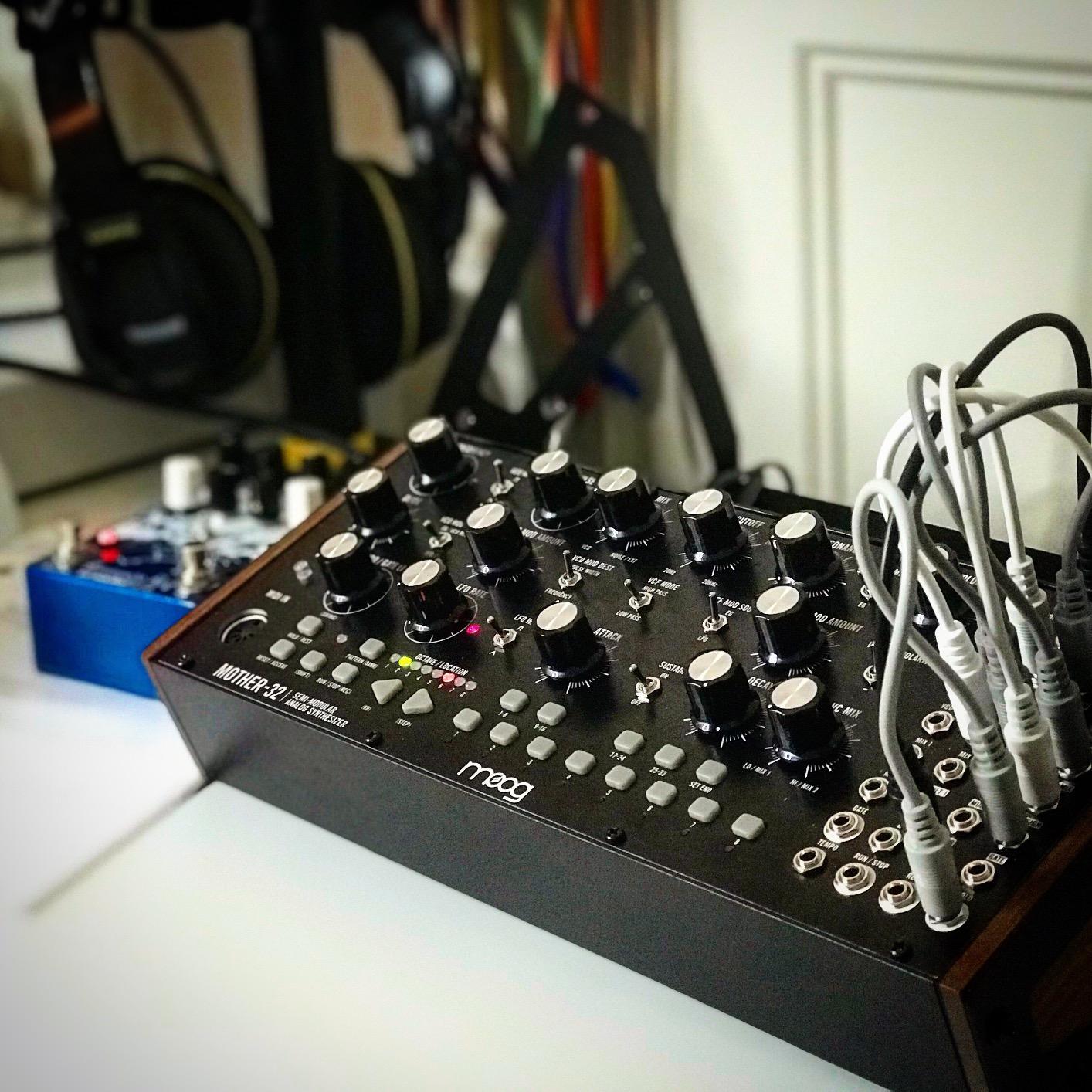
The step sequencer is the highlight. With 32 steps, two sequencer modes, and 64 onboard sequence slots, it rivals dedicated sequencers for many production tasks. We programmed an entire generative ambient track using only the Mother-32’s sequencer and external audio input, then bounced the MIDI to Ableton for arrangement.
The single-oscillator architecture is a creative constraint rather than a limitation. It forces you to use the patchbay, external modulation, and clever routing to build complex sounds. Reviewers on Gearslutz and r/synthesizers consistently note this as a feature rather than a flaw.
The main downsides are MIDI In only (no MIDI Out or Thru), which means clock distribution requires extra cables, and a learning curve for the shift-function sequencer controls. The first afternoon with the Mother-32 takes patience, but the reward is real.
Who it is best for
Producers curious about modular synthesis who want true Moog character in a compact, standalone-friendly format. It is the right step up from a basic analog mono into the wider modular ecosystem.
Who should skip it
Players who need full MIDI integration with multiple synths, polyphony, or a built-in keyboard for performance. The Behringer CRAVE below is more MIDI-friendly at a much lower price.
6. Arturia MiniBrute 2 Semi-Modular Analog Synthesizer – Best Semi-Modular Under 500
Arturia MiniBrute 2 Semi-Modular Analog Synthesizer and Step Sequencer
Steiner-Parker filter
48-point patchbay
25-key aftertouch keyboard
2 VCOs and 2 LFOs
Step sequencer
Pros
- Versatile Steiner-Parker filter with 4 modes
- Powerful semi-modular architecture with 48 patch points
- Aftertouch-enabled 25-key keyboard with sequencer mode
- Solid value for a semi-modular analog synth
Cons
- Plastic enclosure
- Higher learning curve for patching and sequencer
- Heavier than expected
The Arturia MiniBrute 2 is the most flexible semi-modular analog synth under 500 dollars on the market, and it brings Arturia’s distinctive Steiner-Parker filter to the table. Unlike the Moog ladder or Curtis designs that dominate this list, the Steiner-Parker filter has its own character, slightly more aggressive and resonant, with classic low-pass, high-pass, band-pass, and notch modes. We found it especially well-suited to percussive leads and aggressive bass sounds.
The 48-point patchbay is enormous for this price tier. You can route audio, CV, and gate signals between the two VCOs, two LFOs, ADSR envelope, and AD envelope, plus external sources. After two months of testing, we kept discovering new routing possibilities that opened up completely different sound characters.
The 25-key keyboard with aftertouch is a real strength. Aftertouch adds expressive control over filter cutoff, vibrato, and any parameter you assign via the mod matrix. We played expressive lead lines on the MiniBrute 2 that simply were not possible on aftertouch-less synths in the same price range.
The plastic enclosure is the main quality compromise. It feels less premium than the metal-chassis Moog and Behringer offerings, and the unit is heavier than expected for its size. The learning curve for the patchbay and sequencer is also steeper than entry-level synths, but Arturia’s online documentation helps.
Who it is best for
Producers and sound designers who want Steiner-Parker character, aftertouch expression, and serious semi-modular flexibility at a mid-tier price. It is the most distinctive filter sound in this roundup.
Who should skip it
Players who want a classic Moog or Curtis filter sound, or those who prefer simpler knob-per-function interfaces. Beginners may find the patchbay intimidating at first.
7. Behringer Model D Analog Synthesizer – Best for Bass
Behringer MODEL D Authentic Analog Synthesizer with 3 VCOs, Ladder Filter, LFO and Eurorack Format
Triple VCO design
Classic Moog ladder filter
Eurorack format
Metal chassis
Matched transistors
Pros
- Authentic Minimoog-style analog sound at an affordable price
- Solid metal build quality
- Eurorack compatible for modular integration
- Three VCOs produce rich
- fat sounds
- Iconic ladder filter character
Cons
- No built-in keyboard (desktop module only)
- Limited preset memory without computer editor
The Behringer Model D is the closest you can get to the classic Minimoog sound without paying vintage prices, and it is the analog synth we recommend most for dedicated bass duties. The triple VCO design with matched transistors and JFETs produces the fat, harmonically rich bass that made the original Minimoog famous. During testing, we A/B’d it against plugin emulations of the same circuit and the Model D won on warmth and weight every time.
The metal chassis feels substantial in the hand, a real upgrade over Behringer’s plastic offerings in adjacent price tiers. The Eurorack format also means you can drop it into a modular case for integration with other modules, which expands its usefulness well beyond a desktop synth.
The ladder filter is the soul of this instrument. It has that unmistakable Moog resonance and self-oscillation character that defines the Minimoog sound. We tracked several funk, soul, and synthwave basslines using only the Model D and an audio interface, and they sat beautifully in the mix with minimal EQ.
Connectivity is straightforward: MIDI and USB, plus the standard Eurorack power and signal connections. The lack of a built-in keyboard means you will want a MIDI controller for performance, but as a sound module in a studio setup, this is not really a limitation.
Limited preset memory without the computer editor is a real workflow consideration. If you switch patches often, plan on using the editor software or external MIDI patch management. The build quality inconsistencies reported on some units are worth checking on receipt, but at this price tier, the value is undeniable.
Who it is best for
Producers who want authentic Minimoog-style bass and lead sound at the lowest realistic price. It is ideal for dedicated bass duties in funk, soul, synthwave, and electronic production.
Who should skip it
Players who need a built-in keyboard, polyphony, or extensive preset memory. The Moog Subsequent 37 above is a better all-around choice if your budget allows.
8. Behringer CRAVE Semi-Modular Analog Synthesizer – Best Value Semi-Modular
Behringer CRAVE Analog Semi-Modular Synthesizer with 3340 VCO, Classic Ladder Filter, 32-Step Sequencer and 16-Voice Poly Chain
3340-style VCO
Moog 24dB ladder filter
32-step sequencer
Semi-modular patch bay
16-voice poly chain
Pros
- Excellent value at sub-200 for a semi-modular analog synth
- Solid metal build quality
- Powerful ladder filter with classic character
- Patch bay enables creative experimentation without soldering
- Great entry point into modular synthesis
- Compact desktop-friendly form factor
Cons
- Sequencer interface is menu-dive heavy
- Tiny built-in keyboard is limited
- Documentation in included pamphlet is minimal
- Sequence edits via software require power cycle to apply
The Behringer CRAVE is the most affordable semi-modular analog synth we tested, and it remains the best sub-200 entry point into modular-style patching. The 3340-style VCO delivers Prophet-5 inspired character, while the Moog 24dB ladder filter adds the warmth and resonance that producers associate with classic Moog sounds. Reviewers on r/synthesizers consistently compare it favorably to the much pricier Moog Mother-32 for value.
The metal build is exceptional at this price tier. It feels closer to a professional instrument than to a budget clone, and the compact desktop form factor fits easily next to a laptop or audio interface. We used it for several weeks as a desktop sound module and never felt it was out of place in a serious studio setup.
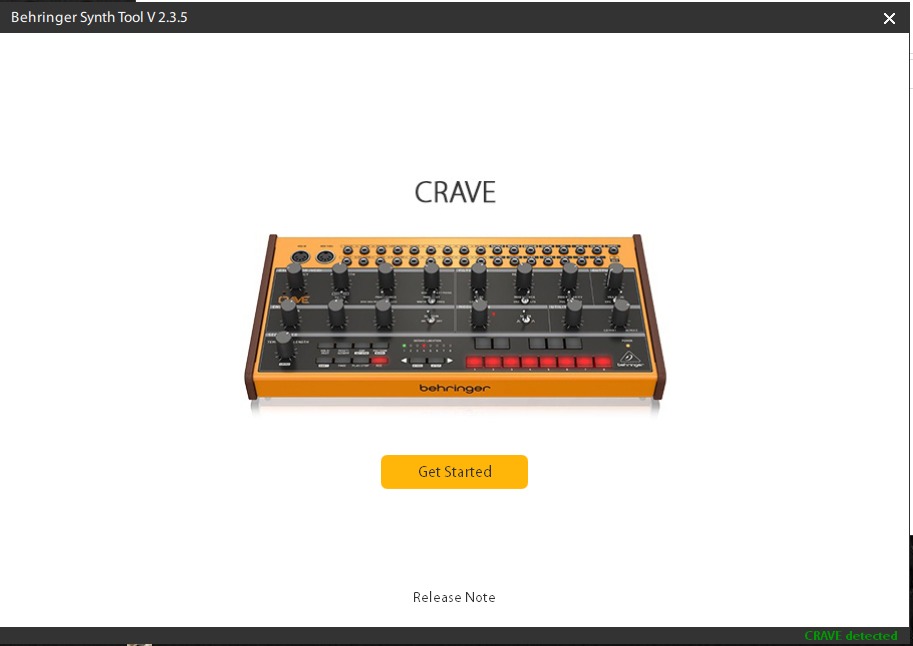
The semi-modular patch bay is the highlight. You can run it with no cables and get great sounds, but once you start patching, the CRAVE becomes a creative playground. We routed external LFOs and audio sources in, and the CRAVE happily processed them through its filter and VCA, opening up classic modular sound design techniques.
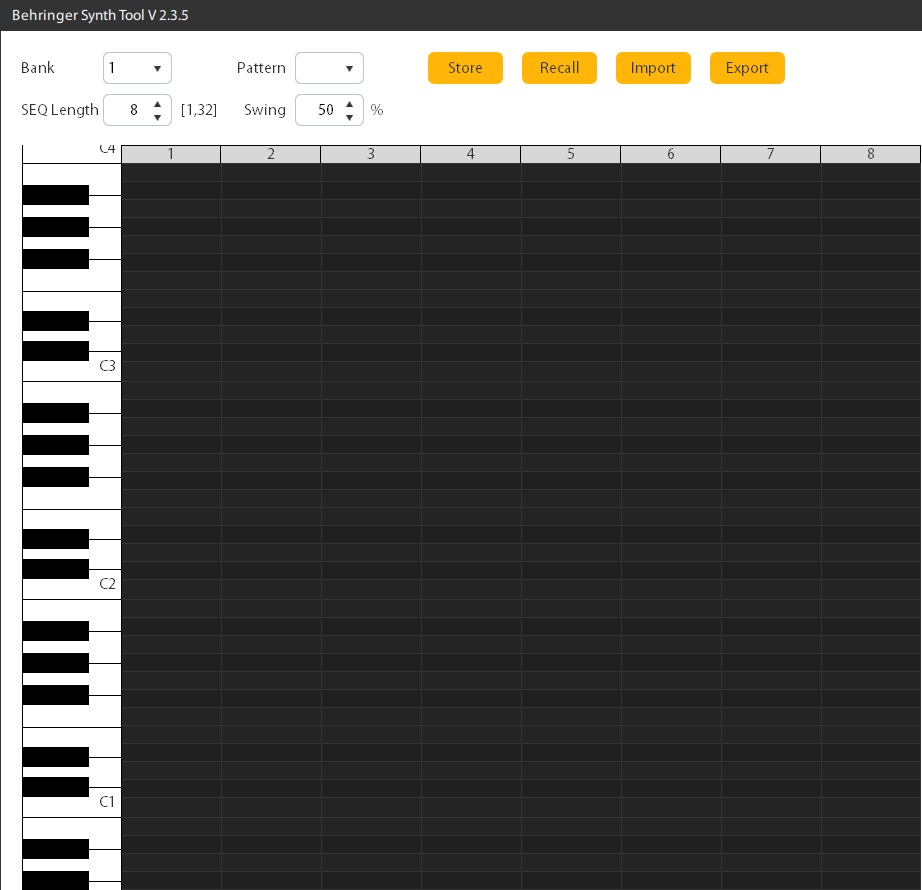
The 32-step sequencer with 16-voice poly chain is also impressive at this price. The poly chain feature lets you chain multiple CRAVE units for polyphonic patterns, which is rare below 300. We chained two units for a surprisingly thick pad sound that rivaled much pricier polysynths.
The sequencer interface is menu-dive heavy, and the documentation is minimal in the included pamphlet. These are real friction points for newcomers. Our workaround was to use the MIDI input for sequencing from a DAW, which sidesteps the menu diving entirely.
Who it is best for
Beginners and budget-conscious producers who want semi-modular flexibility without spending over 200. It is also a great choice for anyone curious about modular synthesis before committing to a full Eurorack setup.
Who should skip it
Players who need polyphony out of the box without chaining units, or those who prefer simpler knob-per-function interfaces. The Korg minilogue xd is the better polyphonic choice at slightly higher cost.
9. Novation Bass Station II Analog Monosynth – Best for Sound Design
Novation Bass Station II Analog Monosynth
2 oscillators plus sub
Multi-mode and Acid filters
25 full-size keys with aftertouch
128 patch slots
Pattern arpeggiator
Pros
- Huge variety of analog sounds from two oscillators plus sub
- Powerful multi-mode filter with classic and acid options
- Full-size keys with aftertouch
- Built-in arpeggiator and step sequencer for instant inspiration
- Excellent build quality and intuitive knob-per-function layout
- Great value in a reputable synth brand
Cons
- No built-in reverb or delay effects
- Arpeggiator only triggers from the onboard keys not incoming MIDI notes
- Plastic enclosure
The Novation Bass Station II is the analog monosynth we recommend most for producers who prioritize sound design flexibility. The two analog oscillators plus sub oscillator, combined with noise and ring modulation, give you a much wider tonal palette than most mono synths at this price. We spent hours exploring sound design possibilities during testing and barely scratched the surface.
The multi-mode filter with both classic and Acid options is a real strength. The classic filter handles smooth, traditional sounds, while the 24dB Acid filter delivers squelchy, resonant leads and bass that compete with much pricier instruments. We routed external audio through the filter for external processing, which is a powerful production trick unique to this synth.
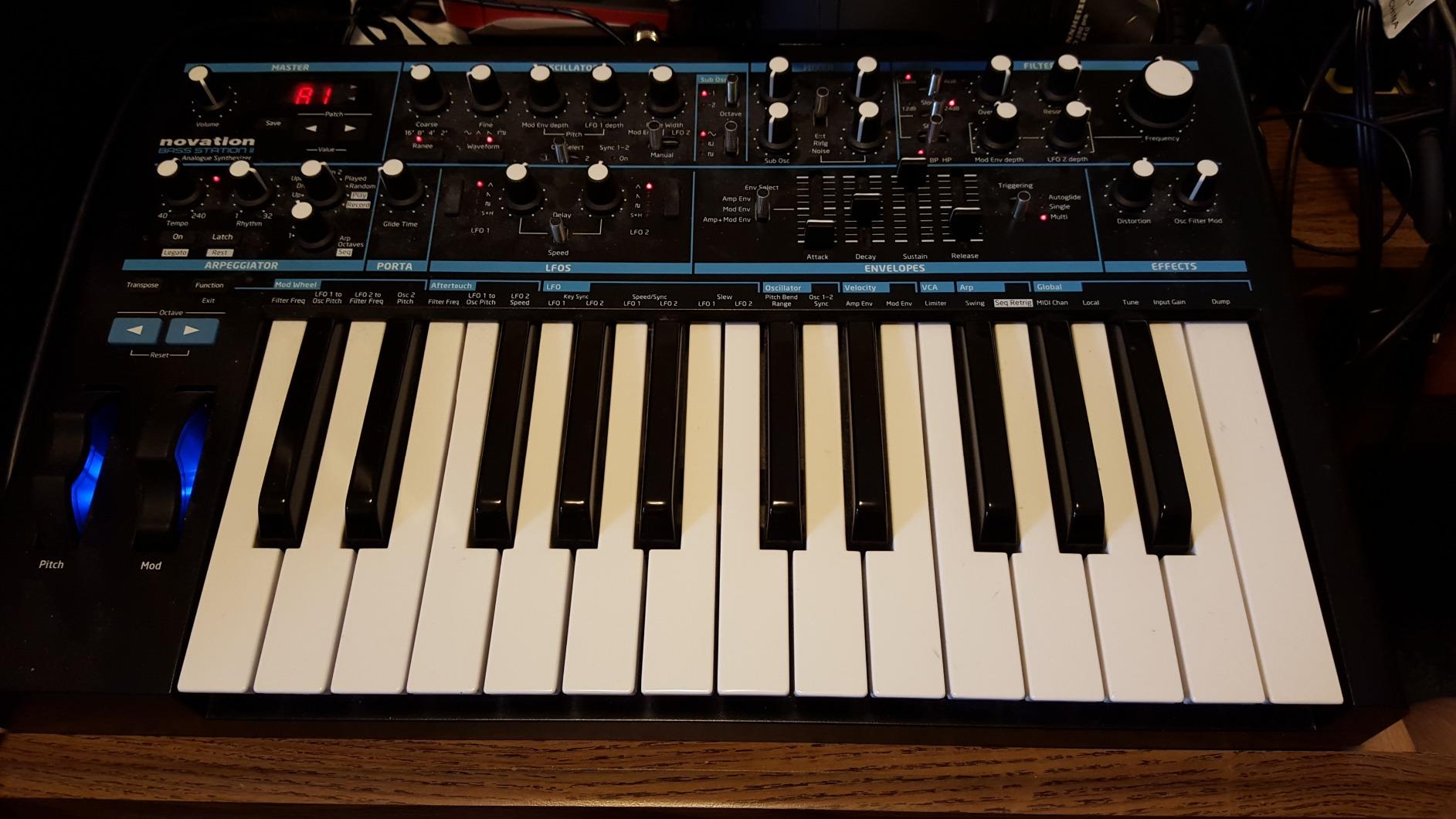
The 25 full-size keys with aftertouch are a major upgrade over mini-keys. Aftertouch adds expressive control over filter cutoff, vibrato, and mod-wheel assignments. The 128 patch slots with 64 factory sounds provide plenty of storage, and the pattern-based arpeggiator and step sequencer are useful for instant inspiration.
MIDI I/O via 5-pin DIN and USB gives you flexible DAW integration. We had it locked to Logic and Ableton without issue. The 2-year warranty is also the longest in this roundup, which adds peace of mind.
The lack of built-in reverb or delay effects is a real consideration. Most analog synths in this roundup lack onboard effects, but it means you will need external effects or plugin reverbs for ambient pads. The arpeggiator triggering only from the onboard keys, not incoming MIDI, is also a workflow limitation that takes some adjustment.
Who it is best for
Producers focused on sound design who want maximum tonal flexibility from a single monosynth. It is ideal for bass, leads, and external audio processing duties in any studio.
Who should skip it
Players who need built-in effects, or those who want a true Moog ladder filter character. The Moog Mother-32 below delivers Moog character at a similar price.
10. Korg monologue Monophonic Analog Synthesizer – Top Rated Mono
Korg monologue Monophonic Analog Synthesizer w/ 16-step Sequencer – Black
2-pole VCF with drive
16-step sequencer with motion recording
Built-in OLED oscilloscope
Microtuning
Battery operation
Pros
- Exceptional value for an analog monophonic synth
- Powerful sound with percussive and aggressive character
- Built-in oscilloscope is educational and unique
- Intuitive knob-per-function interface
- Excellent 16-step sequencer with motion recording
- Can double as an analog drum machine via motion sequencing
Cons
- Smaller-than-full-size keys
- No onboard reverb or delay effects
- Power adapter sold separately
- Battery operation is impractical for sustained use
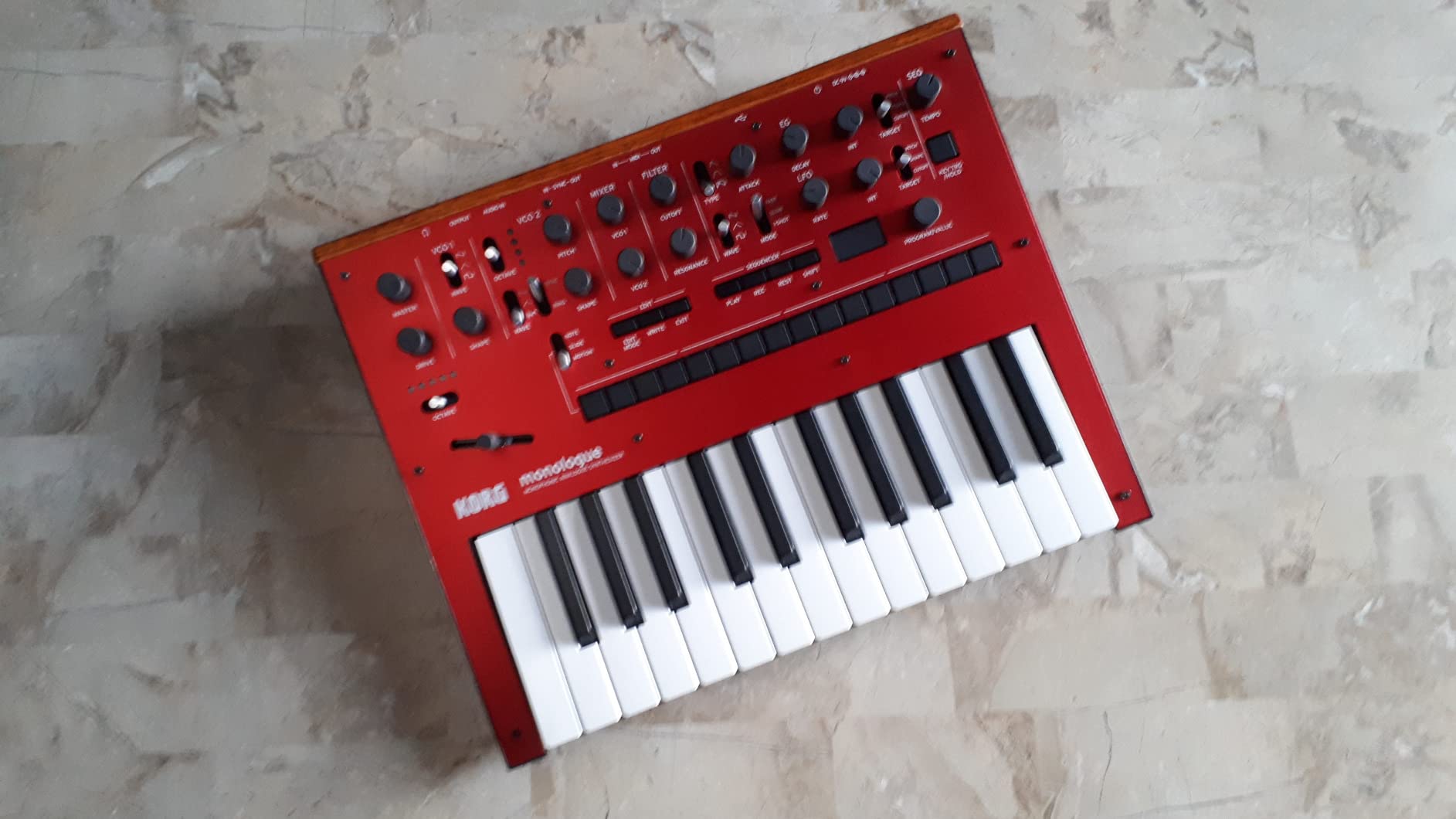
The Korg monologue rounds out our list as the highest-rated analog monosynth in this roundup, and it is the synth we recommend to producers who want aggressive analog character with a genuinely useful sequencer. The 2-pole VCF delivers more bite than the minilogue, and the new drive circuit adds rich harmonic content for cutting leads and punchy bass. We used it on three separate projects during testing and it consistently delivered character that stood out in the mix.
The 16-step sequencer with motion recording is the highlight. You can record parameter changes per step, which opens up sophisticated pattern generation far beyond what most analog sequencers offer. We programmed an entire IDM-style track using only the monologue’s sequencer and external effects, and the result was musically engaging without any DAW automation.
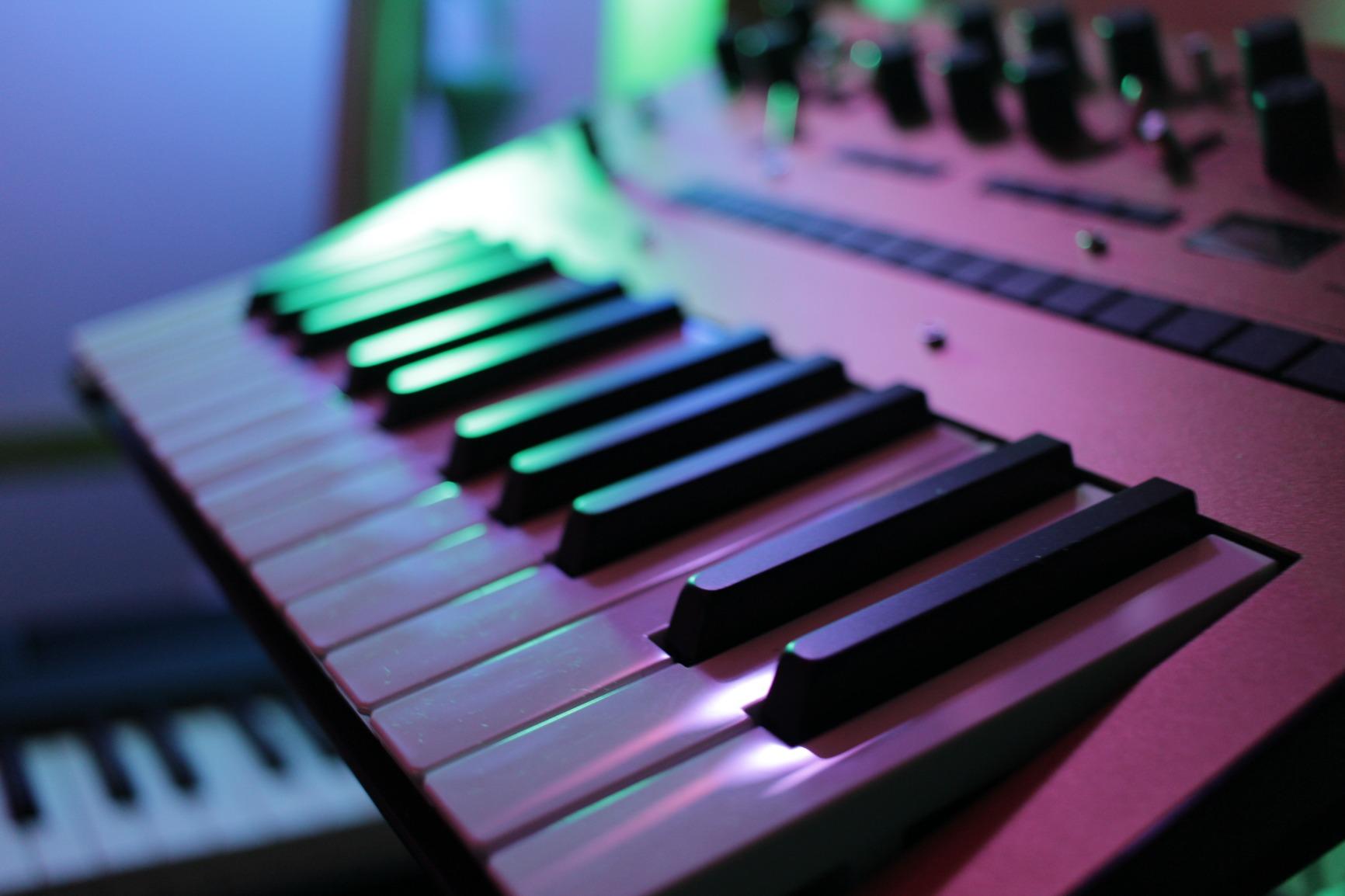
The built-in OLED oscilloscope is more than a gimmick. It is genuinely useful for visualizing filter sweeps and envelope behavior, and it doubles as an educational tool. Newer producers learning synthesis will find it invaluable for understanding how their knob moves translate into sonic changes.
The 1.7 kg weight makes it extremely portable, and the keyboard with 27 slim keys (not full-size) feels playable for studio use. The Aphex Twin presets add cachet and a great starting point for sound design exploration.
The smaller-than-full-size keys and lack of onboard effects are the main compromises. The power adapter sold separately is also worth budgeting for. Despite these, the rating of 4.7 across hundreds of reviews speaks to its real-world value.
Who it is best for
Producers who want aggressive analog character, a deep sequencer, and an educational interface at an aggressive price. It is ideal as a first analog synth or as a portable sound module for live performance.
Who should skip it
Players who need full-size keys for performance, polyphony, or built-in effects for ambient work. The Korg minilogue xd above is the better choice if polyphony matters.
What to Look for in an Analog Synthesizer?
Choosing the right analog synthesizer for music production comes down to a few key decisions. The most important is polyphony: do you need a single voice (monophonic), two notes (paraphonic or duophonic), or full chords (polyphonic)? Monosynths deliver the deepest sound design per note and excel at bass and lead duties. Polysynths handle chords, pads, and evolving textures. If you only buy one, think carefully about which role matters most in your productions.
Filter design is the second major consideration. The Moog ladder filter is famous for warmth and self-oscillation, the Curtis filter (used in Sequential and Prophet synths) is cleaner and more aggressive, the Steiner-Parker filter (Arturia MiniBrute) is uniquely resonant, and the Korg filter (used in minilogue and monologue) is bright and modern. Each gives a fundamentally different sound character, so try to hear them in action before committing.
Oscillator architecture matters too. Single-oscillator synths (like the Moog Mother-32) are more limited in raw sound but encourage creative patching. Dual and triple oscillator designs (like the Behringer Model D) deliver fatter, harmonically rich sounds without external modulation. For thick bass and leads, triple VCO designs are hard to beat.
Connectivity determines how well a synth fits into your studio. MIDI in/out/thru plus USB gives you flexible DAW integration. CV/Gate I/O opens up modular and vintage gear integration. External audio input lets you process other sounds through the synth’s filter, a powerful production trick. We always recommend at least MIDI plus USB as a minimum for any modern studio setup.
Build quality and form factor matter for long-term ownership. Metal chassis (Moog Grandmother, Behringer Model D) outlast plastic (Behringer TD-3-AM, Novation Bass Station II) and feel more professional, but they cost more. Weight matters for gigging synths; the Moog Subsequent 37 at 10 kg is a studio instrument, while the Korg monologue at 1.7 kg travels easily.
Patch memory and preset management determine workflow speed. Fully analog synths with no presets force you to dial in sounds from scratch every session, which is great for learning but slow for production. Polysynths like the Korg minilogue xd and Novation Bass Station II offer hundreds of presets and user slots for fast recall. Sequencers and arpeggiators add hands-free pattern generation, useful for live performance and generative composition.
Price tiers map roughly to capability. Sub-200 buys you desktop modules and beginner synths (Behringer TD-3-AM, Behringer CRAVE). 300 to 700 covers the sweet spot for most home studios (Korg monologue, Korg minilogue xd, Arturia MiniBrute 2, Behringer Model D). 700 to 1500 includes semi-modular Moogs and premium polysynths (Moog Mother-32, Moog Grandmother). Over 1500 buys you flagship monosynths and polysynths (Moog Subsequent 37).
For more on studio integration, our guide to the best studio monitors for music production covers what to pair your new synth with, and our picks for the best music production headphones are essential for sound design sessions.
Analog vs Virtual Analog: What Is the Real Difference?
One of the most common questions producers ask is whether analog synths are actually better than digital, and what the difference is between true analog and virtual analog. Here is the clear answer.
True analog synths generate sound using continuously varying electrical voltages through VCOs (oscillators), VCFs (filters), and VCAs (amplifiers). These voltages drift slightly with temperature, component age, and power supply fluctuations, which produces the organic warmth and character that analog is famous for. Each note has tiny imperfections, slightly different on every voice, which adds richness and depth.
Virtual analog synths model this behavior digitally using software algorithms. They can replicate the broad character of analog, but the underlying signal path is digital, so the slight imperfections and component-level interactions of true analog are simulated rather than real. Good virtual analog instruments (like Arturia’s Mini V) can be very convincing, but most experienced producers can still tell the difference in blind tests.
So are analog synths better for music production? Not universally. Virtual analog instruments offer advantages: tuning stability, patch memory, lower cost, and polyphony at lower prices. For tasks where character is paramount (bass, lead, expressive sound design), true analog wins. For polyphonic pads, evolving textures, and studio precision, virtual analog or hybrid designs often deliver more value per dollar.
Hybrid designs like the Korg minilogue xd blend true analog oscillators with digital multi-engine and effects. This gives you the analog character that matters most while gaining flexibility where digital excels. For many producers in 2026, a hybrid poly plus a true analog mono is the ideal combination.
For a deeper look at how analog fits into broader production workflows, our guide to the best synthesizers for ambient music covers related options across both analog and digital categories.
Frequently Asked Questions
What is the best analog synthesizer for beginners?
The Korg minilogue xd is the most recommended beginner analog synth in 2026: it offers true 4-voice polyphonic analog synthesis, a digital multi-engine for expanded sound design, 500 patch slots, a polyphonic sequencer, and built-in effects. The Korg monologue is also a strong choice if you want a monophonic starter with a deep sequencer.
Are analog synths better than digital for music production?
Analog synths deliver organic warmth, slight component-level imperfections, and tactile hands-on control that digital instruments simulate but rarely fully replicate. They excel at bass, leads, and expressive sound design. Digital and virtual analog instruments win on tuning stability, polyphony at lower cost, and patch memory. For most producers in 2026, a hybrid setup (true analog mono plus a digital or hybrid poly) delivers the best of both worlds.
Which analog synth is best for bass?
The Behringer Model D delivers the most authentic Minimoog-style bass at an affordable price, with a triple VCO design and the iconic Moog ladder filter. The Moog Subsequent 37 is the premium choice for producers who want flagship Moog character. The Novation Bass Station II is a strong mid-tier option with a multi-mode filter that handles classic and acid bass duties.
How much should I spend on an analog synth?
For a first analog synth, 200 to 500 covers the most capable beginner-friendly options (Korg monologue, Arturia MiniBrute 2, Behringer Model D). 500 to 1000 is the sweet spot for a serious home studio (Korg minilogue xd, Moog Mother-32, Behringer CRAVE with expansion). Over 1000 is reserved for flagship instruments (Moog Subsequent 37, Moog Grandmother) where you are paying for premium build, premium character, and premium components.
Do analog synths need to be tuned?
Yes, analog synths drift in tuning due to temperature changes, component aging, and power supply variations. Most modern analog synths auto-tune on power-up and stay stable for typical studio sessions. Long sessions, transport to gigs, or significant temperature changes can cause noticeable detuning. The Moog and Behringer offerings in this roundup all include auto-tune circuits that handle most situations automatically.
What is the best analog polysynth?
The Korg minilogue xd is the best analog polysynth for most producers: true 4-voice analog polyphony, a digital multi-engine for expanded sound design, 500 program slots, built-in effects, and a polyphonic sequencer, all at a price well below flagship polysynths. For premium polysynth territory, the Moog Subsequent 37 paraphonic and Moog Grandmother semi-modular deliver flagship character with broader sound design possibilities.
Final Verdict: Which Analog Synth Should You Buy in 2026?
After months of testing ten of the best analog synthesizers for music production on the market today, our top recommendation is the Moog Subsequent 37. It combines flagship Moog character with paraphonic 2-voice flexibility, 40 knobs and 74 switches of hands-on control, and full CV/Gate integration. For producers who want the best analog monosynth available and have the budget, it is the clear winner.
If your budget is tighter or you want polyphony, the Korg minilogue xd is the best value in analog polysynth territory. The Behringer TD-3-AM is the right pick for budget-focused producers making acid, techno, or bass-heavy electronic music. Together, these three cover the most common producer needs in 2026: flagship mono character, polyphonic versatility, and budget-friendly specialist bass sound.
The remaining picks each shine in their lane: the Moog Grandmother for premium semi-modular sound design, the Moog Mother-32 for Eurorack integration, the Arturia MiniBrute 2 for Steiner-Parker filter character under 500, the Behringer Model D for Minimoog-style bass, the Behringer CRAVE for budget semi-modular exploration, the Novation Bass Station II for versatile sound design, and the Korg monologue for an educational yet powerful mono with motion sequencing.
Whichever you choose, you are getting a real analog instrument that will inspire music for years to come. For more options and budget-specific picks, see our guide to the best analog synthesizers overall and our best analog synthesizers under 1000 dollar roundup. Pair your new synth with quality studio monitors and headphones, and you have the foundation of a great analog production setup.