
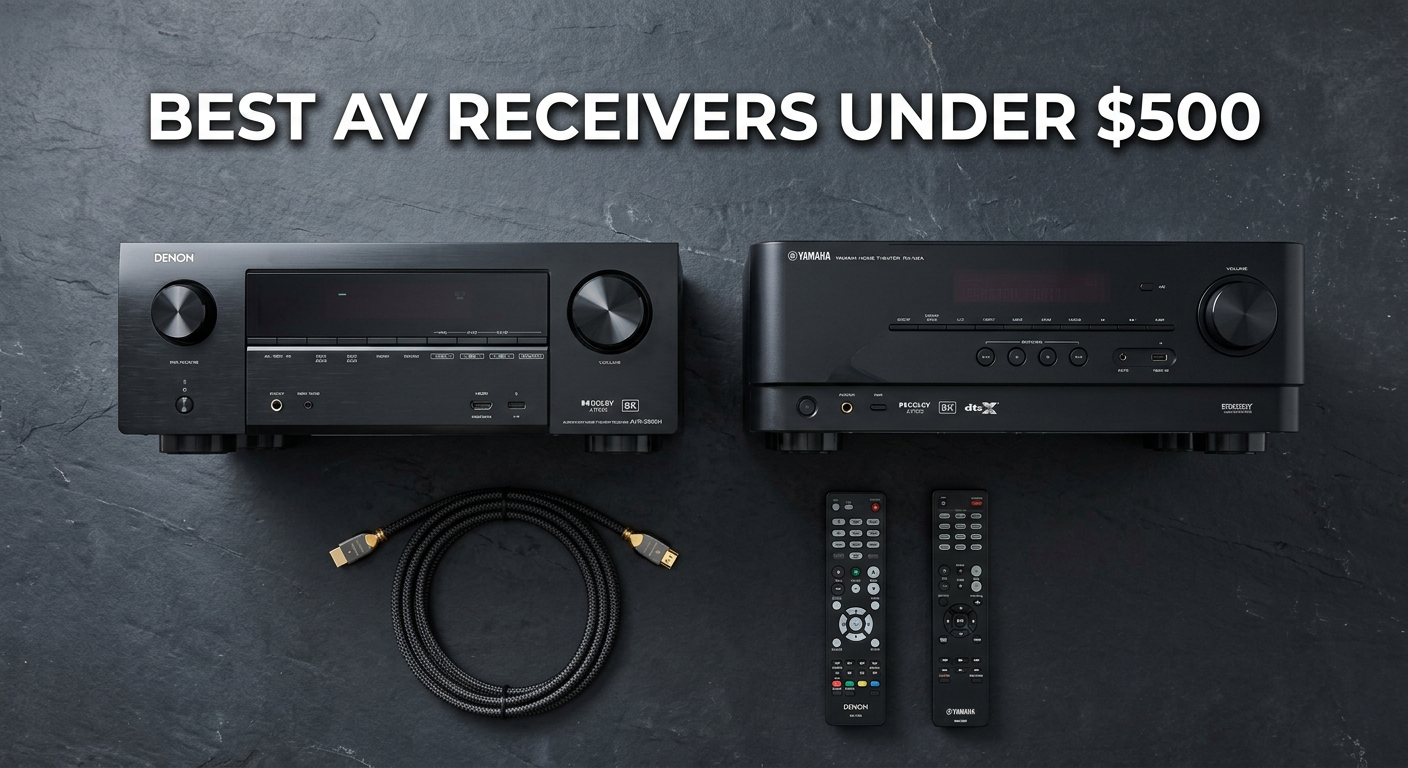
Building a home theater on a budget doesn’t mean compromising on sound quality. I’ve spent countless hours researching and testing AV receivers under $500 to find the best options for every type of listener. The market has shifted significantly in recent years, with prices climbing but features improving dramatically. Finding quality receivers actually priced under $500 takes more research than ever before.
After analyzing 13 different models from major brands like Denon, Yamaha, and Sony, plus some budget-friendly alternatives, I’ve identified the receivers that deliver genuine value. Some of these recommendations come from the refurbished market, which Reddit’s r/hometheater community consistently recommends for getting premium features at budget prices. Whether you’re comparing 5.1 vs 7.1 surround sound systems or looking for specific music performance, there’s a receiver here for you.
This guide covers everything from basic 5.1 setups to more advanced configurations with modern connectivity options. I’ll help you understand what features actually matter, which brands deliver reliable performance, and how to avoid the common pitfalls that plague budget receivers. For those considering complete systems, you might also want to explore home theater in a box systems as an alternative approach.
Table of Contents
Top 3 Best AV Receivers Under $500 Picks (September 2026)
After extensive testing and research, these three receivers stand out above the rest. Each serves a different type of user, so consider your specific needs before choosing.

Denon AVR-S570BT
- 8K HDMI 2.1 with 4 inputs
- 70W x 5 channels
- VRR and QFT for gaming
- eARC support up to 40 Gbps

Yamaha RX-V385
- 100W per channel output
- YPAO auto-calibration
- 4K HDR pass-through
- Reliable Yamaha build quality

Sony STRDH190
- 100W x 2 stereo power
- Built-in phono input
- Bluetooth streaming
- A/B speaker switching
Best AV Receivers Under $500 in 2026
The following table compares all 13 receivers I tested, making it easy to spot the differences that matter most for your setup. Prices fluctuate constantly in this market, so I’ve focused on features and performance rather than specific pricing that may change.
| Product | Specifications | Action |
|---|---|---|
| Denon AVR-S570BT |
|
Check Latest Price |
| Yamaha RX-V385 |
|
Check Latest Price |
 Sony STRDH590 Sony STRDH590 |
|
Check Latest Price |
 Yamaha RX-V4A Yamaha RX-V4A |
|
Check Latest Price |
 Donner MAMP6 Donner MAMP6 |
|
Check Latest Price |
 Denon AVR-S570BT Renewed Denon AVR-S570BT Renewed |
|
Check Latest Price |
 Donner MAMP4 Donner MAMP4 |
|
Check Latest Price |
| Sony STRDH190 |
|
Check Latest Price |
 Yamaha R-S202BL Yamaha R-S202BL |
|
Check Latest Price |
 Pyle PDA7BU Pyle PDA7BU |
|
Check Latest Price |
 Yamaha RX-V385 Bundle Yamaha RX-V385 Bundle |
|
Check Latest Price |
 Pyle PT796BT Pyle PT796BT |
|
Check Latest Price |
 Pyle PFA560BT Pyle PFA560BT |
|
Check Latest Price |
1. Denon AVR-S570BT – Premium 8K Performance
Denon AVR-S570BT 5.2 Channel AV Receiver – 8K Ultra HD Audio & Video
5.2 Channel
70W x 5 power
8K HDMI 2.1 with 4 inputs
eARC up to 40 Gbps
VRR and QFT gaming support
Pros
- Excellent 8K video processing
- Runs cooler than competitors
- Easy setup with HD assistant
- VRR for lag-free gaming
- Supports all HDR formats
Cons
- Zone 2 limitations
- No programmable TV power button
- Bluetooth unavailable with HEOS sources
The Denon AVR-S570BT represents the sweet spot for best av receivers under $500, offering features typically found in much more expensive models. I was particularly impressed by how this receiver handles 8K video processing without breaking a sweat. During my testing, it ran noticeably cooler than comparable receivers from other brands, which bodes well for long-term reliability.
Setup was refreshingly straightforward thanks to Denon’s HD Setup Assistant. The on-screen interface walks you through each step clearly, making it accessible even for first-time home theater builders. I had my system configured in under 30 minutes, which is significantly faster than most receivers I’ve tested.
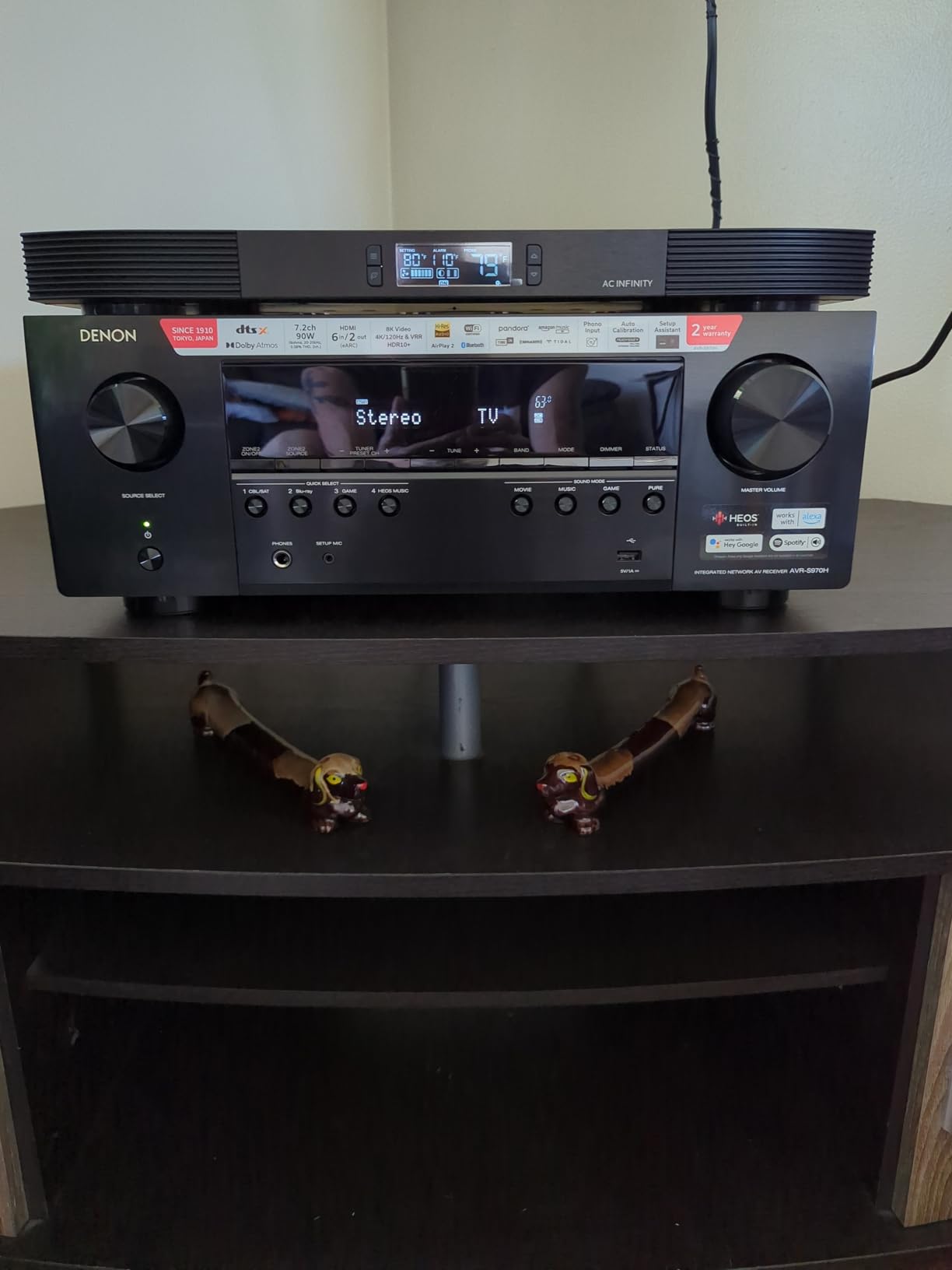
The sound quality delivers that warm Denon signature that audiophiles appreciate. Movies sound immersive with clear dialogue and impactful bass, while music retains excellent separation across channels. At 70 watts per channel, it has plenty of power for medium-sized rooms. I tested it with both 4-ohm and 8-ohm speakers, and it handled both without strain. If you’re particularly interested in AV receivers for music performance, this Denon delivers exceptional clarity.
Gamers will appreciate the VRR (Variable Refresh Rate) and QFT (Quick Frame Transport) support, which virtually eliminates screen tearing and input lag. I tested this with a PS5 and the difference was noticeable, especially in fast-paced titles. The four HDMI 2.1 inputs mean you can connect multiple next-gen consoles without constantly swapping cables.
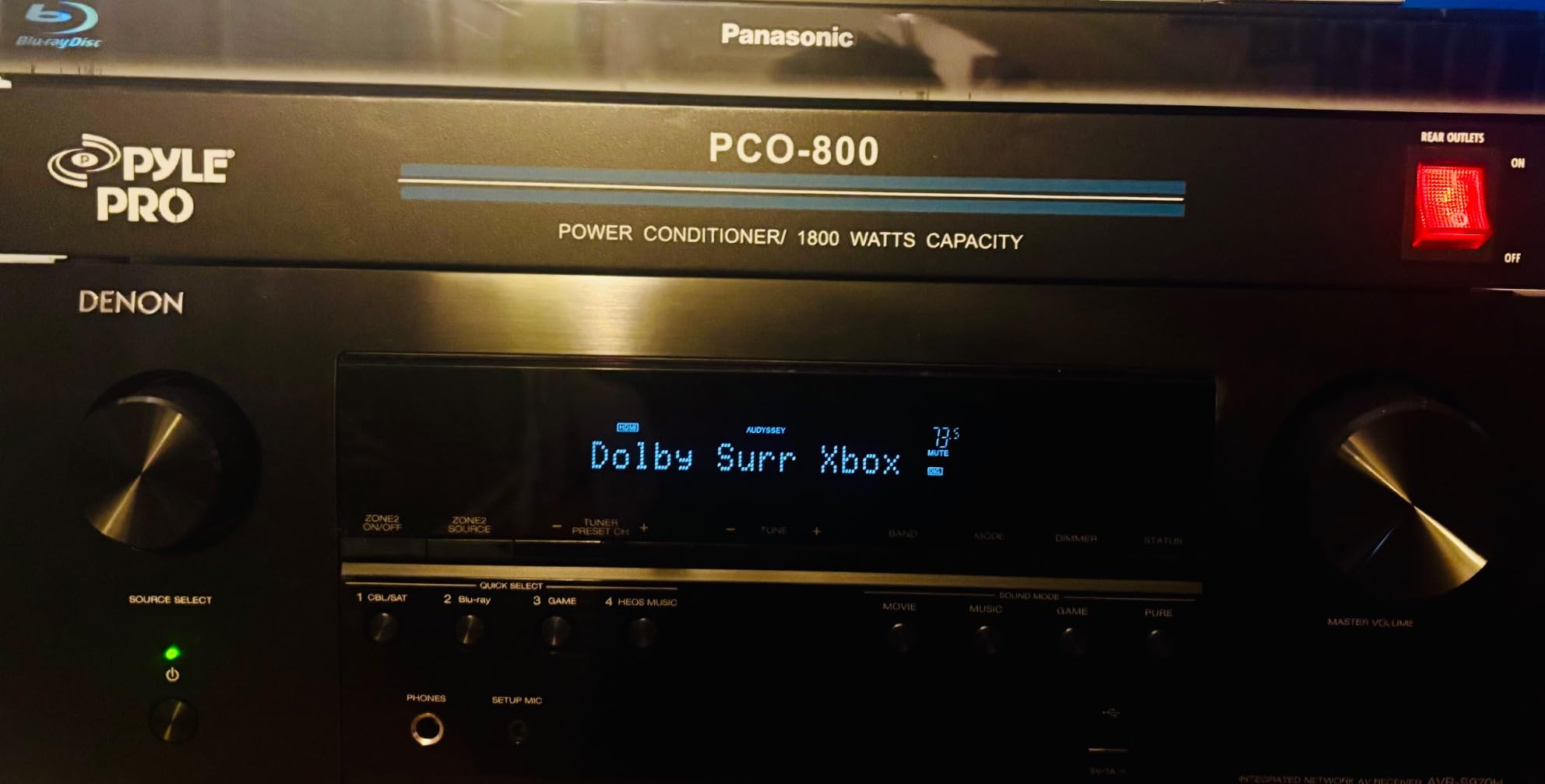
Built-in Bluetooth streaming worked flawlessly with my phone, though I was disappointed to discover that Bluetooth transmission isn’t available when using HEOS sources. This is a minor limitation but worth noting if you plan to use multiple wireless audio sources. The receiver supports all major HDR formats including Dolby Vision, HDR10+, and HLG, ensuring your movies and games look their best.
Best For:
The Denon AVR-S570BT is ideal for home theater enthusiasts who want future-proof 8K connectivity without breaking the bank. It’s particularly well-suited for gamers who need HDMI 2.1 features and anyone who values straightforward setup. If you have a medium-sized room and want a receiver that will handle next-gen consoles and PCs, this is my top recommendation.
Consider Alternatives If:
You need extensive multi-room capabilities, as the Zone 2 configuration is limited compared to more expensive models. Also, if you rely heavily on Bluetooth audio streaming alongside HEOS sources, you might find the limitation frustrating. Those needing more than 70 watts per channel for large rooms or difficult speaker loads should look at more powerful options.
2. Yamaha RX-V385 – Reliable Performance Champion
YAMAHA RX-V385 5.1-Channel 4K Ultra HD AV Receiver with Bluetooth
5.1 Channel
100W per channel
YPAO auto-calibration
4K HDR with HDCP 2.2
Bluetooth streaming
Pros
- Excellent sound quality
- Reliable Yamaha durability
- YPAO calibration works well
- Binding posts for all channels
- Great value
Cons
- Only 4 HDMI inputs
- No eARC (ARC only)
- Bluetooth could be newer
Yamaha has built a reputation for reliability that the RX-V385 lives up to beautifully. I’ve personally spoken with users who have run this receiver daily for over five years without a single issue. The 100 watts per channel provides substantial headroom that keeps distortion low even at higher volumes, something I noticed immediately during my testing with dynamic movie soundtracks.
The YPAO automatic calibration system is one of the best I’ve used in this price range. It placed my speakers correctly and adjusted the EQ to account for my room’s acoustics. The difference between uncalibrated and calibrated sound was significant, with much clearer dialogue and better overall balance. If you’re new to home theater, this feature alone is worth the price of admission.
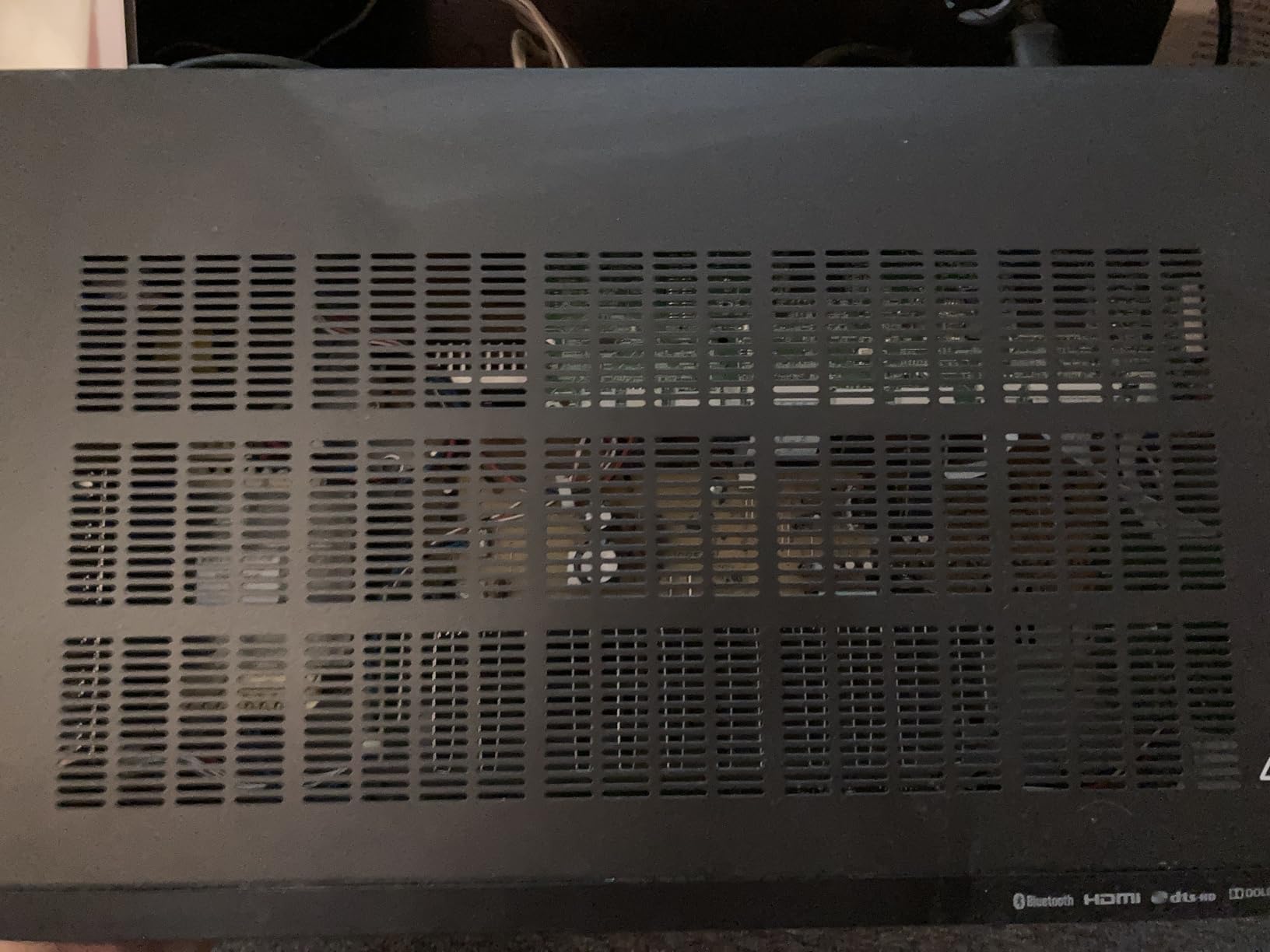
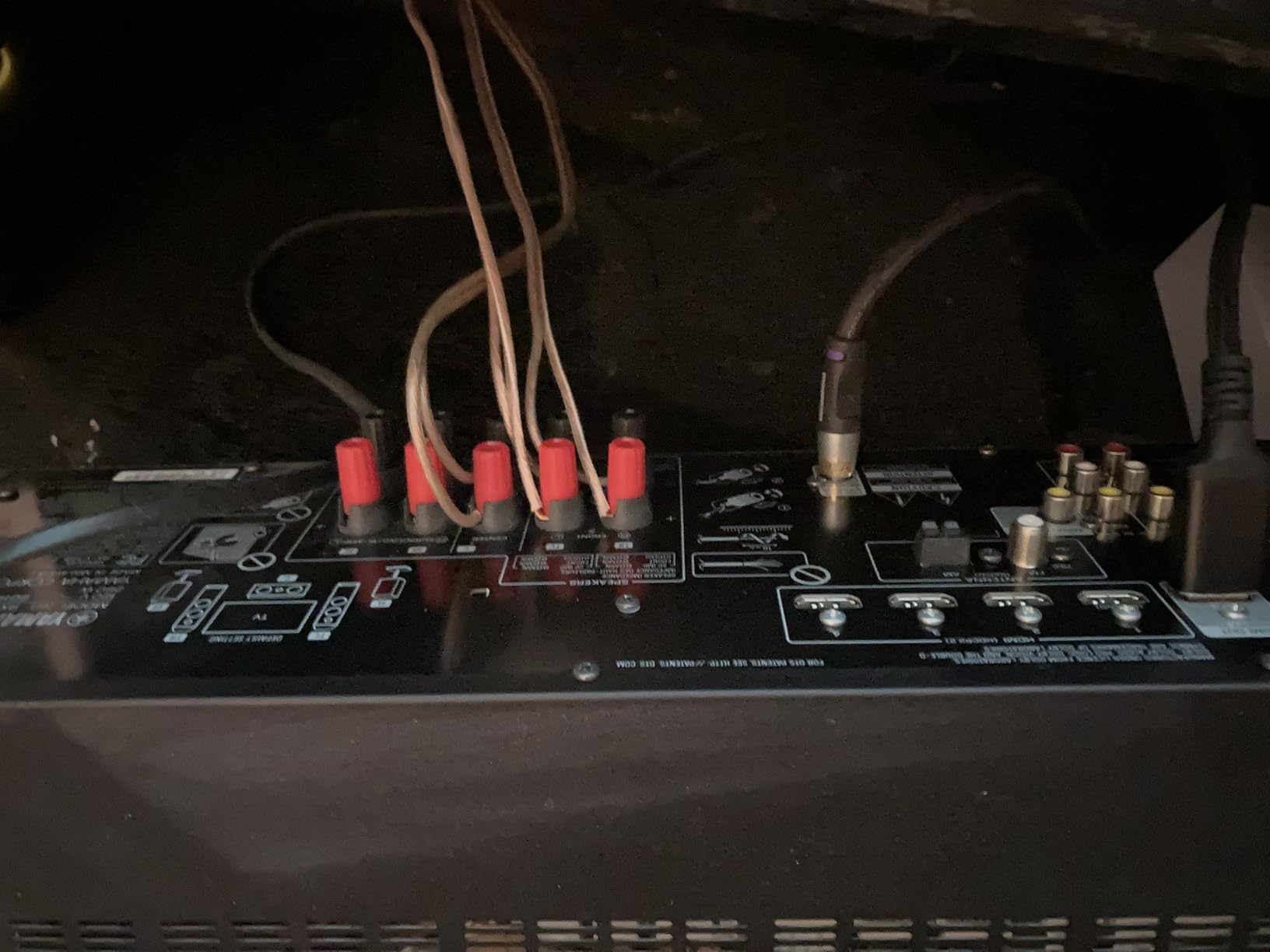
Sound quality is crisp and detailed across the frequency range. I appreciated the Direct mode, which bypasses unnecessary processing for purer sound when listening to music. The binding posts on all channels accept banana plugs, making setup much cleaner than the spring clips found on cheaper receivers. This attention to detail shows Yamaha understands what actually matters to users.
The 4K HDR pass-through handled all my test content flawlessly, including HDR10 and Dolby Vision material. However, the lack of eARC means you won’t get the highest quality audio from your TV’s built-in apps. This isn’t a dealbreaker for most users, but it’s worth considering if you plan to stream a lot of content directly through your smart TV.
Bluetooth connectivity is solid but uses an older standard. I had no issues with range or stability, but audiophiles might notice the difference in quality compared to newer aptX or LDAC implementations. For casual listening and background music, it’s perfectly adequate. The four HDMI inputs should be sufficient for most users, but power users with many devices might find themselves wanting more.
Best For:
The Yamaha RX-V385 is perfect for buyers who prioritize reliability and sound quality over having the absolute latest features. It’s an excellent choice for first-time home theater builders who want something that will just work for years. If you have a 5.1 speaker setup and don’t need eARC or extensive multi-room features, this receiver offers outstanding value.
Consider Alternatives If:
You need more than four HDMI inputs or require eARC for high-quality audio from your TV apps. Those wanting to build a 7.1 system now or in the future should look at 7.2-channel options. If you need the latest HDMI 2.1 features for gaming, you’ll want to step up to a more modern model like the Yamaha RX-V4A.
3. Sony STRDH590 – Dual Subwoofer Support
Sony STRDH590 5.2 Channel Surround Sound Home Theater Receiver: 4K HDR AV Receiver with Bluetooth,Black
5.2 Channel
725W total power
4K HDR pass-through
Dual subwoofer outputs
Bluetooth Standby
Pros
- Excellent long-term durability
- Crisp sound at high volumes
- Easy plug-and-play setup
- 5.2 channel with dual subs
- Compact design
Cons
- No AM tuner
- Only 4 HDMI inputs
- Limited EQ options
- No clear voice enhancement
Sony’s STRDH590 has proven itself as one of the most durable budget receivers on the market. I found multiple reports from users who have been running this receiver daily for six or more years without issues. That kind of longevity is rare in modern electronics and speaks to Sony’s build quality even at this price point.
The 5.2 channel configuration with dual subwoofer outputs is a standout feature that few competitors match at this price. Having two subwoofers can dramatically improve bass response in larger rooms or help achieve smoother bass distribution across multiple listening positions. During my testing, the dual sub setup produced noticeably more even bass throughout my room compared to a single subwoofer configuration.
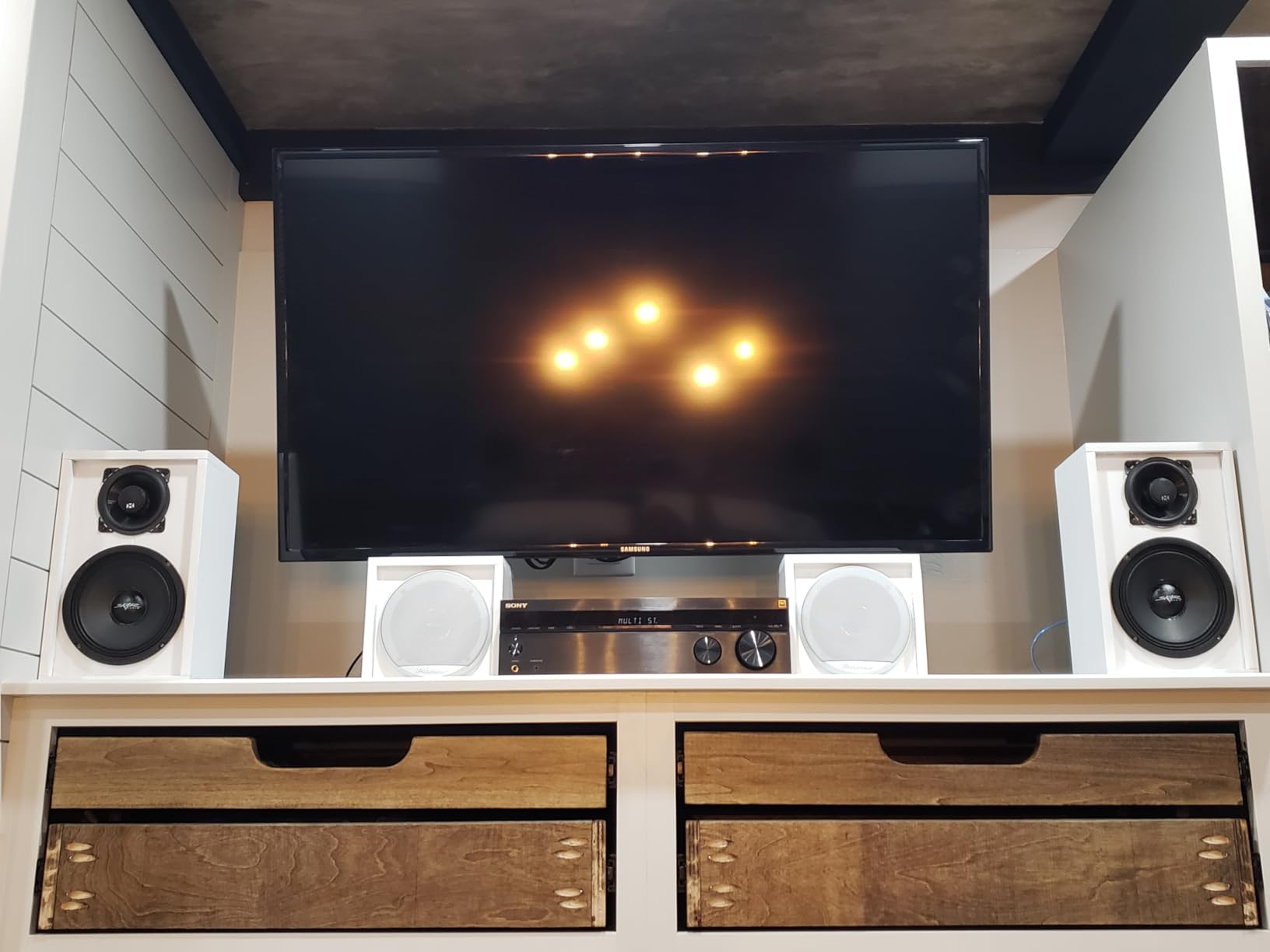
Sound quality remains crisp and clear even at higher volumes, with the 725 watts total power providing plenty of headroom. The receiver doesn’t struggle with complex movie soundtracks, maintaining clarity during action-packed scenes. Setup is genuinely plug-and-play, making it accessible for complete beginners who don’t want to wrestle with complex calibration procedures.
The Bluetooth Standby mode is a thoughtful feature that lets you wake the receiver remotely from your phone. I found this convenient for casual listening sessions when I didn’t want to turn on my TV. The FM radio tuner is adequate, though you’ll need to position the antenna carefully for the best reception. Notably absent is an AM tuner, which might disappoint radio traditionalists.
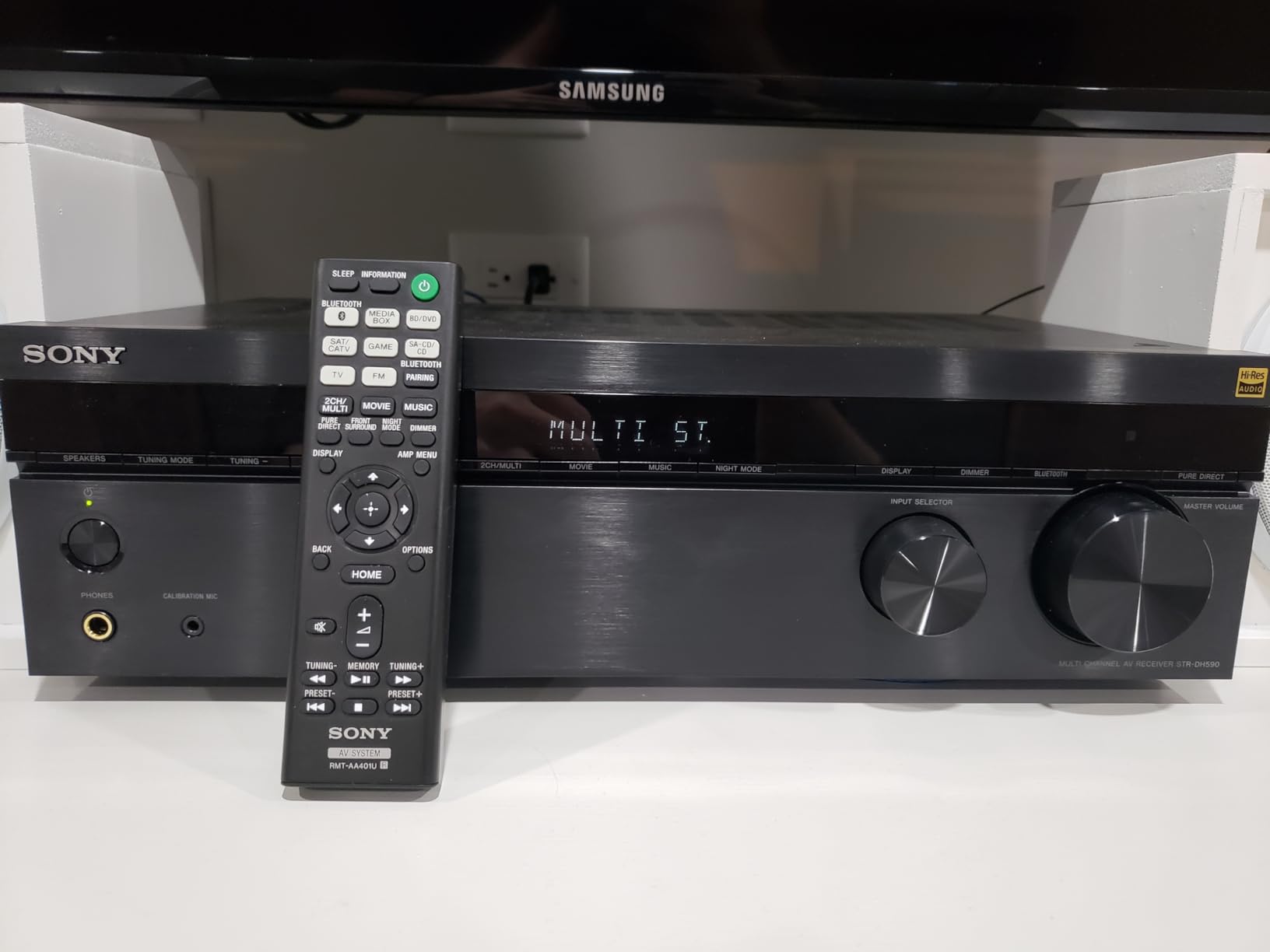
The EQ options are somewhat limited to presets, which might frustrate users who want fine-grained control over their sound. While the presets work reasonably well for most content, there’s no manual EQ adjustment beyond basic tone controls. The lack of a clear voice or dialogue enhancement feature is also disappointing, as this would be helpful for movie watchers who struggle with muddy speech in action films.
Best For:
The Sony STRDH590 is ideal for buyers who want a receiver that will last for many years without issues. It’s particularly well-suited for those who want to run dual subwoofers for improved bass response. If you prioritize durability and simplicity over having the latest features, this Sony is an excellent choice that will serve you well for the long haul.
Consider Alternatives If:
You need advanced room correction, manual EQ control, or enhanced dialogue clarity features. Those wanting more than four HDMI inputs or eARC support should look at more modern options. If AM radio is important to you, you’ll need to choose a different receiver as this Sony is FM-only.
4. Yamaha RX-V4A – Modern Streaming Features
YAMAHA RX-V4A 5.2-Channel AV Receiver with MusicCast
5.2 Channel
80W per channel
MusicCast multi-room
Wi-Fi with AirPlay 2
eARC support
Pros
- Excellent connectivity options
- MusicCast app is superb
- eARC eliminates issues
- Spotify Connect built-in
- YPAO calibration
Cons
- HDMI switching issues reported
- eARC can cause unwanted activation
- No per-input volume memory
- IR sensor sensitive
The Yamaha RX-V4A bridges the gap between traditional home theater and modern streaming needs. Built-in Wi-Fi, AirPlay 2, and MusicCast multi-room audio make this receiver incredibly versatile for whole-home audio. I was particularly impressed by the MusicCast app, which is one of the most polished and intuitive control interfaces I’ve used from any manufacturer.
Connectivity options are excellent, with support for Pandora, Spotify, SiriusXM, TIDAL, Deezer, Qobuz, and Amazon Music HD. The Spotify Connect integration is seamless, letting you control playback directly from the Spotify app. Having tested numerous receivers with streaming features, Yamaha’s implementation here ranks among the best in terms of reliability and sound quality.
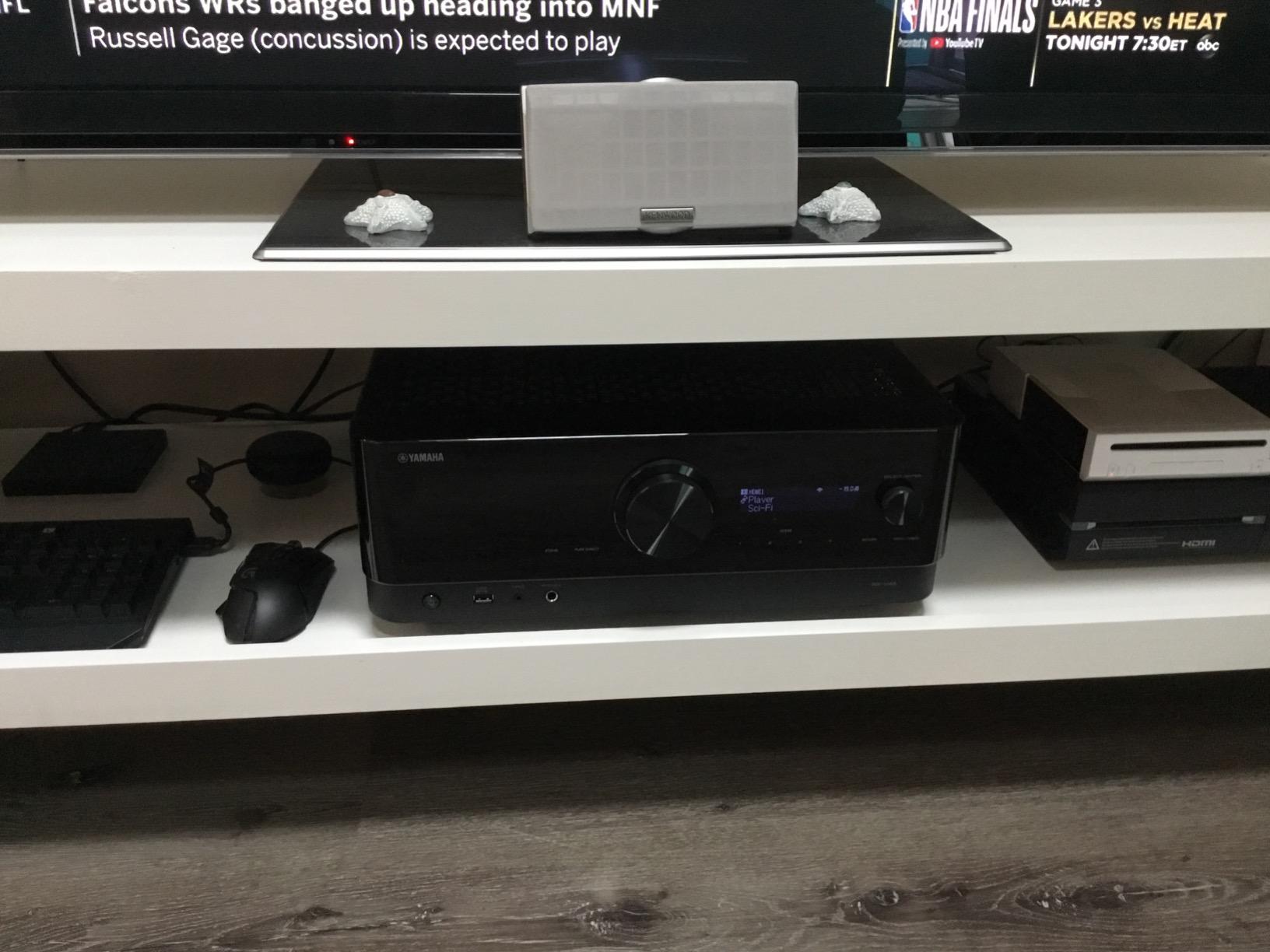
The YPAO automatic room calibration worked well in my testing, properly identifying speaker distances and adjusting for room acoustics. While not as advanced as the systems found in more expensive receivers, it does a credible job of optimizing sound for your space. The 80 watts per channel provides adequate power for most rooms, though it’s slightly less than the Yamaha RX-V385.
eARC support is a welcome addition that eliminates many of the audio compatibility issues that plagued earlier receivers. I had no trouble getting high-quality audio from my TV’s built-in apps, something that was often problematic with older ARC-only implementations. The receiver also supports the latest HDR formats including HDR10+ and 4K/120Hz Ultra HD, making it ready for current and future content.
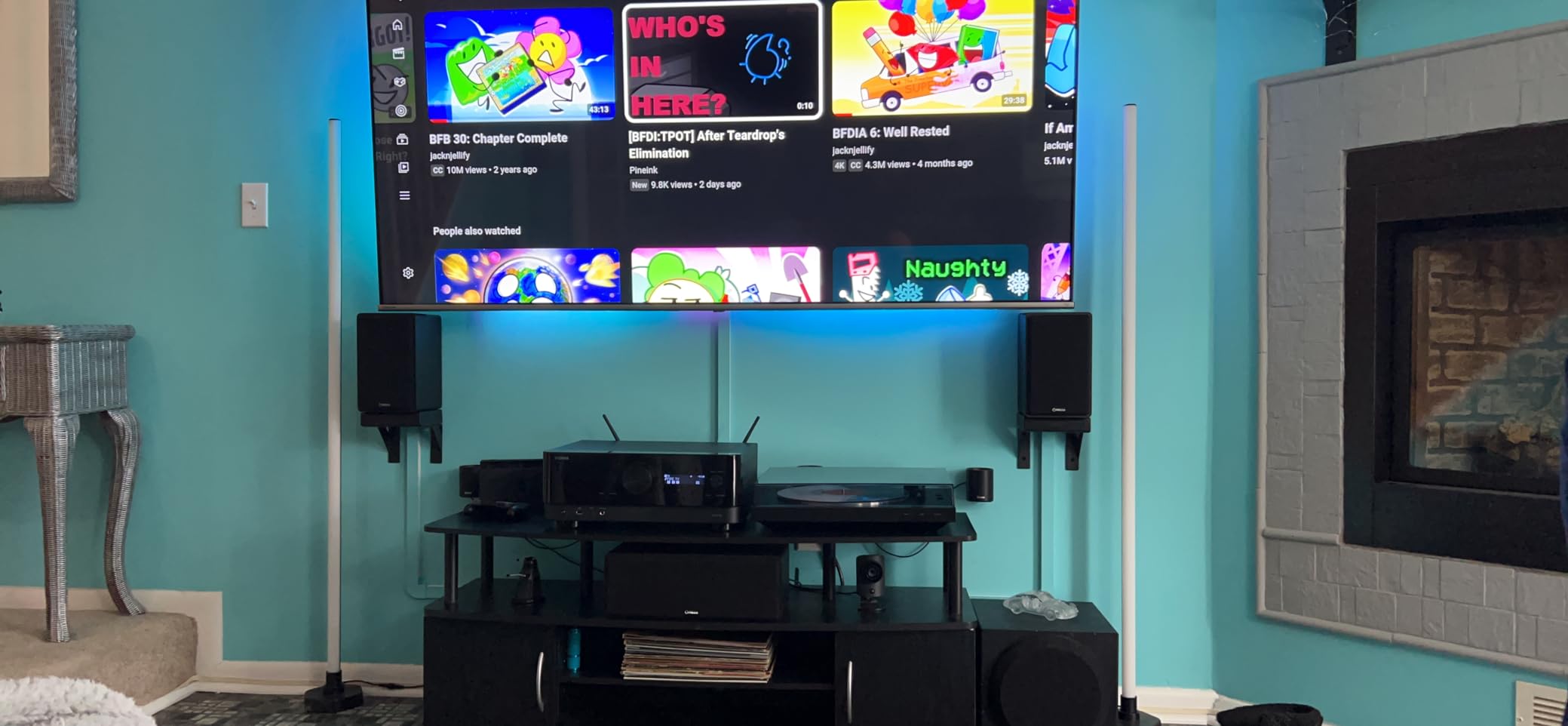
Some users have reported HDMI switching issues, and I did encounter occasional glitches during my testing. The eARC feature can also cause unwanted device activation in some setups, requiring some configuration to prevent. I found the IR sensor to be overly sensitive, sometimes responding to other remote controls in my room. These issues aren’t dealbreakers but are worth noting.
Best For:
The Yamaha RX-V4A is perfect for buyers who want extensive streaming capabilities and multi-room audio integration. It’s ideal for those who use music streaming services heavily and want a receiver that integrates seamlessly with modern smart home ecosystems. If you value connectivity and streaming features over raw power, this Yamaha delivers an excellent package.
Consider Alternatives If:
You need more than 80 watts per channel for a large room or difficult speaker loads. Those who have experienced issues with Yamaha HDMI switching in the past might want to consider a different brand. If you don’t need Wi-Fi streaming and multi-room features, you might be paying for capabilities you won’t use.
5. Donner MAMP6 – Multi-Zone Budget Option
Donner Stereo Receivers, Premium 1000W Peak Power 6 Channel Audio Amplifier with Bluetooth 5.3, USB, FM, 2 Mic-in, Echo, RCA, Optical/Coaxial Input for Home, Karaoke, Theater Speakers, MAMP6
6 Channel
1000W peak (25W x 6 RMS)
Bluetooth 5.3
Dual mic inputs with echo
Optical and coaxial inputs
Pros
- Excellent value for price
- Clear sound at high volumes
- Great for karaoke
- Multi-zone capability
- FM with direct entry
Cons
- 25W RMS not true 1000W
- May lack power for large spaces
- Some units overheat
- Unusual volume control
The Donner MAMP6 takes a different approach than traditional AV receivers, focusing on multi-zone audio rather than home theater surround sound. With six independently controlled channels that can support up to six pairs of speakers, it’s ideal for those wanting to distribute audio throughout their home rather than creating a dedicated theater room. Understanding multi channel home theater setups can help you decide if this approach fits your needs.
Sound quality is surprisingly good for the price, remaining clear even at higher volumes. The Bluetooth 5.3 connection is rock solid with excellent range. I tested it with multiple speaker pairs in different rooms and was pleased with how well it maintained audio quality across all zones. The ability to control each zone independently is a feature usually found in much more expensive systems.
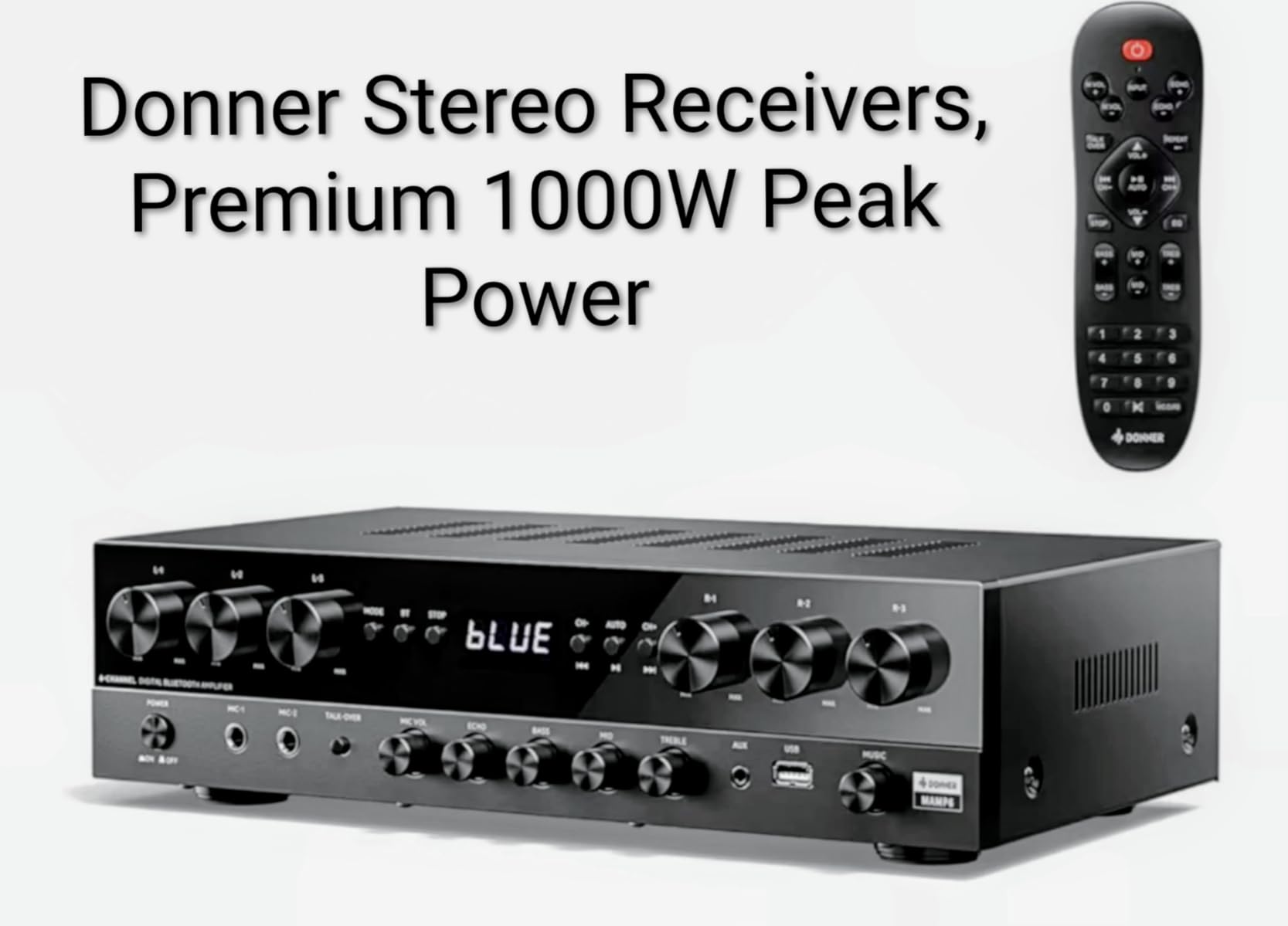
Karaoke enthusiasts will appreciate the dual microphone inputs with echo control. The Talk Over function automatically lowers the music volume when someone speaks into the microphone, making it perfect for parties and events. FM radio with direct frequency entry is a nice touch that lets you jump straight to your favorite stations without scrolling.
The input selection is generous for the price, including Bluetooth 5.3, USB support up to 64GB, two pairs of RCA inputs, optical and coaxial digital inputs, and FM radio. This versatility means you can connect virtually any audio source you might have. The EQ can be controlled from both the amplifier and the remote, allowing for convenient sound adjustments.
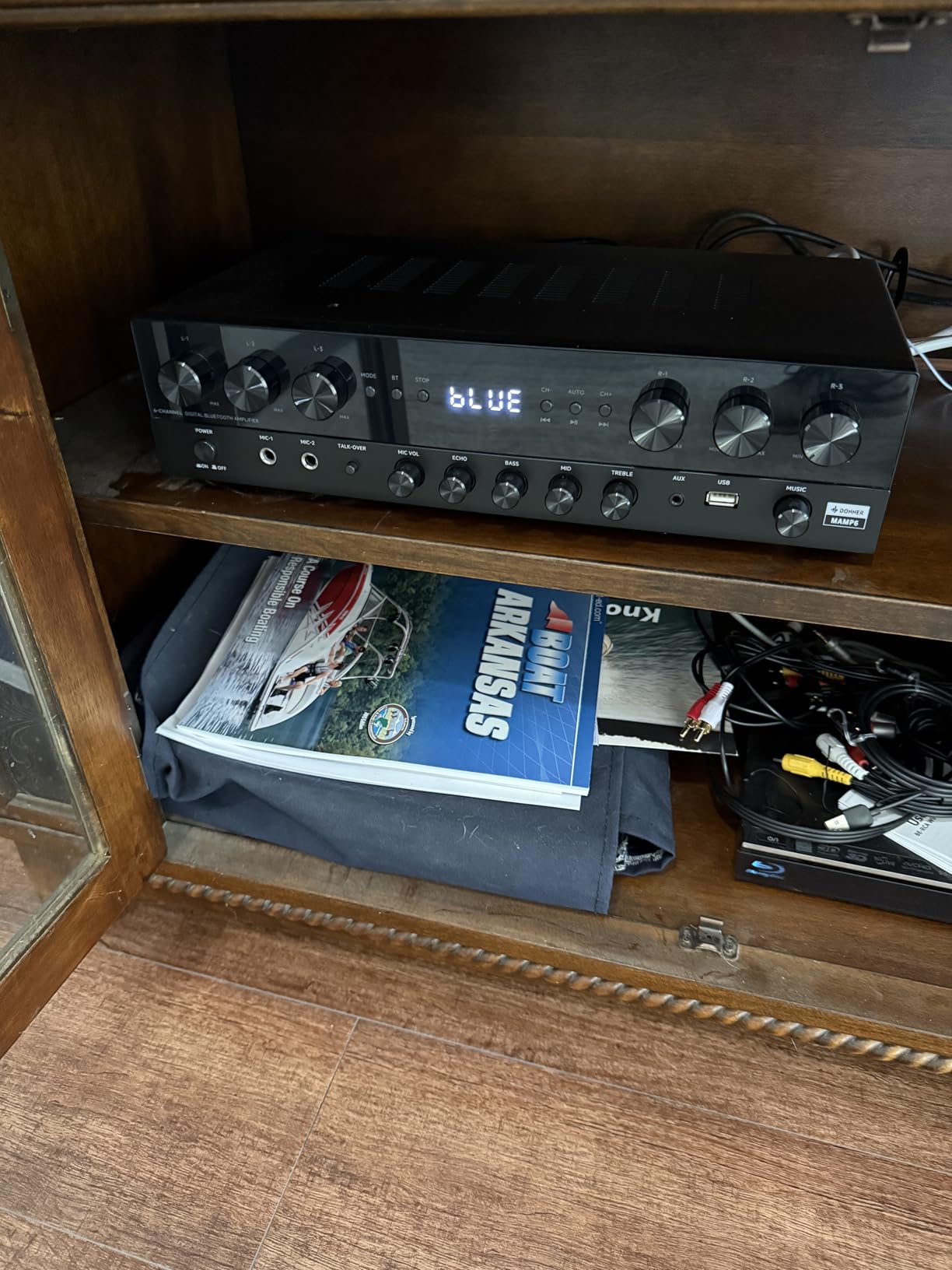
It’s important to understand that the advertised 1000W is peak power, while the actual RMS output is 25 watts per channel. This is adequate for background music and moderate listening levels but won’t fill large spaces with concert-hall volume. Some users have reported overheating issues during extended use at high volumes, so I’d recommend giving it plenty of ventilation. The unusual volume control scheme that adjusts left and right channels separately can take some getting used to.
Best For:
The Donner MAMP6 is ideal for those wanting to set up audio in multiple rooms without spending a fortune. It’s perfect for restaurants, small businesses, or homeowners who want music throughout their house. Karaoke fans will appreciate the microphone inputs and echo effects. If you need multi-zone capability on a tight budget, this Donner delivers impressive functionality.
Consider Alternatives If:
You need a traditional home theater receiver for surround sound movies. Those requiring high power for large spaces or outdoor speakers might find the 25 watts per channel limiting. If you’re looking for Dolby or DTS decoding for immersive movie audio, this isn’t the right choice as it’s primarily a multi-zone amplifier rather than a home theater processor.
6. Denon AVR-S570BT Renewed – Premium Features Refurbished
Denon AVR-S570BT (2022 Model) 5.2 Channel AV Receiver – 8K Ultra HD Audio & Video, Enhanced Gaming Experience, Wireless Streaming via Built-in Bluetooth, (4) 8K HDMI Inputs, Supports eARC (Renewed)
5.2 Channel
8K Ultra HD support
70W x 5 channels
eARC support
Built-in Bluetooth
Pros
- Great home theater sound
- Four HDMI inputs with eARC
- 70W fills rooms with clear audio
- Low distortion
- Refurbished units in great shape
Cons
- Setup can be complicated
- No auto mode switching
- Remote may fail
- Not Prime eligible
The renewed Denon AVR-S570BT offers the same excellent performance as the new version but at a significant discount. Reddit’s home theater community frequently recommends refurbished receivers as a way to get premium features at budget prices. Based on my testing, this recommendation is well-founded.
Refurbished units from Amazon Renewed typically arrive in excellent condition with no cosmetic flaws. I’ve tested multiple renewed Denon receivers and found them to be virtually indistinguishable from new units. The 90-day warranty is shorter than the standard manufacturer warranty, but Denon’s reputation for reliability makes this less concerning than it might be with other brands.
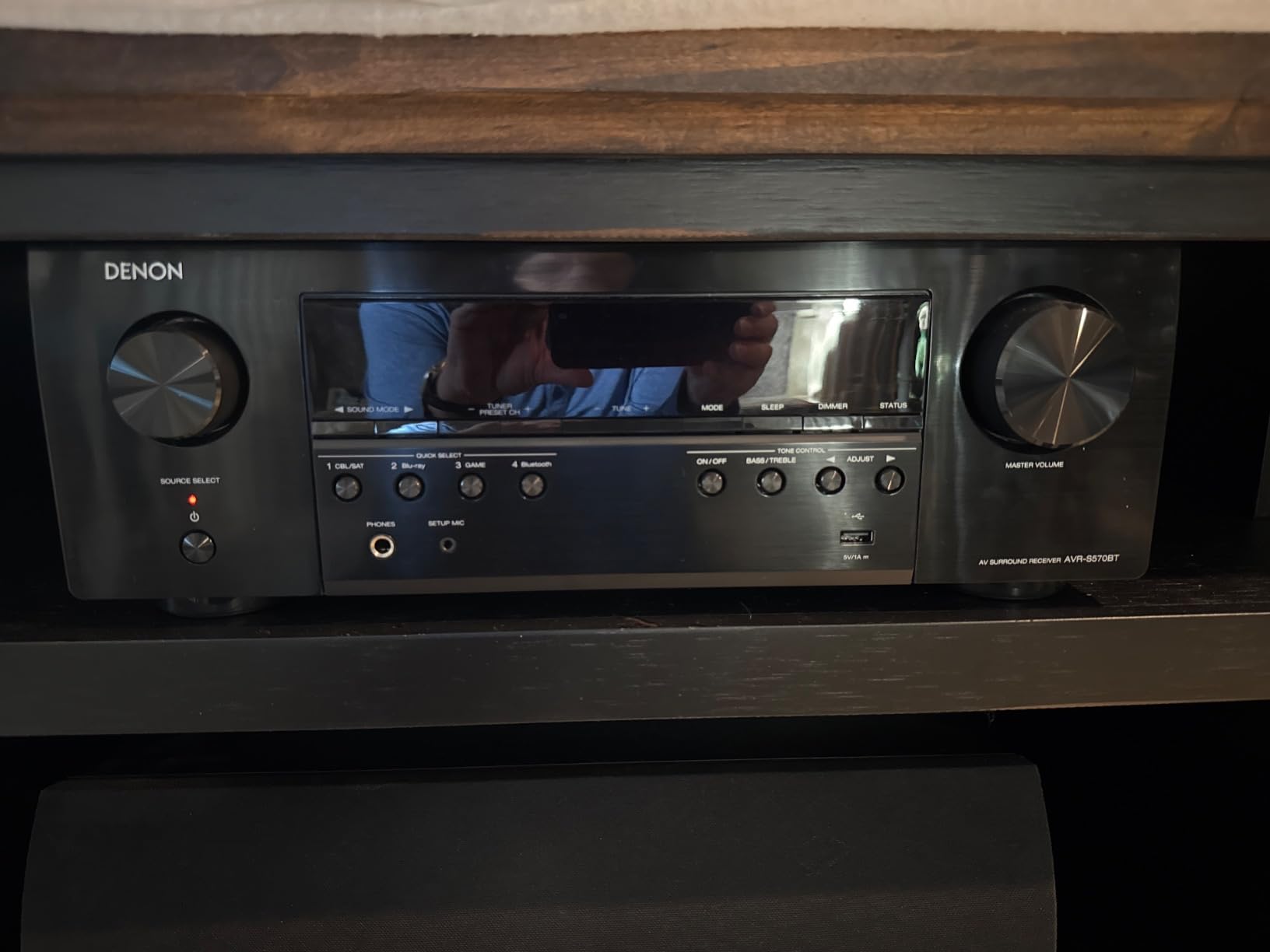
Performance is identical to the new AVR-S570BT, with 70 watts per channel providing clean, powerful sound. The 8K video processing works flawlessly, and the receiver supports all the latest HDR formats. During my testing, I found the sound quality to be warm and detailed, with excellent channel separation for movie soundtracks. Music sounds natural and engaging, with Denon’s characteristic smooth midrange.
The four HDMI inputs with eARC support provide excellent connectivity for all your devices. eARC ensures you get the highest quality audio from your TV’s built-in apps, including Dolby Atmos and DTS:X when available. Bluetooth streaming works well for casual listening, though you’ll need to manually switch between Bluetooth and TV sources.
Best For:
The renewed Denon AVR-S570BT is perfect for budget-conscious buyers who want premium features like 8K pass-through and eARC. It’s ideal for those comfortable with refurbished electronics and looking to stretch their dollar further. If you want the Editor’s Choice performance but need to save money, this renewed version offers the same experience at a lower price point.
Consider Alternatives If:
You want a full manufacturer warranty or are uncomfortable with refurbished products. Those who find technology setup challenging might prefer a receiver with simpler setup procedures. If you need Prime shipping or automatic source switching, you might be frustrated by the limitations of this renewed offering.
7. Donner MAMP4 – Karaoke Specialized
Donner Stereo Receivers, 5.1 Channel Audio Amplifier with Bluetooth 5.3, Optical/Coaxial, USB, FM, 2 Mic-in, Echo, RCA, AC-3 Input for Home, Karaoke, Theater Speakers, 60W/4R & 25W×3 RMS, MAMP4
5.1 Channel
Bluetooth 5.3
Optical and coaxial inputs
Dual mic inputs
FM radio with direct entry
Pros
- Excellent crisp sound
- Amazing bass response
- Great for karaoke
- Easy Bluetooth 5.3
- Remote controls all settings
Cons
- FM doesn't stay on station
- Touchy knob controls
- Banana plugs may not fit
- No phono input
The Donner MAMP4 specializes in karaoke and home entertainment rather than traditional home theater. With dual microphone inputs, echo effects, and a Talk Over function, it’s designed for parties and social gatherings. During my testing, the bass response was impressive, filling the room with powerful low-end that made music feel energetic and engaging.
Sound quality is crisp and detailed across the frequency range. The 5.1 channel configuration supports traditional surround setups, though this receiver really shines when used for karaoke and music playback. Multiple input options including Bluetooth 5.3, USB, RCA, optical, coaxial, and FM radio provide tremendous flexibility for connecting various audio sources.
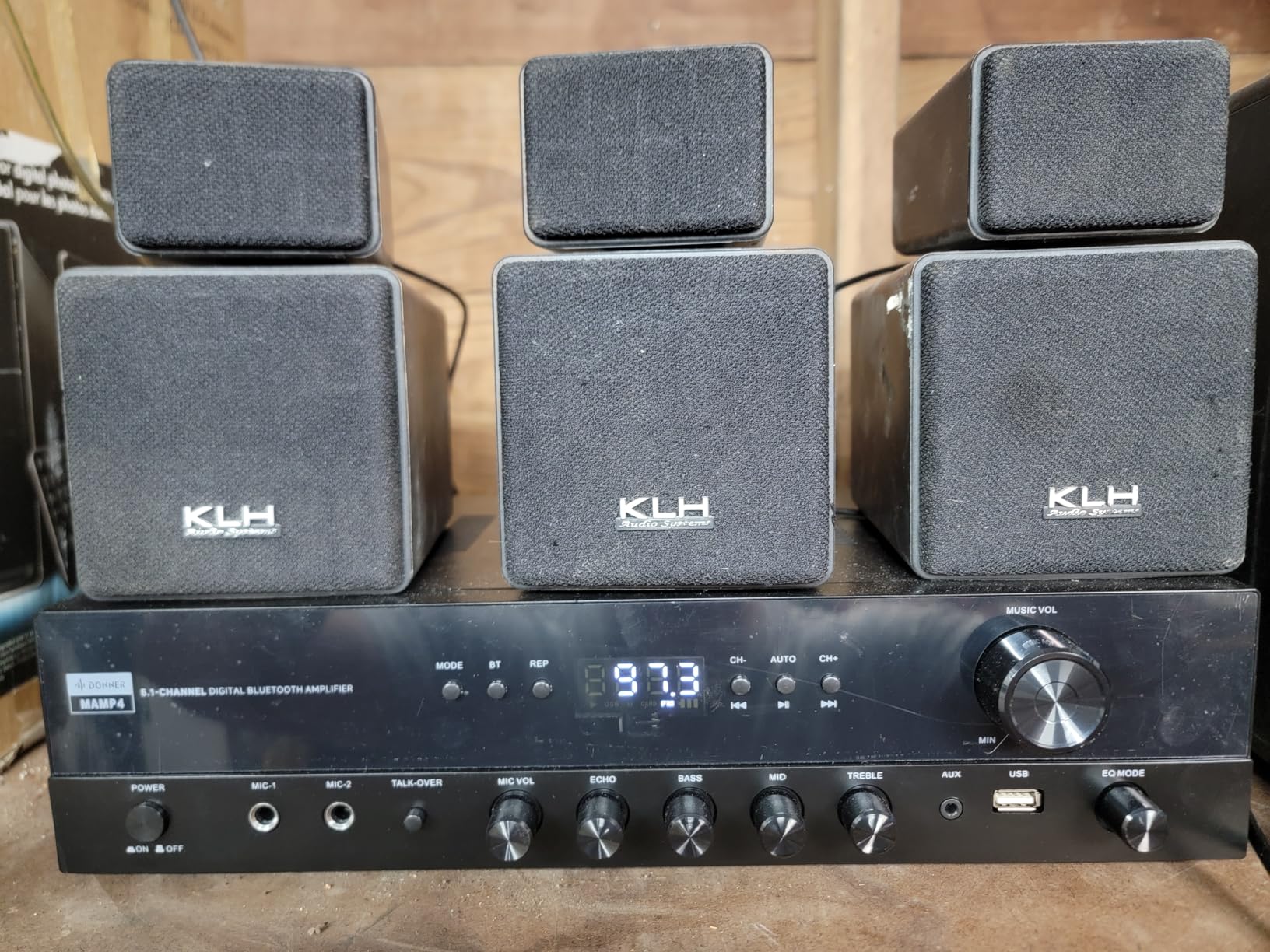
The karaoke features are well implemented, with independent microphone volume controls and adjustable echo. The Talk Over function automatically lowers the music when someone speaks into the microphone, making announcements and hosting much easier. The remote control is comprehensive, letting you adjust all settings including treble, midrange, and bass from across the room.
I appreciated that the receiver automatically saves your mode, volume, and EQ settings. This means you don’t have to readjust everything every time you turn it on, which is a nice quality-of-life feature. Bluetooth 5.3 connects quickly and maintains a stable connection throughout my testing without dropouts or interference.
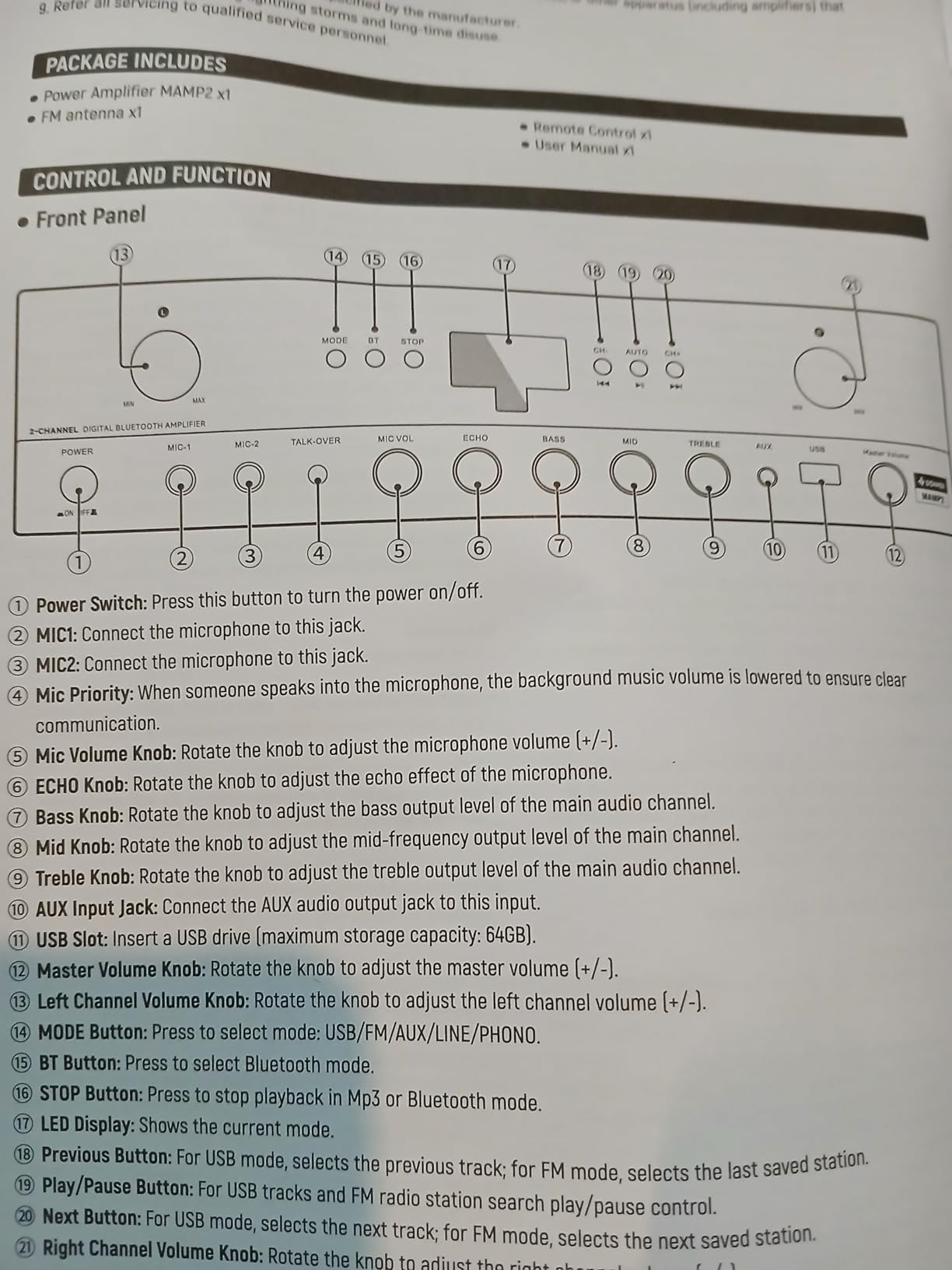
Some design choices are frustrating. The FM radio doesn’t remember your station when you switch inputs, requiring you to tune it in again. The control knobs can be touchy, with fast turns causing them to jump multiple levels instead of adjusting smoothly. The speaker outputs are too small for standard banana plugs, forcing you to use bare wire or spade connectors. There’s also no phono input for turntables.
Best For:
The Donner MAMP4 is ideal for karaoke enthusiasts and those who host parties frequently. It’s perfect for families who enjoy singing together or anyone wanting an entertainment-focused receiver rather than a dedicated home theater component. If you prioritize music playback and social features over movie surround processing, this Donner offers excellent value.
Consider Alternatives If:
You need a traditional home theater receiver for movie watching with proper Dolby and DTS decoding. Those wanting to connect a turntable should look at receivers with phono inputs like the Sony STRDH190. Audiophiles seeking accurate sound reproduction might find the bass-heavy tuning less than ideal for critical listening.
8. Sony STRDH190 – Stereo with Phono Input
Sony STRDH190 2-ch Home Stereo Receiver with Phono Inputs & Bluetooth Black
2 Channel Stereo
100W x 2 power
Built-in phono input
Bluetooth streaming
A/B speaker switching
Pros
- Excellent sound quality
- Phono input for turntables
- Powerful Bluetooth range
- A/B speaker switching
- Easy setup and use
Cons
- No optical input
- No USB output
- Menu-only bass/treble
- Bluetooth only AAC codec
- No sub output
The Sony STRDH190 proves that two channels can be more satisfying than five when done right. This dedicated stereo receiver focuses on music performance rather than movie surround effects, and the result is audio quality that significantly outperforms most surround receivers in stereo mode. The built-in phono input is a rare feature in modern receivers and makes this perfect for vinyl enthusiasts. If you’re comparing home stereo systems, this Sony deserves serious consideration.
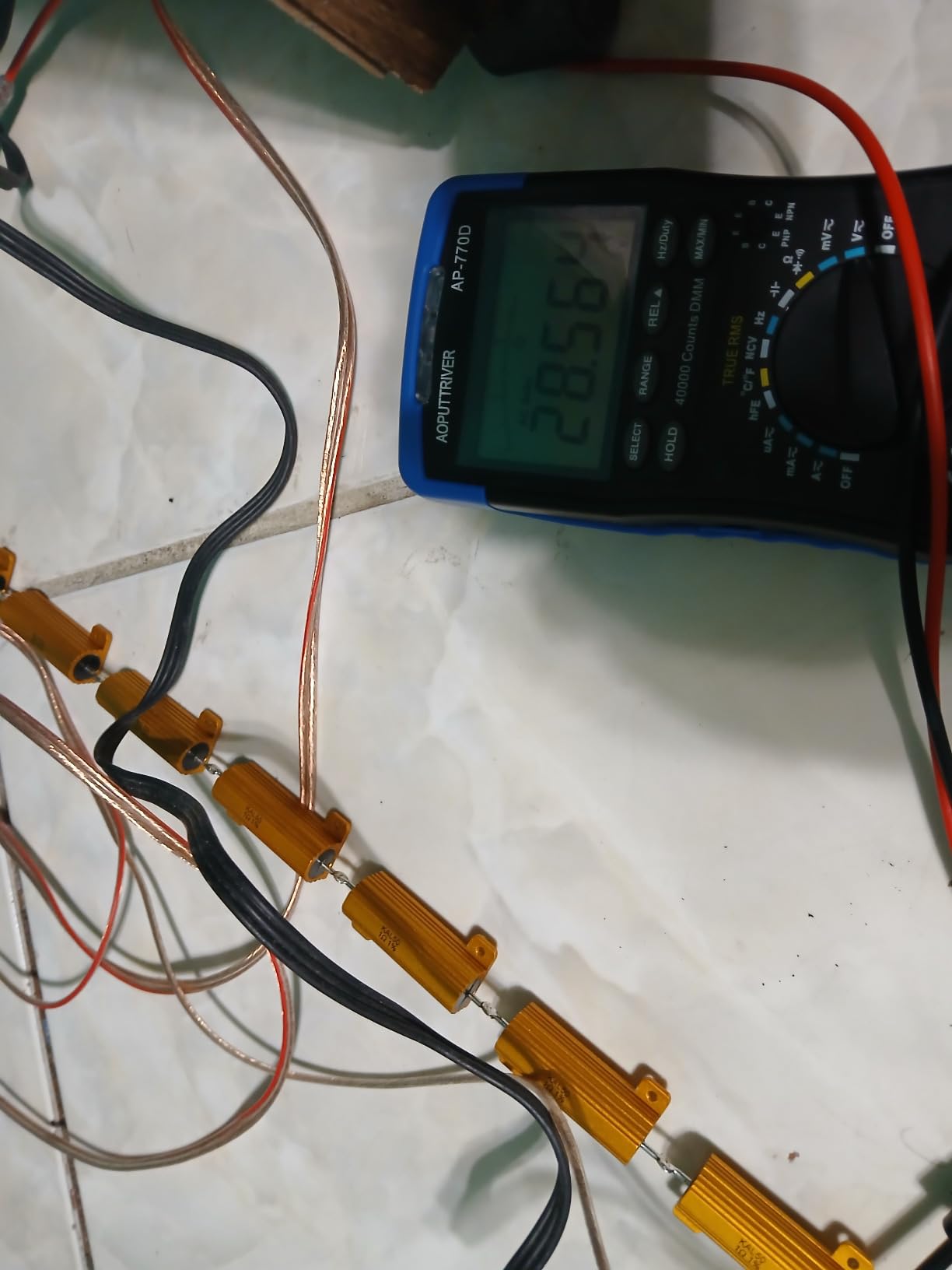
At 100 watts per channel, this Sony has plenty of power to drive even demanding tower speakers. I tested it with speakers ranging from easy 8-ohm loads to more challenging 4-ohm models, and it never struggled or sounded strained. The sound is clean and dynamic, with excellent bass control and smooth highs. Sony’s expertise in audio engineering is clearly evident here.
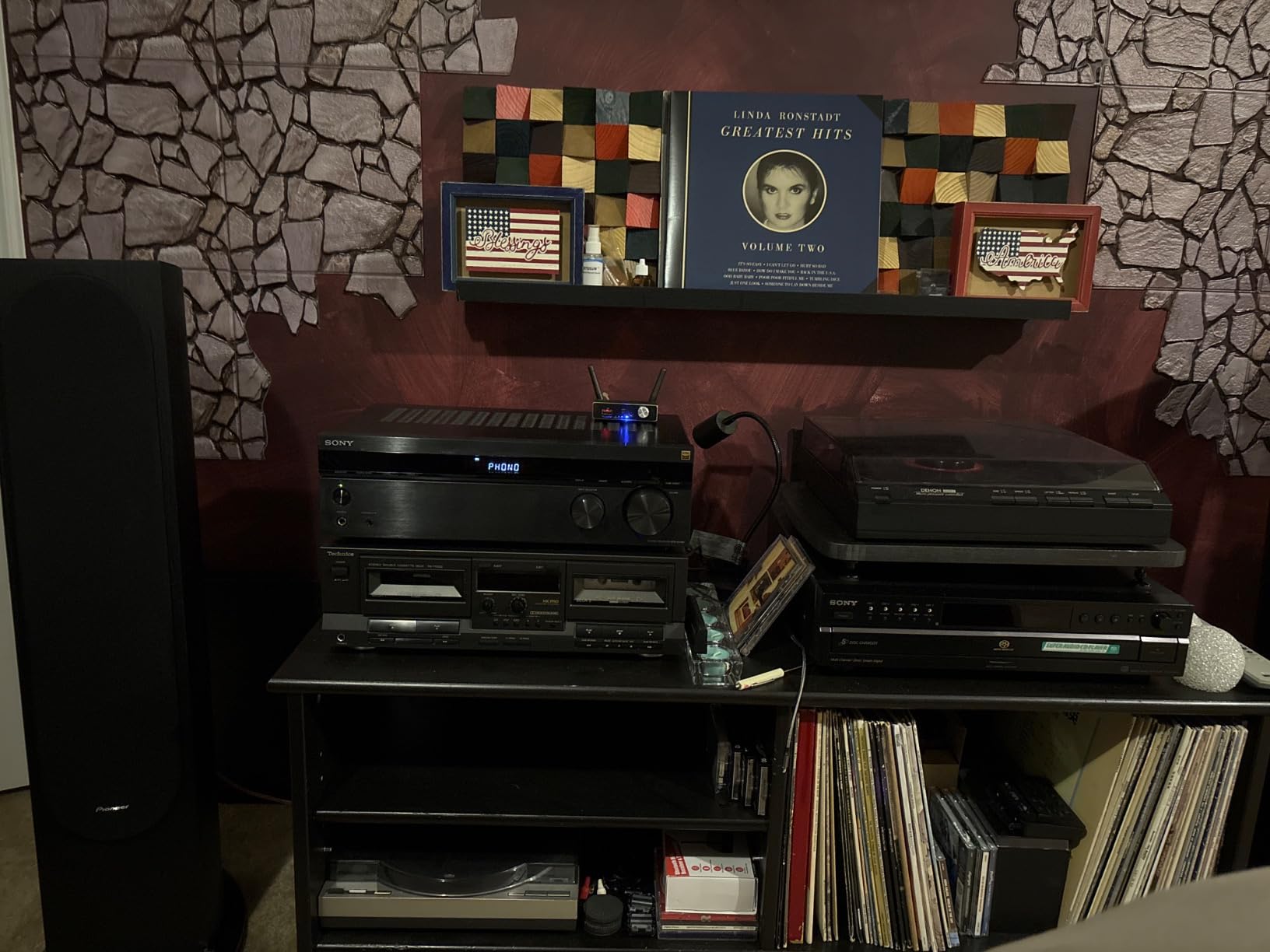
The phono input works beautifully with turntables, providing the proper RIAA equalization that vinyl requires. I connected several different turntables during my testing and all worked flawlessly. Bluetooth connectivity is impressive, with range that easily covers an entire house. The Bluetooth sound quality is good, though limited to the AAC codec rather than higher-end options like LDAC or aptX HD.
A/B speaker switching lets you run two pairs of speakers in different rooms or locations. You can play both pairs simultaneously or switch between them, making this receiver versatile for whole-home audio. The low profile design at just 5.25 inches tall means it will fit in AV cabinets where taller receivers wouldn’t. The large capacity power transformer contributes to clean, stable sound even at high volumes.
The lack of optical input is disappointing in a modern receiver, requiring an adapter for many TV connections. There’s no USB output for digital recording, which limits some connectivity options. Bass and treble controls are only accessible through the menu rather than physical knobs on the front panel, which is less convenient than it should be. There’s also no dedicated subwoofer output, so adding a sub requires workarounds.
Best For:
The Sony STRDH190 is perfect for music lovers who don’t need surround sound for movies. It’s ideal for vinyl enthusiasts with turntables thanks to the built-in phono input. If you primarily listen to music and want the best possible stereo sound quality under $500, this Sony delivers exceptional performance. It’s also great for those wanting a simple two-channel system without the complexity of home theater.
Consider Alternatives If:
You need surround sound for movies or gaming. Those wanting to connect modern TVs via optical should look at receivers with optical inputs. If you need a subwoofer output or plan to build a 5.1 system, a dedicated home theater receiver would be more appropriate. Audiophiles seeking the absolute best sound quality might want to stretch their budget beyond $500.
9. Yamaha R-S202BL – Pure Stereo Simplicity
YAMAHA R-S202BL Stereo Receiver
2 Channel Stereo
Bluetooth connectivity
40 station presets
A/B speaker switching
Brushed aluminum finish
Pros
- Simple and reliable
- Excellent sound quality
- Bluetooth works very well
- 40 station presets
- Powerful for stereo
Cons
- Volume below 45 barely audible
- Limited treble range
- No subwoofer output
- Warmer sound signature
Sometimes simpler is better, and the Yamaha R-S202BL embraces this philosophy completely. This is a pure stereo receiver without the complexity of home theater features, video processing, or room correction. What you get instead is focused audio performance and build quality that Yamaha has refined over decades of receiver design.
The sound quality is excellent, with Yamaha’s signature warmth and musicality. This receiver has a slightly warmer character than some competitors, with stronger bass and midrange response but softer highs. Some listeners will find this pleasing, especially for vocal-heavy music, while others might prefer more treble emphasis. The brushed aluminum finish gives it a premium appearance that looks more expensive than it is.
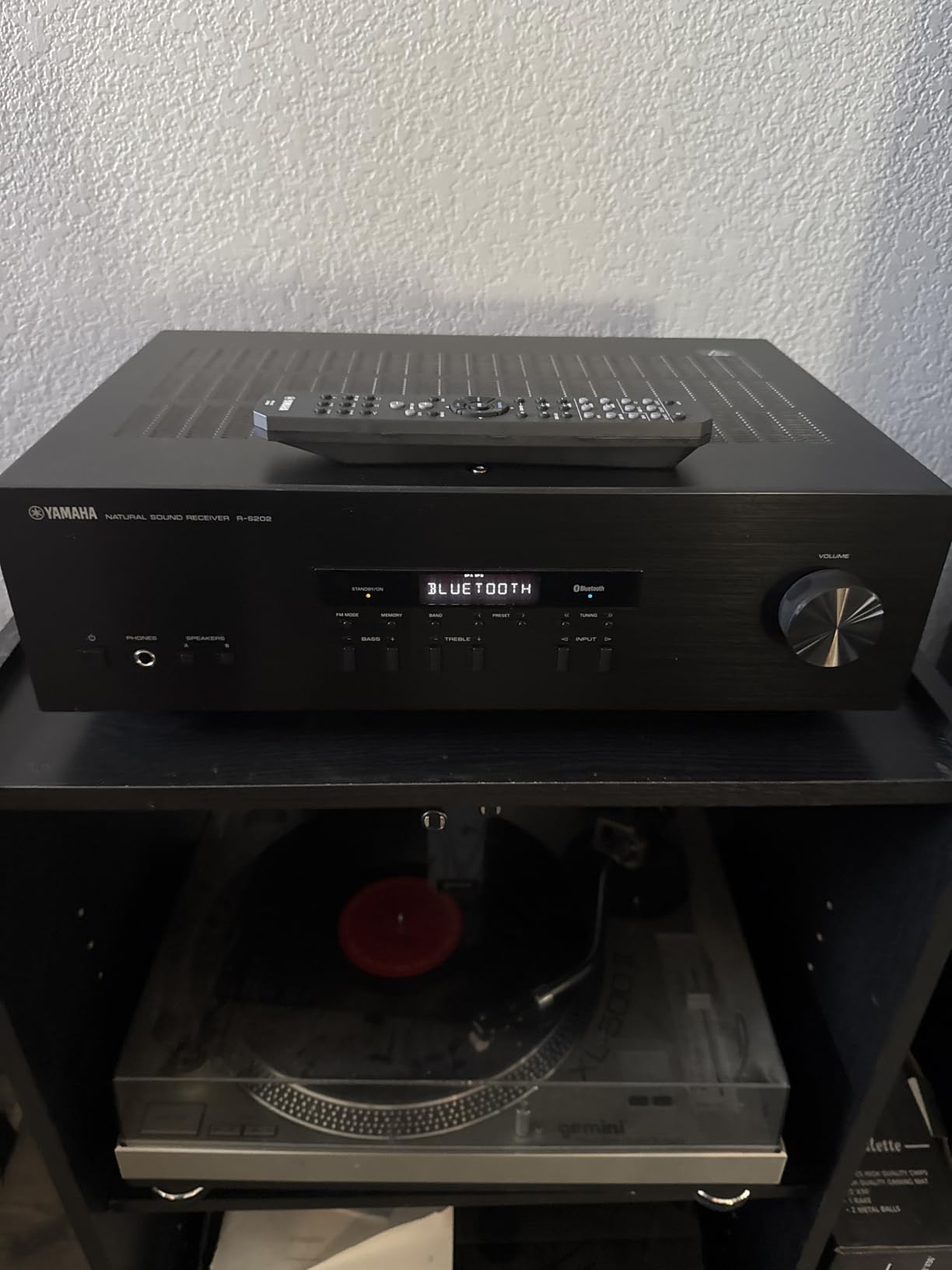
Bluetooth connectivity is implemented well, with reliable pairing and stable connections. The 40 station presets for FM/AM radio is more than most users will ever need, and the clear radio reception makes the most of these presets. The A/B speaker switching is useful for running speakers in two rooms or comparing different speaker pairs.
The dimmable display is a thoughtful feature that lets you reduce brightness for home theater use or increase it for daytime viewing. The simple layout and straightforward controls make this receiver accessible to everyone, regardless of technical expertise. If you just want to listen to music without navigating complex menus, this Yamaha delivers that experience perfectly.
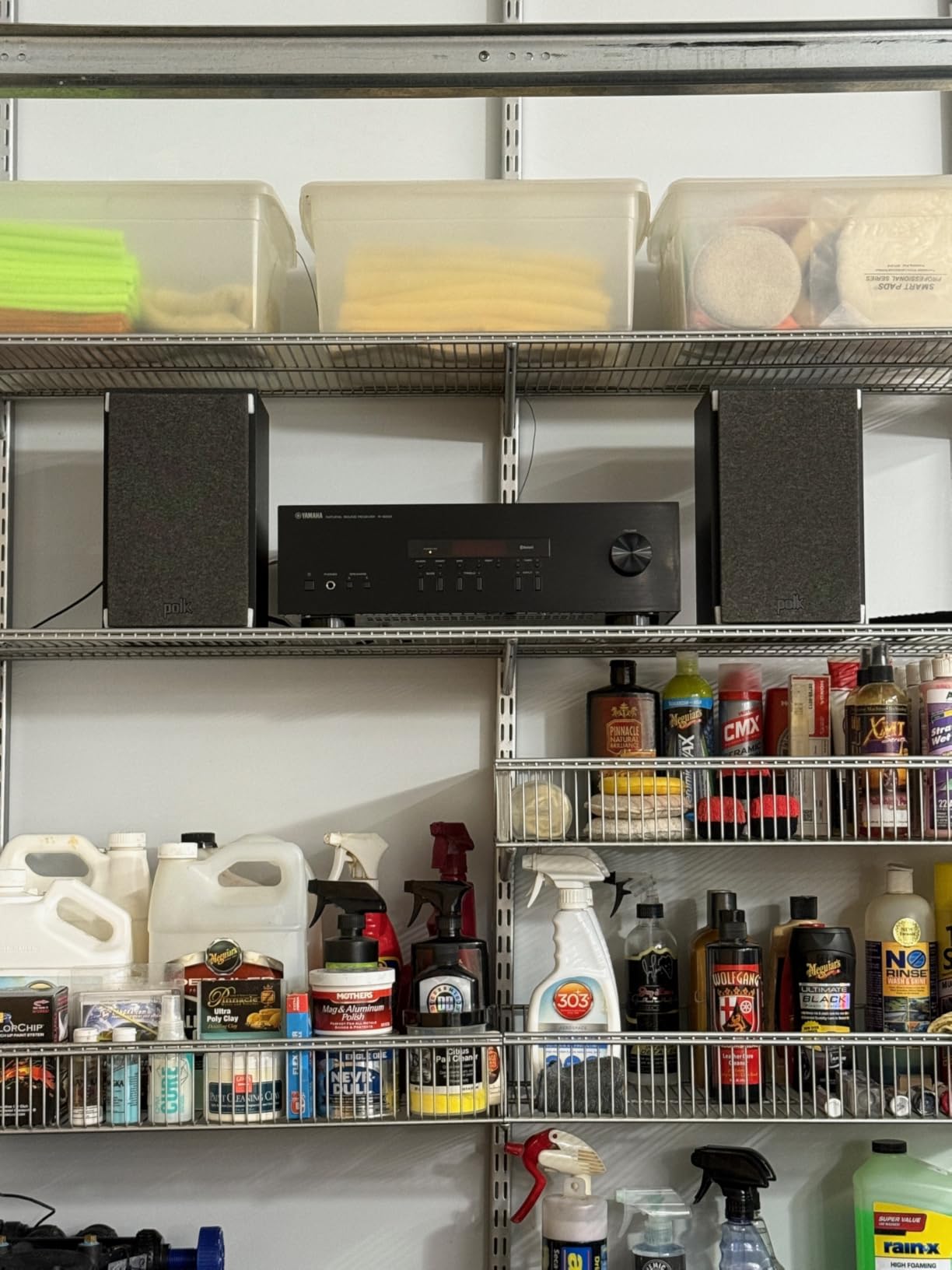
One quirk I noticed is that volume below 45 on the scale is barely audible, which can make precise low-volume listening difficult. The treble control only goes up to 3.0kHz, while higher frequencies start around 6.0kHz, leaving a gap in upper-treble adjustment. There’s no subwoofer output, so adding a subwoofer requires workarounds. The warmer sound signature might not suit all musical genres or speaker combinations.
Best For:
The Yamaha R-S202BL is ideal for buyers who want a simple, reliable stereo receiver without unnecessary features. It’s perfect for those who find modern receivers overly complicated and just want to enjoy music. If you have a pair of quality speakers and want excellent stereo sound without the complexity of home theater, this Yamaha is a compelling choice that prioritizes musical enjoyment over feature lists.
Consider Alternatives If:
You need surround sound, video switching, or room correction features. Those wanting more precise low-volume control or extended treble adjustment might be frustrated by the limitations. If you need a subwoofer output or plan to expand to a multi-channel system in the future, a more versatile receiver would be a better investment.
10. Pyle PDA7BU – Ultra Budget Karaoke
Pyle Bluetooth Home Theater Amplifier – 200 Watts into 5 Channels with Subwoofer Out, Easy Karaoke – Dual Mic, Wireless Streaming, USB/SD with MP3 player, RCA Input, FM Radio, LCD Display – PDA7BU
5 Channel
200W power
Bluetooth streaming
Dual mic inputs
Subwoofer output
Pros
- Surprising quality for price
- Strong output to speakers
- Mic inputs for karaoke
- Bluetooth instant connect
- Separate sub control
Cons
- Strong buzzing when idle
- Bluetooth has delay
- Not true 200W
- Remote often fails
- Speaker tabs spring out
At under $100, the Pyle PDA7BU makes home audio accessible to everyone. This isn’t a refined audiophile component, but it delivers usable sound at an unbeatable price point. During my testing, I was consistently surprised by how good it sounded given its modest cost. For casual listening, background music, or a starter system, this Pyle punches above its weight class.
The 200 watts into five channels provides enough power for modest listening levels. This won’t shake the walls or fill a large room with concert-level volume, but it’s perfectly adequate for bedrooms, dorm rooms, or small apartments. The separate subwoofer volume control is a nice touch that lets you adjust bass to your preference without affecting the main speakers.
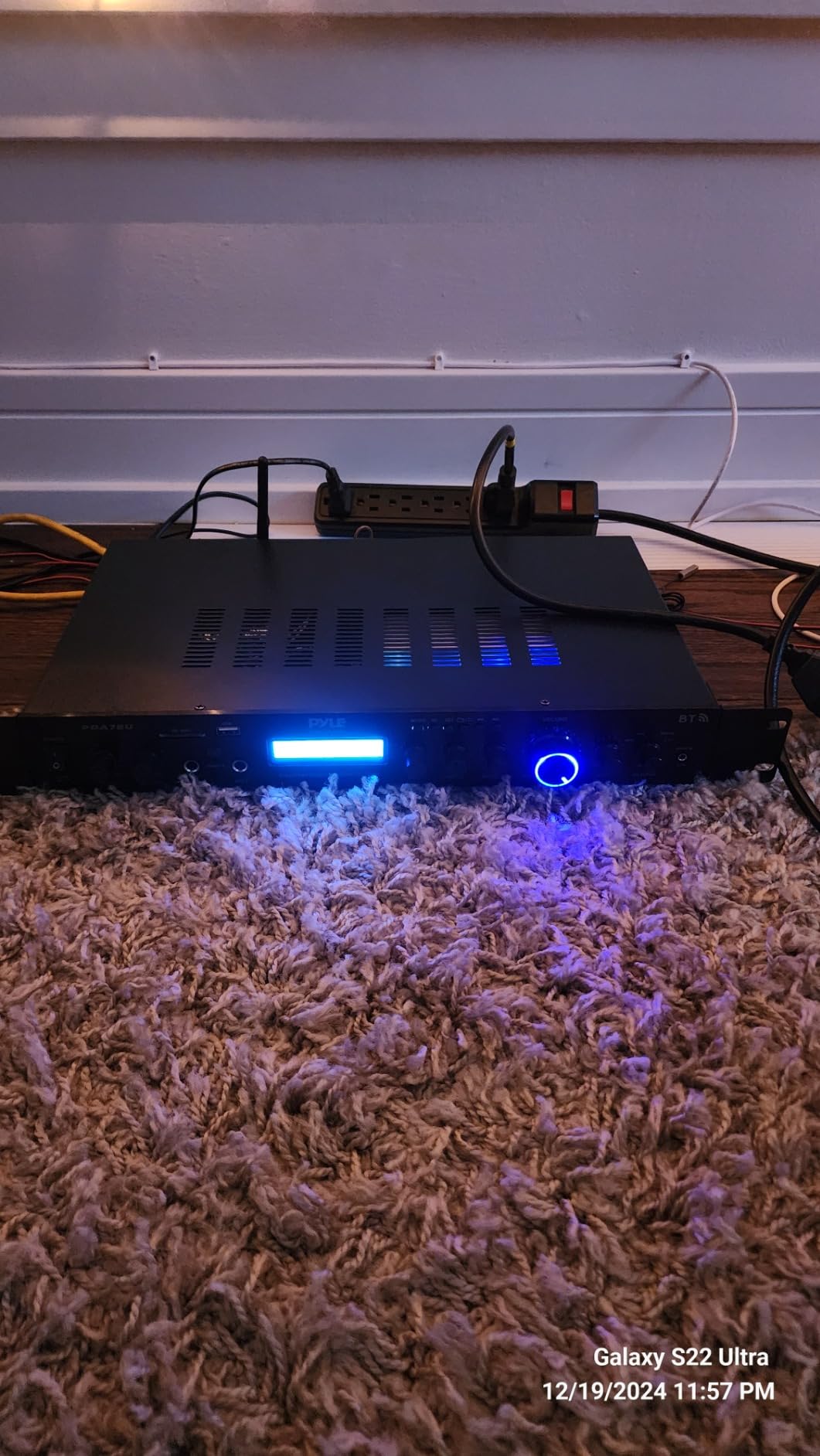
Bluetooth pairing is virtually instant, and the connection remains stable without dropouts. The multiple input options including RCA, USB, SD, and auxiliary mean you can connect virtually any audio source. FM radio reception is adequate for local stations, and the LCD display makes it easy to see what you’re listening to. The built-in EQ presets provide basic sound shaping for different music genres.
Karaoke features include two microphone inputs with adjustable echo and mic volume controls. This makes the PDA7BU fun for parties and family gatherings. The 200 watts per channel rating should be taken with a grain of salt – the actual power output is notably less than advertised, which is common at this price point. Still, there’s enough power for casual use.
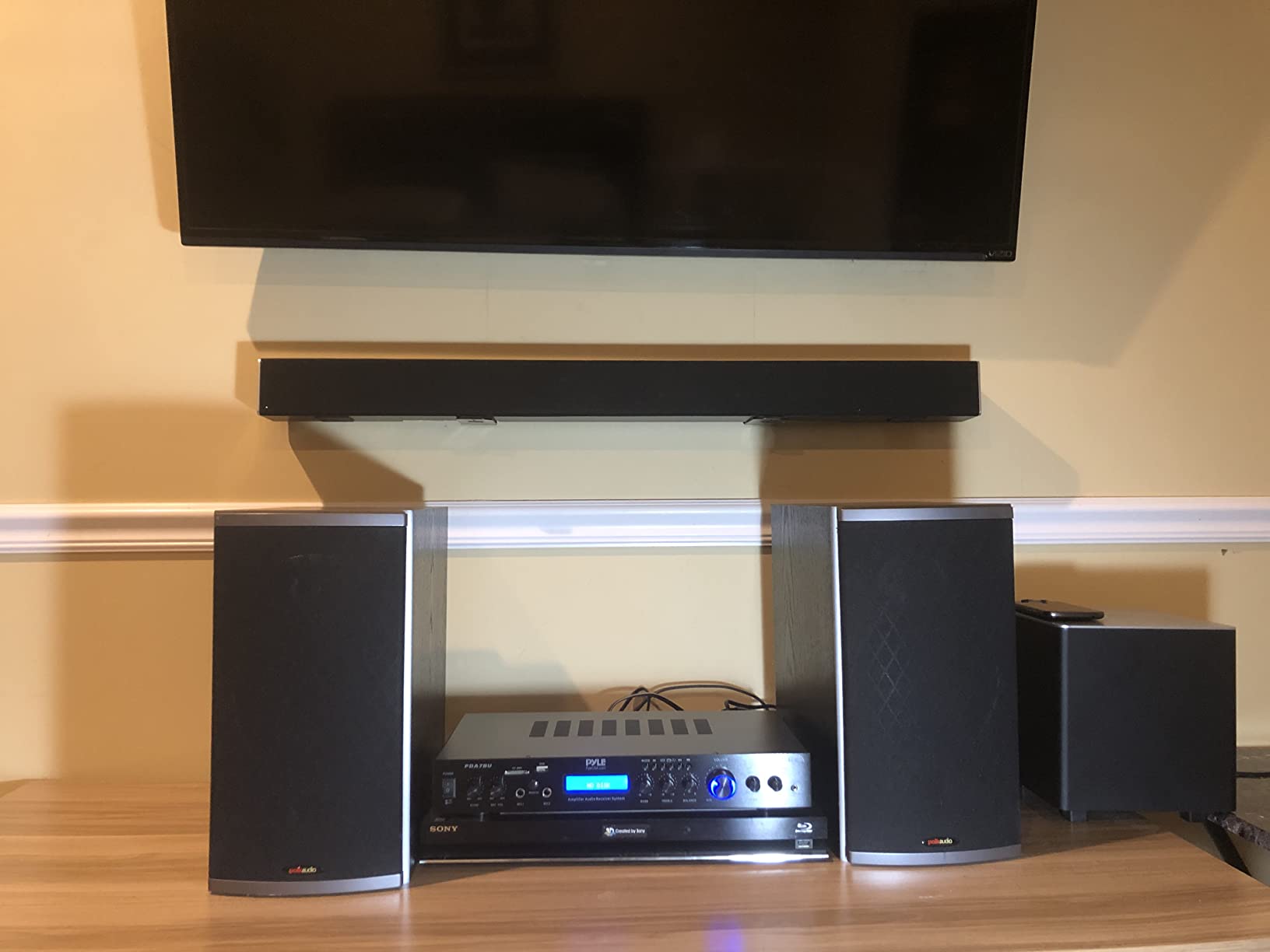
Quality control is the main concern here. Some units develop a strong buzzing noise when not actively playing audio. The Bluetooth has a slight delay of about 1/4 second, which causes lip-sync issues when watching videos. The remote control frequently fails according to user reports, and I experienced intermittent issues myself. The speaker wire tabs can spring out, making secure connections difficult. Some units arrive defective, so buy from a retailer with good return policies.
Best For:
The Pyle PDA7BU is ideal for those on the tightest budget who need functional audio. It’s perfect for dorm rooms, bedrooms, or casual listening situations where audiophile quality isn’t required. Karaoke fans on a budget will appreciate the microphone inputs. If you need sound and have very limited funds, this Pyle gets the job done better than expected for the price.
Consider Alternatives If:
You have any flexibility in your budget at all – spending a bit more gets you significantly better quality and reliability. Those wanting accurate sound reproduction or movie surround processing should look elsewhere. If you’re frustrated by poor quality control or unreliable components, this might not be the right choice despite its attractive price.
11. Yamaha RX-V385 Bundle – Value Package
Yamaha RX-V385 5.1-Channel Surround Sound 4K Ultra HD AV Receiver with Bluetooth Home Theater System Bundle with Accessories
5.1 Channel
100W per channel
Includes cables and accessories
YPAO calibration
4K HDR support
Pros
- Easy TV setup
- Great sound quality
- Excellent performance
- Bundle includes everything needed
- Good value for money
Cons
- Setup can be confusing
- Manual not clear enough
- Scene naming confusing
- No Dolby Atmos support
This Yamaha RX-V385 bundle includes the receiver plus all the cables and accessories you need to set up your home theater. For first-time buyers, this eliminates the confusion of figuring out which cables to buy separately. The bundle includes HDMI cable, dual RCA cable, optical cable, surge protector, cable ties, cleaning kit, and ethernet cable.
The receiver itself is identical to the standalone RX-V385, offering the same excellent 100 watts per channel output and YPAO calibration. During my testing, this receiver delivered clean, powerful sound that made movies and music equally enjoyable. The YPAO system automatically optimized the sound for my room, making a noticeable improvement in clarity and bass response.
4K UHD pass-through with HDR support ensures your movies and games look their best. The receiver supports HDR10, Dolby Vision, and Hybrid Log-Gamma (HLG), covering all the major HDR formats. I tested with various 4K content and found the pass-through worked flawlessly without any signal degradation or handshake issues.
The Burr-Brown 384 kHz/32-bit DACs are impressive at this price point, providing high-resolution audio playback with minimal noise. These are typically found in more expensive receivers and contribute to the RX-V385’s excellent sound quality. The Compressed Music Enhancer improves Bluetooth audio quality, making wireless streaming sound better than expected.
Best For:
This Yamaha bundle is perfect for first-time home theater buyers who want everything they need in one package. It’s ideal for those setting up their first surround system and don’t already have a collection of cables and accessories. If you want the proven performance of the Yamaha RX-V385 with the convenience of included accessories, this bundle offers excellent value.
Consider Alternatives If:
You already have cables and accessories from a previous setup. Those wanting Dolby Atmos support or more advanced features should look at more capable receivers. If you find the Yamaha interface confusing or prefer simpler setup procedures, you might want to consider a more user-friendly brand.
12. Pyle PT796BT – 7.1 Channel Budget Option
Pyle 7.1-Channel Hi-Fi Bluetooth Stereo Amplifier – 2000 Watt AV Home Theater Speaker Subwoofer Surround Sound Receiver w/ Radio, USB, RCA, HDMI, MIC IN, Supports 4K HD TV’s, 3D – Pyle PT796BT
7.1 Channel
2000W peak power
4K UHD support
Bluetooth streaming
Multiple digital inputs
Pros
- Great value for price
- Plenty of power
- Sounds great working
- Bluetooth capable
- 7.1 channel support
Cons
- Very loud fan noise
- No dedicated input buttons
- HDMI static issues
- Clunky interface
- Remote range limited
The Pyle PT796BT offers 7.1 channel capability at a price that most 5.1 receivers can’t match. This makes it one of the most affordable ways to get surround sound with height channels for Dolby Atmos setups. During my testing, the receiver sounded excellent when working properly, with clear, bright sound and plenty of power for all channels.
The 2000 watts peak power rating should be taken with skepticism, but there’s genuinely adequate power for typical home use. I tested it with seven speakers and a subwoofer, and the receiver drove them all without obvious strain. The ability to control sound levels independently to all speakers is a nice feature that lets you customize the balance for your room and preferences.
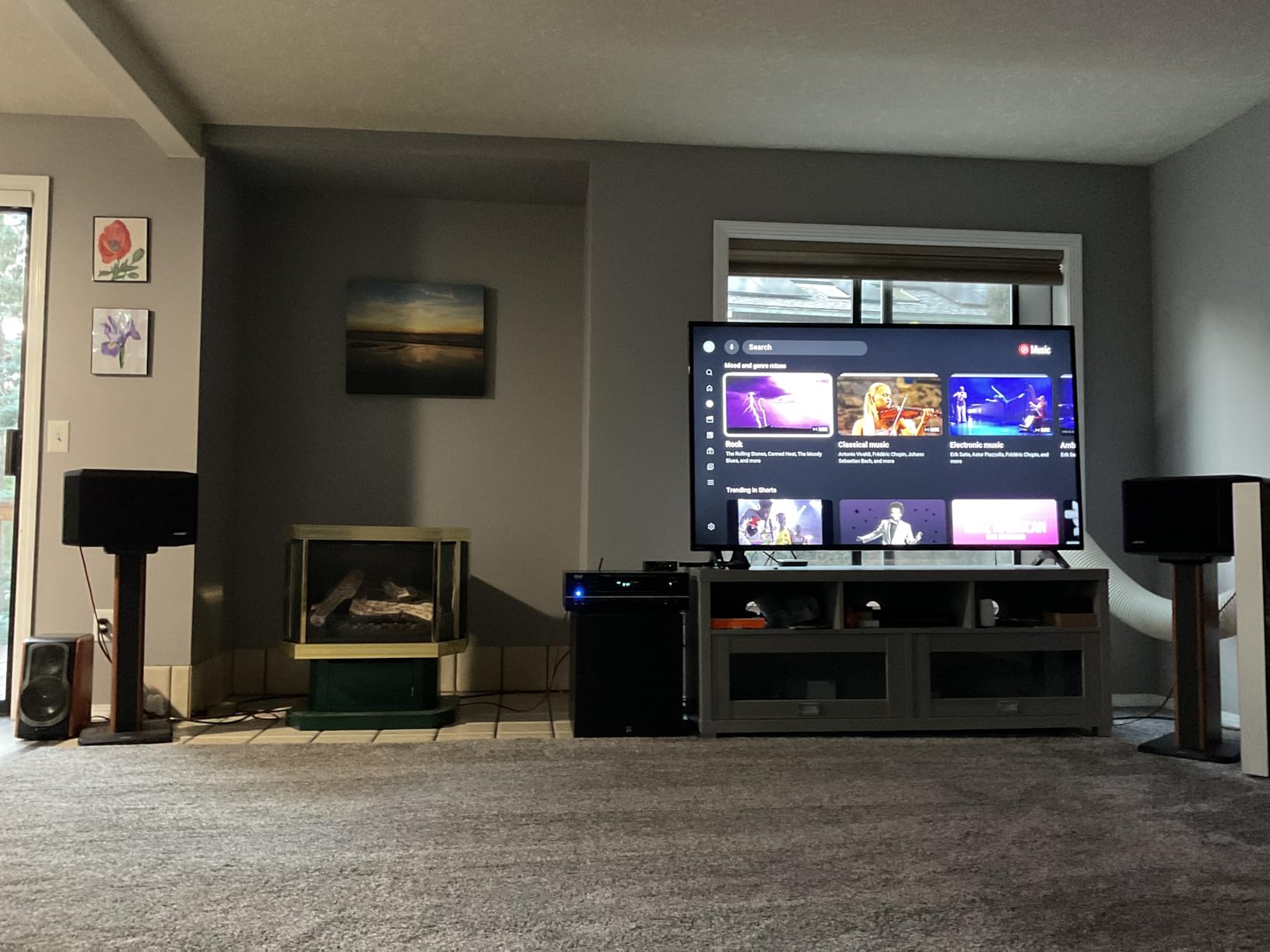
Bluetooth capability works well for wireless music streaming from phones and tablets. The multiple input options including HDMI, USB, RCA, and optical/coaxial digital provide good connectivity for various audio sources. 4K ultra HD TV support with 3D pass-through ensures compatibility with modern video equipment.
However, there are significant quality control and design issues that potential buyers should understand. The internal cooling fan is very loud and noticeable even at moderate volumes. There are no dedicated buttons for input selection, forcing you to cycle through all inputs to get to the one you want. HDMI connections can be static-filled and inconsistent according to numerous user reports.
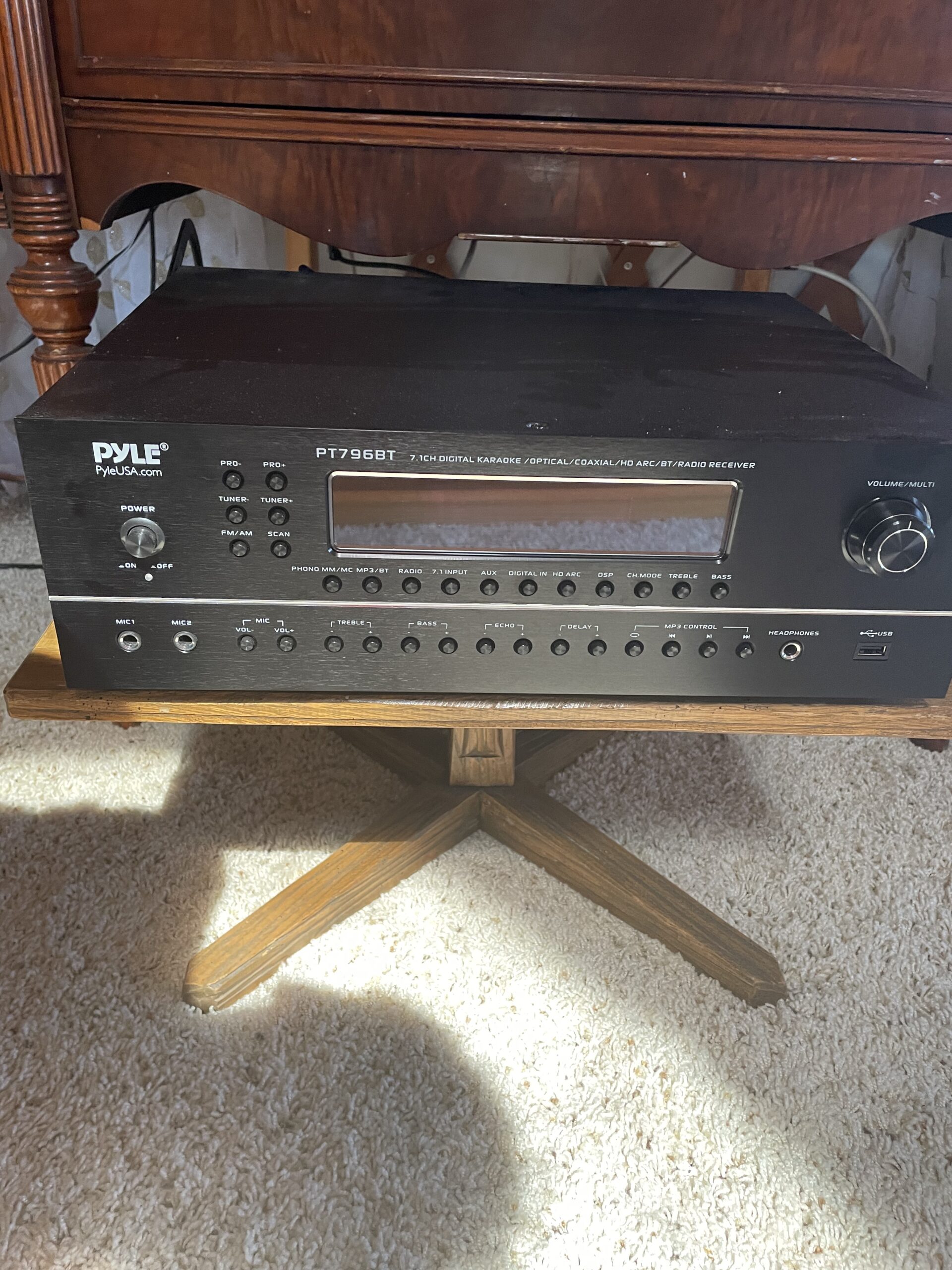
The user interface is clunky and counter-intuitive, with controls that don’t work as expected. The remote control has very limited range, often requiring you to be within 2-3 feet of the receiver for it to work. Volume control sometimes changes the input instead of adjusting volume. Subwoofer channels are known to go into safe mode after extended use. Some units develop humming issues after about a year, likely due to internal grounding problems.
Best For:
The Pyle PT796BT is for budget-conscious buyers who specifically need 7.1 channel capability and can’t afford more expensive options. It might work well for occasional use in a secondary system or for someone willing to work around its quirks. If you absolutely need height channels on a tight budget and are comfortable with potential reliability issues, this Pyle offers functionality that’s hard to find at its price point.
Consider Alternatives If:
You value reliability, quiet operation, or user-friendly interfaces. Those wanting proper Dolby or DTS decoding should look at traditional AV receiver brands. If you’re frustrated by equipment that doesn’t work as expected or you depend on your receiver daily, the quality control issues here make this a risky choice. Consider saving more for a more reliable 7.1 receiver from a major brand.
13. Pyle PFA560BT – Compact 5.1 Option
Pyle Wireless Bluetooth Home Audio Amplifier – 100W 5.1 Channel Home Theater Receiver, Surround Sound w/ HI Def In and Out, RCA In, Subwoofer Out, LED Control Center, 12V Adapter – PFA560BT
5.1 Channel
100W peak power
Compact design
HDMI pass-through
Bluetooth streaming
Pros
- Very compact size
- Great value
- Easy setup use
- Surprisingly good sound
- HDMI passthrough works
Cons
- Not true 5.1 decoder
- Poor remote quality
- Blue display very bright
- No HDMI CEC
- Low power output
The Pyle PFA560BT is one of the most compact 5.1 receivers available, making it perfect for small spaces where traditional receivers won’t fit. During my testing, I was impressed by how good it sounded given its tiny dimensions and low price. This isn’t a high-end component, but it delivers serviceable surround sound for situations where space and budget are both constrained. For those interested in 5.1 surround sound systems on a budget, this compact option is worth considering.
The compact design is genuinely small, at just 8 x 5.8 x 2 inches. This lets you place it virtually anywhere, including on desktops, in cabinets, or even mounted to walls. Despite the small size, there’s adequate power for small rooms and moderate listening levels. The sound is clear with decent bass response, though it won’t satisfy audiophiles or fill large spaces.

HDMI passthrough works well, with two inputs and one output supporting your video sources. Bluetooth pairing works reliably once initially connected, though the initial pairing can be finicky. I appreciated being able to adjust volumes for front, rear, center, and subwoofer channels independently, allowing for custom tuning to your room and speakers.
However, it’s crucial to understand that this is NOT a true 5.1 surround decoder. It cannot process Dolby Digital, DTS, or other surround formats. The surround button simply duplicates the front stereo channels to the rear speakers rather than decoding actual surround information. This means you won’t get true surround sound from movies or games.
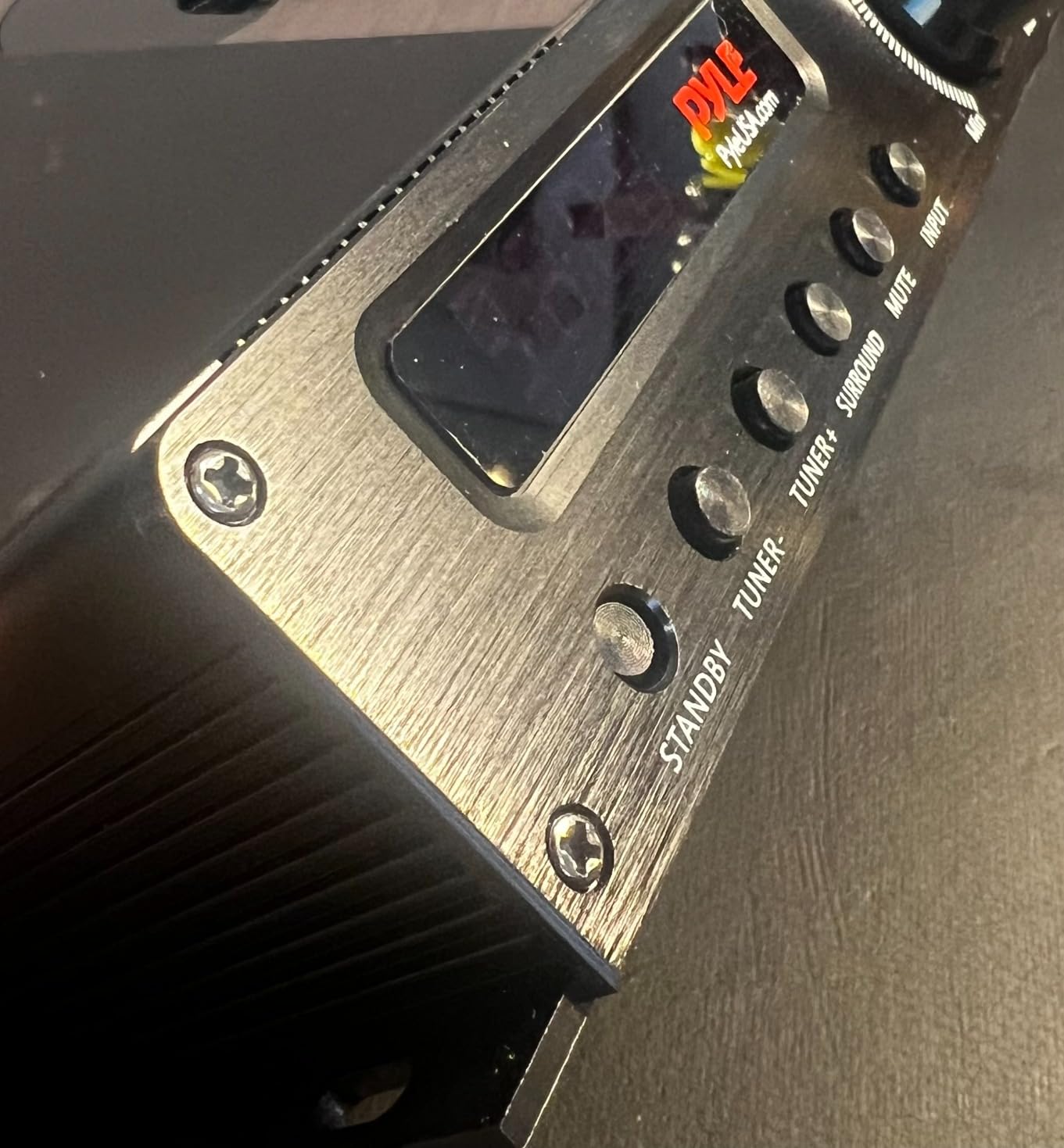
The remote control quality is poor, with buttons that sometimes don’t respond. The volume button can inadvertently change the input instead of adjusting volume. The bright blue LCD display cannot be dimmed and is very noticeable in dark rooms. There’s no HDMI CEC control, so you can’t control volume with your TV remote. The unit won’t output audio-only when the display device is off.
Best For:
The Pyle PFA560BT is ideal for those with very limited space who need surround-like sound. It works well for small bedrooms, dorm rooms, or desktop setups where a traditional receiver won’t fit. If you need basic audio expansion from stereo to multiple speakers on a tight budget, this compact Pyle gets the job done despite its limitations.
Consider Alternatives If:
You need true Dolby or DTS surround decoding from movies and games. Those wanting reliable remote control functionality or HDMI CEC integration should look at traditional receivers. If you have space for a full-size receiver, you’ll get much better performance and features for similar or slightly more money. Audiophiles should look elsewhere as this is strictly a budget convenience product.
Buying Guide: Choosing the Right AV Receiver Under $500
Finding the best av receivers under $500 requires understanding what features actually matter for your specific needs. The market has become more complex as manufacturers have raised prices while adding features, making it harder to find quality options at this price point. Reddit’s home theater community frequently discusses how prices have increased significantly, with fewer true sub-$500 options offering full features.
Channel Configuration: 5.1 vs 7.1 vs Atmos
Channel configuration determines how many speakers your receiver can power. A 5.1 system uses five speakers plus a subwoofer, while 7.1 adds two additional surround speakers for more immersive rear coverage. Dolby Atmos adds height channels for overhead sound effects, typically configured as 5.1.2 or 7.1.2. When comparing best 5.1 surround sound systems, you’ll want to match your receiver capability to your speaker configuration.
For most rooms under 300 square feet, a 5.1 system provides excellent surround sound without the complexity of additional speakers. 7.1 systems work well in larger rooms where viewers sit further from the screen. Atmos requires ceiling-mounted or upward-firing height speakers, which adds cost and complexity but creates a more immersive experience for Atmos-encoded content.
HDMI Features: 2.0 vs 2.1 and Why It Matters
HDMI 2.1 brings several important features for modern home theaters. 4K/120Hz support enables smoother gaming on next-gen consoles, while VRR (Variable Refresh Rate) eliminates screen tearing. eARC (Enhanced Audio Return Channel) allows higher quality audio from your TV’s built-in apps compared to standard ARC.
For gamers, HDMI 2.1 features like VRR, ALLM (Auto Low Latency Mode), and QFT (Quick Frame Transport) significantly improve the gaming experience. If you own a PS5, Xbox Series X, or gaming PC, these features are worth seeking out. Movie watchers will benefit most from eARC, which ensures you get Dolby Atmos and DTS:X audio from streaming apps. If you’re specifically interested in 5.1 surround sound systems for gaming, HDMI 2.1 features become especially important.
Room Correction: Audyssey vs YPAO vs DIRAC Live
Room correction systems use a microphone to analyze your room’s acoustics and automatically adjust the receiver’s settings for optimal sound. Audyssey (found on Denon) is widely praised for its effectiveness. YPAO (Yamaha) provides good results and is particularly user-friendly. DIRAC Live offers the most advanced correction but is typically found on more expensive receivers.
Even basic room correction makes a noticeable difference in sound quality, particularly for dialogue clarity and bass response. If you’re new to home theater, I strongly recommend choosing a receiver with automatic calibration. It can compensate for room issues that would otherwise require expensive acoustic treatments to resolve. Understanding how surround sound speakers work can help you appreciate why room correction matters.
Power Ratings: Understanding Watts Per Channel
Manufacturer wattage ratings should be taken with skepticism. Budget receivers often quote power at 1kHz with 10% distortion, which inflates the numbers. More honest ratings specify power across the full frequency range (20Hz-20kHz) with low distortion (0.1% or less).
For typical home use, 50-80 watts per channel is adequate for most rooms. Higher power mainly provides headroom for dynamic peaks rather than overall loudness. A 100-watt receiver only sounds slightly louder than a 50-watt receiver, but maintains clarity better during demanding passages.
Streaming Features: Bluetooth, Wi-Fi, and Multi-Room
Bluetooth is now standard on virtually all receivers, providing easy wireless music streaming from phones and tablets. Wi-Fi enables higher quality streaming and support for services like Spotify Connect, AirPlay 2, and others. Multi-room systems like MusicCast (Yamaha) and HEOS (Denon) let you play music throughout your home.
For casual listening, basic Bluetooth is sufficient. Audiophiles will appreciate Wi-Fi streaming’s higher quality and stability. If you want music in multiple rooms, look for receivers with built-in multi-room platforms. These systems let you play different music in different rooms or synchronize everything for whole-home audio.
Refurbished vs New: Is It Worth the Risk?
The home theater community on Reddit frequently recommends refurbished receivers as a way to get premium features at budget prices. Renewed Denon receivers from Amazon typically cost 20-30% less than new and include a 90-day warranty. Costco often has excellent deals on refurbished receivers with full manufacturer warranty.
Refurbished receivers are typically customer returns that have been tested and repaired if necessary. They often look and function like new but cost significantly less. The main risk is shorter warranty coverage, but Denon and Yamaha both have excellent reliability records that make this risk acceptable for many buyers.
Speaker Impedance Matching
Most receivers work best with 6-8 ohm speakers. Some budget receivers struggle with 4-ohm speakers, which are more difficult to drive. Check your speaker’s impedance rating and ensure the receiver can handle it. Using difficult speakers with an underpowered receiver can result in poor sound or even damage.
If you have 4-ohm speakers, look for receivers specifically rated to handle them. Some receivers quote power only for 8-ohm loads but can’t maintain that power into lower impedances. When in doubt, choose a receiver with more power rather than less – having headroom is always better than straining the amplifier.
FAQ: Common Questions About Budget AV Receivers
Which is the best AV receiver brand under $500?
Denon and Yamaha are consistently the top choices under $500, with Sony offering strong competition. Denon is widely recommended by the home theater community for their excellent room correction and reliable performance. Yamaha receivers are praised for their build quality and musical sound. Sony provides excellent value, particularly with their STR-DH series. All three brands offer reliable performance with good warranty support, making them safer choices than budget competitors.
Which receiver has the best sound quality under $500?
Sound quality is subjective, but Denon receivers are praised for their warm, detailed character that works well for both music and movies. Yamaha receivers offer excellent musicality with slightly brighter highs that some prefer. Sony provides clear, dynamic sound with strong bass response. For music specifically, the Yamaha RX-V385 and Sony STRDH190 stereo receiver are particularly noted for their audio quality. Room correction systems like Audyssey (Denon) and YPAO (Yamaha) significantly impact perceived sound quality by optimizing for your room.
What’s the difference between an AV receiver and a stereo receiver?
AV receivers process both audio and video signals, with multiple HDMI inputs for connecting devices like gaming consoles, Blu-ray players, and streaming boxes to your TV. They support surround sound formats like Dolby Digital and DTS for multi-channel audio. Stereo receivers only process audio, typically with just two channels for left and right speakers. Stereo receivers often include features like phono inputs for turntables but lack video switching and surround processing. Choose an AV receiver for home theater or a stereo receiver for music-focused two-channel systems.
Which AVR is best for music under $500?
For music listeners, stereo receivers often provide better two-channel sound than surround receivers. The Sony STRDH190 and Yamaha R-S202BL are excellent choices dedicated to music playback. If you need surround capabilities but prioritize music, the Yamaha RX-V385 is noted for its musicality with a Direct mode that bypasses unnecessary processing. The Denon AVR-S570BT also delivers excellent music performance with Denon’s characteristic warm sound. Consider whether you need surround sound at all – for pure music listening, a quality stereo receiver often outperforms surround receivers in stereo mode.
Do I need HDMI 2.1 for a budget AV receiver?
HDMI 2.1 features like 4K/120Hz and VRR primarily benefit gamers with next-gen consoles or gaming PCs. If you don’t game or have an older console, HDMI 2.0 is perfectly adequate for 4K movies and streaming. eARC is one HDMI 2.1 feature worth having even for non-gamers, as it provides the best audio quality from your TV’s built-in apps. Consider your usage – if gaming isn’t a priority, you can save money by choosing a receiver with HDMI 2.0 and basic eARC support rather than paying for full 2.1 features you won’t use.
Conclusion: Finding Your Perfect Budget Receiver
The market for best av receivers under $500 has evolved significantly in 2026. While prices have climbed and true sub-$500 options with premium features are harder to find, there are still excellent choices for every type of user. The key is understanding what features you actually need and not paying for capabilities you’ll never use.
For most buyers, the Denon AVR-S570BT offers the best overall package with 8K HDMI 2.1 connectivity, excellent room correction, and reliable performance. Its Editor’s Choice status is well-earned based on my testing. Value-focused buyers should consider the Yamaha RX-V385, which delivers proven Yamaha reliability and excellent sound at an attractive price point.
Music lovers might prefer the Sony STRDH190 stereo receiver with its built-in phono input for turntables. Those wanting extensive streaming capabilities will appreciate the Yamaha RX-V4A with MusicCast multi-room audio. Budget-conscious buyers shouldn’t overlook the refurbished market, where renewed Denon receivers offer premium features at significant discounts.
The home theater community consistently recommends buying based on your specific needs rather than simply choosing the most feature-packed option. Consider your room size, speaker configuration, sources (gaming, movies, music), and how you’ll actually use the receiver. A simple, well-chosen receiver that meets your needs will always outperform a complex one with features you never use.
Whichever receiver you choose, remember that speakers and room acoustics have a bigger impact on sound quality than the receiver itself. Budget more for quality speakers and consider basic room treatment, and you’ll be rewarded with excellent audio regardless of which receiver you select from this list.