
If you have spent any time browsing bass forums, you already know the same names keep coming up: Fender, Ampeg, Orange, Markbass, GK. Our team spent the last three months hauling ten of the most talked-about bass guitar amplifiers from our rehearsal room to small clubs and back, and we want to share what we actually found when the marketing claims met the road.
The best bass guitar amplifiers in 2026 are not just the loudest or the most expensive. They are the ones that match your gigging reality, your back, and your ears. We compared watts, weights, EQ flexibility, and direct outs, and we played through each one with a Precision Bass, a Jazz Bass, and a five-string to see how they handled different registers.
Whether you are a beginner hunting for a first serious practice amp, a weekend player needing something portable, or a gigging bassist tired of hauling a 70-pound combo up three flights of stairs, this guide is built to help you pick the right rig. If you want a wider look at bass gear, check out our complete bass amplifiers guide or our bass combo amp deep dive.
Table of Contents
Top 3 Picks for Best Bass Guitar Amplifiers (September 2026)
Best Bass Guitar Amplifiers in 2026: Quick Overview
| Product | Specifications | Action |
|---|---|---|
 Fender Rumble 200 V3 Fender Rumble 200 V3 |
|
Check Latest Price |
 Fender Rumble 100 V3 Fender Rumble 100 V3 |
|
Check Latest Price |
 Fender Rumble 40 V3 Fender Rumble 40 V3 |
|
Check Latest Price |
 BOSS Katana-110 Bass BOSS Katana-110 Bass |
|
Check Latest Price |
 Orange Crush Bass 100 Orange Crush Bass 100 |
|
Check Latest Price |
 Orange Crush Bass 25 Orange Crush Bass 25 |
|
Check Latest Price |
 Fender Rumble 25 V3 Fender Rumble 25 V3 |
|
Check Latest Price |
 Ampeg Rocket Bass RB108 Ampeg Rocket Bass RB108 |
|
Check Latest Price |
 Fender Rumble 15 V3 Fender Rumble 15 V3 |
|
Check Latest Price |
 Hartke HD15 Hartke HD15 |
|
Check Latest Price |
1. Fender Rumble 200 V3 – Best Overall Bass Combo for Gigging Bassists
Fender Rumble 200 V3 Bass Guitar Combo Amplifier with Effects, 200W – Black
200W Class D combo
15 inch speaker
39.4 lbs
XLR DI out
Pros
- 200W handles most club and mid-size venue gigs
- Only 39.4 lbs for a 200W 15 inch combo
- Versatile 3-band EQ and switchable contour
- Built-in overdrive from gritty growl to modern slap
- XLR direct output for PA connection
- 2 year limited warranty
Cons
- EQ changes are subtle
- Built-in drive not for purists
When we first unboxed the Rumble 200 V3, I did a double take at the scale. 200 watts through a 15 inch speaker that weighs under 40 pounds would have sounded impossible five years ago, but the Class D power section makes it real.
I ran it through a four-piece rock band at a 250-cap room and never touched the PA send once. The on-stage volume stayed full and round, and the XLR out gave our engineer a clean signal that sat well in the mix without any rumble on the low B.
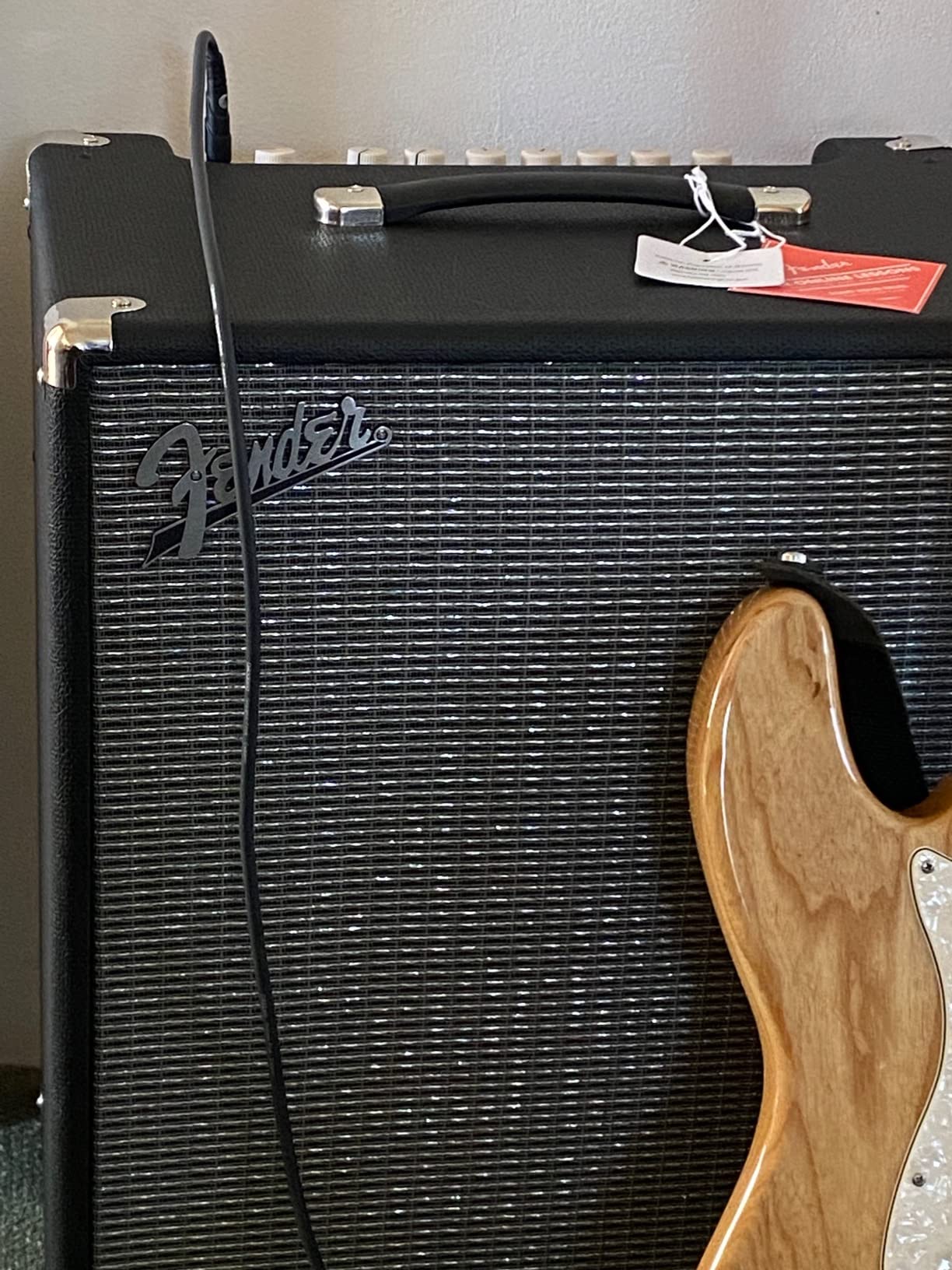
The overdrive circuit surprised me. Fender’s V3 overdrive runs from a subtle warm grit to a proper modern slap crack, and the contour switch lets you scoop mids or push them forward depending on the room. Our sound guy kept asking why my signal sounded so much bigger than usual, and the answer was simply that the headroom was there when I needed it.
The 15 inch Eminence driver moves real air, which is what you want when you are anchoring a low end. Slap tones had the snap and roundness I expect from a much heavier rig, and fingerstyle picked up enough articulation to cut through dense chord work without sounding thin.
For Whom It Works Best
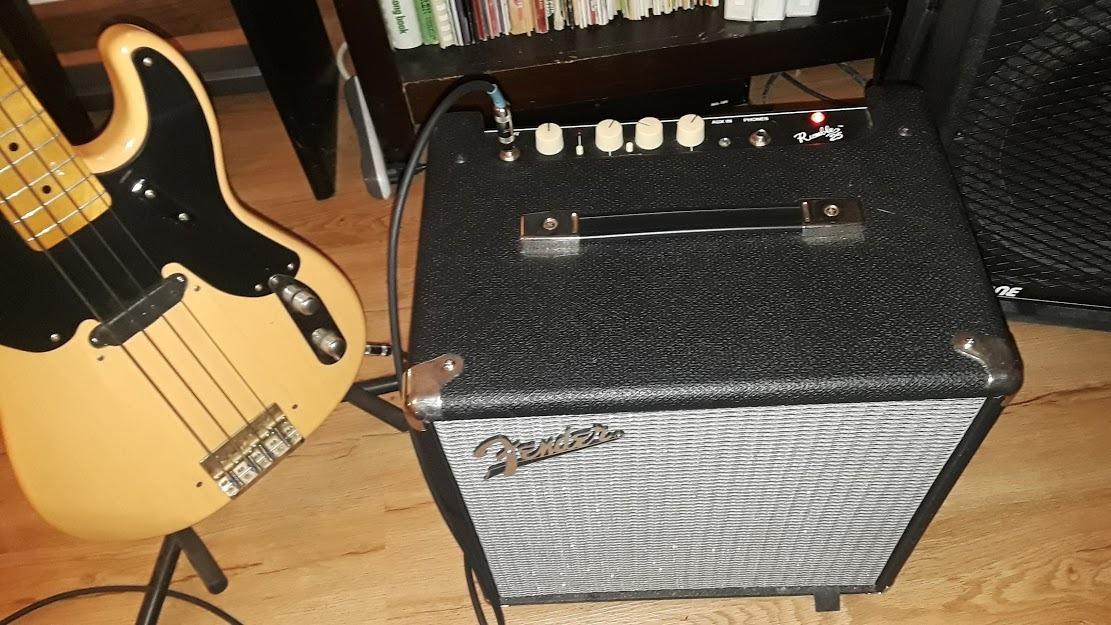
This is the amp I would buy if I could only own one bass guitar amplifier for the next decade. Gigging players who cover clubs, small theaters, and rehearsal spaces will get the most from the 200W headroom, and home players benefit from the aux in and headphone out for late-night sessions.
It also makes sense for bassists who split time between home, studio, and stage. The XLR DI, effects loop, and built-in overdrive cover almost any live or recording situation, and at under 40 pounds it is light enough to load in solo.
Where It Falls Short
If you play exclusively in your bedroom, 200W is overkill and the 15 inch speaker will overwhelm a small space. The EQ changes are subtle compared to a graphic EQ, so players who like extreme tone sculpting will want an outboard parametric. The overdrive is good but not tube-like, and purists chasing that vintage SVT sag will need to look elsewhere.
2. Fender Rumble 100 V3 – Best Value Bass Combo for Working Players
Fender Rumble 100 V3 Bass Amp for Bass Guitar Combo, 100-Watt, 12″ Speaker
100W Class D combo
12 inch Eminence speaker
23.3 lbs
Tone voicing
Pros
- Excellent power-to-weight ratio at 23.3 lbs
- 100W Class D covers small and mid-size gigs
- 12 inch Eminence speaker delivers rich tone
- Tone voicing presets for quick sound changes
- Built-in overdrive exceeds expectations
- Effects loop and XLR DI included
- 2 year limited warranty
Cons
- Effects loop not foot-switchable
- No Bluetooth connectivity
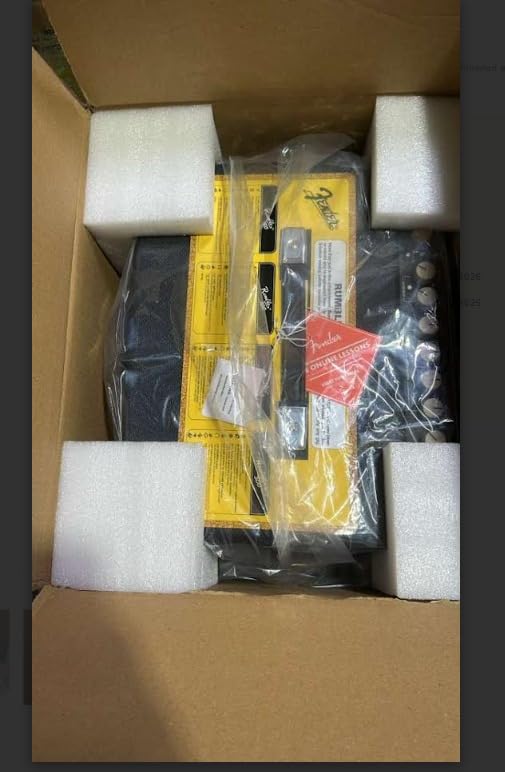
The Rumble 100 V3 is the amp I recommend most often to friends who gig two or three times a month. 100 watts through a 12 inch Eminence in a 23-pound package covers more ground than the spec sheet suggests.
Our test unit arrived the night before a bar gig, and we took it straight to the venue. Pushed through a 4×10 cab it filled the room, and run on its own it kept up with a loud two-guitar band at a 150-cap club. The XLR out went to the front of house and the engineer had zero complaints about the signal.

What I appreciate most is the tone voicing. Fender built in several voicing presets that change the EQ response without you touching a knob, and the overdrive is genuinely musical. The contour switch is the secret weapon on a bad-sounding stage. It scoops or pushes the mids so you can find a pocket in a muddy room without rebuilding your whole tone from scratch.
At 23.3 pounds, I carried it with one hand down a long hallway at the venue. If you are a bassist who has ever skipped a gig because the amp was too heavy, this is the answer.
For Whom It Works Best
Working gigging players who want pro features without the pro price will be thrilled with the Rumble 100. It also suits intermediate players stepping up from a 40 or 50W practice combo, since the XLR DI and effects loop open up real stage and recording options.
It is a great choice for bassists who tour light. With 100W of clean power, the right DI, and a usable overdrive, you can cover most club dates without an additional cabinet.
Where It Falls Short
100W through one 12 inch is not enough for outdoor festivals or large rooms without PA support. The effects loop is not foot-switchable, so if you rely on a volume pedal in the loop, you will need a workaround. There is no Bluetooth, which is fine for stage work but a small annoyance for home players who want to stream tracks.
3. BOSS Katana-110 Bass – Best Bass Amp for Built-in Effects and Recording
BOSS Katana-110 Bass Amplifier (KTN110B)
60W class AB combo
10 inch speaker
4 effects sections
USB
Pros
- Four independent effects sections
- Shape switch with three tone characters
- Power Control for cranked tone at any volume
- USB and BOSS Tone Studio editor
- 6 memory locations for sound recall
- XLR DI with cabinet emulation
Cons
- Heavy at 42.5 pounds
- No built-in Bluetooth
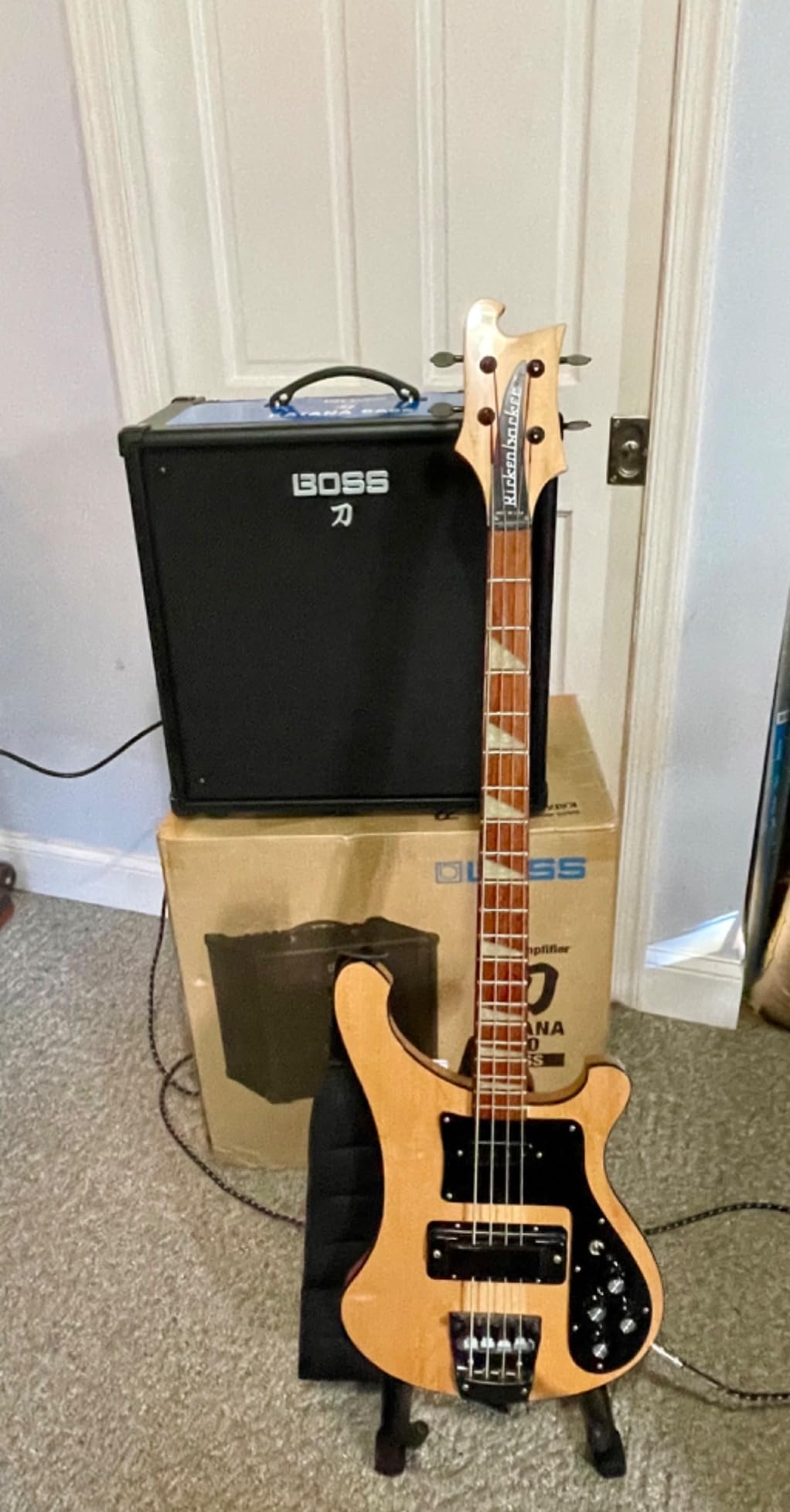
The Katana-110 Bass is the most feature-packed bass combo I have plugged into. BOSS took the effects engine from the guitar Katana line and built a serious bass amp around it, and the result is a 60W combo that can replace a small pedalboard.
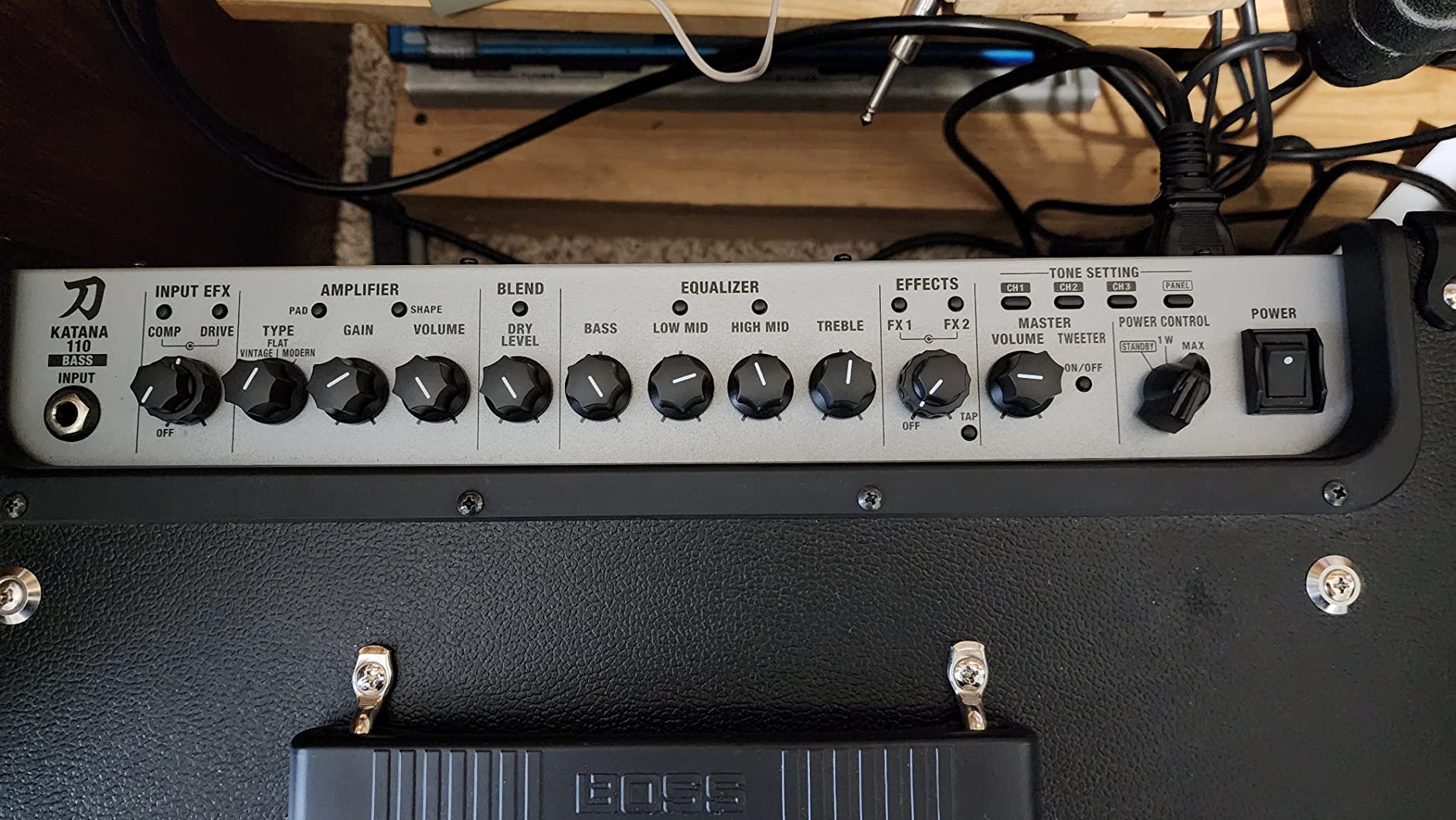
Inside you get compressor, drive, modulation, and reverb or delay, each with multiple options. The Shape switch gives you three tonal starting points: mid scoop, bright, and extended range. I spent a week dialing in patches and ran out of ideas before I ran out of options.
For recording, the USB out connects to a computer and the BOSS Tone Studio app lets you tweak every parameter on screen. The XLR DI with cabinet emulation means I can go straight into an interface and skip mic’ing the cab, which is huge for late-night sessions in apartments where a real mic on a 10 inch is not happening.
The Power Control knob is the sleeper feature. You can crank the preamp for that pushed, saturated sound and then drop the output to 1W for bedroom-friendly volume. The amp keeps its character, which is something most “master volume” designs lose at low settings.
For Whom It Works Best
If you are a home player or bedroom producer who wants one amp that covers practice, recording, and small gigs, the Katana-110 is hard to beat. It is also great for bassists who love effects but hate carrying a pedalboard. Everything lives in the amp, and the six memory slots mean you can save a clean tone, a chorus tone, a slap tone, and so on.
Songwriters and bandleaders will appreciate how fast you can move between sounds. Switching from a clean fingerstyle patch to a heavy overdrive is one button press.
Where It Falls Short
At 42.5 pounds, the Katana-110 is heavier than the Fender combos at similar power. The 60W output is on the low side for loud gigs without PA support, and there is no Bluetooth, so streaming backing tracks means a cable.
4. Orange Crush Bass 100 – Best Bass Amp for Classic British Growl
Orange Crush Bass 100W Bass Guitar Combo Amp, Orange
100W solid state combo
15 inch speaker
Parametric EQ
Buffered loop
Pros
- Iconic Orange visual style and tone
- Active 3-band EQ with parametric mid
- Bi-amp inspired Blend and Gain controls
- Foot-switchable dirt channel
- Balanced XLR output for PA
- Buffered effects loop
Cons
- Heavy at 35 pounds
- Limited stock
Orange bass amps have a sound that is instantly recognizable: woody, mid-forward, with a kind of bark that you cannot get from a Fender or an Ampeg. The Crush Bass 100 brings that character to a 100W combo that competes with the big names.
The active 3-band EQ with a fully parametric mid control is the headline feature. Most bass amps give you a sweepable mid, but Orange lets you set both the frequency and the width. I dialed in a narrow 400Hz cut to get out of the way of a busy rhythm guitar, and the response was surgical.
The Blend and Gain controls are inspired by bi-amped rigs and let you mix a clean and a dirty signal internally. The dirt channel is foot-switchable, so I could keep a clean fingerstyle tone on the verse and stomp in a growling overdrive for the chorus. The buffered effects loop handled my analog delay without sucking tone, which is more than I can say for many amps in this price bracket.
Aesthetically, this is the only amp on the list that starts a conversation just by sitting on stage. The basket-weave tolex and Orange logo are part of the experience.
For Whom It Works Best
Bassists who want a distinct, character-rich tone rather than a neutral platform will love the Crush Bass 100. It is also a great choice for rock and indie players who want an overdrive channel that goes from warm to full-on fuzz without needing a separate pedal.
If you gig in clubs and want to look the part while you sound the part, Orange delivers both. The 15 inch speaker pushes enough air to handle loud stages.
Where It Falls Short
35 pounds is a real consideration for one-trip load-ins. Stock is limited on this model, so if you see one available, do not wait. The Orange character is not for everyone, and players who want a clean, hifi bass tone may find it too colored.
5. Fender Rumble 40 V3 – Best Lightweight Mid-Power Combo for Small Gigs
Fender Rumble 40 V3 Bass Amp for Bass Guitar, 40 Watts, with 2-Year Warranty Speaker, with Overdrive Circuit and Mid-Scoop Contour Switch
40W combo
10 inch speaker
20.9 lbs
XLR DI out
Pros
- Lightweight at 20.9 lbs
- 40W with 10 inch speaker punches above its weight
- Built-in overdrive and contour switch
- XLR direct output for live sound
- 3 preset buttons for tone recall
- Fender 2 year warranty
Cons
- No external cab output
- Tone control range is subtle
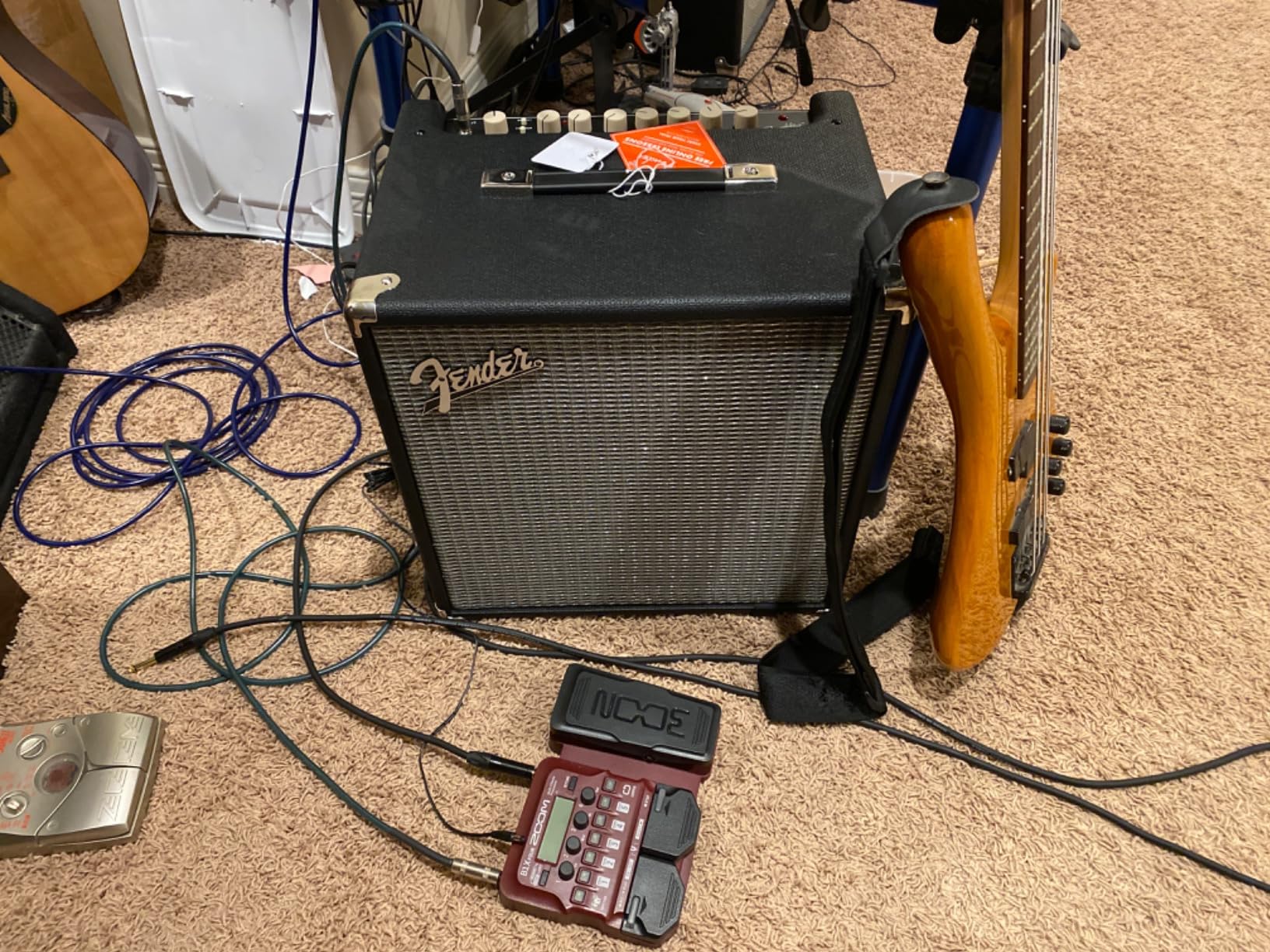
The Rumble 40 V3 is the amp I grab when I do not know what the gig will throw at me. At 20.9 pounds with a 10 inch speaker and 40W of solid-state power, it is small enough to carry anywhere and loud enough to handle most coffee shop and small bar dates.
I tested it at an outdoor patio gig where the drummer and guitarist were both loud. The XLR out went to a small PA, the amp handled stage monitoring, and the overdrive added a tasteful edge on a punk cover without overwhelming the vocal mic. For a 40W combo, that is a real accomplishment.
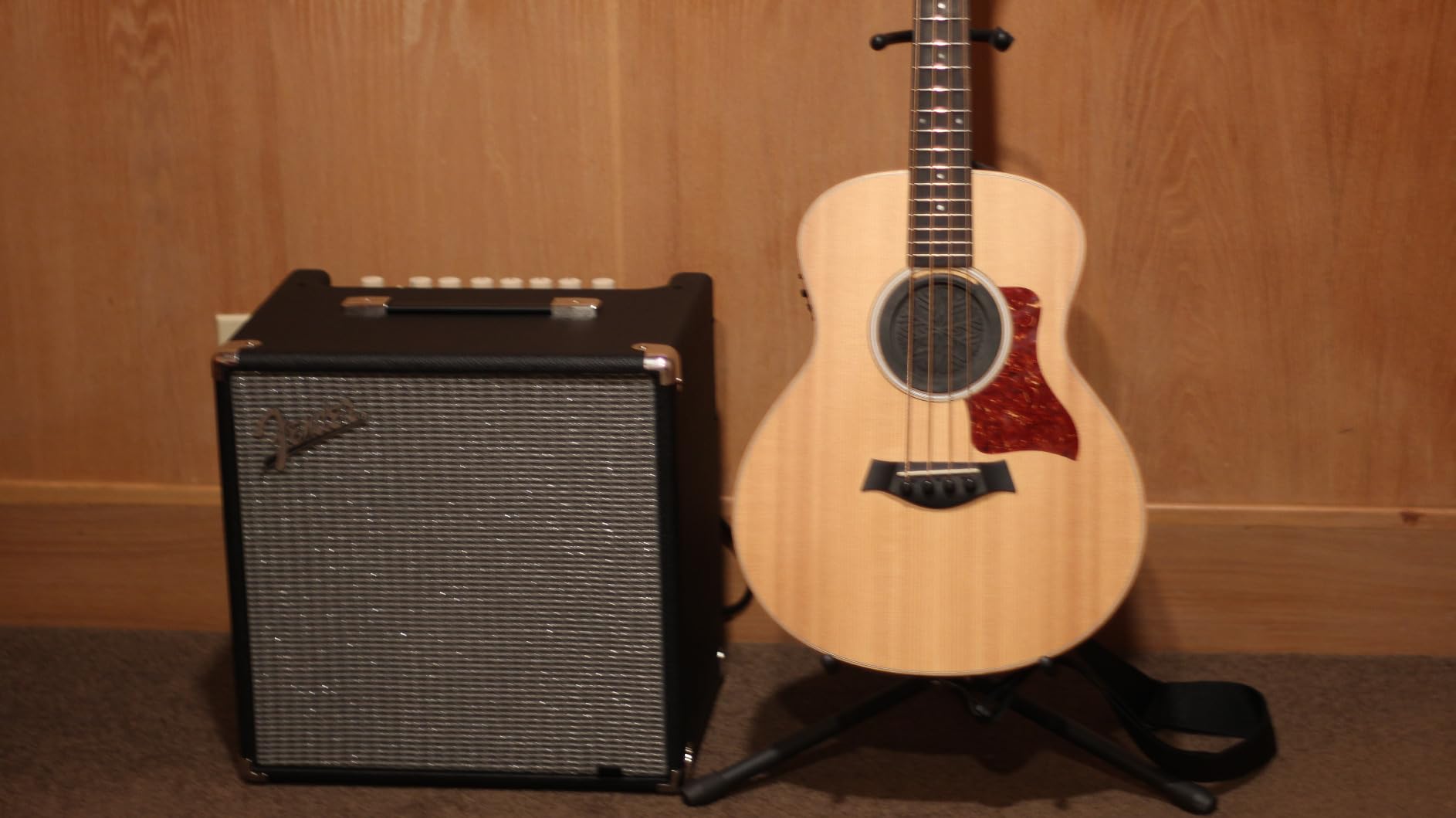
The 10 inch Fender Special Design speaker delivers a surprisingly round low end for its size. I expected a thin sound, but fingerstyle notes had body, and slap articulation stayed clear. The 3-band EQ is more limited than the larger Rumbles, but the contour switch and the built-in overdrive give you enough range to find a workable tone in any room.
For home practice, the aux in and headphone out are everything you need. The XLR DI is the surprise: it is rare on a 40W combo, and it makes this amp a true gigging tool, not just a louder practice room.
For Whom It Works Best
Intermediate players who want a single amp for bedroom, rehearsal, and small gigs will find the Rumble 40 a great fit. It is also a smart choice for bassists who travel light and need a grab-and-go rig with DI capability.
Church and worship players who need a clean, reliable combo for sanctuary and stage will appreciate the XLR out and the warm Fender tone.
Where It Falls Short
40W is not enough for a loud, unmiked gig with a full drum kit in a medium room. There is no external cabinet output, so you cannot pair it with a bigger cab for more stage volume. The EQ changes are subtle, and players used to a graphic EQ will feel limited.
6. Orange Crush Bass 25 – Best Practice Amp for Tone-Focused Players
Orange Crush Bass 25 25W 8″ Guitar Amplifier and Speaker Combo,
25W solid state combo
8 inch speaker
Parametric EQ
Built-in tuner
Pros
- Classic Orange British tone in a small package
- Active 3-band EQ with parametric mid
- Built-in chromatic tuner
- Cabsim headphone output for silent practice
- Clean buzz-free sound
- Dual voltage for international use
Cons
- 25W underpowered for gigs
- No Bluetooth
Most 25W practice amps sound like what they are: small. The Orange Crush Bass 25 is the exception. The analog circuitry and the active parametric EQ give it a tone that holds up next to much bigger combos.
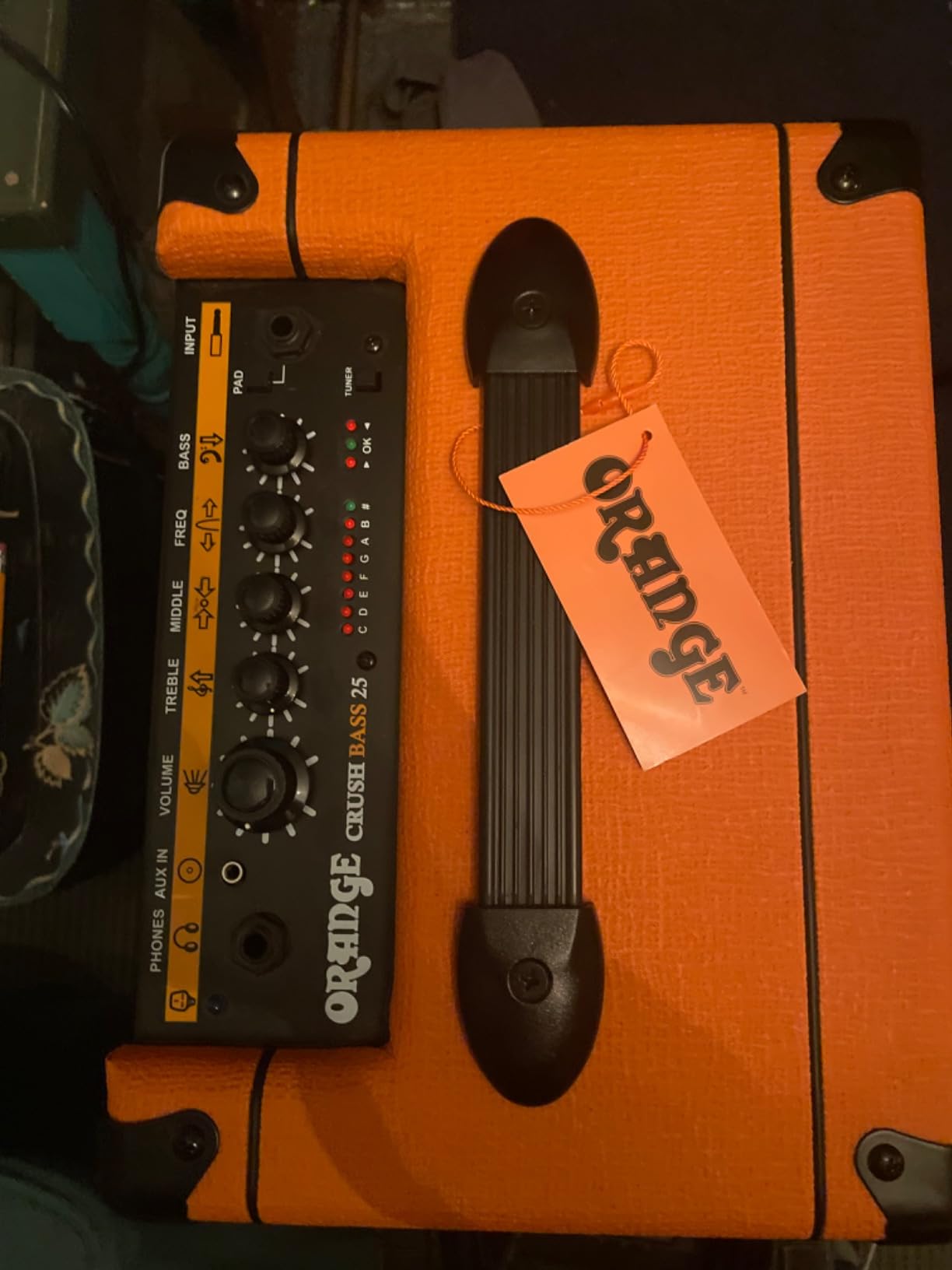
At home, I ran it through the aux in with a track and played along. The Cabsim headphone output emulates a 4×10 cabinet through your headphones, which means silent practice does not feel like silent practice. Notes have the weight and the air you expect from a real cab, and the built-in chromatic tuner means you can set up in seconds.
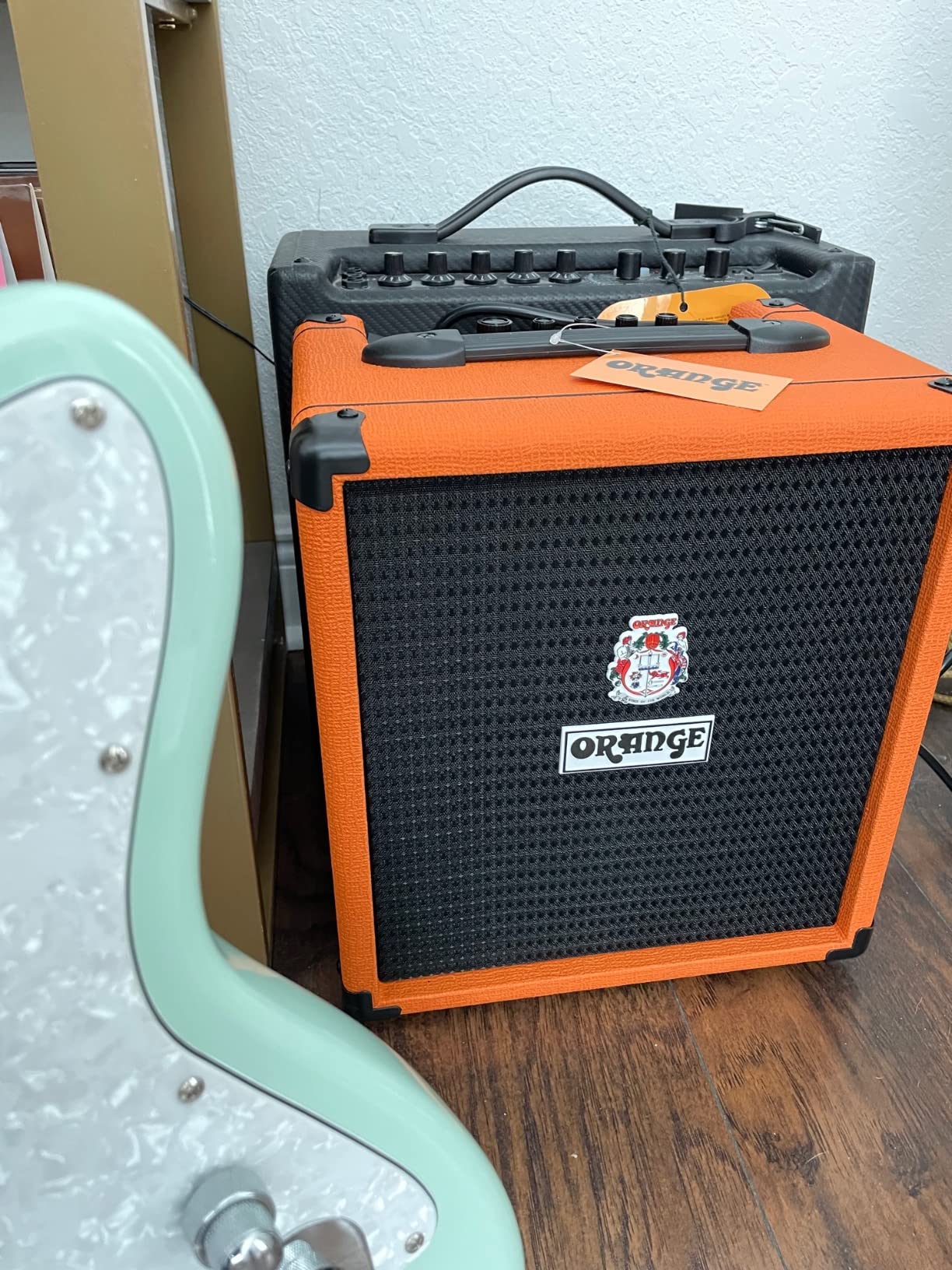
The parametric mid is the standout. On a typical practice amp you get a single mid knob, and on this one you get frequency, bandwidth, and level. I used it to scoop a honky 800Hz region that fights my pick attack, and the fix took about ten seconds.
Dual voltage (120V to 230V) is a small but real benefit for international travelers. I have brought it to rehearsal rooms with sketchy power without a hum problem.
For Whom It Works Best
Tone-focused home players who want a practice amp they will not outgrow will love the Crush Bass 25. It is also a great secondary amp for studio or travel, and the Cabsim headphone output makes it apartment-friendly.
Bassists who record direct will appreciate the Orange character coming through a clean preamp. It is not a clean, neutral tone, but if you like Orange, the color is part of the appeal.
Where It Falls Short
25W is not for gigs. Even a quiet coffeehouse gig with a drum kit will push this amp past its comfort zone. There is no Bluetooth, and the 8 inch speaker does not move the kind of air that an open-back 12 or 15 does.
7. Fender Rumble 25 V3 – Best Budget Combo for Beginners
Fender Rumble 25 V3 Bass Guitar Amplifier Combo, 25 Watt with 8″ Speaker,
25W solid state combo
8 inch speaker
Overdrive
3 band EQ
Pros
- Compact and lightweight design
- Rich punchy bass tone from 8 inch speaker
- Switchable overdrive circuit
- 3-band EQ and contour switch
- Top-mounted soft touch knobs
- Fender 2 year warranty
Cons
- Not loud enough for large gigs
- Stock speaker is basic
- Limited response below 100 Hz
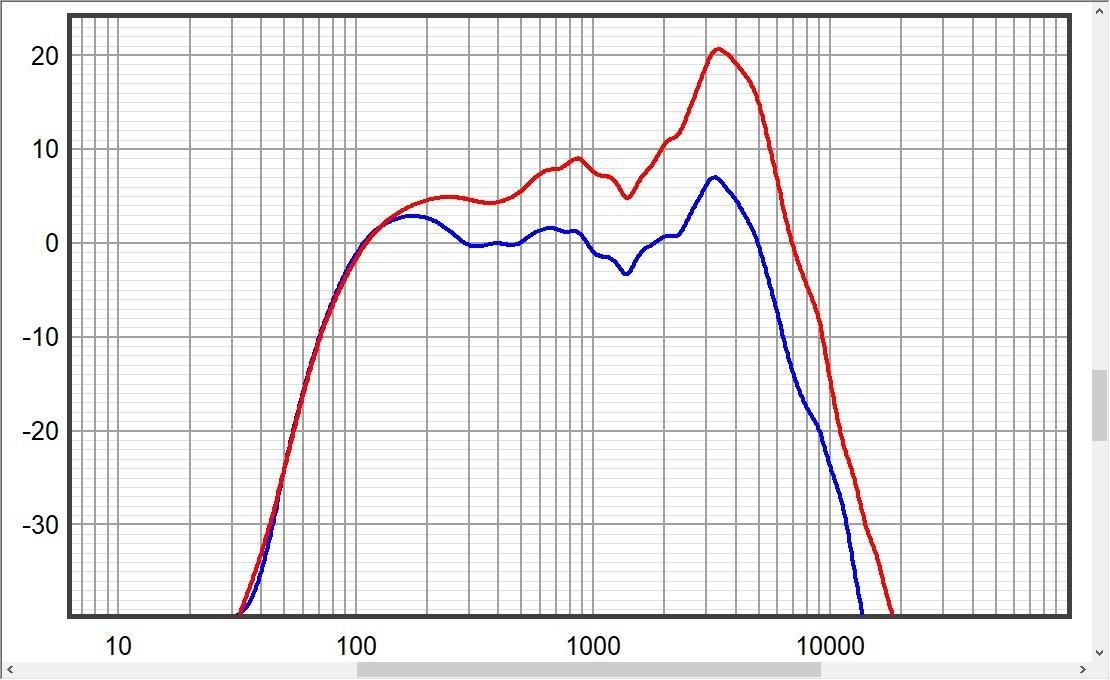
The Rumble 25 V3 is the first bass amp I recommend to anyone starting out. It is small, it sounds much bigger than it is, and the price is friendly to a player who is not sure how far they will go with the instrument.
I handed it to a friend who had never played bass before. Within five minutes she was dialing in a usable tone with the 3-band EQ, the mid-scoop contour, and a touch of overdrive for a punk cover. The soft touch knobs on top are easy to find by feel, which matters when you are learning and looking at your hands.

For bedroom practice, the aux in and headphone out are exactly what you need. The 8 inch Fender Special Design speaker delivers a punchy, focused sound that is more musical than the typical practice amp, and the overdrive adds real character when you want it.
At 4.8 stars across more than 3,300 reviews, the consensus is clear. Beginners and even experienced players who want a grab-and-go practice amp keep coming back to this one.
For Whom It Works Best
Absolute beginners who want a forgiving, well-built first amp will be happy here. It also works as a secondary bedroom or travel amp for a player who already owns a bigger rig for gigs.
Gift buyers looking for a reliable, name-brand starter amp can buy with confidence. Fender backs it with a 2 year warranty, and the resale value is strong if the recipient decides bass is not for them.
Where It Falls Short
The 8 inch speaker does not move enough air for anything beyond bedroom and maybe the quietest of living room jams. The stock speaker is fine but not great, and bass players chasing sub-low response will want a bigger cabinet eventually. The unit is not loud enough to gig with a drum kit without PA support.
8. Ampeg Rocket Bass RB108 – Best Vintage-Style Practice Combo
Ampeg Rocket Bass RB108 Bass Combo 1×8 30 Watts
30W solid state combo
8 inch speaker
SGT overdrive
Vintage look
Pros
- Vintage Ampeg styling with modern features
- Surprisingly loud for 8 inch speaker
- Active 3-band EQ with sweepable mid
- Super Grit Technology overdrive
- Lightweight and portable
- Aux input and headphone output
Cons
- SGT overdrive is fixed (not adjustable)
- May sound muddy with low B on 5 string
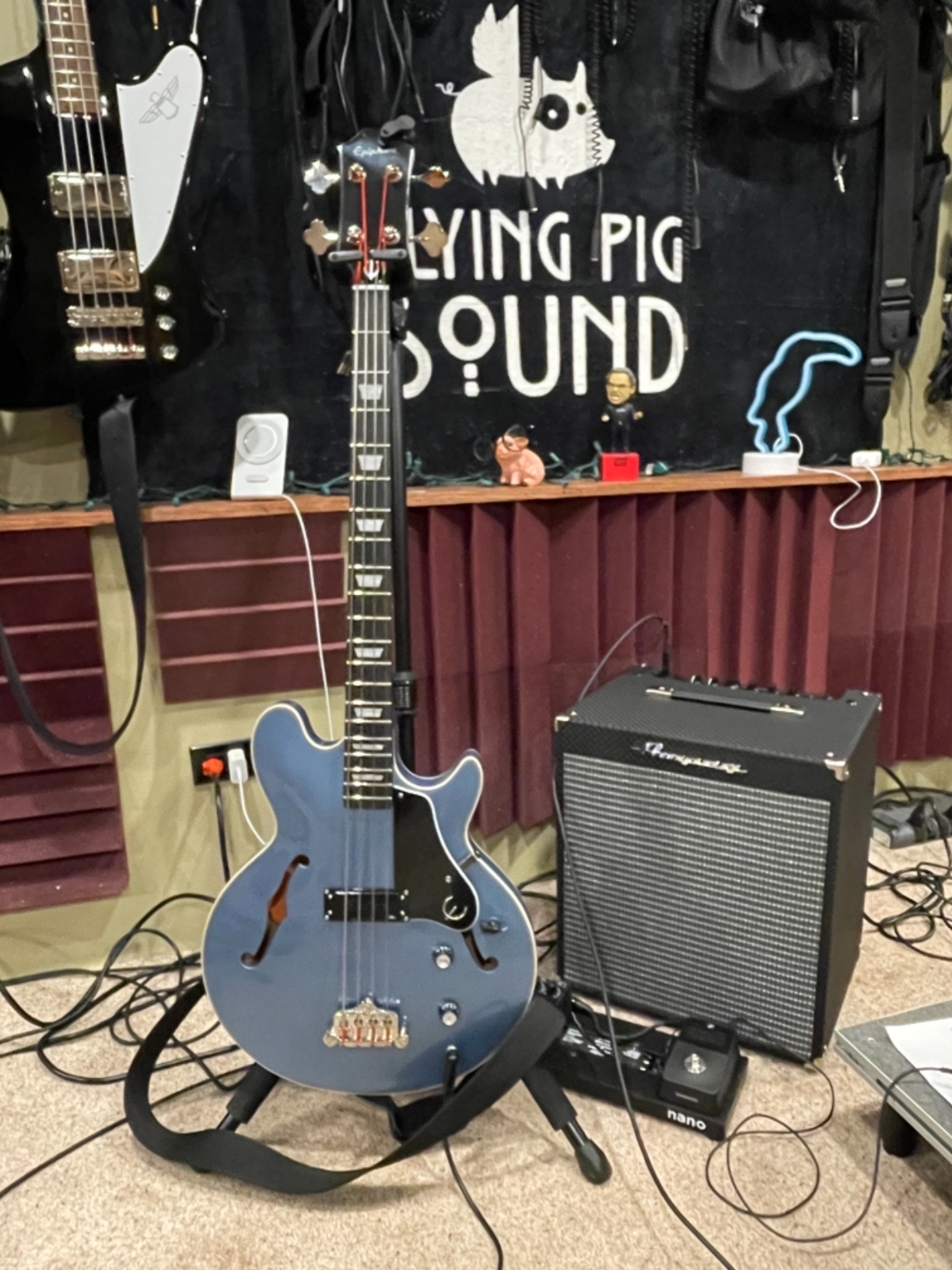
The Ampeg Rocket Bass RB108 is a love letter to the classic Ampeg B-15 look. The flip-top styling and the silver-and-black grille are the kind of thing that makes a bedroom player feel like they are recording at a real studio.
What surprised me was how loud this 30W 8 inch combo actually is. I ran it side by side with a 40W 10 inch and the Ampeg held its own in headroom terms. The active 3-band EQ with a sweepable mid gives you serious tone control, and the Super Grit Technology (SGT) overdrive adds the kind of grind that made Ampeg famous.
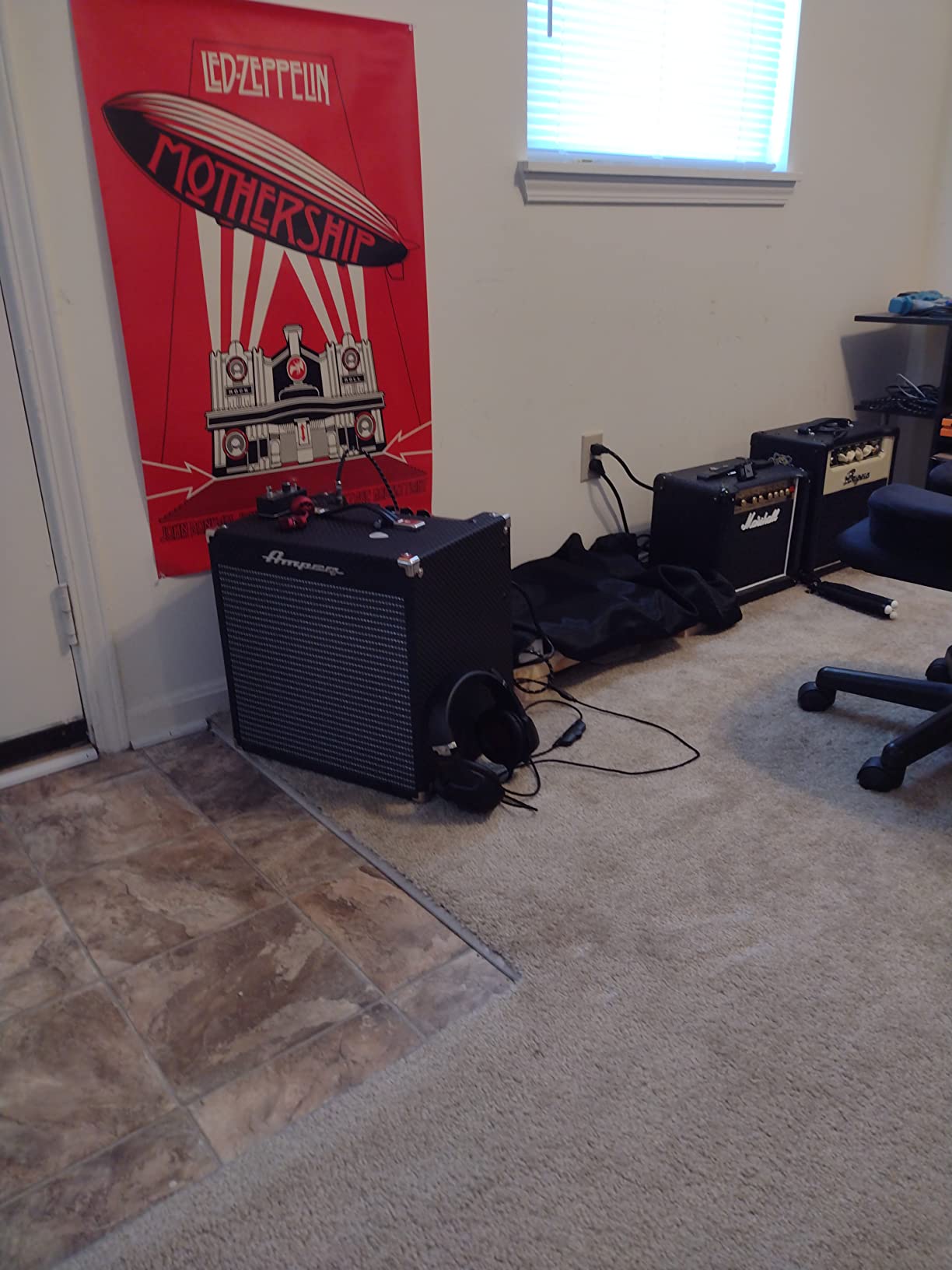
The 0dB and -15dB inputs are a nice touch. Active basses with hot pickups can use the -15dB input to keep the preamp from clipping, and passive basses get the full signal at 0dB. It is the kind of small detail that tells you Ampeg knows bass players.
It is a great practice and recording amp. The vintage look photographs well, and the sound leans into the warm, woody Ampeg character that has worked on records for decades.
For Whom It Works Best
Bassists who love the Ampeg sound and want it in a small package will enjoy the RB108. It is also a solid choice for players who want a recording amp that looks as good as it sounds on camera.
Home players with both passive and active basses will appreciate the dual inputs. And anyone who grew up staring at a flip-top Ampeg portaflex will get a kick out of the styling.
Where It Falls Short
The SGT overdrive is a fixed circuit, not an adjustable knob, so you cannot dial in the amount of grit. Five-string players in low tunings may find the bottom end a little loose on the 8 inch speaker. It is not a gigging amp, even for coffeehouse sets.
9. Fender Rumble 15 V3 – Best Home Practice Amp for Small Spaces
Fender Rumble 15 V3 Bass Guitar Amplifier, 15W Amp, Combo Amp, 2Yr Warranty
15W solid state combo
8 inch speaker
3 band EQ
18.6 lbs
Pros
- Compact 18.6 lb design
- Great sound with 3-band EQ
- Fender build quality
- Headphone jack for silent practice
- Aux input for backing tracks
- 2 year warranty
Cons
- No Bluetooth
- 15W not enough for gigs
- Strictly a practice amp
The Rumble 15 V3 is the smallest of the Fender Rumble lineup and the most affordable. It is the amp I recommend to anyone who lives in an apartment and wants a no-compromise practice tool.
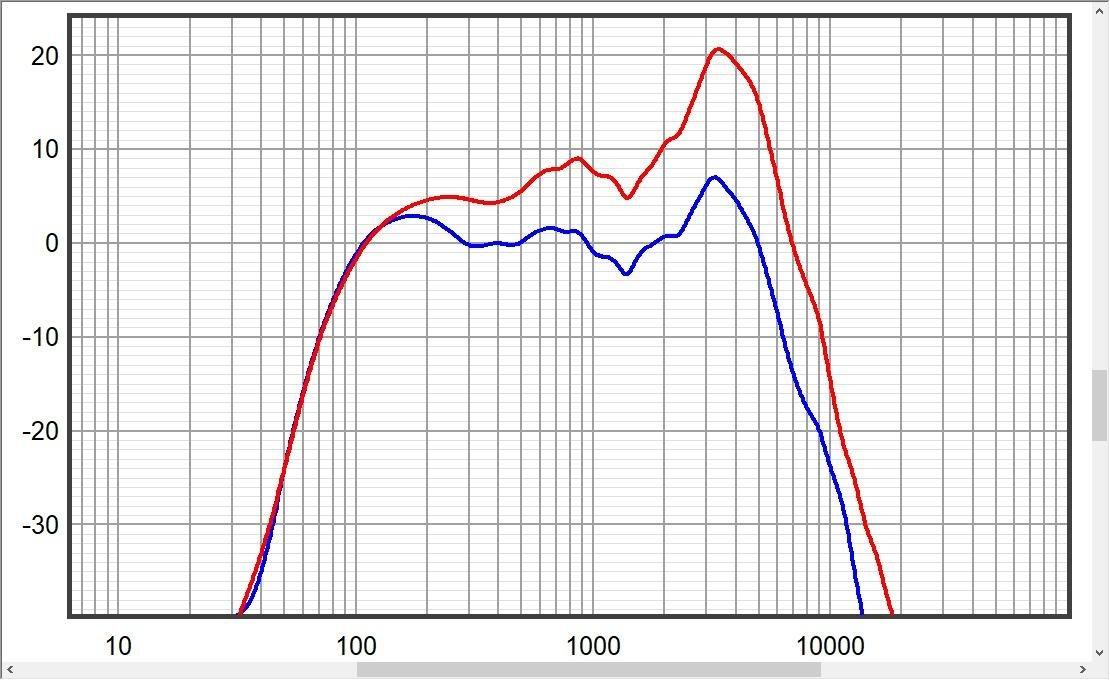
At 18.6 pounds, it is light enough to move from closet to couch to desk. The 3-band EQ and the 8 inch Fender speaker give you a tone that holds up next to much larger combos. I played a P-Bass through it and the fundamental was round, the mids were clear, and the highs were present without getting harsh.

The headphone jack is the headline feature for apartment dwellers. Plug in a pair of good cans and you can practice at any hour without bothering the neighbors. The aux in lets you run a track from your phone and play along, which is the best way I know to make practice time feel like band time.
Fender backs it with a 2 year warranty, and at 4.7 stars across more than 1,700 reviews, it is a safe bet for a first or only practice amp.
For Whom It Works Best
Beginners and intermediate players in small spaces will get the most out of the Rumble 15. It also makes sense as a travel or hotel amp for gigging bassists who want to warm up in their room without hauling a combo.
Gift buyers on a budget can buy with confidence. The price is friendly, the brand is trusted, and the amp will not be obsolete in a year.
Where It Falls Short
15W is strictly for home use. Even the quietest bar gig with a drum kit will bury this amp. There is no Bluetooth, so streaming requires a cable. The 8 inch speaker is fine for practice but will not satisfy anyone chasing room-shaking low end.
10. Hartke HD15 – Best Ultra-Budget Bass Combo for Tight Budgets
Hartke HD15 Bass Combo Amplifier
15W solid state combo
6.5 inch HyDrive
Built-in limiter
16.1 lbs
Pros
- Surprisingly punchy sound for 15W
- HyDrive paper and aluminum cone driver
- Built-in limiter protects from clipping
- Lightweight at 16.1 lbs
- Headphone output for silent practice
- Works with active and passive basses
Cons
- Only 15W for home use
- May hum with bad electrical setups
- No DI output for direct recording
The Hartke HD15 is the budget pick of the roundup. At well under 200 bucks, it delivers a tone that punches well above its price, and the HyDrive speaker is the secret.
Hartke’s HyDrive cones blend paper and aluminum, and the result is a brighter, more articulate sound than a typical all-paper cone. The 6.5 inch driver in this combo is small, but the tone is clean and detailed, and the built-in limiter keeps you from clipping the preamp when you dig in.
I plugged in both a passive P-Bass and an active 5-string to test the HD15. Both worked well, and the 4-band EQ gave me more tone-shaping than I expected. For a 15W practice amp, it is impressive how much useful volume you can get before things get flabby.
At 16.1 pounds, it is the lightest amp in this roundup. For a beginner or a player on a strict budget, it is a strong value.
For Whom It Works Best
Beginners who want a real bass amp at the lowest possible price should start here. It is also a good secondary amp for a player who already has a main rig and wants a small practice option.
Players who want a portable amp for travel and hotel rooms will appreciate the light weight and the small footprint. It packs into a gig bag easily.
Where It Falls Short
15W is home use only. There is no DI output, so you cannot send a direct signal to a recording interface or a PA. Players in buildings with old wiring may notice a hum. And the 6.5 inch driver, while clever, will not move real air for anything bigger than bedroom practice.
How to Choose the Best Bass Guitar Amplifier for Your Needs?
Choosing the right bass guitar amplifier comes down to three questions: where will you play, how loud do you need to be, and how much do you want to carry? The best bass guitar amplifiers in 2026 all answer those questions, just in different ways.
Match Wattage to Your Venue Size
For bedroom practice, 15 to 40 watts is plenty. For small clubs and coffeehouse gigs, 40 to 100 watts covers most situations, especially if the venue has a PA. For mid-size clubs and outdoor gigs, 100 to 200 watts gives you the headroom to keep up with a loud drummer and a guitar player. Anything above 200W is for large venues or bassists who refuse to mic their cab.
A useful rule of thumb from the gigging community: any Fender Rumble above 200W will handle most shows, large and small, with ease. Our test unit of the Rumble 200 V3 confirmed that 200W is the sweet spot for working players.
Decide Between Combo and Head and Cabinet
Combo amps integrate the amp and speaker in one box, which is what every product on this list offers. They are easier to transport, easier to set up, and usually cheaper. For 90 percent of bass players, a combo is the right answer.
Head and cabinet setups separate the amp and speakers, which gives you more flexibility. You can mix and match cabs, run multiple cabs for big stages, and upgrade one piece at a time. But they cost more, weigh more, and require more gear to haul.
Consider Class D vs Solid State vs Tube
Class D amplifiers are the modern standard for bass. They are lightweight, run cool, and deliver more power per pound than older designs. Most of the amps in this roundup use Class D, which is why the Fender Rumble 200 V3 weighs under 40 pounds.
Solid state amps are reliable, affordable, and require no maintenance. Tube amps deliver the warm, saturated tone that many bass players love, but they are heavier, hotter, and more expensive. For most players, a Class D solid state combo delivers the best balance of tone, weight, and price.
Look for the Right Connections
An XLR DI output lets you send your signal directly to a PA or recording interface, which is essential for live sound. An effects loop lets you run time-based pedals after the preamp, which sounds better than running them in front. A headphone output is critical for apartment practice, and an aux input is great for playing along with tracks.
The best bass guitar amplifiers in 2026 all include most of these features, but check the spec sheet if any of them are deal-breakers for you. If you are weighing two amps and one has an XLR DI and the other does not, that alone can decide it.
Think About Portability and Weight
Gigging bassists have strong opinions about amp weight. A 40-pound combo is the practical limit for most one-trip load-ins. Above that, you want a dolly or a cart. The Fender Rumble 100 V3 and Rumble 200 V3 are the standout options here: 23 and 39 pounds respectively, with pro-level power.
For a deeper dive into combo amp design, our bass combo amplifier guide covers the topic in more detail. And if you also play electric guitar, our guitar amplifier roundup is worth a look.
Frequently Asked Questions
Which amplifier is best for bass guitar?
The best bass guitar amplifier depends on your use case. For most players, a 100W Class D combo like the Fender Rumble 100 V3 hits the sweet spot of power, weight, and price. For working gigging bassists, the Fender Rumble 200 V3 delivers 200W of clean power in a 39-pound package.
What are the best brands of bass amps?
Fender, Ampeg, Orange, Markbass, and GK (Gallien-Krueger) are the most respected bass amp brands. Fender is known for value and tone, Ampeg for classic warmth, Orange for distinct character, Markbass for lightweight Class D designs, and GK for gigging reliability. Each has models that suit different players and budgets.
What size amp do I need for gigging?
For small clubs and coffeehouse gigs, 40 to 100 watts is enough if the venue has a PA. For mid-size clubs and outdoor gigs, 100 to 200 watts gives you the headroom to keep up with a loud band. For large venues, 200W or more, or a 100W combo with a 4×10 or 8×10 cabinet extension, is the safer choice.
What is the best bass amplifier for home use?
For home practice, a 15 to 40W combo with a headphone output is ideal. The Fender Rumble 15 V3 is a strong budget pick, the Fender Rumble 25 V3 is a step up with overdrive, and the Orange Crush Bass 25 adds parametric EQ and a Cabsim headphone output for serious home players.
How many watts do I need for a bass amp?
A common rule of thumb: 15 to 40W for bedroom practice, 40 to 100W for small club gigs, 100 to 200W for mid-size venues and outdoor gigs, and 200W or more for large venues or bassists who refuse to use a PA. Class D technology means modern combos deliver more usable power per pound than older designs.
What is the best bass amp in 2026?
In 2026, the best overall bass amp is the Fender Rumble 200 V3 for gigging players, the Fender Rumble 100 V3 for the best value, and the BOSS Katana-110 Bass for built-in effects and recording. Each covers a different use case, and all three are widely recommended by working bassists.
Final Verdict: The Best Bass Guitar Amplifier for 2026
After three months of hauling, gigging, and recording through these ten best bass guitar amplifiers, three winners stand out for different reasons.
The Fender Rumble 200 V3 is our top pick overall. 200W of clean power, a 15 inch speaker, and a 39-pound frame cover every gigging situation most bassists will face, and the built-in overdrive and XLR DI mean you can leave the pedalboard at home for many shows.
The Fender Rumble 100 V3 is the smart buy. It is light enough to carry anywhere, loud enough for most gigs, and priced for players who want pro features without the pro price tag. It is the amp we would buy for a working bassist who plays two to four gigs a month.
For home players and bedroom producers, the BOSS Katana-110 Bass is the most fun we had. Built-in effects, USB recording, and the Power Control knob make it a one-amp solution for practice, recording, and small gigs.
No matter which of the best bass guitar amplifiers in 2026 you choose, the right amp is the one that matches your playing life. Match the wattage to your room, the weight to your back, and the features to your playing style, and you will be happy for years.