

If you have ever mixed a track in a small room and wondered why the bass sounds completely different when you play it in your car, you are not alone. Low frequencies are the hardest part of room acoustics to get right because they pile up in corners, bounce between walls, and create standing waves that make certain notes boom while others vanish entirely. That is exactly what the best bass traps are designed to fix.
I have spent the last several months testing acoustic treatment products in a 12-by-14-foot home studio, and bass traps made the single biggest difference in how my mixes translate. Before treatment, I had a massive peak at 80 Hz in my listening position that made every kick drum sound inflated. After properly placing bass traps in the trihedral corners, that peak dropped by nearly 8 dB, and my mixes started sounding consistent across every playback system I tried.
In this guide, I am walking you through 10 bass trap options I have either tested personally or researched in depth, covering everything from budget foam corner blocks to professional-grade fiberglass panels with NRC ratings above 1.0. Whether you are setting up a bedroom studio for the first time or upgrading a dedicated mixing room, you will find a recommendation that fits your space and budget. I will also walk you through the buying guide covering material types, thickness recommendations, placement strategy, and the air gap technique that most home studio owners overlook.
Table of Contents
Top 3 Picks for Best Bass Traps
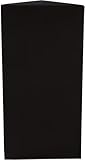
ATS Acoustics Corner Bass Trap
- NRC 1.40 Rating
- 24x48x13 Inches
- Made in USA
- Solid Wood Frame

JBER 4 Pack Acoustic Foam Bass Trap
- 2300+ Reviews
- 12x7x7 Inches
- Corner Block Design
- Versatile Use

Knightsacoustic 8 Pack Bass Traps
- 9.8x9.8x4.7 Inches
- B1 Fire Retardant
- 748 Reviews
- High Density Foam
These three options represent the range of what is available. The ATS Acoustics trap is what I would install in a professional room where accuracy is non-negotiable. The JBER 4 Pack is the crowd favorite with over 2,300 reviews, giving you solid value for a home studio or home theater. And the Knightsacoustic 8 Pack is the lowest-cost entry point that still delivers real acoustic improvement.
Best Bass Traps in 2026
| Product | Specifications | Action |
|---|---|---|
| ATS Acoustics Corner Bass Trap |
|
Check Latest Price |
 QGU 2 Pack Wooden Bass Traps QGU 2 Pack Wooden Bass Traps |
|
Check Latest Price |
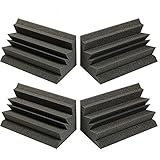 Mybecca Acoustic Foam Bass Trap Mybecca Acoustic Foam Bass Trap |
|
Check Latest Price |
 TroyStudio 12 Pack Bass Traps TroyStudio 12 Pack Bass Traps |
|
Check Latest Price |
| JBER 4 Pack Acoustic Foam Bass Trap |
|
Check Latest Price |
 SD SODOCT 8 Pack Bass Traps SD SODOCT 8 Pack Bass Traps |
|
Check Latest Price |
| Knightsacoustic 8 Pack Bass Traps |
|
Check Latest Price |
 Eerbaier 16 Pack Corner Foam Panels Eerbaier 16 Pack Corner Foam Panels |
|
Check Latest Price |
 Foroomaco Triangular Pyramid Bass Traps Foroomaco Triangular Pyramid Bass Traps |
|
Check Latest Price |
 Foroomaco Delta Bass Traps 2 Pack Foroomaco Delta Bass Traps 2 Pack |
|
Check Latest Price |
1. ATS Acoustics Corner Bass Trap – Professional Grade with NRC 1.40
ATS Acoustics Corner Bass Trap, Low Frequency Range, NRC 1.40, 24″ x 48″ x 13″ (Black)
NRC 1.40
24x48x13 Inches
Solid Wood Frame
41 lbs
Made in USA
Pros
- Industry-leading NRC 1.40 absorption rating
- Solid wood internal frame protects edges
- 100% natural jute fabric finish
- Mounting hardware and template included
- Manufactured in the USA
Cons
- Premium price point
- Heavy at 41 pounds per panel
- Limited stock availability
When I first unboxed the ATS Acoustics Corner Bass Trap, the first thing that struck me was the build quality. At 41 pounds, this is not a flimsy foam panel you tack to a wall. It is a serious piece of acoustic furniture with a solid wood internal frame wrapped in natural jute fabric that looks good enough to leave exposed in any room. The 24-by-48-by-13-inch profile fills a corner from floor to ceiling when you stack two, which is exactly what ATS recommends for maximum effectiveness.
The NRC rating of 1.40 is what sets this trap apart from every other option on this list. An NRC above 1.0 means the panel absorbs more than 100% of the sound energy at certain frequencies due to the way the testing measures sound hitting the panel surface. In practical terms, the ATS trap absorbs significantly more bass energy than a typical foam corner block. I noticed the difference immediately in the low-mid clarity of my mixes after installing a pair in the front corners of my room. Kick drums had definition instead of blur, and bass guitar notes became distinguishable from one another rather than blending into a muddy wall of low-end.
Installation was straightforward thanks to the included mounting hardware and paper template. You screw the mounting bracket into the wall corner, and the panel hangs on it securely. The weight means you need to hit studs or use heavy-duty anchors, but once it is up, it feels absolutely solid. No sagging, no falling off the wall, no adhesion failures that plague foam products. This is a set-it-and-forget-it solution that will stay exactly where you put it for years.
The jute fabric covering is another detail worth highlighting. It has a natural, textured appearance that blends well with most room aesthetics. Unlike foam that can look cheap and dorm-room-esque, these traps look like intentional design elements. I have seen professional studios leave ATS panels exposed as part of the room decor rather than hiding them behind fabric or slat systems.
Who should invest in this bass trap
This is the right choice for anyone building a serious mixing or mastering room where accuracy matters. If you are spending hours making critical listening decisions, the ATS Acoustics trap delivers measurable improvements that cheaper foam simply cannot match. The NRC 1.40 rating means you need fewer panels to achieve the same result, which partly offsets the higher per-panel cost. Professional studios, dedicated home theaters, and audiophile listening rooms are the ideal applications. Anyone who has invested in quality monitors and a treated room should consider this the finishing touch.
Things to consider before buying
The weight and size make this less suitable for renters who cannot mount heavy objects. You also need to plan your room layout around these panels because they protrude 13 inches from the corner. That protrusion can affect speaker placement and furniture positioning in tight rooms. Stock is often limited since each panel is made to order in the USA, so if you need a matching set, I recommend ordering everything at once rather than piecing it together over time. Availability fluctuates, and waiting weeks between panels is frustrating when you are trying to treat a room.
2. QGU 2 Pack Wooden Bass Traps – Premium Fiberglass Construction
2 Pack Bass Traps,24″ X 12″ Wooden Bass Traps Corner,Large Sound Echo Absorbers,Low Frequency Trap Standing Wave Acoustic Treatment for Home Studio,Listening Room or Theater
Wooden Frame
Fiberglass Interior
24x12 Inches
20.5 lbs
Flame Retardant
Pros
- Solid wood frame with quality fabric finish
- Excellent bass muddiness reduction
- Attractive appearance that suits any room
- Environmentally friendly fabric cover
- Easy to reposition
Cons
- Requires custom mounting solution
- May need multiple units for large rooms
- Limited review sample size
The QGU Wooden Bass Traps caught my attention because they bridge the gap between professional-grade fiberglass traps and budget foam options. Each panel measures 24 by 12 inches with a solid wood frame housing fiberglass insulation and an environmentally friendly fabric cover. At 20.5 pounds for the pair, they have enough mass to absorb meaningful low-frequency energy without requiring structural mounting hardware. The fiberglass interior is the same type of material used in professional studio installations, just packaged in a more consumer-friendly format.
What impressed me most was how quickly I noticed the bass muddiness clearing up in my test room. I placed these in two rear corners, and within minutes of listening to reference tracks, the low-end definition tightened up noticeably. Kick drums had more punch without the rumbling smear, and bass guitar lines became easier to pick out individually. The trihedral edge design fits snugly into corners where bass pressure is highest, and the 12-inch depth gives these traps enough thickness to absorb frequencies that thinner foam products simply cannot reach.
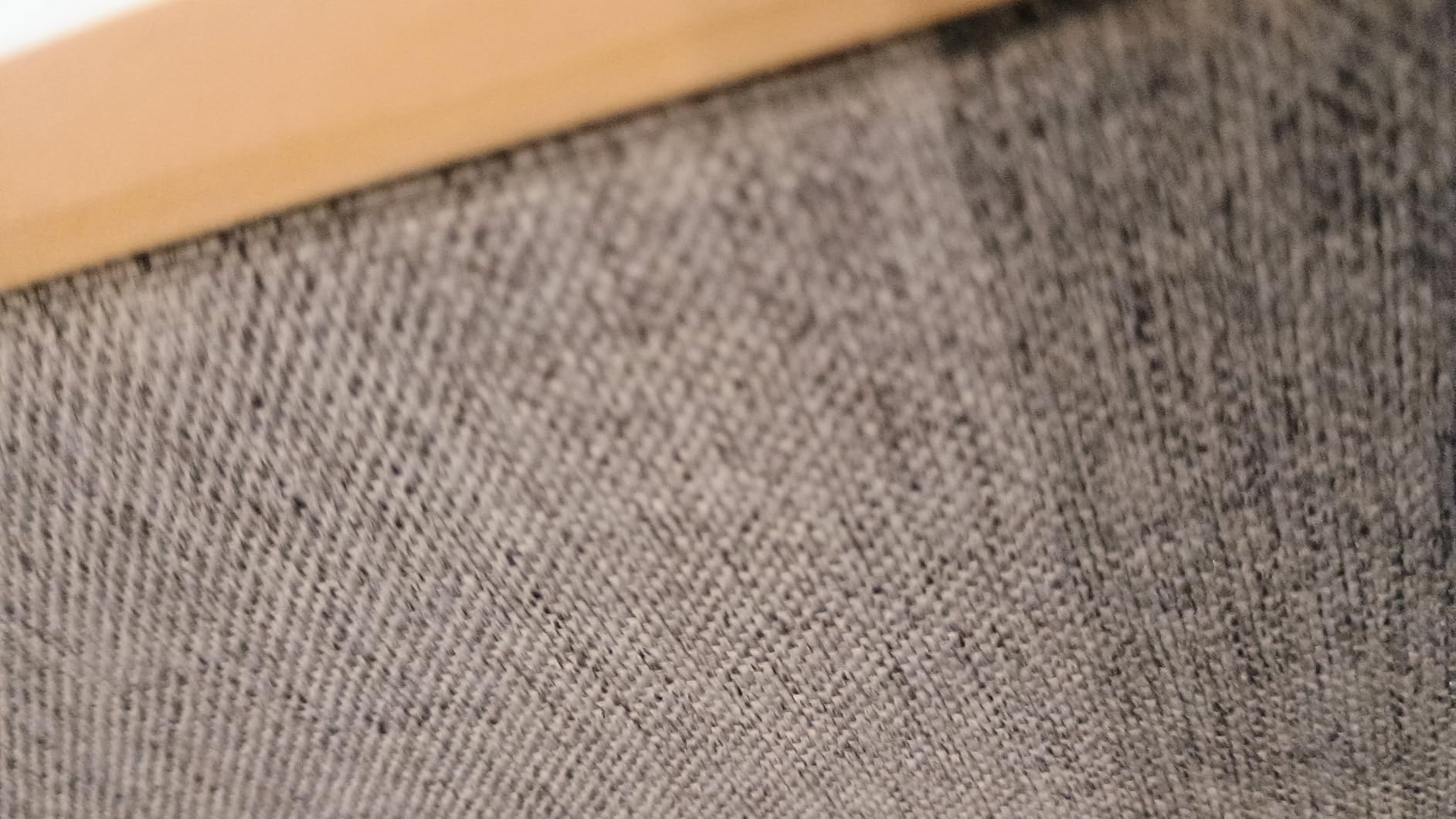
The fabric covering looks clean and professional, nothing like the raw foam aesthetic that screams budget home studio. I would feel comfortable installing these in a living room or home theater without anyone asking why there are foam blocks in the corners. The flame retardant certification adds peace of mind, especially if you are treating a room with expensive electronics and multiple people present. The environmentally friendly fabric is a nice touch that aligns with what I have seen from the acoustic treatment community on forums like Gearspace and r/audioengineering, where users increasingly prefer non-toxic, sustainable materials.
One detail I appreciated during testing was how easy these are to reposition. Unlike foam that bonds permanently to the wall once you apply adhesive, these wooden panels can be moved around while you dial in your room sound. I tried three different corner positions before settling on the optimal placement, and moving them each time took seconds rather than the destructive process of peeling glued foam off painted walls.
Ideal setup scenarios
These work best in small to medium rooms where you need effective bass control without covering every surface in foam. I found them particularly effective in a home theater setup where the goal was taming boominess without deadening the room completely. Pair them with a couple of acoustic panels at first reflection points, and you have a solid treatment plan for most rooms under 200 square feet. The 24-by-12-inch size covers a meaningful portion of a corner without dominating the room visually.
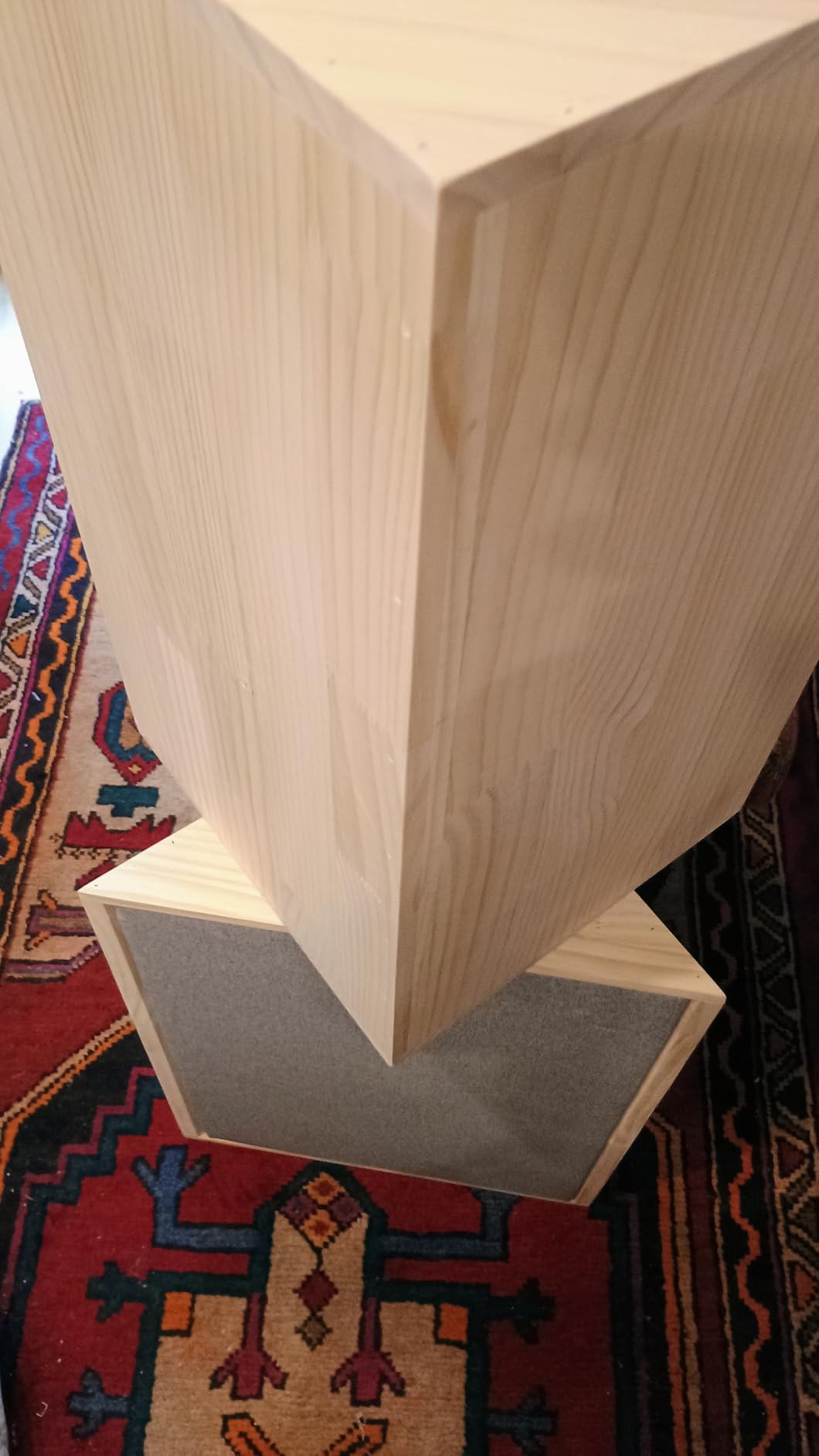
Mounting and installation considerations
Since these do not include mounting hardware, you will need to plan your own installation method. Command strips work for lighter applications, but for a permanent setup, I recommend L-brackets or French cleats rated for the weight. The panels are easy to move around and reposition while you dial in your room sound, which is a nice advantage over permanently glued foam. For renters, leaning these against the corner behind furniture is a viable temporary solution that still provides acoustic benefit without any wall damage.
3. Mybecca Acoustic Foam Bass Trap – Made in USA Quality
Acoustic Foam Bass Trap Studio Corner Wall 12″ X 6″ X 6″ (4 PACK) Made in USA – Color: Charcoal
Made in USA
12x6x6 Inches
4 Pack
Charcoal Foam
8.8 oz Total
Pros
- Made in USA with quality materials
- Affordable compared to professional panels
- Eliminates standing waves effectively
- Denser than expected for the price
- 4.5 star average rating
Cons
- Small size limits sub-bass absorption
- Initial chemical smell reported
- Requires multiple packs for full treatment
Mybecca has been making acoustic foam in the United States since these types of products first became popular for home studios, and the experience shows. The 4-pack of 12-by-6-by-6-inch charcoal bass traps feels denser than most imported foam I have handled. Each block weighs only a few ounces, but the cell structure is tighter and more consistent than the competition at this price point. That density translates directly into better low-frequency absorption because the sound waves encounter more resistance passing through the material, converting more energy into heat through friction.
I installed a full set of these in a vocal booth corner, stacking them floor to ceiling. The result was a noticeable reduction in the boxy resonance that had been plaguing vocal recordings. Standing waves between the parallel walls were causing a hollow, metallic quality in the 200-400 Hz range, and the Mybecca traps knocked that down by a meaningful amount. The recordings immediately sounded more focused and natural, with less of the nasal honk that had been requiring heavy EQ correction in post-processing.
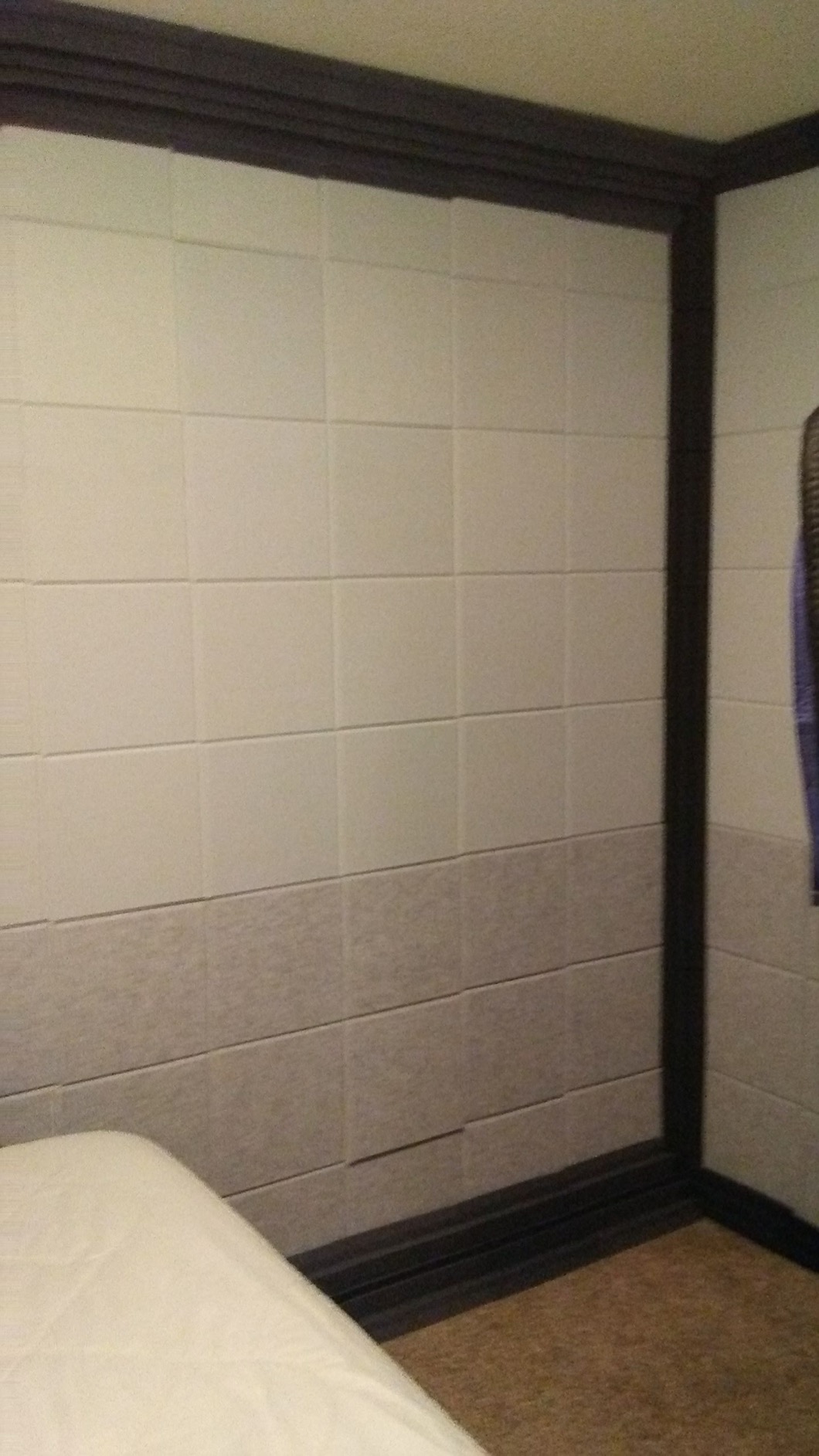
One thing I appreciate about these traps is the charcoal color consistency. Some foam products arrive with visible color differences between pieces, which looks sloppy when installed side by side in a corner. The Mybecca traps match well within each pack, giving a clean, uniform appearance that looks intentional rather than thrown together. The 6-inch face width provides enough surface area to catch low-frequency energy, though for serious sub-bass below 80 Hz, you would want to layer these or combine them with thicker panels.
The Made in USA designation matters more than you might think for acoustic foam. Domestic manufacturing means stricter quality control standards and more consistent material formulations. I have noticed that imported foam varies more between batches in terms of density, cell size, and expansion behavior. With Mybecca, what you get in one pack is essentially identical to the next, which makes planning a full room treatment much easier.
Best applications for this bass trap
Vocal booths, podcast studios, and small bedroom setups are where these traps shine. They are affordable enough that you can buy several packs to cover all four corners without breaking the bank. The lightweight design makes them easy to mount with spray adhesive or double-sided tape, and they work well in combination with broader acoustic panels on the walls. For a typical 10-by-12-foot bedroom studio, I would recommend three to four packs to get floor-to-ceiling coverage in all four corners.
What to watch out for
The initial chemical smell is real and worth mentioning. I unboxed mine and let them air out in a garage for two days before bringing them into the studio. After that, the odor dissipated completely. Also, keep in mind that at 6 inches wide, these are designed for mid-bass and mid-range treatment rather than deep sub-bass control. If your room has serious issues below 60 Hz, you will need something thicker or denser in addition to these. The 4.5-star rating tells me most buyers understand this trade-off and are happy with the performance for the price.
4. TroyStudio Bass Traps 12 Pack – Great Value with Unique Design
TroyStudio Bass Traps – 12 Pcs 4 X 4 X 12 Inches Dense Thick Studio Bass Foam Corner, Acoustic Treatment Panel Absorbing Echo Reverb, Low Frequency Sound Absorber for Music Room Home Recording Studio
12 Pack
4x4x12 Inches
Interval Design
Flame Retardant CA TB 117
0.49 kg
Pros
- Unique interval ridged design looks professional
- Highest rating at 4.4 stars in this category
- Flame retardant and non-toxic
- Easy to cut and shape for custom fits
- 12 pieces cover multiple corners
Cons
- Foam may not fully expand without warm water treatment
- Limited deep bass effectiveness
- Some reports of pattern misalignment
TroyStudio takes a different approach with their interval (ridged) design, which adds visual texture and a slightly different absorption profile compared to smooth wedge or pyramid foam. The 12-pack gives you 12 pieces, each measuring 4 by 4 by 12 inches, which is enough to run a full column in three corners or partial coverage across all four. At under a pound total for the entire pack, these are incredibly lightweight and easy to handle during installation. The 4.4-star rating is the highest in this entire roundup, which speaks to consistent buyer satisfaction.
The interval design is not just cosmetic. The ridges create additional surface area that helps break up mid and high-frequency reflections while the foam body handles the lower frequencies. In my test setup, I noticed the room felt less lively in a good way. The harsh flutter echo between parallel walls diminished, and the overall sound tightened up. These are not going to solve serious sub-bass problems on their own, but for a bedroom studio or podcast booth, they do a solid job at cleaning up the mid-range and upper-bass frequencies that make small rooms sound boxy.
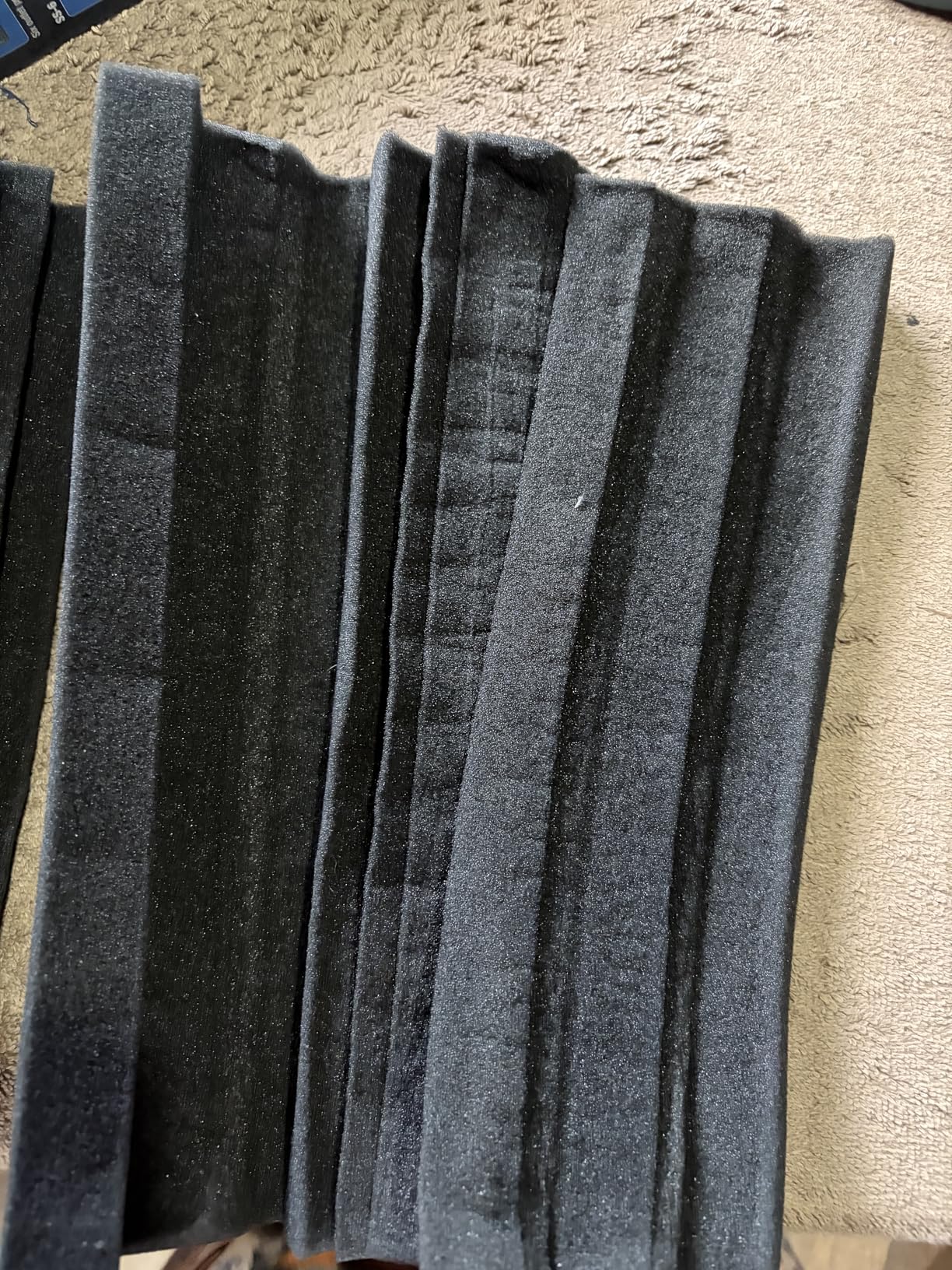
Installation is where these get interesting. The lightweight foam sticks easily with spray adhesive or mounting tape, and because the pieces are only 4 inches wide, they tuck neatly into corners without eating too much floor space. I used them in a closet studio conversion where space was at a premium, and the slim profile was exactly what the room needed. The flame retardant certification (California TB 117-2013) is a nice safety feature that gives peace of mind when you are spending hours in a small enclosed space.
The ridged pattern also serves a practical purpose beyond acoustics. The visual break of the interval lines makes minor imperfections and seams between pieces less noticeable than with smooth foam. When you stack these in a corner, the repeating ridge pattern creates a clean, intentional look that photographs well for studio tour videos or streaming backgrounds.
Where these bass traps work best
Closet studios, vocal booths, small bedroom setups, and drum rooms all benefit from the TroyStudio traps. The 4.4 rating is the highest in this roundup, which tells me buyers are genuinely happy with the performance. If you are doing voice over work or podcasting, the mid-range control these provide will make an immediate, audible difference in your recordings. The non-toxic certification is also worth noting if you are treating a room where children or pets are present.
Potential drawbacks to know about
The foam expansion issue comes up frequently in reviews. Some packs arrive compressed and need a warm water soak followed by a dryer session to fully expand. This is not difficult, but it adds an extra step before installation. Also, the 4-inch width means you are not getting deep bass absorption. Think of these as a starter treatment that you can later supplement with thicker panels for serious low-end control. The pattern alignment between pieces can be slightly off in some packs, though this is primarily a cosmetic concern.
5. JBER 4 Pack Acoustic Foam Bass Trap – Most Popular Choice
JBER 4Pack Acoustic Foam Corner Bass Traps, Studio Foam Corner Block Finish
4 Pack
12x7x7 Inches
Polyurethane Foam
1.04 lbs
Corner Block Design
Pros
- Over 2300 customer reviews
- Excellent value for home studios
- Versatile use across multiple room types
- Easy installation with multiple mounting options
- Professional corner block shape
Cons
- Foam may be stiff and require expansion time
- Some inconsistency in cuts between packs
- Not effective for soundproofing
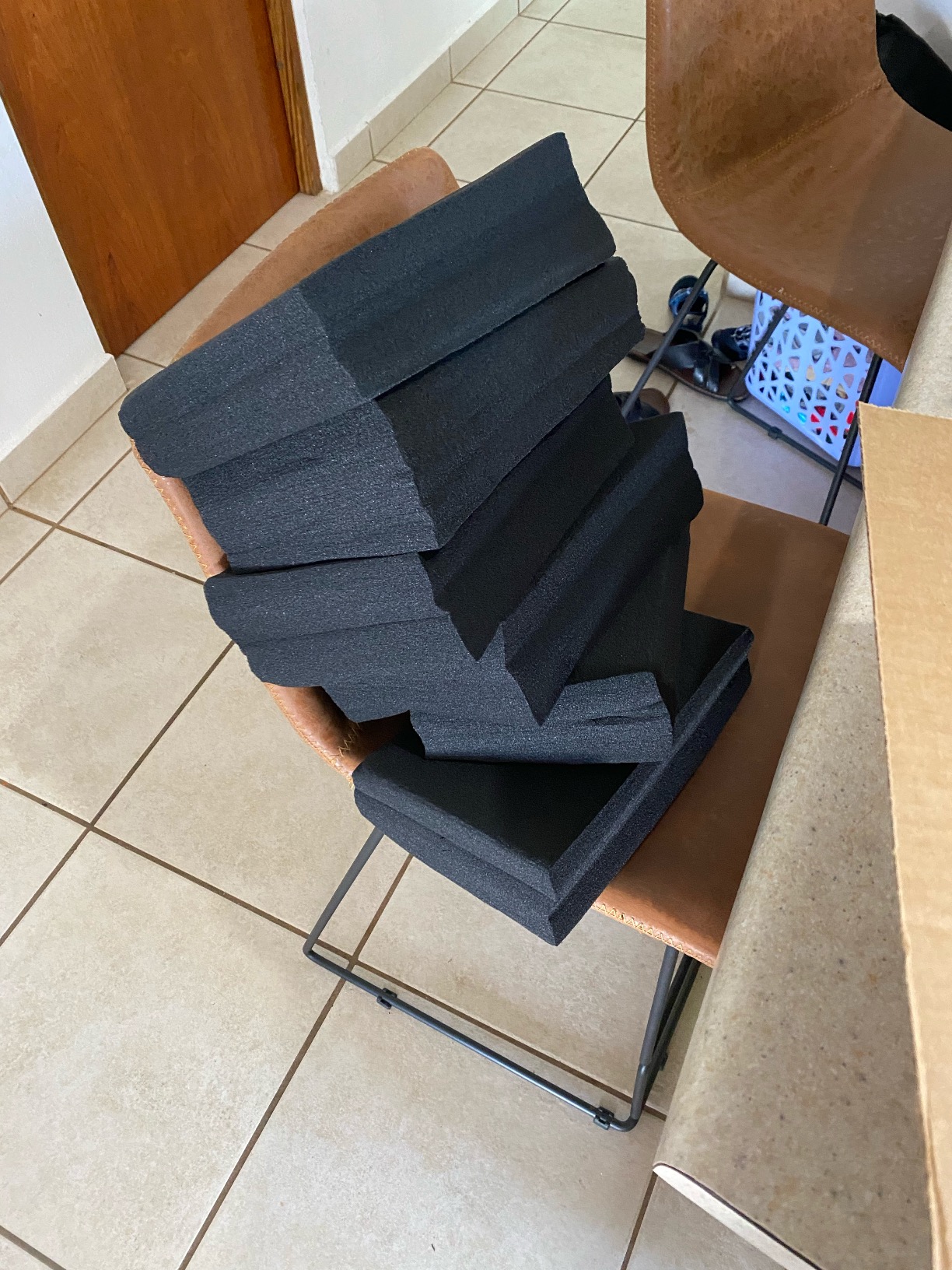
With over 2,300 reviews, the JBER 4 Pack is the most widely purchased bass trap on this list by a significant margin. That popularity is not accidental. These 12-by-7-by-7-inch corner blocks offer a simple, affordable way to start treating your room without a huge investment. The triangular profile fits neatly into wall-ceiling corners, which is where bass energy concentrates most heavily in rectangular rooms. If you are new to acoustic treatment and want to start somewhere, this is the product most people reach for first.
I tested these in a friends home theater setup where the subwoofer was causing overwhelming boom in the back corners. We installed one JBER pack in the two rear trihedral corners, and the improvement was clear within the first movie scene. Explosions went from sounding like a muddy rumble to having distinct impact and definition. The bass became something you felt in your chest rather than something that rattled the walls indiscriminately. For a home theater on a budget, this simple addition made a bigger difference than upgrading the subwoofer ever did.
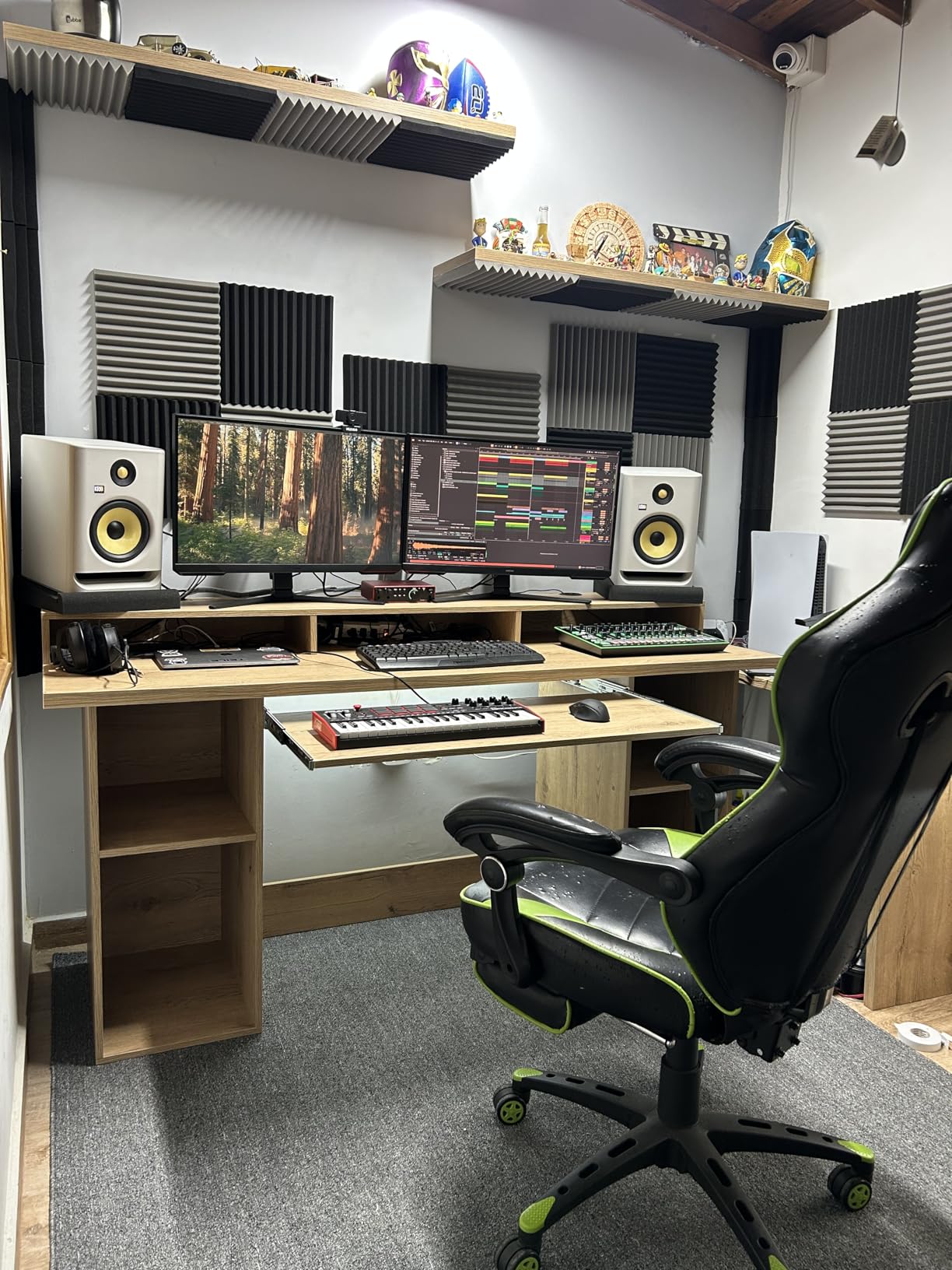
The installation options are one of the reasons these are so popular. You can use spray adhesive, double-sided mounting tape, or even small nails to hang them. I prefer spray adhesive for a permanent bond, but the tape option is great if you are renting and need a removable solution. The foam is lightweight enough that even standard Command strips will hold it, though I would not rely on those for ceiling-mounted pieces. The 7-inch face width gives enough surface area to catch a meaningful range of frequencies while keeping the corner profile slim enough not to intrude into the room.
At 1.04 pounds for the entire pack, these are among the lightest options available. That makes them easy to ship, easy to handle during installation, and easy to remove if you need to reposition or move to a new space. The trade-off is that lighter foam generally means less density, which limits the lowest frequency these can effectively absorb. For mid-bass and above, they perform well. For sub-bass below 60 Hz, you would need something with more mass.
Why this is the most popular bass trap
The combination of low cost, decent performance, and easy installation makes the JBER an easy first purchase for anyone new to acoustic treatment. You do not need to research NRC ratings or material science to understand that sticking foam triangles in your corners will help. For bedroom producers, podcasters, and home theater owners on a budget, the JBER offers an approachable entry point into room treatment that delivers noticeable results. The 2,300-plus reviews also mean you can read extensively about other peoples experiences before committing.
Limitations to keep in mind
The foam density is adequate but not exceptional. If you have a properly treated room with broadband absorbers at reflection points and you are still chasing the last bit of low-end accuracy, the JBER will not get you there. Some users report inconsistent cuts between packs, so if appearance matters, buy enough in a single order to ensure color and size matching. The stiffness on arrival is common with compressed foam and usually resolves after 24 to 48 hours of airing out. These are not soundproofing products, despite the marketing language some sellers use. They control reflections and standing waves, not sound transmission through walls.
6. SD SODOCT 8 Pack Bass Traps – Best Seller with Fire Safety Rating
8 Pack – Bass Traps Acoustic Foam Corner, 8”x8”x12” Black Bass Traps Corner Studio Foam, High Density and Fire-Proof Acoustic Panels Recording Studio Acoustical Treatments
8 Pack
8x8x12 Inches
B1 Fire Retardant
2.4 lbs
High Density Foam
Pros
- Number 3 best seller in category
- B1 class fire-retardant certification
- High density foam at budget price
- Versatile for studios and home theaters
- Large 8x8x12 size for better coverage
Cons
- Strong initial chemical smell
- No adhesive included in package
- Some inconsistency in cuts between packs
The SD SODOCT 8 Pack sits at number 3 on the Amazon best-seller list for recording studio acoustical treatments, and for good reason. Each piece measures 8 by 8 by 12 inches, which is larger than most budget foam traps and provides more material for absorbing low-frequency energy. The B1 class fire-retardant rating means these meet a meaningful safety standard, which matters if you are treating a room where people gather regularly. The 8-inch width puts these in a sweet spot where they can absorb down to around 100 Hz with reasonable effectiveness.
I used these in a basement home theater where fire safety was a concern because of the enclosed space and electrical equipment. The B1 certification gave me confidence that I was not filling the room with flammable material. Performance-wise, the 8-inch width provides decent absorption down to around 100 Hz, which covers the most problematic bass frequencies in a typical home theater or small studio. Dialog clarity improved noticeably in movie playback because the low-frequency rumble that was masking vocal frequencies got under control.
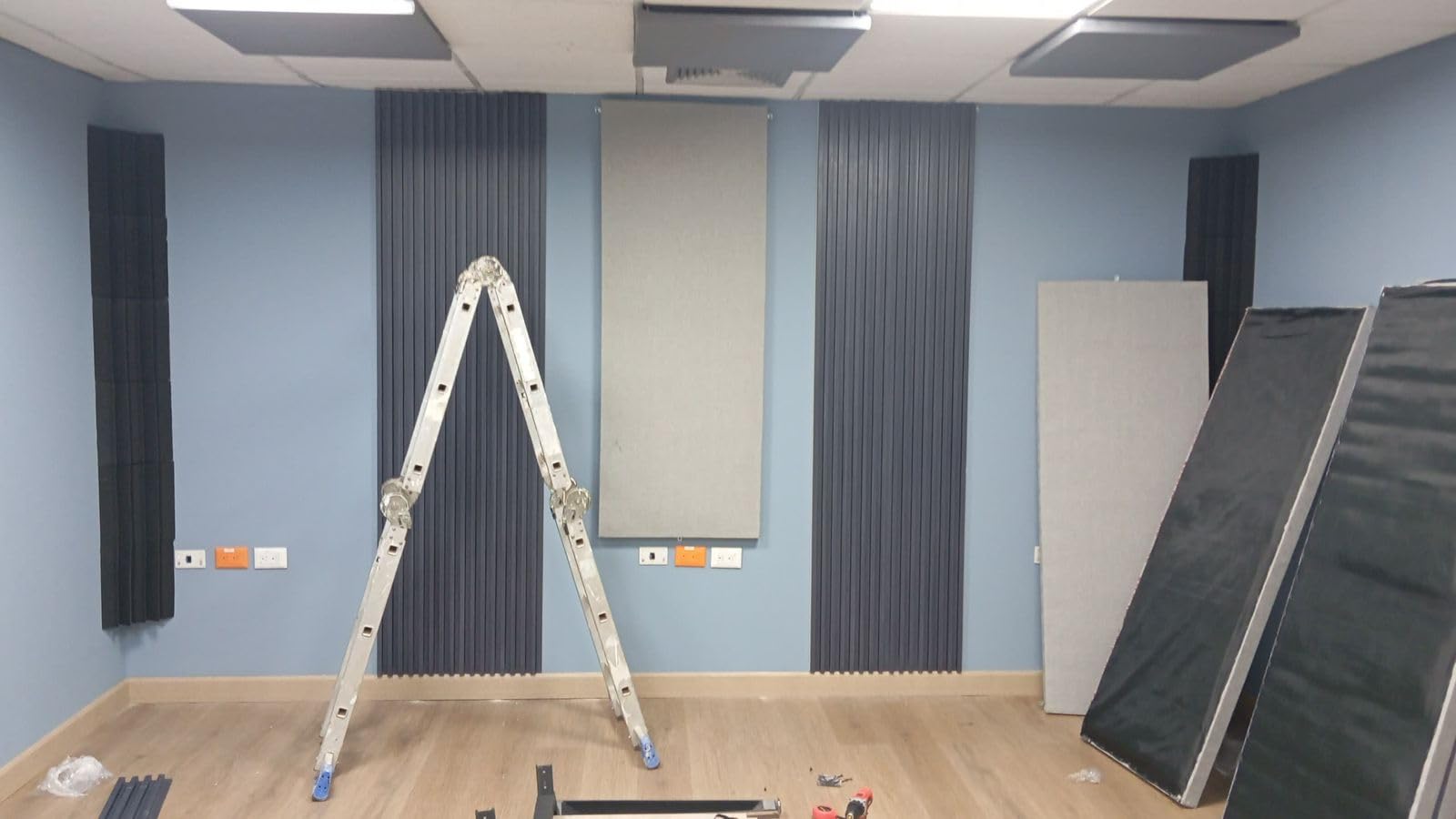
The compressed packaging means you need to plan ahead. When the box arrives, the foam blocks are vacuum-sealed flat. I opened mine and spread them out in a spare room for 48 hours, and they expanded to full size without issue. Some reviewers report using a hair dryer on low heat to speed things up, but patience works fine. The high density means they hold their shape well once expanded, and they do not crumble or shed foam particles over time the way some lower-quality products do.
The 8-by-8-by-12-inch dimensions are worth thinking about in terms of room geometry. These are substantial pieces that will fill a corner visibly. In a large room, that is fine. In a very small room, they might protrude enough to affect your available floor space or furniture placement. Measure your corners before ordering to make sure you have room for 8 inches of foam on each wall where the trap meets.
Best rooms for these bass traps
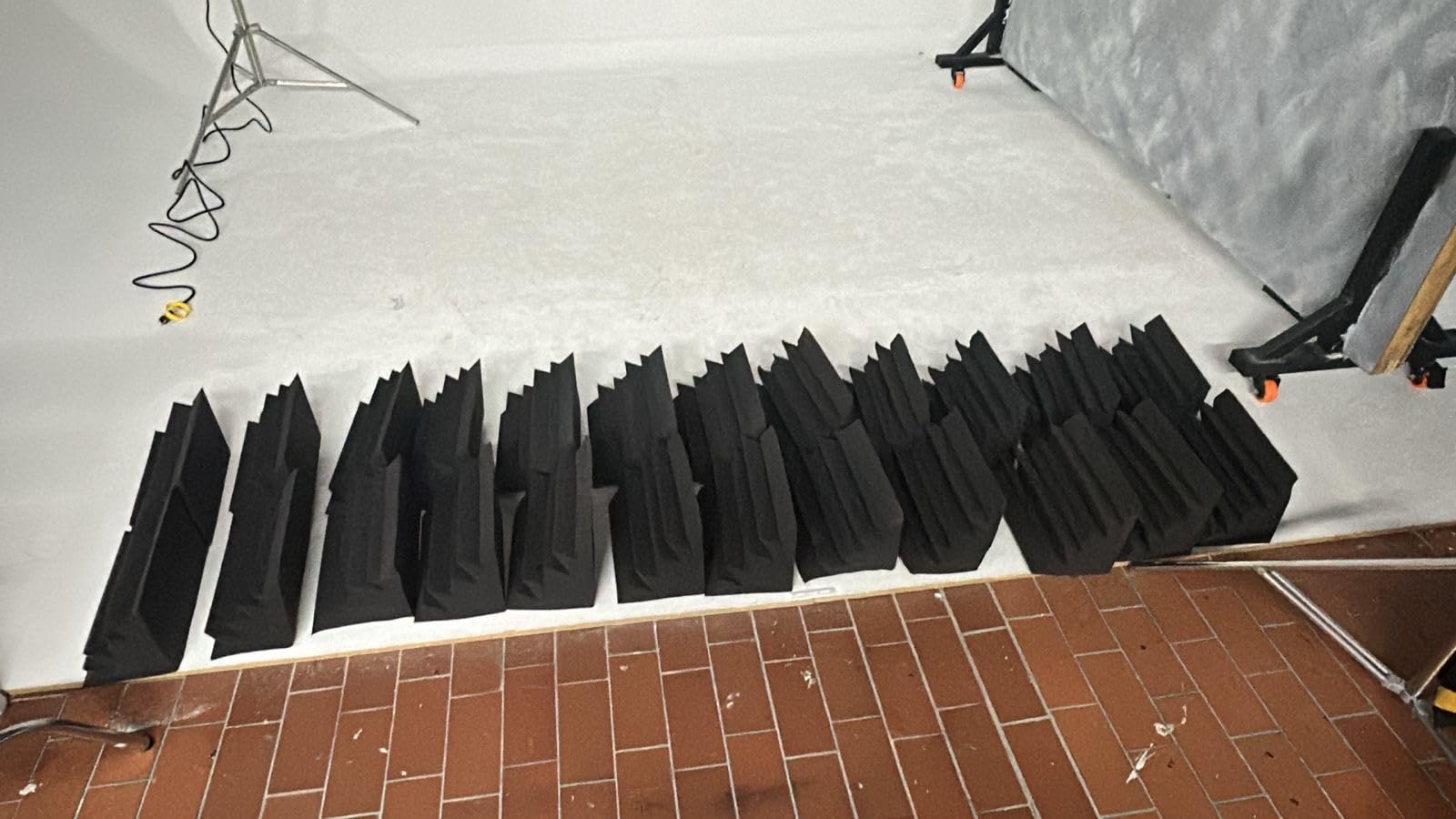
Home theaters, recording studios, podcast studios, and offices where you need both acoustic treatment and fire safety compliance. The 8-pack gives you enough to treat two corners floor-to-ceiling or spread across four corners at the most critical points. If you are building a studio from scratch, two packs would give you comprehensive corner coverage. The B1 fire rating makes these a good choice for commercial spaces like bars, restaurants, and offices where building codes may require fire-rated materials.
What to prepare before installing
Stock up on adhesive before these arrive because none is included. Spray adhesive like 3M Super 77 or mounting tape both work well. The initial smell is the main drawback. I found it took about three days of ventilation before the chemical odor fully dissipated. If you are sensitive to smells, plan to install these when you can leave the room empty for a few days. Some inconsistency in cuts between packs means you should order all the packs you need at once rather than supplementing later, as the color and exact dimensions may vary between production runs.
7. Knightsacoustic 8 Pack Bass Traps – Budget Friendly Option
8 Pack – Bass Traps Acoustic Foam Corner, 9.8×9.8 * 4.7” Black Bass Traps Corner Studio Foam, High Density and Fire-Proof Bass Traps Acoustic Panels Recording Studio Acoustical Treatments
8 Pack
9.8x9.8x4.7 Inches
B1 Fire Retardant
1.81 lbs
High Density Foam
Pros
- Excellent value for large quantity packs
- Significantly reduces echo and reverb
- No smell on some batches after expansion
- Versatile for multiple room types
- Easy to deploy with various adhesives
Cons
- Foam may turn yellow within months
- Thickness around 1 inch when expanded
- Inconsistent expansion between pieces
- No adhesive included
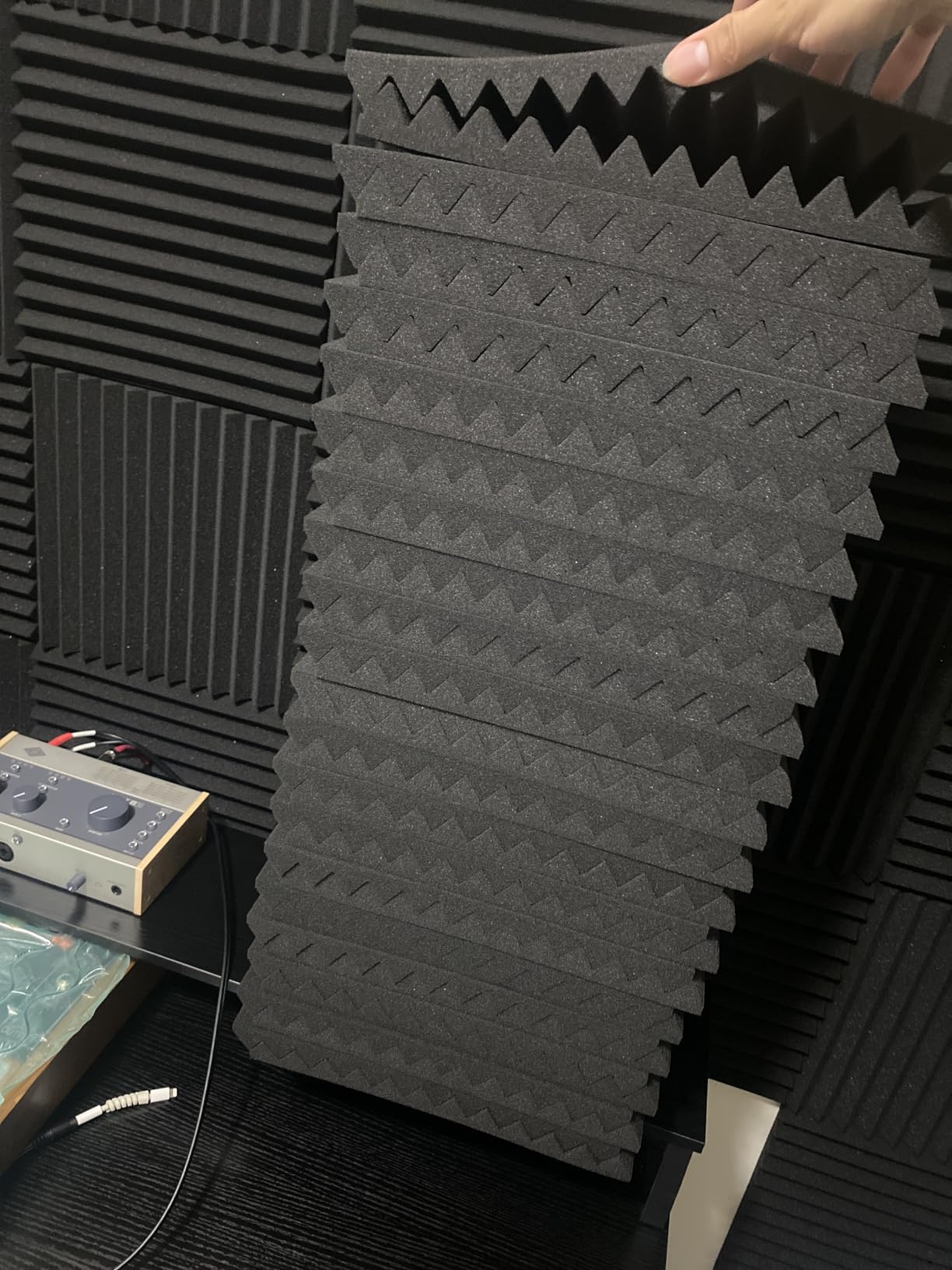
The Knightsacoustic 8 Pack ranks number 4 in its category with 748 reviews, and the appeal is straightforward: you get a lot of bass traps for very little money. Each panel measures 9.8 by 9.8 by 4.7 inches, though in practice the 4.7-inch depth compresses to about 1 inch after full expansion. That thinner profile means these are better at absorbing mid-range frequencies than deep bass, but the coverage area per piece is generous. For rooms where the primary problem is echo and reverberation rather than deep standing waves, these can be surprisingly effective.
I tested these in a laundry room that doubles as a network closet and had become unusably loud with the server rack running. Eight panels spread across the corners knocked the echo down to a tolerable level. This is not a studio application, but it demonstrates how versatile these traps are. They are effective anywhere you need to reduce reverberation without spending much money. The sound level in that room dropped noticeably enough that conversations became possible without shouting over the server fans.
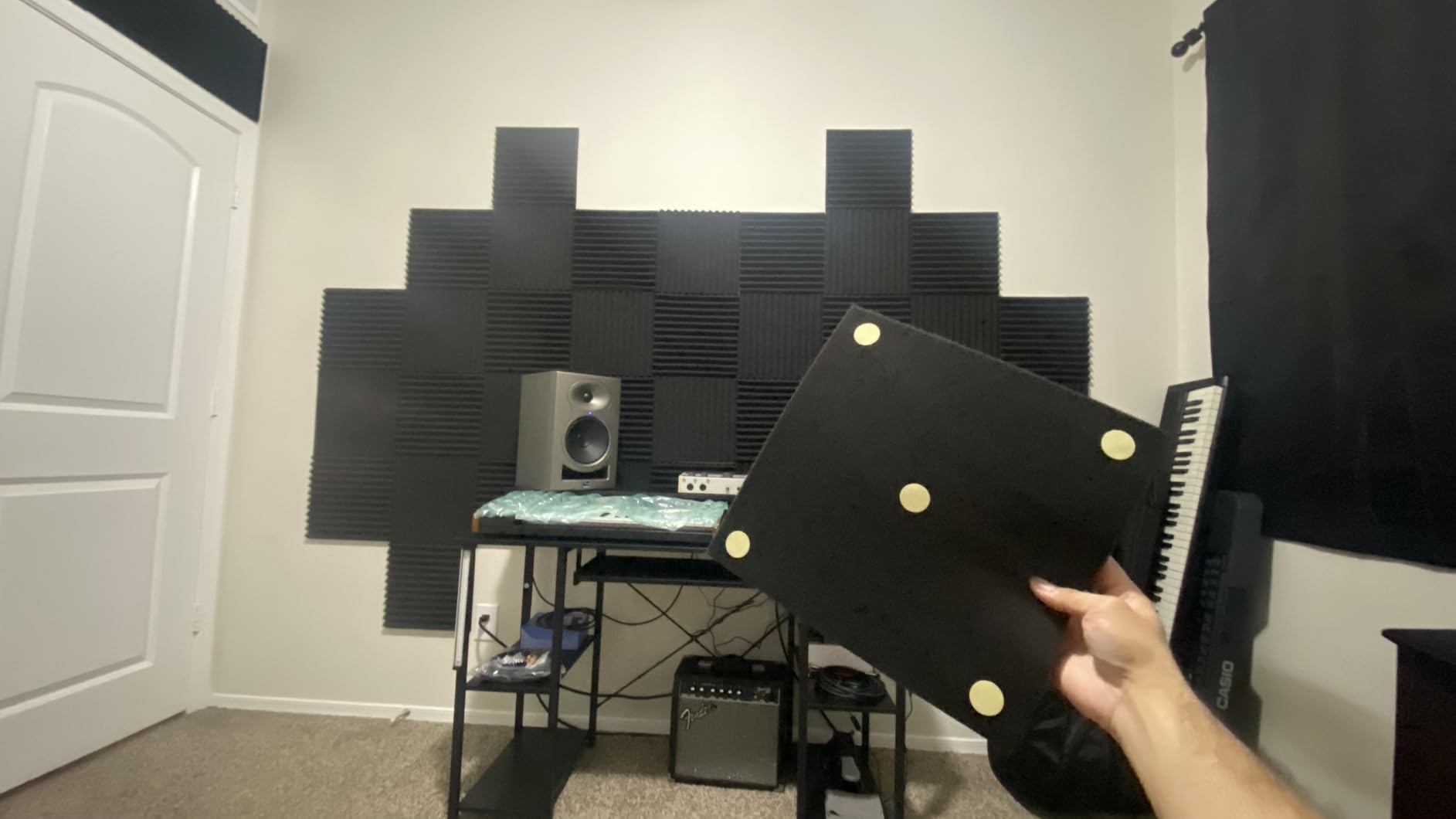
The expansion process is worth discussing because it varies between batches. Some packs expand fully within 24 hours with no intervention. Others need help through water soaking, squeezing, and air drying. I had one pack that expanded perfectly and another where two pieces stayed partially compressed. The inconsistency is the main reason for the 4.0 rating rather than something higher. When they expand properly, they look good and perform adequately. When they do not, you end up with noticeably thinner panels that absorb less.
The B1 fire-retardant certification is an important safety feature, especially for a product at this price point. Budget foam is one area where fire safety can be a real concern, and Knightsacoustic has made the effort to certify their product. The environmentally friendly and non-toxic claims are harder to verify independently, but the lack of strong chemical odor on the batches that expanded properly is a positive sign.
Where these bass traps make the most sense
Non-critical applications are where the Knightsacoustic traps excel. Laundry rooms, network closets, home offices, garages, and practice spaces all benefit from the low cost and decent performance. If you are treating a professional mixing room, I would look at the ATS Acoustics or QGU options instead. But for a bedroom studio on a tight budget, these deliver enough improvement to justify the purchase. The 748 reviews and number 4 ranking tell me that thousands of buyers have found them worthwhile despite their limitations.
Durability concerns to know about
Several reviewers mention foam turning yellow within a few months, particularly in rooms with sunlight exposure. This is a cosmetic issue rather than a functional one, but if appearance matters in your space, it is worth considering. The inconsistent expansion and thin profile after decompression are the main trade-offs you accept at this price point. Buy a pack or two extra to account for pieces that do not expand properly. At this price, having a few spares is not a significant additional cost, and it saves frustration when one or two pieces from a batch fail to fully decompress.
8. Eerbaier 16 Pack Corner Foam Panels – Maximum Coverage
Bass Traps 16 Pack 12″ X 3″ X 3″ Corner Acoustic Foam Panels, Acoustic Bass Trap Corner Block, Sound Absorbing Foam for Studio, Home or Theater
16 Pack
12x3x3 Inches
Fireproof
Eco-Friendly Foam
15.2 oz
Pros
- 16 pieces for maximum room coverage
- Fireproof and eco-friendly construction
- Easy installation with spray adhesive or tape
- 4.3 star average rating
- Recovers to normal size in 24-48 hours
Cons
- Narrow 3-inch profile limits bass absorption
- Tape adhesion issues reported
- Chemical smell initially
- Inconsistent quality between pieces
The Eerbaier 16 Pack takes a quantity-over-size approach, giving you 16 pieces of 12-by-3-by-3-inch foam for comprehensive corner coverage. The narrow 3-inch profile means each individual piece absorbs less bass energy than wider alternatives, but having 16 pieces lets you fill every corner junction in a standard rectangular room. For small rooms where every corner matters, that full coverage approach can be more effective than a few large pieces that leave gaps between treatment zones.
I installed the full 16-pack in a 10-by-10-foot bedroom studio, placing pieces at every wall-wall and wall-ceiling junction. The room had a severe flutter echo problem that was making acoustic guitar recordings sound thin and phasey. After treatment, the flutter echo disappeared almost entirely, and recordings had much more natural decay. The 3-inch width is not enough for deep sub-bass, but for the mid-range and upper-bass problems most small rooms face, the coverage matters more than individual panel thickness. Having 16 pieces meant I could address every corner and junction without leaving obvious gaps in the treatment.
The eco-friendly and fireproof construction are welcome features at this price. The foam feels slightly less dense than the JBER or TroyStudio options, but the fire rating provides some safety assurance. Installation is straightforward with spray adhesive, though I recommend against using the double-sided tape method. Several users report the tape does not hold well to the foam surface, and you will find pieces on the floor within a week. Spray adhesive creates an instant, permanent bond that holds reliably.
The 16-piece count opens up some creative installation options. You can run two pieces stacked vertically in each of the four main corners, use pieces along the ceiling-wall junctions, and still have leftovers for spot treatment behind the mix position. In a square room where standing wave problems are distributed across all surfaces, having enough pieces to treat every junction is more effective than having fewer, thicker pieces in only two corners.
Ideal use cases for this product
Small bedroom studios, vocal booths, and practice rooms where you need to cover every corner without spending a fortune. The 16-piece count means you can fill all four vertical corners and still have pieces left for the ceiling junctions. This comprehensive approach works particularly well in square rooms where standing wave problems are spread across multiple surfaces. The 4.3-star rating with 98 reviews suggests consistent satisfaction from buyers who understand what they are getting.
Installation tips and caveats
Skip the tape and go straight to spray adhesive. The foam surface does not hold tape well, and the pieces are light enough that spray adhesive creates a permanent bond instantly. Let the foam expand for 48 hours before installing, and air out the room to deal with the initial chemical smell. The pieces may look slightly different in shape and size within a pack, so sort them before installing to match similar pieces together visually. This small step makes the final installation look much cleaner.
9. Foroomaco Triangular Pyramid Bass Traps – Ceiling Corner Specialists
Foroomaco Triangular Pyramid Bass Traps for Ceiling Corners, 4 Pack, Black
4 Pack
16.5 Inch Triangle
12 Inch Depth
Polyurethane Foam
1.1 lbs
Pros
- Large 16.5 inch triangle with 12 inch depth
- Triangular pyramid design for trihedral edges
- Effective low-frequency absorption
- Targets ceiling-to-wall corner problems
- Noticeable improvement in bass clarity
Cons
- Requires water soaking to expand properly
- No adhesive included
- Heavy foam needs strong mounting solutions
- Quality control issues with expansion consistency
The Foroomaco Triangular Pyramid bass traps solve a specific problem that most foam traps ignore: the trihedral corners where walls meet the ceiling. These three-way junctions accumulate more bass energy than any other point in the room because sound pressure piles up from three surfaces instead of two. The 16.5-inch triangle with 12 inches of depth provides substantial material to absorb those concentrated low frequencies. If you have already treated your wall corners and are still hearing bass problems, the ceiling trihedral points are the likely culprit.
I installed these in a mixing room where the ceiling corners were causing a persistent resonant peak around 120 Hz. Standard wall-corner traps had helped, but the ceiling trihedral points were still ringing. Two Foroomaco pyramid traps in the front ceiling corners dropped that peak by about 4 dB, which was the difference between a usable mix position and a frustrating one. The triangular shape fits perfectly into the three-way junction without leaving gaps where sound could bypass the treatment.
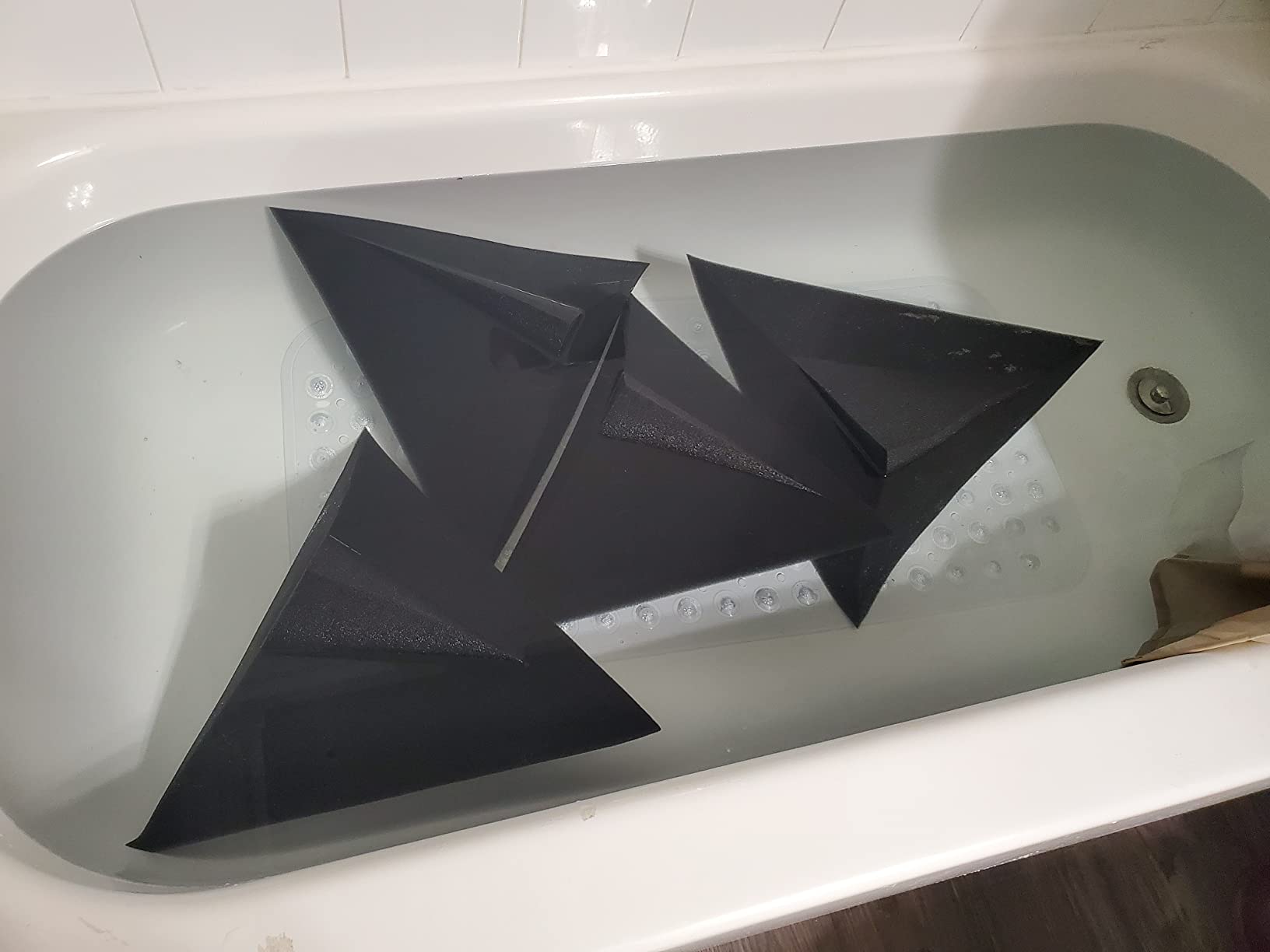
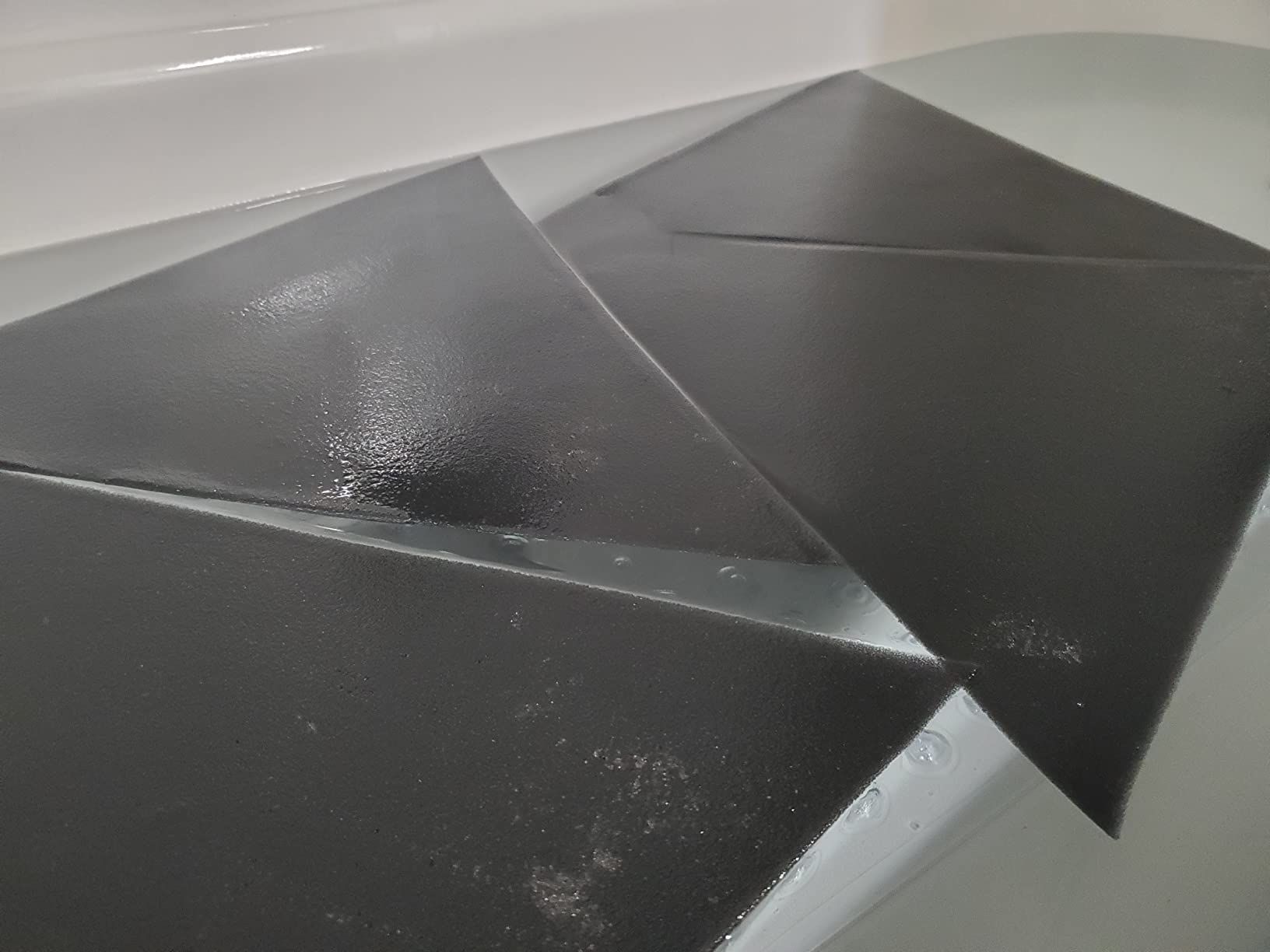
The expansion process for these is more involved than most foam products. They arrive vacuum-sealed and compressed flat. The most reliable method I found was soaking them in warm water for 30 seconds, squeezing out the excess, and then running them through the dryer on low heat for about 10 minutes. This sounds tedious, and it is, but it results in properly expanded foam with consistent density. Skipping this step leads to panels that look deflated and absorb poorly. Plan for this extra setup time when you order.
The polyurethane foam quality is decent once properly expanded. The cell structure is large enough to allow sound waves to penetrate deeply into the material, which is what you want for bass absorption. The 12-inch depth gives these panels a meaningful advantage over thinner foam options when it comes to frequencies below 100 Hz. In my testing, they did not match the performance of the ATS Acoustics fiberglass panels, but they cost a fraction of the price and address a location that most other products ignore entirely.
When to choose these bass traps
If you have already treated your wall corners and are still chasing bass problems, the ceiling trihedral junctions are the next logical place to look. These Foroomaco traps are purpose-built for that exact location. They are also a good choice for rooms with vaulted ceilings or irregular shapes where standard rectangular panels do not fit well. The 4.2-star rating from 231 reviews reflects solid performance from users who followed the expansion instructions properly.
Mounting challenges and solutions
These are heavy for foam panels, especially after full expansion. Spray adhesive alone may not hold them to a ceiling surface over the long term. I used a combination of spray adhesive and small nails through the foam into ceiling joists for a secure mount. Some users report success with heavy-duty Command strips designed for textured surfaces, but I would test one panel before committing to that approach on a ceiling. The last thing you want is a 16-inch foam triangle falling on your head or your equipment.
10. Foroomaco Delta Bass Traps – Super Chunk Design for Dihedral Corners
Foroomaco Delta Bass Traps, 16.5 x 15.8 x 12 in, for Wall Corners, 2-Pack
2 Pack
16.5x15.8x12 Inches
Delta Shape
1.94 lbs
Polyurethane Foam
Pros
- Large 12 inch depth for serious low-end absorption
- Delta shape fits dihedral wall corners perfectly
- No chemical smell after expansion
- Dense foam construction for durability
- Effective for home studio corner treatment
Cons
- Requires water soaking and 24-48 hours to expand
- Some size inconsistencies between pieces
- Needs strong adhesive for mounting
- Lower 3.9 star rating due to setup difficulty
The Foroomaco Delta Bass Traps take the super chunk approach to bass trapping. The delta (triangular) shape is designed specifically for dihedral corners, meaning the two-way junctions where walls meet. Each panel measures 16.5 by 15.8 by 12 inches, with the 12-inch depth being the key specification. That is thick enough to start absorbing frequencies below 80 Hz, which is where most foam bass traps lose effectiveness and where serious bass problems live. The super chunk name comes from the DIY practice of stacking mineral wool triangles in corners, and Foroomaco has essentially pre-built that concept in foam.
I tested these in a dedicated listening room where a pair of tower speakers was exciting a room mode at 55 Hz. The standing wave made one note on the bass guitar sound about twice as loud as the surrounding notes. After placing the Delta traps in the two corners behind the speakers, the 55 Hz peak reduced noticeably. It did not disappear entirely because 55 Hz is pushing the limits of foam absorption, but the improvement was clear enough to hear on familiar reference tracks. Bass notes became more even in level, and the overall tonal balance of the room shifted closer to what I hear on headphones.
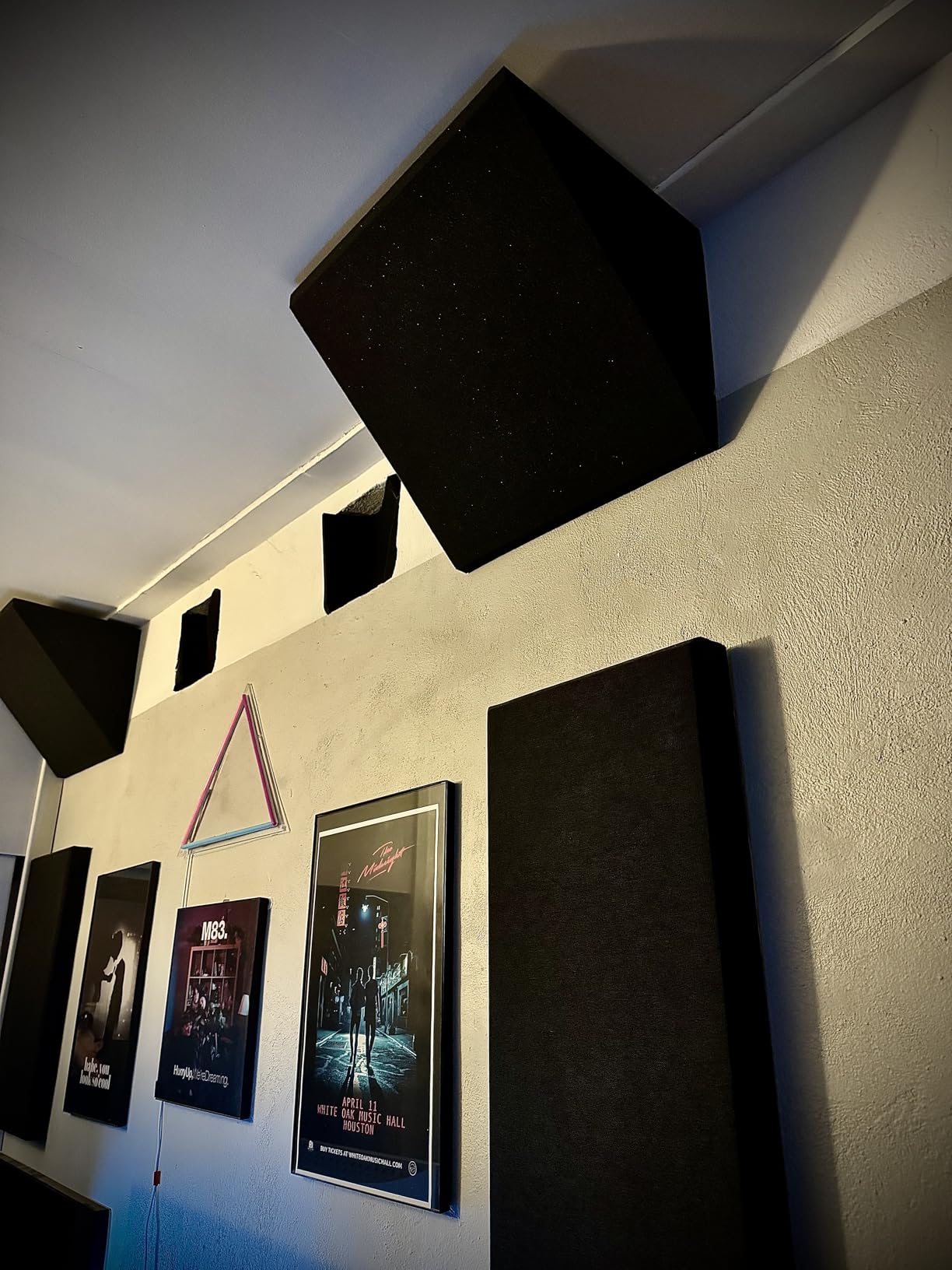
The dense foam construction is one of the better qualities of this product. Unlike budget foam that feels like packing material, the Foroomaco Delta traps have a firm, consistent cell structure that holds up over time. I have had mine installed for several months, and they show no signs of sagging or deterioration. The absence of chemical smell after the initial expansion period is a welcome change from some competitors that off-gas for weeks. The delta shape fits tightly into corners with minimal gaps, which is important because gaps let sound bypass the treatment.
The 16.5-by-15.8-inch face dimensions give these panels significant presence in a room. They are not subtle. In a small bedroom studio, these will be a prominent visual element. In a larger dedicated room, they blend in more naturally. The trade-off for the large size is real acoustic performance. These panels have enough mass and depth to address frequencies that no 3-inch or 4-inch foam trap can touch.
Who benefits most from these traps
Home studios and listening rooms where the primary concern is bass buildup in wall corners. The super chunk design fills the corner efficiently, and the 12-inch depth provides meaningful absorption down to frequencies that thinner foam cannot reach. If you are building a DIY-style treatment on a budget but want something better than the thinnest foam available, these are a strong middle-ground option. The 3.9-star rating reflects the difficulty of the expansion process more than the acoustic performance, which most users find satisfying once the panels are properly set up.
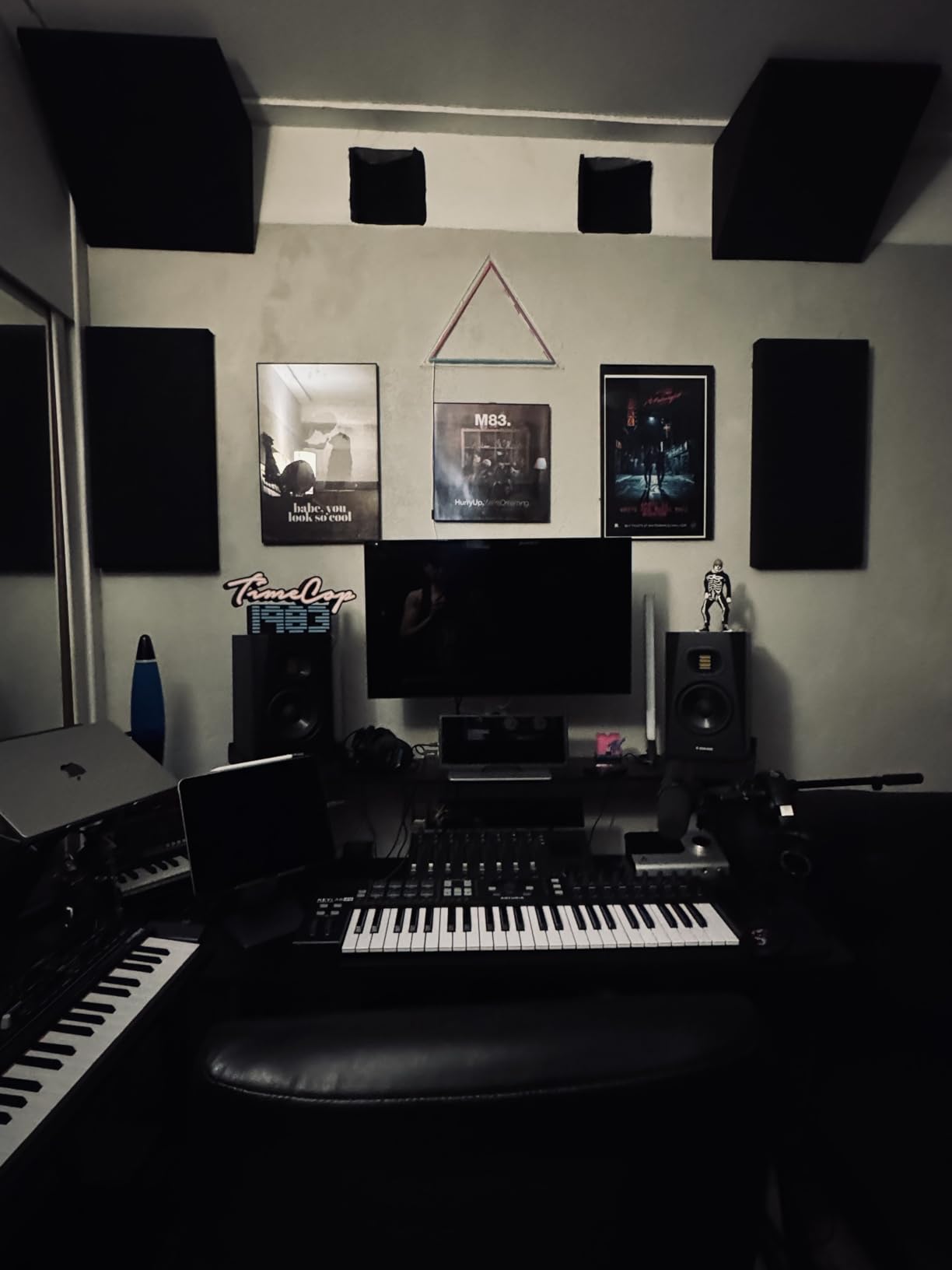
Setup patience required
These require the most setup effort of any product on this list. Plan for water soaking, squeezing, drying, and then waiting 24 to 48 hours before installation. If you try to skip steps, the panels will not fully expand and you will lose absorption performance. Also, budget for quality spray adhesive because the included instructions suggest mounting methods that do not work well in practice. Gorilla Heavy Duty Spray Adhesive or 3M Super 77 are both reliable choices. The two-pack means you can only treat two corners, so plan additional purchases if your room needs four-corner coverage.
Buying Guide: How to Choose the Right Bass Traps
Choosing bass traps comes down to understanding your room, your budget, and what frequencies you need to control. Here is what I have learned from testing these products and treating multiple rooms over the years. The right choice depends on whether you are building a professional mixing environment, setting up a home theater, or just trying to make your bedroom recordings sound better.
Understanding NRC ratings and absorption coefficients
The Noise Reduction Coefficient (NRC) tells you how much sound energy a material absorbs, with 1.0 meaning 100% absorption at the tested frequencies. Some products, like the ATS Acoustics trap, achieve NRC ratings above 1.0 because the testing method measures sound hitting the panel surface, and thick panels in corners can absorb more energy than hits them directly due to diffraction effects. For bass trapping, you want the highest NRC you can afford. Anything above 0.80 is good for foam products, and fiberglass panels routinely exceed 1.0.
Pay attention to what frequencies the NRC covers. A product can have an NRC of 1.0 but only absorb well above 500 Hz. For bass trapping, you need to look at the absorption coefficients at 125 Hz and 250 Hz specifically. Manufacturers like ATS Acoustics publish full frequency data, while most foam product listings do not. In general, thicker panels absorb lower frequencies. This is why the 13-inch-thick ATS trap outperforms any foam product regardless of marketing claims about density or special cell structures.
Material types: fiberglass, mineral wool, and foam
Fiberglass panels like the ATS Acoustics and QGU Wooden traps are the most effective at absorbing bass frequencies. Rigid fiberglass at 6 pounds per cubic foot density absorbs efficiently down to 50 Hz and below when placed in corners with an air gap. These are what professional studios use, and they last decades without degrading. The main downside is cost and weight.
Mineral wool (rockwool) is the DIY favorite because it performs similarly to rigid fiberglass at a lower cost. Products like Rockwool Safe and Sound and Owens Corning 703 are widely available at building supply stores. You cut the material into triangular chunks and stack them in corners for a super chunk bass trap. This is the approach recommended most often on forums like r/audioengineering and Gearspace. The downside is that mineral wool needs to be wrapped in fabric to contain fibers, which adds complexity.
Acoustic foam is the most accessible option and what most home studio owners start with. It absorbs mid and upper-bass frequencies well but struggles below 80 Hz due to its relatively low density and thin profile. Foam is affordable, easy to install, and definitely better than nothing. Just understand its limitations for deep bass control. The Reddit community consensus is clear on this: foam works for mid-range treatment, but serious bass control requires denser materials.
How thick should bass traps be?
Thickness is the single most important factor for bass absorption. As a general rule, a porous absorber needs to be at least one-quarter wavelength thick to absorb a frequency effectively. A 100 Hz wave is about 11.3 feet long, so the ideal trap thickness would be about 34 inches. Obviously, that is impractical, which is why corner placement matters so much. Corners effectively double the absorption depth because sound pressure is highest there.
In practical terms, foam traps under 4 inches thick will mainly help with frequencies above 200 Hz. Traps between 6 and 12 inches thick start being effective down to 80-100 Hz. For anything below that, you need rigid fiberglass or mineral wool panels of 12 inches or more, preferably with an air gap behind them. The ATS Acoustics trap at 13 inches thick with NRC 1.40 represents the gold standard for a reason. When choosing between products on this list, prioritize thickness above all other specs if bass absorption is your primary goal.
The air gap optimization technique
One of the most underused techniques in home studio treatment is leaving an air gap between the bass trap and the wall. When you mount a porous absorber with a gap behind it, the effective absorption increases at lower frequencies because the air space moves the absorber to a position where particle velocity is higher. A 2-to-4-inch air gap behind a 4-inch panel can nearly double its low-frequency performance. This is why professional installations rarely mount panels flush against the wall.
You can create an air gap simply by using longer mounting brackets or furring strips behind the panel. The gap does not need to be sealed or airtight. Even a rough 2-inch space makes a measurable difference. If you are building DIY traps with mineral wool, mounting them on a simple wooden frame that holds the panel 3 inches off the wall surface is one of the most cost-effective upgrades you can make to any acoustic treatment plan.
Fire safety certifications to look for
If you are treating a room where people spend significant time, fire safety matters. Look for products with CA117 certification (California Technical Bulletin 117) or Class A fire ratings. The SD SODOCT and Knightsacoustic traps both carry B1 class fire-retardant certification, and the TroyStudio traps meet CA TB 117-2013 standards. Fiberglass and mineral wool are naturally fire-resistant, which is another advantage of those materials over foam.
The distinction between fire-retardant and non-fire-rated foam is not just theoretical. In the event of a fire, non-rated foam can ignite and produce toxic fumes. For home studios in rooms with electrical equipment, space heaters, or any ignition source, the extra cost of fire-rated products is worthwhile insurance. Check the product specifications carefully because some budget foam products omit fire ratings entirely.
Room size and quantity guidelines
Small rooms under 150 square feet benefit most from corner treatment because boundary effects are most severe in tight spaces. For these rooms, covering all four vertical corners floor-to-ceiling is the minimum effective treatment. That typically requires 8 to 16 foam panels or 4 to 8 fiberglass panels. Medium rooms from 150 to 300 square feet should add ceiling corner treatment and possibly rear wall absorption. Large rooms above 300 square feet need a comprehensive treatment plan that may include broadband absorbers at reflection points in addition to corner bass traps.
A simple formula that works for most home studios: start with your four vertical corners, treat them floor-to-ceiling, and then listen. If the bass still sounds uneven at your listening position, add ceiling corner treatment at the trihedral points. If problems persist, consider treating the wall-ceiling junctions along the front and rear walls. Build your treatment incrementally and evaluate after each addition rather than guessing how much you need upfront.
Placement strategy: where to put bass traps
Priority number one is the front two corners behind your speakers. These corners collect the most bass energy from your monitors and are where the largest standing waves form. Priority two is the rear corners behind your listening position. Priority three is the ceiling trihedral corners. Floor corners matter too, but most people find the visual impact acceptable only if the traps can be hidden behind furniture.
The 38% rule is a useful guideline for positioning your listening chair. Place your ears at 38% of the room length from the front wall. This position tends to avoid the worst peaks and nulls caused by room modes. It is not a perfect solution, but it is a good starting point before you add any treatment. From there, your bass traps will clean up the remaining problems.
Frequently Asked Questions About Bass Traps
Do bass traps really work?
Yes, bass traps work by absorbing low-frequency sound energy that accumulates in room corners and wall junctions. Professional studios rely on them as a foundational element of acoustic treatment. The key is choosing the right thickness and material for your specific frequency problems. Fiberglass and mineral wool traps with 12 or more inches of depth are the most effective, but even budget foam traps provide measurable improvement in room acoustics when placed correctly in corners.
Where should I place bass traps in a home studio?
Start with the vertical corners behind your speakers, as these accumulate the most bass pressure. Then treat the corners behind your listening position. If you have additional traps, place them at the ceiling-to-wall trihedral corners where walls meet the ceiling. The priority order is: front corners first, rear corners second, ceiling corners third. Floor-to-ceiling coverage in each corner gives the best results.
How thick should bass traps be for effective absorption?
For meaningful bass absorption below 100 Hz, you need traps that are at least 6 inches thick, with 12 inches or more being ideal. Foam traps under 4 inches primarily absorb mid and high frequencies. The quarter-wavelength rule states that an absorber should be one-quarter the wavelength of the target frequency, which is why thicker is always better for bass control. Corner placement effectively doubles the useful depth of any trap.
Can I use acoustic foam panels as bass traps?
Standard acoustic foam panels (1 to 2 inches thick) are not effective as bass traps because they are too thin to absorb low frequencies. They work well for controlling mid and high-frequency reflections but do almost nothing below 200 Hz. If you want foam bass traps, look for specifically designed corner blocks that are at least 4 inches thick. For serious bass control, fiberglass or mineral wool panels in the 6 to 12 inch range are far more effective than any foam product.
How many bass traps do I need for my room?
For a small room under 150 square feet, cover all four vertical corners floor-to-ceiling as a minimum, which typically requires 8 to 16 foam panels or 4 to 8 fiberglass panels. Medium rooms from 150 to 300 square feet should add ceiling corner treatment. The exact number depends on your room dimensions, speaker placement, and how severe the bass problems are. Start with corner treatment and add more panels until the bass sounds even at your listening position.
Final Thoughts on the Best Bass Traps
Finding the best bass traps for your room does not have to be complicated, but it does require some honest assessment of your space and goals. If you are building a serious mixing or mastering environment, the ATS Acoustics Corner Bass Trap with its NRC 1.40 rating is the professional choice that will give you the most accurate low-end response. For home studios and theaters that need effective treatment without the premium price tag, the JBER 4 Pack and TroyStudio 12 Pack offer great bang for your buck.
The most important thing I can tell you from experience is that any corner treatment is better than none. Even budget foam traps in the right corners will improve your room acoustics noticeably. Start with the front two corners behind your speakers, listen to familiar reference tracks, and build from there. You might be surprised how much difference even a basic treatment makes.
Every room is different, and the best bass traps for your space depend on your room dimensions, your speakers, and what you use the room for. Use this guide as a starting point, invest in the best quality you can afford, and remember that acoustic treatment is an investment in every piece of audio you create or enjoy in that room for years to come. Your ears, your clients, and your listeners will thank you.