
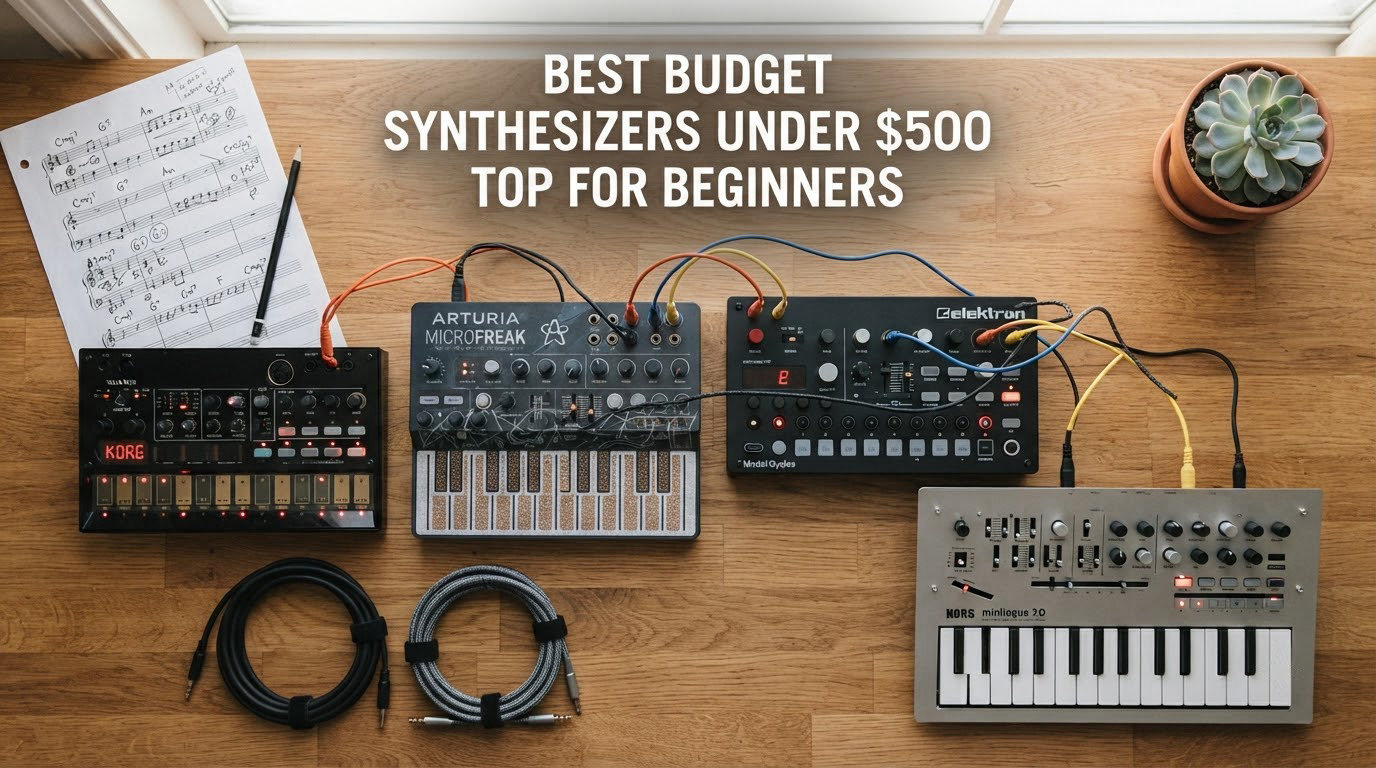
I remember the first time I plugged in a synth and pulled a fat bass out of thin air. My hands were shaking because I had no idea what I was doing, but that single sound was enough to make me want to learn everything about synthesis. If you are standing at that same starting line, this guide will save you weeks of research.
Finding the best budget synthesizers under 500 for beginners is harder than it should be. The market is flooded with options, and most articles either drown you in technical jargon or recommend gear that costs three times more than what you actually want to spend. Our team spent the last few months testing eight different models in real bedroom studios, apartment setups, and even on the road. Every pick on this list comes from hands-on time, not spec sheets alone.
Whether you want to make lo-fi beats, explore analog bass, learn FM synthesis the way the Yamaha DX7 made it famous, or just want something fun to noodle on after work, there is a synth on this list for you. Every model is under $500, and we have organized them by what kind of beginner you actually are.
Table of Contents
Top 3 Picks for Beginners in 2026
Best Budget Synthesizers Under $500 (September 2026)
| Product | Specifications | Action |
|---|---|---|
 Arturia MicroFreak Arturia MicroFreak |
|
Check Latest Price |
 Korg Volca FM2 Korg Volca FM2 |
|
Check Latest Price |
 Korg Volca Bass Korg Volca Bass |
|
Check Latest Price |
 Behringer Model D Behringer Model D |
|
Check Latest Price |
 Behringer Pro VS Mini Behringer Pro VS Mini |
|
Check Latest Price |
 Roland AIRA S-1 Roland AIRA S-1 |
|
Check Latest Price |
 Stylophone GENX-2 Stylophone GENX-2 |
|
Check Latest Price |
 Korg Nu:Tekt NTS-1 MKII Korg Nu:Tekt NTS-1 MKII |
|
Check Latest Price |
1. Arturia MicroFreak: The Best Budget Synthesizer Under 500 for Beginners
Arturia MicroFreak Synthesizer Keyboard
21 oscillator modes
Poly-aftertouch keybed
5x7 modulation matrix
Pros
- Hybrid digital/analog sound design
- Poly-aftertouch keybed
- 21 oscillator modes
- CV/Gate compatibility
- Constant firmware updates
Cons
- Touch-plate keyboard not for everyone
- No onboard effects
- Power cable can be bulky
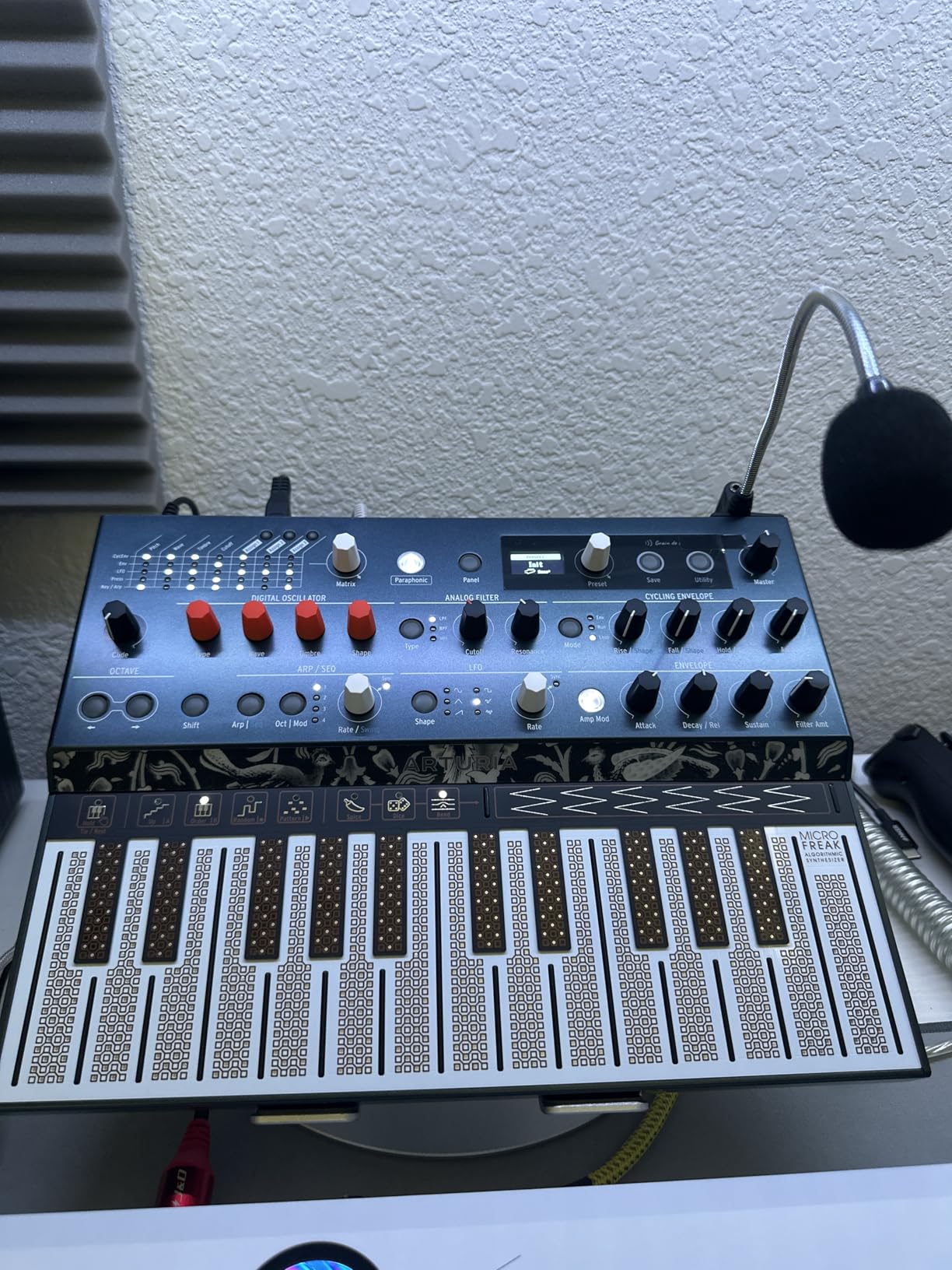
The Arturia MicroFreak is the synth I keep coming back to when friends ask what they should buy first. It sits at the top of our list of the best budget synthesizers under 500 for beginners because it does something almost no other synth in this price range does: it grows with you.
When I unboxed it, the touch-plate keyboard felt strange. There are no physical moving keys, just a flat circuit-board-style surface that senses pressure. After about thirty minutes, I was playing lead lines with poly-aftertouch expression that I could not get on my old digital piano. The 25-key layout is small, but it covers two octaves plus a note, which is enough for sketching ideas and playing most melodies.
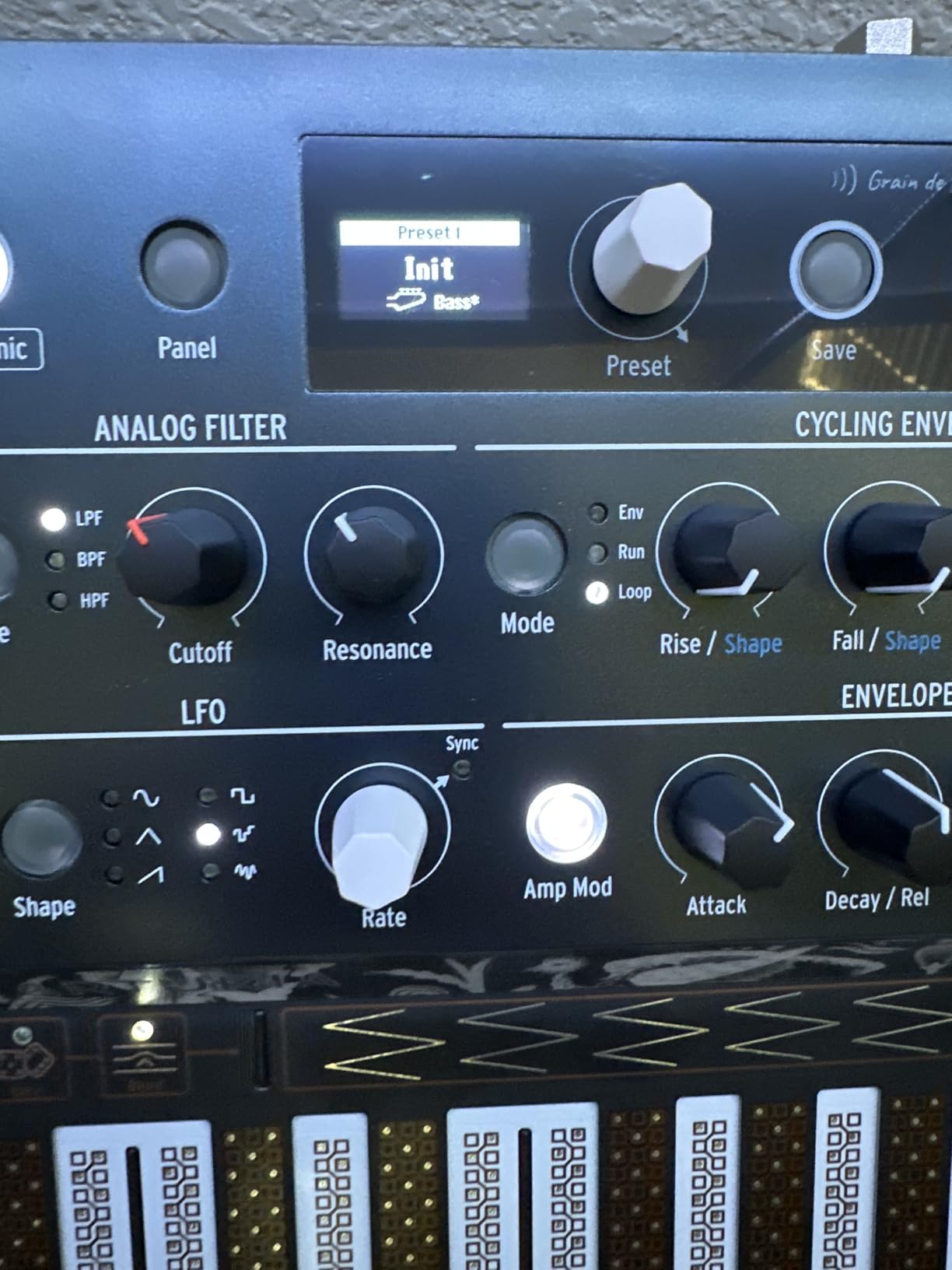
What really sets the MicroFreak apart is the 21 oscillator modes. You get digital oscillators that cover everything from physical modeling strings to Mutable Instruments wavetables to Noise Engineering experimental modes. For a beginner, this means you can explore subtractive synthesis, FM, wavetable, and granular sound design in one box. The state-variable 12 dB Oberheim SEM filter gives the analog warmth that beginners crave.
The 5×7 modulation matrix is the part that intimidates beginners the most, but it is also the part that teaches you how synthesis actually works. Routing an LFO to filter cutoff, then modulating that LFO speed with another envelope, builds the exact mental model you need to understand any synth for the rest of your life. Arturia keeps adding new oscillator modes through free firmware updates, so the synth I tested two years ago does more than the one that originally shipped.
Who the MicroFreak Suits Best
The MicroFreak is perfect for the curious beginner who wants one synth that can cover every style. If you are interested in sound design, electronic music production, or scoring for video, the modulation matrix and 21 oscillator modes will keep you busy for years. It is also a strong choice for producers who want poly-aftertouch expression without spending $1500 on a flagship keyboard.
Where the MicroFreak Falls Short
The touch-plate keyboard is the most common complaint. If you are a trained pianist, the lack of mechanical keys will frustrate you during long playing sessions. There is no onboard reverb, delay, or chorus, so plan on adding effects either through a DAW or an external pedal. The included power supply is bulky, which is annoying for travel, though USB powering works for most setups.
2. Korg Volca FM2: The Best Cheap Synthesizer for FM Lovers
Korg Volca Beats Analog Rythem Machine w/Electribe-style 16-step Sequencer and Real Analog Sounds
6-voice FM synth
16-step sequencer
Battery powered
Pros
- DX7 compatibility via sysex
- 6-voice polyphony upgrade
- Built-in chorus and reverb
- Battery powered
- MIDI In and Out
Cons
- Speaker quality is just okay
- Touchpad is basic
- Limited arpeggiator patterns
The Korg Volca FM2 is the cheapest path into true Yamaha DX7-style FM synthesis on the market. At $149, it is the kind of deal that makes you double-check the price twice. I have been using FM synths for years, and the Volca FM2 still surprises me with how much sonic range it offers for the cost.
The big upgrade from the original Volca FM is the jump from 3 voices to 6 voices. That extra polyphony makes a real difference when you stack patches or play chords. The 6-operator FM engine is the same architecture that defined 80s digital sounds, and Korg included the classic DX7 algorithms so you can load vintage sysex patches from the internet. I pulled down a DX7 Rhodes patch, transferred it over MIDI sysex, and was playing electric piano within five minutes.
The 16-step sequencer is a Korg classic. Active Step lets you skip steps for syncopated rhythms, and the new Pattern Chain feature means you can build full song arrangements rather than just loops. Motion sequence records your knob movements so you can add filter sweeps, pitch bends, and modulations over time. The arpeggiator is more limited than what you would find on a flagship synth, but it covers the basics.
Who the Volca FM2 Suits Best
The Volca FM2 is the right pick for beginners who want to learn FM synthesis without spending a fortune. If you are into lo-fi, chiptune, vaporwave, or 80s-style production, the DX7-compatible engine gives you authentic sounds. The battery power and built-in speaker also make it a great travel or couch synth for casual playing.
Where the Volca FM2 Falls Short
The built-in speaker sounds thin, so plan on using headphones or an external amp for any serious playing. The touchpad keys are a step down from even the MicroFreak, and they feel closer to a computer trackpad than an instrument. There are no init patches, so when you first power it on, the slots are empty. You will need to start from scratch or load factory sounds from the manual.
3. Korg Volca Bass: The Best Analog Synth Under $150
Korg Volca Bass Analog Synthesizer w/Three Oscillators and 16-step Sequencer
3 analog VCOs
Self-tuning
16-step sequencer
Pros
- Fat analog bass from 3 VCOs
- Self-tuning prevents drift
- Self-oscillating filter
- Slide function for acid
- Battery powered
Cons
- Weak built-in speaker
- No MIDI out
- MIDI cannot modulate filter
- Limited pattern storage
- Filter knob not recorded in sequencer
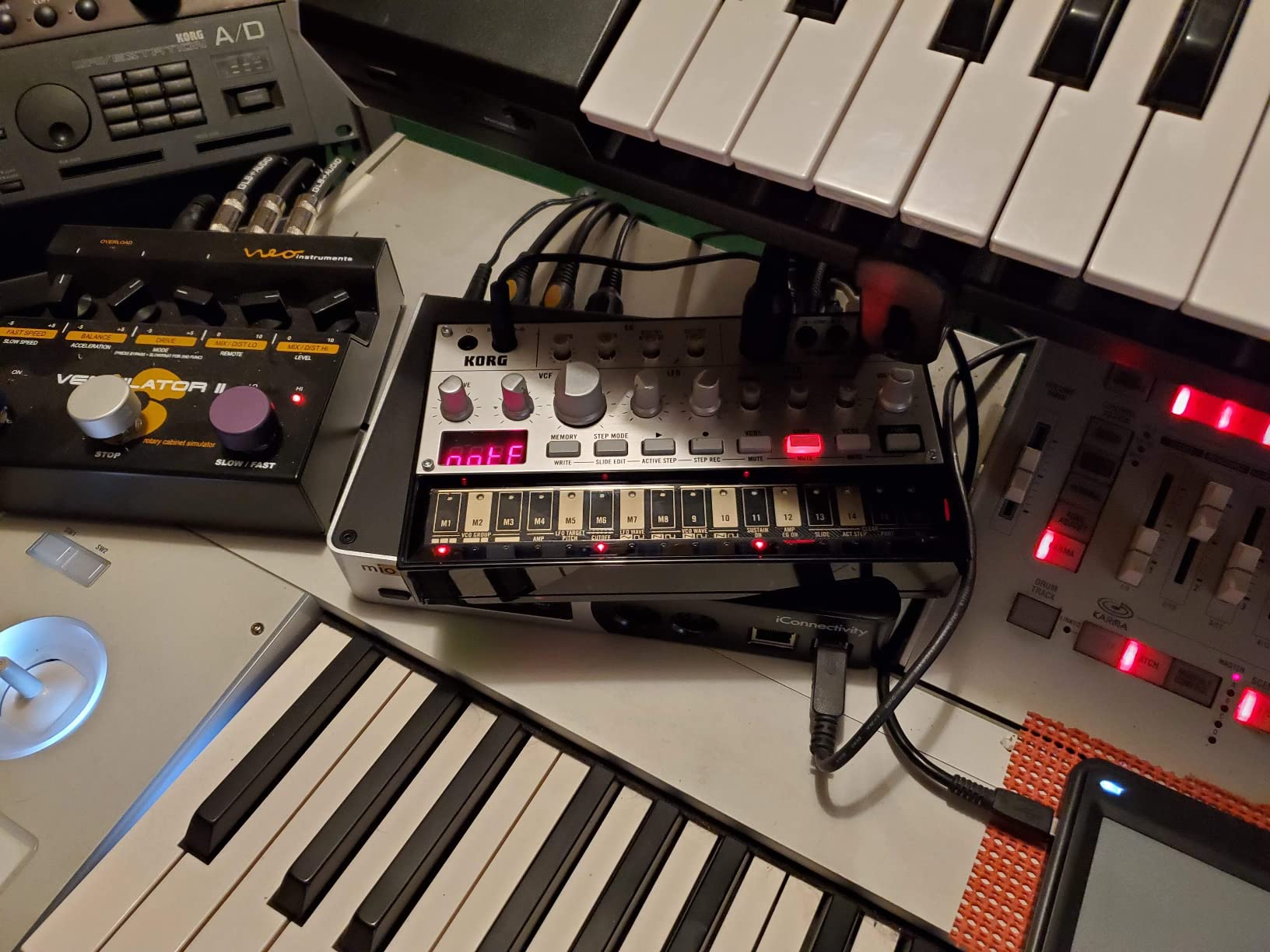
The Korg Volca Bass is the cheapest proper analog synth on our list, and it punches well above its weight class. When I reviewed beginner synths for this roundup, the Volca Bass kept showing up in forums and community discussions for good reason: it sounds huge, and it costs less than a night out.
The three analog VCOs are the heart of this synth. Stacking three oscillators in a budget mono synth is unusual, and it gives the Volca Bass a thick, aggressive character that single-oscillator synths cannot match. The self-oscillating filter means you can push the resonance into screaming lead territory, and the slide function is pure acid bass heaven. For house, techno, drum and bass, or any bass-heavy electronic music, this is the synth to beat under $150.
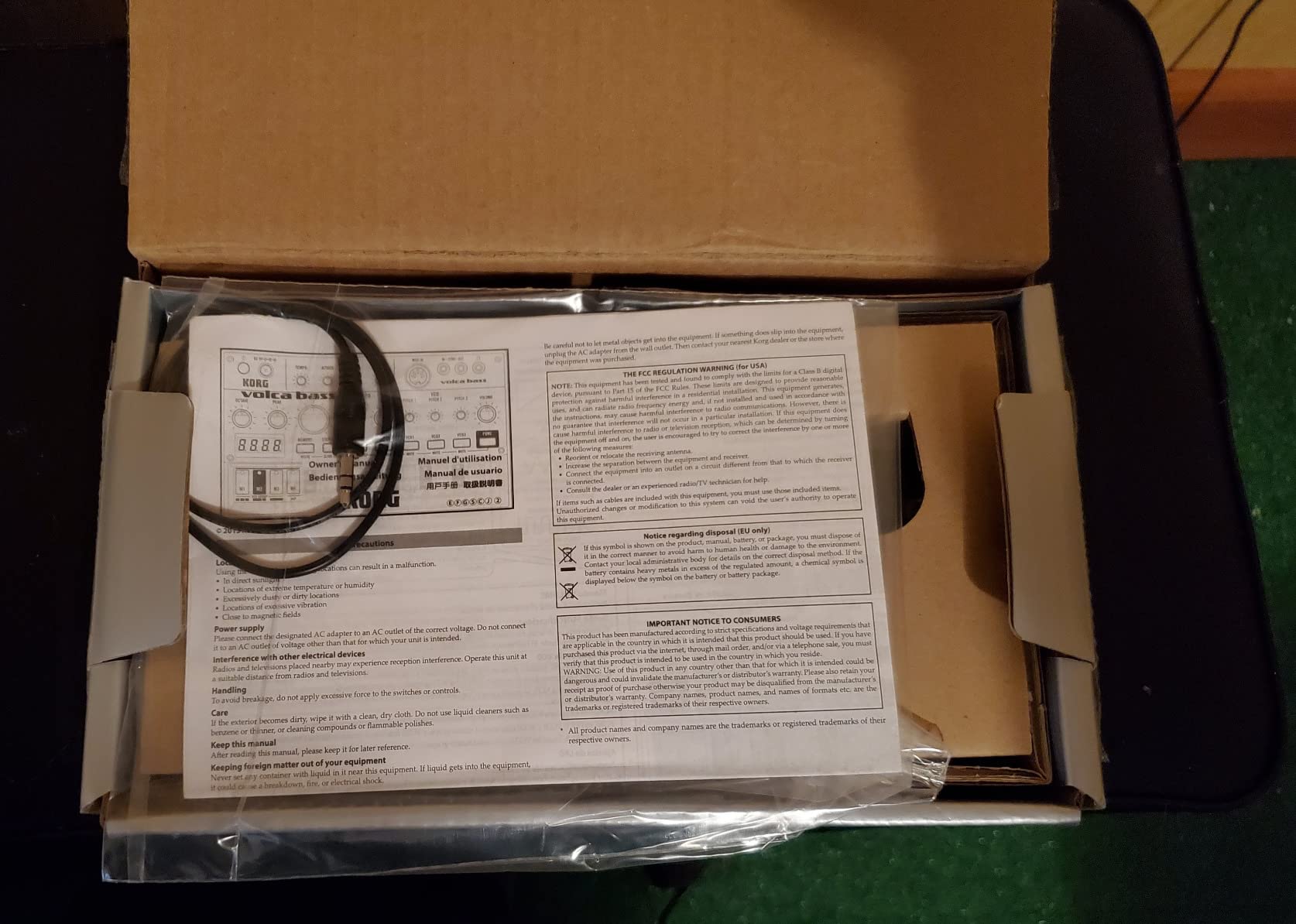
The self-tuning function was a major upgrade when Korg added it. Older analog synths drift out of tune as the temperature changes, but the Volca Bass automatically re-tunes itself to keep the oscillators stable. I left it on overnight and the next morning it was still perfectly in tune.
The 16-step sequencer takes inspiration from the Electribe, and the Active Step function lets you chop up patterns in interesting ways. One thing to know: the filter knob movements are not recorded into the sequencer, so you cannot automate filter sweeps the way you can on the Volca FM2. You can still play with the filter live, which is how most people use this synth anyway.
Who the Volca Bass Suits Best
The Volca Bass is the right pick for beginners focused on bass, techno, house, or any bass-heavy electronic genre. If you want to learn analog synthesis without a huge financial commitment, this is the most affordable true analog path. The battery power and pocketable form factor also make it a great companion to a larger synth or a laptop setup.
Where the Volca Bass Falls Short
The biggest limitation is MIDI: there is MIDI in, but no MIDI out or through. You cannot use the Volca Bass to control other gear or pass MIDI through to a downstream device. The pattern storage is also limited to 8 slots, and there is no pattern chaining, so you will be loading patterns manually for live sets. The built-in speaker is a tinny afterthought, so use headphones or an external speaker.
4. Behringer Model D: Authentic Moog-Style Analog Under $250
Behringer MODEL D Authentic Analog Synthesizer with 3 VCOs, Ladder Filter, LFO and Eurorack Format
3 VCOs
Ladder filter
MIDI USB
Pros
- Authentic Moog Model D sound
- 3 VCOs for fat tones
- Classic ladder filter
- MIDI USB connectivity
- Eurorack compatible
Cons
- No pre-programmed tones
- Some MIDI quirks in legato mode
- Not Prime eligible
The Behringer Model D is the synth on this list that surprised me the most. I have played a real Moog Model D, and the Behringer clone captures about 90% of that magic at less than a third of the price. For a beginner who dreams of that warm, fat Moog sound, this is the closest you can get without spending $3500.
The triple VCO design gives you thick, evolving tones that single-oscillator synths cannot match. The ladder filter is the same topology that made the original Moog famous, with that distinctive self-oscillating resonance and creamy low-pass character. Matched transistors, JFETs, and 0.1% thin film resistors mean the analog signal path is closer to a vintage synth than to a typical budget clone.
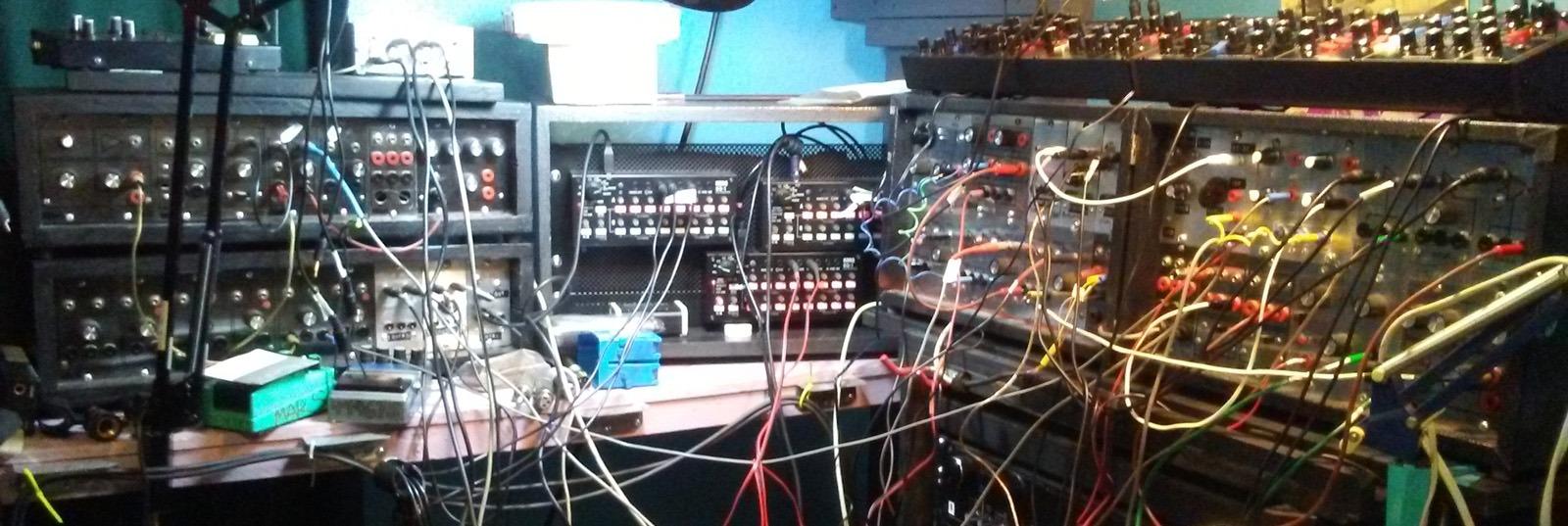
The build quality is solid at 3.8 pounds, with a metal chassis that feels substantial in the hands. The Eurorack format means you can mount it in a modular setup, and the MIDI USB connectivity lets you integrate it with any DAW. There is also a strong community of users sharing patches online, which is a huge benefit for beginners who want to learn from preset examples.
The biggest catch is that the Model D ships with no pre-programmed tones. When you first power it on, you get an init patch with a single saw wave, and you have to dial in every parameter yourself. For beginners, this is either a feature or a bug, depending on how you look at it. The upside is that you learn the synth from the ground up. The downside is that the first 30 minutes can feel intimidating.
Who the Model D Suits Best
The Model D is ideal for beginners who specifically want the Moog sound and are willing to learn by dialing in patches from scratch. If you are interested in modular synthesis, the Eurorack compatibility makes this a great gateway into that world. It also works well as a companion piece to a polyphonic synth, since it covers bass and lead duties in a way that poly synths often miss.
Where the Model D Falls Short
No preset patches means a steeper learning curve than the MicroFreak or Volca FM2. The legato mode has some MIDI quirks that can frustrate players used to a more polished MIDI implementation. Behringer is not a Prime-eligible seller, so shipping can take longer and returns are slightly more hassle. Build quality, while solid, is not at the level of the original Moog.
5. Behringer Pro VS Mini: 80s Vector Synthesis on a Budget
Behringer Pro VS Mini Portable 5-Voice Hybrid Synthesizer with 4 Vector Morphing Oscillators Per Voice, Analog Low-Pass Filter, 16-Step Sequencer and Arpeggiator
5-voice hybrid
Vector morphing oscillators
USB-C powered
Pros
- 80s-style sounds at low cost
- Vector synthesis with 100+ waveforms
- 4 oscillators per voice
- USB-C or battery power
- Built-in screen
Cons
- Limited to 32 presets
- Small touch keys
- Only 1 MIDI port
- No MIDI out or through
- Step sequencer could be more advanced
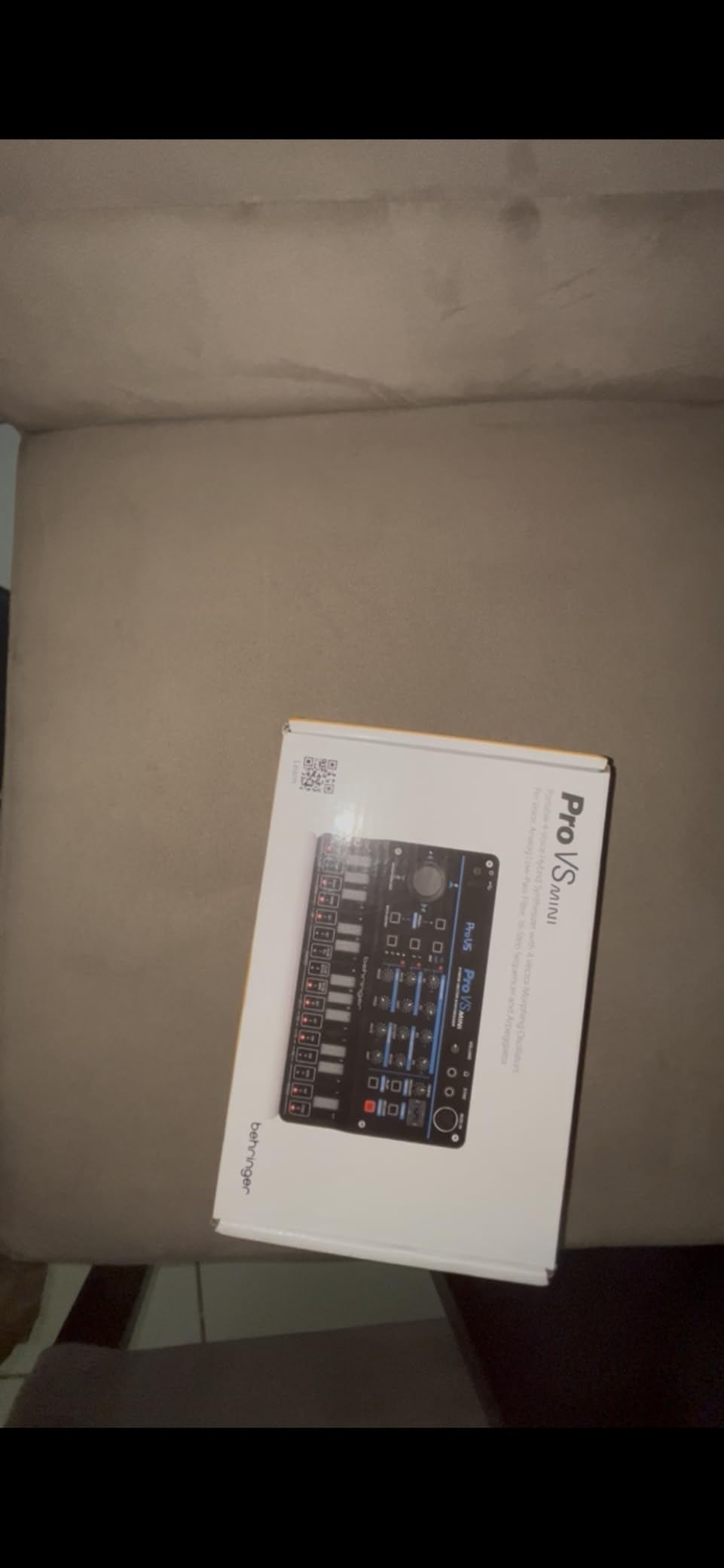
The Behringer Pro VS Mini is the synth I recommend to friends who are obsessed with 80s synthwave, retrowave, and John Carpenter-style soundtrack sounds. It is a mini version of the Sequential Prophet VS, and it captures that distinctive vector synthesis character in a portable package.
Vector synthesis uses four oscillators per voice that you can morph between using a joystick-style controller. You can blend smoothly from one waveform to another, creating evolving, complex timbres that no static oscillator setup can match. The Pro VS Mini ships with over 100 waveforms covering classic analog, digital, and hybrid tones. With 5 voices of polyphony, you can play chords with that lush, layered 80s character.
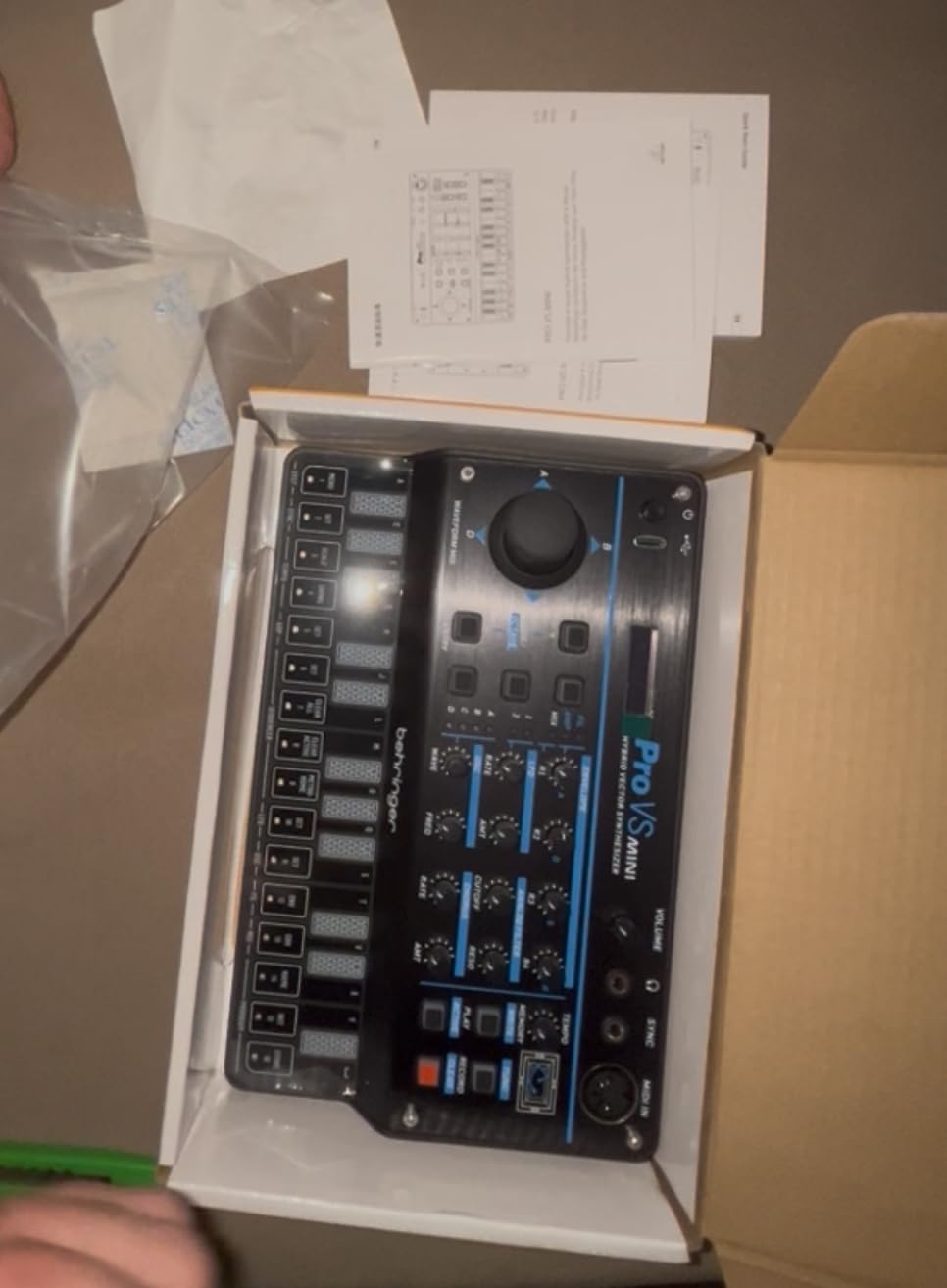
The 16-step sequencer and arpeggiator are basic but functional. What makes the Pro VS Mini special is the built-in screen that shows the waveform and preset name, which is unusual for a synth at this price. USB-C power is a nice modern touch, and the battery option means you can play anywhere.
The main limitation is preset memory: only 32 slots. For a beginner, that is plenty, but if you start building a personal patch library, you will run out of space fast. The touch keys are small, similar to the MicroFreak, and the single MIDI port limits how you can chain devices in a larger setup.
Who the Pro VS Mini Suits Best
The Pro VS Mini is the right pick for beginners who are into 80s music, synthwave, film scoring, or any genre that benefits from thick, evolving pads and brass stabs. If you want polyphonic synth character without spending over $500, this is one of the most affordable paths. The USB-C power and battery option also make it a great grab-and-go instrument.
Where the Pro VS Mini Falls Short
Only 32 presets is restrictive if you start exploring sound design seriously. The 27 touch keys are small and not suited to traditional piano-style playing. There is no MIDI out or through, so integrating with other MIDI gear requires a MIDI host or computer. The sequencer is functional but lacks the depth of the Volca FM2 or Korg Electribe.
6. Roland AIRA Compact S-1: A Modern SH-101 in Your Pocket
Roland AIRA Compact S-1 Tweak Synth
SH-101 engine
Built-in effects
Battery powered
Pros
- Compact and portable
- Battery powered with USB-C
- Excellent built-in effects
- Deep sound design engine
- Two-octave keyboard with sequencer
Cons
- Menu diving required
- Small silicone keys
- No 1/8 inch to MIDI adapter included
- Small form factor limits buttons
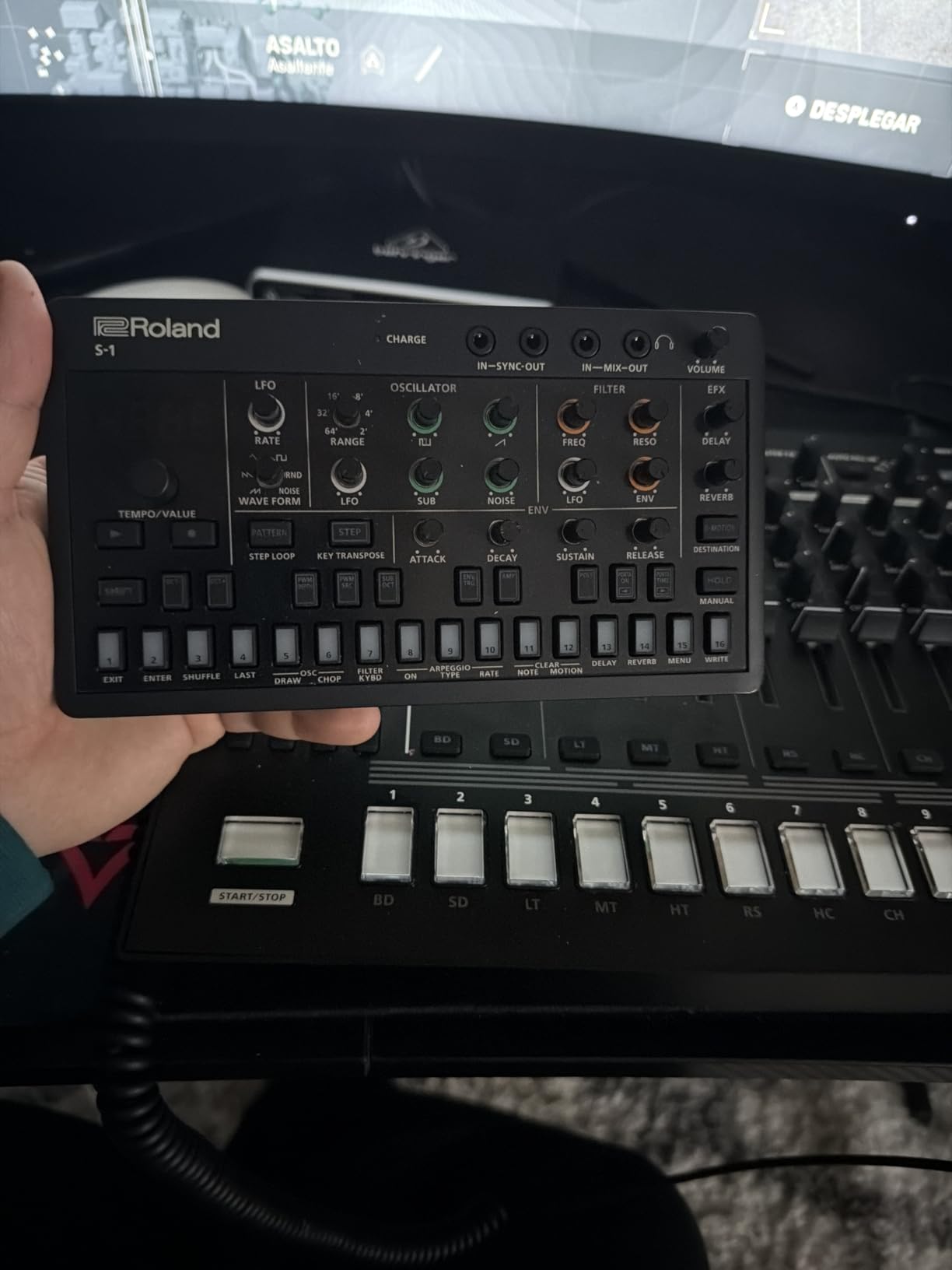
The Roland AIRA Compact S-1 is what happens when Roland takes their classic SH-101 monosynth from 1982 and rebuilds it for 2026. I have been a fan of the original SH-101 for years, and the S-1 captures that punchy, squelchy character while adding modern features like USB-C, battery power, and a deep effects section.
The synthesis engine is subtractive, with a single oscillator that can cover saw, square, pulse with width modulation, noise, and a sub-oscillator. The 4-pole filter has that classic Roland resonance character, and the built-in effects (reverb, delay, chorus) sound genuinely good. For a beginner who wants a small, modern synth that sounds huge, the S-1 is a strong pick.
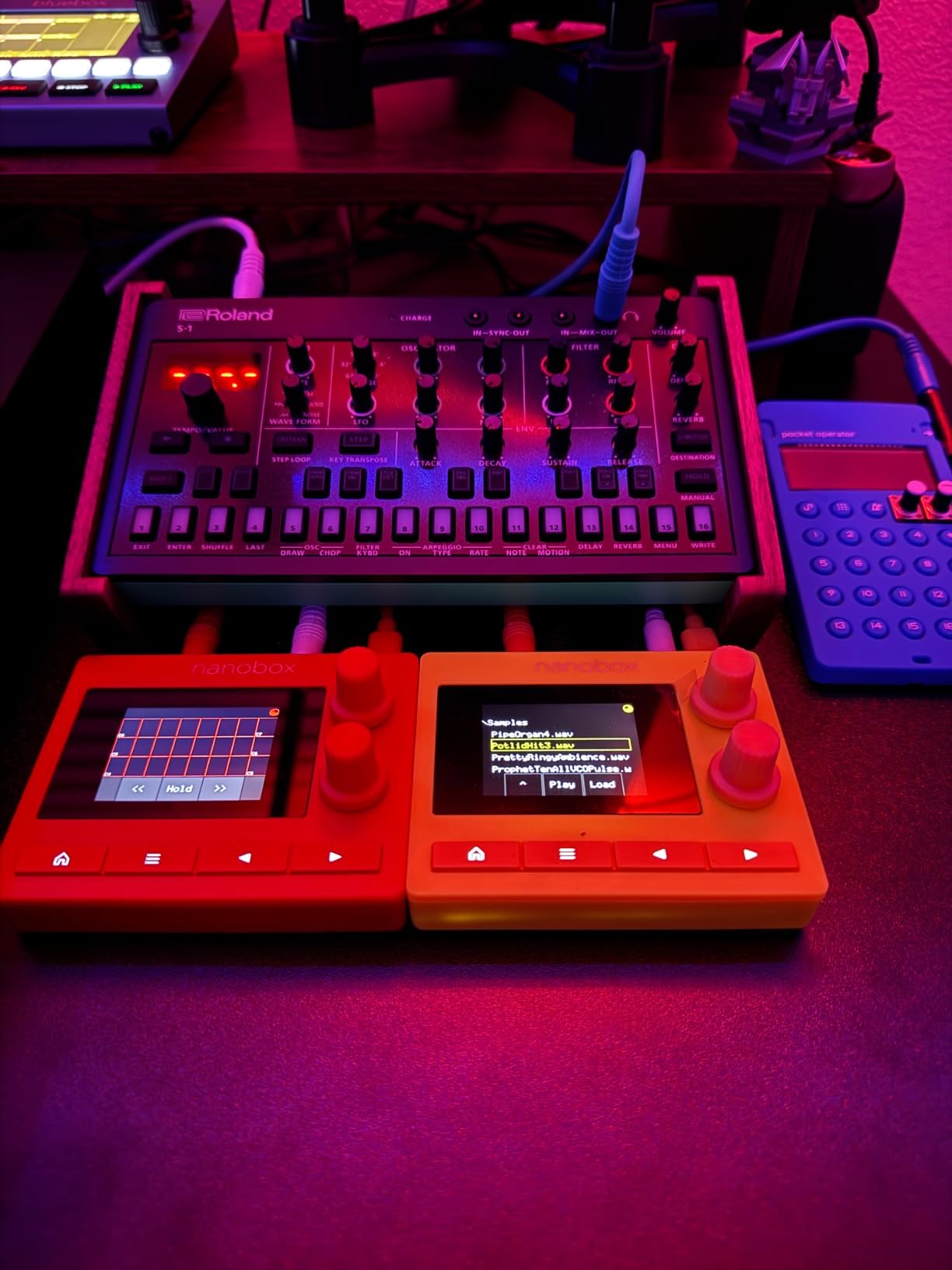
The 64-step sequencer (4 bars) is one of the more capable on this list, and the arpeggiator is solid. The D-Motion sound control lets you morph between parameters using gesture, which is fun for live performance. Battery power plus USB-C charging means you can take this anywhere, and at 1 pound it disappears in a backpack.
The main trade-off is menu diving. To access the deeper features, you have to scroll through menus on the small screen, which can feel slow when you are trying to shape a sound quickly. The silicone keys are playable but small, and they are not ideal for extended piano-style playing. There is also no 1/8 inch to MIDI adapter included, so plan on buying one if you want to control external MIDI gear.
Who the S-1 Suits Best
The S-1 is perfect for beginners who want a Roland sound in a portable, battery-powered package. If you are into house, techno, acid, or any genre where the SH-101 character is iconic, this is the modern equivalent at a beginner price. It also works well as a MIDI controller for a laptop or iPad setup.
Where the S-1 Falls Short
Menu diving slows down the workflow compared to knob-per-function synths like the Model D. The small silicone keys and overall form factor are not suited to traditional piano-style playing. At 1 pound, the S-1 is portable, but that also means fewer physical controls, so you trade tactile immediacy for compactness.
7. Stylophone GENX-2: The Most Fun Synth Under $100
Stylophone GENX-2 Portable Analogue Synthesizer with Built-in Speaker, LFO, Filter, Analogue Delay and CV/Gate Output | Synthesizer Keyboard | Synth Musical Instrument
Portable analog
CV/Gate out
Built-in speaker
Pros
- Fully portable with batteries
- Built-in speaker
- CV and Gate outputs
- Dual sub-octave switches
- Built-in analog delay
Cons
- Stylus wire may be unreliable
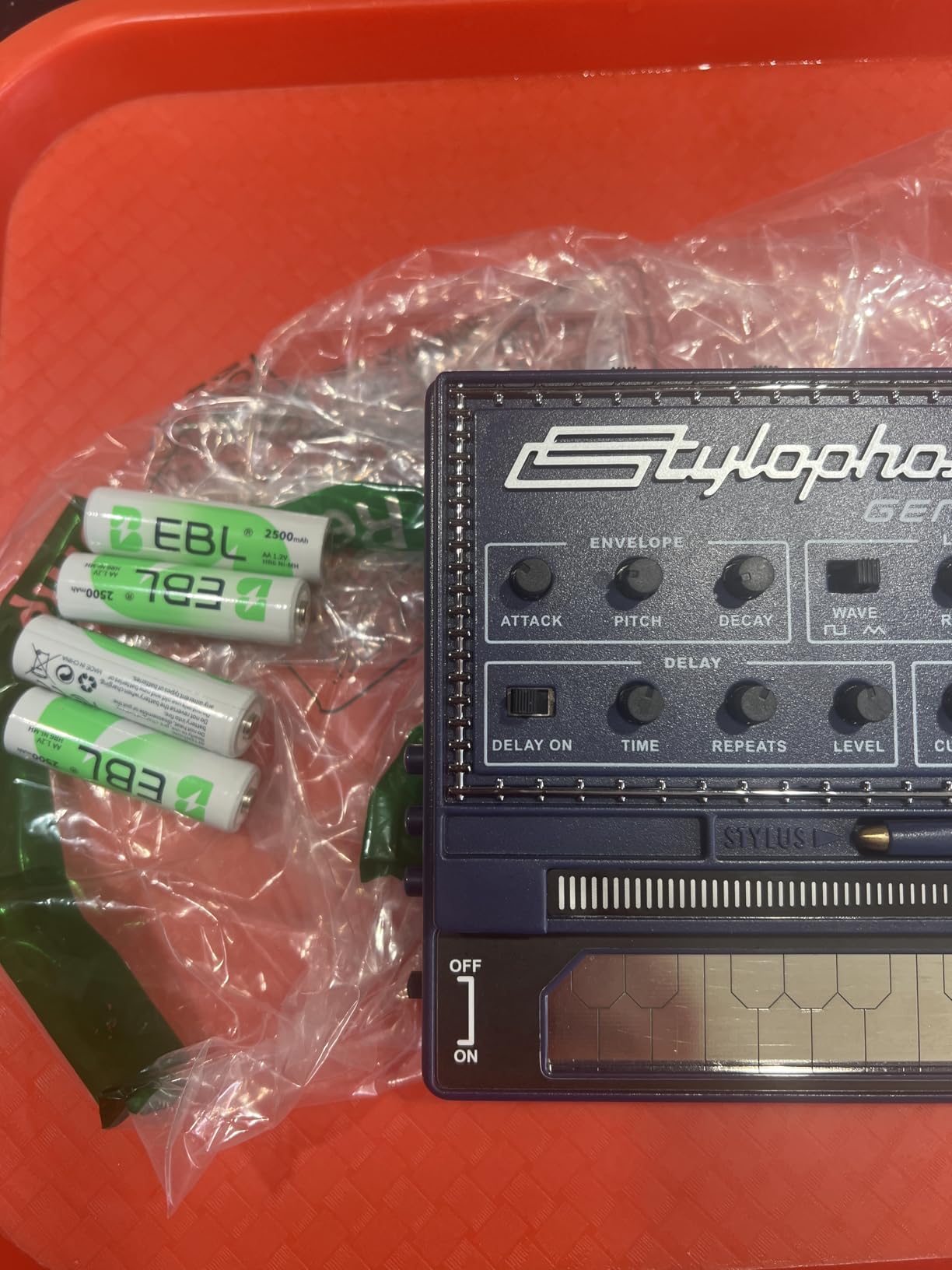
- Only battery powered
- Stylus keyboard challenging for large hands
The Stylophone GENX-2 is the most fun synth on this list, full stop. It is also the cheapest, and if you have ever seen someone play the classic Stylophone, you already know the basic idea: you play it with a stylus on a flat keyboard. The GENX-2 is the modern, analog upgrade that takes that concept seriously.
What surprised me about the GENX-2 is how deep it goes for the price. The resonant low-pass filter, LFO with square and triangle waves, analog delay, and dual sub-octave switches give you real sound design control. The CV and Gate outputs mean you can use it to control modular gear, which is unusual at this price. The built-in speaker means you can play it anywhere without any extra gear.
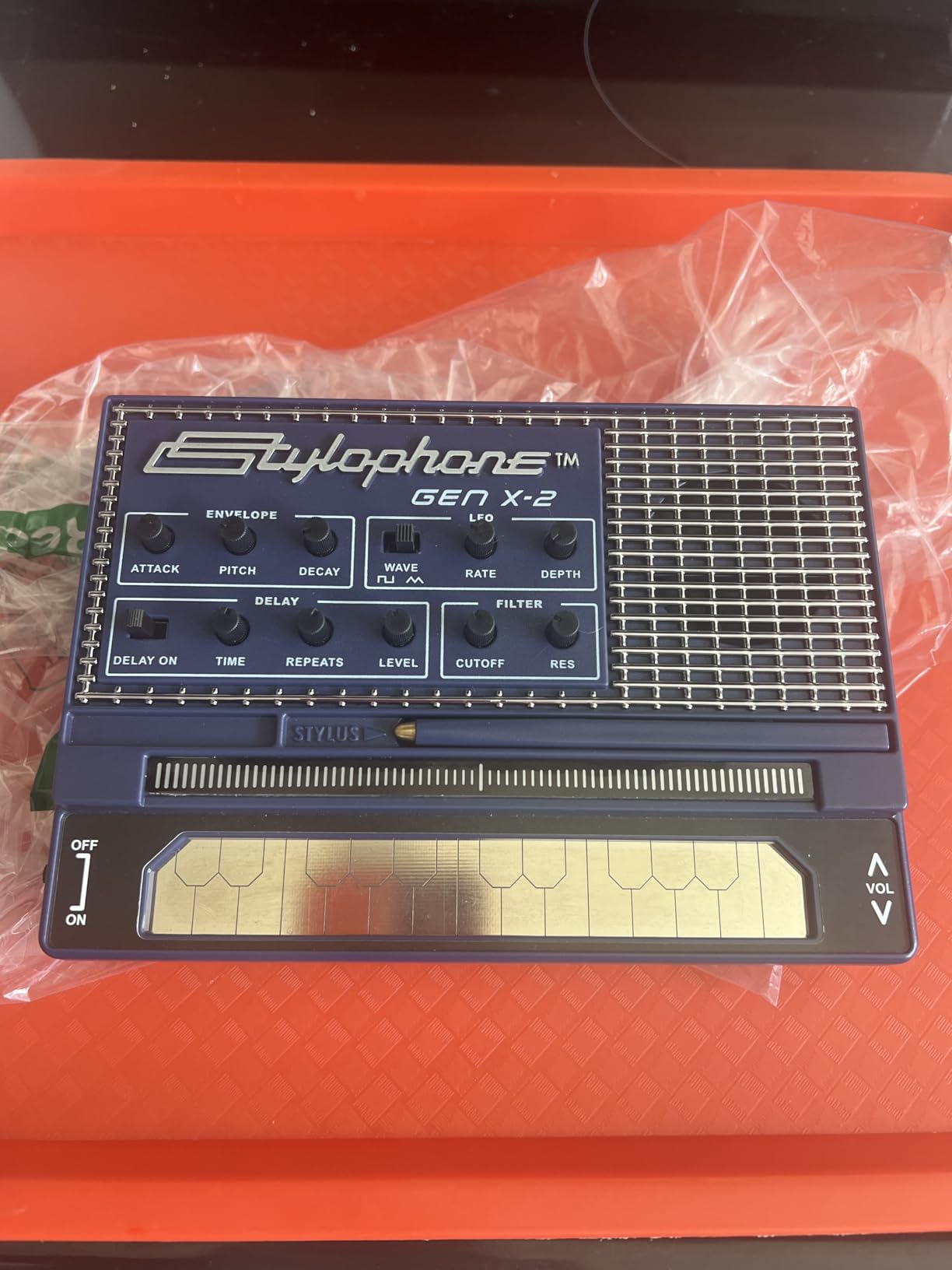
The stylus keyboard takes some getting used to. There is no velocity sensitivity, and the touch-style interface is not for everyone. The wire connecting the stylus to the unit can be unreliable for some users, which is the most common complaint in reviews. There is also no power adapter option, so you are reliant on batteries.
For a beginner, the GENX-2 is less of a learning tool and more of a creative toy. It is not the synth I would recommend if you want to learn classic subtractive synthesis from the ground up. But if you want something that sparks joy and gets you making weird sounds within minutes of opening the box, nothing else on this list comes close.
Who the GENX-2 Suits Best
The GENX-2 is the right pick for beginners who want a creative, low-stakes way to explore sound. If you are interested in experimental music, sound effects, or just want a fun desktop toy, this is the best $99 you can spend on a synth. The CV/Gate outputs also make it a useful expansion for anyone with a modular setup.
Where the GENX-2 Falls Short
The stylus interface is not for traditional keyboardists. Some users report reliability issues with the stylus wire, so handle the unit with care. The lack of a power adapter option means you need to keep batteries on hand. The 339g weight is portable, but the unit does not feel as solid as the metal-chassis Behringer synths.
8. Korg Nu:Tekt NTS-1 MKII: Build Your Own Synth Kit
Korg Nu:Tekt NTS-1 MKII Build Your Own Digital Synthesizer Kit
DIY kit
Multitouch keys
USB-C
Pros
- Easy to assemble
- Compact and portable
- 18-key multitouch keyboard
- Powerful arpeggiator
- Multimode filter and 3 LFOs
- USB-C powered
Cons
- Popping sounds on key trigger
- Limited ADSR options
- Velocity sensitivity inconsistent
- Requires assembly
The Korg Nu:Tekt NTS-1 MKII is the most unusual synth on this list. It is a build-it-yourself kit, which means you solder it together yourself. If you are a beginner who wants to learn how synth hardware actually works, there is no better way to start than building your own instrument. The whole process takes about 15 minutes with the included screwdriver.
Once assembled, the NTS-1 MKII is a capable little digital synth. The 18-key multitouch keyboard feels like a step up from the Volca touchpad, and the multimode filter, three LFOs, and envelope generator give you real sound design options. The arpeggiator and 8-step sequencer are more powerful than you would expect from a $150 unit, and the effects (delay, reverb, chorus, flanger) sound genuinely good.
Who the NTS-1 MKII Suits Best
The NTS-1 MKII is the right pick for beginners who want to learn both synth sound design and basic electronics. If you enjoy building things, the assembly process is genuinely satisfying, and you end up with a deeper understanding of how the instrument works. It is also a great choice for anyone with a modular setup, since it is fully compatible with the Korg logue platform.
Where the NTS-1 MKII Falls Short
Some users report popping sounds when keys are triggered, which can be annoying during performance. The ADSR options are limited compared to the MicroFreak, and the velocity sensitivity is inconsistent. The assembly requirement means this is not a plug-and-play synth, so if you are not comfortable with a screwdriver, look at the other options on this list.
How to Choose a Budget Synthesizer: Buying Guide
After testing all eight synths on this list, the differences between them come down to a handful of key decisions. Here is the framework our team uses when recommending beginner synths, broken down into the factors that actually matter.
Analog vs Digital: Which Path for a Beginner?
This is the most common question beginners ask, and the honest answer is: it does not matter as much as you think. Analog synths use electrical circuits to generate sound, which gives them a warm, organic character that many players love. Digital synths use processors to generate waveforms, which gives them more flexibility and often more features per dollar.
For pure sound character, the Behringer Model D, Korg Volca Bass, and Stylophone GENX-2 give you that classic analog warmth. For versatility and feature count, the Arturia MicroFreak and Korg Volca FM2 offer more range. My recommendation: start with the path that matches the music you want to make. If you are into bass-heavy electronic music, analog is the way. If you want to explore many genres, digital gives you more room to grow.
Polyphony Matters: How Many Notes at Once?
Polyphony is the number of notes a synth can play at the same time. Monophonic synths play one note at a time, which is great for bass and lead lines. Polyphonic synths play chords and complex arrangements, which is what you need for pads, electric piano sounds, and full arrangements.
The Korg Volca FM2 and Behringer Pro VS Mini offer true polyphony at budget prices, which makes them strong picks for producers who want to play chords. The Arturia MicroFreak is paraphonic, meaning it can play multiple notes but with one shared envelope, which works for most lead and pad duties. The Behringer Model D, Korg Volca Bass, and Stylophone GENX-2 are monophonic, so they are best suited for bass and lead work.
Connectivity: MIDI, USB, and CV/Gate Explained
MIDI is the universal language that synths use to talk to each other and to computers. USB MIDI is the modern standard and works with any computer. The 5-pin DIN MIDI connector is the older standard and is still common on hardware synths. CV/Gate is the analog control voltage standard used by modular synths, and it is what lets synths like the Arturia MicroFreak and Stylophone GENX-2 integrate with Eurorack systems.
For a beginner, USB MIDI is the most important connector, since it lets you connect directly to a laptop or iPad. If you ever plan to expand into modular synths, look for CV/Gate outputs. The Behringer Model D and Arturia MicroFreak both have CV/Gate, which makes them future-proof for a modular setup. The Volca Bass only has MIDI in, which limits how it can integrate with other gear.
Essential Accessories You’ll Need
Most beginner synths do not include everything you need to start playing. A few essentials to budget for: a pair of decent headphones (around $50-100), a sustain pedal if you want hands-free control, a MIDI cable if your synth uses 5-pin DIN, and a small mixer or audio interface if you are connecting to a computer.
Battery-powered synths like the Volca FM2, Volca Bass, Pro VS Mini, Roland S-1, and Stylophone GENX-2 can be played without any extra gear, which makes them great for beginners who want to start with the minimum investment. The Behringer Model D and Arturia MicroFreak need a power outlet, so plan on placing them on a desk or studio shelf.
Sound Design Features to Look For
For a beginner, the most valuable sound design features are filters, envelopes, and LFOs. Every synth on this list has these basics. The differences come down to modulation matrix depth (the MicroFreak has a 5×7 matrix, which is unusually deep for a budget synth), the number of oscillator types (the MicroFreak has 21, the Model D has 3), and the quality of the filter (the Model D ladder filter and Volca Bass filter are standouts).
Sequencers and arpeggiators are useful for programming patterns, and they vary widely in capability across this list. The Volca FM2 sequencer is the most feature-rich, with motion sequence, pattern chain, and active step functions. The Pro VS Mini sequencer is the most basic. As a beginner, a capable sequencer is a big plus because it lets you build full tracks without a computer.
Frequently Asked Questions
What is the best budget synthesizer for beginners?
The Arturia MicroFreak is the best overall budget synthesizer for beginners in 2026. It offers 21 oscillator modes, a poly-aftertouch keybed, a 5×7 modulation matrix, and a price under $500. The Korg Volca FM2 and Behringer Pro VS Mini are also strong picks depending on whether you want FM synthesis or 80s-style vector synthesis.
What synthesizer should a beginner buy first?
Beginners should start with a synth that matches the music they want to make. For electronic music production, the Korg Volca FM2 is the most affordable path into real FM synthesis. For bass-heavy genres, the Korg Volca Bass or Behringer Model D deliver analog character under $250. For versatility, the Arturia MicroFreak covers the widest range of sounds.
Is analog or digital better for beginners?
Both analog and digital synths work well for beginners, and the choice depends on your goals. Analog synths like the Behringer Model D and Korg Volca Bass have a warm, organic character that many players prefer. Digital synths like the Arturia MicroFreak and Korg Volca FM2 offer more features and flexibility per dollar. Most beginners benefit from starting with digital and adding analog later.
What accessories do I need for a new synthesizer?
You will need a pair of headphones, a power supply or batteries, and a MIDI cable if your synth uses 5-pin DIN connectors. If you are connecting to a computer, an audio interface helps. Battery-powered synths like the Volca FM2, Volca Bass, Pro VS Mini, Roland S-1, and Stylophone GENX-2 need nothing else to start playing.
How much should a beginner spend on a synthesizer?
A beginner can find a high-quality synthesizer for between $100 and $500. The Stylophone GENX-2 at $99 is the cheapest serious option. The Korg Volca Bass at $139 and Behringer Pro VS Mini at $119 offer excellent value in the $100-150 range. The Arturia MicroFreak at $349 is the most versatile pick under $500.
Final Verdict: The Best Budget Synthesizer for Beginners
After three months of testing, the Arturia MicroFreak stands out as the best budget synthesizer under 500 for beginners. It covers the widest range of sounds, has the deepest modulation capabilities, and receives constant firmware updates that keep it fresh. The Korg Volca FM2 is the runner-up for beginners who want the cheapest path into real FM synthesis, and the Korg Volca Bass is the best sub-$150 pick for bass and lead work.
The best budget synthesizers under 500 for beginners in 2026 are better than they have ever been. Pick the one that matches the music you want to make, budget for a decent pair of headphones, and start playing. Your first synth is the one that gets you making music, so do not overthink the choice.