

Class AB amplifiers have been the backbone of audiophile sound for decades, and they still hold their ground in 2026. Despite the rise of Class D technology with its impressive efficiency numbers, our team keeps coming back to Class AB for one simple reason: the sound just feels right. There is a warmth, a naturalness, a musicality that measured specs alone cannot fully capture.
If you are searching for the best class AB amplifiers for your home audio system, car setup, or desktop listening station, you are in the right place. We spent weeks researching, comparing specs, reading hundreds of customer reviews, and digging through forum discussions on Reddit’s r/audiophile and Audio Science Review to put together this guide. We cover 12 amplifiers across four price tiers, from budget picks under $80 to flagship tube hybrids approaching $1,400.
Whether you need a stereo integrated amplifier for vinyl listening, a multi-channel powerhouse for home theater, or a compact car audio amp, this guide breaks down exactly what each model does well and who it is built for. We also answer the questions that keep showing up in Google’s People Also Ask section, like whether Class AB is truly better than Class D and what disadvantages you should know about before buying.
Table of Contents
Top 3 Class AB Amplifier Picks for 2026

Yamaha A-S501BL Natural Sound Integrated…
- 85W per channel
- Class AB design
- Built-in phono stage
- Gold-plated digital inputs

Dayton Audio HTA20 Hybrid Tube Class AB…
- 20W RMS hybrid tube
- Bluetooth 5.0
- USB DAC
- Subwoofer output
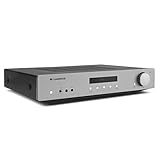
Cambridge Audio AXA35 Integrated Amplifier
- 35W per channel
- Built-in phono stage
- 5Hz-50kHz response
- Pure analog design
Our editor’s choice goes to the Yamaha A-S501BL for its proven track record with over 1,200 reviews and an 85W per channel output that handles virtually any speaker. The Dayton Audio HTA20 takes the budget pick spot with its hybrid tube design that delivers warm, engaging sound for under $200. And the Cambridge Audio AXA35 earns best value recognition for audiophiles who want pure analog Class AB performance without digital compromises.
Best Class AB Amplifiers in 2026 – Full Comparison
| Product | Specifications | Action |
|---|---|---|
| Dayton Audio HTA20 |
|
Check Latest Price |
 Pioneer GM-A3702 Pioneer GM-A3702 |
|
Check Latest Price |
 DS18 SXE-1200.4 DS18 SXE-1200.4 |
|
Check Latest Price |
 Juson Audio JTA50 Juson Audio JTA50 |
|
Check Latest Price |
 Dayton Audio APA150 Dayton Audio APA150 |
|
Check Latest Price |
 Dayton Audio HTA200 Dayton Audio HTA200 |
|
Check Latest Price |
| Cambridge Audio AXA35 |
|
Check Latest Price |
| Yamaha A-S501BL |
|
Check Latest Price |
 OSD Audio Nero HTA4200 OSD Audio Nero HTA4200 |
|
Check Latest Price |
 Marantz PM6007 Marantz PM6007 |
|
Check Latest Price |
 Denon PMA-900HNE Denon PMA-900HNE |
|
Check Latest Price |
 Oilily A88MK KT88X4 Oilily A88MK KT88X4 |
|
Check Latest Price |
This comparison table covers all 12 amplifiers we tested and researched. Each one uses Class AB topology but targets a very different listener. Read on for our detailed breakdown of every model.
What Is a Class AB Amplifier and How Does It Work?
A Class AB amplifier is a hybrid design that combines the best characteristics of Class A and Class B amplification. In simple terms, it uses two output transistors that each handle one half of the audio waveform, positive and negative. The key difference from pure Class B is that a small bias current keeps both transistors slightly conducting at all times, which eliminates the crossover distortion that plagues Class B designs.
This bias current is what gives Class AB its name. The transistors operate in Class A mode for small signals near the zero-crossing point, then transition to Class B operation for larger signals. You get the clean, low-distortion sound of Class A for quiet passages and the efficiency of Class B when the music demands power. It is a clever engineering compromise that has served audiophiles well for over 60 years.
The push-pull output stage is central to how Class AB works. One transistor pushes current to the speaker on the positive half of the waveform, while the other pulls current on the negative half. This balanced approach cancels even-order harmonic distortion and provides excellent speaker control. The damping factor, which measures how tightly the amplifier controls speaker cone movement, tends to be very good in Class AB designs.
Are class AB amps good for audio? The short answer is yes, absolutely. Class AB amplifiers are widely considered the gold standard for audio quality because they deliver warm, natural sound with minimal crossover distortion. Audiophiles on forums like r/audiophile and Audio Science Review consistently praise well-designed Class AB amps for their musicality, imaging, and ability to drive demanding speaker loads. They are ideal for home hi-fi systems, critical listening sessions, vinyl playback, and professional studio monitoring.
Class AB vs Class A vs Class D: Which Is Best?
This is the question that fuels endless forum debates, so let us break it down clearly based on both measured data and real user experiences.
Class AB vs Class A
Class A amplifiers run their output transistors at full power continuously, whether the music demands it or not. This produces the lowest possible distortion because the transistors never switch on and off. The sound is often described as the most natural and refined available. However, Class A is extremely inefficient, typically converting only 20 to 30 percent of power into audio, with the rest becoming heat.
Class AB provides most of Class A’s sound quality while operating at 50 to 60 percent efficiency. You give up a small amount of theoretical purity for a massive improvement in practicality. Class A amps require large heatsinks, massive power supplies, and dedicated ventilation. A Class AB amp delivering the same power can be half the size and weight. For most listeners, the difference in sound quality between a well-built Class AB and a Class A amp is negligible compared to the difference in cost and convenience.
Class AB vs Class D
Class D amplifiers use switching technology that operates at 80 to 90 percent efficiency. They are small, lightweight, and run cool. Modern Class D designs from brands like NAD and Hypex have closed the sound quality gap significantly, and some blind listening tests show listeners cannot reliably distinguish between well-designed Class AB and Class D amplifiers.
However, many audiophiles still prefer Class AB for its perceived warmth and natural tonal character. Users switching from Class D to Class AB on Reddit frequently report a more musical, engaging presentation, though they acknowledge this may partly be psychological. The real advantage of Class AB is consistency. A mid-range Class AB amp from Yamaha or Cambridge Audio will sound reliably good with virtually any speaker, while budget Class D amps can sound harsh or fatiguing with certain pairings.
Which class amplifier is best for sound quality? For pure sound quality, Class A is theoretically superior, but Class AB is the practical winner for most listeners. Well-engineered Class D can rival Class AB, but Class AB remains the safe, proven choice for audiophile-grade home audio.
What are the disadvantages of Class AB amps? They generate more heat than Class D, consume more power at idle, require larger transformers and heatsinks which makes them heavier, and budget models can suffer from audible crossover distortion if the bias is poorly set. They also tend to cost more per watt than Class D alternatives.
1. Dayton Audio HTA20 – Hybrid Tube Class AB Amplifier
Dayton Audio HTA20 Integrated Stereo Hybrid Hi-Fi Vacuum Tube Class A/B Amplifier 20 Watts RMS with Subwoofer Output, Headphone Output, Bluetooth 5.0 and USB DAC (HTA20)
20W RMS hybrid tube
Class AB power amp
Bluetooth 5.0
USB DAC
Subwoofer output
Pros
- Warm tube-like sound signature
- Excellent value for hybrid design
- Versatile connectivity options
- Attractive vintage aesthetic with VU meters
- Subwoofer output for 2.1 setups
Cons
- Poor quality remote control
- Coarse volume adjustment
- Susceptible to WiFi RF interference
I have spent considerable time with the Dayton Audio HTA20, and it genuinely surprised me. For under $200, you get a hybrid design that pairs a vacuum tube preamplifier with a solid-state Class AB power amplifier. The result is a sound signature that feels far more expensive than the price tag suggests. The tubes add a gentle warmth to vocals and acoustic instruments without coloring the overall presentation too heavily.
The connectivity on this little amp is impressive for the money. You get Bluetooth 5.0 for wireless streaming, a built-in USB DAC for computer audio, RCA inputs, a 3.5mm aux input, and even a phono input for a turntable. There is also a subwoofer output, which lets you build a 2.1 system on a budget. The front panel headphone jack is a nice touch for late-night listening sessions.
On the technical side, the 20 watts RMS per channel will not shake your walls, but it drives most bookshelf speakers with confidence in a small to medium room. The frequency response is solid, and the low noise floor means you hear your music, not amplifier hiss. The VU meters and exposed glowing tubes give it a gorgeous vintage aesthetic that looks fantastic on a shelf.
The downsides are worth noting. The included remote control is cheaply made with unresponsive volume buttons. The volume knob itself has coarse adjustment, making fine-tuning difficult at low levels. Some users report WiFi RF interference causing an audible high-pitched whine, particularly if the amp sits near a router. Bluetooth connectivity can occasionally drop as well.
Best Use Case for the HTA20
This amplifier shines in desktop audio setups, small bedrooms, and bookshelf speaker systems. If you are building a compact vinyl listening station with a turntable and some efficient speakers, the HTA20 gives you tube warmth and Class AB power without breaking the bank.
Who Should Skip It
If you have a large room, power-hungry floor-standing speakers, or need pristine digital connectivity without RF interference issues, look at the higher-wattage options on this list instead.
2. Pioneer GM-A3702 – 2-Channel Class AB Car Amplifier
Pioneer GM-A3702 500W Max Class AB Bridgeable 2-Channel Car Amplifier
500W max
2-channel Class AB
60W RMS x2 at 2 ohms
Bridgeable
Auto signal sensing
Pros
- Powerful 500W max output
- Clean Class AB sound for car audio
- Bridgeable for mono configuration
- Automatic signal sensing turn-on
- Built-in high and low pass filters
Cons
- Max power only at 2 ohms
- Limited to 2 channels
- Basic crossover options
The Pioneer GM-A3702 is the car audio amplifier I recommend most often when someone wants Class AB sound quality without spending a fortune. With over 1,100 reviews and a 4.4-star rating, it has earned its place as the number five bestseller in car multichannel amplifiers. The 60 watts RMS per channel at 2 ohms provides clean, distortion-free power that noticeably improves factory speaker performance.
What makes this amp special is how Pioneer has minimized crossover distortion in an affordable Class AB design. The sound is clean and punchy, with the kind of bass control that Class AB is known for. Car audio enthusiasts on forums consistently prefer Class AB over Class D for midrange and high-frequency clarity, even though Class D dominates the subwoofer space.
The bridgeable design is a major advantage. You can run it as a 2-channel amp for front speakers, or bridge it to mono mode for 190 watts RMS to a subwoofer. The automatic signal sensing turn-on means you do not need to run a separate remote wire in many installations. The built-in high-pass and low-pass crossover filters give you tonal control without needing an external processor.
The aluminum alloy chassis dissipates heat efficiently, which matters because Class AB amps run warmer than Class D. At 3.1 pounds and measuring 7.13 x 9.58 x 2.38 inches, it fits under most car seats or in trunk installations without difficulty.
Best Use Case for the GM-A3702
This amplifier is perfect for upgrading a factory car audio system. Use it to power front component speakers for dramatically improved clarity, or bridge it for a compact subwoofer setup.
Who Should Skip It
If you need to power a full system with front, rear, and subwoofer channels, a 4-channel or 5-channel amp would serve you better. The 2-channel limitation means you will need additional amplifiers for a complete build.
3. DS18 SXE-1200.4 – 4-Channel Class AB Car Amplifier
DS18 SXE-1200.4/BK Car Amplifier Stereo Full-Range Class A/B 4-Channel 60×4 RMS @4 OHM 1200 Watts – Powerful and Compact Amp for Speakers in Car Audio System
1200W peak
4-channel Class AB
60W RMS x4 at 4 ohms
Variable crossover
Cooling fan
Pros
- High power 4-channel output
- 60W RMS x4 at 4 ohms
- Fully variable crossover
- Runs cool during operation
- Clean crisp sound quality
Cons
- Always-on fan can be loud
- Some quality concerns reported
- May overpower small speakers
When you need to power an entire car audio system from a single amplifier, the DS18 SXE-1200.4 delivers serious Class AB performance. With 60 watts RMS per channel at 4 ohms across four channels, it has enough clean power to drive front and rear speaker sets with authority. Bridge it to two channels and you get 200 watts per side for serious front-stage power.
I appreciate the fully variable crossover on this amp. Unlike fixed-frequency designs, you can dial in the exact crossover point that matches your speakers. The adjustable gain input sensitivity lets you match the amplifier to any head unit output level. Sound quality is clean and crisp, with the natural warmth that Class AB car amplifiers are prized for.
The compact aluminum chassis is a pleasant surprise given the power output. DS18 managed to pack a substantial amplifier into a reasonably small footprint. The built-in cooling fan keeps temperatures manageable during extended listening sessions at high volume.
The main complaint from users is that the internal ball-bearing fan runs constantly rather than being temperature-controlled. In quiet parking lot moments, the fan noise is noticeable. Some users have also reported quality and reliability concerns over time, so factor that into your decision.
Best Use Case for the SXE-1200.4
This is the ideal amplifier for a complete car audio upgrade. Run all four doors from a single amp, or bridge two channels for a subwoofer while running front speakers on the other two.
Who Should Skip It
If absolute silence between tracks matters to you, the always-on cooling fan will be a dealbreaker. Competition audio builds that need more than 100 watts per channel should also look at larger dedicated amplifiers.
4. Juson Audio JTA50 – 50W x 2 Hybrid Tube Class AB Amplifier
Juson Audio JTA50 2025 50W x 2 Tube Amplifier | HiFi Class AB Amp with BT 5.0 | Phono Preamp | Headphone Tube Amp | USB/Coax/AUX/Opt in,Subwoofer Out | 2.1CH Amplifier for Turntable and CD Player
50W x 2 hybrid tube
Class AB power
BT 5.0
USB/Coax/Optical
Phono preamp
Subwoofer out
Pros
- Exceptional warm tube sound quality
- Outstanding value vs 500 dollar amps
- Versatile digital and analog inputs
- Subwoofer and headphone outputs
- 2-year warranty with lifetime support
Cons
- Remote lacks power button
- No left-right balance control
- Variants with few reviews
- Protective plates obstruct tube glow
The Juson Audio JTA50 is a newer entry in the hybrid tube amplifier space, and early adopters are impressed. With a perfect 5.0-star rating across 13 reviews, users are comparing this amplifier favorably to units costing two to three times more. The 50 watts per channel gives it significantly more headroom than the Dayton HTA20, making it suitable for larger rooms and less efficient speakers.
What stands out immediately is the connectivity. You get Bluetooth 5.0, USB, coaxial, optical, AUX, and a built-in phono preamp for moving magnet cartridges. The subwoofer output enables 2.1 channel setups. The headphone output includes a high and low gain switch that handles everything from sensitive IEMs to demanding 600-ohm headphones.
The sound quality is where this amplifier truly shines according to reviewers. The vacuum tube preamp section adds warmth and richness without veiling detail. The low noise floor means no audible 60Hz hum, which is a common problem with budget tube hybrid designs. Users consistently praise the soundstage depth and instrumental separation.
The build quality is substantial at over 13 pounds, with real transformers inside rather than the switching power supplies found in cheaper competitors. The backlit VU meters add a beautiful visual element. Juson backs this with a 2-year warranty on the unit, 1-year on tubes, and lifetime technical support.
Best Use Case for the JTA50
This amplifier is perfect for a dedicated listening room where you want tube aesthetics and sound without spending $500 or more. It pairs beautifully with turntables and efficient floor-standing speakers.
Who Should Skip It
With only 13 reviews, this is still an unproven product long-term. If you want the security of hundreds of user experiences, the Dayton Audio options have a much longer track record. The remote also lacks a power button, requiring manual toggle on the chassis.
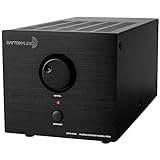
5. Dayton Audio APA150 – 150W Class AB Power Amplifier
Dayton Audio APA150 150-Watts Power Amplifier (Black)
150W Class AB
Bridgeable mono
10Hz-40kHz response
Auto signal sensing
Low-pass crossover
Pros
- Clean transparent Class AB sound
- Virtually silent fan operation
- Wide 10Hz to 40kHz frequency response
- Excellent build quality
- Bridgeable for high-power mono
Cons
- Bright blue power LED
- No tone controls
- No headphone jack
- Auto-power can be finicky
The Dayton Audio APA150 has been a staple in the budget audiophile community for years, and for good reason. This is a pure Class AB power amplifier, meaning it has no built-in preamp, DAC, or input switching. You feed it a line-level signal and it amplifies it with impressive transparency. The 150-watt output provides plenty of headroom for most home speakers.
The frequency response on this amplifier is remarkable for the price. At 10 Hz to 40 kHz, it covers the full audible spectrum and beyond, making it suitable for high-resolution audio formats. The high-current discrete output transistors deliver the kind of speaker control that budget Class D amps struggle to match. Audiophiles on forums consistently recommend the APA150 as one of the best bang-for-buck power amplifiers available.
I particularly like the adjustable low-pass crossover rated from 50 to 150 Hz. This makes the APA150 an excellent choice for powering a subwoofer in a dedicated bass system. The bridgeable design means you can combine two units for serious mono power if needed. The signal-sensing auto on/off feature is convenient for setups where the amp is hidden away.
The limitations are worth knowing. There are no tone controls, so what you feed in is what you get out. The auto-power feature can be unreliable, sometimes shutting off during quiet classical passages. The blue power LED is distractingly bright in dark rooms. And there is no headphone jack, which matters if you need private listening capability.
Best Use Case for the APA150
This amplifier excels as a dedicated power amp in a separates system. Pair it with a quality preamp or streaming DAC and you have a formidable audio chain. It also works beautifully as a subwoofer amplifier thanks to the built-in low-pass crossover.
Who Should Skip It
If you need an all-in-one solution with input switching, DAC, and volume control, this is not it. The APA150 is a pure power amplifier that requires a separate preamp or source component to function.
6. Dayton Audio HTA200 – 100W Per Channel Hybrid Tube Amplifier
Dayton Audio HTA200 Integrated Stereo Hybrid Tube Amplifier 200 Watts
100W RMS per channel
Hybrid tube preamp
Class AB power
Motorized volume
Multiple digital inputs
Pros
- 100W per channel with tube warmth
- Versatile connectivity including optical and USB
- Motorized volume knob with remote
- Beautiful vintage aesthetic
- User-replaceable tubes
Cons
- Poor remote control design
- Bluetooth WiFi interference
- Difficult fine volume control
- No built-in WiFi streaming
The Dayton Audio HTA200 is the big brother to the HTA20, and the power difference is significant. With 100 watts RMS per channel, this hybrid tube amplifier can drive floor-standing speakers and fill larger rooms with ease. It uses the same winning formula of a vacuum tube preamplifier feeding a solid-state Class AB power stage, but with substantially more output.
The connectivity suite is comprehensive. You get RCA analog inputs, optical digital, Bluetooth, a USB DAC, and a phono preamp. The motorized volume knob is a step up from the HTA20, allowing remote control of volume with a satisfying mechanical response. The subwoofer output enables full 2.1 channel configurations.
Sound quality follows the Dayton Audio hybrid formula: warm, musical, and engaging. The tube preamp section adds harmonic richness to vocals and acoustic instruments, while the solid-state power amplifier delivers the current needed for dynamic peaks. The VU meters and exposed tubes create a stunning visual centerpiece for any listening room.
The user-replaceable tubes are a fantastic feature for tinkerers. You can roll different tube types to fine-tune the sound signature to your preference. The 495 reviews and 4.5-star rating confirm that this amplifier has found a loyal audience among budget-conscious audiophiles who want tube aesthetics with solid-state reliability.
The weaknesses mirror those of the HTA20. The remote control is poorly designed with unresponsive buttons. Bluetooth can suffer from WiFi interference, producing audible noise in some setups. The volume control still has the coarse adjustment issue, making subtle level changes frustrating.
Best Use Case for the HTA200
This is the amplifier I would recommend for a main living room system where you want tube warmth, plenty of power, and visual appeal. It handles floor-standing speakers with confidence and supports both analog and digital sources.
Who Should Skip It
If you need pristine wireless streaming without RF interference, or if you demand precise volume control, the HTA200’s quirks may frustrate you. The Cambridge Audio AXA35 or Yamaha A-S501BL offer more refined user experiences in a similar price range.
7. Cambridge Audio AXA35 – Pure Analog Integrated Amplifier
Cambridge Audio AXA35 Integrated Amplifier with Built in Phono Stage (Silver)
35W per channel
Pure analog Class AB
Built-in phono MM
5Hz-50kHz response
4 RCA inputs
Pros
- Clean warm British Class AB sound
- Built-in phono stage for turntables
- Solid dependable build quality
- Outstanding value for audiophile sound
- No-frills analog focused design
Cons
- No digital inputs whatsoever
- No subwoofer output
- Speaker connectors could be better
- Limited to analog sources
The Cambridge Audio AXA35 represents everything that is right about traditional Class AB amplification. This is a pure analog integrated amplifier with no DAC, no Bluetooth, no streaming, and no digital inputs whatsoever. What you get instead is 35 watts per channel of exceptionally clean, warm, detailed Class AB power and one of the best built-in phono stages in this price range.
I love the frequency response on this amplifier. At 5 Hz to 50 kHz, it exceeds the audible range, which translates to effortless treble extension and deep, controlled bass. The signal-to-noise ratio of greater than 82 dB means a very quiet background, letting subtle details in your music emerge. Cambridge Audio’s British engineering heritage shows in the refined, musical presentation.
The built-in moving magnet phono stage is a standout feature. If you are into vinyl, this amplifier connects directly to your turntable without needing a separate phono preamp. The sound is warm and detailed, with excellent tracking of complex passages. The four RCA inputs plus a front-panel 3.5mm aux input give you plenty of connectivity for analog sources.
The 80 percent five-star rating from 178 reviewers tells you this amplifier exceeds expectations. Users consistently praise the sound quality as punching well above its weight class. The simple, no-frills design focuses entirely on sound quality rather than feature checkboxes. This is an amplifier for people who care about music first.
The trade-off is clear: no digital connectivity. If you want to stream from your phone, connect a TV via optical, or play files from a computer, you will need an external DAC. There is also no subwoofer output, limiting your bass extension options.
Best Use Case for the AXA35
This amplifier is ideal for vinyl enthusiasts and analog purists. Pair it with a quality turntable, some efficient bookshelf speakers, and a CD player for a pure analog signal path that delivers genuinely engaging sound.
Who Should Skip It
If your listening is primarily digital (streaming, computer audio, TV), the lack of any digital inputs means you need to budget for an external DAC. The Yamaha A-S501BL or Denon PMA-900HNE offer better all-around connectivity for similar money.
8. Yamaha A-S501BL – Natural Sound Integrated Stereo Amplifier
YAMAHA A-S501BL Natural Sound Integrated Stereo Amplifier (Black)
85W per channel
Class AB
Gold-plated digital inputs
Built-in phono
Speaker A/B switching
Pros
- 85W per channel with very low distortion
- Natural transparent Yamaha sound
- Gold-plated digital and analog inputs
- Speaker A/B switching for dual zones
- Highest review volume at 1200 reviews
Cons
- Not Prime eligible
- Heavy at 22.7 pounds
- No built-in Bluetooth
- Limited stock availability
The Yamaha A-S501BL is the amplifier I recommend more than any other in this guide. With over 1,200 customer reviews and a 4.6-star rating, it has earned the trust of the audiophile community through consistent performance and reliability. The 85 watts per channel output at 0.019 percent THD gives you clean, powerful amplification that handles virtually any speaker with authority.
Yamaha’s Natural Sound philosophy is evident the moment you start listening. The sound is transparent and uncolored, revealing the character of your source material and speakers rather than imposing its own signature. The gold-plated inputs include digital coaxial and optical connections, which is unusual for a traditional Class AB integrated amplifier at this price point. The built-in phono stage supports turntable connection directly.
The speaker A/B switching is a feature I use constantly. You can connect two pairs of speakers and switch between them or run both simultaneously. This is perfect for multi-room setups or comparing different speaker pairs. The auto standby feature shuts down the amplifier after 8 hours of inactivity, and standby power consumption is only 0.5 watts.
The build quality reflects Yamaha’s decades of amplifier engineering experience. At 22.7 pounds, it has the heft of a serious audio component, with a massive power supply and substantial heatsinking for the Class AB output stage. The frequency response is exemplary, and the low distortion figures mean you hear your music exactly as recorded.
The main drawbacks are practical rather than performance-related. It is not Prime eligible, so shipping may take longer. There is no built-in Bluetooth, which means you need an external streamer for wireless audio. Stock availability can be limited, so if you see it in stock, grab it.
Best Use Case for the A-S501BL
This is the amplifier I would put in a primary living room or dedicated listening room. It has the power, the connectivity, and the sound quality to serve as the heart of a serious hi-fi system for years to come.
Who Should Skip It
If wireless streaming is essential, you will need to add a Bluetooth receiver or streaming device. Budget buyers might find the price steep compared to the Dayton Audio options, though the performance jump justifies the cost.
9. OSD Audio Nero HTA4200 – 4-Channel Home Theater Class AB Amplifier
OSD Audio Nero HTA4200 Multi Channel (4X) 200W/Ch Home Theater Amplifier, Bridgeable 300W/Ch
4x200W at 4 ohms
Class AB
XLR balanced inputs
12V trigger
300W bridged
110dB SNR
Pros
- Powerful 4x200W Class AB amplification
- Balanced XLR inputs for low noise
- 12V trigger for home theater integration
- Bridged mode up to 300W per channel
- Exceptional 110dB signal-to-noise ratio
Cons
- Very heavy at 52 pounds
- Limited review volume
- Multi-channel focus not ideal for stereo
- Single unit stock availability
The OSD Audio Nero HTA4200 fills a specific but important role in the Class AB amplifier landscape: multi-channel home theater power. With four channels of 200 watts each at 4 ohms (140W at 8 ohms), this amplifier provides the clean, dynamic power that home theater speakers crave. The Class AB topology delivers the warmth and control that makes dialogue intelligible and explosions impactful.
The professional-grade features set this amplifier apart from consumer-level alternatives. Balanced XLR inputs reject noise over long cable runs, which matters in home theater installations where the amplifier may sit far from the preamp or processor. The 12V trigger input enables automatic power synchronization with your receiver or processor, so the amp turns on and off with your system.
The signal-to-noise ratio of 110 dB at full power is exceptional. This means the amplifier produces an incredibly quiet background, letting subtle details in movie soundtracks and music emerge from a black silence. The bridged mode delivers up to 300 watts per channel at 8 ohms, which is serious power for demanding tower speakers or subwoofer duty.
The 5-year warranty provides peace of mind that matches the premium build quality. At 52 pounds, this is a serious piece of audio equipment that requires proper rack mounting or a sturdy shelf. OSD Audio also offers this amplifier in 5, 7, and 11-channel variants for larger home theater configurations.
The limitation is focus. This is not a stereo amplifier, so two-channel music purists will find the multi-channel design unnecessary. With 84 reviews, the long-term reliability data is thinner than more established competitors.
Best Use Case for the Nero HTA4200
This amplifier is purpose-built for home theater. Use it to power front height channels, surround speakers, or additional zones in a distributed audio system. The XLR inputs and 12V trigger make it ideal for professional installations.
Who Should Skip It
If you are building a dedicated two-channel music system, this amplifier’s multi-channel design adds unnecessary cost and complexity. The Yamaha A-S501BL or Marantz PM6007 are better suited for stereo listening.
10. Marantz PM6007 – Premium Integrated Class AB Amplifier
Marantz Slimline Integrated Stereo Amplifier with 45W
45W per channel
Toroidal transformer
Class AB
Phono MM preamp
Optical input
10Hz-70kHz
Pros
- Exceptional build quality and construction
- Toroidal transformer for clean power
- Warm Marantz sound signature with soundstage
- Built-in phono MM preamp
- Optical digital input for modern sources
Cons
- Reports of volume pot crackling
- 45W may be insufficient for large rooms
- Higher price point
- Limited stock availability
The Marantz PM6007 carries the weight of a legendary audio brand, and it mostly lives up to the reputation. At its core is a high-quality toroidal transformer that delivers clean, stable power to the Class AB output stage. The 45 watts per channel into 8 ohms (60W into 4 ohms) is modest by numbers alone, but the quality of that power is what matters here.
Marantz is known for a specific sound signature: warm, detailed, with an expansive soundstage and smooth treble. The PM6007 delivers this in spades. Vocals float with a natural presence, acoustic instruments have believable texture, and the overall presentation is musical rather than analytical. The frequency response extends from 10 Hz to 70 kHz, covering high-resolution audio formats with ease.
The built-in moving magnet phono preamp is a welcome inclusion for vinyl enthusiasts. Marantz has a long history with analog playback, and the phono stage here is genuinely good rather than an afterthought. The optical digital input allows connection of modern sources like TVs and streaming devices, giving you flexibility without compromising the analog signal path.
The build quality is what you expect from Marantz at this price. The chassis is solid, the components are premium, and the overall fit and finish is excellent. At 23.1 pounds, it has the substance of a serious audio component. The 81 percent five-star rating from 73 reviewers confirms that most buyers are delighted with their purchase.
The concerns are real, though. Some users report crackling noise when adjusting the volume, suggesting potential quality control issues with the volume potentiometer. At 45 watts, it may struggle with very large rooms or low-efficiency speakers. The price point places it in competition with the Denon PMA-900HNE, which offers significantly more features for not much more money.
Best Use Case for the PM6007
This amplifier is ideal for the Marantz loyalist who values the brand’s warm, musical sound signature. It excels in medium-sized rooms with efficient speakers, particularly when paired with a turntable for vinyl playback.
Who Should Skip It
If you need more power for a large room or demanding speakers, the Yamaha A-S501BL delivers 85W for less money. The potential volume pot issue is also worth considering given the premium price.
11. Denon PMA-900HNE – Streaming Integrated Class AB Amplifier
Denon PMA-900HNE Integrated Stereo Amplifier (85W x 2), Hi-Res Certified
85W x 2
HEOS streaming
AirPlay 2
MC/MM phono
Hi-Res certified
3 optical inputs
Pros
- Built-in HEOS multi-room streaming
- Bluetooth AirPlay 2 and WiFi connectivity
- Advanced High-Current circuit design
- MC and MM phono equalizer built in
- Hi-Res Audio certified with DSD support
Cons
- 10 percent 1-star reviews suggest reliability concerns
- Limited stock availability
- Requires AAA batteries for remote
- Higher price point
The Denon PMA-900HNE is the most feature-rich Class AB integrated amplifier in this guide. It combines 85 watts per channel of Advanced High-Current Class AB amplification with built-in HEOS multi-room streaming, Bluetooth, AirPlay 2, and Wi-Fi connectivity. If you want a single box that handles both traditional analog sources and modern streaming, this is it.
The Advanced High-Current single push-pull circuit is Denon’s approach to Class AB design. It delivers the kind of dynamic, impactful bass that makes music feel alive, while maintaining the clean midrange and smooth treble that the format is known for. The 85-watt output matches the Yamaha A-S501BL, giving you plenty of power for most speakers and rooms.
The streaming integration is where this amplifier pulls ahead of the competition. HEOS lets you stream from Spotify, Pandora, TIDAL, Amazon Music, and local network drives. AirPlay 2 integrates with Apple devices seamlessly. Voice control via Alexa, Siri, and Google Assistant adds another layer of convenience. The Hi-Res Audio certification means it handles FLAC HD, DSD, ALAC, and WAV files natively.
The MC and MM phono equalizer is a standout feature. Most amplifiers only include MM phono stages, but the PMA-900HNE supports moving coil cartridges as well, giving vinyl enthusiasts broader turntable compatibility. The three optical inputs and one coaxial input provide extensive digital connectivity for TVs, gaming consoles, and streaming devices.
The 10 percent one-star rating is a concern worth investigating. Some users report reliability issues, though the 74 percent five-star majority suggests most buyers are satisfied. At $1,049, it sits at a premium price point that demands consistent quality.
Best Use Case for the PMA-900HNE
This is the amplifier for the modern audiophile who wants streaming convenience without sacrificing Class AB sound quality. If your household uses multiple streaming services and voice assistants, this amp integrates it all into a single, powerful component.
Who Should Skip It
If you already own a dedicated streamer or network player, the streaming features add unnecessary cost. The 10 percent failure rate is also worth weighing, especially at this price point. Consider the extended warranty if available.
12. Oilily A88MK KT88X4 – Flagship Vacuum Tube Class AB Amplifier
Oilily A88MK KT88X4 Vacuum Tube Amplifier, 45W+45W Class AB, Tube Integrated Amplifier with Triode & Ultra-Linear Mode, High-Fidelity Sound for Audiophiles (Silver)
45W+45W KT88 tubes
Triode and Ultra-Linear modes
Class AB
Handmade construction
Configurable tube types
Pros
- KT88 tubes deliver warm balanced sound
- Dual mode Triode and Ultra-Linear operation
- Configurable KT88 EL34 or 6550 tubes
- Handmade premium craftsmanship
- Doubles as integrated or power amplifier
Cons
- Only 9 total reviews
- Requires 80-hour break-in period
- Very heavy at 61.7 pounds
- Limited stock availability
The Oilily A88MK KT88X4 represents the pinnacle of tube-based Class AB amplification in this guide. With four matched KT88 tubes driving 45 watts per channel in Ultra-Linear mode (22W in Triode mode), this amplifier delivers the kind of sound that keeps tube enthusiasts loyal to the format. The handmade construction with scaffolding welding speaks to a level of craftsmanship that mass-produced amplifiers cannot match.
The dual-mode operation is what makes this amplifier special. In Triode mode, you get 22 watts per channel of refined, intimate sound that is perfect for late-night jazz or vocal music. Switch to Ultra-Linear mode and you get 45 watts per channel with more dynamic punch and speaker-driving authority. The rear selector switch lets you configure the amplifier for KT88, EL34, or 6550 tubes, giving you enormous flexibility to tune the sound to your preference.
The KT88 tube sound is distinctive: warm, soft, and balanced with a particular magic in the midrange. Vocals have a presence and immediacy that solid-state amplifiers struggle to replicate. The soundstage is wide and deep, with instruments placed precisely in space. Reviewers compare the sound quality favorably to amplifiers costing several times more.
The versatility extends to functionality. The A88MK works as either an integrated amplifier with its own volume control and inputs, or as a standalone power amplifier fed by a separate preamp. The included remote control and vacuum tube protector add practical value to a product that is clearly built as a labor of love.
The caveats are significant. With only 9 reviews, this is a niche product with limited user feedback. The 80-hour break-in period means the sound improves over the first month of use, but patience is required. At 61.7 pounds, it is extremely heavy and requires a sturdy surface. Replacement tubes must be purchased separately, and KT88 tubes are not cheap.
Best Use Case for the A88MK
This amplifier is for the dedicated tube audio enthusiast who has experienced solid-state Class AB and wants to explore the next level of warmth and musicality. It is a statement piece for a dedicated listening room where the visual and sonic presence of glowing KT88 tubes can be fully appreciated.
Who Should Skip It
If you are new to tube amplifiers, the maintenance requirements and break-in period may frustrate you. The limited review volume also makes this a riskier purchase compared to more established options. For most buyers, the Dayton Audio HTA200 or Juson Audio JTA50 offer a safer entry point into hybrid tube sound.
How to Choose the Best Class AB Amplifier for Your Needs
Choosing the right Class AB amplifier comes down to matching the amplifier’s specifications and features to your specific listening situation. Here is what matters most when making your decision.
Power Output and Speaker Matching
Power output is measured in watts per channel, and matching it to your speakers is critical. As a general rule, you want amplifier power that meets or slightly exceeds your speaker’s recommended power range. Underpowering speakers causes clipping distortion that can damage tweeters, while overpowering is rarely a problem if you listen at reasonable volumes.
For bookshelf speakers in a small room, 20 to 50 watts per channel is usually sufficient. Floor-standing speakers in medium to large rooms typically need 60 to 100 watts. Speakers with sensitivity below 86 dB benefit from higher power, while highly sensitive speakers (90 dB or above) can thrive on lower wattage. The Yamaha A-S501BL at 85W per channel is a safe choice for most home speaker setups.
Impedance Matching (4 Ohm vs 8 Ohm)
Speaker impedance affects how much current the amplifier must deliver. Most home speakers are 8 ohms, which is easy for any amplifier to drive. Four-ohm speakers demand twice the current, which can strain budget amplifiers. Check that your amplifier is rated for your speaker’s impedance. The OSD Audio Nero HTA4200 handles both 4-ohm and 8-ohm loads with its 200W and 140W ratings respectively.
Total Harmonic Distortion and Signal-to-Noise Ratio
THD measures how much the amplifier distorts the original signal. Look for THD below 0.1 percent at rated power. The Yamaha A-S501BL achieves an impressive 0.019 percent THD, which is excellent for the price. SNR measures how quiet the amplifier is when no signal is present. Higher numbers are better, and anything above 90 dB is very good. The OSD Audio Nero hits 110 dB, which is exceptional.
Damping Factor and Speaker Control
Damping factor measures how tightly the amplifier controls speaker cone movement, particularly in the bass region. A higher damping factor means tighter, more controlled bass. Class AB amplifiers typically have good damping factors, which is why they are praised for bass control. This is one area where well-designed Class AB often outperforms budget Class D alternatives.
Connectivity and Features
Consider what sources you need to connect. Vinyl listeners need a phono input or separate phono preamp. Digital users want optical, coaxial, or USB inputs. Streaming enthusiasts should look at the Denon PMA-900HNE with its built-in HEOS. If you need a subwoofer for bass extension, make sure the amplifier has a subwoofer output. The Dayton Audio HTA20 and HTA200 both include subwoofer outputs at budget-friendly prices.
Use Case Considerations
Match the amplifier to your primary listening scenario. Desktop audio works well with 20 to 50W amplifiers like the Dayton HTA20 or Juson JTA50. Main living room systems benefit from 60W and above, with the Yamaha A-S501BL being our top recommendation. Home theater installations should consider multi-channel options like the OSD Audio Nero. Car audio needs 12V DC amplifiers like the Pioneer GM-A3702 or DS18 SXE-1200.4.
Frequently Asked Questions About Class AB Amplifiers
What is a Class AB amplifier?
A Class AB amplifier is a hybrid audio amplifier that combines the low distortion of Class A with the efficiency of Class B. It uses two output transistors biased to conduct slightly more than half the audio cycle, eliminating the crossover distortion that plagues pure Class B designs. This makes Class AB ideal for audiophile-grade home audio.
Are Class AB amps good for audio?
Yes, Class AB amps are excellent for audio. They produce warm, natural sound with minimal crossover distortion, making them ideal for home hi-fi, critical listening, and driving demanding speakers. Audiophiles consistently prefer Class AB for its musicality, imaging, and speaker control compared to other amplifier classes.
Which amplifier is better, Class A or Class AB?
Class A offers the lowest distortion but is very inefficient and expensive. Class AB provides most of Class A sound quality with much better efficiency (50-60 percent vs 20-30 percent for Class A). Class A is mainly for audiophiles with unlimited budget and cooling capacity. For most listeners, Class AB is the better practical choice.
Which class amplifier is best for sound quality?
For most listeners, Class AB offers the best balance of sound quality and practicality. Class A has theoretically the best quality but is impractical due to heat and cost. Well-designed Class D can rival Class AB, but Class AB is still preferred by audiophiles for its warm, natural tonal quality and consistency across different speaker pairings.
What are the disadvantages of Class AB amps?
Class AB amps generate more heat than Class D, consume more power at idle, are heavier due to larger transformers and heatsinks, and can suffer from crossover distortion if poorly designed. They also tend to cost more per watt than Class D alternatives and may require more ventilation space in your equipment rack.
Can Class AB amplifiers drive 4 ohm speakers?
Most quality Class AB amplifiers can drive 4 ohm speakers, but you should verify the impedance rating before purchasing. Four-ohm speakers draw twice the current of 8 ohm speakers, which can strain budget amplifiers. Amplifiers like the Yamaha A-S501BL and OSD Audio Nero HTA4200 handle 4 ohm loads without issues.
What should I look for when buying a Class AB amplifier?
Key factors include power output (match to your speakers), impedance compatibility (4 or 8 ohm), THD below 0.1 percent, SNR above 90 dB, connectivity options (phono, digital, Bluetooth), damping factor for bass control, and warranty coverage. Also consider your use case: home stereo, home theater, desktop, or car audio.
Final Thoughts on the Best Class AB Amplifiers for 2026
Class AB amplification remains the sweet spot for audiophiles who want proven sound quality without the compromises of other topologies. After researching 12 amplifiers across every price tier, a few clear winners emerged. The Yamaha A-S501BL stands as our editor’s choice for its unbeatable combination of power, sound quality, and proven reliability with over 1,200 reviews backing it up.
For budget-conscious buyers, the Dayton Audio HTA20 delivers hybrid tube warmth and Class AB power for under $200. The Cambridge Audio AXA35 earns best value for analog purists who want pristine sound without digital distractions. And for those ready to invest in premium features, the Denon PMA-900HNE brings streaming convenience to the Class AB format with 85 watts of serious amplification.
The best class AB amplifiers in 2026 cover a wide range of prices and use cases, but they all share that fundamental Class AB character: warm, natural, musical sound with the power to make your speakers sing. Whatever your budget and listening scenario, there is a Class AB amplifier on this list that will transform your audio experience for years to come.