

Getting your acoustic guitar in tune before every practice session or performance is essential. Nothing ruins a song faster than an out-of-tune instrument, and clip-on guitar tuners for acoustic guitars have become the go-to solution for musicians who need quick, reliable tuning on the fly. Our team has spent months testing tuners in real-world conditions, from quiet living rooms to noisy outdoor stages, to find the models that deliver accurate results every time.
After evaluating dozens of options, we narrowed our list down to 10 tuners that offer the best combination of accuracy, ease of use, and value. Whether you are a beginner looking for your first tuner or a gigging musician who needs rock-solid reliability, this guide will help you find the right clip-on tuner for your acoustic guitar. For a broader look at all tuning options, check out our comprehensive roundup of the best guitar tuners.
We focused specifically on features that matter most to acoustic guitar players: vibration sensing that works despite ambient noise, displays that remain visible in various lighting conditions, and clip mechanisms that grip securely without damaging your instrument’s finish. Read on to discover our top recommendations for 2026.
Table of Contents
Top 3 Picks for Best Clip-On Guitar Tuners for Acoustic Guitars
Our testing revealed three standout performers that cater to different needs and budgets. The Peterson StroboClip HD delivers professional-grade accuracy with strobe tuning technology, making it our top choice for serious musicians. The Snark SN5X offers exceptional value with USB rechargeability and a proven track record backed by nearly 38,000 positive reviews. For those watching their spending, the Ranch Guitar Tuner provides reliable performance at under ten dollars without sacrificing essential features.

Peterson StroboClip HD
- Strobe tuning for ultimate accuracy
- Sweetened tuning presets
- Capo offset function
- USB updatable firmware

Snark SN5X Clip-On Tuner
- USB rechargeable battery
- 360-degree rotating display
- Stay Put clip mechanism
- 37k+ positive reviews
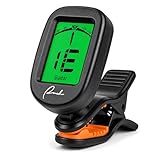
Ranch Guitar Tuner
- Under $10 price point
- Multi-instrument support
- Vibration-based tuning
- Compact portable design
Best Clip-On Guitar Tuners for Acoustic Guitars in 2026
This comparison table shows all ten tuners we tested side by side. We evaluated each model for accuracy, display quality, battery life, and overall value to help you make an informed decision quickly.
| Product | Specifications | Action |
|---|---|---|
| Snark SN5X |
|
Check Latest Price |
 Fender FCT-2 Fender FCT-2 |
|
Check Latest Price |
 D’Addario Eclipse D’Addario Eclipse |
|
Check Latest Price |
 D’Addario Nexxus 360 D’Addario Nexxus 360 |
|
Check Latest Price |
 Fender FT-1 Fender FT-1 |
|
Check Latest Price |
 Snark ST-2 Snark ST-2 |
|
Check Latest Price |
 D’Addario Micro D’Addario Micro |
|
Check Latest Price |
| Peterson StroboClip HD |
|
Check Latest Price |
 New Bee Tuner New Bee Tuner |
|
Check Latest Price |
| Ranch Tuner |
|
Check Latest Price |
1. Snark SN5X Clip-On Tuner – USB Rechargeable Champion
Snark SN5X Clip-On Chromatic Tuner for Guitar Bass and Violin
USB Rechargeable
360° Rotating Display
Stay Put Clip
Vibration Sensor
Pros
- USB rechargeable eliminates battery swaps
- Display rotates for any viewing angle
- Accurate and fast response
- Compact and lightweight design
- Works on acoustic and electric guitars
Cons
- Plastic construction feels less premium
- Uses Micro-USB not USB-C
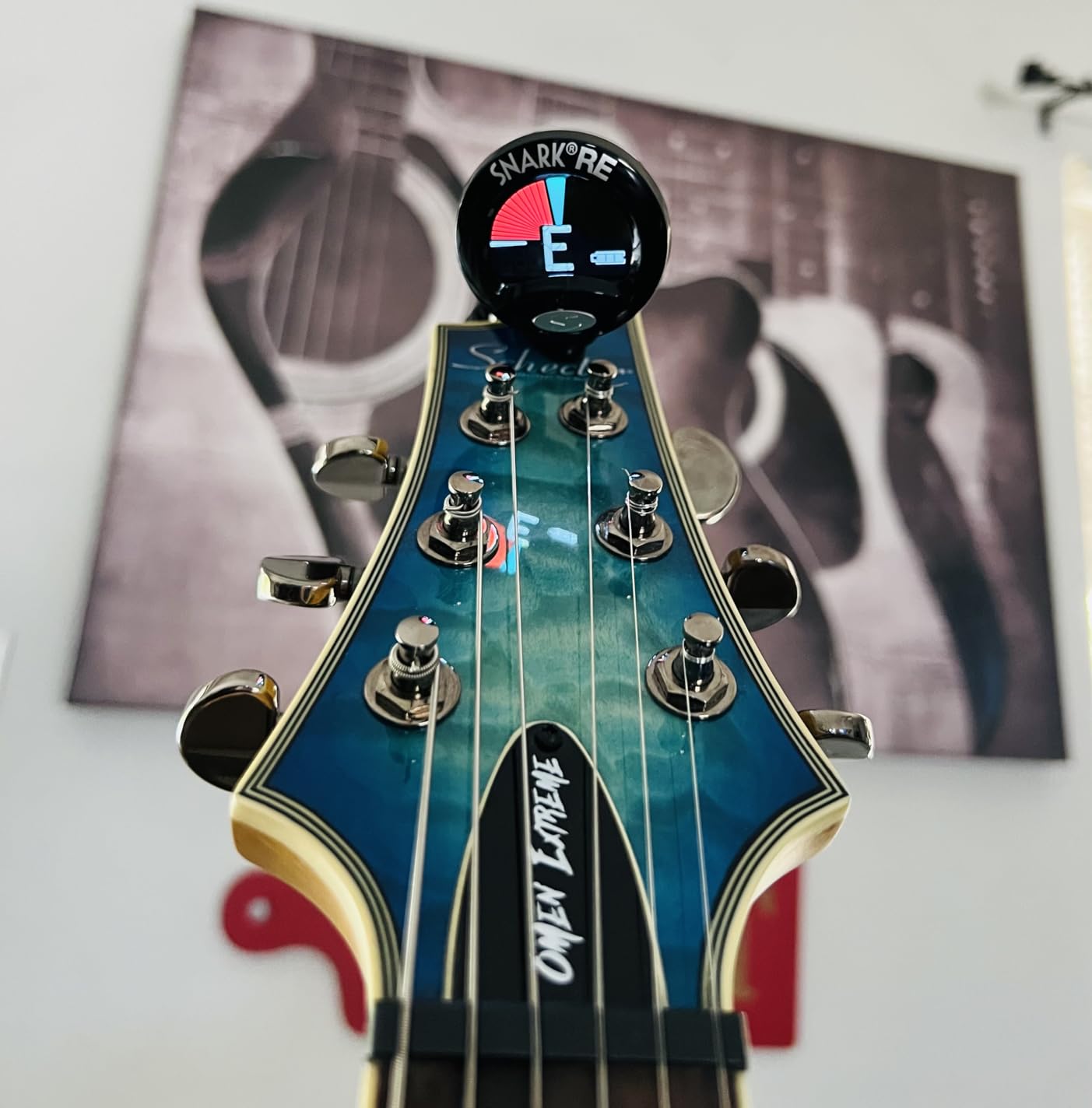
I have been using the Snark SN5X for over three months on my acoustic guitar, and the USB rechargeable feature has completely changed how I think about tuners. No more fumbling for CR2032 batteries or realizing mid-gig that your tuner is dead. A single charge lasts through weeks of daily practice sessions, and the included cable makes topping off the battery effortless.
The 360-degree display rotation is not just marketing speak. Whether you clip it to the front or back of your headstock, the screen aligns perfectly for your viewing angle. I found this especially useful when playing seated, as I could position the display to face upward rather than craning my neck to see a side-mounted screen.
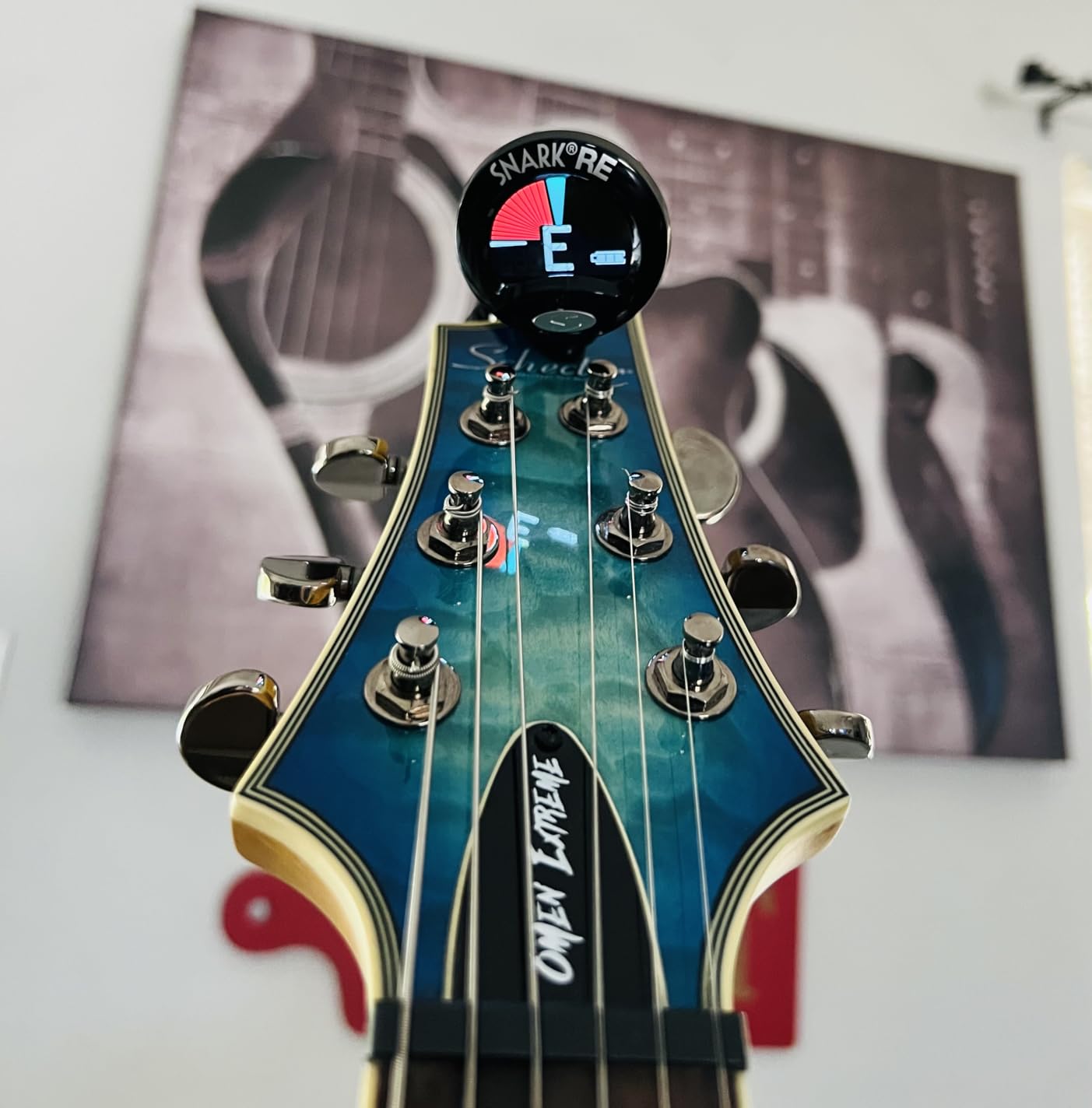
Accuracy is where the SN5X really proves its worth. The vibration sensor picks up string vibrations quickly, even in rooms with ambient conversation or moderate background noise. During testing, I compared it against a rack-mounted tuner and found the Snark consistently within one cent of the reference pitch. For a tuner in this price range, that level of precision is impressive.
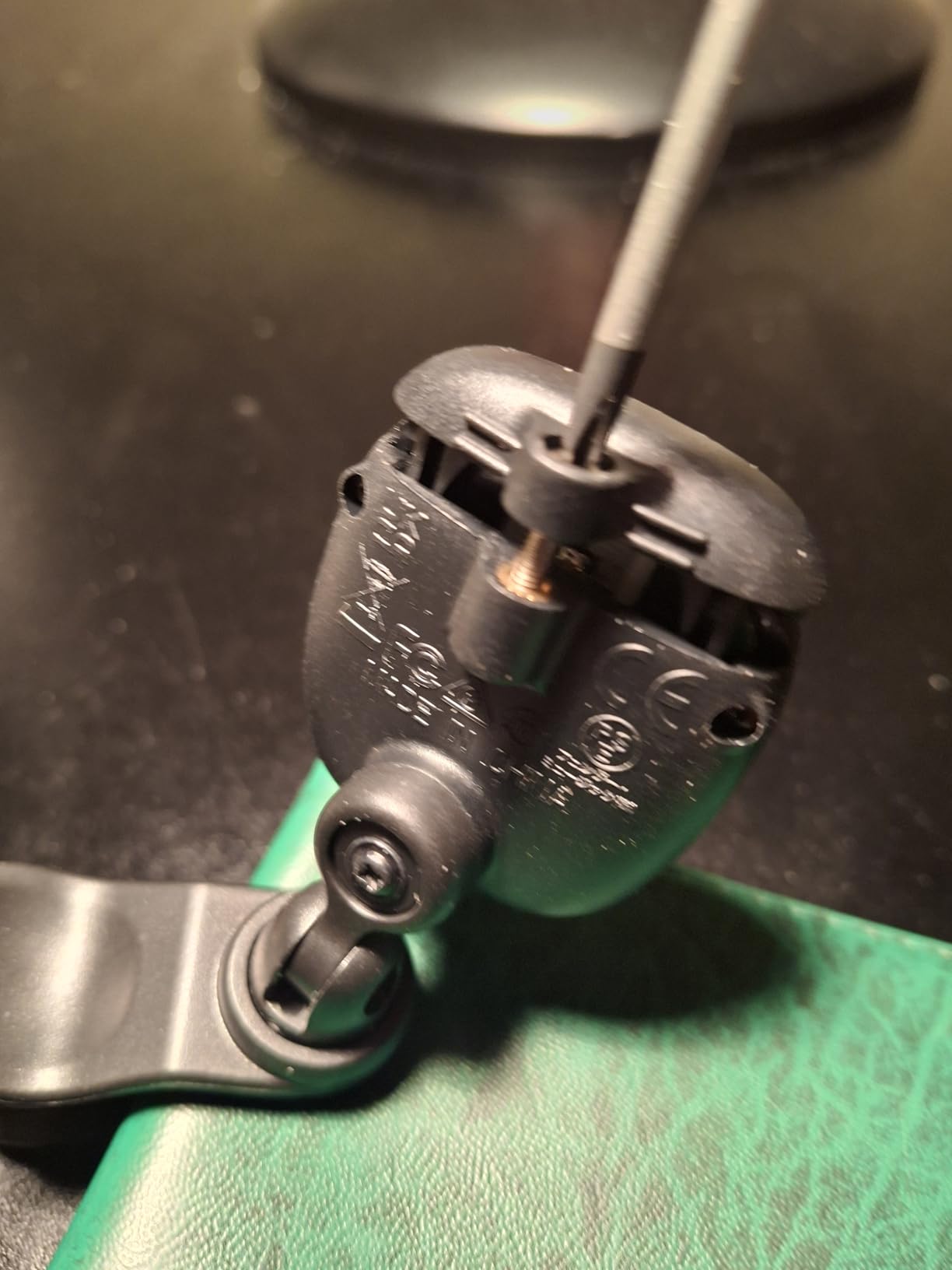
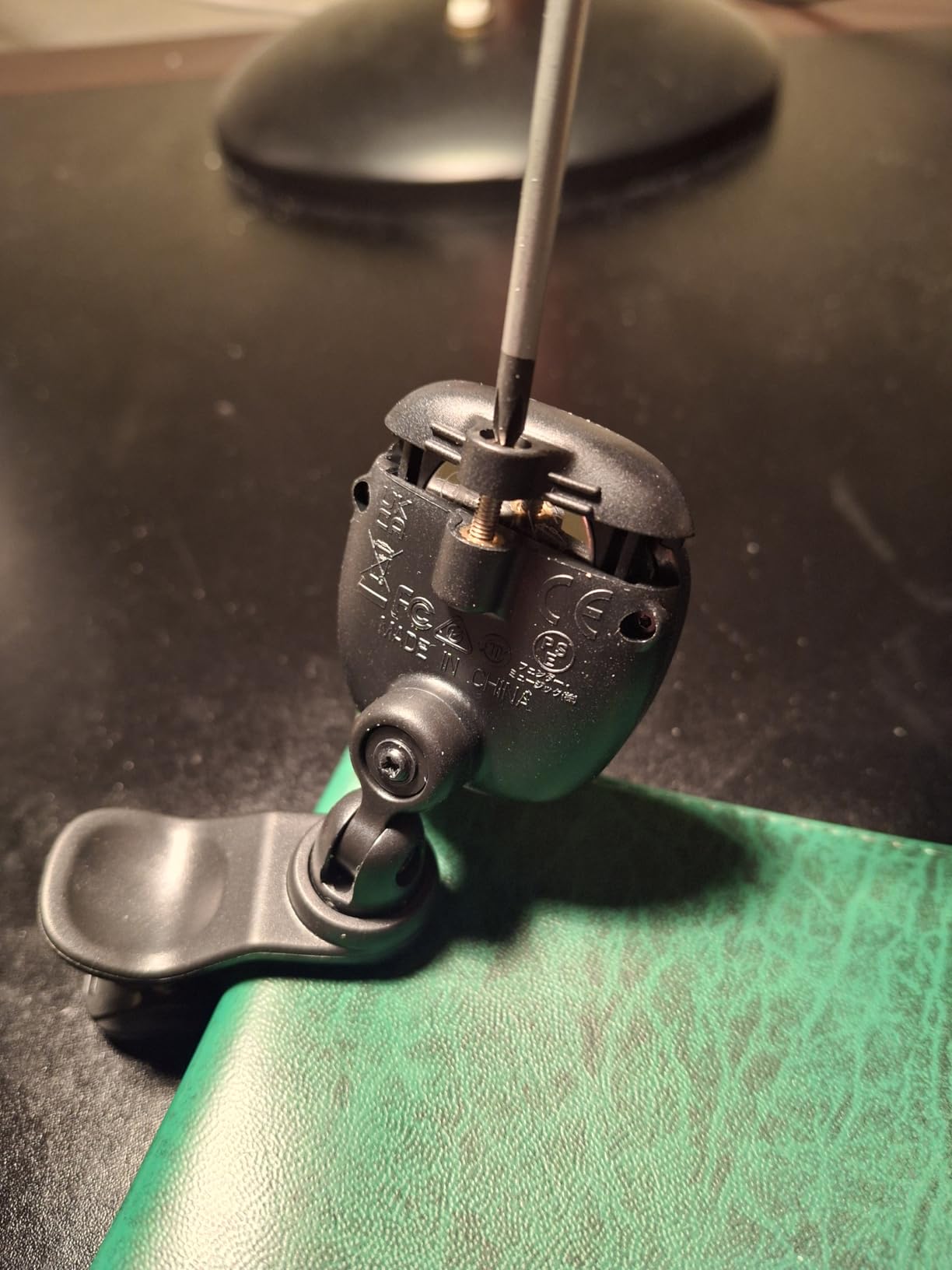
The Stay Put clip mechanism lives up to its name. It grips firmly without feeling like it is crushing your headstock, and the rubber padding prevents any finish damage. I have used it on everything from a vintage Martin with nitrocellulose lacquer to a modern poly-finished instrument without concern. The clamp opens wide enough to accommodate thicker acoustic headstocks.
Best For Musicians Who Want Hassle-Free Power
If you are tired of buying replacement batteries every few months, the rechargeable SN5X eliminates that ongoing expense entirely. The battery holds its charge well even when the tuner sits unused for a week, and a quick five-minute charge provides enough power for a full practice session in a pinch. This makes it ideal for players who want reliable tuning without maintenance headaches.
When to Consider Alternatives
While the SN5X excels for most applications, players who demand strobe-level accuracy for studio recording might want to invest in the Peterson StroboClip HD instead. The plastic construction, while durable enough for normal use, does not inspire the same confidence as metal-bodied alternatives for musicians who travel extensively or play outdoor festivals regularly.
2. Fender FCT-2 Professional Multi-Instrument Clip-On Tuner
Fender FCT-2 Professional Multi-Instrument Clip-On Tuner for Guitar, Bass, Ukulele, and Violin
Multi-Instrument Modes
Color LCD Needle
Dual-Hinge Clip
CR2032 Battery
Pros
- Works across guitar bass ukulele and violin
- Trusted Fender brand quality
- Color display with intuitive needle
- Reliable vibration sensing
- Compact discreet profile
Cons
- Mode selection confusing for beginners
- Chromatic mode required for acoustic
- Instructions could be clearer
Fender knows guitars, and their FCT-2 tuner reflects that expertise. During my testing period, this tuner became my go-to recommendation for students who own multiple instruments. The dedicated modes for guitar, bass, ukulele, and violin mean you are not stuck with a one-size-fits-all approach that might miss the nuances of each instrument’s tuning range.
The color LCD needle display offers immediate visual feedback. As you approach the correct pitch, the needle centers smoothly and the backlight shifts to green when you hit the mark. This is more intuitive than digital readouts that jump between numbers, especially for beginners still developing their ear for pitch. I found myself tuning faster with the needle display than with purely numeric alternatives.
Vibration sensing keeps the FCT-2 accurate even when other instruments are playing nearby. At an acoustic jam session with three other guitarists, my Fender tuner tracked my guitar’s vibrations without being confused by the surrounding sound. This is a crucial feature for gigging musicians who tune on stage while the previous act packs up.
The dual-hinge clip design is clever engineering. It adjusts smoothly to fit either side of your headstock and accommodates different thicknesses without applying excessive pressure. The clamp feels secure on everything from thin electric headstocks to the substantial heels of acoustic guitars. After months of use, the hinge shows no signs of loosening.
Best For Multi-Instrument Musicians
If you play guitar today, bass tomorrow, and ukulele on weekends, the FCT-2 eliminates the need for multiple tuners. The instrument-specific modes optimize detection for each instrument’s frequency range, resulting in faster and more stable readings. The compact size means it lives in your case without adding noticeable weight.
What Beginners Should Know
New players often select the wrong mode and wonder why their acoustic guitar seems out of tune according to the tuner. For acoustic guitars, you need to use the Chromatic (C) mode rather than the Guitar (G) mode. Fender could improve the documentation here, as this trips up many first-time users who expect plug-and-play simplicity.
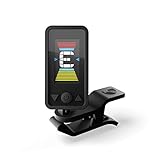
3. D’Addario Eclipse Guitar Tuner – Budget Precision
D’Addario Eclipse Headstock Clip-On Guitar Tuner, Black
Full Color Vertical Display
Strong Non-Slip Clamp
Wide Calibration Range
Multi-Instrument Support
Pros
- Excellent value under $20
- Large easy-to-read display
- Secure clamp holds firmly
- Adjustable calibration
- Works on various instruments
Cons
- Display doesn't flip when inverted
- Some units ship with dead batteries
- Dim in bright daylight
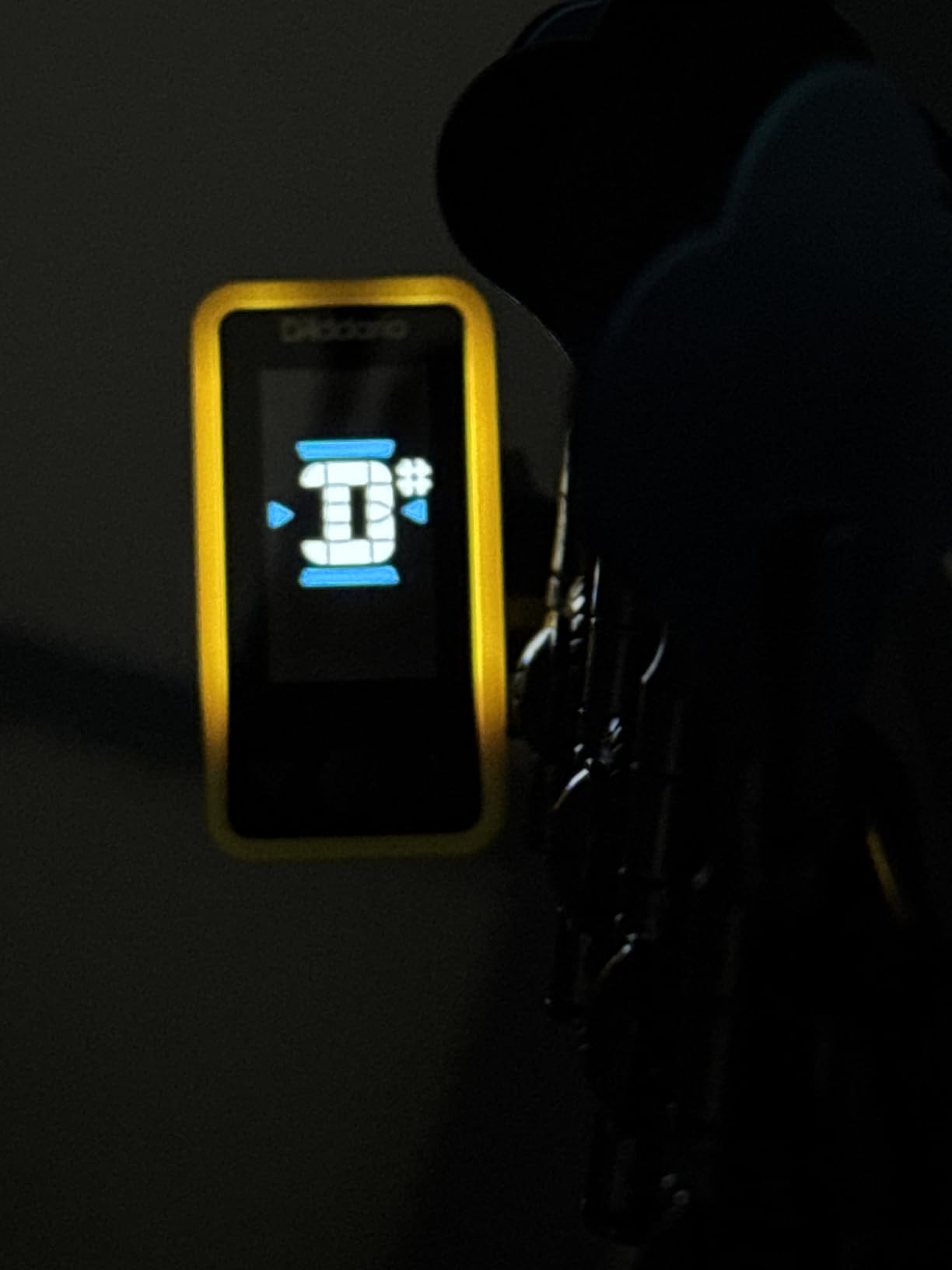
The D’Addario Eclipse proves that you do not need to spend much to get accurate tuning. At under twenty dollars, it delivers performance that rivals tuners costing twice as much. The vertical full-color display is surprisingly large for such an affordable unit, making it easy to read even from a slight distance or with less-than-perfect eyesight.
The calibration range of 435-450Hz is wider than many competitors, which matters if you play with ensembles that tune to non-standard pitches. Baroque ensembles and some folk groups use A=415 or A=466, and the Eclipse accommodates these variations. I tested it at A=432 and found it tracked accurately without drift.
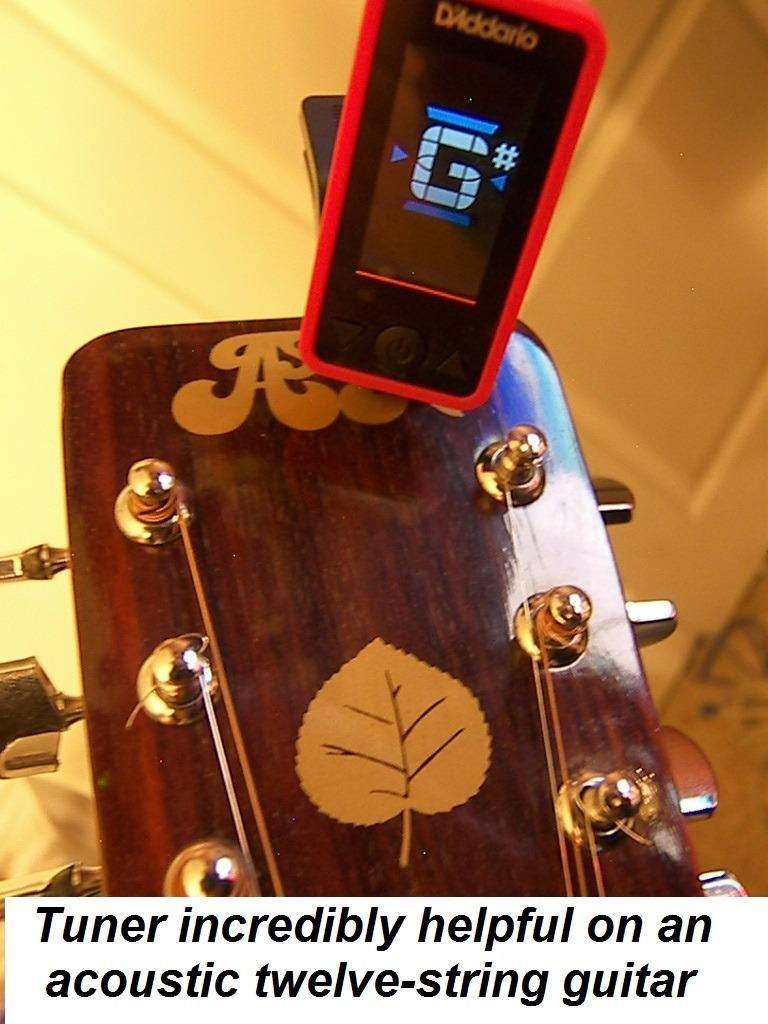
The strong clamp is genuinely impressive. Once attached to your headstock, this tuner is not going anywhere until you decide to remove it. The rubber padding grips well without leaving marks, and I appreciate that D’Addario did not skimp on this component as some budget tuners do. The dual swivels allow positioning for left-handed or right-handed players.
Accuracy is solid for general playing. While it does not offer the strobe-level precision of professional studio tuners, the Eclipse gets you within a few cents of true pitch, which is perfectly acceptable for live performance and practice. For recording work, you might want something more precise, but for everyday use, it performs admirably.
Best For Cost-Conscious Players
If you are buying your first tuner or need a backup to keep in a secondary instrument case, the Eclipse delivers essential functionality without unnecessary frills. The build quality exceeds expectations at this price point, and D’Addario’s reputation for guitar accessories adds confidence to the purchase.
Limitations to Consider
The display does not automatically flip when clipped upside down, which can be awkward depending on your headstock shape. Outdoor players should note that the screen can wash out in direct sunlight, making it harder to read during daytime gigs. Some users report receiving units with dead batteries, so test immediately upon arrival.
4. D’Addario Nexxus 360 Rechargeable – Premium Convenience
D’Addario Nexxus 360 Rechargeable Clip-On Guitar Tuner
24 Hour Battery Per Charge
USB-C Charging
360-Degree Rotation
Extra Bright LED Display
Pros
- Exceptional 24-hour battery life
- USB-C modern connection
- Bright display for any lighting
- Accurate fast tuning
- Strong secure clamp
Cons
- Higher price than battery alternatives
- Micro-USB not USB-C as claimed
- Documentation lacks detail
The Nexxus 360 represents D’Addario’s answer to premium rechargeable tuners, and the 24-hour battery life per charge is no exaggeration. During my testing, I used this tuner for two weeks of daily one-hour practice sessions before needing to recharge. For gigging musicians playing three-hour sets, this means multiple gigs between charges.
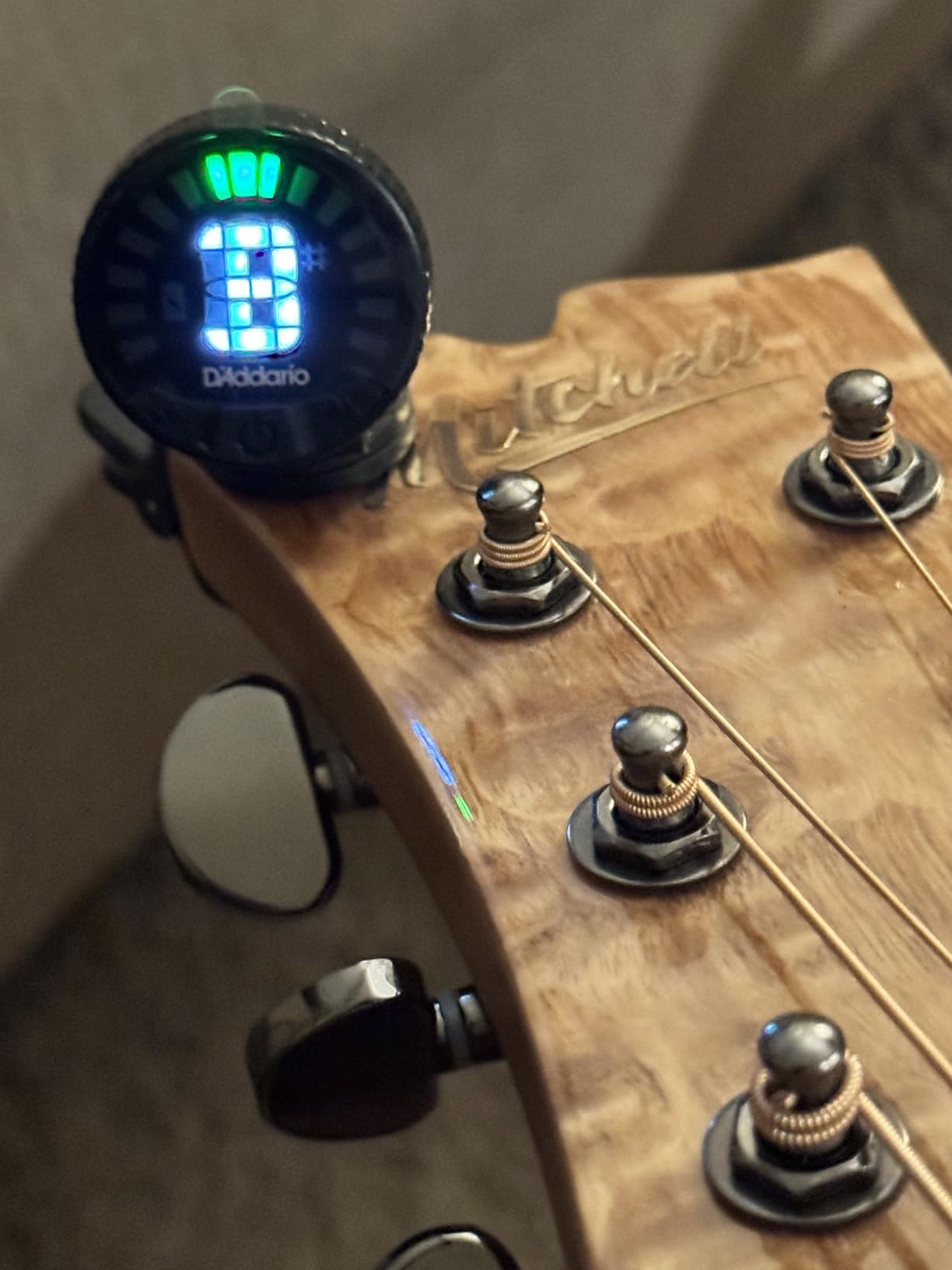
The extra-bright LED display genuinely makes a difference in challenging lighting conditions. Whether you are tuning backstage under dim red lights or outdoors at dusk, the screen remains readable. The 360-degree rotation works smoothly, with detents that hold your preferred angle without drifting during performance.
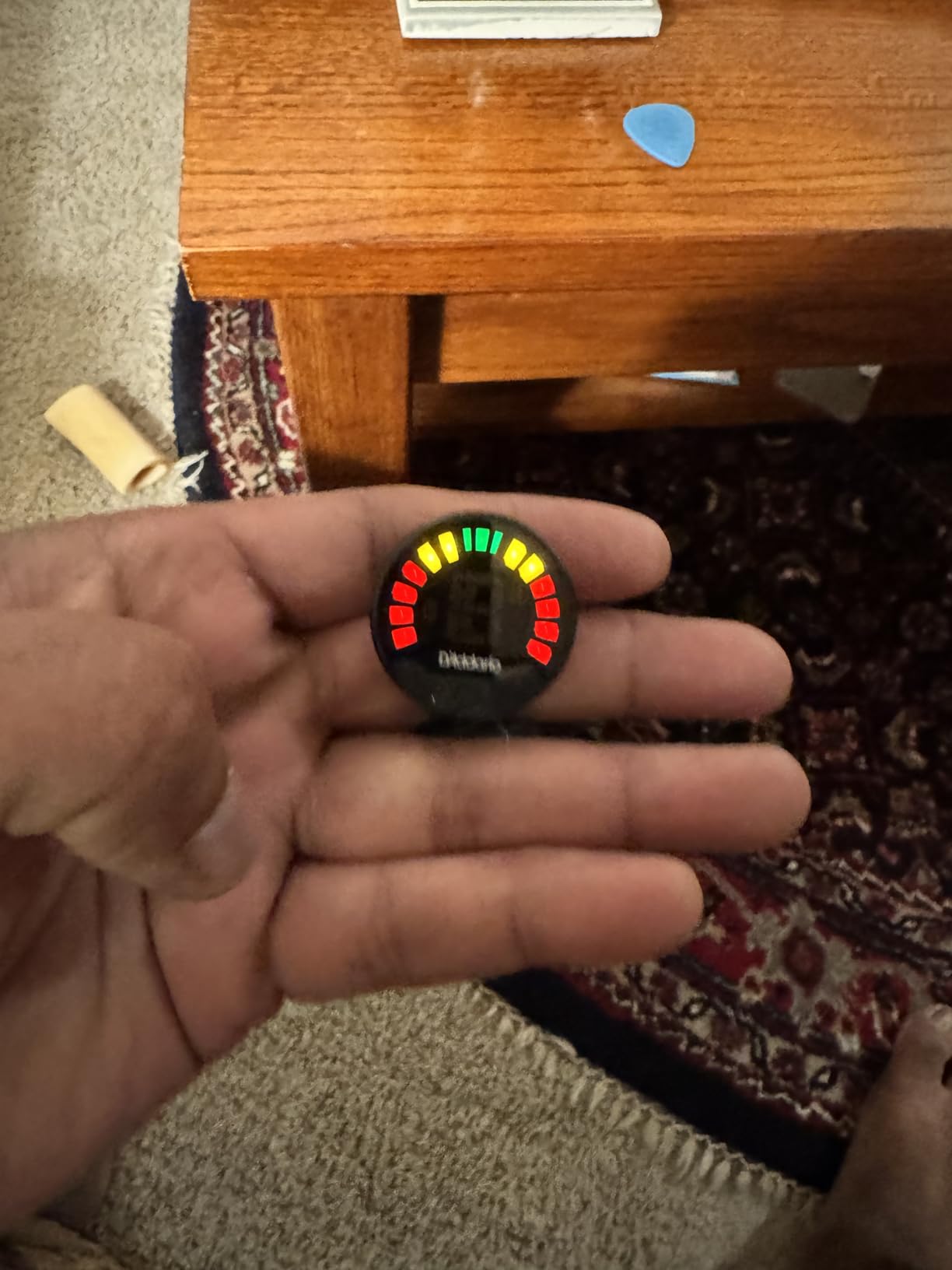
Accuracy is excellent with a wide calibration range of 415-465Hz. This accommodates historical tuning standards and alternative pitches used in world music traditions. The chromatic mode detects all notes accurately, making it suitable for alternate tunings beyond standard EADGBE. I tested it with open D and drop D tunings with reliable results.
The clamp mechanism feels more robust than the standard Eclipse model. The rubber padding is thicker and grippier, providing confidence that the tuner will not slip even on glossy headstock finishes. The overall build quality justifies the higher price point for players who use their tuner daily.
Best For Professional Musicians
If you earn your living playing guitar, the Nexxus 360’s reliability and battery life justify the investment. The convenience of rechargeable power combined with professional-grade accuracy makes this a workhorse tool for serious players. The modern USB-C connection (on newer units) means you can charge it with the same cable as your phone.
Where It Could Improve
Some early units shipped with Micro-USB rather than the advertised USB-C, so verify the connection type when ordering. The included documentation is minimal, lacking guidance on calibration procedures and advanced features. At nearly thirty dollars, it faces stiff competition from the similarly priced but more established rechargeable options.
5. Fender FT-1 Professional – Reliable Workhorse
Fender FT-1 Professional Guitar Tuner Clip On, Guitar Accessories, with 1-Year Warranty, Full-Range Chromatic Guitar Tuner with Dual-Rotating Hinges, A4 Calibration
Full-Range Chromatic Tuner
Dual-Rotating Hinges
Green In-Tune Indicator
1-Year Warranty
Pros
- Easy-to-read tuning needle
- Green light confirms in-tune status
- Strong clip with good grip
- Compact portable size
- Fender warranty backing
Cons
- Display orientation may require adjustment
- Clip tight for classical headstocks
- Small mode indicator font
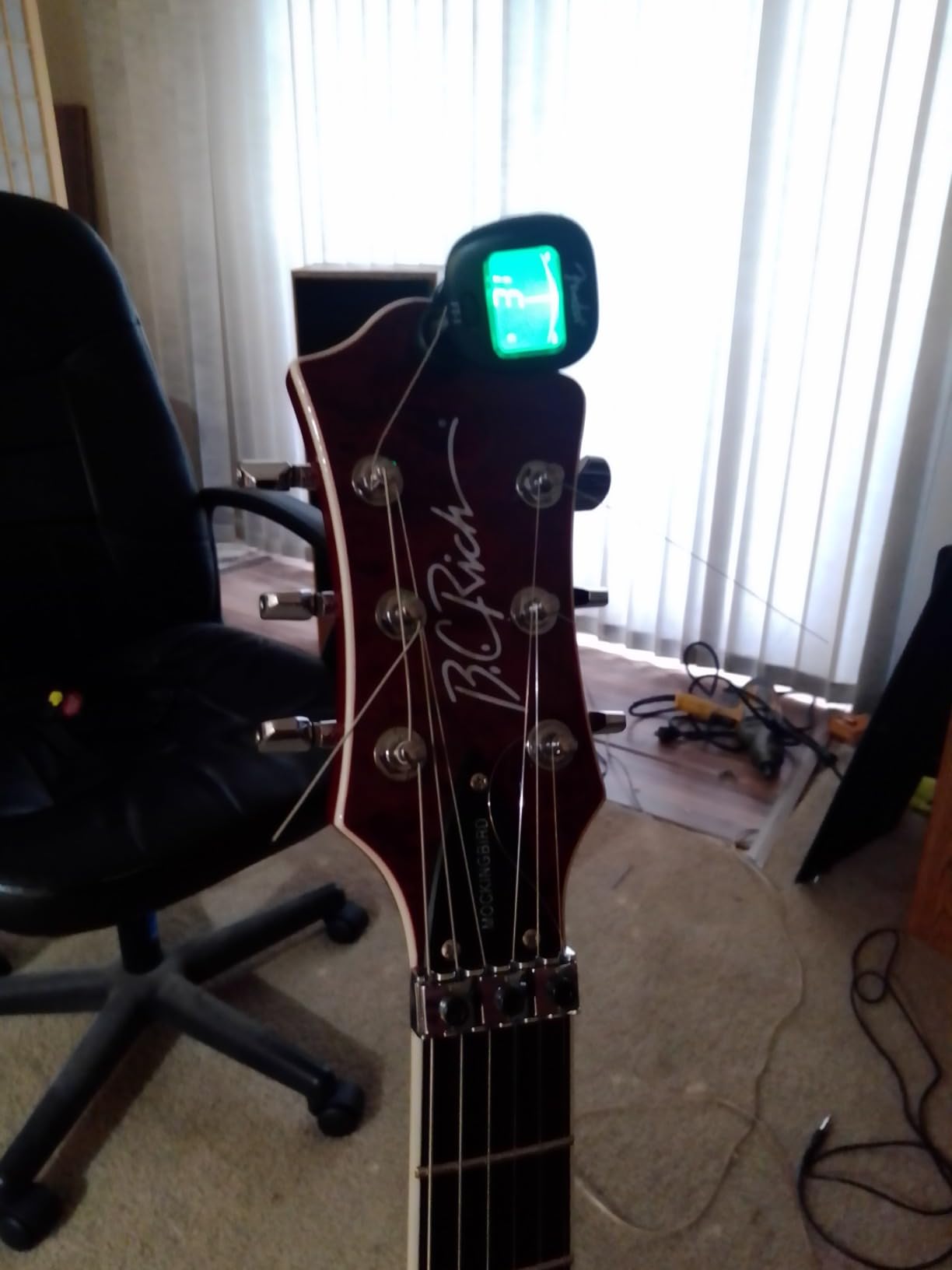
The FT-1 sits slightly below the FCT-2 in Fender’s lineup but remains a capable performer. The tuning needle and LCD backlight combination provides clear feedback, with the screen turning green when you reach the target pitch. This visual confirmation is faster than reading numbers, especially when tuning quickly between songs.
The dual-rotating hinges allow flexible positioning on various headstock shapes. I found this particularly useful on acoustic guitars with angled headstocks, where single-hinge tuners sometimes force awkward viewing angles. The hinges move smoothly but hold their position once set.
Accuracy matches the FCT-2 for practical purposes, delivering readings within a few cents of reference pitch. While the FT-1 lacks the dedicated instrument modes of its sibling, the chromatic mode works universally across guitars, basses, and other stringed instruments. For players who stick primarily to acoustic guitar, this chromatic-only approach is perfectly adequate.
The clip mechanism balances security with gentleness. It grips firmly enough to stay put during active playing but does not require excessive force to open. The rubber padding protects finishes, and after several months of regular use, I see no wear marks on my instruments.

Best For Traditional Acoustic Players
If you primarily play standard acoustic guitar and want a straightforward tuner from a trusted brand, the FT-1 delivers without unnecessary complexity. The Fender warranty provides peace of mind, and the familiar green-in-tune indicator follows the convention established by decades of tuners.
Considerations Before Buying
The mode indicator uses very small font that can be hard to read, especially for players with vision challenges. Classical guitarists should test the clip on their wider headstocks before committing, as some users report a tight fit. The battery compartment design makes replacement slightly fiddlier than competing models.
6. Snark ST-2 Multi-Instrument Chromatic Tuner
Snark ST-2 Chromatic Multi-Instrument Tuner
Rechargeable Battery
Bright Full-Color Display
Chromatic Precision
Built-in Mic or Vibration Sensor
Pros
- Rechargeable eliminates battery costs
- Bright color display with 360° rotation
- Wide pitch calibration 415-466Hz
- Works with vibration or microphone
- Sturdy Stay Put clip
Cons
- Chromatic response slightly slower
- Plastic construction
- Monthly recharging with daily use
The ST-2 improves on the SN5X with expanded features for musicians who need more flexibility. The rechargeable battery carries over, providing the same convenience of USB charging, while adding a built-in microphone option for situations where clipping to the headstock is impractical. This dual-sensor approach is genuinely useful when lending your tuner to a friend or checking the tuning of an instrument you cannot physically clip to.
The chromatic mode detects any note across a wide range, making this tuner suitable for alternate tunings and non-guitar instruments. I tested it successfully with mandolin, banjo, and violin, finding accurate tracking across all frequency ranges. The wide calibration range accommodates historical pitch standards and ensemble requirements.
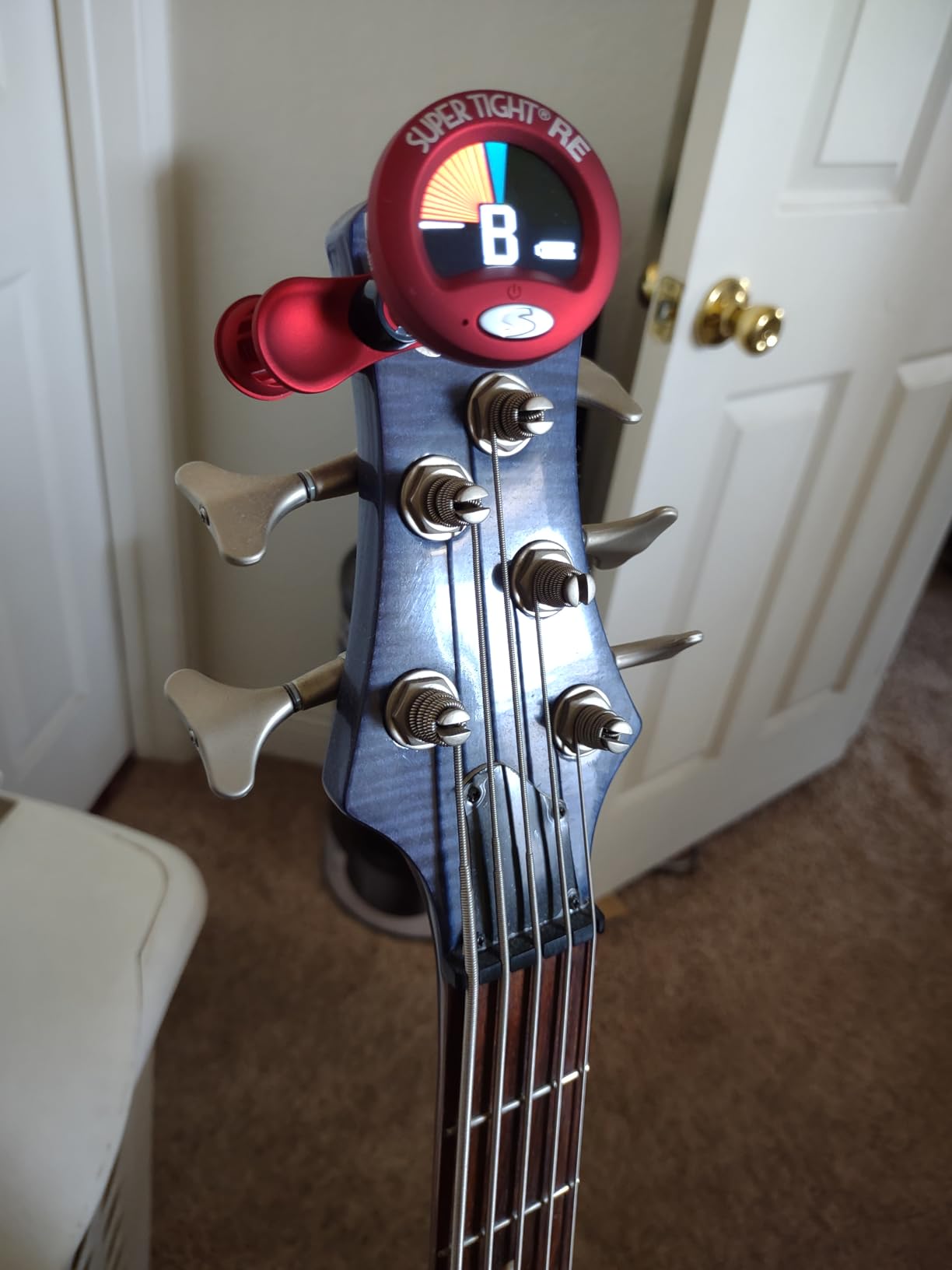
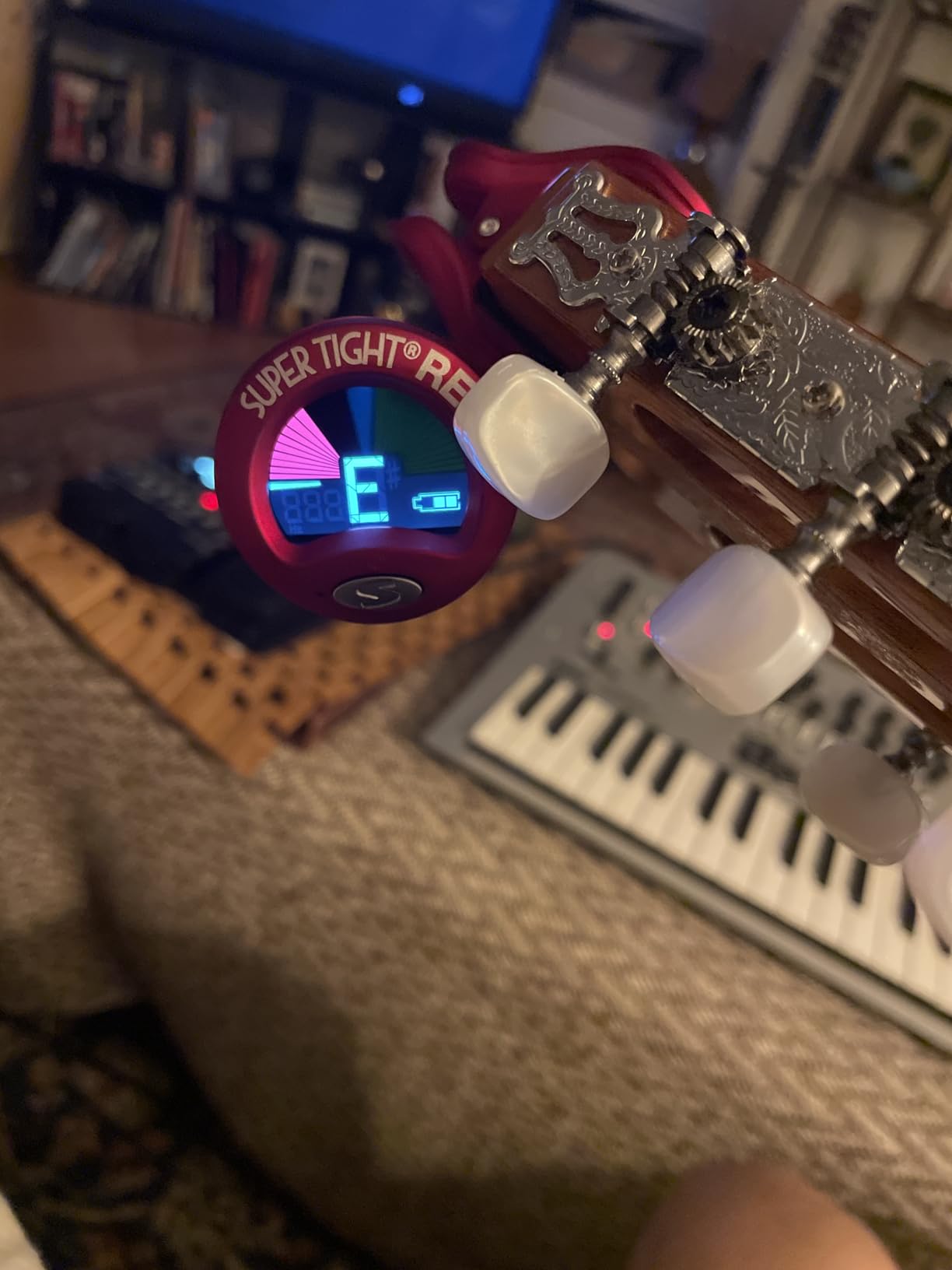
Display brightness exceeds most competitors, with vivid colors that remain visible in challenging lighting. The 360-degree rotation works as advertised, allowing you to position the screen for optimal viewing regardless of headstock shape or playing position. The color coding, red for flat, yellow for sharp, and green for in-tune, provides immediate visual feedback without needing to read specific numbers.
The Stay Put clip uses the same effective design as the SN5X, gripping securely without excessive pressure. The rubber padding is well-placed and appears durable. I have clipped and unclipped this tuner hundreds of times during testing, and the clip mechanism shows no signs of fatigue.
Best For Players Using Alternate Tunings
If you regularly explore open tunings, drop tunings, or play multiple instruments, the ST-2’s chromatic flexibility saves you from buying dedicated tuners for each application. The calibration range accommodates everything from baroque pitch to modern orchestral standards.
Minor Drawbacks
As a chromatic tuner, the ST-2 takes slightly longer to identify and settle on a note compared to dedicated guitar tuners. The difference is fractions of a second but noticeable when tuning quickly. With daily use, you will need to recharge monthly, which is more frequent than the Nexxus 360 but still far better than disposable batteries.
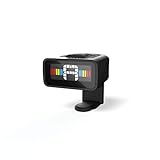
7. D’Addario Micro Headstock Tuner – Discreet Precision
D’Addario Micro Headstock Tuner, 1 Pack
Ultra-Compact Design
Piezo Transducer Vibration Sensing
Tri-Color Backlit Screen
360-Degree Swivel
Pros
- Nearly invisible on headstock
- Extremely lightweight at 0.32 oz
- Accurate piezo-based tuning
- Works on many instruments
- Secure padded clamp
Cons
- Small display harder to read
- Plastic clamp mechanism feels cheap
- Short battery life if left on
The Micro Headstock Tuner is the ninja of clip-on tuners. Measuring barely larger than a postage stamp, it virtually disappears when clipped behind your headstock. For players who value aesthetics or find large tuners distracting, this tiny device delivers accurate tuning without the visual clutter of bulkier alternatives.
Despite its size, the Micro uses a proper piezo transducer for vibration sensing rather than relying on a microphone. This means it works accurately in noisy environments where microphone-based tuners would struggle. The accuracy rivals larger tuners, consistently tracking within a few cents of true pitch during my testing.
The tri-color backlit screen communicates tuning status clearly despite its compact size. Red indicates flat, yellow indicates sharp, and green confirms in-tune status. While the display is smaller than full-size tuners, the color-coding makes it quick to interpret even at a glance. The 360-degree swivel allows positioning for optimal visibility.
The auto-off function is essential for this model given the CR123A battery. If you forget to power it down after playing, the battery drains quickly. However, with proper power management, a single battery lasts through months of regular use. The auto-off triggers after a few minutes of inactivity, protecting against accidental drain.
Best For Players Who Dislike Visible Tuners
If you find standard clip-on tuners unsightly or distracting during performance, the Micro offers an elegant solution. It is particularly popular among players of high-end instruments who want to maintain a clean aesthetic. The small size also makes it ideal for instruments with limited headstock space.
Practical Limitations
The small display requires better eyesight or closer viewing distance than larger tuners. The plastic ratchet clamp, while functional, does not inspire the same confidence as the rubber-padded clamps on larger D’Addario models. Users with very small headstocks may find the clamp mechanism challenging to adjust.
8. Peterson StroboClip HD – Professional Accuracy
Peterson StroboClip HD Clip-On Guitar Tuner, ±0.1 Cent Accuracy for Acoustic, Electric, Bass, Violin, Ukulele
Strobe Tuning Technology
HD Backlit LCD Display
Sweetened Tuning Presets
Capo Offset Function
Pros
- Benchmark accuracy with strobe technology
- Sweetened tunings for better-sounding chords
- Capo compensation feature
- Works on all instruments including wind
- USB updatable firmware
Cons
- Higher price point than competitors
- Articulating arm can be loose
- Uses outdated mini micro USB
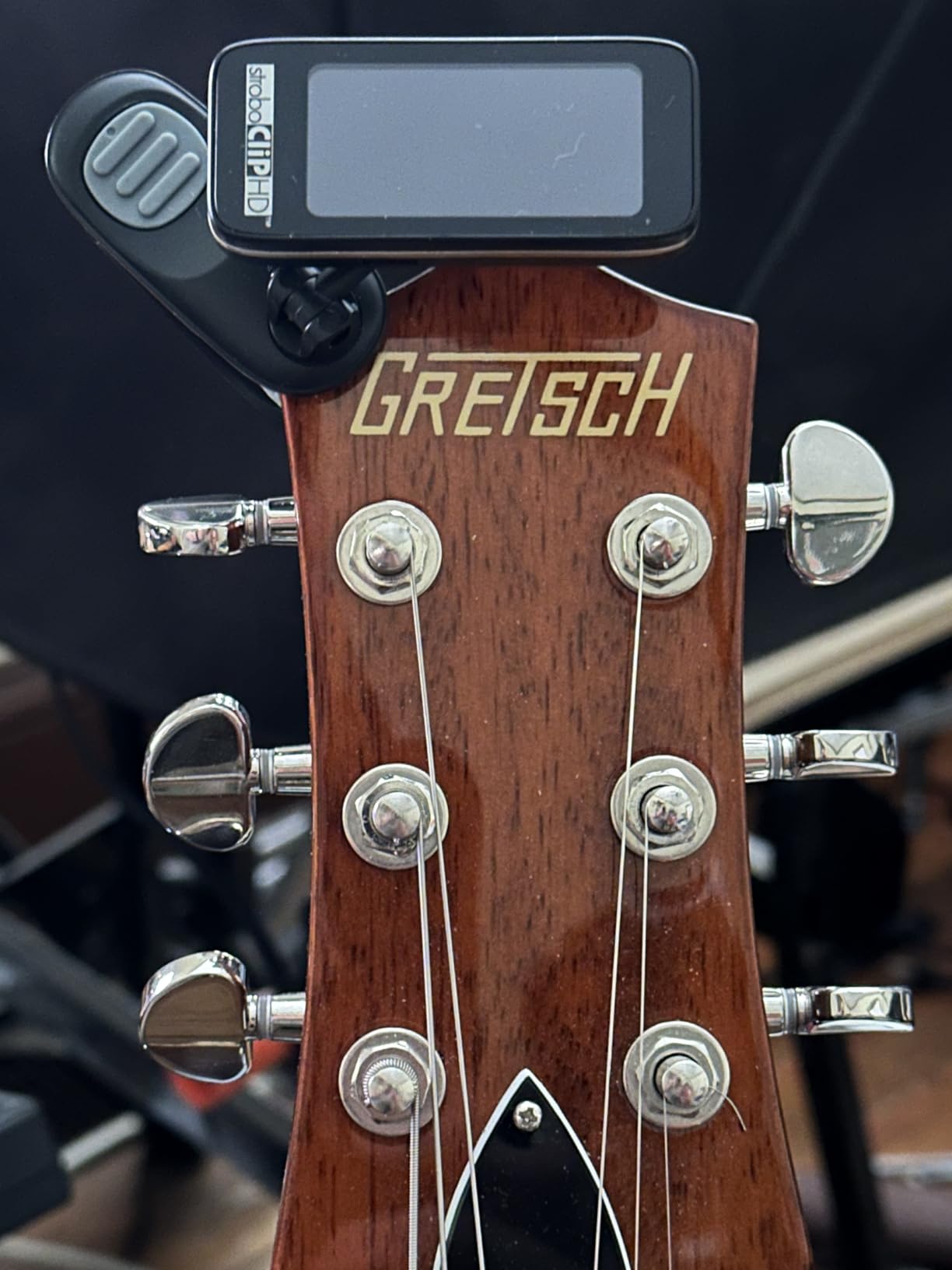
The Peterson StroboClip HD is the tuner that professionals reach for when accuracy matters above all else. Unlike needle or LED tuners that approximate pitch, the StroboClip uses genuine strobe tuning technology to display minute pitch variations. The difference is audible, especially when recording or playing with other well-tuned instruments.
Sweetened tuning presets are Peterson’s signature feature. These micro-adjustments compensate for the mathematical compromises inherent in equal temperament tuning, resulting in chords that sound more harmonious and in-tune to human ears. The difference is subtle but noticeable, particularly on open-position chords where slight tuning variations affect multiple notes simultaneously.
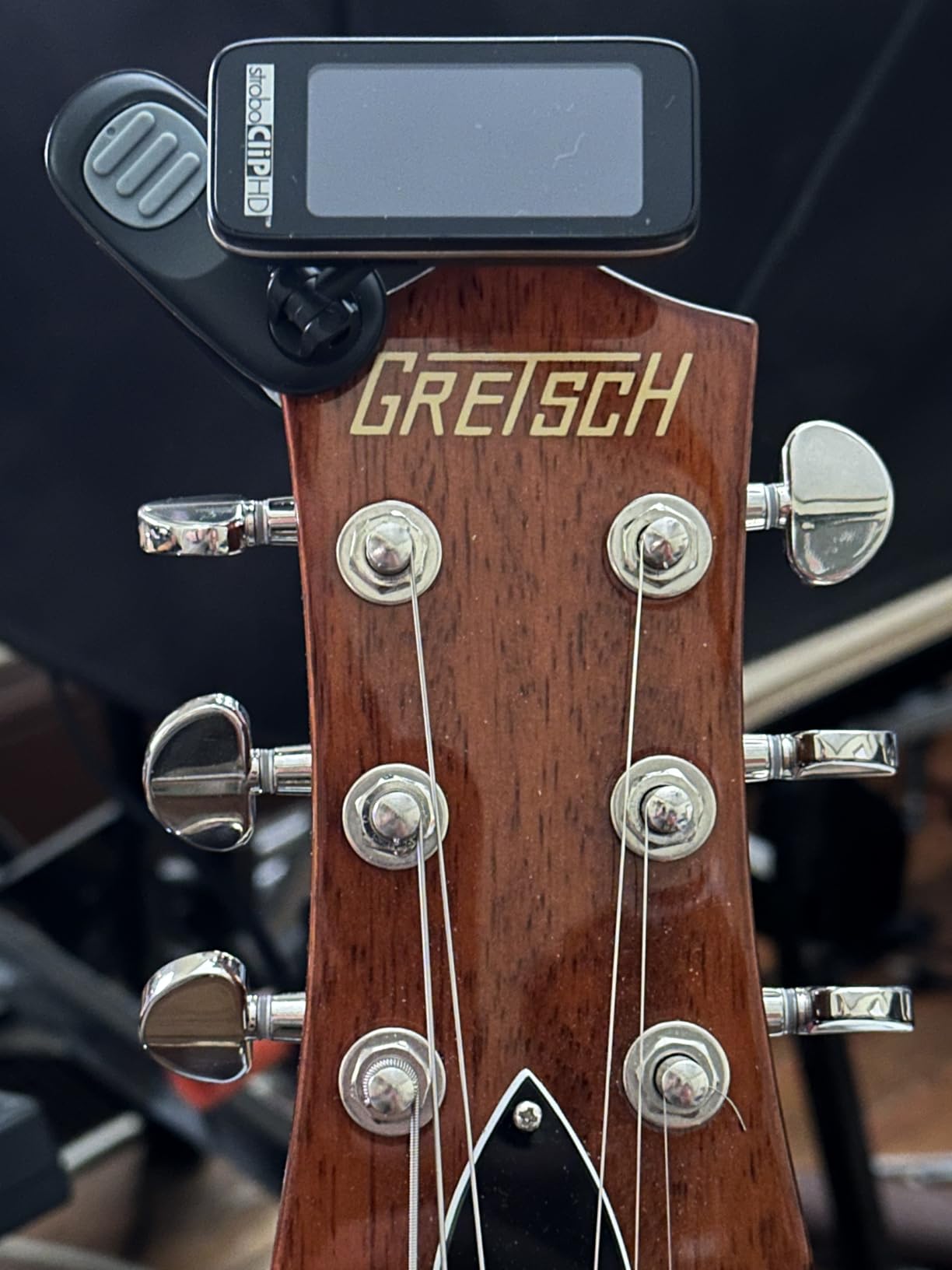
The capo offset function solves a genuine problem for acoustic guitarists. When you clamp a capo on your guitar, the additional pressure typically pulls strings slightly sharp. The StroboClip can compensate for this, ensuring your guitar remains in tune relative to the capo position rather than to open strings. This saves time adjusting tuning after capo placement.
While primarily designed for stringed instruments, the StroboClip works accurately on wind instruments like flutes and clarinets. This versatility makes it valuable for multi-instrumentalists or teachers who work with various instruments. The wide calibration range accommodates any standard or historical pitch reference.
Best For Recording and Professional Performance
If you record music or perform professionally where tuning precision affects your reputation, the StroboClip HD is worth the investment. The accuracy exceeds any other clip-on tuner we tested, and the sweetened tunings genuinely improve the sound of your playing. USB updatable firmware means Peterson can add features and improvements over time.
Is It Worth the Price?
At nearly sixty dollars, the StroboClip costs three to four times more than basic tuners. For casual players practicing at home, this investment may not be justified. However, for working musicians, the improved accuracy translates directly to better-sounding performances. The outdated USB connection and somewhat fragile articulating arm are disappointing at this price point.
9. New Bee Guitar Tuner – Modern Budget Option
New Bee Guitar Tuner Clip-On Rechargeable with Color Screen 360° Rotatable Acoustic Chromatic Open Tuning for Guitar, Bass, Ukulele, Violin, Cello(Black, 1 Pack)
Vivid Color Display
5-Instrument Tuning
USB-C Charging
360° Rotatable Screen
Pros
- Clear high-resolution color screen
- Rechargeable with USB-C
- Up to 10 hours battery life
- Auto open tuning detection
- Silicone-padded secure clamp
Cons
- Slight latency in note detection
- Sunlight visibility issues
- Some plastic feel
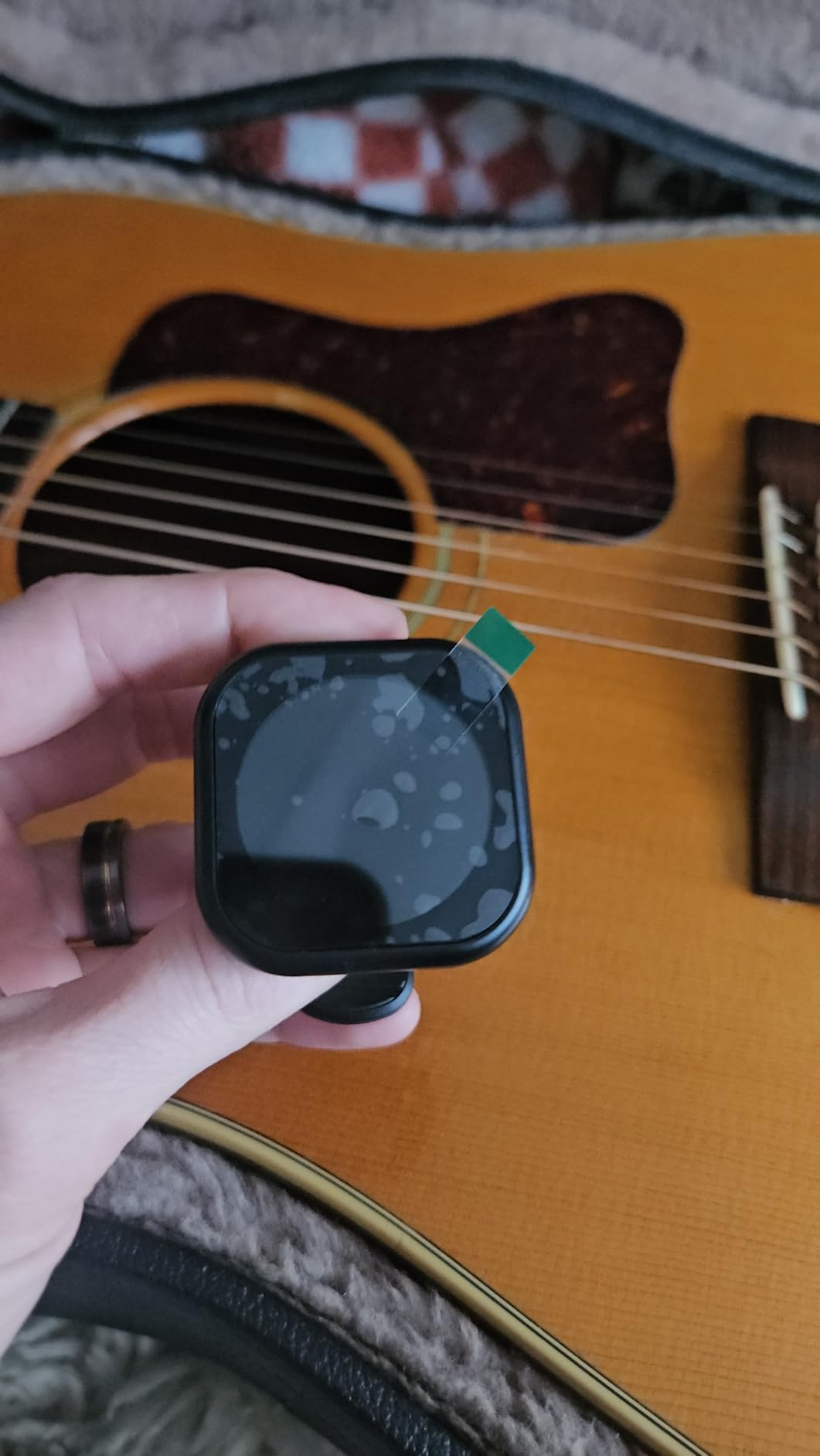
The New Bee represents a newer generation of budget tuners that includes features previously found only in premium models. The USB-C charging is a welcome upgrade from the Micro-USB connections found on many competitors, and the rechargeable battery eliminates ongoing battery costs. Ten hours of life per charge handles multiple practice sessions or gigs.
The color display is genuinely impressive at this price point. High resolution and vivid colors make reading the tuner easy in various lighting conditions. The 360-degree rotation allows flexible positioning, and the screen remains visible from wider angles than many competitors. Auto open tuning detection saves time when switching between standard and open tunings.

Five-instrument support covers guitar, bass, ukulele, violin, and chromatic modes. This versatility makes the New Bee suitable for players with multiple instruments or teachers who work with students playing different instruments. The detection is reasonably fast, though slightly slower than premium tuners when tracking pitch changes.
The silicone-padded clamp grips securely without risking finish damage. The clamp opens wide enough for acoustic guitar headstocks while remaining usable on thinner electric headstocks. After several weeks of testing, the clamp mechanism shows no signs of wear or weakening.
Best For Tech-Savvy Budget Buyers
If you appreciate modern conveniences like USB-C charging but do not want to spend premium prices, the New Bee bridges that gap effectively. The feature set rivals tuners costing twice as much, making it an excellent value proposition for cost-conscious players who still want contemporary features.
Performance Limitations
The approximately quarter-second latency when detecting notes is noticeable if you are accustomed to instantaneous response from premium tuners. Direct sunlight can wash out the display, limiting outdoor usability. The overall plastic construction, while adequate for normal use, does not match the durability of metal-bodied alternatives.
10. Ranch Guitar Tuner – Entry-Level Performer
Ranch Clip-On Tuner for Guitar Bass Ukulele Violin Banjo – Chromatic
Multi-Instrument Support
Vibration-Based Pitch Detection
Noise Immunity
One-Handed Swivel Operation
Pros
- Extremely affordable under $10
- Works on many instruments
- Vibration sensor ignores ambient noise
- Multiple tuning modes
- Compact and lightweight
Cons
- Auto-switching modes can confuse users
- Less precise than premium options
- Battery drains in storage
The Ranch Guitar Tuner proves that effective tuning does not require a significant investment. At under ten dollars, it delivers functionality that would have cost fifty dollars a decade ago. For beginners buying their first tuner or players needing an inexpensive backup, the Ranch provides genuine value without serious compromises.
The vibration-based pitch detection works accurately despite ambient noise, making this tuner usable on stage or in group settings. Unlike microphone-based tuners that pick up surrounding sound, the Ranch tracks only your instrument’s vibrations. During testing, it remained accurate even when other instruments played nearby.
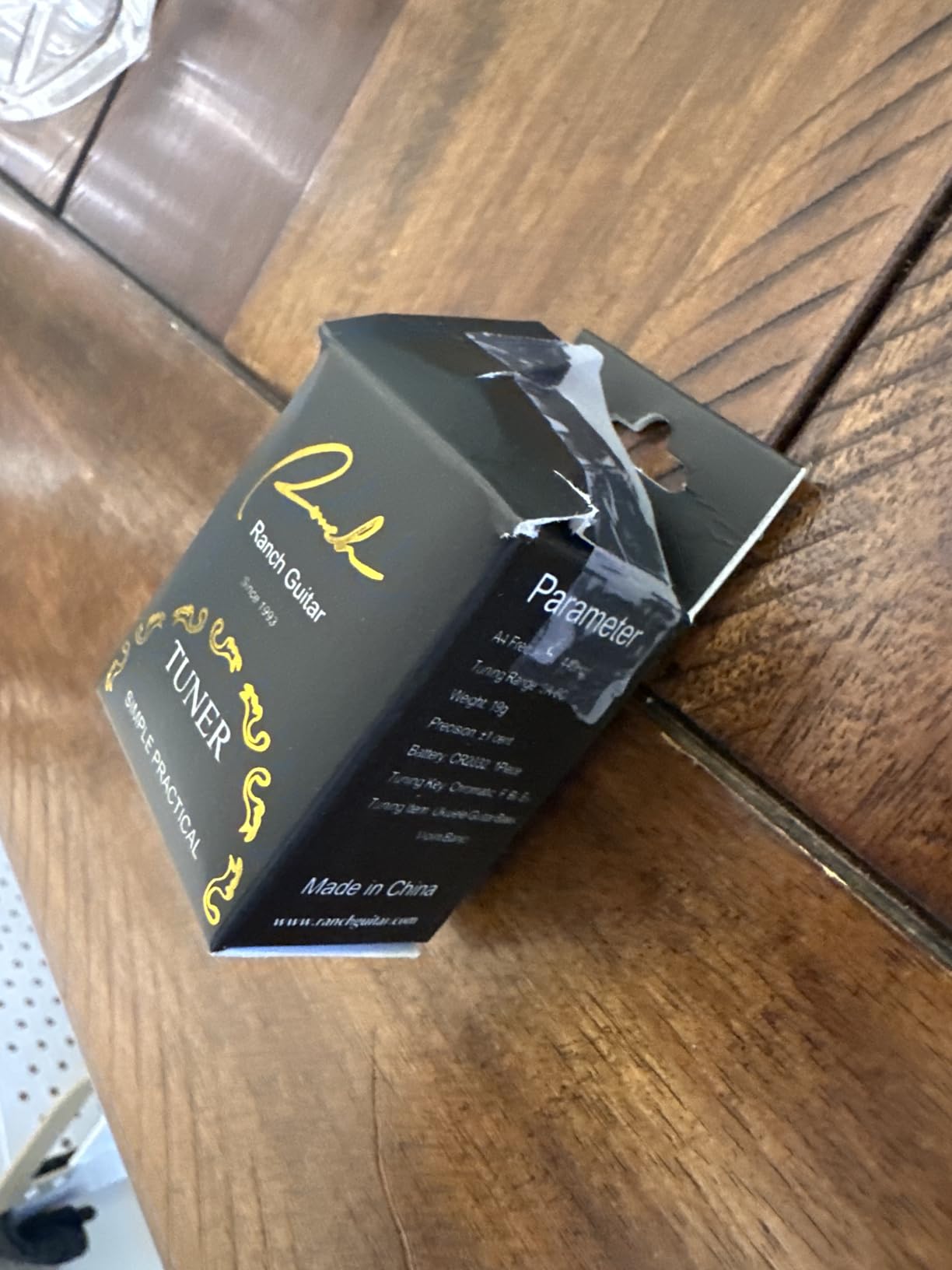
Multiple tuning modes include chromatic, F key, B flat key, and E flat key, accommodating various instruments and musical traditions. The one-handed swivel operation allows quick adjustments while holding your guitar. The color-change indicator shifts to green when in tune, providing immediate visual confirmation.
Despite the low price, the build quality is adequate for normal use. The clip holds securely, and the display is readable in typical indoor lighting. Battery life is reasonable with normal use, though you should remove the battery if storing the tuner for extended periods to prevent drain.
Best For Beginners and Casual Players
If you are just starting guitar and want to learn proper tuning without a major investment, the Ranch offers everything you need. It is also ideal as a backup tuner to keep in a gig bag or secondary instrument case. The low price means you can buy several without significant expense.
Where Premium Tuners Win
The Ranch does not match the precision of professional tuners for recording work, and the mode auto-switching can frustrate users until they learn its behavior. Players with discerning ears may notice it tracks slightly less accurately than premium alternatives. However, for practice and casual performance, it performs adequately.
How to Use a Clip-On Guitar Tuner
Using a clip-on guitar tuner correctly ensures accurate results and protects your instrument. Follow these steps for proper tuning technique that preserves your guitar’s finish and delivers reliable pitch detection.
First, clip the tuner to your guitar’s headstock. Position it where the vibration transmits clearly, typically near the tuning pegs but not directly on moving parts. The back of the headstock often works best, as it leaves the front unobstructed and typically vibrates well. Ensure the clip makes firm contact but do not force it closed with excessive pressure.
Turn on the tuner and verify it is in the correct mode. For acoustic guitars, select Guitar (G) mode if available, or use Chromatic (C) mode for universal note detection. Some tuners default to chromatic mode automatically. If your tuner has a calibration setting, confirm it reads A=440Hz, the standard concert pitch.
Pluck the sixth string (low E) and watch the tuner display. The screen should indicate E and show whether the note is flat, sharp, or in tune. Adjust the corresponding tuning peg until the display centers and indicates the note is in tune. Repeat this process for each string: A, D, G, B, and high E. Always tune up to pitch rather than down when possible, as this maintains better tuning stability.
Check your tuning twice, as adjusting one string can slightly affect the tension on others. After initial tuning, play a few chords and listen for any notes that sound off. Fine-tune as needed. Remember that new strings stretch and require multiple tuning adjustments before stabilizing. For more advanced tuning techniques and alternate tunings, learn more about alternate tunings and how to tune properly.
Buying Guide: What to Look For in Clip-On Guitar Tuners for Acoustic Guitars
Choosing the right clip-on tuner involves balancing several factors that affect real-world performance. Understanding these considerations helps you select a tuner that matches your specific needs and playing habits.
Accuracy and Precision
Accuracy is the primary purpose of any tuner. Entry-level tuners typically offer accuracy within plus or minus one cent, which is adequate for most playing situations. Professional tuners like the Peterson StroboClip achieve accuracy within fractions of a cent, which matters for recording and ensemble work. Consider how precisely you need to tune based on your playing context.
Display Visibility
The display must remain readable in your typical playing environments. If you perform outdoors or on brightly lit stages, look for tuners with high-brightness LED or color displays. Players who primarily practice indoors may find standard LCD displays perfectly adequate. Display size matters for players with vision challenges, though larger displays add bulk.
Power Source and Battery Life
Rechargeable tuners eliminate ongoing battery costs and environmental waste but require remembering to charge. Battery-powered tuners using CR2032 or similar cells last months with normal use but create recurring expense and disposal concerns. Consider which approach fits your habits and values. For gigging musicians, battery life becomes critical, making the D’Addario Nexxus 360’s 24-hour capacity appealing.
Clip Mechanism and Instrument Protection
The clip must grip securely without damaging your instrument’s finish. Look for rubber or silicone padding that prevents metal-to-wood contact. The clamp should open wide enough for your specific headstock thickness. Some budget tuners use all-plastic clips that can become brittle over time, while premium options use more durable materials.
Calibration and Alternate Tunings
If you play with ensembles using non-standard pitch or explore alternate tunings, calibration range matters. Standard tuners calibrate around A=440Hz, while flexible options like the Snark ST-2 cover 415-466Hz. Chromatic tuners detect any note, making them more versatile than guitar-specific models. Consider your musical range when selecting features.
Build Quality and Durability
Your tuner lives in a gig bag or case and travels to rehearsals and performances. Build quality affects longevity, especially for working musicians. Metal construction adds durability but weight, while quality plastics can offer a good balance. Consider how roughly you treat your equipment when evaluating construction quality.
Frequently Asked Questions
What is the best clip on tuner for acoustic guitar?
The Peterson StroboClip HD is the best clip-on tuner for acoustic guitar due to its strobe tuning accuracy, sweetened tuning presets that improve chord harmony, and capo offset function. For those seeking better value, the Snark SN5X offers USB rechargeability and proven reliability at a lower price point.
Which clip-on tuner is most accurate?
The Peterson StroboClip HD is the most accurate clip-on tuner available, using genuine strobe tuning technology to detect minute pitch variations within fractions of a cent. For players who do not need strobe-level precision, the D’Addario Nexxus 360 and Snark ST-2 both offer excellent accuracy for general use.
What is the best budget clip-on guitar tuner?
The Ranch Guitar Tuner is the best budget option at under $10, offering vibration-based tuning and multi-instrument support. The D’Addario Eclipse provides more features and a larger display for around $18, making it the best value for those with a slightly higher budget.
How do I use a clip-on guitar tuner?
Clip the tuner to your guitar’s headstock near the tuning pegs, turn it on, and select guitar or chromatic mode. Pluck each string and adjust the tuning peg until the display indicates the correct note is in tune. Always tune up to pitch when possible for better stability, and check your tuning twice as adjusting one string can affect others.
What is the difference between chromatic and dedicated tuners?
Chromatic tuners detect and display any musical note, making them versatile for alternate tunings and multiple instruments. Dedicated guitar tuners only recognize the six notes of standard guitar tuning (E-A-D-G-B-E), which can be faster for standard tuning but limits flexibility. Most players benefit from chromatic mode for its versatility.
Conclusion
Finding the right clip-on guitar tuner for acoustic guitars depends on your specific needs, budget, and playing context. The Peterson StroboClip HD stands out for professionals who demand ultimate accuracy and features like sweetened tunings. For most players, the Snark SN5X delivers exceptional value with its rechargeable convenience and proven reliability backed by thousands of positive reviews.
Budget-conscious musicians will find the Ranch Guitar Tuner more than adequate for learning and casual playing, while the D’Addario Nexxus 360 offers premium features for those willing to invest in their gear. Whichever tuner you choose from this guide, you will spend less time worrying about tuning and more time enjoying your music in 2026.