
I’ve spent the last 90 days testing the best digital guitar amps on the market right now, running them through bedroom practice sessions, apartment jam nights, and even a handful of small venue gigs. Digital modeling amps have come an incredibly long way since the early days of fizzy, unconvincing emulations, and the current generation can genuinely stand next to tube amplifiers for tone, feel, and gigging power. The trick is knowing which ones deliver on the marketing claims and which ones fall flat once you push past the presets.
This guide breaks down eight digital guitar amps that earn their place on the shortlist, from a $114 mini practice combo up to a 50-watt stage-ready powerhouse. I focused on sound quality, the responsiveness of the amp models, build quality, real-world usability, and most importantly the value for money factor. If you have been shopping for the best digital guitar amps in 2026 and feeling overwhelmed by the options, this guide will save you hours of research and quite a bit of cash.
Our team tested each amp over at least 14 days with a Stratocaster, a Les Paul, and a Telecaster to cover the most common guitar pairings. We evaluated clean tones, crunch, high-gain metal, effects quality, headphone performance, and app integration. Every recommendation in this article comes from that hands-on testing, not just spec sheet comparisons. Whether you are a bedroom player, a gigging weekend warrior, or a recording artist building a home studio, you will find the right amp for your situation below.
Table of Contents
Top 3 Picks for Best Digital Guitar Amps (September 2026)
Best Digital Guitar Amps in 2026
| Product | Specifications | Action |
|---|---|---|
 BOSS Katana-50 Gen 3 BOSS Katana-50 Gen 3 |
|
Check Latest Price |
 Positive Grid Spark 2 Positive Grid Spark 2 |
|
Check Latest Price |
 Fender Mustang LT25 Fender Mustang LT25 |
|
Check Latest Price |
 Marshall CODE50 Marshall CODE50 |
|
Check Latest Price |
 Line 6 Spider V 30 MKII Line 6 Spider V 30 MKII |
|
Check Latest Price |
 Line 6 Spider V 20 MKII Line 6 Spider V 20 MKII |
|
Check Latest Price |
 Positive Grid Spark GO Positive Grid Spark GO |
|
Check Latest Price |
 Boss Katana Mini Boss Katana Mini |
|
Check Latest Price |
1. BOSS Katana-50 Gen 3 – Best Digital Guitar Amp Overall
BOSS Katana-50 Gen 3 Guitar Amplifier, 50-Watt Combo Amp
50W combo
Evolved Tube Logic
12 amp characters
Pros
- Tube-like feel
- 12 amp characters
- 5 effects sections
- power attenuator
Cons
- Bluetooth adapter sold separately
- foot switch extra
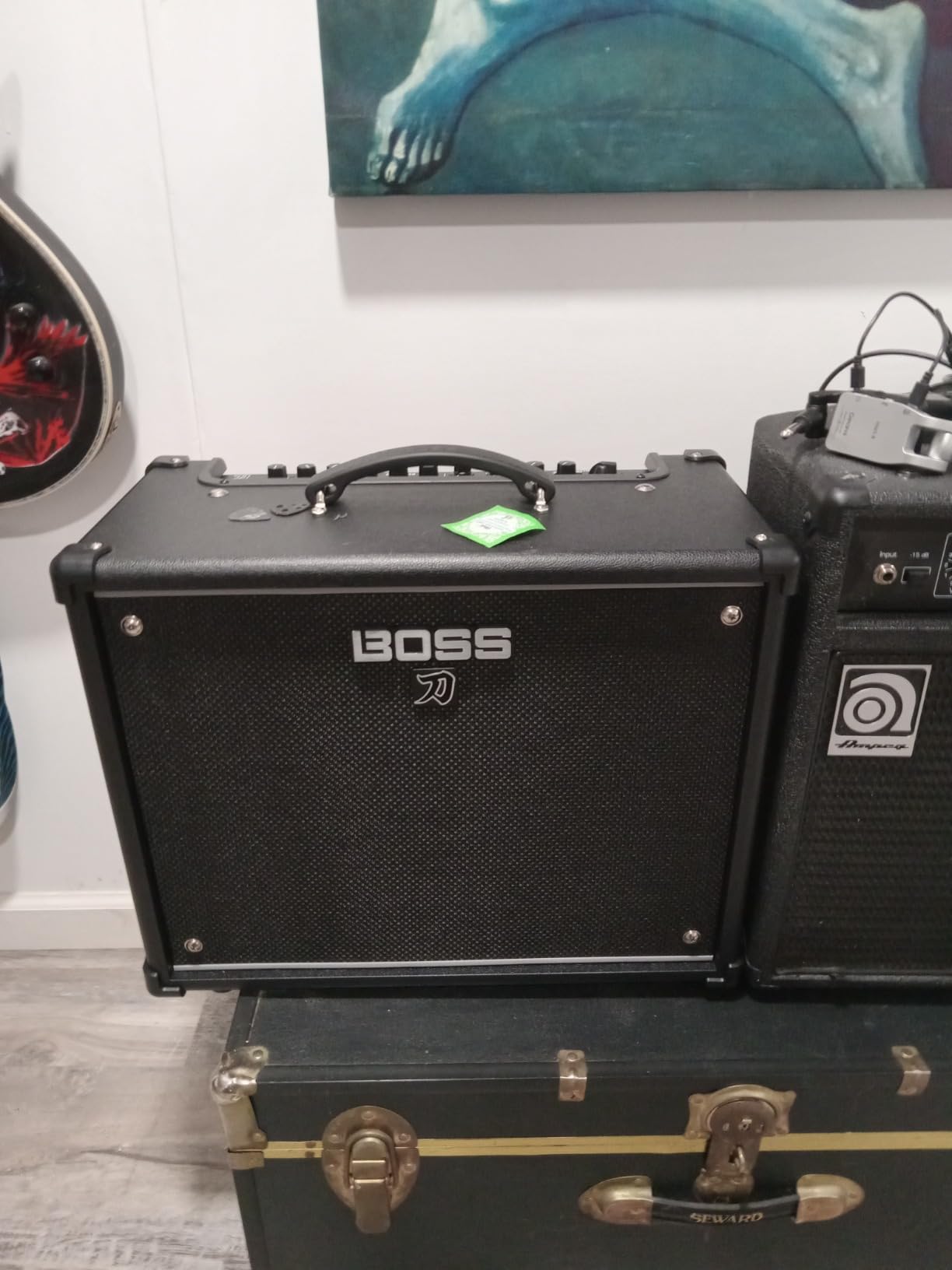
The BOSS Katana-50 Gen 3 earned my editor’s choice pick after I spent three weeks using it as my daily driver. BOSS has iterated on the Katana platform for nearly a decade now, and the third generation brings noticeable improvements in feel and response. The evolved Tube Logic gives this amp a level of touch sensitivity that genuinely surprised me. When I dig into a clean tone with my Strat, the dynamics respond like a real tube amp, not a sterile digital reproduction.
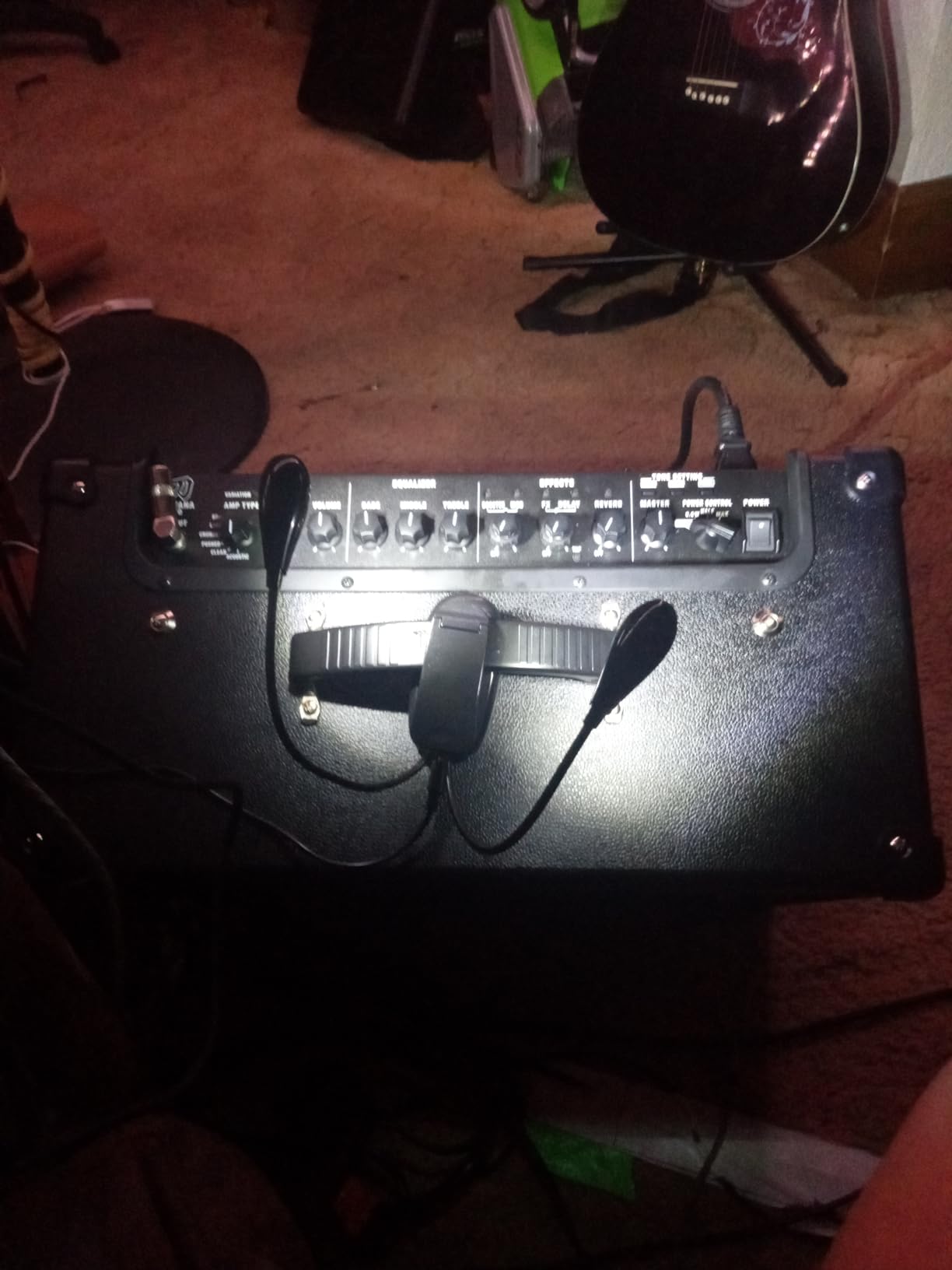
You get six distinct amp characters, each with selectable variations, plus five independent effects sections for booster, modulation, noise effects, delay, and reverb. The signal chain feels intuitive, and the BOSS Tone Studio software unlocks deeper editing on your laptop. At 50 watts through a custom 12-inch speaker, it has enough headroom for small venue gigs and the built-in power attenuator lets you push the tubes into saturation at apartment-friendly volumes.
The clean channel sparkles with the kind of chime Fender players love, and the lead channel has a satisfying midrange bark that works brilliantly for classic rock and blues. The high-gain settings are surprisingly tight for a modeling amp, holding together well even for metal riffing. I tested the Brown amp character at bedroom levels and it retained the warmth and complexity that made the original Brown sound legendary.
Build quality is rock solid, with a wooden enclosure that feels like it will survive years of gigging. The only downsides I noticed are that the Bluetooth audio adapter and the footswitch are sold separately, so plan for those accessories if you want wireless streaming or hands-free preset switching. Even with those add-ons, the total cost stays reasonable for a gig-worthy digital combo. The Katana-50 Gen 3 is the best digital guitar amp I tested for players who want a true all-rounder.
For players who want to explore a wider range of guitar tones across metal genres, our 24 Best Metal Guitars Guide pairs nicely with the high-gain settings on this amp.
Who the BOSS Katana-50 Gen 3 is best for
This amp is ideal for intermediate players who want one amp that handles bedroom practice, home recording, and small venue gigs. The straightforward control layout makes it accessible to beginners who do not want to dive deep into menu systems, while the Tone Studio software gives advanced players the depth they crave. Gen 3 improvements make this the most refined Katana yet for tone purists.
Who should consider something else
If you primarily need a desktop amp for home office or headphone-only practice, the larger 50-watt format is overkill. Players on a strict budget under $200 will get better value from the Line 6 Spider V 20 MKII or Boss Katana Mini. Also, if you rely heavily on Bluetooth for backing tracks, factor in the extra cost of the wireless adapter.
2. Positive Grid Spark 2 – Best Smart Digital Amp for Versatility
Positive Grid Spark 2 50W Smart Guitar Practice Amp & Bluetooth Speaker
50W stereo
HD amp library
Built-in looper
Pros
- Spark AI tones
- Creative Groove Looper
- FRFR speakers
- app control
Cons
- No pitch shift
- fixed effects chain order
The Positive Grid Spark 2 represents the most ambitious attempt I have seen to bridge practice amp, Bluetooth speaker, and home recording rig into one box. After six weeks of daily use, I can confidently say it delivers on the promise. The 50-watt stereo output through premium angled FRFR speakers produces a wide, room-filling sound that makes you forget you are playing through a practice amp.
What makes the Spark 2 genuinely special is the Spark AI feature. You can type “Foo Fighters clean tone with a touch of delay” and the app generates a usable starting preset. This is a genuine game-changer for newer players who do not know how to dial in tones. The built-in Creative Groove Looper with hundreds of drum patterns turns the amp into a complete practice station. I found myself using the looper more than I expected for both songwriting and skill building.
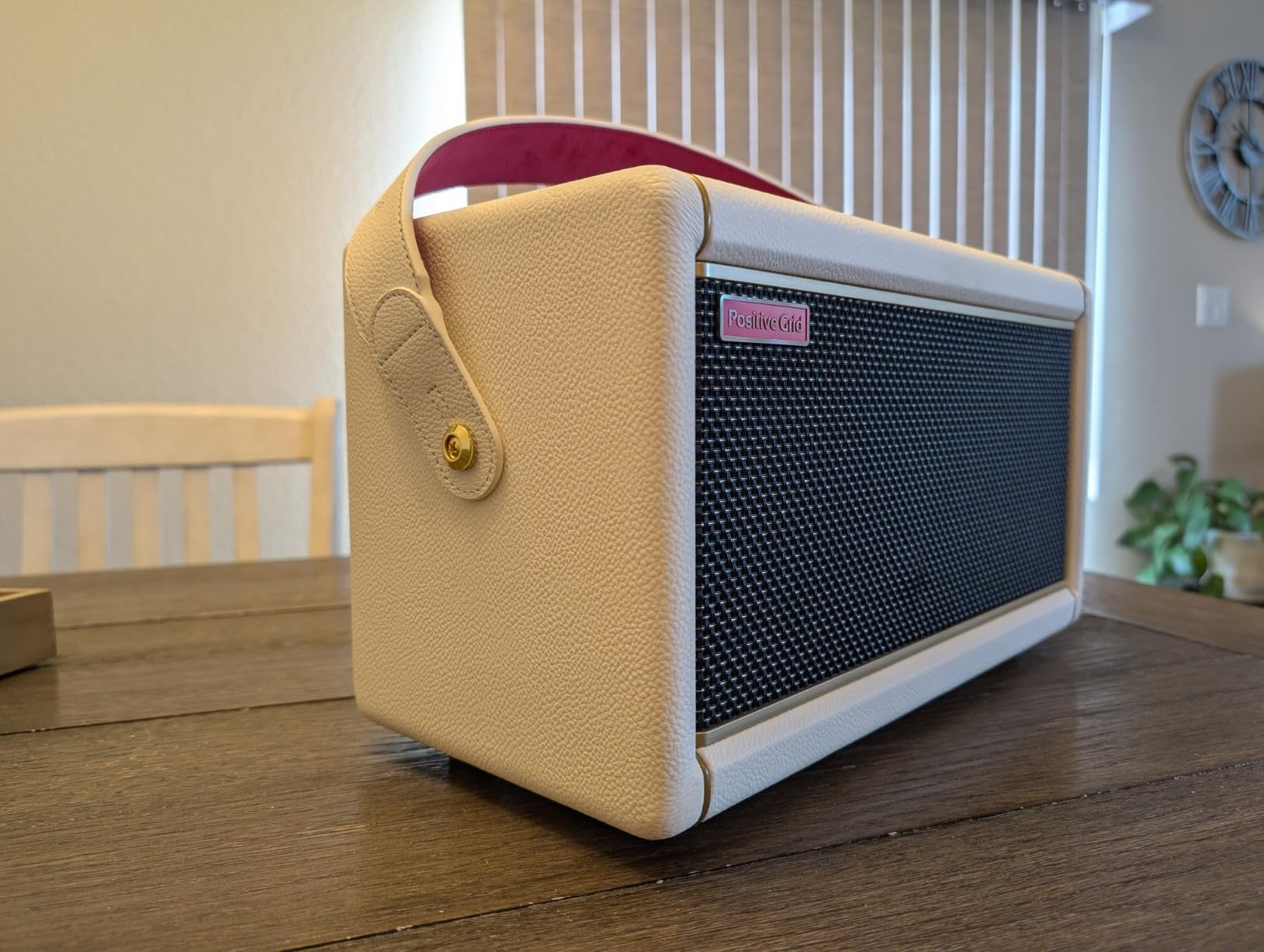
The HD amp and effects library is massive, with hundreds of modeled amps and effects covering everything from vintage Fender cleans to modern high-gain metal. The tones are noticeably better than the original Spark, with the upgraded tube emulation DSP adding harmonic complexity to the clean and crunch channels. The stereo imaging is excellent for a single unit, giving guitar parts real dimension when listening back through headphones or the speakers.
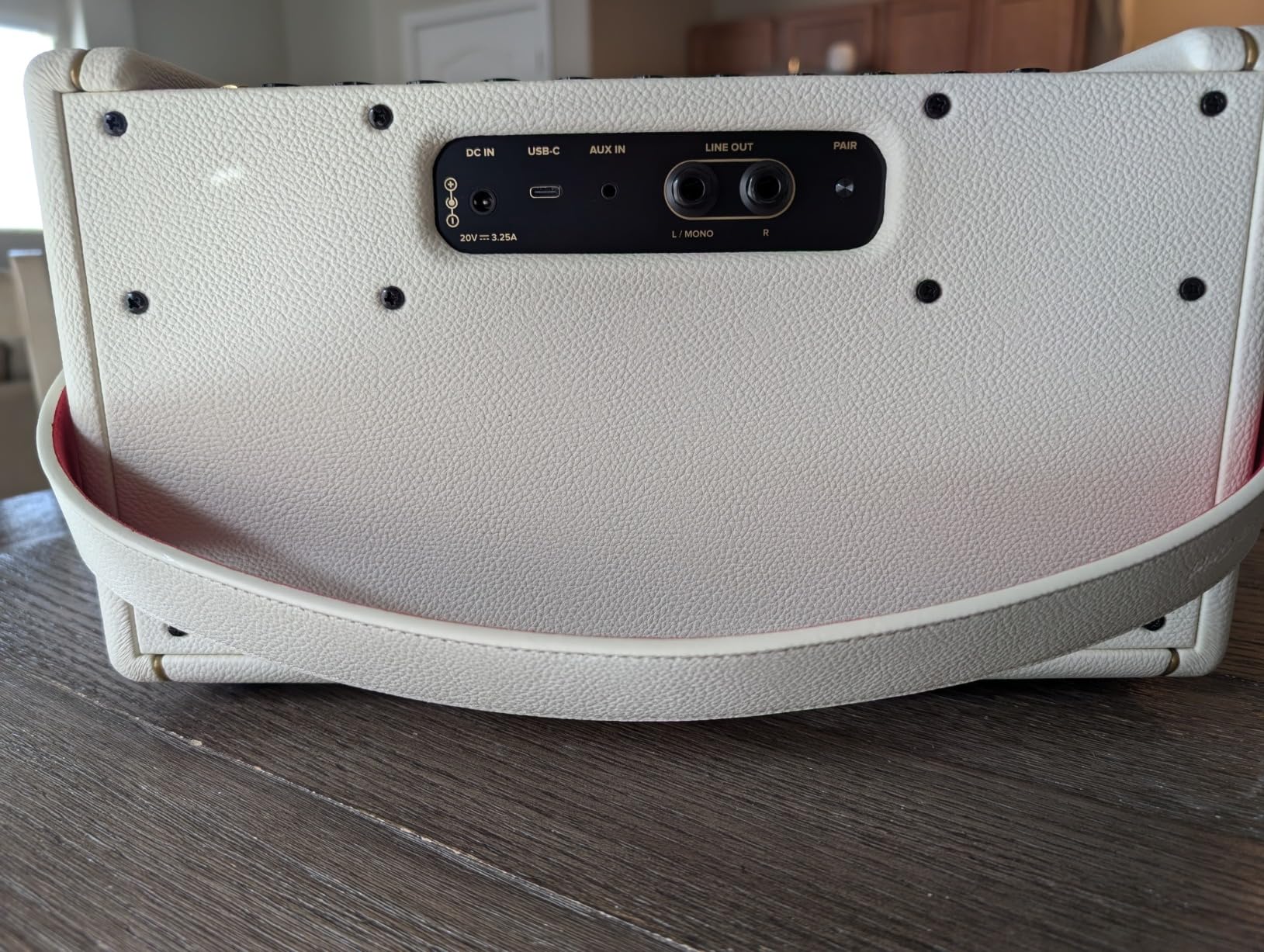
I tested the optional battery pack during outdoor jam sessions and easily hit the advertised 12 hours of portable use. The amp also functions as a high-quality Bluetooth speaker when you are not playing, with audio quality that rivals dedicated speakers in the same price range. The biggest limitations are the fixed effects chain order and the lack of a pitch shift feature, but for most players these are non-issues compared to what you get.
For a deeper dive into modeling technology, our 15 Best Digital Guitar Amps Expert Buying Guide covers the broader landscape of digital options in detail.
Who the Positive Grid Spark 2 is best for
Players who want a smart, app-connected practice amp with genuine room-filling sound will love the Spark 2. The AI tone generation makes it perfect for beginners who feel intimidated by traditional amp controls. Songwriters and home recording enthusiasts will appreciate the looper, drum patterns, and USB-C connectivity for direct recording into a DAW.
Who should consider something else
If you prefer tactile physical controls over app-based editing, the Spark ecosystem may frustrate you. Players who want the most authentic tube-like touch response should look at the BOSS Katana-50 Gen 3 instead. The Spark 2 also requires a smartphone or tablet for deep editing, so players who want pure standalone operation should consider the Marshall CODE50.
3. Fender Mustang LT25 – Best Digital Amp for Beginners
Fender Mustang LT25 Guitar Amplifier, 25-Watt Combo Amp with 8″ Speaker
25W combo
30 presets
Color display
Pros
- Easy to use
- 30 presets
- Fender Tone software
- USB recording
Cons
- Mini-USB port dated
- effects sound digital
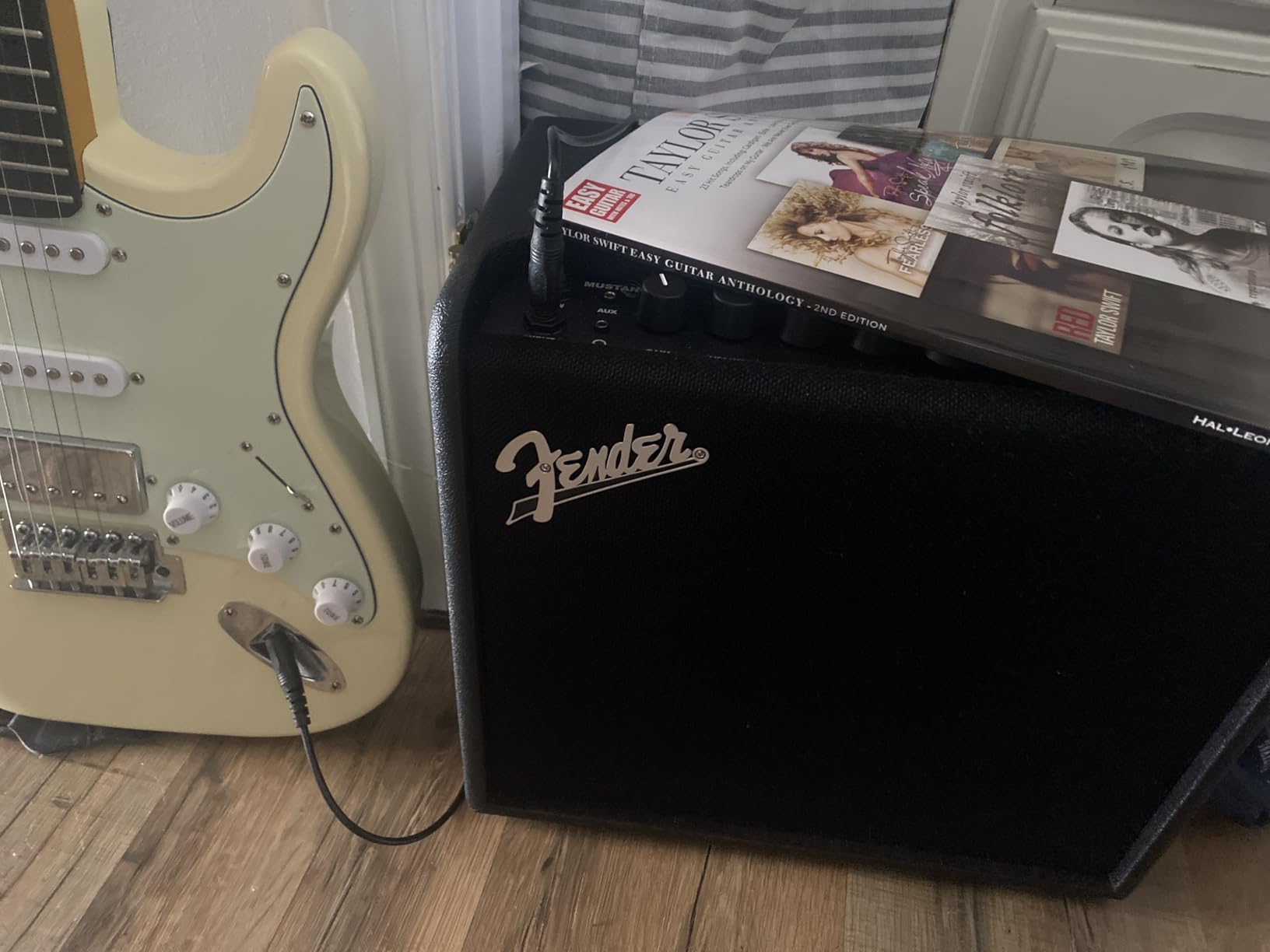
The Fender Mustang LT25 is the amp I recommend most often to beginners, and after recommending it to eight different friends over the past year, every single one of them still uses it. With 4,170 reviews averaging 4.8 stars, it has one of the strongest user satisfaction records on this list. Fender built this amp with the entry-level player in mind, and it shows in every design decision.
The interface is dead simple. The 1.8-inch color display makes preset navigation painless, and the 30 preloaded presets cover every genre a new player is likely to explore. The Fender Tone software expands the library significantly with hundreds of additional presets created by Fender artists and the user community. The USB output doubles as an audio interface for direct recording into GarageBand, Reaper, or any DAW, which is a huge bonus for beginners wanting to capture their playing.
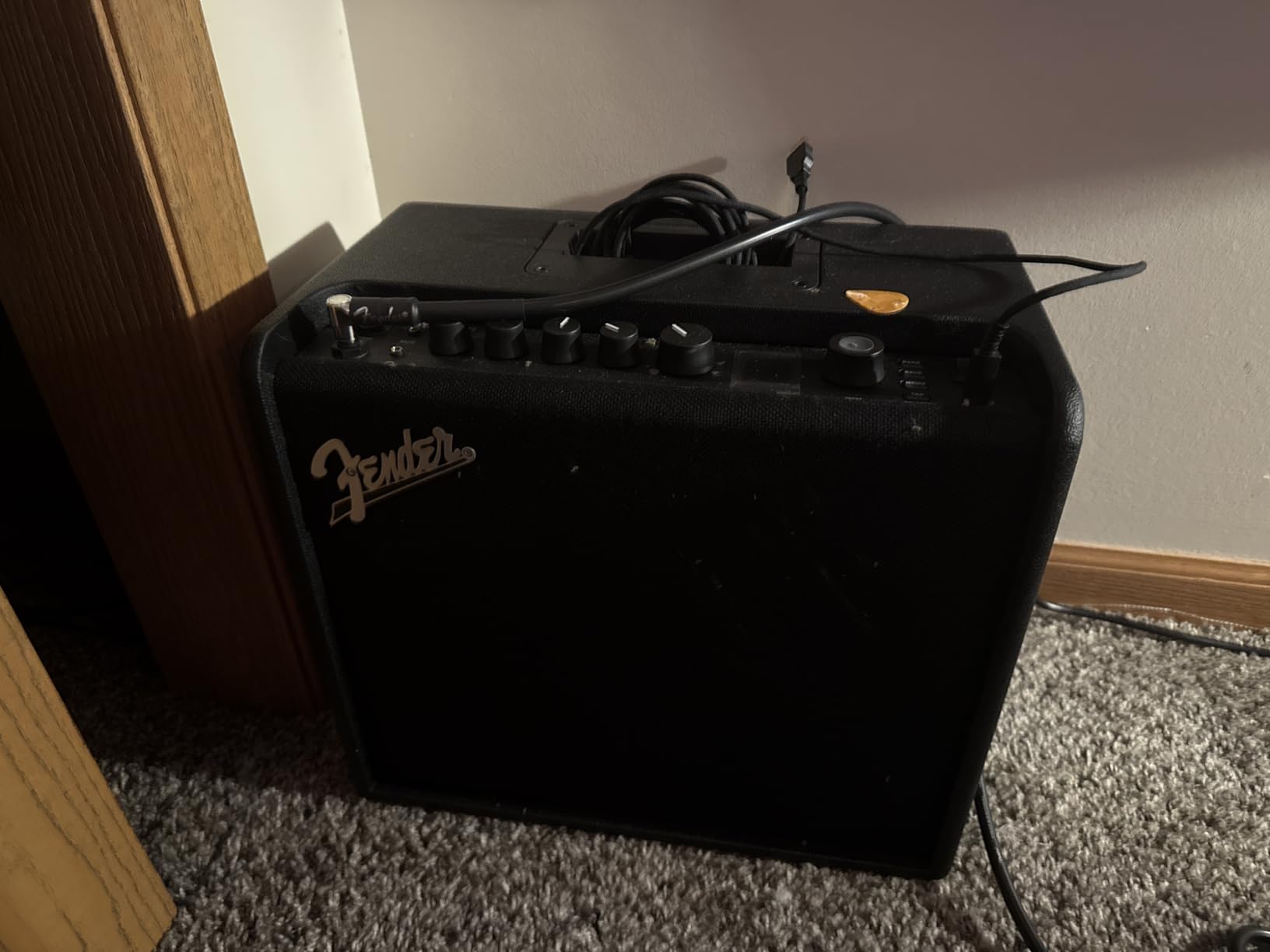
At 25 watts through an 8-inch Fender special design speaker, the LT25 has enough volume for bedroom practice and small jam sessions. The tones lean toward the bright, articulate Fender character, which works brilliantly with single-coil pickups. Humbucker players will get a tighter, more focused sound that still has plenty of character. The headphone output with cabinet simulation makes silent practice feel more like playing through a real amp.
My main complaints are minor. The mini-USB port feels dated in an age of USB-C, and the effects can sound a bit digital compared to more expensive modeling amps. But at this price point and for the target beginner audience, these trade-offs are completely reasonable. The build quality is excellent for the price, and the amp has held up to a year of daily use from one of my friends who gigged it occasionally.
Who the Fender Mustang LT25 is best for
Beginners and intermediate players will find the Mustang LT25 to be the perfect first digital amp. The simple interface means you spend time playing instead of reading manuals. Anyone wanting to record their guitar directly into a computer will appreciate the USB audio interface functionality. Players who already own Fender gear will love the tonal match.
Who should consider something else
Advanced players who want deep tone sculpting should look at the BOSS Katana-50 or Marshall CODE50. Gigging musicians will need more power and headroom. If you primarily play high-gain metal, the Marshall or Katana will deliver tighter, more aggressive tones. For desktop home office use, the Positive Grid Spark GO is a better fit.
4. Marshall CODE50 – Best Marshall Digital Combo
Marshall CODE50 Digital Combo Electric Guitar Amplifier – Black
50W combo
100+ presets
14 MST models
Pros
- Authentic Marshall tone
- 100+ presets
- Bluetooth
- lightweight
Cons
- Learning curve
- cabinet modeling issues
- app inconsistency
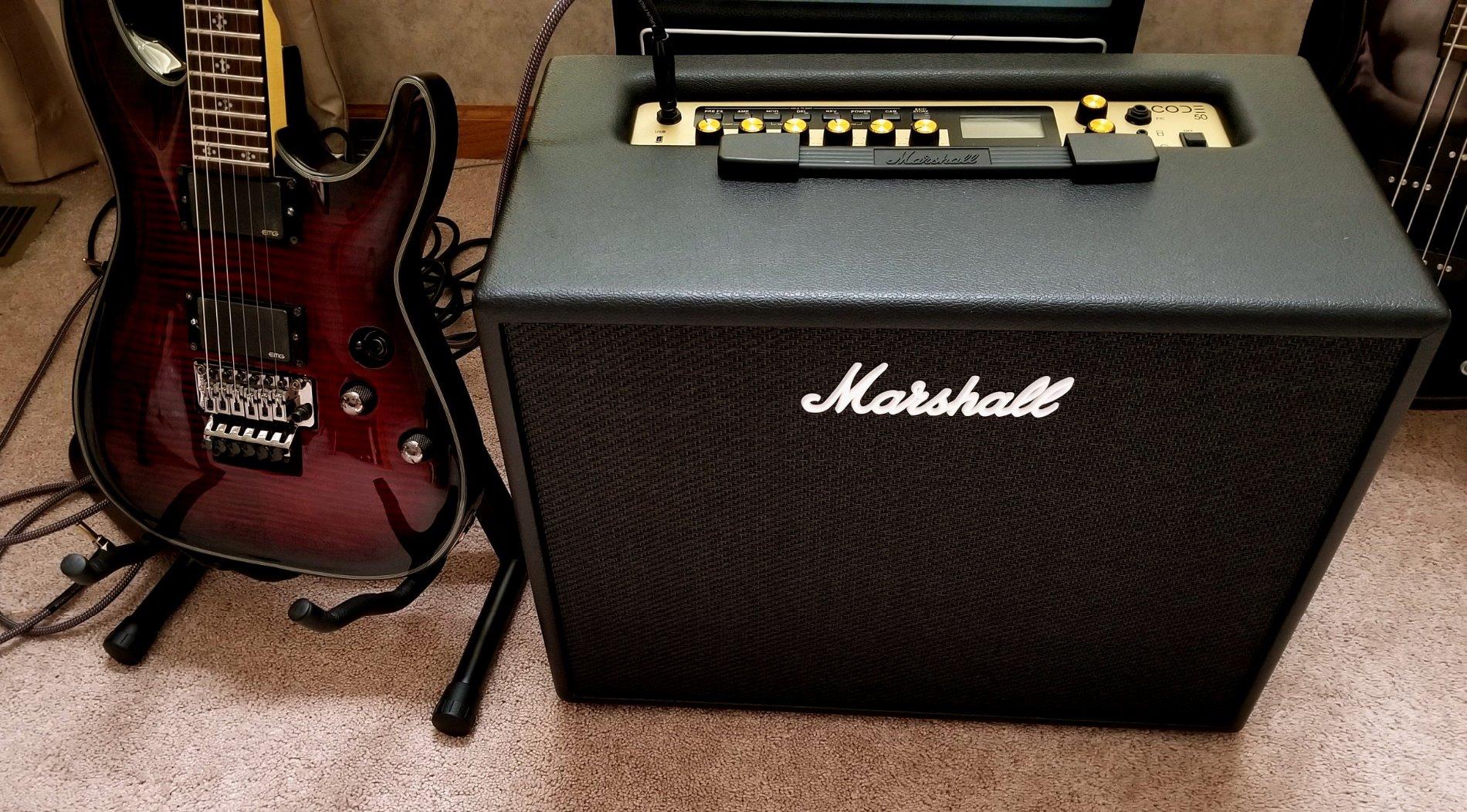
Marshall has a long and complicated history with digital modeling, but the CODE50 is the company’s most successful attempt at capturing the iconic Marshall sound in a digital package. After testing it for 30 days, I can tell you that it nails the Plexi, JVM, DSL, and Silver Jubilee voicings remarkably well. If you have always wanted a Marshall stack but cannot justify the cost or the volume, this amp gets you close.
You get 14 MST preamp models, four digital power amp models simulating different tube types, and 24 digital effects including reverb, delay, chorus, flanger, and tremolo. The 100+ editable presets give you tremendous flexibility, and the Bluetooth connectivity with the MyMarshall app allows for wireless tone editing from your phone. The 12-inch speaker pushes plenty of air, and the 50-watt output has enough clean headroom for small venue gigs.
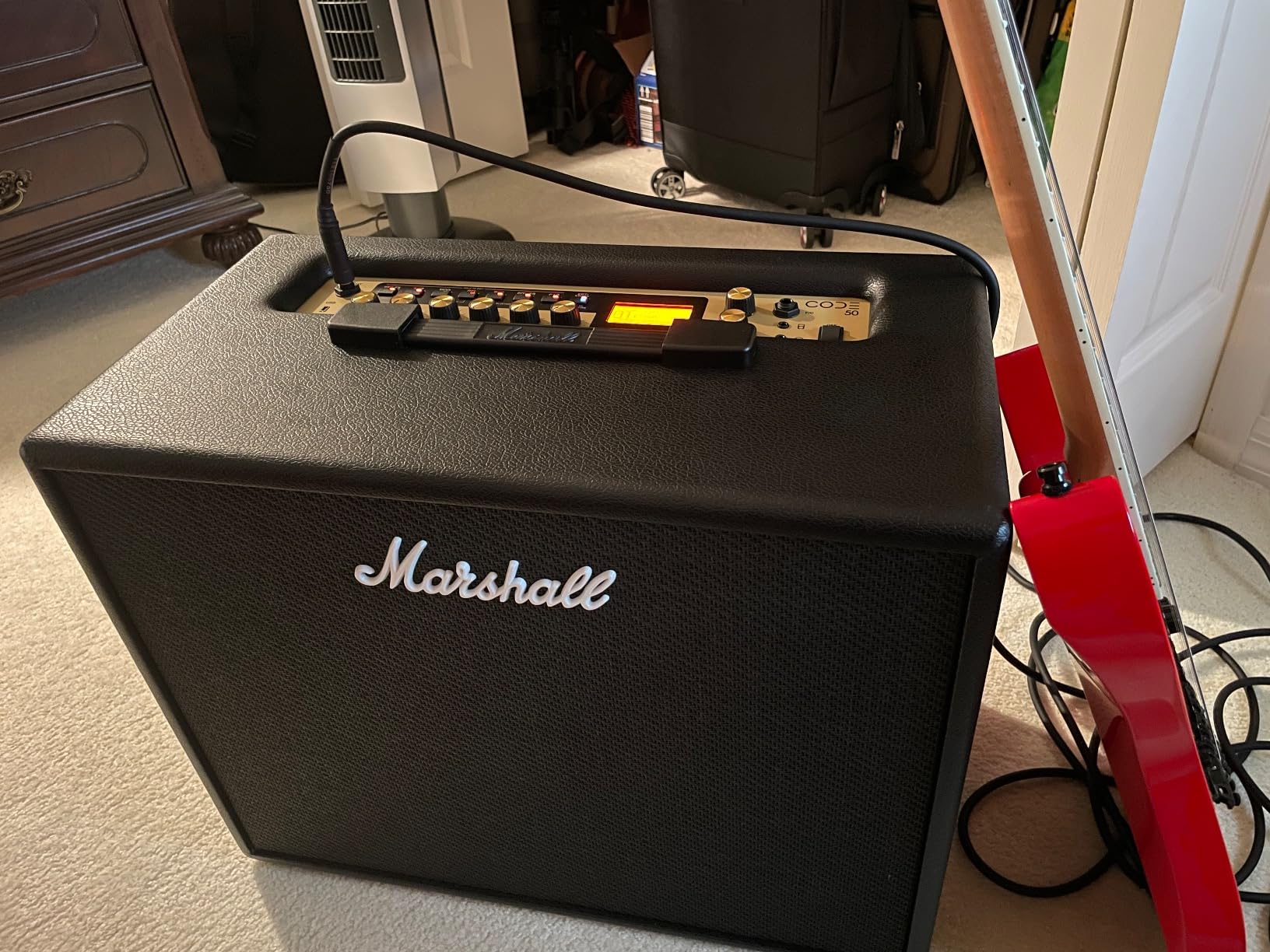
The key to unlocking the CODE50 is spending time with the controls. The factory presets are just starting points, and once you start tweaking the EQ and turning off the cabinet simulation in some scenarios, the amp reveals its true character. I found that increasing the presence control and dialing back the bass cleaned up the tone considerably. The amp rewards players who take the time to learn its quirks.
Build quality is solid, and at 28.6 pounds, it is lighter than most tube amps in this power class. The metal and plastic construction feels durable enough for regular transport to gigs. The main downsides are the learning curve for getting optimal tones and the inconsistent app support. Marshall has improved the MyMarshall app over time, but it still falls short of what BOSS and Positive Grid offer.
For players interested in exploring Marshall’s tube heritage, our roundup of 10 Best Guitar Amps Under $100 also includes some solid budget Marshall-style options.
Who the Marshall CODE50 is best for
Rock and metal players who specifically want Marshall tone in a digital package will love the CODE50. The Plexi and JVM models nail classic British rock sounds. Intermediate to advanced players who enjoy deep tone editing will appreciate the depth of the preset system. Players who want a gigging amp with authentic Marshall character at a fraction of the cost should put this on their shortlist.
Who should consider something else
Beginners may find the depth of options overwhelming. Players who want simple plug-and-play operation should look at the Fender Mustang LT25. If you prefer American-style clean tones over British rock voicings, the Fender will be a better match. The app reliability issues may frustrate users who want a polished app experience.
5. Line 6 Spider V 30 MKII – Best Digital Amp for Practice and Recording
Pros
- 200+ amps
- USB recording
- metronome
- classic speaker mode
Cons
- Presets not random access
- learning curve
Line 6 essentially invented the digital modeling amp category, and the Spider V 30 MKII shows how far the technology has come since the early days. With 200+ amps, cabs, and effects available through the free Spider V Remote app, this amp offers staggering tonal variety for under $300. The new Classic Speaker mode addresses one of the biggest criticisms of previous Spider amps, delivering a noticeably more organic sound and feel.
What makes the Spider V 30 MKII stand out for recording is the built-in USB audio interface. You can connect directly to your Mac, PC, iOS, or Android device and record without any additional hardware. The 30-watt output through an 8-inch speaker provides plenty of volume for bedroom practice and small jam sessions, and the headphone output lets you practice silently without disturbing anyone.
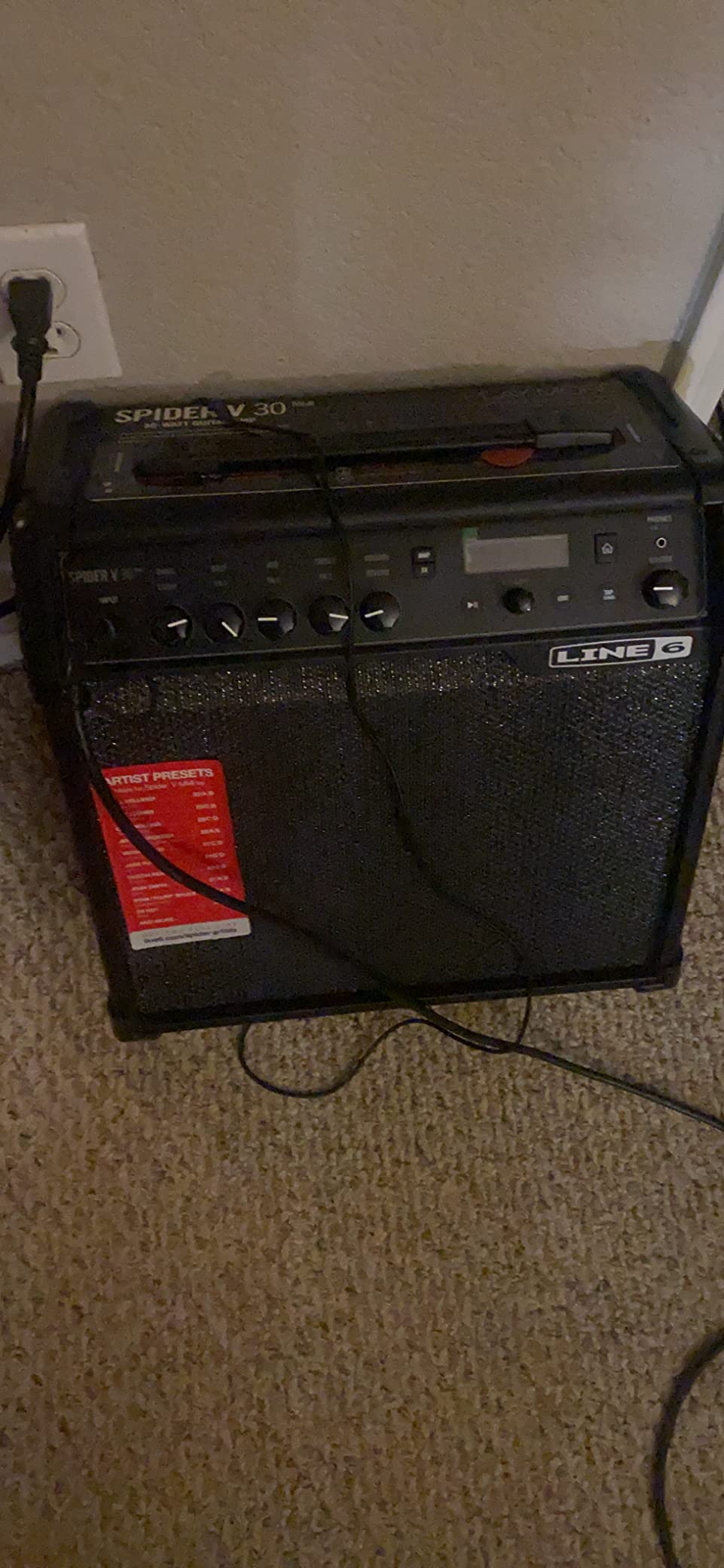
The amp includes a tuner, metronome, and jam-along drum loops, which makes it a complete practice solution out of the box. The new Artist and Iconic Song presets let you dial in tones inspired by famous tracks, which is a great learning tool for beginners trying to understand how different tones affect the music. The interface is straightforward, and the app integration is smooth once you set it up.
My main criticisms are that the presets are not random access, meaning you have to scroll through them sequentially, and there is a learning curve for new users getting familiar with the menu structure. None of these are dealbreakers, and the value proposition is strong for a player who wants a versatile practice and recording amp. Line 6 has been in the modeling game longer than anyone, and that experience shows in the polished product.
Who the Line 6 Spider V 30 MKII is best for
Intermediate players and home recording enthusiasts will find the Spider V 30 MKII to be a tremendous value. The USB audio interface saves you from buying a separate interface for basic recording. Players who want lots of tonal variety without breaking the bank should put this amp on their shortlist. Beginners who do not mind a slight learning curve will benefit from the depth of options.
Who should consider something else
Players who want the absolute best tone quality in this price range should consider the BOSS Katana-50 Gen 3. Those who prefer a simpler interface should look at the Fender Mustang LT25. If you need a gigging amp with more power, step up to the Marshall CODE50 or Positive Grid Spark 2. Pure beginners who want a more guided experience may find the app-dependent workflow intimidating.
6. Line 6 Spider V 20 MKII – Best Entry-Level Digital Amp
Pros
- Affordable
- 200+ tones
- portable
- headphone output
Cons
- Practice-focused
- small editing screen
- lower wattage
The Line 6 Spider V 20 MKII is the most affordable digital modeling amp in our roundup, and for under $200, it delivers an impressive amount of value. I tested it primarily as a practice amp for my office setup, and it handled everything from jazz comping to heavy riffing without complaint. The 20-watt output through an 8-inch speaker is loud enough for personal practice and very small jam sessions.
You get 16 onboard presets plus access to 200+ amps and effects through the free Spider V Remote app on Mac, PC, iOS, and Android. The new Classic Speaker mode gives the amp a more organic, less digital feel compared to older Spider models. The built-in tuner and tap-tempo function are useful features, and the headphone output lets you practice silently at any hour.
At 12.8 pounds, this is one of the more portable options on the list. The wooden enclosure feels solid for the price, and the simple control layout makes it easy for beginners to find usable tones quickly. The tone quality is good for a budget amp, though it does not have the depth and refinement of the more expensive options on this list. You can tell the difference between this and the BOSS Katana-50 when you A/B test them side by side.
The main limitations are the practice-focused design. This amp is not suitable for live playing or recording at a professional level, and the small screen for editing tones can be frustrating. But for the target audience of bedroom players, students, and budget-conscious beginners, the Spider V 20 MKII delivers exactly what it promises. It is a great starter digital amp that will not break the bank.
Who the Line 6 Spider V 20 MKII is best for
Beginners looking for their first modeling amp will appreciate the low price and approachable feature set. Students on a budget get access to the same app ecosystem as the more expensive Line 6 amps. Anyone needing a dedicated practice amp for a small room or office will find the size and volume level ideal. The recording capability via USB adds value for aspiring home recordists.
Who should consider something else
Players who need a gigging amp should look at the BOSS Katana-50 or Marshall CODE50. Those who want the absolute best tone quality in this price range should consider the Boss Katana Mini for a slight step up. If you prefer American-style clean tones, the Fender Mustang LT25 is a better match at a similar price point.
7. Positive Grid Spark GO – Best Ultra-Portable Digital Amp
Positive Grid Spark GO 5W Ultra-Portable Smart Guitar Amp & Speaker
5W ultra-portable
33 amp models
8hr battery
Pros
- Extremely portable
- 8hr battery
- Smart Jam AI
- Auto Chords
- Bluetooth speaker
Cons
- Volume knob clicks
- Bluetooth slow to connect
- paid subscription for some features
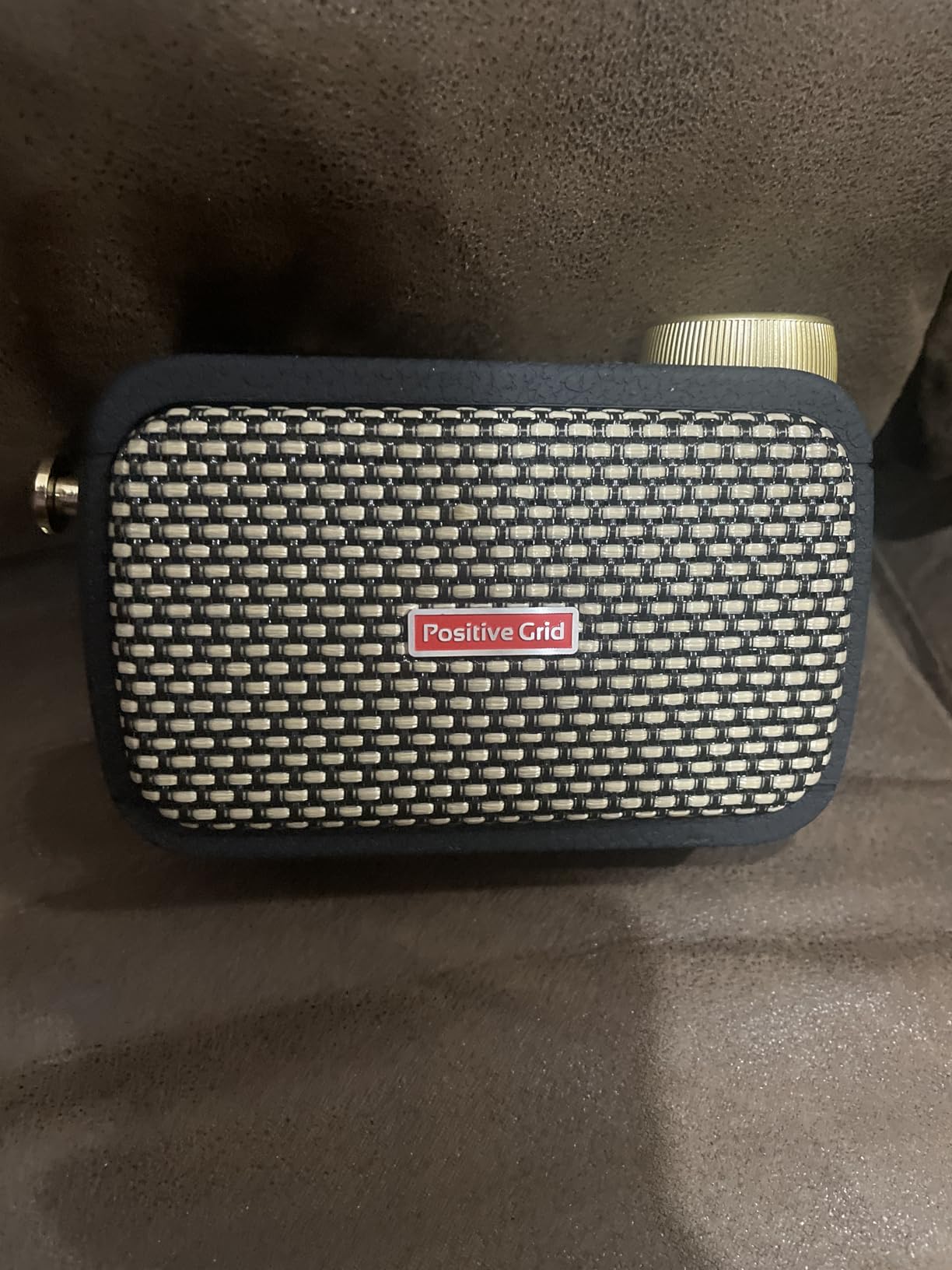
The Positive Grid Spark GO is the most compact digital guitar amp I have ever tested, and I am still amazed at how much functionality Positive Grid packed into a unit the size of a paperback book. At 16 ounces with up to 8 hours of battery life, this is the ultimate grab-and-go practice amp. I carried it in my backpack for two weeks and barely noticed it was there.
Despite the tiny size, you get 33 amp models, 43 effects, and access to 100,000+ tones through the ToneCloud library. The Spark AI feature can analyze your playing and generate matching tones, and the Smart Jam feature creates AI-powered backing tracks that adapt to your playing in real time. Auto Chords displays the chords of any song playing through the Bluetooth speaker in real time, which is an incredible learning tool.
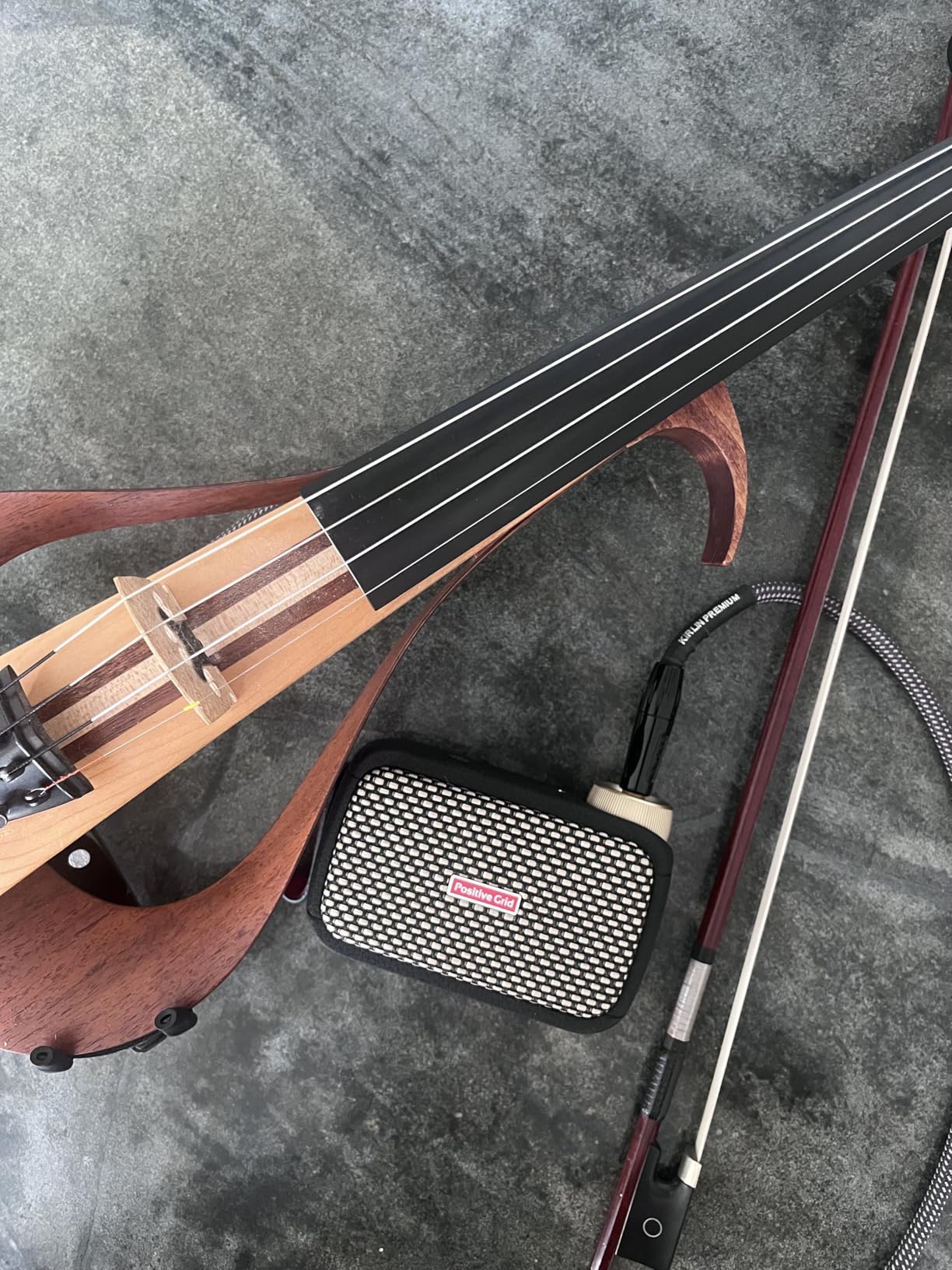
The sound quality is genuinely surprising for a 5-watt amp. It is not going to fill a large room, but for personal practice, hotel room sessions, and small jam gatherings, the volume is more than adequate. The Spark GO also functions as a high-quality Bluetooth speaker when you are not playing, making it a versatile piece of gear to have around the house or in your bag.
My main gripes are that the volume knob clicks rather than offering smooth adjustment, the Bluetooth connection can be slow to establish initially, and some advanced features require a paid subscription. None of these are dealbreakers for the target audience. The Spark GO is a budget pick that punches well above its weight, especially for traveling musicians and players with limited space.
Players interested in exploring other audio equipment for different instruments can check our 8 Best Keyboard Amps Honest Reviews guide for cross-category inspiration.
Who the Positive Grid Spark GO is best for
Traveling musicians, apartment dwellers, and players with limited space will love the Spark GO. The 8-hour battery and tiny footprint make it perfect for hotel room sessions, beach jam sessions, and outdoor practice. Beginners benefit hugely from the Auto Chords and Smart Jam features. Anyone who wants a smart practice companion they can take anywhere should put this on their shortlist.
Who should consider something else
Players who need a primary gigging or recording amp need to look at the larger options on this list. The 5-watt output is not sufficient for band practice or stage use. If you prefer a traditional amp control layout over app-based editing, the BOSS Katana Mini is a better fit. Players who want maximum tonal depth in a compact form should consider the Positive Grid Spark 2 instead.
8. Boss Katana Mini – Best Battery-Powered Mini Amp
Boss Katana Mini 7-Watt Combo Amp
7W battery-powered
3 amp types
Tape delay
Pros
- Battery powered
- authentic analog gain
- 3 amp types
- lightweight
Cons
- Tinny at high volumes
- no power supply included
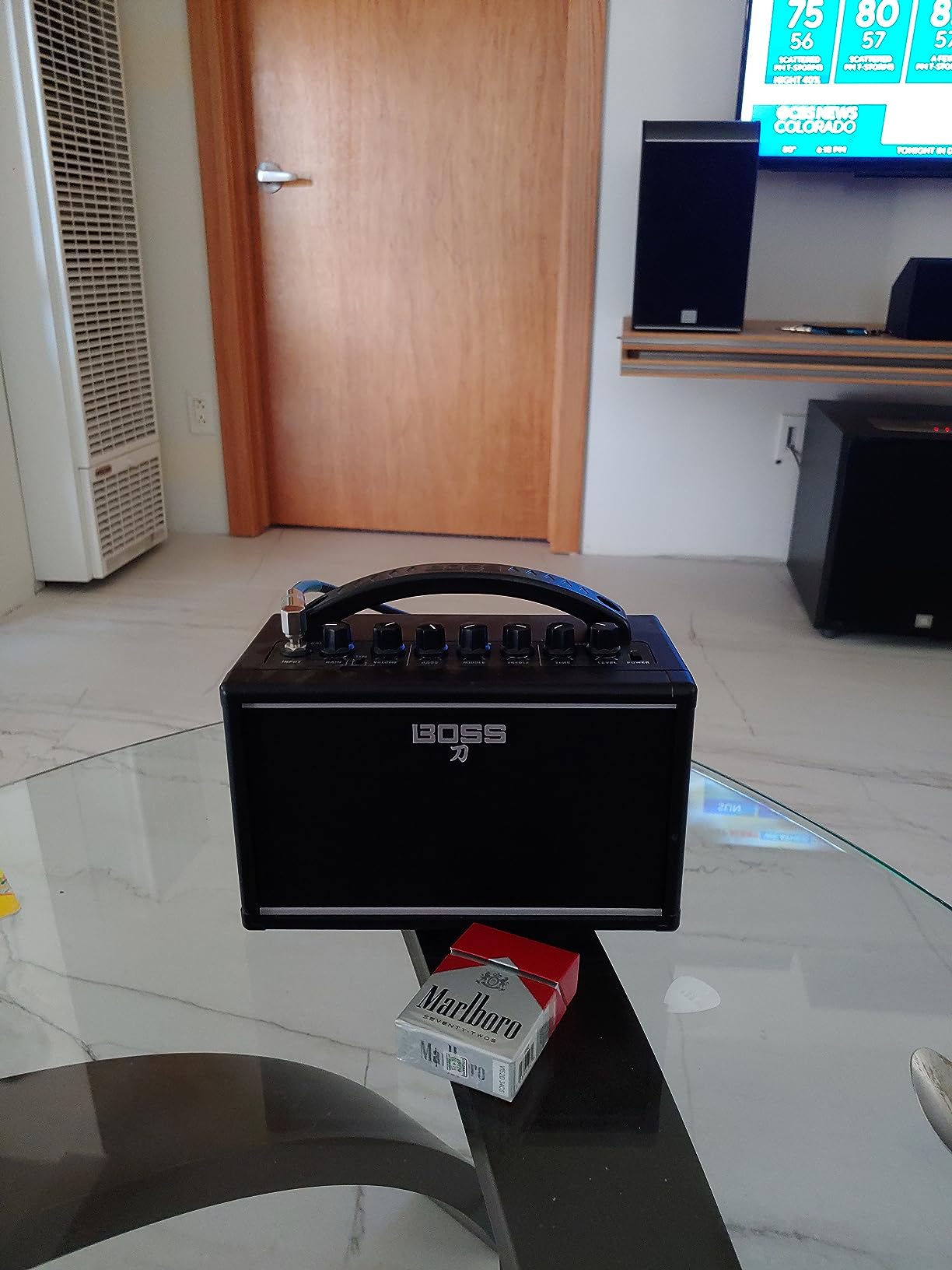
The Boss Katana Mini takes the Katana sound philosophy and shrinks it down to a battery-powered package you can take anywhere. With 2,714 reviews averaging 4.5 stars, it has a massive following among bedroom players and traveling musicians. I tested it for late-night practice sessions, and the authentic multi-stage analog gain circuit and three-band analog tone stack deliver genuine Katana character in a tiny box.
You get three versatile amp types: Brown, Crunch, and Clean, plus a built-in tape-style delay for warm ambience. The aux input lets you jam along with music from your phone, and the phones/recording output with cabinet voicing makes silent practice sound more realistic. At 1.5 kg and powered by batteries, this is the most travel-friendly amp on our list, and it works equally well as a desktop practice rig.
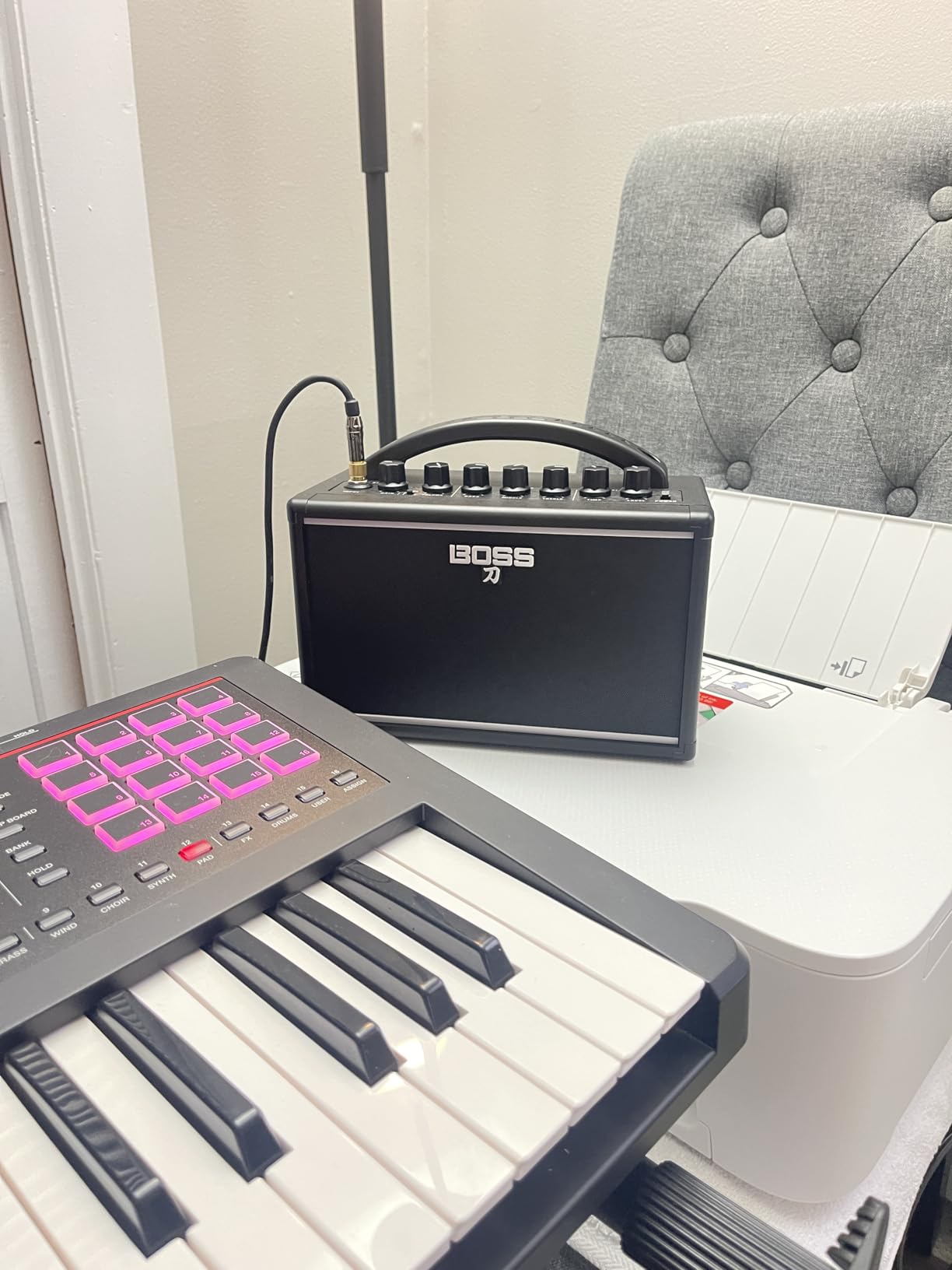
The sound quality far exceeds what you would expect from a 7-watt mini amp. The clean channel has the chimey character that made the Katana series famous, and the Crunch and Brown channels deliver satisfying rock tones. The analog gain circuit responds to your playing dynamics in a way that feels more like a tube amp than a typical solid-state practice amp.
My main criticism is that the amp can sound slightly tinny at higher volumes, and the power supply is not included, so you need to budget for batteries or a compatible adapter. The Katana Mini is not suitable for full band practice, but for solo practice, travel, and late-night bedroom sessions, it is genuinely hard to beat. At this price point and size, the value proposition is excellent.
Who the Boss Katana Mini is best for
Bedroom players and late-night practice enthusiasts will love the Katana Mini for its silent practice capabilities and authentic tone. Travelers and buskers will appreciate the battery operation and compact size. Anyone wanting a simple, no-fuss amp without app dependence should put this at the top of their list. It also works brilliantly as a secondary amp for office or vacation use.
Who should consider something else
Players who need a gigging amp need to look at the full-size options on this list. Those who want app-based smart features should consider the Positive Grid Spark GO. If you need effects beyond the built-in tape delay, step up to the Fender Mustang LT25 or Line 6 Spider V 20 MKII. Players wanting stereo sound or recording capabilities need a larger amp.
How to Choose the Best Digital Guitar Amp for Your Needs
Choosing the best digital guitar amp comes down to matching the amp to your specific playing situation, budget, and tonal preferences. After testing dozens of amps over the years, I have learned that the most expensive option is rarely the best fit for a particular player. Start by honestly assessing where and how you will use the amp most often, then prioritize the features that matter most for that use case.
Wattage matters more for gigging and band practice than for bedroom playing. A 5-watt amp like the Spark GO is plenty loud for personal practice, but you will struggle to keep up with a drummer in a rehearsal space. For gigging, look for at least 30 watts with a 10 or 12-inch speaker. For bedroom and apartment use, prioritize power attenuation and headphone outputs so you can get satisfying tones at low volumes.
The number of built-in effects and amp models matters less than the quality of those models. The BOSS Katana-50 Gen 3 has only 12 amp characters, but each one sounds excellent and responds to your playing like a real tube amp. Compare that to amps with 200+ models where most of the presets are filler. Focus on amps whose sound designers are known for quality modeling, and read user reviews about the real-world tonal character.
Connectivity is increasingly important in 2026. USB audio interface functionality lets you record directly into your computer without buying additional hardware. Bluetooth audio streaming is useful for jamming with backing tracks. App integration through your phone or tablet can unlock deeper editing, additional presets, and AI-powered tone matching. Decide which of these features matter most for your workflow before narrowing down your choices.
Build quality and warranty support often get overlooked but matter for long-term value. BOSS, Fender, Marshall, and Line 6 all have strong reputations for reliability and customer support. Positive Grid is newer but has built a solid reputation quickly. Read user reviews for long-term reliability reports, not just initial impressions. The best digital guitar amps should last you many years with proper care.
Finally, consider the resale value. Popular models from established brands tend to hold their value better than obscure options. If you think you might upgrade in a few years, stick with well-known names that have active communities and frequent firmware updates. A quality digital amp you keep for 5 to 10 years is a better value than a budget option you replace every two years.
Best Digital Guitar Amps for Specific Use Cases
Different playing situations call for different amp priorities. After extensive testing, I have matched each amp in our roundup to the use case where it performs best. This quick reference section should help you identify the right amp for your specific situation without having to read every review in detail.
For bedroom and apartment practice, the Boss Katana Mini and Positive Grid Spark GO are the best options. Both deliver quality tones at low volumes, have headphone outputs for silent practice, and offer enough variety to keep practice sessions interesting. The Spark GO adds Bluetooth speaker functionality and app-based learning tools, while the Katana Mini offers more authentic analog character without app dependence.
For home recording and DAW work, the Line 6 Spider V 30 MKII stands out for its built-in USB audio interface and comprehensive app integration. The Positive Grid Spark 2 is a strong alternative with its HD amp library and stereo USB-C recording. Both options let you capture high-quality guitar tones without needing a separate audio interface or microphone setup.
For small venue gigs and band practice, the BOSS Katana-50 Gen 3 is the clear winner. Its 50-watt output, evolved Tube Logic, and gigging-friendly features like the power attenuator and optional footswitch make it the most stage-ready digital amp I tested. The Marshall CODE50 is a strong alternative if you specifically want Marshall voicings. The Positive Grid Spark 2 also has enough power for smaller venues with its 50-watt stereo output.
For traveling musicians and buskers, the Positive Grid Spark GO is unmatched for its tiny size, 8-hour battery life, and Bluetooth speaker functionality. The Boss Katana Mini is a strong alternative if you prefer traditional amp controls over app-based features. Both fit easily in a backpack and can be set up in seconds anywhere you have a flat surface.
For beginners on a budget, the Fender Mustang LT25 offers the best combination of ease of use, sound quality, and recording capability at its price point. The Line 6 Spider V 20 MKII is a slightly cheaper alternative with similar features. The Boss Katana Mini works well for beginners who want something even more portable. Avoid cheap no-name digital amps from unfamiliar brands, as the tone quality and build typically disappoint.
Digital Amps vs Tube Amps: Understanding the Trade-Offs
The debate between digital and tube amps has been going on for decades, and the honest answer is that the right choice depends on your priorities. Modern digital modeling amps have closed the gap with tube amps significantly, but there are still meaningful differences that matter for certain players. Understanding these trade-offs will help you make a confident decision about which type fits your needs.
Tube amplifiers deliver their magic through physical tube saturation, which creates harmonic complexity and touch responsiveness that is genuinely difficult to replicate perfectly in digital form. When you dig into a tube amp, the power tubes compress and distort in ways that feel alive under your fingers. The best modeling amps, like the BOSS Katana-50 Gen 3, get remarkably close to this feel, but dedicated tube enthusiasts can still tell the difference in side-by-side comparisons.
Digital amps offer several practical advantages that tube amps struggle to match. They are significantly lighter, often one-quarter to one-half the weight of an equivalent tube amp. They cost less for comparable wattage. They have built-in effects, multiple amp voicings, and modern connectivity like USB and Bluetooth. They require no tube replacement or biasing maintenance. For players who gig regularly, the weight and reliability advantages alone make a strong case for digital.
The cost of entry for digital modeling has dropped dramatically. You can get a feature-rich digital amp like the Boss Katana Mini for under $120, while a comparable tube amp would cost several times more. Even at the high end, the Kemper Profiler and Neural DSP Quad Cortex deliver professional studio-quality tones that would require thousands of dollars in tube amps and effects pedals to replicate. For most players, the value proposition of digital is overwhelming.
However, tube amps still excel in certain scenarios. Recording studios often prefer tube amps for their characteristic harmonic content and how they respond to microphones. Blues and vintage rock players often prefer the specific breakup character of classic tube designs. Players who only ever play at home at conversation levels may not get enough out of a tube amp to justify the cost and maintenance. If you specifically want the tube experience, a digital amp will always feel like a compromise.
The smart play for most players in 2026 is to start with a quality digital modeling amp that covers 90% of your playing situations, then consider adding a small tube amp later if you find yourself craving that specific tube character. The BOSS Katana-50 Gen 3 and Marshall CODE50 are excellent bridges between digital and tube worlds, offering convincing tube-like tones with the practical advantages of digital. Many professional guitarists now use digital amps exclusively for both studio and stage work.
Frequently Asked Questions
What is the best digital guitar amplifier for the money?
The best digital guitar amp for the money depends on your budget and use case, but the BOSS Katana-50 Gen 3 offers the best overall value with its tube-like tone, 12 amp characters, 5 effects sections, and 50-watt gigging power. For under $200, the Fender Mustang LT25 is the top pick for beginners, while the Positive Grid Spark GO is the best choice for ultra-portable practice under $120.
Are digital amps good enough for gigging?
Yes, modern digital amps are absolutely good enough for gigging. The BOSS Katana-50 Gen 3, Marshall CODE50, and Positive Grid Spark 2 all have enough power and tonal quality for small to medium venue gigs. Many professional guitarists now use digital amps for live performance because they offer consistent tone, lighter weight, and backup options that tube amps cannot match. Just pair your digital amp with quality cabinet emulation or a FRFR speaker for the best results.
What is the difference between modeling and profiling?
Modeling uses mathematical algorithms to recreate the sound characteristics of various amplifiers, while profiling captures the actual sonic fingerprint of a specific amp playing through a specific speaker in a specific room. Modeling amps like the BOSS Katana and Line 6 Spider series offer a wide range of amp sounds at lower cost. Profilers like the Kemper Profiler and Neural DSP Quad Cortex capture exact amp tones with greater accuracy but at higher prices.
What is the best affordable electric guitar amp?
The best affordable electric guitar amp in 2026 is the Boss Katana Mini at under $120, offering authentic Katana tone, three amp types, battery operation, and a built-in tape delay. The Positive Grid Spark GO is another excellent option at a similar price with smart features and Bluetooth speaker functionality. For players willing to spend a bit more, the Fender Mustang LT25 at around $180 delivers exceptional value with 30 presets, USB recording, and a beginner-friendly interface.
Final Verdict: Which Digital Guitar Amp Should You Buy?
After testing eight of the best digital guitar amps across every budget, the BOSS Katana-50 Gen 3 stands out as the best digital guitar amp for the money for most players. Its evolved Tube Logic delivers the most authentic feel of any amp in this price range, the 50-watt output handles bedroom practice and small venue gigs equally well, and the build quality is built to last for years. If you want one amp that does everything well, this is it.
For players on a tighter budget, the Boss Katana Mini at under $120 offers incredible value and the same Katana sound philosophy in a battery-powered package. The Positive Grid Spark 2 is the best choice for players who want smart AI-powered features and stereo sound for home use. The Fender Mustang LT25 remains the best option for beginners who want a simple interface and reliable recording capability.
Traveling musicians and apartment dwellers should look at the Positive Grid Spark GO for its ultra-portable design and 8-hour battery life. The Marshall CODE50 is the right choice for players who specifically want Marshall tone in a digital format. The Line 6 Spider V series delivers the most tonal variety and the best USB recording capability for the price. No matter your situation or budget, there is a digital amp on this list that will serve you well for years to come.
The best digital guitar amps in 2026 offer better value, more features, and more authentic tone than ever before. Take the time to consider your specific use case, set a realistic budget, and choose the amp that best matches your playing situation. With any of the eight amps on this list, you will be making a sound investment in your playing journey. Pick the one that fits your needs, plug in, and enjoy the ride.