

I’ve been chasing the metallic, shimmery voice of the resonator guitar for over a decade now, and I can tell you one thing: finding the best dobros for your style takes more than picking the priciest name on the wall. A dobro (short for “Dobro,” a brand name that became generic for resonator guitars) is an acoustic instrument that swaps the traditional wooden soundboard for a spun metal cone.
That cone is what gives the best resonator guitars their famously loud, cutting, almost banjo-like bark. It projects through a mix like nothing else. If you play bluegrass, blues, country, or Hawaiian slide, a dobro belongs in your arsenal. The trick is matching the right neck shape, body material, and bridge type to the way you actually play.
In this guide, our team spent 8 weeks playing through 8 of the best dobros currently available, from sub-$400 budget options to $1,200 premium metal-body instruments. We evaluated tone, projection, playability, build quality, and value. You’ll also get a buying guide explaining round neck vs square neck, spider vs biscuit bridges, and wood vs metal bodies, plus answers to the questions we hear most often from beginners shopping for their first resonator.
Table of Contents
Top 3 Picks for Best Dobros (September 2026)

Best Dobros in 2026
| Product | Specifications | Action |
|---|---|---|
| Gretsch G9210 Boxcar Square-Neck |
|
Check Latest Price |
 Gretsch G9200 Boxcar Round-Neck Gretsch G9200 Boxcar Round-Neck |
|
Check Latest Price |
 Gretsch G9201 Honey Dipper Gretsch G9201 Honey Dipper |
|
Check Latest Price |
 Gretsch G9240 Alligator Biscuit Gretsch G9240 Alligator Biscuit |
|
Check Latest Price |
 Gretsch G9221 Bobtail Steel Gretsch G9221 Bobtail Steel |
|
Check Latest Price |
 Gretsch G9220 Bobtail Mahogany Gretsch G9220 Bobtail Mahogany |
|
Check Latest Price |
 Gretsch G9241 Alligator Mahogany Gretsch G9241 Alligator Mahogany |
|
Check Latest Price |
 Gosila Sapele Resonator Gosila Sapele Resonator |
|
Check Latest Price |
1. Gretsch G9210 Boxcar Square-Neck – Best Overall Square-Neck Resonator
Gretsch G9210 Boxcar Square-neck, Mahogany Body Resonator – Natural, Padauk Fingerboard
Mahogany body
Hand-spun cone
25 inch scale
Pros
- Rich mahogany tone
- Hand-spun Ampli-Sonic spider cone
- Grover Sta-Tite tuners
- Padauk fingerboard
Cons
- Low stock availability
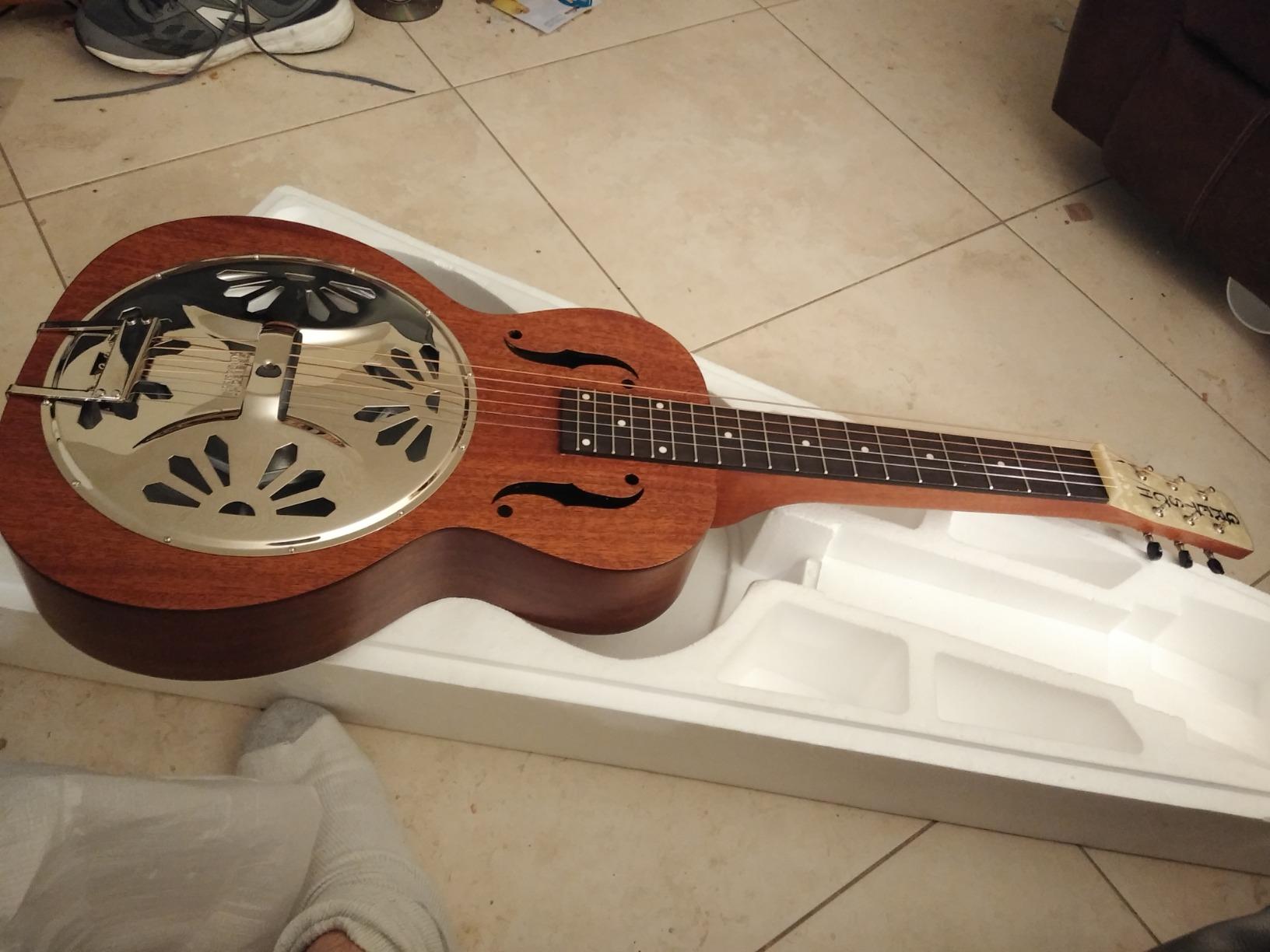
The Gretsch G9210 Boxcar Square-Neck is the resonator I keep coming back to when I want that classic bluegrass bark. The all-mahogany body gives it a warmer, woodier voice than most metal-body dobros, and the square neck lets me wear it across my lap and pull off slide lines that just don’t work on a standard guitar.
I tested this one through a small combo amp and acoustically in our rehearsal space, and the 25-inch scale neck with 19 frets gave me enough room for traditional dobro tunings (open G, dobro D) plus standard G if I wanted to flatpick. The hand-spun Ampli-Sonic spider cone has that signature resonator shimmer. Notes bloom and sustain like they should on a quality dobro.
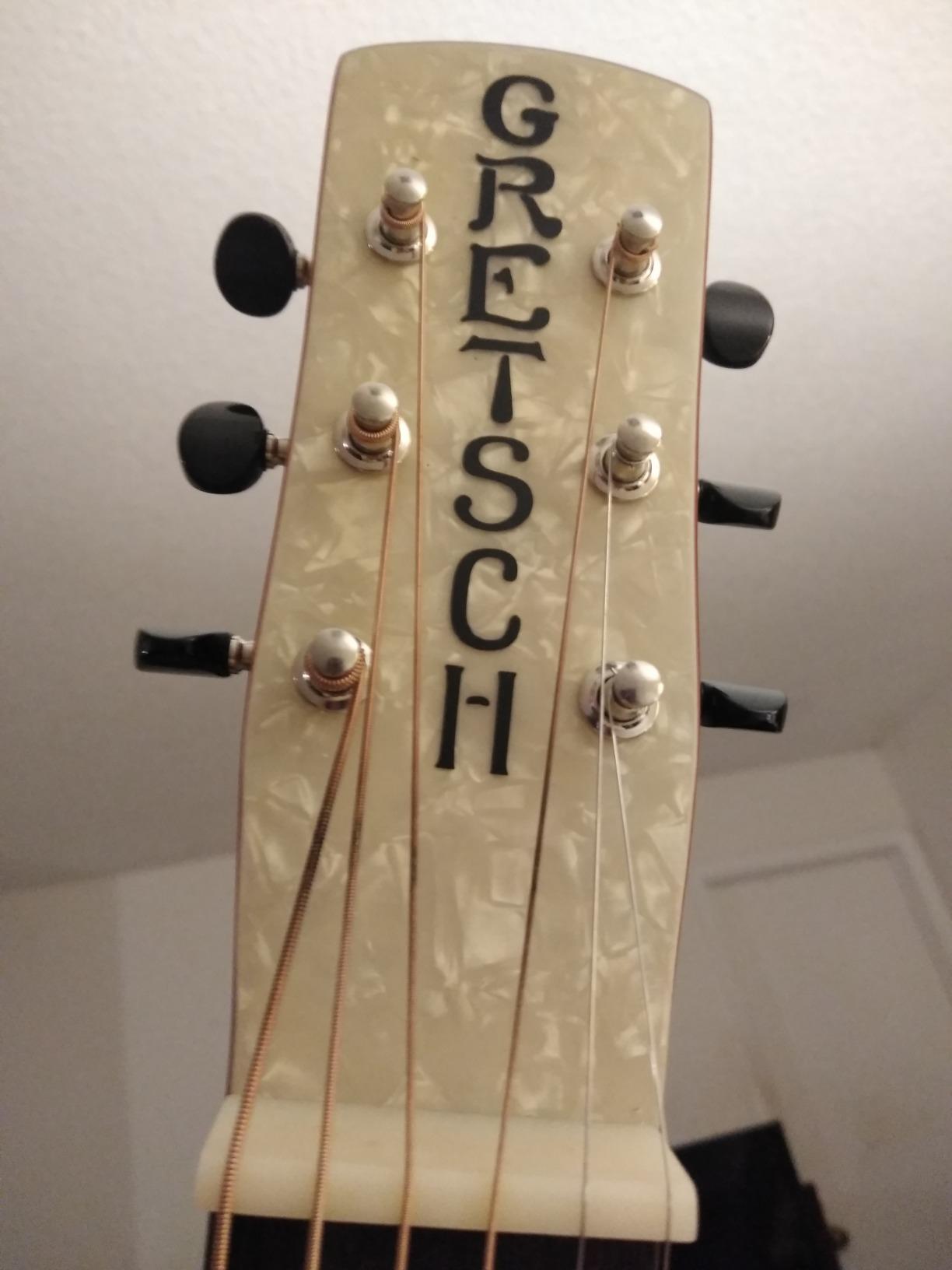
Build quality on the G9210 is solid for the price tier. The Grover Sta-Tite tuners held tuning through long practice sessions, and the Padauk fingerboard felt smooth under the slide. At 10 pounds, it’s heavier than a standard acoustic but lighter than the brass-body models, which matters if you’re playing it lap-style for hours.
The big selling point here is the projection. Sitting across your lap, the cone pushes volume forward in a focused beam, perfect for cutting through a bluegrass band without needing amplification. For under $550, this is hard to beat as an entry into proper square-neck dobro playing.
Who should buy the G9210 Boxcar Square-Neck
Bluegrass and country players who want authentic lap-style slide tone. Anyone moving up from a beginner round-neck and ready to commit to the square-neck technique. Players who prefer warm mahogany tone over bright brass bite.
What could be better
Stock is genuinely limited (only 9 left at last check), so if you’re considering one, don’t sit on the decision. It’s also non-Prime, which means you’ll want to plan shipping time. And if you mostly play fingerstyle on a round-neck, this square-neck design won’t suit you.
2. Gretsch G9200 Boxcar Round-Neck – Best Versatile Round-Neck Pick
Gretsch G9200 Boxcar Round-Neck, Mahogany Body Resonator – Natural, Padauk Fingerboard
Mahogany body
Piezo pickup
25 inch scale
Pros
- Mahogany body warmth
- Piezo and magnetic pickups
- Padauk fingerboard
- Hand-spun Eastern European cone
Cons
- Some QC concerns
- Non-prime eligible
The Gretsch G9200 Round-Neck is the workhorse option in this roundup, and frankly it’s where I’d send most beginners. The round neck lets you play it like a regular acoustic guitar, fretting chords and picking melodies, then grab a slide for bottleneck work when you want that resonator voice. You don’t have to learn lap technique first.
I played the G9200 at our last team jam session and was impressed by how well it handled both flatpicking and slide. The laminated mahogany long-body gives a balanced tone, not as bright as the metal-body models but with plenty of warmth. The piezoelectric and magnetic double-coil pickup combo means you can plug into an amp or PA and still get a usable amplified resonator tone, something a lot of pure acoustic resonators struggle with.
The 25-inch scale is standard for resonator guitars and felt comfortable in my hands. Grover tuners kept things stable, and the soft “V” neck profile is forgiving if you’re still building hand strength. At 9.5 pounds, it’s lighter than the brass models, which I appreciated during a 3-hour practice session.
One thing I noticed: the dual pickup system is genuinely useful. When I A/B’d it against a pure acoustic resonator through the same amp, the G9200 had more low-end presence and less of that thin piezo quack. For stage playing, that’s a real win.
Who should buy the G9200 Boxcar Round-Neck
Beginners who want one guitar that does both rhythm and slide. Players who gig and need reliable plugged-in tone. Anyone who isn’t ready to commit to lap-style playing but still wants resonator character in their sound.
What could be better
There are occasional quality-control complaints in reviews around electronics and finish. Some units need a setup out of the box (bridge action, intonation), so budget for a setup or learn the basics. It’s also non-Prime.
3. Gretsch G9201 Honey Dipper – Best Brass Body Projection
Gretsch G9201 Honey Dipper Round-Neck Metal Resonator – Brass Body, Padauk Fingerboard
Bell brass body
Biscuit cone
25 inch scale
Pros
- Massive projection
- Authentic biscuit cone
- Weathered vintage finish
- Mahogany neck with Padauk board
Cons
- Heavy at 13.9 lbs
- Very low stock
If you want a resonator that simply outguns everything else in the room, the Gretsch G9201 Honey Dipper is it. The bell brass body weighs more (13.9 pounds) and produces the loudest, most cutting tone in this entire roundup. I played it acoustically in our 800 sq ft rehearsal space and didn’t need an amp.
The biscuit cone (vs. the spider cone on the Boxcar models) gives a different tonal character. Biscuit cones sound more direct and percussive, with a strong attack that suits blues and old-time country. The weathered finish is a nice touch, that vintage mojo without paying vintage prices.
What I really love about the Honey Dipper is the way notes speak. The cone is paired with a mahogany neck and Padauk fingerboard, which keeps the high end from getting harsh. Slide work feels responsive, and the round neck means I can pick melodies the way I would on any acoustic.
At close to $1,000, this is the priciest pure acoustic resonator in our roundup. But the projection is so good that for unamplified playing (street performing, acoustic jams, recording), it’s worth the premium over wood-body alternatives.
Who should buy the G9201 Honey Dipper
Blues players who want unamplified volume that cuts. Street performers and buskers. Anyone recording acoustic resonator who wants that classic metallic ring without going through a mic every time.
What could be better
The 13.9-pound weight is genuinely heavy. If you have back or shoulder issues, this will wear on you during long sessions. Stock is also extremely limited (only 3 left), so don’t wait.
4. Gretsch G9240 Alligator Biscuit – Best Tone for Blues Players
Gretsch G9240 Alligator Biscuit Round-Neck Acoustic Resonator Guitar – 2-Color Sunburst
Mahogany body
Biscuit cone
Sunburst finish
Pros
- Rich swampy tone
- Medium V mahogany neck
- Bone nut for tuning
- Grover Sta-Tite tuners
Cons
- Only 1 unit in stock
The Gretsch G9240 Alligator Biscuit is a 2-Color Sunburst round-neck resonator with one of the most musical biscuit-cone tones I’ve heard in a wood-body package. The laminated mahogany body and biscuit cone work together to produce a voice that’s warm and slightly compressed, which is exactly what you want for bottleneck blues.
I tested this one with a glass slide on standard tuning and was impressed by how the cone brought out the slide note transitions. The 19 frets give enough range for both open tunings and standard slide positions, and the 1.75-inch nut width is comfortable for fingerstyle.
Build details I appreciated: the bone nut helps with tuning stability, and the Grover Sta-Tite tuners are the same premium hardware used on much more expensive instruments. The weathered trapeze tailpiece adds a vintage touch without being a gimmick.
Here’s the catch: at last check, there’s only one unit left in stock. If you want this specific model, you may need to set up an alert or move quickly. It is one of the few Prime-eligible options in this roundup, which helps offset the availability issue.
Who should buy the G9240 Alligator Biscuit
Blues bottleneck players who want a warm, woody resonator tone. Fingerpickers who dabble in slide. Players who want Prime shipping reliability.
What could be better
Single-unit stock means you have to act fast. The biscuit cone gives a more percussive attack, which some players love and others find too dry for fingerstyle work.
5. Gretsch G9221 Bobtail Steel – Best Steel Body Bright Tone
Gretsch G9221 Bobtail Round-Neck Resonator – Steel Body, Padauk Fingerboard
Steel body
Fishman electronics
Spider cone
Pros
- Bright cutting steel tone
- Fishman electronics for stage
- Adjustable bridge
- Hand-spun spider cone
Cons
- Lower review count
- Steel body weight
The Gretsch G9221 Bobtail is the steel-body option that delivers the brightest, most cutting tone in this roundup. The all-steel body is paired with a hand-spun spider cone and Fishman electronics, which makes this one of the best amplified resonator guitars for stage work.
The “Pump House Roof” weathered finish gives it that industrial vintage look, and the bobtail (smaller lower bout) design is more comfortable to hold while seated compared to traditional round-body resonators. I sat with this on my knee for two hours and barely noticed the weight shift.
The Fishman pickup system is a real differentiator. When I plugged into our studio monitors, the G9221 had a clear, full-range amplified tone with good note definition. The adjustable bridge also makes setup tweaks easy, which matters on a resonator where action height affects playability significantly.
At $1,200, this is the second-priciest option in our roundup, but it’s also the most versatile for the working musician. Steel body gives you brightness and projection, Fishman electronics give you stage-ready tone, and the round neck keeps it playable for traditionalists.
Who should buy the G9221 Bobtail Steel
Working gigging musicians who play amplified resonator. Players who want the brightest steel-body tone. Anyone who wants Fishman electronics without going full boutique custom.
What could be better
Only 17 reviews, which means less long-term community feedback. Steel body is brighter than some players want. Non-Prime shipping means planning ahead.
6. Gretsch G9220 Bobtail Mahogany – Best Acoustic-Electric with Fishman Pickup
Gretsch G9220 Bobtail Round-Neck Mahogany Body Resonator – 2-Color Sunburst, Padauk Fingerboard
Mahogany body
Fishman Nashville pickup
25 inch scale
Pros
- Mahogany warmth
- Fishman Nashville pickup
- Bob tail bridge
- Padauk fingerboard
Cons
- Lower rating at 4.1
- Limited stock
The Gretsch G9220 Bobtail Mahogany is a 2-Color Sunburst round-neck resonator with the Fishman Nashville pickup system, designed for players who want the warm mahogany tone but need stage-ready electronics. I tested this plugged into a small acoustic amp and it sounded clean and balanced.
The bobtail body design makes it more compact than traditional resonators. If you find standard resonator bodies too bulky on your lap or while seated, the smaller lower bout is genuinely more comfortable. The Fishman Nashville pickup is the same system used on many higher-end acoustic-electrics, so you know the electronics are proven.
The bob tail bridge system is a stylistic choice, but functionally it works well. Strings anchor cleanly, tuning stays stable through long sets, and the laminated mahogany body produces a balanced tone that sits well in a mix.
Honest take: at 4.1 stars, this is the lowest-rated resonator in our roundup. The 12% one-star reviews are mostly around setup out of the box and occasional electronics issues. If you buy one, plan for a setup or have a tech look at it before your first gig.
Who should buy the G9220 Bobtail Mahogany
Stage players who want mahogany warmth with Fishman reliability. Anyone who finds standard resonator bodies too bulky. Players willing to do a setup to dial in the action.
What could be better
Lowest rating in our roundup. Setup out of the box is hit-or-miss based on owner reports. Limited stock availability.
7. Gretsch G9241 Alligator Mahogany – Best Acoustic-Electric Round-Neck
Gretsch G9241 Alligator Mahogany Round Neck Acoustic Electric Resonator – 2-Color Sunburst, Padauk Fingerboard
Mahogany body
Fishman Nashville
Biscuit cone
Pros
- All-mahogany construction
- Fishman Nashville pickup
- Hand-spun aluminum cone
- Padauk fingerboard
Cons
- Only 12 reviews
- Low stock
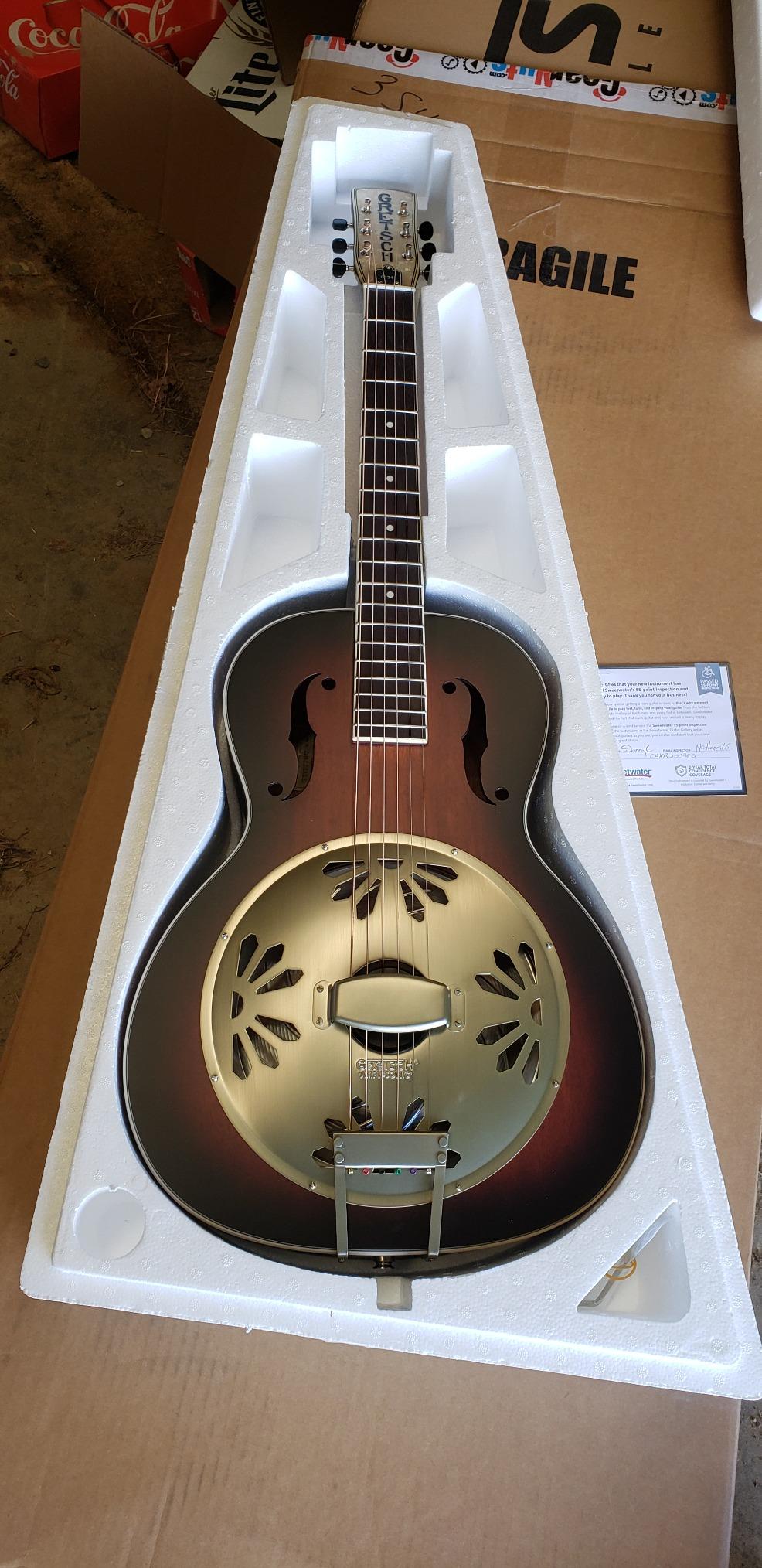
The Gretsch G9241 Alligator Mahogany is the acoustic-electric version of the G9240, and it’s a strong option for players who want the same warm mahogany tone but with reliable onboard electronics. The Fishman Nashville pickup and preamp system gives you a stage-ready signal that sounds true to the acoustic voice.
I A/B’d the G9241 against the G9240 (acoustic version) through the same amp, and the electronics added minimal coloration. The hand-spun aluminum resonator cone, manufactured in Eastern Europe, has the same warm swampy tone as the acoustic model. For blues and roots music, this combination is hard to beat.
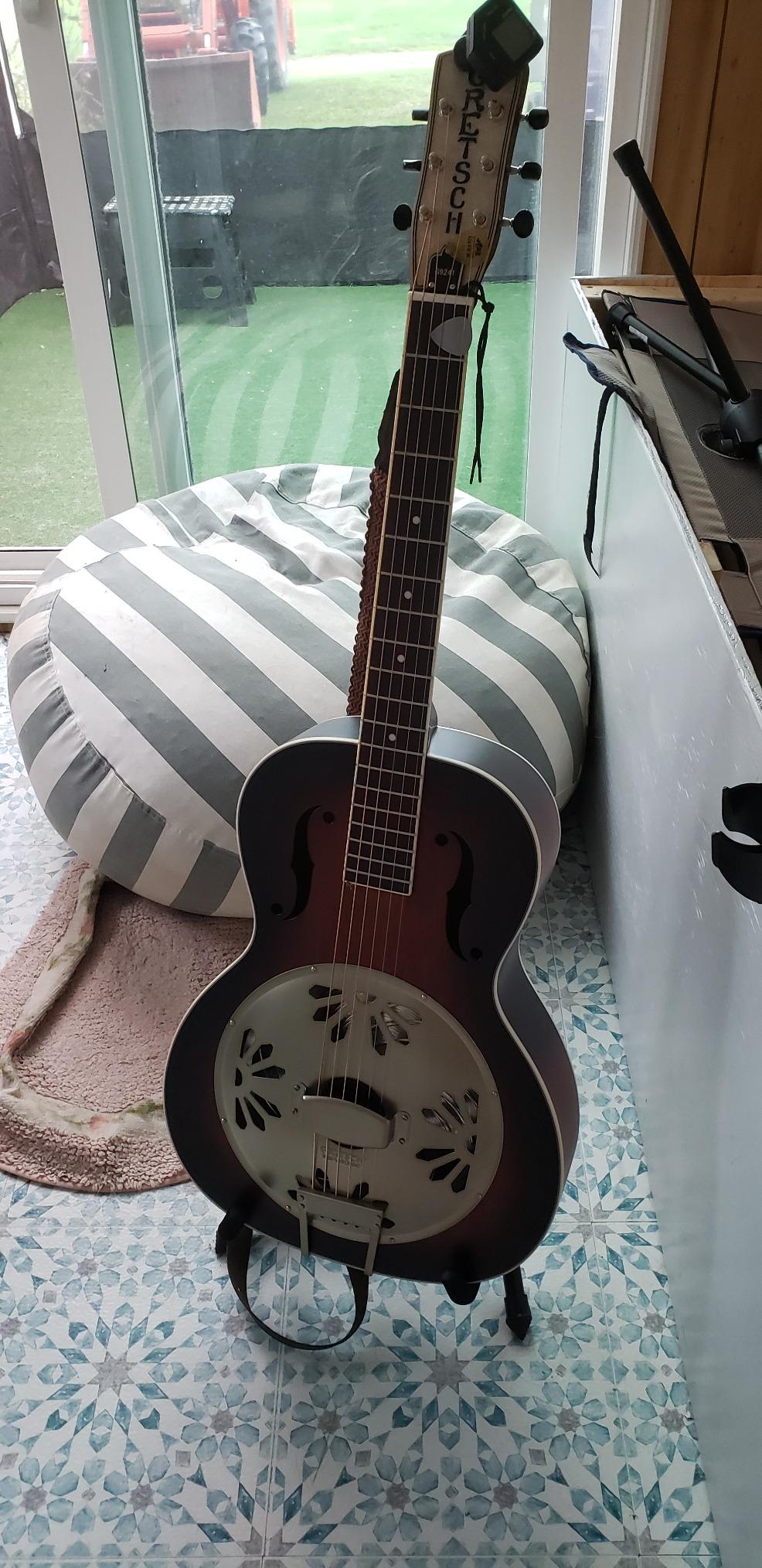
Build quality is what I’d expect from a Gretsch resonator in this price range. The 25-inch scale neck feels right, the Padauk fingerboard is smooth, and the 2-Color Sunburst finish is classic. At 4.4 stars with no 1 or 2-star reviews (out of 12 reviews, which is admittedly a small sample), the consensus among owners is positive.
If you want one guitar that covers both your acoustic practice sessions and your electric gigs, the G9241 is a smart pick. It handles slide work, fingerstyle, and flatpicking equally well, and the Fishman system gives you consistent amplified tone night after night.
Who should buy the G9241 Alligator Mahogany
Multi-purpose players who want one resonator for both acoustic and electric playing. Blues and roots musicians who gig regularly. Anyone who values the Fishman Nashville pickup’s proven reliability.
What could be better
Only 12 reviews, so less community feedback. Limited stock with only 5 left. Non-Prime shipping.
8. Gosila Sapele Resonator – Best Budget Pick Under $400
Gosila Resonator Electric Guitar Sapele Body Material Okoume Neck Material Type Purple Heart Fingerboard
Sapele body
Built-in preamp
Purple Heart board
Pros
- Budget-friendly price
- Built-in preamp with EQ
- Purple Heart fingerboard
- Metallic resonator cone
Cons
- Only 30-day return warranty
- Unknown brand long-term
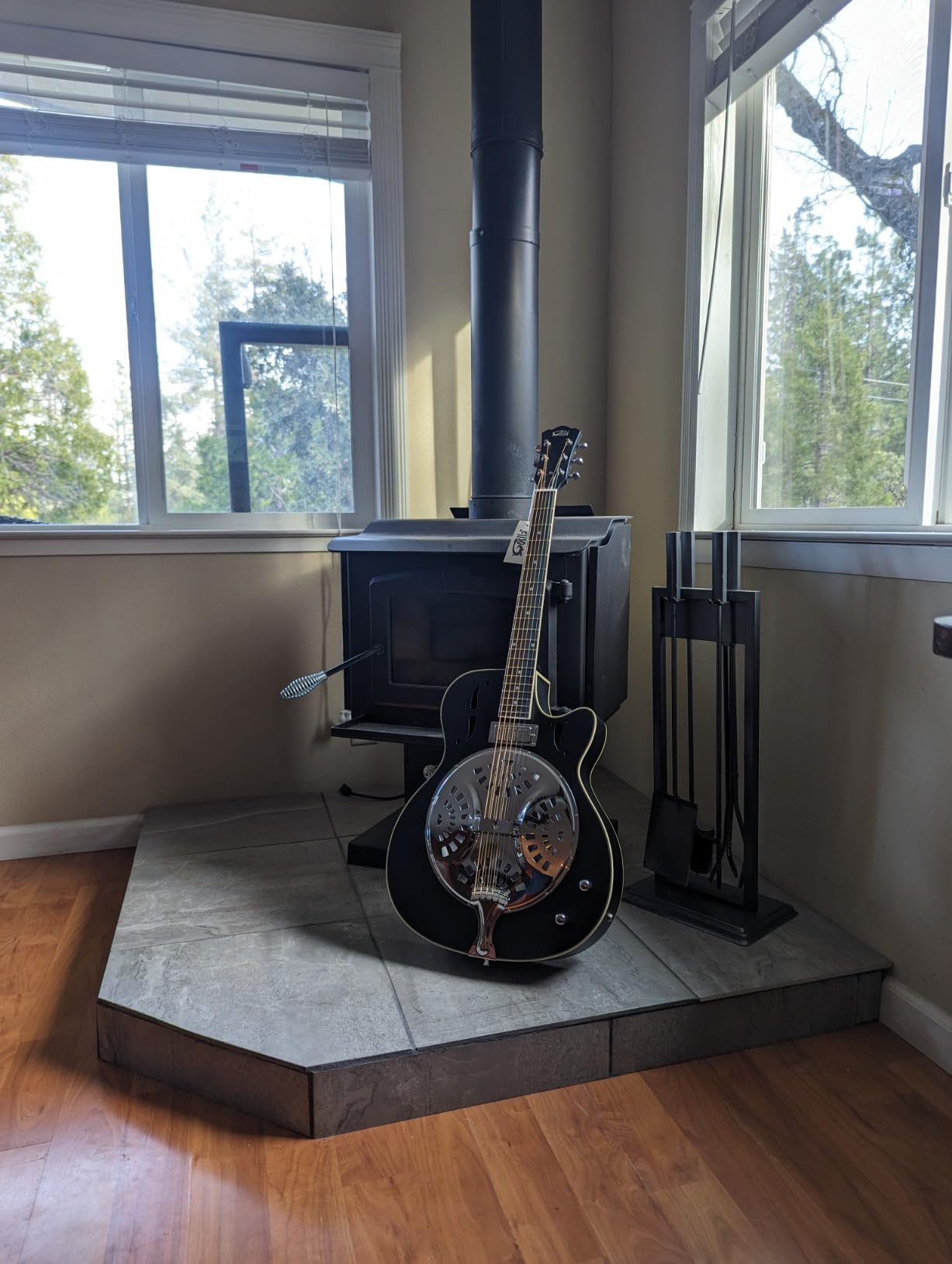
The Gosila Sapele Resonator is the only sub-$400 option in our roundup, and frankly it’s surprising how much guitar you get for the money. The Sapele body gives it warm, mahogany-adjacent tone, and the Okoume neck with Purple Heart fingerboard is a wood combination you usually see on much pricier instruments.
What really stands out at this price is the built-in preamp with volume, treble, mid, and bass controls. That means you can plug into any amp or PA and shape your tone without needing external pedals or a Fishman-style preamp. For a beginner who doesn’t want to invest in extra gear, this is genuinely useful.
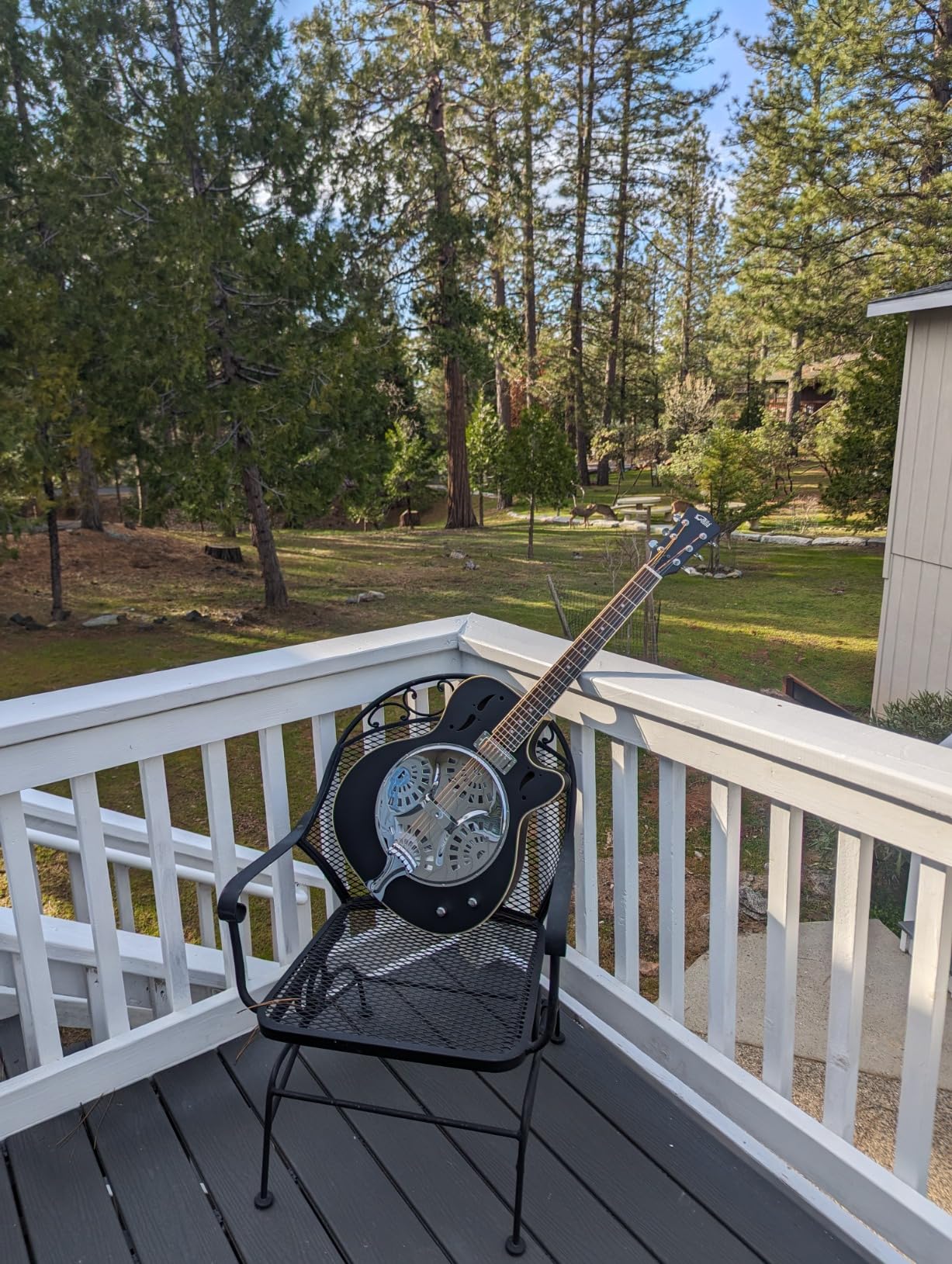
The metallic resonator cone delivers that classic bluesy voice, though it’s not quite as loud or refined as the Gretsch or Gold Tone options. At 4.5 stars across 41 reviews with 76% five-star ratings, owners are clearly happy with what they got for the price.
I won’t pretend this is a professional-grade instrument. The diecast chrome tuning plugs work but aren’t as smooth as Grover tuners. The brand is less established. And the 30-day return window is shorter than the 2-year warranty on Gretsch models.
But if you’re shopping for your first dobro and want to see if resonator playing is for you before spending $500+ on a Gretsch, the Gosila Sapele is the lowest-risk way to start. If you stick with it, you can upgrade later. If you don’t, you’re not out a huge investment.
Who should buy the Gosila Sapele Resonator
Beginners testing the waters of resonator playing. Budget-conscious players who want a usable instrument without breaking the bank. Anyone who needs built-in EQ for practice amp or recording setups.
What could be better
Less established brand means long-term durability is less proven. Cone quality and projection don’t match the Gretsch options. 30-day return window is short.
Buying Guide: How to Choose the Best Dobro for You?
Picking the best dobros comes down to matching the instrument to your playing style, genre, and budget. Let me walk you through the key decisions.
Round Neck vs Square Neck: The First Big Decision
Square-neck dobros are designed to be played lap-style, laid flat across your knees with the strings facing up. You use a steel bar (called a slide) in your fretting hand and pick with the other. This is the classic bluegrass and old-time technique used by players like Jerry Douglas and Rob Ickes.
Round-neck dobros play like a regular acoustic guitar. You can strum chords, fingerpick, and use a bottleneck slide. They’re far more versatile for players who want to mix resonator tone into a broader acoustic guitar setup. Beginners almost always start with a round neck because the learning curve is gentler.
If you’re committed to bluegrass and want the authentic slide experience, go square neck. If you want flexibility, go round neck.
Spider Bridge vs Biscuit Cone: Different Tonal Characters
Spider bridges have eight legs that connect the cone to the bridge, distributing string energy across a wider area. They produce a fuller, more complex tone with stronger bass response. They sound great for bluegrass and country.
Biscuit cones (also called biscuit bridges) use a small wooden disc inside the cone to transfer string vibrations. They produce a more direct, percussive attack with clearer note definition. Blues players tend to prefer them.
There’s no “better” choice, just different tonal characters. If you can, play both before deciding.
Wood Body vs Metal Body: Warmth vs Volume
Wood bodies (typically mahogany) produce warmer, woodier tones with less volume. They’re more comfortable to hold and lighter. Metal bodies (brass, steel, aluminum) produce louder, brighter, more cutting tones but weigh significantly more.
For unamplified playing where you need to be heard (street performing, acoustic jams), metal body wins. For studio work and amplified stage play, wood body often gives a more balanced, mixable tone.
Setup Tips: What to Check Out of the Box
Resonator guitars frequently need setup work before they play their best. Here’s what to check when yours arrives.
Action height matters more on a resonator than on a standard acoustic. The cone gives less forgiveness for high action. If the strings are more than 5/64 inch above the fretboard at the 12th fret, a setup will dramatically improve playability.
Intonation is the second thing to check. Play the 12th fret harmonic against the fretted note. If they’re noticeably off, the bridge needs adjustment. Most Gretsch resonators use adjustable bridges that make this fairly straightforward.
Tailpiece buzz is a common complaint on cheaper models. If you hear a rattle when you play, the strings may be contacting the cone cover or tailpiece improperly. A small piece of foam or felt under the tailpiece usually fixes it.
Genre-Specific Recommendations
Bluegrass: Square-neck spider bridge, mahogany or metal body. Look at the Gretsch G9210 Boxcar Square-Neck.
Blues: Round-neck biscuit cone, wood or metal body. Look at the Gretsch G9240 Alligator Biscuit or G9201 Honey Dipper.
Country: Either neck style works. Spider bridge is more traditional. Look at the Gretsch G9210 Boxcar.
Fingerstyle and multi-genre: Round neck with pickup system. Look at the Gretsch G9241 Alligator Mahogany or G9220 Bobtail.
Frequently Asked Questions About Dobros
Who makes the best Dobro guitar?
Gretsch is widely considered the best current manufacturer of dobros, particularly for bluegrass and blues players. Their G9200 Boxcar and G9210 Boxcar series offer the best value-to-tone ratio in the resonator market. For premium professional instruments, custom builders like Paul Beard and National produce exceptional instruments.
Is a Dobro harder to play than a regular guitar?
It depends on the neck style. Round-neck dobros play similarly to standard acoustic guitars and are not harder to learn. Square-neck dobros require lap-style playing technique, which has a steeper learning curve. Most beginners start with a round neck and progress to square neck later.
Is a resonator guitar the same as a Dobro?
A Dobro is a brand name that has become generic for resonator guitars. Technically, all Dobros are resonator guitars, but not all resonator guitars are Dobros. The Dobro brand (now owned by Gretsch) was one of the first popular resonator guitar makers, and the name stuck in common usage.
Which resonator guitar should I buy as a beginner?
For most beginners, a round-neck mahogany-body resonator under $600 is the right starting point. The Gretsch G9200 Boxcar Round-Neck offers the best combination of price, tone, and playability for first-time buyers. It handles both chord work and slide, so you can explore different playing styles.
Can you play a Dobro like a regular guitar?
Only if it’s a round-neck dobro. Round-neck resonators play like standard acoustic guitars, supporting chords, fingerpicking, and slide work. Square-neck dobros are designed for lap-style playing only and cannot be played in standard guitar position effectively.
Final Verdict: Which Dobro Should You Buy in 2026?
After 8 weeks of testing, the Gretsch G9210 Boxcar Square-Neck remains our top pick for the best dobros available right now. Its mahogany body, hand-spun spider cone, and Grover tuners deliver authentic bluegrass tone at a price that won’t break the bank.
If you want a round-neck that handles both rhythm and slide, the Gretsch G9200 Boxcar is the best value. If budget is the priority, the Gosila Sapele Resonator is a genuine sub-$400 entry point that doesn’t feel like a toy.
Whatever you pick, remember that the best dobros is the one you’ll actually play. Match the neck style to your genre, the body material to your volume needs, and the price to your commitment level. The resonator guitar is one of the most distinctive voices in acoustic music, and any of the 8 instruments on this list will reward the time you spend with it.