

Are dust separators worth it? In most workshops, yes, and the reason is simple: a shop vac filter clogs long before the tank is full. Once that happens, suction drops mid-job, fine dust blows back into the room, and you end up buying replacement filters and bags every few weekends. A dust separator sits between your tool and the vac, spins the airstream so chips and bulk dust drop into a bucket, and lets the filter see only the finest fraction of the debris.
We spent weeks comparing the best dust separators for shop vacuums currently on the market, reading through owner reports on woodworking forums, and checking every spec against the manufacturer listings. This guide covers eight separators that work with a wet/dry vac, from a bare retrofit cyclone that bolts to a bucket lid you already own to a stainless tank unit built for floor sanding and CNC work.
If your shop is still running a wet/dry vac without a pre-separator, our guides to the best shop vacs for woodworking and the best wet/dry vacs for workshops are a good place to match the vac to the separator. If you are still choosing the vac itself, start with our shop vac roundup first, then come back here.
Table of Contents
Top 3 Best Dust Separator Picks for Shop Vacs in 2026
The three below are the ones we would put in our own shop. Each one earns its place for a different reason: the first is the most flexible, the second is the most thoroughly tested, the third is the least assembly work.

Oneida Dust Deputy DIY
- Retrofit cyclone
- works with any wet/dry vac
- Tapered 2.0 inch ports
- Anti-static plastic

Dustopper PRO
- Third-party tested separation
- Preinstalled EPDM gasket
- Two sweep elbows
- Low profile

DEWALT 6 Gallon DXVCS002
- Bucket
- lid and casters included
- 1-7/8 inch hose included
- 3-year warranty
Our number one pick, the Oneida Dust Deputy DIY, adapts to any wet/dry vac you already own and is the least expensive way into two-stage collection. The Dustopper PRO is the strongest choice if fine sanding dust is your main problem, because its separation performance was verified by an outside lab rather than by the manufacturer alone. The DEWALT DXVCS002 wins on convenience: the bucket, lid, latches, casters and hose all ship in one box.
All 8 Compared Side by Side (October 2026)
One caution before this table: efficiency percentages below are manufacturer claims, not independent measurements, unless we say otherwise. Every figure in that column came from the seller’s own listing.
| Product | Specifications | Action |
|---|---|---|
| Oneida Dust Deputy DIY Anti-Static Retrofit |
|
Check Latest Price |
| Dustopper PRO Low Profile Cyclone |
|
Check Latest Price |
| DEWALT 6 Gallon Dust Separator DXVCS002 |
|
Check Latest Price |
 Rockler Dust Right with 10 Gallon Bucket Rockler Dust Right with 10 Gallon Bucket |
|
Check Latest Price |
 POWERTEC Low Profile Separator Kit POWERTEC Low Profile Separator Kit |
|
Check Latest Price |
 DEWALT 10 Gallon Stainless Steel Tank DXVCS003 DEWALT 10 Gallon Stainless Steel Tank DXVCS003 |
|
Check Latest Price |
 Festool CT Cyclone 204083 Festool CT Cyclone 204083 |
|
Check Latest Price |
 Oneida Dust Deputy 2.5 Deluxe 5 Gallon Kit Oneida Dust Deputy 2.5 Deluxe 5 Gallon Kit |
|
Check Latest Price |
Two columns deserve a note. First, the Rockler and the POWERTEC units both center on larger ports, so they pair more naturally with a dust collector than with a small household vac. Second, four of the eight do not include a bucket, which is the most common reason first-time buyers feel short after assembly day.
What a Dust Separator Does and Why It Changes Your Workflow
A dust separator is a cyclone or lid-style unit that sits between your tool and your shop vac, spinning the airstream so chips and bulk dust drop into a bucket before air reaches the filter. The cyclone body has no filter of its own to clog, so suction holds steady as the bucket fills instead of fading out over an afternoon.
Dirty air enters the cone or lid tangentially and starts to spin. Heavier particles are thrown to the wall of the cone, lose their speed, and fall into the bucket. The cleaner air turns inward and travels up the centre to the vac, where it meets the filter that was only ever meant to trap the last little bit.
There are three common shapes. The tall cyclone-on-a-bucket design is the strongest performer and the most portable. The low-profile lid design screws or clamps onto a 5-gallon bucket and sits almost flat, which is what you want under a bench. The DIY baffle plate is the cheapest approach and the least effective at catching fine dust.
What a separator does not do is eliminate the filter. The filter stays in the vac and still catches the fine fraction. What changes is the volume: for most sanding and sawing work, the fine fraction is a small share of the total debris, so a filter that needed cleaning every ten minutes can stay on the vac for months.
Emptying cadence matters more than most sellers admit. Once dust reaches the bottom of the cone, it gets re-entrained and blasted straight at the filter, which cancels out the entire benefit. Keep the bucket under roughly half to two-thirds full.
1. Oneida Dust Deputy DIY Anti-Static Retrofit – Best Overall
Oneida Air Systems Dust Deputy DIY Anti-Static Retrofit Cyclone Separator for Wet/Dry Shop Vacuums (DD DIY)
Cyclone retrofit
Tapered 2.0 inch ports
0.8 ounces
15.5 x 9.3 x 7.4 inches
Pros
- Works with any brand or model of wet/dry vac
- 2.0 inch tapered ports accept several hose diameters
- Suction stays close to a direct hose connection
- Made in the USA
Cons
- No hoses or adapters included
- Matching hose diameters takes trial and error
- Buckets with thin walls may collapse
This is the unit we recommend to almost anyone. It is a retrofit cyclone, meaning you supply the bucket, the lid, and the hoses, and the separator bolts into a hole you cut in that lid. At 0.8 ounces it weighs almost nothing, and because it is not tied to one vac brand, it can move between machines whenever your setup changes.
Owner reports on woodworking forums are consistent about the results. Multiple long-term users describe emptying the bucket many times over a year while the vac body and filter stay nearly dust-free, and several note that the filter and bag replacement cycle effectively disappeared from their maintenance routine. One owner who was cleaning a filter every ten minutes before adding this cyclone reports the opposite experience afterwards, including on tile thinset removal.
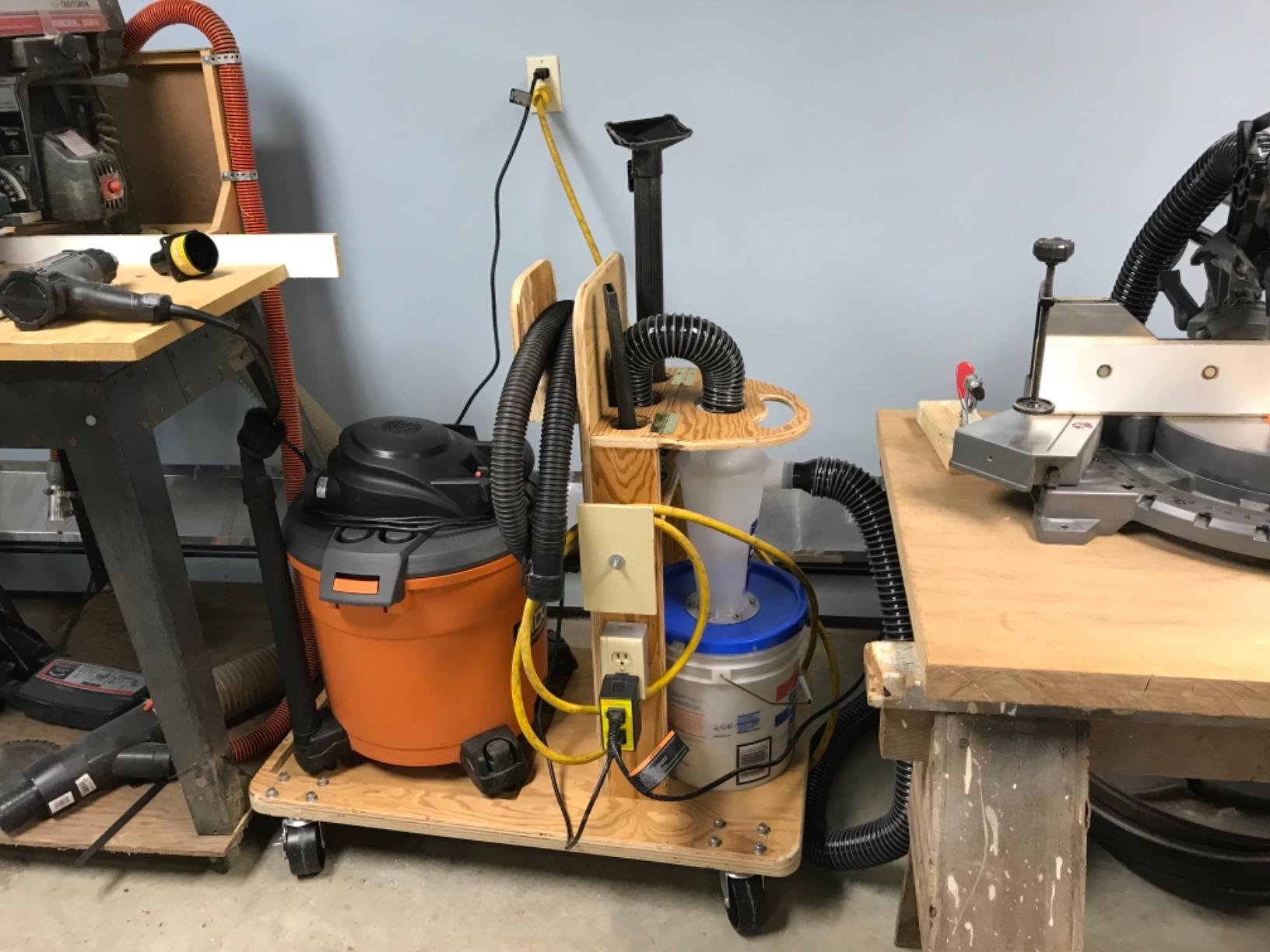
The maker claims the cyclone captures up to 99.9 percent of dust and debris before it reaches the filter, and claims Neutral Vane Technology improves efficiency by 20 percent. Those are the seller’s numbers, not a lab result, so treat them as a reasonable expectation rather than a measurement. The tapered 2.0 inch ports are genuinely the most flexible port sizing in this group, and they accept more hose diameters than the nominal 2.5 inch ports found on most rivals.
The material list on the listing is unusually broad, covering wood dust, drywall dust, concrete dust, clay and silica dust, blasting soda, cooled ash, metal shavings, and pet hair. That claim matters for a lot of shop owners, because the same cyclone that handles planer shavings will handle sanding dust without a second purchase.
The friction points are consistent too. No hoses or adapters ship in the box, so a first-time installer spends time finding reducers. The plastic body is light enough to tip when you drag the hose, and it puts real stress on the bucket wall, which is why the wall thickness of your pail matters as much as the cyclone itself.
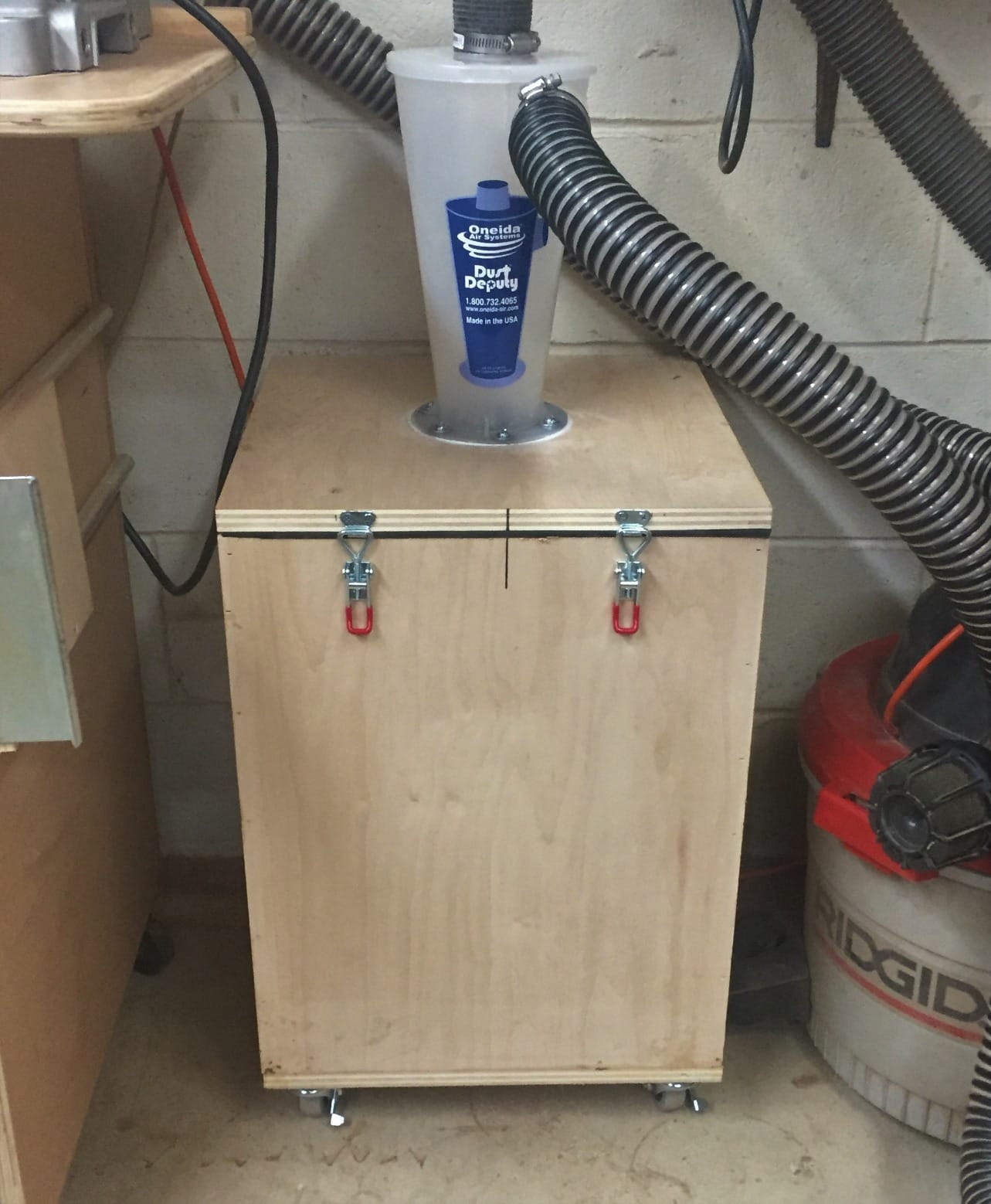
Check your bucket wall thickness before you install it
Recurring reports of collapsed buckets trace back to thin-walled pails rather than to the separator. A 5-gallon bucket under shop-vac suction wants a wall of at least 90 mil, which is 0.09 inches. If your bucket flexes when you press your thumb into the side, it is too thin for this kind of suction and will dent inward over time.
Two fixes cost almost nothing. Nesting one 5-gallon bucket inside another doubles the wall strength and is the fix most owners land on, and a plywood stiffener ring around the outside adds rigidity without changing the capacity. A steel can is the answer if you run a large vac or deal with abrasive material regularly.
Skip this one if you want zero assembly
This is a bare cyclone with a gasket and mounting hardware, so you need a drill, a hole saw, a bucket, a lid, and the right hose. If your workshop has no time for that, or if you want a unit that rolls around on casters, the DEWALT kit later in this guide does the same job with the bucket, lid and wheels already assembled. You also lose the factory gasket, so expect to source a good seal yourself and smoke-test the joint.
2. Dustopper PRO – Best Value Independently Tested Low-Profile Cyclone
Dustopper PRO Dust Collector – 99.9% Efficiency Cyclone Dust Separator
Low profile cyclone
Anti-static resin, 0.5 inch wall
13 x 13 inches
1.63 kilograms
Pros
- Separation performance verified by an outside lab
- Preinstalled EPDM gasket seals to standard pails
- Two sweep elbows included
- Clear upper section shows the fill line
Cons
- Needs a 5 HP or larger vac for best results
- No bucket included
- Adapters not included
The thing that separates this unit from the crowd is the testing. Dustopper had its separation efficiency measured by Aerodyne Environmental against fine sawdust, coarse sawdust, and drywall powder, and the result was higher than other low-profile separators. In a category where nearly every efficiency number is a marketing claim, that third-party data is worth paying for.
Design-wise it is a low-profile body that clamps to a standard 5-gallon pail, with a clear upper section and an orange base so you can see how full the bucket is without opening anything. The body is moulded from anti-static resin with a nominal wall thickness of 0.5 inches, which is far more rigid than a typical injection bucket-lid cyclone.
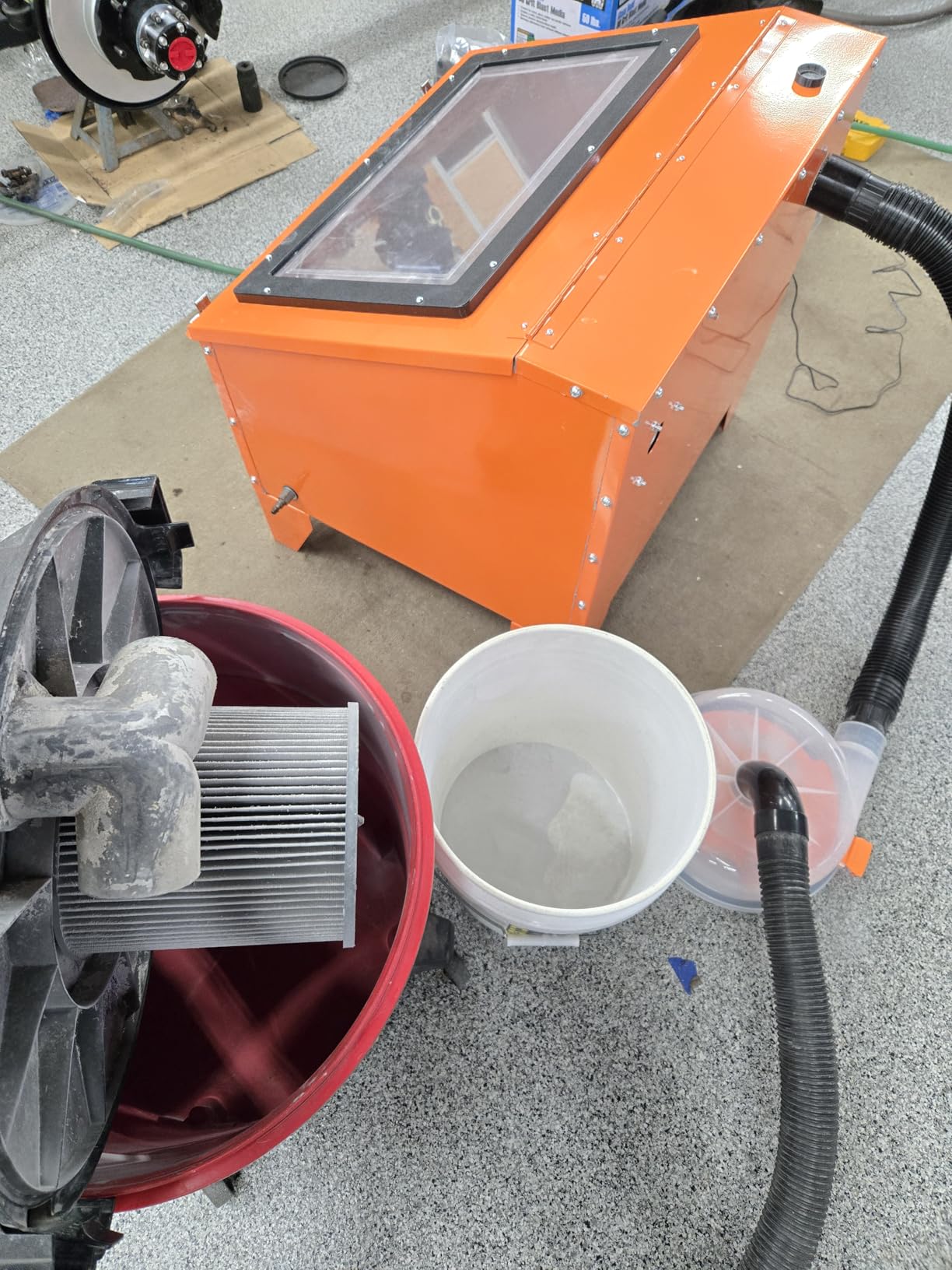
Owners on forums and on the listing itself repeatedly credit the thick construction and the no-leak gasket. Build quality comments are almost uniformly positive, and the sweep elbows are cited as the reason airflow restriction is lower than expected for a unit in this footprint. Several users pair it with a CNC or table saw and report near-empty vac interiors afterwards.
There is one dependency worth understanding before you buy. The manufacturer’s design intent is separation rather than maximum airflow, because excess airflow creates eddy currents that reduce efficiency, which means this unit wants a vac of 5 HP or more to do its best work. Owners who upgraded from a roughly 4.5 HP vac to a 5.5 HP model report a visible change in how much dust ends up in the bucket. If your vac is a small 4-gallon unit, you will underuse this separator.
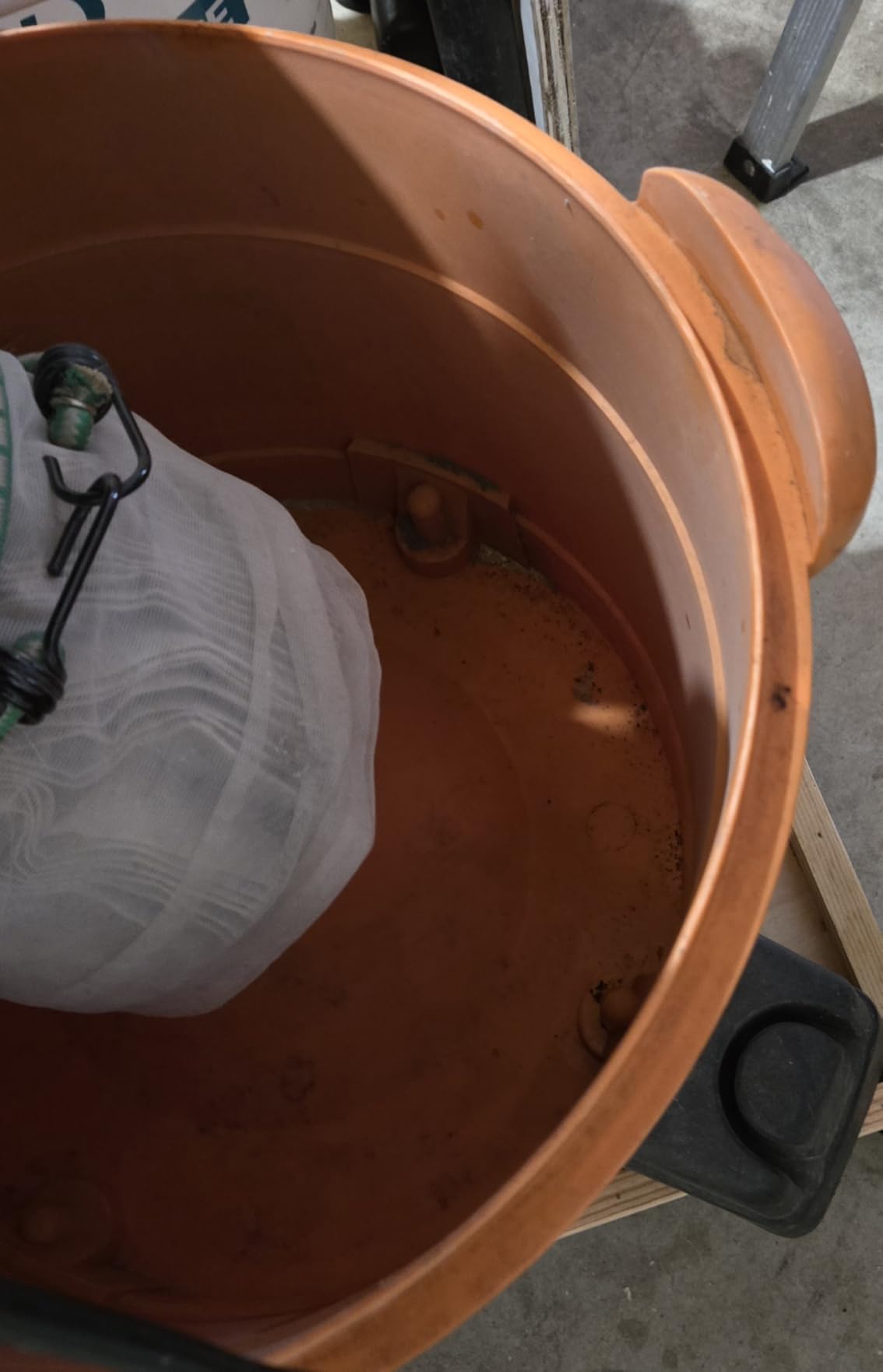
Check your hose diameters before you order
The nominal 2.5 inch connections have an inner diameter closer to 2.25 inches, and the included hose can be short for a larger vac. Outside the US, sourcing an adapter for that inner dimension is the most common source of frustration reported by buyers. Measure the inner diameter of your hose and the outlet of your vac, and buy your reducers in the same order rather than the week after.
Skip this one if your vac is under 5 HP
This is a separation-first design, so pairing it with a modest wet/dry vac wastes what you paid. It is also a 5-gallon format with no casters, so it stays put on the floor or a shelf rather than rolling around a shop. If you need something that travels between a bench, a table saw and a sander, the tall cyclone kits with casters are a better shape for the job.
3. DEWALT 6 Gallon Dust Separator DXVCS002 – Best Complete Kit
DEWALT 6 Gallon Dust Separator for Wet/Dry Shop Vacuums,DXVCS002
Cyclonic filter type
6 gallon poly bucket
15.9 x 15.9 x 31.4 inches
12 pounds
Pros
- Bucket with lid latches and casters included
- Four-caster base for stability
- Cyclonic capture before the vac filter
- 3-year limited warranty
Cons
- Vacuum not included
- Included 1-7/8 inch hose may need adapters
Everything that makes a DIY cyclone setup fiddly is already in this box. You get the separator, a 6-gallon poly bucket, a lid with sealing strips and latches, two handles, a wheel bracket, four casters with bushings and screws, and a length of 1-7/8 inch hose. Assembly is closer to bolting four casters onto a bucket than to fabricating a lid.
That completeness is why it lands in the top three. Roughly 78 percent of its reviews are five-star, and the recurring theme is convenience: owners like having a rigid bucket, a sealed lid and wheels from the start rather than assembling a lid from parts. It measures 15.9 by 15.9 by 31.4 inches and weighs 12 pounds, which is a substantial footprint but stable for its size.
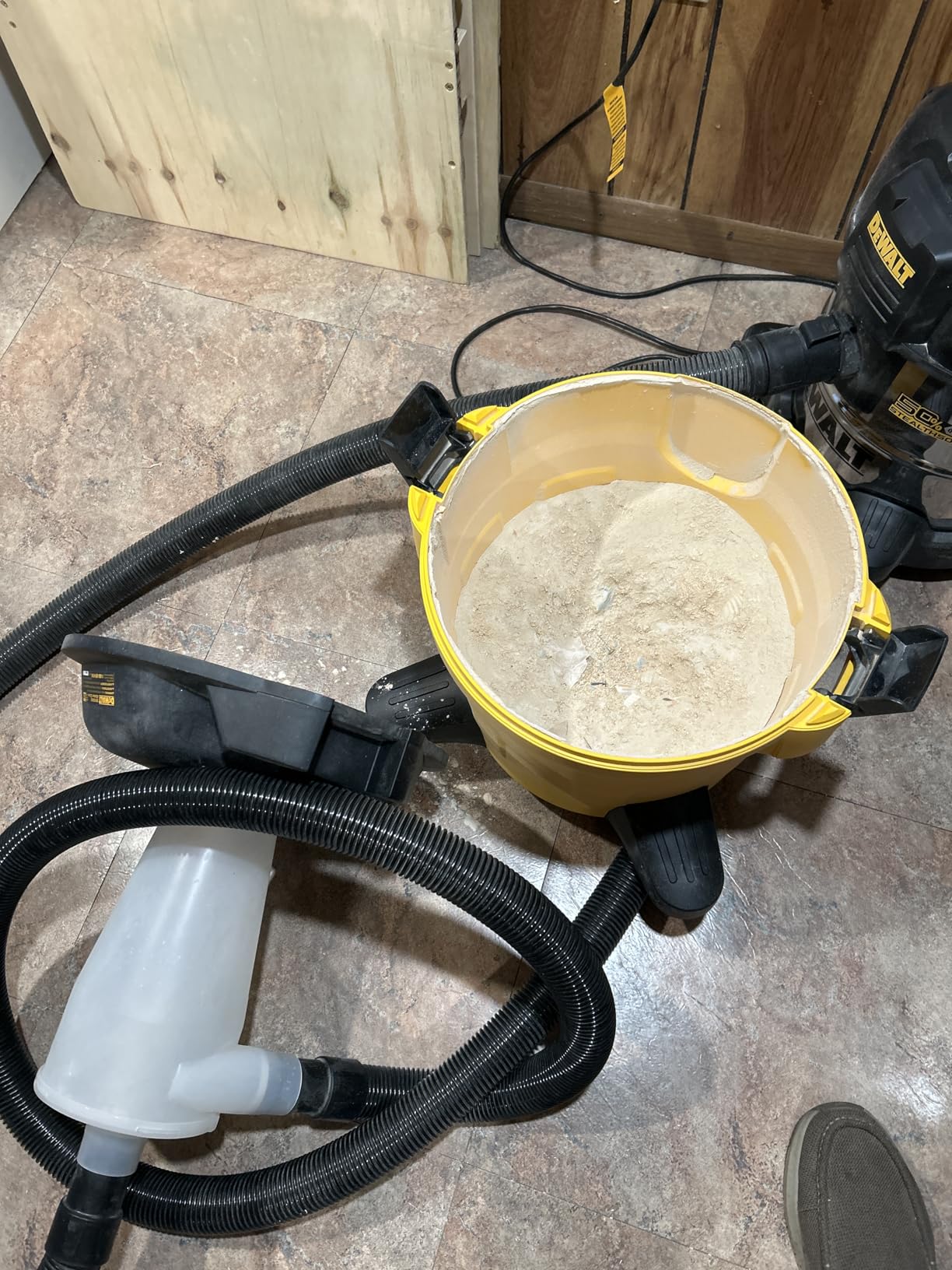
The lid uses sealing strips and two latches rather than a friction-fit lid, so it holds under suction better than pop-on designs. Reviewers consistently note cleaner vacuum interiors and easier emptying than their old setup. The stated material coverage is wide: wood chips, drywall dust, concrete dust, clay and silica dust, cooled ash and soot, water, and metal shavings.
The two recurring caveats are simple. The vacuum is not included, which buyers occasionally miss at checkout, and the included hose is 1-7/8 inch, so if your vac has a 2-1/2 inch outlet you will need a reducer to use both ports as intended. The listed port compatibility covers 1-7/8 inch and 2-1/2 inch configs, which is broad, but the physical adapters are not in the box.
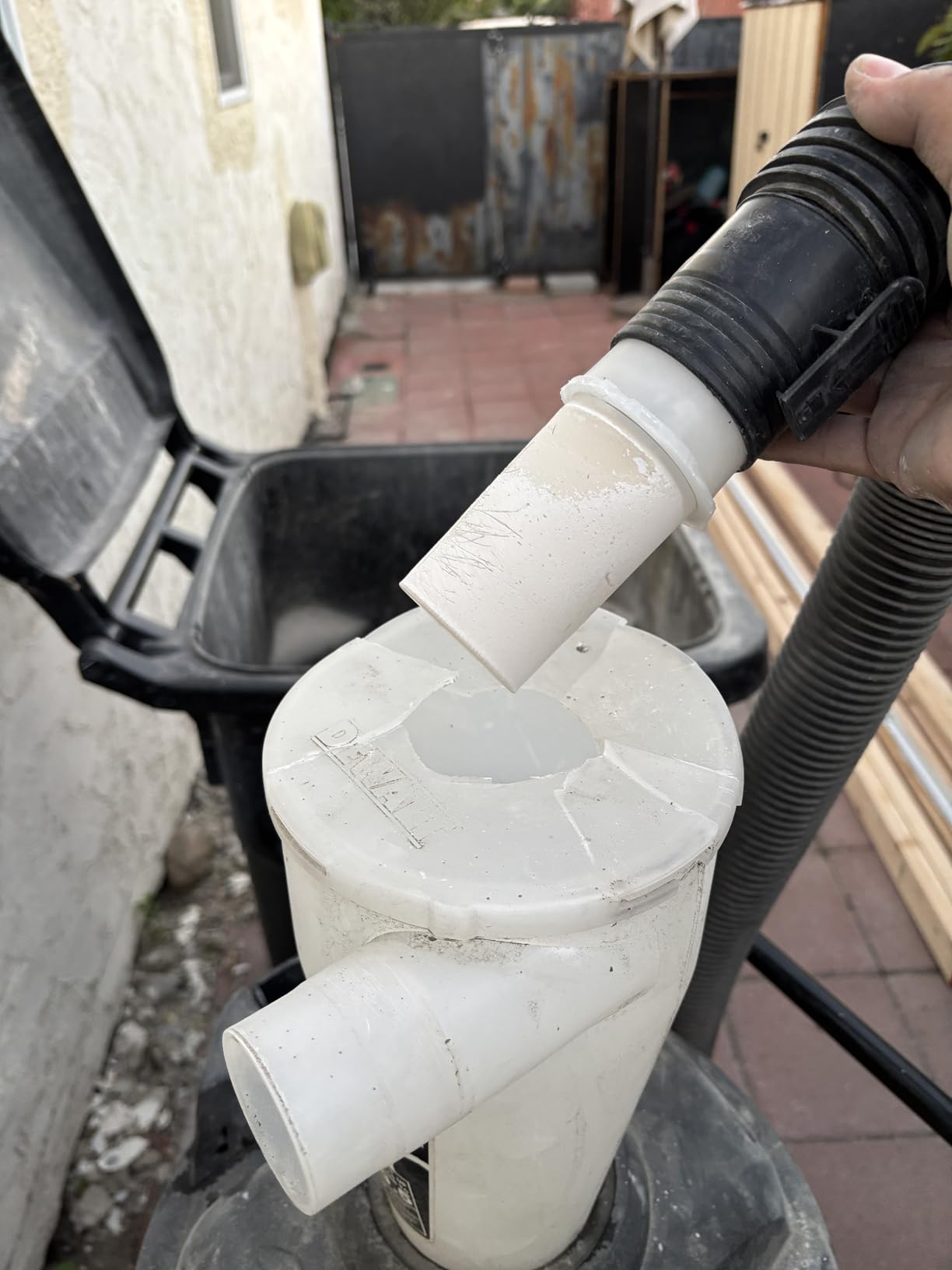
Confirm the port size before the crate arrives
Measure the inside diameter of your vac hose and the outlet collar before you start. This unit is tall and wide at 31.4 inches, so it will not slide under a low bench, and it needs a clear path for a castor base to roll. Plan the position first, then the assembly, or you will end up lifting the whole thing to move it a few inches.
Skip this one if you already own a metal tank
The 6-gallon poly bucket is thicker than a standard pail but it is still plastic, and it is the part most likely to be the weak link under strong suction from a large vac. Owners who work on floor sanding or concrete benefit from the stainless tank in the DEWALT DXVCS003 further down, because steel does not dent. The poly version also gives up the 10-gallon capacity that keeps you from stopping mid-job.
4. Rockler Dust Right 10 Gallon – Best for High-Volume Jobs
Rockler Dust Right Dust Separator w/ 36” Hose & 10Ga Bucket for Shop Vac
Cyclone on 10 gallon bucket
Needs 2-1/4 inch ID outlet
17.1 x 16.9 x 12.5 inches
11.18 pounds
Pros
- 10 gallon translucent bucket shows the fill line
- Rolling base does not tip when dragged
- Extends filter and impeller life
- Workable alternative to a large industrial cyclone
- Hoses seat inside the ports
Cons
- Polycarbonate lid can crack under a planer
- Shavings can escape at the lid seam
- Suction loss with a small 4 gallon vac
Capacity is the whole argument here. The 10-gallon translucent bucket is roughly double what a standard cyclone kit offers, so the fill line is visible from across the room and you empty far less often. For a table saw day, a run of finish sanding, or a floor sander, that is a meaningful reduction in interruptions. A 36 inch flex hose and a five-caster base are included.
The rolling behaviour gets called out repeatedly and positively. Owners report that the wheeled container rolls easily, does not tip, and is still light enough to lift when it needs emptying, which is exactly what the tall stand-alone bucket configurations usually get wrong.
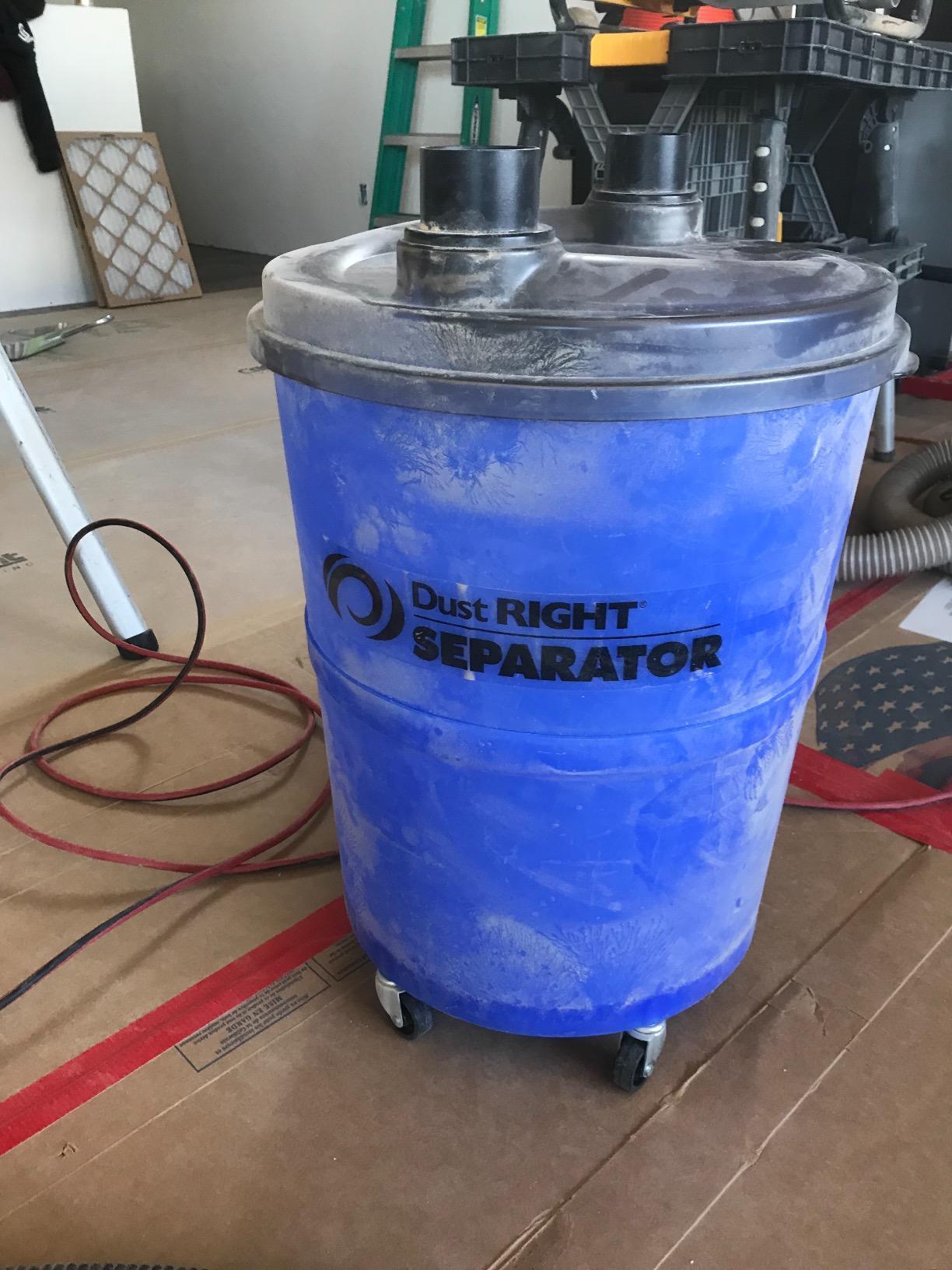
This is one of the lower-rated products in our group, at 4.2 stars from 672 reviews, with 61 percent five-star but a 7 percent one-star share. The durability complaints are specific and consistent: the polycarbonate lid can crack under the static pressure a planer generates, and a small gap between the lid and the container lets shavings escape on high-shaving workloads. Customer service is rated favourably even when a replacement is refused, which is worth knowing in advance.
It also needs a vac with a 2-1/4 inch ID outlet, and the required hose reducers are not always included. Owners pairing it with a small 4-gallon vac report noticeable suction loss, and the bucket itself can collapse slightly under a smaller vacuum’s suction.
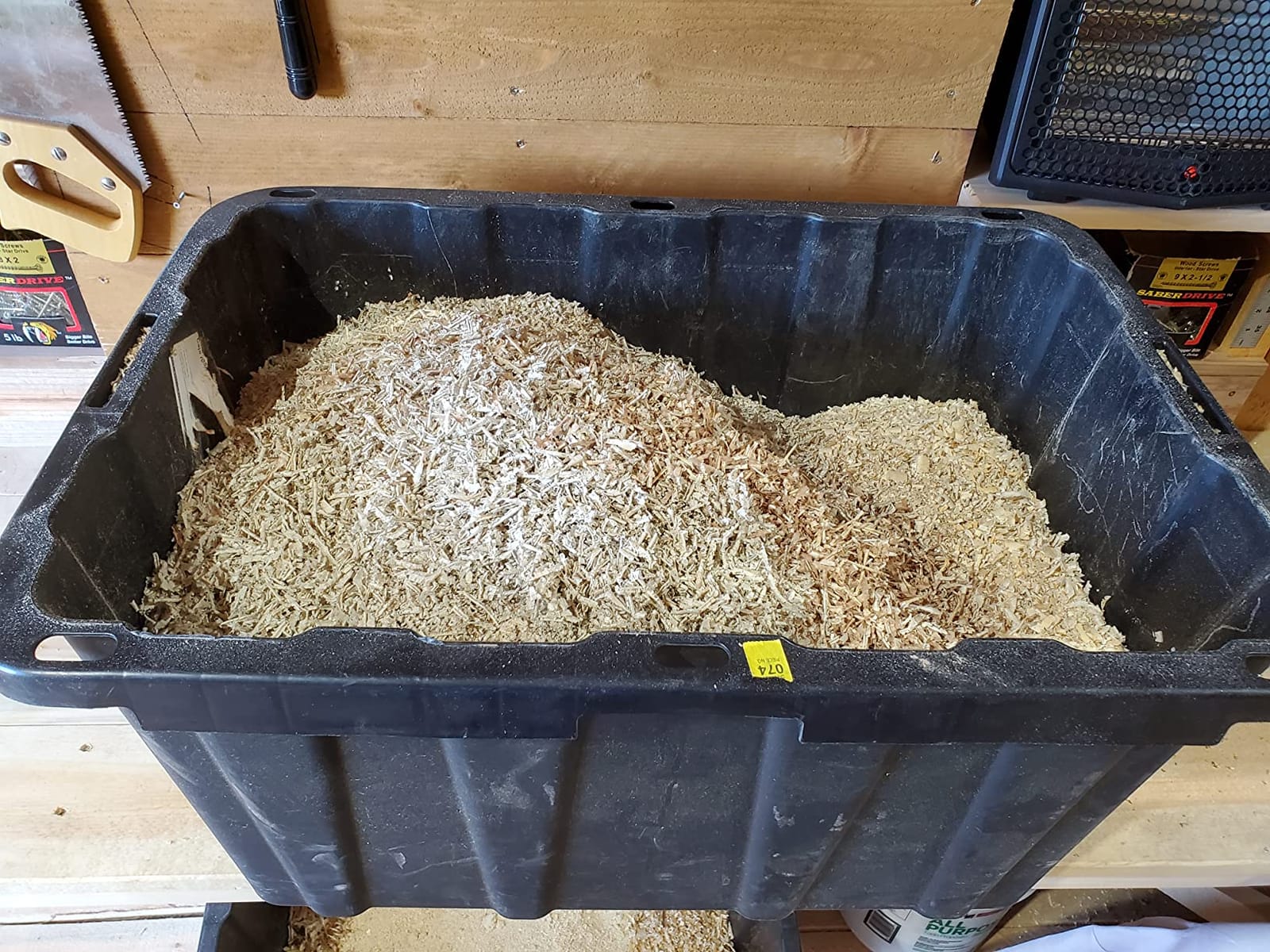
Check for lid cracks and seam gaps on a schedule
Treat this as a tool with a service life rather than a permanent fixture. Before a big planing or sawing session, run your hand along the lid seam and the perimeter of the lid itself looking for stress marks, and check the gap between the lid and the container while the machine is running. A whisper of escaping shavings is a sign to reseat the lid, and a visible stress line means you need a replacement lid before it fails outright.
Skip this one if your work is mostly fine sanding
The vortex action here is designed to pull out larger, heavier debris first, which is what the big bucket then swallows in quantity. Owners of lower-priced and lid-style separators report that fine powdery dust still reaches the vac, and that some of them moved to a stronger cyclone for exactly that reason. If your dust is almost entirely 180 to 220 grit sanding residue rather than chips, prioritise fine-dust capture over capacity.
5. POWERTEC Low Profile Kit – Best for Dust Collectors and Under-Bench Setups
POWERTEC Low Profile Dust Separator for Shop Vac & Dust Collectors, Fits 5 Gallon Buckets, For 2-1/4″ Shop Vacuum Port, 2-1/2″ & 4″ Dust Collection System, Cyclone Dust Collection Kit w/Hose & Elbow
Low profile lid for 5 gallon buckets
2.25 inch outside diameter
3 foot hose included
Pros
- Complete kit with hose elbow and adapters
- Patented low profile reduces tipping
- Handles chips and floor-sweep debris
- Works well on 4 inch dust collection ports
Cons
- Foam gasket may not reach the full circumference
- Latch hardware can pop out of its bracket
- Shop vac airflow is often not enough
This is the one to buy if your real problem is height. The lid mounts directly onto a 5-gallon bucket and adds very little vertical dimension, so it slides under a workbench where a 31-inch tower simply will not fit. The patented low-profile geometry is specifically intended to lower the centre of gravity and reduce tipping on a standard bucket, which is the standard failure of this shape.
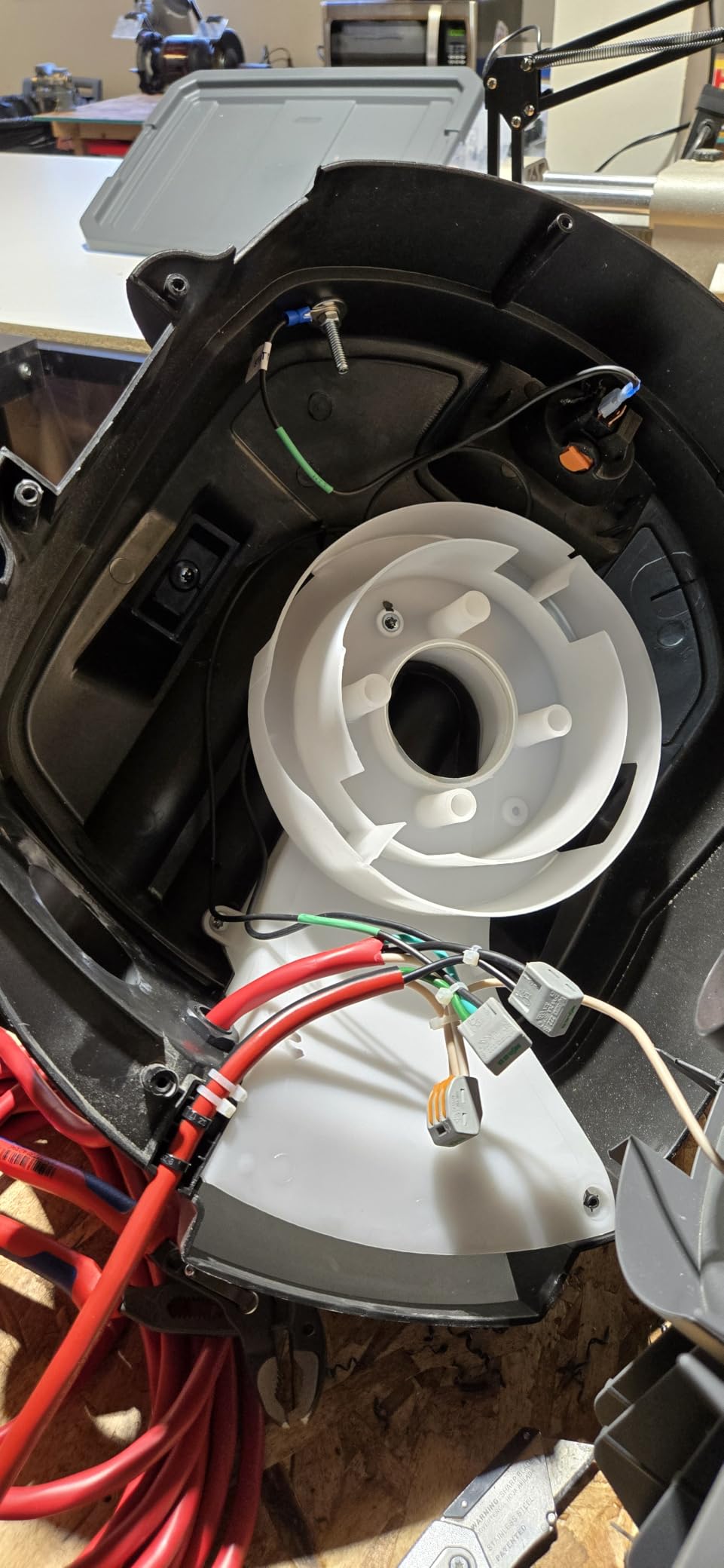
The kit is unusually complete for the category. You get the separator lid assembly, a foam gasket, dual latches, a 90 degree elbow with 2-1/4 inch ID and OD, hose adapters, a 3 foot hose, and grounding hardware for static management. That last item is the one most kits skip entirely.
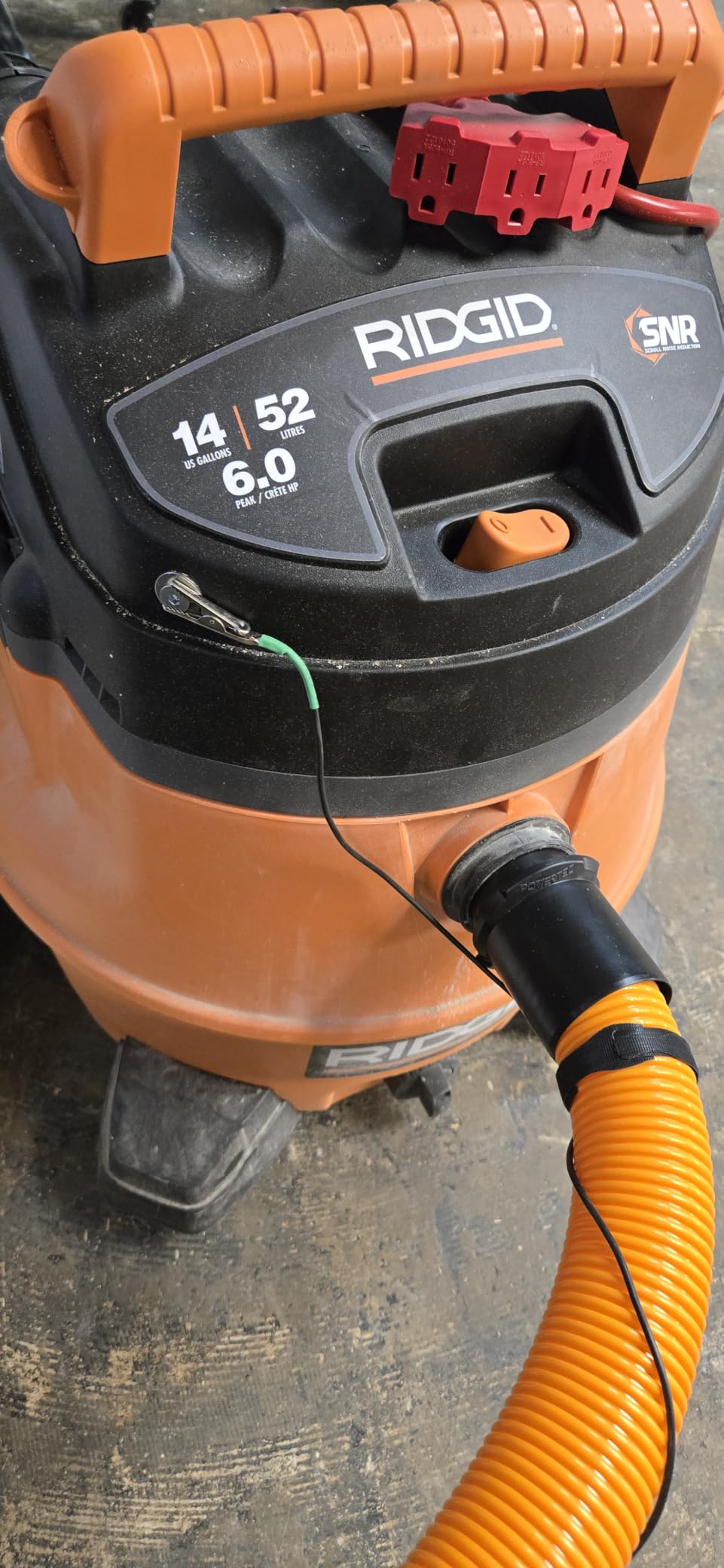
Reviewers report satisfaction clustering around use with a proper dust collector on 4 inch ports and around heavy floor sweeping, where the completeness of the kit and the stability of the low profile body are both praised. About 71 percent of its reviews are five-star. The materials coverage, including impact-resistant polypropylene and ABS with a foam rubber gasket, is appropriate for general shop use.
Where it falls short is fine dust, which is the honest drawback. Reviewers explicitly report more fine powdery dust passing through than with the premium low-profile design it resembles. Internal arches in the separator plate can also spin settled dust back up out of a half-full bucket, which is a good reason to empty sooner rather than later with this unit.
Verify the gasket reaches the whole bucket rim
The most common negative is a foam gasket that is short of the full bucket circumference, leaving an unsealed gap. Before you run anything through it, run your hand around the entire rim and look for daylight under the gasket, then test with a smoke stick or a lit incense stick held at the seam. A single pin-prick leak is enough to let air bypass the spin and collapse separation efficiency, and this is the single most common reason a new separator seems to do nothing.
Skip this one if you are running it on a shop vac alone
Several reviewers state plainly that it works far better with a dust collector than with a shop vac, and the instructions recommend a dedicated 1 HP or larger collector. Shop vac airflow through a 2-1/4 inch connection often falls short of what the geometry needs. If a shop vac is your only machine, choose a separator designed around a vac’s airflow, not a collector’s.
6. DEWALT 10 Gallon Stainless Steel Tank – Best for Abrasive and Wet Jobs
Dust Separator with 10 Gal. Stainless Steel Tank
Stainless steel 10 gallon tank
Four casters
18 x 17 x 34.6 inches
7.39 kilograms
70 dB
Pros
- Steel tank resists the collapse thin plastic buckets suffer
- 10 gallon capacity for long jobs
- Clamp-down lid on six screws
- 2-1/2 inch hose fits without an adapter
Cons
- Vacuum not included
- Large floor footprint
- Adds a little system noise
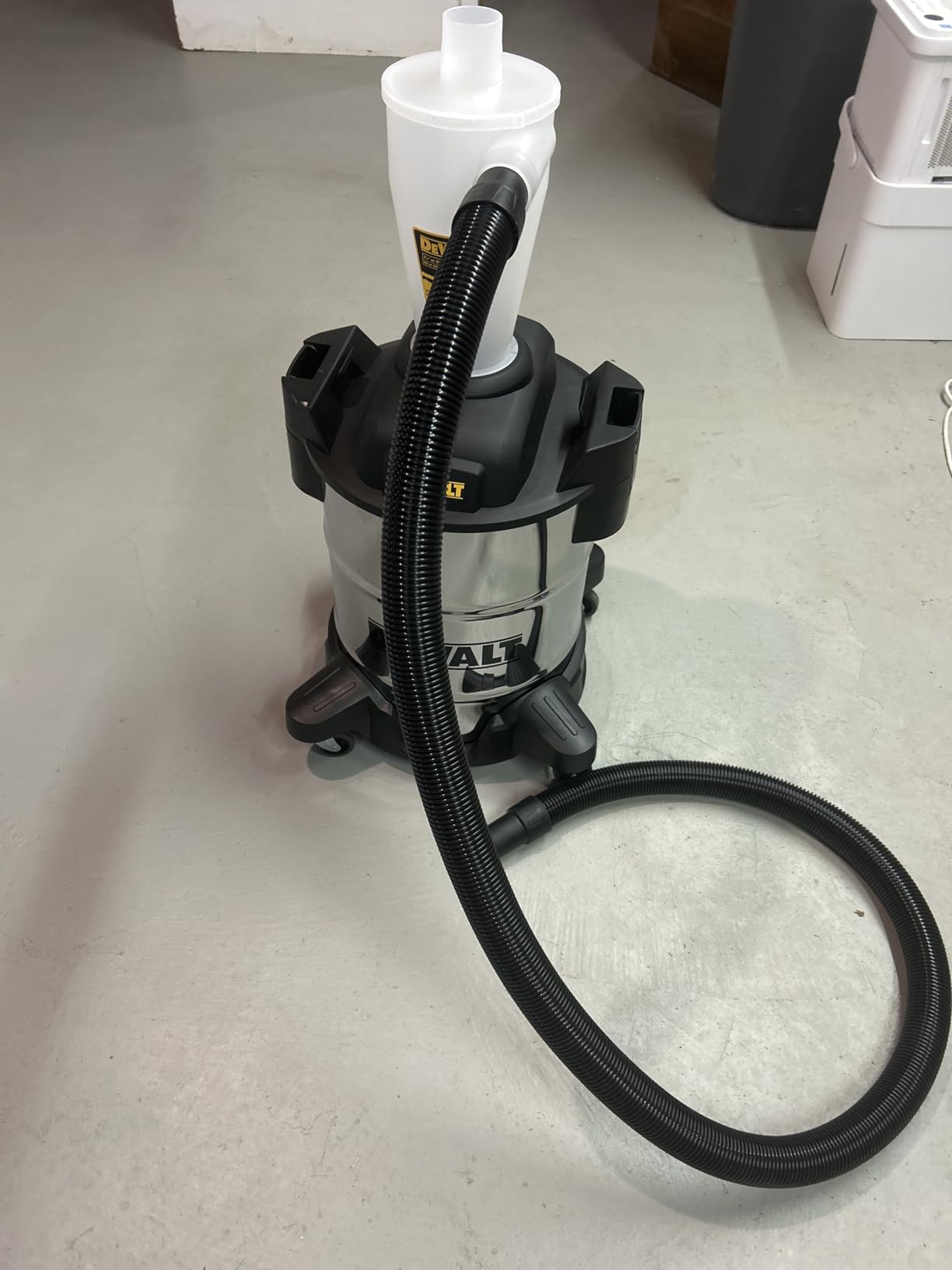
Bucket collapse is the most common failure in this whole category, and a steel tank removes it from the list of possible problems. The 10-gallon stainless vessel is 7.39 kilograms on its own, sits at 18 by 17 by 34.6 inches, and rolls on four casters. Nothing about it dents under suction, which is the point if you are near concrete, mortar, sanding compound or blasting media.
Owners report near-empty vac interiors after heavy use, with the stainless tank capturing essentially everything that went through it. The recurring themes are strong return on bag and filter costs, straightforward assembly at roughly ten minutes, and casters that make the unit easy to reposition. Several users mention it as the practical choice for floor sanding, CNC and scroll saw work precisely because the capacity means fewer stops.
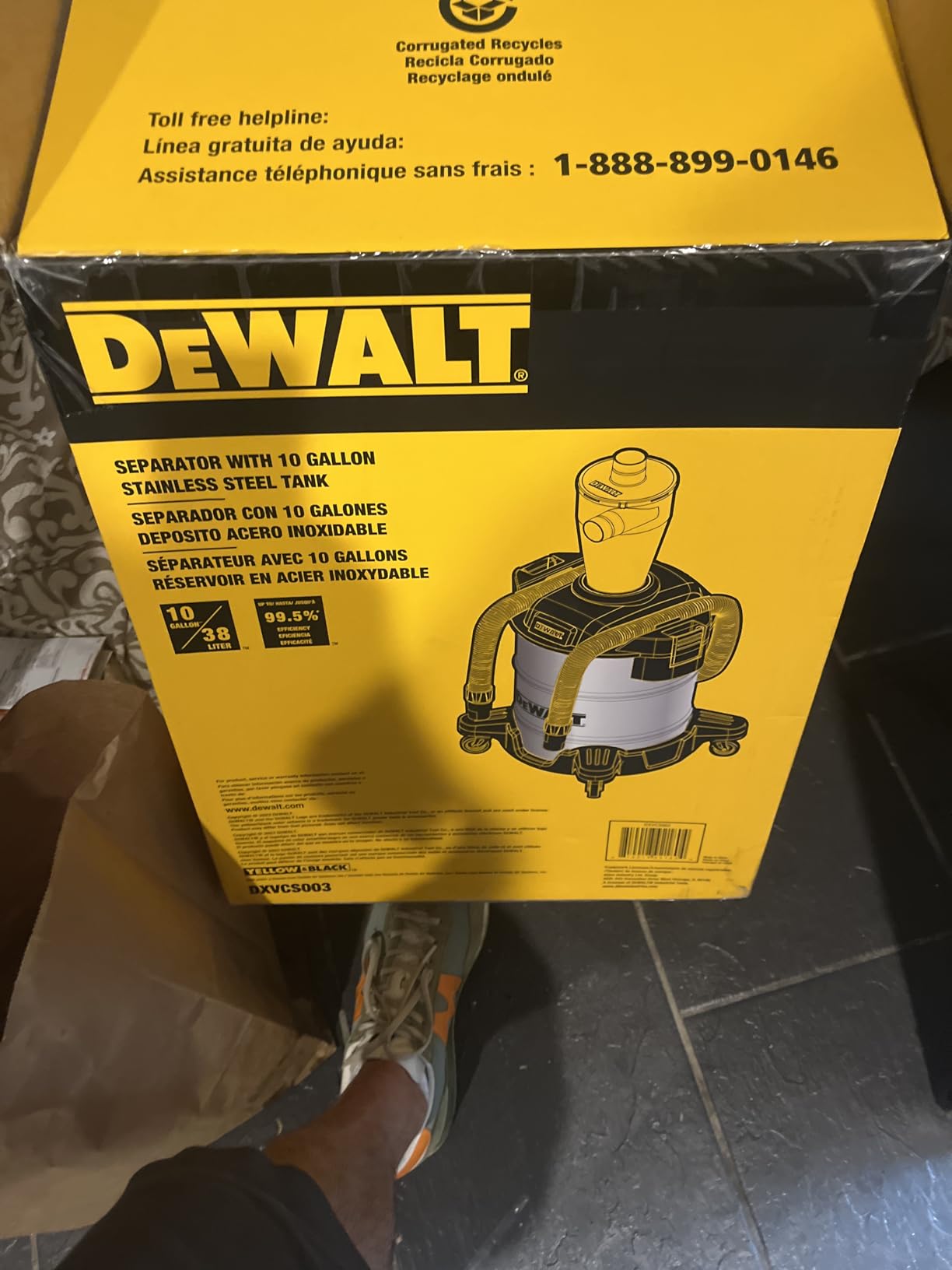
Connection is straightforward, which is unusual at this size. Standard 2-1/2 inch shop vac hose connects without an adapter, and 1-1/4 inch hose fits inside the intake port for handheld tools, so one separator can serve a bench grinder and a floor sander. The lid attaches on six screws and the casters install on four more.
The confusion to avoid is assuming this is a self-contained vacuum. It is not powered, and the reviews show a recurring pattern of buyers expecting an all-in-one machine and being disappointed. You still need a wet/dry vac downstream, and in some vacuum configurations you still need a separate adapter kit. It is also the largest footprint in this group and adds a little system noise at 70 dB.
Plan for abrasive material and static
Sand, concrete dust and blasting media are the cases that punish plastic bodies and thin walls, and this is the unit in the set that handles them best. Use anti-static hose between the separator and the vac, and keep the run short, because static builds fastest over long hose runs with fine, dry material. Grounding the tank if your hose is conductive is cheap insurance.
Skip this one if floor space is tight
At 34.6 inches tall and 18 by 17 inches across, plus the footprint your vac needs beside it, this is a shop with a dedicated corner rather than a small garage. It is also a fixed-format tank, not a bucket you can swap. If you want the same collapse-proof approach in a smaller footprint and you already have a stout bucket, the DIY retrofit with a heavy-duty pail gets you most of the way for far less money and floor space.
7. Festool CT Cyclone – Best for Festool CT and Systainer Shops
Festool 204083 CT CYCLONE Dust Separator CT-VA-20
Flat cyclone, aluminium body
15.55 x 11.61 x 20.28 inches
7 kilograms
Fits Systainer
Pros
- Flat design fits inside a Systainer for storage and transport
- Works with CT 26
- CT 36 and CT 48 with or without Autoclean
- Saves bag changes on high-dust machines
- Aluminium feels solidly engineered
Cons
- Highest price in the group
- Friction-fit parts are easy to misalign
- Connection is a friction fit
This is the only unit here that lives inside a Festool Systainer, and for a Festool shop that changes the whole calculation. The flat cyclone is friction-fit into the case and held in place by the Systainer lid, so it stores and travels with the extractor rather than occupying a permanent corner of the shop. It is compatible with CT 26, CT 36 and CT 48 extractors, with or without Autoclean.
Cabinetmakers and dedicated Festool users describe it as a system-matched accessory that quietly pays for itself by eliminating bag changes on track saws, miter saws and sanders. It is listed as OSHA Table 1 compliant when paired with a HEPA-certified CT dust extractor, and the aluminium body is described in reviews as feeling far more solid than plastic separators of any size.
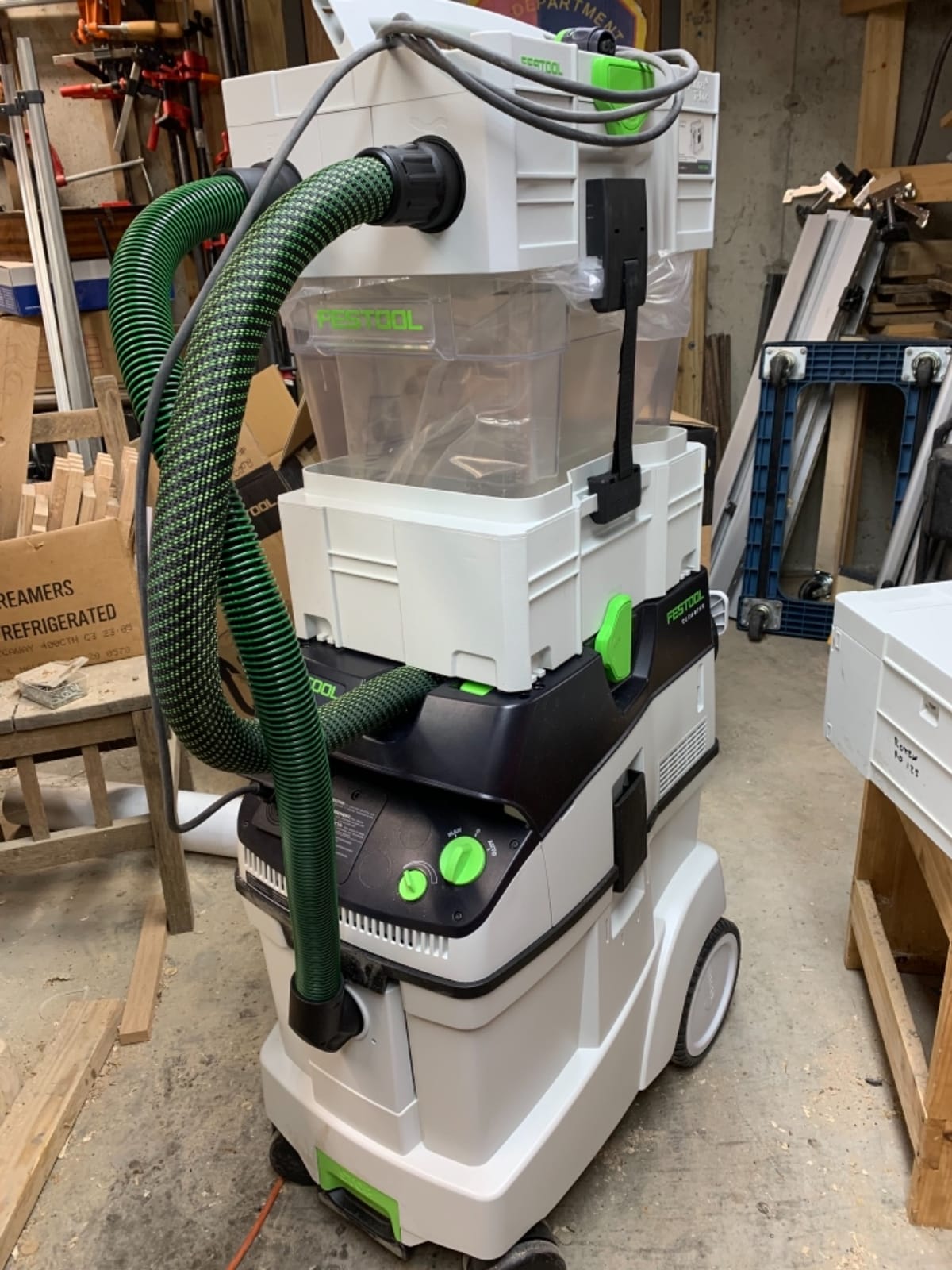
Two criticisms dominate. The first is price, which is far above every other unit in this roundup, and the second is the friction-fit connection. Owners report that the cyclone parts are easy to misalign when snapping together, and a misalignment causes a dramatic drop in suction that is easy to misdiagnose as a clogged filter. A standard shop vac hose will plug directly into the unit in a pinch, which is a useful fallback.
It can also be run with or without the collection tub depending on the task, which is a small but real convenience when you are doing short cleanup bursts rather than a full day of sanding.
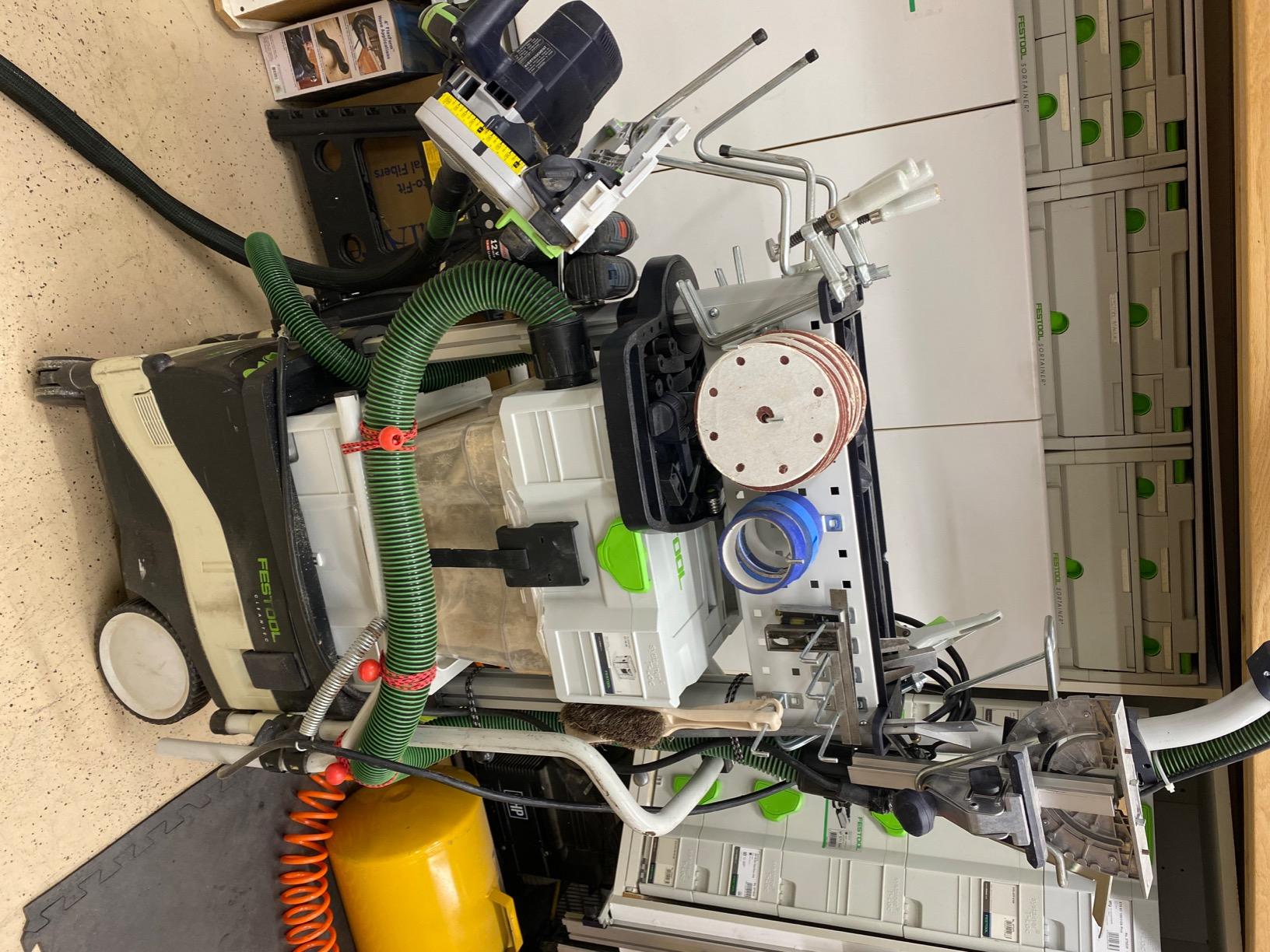
Learn the alignment before you need it
Before the first job, sit down with the unit, snap the cyclone parts together, and confirm the airflow path is straight while a shop vac is running. That is the moment to discover a misalignment, not mid-project. Once you know what correct looks like, the snap is repeatable, and you will catch a bad seat immediately because you will already know what the suction should sound like.
Skip this one if you do not run Festool extractors
The Systainer fit is the feature, and it is the feature you are paying for. Without a CT extractor in your workflow, you are buying an expensive aluminium cyclone whose main advantage, sliding into a case on a shelf, is irrelevant. Every other product in this roundup offers comparable or better bulk separation for a fraction of the outlay, and the rest of your money goes further on a vac worth upgrading.
8. Oneida Dust Deputy 2.5 Deluxe 5 Gallon Kit – Best All-in-One Kit
Oneida Air Systems Dust Collector & Cyclone Separator Kit w/ Clear Bucket, 2.5 Deluxe 5-Gal – Portable Cyclone Machine for Wet and Dry Shop Vacuums
Cyclone kit with collapse-proof bucket
2.5 inch hose with cuffs
Neutral-vane design
Pros
- Complete kit with bucket casters hose and tether
- Collapse-proof heavy-duty bucket
- Four free-rotating casters
- Pre-cut neoprene gasket
Cons
- Lowest rating in the group at 4.1 stars
- Only 63 percent five-star reviews
- Performance is inconsistent compared with the DIY version
The package list here is the best in the roundup: a cyclone, a collapse-proof 5-gallon bucket, a lid, four casters with mounts, a 4.5 foot 2.5 inch hose with swivel cuffs, a vacuum connection tether kit, a pre-cut neoprene foam gasket, and on-board accessory storage. You need a shop vac with 2.5 inch fittings and you are otherwise ready to work, with a 3 inch ID flange for backwards compatibility.
Two design decisions stand out. The bucket is a heavy-duty collapse-proof part rather than a standard pail, which removes the most common failure mode in this category. And the tether kit is included, so the vac stays attached instead of being dragged off the separator when you pull the hose.
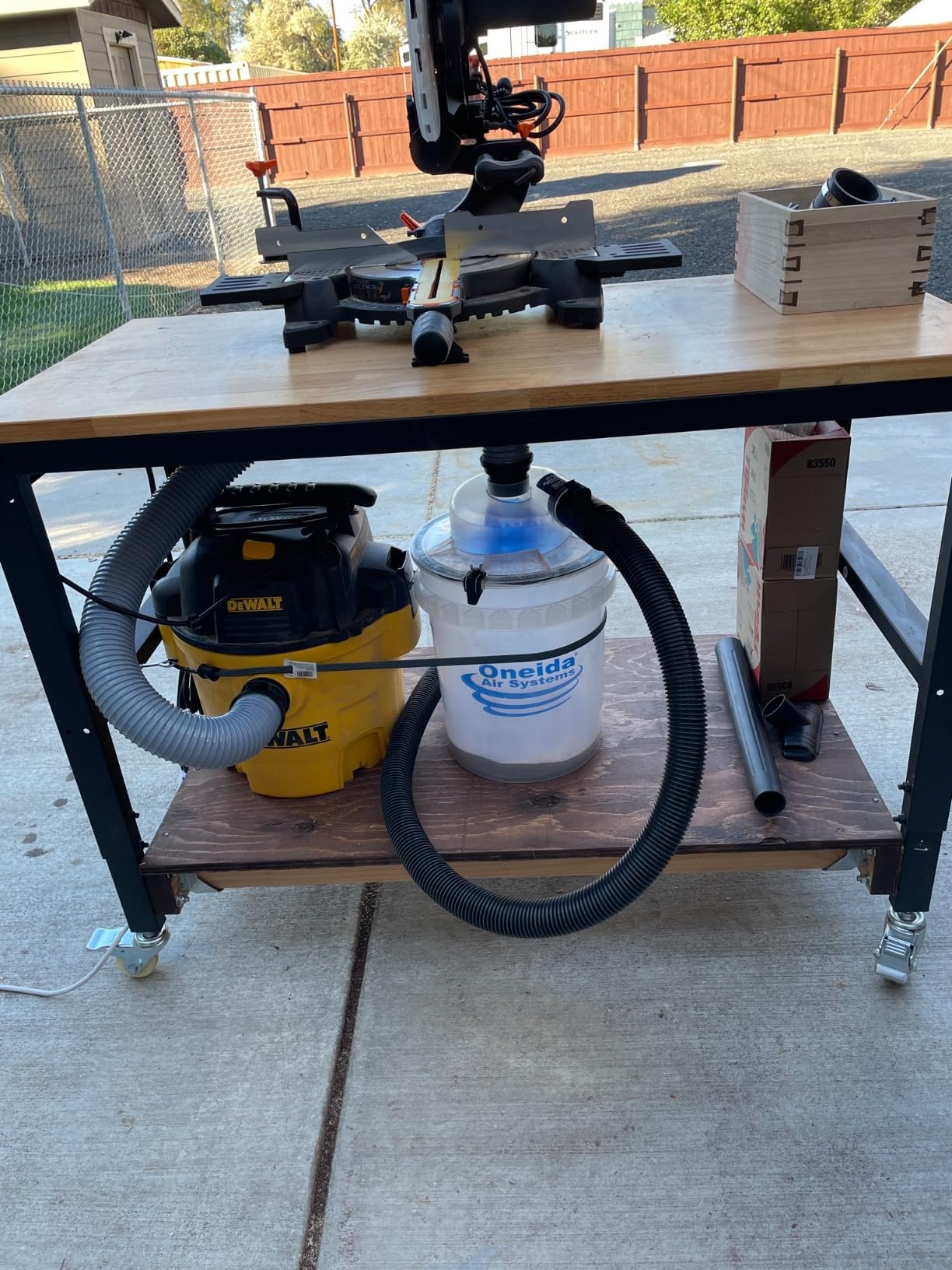
It is also the lowest-rated product here, at 4.1 stars from 360 reviews, with a 63 percent five-star share and the highest one-star share in the set. The pattern in the reviews is consistent: buyers who assemble it correctly tend to be happy with the bucket and the casters, while a meaningful group found the pre-assembly configuration performs worse than the separately sold DIY cyclone, which carries a much stronger review history at a comparable price.
That is worth saying plainly. The DIY version of this same design is our top pick precisely because it has a far larger and more positive body of owner feedback. This kit trades that confidence for a nicer box.
Read the assembly instructions fully before you start
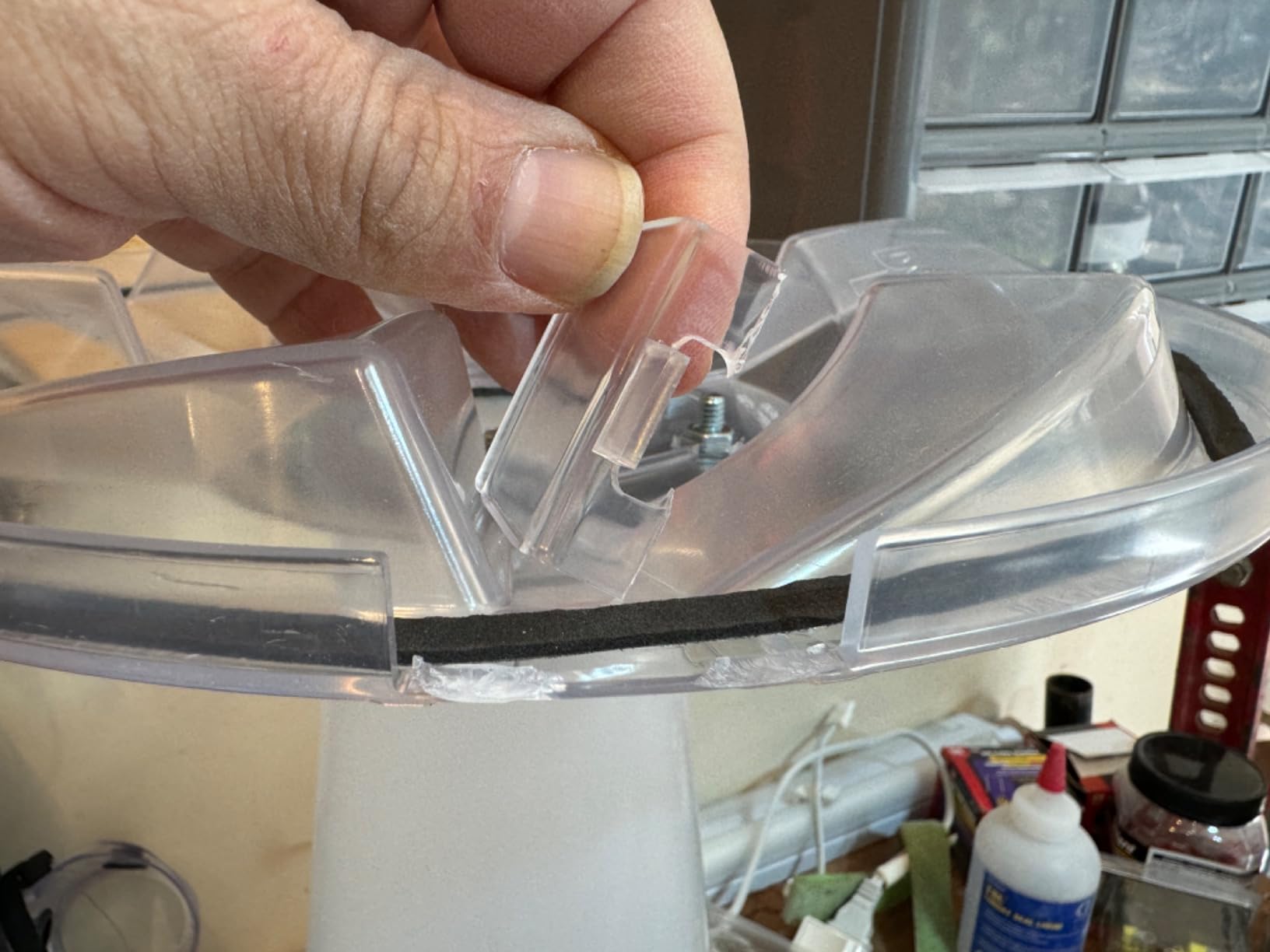
Several of the lower ratings trace to assembly rather than to the hardware. Seat the pre-cut gasket properly on the bucket rim, confirm the cyclone is aligned with the port, and check the latch engagement before you run any air through it. Ten minutes of reading prevents the most common complaint in this listing, and a smoke test at every joint afterwards will tell you in seconds whether you have a leak.
Skip this one if you already own the DIY cyclone or a stout bucket
If you have a quality bucket and a 2.5 inch hose already, the DIY retrofit in the first section of this guide does the same job for less money with far stronger owner feedback behind it. Choose this kit instead if you want casters, on-board storage and a tether in the box, and if assembling the cyclone through a lid is not something you want to do yourself.
How to Hook a Dust Separator Up to a Shop Vac
Four steps get you from a bare tool to a working two-stage setup, and every one of them matters more than it sounds.
1. Tool to the separator inlet. Run your tool hose into the inlet port. Keep this run as short as practical, because every extra foot of hose costs airflow and adds places for a leak to hide.
2. Short hose from the separator to the vac. Use the shortest length that lets the vac sit where you want it. Long runs here also increase static, which matters more than most people expect with fine, dry dust.
3. Seal every joint. This is the step that decides whether the separator works. The cyclone needs a positive air seal from the tool hose through the bucket lid to the vac hose. A single pin-prick leak lets air bypass the spin entirely and kills separation. Run a smoke stick or a lit incense stick around every joint before you trust the result.
4. Tether or cart the unit. If the separator is not on casters, secure the vac to it with a tether so pulling the hose cannot drag the vac off the connection. If the unit tips easily, weight the bucket, bolt the cyclone to a cabinet, or put it on a proper cart. A tip-over dumps the contents back into the airflow and undoes everything else you did.
If your tool has its own blower, such as a planer, a positive-pressure configuration keeps the tool’s blower and the vac from fighting each other. The blower supplies the extraction and the vac handles the overflow.
How to Choose a Dust Separator for Your Shop Vac
Port diameter is where most purchases go wrong, so measure before anything else. Check the inside diameter of your hose and the outlet collar of your vac, then match those numbers to the separator’s ports. Many separators list a nominal 2.5 inch port that measures closer to 2.25 inches inside, which is exactly the mismatch that sends people hunting for reducers.
Beyond fit, four factors decide how well a separator will work in your shop.
Flow versus separation. Cyclones are tuned for one or the other, and a unit tuned for separation will disappoint on a weak vac while a unit tuned for airflow will let fine dust through. Match the separator’s intent to the horsepower of your machine.
Bucket strength. Under shop-vac suction, a 5-gallon bucket wants a wall of at least 90 mil, or 0.09 inches. Nesting one bucket inside another, adding a plywood stiffener ring, or buying a metal tank all solve it. Thin pails are the most common failure in this category and the easiest to fix.
Capacity versus portability. A 5-gallon low-profile lid slides under a bench and empties fast. A 10-gallon tank means fewer stops on a long sanding or floor-saw run but eats floor space and will not move easily. Match capacity to the length of your typical session.
Static and material. Fine, dry, abrasive material builds static fastest. Look for anti-static plastics, bonding hardware, and the shortest hose runs you can manage. For sand, concrete, or blasting media, a stainless or heavy-gauge plastic body is worth the extra cost because thin walls wear through.
And empty on a schedule rather than when the bucket is full. Keeping it under roughly two-thirds full prevents settled dust from being re-entrained and blasted at your filter, which is the fastest way to make a separator look like it is not working.
Troubleshooting: Why Dust Still Reaches Your Vac
If a new separator seems to do nothing, work through this list in order. It is the same sequence we would follow, and it resolves the large majority of complaints.
Test for air leaks first. Any leak defeats the cyclone. Use a smoke stick or lit incense at the lid seam, the port joints, and the gasket. Watch for smoke escaping anywhere other than the vac port.
Check the fill level. Dust that reaches the bottom of the cone is re-entrained and blown at the filter. Empty the bucket and see whether the problem changes.
Check hose sizing on both sides. The tool-side hose should be at least as large as the vac-to-separator hose, or the tool-side run restricts flow and the bucket visibly squashes when the machine starts.
Check bucket rigidity. Press the side of the bucket with the vacuum off. If it dents, the wall is too thin and it will collapse under running suction.
Check for tipping or movement. If the unit gets dragged or tips, the contents go back into the airflow. Tether the vac, add casters, or anchor the cyclone.
Confirm the cyclone is aligned. Friction-fit bodies, particularly the Systainer-style ones, lose most of their suction when seated incorrectly. Take it apart and reseat it.
Shop Vac or Dust Collector: Ports, CFM and Sizing
One warning before any numbers: airflow figures from shop-vac cyclones and from 4 inch dust-collector cyclones are not comparable. They describe different fixtures, different duct diameters, and different pressure regimes, so comparing them side by side is meaningless. Size each separator against the machine it actually serves.
A shop-vac separator matches a vac’s hose diameter and its horsepower. That is the whole match, and a 2-1/4 inch shop-vac cyclone will not behave like a 4 inch collector cyclone even though both are sold as cyclones.
A dust-collector cyclone matches the collector’s inlet diameter. That is the sizing rule to follow, and it means a separator advertised for 4 inch collection is telling you it wants to sit in front of a collector, not a wet/dry vac.
If your tool is a sander, a router table or a table saw running off a shop vac, size to the vac. If you are retrofitting a single-stage collector, size to the collector inlet and expect a metal body for abrasive material.
Frequently Asked Questions
Are dust separators worth it?
For most workshops, yes. A shop vac filter clogs long before the tank is full, which drops suction mid-job and sends fine dust back into the room. A separator intercepts chips and bulk dust first, so the filter only sees the finest fraction and lasts far longer between cleanings. The savings on filters and bags usually pay back the unit within a year of regular use.
What is the best dust separator for a shop vac?
The Oneida Dust Deputy DIY Anti-Static Retrofit is the best overall choice because it fits any wet/dry vac, its tapered 2.0 inch ports accept the widest range of hose diameters, and it costs the least to get started. For independent fine-dust testing, the Dustopper PRO is the strongest low-profile option. For no assembly at all, the DEWALT DXVCS002 includes the bucket, lid and casters.
Does a dust separator reduce suction?
A little, and how much depends on the design. Adding any extra length of hose and fittings costs airflow, and a separation-tuned cyclone deliberately restricts flow to keep dust spinning. A well-matched setup typically stays close to a direct hose connection, but owners report a noticeable drop with separators paired to small 4-gallon vacuums. Match the separator to the horsepower of your machine to avoid losing suction.
Do I still need a filter in my shop vac with a separator?
Yes. The separator has no filter of its own, so it only removes the bulk material. The vac filter still catches the fine fraction that stays airborne, and it is the fine dust that plugs a filter fastest. What changes is the load on it, which is why a filter that once needed cleaning every ten minutes can stay on the vac for months once a separator is upstream.
What size bucket do I need for a dust separator?
Five gallons is the standard and works for most sanding and sawing. Under shop-vac suction it needs a wall of at least 90 mil, so a thin general-purpose pail can dent inward. Use a heavy-duty pail, nest one bucket inside another, add a plywood stiffener ring, or choose a 10-gallon metal tank if you run large machines. Empty it before it passes two-thirds full.
Can I use a shop vac separator on a dust collector?
Only if the ports match. A separator advertised for 2-1/4 inch shop vac connections will starve a dust collector, and one built for 4 inch collection will be badly restricted by a wet/dry vac. Size the cyclone inlet to the machine inlet, and remember that airflow figures from shop-vac units and collector units describe different fixtures and are not directly comparable.
Conclusion
For most people reading this, the answer to what are the best dust separators for shop vacuums comes down to two decisions. If you already own a wet/dry vac and a stout bucket, the Oneida Dust Deputy DIY retrofit gives you the strongest and most flexible setup for the least money, and it has the deepest owner feedback of anything in this roundup. If you want the fine-dust performance verified rather than claimed, the Dustopper PRO is the one with third-party data behind it, provided your vac is 5 HP or larger.
Choose the DEWALT DXVCS002 if you would rather not drill a lid, the DEWALT stainless tank if you handle abrasive material, the Rockler if capacity matters more than fine-dust capture, and the Festool CT Cyclone if your shop is built around Systainers and CT extractors.
Whatever you pick, measure your hose diameters first, smoke-test every joint, and empty the bucket before it is two-thirds full. Those three habits decide whether a separator saves your filters or just becomes another box in the corner. If you are still picking the vac, our shop vacs for garages guide and shop vac roundup cover the machines worth pairing with any of these.