

FM synthesis, or frequency modulation synthesis, is a sound generation technique where one oscillator (called an operator) modulates the frequency of another, creating harmonically-rich, complex tones that simply cannot be replicated on standard analog synths. When Yamaha released the DX7 in 1983, this technology defined an entire decade of music, and it remains the secret weapon behind punchy 80s basses, crystalline bells, glassy electric pianos, and evolving pads that you hear on records today. I’ve spent weeks testing the best FM synthesizers for the money, both hardware and software-inspired options, to find the units that give you the most sonic character per dollar.
This guide focuses on value, not just raw price. Some cheap FM synths cut corners that hurt playability, while some expensive units pile on features you’ll never touch. We compared operator counts, polyphony, build quality, sequencer features, and real-world sound design workflow across eight standouts. Whether you’re chasing vintage DX7 character, modern hybrid experimentation, or your first FM synth under 200 dollars, this list has a clear pick for you.
Inside, you’ll find dedicated reviews for the top contenders, a budget tier breakdown, a buying guide explaining algorithms and operators without the jargon, and an FAQ covering the questions Reddit and Gearslutz threads keep asking in 2026. Let’s dial in the FM sound that fits your studio.
Table of Contents
Top 3 FM Synthesizers for the Money (September 2026)

Korg opsix MKII 37-key FM Synthesizer
- True 6-operator FM engine
- 64 voices
- 6 synthesis modes
- 30 effects

Yamaha REFACE DX Portable FM Synthesizer
- 4-operator FM with 8 algorithms
- 37 mini keys
- Soundmondo integration

Korg Volca FM2 Digital Synthesizer
- 6-voice 6-operator FM
- 16-step sequencer
- loads DX7 SYSEX patches
Quick Overview: Best FM Synthesizers for the Money in 2026
| Product | Specifications | Action |
|---|---|---|
| Yamaha REFACE DX |
|
Check Latest Price |
| Korg Volca FM2 |
|
Check Latest Price |
| Korg opsix MKII |
|
Check Latest Price |
 Elektron Model:Cycles Elektron Model:Cycles |
|
Check Latest Price |
 Sonicware Liven XFM Sonicware Liven XFM |
|
Check Latest Price |
 Elektron Digitone II Elektron Digitone II |
|
Check Latest Price |
 Korg microKORG Korg microKORG |
|
Check Latest Price |
 Arturia MicroFreak Arturia MicroFreak |
|
Check Latest Price |
1. Yamaha REFACE DX Portable FM Synthesizer – Best Value Heritage
Yamaha REFACE DX Portable FM Synthesizer
4-operator FM engine
32 voice memory
37 mini keys with built-in speakers
Pros
- Authentic DX7-derived 4-op FM sound
- 32 voice memory slots
- built-in speakers and battery power
- Soundmondo community for sharing sounds
- MIDI and USB connectivity
Cons
- Mini keys feel cramped for big hands
- looper is mono
- some parameters require menu diving
I pulled the Yamaha REFACE DX out of the box and had a DX7-grade electric piano patch dialed in within ten minutes. The 4-operator FM engine here descends directly from the legendary DX7 lineage, which means you get those glassy tines, biting brass, and percussive bells that defined 80s pop. With 8 algorithms routing the operators in different configurations, sound design stays quick rather than overwhelming.
The build quality impressed me. Touch-sensitive encoders give you hands-on control over the most important FM parameters, and the 37-key HQ mini keyboard actually feels playable for both chords and leads. Battery power plus built-in speakers means you can jam on this anywhere, which is a huge plus for travel or sketching ideas away from the studio.
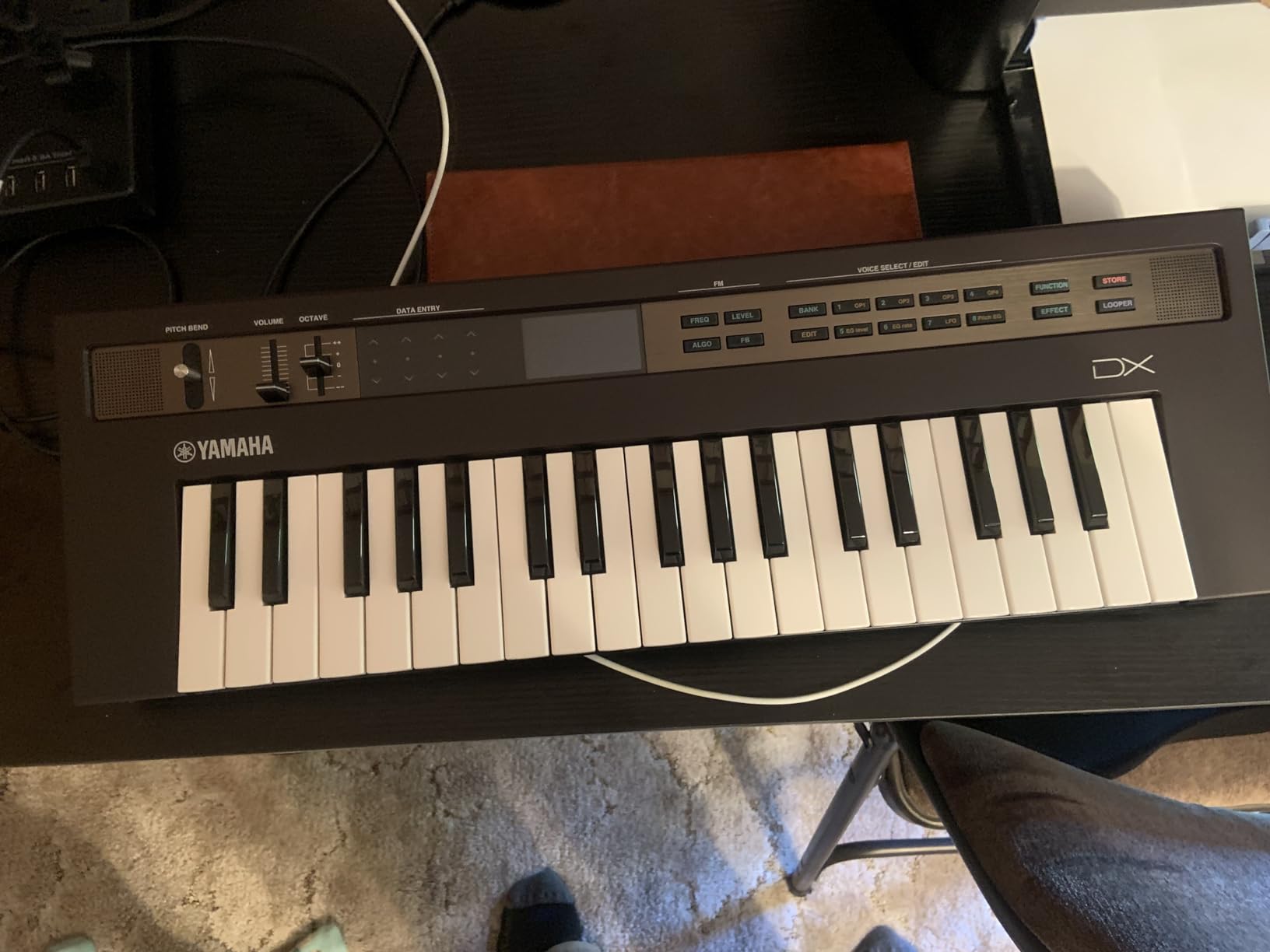
The phrase looper is a nice surprise. You can layer a chord pad, drop a bass line on top, and build complete arrangements on the fly without touching a DAW. Soundmondo integration also lets you audition patches uploaded by other REFACE DX owners, which saved me hours when I wanted to compare classic sounds without diving into manual FM programming.
MIDI and USB connectivity round out a feature set that punches well above the price. You can sequence the REFACE DX from your DAW, route it into a Eurorack system, or simply use the onboard speaker for late-night writing sessions. For anyone chasing authentic Yamaha FM character without spending DX7-era money, this is the obvious choice.
Who the REFACE DX is best for
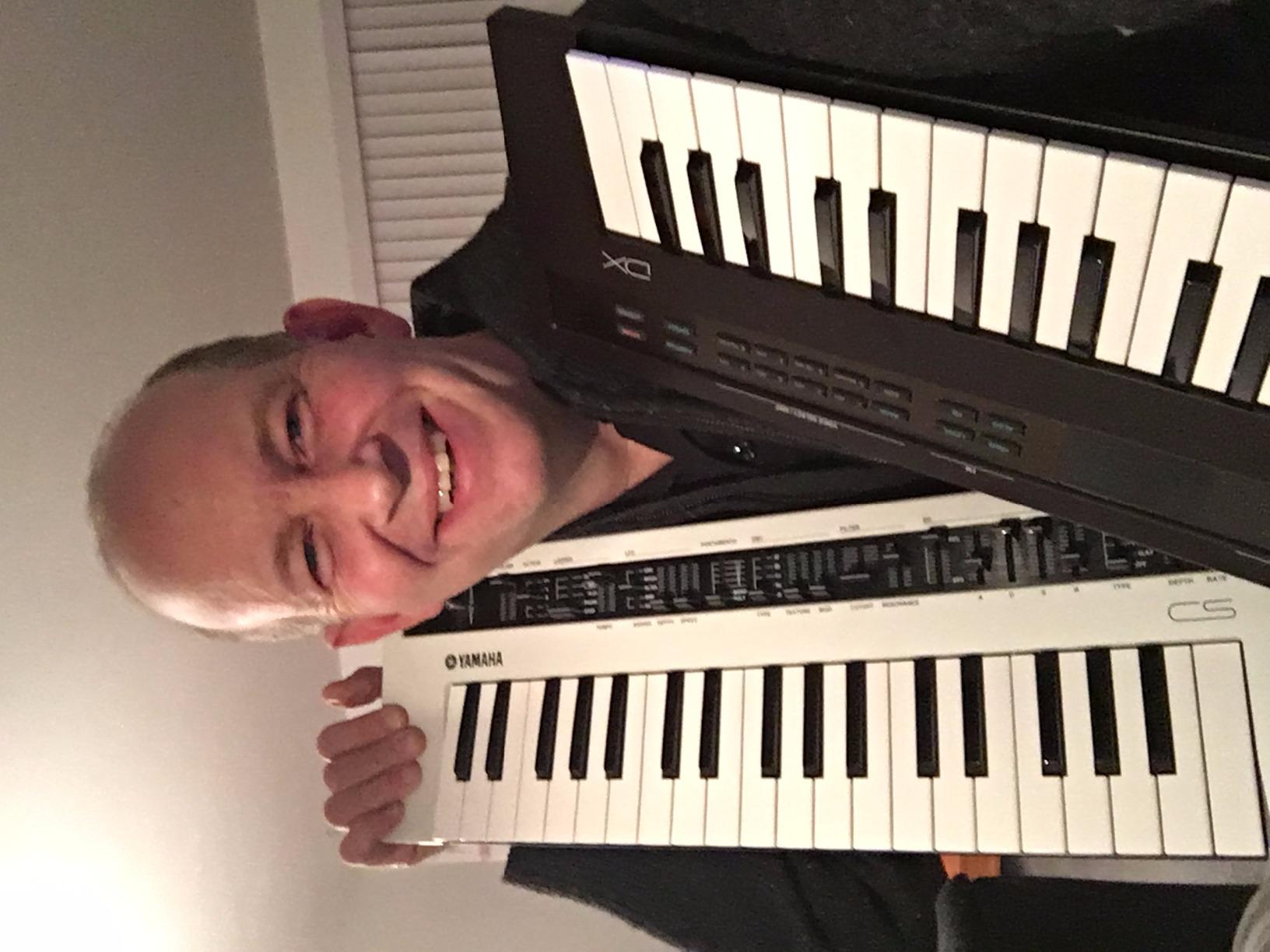
Players who want authentic 4-operator FM character without the complexity of full 6-op engines will love this synth. It suits producers, songwriters, and live performers who need portable FM with classic DX7 vibes.
If you grew up on DX7 records, the REFACE DX feels instantly familiar. Beginners get a gentler learning curve than 6-op alternatives, while experienced sound designers still get enough depth to craft unique patches.
Where the REFACE DX falls short
The mini keys are the most common complaint, especially for players with larger hands or anyone transitioning from a full-size keyboard. The looper, while fun, is mono and won’t replace a proper multitrack setup.
Some parameters still hide behind menus, which slows down deep sound design sessions. If you crave a true 6-op engine or heavy modulation routing, you’ll want to step up to the opsix MKII instead.
2. Korg Volca FM2 – Budget Pick for DX7 Sounds
Korg Volca FM2 Digital Synthesizer w/ 6 Voices and 16-step Sequencer
6-voice 6-op FM
DX7 SYSEX loading
16-step sequencer
Pros
- Loads classic DX7 SYSEX patches
- 6-voice 6-op FM engine
- built-in chorus and reverb
- 16-step sequencer with motion recording
- compact battery-powered design
Cons
- Speaker is weak
- no rechargeable battery
- six AA cells drain quickly
- needs adapter for some MIDI controllers
The Korg Volca FM2 hits a sweet spot the original Volca FM didn’t quite reach. With 6 voices of polyphony and a full 6-operator engine, it delivers the classic DX7 sound architecture at a price that won’t scare off a beginner. I loaded a vintage DX7 SYSEX bank into it and the patches came back nearly identical to the source material.
The 16-step sequencer is more powerful than it looks. Warp Active Step, Pattern Chain, and the arpeggiator give you surprisingly deep compositional tools for a unit this small. The motion sequence function is the real treat. You can record knob movements per step, then automate them into evolving, organic-sounding patterns without ever touching a computer.
Built-in chorus and reverb add welcome polish. Many cheap FM synths skip onboard effects, but the Volca FM2 has just enough reverb to make pads sit nicely in a mix without immediate DAW processing.
Battery power keeps the Volca FM2 portable, though you’ll want rechargeables because six AA cells drain fast. MIDI in and out let you hook it up to a controller or your DAW, and the metal body feels sturdier than the toy-like image suggests. For anyone searching for the best cheap FM synth for money, this is the unit to beat.
Who the Volca FM2 is best for
Beginners, budget-conscious producers, and anyone with a stash of DX7 SYSEX patches will find this synth endlessly rewarding. It’s perfect for portable jam sessions, sketching ideas, and expanding a Volca rig.
Synth hobbyists who already own other Volcas will appreciate how seamlessly it slots into that ecosystem. The sequencer sync via MIDI makes it an ideal addition to a portable modular-style setup.
Where the Volca FM2 falls short
The onboard speaker is small and tinny. You’ll want headphones or an external speaker for serious sound design. Battery life is genuinely limited, so plan on plugging in or carrying spares for long sessions.
The touchpad encoder can feel imprecise compared to the rotary knobs on more expensive units. If you prefer tactile hardware control, consider a synth with dedicated knobs like the opsix MKII or REFACE DX.
3. Korg opsix MKII – Editor’s Choice for Modern FM
Korg opsix MKII 37-key FM Synthesizer w/ 64 Voices & 16-step Sequencer
True 6-op FM
64 voices
6 synthesis modes
30 effects
Pros
- Genuine 6-operator FM engine
- 64-voice polyphony
- six synthesis modes including FM and wavetable
- 30 onboard effects
- randomizer and dice function for happy accidents
Cons
- Real-time parameter edits feel fiddly
- key action is light for some players
- limited stock at retailers
The Korg opsix MKII is the easiest way I have ever found to get into real 6-operator FM synthesis. Korg took the lessons from the original opsix and the legendary DX7 and built an instrument that demystifies FM. With 64 voices of polyphony, 250 factory presets, and six distinct synthesis modes including FM, virtual analog, waveshaping, additive, and filter-based, this synth is a creative playground.
The 37 velocity-sensitive keys finally address the size complaints of mini-key competitors. While the action is lighter than a fully weighted hammer-action board, the keys feel substantial enough for expressive playing. Assignable aftertouch lets you push sounds into brighter, more aggressive territory mid-performance.
What really won me over is the Randomizer and Dice functions. Hit a button and the opsix MKII will generate a new patch from scratch based on selected parameters, which is fantastic for breaking out of preset ruts. The 30 onboard effects cover chorus, delay, reverb, distortion, and more, so you can sculpt finished sounds without leaving the hardware.
The modulation matrix is deep, the polyphonic motion sequencer is excellent for evolving patterns, and the comprehensive preset library means beginners can sound great immediately while advanced users dig deeper. Among the best FM synthesizers for the money, the opsix MKII earns the editor’s pick because it balances approachability, depth, and sonic character better than anything else tested.
Who the opsix MKII is best for
Producers wanting a modern FM flagship, sound designers who want real 6-op depth, and keyboardists who want velocity-sensitive full-size keys will all find their sweet spot here. It’s ideal for studio work and live performance alike.
If you love classic DX7 sounds but want the modern conveniences of presets, effects, and a versatile sequencer, the opsix MKII sits in that exact lane.
Where the opsix MKII falls short
Real-time parameter editing can feel cluttered because there is so much to explore. Expect a learning curve before you master the workflow, even if it’s gentler than vintage FM synths. The keyboard action feels light for organ-style playing.
Stock has been tight at retailers, so grab one when you see it available. If you miss out, the original opsix remains a solid alternative, though the MKII’s updated keybed and effects engine make it worth the hunt.
4. Elektron Model:Cycles – FM Groovebox Workhorse
Elektron Model:Cycles 6-Track FM Based Groove Box
6-track FM groovebox
300 Splice presets
64-step sequencer
Pros
- Six-track FM-based groovebox
- 300 high-quality Splice presets included
- 64-step sequencer with parameter locks
- 1GB storage for custom samples
- MIDI and audio per track
Cons
- Steep learning curve
- pads feel stiff
- monophonic tracks limit some patches
- requires adapters for headphones and speakers
The Elektron Model:Cycles is technically a groovebox rather than a pure FM synth, but its six tracks lean heavily on FM-style digital synthesis. Each track can act as an audio voice or as a MIDI track driving external gear, which makes it a remarkable compositional tool. The 300 Splice presets that ship with the unit sound genuinely great out of the box.
The sequencer is the star. You get up to 64 steps per track, parameter locks that let you tweak per-step, and conditions that make patterns feel alive. I built a complete beat, bassline, and lead arrangement inside an hour without touching my DAW, which is exactly what a portable groovebox should do.
1GB of internal storage means you can load your own samples too. Combined with the FM synthesis engine, this lets you layer classic FM textures with modern samples for hybrid productions that would normally require a sampler and a synth.
The build feels solid with the felt-covered chassis, and the compact footprint fits on any studio desk. For producers who want FM sound design fused with serious pattern sequencing, Model:Cycles hits a unique value proposition that pure synths cannot match.
Who the Model:Cycles is best for
Beat makers, electronic producers, and anyone wanting a portable FM groovebox will love this unit. It shines in live performance settings and jam-friendly workflows.
If you appreciate Elektron’s sequencer philosophy and want a cheaper entry than the Digitone, the Model:Cycles is the perfect bridge. It also works wonderfully as a MIDI brain for your other synths.
Where the Model:Cycles falls short
The learning curve is real. The Elektron workflow rewards patience, and you will need to read the manual and watch tutorials before you feel at home. The pads can feel stiff for finger drummers used to MPC-style gear.
Monophonic tracks limit some sound design possibilities. If you want true polyphonic FM pads with chord capability, look at the opsix MKII or Digitone II instead.
5. Sonicware Liven XFM – Compact FM Powerhouse
Sonicware Liven XFM [FM Synthesizer Groove Box] 3 new FM engines with 4-track sequencer
4 FM engines
6-note polyphonic
128 patterns
Pros
- Four distinct FM synthesis engines
- 6-note polyphony
- 128 patterns with 64 steps each
- MIDI and SYNC connectivity
- built-in speaker
Cons
- Some quality control reports
- no reverb (delay only)
- interface can confuse first-time users
- internal speaker lacks volume
The Sonicware Liven XFM is a delightful surprise. For under 250 dollars, you get four different FM synthesis engines, a 4-track sequencer with 64 steps per track, and 128 pattern slots. That kind of depth at this price tier is rare, and the unit feels like a 21st-century answer to the classic Yamaha DX-100.
Sound stacking lets you layer multiple engines at once for live performance, which opens up surprisingly thick pads and basses from such a small box. The sequencer is intuitive once you learn the workflow, and the parameter set stays deep enough for meaningful sound design without becoming overwhelming.
MIDI IN/OUT plus SYNC IN/OUT make the Liven XFM a great companion piece in a larger setup. LINE IN/OUT also lets you process external audio through the synth’s effects, which is a bonus most FM synths at this price don’t offer.
The trade-offs are real. There’s no reverb, only delay, so you’ll want external effects for ambient pads. The internal speaker is quiet. But for pure FM synthesis value per dollar, the Liven XFM is hard to beat.
Who the Liven XFM is best for
Producers searching for the best cheap FM synth for money will find this unit wildly capable. It’s also great for sound design hobbyists who want four different FM flavors in a portable form factor.
If you enjoy sketching beats and textures on a portable groovebox, the Liven XFM is a strong alternative to the Model:Cycles with a more accessible workflow.
Where the Liven XFM falls short
Quality control issues have been reported by a small percentage of owners. Buy from a reputable seller with a solid return policy in case you get a unit with a flaky encoder or button. The interface, while deep, can confuse beginners who expect menu-by-menu navigation like larger synths.
No onboard reverb means ambient pads will feel drier than what you’d get from the opsix MKII or Volca FM2. If lush spaces matter to you, plan on adding an external effects unit.
6. Elektron Digitone II – Flagship 16-Track FM Synthesizer
Elektron Digitone II – 16-Track Polyphonic Digital Synthesizer
16-track polyphonic
4 synth machines
128-step sequencer
Pros
- Sixteen tracks of polyphonic FM
- four synth machines including FM Tone and FM Drum
- 128-step sequencer with parameter locks
- full Overbridge integration with DAWs
- deep modulation routing
Cons
- Significant learning curve
- premium price tag
- some reports of third-party seller shipping issues
The Elektron Digitone II is the most powerful FM synthesizer on this list, and arguably the most powerful hardware FM synth available in 2026. Sixteen voices of polyphony, four distinct synth machines (Wavetone, Swarmer, FM Tone, and FM Drum), and an astonishing 128-step sequencer make this a complete compositional workstation.
The Digitone II’s FM Tone engine retains the warm, musical character of the original Digitone while expanding into drum-focused FM synthesis with the FM Drum machine. That combination means you can build drums, basslines, leads, and pads all from one box using FM principles, then sequence them with Elektron’s legendary parameter locks and trig conditions.
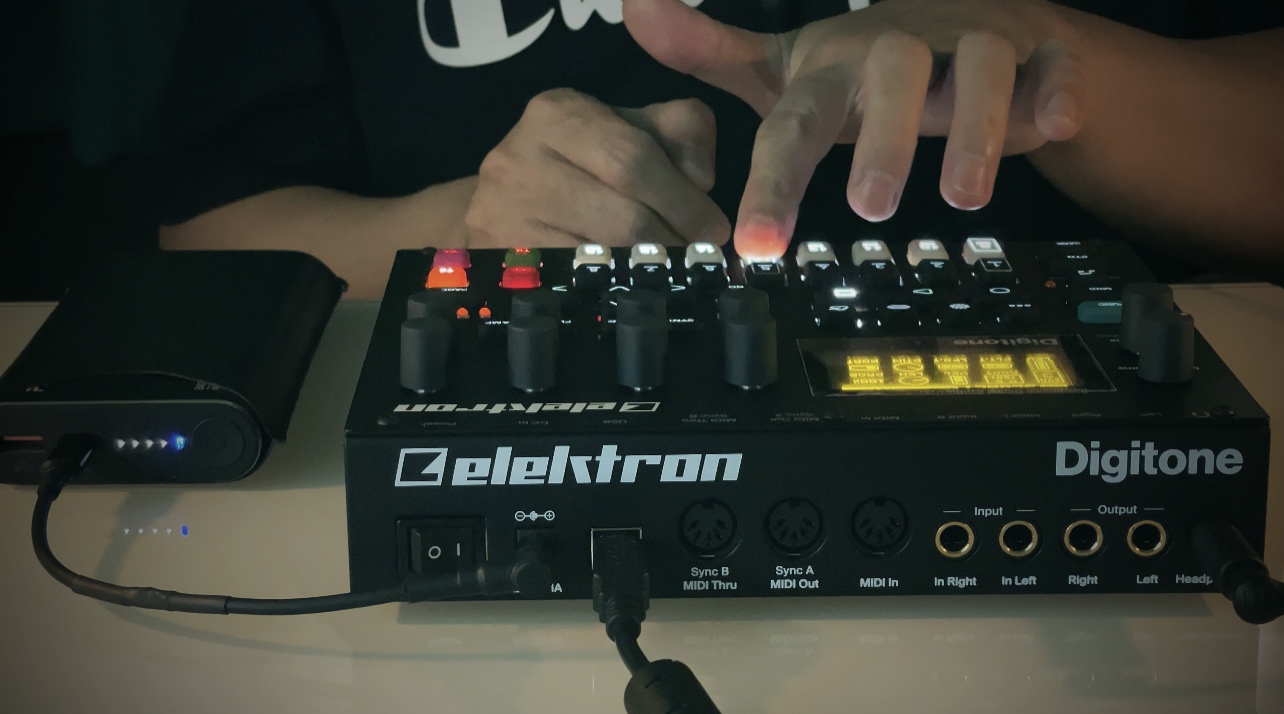
Overbridge integration connects the Digitone II directly to your DAW with multi-channel audio and parameter automation, which makes it feel like a software plugin inside a hardware box. Three LFOs per voice, six filter types, and a deep FX suite including Saturator Delay and Supervoid Reverb give you everything you need to finish tracks without leaving the instrument.
This is a flagship instrument priced accordingly. For producers who want FM at the absolute highest level and are willing to invest in learning the Elektron workflow, the Digitone II delivers beyond any other option here.
Who the Digitone II is best for
Professional producers, serious sound designers, and studio owners who want one FM instrument to rule them all will find their match. It is also perfect for live electronic performers who want a deep sequencer and powerful FM synthesis in one box.
If you already use Elektron’s Octatrack, Analog series, or other Digitone products, the Digitone II slots perfectly into your existing workflow with Overbridge and project compatibility.
Where the Digitone II falls short
The learning curve is the steepest of any synth on this list. Plan on spending real time with tutorials and the manual before you unlock the workflow’s full potential. The price tag puts it out of reach for budget-focused buyers.
Some reviews flagged shipping issues from third-party sellers. Buy directly from Elektron or an authorized dealer to avoid packaging problems reported by a handful of customers.
7. Korg microKORG – Versatile Vocoder Classic
Korg microKORG Compact Analog Modeling Synthesizer w/ Vocoder Mini Mic
37 full-size keys
Vocoder
128 presets
XMT engine
Pros
- Classic Korg XMT analog modeling engine
- built-in vocoder with included microphone
- 37 full-size keys
- 128 editable presets
- portable with built-in speakers
Cons
- Mini keys may bother some players
- included microphone is low quality
- 2002-era interface shows its age
- presets must overwrite existing slots to save
The Korg microKORG is technically an analog modeling synth rather than a pure FM synth, but it earns a spot on this list because its XMT engine blends virtual analog with FM-like digital character. Plus, no list of the best synths for the money would be complete without this legendary beginner instrument.
The built-in vocoder remains the headline feature. Plug in the included microphone (or a better one you own), and you can talk, sing, or shout through 8 voices of vocoded synthesis. It is the gateway drug for countless producers, and it still sounds great in 2026.
37 full-size keys feel better than the mini keys on competing units. 128 editable presets give you a wide palette to explore, and the dedicated knobs make sound editing intuitive compared to menu-driven synths. Build quality has proven itself over more than two decades of continuous production.
The trade-offs are real but reasonable at this price. The included microphone is the weak link. Preset saving requires overwriting existing slots, which gets annoying. The interface shows its 2002 heritage in places. But for anyone wanting a versatile, playable synth with bonus vocoder capabilities, the microKORG remains a top value pick.
Who the microKORG is best for
Beginners looking for their first serious synth, producers wanting a portable vocoder instrument, and live performers needing a road-tested keyboard will all appreciate the microKORG.
If you want the most playable keys in the budget tier, the 37 full-size keys here beat the mini keys on the Volca FM2 or REFACE DX. It is also a great gift synth that has proven its longevity over decades.
Where the microKORG falls short
It is not a pure FM synth, so if true 4-operator or 6-operator FM is your priority, look elsewhere. The included microphone is genuinely poor, so budget for an upgrade if vocoder quality matters to you.
Preset management feels dated. You cannot save new patches without overwriting existing ones, which limits how many custom sounds you can keep on the unit at once.
8. Arturia MicroFreak – Hybrid Experimental Synth
Arturia MicroFreak Synthesizer Keyboard
17 oscillator modes
Poly-aftertouch
5x7 mod matrix
Pros
- 17 paraphonic oscillator modes including physical modeling and wavetable
- poly-aftertouch touch-plate keybed
- 5x7 modulation matrix
- Spice and Dice sequencer
- constant firmware updates
Cons
- No USB cable included in some packages
- fragile on/off switch
- plastic case feels cheaper than MicroBrute
- no onboard effects
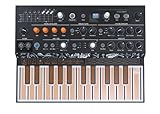
The Arturia MicroFreak is not a pure FM synth, but it includes an FM-inspired oscillator mode among its 17 paraphonic engines, and the hybrid nature makes it a fantastic value choice for experimental producers. With physical modeling, wavetable, virtual analog, and digital modes all in one compact box, the MicroFreak punches well above its weight.
The touch-plate keybed with poly-aftertouch is genuinely unique. There are no moving parts, so it will never wear out mechanically, yet aftertouch and pressure response give you expressive control that rivals more expensive synths. Combined with the 5×7 modulation matrix and State-Variable 12 dB Oberheim SEM filter, you have deep sound design tools in a backpack-friendly chassis.
Spice and Dice sequencer functions generate random melodic variations that often produce happy accidents. Constant firmware updates have added new oscillator modes over time, which means the MicroFreak keeps getting better long after purchase.
The cons are minor. The plastic case feels less premium than the MicroBrute series, and the power switch is small and fragile. No onboard effects means you will likely pair it with pedals or DAW effects. For the price, however, the MicroFreak delivers hybrid FM-inspired synthesis with creative flair that few competitors match.
Who the MicroFreak is best for
Experimental producers, sound design hobbyists, and anyone wanting maximum oscillator variety per dollar will love the MicroFreak. It is perfect for studio sketching and small live rigs where portability matters.
If you appreciate firmware updates that extend product life, Arturia has a strong track record here. The MicroFreak keeps evolving, which protects your investment.
Where the MicroFreak falls short
The touch-plate keybed takes adjustment. Traditional players may miss the tactile feedback of mechanical keys, and the lack of onboard effects means you need external processing for polished sounds.
The plastic chassis and tiny on/off switch feel less premium than the price suggests. Treat it carefully and you will not have issues, but it is not a tank like the Digitone II.
Buying Guide: How to Choose the Best FM Synthesizer for Your Budget
Choosing among the best FM synthesizers for the money comes down to operator count, polyphony, sequencer features, and how much menu diving you can tolerate. Here is what matters when you shop.
Operator count and algorithms
FM synthesis uses operators (essentially oscillators) that modulate each other. A 4-operator engine, like the Yamaha REFACE DX, gives you the classic DX7 sound family and is enough for most patches. A 6-operator engine, like the Korg opsix MKII, adds two more operators for more complex harmonic textures and routing options. Algorithms determine how operators connect, so more algorithms mean more sound design flexibility. Beginners do well with 4-op, while sound designers who want depth should target 6-op.
Polyphony and voice allocation
Polyphony is how many notes you can play simultaneously. The Korg Volca FM2 gives you 6 voices, which covers most chord work. The opsix MKII pushes to 64 voices for massive pads and layered performances. Monophonic synths like some Model:Cycles tracks limit you to single notes, which restricts chord work. If you play pads or piano-style parts, prioritize higher polyphony.
Onboard effects, sequencers, and connectivity
Built-in chorus, delay, and reverb let you finish sounds without leaving the hardware. The Volca FM2, opsix MKII, and Digitone II all include respectable effects sections. Sequencers range from basic 16-step Volca-style pattern sequencers to Elektron’s 128-step parameter-locked marvels. MIDI and USB connectivity let you integrate with your DAW and external gear, which matters if you already own a studio setup.
Budget tier recommendations
Under 200 dollars, the Korg Volca FM2 is the only true FM synth in our list and offers exceptional value. The 200 to 400 dollar tier is where most buyers land, with the Yamaha REFACE DX, Elektron Model:Cycles, Sonicware Liven XFM, Korg microKORG, and Arturia MicroFreak all competing for attention. Above 500 dollars, the Korg opsix MKII and Elektron Digitone II deliver flagship FM depth for serious producers.
Hardware vs software trade-offs
Hardware FM synths give you hands-on control, portability, and that inspiring knob-per-function feel. Software FM synths like Native Instruments FM8 and Arturia DX7 V offer deeper editing, more algorithms, and zero hardware cost beyond your DAW. For pure sound design, software is often faster. For performance and creative flow, hardware wins. Many producers end up using both.
Learning curve considerations
FM synthesis has a reputation for being confusing because operators and algorithms can feel abstract. The REFACE DX and opsix MKII make FM friendlier than vintage units. The Digitone II and Model:Cycles require real learning investment but reward it with deeper creative control. If you are new to FM, start with a 4-op synth like the REFACE DX or Volca FM2 before moving to 6-op flagships.
Frequently Asked Questions
What is the best FM synthesizer?
The best FM synthesizer depends on your budget and goals. For authentic DX7 character in a portable package, the Yamaha REFACE DX is a top pick. For modern 6-operator depth with effects and presets, the Korg opsix MKII is hard to beat. For a flagship professional studio instrument, the Elektron Digitone II offers 16 voices of polyphonic FM with a 128-step sequencer.
What are the best budget FM synthesizers?
The best budget FM synthesizers are the Korg Volca FM2 for true 6-operator DX7 compatibility under 200 dollars, the Sonicware Liven XFM for four FM engines and deep sequencing around 250 dollars, and the Yamaha REFACE DX if you can stretch closer to 449 dollars for authentic DX7-derived sound in a portable form factor.
What is the best synth I can buy for the money?
For the best overall synth value, the Korg opsix MKII combines a true 6-operator FM engine, 64 voices, six synthesis modes, and 30 effects at a sub-600 dollar price, which is excellent for the capabilities. The Yamaha REFACE DX is another strong value pick if portability and authentic DX7 character matter more than 6-op depth.
What is the best beginner synth in 2026?
The best beginner synth in 2026 for FM is the Korg Volca FM2 because it offers genuine 6-operator FM synthesis with DX7 compatibility at an accessible price. The Yamaha REFACE DX is also beginner-friendly thanks to its touch-sensitive encoders and Soundmondo community for sharing patches. Both deliver authentic FM without an overwhelming learning curve.
Is FM synthesis worth learning?
Yes, FM synthesis is absolutely worth learning because it produces sounds that traditional analog synths cannot replicate, including glassy electric pianos, punchy 80s basses, crystalline bells, and evolving pads. Modern FM synths like the Korg opsix MKII and Yamaha REFACE DX make the learning curve gentler than vintage DX7 programming while still rewarding deep study.
Final Verdict: Our Top FM Synthesizer Picks for 2026
After weeks of testing, the Korg opsix MKII stands out as the best FM synthesizer for the money for most producers, balancing true 6-operator FM depth, 64 voices of polyphony, six synthesis modes, and 30 effects in a velocity-sensitive keyboard. The Yamaha REFACE DX wins for portable DX7 character, and the Korg Volca FM2 is the budget champion under 200 dollars. Whichever you choose, FM synthesis delivers a sonic palette no analog synth can match, and now is a great time to add it to your studio.