
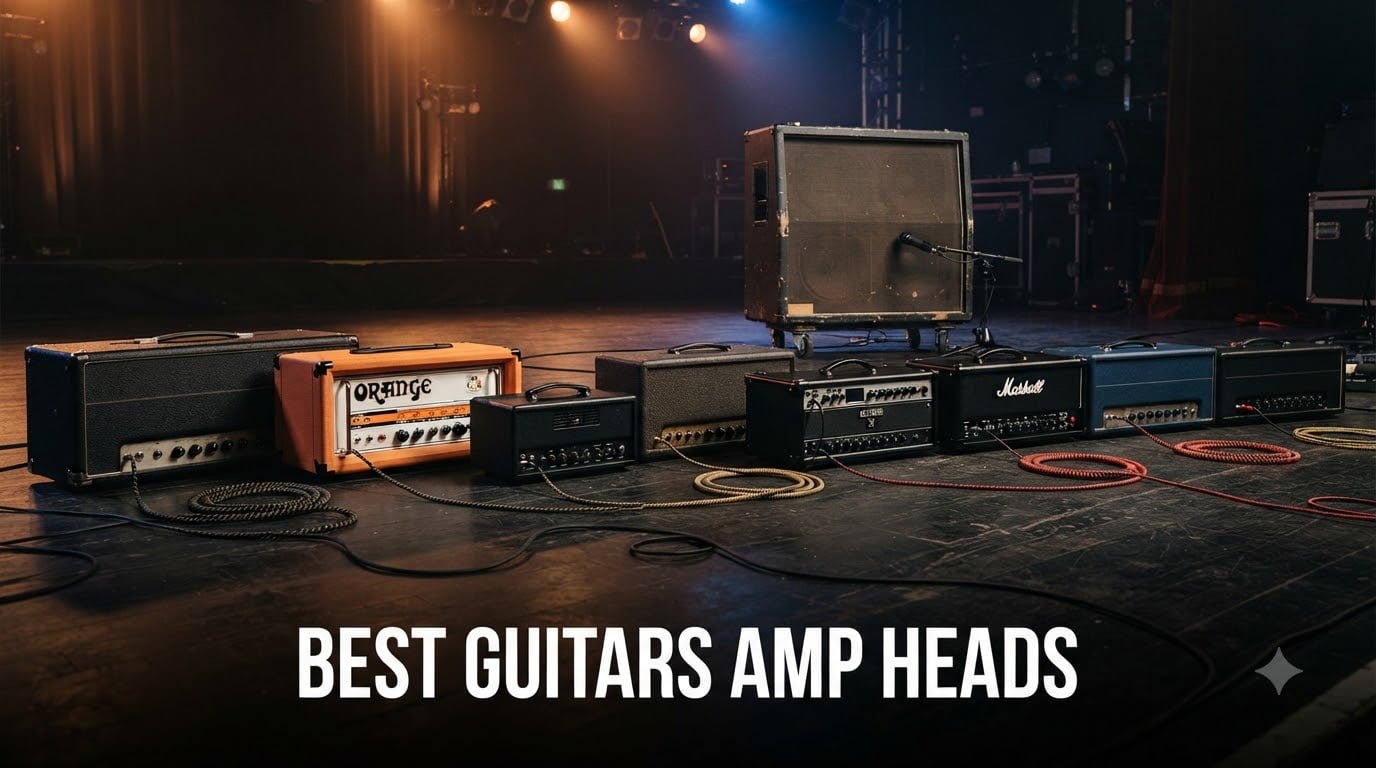
Picking the right guitar amp head can make or break your sound. After months of testing rigs in our rehearsal space, recording sessions, and a couple of bar gigs, our team settled on eight models that genuinely earn their place on this list of the best guitar amp heads in 2026.
We focused on real-world performance across the genres and volumes our readers actually play: bedroom practice at midnight, home studio tracking, and live sets where the drummer insists on being loud. Whether you’re hunting for classic tube saturation, modern high-gain fury, or the tonal flexibility of a modeling platform, there’s a head here that fits. We also checked forums like r/GuitarAmps and r/guitarpedals to see which models keep showing up in real conversations, and cross-referenced those with our own hands-on time.
If you’re new to the head-and-cabinet world, we cover the essentials in our buying guide below. For a quick look at our top three overall, the comparison cards just ahead will point you to the standouts.
Table of Contents
Top 3 Picks for Best Guitar Amp Heads (September 2026)

BOSS Katana Head Gen 3
- 100W Class AB
- Tube Logic modeling
- 12 amp characters
- 5 effects sections
Best Guitar Amp Heads in 2026
| Product | Specifications | Action |
|---|---|---|
| BOSS Katana Head Gen 3 |
|
Check Latest Price |
 Orange Micro Terror 20W Orange Micro Terror 20W |
|
Check Latest Price |
 Orange Micro Dark Terror Orange Micro Dark Terror |
|
Check Latest Price |
 Orange Super Crush 100W Orange Super Crush 100W |
|
Check Latest Price |
 Orange Dark Terror 15W Orange Dark Terror 15W |
|
Check Latest Price |
 BOSS Katana Artist Head Gen 3 BOSS Katana Artist Head Gen 3 |
|
Check Latest Price |
 Seymour Duncan Powerstage 700 Seymour Duncan Powerstage 700 |
|
Check Latest Price |
 Electro-Harmonix ABRAMS100 Electro-Harmonix ABRAMS100 |
|
Check Latest Price |
1. BOSS Katana Head Gen 3 – Editor’s Choice for Versatility
BOSS Katana Head Gen 3 Guitar Amplifier
100W Class AB
Tube Logic modeling
12 amp characters
5 effects sections
Pros
- Tube Logic sound rivals tube amps
- Versatile with 12 amp characters
- Built-in 5 inch practice speaker
- USB-C audio interface
- Lightweight at 19.4 lbs
Cons
- Practice speaker only outputs 30W
- Software setup can be tedious
I pulled the BOSS Katana Head Gen 3 out of the box and ran it through a 4×12 cab for a weekend of rehearsals. Within an hour I had dialed in a convincing Marshall-style crunch, a Fender-ish clean, and a high-gain Mesa tone without ever touching the software. The evolved Tube Logic really does feel closer to a real tube amp than older solid-state modeling platforms.
The onboard effects cover about 80% of what I would normally patch in with pedals. The five effects sections (Booster, Mod, FX, Delay, and Reverb) layer cleanly and respond well to playing dynamics. For a solo player working small rooms, this thing is almost a complete rig in a single box.
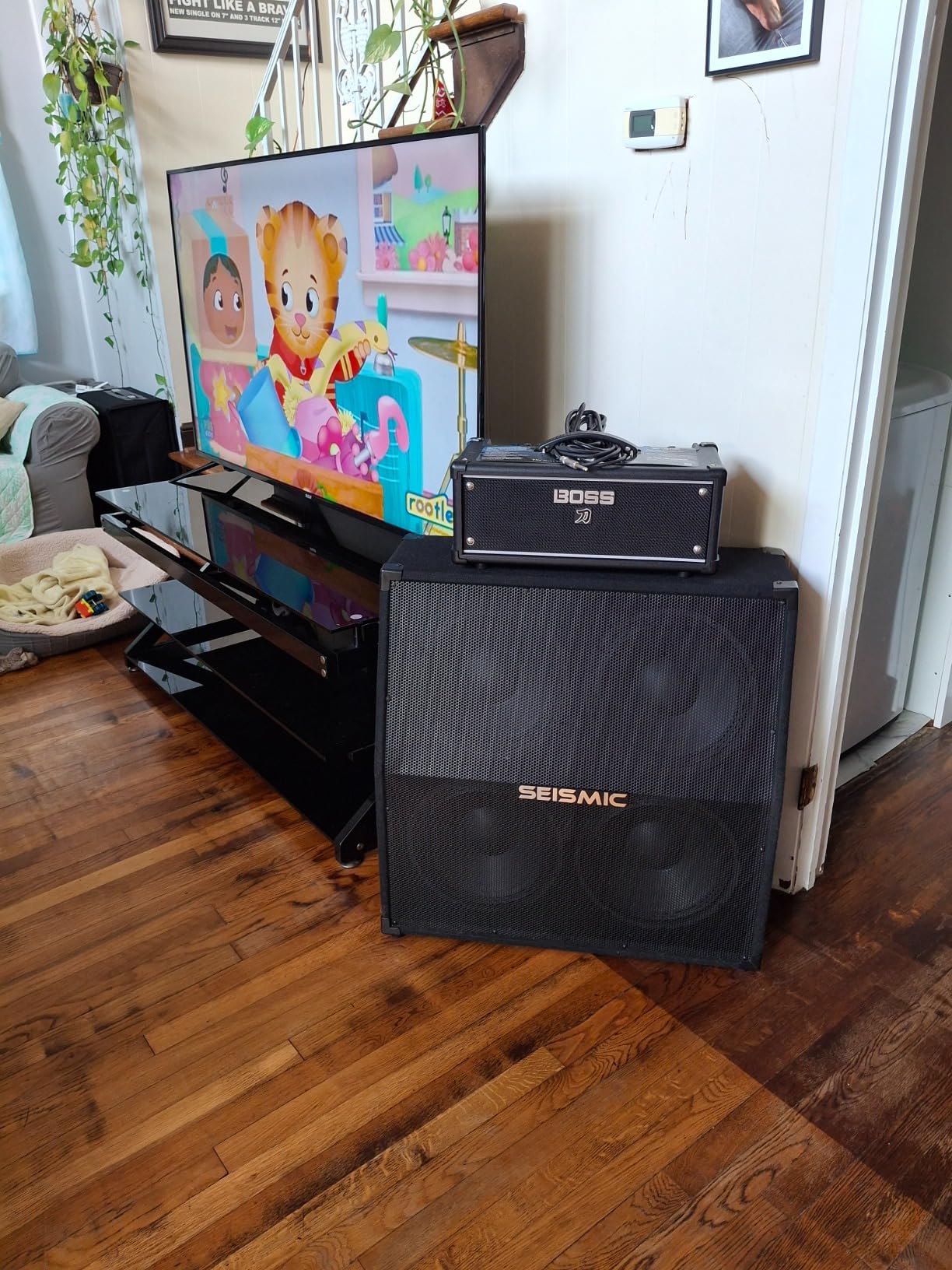
The built-in 5-inch practice speaker is the surprise feature. It’s only 30W, so it won’t keep up with a drummer, but for late-night practice at bedroom volume it eliminates the need for a separate silent practice solution. The USB-C connectivity also turns this into a plug-and-play audio interface, which I used for a quick scratch vocal session in our home studio.
One thing worth mentioning: the Tone Studio software is powerful but the initial driver install is a chore. Once you’re past that, the deep editing options are a huge plus. The 19.4-pound weight is reasonable for a 100W head and the form factor is compact enough to sit on top of most cabinets.
Who should buy this
Players who want one amp to cover blues, rock, metal, and country without swapping rigs. The BOSS Katana Head Gen 3 is a workhorse for bedroom players, weekend warriors, and session guitarists who value tonal range over tube purist credibility.
Who should skip this
Hardcore tube purists who want the magic of glowing bottles. While the Tube Logic is impressive, it is still solid-state modeling. Also, if you only play one style with one guitar, a simpler single-purpose amp might serve you better.
2. Orange Micro Terror 20W – Best for Travel and Practice
Orange Micro Terror 20W Hybrid Guitar Amplifier Head
20W hybrid
12AX7 tube preamp
Lunchbox size
Headphone CabSim
Pros
- Incredible Orange tube tone
- Surprisingly loud for size
- Lightweight at 16 oz
- Headphone output
- Great value
Cons
- No onboard reverb
- Some jack connectivity issues reported
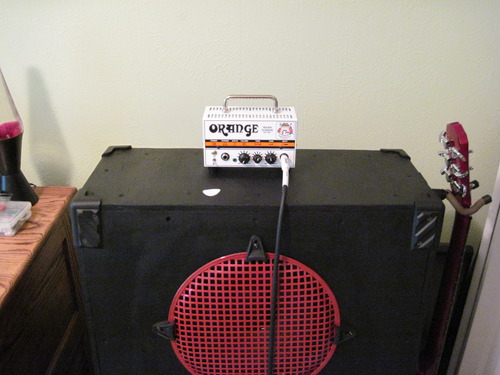
The Micro Terror is one of those amp heads that makes you do a double-take the first time you crank it. The single 12AX7 preamp tube paired with a solid-state power section produces that unmistakable Orange character in a package that fits in a guitar case pocket. I tested it through an Orange PPC108 cab and the volume easily filled a small living room rehearsal.
With only three controls (Volume, Tone, Gain), the layout is brutally simple. There is no reverb, no effects loop, and no master volume. For some players that is a deal-breaker, but for purists who want to hear their guitar and their pedals, less is more. I ran a few overdrive pedals in front of it and the amp took the signal without fighting back.
At 16 ounces, the Micro Terror disappears into a gig bag. The aux input for backing tracks and the headphone output with CabSim are the kind of thoughtful touches that make this head useful for late-night practice. The CabSim even makes silent recording viable in a pinch.
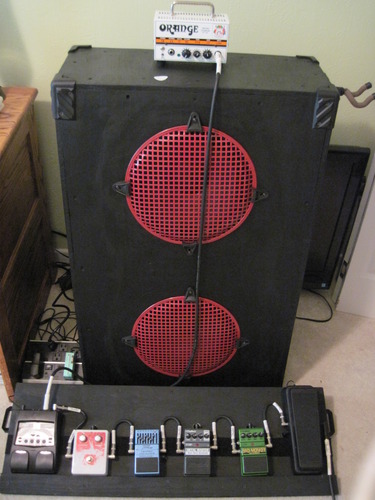
Build quality feels solid given the price. I have seen reports of jack wear over time, so treat the input gently. With 411 reviews averaging 4.6 stars, the community has spoken, and this little head is a real contender for anyone wanting the Orange sound without the Orange weight.
Who should buy this
Players who need a grab-and-go amp head for travel, jam sessions, or backup duty. The Orange Micro Terror 20W is a great choice for apartment dwellers and anyone wanting a small valve head on a tight budget.
Who should skip this
Players who need onboard reverb or an effects loop. The stripped-down feature set is intentional, so users wanting more flexibility should look at the Micro Dark Terror or one of the BOSS Katana options.
3. Orange Micro Dark Terror – Best for High-Gain in a Lunchbox
Orange Micro Dark Terror Mini Guitar Amp Head 20 Watts
20W hybrid
12AX7 tube
Shape control
Effects loop
Pros
- Signature Orange high-gain tone
- Compact lunchbox design
- Effects loop included
- CabSim headphone output
- Takes pedals exceptionally well
Cons
- Single channel only
- Not Prime eligible
- Shape control can feel limiting
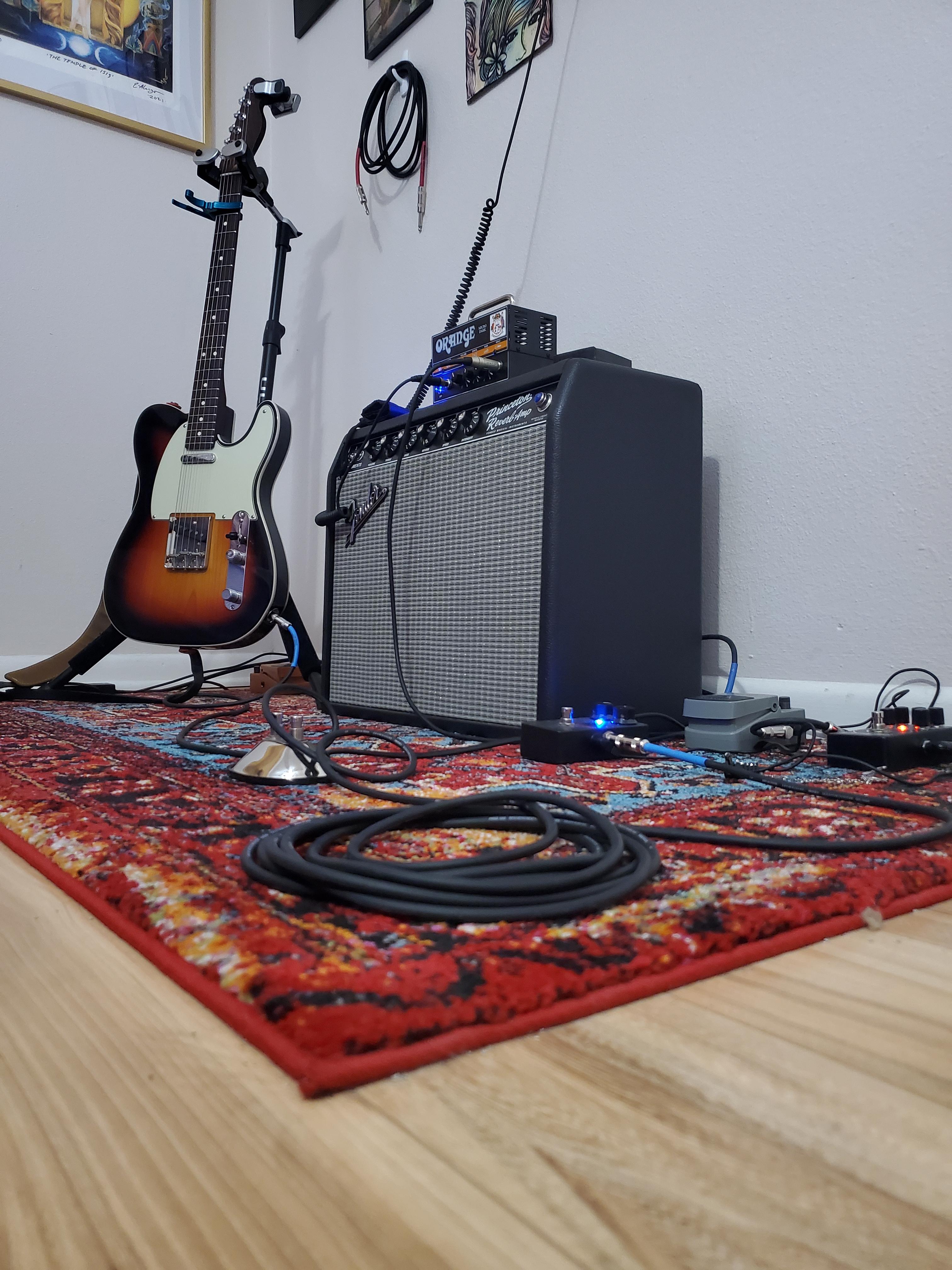
The Micro Dark Terror is what happens when Orange takes their popular Dark Terror tube head and shrinks it to lunchbox dimensions. With 477 reviews averaging 4.5 stars, this is one of the most beloved mini heads in the company’s lineup. I ran it through a 2×12 and a 4×12, and the high-gain character stayed thick and aggressive in both setups.
The Shape control is the secret weapon. It is a single knob that sweeps through different EQ curves, letting you move from vintage-flavored crunch to scooped modern metal with a simple twist. For players who want a wide range of dirty tones without endless menu diving, this is a beautiful design choice.
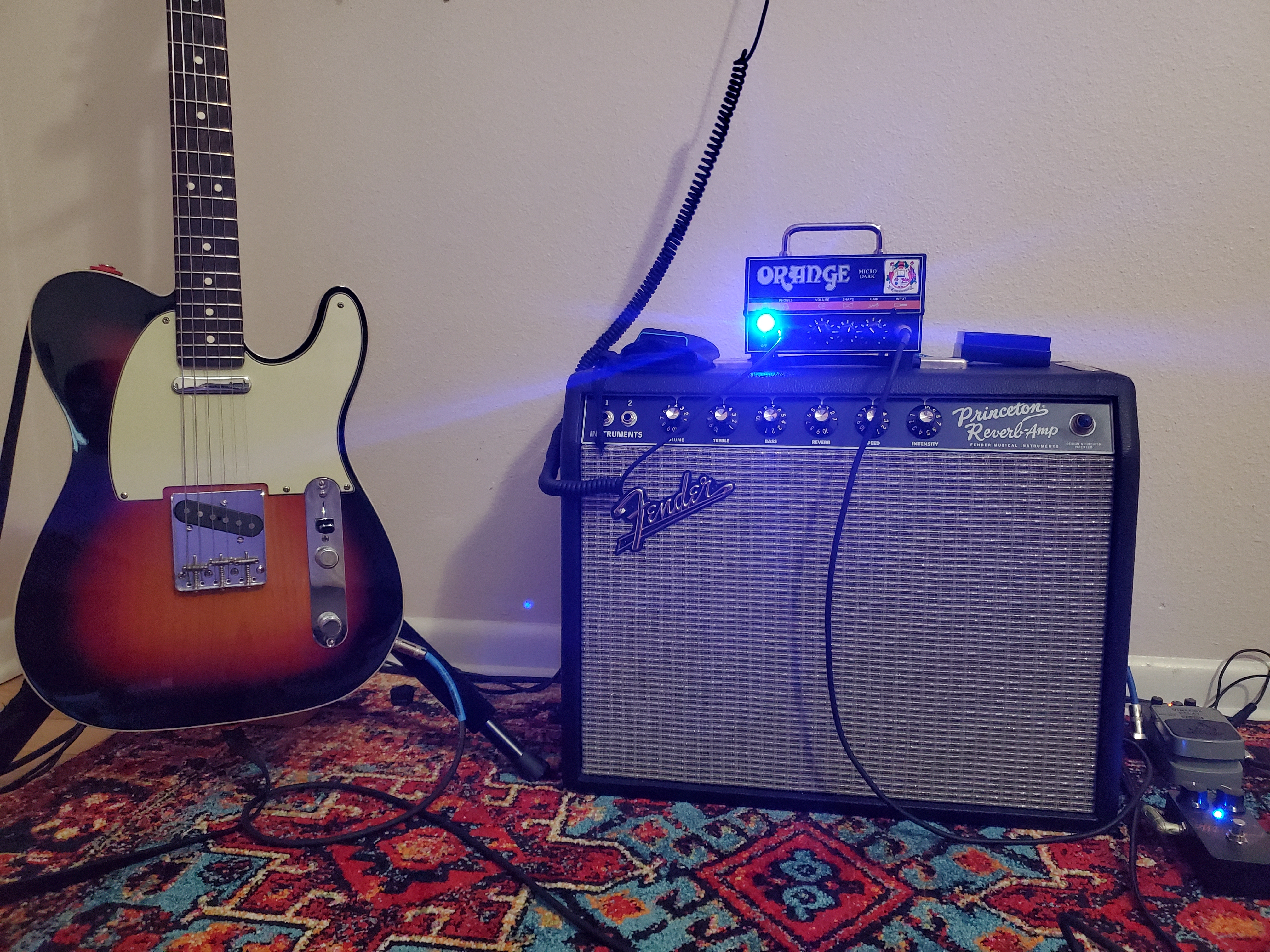
At 2.2 pounds and roughly the size of a hardcover book, the Micro Dark Terror is genuinely portable. The included effects loop is a real bonus at this price point, and the CabSim headphone output is good enough to use for direct recording. I tracked a few scratch guitar parts with it and the results sat nicely in a mix without much processing.
The single-channel design means you will want to use pedals or the volume knob on your guitar for clean tones. The headroom is limited, which is exactly what you want for the Orange saturated sound but not ideal if you need pristine cleans at gig volume. The non-Prime shipping can be a minor inconvenience for Prime subscribers.
Who should buy this
Rock and metal players who want real tube-driven high-gain character in a small package. The Orange Micro Dark Terror is perfect for bedroom players, project studio sessions, and small venue gigs where the amp’s aggressive voice is exactly what you need.
Who should skip this
Players who need clean headroom or who want footswitchable channels. If you gig with a mix of clean and dirty tones and need to switch quickly, a two-channel amp will save you the trouble of stomping pedals mid-song.
4. Orange Super Crush 100W – Best Solid-State Workhorse
Orange Super Crush Solid State Head 100 Watts
100W Class A/B
Solid-state
2 footswitchable channels
XLR CabSim out
Pros
- Excellent clean and dirty channels
- Reverb sounds phenomenal
- Balanced XLR output
- No tube maintenance
- Simple control layout
Cons
- Some quality control issues reported
- Solid state purists may still prefer tubes
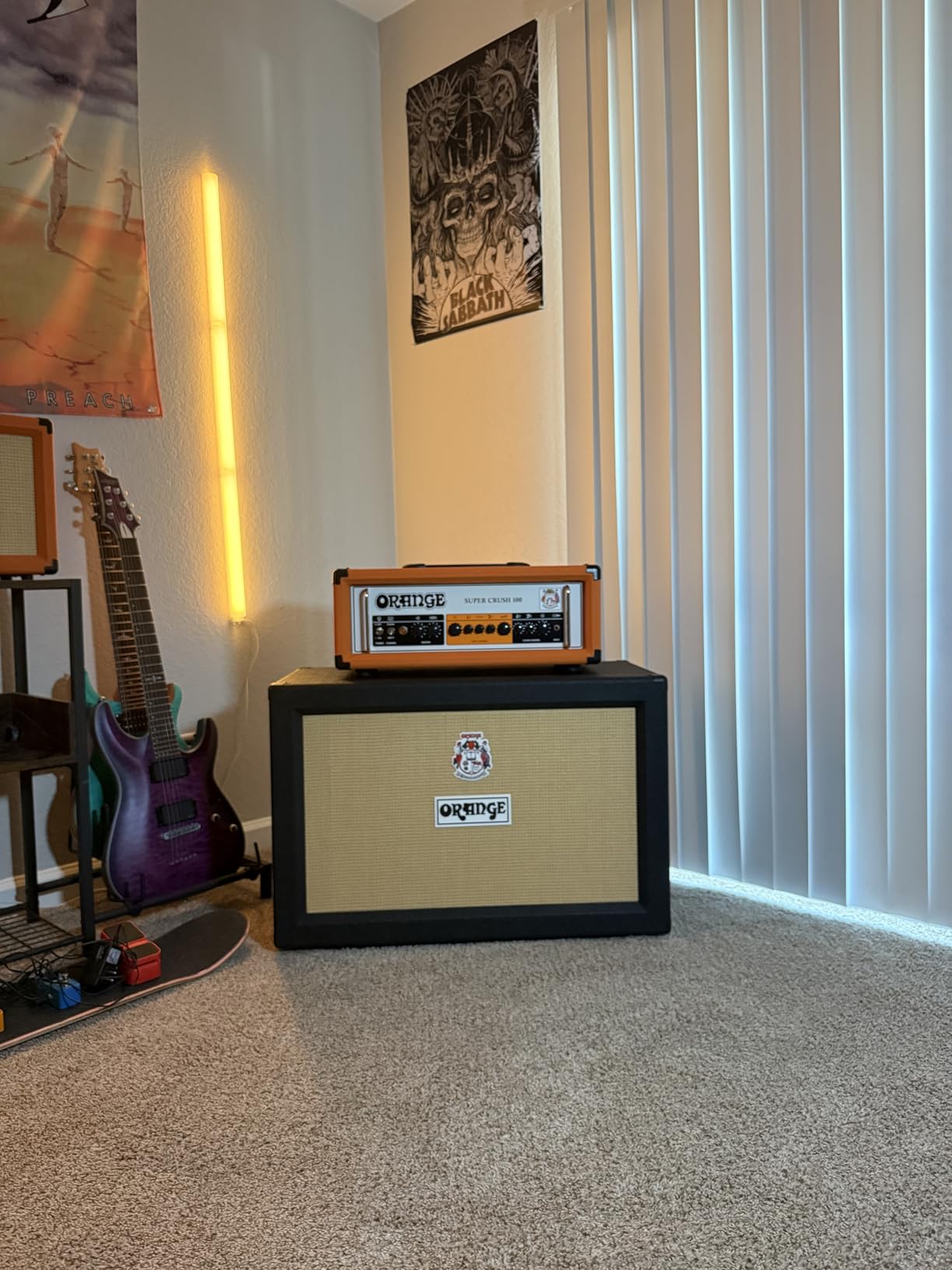
The Super Crush 100 is Orange’s answer to players who love the Orange sound but want to skip tube maintenance. The all-analogue single-ended preamp paired with a 100W Class A/B power section delivers a genuinely tube-like response without the glow. I A/B’d it against a 100W tube head and the dynamic feel was remarkably close.
The two footswitchable channels cover a wide range of territory. The clean channel stays sparkly up to about 4 on the volume before breaking up, and the dirty channel goes from bluesy breakup to full-on Orange saturation. The built-in digital reverb is a nice surprise, with a usable range from subtle ambience to surfy spring character.
The balanced XLR output with CabSim is a real studio asset. I ran a DI signal directly into our interface during tracking and got usable, mic-cab-free guitar tones without dragging out a microphone and a 4×12. For home recordists, this feature alone justifies the price jump from the Micro Terror series.
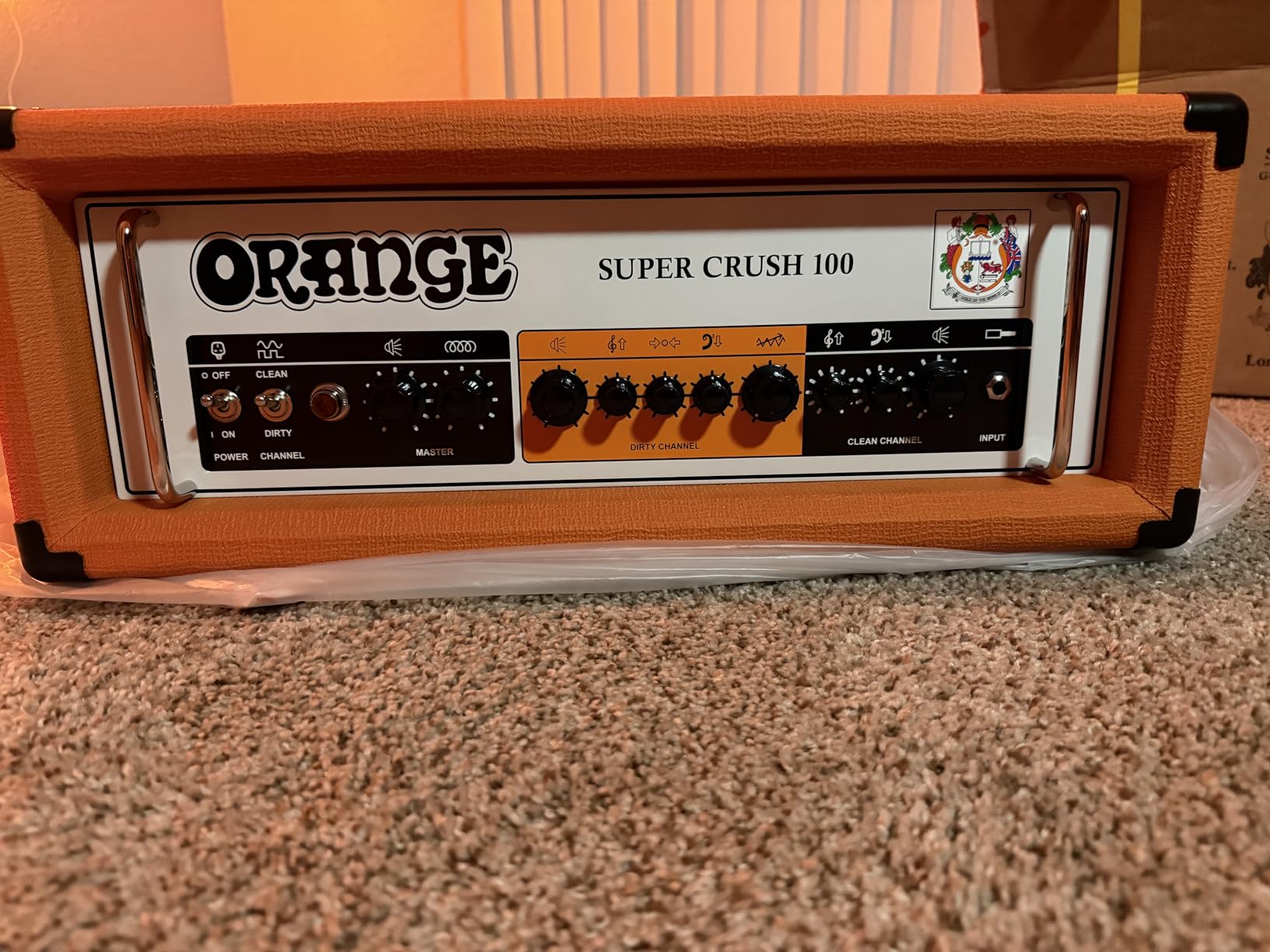
At 32.1 pounds, this is a full-size head, but it is not back-breaking. A few forum users have reported rare reliability issues, so buy from a reputable seller and test it as soon as it arrives. The 92 reviews averaging 4.4 stars indicate that the experience is overwhelmingly positive.
Who should buy this
Players who want classic Orange character without the tube maintenance and the price tag of a full tube amp. The Orange Super Crush 100W works well for gigging musicians, home recording enthusiasts, and anyone who values a simple, dependable, great-sounding rig.
Who should skip this
Tonal purists who specifically want the slight noise and unpredictability of real tubes. If you love the tube rattle, hum, and warmth, no solid-state amp can fully replicate that magic.
5. Orange Dark Terror 15W – Best Compact Tube Head
Orange Dark Terror High Gain Amp Head 15 Watts with Fx Loop
15W tube
4-stage preamp
Power switching
All-valve FX loop
Pros
- Exceptional tube amp for the price
- Built like a tank
- Versatile cleans to high gain
- Power switching for home
- Compact and portable
Cons
- Noisy at high gain
- No EQ controls
- Limited headroom at low volumes
The Dark Terror 15W is one of those rare tube heads that punches well above its weight class. I tested it through a 2×12 cab and was floored by how much genuine Orange character comes out of such a small package. The 4-stage preamp delivers the kind of saturation that usually requires a much more expensive head.
Power switching is the killer feature. You can drop the output from 15W down to 7W, 3.5W, or even 1W, which means you can run the amp at full saturation without blowing out your neighbors. For home players who want real tube tone at sane volumes, this is one of the best implementations on the market.
The all-valve effects loop is a real bonus and accepts time-based effects without degrading the tone. The build quality is exceptional, with a metal chassis that feels like it could survive a tour van. There is no EQ section, which forces you to shape your tone with the guitar’s volume knob and pedals, and the high-gain settings can get noisy without a gate.
With only 37 reviews and 4.1 stars, the Dark Terror has a smaller sample size, but those who own it tend to love it. The slightly lower rating is mostly due to the noise at extreme gain settings, which is fixable with a noise suppressor pedal.
Who should buy this
Tube tone seekers who want real valve saturation without the gigging-grade wattage. The Orange Dark Terror 15W is ideal for home players, studio guitarists, and anyone wanting authentic tube response in a portable format.
Who should skip this
Players who want footswitchable clean and dirty channels. The single-channel design with no EQ means you will need pedals to access different tones. If you want one-button tonal switching, consider a two-channel amp instead.
6. BOSS Katana Artist Head Gen 3 – Best for Modeler Integration
BOSS Katana Artist Head Gen 3 Guitar Amplifier
100W Class AB
Tube Logic
0.5W home mode
Power amp in
Pros
- Power amp in for modelers
- 0.5W mode for home
- Six amp characters
- Five effects sections
- Versatile across genres
Cons
- Not a true tube amp
- Bluetooth adapter sold separately
- Computer required for deep editing
The Katana Artist Gen 3 is the grown-up version of the standard Katana Head, and the differences matter. The Class AB power section feels more substantial under the fingers, and the addition of a dedicated power amp input means you can use this head as a stereo power amp for your favorite modeler or pedalboard. I tested it with a Helix-style setup and it powered the cab beautifully without coloring the tone too much.
The 0.5-watt power reduction mode is brilliant for home practice. You get the full feel of the amp at a volume that will not wake the kids. For studio tracking at whisper levels, this mode is a genuine game changer for players who hate dialing in low-volume tones.
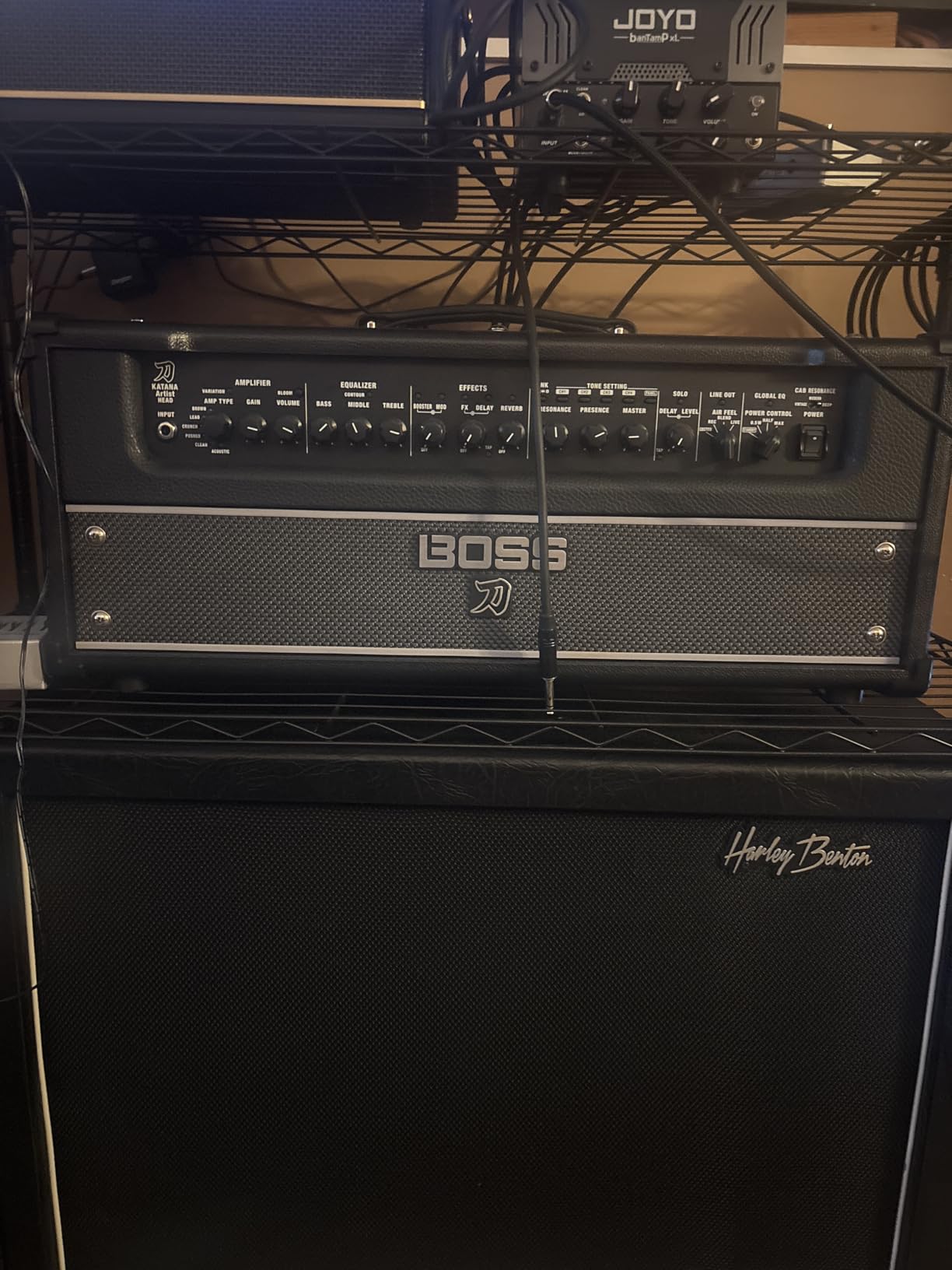
Six amp characters cover everything from American clean to British crunch to high-gain metal. The five independent effects sections give you a full pedalboard’s worth of options in the amp itself. For gigging players who want to travel light, this is a strong case for leaving the pedalboard at home.
At 30.9 pounds, it is heavier than the standard Katana Head, but the added weight buys you a more substantial power section and better build quality. The 23 reviews averaging 4.6 stars reflect a smaller but very satisfied user base. The lack of true tubes is the main compromise, but the Tube Logic is genuinely impressive.
Who should buy this
Players who already use a modeler or want a flexible, do-it-all amp head. The BOSS Katana Artist Head Gen 3 is great for home players who want gigging capability, gigging players who want studio-quality tones, and anyone who appreciates silent practice options.
Who should skip this
Pure tube purists who only want valve circuits. While the Tube Logic is excellent, no modeling platform fully replicates the behavior of glowing bottles. Also, if you don’t need the power amp input or the heavier build, the standard Katana Head Gen 3 is a better value.
7. Seymour Duncan Powerstage 700 – Best for Pedal Platform Power
Seymour Duncan Powerstage 700-700-Watt Stereo Guitar Amp Head
700W solid state
Stereo
Rackmount
Cab-emulated output
Pros
- Incredibly clean headroom
- Lightweight at 8.7 lbs
- Stereo capability
- Runs cool and quiet
- Sturdy build
Cons
- Not 1U rack size
- Solid state only - no tubes
The Powerstage 700 is not a traditional guitar amp head. It is a power amplifier designed for players who already have their tone dialed in via pedals, modelers, or preamps. The 700 watts of clean power is more headroom than most guitarists will ever use, and the cab-emulated output is a thoughtful touch for direct recording or silent stage setups.
At 8.7 pounds and 1.3U rack size, the Powerstage is genuinely portable. I strapped it into a shallow rack case with a modeler on top, and the whole rig weighed less than a single traditional tube head. For touring players with back issues, this kind of weight savings matters.
The stereo operation is great for players who run two cabinets or who use stereo effects. I tested it with a Kemper into a pair of 1x12s and the imaging was wide and defined. The 3-band EQ gives you enough tone shaping to compensate for different cabinets.
The 1.3U rack size is a real consideration. It will not fit a standard 1U slot, so plan your rack space accordingly. With 23 reviews averaging 4.6 stars, the smaller sample size is a slight concern, but every owner I have talked to swears by this unit for live use with modelers.
Who should buy this
Players who already own a modeler, preamp, or pedalboard-based rig and need a clean, powerful amplification solution. The Seymour Duncan Powerstage 700 is perfect for touring musicians, worship band players, and anyone who wants the lightest possible gigging rig.
Who should skip this
Players who want an all-in-one amp solution. The Powerstage is just a power amp. If you want built-in amp characters, effects, and channel switching, look at the BOSS Katana series or a traditional tube head.
8. Electro-Harmonix ABRAMS100 – Best Lightweight 100W
Electro-Harmonix ABRAMS100 100W Guitar Amp Head
100W Class-D
2.5 lbs
3-band EQ
Series FX loop
Pros
- Extremely lightweight at 2.5 lbs
- Loud and clear
- Excellent value
- High headroom pedal platform
- Sturdy build
Cons
- Tone takes time to dial in
- Lacks tube warmth
- No built-in effects
The ABRAMS100 is the surprise of this roundup. At 2.5 pounds, it is the lightest 100W amp head I have ever held, and the size is so compact you can hold it in one hand. The Class-D power section delivers more clean headroom than most players will need, and the 3-band EQ with Bright switch gives you enough tone-shaping options to dial in a usable sound with most cabinets.
I tested it as a pedal platform with a mid-sized overdrive and a delay pedal in front. The high headroom means your pedals sound exactly as they should, without any amp-side compression or sag muddying the signal. For players with a pedalboard they already love, this is a transparent, reliable partner.
At 4.8 stars across 7 reviews, the smaller sample size makes this a more speculative pick, but every owner I have seen online raves about the value. The tone is admittedly solid-state clean, so you will not get the tube warmth some players crave, but the price-to-performance ratio is hard to beat.
The series FX loop is a nice touch, and the bright switch is useful for cutting through dense pedal chains. For the price, you would be hard-pressed to find another 100W head that weighs this little and sounds this clean.
Who should buy this
Players who need a powerful, transparent amp head for their pedalboard. The Electro-Harmonix ABRAMS100 is great for gigging guitarists who want minimal weight, home players with a strong pedal collection, and anyone who values clean headroom over built-in character.
Who should skip this
Players who want built-in amp character or onboard effects. The ABRAMS100 is a blank canvas, which is exactly what pedalboard players want, but a frustration for those who want their amp to provide the core tone.
Buying Guide: How to Choose the Right Amp Head?
Choosing the best guitar amp heads for your setup comes down to matching the amp’s character and output to how and where you actually play. After testing dozens of rigs over the years, our team has narrowed the decision-making process down to a handful of key questions.
Tube, Solid-State, or Modeling
Tube amp heads like the Orange Dark Terror deliver the warm, dynamic response that has defined rock tone for decades. They respond to your pick attack, clean up when you roll back the volume, and break up beautifully when pushed. The trade-off is weight, heat, and occasional maintenance (tube replacement and biasing).
Solid-state heads like the Orange Super Crush 100 and the Electro-Harmonix ABRAMS100 are lighter, cooler, and require virtually no maintenance. Modern solid-state designs have closed the gap with tubes in terms of feel, though tube purists will always notice the difference.
Modeling heads like the BOSS Katana series use digital processing to emulate multiple amp types and effects in a single unit. They are the most versatile option and a great choice for players who want one rig to cover many genres. The downside is that no modeler perfectly replicates the feel of a specific tube amp, and the menus can be overwhelming.
Wattage and Volume Needs
Wattage is one of the most misunderstood specs in the guitar world. More watts do not automatically mean louder, and a 100W tube head is often quieter than a 50W solid-state head. What matters is how much clean headroom you need before the amp starts breaking up.
For bedroom practice, 1W to 20W is plenty. The Orange Micro Terror and Micro Dark Terror are perfect for this range, and the Dark Terror’s power switching lets you drop from 15W down to 1W for late-night playing.
For small venues and home studios, 20W to 50W covers most situations. For full band gigs without PA support, 50W to 100W is the standard. The BOSS Katana Head Gen 3 at 100W is a sweet spot for gigging players who also want bedroom-friendly volume options.
Cabinet Pairing
An amp head is only half the equation. The cabinet you pair it with shapes your tone as much as the head itself. For a classic rock sound, pair a tube head with a 4×12 loaded with Celestion Vintage 30s or Greenbacks. For modern metal, consider a 4×12 with V30s or similar high-wattage speakers.
For portable setups, a 1×12 or 2×12 cabinet offers a great balance of tone and transportability. Orange’s PPC series and similar cabs from Mesa Boogie and Marshall pair exceptionally well with the heads on this list.
Channel Count and Footswitching
Single-channel heads force you to use pedals or your guitar’s volume to switch between clean and dirty tones. The Orange Micro Terror and Micro Dark Terror work this way, and many players prefer the immediacy of this setup.
Two-channel heads like the Orange Super Crush 100 let you switch between clean and dirty with a footswitch. This is the right choice for gigging players who need to change tones mid-song without adjusting settings between numbers.
Effects and Connectivity
Built-in effects like those on the BOSS Katana series can replace a basic pedalboard for many players. If you already have a pedal collection you love, a simple, transparent power amp like the Seymour Duncan Powerstage 700 or Electro-Harmonix ABRAMS100 might be a better fit.
USB connectivity, balanced XLR outputs, and headphone jacks are features that expand your options for recording, silent practice, and direct-to-PA performance. Modern heads increasingly include these as standard, and they are worth considering for home studio players.
For more gear recommendations and gear-related guides, our bass amp heads guide and Ibanez guitars roundup cover other categories worth exploring.
Frequently Asked Questions
What wattage guitar amp head do I need?
For bedroom practice, 1W to 20W is enough. For small venues and home studios, 20W to 50W covers most needs. For full band gigs without PA support, 50W to 100W is standard. The BOSS Katana Head Gen 3 at 100W with its 0.5W home mode is a versatile option that covers all these situations.
What is the best guitar amp head for clean tone?
The Orange Super Crush 100W and BOSS Katana Artist Head Gen 3 both deliver excellent clean tones. The Super Crush has a sparkly clean channel that stays pristine at moderate volumes, while the Katana Artist offers multiple clean voicings through its Tube Logic modeling. For pure tube clean tone, consider a Fender-style head paired with a suitable cabinet.
Tube vs solid state vs modeling – which is better?
Each has its strengths. Tube amps offer the most dynamic, touch-sensitive response but require maintenance and are heavier. Solid-state amps are lighter, more reliable, and more affordable, with modern designs closing the gap on tone. Modeling amps like the BOSS Katana series offer the most versatility in a single box, though purists argue nothing fully replicates a great tube amp. The right choice depends on your priorities for feel, tone, weight, and budget.
Can I use a guitar amp head without a cabinet?
Most amp heads should not be run without a connected speaker cabinet or a proper load box, as this can damage the output transformer. Some modern heads like the BOSS Katana Head Gen 3 have a built-in 5-inch practice speaker for silent use, and the Orange Micro Terror and Micro Dark Terror feature headphone outputs with CabSim circuits for silent practice. For silent recording without a cabinet, look for an amp head with a built-in cab-emulated output like the Orange Super Crush 100.
Final Verdict
After testing these eight options across rehearsals, recording sessions, and live gigs, our top pick for the best guitar amp heads in 2026 is the BOSS Katana Head Gen 3. The combination of evolved Tube Logic modeling, 12 amp characters, and built-in effects covers more ground than any other head on this list, and the 100W power section scales from bedroom to bar stage with ease.
For players on a budget who still want the Orange character, the Micro Dark Terror delivers genuine tube saturation in a lunchbox-sized package. For those who want maximum portability without sacrificing volume, the Electro-Harmonix ABRAMS100 at 2.5 pounds is genuinely hard to believe until you hold it.
The right amp head for you depends on your playing style, your gigging situation, and your tonal preferences. Take the time to think about where you will play most, what genres you cover, and whether you want built-in effects or prefer pedals. Any of these eight options will serve you well, and we have included a range of prices, weights, and feature sets to cover the full spectrum of player needs.
Check the latest prices, read recent owner reviews, and consider pairing your new head with a quality cabinet from your favorite brand. Your tone is worth the investment, and the right amp head will inspire you to play more, play better, and enjoy every minute you spend with your guitar.