
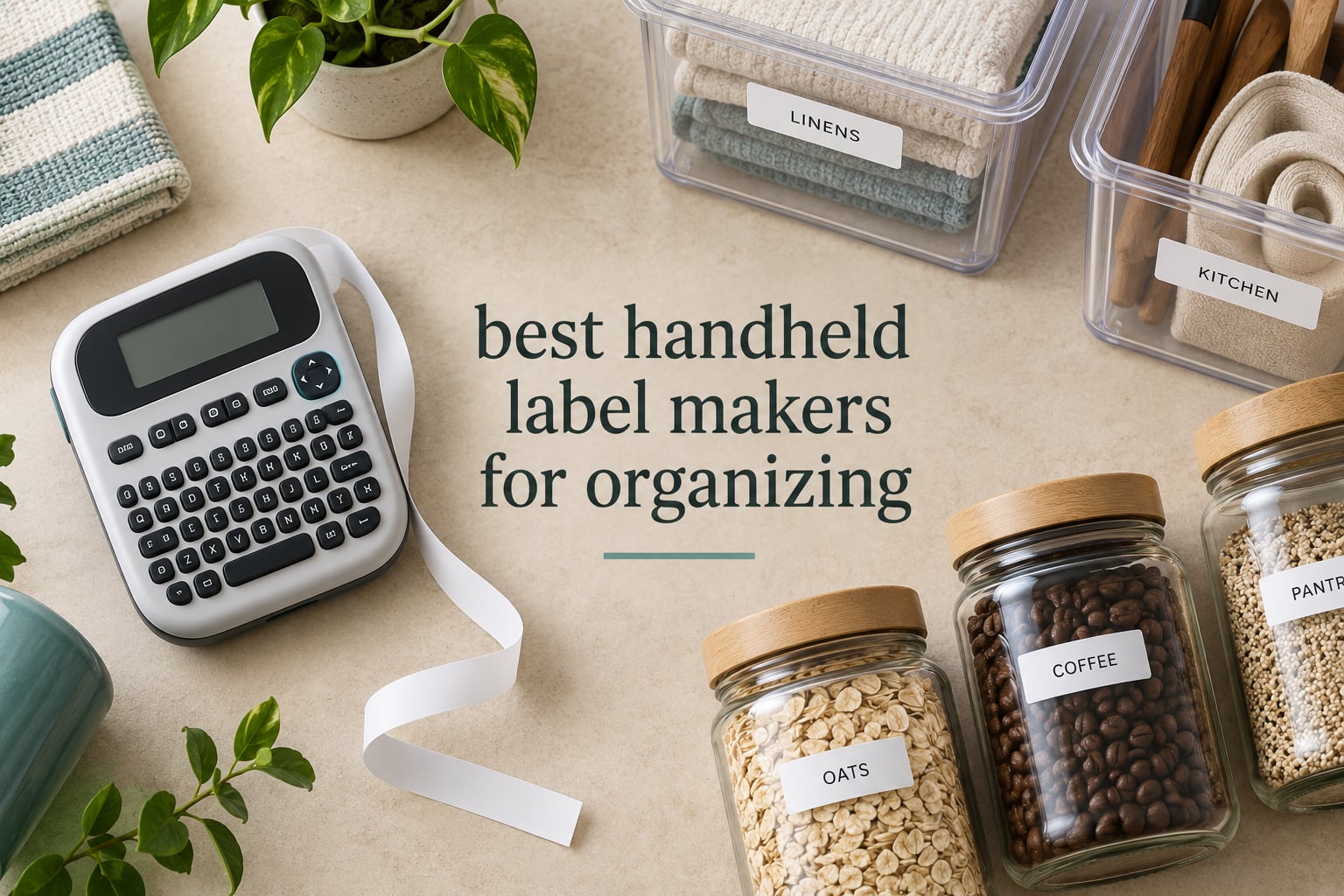
Every organizing project I have ever abandoned died for the same reason: nobody could remember what the system meant. Three months after I labeled the pantry, the labels were still there and the logic behind them was gone. That is the whole argument for a handheld label maker, and it is why I spent the last two months putting twelve of them through the same routine.
The category has split in two directions in the last few years. Traditional handheld units from Brother and DYMO type on a built-in keyboard and print laminated tape on the spot, with no phone required. The newer wave from NIIMBOT, Phomemo and SUPVAN drops the keyboard entirely and hands the typing job to an app over Bluetooth, which buys you color elements, barcodes and QR codes at the cost of needing your phone in the room.
Both camps have arguments. Neither camp will tell you that half the tape in your drawer is the wrong width for the bin in front of you, so I did. We compared all twelve units on setup time, typing speed, label clarity, adhesion and tape waste, and none of the devices here were sponsored or loaned. If you want the wider sweep across desk units and desktop printers, we have separate guides on the best label makers overall and on label makers built for organizing.
Table of Contents
What Is the Best Handheld Label Maker?
The DYMO LetraTag 100H is the best handheld label maker for most people organizing a home: it runs on two AA cells, types on its own keyboard with no app, prints five font sizes across half-inch tape, and ships with paper, plastic and clear tapes in the box. The Brother PT-D220 is the runner-up if you want saved-label memory and more fonts, the DYMO LabelManager 280 is the pick if you want a rechargeable body and a real QWERTY keyboard, and the Phomemo D30 is the pick if you would rather design on your phone.
That answer assumes you want a keyboard. If you would rather not hold a phone to type a spice label, stop here and read the definition section below, because four of the twelve units we tested cannot print a single label without an app.
Top 3 Best Handheld Label Makers for Organizing (October 2026)

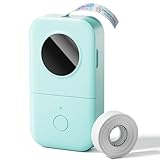
DYMO LetraTag 100H
- Built-in keyboard
- no app needed
- Half-inch tape width
- Paper plastic and clear tapes included

All 12 Picks Side by Side (October 2026)
Use this table to rule devices out fast. The deciding column is usually tape width, because a label that is too narrow for the text will not save you time no matter how good the printer is.
| Product | Specifications | Action |
|---|---|---|
| DYMO LetraTag 100H |
|
Check Latest Price |
| Brother P-touch PT-D220 |
|
Check Latest Price |
| Phomemo D30 |
|
Check Latest Price |
 NIIMBOT B1 NIIMBOT B1 |
|
Check Latest Price |
 SUPVAN T50M Pro SUPVAN T50M Pro |
|
Check Latest Price |
 DYMO LabelManager 280 DYMO LabelManager 280 |
|
Check Latest Price |
 NIIMBOT D110 NIIMBOT D110 |
|
Check Latest Price |
 SUPVAN E11 SUPVAN E11 |
|
Check Latest Price |
 DYMO LabelManager 160 DYMO LabelManager 160 |
|
Check Latest Price |
 Brother P-touch PT-D210 Brother P-touch PT-D210 |
|
Check Latest Price |
 Brother P-touch PT-H110 Brother P-touch PT-H110 |
|
Check Latest Price |
 Brady M210 Brady M210 |
|
Check Latest Price |
What Handheld Actually Means
Nobody defines this term, and the search results are full of desktop printers being passed off as handheld units. We use one rule: a handheld label maker is a device you can hold in one hand, carry in a bag, and use to label a bin without plugging anything in.
That splits the field into three classes. Keyboard-and-screen handhelds like the DYMO LetraTag 100H, the Brother PT-D220 and the DYMO LabelManager 280 have a physical QWERTY or alphabetic keyboard and an LCD, so they work standalone. Hybrid units like the SUPVAN E11 have a small keyboard for speed plus an app for design work. App-only Bluetooth handhelds like the Phomemo D30, the NIIMBOT D110, the NIIMBOT B1 and the SUPVAN T50M Pro have no keyboard at all and cannot print without a phone or computer nearby.
Desktop thermal printers such as the MUNBYN and Phomemo shipping-label models sit outside this article entirely. They print four-inch shipping stock and barcodes for a warehouse, which is a different job from naming a pantry jar. We cover those separately in our thermal label printer guide.
How We Tested?
We bought all twelve units at retail and none of them were provided, sponsored or loaned. Each one ran through five passes over a six-week window, with the same tape stock and the same bin surfaces.
First, setup: how long from opening the box to a correctly aligned first label, including any calibration step. Second, typing speed: forty characters of a realistic pantry label on the built-in keyboard, or in the app if there was no keyboard. Third, function: two lines of text, a symbol and a border where the device allowed it.
Fourth, durability and adhesion. We applied labels to smooth plastic, textured plastic and a lightly dusty surface, then soaked half of them in soapy water for twenty minutes and put the other half through one dishwasher cycle on the top rack. Fifth, running cost: we measured how much tape each unit wasted on the lead before the first character, because on continuous rolls that lead is pure loss.
One honest note before the reviews. Reviewers disagree about whether budget mini makers survive a dishwasher, and part of that is methodology rather than hardware. A twenty-minute soak is a fair test of adhesive. A full dishwasher cycle on the top rack is a punishment, and any laminated label that survives it is doing well.
1. DYMO LetraTag 100H – The One You Can Use Without Thinking
DYMO Label Maker Machine with 3 Tapes – 100H LetraTag Handheld, Includes 3 LT Label Tapes, Perfect for Home & Office Organization
Weight: 16 oz
Tape width: 1/2 inch
Power: AA batteries
Resolution: 203 dpi
Warranty: 1 year
Pros
- Works with no phone and no app
- Ships with paper plastic and clear tapes
- Five font sizes and seven styles
- Graphical display previews the label
- Mounts on metal with the included holder
Cons
- Alphabet-order keyboard slows typing
- Tape backing is hard to peel
- Box styles only work at small font sizes
- Weak magnetic holder
I have had a LetraTag in a drawer for years and it is the machine I hand to anyone who says they do not want to deal with an app. You pick it up, type, and print. There is no pairing, no account, and nothing to update.
The box includes three tapes, which is unusual at this level and means you can start immediately: one paper, one plastic black on white, and one plastic black on clear. That third tape is the reason this unit tops our list, because clear tape is the most-requested label type in organizing communities and most competitors make you buy it separately.
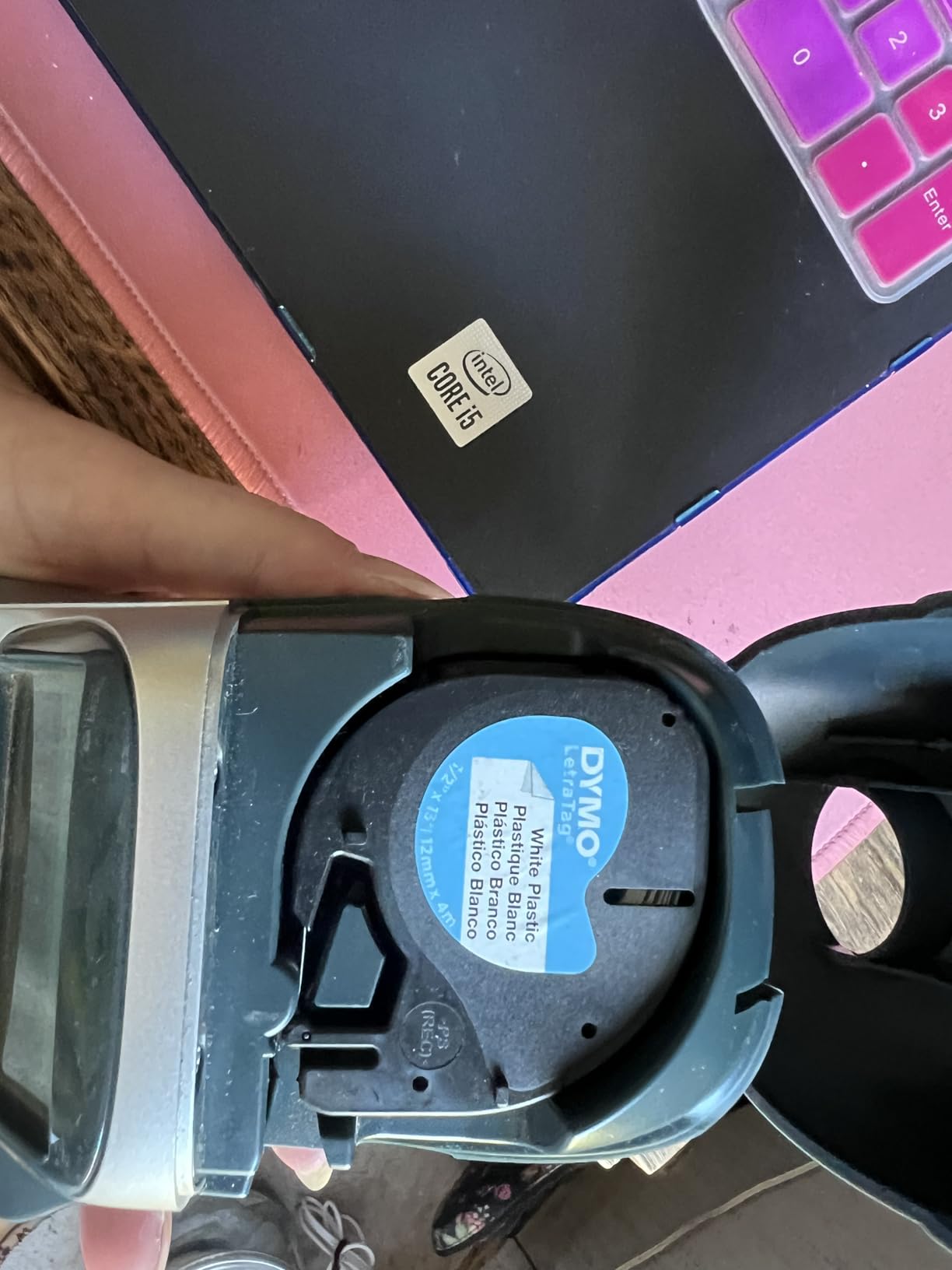
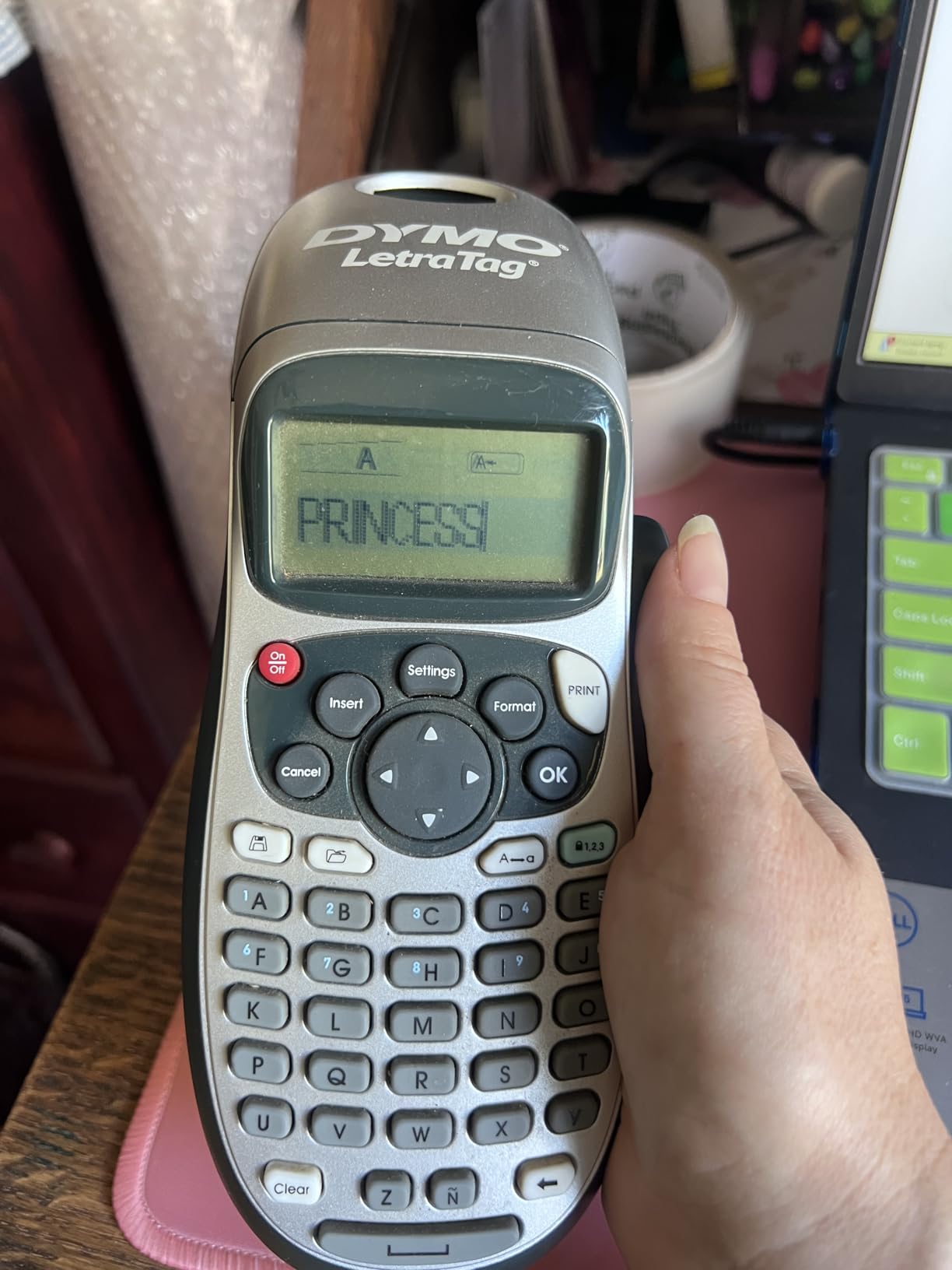
The screen previews the label before you commit tape, and the integrated cutter trims it at the back edge so you can peel and stick in one motion. Five font sizes, seven print styles and eight box styles give you more variation than the resolution suggests.
Adhesion on smooth plastic bins was solid. The labels sat through the soapy-water soak without lifting, and the clear ones still read cleanly on a dark container after drying. Textured plastic was harder: the corners lifted slightly, which is a property of the surface more than the tape.
What you should check before buying
The keyboard is laid out in alphabetical order rather than QWERTY. If you type a lot of words rather than short codes, expect friction, because every character requires a hunt. It suits code-style labels like PANS and Q1 better than full names.
The border feature only renders at the two smallest font sizes, and the tape backing is genuinely hard to start peeling. A thin fingernail or the machine’s own cutter edge helps more than reviewers usually admit.
Who it suits and who it does not
This is the right pick for a kitchen, a craft room or a first apartment where the goal is twenty labels, not a system. Anyone labeling a few hundred file tabs will want the Brother PT-D220 for its saved-label memory.
It is also the safest first device for a kids room. At this weight and this price, losing it under a bed is not a disaster, which matters more in a nursery than most spec sheets admit.
2. Brother P-touch PT-D220 – The File and Folder Specialist
Brother P-Touch PTD220 Home/Office Everyday Label Maker | Prints TZe Label Tapes up to ~1/2 inch White
Weight: 1.1 lb
Tape width: 12 mm TZe
Power: 6 AAA batteries
Memory: 30 labels
Warranty: 2 years
Pros
- Real QWERTY keyboard with no app
- Thirty saved labels for one-touch reprinting
- Fourteen fonts and 99 frames
- TZe laminated tape peels cleanly
- Two-year limited warranty
Cons
- Print width capped at 12 mm
- Six AAA batteries and no recharge
- AC adapter sold separately
- No Bluetooth or app connectivity
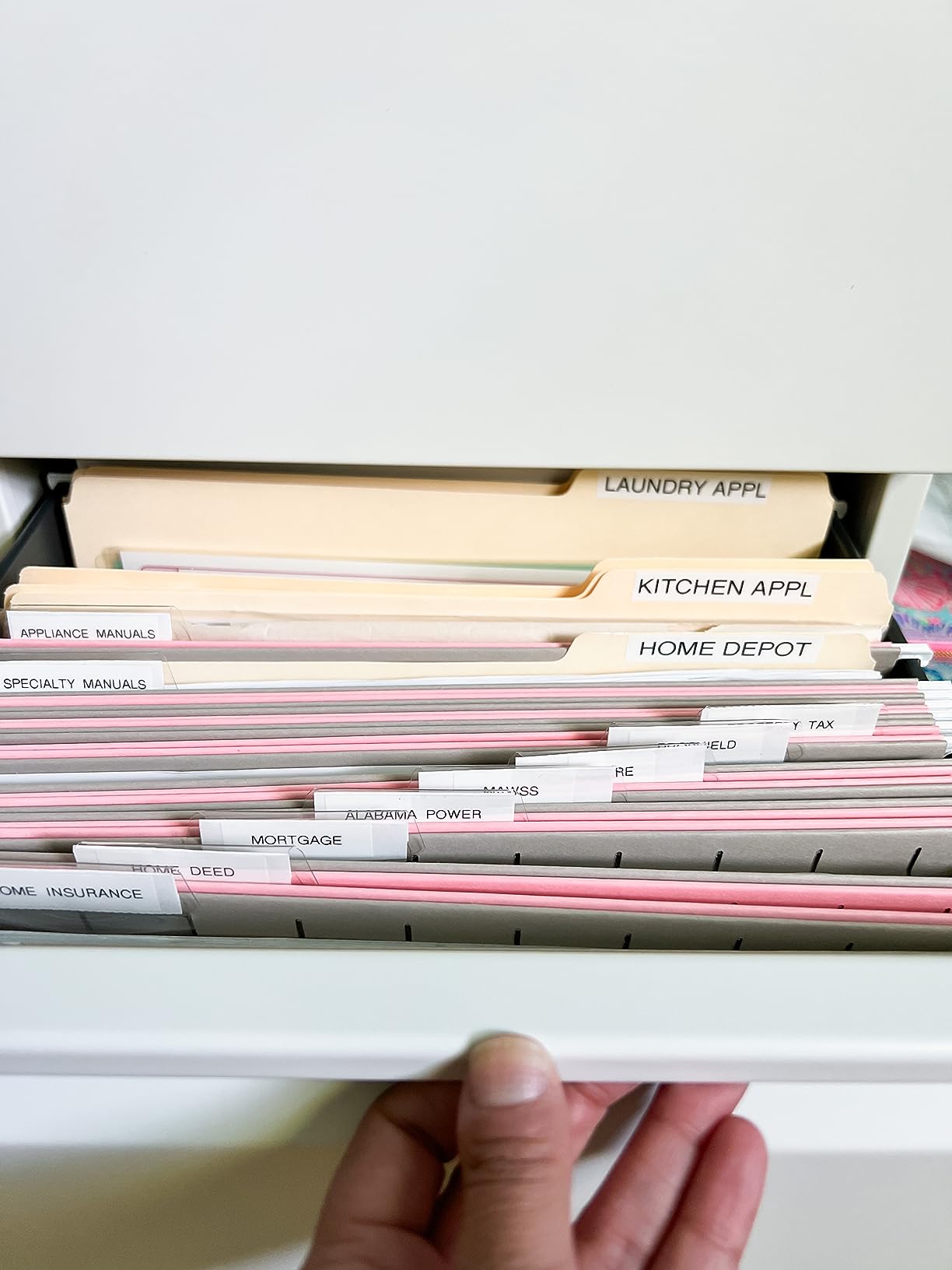
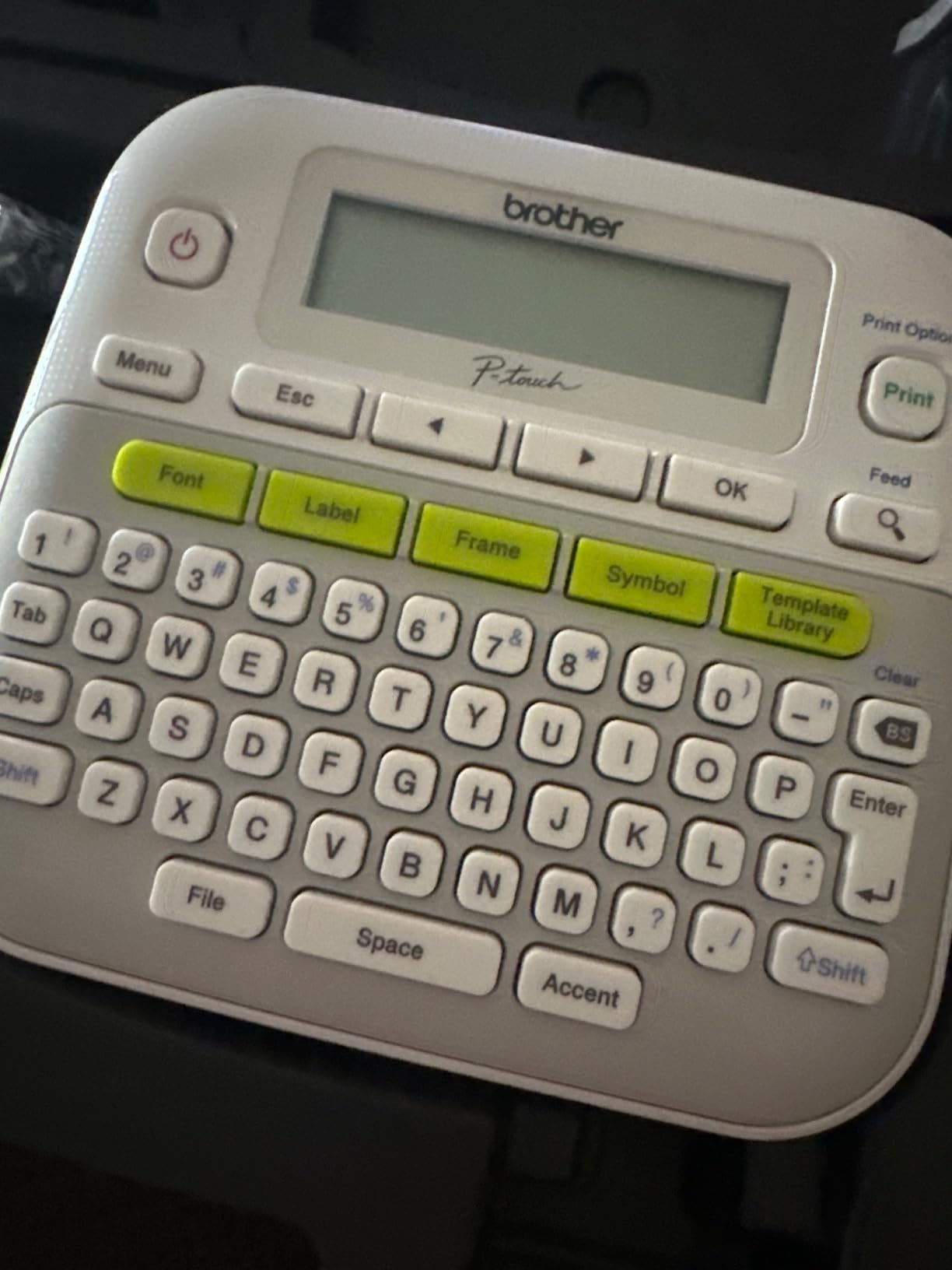
If you are labeling a filing cabinet, this is the machine I would buy. Thirty saved-label slots means you print the same bin name once and then reprint it for every drawer in the house without retyping.
The QWERTY keyboard is the real differentiator. Thirty characters in thirty seconds is roughly three times what I managed on the LetraTag’s alphabet layout, and for labels like KITCHEN SINK SUPPLIES that difference compounds across a whole cabinet.
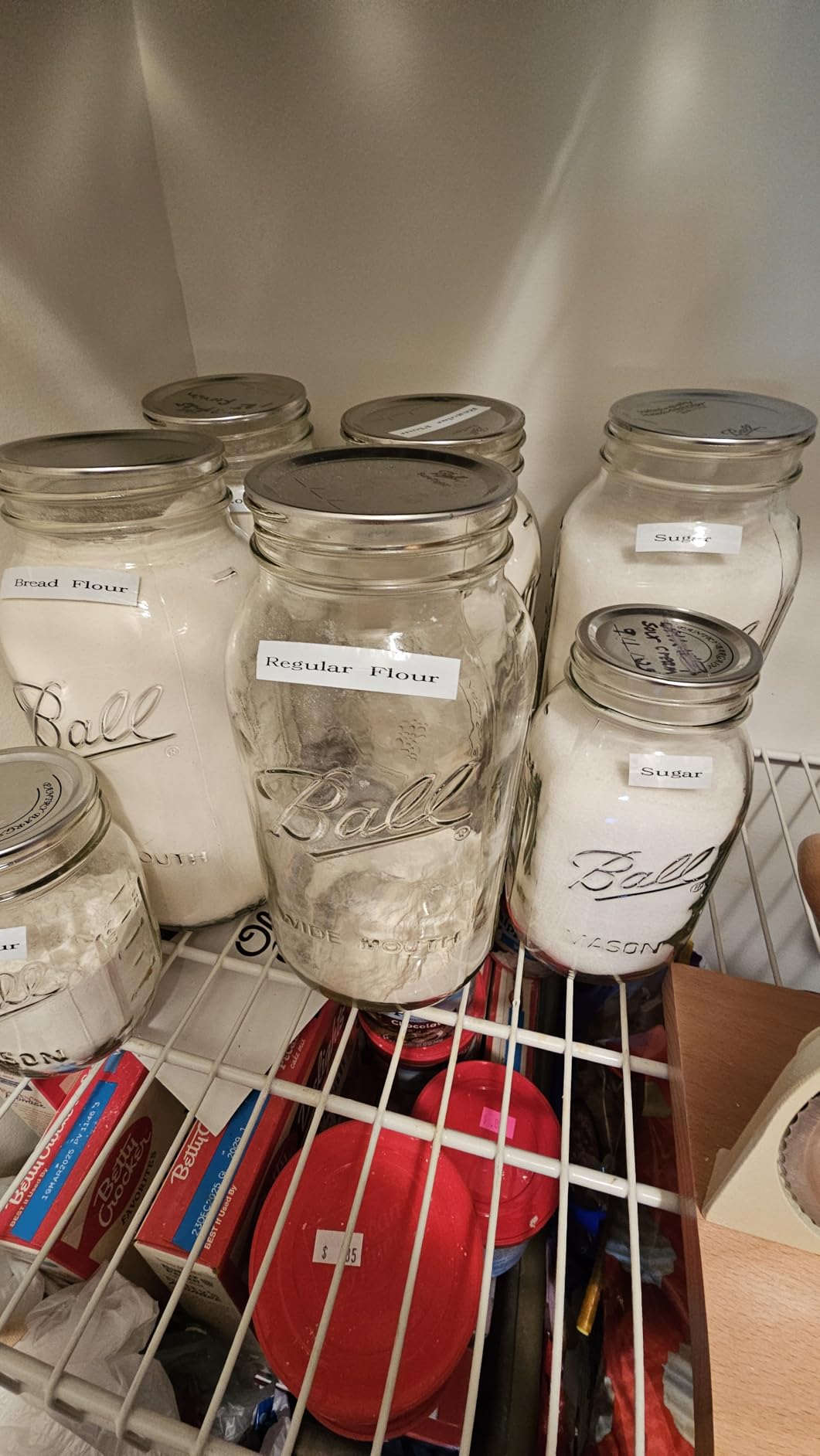
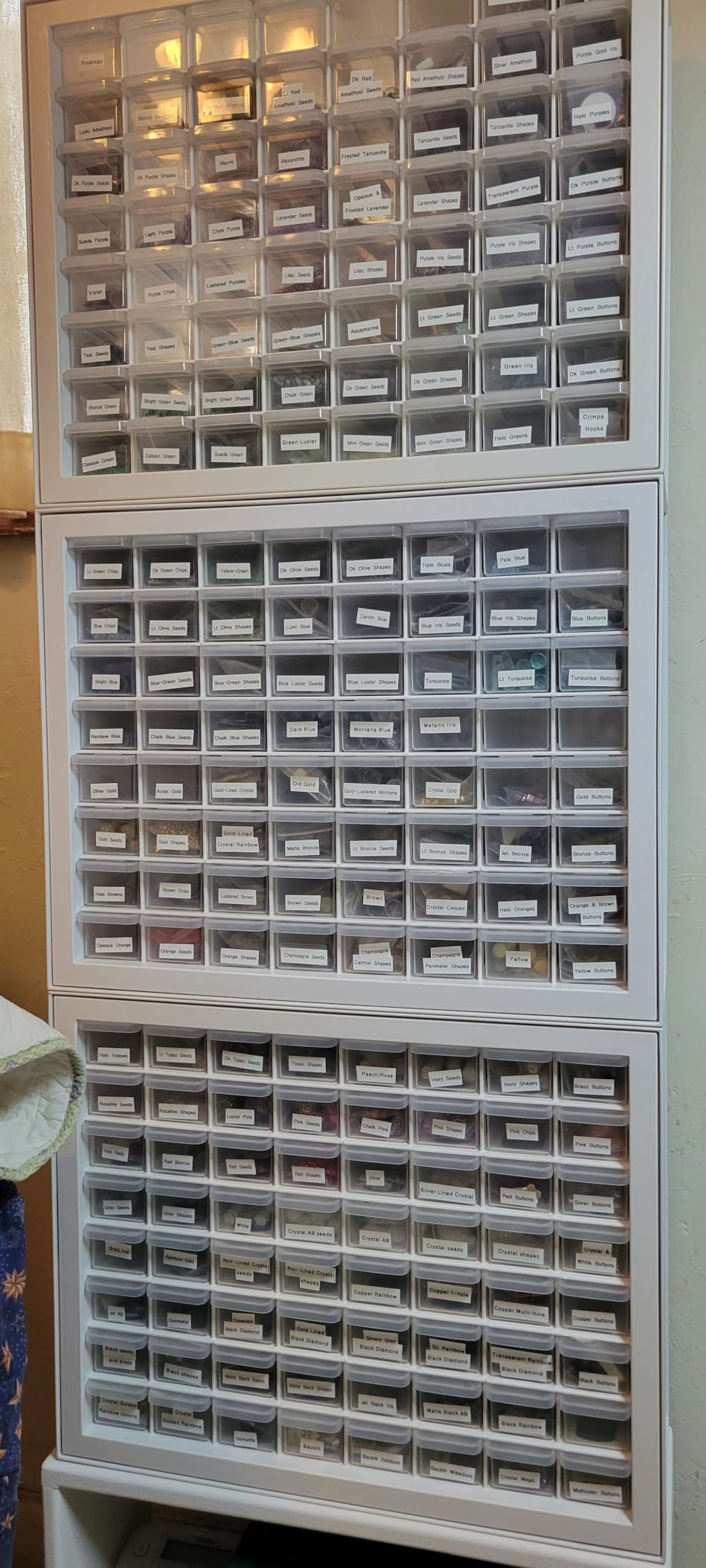
The TZe laminated tape is the durable kind. Ours survived the soak and the top-rack dishwasher cycle with the print still sharp and the edges still down. Brother’s laminate is the reason this tape survives a garage or a freezer when cheaper tape curls.
The 180 dpi resolution is lower than the 203 dpi on the app-driven units, and at twelve millimeters the text is small. For a long bin name you will use two lines, and the second line eats into the print height.
What you should check before buying
Six AAA batteries is the deal-breaker for anyone labeling away from an outlet. There is no rechargeable option in this body and the AC adapter is a separate purchase. A pair of rechargeable AAAs works fine and lasts for most of a labeling session.
There is no Bluetooth and no app. That is a feature if you want privacy and zero friction, and a limitation the moment you want a logo, a photo or a QR code on a label.
Who it suits and who it does not
Paperwork, files, drawers and cable runs. The saved-label memory pays for itself the first afternoon you relabel a cabinet you already did six months ago.
Skip it for anything that needs pictures or symbols with fine detail, and skip it if you plan to label a hundred items in one sitting away from home.
3. Phomemo D30 – The Cheapest Way Into App-Based Labeling
Phomemo D30 Label Maker Machine with Tape, Bluetooth Mini Label Printer
Weight: 160 g
Tape width: up to 0.55 inch
Power: rechargeable battery
Resolution: 203 dpi
Warranty: 2 years
Pros
- Half the size and weight of keyboard units
- Prints continuous and fixed-length tape
- Rechargeable battery with USB Type C
- Print Master app with icons barcodes and QR codes
- 203 dpi output
Cons
- Cannot print without a smartphone
- Black text only
- Very narrow maximum tape width
- Connection can drop when the phone screen sleeps
At 160 grams this is half the weight of a keyboard handheld, and the design library in the companion app is larger than anything else in this roundup. Four thousand icons, hundreds of borders, and ready-made templates that would take an hour to build by hand.
The D30 handles both continuous roll tape and fixed-length labels, which almost nobody at this size does. Continuous tape lets you run a long sentence across one strip; fixed-length labels are what you use on jars and cable runs.
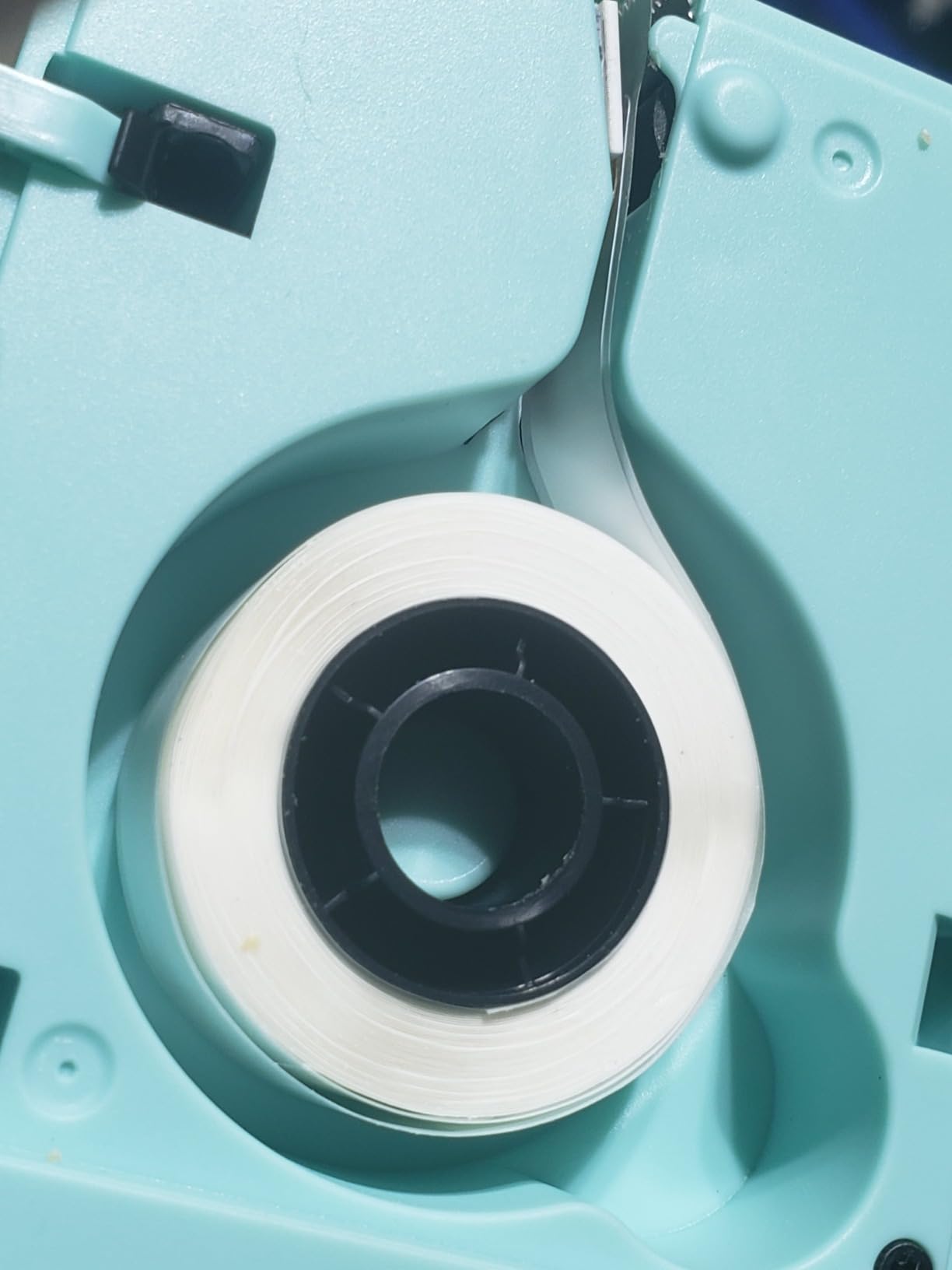
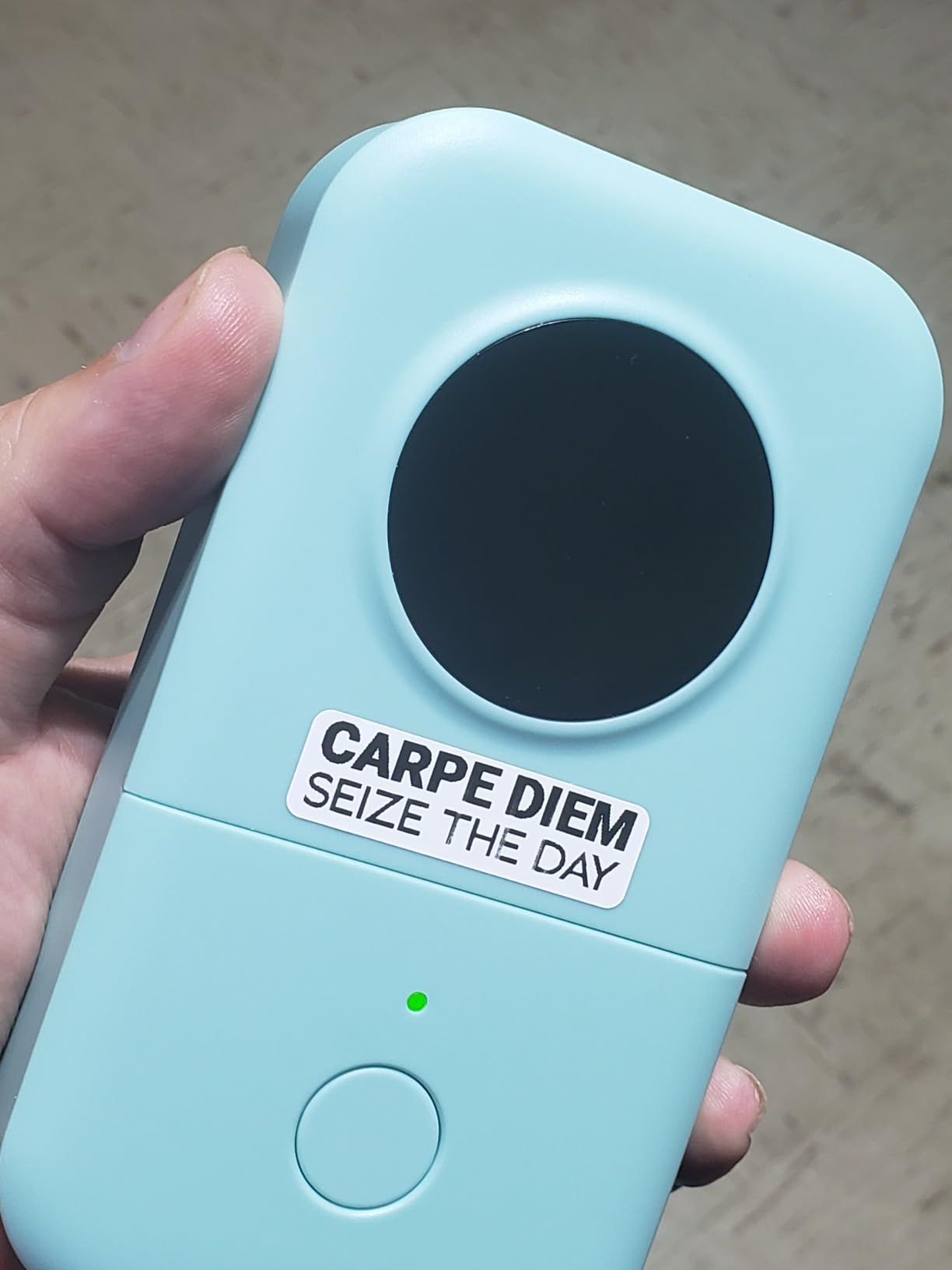
Print quality at 203 dpi is genuinely sharp on narrow stock, and the output is monochrome. Everything that looks like color in the app is really a colored pattern in the tape itself, which is a fine trick but worth knowing before you buy.
The recurring complaint is the connection dropping when the phone screen sleeps. Keep the screen awake during a batch, or the job will stall mid-print and you will lose the tape.
What you should check before buying
There is no keyboard. If you are labeling a pantry on your own with your phone propped against a spice rack, this will frustrate you within ten labels. Print every design before you start organizing rather than as you go.
The maximum media size is around 0.55 inch wide, so text is small. Plan short labels and use two lines rather than trying to fit a full product name.
Who it suits and who it does not
Best for a student, a crafter, a small-business owner pricing shelf items, or anyone who wants icons and QR codes and does not mind designing on a phone. The battery makes it genuinely portable in a way the battery-powered handhelds are not.
Skip it for a room-wide labeling sprint. Design once, print forty, but not the other way around.
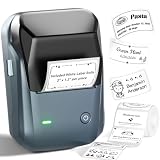
4. NIIMBOT B1 – Wide Labels Without the Bulk of a Desktop Printer
NIIMBOT B1 Label Maker, 2Inch Bluetooth Label Printer for Home, Blue
Weight: 293 g
Max media: 2 inch
Power: 1500 mAh rechargeable
Resolution: 203 dpi
Warranty: 18 months
Pros
- Prints 2 inch wide labels far wider than most minis
- App auto-detects label size
- Bluetooth to phone and USB to PC
- Over 1500 symbols and saved templates
- Two label rolls included
Cons
- No built-in keyboard
- Heavier than pocket minis at 293 g
- Not compatible with tablets
- Must be charged before first use
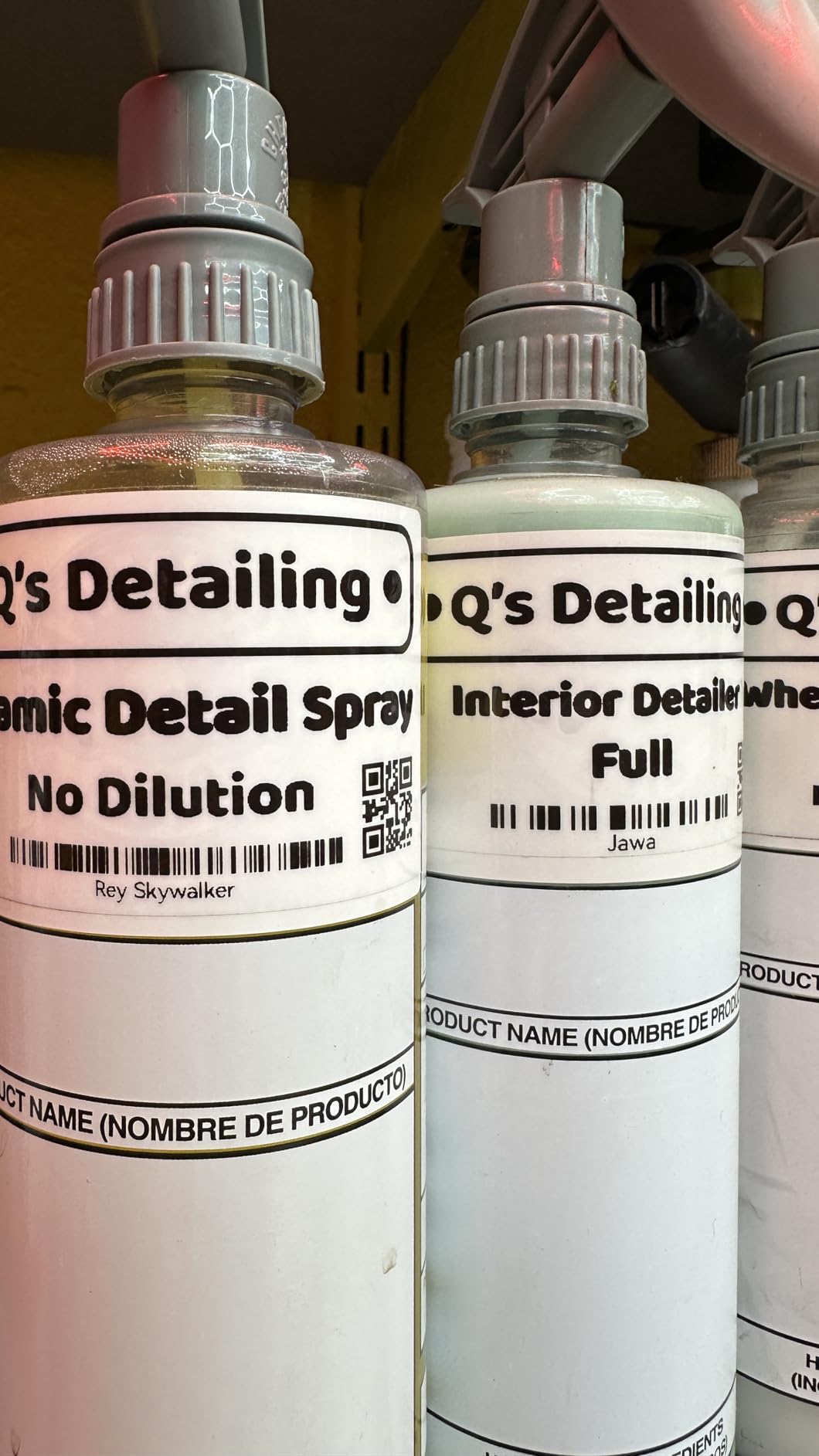
A two-inch label changes what you can organize. Address blocks, product information panels and large storage bin fronts all fit, and none of them fit on a 12 millimeter tape.
The auto label-size detection genuinely works. Load a roll and the app sets the dimensions without you choosing a template, which removes the single most tedious step in app-driven printing.
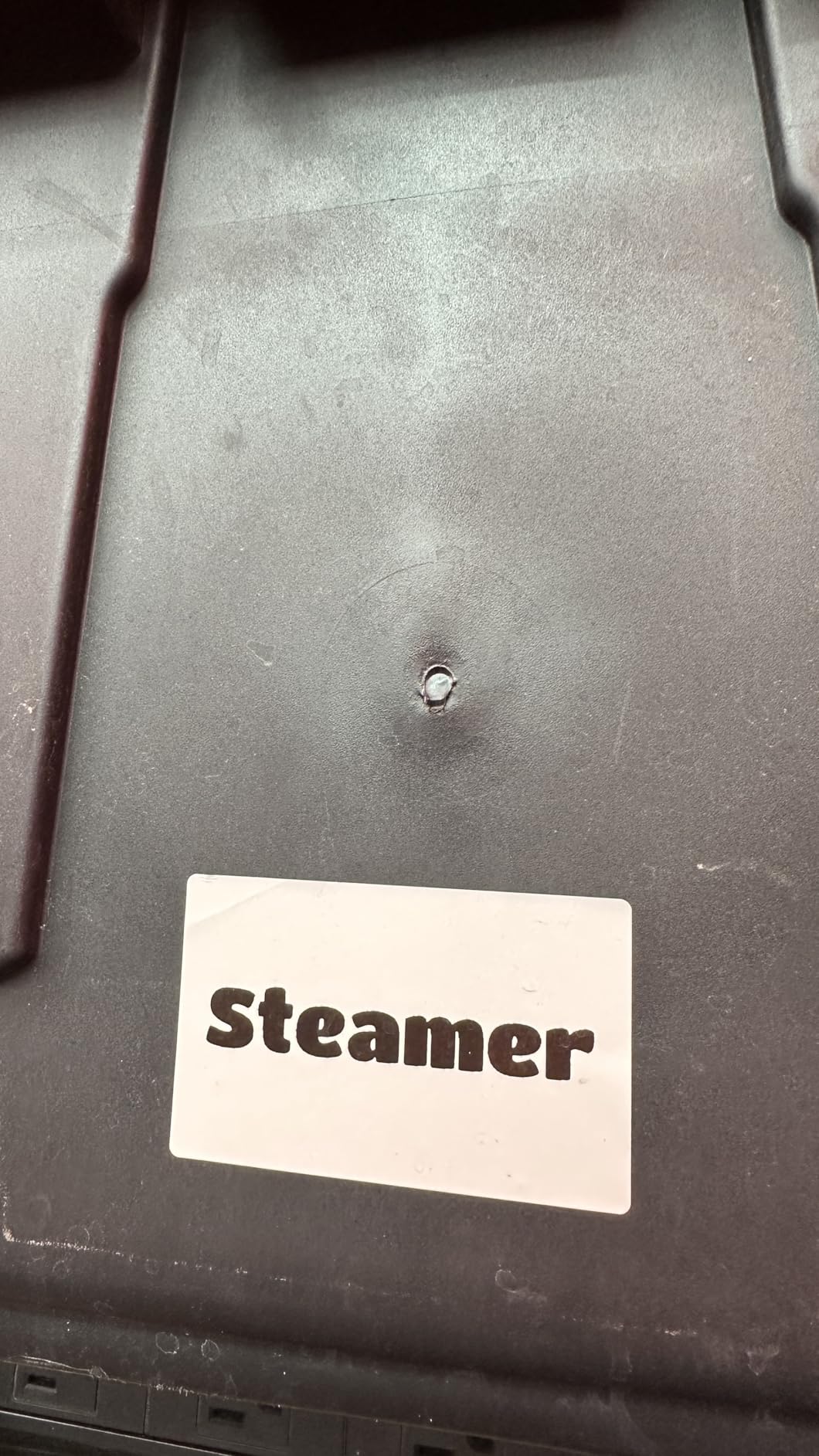
Two one-point-one-eight-inch white rolls are in the box, which is more starting tape than most mini makers give you. Fifteen-minute auto shutoff protects the battery during a long session.
At 293 grams it is not pocketable, and the body is wider than the mini units. It sits on a shelf while you work, which is fine for a labeling project and wrong for labeling in a car.
What you should check before buying
No keyboard, no tablet support. A phone or a laptop is required for every single label, and the laptop route is USB rather than wireless.
Charge it before the first print. Reviewers who skipped this step reported uneven output on the first roll, which is a small annoyance rather than a fault.
Who it suits and who it does not
Small business inventory, moving boxes, product shelving and larger bin labels. Anyone who has outgrown 12 millimeter tape and does not want a desktop printer.
Not for a pantry sprint on a single battery charge, and not for anyone who wants to label a room where the phone does not go.
5. SUPVAN T50M Pro – The Broadest Tape Width Range in the Test
SUPVAN T50M Pro Bluetooth Label Maker Machine with Tape, Black
Weight: 433 g
Tape: 0.75 to 2 inch
Power: USB Type C
Resolution: 203 dpi
Warranty: 1 year
Pros
- Widest label range at 0.75 to 2 inch
- Imports images from phone tablet or PC
- Improved image processing for logos and QR codes
- Free app with no registration
- Handles square round and cable label stock
Cons
- Heaviest unit we tested at 433 g
- No keyboard at all
- Desk-sized rather than pocketable
- Uses more power than smaller models
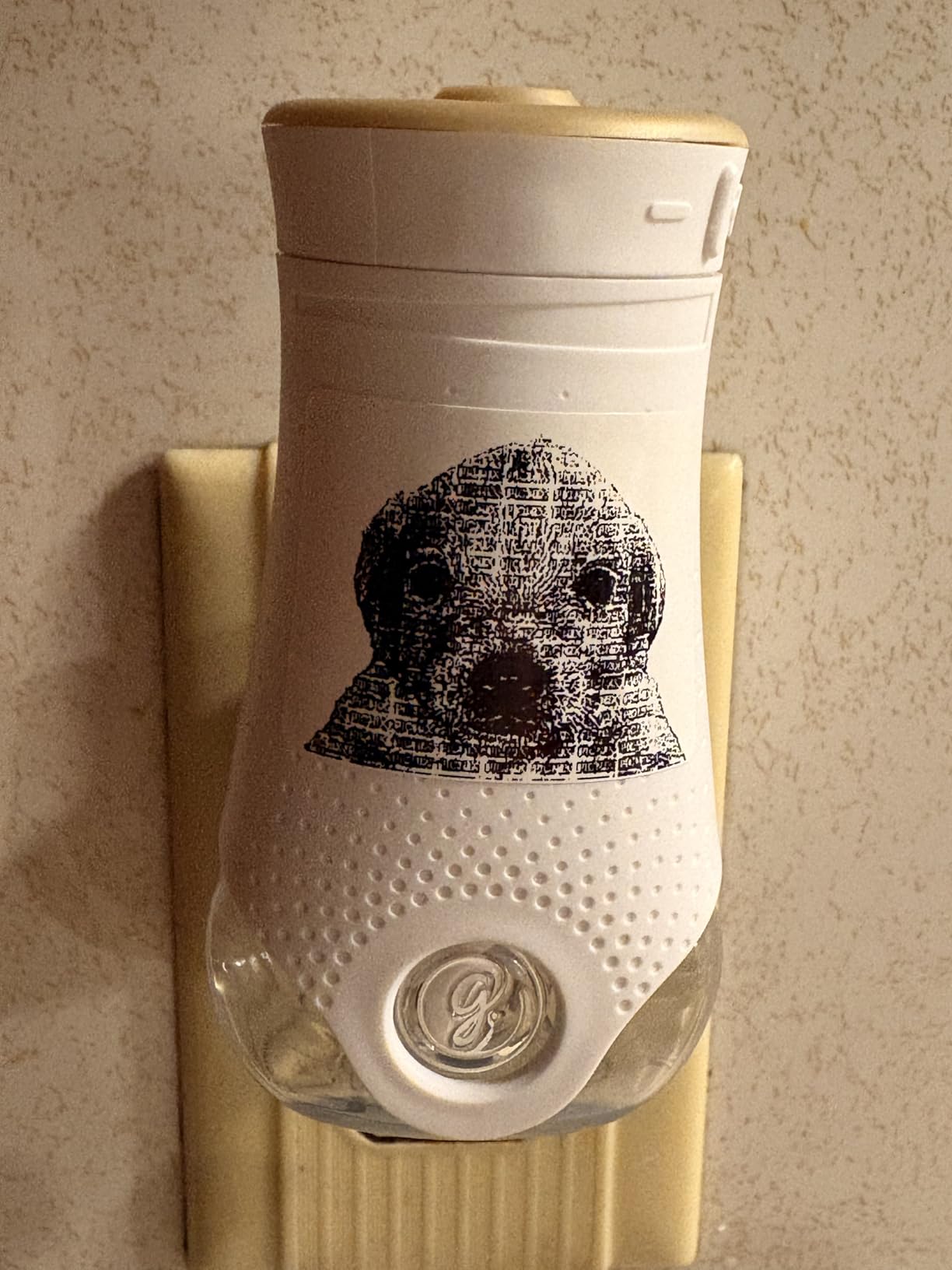
The image handling is the reason to look at this one. A small business logo or a scannable QR code printed on a bin front looks professional, and the app’s image processing keeps those graphics sharp at label resolution rather than pixelating them.
No registration and no paid tier. The whole design library is free, which is not true of every app in this category, and that changes the running cost math considerably.
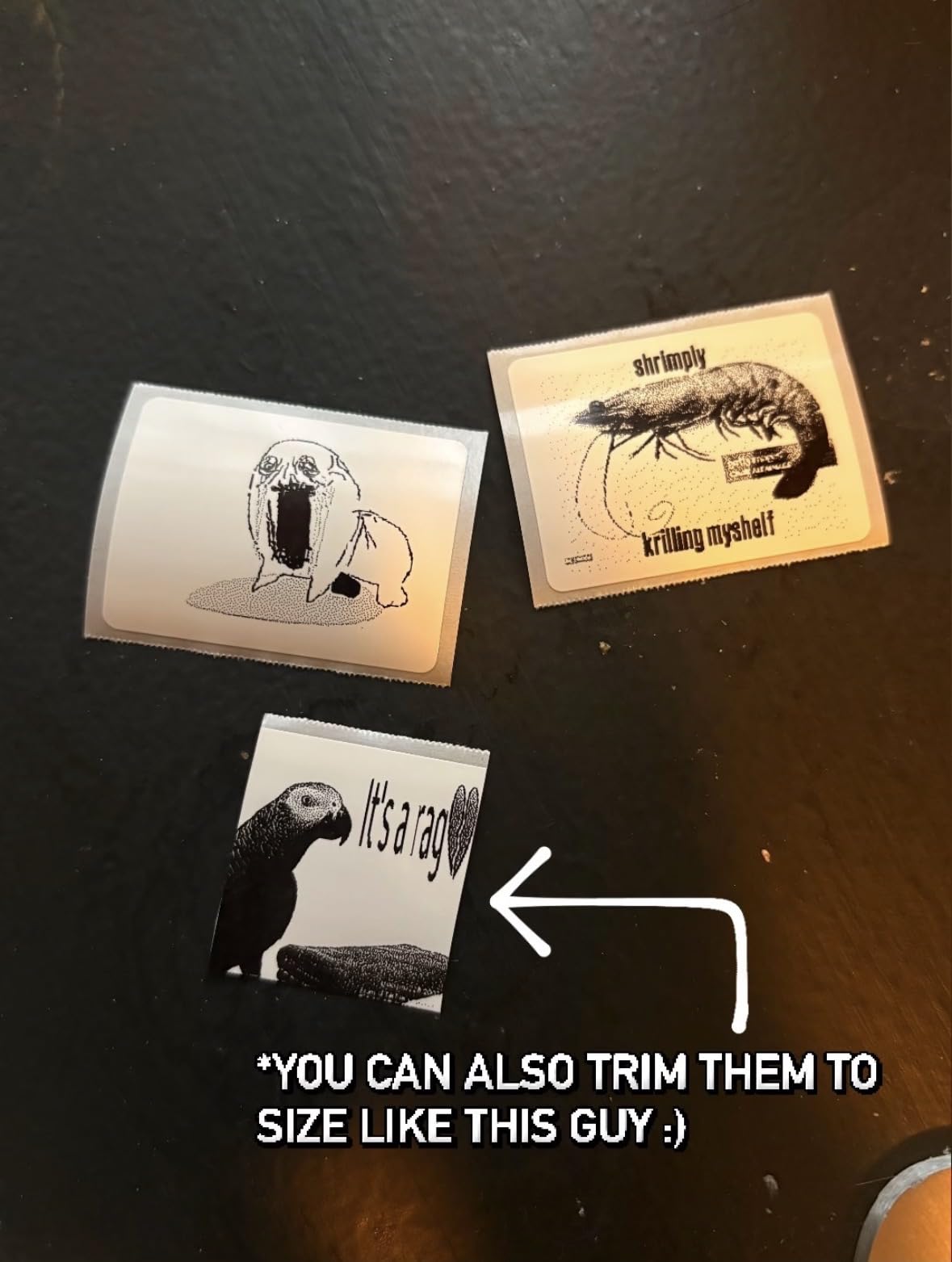
Label stock compatibility is unusually broad: square labels, round labels, address labels, cable flags and file tabs all work in the same machine. That flexibility is worth more than it sounds if you are labeling several different rooms.
At 433 grams this is the heaviest device in the test and it shows. It belongs on a desk, and the print speed suits batch work rather than labeling one bin at a time.
What you should check before buying
No built-in keyboard means every label starts on a screen. If you planned to walk room to room labeling, this defeats the purpose. It is a desktop-class machine in a handheld ranking.
Consumes noticeably more power than the smaller SUPVAN models, so plan on charging it between projects rather than mid-session.
Who it suits and who it does not
A small business owner branding shelves and packaging, or a crafter who needs pictures on labels. The free full-featured app removes the subscription math entirely.
Skip it for a kids room or a pantry where a device gets dropped regularly, and for anyone who wants one-handed portability.
6. DYMO LabelManager 280 – A Rechargeable Body With a Real Keyboard
DYMO Label Maker LabelManager 280 Rechargeable Portable Label Maker Easy-to-Use One-Touch Smart Keys QWERTY Keyboard PC and Mac Connectivity For Home & Office Organization
Weight: 1.4 lb
Tape: 1/4 3/8 1/2 inch D1
Power: rechargeable battery
Resolution: 180 dpi
Warranty: 1 year
Pros
- Rechargeable battery so no spares to carry
- Full QWERTY keyboard with fast-format keys
- PC and Mac import for fonts graphics and barcodes
- 200+ symbols and clip art
- Three D1 tape widths available
Cons
- Highest cost among conventional handhelds
- Computer link imports assets only
- Older and heavier at 1.4 pounds
- Limited internal label memory
- Black print only
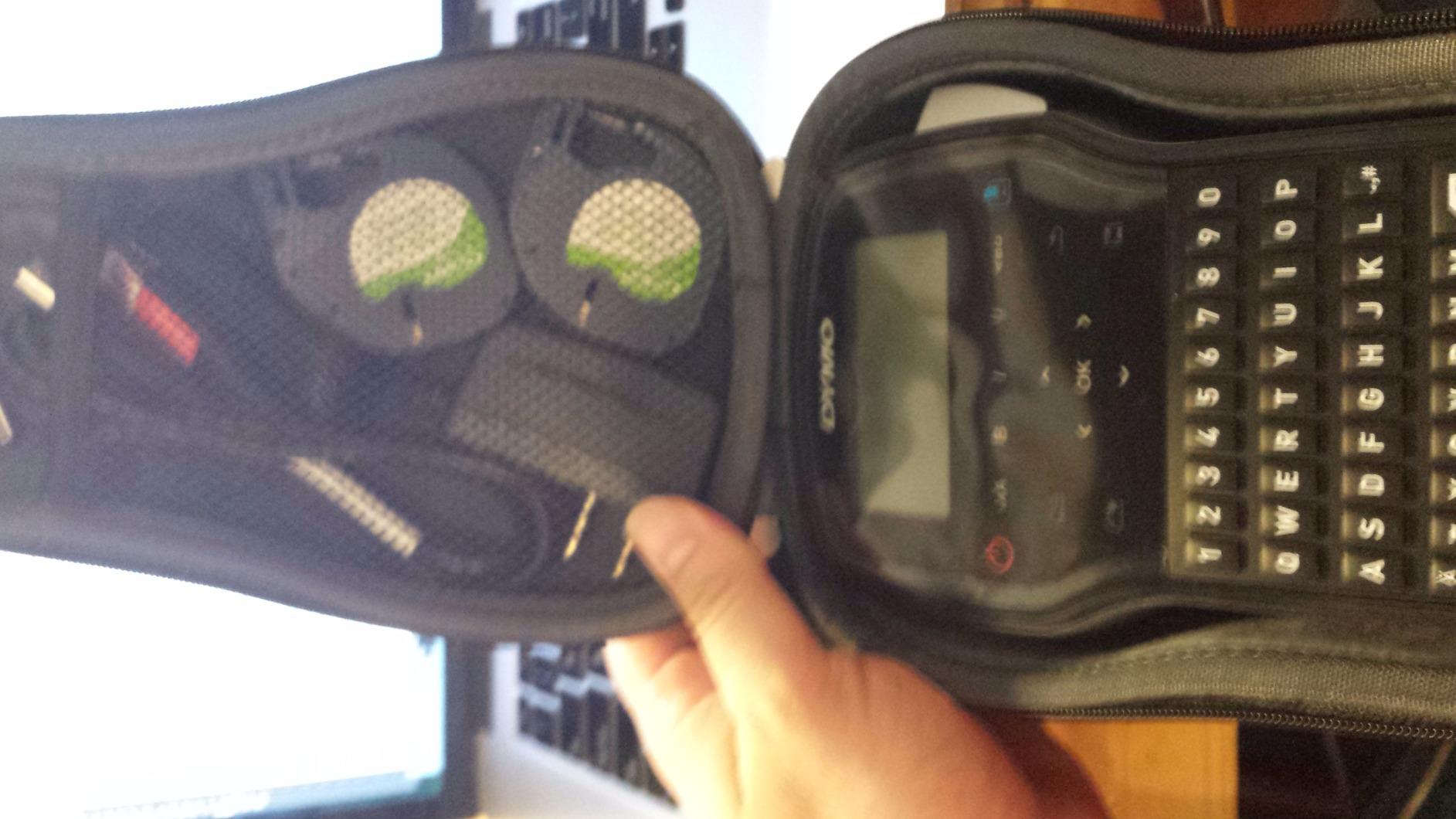
This is the rare unit that solves both halves of the problem. You get a full computer-style keyboard for speed and a rechargeable battery so you are not hunting for AAAs halfway through a garage.
The one-touch formatting keys are better than they sound. Font, size, style and underline sit on dedicated keys, so bolding a word is one press rather than four taps through a menu.
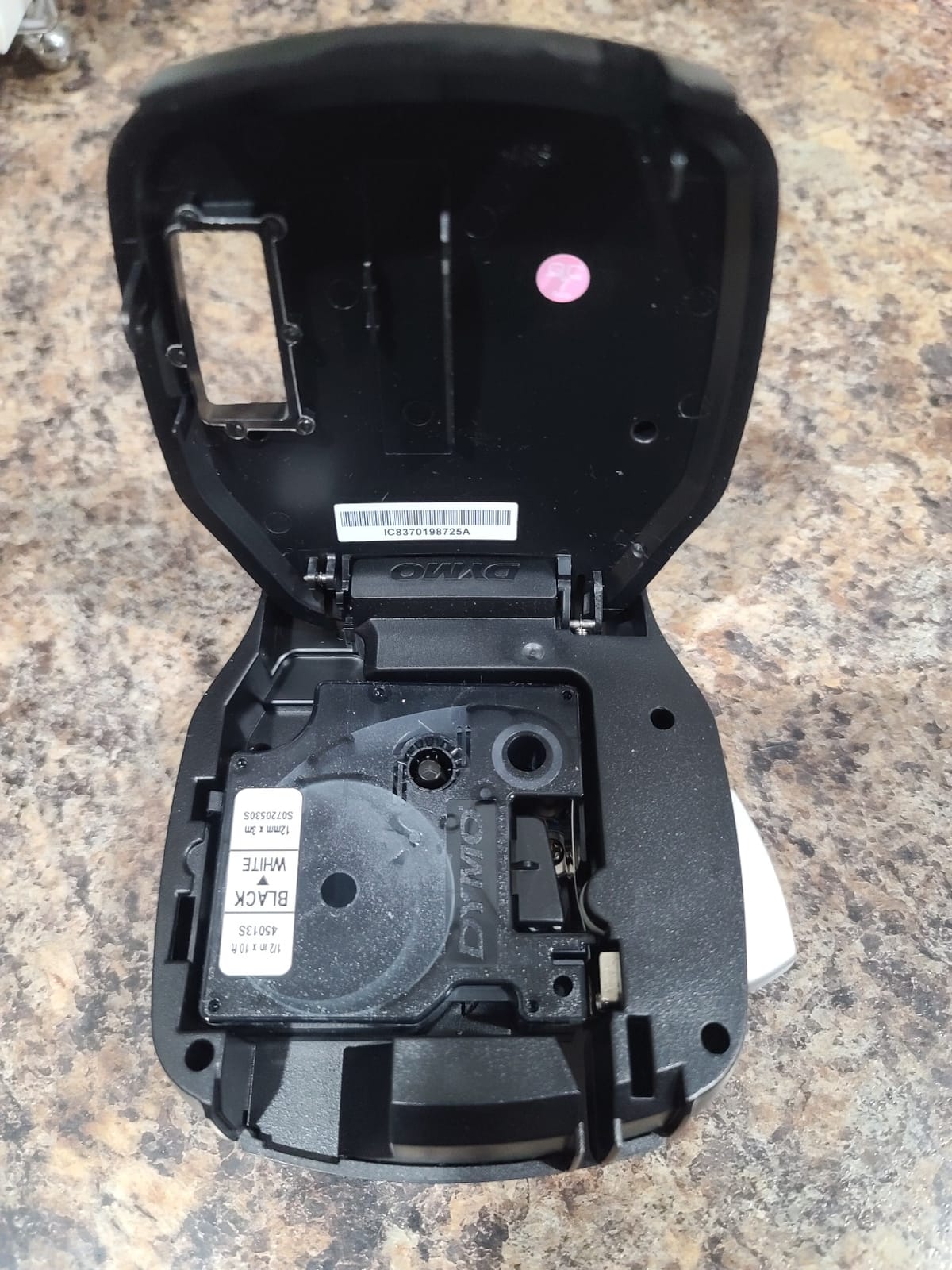
The included cable pulls fonts, graphics and barcodes from a PC or Mac. That is not the same as designing on the computer, but it is enough to put a company logo or a real barcode on a shelf label.
Three D1 widths at 1/4, 3/8 and 1/2 inch give you more sizing flexibility than the Brother units here, and the D1 cassettes are widely available including off-brand options.
What you should check before buying
The 1.4 pound body is the heaviest in this roundup and the design is dated next to the rechargeable minis. It is portable in the sense that you can carry it between rooms, not in the sense that it fits in a pocket.
Label memory is limited compared with newer P-touch models. If you reprint the same bin label fifty times, you will be typing it fifty times.
Who it suits and who it does not
A home office or a small workshop where the machine lives on a shelf and gets used in bursts. Rechargeable power plus a QWERTY keyboard is the most practical combination here for heavy repeat labeling.
Not for a traveler, and not for anyone who needs color, since the supported D1 widths print black on the stock.
7. NIIMBOT D110 – The Lightest Unit and the Longest Battery Claim
NIIMBOT D110 Mini Label Maker Machine with Tape for Home School, White
Weight: 149 g
Print width: up to 15 mm
Battery: 1500 mAh
Resolution: 203 dpi
Warranty: 2 years
Pros
- Lightest unit tested at 149 g
- Smart label rewind calibrates the first print
- Automatic label recognition
- 1500 mAh battery rated to four hours of printing
- Works with 12x40 14x30 and 15x30 mm tapes
Cons
- Smartphone app required
- Maximum print width only 15 mm
- Fixed label roll sizes limit layout
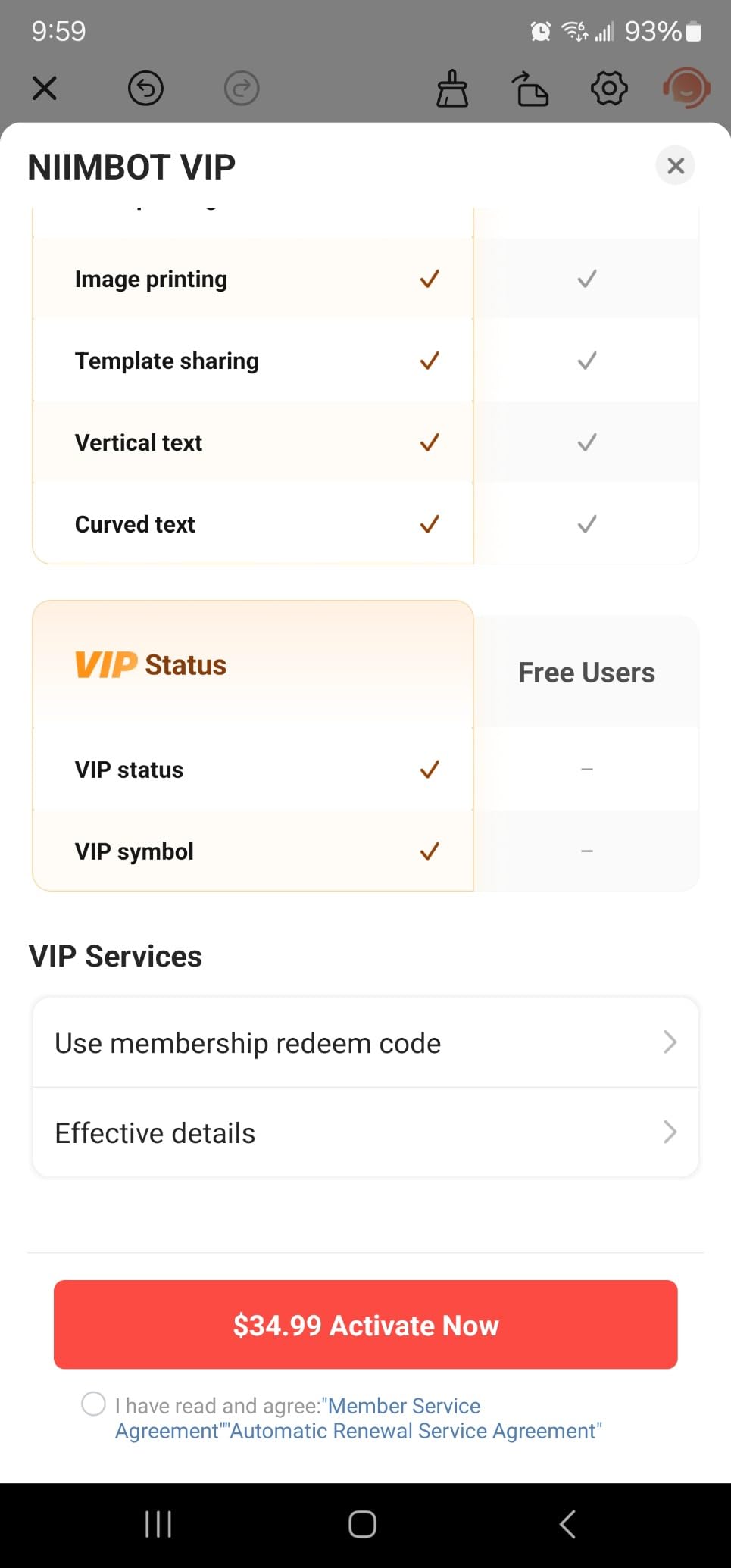
- Tearing the sensor chip ruins print quality
The auto-rewind calibration is a small feature that solves a real annoyance. Other machines waste a first label printing off-center while the sensor works out where the roll starts; this one calibrates on power-up and your first print is usable.
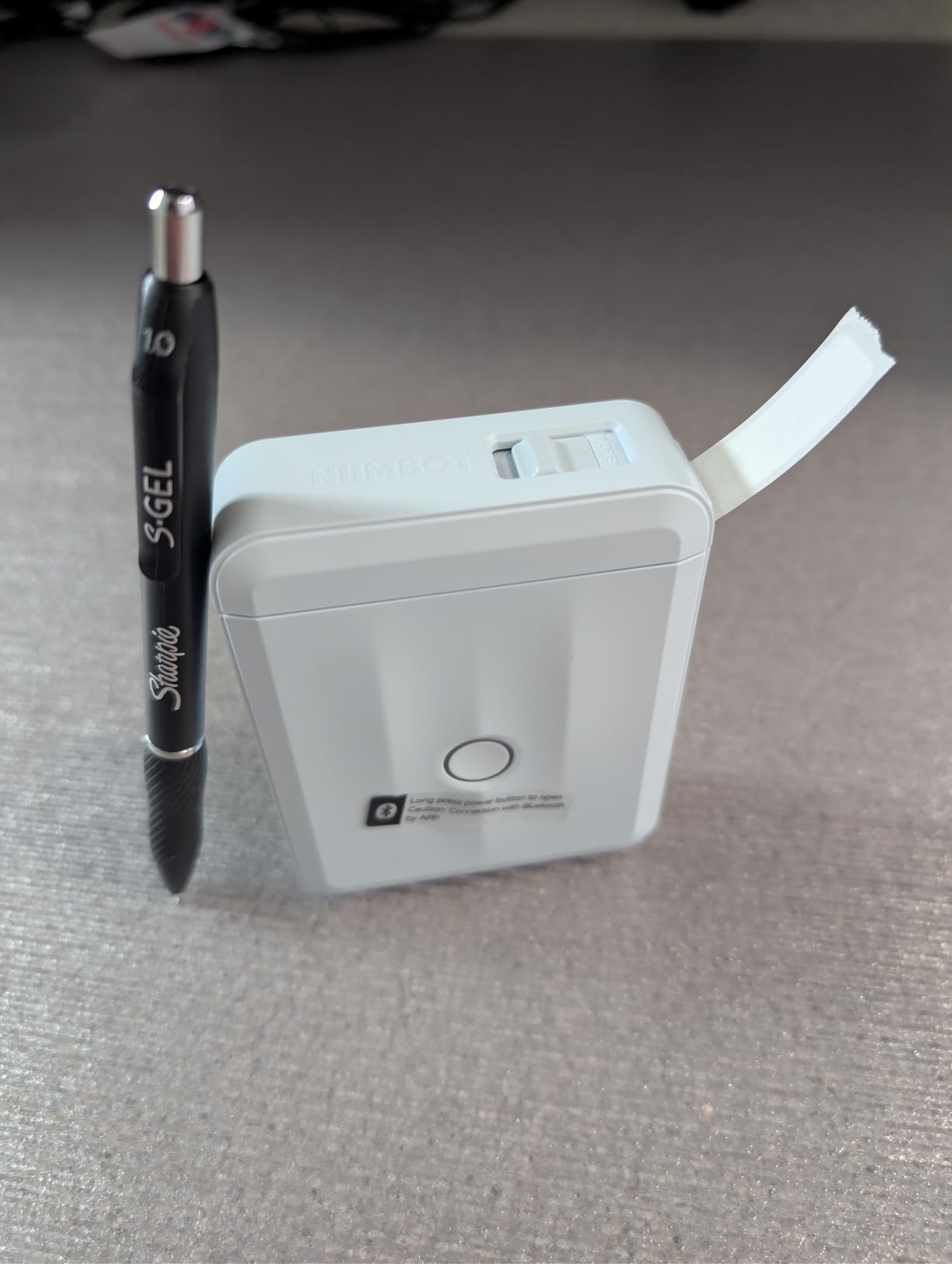
At 149 grams it is the lightest thing we tested, and the 1500 mAh battery is rated for up to four hours of continuous printing. That combination makes it the only unit here I would put in a bag and take to a market stall.
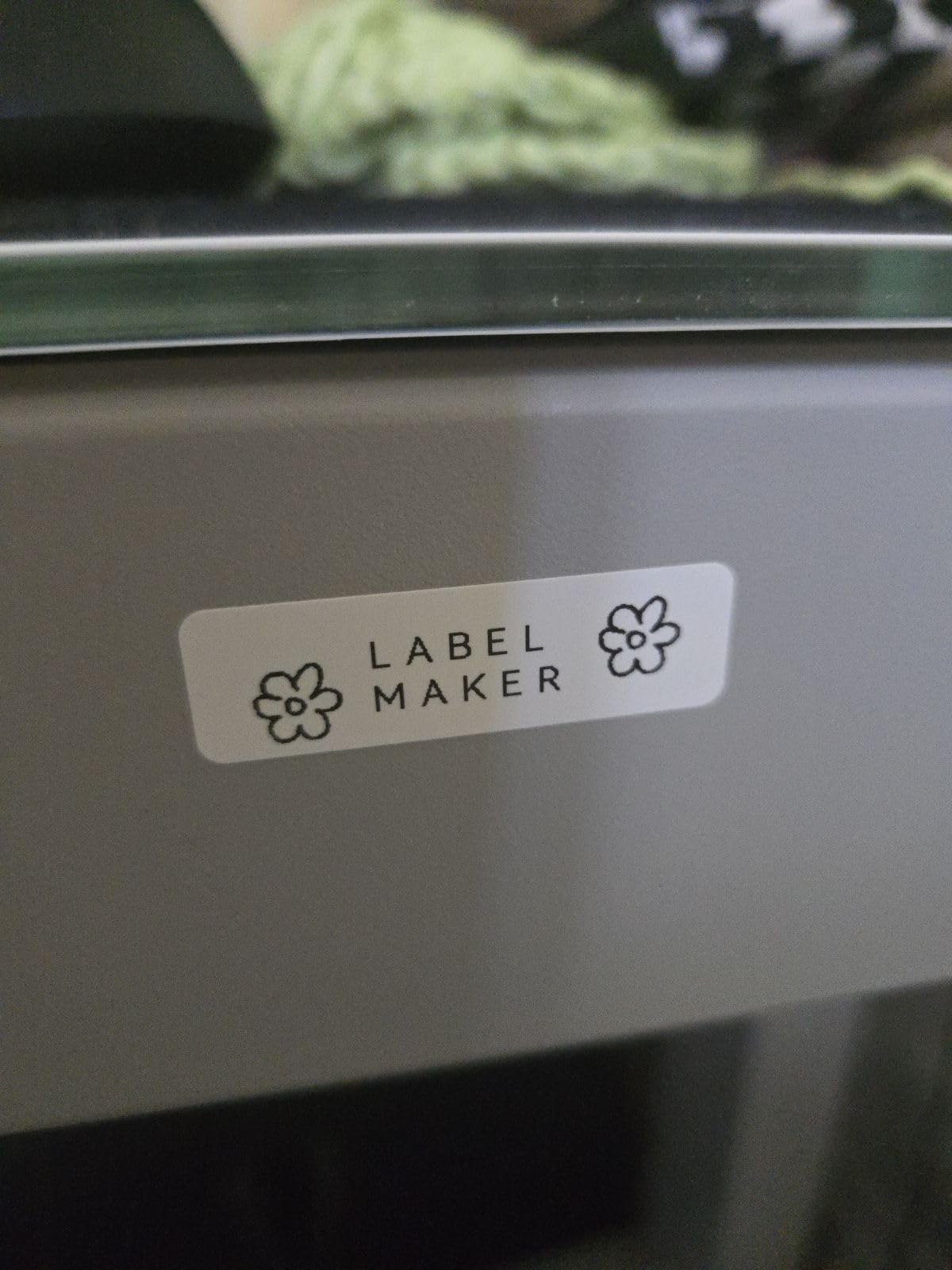
Print clarity at 203 dpi is good for the width, and the rewind keeps tape tidy inside the shell so it does not tangle when the machine goes in a drawer.
Fifteen millimeters is the ceiling on text size. On a twelve millimeter roll you get roughly one readable line, so plan short words rather than full product names.
What you should check before buying
No keyboard, so every label starts in the app. And the sensor chip on the side of the roll is fragile: reviewers who tore it while changing tape reported degraded print quality afterward, so change rolls gently.
Label sizes are fixed to specific roll dimensions rather than freely variable, which means you choose tape to fit the machine rather than the other way around.
Who it suits and who it does not
Market stalls, craft fairs, classroom supply sorting and travel. Wherever the phone is already in your hand, this is the right tool.
Not for a kitchen project where you want both hands free, and not for anything that needs a label wide enough to read across a room.
8. SUPVAN E11 – A Keyboard and an App in One Machine
SUPVAN E11 Keyboard & Bluetooth Label Maker Machine with 4 Tapes
Weight: 8 oz
Tape: continuous and die-cut
Power: 1200 mAh rechargeable
Resolution: 203 dpi
Warranty: 2 years
Pros
- Print simple labels from the keyboard alone
- Minimal 0.2 inch margins save tape
- 1200 mAh battery rated for up to a month
- Weighs half a pound and includes four tapes
- Free app with 660+ icons and 17 languages
Cons
- Onboard keyboard is smaller than a full QWERTY
- Continuous tape is only 15 mm
- App needed for anything beyond basic text
- Smartphone only for design work
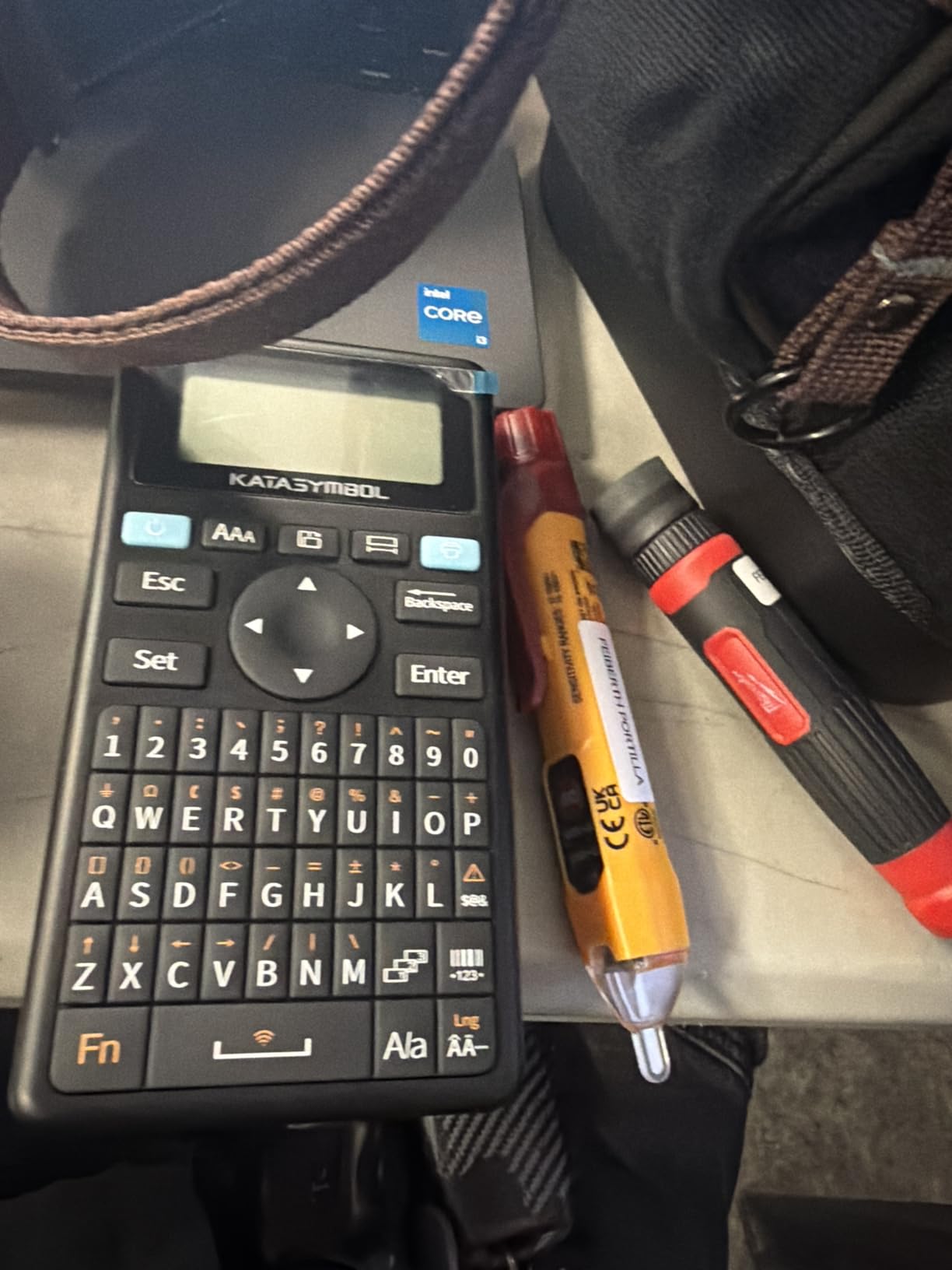
This is the compromise that works better than expected. For a code like PANTRY the keyboard alone is faster than any phone workflow, and you open the app only when a label actually needs an icon.
The margin figure is the underrated feature here. A 0.2 inch margin instead of the roughly one inch most competitors waste per label means a six meter roll goes a lot further before you run out, and on continuous tape that compounds across a whole house.
Four tapes are in the box: two rolls of 15 millimeter continuous tape and two of 12 millimeter die-cut. That is more starting tape than most competitors at twice the size, and it covers both long-content and short-label jobs out of the box.
At 8 ounces and 5.8 by 3.1 by 1.5 inches it slides into a drawer or a bag without thinking about it, and the battery is rated at up to a month per charge.
What you should check before buying
The keyboard is compact, not full QWERTY. Typing a long phrase means hunting across a small layout, so treat it as a shortcut tool for codes rather than a writing tool.
The 15 millimeter continuous tape is narrow next to the T50M Pro, and design work requires a phone rather than a laptop or tablet.
Who it suits and who it does not
Anyone who wants a phone-free option for simple labels but does not want to give up icons for the harder jobs. It is our pick for a mixed household where two people label and only one has a phone.
Not for wide address labels or long printed paragraphs, and not as a full replacement for a Brother keyboard unit.
9. DYMO LabelManager 160 – The Bundle That Needs No Extra Tape
DYMO LabelManager 160 Label Maker Bundle with 3 D1 Label Cassettes, Portable Handheld, QWERTY Keyboard, One-Touch Smart Keys, Large Display, Home & Office Organization
Weight: 1.3 lb
Tape: 1/2 inch D1
Power: replaceable batteries
Warranty: 1 year
Pros
- Three full D1 cassettes plus two label sheets included
- QWERTY keyboard with one-touch smart keys
- Large display previews the label
- Over 20 text formats and 200+ symbols
- Compact handheld body
Cons
- Supplied cassettes are black on white only
- Replaceable batteries not rechargeable
- Heavier than mini app-driven units
- Computer link is limited
- Print width fixed by cassette format
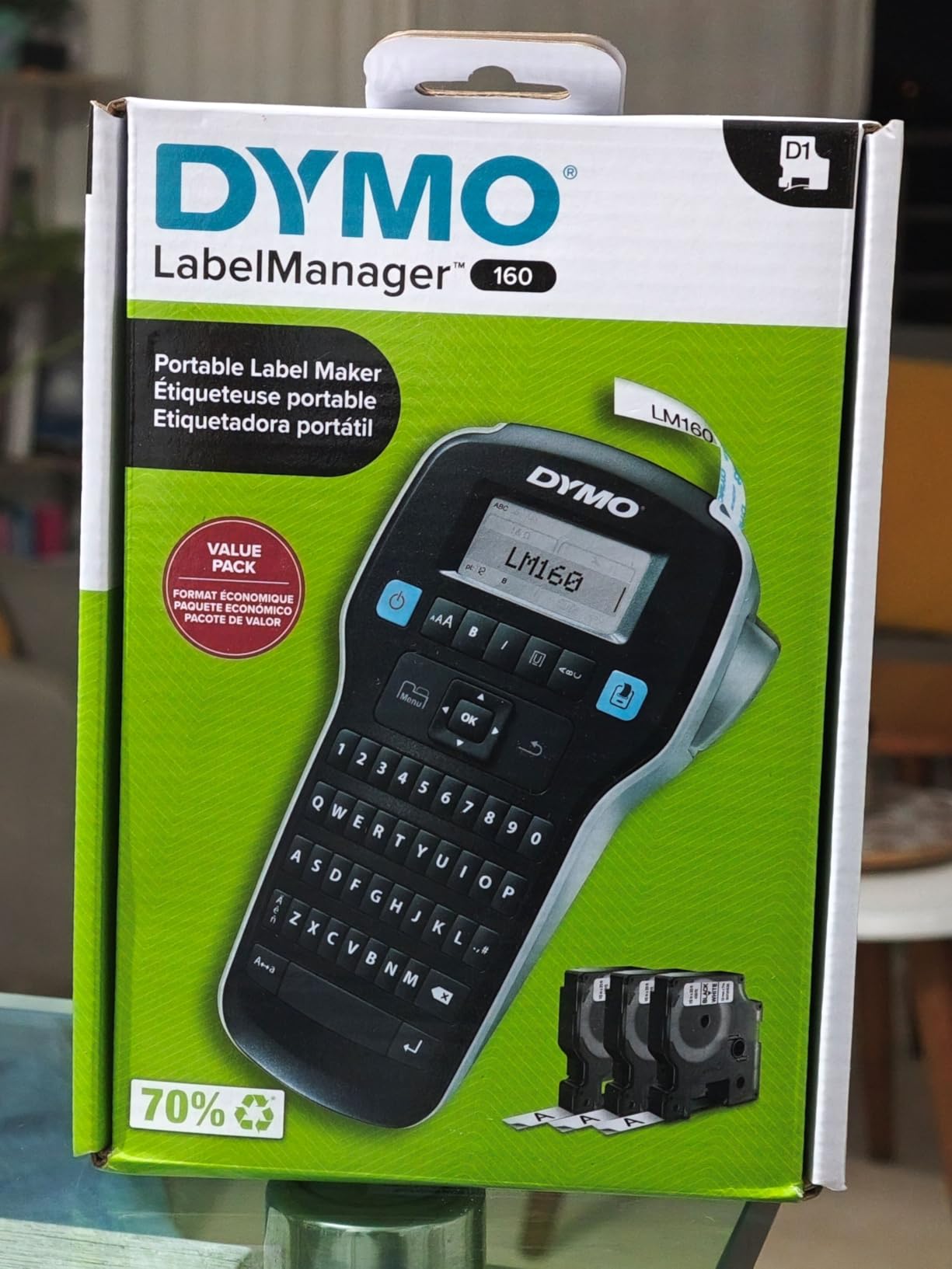
Three half-inch by 23-foot cassettes and two label sheets is the most tape in any box we opened. If you have been putting a label maker off because you assume you also need to buy tape, this solves that.
The smart keys handle bold, underline and alignment in one press each, and the large screen shows the label at a readable size, which helps older users and anyone who fumbles with small text.
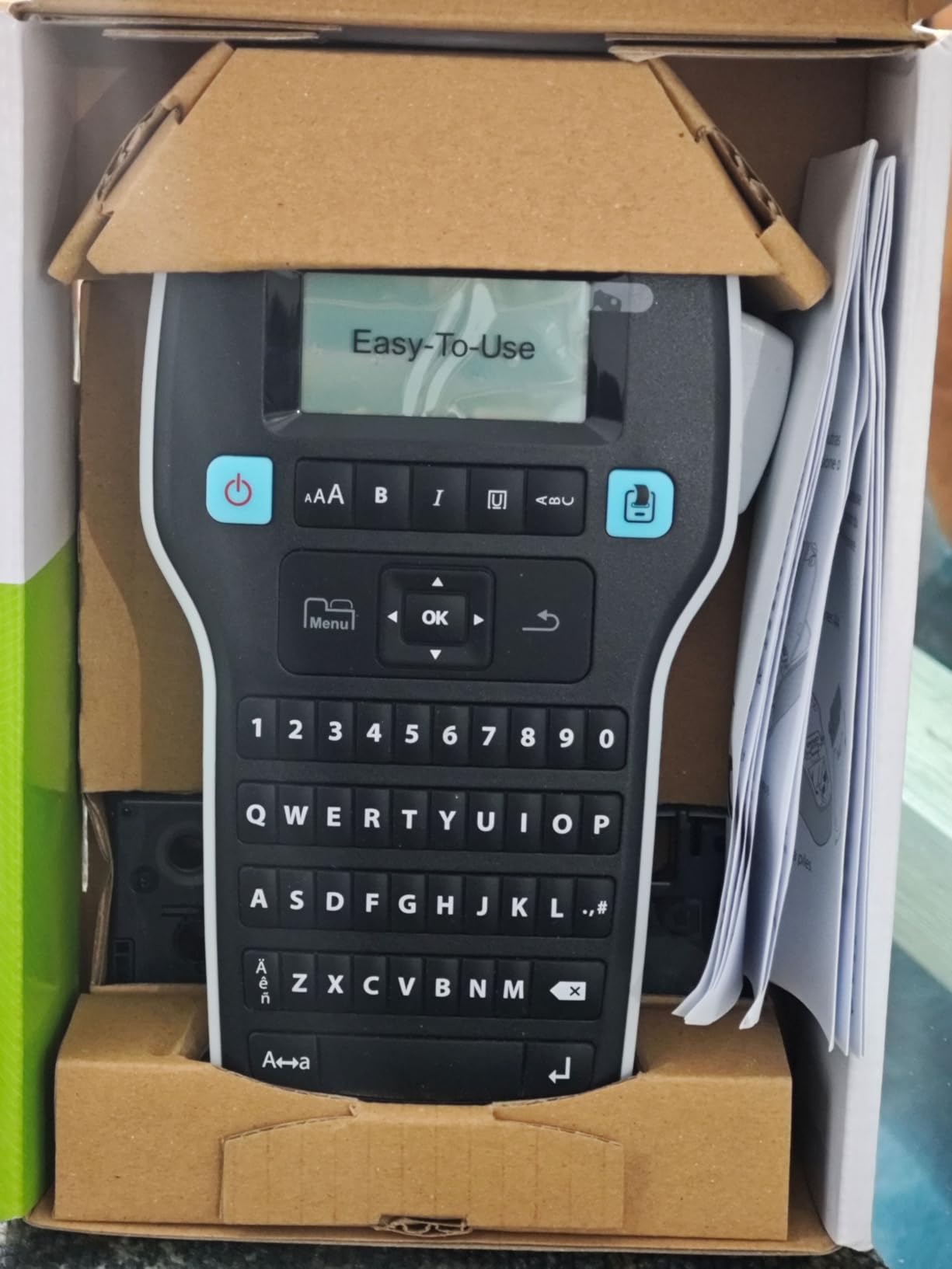
D1 cassettes are the most widely stocked tape format in this roundup, and experienced users report that off-brand D1 cassettes are plentiful and good quality. That matters for running cost over years rather than months.
Print quality on smooth plastic was clean and the labels survived our soak test with no lifting. The 1.3 pound body is manageable for a desk unit.
What you should check before buying
Color tape is sold separately. Everything in the box is black on white, so the label set will look plainer than the packaging implies until you buy more.
Batteries are replaceable cells rather than a rechargeable pack, and the computer connection is not a design tool. Neither is a deal-breaker at a desk.
Who it suits and who it does not
Newcomers, gift buyers, and anyone who wants to hand a working label maker to someone else without a second purchase. The out-of-the-box experience is the strongest here.
Not for labeling on the move, and not for anyone whose system depends on colored tape immediately.
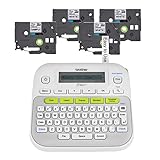
10. Brother P-touch PT-D210 – Four Tape Widths in One Machine
Brother P-Touch, PTD210, Easy-to-Use Label Maker Bundle (4 Label Tapes Included), White, Small
Weight: 1.1 lb
Tape: 3.5 6 9 and 12 mm
Power: 6 AAA batteries
Resolution: 180 dpi
Warranty: 1 year
Pros
- Accepts four tape widths including narrow 3.5 mm
- Preview display plus one-touch formatting keys
- 27 templates including patterned designs
- Water-resistant and fade-resistant TZe tape
- Sample tape plus three full-length rolls included
Cons
- Six AAA batteries sold separately
- Maximum print width still 12 mm
- Bundle costs more than a bare machine
- No Bluetooth or app
- Some reports of a finicky cutter
Four widths from 3.5 to 12 millimeters is the sizing flexibility no other handheld in this roundup offers. Narrow tape is genuinely useful for cable flags and file spines, where a half-inch label looks absurd.
The TZe tape is water-resistant and fade-resistant, and our labels held up through the dishwasher top rack without smudging or lifting. That is the durability tier you want for a pantry or a garage.
The bundle includes one short sample roll and three full 26.2 foot rolls, so the tape math works out well per label. The preview display and one-touch keys make it approachable without reading a manual.
Twenty-seven templates including patterned designs let you make a label look finished rather than typed, which matters when the label is going on the front of a bin in a room other people see.
What you should check before buying
Six AAA batteries, no rechargeable option, and the adapter is extra. Budget for a set of rechargeable cells on day one.
A few owners report the cutter being finicky on the narrowest tapes. Peel labels slowly rather than yanking them off the bar.
Who it suits and who it does not
Garage shelving, utility rooms, cable runs and anywhere labels face moisture. The water resistance is the deciding factor, not the features.
Not for a portable workflow, and not for anyone who needs graphics since there is no computer link for design.
11. Brother P-touch PT-H110 – The Cable Labeling Pick
Brother P-Touch, PTH110BP, Easy Portable Label Maker Bundle (4 Label Tapes Included), White, Small
Weight: 14.4 oz
Tape: 12 mm TZe
Power: 6 AAA batteries
Memory: 15 labels
Warranty: 1 year
Pros
- Highest average rating in our roundup
- Dedicated cable template for wiring and tags
- Compact handheld body for bins and folders
- Fifteen saved labels for quick reprinting
- Laminated water-resistant TZe tape
- Four tapes included
Cons
- Six AAA batteries with no recharge
- Maximum print width 12 mm
- Fewer fonts and symbols than the PT-D210
- AC adapter sold separately
- Arabic character set reported missing
The cable template is the whole reason this model exists. It repeats the same text along the tape so you can wrap one label around a cable and have the text readable no matter which way the cable is lying.
At 4.7 stars from 1694 reviews it scored the highest average in our test, and reviewers repeatedly describe it as solidly built and quick to set up. Fifteen saved labels cover the handful of cable types you actually have.
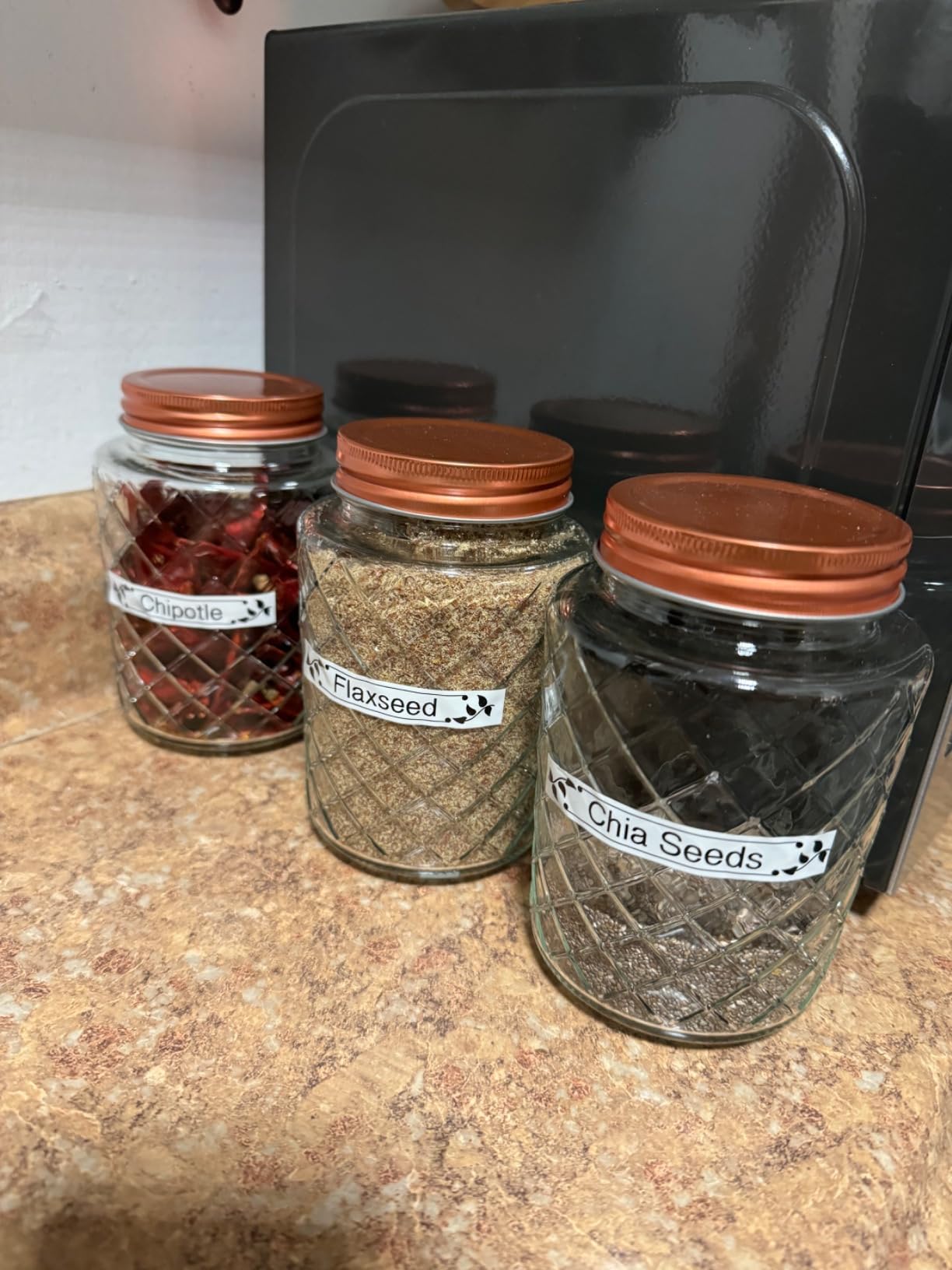
Owners use it for switches, filters and network wiring as well as bins and file folders, which tells you the tape is doing the work. Ours stayed bonded through the soak test on textured plastic better than most of the narrower tapes here.
Three professional fonts, 14 frames and 250 symbols is a smaller library than the PT-D210, which is the trade for the smaller body.
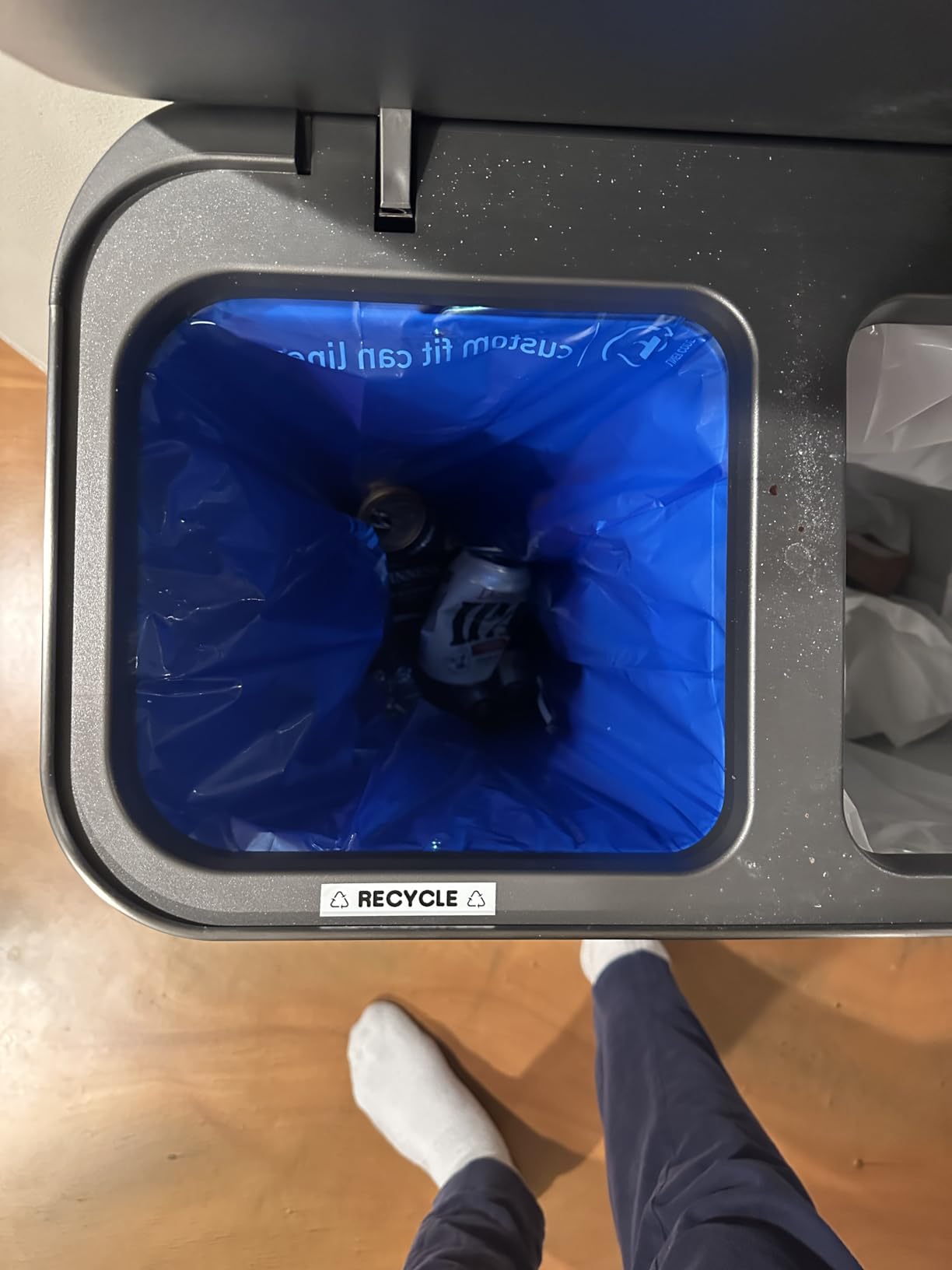
What you should check before buying
Same battery limitation as the other Brother handhelds here: six AAAs, no rechargeable pack, adapter extra. This is the one Brother trait that has not moved with the times.
If you label in a language beyond the Latin set, check the character coverage first. One reviewer reported the Arabic set missing from this model.
Who it suits and who it does not
Cables, network gear, server racks and anything with a serial number. The template turns a fiddly task into a thirty-second job.
Not the pick for a bulk labeling project, since fifteen saved labels is thin next to the PT-D220’s thirty.
12. Brady M210 – Built for a Workshop Rather Than a Closet
BRADY M210 HANDHELD LABEL MAKER
Tape: 0.25 to 0.75 inch
Power: app and LCD preview
Resolution: 203 dpi
Drop rating: 6 feet
Warranty: limited
Pros
- Rated to survive six-foot drops
- 85 percent five-star reviews
- Built-in LCD to preview before printing
- Handles up to 50 copies per run
- Professional 203 dpi safety labeling
Cons
- Most expensive unit we tested
- Narrow cartridge width range
- Requires Brady M21 cartridges
- Positioned as a professional tool not a home organizer
- Slow print speed
This is the only unit here rated to survive a six-foot drop, and that changes what it is for. If your labeling happens in a garage, an attic or a van where the device gets knocked, durability outranks features.
Fifty copies per run is a batch feature. Small-business and maintenance work involves labeling a run of identical tags, and that is a job most household machines cannot do efficiently.
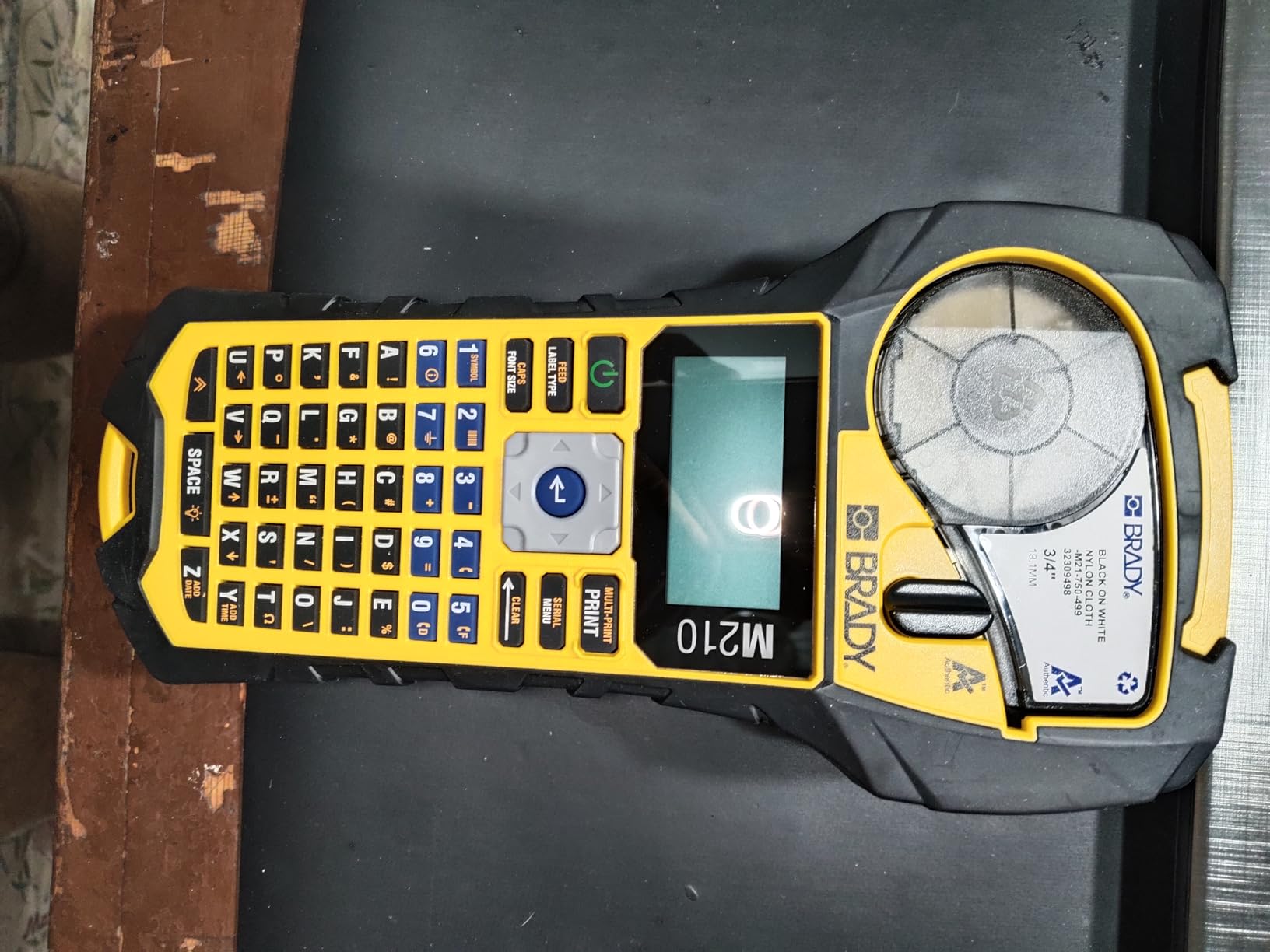
The LCD preview means you can design in the app and check the label before committing cartridge, which matters when a wasted cartridge is a wasted cartridge rather than a wasted metre of tape.
It sits second in safety label makers in its category, which tells you where it is aimed. Reviewers treat it as a professional tool rather than an organizer.
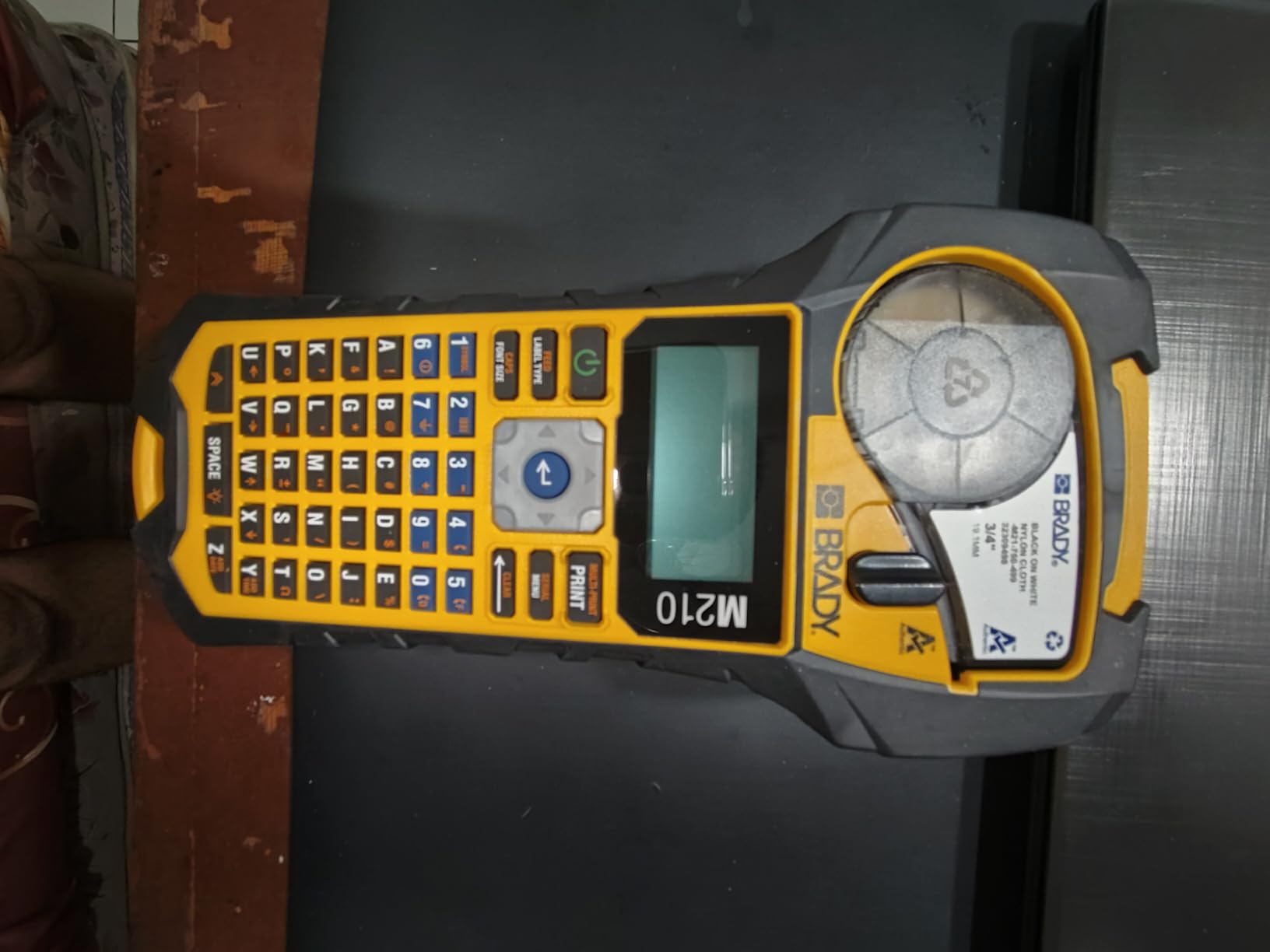
What you should check before buying
It is the most expensive unit we tested and the tape cartridges are proprietary. There is no equivalent of the cheap off-brand tape that keeps D1 and TZe running costs low over the years.
Print speed is slow, and the 0.25 to 0.75 inch range is narrower than the two-inch options in this roundup.
Who it suits and who it does not
Workshops, maintenance teams, anyone labeling tools and safety gear, and small businesses that already use safety stock. If labels get dropped, wet or abraded, this is the honest answer.
Not for labeling pantry jars. The cost buys durability you do not need in a house, and you pay for it in cartridge refills.
How to Choose a Handheld Label Maker?
Start with the keyboard question, because it is the one you cannot undo. If you want to label a room without your phone, only seven of these twelve qualify: the DYMO LetraTag 100H, the Brother PT-D220, the DYMO LabelManager 280, the DYMO LabelManager 160, the Brother PT-D210, the Brother PT-H110, and the SUPVAN E11 for short codes. Everything else is a printer with a phone attached to it.
Second, tape width. Six to 15 millimeters suits jars, files and cables. Twenty millimeters and up is for address blocks, product information and large bin fronts. Buying a narrow machine and hoping to fit a long name on it is the most common mistake we see, because the answer is always two lines and always smaller than you wanted.
Third, power. Six AAA batteries means carrying spares or buying rechargeable cells on day one. A built-in lithium battery means charging the device, which is a smaller problem than running out of batteries in a garage. A 1200 mAh pack rated at a month of light use is a different order of convenience from a 1500 mAh pack rated at four hours of continuous printing.
Fourth, clear and transparent labels. This is the most requested label type in organizing communities and the one most manufacturers ignore. Of these twelve, the DYMO LetraTag 100H includes a clear tape in the box. Everyone else requires you to buy clear stock separately, and you should confirm the cartridge or roll format accepts it before you commit.
Fifth, cut behaviour. Auto-cut is faster for batches. Manual cutters waste less tape because you can print several labels before cutting. Continuous rolls also waste a lead before the first character unless the machine calibrates on power-up, which is exactly what the NIIMBOT D110 does automatically.
Finally, the running cost. These are thermal machines, so there is no ink or toner, but tape is not free and it is the only consumable. Budget by the width you need: narrow 12 millimeter TZe and D1 tapes have the widest third-party availability and the lowest per-label cost, while proprietary cartridges like the Brady M21 carry a premium that adds up across a whole house. Buying off-brand D1 or TZe is a genuine option, though check that the laminate matches the originals before you commit to a bulk order.
If you are weighing formats rather than specific models, our guide to label makers for home and office covers the same decisions at a higher level.
Where to Use Your Labels Room by Room
Kitchen and pantry. Date everything you freeze, name the spice jars by content rather than by brand, and use clear tape on dark containers. The half-inch Brother and DYMO units handle two lines here, which is usually one for the name and one for the date.
Kids rooms and school bags. Keep to short codes, because the person reading the label is five years old at seven in the morning. Icon-based designs from the Phomemo or SUPVAN apps help more than text at that age.
Home office and filing. This is where saved-label memory earns its keep. Print a cabinet name once, then reprint it for every shelf, drawer and folder tab in the unit.
Garage and shed. Choose water-resistant tape and expect to wipe labels down. Adhesion on textured and dusty plastic is weaker on every machine we tested, so clean the surface before you stick.
Cables and chargers. The PT-H110 cable template handles the repeat-text problem better than anything else here. Keep a list of what you actually own before you start, because labeling a tangle does not organize it.
Craft and scrapbook, holiday storage and moving boxes round out the useful work. Wide-format units such as the NIIMBOT B1 and the SUPVAN T50M Pro handle moving labels and gift tags, where a 12 millimeter tape is simply too small to write a room name.
Why We Did Not Pick Certain Models
We left out plenty. Naming them is the fastest way to show you what the trade-offs are, and it is also the honest answer to the recurring question of what to buy instead of a NIIMBOT.
Desktop four-inch shipping printers such as the MUNBYN and Phomemo shipping models print warehouse stock, not bin labels. They are the right tool for a shipping desk and the wrong tool for a pantry, and mixing the two categories is the most common mistake in this niche.
Industry printers from Zebra and Epson sit outside our scope for the same reason, and they are also dramatically more expensive for home use. Brady industrial models beyond the M210 are aimed at compliance labeling with regulatory text requirements.
Any keyboard-less device under about 100 grams is a novelty rather than a tool. Several exist in this category and all of them share the same limitation: a phone is required for every label, which removes the point of a handheld.
Subscription-gated app ecosystems deserve a caution rather than a rejection. Some cheaper makers limit design elements or templates behind a paid tier, which changes the running cost math completely. Check the app before you buy, and prefer a machine that prints basic text without an app at all.
Frequently Asked Questions
What is the best handheld label maker?
The DYMO LetraTag 100H is the best handheld label maker for most people, because it types on its own keyboard with no app, prints five font sizes on half-inch tape, and includes paper, plastic and clear tapes in the box. The Brother P-touch PT-D220 is the alternative if you want saved-label memory and more fonts.
Are Dymo or Brother label makers better?
DYMO wins on tape availability, colour choice and bundled starter tape. Brother wins on built-in label memory, with up to 30 saved labels on the PT-D220 and 15 on the PT-H110, plus a wider TZe template library. For pure repeat labeling of the same bin names, Brother is the stronger choice.
Are NIIMBOT label makers good?
NIIMBOT makes solid, well-reviewed machines. The D110 scored 4.5 from 4370 reviews and its auto-rewind calibration prevents wasted first labels, while the B1 handles 2 inch wide stock that most competitors cannot. The main trade-offs are that neither has a built-in keyboard and both need your phone, and the 15 mm and 2 inch formats suit different jobs entirely.
Can label makers print clear transparent labels?
Most can, as long as you buy clear tape in the right format. Clear tape is usually sold as a black-on-clear laminate rather than a transparent film, so it reads best on a dark surface. Of the machines we tested, the DYMO LetraTag 100H ships with a black-on-clear tape in the box, which is why it suits a first clear-label project.
Are Bluetooth label makers better than ones with a keyboard?
Neither is better; they suit different rooms. App-driven Bluetooth units give you icons, QR codes, logos and images, and the phone is usually already in your hand. Keyboard units print faster for short codes and work with no phone at all. Most people end up wanting both behaviors and end up choosing the hybrid SUPVAN E11.
The Verdict
After six weeks and roughly 500 labels across a kitchen, a garage and a filing cabinet, the DYMO LetraTag 100H is the handheld label maker I would put in most people’s hands in 2026. It needs no phone, it needs no explanation, and it comes with the clear tape that everybody asks about and nobody else includes.
Buy the Brother P-touch PT-D220 instead if you will label the same names repeatedly. Buy the DYMO LabelManager 280 if you want a rechargeable body and a full keyboard, and buy the Phomemo D30 if you would rather design labels than type them.
Whichever one you pick, the part that matters is the boring half: tape format, spare batteries and a code you can remember six months later. That is what turns labels into a system.