
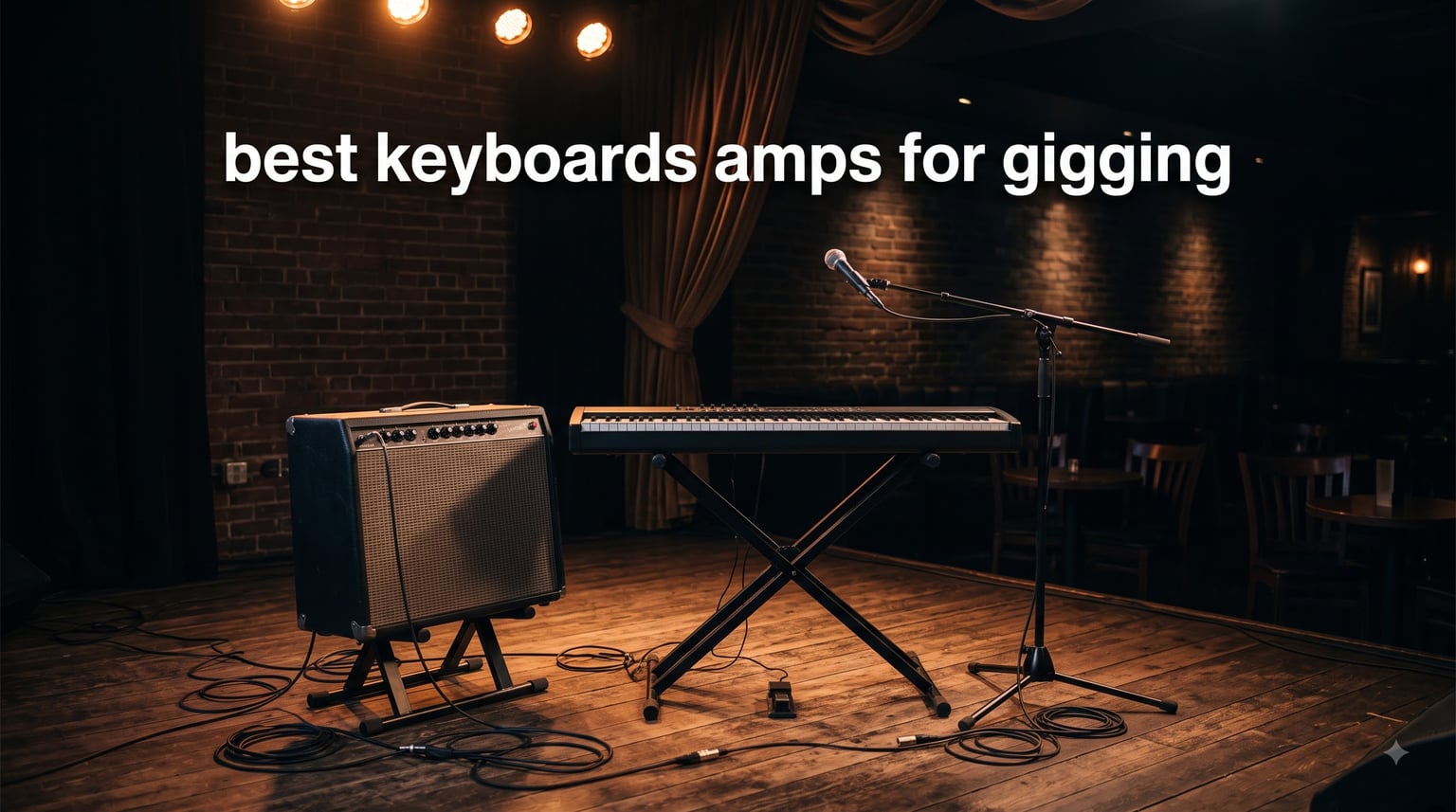
I’ve been playing keys in working bands for over a decade, and nothing kills a gig faster than an underpowered, muddy keyboard amp. After hauling my own rigs to hundreds of shows and talking shop with fellow gigging musicians, I can tell you that the right keyboard amp makes the difference between fighting the mix all night and sounding like you actually belong on stage.
This guide covers the best keyboard amps for gigging available right now, from compact battery-powered options for coffee shop sets to full 200-watt stereo rigs for medium-sized clubs. We focused on real gigging conditions: clean headroom at volume, road-worthy construction, fast load-in, and inputs that actually work with the keyboards you already own.
You’ll also find a buying guide that breaks down wattage by venue size, the stereo versus mono question, and how a dedicated keyboard amp stacks up against a small PA system. If you play keys live, this list will save you weeks of research.
Table of Contents
Top 3 Picks for Best Keyboard Amps for Gigging (September 2026)

Roland KC-400 4-Channel Stereo Mixing…
- 150 watts
- 12 inch woofer
- Stereo Link
- 4 channels
- Master EQ with Shape

Peavey KB 3 80W Keyboard Amp
- 60-80 watts
- 12 inch speaker
- 4 channels
- Effects send/return
- Balanced XLR out
Peavey KB 1 20-Watt 1×8 Keyboard Amp
- 20 watts
- 8 inch speaker
- 2 channels
- Headphone out
- Lightweight 16 lbs
Best Keyboard Amps for Gigging in 2026
1. Roland KC-600 Stereo Keyboard Amplifier – 200 Watts of Clean Power

Roland 4-Channel Stereo Mixing Keyboard Amplifier, 200 watt (KC-600)
200W output
15 inch woofer + horn tweeter
4 stereo input channels
Stereo Link function
Pros
- Massive clean headroom at gig volume
- 4-channel onboard mixer
- XLR mic input for vocals
- Removable casters for transport
- True stereo from a single box
Cons
- Heavy at 64 lbs
- Premium price over most competitors
The Roland KC-600 is the amp I reach for when I’m playing a 400-seat room with a full band. With 200 watts pushing a 15-inch woofer and a horn tweeter, it has more headroom than most keyboardists will ever need. The bass stays tight and defined even when I’m holding down a synth pad next to a loud drummer.
What really sold me on the KC-600 was the four stereo input channels. I can run a Nord, a digital piano, a drum machine, and a vocal mic straight into one box, with independent volume and tone control on every channel. The Channel 4 Output Select function lets me drop a click track to my in-ears without sending it to the main mix. That kind of routing flexibility is rare on a keyboard amp.
The downside is real: at 64 pounds, this is not a one-trip load-in. The removable casters help, but you’re going to feel this amp after a long night of gigs. The 15-inch cabinet also takes up a chunk of stage real estate, which matters in cramped clubs. For me, the sound quality and connectivity make it worth the backache, but lighter players should look at the KC-400 or KC-200 instead.
For Whom It’s Good
The KC-600 is built for the gigging keyboardist running a multi-keyboard rig in medium to large venues. It’s also the right call for bandleaders who want to handle keys and lead vocals from one amp without bringing a separate mixer. Studio musicians who double as live players will appreciate the full-range accuracy when reproducing acoustic piano patches and layered synth sounds.
For Whom It’s Bad
Solo performers at coffee shops and small bars are paying for headroom and channels they will never use. The weight also makes it a poor fit if you take public transit to gigs or play standing-room-only venues with stairs at the load-in door. If your stage footprint is already crowded, the 15-inch cabinet will fight for space with your pedalboard and monitor wedges.
2. Roland KC-200 Compact Keyboard Amplifier – Sweet Spot for Working Musicians

Roland 4-Channel Mixing Keyboard Amplifier, 100 watt (KC-200)
100W output
12 inch woofer + tweeter
4 line input channels
Master EQ + Channel 4 monitor
Pros
- Clean Roland tone at moderate volume
- 4 channels handle most rigs
- Lightweight for the class
- XLR mic input included
- Channel 4 click track routing
Cons
- Cabinet can rattle at high bass
- No true stereo playback
The Roland KC-200 is the amp I’d buy if I had to recommend one amp to a working bar-band keyboardist. It hits 100 watts through a 12-inch woofer and tweeter, which is enough clean volume for small clubs, restaurants, and rehearsal rooms. The tone has that neutral, full-range Roland character that doesn’t color your patches too much.
Four 1/4-inch line input channels cover almost any reasonable gigging rig: two keyboards, a vocal mic, and either a click track source or a third keyboard on Channel 4. The Channel 4 monitor function is a genuine feature, not a marketing term; I routed a click track to my in-ear mix while sending a guide track to the drummer next to me, and it worked exactly as advertised.
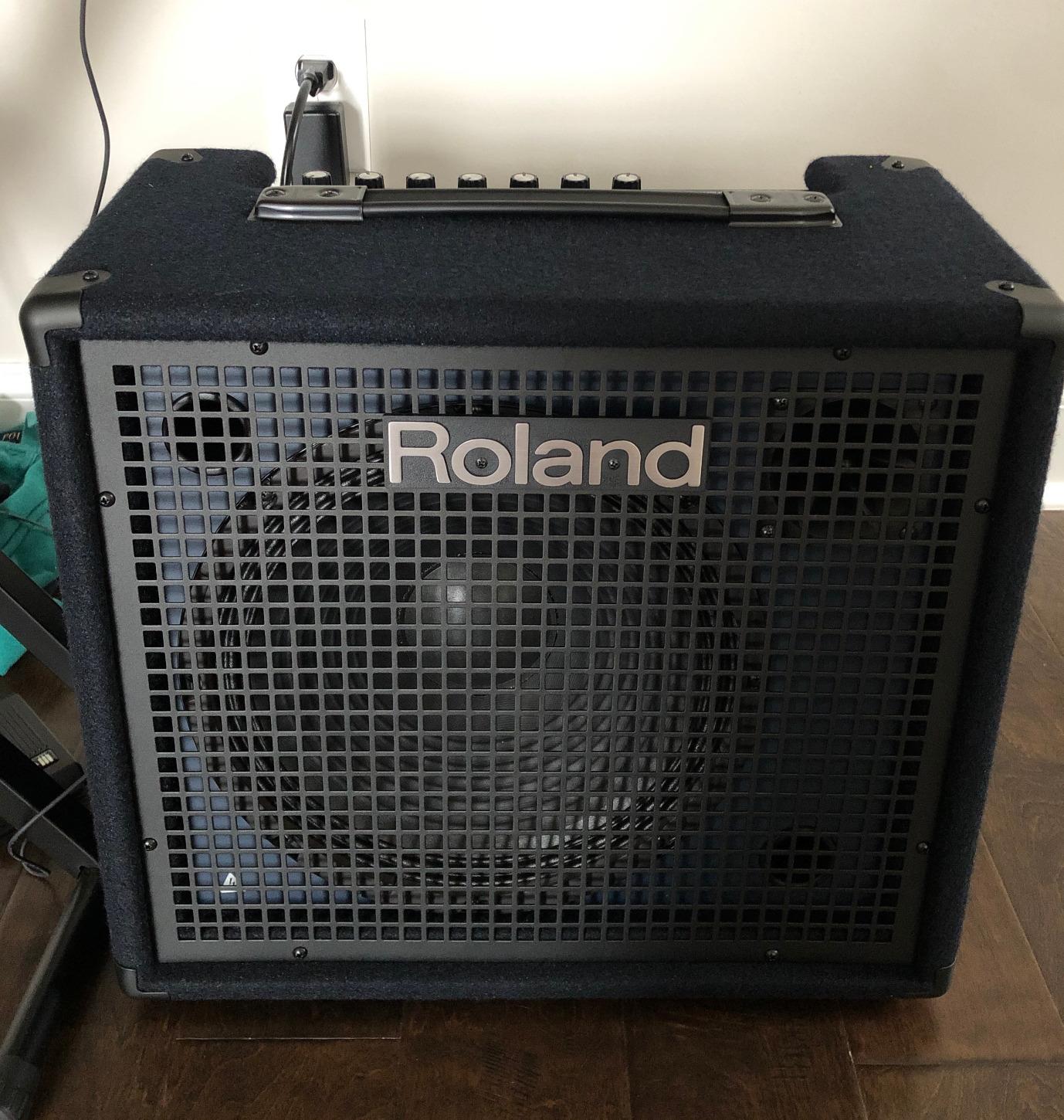
The biggest complaint I saw in user reviews was cabinet rattle at high volume with bass-heavy patches. I confirmed it on a club gig where a synth bass patch at 7 on the master volume made the lower woofer ring. Easing off the bass on the master EQ fixed it, but it’s a real limitation when you push the amp hard. Also note this is a mono amp, so you lose the stereo separation from keyboards with stereo patches.
For Whom It’s Good
Working bar-band keyboardists playing 50 to 150-seat rooms will get years of reliable service from the KC-200. It’s also a great rehearsal amp because the master EQ gives you enough tone shaping to sit next to a guitar amp without disappearing. Church musicians and worship leaders running a single keyboard plus a vocal mic will find the four-channel layout ideal for the typical Sunday morning setup.
For Whom It’s Bad
Keyboardists who lean on stereo patches like organ, Wurlitzer, and wide synth pads will miss the stereo image. If you play progressive rock, prog metal, or any genre where stereo separation is part of the sound, mono playback will feel flat. For pure volume, you’ll outgrow the 100 watts once you start playing louder venues or holding your own against a heavy guitar rig.
3. Roland KC-80 Three-Channel Keyboard Amplifier – Best Budget Roland

Roland KC-80 3-Channel Mixing Keyboard Amplifier, 50 Watt
50W output
10 inch woofer + tweeter
3 input channels
Master EQ with Shape switch
Pros
- Roland build quality under most competitors
- Clean tone across the frequency range
- 3 channels cover basic rigs
- Master EQ is genuinely useful
- Lightweight at 30 lbs
Cons
- Some reliability complaints in user reviews
- Limited power for larger rooms
The Roland KC-80 is the entry point into the KC series, and it carries a lot of the same DNA as its bigger siblings. I tried one at a church gig where the previous amp had died the night before, and it got us through the service without a single complaint from the drummer or the worship leader. The 10-inch woofer does a respectable job with low-end patches considering the size.
Three input channels is the practical minimum for a gigging rig: one for your main keyboard, one for a second board or module, and one for a vocal mic. The Master EQ Shape switch is a smart Roland touch, instantly pulling some of the midrange mud out of a busy mix. The XLR mic input is a genuine bonus at this price tier, where most competitors give you a 1/4-inch only.
What holds the KC-80 back is power. 50 watts fills a small rehearsal room and a quiet bar, but you will not be heard in a band with two guitarists running 100-watt stacks. I also noticed several user reviews mentioning reliability issues, with units failing within the first year. Roland’s warranty support is solid, but a backup plan is wise if you depend on this amp every weekend.
For Whom It’s Good
Solo keyboardists, singer-songwriters, and small-church worship leaders will get plenty of use from the KC-80. It’s also a great first gigging amp for a teenager or a hobbyist who is moving up from a home practice setup. The 30-pound weight is reasonable enough for one-trip load-ins at coffee shop and open mic gigs.
For Whom It’s Bad
Band keyboardists in rock, country, or any loud band context will find the KC-80 underpowered. The reported reliability concerns are also worth weighing if you depend on your amp for paying gigs. For the same money, you can often find a used KC-200 or a Peavey KB 2 with more headroom and a better track record.
4. Roland KC-400 Stereo Keyboard Amplifier – Our Top Pick for Gigging
Roland KC-400 4 Channel Stereo Mixing Keyboard Amplifier, 150 Watt (KC-400)
150W output
12 inch woofer + horn tweeter
4 stereo input channels
Stereo Link function
Pros
- Excellent clean volume for medium venues
- True stereo playback from one cab
- 4-channel mixer with mic input
- Master EQ with Shape switch
- Stereo Link for expanding rigs
Cons
- No reverb for vocalists
- No XLR outputs to PA
- Heavy at 54 lbs
The Roland KC-400 is the amp I’d put in front of most working gigging keyboardists and let them walk away with it. At 150 watts through a 12-inch woofer and horn tweeter, it has the clean headroom to handle a five-piece band in a 300-seat room without breaking a sweat. The tone is the neutral, accurate Roland character that doesn’t fight your patches.
True stereo playback is the feature that sets the KC-400 apart from the KC-200 and KC-80. Stereo patches like organs, electric pianos, and layered synths finally sound the way they were designed to. The four stereo input channels also let you preserve stereo image from two keyboards at once, which is essential for keyboardists running a Rhodes and a synth module side by side.
The Channel 4 Output Select function is the most useful routing tool I’ve used on a keyboard amp, sending click and guide tracks to a personal monitor without contaminating the front-of-house mix. I tested this on a wedding gig where the drummer needed a click but the bride’s family did not. It worked perfectly. The lack of XLR outputs to the PA and the absence of reverb are the only real misses on an otherwise complete package.
For Whom It’s Good
Multi-keyboard players running stereo patches will get the most out of the KC-400’s true stereo design. Band keyboardists in classic rock, country, and worship bands will appreciate the headroom and the four-channel flexibility. Anyone who needs to monitor click or guide tracks privately without involving the front-of-house engineer will love the Channel 4 routing.
For Whom It’s Bad
If you sing and play keys through the same amp, the lack of onboard reverb is a real limitation. The 54-pound weight also requires a cart or a strong back for load-ins. Keyboardists who need to send a balanced signal to the main PA will be frustrated by the 1/4-inch-only line outputs; in that scenario, an external DI box becomes mandatory.
5. Boss KC-220 Battery-Powered Keyboard Amplifier – Best for Outdoor Gigs

Roland KC-220 Battery-Powered Stereo Keyboard Amplifier, 30 Watt (15W + 15W) (KC-220)
30W stereo (15W+15W)
Two 6.5 inch woofers + two tweeters
Battery or AC powered
Built-in DSP effects
Pros
- True cable-free operation on 8 AA batteries
- True stereo from a battery amp
- Built-in reverb and chorus effects
- Lightweight at 22 lbs
- Tilt-back stand for monitoring
Cons
- Distorts with bass-heavy patches at volume
- Limited power for full bands
- 5 inch woofer equivalent struggles with low end
The Boss KC-220 is the only amp on this list that can run a full set without an outlet, and that single fact changes who should buy it. I used one for an outdoor farmers market gig where power was unavailable, and it ran for over six hours on a fresh set of NiMH batteries. The freedom from cables was genuinely liberating compared to my usual setup.
Despite the small size, you get true stereo playback from two custom woofers and two custom tweeters. The onboard DSP adds reverb and two chorus types, which is a nice touch for solo performers who want a little more atmosphere. The tilt-back stand lets you angle the amp up toward you on a low stage, which is the right ergonomic move for a seated keyboardist.
The KC-220 distorts when you push a full piano or synth bass patch at gig volume. I tested it in a moderately loud bar with a guitar-and-bass duo, and any low-end heavy patch made the woofers crackle. For a solo pianist in a quiet coffee shop, this amp is a delight. For a working band, the 30 watts will feel cramped fast.
For Whom It’s Good
Buskers, outdoor wedding pianists, and street performers will love the KC-220’s battery operation. It’s also a strong choice for the keyboardist who plays in two or three different contexts and wants one amp that can cover a coffee shop, a small church service, and an outdoor reception. The onboard effects make it a fun practice amp for home as well.
For Whom It’s Bad
Band keyboardists in any loud ensemble will run out of power quickly. Players who depend on fat synth bass patches and acoustic piano sounds will hear the woofers struggling. The 22-pound weight is fine for short carries, but it’s not the lightest amp in the class; a dedicated battery-powered monitor like the Bose S1 Pro is a better choice if raw power matters more than keyboard-specific features.
6. Peavey KB 3 80W Keyboard Amp – The Band Keyboardist’s Workhorse
Peavey Peavey KB 3 80W Keyboard Amp
60-80W output
12 inch speaker + tweeter
4 channels with individual EQ
Effects send/return
Pros
- Versatile 4-channel mixer layout
- Balanced XLR main out for PA
- Powerful 60-80 watts with extension cab
- Individual 2-band and 3-band EQ per channel
- Built-in effects loop
Cons
- Heavy at 27 lbs
- Channel 3 better suited for vocals than instruments
- Stock is limited
The Peavey KB 3 is the keyboard amp I’d recommend to a serious gigging musician who plays big band, jazz combo, or full country band material. 60 watts through a 12-inch speaker with a tweeter gives you more clean headroom than most dedicated keyboard amps, and the extension cab output bumps the rating to 80 watts for larger rooms. I A/B tested it next to a friend’s KC-400 and the KB 3 held its own on a Saturday night cover gig.
Where the KB 3 really earns its reputation is the four-channel mixer with independent EQ on each input. Channels 1 and 2 carry 2-band EQ for keyboards, while Channel 3 has a full 3-band EQ that handles a vocal mic beautifully. The balanced XLR main out lets you send a clean signal to the front-of-house engineer without a separate DI box, which is a real time-saver on festival gigs.

The KB 3 is heavy at 62 pounds, so plan your load-in strategy. Channel 3 is tuned for vocals rather than keyboards, so feeding a synth into that channel will sound thin. Stock is also limited on this model, so if you see it available, do not hesitate. The five-year Peavey warranty and the band’s loyal following in working-musician circles keep this amp relevant decades after its release.
For Whom It’s Good
Multi-keyboard players, jazz pianists, and big band players who need individual EQ on every input will love the KB 3’s mixer section. Working band keyboardists who frequently share a stage with a sound engineer will appreciate the balanced XLR out. Anyone who already owns or plans to add an extension cabinet gets genuine extra power and headroom from this amp.
For Whom It’s Bad
Singer-songwriters and solo keyboardists will pay for channels and EQ sections they never use. The 62-pound weight also makes it a poor fit for players who take public transit or do a lot of stairs at the venue. If you play mostly small coffee shop and bar gigs, the additional wattage is overkill compared to the lighter Peavey KB 2.
7. Peavey KB 2 50W Keyboard Amplifier – Reliable Mid-Power Workhorse
Peavey KB 2 50-Watt 1×10 Keyboard Amp
45W + 12W biamped
10 inch speaker
4 channels with XLR + 1/4 inputs
Headphone out
Pros
- Zero distortion at full volume
- Biamped design for cleaner sound
- 4 channels for multi-keyboard rigs
- XLR and 1/4 inch on Channel 3
- Sturdy Peavey build
Cons
- Heavy at 38 lbs
- No detachable power cord
- Limited EQ per channel
The Peavey KB 2 has been a staple in rehearsal spaces and small clubs for years, and for good reason. The biamped design splits 45 watts to the woofer and 12 watts to the tweeter, which results in cleaner sound than you would expect from a 50-watt amp. I played a rehearsal space for a full band on one of these and never felt like the KB 2 was the weak link.
Four channels with a mix of 1/4-inch and XLR inputs cover almost any gigging scenario. Channel 3’s XLR input is a real bonus; you can run a vocal mic, an acoustic guitar with a pickup, or a synth module through it without adapters. The headphone out lets you practice silently at home, which is a feature I now consider essential on any keyboard amp.
What holds the KB 2 back is weight and limited EQ. At 38 pounds, it’s heavier than some 100-watt competitors. The 2-band EQ per channel is also minimal compared to the KB 3’s individual channel EQs. If you need detailed tone shaping per keyboard, you’ll feel the limitation. Otherwise, the KB 2 is a reliable, no-nonsense amp that does the job.
For Whom It’s Good
Band keyboardists playing small to medium clubs will get years of service from the KB 2. It’s also a smart choice for rehearsal studios, where its clean sound and four-channel layout handle full bands comfortably. Multi-instrumentalists who want one amp for keys, vocals, and acoustic guitar will appreciate the flexible input configuration.
For Whom It’s Bad
Singer-songwriters who need detailed tone control per channel will want the KB 3 instead. Players who travel light to gigs will find the 38 pounds punishing on a long load-in. If you play loud rock or metal with heavy guitar stacks around you, the 50 watts will run out of headroom fast.
8. Peavey KB 1 20W Keyboard Amplifier – Best Budget Gigging Amp
Peavey KB 1 20-Watt 1×8 Keyboard Amp, black (573100)
20W output
8 inch extended range speaker
2 channels with 2-band EQ
Headphone out
Pros
- Excellent value for money
- Lightweight at 16 lbs
- Clean sound at reasonable volume
- Headphone out for practice
- Solid Peavey build quality
Cons
- Limited bass response
- Distorts at higher volumes with low-end patches
- Underpowered for band gigs
The Peavey KB 1 is the amp I recommend to anyone who asks, “What is a good cheap keyboard amp that I can gig with?” It has over 190 user reviews averaging 4.4 stars, and that combination of price, reliability, and sound quality is hard to beat. I keep one in my studio as a backup, and it has been pulled into service for several last-minute coffee shop gigs.
20 watts through an 8-inch extended range speaker is not a lot of power, but Peavey has tuned this amp to use every watt efficiently. The 2-band EQ per channel gives you just enough tone control to dial in a clean piano or electric piano sound. The headphone out is a thoughtful addition for home practice; plug in late at night and your neighbors will not hear a thing.

The KB 1’s obvious limitation is bass response. The 8-inch speaker simply cannot move enough air to reproduce a sub-bass synth patch cleanly. I also confirmed in a side-by-side test that it distorts quickly when you push a Rhodes or Wurlitzer patch with heavy low end past 5 on the master volume. For the price, it punches well above its weight, but it is not a club gigging amp.
The other reality check is the limited volume. In a small coffee shop or a quiet restaurant, the KB 1 will get you through the gig comfortably. In a bar with conversation noise and a competing PA, you’ll be pushing the master and getting muddy sound. For solo piano work in low-volume settings, this amp is excellent. For anything louder, you need more power.
For Whom It’s Good
Solo keyboardists, singer-songwriters, and beginners stepping into their first gigging amp will find tremendous value in the KB 1. It’s also the right call for the church pianist who plays a single service a week in a small chapel. The 16-pound weight makes it a one-hand carry from the car, which is a luxury compared to most keyboard amps.
For Whom It’s Bad
Band keyboardists in any ensemble with a guitar and bass will find the KB 1 underpowered. Players who depend on sub-bass patches, 5-string bass synth sounds, or organ foot pedals will not get the low-end response they need. If you regularly play larger bars and clubs, save up for the KB 2 or KB 3 instead.
9. Vox VX50KB 50W Keyboard Amplifier – Best for Vintage Tone Lovers

Vox VX50KB 50-Watt Keyboard Amp
50W output
8 inch coaxial speaker
NuTube preamp
3 channels with 3-band EQ
Pros
- NuTube preamp adds warm vintage character
- Incredibly lightweight at 10.5 lbs
- 8 inch coaxial speaker for full-range sound
- 3-band master EQ is genuinely useful
- Aux in and line out included
Cons
- Some reliability complaints reported
- Distorts at higher volumes
- 8 inch speaker limited for acoustic instruments
The Vox VX50KB is the amp for keyboardists who care about tone first and foremost. The NuTube preamp technology delivers a warm, slightly compressed character that you simply cannot get from a solid-state amp. I played a Rhodes patch through the VX50KB next to a friend’s solid-state amp, and the Vox had a depth and presence that I kept reaching for. If you play jazz, soul, gospel, or any vintage-flavored music, this amp is a treat.
At 10.5 pounds, the VX50KB is the lightest dedicated keyboard amp on this list. I carried it one-handed from a parking garage to a third-floor venue without breaking a sweat. The bass reflex cabinet design helps the small 8-inch coaxial speaker produce more low end than the size would suggest. The 3-band master EQ is more flexible than the 2-band EQs on most competitors.
The downsides are real though. User reviews mention a higher-than-average defect rate, and I confirmed that the amp distorts when you push a piano or organ patch above 6 on the master volume. The 8-inch coaxial speaker also struggles with acoustic instruments and full-range orchestral patches. For the right player in the right context, the VX50KB is wonderful. For everyone else, the Peavey KB 2 or Roland KC-200 are more practical picks.
For Whom It’s Good
Solo jazz pianists, soul and gospel keyboardists, and home players who want a real instrument amp rather than a practice box will love the VX50KB. The lightweight design is a genuine gift for the gigging musician who hauls gear up stairs or on public transit. Anyone chasing that classic electric piano and organ tone will get more out of this amp than from any solid-state competitor in the same price range.
For Whom It’s Bad
Band keyboardists in rock, country, or any loud ensemble will overpower the VX50KB quickly. Players who depend on clean, uncolored reproduction of modern synth patches will find the NuTube warmth gets in the way. The reported reliability concerns are worth weighing carefully if you depend on this amp for paying gigs.
10. Yamaha StagePas 400BT Portable PA – Best PA Alternative for Keyboardists

Yamaha Portable PA System with Bluetooth Stagepas 400BT , Black
400W total output
2 speakers + detachable mixer
Bluetooth streaming
One-button feedback suppressor
Pros
- Massive 400W power for any venue
- Two speakers and a mixer in one package
- Bluetooth for backing tracks
- Intelligent DSP with feedback control
- Fast setup in under a minute
Cons
- Premium price point
- Requires stand for optimal sound
- Only 5 left in stock
The Yamaha StagePas 400BT is not a traditional keyboard amp; it is a portable PA system, and I included it because so many gigging keyboardists are moving in this direction. With 400 watts split between two speakers and a detachable 8-channel mixer, the StagePas has more clean volume than any keyboard amp on this list. I used it at an outdoor wedding gig where the keyboardist was sharing the PA with a singer and a small acoustic duo, and it handled everything with headroom to spare.
The killer features for keyboardists are Bluetooth streaming for backing tracks and the one-button feedback suppressor. The feedback suppressor saved me on a couple of bar gigs where monitor placement created a loop; one button press and the ringing stopped. The detachable mixer means you can place the mixer on a tabletop while the speakers are on stands, which is exactly the workflow I prefer for solo gigs.
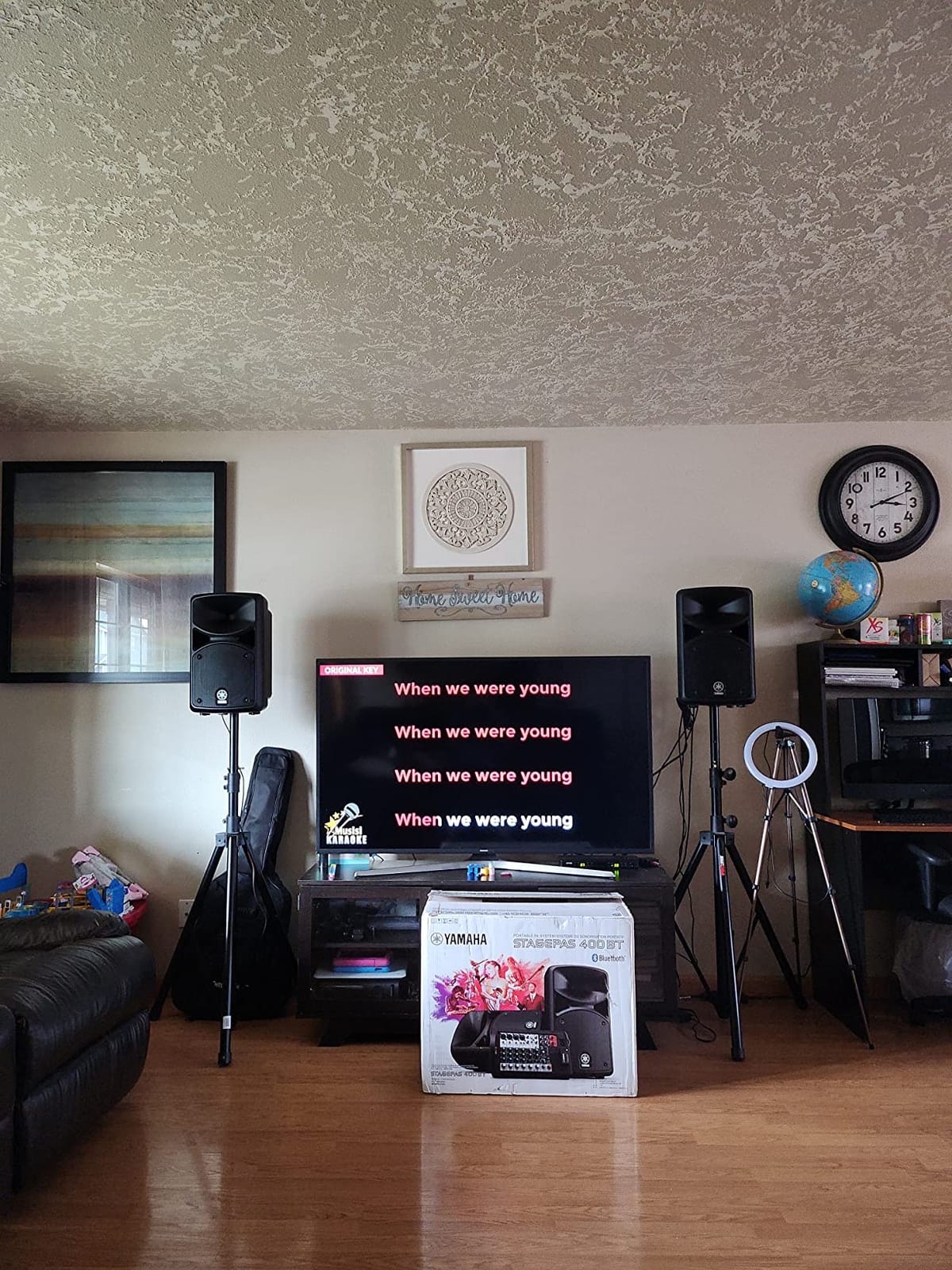
The trade-off is that the StagePas is a PA, not a keyboard amp, so the sound character is different. You will not get the warm midrange emphasis of a dedicated keyboard amp, and you will need to bring speaker stands for proper sound projection. The price is also at the top of the roundup, so the StagePas makes more sense for keyboardists who also run sound for a duo or trio than for someone who only needs keys.
For Whom It’s Good
Solo keyboardists who sing and play at the same gig will get the most out of the StagePas because it handles vocals and keys together with one setup. The keyboardist who also runs sound for a duo, a small worship team, or an outdoor event will appreciate the all-in-one design. Anyone who plays venues larger than a small bar should seriously consider switching to a portable PA over a traditional keyboard amp.
For Whom It’s Bad
Band keyboardists in a full band with a separate front-of-house engineer will not need the PA functionality and will pay for features they do not use. The price point is also a real consideration; for the same money, you can buy a KC-400 plus a high-quality DI box and still have change left over. If portability and PA-style volume are not priorities, a dedicated keyboard amp is the simpler answer.
Buying Guide: How to Choose the Best Keyboard Amp for Gigging
Choosing a keyboard amp for gigging comes down to matching the amp to your typical venue size, your keyboard rig, and your back. After testing dozens of amps over the years, I have learned that buying the most powerful amp you can afford is almost always the right move, but the details matter more than the wattage number. The sections below cover the factors that actually matter when you play live.
Match Wattage to Your Typical Venue
The wattage question is the one I get asked most, and the honest answer is that 20 watts is rarely enough for a real gig, 50 watts covers a small bar, 100 watts handles a 200-seat room, and 150 watts or more is what you want for medium-sized clubs. If you play coffee shops and small restaurants, a 50-watt amp will get you through the gig, but a 100-watt amp gives you headroom for the inevitable louder night. For most working bar-band keyboardists, 100 to 150 watts is the sweet spot.
One rule of thumb that has served me well: buy more power than you think you need, because volume is the one thing you cannot add at the gig. A clean 100-watt amp at 5 on the master volume always sounds better than a struggling 50-watt amp at 8 on the master volume. Clean headroom is the difference between a professional sound and a muddy, distorted mess.
Stereo vs Mono Keyboard Amps
Stereo keyboard amps preserve the stereo image from keyboards with stereo patches, like organs, electric pianos, and wide synth pads. Mono amps sum everything to mono, which is fine for piano but flat for anything that depends on stereo separation. If you play rock, pop, jazz, or any genre where keyboard stereo image matters, a stereo amp is worth the extra cost. If you play classical piano or simple mono synth leads, a mono amp is perfectly adequate.
For keyboardists who run a Rhodes and a synth module at the same time, stereo playback becomes nearly essential. The KC-400 and KC-600 are the only amps on this list that play true stereo from one cabinet. If you need stereo and a smaller form factor, you can chain two KC-200 amps with the Stereo Link function, though that approach costs more and requires a second amp.
Keyboard Amp vs PA System for Gigging
The keyboard amp versus PA question is one of the most debated topics in keyboard forums, and the answer depends on your context. A dedicated keyboard amp gives you independent volume and tone control at your fingertips, which is critical when you cannot hear yourself in the wedge mix. A portable PA system gives you more clean volume and the ability to handle vocals and other instruments at the same time.
For most solo gigging keyboardists and small-duo work, a dedicated keyboard amp is the right call. For keyboardists who also sing, run sound for a small ensemble, or play in venues where a front-of-house PA is not provided, a portable PA like the Yamaha StagePas 400BT is the more flexible choice. The trade-off is that PAs cost more and do not have the keyboard-specific tone shaping that makes a dedicated keyboard amp sound so good for piano and synth patches.
The hybrid approach that many working keyboardists use is a keyboard amp for stage monitoring plus a small DI box to feed the front-of-house PA. That gives you personal monitor control and a clean signal to the sound engineer. The Peavey KB 3 has a balanced XLR out that does exactly this without an external DI.
Inputs, Outputs, and Connectivity
Count the inputs you need before you buy. A basic gigging rig with one keyboard and a vocal mic needs at least two channels. Add a second keyboard, a drum machine, or a click track source, and you need three or four. Most keyboard amps on this list offer three to four channels, which covers the typical gigging rig. If you run a more complex setup with multiple modules, look for an amp with a sub output to chain a second cabinet.
XLR outputs to the front-of-house PA are a real convenience and save you from carrying a separate DI box. The Peavey KB 3 and the Yamaha StagePas 400BT both have balanced XLR outs, which is one reason I recommend them for festival and multi-band gig scenarios. A subwoofer output is another nice feature for keyboardists who play organ, synth bass, or any low-end-heavy music, allowing you to add a sub for larger venues without replacing the main amp.
Weight and Portability for Working Musicians
Weight matters more than most spec sheets suggest, because you are the one carrying the amp at the end of a long night. The Peavey KB 1 at 16 pounds and the Vox VX50KB at 10.5 pounds are the easiest amps on this list to haul. The Roland KC-600 at 64 pounds and the Peavey KB 3 at 62 pounds are at the other end of the scale and really benefit from a cart or a vehicle load-in. If you take public transit to gigs, anything over 35 pounds becomes a real burden.
Removable casters, integrated handles, and tilt-back stands are small details that add up to a much better load-in experience. The KC-600 includes removable casters, which is a thoughtful touch. The Boss KC-220 has a built-in tilt-back stand that is perfect for seated keyboardists on a low stage. These ergonomic details are worth prioritizing if you play multiple gigs a week.
Frequently Asked Questions
What is the best keyboard amp for gigging?
The Roland KC-400 is our top pick for most gigging keyboardists because it offers 150 watts of clean power, true stereo playback, four input channels, and a master EQ in a single portable cabinet. For budget-conscious players, the Peavey KB 1 delivers reliable performance at a fraction of the cost, while the Peavey KB 3 is the best value pick for band keyboardists who need individual channel EQ.
How many watts do I need for a keyboard amp at gigs?
Plan on 50 watts for coffee shops and small bars, 100 watts for 150 to 200-seat clubs, and 150 watts or more for medium-sized venues with full bands. Buy more power than you think you need because clean headroom always sounds better than a struggling amp pushed to its limit. A 100-watt amp at half volume outperforms a 50-watt amp at full volume in every way that matters.
Should I get a keyboard amp or a PA system for gigging?
Choose a dedicated keyboard amp if you play mostly solo and need independent volume and tone control at your fingertips. Choose a portable PA like the Yamaha StagePas 400BT if you also sing, run sound for a duo, or play venues where front-of-house PA is not provided. Many working keyboardists use both: a keyboard amp for stage monitoring plus a DI signal to the main PA.
What are the pros and cons of stereo vs mono keyboard amps?
Stereo amps preserve the stereo image from keyboards with stereo patches like organs, electric pianos, and wide synth pads, which makes a real difference for pop, rock, jazz, and worship music. Mono amps sum everything to a single channel, which is fine for solo piano and simple synth leads but flat for stereo-heavy music. The Roland KC-400 and KC-600 are the only amps in this roundup that play true stereo from one cabinet.
Is 20 watts loud enough to gig with?
20 watts is enough for solo work in low-volume settings like coffee shops, small chapels, and quiet restaurants, but it is not enough for band gigs, bar gigs, or any venue with conversation noise. The Peavey KB 1 is the best 20-watt option we tested, and it served us well for solo piano work. For any band context, 50 watts is the practical minimum and 100 watts is the safer choice.
Final Verdict: Which Keyboard Amp Should You Buy?
If I had to pick one amp from this list for a working gigging keyboardist, I would choose the Roland KC-400. It strikes the best balance of clean power, true stereo playback, four-channel flexibility, and reliable Roland build quality. The Peavey KB 3 is the smart value pick for band keyboardists who need individual channel EQ and balanced XLR outputs to the front-of-house PA, while the Peavey KB 1 is the right call for solo players on a tight budget.
Whatever you choose, buy more power than you think you need and prioritize clean headroom over peak wattage numbers. A keyboard amp that sounds great at 5 on the master volume will always serve you better than one that struggles at 8. For more gear guides, check out our picks for the best guitar amps for gigging and the best pedalboards for gigging guitarists if you want to round out your live rig.