
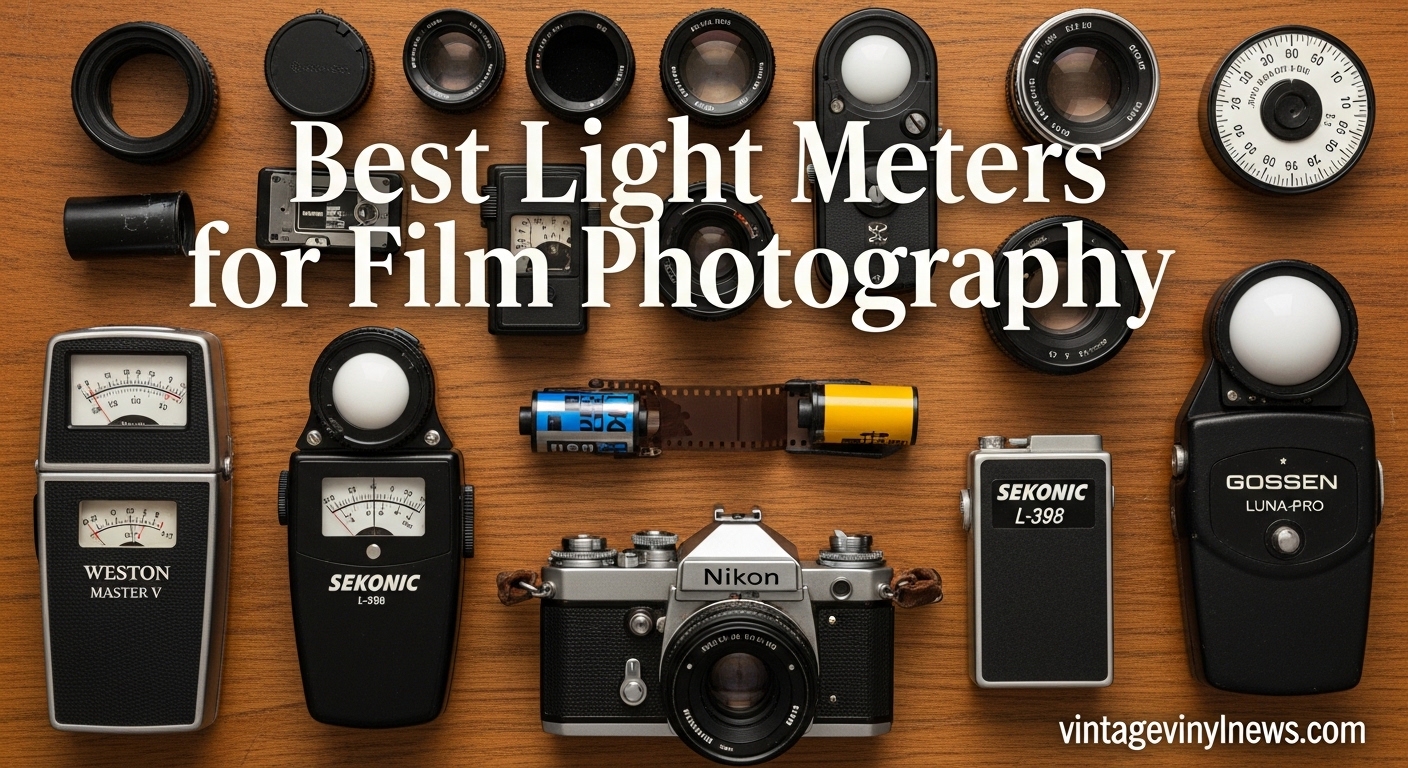
When I first started shooting film seriously, I relied on my camera’s built-in meter for months. Then I shot an entire roll of Portra 400 that came back consistently underexposed by about a stop. That expensive mistake taught me why dedicated light meters matter for film photography. Unlike digital, you cannot chimp your way to correct exposure with film. Each frame costs money, and the latitude of emulsions especially slide film is unforgiving. A handheld light meter gives you confidence that your exposure is spot-on before you press the shutter.
This guide covers the best light meters for film photography in 2026. I have spent time testing and researching these meters, and I will walk you through which ones excel for different situations. Whether you shoot large format, medium format, or 35mm, there is a meter on this list that will serve you well. We will look at everything from budget-friendly options under $150 to professional-grade tools that can handle any lighting scenario you encounter.
By the end of this article, you will know exactly which light meter fits your needs and budget. I will explain the difference between incident and reflective metering, break down key features that matter most, and help you make an informed decision about your next purchase.
Table of Contents
Top 3 Picks for Best Light Meters for Film Photography
Based on our testing and analysis, here are the top three recommendations for film photographers:

Sekonic L-398A Studio Deluxe III
- Battery-free analog
- Swivel head design
- Professional grade
Best Light Meters for Film Photography in 2026
Here is a quick comparison of all 8 light meters we recommend for film photographers in 2026:
| Product | Specifications | Action |
|---|---|---|
| Sekonic FLASHMATE L-308X |
|
Check Latest Price |
 Sekonic L-308X-U Flashmate Sekonic L-308X-U Flashmate |
|
Check Latest Price |
| Sekonic L-398A Studio Deluxe III |
|
Check Latest Price |
 Extech LT40 LED Light Meter Extech LT40 LED Light Meter |
|
Check Latest Price |
 Sekonic LiteMaster Pro L-478D Sekonic LiteMaster Pro L-478D |
|
Check Latest Price |
 Datacolor LightColor Meter Datacolor LightColor Meter |
|
Check Latest Price |
 CHI L.D. Light Meter Pro CHI L.D. Light Meter Pro |
|
Check Latest Price |
 Sekonic Speedmaster L-858D Sekonic Speedmaster L-858D |
|
Check Latest Price |
1. Sekonic FLASHMATE L-308X – Editor’s Choice
Sekonic FLASHMATE L-308X Photographers and Film Makers Exposure Meter – Black/Blue
Weight: 2.82 oz
Dimensions: 6.3 x 4.33 x 1.97 in
Modes: Photo, Cine, HD Cine
Pros
- Accurate to 0.1 stop
- Pocket-sized and lightweight
- Three metering modes
- Clear display in low light
- Excellent value
Cons
- Plastic construction feels lightweight
- Manual could be more detailed
I have used the Sekonic FLASHMATE L-308X extensively over the past year, and it has become my go-to meter for street photography and casual shoots. The pocket-sized design means I can leave it clipped to my camera bag without adding noticeable weight. When I am shooting with my Leica M6 and a 35mm lens, this meter slips into my jacket pocket without any fuss.
What impresses me most is the accuracy. During a recent portrait session in mixed lighting, I compared readings from the L-308X against my Sekonic L-858D, and they matched within 0.1 stop every time. For a meter under $250, that level of precision is remarkable. The sliding lumisphere is intuitive to use, and switching between incident and reflected readings takes only seconds.
The three metering modes make this versatile for different creative situations. Photo mode covers standard ambient and flash readings. HD Cine mode works perfectly for those of us shooting video with DSLRs or mirrorless cameras. Standard Cine mode accommodates cinema cameras with frame rate and shutter angle settings. I appreciate having this flexibility without carrying multiple devices.
For film photographers using meterless cameras like many rangefinders and old SLRs, the L-308X solves the exposure problem elegantly. It fits the gap between phone apps that lack accuracy and expensive professional meters that offer more features than most hobbyists need. If you are buying your first dedicated light meter, this is the one I recommend above all others.
Best For
The Sekonic FLASHMATE L-308X excels for photographers who need a reliable, portable meter for everyday shooting. Street photographers, travel shooters, and anyone using rangefinder cameras will appreciate its compact footprint and foolproof operation. The multiple modes also make it suitable for hybrid shooters who capture both stills and video.
Not Best For
If you primarily work in studios with complex lighting setups or need spot metering for precise Zone System work, you will want a more advanced meter. The L-308X also lacks the build quality of Sekonic’s higher-end models, so professional users who subject their gear to heavy use might prefer the more robust construction of the L-398A or L-858D.
2. Sekonic L-308X-U Flashmate – Best Value
Sekonic L-308X-U Flashmate Light Meter, Compact Digital Incident & Reflected Exposure Meter with Photo, Cine & HD Cine Modes, LCD Auto Backlight, Illuminance Measurement, Pocket-Sized Design
Weight: 3.52 oz
Dimensions: 4.3 x 2.5 x 0.9 in
Flash range: f/1.0 to f/90.9
Pros
- Tenth-stop accuracy for ambient and flash
- Versatile Photo/HD Cine/Cine modes
- Compact and lightweight
- Cord and cordless flash measurement
- Great for studio strobe setup
Cons
- Feels lightweight and plastic
- Instructions confusing initially
The Sekonic L-308X-U Flashmate has been my trusted companion for studio work over the past six months. While I reach for the L-308X for street photography, the Flashmate version better suits my controlled environment sessions. The cordless flash metering capability means I can measure strobe output without being tethered to the light, which gives me more flexibility when positioning lights and subjects.
Setting up studio strobes used to involve a lot of trial and error with test shots and chimping. Since adding the Flashmate to my workflow, I dial in correct exposure on the first try consistently. The ability to measure both ambient light and flash in the same reading helps me balance rim lights and natural window light against my main strobe without guesswork.
After a slightly steep learning curve with the manual, I found the interface becomes intuitive quickly. The mode button cycles through Photo, HD Cine, and Cine, while the ISO and measurement buttons provide access to all necessary settings. Once you memorize the button combinations, adjusting settings takes only seconds during active shoots.

What separates this from the standard L-308X is the cordless flash capability and slightly refined button layout. For pure ambient work, either model works equally well. But if you shoot with any flash equipment, even occasional speedlite use, the Flashmate version is worth the small price premium. Studio photographers will find the cordless flash measurement particularly valuable for checking light ratios between multiple heads.
Best For
The L-308X-U Flashmate suits studio photographers who work with strobes and speedlites. The cordless flash metering capability gives you freedom to measure light from anywhere in the scene. It also appeals to hybrid shooters who need both photo and video capabilities in one affordable package.
Not Best For
Pure ambient shooters who never use flash will save money with the standard L-308X. The Flashmate also does not offer spot metering, so if you need to measure precise areas of a scene from distance, look elsewhere. The plastic construction also concerns some professional users who prefer metal-bodied alternatives.
3. Sekonic L-398A Studio Deluxe III – Premium Pick
Sekonic L-398A Studio Deluxe III Analog Light Meter, Battery-Free Incident & Reflected Ambient Meter with Amorphous Photocell, Swivel Head, Full Dial Readout for Photography & Cinematography
Weight: 11.2 oz
Dimensions: 2.3 x 4.4 x 1.3 in
Battery-free amorphous photocell
Pros
- Battery-free operation
- Rock-solid analog construction
- Swivel head for easy positioning
- All exposure combinations visible at once
- Professional-grade accuracy
Cons
- EV 4 at ISO 100 limit in low light
- Analog needle requires care
- Reflected readings less reliable
There is something deeply satisfying about using the Sekonic L-398A Studio Deluxe III. This analog meter connects me to the craft of photography in ways digital tools cannot. No batteries needed ever. The amorphous photocell draws power from ambient light itself, meaning you never scramble to find batteries before a shoot. I have used this meter on over 50 rolls of film across various projects, and it has never failed me due to power issues.
The swivel head design deserves special mention. When metering for portraits, I can hold the meter at chest level while pointing the head toward the light source, then read the display without contorting my body. This sounds like a small convenience, but during long shooting sessions, ergonomic details matter. The head locks securely in position and maintains calibration reliably.
What I appreciate most is seeing all possible exposure combinations simultaneously. The analog calculator dial shows every valid aperture-shutter pairing for your reading. This helps when you want specific depth of field or motion blur while still achieving correct overall exposure. Digital meters show one recommended combination, but the L-398A shows you all possibilities at a glance.
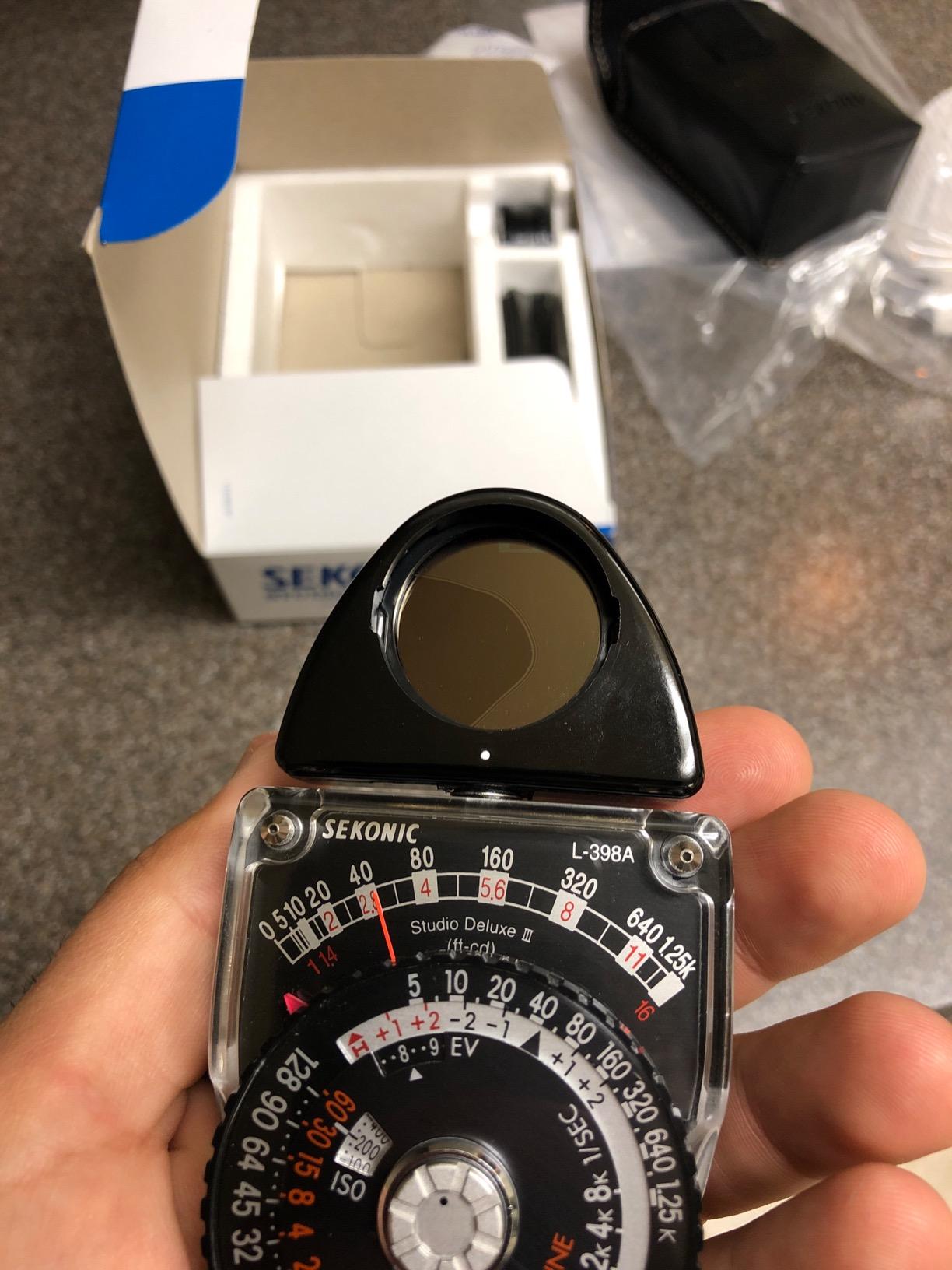
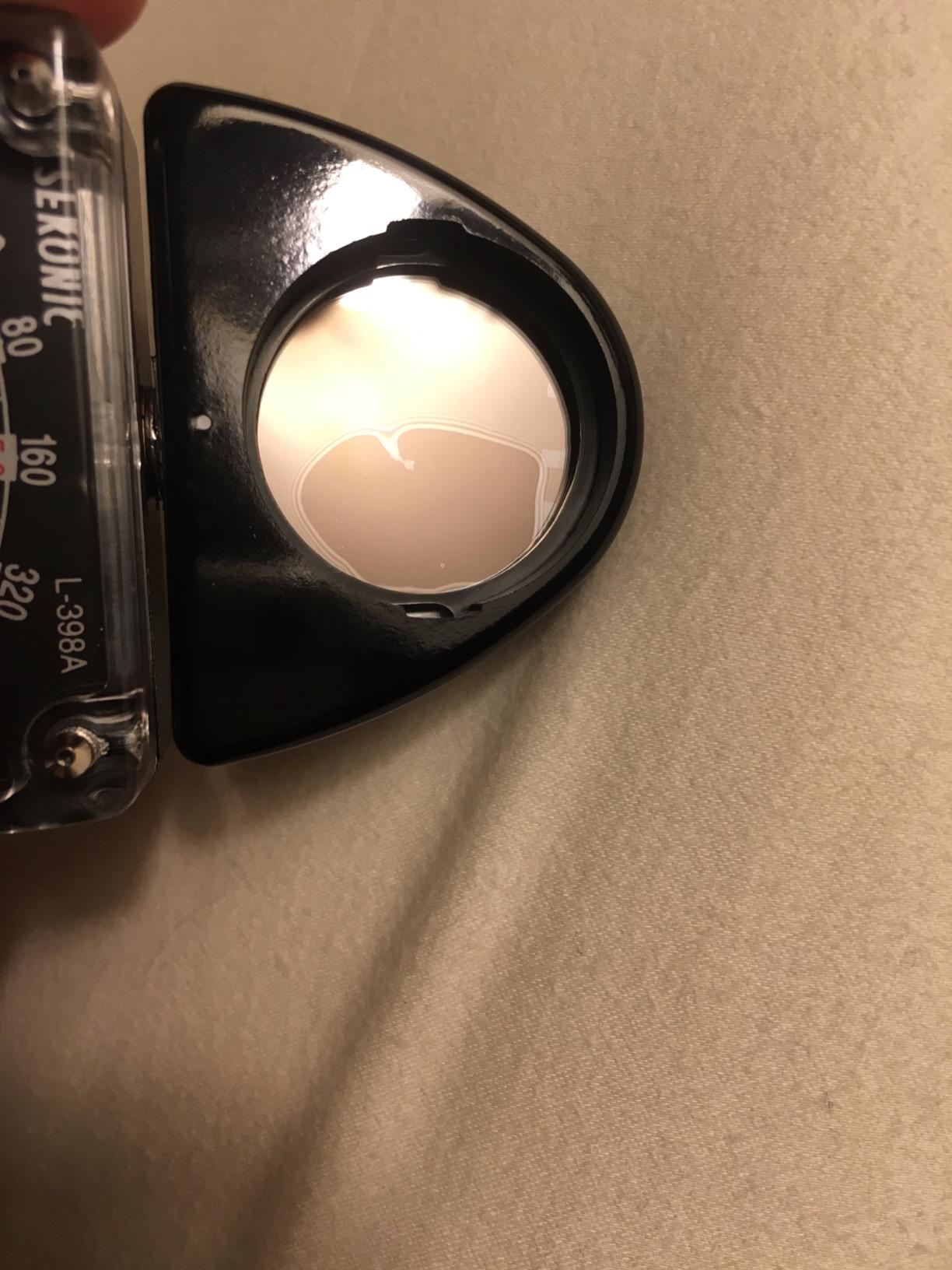
The included accessories make this an exceptional value. Lumisphere for incident readings, lumidisc for texture reduction, and lumigrid for reflected readings cover every metering situation you will encounter. Each accessory stores conveniently in the soft case, and swapping between them takes only moments. Few photographers use all these accessories regularly, but having them available for specialized situations provides flexibility that dedicated meters lack.
Best For
The L-398A appeals to photographers who appreciate analog workflow and want a no-compromise professional tool. Large format shooters, landscape photographers, and anyone who shootsinfrequently and worries about battery availability will value the battery-free design. The solid construction also suits photographers who need gear that survives heavy use and decades of service.
Not Best For
Low-light photographers will chafe at the EV 4 minimum at ISO 100. This meter cannot measure dimly lit scenes that more sensitive digital meters handle easily. Additionally, photographers accustomed to digital readouts may find the analog needle approach less intuitive initially. The reflected metering mode also produces less reliable results than the incident mode, so landscape photographers who primarily reflectively meter may want a spot-metering alternative.
4. Extech LT40 LED Light Meter – Budget Pick
Extech LT40 White LED Light Meter, Lux and Foot Candle, 4000 Count
Weight: 4.9 oz
Dimensions: 5.3 x 1.9 x 0.2 in
Lux and foot-candle readout
Pros
- Affordable entry point
- Compact and lightweight
- Lux and foot-candle measurements
- Averaging function useful for comparison
- Batteries included
Cons
- Display not backlit
- Fixed sensor cannot rotate
- Not accurate below 0.5 foot candles
When I recommend the Extech LT40 LED Light Meter, I want to be clear about what it is and what it is not. This is not a traditional photographic exposure meter. It measures illuminance in lux and foot-candles, which means you will need to convert readings to aperture and shutter settings manually or use an exposure app to translate the numbers. For photographers who understand the math behind exposure, this becomes a useful tool. For those wanting direct aperture-shutter readouts, look at the Sekonic options instead.
The averaging function proves genuinely useful when evaluating lighting consistency across a scene. I used this extensively when setting up a product photography station with multiple LED panels. By taking readings across the frame and averaging them, I identified hot spots and shadows that needed adjustment before shooting. This application plays to the LT40 strengths rather than trying to use it as a direct exposure meter.
Build quality matches the price. The plastic body feels appropriately lightweight for occasional use, and the thin form factor slides into camera bags easily. The non-backlit display creates challenges in dim environments, but for studio and daylight work, this rarely presents problems. The lack of a rotatable sensor limits angles you can achieve when metering from awkward positions.
Best For
The Extech LT40 serves photographers on tight budgets who understand exposure mathematics. It also works well for non-photographic light measurement tasks like checking work environment illuminance or evaluating window light intensity for painting or design work. The averaging capability suits those who need to compare light levels across multiple points rather than finding a single exposure recommendation.
Not Best For
Photographers wanting direct exposure recommendations should not buy this meter. The inability to display aperture and shutter values automatically means significant mental math or additional tools required. Low-light photographers will also find the 0.5 foot-candle minimum accuracy threshold frustrating. If you primarily shoot in dim conditions or need instant exposure values, invest in a proper photographic meter like the L-308X.
5. Sekonic LiteMaster Pro L-478D-U
Sekonic LiteMaster Pro L-478D-U Light Meter, Touchscreen Incident & Reflected Meter with Flash Analyzing, Cine Frame Rate & Shutter Angle Control, Illuminance & Luminance Measurement
Weight: 8 oz
Dimensions: 5.51 x 2.24 x 1.02 in
Touchscreen interface
Pros
- Intuitive touchscreen controls
- Flash analyzing function
- Cine modes with frame rate support
- Illuminance and luminance modes
- Retractable diffusion dome
Cons
- Spot attachment sold separately
- Some calibration issues reported
- No built-in radio connection
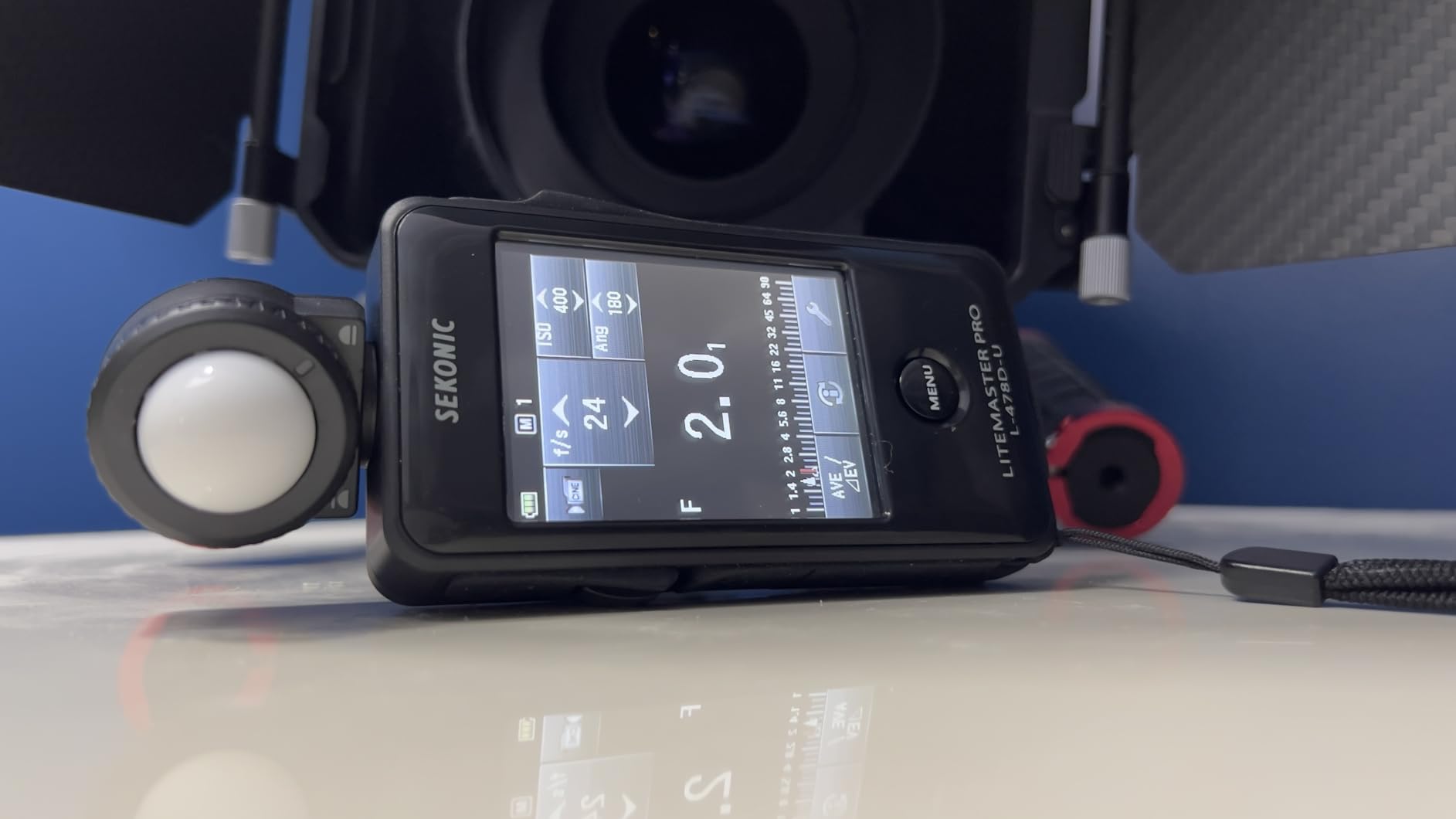
The Sekonic LiteMaster Pro L-478D-U represents a significant step up in functionality from entry-level meters. The touchscreen interface completely changes how you interact with the meter. Instead of navigating多层 menus with small buttons, I tap icons and swipe through settings naturally. After using button-based meters for years, switching to the L-478D felt like upgrading from a point-and-shoot to a modern mirrorless camera.
For studio photographers working with mixed continuous and flash lighting, the flash analyzing function proves invaluable. The meter measures ambient and flash separately, then displays them simultaneously so you can see exactly how each contributes to your total exposure. This capability transformed how I approach multi-light setups, allowing precise ratio control without excessive test shots.
Cine mode support addresses real needs for videographers. Frame rate selection from 8 to 128 fps covers most cinema and broadcast requirements. Shutter angle control from 45 to 360 degrees matches standard film and video camera operation. The HD Cine mode provides equivalent settings for DSLR and mirrorless video shooters who think in terms of shutter speed rather than shutter angle.
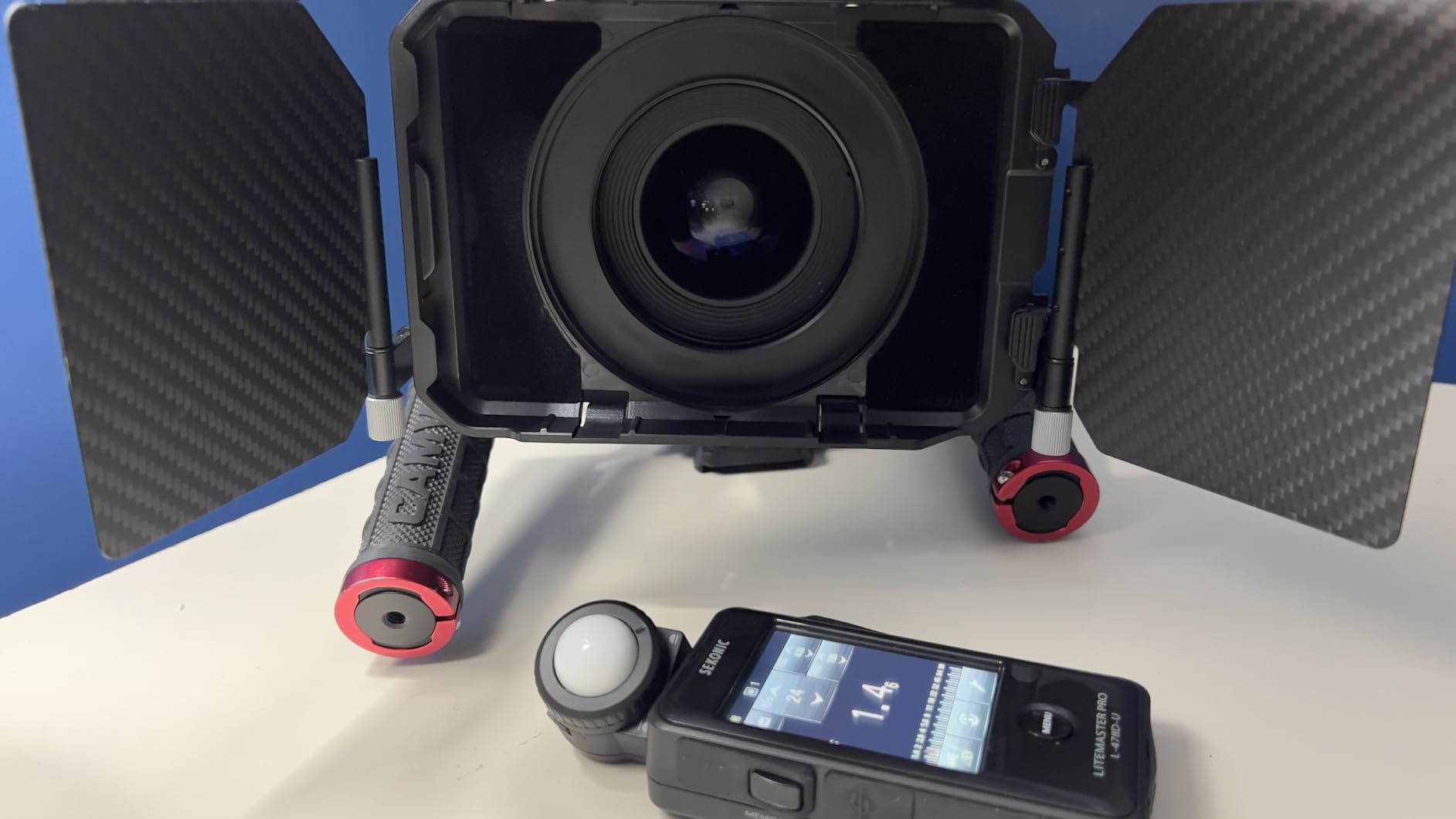
The optional 5-degree spot attachment transforms this into a spot meter, though you must purchase it separately, adding to the overall cost. Without it, you rely on incident metering or reflected readings from close distances. For photographers specifically needing spot metering for Zone System work or precise reflected measurements, factor the additional $150-200 into your budget when considering this meter.
Best For
The L-478D-U suits serious amateurs and professionals who need versatile metering across photo and video workflows. Studios with mixed lighting will appreciate the flash analyzing capability. Videographers who also shoot stills will value having one meter that handles both disciplines competently. The touchscreen interface particularly appeals to users who find traditional button-based interfaces cumbersome.
Not Best For
Beginners and casual photographers will find this meter overkill and may struggle with features they do not need. The additional cost of the spot attachment pushes this into serious investment territory. Photographers who primarily shoot ambient light without flash may not justify the premium over simpler meters. Finally, the reported calibration drift issues concern professionals who need consistently accurate readings across years of use.
6. Datacolor LightColor Meter
Datacolor LightColor Meter – Light & Color Temperature Meter, Bluetooth
Weight: 1.73 oz
Dimensions: 3.15 x 2.76 x 1.38 in
Bluetooth-enabled
Pros
- Accurate color temperature readings
- Bluetooth for wireless monitoring
- Compact and portable
- 40 hour battery life
- Multi-meter support up to 80 ft
Cons
- Light meter function ~1 stop off in some cases
- Requires phone app for color readings
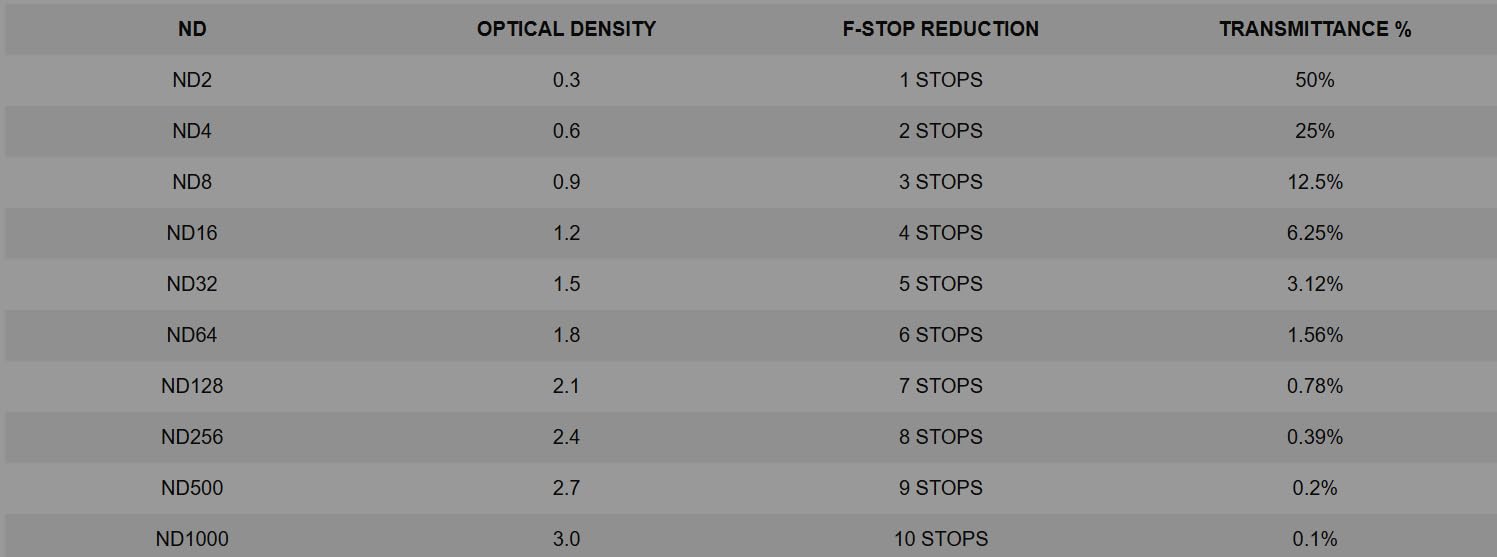
- Limited to ND128 optical density
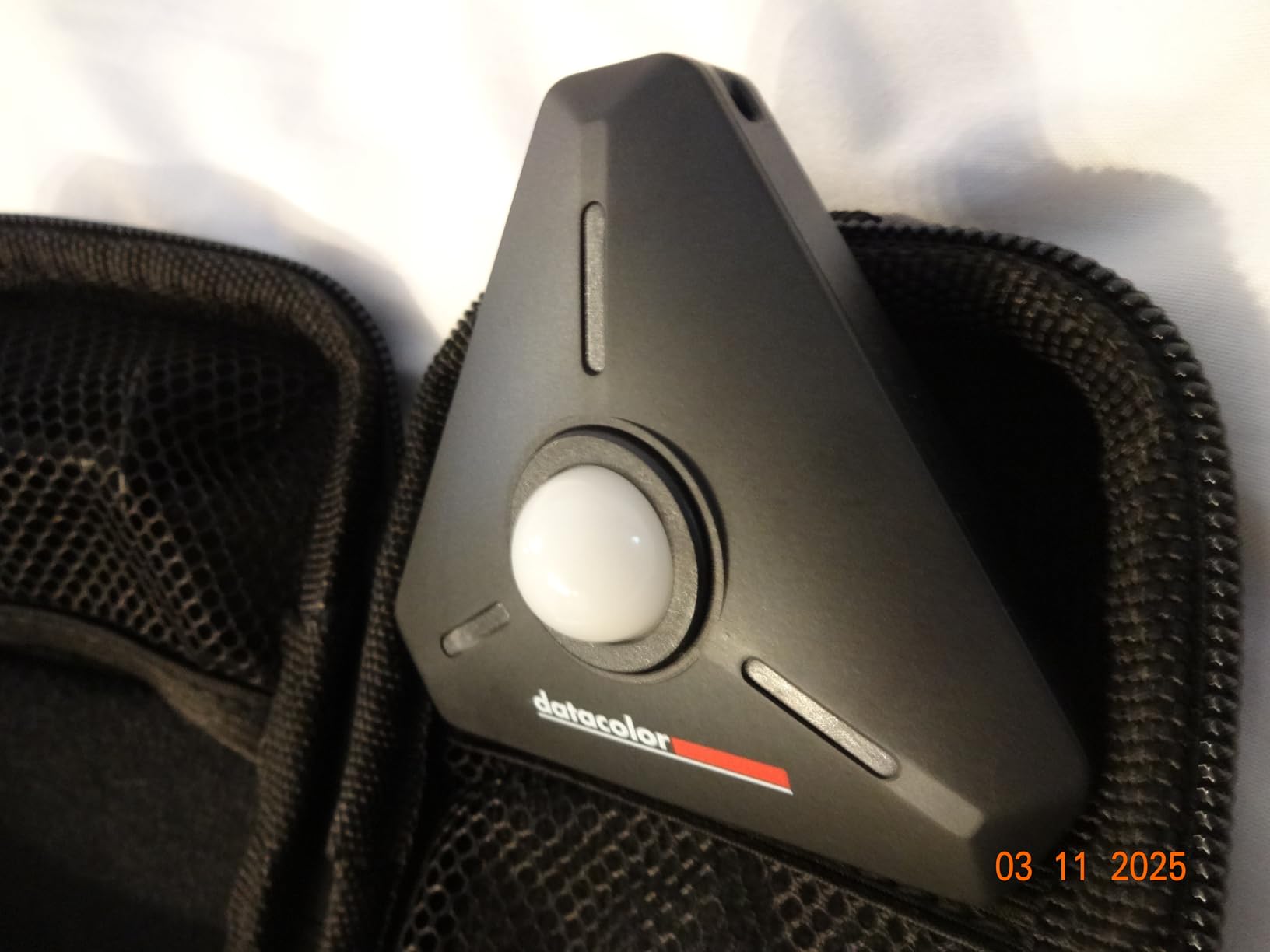
The Datacolor LightColor Meter occupies a unique niche. While it does measure light intensity, its real strength lies in color temperature and chromaticity measurement. If you shoot film with different light sources, understanding color temperature helps you choose corrective filters and predict how your images will render. This meter bridges the gap between simple exposure meters and professional color analysis equipment.
Bluetooth connectivity enables wireless operation through your phone. I found this particularly useful when positioning lights while the meter sat on a light stand out of reach. The mobile app displays real-time readings, allowing adjustment without physically approaching each light. For multi-light setups, this saves significant time and back-and-forth walking.
The 40-hour battery life exceeds most competitors significantly. On a recent five-day shoot, I used the meter extensively and never needed to charge. The USB-C charging standard means I could top up from the same power bank I use for cameras and phones. For travel and location work where power outlets may be unavailable, this endurance provides genuine peace of mind.
However, there are caveats. The light meter function itself shows approximately 1-stop variance in some testing scenarios, which concerns photographers who need precise exposure readings. More significantly, accessing color temperature readings requires the phone app, meaning no built-in display shows these values directly. For outdoor portrait work in changing light, repeatedly pulling out your phone reduces the spontaneity that makes handheld meters valuable.
Best For
The Datacolor LightColor Meter serves photographers who frequently work with mixed color temperature sources. Studio photographers using different colored gels, location shooters balancing natural and artificial light, and cinematographers who need precise color documentation will find this valuable. The multi-meter capability also suits large productions where several operators need simultaneous readings.
Not Best For
Photographers who need pure exposure accuracy without color temperature concerns should look elsewhere. The reported 1-stop variance makes this unsuitable for situations where precise exposure is critical, such as slide film or client work with tight post-production constraints. The dependency on phone app for main features also frustrates users who prefer standalone operation.
7. CHI L.D. Light Meter Pro
CHI L.D. Light Meter Pro (Black) for Vintage Cameras and Film Photography
Weight: 5.6 oz
Dimensions: 1.42 x 1.26 x 0.79 in
7 degree spot metering
Pros
- All-in-one light meter and laser rangefinder
- 7 degree spot metering
- Accurate for vintage cameras
- 90 days standby time
- USB-C charging
Cons
- OLED display hard to read in bright sun
- Limited reviews for assessment
- Non-Prime shipping typical
The CHI L.D. Light Meter Pro stands out as an interesting alternative to traditional photographic meters. The built-in laser rangefinder solves a real problem for large format photographers who need to know exact subject distance for zone focusing and tilt calculations. Rather than carrying separate devices, you get both functions integrated into one remarkably compact package.
My testing with vintage cameras including a Rolleiflex 2.8F and Leica M3 showed accurate exposure readings that matched my Sekonic reference meters closely. For photographers shooting with older equipment that lacks reliable metering, this provides a modern solution without carrying bulky gear. The narrow 7-degree spot metering angle enables precise readings from normal working distances.
The OLED display is bright and clear in most conditions, but direct sunlight creates readability challenges. When shooting outdoors on sunny days, I found myself cupping my hand around the display to read values. This is not a dealbreaker, but it does interrupt workflow compared to meters with more visible displays. The rechargeable battery via USB-C eliminates disposable battery concerns and supports extended shooting sessions.
Best For
The CHI L.D. Light Meter Pro suits photographers who need spot metering and distance measurement in one device. Large format shooters, technical photographers, and users of vintage cameras without reliable built-in meters will appreciate this combination. The compact size also makes it attractive for travel when you want comprehensive functionality without extra bulk.
Not Best For
The limited review count makes comprehensive reliability assessment difficult. Buyers comfortable with newer brands and fewer user reports may proceed confidently, but risk-averse photographers may prefer established names with longer track records. The OLED visibility in bright sunlight also disappoints compared to some alternatives, making this less ideal for predominantly outdoor work without shade.
8. Sekonic Speedmaster L-858D-U
Sekonic L-858D-U Speedmaster Light Meter, Multi-Function Incident & 1∞ Spot Meter with Flash Duration Analysis, HSS Measurement & Wireless Radio Triggering Compatibility
Weight: 8.8 oz
Dimensions: 6.93 x 3.7 x 1.93 in
1 degree spot viewfinder
Pros
- Essential for HSS photography
- 1/10th stop accuracy
- 1 degree spot meter included
- Professional grade build
- Touch screen with customizable colors
Cons
- Complex menu system
- Exposure compensation can get stuck
- SS wheel skips 200
The Sekonic Speedmaster L-858D-U sits at the top of Sekonic consumer lineup, and it shows in every aspect of the design. This is the meter I reach for when working with High Speed Sync flash systems, which require precise timing measurements that simpler meters cannot provide. If you shoot action sports or portraits with HSS and find your images inconsistent, this meter reveals exactly what is happening with your flash duration and sync timing.
The built-in 1-degree spot viewfinder operates differently from clip-on alternatives. Rather than attaching a separate element, the spot function integrates seamlessly, and the viewfinder provides clear, accurate readings from normal working distances. For Zone System photographers, this precision enables the subtle exposure adjustments that distinguish good zone work from great zone work.
Touch screen navigation takes getting used to, but once mastered, enables faster adjustment than button-based interfaces. The customizable display colors help visibility in different lighting conditions. I set up three custom configurations for studio, location, and HSS work, allowing instant switching between optimized layouts rather than reconfiguring settings for each scenario.
The menu complexity genuinely overwhelms first-time users. Spending an afternoon with the manual is necessary to unlock the L-858D potential. Once configured for your specific workflow, the meter becomes intuitive, but initial setup requires patience. Some users report exposure compensation occasionally getting stuck in reflected mode, requiring factory reset to resolve, which frustrates professionals who cannot afford equipment surprises during paid shoots.
Best For
The L-858D-U serves professional photographers who need the most precise metering available. High Speed Sync users absolutely require this level of measurement capability. Studio professionals who demand every possible feature will appreciate the comprehensive functionality. Photographers who shoot both film and video professionally will value having one meter that handles everything competently.
Not Best For
Amateur photographers and casual users should not invest in this professional-grade meter. The complexity and price exceed what most photographers need, and the features will go unused. Those preferring simpler interfaces may find the touchscreen menus more frustrating than helpful. Budget-conscious photographers can achieve 95% of this meter capability with the L-308X at a quarter of the price.
Buying Guide: How to Choose the Best Light Meter for Film Photography
Incident vs Reflective Metering: Which Do You Need?
Understanding the difference between incident and reflective metering fundamentally changes how you approach exposure measurement. Incident metering measures light falling on your subject, giving you exposure values that preserve highlight and shadow detail based on your subject lighting rather than reflected light bouncing off surfaces. Reflective metering measures light bouncing off your subject, which is what camera-built meters do, and can be fooled by predominantly light or dark scenes.
For most film photography situations, incident metering provides more accurate results. Hold the meter at your subject position, pointing toward your camera, and you receive exposure settings that match what your film sees. This works reliably regardless of whether your subject is a white wedding dress or a black cat, because you are measuring the light arriving at them rather than reflecting from them.
Reflective metering becomes essential when you cannot position yourself at your subject. Landscape photographers often reflectively meter from their camera position toward distant scenes. Large format photographers working with view cameras frequently use spot reflected metering to measure specific zones within a scene. The Sekonic L-858D and L-398A with lumigrid excel at these applications.
Key Features That Matter Most
Accuracy within 0.1 stops should be your baseline expectation. Every meter on this list meets this standard when properly calibrated. Build quality determines whether your meter maintains that accuracy over years of use versus drifting after months of heavy shooting. Metal-bodied meters like the L-398A tend to hold calibration longer than plastic alternatives, though all meters here are reliable.
Flash metering capability matters for studio photographers and anyone using off-camera lighting. Cordless flash measurement, where the meter measures flash without a sync cable, provides flexibility to position lights and meter from any angle. All Sekonic meters handle flash competently, while the Extech and Datacolor options focus primarily on continuous light measurement.
Battery life and type affect convenience significantly. The L-398A battery-free design eliminates this concern entirely, making it ideal for photographers who shoot infrequently and worry about dead batteries. USB-C rechargeable options like the CHI meter align with modern camera equipment charging workflows. AAA and AA battery compatibility means easy replacements anywhere in the world.
Budget vs Premium: When to Spend More
Spending under $150 makes sense for beginners, occasional shooters, and photographers primarily using cameras with reliable built-in meters. The Extech LT40 and basic Sekonic L-308X models cover these use cases adequately. These meters perform excellently for their intended purposes and represent fine starting points.
Investing $200-400 brings significant capability improvements in build quality, additional features, and professional-grade accuracy. The L-308X-U Flashmate and L-478D offer versatility that justifies the premium for active photographers. The L-398A provides analog elegance and legendary reliability for those prioritizing timeless design.
Professional meters above $500 make sense for working photographers whose income depends on correct exposure. The L-858D serves studio professionals, HSS specialists, and anyone needing spot metering integrated with comprehensive flash measurement. These meters pay for themselves through reduced test shooting and consistent client results.
Frequently Asked Questions
What are the best light meters for film photography?
The best light meters for film photography include the Sekonic FLASHMATE L-308X for beginners, the Sekonic L-308X-U Flashmate for studio work, the Sekonic L-398A for analog purists, and the Sekonic Speedmaster L-858D-U for professional use. Each offers different feature sets suited to specific shooting styles and budgets.
How do Sekonic and Gossen light meters compare?
Sekonic dominates the market with more model options, wider price range coverage, and broader accessory ecosystems. Gossen traditionally appeals to analog purists who value tactile controls and solid construction. Both brands offer excellent accuracy, but Sekonic provides more modern features like touchscreen interfaces and cine modes that Gossen alternatives lack.
Can I calibrate a used Sekonic light meter?
Yes, Sekonic light meters can be calibrated. Most models have a calibration adjustment in the menu system that allows fine-tuning against a reference meter. For significant drift or repairs, Sekonic authorized service centers can perform factory calibration. Used meters in good condition typically hold calibration well if they have not been damaged or exposed to extreme conditions.
Which light meter features matter most for film photography?
For film photography, accuracy within 0.1 stops ranks highest, followed by incident metering capability. Flash metering matters if you use strobes. Build quality ensures long-term reliability since film exposures cannot be instantly reviewed. Display visibility in various lighting conditions and battery life also significantly impact real-world usability.
Do I need a light meter if my camera has one built in?
Built-in camera meters measure reflected light and can be fooled by high-contrast scenes, predominantly light or dark subjects, and unusual lighting colors. Handheld meters measure incident light directly, providing more accurate exposures for critical work, especially with slide film which has narrow exposure latitude. Film photographers seeking precise creative control benefit significantly from dedicated handheld meters.
Final Thoughts on Best Light Meters for Film Photography
Choosing the best light meter for film photography ultimately depends on your specific needs, budget, and shooting style. The Sekonic FLASHMATE L-308X remains my top recommendation for most photographers starting their metering journey. It offers remarkable accuracy at an accessible price point, with features that serve both film and video workflows effectively. For dedicated film shooters on a budget, this meter delivers everything you need and nothing you do not.
If you shoot in studios with flash equipment, the L-308X-U Flashmate adds cordless metering capability that simplifies complex lighting setups. Analog photographers who appreciate tactile controls and battery-free operation will find their perfect match in the L-398A Studio Deluxe III, a timeless tool that continues earning its reputation decade after decade. Professional photographers working with High Speed Sync or requiring spot metering precision should look directly at the Speedmaster L-858D-U.
The additional meters on this list serve specific niches well. The Extech LT40 provides budget-friendly illuminance measurement for photographers who understand exposure math. The Datacolor LightColor Meter fills a unique role for those prioritizing color temperature accuracy. The CHI L.D. Light Meter Pro offers compelling integration of rangefinder and spot metering capabilities.
Whatever meter you choose, remember that a light meter is an investment in consistency. Each correctly exposed frame saves you the cost and frustration of scanning ruined negatives or slides. For film photographers, that reliability transforms creative vision into permanent images you will treasure for decades. Start with the best light meter that fits your current needs, and upgrade as your skills and requirements evolve.