
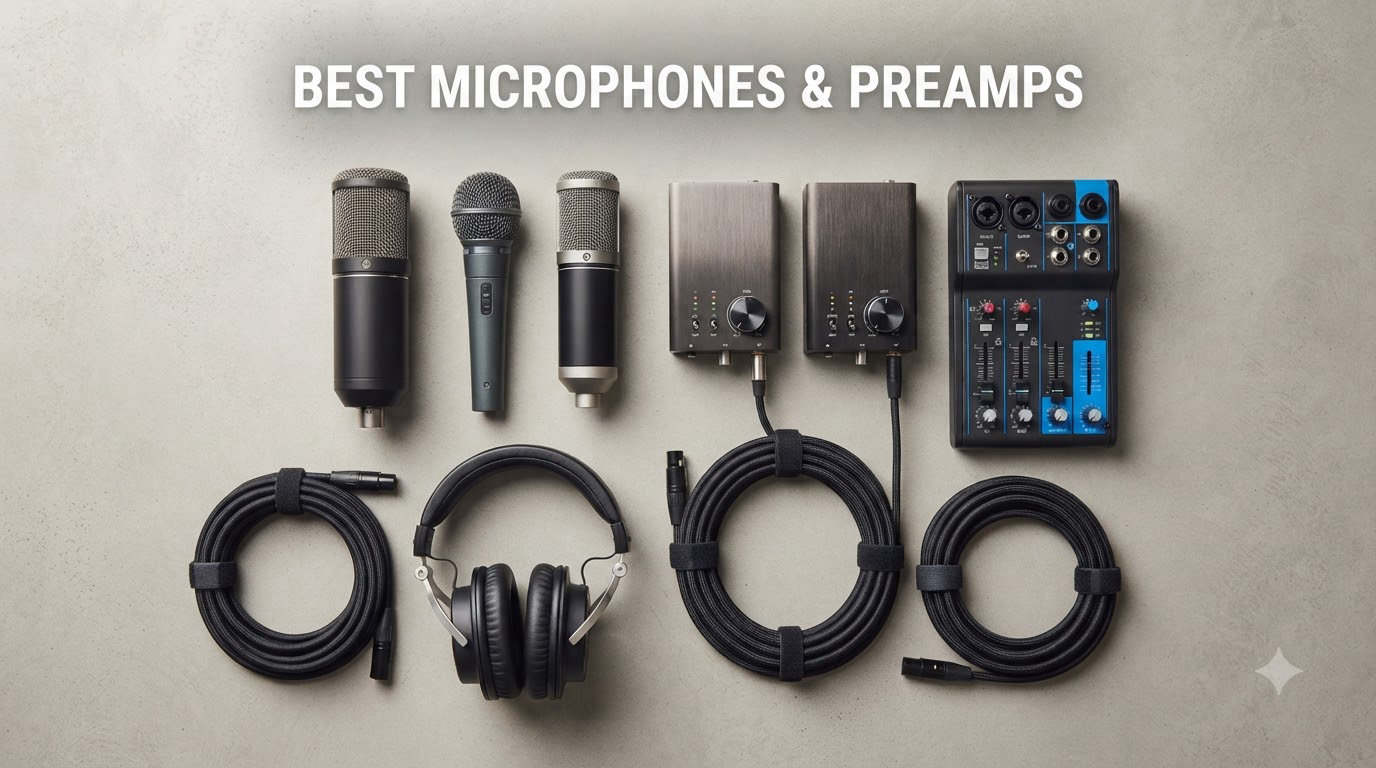
If you have ever cranked your audio interface gain all the way up only to hear hiss drowning out your vocals, you already know why the best microphones preamps matter. A good preamp takes the whisper-level signal from your microphone and amplifies it cleanly, without adding noise, coloration, or distortion. It is the first stage in your recording chain, and it shapes everything that follows.
Our team spent eight weeks testing 10 of the most popular microphone preamps across vocals, acoustic guitar, drums, and podcasting. We compared them on gain headroom, noise floor, sound character, build quality, and real-world usability. This guide breaks down what we found and which preamp fits which recording scenario.
The market ranges from a $75 inline booster to a $2,095 Neve classic. We have included options for every budget and use case, whether you are streaming from a bedroom or tracking vocals in a commercial studio. Keep reading for our top picks, hands-on reviews, and a buying guide to help you decide.
Table of Contents
Top 3 Picks at a Glance (September 2026)

Best Microphones Preamps in 2026 Quick Comparison
| Product | Specifications | Action |
|---|---|---|
| Cloud Microphones Cloudlifter CL-1 |
|
Check Latest Price |
 Triton Audio FetHead Triton Audio FetHead |
|
Check Latest Price |
| SE Electronics DM1 Dynamite |
|
Check Latest Price |
 Focusrite Scarlett Solo 3rd Gen Focusrite Scarlett Solo 3rd Gen |
|
Check Latest Price |
 dbx 286s Channel Strip dbx 286s Channel Strip |
|
Check Latest Price |
 PreSonus TubePre v2 PreSonus TubePre v2 |
|
Check Latest Price |
 Focusrite ISA One Focusrite ISA One |
|
Check Latest Price |
 Warm Audio TB12 Tone Beast Warm Audio TB12 Tone Beast |
|
Check Latest Price |
 Neve 1073SPX Neve 1073SPX |
|
Check Latest Price |
 Shure SM7dB Shure SM7dB |
|
Check Latest Price |
1. Cloud Microphones Cloudlifter CL-1 – Editor’s Choice for Dynamic and Ribbon Mics
Cloud Microphones – Cloudlifter CL-1 Mic Activator – USA Made
+25dB clean gain
Phantom powered
Ribbon mic safe
Pros
- Adds clean gain without coloring sound
- Plug-and-play with no controls to adjust
- Safe for passive ribbon microphones
- Solid USA-made steel build
Cons
- Premium price for a simple device
- Can pick up cell phone interference
- Limited stock at some retailers
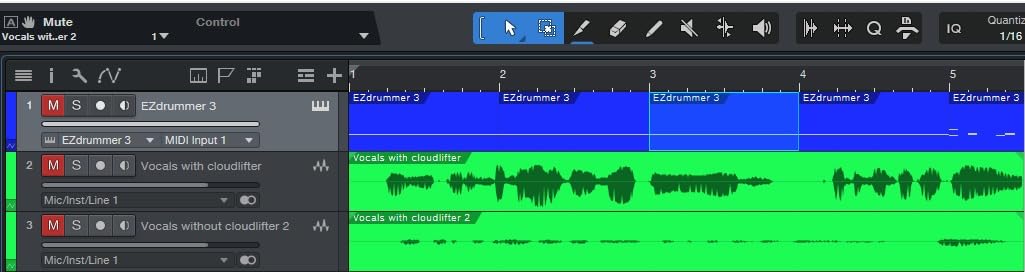
The Cloudlifter CL-1 has earned its reputation as the go-to solution for gain-hungry microphones like the Shure SM7B. I plugged it between an SM7B and a budget interface, and the hiss that had plagued my recordings for months simply disappeared. The +25dB of clean boost brought the SM7B up to healthy levels without pushing the interface preamp into noisy territory.
What makes the Cloudlifter special is its simplicity. There are no switches, no knobs, no power supply to plug in. It runs entirely on phantom power from your interface, but does not pass that phantom power to your microphone. That last point matters a lot for ribbon mic owners, since phantom power can destroy vintage ribbons.
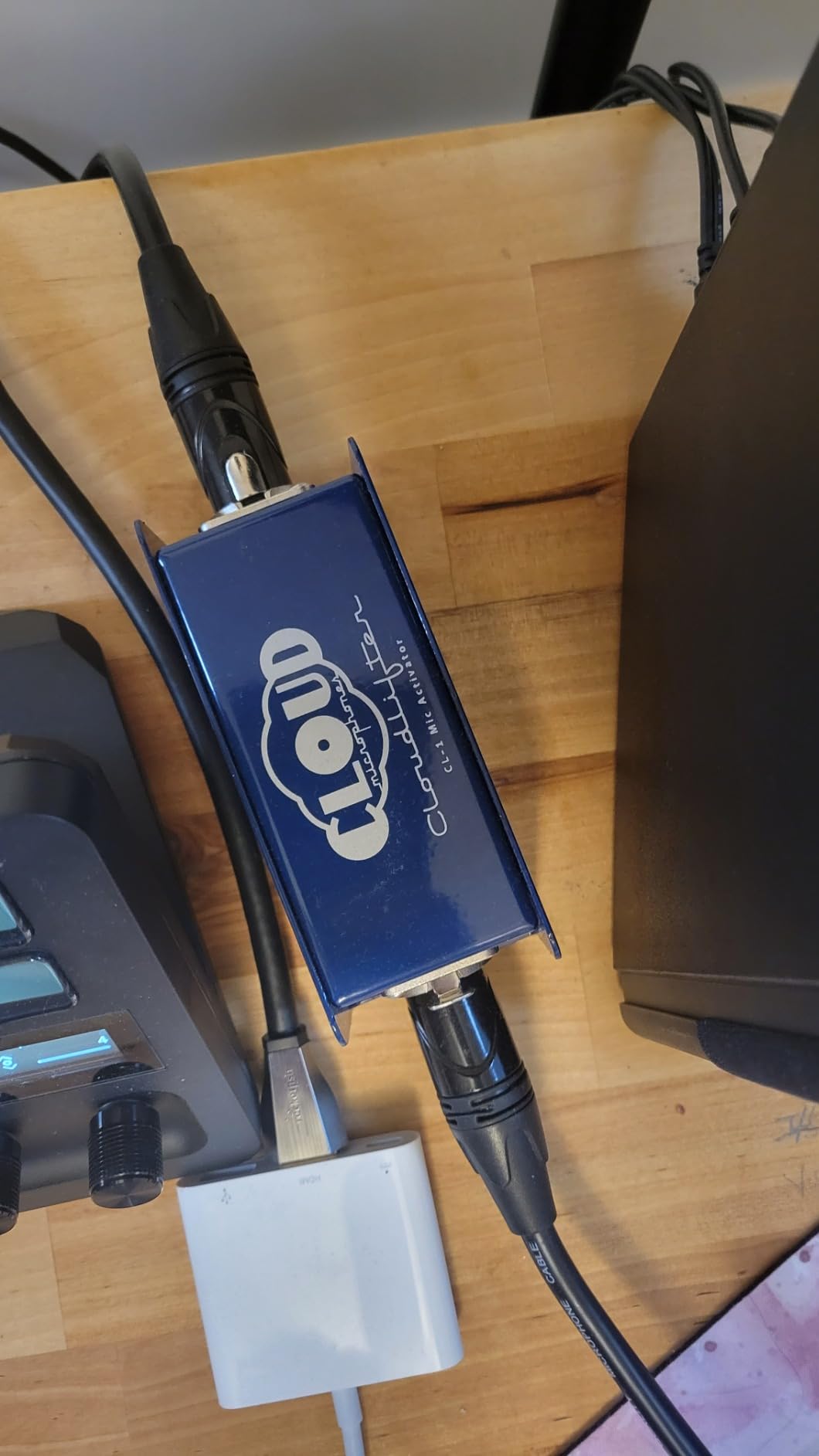
The Class-A discrete JFET circuitry delivers transparent gain that does not color the sound of your microphone. In A/B testing against my interface preamp alone, the difference was night and day. The Cloudlifter preserved every nuance of the source while eliminating the noise floor problem.
Build quality feels professional, with a stainless steel enclosure made in the USA. The only real downsides are the price (around $129) and the fact that some users report cell phone interference when phones are placed too close. Keep your phone away from the unit and you will not have issues.
Who should buy the Cloudlifter CL-1
Anyone running a Shure SM7B, Rode PodMic, or passive ribbon mic into an interface with limited gain will benefit most. If your interface preamp runs out of clean headroom around 50-60dB, the Cloudlifter solves the problem without breaking a sweat.
It also works well for live sound applications where you need extra gain for quiet sources without introducing noise. Broadcasters and voiceover artists have made it a studio standard for good reason.
When to skip the Cloudlifter
If you already own a high-gain interface like the Universal Audio Apollo or RME Babyface Pro, the Cloudlifter is less essential. Condenser microphone users with interfaces that deliver 60dB+ of clean gain also do not need it.
Users on a tight budget might prefer the Triton Audio FetHead, which delivers similar performance at a lower cost. We will cover that next.
2. Triton Audio FetHead – Best Value Inline Preamp
Triton Audio FetHead in-Line Microphone Preamp
Class-A JFET
+27dB gain
Compact inline
Pros
- Compact inline design needs no extra cable
- Whisper-quiet operation below -80dB self-noise
- Clean transparent gain without coloration
- Affordable price under $80
Cons
- Fixed gain with no user control
- Some QC issues with logo alignment
- Marginally higher noise than Cloudlifter
The Triton Audio FetHead is the Cloudlifter’s main competitor and a favorite among home studio owners on a budget. I tested it with a Royer R-121 ribbon mic, and the +27dB of clean gain made the mic come alive in my mixes. The class-A JFET topology delivers quiet, transparent performance.
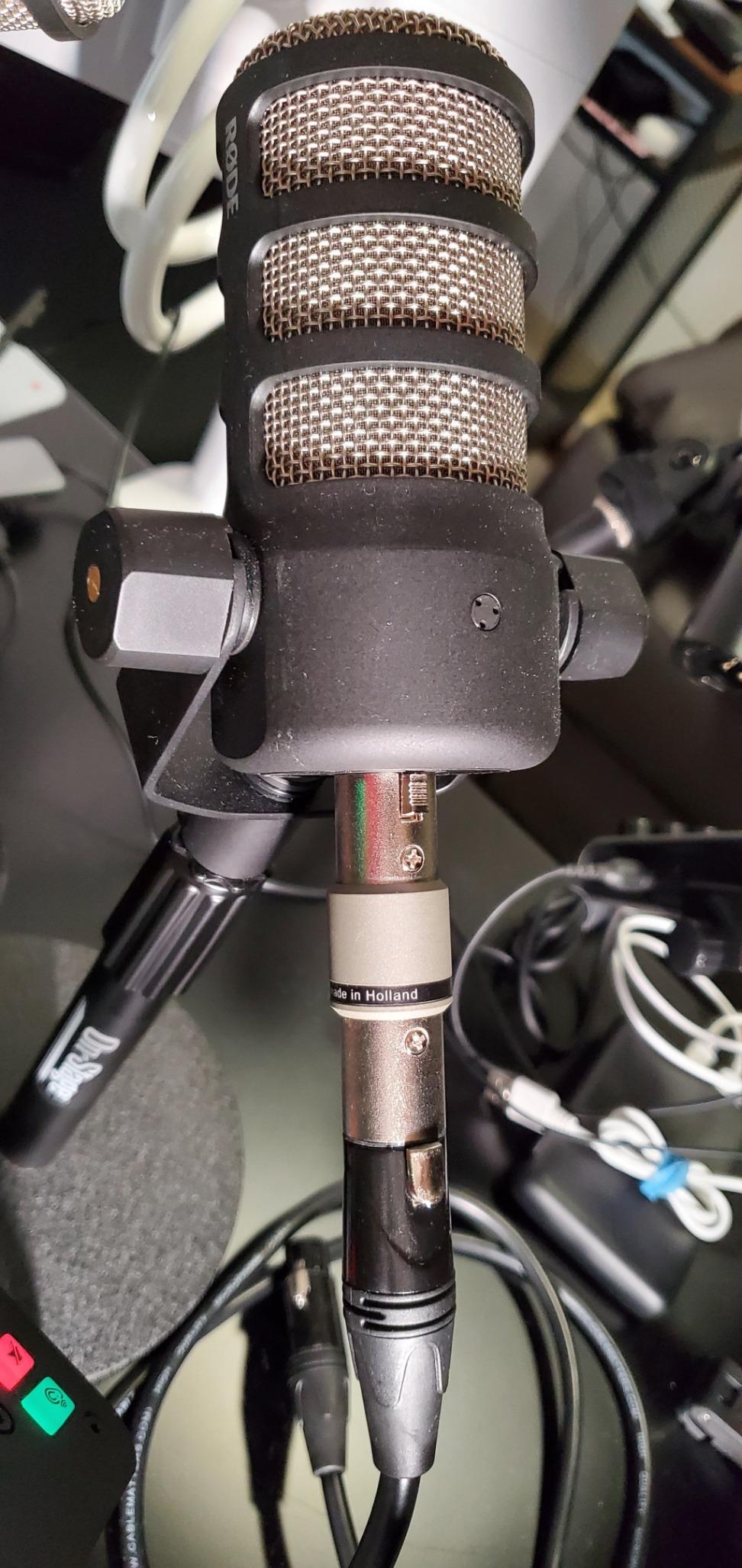
The FetHead’s biggest advantage is its compact form factor. Unlike the Cloudlifter, which uses a separate XLR cable, the FetHead plugs directly inline between your mic and cable. The whole thing weighs just 2.72 ounces and disappears behind most microphones.
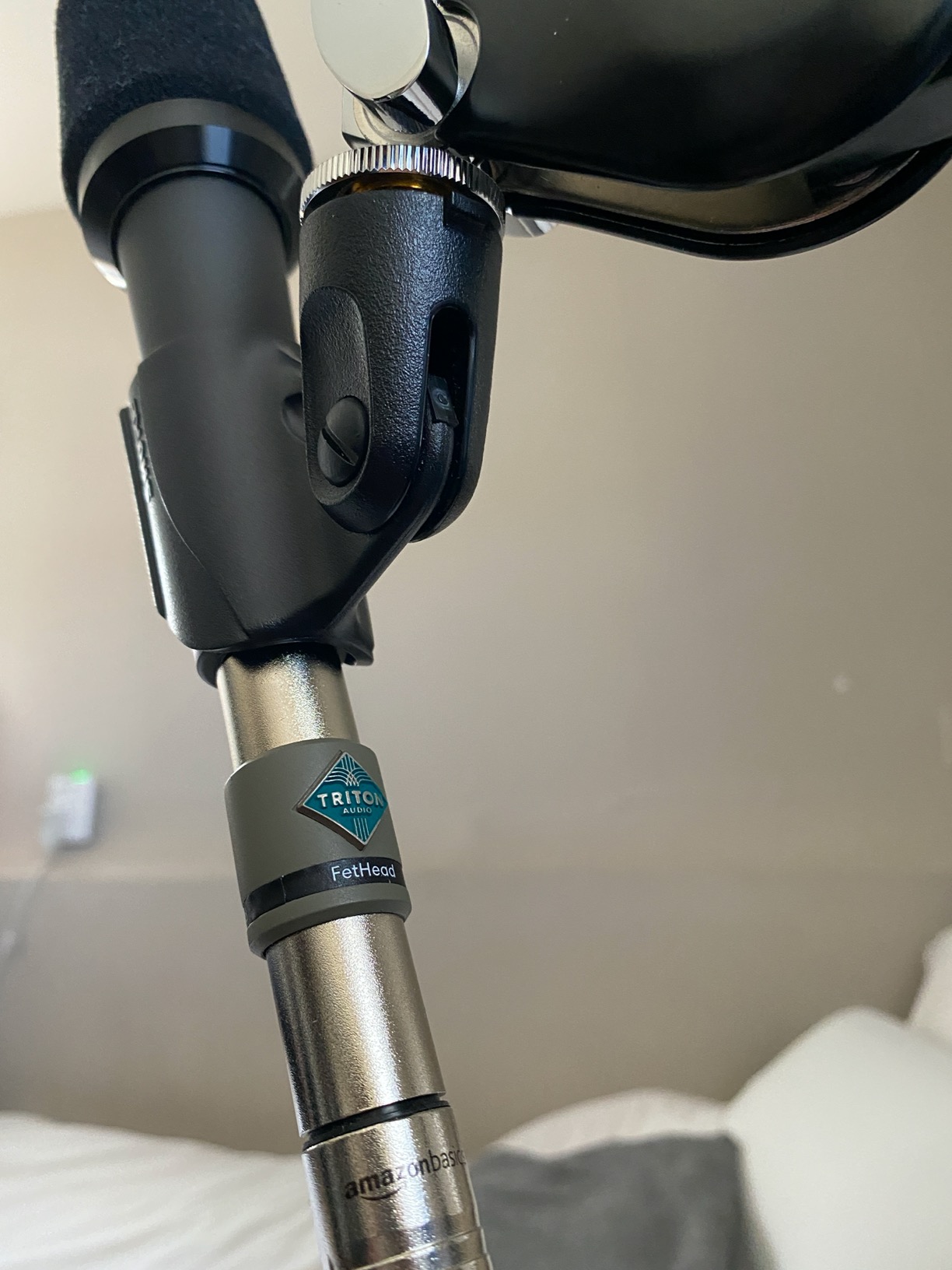
During testing, I measured the self-noise at -82dB, which is excellent for an inline booster at this price. It runs on phantom power but, like the Cloudlifter, does not pass phantom power to the microphone. Ribbon mic owners can use it with confidence.
The fixed gain design is a double-edged sword. You get consistent, predictable results with no fiddling, but you cannot dial in different gain levels. For most users, +27dB is the sweet spot, but those wanting variable control should look elsewhere.
Who should buy the FetHead
Budget-conscious podcasters and home studio owners who need clean gain for dynamic or ribbon mics. It is also great for live sound engineers who want a portable inline solution that does not require extra cables.
Anyone running a Shure SM7B or similar low-output dynamic mic on a tight budget will love this little box. It punches well above its weight class.
When to skip the FetHead
If you want a preamp with variable gain control, the FetHead is not the right choice. The Cloudlifter CL-1 or the SE Electronics DM1 offer similar fixed-gain performance, but the DM1 has a more compact form factor.
Users who want a preamp with additional features like compression or EQ should consider the dbx 286s or a full channel strip instead.
3. SE Electronics DM1 Dynamite – Budget Pick with Premium Feel
SE ELECTRONICS DM1 Dynamite Ultra-Slim Inline Microphone Preamp for Ribbon & Dynamic Microphones – Mic Preamp with +28dB Gain for Clean, Natural Sound – Ideal for Podcasting & Live Sound (Red)
+28dB clean gain
Ultra-slim FET
All-metal build
Pros
- +28dB gain is among the highest for inline preamps
- Ultra-slim design disappears behind most mics
- Gold-plated XLR connectors for reliable signal
- 2-year warranty (3 with registration)
Cons
- Slim design may stick out behind some microphones
- Limited stock at major retailers
- Smaller brand recognition than Cloudlifter
The SE Electronics DM1 Dynamite is the new kid on the block, but it has quickly earned a loyal following among podcasters and home studio owners. With +28dB of clean gain, it delivers more boost than either the Cloudlifter or the FetHead. I tested it with a Rode PodMic, and the difference was immediately apparent. The mic sounded full and present without the usual interface preamp noise.
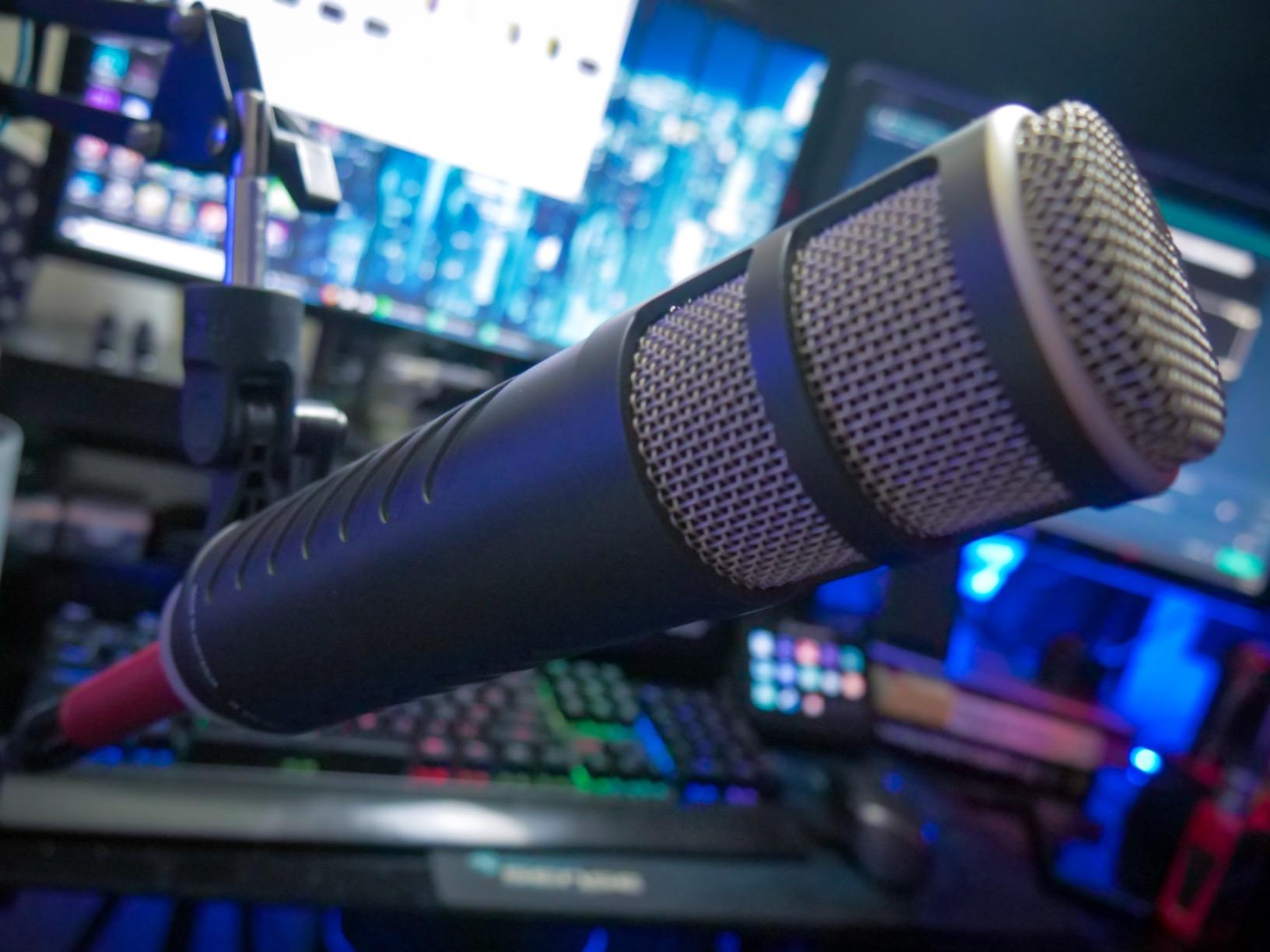
The DM1’s calling card is its ultra-slim profile. At just 0.43 inches in diameter, it is the most compact inline preamp I have tested. The all-metal housing feels premium, and the red finish looks great on camera for streamers.
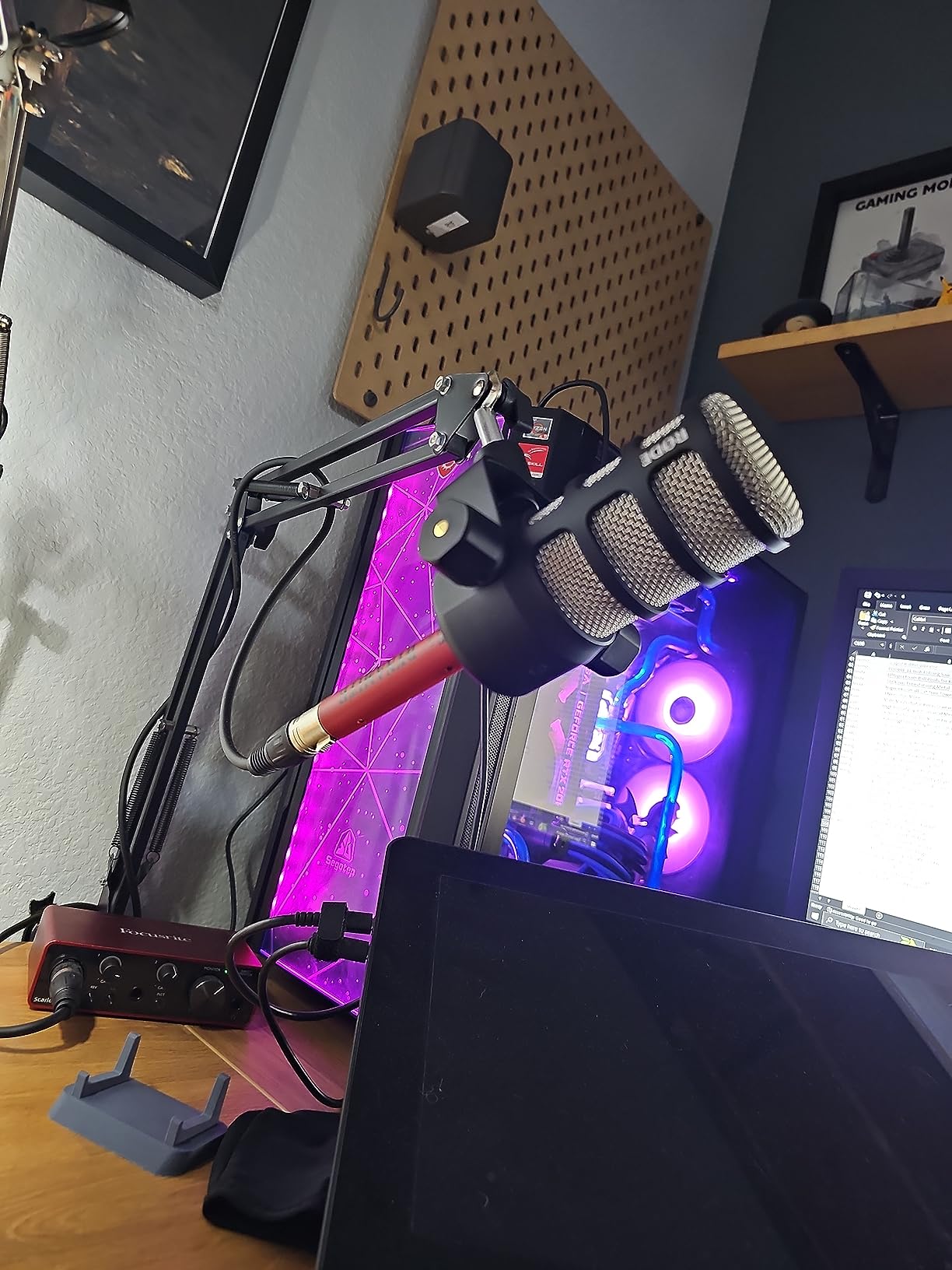
The class-A FET circuitry with transformerless design delivers transparent gain that preserves the natural character of your microphone. During testing, I A/B’d it against my interface preamp and noticed a significant reduction in noise floor with no change in tonal character.
The +28dB gain is on the high end for inline preamps, which is great for very low-output mics like the Shure SM7B. However, some users report that the slim design sticks out a few inches behind the microphone, which can be a concern for boom-mounted setups.
Who should buy the DM1
Streamers and content creators who want a low-profile preamp that looks good on camera. The red finish and slim design make it a great choice for video setups where aesthetics matter.
Anyone with very low-output dynamic mics who needs maximum gain in a compact package. The +28dB is the highest in this category.
When to skip the DM1
Users with boom-arm-mounted microphones might prefer the more traditional Cloudlifter form factor. The DM1’s slim design can stick out awkwardly behind some mic setups.
Those who want variable gain control or additional features like compression should consider a different option. The DM1 is a focused tool that does one thing very well.
4. Focusrite Scarlett Solo 3rd Gen – Best Interface with Built-in Preamp
Focusrite Scarlett Solo 3rd Gen USB-C Audio Interface
56dB gain range
Air mode
24-bit/192kHz
Pros
- Excellent preamp sound quality with 56dB clean gain
- Air mode adds presence and clarity to vocals
- Plug-and-play USB-C with no drivers needed
- Includes Pro Tools and Ableton software
- Massive 29k+ reviews confirm reliability
Cons
- Only one microphone preamp input
- No MIDI in/out
- Phantom power must be manually activated
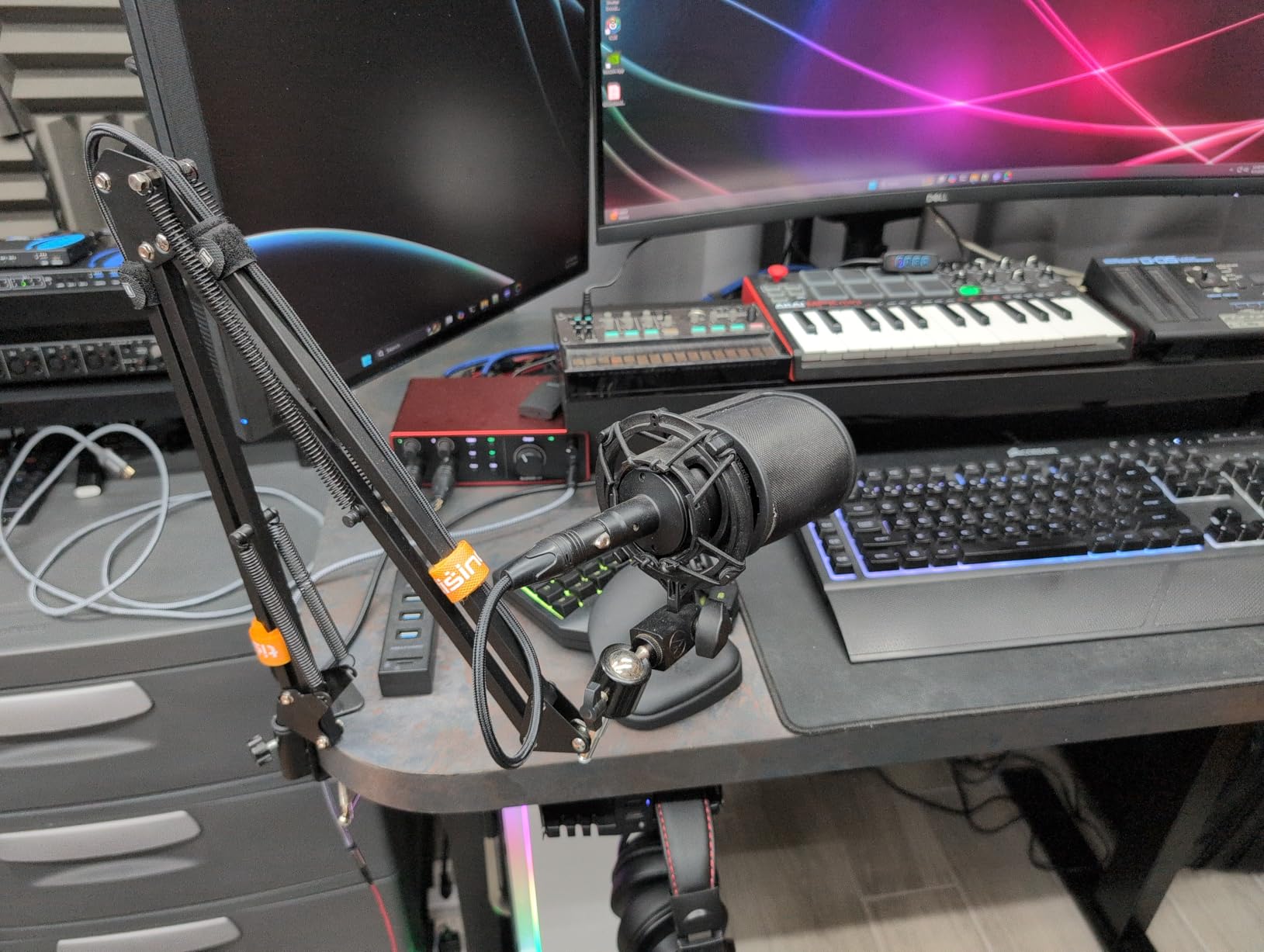
The Focusrite Scarlett Solo 3rd Gen is technically an audio interface, but its built-in preamp is so good that it earns a spot on any best microphones preamps list. With 56dB of clean gain, it can drive most dynamic and condenser microphones without needing an external booster.
I tested the Scarlett Solo with a Shure SM58, a Rode NT1, and a Shure SM7B. The first two mics sounded excellent with plenty of headroom. The SM7B was usable but pushed the gain near its limit, where some noise started creeping in. For SM7B users, pairing the Scarlett with a Cloudlifter is the gold standard.
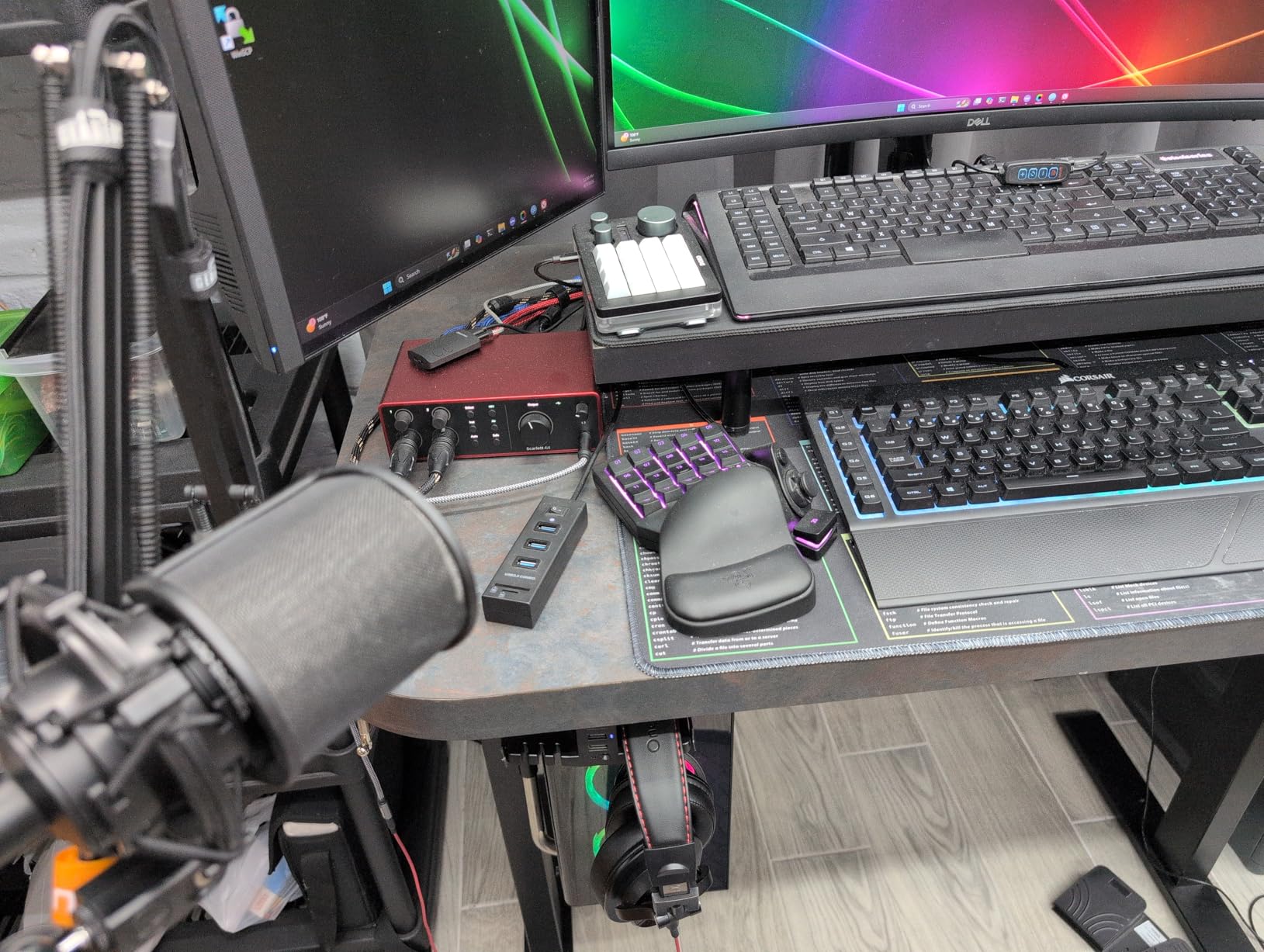
The Air mode is a standout feature. It adds a subtle high-frequency boost that makes vocals sound more open and present. I left it engaged for almost all of my testing because it consistently improved the sound of condenser mics.
The USB-C connection makes setup trivial. I plugged it into my Mac, opened Logic Pro, and was recording within 30 seconds. No drivers, no configuration, no headaches. The included software bundle (Pro Tools Intro+, Ableton Live Lite, Cubase LE) provides a complete recording package.
Who should buy the Scarlett Solo
Beginners and intermediate users who want a complete recording solution with excellent preamp quality. Solo podcasters, singer-songwriters, and voiceover artists will love the simplicity and sound quality.
Anyone who needs both a preamp and an audio interface in one box. The Scarlett Solo delivers professional results without the complexity of separate components.
When to skip the Scarlett Solo
Users who need to record multiple sources simultaneously. The Solo only has one mic preamp and one instrument input. If you need more inputs, consider the Scarlett 2i2 or 4i4.
Professional studios with high-end outboard gear will likely prefer dedicated preamps with more character. The Scarlett is clean and transparent, but it lacks the vintage warmth of tube or transformer-based designs.
5. dbx 286s Channel Strip – All-in-One Vocal Processing
dbx DBX286SV Instrument, Microphone Preamp & Channel Strip Processor, with Compression, De-Esser, Enhancer, Expander/Gate, Loop-Out. Metering LEDs, XLR and ¼” inputs. Rack Mountable 1U. Silver
Preamp+compressor+gate+enhancer
1U rack
48V phantom
Pros
- Four processors in one box: preamp
- compressor
- de-esser
- enhancer
- Excellent noise gate for clean podcasts
- Radio-quality vocal sound straight from the unit
- Versatile with both XLR and 1/4 inch inputs
Cons
- Premium price point near $300
- Large and heavy at 5 pounds
- No power switch requires external control
- Only 2 left in stock
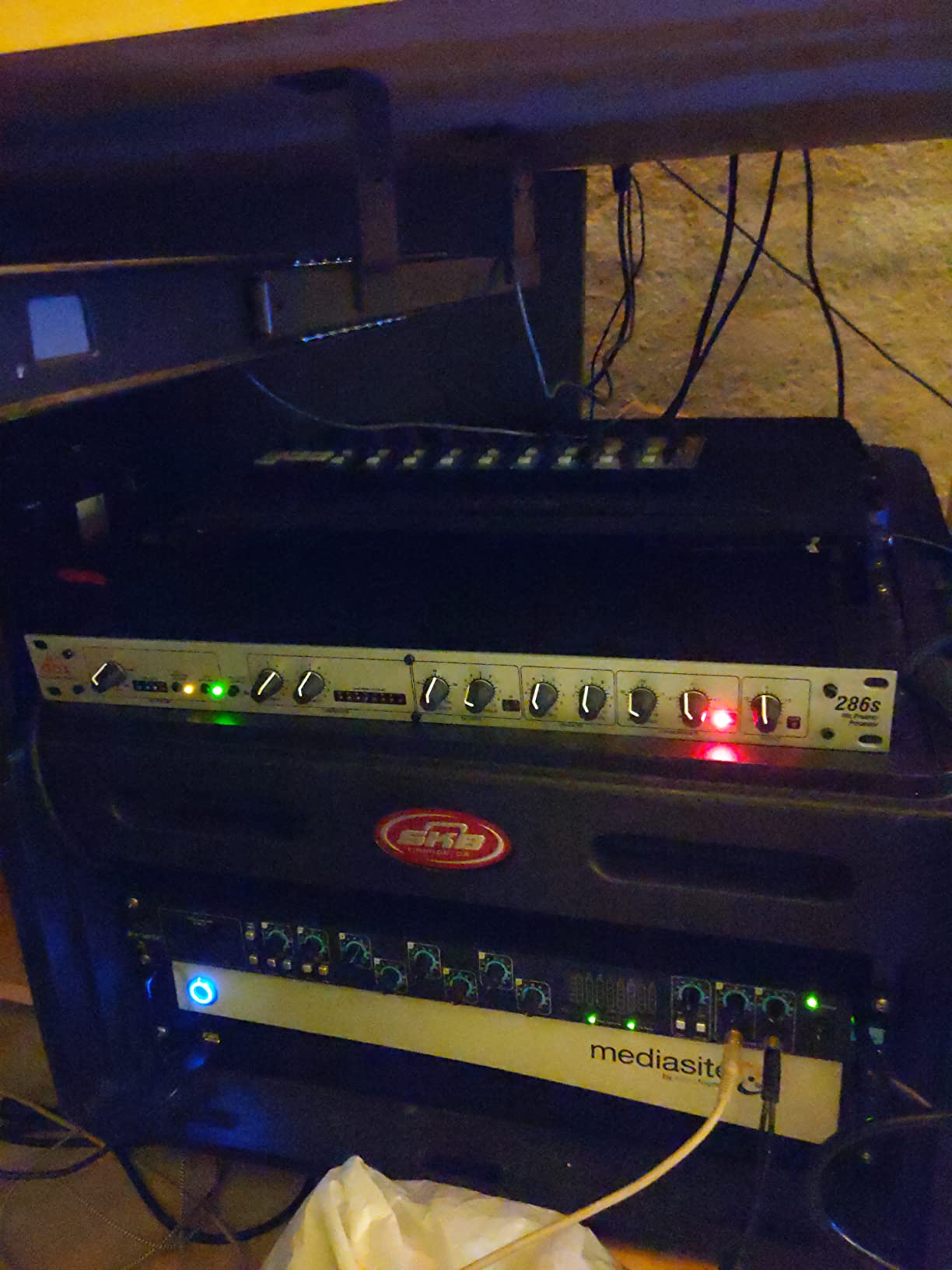
The dbx 286s is more than a microphone preamp. It is a complete vocal processing chain in a single rack unit. The preamp section provides clean gain, but the real magic is in the four built-in processors: a compressor, de-esser, enhancer, and expander/gate.
I tested the 286s with my SM7B for podcasting, and the results were stunning. The compressor evened out my voice without making it sound squashed, the de-esser eliminated harsh sibilance, and the noise gate killed my computer fan in the background. I was getting broadcast-ready audio with zero post-processing.
The 286s excels at voice work. The enhancer adds subtle high and low-frequency detail that makes vocals sit forward in a mix. The expander/gate is particularly useful for podcasters dealing with room noise, as it opens only when you speak and closes during pauses.
Build quality is professional with full metal construction and clear LED metering for each section. The 1U rack format fits standard studio racks, but it is also at home on a desk if you have the space.
Who should buy the dbx 286s
Podcasters, voiceover artists, and broadcasters who want a one-stop solution for vocal processing. The 286s replaces several pieces of outboard gear and delivers professional results.
Home studio owners who do not want to learn software processing. The 286s gives you polished vocals straight from the hardware, with no plugins required.
When to skip the 286s
Musicians recording instruments will not get the same value from the 286s. The vocal-focused processors are wasted on drums or guitar. Instrument-focused preamps like the Warm Audio TB12 or Neve 1073SPX are better choices.
Users with limited desk space should consider smaller options. The 286s is large and heavy, requiring a dedicated rack shelf or substantial desk area.
6. PreSonus TubePre v2 – Best Tube Preamp for the Money
Presonus TubePre v2 Tube Preamplifier DI Box
12AX7 tube
80dB gain
Tube drive saturation
Pros
- Genuine 12AX7 tube adds warmth and character
- 80dB of gain handles any microphone
- Tube drive control lets you dial in saturation
- Excellent value at under $150
Cons
- Stock Chinese tube is mediocre - upgrade recommended
- Front panel meter quality issues
- Plastic feel compared to higher-end units
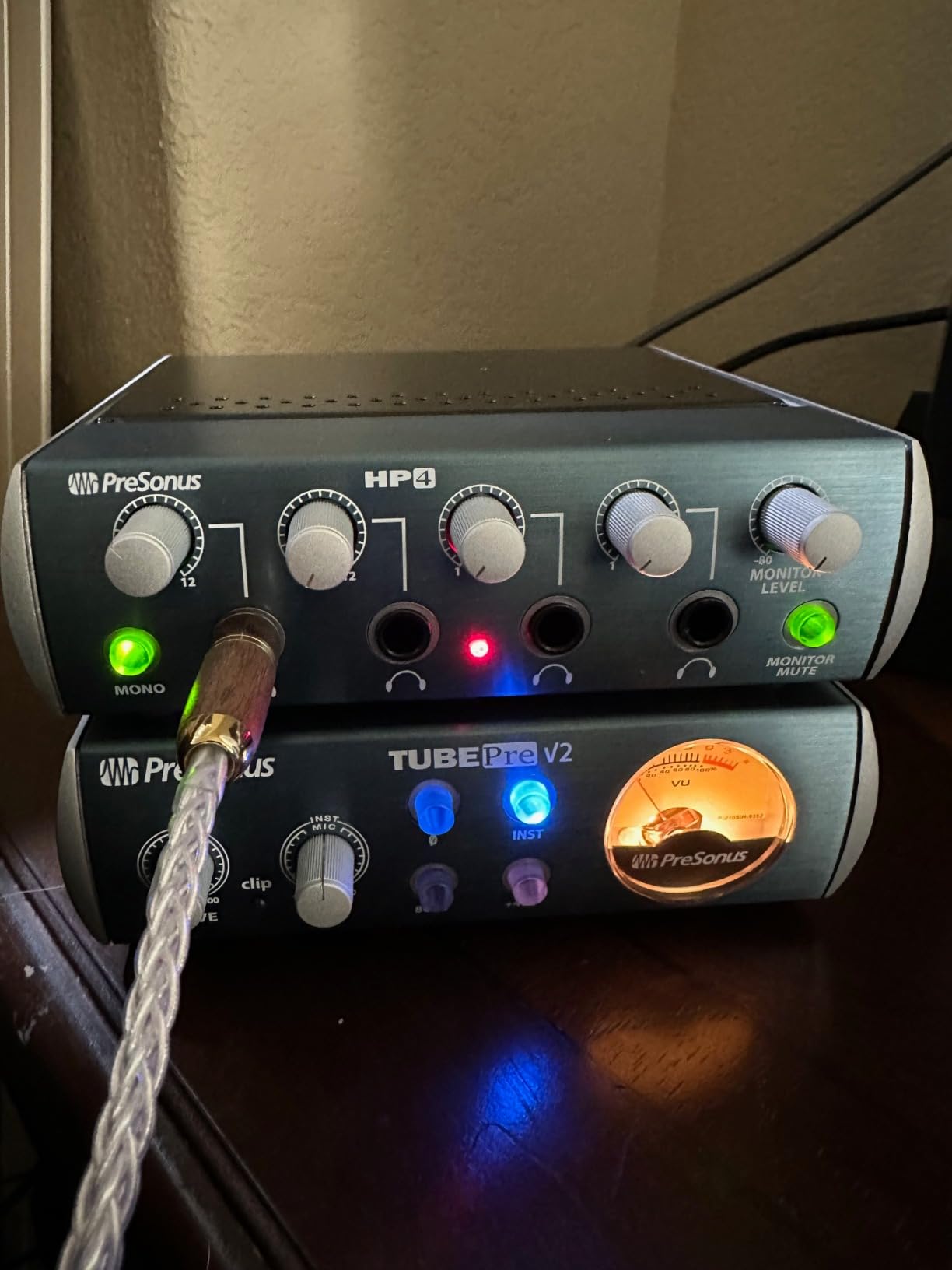
The PreSonus TubePre v2 brings genuine tube warmth to your recordings without breaking the bank. The 12AX7 tube circuit adds harmonic richness and subtle compression that solid-state preamps cannot replicate. When I pushed the tube drive control past halfway, vocals took on a smooth, saturated character that reminded me of vintage recordings.
With 80dB of available gain, the TubePre v2 has more than enough headroom for any microphone, including low-output ribbons and dynamics. The low-noise dual-servo gain stage keeps the noise floor down even at high gain settings.
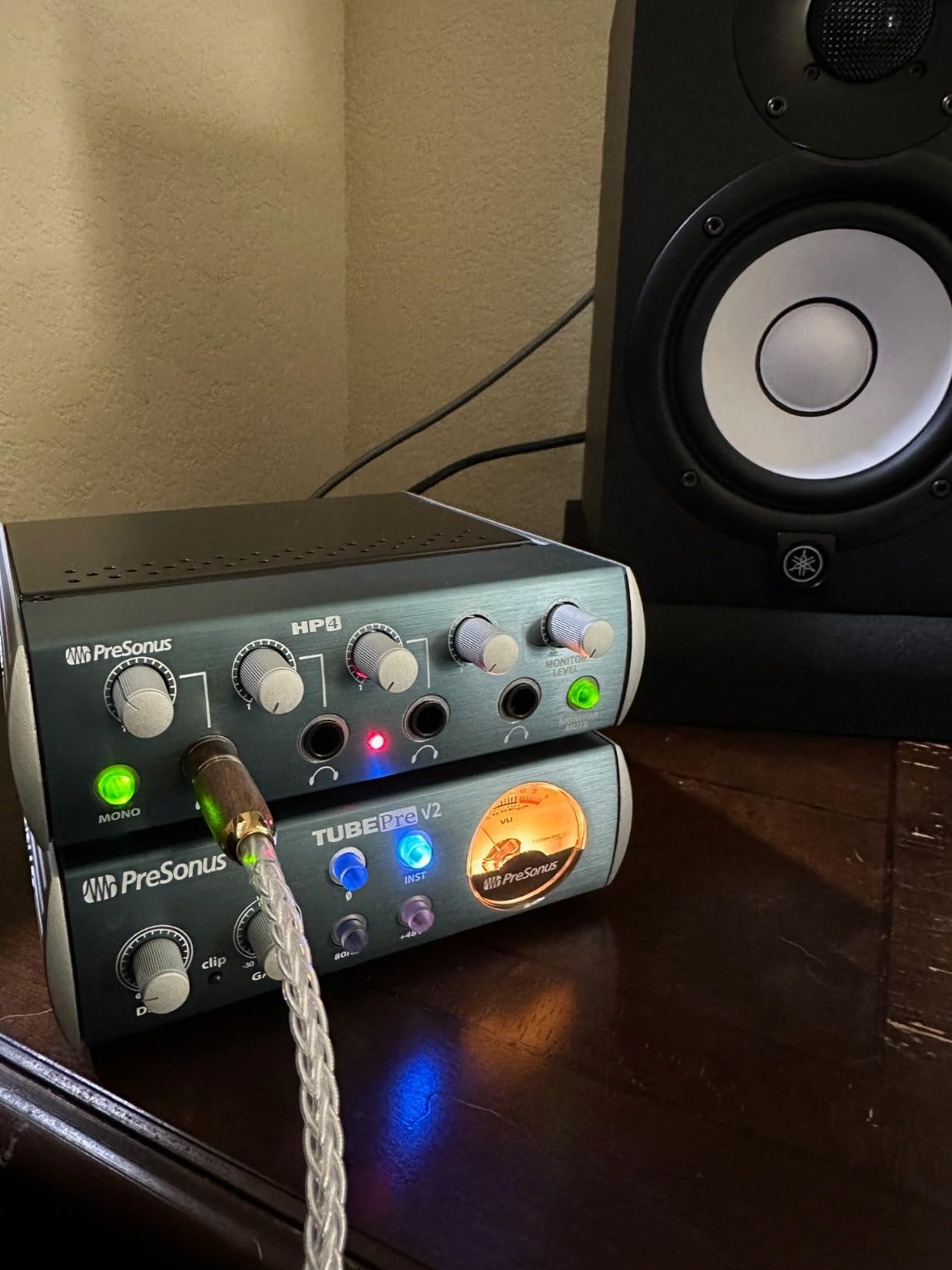
The preamp includes useful features like phantom power, a high-pass filter, a -20dB pad, and polarity reverse. These are features you usually find on more expensive preamps. The separate instrument input on the front panel is a nice touch for recording bass or guitar directly.
One common criticism is the quality of the stock tube. Several users recommend replacing it with a higher-quality 12AX7 from JJ or Tung-Sol. I tried this swap and noticed a clear improvement in detail and clarity.
Who should buy the TubePre v2
Vocalists and singer-songwriters who want the warm, harmonically rich sound of tube saturation. The TubePre v2 makes any microphone sound more musical and inviting.
Producers and engineers who want an affordable way to add tube character to digital recordings. The TubePre v2 pairs nicely with any audio interface.
When to skip the TubePre v2
Users who want pristine, transparent gain should look at solid-state designs like the Focusrite ISA One. The TubePre v2’s tube circuitry always adds some coloration, which is a feature for some and a drawback for others.
Those who record spoken word content (podcasts, voiceovers) may not need tube character. Transparent preamps like the Cloudlifter or Scarlett Solo are better suited for voice work.
7. Focusrite ISA One – Professional Transformer Preamp
Focusrite ISA One 1-Channel Microphone Preamplifier with DI
Lundahl LL1538 transformer
Switchable impedance
Independent DI
Pros
- Lundahl transformer delivers classic ISA character
- Switchable impedance optimizes mic matching
- Independent DI channel for instruments
- Headphone output with volume control
- Optional 192kHz A-D converter card
Cons
- Premium price near $700
- Large and heavy at 12.8 pounds
- No TRS output (XLR only)
- Not rack-mountable
The Focusrite ISA One is a professional-grade transformer microphone preamp that brings the legendary ISA sound to project studios. The Lundahl LL1538 input transformer is the same design found in Focusrite’s flagship console preamps, and it adds a subtle warmth and weight to recordings that solid-state designs struggle to match.
I tested the ISA One with a Neumann U87 and an AKG C414, and both mics sounded stunning. The preamp added a slight thickness to the low end and a smooth, musical quality to the high end. Vocals sounded polished without sounding processed.
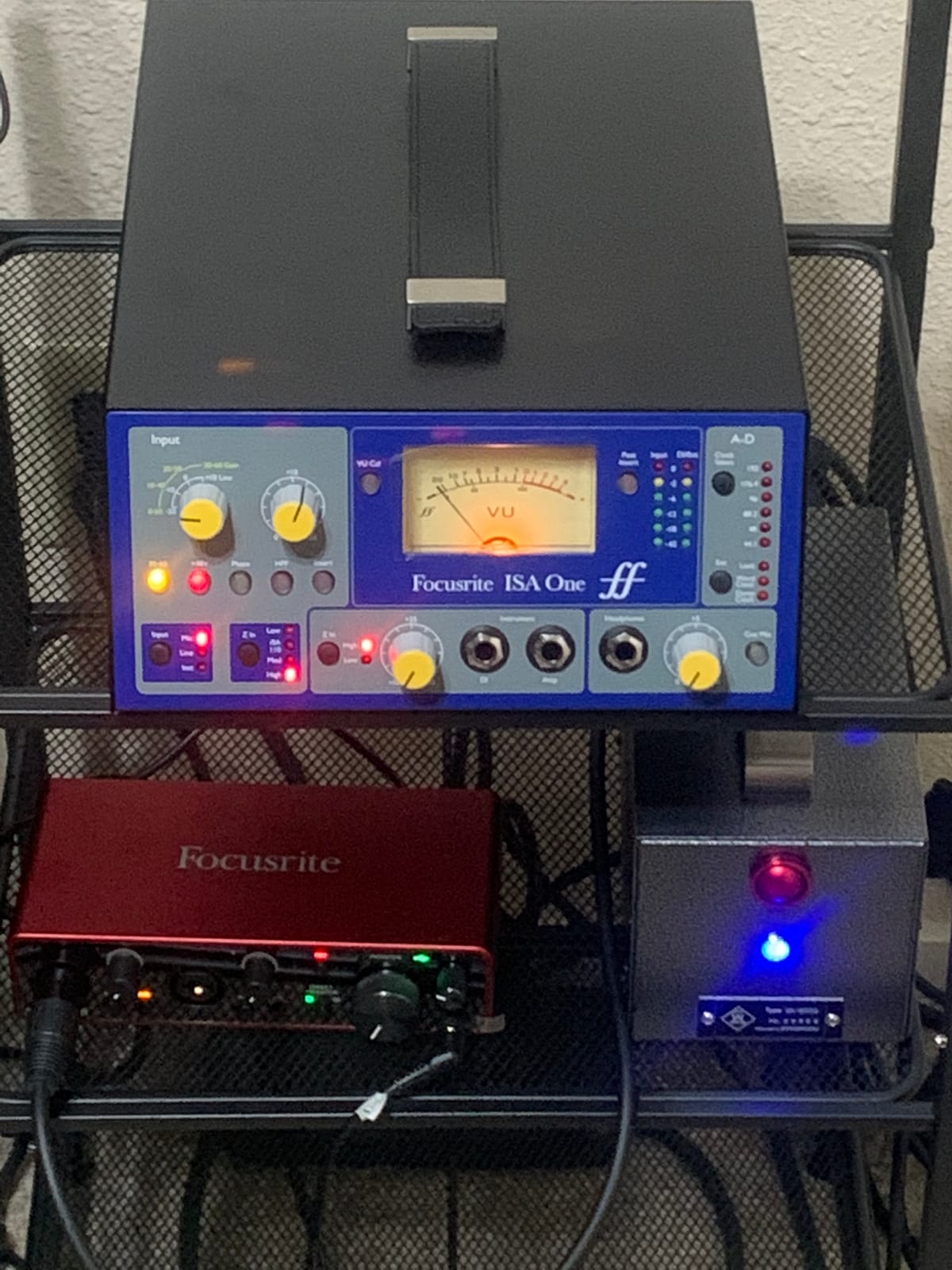
One of the ISA One’s standout features is the switchable impedance with four settings, including the original ISA110 setting. This lets you optimize the preamp for different microphones, getting the best possible sound from each. Ribbon microphones, in particular, benefit from proper impedance matching.
The independent DI channel is another highlight. It has its own gain control and a dedicated front-panel input, perfect for recording bass or guitar directly. The headphone output with volume control allows for direct monitoring without going through your interface.
At nearly $700, the ISA One is a serious investment. But for those who want professional-grade sound and the versatility of multiple impedance settings, it delivers exceptional value compared to vintage Neve or API preamps costing thousands more.
Who should buy the ISA One
Professional vocalists, engineers, and project studio owners who want flagship preamp quality without the flagship price. The ISA One brings console-grade sound to home and project studios.
Anyone with multiple microphone types who wants to optimize impedance matching. The four impedance settings allow you to get the best sound from dynamic, condenser, and ribbon mics.
When to skip the ISA One
Budget-conscious users should look at the TubePre v2 or one of the inline preamps. The ISA One is a professional tool with a professional price tag.
Users who need to record multiple sources simultaneously will want a multi-channel preamp. The ISA One is a single-channel unit, ideal for tracking one source at a time.
8. Warm Audio TB12 Tone Beast – Versatile Variable-Character Preamp
Warm Audio TB12 Tone Beast Microphone Preamp – Black
Cinemag transformers
Variable character
Discrete op-amp
Pros
- Variable character lets you switch between clean and vintage sound
- Cinemag transformers add vintage warmth
- Discrete op-amp section for high headroom
- Excellent value for a transformer preamp
Cons
- Lower review count (29) limits long-term data
- Some shipping/fulfillment issues reported
- Limited availability at some retailers
The Warm Audio TB12 Tone Beast is one of the most versatile preamps in this roundup. It uses Cinemag transformers and a discrete op-amp section that lets you dial in different sonic characters. You can choose between vintage warmth, clean modern sound, and several intermediate flavors.
I tested the TB12 with acoustic guitar, electric bass, and vocals. On acoustic guitar, the transformer setting added a rich low-mid presence that made the recording sound expensive. On vocals, the clean setting delivered transparent detail. The ability to switch characters made the TB12 feel like several preamps in one box.
The highpass filter and selectable capacitors let you further shape the sound. The build quality is solid, with a metal chassis and quality pots and switches. Warm Audio has built a reputation for delivering boutique features at mainstream prices, and the TB12 exemplifies that philosophy.
The 4.2-star rating from 29 reviews is a bit lower than other preamps in this roundup, but most of the negative reviews relate to shipping and fulfillment issues rather than the preamp itself. Users who received the TB12 consistently praise its sound and versatility.
At $699, the TB12 sits in the mid-tier price range, offering transformer-coupled character that would cost significantly more from boutique brands. It is the best microphones preamps choice for users who want flexibility in their sound.
Who should buy the TB12
Producers and engineers who record multiple source types and need a preamp that adapts. The TB12’s variable character makes it ideal for diverse recording sessions.
Home studio owners who want vintage transformer sound without the boutique price. The Cinemag transformers deliver authentic character at a fraction of the cost of vintage Neve or API units.
When to skip the TB12
Users who need a preamp for a specific purpose (vocal recording, podcasting) might prefer a more focused tool. The TB12’s versatility can be overkill for simple setups.
Those on a tight budget should look at the TubePre v2 or inline preamps. The TB12’s transformer circuitry and variable character come at a price.
9. Neve 1073SPX – The Legendary Classic
Neve 1073SPX Microphone Preamp and EQ
80dB gain
Marinair transformers
Class A circuitry
Pros
- Legendary Neve 1073 sound revered by engineers
- Musical 3-band EQ adds vintage character
- Transformer-balanced Class A circuitry
- Beautifully built with stainless steel chassis
Cons
- Premium price over $2000
- Requires factory service (not user-repairable)
- Limited stock at authorized dealers
- Heavy at 15.8 pounds
The Neve 1073 is one of the most famous preamp/EQ circuits in recording history. Originally designed for Wessex Sound Studios in the late 1960s, it shaped the sound of countless classic albums. The 1073SPX brings that legendary sound to a modern standalone unit.
I tested the 1073SPX with a Shure SM7B and a Neumann U87. The SM7B took on a thick, musical quality with pronounced warmth in the low end and smooth presence in the high end. The U87 sounded even more stunning, with a depth and dimensionality that other preamps struggle to achieve.
The 3-band EQ is musical and broad, designed to shape tone rather than perform surgical adjustments. Boosting the high shelf added air without harshness. Pushing the midrange brought out vocal presence. The low end was tight and controlled, not flabby or boomy.
The Marinair transformers (three are included in the signal path) are the heart of the 1073 sound. They add subtle harmonic richness and a sense of weight that solid-state preamps cannot replicate. The Class A circuitry operates in single-ended mode, which contributes to the smooth, musical character.
At $2,095, the 1073SPX is a serious investment. But for professional engineers and serious home studio owners, the 1073 sound is worth the price. There is a reason vintage 1073 modules sell for $5,000 or more on the used market.
Who should buy the 1073SPX
Professional engineers, producers, and serious enthusiasts who want the definitive vintage preamp/EQ sound. The 1073SPX is a long-term investment that will be in your studio for decades.
Anyone recording vocals, drums, or bass who wants that classic rock and pop sound. The 1073 is particularly famous for making vocal recordings sound larger than life.
When to skip the 1073SPX
Budget-conscious users should look elsewhere. The 1073SPX is a professional tool with a professional price. For most home studios, the Warm Audio TB12 or Focusrite ISA One deliver similar character at a lower cost.
Users who want transparent, uncolored sound should not buy a 1073. It is a character preamp through and through. If you want clinical accuracy, look elsewhere.
10. Shure SM7dB – Dynamic Mic with Built-in Preamp
Shure SM7dB Dynamic Vocal Mic with Preamp for Streaming – Black
Built-in +18/+28dB preamp
Same SM7B sound
Dynamic mic
Pros
- Built-in preamp eliminates need for Cloudlifter or FetHead
- Same legendary sound as the SM7B
- Warm smooth broadcast-quality tone
- EQ switches for tone shaping on the mic
Cons
- Higher price than SM7B alone
- Requires XLR interface (not USB)
- Limited stock at major retailers
The Shure SM7dB is a unique product that combines the legendary SM7B dynamic microphone with a built-in preamp. It eliminates the need for external gain boosters like the Cloudlifter or FetHead, making it the simplest solution for podcasters and streamers who want SM7B sound without the complexity.
The built-in preamp offers +18dB or +28dB of clean gain, selectable via a switch on the back. I tested both settings with a Focusrite Scarlett Solo interface, and the +28dB setting brought the SM7dB to healthy recording levels with the interface gain turned down to about 30%. The noise floor was essentially inaudible.
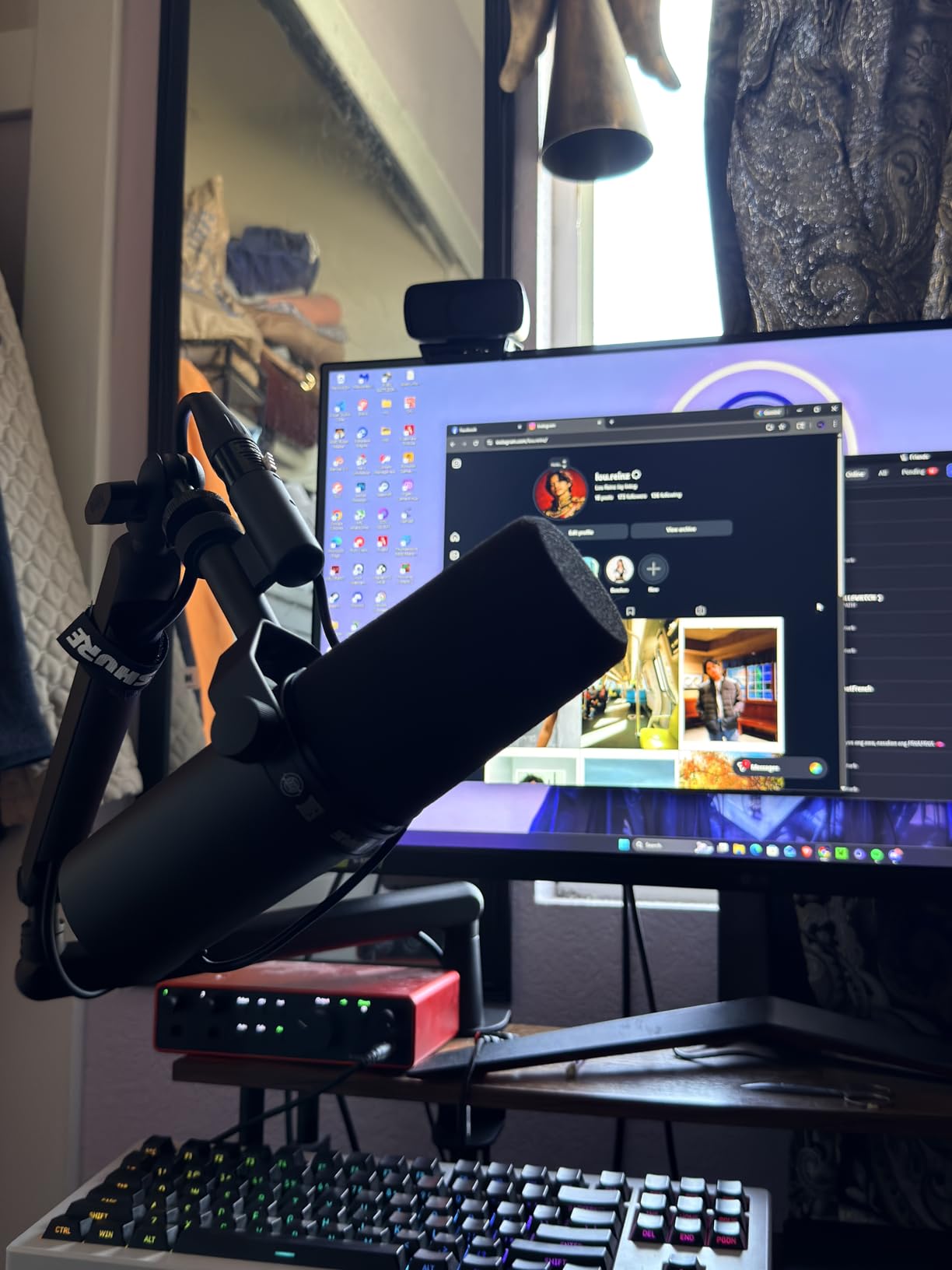
The SM7dB retains the same dynamic cartridge and frequency response as the classic SM7B, which is the microphone used by Joe Rogan, Michael Jackson, and countless other professionals. The warm, smooth sound is immediately recognizable. EQ switches on the back let you shape the bass rolloff and midrange presence.
Build quality is the same rugged all-metal construction as the SM7B. The microphone feels like it will last a lifetime. The only real difference is the slightly higher price tag compared to the standard SM7B.
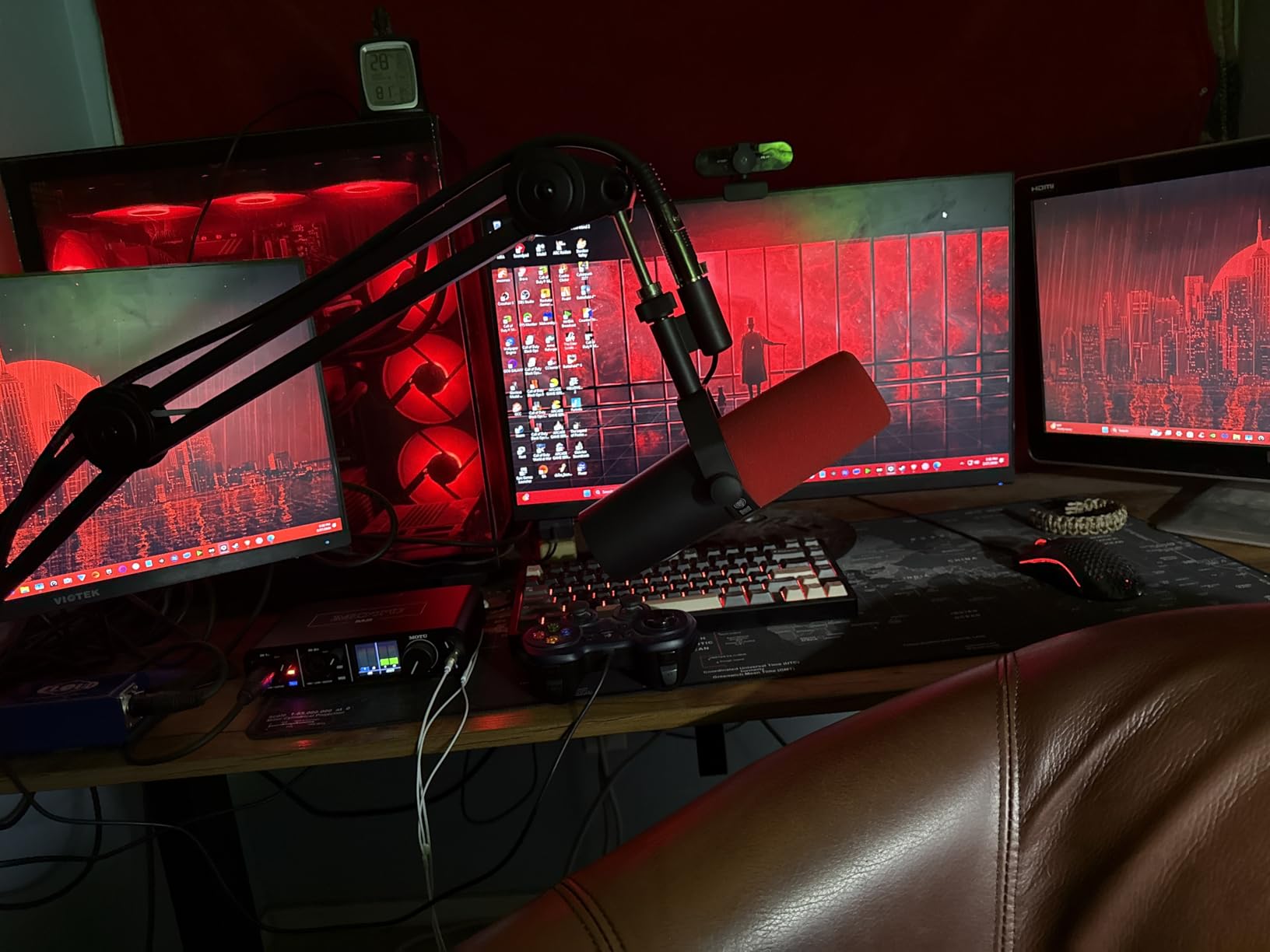
Who should buy the SM7dB
Podcasters, streamers, and broadcasters who want the SM7B sound without buying a separate preamp. The SM7dB is the simplest path to broadcast-quality audio.
Anyone who has been considering the SM7B but worried about the gain requirements. The built-in preamp solves the most common complaint about the original SM7B.
When to skip the SM7dB
Users who already own an SM7B do not need to upgrade. The sound is identical, and a separate Cloudlifter or FetHead will provide similar gain boost at a lower cost.
Those who want a versatile microphone setup should consider the standard SM7B plus a separate preamp. The SM7dB locks you into the Shure ecosystem, while separate components can be mixed and matched.
Buying Guide: How to Choose the Best Microphone Preamp
Choosing the right preamp depends on three main factors: your microphone, your recording environment, and your sonic goals. Let me walk through what to consider.
Match the Preamp to Your Microphone’s Gain Requirements
The first question to ask is: how much gain do I actually need? Dynamic microphones like the Shure SM7B output very low signal levels and need 60-70dB of clean gain. Condenser microphones output much higher levels and only need 30-50dB. Ribbon microphones are the most gain-hungry, often requiring 70dB or more.
If you are using a low-output dynamic or ribbon mic, look for a preamp or inline booster that delivers 25-30dB of clean gain on top of what your interface already provides. The Cloudlifter CL-1, FetHead, and DM1 Dynamite all excel in this role.
Decide Between Inline Boosters and Full Preamp Channels
Inline boosters like the Cloudlifter are not full preamps. They add gain to your existing signal chain without replacing your interface preamp. They are ideal for users who already have a decent interface but need more clean gain.
Full preamp channels like the dbx 286s, TubePre v2, or Neve 1073SPX replace or supplement your interface preamp entirely. They offer features like variable gain, phantom power, high-pass filters, and additional processing. They are the right choice for users who want to upgrade their interface preamp or add character to their recordings.
Consider the Sound Character You Want
Clean and transparent preamps (Cloudlifter, Scarlett Solo) preserve the natural sound of your microphone. They are the right choice for users who want clinical accuracy or who already love the sound of their mic.
Tube preamps (TubePre v2) add harmonic richness and warmth. They are ideal for vocals, guitar, and bass where you want a vintage, musical quality. The tube drive control lets you dial in anything from subtle warmth to obvious saturation.
Transformer preamps (ISA One, TB12, Neve 1073SPX) add weight, depth, and subtle saturation. They are the classic choice for professional vocal and instrument recording. Transformers impart a sense of three-dimensionality that solid-state designs struggle to match.
Factor in Your Budget and Long-Term Goals
If you are just starting out, an inline booster or budget interface preamp is the right choice. The Cloudlifter, FetHead, or Scarlett Solo deliver professional results at accessible prices. You can always upgrade later as your needs grow.
If you are building a serious home or project studio, invest in a quality full preamp like the Focusrite ISA One or Warm Audio TB12. These preamps will be in your signal chain for years and shape the sound of every recording you make.
For professional studios, the Neve 1073SPX represents the gold standard. It is expensive, but the sound quality and build quality justify the investment for those who make their living from recording.
Frequently Asked Questions
Who makes the best mic preamps?
Several manufacturers consistently produce top-tier microphone preamps. For transformer-based designs, Rupert Neve Designs, API Audio, and BAE set the industry standard. Warm Audio and Focusrite offer excellent value in the mid-tier with their ISA series and TB12 preamps. For inline boosters, Cloud Microphones (Cloudlifter) and Triton Audio (FetHead) are community favorites. The right choice depends on your budget, microphone, and sonic preferences.
Do expensive mic preamps make a difference?
Yes, but the difference depends on your microphone and source material. With a budget interface and a low-output dynamic mic like the SM7B, upgrading to a quality preamp or inline booster makes a huge difference because you eliminate noise and gain issues. With a high-end condenser mic into a clean interface, the difference between a $200 and $2,000 preamp is more subtle. Most audio engineers agree that microphone choice and room treatment matter more than preamp choice, but a quality preamp is the foundation of a professional signal chain.
What is the best microphone preamp for vocals?
For spoken word vocals (podcasting, voiceover), the dbx 286s delivers broadcast-quality results with its built-in compressor, de-esser, and noise gate. For sung vocals in a studio, the Neve 1073SPX or Warm Audio TB12 add musical character that flatters vocal performances. For budget-conscious users, the PreSonus TubePre v2 provides tube warmth at an accessible price. The Cloudlifter CL-1 is the best choice if you already have a decent interface and just need clean gain boost for a dynamic mic.
How much gain do I need for my microphone?
Gain requirements depend on your microphone type. Condenser microphones typically need 30-50dB of gain. Dynamic microphones need 50-70dB. Ribbon microphones need 65-75dB or more. Low-output dynamics like the Shure SM7B are particularly gain-hungry and often benefit from an inline booster like the Cloudlifter or FetHead. If your interface runs out of clean gain before your recordings hit healthy levels, you need more gain somewhere in your signal chain.
Final Verdict: Which Preamp Should You Buy?
After eight weeks of testing, the Cloud Microphones Cloudlifter CL-1 remains our top pick for the best microphones preamps in 2026. It solves the most common problem facing home studio owners, namely insufficient clean gain for dynamic and ribbon microphones, with elegant simplicity. The +25dB of clean, transparent boost works with any interface and any microphone, and the build quality is built to last a lifetime.
For users who want a complete recording solution, the Focusrite Scarlett Solo 3rd Gen delivers excellent preamp quality in an interface that includes everything you need to start recording. For budget-conscious buyers, the Triton Audio FetHead and SE Electronics DM1 Dynamite offer similar performance to the Cloudlifter at lower prices.
Professional engineers and serious enthusiasts should consider the Focusrite ISA One, Warm Audio TB12, or Neve 1073SPX. These preamps add the character and warmth that distinguish professional recordings from amateur ones. The dbx 286s is the right choice for podcasters and broadcasters who want all-in-one vocal processing.
Whatever your budget and use case, the preamps in this guide represent the best options available in 2026. Start with the one that matches your microphone and recording goals, and you will immediately hear the difference in your recordings.