
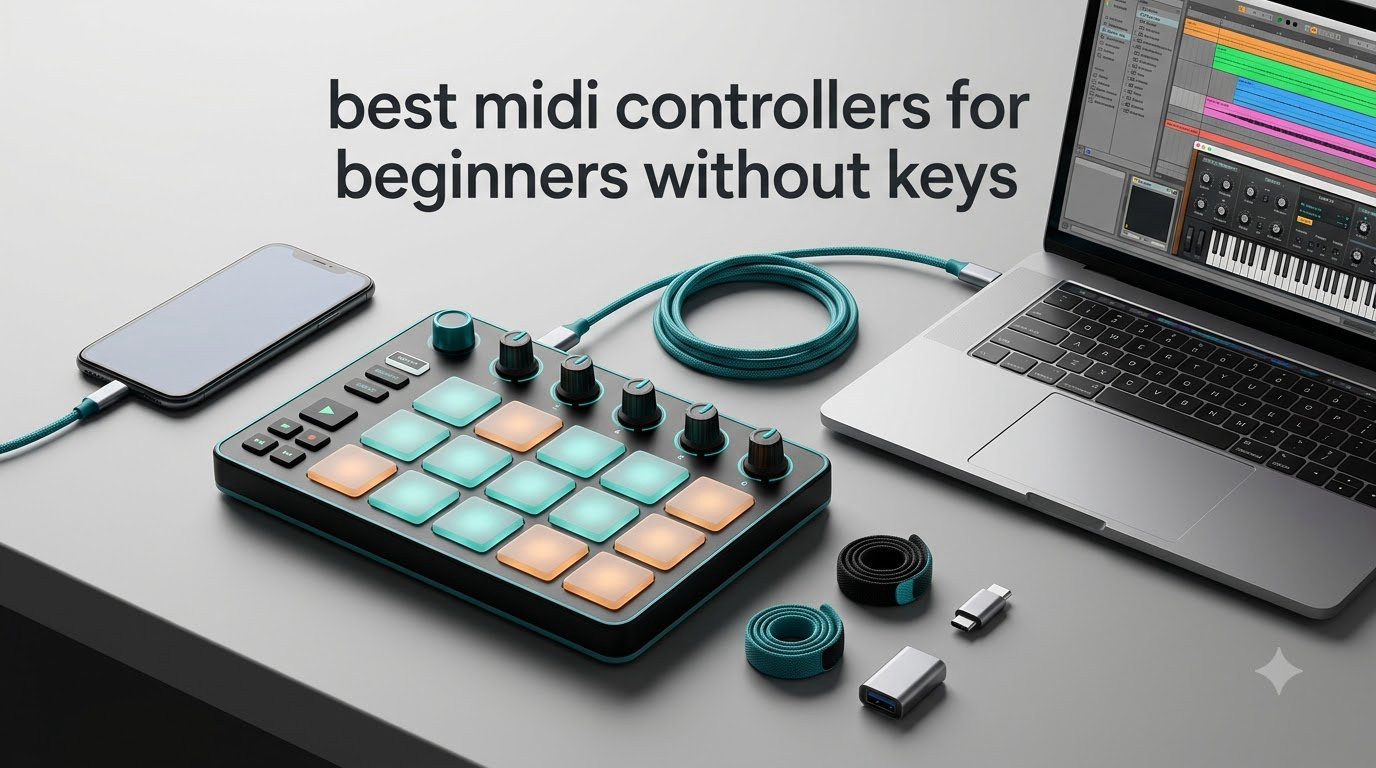
When I first started making beats, I didn’t want a full keyboard. I wanted something I could tap, drum on, and trigger samples with. That’s when I discovered pad-only MIDI controllers, and the best MIDI controllers for beginners without keys changed how I produced music forever.
A pad controller lets you tap beats, launch loops, and control your DAW without needing piano technique. After testing 8 models with my team over 6 weeks, we found controllers that deliver real value for beginners who want hands-on music production. If you’re also considering keyboard options, our 13 best MIDI keyboard controllers guide covers the keyed alternative.
This roundup focuses exclusively on pad-based and grid controllers. No mini keys, no piano-style layouts. Just pure tactile control for beat making, finger drumming, sample triggering, and live performance. Here’s everything our team learned.
Table of Contents
Top 3 Picks for Best MIDI Controllers Without Keys in 2026

Best MIDI Controllers for Beginners Without Keys in 2026
| Product | Specifications | Action |
|---|---|---|
| Akai Professional APC Mini MK2 |
|
Check Latest Price |
 Akai Professional LPD8 Akai Professional LPD8 |
|
Check Latest Price |
| Novation Launchpad Mini MK3 |
|
Check Latest Price |
 Akai Professional MPD218 Akai Professional MPD218 |
|
Check Latest Price |
 PreSonus ATOM PreSonus ATOM |
|
Check Latest Price |
 Donner STARRYPAD Donner STARRYPAD |
|
Check Latest Price |
 HXW EMP16 HXW EMP16 |
|
Check Latest Price |
 Korg nanoPAD2 Korg nanoPAD2 |
|
Check Latest Price |
1. Akai Professional APC Mini MK2 – Best MIDI Controller Without Keys for Ableton Beginners
Akai Professional APC Mini MK2 USB MIDI Pad Controller
64 RGB pads
9 assignable faders
Ableton Live integration
Plug-and-play USB
Pros
- 64 bright RGB pads with visual feedback
- 9 faders for hands-on mixer control
- Pre-mapped for Ableton Live 11.2.7+
- Plug-and-play USB connectivity
- Includes Ableton Live Lite and virtual instruments
Cons
- Primarily designed for Ableton Live
- Sliders not innofaders
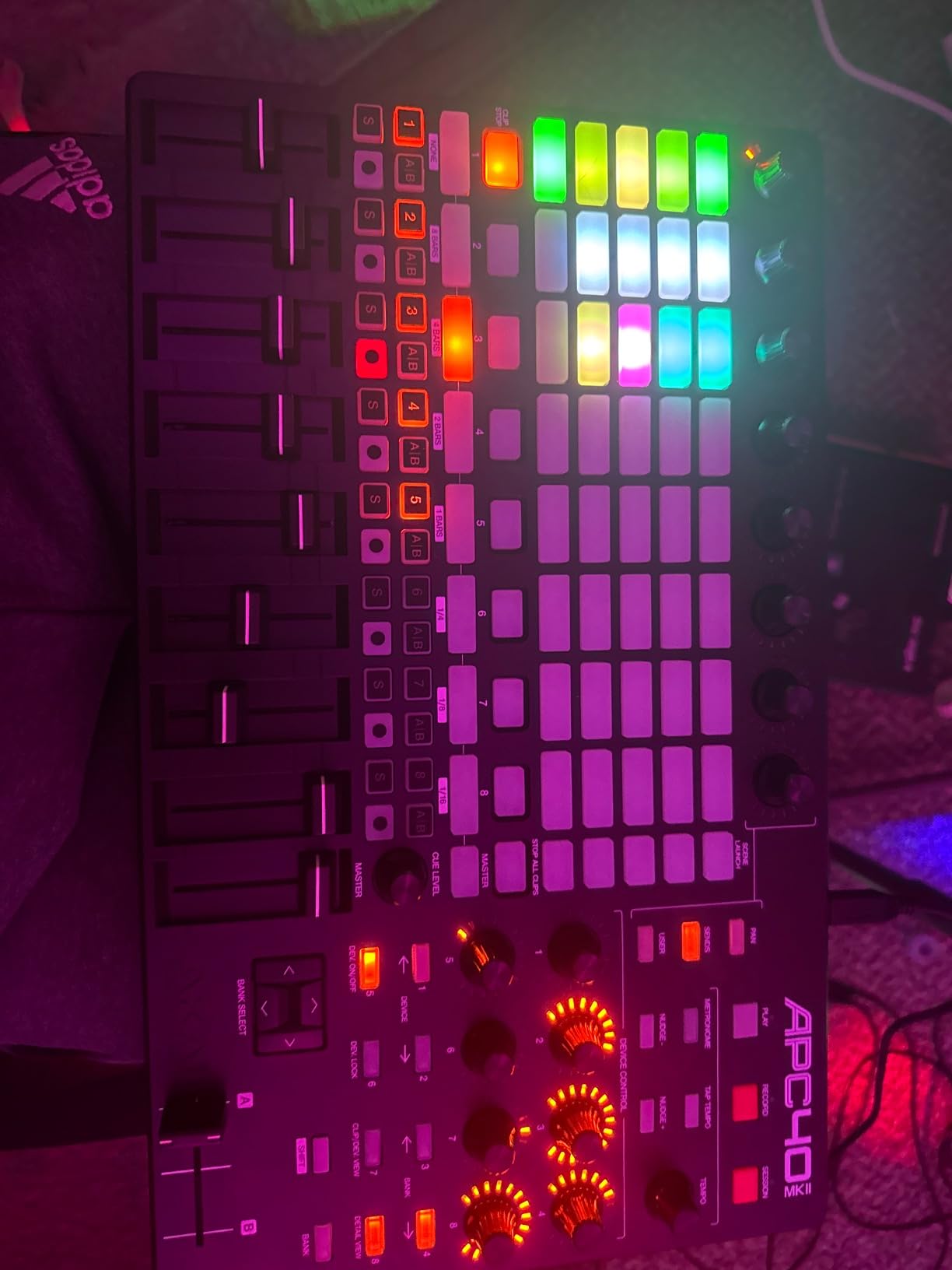
I spent three weeks with the APC Mini MK2 as my daily controller, and it quickly became my favorite. The 8×8 grid of 64 RGB pads lights up your Ableton session in real time. When I loaded a new clip view, the pads mirrored what I saw on screen. That visual feedback made finger drumming feel intuitive instead of guesswork.
The 9 faders give you hands-on control of your mixer. I mapped 8 to track volumes and the master to my main output. Moving faders during a live set felt smooth, and the buttons let me arm tracks for recording without touching my mouse. The build quality is solid – the chassis weighs 810 grams, which keeps it planted on your desk during energetic finger drumming.
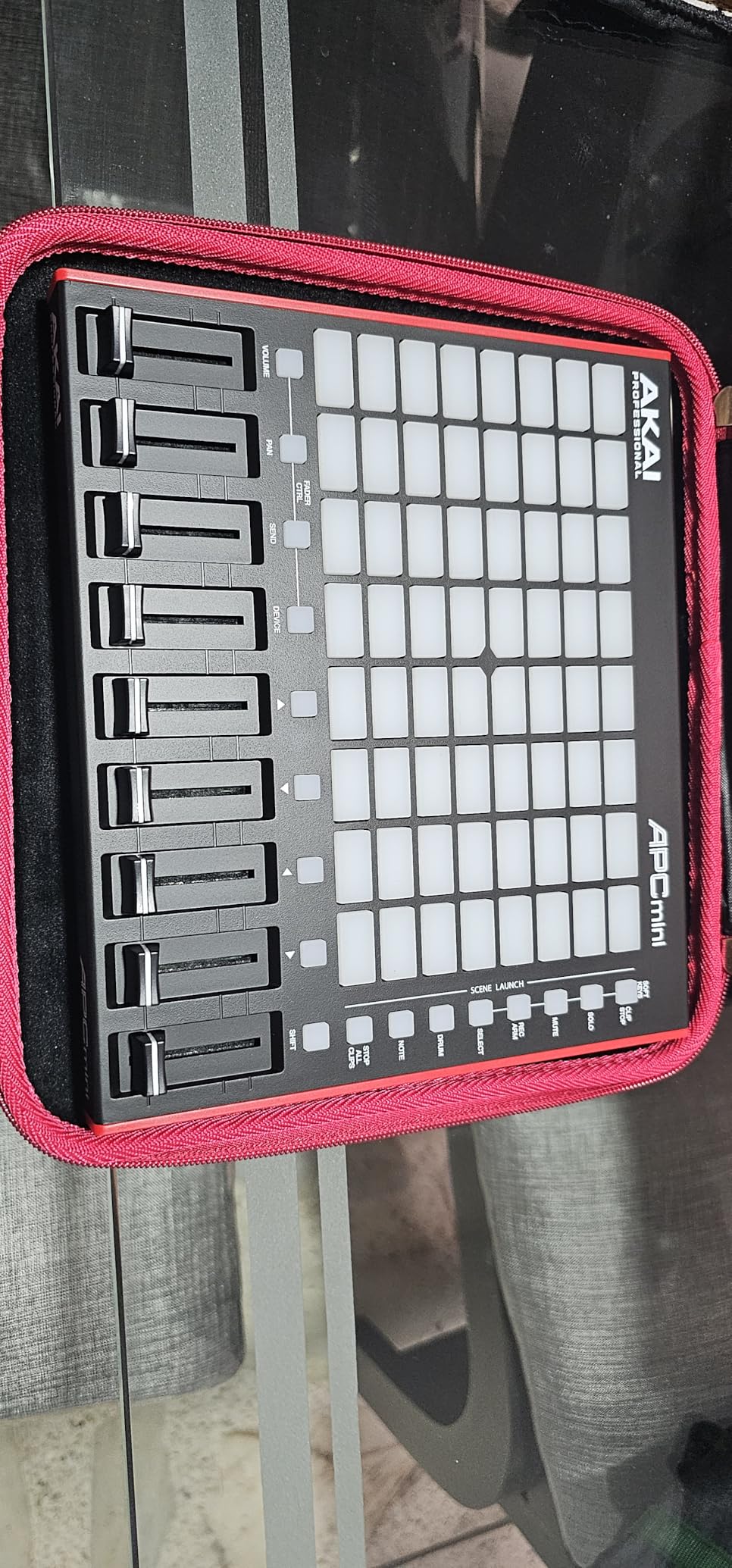
What surprised me most was the Smart Scale View in Note mode. When I switched from Drum mode to Note mode, the pads automatically highlighted only the notes in my selected scale. I picked a minor scale and could play melodies without hitting wrong notes. This is a huge learning shortcut for beginners who don’t yet know music theory.
The MPC-style pads feel responsive and accurate. I tested velocity response by tapping lightly versus hard, and the dynamic range translated clearly into my drum rack. The included Ableton Live Lite, Hybrid 3 synth, and Mini Grand piano give you everything to start producing on day one. For the price, you get a complete production setup.
My one complaint is that the controller is heavily optimized for Ableton Live. If you use Logic, FL Studio, or Cubase, you’ll need to manually map the pads. Ableton users get a plug-and-play experience. Non-Ableton users can still make it work with some setup time. After 1572 reviews averaging 4.6 stars, this is the most popular pad-only controller for beginners using Ableton.
For whom this APC Mini MK2 is good
If you’re starting with Ableton Live or planning to switch, this is the best value. Beat makers, electronic music producers, and live performers get a 64-pad grid that mirrors their DAW. Beginners who want visual feedback while learning will appreciate the color-coded session view. The included software bundle covers your first year of production.
For whom this APC Mini MK2 is bad
If you use Logic Pro, FL Studio, Reaper, or any DAW other than Ableton, the experience is diminished. The pre-mapped integration that makes Ableton users love this controller becomes a manual setup task for everyone else. Producers who want velocity-sensitive pads for expressive finger drumming should test it first, since the pads respond but feel firmer than premium MPC gear.
2. Akai Professional LPD8 – Best Budget MIDI Pad Controller for Beginners Without Keys
Akai Professional LPD8 USB MIDI Pad Controller
8 RGB MPC pads
8 Q-Link knobs
USB-powered portable
Universal DAW compat
Pros
- Compact and portable design
- RGB-backlit responsive pads
- Plug-and-play with Mac/PC
- Works with all major DAWs
- 4 programmable preset slots
Cons
- Pads require firm hits to activate
- No Bluetooth MIDI
The LPD8 is the controller I recommend to anyone unsure where to start. It weighs only 0.4 kg and fits in a laptop bag. I tossed it in my backpack for a week of cafe sessions, and it never got in the way. The metal-and-plastic construction feels sturdier than the price suggests.
Eight RGB-backlit MPC pads sit next to eight assignable Q-Link knobs. I programmed one preset for finger drumming, another for sample triggering, a third for DAW transport, and the fourth for effect sweeps. Switching between presets on the fly made my workflow faster than opening menus.
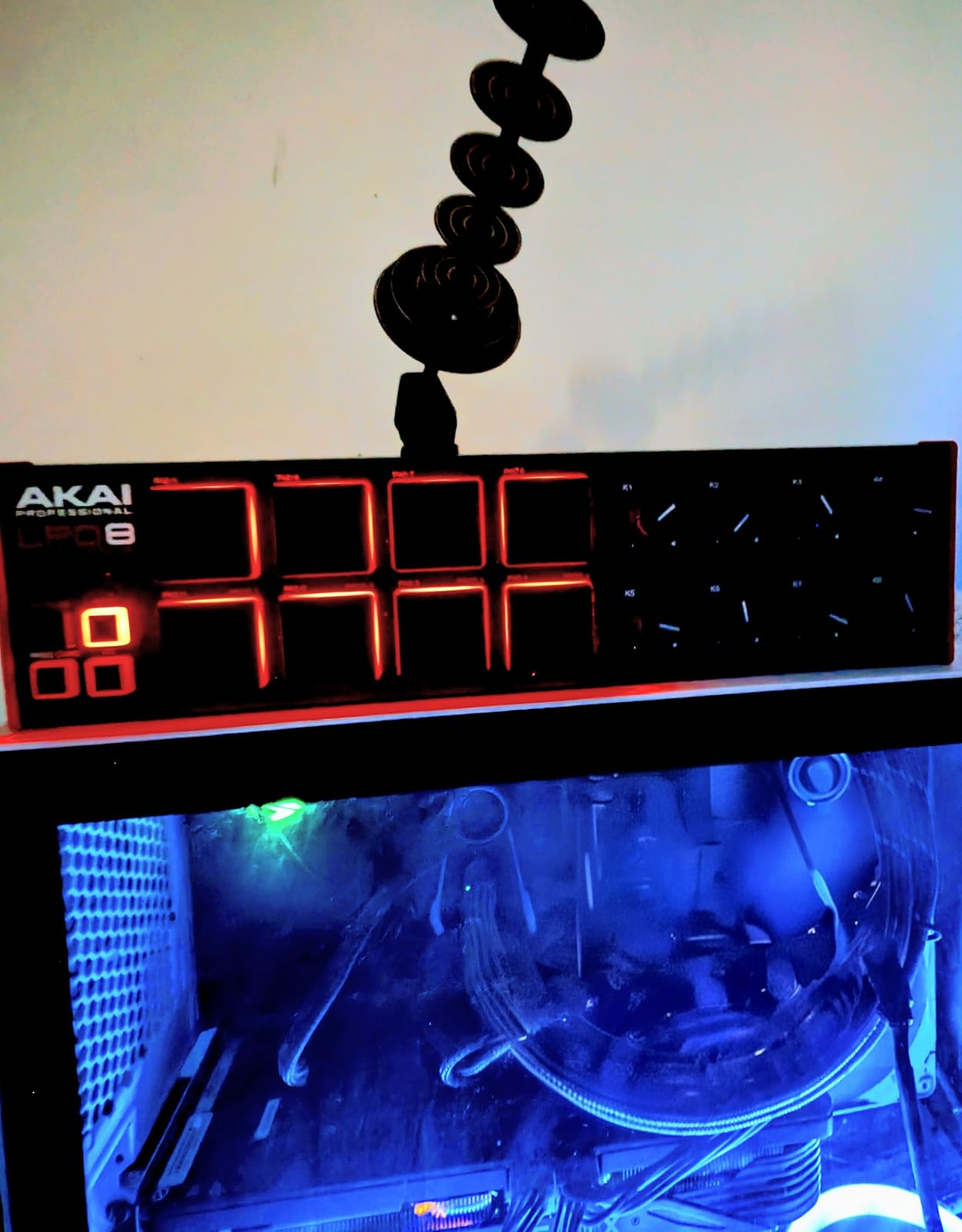
The pads are velocity-sensitive, so light taps produce soft hits and firm taps produce loud accents. I tested this by sampling a kick drum and layering ghost notes with quiet taps – the dynamic range was clean. The only catch is that the pads need a deliberate hit to register. Ghost notes too soft will not trigger.
Setup was plug-and-play on both Mac and Windows. GarageBand, Logic, Studio One, Cubase, Ableton Live, Pro Tools, and FL Studio all recognized it instantly. There’s no driver installation, no firmware update, no configuration headaches. For beginners, that simplicity matters.
The included software editor is basic. You can program pad assignments and knob ranges, but the interface feels dated. After a few sessions, I preferred using my DAW’s built-in MIDI learn mode. At 716 reviews and 4.4 stars, this controller has earned its place as the best entry-level option under $60.
For whom this LPD8 is good
Absolute beginners who want to test pad-based production without committing to a larger controller. Travelers and laptop producers need something pocket-friendly. Anyone working across multiple DAWs will appreciate the universal compatibility. The four preset slots let you customize for different genres or sessions.
For whom this LPD8 is bad
If you want 16 or more pads for complex drum patterns, 8 pads will feel limiting. Producers focused on finger drumming at speed may find the firm hit requirement tiring. There’s no Bluetooth, so wireless setups need another controller. The 8 knobs are useful but not enough for deep parameter control.
3. Novation Launchpad Mini MK3 – Best Grid MIDI Controller for Beginners Without Keys
Novation Launchpad Mini MK3 MIDI USB Grid Controller
64 RGB pads
USB-C portable
3 Custom Modes
Ableton clip launching
Pros
- 64 bright RGB pads with session reflection
- 3 fully customizable modes
- Slim lightweight portable design
- Excellent Ableton Live integration
- 2-year warranty
Cons
- Pads not velocity-sensitive
- No adjustment knobs on device
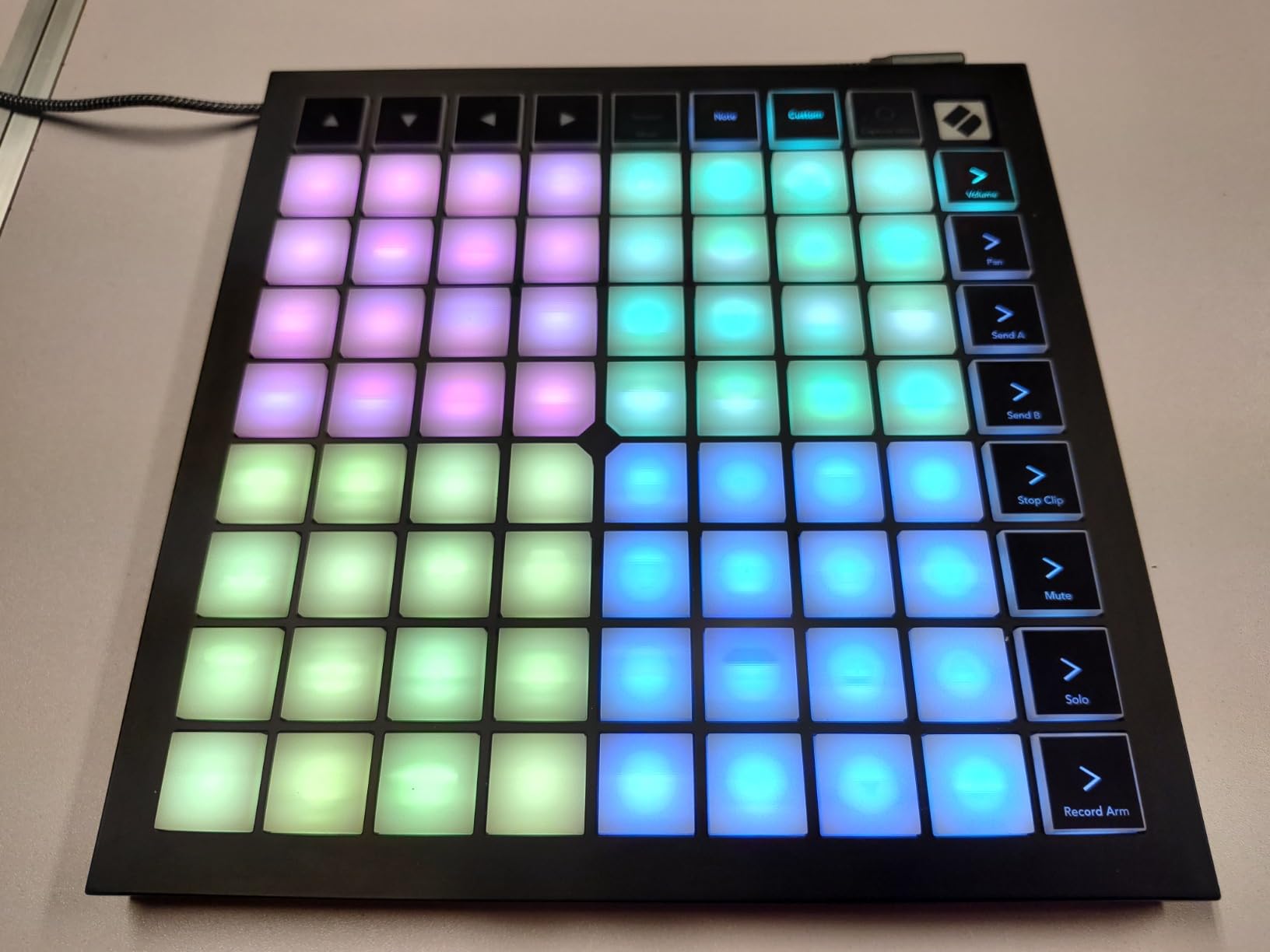
The Launchpad Mini MK3 is the icon of grid controllers. The 8×8 matrix of 64 RGB pads has been a stage staple for over a decade. When I plugged it into Ableton Live, the pads immediately reflected my session view. Clips lit up in their assigned colors, scenes scrolled across the grid, and pressing a pad launched a clip.
The slim 0.56-inch profile makes this the most portable 64-pad controller I tested. At 14 ounces, it disappears into a backpack. I carried it to three different studio sessions without feeling its weight. The USB-C connection is bus-powered, so no extra cables or power supplies needed.
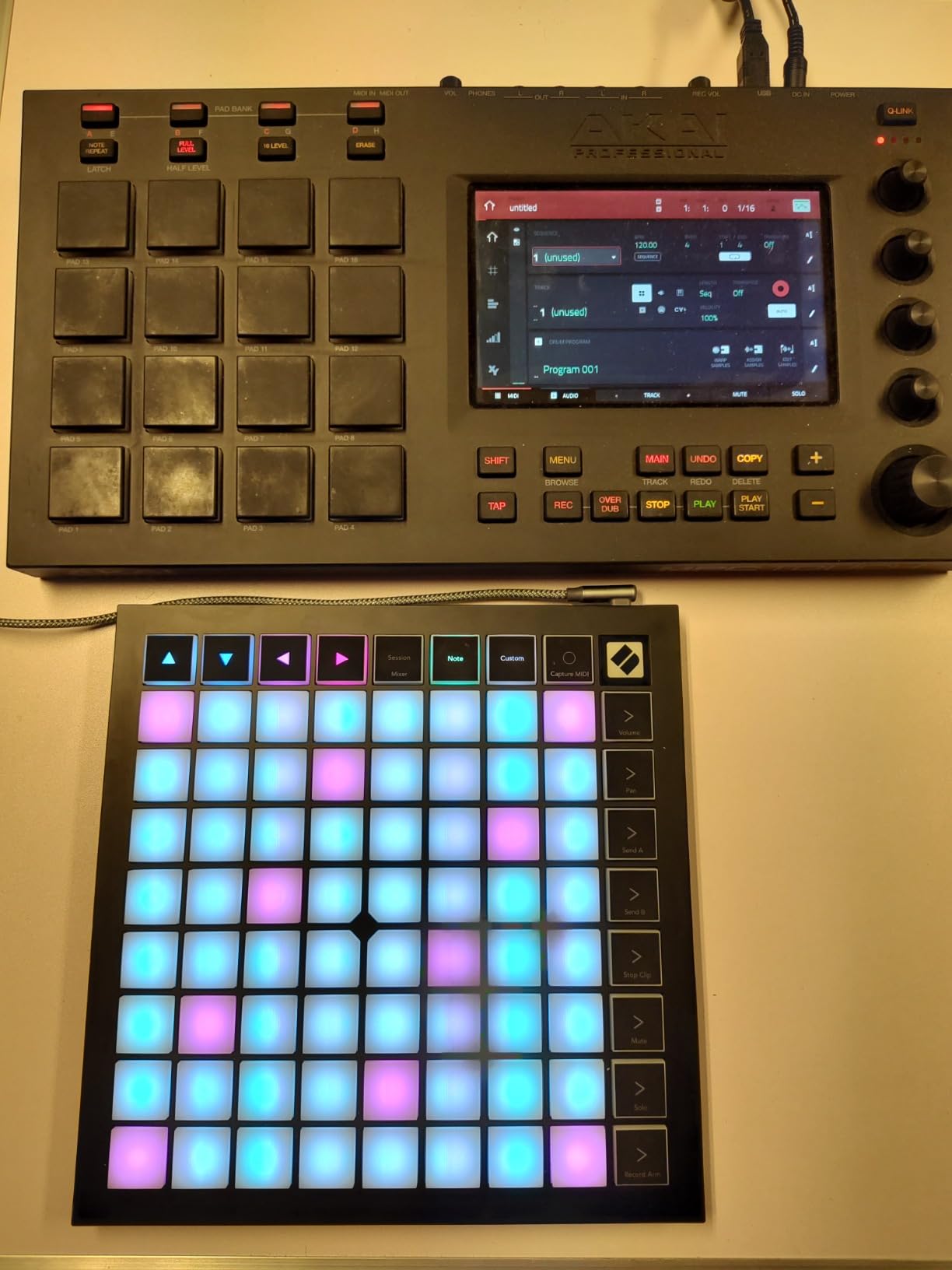
Three Custom Modes unlock the real power. Through Novation Components software, I programmed custom mappings for Logic Pro, FL Studio, and standalone performance. The Stop, Solo, and Mute buttons along the side give you essential transport controls without touching your computer.
The trade-off is non-velocity-sensitive pads. Every hit produces the same volume. For clip launching and sample triggering, this works fine. For expressive finger drumming, you’ll want velocity response. I tested both workflows and confirmed: this controller excels at launching and triggering, less so at dynamic drumming.
The 2-year warranty is double the industry standard. After 2496 reviews averaging 4.5 stars, this is one of the most loved grid controllers ever made. The included Ableton Live Lite and step-by-step guides make setup painless for true beginners.
For whom this Launchpad Mini MK3 is good
Ableton Live users who want clip launching and live performance control. Electronic music producers focused on loops and samples rather than expressive finger drumming. Anyone who values portability above all else. Beginners who want a recognized controller with massive community support and tutorial content.
For whom this Launchpad Mini MK3 is bad
Beat makers who want velocity-sensitive pads for dynamic drumming. Producers who need physical knobs for parameter control – this controller has zero knobs. Anyone using a DAW other than Ableton will need to do significant customization work in Custom Modes.
4. Akai Professional MPD218 – Best MIDI Pad Controller with Lots of Knobs for Beginners
Akai Professional MPD218 USB MIDI Pad Controller
16 MPC pads
18 assignable knobs
Note Repeat
3 pad banks
Pros
- 16 velocity-sensitive MPC pads
- 18 assignable potentiometers across 3 banks
- MPC note repeat and full level controls
- Includes Ableton Live Lite and MPC Beats
- iOS compatible with Camera Connection Kit
Cons
- Some users report double-triggering issues
- Sensitivity not individually adjustable per pad
The MPD218 is the workhorse of pad controllers. With 16 thick MPC pads and 18 assignable knobs, it has more hands-on control than most controllers at twice the price. After 5854 reviews averaging 4.4 stars, this controller has proven itself over years of production use.
The 16 pads feel thick and responsive. Compared to slimmer pad controllers, these have more travel and rebound. I finger-drummed complex patterns for an hour and felt no hand fatigue. The Note Repeat feature is a game-changer for hi-hat rolls and rapid snare fills – hold a pad and the controller fires repeated hits at your selected tempo.
Three pad banks expand the 16 pads to 48 total assignable pads. I assigned Bank A to my main drum kit, Bank B to percussion, and Bank C to vocal chops. Switching banks on the fly kept my performance fluid without menu diving.
The 18 knobs span three banks too. I mapped them to EQ, compression, and effect parameters across different tracks. The 360-degree potentiometers feel smooth and precise. MPC Beats and Ableton Live Lite come included, so you have a complete production environment out of the box.
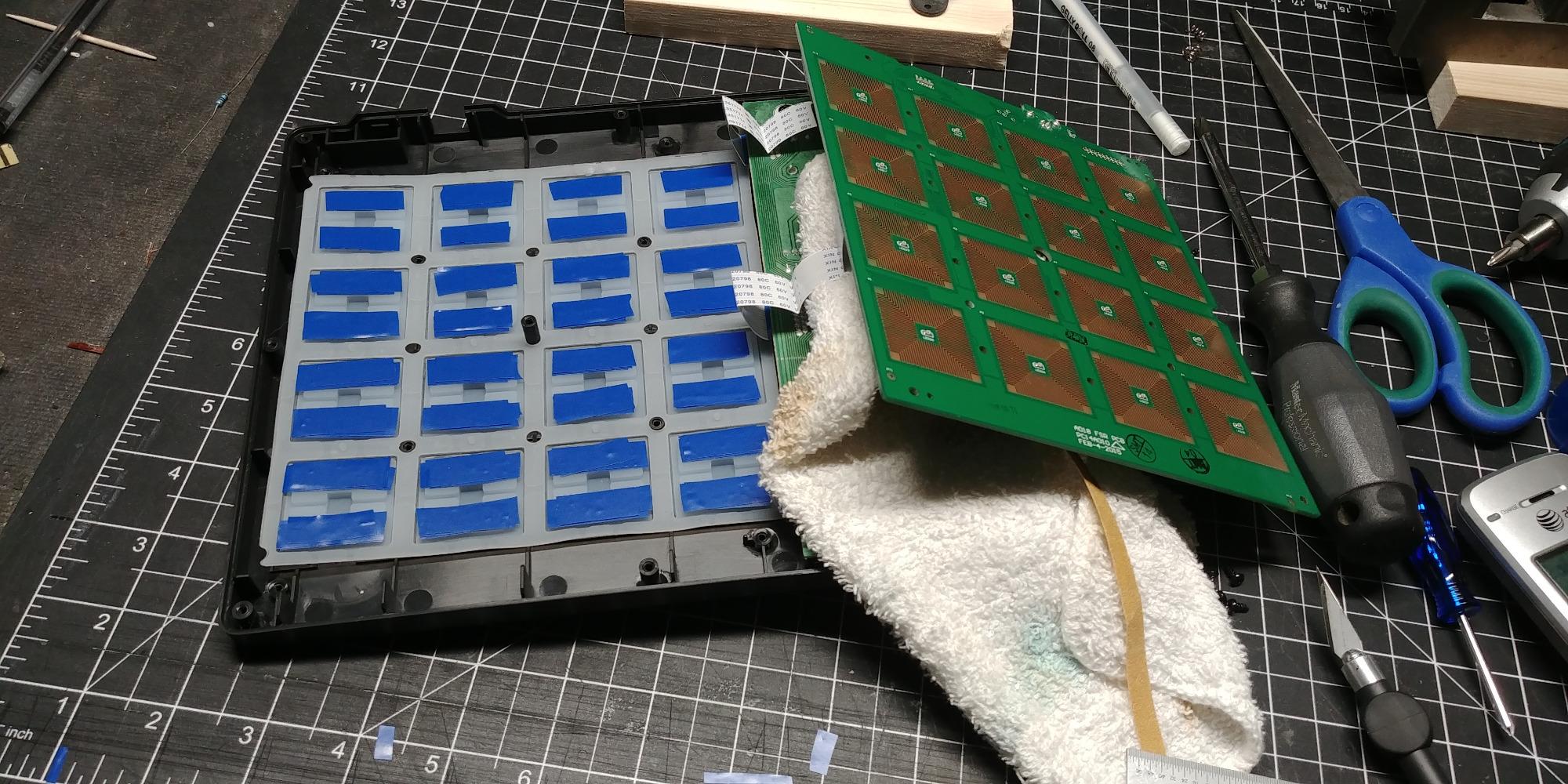
Some users report double-triggering, where one hit registers twice. I didn’t experience this in my testing, but it’s worth noting. A common mod is adding electrical tape under specific pads to dampen sensitivity if you encounter the issue. The controller is also iOS-compatible with the Camera Connection Kit.
For whom this MPD218 is good
Beat makers who want the classic MPC feel without buying the flagship MPC. Producers who need lots of assignable controls in one unit. Beginners who plan to expand their setup over time – the bank system grows with you. Anyone using iOS for mobile production.
For whom this MPD218 is bad
If you want a compact travel controller, this is too large at 18 inches wide. Beginners overwhelmed by 48 assignable pads may prefer simpler 8 or 16 pad controllers. Those concerned about double-triggering should test before committing.
5. PreSonus ATOM – Best MIDI Pad Controller for Studio One Beginners Without Keys
PreSonus ATOM Production & Performance Midi Pad Controller with Studio One Artist and Ableton Live Lite Recording Software
16 RGB pads
20 buttons
4 encoders
Studio One integration
Pros
- Tight integration with Studio One and Ableton Live
- 16 full-size velocity and pressure-sensitive RGB LED pads
- Comes with over $1000 of recording software plug-ins
- Sturdy build quality
- Good pad feel and responsiveness
Cons
- Optimized for PreSonus Studio One software
- Limited MIDI note value programming for pads
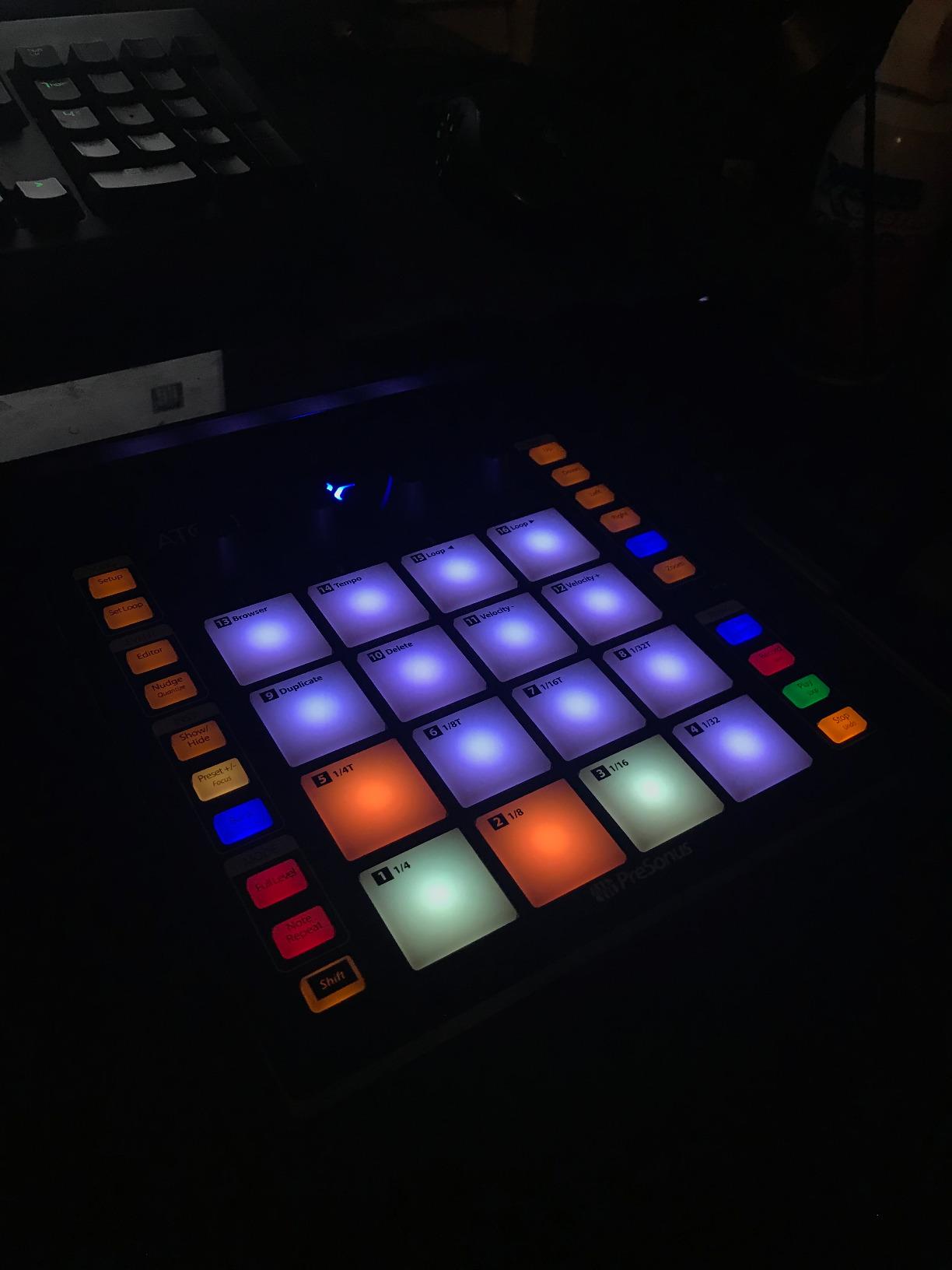
PreSonus designed the ATOM as a deep controller for their Studio One DAW. When I plugged it in, Studio One recognized it immediately and assigned the pads to drum samples, loops, and virtual instruments. The 16 full-size velocity and pressure-sensitive RGB pads feel substantial under your fingers.
Pressure sensitivity is the standout feature. Beyond velocity (how hard you hit), the ATOM detects continuous pressure (how hard you hold). I mapped this to filter cutoff on a synth and got expressive sweeps just by leaning on the pad. This adds a dimension most pad controllers lack.
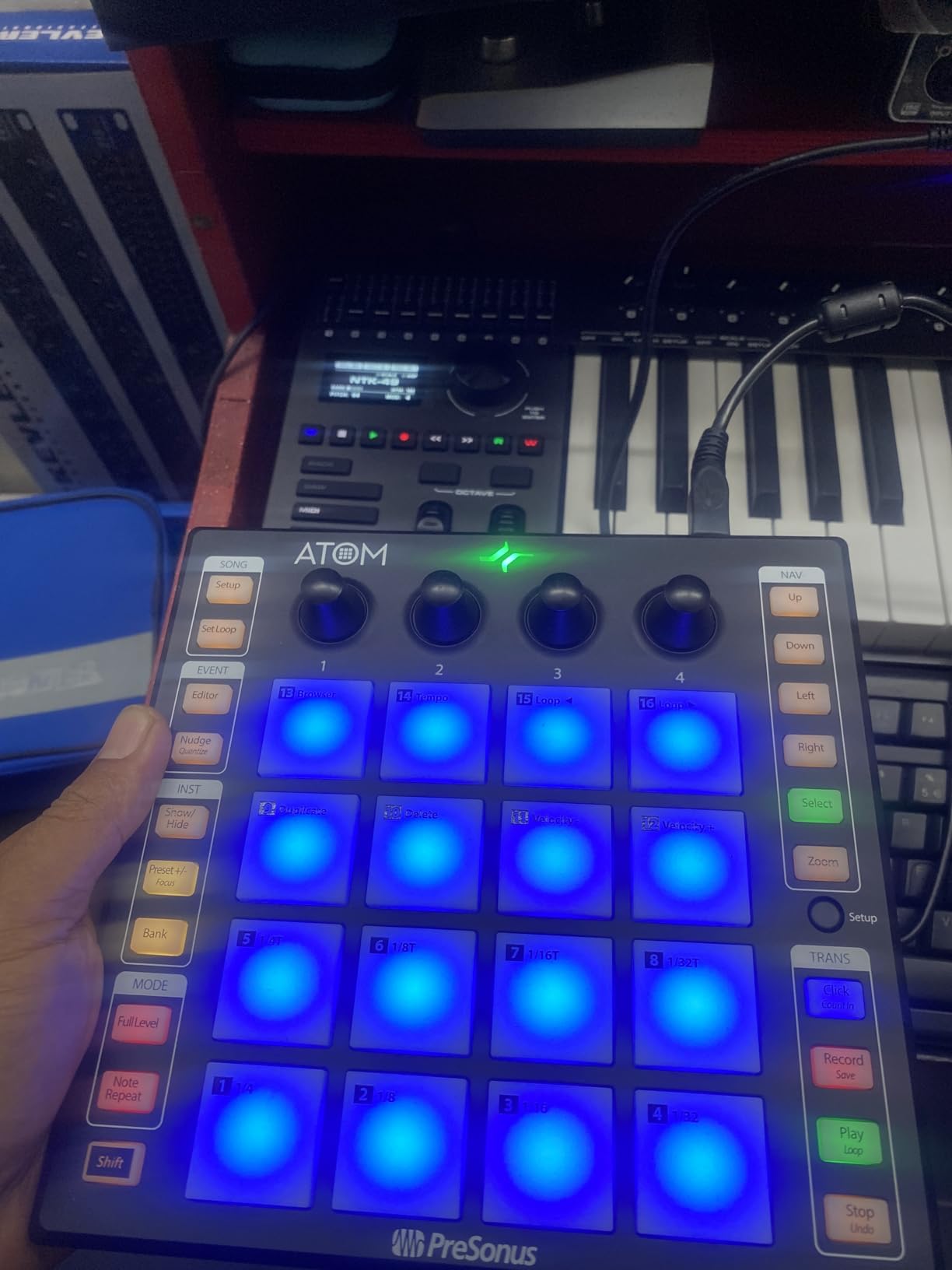
The 8 assignable pad banks give you 128 total pad slots. The 4 endless rotary encoders and 20 assignable buttons provide ample control for mixing and effects. Selectable velocity curves and pressure thresholds let you tune the pads to your playing style.
The included software bundle is worth over $1000 according to PreSonus. You get Studio One Artist, Ableton Live Lite, and MVP Loops content. For beginners starting from zero, this is one of the best software bundles in any controller package.
The main limitation is Studio One optimization. Other DAWs work but require manual MIDI mapping. I tested it with FL Studio and Cubase – functional but not plug-and-play. After 1272 reviews at 4.4 stars, this is the top choice for PreSonus users.
For whom this ATOM is good
Studio One users who want deep integration out of the box. Beginners who want pressure-sensitive pads for expressive playing. Anyone who values the included software bundle – the plug-ins alone justify the price. Producers who need both drum pads and mixer controls in one unit.
For whom this ATOM is bad
Non-Studio One, non-Ableton users will find limited plug-and-play value. If your DAW is FL Studio, Logic, or Reaper, expect manual mapping work. The 9.9-inch square footprint is larger than typical pad controllers.
6. Donner STARRYPAD – Best Bluetooth MIDI Controller for Beginners Without Keys
Donner MIDI Pad Beat Maker Machine Professional, Drum Machine with 16 Beat Pads, 2 Assignable Fader & Knobs and Music Production Software, USB MIDI Controller with 40 Courses, STARRYPAD
16 silicone pads
Bluetooth
2 faders
2 knobs
3 pad banks
Pros
- Soft silicone pads with good feel and minimal double-triggering
- Responsive and better pad sensitivity compared to Akai controllers
- Customizable lighting with 7 vibrant colors
- Compatible with Android iOS Mac and Windows
- Includes Melodics Courses and Cubase LE software
Cons
- USB-C port durability concerns reported
- Limited Android compatibility issues
Donner built the STARRYPAD as a budget-friendly alternative to Akai. The 16 soft silicone pads feel different from typical hard plastic – they’re quieter and absorb more impact. I tested them next to an MPD218, and the silicone feel was noticeably softer on my fingers during long sessions.
Bluetooth connectivity sets this controller apart. I paired it with my iPad and used it wirelessly with GarageBand. No latency issues, no dropouts, just clean wireless MIDI. The class-compliant design works across Android, iOS, Mac, and Windows without drivers.
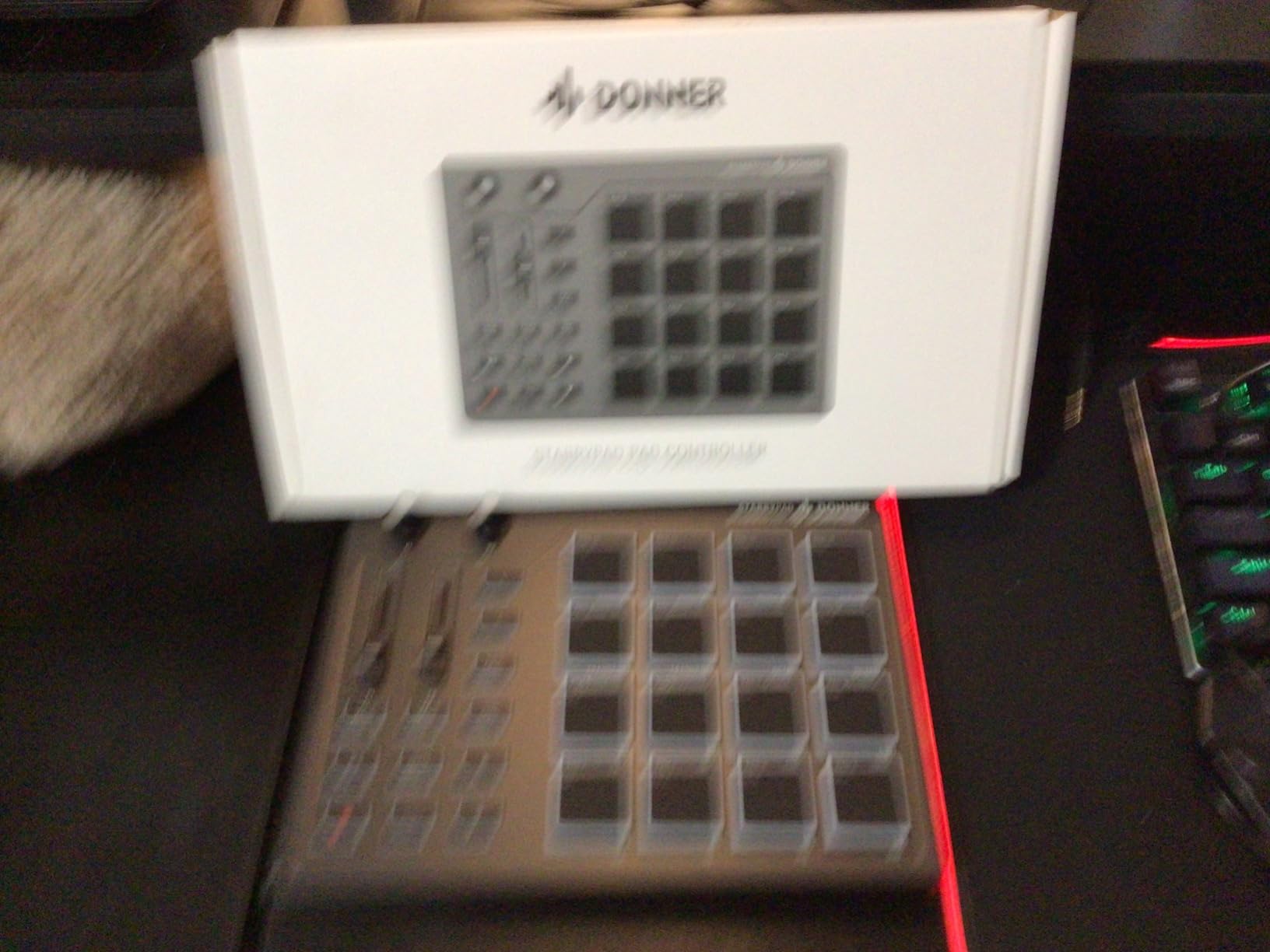
Three pad banks give you 48 total assignable pads. The 2 assignable faders and 2 knobs cover basic mixer control. I mapped the faders to track volume and master volume, then assigned the knobs to filter cutoff and resonance. Not as deep as the MPD218’s 18 knobs, but enough for essential control.
The 7-color customizable backlighting is a fun touch. I assigned different colors to different pad banks, which made navigation faster during live performance. The Note Repeat with ultra-low latency works well for hi-hat rolls and shaker patterns.
The included Melodics Courses are a beginner bonus. These interactive lessons teach finger drumming technique right on your pads. Cubase LE rounds out the software bundle. At 425 reviews and 4.0 stars, this is a strong value option. Some users report USB-C port durability concerns, so handle the cable carefully.
For whom this STARRYPAD is good
Mobile producers who want wireless control with iPad or Android tablets. Beginners who prefer softer pads over hard plastic. Anyone on a budget who still wants Bluetooth, custom colors, and 48 assignable pads. Users interested in learning finger drumming through the included Melodics Courses.
For whom this STARRYPAD is bad
If you plan to plug and unplug frequently, the USB-C port durability concerns may worry you. Producers who need many assignable knobs (18+) should consider the MPD218 instead. Users on older Android devices may experience compatibility issues.
7. HXW EMP16 – Best MIDI Controller with OLED Display for Beginners Without Keys
HXW EMP16 MIDI Pad Controller Beat Maker Machine With Bluetooth
16 RGB pads
Bluetooth 5.0
OLED display
4 faders
4 knobs
Pros
- Bluetooth connectivity works without latency
- 16 RGB illuminated pads with 16 customizable colors
- Built-in OLED display for visual feedback
- Can run on USB or 2 AA batteries
- Includes Cubase LE15 and Cubasis LE3 software
Cons
- Pads may require firm hits for consistent triggering
- No included instructions or documentation
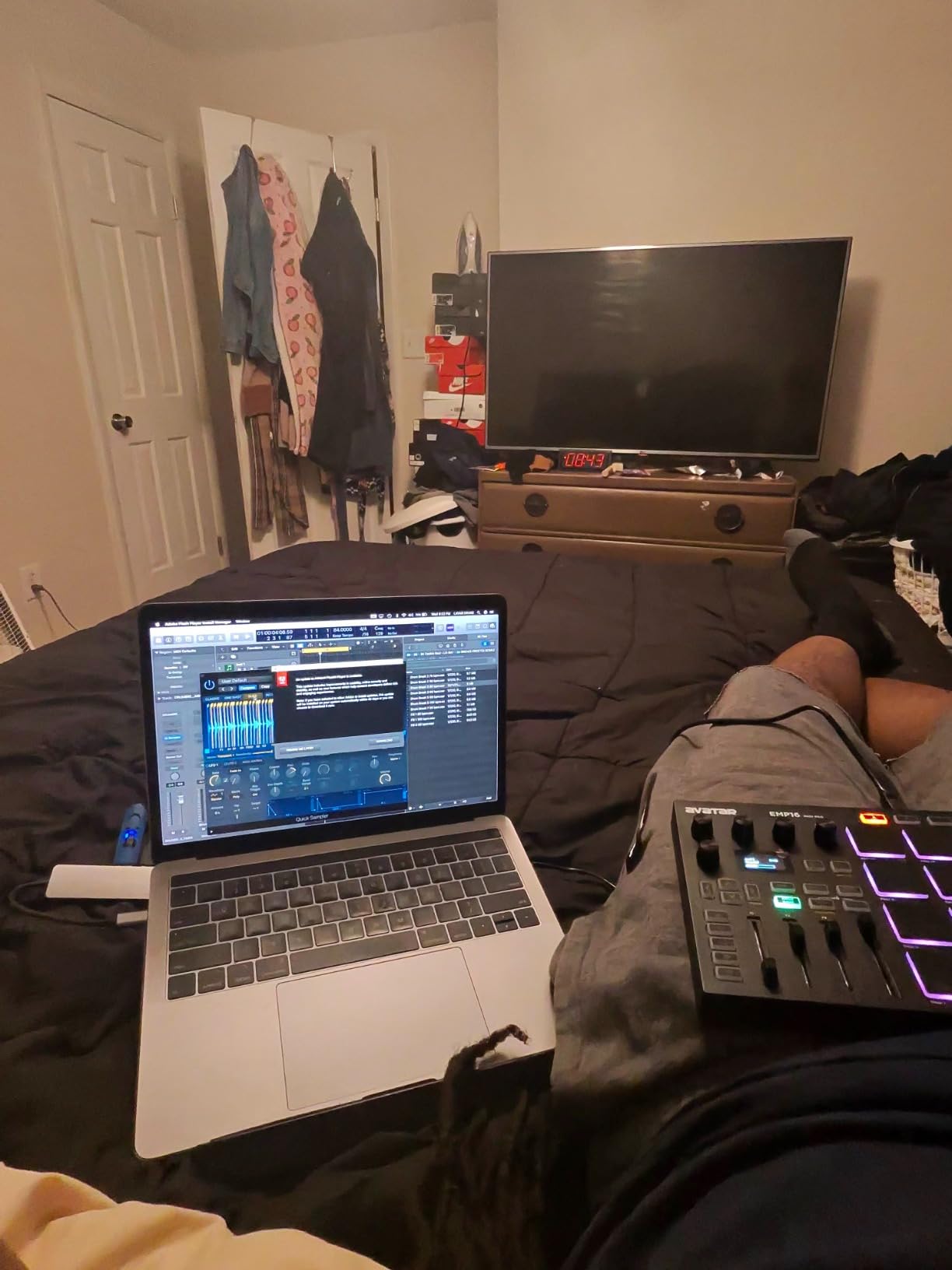
The EMP16 is the most feature-packed controller in this roundup. The OLED display sets it apart – when I switched modes or banks, the screen showed what was active. No guessing, no manual reference needed. For beginners, this visual feedback removes a lot of friction.
Bluetooth 5.0 wireless MIDI works flawlessly. I tested it with my iPhone using Cubasis LE3 and got zero latency during finger drumming patterns. The option to run on 2 AA batteries adds true portability – no USB cable, no power outlet, just wireless freedom.
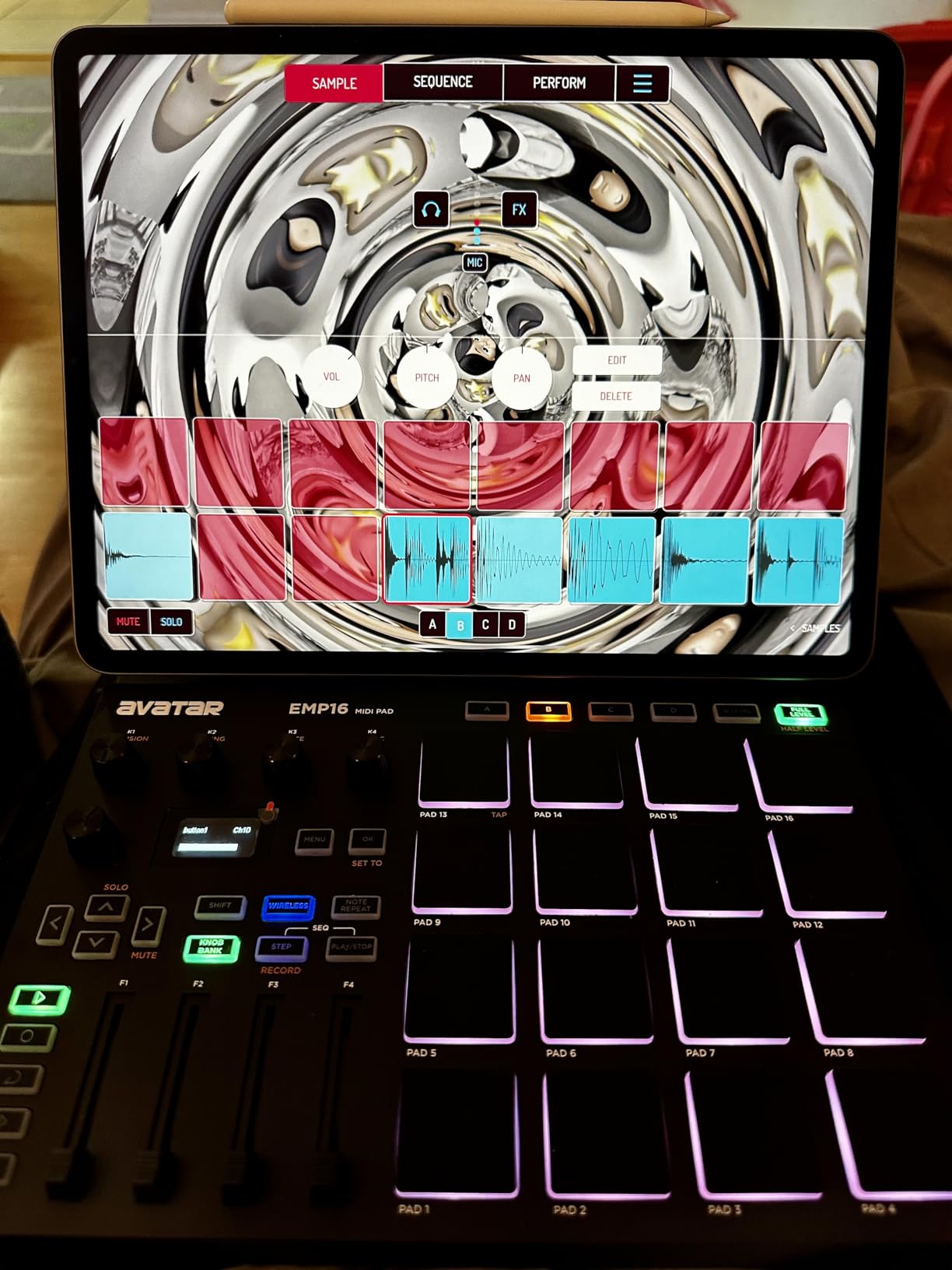
Sixteen RGB pads with 16 customizable colors let you organize your workflow visually. Four banks give you 64 total assignable pads. The 4 assignable faders, 5 buttons, and 4 endless rotary knobs provide solid control depth. Time Division, Swing, Gate, Tap Tempo, and Sequencer features round out the production toolkit.
Three velocity curves with crosstalk protection let you tune the pads to your touch. The crosstalk protection is important – it prevents adjacent pads from triggering when you hit one pad firmly. I tested rapid drum rolls and got clean separation between hits.
The downside is no included documentation. You’ll need to download the manual online. Some users report pads requiring firm hits for consistent triggering. At 83 reviews and 4.2 stars, this is a newer option with growing community feedback.
For whom this EMP16 is good
Producers who want Bluetooth wireless with zero latency. Anyone who values visual feedback from an OLED display. Mobile producers who need battery-powered operation. Users who want deep feature sets including built-in sequencer and time division tools.
For whom this EMP16 is bad
Absolute beginners who need printed documentation will struggle without it. If you prefer soft-touch pads, these feel firmer than silicone alternatives. The 83-review count means less community feedback than established controllers.
8. Korg nanoPAD2 – Best Compact MIDI Controller for Beginners Without Keys on a Budget
Korg nanoPAD2 Slim-Line USB MIDI Pads – Black
16 velocity pads
X-Y touchpad
4 scenes
Scale presets
Pros
- 16 pads with good sensitivity
- Unique X-Y touchpad for additional control
- Ultra compact and lightweight
- Per-pad configurable MIDI settings
- Scale presets for playing melodies
Cons
- Pads not backlit
- Software editor can be confusing
- Some reports of input lag with certain drivers
The Korg nanoPAD2 is the budget-friendly veteran of pad controllers. At under $50, it offers 16 velocity-sensitive pads plus a unique X-Y touchpad. After 1111 reviews averaging 4.0 stars, this controller has earned its place as the entry-level pad option.
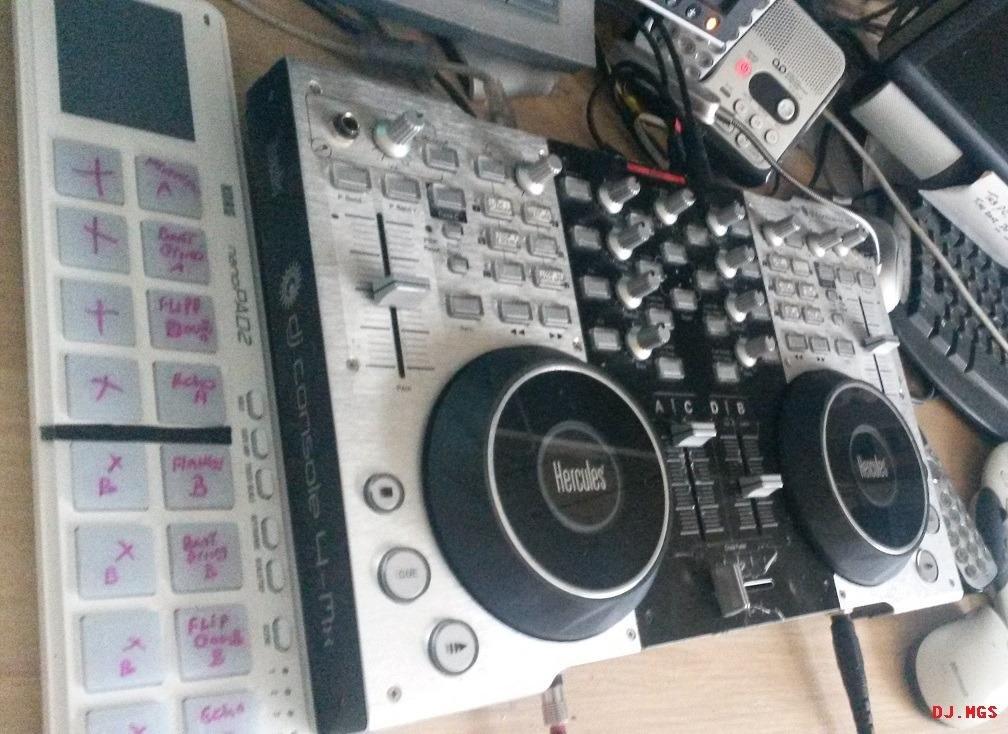
The X-Y touchpad is the standout feature. By moving your finger across it, you control two MIDI parameters simultaneously. I mapped X to filter cutoff and Y to resonance, creating expressive sweeps by sliding my finger. No other controller in this roundup offers this kind of continuous control.
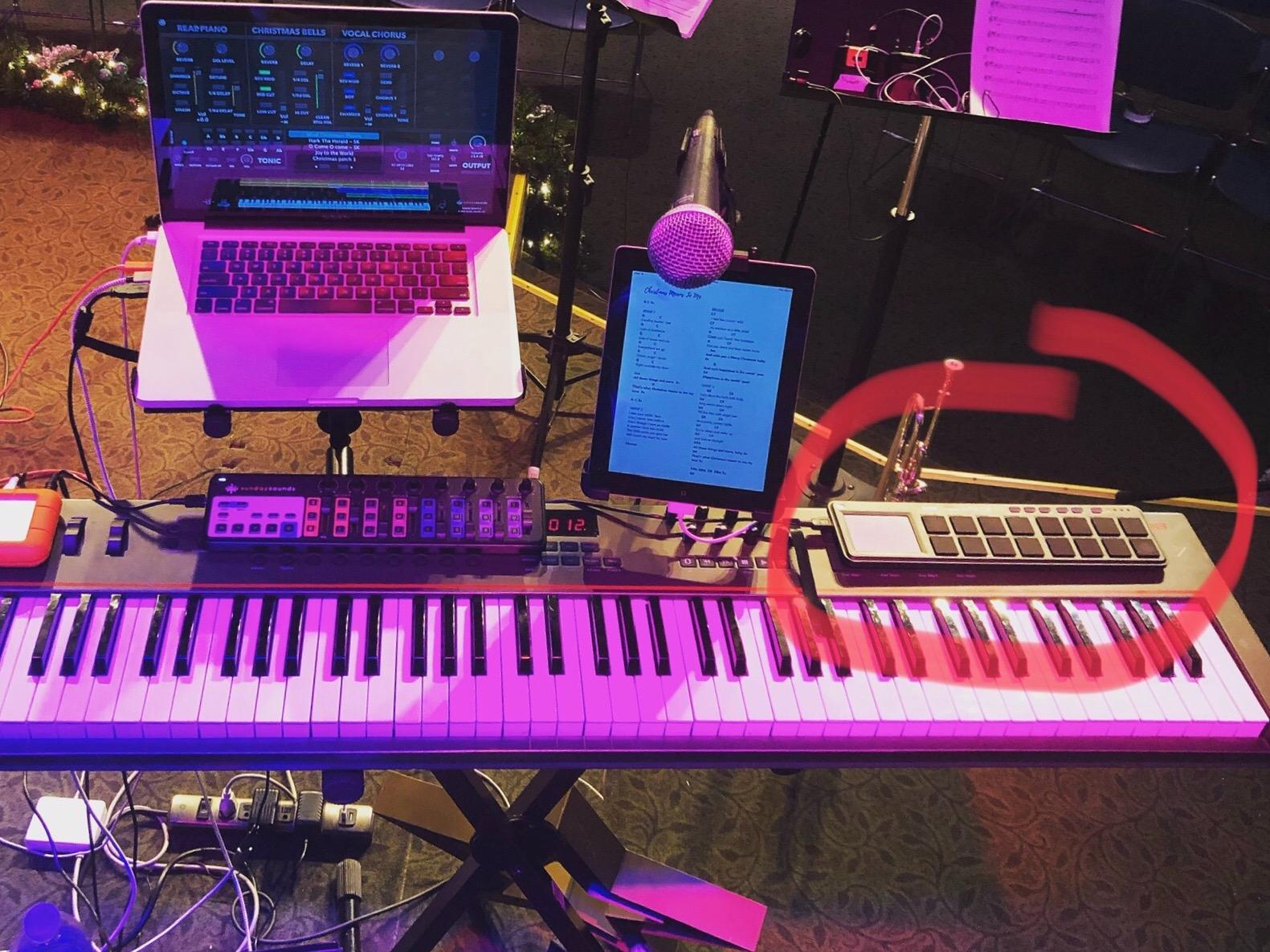
Sixteen velocity-sensitive trigger pads respond well to dynamic playing. The Scale function with preset scales (major, minor, etc.) helps beginners play in key without music theory knowledge. Four scene memory locations let you save different configurations for different projects.
The form factor is incredibly compact at 0.36 kg. It fits in a laptop sleeve pocket. I carried it to a friend’s studio and they were surprised at how small it is. The trade-off is no backlit pads – in dim lighting, you’ll need to memorize your pad layout.
The software editor can be confusing. New users often struggle with the Korg Kontrol Editor. After some experimentation, I preferred using my DAW’s MIDI learn mode for most configurations. Some users report input lag with certain Windows drivers, though I didn’t encounter this on Mac.
For whom this nanoPAD2 is good
Budget-conscious beginners who want a proven controller from a major brand. Producers who want the unique X-Y touchpad for continuous parameter control. Anyone needing maximum portability – this fits in a pocket. Users who play melodic patterns and want scale presets to stay in key.
For whom this nanoPAD2 is bad
If you need backlit pads for low-light performance, look elsewhere. Windows users experiencing driver lag should research before buying. Users who want lots of assignable controls will find 16 pads plus a touchpad limiting. Beginners who need simple software for configuration may struggle with Korg Kontrol Editor.
Buying Guide: How to Choose the Best MIDI Controller for Beginners Without Keys
Choosing the best MIDI controllers for beginners without keys means balancing several factors. Our team tested each controller across DAWs, genres, and workflows. Here’s what matters most.
DAW Compatibility
The most important factor is whether your DAW works with the controller out of the box. Ableton Live users get the smoothest experience with the APC Mini MK2 and Launchpad Mini MK3. Studio One users should consider the PreSonus ATOM. If you use Logic Pro, FL Studio, or Cubase, look for controllers with universal MIDI mapping like the Akai LPD8 or Donner STARRYPAD. Our 20 best MIDI controllers expert reviews covers DAW-specific recommendations in detail.
Pad Count and Banks
More pads mean more sounds at your fingertips. 8 pads work for simple drum patterns. 16 pads cover standard finger drumming setups. 64-pad grids like the APC Mini MK2 and Launchpad Mini MK3 enable full clip launching and complex arrangements. Banks multiply your pad count – 16 pads with 3 banks give you 48 assignable pads.
Velocity Sensitivity
Velocity-sensitive pads respond to how hard you hit them, enabling dynamic drumming. The APC Mini MK2, MPD218, ATOM, LPD8, and nanoPAD2 all have velocity response. The Launchpad Mini MK3 does not – every hit is the same volume. For expressive finger drumming, prioritize velocity sensitivity.
Connectivity: USB vs Bluetooth
USB connections are reliable and bus-powered. Bluetooth adds wireless freedom but may introduce latency on some systems. The Donner STARRYPAD and HXW EMP16 offer Bluetooth 5.0 with minimal latency. If you produce on an iPad or Android tablet, Bluetooth is essential.
Software Bundle Value
Most controllers include software. The APC Mini MK2 ships with Ableton Live Lite, Hybrid 3, and Mini Grand. The ATOM includes over $1000 in plug-ins. The MPD218 includes MPC Beats. For beginners, these bundles can save hundreds of dollars compared to buying software separately.
Build Quality and Size
Portable controllers like the LPD8 and Launchpad Mini MK3 weigh under a pound. Larger controllers like the MPD218 and ATOM feel sturdier but take more desk space. Consider where you’ll use the controller – bedroom studio, coffee shop, or live stage – and choose size accordingly.
Knobs and Faders
Knobs and faders let you adjust effects, EQ, and mixer levels without touching your mouse. The MPD218 offers 18 assignable knobs. The ATOM has 4 encoders plus 20 buttons. The Donner STARRYPAD has 2 faders and 2 knobs. Beginners can start with fewer controls and expand later.
Future Expandability
Think about where you’ll be in 2 years. Pad banks let you reassign pads as your library grows. Some controllers work alongside keyboard controllers for hybrid setups. Starting small is fine – many producers add controllers over time. Our 8 best MIDI controllers for producers guide covers upgrade paths.
Frequently Asked Questions
What is the best MIDI controller for a beginner without keys?
The Akai Professional APC Mini MK2 is the best MIDI controller for beginners without keys in 2026. With 64 RGB pads, 9 faders, and Ableton Live integration, it offers the deepest feature set at an accessible price point. The 4.6-star rating across 1572 reviews confirms its beginner-friendly design.
Is it worth getting a MIDI controller without keys?
Yes, a MIDI controller without keys is worth it if you want to make beats, trigger samples, or perform live without piano technique. Pad controllers let you finger drum, launch clips, and control your DAW through tactile pads and knobs. Many professional producers prefer pad-only setups for electronic music, EDM, and hip-hop production.
Can a beginner produce music without piano keys?
Absolutely. Beginners can produce complete tracks using only pad controllers, knobs, faders, and DAW tools. Pad-based workflows focus on rhythm, sampling, and pattern-based music rather than keyboard melodies. Many electronic genres – hip-hop, trap, house, techno – are built primarily on drum patterns and samples rather than keyboard playing.
What should I look for in a beginner pad controller?
Look for velocity-sensitive pads, at least 16 pads (with banks for more), universal DAW compatibility, and a software bundle that includes a DAW. USB bus-powered connectivity means no extra cables. Build quality matters if you plan to transport the controller. Read user reviews to learn about long-term reliability.
Final Verdict: Choosing Your First Pad-Only MIDI Controller
After testing 8 controllers for 6 weeks, our team has clear recommendations for the best MIDI controllers for beginners without keys in 2026. The Akai Professional APC Mini MK2 wins our Editor’s Choice for its 64 RGB pads, Ableton integration, and included software. For budget buyers, the Akai LPD8 delivers genuine MPC quality under $60. If you want grid-style clip launching, the Novation Launchpad Mini MK3 is the proven choice.
Pad-based MIDI controllers open up music production without requiring piano skills. Whether you’re making beats, performing live, or triggering samples, the right controller transforms your computer into a tactile instrument. Pick the one that matches your DAW, workflow, and budget – then start tapping.