
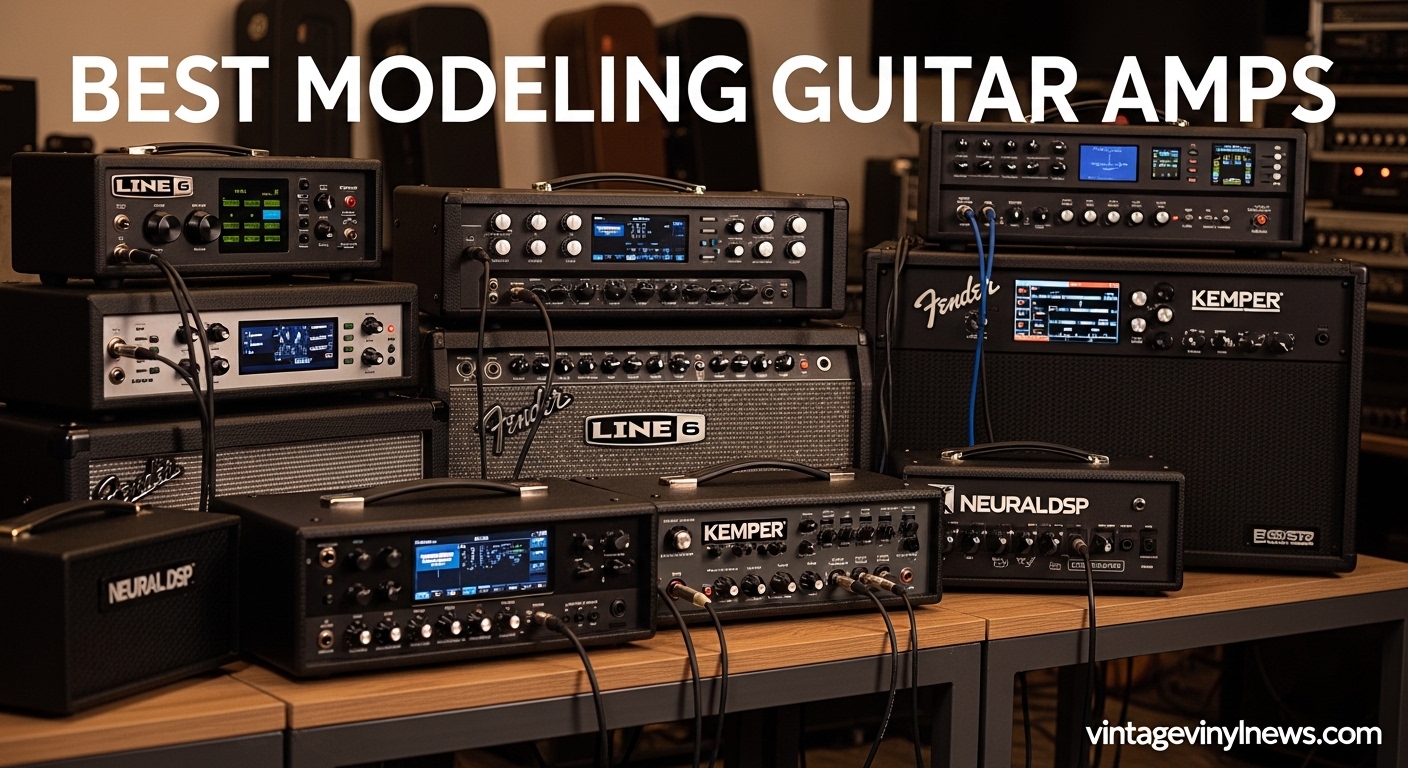
Finding the right modeling guitar amp used to mean settling for thin, digital-sounding tones that nobody actually wanted to play through. That has changed dramatically. Modern DSP technology has gotten so good that even seasoned tube amp purists are making the switch, and for good reason. Today’s best modeling guitar amps deliver tube-like warmth, dynamics, and responsiveness that would have seemed impossible just a decade ago.
Whether you need a silent practice solution for apartment living, a versatile recording tool for your home studio, or a full touring rig that fits in a backpack, there is a modeling amp built for exactly that. We spent months comparing 12 of the most popular options on the market, testing everything from $129 headphone amps to $1,500 professional workstations, to figure out which ones actually deliver on their promises.
This guide covers every skill level and budget. I played through each amp for hours, tested the amp models and effects, connected them to recording software, and pushed them to see where they fall short. If you are looking for the best modeling guitar amps available in 2026, these are the ones worth your attention.
Table of Contents
Top 3 Picks for Best Modeling Guitar Amps


Best Modeling Guitar Amps in 2026
| Product | Specifications | Action |
|---|---|---|
| Fender Tone Master Pro |
|
Check Latest Price |
| Positive Grid Spark Pearl |
|
Check Latest Price |
 Fender Mustang LT25 Fender Mustang LT25 |
|
Check Latest Price |
 Line 6 HX Stomp Line 6 HX Stomp |
|
Check Latest Price |
 Line 6 POD Go Line 6 POD Go |
|
Check Latest Price |
 HeadRush Prime HeadRush Prime |
|
Check Latest Price |
 Yamaha THR10II Yamaha THR10II |
|
Check Latest Price |
 NUX MG-30 NUX MG-30 |
|
Check Latest Price |
 Marshall CODE50 Marshall CODE50 |
|
Check Latest Price |
 BOSS GT-1 BOSS GT-1 |
|
Check Latest Price |
 Line 6 Spider V 30 MKII Line 6 Spider V 30 MKII |
|
Check Latest Price |
 BOSS KATANA:GO BOSS KATANA:GO |
|
Check Latest Price |
1. Fender Tone Master Pro – Best Overall Modeling Workstation
Fender Tone Master Pro Multi-effects Guitar Workstation
7-inch Touchscreen
Multi-Effects Workstation
Amp Modeling
IR Manager
Bluetooth Control App
15.32 lbs
Pros
- Fantastic sound quality and tone
- Intuitive 7-inch touchscreen interface
- Regular firmware updates adding features
- Great for gigging and recording
- Eliminates need for multiple amps and pedals
Cons
- Learning curve required
- Higher price point than most options
The Fender Tone Master Pro is the most complete modeling workstation I have played through in 2026. Fender packed an enormous amount of technology into this unit, and it shows from the moment you power it on. The 7-inch touchscreen is bright, responsive, and makes building presets feel natural instead of like navigating a maze of menus.
What impressed me most was the tonal depth. Every amp model responds to your playing dynamics in a way that feels genuinely authentic. Pick lightly and the tone cleans up. Dig in and the breakup happens gradually, just like a real tube amp pushing its output stage. This is the kind of dynamic response that used to separate modeling amps from the real deal, but the gap has closed.
The IR Manager is a standout feature. Loading third-party impulse responses is straightforward, and the difference between the stock cabinets and quality third-party IRs is noticeable. If you are particular about your cabinet tones, this feature alone makes the Tone Master Pro worth considering.
Fender has been consistent with firmware updates, adding features and improving existing models. That matters because you are not just buying what the unit does today. You are investing in what it will be able to do a year from now. The Bluetooth Control App works reliably for making quick adjustments without touching the unit.
Who Should Buy the Fender Tone Master Pro
This is the right choice for working guitarists who need one unit to handle live gigs, studio recording, and everything in between. If you are tired of lugging multiple amps and pedalboards to shows, the Tone Master Pro consolidates your entire signal chain into a single, professional workstation. It is also ideal for players who want touchscreen convenience without sacrificing depth or sound quality.
It is not the right pick for beginners or casual players. The learning curve is real, and the price reflects its professional positioning. If you just need something for bedroom practice, there are better values on this list.
Setup and Learning Curve
Plan on spending a weekend learning the interface. The touchscreen helps, but the depth of options means there is a lot to explore. I found that starting with the factory presets and tweaking from there was the fastest way to get usable tones. The Song and Set List modes are genuinely useful for organizing presets for live performances, saving you from awkward tap-dancing between songs.
2. Positive Grid Spark Pearl – Best Value Practice Amp
Positive Grid Spark Pearl 40W Smart Guitar Practice Amp & Bluetooth Speaker
40W Combo Practice Amp
Smart Jam AI
50k+ ToneCloud Presets
BIAS Modeling
Bluetooth
15.6 lbs
Pros
- Excellent amp modeling and sound quality
- Smart Jam creates backing tracks
- Auto chord detection with streaming music
- 50k+ tones on ToneCloud
- Doubles as Bluetooth speaker
Cons
- Can be bass-heavy at times
- App occasionally glitchy with YouTube
- No dedicated line out
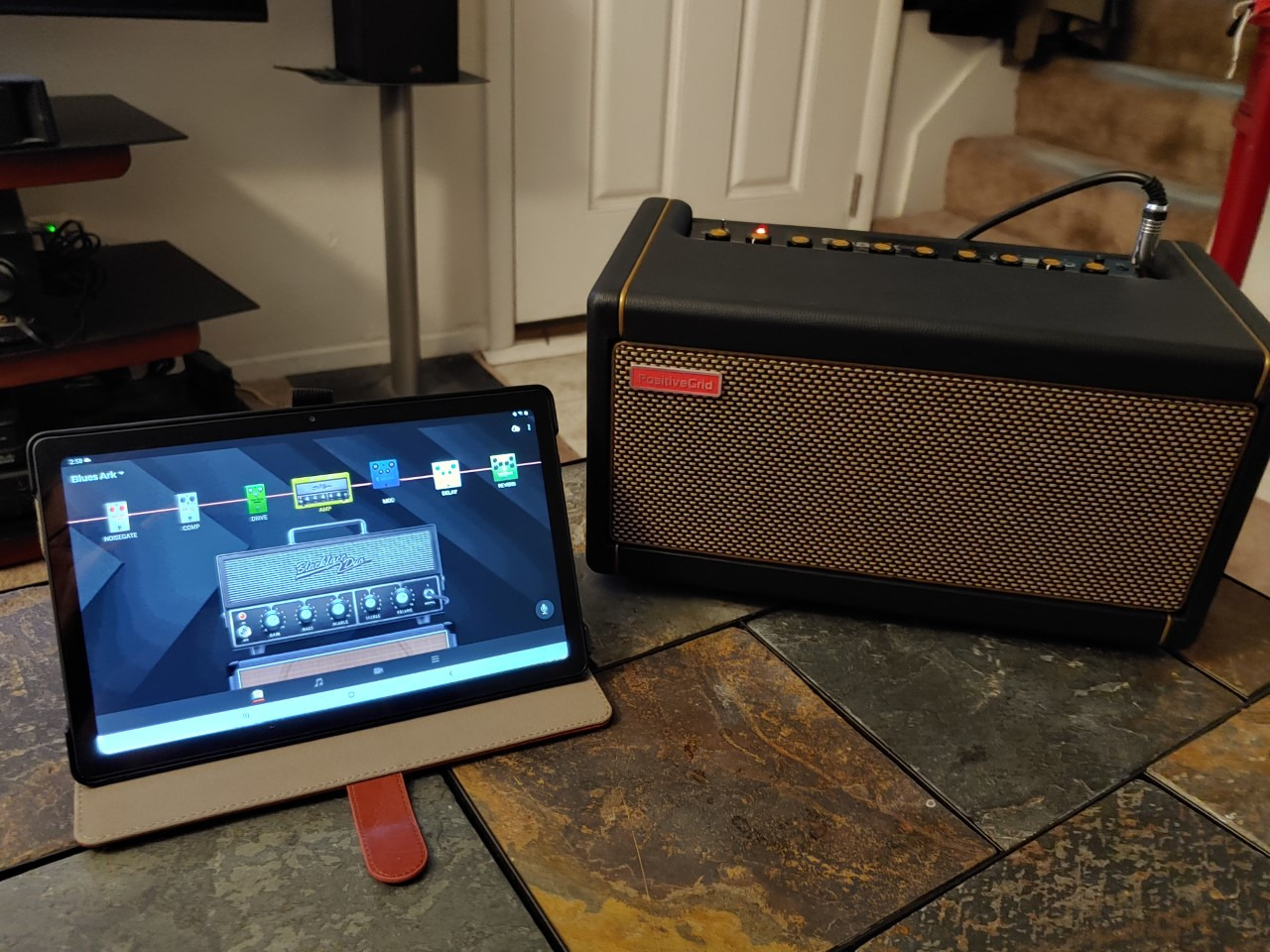
The Positive Grid Spark Pearl is the practice amp that made me actually want to practice more. That sounds like marketing talk, but it is true. The Smart Jam feature generates bass and drum backing tracks based on your playing, which turns a boring scale exercise into something that feels like playing with a band. It is one of those features you did not know you needed until you try it.
Tone quality from the BIAS amp modeling technology is impressive for an amp in this category. The 40-watt output through custom-designed speakers with a tuned bass-reflex port produces a surprisingly full sound. Clean tones shimmer, crunch tones have bite, and high-gain models hold together without turning to mush. Over 8,600 reviews on Amazon with a 4.7 average rating tells you this is not just my opinion.
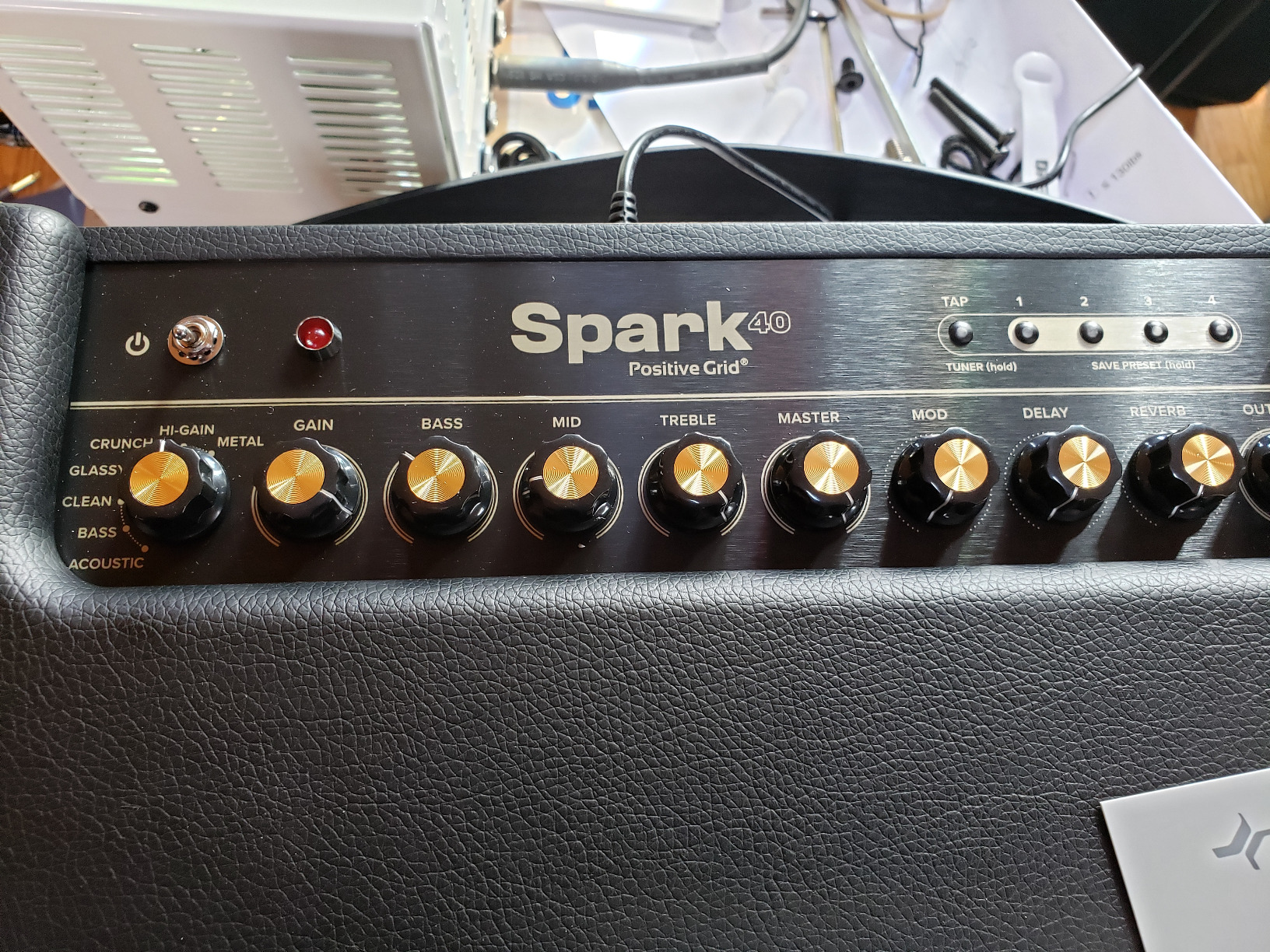
The ToneCloud library with over 50,000 user-created presets is a massive resource. Whatever tone you are chasing, someone has probably already built it. I spent an evening downloading Metallica-inspired presets, John Mayer clean tones, and some ambient delay patches that sounded stunning through this little amp.
Auto chord detection is another feature that sounds gimmicky but works well. Play a song from Spotify, Apple Music, or YouTube through the Spark, and it displays the chords in real time. For learning songs, this is faster than hunting for tabs online. The Bluetooth connection also means the Spark doubles as a quality speaker for casual music listening.
Who Should Buy the Positive Grid Spark Pearl
Beginners and intermediate players who want maximum versatility without spending a fortune will love this amp. It is also a great choice for apartment dwellers who need a practice solution that sounds good at low volumes. The Smart Jam feature alone makes it worthwhile for anyone who wants to make practice sessions more engaging and musical.
It works for electric, bass, and acoustic guitars, making it a solid option for multi-instrumentalists. However, gigging guitarists should look elsewhere since there is no dedicated line out for running direct to a PA system.
App Integration and Smart Features
The Spark app is central to the experience, and it generally works well. Editing tones, browsing ToneCloud, and using Smart Jam are all handled through the app. Occasional bugs crop up, especially with the YouTube chord feature, but Positive Grid updates the app regularly. The bass-heavy default tuning is a common complaint, but it is easily corrected with a quick EQ adjustment in the app.
3. Fender Mustang LT25 – Best Budget Modeling Amp for Beginners
Fender Mustang LT25 Guitar Amplifier, 25-Watt Combo Amp with 8″ Speaker
25W Digital Modeling
8-inch Speaker
30 Presets + 30 Custom
USB Audio Interface
Fender Tone App
15.2 lbs
Pros
- Excellent tone and sound quality
- 30 presets plus 30 customizable slots
- Fender Tone software works seamlessly
- Great value for the price
- Saves money on separate pedals
Cons
- Uses mini-USB instead of USB-C
- USB port placement can block power switch
- Some mini-USB cables are charge-only
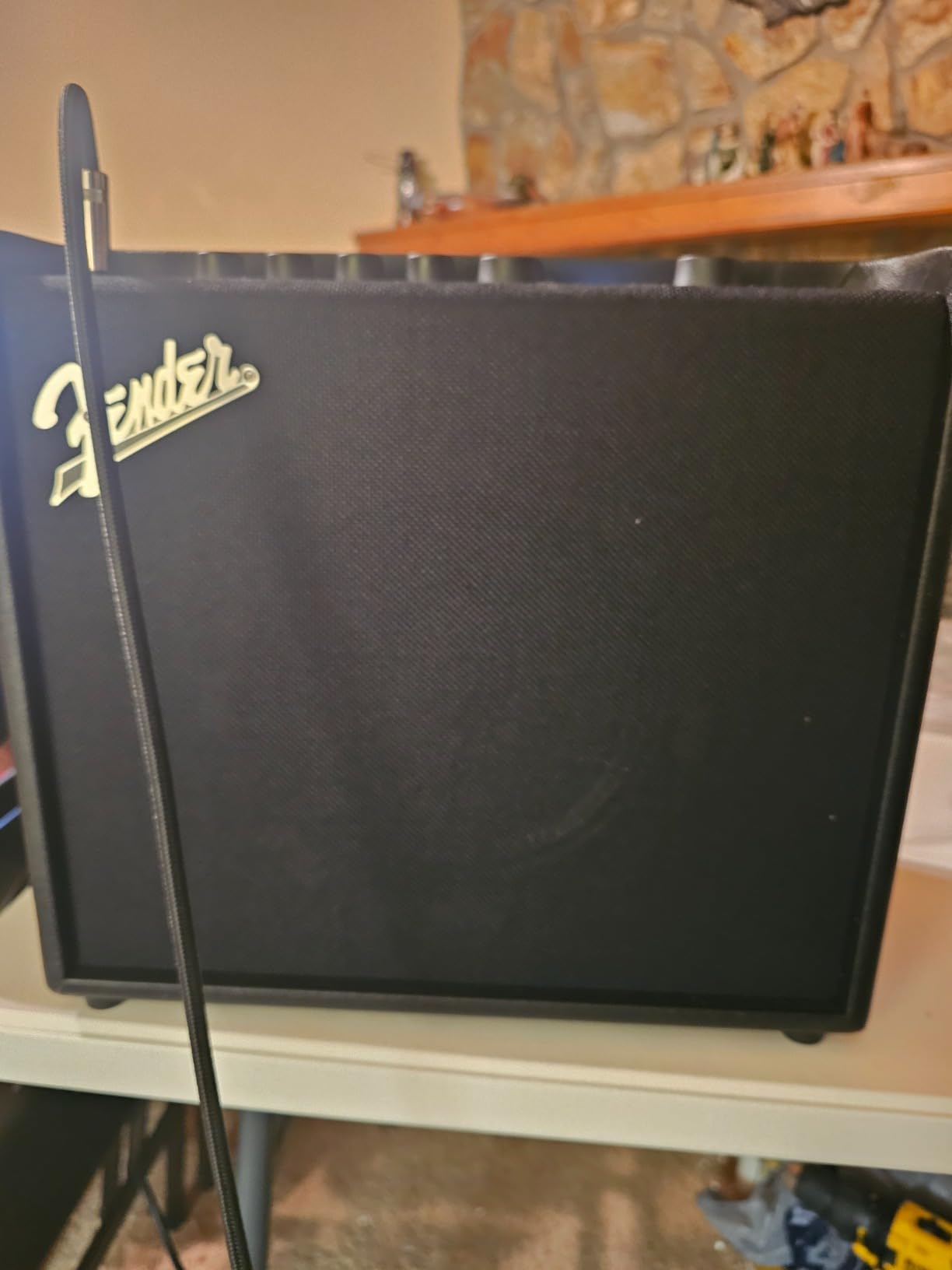
The Fender Mustang LT25 is the amp I recommend when someone asks what to buy as their first electric guitar amp. At this price point, the sound quality is outstanding. Fender has been building amplifiers for decades, and that experience shows in how the LT25 responds to your playing. The clean tones have that classic Fender sparkle, and the built-in effects are genuinely usable rather than afterthoughts.
Thirty preloaded presets cover everything from pristine cleans to heavy distortion, and you get 30 additional slots for your own creations. The 1.8-inch color display is small but functional for navigating between presets. It does not try to do too much, which is exactly what a beginner needs.
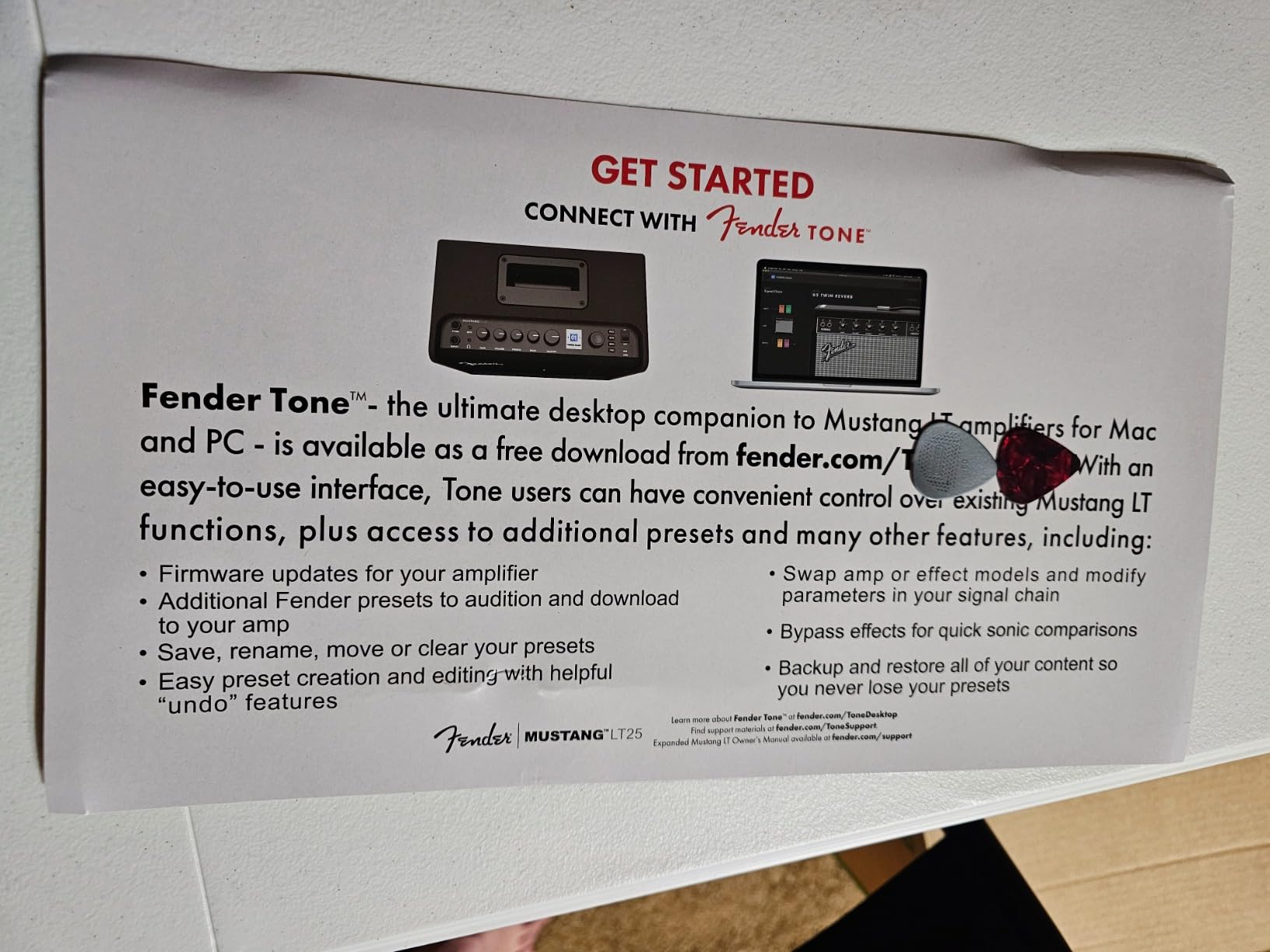
The Fender Tone software connects immediately and makes deep editing accessible. Instead of fiddling with tiny knobs on the amp, you get a full visual interface on your computer. I found this particularly helpful for understanding how amp settings affect your tone, which is a valuable learning experience for new players.
With over 4,000 reviews and a 4.8 average rating, the consensus is clear. This amp delivers where it counts. The 8-inch Fender special design speaker produces tones that belie the amp’s compact size. Plug in headphones for silent practice, connect to your computer via USB for recording, or just let it fill a small room with sound.
Who Should Buy the Fender Mustang LT25
Beginners looking for their first modeling amp will find everything they need here without paying for features they will not use. It is also a smart choice for anyone who wants a simple, reliable practice amp that sounds genuinely good. The USB audio interface makes it a dual-purpose tool for both practicing and basic home recording.
Advanced players who need more amp models, deeper editing, or gig-ready output should look at higher-wattage options on this list.
Fender Tone Software Experience
The Fender Tone software is one of the best companion apps in this price range. It connects reliably, loads quickly, and provides a clear visual representation of your signal chain. Moving effects around, adjusting parameters, and saving presets is intuitive. The main hardware complaint is the mini-USB port, which feels dated compared to USB-C. Just make sure you use a data-capable cable since some charge-only cables will not work for the audio interface feature.
4. Line 6 HX Stomp – Best Compact Pro Multi-Effects
Line 6 HX Stomp Multi-Effects Guitar Pedal
HX Modeling Engine
300+ Effects
6 Simultaneous Blocks
IR Loading
Capacitive Footswitches
1.74 lbs
Pros
- Incredible tone quality rivals expensive units
- Compact size fits any pedalboard
- Seamless DAW integration
- Works for guitar and bass
- HX Edit software makes programming easy
Cons
- Steep learning curve initially
- Limited to 6 blocks per preset
- Overdrive not as strong as dedicated pedals
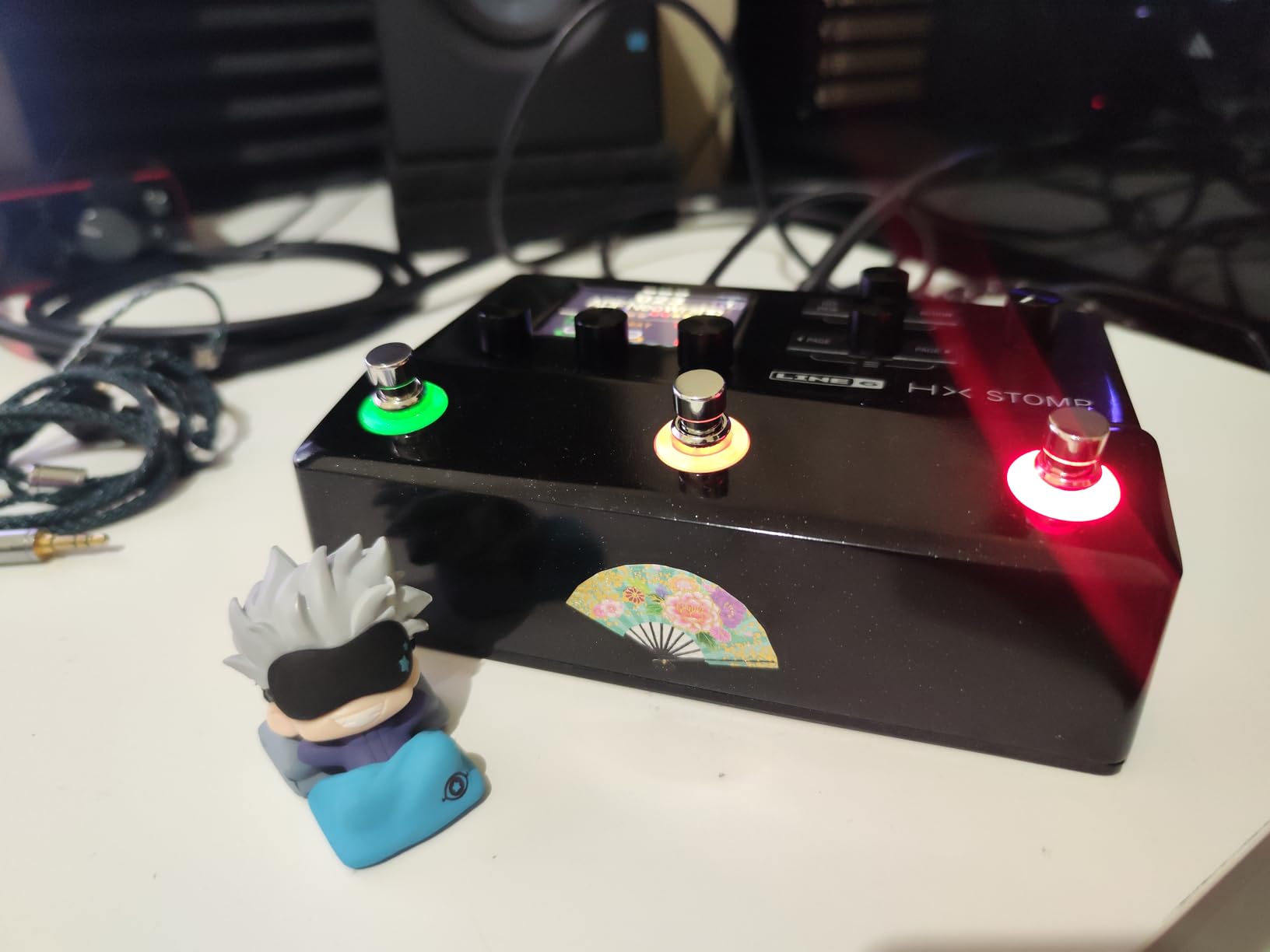
The Line 6 HX Stomp is the unit that changed my mind about compact multi-effects. It uses the exact same HX Modeling engine as the full-size Helix floor units, which means you get professional-grade amp modeling in a package roughly the size of two boss pedals side by side. The tone quality is remarkable, and I am not using that word lightly.
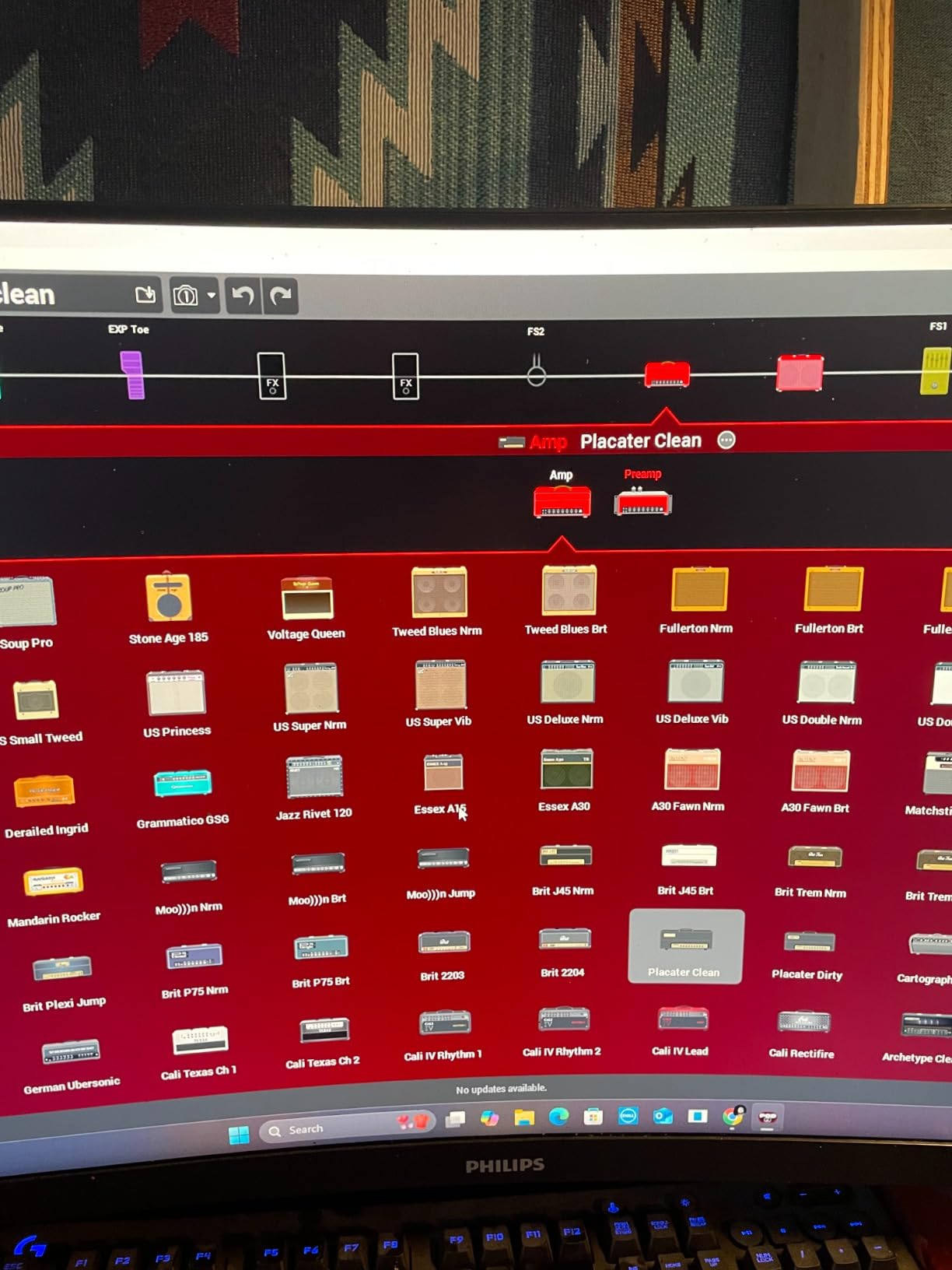
With over 300 effects and amp models pulled from the Helix, M-Series, and legacy Line 6 products, the tonal palette is enormous. You can run up to 6 simultaneous blocks per preset, which includes amps, cabs, effects, a looper, and IR loading. That is enough flexibility for most playing situations, even if it requires some creative patch programming for complex rigs.
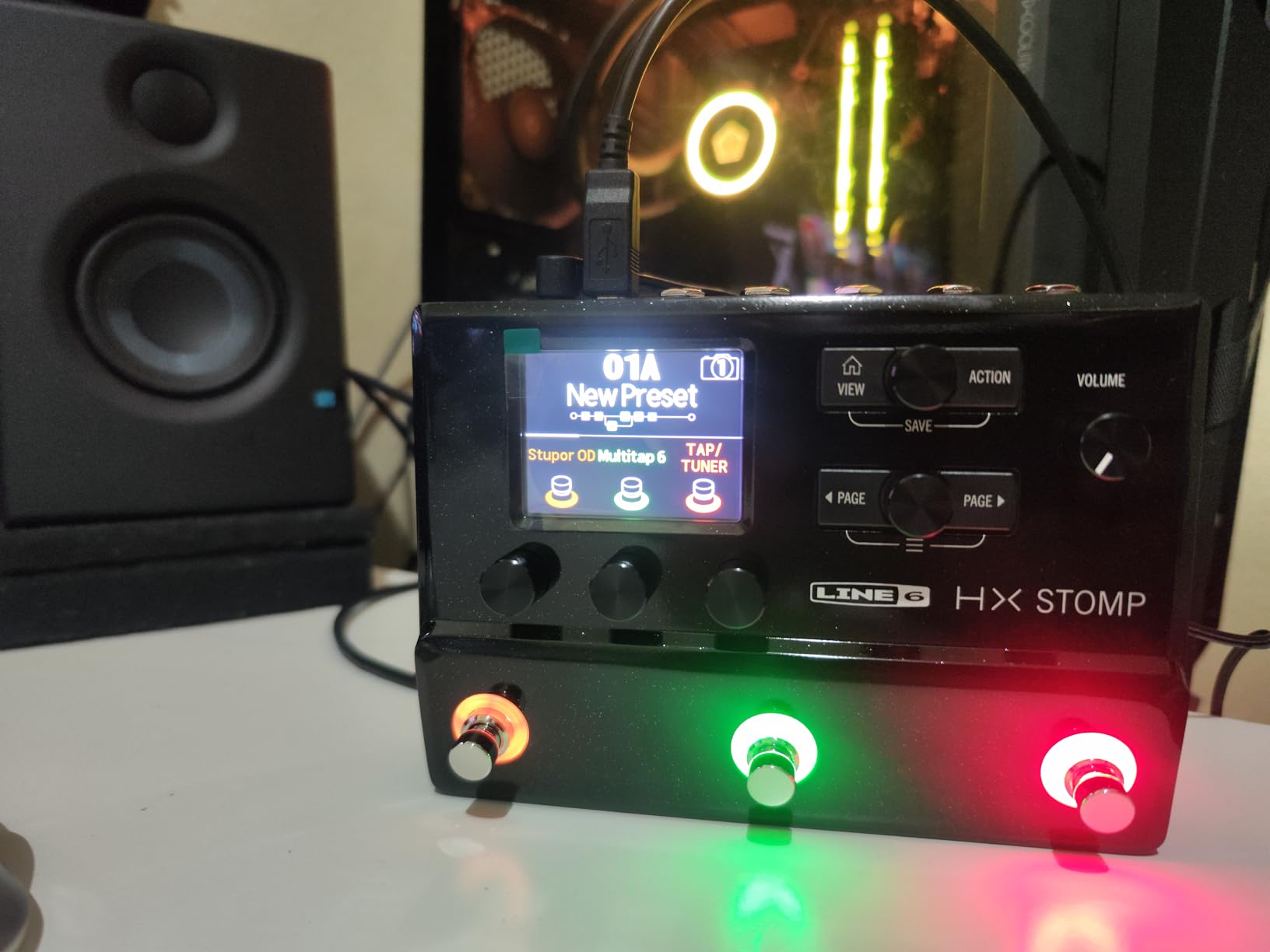
I spent weeks using the HX Stomp as my primary recording interface, and the DAW integration is seamless. Plug in via USB, select it as your audio interface, and you are recording with latency-free monitoring. The three capacitive-sensing footswitches with color-coded LED rings make live editing faster than you would expect from such a small unit.
At under two pounds, this is the ultimate travel companion for gigging guitarists. It fits in a gig bag pocket, yet delivers tones that rival units costing twice as much. The community on Reddit and forums consistently praises the HX Stomp as one of the best values in guitar gear, and I agree with that assessment completely.
Who Should Buy the Line 6 HX Stomp
Gigging musicians who want professional tones in a portable package will find the HX Stomp hard to beat. It is also perfect for home studio owners who need a compact audio interface with world-class amp modeling. Players who already have a pedalboard and want to add amp modeling without taking up too much space should look here first.
If you need extensive footswitch control for live performances without adding external controllers, consider the larger Helix LT instead. The 6-block limit may also frustrate players with complex signal chains.
Block Limitations and Workarounds
The 6-block limit sounds restrictive, but in practice it forces you to be efficient with your signal chain. Most players use 4 to 5 blocks for a typical tone: amp, cab, and 2-3 effects. The HX Edit software makes it easy to manage presets on your computer, which is significantly faster than editing on the unit itself. Many users report that once they learned to work within the block limit, they rarely felt constrained.
5. Line 6 POD Go – Best Mid-Range Floor Modeler
Line 6 POD Go Guitar Multi-Effects Pedal, Black
270+ HX Models
Large Color LCD
IR Loading
Stereo Effects Loop
Expression Pedal
6 lbs
Pros
- Excellent tone quality for the price
- Compact and portable design
- Easy to use interface
- Helix-quality tones at lower price
- Great DAW integration
Cons
- Limited to 4 effects per preset
- No MIDI input for iOS practice
- Volume knob affects external sources
The Line 6 POD Go occupies a sweet spot in the modeling market. It delivers the same HX-quality tones as the Helix and HX Stomp but in a more accessible floor unit with a built-in expression pedal and eight footswitches. If the Helix floor is out of your budget but you want more control than the HX Stomp offers, the POD Go sits right in between.
With over 270 amp and effects models from the HX and legacy Line 6 libraries, the tonal variety is extensive. The large color display shows your signal chain at a glance, and the five push encoders make quick adjustments without diving into menus. I found the interface significantly easier to learn than the HX Stomp, which makes sense given the larger screen and more dedicated controls.
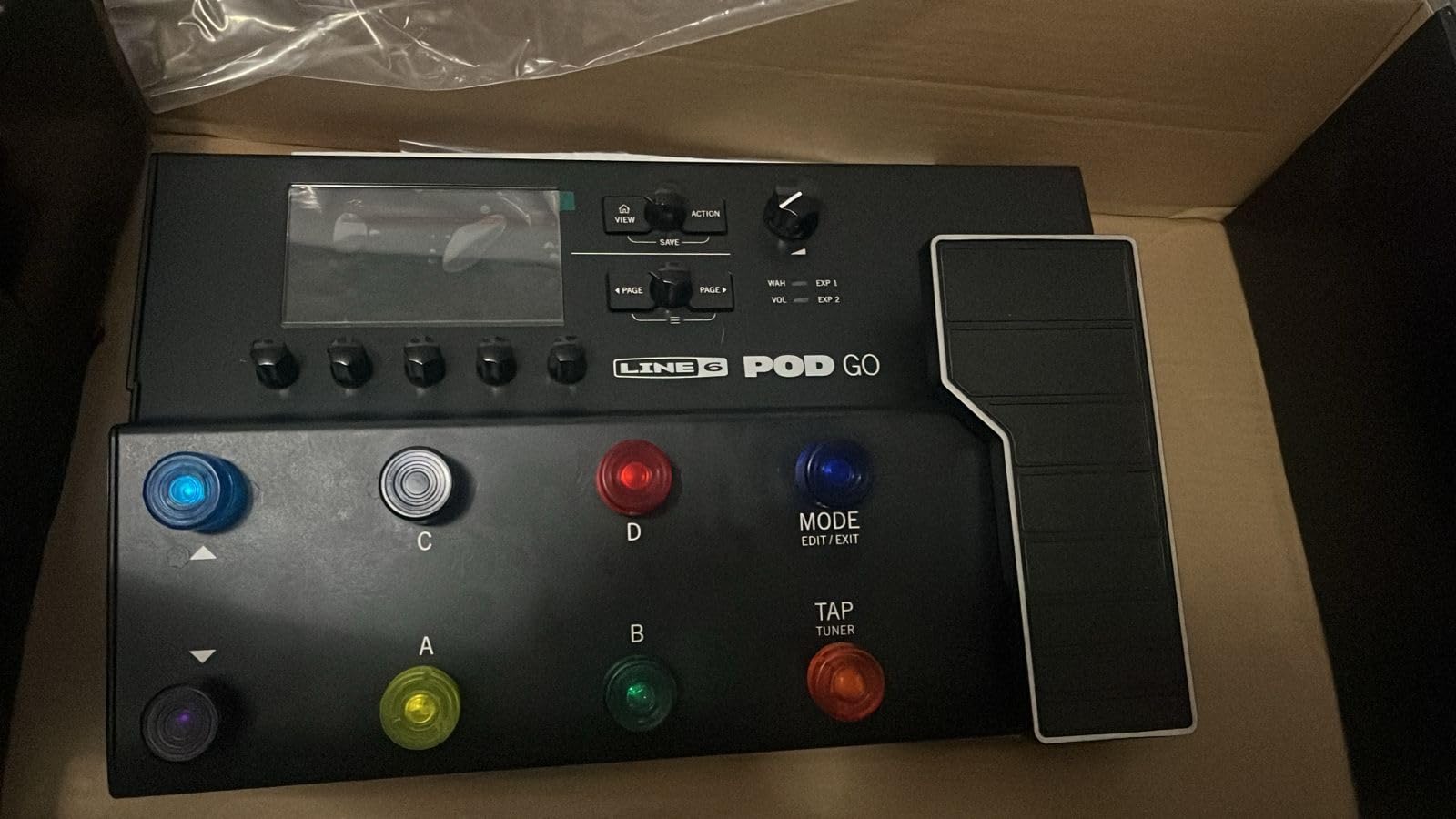
The built-in expression pedal is a real advantage. Having wah, volume, or parameter control under your foot without adding extra hardware keeps your setup clean. The stereo effects loop is another feature that sets the POD Go apart from competitors at this price, allowing you to integrate your favorite analog pedals into the digital signal chain.
At six pounds, the POD Go is light enough for gigging but substantial enough to feel stable on stage. The cast-aluminum expression pedal and rugged footswitches have held up well under regular use. One thousand reviews with a 4.6 average rating confirms that the broader guitar community shares my positive impressions.
Who Should Buy the Line 6 POD Go
Intermediate to advanced players who want Helix-quality tones without the Helix price tag will find the POD Go compelling. It is particularly well-suited for gigging musicians who need a self-contained floor unit with an expression pedal, effects loop, and enough footswitches for live preset switching. Home studio owners will also appreciate the USB audio interface functionality.
The 4-effects-per-preset limit with a single amp and cab combination may frustrate players who use complex signal chains. If you need more simultaneous processing, the HX Stomp or a full Helix unit would be a better fit.
Preset Management and Live Use
Presets are organized in setlists, which is helpful for organizing sounds by gig or genre. The eight footswitches provide good control for live switching, though changing between entirely different amp types mid-song requires multiple stomps. The snapshots feature helps here, letting you toggle effects blocks within a single preset. The POD Go works reliably as a USB audio interface for recording, with clean 24-bit conversion that sounds professional in a mix.
6. HeadRush Prime – Best Touchscreen Modeler with Vocal FX
HeadRush Prime Electric Guitar and Vocal Multi-Effects Pedal
7-inch Touchscreen
Amp Cloner
Antares Auto-Tune
350+ IRs
Drum Machine
16.5 lbs
Pros
- Excellent sound through FRFR speakers
- Powerful looper and drum machine
- Amp cloner with Wi-Fi cloud sharing
- Antares Auto-Tune for vocals
- Durable steel chassis
- Gapless preset switching
Cons
- Large and heavy for gigging
- Global EQ had issues in early firmware
- No dedicated computer editor software
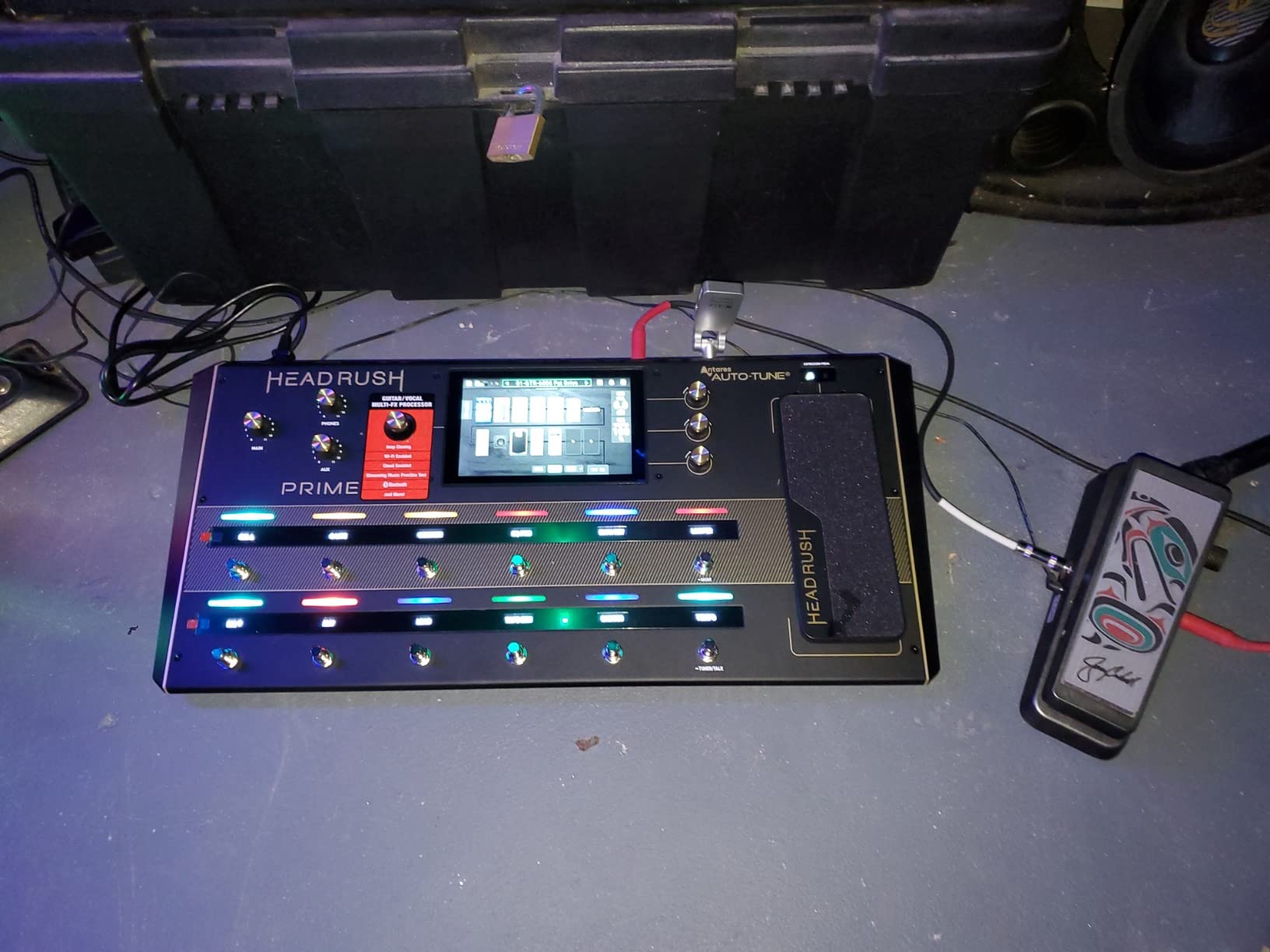
The HeadRush Prime is built for performers who want everything in one unit. Guitar amp modeling, vocal processing with Antares Auto-Tune, a deep drum machine, a powerful looper, and Wi-Fi cloud sharing for amp clones. If you are a singer-guitarist who plays solo or in a duo, this unit was designed with you in mind.
The 7-inch touchscreen is the star of the show. Building rigs by dragging and dropping blocks feels more like using a tablet than programming a guitar processor. The interface is intuitive enough that I had a usable tone within five minutes of unboxing, which is impressive for a unit this complex. The gapless preset switching with reverb and delay tail spillover is a detail that matters enormously in live performance.
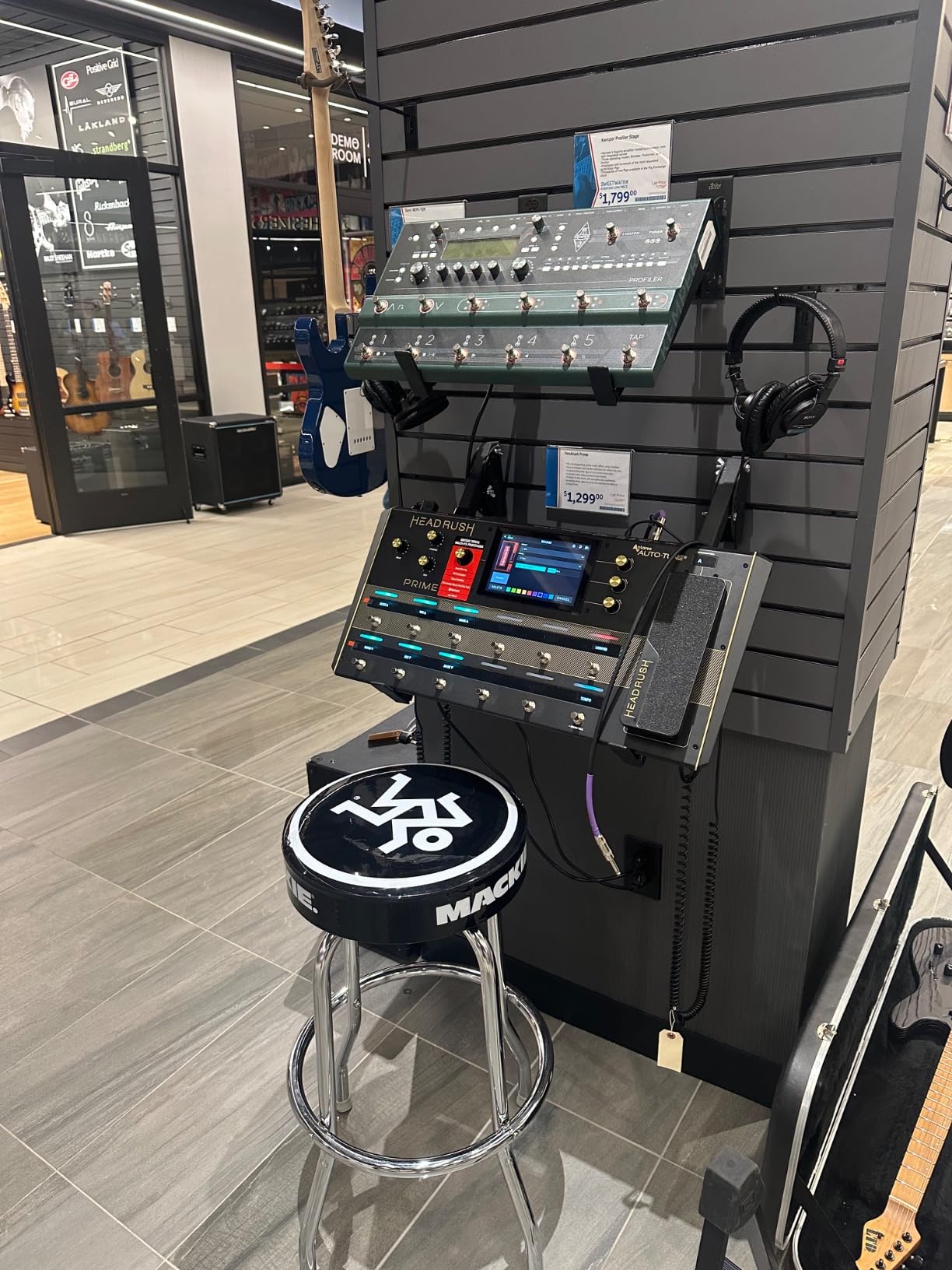
The Amp Cloner feature lets you capture the sound of your physical amps and share them via Wi-Fi to the HeadRush Cloud. This is similar to what Kemper offers but integrated into a full multi-effects platform. The included ReValver 5 software adds even more tonal options when connected to your computer.
Sound quality through FRFR speakers is excellent. The 350+ built-in impulse responses cover a wide range of cabinet sounds, and loading third-party IRs is straightforward. The 16 drum kits with 134 patterns from Alesis Drums and BFD give you plenty of rhythmic backing options for practice or live performance.
Who Should Buy the HeadRush Prime
Singer-guitarists who need both guitar and vocal processing in one unit will find the HeadRush Prime uniquely suited to their needs. Solo performers and duo acts will benefit from the drum machine, looper, and Auto-Tune integration. It is also a strong choice for guitarists who want the Amp Cloner technology without buying a separate Kemper unit.
At 16.5 pounds, this is not something you want to carry on public transit. The lack of a dedicated computer editor is a noticeable gap compared to Line 6 and Fractal competitors. Most editing happens on the touchscreen, which works well but is not as efficient as a desktop application for building complex rigs.
Amp Cloner and Cloud Sharing
The Amp Cloner works by capturing the tonal characteristics of a real amplifier through a process called profiling. You connect your physical amp, send a test signal through it, and the HeadRush creates a digital replica. The Wi-Fi cloud sharing means you can download profiles created by other users, which expands your tonal library considerably. Early firmware had some Global EQ issues, but recent updates have addressed most of these concerns.
7. Yamaha THR10II – Best Desktop Practice Amp
Yamaha THR10II Wired Desktop Guitar Amp , 10W
15 Guitar Amp Models
Bluetooth Audio
Hi-fi Stereo
USB Recording
Desktop Size
6.6 lbs
Pros
- Beautiful clean sound out of the box
- Perfect desktop size
- Doubles as high-quality Bluetooth speaker
- Separate volume controls for guitar and audio
- Excellent amp and effect simulations
Cons
- No battery option
- Settings memory can be inconsistent on recall
- USB connection can be finicky
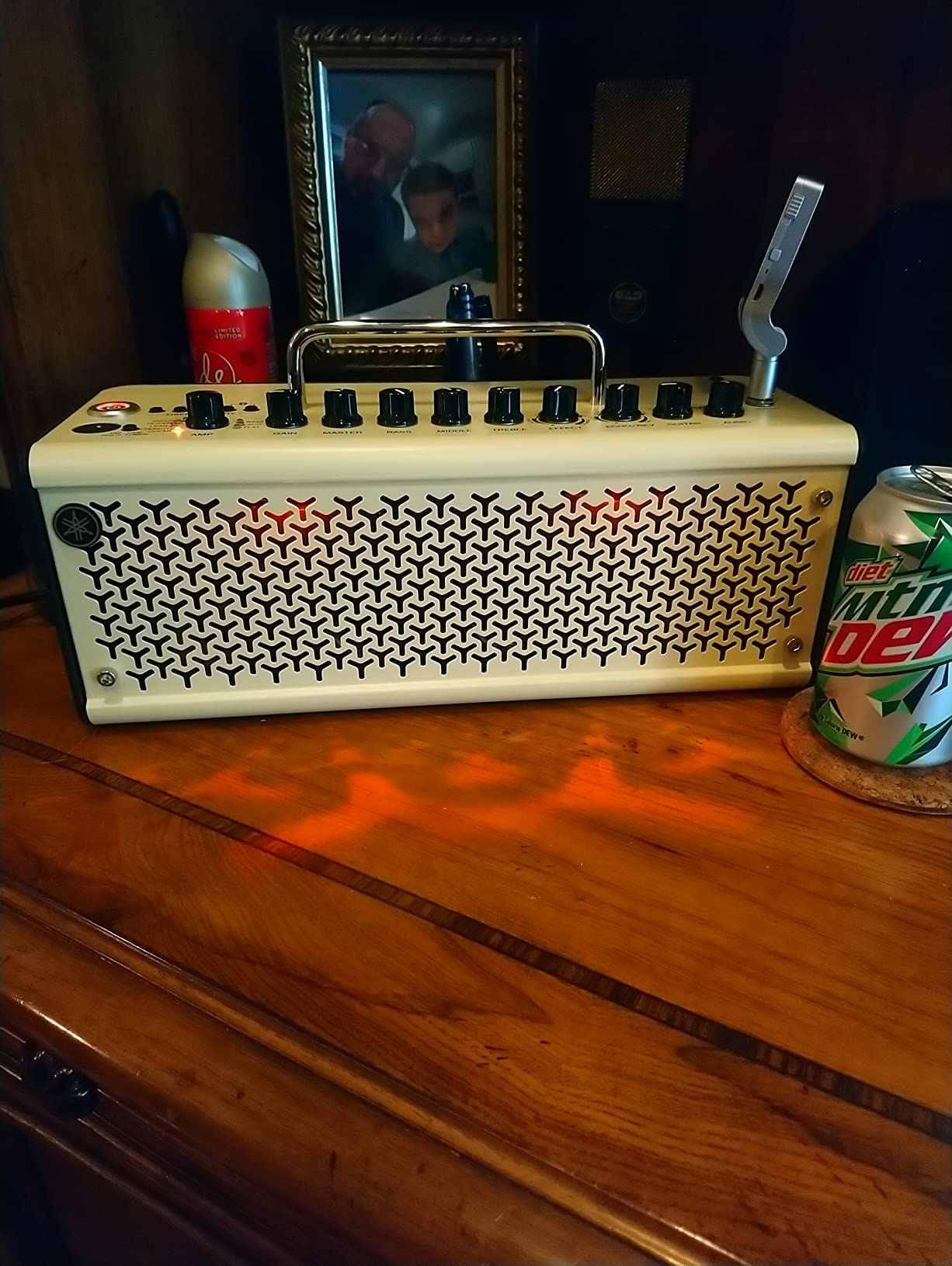
The Yamaha THR10II looks like a piece of modern furniture and sounds like a serious amplifier. That dual identity is exactly why it has developed such a devoted following. This desktop amp delivers tones that are genuinely inspiring at volumes that will not get you evicted from your apartment. The extended stereo technology creates a surprisingly wide soundstage from a unit that sits on your desk.
Yamaha packed 15 guitar amp models, 3 bass amp models, and 3 mic models for acoustic-electrics into this compact unit. The clean tones are where the THR10II really shines. They have a warmth and dimensionality that makes you want to keep playing. The built-in effects, including compression, chorus, flanger, phaser, delay, and reverb, are all musical and usable without tweaking.
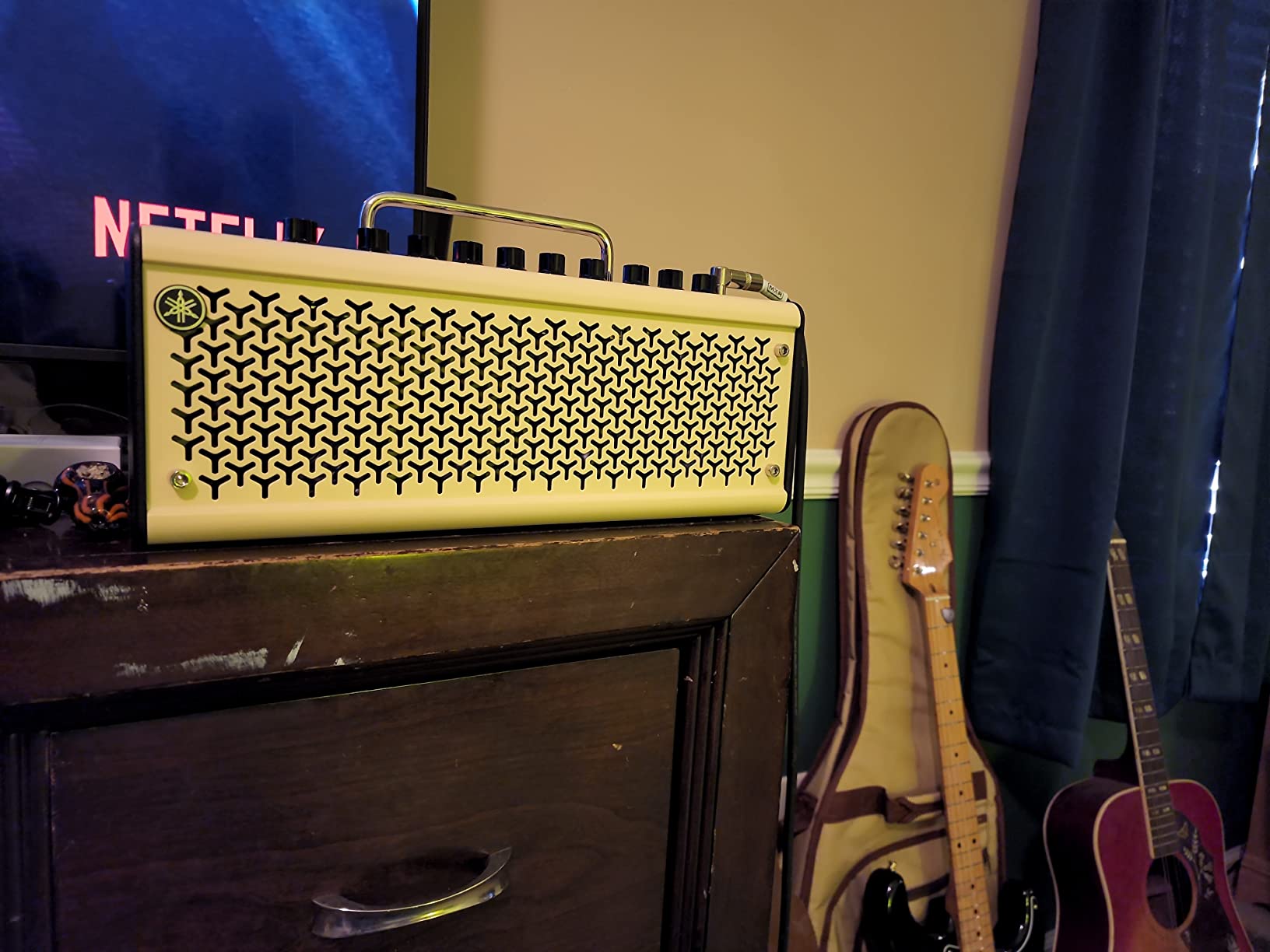
One feature I appreciate is the separate volume controls for the guitar and audio inputs. This means you can jam along with backing tracks from your phone and balance the levels independently. The Bluetooth audio playback works well, and the THR10II genuinely sounds good enough to serve as your everyday Bluetooth speaker when you are not playing guitar.
The THR Remote app provides deeper editing capabilities and access to additional amp models not available from the front panel. Plug-and-play USB recording is simple and effective. My only real complaint is the lack of battery power, which would have made this the ultimate portable practice solution.
Who Should Buy the Yamaha THR10II
Apartment dwellers, home studio owners, and anyone who plays primarily at their desk will love the THR10II. It is the best-sounding practice amp at this size, period. The combination of great tones, Bluetooth functionality, and desktop-friendly dimensions makes it uniquely suited for home use. It is also an excellent choice for acoustic-electric players who need a compact amp with mic modeling.
It is not designed for gigging or band rehearsals. The output wattage and speaker size are optimized for near-field listening, not filling a room or cutting through a drum kit.
Recording and USB Integration
The USB connection serves double duty as both an audio interface and a way to access the THR Remote editor. Recording into your DAW is straightforward: plug in, select the THR as your input, and you are capturing the modeled tone directly. The USB connection can occasionally be temperamental after the first setup, so use a quality cable. The settings memory issue some users report usually relates to the exact gain and volume levels not perfectly matching on recall, but the tonal character remains consistent.
8. NUX MG-30 – Best Affordable Multi-Effects Processor
NUX MG-30 Guitar Multi-Effects Pedal Guitar/Bass/Acoustic Amp Modeling Processor, IR Loader, White-Box Algorithm, EFX Routing, 4” Color LCD, NMP-2 Footswitch Included
35 Amp Models
56 Effect Modules
4-inch Color LCD
1024-sample IR
Dual DSP Processors
1 lb
Pros
- Outstanding value for the price
- Professional-level sound quality
- Intuitive large colorful LCD
- Excellent amp simulations
- NUX provides frequent software updates
- Includes footswitch and power adapter
Cons
- Limited preset switching takes getting used to
- Built-in cabinet IRs can sound lifeless
- Amp and IR blocks are locked together
The NUX MG-30 might be the most surprising unit on this list. At this price, I was not expecting tones that compete with processors costing two or three times as much. But NUX has been quietly building impressive modeling technology, and the MG-30 is the proof. The dual NXP RT processors and 32-bit converters deliver a level of audio quality that punches far above its weight class.
Thirty-five amp models covering electric, acoustic, and bass guitars provide plenty of tonal variety. The 4-inch color LCD is bright and makes navigating the 56 effect modules and 11-block signal routing surprisingly intuitive. I was building custom presets within minutes of plugging in for the first time, which speaks to how well-designed the interface is.
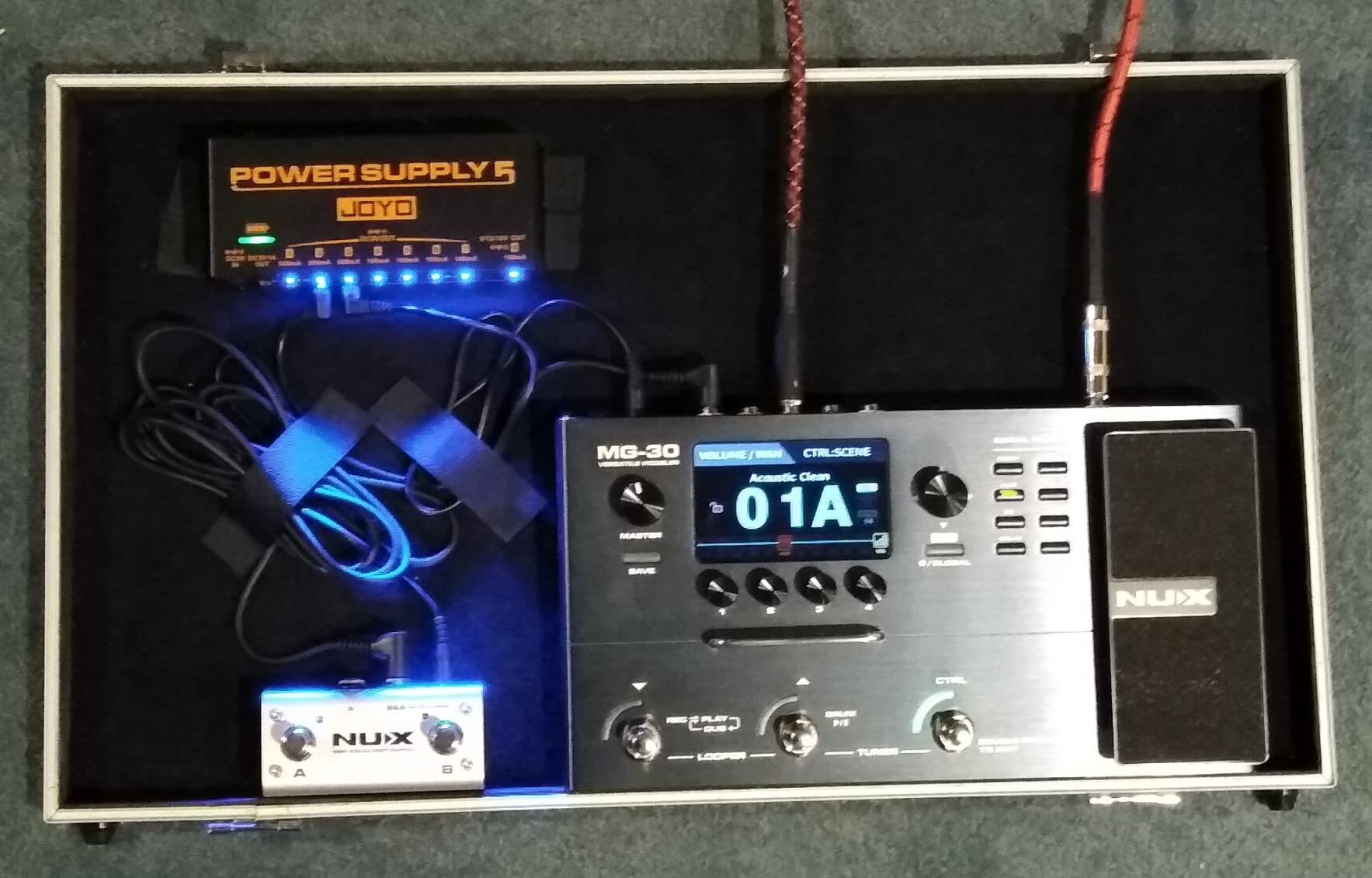
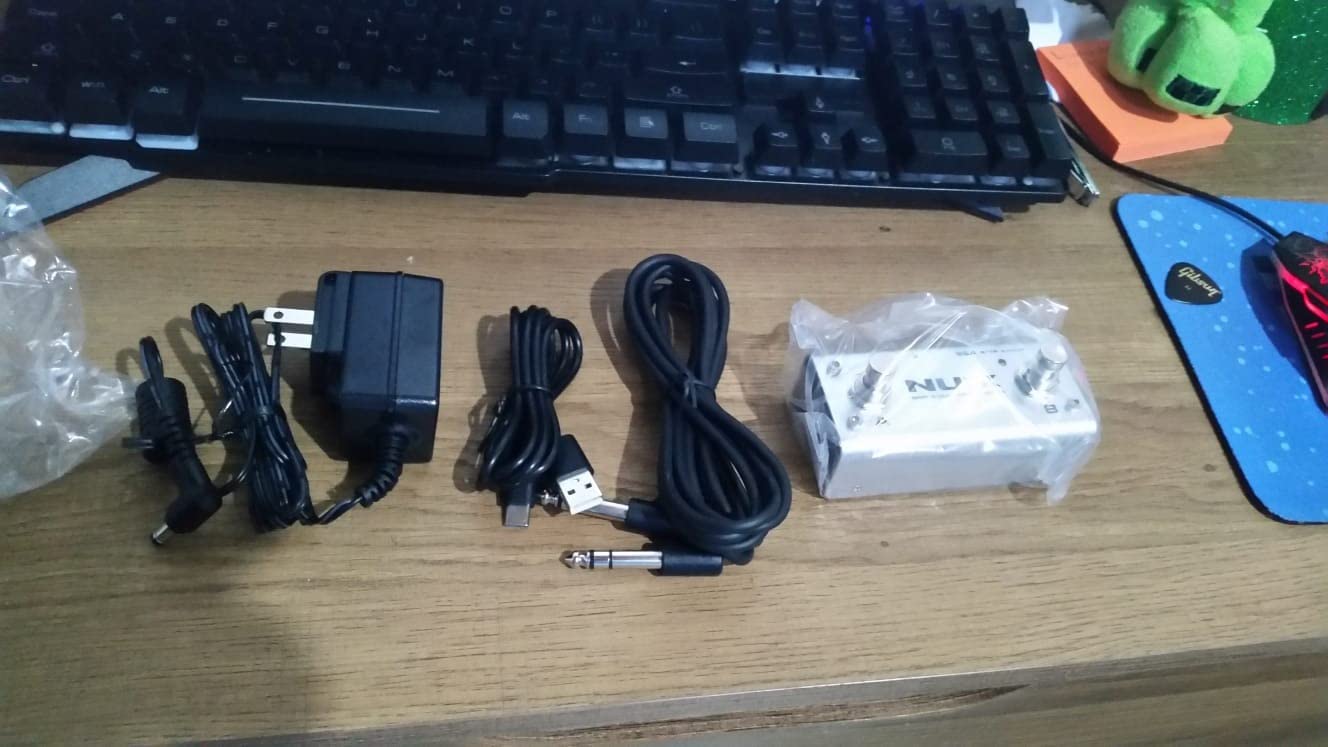
The 1024-sample IR loading capability means you can load third-party impulse responses for more realistic cabinet simulation. The ultra-low 2ms latency is imperceptible during playing, which is critical for maintaining the feel of responsiveness. The included NMP-2 footswitch and power adapter are welcome additions that other manufacturers should note.
NUX has been consistent with software updates, which is encouraging for long-term ownership. The community on forums consistently ranks the MG-30 as one of the best values in multi-effects processing, and after spending time with it, I understand why. The price-to-performance ratio is exceptional.
Who Should Buy the NUX MG-30
Players on a budget who want professional-quality tones without paying professional prices will find the MG-30 hard to resist. It is ideal for home practice, headphone playing, and direct recording. Intermediate players looking to upgrade from a basic practice amp or entry-level multi-effects unit will notice an immediate improvement in sound quality.
Gigging musicians should consider the build quality carefully. The unit feels somewhat fragile compared to the steel chassis of the HeadRush or the rugged construction of Line 6 products. The locked amp and IR blocks also limit routing flexibility for advanced users.
Signal Routing and IR Loading
The 11-block signal routing gives you significant flexibility for building complex signal chains. You can place effects before or after the amp model, adjust the order freely, and create parallel signal paths. The main limitation is that the amp and IR blocks are locked together, meaning you cannot separate the amplifier simulation from the cabinet simulation. Loading high-quality third-party IRs dramatically improves the sound compared to the built-in cabinet simulations, which several users describe as lifeless. This is a quick fix that transforms the MG-30’s tone.
9. Marshall CODE50 – Best Modeling Amp for Classic Rock Tones
Marshall CODE50 Digital Combo Electric Guitar Amplifier – Black
50W Output
100+ Presets
14 MST Preamp Models
24 Digital Effects
12-inch Speaker
28.6 lbs
Pros
- Outstanding sound and versatility
- Incredible tone rivals tube amps when dialed in
- 100+ editable presets
- Bluetooth connectivity works well
- Exceptional Plexi preamp model
Cons
- Cabinet simulations sound boxed in
- Presence knob needs adjusting from factory settings
- No effects loop
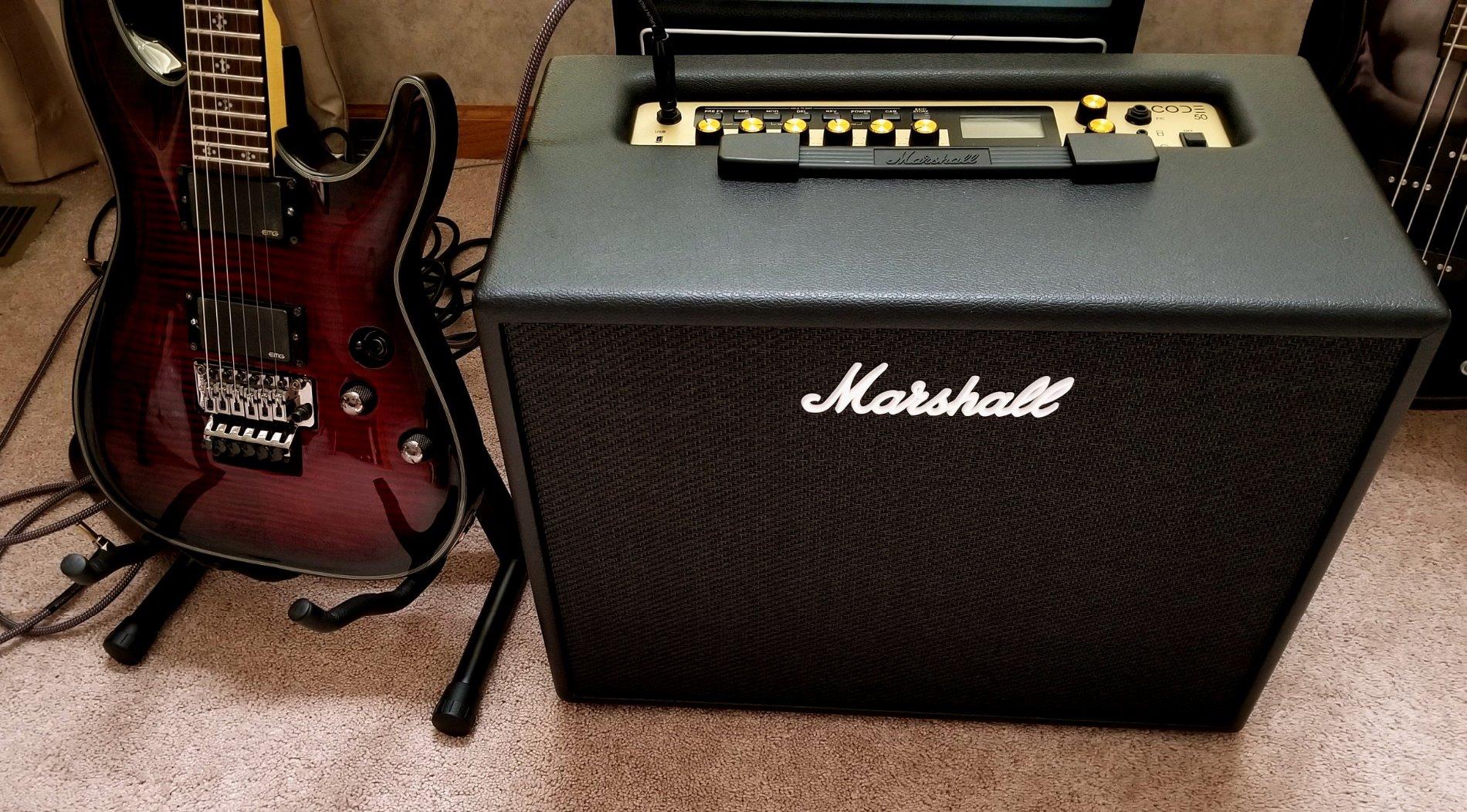
The Marshall CODE50 is for anyone who has ever wanted a wall of Marshalls without needing a wall of Marshalls. With 14 MST preamp models including iconic Plexi, JVM, DSL, and Silver Jubilee voicings, this amp gives you access to decades of Marshall tone in a single 50-watt combo. The 12-inch speaker delivers the low-end authority and midrange punch that Marshall is famous for.
Out of the box, the CODE50 did not impress me. The factory settings have the presence knob at 4 out of 10, which makes everything sound muffled and dark. But after cranking the presence to 7 or 8 and turning off the cabinet simulations, this amp comes alive. The Plexi model in particular is outstanding. It has that crunchy, dynamic response that defines classic rock tone.
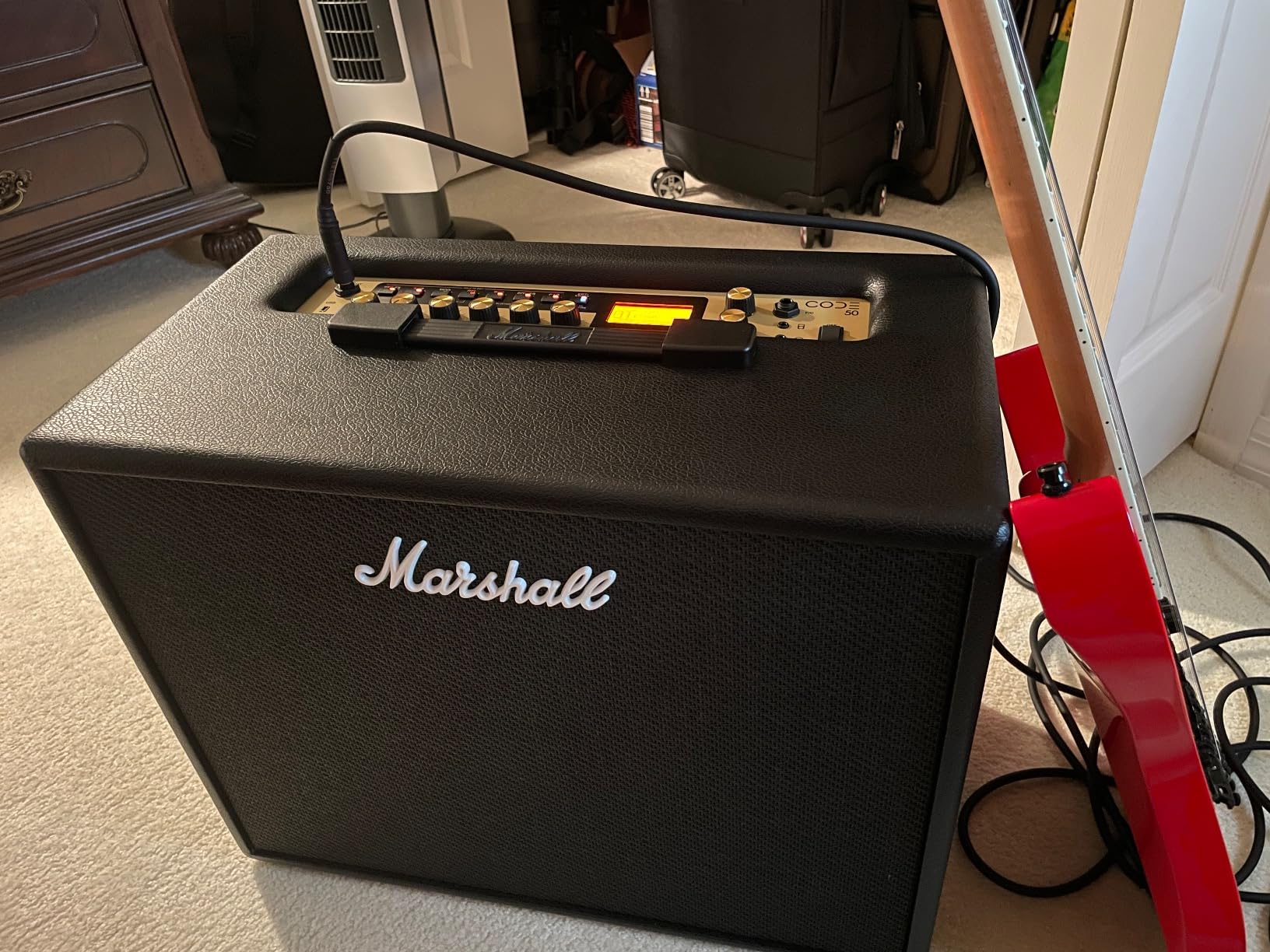
One hundred editable presets give you enormous room to build your tone library. The 24 digital effects cover reverb, delay, chorus, flanger, and tremolo, and they sound better than I expected from built-in effects. The Bluetooth connectivity through the Marshall Gateway app lets you tweak settings from your phone, which is convenient for making adjustments from across the room.
Four power amp models (EL34, EL84, 6L6, 5881) paired with 8 speaker emulations let you fine-tune the power section response. This level of customization is unusual in a modeling amp at this price, and it makes a real difference in how the amp feels under your fingers.
Who Should Buy the Marshall CODE50
Rock and blues guitarists who want authentic Marshall tones without the weight, heat, and maintenance of a tube amp will find the CODE50 right in their wheelhouse. The 50-watt output and 12-inch speaker make it loud enough for band rehearsals and small to medium gigs. It is also a strong choice for players who primarily use Marshall-style tones and do not need the vast model libraries of Line 6 or Fractal products.
The lack of an effects loop is a significant omission. If you use time-based effects in your signal chain and want them placed after the preamp, you will need to work around this limitation using the built-in effects only.
Dialing In the Best Tones
The key to getting great tone from the CODE50 is two adjustments: turn off the cabinet simulations and increase the presence. The built-in cab sims tend to make the sound small and boxed in. Running the amp through its own 12-inch speaker with cab sims disabled produces a much more open and natural tone. Spend time with the EQ controls on each preamp model, as they respond differently depending on which model you select. The Marshall Gateway app makes this process significantly easier than using the front panel alone.
10. BOSS GT-1 – Best Portable Multi-Effects Unit
BOSS GT-1 Compact Guitar Effects Processor
Iconic Boss Tones
Battery Powered (4x AA)
Expression Pedal
USB Audio Interface
Easy Edit Functions
2.2 lbs
Pros
- Excellent sound quality with iconic Boss tones
- Great value for money
- Easy to use interface
- Portable with battery operation
- Free Boss Tone Studio software
- Compact fits in guitar bag
Cons
- No power adapter included
- Batteries drain quickly with heavy use
- 32-second looper is limiting
- No power switch
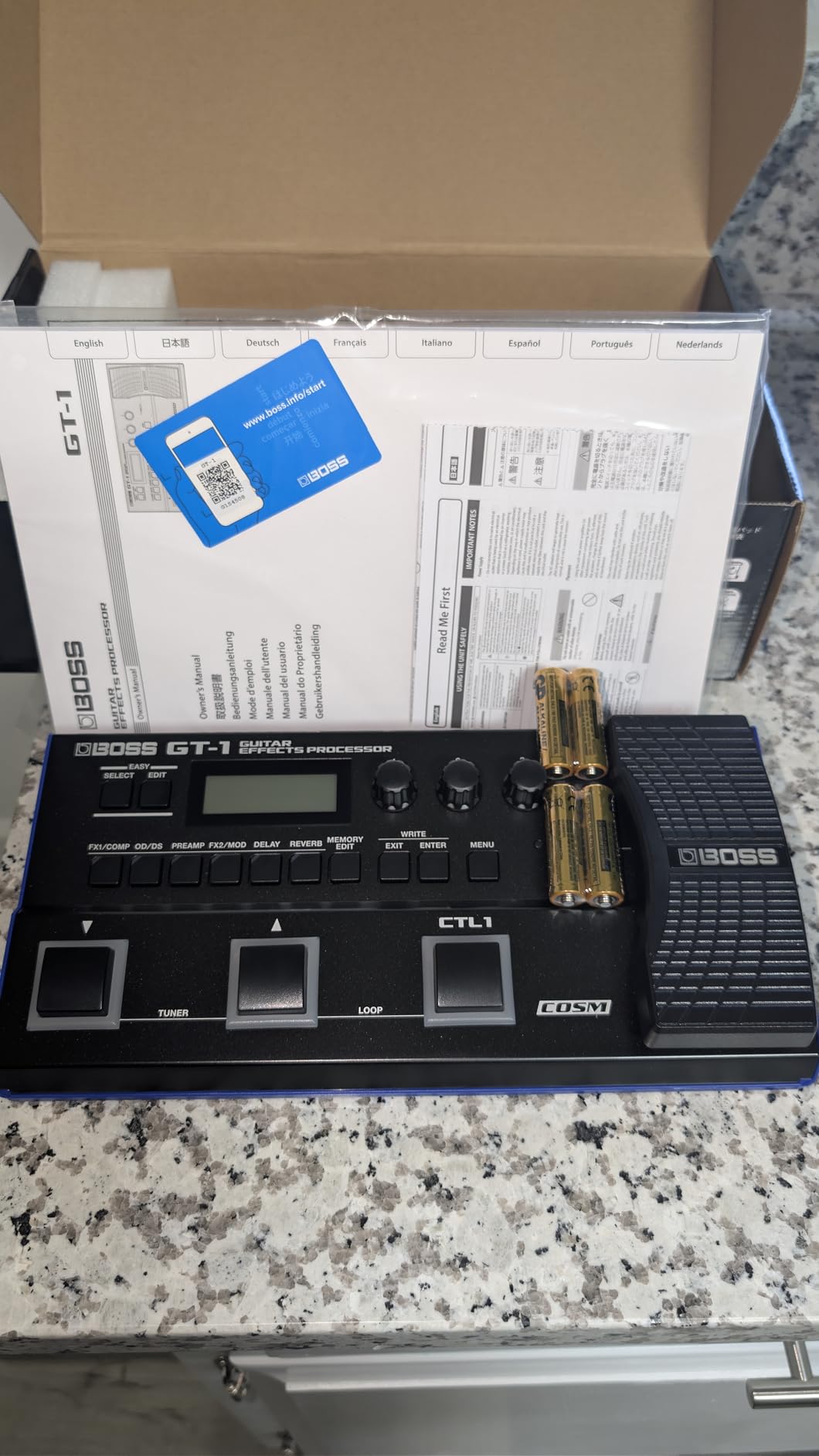
The BOSS GT-1 has been a staple in the multi-effects world for years, and it continues to earn its place. BOSS built their reputation on reliable, great-sounding effects, and the GT-1 continues that tradition in a compact, affordable package. The tone library draws from decades of BOSS effects development, and the amp models cover the essential sounds most guitarists need.
What sets the GT-1 apart is its portability. Four AA batteries provide up to seven hours of playing time, which means you can take it anywhere without worrying about finding an outlet. At just over two pounds, it fits in the accessory pocket of most gig bags. I have brought this unit to camping trips, hotel rooms, and backstage warm-up sessions where a full rig would be impractical.
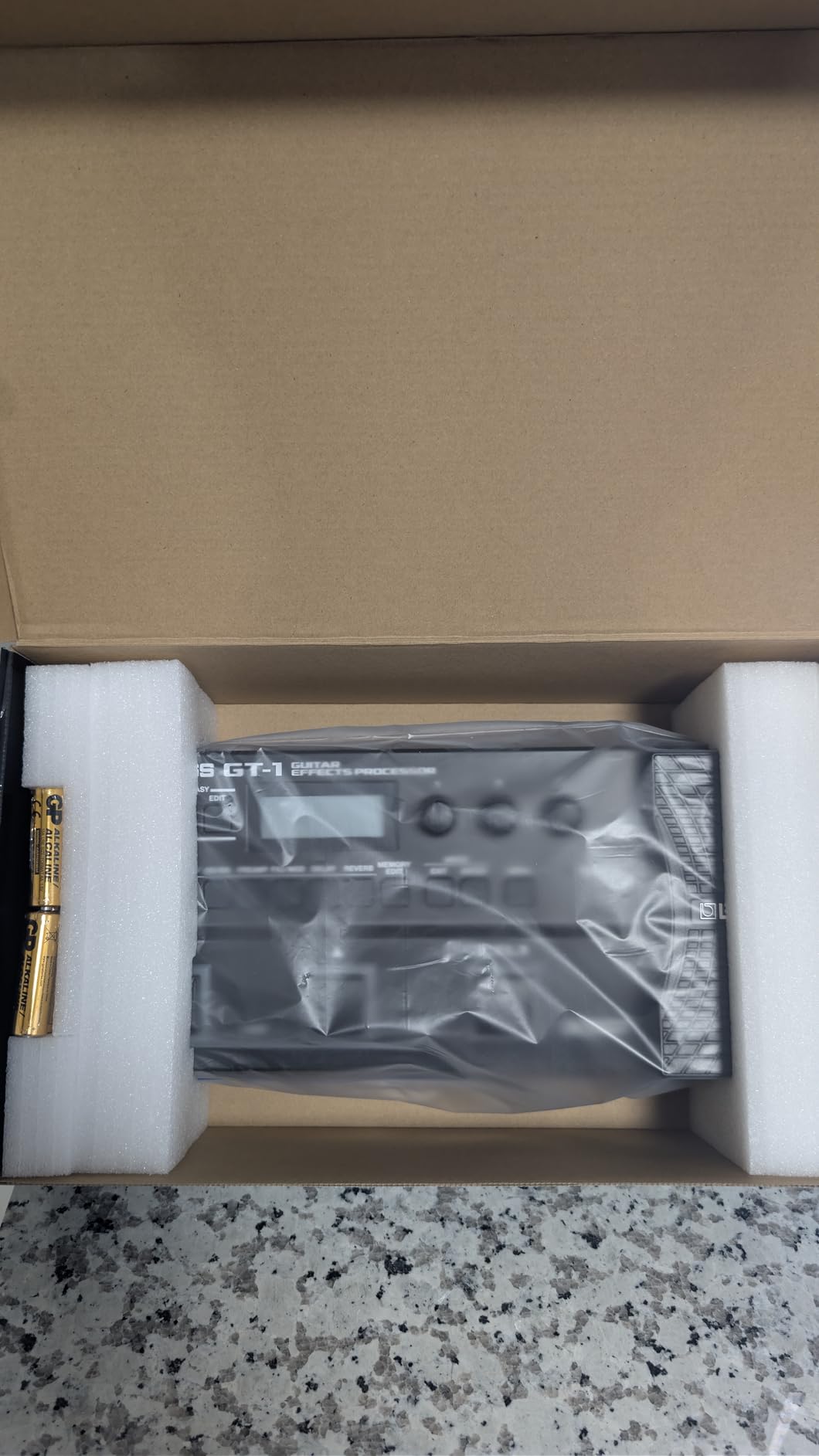
The Easy Select and Easy Edit functions make it accessible even if you have never used a multi-effects processor before. The onboard expression pedal handles wah, volume, and parameter control. The USB connection works as both a computer editor link and a basic audio interface for recording.
Over 2,000 reviews with a 4.5 average rating speaks to the GT-1’s staying power. BOSS Tone Studio software provides deep editing capabilities and access to professionally programmed patches through BOSS Tone Central. The value proposition is hard to argue with.
Who Should Buy the BOSS GT-1
Beginners and intermediate players who want their first multi-effects unit will find the GT-1 approachable and rewarding. It is also ideal for guitarists who need a portable practice and warm-up tool that runs on batteries. Players who appreciate straightforward, no-nonsense interfaces will enjoy the Easy Select and Easy Edit approach.
Advanced players who need extensive amp modeling, IR loading, or complex signal routing should look at the Line 6 POD Go or HX Stomp. The 32-second looper and limited processing power reflect the GT-1’s age and price point.
Battery Operation and Portability
Battery life varies significantly depending on usage. Light practice with minimal effects can approach the advertised seven hours. Heavy use with multiple effects, the expression pedal active, and USB connectivity will drain batteries in about an hour. Rechargeable AA batteries are a smart investment. Note that no power adapter is included in the box, so budget for a 9V DC adapter if you plan to use it primarily at home. There is no power switch either, so you need to unplug or remove batteries to turn it off.
11. Line 6 Spider V 30 MKII – Best Practice Amp with Drum Loops
Line 6 Spider V 30 MKII
30W Output
200+ Amps Cabs Effects
Drum Loops
USB Recording
8-inch Speaker
18 lbs
Pros
- Great practice amp with excellent tone variety
- Easy to use without reading manual
- Compact size for bedroom practice
- USB recording interface
- Includes free Cubase software
- Built-in drum loops
Cons
- 8-inch speaker smaller than previous models
- No direct XLR output
- Presets must be scrolled through sequentially
The Line 6 Spider V 30 MKII is a straightforward practice amp that does exactly what it promises. With over 200 amps, cabinets, and effects in a 30-watt combo, it provides more tonal variety than most players will ever explore. The updated MKII version adds a Classic Speaker mode for a more organic sound and feel that addresses one of the main complaints about the original Spider series.
I handed this amp to a friend who had never used a modeling amp before, and within minutes he was navigating presets and adjusting tones without touching the manual. That level of accessibility is rare. The new Artist presets and Iconic Song presets give you starting points that sound recognizable and usable right away.
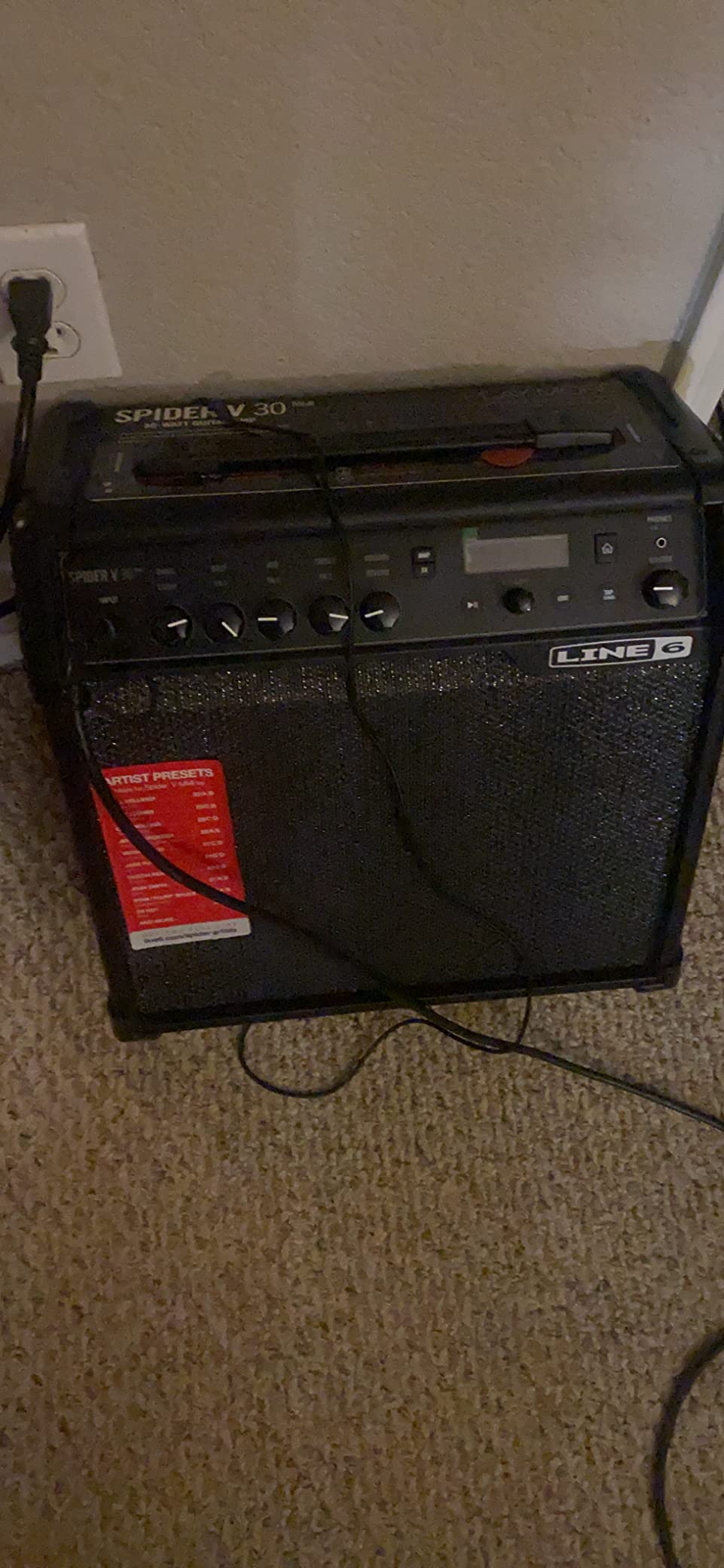
The built-in tuner, metronome, and jam-along drum loops make this a complete practice tool. The drum loops cover multiple styles and time signatures, providing rhythmic backing that makes practice sessions more engaging. The USB interface connects to your computer for recording, and Line 6 includes a free Cubase software download.
The Spider V Remote app works on Mac, PC, iOS, and Android, giving you deep editing control from your preferred device. The compact size fits comfortably in a bedroom or home office without dominating the space.
Who Should Buy the Line 6 Spider V 30 MKII
Beginner to intermediate players who want a simple, versatile practice amp with a low learning curve will find the Spider V 30 MKII ideal. The drum loops and metronome make it particularly good for developing timing skills. It is also a reasonable choice for anyone who wants USB recording capability without buying a separate audio interface.
The lack of a direct XLR output means it is not suitable for running direct to a PA at gigs. The 8-inch speaker is smaller than some competing practice amps, which limits low-end response. For bedroom practice at reasonable volumes, these limitations rarely matter.
Practice Features and Drum Machine
The drum loops are organized by musical style and are surprisingly musical for built-in patterns. They are not a replacement for a real drummer, but they serve their purpose of providing rhythmic context for practice. The metronome is straightforward with adjustable tempo and time signature. Using the Spider V Remote app gives you access to the full depth of the 200+ amp, cab, and effects models. The USB recording feature works reliably with most DAW software, though the included Cubase license is a nice starter option for players who do not already have recording software.
12. BOSS KATANA:GO – Best Personal Headphone Amp
BOSS Katana:GO Personal Headphone Amplifier for Guitar & Bass
Headphone Amp
10 Amp Types
85+ Effects
Spatial Audio
Bluetooth Streaming
Rechargeable Battery
7 oz
Pros
- Excellent sound quality rivals full-size amps
- Great for late-night silent practice
- Bluetooth works seamlessly for backing tracks
- 30 programmable channels
- Good battery life with fast charging
- Works with guitar and bass
Cons
- No aux cable or case included
- Can be quiet with high-impedance headphones
- Learning curve with the app
The BOSS KATANA:GO is the most portable modeling solution on this list, and it might also be the most fun. This tiny headphone amplifier weighs just 7 ounces but packs stage-class Katana amp tones that genuinely rival full-size amplifiers. If you need to practice silently and want BOSS-quality effects without hauling any gear, this is your answer.
Guitar mode offers 10 amp types and over 85 effects. Bass mode adds 3 amp types and over 65 effects. The advanced spatial technology creates a 3D playing experience through headphones that feels like playing through a real cabinet in a room. It sounds like a gimmick until you try it. The spatial effect adds depth and dimension that standard headphone practice lacks.
Bluetooth connectivity serves two purposes. You can stream backing tracks from your phone while playing along, and you can use the BOSS Tone Exchange app to browse and download presets. The community library is extensive, and finding tones inspired by specific artists and songs is easy. The built-in tuner eliminates the need for a separate pedal.
The rechargeable battery charges quickly and provides enough runtime for multiple practice sessions. At this size, you can keep it in your guitar case pocket and have quality tones available anywhere you go.
Who Should Buy the BOSS KATANA:GO
Anyone who practices primarily through headphones will find the KATANA:GO to be an essential tool. It is perfect for late-night practice in apartments or dorms, hotel room practice while traveling, and backstage warm-ups. Bass players who also play guitar will appreciate the dedicated bass mode. It is also a great gift for a guitarist who already has an amp but needs a portable silent practice solution.
If you need to be heard by others, this is not the right choice. It is a headphone-only device with no speaker output. Players who want to integrate with a pedalboard or live rig should look at the HX Stomp or POD Go instead.
Battery Life and Connectivity
Battery life is solid for a device this size, typically lasting through several hours of continuous use on a single charge. The USB-C charging port is a modern touch that the Fender Mustang LT25 could learn from. High-impedance headphones may produce lower volume levels, so standard earbuds or low-impedance headphones work best. The BOSS Tone Exchange app has a learning curve, but once you understand how to navigate the community presets, the tonal library is essentially infinite. Session Mode lets you play along with songs from your music library, which adds another dimension to practice.
How to Choose the Best Modeling Guitar Amp
Choosing the right modeling amp depends heavily on how and where you plan to use it. Here are the key factors to consider before making your decision.
Power Output and Wattage
More watts means more volume, but it also means more headroom for clean tones. A 25-watt amp like the Fender Mustang LT25 is plenty for bedroom practice. A 50-watt amp like the Marshall CODE50 can handle band rehearsals and small gigs. Floor modelers like the Line 6 HX Stomp and POD Go do not have built-in speakers, so wattage is irrelevant. You will run them through a powered speaker, PA system, or headphones.
Form Factor: Combo, Floor Unit, or Headphone Amp
Combo amps like the Positive Grid Spark, Fender Mustang, and Marshall CODE50 are self-contained with built-in speakers. They are the most convenient option for practice and casual playing. Floor modelers like the Line 6 POD Go, HX Stomp, and HeadRush Prime are designed for live performance and studio recording. They connect to external speakers or PA systems. Headphone amps like the BOSS KATANA:GO are purely for silent practice and portability.
DSP Quality and Amp Model Count
The quality of the digital signal processing determines how realistic the amp models sound. Line 6’s HX Modeling, Fender’s Tone Master engine, and BOSS’s Katana technology are all top-tier. More amp models is not always better. What matters is how well each model responds to your playing dynamics. A unit with 30 excellent models will serve you better than one with 200 mediocre ones.
Connectivity Options
USB connectivity is essential if you plan to record directly to your computer. Bluetooth is useful for streaming backing tracks and editing tones from your phone. XLR outputs are necessary for running direct to a PA system at live gigs. MIDI support allows integration with external controllers and automation in live performance. Effects loops let you place your favorite analog pedals within the digital signal chain.
IR Loading and Cabinet Simulation
Impulse response loading is one of the most important features in modern modeling. Third-party IRs can dramatically improve the cabinet simulation quality of any modeler. Units like the Line 6 POD Go, HX Stomp, NUX MG-30, and HeadRush Prime all support IR loading. If authentic cabinet tone matters to you, make sure your chosen unit supports this feature.
Budget Considerations
Under $200, the Fender Mustang LT25 and BOSS GT-1 offer excellent value for beginners. The $200 to $500 range includes strong mid-range options like the Positive Grid Spark Pearl, NUX MG-30, and Marshall CODE50. From $500 to $1,000, the Line 6 POD Go, HX Stomp, and HeadRush Prime provide professional-grade tones. Above $1,000, the Fender Tone Master Pro represents the premium workstation category with features and sound quality to match.
Frequently Asked Questions About Modeling Guitar Amps
Are modeling amps as good as tube amps?
Modern modeling amps have closed the gap significantly. High-end modelers like the Line 6 HX Stomp and Fender Tone Master Pro produce tones that are indistinguishable from tube amps in blind listening tests. The main differences are feel and dynamic response at extreme settings. For most playing situations, including recording and live performance, today’s best modeling guitar amps deliver tone quality that satisfies professional musicians. Many touring artists now use modeling exclusively.
What modeling amp does Metallica use?
Metallica guitarists James Hetfield and Kirk Hammett have used various digital modeling solutions over the years, including the Fractal Audio Axe-FX series for live performances. For recording, they have used a combination of real tube amps and digital modelers. The Axe-FX III is commonly associated with their modern live rig due to its ability to replicate their signature high-gain tones with consistent night-to-night reliability.
Can modeling amps be used for live gigging?
Yes, many modeling amps are designed specifically for live use. Floor modelers like the Line 6 POD Go, HeadRush Prime, and Fender Tone Master Pro are built with gigging musicians in mind. They offer XLR outputs for direct PA connection, multiple footswitches for preset changes, and durable construction. Combo amps like the Marshall CODE50 with 50 watts of power can also handle small to medium venue gigs effectively.
What is the difference between modeling and profiling amps?
Modeling amps use digital algorithms to simulate the sound of various amplifiers based on mathematical models of how those circuits behave. Profiling amps like the Kemper Profiler capture the actual sound of a specific physical amplifier by sending test signals through it and creating a digital snapshot. Modeling offers more variety since you can access hundreds of amp simulations. Profiling can be more accurate for capturing one specific amp’s exact tone.
How much should I spend on a modeling guitar amp?
For beginners, $150 to $300 gets you a quality practice amp like the Fender Mustang LT25 or Positive Grid Spark Pearl with plenty of features. Intermediate players looking for gig-ready tones should budget $500 to $700 for units like the Line 6 POD Go or HX Stomp. Professional musicians and serious tone chasers should expect to spend $900 to $1,500 for premium workstations like the HeadRush Prime or Fender Tone Master Pro. The right investment depends on your use case, skill level, and how important tonal authenticity is to you.
Final Thoughts on the Best Modeling Guitar Amps
Modeling amp technology in 2026 has reached a point where the old question of whether digital can match tubes is mostly settled. The answer is yes, with very few caveats. From the apartment-friendly BOSS KATANA:GO at $129 to the professional Fender Tone Master Pro workstation, there is a modeling guitar amp for every player and every budget.
For most players, the Positive Grid Spark Pearl offers the best balance of sound quality, features, and value. Gigging musicians should look at the Line 6 HX Stomp for compact pro tones or the Fender Tone Master Pro for a full professional workstation. Beginners cannot go wrong with the Fender Mustang LT25 as a first amp that sounds good enough to keep even after you upgrade your guitar.
Take your time, match the amp to your actual use case, and invest in the features that matter most for how you play. The right modeling amp will not just replace your existing gear. It will make you want to play more.