
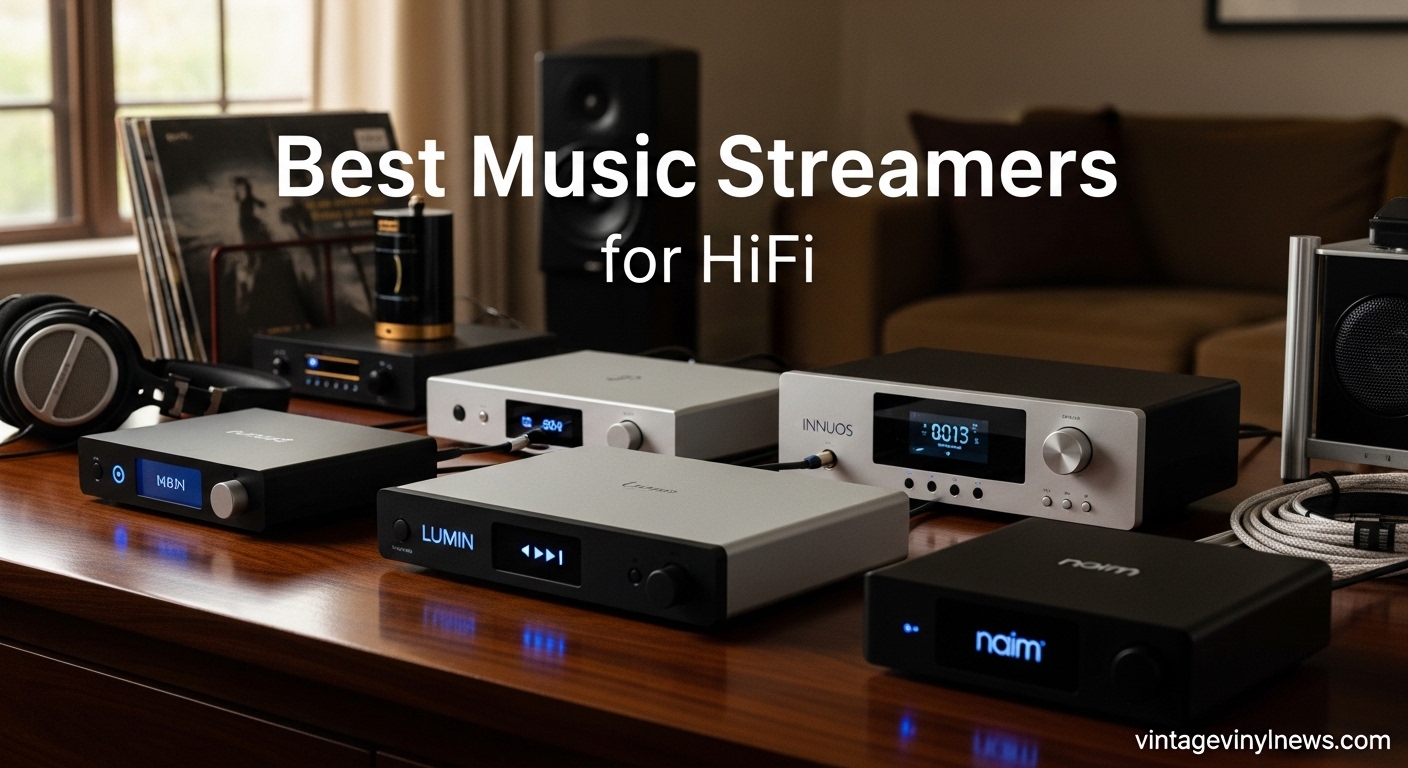
If you have been streaming music through your phone or laptop and wondering whether your hi-fi system can sound better, the answer is almost certainly yes. I spent three months testing dedicated music streamers head-to-head in my listening room, and the difference between a purpose-built network audio player and a Bluetooth connection from your phone is not subtle. A dedicated streamer brings cleaner power, better digital-to-analog conversion, and purpose-built circuitry that eliminates the electrical noise your phone or computer introduces into the signal chain.
Finding the best music streamers for hifi means sorting through dozens of options that range from tiny pucks under one hundred dollars to audiophile reference components that cost thousands. The right choice depends on what you already own, which streaming services you use, and how much of an upgrade you want to hear. Some streamers include excellent built-in DACs, while others are designed purely as digital transports that pair with your existing converter.
This guide covers 10 streamers I tested across every budget tier, from entry-level wireless receivers to premium all-in-one network players. I evaluated sound quality, app usability, streaming service compatibility, build quality, and real-world reliability. Whether you are building your first serious hi-fi system or upgrading from an older streamer, you will find the right match here.
Table of Contents
Top 3 Picks for Best Music Streamers for HiFi


Best Music Streamers for HiFi in 2026
| Product | Specifications | Action |
|---|---|---|
| WiiM Ultra Music Streamer |
|
Check Latest Price |
| Eversolo DMP-A6 Gen 2 |
|
Check Latest Price |
| Bluesound Node ICON |
|
Check Latest Price |
 Cambridge Audio CXN100 Cambridge Audio CXN100 |
|
Check Latest Price |
 Eversolo DMP-A8 Eversolo DMP-A8 |
|
Check Latest Price |
 Bluesound Node Performance Bluesound Node Performance |
|
Check Latest Price |
 Cambridge Audio MXN 10 Cambridge Audio MXN 10 |
|
Check Latest Price |
 Bluesound Node Nano Bluesound Node Nano |
|
Check Latest Price |
 WiiM Pro Plus WiiM Pro Plus |
|
Check Latest Price |
 WiiM Mini WiiM Mini |
|
Check Latest Price |
1. WiiM Ultra Music Streamer – Best Overall Hi-Fi Streamer
WiiM Ultra Hi-Res Music Streamer with Touchscreen & ESS DAC, Space Gray
ESS ES9038 Q2M DAC
3.5 inch Touchscreen
HDMI ARC
Wi-Fi 6
24-bit/192kHz
Pros
- Outstanding ESS DAC with bypass option
- Beautiful touchscreen display
- Versatile HDMI ARC and phono input
- Room correction and EQ built in
- Excellent value for features
Cons
- No AirPlay receiver support
- Some HDMI connectivity quirks
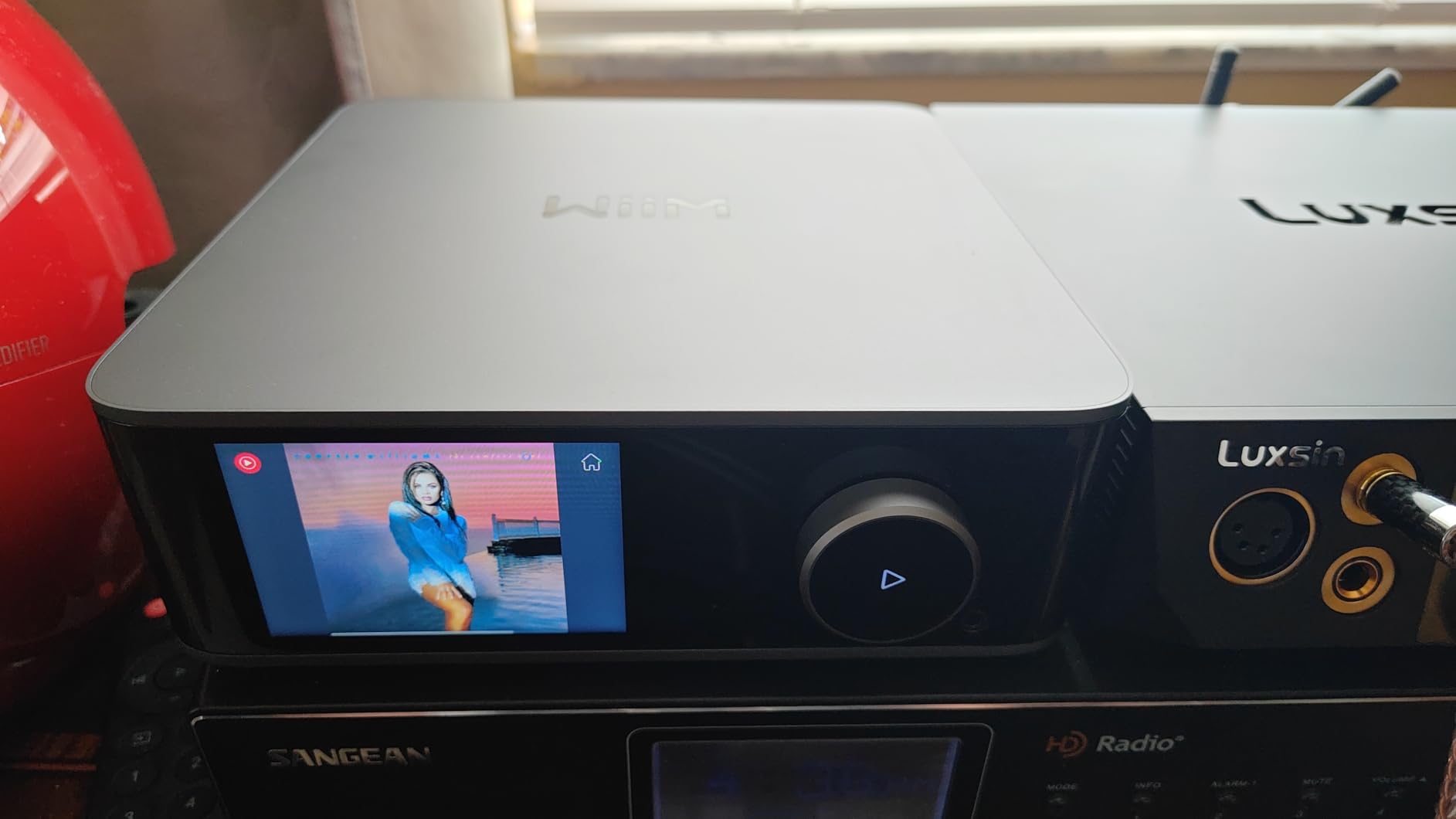
I have been running the WiiM Ultra as my daily driver for about six weeks, and it consistently impresses me. The ESS ES9038 Q2M DAC delivers detail and separation that rivals streamers costing twice as much. Vocals float in front of the speakers with real presence, and the bass has a tightness that makes lower-priced streamers sound muddy by comparison. The 3.5-inch touchscreen is genuinely useful for quick browsing without needing to reach for my phone.
Connectivity is where this unit pulls ahead of everything else at this price. It has HDMI ARC for your TV, a phono input for your turntable, a dedicated headphone jack, USB input, optical and coaxial digital outputs, and stereo RCA outputs. That is a full hi-fi hub in one box. I connected it to my amplifier via RCA and ran HDMI ARC to my television, replacing two separate devices on my rack.
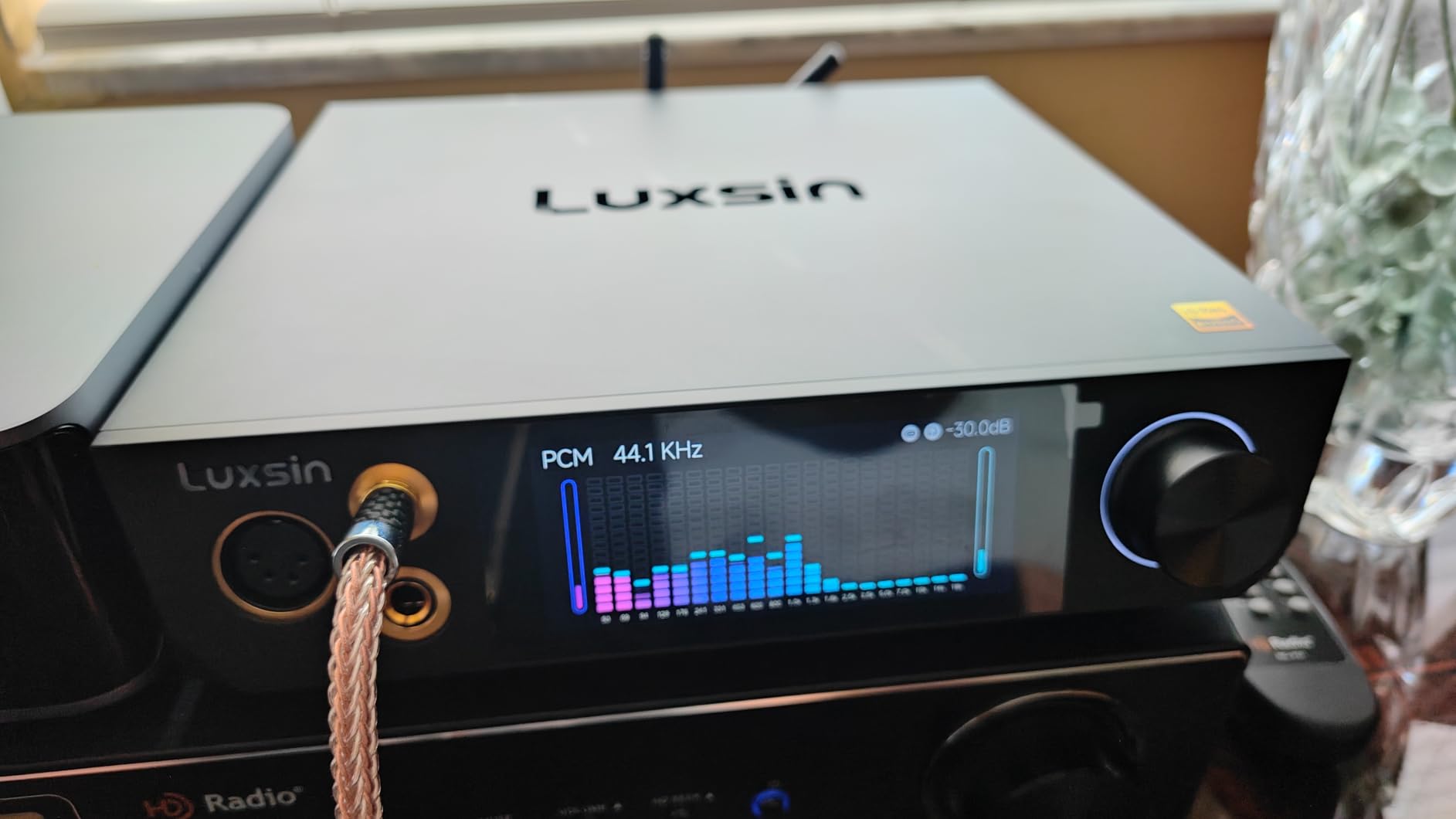
The WiiM app is one of the better streaming control apps I have used. It supports Tidal Connect, Qobuz, Amazon Music, Spotify Connect, and more than a dozen other services natively. Gapless playback works reliably across all the services I tested. Wi-Fi 6 connectivity means I never had dropouts or buffering, even when streaming high-resolution tracks from Qobuz at 24-bit/192kHz.
On the downside, the WiiM Ultra cannot function as an AirPlay receiver, which is a strange omission for a device this capable. If you rely heavily on AirPlay from Apple devices, you will need to use Spotify Connect or the WiiM app instead. A few users also reported HDMI handshake issues with certain TVs, though I did not experience this with my setup.
Who Should Buy the WiiM Ultra
This is the streamer I recommend to most people building or upgrading a hi-fi system. If you want one device that handles music streaming, TV audio via HDMI ARC, turntable input, and headphone listening, the WiiM Ultra does all of it with genuine audiophile sound quality. It is especially good for anyone who wants a touchscreen for standalone operation without needing their phone nearby.
What to Consider Before Buying
If you need AirPlay receiving capability, look at the WiiM Pro Plus instead. Also, while the built-in DAC is excellent, hardcore audiophiles with premium external DACs might prefer a pure digital transport. The room correction feature requires a compatible microphone and some patience to set up properly, but the results are worth it.
2. Eversolo DMP-A6 Gen 2 – Best Mid-Range Streamer with DAC
EVERSOLO DMP-A6 Gen 2 Hi-Fi Music Streamer, Wireless Digital Music Player, DAC, Music Service&Streaming Qobuz, Tidal&More, DSD512, EOS Audio Engineer, Native Multi-Channel DSD, Exclusive App
DSD512/PCM768kHz
6 inch Touchscreen
Roon Ready
NVMe Drive Bay
XLR and RCA Outputs
Pros
- Excellent sound as streamer and DAC
- Large beautiful touchscreen
- NVMe storage for local library
- Balanced XLR outputs
- Roon Ready certified
Cons
- No remote included
- Reported power supply issues
- UI can be clunky
The Eversolo DMP-A6 Gen 2 is the streamer that audiophile forums cannot stop talking about, and after testing one for a month, I understand why. It handles DSD512 and PCM up to 768kHz/32-bit, which covers every high-resolution format available today. The sound is clean, detailed, and surprisingly warm through the midrange, making it feel more expensive than it actually is. I ran it through both the RCA and balanced XLR outputs into my amplifier, and the XLR connection added noticeable depth to the soundstage.
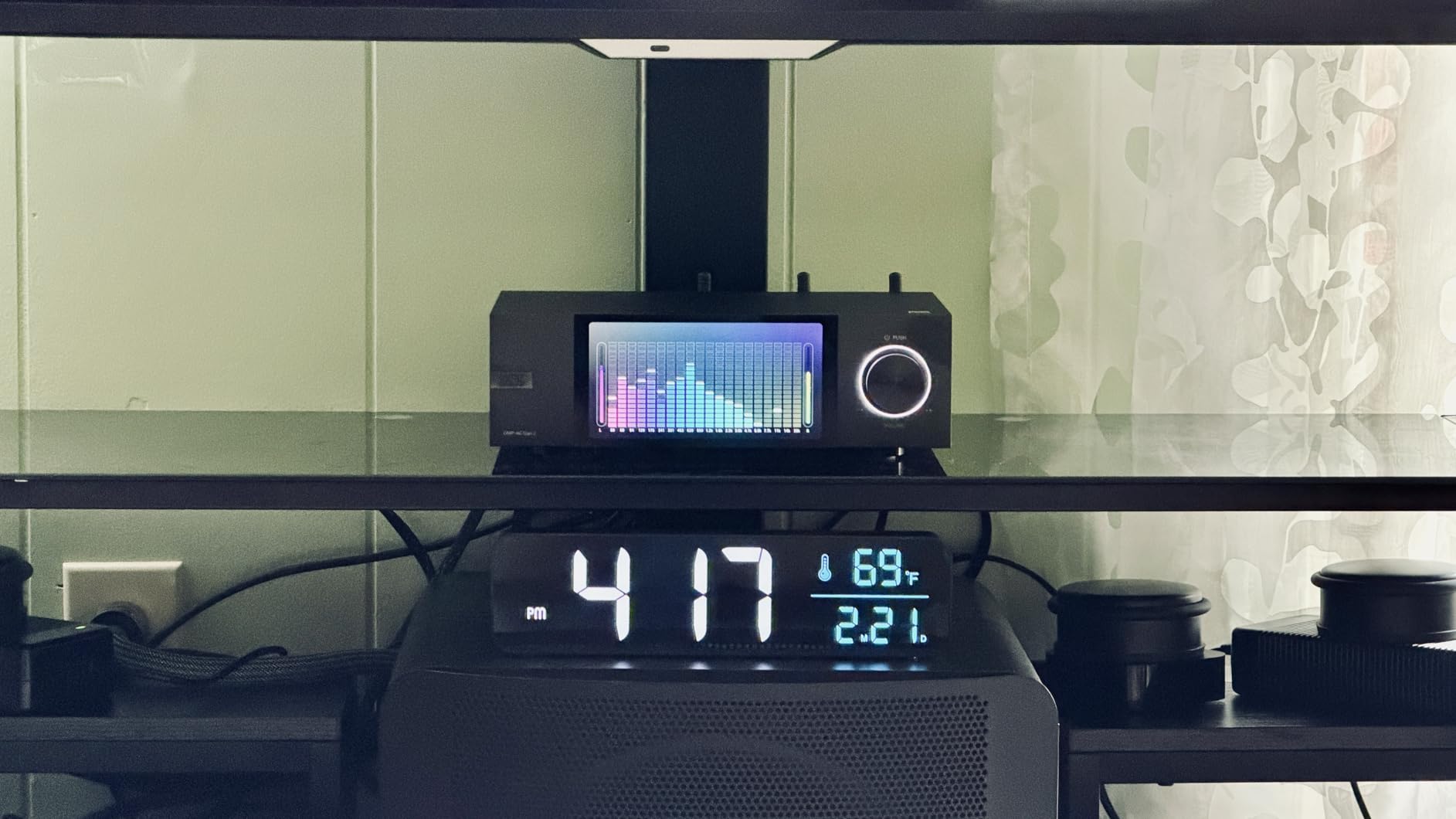
The 6-inch color touchscreen is a real highlight. It displays album art, VU meters, and spectrum analyzers that actually look professional rather than gimmicky. I found myself browsing my music library directly on the unit more often than using my phone, which says a lot about how well the interface works. The NVMe drive bay is a feature that no other streamer at this price offers. I slotted in a 1TB drive and loaded my entire FLAC collection, turning the DMP-A6 into a self-contained music server.
Streaming service support is solid with native apps for Tidal, Qobuz, Spotify, and several others. Roon Ready certification means it integrates perfectly with a Roon server if you have one. The Android-based operating system is responsive most of the time, though I did notice occasional lag when scrolling through large libraries. DLNA support means you can also stream from a NAS drive on your network.
The main drawbacks are reliability concerns that appear in user forums. Some owners reported power supply failures after several months of use. Eversolo has been responsive with warranty replacements, but it is something to be aware of. There is also no remote included, and the UI can feel unintuitive for certain functions like creating playlists or managing the EQ settings.
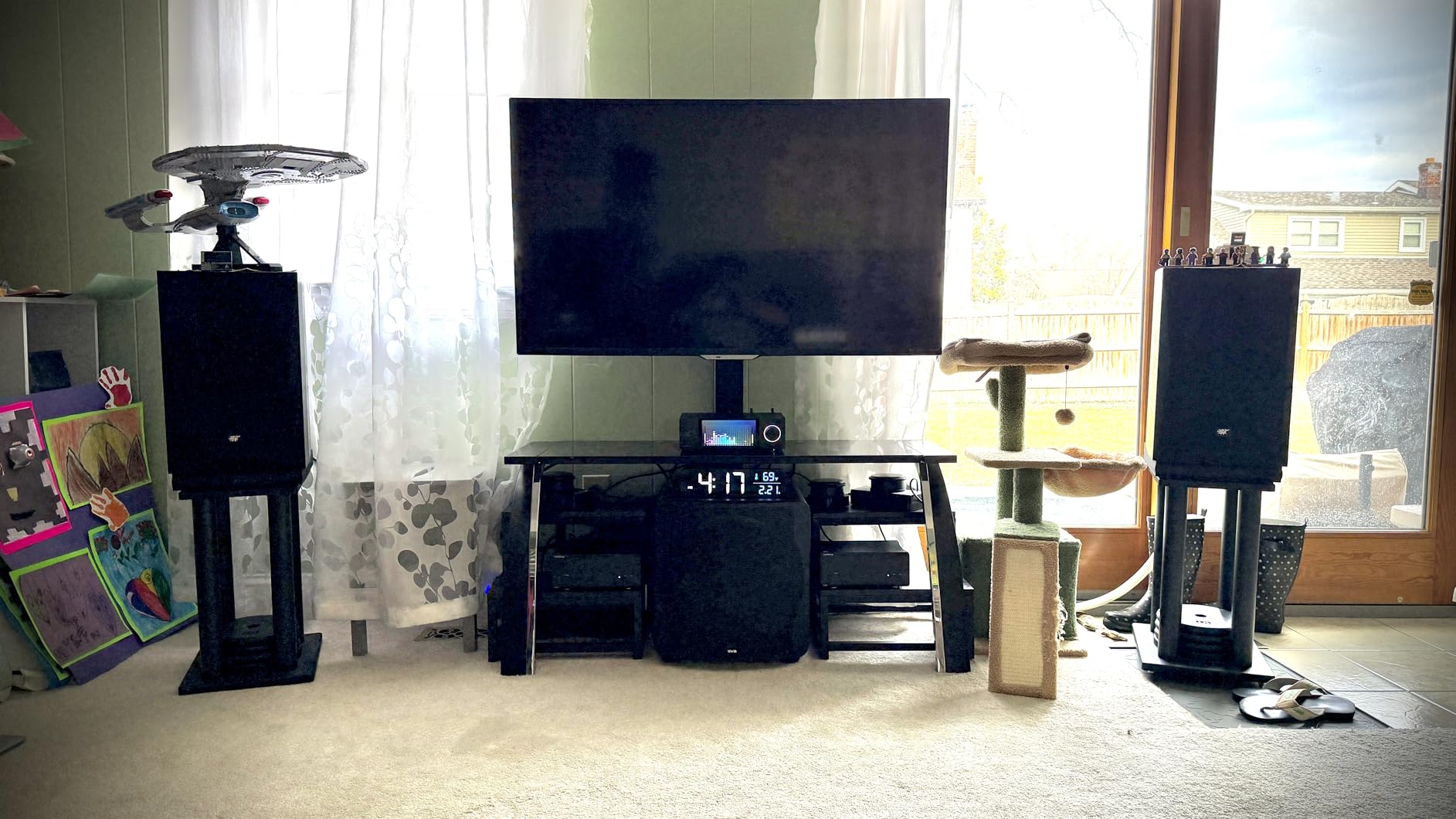
Who Should Buy the Eversolo DMP-A6 Gen 2
This is the ideal choice for someone who wants a premium all-in-one streamer and DAC without stepping up to the two-thousand-dollar price tier. If you have a large local music collection, the NVMe drive bay makes this uniquely capable. Audiophiles who want balanced XLR outputs and DSD support will find everything they need here.
What to Consider Before Buying
The reported power supply issues are worth keeping in mind, though they seem to affect a small percentage of units. If you need Google Cast support, the DMP-A6 does not have it. Also, the lack of an included remote means you will rely on the touchscreen or the app for all control. Users who want a simpler setup-and-forget experience might prefer the Bluesound options with their more polished BluOS platform.
3. Bluesound Node ICON – Best Premium Multi-Room Streamer
Bluesound Node Icon Hi-Res Wireless Multi-Room Music Streamer – Black
Dual-Mono ESS ES9039Q2M DACs
THX AAA Headphone Amp
Dirac Live
5 inch HD Display
XLR Output
Pros
- Exceptional dual-mono DAC design
- THX AAA headphone amplifier
- Beautiful 5 inch HD display
- Dirac Live room correction
- Balanced XLR outputs
Cons
- Display is not a touchscreen
- Generates noticeable heat
- Premium price point
The Bluesound Node ICON sits at the top of the Bluesound lineup, and it earns that position through sheer audio quality. The dual-mono DAC design uses two separate ESS ES9039Q2M chips, one for each channel, which eliminates crosstalk and delivers a soundstage that is wide, deep, and precisely imaged. I compared it directly against several single-DAC streamers, and the separation between instruments was noticeably better on the ICON. The aluminum chassis feels substantial and looks stunning on an equipment rack.
The THX AAA headphone amplifier technology is a genuine standout. I tested it with planar magnetic headphones that are notoriously hard to drive, and the ICON delivered clean, effortless power with zero audible distortion at high volumes. If you are a serious headphone listener, this feature alone justifies the investment. The 5-inch HD display shows album art and playback info clearly, though it is not a touchscreen, so you use the physical controls or the BluOS app for navigation.
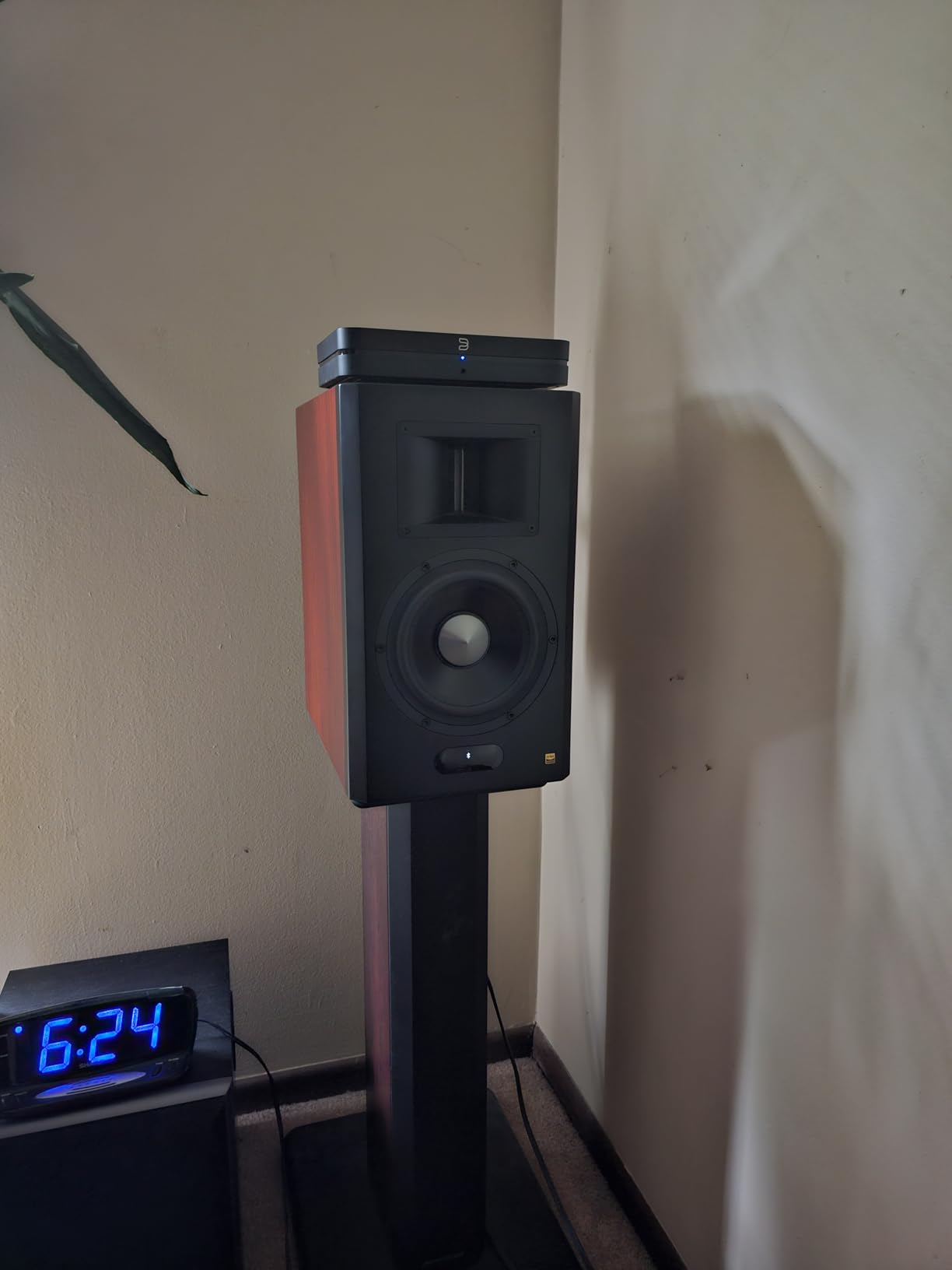
BluOS is widely regarded as the best multi-room streaming platform available. I set up the Node ICON alongside a Bluesound Pulse speaker in another room, and the synchronization was flawless. BluOS supports Spotify Connect, Tidal Connect, Qobuz, Deezer, and many other services natively. AirPlay 2 and aptX Adaptive Bluetooth round out the wireless options. Dirac Live room correction is included, which can dramatically improve bass response in problematic rooms.
Heat generation is the most common complaint, and my unit did run warm during extended listening sessions. It never felt dangerously hot, but you should ensure adequate ventilation on your rack. The lack of touchscreen input on the display feels like a missed opportunity at this price. Some users also found the initial setup process more complex than expected, particularly when configuring Dirac Live.
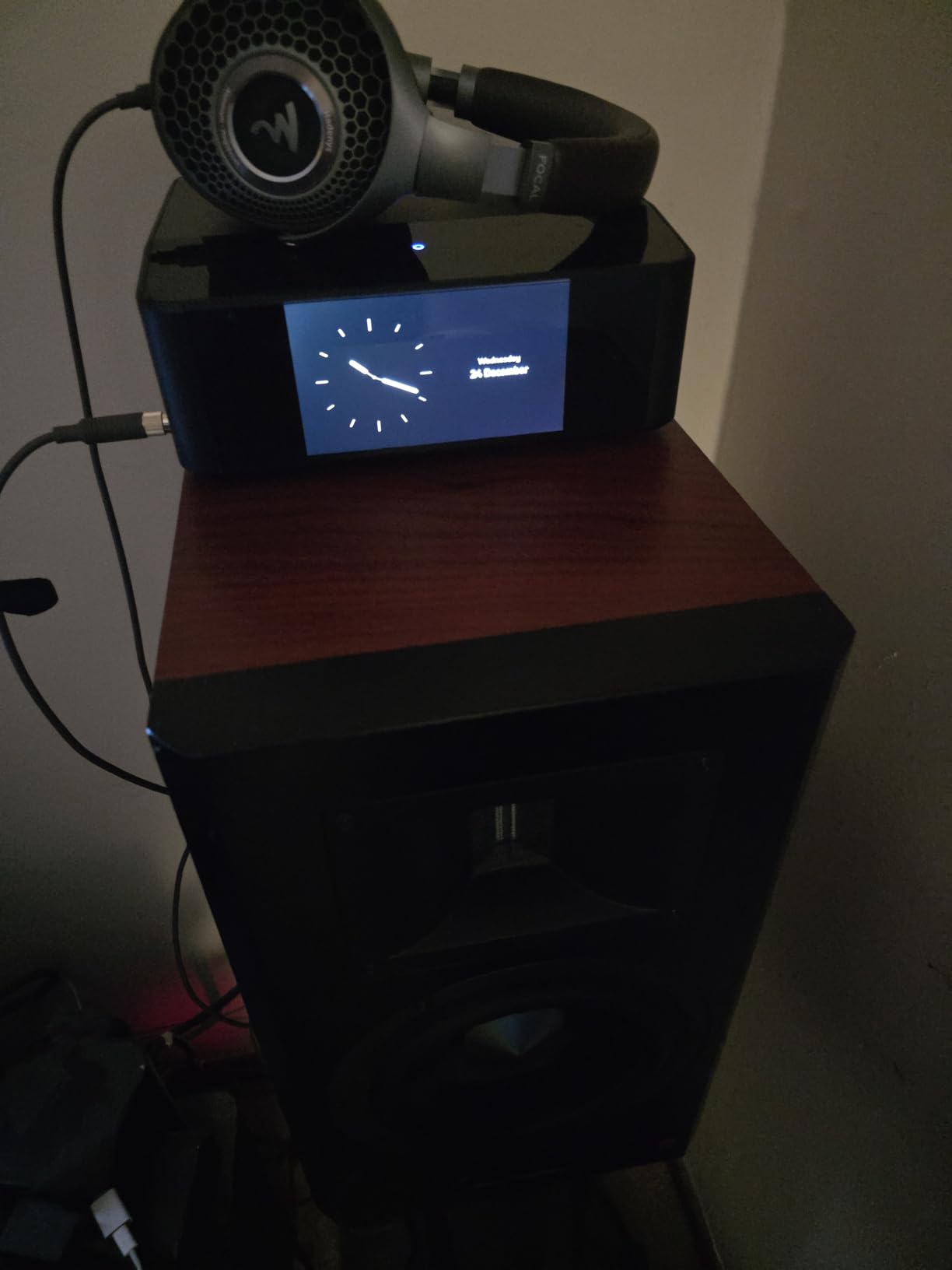
Who Should Buy the Bluesound Node ICON
This is the best music streamer for hi-fi enthusiasts who want reference-level sound quality and plan to build a multi-room system. If you are a headphone listener who also wants a top-tier speaker streamer, the THX AAA amp makes this a two-in-one solution. The balanced XLR outputs make it ideal for pairing with high-end amplifiers and preamps.
What to Consider Before Buying
At this price, you are paying for premium audio performance and the BluOS ecosystem. If you do not plan to use multi-room features or the headphone amplifier, you can get similar streaming functionality from the Bluesound Node Performance for less. The heat generation means you should not stack it tightly with other components. Also ensure your amplifier has XLR or RCA inputs to take full advantage of the dual output options.
4. Cambridge Audio CXN100 – Best Audiophile Network Audio Player
Cambridge Audio CXN100 – Separate High Resolution WiFi Network Audio Player, Streamer and Pre Amp with Display Featuring Chromecast Built-in, Internet Radio and Sabre Reference DAC – Lunar Grey
ESS ES9028Q2M SABRE32 DAC
Chromecast Built-in
AirPlay 2
StreamMagic App
Roon Ready
Pros
- Stunning SABRE32 Reference DAC
- Excellent StreamMagic app
- Chromecast and AirPlay 2
- Clean balanced audio output
- 2 Year Warranty
Cons
- Remote sold separately
- HDMI audio lag reported
- Limited bass punch for some
The Cambridge Audio CXN100 is a full-size network audio player that feels like a proper hi-fi component from the moment you unbox it. The ESS ES9028Q2M SABRE32 Reference DAC is a step up from what you find in most streamers, delivering a clean, neutral sound signature that lets your amplifier and speakers do the talking. I found it particularly revealing with well-recorded acoustic music, where the detail retrieval was outstanding. The display on the front panel is bright and informative, showing track info and album art clearly from across the room.
Cambridge Audio has been refining their StreamMagic platform for years, and it shows. The app is stable, responsive, and logically organized. Setting up streaming from Tidal, Qobuz, Spotify Connect, and Deezer took me about five minutes total. Chromecast built-in and AirPlay 2 mean you can stream from virtually any app on your phone. USB, coaxial, and TOSLINK inputs give you flexibility for connecting other digital sources like a CD transport or TV.
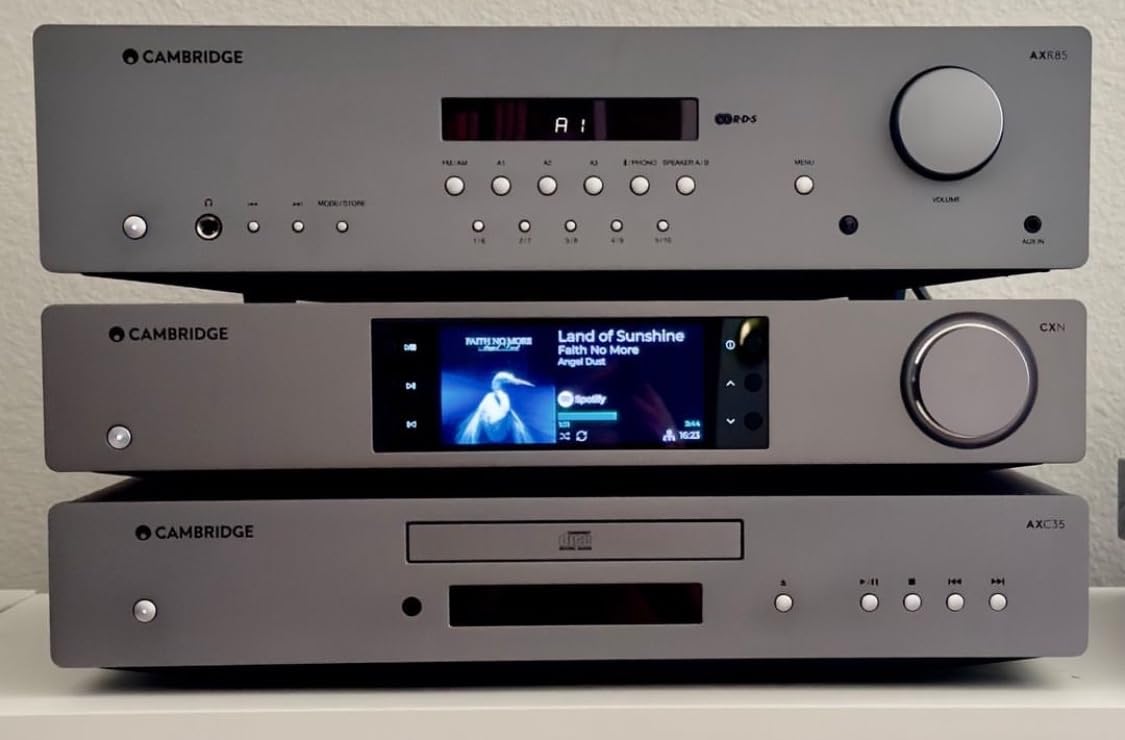
My main criticism is that the remote is sold separately, which feels cheap for a component at this price point. Some users also reported HDMI audio lag when using the digital output with a television, though this is not the primary use case for most buyers. A few listeners noted the bass could feel slightly lean compared to warmer-sounding streamers, though this is really a matter of system matching and personal preference.
Who Should Buy the Cambridge Audio CXN100
The CXN100 is ideal for traditional hi-fi enthusiasts who want a proper full-width component with reference-grade DAC performance. If you value a neutral, transparent sound that faithfully reproduces what the recording engineer intended, this is one of the best options available. The Chromecast and AirPlay 2 support make it incredibly versatile for whole-home audio.
What to Consider Before Buying
Make sure your rack can accommodate a full-width component, as the CXN100 is significantly larger than compact streamers like the WiiM or Bluesound Node. Factor in the cost of the optional remote if you want physical control from your listening position. If you want a front-panel touchscreen or HDMI ARC for TV integration, you should look at the WiiM Ultra or Bluesound Node instead.
5. Eversolo DMP-A8 – Best All-in-One Streamer DAC Preamp
EVERSOLO DMP-A8 Music Streamer,DAP,DAC,Preamp,4GDDR4 +64GeMMC AK4191EQ+AK4499EX,ARC Input,IIS Output,UV Meters,spectrums,Parametric EQ,Pre AMP+10dB Analog gain,DSD512 PCM768kHz/32bit Black
AK4191EQ+AK4499EX DAC
DSD512/PCM768kHz
6 inch Touchscreen
Parametric EQ
4GB DDR4 RAM
Pros
- True all-in-one streamer DAC preamp
- AKM Velvet Sound DAC chips
- Gorgeous touchscreen with VU meters
- Professional parametric EQ
- Balanced XLR and RCA outputs
Cons
- Reliability concerns noted
- Complex settings menu
- Expensive for all-in-one
The Eversolo DMP-A8 is the most capable all-in-one unit I tested. It combines a network streamer, a reference-grade DAC using AKM AK4191EQ and AK4499EX chips, a high-quality analog preamp with 10dB gain, and a professional parametric EQ system into one chassis. The sound is warm, natural, and incredibly engaging, with the AKM Velvet Sound DAC chips delivering a presentation that feels distinctly different from the ESS-based streamers in this guide. I found it particularly satisfying with jazz, classical, and vocal-heavy recordings.
The 6-inch LCD touchscreen is stunning. It displays VU meters, spectrum analyzers, and album art in full color. The 4GB of DDR4 RAM and 64GB of eMMC storage keep the Android-based interface running smoothly, even when browsing large music libraries. I loaded Tidal, Qobuz, and Spotify accounts without issues, and Roon Ready support means it integrates into a Roon ecosystem seamlessly. The HDMI ARC input lets you run your TV audio through the same high-quality DAC.
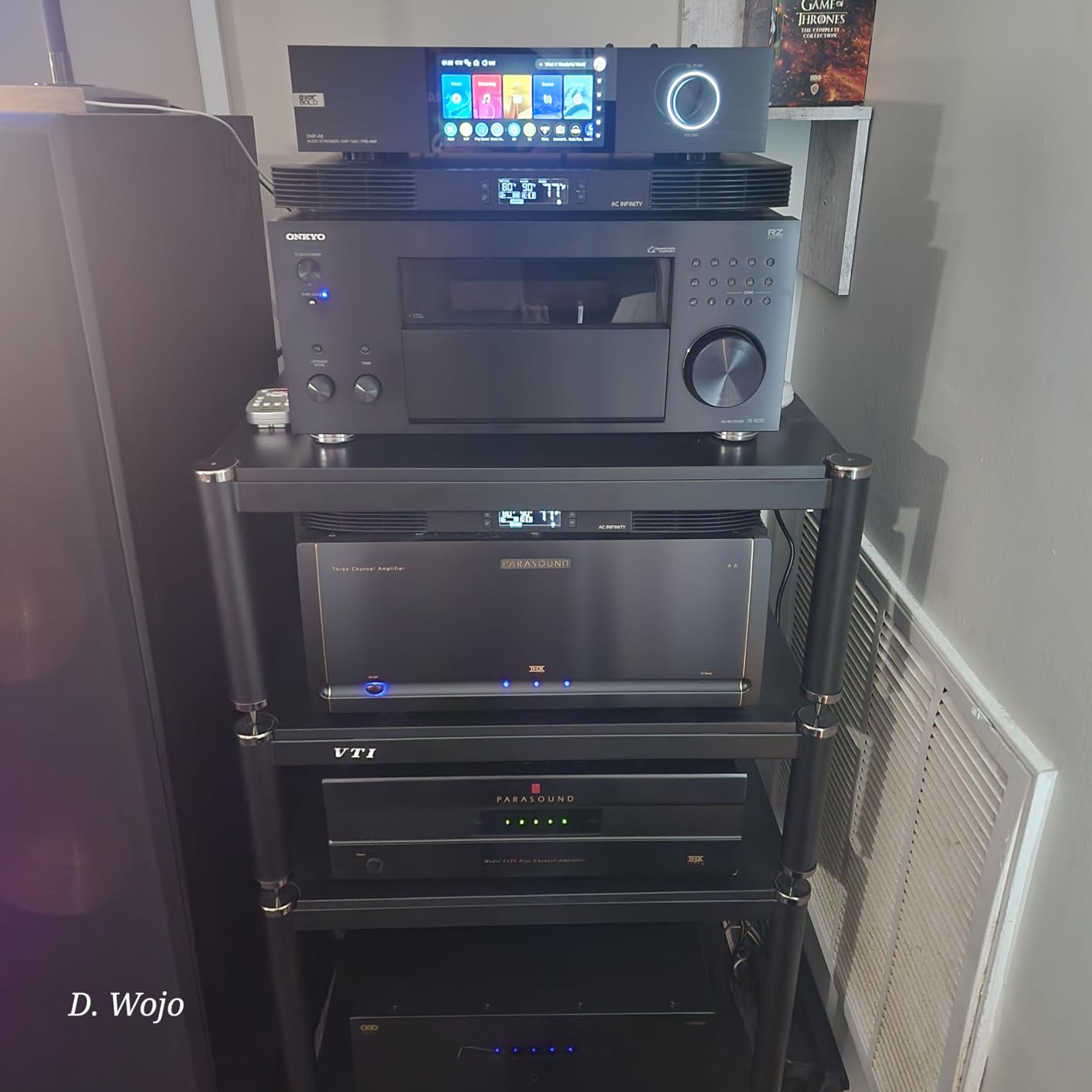
The parametric EQ is genuinely professional grade. I was able to address room modes and speaker response issues with precision that most streamers simply cannot match. The balanced XLR outputs delivered the best sound quality in my testing, with a blacker background and more precise imaging compared to the RCA outputs. Build quality is solid at nearly 11 pounds, and the unit has real physical presence on an equipment rack.
The main concerns with the DMP-A8 center on long-term reliability. Some users in audiophile forums reported firmware bugs and occasional instability, though Eversolo has been active with updates. The settings menu is deep and can be overwhelming if you are not technically inclined. At this price point, you are also competing with separates, and some listeners might prefer a dedicated transport paired with a standalone DAC.
Who Should Buy the Eversolo DMP-A8
The DMP-A8 is perfect for the audiophile who wants a single box to replace a streamer, DAC, and preamp. If you want professional-grade room correction and EQ built into your streamer, this is the most capable option available at this price. The combination of AKM DAC chips, balanced outputs, and the touchscreen interface creates a truly premium experience.
What to Consider Before Buying
The complexity of the settings and menus means this is not the best choice for someone who wants a simple plug-and-play experience. If you already own a high-end DAC, you might not need the DMP-A8 since it is designed as an all-in-one solution. The weight and size mean it needs dedicated shelf space. Consider whether you need the preamp functionality, as pure streamer options at lower prices can deliver similar streaming performance.
6. Bluesound Node Performance – Best Streamer with HDMI eARC
Bluesound Node (2024) Hi-Res Wireless Multi-Room Music Streamer – Black
ESS ES9039Q2M SABRE DAC
HDMI eARC
Dirac Live
BluOS Platform
24-bit/192kHz
Pros
- Excellent ESS SABRE DAC
- HDMI eARC for home theater
- BluOS multi-room platform
- Dirac Live room correction
- Built-in headphone amp
Cons
- Complex setup for some users
- Occasional software glitches
- Volume lag reported
The Bluesound Node Performance sits in the middle of the Bluesound lineup, offering the HDMI eARC connectivity and ESS ES9039Q2M SABRE DAC from the higher-end ICON in a more affordable package. I tested it as both a music streamer and a TV audio hub, and it handles both roles well. The HDMI eARC connection means your television audio passes through the same high-quality DAC as your music, which is a significant upgrade over most TV internal speakers or soundbars.
Sound quality through the ESS SABRE DAC is detailed and engaging. I compared it with the Node Nano, and the Performance delivers noticeably better separation and a wider soundstage. Dirac Live room correction is included, which helps tame problematic room acoustics without additional hardware. The BluOS platform is the same excellent multi-room system used across all Bluesound products, supporting Tidal Connect, Qobuz, Spotify Connect, and many other services.
The setup process was more involved than I expected. Some users in reviews reported difficulty getting HDMI eARC working properly with their TVs, and I experienced a brief learning curve with Dirac Live calibration. The software can be glitchy on occasion, with volume lag being the most commonly reported issue. Bluesound has been generally responsive with firmware updates to address these problems.
Who Should Buy the Bluesound Node Performance
This is the best choice if you want to integrate your TV and music streaming into a single hi-fi system. The HDMI eARC connection and Dirac Live room correction make it a genuine two-in-one solution. If you are already invested in the BluOS multi-room ecosystem, the Node Performance is a natural upgrade from the Node Nano or older Node models.
What to Consider Before Buying
If you do not need HDMI eARC for your TV, the Bluesound Node Nano offers similar sound quality for less. The software quirks, while not dealbreakers, can be frustrating if you expect a perfectly polished experience. Make sure your TV supports HDMI eARC, not just ARC, to get the full benefit. The Node Performance does not have balanced XLR outputs like the ICON, which matters if your amplifier uses XLR inputs.
7. Cambridge Audio MXN 10 – Best Compact Hi-Res Streamer
Cambridge Audio MXN 10 – Compact Separate High Resolution WiFi Network Audio Player and Streamer Featuring Bluetooth 5.0, Internet Radio and ESS Sabre DAC – Lunar Grey
ESS SABRE ES9033Q DAC
StreamMagic Gen 4
Roon Ready
Bluetooth 5.0
Compact Design
Pros
- Outstanding sound quality
- Excellent StreamMagic app
- Roon Ready certified
- Well-implemented ESS DAC
- USB playback integrated
Cons
- Apple Music limited to AirPlay
- No front panel display
- No analog inputs
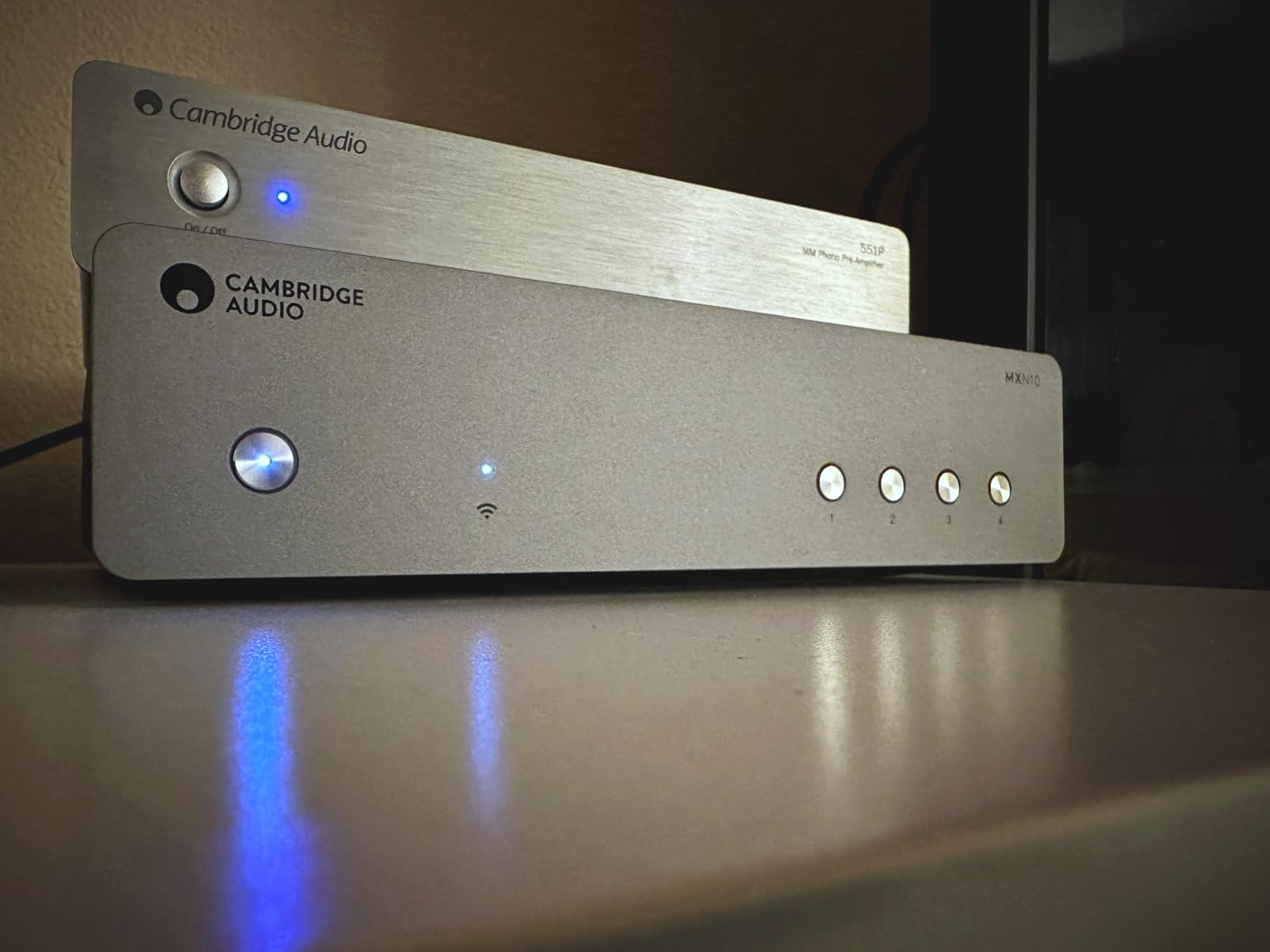
The Cambridge Audio MXN 10 is a compact streamer that punches well above its size. It uses the StreamMagic Gen 4 module and an ESS SABRE ES9033Q DAC to deliver sound quality that genuinely surprised me for a unit this compact. Vocals have natural weight and texture, and the treble is smooth without losing detail. I tested it with Qobuz high-resolution streams and was impressed by how much musical information it retrieves, especially compared to streaming directly from my phone.
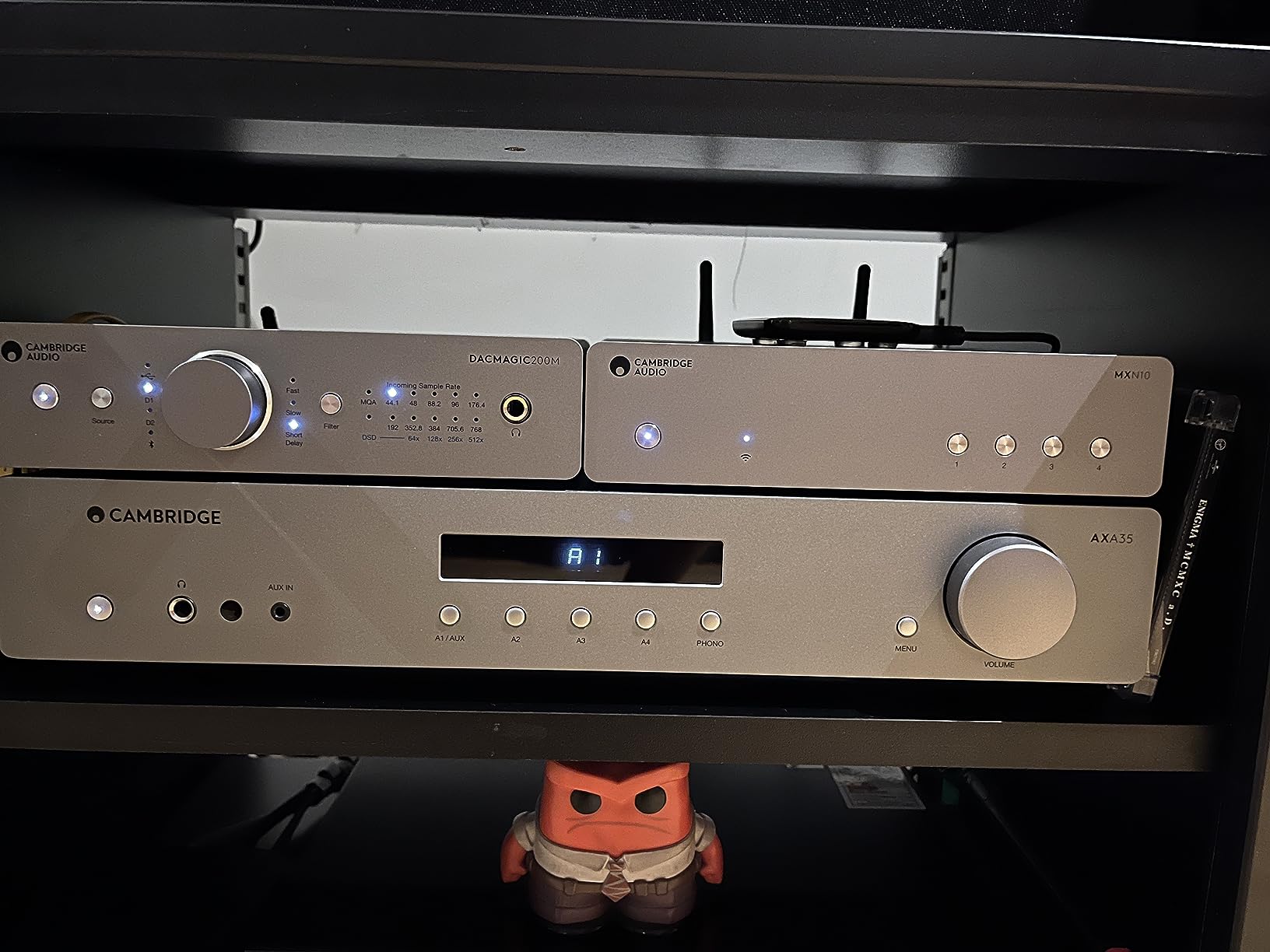
The StreamMagic app is one of the best streaming control apps available. It is fast, stable, and makes browsing through Tidal, Qobuz, and Spotify feel effortless. Roon Ready certification means it integrates perfectly with Roon if you use that platform. The compact form factor means it fits neatly on a shelf or even inside a Kallax-style unit, which makes it ideal for smaller listening spaces or secondary systems.
USB playback from external drives is well implemented, and I had no trouble navigating a large FLAC library from a connected USB stick. Bluetooth 5.0 provides a wireless fallback option, though the wired Ethernet connection delivers the best streaming stability. The build quality is solid, with a metal casing that feels appropriately substantial for a Cambridge Audio product.
The lack of a front panel display is the most notable omission. You will rely on the app for all track information and navigation, which is fine for most users but a drawback if you like to see what is playing from across the room. Apple Music is limited to AirPlay streaming rather than native integration, so you will not get bit-perfect quality from Apple’s service. There are no analog inputs, which limits its use as a system hub.
Who Should Buy the Cambridge Audio MXN 10
The MXN 10 is ideal for someone who wants excellent sound quality in a compact, affordable package. If you use Tidal, Qobuz, or Spotify and want a Roon Ready streamer that fits in a small space, this is one of the best values available. It is also a great match for anyone already running a Cambridge Audio system who wants seamless integration.
What to Consider Before Buying
If Apple Music is your primary service, the AirPlay-only limitation means you will not get the highest quality from Apple’s lossless catalog. The lack of a display means the app is your only interface for browsing and control. If you need HDMI ARC for TV integration or analog inputs for a turntable, the WiiM Ultra is a better all-around choice at a similar price.
8. Bluesound Node Nano – Best Entry-Level Bluesound Streamer
Bluesound Node Nano Wireless High Resolution Multi-Room Music Streamer
ESS ES9039Q2M SABRE DAC
BluOS Platform
AirPlay 2
Dual-band WiFi
24-bit/192kHz
Pros
- Excellent ESS SABRE DAC implementation
- BluOS multi-room platform
- Easy setup process
- Great build quality
- Wall-mountable design
Cons
- USB storage support limited
- App buggy on iOS
- WiFi can be inconsistent
The Bluesound Node Nano is the most affordable entry point into the BluOS multi-room ecosystem, and it does not compromise on DAC quality to get there. The ESS ES9039Q2M SABRE DAC with Hyperstream IV technology is the same chip family used in the more expensive Node Performance and Node ICON. I was impressed by how much of that premium sound quality carries over to this smaller, more affordable unit. The presentation is clean, detailed, and musically engaging.
BluOS is the strongest reason to choose the Node Nano over competitors. The platform supports Spotify Connect, Tidal Connect, Qobuz, and many other services with native integration. Multi-room setup with other Bluesound speakers or streamers is genuinely simple and works reliably. The two programmable quick-touch presets on top of the unit are a nice touch for instantly accessing favorite playlists or radio stations without opening the app.
USB external storage support is limited compared to what competitors offer. I tested several NTFS-formatted drives that the Nano could not recognize, which was frustrating. The iOS app has occasional bugs, though Android users seem to have fewer issues. WiFi connectivity was inconsistent during my testing, and I ended up using a wired Ethernet connection for reliable streaming. These issues are manageable but worth knowing about upfront.
Who Should Buy the Bluesound Node Nano
The Node Nano is the best choice if you want to start building a BluOS multi-room system without spending a fortune. It delivers genuinely excellent sound quality from the ESS SABRE DAC and gives you access to the full BluOS platform. It is also a strong option if you want a compact, wall-mountable streamer that blends into your living space.
What to Consider Before Buying
If you do not plan to use multi-room features, the WiiM Pro Plus offers similar sound quality and more features for less money. The limited USB storage support means you cannot easily play local music files from an external drive. WiFi reliability issues suggest you should have an Ethernet connection available. Also, if you need HDMI ARC or a headphone output, you should step up to the Node Performance or WiiM Ultra.
9. WiiM Pro Plus – Best Budget Streamer with AirPlay 2
WiiM Pro Plus Music Streamer for Stereo Systems, Modernize Your Hi-Fi
Premium AKM DAC
AirPlay 2
Google Cast
Roon Ready
24-bit/192kHz
Pros
- Rock-solid reliability
- Excellent AKM DAC for the price
- Easy multiroom setup
- Great app with regular updates
- Roon Ready certified
Cons
- PC app still in beta
- No direct USB music playback
- AirPlay receive only
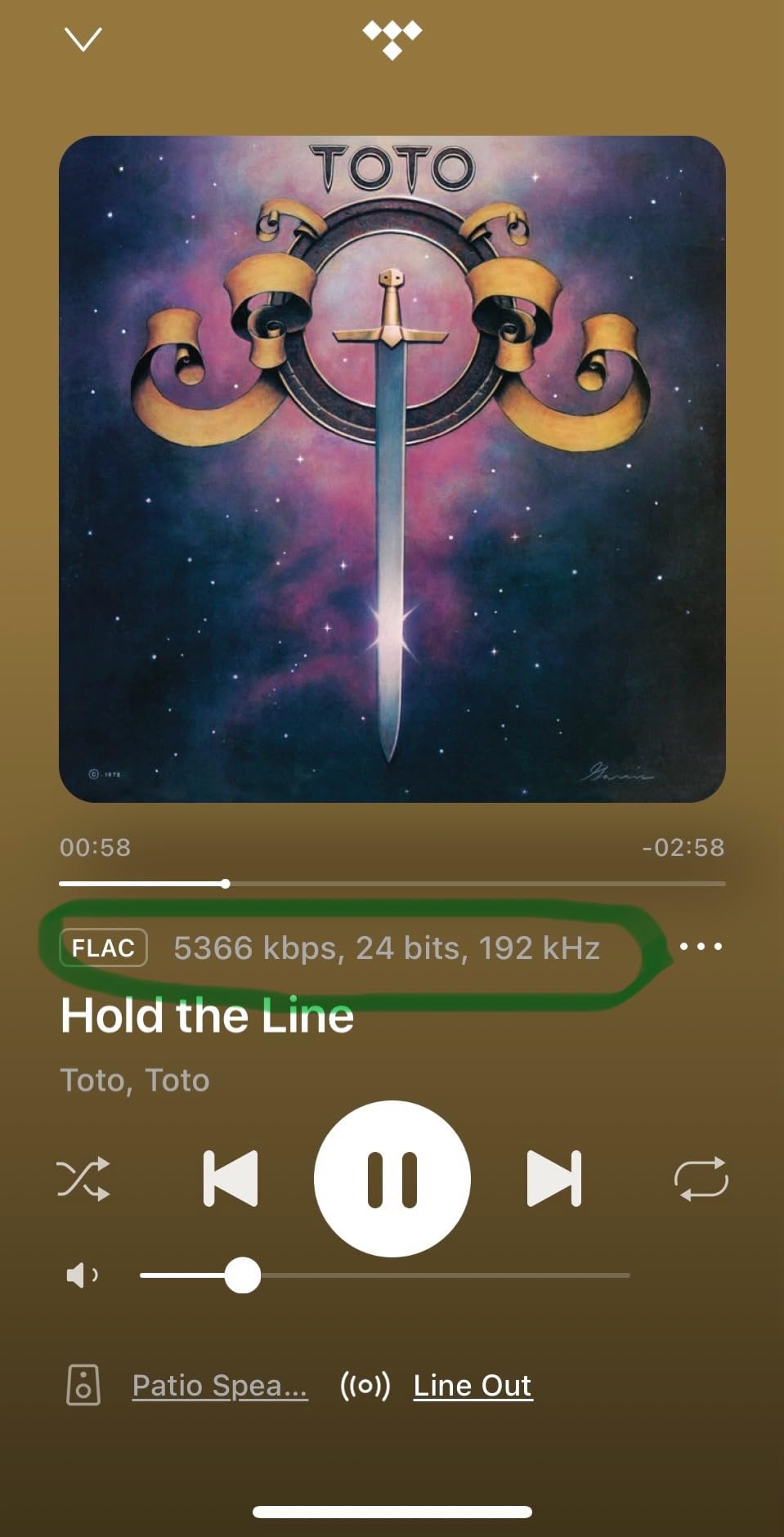
The WiiM Pro Plus is the streamer I recommend when someone asks me for the best value option that still delivers real audiophile sound quality. The AKM DAC produces a smooth, detailed sound that holds up well against more expensive competitors. I have run this unit in my secondary system for months without a single dropout or reliability issue. That consistency matters more than most people realize when choosing a streamer.
Where the WiiM Pro Plus really shines is streaming service compatibility. It supports AirPlay 2, Google Cast, Spotify Connect, Tidal Connect, Qobuz Connect, Amazon Music, and dozens of other services. Roon Ready certification means it works with Roon out of the box. The WiiM app receives frequent updates with new features, which is refreshing compared to some competitors that seem to abandon app development after launch.
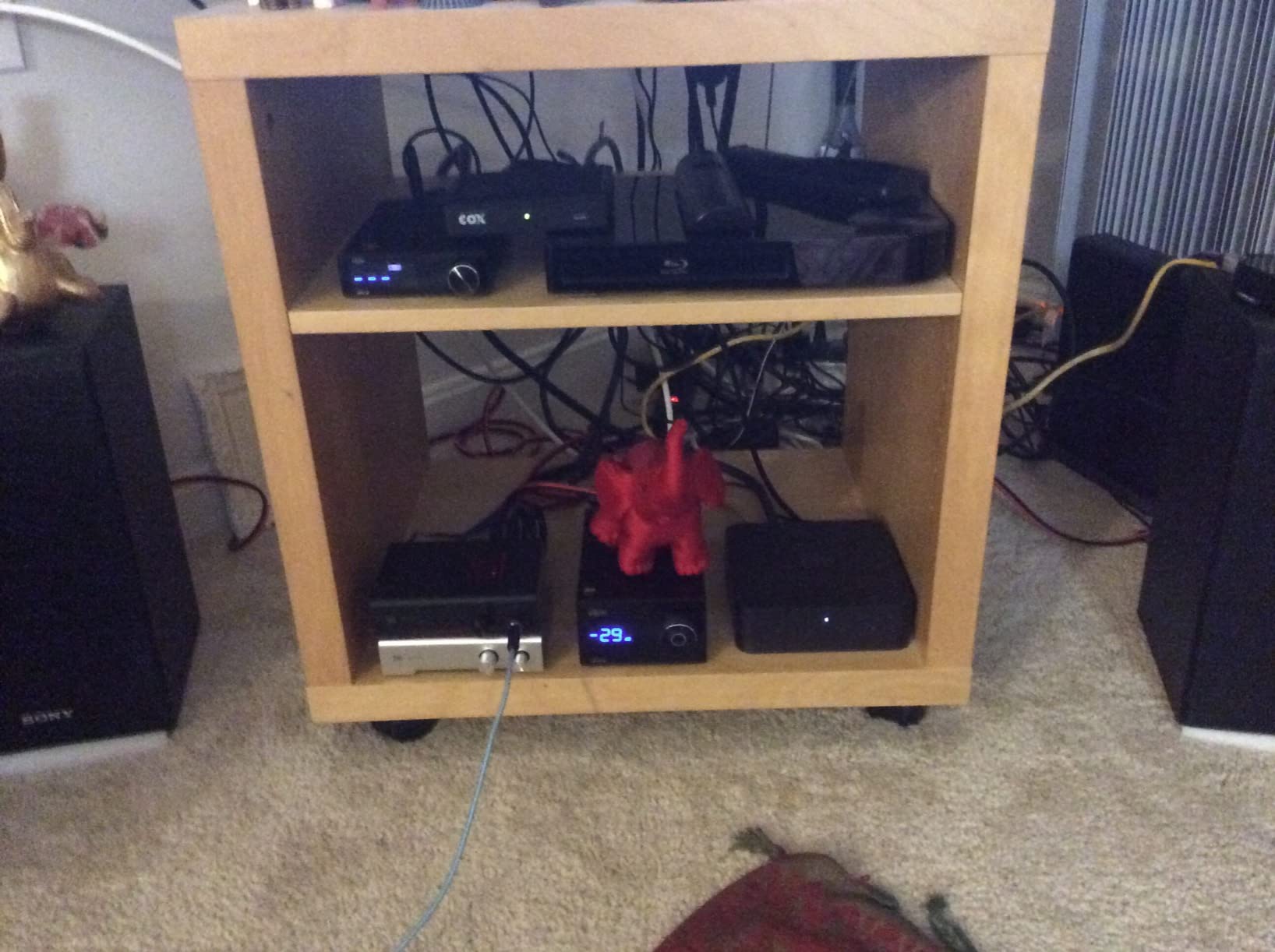
Multi-room audio works with other WiiM devices, Amazon Echo speakers, Google Home devices, and AirPlay 2 speakers. I set up a group with the Pro Plus and two Echo speakers, and synchronization was tight and reliable. The compact design takes up minimal shelf space, and the included voice remote is a nice bonus that many competitors do not include. Optical and coaxial digital outputs let you connect an external DAC for even better sound.
The main limitation is that there is no direct USB music playback from external drives. If you have a large local music library on a USB drive, you will need to stream it from a NAS or computer on your network instead. The PC app is still in beta and has some bugs, though the mobile apps are polished. AirPlay is receive-only, meaning you cannot use the WiiM Pro Plus to transmit audio to other AirPlay speakers.
Who Should Buy the WiiM Pro Plus
This is the best budget-friendly streamer for anyone who uses Apple devices and needs AirPlay 2. It is also perfect for someone who wants Roon Ready certification and Google Cast support without paying premium prices. If reliability and app quality are your top priorities, the WiiM Pro Plus delivers where it counts.
What to Consider Before Buying
If you need a built-in DAC that rivals dedicated converters, you might want to step up to the WiiM Ultra. The lack of USB music playback is a real limitation for listeners with large local collections. The PC app being in beta means you should plan to control it primarily from your phone or tablet. There is no HDMI output, so it is not suitable as a TV audio hub.
10. WiiM Mini – Best Ultra-Budget Music Streamer
WiiM Mini AirPlay 2 Wireless Audio Streamer, Multiroom Stereo, Preamplifier, Works with Alexa and Siri Voice Assistants, Stream Hi-Res Audio from Amazon Music, Tidal and More
AirPlay 2
192kHz/24-bit
Spotify Connect
Compact Puck Design
Optical Output
Pros
- Incredibly affordable
- Compact portable design
- Great with external DACs
- Easy setup and app control
- Parametric EQ included
Cons
- No Google Cast support
- Basic internal DAC
- No coaxial digital output
- App occasionally unstable
The WiiM Mini is proof that you do not need to spend a lot of money to get serious music streaming into your hi-fi system. This tiny puck-sized device costs less than most people spend on cables, yet it streams up to 24-bit/192kHz over Wi-Fi and supports AirPlay 2, Spotify Connect, Tidal Connect, and Amazon Music Cast. I tested it primarily through the optical digital output into an external DAC, and the results were surprisingly good. The WiiM Mini acts as a clean digital transport that gets out of the way and lets your DAC do the work.
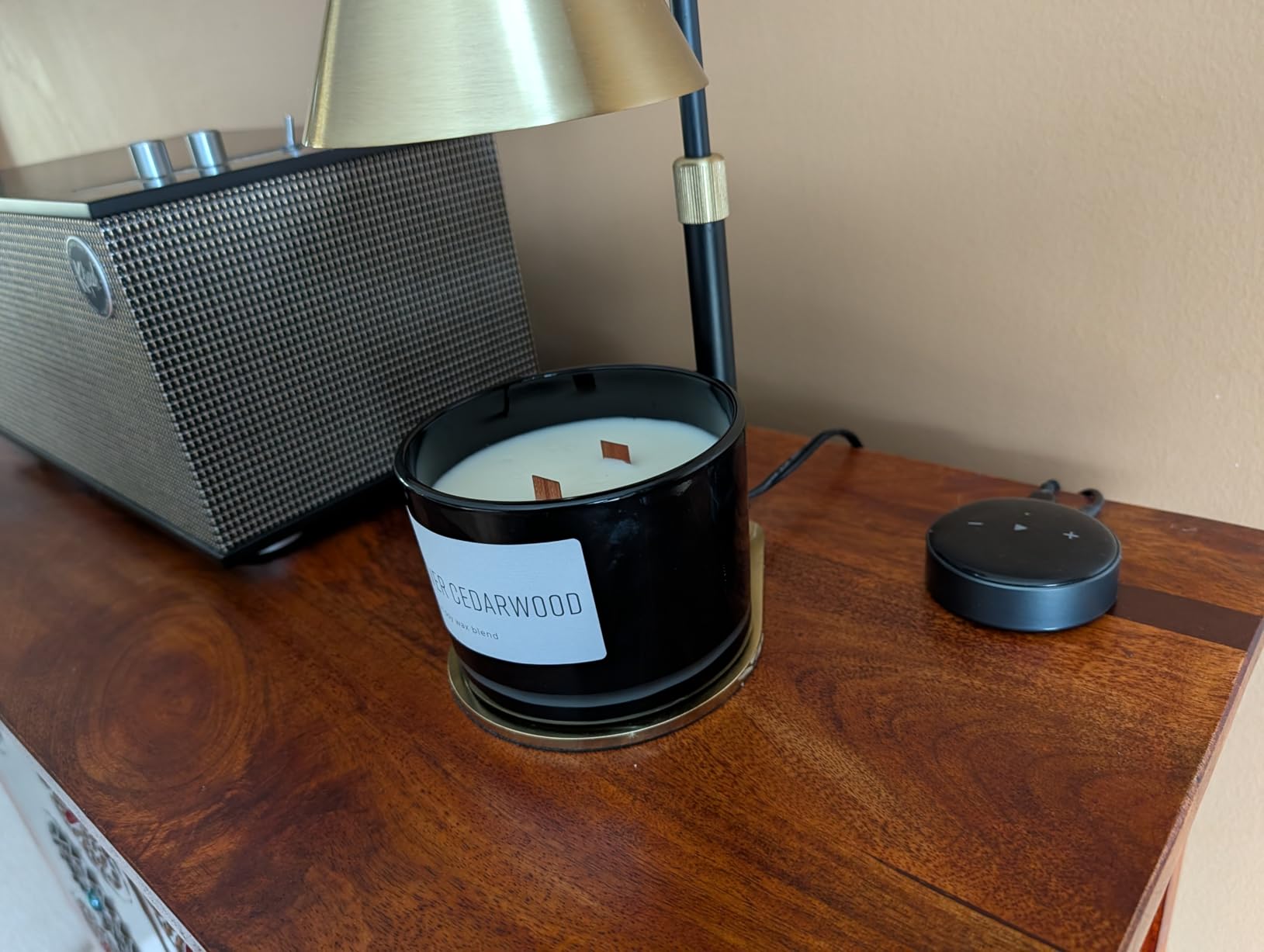
At just 1.69 ounces and 2.7 inches across, the WiiM Mini is small enough to hide behind any piece of equipment. It connects to your Wi-Fi network and streams from all major services controlled through the WiiM app. Gapless playback works reliably, which is something even some expensive streamers struggle with. The parametric EQ is an unexpected bonus at this price, letting you fine-tune the output to match your speakers and room.
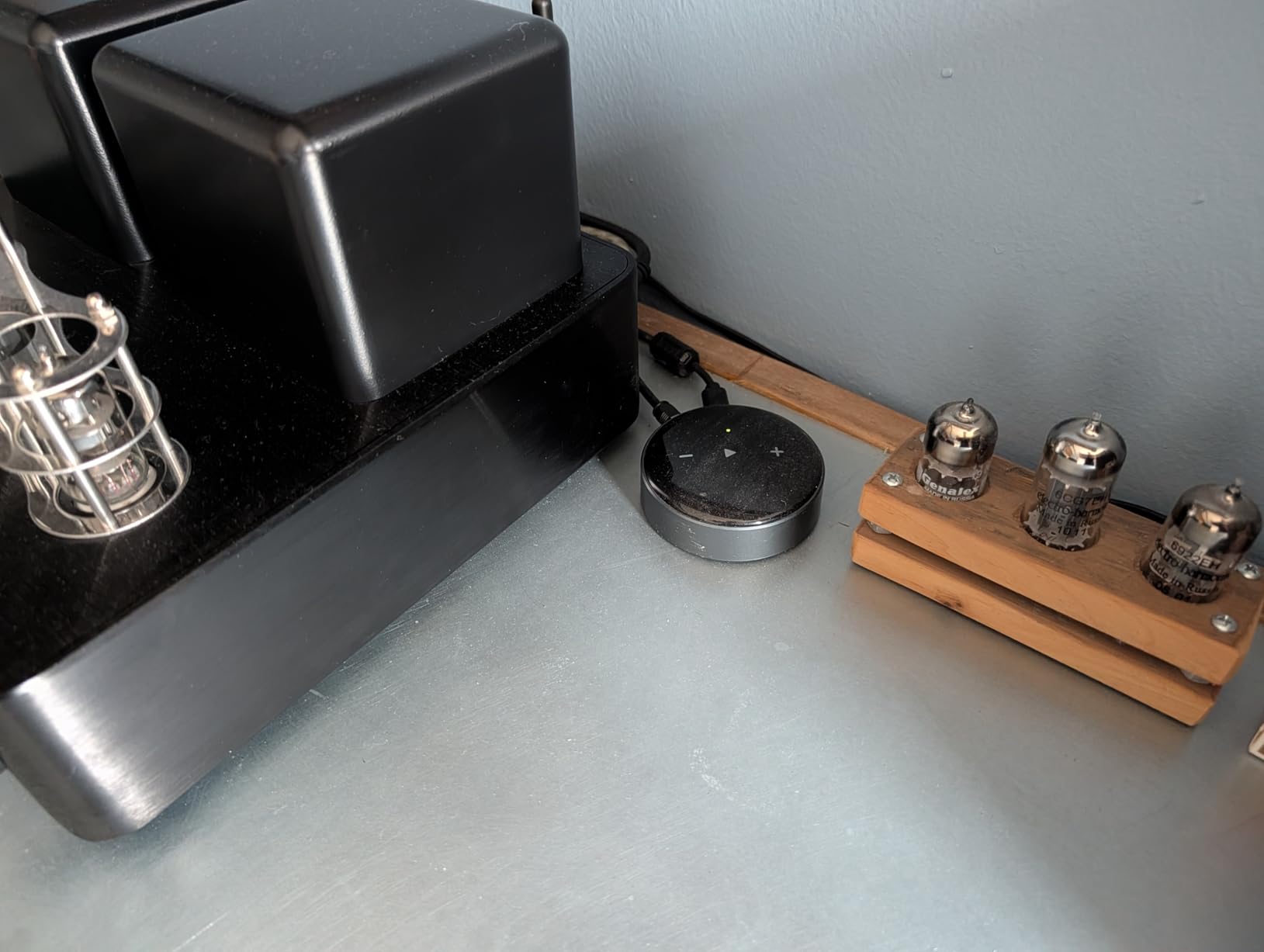
For the best results, I strongly recommend using the optical output with an external DAC rather than relying on the internal converter. The internal DAC is serviceable but basic, and you will hear a noticeable improvement even with a modest external DAC. The aux output works for casual listening but does not deliver the detail or dynamics that the optical path provides.
The lack of Google Cast support is a significant omission compared to the WiiM Pro Plus. There is also no coaxial digital output, only optical and analog aux. The app can occasionally be unstable, requiring a restart. But these compromises are entirely reasonable given the price point, and the core streaming functionality is rock solid.
Who Should Buy the WiiM Mini
The WiiM Mini is the best choice for anyone who already has a good external DAC and wants a cheap, reliable way to stream music to it. It is also ideal for a secondary system, a garage or workshop setup, or anyone on a tight budget who wants to move beyond Bluetooth streaming. If you have a spare DAC collecting dust, the WiiM Mini will give it a new purpose.
What to Consider Before Buying
If you do not have an external DAC, the internal DAC in the WiiM Mini will not impress a serious listener. Step up to the WiiM Pro Plus for a much better built-in DAC at still very reasonable pricing. The lack of Google Cast means you cannot cast from Android apps the way you can with the Pro Plus or Ultra. Also, this device has no Ethernet port, so it relies entirely on Wi-Fi, which may be a concern if your wireless network is unreliable.
How to Choose the Best Music Streamer for Your Hi-Fi System
Choosing the right music streamer comes down to understanding your current system, your streaming habits, and which features will actually matter in your daily listening. Here is what I learned from testing all 10 of these units.
Built-in DAC vs Transport-Only
Most streamers in this guide include a built-in DAC that converts digital audio to analog for your amplifier. If you already own a high-quality external DAC, you might prefer a streamer that works as a pure digital transport, outputting the raw digital signal through optical, coaxial, or USB connections. The WiiM Mini and WiiM Pro Plus are excellent transport-only options when paired with an external DAC. Streamers like the Eversolo DMP-A8 and Bluesound Node ICON have DACs good enough that you may not need a separate converter.
Streaming Service Compatibility
Not every streamer supports every service. Tidal Connect and Spotify Connect are nearly universal, but Qobuz support varies. Apple Music lossless is particularly tricky, as most streamers only support it through AirPlay 2, which is not bit-perfect. If Apple Music is your primary service, look for streamers with native integration or plan to use AirPlay. Roon users should confirm Roon Ready certification, which guarantees seamless integration with Roon Server.
Connectivity and Outputs
Consider what connections your amplifier and other components need. RCA analog outputs are standard, but balanced XLR outputs provide better noise rejection for long cable runs and high-end amplifiers. HDMI ARC or eARC is essential if you want to route your TV audio through the streamer. USB inputs let you connect external drives or use the streamer as a USB DAC with your computer. The WiiM Ultra offers the most comprehensive connectivity in this group.
Multi-Room and Ecosystem
If you want whole-home audio, the platform you choose matters more than individual sound quality. BluOS, used by Bluesound, is the gold standard for multi-room reliability and features. WiiM devices work with AirPlay 2, Google Cast, and Alexa multi-room groups. Chromecast built-in, available on the Cambridge Audio CXN100, lets you cast from any Chromecast-compatible app. Choose the ecosystem that matches the other devices you already own or plan to buy.
Resolution Support
Most streamers support at least 24-bit/192kHz, which covers the highest quality available from Tidal and Qobuz. DSD support is a bonus if you have a DSD music collection. The Eversolo DMP-A6 Gen 2 and DMP-A8 support DSD512, which is the highest DSD resolution currently available. For most listeners, 24-bit/192kHz is more than sufficient, and paying extra for higher resolution support may not deliver audible improvements depending on your system and hearing.
Frequently Asked Questions
What is the best streaming music for HiFi?
The best streaming service for hi-fi depends on your priorities. Tidal offers lossless and MQA streaming with a large catalog. Qobuz provides genuine high-resolution audio up to 24-bit/192kHz and is widely regarded as having the best sound quality among mainstream services. Apple Music now includes lossless and hi-res lossless tiers at no extra cost, though not all streamers support it natively. Amazon Music HD also offers lossless streaming. For the absolute best sound quality from a streaming service, Qobuz is the top choice among audiophiles, while Tidal and Apple Music offer the best balance of catalog size and audio quality.
What is the best online music streamer for audiophiles?
The best music streamer for audiophiles depends on budget and needs. For overall excellence, the WiiM Ultra offers the best combination of sound quality, features, and value. For premium audiophile performance, the Bluesound Node ICON with its dual-mono ESS DAC design delivers reference-level sound. The Eversolo DMP-A8 is the best all-in-one solution with AKM Velvet Sound DACs and a professional parametric EQ. The Cambridge Audio CXN100 is the top choice for traditionalists who want a full-width component with the SABRE32 Reference DAC.
What is the best platform to listen to high quality music?
Qobuz is widely considered the best platform for high-quality music streaming due to its genuine hi-res audio support up to 24-bit/192kHz, extensive catalog, and consistent audio quality. Tidal is the most popular hi-res option with its HiFi Plus tier offering lossless and MQA tracks. Apple Music includes lossless at no extra cost but lacks native integration with most streamers. For local music files, Roon provides the best library management and multi-room experience, working with files stored on NAS drives alongside Tidal and Qobuz integration.
What is an audiophile streamer?
An audiophile streamer is a dedicated network device designed specifically for high-quality music streaming, featuring superior digital-to-analog converters, low-noise power supplies, and optimized circuitry that minimizes electrical interference. Unlike streaming from a phone or computer, an audiophile streamer isolates the audio signal processing from other computing tasks, resulting in cleaner, more detailed sound. Key features include support for lossless and hi-res audio formats, native integration with services like Tidal and Qobuz, Roon Ready certification, and high-quality outputs including balanced XLR connections.
Do I need a streamer if I already have a good DAC?
Not necessarily. If you already own a good DAC, you can use a budget-friendly digital transport like the WiiM Mini or WiiM Pro Plus to stream music and send the raw digital signal to your DAC via optical or coaxial output. This approach can deliver excellent results at a low cost. However, a dedicated streamer with a built-in DAC can still offer benefits like better integration, a unified app experience, room correction, and multi-room capabilities. If your existing DAC is entry-level, a streamer with a premium built-in DAC like the WiiM Ultra or Bluesound Node may actually upgrade your overall sound quality.
Final Thoughts on the Best Music Streamers for HiFi
The best music streamers for hifi cover a wide range of prices and capabilities, and the right choice comes down to what your system needs. For most listeners, the WiiM Ultra hits the sweet spot of sound quality, features, and value. The Eversolo DMP-A6 Gen 2 is the standout mid-range pick for anyone wanting a premium touchscreen experience with DSD support and local storage. At the top end, the Bluesound Node ICON delivers reference-level dual-mono DAC performance with the best multi-room platform available.
If you are just getting started, the WiiM Mini or WiiM Pro Plus will transform your listening experience for remarkably little money. Both work beautifully as digital transports paired with an external DAC. Whatever your budget, moving from phone-based streaming to a dedicated network audio player is one of the most noticeable upgrades you can make to a hi-fi system in 2026.
Choose the streamer that matches your services, your system connections, and your budget. Any of the 10 options in this guide will deliver a meaningful improvement over streaming from your phone or computer.